Course: Introduction to Management
Assignment Title : Major Management
Approaches
Course Instructor : Miss Afshan Rauf
Deadline: 19 Aug 2014
Name :Fahad Tariq
ID:FA14-BB-0036
Historical Approaches
• Organized Endeavors have existed for
thousand of years.
• The Egyptians Pyramids and The Great Wall Of
China.
• Adam Smith: Proposed Division of Labor
• Industrial Revolution: Guided the requirement
of managing large organizations.
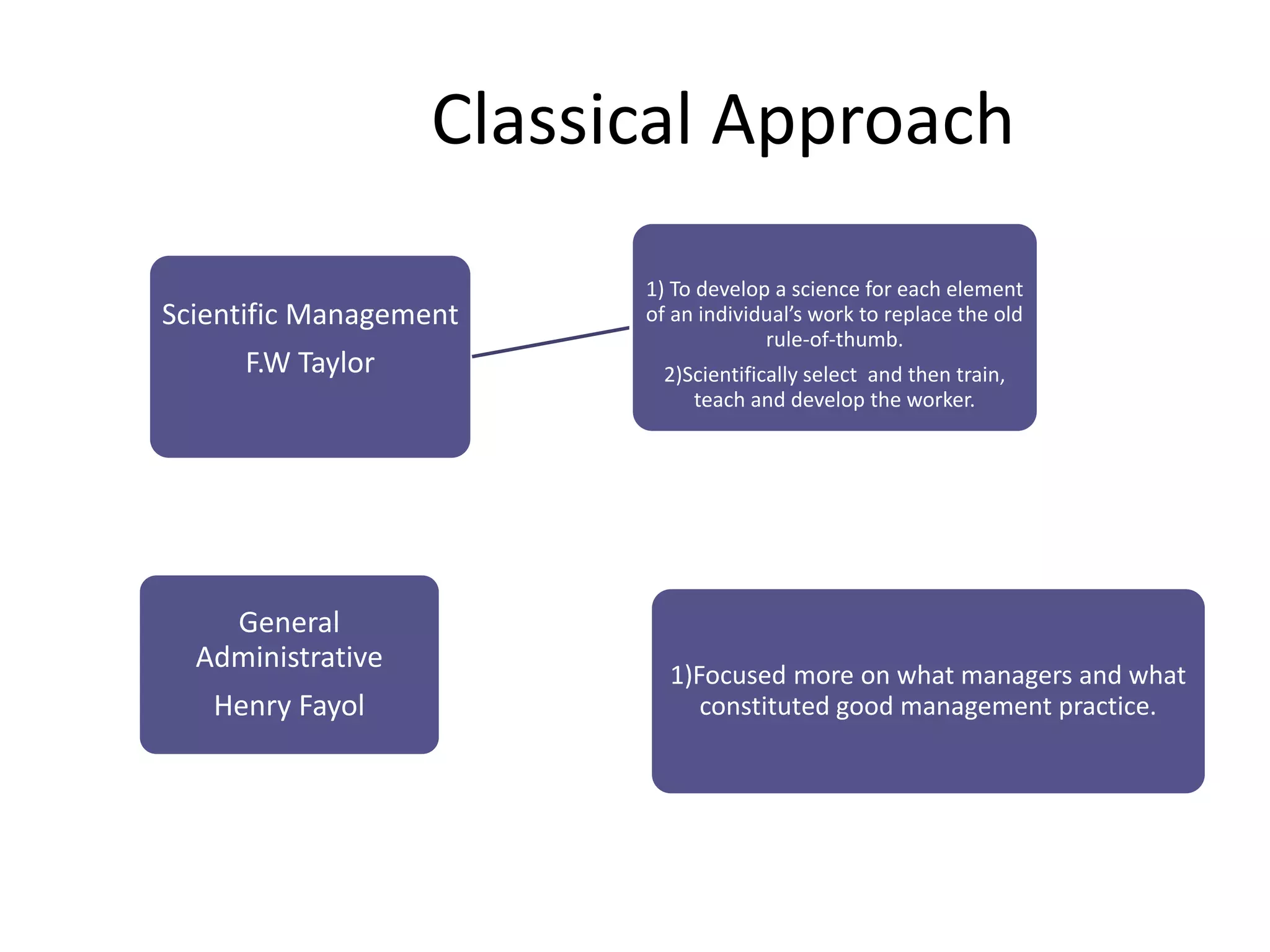
Classical Approach
Scientific Management
F.W Taylor
1) To develop a science for each element
of an individual’s work to replace the old
rule-of-thumb.
2)Scientifically select and then train,
teach and develop the worker.
General
Administrative
Henry Fayol
1)Focused more on what managers and what
constituted good management practice.
Behavioral Approach
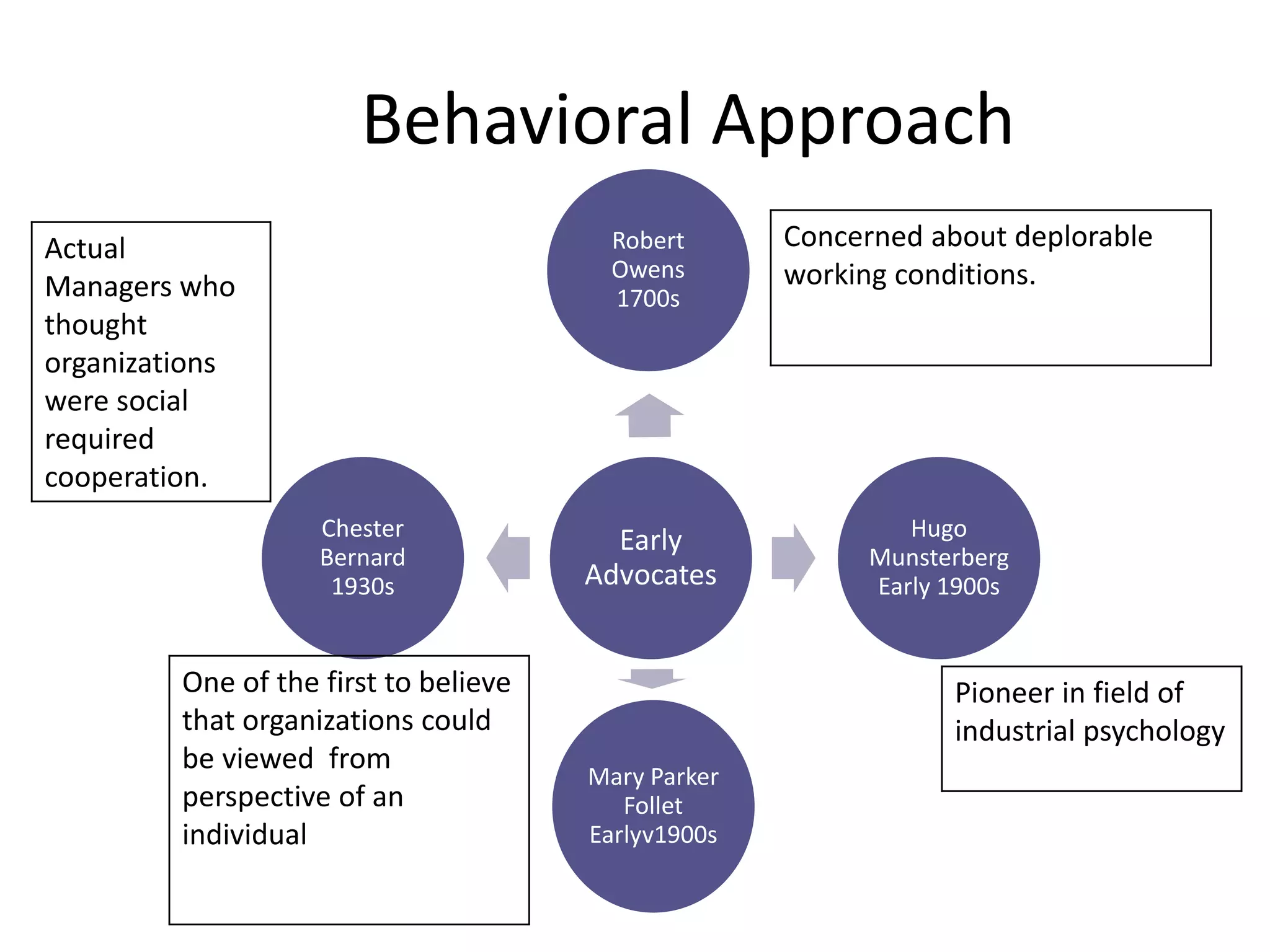
Early
Advocates
Robert
Owens
1700s
Hugo
Munsterberg
Early 1900s
Mary Parker
Follet
Earlyv1900s
Chester
Bernard
1930s
Actual
Managers who
thought
organizations
were social
required
cooperation.
Pioneer in field of
industrial psychology
Concerned about deplorable
working conditions.
One of the first to believe
that organizations could
be viewed from
perspective of an
individual
Behavioral Approach (contd)
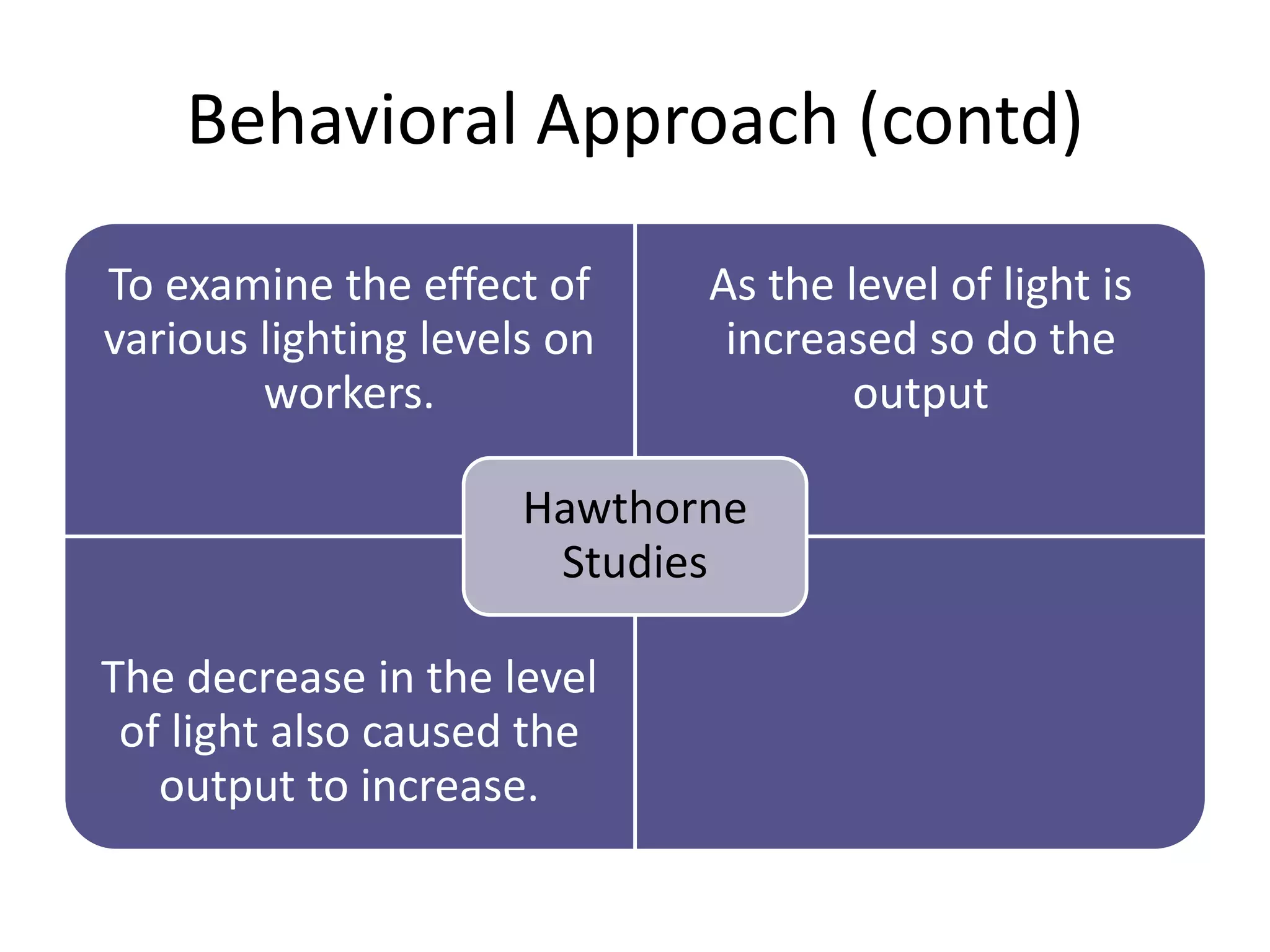
To examine the effect of
various lighting levels on
workers.
As the level of light is
increased so do the
output
The decrease in the level
of light also caused the
output to increase.
Hawthorne
Studies
Quantitative Approach
Total Quality
Management
Intense focus on
customer
Process
focused
Empowerment of
employees
Concern for
continuous
improvement
Contemporary Approach
• System Approach :
• A set of unrelated and interdependent parts
arranged in a manner that produces an unified
whole.
• There are 2 types of systems closed and open
systems.
• Closed system doesn’t interacts with the
environment nor is influenced by anything. While
open system are influenced by and also interact
with the environment.
Contemporary Approach (contd.)
• Contingency Approach:
• Sometimes referred to as situational approach
says that organizations are different and they
face different problems and they therefore
require different ways of managing.

Major Management Approaches

  • 1.
    Course: Introduction toManagement Assignment Title : Major Management Approaches Course Instructor : Miss Afshan Rauf Deadline: 19 Aug 2014 Name :Fahad Tariq ID:FA14-BB-0036
  • 3.
    Historical Approaches • OrganizedEndeavors have existed for thousand of years. • The Egyptians Pyramids and The Great Wall Of China. • Adam Smith: Proposed Division of Labor • Industrial Revolution: Guided the requirement of managing large organizations.
  • 4.
    Classical Approach Scientific Management F.WTaylor 1) To develop a science for each element of an individual’s work to replace the old rule-of-thumb. 2)Scientifically select and then train, teach and develop the worker. General Administrative Henry Fayol 1)Focused more on what managers and what constituted good management practice.
  • 5.
    Behavioral Approach Early Advocates Robert Owens 1700s Hugo Munsterberg Early 1900s MaryParker Follet Earlyv1900s Chester Bernard 1930s Actual Managers who thought organizations were social required cooperation. Pioneer in field of industrial psychology Concerned about deplorable working conditions. One of the first to believe that organizations could be viewed from perspective of an individual
  • 6.
    Behavioral Approach (contd) Toexamine the effect of various lighting levels on workers. As the level of light is increased so do the output The decrease in the level of light also caused the output to increase. Hawthorne Studies
  • 7.
    Quantitative Approach Total Quality Management Intensefocus on customer Process focused Empowerment of employees Concern for continuous improvement
  • 8.
    Contemporary Approach • SystemApproach : • A set of unrelated and interdependent parts arranged in a manner that produces an unified whole. • There are 2 types of systems closed and open systems. • Closed system doesn’t interacts with the environment nor is influenced by anything. While open system are influenced by and also interact with the environment.
  • 9.
    Contemporary Approach (contd.) •Contingency Approach: • Sometimes referred to as situational approach says that organizations are different and they face different problems and they therefore require different ways of managing.