Course: Introduction to Management 
Assignment Title : Major 
Management Approaches 
Course Instructor : Miss Afshan Rauf 
Deadline: 19 Aug 2014 
Name : Ahmed Zeeshan 
ID:FA14-BB-0034
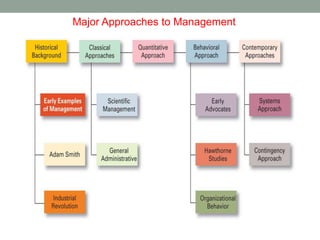
Major Approaches to Management
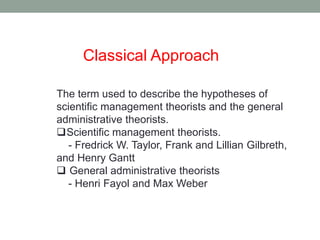
Classical Approach 
The term used to describe the hypotheses of 
scientific management theorists and the general 
administrative theorists. 
Scientific management theorists. 
- Fredrick W. Taylor, Frank and Lillian Gilbreth, 
and Henry Gantt 
 General administrative theorists 
- Henri Fayol and Max Weber
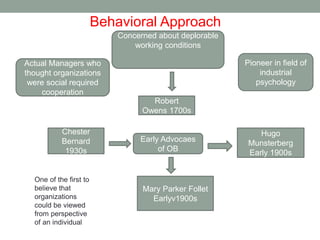
Behavioral Approach 
Actual Managers who 
thought organizations 
were social required 
cooperation 
Concerned about deplorable 
working conditions 
Pioneer in field of 
industrial 
psychology 
Robert 
Owens 1700s 
Early Advocaes 
of OB 
Chester 
Bernard 
1930s 
Hugo 
Munsterberg 
Early 1900s 
One of the first to 
believe that 
organizations 
could be viewed 
from perspective 
of an individual 
Mary Parker Follet 
Earlyv1900s
BEHAVIORAL APPROACH 
Managers get things done by working 
with people 
└ explains why some writers 
choose to look at management by 
- focusing on an organization’s 
people. 
Organizational behavior 
- field of study that researches 
the action (behavior) of people at 
work 
└ motivation, leadership, conflict 
, sabotage, absenteeism 
Hawthorne 
Studies
QUANTITATVE APPROACH 
How managers today apply Behavioral 
approach? 
Largely shape how today’s 
organization are managed. 
How to build teams 
How to motivate today’s employees. 
Money is no longer the main key 
motivator. Other intrinsic values. 
Transactional leadership skills to 
motivate and lead employees.
QUANTITATIVE APPROACH 
Also known as decision science / 
science management. 
Involves applying statistics, 
optimization models, information 
models, computer simulations to 
management activities. 
Linear-programming – improve 
allocation resource decisions 
Total Quality Management - important 
contributor
QUANTATIVE APPROACH 
Total Quality Management 
- a management philosophy devoted to continual 
improvement and 
responding to customer needs and expectations. 
“Customers “ , encompass employees & suppliers , the 
people who purchase the goods and services. 
Continuous improvement 
- accurate measurements which require statistical 
measurement are 
compared against standards to identify and correct 
problems.
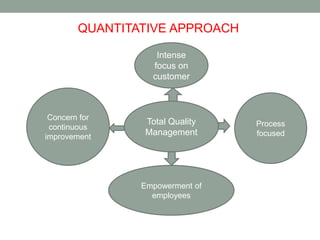
QUANTITATIVE APPROACH 
Intense 
focus on 
customer 
Total Quality 
Management 
Concern for 
continuous 
improvement 
Process 
focused 
Empowerment of 
employees
The Contingency Approach 
DEFINATATION: The contingency 
approach to management is based on the 
idea that there is no one best way to manage 
and that to be effective, planning, organizing, 
leading, and controlling must be tailored to the 
particular circumstances faced by an 
organization.

Presentation (gray)

  • 1.
    Course: Introduction toManagement Assignment Title : Major Management Approaches Course Instructor : Miss Afshan Rauf Deadline: 19 Aug 2014 Name : Ahmed Zeeshan ID:FA14-BB-0034
  • 3.
  • 4.
    Classical Approach Theterm used to describe the hypotheses of scientific management theorists and the general administrative theorists. Scientific management theorists. - Fredrick W. Taylor, Frank and Lillian Gilbreth, and Henry Gantt  General administrative theorists - Henri Fayol and Max Weber
  • 5.
    Behavioral Approach ActualManagers who thought organizations were social required cooperation Concerned about deplorable working conditions Pioneer in field of industrial psychology Robert Owens 1700s Early Advocaes of OB Chester Bernard 1930s Hugo Munsterberg Early 1900s One of the first to believe that organizations could be viewed from perspective of an individual Mary Parker Follet Earlyv1900s
  • 6.
    BEHAVIORAL APPROACH Managersget things done by working with people └ explains why some writers choose to look at management by - focusing on an organization’s people. Organizational behavior - field of study that researches the action (behavior) of people at work └ motivation, leadership, conflict , sabotage, absenteeism Hawthorne Studies
  • 7.
    QUANTITATVE APPROACH Howmanagers today apply Behavioral approach? Largely shape how today’s organization are managed. How to build teams How to motivate today’s employees. Money is no longer the main key motivator. Other intrinsic values. Transactional leadership skills to motivate and lead employees.
  • 8.
    QUANTITATIVE APPROACH Alsoknown as decision science / science management. Involves applying statistics, optimization models, information models, computer simulations to management activities. Linear-programming – improve allocation resource decisions Total Quality Management - important contributor
  • 9.
    QUANTATIVE APPROACH TotalQuality Management - a management philosophy devoted to continual improvement and responding to customer needs and expectations. “Customers “ , encompass employees & suppliers , the people who purchase the goods and services. Continuous improvement - accurate measurements which require statistical measurement are compared against standards to identify and correct problems.
  • 10.
    QUANTITATIVE APPROACH Intense focus on customer Total Quality Management Concern for continuous improvement Process focused Empowerment of employees
  • 11.
    The Contingency Approach DEFINATATION: The contingency approach to management is based on the idea that there is no one best way to manage and that to be effective, planning, organizing, leading, and controlling must be tailored to the particular circumstances faced by an organization.