Dr.P.Prittopaul
Assistant Professor
Dept of CSE
Velammal Engineering College
(An Autonomous Institution, Affiliated to Anna University, Chennai)
(Accredited by NAAC & NBA)
 In CS a tree is
 an Organizational Structure for the storage and retrieval of data.
 Height balanced binary search trees: AVL trees, red-black trees
search faster than in an average binary search tree because the tree is
guaranteed to have the smallest possible depth.
 Another kind of multi-way search trees . Optimises search in external
memory.
 Main memory (RAM)
 External (peripheral) storage: hard disk,
CD-ROM, tape, etc.
Different considerations are important in designing algorithms
and data structures for primary (main) versus secondary
(peripheral) memory.
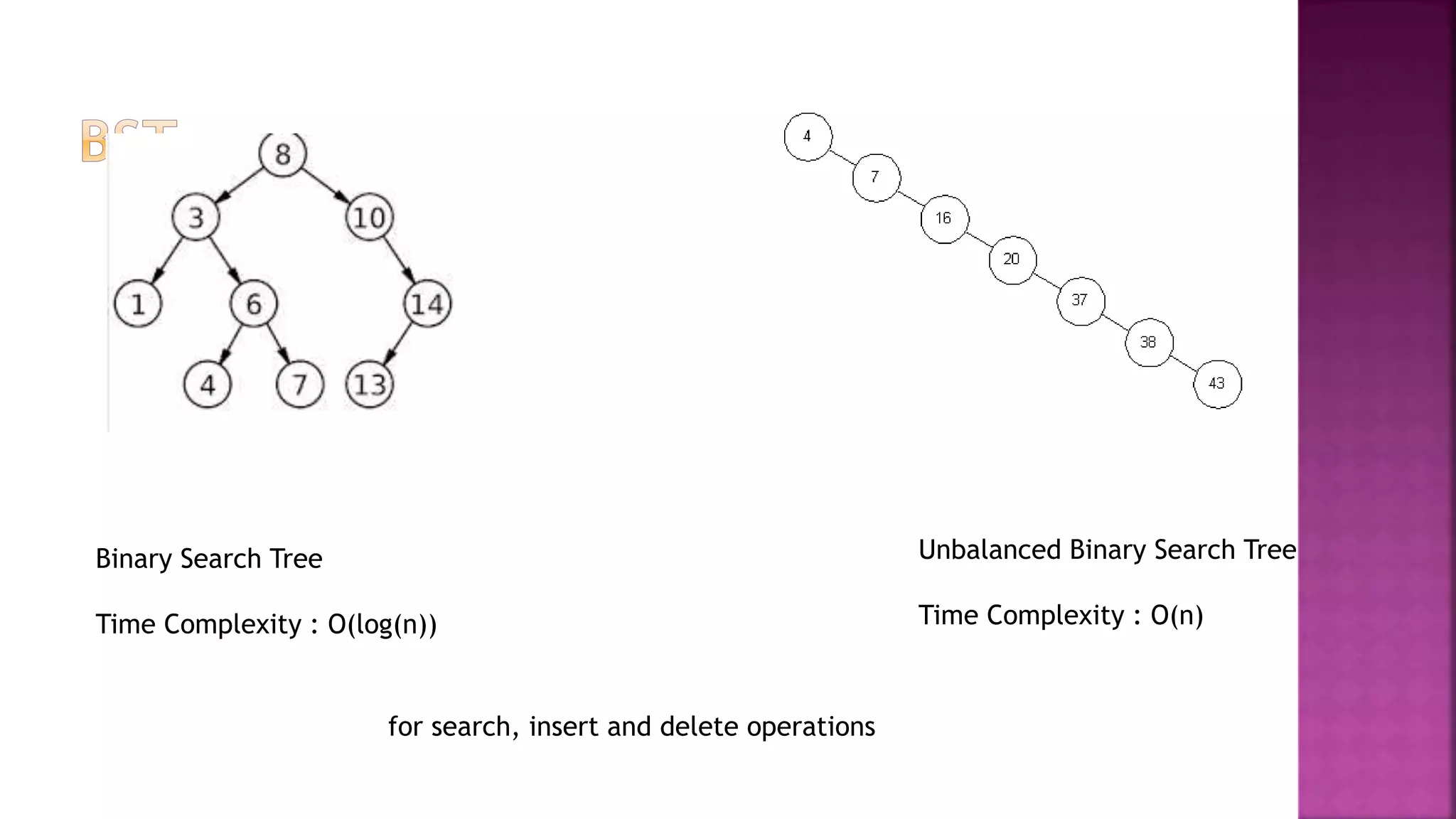
Binary Search Tree
Time Complexity : O(log(n))
Unbalanced Binary Search Tree
Time Complexity : O(n)
for search, insert and delete operations
 Remedy is self balancing trees.
 Automatically adjust to itself to get balanced.
 eg Red black tree
 B-Tree
 Intro
 Invented by Rudolf Bayer and Ed McCreight in 1972 at Boeing Research
Labs.
 B-Tree is known as balanced m-way tree and used in external sorting.
 m-way node is were m=5 it describes that there should be m links and m-1
data.
 Algorithms and data structures for external memory as opposed to the
main memory
 A good example of a data structure for external memory is a
B-tree.
 Better than binary search trees if data is stored in external
memory (they are NOT better with in-memory data!).
 Each node in a tree should correspond to a block of data.
 Each node stores many data items and has many successors
(stores addresses of successor blocks).
 The tree has fewer levels but search for an item involves
more comparisons at each level.
 There is a single root node, which may have only one record
and two children (or none if the tree is empty).
 Each node has a maximum of M children and minimum of m/2 children
 Each node should have a fewer keys than children with a maximum of
m-1 keys
 Keys should be arranged in a defined order within the node
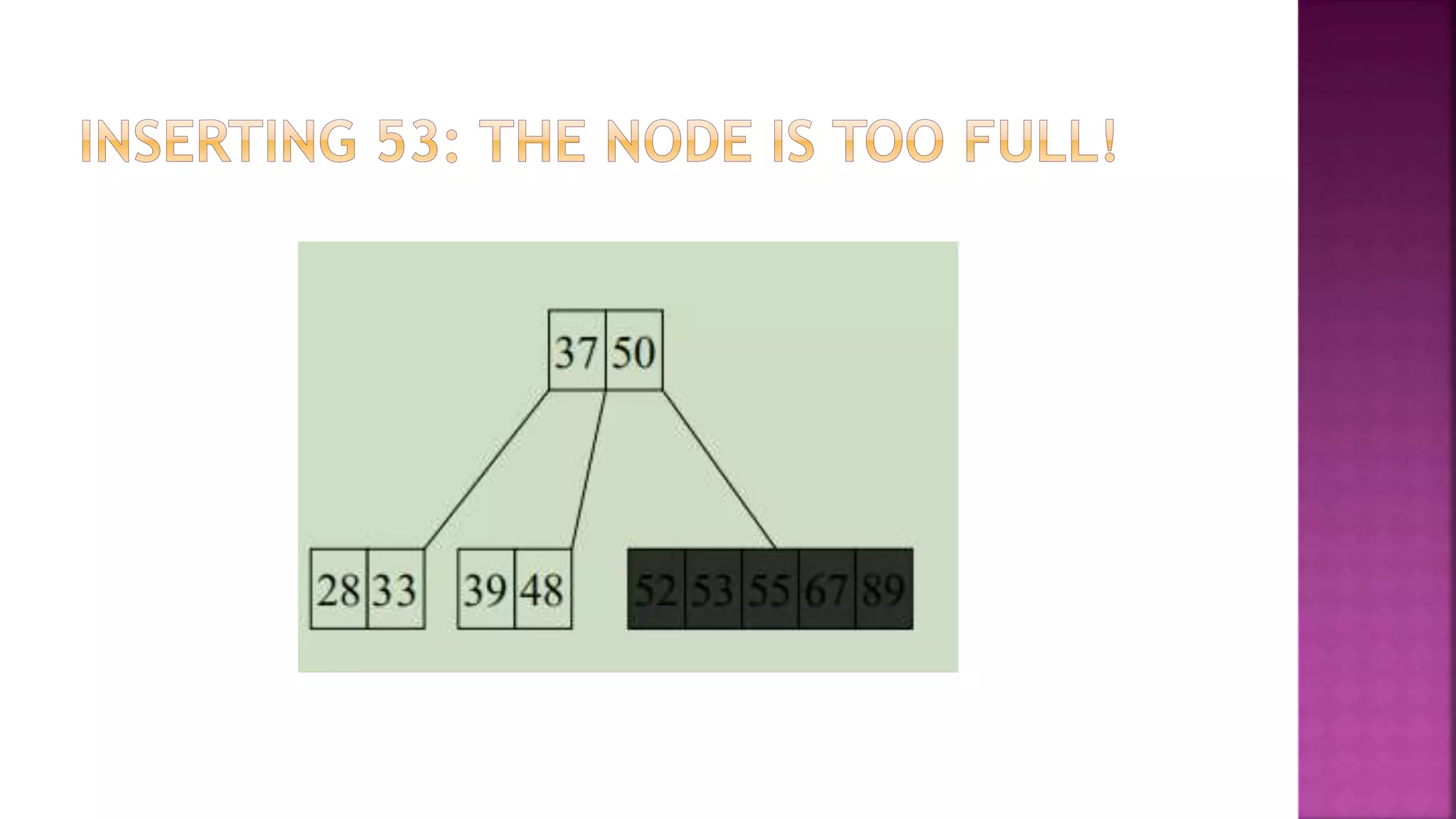
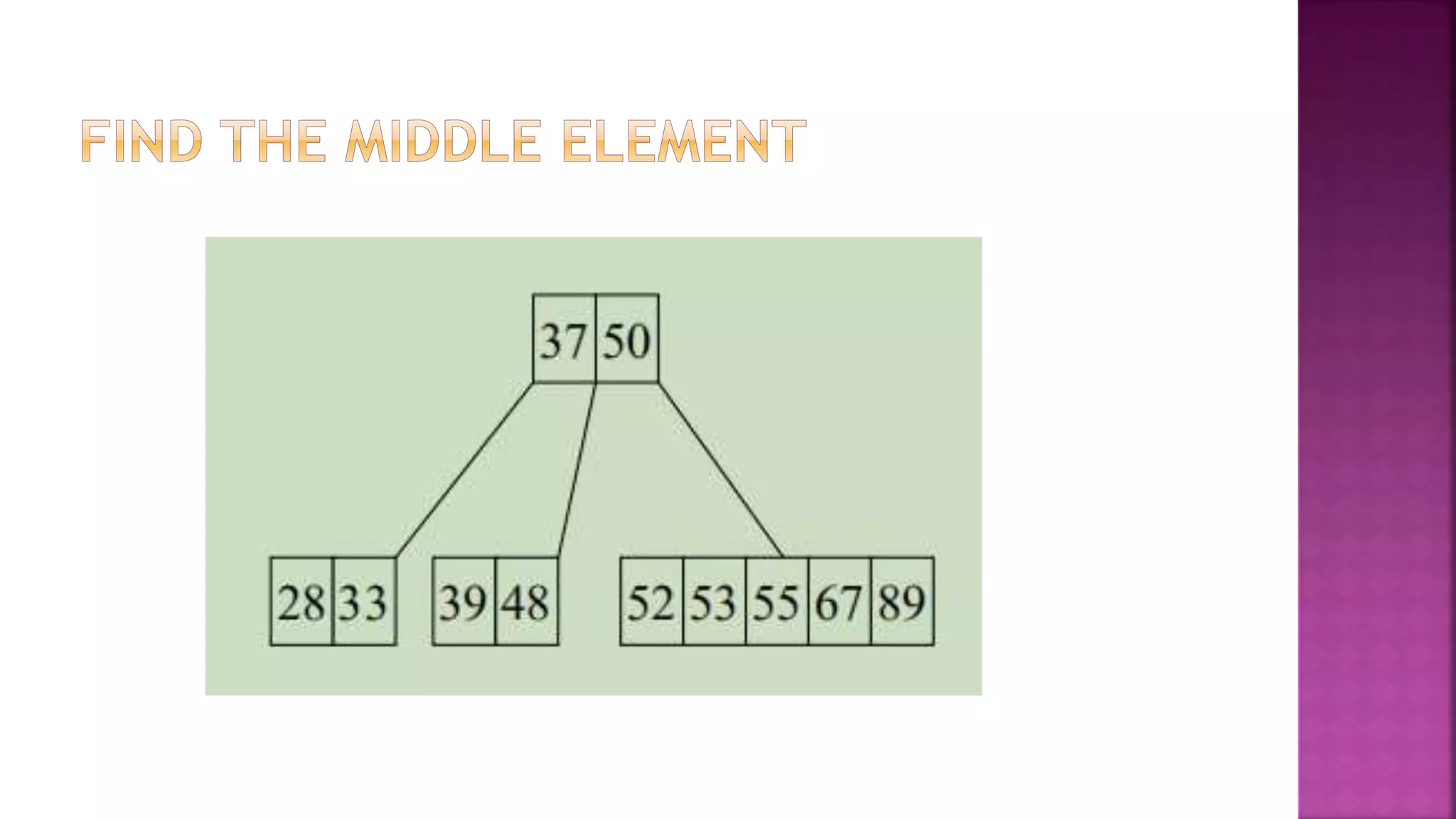
 Key to be inserted into a fullnode, the node is splitted into two nodes by
taking the median value.
 All Leaves are to be at same level.
 no empty subtrees
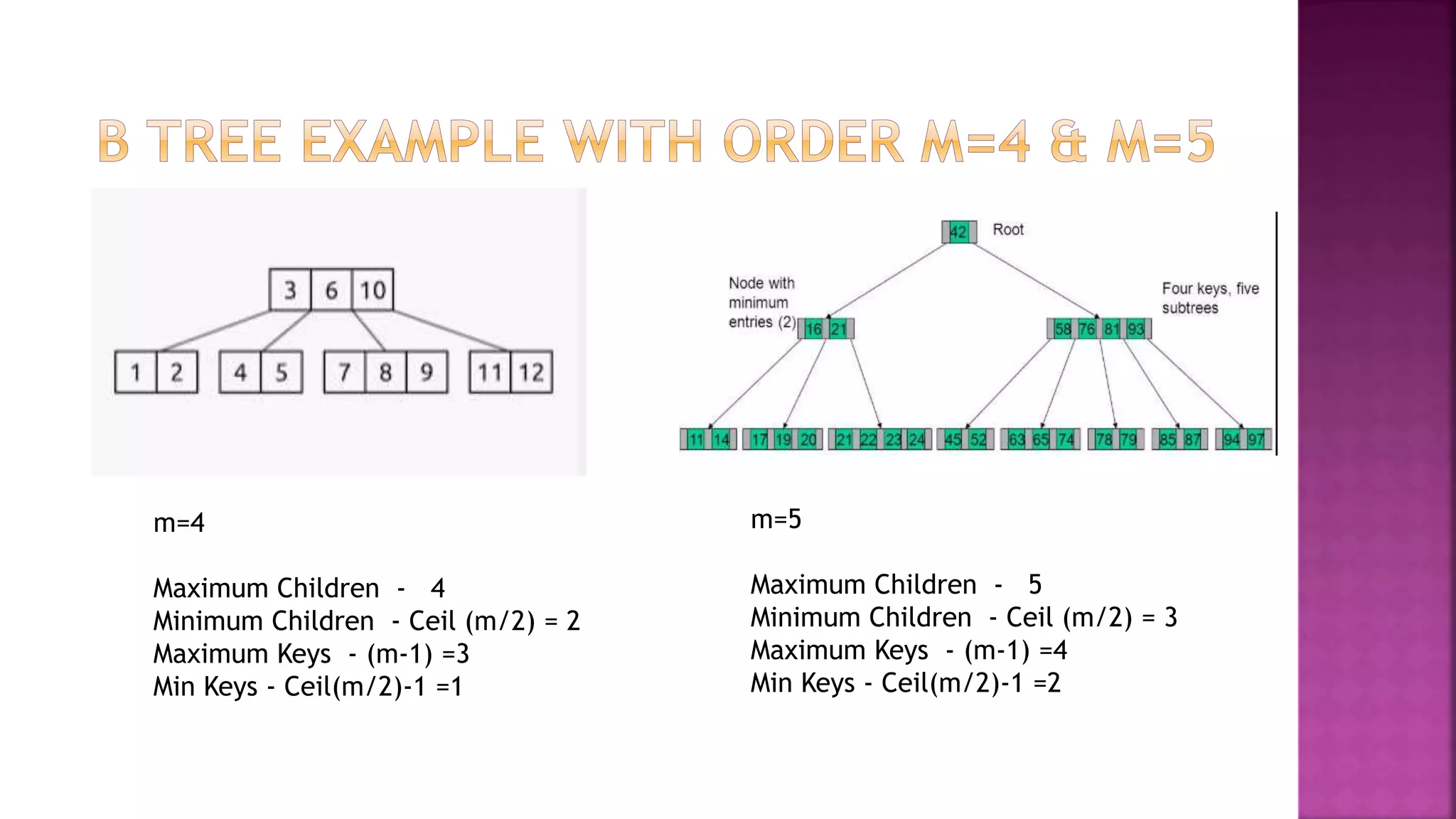
m=4
Maximum Children - 4
Minimum Children - Ceil (m/2) = 2
Maximum Keys - (m-1) =3
Min Keys - Ceil(m/2)-1 =1
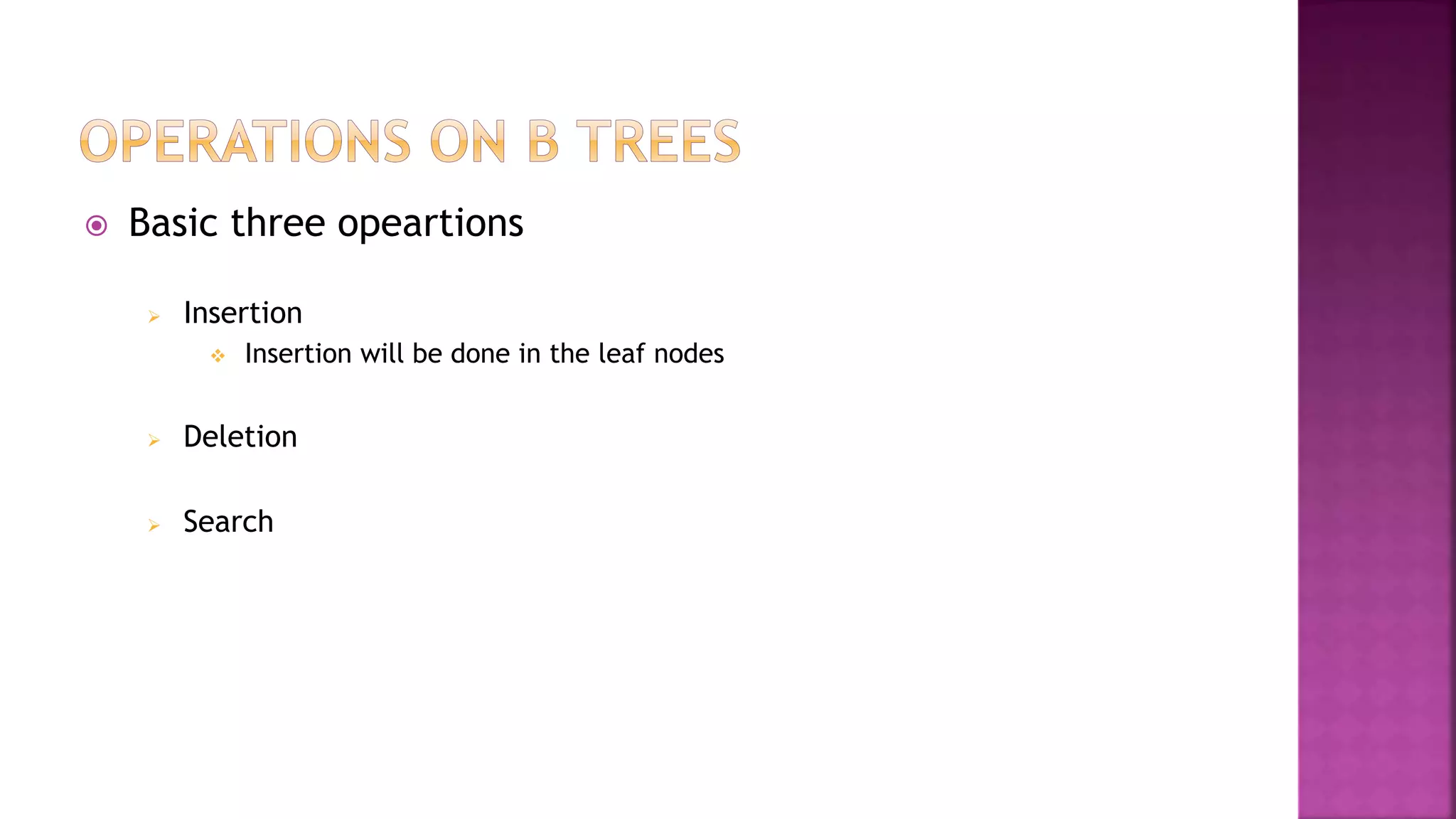
m=5
Maximum Children - 5
Minimum Children - Ceil (m/2) = 3
Maximum Keys - (m-1) =4
Min Keys - Ceil(m/2)-1 =2
 Basic three opeartions
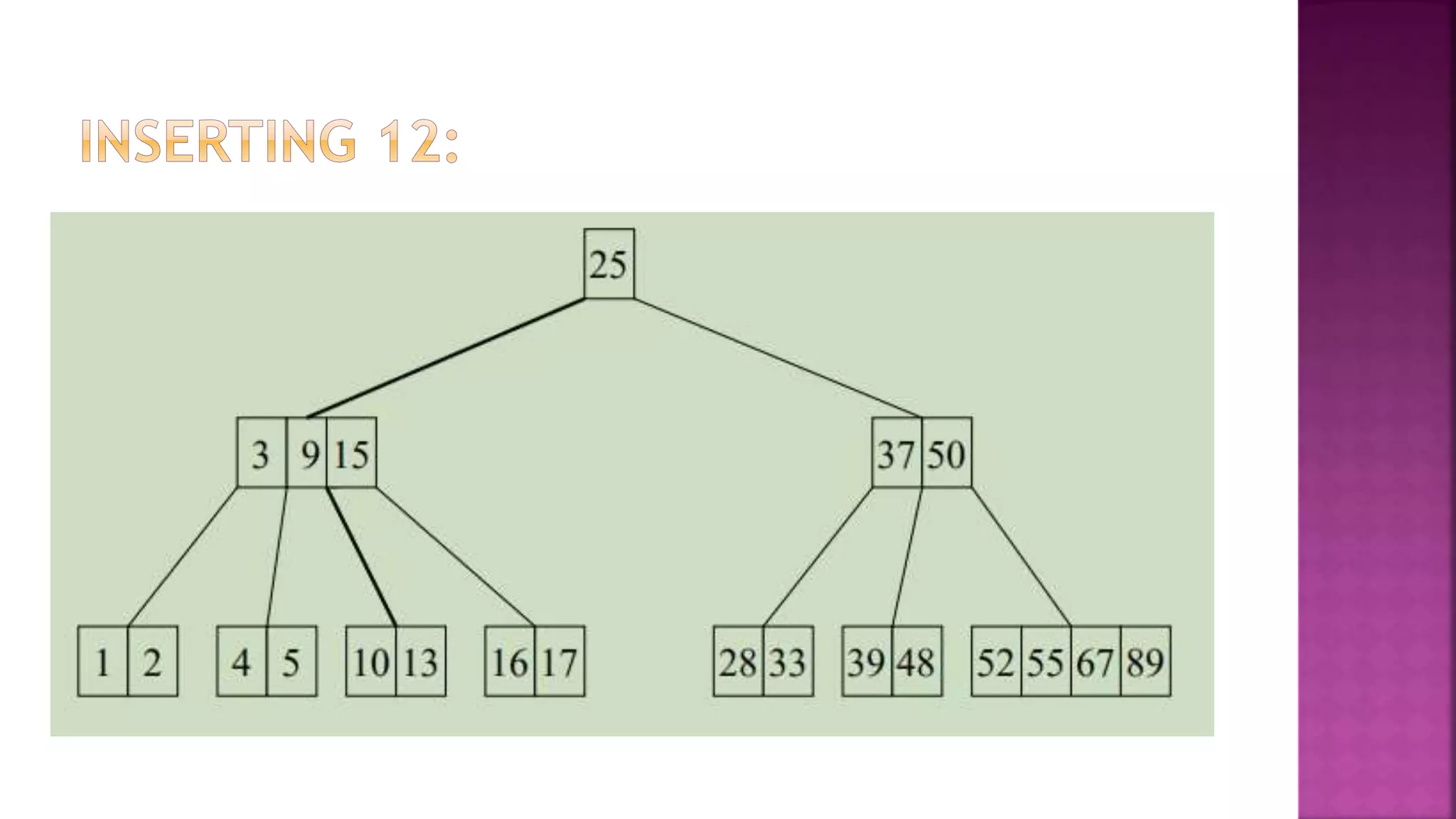
 Insertion
 Insertion will be done in the leaf nodes
 Deletion
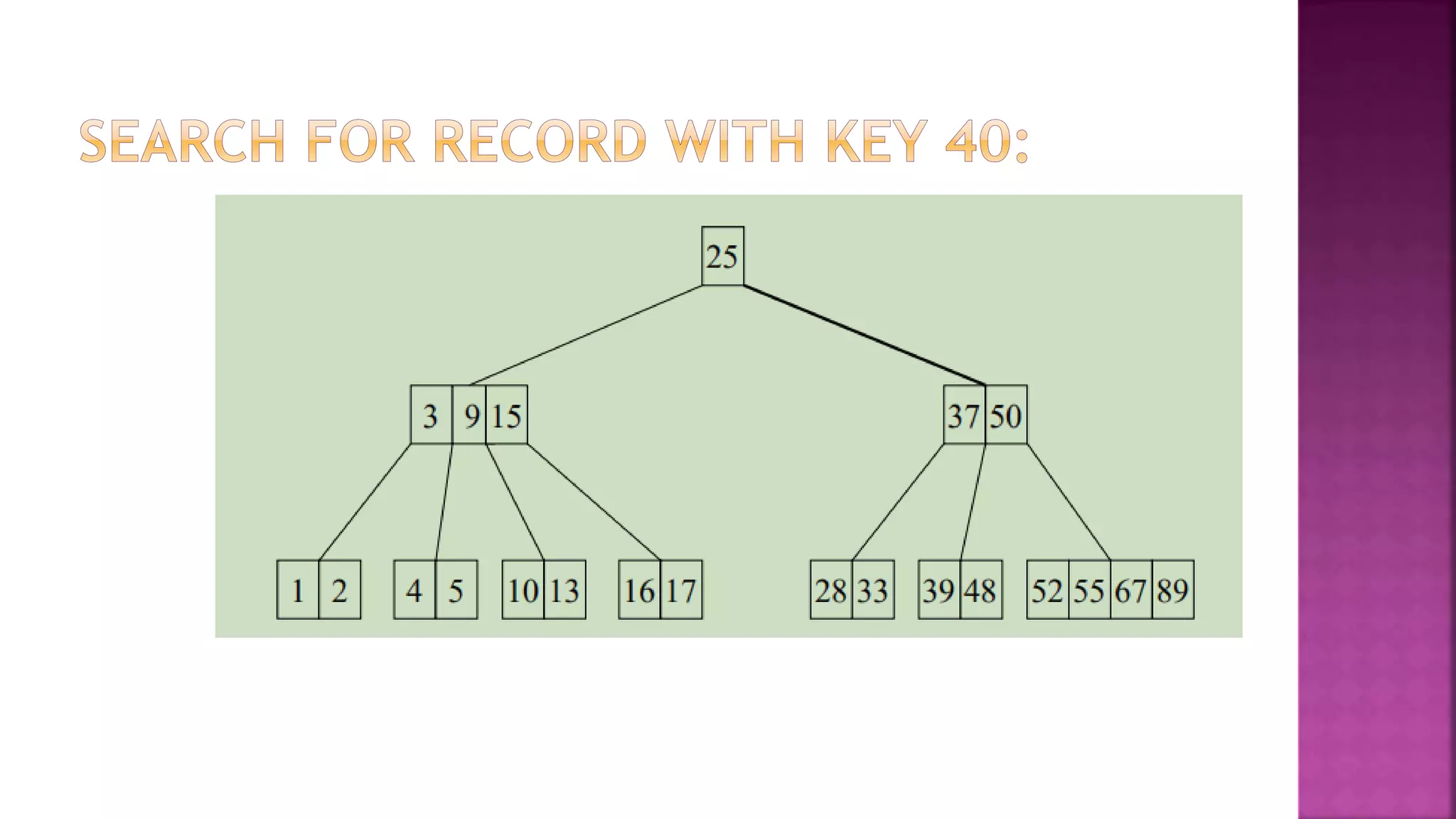
 Search
 To insert elements in B tree element to be inserted is to be
scanned from left to right.
 If the order to construct an even order B tree then two sets
of tree is created
 Find the node where the item is to be inserted by following
the search procedure.
 If the node is not full, insert the item into the node in order.
 If the node is full, it has to be split.
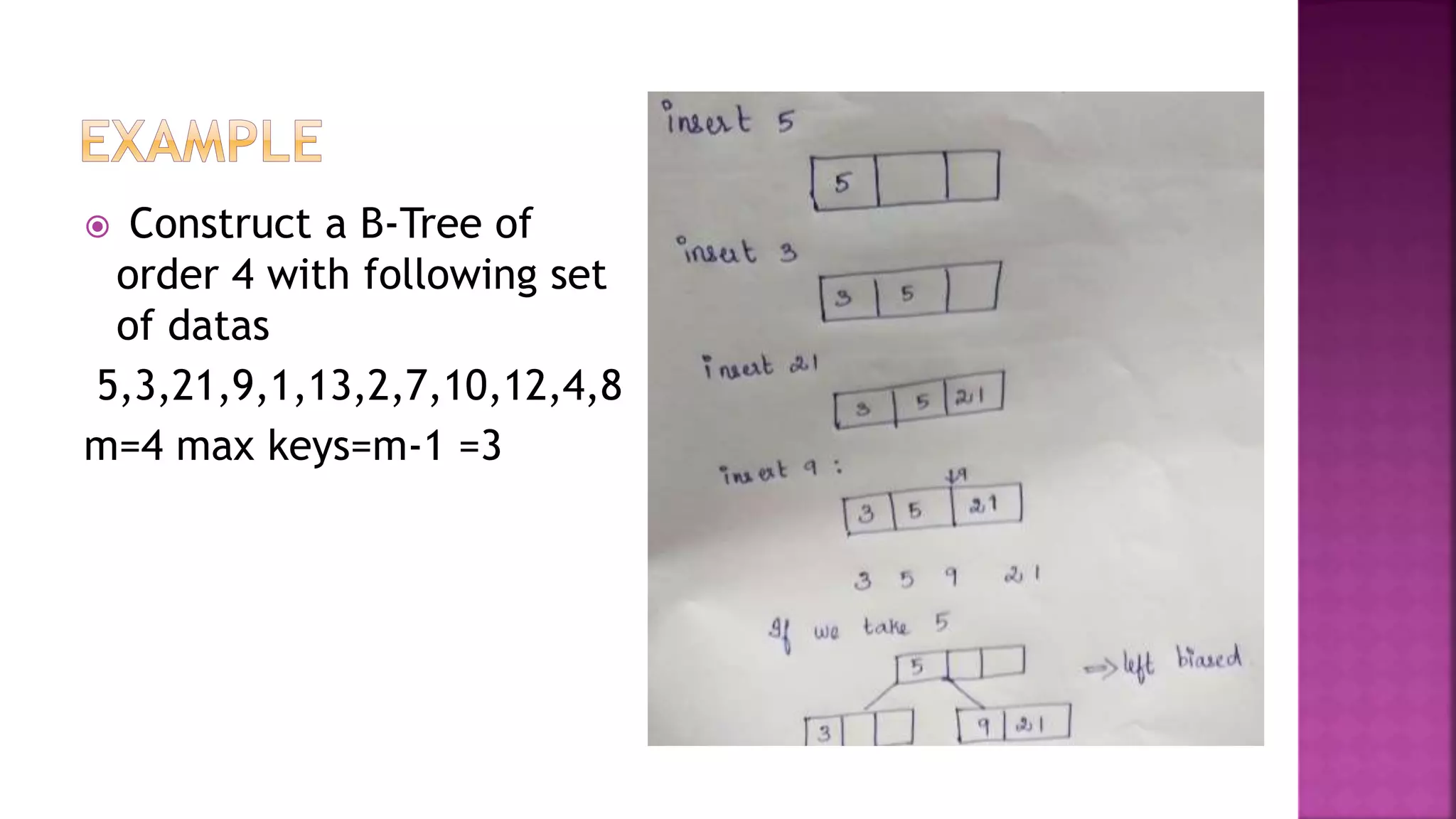
 Construct a B-Tree of
order 4 with following set
of datas
5,3,21,9,1,13,2,7,10,12,4,8
m=4 max keys=m-1 =3
5,3,21,9,1,13,2,7,10,12,4,8
m=4 max keys=m-1 =3
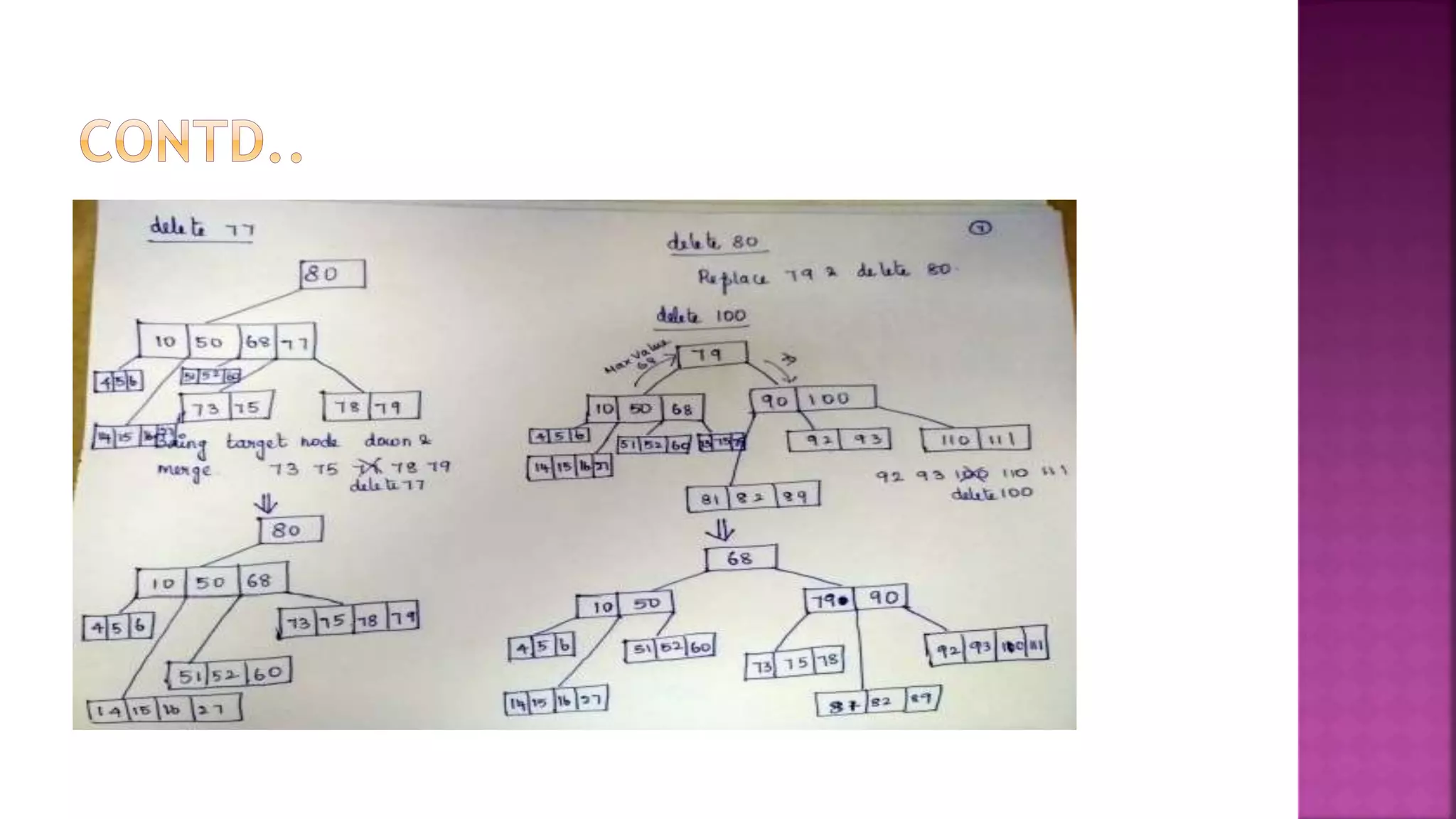
 The key to be deleted is called the target key
Two Possibilities
 Target key can be a leaf node
 Target Key can be in internal node
 Target key can be leaf node
Two Possibilities
 Leaf node contains more than min no of keys
 Leaf node contains min no of keys

 If the target key is internal node

B trees
B trees
B trees
B trees
B trees

B trees

  • 1.
    Dr.P.Prittopaul Assistant Professor Dept ofCSE Velammal Engineering College Velammal Engineering College (An Autonomous Institution, Affiliated to Anna University, Chennai) (Accredited by NAAC & NBA)
  • 2.
     In CSa tree is  an Organizational Structure for the storage and retrieval of data.  Height balanced binary search trees: AVL trees, red-black trees search faster than in an average binary search tree because the tree is guaranteed to have the smallest possible depth.  Another kind of multi-way search trees . Optimises search in external memory.
  • 3.
     Main memory(RAM)  External (peripheral) storage: hard disk, CD-ROM, tape, etc. Different considerations are important in designing algorithms and data structures for primary (main) versus secondary (peripheral) memory.
  • 4.
    Binary Search Tree TimeComplexity : O(log(n)) Unbalanced Binary Search Tree Time Complexity : O(n) for search, insert and delete operations
  • 5.
     Remedy isself balancing trees.  Automatically adjust to itself to get balanced.  eg Red black tree  B-Tree
  • 6.
     Intro  Inventedby Rudolf Bayer and Ed McCreight in 1972 at Boeing Research Labs.  B-Tree is known as balanced m-way tree and used in external sorting.  m-way node is were m=5 it describes that there should be m links and m-1 data.  Algorithms and data structures for external memory as opposed to the main memory
  • 7.
     A goodexample of a data structure for external memory is a B-tree.  Better than binary search trees if data is stored in external memory (they are NOT better with in-memory data!).  Each node in a tree should correspond to a block of data.  Each node stores many data items and has many successors (stores addresses of successor blocks).
  • 8.
     The treehas fewer levels but search for an item involves more comparisons at each level.  There is a single root node, which may have only one record and two children (or none if the tree is empty).
  • 9.
     Each nodehas a maximum of M children and minimum of m/2 children  Each node should have a fewer keys than children with a maximum of m-1 keys  Keys should be arranged in a defined order within the node  Key to be inserted into a fullnode, the node is splitted into two nodes by taking the median value.  All Leaves are to be at same level.  no empty subtrees
  • 10.
    m=4 Maximum Children -4 Minimum Children - Ceil (m/2) = 2 Maximum Keys - (m-1) =3 Min Keys - Ceil(m/2)-1 =1 m=5 Maximum Children - 5 Minimum Children - Ceil (m/2) = 3 Maximum Keys - (m-1) =4 Min Keys - Ceil(m/2)-1 =2
  • 11.
     Basic threeopeartions  Insertion  Insertion will be done in the leaf nodes  Deletion  Search
  • 20.
     To insertelements in B tree element to be inserted is to be scanned from left to right.  If the order to construct an even order B tree then two sets of tree is created
  • 21.
     Find thenode where the item is to be inserted by following the search procedure.  If the node is not full, insert the item into the node in order.  If the node is full, it has to be split.
  • 22.
     Construct aB-Tree of order 4 with following set of datas 5,3,21,9,1,13,2,7,10,12,4,8 m=4 max keys=m-1 =3
  • 23.
  • 26.
     The keyto be deleted is called the target key Two Possibilities  Target key can be a leaf node  Target Key can be in internal node
  • 27.
     Target keycan be leaf node Two Possibilities  Leaf node contains more than min no of keys  Leaf node contains min no of keys 
  • 28.
     If thetarget key is internal node 