Aztecs Chapter 8
For the Good of the People
Aztec Social Hierarchy
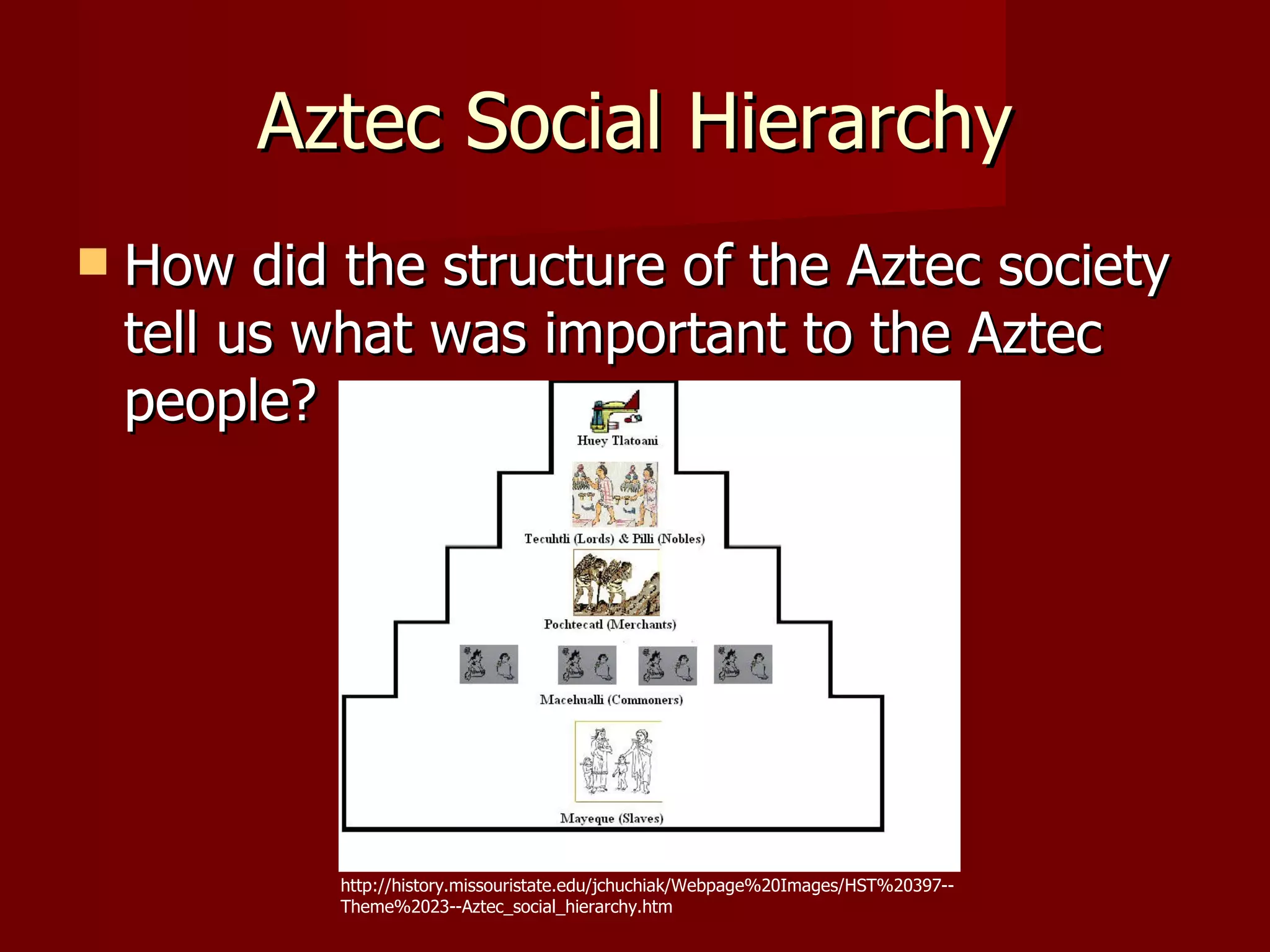
   How did the structure of the Aztec society
    tell us what was important to the Aztec
    people?


            http://history.missouristate.edu/jchuchiak/Webpage%20Images/HST%20397--
            Theme%2023--Aztec_social_hierarchy.htm
Aztec Social Hierarchy
 No matter what class you were born into,
  you could rise in the ranks to nobility
 Warriors could rise to the greatest levels
  even if they were only a poor peasant to
  begin
    – Then, you could become emperor because
      they were chosen from the nobles
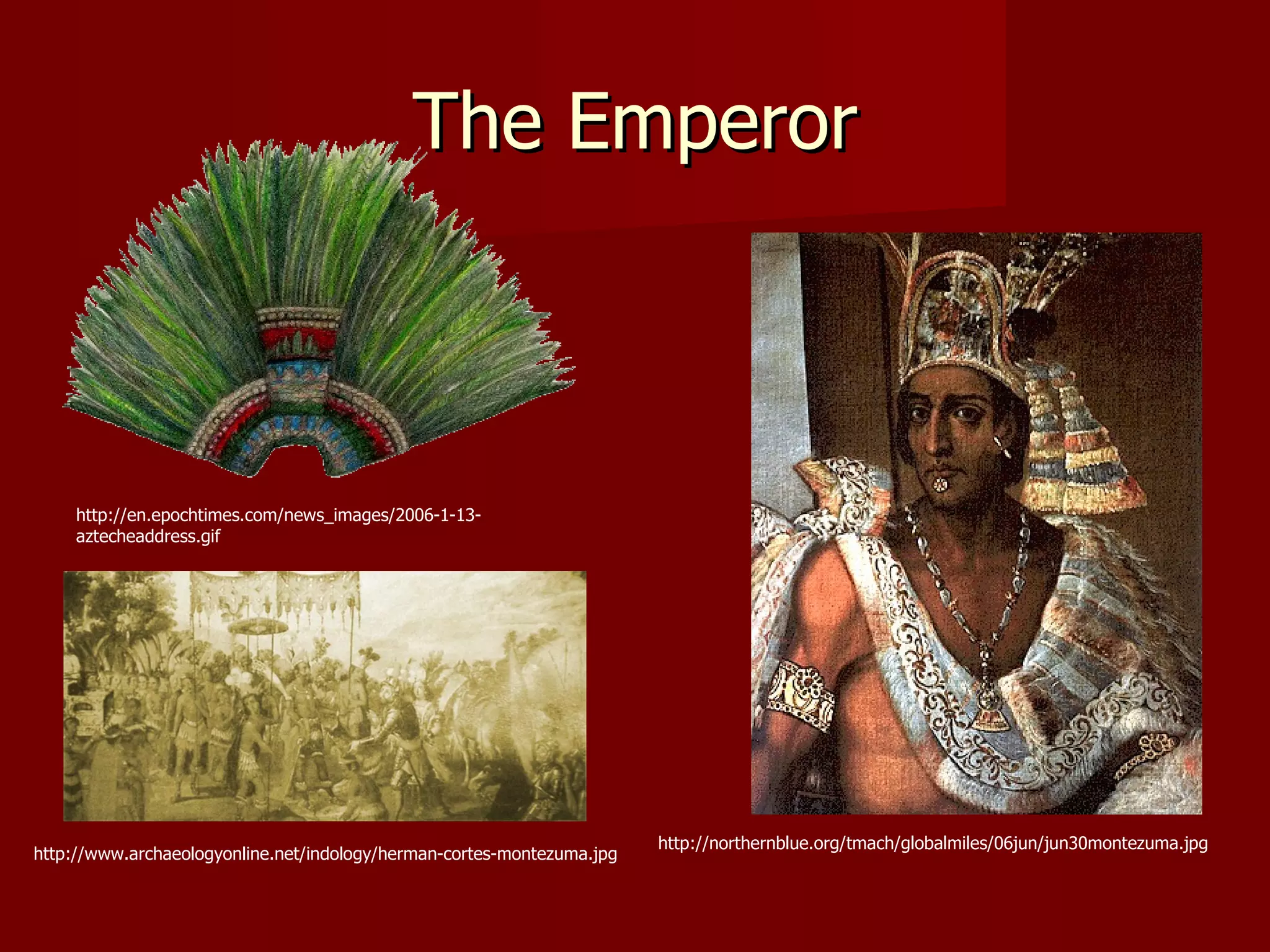
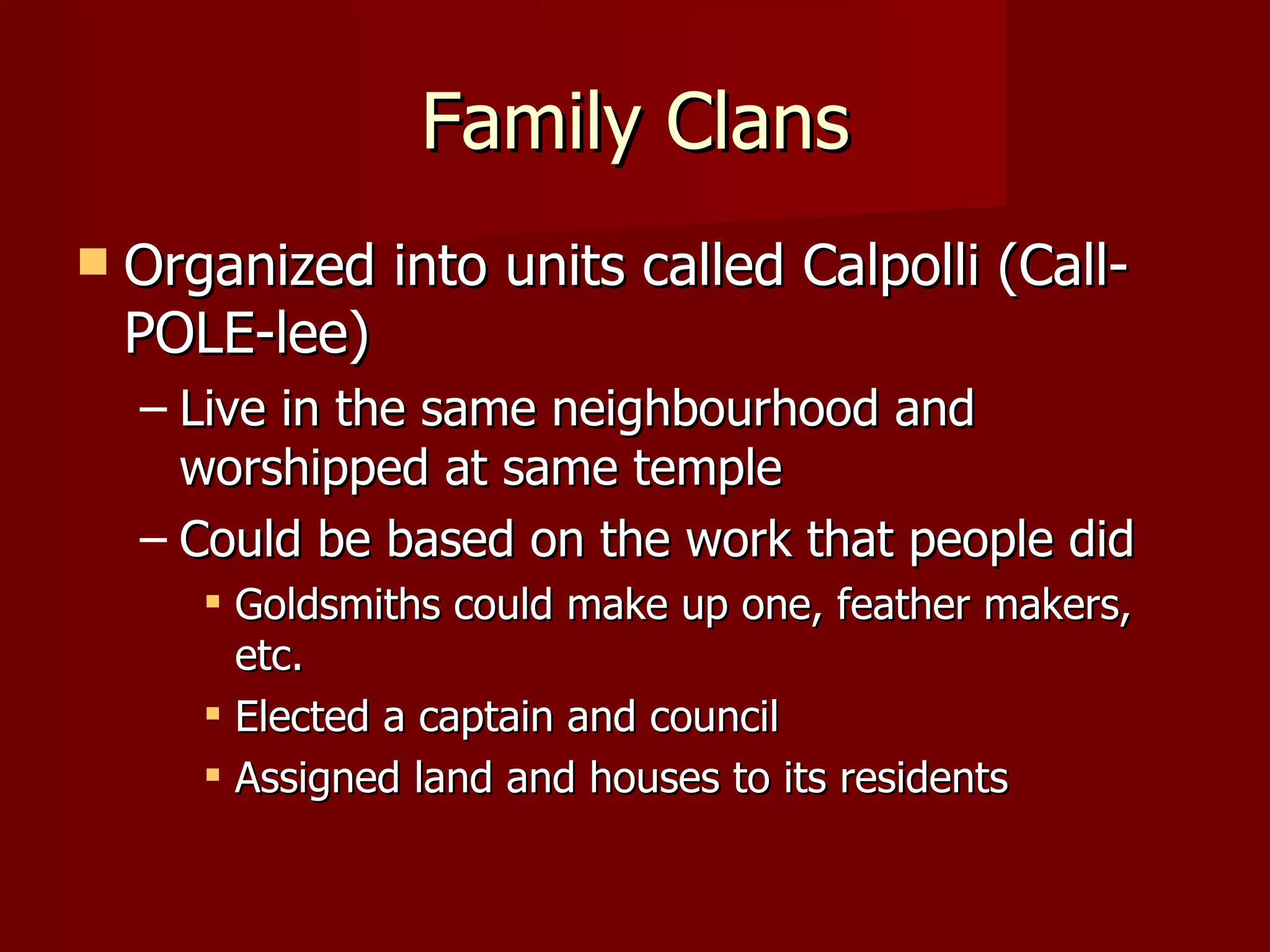
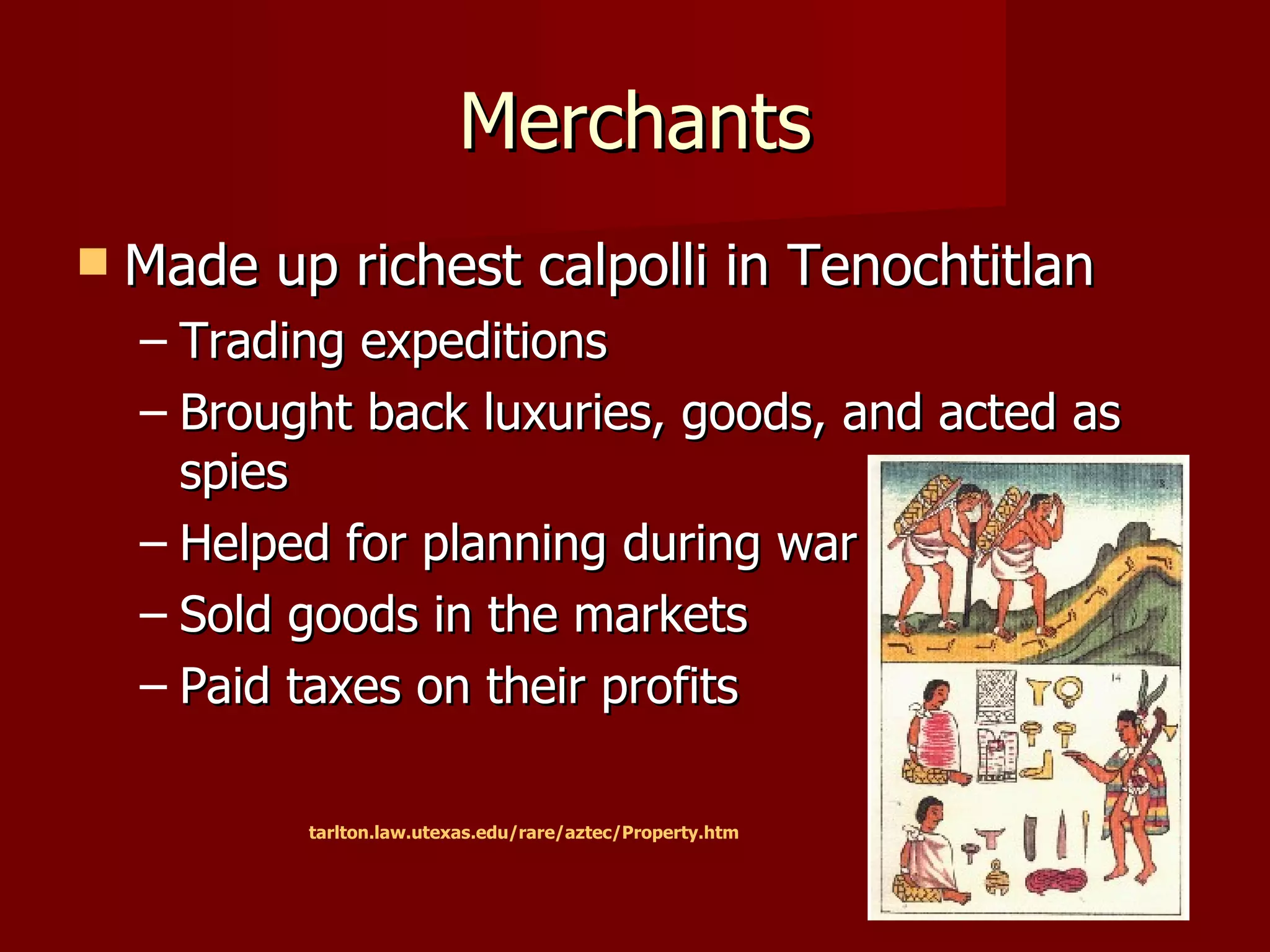
The Emperor
 Read page 171
 Moctezuma was emperor when the
  Spanish arrived
 He had the title of “Great Speaker”
    – Treated like a god, obeyed without question
    – Commander of the army
    – Head of state
    – Chief Priest
The Emperor


     http://en.epochtimes.com/news_images/2006-1-13-
     aztecheaddress.gif


                                                                        http://northernblue.org/tmach/globalmiles/06jun/jun30montezuma.jpg
http://www.archaeologyonline.net/indology/herman-cortes-montezuma.jpg
Family Clans
   Organized into units called Calpolli (Call-
    POLE-lee)
    – Live in the same neighbourhood and
      worshipped at same temple
    – Could be based on the work that people did
        Goldsmiths could make up one, feather makers,
         etc.
        Elected a captain and council
        Assigned land and houses to its residents
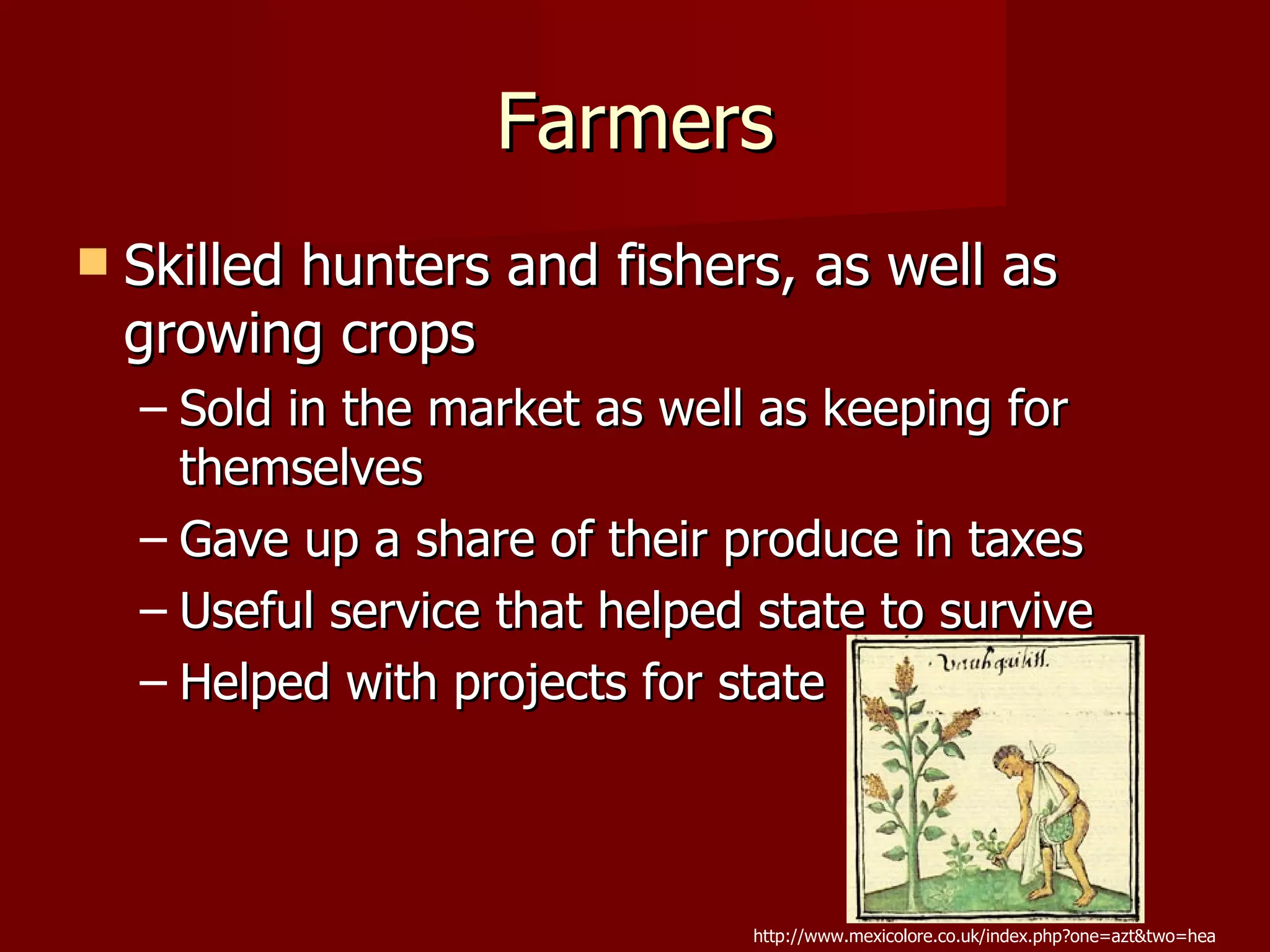
Merchants
   Made up richest calpolli in Tenochtitlan
    – Trading expeditions
    – Brought back luxuries, goods, and acted as
      spies
    – Helped for planning during war
    – Sold goods in the markets
    – Paid taxes on their profits

           tarlton.law.utexas.edu/rare/aztec/Property.htm
Farmers
   Skilled hunters and fishers, as well as
    growing crops
    – Sold in the market as well as keeping for
      themselves
    – Gave up a share of their produce in taxes
    – Useful service that helped state to survive
    – Helped with projects for state


                                http://www.mexicolore.co.uk/index.php?one=azt&two=hea
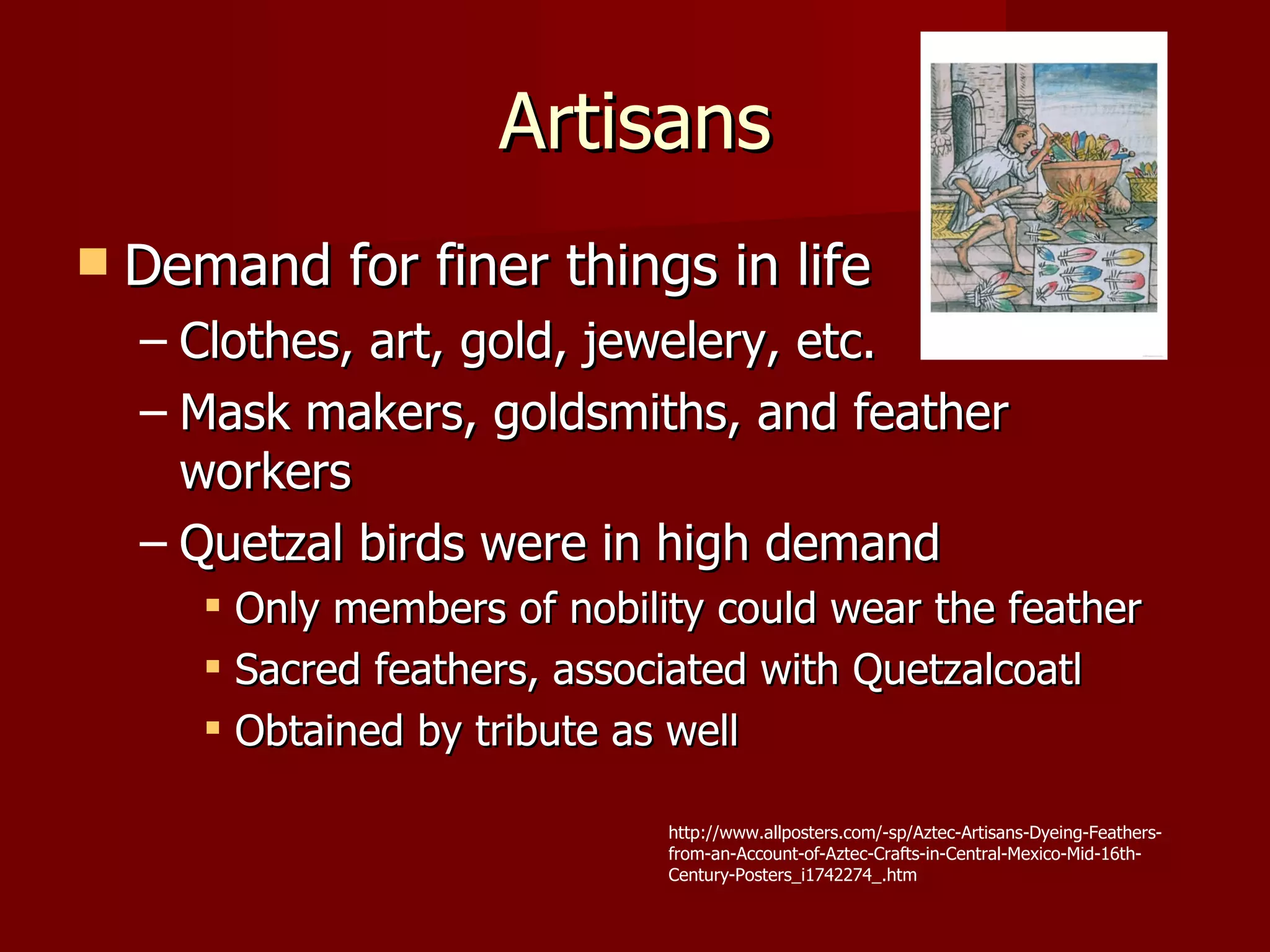
Artisans
   Demand for finer things in life
    – Clothes, art, gold, jewelery, etc.
    – Mask makers, goldsmiths, and feather
      workers
    – Quetzal birds were in high demand
        Only members of nobility could wear the feather
        Sacred feathers, associated with Quetzalcoatl
        Obtained by tribute as well

                               http://www.allposters.com/-sp/Aztec-Artisans-Dyeing-Feathers-
                               from-an-Account-of-Aztec-Crafts-in-Central-Mexico-Mid-16th-
                               Century-Posters_i1742274_.htm
Aztec Education- Calmecac
   What they studied in       What they trained to
    their schools               be (careers)
                                – Generals in the army
    – Astronomy/Astrology
                                – Judges
    – Mathematics
                                – Priests
    – Reading                   – Scribes
    – Writing                   – High government
    – Music                       officials
                                – Diplomats
    – Law
                                – Teachers
    – Calendar
Other schools for Aztecs
   Military training
    – All boys were trained to be warriors
    – Serve as a servant for soldier to follow army
    – At 18: became an active warrior
   For commoners
    – Called “telpochcalli”
        Did not need to learn to read and write
        Oral lessons
        Music, physical labor (for boys), and home skills
         (for girls)
Other schools for Aztecs (cont.)
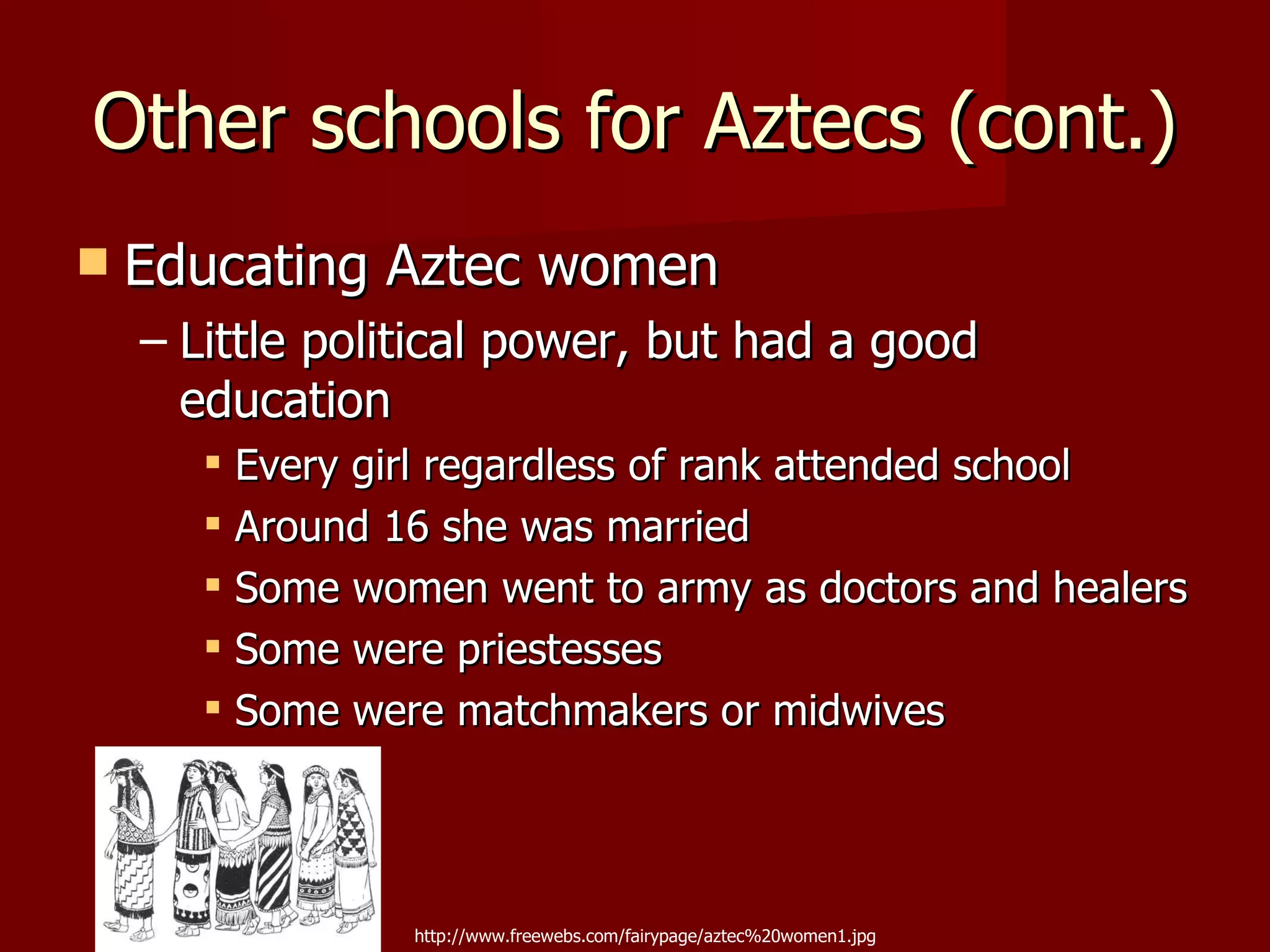
   Educating Aztec women
    – Little political power, but had a good
      education
        Every girl regardless of rank attended school
        Around 16 she was married
        Some women went to army as doctors and healers
        Some were priestesses
        Some were matchmakers or midwives


                 http://www.freewebs.com/fairypage/aztec%20women1.jpg
Aztec Society
         Focused on producing
          good citizens
           – Part of the young
             person’s education
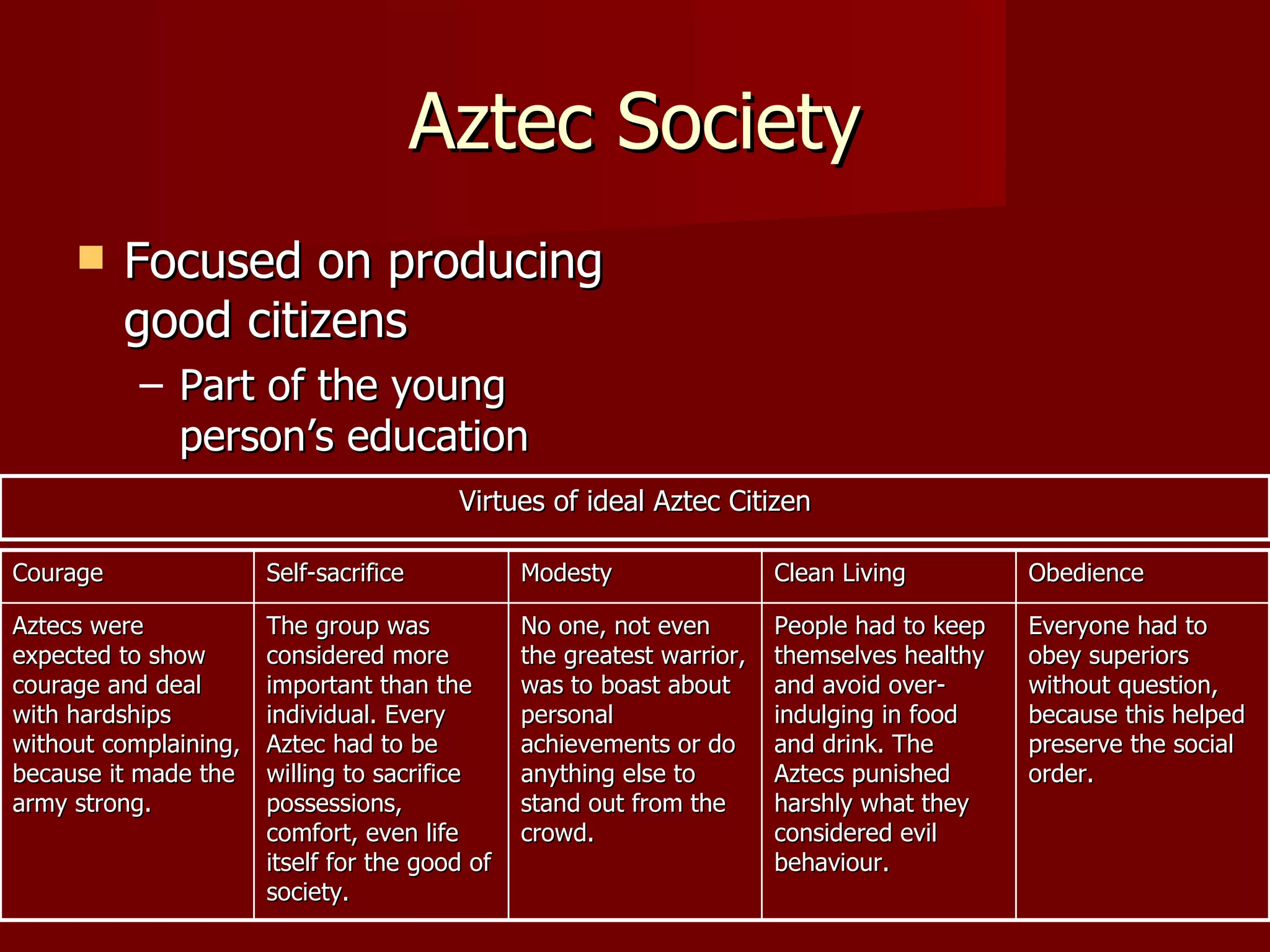
                                         Virtues of ideal Aztec Citizen

Courage                Self-sacrifice           Modesty                 Clean Living         Obedience

Aztecs were            The group was            No one, not even        People had to keep   Everyone had to
expected to show       considered more          the greatest warrior,   themselves healthy   obey superiors
courage and deal       important than the       was to boast about      and avoid over-      without question,
with hardships         individual. Every        personal                indulging in food    because this helped
without complaining,   Aztec had to be          achievements or do      and drink. The       preserve the social
because it made the    willing to sacrifice     anything else to        Aztecs punished      order.
army strong.           possessions,             stand out from the      harshly what they
                       comfort, even life       crowd.                  considered evil
                       itself for the good of                           behaviour.
                       society.
Laws and Lawmaking
   Had written laws
    – Reminded people of their responsibilities as citizens
    – Nobles and the emperor were required to obey the
      laws too
    – Nobles were actually often judged harsher because
      they set a good example for others
    – Could appeal decisions from lower court to the high
      court and even to the emperor
    – Aztecs did not have prisons, so the punishment was
      often serious (slavery or fines for lesser crimes, theft
      and murder was a death sentence)
Slavery
   Aztec slaves performed necessary work!
    – Laws protected them as well
    – If they were beaten to death, the noble could
      be executed
    – If the slaves could escape from the slave
      marketplace and run to the emperor’s palace,
      they won their freedom
        1. Not shameful to be a slave (just bad luck)
        2. Not permanent (children born to slaves were
         free)
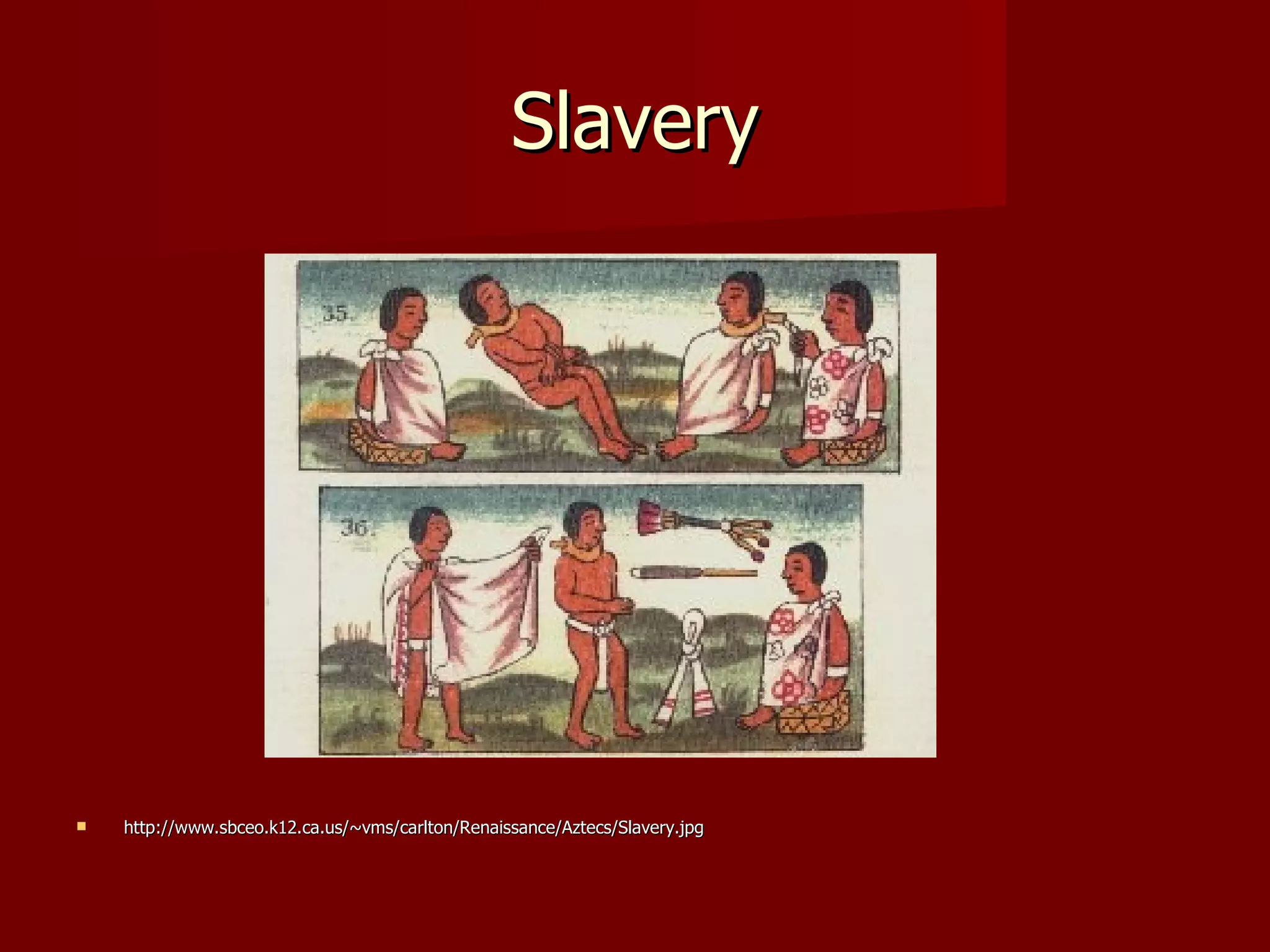
Slavery


   http://www.sbceo.k12.ca.us/~vms/carlton/Renaissance/Aztecs/Slavery.jpg

Chpt 8 notes

  • 1.
    Aztecs Chapter 8 Forthe Good of the People
  • 2.
    Aztec Social Hierarchy  How did the structure of the Aztec society tell us what was important to the Aztec people? http://history.missouristate.edu/jchuchiak/Webpage%20Images/HST%20397-- Theme%2023--Aztec_social_hierarchy.htm
  • 3.
    Aztec Social Hierarchy No matter what class you were born into, you could rise in the ranks to nobility  Warriors could rise to the greatest levels even if they were only a poor peasant to begin – Then, you could become emperor because they were chosen from the nobles
  • 4.
    The Emperor  Readpage 171  Moctezuma was emperor when the Spanish arrived  He had the title of “Great Speaker” – Treated like a god, obeyed without question – Commander of the army – Head of state – Chief Priest
  • 5.
    The Emperor http://en.epochtimes.com/news_images/2006-1-13- aztecheaddress.gif http://northernblue.org/tmach/globalmiles/06jun/jun30montezuma.jpg http://www.archaeologyonline.net/indology/herman-cortes-montezuma.jpg
  • 6.
    Family Clans  Organized into units called Calpolli (Call- POLE-lee) – Live in the same neighbourhood and worshipped at same temple – Could be based on the work that people did  Goldsmiths could make up one, feather makers, etc.  Elected a captain and council  Assigned land and houses to its residents
  • 7.
    Merchants  Made up richest calpolli in Tenochtitlan – Trading expeditions – Brought back luxuries, goods, and acted as spies – Helped for planning during war – Sold goods in the markets – Paid taxes on their profits tarlton.law.utexas.edu/rare/aztec/Property.htm
  • 8.
    Farmers  Skilled hunters and fishers, as well as growing crops – Sold in the market as well as keeping for themselves – Gave up a share of their produce in taxes – Useful service that helped state to survive – Helped with projects for state http://www.mexicolore.co.uk/index.php?one=azt&two=hea
  • 9.
    Artisans  Demand for finer things in life – Clothes, art, gold, jewelery, etc. – Mask makers, goldsmiths, and feather workers – Quetzal birds were in high demand  Only members of nobility could wear the feather  Sacred feathers, associated with Quetzalcoatl  Obtained by tribute as well http://www.allposters.com/-sp/Aztec-Artisans-Dyeing-Feathers- from-an-Account-of-Aztec-Crafts-in-Central-Mexico-Mid-16th- Century-Posters_i1742274_.htm
  • 10.
    Aztec Education- Calmecac  What they studied in  What they trained to their schools be (careers) – Generals in the army – Astronomy/Astrology – Judges – Mathematics – Priests – Reading – Scribes – Writing – High government – Music officials – Diplomats – Law – Teachers – Calendar
  • 11.
    Other schools forAztecs  Military training – All boys were trained to be warriors – Serve as a servant for soldier to follow army – At 18: became an active warrior  For commoners – Called “telpochcalli”  Did not need to learn to read and write  Oral lessons  Music, physical labor (for boys), and home skills (for girls)
  • 12.
    Other schools forAztecs (cont.)  Educating Aztec women – Little political power, but had a good education  Every girl regardless of rank attended school  Around 16 she was married  Some women went to army as doctors and healers  Some were priestesses  Some were matchmakers or midwives http://www.freewebs.com/fairypage/aztec%20women1.jpg
  • 13.
    Aztec Society  Focused on producing good citizens – Part of the young person’s education Virtues of ideal Aztec Citizen Courage Self-sacrifice Modesty Clean Living Obedience Aztecs were The group was No one, not even People had to keep Everyone had to expected to show considered more the greatest warrior, themselves healthy obey superiors courage and deal important than the was to boast about and avoid over- without question, with hardships individual. Every personal indulging in food because this helped without complaining, Aztec had to be achievements or do and drink. The preserve the social because it made the willing to sacrifice anything else to Aztecs punished order. army strong. possessions, stand out from the harshly what they comfort, even life crowd. considered evil itself for the good of behaviour. society.
  • 14.
    Laws and Lawmaking  Had written laws – Reminded people of their responsibilities as citizens – Nobles and the emperor were required to obey the laws too – Nobles were actually often judged harsher because they set a good example for others – Could appeal decisions from lower court to the high court and even to the emperor – Aztecs did not have prisons, so the punishment was often serious (slavery or fines for lesser crimes, theft and murder was a death sentence)
  • 15.
    Slavery  Aztec slaves performed necessary work! – Laws protected them as well – If they were beaten to death, the noble could be executed – If the slaves could escape from the slave marketplace and run to the emperor’s palace, they won their freedom  1. Not shameful to be a slave (just bad luck)  2. Not permanent (children born to slaves were free)
  • 16.
    Slavery  http://www.sbceo.k12.ca.us/~vms/carlton/Renaissance/Aztecs/Slavery.jpg