

AZELNIDIPINE – CCB with a Difference
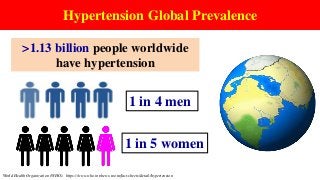
Hypertension Global Prevalence
World Health Organization (WHO)- https://www.who.int/news-room/fact-sheets/detail/hypertension
>1.13 billion people worldwide
have hypertension
1 in 4 men
1 in 5 women
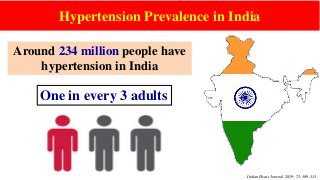
Hypertension Prevalence in India
Indian Heart Journal 2019; 71: 309-313
Around 234 million people have
hypertension in India
One in every 3 adults
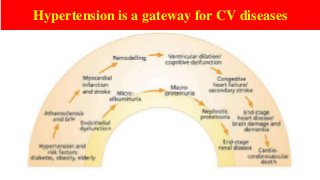
Hypertension is a gateway for CV diseases
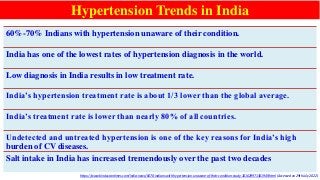
60%-70% Indians with hypertension unaware of their condition.
India has one of the lowest rates of hypertension diagnosis in the world.
Low diagnosis in India results in low treatment rate.
India’s hypertension treatment rate is about 1/3 lower than the global average.
India’s treatment rate is lower than nearly 80% of all countries.
Undetected and untreated hypertension is one of the key reasons for India’s high
burden of CV diseases.
Salt intake in India has increased tremendously over the past two decades
Hypertension Trends in India
https://www.hindustantimes.com/india-news/6070-indians-with-hypertension-unaware-of-their-condition-study-101629971301949.html (Accessed on 29th July 2022)
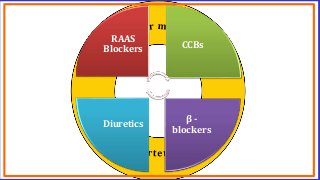
RAAS
Blockers CCBs
β -
blockers
Diuretics
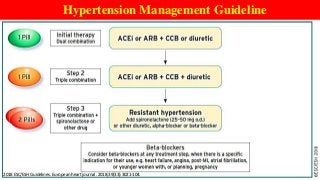
Hypertension Management Guideline
2018 ESC/ESH Guidelines. European heart journal. 2018;39(33):3021-104.
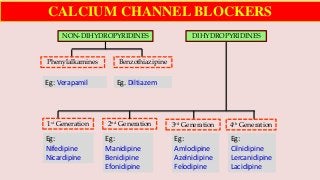
CALCIUM CHANNEL BLOCKERS
NON-DIHYDROPYRIDINES DIHYDROPYRIDINES
Phenylalkamines Benzothiazipine
Eg. Diltiazem
Eg: Verapamil
1st Generation 2nd Generation 3rd Generation 4th Generation
Eg:
Nifedipine
Nicardipine
Eg:
Manidipine
Benidipine
Efonidipine
Eg:
Amlodipine
Azelnidipine
Felodipine
Eg:
Cilnidipine
Lercanidipine
Lacidipine
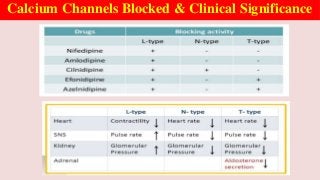
Calcium Channels Blocked & Clinical Significance
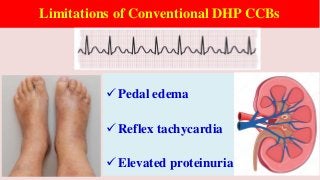
Limitations of Conventional DHP CCBs
Pedal edema
Reflex tachycardia
Elevated proteinuria
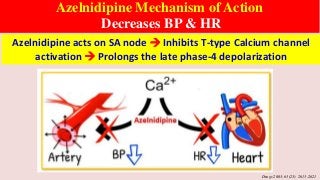
Azelnidipine Mechanism of Action
Decreases BP & HR
Drugs 2003; 63(23): 2613-2621
Azelnidipine acts on SA node  Inhibits T-type Calcium channel
activation  Prolongs the late phase-4 depolarization
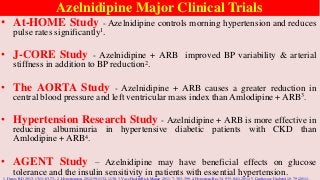
• At-HOME Study - Azelnidipine controls morning hypertension and reduces
pulse rates significantly1.
• J-CORE Study - Azelnidipine + ARB improved BP variability & arterial
stiffness in addition to BP reduction2.
• The AORTA Study - Azelnidipine + ARB causes a greater reduction in
central blood pressure and left ventricular mass index than Amlodipine + ARB3.
• Hypertension Research Study - Azelnidipine + ARB is more effective in
reducing albuminuria in hypertensive diabetic patients with CKD than
Amlodipine + ARB4.
• AGENT Study – Azelnidipine may have beneficial effects on glucose
tolerance and the insulin sensitivity in patients with essential hypertension.
1. Drugs R D 2013; 13(1): 63-73.; 2. Hypertension. 2012;59:1132- 1138; 3. Vasc Health Risk Manag. 2011; 7: 383–390. 4. Hypertens Res 34, 935–941 (2011) 5. Cardiovasc Diabetol 10, 79 (2011). .
Azelnidipine Major Clinical Trials
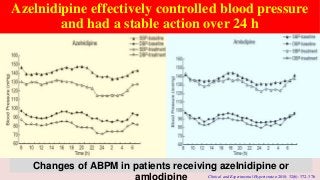
Changes of ABPM in patients receiving azelnidipine or
Clinical and Experimental Hypertension 2010; 32(6): 372–376
Azelnidipine effectively controlled blood pressure
and had a stable action over 24 h
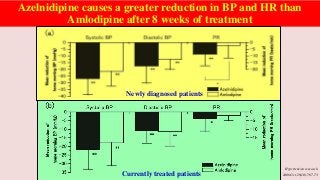
Azelnidipine causes a greater reduction in BP and HR than
Amlodipine after 8 weeks of treatment
Hypertension research.
2006 Oct;29(10):767-73.
Newly diagnosed patients
Currently treated patients
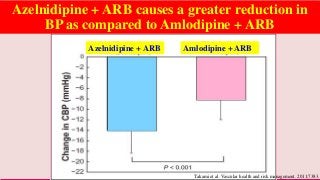
Azelnidipine + ARB causes a greater reduction in
BP as compared to Amlodipine + ARB
Takami et al. Vascular health and risk management. 2011;7383.
Azelnidipine + ARB Amlodipine + ARB
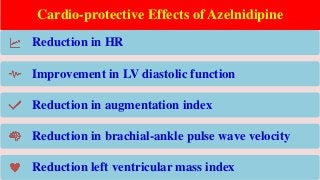
Cardio-protective Effects of Azelnidipine
Reduction in HR
Improvement in LV diastolic function
Reduction in augmentation index
Reduction in brachial-ankle pulse wave velocity
Reduction left ventricular mass index
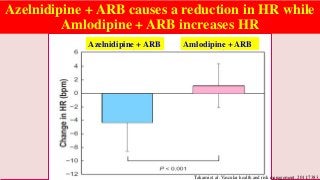
Azelnidipine + ARB causes a reduction in HR while
Amlodipine + ARB increases HR
Takami et al. Vascular health and risk management. 2011;7383.
Azelnidipine + ARB Amlodipine + ARB
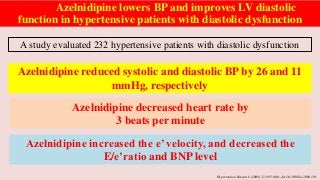
Azelnidipine lowers BP and improves LV diastolic
function in hypertensive patients with diastolic dysfunction
Hypertension Research (2009) 32, 895–900; doi:10.1038/hr.2009.119;
Azelnidipine reduced systolic and diastolic BP by 26 and 11
mmHg, respectively
Azelnidipine increased the e’ velocity, and decreased the
E/e’ratio and BNP level
A study evaluated 232 hypertensive patients with diastolic dysfunction
Azelnidipine decreased heart rate by
3 beats per minute
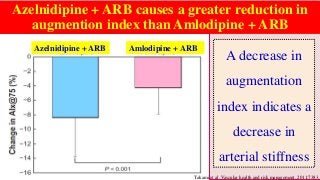
Azelnidipine + ARB causes a greater reduction in
augmention index than Amlodipine + ARB
Takami et al. Vascular health and risk management. 2011;7383.
Azelnidipine + ARB Amlodipine + ARB
A decrease in
augmentation
index indicates a
decrease in
arterial stiffness
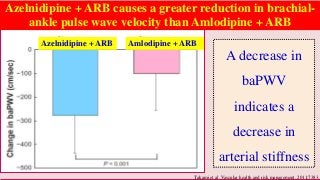
Azelnidipine + ARB causes a greater reduction in brachial-
ankle pulse wave velocity than Amlodipine + ARB
Takami et al. Vascular health and risk management. 2011;7383.
Azelnidipine + ARB Amlodipine + ARB
A decrease in
baPWV
indicates a
decrease in
arterial stiffness
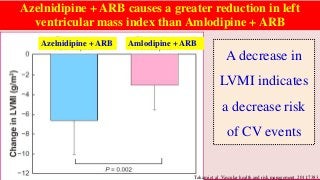
Azelnidipine + ARB causes a greater reduction in left
ventricular mass index than Amlodipine + ARB
Takami et al. Vascular health and risk management. 2011;7383.
Azelnidipine + ARB Amlodipine + ARB
A decrease in
LVMI indicates
a decrease risk
of CV events
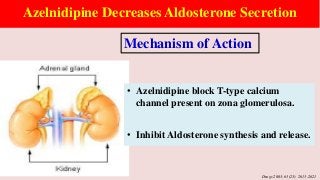
Azelnidipine Decreases Aldosterone Secretion
Drugs 2003; 63(23): 2613-2621
Mechanism of Action
• Azelnidipine block T-type calcium
channel present on zona glomerulosa.
• Inhibit Aldosterone synthesis and release.
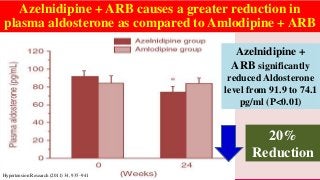
Azelnidipine + ARB causes a greater reduction in
plasma aldosterone as compared to Amlodipine + ARB
Hypertension Research (2011) 34, 935–941
Azelnidipine +
ARB significantly
reduced Aldosterone
level from 91.9 to 74.1
pg/ml (P<0.01)
20%
Reduction
Azelnidipine improves insulin resistance in hypertensive
patients
Therapeutic Research 2008; 29(7):1175-1181
• Azelnidipine treatment significantly lowered blood pressure and
heart rate.
• Azelnidpine also significantly lowered fasting serum immunoreactive
insulin (F-IRI) and homeostasis model assessment (HOMA-R).
12 months of treatment with Azelnidpine in hypertensive patients
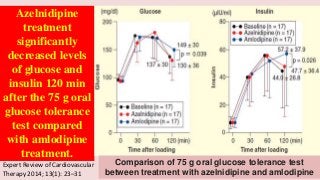
Azelnidipine
treatment
significantly
decreased levels
of glucose and
insulin 120 min
after the 75 g oral
glucose tolerance
test compared
with amlodipine
treatment.
Expert Review of Cardiovascular
Therapy 2014; 13(1): 23–31
Comparison of 75 g oral glucose tolerance test
between treatment with azelnidipine and amlodipine
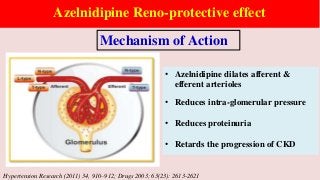
Azelnidipine Reno-protective effect
Hypertension Research (2011) 34, 910–912; Drugs 2003; 63(23): 2613-2621
Mechanism of Action
• Azelnidipine dilates afferent &
efferent arterioles
• Reduces intra-glomerular pressure
• Reduces proteinuria
• Retards the progression of CKD
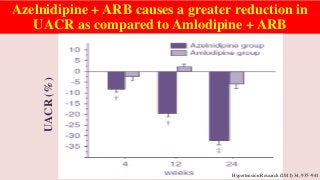
Azelnidipine + ARB causes a greater reduction in
UACR as compared to Amlodipine + ARB
UACR
(%)
Hypertension Research (2011) 34, 935–941
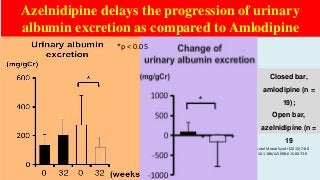
Azelnidipine delays the progression of urinary
albumin excretion as compared to Amlodipine
Diabetol Metab Syndr (2015) 7:80
DOI 10.1186/s13098-015-0073-9
Closed bar,
amlodipine (n =
19);
Open bar,
azelnidipine (n =
19
*p < 0.05
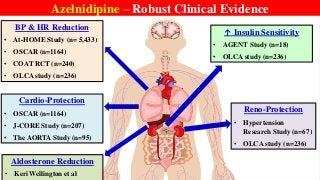
Azelnidipine – Robust Clinical Evidence
BP & HR Reduction
• At-HOME Study (n= 5,433)
• OSCAR (n=1164)
• COAT RCT (n=240)
• OLCA study (n=236)
Reno-Protection
• Hypertension
Research Study (n=67)
• OLCA study (n=236)
Cardio-Protection
• OSCAR (n=1164)
• J-CORE Study (n=207)
• The AORTA Study (n=95)
↑ Insulin Sensitivity
• AGENT Study (n=18)
• OLCA study (n=236)
Aldosterone Reduction
• Keri Wellington et al
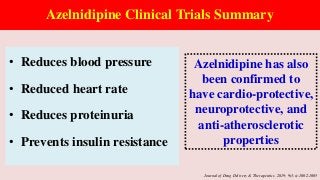
Azelnidipine Clinical Trials Summary
• Reduces blood pressure
• Reduced heart rate
• Reduces proteinuria
• Prevents insulin resistance
Azelnidipine has also
been confirmed to
have cardio-protective,
neuroprotective, and
anti-atherosclerotic
properties
Journal of Drug Delivery & Therapeutics. 2019; 9(3-s):1002-1005
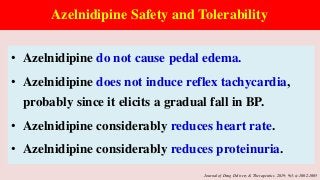
Azelnidipine Safety and Tolerability
• Azelnidipine do not cause pedal edema.
• Azelnidipine does not induce reflex tachycardia,
probably since it elicits a gradual fall in BP.
• Azelnidipine considerably reduces heart rate.
• Azelnidipine considerably reduces proteinuria.
Journal of Drug Delivery & Therapeutics. 2019; 9(3-s):1002-1005
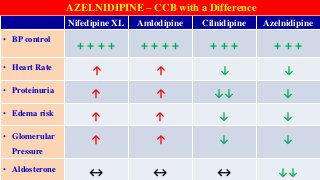
Nifedipine XL Amlodipine Cilnidipine Azelnidipine
• BP control
+ + + + + + + + + + + + + +
• Heart Rate ↑ ↑ ↓ ↓
• Proteinuria ↑ ↑ ↓↓ ↓
• Edema risk ↑ ↑ ↓ ↓
• Glomerular
Pressure
↑ ↑ ↓ ↓
• Aldosterone ↔ ↔ ↔ ↓↓
AZELNIDIPINE – CCB with a Difference
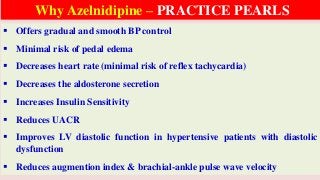
 Offers gradual and smooth BP control
 Minimal risk of pedal edema
 Decreases heart rate (minimal risk of reflex tachycardia)
 Decreases the aldosterone secretion
 Increases Insulin Sensitivity
 Reduces UACR
 Improves LV diastolic function in hypertensive patients with diastolic
dysfunction
 Reduces augmention index & brachial-ankle pulse wave velocity
Why Azelnidipine – PRACTICE PEARLS
Azelnidipine.pptx

Azelnidipine.pptx

  • 1.
    AZELNIDIPINE – CCBwith a Difference
  • 2.
    Hypertension Global Prevalence WorldHealth Organization (WHO)- https://www.who.int/news-room/fact-sheets/detail/hypertension >1.13 billion people worldwide have hypertension 1 in 4 men 1 in 5 women
  • 3.
    Hypertension Prevalence inIndia Indian Heart Journal 2019; 71: 309-313 Around 234 million people have hypertension in India One in every 3 adults
  • 4.
    Hypertension is agateway for CV diseases
  • 5.
    60%-70% Indians withhypertension unaware of their condition. India has one of the lowest rates of hypertension diagnosis in the world. Low diagnosis in India results in low treatment rate. India’s hypertension treatment rate is about 1/3 lower than the global average. India’s treatment rate is lower than nearly 80% of all countries. Undetected and untreated hypertension is one of the key reasons for India’s high burden of CV diseases. Salt intake in India has increased tremendously over the past two decades Hypertension Trends in India https://www.hindustantimes.com/india-news/6070-indians-with-hypertension-unaware-of-their-condition-study-101629971301949.html (Accessed on 29th July 2022)
  • 6.
  • 7.
    Hypertension Management Guideline 2018ESC/ESH Guidelines. European heart journal. 2018;39(33):3021-104.
  • 8.
    CALCIUM CHANNEL BLOCKERS NON-DIHYDROPYRIDINESDIHYDROPYRIDINES Phenylalkamines Benzothiazipine Eg. Diltiazem Eg: Verapamil 1st Generation 2nd Generation 3rd Generation 4th Generation Eg: Nifedipine Nicardipine Eg: Manidipine Benidipine Efonidipine Eg: Amlodipine Azelnidipine Felodipine Eg: Cilnidipine Lercanidipine Lacidipine
  • 9.
    Calcium Channels Blocked& Clinical Significance
  • 10.
    Limitations of ConventionalDHP CCBs Pedal edema Reflex tachycardia Elevated proteinuria
  • 11.
    Azelnidipine Mechanism ofAction Decreases BP & HR Drugs 2003; 63(23): 2613-2621 Azelnidipine acts on SA node  Inhibits T-type Calcium channel activation  Prolongs the late phase-4 depolarization
  • 12.
    • At-HOME Study- Azelnidipine controls morning hypertension and reduces pulse rates significantly1. • J-CORE Study - Azelnidipine + ARB improved BP variability & arterial stiffness in addition to BP reduction2. • The AORTA Study - Azelnidipine + ARB causes a greater reduction in central blood pressure and left ventricular mass index than Amlodipine + ARB3. • Hypertension Research Study - Azelnidipine + ARB is more effective in reducing albuminuria in hypertensive diabetic patients with CKD than Amlodipine + ARB4. • AGENT Study – Azelnidipine may have beneficial effects on glucose tolerance and the insulin sensitivity in patients with essential hypertension. 1. Drugs R D 2013; 13(1): 63-73.; 2. Hypertension. 2012;59:1132- 1138; 3. Vasc Health Risk Manag. 2011; 7: 383–390. 4. Hypertens Res 34, 935–941 (2011) 5. Cardiovasc Diabetol 10, 79 (2011). . Azelnidipine Major Clinical Trials
  • 13.
    Changes of ABPMin patients receiving azelnidipine or Clinical and Experimental Hypertension 2010; 32(6): 372–376 Azelnidipine effectively controlled blood pressure and had a stable action over 24 h
  • 14.
    Azelnidipine causes agreater reduction in BP and HR than Amlodipine after 8 weeks of treatment Hypertension research. 2006 Oct;29(10):767-73. Newly diagnosed patients Currently treated patients
  • 15.
    Azelnidipine + ARBcauses a greater reduction in BP as compared to Amlodipine + ARB Takami et al. Vascular health and risk management. 2011;7383. Azelnidipine + ARB Amlodipine + ARB
  • 16.
    Cardio-protective Effects ofAzelnidipine Reduction in HR Improvement in LV diastolic function Reduction in augmentation index Reduction in brachial-ankle pulse wave velocity Reduction left ventricular mass index
  • 17.
    Azelnidipine + ARBcauses a reduction in HR while Amlodipine + ARB increases HR Takami et al. Vascular health and risk management. 2011;7383. Azelnidipine + ARB Amlodipine + ARB
  • 18.
    Azelnidipine lowers BPand improves LV diastolic function in hypertensive patients with diastolic dysfunction Hypertension Research (2009) 32, 895–900; doi:10.1038/hr.2009.119; Azelnidipine reduced systolic and diastolic BP by 26 and 11 mmHg, respectively Azelnidipine increased the e’ velocity, and decreased the E/e’ratio and BNP level A study evaluated 232 hypertensive patients with diastolic dysfunction Azelnidipine decreased heart rate by 3 beats per minute
  • 19.
    Azelnidipine + ARBcauses a greater reduction in augmention index than Amlodipine + ARB Takami et al. Vascular health and risk management. 2011;7383. Azelnidipine + ARB Amlodipine + ARB A decrease in augmentation index indicates a decrease in arterial stiffness
  • 20.
    Azelnidipine + ARBcauses a greater reduction in brachial- ankle pulse wave velocity than Amlodipine + ARB Takami et al. Vascular health and risk management. 2011;7383. Azelnidipine + ARB Amlodipine + ARB A decrease in baPWV indicates a decrease in arterial stiffness
  • 21.
    Azelnidipine + ARBcauses a greater reduction in left ventricular mass index than Amlodipine + ARB Takami et al. Vascular health and risk management. 2011;7383. Azelnidipine + ARB Amlodipine + ARB A decrease in LVMI indicates a decrease risk of CV events
  • 22.
    Azelnidipine Decreases AldosteroneSecretion Drugs 2003; 63(23): 2613-2621 Mechanism of Action • Azelnidipine block T-type calcium channel present on zona glomerulosa. • Inhibit Aldosterone synthesis and release.
  • 23.
    Azelnidipine + ARBcauses a greater reduction in plasma aldosterone as compared to Amlodipine + ARB Hypertension Research (2011) 34, 935–941 Azelnidipine + ARB significantly reduced Aldosterone level from 91.9 to 74.1 pg/ml (P<0.01) 20% Reduction
  • 24.
    Azelnidipine improves insulinresistance in hypertensive patients Therapeutic Research 2008; 29(7):1175-1181 • Azelnidipine treatment significantly lowered blood pressure and heart rate. • Azelnidpine also significantly lowered fasting serum immunoreactive insulin (F-IRI) and homeostasis model assessment (HOMA-R). 12 months of treatment with Azelnidpine in hypertensive patients
  • 25.
    Azelnidipine treatment significantly decreased levels of glucoseand insulin 120 min after the 75 g oral glucose tolerance test compared with amlodipine treatment. Expert Review of Cardiovascular Therapy 2014; 13(1): 23–31 Comparison of 75 g oral glucose tolerance test between treatment with azelnidipine and amlodipine
  • 26.
    Azelnidipine Reno-protective effect HypertensionResearch (2011) 34, 910–912; Drugs 2003; 63(23): 2613-2621 Mechanism of Action • Azelnidipine dilates afferent & efferent arterioles • Reduces intra-glomerular pressure • Reduces proteinuria • Retards the progression of CKD
  • 27.
    Azelnidipine + ARBcauses a greater reduction in UACR as compared to Amlodipine + ARB UACR (%) Hypertension Research (2011) 34, 935–941
  • 28.
    Azelnidipine delays theprogression of urinary albumin excretion as compared to Amlodipine Diabetol Metab Syndr (2015) 7:80 DOI 10.1186/s13098-015-0073-9 Closed bar, amlodipine (n = 19); Open bar, azelnidipine (n = 19 *p < 0.05
  • 29.
    Azelnidipine – RobustClinical Evidence BP & HR Reduction • At-HOME Study (n= 5,433) • OSCAR (n=1164) • COAT RCT (n=240) • OLCA study (n=236) Reno-Protection • Hypertension Research Study (n=67) • OLCA study (n=236) Cardio-Protection • OSCAR (n=1164) • J-CORE Study (n=207) • The AORTA Study (n=95) ↑ Insulin Sensitivity • AGENT Study (n=18) • OLCA study (n=236) Aldosterone Reduction • Keri Wellington et al
  • 30.
    Azelnidipine Clinical TrialsSummary • Reduces blood pressure • Reduced heart rate • Reduces proteinuria • Prevents insulin resistance Azelnidipine has also been confirmed to have cardio-protective, neuroprotective, and anti-atherosclerotic properties Journal of Drug Delivery & Therapeutics. 2019; 9(3-s):1002-1005
  • 31.
    Azelnidipine Safety andTolerability • Azelnidipine do not cause pedal edema. • Azelnidipine does not induce reflex tachycardia, probably since it elicits a gradual fall in BP. • Azelnidipine considerably reduces heart rate. • Azelnidipine considerably reduces proteinuria. Journal of Drug Delivery & Therapeutics. 2019; 9(3-s):1002-1005
  • 32.
    Nifedipine XL AmlodipineCilnidipine Azelnidipine • BP control + + + + + + + + + + + + + + • Heart Rate ↑ ↑ ↓ ↓ • Proteinuria ↑ ↑ ↓↓ ↓ • Edema risk ↑ ↑ ↓ ↓ • Glomerular Pressure ↑ ↑ ↓ ↓ • Aldosterone ↔ ↔ ↔ ↓↓ AZELNIDIPINE – CCB with a Difference
  • 33.
     Offers gradualand smooth BP control  Minimal risk of pedal edema  Decreases heart rate (minimal risk of reflex tachycardia)  Decreases the aldosterone secretion  Increases Insulin Sensitivity  Reduces UACR  Improves LV diastolic function in hypertensive patients with diastolic dysfunction  Reduces augmention index & brachial-ankle pulse wave velocity Why Azelnidipine – PRACTICE PEARLS

Editor's Notes

  • #3 1.13 Billion = 113 Crore
  • #4 World - 1.13 Billion = 113 Crore India - 234 Million = 23.4 Crore
  • #7 RAASi – ARB Telmisartan, Azilsartan, Olme, Irbe ACEi – Ramipril, Enalrpil CCBs – Amlodipine, Cilnidipine, Azelnidipine Beta B – Bisoprolol, Metoprolol, Nebivolol Diuretics – CTD, HCTZ, Furosemide, Torsemide, Spiro
  • #8 Examples of alpha blockers used to treat high blood pressure include: Doxazosin, Prazosin, Terazosin.
  • #9 Role of calcium. Various ion are prsent in our body like sodium, potassium calcium etc. So these ions are imp for various reasons. Calcium performs a number of basic functions in your body. Your body uses 99 percent of its calcium to keep your bones and teeth strong, thereby supporting skeletal structure and function. The rest of the calcium in your body plays key roles in cell signaling, blood clotting, muscle contraction and nerve function. Cells use calcium to activate certain enzymes, transport ions across the cellular membrane, and send and receive neurotransmitters during communication with other cells. As an electrolyte, or a particle that helps conduct electricity in the body, calcium is also one of the key players in maintaining a regular heartbeat.For eg calcium is responsible for generating voltage in heart and causing neurotransmitter release in neurons. We will be seeing it in further slides. So to carry out its function, they have to enter the cells of various organs. How will they enter? So how do u enter ua house, thrugh the door right. So even the calcium enters through door which are called calcium channel.
  • #13 Morning hypertension is a risk factor for cardiovascular and cerebrovascular events. Day-by-day home blood pressure (BP) variability (BPV) was reported to be associated with increased cardiovascular risk. Azelnidipine may have beneficial effects on glucose tolerance, insulin sensitivity, the inflammatory state, and number of circulating progenitor cells in non-diabetic patients with essential hypertension.
  • #15 Azelnidipine effectively ameliorate chronic morning hypertension as well as significantly reduce home PR.
  • #16 ARB – Olmesartan
  • #18 ARB – Olmesartan
  • #19 Azelnidipine effectively ameliorate chronic morning hypertension as well as significantly reduce home PR.
  • #20 The augmentation index (AI) is an indirect measure of arterial stiffness and increases with age
  • #21  Brachial-ankle pulse wave velocity (baPWV) is a unique measure of systemic arterial stiffness that is measured by brachial and tibial arterial wave analyses. Azelnidipine + ARB causes a greater reduction in augmention index Brachial-ankle pulse wave velocity than Amlodipine + ARB
  • #22  Left ventricular mass (LVM) is a well-established measure that can independently predict adverse cardiovascular events and premature death. Increased left ventricular mass index is present in patients with type 2 diabetes without ischemic heart disease. Increased LVMI could be a potential, pre-symptomatic marker of myocardial structural change in T2DM.
  • #23 Aldosterone has recently been demonstrated to cause renal injury through multiple mechanisms, including tubulointerstitial fibrosis and inflammation, arteriolar sclerosis and glomerular hypertension. The blockade of aldosterone synthesis or release by L-/T-type CCBs12 may therefore confer beneficial action on CKD.
  • #24 In conclusion, the present study showed that azelnidipine results in a greater reduction of albuminuria, plasma aldosterone, urinary 8- OHdG and L-FABP levels than amlodipine in patients with diabetic nephropathy.
  • #25 The conventional CCB class predominantly blocks L-type Ca channels that distribute preferentially at the afferent, but not efferent, arteriole. L-type CCBs that target L-type calcium channels increase intraglomerular pressure by dilating afferent arterioles predominantly, and potentially subsequently reduce renal function and cause kidney damage, such as a decrease of glomerular filtration rate (GFR) and increase of urinary protein By contrast, newly identified classes of CCBs (efonidipine, benidipine, azelnidipine and cilnidipine) exert their inhibitory action through T-type or N-type Ca channels in addition to L-type Ca channels T-type Ca channels prevail at both afferent and efferent arterioles N-type Ca channels are present at the nerve terminal innervating both arterioles,
  • #27 The conventional CCB class predominantly blocks L-type Ca channels that distribute preferentially at the afferent, but not efferent, arteriole. L-type CCBs that target L-type calcium channels increase intraglomerular pressure by dilating afferent arterioles predominantly, and potentially subsequently reduce renal function and cause kidney damage, such as a decrease of glomerular filtration rate (GFR) and increase of urinary protein By contrast, newly identified classes of CCBs (efonidipine, benidipine, azelnidipine and cilnidipine) exert their inhibitory action through T-type or N-type Ca channels in addition to L-type Ca channels T-type Ca channels prevail at both afferent and efferent arterioles N-type Ca channels are present at the nerve terminal innervating both arterioles,
  • #28 ARB – Olmesartan
  • #31 It was confirmed that azelnidipine has renoprotective effects (such as reducing proteinuria by dilating efferent arterioles), as well as cardioprotective, insulin resistance-improving, cerebroprotective, and antiatherosclerotic effects.8
  • #32 In addition, clinical studies have demonstrated that azelnidipine considerably reduced heart rate and proteinuria in hypertensive patients by suppressing sympathetic nerve activity.