1958-69
P R E S E N T E D B Y : A G H A S A R M A D
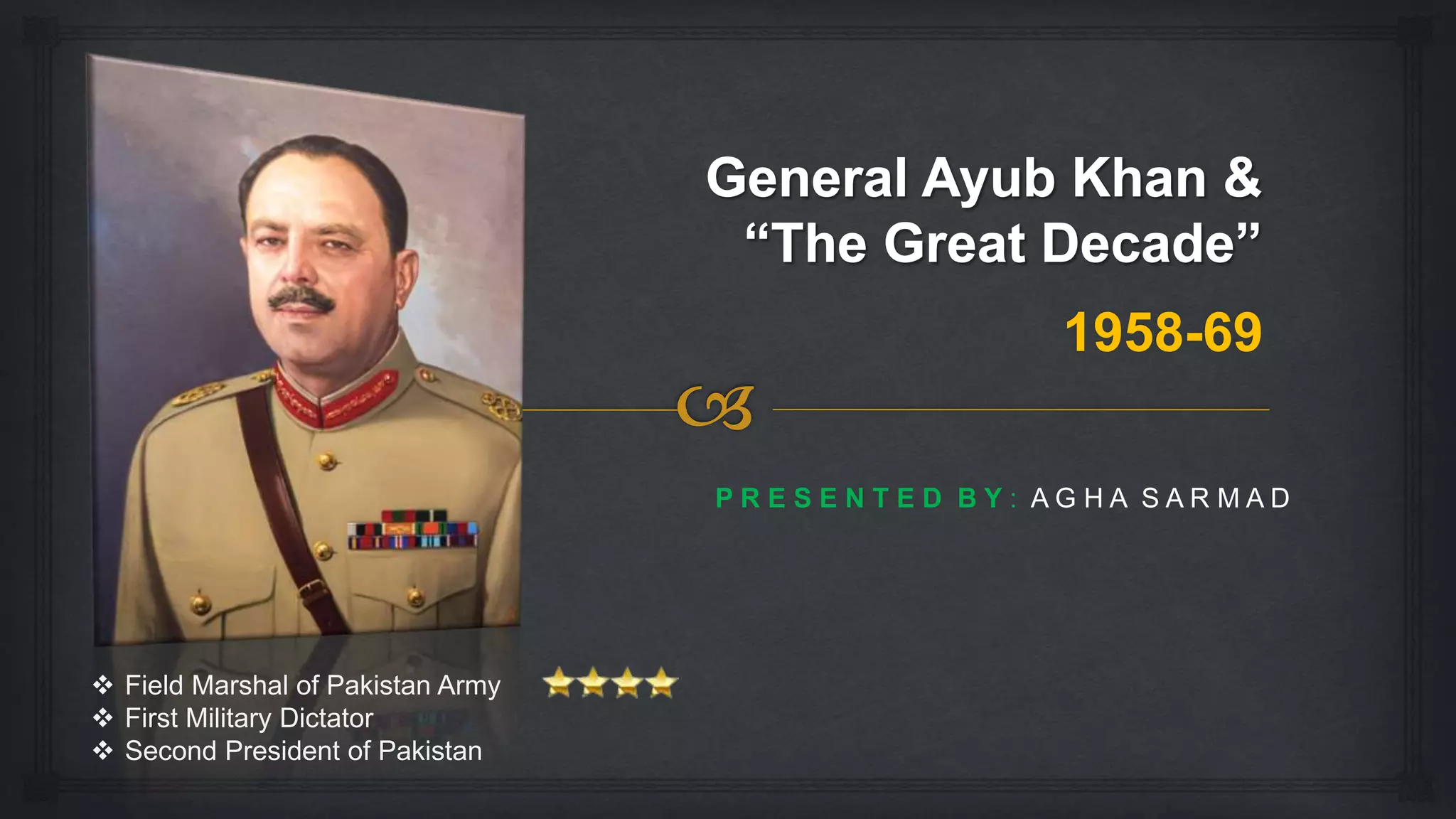
 Field Marshal of Pakistan Army
 First Military Dictator
 Second President of Pakistan

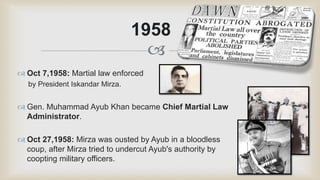
 Oct 7,1958: Martial law enforced
by President Iskandar Mirza.
 Gen. Muhammad Ayub Khan became Chief Martial Law
Administrator.
 Oct 27,1958: Mirza was ousted by Ayub in a bloodless
coup, after Mirza tried to undercut Ayub's authority by
coopting military officers.
1958

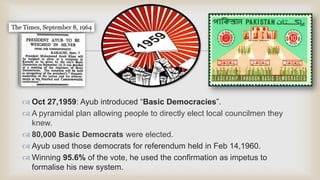
 Oct 27,1959: Ayub introduced “Basic Democracies”.
 A pyramidal plan allowing people to directly elect local councilmen they
knew.
 80,000 Basic Democrats were elected.
 Ayub used those democrats for referendum held in Feb 14,1960.
 Winning 95.6% of the vote, he used the confirmation as impetus to
formalise his new system.
 As a result of the referendum, Ayub
became the president for next 5
years & replaced his military
government into civilian
constitutional government.
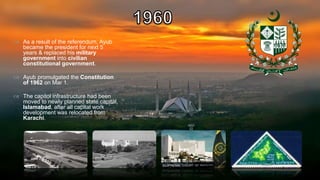
 Ayub promulgated the Constitution
of 1962 on Mar 1.
 The capitol infrastructure had been
moved to newly planned state capital,
Islamabad, after all capital work
development was relocated from
Karachi.

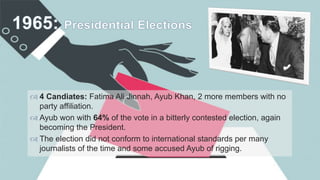
 4 Candiates: Fatima Ali Jinnah, Ayub Khan, 2 more members with no
party affiliation.
 Ayub won with 64% of the vote in a bitterly contested election, again
becoming the President.
 The election did not conform to international standards per many
journalists of the time and some accused Ayub of rigging.
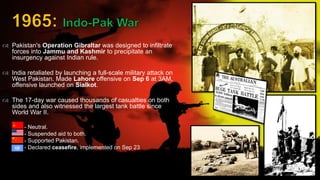
 Pakistan's Operation Gibraltar was designed to infiltrate
forces into Jammu and Kashmir to precipitate an
insurgency against Indian rule.
 India retaliated by launching a full-scale military attack on
West Pakistan. Made Lahore offensive on Sep 6 at 3AM,
offensive launched on Sialkot.
 The 17-day war caused thousands of casualties on both
sides and also witnessed the largest tank battle since
World War II.
- Neutral.
- Suspended aid to both.
- Supported Pakistan.
- Declared ceasefire, implemented on Sep 23

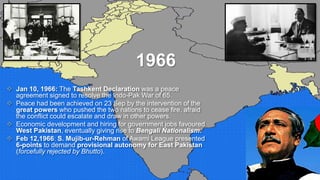
 Jan 10, 1966: The Tashkent Declaration was a peace
agreement signed to resolve the Indo-Pak War of 65.
 Peace had been achieved on 23 Sep by the intervention of the
great powers who pushed the two nations to cease fire, afraid
the conflict could escalate and draw in other powers.
 Economic development and hiring for government jobs favoured
West Pakistan, eventually giving rise to Bengali Nationalism.
 Feb 12,1966: S. Mujib-ur-Rehman of Awami League presented
6-points to demand provisional autonomy for East Pakistan
(forcefully rejected by Bhutto).
1966

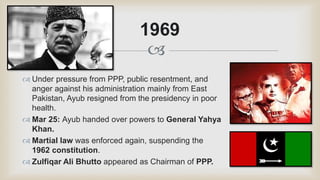
 Under pressure from PPP, public resentment, and
anger against his administration mainly from East
Pakistan, Ayub resigned from the presidency in poor
health.
 Mar 25: Ayub handed over powers to General Yahya
Khan.
 Martial law was enforced again, suspending the
1962 constitution.
 Zulfiqar Ali Bhutto appeared as Chairman of PPP.
1969

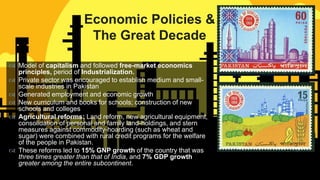
 Model of capitalism and followed free-market economics
principles, period of Industrialization.
 Private sector was encouraged to establish medium and small-
scale industries in Pakistan
 Generated employment and economic growth
 New curriculum and books for schools; construction of new
schools and colleges
 Agricultural reforms: Land reform, new agricultural equipment,
consolidation of personal and family land-holdings, and stern
measures against commodity-hoarding (such as wheat and
sugar) were combined with rural credit programs for the welfare
of the people in Pakistan.
 These reforms led to 15% GNP growth of the country that was
three times greater than that of India, and 7% GDP growth
greater among the entire subcontinent.
Economic Policies &
The Great Decade

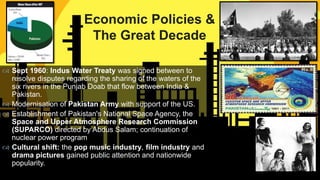
 Sept 1960: Indus Water Treaty was signed between to
resolve disputes regarding the sharing of the waters of the
six rivers in the Punjab Doab that flow between India &
Pakistan.
 Modernisation of Pakistan Army with support of the US.
 Establishment of Pakistan's National Space Agency, the
Space and Upper Atmosphere Research Commission
(SUPARCO) directed by Abdus Salam; continuation of
nuclear power program
 Cultural shift: the pop music industry, film industry and
drama pictures gained public attention and nationwide
popularity.
Economic Policies &
The Great Decade
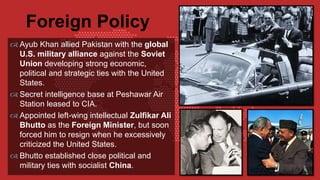
 Ayub Khan allied Pakistan with the global
U.S. military alliance against the Soviet
Union developing strong economic,
political and strategic ties with the United
States.
 Secret intelligence base at Peshawar Air
Station leased to CIA.
 Appointed left-wing intellectual Zulfikar Ali
Bhutto as the Foreign Minister, but soon
forced him to resign when he excessively
criticized the United States.
 Bhutto established close political and
military ties with socialist China.
Foreign Policy
T
H
A
N
K
Y
O
U

Ayub Khan & the Great Decade

  • 1.
    1958-69 P R ES E N T E D B Y : A G H A S A R M A D  Field Marshal of Pakistan Army  First Military Dictator  Second President of Pakistan
  • 2.
      Oct 7,1958:Martial law enforced by President Iskandar Mirza.  Gen. Muhammad Ayub Khan became Chief Martial Law Administrator.  Oct 27,1958: Mirza was ousted by Ayub in a bloodless coup, after Mirza tried to undercut Ayub's authority by coopting military officers. 1958
  • 3.
      Oct 27,1959:Ayub introduced “Basic Democracies”.  A pyramidal plan allowing people to directly elect local councilmen they knew.  80,000 Basic Democrats were elected.  Ayub used those democrats for referendum held in Feb 14,1960.  Winning 95.6% of the vote, he used the confirmation as impetus to formalise his new system.
  • 4.
     As aresult of the referendum, Ayub became the president for next 5 years & replaced his military government into civilian constitutional government.  Ayub promulgated the Constitution of 1962 on Mar 1.  The capitol infrastructure had been moved to newly planned state capital, Islamabad, after all capital work development was relocated from Karachi.
  • 5.
      4 Candiates:Fatima Ali Jinnah, Ayub Khan, 2 more members with no party affiliation.  Ayub won with 64% of the vote in a bitterly contested election, again becoming the President.  The election did not conform to international standards per many journalists of the time and some accused Ayub of rigging.
  • 6.
     Pakistan's OperationGibraltar was designed to infiltrate forces into Jammu and Kashmir to precipitate an insurgency against Indian rule.  India retaliated by launching a full-scale military attack on West Pakistan. Made Lahore offensive on Sep 6 at 3AM, offensive launched on Sialkot.  The 17-day war caused thousands of casualties on both sides and also witnessed the largest tank battle since World War II. - Neutral. - Suspended aid to both. - Supported Pakistan. - Declared ceasefire, implemented on Sep 23
  • 7.
      Jan 10,1966: The Tashkent Declaration was a peace agreement signed to resolve the Indo-Pak War of 65.  Peace had been achieved on 23 Sep by the intervention of the great powers who pushed the two nations to cease fire, afraid the conflict could escalate and draw in other powers.  Economic development and hiring for government jobs favoured West Pakistan, eventually giving rise to Bengali Nationalism.  Feb 12,1966: S. Mujib-ur-Rehman of Awami League presented 6-points to demand provisional autonomy for East Pakistan (forcefully rejected by Bhutto). 1966
  • 8.
      Under pressurefrom PPP, public resentment, and anger against his administration mainly from East Pakistan, Ayub resigned from the presidency in poor health.  Mar 25: Ayub handed over powers to General Yahya Khan.  Martial law was enforced again, suspending the 1962 constitution.  Zulfiqar Ali Bhutto appeared as Chairman of PPP. 1969
  • 9.
      Model ofcapitalism and followed free-market economics principles, period of Industrialization.  Private sector was encouraged to establish medium and small- scale industries in Pakistan  Generated employment and economic growth  New curriculum and books for schools; construction of new schools and colleges  Agricultural reforms: Land reform, new agricultural equipment, consolidation of personal and family land-holdings, and stern measures against commodity-hoarding (such as wheat and sugar) were combined with rural credit programs for the welfare of the people in Pakistan.  These reforms led to 15% GNP growth of the country that was three times greater than that of India, and 7% GDP growth greater among the entire subcontinent. Economic Policies & The Great Decade
  • 10.
      Sept 1960:Indus Water Treaty was signed between to resolve disputes regarding the sharing of the waters of the six rivers in the Punjab Doab that flow between India & Pakistan.  Modernisation of Pakistan Army with support of the US.  Establishment of Pakistan's National Space Agency, the Space and Upper Atmosphere Research Commission (SUPARCO) directed by Abdus Salam; continuation of nuclear power program  Cultural shift: the pop music industry, film industry and drama pictures gained public attention and nationwide popularity. Economic Policies & The Great Decade
  • 11.
     Ayub Khanallied Pakistan with the global U.S. military alliance against the Soviet Union developing strong economic, political and strategic ties with the United States.  Secret intelligence base at Peshawar Air Station leased to CIA.  Appointed left-wing intellectual Zulfikar Ali Bhutto as the Foreign Minister, but soon forced him to resign when he excessively criticized the United States.  Bhutto established close political and military ties with socialist China. Foreign Policy
  • 12.

Editor's Notes

  • #2 4 STAR GENERAL
  • #8 Great powers: US & USSR
  • #10 new equipment and laws in which no one could occupy land less than 12.5 acres (500 irrigated land and 1000 unirrigated).
  • #11 new equipment and laws in which no one could occupy land less than 12.5 acres (500 irrigated land and 1000 unirrigated).