AUTOMATIC FARE
COLLECTION SYSTE
PRESENTED BY:
DEEPESH CHATURVEDI
Enrollment no : 190170111019
Department : Electronics & Communication
Vishwakarma Government Engineering College
INTERNAL GUIDE:
Prof. Kalpesh
Chaudhary
INDUSTRIAL GUIDE:
Mr. Kapil Rathod
CONTENT OF THE
PRESENTATION
Introduction
Aim and Objectives
Need of AFCS?
Architecture of AFCS
Outcomes / Screenshots
Future scope
Conclusion
2023 Automatic fare collection system 2
INTRODUCTION
An automated fare collection (AFC) system is the
collection of components that automate the ticketing
system of a public transportation network - an automated
version of manual fare collection
2023 Automatic fare collection system 3
AFC systems are designed to provide a convenient and efficient way
for passengers to pay for their fares, while also reducing the potential
for fraud and improving the accuracy of fare collection.
AFC systems offer several benefits, including increased efficiency, reduced
costs, and improved passenger experience.
This systems can reduce the time and resources required to manage cash
and tickets, and minimize the risk of fraud and errors.
AIM AND
OBJECTIVES
Automated fare collection systems can remove cash and
the human element from the boarding process which
greatly speeds it up – meaning less well time and more
punctual service.
Automated fare collection system is to provide a secure,
efficient, and convenient way for passengers to pay for
their fares, while also helping transportation providers
optimize their services and improve the passenger
experience.
Traditional fare collections systems are manual and
often contradict a modern and growing city. Lack of
transparency, Delays in issuing tickets manually & fare
collections are slowly becoming obsolete and are being
revamped.
NEED OF AFCS!
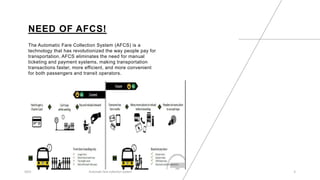
The Automatic Fare Collection System (AFCS) is a
technology that has revolutionized the way people pay for
transportation. AFCS eliminates the need for manual
ticketing and payment systems, making transportation
transactions faster, more efficient, and more convenient
for both passengers and transit operators.
2023 Automatic fare collection system 5
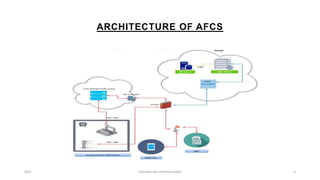
ARCHITECTURE OF AFCS
2023 Automatic fare collection system 6
USE CASE DIAGRAM
2023 Automatic fare collection system 7
ACTIVITY DIAGRAM
2023 Automatic fare collection system 8
FLOWCHART DIAGRAM
2023 Automatic fare collection system 9
OUTCOMES / SCREENSHOTS
2023 Automatic fare collection system 10
Login Page
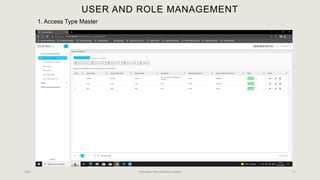
USER AND ROLE MANAGEMENT
2023 Automatic fare collection system 11
1. Access Type Master
2023 Automatic fare collection system 12
2023 Automatic fare collection system 13
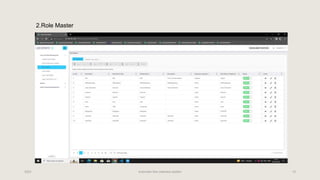
2.Role Master
2023 Automatic fare collection system 14
2023 Automatic fare collection system 15
3.User Master
2023 Automatic fare collection system 16
2023 Automatic fare collection system 17
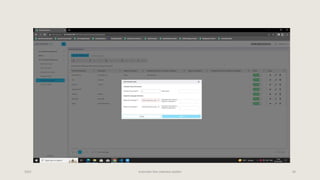
MASTERS
1. Cause Master
2023 Automatic fare collection system 18
2023 Automatic fare collection system 19
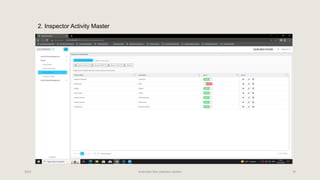
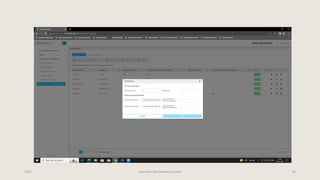
2. Inspector Activity Master
2023 Automatic fare collection system 20
2023 Automatic fare collection system 21
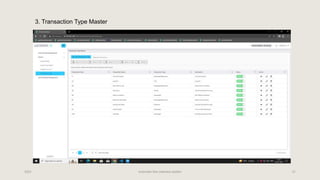
3. Transaction Type Master
2023 Automatic fare collection system 22
2023 Automatic fare collection system 23
WORK SCHEDULE MANAGEMENT
1. Schedule Master
2023 Automatic fare collection system 24
2023 Automatic fare collection system 25
2. Schedule Type Master
2023 Automatic fare collection system 26
2023 Automatic fare collection system 27
3. Trip Type Master
2023 Automatic fare collection system 28
FUTURE SCOPE
2023 Automatic fare collection system 29
In the future, RFID Cards could be implemented for entry and exit in
public transportation systems. Passengers would simply need to tap
their card when entering and exiting, and the fare for the journey
would be automatically deducted from their account based on the
duration of the trip.
This technology could also be integrated with mobile devices,
allowing passengers to tap their phone for entry and exit and have
the fare calculated and deducted directly from their account.
CONCLUSION
2023 Automatic fare collection system 30
In conclusion, our AFCS project using .NET, Angular, Web API,
and PostgreSQL has been a great success, and I am confident
that it will provide a secure, efficient, and convenient fare
collection process for passengers while enabling transit agencies
to better manage their operations.
The features we have incorporated into the system, such as, real-
time data collection and analysis, and integration with other
transit systems, have made the fare collection process more
efficient and convenient for passengers. And the system's
flexibility and scalability will allow us to accommodate future
growth and changes in technology.
THANK YOU

Automatic fare collection system for transit.pptx

  • 1.
    AUTOMATIC FARE COLLECTION SYSTE PRESENTEDBY: DEEPESH CHATURVEDI Enrollment no : 190170111019 Department : Electronics & Communication Vishwakarma Government Engineering College INTERNAL GUIDE: Prof. Kalpesh Chaudhary INDUSTRIAL GUIDE: Mr. Kapil Rathod
  • 2.
    CONTENT OF THE PRESENTATION Introduction Aimand Objectives Need of AFCS? Architecture of AFCS Outcomes / Screenshots Future scope Conclusion 2023 Automatic fare collection system 2
  • 3.
    INTRODUCTION An automated farecollection (AFC) system is the collection of components that automate the ticketing system of a public transportation network - an automated version of manual fare collection 2023 Automatic fare collection system 3 AFC systems are designed to provide a convenient and efficient way for passengers to pay for their fares, while also reducing the potential for fraud and improving the accuracy of fare collection. AFC systems offer several benefits, including increased efficiency, reduced costs, and improved passenger experience. This systems can reduce the time and resources required to manage cash and tickets, and minimize the risk of fraud and errors.
  • 4.
    AIM AND OBJECTIVES Automated farecollection systems can remove cash and the human element from the boarding process which greatly speeds it up – meaning less well time and more punctual service. Automated fare collection system is to provide a secure, efficient, and convenient way for passengers to pay for their fares, while also helping transportation providers optimize their services and improve the passenger experience. Traditional fare collections systems are manual and often contradict a modern and growing city. Lack of transparency, Delays in issuing tickets manually & fare collections are slowly becoming obsolete and are being revamped.
  • 5.
    NEED OF AFCS! TheAutomatic Fare Collection System (AFCS) is a technology that has revolutionized the way people pay for transportation. AFCS eliminates the need for manual ticketing and payment systems, making transportation transactions faster, more efficient, and more convenient for both passengers and transit operators. 2023 Automatic fare collection system 5
  • 6.
    ARCHITECTURE OF AFCS 2023Automatic fare collection system 6
  • 7.
    USE CASE DIAGRAM 2023Automatic fare collection system 7
  • 8.
    ACTIVITY DIAGRAM 2023 Automaticfare collection system 8
  • 9.
    FLOWCHART DIAGRAM 2023 Automaticfare collection system 9
  • 10.
    OUTCOMES / SCREENSHOTS 2023Automatic fare collection system 10 Login Page
  • 11.
    USER AND ROLEMANAGEMENT 2023 Automatic fare collection system 11 1. Access Type Master
  • 12.
    2023 Automatic farecollection system 12
  • 13.
    2023 Automatic farecollection system 13 2.Role Master
  • 14.
    2023 Automatic farecollection system 14
  • 15.
    2023 Automatic farecollection system 15 3.User Master
  • 16.
    2023 Automatic farecollection system 16
  • 17.
    2023 Automatic farecollection system 17 MASTERS 1. Cause Master
  • 18.
    2023 Automatic farecollection system 18
  • 19.
    2023 Automatic farecollection system 19 2. Inspector Activity Master
  • 20.
    2023 Automatic farecollection system 20
  • 21.
    2023 Automatic farecollection system 21 3. Transaction Type Master
  • 22.
    2023 Automatic farecollection system 22
  • 23.
    2023 Automatic farecollection system 23 WORK SCHEDULE MANAGEMENT 1. Schedule Master
  • 24.
    2023 Automatic farecollection system 24
  • 25.
    2023 Automatic farecollection system 25 2. Schedule Type Master
  • 26.
    2023 Automatic farecollection system 26
  • 27.
    2023 Automatic farecollection system 27 3. Trip Type Master
  • 28.
    2023 Automatic farecollection system 28
  • 29.
    FUTURE SCOPE 2023 Automaticfare collection system 29 In the future, RFID Cards could be implemented for entry and exit in public transportation systems. Passengers would simply need to tap their card when entering and exiting, and the fare for the journey would be automatically deducted from their account based on the duration of the trip. This technology could also be integrated with mobile devices, allowing passengers to tap their phone for entry and exit and have the fare calculated and deducted directly from their account.
  • 30.
    CONCLUSION 2023 Automatic farecollection system 30 In conclusion, our AFCS project using .NET, Angular, Web API, and PostgreSQL has been a great success, and I am confident that it will provide a secure, efficient, and convenient fare collection process for passengers while enabling transit agencies to better manage their operations. The features we have incorporated into the system, such as, real- time data collection and analysis, and integration with other transit systems, have made the fare collection process more efficient and convenient for passengers. And the system's flexibility and scalability will allow us to accommodate future growth and changes in technology.
  • 31.