

“Making it real”: exploring the potential of augmented
    reality for teaching primary school science
   Lucinda Kerawalla, Rosemary Luckin, Simon Seljeflot, Adrian Woolard


              Presented by: Aidos Askhatuly
              Monday, November 12, 2012
              COMP6008: Research Methods in Computing
Outline


●   Introduction

●   What is Augmented Reality?

●   Using AR to teach about the earth, the sun, day and night in
    a simulated classroom context

●   Analysis and findings

●   Discussion

●   Summary

●   Conclusion
Introduction

      Augmented Reality has potential to engage and
motivate learners to explore material from variety of
different perspectives, and has been shown to be
particularly useful for teaching subject matter that
students could not be possibly experience first hand in
the real world (Shelton and Hedley 2002)
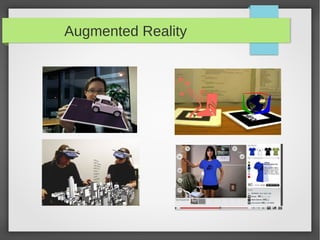
Augmented Reality is


●   Overlapping real environment with digital data such as
    sound, video, graphics.
●   Interactive in real time
●   Viewed in 3 dimension
Augmented Reality
Why use AR in formal Education?

●   Inexpensive
●   Portable
●   Easy to set up(Web Camera, ARToolKit, 3d content)
●   Exciting
●   Visualise concepts which can not be presented in real
    environment
Incorporating AR into primary school class


     Year 5 children and their teachers invited to
     participate in following classes using AR:
 ●   Day and night
 ●   Structure of the solar system
     Analyses and feedback about AR was made by:
 ●   Video record
 ●   Teacher's interview
 ●   Follow up questions about content
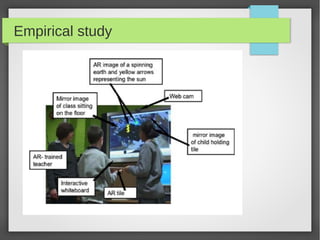
Empirical study
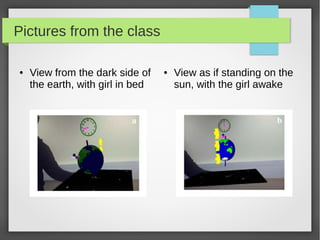
Pictures from the class

●   View from the dark side of    ●   View as if standing on the
    the earth, with girl in bed       sun, with the girl awake
Analysis and findings

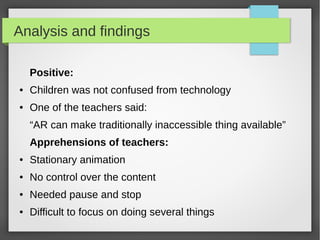
    Positive:
●   Children was not confused from technology
●   One of the teachers said:
    “AR can make traditionally inaccessible thing available”
    Apprehensions of teachers:
●   Stationary animation
●   No control over the content
●   Needed pause and stop
●   Difficult to focus on doing several things
Summary

Authors wanted to evaluate AR contribution for teaching
primary school children. According to analyses and
teachers feedback incorporating AR into school
curriculum can bring many benefits for educational
sphere.
Conclusion


  AR has huge potential to improve studying process in
  primary schools. However, the weak point of AR is
  flexibility that requires further consideration.
Q&A
Thanks for your kind attention

Augmented Reality in Education

  • 1.
    “Making it real”:exploring the potential of augmented reality for teaching primary school science Lucinda Kerawalla, Rosemary Luckin, Simon Seljeflot, Adrian Woolard Presented by: Aidos Askhatuly Monday, November 12, 2012 COMP6008: Research Methods in Computing
  • 2.
    Outline ● Introduction ● What is Augmented Reality? ● Using AR to teach about the earth, the sun, day and night in a simulated classroom context ● Analysis and findings ● Discussion ● Summary ● Conclusion
  • 3.
    Introduction Augmented Reality has potential to engage and motivate learners to explore material from variety of different perspectives, and has been shown to be particularly useful for teaching subject matter that students could not be possibly experience first hand in the real world (Shelton and Hedley 2002)
  • 4.
    Augmented Reality is ● Overlapping real environment with digital data such as sound, video, graphics. ● Interactive in real time ● Viewed in 3 dimension
  • 5.
  • 6.
    Why use ARin formal Education? ● Inexpensive ● Portable ● Easy to set up(Web Camera, ARToolKit, 3d content) ● Exciting ● Visualise concepts which can not be presented in real environment
  • 7.
    Incorporating AR intoprimary school class Year 5 children and their teachers invited to participate in following classes using AR: ● Day and night ● Structure of the solar system Analyses and feedback about AR was made by: ● Video record ● Teacher's interview ● Follow up questions about content
  • 8.
  • 9.
    Pictures from theclass ● View from the dark side of ● View as if standing on the the earth, with girl in bed sun, with the girl awake
  • 10.
    Analysis and findings Positive: ● Children was not confused from technology ● One of the teachers said: “AR can make traditionally inaccessible thing available” Apprehensions of teachers: ● Stationary animation ● No control over the content ● Needed pause and stop ● Difficult to focus on doing several things
  • 11.
    Summary Authors wanted toevaluate AR contribution for teaching primary school children. According to analyses and teachers feedback incorporating AR into school curriculum can bring many benefits for educational sphere.
  • 12.
    Conclusion ARhas huge potential to improve studying process in primary schools. However, the weak point of AR is flexibility that requires further consideration.
  • 13.
  • 14.
    Thanks for yourkind attention