Attributing sources in a web
resource
Credit: “Studious Panda” by McCain Library is licensed under CC BY 3.0
All writing, even reflective writing, may be strengthened
with outside sources that support and validate your ideas.
● Are there links in the post that help the readers
understand concepts in your post?
● Are there ideas that are not your own or inspired
by others?
● Who is your audience? How does that affect
your writing style?
● Are you linking to the best sources? Are they
authoritative or reinforcing an internal bias?
● Are there sources that would make your post
more inclusive of different groups and
perspectives?
This is your story! Enhance it with outside sources.
Credit: “Pencil Scribbling on Paper” by Revital Salomon is licensed under CC BY-SA 4.0
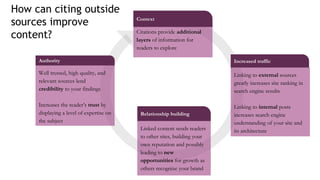
How can citing outside
sources improve
content?
Linking to external sources
greatly increases site ranking in
search engine results
Linking to internal posts
increases search engine
understanding of your site and
its architecture
Increased traffic
Citations provide additional
layers of information for
readers to explore
Context
Linked content sends readers
to other sites, building your
own reputation and possibly
leading to new
opportunities for growth as
others recognize your brand
Relationship building
Well trusted, high quality, and
relevant sources lend
credibility to your findings
Increases the reader’s trust by
displaying a level of expertise on
the subject
Authority
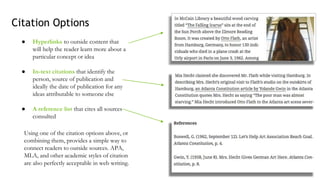
● Hyperlinks to outside content that
will help the reader learn more about a
particular concept or idea
● In-text citations that identify the
person, source of publication and
ideally the date of publication for any
ideas attributable to someone else
● A reference list that cites all sources
consulted
Citation Options
Using one of the citation options above, or
combining them, provides a simple way to
connect readers to outside sources. APA,
MLA, and other academic styles of citation
are also perfectly acceptable in web writing.
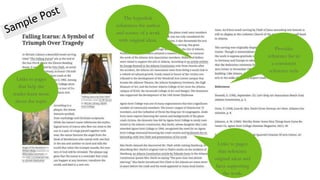
Links to pages
that reference
original ideas and
facts supporting
the work.
Links to pages
that help the
reader learn more
about the topic.
The hyperlink
references the author
and source of a work
with original ideas.
Provides
reference list in
a consistent
reference style
The look and feel of the website or post is important.
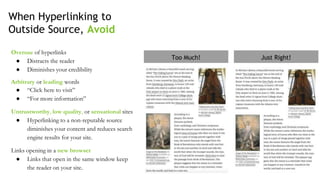
When Hyperlinking to
Outside Source, Avoid
Overuse of hyperlinks
● Distracts the reader
● Diminishes your credibility
Arbitrary or leading words
● “Click here to visit”
● “For more information”
Untrustworthy, low quality, or sensational sites
● Hyperlinking to a non-reputable source
diminishes your content and reduces search
engine results for your site.
Links opening in a new browser
● Links that open in the same window keep
the reader on your site.
Just Right!Too Much!
Ultimately, it is up to you to decide your preferences, what
represents you, and how you engage with your readers.
Just remember to attribute, in some form, any ideas that
were taken from someone or someplace else.

Attributing Sources in a Web Resource

  • 1.
    Attributing sources ina web resource Credit: “Studious Panda” by McCain Library is licensed under CC BY 3.0
  • 2.
    All writing, evenreflective writing, may be strengthened with outside sources that support and validate your ideas.
  • 3.
    ● Are therelinks in the post that help the readers understand concepts in your post? ● Are there ideas that are not your own or inspired by others? ● Who is your audience? How does that affect your writing style? ● Are you linking to the best sources? Are they authoritative or reinforcing an internal bias? ● Are there sources that would make your post more inclusive of different groups and perspectives? This is your story! Enhance it with outside sources. Credit: “Pencil Scribbling on Paper” by Revital Salomon is licensed under CC BY-SA 4.0
  • 4.
    How can citingoutside sources improve content? Linking to external sources greatly increases site ranking in search engine results Linking to internal posts increases search engine understanding of your site and its architecture Increased traffic Citations provide additional layers of information for readers to explore Context Linked content sends readers to other sites, building your own reputation and possibly leading to new opportunities for growth as others recognize your brand Relationship building Well trusted, high quality, and relevant sources lend credibility to your findings Increases the reader’s trust by displaying a level of expertise on the subject Authority
  • 5.
    ● Hyperlinks tooutside content that will help the reader learn more about a particular concept or idea ● In-text citations that identify the person, source of publication and ideally the date of publication for any ideas attributable to someone else ● A reference list that cites all sources consulted Citation Options Using one of the citation options above, or combining them, provides a simple way to connect readers to outside sources. APA, MLA, and other academic styles of citation are also perfectly acceptable in web writing.
  • 6.
    Links to pages thatreference original ideas and facts supporting the work. Links to pages that help the reader learn more about the topic. The hyperlink references the author and source of a work with original ideas. Provides reference list in a consistent reference style
  • 7.
    The look andfeel of the website or post is important.
  • 8.
    When Hyperlinking to OutsideSource, Avoid Overuse of hyperlinks ● Distracts the reader ● Diminishes your credibility Arbitrary or leading words ● “Click here to visit” ● “For more information” Untrustworthy, low quality, or sensational sites ● Hyperlinking to a non-reputable source diminishes your content and reduces search engine results for your site. Links opening in a new browser ● Links that open in the same window keep the reader on your site. Just Right!Too Much!
  • 9.
    Ultimately, it isup to you to decide your preferences, what represents you, and how you engage with your readers. Just remember to attribute, in some form, any ideas that were taken from someone or someplace else.

Editor's Notes

  • #3 In writing for the web, citations are important but so is the look and feel of the page. To help your readers engage with your content and increase the authority of your work, we recommend three different styles of citing sources. They work together or can be used seperately
  • #8 In writing for the web, citations are important but so is the look and feel of the page. To help your readers engage with your content and increase the authority of your work, we recommend three different styles of citing sources. They work together or can be used seperately
  • #10 In writing for the web, citations are important but so is the look and feel of the page. To help your readers engage with your content and increase the authority of your work, we recommend three different styles of citing sources. They work together or can be used seperately