Prof. Neeraj Bhargava
Pooja Dixit
Department of Computer Science
School of Engineering & System Science
MDS, University Ajmer, Rajasthan, India
1
 In RDBMS, a table organizes data in rows and columns. The columns are
known as attributes whereas the rows are known as records.
Example: A school maintains the data of students in a table named “student”.
Suppose the data they store in table is student id, student name & student
age. To do this they have had three columns in the
table: student_id, student_age, student_name. Here student_id, student_age
and student_name are the attributes.
2
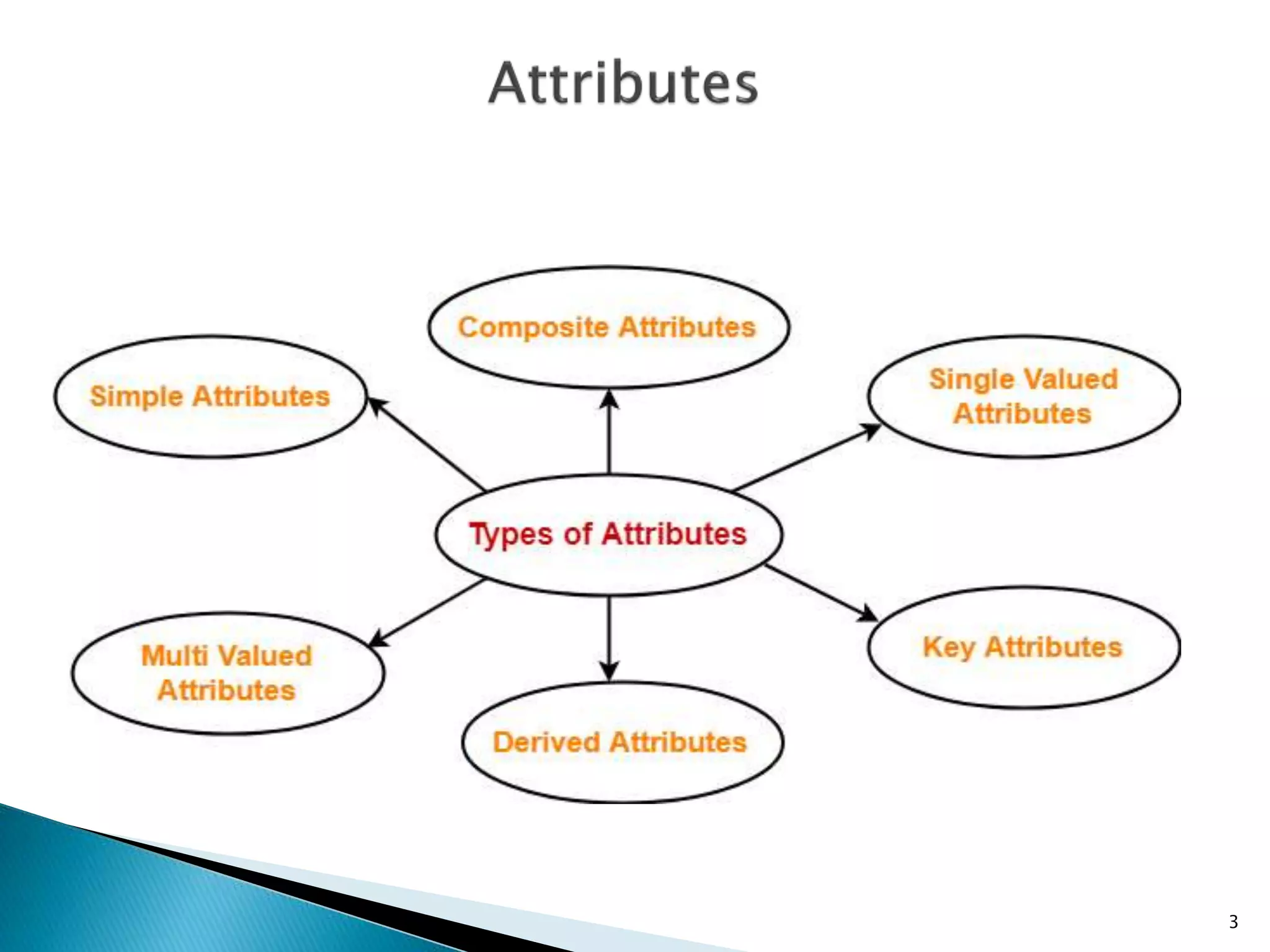
3
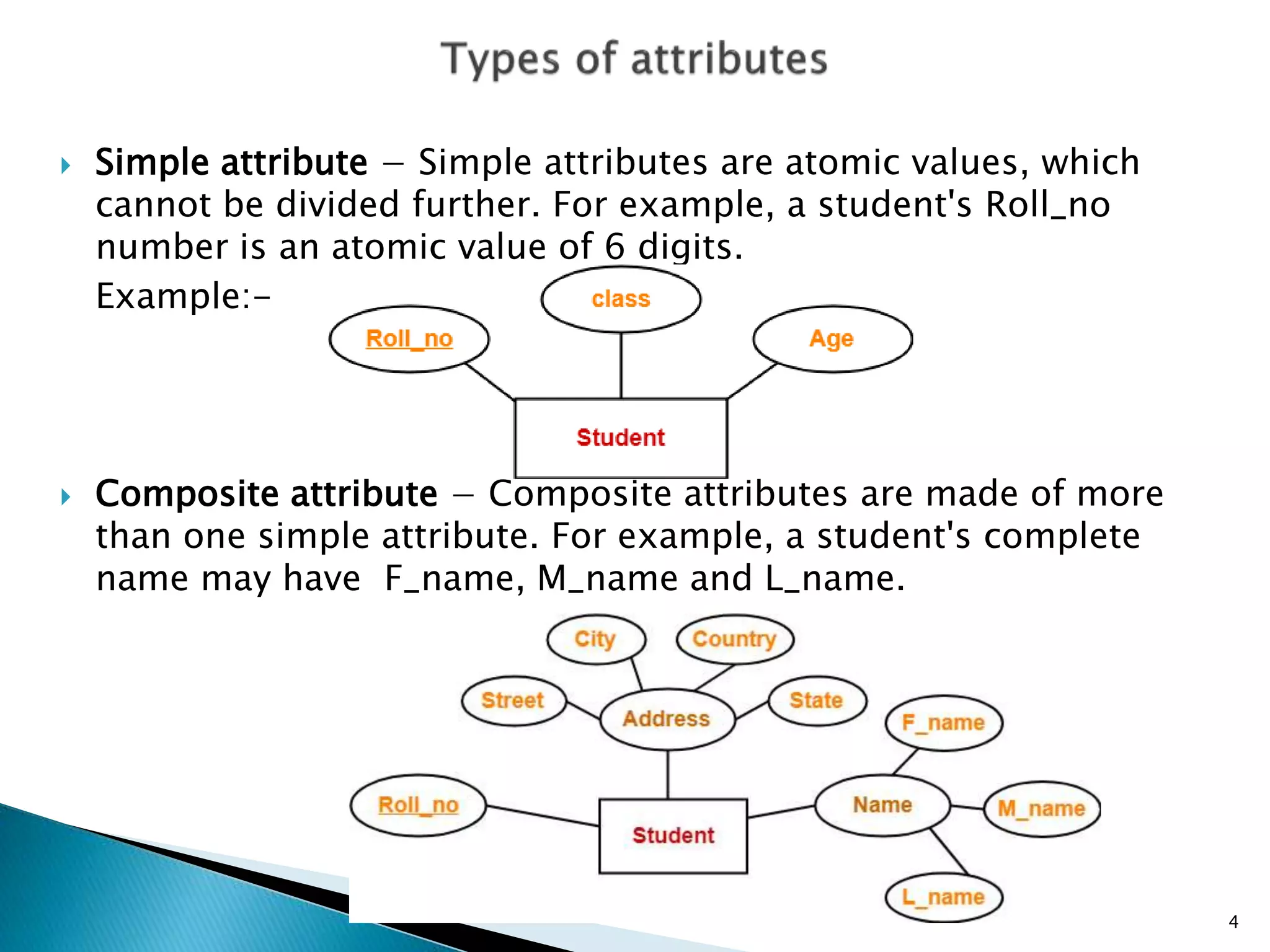
 Simple attribute − Simple attributes are atomic values, which
cannot be divided further. For example, a student's Roll_no
number is an atomic value of 6 digits.
Example:-
 Composite attribute − Composite attributes are made of more
than one simple attribute. For example, a student's complete
name may have F_name, M_name and L_name.
4
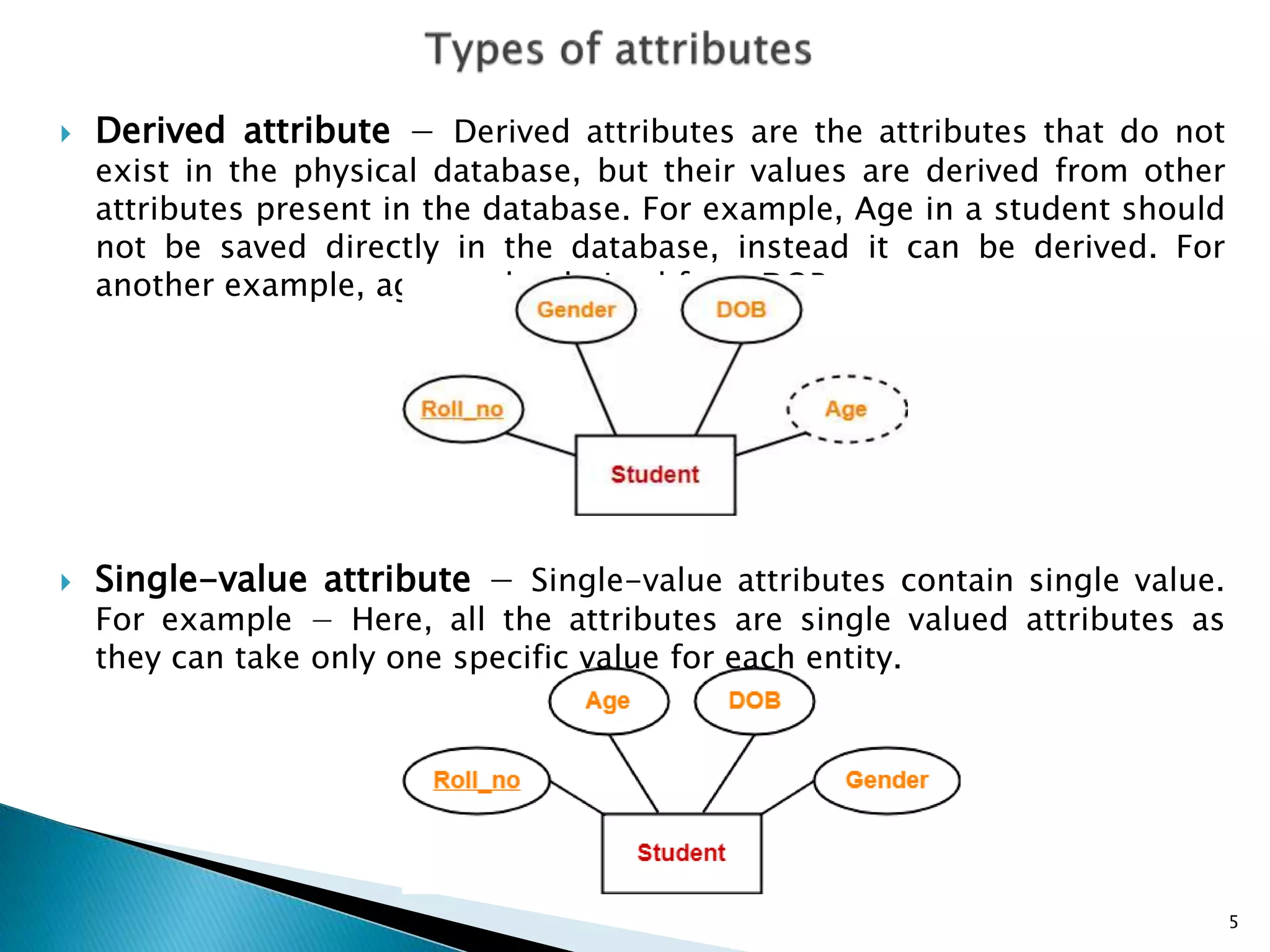
 Derived attribute − Derived attributes are the attributes that do not
exist in the physical database, but their values are derived from other
attributes present in the database. For example, Age in a student should
not be saved directly in the database, instead it can be derived. For
another example, age can be derived from DOB.
 Single-value attribute − Single-value attributes contain single value.
For example − Here, all the attributes are single valued attributes as
they can take only one specific value for each entity.
5
 Multi-value attribute − Multi-value attributes may contain
more than one values. For example, a person can have more
than one phone number, email_address, etc.
Here, the attributes “Mob_no” and “Email_id” are multi valued
attributes as they can take more than one values for a given entity.
 Key Attributes- Key attributes are those attributes which can
identify an entity uniquely in an entity set.
6

Attributes

  • 1.
    Prof. Neeraj Bhargava PoojaDixit Department of Computer Science School of Engineering & System Science MDS, University Ajmer, Rajasthan, India 1
  • 2.
     In RDBMS,a table organizes data in rows and columns. The columns are known as attributes whereas the rows are known as records. Example: A school maintains the data of students in a table named “student”. Suppose the data they store in table is student id, student name & student age. To do this they have had three columns in the table: student_id, student_age, student_name. Here student_id, student_age and student_name are the attributes. 2
  • 3.
  • 4.
     Simple attribute− Simple attributes are atomic values, which cannot be divided further. For example, a student's Roll_no number is an atomic value of 6 digits. Example:-  Composite attribute − Composite attributes are made of more than one simple attribute. For example, a student's complete name may have F_name, M_name and L_name. 4
  • 5.
     Derived attribute− Derived attributes are the attributes that do not exist in the physical database, but their values are derived from other attributes present in the database. For example, Age in a student should not be saved directly in the database, instead it can be derived. For another example, age can be derived from DOB.  Single-value attribute − Single-value attributes contain single value. For example − Here, all the attributes are single valued attributes as they can take only one specific value for each entity. 5
  • 6.
     Multi-value attribute− Multi-value attributes may contain more than one values. For example, a person can have more than one phone number, email_address, etc. Here, the attributes “Mob_no” and “Email_id” are multi valued attributes as they can take more than one values for a given entity.  Key Attributes- Key attributes are those attributes which can identify an entity uniquely in an entity set. 6