2
CONTENT:
1. What isADHD?
2. History of ADHD
3. Types and Symptoms of
ADHD
4. Causes of ADHD
5. Effects of ADHD
6. Prevention of ADHD
7. Treatment of ADHD
8. Conclusion
9. Questions
3.
3
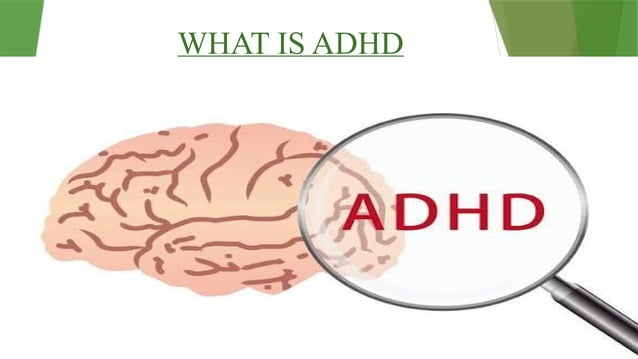
WHAT IS ADHD
ADHDstands for
Attention-Deficit/Hyperactivity Disorder.
It’s a neurodevelopmental disorder that
affects a person’s ability to focus,
control impulses, and regulate activity
levels. It usually begins in childhood
and can continue into adulthood.
4.
4
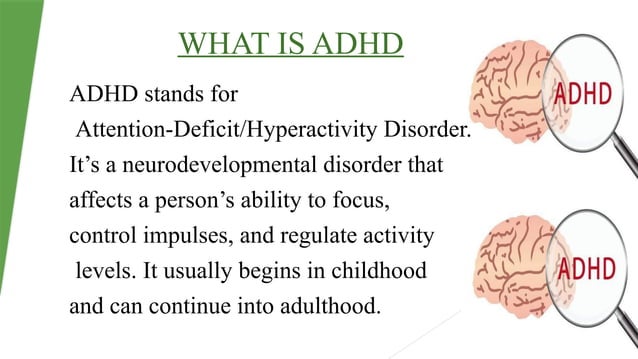
WHAT IS ADHD
ADHDstands for
Attention-Deficit/Hyperactivity Disorder.
It’s a neurodevelopmental disorder that
affects a person’s ability to focus,
control impulses, and regulate activity
levels. It usually begins in childhood
and can continue into adulthood.
5.
5
HISTORY OF ADHD
ADHD(Attention-Deficit/Hyperactivity Disorder) was first
described by Sir Alexander Crichton in 1798, who noted
symptoms of mental restlessness. Later, in 1902, Sir George
Still described children with attention and impulse control
problems, calling it a “defect of moral control.”In the 1930s–
1950s, stimulant drugs like Ritalin were found to help
affected children, and the condition was termed Minimal
Brain Dysfunction.
6.
6
HISTORY OF ADHD
ADHD(Attention-Deficit/Hyperactivity Disorder) was first
described by Sir Alexander Crichton in 1798, who noted
symptoms of mental restlessness. Later, in 1902, Sir George
Still described children with attention and impulse control
problems, calling it a “defect of moral control.”In the 1930s–
1950s, stimulant drugs like Ritalin were found to help
affected children, and the condition was termed Minimal
Brain Dysfunction.
7.
7
HISTORY OF ADHDcont…
In 1968 (DSM-II), it was called Hyperkinetic Reaction of
Childhood. By 1980 (DSM-III), it became Attention Deficit
Disorder (ADD), and in 1987, it was renamed Attention-
Deficit/Hyperactivity Disorder (ADHD) — the name still
used today.Modern research shows ADHD is a
neurodevelopmental disorder involving brain structure and
chemical differences, not poor discipline or parenting.
8.
8
TYPES AND SYMPTOMSOF ADHD
There are three main types of ADHD with characterized symptoms
9.
9
TYPES AND SYMPTOMSOF ADHD
1. Predominantly Inattentive Type (ADHD-PI)
Main problem: Difficulty paying attention.
Symptoms include:
o Easily distracted
o Trouble following instructions
o Forgetfulness
o Difficulty organizing tasks
10.
10
TYPES AND SYMPTOMSOF ADHD
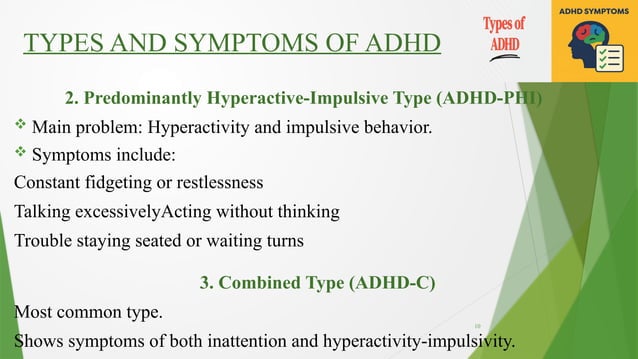
2. Predominantly Hyperactive-Impulsive Type (ADHD-PHI)
Main problem: Hyperactivity and impulsive behavior.
Symptoms include:
Constant fidgeting or restlessness
Talking excessivelyActing without thinking
Trouble staying seated or waiting turns
3. Combined Type (ADHD-C)
Most common type.
Shows symptoms of both inattention and hyperactivity-impulsivity.
11.
11
CAUSES OF ADHD
Antihistamineeye drops (e.g., ketotifen): Block
histamine receptors, reducing allergic responses and
itching.
Lubricating eye drops (e.g., artificial tears): Moisturize
and protect the ocular surface, relieving dryness and
irritation.
12.
12
CAUSES OF ADHD
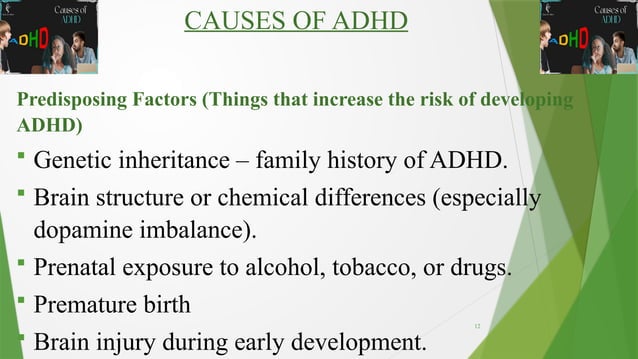
PredisposingFactors (Things that increase the risk of developing
ADHD)
Genetic inheritance – family history of ADHD.
Brain structure or chemical differences (especially
dopamine imbalance).
Prenatal exposure to alcohol, tobacco, or drugs.
Premature birth
Brain injury during early development.
13.
13
CAUSES OF ADHD
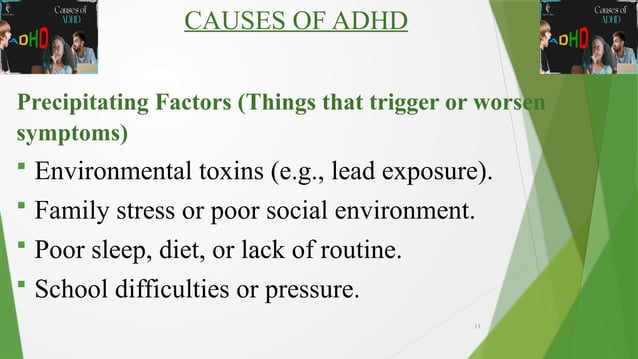
PrecipitatingFactors (Things that trigger or worsen
symptoms)
Environmental toxins (e.g., lead exposure).
Family stress or poor social environment.
Poor sleep, diet, or lack of routine.
School difficulties or pressure.
14.
14
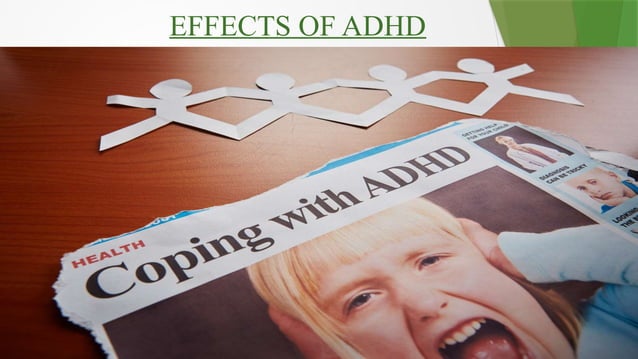
EFFECTS OF ADHD
Inpharmacology, indications refer to the specific medical conditions, diseases, or
symptoms for which a particular medication or therapeutic agent is prescribed,
recommended, or approved. These include
Therapeutic Indications
1. Glaucoma: To reduce intraocular pressure (IOP) and prevent optic
nerve damage.
2. Dry Eye Syndrome: To lubricate and moisturize the ocular surface.
3. Allergic Conjunctivitis: To relieve itching, redness, and inflammation.
4. Blepharitis: To reduce inflammation and infection of the eyelids
15.
15
EFFECTS OF ADHD
Onthe Individual
Academic difficulties: Poor concentration leads to low grades and incomplete work.
Low self-esteem: Constant criticism or failure can affect confidence.
Emotional problems: Increased risk of anxiety, depression, and frustration.
Poor social relationships: Difficulty following rules or controlling impulses may
cause conflicts.
Workplace challenges: Trouble organizing, meeting deadlines, or maintaining focus.
Risky behaviors: Impulsivity can lead to accidents, substance abuse, or legal issues.
16.
16
EFFECTS OF ADHD
OnSociety
Lower productivity: Difficulty maintaining jobs or achieving full potential.
Increased healthcare costs: Due to treatment, therapy, and related mental
health issues.
Educational burden: Schools may need special support or attention for
affected students.
Family stress: Parents and caregivers may face emotional and financial strain.
Social issues: Higher rates of school dropouts and conflicts with the
law in some cases.
17.
17
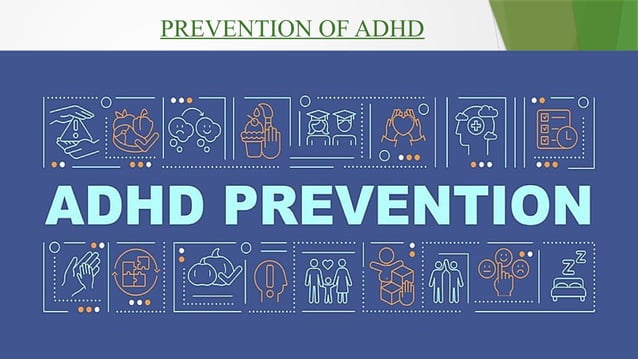
PREVENTION OF ADHD
DiagnosticIndications
5. Dilating pupils: To facilitate examination of the retina and
optic nerve.
6. Anesthetizing the cornea: To perform diagnostic
procedures, such as corneal scraping or biopsy.
18.
18
PREVENTION OF ADHD
PrimaryPrevention (Preventing it before it occurs)
Antenatal care: Ensure proper nutrition and medical care during
pregnancy.
Avoid harmful substances: Pregnant women should avoid alcohol,
tobacco, and drugs.
Prevent birth injuries: Safe delivery practices to avoid brain damage.
Reduce exposure to toxins: Protect children from lead, pesticides, and
other harmful chemicals.
Health education: Teach parents about healthy child development and
early stimulation.
19.
19
PREVENTION OF ADHD
SecondaryPrevention (Early detection and management to reduce effects)
Early screening: Identify children showing symptoms of inattention or
hyperactivity early.
Early intervention: Provide behavioral therapy and counseling for the
child and parents.
Educational support: Give special learning plans and classroom
adjustments.
Medication when needed: Use prescribed stimulant or non-stimulant
drugs under medical supervision.
Parental guidance and training: Help parents manage behavior positively
and support learning.
20.
20
TREAMENT OF ADHD
Thetreatment of ADHD involves a combination of medical,
psychological, and educational approaches to help control symptoms
and improve functioning.
21.
21
TREAMENT OF ADHD
MedicalTreatment
Medication:
Stimulants (e.g. Methylphenidate [Ritalin], Amphetamines)
– improve attention and reduce hyperactivity.
Non-stimulants (e.g. Atomoxetine, Guanfacine) – used when
stimulants are not suitable.
Regular medical monitoring is needed to check side effects
and progress.
22.
22
TREAMENT OF ADHD
Psychological/ Behavioral Therapy
Behavioral therapy: Helps children manage impulsive
behavior and build self-control.
Cognitive-behavioral therapy (CBT): Teaches coping skills,
organization, and emotional regulation.
Parent training: Educates parents on positive discipline and
how to support the child effectively.
23.
23
TREAMENT OF ADHD
EducationalSupport
Individualized learning plans and classroom adjustments to help
focus and organization.
Teacher involvement and consistent routines are encouraged.
Social and Lifestyle Support
Counseling and support groups for families.
Healthy lifestyle: Regular exercise, good sleep, and balanced diet
help reduce symptoms.
24.
24
CONCLUSION
In conclusion, ADHDis a complex neurodevelopmental disorder
that affects both children and adults, characterized by symptoms of
inattention, hyperactivity, and impulsivity. While it can present
challenges, with proper diagnosis, treatment, and support,
individuals with ADHD can lead successful and fulfilling lives. It's
essential to approach ADHD with understanding, patience, and
compassion, recognizing the unique strengths and abilities of those
who live with it.
25.
25
CONCLUSION
Cough mixturesplay a crucial role in the symptomatic relief of various types of
coughs.
Their effectiveness depends on selecting the right formulation based on the type of
cough and underlying cause.
However, caution must be exercised to avoid adverse effects and interactions,
ensuring safe and appropriate usage

![21
TREAMENT OF ADHD
Medical Treatment
Medication:
Stimulants (e.g. Methylphenidate [Ritalin], Amphetamines)
– improve attention and reduce hyperactivity.
Non-stimulants (e.g. Atomoxetine, Guanfacine) – used when
stimulants are not suitable.
Regular medical monitoring is needed to check side effects
and progress.](https://image.slidesharecdn.com/adhdpresentation11-251115221450-3e0a3ec1/85/ADHD_PRESENTATION-for-student-1-1-pptx-21-638.jpg)




![ADHD (best)]](https://cdn.slidesharecdn.com/ss_thumbnails/bykhaihojoshuagabriel1-1234763718979961-1-thumbnail.jpg?width=640&height=640&fit=bounds)


