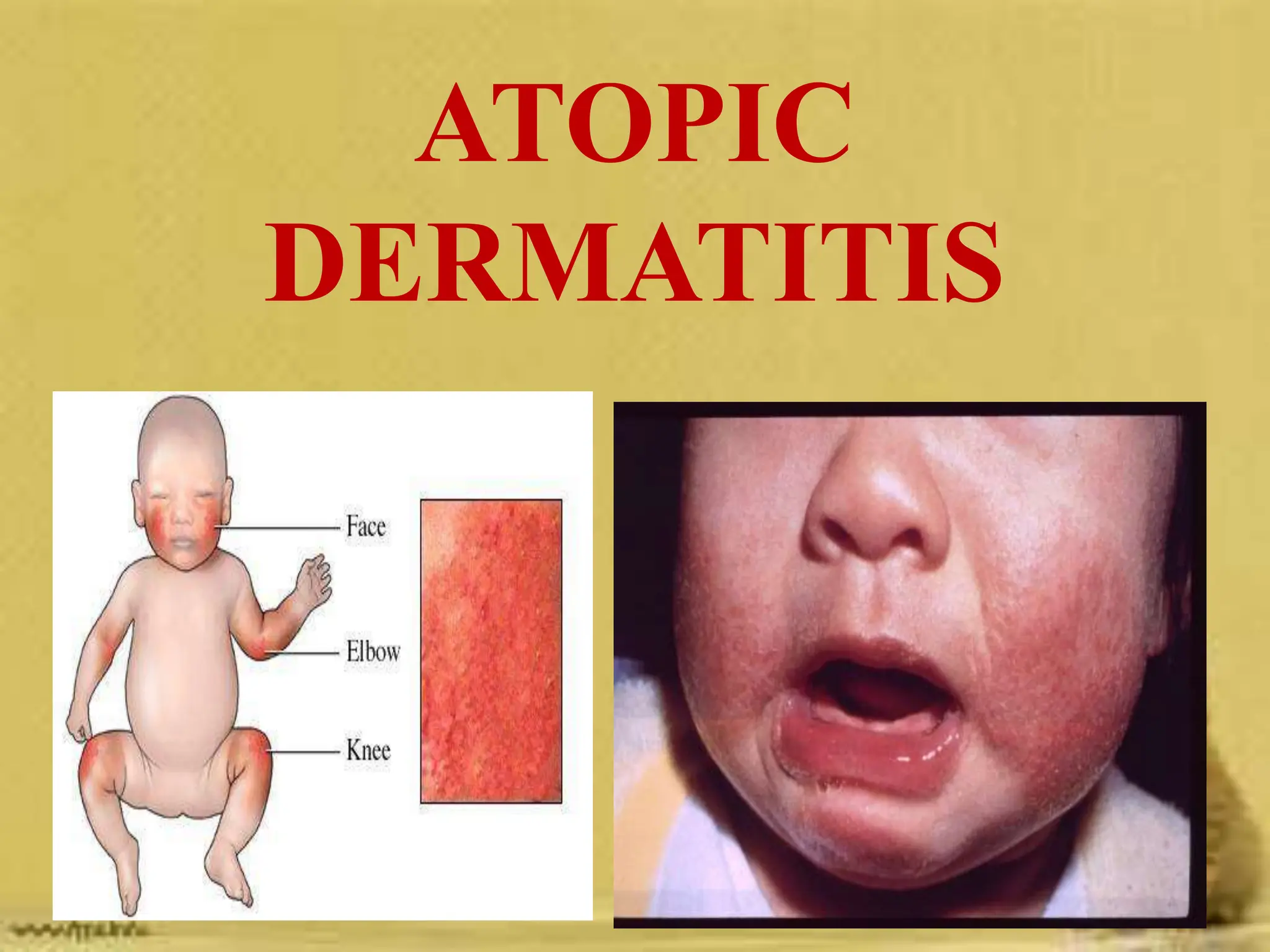
ATOPIC
DERMATITIS
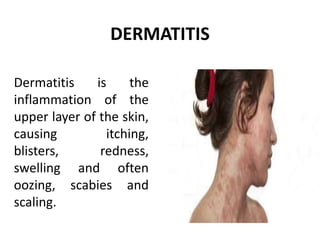
DERMATITIS
Dermatitis is the
inflammation of the
upper layer of the skin,
causing itching,
blisters, redness,
swelling and often
oozing, scabies and
scaling.
1. Atopic dermatitis.
2. Contact dermatitis.
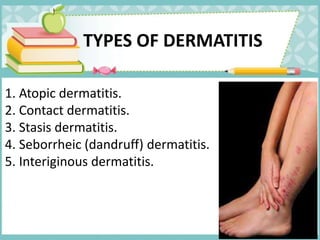
3. Stasis dermatitis.
4. Seborrheic (dandruff) dermatitis.
5. Interiginous dermatitis.
TYPES OF DERMATITIS
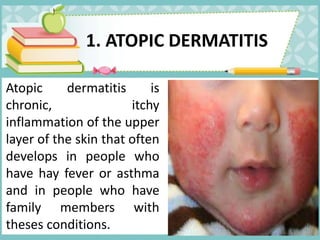
1. ATOPIC DERMATITIS
Atopic dermatitis is
chronic, itchy
inflammation of the upper
layer of the skin that often
develops in people who
have hay fever or asthma
and in people who have
family members with
theses conditions.
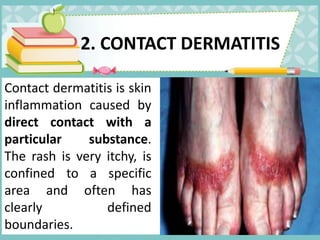
2. CONTACT DERMATITIS
Contact dermatitis is skin
inflammation caused by
direct contact with a
particular substance.
The rash is very itchy, is
confined to a specific
area and often has
clearly defined
boundaries.
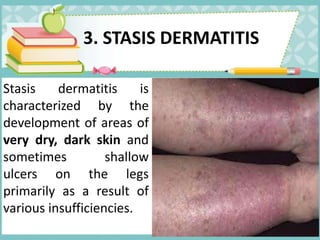
3. STASIS DERMATITIS
Stasis dermatitis is
characterized by the
development of areas of
very dry, dark skin and
sometimes shallow
ulcers on the legs
primarily as a result of
various insufficiencies.
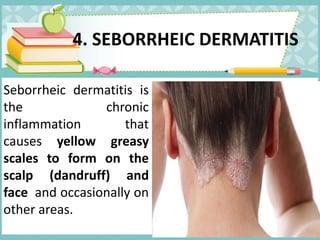
4. SEBORRHEIC DERMATITIS
Seborrheic dermatitis is
the chronic
inflammation that
causes yellow greasy
scales to form on the
scalp (dandruff) and
face and occasionally on
other areas.
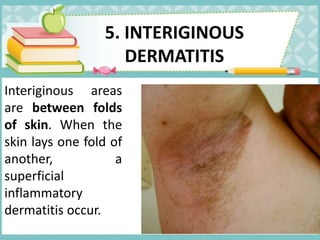
5. INTERIGINOUS
DERMATITIS
Interiginous areas
are between folds
of skin. When the
skin lays one fold of
another, a
superficial
inflammatory
dermatitis occur.
ETIOLOGY OF ATOPIC
DERMATITIS
• Idiopathic.
• Allergy.
• Hereditory.
• Viral (herpes)
• Bacterial infection (staphylococci).
RISK FACTORS
• Dehydration.
• Fluid electrolyte imbalance.
• Excessive moisture
• Excessive humid air.
• Very tight elastic clothes.
• Low immunological response.
• Any other primary disease condition like AIDS.
CLINICAL MANIFECTATIONS
 Rashes
 Itching
 Scratching and rubbing
 Spots especially in hands, upper arms, in front
of elbows or behind the knees.
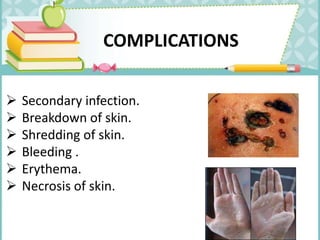
COMPLICATIONS
 Secondary infection.
 Breakdown of skin.
 Shredding of skin.
 Bleeding .
 Erythema.
 Necrosis of skin.
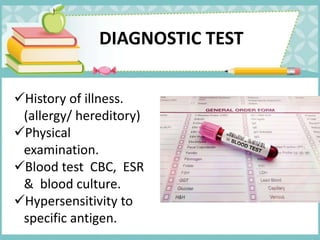
DIAGNOSTIC TEST
History of illness.
(allergy/ hereditory)
Physical
examination.
Blood test CBC, ESR
& blood culture.
Hypersensitivity to
specific antigen.
MANAGEMENT
1. Medical management:
 Instruct the child to take more liquid.
 Maintain the personal hygiene of patient.
 Prevent patient from any infection.
 Instruct the patient to wear the loose
and cotton clothing.
 Instruct the child to do not scratch the area.
2. Pharmacological management:
• Topical drugs/ corticosteroids skin creams or ointment.
e.g.- Candid B.
• Wet dressing.
• Anti- itch or drying lotion (lactocalamine)
• Oral drug for allergen- citrizine
• Antifungal drugs (Ketoconazole)
• Systemic Antibiotic drugs.
• Vitamin supplements.
MANAGEMENT
cont….
NURSING
MANAGEMENT
 Nursing interventions:
1. Pain related to scratching as evidenced by skin
breakdown.
 Assess the patient’s condition.
 Check the condition of skin.
 Instruct the patient to do not scratch the skin forcefully.
 Provide cool environment to patient.
 Apply lotion or medication as prescribed by physician for
preventing the itching or dryness of skin.
cont….
2. Decreased self-esteem related to rashes as evidenced by
redness on skin.
 Assess the psychological condition of patient.
 Clear all doubts of parents and child.
 Provide psychological support to parents and the child.
 Instruct the patient regarding maintenance of personal
hygiene.
cont….
3. Impaired personal hygiene related to disease condition as
evidenced by poor hygiene of patient.
 Assess the level of hygiene of patient.
 Instruct the patient to maintain personal hygiene.
 Instruct the client to take more liquids for maintaining the
skin hydration of patient.
 Instruct the patient to take bath daily.
 Instruct the patient to use prescribed medicated soap for
sensitive skin.
4. Knowledge deficit related to disease condition and
treatment.
Assess the level of knowledge of parents.
Clear all doubts of patient.
Teach the parents to avoid the exposure to allergens.
Instruct the patient to maintain personal hygiene.
Provide health education to child and parents.
Explain to patient about the disease condition and
treatment.
Instruct the patient to follow up the care.
cont….

Atopic Dermatitis.pptx dermatitis skin inf

  • 1.
  • 2.
    DERMATITIS Dermatitis is the inflammationof the upper layer of the skin, causing itching, blisters, redness, swelling and often oozing, scabies and scaling.
  • 3.
    1. Atopic dermatitis. 2.Contact dermatitis. 3. Stasis dermatitis. 4. Seborrheic (dandruff) dermatitis. 5. Interiginous dermatitis. TYPES OF DERMATITIS
  • 4.
    1. ATOPIC DERMATITIS Atopicdermatitis is chronic, itchy inflammation of the upper layer of the skin that often develops in people who have hay fever or asthma and in people who have family members with theses conditions.
  • 5.
    2. CONTACT DERMATITIS Contactdermatitis is skin inflammation caused by direct contact with a particular substance. The rash is very itchy, is confined to a specific area and often has clearly defined boundaries.
  • 6.
    3. STASIS DERMATITIS Stasisdermatitis is characterized by the development of areas of very dry, dark skin and sometimes shallow ulcers on the legs primarily as a result of various insufficiencies.
  • 7.
    4. SEBORRHEIC DERMATITIS Seborrheicdermatitis is the chronic inflammation that causes yellow greasy scales to form on the scalp (dandruff) and face and occasionally on other areas.
  • 8.
    5. INTERIGINOUS DERMATITIS Interiginous areas arebetween folds of skin. When the skin lays one fold of another, a superficial inflammatory dermatitis occur.
  • 9.
    ETIOLOGY OF ATOPIC DERMATITIS •Idiopathic. • Allergy. • Hereditory. • Viral (herpes) • Bacterial infection (staphylococci).
  • 10.
    RISK FACTORS • Dehydration. •Fluid electrolyte imbalance. • Excessive moisture • Excessive humid air. • Very tight elastic clothes. • Low immunological response. • Any other primary disease condition like AIDS.
  • 11.
    CLINICAL MANIFECTATIONS  Rashes Itching  Scratching and rubbing  Spots especially in hands, upper arms, in front of elbows or behind the knees.
  • 12.
    COMPLICATIONS  Secondary infection. Breakdown of skin.  Shredding of skin.  Bleeding .  Erythema.  Necrosis of skin.
  • 13.
    DIAGNOSTIC TEST History ofillness. (allergy/ hereditory) Physical examination. Blood test CBC, ESR & blood culture. Hypersensitivity to specific antigen.
  • 14.
    MANAGEMENT 1. Medical management: Instruct the child to take more liquid.  Maintain the personal hygiene of patient.  Prevent patient from any infection.  Instruct the patient to wear the loose and cotton clothing.  Instruct the child to do not scratch the area.
  • 15.
    2. Pharmacological management: •Topical drugs/ corticosteroids skin creams or ointment. e.g.- Candid B. • Wet dressing. • Anti- itch or drying lotion (lactocalamine) • Oral drug for allergen- citrizine • Antifungal drugs (Ketoconazole) • Systemic Antibiotic drugs. • Vitamin supplements. MANAGEMENT cont….
  • 16.
    NURSING MANAGEMENT  Nursing interventions: 1.Pain related to scratching as evidenced by skin breakdown.  Assess the patient’s condition.  Check the condition of skin.  Instruct the patient to do not scratch the skin forcefully.  Provide cool environment to patient.  Apply lotion or medication as prescribed by physician for preventing the itching or dryness of skin.
  • 17.
    cont…. 2. Decreased self-esteemrelated to rashes as evidenced by redness on skin.  Assess the psychological condition of patient.  Clear all doubts of parents and child.  Provide psychological support to parents and the child.  Instruct the patient regarding maintenance of personal hygiene.
  • 18.
    cont…. 3. Impaired personalhygiene related to disease condition as evidenced by poor hygiene of patient.  Assess the level of hygiene of patient.  Instruct the patient to maintain personal hygiene.  Instruct the client to take more liquids for maintaining the skin hydration of patient.  Instruct the patient to take bath daily.  Instruct the patient to use prescribed medicated soap for sensitive skin.
  • 19.
    4. Knowledge deficitrelated to disease condition and treatment. Assess the level of knowledge of parents. Clear all doubts of patient. Teach the parents to avoid the exposure to allergens. Instruct the patient to maintain personal hygiene. Provide health education to child and parents. Explain to patient about the disease condition and treatment. Instruct the patient to follow up the care. cont….

Editor's Notes