Atomic Structure and Bonding
What We Will Cover:
•Subatomic Particles
•Atomic Number
•Atomic Mass Unit Number and Calculations
•Electron Arrangement
•Bonding – Ionic and Covalent
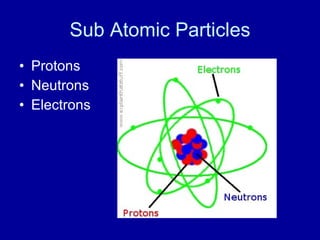
Sub Atomic Particles
• Protons
• Neutrons
• Electrons
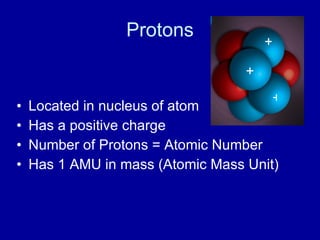
Protons
• Located in nucleus of atom
• Has a positive charge
• Number of Protons = Atomic Number
• Has 1 AMU in mass (Atomic Mass Unit)
+
+
+
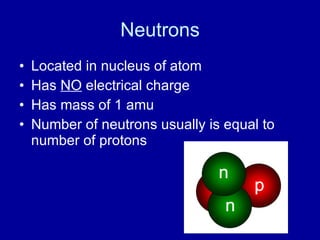
Neutrons
• Located in nucleus of atom
• Has NO electrical charge
• Has mass of 1 amu
• Number of neutrons usually is equal to
number of protons
Quiz – Subatomic
Particles
2.The positive particle is the ___.
3.The negative particle is the ___.
4.The neutral particle is the ___.
5.The proton is the same as the __ number.
6.The two particles located inside the nucleus
are the __ and the __.
6.Each of these particles
have a mass of ___.
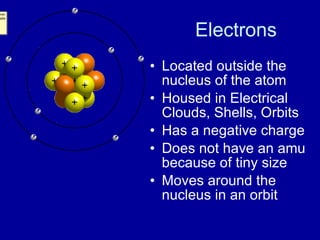
Electrons
• Located outside the
nucleus of the atom
• Housed in Electrical
Clouds, Shells, Orbits
• Has a negative charge
• Does not have an amu
because of tiny size
• Moves around the
nucleus in an orbit
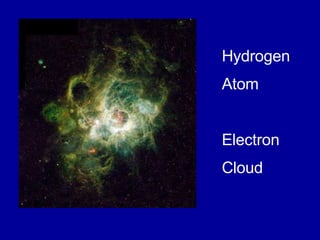
Hydrogen
Atom
Electron
Cloud
Quick Quiz – Subatomic Particles
(continued)
7. The electron ___ around the
nucleus.
8. The ___ electrons are the outer
___ electrons and are involved in
___ bonding.
9.To find the number of neutrons in
an atom you subtract the __
number from the ___ number.
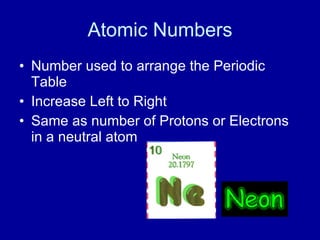
Atomic Numbers
• Number used to arrange the Periodic
Table
• Increase Left to Right
• Same as number of Protons or Electrons
in a neutral atom
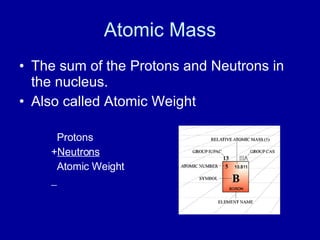
Atomic Mass
• The sum of the Protons and Neutrons in
the nucleus.
• Also called Atomic Weight
Protons
+Neutrons
Atomic Weight
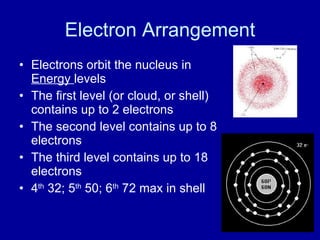
Electron Arrangement
• Electrons orbit the nucleus in
Energy levels
• The first level (or cloud, or shell)
contains up to 2 electrons
• The second level contains up to 8
electrons
• The third level contains up to 18
electrons
• 4th
32; 5th
50; 6th
72 max in shell
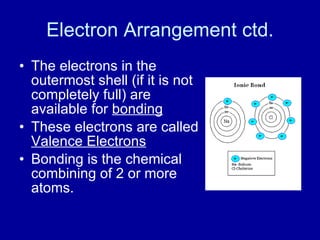
Electron Arrangement ctd.
• The electrons in the
outermost shell (if it is not
completely full) are
available for bonding
• These electrons are called
Valence Electrons
• Bonding is the chemical
combining of 2 or more
atoms.
Quick Quiz –
Numbers, Electron Arrangement
10. The __ __ is used to arrange the periodic table as it
increases from __ to __.
11. The atomic number is the same as the number of
___ .
12. The __ number is the sum of protons and neutrons
inside the ___.
13. The outermost electrons are the __ electrons and
they orbit the nucleus in __ levels.
14. Bonding is the ___________ combining of 2 or more
____________________
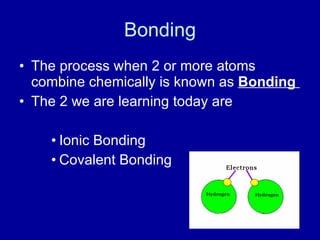
Bonding
• The process when 2 or more atoms
combine chemically is known as Bonding
• The 2 we are learning today are
• Ionic Bonding
• Covalent Bonding
Ionic Bonding
• Electrons are either gained or lost by
atom
• One atom is positive +, One is negative
-
• Occurs between Metals and Nonmetals
• Metals lose electrons
• Nonmetals gain electrons
• Very strong bond – usually solids - with
high melting temperatures
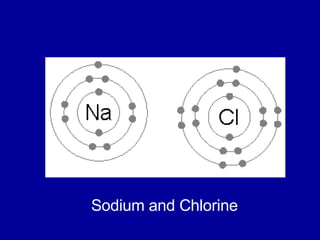
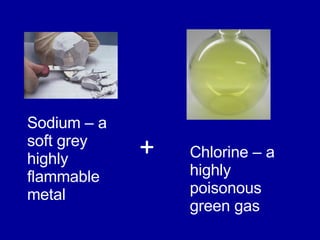
Sodium and Chlorine
Sodium – a
soft grey
highly
flammable
metal
Chlorine – a
highly
poisonous
green gas
+
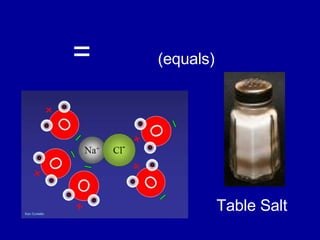
= (equals)
Table Salt
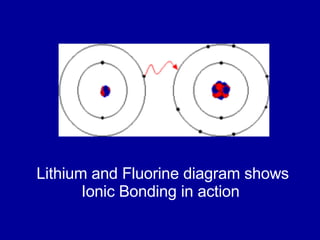
Lithium and Fluorine diagram shows
Ionic Bonding in action
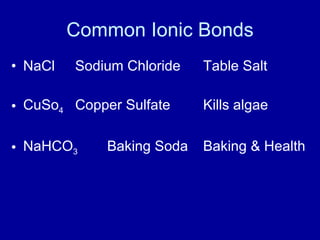
Common Ionic Bonds
• NaCl Sodium Chloride Table Salt
• CuSo4 Copper Sulfate Kills algae
• NaHCO3 Baking Soda Baking & Health
Quiz – Bonding
Ionic
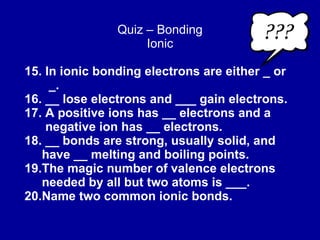
15. In ionic bonding electrons are either _ or
_.
16. __ lose electrons and ___ gain electrons.
17. A positive ions has __ electrons and a
negative ion has __ electrons.
18. __ bonds are strong, usually solid, and
have __ melting and boiling points.
19.The magic number of valence electrons
needed by all but two atoms is ___.
20.Name two common ionic bonds.
Covalent Bonding
• Electrons are shared between atoms (co)
• Neither atom has an electrical charge
• Forces between atoms are weak – have
low boiling or melting points
• Usually are liquids or gasses
• If a solid is usually a crystal
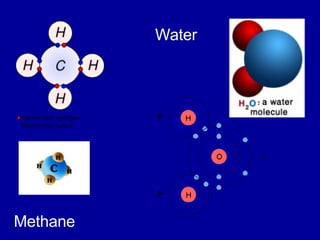
Water
Methane
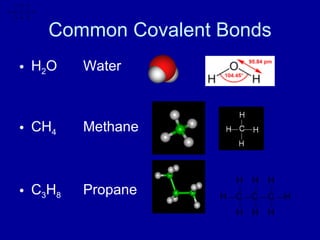
Common Covalent Bonds
• H2O Water
• CH4 Methane
• C3H8 Propane
Quick Quiz – Bonding
Covalent
21. In a covalent bond, electrons are ___.
22. Neither atom has a ___.
23. Intermolecular forces __ __ are weak.
24. Covalent bonds have ___ melting and
___ points.
25. Covalent bonds are usually found in
these two states of matter.
26. Two common covalent compounds
are __ and __.
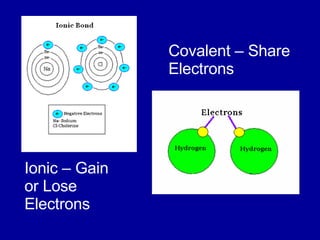
Ionic – Gain
or Lose
Electrons
Covalent – Share
Electrons

Atomic structure-1222530739357453-8

  • 2.
    Atomic Structure andBonding What We Will Cover: •Subatomic Particles •Atomic Number •Atomic Mass Unit Number and Calculations •Electron Arrangement •Bonding – Ionic and Covalent
  • 3.
    Sub Atomic Particles •Protons • Neutrons • Electrons
  • 4.
    Protons • Located innucleus of atom • Has a positive charge • Number of Protons = Atomic Number • Has 1 AMU in mass (Atomic Mass Unit) + + +
  • 5.
    Neutrons • Located innucleus of atom • Has NO electrical charge • Has mass of 1 amu • Number of neutrons usually is equal to number of protons
  • 6.
    Quiz – Subatomic Particles 2.Thepositive particle is the ___. 3.The negative particle is the ___. 4.The neutral particle is the ___. 5.The proton is the same as the __ number. 6.The two particles located inside the nucleus are the __ and the __. 6.Each of these particles have a mass of ___.
  • 7.
    Electrons • Located outsidethe nucleus of the atom • Housed in Electrical Clouds, Shells, Orbits • Has a negative charge • Does not have an amu because of tiny size • Moves around the nucleus in an orbit
  • 8.
  • 9.
    Quick Quiz –Subatomic Particles (continued) 7. The electron ___ around the nucleus. 8. The ___ electrons are the outer ___ electrons and are involved in ___ bonding. 9.To find the number of neutrons in an atom you subtract the __ number from the ___ number.
  • 10.
    Atomic Numbers • Numberused to arrange the Periodic Table • Increase Left to Right • Same as number of Protons or Electrons in a neutral atom
  • 11.
    Atomic Mass • Thesum of the Protons and Neutrons in the nucleus. • Also called Atomic Weight Protons +Neutrons Atomic Weight
  • 12.
    Electron Arrangement • Electronsorbit the nucleus in Energy levels • The first level (or cloud, or shell) contains up to 2 electrons • The second level contains up to 8 electrons • The third level contains up to 18 electrons • 4th 32; 5th 50; 6th 72 max in shell
  • 13.
    Electron Arrangement ctd. •The electrons in the outermost shell (if it is not completely full) are available for bonding • These electrons are called Valence Electrons • Bonding is the chemical combining of 2 or more atoms.
  • 14.
    Quick Quiz – Numbers,Electron Arrangement 10. The __ __ is used to arrange the periodic table as it increases from __ to __. 11. The atomic number is the same as the number of ___ . 12. The __ number is the sum of protons and neutrons inside the ___. 13. The outermost electrons are the __ electrons and they orbit the nucleus in __ levels. 14. Bonding is the ___________ combining of 2 or more ____________________
  • 15.
    Bonding • The processwhen 2 or more atoms combine chemically is known as Bonding • The 2 we are learning today are • Ionic Bonding • Covalent Bonding
  • 16.
    Ionic Bonding • Electronsare either gained or lost by atom • One atom is positive +, One is negative - • Occurs between Metals and Nonmetals • Metals lose electrons • Nonmetals gain electrons • Very strong bond – usually solids - with high melting temperatures
  • 17.
  • 18.
    Sodium – a softgrey highly flammable metal Chlorine – a highly poisonous green gas +
  • 19.
  • 20.
    Lithium and Fluorinediagram shows Ionic Bonding in action
  • 21.
    Common Ionic Bonds •NaCl Sodium Chloride Table Salt • CuSo4 Copper Sulfate Kills algae • NaHCO3 Baking Soda Baking & Health
  • 22.
    Quiz – Bonding Ionic 15.In ionic bonding electrons are either _ or _. 16. __ lose electrons and ___ gain electrons. 17. A positive ions has __ electrons and a negative ion has __ electrons. 18. __ bonds are strong, usually solid, and have __ melting and boiling points. 19.The magic number of valence electrons needed by all but two atoms is ___. 20.Name two common ionic bonds.
  • 23.
    Covalent Bonding • Electronsare shared between atoms (co) • Neither atom has an electrical charge • Forces between atoms are weak – have low boiling or melting points • Usually are liquids or gasses • If a solid is usually a crystal
  • 24.
  • 25.
    Common Covalent Bonds •H2O Water • CH4 Methane • C3H8 Propane
  • 26.
    Quick Quiz –Bonding Covalent 21. In a covalent bond, electrons are ___. 22. Neither atom has a ___. 23. Intermolecular forces __ __ are weak. 24. Covalent bonds have ___ melting and ___ points. 25. Covalent bonds are usually found in these two states of matter. 26. Two common covalent compounds are __ and __.
  • 27.
    Ionic – Gain orLose Electrons Covalent – Share Electrons