Daniela Vergara, Juan Sebastián,
Manuela Rojas
 That

atoms can be divide from the nucleus,
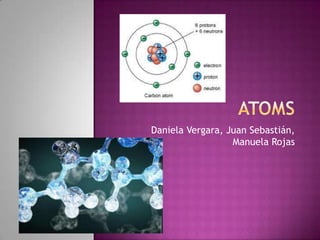
it have 6 positive protons, it divide on 2 so
one nucleus have three and the other tree,
but then they make another three to make a
very good nucleus for the atom
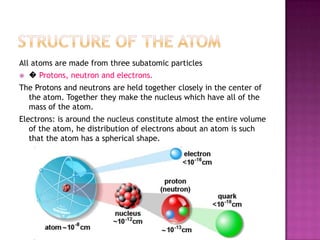
All atoms are made from three subatomic particles


� Protons, neutron and electrons.

The Protons and neutrons are held together closely in the center of
the atom. Together they make the nucleus which have all of the
mass of the atom.
Electrons: is around the nucleus constitute almost the entire volume
of the atom, he distribution of electrons about an atom is such
that the atom has a spherical shape.


Atoms have no charge, they are neutral. the number of protons
and electrons are the same. If this condition is violated the atom
has a net charge and is called an ion.



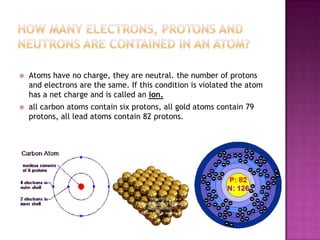
all carbon atoms contain six protons, all gold atoms contain 79
protons, all lead atoms contain 82 protons.
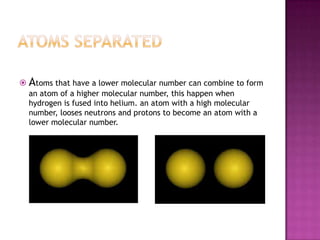
 Atoms that have a lower molecular number can combine to form
an atom of a higher molecular number, this happen when
hydrogen is fused into helium. an atom with a high molecular
number, looses neutrons and protons to become an atom with a
lower molecular number.


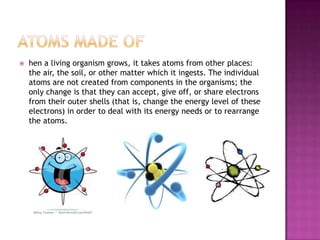
hen a living organism grows, it takes atoms from other places:
the air, the soil, or other matter which it ingests. The individual
atoms are not created from components in the organisms; the
only change is that they can accept, give off, or share electrons
from their outer shells (that is, change the energy level of these
electrons) in order to deal with its energy needs or to rearrange
the atoms.
Atoms

Atoms

  • 1.
    Daniela Vergara, JuanSebastián, Manuela Rojas
  • 2.
     That atoms canbe divide from the nucleus, it have 6 positive protons, it divide on 2 so one nucleus have three and the other tree, but then they make another three to make a very good nucleus for the atom
  • 3.
    All atoms aremade from three subatomic particles  � Protons, neutron and electrons. The Protons and neutrons are held together closely in the center of the atom. Together they make the nucleus which have all of the mass of the atom. Electrons: is around the nucleus constitute almost the entire volume of the atom, he distribution of electrons about an atom is such that the atom has a spherical shape.
  • 4.
     Atoms have nocharge, they are neutral. the number of protons and electrons are the same. If this condition is violated the atom has a net charge and is called an ion.  all carbon atoms contain six protons, all gold atoms contain 79 protons, all lead atoms contain 82 protons.
  • 5.
     Atoms thathave a lower molecular number can combine to form an atom of a higher molecular number, this happen when hydrogen is fused into helium. an atom with a high molecular number, looses neutrons and protons to become an atom with a lower molecular number.
  • 6.
     hen a livingorganism grows, it takes atoms from other places: the air, the soil, or other matter which it ingests. The individual atoms are not created from components in the organisms; the only change is that they can accept, give off, or share electrons from their outer shells (that is, change the energy level of these electrons) in order to deal with its energy needs or to rearrange the atoms.