Downloaded 26 times


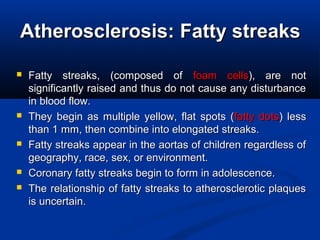
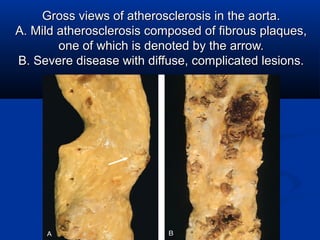


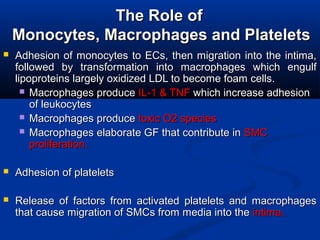


This document provides information about atherosclerosis, including its definition, locations where it commonly occurs, complications that can arise, risk factors, pathogenesis, and histological features. It defines atherosclerosis as a hardening and loss of elasticity of arterial walls. The most common sites are the abdominal aorta, iliac arteries, coronary arteries, and carotid arteries. Complications include myocardial infarction, stroke, aneurysm formation, and gangrene. Major risk factors include hyperlipidemia, hypertension, smoking, and diabetes. The pathogenesis involves response to endothelial injury from various insults, resulting in inflammation and deposition of lipids in the arterial wall.


