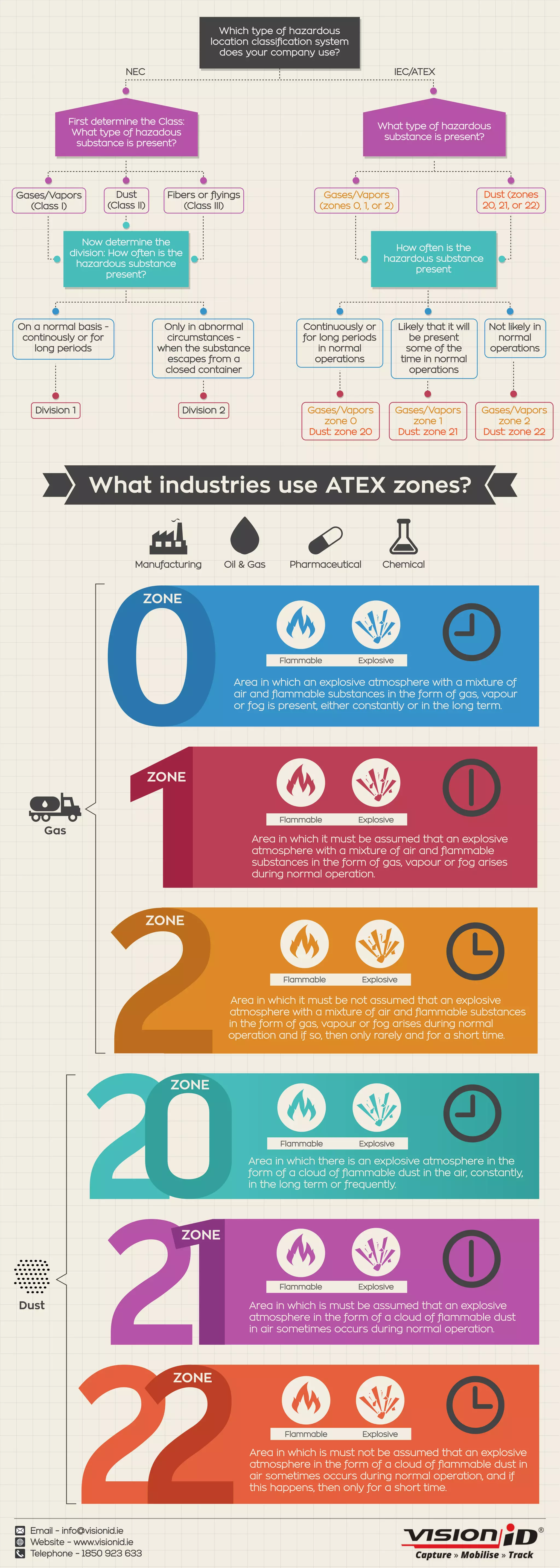
This document discusses hazardous location classification systems and ATEX zones. It explains that the first step is to determine the class - whether the hazard is gases/vapors, dust, or fibers - and then the division based on how often the substance is present. Division 1 means the substance is continuously present, while Division 2 means it is only present occasionally. It then defines the three ATEX zones - zone 0 for continuous hazards, zone 1 for long-term hazards, and zone 2 for occasional hazards. Finally, it lists some common industries that use ATEX zones like chemical manufacturing, oil and gas, and pharmaceuticals.