ASTHMA
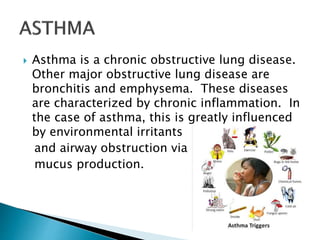
๏ฝ Asthma is a chronic obstructive lung disease.
Other major obstructive lung disease are
bronchitis and emphysema. These diseases
are characterized by chronic inflammation. In
the case of asthma, this is greatly influenced
by environmental irritants
and airway obstruction via
mucus production.
๏ฝ Symptoms:
- Coughing
- Wheezing
- Shortness of Breathe
- Chest tightness, pain, or pressure
Symptoms are not same for everyone and can
be mild or severe.
๏ฝ Exercise can be difficult for individuals with
asthma because asthma causes a decrease in
ventilation and decreased ability of gas
exchange. This results in a decrease of
aerobic capabilities and endurance. Exercise
can induce asthma attacks by narrowing the
airways. The most accurate term for this is
exercise induced bronchocontriction.
๏ฝ The use of the Peripheral Heart Action (PHA)
training system would be advised.
๏ฝ Aerobic exercise: Should be guided by the
individuals shortness of breath. Workloads
should between 40%-60% of peak work
capacity, 3-5 days out of the week. 20-40
mins depending on how tolerable the
individual is too exercise. Frequent and
adequate rest breaks is advised.
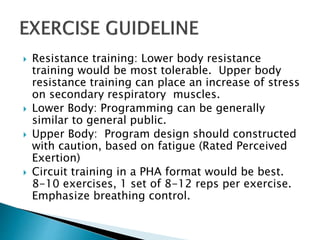
๏ฝ Resistance training: Lower body resistance
training would be most tolerable. Upper body
resistance training can place an increase of stress
on secondary respiratory muscles.
๏ฝ Lower Body: Programming can be generally
similar to general public.
๏ฝ Upper Body: Program design should constructed
with caution, based on fatigue (Rated Perceived
Exertion)
๏ฝ Circuit training in a PHA format would be best.
8-10 exercises, 1 set of 8-12 reps per exercise.
Emphasize breathing control.
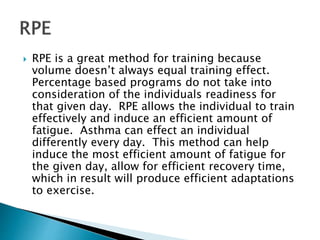
๏ฝ RPE is a great method for training because
volume doesnโ€™t always equal training effect.
Percentage based programs do not take into
consideration of the individuals readiness for
that given day. RPE allows the individual to train
effectively and induce an efficient amount of
fatigue. Asthma can effect an individual
differently every day. This method can help
induce the most efficient amount of fatigue for
the given day, allow for efficient recovery time,
which in result will produce efficient adaptations
to exercise.
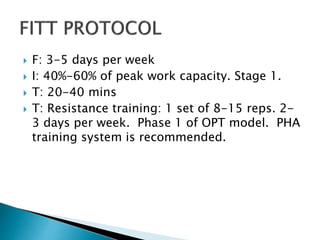
๏ฝ F: 3-5 days per week
๏ฝ I: 40%-60% of peak work capacity. Stage 1.
๏ฝ T: 20-40 mins
๏ฝ T: Resistance training: 1 set of 8-15 reps. 2-
3 days per week. Phase 1 of OPT model. PHA
training system is recommended.
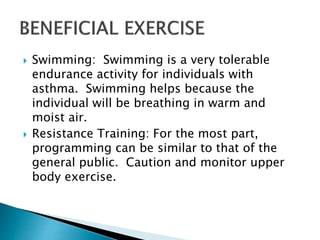
๏ฝ Swimming: Swimming is a very tolerable
endurance activity for individuals with
asthma. Swimming helps because the
individual will be breathing in warm and
moist air.
๏ฝ Resistance Training: For the most part,
programming can be similar to that of the
general public. Caution and monitor upper
body exercise.
๏ฝ Exercise is not a cure for asthma. Many high
level athletes have asthma and find that
exercise helps and decreased the frequency
and severity of asthma attacks. For the
majority of people with asthma, one should
be cautious when partaking in vigorous or
high intensity activity. Exercise that are
specific to the upper body should be watched
carefully.
๏ฝ https://www.youtube.com/watch?v=Oi_bJXG7
MyE

Asthma by Brandon

  • 1.
  • 2.
    ๏ฝ Asthma isa chronic obstructive lung disease. Other major obstructive lung disease are bronchitis and emphysema. These diseases are characterized by chronic inflammation. In the case of asthma, this is greatly influenced by environmental irritants and airway obstruction via mucus production.
  • 3.
    ๏ฝ Symptoms: - Coughing -Wheezing - Shortness of Breathe - Chest tightness, pain, or pressure Symptoms are not same for everyone and can be mild or severe.
  • 4.
    ๏ฝ Exercise canbe difficult for individuals with asthma because asthma causes a decrease in ventilation and decreased ability of gas exchange. This results in a decrease of aerobic capabilities and endurance. Exercise can induce asthma attacks by narrowing the airways. The most accurate term for this is exercise induced bronchocontriction.
  • 5.
    ๏ฝ The useof the Peripheral Heart Action (PHA) training system would be advised. ๏ฝ Aerobic exercise: Should be guided by the individuals shortness of breath. Workloads should between 40%-60% of peak work capacity, 3-5 days out of the week. 20-40 mins depending on how tolerable the individual is too exercise. Frequent and adequate rest breaks is advised.
  • 6.
    ๏ฝ Resistance training:Lower body resistance training would be most tolerable. Upper body resistance training can place an increase of stress on secondary respiratory muscles. ๏ฝ Lower Body: Programming can be generally similar to general public. ๏ฝ Upper Body: Program design should constructed with caution, based on fatigue (Rated Perceived Exertion) ๏ฝ Circuit training in a PHA format would be best. 8-10 exercises, 1 set of 8-12 reps per exercise. Emphasize breathing control.
  • 7.
    ๏ฝ RPE isa great method for training because volume doesnโ€™t always equal training effect. Percentage based programs do not take into consideration of the individuals readiness for that given day. RPE allows the individual to train effectively and induce an efficient amount of fatigue. Asthma can effect an individual differently every day. This method can help induce the most efficient amount of fatigue for the given day, allow for efficient recovery time, which in result will produce efficient adaptations to exercise.
  • 8.
    ๏ฝ F: 3-5days per week ๏ฝ I: 40%-60% of peak work capacity. Stage 1. ๏ฝ T: 20-40 mins ๏ฝ T: Resistance training: 1 set of 8-15 reps. 2- 3 days per week. Phase 1 of OPT model. PHA training system is recommended.
  • 9.
    ๏ฝ Swimming: Swimmingis a very tolerable endurance activity for individuals with asthma. Swimming helps because the individual will be breathing in warm and moist air. ๏ฝ Resistance Training: For the most part, programming can be similar to that of the general public. Caution and monitor upper body exercise.
  • 10.
    ๏ฝ Exercise isnot a cure for asthma. Many high level athletes have asthma and find that exercise helps and decreased the frequency and severity of asthma attacks. For the majority of people with asthma, one should be cautious when partaking in vigorous or high intensity activity. Exercise that are specific to the upper body should be watched carefully.
  • 11.