PRESENTED TO YOU BY PHYLICIA FLORES
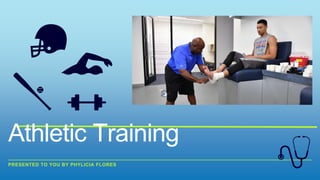
Athletic Training
The History of Athletic
Training
Where did it all start?
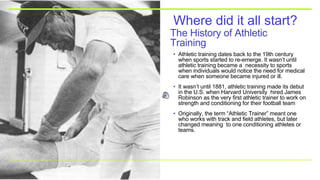
• Athletic training dates back to the 19th century
when sports started to re-emerge. It wasn’t until
athletic training became a necessity to sports
when individuals would notice the need for medical
care when someone became injured or ill.
• It wasn’t until 1881, athletic training made its debut
in the U.S. when Harvard University hired James
Robinson as the very first athletic trainer to work on
strength and conditioning for their football team
• Originally, the term “Athletic Trainer” meant one
who works with track and field athletes, but later
changed meaning to one conditioning athletes or
teams.
Athletic training encompasses the safe
practices of conditioning, the prevention,
examination, diagnosis, treatment and
rehabilitation of emergent, acute or
chronic injuries and medical conditions in
athletes or persons who are active.
Athletic Training
• Applying bandages, braces, tape to help prevent further injury and protect from injury.
• Implementing healthy programs to gettiing back to play after injury and develop prevention
programs.
• Providing athletic training services
• Performing administrative tasks from time to time, to keep track of results and instruction for what
to do when injured
Job Duties
Athletic Trainers
Projected Growth
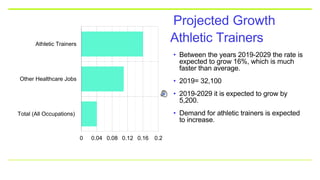
• Between the years 2019-2029 the rate is
expected to grow 16%, which is much
faster than average.
• 2019= 32,100
• 2019-2029 it is expected to grow by
5,200.
• Demand for athletic trainers is expected
to increase.
0 0.04 0.08 0.12 0.16 0.2
Athletic Trainers
Other Healthcare Jobs
Total (All Occupations)
• Trustworthiness
• Passion/Confidence
• Interpersonal Skills
• Applied Knowledge
• Problem Solving
• Mindfulness
• Ability to work under stress/ pressure
Skills Required
Caption
Education
• In order to get into any athletic training
program it is required that you finish two
years of college before applying and
getting accepted into the program of your
choice.
• Other Requirements may include a
physical exam and personal interview.
• CPR certification
• Clinical Observation
• Letters of Recommendation
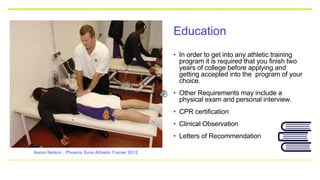
Aaron Nelson , Phoenix Suns Athletic Trainer 2012
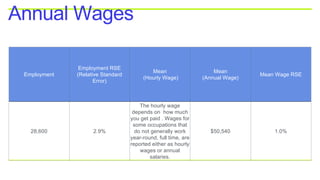
Annual Wages
Employment
Employment RSE
(Relative Standard
Error)
Mean
(Hourly Wage)
Mean
(Annual Wage)
Mean Wage RSE
28,600 2.9%
The hourly wage
depends on how much
you get paid . Wages for
some occupations that
do not generally work
year-round, full time, are
reported either as hourly
wages or annual
salaries.
$50,540 1.0%
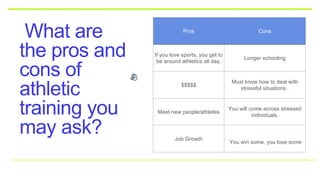
What are
the pros and
cons of
athletic
training you
may ask?
Pros Cons
If you love sports, you get to
be around athletics all day.
Longer schooling
$$$$$
Must know how to deal with
stressful situations .
Meet new people/athletes
You will come across stressed
individuals.
Job Growth
You win some, you lose some
Northern Arizona
University
School Programs in
AZ
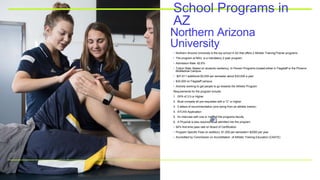
• Northern Arizona University is the top school in AZ that offers 2 Athletic Training/Trainer programs
• The program at NAU is a mandatory 2-year program.
• Admission Rate: 82.6%
• Tuition Rate: Based on students residency, In-Person Programs located either in Flagstaff or the Phoenix
BioMedical Campus
• $27,611 additional $3,000 per semester about $33,000 a year
• $32,000 on Flagstaff campus
• Actively working to get people to go towards the Athletic Program
Requirements for the program include:
1. GPA of 3.0 or Higher
2. Must compete all pre-requisites with a “C” or higher.
3. 2 letters of recommendation (one being from an athletic trainer)
4. ATCAS Application
5. An interview with one or more of the programs faculty
6. A Physical is also required once admitted into the program.
• 94% first-time pass rate on Board of Certification
• Program Specific Fees (in addition): $1,000 per semester= $2000 per year
• Accredited by Commission on Accreditation of Athletic Training Education (CAATE)
University of Michigan
School Program Out of
State
• The University of Michigan holds high regards with their Athletic Training program earning top 3
graduate programs in the country. They no longer have an undergrad program but do have a
masters program for
• Admission Rate: This will be the first class to be admitted into the graduate program
• Tuition Rate: Free In state Tuiton for families with income under $65,000 & under
Requirements for the program include:
1. Graduate Record Examination (GRE)/ Test of English as a Foreign Language (TEFL) or
International English Language Testing System (IELTS)
2. 3 letters of Recommendation
3. Transcripts
4. Academic Statement of Purpose
5. Personal Statement
6. Pre-Requisites Work
7. Earned Bachelors Degree
8. Vaccinations for AT Masters
• Transfer students would have to complete a Common Application with a $75 dollar fee
• 94.4% of students pass the BOC their first attempt
• Accredited by Commission on Accreditation of Athletic Training Education (CAATE)
https://www.bls.gov/oes/current/oes299091.htm#(4)
https://athletic-trainers.weebly.com/pros-and-cons.html
https://nau.edu/athletic-training/
https://azcis.intocareers.org/ProgInfo.aspx?SourceState=AZ&ProgID=360701&TopicID=5
https://www.kines.umich.edu/admissions-aid/undergraduate/transfer
https://www.bls.gov/ooh/healthcare/mobile/athletic-trainers.htm
Credentials

Athletic Training Phylicia Flores

  • 1.
    PRESENTED TO YOUBY PHYLICIA FLORES Athletic Training
  • 2.
    The History ofAthletic Training Where did it all start? • Athletic training dates back to the 19th century when sports started to re-emerge. It wasn’t until athletic training became a necessity to sports when individuals would notice the need for medical care when someone became injured or ill. • It wasn’t until 1881, athletic training made its debut in the U.S. when Harvard University hired James Robinson as the very first athletic trainer to work on strength and conditioning for their football team • Originally, the term “Athletic Trainer” meant one who works with track and field athletes, but later changed meaning to one conditioning athletes or teams.
  • 3.
    Athletic training encompassesthe safe practices of conditioning, the prevention, examination, diagnosis, treatment and rehabilitation of emergent, acute or chronic injuries and medical conditions in athletes or persons who are active. Athletic Training
  • 4.
    • Applying bandages,braces, tape to help prevent further injury and protect from injury. • Implementing healthy programs to gettiing back to play after injury and develop prevention programs. • Providing athletic training services • Performing administrative tasks from time to time, to keep track of results and instruction for what to do when injured Job Duties
  • 5.
    Athletic Trainers Projected Growth •Between the years 2019-2029 the rate is expected to grow 16%, which is much faster than average. • 2019= 32,100 • 2019-2029 it is expected to grow by 5,200. • Demand for athletic trainers is expected to increase. 0 0.04 0.08 0.12 0.16 0.2 Athletic Trainers Other Healthcare Jobs Total (All Occupations)
  • 6.
    • Trustworthiness • Passion/Confidence •Interpersonal Skills • Applied Knowledge • Problem Solving • Mindfulness • Ability to work under stress/ pressure Skills Required Caption
  • 7.
    Education • In orderto get into any athletic training program it is required that you finish two years of college before applying and getting accepted into the program of your choice. • Other Requirements may include a physical exam and personal interview. • CPR certification • Clinical Observation • Letters of Recommendation Aaron Nelson , Phoenix Suns Athletic Trainer 2012
  • 8.
    Annual Wages Employment Employment RSE (RelativeStandard Error) Mean (Hourly Wage) Mean (Annual Wage) Mean Wage RSE 28,600 2.9% The hourly wage depends on how much you get paid . Wages for some occupations that do not generally work year-round, full time, are reported either as hourly wages or annual salaries. $50,540 1.0%
  • 9.
    What are the prosand cons of athletic training you may ask? Pros Cons If you love sports, you get to be around athletics all day. Longer schooling $$$$$ Must know how to deal with stressful situations . Meet new people/athletes You will come across stressed individuals. Job Growth You win some, you lose some
  • 10.
    Northern Arizona University School Programsin AZ • Northern Arizona University is the top school in AZ that offers 2 Athletic Training/Trainer programs • The program at NAU is a mandatory 2-year program. • Admission Rate: 82.6% • Tuition Rate: Based on students residency, In-Person Programs located either in Flagstaff or the Phoenix BioMedical Campus • $27,611 additional $3,000 per semester about $33,000 a year • $32,000 on Flagstaff campus • Actively working to get people to go towards the Athletic Program Requirements for the program include: 1. GPA of 3.0 or Higher 2. Must compete all pre-requisites with a “C” or higher. 3. 2 letters of recommendation (one being from an athletic trainer) 4. ATCAS Application 5. An interview with one or more of the programs faculty 6. A Physical is also required once admitted into the program. • 94% first-time pass rate on Board of Certification • Program Specific Fees (in addition): $1,000 per semester= $2000 per year • Accredited by Commission on Accreditation of Athletic Training Education (CAATE)
  • 11.
    University of Michigan SchoolProgram Out of State • The University of Michigan holds high regards with their Athletic Training program earning top 3 graduate programs in the country. They no longer have an undergrad program but do have a masters program for • Admission Rate: This will be the first class to be admitted into the graduate program • Tuition Rate: Free In state Tuiton for families with income under $65,000 & under Requirements for the program include: 1. Graduate Record Examination (GRE)/ Test of English as a Foreign Language (TEFL) or International English Language Testing System (IELTS) 2. 3 letters of Recommendation 3. Transcripts 4. Academic Statement of Purpose 5. Personal Statement 6. Pre-Requisites Work 7. Earned Bachelors Degree 8. Vaccinations for AT Masters • Transfer students would have to complete a Common Application with a $75 dollar fee • 94.4% of students pass the BOC their first attempt • Accredited by Commission on Accreditation of Athletic Training Education (CAATE)
  • 12.