Assignment On
HRM
Submitted By
Name: Md Naim Hasan Towhid
Student ID: LCDHKB158201833001
Module Name: System Analysis & Design
Module ID: PGDICT-201
Submitted to
Md. Mozammel Hossain Sazal
Date of Submission:
14/02/2019
HRM
(HUMAN RESOURCE MANAGEMENT)
Concept of HRM:
HRM is concerned with the human beings in an organization. “The management of man”
is a very important and challenging job because of the dynamic nature of the people.
No two people are similar in mental abilities, tacticians, sentiments, and behaviors.
People are responsive, they feel, think and act therefore they can not be operated like a
machine or shifted and altered like template in a room layout. They therefore need a
tactful handing by management personnel like HRM.
Human Resources Management is concerned with the “people” dimension in management.
Since every organization is made up of people acquiring their services, developing their
skills, motivating them to high level of performance and ensuring that they continue to
maintain their commitment to the organization are essential to achieve organizational
objectives.
Definitions of HRM:
There are two different definitions. The first definition of HRM is that “It is the process
of managing people in organizations in a structured and thorough manner.”(1)
This covers
the fields of staffing (hiring people), retention of people, pay and perks setting and
management, performance management, change management and taking care of exits from
the company to round off the activities. This is the traditional definition of HRM which
leads some experts to define it as a modem version of the Personnel Management
function that was used earlier.
The second definition of HRM encompasses “The management of people in organizations
from a macro perspective, i.e. managing people in the form of a collective relationship
between management and employees.”(2)
This approach focuses on the objectives and
outcomes of the HRM functions. It means that the HR function in contemporary
organizations is concerned with the notions of people enabling, people development and
a focus on making the “employment relationship” fulfilling for both the management and
employees.
Nature of HRM:
HRM is a management function that helps managers to recruit, select, train and develop
members for an organization. HRM is concerned with people’s dimension in
organizations. The following aspects constitute the core of HRM:
 HRM involves the Application of Management Functions and Principles. The
functions and principles are applied for acquiring, developing, maintaining and providing
remuneration to employees in organization.
 Decision Relating to Employees must be integrated. Decisions on different aspects
of employees must be consistent with other human resource (HR ) decisions.
 Decisions made influence the Effectiveness of an Organization. Effectiveness of an
organization will result in betterment of services to customers in the form of high
quality products supplied at reasonable costs.
(1) Online - Management Study Guide (http://www.managementstudyguide.com/)
Article: Human Resource Management (HRM), P.20.
(2) Ibid
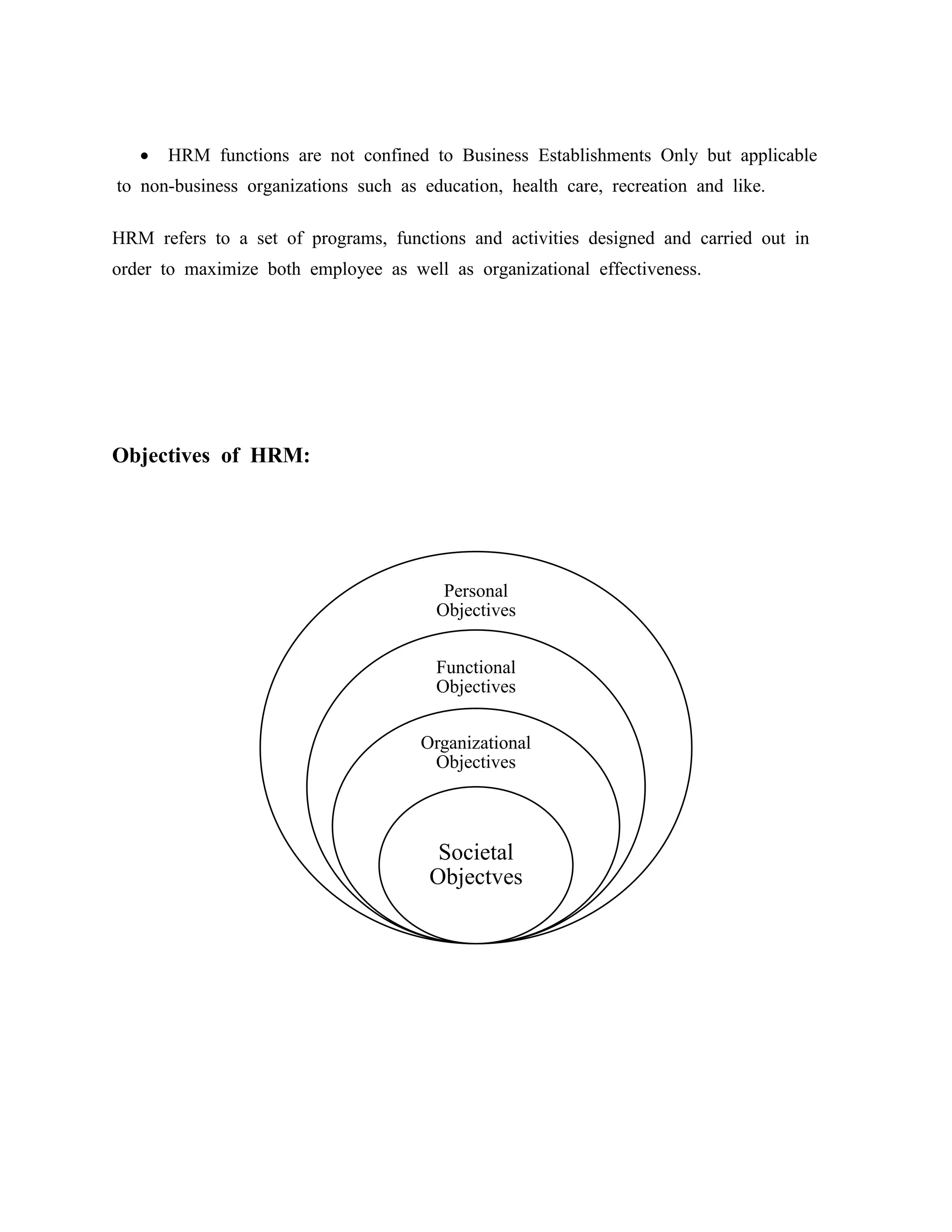
Personal
Objectives
Functional
Objectives
Organizational
Objectives
Societal
Objectves
 HRM functions are not confined to Business Establishments Only but applicable
to non-business organizations such as education, health care, recreation and like.
HRM refers to a set of programs, functions and activities designed and carried out in
order to maximize both employee as well as organizational effectiveness.
Objectives of HRM:
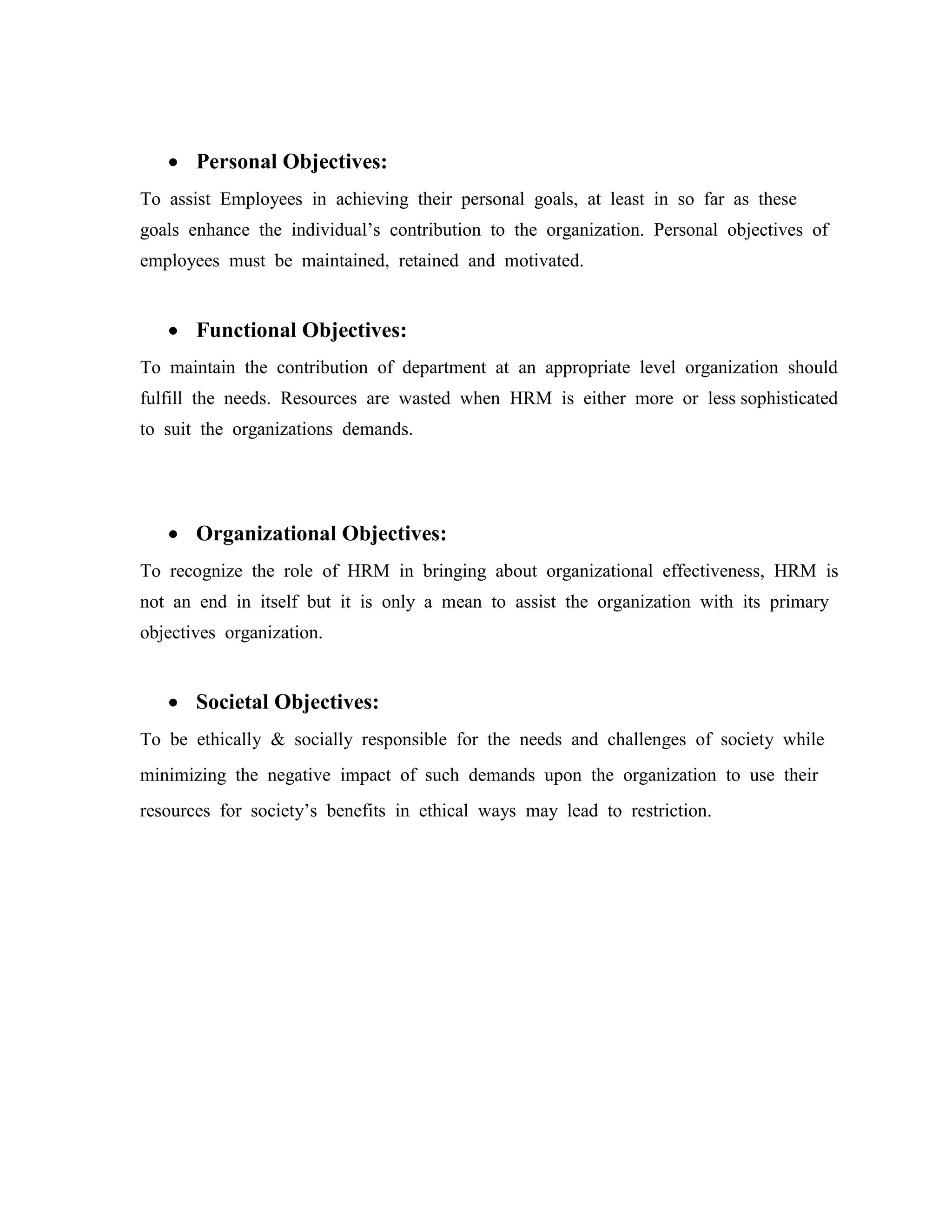
 Personal Objectives:
To assist Employees in achieving their personal goals, at least in so far as these
goals enhance the individual’s contribution to the organization. Personal objectives of
employees must be maintained, retained and motivated.
 Functional Objectives:
To maintain the contribution of department at an appropriate level organization should
fulfill the needs. Resources are wasted when HRM is either more or less sophisticated
to suit the organizations demands.
 Organizational Objectives:
To recognize the role of HRM in bringing about organizational effectiveness, HRM is
not an end in itself but it is only a mean to assist the organization with its primary
objectives organization.
 Societal Objectives:
To be ethically & socially responsible for the needs and challenges of society while
minimizing the negative impact of such demands upon the organization to use their
resources for society’s benefits in ethical ways may lead to restriction.
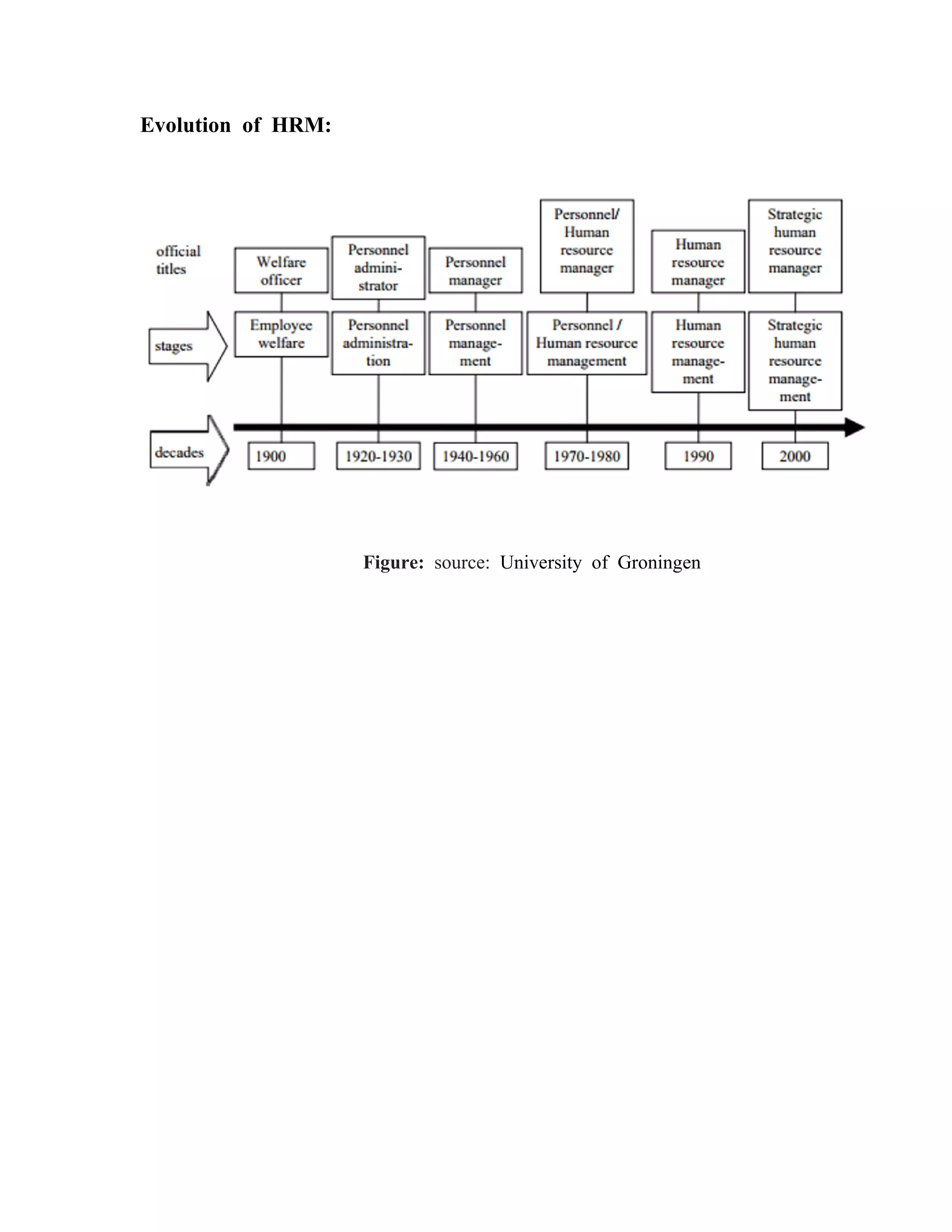
Evolution of HRM:
Figure: source: University of Groningen
Human
Resource
Management
Union/
Labour
Relations
Compensation
and
Benefits
Employee
Assistance
Organizational
Development
Trainning
and
Development
Selection
and Staffing
Design of
the
Organization
and Job
Human
Resource
Planning
Personnel
Research
and
Information
System
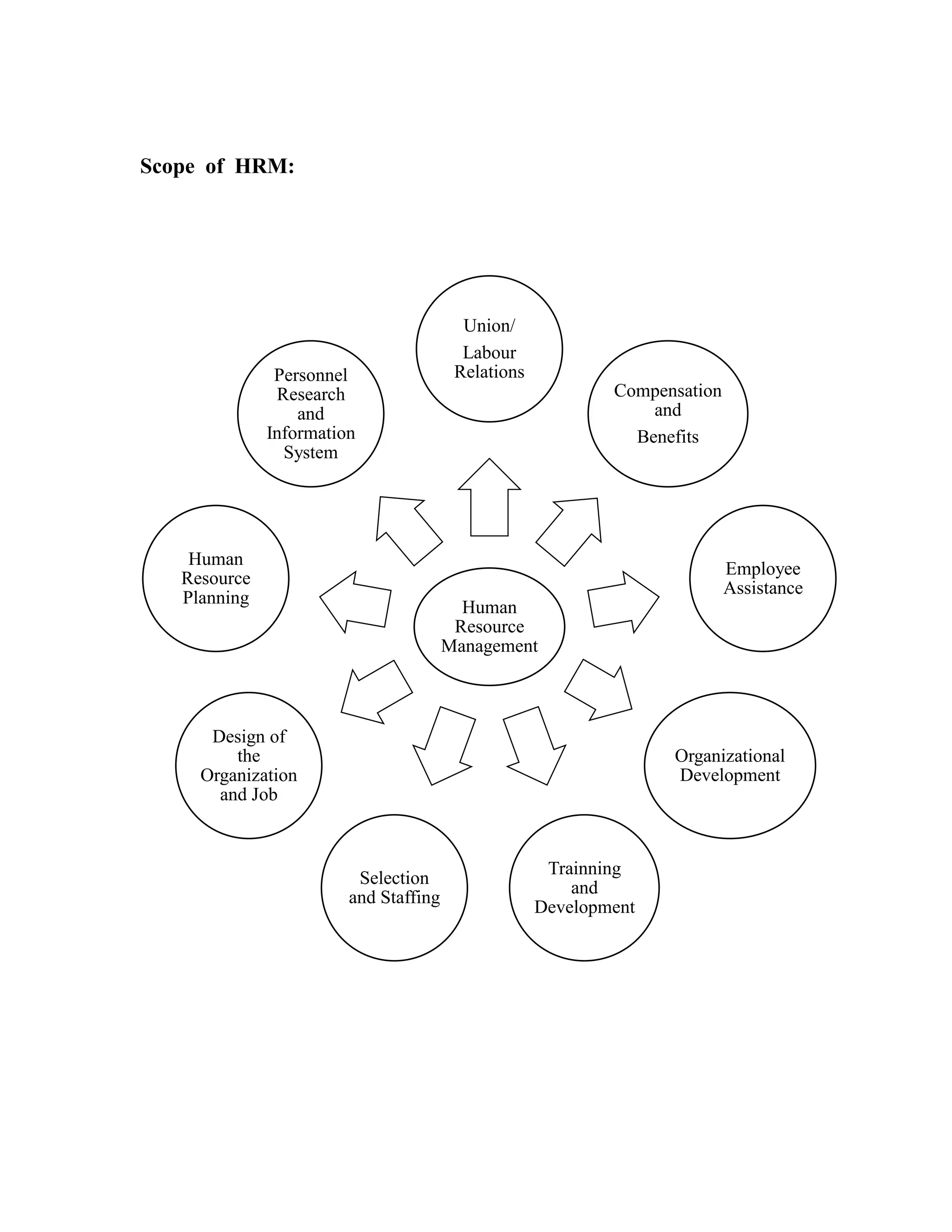
Scope of HRM:
Administrative
• Personnel practives
• Legal compliance
forms and paperwork
Operational Actions
• Managing employee
relationship issues
• Employee advocate
Strategic HR
• Organizational/business
strategies
• HR strategic or
planning
• Evaluation of HR
effectiveness
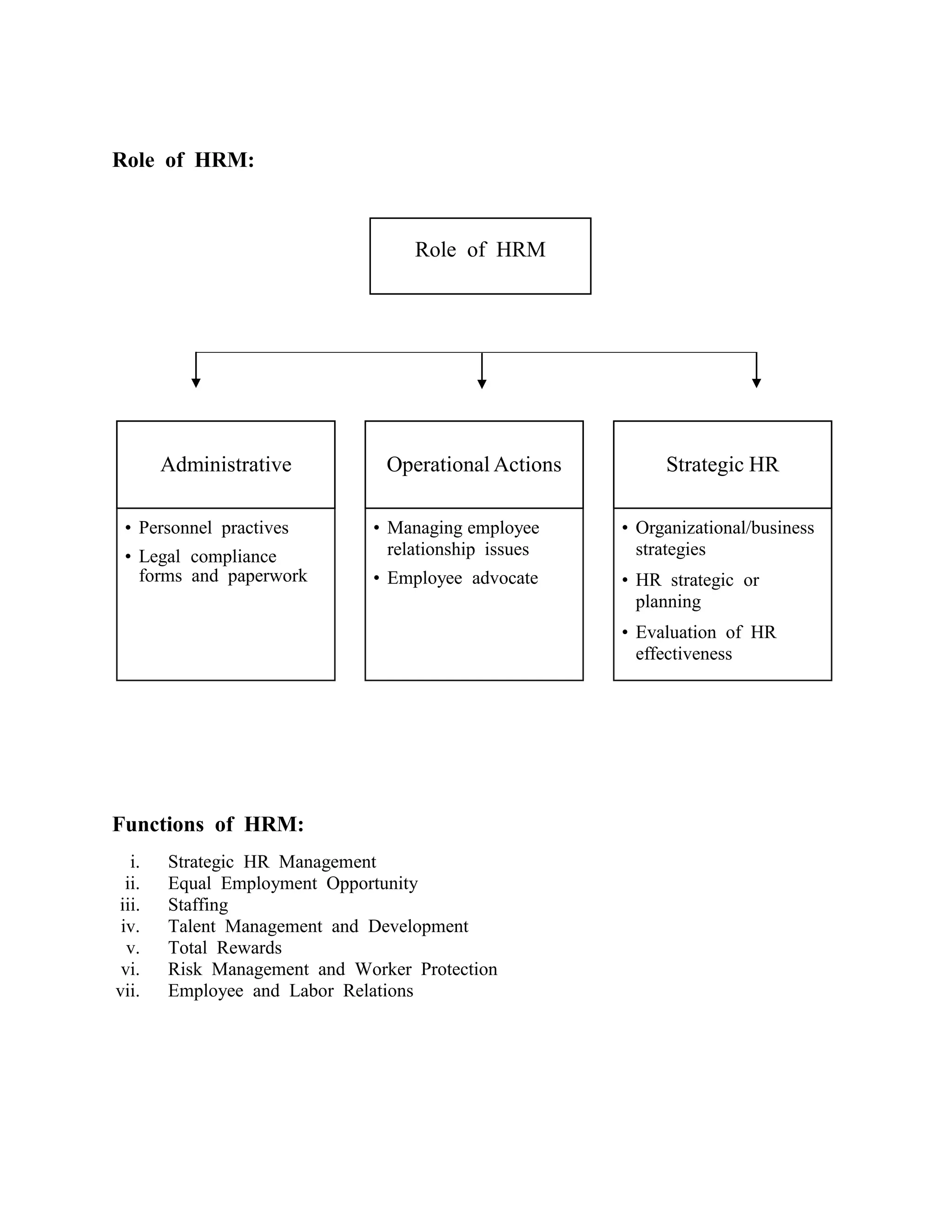
Role of HRM:
Functions of HRM:
i. Strategic HR Management
ii. Equal Employment Opportunity
iii. Staffing
iv. Talent Management and Development
v. Total Rewards
vi. Risk Management and Worker Protection
vii. Employee and Labor Relations
Role of HRM
i. Strategic HR Management:
 HR effectiveness
 HR metrics
 HR technology
 HR planning
 HR retention
ii. Equal Employment Opportunity:
 Compliance
 Diversity
 Affirmative Action
iii. Staffing:
 Job Analysis
 Recruiting
 Selection
iv. Talent Management and Development:
 Orientation
 Training
 HR Development
 Career Planning
 Performance Management
v. Total Rewards:
 Compensation
 Incentives
 Benefits
vi. Risk Management and Worker Protection:
 Health and wellness
 Safety
 Security
 Disaster and Recovery Planning
vii. Employee and Labor Relations:
 Employee rights and privacy
 HR politics
 Union Management Relations
Importance of HRM:
i. Social Significance:
Proper management of personnel enhances their dignity by satisfying their social
needs. This is done by:
 Maintaining a balance between the jobs available and the jobseekers, according
to the qualifications and needs;
 Providing suitable and most productive employment, which might bring them
psychological satisfaction;
 Making maximum utilization of the resources in an effective manner and
paying the employee a reasonable compensation in proportion to the contribution made
by him;
 Eliminating waste or improper use of human resource, through conservation of
their normal energy and health; and
 By helping people make their own decisions, that are in their interests.
ii. Professional Significance:
By providing healthy working environment it promotes team work in the employees.
This is done by:
 Maintaining the dignity of the employee as a ‘human-being’;
 Providing maximum opportunity for personal development;
 Providing healthy relationship between different work groups so that work is
effectively performed;
 Improving the employees’ working skill and capacity;
 Correcting the errors of wrong postings and proper reallocation of work.
iii. Significance for Individual Enterprise:
It can help the organization in accomplishing its goals by:
 Creating right attitude among the employees through effective motivation;
 Utilizing effectively the available goals of the enterprise and fulfilling their
own social and other psychological needs of recognition, love, affection, belongingness,
esteem and self-actualization.

Assignment on Human Resource Management

  • 1.
    Assignment On HRM Submitted By Name:Md Naim Hasan Towhid Student ID: LCDHKB158201833001 Module Name: System Analysis & Design Module ID: PGDICT-201 Submitted to Md. Mozammel Hossain Sazal Date of Submission: 14/02/2019
  • 2.
    HRM (HUMAN RESOURCE MANAGEMENT) Conceptof HRM: HRM is concerned with the human beings in an organization. “The management of man” is a very important and challenging job because of the dynamic nature of the people. No two people are similar in mental abilities, tacticians, sentiments, and behaviors. People are responsive, they feel, think and act therefore they can not be operated like a machine or shifted and altered like template in a room layout. They therefore need a tactful handing by management personnel like HRM. Human Resources Management is concerned with the “people” dimension in management. Since every organization is made up of people acquiring their services, developing their skills, motivating them to high level of performance and ensuring that they continue to maintain their commitment to the organization are essential to achieve organizational objectives. Definitions of HRM: There are two different definitions. The first definition of HRM is that “It is the process of managing people in organizations in a structured and thorough manner.”(1) This covers the fields of staffing (hiring people), retention of people, pay and perks setting and management, performance management, change management and taking care of exits from the company to round off the activities. This is the traditional definition of HRM which leads some experts to define it as a modem version of the Personnel Management function that was used earlier.
  • 3.
    The second definitionof HRM encompasses “The management of people in organizations from a macro perspective, i.e. managing people in the form of a collective relationship between management and employees.”(2) This approach focuses on the objectives and outcomes of the HRM functions. It means that the HR function in contemporary organizations is concerned with the notions of people enabling, people development and a focus on making the “employment relationship” fulfilling for both the management and employees. Nature of HRM: HRM is a management function that helps managers to recruit, select, train and develop members for an organization. HRM is concerned with people’s dimension in organizations. The following aspects constitute the core of HRM:  HRM involves the Application of Management Functions and Principles. The functions and principles are applied for acquiring, developing, maintaining and providing remuneration to employees in organization.  Decision Relating to Employees must be integrated. Decisions on different aspects of employees must be consistent with other human resource (HR ) decisions.  Decisions made influence the Effectiveness of an Organization. Effectiveness of an organization will result in betterment of services to customers in the form of high quality products supplied at reasonable costs. (1) Online - Management Study Guide (http://www.managementstudyguide.com/) Article: Human Resource Management (HRM), P.20. (2) Ibid
  • 4.
    Personal Objectives Functional Objectives Organizational Objectives Societal Objectves  HRM functionsare not confined to Business Establishments Only but applicable to non-business organizations such as education, health care, recreation and like. HRM refers to a set of programs, functions and activities designed and carried out in order to maximize both employee as well as organizational effectiveness. Objectives of HRM:
  • 5.
     Personal Objectives: Toassist Employees in achieving their personal goals, at least in so far as these goals enhance the individual’s contribution to the organization. Personal objectives of employees must be maintained, retained and motivated.  Functional Objectives: To maintain the contribution of department at an appropriate level organization should fulfill the needs. Resources are wasted when HRM is either more or less sophisticated to suit the organizations demands.  Organizational Objectives: To recognize the role of HRM in bringing about organizational effectiveness, HRM is not an end in itself but it is only a mean to assist the organization with its primary objectives organization.  Societal Objectives: To be ethically & socially responsible for the needs and challenges of society while minimizing the negative impact of such demands upon the organization to use their resources for society’s benefits in ethical ways may lead to restriction.
  • 6.
    Evolution of HRM: Figure:source: University of Groningen
  • 7.
  • 8.
    Administrative • Personnel practives •Legal compliance forms and paperwork Operational Actions • Managing employee relationship issues • Employee advocate Strategic HR • Organizational/business strategies • HR strategic or planning • Evaluation of HR effectiveness Role of HRM: Functions of HRM: i. Strategic HR Management ii. Equal Employment Opportunity iii. Staffing iv. Talent Management and Development v. Total Rewards vi. Risk Management and Worker Protection vii. Employee and Labor Relations Role of HRM
  • 9.
    i. Strategic HRManagement:  HR effectiveness  HR metrics  HR technology  HR planning  HR retention ii. Equal Employment Opportunity:  Compliance  Diversity  Affirmative Action iii. Staffing:  Job Analysis  Recruiting  Selection iv. Talent Management and Development:  Orientation  Training  HR Development  Career Planning  Performance Management v. Total Rewards:  Compensation  Incentives  Benefits
  • 10.
    vi. Risk Managementand Worker Protection:  Health and wellness  Safety  Security  Disaster and Recovery Planning vii. Employee and Labor Relations:  Employee rights and privacy  HR politics  Union Management Relations Importance of HRM: i. Social Significance: Proper management of personnel enhances their dignity by satisfying their social needs. This is done by:  Maintaining a balance between the jobs available and the jobseekers, according to the qualifications and needs;  Providing suitable and most productive employment, which might bring them psychological satisfaction;  Making maximum utilization of the resources in an effective manner and paying the employee a reasonable compensation in proportion to the contribution made by him;  Eliminating waste or improper use of human resource, through conservation of their normal energy and health; and  By helping people make their own decisions, that are in their interests.
  • 11.
    ii. Professional Significance: Byproviding healthy working environment it promotes team work in the employees. This is done by:  Maintaining the dignity of the employee as a ‘human-being’;  Providing maximum opportunity for personal development;  Providing healthy relationship between different work groups so that work is effectively performed;  Improving the employees’ working skill and capacity;  Correcting the errors of wrong postings and proper reallocation of work. iii. Significance for Individual Enterprise: It can help the organization in accomplishing its goals by:  Creating right attitude among the employees through effective motivation;  Utilizing effectively the available goals of the enterprise and fulfilling their own social and other psychological needs of recognition, love, affection, belongingness, esteem and self-actualization.