ASSERTIVENESS SKILLS
AMAN KHAJANCHI
KHAJANCHI.AMAN@GMAIL.COM
Agenda
• Defining Assertiveness
• The Assertiveness Sequence
• Visual Representation of Behavior
• Assertiveness Ruler
• Characteristics Of Passive People
• 10 Signs You Are A Doormat
• Characteristics Of Aggressive, Passive and Assertive People
• Passive Aggressive Behavior
• Measuring Your Assertiveness
• Assertiveness Bill of Rights
• Actions Toward Assertiveness
Defining Assertiveness
• The Ability To Express One’s Feelings
• Assert One’s Rights Without Hurting Others
• Respect Feelings And Rights Of Others
• Communication That Is Direct, Open, Honest
What happens in the Brain?
The Assertiveness Sequence
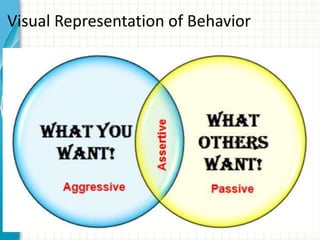
Visual Representation of Behavior
Assertiveness Ruler
Signs You Are A Doormat
Accepting and Justifying Unacceptable Behavior
Assuming Responsibility for Others’ Bad Moods
Blaming Yourself for Everything
Accepting Blame even if you aren’t to Blame
Continuously Apologizing
Allowing Others to Demean you by Staying Silent
Avoiding Confrontation at all Costs
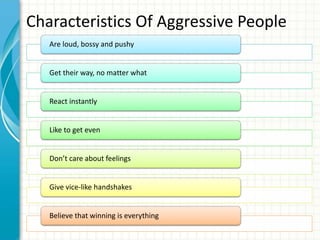
Characteristics Of Aggressive People
Are loud, bossy and pushy
Get their way, no matter what
React instantly
Like to get even
Don’t care about feelings
Give vice-like handshakes
Believe that winning is everything
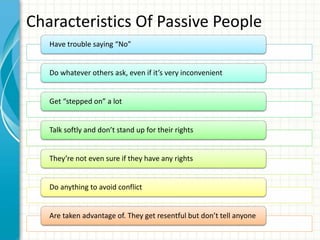
Characteristics Of Passive People
Have trouble saying “No”
Do whatever others ask, even if it’s very inconvenient
Get “stepped on” a lot
Talk softly and don’t stand up for their rights
They’re not even sure if they have any rights
Do anything to avoid conflict
Are taken advantage of. They get resentful but don’t tell anyone
Characteristics Of Assertive People
Are firm and direct
Don’t blame others but take full responsibility for their own feelings
Concentrate on the present
Can express their needs and feelings calmly and easily
Are confident about who they are
Speak firmly and make eye contact
Respect others’ rights and expect the same in return
Passive Aggressive Behavior_1
Passive Aggressive Behavior_2
Measuring Your Assertiveness
• Do you have difficulty accepting constructive
criticism?
• Do you find yourself saying ‘yes’ to requests that you
should really say ‘no’ to, just to avoid disappointing
people?
• Do you have trouble voicing a difference of opinion
with others?
• Do people tend to feel alienated by your
communication style when you do disagree with
them?
• Do you feel attacked when someone has an opinion
different from your own?
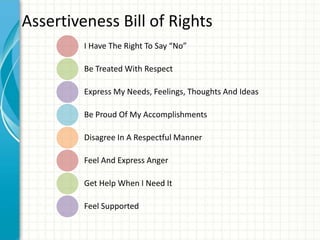
Assertiveness Bill of Rights
I Have The Right To Say “No”
Be Treated With Respect
Express My Needs, Feelings, Thoughts And Ideas
Be Proud Of My Accomplishments
Disagree In A Respectful Manner
Feel And Express Anger
Get Help When I Need It
Feel Supported
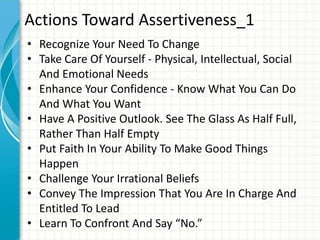
Actions Toward Assertiveness_1
• Recognize Your Need To Change
• Take Care Of Yourself - Physical, Intellectual, Social
And Emotional Needs
• Enhance Your Confidence - Know What You Can Do
And What You Want
• Have A Positive Outlook. See The Glass As Half Full,
Rather Than Half Empty
• Put Faith In Your Ability To Make Good Things
Happen
• Challenge Your Irrational Beliefs
• Convey The Impression That You Are In Charge And
Entitled To Lead
• Learn To Confront And Say “No.”
Actions Toward Assertiveness_2
• Be Political. Know When To Open Your Mouth And
When To Keep It Shut
• Maintain Perspective. Don’t Let What Happened
Yesterday Affect What Will Happen Tomorrow
• Watch Your Body Language
• Present Yourself Positively. Claim The Recognition That
Is Rightfully Yours
• Ask For What You Want
• Participate In Meetings And Other Group Activities
• Learn From Colleagues And Friends You Feel Are
Assertive
• Practice Assertiveness
Questions?

Assertiveness Skills

  • 1.
  • 2.
    Agenda • Defining Assertiveness •The Assertiveness Sequence • Visual Representation of Behavior • Assertiveness Ruler • Characteristics Of Passive People • 10 Signs You Are A Doormat • Characteristics Of Aggressive, Passive and Assertive People • Passive Aggressive Behavior • Measuring Your Assertiveness • Assertiveness Bill of Rights • Actions Toward Assertiveness
  • 3.
    Defining Assertiveness • TheAbility To Express One’s Feelings • Assert One’s Rights Without Hurting Others • Respect Feelings And Rights Of Others • Communication That Is Direct, Open, Honest
  • 4.
    What happens inthe Brain?
  • 5.
  • 6.
  • 7.
  • 8.
    Signs You AreA Doormat Accepting and Justifying Unacceptable Behavior Assuming Responsibility for Others’ Bad Moods Blaming Yourself for Everything Accepting Blame even if you aren’t to Blame Continuously Apologizing Allowing Others to Demean you by Staying Silent Avoiding Confrontation at all Costs
  • 9.
    Characteristics Of AggressivePeople Are loud, bossy and pushy Get their way, no matter what React instantly Like to get even Don’t care about feelings Give vice-like handshakes Believe that winning is everything
  • 10.
    Characteristics Of PassivePeople Have trouble saying “No” Do whatever others ask, even if it’s very inconvenient Get “stepped on” a lot Talk softly and don’t stand up for their rights They’re not even sure if they have any rights Do anything to avoid conflict Are taken advantage of. They get resentful but don’t tell anyone
  • 11.
    Characteristics Of AssertivePeople Are firm and direct Don’t blame others but take full responsibility for their own feelings Concentrate on the present Can express their needs and feelings calmly and easily Are confident about who they are Speak firmly and make eye contact Respect others’ rights and expect the same in return
  • 12.
  • 13.
  • 14.
    Measuring Your Assertiveness •Do you have difficulty accepting constructive criticism? • Do you find yourself saying ‘yes’ to requests that you should really say ‘no’ to, just to avoid disappointing people? • Do you have trouble voicing a difference of opinion with others? • Do people tend to feel alienated by your communication style when you do disagree with them? • Do you feel attacked when someone has an opinion different from your own?
  • 15.
    Assertiveness Bill ofRights I Have The Right To Say “No” Be Treated With Respect Express My Needs, Feelings, Thoughts And Ideas Be Proud Of My Accomplishments Disagree In A Respectful Manner Feel And Express Anger Get Help When I Need It Feel Supported
  • 16.
    Actions Toward Assertiveness_1 •Recognize Your Need To Change • Take Care Of Yourself - Physical, Intellectual, Social And Emotional Needs • Enhance Your Confidence - Know What You Can Do And What You Want • Have A Positive Outlook. See The Glass As Half Full, Rather Than Half Empty • Put Faith In Your Ability To Make Good Things Happen • Challenge Your Irrational Beliefs • Convey The Impression That You Are In Charge And Entitled To Lead • Learn To Confront And Say “No.”
  • 17.
    Actions Toward Assertiveness_2 •Be Political. Know When To Open Your Mouth And When To Keep It Shut • Maintain Perspective. Don’t Let What Happened Yesterday Affect What Will Happen Tomorrow • Watch Your Body Language • Present Yourself Positively. Claim The Recognition That Is Rightfully Yours • Ask For What You Want • Participate In Meetings And Other Group Activities • Learn From Colleagues And Friends You Feel Are Assertive • Practice Assertiveness
  • 18.

Editor's Notes

  • #2 This template can be used as a starter file for presenting training materials in a group setting. Sections Right-click on a slide to add sections. Sections can help to organize your slides or facilitate collaboration between multiple authors. Notes Use the Notes section for delivery notes or to provide additional details for the audience. View these notes in Presentation View during your presentation. Keep in mind the font size (important for accessibility, visibility, videotaping, and online production) Coordinated colors Pay particular attention to the graphs, charts, and text boxes. Consider that attendees will print in black and white or grayscale. Run a test print to make sure your colors work when printed in pure black and white and grayscale. Graphics, tables, and graphs Keep it simple: If possible, use consistent, non-distracting styles and colors. Label all graphs and tables.