Download to read offline
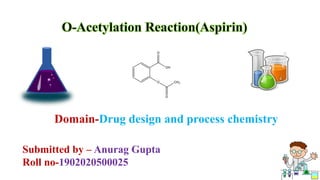

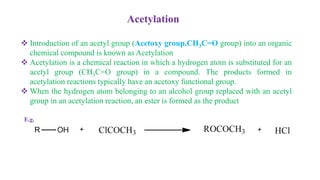
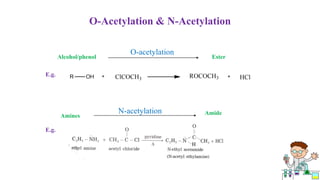

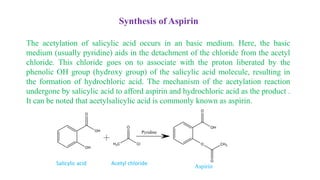


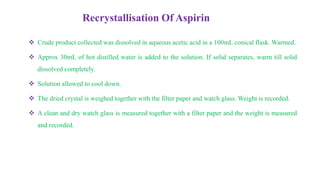
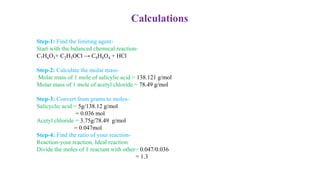
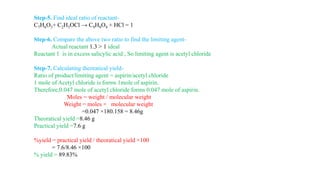

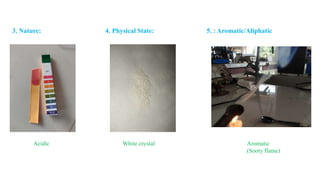

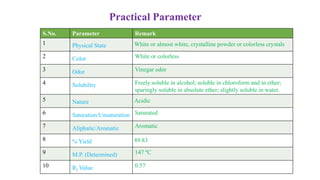



The document describes the synthesis of aspirin from salicylic acid. Salicylic acid undergoes acetylation in the presence of acetyl chloride and pyridine as a base. This results in an esterification reaction where the hydroxyl group of salicylic acid is acetylated, forming aspirin. The reaction mechanism and experimental procedure for the synthesis are provided. The properties and uses of aspirin as an analgesic, antipyretic and anti-inflammatory drug are also summarized.


