Arvind Mills
Presented By:- Group No-5
Background
• Founded in 1931 by Kasturibhai, Narottambhai,
Chimanbhai.
• Largest Corron Textile Manufecturer and Exporter in
India.
• Manufacturing Plant in Gujarat, Pune, Bangalore.
• NET INCOME: ₹318.85 Crore ($50 million US) – 2016
• REVENUE: ₹5,407.26 Crore ($840 million US)-2016
• Employees 30,000 +
Business Involved
• Denim fabric
• Woven/Knitting fabric
• Garment
• Arvind Stores
• Mega Mart
• Agricultural
• Engineering
• Real Estate
INDUSTRY ENVIRONMENT
Indian textile industry and Market Size
• Textiles sector contributes to 14 per cent of industrial
production
• 5 percent of National GDP
• 10.63 per cent of country’s export earnings
Market Size
• India's share of global textile exports is expected to
increase from the current 4% to around 7% over the
next three-years
Growth Rate
• 3-4 percent during the last six decade
• 9-10 percent during last five year
Scope of rivalry
• Raymond India
• Welspun India Ltd
• Alok Industries
• Indian Rayon
• Gokaldas Exports
Strategy
• Major expansion plan
• Till mid 1980s,Arvind Mills’ focus was more on marketing its products in the domestic market.
• Its major change in strategy came about in 1987, Marketing denim in international markets.
• Monitored the performance of each brand.
• Inventory managed by outlet itself.
Impact
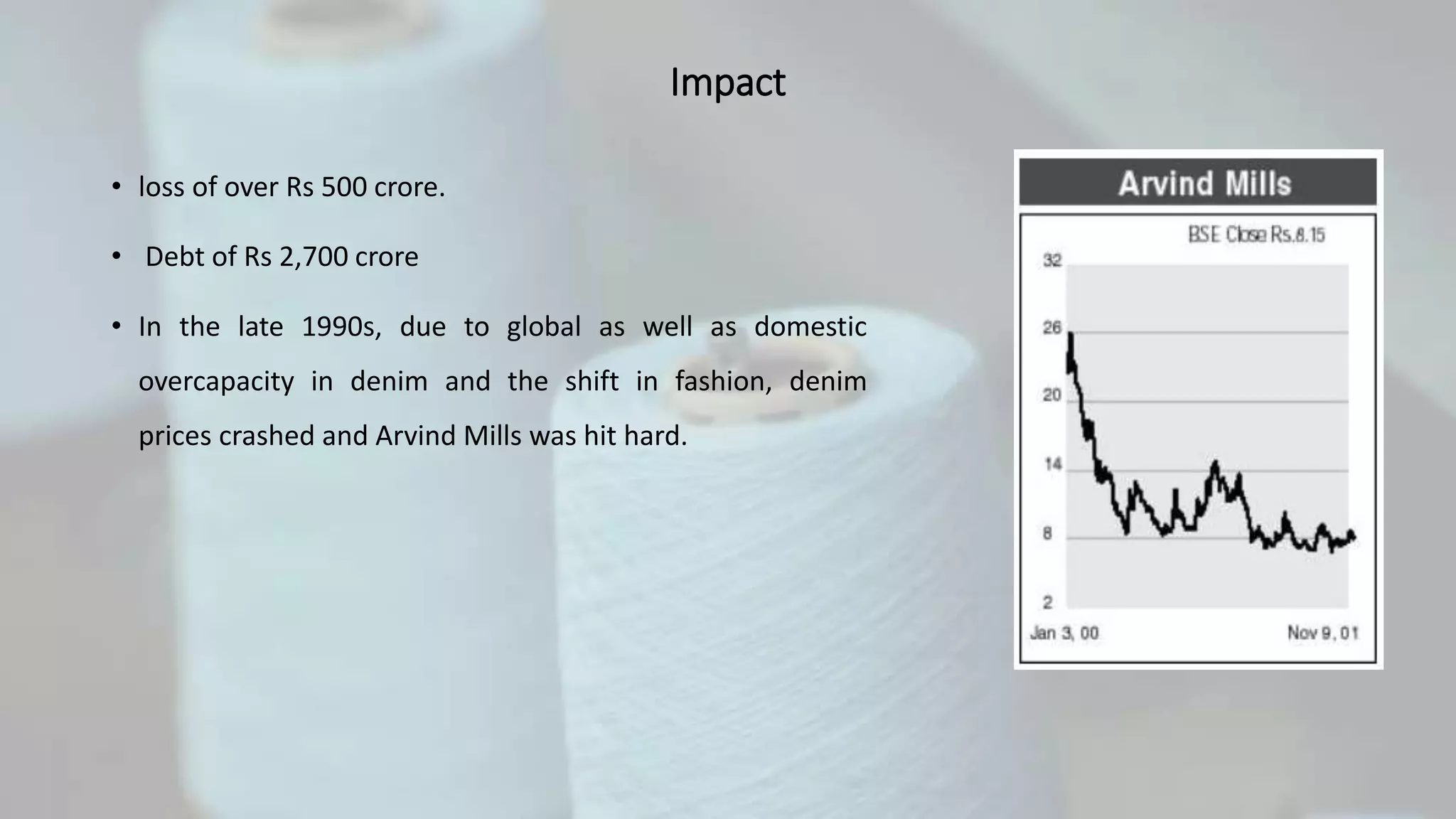
• loss of over Rs 500 crore.
• Debt of Rs 2,700 crore
• In the late 1990s, due to global as well as domestic
overcapacity in denim and the shift in fashion, denim
prices crashed and Arvind Mills was hit hard.
Challenges
• High Set-up Cost for new Plant
• Increase Global competition
• High Production Cost
• Outdated Manufacturing Technology
• Employee Retention
New Business Strategy
• Grow non-denim businesses
• clubbed all brands under various categories
• central monitoring of inventory
• Focus shifts from B2B to B2C
• Product extension within brands
• Focus on high value denim segment to drive profitability
• Rapidly roll out the Megamart hub-and-spoke model.
• Monetised surplus land
Impact
• In 2003 - For the fourth quarter, Arvind Mills witnesses 280% growth in the net profit.
• The brands and retail business has been growing at a CAGR of 25 per cent since 2008.
• Strong portfolio of international brands, including Arrow, US Polo, Izod, GANTT, Tommy Hilfiger,
and Elle.
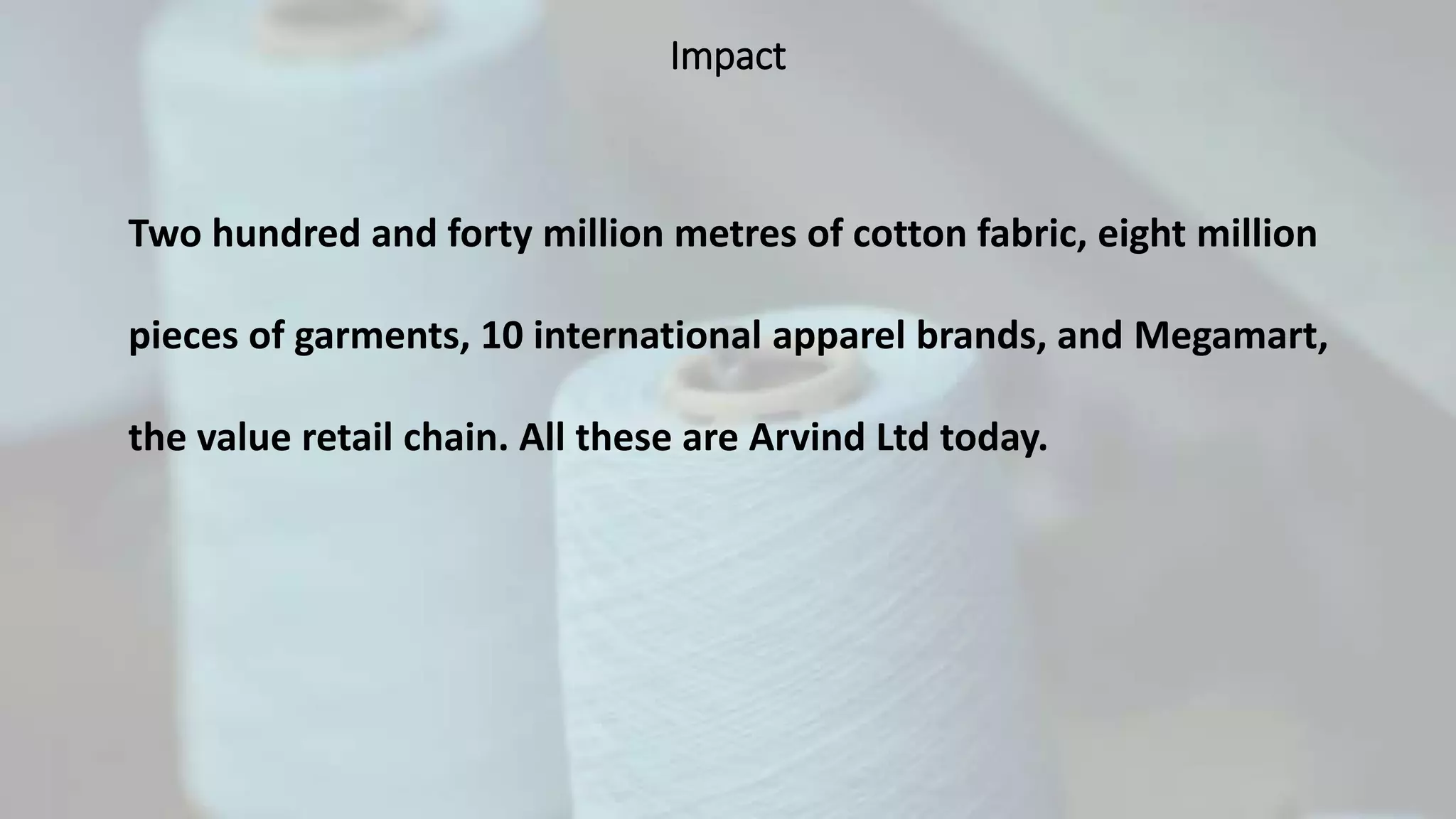
• The share of B2C sales is almost 40 per cent against less than 20 per cent four years ago.
• Monetisation of surplus land helped in reducing our financial leverage. So far, we have realised
cash flows of Rs 255 crore.
Impact
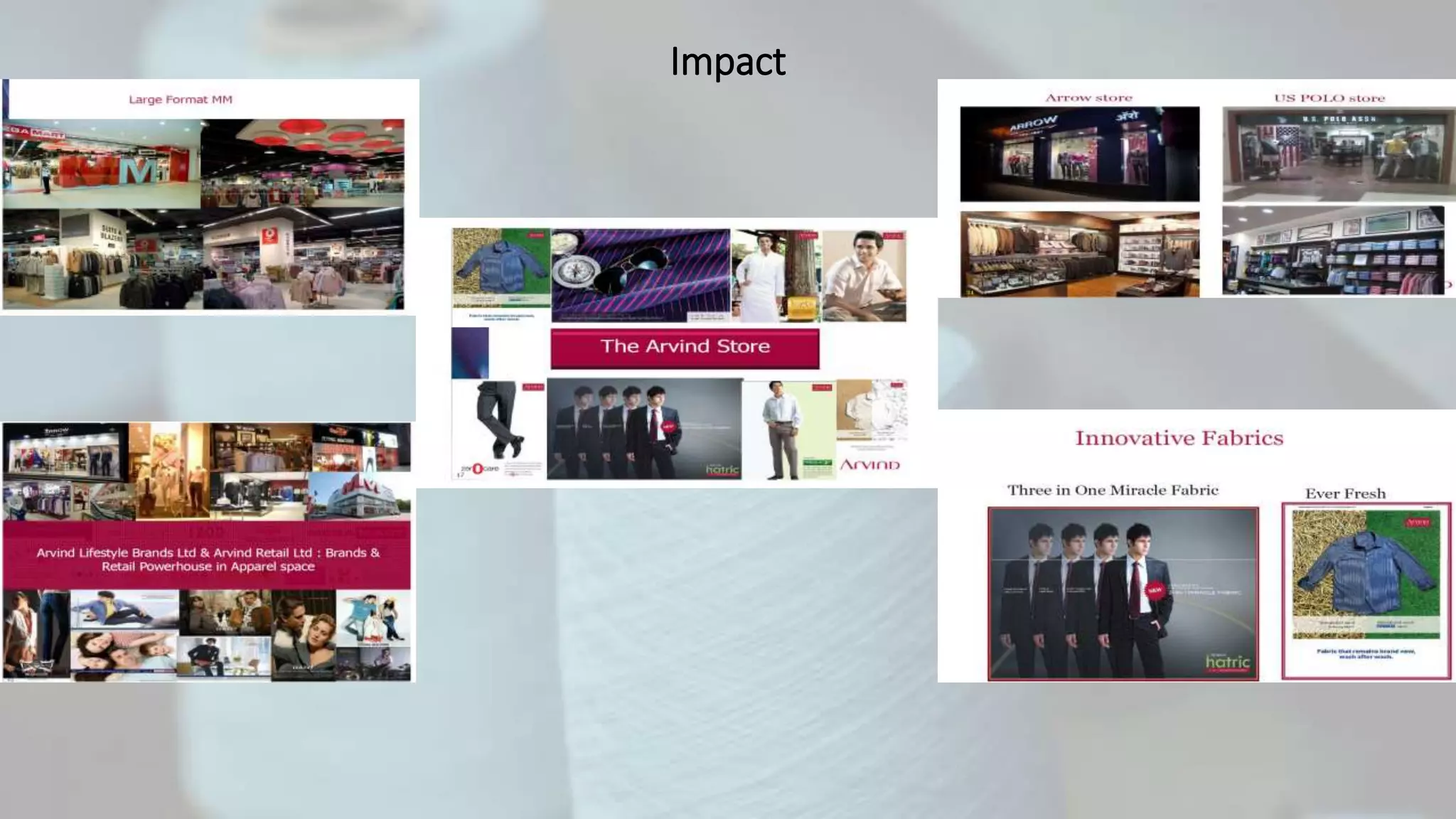
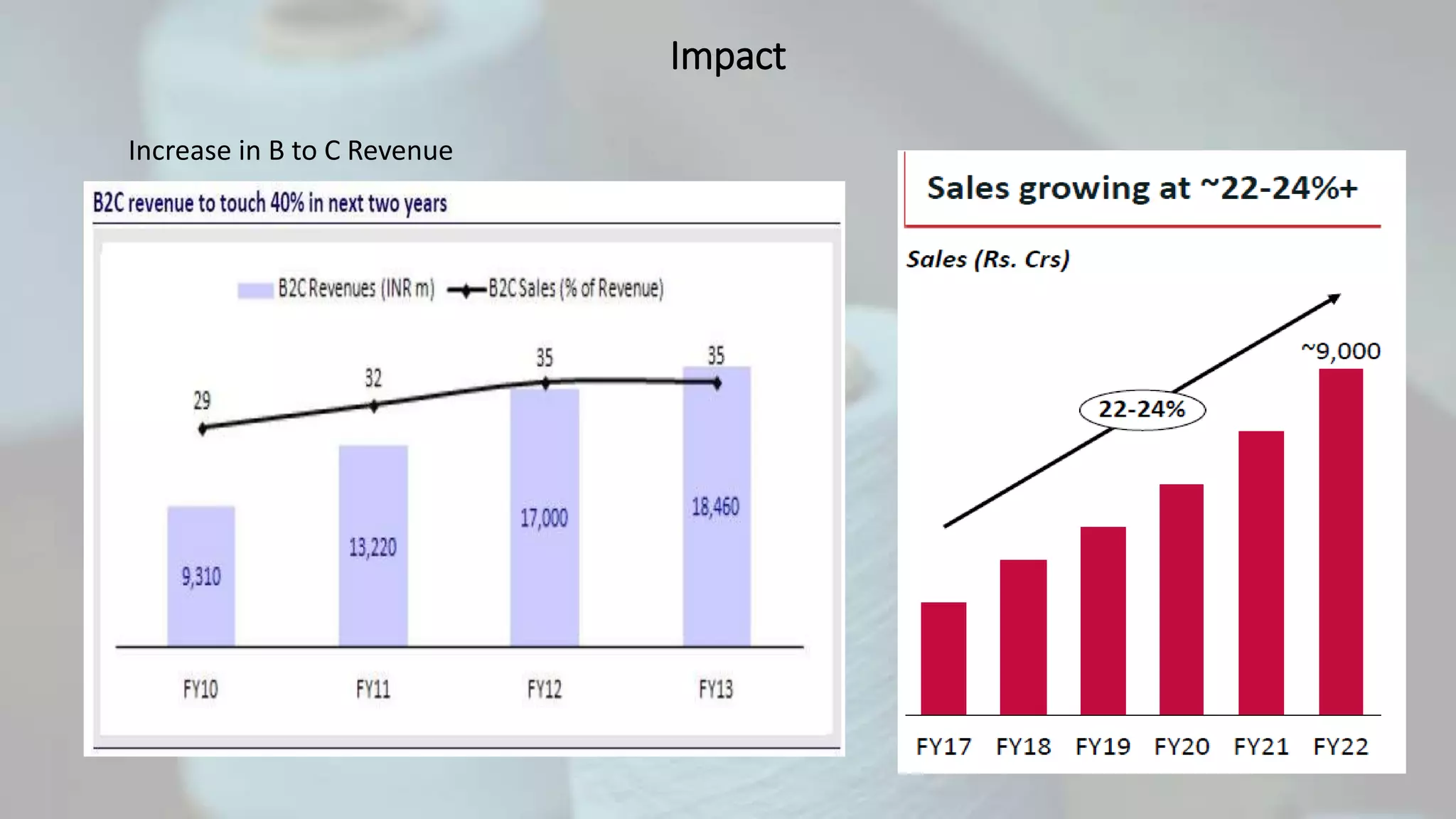
• One of the best brand portfolios in country
Impact
Impact
Increase in B to C Revenue
Impact
Impact
Two hundred and forty million metres of cotton fabric, eight million
pieces of garments, 10 international apparel brands, and Megamart,
the value retail chain. All these are Arvind Ltd today.
References
http://www.businesstoday.in/magazine/cover-story/sanjay-lalbhai-on-truning-arvind-mills-
profitable-again/story/186245.html
https://economictimes.indiatimes.com/arvind-mills-a-good-turnaround-
story/articleshow/32270142.cms
www.arvind.com/.../Initiating%20Coverage%20by%20MOSL%20February%202014.cms
www.arvind.com/Sustainability/pdf/ArvindSR.pdf

Arvind mills turnaround Strategy

  • 1.
  • 2.
    Background • Founded in1931 by Kasturibhai, Narottambhai, Chimanbhai. • Largest Corron Textile Manufecturer and Exporter in India. • Manufacturing Plant in Gujarat, Pune, Bangalore. • NET INCOME: ₹318.85 Crore ($50 million US) – 2016 • REVENUE: ₹5,407.26 Crore ($840 million US)-2016 • Employees 30,000 + Business Involved • Denim fabric • Woven/Knitting fabric • Garment • Arvind Stores • Mega Mart • Agricultural • Engineering • Real Estate
  • 3.
    INDUSTRY ENVIRONMENT Indian textileindustry and Market Size • Textiles sector contributes to 14 per cent of industrial production • 5 percent of National GDP • 10.63 per cent of country’s export earnings Market Size • India's share of global textile exports is expected to increase from the current 4% to around 7% over the next three-years Growth Rate • 3-4 percent during the last six decade • 9-10 percent during last five year Scope of rivalry • Raymond India • Welspun India Ltd • Alok Industries • Indian Rayon • Gokaldas Exports
  • 4.
    Strategy • Major expansionplan • Till mid 1980s,Arvind Mills’ focus was more on marketing its products in the domestic market. • Its major change in strategy came about in 1987, Marketing denim in international markets. • Monitored the performance of each brand. • Inventory managed by outlet itself.
  • 5.
    Impact • loss ofover Rs 500 crore. • Debt of Rs 2,700 crore • In the late 1990s, due to global as well as domestic overcapacity in denim and the shift in fashion, denim prices crashed and Arvind Mills was hit hard.
  • 6.
    Challenges • High Set-upCost for new Plant • Increase Global competition • High Production Cost • Outdated Manufacturing Technology • Employee Retention
  • 7.
    New Business Strategy •Grow non-denim businesses • clubbed all brands under various categories • central monitoring of inventory • Focus shifts from B2B to B2C • Product extension within brands • Focus on high value denim segment to drive profitability • Rapidly roll out the Megamart hub-and-spoke model. • Monetised surplus land
  • 8.
    Impact • In 2003- For the fourth quarter, Arvind Mills witnesses 280% growth in the net profit. • The brands and retail business has been growing at a CAGR of 25 per cent since 2008. • Strong portfolio of international brands, including Arrow, US Polo, Izod, GANTT, Tommy Hilfiger, and Elle. • The share of B2C sales is almost 40 per cent against less than 20 per cent four years ago. • Monetisation of surplus land helped in reducing our financial leverage. So far, we have realised cash flows of Rs 255 crore.
  • 9.
    Impact • One ofthe best brand portfolios in country
  • 10.
  • 12.
  • 13.
  • 14.
    Impact Two hundred andforty million metres of cotton fabric, eight million pieces of garments, 10 international apparel brands, and Megamart, the value retail chain. All these are Arvind Ltd today.
  • 15.