1
UNDERPINNING AND
SHORING
Engr. ArunKumar
BE – Civil Eng
2
I- UNDERPINNING
What is foundation underpinning?
What is the purpose of underpinning?
When foundation underpinning is required?
What are the methods used for
underpinning?
3
What is foundation underpinning?
Foundation underpinning is a means of
transferring loads to deeper soils or
bedrock.
Underpinning is the securing, stabilizing, or
supporting of an existing foundation.
4
What is the purpose of
underpinning?
To obtain additional foundation capacity
To modify the existing foundation system
To create new foundations to which the
existing load may be wholly or partially
transferred into deeper soil
Underpinning is generally used for remedial
purposes
5
When foundation underpinning is
required?
Underpinning is required when:
The original foundation is simply not stable enough.
 The usage of the structure has changed.
 The properties of the soil supporting the
foundation may have changed or was
mischaracterized during planning.
The construction of nearby structures necessitates
the excavation of soil supporting existing
foundations.
6
7
8
What are important parameters to be
considered before Underpinning ?
Height of the building
Column spacing
Wall thickness
Type and material of construction
Different loads acting on the building
Condition of the building
9
What are the methods used for
underpinning?
10
1-Pit Underpinning
The most common and oldest method of
underpinning is by installing piers under a
structure’s foundation, filling them with
concrete and wedging up to transfer the
load to the new piers
Pit underpinning requires careful and skilled
work as loss of ground will cause building
settlement
11
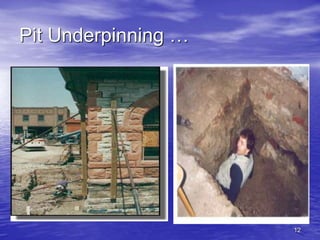
Pit Underpinning …
Procedure
Column/ wall above the affected footing
should be braced as much as possible
A pit of 3’ wide, 4’ long and 5’ depth is
excavated in front of the footing to be
underpinned
12
Pit Underpinning …
13
Pit Underpinning …
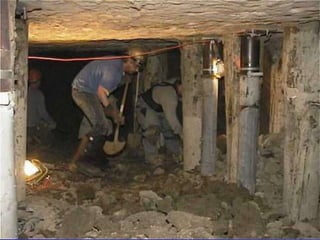
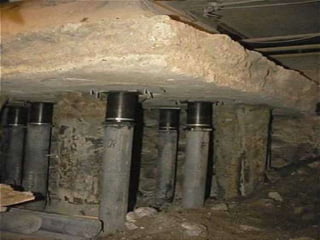
Pit is extended laterally to reach under the
footing to be underpinned and then is
deepened several feet below the subgrade
A vertical formwork is built in the pit and
then is concreted up to the footing
Dry packing operation is then carried out
14
15
16
Pit Underpinning …
Comments
This method is limited to dry ground
because it is difficult to dig below water
level otherwise more building settlement
may occur.
17
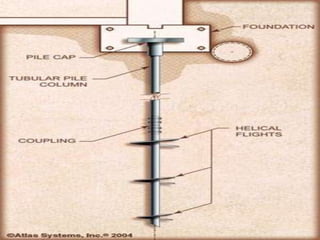
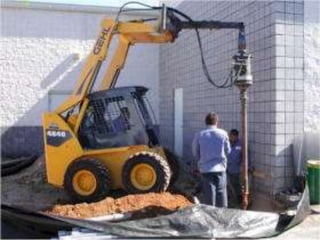
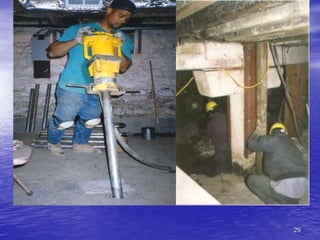
Helical Pier System
Helical piers are used to support foundation
of existing structures. Using a hydraulic
motor attached to a backhoe.
The pier is drilled into the ground to a
specified depth or until refusal.
18
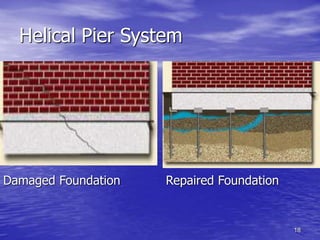
Helical Pier System
Damaged Foundation Repaired Foundation
19
20
21
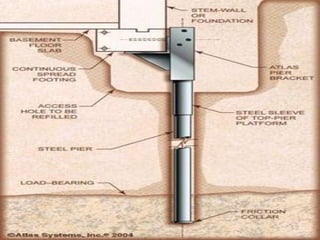
Procedure
Excavate down to the footing at each
designated pier location
Notch out foundation footing to
accommodate support bracket
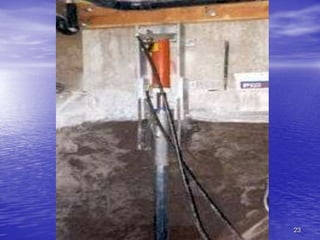
Screw piers into excavated site to a
desired depth using a hydraulic motor
attached to a backhoe
Connect bracket to base of foundation and
the top the pier
Backfill all excavated pier locations
22
23
24
Comments
Fast installation
Economical
Can be installed in confined space
Minimum disturbance to site.
Immediate loading.
All weather installation.
Applicable for saturated soil conditions
25
2- Pile Underpinning
The pile underpinning technique is used to
overcome the extremely difficult working
circumstances encountered when pit
underpinning action become unsuitable
due to high ground water level
Piles are often used where water condition
make it difficult to dig below the footing
26
Special Underpinning Methods
a) Chemical grouting
Perforated pipes are drilled into the ground
with suitable spacing and a solution of
Sodium Silicate is pressure-injected into
the ground and then Calcium or
magnesium chloride is injected as the
pipe is withdrawn.
The two chemicals interact to form a gel
that binds the soil particles into a mass
similar to sandstone
27
Special Underpinning Methods
b) Microfine Grouting
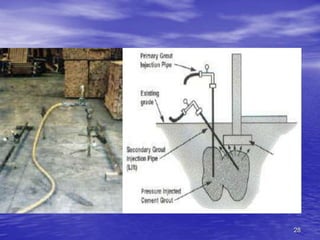
A perforated pipe is drilled into ground and
fluid grout mixture is injected by pressure
The mixture consist of
1- water + Cement
2- water + cement + fly ash or lime
28
29
30
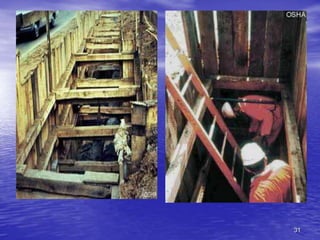
2- SHORING
Definition :
“Structural system made of metal or
timber that supports the sides of an
excavation trench and is designed to
prevent side collapse."
31
32
33
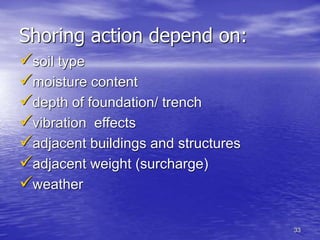
Shoring action depend on:
soil type
moisture content
depth of foundation/ trench
vibration effects
adjacent buildings and structures
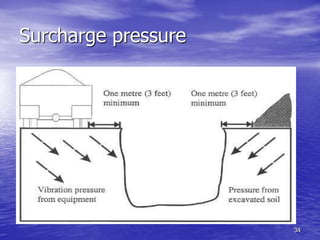
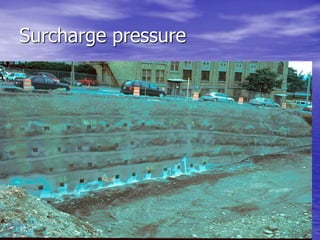
adjacent weight (surcharge)
weather
34
Surcharge pressure
35
Surcharge pressure
36
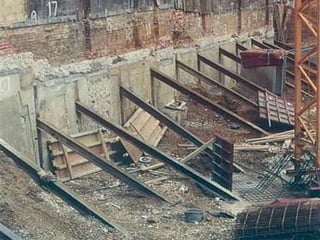
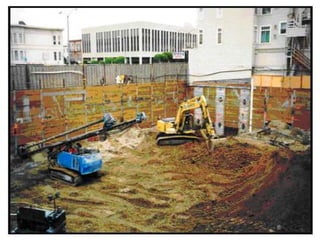
Where shoring is required?
 Demolishing and excavating under the
existing footing,
Pouring a new footing at the required
depth.
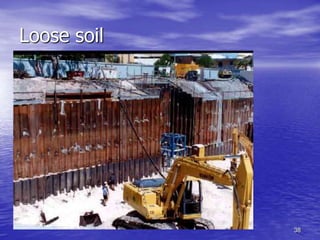
Supporting loose soil or water
37
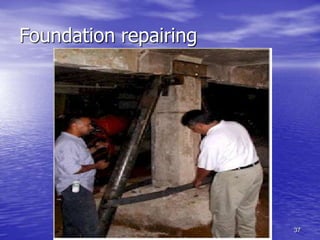
Foundation repairing
38
Loose soil
39
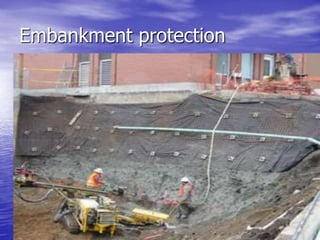
Embankment protection
40
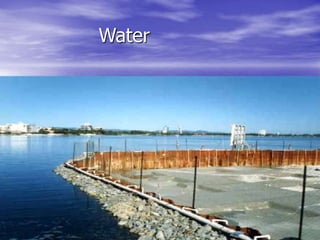
Water
41
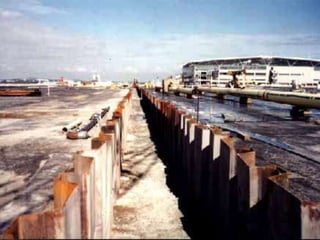
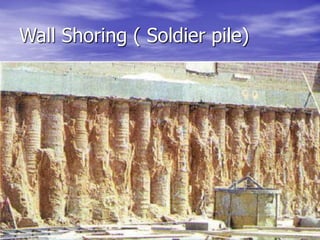
Wall Shoring ( Soldier pile)
42
THANKS

Arunkumar BE.ppt

  • 1.
  • 2.
    2 I- UNDERPINNING What isfoundation underpinning? What is the purpose of underpinning? When foundation underpinning is required? What are the methods used for underpinning?
  • 3.
    3 What is foundationunderpinning? Foundation underpinning is a means of transferring loads to deeper soils or bedrock. Underpinning is the securing, stabilizing, or supporting of an existing foundation.
  • 4.
    4 What is thepurpose of underpinning? To obtain additional foundation capacity To modify the existing foundation system To create new foundations to which the existing load may be wholly or partially transferred into deeper soil Underpinning is generally used for remedial purposes
  • 5.
    5 When foundation underpinningis required? Underpinning is required when: The original foundation is simply not stable enough.  The usage of the structure has changed.  The properties of the soil supporting the foundation may have changed or was mischaracterized during planning. The construction of nearby structures necessitates the excavation of soil supporting existing foundations.
  • 6.
  • 7.
  • 8.
    8 What are importantparameters to be considered before Underpinning ? Height of the building Column spacing Wall thickness Type and material of construction Different loads acting on the building Condition of the building
  • 9.
    9 What are themethods used for underpinning?
  • 10.
    10 1-Pit Underpinning The mostcommon and oldest method of underpinning is by installing piers under a structure’s foundation, filling them with concrete and wedging up to transfer the load to the new piers Pit underpinning requires careful and skilled work as loss of ground will cause building settlement
  • 11.
    11 Pit Underpinning … Procedure Column/wall above the affected footing should be braced as much as possible A pit of 3’ wide, 4’ long and 5’ depth is excavated in front of the footing to be underpinned
  • 12.
  • 13.
    13 Pit Underpinning … Pitis extended laterally to reach under the footing to be underpinned and then is deepened several feet below the subgrade A vertical formwork is built in the pit and then is concreted up to the footing Dry packing operation is then carried out
  • 14.
  • 15.
  • 16.
    16 Pit Underpinning … Comments Thismethod is limited to dry ground because it is difficult to dig below water level otherwise more building settlement may occur.
  • 17.
    17 Helical Pier System Helicalpiers are used to support foundation of existing structures. Using a hydraulic motor attached to a backhoe. The pier is drilled into the ground to a specified depth or until refusal.
  • 18.
    18 Helical Pier System DamagedFoundation Repaired Foundation
  • 19.
  • 20.
  • 21.
    21 Procedure Excavate down tothe footing at each designated pier location Notch out foundation footing to accommodate support bracket Screw piers into excavated site to a desired depth using a hydraulic motor attached to a backhoe Connect bracket to base of foundation and the top the pier Backfill all excavated pier locations
  • 22.
  • 23.
  • 24.
    24 Comments Fast installation Economical Can beinstalled in confined space Minimum disturbance to site. Immediate loading. All weather installation. Applicable for saturated soil conditions
  • 25.
    25 2- Pile Underpinning Thepile underpinning technique is used to overcome the extremely difficult working circumstances encountered when pit underpinning action become unsuitable due to high ground water level Piles are often used where water condition make it difficult to dig below the footing
  • 26.
    26 Special Underpinning Methods a)Chemical grouting Perforated pipes are drilled into the ground with suitable spacing and a solution of Sodium Silicate is pressure-injected into the ground and then Calcium or magnesium chloride is injected as the pipe is withdrawn. The two chemicals interact to form a gel that binds the soil particles into a mass similar to sandstone
  • 27.
    27 Special Underpinning Methods b)Microfine Grouting A perforated pipe is drilled into ground and fluid grout mixture is injected by pressure The mixture consist of 1- water + Cement 2- water + cement + fly ash or lime
  • 28.
  • 29.
  • 30.
    30 2- SHORING Definition : “Structuralsystem made of metal or timber that supports the sides of an excavation trench and is designed to prevent side collapse."
  • 31.
  • 32.
  • 33.
    33 Shoring action dependon: soil type moisture content depth of foundation/ trench vibration effects adjacent buildings and structures adjacent weight (surcharge) weather
  • 34.
  • 35.
  • 36.
    36 Where shoring isrequired?  Demolishing and excavating under the existing footing, Pouring a new footing at the required depth. Supporting loose soil or water
  • 37.
  • 38.
  • 39.
  • 40.
  • 41.
    41 Wall Shoring (Soldier pile)
  • 42.