ARTS 
1st – Art and Culture in the Modern and 
Contemporary Eras 
2nd- Composition of Art in the Modern and 
Contemporary Eras 
3rd- Combined Arts in the Modern and 
Contemporary Eras 
4th- Social Issues Confronting The Modern 
and Contemporary Artists
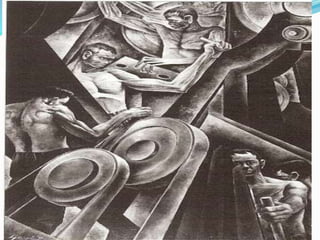
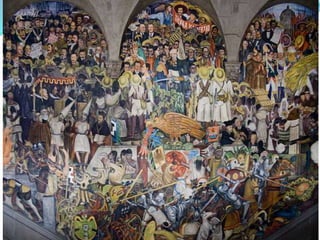
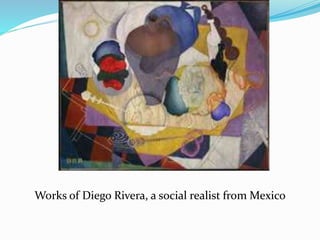
Works of Diego Rivera, a social realist from Mexico
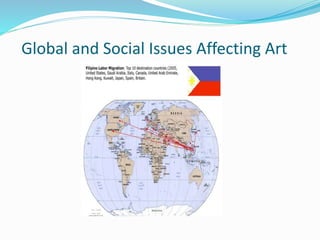
Global and Social Issues Affecting Art
What are the issues that need to 
be addressed? 
How modern artists helped in 
addressing those issues?
Globalization, the state of the 
environment and 
technological advancements 
have all affected human 
condition.
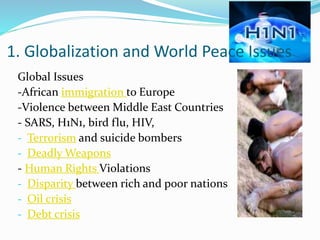
1. Globalization and World Peace Issues 
Global Issues 
-African immigration to Europe 
-Violence between Middle East Countries 
- SARS, H1N1, bird flu, HIV, 
- Terrorism and suicide bombers 
- Deadly Weapons 
- Human Rights Violations 
- Disparity between rich and poor nations 
- Oil crisis 
- Debt crisis
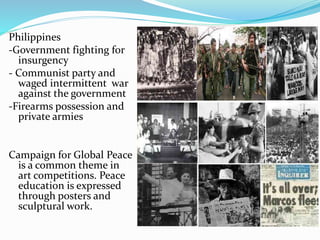
Philippines 
-Government fighting for 
insurgency 
- Communist party and 
waged intermittent war 
against the government 
-Firearms possession and 
private armies 
Campaign for Global Peace 
is a common theme in 
art competitions. Peace 
education is expressed 
through posters and 
sculptural work.
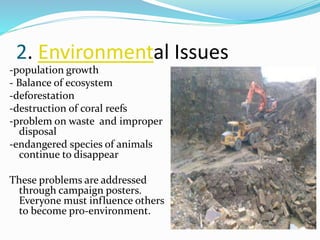
2. Environmental Issues 
-population growth 
- Balance of ecosystem 
-deforestation 
-destruction of coral reefs 
-problem on waste and improper 
disposal 
-endangered species of animals 
continue to disappear 
These problems are addressed 
through campaign posters. 
Everyone must influence others 
to become pro-environment.
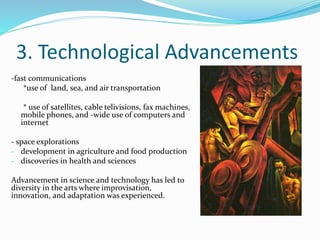
3. Technological Advancements 
-fast communications 
*use of land, sea, and air transportation 
* use of satellites, cable telivisions, fax machines, 
mobile phones, and -wide use of computers and 
internet 
- space explorations 
- development in agriculture and food production 
- discoveries in health and sciences 
Advancement in science and technology has led to 
diversity in the arts where improvisation, 
innovation, and adaptation was experienced.
MODERN FILIPINO ARTISTS AND THEIR WORKS 
Brenda Fajardo’s art moves back and forth from the 
interior depths of the psyche to the somewhat 
turbulent social surface of Filipino life and its 
underlying problems, especially that of women. 
Ana Fer deplores the state of the environment. 
“Tigang na Lupa” (Parched Earth) -a mural, 
depicting the earth as a wasteland, barren, and devoid 
of forest and wildlife.
Arlene Villaver’s painting “Nang Pumutok ang Bulkan” 
focuses on the sufferings of Aetas, the poor and 
marginalized in Philippine society ( vulnerable to the 
punishments inflicted by natural disasters) 
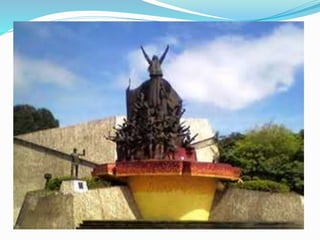
Eduardo Castrillo expressed his reactions of the 
country’s political conditions. One example is his 
group sculpture, People Power. The monument 
symbolizes our mother land and ordinary Filipino 
people who participated in the peaceful revolution 
that overthrew the dictator Ferdinand Marcos in 1986.
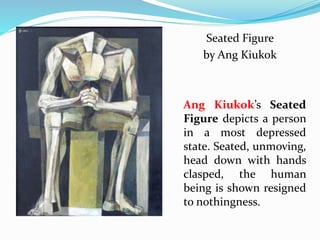
Seated Figure 
by Ang Kiukok 
Ang Kiukok’s Seated 
Figure depicts a person 
in a most depressed 
state. Seated, unmoving, 
head down with hands 
clasped, the human 
being is shown resigned 
to nothingness.
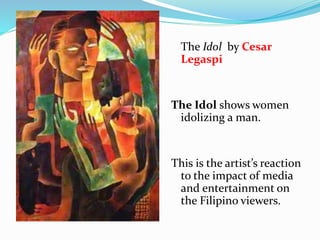
The Idol by Cesar 
Legaspi 
The Idol shows women 
idolizing a man. 
This is the artist’s reaction 
to the impact of media 
and entertainment on 
the Filipino viewers.
SOCIAL REALITIES 
IN 
MODERN ART
In the visual arts, the style that 
corresponds best to the new social 
issues and awareness is called 
realism. 
The term was coined in 1840, 
although the style itself appeared even 
before that period, as shown in the 
artworks of Honore Daumier and 
Kathe Kollwitz.
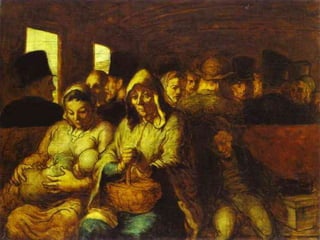
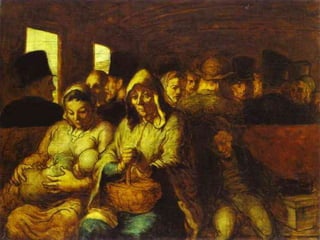
The Third Class Carriage 
by Honore Daumier
Honore Daumier 
satirized the corruption of 
political life, the legal system 
judges, businessmen, 
government officials and 
bourgeois hypocrisy.
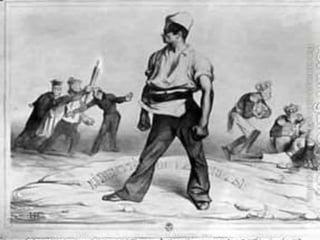
“Freedom of the Press” 
The implication of the painting is 
that the power of the press is 
ultimately greater than that of a 
king. 
The figure in working class clothes is 
Daumier’s hero. 
He stands firm, with clenched fists 
and a set determined jaw. 
The impact of this painting was so 
great that in 1835, France passed a 
law limiting the freedom of the 
press to verbal rather than 
pictorial expression.
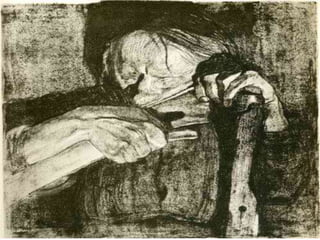
Whetting the Scythe 
by Kathe Kollwitz 
This painting brings the viewer into contact with the 
emotional and material struggles of the working 
classes. The presence of a scythe attributes to the Grim 
Reaper or death and conforms to the woman’s rather 
sinister quality.
American visual arts of the 1920s and 1930s 
were affected by economic and 
political events, particularly the 
Depression and the rise of facism 
in Europe. Art at this time, which 
had political undertones, can be 
seen in the works of American 
socialists and regionalists.
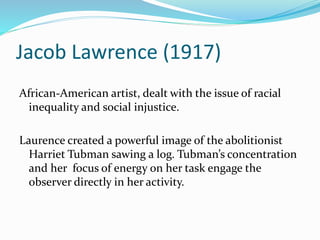
Jacob Lawrence (1917) 
African-American artist, dealt with the issue of racial 
inequality and social injustice. 
Laurence created a powerful image of the abolitionist 
Harriet Tubman sawing a log. Tubman’s concentration 
and her focus of energy on her task engage the 
observer directly in her activity.
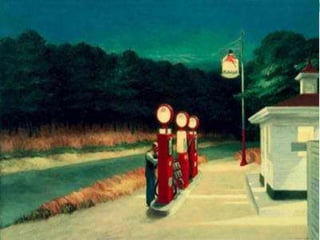
Edward Hopper (1882-1967) 
American painter adds a scene of psychological isolation 
and loneliness. 
In Gas 1940, a lone figure stands by a gas pump. The 
road, for Hopper is a symbol of travel and time that 
seems to continue beyond the frame. Juxtaposed with 
the road are the figure and station that “go nowhere,” 
as if frozen within the space of the picture plane.
This shows how ordinary 
people travel in Europe in the 
1800s, where the train had 
wagon that separates the rich 
from the poor, who are in the 
crowded ‘third class’
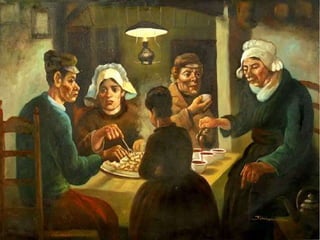
Potato Eaters 
by Vincent Van Gogh 
Poor family dining 
in a poorly lit room.
1960, Philippine society was 
confronted by economic and 
political issues of the Marcos 
regime.
This is a period marked by political awareness and 
strong nationalist temperament. 
Student organizations spearheaded protest actions. 
Highly expressionistic and neo-realists artworks 
conveyed the anxieties and tensions of the period. 
The traditionally beautiful and harmonious artworks 
turned into powerful and aggressive works that 
reflected a society in ferment. With the declaration of 
Martial Law, on September 21, 1972, Social Realists 
took the lead in protest art.
Ang Kiukok illustrated in vivid, 
cubistic images the terror and angst of their times. 
“Man of Fire” – shows a a shocking image of the human 
condition in anguish and despair. 
His painting depicts a world where poverty, suffering, cruelty 
and violence abound. 
Kiukok’s images erupted into forceful expressions of anger, 
frustration and introduced these emotions like tongues of 
fire, knives, fangs and claws in his images.
Pablo Baens Santos, a social realist, 
makes a social commentary and protest as he deals with 
the contemporary issues and condition of Philippine 
society. 
“Panginoong Maylupa”- the landlord is depicted as a 
formidable-looking, bespectacled figure in collision 
with a blond figure hovering above him. 
He tramples heavily on the backs of the peasants to 
cower in fright. The peasants are in various defeat, 
suffering, supplication and initial defiance.
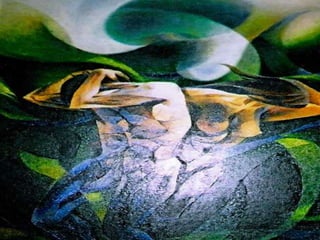
Cesar Legaspi, a neo-realist, 
shows the relationship of man and machines in his painting, 
Gadgets. 
The men are seemingly transformed into a machine. 
Their arms became machine parts fitting in with the cogs and 
wheels and slabs of factories. 
The theme suggests dehumanization of humans. 
The theme can also be interpreted in the light of the 
disadvantaged laborer or factory worker who deserves a fair 
share in the fruits of his toil and is entitled to a more 
humane treatment by the society, which exploits him 
despite benefiting from his services.
Tell whether the following 
statement is TRUE or FALSE. 
1. The painting “Freedom of the Press” implicates that the 
power of the press is ultimately greater than that of a king. 
2. Realism in art serves as mirror of social issues. 
3. Artists expresses their reactions to social conditions 
through their art. 
4. Pablo Baens Santos makes a social commentary and 
protest as he deals with the temporary issues and condition 
of Philippine socitey. 
5. Gadgets shows the relationship of man and machines.
Assignment 
Form a group with five members. Make an assemblage 
expressing your reactions to any of the following social 
conditions. 
a. Poverty f. Corrupt government officials 
b. Political dynasty g. Drug Trafficking 
c. Quarrying h. Water pollution 
d. Informal Settlers i. climate change 
e. Improper Waste Disposal j. migration
ARTS 4thgrading Social Realities

ARTS 4thgrading Social Realities

  • 1.
    ARTS 1st –Art and Culture in the Modern and Contemporary Eras 2nd- Composition of Art in the Modern and Contemporary Eras 3rd- Combined Arts in the Modern and Contemporary Eras 4th- Social Issues Confronting The Modern and Contemporary Artists
  • 3.
    Works of DiegoRivera, a social realist from Mexico
  • 4.
    Global and SocialIssues Affecting Art
  • 5.
    What are theissues that need to be addressed? How modern artists helped in addressing those issues?
  • 6.
    Globalization, the stateof the environment and technological advancements have all affected human condition.
  • 7.
    1. Globalization andWorld Peace Issues Global Issues -African immigration to Europe -Violence between Middle East Countries - SARS, H1N1, bird flu, HIV, - Terrorism and suicide bombers - Deadly Weapons - Human Rights Violations - Disparity between rich and poor nations - Oil crisis - Debt crisis
  • 8.
    Philippines -Government fightingfor insurgency - Communist party and waged intermittent war against the government -Firearms possession and private armies Campaign for Global Peace is a common theme in art competitions. Peace education is expressed through posters and sculptural work.
  • 9.
    2. Environmental Issues -population growth - Balance of ecosystem -deforestation -destruction of coral reefs -problem on waste and improper disposal -endangered species of animals continue to disappear These problems are addressed through campaign posters. Everyone must influence others to become pro-environment.
  • 10.
    3. Technological Advancements -fast communications *use of land, sea, and air transportation * use of satellites, cable telivisions, fax machines, mobile phones, and -wide use of computers and internet - space explorations - development in agriculture and food production - discoveries in health and sciences Advancement in science and technology has led to diversity in the arts where improvisation, innovation, and adaptation was experienced.
  • 11.
    MODERN FILIPINO ARTISTSAND THEIR WORKS Brenda Fajardo’s art moves back and forth from the interior depths of the psyche to the somewhat turbulent social surface of Filipino life and its underlying problems, especially that of women. Ana Fer deplores the state of the environment. “Tigang na Lupa” (Parched Earth) -a mural, depicting the earth as a wasteland, barren, and devoid of forest and wildlife.
  • 12.
    Arlene Villaver’s painting“Nang Pumutok ang Bulkan” focuses on the sufferings of Aetas, the poor and marginalized in Philippine society ( vulnerable to the punishments inflicted by natural disasters) Eduardo Castrillo expressed his reactions of the country’s political conditions. One example is his group sculpture, People Power. The monument symbolizes our mother land and ordinary Filipino people who participated in the peaceful revolution that overthrew the dictator Ferdinand Marcos in 1986.
  • 14.
    Seated Figure byAng Kiukok Ang Kiukok’s Seated Figure depicts a person in a most depressed state. Seated, unmoving, head down with hands clasped, the human being is shown resigned to nothingness.
  • 15.
    The Idol byCesar Legaspi The Idol shows women idolizing a man. This is the artist’s reaction to the impact of media and entertainment on the Filipino viewers.
  • 16.
  • 17.
    In the visualarts, the style that corresponds best to the new social issues and awareness is called realism. The term was coined in 1840, although the style itself appeared even before that period, as shown in the artworks of Honore Daumier and Kathe Kollwitz.
  • 19.
    The Third ClassCarriage by Honore Daumier
  • 20.
    Honore Daumier satirizedthe corruption of political life, the legal system judges, businessmen, government officials and bourgeois hypocrisy.
  • 22.
    “Freedom of thePress” The implication of the painting is that the power of the press is ultimately greater than that of a king. The figure in working class clothes is Daumier’s hero. He stands firm, with clenched fists and a set determined jaw. The impact of this painting was so great that in 1835, France passed a law limiting the freedom of the press to verbal rather than pictorial expression.
  • 24.
    Whetting the Scythe by Kathe Kollwitz This painting brings the viewer into contact with the emotional and material struggles of the working classes. The presence of a scythe attributes to the Grim Reaper or death and conforms to the woman’s rather sinister quality.
  • 25.
    American visual artsof the 1920s and 1930s were affected by economic and political events, particularly the Depression and the rise of facism in Europe. Art at this time, which had political undertones, can be seen in the works of American socialists and regionalists.
  • 26.
    Jacob Lawrence (1917) African-American artist, dealt with the issue of racial inequality and social injustice. Laurence created a powerful image of the abolitionist Harriet Tubman sawing a log. Tubman’s concentration and her focus of energy on her task engage the observer directly in her activity.
  • 28.
    Edward Hopper (1882-1967) American painter adds a scene of psychological isolation and loneliness. In Gas 1940, a lone figure stands by a gas pump. The road, for Hopper is a symbol of travel and time that seems to continue beyond the frame. Juxtaposed with the road are the figure and station that “go nowhere,” as if frozen within the space of the picture plane.
  • 30.
    This shows howordinary people travel in Europe in the 1800s, where the train had wagon that separates the rich from the poor, who are in the crowded ‘third class’
  • 32.
    Potato Eaters byVincent Van Gogh Poor family dining in a poorly lit room.
  • 33.
    1960, Philippine societywas confronted by economic and political issues of the Marcos regime.
  • 34.
    This is aperiod marked by political awareness and strong nationalist temperament. Student organizations spearheaded protest actions. Highly expressionistic and neo-realists artworks conveyed the anxieties and tensions of the period. The traditionally beautiful and harmonious artworks turned into powerful and aggressive works that reflected a society in ferment. With the declaration of Martial Law, on September 21, 1972, Social Realists took the lead in protest art.
  • 35.
    Ang Kiukok illustratedin vivid, cubistic images the terror and angst of their times. “Man of Fire” – shows a a shocking image of the human condition in anguish and despair. His painting depicts a world where poverty, suffering, cruelty and violence abound. Kiukok’s images erupted into forceful expressions of anger, frustration and introduced these emotions like tongues of fire, knives, fangs and claws in his images.
  • 36.
    Pablo Baens Santos,a social realist, makes a social commentary and protest as he deals with the contemporary issues and condition of Philippine society. “Panginoong Maylupa”- the landlord is depicted as a formidable-looking, bespectacled figure in collision with a blond figure hovering above him. He tramples heavily on the backs of the peasants to cower in fright. The peasants are in various defeat, suffering, supplication and initial defiance.
  • 37.
    Cesar Legaspi, aneo-realist, shows the relationship of man and machines in his painting, Gadgets. The men are seemingly transformed into a machine. Their arms became machine parts fitting in with the cogs and wheels and slabs of factories. The theme suggests dehumanization of humans. The theme can also be interpreted in the light of the disadvantaged laborer or factory worker who deserves a fair share in the fruits of his toil and is entitled to a more humane treatment by the society, which exploits him despite benefiting from his services.
  • 39.
    Tell whether thefollowing statement is TRUE or FALSE. 1. The painting “Freedom of the Press” implicates that the power of the press is ultimately greater than that of a king. 2. Realism in art serves as mirror of social issues. 3. Artists expresses their reactions to social conditions through their art. 4. Pablo Baens Santos makes a social commentary and protest as he deals with the temporary issues and condition of Philippine socitey. 5. Gadgets shows the relationship of man and machines.
  • 40.
    Assignment Form agroup with five members. Make an assemblage expressing your reactions to any of the following social conditions. a. Poverty f. Corrupt government officials b. Political dynasty g. Drug Trafficking c. Quarrying h. Water pollution d. Informal Settlers i. climate change e. Improper Waste Disposal j. migration