Random Access Memory and Memory-Related
Technologies
Understanding Memory Decoding, Error Detection, and Correction for Optimal Performance
and Data Integrity
Presentedby
222015033 Adnan Al-Emran Ontor
222015036 Md. Yousuf Sayem
222015037 Md. Moshiur Rahman
222015039 Sanjid Ahmed
222015040 Mehedi Hasan
(Students of GUB)
PresentedTo
Md. Noyan Ali
Lecturer of GUB
Introduction (RAM)
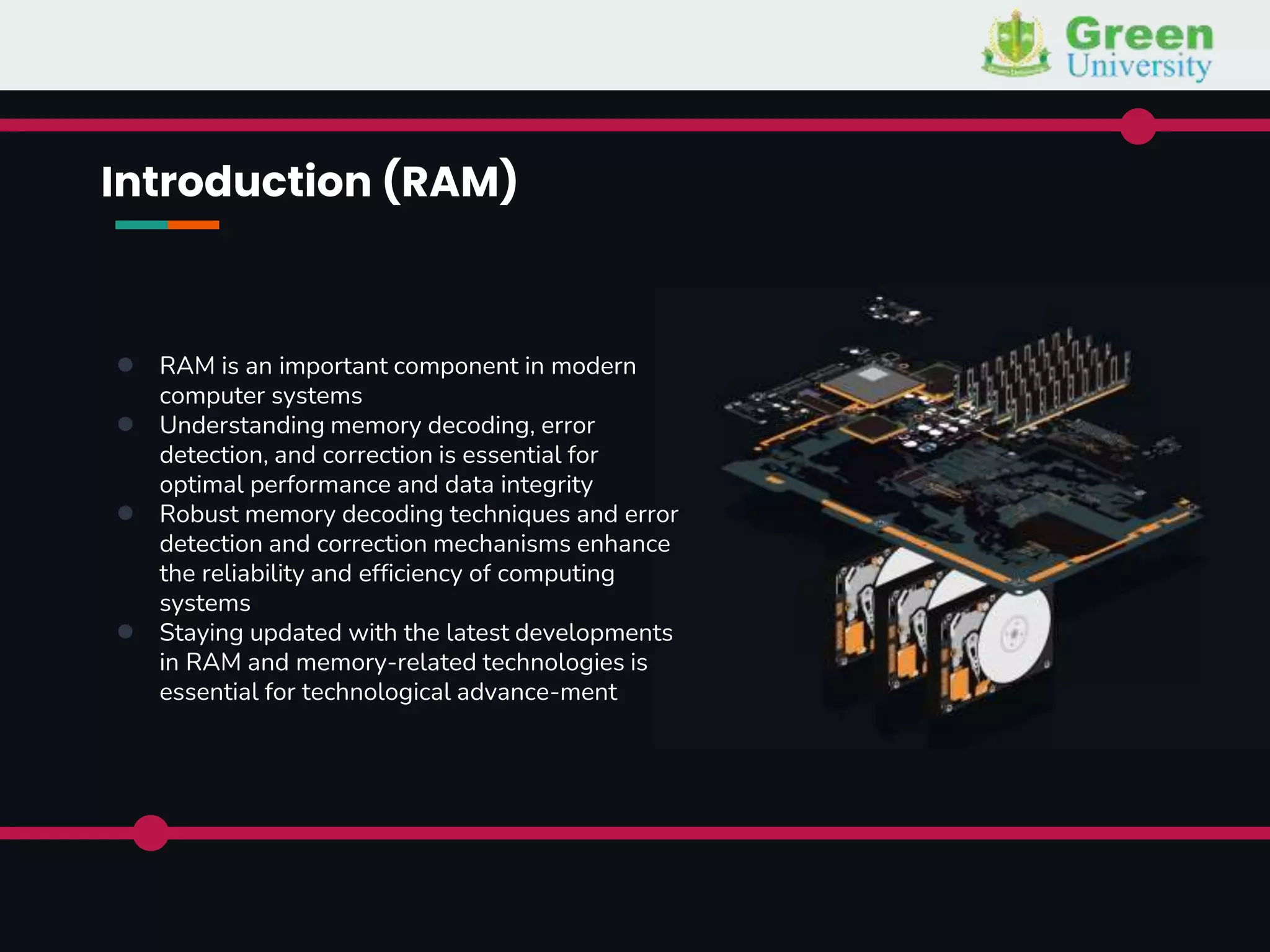
● RAM is an important component in modern
computer systems
● Understanding memory decoding, error
detection, and correction is essential for
optimal performance and data integrity
● Robust memory decoding techniques and error
detection and correction mechanisms enhance
the reliability and efficiency of computing
systems
● Staying updated with the latest developments
in RAM and memory-related technologies is
essential for technological advance-ment
Memory Decoding
● Memory decoding is the process of interpreting
memory addresses to retrieve data
● Two common memory decoding techniques are
row address decoding and column address
decoding
● Row address decoding selects a row of data
from memory, whereas column address
decoding selects a specific cell within that row
● Choosing the appropriate decoding technique
can improve memory access times and reduce
power consumption
Error Detection
● Error detection is the process of identifying
errors in memory data
● Common error detection mechanisms include
parity checks and cyclic redundancy checks
(CRCs)
● A parity check uses an extra bit to record the
parity of the data being stored, whereas a CRC
uses a mathematical algorithm to detect errors
● Implementing error detection mechanisms can
improve data integrity and prevent data loss
Error Correction
Memory Performance
Memory Applications
● RAM is used in a wide range of applications,
from consumer electronics to data center
servers
● Different applications have varying memory
requirements and may require different
memory technologies
● Mobile devices typically use Low Power
Double Data Rate (LPDDR) memory with low
power consumption and high bandwidth
● Data center servers typically use Dual In-Line
Memory Module (DIMM) memory with high
capacity and reliability
Memory Security
● Memory security is essential for protecting
sensitive data from unauthorized access and
malicious attacks
● Common memory security mechanisms include
Memory Encryption Engines (MEE), Memory
Protection Extensions (MPE), and Memory
Isolation Technologies (MIT)
● MEE encrypts memory data to prevent
unauthorized access, MPE provides hardware-
level protection against memory attacks, and
MIT isolates memory regions to prevent
malicious code execution
● Ensuring memory security is crucial for
protecting personal and organizational data
Future of Memory Technology
● Memory technology is constantly evolving, with new developments and innovations being
introduced regularly
● Emerging memory technologies include resistive RAM (RRAM), phase change memory (PCM),
and magnetic RAM (MRAM)
● These technologies have the potential to revolutionize memory performance, capacity, and
power consumption
● As technology continues to advance, the future of memory technology looks promising
Photo by Pexels
Conclusion
Photo by Pexels
● RAM is crucial in computer systems. Understanding memory decoding, error
detection, and correction ensures data integrity and optimizes performance.
These techniques make systems reliable and efficient. Staying updated on
RAM advancements is essential for technological progress.
Questions and
answers
Thank You
Photo by Pexels
Thank You 
References
https://www.tutorialspoint.com/computer_fundamentals/computer_ram.htm
https://www.geeksforgeeks.org/different-types-ram-random-access-memory/

Random-Access-Memory-and-Memory-Related-Technologies.pptx

  • 1.
    Random Access Memoryand Memory-Related Technologies Understanding Memory Decoding, Error Detection, and Correction for Optimal Performance and Data Integrity Presentedby 222015033 Adnan Al-Emran Ontor 222015036 Md. Yousuf Sayem 222015037 Md. Moshiur Rahman 222015039 Sanjid Ahmed 222015040 Mehedi Hasan (Students of GUB) PresentedTo Md. Noyan Ali Lecturer of GUB
  • 2.
    Introduction (RAM) ● RAMis an important component in modern computer systems ● Understanding memory decoding, error detection, and correction is essential for optimal performance and data integrity ● Robust memory decoding techniques and error detection and correction mechanisms enhance the reliability and efficiency of computing systems ● Staying updated with the latest developments in RAM and memory-related technologies is essential for technological advance-ment
  • 3.
    Memory Decoding ● Memorydecoding is the process of interpreting memory addresses to retrieve data ● Two common memory decoding techniques are row address decoding and column address decoding ● Row address decoding selects a row of data from memory, whereas column address decoding selects a specific cell within that row ● Choosing the appropriate decoding technique can improve memory access times and reduce power consumption
  • 4.
    Error Detection ● Errordetection is the process of identifying errors in memory data ● Common error detection mechanisms include parity checks and cyclic redundancy checks (CRCs) ● A parity check uses an extra bit to record the parity of the data being stored, whereas a CRC uses a mathematical algorithm to detect errors ● Implementing error detection mechanisms can improve data integrity and prevent data loss
  • 5.
  • 6.
  • 7.
    Memory Applications ● RAMis used in a wide range of applications, from consumer electronics to data center servers ● Different applications have varying memory requirements and may require different memory technologies ● Mobile devices typically use Low Power Double Data Rate (LPDDR) memory with low power consumption and high bandwidth ● Data center servers typically use Dual In-Line Memory Module (DIMM) memory with high capacity and reliability
  • 8.
    Memory Security ● Memorysecurity is essential for protecting sensitive data from unauthorized access and malicious attacks ● Common memory security mechanisms include Memory Encryption Engines (MEE), Memory Protection Extensions (MPE), and Memory Isolation Technologies (MIT) ● MEE encrypts memory data to prevent unauthorized access, MPE provides hardware- level protection against memory attacks, and MIT isolates memory regions to prevent malicious code execution ● Ensuring memory security is crucial for protecting personal and organizational data
  • 9.
    Future of MemoryTechnology ● Memory technology is constantly evolving, with new developments and innovations being introduced regularly ● Emerging memory technologies include resistive RAM (RRAM), phase change memory (PCM), and magnetic RAM (MRAM) ● These technologies have the potential to revolutionize memory performance, capacity, and power consumption ● As technology continues to advance, the future of memory technology looks promising Photo by Pexels
  • 10.
    Conclusion Photo by Pexels ●RAM is crucial in computer systems. Understanding memory decoding, error detection, and correction ensures data integrity and optimizes performance. These techniques make systems reliable and efficient. Staying updated on RAM advancements is essential for technological progress. Questions and answers
  • 11.
    Thank You Photo byPexels Thank You  References https://www.tutorialspoint.com/computer_fundamentals/computer_ram.htm https://www.geeksforgeeks.org/different-types-ram-random-access-memory/