SARDAR MOHSIN ALTAF
INTRODUCTI
ON
TO
COMPUTIN
INTELLIGENCE
ARTIFICIAL
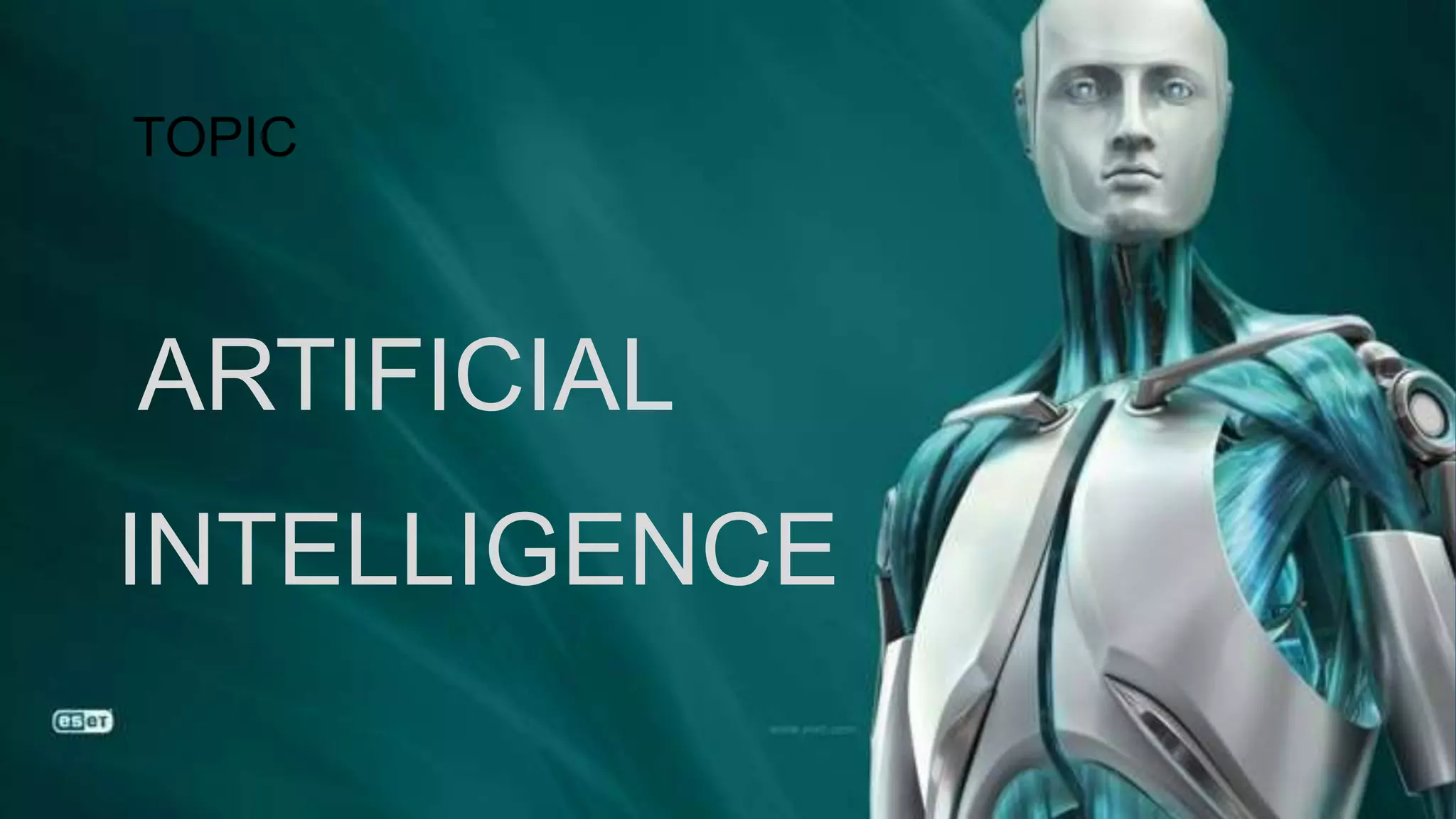
TOPIC
CONTENTS
A.I. Introduction
Languages
Applications
Overview
INTRODUCTION
• Claiming to be able to recreate the capabilities of the human mind, is
both a challenge and an inspiration for philosophy.
• It is the science and engineering of making intelligent machines,
especially intelligent computer programs.
ARE THERE LIMITSTO HOWINTELLIGENT MACHINES CANBE?
• Intelligence:
“the capacity to learn and solve problems”
 Artificial Intelligence:
• Artificial intelligence (AI) is the intelligence of machines and robots and the branch of computer science that aims to create it
• the ability to solve problems
• the ability to act rationally
• the ability to act like humans
PHILOSOPHY OF A.I.
• Searle's strong AI hypothesis: "The
appropriately programmed computer with
the right inputs & outputs would thereby
have a mind in exactly the same sense human
beings have minds."
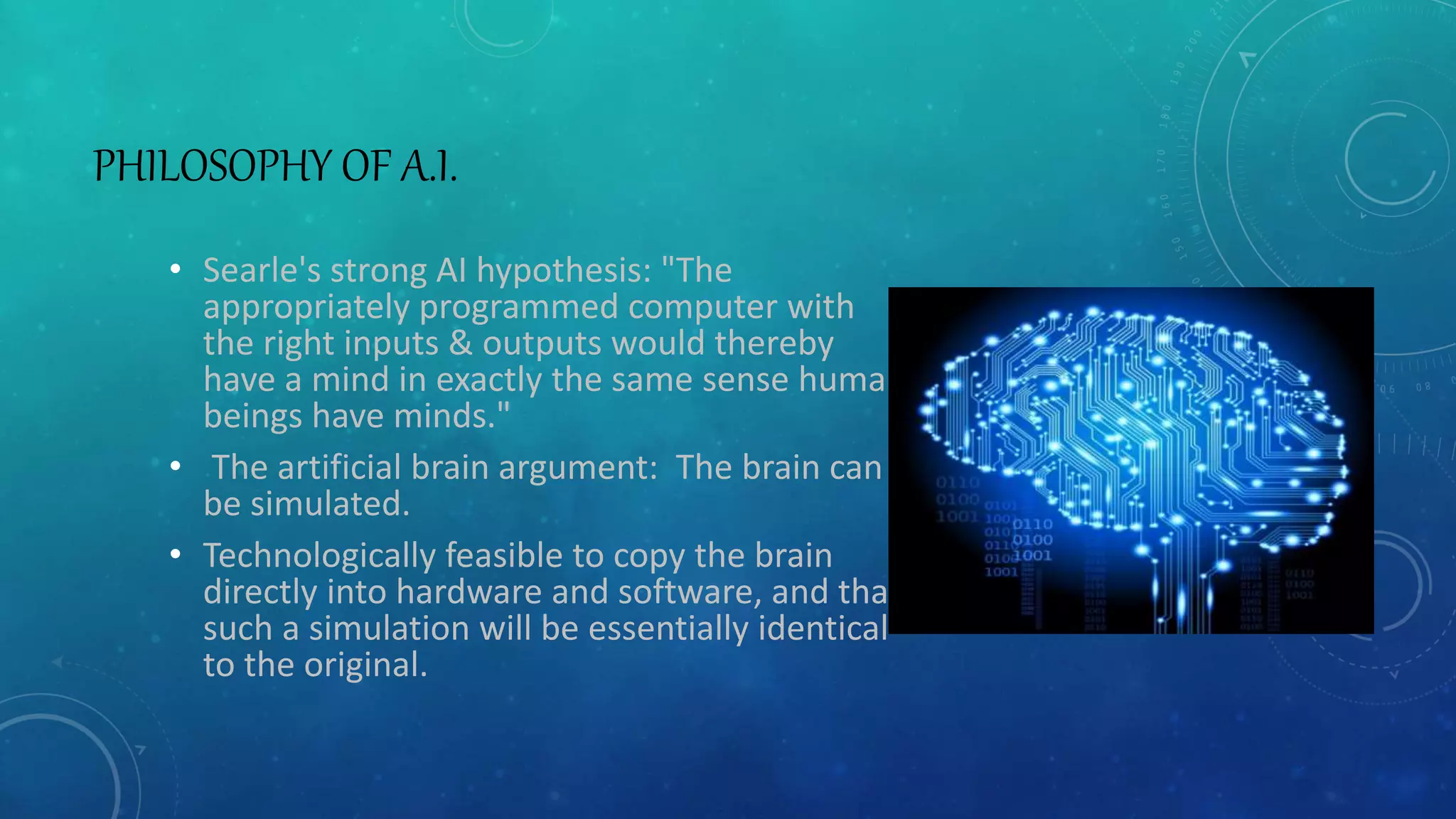
• The artificial brain argument: The brain can
be simulated.
• Technologically feasible to copy the brain
directly into hardware and software, and that
such a simulation will be essentially identical
to the original.
HISTORY OF ARTIFICIAL INTELLIGENCE
• Classical philosophers
• Programmable Digital Computers (1940)
• 1943-1956:
• McCulloch & Pitts: Boolean circuit model of brain
• Dartmouth meeting: "Artificial Intelligence“ name adopted
• The golden years 1956−1974
• 1986-- Rise of machine learning
• Neural networks return to popularity
• Major advances in machine learning algorithms and
applications
• 1995-- AI as Science
• Integration of learning, reasoning, knowledge representation
• AI methods used in vision, language, data mining, etc
• 2006: face recognition software available in consumer cameras
• 2003-2007 Robot driving: DARPA grand challenge
• Feb 2011 there came question answering robot.
LANGUAGES
ARTIFICIAL INTELLIGENCE RESEARCHERS HAVE DEVELOPED
SEVERAL SPECIALIZED PROGRAMMING LANGUAGES FOR
ARTIFICIAL INTELLIGENCE WHICH INCLUDE IPL, LISP, PROLOG,
STRIPS, PLANNER, POP-11 ETC.
•Can AI System Work As Efficient
As Human Brain?????
• How complicated is our brain?
• Neuron
• 10 12 neurons in a human brain
• cycle time: 10 -3 seconds (1 millisecond)
• How complex can we make computers?
• 108 or more transistors per CPU
• supercomputer: hundreds of CPUs, 1012 bits of RAM
• cycle times: order of 10 - 9 seconds
• Conclusion
 YES
• Faster
APPLICATIONS OF AI:
• Natural Language Understanding
• Expert Systems
• Planning and Robotics
• Machine Learning
• Game Playing
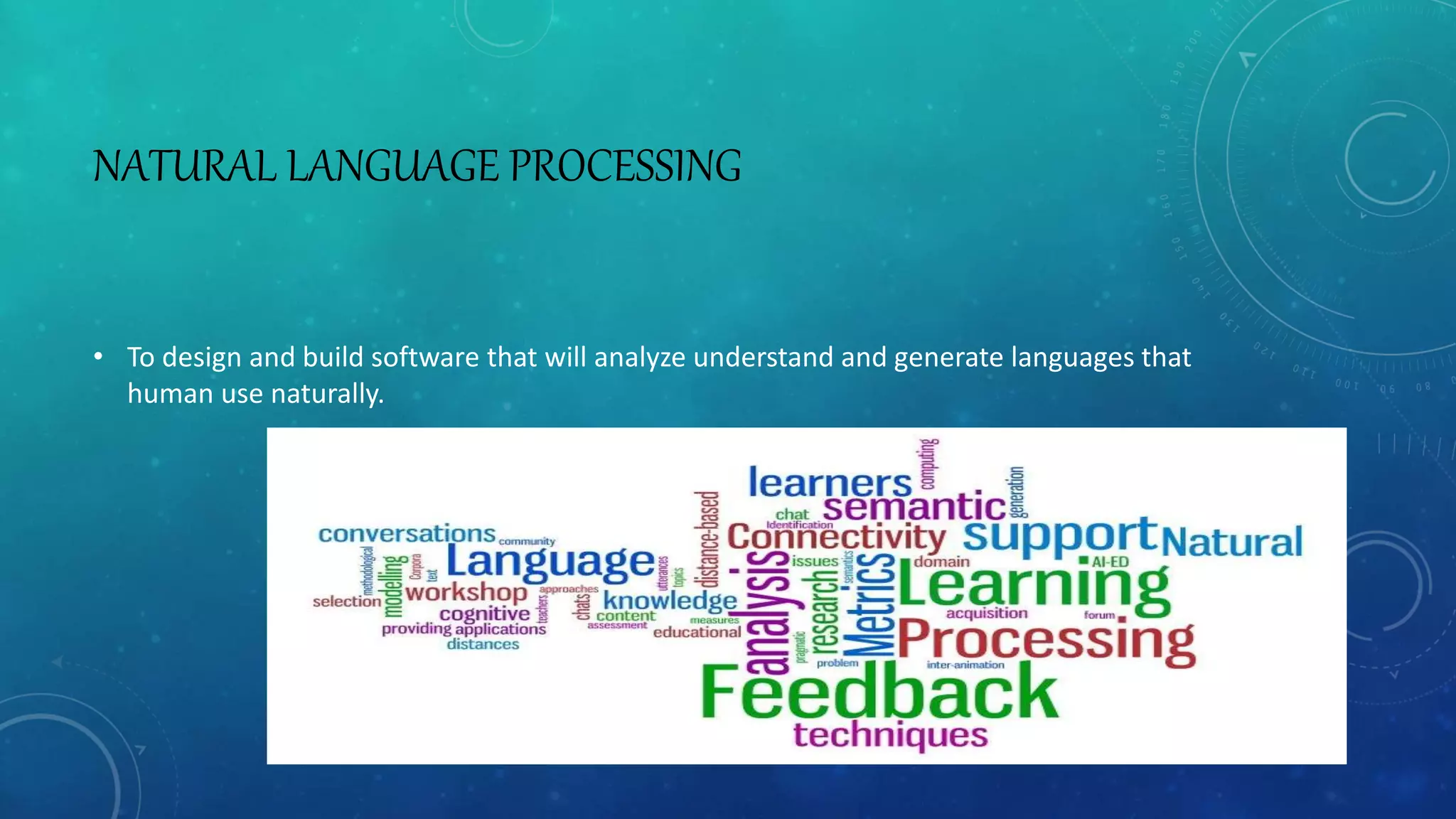
NATURAL LANGUAGE PROCESSING
• To design and build software that will analyze understand and generate languages that
human use naturally.
MODES OF COMMUNICATION
• Text based.
• Dialogue based.
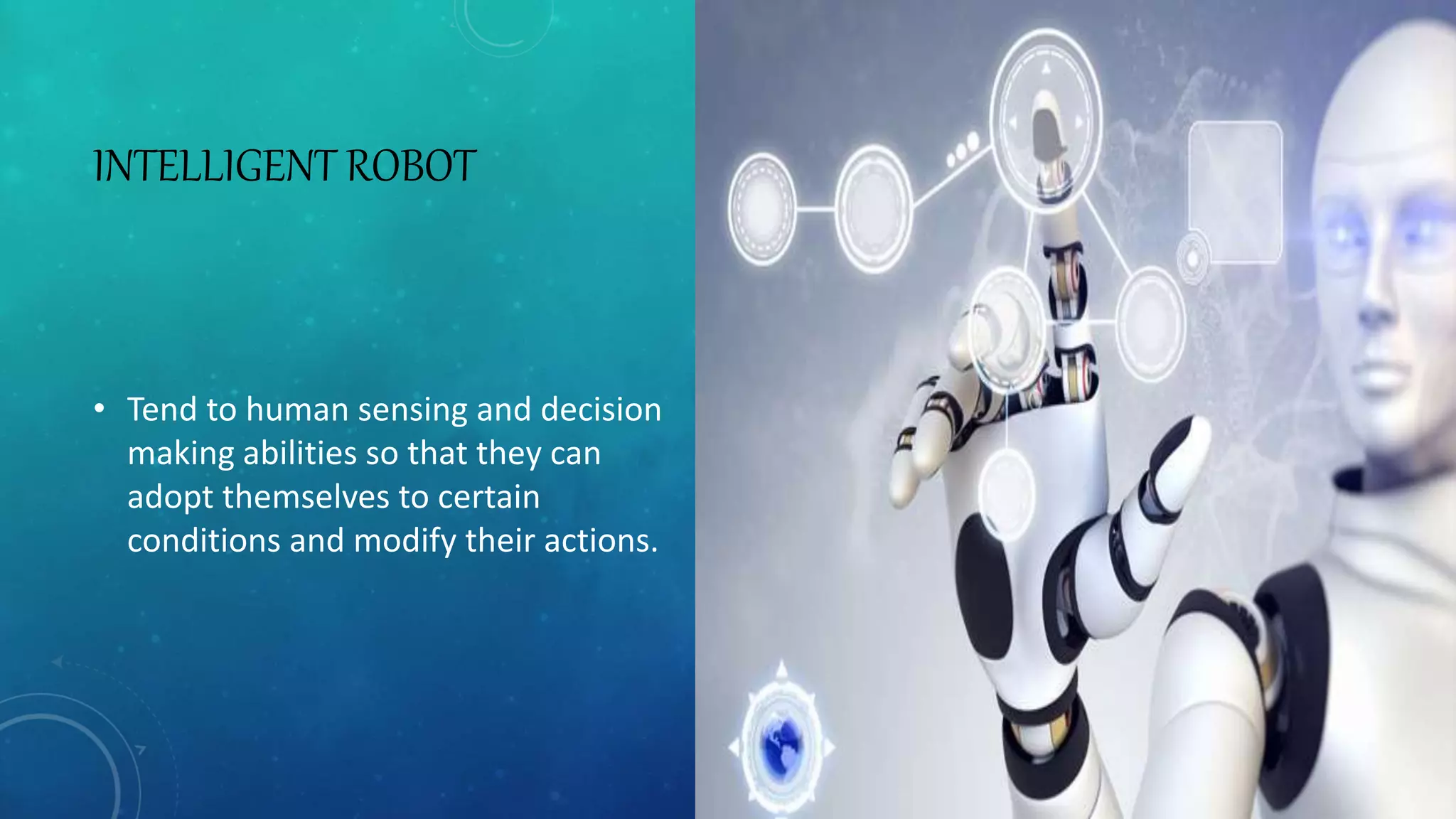
INTELLIGENT ROBOT
• Tend to human sensing and decision
making abilities so that they can
adopt themselves to certain
conditions and modify their actions.
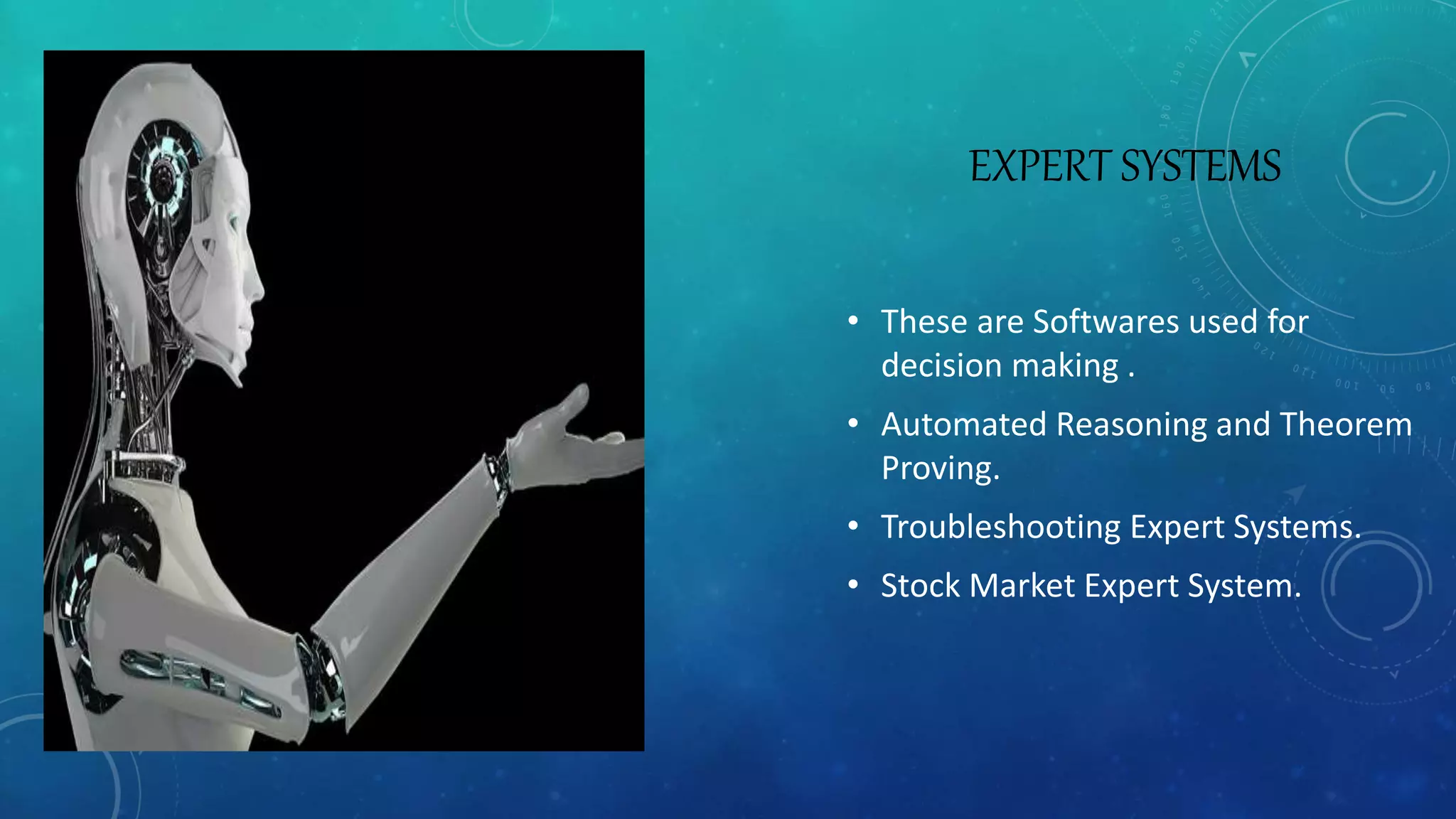
EXPERT SYSTEMS
• These are Softwares used for
decision making .
• Automated Reasoning and Theorem
Proving.
• Troubleshooting Expert Systems.
• Stock Market Expert System.
ARTIFICIAL INTELLIGENCE THE NEED OF HOUR
• "Many thousands of AI applications are deeply embedded in the
infrastructure of every industry."
• The late 90s and early 21st century, AI technology became widely used as
elements of larger systems, but the field is rarely credited for these successes.
DAILY LIFE APPLICATIONS
• Security
• Bank
• Post office
• Websites
• Digital cameras
• News and publishing
• Financial trades
• Health and medicine
• Games and toys
FIELDS OF AI
Computerscience:
 Graphical User Interface
 Automatic Storage management
 Object Oriented Programming
 Data miming
 computer gaming
• :
TELECOMMUNICATION:
• Automated Online Assistants
• Voice dialing
• Speech recognition
COMPUTER VISION
• Ability of a machine to extract information from an image that is necessary to
solve a task
 Image Acquisition
 Image Processing
 Image Analysis
 Image understanding
FIELDS OF AI
Aviation & Automation:
• NASA's fight research centre
• Voice recognition in fighter jets
• Directions to A.I pilots through air traffic
controllers
• Automatic Gearing System in Cars
FIELDS OF AI
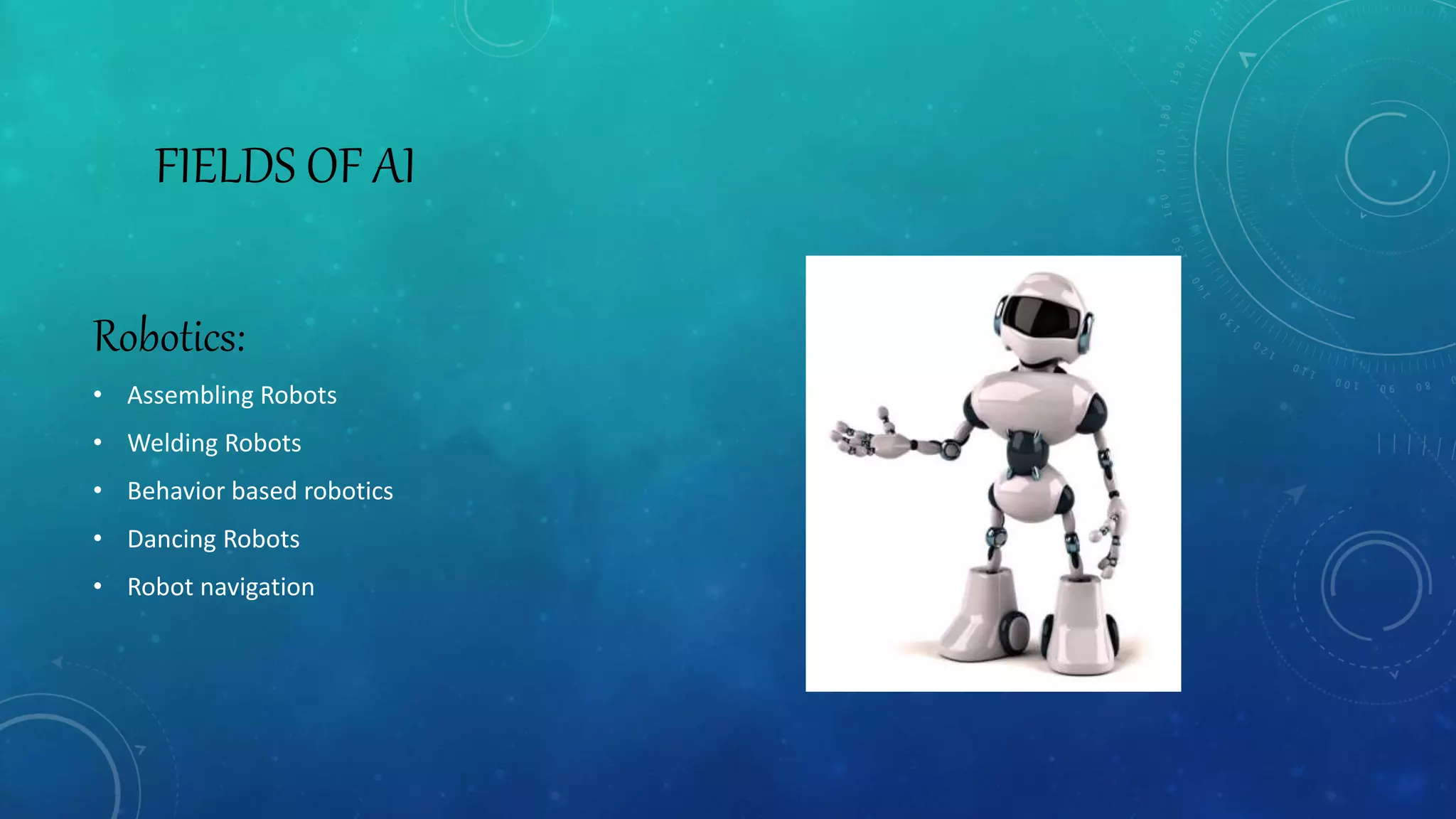
Robotics:
• Assembling Robots
• Welding Robots
• Behavior based robotics
• Dancing Robots
• Robot navigation
FIELDS OF AI
MEDICAL
• Fast and accurate diagnostics
• Therapeutic robots
• Reduce errors related to human
• Decrease in medical costs
• Improved radiology
FIELDS OF AI
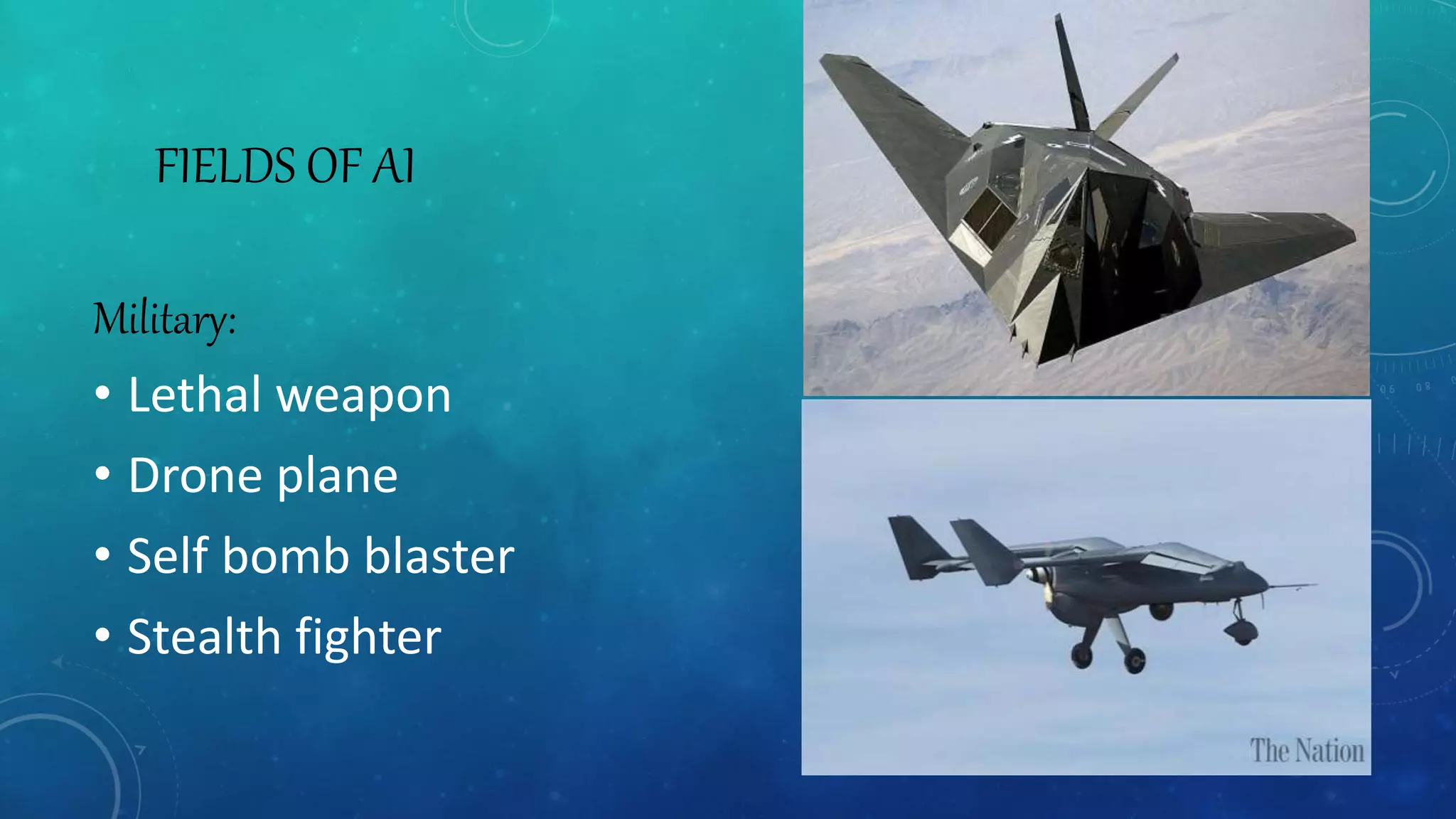
Military:
• Lethal weapon
• Drone plane
• Self bomb blaster
• Stealth fighter
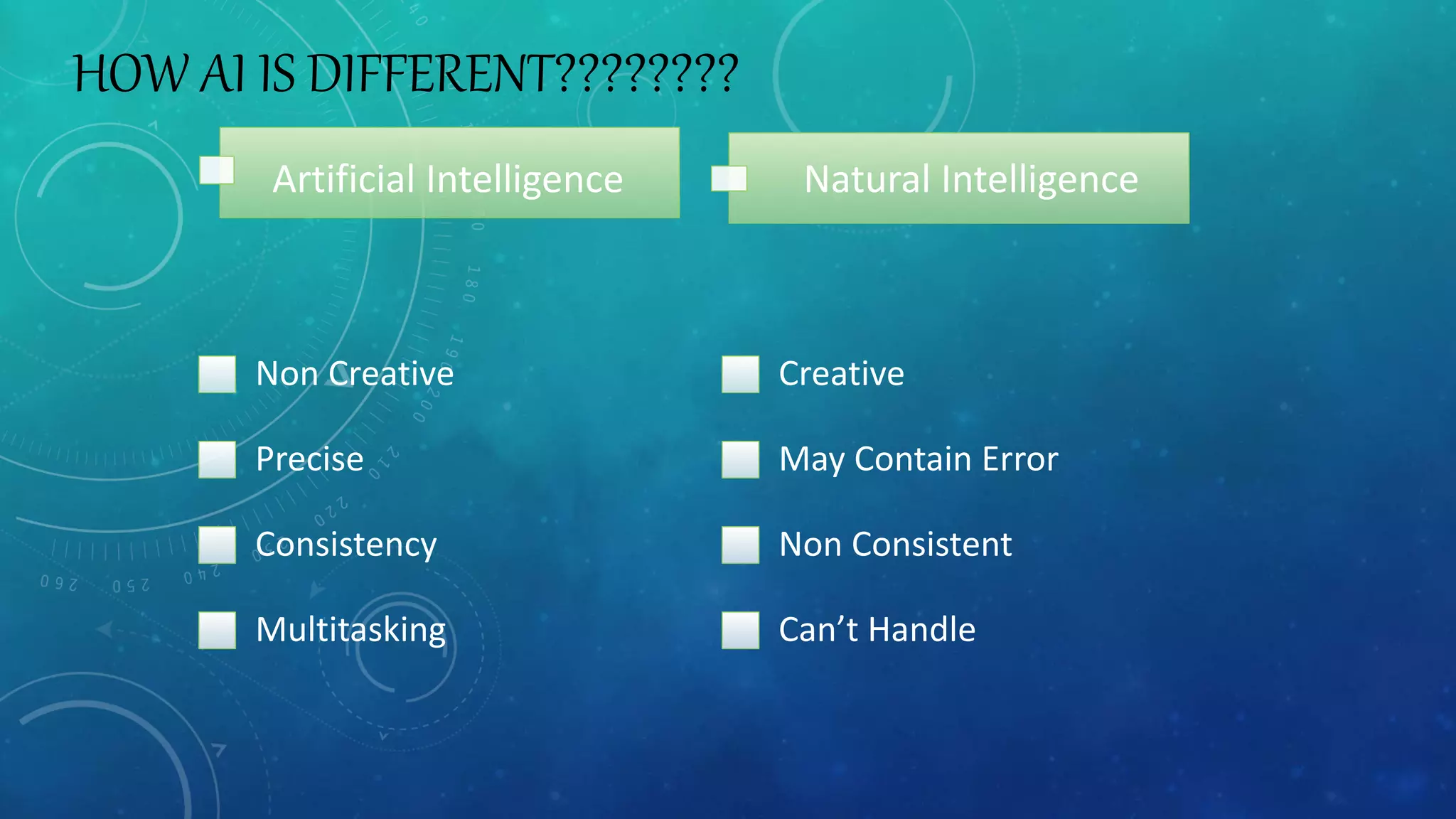
HOW AI IS DIFFERENT????????
Artificial Intelligence
Non Creative
Precise
Consistency
Multitasking
Natural Intelligence
Creative
May Contain Error
Non Consistent
Can’t Handle
DRAWBACKS OF A.I
• Limited Ability
• Difficult code
• High Cost
• Slow Real Time Response
• Can’t Handle Emergency Situation
• Many people end up without a job.
• The singularity (robots may go out of control ):
here the ARTIFICIAL INTELLIGENCE gets EVIL
Any
Questions
THANK YOU
FOR
YOUR
TIME

ARTIFICIAL INTELLIGENCE

  • 2.
  • 3.
  • 4.
  • 5.
  • 6.
    INTRODUCTION • Claiming tobe able to recreate the capabilities of the human mind, is both a challenge and an inspiration for philosophy. • It is the science and engineering of making intelligent machines, especially intelligent computer programs.
  • 7.
    ARE THERE LIMITSTOHOWINTELLIGENT MACHINES CANBE? • Intelligence: “the capacity to learn and solve problems”  Artificial Intelligence: • Artificial intelligence (AI) is the intelligence of machines and robots and the branch of computer science that aims to create it • the ability to solve problems • the ability to act rationally • the ability to act like humans
  • 8.
    PHILOSOPHY OF A.I. •Searle's strong AI hypothesis: "The appropriately programmed computer with the right inputs & outputs would thereby have a mind in exactly the same sense human beings have minds." • The artificial brain argument: The brain can be simulated. • Technologically feasible to copy the brain directly into hardware and software, and that such a simulation will be essentially identical to the original.
  • 9.
    HISTORY OF ARTIFICIALINTELLIGENCE • Classical philosophers • Programmable Digital Computers (1940) • 1943-1956: • McCulloch & Pitts: Boolean circuit model of brain • Dartmouth meeting: "Artificial Intelligence“ name adopted • The golden years 1956−1974
  • 10.
    • 1986-- Riseof machine learning • Neural networks return to popularity • Major advances in machine learning algorithms and applications • 1995-- AI as Science • Integration of learning, reasoning, knowledge representation • AI methods used in vision, language, data mining, etc
  • 11.
    • 2006: facerecognition software available in consumer cameras • 2003-2007 Robot driving: DARPA grand challenge • Feb 2011 there came question answering robot.
  • 12.
    LANGUAGES ARTIFICIAL INTELLIGENCE RESEARCHERSHAVE DEVELOPED SEVERAL SPECIALIZED PROGRAMMING LANGUAGES FOR ARTIFICIAL INTELLIGENCE WHICH INCLUDE IPL, LISP, PROLOG, STRIPS, PLANNER, POP-11 ETC.
  • 13.
    •Can AI SystemWork As Efficient As Human Brain?????
  • 14.
    • How complicatedis our brain? • Neuron • 10 12 neurons in a human brain • cycle time: 10 -3 seconds (1 millisecond) • How complex can we make computers? • 108 or more transistors per CPU • supercomputer: hundreds of CPUs, 1012 bits of RAM • cycle times: order of 10 - 9 seconds • Conclusion  YES • Faster
  • 15.
    APPLICATIONS OF AI: •Natural Language Understanding • Expert Systems • Planning and Robotics • Machine Learning • Game Playing
  • 16.
    NATURAL LANGUAGE PROCESSING •To design and build software that will analyze understand and generate languages that human use naturally.
  • 17.
    MODES OF COMMUNICATION •Text based. • Dialogue based.
  • 18.
    INTELLIGENT ROBOT • Tendto human sensing and decision making abilities so that they can adopt themselves to certain conditions and modify their actions.
  • 19.
    EXPERT SYSTEMS • Theseare Softwares used for decision making . • Automated Reasoning and Theorem Proving. • Troubleshooting Expert Systems. • Stock Market Expert System.
  • 20.
    ARTIFICIAL INTELLIGENCE THENEED OF HOUR • "Many thousands of AI applications are deeply embedded in the infrastructure of every industry." • The late 90s and early 21st century, AI technology became widely used as elements of larger systems, but the field is rarely credited for these successes.
  • 21.
    DAILY LIFE APPLICATIONS •Security • Bank • Post office • Websites • Digital cameras • News and publishing • Financial trades • Health and medicine • Games and toys
  • 22.
    FIELDS OF AI Computerscience: Graphical User Interface  Automatic Storage management  Object Oriented Programming  Data miming  computer gaming • :
  • 23.
    TELECOMMUNICATION: • Automated OnlineAssistants • Voice dialing • Speech recognition
  • 24.
    COMPUTER VISION • Abilityof a machine to extract information from an image that is necessary to solve a task  Image Acquisition  Image Processing  Image Analysis  Image understanding
  • 25.
    FIELDS OF AI Aviation& Automation: • NASA's fight research centre • Voice recognition in fighter jets • Directions to A.I pilots through air traffic controllers • Automatic Gearing System in Cars
  • 26.
    FIELDS OF AI Robotics: •Assembling Robots • Welding Robots • Behavior based robotics • Dancing Robots • Robot navigation
  • 27.
    FIELDS OF AI MEDICAL •Fast and accurate diagnostics • Therapeutic robots • Reduce errors related to human • Decrease in medical costs • Improved radiology
  • 28.
    FIELDS OF AI Military: •Lethal weapon • Drone plane • Self bomb blaster • Stealth fighter
  • 29.
    HOW AI ISDIFFERENT???????? Artificial Intelligence Non Creative Precise Consistency Multitasking Natural Intelligence Creative May Contain Error Non Consistent Can’t Handle
  • 31.
    DRAWBACKS OF A.I •Limited Ability • Difficult code • High Cost • Slow Real Time Response • Can’t Handle Emergency Situation • Many people end up without a job. • The singularity (robots may go out of control ): here the ARTIFICIAL INTELLIGENCE gets EVIL
  • 32.
  • 33.