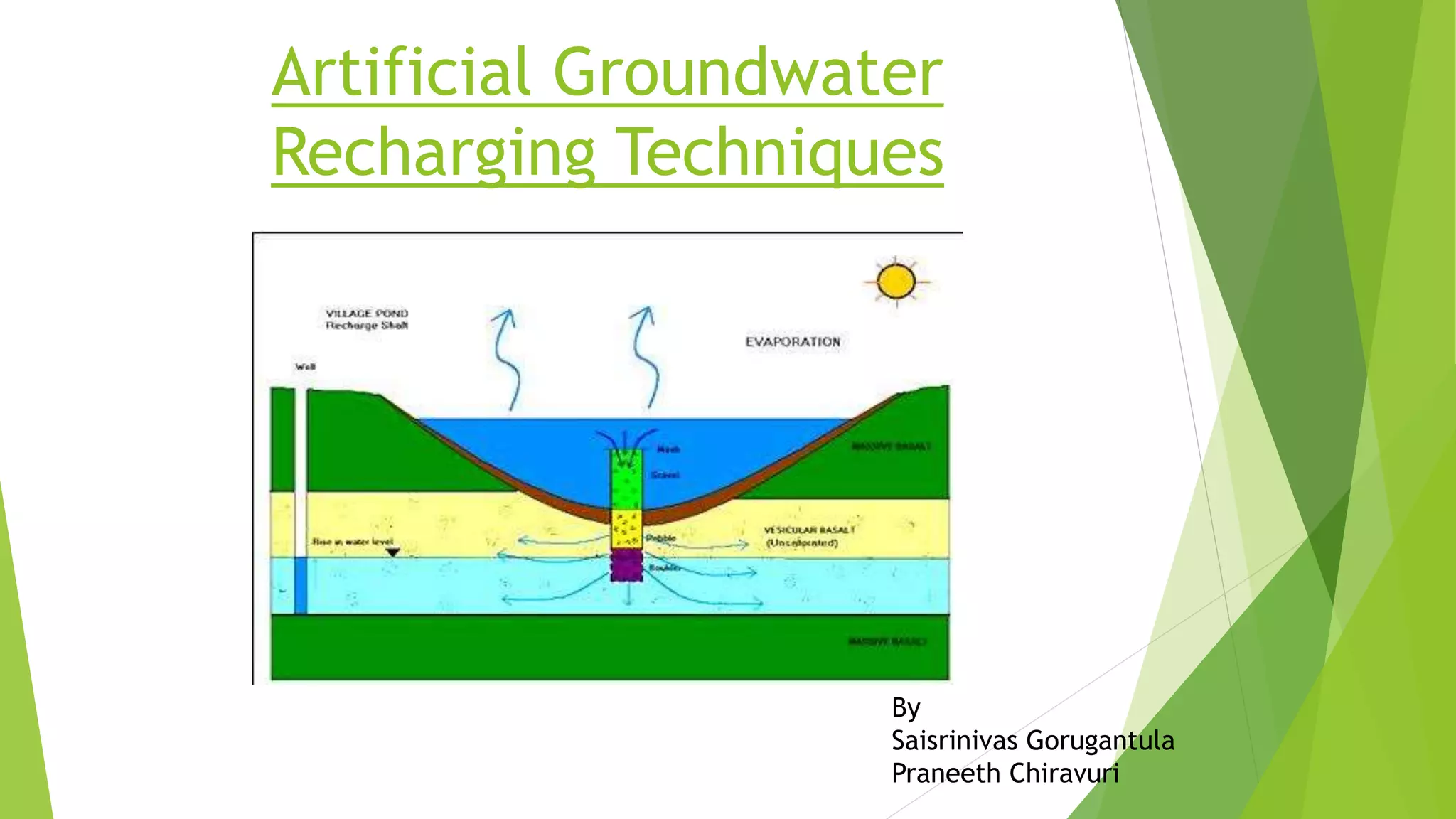
Artificial Groundwater
Recharging Techniques
By
Saisrinivas Gorugantula
Praneeth Chiravuri
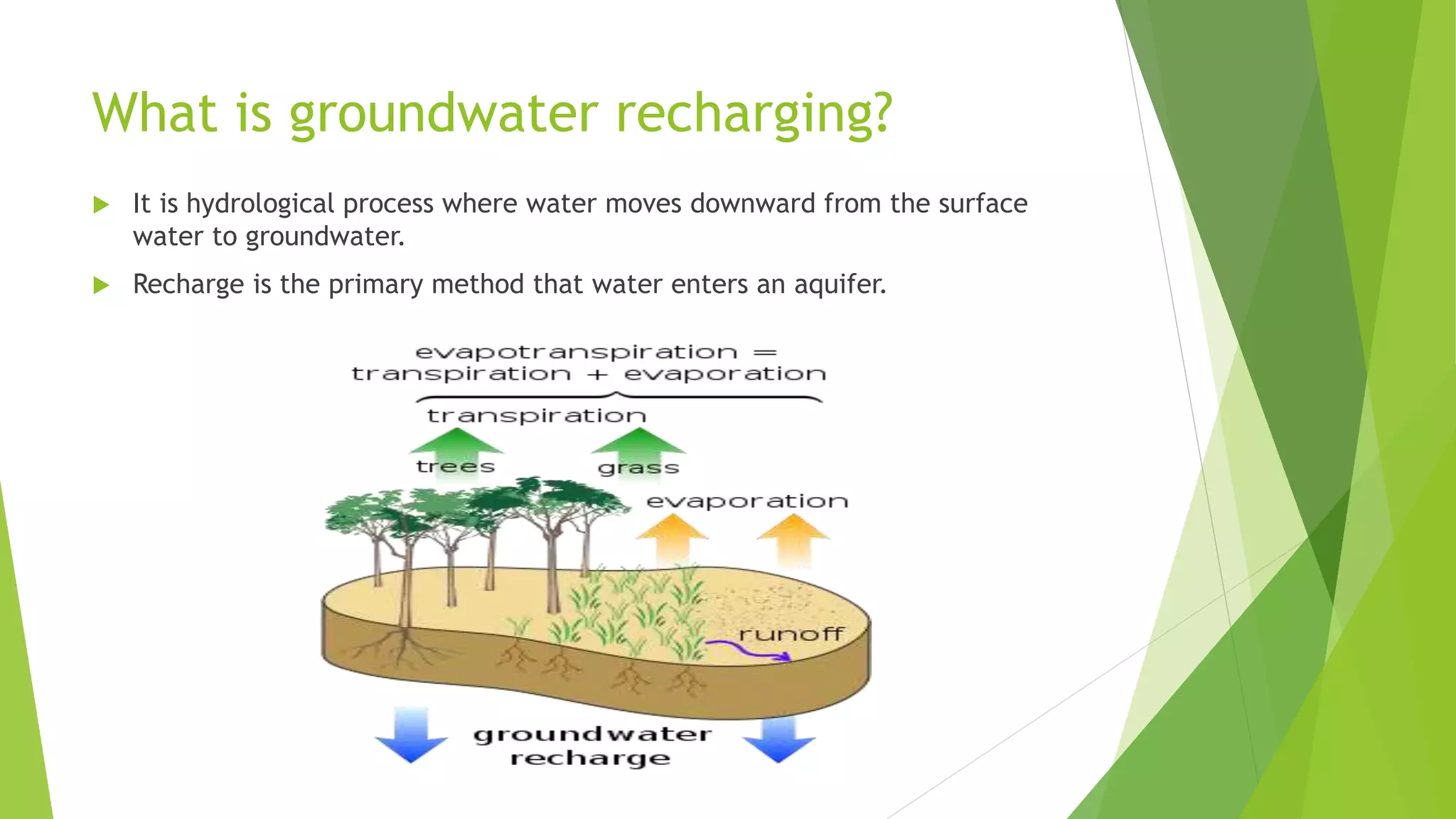
What is groundwater recharging?
 It is hydrological process where water moves downward from the surface
water to groundwater.
 Recharge is the primary method that water enters an aquifer.
Location of
sites for artificial recharge
• (1) Water (availability, source, turbidity, quality, etc . )
• (2) surface soils
• (3) depth to aquifer
• (4) geologic structure and capacity of the ground-water reservoir
• (5) the presence of aquicludes
• (6) movement of ground water
• (7) location of withdrawal area
Basin Spreading Recharge
 A series of small basins for impounding water throughout the
intake area.
Ditch and furrows
 a series of shallow, flat-bottomed furrows or ditches, closely spaced, and on a
low grade, to spread water throughout the intake area.
• Recharge wells are of two types
a)Injection well, where water is
pumped in for recharge and
b)Recharge wells where water
flows under gravity.
Recharge wells
Injection well
• One effective
system for recharge
consists of drilling
injection wells into
the aquifer
downstream from a
dam. Water is then
conducted from the
principal spillway to
the wells.
Recharge well
• In some cases, wells
that normally are
pumped during the
growing season are
used for recharge
during other seasons.
RTRWH in Shram Shakti Bhawan, New Delhi
Benefits of Artificial Recharge
Schemes
 To maximize storage(long-term & seasonal)
 Water quality improvement through dilution
 Preventing saline-water intrusion & land subsidence
 Reducing reduction volumes from river f low
 Controlling effects of climate change
 Maintaining declining ground water levels
Thank you

Artificial Groundwater Recharging Techniques

  • 1.
  • 2.
    What is groundwaterrecharging?  It is hydrological process where water moves downward from the surface water to groundwater.  Recharge is the primary method that water enters an aquifer.
  • 3.
    Location of sites forartificial recharge • (1) Water (availability, source, turbidity, quality, etc . ) • (2) surface soils • (3) depth to aquifer • (4) geologic structure and capacity of the ground-water reservoir • (5) the presence of aquicludes • (6) movement of ground water • (7) location of withdrawal area
  • 6.
    Basin Spreading Recharge A series of small basins for impounding water throughout the intake area.
  • 7.
    Ditch and furrows a series of shallow, flat-bottomed furrows or ditches, closely spaced, and on a low grade, to spread water throughout the intake area.
  • 8.
    • Recharge wellsare of two types a)Injection well, where water is pumped in for recharge and b)Recharge wells where water flows under gravity. Recharge wells
  • 9.
    Injection well • Oneeffective system for recharge consists of drilling injection wells into the aquifer downstream from a dam. Water is then conducted from the principal spillway to the wells.
  • 10.
    Recharge well • Insome cases, wells that normally are pumped during the growing season are used for recharge during other seasons.
  • 11.
    RTRWH in ShramShakti Bhawan, New Delhi
  • 12.
    Benefits of ArtificialRecharge Schemes  To maximize storage(long-term & seasonal)  Water quality improvement through dilution  Preventing saline-water intrusion & land subsidence  Reducing reduction volumes from river f low  Controlling effects of climate change  Maintaining declining ground water levels
  • 14.