TOPIC
GROUND WATER
RECHARGE
1
PREPERED BY:
NAME ENRR. NO
PRABHAT MISHRA 156450306050
SIDDHARAJSINH JADAV 156450306031
AMAN SINGH 156450306035
NILESH CHAUHAN 156450306011
2
3
 Groundwater recharge is divided into two
parts:
1) Natural recharge: The process of Recharge of
ground water naturally is called natural recharge.
2) Artificial recharge: The practice of artificially
obstructing the flowing rainwater and inducing its
infiltration to increase the ground water reservoir is
called artificial recharge. It is carried out when natural
recharge cannot fulfil the requirements throughout the
year.
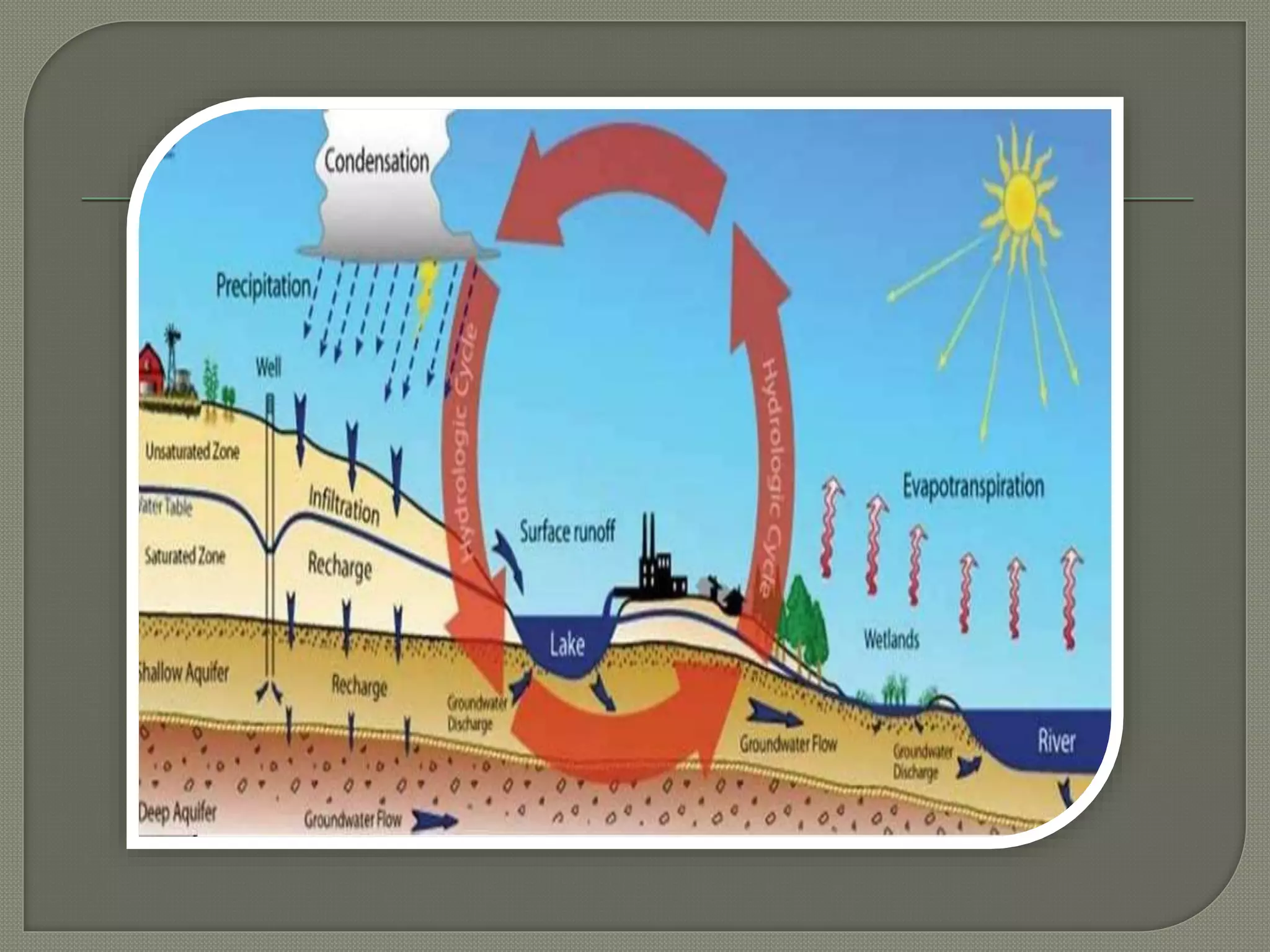
 Groundwater recharge or deep percolation is a
hydrologic process where water moves downward from surface
water to groundwater.
4
Natural Recharge
 Rainwater enters inside the soil through voids
and the recharge is natural recharge.
 The conditions favourable for natural recharge
are:
1)Sandy or permeable soil
2)Rocky strata with fractures
3)Perennial rivers
4)Streams
5)Forest land
6)Comparatively level land with less slope
5
1) Development of urban areas which reduces
open land for recharge
2) Deforestation
3) Reduction in agricultural land
4) Insufficient and irregular rainfall
5) Overuse of water by industries situated on river
banks
6) Discharge of polluted water in natural flow of
water reduces infiltration capacity of soil as
pores of soil gets blocked with impurities
6
Artificial Recharge
 Due to rapid industrialisation, population
increase, intensive agriculture, urbanization, etc.
the use of water has been considerably
increased. For these purpose water is pumped
from the ground water sources.
 The aquifers are not recharged at the same
rate at which water is pumped out. Thus the
water table falls every year. To fulfil the needs
artificial recharge is carried out.
7
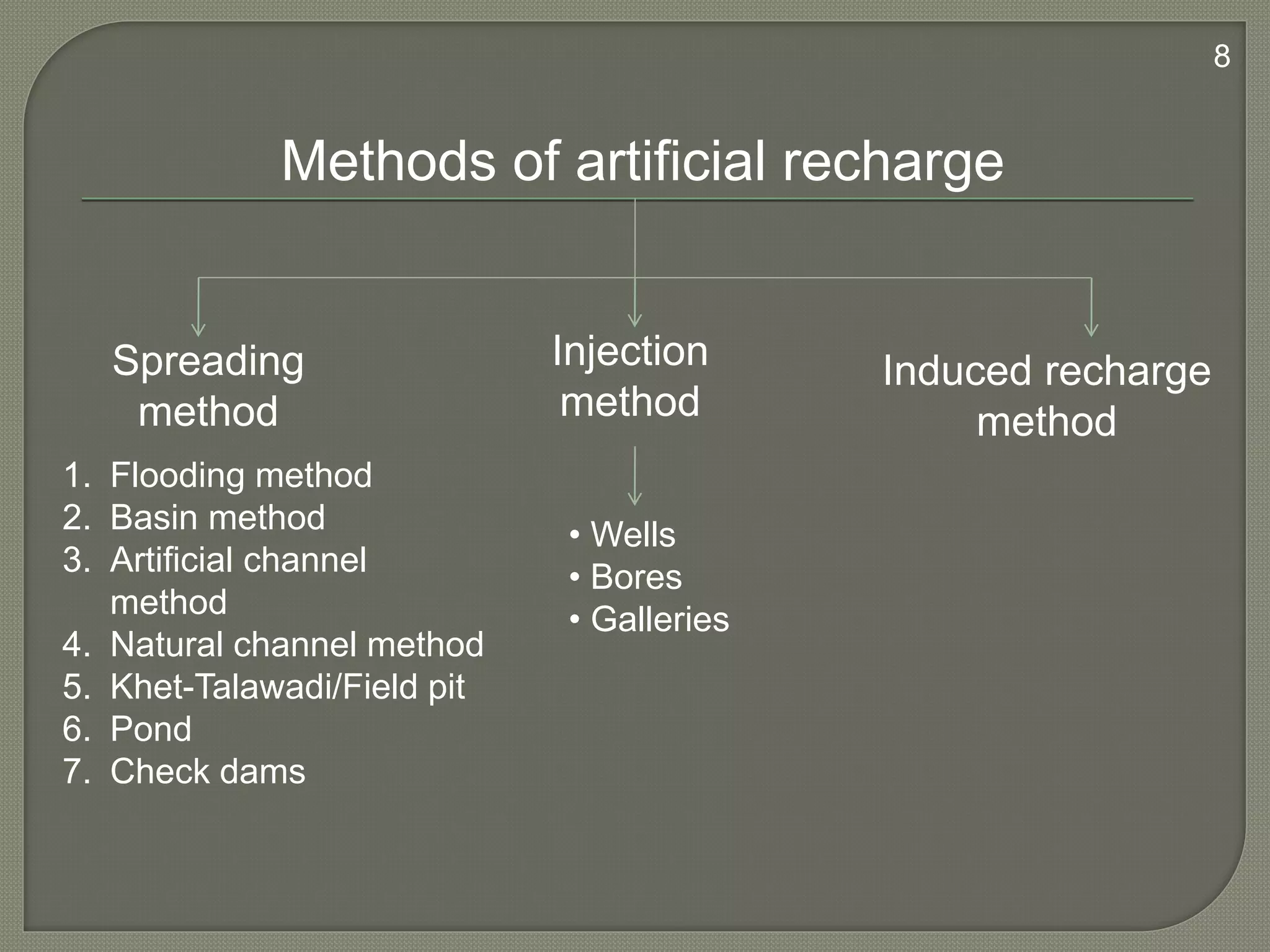
Methods of artificial recharge
Spreading
method
Injection
method
Induced recharge
method
1. Flooding method
2. Basin method
3. Artificial channel
method
4. Natural channel method
5. Khet-Talawadi/Field pit
6. Pond
7. Check dams
• Wells
• Bores
• Galleries
8
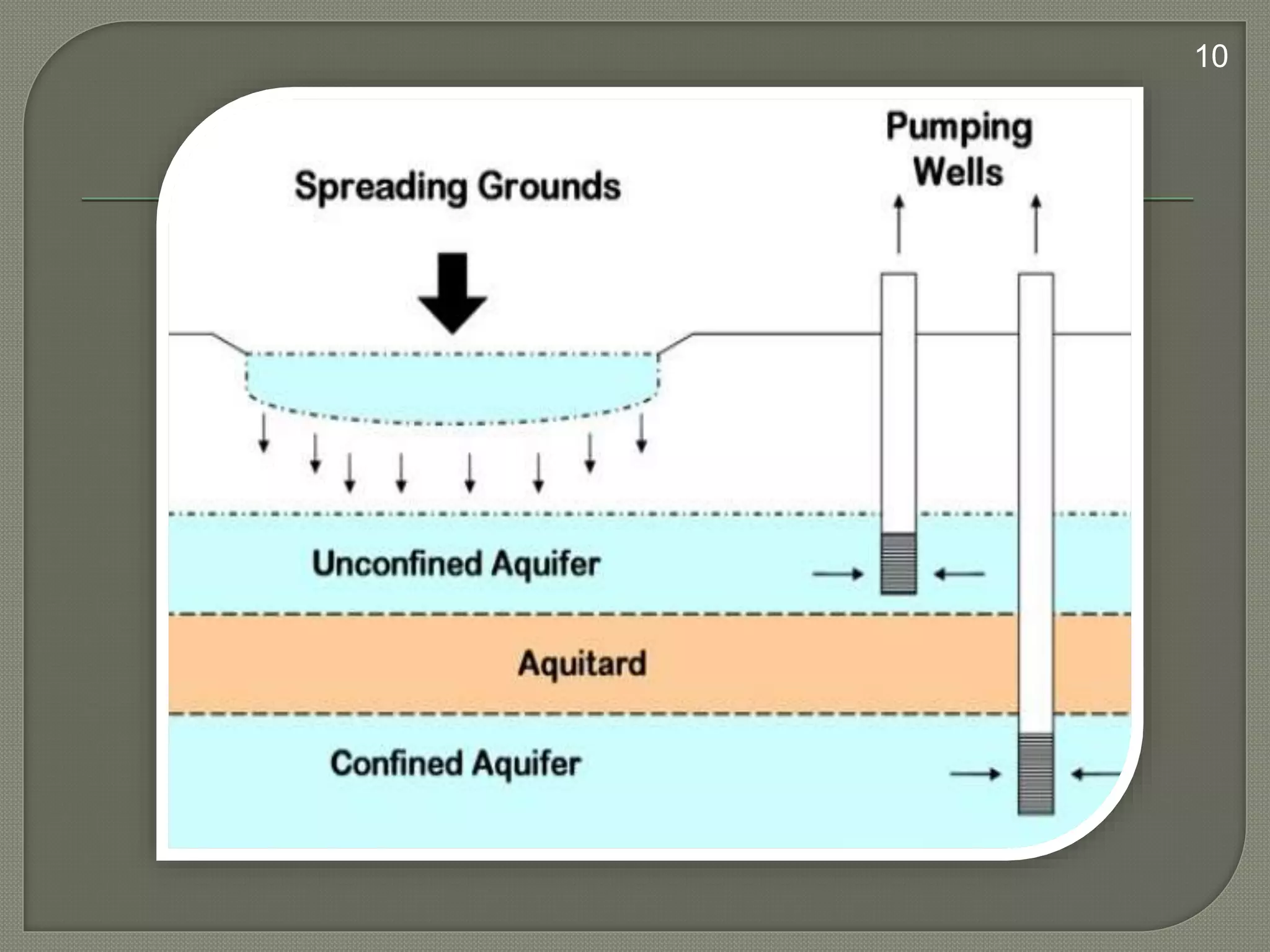
Spreading method
 In this method water is spreads over the
surface of permeable open land and pits
from where it directly infiltrates to shallow
aquifer.
 In this method water is stored in shallow
ditches and spread over open area by
constructing low earth dykes.
 Rate of recharging depends on
permeability of spreaded area and depth of
water stored.
9
10
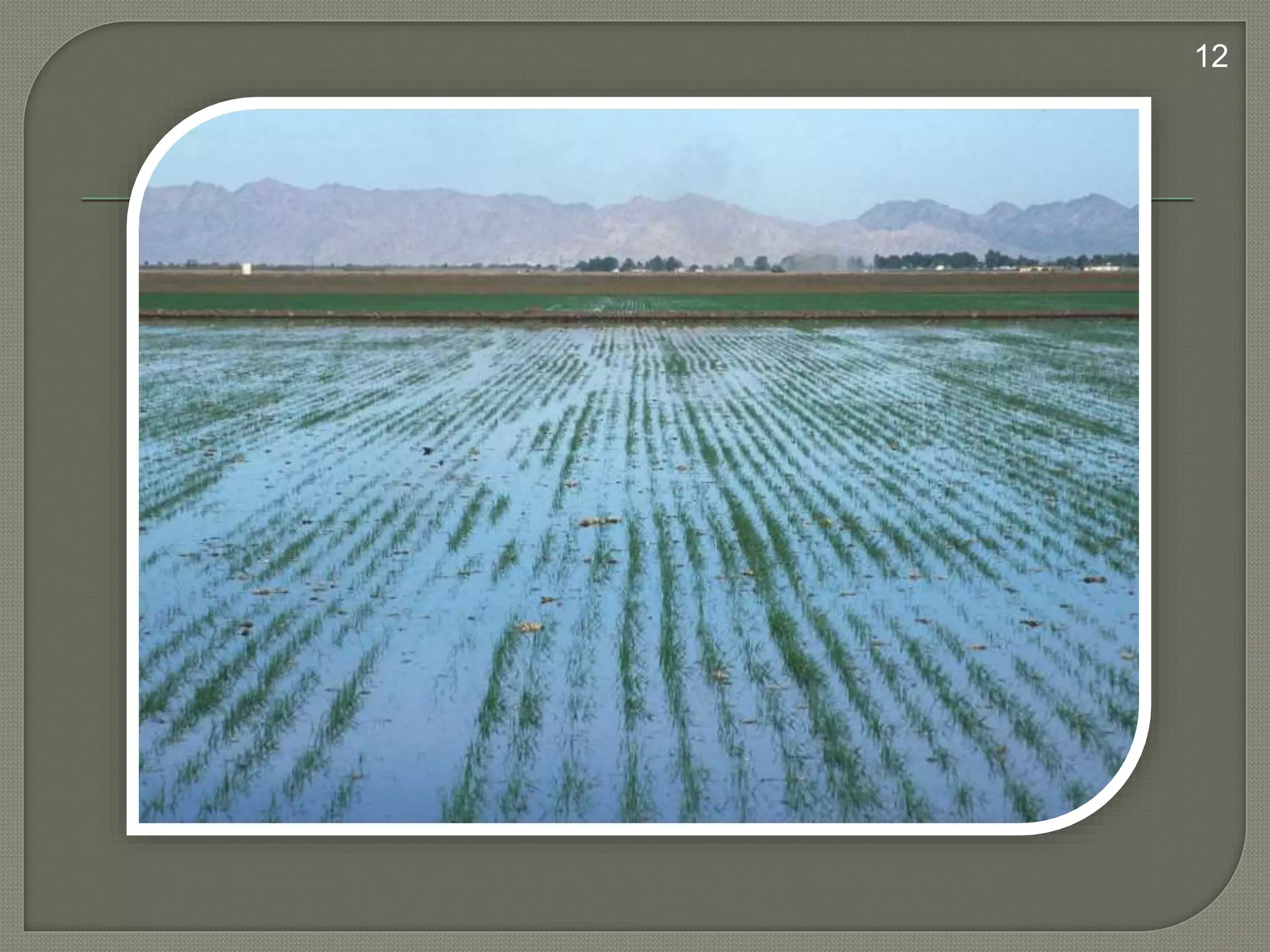
 This method is suitable for artificial recharge
where the topography is relatively flat, without hills or
valley.
 In this method, the area is to be recharged is not
given any treatment. The area is completely flooded
without removal of any vegetation or soil covering.
 Water is diverted from stream to supply ditch,
then to field ditches to recharge the ground water.
 This method is simple and cost of recharge is
very less.
11
12
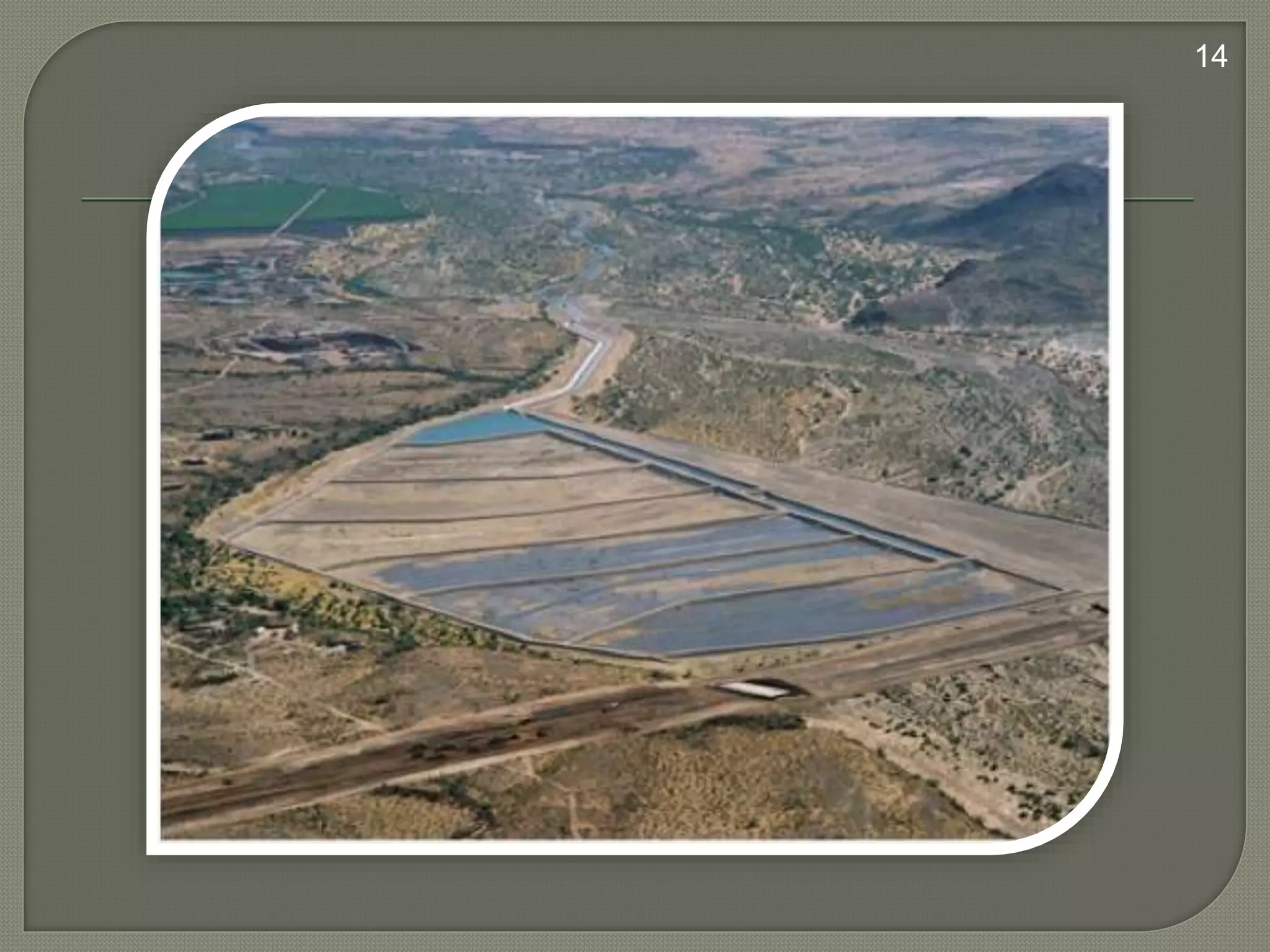
 In this method area is divided into small basin
by constructing small embankments.
 For effective recharge, the depth of water in
the basins is kept about 1.25 m.
 If water remains stable in the basin, the rate
of infiltration reduces. Therefore, for effective
recharge, water should remains flowing in the
basin and flow should be along the diagonal.
 Water enter the basins through supply ditch
and returns to the stream through outlet.
13
14
 This method is suitable where the topography
of area is highly uneven and construction of
basins is not practically possible.
 In area with highly uneven topography, the
height of embankments would be either too high
or too small, which may affect the depth of water
in the basins.
 In this method, small channels are excavated
in the area. The bed slope of channel is kept
minimum so that detention period of water is
more and infiltration rate of water is high.
15
 In this method, semi - permeable earthen bunds
are constructed across the flowing stream or
river at suitable spacing to obstruct the flow of
water. The height and spacing of such bunds
depends upon:
- Discharged in the stream/river
- Velocity of flow
- Width of stream/flow
- Characteristics of catchment area
16
 Khet-Talavadi is the easiest and simple method of
collecting the rain water for storage purpose. The low
lying area in the farm is used for collecting rain water with
very little treatment.
 As the name “Khet-Talavadi”, it includes a small
talavadi (Lake) in the farm.
 Due to storage of rain water, infiltration of stored rain
water is increased and artificial recharging takes place
and thus water table level of underground reservoir
around the farm is increased. So irrigation capacity is
increased and cost of electricity is reduces.
17
18
 In this technique dry village ponds and
reservoir are dug before monsoon and
deepened and widened. The storage
capacity of such ponds increased due to
widening.
 During monsoon, the runoff water is
stored in pond / reservoir for domestic and
irrigation uses. The water stored in the
reservoir gradually percolates down to
recharge the ground water
19
20
Recharge well method
 In this method a well is dug into ground where
recharge is to be done. This well is called recharge
well. Water is filled filled in the wells which is
percolated to the ground.
 This method is suitable where,
1. Spreading method is not applicable
2. The area of recharge is small
3. The aquifer is located at great depth
o Advantage:
1. The recharge rate is high
2. Small area required for recharge
3. Deep aquifers can also be recharged
21
22
Injection method
 This method of artificial recharge is more
effective where aquifer to be recharged is
located very deep. In this method water is
directly injected into the aquifer by means of
horizontal wells, gallery or shaft.
 The spacing of wells depends upon :
1. The rate of recharge
2. The capacity of well
3. Capecity of aquifer to accept water
23
24
Induced recharge method
 In this method the water table around the
natural sources of water such as stream, pond or
lake is brought down by pumping out of water
before monsoon season. The lowering of water
table will increase the rate of infiltration of water
during monsoon.
 In this method wells or galleries are
constructed parallel to the river or around the
lake or pond. From these wells or galleries water
is pumped out before rainy season, and water
table is lowered.
25
26
Thanks..
.

Ground water recharge Methods

  • 1.
  • 2.
    PREPERED BY: NAME ENRR.NO PRABHAT MISHRA 156450306050 SIDDHARAJSINH JADAV 156450306031 AMAN SINGH 156450306035 NILESH CHAUHAN 156450306011 2
  • 3.
  • 5.
     Groundwater rechargeis divided into two parts: 1) Natural recharge: The process of Recharge of ground water naturally is called natural recharge. 2) Artificial recharge: The practice of artificially obstructing the flowing rainwater and inducing its infiltration to increase the ground water reservoir is called artificial recharge. It is carried out when natural recharge cannot fulfil the requirements throughout the year.  Groundwater recharge or deep percolation is a hydrologic process where water moves downward from surface water to groundwater. 4
  • 6.
    Natural Recharge  Rainwaterenters inside the soil through voids and the recharge is natural recharge.  The conditions favourable for natural recharge are: 1)Sandy or permeable soil 2)Rocky strata with fractures 3)Perennial rivers 4)Streams 5)Forest land 6)Comparatively level land with less slope 5
  • 7.
    1) Development ofurban areas which reduces open land for recharge 2) Deforestation 3) Reduction in agricultural land 4) Insufficient and irregular rainfall 5) Overuse of water by industries situated on river banks 6) Discharge of polluted water in natural flow of water reduces infiltration capacity of soil as pores of soil gets blocked with impurities 6
  • 8.
    Artificial Recharge  Dueto rapid industrialisation, population increase, intensive agriculture, urbanization, etc. the use of water has been considerably increased. For these purpose water is pumped from the ground water sources.  The aquifers are not recharged at the same rate at which water is pumped out. Thus the water table falls every year. To fulfil the needs artificial recharge is carried out. 7
  • 9.
    Methods of artificialrecharge Spreading method Injection method Induced recharge method 1. Flooding method 2. Basin method 3. Artificial channel method 4. Natural channel method 5. Khet-Talawadi/Field pit 6. Pond 7. Check dams • Wells • Bores • Galleries 8
  • 10.
    Spreading method  Inthis method water is spreads over the surface of permeable open land and pits from where it directly infiltrates to shallow aquifer.  In this method water is stored in shallow ditches and spread over open area by constructing low earth dykes.  Rate of recharging depends on permeability of spreaded area and depth of water stored. 9
  • 11.
  • 12.
     This methodis suitable for artificial recharge where the topography is relatively flat, without hills or valley.  In this method, the area is to be recharged is not given any treatment. The area is completely flooded without removal of any vegetation or soil covering.  Water is diverted from stream to supply ditch, then to field ditches to recharge the ground water.  This method is simple and cost of recharge is very less. 11
  • 13.
  • 15.
     In thismethod area is divided into small basin by constructing small embankments.  For effective recharge, the depth of water in the basins is kept about 1.25 m.  If water remains stable in the basin, the rate of infiltration reduces. Therefore, for effective recharge, water should remains flowing in the basin and flow should be along the diagonal.  Water enter the basins through supply ditch and returns to the stream through outlet. 13
  • 16.
  • 17.
     This methodis suitable where the topography of area is highly uneven and construction of basins is not practically possible.  In area with highly uneven topography, the height of embankments would be either too high or too small, which may affect the depth of water in the basins.  In this method, small channels are excavated in the area. The bed slope of channel is kept minimum so that detention period of water is more and infiltration rate of water is high. 15
  • 18.
     In thismethod, semi - permeable earthen bunds are constructed across the flowing stream or river at suitable spacing to obstruct the flow of water. The height and spacing of such bunds depends upon: - Discharged in the stream/river - Velocity of flow - Width of stream/flow - Characteristics of catchment area 16
  • 19.
     Khet-Talavadi isthe easiest and simple method of collecting the rain water for storage purpose. The low lying area in the farm is used for collecting rain water with very little treatment.  As the name “Khet-Talavadi”, it includes a small talavadi (Lake) in the farm.  Due to storage of rain water, infiltration of stored rain water is increased and artificial recharging takes place and thus water table level of underground reservoir around the farm is increased. So irrigation capacity is increased and cost of electricity is reduces. 17
  • 20.
  • 21.
     In thistechnique dry village ponds and reservoir are dug before monsoon and deepened and widened. The storage capacity of such ponds increased due to widening.  During monsoon, the runoff water is stored in pond / reservoir for domestic and irrigation uses. The water stored in the reservoir gradually percolates down to recharge the ground water 19
  • 22.
  • 23.
    Recharge well method In this method a well is dug into ground where recharge is to be done. This well is called recharge well. Water is filled filled in the wells which is percolated to the ground.  This method is suitable where, 1. Spreading method is not applicable 2. The area of recharge is small 3. The aquifer is located at great depth o Advantage: 1. The recharge rate is high 2. Small area required for recharge 3. Deep aquifers can also be recharged 21
  • 24.
  • 25.
    Injection method  Thismethod of artificial recharge is more effective where aquifer to be recharged is located very deep. In this method water is directly injected into the aquifer by means of horizontal wells, gallery or shaft.  The spacing of wells depends upon : 1. The rate of recharge 2. The capacity of well 3. Capecity of aquifer to accept water 23
  • 26.
  • 27.
    Induced recharge method In this method the water table around the natural sources of water such as stream, pond or lake is brought down by pumping out of water before monsoon season. The lowering of water table will increase the rate of infiltration of water during monsoon.  In this method wells or galleries are constructed parallel to the river or around the lake or pond. From these wells or galleries water is pumped out before rainy season, and water table is lowered. 25
  • 28.
  • 29.