Artificial/
Supplementary
Feeding
Mr. Pradeep Abothu, PhD Scholar.
Associate Professor
Dept. of Child Health Nursing
Table of contents
01
06
02 03
Introduction Indications of AF Sources of AF
Principles
of AF
04
Risks of AF
05
Techniques:
bottle, spoon,
gavage
Introduction
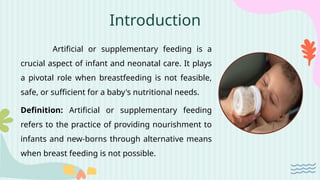
Artificial or supplementary feeding is a
crucial aspect of infant and neonatal care. It plays
a pivotal role when breastfeeding is not feasible,
safe, or sufficient for a baby's nutritional needs.
Definition: Artificial or supplementary feeding
refers to the practice of providing nourishment to
infants and new-borns through alternative means
when breast feeding is not possible.
Indications of Artificial Feeding
 Maternal Health Issues like HIV/AIDS, prolonged illness, breast issues.
 Inadequate Breast Milk Production.
 Maternal Employment
 In cases of adoption, when the adoptive mother is not lactating.
 Unavailability or death of mother
Sources of Artificial Feeds
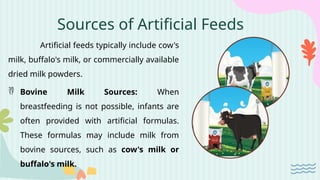
Artificial feeds typically include cow's
milk, buffalo's milk, or commercially available
dried milk powders.
 Bovine Milk Sources: When
breastfeeding is not possible, infants are
often provided with artificial formulas.
These formulas may include milk from
bovine sources, such as cow's milk or
buffalo's milk.
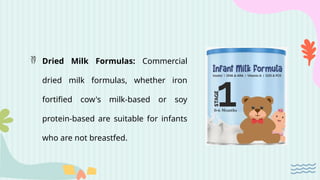
 Dried Milk Formulas: Commercial
dried milk formulas, whether iron
fortified cow's milk-based or soy
protein-based are suitable for infants
who are not breastfed.
Humanization
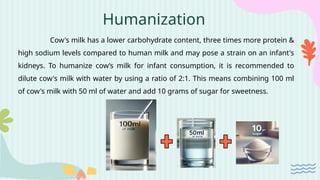
Cow's milk has a lower carbohydrate content, three times more protein &
high sodium levels compared to human milk and may pose a strain on an infant's
kidneys. To humanize cow’s milk for infant consumption, it is recommended to
dilute cow's milk with water by using a ratio of 2:1. This means combining 100 ml
of cow's milk with 50 ml of water and add 10 grams of sugar for sweetness.
Principles of Artificial Feeding
• Choose the right formula based on the baby's
needs (e.g., cow’s milk-based, soy-based, or
specialized formula).
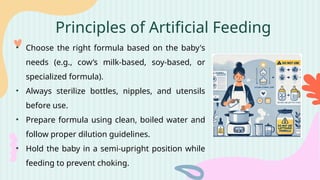
• Always sterilize bottles, nipples, and utensils
before use.
• Prepare formula using clean, boiled water and
follow proper dilution guidelines.
• Hold the baby in a semi-upright position while
feeding to prevent choking.
• Feed at regular intervals (every 2–3 hours for newborns) and watch
for hunger cues.
• Do not force-feed; stop when the baby shows signs of fullness.
• Serve formula at body temperature and discard any leftover milk
after feeding.
• Store prepared formula in the refrigerator and use within 24 hours.
• Monitor the baby’s weight, growth, and any signs of formula
intolerance.
• Start introducing solid foods around six months while continuing
formula feeding.
Techniques of Artificial feed
The different methods of artificial feeding, includes
1. Bottle feeding
2. Katori and spoon feeding
3. Gavage or nasogastric feeding
BOTTLE FEEDING
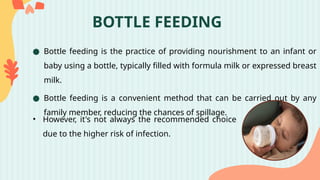
● Bottle feeding is the practice of providing nourishment to an infant or
baby using a bottle, typically filled with formula milk or expressed breast
milk.
● Bottle feeding is a convenient method that can be carried out by any
family member, reducing the chances of spillage.
• However, it's not always the recommended choice
due to the higher risk of infection.
Guidelines: To ensure the safety and comfort of
infants during bottle feeding, caregivers should
follow these guidelines:
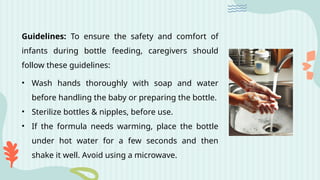
• Wash hands thoroughly with soap and water
before handling the baby or preparing the bottle.
• Sterilize bottles & nipples, before use.
• If the formula needs warming, place the bottle
under hot water for a few seconds and then
shake it well. Avoid using a microwave.
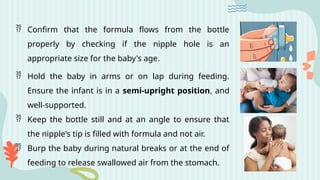
 Confirm that the formula flows from the bottle
properly by checking if the nipple hole is an
appropriate size for the baby's age.
 Hold the baby in arms or on lap during feeding.
Ensure the infant is in a semi-upright position, and
well-supported.
 Keep the bottle still and at an angle to ensure that
the nipple's tip is filled with formula and not air.
 Burp the baby during natural breaks or at the end of
feeding to release swallowed air from the stomach.
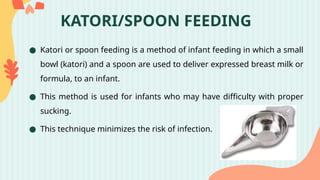
KATORI/SPOON FEEDING
● Katori or spoon feeding is a method of infant feeding in which a small
bowl (katori) and a spoon are used to deliver expressed breast milk or
formula, to an infant.
● This method is used for infants who may have difficulty with proper
sucking.
● This technique minimizes the risk of infection.
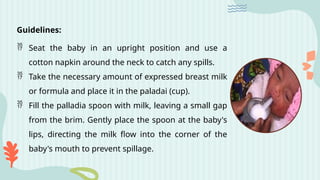
Guidelines:
 Seat the baby in an upright position and use a
cotton napkin around the neck to catch any spills.
 Take the necessary amount of expressed breast milk
or formula and place it in the paladai (cup).
 Fill the palladia spoon with milk, leaving a small gap
from the brim. Gently place the spoon at the baby's
lips, directing the milk flow into the corner of the
baby's mouth to prevent spillage.
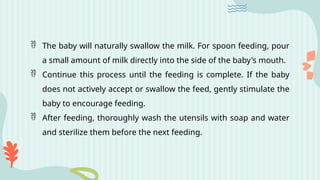
 The baby will naturally swallow the milk. For spoon feeding, pour
a small amount of milk directly into the side of the baby's mouth.
 Continue this process until the feeding is complete. If the baby
does not actively accept or swallow the feed, gently stimulate the
baby to encourage feeding.
 After feeding, thoroughly wash the utensils with soap and water
and sterilize them before the next feeding.
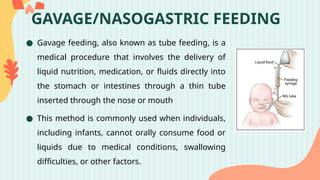
GAVAGE/NASOGASTRIC FEEDING
● Gavage feeding, also known as tube feeding, is a
medical procedure that involves the delivery of
liquid nutrition, medication, or fluids directly into
the stomach or intestines through a thin tube
inserted through the nose or mouth
● This method is commonly used when individuals,
including infants, cannot orally consume food or
liquids due to medical conditions, swallowing
difficulties, or other factors.
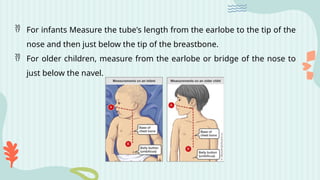
 For infants Measure the tube's length from the earlobe to the tip of the
nose and then just below the tip of the breastbone.
 For older children, measure from the earlobe or bridge of the nose to
just below the navel.
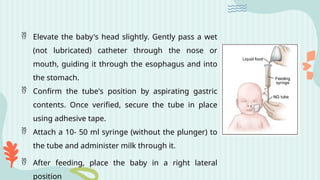
 Elevate the baby's head slightly. Gently pass a wet
(not lubricated) catheter through the nose or
mouth, guiding it through the esophagus and into
the stomach.
 Confirm the tube's position by aspirating gastric
contents. Once verified, secure the tube in place
using adhesive tape.
 Attach a 10- 50 ml syringe (without the plunger) to
the tube and administer milk through it.
 After feeding, place the baby in a right lateral
position
Risks of Artificial Feeding
 Artificially fed infants face a higher risk of diarrhoea, respiratory tract
infections, malnutrition, and vitamin deficiencies.
 They are more prone to developing allergies and milk intolerance.
 The emotional bonding between mother and child may be less
pronounced.
 Artificially fed babies may have an increased likelihood of becoming
overweight.
 Some studies suggest that they may achieve lower scores on intelligence
tests.
 Mothers who do not breastfeed may have an increased risk of anemia,
CREDITS: This presentation template was created by Slidesgo, and
includes icons by Flaticon, and infographics & images by Freepik
Thanks!
@PRADEEP.NUR

ARTIFICIAL FEEDING: PRINCIPLES TECHNIQUES.pptx

  • 1.
    Artificial/ Supplementary Feeding Mr. Pradeep Abothu,PhD Scholar. Associate Professor Dept. of Child Health Nursing
  • 2.
    Table of contents 01 06 0203 Introduction Indications of AF Sources of AF Principles of AF 04 Risks of AF 05 Techniques: bottle, spoon, gavage
  • 3.
    Introduction Artificial or supplementaryfeeding is a crucial aspect of infant and neonatal care. It plays a pivotal role when breastfeeding is not feasible, safe, or sufficient for a baby's nutritional needs. Definition: Artificial or supplementary feeding refers to the practice of providing nourishment to infants and new-borns through alternative means when breast feeding is not possible.
  • 4.
    Indications of ArtificialFeeding  Maternal Health Issues like HIV/AIDS, prolonged illness, breast issues.  Inadequate Breast Milk Production.  Maternal Employment  In cases of adoption, when the adoptive mother is not lactating.  Unavailability or death of mother
  • 5.
    Sources of ArtificialFeeds Artificial feeds typically include cow's milk, buffalo's milk, or commercially available dried milk powders.  Bovine Milk Sources: When breastfeeding is not possible, infants are often provided with artificial formulas. These formulas may include milk from bovine sources, such as cow's milk or buffalo's milk.
  • 6.
     Dried MilkFormulas: Commercial dried milk formulas, whether iron fortified cow's milk-based or soy protein-based are suitable for infants who are not breastfed.
  • 7.
    Humanization Cow's milk hasa lower carbohydrate content, three times more protein & high sodium levels compared to human milk and may pose a strain on an infant's kidneys. To humanize cow’s milk for infant consumption, it is recommended to dilute cow's milk with water by using a ratio of 2:1. This means combining 100 ml of cow's milk with 50 ml of water and add 10 grams of sugar for sweetness.
  • 8.
    Principles of ArtificialFeeding • Choose the right formula based on the baby's needs (e.g., cow’s milk-based, soy-based, or specialized formula). • Always sterilize bottles, nipples, and utensils before use. • Prepare formula using clean, boiled water and follow proper dilution guidelines. • Hold the baby in a semi-upright position while feeding to prevent choking.
  • 9.
    • Feed atregular intervals (every 2–3 hours for newborns) and watch for hunger cues. • Do not force-feed; stop when the baby shows signs of fullness. • Serve formula at body temperature and discard any leftover milk after feeding. • Store prepared formula in the refrigerator and use within 24 hours. • Monitor the baby’s weight, growth, and any signs of formula intolerance. • Start introducing solid foods around six months while continuing formula feeding.
  • 10.
    Techniques of Artificialfeed The different methods of artificial feeding, includes 1. Bottle feeding 2. Katori and spoon feeding 3. Gavage or nasogastric feeding
  • 11.
    BOTTLE FEEDING ● Bottlefeeding is the practice of providing nourishment to an infant or baby using a bottle, typically filled with formula milk or expressed breast milk. ● Bottle feeding is a convenient method that can be carried out by any family member, reducing the chances of spillage. • However, it's not always the recommended choice due to the higher risk of infection.
  • 12.
    Guidelines: To ensurethe safety and comfort of infants during bottle feeding, caregivers should follow these guidelines: • Wash hands thoroughly with soap and water before handling the baby or preparing the bottle. • Sterilize bottles & nipples, before use. • If the formula needs warming, place the bottle under hot water for a few seconds and then shake it well. Avoid using a microwave.
  • 13.
     Confirm thatthe formula flows from the bottle properly by checking if the nipple hole is an appropriate size for the baby's age.  Hold the baby in arms or on lap during feeding. Ensure the infant is in a semi-upright position, and well-supported.  Keep the bottle still and at an angle to ensure that the nipple's tip is filled with formula and not air.  Burp the baby during natural breaks or at the end of feeding to release swallowed air from the stomach.
  • 14.
    KATORI/SPOON FEEDING ● Katorior spoon feeding is a method of infant feeding in which a small bowl (katori) and a spoon are used to deliver expressed breast milk or formula, to an infant. ● This method is used for infants who may have difficulty with proper sucking. ● This technique minimizes the risk of infection.
  • 15.
    Guidelines:  Seat thebaby in an upright position and use a cotton napkin around the neck to catch any spills.  Take the necessary amount of expressed breast milk or formula and place it in the paladai (cup).  Fill the palladia spoon with milk, leaving a small gap from the brim. Gently place the spoon at the baby's lips, directing the milk flow into the corner of the baby's mouth to prevent spillage.
  • 16.
     The babywill naturally swallow the milk. For spoon feeding, pour a small amount of milk directly into the side of the baby's mouth.  Continue this process until the feeding is complete. If the baby does not actively accept or swallow the feed, gently stimulate the baby to encourage feeding.  After feeding, thoroughly wash the utensils with soap and water and sterilize them before the next feeding.
  • 17.
    GAVAGE/NASOGASTRIC FEEDING ● Gavagefeeding, also known as tube feeding, is a medical procedure that involves the delivery of liquid nutrition, medication, or fluids directly into the stomach or intestines through a thin tube inserted through the nose or mouth ● This method is commonly used when individuals, including infants, cannot orally consume food or liquids due to medical conditions, swallowing difficulties, or other factors.
  • 18.
     For infantsMeasure the tube's length from the earlobe to the tip of the nose and then just below the tip of the breastbone.  For older children, measure from the earlobe or bridge of the nose to just below the navel.
  • 19.
     Elevate thebaby's head slightly. Gently pass a wet (not lubricated) catheter through the nose or mouth, guiding it through the esophagus and into the stomach.  Confirm the tube's position by aspirating gastric contents. Once verified, secure the tube in place using adhesive tape.  Attach a 10- 50 ml syringe (without the plunger) to the tube and administer milk through it.  After feeding, place the baby in a right lateral position
  • 20.
    Risks of ArtificialFeeding  Artificially fed infants face a higher risk of diarrhoea, respiratory tract infections, malnutrition, and vitamin deficiencies.  They are more prone to developing allergies and milk intolerance.  The emotional bonding between mother and child may be less pronounced.  Artificially fed babies may have an increased likelihood of becoming overweight.  Some studies suggest that they may achieve lower scores on intelligence tests.  Mothers who do not breastfeed may have an increased risk of anemia,
  • 21.
    CREDITS: This presentationtemplate was created by Slidesgo, and includes icons by Flaticon, and infographics & images by Freepik Thanks! @PRADEEP.NUR