The Articles of Confederation
Articles of Confederation 
• Second Continental 
Congress proposed for 
adoption 1777 
• Approved 1781 
• Fearful of a strong 
central Govt. 
• Formed a confederation 
of states, each had a 
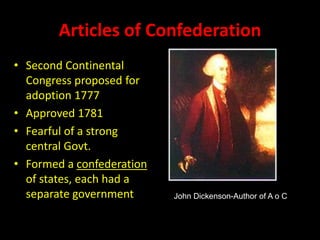
separate government John Dickenson-Author of A o C
Emphasis on decentralized 
government 
• States possessed the power 
–veto 
–voluntary participation
• Specific elements of the Articles of 
Confederation 
– Single chamber national Congress-unicameral 
–each state had one vote 
– no executive branch 
– no judicial branch 
–Congress had no power to tax or regulate 
commerce 
• Provided for a weak national government
Failure and Ineffectiveness 
• Government was too decentralized to deal with 
major problems 
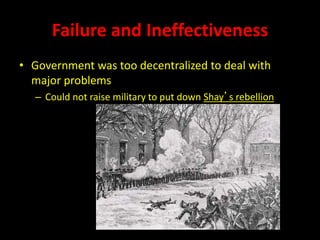
– Could not raise military to put down Shay’s rebellion
Shays’ Rebellion 
• Economic conditions for farmers in Massachusetts 
were bad, because of taxes 
• Shays, a Soldier in the Revolutionary war, was not 
paid. 
• 1786 a group of 100+ farmers lead by Daniel Shays 
decided to close down the courts in Massachusetts, 
so the courts could not close their farms 
• They decided to take control of an arsenal in 
Springfield 
• The rebellion was defeated, but it sent a shockwave 
across the country
Economic Failure 
• Could request funds from states 
• Could not tax unless every state approved 
• Could not regulate interstate/overseas 
commerce (trade) 
• Provided for no common currency 
• 7 different currencies
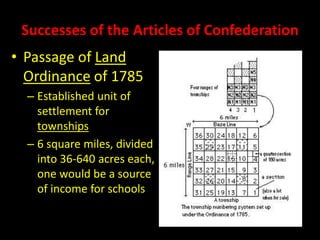
Successes of the Articles of Confederation 
• Passage of Land 
Ordinance of 1785 
– Established unit of 
settlement for 
townships 
– 6 square miles, divided 
into 36-640 acres each, 
one would be a source 
of income for schools
Passage of Northwest Ordinance of 
1787 
– Steps for admission of new states 
• 3 stages 
• during settlement years-Congress appoints territorial 
governors and judges 
• when reaches 5,000 adult males-write temporary 
constitution-and elect representatives 
• when it reaches 60,000 write state constitution- 
Congress approves for statehood 
– Forbid slavery in NW territory-states could decided later
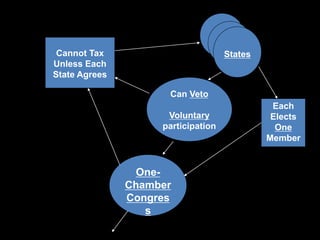
States 
Can Veto 
Voluntary 
participation 
Each 
Elects 
One 
Member 
One- 
Chamber 
Congres 
s 
Cannot Tax 
Unless Each 
State Agrees
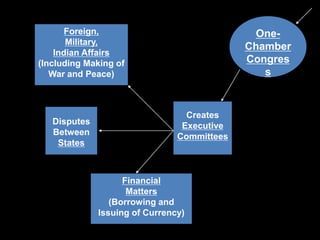
One- 
Chamber 
Congres 
s 
Creates 
Executive 
Committees 
Foreign, 
Military, 
Indian Affairs 
(Including Making of 
War and Peace) 
Disputes 
Between 
States 
Financial 
Matters 
(Borrowing and 
Issuing of Currency)

Articles of Confederation

  • 1.
    The Articles ofConfederation
  • 2.
    Articles of Confederation • Second Continental Congress proposed for adoption 1777 • Approved 1781 • Fearful of a strong central Govt. • Formed a confederation of states, each had a separate government John Dickenson-Author of A o C
  • 3.
    Emphasis on decentralized government • States possessed the power –veto –voluntary participation
  • 4.
    • Specific elementsof the Articles of Confederation – Single chamber national Congress-unicameral –each state had one vote – no executive branch – no judicial branch –Congress had no power to tax or regulate commerce • Provided for a weak national government
  • 5.
    Failure and Ineffectiveness • Government was too decentralized to deal with major problems – Could not raise military to put down Shay’s rebellion
  • 6.
    Shays’ Rebellion •Economic conditions for farmers in Massachusetts were bad, because of taxes • Shays, a Soldier in the Revolutionary war, was not paid. • 1786 a group of 100+ farmers lead by Daniel Shays decided to close down the courts in Massachusetts, so the courts could not close their farms • They decided to take control of an arsenal in Springfield • The rebellion was defeated, but it sent a shockwave across the country
  • 7.
    Economic Failure •Could request funds from states • Could not tax unless every state approved • Could not regulate interstate/overseas commerce (trade) • Provided for no common currency • 7 different currencies
  • 8.
    Successes of theArticles of Confederation • Passage of Land Ordinance of 1785 – Established unit of settlement for townships – 6 square miles, divided into 36-640 acres each, one would be a source of income for schools
  • 9.
    Passage of NorthwestOrdinance of 1787 – Steps for admission of new states • 3 stages • during settlement years-Congress appoints territorial governors and judges • when reaches 5,000 adult males-write temporary constitution-and elect representatives • when it reaches 60,000 write state constitution- Congress approves for statehood – Forbid slavery in NW territory-states could decided later
  • 10.
    States Can Veto Voluntary participation Each Elects One Member One- Chamber Congres s Cannot Tax Unless Each State Agrees
  • 11.
    One- Chamber Congres s Creates Executive Committees Foreign, Military, Indian Affairs (Including Making of War and Peace) Disputes Between States Financial Matters (Borrowing and Issuing of Currency)