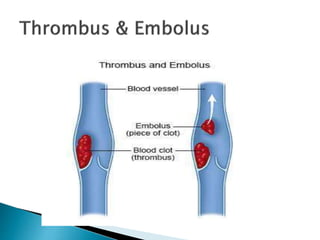
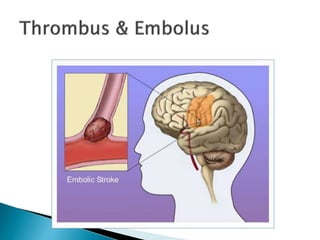
 An EMBOLUS is a blockage of a blood vessel
commonly by Blood Clot or a substance that
obstructs blood circulation, often causing a life
threatening emergency. When this blood clot
/substance travels from its original site to
another place in the vessel, it is called an
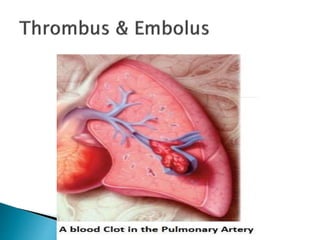
EMBOLISM. Embolisms include venous embolism
like pulmonary embolism, arterial embolism, air
embolism , fat embolism etc.
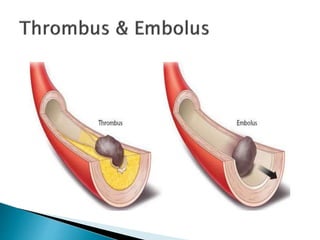
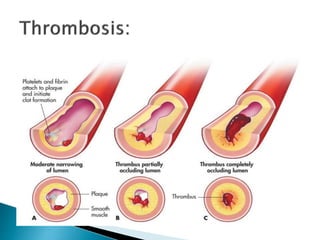
 A blood clot forming especially on the wall of
a blood vessel is called THROMBUS and this
process is known as THROMBOSIS.
This is commonly the result of local damage
to the inner lining of the vessel (the endotheli
um).
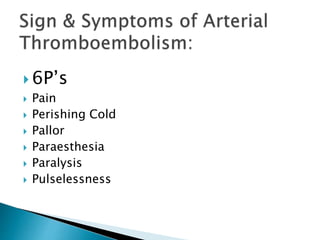
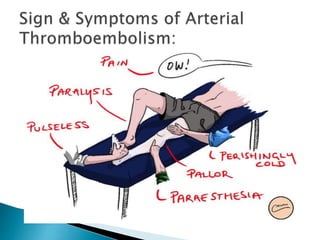
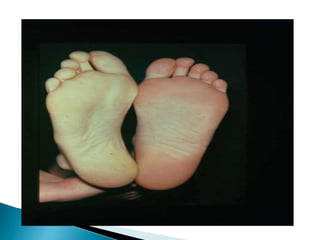
 6P’s
 Pain
 Perishing Cold
 Pallor
 Paraesthesia
 Paralysis
 Pulselessness
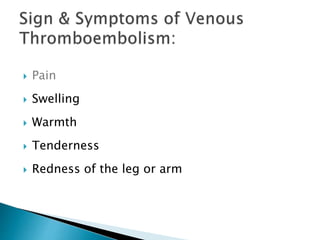
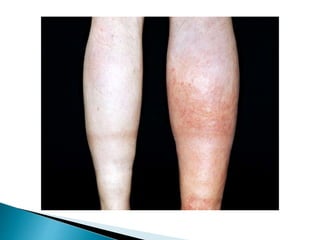
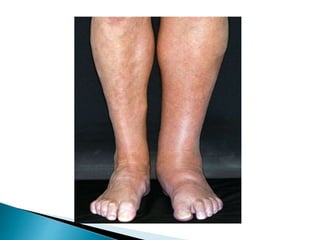
 Pain
 Swelling
 Warmth
 Tenderness
 Redness of the leg or arm
 Blood Test:
CBC, D-dimer, Caogulation Profile etc.
 Ultrasound Doppler
 CT Angio & Venous
 MRA
 MRV
Embolectomy:
 Surgical removal from a blood vessel, usually
an artery, of a blood clot or other obstruction
, which has been carried to the site in the
bloodstream from elsewhere in the circulation
(EMBOLUS). Or simply surgical excision of
embolus is known as Embolectomy.
 Surgical excision of Thrombus is known as
Thrombectomy.
 When process of Thrombectomy and
Embolectomy combine in a single procedure
known as Thromboembolectomy.
 There are two main types of embolectomy
and thrombectomy, depending on the blood
vessel that needs treatment and the severity
of the condition. These are:
1. Catheter-based procedures
2. Open surgery
 a tubular, flexible instrument, passed through
body channels for withdrawal of fluids from
(or introduction of fluids into) a body cavity.
 Examples: cardiac catheter, arterial catheter,
venous catheter, Urinary catheter.
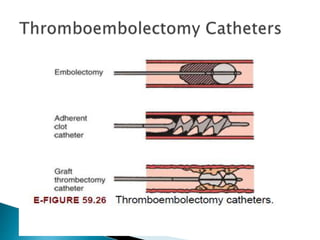
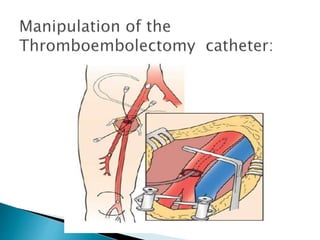
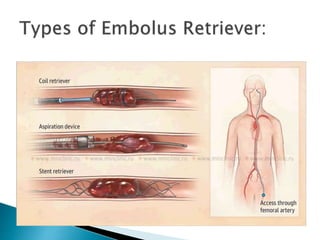
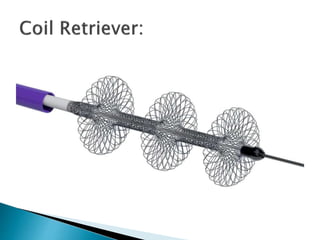
 Catheter-based procedures involve passing a
small tube through a tiny incision into the clot
site. We use special instruments to remove the
clot by using balloon embolectomy or aspiration
embolectomy.
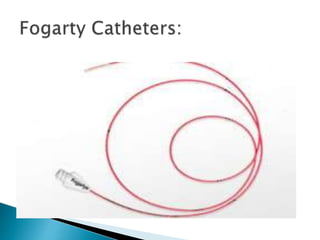
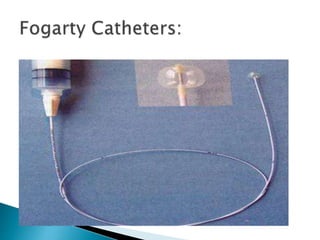
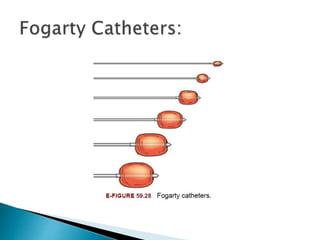
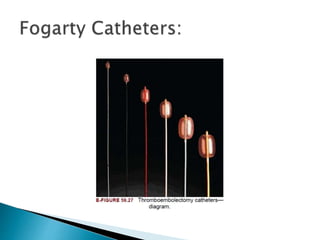
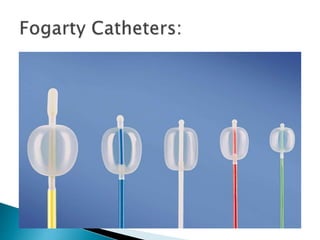
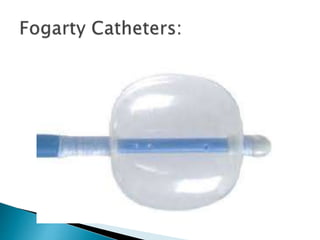
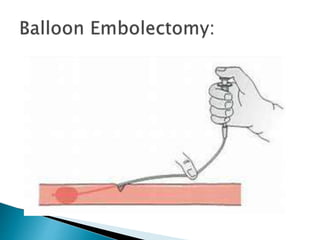
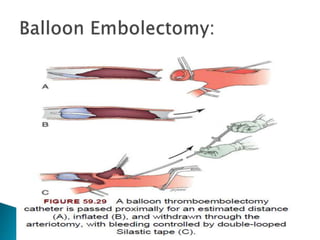
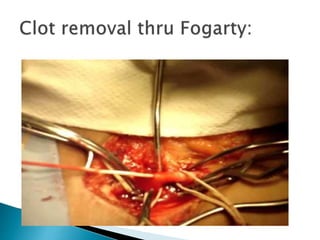
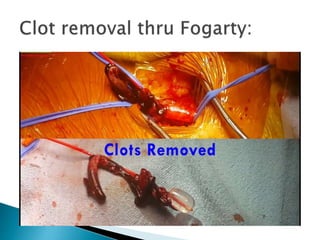
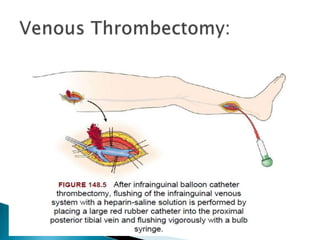
 Balloon embolectomy is done by inserting a
catheter with a small inflatable balloon attached
at the end into the vein and past the clot. The
balloon is then inflated and slowly pulled back
out of the vein, removing the clot with it.
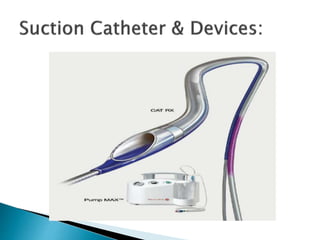
 Aspiration embolectomy is performed by using
suction to remove the thrombus from the vein.
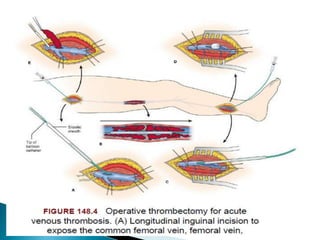
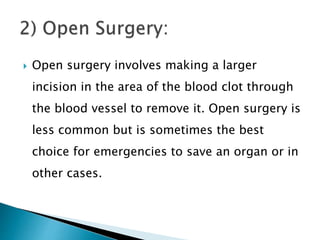
 Open surgery involves making a larger
incision in the area of the blood clot through
the blood vessel to remove it. Open surgery is
less common but is sometimes the best
choice for emergencies to save an organ or in
other cases.
Arterial and venous embolectomy

  • 2.
     An EMBOLUSis a blockage of a blood vessel commonly by Blood Clot or a substance that obstructs blood circulation, often causing a life threatening emergency. When this blood clot /substance travels from its original site to another place in the vessel, it is called an EMBOLISM. Embolisms include venous embolism like pulmonary embolism, arterial embolism, air embolism , fat embolism etc.
  • 7.
     A bloodclot forming especially on the wall of a blood vessel is called THROMBUS and this process is known as THROMBOSIS. This is commonly the result of local damage to the inner lining of the vessel (the endotheli um).
  • 12.
     6P’s  Pain Perishing Cold  Pallor  Paraesthesia  Paralysis  Pulselessness
  • 15.
     Pain  Swelling Warmth  Tenderness  Redness of the leg or arm
  • 18.
     Blood Test: CBC,D-dimer, Caogulation Profile etc.  Ultrasound Doppler  CT Angio & Venous  MRA  MRV
  • 19.
    Embolectomy:  Surgical removalfrom a blood vessel, usually an artery, of a blood clot or other obstruction , which has been carried to the site in the bloodstream from elsewhere in the circulation (EMBOLUS). Or simply surgical excision of embolus is known as Embolectomy.
  • 20.
     Surgical excisionof Thrombus is known as Thrombectomy.  When process of Thrombectomy and Embolectomy combine in a single procedure known as Thromboembolectomy.
  • 21.
     There aretwo main types of embolectomy and thrombectomy, depending on the blood vessel that needs treatment and the severity of the condition. These are: 1. Catheter-based procedures 2. Open surgery
  • 22.
     a tubular,flexible instrument, passed through body channels for withdrawal of fluids from (or introduction of fluids into) a body cavity.  Examples: cardiac catheter, arterial catheter, venous catheter, Urinary catheter.
  • 23.
     Catheter-based proceduresinvolve passing a small tube through a tiny incision into the clot site. We use special instruments to remove the clot by using balloon embolectomy or aspiration embolectomy.  Balloon embolectomy is done by inserting a catheter with a small inflatable balloon attached at the end into the vein and past the clot. The balloon is then inflated and slowly pulled back out of the vein, removing the clot with it.  Aspiration embolectomy is performed by using suction to remove the thrombus from the vein.
  • 41.
     Open surgeryinvolves making a larger incision in the area of the blood clot through the blood vessel to remove it. Open surgery is less common but is sometimes the best choice for emergencies to save an organ or in other cases.