By
Dr Tejaswini K.R
 Causes:
 There is no specific nidana mentioned for ashta
artava diushti. kashyapa says that use of ati tikshna
ushna anna paana.
 Use of thikshna and ruksha dravyas during
menstruation.
 Use of thikshna dravyas for shodhana karmas to the
women having mridu koshta .
 Based on causative dosha:
 Vaataja,pittaja,kaphaja,raktaja,vatapitta,pittakapha,vatakapha and
sannipataja
 Based on clinical features:
 Vataja
 Pittaja
 Kaphaja
 Kunapagandhi[raktaja]
 Grantibhuta[vaata-kapha]
 Putipuya[pitta-kapha]
 Ksheena[vaata-pitta]
 Mutrapurishagandhi[sannipataja]
Vaataja artava dushti:
Artava vitiated by vaata which is having vaata varna i,e red,black or
dark violet in color.& also tanu, ruksha, frothy and alpam which is
scattered [very small clots mixed with liquid substance]. It is
excreted vicchinnam sarujam [slowly with pain]
Vaataja artava dushti appears to be description of oligomenorrhoea
associated with dysmenorrhoea.
 Pittaja artava dushsti:
The artava vitiated by pitta having yellowish or bluish in colour. having
burning sensation and feeling of heat at the time of its excretion.
Harita defined the colour as resembling the japa flower and also
added dysuria in the symtoms.
Pittaja artava dushsti seems to be oligomenorrhoea associated with
chronic pelvic cellulitis.
 Kaphaja artava dushsti:
The artava vitiated by kapha having shleshma varna i,e whitish or
majjopa samsrusta means appears as if mixed with bonemarrow due
to yellowish. harita added saghana,picchila, mutra rodha and
jadhya.
Oligomenorhhoea with chronic inflammation or endometritis or
endocervicitis.
 Kunapagandhi[raktaja]
The kunapagandhi artava dushsti mainly caused by rakta. The artava
having dead boby smell. The amount of blood flow is more during
menstruation &like fresh blood colour. It is also having other pittaja
features.
Kunapagadha is foundin necrosis of the tissue mainly seen in carcinoma
condition hence can be corelated with early stage of endometrial
carcinoma.
 Grantibhuta[vaata-kapha]:
The artava in gerantibhuta dusti having clotted [granti]appearence and
caused by combintion of vaata &kapha and also having mixed
features of vaata&kapha.
This artava dusti seems to be description of malignant disordes specially
cervical malignacy.
 Putipuya[pitta-kapha]
Putipuya mainly the artava resembling like pus discharge having putrid
smell. This condition is caused due to pitta and kapha is the opinion
of sushruta, but astanga 1&2says it s due to rakta and pitta.
This condition can be corelated with severe endometritis leading to
pyometra.
 Ksheena[vaata-pitta]:
This artava dusti caused due to vaata & pitta.in this condition artava is
delayed , menstrual blood is scanty associated with pain in vagina.
This can be corelated with hypooestrogenic oligomenorrhoea due to
nutritional deficiency.
 Mutrapurishagandhi[sannipataja]:
The menstrual blood which is having smell of utrine &feces hence it is
called as mutrapurishagandhi.it s caused due to vitiation of all
thridoshas.
This condition can be seen in 3rd or 4th stage of cervical carcinoma.
 The artava vitiated by doshas has absence of bija or the
woman suffering from these menstrual disorders
becomes infertile.
 Sushruta says that
kunapagranthi,granthirbhuta,putipuya,ksina and
mutrapurishagandhi are incurable where as other
condition caused by single dosha are curable.
 Astanga hridaya says other than mutrapurishagandhi
rest all are kricchrasadhya. Mutrapurishagandhi is
asadhya.
 Saamanya chikitsa:
In all artava vyapad all the panchakarmas should be employed including
uttara basti.
The treatment plan should be consists of :
 Poorva karma[snehana,swedana]
 Pradhana karma [vamana, virechana, niruha & anuvasana basti,
nasya, uttara basti]
 Sthanika chikitsa [kalka dharana, pichu dharana, yoni
dhavana]
All the procedure should be advised according to the vitiation of
doshas. Uttabasti should be employed accordingly.
 Rasayana , vajikarana drugs, drugs which are explained in
guhya roga , drugs used in urinary disorders are benificial.
 The pathya which is explained in yushadhyaya or the milk
madicated with jivaniya gana drugs are benificial.
 Virechana karma is most beneficial.
 Abhyantara prayoga :
 Shatapushpa /shatavari kalpa
 Yoga raja guggulu
 Chandra prabha vati
 Pugapaka
 Bhahya prayoga:
 Jivantyadi anuvasana yamaka.
 Mustadi yapana basti
 Sahacharadi yapana basti
 Pathya:
 Shali,yava,madhya,mamsa preperation capable of increasing
the pitta are beneficial
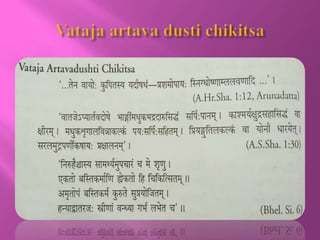
 Snigdha,ushna,amla,lavana dravya prayoga.
 Grita made up of bharangi, madhuka etc..
 Kashmari siddha ksheera.
 Yonikalka preparedwith priyangu and tila
 Sarala-mudgaparni kashaya for yoni
prakshalana.
 Niruha basti works like amrita.
 Madhura shita kashaya
 Yoni dhavana with pitta hara dravya
 Yoni dharana with chandana payasya kalka
 Virechana is beneficial
 Paste of chandana, ushira, manjishsta, patola, madhuka,
yastimadhuka, rakta chandana, punarnava sariva ghana
etc,,,.... Drugs should be given with sugar and milk.
 Vamana is beneficial.
 Kashaya of kutaja,katuka, and ashwagandha.
 Madhu mishrita ksheerivriksha patra kwatha.
 Yoni purana with madanaphala kalka.
 Yoni dhavana with lodra abnd tinduka kashaya.
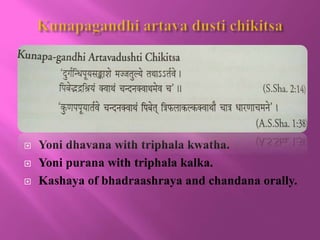
 Yoni dhavana with triphala kwatha.
 Yoni purana with triphala kalka.
 Kashaya of bhadraashraya and chandana orally.
 Patha,trayushana,vrukshaka kashaya paana.
 Patha, trikantaka and vrukshaka paana.
 Yoni dhavana with triphala kwatha.
 Yoni purana with triphala kalka.
 Kashaya of bhadrashraya and chandana orally.
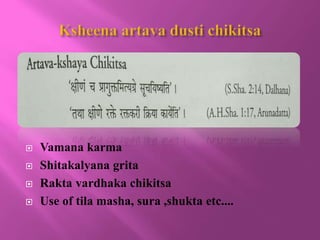
 Vamana karma
 Shitakalyana grita
 Rakta vardhaka chikitsa
 Use of tila masha, sura ,shukta etc....

artava dushsti.pptx

  • 1.
  • 2.
     Causes:  Thereis no specific nidana mentioned for ashta artava diushti. kashyapa says that use of ati tikshna ushna anna paana.  Use of thikshna and ruksha dravyas during menstruation.  Use of thikshna dravyas for shodhana karmas to the women having mridu koshta .
  • 3.
     Based oncausative dosha:  Vaataja,pittaja,kaphaja,raktaja,vatapitta,pittakapha,vatakapha and sannipataja  Based on clinical features:  Vataja  Pittaja  Kaphaja  Kunapagandhi[raktaja]  Grantibhuta[vaata-kapha]  Putipuya[pitta-kapha]  Ksheena[vaata-pitta]  Mutrapurishagandhi[sannipataja]
  • 4.
    Vaataja artava dushti: Artavavitiated by vaata which is having vaata varna i,e red,black or dark violet in color.& also tanu, ruksha, frothy and alpam which is scattered [very small clots mixed with liquid substance]. It is excreted vicchinnam sarujam [slowly with pain] Vaataja artava dushti appears to be description of oligomenorrhoea associated with dysmenorrhoea.
  • 5.
     Pittaja artavadushsti: The artava vitiated by pitta having yellowish or bluish in colour. having burning sensation and feeling of heat at the time of its excretion. Harita defined the colour as resembling the japa flower and also added dysuria in the symtoms. Pittaja artava dushsti seems to be oligomenorrhoea associated with chronic pelvic cellulitis.
  • 6.
     Kaphaja artavadushsti: The artava vitiated by kapha having shleshma varna i,e whitish or majjopa samsrusta means appears as if mixed with bonemarrow due to yellowish. harita added saghana,picchila, mutra rodha and jadhya. Oligomenorhhoea with chronic inflammation or endometritis or endocervicitis.
  • 7.
     Kunapagandhi[raktaja] The kunapagandhiartava dushsti mainly caused by rakta. The artava having dead boby smell. The amount of blood flow is more during menstruation &like fresh blood colour. It is also having other pittaja features. Kunapagadha is foundin necrosis of the tissue mainly seen in carcinoma condition hence can be corelated with early stage of endometrial carcinoma.
  • 8.
     Grantibhuta[vaata-kapha]: The artavain gerantibhuta dusti having clotted [granti]appearence and caused by combintion of vaata &kapha and also having mixed features of vaata&kapha. This artava dusti seems to be description of malignant disordes specially cervical malignacy.
  • 9.
     Putipuya[pitta-kapha] Putipuya mainlythe artava resembling like pus discharge having putrid smell. This condition is caused due to pitta and kapha is the opinion of sushruta, but astanga 1&2says it s due to rakta and pitta. This condition can be corelated with severe endometritis leading to pyometra.
  • 10.
     Ksheena[vaata-pitta]: This artavadusti caused due to vaata & pitta.in this condition artava is delayed , menstrual blood is scanty associated with pain in vagina. This can be corelated with hypooestrogenic oligomenorrhoea due to nutritional deficiency.
  • 11.
     Mutrapurishagandhi[sannipataja]: The menstrualblood which is having smell of utrine &feces hence it is called as mutrapurishagandhi.it s caused due to vitiation of all thridoshas. This condition can be seen in 3rd or 4th stage of cervical carcinoma.
  • 12.
     The artavavitiated by doshas has absence of bija or the woman suffering from these menstrual disorders becomes infertile.
  • 13.
     Sushruta saysthat kunapagranthi,granthirbhuta,putipuya,ksina and mutrapurishagandhi are incurable where as other condition caused by single dosha are curable.  Astanga hridaya says other than mutrapurishagandhi rest all are kricchrasadhya. Mutrapurishagandhi is asadhya.
  • 14.
     Saamanya chikitsa: Inall artava vyapad all the panchakarmas should be employed including uttara basti. The treatment plan should be consists of :  Poorva karma[snehana,swedana]  Pradhana karma [vamana, virechana, niruha & anuvasana basti, nasya, uttara basti]
  • 15.
     Sthanika chikitsa[kalka dharana, pichu dharana, yoni dhavana] All the procedure should be advised according to the vitiation of doshas. Uttabasti should be employed accordingly.  Rasayana , vajikarana drugs, drugs which are explained in guhya roga , drugs used in urinary disorders are benificial.  The pathya which is explained in yushadhyaya or the milk madicated with jivaniya gana drugs are benificial.  Virechana karma is most beneficial.
  • 16.
     Abhyantara prayoga:  Shatapushpa /shatavari kalpa  Yoga raja guggulu  Chandra prabha vati  Pugapaka  Bhahya prayoga:  Jivantyadi anuvasana yamaka.  Mustadi yapana basti  Sahacharadi yapana basti  Pathya:  Shali,yava,madhya,mamsa preperation capable of increasing the pitta are beneficial
  • 18.
     Snigdha,ushna,amla,lavana dravyaprayoga.  Grita made up of bharangi, madhuka etc..  Kashmari siddha ksheera.  Yonikalka preparedwith priyangu and tila  Sarala-mudgaparni kashaya for yoni prakshalana.  Niruha basti works like amrita.
  • 19.
     Madhura shitakashaya  Yoni dhavana with pitta hara dravya  Yoni dharana with chandana payasya kalka  Virechana is beneficial  Paste of chandana, ushira, manjishsta, patola, madhuka, yastimadhuka, rakta chandana, punarnava sariva ghana etc,,,.... Drugs should be given with sugar and milk.
  • 20.
     Vamana isbeneficial.  Kashaya of kutaja,katuka, and ashwagandha.  Madhu mishrita ksheerivriksha patra kwatha.  Yoni purana with madanaphala kalka.  Yoni dhavana with lodra abnd tinduka kashaya.
  • 21.
     Yoni dhavanawith triphala kwatha.  Yoni purana with triphala kalka.  Kashaya of bhadraashraya and chandana orally.
  • 22.
     Patha,trayushana,vrukshaka kashayapaana.  Patha, trikantaka and vrukshaka paana.
  • 23.
     Yoni dhavanawith triphala kwatha.  Yoni purana with triphala kalka.  Kashaya of bhadrashraya and chandana orally.
  • 24.
     Vamana karma Shitakalyana grita  Rakta vardhaka chikitsa  Use of tila masha, sura ,shukta etc....