LESSON 5
Artists
&
Artisans
Core Topics
Production Process
2
Medium and Technique
Engagement with Art
Awards and Citations
PRODUCTION
PROCESS
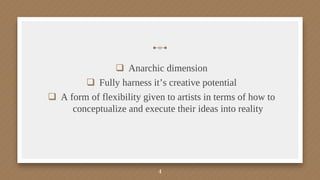
 Anarchic dimension
 Fully harness it’s creative potential
 A form of flexibility given to artists in terms of how to
conceptualize and execute their ideas into reality
4
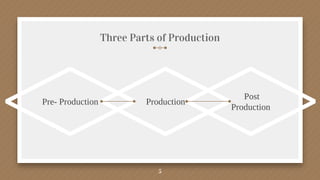
Three Parts of Production
5
Production
Post
Production
Pre- Production
PRE-PRODUCTION
⬗ is the process of fixing some of the elements involved in a film, play, or
other performance.
POST PRODUCTION
⬗ Post-production is part of the filmmaking, video production and
photography, it occurs in the process predominantly after the filming but
can be done in the process of while filming, it normally occurs onsite for
photo-shoots as they colour correct to make certain aspects of the object
or person to pop out and to make sure that only the object/person is
where your eyes land first.
6
Post production consists of:
1. Colour correction
2. Sound balancing
3. Titles
4. Effects
5. Diegetic sound
7
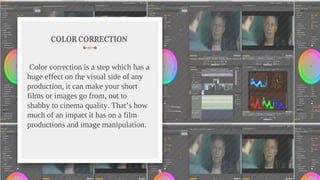
COLOR CORRECTION
Color correction is a step which has a
huge effect on the visual side of any
production, it can make your short
films or images go from, not to
shabby to cinema quality. That’s how
much of an impact it has on a film
productions and image manipulation.
8
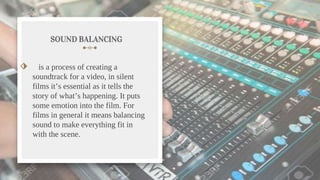
SOUND BALANCING
⬗ is a process of creating a
soundtrack for a video, in silent
films it’s essential as it tells the
story of what’s happening. It puts
some emotion into the film. For
films in general it means balancing
sound to make everything fit in
with the scene.
9
EFFECTS
⬗ Audio
⬗ Sound editing is a key aspect of the film as it adds some additional feel to
the film.
⬗ Visual editing
⬗ As I’ve stated above short films don’t have much visual effects besides
colour grading, but it depends on the type of film.
10
primarily generated by the objects and mainly anything we see in the
frame/image, the sounds come from within the word of the
narrative.
Non-Diegetic Sound
generated outside the frame.
11
Diegetic Sound
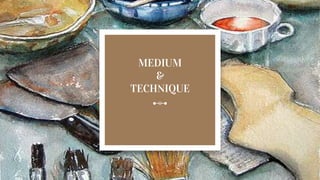
MEDIUM
&
TECHNIQUE
What is MEDIUM?
It is one of the aspects of art that directly correlates with its composition and
presumed finality of the artwork.
It is the mode of expressing in which the concept, idea or message is
conveyed.
What is TECHNIQUE?
A chosen medium should not yield the same results.
The technique of the artwork shows the level of familiarity with the media
being manipulated
13
DIFFERENT TYPES OF MEDIUM
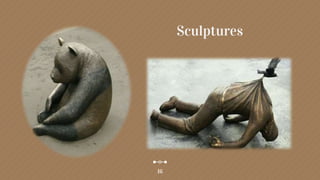
CONCRETE WORKS
The objects physically manifests themselves for a prolonged or lasting
period.
14
15
Paintings
16
Sculptures
DIFFERENT TYPES OF MEDIUM
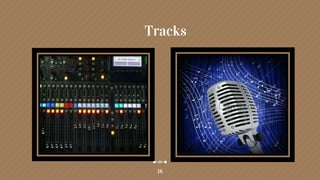
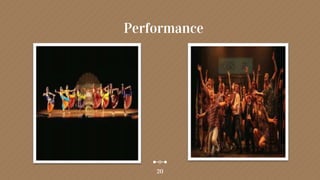
EPHEMERAL WORKS
On the other hand it is durational.
17
18
Tracks
19
Films
20
Performance
ENGAGEMENT
with
ART
⬗ Anna Cline’s The Evolving Role of the Exhibition & Its
Impact on Art and Culture
⬗ “Exhibitions act as the catalyst of art and ideas to the
public.”
⬗ “Keeping art relevant to society and to a diverse audience
at any given point in history is one of the main goals of the
art exhibitions…”
22
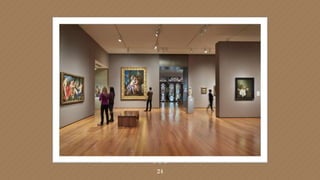
Paula Marincola’s What Makes a Great Exhibition?
“Exhibitions are strategically located at the nexus where
artists, their work, the arts institution and many
different publics intersect.”
23
24
25
26
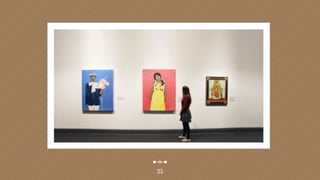
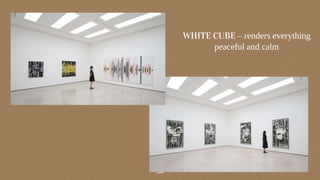
WHITE CUBE – renders everything
peaceful and calm
27
28
AWARDS
&
CITATIONS
Two major awards
Orden ng Pambansang
Alagad ng sining (Order
of National Artists)
Gawad sa Manlilikha ng
Bayan (National Living
Treasures Award)
30
Order of National Artists
• Given to Filipino individuals who have made significant contributions to
the development of Philippines arts.
• The Order is jointly administrated by the National Commission for
Culture and the Arts (NCCA) and the Cultural Center of the Philippines
(CCP) and conferred by the President of the Philippines upon
recommendation by both intitutions (NCCA, 2015).
31
32
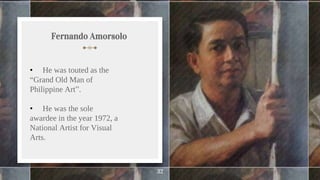
Fernando Amorsolo
• He was touted as the
“Grand Old Man of
Philippine Art”.
• He was the sole
awardee in the year 1972, a
National Artist for Visual
Arts.
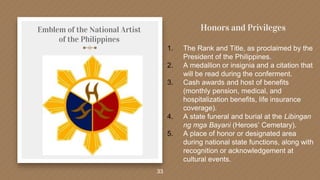
Emblem of the National Artist
of the Philippines
33
Honors and Privileges
1. The Rank and Title, as proclaimed by the
President of the Philippines.
2. A medallion or insignia and a citation that
will be read during the conferment.
3. Cash awards and host of benefits
(monthly pension, medical, and
hospitalization benefits, life insurance
coverage).
4. A state funeral and burial at the Libingan
ng mga Bayani (Heroes’ Cemetary).
5. A place of honor or designated area
during national state functions, along with
recognition or acknowledgement at
cultural events.
(GAMABA) Gawad sa Manlilikha ng Bayan or the National Living
Treasures Awardees
34
 Ginaw Bilog – master of Ambahan poetry
 Masino Intaray – master of various traditional musical instruments
of the Palawan people
 Samaon Sulaiman – master of the kutyapi
35

Art appreciation ARTIST and ARTISANS

  • 1.
  • 2.
    Core Topics Production Process 2 Mediumand Technique Engagement with Art Awards and Citations
  • 3.
  • 4.
     Anarchic dimension Fully harness it’s creative potential  A form of flexibility given to artists in terms of how to conceptualize and execute their ideas into reality 4
  • 5.
    Three Parts ofProduction 5 Production Post Production Pre- Production
  • 6.
    PRE-PRODUCTION ⬗ is theprocess of fixing some of the elements involved in a film, play, or other performance. POST PRODUCTION ⬗ Post-production is part of the filmmaking, video production and photography, it occurs in the process predominantly after the filming but can be done in the process of while filming, it normally occurs onsite for photo-shoots as they colour correct to make certain aspects of the object or person to pop out and to make sure that only the object/person is where your eyes land first. 6
  • 7.
    Post production consistsof: 1. Colour correction 2. Sound balancing 3. Titles 4. Effects 5. Diegetic sound 7
  • 8.
    COLOR CORRECTION Color correctionis a step which has a huge effect on the visual side of any production, it can make your short films or images go from, not to shabby to cinema quality. That’s how much of an impact it has on a film productions and image manipulation. 8
  • 9.
    SOUND BALANCING ⬗ isa process of creating a soundtrack for a video, in silent films it’s essential as it tells the story of what’s happening. It puts some emotion into the film. For films in general it means balancing sound to make everything fit in with the scene. 9
  • 10.
    EFFECTS ⬗ Audio ⬗ Soundediting is a key aspect of the film as it adds some additional feel to the film. ⬗ Visual editing ⬗ As I’ve stated above short films don’t have much visual effects besides colour grading, but it depends on the type of film. 10
  • 11.
    primarily generated bythe objects and mainly anything we see in the frame/image, the sounds come from within the word of the narrative. Non-Diegetic Sound generated outside the frame. 11 Diegetic Sound
  • 12.
  • 13.
    What is MEDIUM? Itis one of the aspects of art that directly correlates with its composition and presumed finality of the artwork. It is the mode of expressing in which the concept, idea or message is conveyed. What is TECHNIQUE? A chosen medium should not yield the same results. The technique of the artwork shows the level of familiarity with the media being manipulated 13
  • 14.
    DIFFERENT TYPES OFMEDIUM CONCRETE WORKS The objects physically manifests themselves for a prolonged or lasting period. 14
  • 15.
  • 16.
  • 17.
    DIFFERENT TYPES OFMEDIUM EPHEMERAL WORKS On the other hand it is durational. 17
  • 18.
  • 19.
  • 20.
  • 21.
  • 22.
    ⬗ Anna Cline’sThe Evolving Role of the Exhibition & Its Impact on Art and Culture ⬗ “Exhibitions act as the catalyst of art and ideas to the public.” ⬗ “Keeping art relevant to society and to a diverse audience at any given point in history is one of the main goals of the art exhibitions…” 22
  • 23.
    Paula Marincola’s WhatMakes a Great Exhibition? “Exhibitions are strategically located at the nexus where artists, their work, the arts institution and many different publics intersect.” 23
  • 24.
  • 25.
  • 26.
    26 WHITE CUBE –renders everything peaceful and calm
  • 27.
  • 28.
  • 29.
  • 30.
    Two major awards Ordenng Pambansang Alagad ng sining (Order of National Artists) Gawad sa Manlilikha ng Bayan (National Living Treasures Award) 30
  • 31.
    Order of NationalArtists • Given to Filipino individuals who have made significant contributions to the development of Philippines arts. • The Order is jointly administrated by the National Commission for Culture and the Arts (NCCA) and the Cultural Center of the Philippines (CCP) and conferred by the President of the Philippines upon recommendation by both intitutions (NCCA, 2015). 31
  • 32.
    32 Fernando Amorsolo • Hewas touted as the “Grand Old Man of Philippine Art”. • He was the sole awardee in the year 1972, a National Artist for Visual Arts.
  • 33.
    Emblem of theNational Artist of the Philippines 33 Honors and Privileges 1. The Rank and Title, as proclaimed by the President of the Philippines. 2. A medallion or insignia and a citation that will be read during the conferment. 3. Cash awards and host of benefits (monthly pension, medical, and hospitalization benefits, life insurance coverage). 4. A state funeral and burial at the Libingan ng mga Bayani (Heroes’ Cemetary). 5. A place of honor or designated area during national state functions, along with recognition or acknowledgement at cultural events.
  • 34.
    (GAMABA) Gawad saManlilikha ng Bayan or the National Living Treasures Awardees 34  Ginaw Bilog – master of Ambahan poetry  Masino Intaray – master of various traditional musical instruments of the Palawan people  Samaon Sulaiman – master of the kutyapi
  • 35.