
Agenda: New Practitioners Track
WORKSHOPAGENDA
8:00 AM – 9:00 AM Breakfast
9:00 AM – 10:00 AM Installing the TICK Stack and Your First Query Noah Crowley
10:00 AM – 10:50 AM Chronograf and Dashboarding David Simmons
10:50 AM – 11:20 AM Break
11:20 AM – 12:10 PM Writing Queries (InfluxQL and TICK) Noah Crowley
12:10 PM – 1:10 PM Lunch
1:10 PM – 2:00 PM Architecting InfluxEnterprise for Success Dean Sheehan
2:00 PM – 2:10 PM Break
2:10 PM – 3:10 PM Optimizing the TICK Stack Dean Sheehan
3:10 PM – 4:00 PM Downsampling Data Michael DeSa
4:00 PM Happy Hour
Dean Sheehan
Senior Director, Pre and
Post Sales
Architecting InfluxEnterprise
for Success
• Anatomy of an Influx Enterprise Cluster
• High Availability
• Horizonal Scalability
• Replication & Sharding Considerations
• Deployment Topologies
• Some Latin!
InfluxEnterprise Cluster Architecture
Chronograf
Data Node 1
Data Node 2
Data Node 3
Data Node n
Telegraf
Telegraf
Telegraf
Meta Node Quorum
Meta Node
1
Meta Node
2
Meta Node
3
Administrative
Functions
Load
Balancer
Writes
Queries
InfluxEnterprise Cluster Architecture – Meta Nodes
• Keep state consistent across the cluster
• Users
• Databases
• Continuous Queries
• Retention Policies
• Shard Metadata
• Cluster Membership – Data Nodes
• Multiple (odd #) meta nodes for High
Availability
• Uses Raft consensus algorithm
• Quorum needs an odd number of nodes
• (n/2)+1 nodes available for consensus
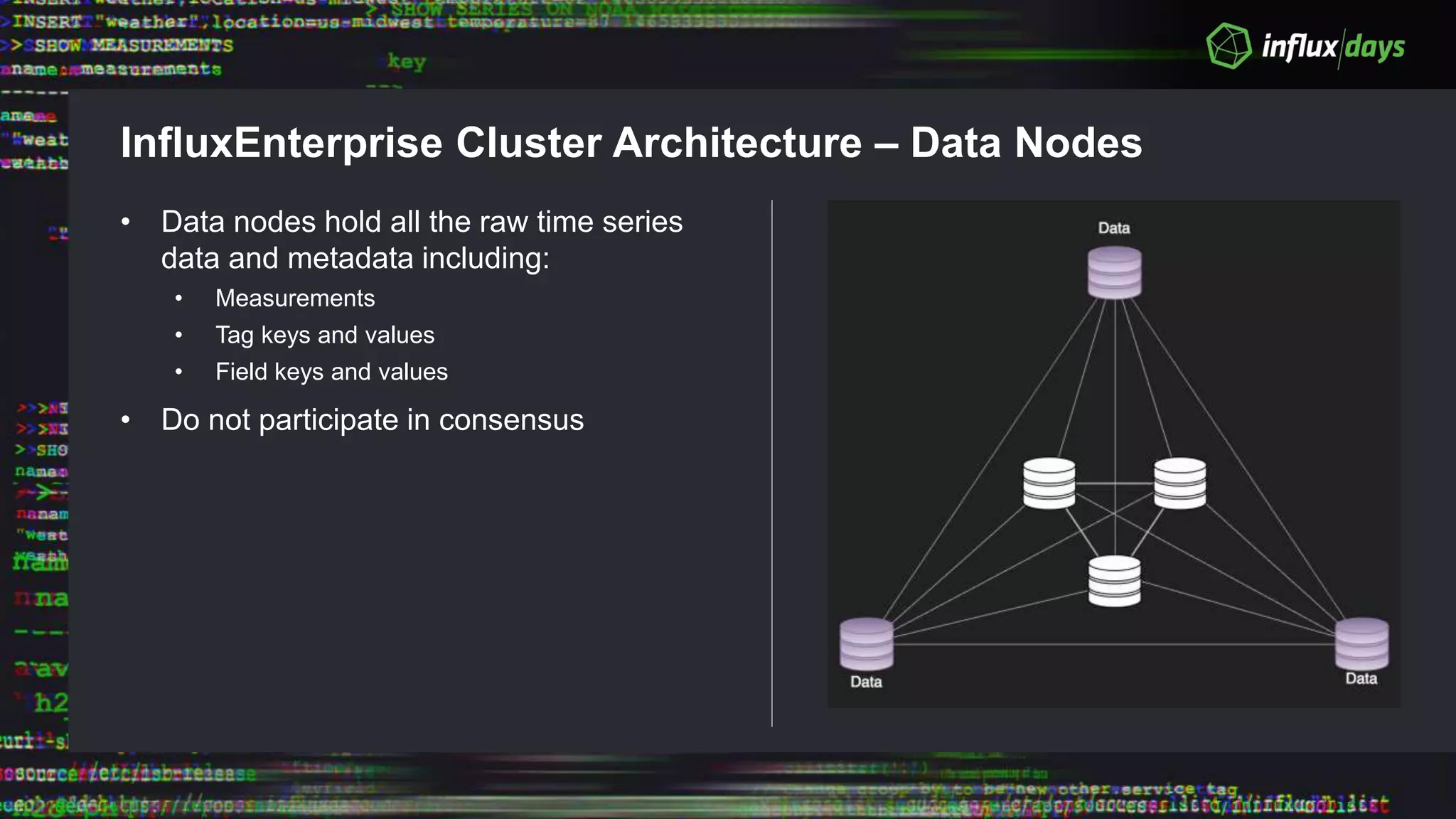
InfluxEnterprise Cluster Architecture – Data Nodes
• Data nodes hold all the raw time series
data and metadata including:
• Measurements
• Tag keys and values
• Field keys and values
• Do not participate in consensus
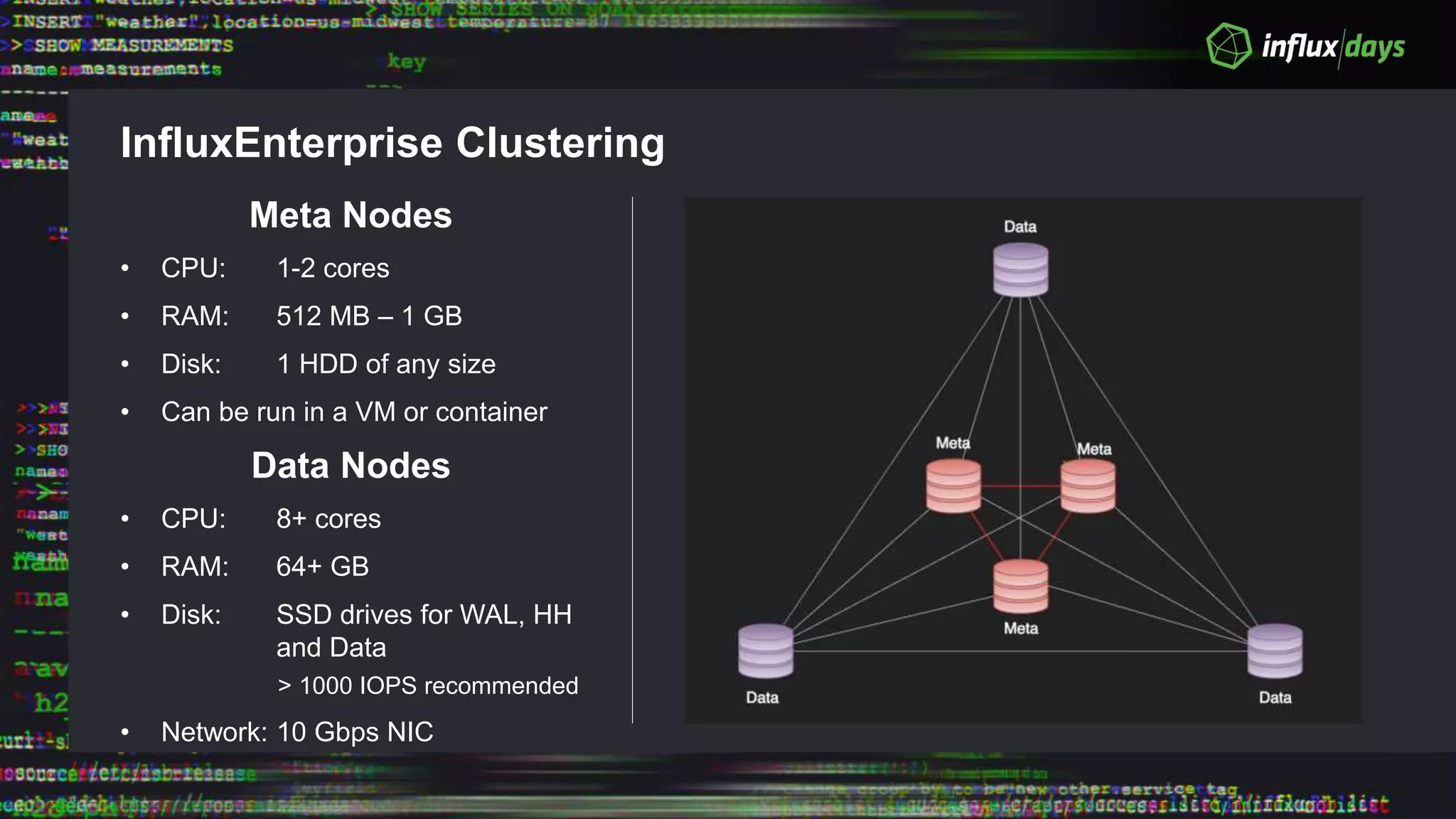
InfluxEnterprise Clustering
Meta Nodes
• CPU: 1-2 cores
• RAM: 512 MB – 1 GB
• Disk: 1 HDD of any size
• Can be run in a VM or container
Data Nodes
• CPU: 8+ cores
• RAM: 64+ GB
• Disk: SSD drives for WAL, HH
and Data
> 1000 IOPS recommended
• Network: 10 Gbps NIC
OS & Hosts
• No Specific OS Tuning Required
• Bare metal, Virtual Machines or Containers
• Consider 70% utilization a Biz As Usual upper limit. Need head
room for
• Peak periods
• Compaction process
• Node failure and re-entry
High Availability
• Replication factor set on database retention policy
– RF = 1 is possible, not common
– RF = 2 or 3 are typical
– RF > 3 is possible and can be beneficial
• Writes recorded in <RF> number of nodes
– Writer chooses consistency for write acknowledgement
• Any, One, Quorum, All
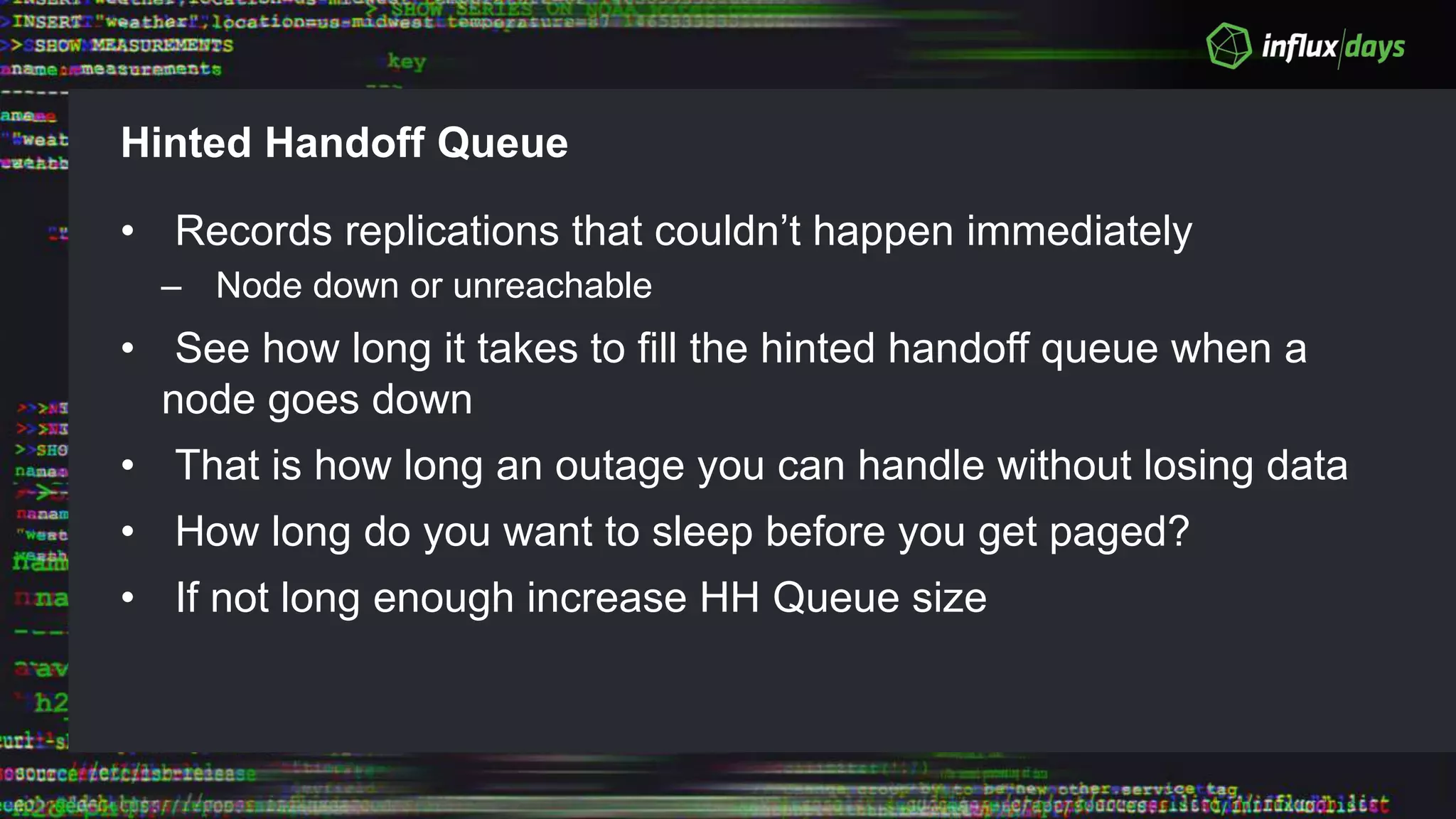
Hinted Handoff Queue
• Records replications that couldn’t happen immediately
– Node down or unreachable
• See how long it takes to fill the hinted handoff queue when a
node goes down
• That is how long an outage you can handle without losing data
• How long do you want to sleep before you get paged?
• If not long enough increase HH Queue size
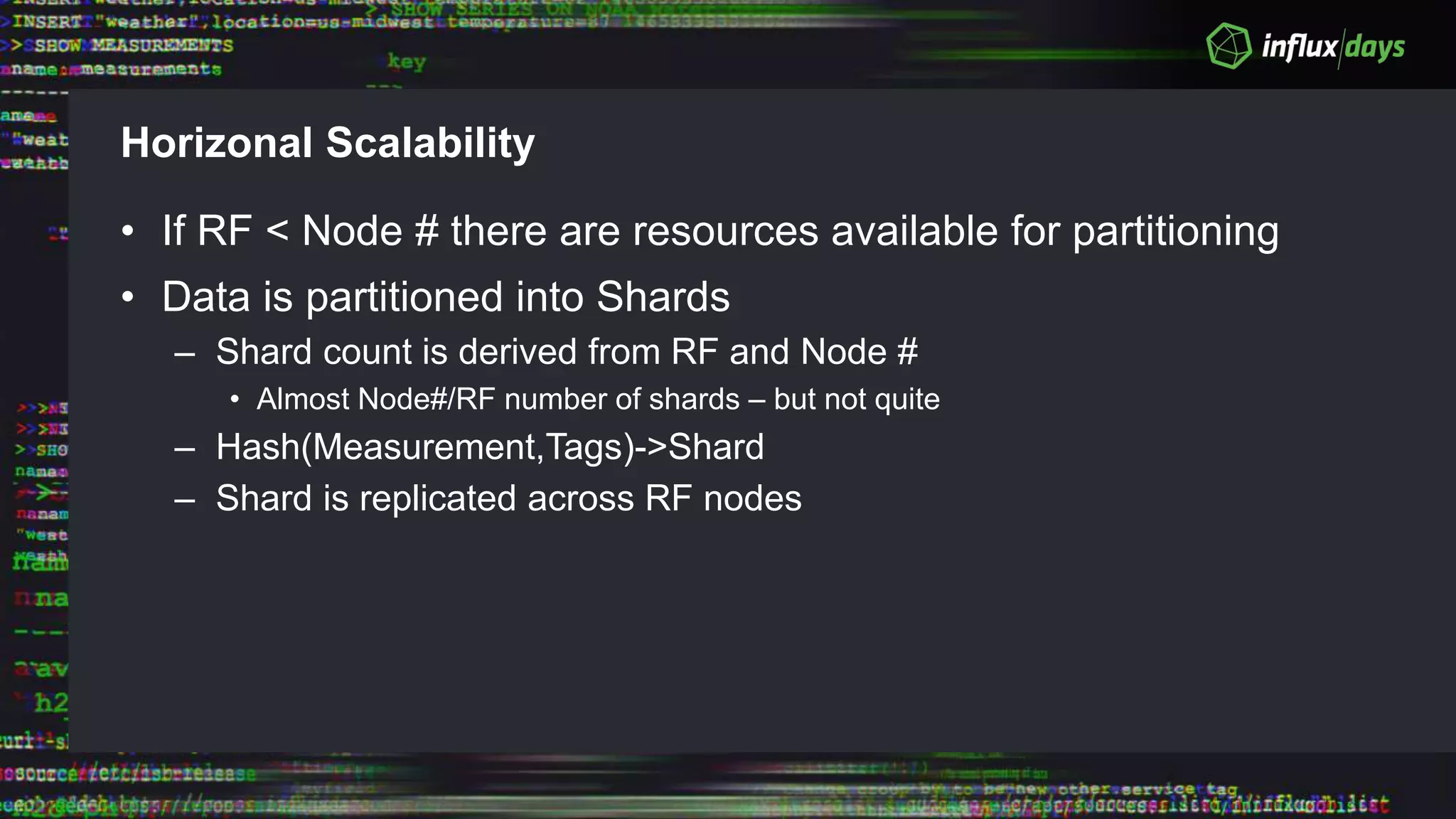
Horizonal Scalability
• If RF < Node # there are resources available for partitioning
• Data is partitioned into Shards
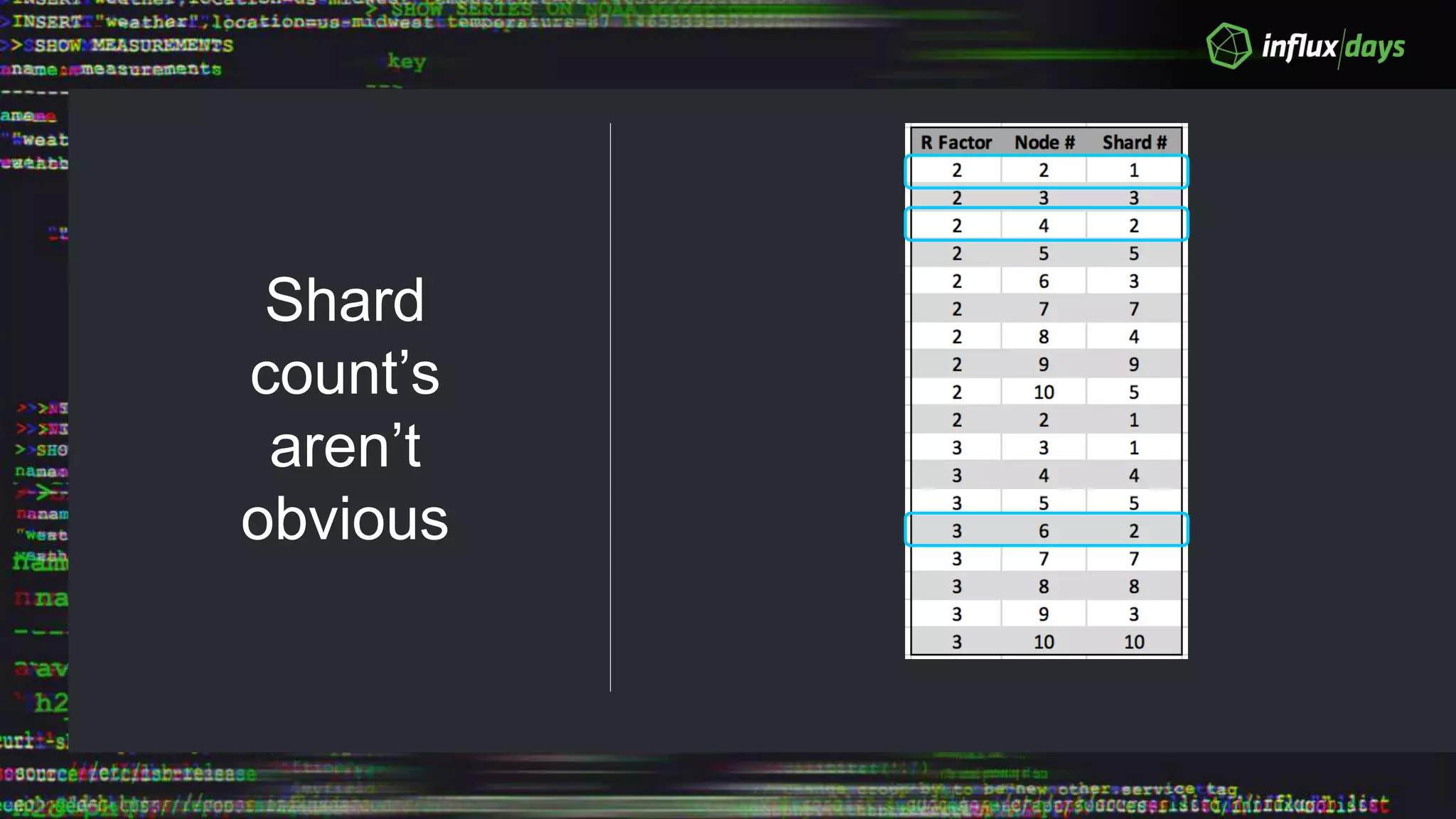
– Shard count is derived from RF and Node #
• Almost Node#/RF number of shards – but not quite
– Hash(Measurement,Tags)->Shard
– Shard is replicated across RF nodes
Shard
count’s
aren’t
obvious
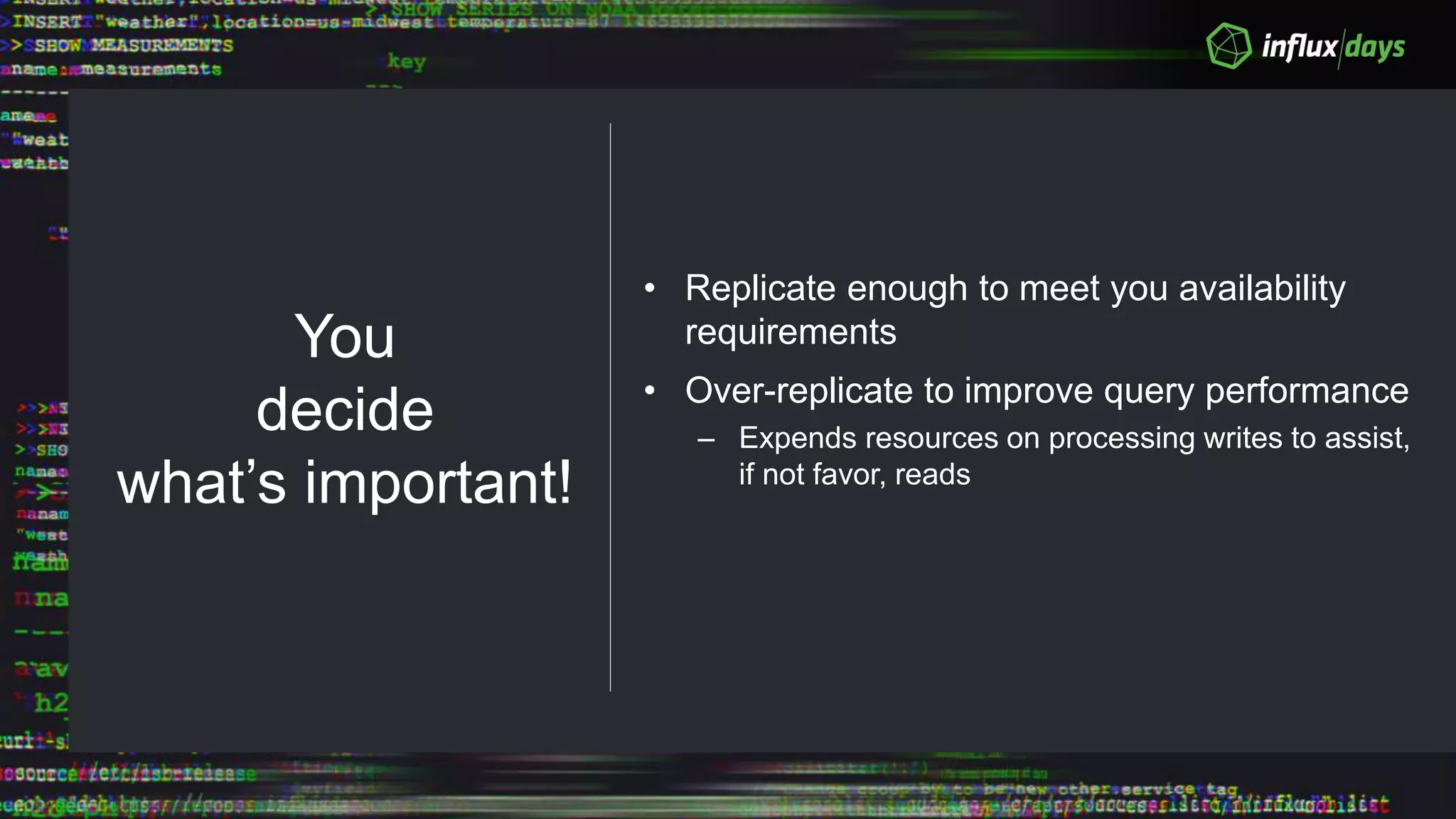
You
decide
what’s important!
• Replicate enough to meet you availability
requirements
• Over-replicate to improve query performance
– Expends resources on processing writes to assist,
if not favor, reads
Deployment
Considerations
• How can I deploy…
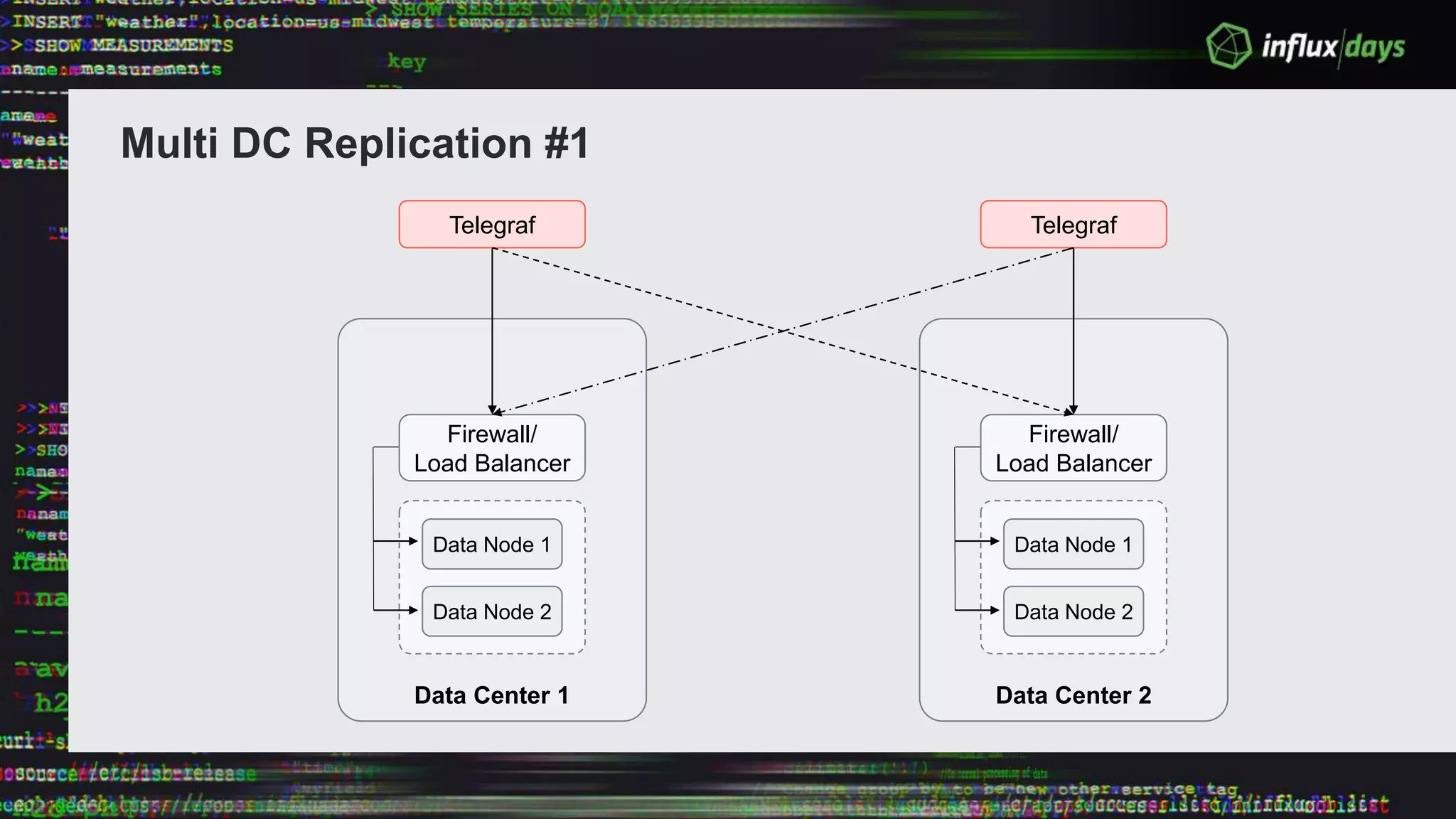
Multi DC Replication #1
Data Center 1
Firewall/
Load Balancer
Data Node 1
Data Node 2
Telegraf
Data Center 2
Firewall/
Load Balancer
Data Node 1
Data Node 2
Telegraf
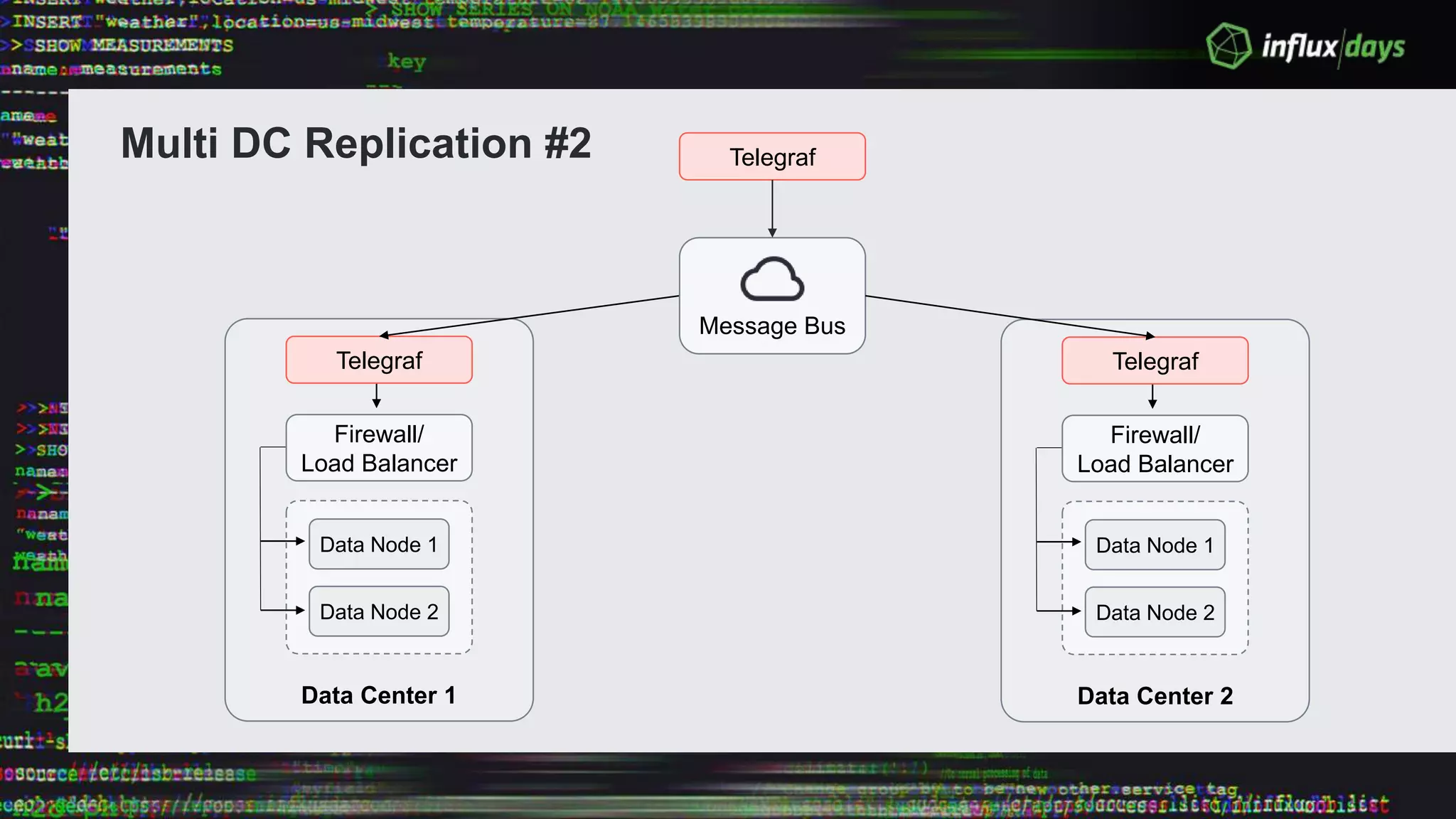
Data Center 1
Firewall/
Load Balancer
Data Node 1
Data Node 2
Telegraf
Message Bus
Multi DC Replication #2
Data Center 2
Firewall/
Load Balancer
Data Node 1
Data Node 2
Telegraf
Telegraf
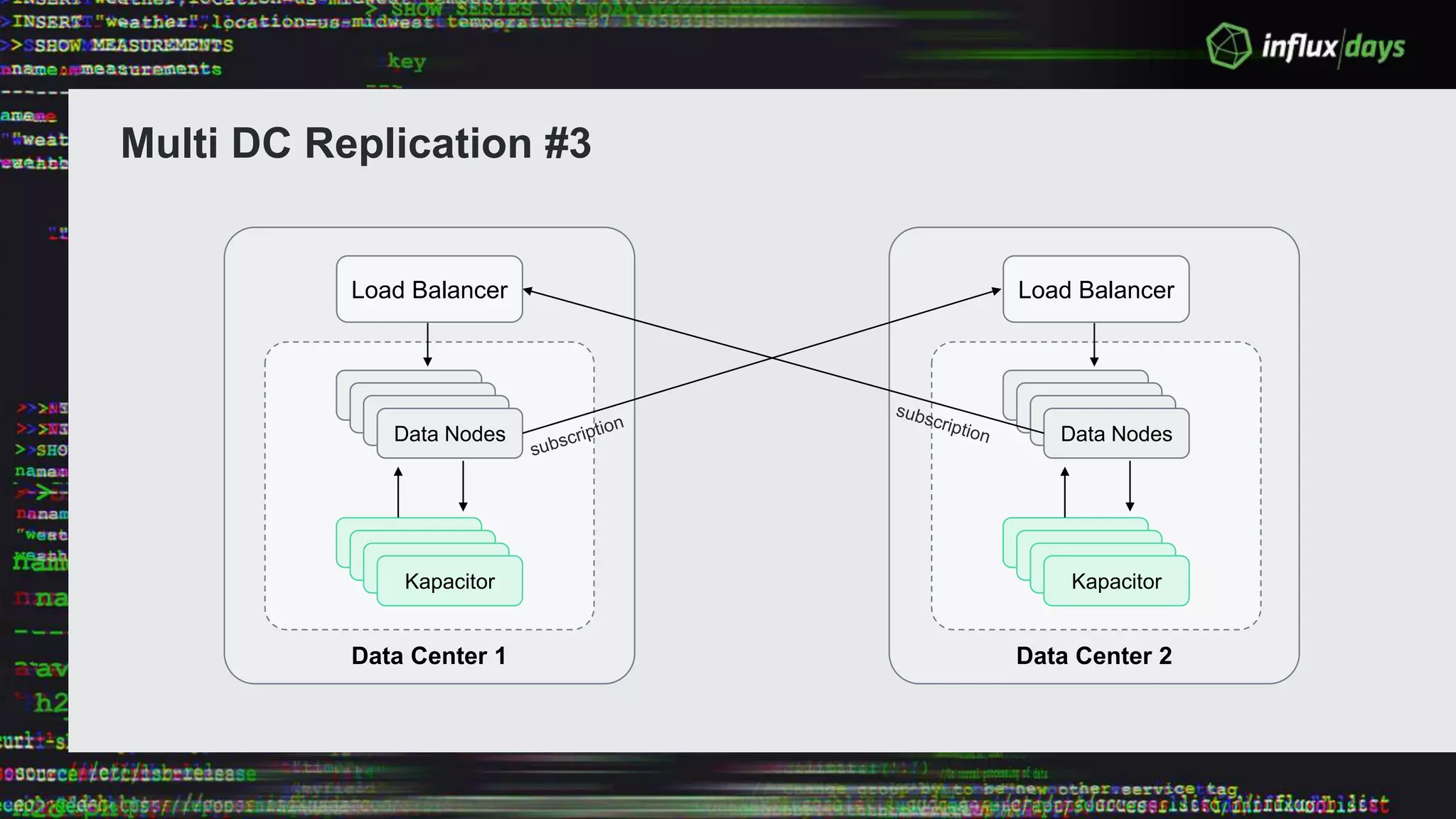
Data Center 1
Load Balancer
Data Center 2
Data Nodes
Data Nodes
Data Nodes
Data Nodes
Data Nodes
Data Nodes
Data Nodes
Kapacitor
Load Balancer
Data Nodes
Data Nodes
Data Nodes
Data Nodes
Data Nodes
Data Nodes
Data Nodes
Kapacitor
Multi DC Replication #3
Data Center 1
KapacitorTelegraf
Telegraf
Telegraf InfluxDB
OSS
Data Center 2
KapacitorTelegraf
Telegraf
Telegraf InfluxDB
OSS
Data Center n
KapacitorTelegraf
Telegraf
Telegraf InfluxDB
OSS
Influx Enterprise
Data Node 1
Data Node 2
Data Node 3
Data Node n
Meta Node Quorum
Meta
Node 1
Meta
Node 2
Meta
Node 3
Firewall/
Load Balancer
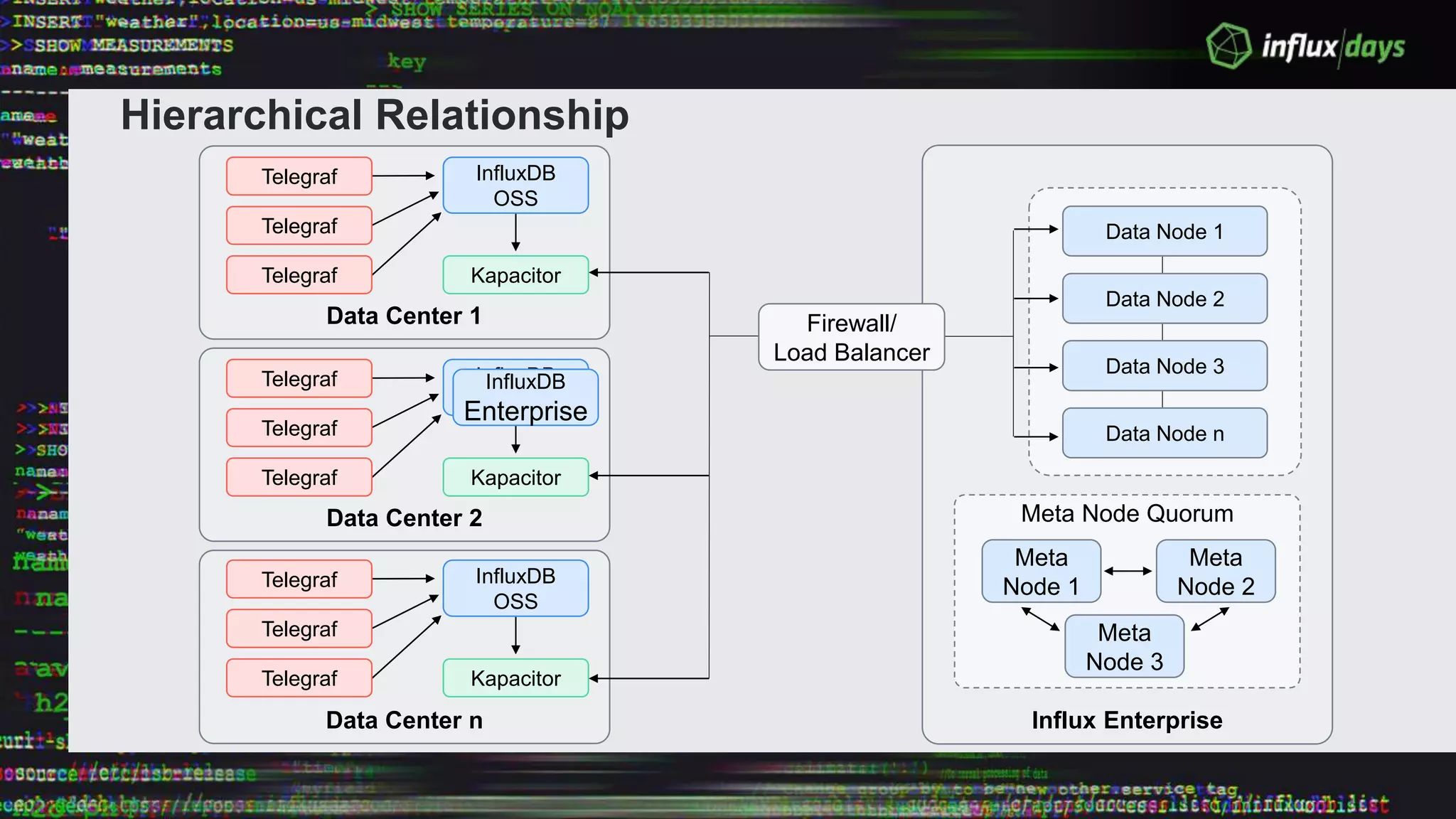
Hierarchical Relationship
InfluxDB
Enterprise
Data Center 1
Firewall/
Load Balancer
Data Node 1
Data Node 2
Telegraf
Message Bus
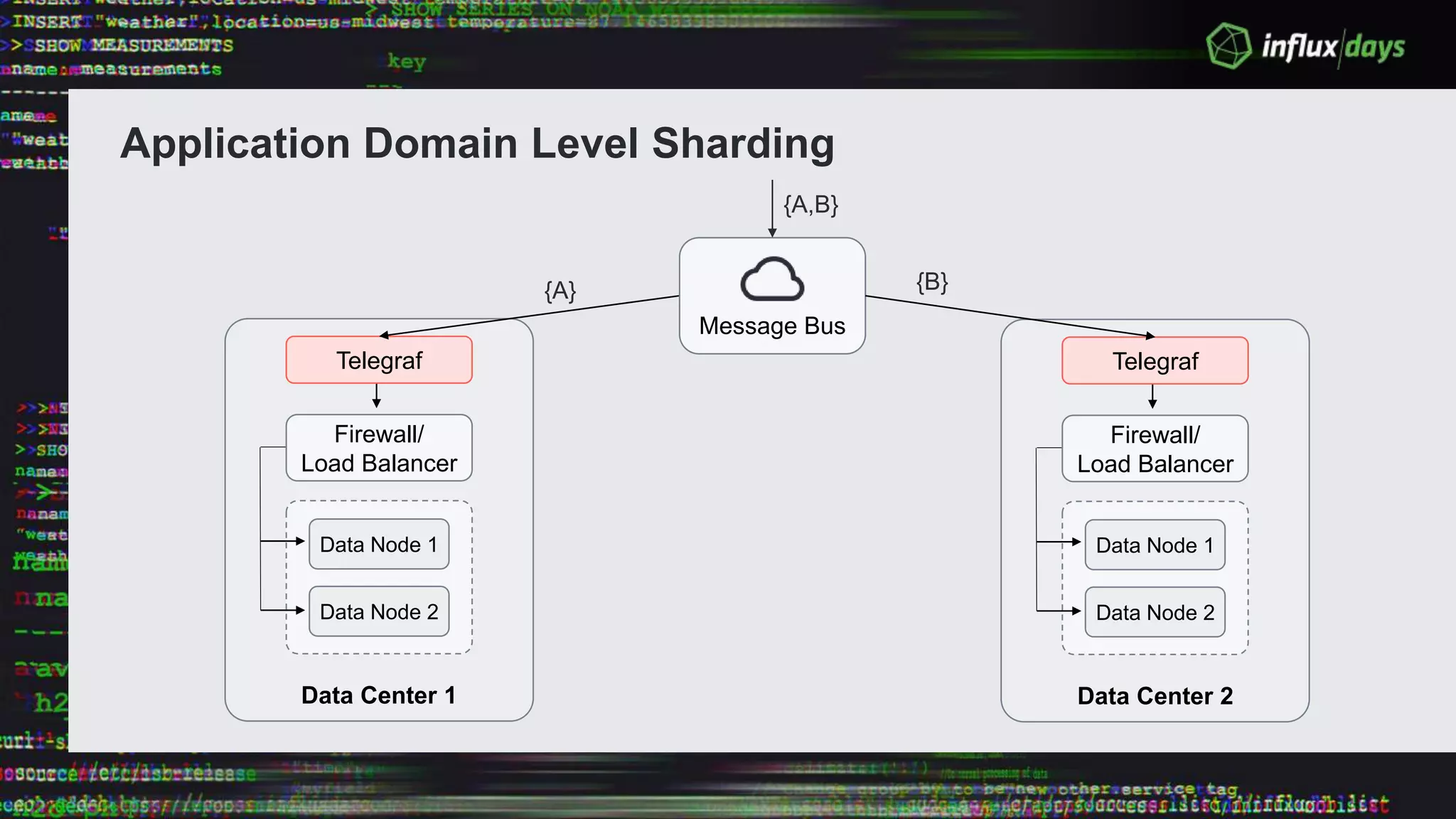
Application Domain Level Sharding
Data Center 2
Firewall/
Load Balancer
Data Node 1
Data Node 2
Telegraf
{A,B}
{A} {B}
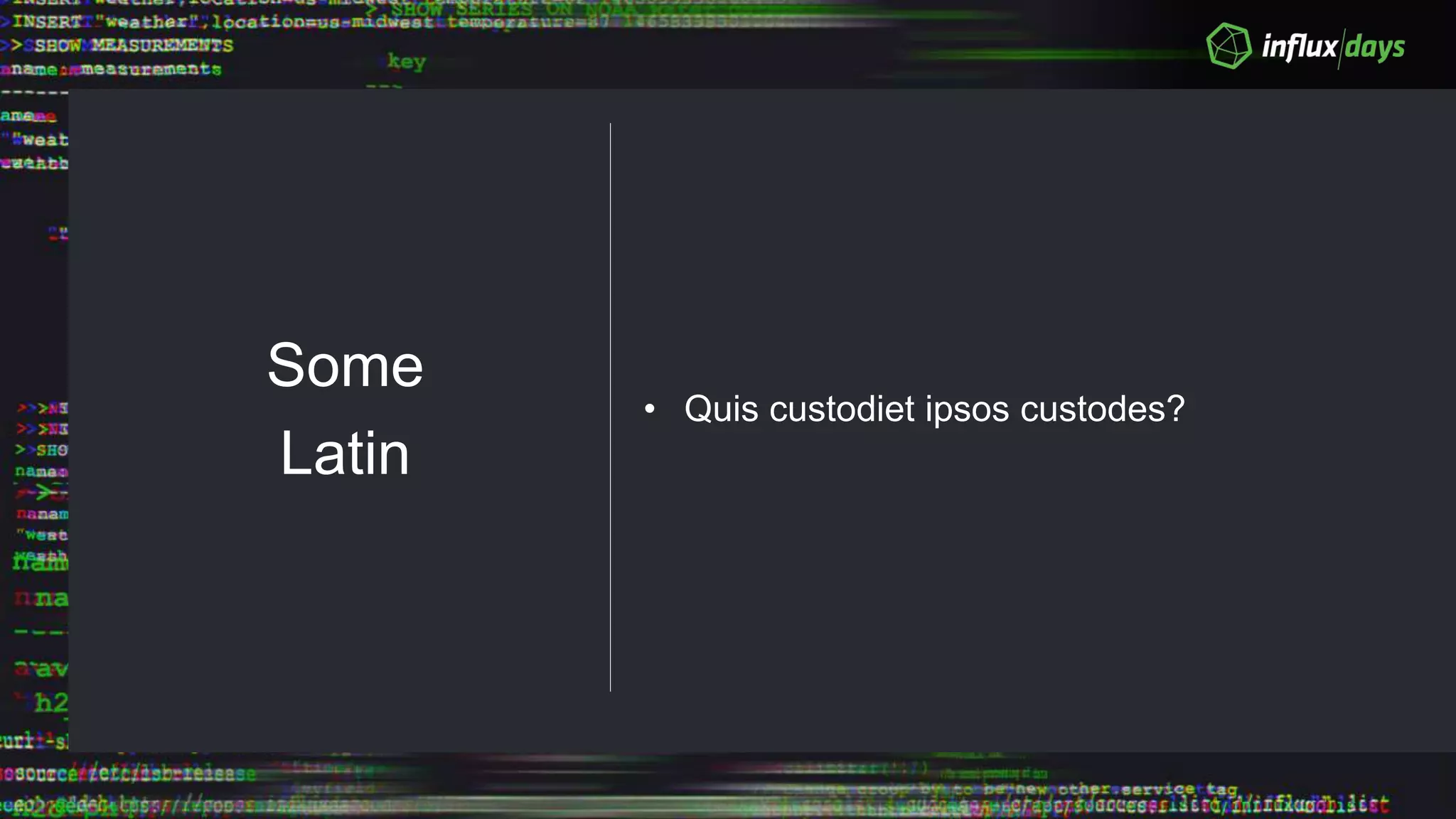
Some
Latin
• Quis custodiet ipsos custodes?
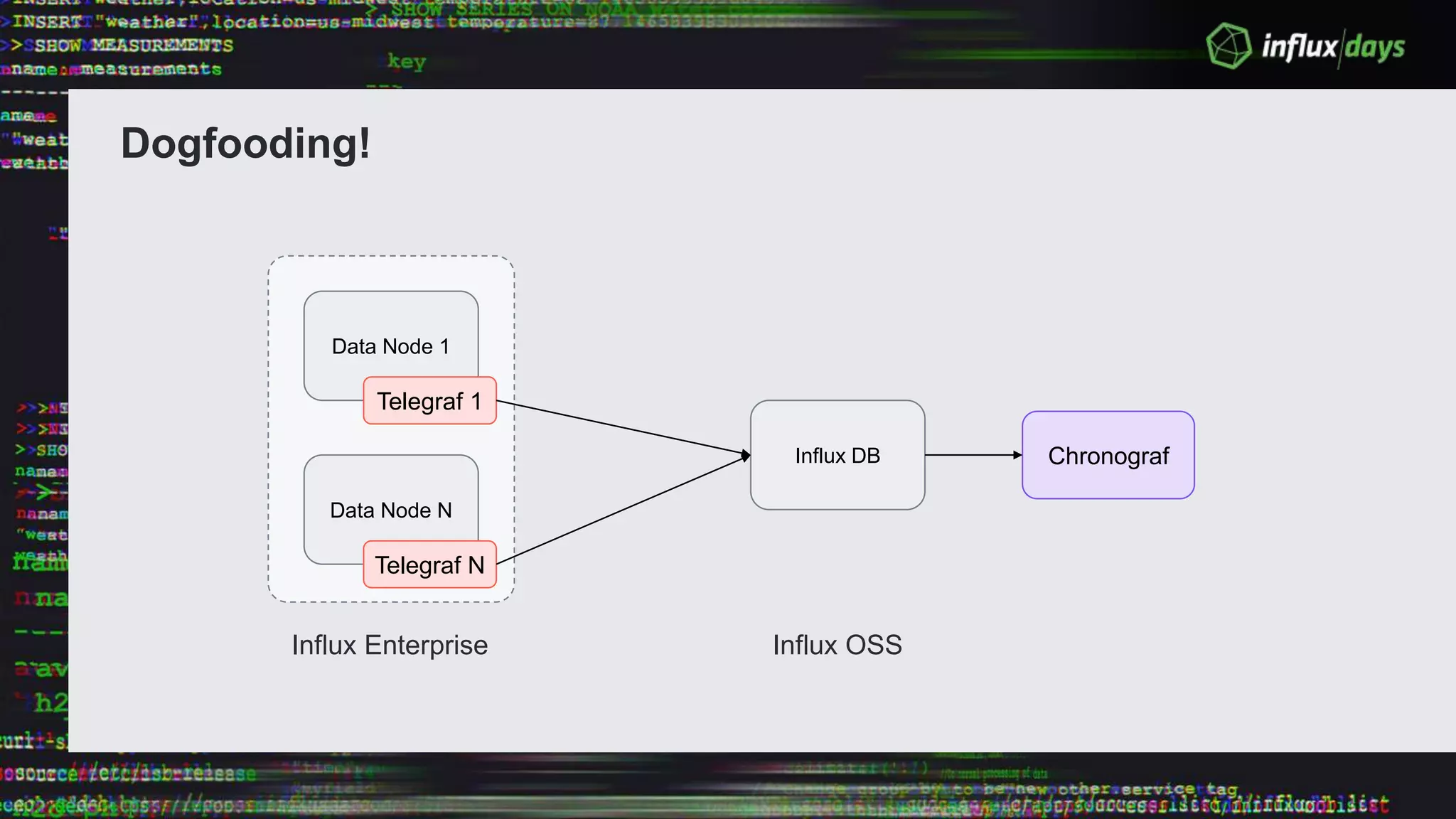
Dogfooding!
Data Node 1
Telegraf 1
Data Node N
Telegraf N
Influx Enterprise
Influx DB
Influx OSS
Chronograf

ARCHITECTING INFLUXENTERPRISE FOR SUCCESS

  • 2.
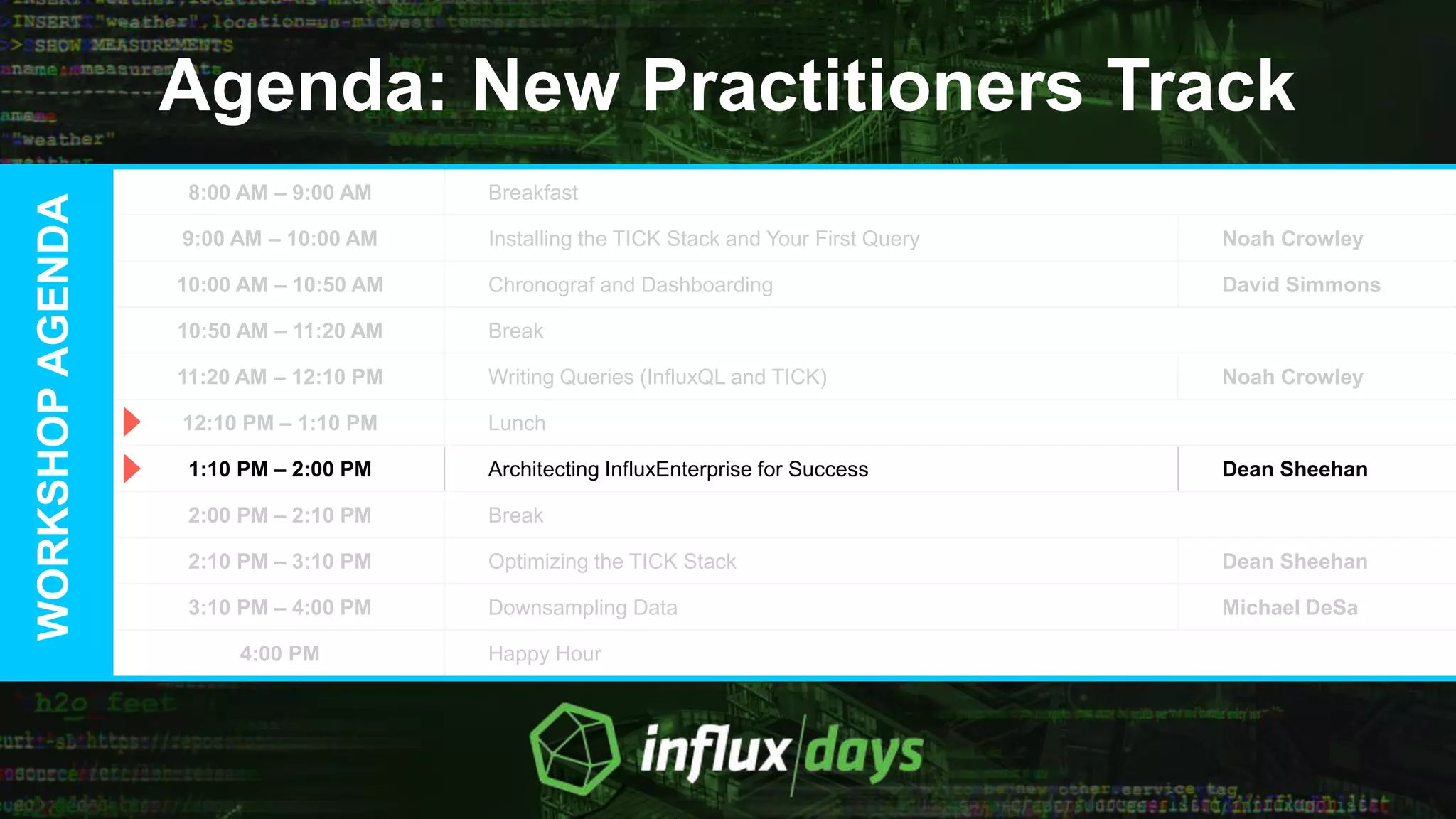
    Agenda: New PractitionersTrack WORKSHOPAGENDA 8:00 AM – 9:00 AM Breakfast 9:00 AM – 10:00 AM Installing the TICK Stack and Your First Query Noah Crowley 10:00 AM – 10:50 AM Chronograf and Dashboarding David Simmons 10:50 AM – 11:20 AM Break 11:20 AM – 12:10 PM Writing Queries (InfluxQL and TICK) Noah Crowley 12:10 PM – 1:10 PM Lunch 1:10 PM – 2:00 PM Architecting InfluxEnterprise for Success Dean Sheehan 2:00 PM – 2:10 PM Break 2:10 PM – 3:10 PM Optimizing the TICK Stack Dean Sheehan 3:10 PM – 4:00 PM Downsampling Data Michael DeSa 4:00 PM Happy Hour
  • 3.
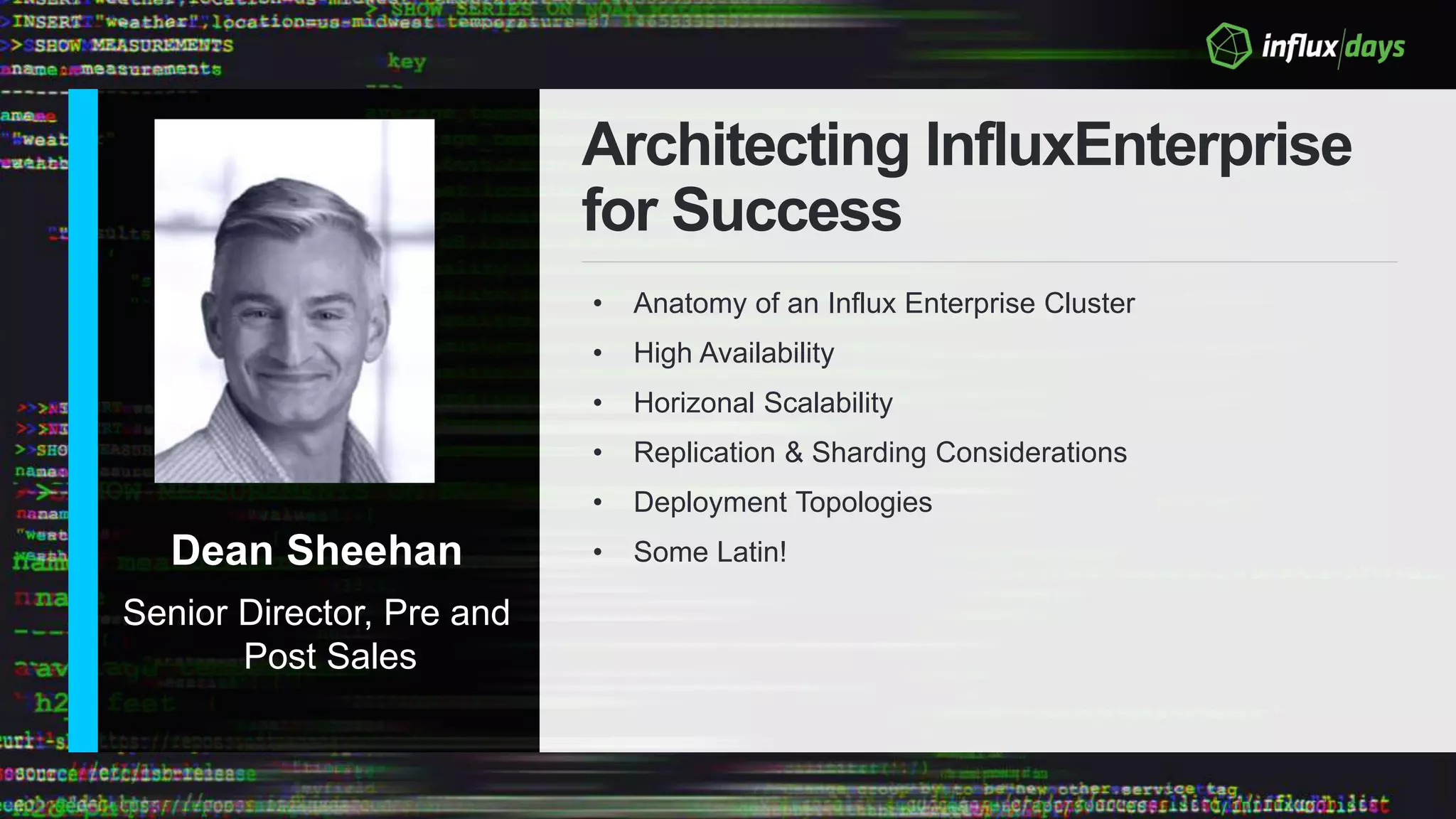
    Dean Sheehan Senior Director,Pre and Post Sales Architecting InfluxEnterprise for Success • Anatomy of an Influx Enterprise Cluster • High Availability • Horizonal Scalability • Replication & Sharding Considerations • Deployment Topologies • Some Latin!
  • 4.
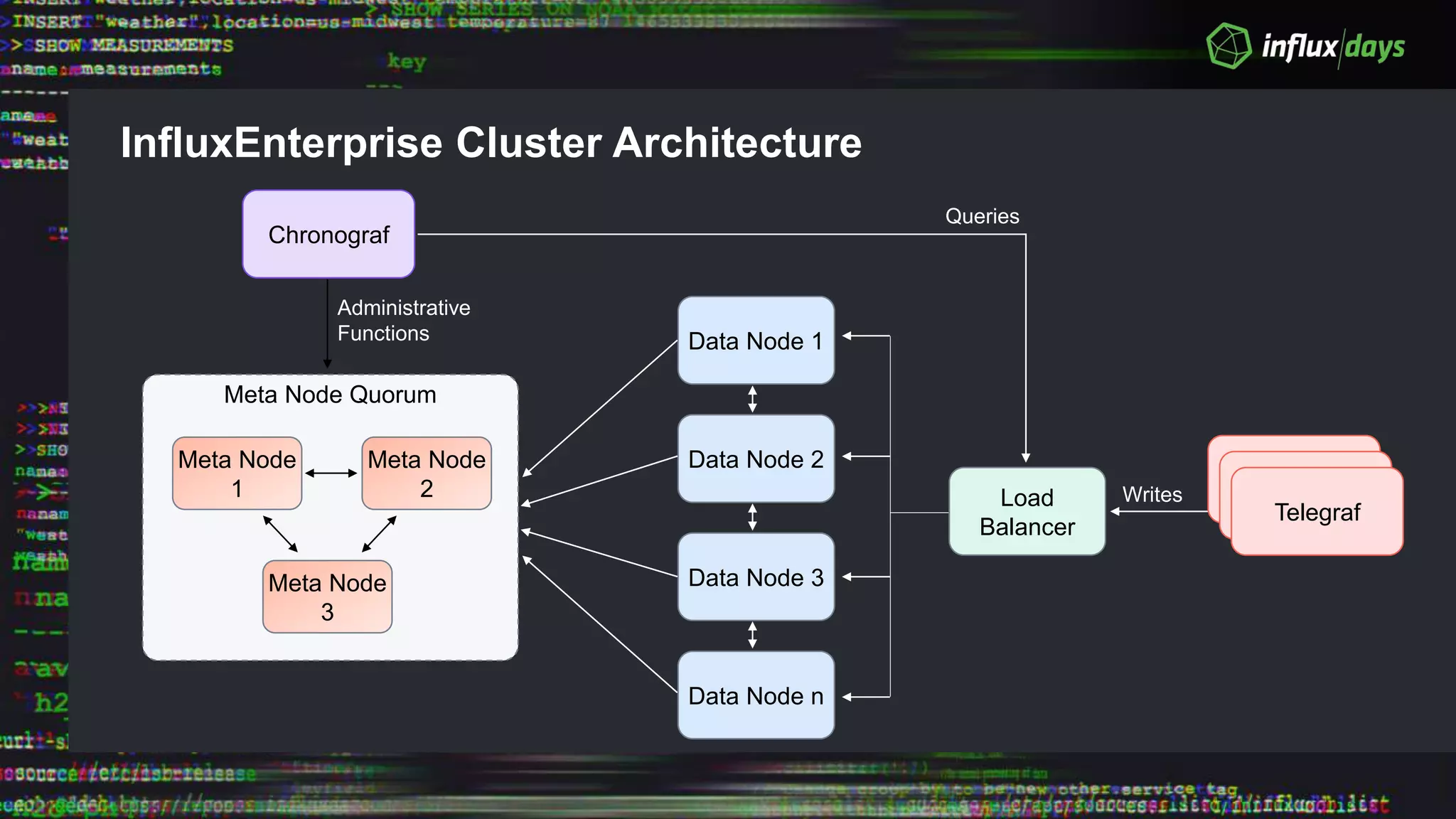
    InfluxEnterprise Cluster Architecture Chronograf DataNode 1 Data Node 2 Data Node 3 Data Node n Telegraf Telegraf Telegraf Meta Node Quorum Meta Node 1 Meta Node 2 Meta Node 3 Administrative Functions Load Balancer Writes Queries
  • 5.
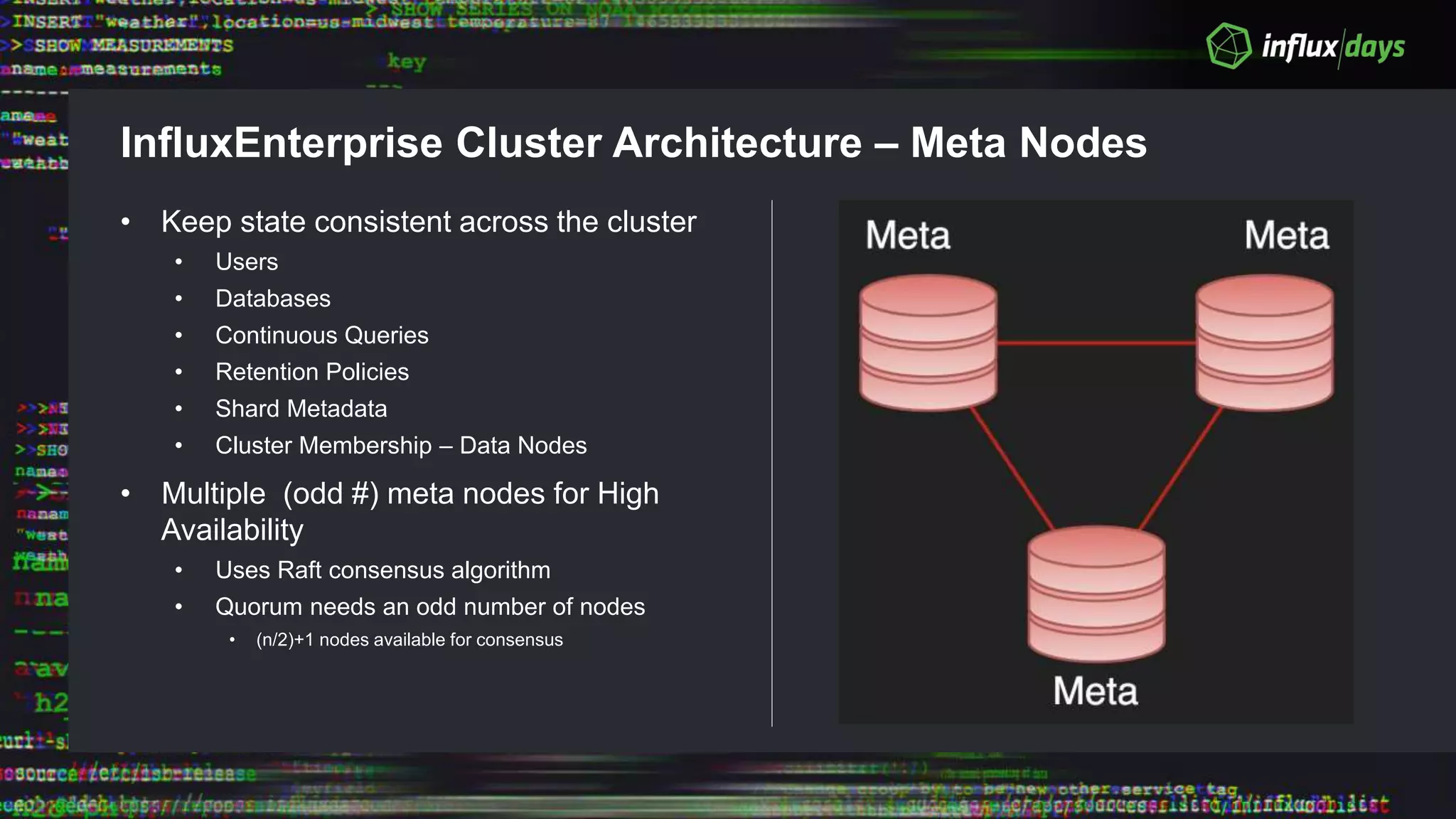
    InfluxEnterprise Cluster Architecture– Meta Nodes • Keep state consistent across the cluster • Users • Databases • Continuous Queries • Retention Policies • Shard Metadata • Cluster Membership – Data Nodes • Multiple (odd #) meta nodes for High Availability • Uses Raft consensus algorithm • Quorum needs an odd number of nodes • (n/2)+1 nodes available for consensus
  • 6.
    InfluxEnterprise Cluster Architecture– Data Nodes • Data nodes hold all the raw time series data and metadata including: • Measurements • Tag keys and values • Field keys and values • Do not participate in consensus
  • 7.
    InfluxEnterprise Clustering Meta Nodes •CPU: 1-2 cores • RAM: 512 MB – 1 GB • Disk: 1 HDD of any size • Can be run in a VM or container Data Nodes • CPU: 8+ cores • RAM: 64+ GB • Disk: SSD drives for WAL, HH and Data > 1000 IOPS recommended • Network: 10 Gbps NIC
  • 8.
    OS & Hosts •No Specific OS Tuning Required • Bare metal, Virtual Machines or Containers • Consider 70% utilization a Biz As Usual upper limit. Need head room for • Peak periods • Compaction process • Node failure and re-entry
  • 9.
    High Availability • Replicationfactor set on database retention policy – RF = 1 is possible, not common – RF = 2 or 3 are typical – RF > 3 is possible and can be beneficial • Writes recorded in <RF> number of nodes – Writer chooses consistency for write acknowledgement • Any, One, Quorum, All
  • 10.
    Hinted Handoff Queue •Records replications that couldn’t happen immediately – Node down or unreachable • See how long it takes to fill the hinted handoff queue when a node goes down • That is how long an outage you can handle without losing data • How long do you want to sleep before you get paged? • If not long enough increase HH Queue size
  • 11.
    Horizonal Scalability • IfRF < Node # there are resources available for partitioning • Data is partitioned into Shards – Shard count is derived from RF and Node # • Almost Node#/RF number of shards – but not quite – Hash(Measurement,Tags)->Shard – Shard is replicated across RF nodes
  • 12.
  • 13.
    You decide what’s important! • Replicateenough to meet you availability requirements • Over-replicate to improve query performance – Expends resources on processing writes to assist, if not favor, reads
  • 14.
  • 15.
    Multi DC Replication#1 Data Center 1 Firewall/ Load Balancer Data Node 1 Data Node 2 Telegraf Data Center 2 Firewall/ Load Balancer Data Node 1 Data Node 2 Telegraf
  • 16.
    Data Center 1 Firewall/ LoadBalancer Data Node 1 Data Node 2 Telegraf Message Bus Multi DC Replication #2 Data Center 2 Firewall/ Load Balancer Data Node 1 Data Node 2 Telegraf Telegraf
  • 17.
    Data Center 1 LoadBalancer Data Center 2 Data Nodes Data Nodes Data Nodes Data Nodes Data Nodes Data Nodes Data Nodes Kapacitor Load Balancer Data Nodes Data Nodes Data Nodes Data Nodes Data Nodes Data Nodes Data Nodes Kapacitor Multi DC Replication #3
  • 18.
    Data Center 1 KapacitorTelegraf Telegraf TelegrafInfluxDB OSS Data Center 2 KapacitorTelegraf Telegraf Telegraf InfluxDB OSS Data Center n KapacitorTelegraf Telegraf Telegraf InfluxDB OSS Influx Enterprise Data Node 1 Data Node 2 Data Node 3 Data Node n Meta Node Quorum Meta Node 1 Meta Node 2 Meta Node 3 Firewall/ Load Balancer Hierarchical Relationship InfluxDB Enterprise
  • 19.
    Data Center 1 Firewall/ LoadBalancer Data Node 1 Data Node 2 Telegraf Message Bus Application Domain Level Sharding Data Center 2 Firewall/ Load Balancer Data Node 1 Data Node 2 Telegraf {A,B} {A} {B}
  • 20.
  • 21.
    Dogfooding! Data Node 1 Telegraf1 Data Node N Telegraf N Influx Enterprise Influx DB Influx OSS Chronograf

Editor's Notes

  • #6 Typically 3 Meta Nodes Could be 5, 7 etc.
  • #7 SSD’s for InfluxDB - WAL, HHQ & Data
  • #8 We can run (and cluster) on much smaller but typically when we are talking about enterprise cluster we are talking high vols.
  • #9 But really do need SSDs
  • #11 Anti-Entropy will get cluster back in sync if HHQ doesn’t work out
  • #13 Not something you particular need to worry about Replication takes precedence Then want even distribution of work without needless, naive shard count
  • #17 Common Message Bus options: Kafka NATS RabbitMQ Durable Queue Subscriptions Benefit over Telegraf fanout is separation of concerns (don’t conceptually overload a T with collection and knowledge of cluster)
  • #18 Optional use of Message Bus Need to be careful re multi-master (best where there is clear write ownership but shared read) Subscriptions aren’t durable.
  • #20 Different clusters for different areas of the data space. Influx sharding isn’t configurable Reads (queries) need to follow same path as writes – not always easy and not (in engine) aggregation but client aggregation of joined data Useful in specific situations (hot instruments being traded) Not easily flexible but at the limit might be the only way forward
  • #21 Who will guard the guards themselves?
  • #22 Use Influx to monitor Influx