Archetypes 
Tools for developing personal narratives and myth making
What is an ARCHETYPE? 
An archetype is a typical character, an action or a situation that 
seems to represent such universal patterns of human nature. 
An archetype, also known as universal symbol, may be a 
character, a theme, a symbol or even a setting. Many works of 
art are shaped by the archetypes. 
Researchers have been able to collect & compare the myths, 
legends, and religions of cultures from around the world. They 
have been fascinated to discover that for centuries, people who 
had no contact with each other at all had passed down stories 
whose characters and events were strikingly similar. Many 
great thinkers have tried to explain this phenomenon. Noted 
psychoanalyst Carl Jung introduced a theory that humans have 
a collective unconscious, which means that there is a store of 
information that we, as humans, somehow hold. This collection 
of information includes archetypes, or symbolic figures. 
Archetypes influence the way we think and behave, as people 
follow the same patterns throughout time and around the world.
Let’s look at some 
examples of archetypes… 
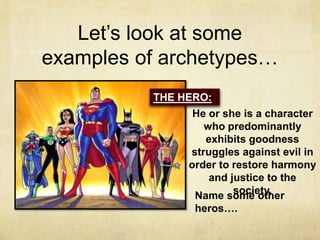
THE HERO: 
He or she is a character 
who predominantly 
exhibits goodness 
struggles against evil in 
order to restore harmony 
and justice to the 
society. 
Name some other 
heros….
The protector 
and leader that 
keeps order and 
often sets laws 
or rules. Many 
times the hero 
has to break the 
rules to 
complete their 
call to 
adventure/quest. 
The Father Figure:
The Mother Figure: 
The mother archetype shows 
itself in lots of ways. The 
Great Mother is an archetype 
of feminine mystery & power 
who appears in forms as 
diverse as Mother Earth and 
The Wiked Witch. Such 
character may be 
represented as Fairy 
Mother who guides and 
directs a child, Mother 
Earth who contacts people 
and offers spiritual and 
emotional nourishment, 
and Step Mother who treats 
their step children roughly. 
Name some 
Mother 
archetypes…
The 
Monster/Villian: 
The antagonist, 
especially in 
opposition to the 
hero. (The anti-hero)
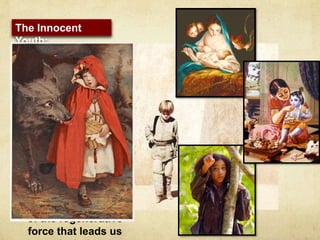
The Innocent 
Youth: 
He or she is 
inexperienced with 
many weaknesses and 
seeks safety of others 
but is liked by others 
because of the trust he 
or she shows on other 
people. Sometimes 
they are known as The 
Divine Child, the child 
represents the 
potential. The Divine 
Child is the archetype 
of the regenerative 
force that leads us 
toward wholeness.
Doppelganger/ The 
Shadow: 
It is everything in us that is 
unconscious, repressed, 
undeveloped and denied. It is 
everything in us that is 
unconscious, repressed, 
undeveloped and denied. A 
common theme involves the Self 
accepting their Shadow, 
metaphorically coming to terms with 
their flaw. That is, The Hero refuses 
to kill the Shadow, given the 
opportunity, or outright refuses to 
fight it. In the Vampire Diaries, Elena 
and Katherine are doppelgangers. 
Stephen and Silas are also
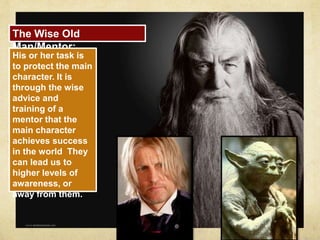
The Wise Old 
Man/Mentor: 
His or her task is 
to protect the main 
character. It is 
through the wise 
advice and 
training of a 
mentor that the 
main character 
achieves success 
in the world They 
can lead us to 
higher levels of 
awareness, or 
away from them.
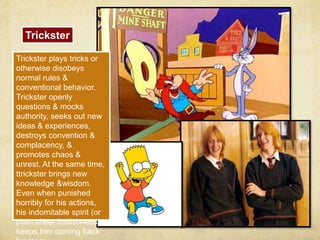
Trickster 
: 
Trickster plays tricks or 
otherwise disobeys 
normal rules & 
conventional behavior. 
Trickster openly 
questions & mocks 
authority, seeks out new 
ideas & experiences, 
destroys convention & 
complacency, & 
promotes chaos & 
unrest. At the same time, 
ttrickster brings new 
knowledge &wisdom. 
Even when punished 
horribly for his actions, 
his indomitable spirit (or 
plain sheer foolishness) 
keeps him coming back 
for more.
The 
Underdog: 
Characters who are always in the 
wrong place at the wrong time, but 
who usually win something of value 
in the end.
The Outcast: 
A Figure banished from a 
social group for some crime 
against his fellow man (could 
be falsely accused of a crime 
or could choose to banish 
himself from guilt).
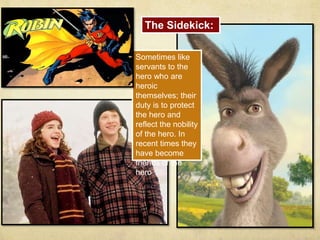
The Sidekick: 
Sometimes like 
servants to the 
hero who are 
heroic 
themselves; their 
duty is to protect 
the hero and 
reflect the nobility 
of the hero. In 
recent times they 
have become 
friends of the 
hero
What role do you see yourself 
in? 
What about your friends and 
family? Which characters do they 
play in your life? 
As you develop your personal 
narrative work, how can the 
archetypes help you? 
You will need to be able to tell me 
about the archetypes you use in 
your artwork.

Archetypes

  • 1.
    Archetypes Tools fordeveloping personal narratives and myth making
  • 2.
    What is anARCHETYPE? An archetype is a typical character, an action or a situation that seems to represent such universal patterns of human nature. An archetype, also known as universal symbol, may be a character, a theme, a symbol or even a setting. Many works of art are shaped by the archetypes. Researchers have been able to collect & compare the myths, legends, and religions of cultures from around the world. They have been fascinated to discover that for centuries, people who had no contact with each other at all had passed down stories whose characters and events were strikingly similar. Many great thinkers have tried to explain this phenomenon. Noted psychoanalyst Carl Jung introduced a theory that humans have a collective unconscious, which means that there is a store of information that we, as humans, somehow hold. This collection of information includes archetypes, or symbolic figures. Archetypes influence the way we think and behave, as people follow the same patterns throughout time and around the world.
  • 3.
    Let’s look atsome examples of archetypes… THE HERO: He or she is a character who predominantly exhibits goodness struggles against evil in order to restore harmony and justice to the society. Name some other heros….
  • 4.
    The protector andleader that keeps order and often sets laws or rules. Many times the hero has to break the rules to complete their call to adventure/quest. The Father Figure:
  • 5.
    The Mother Figure: The mother archetype shows itself in lots of ways. The Great Mother is an archetype of feminine mystery & power who appears in forms as diverse as Mother Earth and The Wiked Witch. Such character may be represented as Fairy Mother who guides and directs a child, Mother Earth who contacts people and offers spiritual and emotional nourishment, and Step Mother who treats their step children roughly. Name some Mother archetypes…
  • 6.
    The Monster/Villian: Theantagonist, especially in opposition to the hero. (The anti-hero)
  • 7.
    The Innocent Youth: He or she is inexperienced with many weaknesses and seeks safety of others but is liked by others because of the trust he or she shows on other people. Sometimes they are known as The Divine Child, the child represents the potential. The Divine Child is the archetype of the regenerative force that leads us toward wholeness.
  • 8.
    Doppelganger/ The Shadow: It is everything in us that is unconscious, repressed, undeveloped and denied. It is everything in us that is unconscious, repressed, undeveloped and denied. A common theme involves the Self accepting their Shadow, metaphorically coming to terms with their flaw. That is, The Hero refuses to kill the Shadow, given the opportunity, or outright refuses to fight it. In the Vampire Diaries, Elena and Katherine are doppelgangers. Stephen and Silas are also
  • 9.
    The Wise Old Man/Mentor: His or her task is to protect the main character. It is through the wise advice and training of a mentor that the main character achieves success in the world They can lead us to higher levels of awareness, or away from them.
  • 10.
    Trickster : Tricksterplays tricks or otherwise disobeys normal rules & conventional behavior. Trickster openly questions & mocks authority, seeks out new ideas & experiences, destroys convention & complacency, & promotes chaos & unrest. At the same time, ttrickster brings new knowledge &wisdom. Even when punished horribly for his actions, his indomitable spirit (or plain sheer foolishness) keeps him coming back for more.
  • 11.
    The Underdog: Characterswho are always in the wrong place at the wrong time, but who usually win something of value in the end.
  • 12.
    The Outcast: AFigure banished from a social group for some crime against his fellow man (could be falsely accused of a crime or could choose to banish himself from guilt).
  • 13.
    The Sidekick: Sometimeslike servants to the hero who are heroic themselves; their duty is to protect the hero and reflect the nobility of the hero. In recent times they have become friends of the hero
  • 14.
    What role doyou see yourself in? What about your friends and family? Which characters do they play in your life? As you develop your personal narrative work, how can the archetypes help you? You will need to be able to tell me about the archetypes you use in your artwork.