
z
Arabic 4
Basics on
Al-iDaafa
www.alif-zaim.blogspot.com
‫ذ‬.‫الزعيم‬ ‫محمد‬
z
1- Preliminary notes
A- Definition
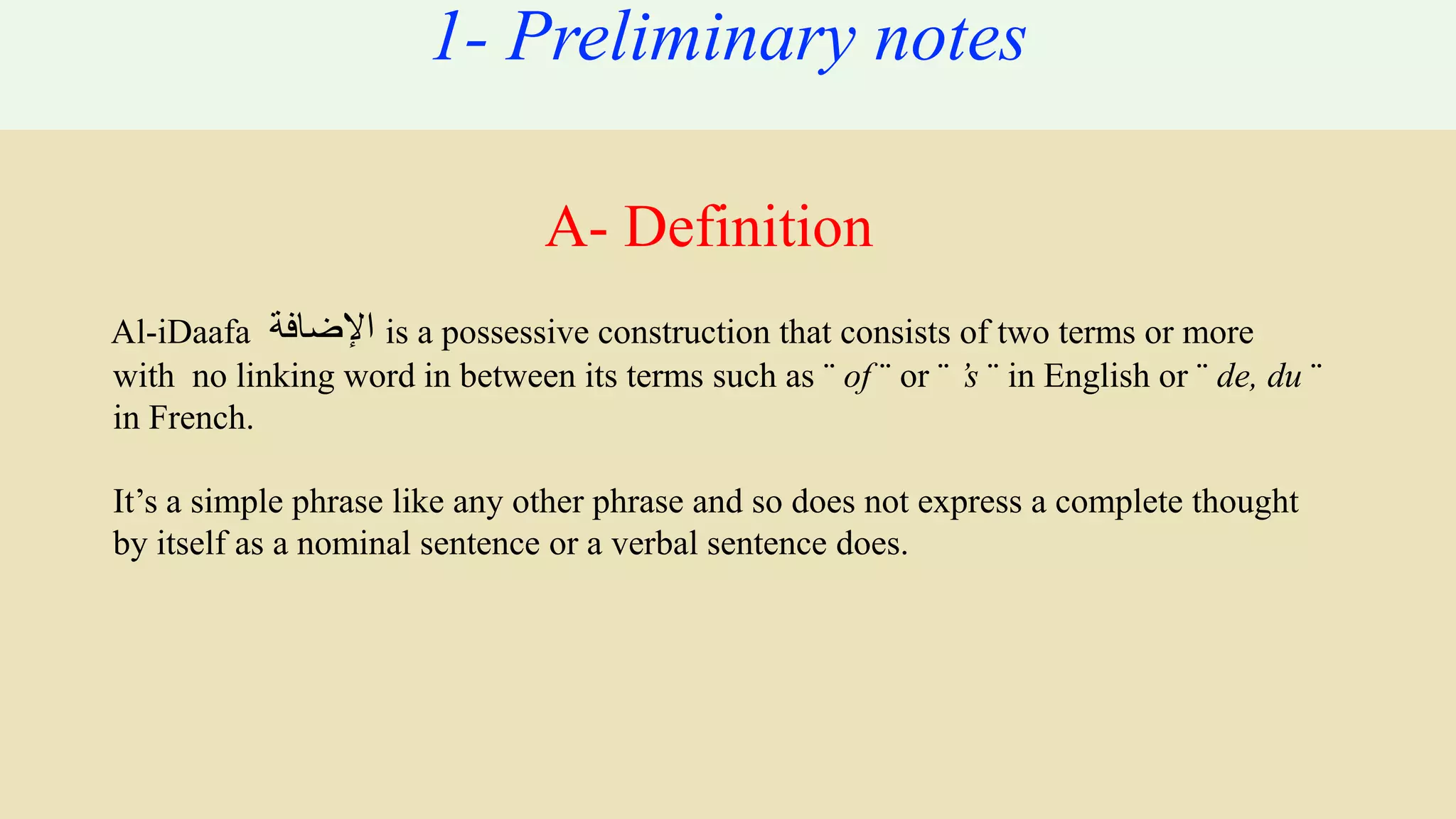
Al-iDaafa ‫اإلضافة‬ is a possessive construction that consists of two terms or more
with no linking word in between its terms such as ¨ of ¨ or ¨ ’s ¨ in English or ¨ de, du ¨
in French.
It’s a simple phrase like any other phrase and so does not express a complete thought
by itself as a nominal sentence or a verbal sentence does.
z
B- Types of al-iDaafa
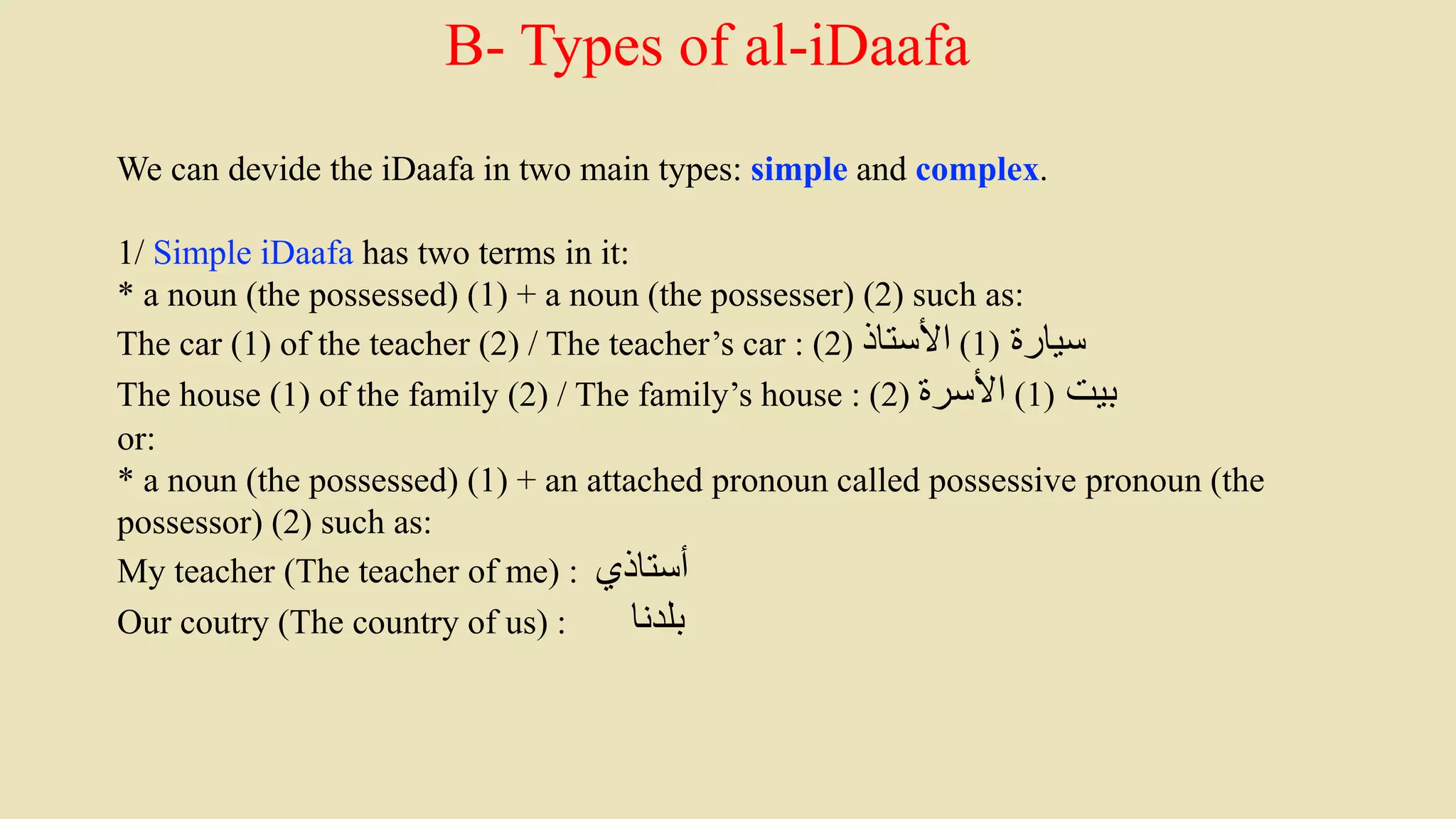
We can devide the iDaafa in two main types: simple and complex.
1/ Simple iDaafa has two terms in it:
* a noun (the possessed) (1) + a noun (the possesser) (2) such as:
The car (1) of the teacher (2) / The teacher’s car : (2) ‫سيارة‬(1)‫األستاذ‬
The house (1) of the family (2) / The family’s house : ‫بيت‬(1)‫األسرة‬(2)
or:
* a noun (the possessed) (1) + an attached pronoun called possessive pronoun (the
possessor) (2) such as:
My teacher (The teacher of me) : ‫أستاذي‬
Our coutry (The country of us) : ‫بلدنا‬
z
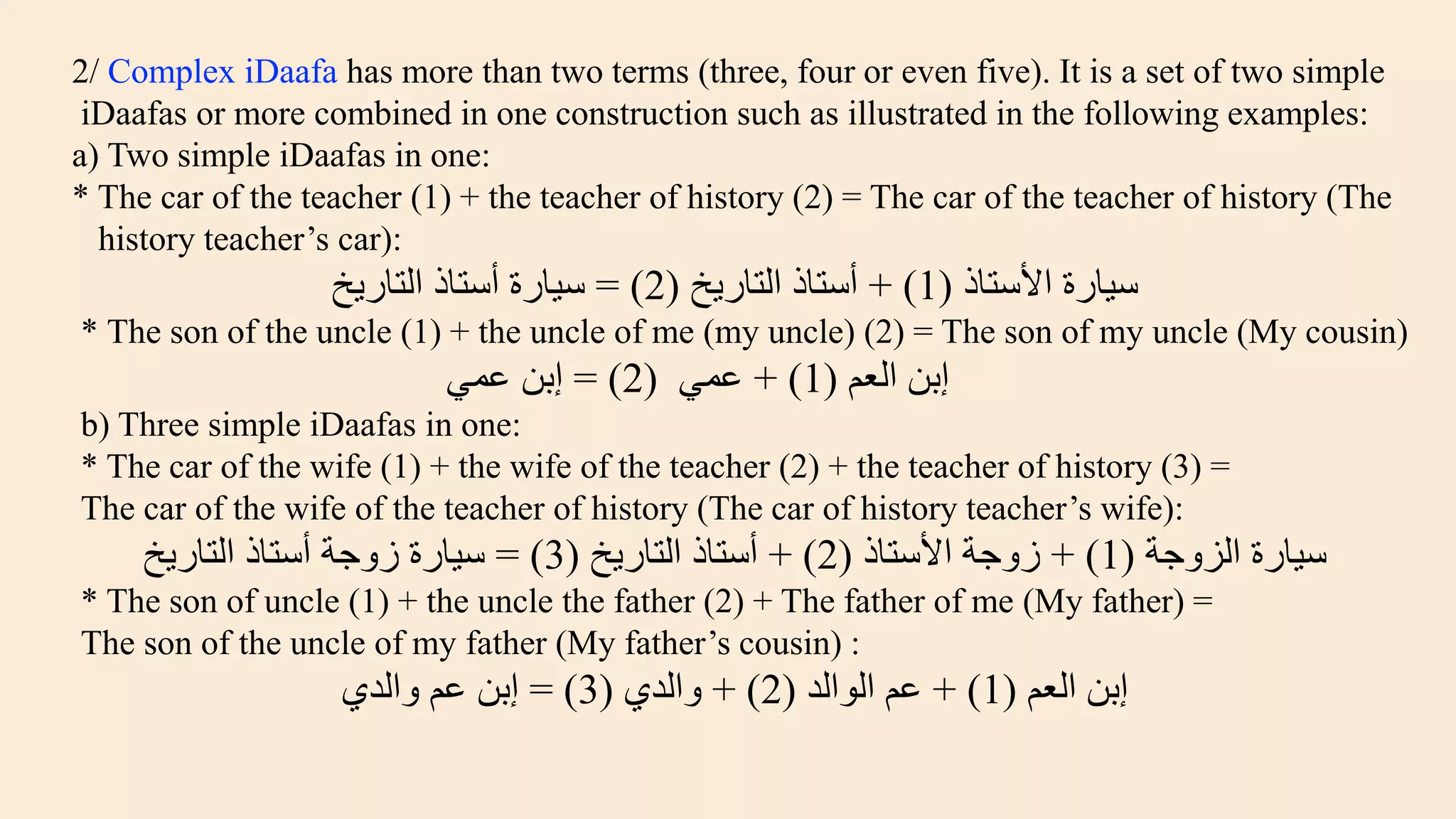
2/ Complex iDaafa has more than two terms (three, four or even five). It is a set of two simple
iDaafas or more combined in one construction such as illustrated in the following examples:
a) Two simple iDaafas in one:
* The car of the teacher (1) + the teacher of history (2) = The car of the teacher of history (The
history teacher’s car):
‫األستاذ‬ ‫سيارة‬(1+ )‫التاريخ‬ ‫أستاذ‬(2= )‫التاريخ‬ ‫أستاذ‬ ‫سيارة‬
* The son of the uncle (1) + the uncle of me (my uncle) (2) = The son of my uncle (My cousin)
‫العم‬ ‫إبن‬(1+ )‫عمي‬(2= )‫إبن‬‫عمي‬
b) Three simple iDaafas in one:
* The car of the wife (1) + the wife of the teacher (2) + the teacher of history (3) =
The car of the wife of the teacher of history (The car of history teacher’s wife):
‫الزوجة‬ ‫سيارة‬(1+ )‫األستاذ‬ ‫زوجة‬(2+ )‫التاريخ‬ ‫أستاذ‬(3= )‫التاريخ‬ ‫أستاذ‬ ‫زوجة‬ ‫سيارة‬
* The son of uncle (1) + the uncle the father (2) + The father of me (My father) =
The son of the uncle of my father (My father’s cousin) :
‫إبن‬‫العم‬(1+ )‫الوالد‬ ‫عم‬(2+ )‫والدي‬(3= )‫إبن‬‫والدي‬ ‫عم‬
z
2- iDaafa grammar analysis
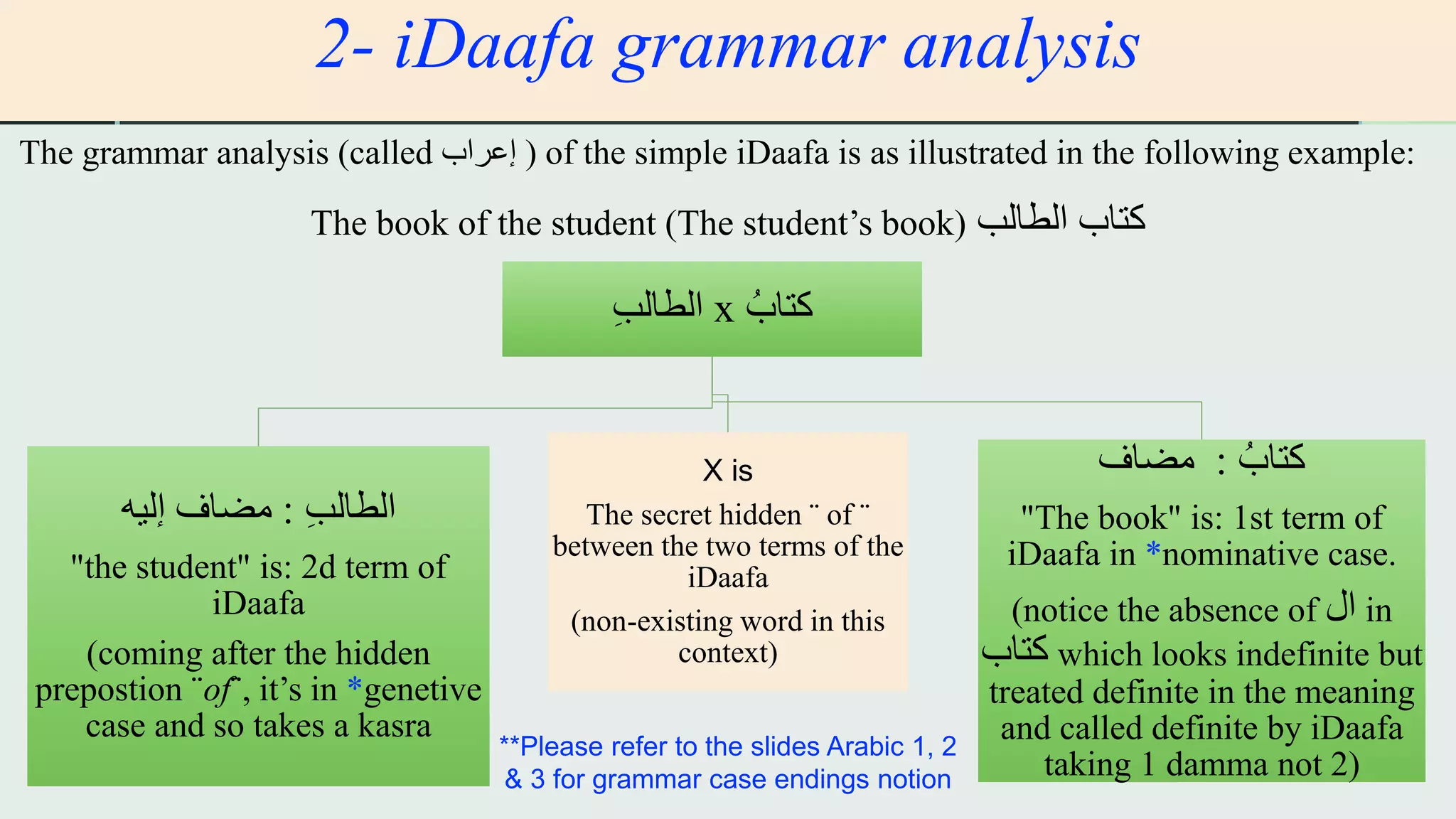
The grammar analysis (called ‫إعراب‬ ) of the simple iDaafa is as illustrated in the following example:
The book of the student (The student’s book) ‫الطالب‬ ‫كتاب‬
**Please refer to the slides Arabic 1, 2
& 3 for grammar case endings notion
‫كتاب‬x‫الطالب‬
‫الطالب‬:‫إليه‬ ‫مضاف‬
"the student" is: 2d term of
iDaafa
(coming after the hidden
prepostion ¨of¨, it’s in *genetive
case and so takes a kasra
X is
The secret hidden ¨ of ¨
between the two terms of the
iDaafa
(non-existing word in this
context)
‫كتاب‬:‫مضاف‬
"The book" is: 1st term of
iDaafa in *nominative case.
(notice the absence of ‫ال‬ in
‫كتاب‬ which looks indefinite but
treated definite in the meaning
and called definite by iDaafa
taking 1 damma not 2)
z
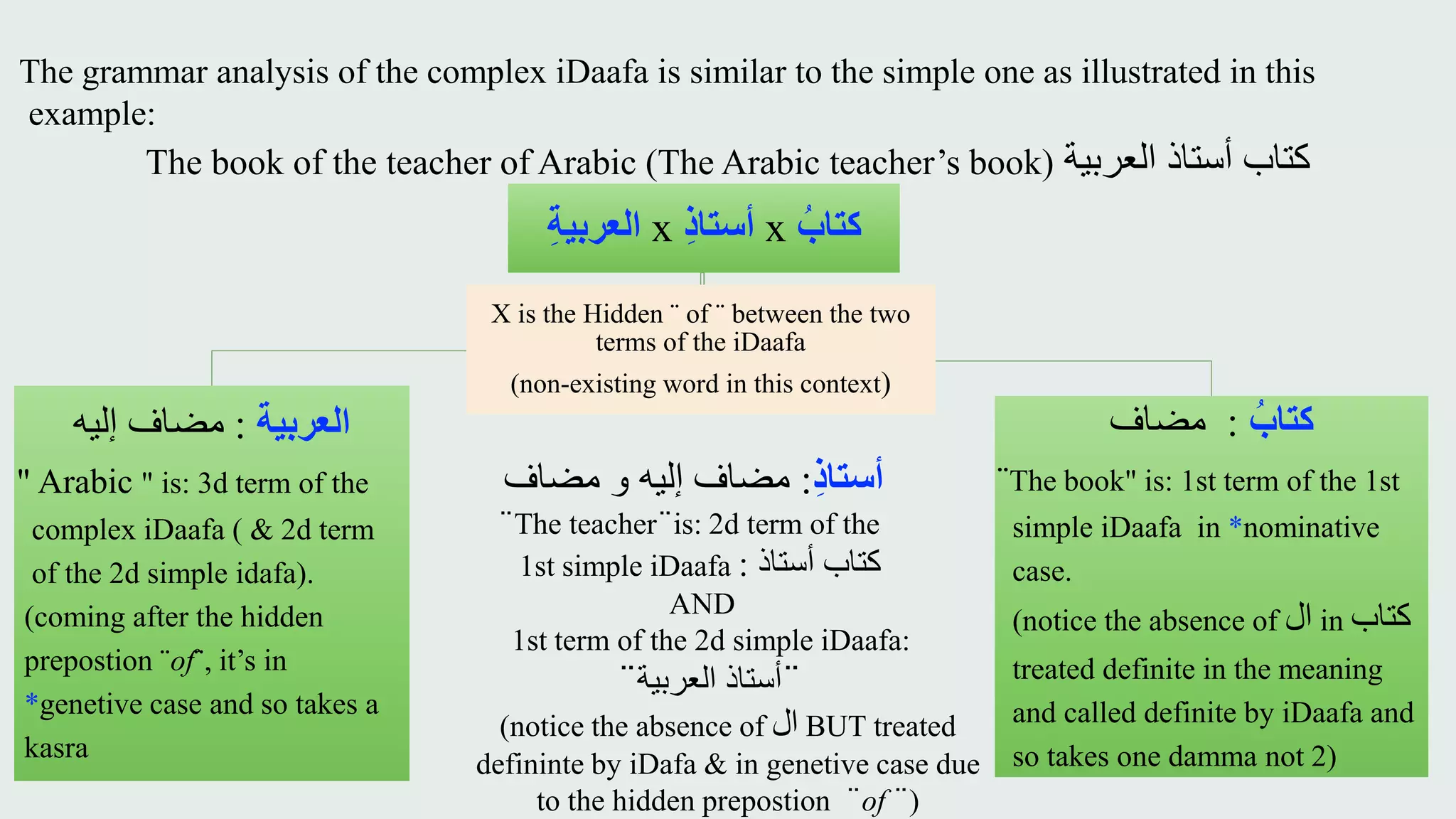
The grammar analysis of the complex iDaafa is similar to the simple one as illustrated in this
example:
The book of the teacher of Arabic (The Arabic teacher’s book) ‫العربية‬ ‫أستاذ‬ ‫كتاب‬
ِ‫أستاذ‬:‫مضاف‬ ‫و‬ ‫إليه‬ ‫مضاف‬
¨ ¨The teacher¨is: 2d term of the
1st simple iDaafa ‫أستاذ‬ ‫كتاب‬:
AND
1st term of the 2d simple iDaafa:
¨‫العربية‬ ‫أستاذ‬¨
(notice the absence of ‫ال‬ BUT treated
defininte by iDafa & in genetive case due
to the hidden prepostion ¨of ¨)
ِ‫كتاب‬xِ‫أستاذ‬xِ‫العربية‬
‫العربية‬:‫إليه‬ ‫مضاف‬
" Arabic " is: 3d term of the
complex iDaafa ( & 2d term
of the 2d simple idafa).
(coming after the hidden
prepostion ¨of¨, it’s in
*genetive case and so takes a
kasra
X is the Hidden ¨ of ¨ between the two
terms of the iDaafa
(non-existing word in this context)
ِ‫كتاب‬:‫مضاف‬
¨The book" is: 1st term of the 1st
simple iDaafa in *nominative
case.
(notice the absence of ‫ال‬ in ‫كتاب‬
treated definite in the meaning
and called definite by iDaafa and
so takes one damma not 2)
z
3- Possessive pronouns ‫الملكية‬ ‫ضمائر‬
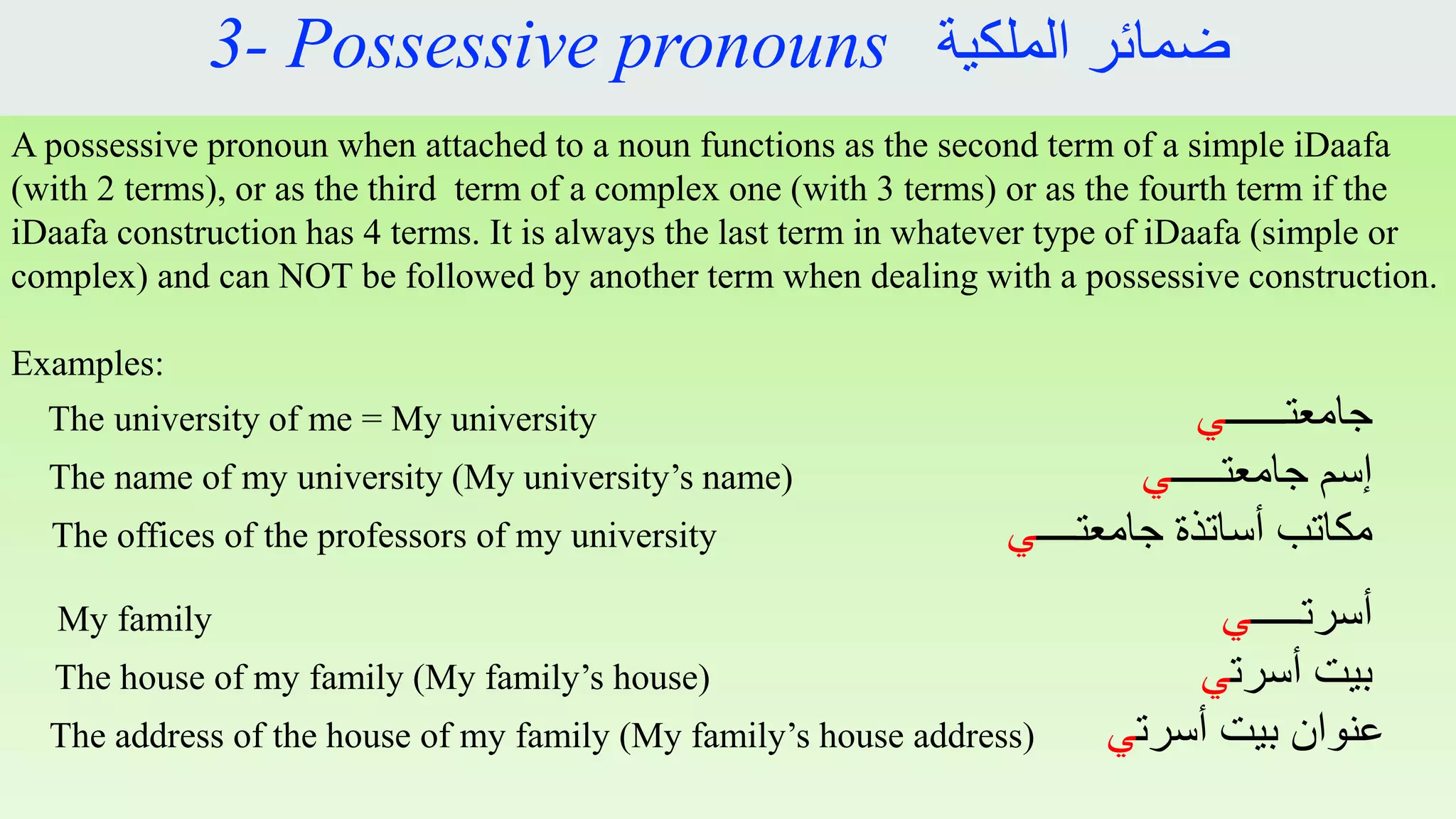
A possessive pronoun when attached to a noun functions as the second term of a simple iDaafa
(with 2 terms), or as the third term of a complex one (with 3 terms) or as the fourth term if the
iDaafa construction has 4 terms. It is always the last term in whatever type of iDaafa (simple or
complex) and can NOT be followed by another term when dealing with a possessive construction.
Examples:
‫جامعتــــــ‬‫ي‬The university of me = My university
‫جامعتـــــ‬ ‫إسم‬‫ي‬The name of my university (My university’s name)
‫جامعتــــ‬ ‫أساتذة‬ ‫مكاتب‬‫ي‬The offices of the professors of my university
‫أسرتـــــ‬‫ي‬My family
‫أسرت‬ ‫بيت‬‫ي‬The house of my family (My family’s house)
‫أسرت‬ ‫بيت‬ ‫عنوان‬‫ي‬The address of the house of my family (My family’s house address)
z
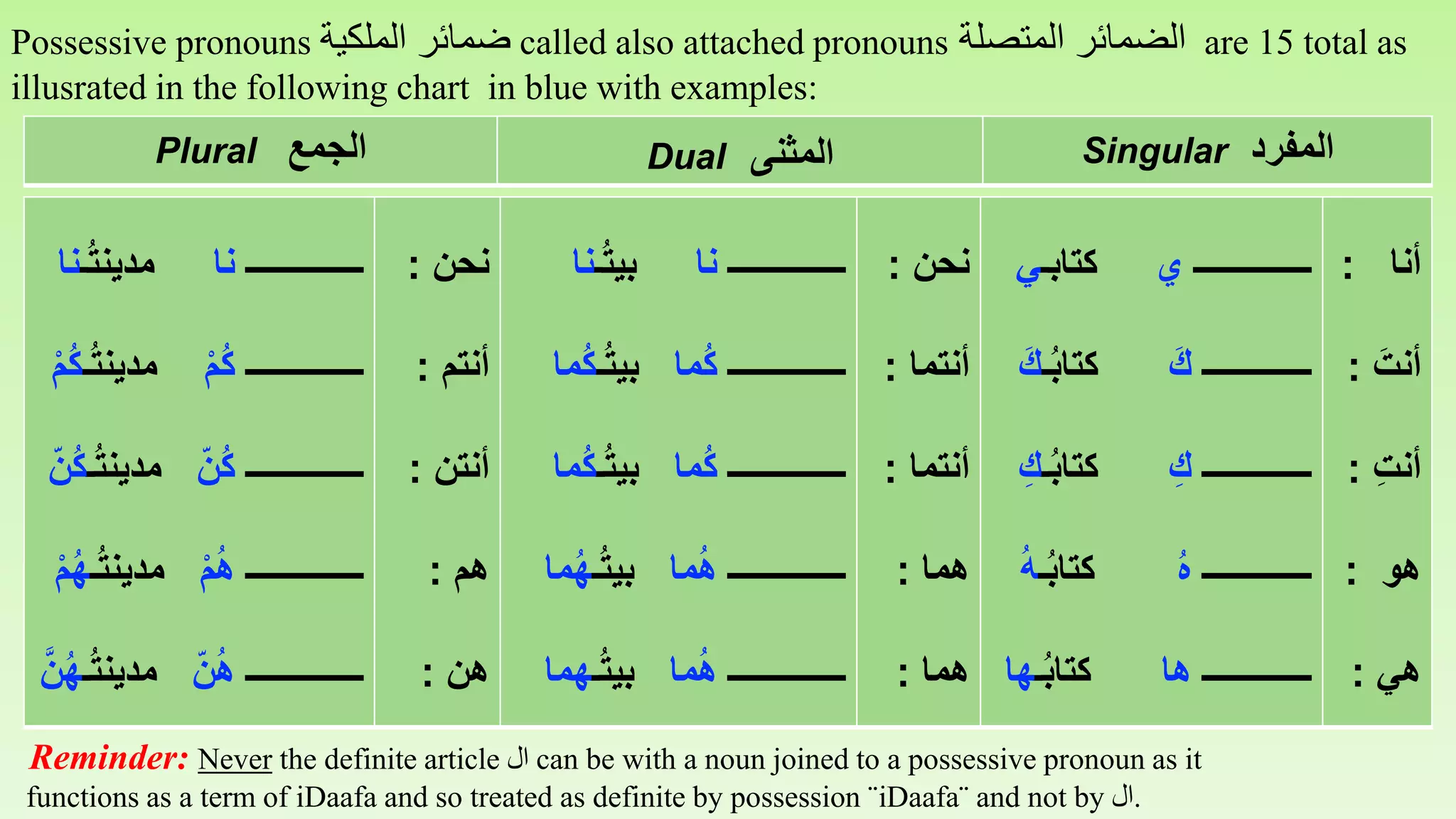
Possessive pronouns ‫الملكية‬ ‫ضمائر‬ called also attached pronouns ‫المتصلة‬ ‫الضمائر‬ are 15 total as
illusrated in the following chart in blue with examples:
Reminder: Never the definite article ‫ال‬ can be with a noun joined to a possessive pronoun as it
functions as a term of iDaafa and so treated as definite by possession ¨iDaafa¨ and not by ‫.ال‬
‫ــــــــــــــ‬‫نا‬‫ـ‬ُ‫ت‬‫مدين‬‫ن‬‫ا‬
‫ــــــــــــــ‬ْ‫م‬ُ‫ك‬ُ‫ت‬‫مدين‬‫ـ‬ْ‫م‬ُ‫ك‬
‫ــــــــــــــ‬ّ‫ُن‬‫ك‬ُ‫ت‬‫مدين‬‫ـ‬ّ‫ُن‬‫ك‬
‫ــــــــــــــ‬ْ‫م‬ُ‫ه‬ُ‫ت‬‫مدين‬‫ـ‬ْ‫م‬ُ‫ه‬
‫ــــــــــــــ‬ّ‫ن‬ُ‫ه‬ُ‫ت‬‫مدين‬‫ـ‬‫ن‬ُ‫ه‬
‫نحن‬:
‫أنتم‬:
‫أنتن‬:
‫هم‬:
‫هن‬:
‫ــــــــــــــ‬‫نا‬‫ـ‬ُ‫ت‬‫بي‬‫نا‬
‫ــــــــــــــ‬‫ُما‬‫ك‬‫ـ‬ُ‫ت‬‫بي‬ُ‫ك‬‫ما‬
‫ــــــــــــــ‬‫ما‬ُ‫ه‬‫ـ‬ُ‫ت‬‫بي‬ُ‫ه‬‫ما‬
‫ــــــــــــــ‬‫ما‬ُ‫ه‬‫ـ‬ُ‫ت‬‫بي‬‫هما‬
‫نحن‬:
‫أنتما‬:
‫أنتما‬:
‫هما‬:
‫هما‬:
‫ــــــــــــــ‬‫ي‬‫كتابـ‬‫ي‬
‫ـــــــــــــ‬‫ك‬‫ـ‬ُ‫ب‬‫كتا‬‫ك‬
‫ـــــــــــــ‬ُ‫ه‬‫ـ‬ُ‫ب‬‫كتا‬ُ‫ه‬
‫ـــــــــــــ‬‫ها‬‫ـ‬ُ‫ب‬‫كتا‬‫ها‬
‫أنا‬:
‫أنت‬:
‫أنت‬:
‫هو‬:
‫هي‬:
‫الجمع‬Plural ‫المثنى‬Dual ‫المفرد‬Singular
z
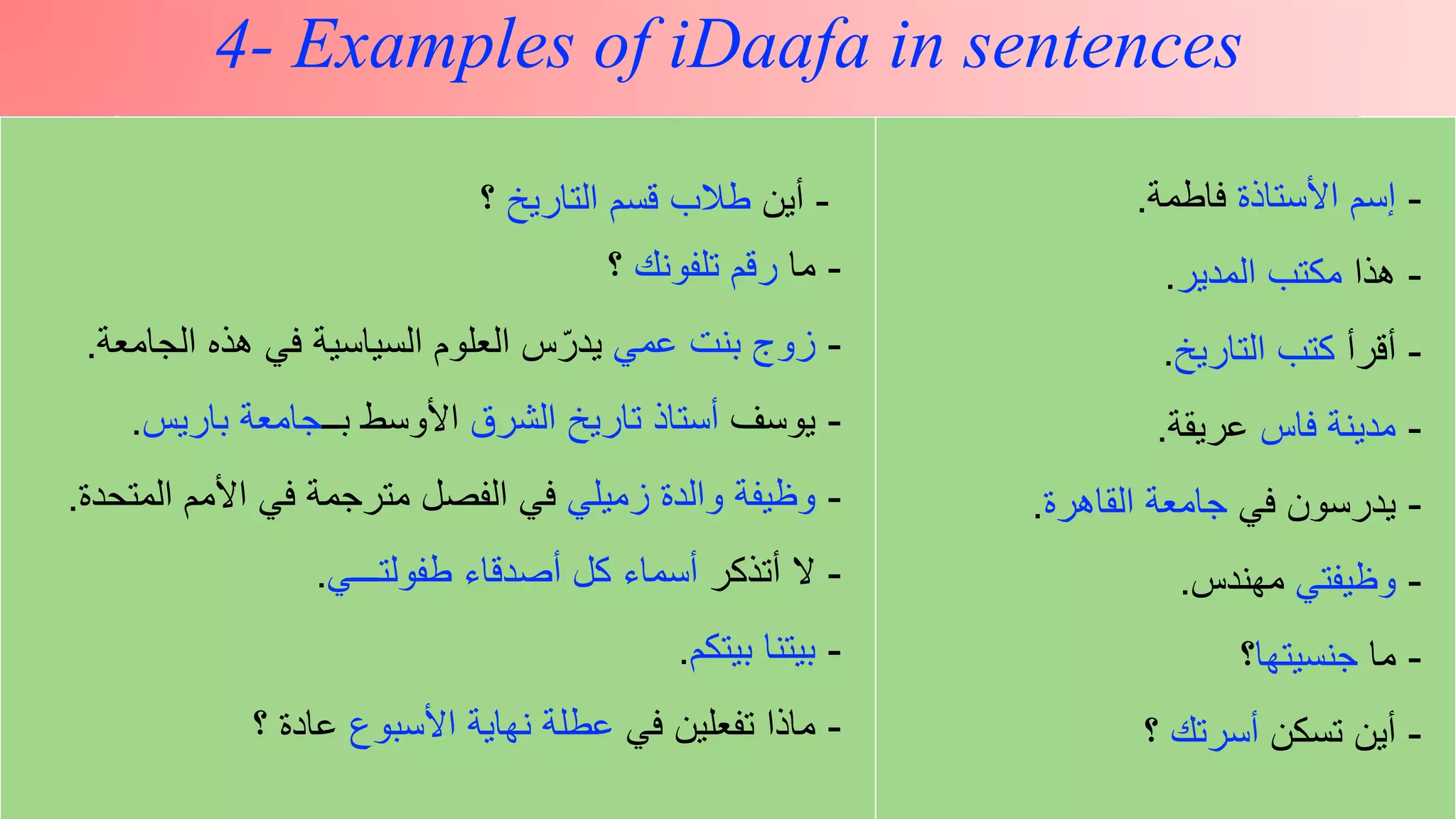
4- Examples of iDaafa in sentences
-‫أين‬‫التاريخ‬ ‫قسم‬ ‫طالب‬‫؟‬
-‫ما‬‫تلفونك‬ ‫رقم‬‫؟‬
-‫عمي‬ ‫بنت‬ ‫زوج‬‫الجامعة‬ ‫هذه‬ ‫في‬ ‫السياسية‬ ‫العلوم‬ ‫س‬ّ‫يدر‬.
-‫يوسف‬‫الشرق‬ ‫تاريخ‬ ‫أستاذ‬‫بــ‬ ‫األوسط‬‫باريس‬ ‫جامعة‬.
-‫زميلي‬ ‫والدة‬ ‫وظيفة‬‫المتح‬ ‫األمم‬ ‫في‬ ‫مترجمة‬ ‫الفصل‬ ‫في‬‫دة‬.
-‫أتذكر‬ ‫ال‬‫طفولتـــي‬ ‫أصدقاء‬ ‫كل‬ ‫أسماء‬.
-‫بيتكم‬ ‫بيتنا‬.
-‫في‬ ‫تفعلين‬ ‫ماذا‬‫األسبوع‬ ‫نهاية‬ ‫عطلة‬‫؟‬ ‫عادة‬
-‫األستاذة‬ ‫إسم‬‫فاطمة‬.
-‫هذا‬‫المدير‬ ‫مكتب‬.
-‫أقرأ‬‫التاريخ‬ ‫كتب‬.
-‫فاس‬ ‫مدينة‬‫عريقة‬.
-‫في‬ ‫يدرسون‬‫القاهرة‬ ‫جامعة‬.
-‫وظيفتي‬‫مهندس‬.
-‫ما‬‫جنسيتها‬‫؟‬
-‫تسكن‬ ‫أين‬‫أسرتك‬‫؟‬
z
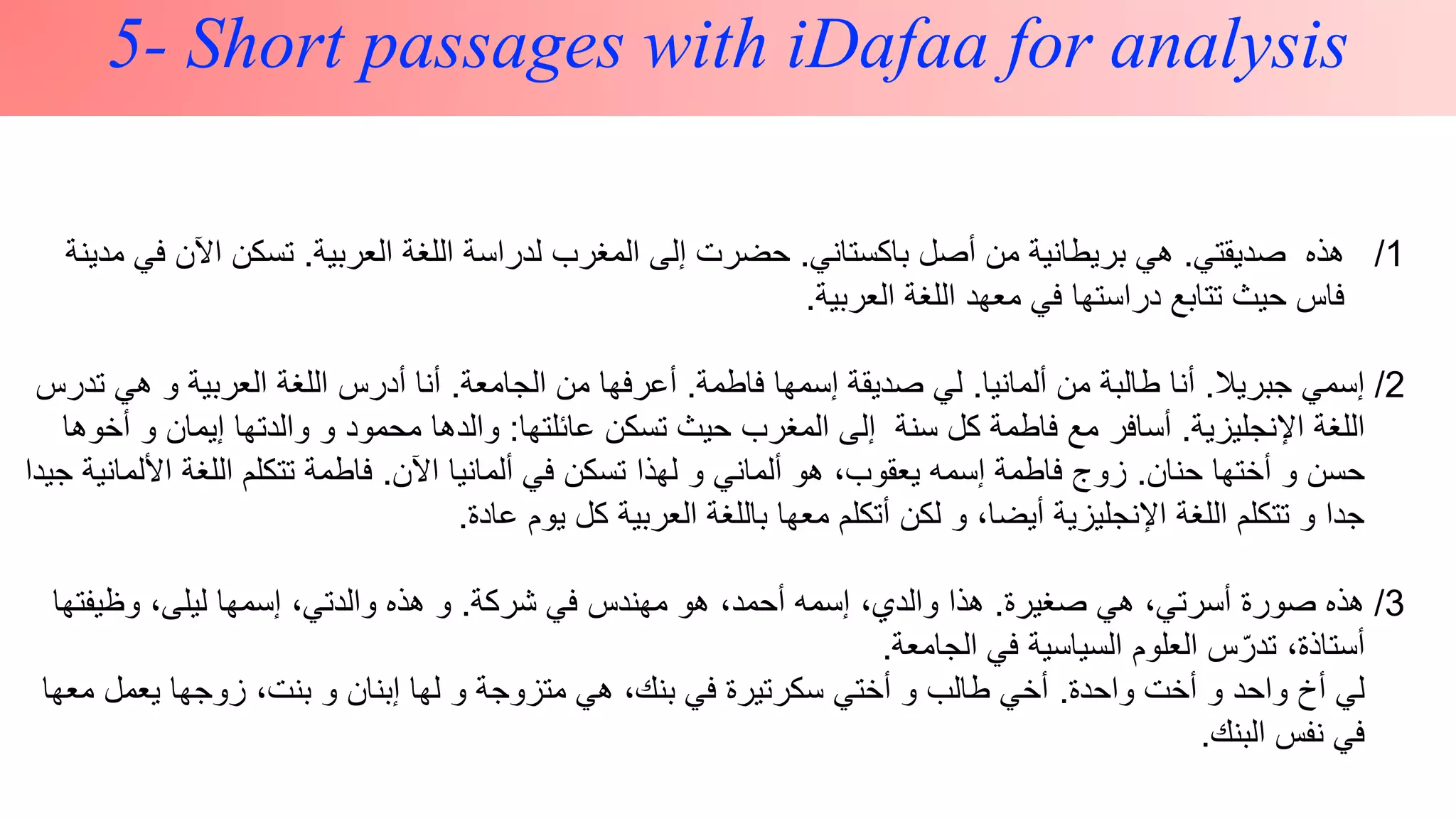
5- Short passages with iDafaa for analysis
/1‫صديقتي‬ ‫هذه‬.‫باكستاني‬ ‫أصل‬ ‫من‬ ‫بريطانية‬ ‫هي‬.‫العربية‬ ‫اللغة‬ ‫لدراسة‬ ‫المغرب‬ ‫إلى‬ ‫حضرت‬.‫ف‬ ‫اآلن‬ ‫تسكن‬‫مدينة‬ ‫ي‬
‫العربية‬ ‫اللغة‬ ‫معهد‬ ‫في‬ ‫دراستها‬ ‫تتابع‬ ‫حيث‬ ‫فاس‬.
/2‫جبريال‬ ‫إسمي‬.‫ألمانيا‬ ‫من‬ ‫طالبة‬ ‫أنا‬.‫فاطمة‬ ‫إسمها‬ ‫صديقة‬ ‫لي‬.‫الجامعة‬ ‫من‬ ‫أعرفها‬.‫ت‬ ‫هي‬ ‫و‬ ‫العربية‬ ‫اللغة‬ ‫أدرس‬ ‫أنا‬‫درس‬
‫اإلنجليزية‬ ‫اللغة‬.‫عائلتها‬ ‫تسكن‬ ‫حيث‬ ‫المغرب‬ ‫إلى‬ ‫سنة‬ ‫كل‬ ‫فاطمة‬ ‫مع‬ ‫أسافر‬:‫أ‬ ‫و‬ ‫إيمان‬ ‫والدتها‬ ‫و‬ ‫محمود‬ ‫والدها‬‫خوها‬
‫حنان‬ ‫أختها‬ ‫و‬ ‫حسن‬.‫اآلن‬ ‫ألمانيا‬ ‫في‬ ‫تسكن‬ ‫لهذا‬ ‫و‬ ‫ألماني‬ ‫هو‬ ،‫يعقوب‬ ‫إسمه‬ ‫فاطمة‬ ‫زوج‬.‫األل‬ ‫اللغة‬ ‫تتكلم‬ ‫فاطمة‬‫جيدا‬ ‫مانية‬
‫عادة‬ ‫يوم‬ ‫كل‬ ‫العربية‬ ‫باللغة‬ ‫معها‬ ‫أتكلم‬ ‫لكن‬ ‫و‬ ،‫أيضا‬ ‫اإلنجليزية‬ ‫اللغة‬ ‫تتكلم‬ ‫و‬ ‫جدا‬.
3/‫صغيرة‬ ‫هي‬ ،‫أسرتي‬ ‫صورة‬ ‫هذه‬.‫شركة‬ ‫في‬ ‫مهندس‬ ‫هو‬ ،‫أحمد‬ ‫إسمه‬ ،‫والدي‬ ‫هذا‬.‫وظيفتها‬ ،‫ليلى‬ ‫إسمها‬ ،‫والدتي‬ ‫هذه‬ ‫و‬
‫الجامعة‬ ‫في‬ ‫السياسية‬ ‫العلوم‬ ‫س‬ّ‫تدر‬ ،‫أستاذة‬.
‫واحدة‬ ‫أخت‬ ‫و‬ ‫واحد‬ ‫أخ‬ ‫لي‬.‫معه‬ ‫يعمل‬ ‫زوجها‬ ،‫بنت‬ ‫و‬ ‫إبنان‬ ‫لها‬ ‫و‬ ‫متزوجة‬ ‫هي‬ ،‫بنك‬ ‫في‬ ‫سكرتيرة‬ ‫أختي‬ ‫و‬ ‫طالب‬ ‫أخي‬‫ا‬
‫البنك‬ ‫نفس‬ ‫في‬.
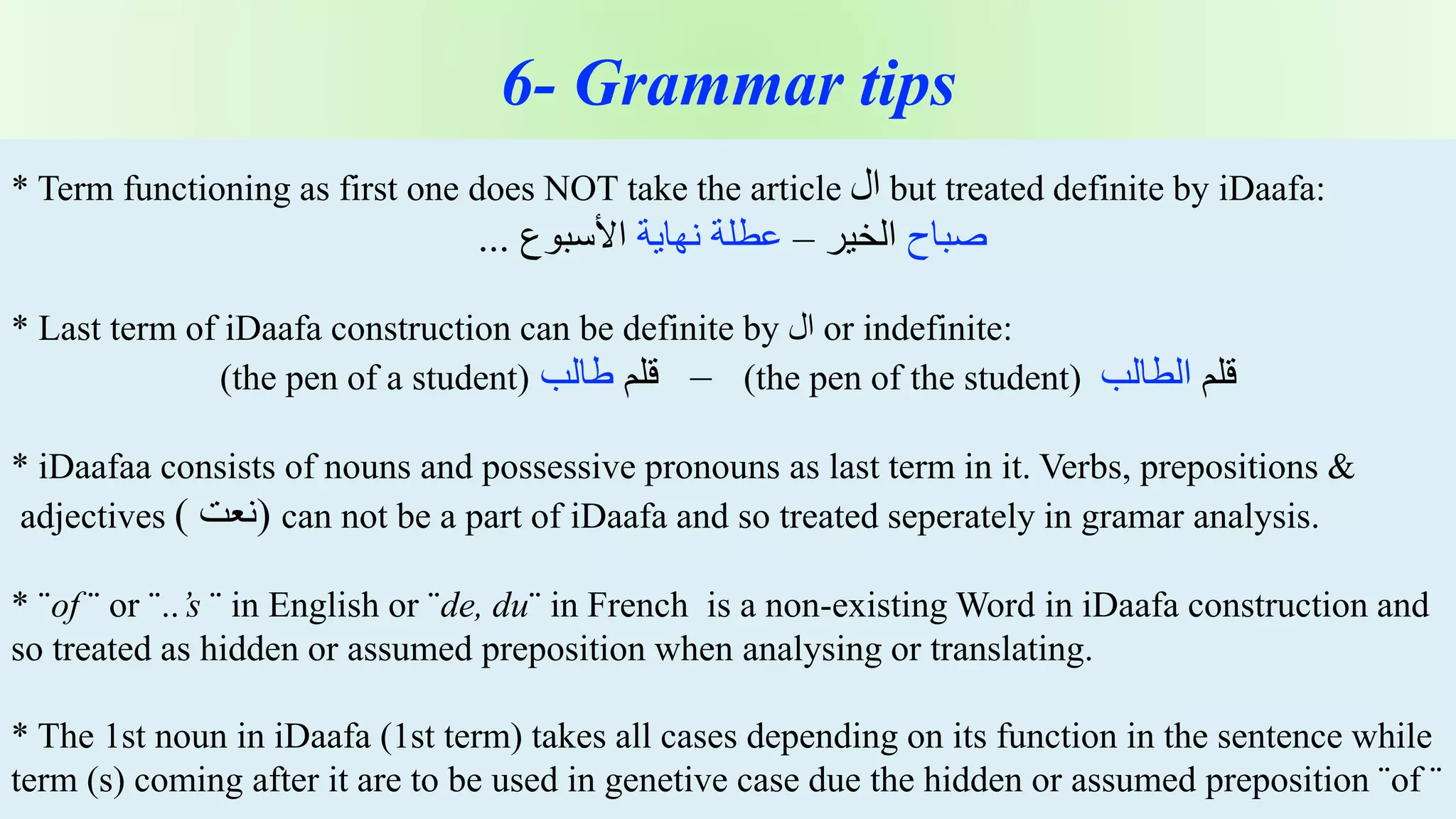
z 6- Grammar tips
* Term functioning as first one does NOT take the article ‫ال‬ but treated definite by iDaafa:
‫صباح‬‫الخير‬–‫عطلة‬‫نهاية‬‫األسبوع‬...
* Last term of iDaafa construction can be definite by ‫ال‬ or indefinite:
‫قلم‬‫الطالب‬(the pen of the student)–‫قلم‬‫طالب‬(the pen of a student)
* iDaafaa consists of nouns and possessive pronouns as last term in it. Verbs, prepositions &
adjectives ( ‫)نعت‬ can not be a part of iDaafa and so treated seperately in gramar analysis.
* ¨of ¨ or ¨..’s ¨ in English or ¨de, du¨ in French is a non-existing Word in iDaafa construction and
so treated as hidden or assumed preposition when analysing or translating.
* The 1st noun in iDaafa (1st term) takes all cases depending on its function in the sentence while
term (s) coming after it are to be used in genetive case due the hidden or assumed preposition ¨of ¨
z
‫النهاية‬
‫تحياتي‬
‫ذ‬.‫الزعيم‬ ‫محمد‬
www.alif-zaim.blogspot.com

Arabic 4 Basics on al-iDaafa الإضافة

  • 1.
  • 2.
    z 1- Preliminary notes A-Definition Al-iDaafa ‫اإلضافة‬ is a possessive construction that consists of two terms or more with no linking word in between its terms such as ¨ of ¨ or ¨ ’s ¨ in English or ¨ de, du ¨ in French. It’s a simple phrase like any other phrase and so does not express a complete thought by itself as a nominal sentence or a verbal sentence does.
  • 3.
    z B- Types ofal-iDaafa We can devide the iDaafa in two main types: simple and complex. 1/ Simple iDaafa has two terms in it: * a noun (the possessed) (1) + a noun (the possesser) (2) such as: The car (1) of the teacher (2) / The teacher’s car : (2) ‫سيارة‬(1)‫األستاذ‬ The house (1) of the family (2) / The family’s house : ‫بيت‬(1)‫األسرة‬(2) or: * a noun (the possessed) (1) + an attached pronoun called possessive pronoun (the possessor) (2) such as: My teacher (The teacher of me) : ‫أستاذي‬ Our coutry (The country of us) : ‫بلدنا‬
  • 4.
    z 2/ Complex iDaafahas more than two terms (three, four or even five). It is a set of two simple iDaafas or more combined in one construction such as illustrated in the following examples: a) Two simple iDaafas in one: * The car of the teacher (1) + the teacher of history (2) = The car of the teacher of history (The history teacher’s car): ‫األستاذ‬ ‫سيارة‬(1+ )‫التاريخ‬ ‫أستاذ‬(2= )‫التاريخ‬ ‫أستاذ‬ ‫سيارة‬ * The son of the uncle (1) + the uncle of me (my uncle) (2) = The son of my uncle (My cousin) ‫العم‬ ‫إبن‬(1+ )‫عمي‬(2= )‫إبن‬‫عمي‬ b) Three simple iDaafas in one: * The car of the wife (1) + the wife of the teacher (2) + the teacher of history (3) = The car of the wife of the teacher of history (The car of history teacher’s wife): ‫الزوجة‬ ‫سيارة‬(1+ )‫األستاذ‬ ‫زوجة‬(2+ )‫التاريخ‬ ‫أستاذ‬(3= )‫التاريخ‬ ‫أستاذ‬ ‫زوجة‬ ‫سيارة‬ * The son of uncle (1) + the uncle the father (2) + The father of me (My father) = The son of the uncle of my father (My father’s cousin) : ‫إبن‬‫العم‬(1+ )‫الوالد‬ ‫عم‬(2+ )‫والدي‬(3= )‫إبن‬‫والدي‬ ‫عم‬
  • 5.
    z 2- iDaafa grammaranalysis The grammar analysis (called ‫إعراب‬ ) of the simple iDaafa is as illustrated in the following example: The book of the student (The student’s book) ‫الطالب‬ ‫كتاب‬ **Please refer to the slides Arabic 1, 2 & 3 for grammar case endings notion ‫كتاب‬x‫الطالب‬ ‫الطالب‬:‫إليه‬ ‫مضاف‬ "the student" is: 2d term of iDaafa (coming after the hidden prepostion ¨of¨, it’s in *genetive case and so takes a kasra X is The secret hidden ¨ of ¨ between the two terms of the iDaafa (non-existing word in this context) ‫كتاب‬:‫مضاف‬ "The book" is: 1st term of iDaafa in *nominative case. (notice the absence of ‫ال‬ in ‫كتاب‬ which looks indefinite but treated definite in the meaning and called definite by iDaafa taking 1 damma not 2)
  • 6.
    z The grammar analysisof the complex iDaafa is similar to the simple one as illustrated in this example: The book of the teacher of Arabic (The Arabic teacher’s book) ‫العربية‬ ‫أستاذ‬ ‫كتاب‬ ِ‫أستاذ‬:‫مضاف‬ ‫و‬ ‫إليه‬ ‫مضاف‬ ¨ ¨The teacher¨is: 2d term of the 1st simple iDaafa ‫أستاذ‬ ‫كتاب‬: AND 1st term of the 2d simple iDaafa: ¨‫العربية‬ ‫أستاذ‬¨ (notice the absence of ‫ال‬ BUT treated defininte by iDafa & in genetive case due to the hidden prepostion ¨of ¨) ِ‫كتاب‬xِ‫أستاذ‬xِ‫العربية‬ ‫العربية‬:‫إليه‬ ‫مضاف‬ " Arabic " is: 3d term of the complex iDaafa ( & 2d term of the 2d simple idafa). (coming after the hidden prepostion ¨of¨, it’s in *genetive case and so takes a kasra X is the Hidden ¨ of ¨ between the two terms of the iDaafa (non-existing word in this context) ِ‫كتاب‬:‫مضاف‬ ¨The book" is: 1st term of the 1st simple iDaafa in *nominative case. (notice the absence of ‫ال‬ in ‫كتاب‬ treated definite in the meaning and called definite by iDaafa and so takes one damma not 2)
  • 7.
    z 3- Possessive pronouns‫الملكية‬ ‫ضمائر‬ A possessive pronoun when attached to a noun functions as the second term of a simple iDaafa (with 2 terms), or as the third term of a complex one (with 3 terms) or as the fourth term if the iDaafa construction has 4 terms. It is always the last term in whatever type of iDaafa (simple or complex) and can NOT be followed by another term when dealing with a possessive construction. Examples: ‫جامعتــــــ‬‫ي‬The university of me = My university ‫جامعتـــــ‬ ‫إسم‬‫ي‬The name of my university (My university’s name) ‫جامعتــــ‬ ‫أساتذة‬ ‫مكاتب‬‫ي‬The offices of the professors of my university ‫أسرتـــــ‬‫ي‬My family ‫أسرت‬ ‫بيت‬‫ي‬The house of my family (My family’s house) ‫أسرت‬ ‫بيت‬ ‫عنوان‬‫ي‬The address of the house of my family (My family’s house address)
  • 8.
    z Possessive pronouns ‫الملكية‬‫ضمائر‬ called also attached pronouns ‫المتصلة‬ ‫الضمائر‬ are 15 total as illusrated in the following chart in blue with examples: Reminder: Never the definite article ‫ال‬ can be with a noun joined to a possessive pronoun as it functions as a term of iDaafa and so treated as definite by possession ¨iDaafa¨ and not by ‫.ال‬ ‫ــــــــــــــ‬‫نا‬‫ـ‬ُ‫ت‬‫مدين‬‫ن‬‫ا‬ ‫ــــــــــــــ‬ْ‫م‬ُ‫ك‬ُ‫ت‬‫مدين‬‫ـ‬ْ‫م‬ُ‫ك‬ ‫ــــــــــــــ‬ّ‫ُن‬‫ك‬ُ‫ت‬‫مدين‬‫ـ‬ّ‫ُن‬‫ك‬ ‫ــــــــــــــ‬ْ‫م‬ُ‫ه‬ُ‫ت‬‫مدين‬‫ـ‬ْ‫م‬ُ‫ه‬ ‫ــــــــــــــ‬ّ‫ن‬ُ‫ه‬ُ‫ت‬‫مدين‬‫ـ‬‫ن‬ُ‫ه‬ ‫نحن‬: ‫أنتم‬: ‫أنتن‬: ‫هم‬: ‫هن‬: ‫ــــــــــــــ‬‫نا‬‫ـ‬ُ‫ت‬‫بي‬‫نا‬ ‫ــــــــــــــ‬‫ُما‬‫ك‬‫ـ‬ُ‫ت‬‫بي‬ُ‫ك‬‫ما‬ ‫ــــــــــــــ‬‫ُما‬‫ك‬‫ـ‬ُ‫ت‬‫بي‬ُ‫ك‬‫ما‬ ‫ــــــــــــــ‬‫ما‬ُ‫ه‬‫ـ‬ُ‫ت‬‫بي‬ُ‫ه‬‫ما‬ ‫ــــــــــــــ‬‫ما‬ُ‫ه‬‫ـ‬ُ‫ت‬‫بي‬‫هما‬ ‫نحن‬: ‫أنتما‬: ‫أنتما‬: ‫هما‬: ‫هما‬: ‫ــــــــــــــ‬‫ي‬‫كتابـ‬‫ي‬ ‫ـــــــــــــ‬‫ك‬‫ـ‬ُ‫ب‬‫كتا‬‫ك‬ ‫ـــــــــــــ‬‫ك‬‫ـ‬ُ‫ب‬‫كتا‬‫ك‬ ‫ـــــــــــــ‬ُ‫ه‬‫ـ‬ُ‫ب‬‫كتا‬ُ‫ه‬ ‫ـــــــــــــ‬‫ها‬‫ـ‬ُ‫ب‬‫كتا‬‫ها‬ ‫أنا‬: ‫أنت‬: ‫أنت‬: ‫هو‬: ‫هي‬: ‫الجمع‬Plural ‫المثنى‬Dual ‫المفرد‬Singular
  • 9.
    z 4- Examples ofiDaafa in sentences -‫أين‬‫التاريخ‬ ‫قسم‬ ‫طالب‬‫؟‬ -‫ما‬‫تلفونك‬ ‫رقم‬‫؟‬ -‫عمي‬ ‫بنت‬ ‫زوج‬‫الجامعة‬ ‫هذه‬ ‫في‬ ‫السياسية‬ ‫العلوم‬ ‫س‬ّ‫يدر‬. -‫يوسف‬‫الشرق‬ ‫تاريخ‬ ‫أستاذ‬‫بــ‬ ‫األوسط‬‫باريس‬ ‫جامعة‬. -‫زميلي‬ ‫والدة‬ ‫وظيفة‬‫المتح‬ ‫األمم‬ ‫في‬ ‫مترجمة‬ ‫الفصل‬ ‫في‬‫دة‬. -‫أتذكر‬ ‫ال‬‫طفولتـــي‬ ‫أصدقاء‬ ‫كل‬ ‫أسماء‬. -‫بيتكم‬ ‫بيتنا‬. -‫في‬ ‫تفعلين‬ ‫ماذا‬‫األسبوع‬ ‫نهاية‬ ‫عطلة‬‫؟‬ ‫عادة‬ -‫األستاذة‬ ‫إسم‬‫فاطمة‬. -‫هذا‬‫المدير‬ ‫مكتب‬. -‫أقرأ‬‫التاريخ‬ ‫كتب‬. -‫فاس‬ ‫مدينة‬‫عريقة‬. -‫في‬ ‫يدرسون‬‫القاهرة‬ ‫جامعة‬. -‫وظيفتي‬‫مهندس‬. -‫ما‬‫جنسيتها‬‫؟‬ -‫تسكن‬ ‫أين‬‫أسرتك‬‫؟‬
  • 10.
    z 5- Short passageswith iDafaa for analysis /1‫صديقتي‬ ‫هذه‬.‫باكستاني‬ ‫أصل‬ ‫من‬ ‫بريطانية‬ ‫هي‬.‫العربية‬ ‫اللغة‬ ‫لدراسة‬ ‫المغرب‬ ‫إلى‬ ‫حضرت‬.‫ف‬ ‫اآلن‬ ‫تسكن‬‫مدينة‬ ‫ي‬ ‫العربية‬ ‫اللغة‬ ‫معهد‬ ‫في‬ ‫دراستها‬ ‫تتابع‬ ‫حيث‬ ‫فاس‬. /2‫جبريال‬ ‫إسمي‬.‫ألمانيا‬ ‫من‬ ‫طالبة‬ ‫أنا‬.‫فاطمة‬ ‫إسمها‬ ‫صديقة‬ ‫لي‬.‫الجامعة‬ ‫من‬ ‫أعرفها‬.‫ت‬ ‫هي‬ ‫و‬ ‫العربية‬ ‫اللغة‬ ‫أدرس‬ ‫أنا‬‫درس‬ ‫اإلنجليزية‬ ‫اللغة‬.‫عائلتها‬ ‫تسكن‬ ‫حيث‬ ‫المغرب‬ ‫إلى‬ ‫سنة‬ ‫كل‬ ‫فاطمة‬ ‫مع‬ ‫أسافر‬:‫أ‬ ‫و‬ ‫إيمان‬ ‫والدتها‬ ‫و‬ ‫محمود‬ ‫والدها‬‫خوها‬ ‫حنان‬ ‫أختها‬ ‫و‬ ‫حسن‬.‫اآلن‬ ‫ألمانيا‬ ‫في‬ ‫تسكن‬ ‫لهذا‬ ‫و‬ ‫ألماني‬ ‫هو‬ ،‫يعقوب‬ ‫إسمه‬ ‫فاطمة‬ ‫زوج‬.‫األل‬ ‫اللغة‬ ‫تتكلم‬ ‫فاطمة‬‫جيدا‬ ‫مانية‬ ‫عادة‬ ‫يوم‬ ‫كل‬ ‫العربية‬ ‫باللغة‬ ‫معها‬ ‫أتكلم‬ ‫لكن‬ ‫و‬ ،‫أيضا‬ ‫اإلنجليزية‬ ‫اللغة‬ ‫تتكلم‬ ‫و‬ ‫جدا‬. 3/‫صغيرة‬ ‫هي‬ ،‫أسرتي‬ ‫صورة‬ ‫هذه‬.‫شركة‬ ‫في‬ ‫مهندس‬ ‫هو‬ ،‫أحمد‬ ‫إسمه‬ ،‫والدي‬ ‫هذا‬.‫وظيفتها‬ ،‫ليلى‬ ‫إسمها‬ ،‫والدتي‬ ‫هذه‬ ‫و‬ ‫الجامعة‬ ‫في‬ ‫السياسية‬ ‫العلوم‬ ‫س‬ّ‫تدر‬ ،‫أستاذة‬. ‫واحدة‬ ‫أخت‬ ‫و‬ ‫واحد‬ ‫أخ‬ ‫لي‬.‫معه‬ ‫يعمل‬ ‫زوجها‬ ،‫بنت‬ ‫و‬ ‫إبنان‬ ‫لها‬ ‫و‬ ‫متزوجة‬ ‫هي‬ ،‫بنك‬ ‫في‬ ‫سكرتيرة‬ ‫أختي‬ ‫و‬ ‫طالب‬ ‫أخي‬‫ا‬ ‫البنك‬ ‫نفس‬ ‫في‬.
  • 11.
    z 6- Grammartips * Term functioning as first one does NOT take the article ‫ال‬ but treated definite by iDaafa: ‫صباح‬‫الخير‬–‫عطلة‬‫نهاية‬‫األسبوع‬... * Last term of iDaafa construction can be definite by ‫ال‬ or indefinite: ‫قلم‬‫الطالب‬(the pen of the student)–‫قلم‬‫طالب‬(the pen of a student) * iDaafaa consists of nouns and possessive pronouns as last term in it. Verbs, prepositions & adjectives ( ‫)نعت‬ can not be a part of iDaafa and so treated seperately in gramar analysis. * ¨of ¨ or ¨..’s ¨ in English or ¨de, du¨ in French is a non-existing Word in iDaafa construction and so treated as hidden or assumed preposition when analysing or translating. * The 1st noun in iDaafa (1st term) takes all cases depending on its function in the sentence while term (s) coming after it are to be used in genetive case due the hidden or assumed preposition ¨of ¨
  • 12.