 

 
 
 
 
 
 
 
2006 
1
A
Dedication
To our beloved father, mother, brothers, sisters, wife, sons and
daughters.
To our beloved homeland, martyrs and injuries.
To our university, doctors and students.
Those who gave us the needed support and encouraged us all the time
to complete this work.
Ahmed Ellouh

B
  Subject 
1.Pronouns1
2.The Verb5
3. Forms of the Verb6
4.Helping Verbs8
5.Verb To Be8
6.Verb To Do10
7.Verb To Have11
8.Defective Verbs12
9.Tenses of The Verb14
10.The Present Simple Tense14
11.The Past Simple Tense18
12.Conjugation of Verbs21
13.The Present Simple Tense27
14.The Past Simple Tense31
15.The Present Perfect Tense34
16.The Past Perfect Tense37
17.The Future Simple Tense39
18.44
19. 47
20.IF Conditional Sentences (IF Rules)48
21.IF53
22. Active and Passive Voice54
23.Direct and Indirect Speech67
24.Adjectives86
25. 91
26. Answers94


1
•‫ﺍﻟﺘﻲ‬ ‫ﺍﻟﻜﻠﻤﺎﺕ‬ ‫ﻫﻲ‬‫ﺍﻷﺴـﻤﺎﺀ‬ ‫ﻤﺤل‬ ‫ﺘﺤل‬‫ﱡ‬‫ﻨ‬‫ﻟﺘﺠ‬ ‫ﹸﺴﺘﺨﺩﻡ‬‫ﺘ‬‫ﻭ‬ ،‫ﺠ‬ ‫ﻓﻲ‬ ‫ﻩ‬‫ﺫﻜﺭ‬ ‫ﺴﺒﻕ‬ ‫ﺍﺴﻡ‬ ‫ﺘﻜﺭﺍﺭ‬ ‫ﺏ‬‫ﻭﻻ‬ ٍ‫ﺔ‬‫ﺴﺎﺒﻘ‬ ٍ‫ﻪ‬‫ﻤﻠ‬‫ﺤﺎﺠـﺔ‬
‫ﺍﻟﻠﻐﺔ‬ ‫ﻭﺠﻤﺎل‬ ‫ﻟﻼﺨﺘﺼﺎﺭ‬ ،‫ﻟﺘﻜﺭﺍﺭﻩ‬.
•
1sPersonal Pronoun:‫ﻨﻭﻋﺎﻥ‬ ‫ﻭﻫﻲ‬:
: Subject Pronouns‫ﻭﻫﻲ‬:-I, You, He, She, It, They, We
Pronouns: Object‫ﻭﻫ‬‫ﻲ‬:-me, you, him , her , it , them , us
ü ‫ﺘﻜﺭﺍﺭ‬ ‫ﻤﻥ‬ ‫ﹰ‬‫ﻻ‬‫ﺒﺩ‬ ‫ﺒﻪ‬ ‫ﺍﻟﻤﻔﻌﻭل‬ ‫ﻭﻀﻤﺎﺌﺭ‬ ‫ﺍﻟﻔﺎﻋل‬ ‫ﻀﻤﺎﺌﺭ‬ ‫ﹸﺴﺘﺨﺩﻡ‬‫ﺘ‬‫ﺍﺴﻡ‬ٍ‫ﻪ‬‫ﺴﺎﺒﻘ‬ ٍ‫ﻪ‬‫ﺠﻤﻠ‬ ‫ﻓﻲ‬ ‫ﺫﻜﺭﻩ‬ ‫ﺴﺒﻕ‬.
ObjectSubject
PluralSingularPluralSingular

‫ﻨﺎ‬us‫ـﻨﻲ‬me‫ﻨﺤﻥ‬We‫ﺃﻨﺎ‬I 
‫ـﻪ‬him‫ﻫﻭ‬He 
‫ـﻬﺎ‬her‫ﻫﻲ‬She  ‫ـﻬﻡ‬/‫ﻥ‬‫ـﻬ‬them
‫ـﻪ‬/‫ـﻬﺎ‬it
‫ﻫﻡ‬/‫ﻥ‬‫ﻫ‬They
‫ﻫﻭ‬/‫ﻫﻲ‬It 
‫ـﻜﻡ‬you‫ـﻙ‬you‫ﺃﻨﺘﻡ‬You‫ﺃﻨﺕ‬You 
‫ﺃﻤﺜـــﻠﺔ‬Examples
1. I am a doctor. ‫ﻁﺒﻴﺏ‬ ‫ﺃﻨﺎ‬.
2. Samy visited me yesterday. ِ‫ﺱ‬‫ﺒﺎﻷﻤ‬ ‫ﺴﺎﻤﻲ‬ ‫ﺯﺍﺭﻨﻲ‬.
3. He is my friend. ‫ﺼﺩﻴﻘﻲ‬ ‫ﻫﻭ‬.
4. I welcomed him. ‫ﺤ‬‫ﺭ‬ ‫ﺃﻨﺎ‬‫ﺒﻪ‬ ‫ﹸ‬‫ﺕ‬‫ﺒ‬.
5. We visited our friend. ‫ﻨﺤﻥ‬‫ﺼﺩﻴﻘﻨﺎ‬ ‫ﺭﻨﺎ‬‫ﺯ‬.
6. They welcomed us. ‫ﺤ‬‫ﺭ‬ ‫ﻫﻡ‬‫ﺒﻨﺎ‬ ‫ﺒﻭﺍ‬.
7. I invited them. ‫ﺩﻋﻭﺘﻬﻡ‬ ‫ﺃﻨﺎ‬.
8. She met her uncle yesterday. ‫ﺒ‬‫ﻗﺎ‬‫ﹶ‬‫ﻠ‬‫ﹾ‬‫ﺕ‬ِ‫ﺱ‬‫ﺒﺎﻷﻤ‬ ‫ﻬﺎ‬‫ﻤ‬‫ﻋ‬.
9. We shall visit you tomorrow. ‫ﺭ‬‫ﺴﻨﺯﻭ‬‫ﻙ‬)‫ﹸ‬‫ﻜ‬‫ﺴﻨﺯﻭﺭ‬‫ﻡ‬(‫ﹰ‬‫ﺍ‬‫ﻏﺩ‬.
10. You should help the old man. ‫ﺭ‬‫ﺍﻟ‬ ‫ﹸﺴﺎﻋﺩ‬‫ﺘ‬ ‫ﺃﻥ‬ ‫ﻋﻠﻴﻙ‬ ‫ﻴﺠﺏ‬‫ﺠ‬‫ﺍﻟﻌﺠﻭﺯ‬ ‫ل‬.
Pronouns 

2
2Possessive Pronouns‫ﻭﻫﻲ‬:-
 Plural Singular
   

oursourminemy 
hishis 
hersher 
theirstheir
itsits 
yoursyouryoursyour 
|  
1.‫ﺍﻟﻤﻠﻜﻴﺔ‬ ‫ﺼﻔﺎﺕ‬)Possessive Adjectives(‫ﺒﻌﺩﻫﺎ‬ ‫ﻴﺄﺘﻲ‬ ‫ﹰ‬‫ﺎ‬‫ﺩﺍﺌﻤ‬‫ﺍﺴﻡ‬‫ﹸ‬‫ﻜ‬‫ﻭ‬ ،‫ﹼ‬‫ﻠ‬‫ﺒﻤﻌﻨﻰ‬ ‫ﻬﺎ‬)‫ﹸﺹ‬‫ﺨ‬‫ﻴ‬.(
2.‫ﻴ‬‫ﺍﻟﻤﻠﻜ‬ ‫ﺘﺨﺼﻴﺹ‬ ‫ﻀﻤﺎﺌﺭ‬‫ﺒﻌﺩﻫﺎ‬ ‫ﻴﺄﺘﻲ‬ ‫ﻭﻻ‬ ‫ﺍﻟﺠﻤﻠﺔ‬ ‫ﺃﺨﺭ‬ ‫ﻓﻲ‬ ‫ﺘﺄﺘﻲ‬ ‫ﹰ‬‫ﺎ‬‫ﺩﺍﺌﻤ‬ ‫ﺔ‬‫ﺍﺴﻡ‬،‫ﹸ‬‫ﻜ‬‫ﻭ‬‫ﹼ‬‫ﻠ‬‫ﻬﺎ‬‫ﺒﻤﻌﻨﻰ‬)‫ﹸﺹ‬‫ﺨ‬‫ﻴ‬.(
‫ﺃﻤﺜـــﻠﺔ‬Examples
1. It is my pen. ‫ﻗﻠ‬ ‫ﻪ‬‫ﹼ‬‫ﻨ‬‫ﺇ‬‫ﻤﻲ‬.
2. It is mine. ‫ﻨﻲ‬‫ﺼ‬‫ﹸ‬‫ﺨ‬‫ﻴ‬ ‫ﻪ‬‫ﹼ‬‫ﻨ‬‫ﺇ‬.
3. It is not yours. ‫ﻗﻠﻤﻙ‬ ‫ﺱ‬‫ﻟﻴ‬ ‫ﻪ‬‫ﹼ‬‫ﻨ‬‫ﺇ‬)‫ﻪ‬‫ﹼ‬‫ﻨ‬‫ﺇ‬‫ﻙ‬‫ﺼ‬‫ﹸ‬‫ﺨ‬‫ﻴ‬ ‫ﻻ‬(.
4. I found his bag. ‫ﹶ‬‫ﺘ‬‫ﺤﻘﻴﺒ‬ ‫ﹸ‬‫ﺕ‬‫ﻭﺠﺩ‬‫ﻪ‬.
5. This bag is his. ‫ﻪ‬‫ﺼ‬‫ﹸ‬‫ﺨ‬‫ﺘ‬ ‫ﺍﻟﺤﻘﻴﺒﺔ‬ ‫ﻫﺫﻩ‬.
6. This is our garden. ‫ﹸﻨﺎ‬‫ﺘ‬‫ﺤﺩﻴﻘ‬ ‫ﻫﺫﻩ‬.
7. This garden is ours. ‫ﻨﺎ‬‫ﺼ‬‫ﹸ‬‫ﺨ‬‫ﺘ‬ ‫ﹸ‬‫ﺔ‬‫ﺍﻟﺤﺩﻴﻘ‬ ‫ﻫﺫﻩ‬.
8. They entered their garden. ‫ﹶ‬‫ﺘ‬‫ﺤﺩﻴﻘ‬ ‫ﺩﺨﻠﻭﺍ‬‫ﻬﻡ‬.
9. That garden is theirs. ‫ﻬﻡ‬‫ﺼ‬‫ﹸ‬‫ﺨ‬‫ﺘ‬ ‫ﹸ‬‫ﺔ‬‫ﺍﻟﺤﺩﻴﻘ‬ ‫ﻫﺫﻩ‬.
10. Did you bring your car? ‫ﺃﺤﻀﺭﺕ‬ ‫ﻫل‬‫ﺴﻴﺎﺭ‬‫ﺘﻙ‬‫؟‬
11. This car is yours. ‫ﺴ‬‫ﺍﻟ‬ ‫ﻫﺫﻩ‬‫ﻙ‬‫ﺼ‬‫ﹸ‬‫ﺨ‬‫ﺘ‬ ‫ﻴﺎﺭﺓ‬.
 
3PronounsEmphasingorReflexive 
•‫ﻋﻨﺩﻤ‬ ‫ﹸﺴﺘﺨﺩﻡ‬‫ﺘ‬ِ‫ﺱ‬‫ﻨﻔ‬ ‫ﻋﻠﻲ‬ ‫ﺍﻟﻔﻌل‬ ‫ﺭ‬‫ﺃﺜ‬ ‫ﻴﻘﻊ‬ ‫ﺎ‬‫ﺃﻭ‬ ،‫ﻓﺎﻋﻠﻪ‬‫ﺭ‬‫ﺍﻟ‬ ‫ﻋﻨﺩ‬‫ﹼ‬‫ﺘ‬‫ﺍﻟ‬ ‫ﻓﻲ‬ ‫ﻏﺒﺔ‬‫ﺄﻜﻴﺩ‬.)‫ﺃﻱ‬:‫ﻴ‬‫ﺴﺘﺨﺩﻡ‬‫ﻀ‬‫ﺍﻟ‬‫ﻤ‬‫ﺍﻟ‬ ‫ﻤﻴﺭ‬‫ﻥ‬‫ﻷ‬ ‫ﻤﻔﻌـﻭل‬ ‫ﻨﻌﻜﺱ‬
‫ﹼ‬‫ﺸ‬‫ﺍﻟ‬ ‫ﻨﻔﺱ‬ ‫ﻫﻭ‬ ‫ﻭﺍﻟﻤﻔﻌﻭل‬ ‫ﺍﻟﻔﺎﻋل‬‫ﺨﺹ‬.(
•‫ﻀ‬‫ﺍﻟ‬ ‫ﺘﻨﺘﻬﻲ‬‫ﻤ‬‫ﺍﻟ‬ ‫ﻤﺎﺌﺭ‬‫ﺒﻜﻠﻤﺔ‬ ‫ﻨﻌﻜﺴﺔ‬)‫ﻨﻔﺱ‬(self‫ﻤ‬‫ﻟﻠ‬‫ﻔﺭﺩ‬‫ﻭﻜﻠﻤﺔ‬)‫ﹸﺱ‬‫ﻔ‬‫ﺃﻨ‬()selves(‫ﻟﻠﺠﻤﻊ‬.
•‫ﻀ‬‫ﺍﻟ‬ ‫ﻫﺫﻩ‬ ‫ﹸﺠﻤل‬‫ﻨ‬‫ﻭ‬‫ﺒﻀ‬ ‫ﹰ‬‫ﺔ‬‫ﻤﻘﺭﻭﻨ‬ ‫ﻴﻠﻲ‬ ‫ﻓﻴﻤﺎ‬ ‫ﻤﺎﺌﺭ‬‫ﹼ‬‫ﻨ‬‫ﺍﻟ‬ ‫ﻫﺫﺍ‬ ‫ﺒﻴﻥ‬ ‫ﻟﻼﺭﺘﺒﺎﻁ‬ ‫ﺍﻟﻔﺎﻋل‬ ‫ﻤﺎﺌﺭ‬‫ﻭﻀﻤﺎﺌﺭ‬ ‫ﻭﻉ‬‫ﺍﻟﻔﺎﻋل‬:

3
PluralSingular
    
‫ﺃﻨﻔﺴﻨﺎ‬/‫ﺒ‬ِ‫ﺴ‬‫ﺄﻨﻔ‬‫ﻨﺎ‬ourselves‫ﻨﺤﻥ‬We‫ﻨﻔﺴﻲ‬/‫ﺒﻨﻔﺴﻲ‬myself‫ﺃﻨﺎ‬I
‫ﻨﻔﺴﻪ‬/ِِ‫ﺴ‬‫ﺒﻨﻔ‬‫ﻪ‬himself‫ﻫﻭ‬He
‫ﺒ‬ِ‫ﺴ‬‫ﻨﻔ‬‫ﻬﺎ‬ / ‫ﻨﻔﺴﻬﺎ‬herself‫ﻫﻲ‬She ‫ﺃﻨﻔﺴﻬﻡ‬/‫ﻥ‬‫ﺃﻨﻔﺴﻬ‬
)ِ‫ﺴ‬‫ﺒﺄﻨﻔ‬ِ‫ﻬ‬‫ﻡ‬/‫ﺒ‬ِ‫ﺴ‬‫ﺄﻨﻔ‬ِ‫ﻬ‬‫ﻥ‬(
themselves‫ﻫ‬‫ﻡ‬/‫ﻫ‬‫ﻥ‬They
‫ـﺴﻪ‬‫ﻨﻔـ‬/‫ـﺴﻬﺎ‬‫ﻨﻔـ‬
)ِ‫ﺴ‬‫ﺒﻨﻔ‬ِ‫ﻪ‬/ِ‫ﺴ‬‫ﺒﻨﻔ‬‫ﻬﺎ‬(
itself
‫ﻫﻭ‬/‫ﻫﻲ‬
‫ﺍﻟﻌﺎﻗل‬ ‫ﻟﻐﻴﺭ‬
It
‫ﺃﻨﻔﺴﻜﻡ‬/‫ﻥ‬‫ﺃﻨﻔﺴﻜ‬
)‫ﺒﺄﻨﻔﺴﻜﻡ‬/‫ﻥ‬‫ﺒﺄﻨﻔﺴﻜ‬(
yourselves‫ﹸ‬‫ﺘ‬‫ﺃﻨ‬‫ﻡ‬/‫ﹸ‬‫ﺘ‬‫ﺃﻨ‬‫ﻥ‬You‫ﻨﻔﺴﻙ‬/ِ‫ﺴ‬‫ﺒﻨﻔ‬‫ﻙ‬yourself‫ﺃﻨﺕ‬You
‫ﺃﻤﺜـــﻠﺔ‬Examples
1. I blamed myself. ‫ﻨﻔﺴﻲ‬ ‫ﹸ‬‫ﺕ‬‫ﺨ‬‫ﺒ‬‫ﻭ‬/‫ﻨﻔﺴﻲ‬ ‫ﹸ‬‫ﺕ‬‫ﹸﻤ‬‫ﻟ‬.
2. He blamed himself. ‫ﻨﻔﺴﻪ‬ ‫ﹶ‬‫ﺦ‬‫ﺒ‬‫ﻭ‬/ُ‫ﻪ‬‫ﺴ‬‫ﻨﻔ‬ ‫ﻡ‬‫ﻻ‬.
3. You blamed yourself. ‫ﺨﺕ‬‫ﺒ‬‫ﻭ‬ ‫ﺃﻨﺕ‬/‫ﻙ‬‫ﺴ‬‫ﻨﻔ‬ ‫ﹸﻤﺕ‬‫ﻟ‬.
4. You blamed yourselves. ‫ﺒ‬‫ﻭ‬‫ﹾ‬‫ﺨ‬‫ﹸ‬‫ﺘ‬‫ﺴ‬‫ﹸ‬‫ﻔ‬‫ﺃﻨ‬ ‫ﻡ‬‫ﹸ‬‫ﻜ‬‫ﻡ‬/‫ﺍﻨ‬‫ﹸﻡ‬‫ﺘ‬‫ﹸﻤ‬‫ﻟ‬ ‫ﺘﻡ‬‫ﺴ‬‫ﹸ‬‫ﻔ‬‫ﺃﻨ‬‫ﹸ‬‫ﻜ‬‫ﻡ‬.
5. They blamed themselves ‫ﺨﻭﺍ‬‫ﺒ‬‫ﻭ‬‫ﺴ‬‫ﺃﻨﻔ‬‫ﻬ‬‫ﻡ‬/‫ﻻﻤﻭﺍ‬‫ﺴ‬‫ﺃﻨﻔ‬‫ﻬ‬‫ﻡ‬.
6. Mr. Ahmed himself visited me. ‫ﺴ‬‫ﺍﻟ‬ ‫ﺯﺍﺭﻨﻲ‬‫ﺃﺤﻤﺩ‬ ‫ﻴﺩ‬‫ﺒ‬ِ‫ﺴ‬‫ﻨﻔ‬ِ‫ﻪ‬)‫ﻟﻠﺘﻭﻜﻴﺩ‬.(
7. The manager himself visited him. ‫ﻤ‬‫ﺍﻟ‬ ‫ﻩ‬‫ﺯﺍﺭ‬‫ﺩﻴﺭ‬‫ﺒ‬ِ‫ﺴ‬‫ﻨﻔ‬ِ‫ﻪ‬‫ﻨﺎ‬‫ﻫ‬.
4AdjectiveseDemonstrativ:  
•ٍ‫ﺀ‬‫ﻟﺸﻲ‬ ‫ﻟﻺﺸﺎﺭﺓ‬ ‫ﹸﺴﺘﺨﺩﻡ‬‫ﺘ‬‫ﻤ‬‫ﺇ‬‫ﺒﻌﻴﺩ‬ ‫ﺃﻭ‬ ‫ﻗﺭﻴﺏ‬ ‫ﺎ‬.
•‫ﺍﺴﻡ‬ ‫ﻭﺭﺍﺌﻬﺎ‬ ‫ﻴﺄﺘﻲ‬.
‫ﹼ‬‫ﺸ‬‫ﻟ‬‫ﻲﺀ‬‫ﹼ‬‫ﺸ‬‫ﻟ‬‫ﻲﺀ‬
   
‫ﺃﻭﻟﺌﻙ‬those‫ﺫﻟﻙ‬/‫ﺘﻠﻙ‬that‫ﻫﺅﻻﺀ‬these‫ﻫﺫﺍ‬/‫ﻫﺫﻩ‬this
| 
üPronounsDemonstrative‫ﻫﻲ‬‫ﺴ‬‫ﺍﻟ‬ ‫ﺍﻹﺸﺎﺭﺓ‬ ‫ﺼﻔﺎﺕ‬ ‫ﻨﻔﺱ‬‫ﺎﺒﻘﺔ‬‫ﺃﻱ‬)those,these,that,this(
‫ﺒﻴﻨﻬﻤﺎ‬ ‫ﻭﺍﻟﻔﺭﻕ‬‫ﻥ‬‫ﺃ‬ ‫ﻫﻭ‬‫ﺍﺴﻡ‬ ‫ﺒﻌﺩﻫﺎ‬ ‫ﻴﺄﺘﻲ‬ ‫ﺍﻹﺸﺎﺭﺓ‬ ‫ﺼﻔﺔ‬)noun.(
‫ﺼ‬‫ﻴﺨ‬ ‫ﺍﻟﻘﻠﻡ‬ ‫ﻫﺫﺍ‬‫ﻨﻲ‬.This pen is mine.1.
‫ﻗﻠﻤ‬ ‫ﻫﺫﺍ‬‫ﻲ‬)‫ﺒﻴﺩﻱ‬.(This is my pen.2.
‫ﹸﺘﺏ‬‫ﻜ‬ ‫ﺃﻭﻟﺌﻙ‬.Those are book.3.
ü‫ﺎ‬‫ﻤ‬‫ﺃ‬‫ﺍﻻﺴﻡ‬ ‫ﻤﺤل‬ ‫ﻴﺤل‬ ‫ﺍﻹﺸﺎﺭﺓ‬ ‫ﻀﻤﻴﺭ‬.

4
‫ﺃﻤﺜـــﻠﺔ‬Examples
‫ﻴﺩﻱ‬ ‫ﻓﻲ‬ ‫ﻜﺘﺎﺒﻲ‬ ‫ﻫﺫﺍ‬.This is my book in my hand.1.
‫ﺭ‬‫ﺍﻟ‬ ‫ﻋﻠﻰ‬ ‫ﺍﻟﻜﺘﺎﺏ‬ ‫ﺫﻟﻙ‬‫ﺼ‬‫ﻴﺨ‬ ‫ﻻ‬ ‫ﻑ‬‫ﻨﻲ‬.That book on the shelf is not mine.2.
‫ﹼ‬‫ﺘ‬‫ﺍﻟ‬ ‫ﻫﺅﻻﺀ‬‫ﻼ‬ِ‫ل‬‫ﺍﻟﻔﺼ‬ ‫ﻫﺫﺍ‬ ‫ﻓﻲ‬ ‫ﻤﻴﺫ‬‫ﹰ‬‫ﺓ‬‫ﻤﻬﺭ‬‫ﹰ‬‫ﺍ‬‫ﺠﺩ‬.very clever.These pupils in this class are3.
‫ﹼ‬‫ﺘ‬‫ﺍﻟ‬ ‫ﺃﻭﻟﺌﻙ‬ِ‫ل‬‫ﺍﻟﻔﺼ‬ ‫ﺫﻟﻙ‬ ‫ﻓﻲ‬ ‫ﻼﻤﻴﺫ‬‫ﹰ‬‫ﺓ‬‫ﻤﻬﺭ‬ ‫ﻟﻴﺴﻭﺍ‬.Those pupils in that class are not clever.4.
‫ﺘﻤﺭﻴـﻥ‬Exercise No. 1
‫ﺼ‬‫ﺍﻟ‬ ‫ﺍﻹﺠﺎﺒﺔ‬ ‫ﺍﺨﺘﺭ‬‫ﺍﻷﻗﻭﺍﺱ‬ ‫ﺒﻴﻥ‬ ‫ﻤﻥ‬ ‫ﺤﻴﺤﺔ‬:*) Choose the right answer between brackets:-
1. The window is green. (He – She – It) is not yellow.
2. Usama is standing up. (He – She – It) is not sitting down.
3.
The pencils are in the box. (He – They – We) are not on the table. The plane is in the air.
(She – It – He – They) is flying to Cairo.
4. My name is Ahmed. (I – Me – My) am fifteen years old.
5. (We – Our – Us) are students.
6. (Yours – You – Your) are teachers.
7. (Your – Yours – You) books are new.
8. He is doing his work; I am doing (my – mine – me).
9. He is doing his work; I am doing (my – mine – me) work.
10. The girl is drinking milk. She is drinking (she – it – they – he) from the glass.
11. The children are eating apples. They are eating (them – her – him) in the room.
12. You should do your homework by (yourself – himself – herself).
13. We finished our homework. We finished it by (ourselves – themselves – yourself).
14. I always depend on (himself – myself – herself).
15. The boys helped the old man. They helped him (ourselves – themselves – herself).
16. The doctor told Huda and Nabil to take care of (themselves – herself – yourself).
17. (Those – This – That) girls are playing basketball.
18. (This – These – That) pupils are polite.
19. (This – These – Those) bag is mine.
Patience is a key to relief.


5
•‫ﻀ‬‫ﺍﻟ‬ ‫ِﻥ‬‫ﻤ‬‫ﺠ‬‫ﺍﻟ‬ ‫ﻓﻲ‬ ‫ﻴﻜﻭﻥ‬ ‫ﺃﻥ‬ ‫ﺭﻭﺭﻱ‬‫ﻴ‬‫ﺍﻹﻨﺠﻠﻴﺯ‬ ‫ﻤﻠﺔ‬‫ﻓﻌل‬ ‫ﺔ‬).(Verb
•‫ﻴ‬‫ﺍﻹﻨﺠﻠﻴﺯ‬ ‫ﺍﻟﻠﻐﺔ‬ ‫ﻓﻲ‬ ‫ﺍﻟﻔﻌل‬‫ﻨﻭﻋﺎﻥ‬ ‫ﺔ‬:
1Full verb(‫ﻤﺜل‬:‫ﻴﺴﺎﻓﺭ‬travel‫ـ‬‫ﻴﺯﻭﺭ‬visit‫ـ‬‫ﻴ‬‫ﻌﻁﻲ‬give،‫ﺩ‬‫ﺍﻟ‬ ‫ﻭﻟﻸﻓﻌﺎل‬ٍ‫ﺙ‬‫ﺤـﺩ‬ ‫ﻋﻠـﻰ‬ ‫ﺍﻟﺔ‬
‫ﺴﻨﺩﺭﺴﻬ‬ ،‫ﺃﺯﻤﻨﺔ‬‫ﺎ‬،‫ﺒﻌﺩ‬ ‫ﻓﻴﻤﺎ‬‫ﻤﺜل‬:
‫ﻓﺭﻨﺴﺎ‬ ‫ﺇﻟﻰ‬ ‫ﺴﺎﻓﺭ‬‫ﻴ‬ ‫ﹰ‬‫ﺎ‬‫ﺩﺍﺌﻤ‬ ‫ﻫﻭ‬.)‫ﻤ‬‫ﺍﻟ‬ ‫ﺯﻤﻥ‬‫ﺍﻟﺒﺴﻴﻁ‬ ‫ﻀﺎﺭﻉ‬(He always travels to France.1.
‫ﻴ‬‫ﺍﻵﻥ‬ ‫ﻓﺭﻨﺴﺎ‬ ‫ﺇﻟﻰ‬ ‫ﺴﺎﻓﺭ‬.)‫ﻤ‬‫ﺍﻟ‬ ‫ﺯﻤﻥ‬‫ﻤ‬‫ﺍﻟ‬ ‫ﻀﺎﺭﻉ‬‫ﺴﺘﻤﺭ‬(He is travelling to France now.2.
2erebV)Auxiliary(Helping 
•‫ﻤ‬‫ﺍﻟ‬ ‫ﺍﻷﻓﻌﺎل‬‫ﺴﺎﻋﺩﺓ‬ّ‫ل‬‫ﺘﺩ‬ ‫ﻭﻻ‬ ٍ‫ﻥ‬‫ﻤﻌﺎ‬ ‫ﻋﻠﻰ‬ ‫ﹰ‬‫ﺓ‬‫ﻋﺎﺩ‬ ‫ﺘﺩل‬ٍ‫ﺙ‬‫ﺃﺤﺩﺍ‬ ‫ﻋﻠﻰ‬.
•‫ﻤ‬‫ﺍﻟ‬ ‫ﺍﻷﻓﻌﺎل‬ ‫ﹸﺴﺘﺨﺩﻡ‬‫ﺘ‬‫ﻭ‬‫ﹰ‬‫ﺍ‬‫ﻜﺜﻴﺭ‬ ‫ﺴﺎﻋﺩﺓ‬‫ﻴ‬‫ﺍﻹﻨﺠﻠﻴﺯ‬ ‫ﺍﻟﻠﻐﺔ‬ ‫ﻓﻲ‬‫ﺔ‬ِ‫ﺔ‬‫ﺤﺎﻟ‬ ‫ﻓﻲ‬‫ﺠ‬‫ﺍﻟ‬ ‫ﺨﻠﻭ‬‫ﺍﻟﻔﻌل‬ ‫ﻤﻥ‬ ‫ﻤﻠﺔ‬ِ‫ﺩ‬‫ﺍﻟ‬ٍ‫ﺙ‬‫ﺤﺩ‬ ‫ﻋﻠﻰ‬ ‫ﺍل‬‫ﻤﺜل‬ ،:
‫ﻴﻜﺘﺏ‬write-‫ﻴﺸﺘﺭﻱ‬buy........‫ﻴ‬‫ﺍﻹﻨﺠﻠﻴﺯ‬ ‫ﻤﻠﺔ‬‫ﺠ‬‫ﺍﻟ‬ ‫ﻥ‬‫ﻷ‬ ‫ﻭﺫﻟﻙ‬ ،‫ﺍﻟﺦ‬‫ﻓﻌل‬ ‫ﻓﻴﻬﺎ‬ ‫ﻴﻜﻭﻥ‬ ‫ﺃﻥ‬ ‫ﺩ‬‫ﺒ‬‫ﻻ‬ ‫ﺔ‬)verb(.

1.ِ‫ﺼ‬‫ﹼ‬‫ﻨ‬‫ﺍﻟ‬ ‫ﻴﻐﺔ‬‫ﻔﻲ‬.
2.ِ‫ﺼ‬‫ﺍﻻﺴﺘﻔﻬﺎﻡ‬ ‫ﻴﻐﺔ‬.
3.‫ﻟﻠﻤﺠﻬﻭل‬ ‫ﺍﻟﺠﻤﻠﺔ‬ ‫ﺒﻨﺎﺀ‬ ‫ﻋﻨﺩ‬)Passive(.
‫ﺍﺴﺘﺨﺩﺍﻡ‬ ‫ﺇﺠﺎﺩﺓ‬ ‫ﻴﺠﺏ‬ ‫ﻟﺫﻟﻙ‬‫ﺴﺎﻋﺩﺓ‬‫ﻤ‬‫ﺍﻟ‬ ‫ﺍﻷﻓﻌﺎل‬‫ﻤ‬‫ﺘﺎ‬ ٍ‫ﺔ‬‫ﺒﺩﻗ‬‫ﺔ‬.
•‫ﺘﻨﻘﺴﻡ‬‫ﻤ‬‫ﺍﻟ‬ ‫ﺍﻷﻓﻌﺎل‬‫ﺴﺎﻋﺩﺓ‬‫ﺇﻟﻰ‬ِ‫ﺔ‬‫ﺃﺭﺒﻌ‬ٍ‫ﺕ‬‫ﻤﺠﻤﻭﻋﺎ‬،‫ﻭ‬ٍ‫ﺔ‬‫ﻤﺠﻤﻭﻋ‬ ‫ﻟﻜل‬‫ﻤﻌﻨﻰ‬‫ﻤ‬ ،‫ﺍﻷﻋﻡ‬ ‫ﺍﻟﻐﺎﻟﺏ‬ ‫ﻓﻲ‬ ‫ﻭﺍﺤﺩ‬‫ﺎ‬‫ﺍﻷﻓﻌـﺎل‬ ‫ﻤﺠﻤﻭﻋﺔ‬ ‫ﻋﺩﺍ‬
‫ﹼ‬‫ﻨ‬‫ﺍﻟ‬‫ﺎﻗﺼﺔ‬.
•‫ﺠ‬‫ﺍﻟ‬ ‫ﻨﻔﻲ‬ ‫ﻴﺘﻡ‬ٍ‫ل‬‫ﻓﻌ‬ ‫ﻋﻠﻰ‬ ‫ﺘﺤﺘﻭﻱ‬ ‫ﺍﻟﺘﻲ‬ ‫ﻤﻠﺔ‬ٍ‫ﺩ‬‫ﻤﺴﺎﻋ‬ِ‫ﻊ‬‫ﺒﻭﻀ‬)not(ِ‫ل‬‫ﺍﻟﻔﻌ‬ ‫ﺒﻌﺩ‬‫ﻤ‬‫ﺍﻟ‬‫ﻤ‬ ‫ﺴﺎﻋﺩ‬‫ﹰ‬‫ﺓ‬‫ﺒﺎﺸﺭ‬‫ﻤﺜل‬ ،:
‫ﹼ‬‫ﻨ‬‫ﺇ‬‫ﻬﻡ‬‫ﺘﻼﻤﻴﺫ‬.They are students.1.
‫ﹼ‬‫ﻨ‬‫ﺇ‬‫ﻟﻴﺴﻭﺍ‬ ‫ﻬﻡ‬‫ﺘﻼﻤﻴﺫ‬.They are not students.2.
•‫ﺠ‬‫ﺍﻟ‬ ‫ﻋﻠﻰ‬ ‫ﺴﺅﺍل‬ ‫ﺘﻜﻭﻴﻥ‬ ‫ﻴﺘﻡ‬‫ﻓﻌ‬ ‫ﻋﻠﻰ‬ ‫ﺘﺤﺘﻭﻱ‬ ‫ﺍﻟﺘﻲ‬ ‫ﻤﻠﺔ‬ٍ‫ل‬ٍ‫ﺩ‬‫ﻤﺴﺎﻋ‬،ِ‫ﻊ‬‫ﺒﻭﻀ‬‫ﻤ‬‫ﺍﻟ‬ ‫ﺍﻟﻔﻌل‬‫ﻗﺒل‬ ‫ﺴﺎﻋﺩ‬‫ﻋﻼﻤﺔ‬ ‫ﻭﻀﻊ‬ ‫ﻭ‬ ‫ﺍﻟﻔﺎﻋل‬‫ﺍﺴـﺘﻔﻬﺎﻡ‬
ِ‫ﺔ‬‫ﻨﻬﺎﻴ‬ ‫ﻓﻲ‬‫ﻤﻠﺔ‬‫ﺠ‬‫ﺍﻟ‬)‫؟‬(‫ﻤﺜل‬ ،:
‫ﻫﻭ‬‫ﻁﺒﻴﺏ‬.He is a doctor.1.
‫ﻫل‬‫ﻫﻭ‬‫ﻁﺒﻴﺏ‬‫؟‬Is he a doctor?2.
•‫ﺍﻟﻔﻌل‬ ‫ﺍﺨﺘﻴﺎﺭ‬ ‫ﻴﺘﻡ‬‫ﻤ‬‫ﺍﻟ‬‫ﻤ‬‫ﺍﻟ‬ ‫ﺴﺎﻋﺩ‬ِ‫ﺏ‬‫ﺤﺴ‬ ‫ﻋﻠﻰ‬ ‫ﻨﺎﺴﺏ‬‫ﺯ‬‫ﺍﻟ‬‫ﺠ‬‫ﺍﻟ‬ ‫ﻓﻌل‬ ‫ﻓﻴﻪ‬ ‫ﺼﺎﻍ‬‫ﻴ‬ ‫ﺍﻟﺫﻱ‬ ‫ﻤﻥ‬،‫ﻤﻠﺔ‬‫ﻓﺎﻋﻠﻪ‬ ‫ﺤﺴﺏ‬ ‫ﻭﻋﻠﻰ‬.
•‫ﻤ‬‫ﺍﻟ‬ ‫ﺍﻷﻓﻌﺎل‬ ‫ﹸﻌﺘﺒﺭ‬‫ﺘ‬‫ﺔ‬‫ﻴ‬‫ﻗﻭ‬ ‫ﹰ‬‫ﻻ‬‫ﺃﻓﻌﺎ‬ ‫ﺴﺎﻋﺩﺓ‬‫ﹼ‬‫ﻨ‬‫ﺍﻟ‬ ‫ﻓﻲ‬ ‫ﹸﺴﺘﺨﺩﻡ‬‫ﺘ‬ ‫ﺃﻥ‬ ‫ﻤﻜﻥ‬‫ﻴ‬ ‫ﻷﻨﻬﺎ‬ ،‫ﺴ‬‫ﻭﺍﻟ‬ ‫ﻔﻲ‬‫ﺅﺍل‬‫ﻭ‬،‫ﻟﻠﻤﺠﻬﻭل‬ ‫ﺍﻟﻤﺒﻨﻲ‬‫ﻤ‬‫ﻭﺃ‬‫ﻀﻌﻴﻑ‬ ‫ﻓﻌل‬ ‫ﻌﺘﺒﺭ‬‫ﻴ‬‫ﻓ‬ ‫ﻏﻴﺭﻫﺎ‬ ‫ﺎ‬.
The Verb

6
ç
1The Infinitive 
‫ﻭ‬‫ﻭﻴﺘﻜ‬‫ﻴ‬‫ﺍﻷﺴﺎﺴ‬ ‫ﺍﻟﻜﻠﻤﺔ‬ ‫ﻤﻥ‬ ‫ﻥ‬‫ﻟﻠﻔﻌل‬ ‫ﺔ‬)base(‫ﻜﻠﻤﺔ‬ ‫ﺇﻟﻰ‬ ‫ﺒﺎﻹﻀﺎﻓﺔ‬to‫ﺒﺩﻭﻥ‬ ‫ﺴﺘﻌﻤل‬‫ﻴ‬ ‫ﻭﻗﺩ‬ ،‫ﺘﺴﺒﻘﻪ‬ ‫ﺍﻟﺘﻲ‬to‫ﻤ‬‫ﺴ‬‫ﻴ‬‫ﻭ‬‫ﻫـ‬ ‫ﻓﻲ‬ ‫ﻰ‬‫ﺫ‬‫ﻩ‬
‫ﺍﻟﻌﺎﺭﻱ‬ ِ‫ﺭ‬‫ﺒﺎﻟﻤﺼﺩ‬ ‫ﺍﻟﺤﺎﻟﺔ‬)base infinitive(‫ﻤﺜل‬ ،:
‫ﻴﻜﻭﻥ‬(to) be‫ﹼ‬‫ﻨ‬‫ﻐ‬‫ﻴ‬‫ﻲ‬(to) sing‫ﻴﻠﻌﺏ‬(to) play
2The Present
‫ﺍﻟ‬ ‫ﺸﻜل‬ ‫ﻨﻔﺱ‬ ‫ﻭﻫﻭ‬‫ﺒﺩﻭﻥ‬ ‫ﻤﺼﺩﺭ‬to‫ﻓﻌل‬ ‫ﻋﺩﺍ‬ ‫ﻤﺎ‬ ،to be‫ﺸﻜﻼﻥ‬ ‫ﻓﻠﻪ‬:am‫ﻤﻊ‬I‫و‬ ،are‫ﺍﻟﻤﻔﺭﺩ‬ ‫ﻤﻊ‬ ‫ﺃﻭ‬ ‫ﺍﻟﺠﻤﻊ‬ ‫ﺍﻟﻔﺎﻋل‬ ‫ﻤﻊ‬
‫ﺨﺎﻁﺏ‬‫ﻤ‬‫ﺍﻟ‬:
‫ﻴﻜﻭﻥ‬am (are)‫ﹼ‬‫ﻨ‬‫ﻐ‬‫ﻴ‬‫ﻲ‬sing‫ﻴﻠﻌﺏ‬play
3person singularrd
3The Present with
‫ﺃﻭ‬‫ﺸﻜل‬)- s(‫ﹼ‬‫ﻨ‬‫ﻷ‬‫ﻭ‬‫ﻴﺘﻜ‬ ‫ﻪ‬‫ﺤﺭﻑ‬ ‫ﺒﺈﻀﺎﻓﺔ‬ ‫ﻀﺎﺭﻉ‬‫ﻤ‬‫ﺍﻟ‬ ‫ﻤﻥ‬ ‫ﻥ‬)s(‫ﺍﻟﻔﻌل‬ ِ‫ﺔ‬‫ﻨﻬﺎﻴ‬ ‫ﺇﻟﻰ‬.
‫ﻴﻜﻭﻥ‬is‫ﹼ‬‫ﻨ‬‫ﻐ‬‫ﻴ‬‫ﻲ‬sings‫ﻴﻠﻌﺏ‬plays
4The Past
‫ﻭ‬‫ﻭﻴﺘﻜ‬‫ﺤﺭﻓﻲ‬ ‫ﺒﺈﻀﺎﻓﺔ‬ ‫ﹰ‬‫ﺓ‬‫ﻋﺎﺩ‬ ‫ﻥ‬)-ed(‫ﻀﺎﺭﻉ‬‫ﻤ‬‫ﺍﻟ‬ ‫ﺍﻟﻔﻌل‬ ِ‫ﺔ‬‫ﻟﻨﻬﺎﻴ‬) .‫ﹼ‬‫ﺸ‬‫ﺍﻟ‬ ‫ﺍﻷﻓﻌﺎل‬ ‫ﻋﺩﺍ‬ ‫ﻤﺎ‬‫ﹼ‬‫ﺫ‬‫ﺎ‬‫ﺓ‬)Irregular Verbs(‫ﻭﺍﻷﻓﻌـﺎل‬ ،
‫ﺴﺎﻋﺩﺓ‬‫ﻤ‬‫ﺍﻟ‬)Helping Verbs.(
‫ﻜﺎﻥ‬was (were)‫ﹼ‬‫ﻨ‬‫ﻏ‬‫ﻲ‬sang‫ﻟﻌﺏ‬played
5The Past Participle
‫ﻤ‬‫ﺴ‬‫ﻴ‬‫ﻭ‬‫ﺸﻜل‬ ‫ﺍﻟﺒﻌﺽ‬ ‫ﻴﻪ‬)-ed(‫ﹼ‬‫ﻨ‬‫ﻷ‬‫ﹼ‬‫ﺘ‬‫ﺍﻟ‬ ‫ﻓﻲ‬ ‫ﺍﻟﻤﺎﻀﻲ‬ ‫ﺸﺒﻪ‬‫ﻴ‬ ‫ﻪ‬‫ﺭﻜﻴﺏ‬) .‫ﹼ‬‫ﺸ‬‫ﺍﻟـ‬ ‫ﺍﻷﻓﻌـﺎل‬ ‫ﻋـﺩﺍ‬ ‫ﻤـﺎ‬‫ﹼ‬‫ﺫ‬‫ﺎ‬‫ﺓ‬)Irregular Verbs(،
‫ﺴﺎﻋﺩﺓ‬‫ﻤ‬‫ﺍﻟ‬ ‫ﻭﺍﻷﻓﻌﺎل‬)Helping Verbs.(
‫ﻜﺎﻥ‬been‫ﹼ‬‫ﻨ‬‫ﻏ‬‫ﻲ‬sung‫ﻟﻌﺏ‬played
6The Present Participle
‫ﻤ‬‫ﺴ‬‫ﻴ‬‫ﻭ‬‫ﺒﺸﻜل‬ ‫ﻰ‬)-ing(‫ﹼ‬‫ﻨ‬‫ﻷ‬‫ﺒﺈﻀﺎﻓﺔ‬ ‫ﻴﺘﻜﻭﻥ‬ ‫ﻪ‬)–ing(‫ﺍﻟﻔﻌل‬ ِ‫ﺱ‬‫ﺃﺴﺎ‬ ‫ﺇﻟﻰ‬.
‫ﻴﻜﻭﻥ‬being‫ﹼ‬‫ﻨ‬‫ﻐ‬‫ﻴ‬‫ﻲ‬singing‫ﻴﻠﻌﺏ‬playing
Forms of Verb 

7
654321
Present
Participle
(-ing form)
Past
Participle
(-ed form)
Past
Present with 3rd
person singular
(-s form)
Present
Infinitive
(base)
playingplayedplayedplaysplay(to) play
singingsungsangsingssing(to) sing
beingbeenwas (were)isam (are)(to) be
| 
1.‫ﻤﺎﻋﺩﺍ‬ ‫ﺘﺔ‬‫ﺴ‬‫ﺍﻟ‬ ‫ﺍﻷﺸﻜﺎل‬ ‫ﻫﺫﻩ‬ ‫ﻟﻬﺎ‬ ‫ﺍﻷﻓﻌﺎل‬ ‫ﻜل‬‫ﻭ‬ ‫ﹼﺎﻗﺼﺔ‬‫ﻨ‬‫ﺍﻟ‬ ‫ﺍﻷﻓﻌﺎل‬‫ﺍﻟﺨﺎﺹ‬ ‫ﺍﻟﻤﺤﺩﻭﺩ‬ ‫ﺍﻟﻔﻌل‬to be)(‫ﻫﻲ‬ ‫ﺃﺸﻜﺎل‬ ‫ﺜﻤﺎﻨﻴﺔ‬ ‫ﻟﻪ‬:
beingbeenwerewasareisamto be
2.‫ﺤﺭﻑ‬ ‫ﺒﺈﻀﺎﻓﺔ‬ ‫ﺍﻟﻐﺎﺌﺏ‬ ‫ﻔﺭﺩ‬‫ﻤ‬‫ﺍﻟ‬ ‫ﻤﻊ‬ ‫ﻀﺎﺭﻉ‬‫ﻤ‬‫ﺍﻟ‬ ‫ﻭﻴﺘﻜﻭﻥ‬ ،‫ﺍﻟﻔﻌل‬ ‫ﺃﺴﺎﺱ‬ ‫ﻤﻥ‬ ‫ﻀﺎﺭﻉ‬‫ﻤ‬‫ﺍﻟ‬ ‫ﻴﺘﻜﻭﻥ‬)s(،‫ﺒﺈﻀـﺎﻓﺔ‬ ‫ﺍﻟﻔﺎﻋل‬ ‫ﺍﺴﻡ‬ ‫ﻭﻴﺘﻜﻭﻥ‬
‫ﺍﻟﺤﺭﻭﻑ‬)ing(.‫ﻫﻲ‬ ‫ﻓﻘﻁ‬ ‫ﺔ‬‫ﻴ‬‫ﺭﺌﻴﺴ‬ ‫ﺃﺸﻜﺎل‬ ‫ﺜﻼﺜﺔ‬ ‫ﻨﺤﻔﻅ‬ ‫ﺃﻨﻨﺎ‬ ‫ﻨﺠﺩ‬ ‫ﺍﻷﻓﻌﺎل‬ ‫ﺘﺼﺭﻴﻑ‬ ‫ﺤﻔﻅ‬ ‫ﻋﻨﺩ‬ ‫ﻭﻟﺫﻟﻙ‬:‫ﻀﺎﺭﻉ‬‫ﻤ‬‫ﺍﻟ‬)present(،
‫ﻭﺍﻟﻤﺎﻀﻲ‬)past(‫ﺍﻟﻤﻔﻌﻭل‬ ‫ﻭﺍﺴﻡ‬ ،)past participle(‫ﺍﻟﻔﻌل‬ ِ‫ﺱ‬‫ﺃﺴﺎ‬ ‫ﻤﻥ‬ ‫ُﺨﺭﻯ‬‫ﻷ‬‫ﺍ‬ ‫ﺍﻷﺸﻜﺎل‬ ‫ﺍﺴﺘﺨﺭﺍﺝ‬ ‫ﻤﻜﻨﻨﺎ‬‫ﻴ‬ ‫ﹼﻪ‬‫ﻨ‬‫ﻷ‬ ،)base(
‫ﺍﻟﻤﺼﺩﺭ‬ ‫ﻫﻭ‬ ‫ﺍﻟﺫﻱ‬)infinitive(‫ﺒ‬‫ﺩﻭﻥ‬)to:(
Past participlePast‫ﺍﻟﻤﻌﻨﻰ‬Present
smiledsmiled‫ﻴﺒﺘﺴﻡ‬smile
broughtbrought‫ِﺭ‬‫ﻀ‬‫ﺤ‬‫ﻴ‬bring
risenrose‫ﻴﺭﻓﻊ‬rise
‫ﻨﺠﺩ‬ ‫ﻭﻟﻬﺫﺍ‬‫ﺍﻟﻤ‬ ‫ﻻﺴﻡ‬‫ﻔﻌﻭل‬)ParticiplePast) (P.P(‫ﻫﻭ‬ ‫ﻤﺩﺍﺭﺴﻨﺎ‬ ‫ﻓﻲ‬ ‫ﻤﺸﻬﻭﺭ‬ ‫ﺍﺴﻡ‬}‫ﹼﺎﻟﺙ‬‫ﺜ‬‫ﺍﻟ‬ ‫ﹼﺼﺭﻴﻑ‬‫ﺘ‬‫ﺍﻟ‬{.
3.‫ﻰ‬‫ﻤ‬‫ﹸﺴ‬‫ﺘ‬ ‫ﻭﺍﻟﻤﺎﻀﻲ‬ ‫ﻀﺎﺭﻉ‬‫ﻤ‬‫ﺍﻟ‬ ‫ﺃﺸﻜﺎل‬‫ﺍﻟﻤﺤﺩﻭﺩﺓ‬ ‫ﺍﻷﻓﻌﺎل‬)Finite Verbs(‫ﻭﺍﻟﺠﻤـﻊ‬ ‫ﺍﻹﻓـﺭﺍﺩ‬ ‫ﻓﻲ‬ ‫ﺍﻟﻔﺎﻋل‬ ِ‫ل‬‫ﺒﺸﻜ‬ ‫ﻤﺤﺩﺩﺓ‬ ‫ﹼﻬﺎ‬‫ﻨ‬‫ﻷ‬
‫ﺍﻟﺤﺎﻀﺭ‬ ‫ﻋﻥ‬ ‫ﺍﻟﻤﺎﻀﻲ‬ ‫ﻓﻲ‬ ‫ﺸﻜﻠﻬﺎ‬ ‫ﺭ‬‫ﻴ‬‫ﻴﺘﻐ‬ ‫ﻭﻜﺫﻟﻙ‬ ،‫ﹼﺨﺹ‬‫ﺸ‬‫ﻭﺍﻟ‬.
4.‫ﺍﻟﻤﺼﺩﺭ‬ ‫ﺃﺸﻜﺎل‬ ‫ﺎ‬‫ﻤ‬‫ﺃ‬)infinitive(‫ﺍﻟﻤﻔﻌﻭل‬ ‫ﻭﺍﺴﻡ‬)past participle(‫ﺍﻟﻔﺎﻋل‬ ‫ﻭﺍﺴﻡ‬)present participle(‫ﻰ‬‫ﻤ‬‫ﹸـﺴ‬‫ﺘ‬‫ﻓ‬
‫ﺍﻟﻤﺤﺩﻭﺩﺓ‬ ‫ﻏﻴﺭ‬ ِ‫ل‬‫ﺒﺎﻷﻓﻌﺎ‬)Infinitiesorfinites-Non(‫ﺒﺯﻤﻨﻬﺎ‬ ‫ﻭﻻ‬ ‫ﻤﻠﺔ‬‫ﺠ‬‫ﺍﻟ‬ ِ‫ل‬‫ﺒﻔﺎﻋ‬ ‫ﺭ‬‫ﻴ‬‫ﻴﺘﻐ‬ ‫ﻻ‬ ‫ﺜﺎﺒﺕ‬ ‫ﺸﻜﻠﻬﺎ‬ ‫ﻥ‬‫ﻷ‬ ،.
5.‫ﺘﺘﻜﻭ‬ ‫ﹼﻬﺎ‬‫ﻨ‬‫ﻷ‬ ‫ﻤﺤﺩﻭﺩﺓ‬ ‫ﺃﻓﻌﺎل‬ ‫ﻭﺍﺤﺩﺓ‬ ‫ﻜﻠﻤﺔ‬ ‫ﻤﻥ‬ ‫ﺃﻜﺜﺭ‬ ‫ﻤﻥ‬ ‫ﺘﺘﻜﻭﻥ‬ ‫ﺍﻟﺘﻲ‬ ‫ﹼﺒﺔ‬‫ﻜ‬‫ﺭ‬‫ﻤ‬‫ﺍﻟ‬ ‫ﻭﺍﻷﻓﻌﺎل‬‫ﺨـﺎﺹ‬ ٍ‫ﺩ‬‫ﻤﺤـﺩﻭ‬ ٍ‫ل‬‫ﻓﻌ‬ ‫ﻤﻥ‬ ‫ﹰ‬‫ﺓ‬‫ﻋﺎﺩ‬ ‫ﻥ‬)‫ﻓﻌـل‬
‫ﺴﺎﻋﺩ‬‫ﻤ‬(‫ﻤﺜل‬ ،‫ﻤﺤﺩﻭﺩ‬ ‫ﻏﻴﺭ‬ ‫ﻭﻓﻌل‬ ‫ﺃﻜﺜﺭ‬ ‫ﺃﻭ‬:
(finite + non-finite)‫ﺘﻠﻌﺏ‬ ‫ﺩﻴﻨﺎ‬.Dina is playing.1.
(finite + non-finite)‫ﺇﻟﻰ‬ ‫ﺫﻫﺏ‬ ‫ﻗﺩ‬ ‫ﻫﻭ‬‫ﺍ‬‫ﻟﺒﻴﺕ‬.He has gone home.2.
‫ﻥ‬‫ﺒﺄ‬ ‫ﺍﻟﻘﻭل‬ ‫ﻤﻜﻨﻨﺎ‬‫ﻴ‬ ‫ﻭﺒﺫﻟﻙ‬:
Do good and cast it into the sea.
 
Finite Verb 

8
Defective VerbsVerb To HaveVerb To DoVerb To Be
   

1- Verb To Be 
being,been,were,was,are,is,am,be
PastPresentPronoun
‫ﻤ‬‫ﻟﻠ‬ ‫ﻜﺎﻥ‬‫ﻔﺭﺩ‬was‫ﺃﻜﻭﻥ‬amI
‫ﻤ‬‫ﻟﻠ‬ ‫ﻜﺎﻥ‬‫ﻔﺭﺩ‬was‫ﻴﻜﻭﻥ‬/‫ﺘﻜﻭﻥ‬isHe , She , It
‫ﻟﻠﺠﻤﻊ‬ ‫ﻜﺎﻥ‬were‫ﻟﻠﺠﻤﻊ‬ ‫ﻴﻜﻭﻥ‬areWe , They , You
   
was am, is 
been
wereare
be
‫ﺃﻤﺜـــﻠﺔ‬Examples
‫ﺱ‬‫ﺭ‬‫ﺩ‬‫ﻤ‬ ‫ﺃﻨﺎ‬.I am a teacher.1.
‫ﻁﺒﻴﺏ‬ ‫ﻫﻭ‬.He is a doctor.2.
‫ﻤﺭﻀﺔ‬‫ﻤ‬ ‫ﻟﻴﺴﺕ‬ ‫ﺩﻯ‬‫ﻫ‬.Huda is not a nurse.3.
‫ﻭﺍﺠﺒﻲ‬ ‫ﺃﻋﻤل‬ ‫ﹸ‬‫ﺕ‬‫ﻜﻨ‬.I was doing my home work.4.
‫ﻭ‬ ‫ﺃﻨﺎ‬‫ﺠﻴﺭﺍﻥ‬ ‫ﻋﻠﻲ‬.I and Ali are neighbors.5.
‫ﻁﺒﻴﺏ؟‬ ‫ﹶ‬‫ﺕ‬‫ﺃﻨ‬ ‫ﻫل‬Are you a doctor?6.
‫ِ؟‬‫ﺱ‬‫ﺒﺎﻷﻤ‬ ‫ﹰ‬‫ﺔ‬‫ﻏﺎﻀﺒ‬ ‫ﻜﺎﻨﺕ‬ ‫ﻫل‬Was she angry yesterday?7.
‫ﺃﺤﺴﻥ‬ ‫ﻫﻭ‬ ‫ﺍﻟﻴﻭﻡ‬.Today, he is better.8.
‫ﹶ‬‫ﺕ‬‫ﺃﻨ‬‫ﹶ‬‫ﺕ‬‫ﻟﺴ‬‫ﻤ‬‫ﺭ‬‫ﺩ‬‫ﺴ‬‫ﹰ‬‫ﺎ‬.You are not a teacher.9.
ِ‫ﺱ‬‫ﺒﺎﻷﻤ‬ ‫ﹰ‬‫ﺍ‬‫ﺠﻴﺩ‬ ‫ﹰ‬‫ﺎ‬‫ﺩﺭﺴ‬ ‫ُﻋﻁﻭﺍ‬‫ﺃ‬.They were given a good lesson yesterday.10.
 
Helping Verbs 

9
|  
1.‫ﺴ‬‫ﺍﻟ‬ ‫ﻤل‬‫ﺠ‬‫ﺍﻟ‬ ‫ﻓﻲ‬ ‫ﻻﺤﻅ‬‫ﺎﺒﻘﺔ‬‫ﺍﺴﺘﺨﺩﺍﻡ‬‫ﺃﻓﻌﺎل‬Verb To Beِ‫ﺔ‬‫ﺼﻴﺎﻏ‬ ‫ﻭﻓﻲ‬ ،‫ﻭﺍﻻﺴﺘﻔﻬﺎﻡ‬ ،‫ﻭﺍﻟﻨﻔﻲ‬ ،‫ﺍﻹﺜﺒﺎﺕ‬ ‫ﻓﻲ‬‫ﺠ‬‫ﺍﻟ‬ ‫ﻓﻌل‬‫ﻤﻠـ‬‫ﻓـﻲ‬ ‫ﺔ‬
‫ﺯ‬‫ﺍﻟ‬‫ﻤ‬‫ﺍﻟ‬ ‫ﻤﻥ‬‫ﻤ‬‫ﺍﻟ‬ ‫ﻀﺎﺭﻉ‬‫ﻤ‬‫ﺍﻟ‬ ‫ﻭﺍﻟﻤﺎﻀﻲ‬ ،‫ﺴﺘﻤﺭ‬‫ﺠ‬‫ﺍﻟ‬ ‫ﺒﻨﺎﺀ‬ ‫ﻭﻋﻨﺩ‬ ،‫ﺴﺘﻤﺭ‬ِ‫ل‬‫ﻟﻠﻤﺠﻬﻭ‬ ‫ﻤﻠﺔ‬.
2.‫ﺃﻥ‬ ‫ﺃﺭﺩﻨﺎ‬ ‫ﺇﺫﺍ‬‫ﻨﻨﻔﻲ‬Verb To Be‫ﺒﻌﺩﻫﺎ‬ ‫ﻨﻀﻊ‬not)n't.(
‫ﻨﻀﻊ‬‫ﺒﻌﺩﻫﺎ‬not)t'n(were,was,are,is,am
‫ﺘﻤﺭﻴـﻥ‬Exercise No. 2
‫ﻀﻊ‬am‫ﺃﻭ‬is‫ﺃﻭ‬are‫ﻓﻲ‬‫ﺍﻟﻔﺭﺍﻏﺎﺕ‬:I) Put (am), ( is) or (are) in the spaces :-
The window........ green.1.
I ......... in the classroom.2.
We ........ students.3.
There ........ a pen and two pencils on the table.4.
There ........ two pencils and a pen on the table.5.
II) Put (was) or (were) in the spaces:- ‫ﻀﻊ‬was‫ﺃﻭ‬were‫ﺍﻟﻔﺭﺍﻏﺎﺕ‬ ‫ﻓﻲ‬:
My brother ....... ill yesterday.1.
They ........ students five years ago.2.
Huda and Nabila ........ in the hospital last month.3.
There ........ no planes two hundreds years ago.4.
There ........ a map here last week .5.
Cowards die often.


10
2- Verb To Do 
diddoes,do
‫ﺍﻟﻤﺎﻀﻲ‬ ‫ﻓﻲ‬Past‫ﺍﻟﺤﺎﻀﺭ‬ ‫ﻓﻲ‬Present‫ﻀ‬‫ﺍﻟ‬‫ﻤﻴﺭ‬Pronoun
doI , We , They , You did
‫ﺍﻟﻔﺎﻋل‬ ‫ﺤﺎﻻﺕ‬ ‫ﺠﻤﻴﻊ‬ ‫ﻤﻊ‬doesHe , She , It
do + play = play‫ﻨﻔﺴﻪ‬ ‫ﺍﻟﻔﻌل‬ ‫ﻤﺼﺩﺭ‬=‫ﺍﻟﻔﻌل‬ ‫ﻤﺼﺩﺭ‬do +
does + play = plays‫ﺍﻟﻔﻌل‬ ‫ﻤﺼﺩﺭ‬+s=‫ﺍﻟﻔﻌل‬ ‫ﻤﺼﺩﺭ‬+does
did + play = played‫ﹼ‬‫ﺘ‬‫ﺍﻟ‬‫ﹼ‬‫ﺜ‬‫ﺍﻟ‬ ‫ﺼﺭﻴﻑ‬‫ﻟﻠﻔﻌل‬ ‫ﺎﻨﻲ‬=‫ﺍﻟﻔﻌل‬ ‫ﻤﺼﺩﺭ‬did +
•  
1.‫ﹸ‬‫ﺘ‬‫ﺍﻟﻤﺠﻤﻭﻋ‬ ‫ﻫﺫﻩ‬ ‫ﺃﻓﻌﺎل‬ ‫ﺴﺘﺨﺩﻡ‬‫ﹰ‬‫ﺎ‬‫ﻏﺎﻟﺒ‬ ‫ﺔ‬‫ﹼ‬‫ﻨ‬‫ﺍﻟ‬ ‫ﺼﻴﻐﺘﻲ‬ ‫ﻓﻲ‬‫ﻭﺍﻻﺴﺘﻔﻬﺎﻡ‬ ‫ﻔﻲ‬.
2.‫ﺒﻭﻀﻊ‬ ‫ﺍﻟﻤﺠﻤﻭﻋﺔ‬ ‫ﻫﺫﻩ‬ ‫ﺃﻓﻌﺎل‬ ‫ﻨﻔﻲ‬ ‫ﻴﺘﻡ‬not)n't(‫ﺒﻌﺩﻫﺎ‬.
did not = didn'tdoes not = doesn'tdo not = don't
‫ﺃﻤﺜـــﻠﺔ‬Examples
1. I do not like smoking. ُ‫ﺃ‬ ‫ﻻ‬ ‫ﺃﻨﺎ‬ِ‫ﺤ‬‫ﺏ‬‫ﹼ‬‫ﺘ‬‫ﺍﻟ‬‫ﺩﺨﻴﻥ‬.
2. He does not remember her name. ‫ﻫ‬‫ﹼ‬‫ﻜ‬‫ﻴﺘﺫ‬ ‫ﻻ‬ ‫ﻭ‬‫ﺍﺴ‬ ‫ﺭ‬‫ﻤﻬﺎ‬.
3. We do not go to school on Friday. ِ‫ﺔ‬‫ﺍﻟﻤﺩﺭﺴ‬ ‫ﺇﻟﻰ‬ ‫ﻨﺫﻫﺏ‬ ‫ﻻ‬ ‫ﻨﺤﻥ‬‫ﺍﻟﺠﻤﻌﺔ‬ ‫ﻴﻭﻡ‬.
4. Do you speak English? ‫ﻴ‬‫ﺍﻹﻨﺠﻠﻴﺯ‬ ‫ﺘﺘﻜﻠﻡ‬ ‫ﻫل‬‫؟‬ ‫ﺔ‬
5. Did she go to school yesterday? ‫ﻫل‬‫ﻫﻲ‬ِ‫ﺱ‬‫ﺒﺎﻷﻤ‬ ‫ﺍﻟﻤﺩﺭﺴﺔ‬ ‫ﺇﻟﻰ‬ ‫ﺕ‬‫ﺒ‬‫ﺫﻫ‬‫؟‬
6. Does he live in Gaza? ‫ﻏﺯﺓ‬ ‫ﻓﻲ‬ ‫ﹸﻥ‬‫ﻜ‬‫ﻴﺴ‬ ‫ﻫل‬‫؟‬
7.
.my home work everydaydoI
‫ﻓﻌل‬ ‫ﹼﻪ‬‫ﻨ‬‫ﻭﻟﻜ‬ ‫ﻤﺴﺎﻋﺩ‬ ‫ﻓﻌل‬ ‫ﻟﻴﺱ‬ ‫ﻫﺫﺍ‬‫ﺃﺼﻠﻲ‬)‫ﻀﻌﻴﻑ‬(
‫ﻴﻭﻡ‬ ‫ﻜل‬ ‫ﻭﺍﺠﺒﻲ‬ ‫ﺃﻋﻤل‬.
‫ﺘﻤﺭﻴـﻥ‬Exercise No. 3
*) Put (do), (does) or (did) in the spaces:- ‫ﻀﻊ‬do‫ﺃﻭ‬does‫ﺃ‬‫ﻭ‬did‫ﺍﻟﻔﺭﺍﻏﺎﺕ‬ ‫ﻓﻲ‬:
.………….. he bring money yesterday?1.
She ………….. not speak Arabic.2.
I ………… not care.3.
I and Huda …………. not go to school today.4.
.…………. Samy like smoking?5.

11
3- Verb To Have 
has had,have
‫ﺍﻟﻤﺎﻀﻲ‬ ‫ﻓﻲ‬Past‫ﺍﻟﺤﺎﻀﺭ‬ ‫ﻓﻲ‬Present‫ﻀ‬‫ﺍﻟ‬‫ﻤﻴﺭ‬Pronoun
haveI , We , They , You had
‫ﺍﻟﻔﺎﻋل‬ ‫ﺤﺎﻻﺕ‬ ‫ﺠﻤﻴﻊ‬ ‫ﻤﻊ‬hasHe , She , It
¯‫ﻴﺘﻡ‬‫ﻴﻤ‬ ‫ﺃﻓﻌﺎل‬ ‫ﻤﺠﻤﻭﻋﺔ‬ ‫ﻨﻔﻲ‬‫ﺘ‬‫ﺒﻭﻀﻊ‬ ‫ﻠﻙ‬not‫ﺒﻌﺩﻫﺎ‬.
had not = hadn'thave not = haven'thas not = hasn't
‫ﺃﻤﺜـــﻠﺔ‬Examples
1. I have a new bag. ‫ﹰ‬‫ﺓ‬‫ﺠﺩﻴﺩ‬ ‫ﹰ‬‫ﺔ‬‫ﺤﻘﻴﺒ‬ ‫ﻙ‬ِ‫ﻠ‬‫ﺃﻤﺘ‬.
2. Samy has a larger bag. ‫ﹰ‬‫ﺓ‬‫ﻜﺒﻴﺭ‬ ‫ﹰ‬‫ﺔ‬‫ﺤﻘﻴﺒ‬ ‫ِﻙ‬‫ﻠ‬‫ﻴﻤﺘ‬ ‫ﺴﺎﻤﻲ‬.
3. The cat has a tail. ‫ﹼ‬‫ﻁ‬‫ﺍﻟﻘ‬‫ﺔ‬‫ﺫﻴل‬ ‫ِﻙ‬‫ﻠ‬‫ﺘﻤﺘ‬.
4. I had a key but I lost it. ‫ﻪ‬‫ﹸ‬‫ﺘ‬‫ﻓﻘﺩ‬ ‫ﻟﻜﻨﻨﻲ‬ ‫ﻤﻔﺘﺎﺡ‬ ‫ﻱ‬‫ﻟﺩ‬.
5. We had a useful lesson yesterday. ‫ﺩﺭﺴ‬ ‫ﺃﺨﺫﻨﺎ‬‫ﹰ‬‫ﺎ‬‫ﻔﻴﺩ‬‫ﻤ‬‫ﹰ‬‫ﺍ‬ِ‫ﺱ‬‫ﺒﺎﻷﻤ‬.
6. Has Huda got any sisters? ‫ﺃﺨﻭﺍ‬ ‫ﺃﻱ‬ ‫ﺩﻯ‬‫ﻫ‬ ‫ﻟﺩﻯ‬ ‫ﻫل‬‫ﺕ‬‫؟‬
7. Huda has not got any sisters. ‫ﺃﺨﻭﺍﺕ‬ ‫ﺃﻱ‬ ‫ﻟﺩﻴﻬﺎ‬ ‫ﻟﻴﺱ‬ ‫ﺩﻯ‬‫ﻫ‬.
8. I have done my work. ‫ﺒﻌﻤﻠﻲ‬ ‫ﹸﻤﺕ‬‫ﻗ‬ ‫ﻟﻘﺩ‬.
‫ﺘﻤﺭﻴـﻥ‬Exercise No. 4
*) Put (have ) or (has) in the spaces :- ‫ﻀﻊ‬have‫ﺃﻭ‬has‫ﺍﻟﻔﺭﺍﻏﺎﺕ‬ ‫ﻓﻲ‬:
I ............... a new watch.1.
You ........... a red pen.2.
Usama ............... a green pencil.3.
We .............. dinner before we go to bed.4.
Ramzy ............... breakfast at home.5.
He ............. two sisters.6.
Many hands make light work.


12
 
4- Defective Verbs 
 
 
ç 
PastPresentPastPresent
‫ﺴـ‬ ‫ﻜﺎﻥ‬would‫ﺴـ‬/‫ﺴﻭﻑ‬will‫ﺴـ‬ ‫ﻜﺎﻥ‬should‫ﺴـ‬/‫ﺴﻭﻑ‬shall
‫ﻴﺠﺏ‬/‫ﻴﻠﺯﻡ‬must‫ﻴﺴﺘﻁﻴﻊ‬ ‫ﻜﺎﻥ‬could‫ﻴﺴﺘﻁﻴﻊ‬can
had to (ought to)
‫ﻴﺠﺏ‬ ‫ﻜﺎﻥ‬‫ﻴﺠﺏ‬/‫ﻴﻠﺯﻡ‬ought to‫ﻜﺎﻥ‬‫ﻴﺠﻭﺯ‬might‫ﻴﺠﻭﺯ‬/‫ﺭﺒﻤﺎ‬may
| 
 
1.‫ﻤ‬‫ﺴ‬‫ﹼ‬‫ﻨ‬‫ﺍﻟ‬ ‫ﺍﻷﻓﻌﺎل‬ ‫ﻴﺕ‬‫ﻥ‬‫ﻷ‬ ‫ﺍﻻﺴﻡ‬ ‫ﺒﻬﺫﺍ‬ ‫ﺎﻗﺼﺔ‬‫ﻟﻪ‬ ‫ﻴﻭﺠﺩ‬ ‫ﻭﻻ‬ ‫ﻓﻘﻁ‬ ‫ﻭﻤﺎﻀﻲ‬ ‫ﺤﺎﻀﺭ‬ ‫ﻟﻪ‬ ‫ﻴﻭﺠﺩ‬ ‫ﺒﻌﻀﻬﺎ‬‫ﺜﺎﻟﺙ‬ ‫ﺘﺼﺭﻴﻑ‬)‫ﺍﺴﻡ‬‫ﻤﻔﻌـﻭل‬(
‫ﹼ‬‫ﺸ‬‫ﺍﻟ‬ ‫ﻫﻭ‬ ‫ﻜﻤﺎ‬‫ﺩ‬‫ﺍﻟ‬ ‫ﺍﻷﻓﻌﺎل‬ ‫ﻓﻲ‬ ‫ﺄﻥ‬ٍ‫ﺙ‬‫ﺤﺩ‬ ‫ﻋﻠﻰ‬ ‫ﺍﻟﺔ‬‫ﻤﺜل‬ ،:go – went – gone‫ﻟ‬ ‫ﻟﻴﺱ‬ ‫ﺍﻷﺨﺭ‬ ‫ﻭﺍﻟﺒﻌﺽ‬‫ﻤﺎﻀﻲ‬ ‫ﻪ‬.
2.‫ﺍﻷﻓﻌﺎل‬must – ought toٍ‫ﺽ‬‫ﻜﻤﺎ‬ ‫ﻭﻴﺴﺘﻌﻤل‬ ‫ﻤﺎﻀﻲ‬ ‫ﻟﻬﻤﺎ‬ ‫ﻟﻴﺱ‬‫ﻟﻬﻤﺎ‬)had to.(
3.‫ﹼ‬‫ﻨ‬‫ﺍﻟ‬ ‫ﺍﻷﻓﻌﺎل‬ ‫ﻭﺭﺍﺀ‬ ‫ﻴﺄﺘﻲ‬‫ﺍﻟﻔﻌل‬ ‫ﻤﺼﺩﺭ‬ ‫ﺠﻤﻴﻌﻬﺎ‬ ‫ﺎﻗﺼﺔ‬‫ﺤﺭﻑ‬ ‫ﺒﺩﻭﻥ‬)s(‫ﻓﻲ‬‫ﺃﻭ‬ ،‫ﺃﺨﺭﻩ‬to‫ﻗﺒﻠﻪ‬)‫ﺍﻟﻤﻀﺎﺭﻉ‬ ‫ﻓﻲ‬ ‫ﺍﻟﻔﻌل‬ ‫ﺼﻭﺭﺓ‬(.
4.‫ﺘﺴﺘﻌﻤل‬shall‫ﻤﻊ‬‫ﻤ‬‫ﺍﻟ‬ ‫ﻀﻤﻴﺭ‬‫ﹼ‬‫ﻠ‬‫ﺘﻜ‬‫ﻡ‬I‫ﺃﻭ‬We.
5.‫ﺘﺴﺘﻌﻤل‬will‫ﻤﻊ‬‫ﻀ‬‫ﺍﻟ‬ ‫ﺒﺎﻗﻲ‬‫ﻤﺎﺌﺭ‬‫ﻭﻫ‬‫ﻲ‬:)They, You, He, She, It.(
Examples ‫ﺃﻤـﺜﻠﺔ‬
‫ﹼ‬‫ﺜ‬‫ﺍﻟ‬ ‫ﺍﻟﺤﻘﻴﺒﺔ‬ ‫ﻫﺫﻩ‬ ‫ﺃﺤﻤل‬ ‫ﺃﻥ‬ ‫ﺃﺴﺘﻁﻴﻊ‬ ‫ﺃﻨﺎ‬‫ﻘﻴﻠﺔ‬.I can carry this heavy bag .1.
‫ﹰ‬‫ﻻ‬‫ﺤﺎ‬ ‫ﺍﻟﻘﻁﺎﺭ‬ ‫ﺴﻴﺘﺤﺭﻙ‬.The train will move2.
‫ُﺨﺭﻯ‬‫ﺃ‬ ‫ﻤﺭﺓ‬ ‫ﺴﺄﺤﻀﺭ‬.I shall come again.3.
‫ِﺩﻴﻨﺎ‬‫ﻟ‬‫ﻭﺍ‬ ‫ﹸﺴﺎﻋﺩ‬‫ﻨ‬ ‫ﺃﻥ‬ ‫ﻴﺠﺏ‬.We should help our parents.4.
‫ﻏﺯﺓ‬ ‫ﻓﻲ‬ ‫ﻘﺎﺒﻠﻭﻨﺎ‬‫ﻴ‬ ‫ﺒﻤﺎ‬‫ﺭ‬.They may meet us in Gaza.5.
‫ﹼ‬‫ﻁ‬‫ﺍﻟ‬ ‫ﻴﻨﻬﺽ‬ ‫ﺃﻥ‬ ‫ﻴﺠﺏ‬‫ﻤﺒﻜﺭﻴﻥ‬ ‫ﻼﺏ‬.Students must get up early.6.
‫ﺍﻟﺤﻘﻴﺒﺔ؟‬ ‫ﻫﺫﻩ‬ ‫ﺘﺤﻤل‬ ‫ﺃﻥ‬ ‫ﺘﺴﺘﻁﻴﻊ‬ ‫ﻫل‬Can you carry this bag?7.
ِ‫ﺱ‬‫ﺒﺎﻷﻤ‬ ‫ﺘﻔﻬﻤﻨﻲ‬ ‫ﺃﻥ‬ ‫ﺘﺴﺘﻁﻊ‬ ‫ﻟﻡ‬ ‫ﻫﻲ‬.She couldn't understand me yesterday.8.
He is rich that has few wants.


13
‫ﺘﻤﺭﻴـﻥ‬Exercise No. 5
‫ﺍﺨﺘﺭ‬‫ﺼ‬‫ﺍﻟ‬ ‫ﺍﻹﺠﺎﺒﺔ‬‫ﺍﻷﻗﻭﺍﺱ‬ ‫ﺒﻴﻥ‬ ‫ﻤﻥ‬ ‫ﺤﻴﺤﺔ‬:-*) Choose the correct answer between brackets:
She must (help - helps - helped) her mother.1.
Ali should (gets - get - getting) up early everyday.2.
Students must not (writes - wrote - write) on the walls.3.
My father may (buys - bought - buy) a watch to me.4.
A good student must (studies - studied -study) hard.5.
We had to (helped - help - helps) the old man yesterday.6.
|  
1.‫ﹸﻌﺘﺒﺭ‬‫ﺘ‬be, have, do‫ﻤﺼﺩﺭﻴﺔ‬ ‫ﺃﻓﻌﺎل‬.
2.‫ﻤﻥ‬ ‫ﻜل‬ ‫ﹸﺴﺘﺨﺩﻡ‬‫ﺘ‬has, does, was, is‫ﻤﻊ‬it, she, he.
Manners make the man.


14
•‫ﺩ‬‫ﺍﻟ‬ ‫ﻟﻠﻔﻌل‬ٍ‫ﺙ‬‫ﺤﺩ‬ ‫ﻋﻠﻰ‬ ‫ﺍل‬)Full Verb(‫ﻤﺜ‬ ،‫ل‬:‫ﻴﺯﻭﺭ‬visit–‫ﻴﺫﻫﺏ‬go.....‫ﺍﻟﺦ‬‫ﻤﺼﺩﺭ‬)infinitive(‫ﻭ‬‫ﻴ‬‫ﻜﻭﻥ‬‫ﻟﻬـﺫﺍ‬
‫ﺠ‬‫ﺍﻟ‬ ‫ﻓﺎﻋل‬ ‫ﺤﺴﺏ‬ ‫ﻋﻠﻰ‬ ‫ﺼﻭﺭ‬ ‫ﺍﻟﻤﺼﺩﺭ‬‫ﺯ‬‫ﺍﻟ‬ ‫ﻭﺤﺴﺏ‬ ‫ﻤﻠﺔ‬‫ﻤﻥ‬)Tense(‫ﺍﻟﺫﻱ‬‫ﻓﻴﻪ‬ ‫ﻨﺼﻭﻏﻪ‬.
•‫ﺩ‬‫ﺍﻟ‬ ‫ﻟﻠﻔﻌل‬‫ﺃﺴﺎﺴﻴﺔ‬ ‫ﺃﺯﻤﻨﺔ‬ ‫ﺜﻼﺜﺔ‬ ‫ﺤﺩﺙ‬ ‫ﻋﻠﻰ‬ ‫ﺍل‬‫ﻭﻫﻲ‬ ،:-
Future PastPresent
SimplePerfectContinuousSimplePerfectContinuousSimple
      
 
 
• ‫ﺘﻌﻨﻲ‬ ‫ﺯﻤﻥ‬ ‫ﻜﻠﻤﺔ‬‫ﻥ‬‫ﺒﺄ‬‫ﻴﺘﻐﻴﺭ‬ ‫ﺍﻟﺫﻱ‬‫ﺍﻟﻔﻌ‬ ‫ﺸﻜل‬ ‫ﻫﻭ‬ ‫ﻤﻠﺔ‬‫ﺠ‬‫ﺍﻟ‬ ‫ﻓﻲ‬‫ﻓﻘﻁ‬ ‫ل‬.
-:Formation)1
ü‫ﺍ‬ ‫ﺼﻭﺭﺓ‬‫ﻤ‬‫ﺍﻟ‬ ‫ﺯﻤﻥ‬ ‫ﻓﻲ‬ ‫ﻟﻔﻌل‬‫ﺍﻟﺒﺴﻴﻁ‬ ‫ﻀﺎﺭﻉ‬‫ﻫﻲ‬‫ﺍﻟﻤﺼﺩﺭ‬ ‫ﺼﻭﺭﺓ‬ ‫ﻨﻔﺱ‬)‫ﹼ‬‫ﺘ‬‫ﺍﻟ‬‫ﻟﻠﻔﻌل‬ ‫ﺍﻷﻭل‬ ‫ﺼﺭﻴﻑ‬(‫ﻤ‬ ‫ﻤﻊ‬ ،‫ﹼ‬‫ﻨ‬‫ﺃ‬ ‫ﻼﺤﻅﺔ‬‫ـ‬‫ﻴ‬ ‫ﻪ‬‫ﻀﺎﻑ‬)s(
ِ‫ﺔ‬‫ﻨﻬﺎﻴ‬ ‫ﺇﻟﻰ‬‫ﺍﻟﻔﻌل‬‫ﺠ‬‫ﺍﻟ‬ ‫ﻓﺎﻋل‬ ‫ﻜﺎﻥ‬ ‫ﺇﺫﺍ‬‫ﻤ‬ ‫ﻤﻠﺔ‬‫ﹰ‬‫ﺍ‬‫ﻔﺭﺩ‬‫ﻤﺜل‬ ،‫ﹰ‬‫ﺎ‬‫ﻏﺎﺌﺒ‬)he , she , it(‫ﻤﺜل‬ ،‫ﺃﺴﻤﺎﺀ‬ ‫ﻤﻥ‬ ‫ﻋﻨﻬﺎ‬ ‫ﻴﻨﻭﺏ‬ ‫ﻤﺎ‬ ‫ﺃﻭ‬ ،:
Ali - Samia - The teacher - The cat
drink + s = drinks
[
Ali drinks tea.1.
play + s = playsHuda plays football.2.
eat + s = eatsHe eats a cake.3.
playI play basketball4.
¯ ‫ﺇ‬‫ﺠ‬‫ﺍﻟ‬ ‫ﻓﻌل‬ ‫ﻜﺎﻥ‬ ‫ﺫﺍ‬‫ﺍ‬ ‫ﻤﻠﺔ‬‫ﹰ‬‫ﺍ‬‫ﻤﻔﺭﺩ‬ ‫ﹰ‬‫ﺎ‬‫ﺴﻤ‬‫ﺃﻭ‬‫ﻤﺜل‬ ،‫ﹰ‬‫ﺎ‬‫ﻏﺎﺌﺒ‬ ‫ﹰ‬‫ﺍ‬‫ﻤﻔﺭﺩ‬ ‫ﹰ‬‫ﺍ‬‫ﻀﻤﻴﺭ‬)he, she, it(‫ﹼ‬‫ﻨ‬‫ﻓﺈ‬‫ﻪ‬:
1.‫ﻤ‬‫ﺍﻟ‬ ‫ﺯﻤﻥ‬ ‫ﻓﻲ‬ ‫ﺍﻟﻔﻌل‬ ‫ﺍﻨﺘﻬﻰ‬ ‫ﺇﺫﺍ‬‫ﺒﺄﺤﺩ‬ ‫ﺍﻟﺒﺴﻴﻁ‬ ‫ﻀﺎﺭﻉ‬‫ﺍﻟﻬﺎﻤﺴﺔ‬ ‫ﺍﻟﺤﺭﻭﻑ‬‫ﺍﻵﺘﻴﺔ‬:-(sh, ch, o, x, ss)‫ﻀﺎﻑ‬‫ﻴ‬ ‫ﹼﻪ‬‫ﻨ‬‫ﻓﺈ‬(es)
ِ‫ﺔ‬‫ﻨﻬﺎﻴ‬ ‫ﺇﻟﻰ‬‫ﻤﻥ‬ ‫ﹰ‬‫ﻻ‬‫ﺒﺩ‬ ‫ﺍﻟﻔﻌل‬(s)‫ﻤﺜل‬ ،:-
‫ﺸﺎﻫﺩ‬‫ﻴ‬watch + es = watches‫ﻴﻐﺴل‬+ es = washeswash
‫ﺱ‬‫ﺭ‬‫ﺩ‬‫ﻴ‬teach + es = teaches‫ﹼ‬‫ﻨ‬‫ﻴﺘﻤ‬‫ﻰ‬wish + es = wishes
‫ﻴﺨﻠﻁ‬mix + es = mixes‫ﻨﻬﻲ‬‫ﻴ‬finish + es = finishes
Tenses of The Verb 
1. The Present Simple Tense

15
‫ﹶ‬‫ﺜ‬‫ﻴ‬‫ﺕ‬‫ﺒ‬fix + es = fixes‫ﻴﺫﻫﺏ‬go + es = goes
‫ﻴ‬‫ﺭ‬‫ﻤ‬/‫ﻴ‬‫ﻌ‬‫ﺭ‬‫ﺒ‬pass + es = passes‫ﻴﻔﻌل‬do + es = does
‫ل‬‫ﺼ‬‫ﻭ‬‫ﻴ‬match + es = matches‫ﻴ‬‫ﻌ‬‫ﺭ‬‫ﺒ‬cross + es = crosses
2.‫ﻓﻲ‬ ‫ﺍﻟﻔﻌل‬ ‫ﺍﻨﺘﻬﻰ‬ ‫ﺇﺫﺍ‬‫ﺯﻤﻥ‬‫ﻤ‬‫ﺍﻟ‬‫ﻀ‬‫ﺎﺭﻉ‬‫ﺒﺤﺭﻑ‬ ‫ﺍﻟﺒﺴﻴﻁ‬(y)‫ﺴﺎﻜﻥ‬ ‫ﺤﺭﻑ‬ ‫ﻭﻴﺴﺒﻘﻪ‬‫ﺍﻟـ‬ ‫ﺤﺭﻑ‬ ‫ﻥ‬‫ﻓﺈ‬(y)‫ـﻀﺎﻑ‬‫ﻴ‬‫ﻭ‬ ‫ﺤﺫﻑ‬‫ﻴ‬
(ies)ِ‫ﺔ‬‫ﻨﻬﺎﻴ‬ ‫ﺇﻟﻰ‬‫ﺍﻟﻔﻌل‬،‫ﻤﺜل‬:-
tries‫ﻴﺤﺎﻭل‬try
cries‫ﻴﺒﻜﻲ‬cry
studies‫ﺭ‬‫ﻴﺩ‬‫ﺱ‬study
flies‫ﻴﻁﻴ‬‫ﺭ‬fly
3.‫ﻤ‬‫ﺍﻟ‬ ‫ﺯﻤﻥ‬ ‫ﻓﻲ‬ ‫ﺍﻟﻔﻌل‬ ‫ﺍﻨﺘﻬﻰ‬ ‫ﺇﺫﺍ‬‫ﺒﺤﺭﻑ‬ ‫ﺍﻟﺒﺴﻴﻁ‬ ‫ﻀﺎﺭﻉ‬( y )‫ﻤﺘﺤﺭﻙ‬ ‫ﺤﺭﻑ‬ ‫ﻭﻴﺴﺒﻘﻪ‬)‫ﻋﻠﺔ‬ ‫ﺤﺭﻑ‬(‫ﹼـ‬‫ﻨ‬‫ﻓﺈ‬ ،‫ﻪ‬‫ـ‬‫ﻴ‬‫ﻀﺎﻑ‬( s )
ِ‫ﺔ‬‫ﻟﻨﻬﺎﻴ‬‫ﺤﺭﻑ‬ ‫ﻓﻲ‬ ‫ﺘﻐﻴﻴﺭ‬ ‫ﺃﻱ‬ ‫ﻴﺤﺩﺙ‬ ‫ﺃﻥ‬ ‫ﺒﺩﻭﻥ‬ ‫ﺍﻟﻔﻌل‬‫ﺍﻟـ‬( y )‫ﻤﺜل‬:-
‫ﻁﻴﻊ‬‫ﻴ‬obey + s = obeys‫ﻴﻠﻌﺏ‬play + s = plays
‫ﻴﻘﻭل‬say + s = says‫ﻴﺸﺘﺭﻱ‬buy + s = buys
‫ﹸ‬‫ﻜ‬‫ﻴﻤ‬‫ﺙ‬/‫ﻴﺒﻘﻰ‬stay + s = stays‫ﻴﺴﺘﻤﺘﻊ‬enjoy + s = enjoys
•vowels)u,o,i,e,a(
:Usage)2
•‫ﻋﻠﻰ‬ ‫ل‬‫ﺩ‬‫ﺘ‬ ‫ﻤﻠﺔ‬‫ﺠ‬‫ﺍﻟ‬ ‫ﻜﺎﻨﺕ‬ ‫ﺇﺫﺍ‬ ‫ﺍﻟﺒﺴﻴﻁ‬ ‫ﻀﺎﺭﻉ‬‫ﻤ‬‫ﺍﻟ‬ ‫ﺯﻤﻥ‬ ‫ﻓﻲ‬ ‫ﻤﻠﺔ‬‫ﺠ‬‫ﺍﻟ‬ ‫ﻓﻌل‬ ‫ﺼﺎﻍ‬‫ﻴ‬:
1.)ctfa(‫ﻤﺜل‬:-
‫ﺘﺘﺤﺭﻙ‬ُ‫ﺽ‬‫ﺍﻷﺭ‬‫ﺍﻟﺸﻤﺱ‬ ‫ﺤﻭل‬.The earth moves around the sun.1.
‫ﻫﻡ‬‫ﻴﻠﻌﺒﻭﻥ‬‫ﹸ‬‫ﻜ‬‫ﺃﺴﺒﻭﻉ‬ ‫ﹸل‬‫ﻜ‬ ‫ﺍﻟﻘﺩﻡ‬ ‫ﺭﺓ‬.They play football every week.2.
2.)habit(‫ﻤﺜل‬:-
‫ﺴﺎﻤﻲ‬‫ﻴﺫﻫﺏ‬‫ﺼﺒﺎﺡ‬ ‫ﻜل‬ ‫ﺍﻟﻤﺩﺭﺴﺔ‬ ‫ﺇﻟﻰ‬.Samy goes to school every morning.1.
‫ﻴﺫﻫﺏ‬‫ﺩ‬‫ﺍﻷﻭﻻ‬ِ‫ﺔ‬‫ﺍﻟﻤﺩﺭﺴ‬ ‫ﺇﻟﻰ‬ِ‫ﺔ‬‫ﺍﻟﺴﺎﺩﺴ‬ ‫ﻓﻲ‬ِ‫ﺭ‬‫ﺍﻟﻌﻤ‬ ‫ﻤﻥ‬.Boys go to school at the age of six.2.
Key words)3 
•‫ﺍﻟﻜ‬ ‫ﺇﺤﺩﻯ‬ ‫ﻭﺠﻭﺩ‬‫ﹼ‬‫ﺘ‬‫ﺍﻟ‬ ‫ﻠﻤﺎﺕ‬‫ﺎﻟﻴﺔ‬‫ﺠ‬‫ﺭ‬‫ﻴ‬‫ﺢ‬‫ﻓﻌل‬ ‫ﺼﻴﺎﻏﺔ‬‫ﺍﻟﺒﺴﻴﻁ‬ ‫ﻀﺎﺭﻉ‬‫ﻤ‬‫ﺍﻟ‬ ‫ﺯﻤﻥ‬ ‫ﻓﻲ‬ ‫ﻤﻠﺔ‬‫ﺠ‬‫ﺍﻟ‬:
‫ﺍﻹﻁﻼﻕ‬ ‫ﻋﻠﻰ‬/‫ﹰ‬‫ﺍ‬‫ﺃﺒﺩ‬never‫ﹰ‬‫ﺎ‬‫ﺩﺍﺌﻤ‬always
‫ﹰ‬‫ﺎ‬‫ﻋﻤﻭﻤ‬generally‫ﹰ‬‫ﺎ‬‫ﻏﺎﻟﺒ‬often
‫ﹰ‬‫ﺍ‬‫ﻤﺭﺍﺭ‬/‫ﹰ‬‫ﺍ‬‫ﻜﺜﻴﺭ‬frequently‫ﹰ‬‫ﺓ‬‫ﻋﺎﺩ‬usually
‫ﹰ‬‫ﺍ‬‫ﻨﺎﺩﺭ‬rarely‫ﹰ‬‫ﺎ‬‫ﺃﺤﻴﺎﻨ‬sometimes
‫ﻤﺎ‬ ‫ﹰ‬‫ﺍ‬‫ﻨﺎﺩﺭ‬seldom‫ﻜل‬)‫ﻴﻭﻡ‬–،‫ﺃﺴﺒﻭﻉ‬...(every….

16
| 
1.‫ﺩ‬‫ﺍﻟ‬ ‫ﺍﻟﻜﻠﻤﺎﺕ‬‫ﹼ‬‫ﻟ‬‫ﺍ‬‫ﺴ‬‫ﺍﻟ‬ ‫ﺔ‬‫ﻤﺎﻋﺩﺍ‬ ‫ﺍﻟﻔﻌل‬ ‫ﻗﺒل‬ ‫ﺘﺄﺘﻲ‬ ‫ﺎﺒﻘﺔ‬every)(ِ‫ﺔ‬‫ﻨﻬﺎﻴ‬ ‫ﻓﻲ‬ ‫ﻓﺘﺄﺘﻲ‬‫ﺠ‬‫ﺍﻟ‬ِ‫ﺔ‬‫ﻤﻠ‬.
2.‫ﹰ‬‫ﺎ‬‫ﺸﺭﻁ‬ ‫ﻟﻴﺱ‬‫ﹼ‬‫ﻟ‬‫ﺩﺍ‬ ‫ﻜﻠﻤﺔ‬ ‫ﻭﺠﻭﺩ‬‫ﺴ‬‫ﺍﻟ‬ ‫ﺍﻟﻜﻠﻤﺎﺕ‬ ‫ﻤﻥ‬ ‫ﺔ‬ِ‫ﺔ‬‫ﻤﻠ‬‫ﺠ‬‫ﺍﻟ‬ ‫ﻓﻲ‬ ‫ﺎﺒﻘﺔ‬‫ﺯﻤﻥ‬ ‫ﻓﻲ‬ ‫ﻤﻠﺔ‬‫ﺠ‬‫ﺍﻟ‬ ‫ﻓﻌل‬ ‫ﻨﺼﻭﻍ‬ ‫ﺤﺘﻰ‬‫ـﻀﺎﺭﻉ‬‫ﻤ‬‫ﺍﻟ‬‫ﹼ‬‫ﻻ‬‫ﺇ‬ ‫ﺍﻟﺒـﺴﻴﻁ‬‫ﺇﺫﺍ‬
‫ﻤﻠﺔ‬‫ﺠ‬‫ﺍﻟ‬ ‫ﻤﻌﻨﻰ‬ ‫ﺃﻓﺎﺩ‬‫ﺤﻘﻴﻘﺔ‬(fact)‫ﺃﻭ‬‫ﻋﺎﺩﺓ‬(habit)،‫ﹼ‬‫ﻨ‬‫ﻓﺈ‬‫ﺃﻥ‬ ‫ﻴﺠﺏ‬ ‫ﻪ‬‫ﺼﺎﻍ‬‫ﻴ‬‫ﺍﻟﻤﺜﺎل‬ ‫ﻓﻲ‬ ‫ﻜﻤﺎ‬ ‫ﺍﻟﺒﺴﻴﻁ‬ ‫ﻀﺎﺭﻉ‬‫ﻤ‬‫ﺍﻟ‬ ‫ﺯﻤﻥ‬ ‫ﻓﻲ‬ ‫ﺍﻟﻔﻌل‬
‫ﺍﻷﺘﻲ‬:-
The earth moves around the sun.
‫ﺽ‬‫ﺍﻷﺭ‬‫ﺘﺩﻭﺭ‬‫ﹼﻤﺱ‬‫ﺸ‬‫ﺍﻟ‬ ‫ﺤﻭل‬) .‫ﺃﻓﺎﺩ‬‫ﻤﻌﻨﻰ‬‫ﻤﻠﺔ‬‫ﺠ‬‫ﺍﻟ‬‫ﹰ‬‫ﺔ‬‫ﺤﻘﻴﻘ‬،‫ﺍﻟﻔﻌل‬ ‫ﺼﻴﺎﻏﺔ‬ ‫ﻡ‬‫ﻓﺘ‬)move(‫ﻓﻲ‬‫ﺯﻤﻥ‬‫ﺍﻟﺒﺴﻴﻁ‬ ‫ﻀﺎﺭﻉ‬‫ﻤ‬‫ﺍﻟ‬‫ﻤﻊ‬‫ﻻ‬ ‫ﹼﻪ‬‫ﻨ‬‫ﺃ‬‫ﹼ‬‫ﻟ‬‫ﺩﺍ‬ ‫ﻜﻠﻤﺔ‬ ‫ﺘﻭﺠﺩ‬‫ﺔ‬.
3.‫ﺘﻭﻀﻊ‬(to)‫ﺃﺤﻴﺎ‬ ‫ﺍﻟﻔﻌل‬ ‫ﻗﺒل‬‫ﹰ‬‫ﺎ‬‫ﻨ‬‫ﺯ‬‫ﺍﻟ‬ ‫ﻓﻲ‬ ‫ﺩ‬‫ﻌ‬‫ﺒ‬ ‫ﻴﻭﻀﻊ‬ ‫ﻟﻡ‬ ‫ﺍﻟﻔﻌل‬ ‫ﻥ‬‫ﺃ‬ ‫ﻥ‬‫ﻴ‬‫ﻟﺘﺒ‬‫ﻤ‬‫ﺍﻟ‬ ‫ﻤﻥ‬‫ﻴﺠﺏ‬ ‫ﻭﻟﺫﻟﻙ‬ ،‫ﻨﺎﺴﺏ‬‫ﺍﻷﻓﻌﺎل‬ ‫ﺘﺼﺤﻴﺢ‬ ‫ﻋﻨﺩ‬ ‫ﺤﺫﻓﻬﺎ‬.
-:The Present Simple Tense Negative and Interrogative)4 
 
1.‫ﺇ‬‫ﻜﺎﻥ‬ ‫ﺫﺍ‬‫ﺍﻟﻔﻌل‬‫ﺒﺩﻭﻥ‬)(s‫ﹼ‬‫ﻨ‬‫ﻟﻠ‬ ،‫ﻨﺴﺘﻌﻤل‬ ‫ﻔﻲ‬)‫ﺍﻟﻔﻌل‬ ‫ﻤﺼﺩﺭ‬+don't+‫ﻓﺎﻋل‬.(
2.‫ﻜﺎﻥ‬ ‫ﺇﺫﺍ‬‫ﺒﺩﻭﻥ‬ ‫ﺍﻟﻔﻌل‬)(s،‫ﻨﺴﺘﻌﻤل‬ ‫ﻟﻼﺴﺘﻔﻬﺎﻡ‬)?...‫ﺍﻟﻔﻌل‬ ‫ﻤﺼﺩﺭ‬+‫ﻓﺎﻋل‬+Do(.
3.‫ﻜﺎﻥ‬ ‫ﺇﺫﺍ‬‫ﺍﻟﻔﻌل‬‫ﺒﻪ‬)s(‫ﺃﻭ‬(es)‫ﹼ‬‫ﻨ‬‫ﻟﻠ‬‫ﻨﺴﺘﻌﻤل‬ ‫ﻔﻲ‬)‫ﺍﻟﻔﻌ‬ ‫ﻤﺼﺩﺭ‬‫ل‬+doesn't+‫ﻓﺎﻋل‬.(
4.‫ﻜﺎﻥ‬ ‫ﺇﺫﺍ‬‫ﺍﻟﻔﻌل‬‫ﺒﻪ‬)(s‫ﺃﻭ‬(es)‫ﻟﻼﺴﺘﻔ‬‫ﻬﺎﻡ‬‫ﻨﺴﺘﻌﻤل‬)?...‫ﺍﻟﻔﻌل‬ ‫ﻤﺼﺩﺭ‬+‫ﻓﺎﻋل‬+Does(.
Interrogative NegativeExamples 
Do you speak English?
‫ﹼ‬‫ﻠ‬‫ﺘﺘﻜ‬ ‫ﺃﻨﺕ‬ ‫ﻫل‬‫ﻡ‬‫ﻴ‬‫ﺍﻹﻨﺠﻠﻴﺯ‬‫ﺔ‬‫؟‬
I don't speak English.
‫ﺃﻨﺎ‬‫ﹼ‬‫ﻠ‬‫ﺃﺘﻜ‬ ‫ﻻ‬‫ﻡ‬ُُ‫ﻴ‬‫ﺍﻹﻨﺠﻠﻴﺯ‬‫ﺔ‬.
I speak English.
‫ﺃﻨﺎ‬‫ﹼ‬‫ﻠ‬‫ﺃﺘﻜ‬‫ﻡ‬‫ﻴ‬‫ﺍﻹﻨﺠﻠﻴﺯ‬‫ﺔ‬.
1.
Does Ali speak English?
‫ﹼ‬‫ﻠ‬‫ﻴﺘﻜ‬ ‫ﻋﻠﻲ‬ ‫ﻫل‬‫ﻡ‬‫ﻴ‬‫ﺍﻹﻨﺠﻠﻴﺯ‬‫ﺔ‬‫؟‬
Ali doesn't speak English.
‫ﻋﻠﻲ‬‫ﹼ‬‫ﻠ‬‫ﻴﺘﻜ‬‫ﻡ‬‫ﻴ‬‫ﺍﻹﻨﺠﻠﻴﺯ‬‫ﺔ‬.
Ali speaks English.
‫ﻋﻠﻲ‬‫ﻴﺘﻜ‬‫ﹼﻡ‬‫ﻠ‬‫ﻴ‬‫ﺍﻹﻨﺠﻠﻴﺯ‬‫ﺔ‬.
2.
Does Huda wash the car?
‫ﻫ‬ ‫ﻫل‬‫ﺘﻐﺴل‬ ‫ﺩﻯ‬‫ﺴ‬‫ﺍﻟ‬‫ﻴﺎﺭﺓ‬‫؟‬
Huda doesn't wash the car.
‫ﻫ‬‫ﺩﻯ‬‫ﺘﻐﺴل‬ ‫ﻻ‬‫ﺴ‬‫ﺍﻟ‬‫ﻴﺎﺭﺓ‬.
Huda washes the car.
‫ﻫ‬‫ﺩﻯ‬‫ﺘﻐﺴل‬‫ﺴ‬‫ﺍﻟ‬‫ﻴﺎﺭﺓ‬.
3.
‫ﺃﻤﺜـــﻠﺔ‬Examples
‫ﺴﺎﻤﻲ‬‫ﻴﺒﻘﻰ‬ ‫ﹰ‬‫ﺓ‬‫ﻋﺎﺩ‬‫ﺍﻟﺒﻴﺕ‬ ‫ﻓﻲ‬‫ﻴﻭﻡ‬ ‫ﻜل‬.Samy usually stays at home everyday.1.
‫ﹼ‬‫ﻨ‬‫ﺇ‬‫ﻬﺎ‬ِ‫ﻁ‬‫ﹸﻤ‬‫ﺘ‬ ‫ﹰ‬‫ﺎ‬‫ﻏﺎﻟﺒ‬‫ﺭ‬ُ‫ﹼ‬‫ﺸ‬‫ﺍﻟ‬ ‫ﻓﻲ‬‫ﺘﺎﺀ‬.It often rains in winter.2.
‫ﺃﺤﻤﺩ‬‫ﺸﺎﻫﺩ‬‫ﻴ‬ ‫ﹰ‬‫ﺎ‬‫ﺩﺍﺌﻤ‬‫ﹼ‬‫ﺘ‬‫ﺍﻟ‬‫ﻓﻲ‬ ‫ﻠﻔﺎﺯ‬‫ﹼ‬‫ﻠ‬‫ﺍﻟ‬‫ﻴل‬.Ahmed always watches TV at night.3.
‫ﺸﺎﻫﺩﻭ‬‫ﻴ‬ ‫ﹰ‬‫ﺎ‬‫ﺩﺍﺌﻤ‬‫ﻥ‬‫ﹼ‬‫ﺘ‬‫ﺍﻟ‬‫ﹼ‬‫ﻠ‬‫ﺍﻟ‬ ‫ﻓﻲ‬ ‫ﻠﻔﺎﺯ‬‫ﻴل‬.Always they watch TV at night.4.
‫ﺃﻤﻴﺭﺓ‬‫ﹰ‬‫ﺍ‬‫ﺃﺒﺩ‬ ‫ﺘﺯﻭﺭﻨﺎ‬ ‫ﻻ‬.Ameera never visits us.5.

17
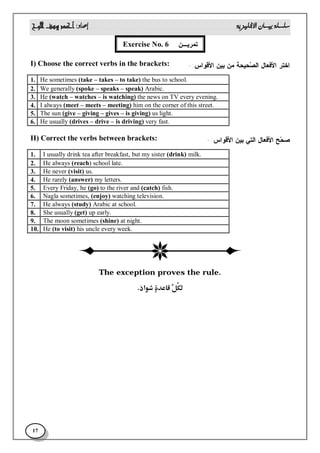
‫ﺘﻤﺭﻴـﻥ‬Exercise No. 6
‫ﺍﺨﺘﺭ‬‫ﺍﻷﻓﻌﺎل‬‫ﺍﻷﻗﻭﺍﺱ‬ ‫ﺒﻴﻥ‬ ‫ﻤﻥ‬ ‫ﺤﻴﺤﺔ‬‫ﺼ‬‫ﺍﻟ‬:-I) Choose the correct verbs in the brackets:
He sometimes (take – takes – to take) the bus to school.1.
We generally (spoke – speaks – speak) Arabic.2.
He (watch – watches – is watching) the news on TV every evening.3.
I always (meet – meets – meeting) him on the corner of this street.4.
The sun (give – giving – gives – is giving) us light.5.
He usually (drives – drive – is driving) very fast.6.
‫ﺤ‬‫ﺼ‬‫ﺢ‬‫ﺍﻷﻓﻌﺎل‬‫ﺍﻟﺘﻲ‬‫ﺍﻷﻗﻭﺍﺱ‬ ‫ﺒﻴﻥ‬:-II) Correct the verbs between brackets:
I usually drink tea after breakfast, but my sister (drink) milk.1.
He always (reach) school late.2.
He never (visit) us.3.
He rarely (answer) my letters.4.
Every Friday, he (go) to the river and (catch) fish.5.
Nagla sometimes, (enjoy) watching television.6.
He always (study) Arabic at school.7.
She usually (get) up early.8.
The moon sometimes (shine) at night.9.
He (to visit) his uncle every week.10.
The exception proves the rule. 
 
 
 
 
 
 
 

18
 
-:Formation)1
•‫ﺼﻴﻐﺔ‬ ‫ﻓﻲ‬ ‫ﺍﻟﻔﻌل‬ ‫ﻴﺘﻜﻭﻥ‬‫ﺯﻤﻥ‬‫ﻤﻥ‬ ‫ﺍﻟﺒﺴﻴﻁ‬ ‫ﺍﻟﻤﺎﻀﻲ‬‫ﹼ‬‫ﺘ‬‫ﺍﻟ‬‫ﹼ‬‫ﺜ‬‫ﺍﻟ‬ ‫ﺼﺭﻴﻑ‬‫ﻟﻠﻔﻌل‬ ‫ﺎﻨﻲ‬.
‫ﺸﺎﻫﺩﺕ‬‫ﹼ‬‫ﺘ‬‫ﺍﻟ‬ ُ‫ﻠﻔﺎﺯ‬ِ‫ﺱ‬‫ﺒﺎﻷﻤ‬.I watched TV yesterday.1.
‫ﺠﺭﻯ‬‫ﹼ‬‫ﺫ‬‫ﺍﻟ‬‫ﻤ‬ ‫ﺏ‬‫ﺌ‬‫ﹰ‬‫ﺍ‬‫ﺒﺘﻌﺩ‬.The wolf ran away.2.
‫ﻗﺎﺒﻠﺕ‬ِ‫ﺔ‬‫ﺍﻟﻤﺩﺭﺴ‬ ‫ﻓﻲ‬ ‫ﺼﺩﻴﻘﺘﻬﺎ‬ ‫ﺤﻨﺎﻥ‬ ْ.Hanan met her friend at school.3.
| 
1)regular()irregular( 
(Regular Verbs)‫ﻭﻫ‬‫ﻲ‬‫ﺎ‬‫ﻤ‬‫ﺇ‬ ‫ﺘﺼﺭﻴﻔﻬﺎ‬ ‫ﻋﻨﺩ‬ ‫ﻀﺎﻑ‬‫ﻴ‬ ‫ﺍﻟﺘﻲ‬(ed)‫ﺃﻭ‬
(d)‫ﻨﻬﺎﻴﺘﻬﺎ‬ ‫ﺇﻟﻰ‬‫ﻤﺜل‬ ،:-
‫ﺴﺎﻋﺩ‬‫ﻴ‬help - helped - helped
‫ﻴﺒﺘﺴﻡ‬smile - smiled - smiled
‫ﺸﺎﻫﺩ‬‫ﻴ‬watch - watched - watched
|  
1.‫ﺇﻀﺎﻓﺔ‬ ‫ﻋﻨﺩ‬(ed)‫ﺇ‬ِ‫ﺔ‬‫ﻨﻬﺎﻴ‬ ‫ﻟﻰ‬‫ﻗﺩ‬ ‫ﺍﻟﻤﺼﺩﺭ‬‫ﻟﻠﻤﺼﺩﺭ‬ ‫ﺍﻷﺨﻴﺭ‬ ‫ﺍﻟﺤﺭﻑ‬ ‫ﻑ‬‫ﻌ‬‫ﹸﻀ‬‫ﻨ‬)‫ﺍﻨﺘﻬﻰ‬ ‫ﺇﺫﺍ‬ٍ‫ﻑ‬‫ﺒﺤﺭ‬ ‫ﺍﻟﻔﻌل‬ٍ‫ﻥ‬‫ﺴﺎﻜ‬‫ﺤـﺭﻑ‬ ‫ﻗﺒﻠـﻪ‬
‫ﻤ‬‫ﺭ‬‫ﺘﺤ‬‫ﻙ‬(‫ﻤﺜل‬ ،:
‫ﺴﺎﻓﺭ‬‫ﻴ‬travel + ed = travelled
‫ﹼ‬‫ﻗ‬‫ﻴﺘﻭ‬‫ﻑ‬stop + ed = stopped
2.‫ﺇﻀﺎﻓﺔ‬ ‫ﻋﻨﺩ‬(ed)‫ﺇﻟﻰ‬ِ‫ﺔ‬‫ﻨﻬﺎﻴ‬ِ‫ﺭ‬‫ﺍﻟﻤﺼﺩ‬‫ﺒﺤﺭﻑ‬ ‫ﻨﺘﻬﻲ‬‫ﻤ‬‫ﺍﻟ‬( y )‫ﺴﺎﻜﻥ‬ ‫ﺤﺭﻑ‬ ‫ﻭﻴﺴﺒﻘﻪ‬‫ﻓ‬‫ﺈ‬‫ﺍﻟـ‬ ‫ﺤﺭﻑ‬ ‫ﻥ‬(y)‫ﻴ‬‫ﺤﺫﻑ‬‫ـ‬‫ﻴ‬‫ﻭ‬‫ﻀﺎﻑ‬
(ied)‫ﻤﺜل‬ ،:-
study + ed = studied ‫ﻴﺩﺭﺱ‬ deny + ed = denied ‫ﻨﻜﺭ‬‫ﻴ‬
carry + ed = carried ‫ﻴﺤﻤل‬ cry + ed = cried ‫ﻴﺒﻜﻲ‬
3.‫ﺍﻟـ‬ ‫ﺤﺭﻑ‬ ‫ﻜﺎﻥ‬ ‫ﺇﺫﺍ‬(y)ِ‫ﺔ‬‫ﻨﻬﺎﻴ‬ ‫ﻓﻲ‬ ‫ﻤﻭﺠﻭﺩ‬‫ﻭ‬ ‫ﺍﻟﻤﺼﺩﺭ‬‫ﹰ‬‫ﺎ‬‫ﻤﺴﺒﻭﻗ‬،ٍ‫ﻙ‬‫ﻤﺘﺤﺭ‬ ٍ‫ﻑ‬‫ﺒﺤﺭ‬‫ﻓﻘﻁ‬ ‫ﻀﺎﻑ‬‫ﻴ‬ ‫ﹼﻪ‬‫ﻨ‬‫ﻓﺈ‬(ed)ِ‫ﺔ‬‫ﻟﻨﻬﺎﻴ‬‫ﺒﺩﻭﻥ‬ ‫ﺍﻟﻔﻌل‬
‫ﺍﻟـ‬ ‫ل‬‫ﻭ‬‫ﹸﺤ‬‫ﻨ‬ ‫ﺃﻥ‬(y)‫ﺇﻟﻰ‬(ied)،‫ﻤﺜل‬:-
‫ﻴﺴﺘﻤﺘﻊ‬enjoy + ed = enjoyed
‫ﻴﻠﻌﺏ‬play + ed = played
4.ِ‫ﻑ‬‫ﺒﺤﺭ‬ ‫ﹰ‬‫ﺎ‬‫ﻨﺘﻬﻴ‬‫ﻤ‬ ‫ﺍﻟﻤﺼﺩﺭ‬ ‫ﻜﺎﻥ‬ ‫ﺇﺫﺍ‬(e)‫ﺍﻟـ‬ ‫ﺤﺭﻑ‬ ‫ﻓﺈﻥ‬(e)‫ﻓﻘﻁ‬ ‫ﻭﻴﻀﺎﻑ‬ ‫ﻴﺒﻘﻰ‬(d)‫ﻤﻥ‬ ‫ﹰ‬‫ﻻ‬‫ﺒﺩ‬(ed)،‫ﻤﺜل‬:
invite + d = invited ‫ﻴﺩﻋﻭ‬ smile + d = smiled ‫ﻴﺒﺘﺴﻡ‬
prove + d = proved ‫ﺒﺭﻫﻥ‬‫ﻴ‬/‫ﺜﺒﺕ‬‫ﻴ‬ exercise + d = exercised ‫ﺭ‬‫ﻴﺘﻤ‬‫ﻥ‬
2.The Past Simple Tense

19
:(Irregular Verbs)ِ‫ﺭ‬‫ﻅﻬ‬ ‫ﻋﻥ‬ ‫ﺤﻔﻅﻬﺎ‬ ‫ﻴﺠﺏ‬ ‫ﺍﻷﻓﻌﺎل‬ ‫ﻫﺫﻩ‬‫ﻭﺫﻟﻙ‬ ،‫ﻗﻠﺏ‬‫ﺤﺘﻰ‬‫ﺒﻴﻥ‬ ‫ﺯ‬‫ﻴ‬‫ﹸﻤ‬‫ﻨ‬
‫ﹼ‬‫ﺸ‬‫ﺍﻟ‬ ‫ﻭﺍﻟﻔﻌل‬ ‫ﺍﻟﻘﻴﺎﺴﻲ‬ ‫ﺍﻟﻔﻌل‬‫ﺎﺫ‬.

2) Usage:- 
•‫ﻓﻲ‬ ‫ﻤﻠﺔ‬‫ﺠ‬‫ﺍﻟ‬ ‫ﻓﻌل‬ ‫ﺼﺎﻍ‬‫ﻴ‬‫ﺍﻵﺘﻴﺔ‬ ‫ﺍﻟﺤﺎﻻﺕ‬ ‫ﻓﻲ‬ ‫ﺍﻟﺒﺴﻴﻁ‬ ‫ﺍﻟﻤﺎﻀﻲ‬ ‫ﺯﻤﻥ‬:-
1.‫ﺴ‬‫ﺍﻟ‬ ‫ﻓﻲ‬‫ﹼ‬‫ﺘ‬‫ﺍﻟ‬ ‫ﺭﺩ‬‫ﺎﺭﻴﺨﻲ‬.
2.‫ﺭﻭﺍ‬ ‫ﻋﻨﺩ‬ِ‫ﻘ‬‫ﺍﻟ‬ ‫ﻴﺔ‬‫ﺼﺹ‬.
3.‫ﹼ‬‫ﺘ‬‫ﺍﻟ‬ ‫ﻋﻨﺩ‬ٍ‫ﺙ‬‫ﺤﺩ‬ ‫ﻋﻥ‬ ‫ﻌﺒﻴﺭ‬‫ﺍﻟﻤﺎﻀﻲ‬ ‫ﻓﻲ‬ ‫ﻡ‬‫ﺘ‬،‫ﻤﺜل‬:-
‫ﺒﺎﻷﻤ‬ ‫ﻪ‬‫ﹸ‬‫ﺘ‬‫ﻗﺎﺒﻠ‬ِ‫ﺱ‬.I met him yesterday.
4.‫ﹼ‬‫ﺘ‬‫ﻟﻠ‬،‫ﺍﻟﻤﺎﻀﻲ‬ ‫ﻓﻲ‬ ٍ‫ﺓ‬‫ﻋﺎﺩ‬ ‫ﻋﻥ‬ ‫ﻌﺒﻴﺭ‬‫ﻤﺜل‬:-
‫ﹸ‬‫ﻜ‬ ‫ﻋﻨﺩﻤﺎ‬‫ﹾ‬‫ﻨ‬‫ﻴﻭﻡ‬ َ‫ل‬‫ﻜ‬ ‫ﹸ‬‫ﺕ‬‫ﺴﺒﺤ‬ ،ٍ‫ﺓ‬‫ﺇﺠﺎﺯ‬ ‫ﻓﻲ‬ ‫ﹸ‬‫ﺕ‬.When I was on holiday, I swam everyday.
Key words)3 
•‫ﺍﻟﻜ‬ ‫ﺇﺤﺩﻯ‬ ‫ﻭﺠﻭﺩ‬‫ﹼ‬‫ﺘ‬‫ﺍﻟ‬ ‫ﻠﻤﺎﺕ‬‫ﺎﻟﻴﺔ‬‫ﺠ‬‫ﺭ‬‫ﻴ‬‫ﺢ‬‫ﺍﻟﺒﺴﻴﻁ‬ ‫ﺍﻟﻤﺎﻀﻲ‬ ‫ﺯﻤﻥ‬ ‫ﻓﻲ‬ ‫ﺍﻟﻔﻌل‬ ‫ﺼﻴﺎﻏﺔ‬.
‫ﺍﻟﻤﺎﻀﻴﺔ‬ ‫ﺍﻷﺯﻤﻨﺔ‬ ‫ﻓﻲ‬in olden times‫ﺃﻤﺱ‬yesterday
‫ﻤﻨﺫ‬ago‫ﻤﺭﺓ‬ ‫ﺫﺍﺕ‬once
‫ﺎﺒﻕ‬‫ﺴ‬‫ﺍﻟ‬/‫ﺍﻟﻤﺎﻀﻲ‬last...‫ﺍﻷﻴﺎﻡ‬ ‫ﻤﻥ‬ ‫ﻴﻭﻡ‬ ‫ﻓﻲ‬one day
‫ﺍﻟﻤﺎﻀﻴﺔ‬ ‫ﺍﻟﻠﻴﻠﺔ‬ ‫ﻓﻲ‬last night‫ﺍﻵﻥ‬ ‫ﻗﺒل‬just now
‫ﹼ‬‫ﺸ‬‫ﺍﻟ‬ ‫ﻓﻲ‬‫ﺍﻟﻤﺎﻀﻲ‬ ‫ﻬﺭ‬last month‫ﻓﻲ‬‫ﺍﻟﻤﺎﻀﻲ‬in the past
-:The Past Simple Tense Negative and Interrogative)4 
•
1.‫ﻴﺘﻡ‬‫ﻨﻔﻲ‬‫ﺯﻤﻥ‬ ‫ﻓﻲ‬ ‫ﺍﻟﻔﻌل‬‫ﺍﻟﺒﺴﻴﻁ‬ ‫ﺍﻟﻤﺎﻀﻲ‬‫ﻭ‬‫ﻴﺘﻜ‬‫ﻤﻥ‬ ‫ﻥ‬:
did not 
2.‫ﺍﻟﺒﺴﻴﻁ‬ ‫ﻟﻠﻤﺎﻀﻲ‬ ‫ﺍﻻﺴﺘﻔﻬﺎﻡ‬ ‫ﺼﻴﻐﺔ‬‫ﻭ‬‫ﺘﺘﻜ‬‫ﻤﻥ‬ ‫ﻥ‬:
?Did 
InterrogativeNegativeExamples
Did they go to school?
‫ﻫل‬‫ﺫﻫﺒﻭﺍ‬ِ‫ﺔ‬‫ﺍﻟﻤﺩﺭﺴ‬ ‫ﺇﻟﻰ‬‫؟‬
They didn't go to school.
‫ﻫﻡ‬‫ﻴﺫﻫﺒﻭﺍ‬ ‫ﻟﻡ‬ِ‫ﺔ‬‫ﺍﻟﻤﺩﺭﺴ‬ ‫ﺇﻟﻰ‬.
They went to school.
‫ﻫﻡ‬‫ﺫﻫﺒﻭﺍ‬ِ‫ﺔ‬‫ﺍﻟﻤﺩﺭﺴ‬ ‫ﺇﻟﻰ‬.
Did the wolf run away?
‫ﺭ‬‫ﻓ‬ ‫ﻫل‬‫ﺏ‬‫ﺍﻟﺫﺌ‬‫؟‬
The wolf didn't run away.
‫ﺏ‬‫ﺍﻟﺫﺌ‬‫ﻟﻡ‬‫ِﺭ‬‫ﻔ‬‫ﻴ‬.
The wolf ran away.
‫ﺭ‬‫ﻓ‬‫ﺏ‬‫ﺍﻟﺫﺌ‬.

20
‫ﺃﻤﺜـــﻠﺔ‬Examples
‫ﺍﻟﻤﺎﻀﻲ‬ ‫ﺍﻷﺴﺒﻭﻉ‬ ‫ﺍﻟﻴﺎﺒﺎﻥ‬ ‫ﺇﻟﻰ‬ ‫ﺃﺤﻤﺩ‬ ‫ﺴﺎﻓﺭ‬.Ahmed travelled to Japan last week.1.
‫ﺭ‬‫ﺍﻟ‬ ‫ﻜﺘﺏ‬ ‫ﺴﺎﻤﻲ‬‫ﺴﺎﻟﺔ‬.Samy wrote the letter.2.
‫ﺴ‬‫ﺍﻟ‬ ‫ﹰ‬‫ﺓ‬‫ﺠﺩﻴﺩ‬ ‫ﹰ‬‫ﺓ‬‫ﺴﻴﺎﺭ‬ ‫ﺍﺸﺘﺭﻯ‬ ‫ﺃﺒﻲ‬‫ﺍﻟﻤﺎﻀﻴﺔ‬ ‫ﻨﺔ‬.My father bought a new car last year.3.
‫ﻫ‬‫ﺩ‬‫ﺍﻟ‬ ‫ﺩﺭﺴﺕ‬ ‫ﺩﻯ‬‫ﺍﻟﻤﺎﻀﻲ‬ ‫ﻉ‬‫ﺍﻷﺴﺒﻭ‬ ‫ﻋﺸﺭﺓ‬ ‫ﺭﻗﻡ‬ ‫ﺱ‬‫ﺭ‬.Huda studied lesson ten a week ago.4.
‫ﻤﺎﻀﻴﺔ‬ ٍ‫ﻡ‬‫ﺃﻴﺎ‬ ‫ﺜﻼﺜﺔ‬ ‫ﻤﻨﺫ‬ ‫ﺍﻟﻐﺩﺍﺀ‬ ِ‫ﻡ‬‫ﻟﻁﻌﺎ‬ ‫ﺩﻋﻭﻨﺎﻫﻡ‬.We invited them for lunch three days ago.5.
‫ﺘﻤﺭﻴـﻥ‬Exercise No. 7
‫ﺤ‬‫ﺼ‬‫ﺍﻷﻗﻭﺍﺱ‬ ‫ﺒﻴﻥ‬ ‫ﺍﻟﺘﻲ‬ ‫ﺍﻷﻓﻌﺎل‬ ‫ﺢ‬:*) Correct the verbs in brackets:
Ahmed ……………. (buy) a new bicycle last week.1.
She ……………. (make) a cake yesterday.2.
Two months ago, we …………(have) a holiday.3.
Samy ……………. (to climb) a tree yesterday.4.
I ……………… (finish) my work two hours ago.5.
A stitch in time saves nine. 
 

21
7VerbsWeakorRegularorOrdinary‫ﻋ‬ ‫ﺍﻟﺘـﻲ‬ ‫ﻫﻲ‬‫ﻨـﺩ‬
‫ﺘﺤﻭﻴﻠﻬﺎ‬‫ﺇﻟﻰ‬‫ﺍﻟﻤﺎﻀﻲ‬)‫ﹼﺎﻨﻲ‬‫ﺜ‬‫ﺍﻟ‬ ‫ﹼﺼﺭﻴﻑ‬‫ﺘ‬‫ﺍﻟ‬()past tense(‫ﺃ‬‫ﻭ‬‫ﹼﺼﺭﻴ‬‫ﺘ‬‫ﺍﻟ‬ ‫ﺇﻟﻰ‬‫ﻑ‬‫ﹼﺎﻟﺙ‬‫ﺜ‬‫ﺍﻟ‬)‫ﺍﺴﻡ‬‫ﺍﻟﻤﻔﻌﻭل‬) (past participle(‫ـ‬‫ﻴ‬‫ﻀﺎﻑ‬
‫ﺇﻟﻰ‬‫ﻀﺎﺭﻋﻬﺎ‬‫ﻤ‬‫ﻨﻁﻘﻪ‬ ‫ﺘﻌﺩﻴل‬ ‫ﺒﺩﻭﻥ‬ed‫ﺃﻭ‬d.)‫ﺔ‬‫ﻴ‬‫ﺍﻻﻨﺠﻠﻴﺯ‬ ‫ﺍﻟﻠﻐﺔ‬ ‫ﺃﻓﻌﺎل‬ ‫ﺔ‬‫ﻴ‬‫ﻏﺎﻟﺒ‬ ‫ﻭﻫﻲ‬.(
Past participle
 
Past 
 
Meaning
 
infinitiveorPresent 
 
provedproved‫ﺒﺭﻫﻥ‬‫ﻴ‬prove
helpedhelped‫ﻴﺴﺎﻋﺩ‬help
burntburnt‫ﻴﺤﺭﻕ‬burn
| 
1.‫ﺍ‬‫ﺍﻟـ‬ ‫ﺒﺤﺭﻑ‬ ‫ﺘﻨﺘﻬﻲ‬ ‫ﺍﻟﺘﻲ‬ ‫ﻷﻓﻌﺎل‬)e(‫ﻟﻨﻬﺎﻴﺘﻬﺎ‬ ‫ﻓﻘﻁ‬ ‫ﻨﻀﻴﻑ‬)d.(
Past participle
 
Past 
 
Meaning
 
infinitiveorPresent 
 
arrivedarrived‫ﻴﺼل‬arrive
changedchanged‫ﺭ‬‫ﻴ‬‫ﻐ‬‫ﻴ‬change
invitedinvited‫ﻴﺩﻋﻭ‬invite
2.‫ﺍﻟـ‬ ‫ﺒﺤﺭﻑ‬ ‫ﺘﻨﺘﻬﻲ‬ ‫ﺍﻟﺘﻲ‬ ‫ﺍﻷﻓﻌﺎل‬)y(‫ﹰ‬‫ﺎ‬‫ﻤﺴﺒﻭﻗ‬ ‫ﻴﻜﻭﻥ‬ ‫ﺍﻟﺫﻱ‬ٍ‫ﻑ‬‫ﺒﺤﺭ‬ٍ‫ﻥ‬‫ﺴﺎﻜ‬،‫ﻥ‬‫ﻓﺈ‬‫ﺍﻟـ‬ ‫ﺤﺭﻑ‬)y(‫ﺇﻟـﻰ‬ ‫ﻘﻠﺏ‬‫ﻴ‬)i(‫ـﻀﺎﻑ‬‫ﻴ‬‫ﻭ‬
)ed(‫ﺘﺼﺭﻴﻔﻬﺎ‬ ‫ﻋﻨﺩ‬.
Past participle
 
Past 
 
Meaning
 
infinitiveorPresent 
 
criedcried‫ﻴﺒﻜﻲ‬cry
marriedmarried‫ﻴﺘﺯﻭﺝ‬marry
studiedstudied‫ﻴﺩﺭﺱ‬study
3.‫ﺍﻟـ‬ ‫ﺒﺤﺭﻑ‬ ‫ﺘﻨﺘﻬﻲ‬ ‫ﺍﻟﺘﻲ‬ ‫ﺍﻷﻓﻌﺎل‬)y(‫ﹰ‬‫ﺎ‬‫ﻤﺴﺒﻭﻗ‬ ‫ﻴﻜﻭﻥ‬ ‫ﺍﻟﺫﻱ‬ِ‫ﻑ‬‫ﺒﺤﺭ‬‫ﹼﺔ‬‫ﻠ‬‫ﻋ‬)‫ﺘﺤﺭﻙ‬‫ﻤ‬(‫ﻥ‬‫،ﻓﺈ‬‫ﺍﻟـ‬ ‫ﺤﺭﻑ‬)y(‫ﻜﻤـﺎ‬ ‫ﻴﺒﻘـﻰ‬‫ﻫـﻭ‬
‫ﻭ‬‫ﻀﺎﻑ‬‫ﻴ‬)ed(‫ﺘﺼﺭﻴﻔﻬﺎ‬ ‫ﻋﻨﺩ‬.
Past participle
 
Past 
 
Meaning
 
infinitiveorPresent 
 
enjoyedenjoyed‫ﻴﺴﺘﻤﺘﻊ‬enjoy
obeyedobeyed‫ﻁﻴﻊ‬‫ﻴ‬obey
playedplayed‫ﻴﻠﻌﺏ‬play
stayedstayed‫ﹸﺙ‬‫ﻜ‬‫ﻴﻤ‬/‫ﻴﺒﻘﻰ‬stay
Conjugation of Verbs 

22
4.‫ﺇﻀﺎﻓﺔ‬ ‫ﻋﻨﺩ‬)ed(‫ﻗ‬ ‫ﺍﻟﻤﺼﺩﺭ‬ ‫ﻨﻬﺎﻴﺔ‬ ‫ﺇﻟﻰ‬‫ﺩ‬‫ﻟﻠﻤﺼﺩﺭ‬ ‫ﺍﻷﺨﻴﺭ‬ ‫ﺍﻟﺤﺭﻑ‬ ‫ﻀﺎﻋﻑ‬‫ﻴ‬‫ﺇﺫﺍ‬ٍ‫ﻑ‬‫ﺒﺤـﺭ‬ ‫ﺍﻟﻤﺼﺩﺭ‬ ‫ﺍﻨﺘﻬﻰ‬ٍ‫ﻥ‬‫ﺴـﺎﻜ‬‫ﻪ‬‫ﻗﺒﻠـ‬
‫ﺘﺤﺭﻙ‬‫ﻤ‬.(
Past participle
 
Past 
 
Meaning
 
infinitiveorPresent 
 
stoppedstopped‫ِﻑ‬‫ﻘ‬‫ﻴ‬stop
travelledtravelled‫ﺴﺎﻓﺭ‬‫ﻴ‬travel
Past
participle
 
Past 
 
Meaning
 
orPresent
infinitive 

 
Past
participle

 
Past 

 
Meaning
 
orPresent
infinitive 

 
describeddescribed‫ﯾﺼﻒ‬describeactedacted‫ﯾﻤﺜﻞ‬act
dieddied‫ﯾﻤﻮت‬diedamageddamaged‫ﯾﺘﻠﻒ‬damage
disappeareddisappeared‫ﯾﺨﺘﻔﻲ‬disappearaskedasked‫ﯾﺴﺄل‬ask
diveddived‫ﯾﻐﻄﺲ‬/‫ﯾﻐﻮص‬divebelievedbelieved‫ﯾﻌﺘﻘﺪ‬believe
dreameddreamed‫ﯾﺤﻠﻢ‬dreamattackedattacked‫ﯾﮭﺎﺟﻢ‬attack
droppeddropped‫ِﻂ‬‫ﻘ‬‫ﯾﺴ‬dropblinkedblinked‫ﯾﻐﻤﺰ‬blink
earnedearned‫ﻗﻮﺗﮫ‬ ‫ﯾﻜﺴﺐ‬earnarrivedarrived‫ﯾﺼﻞ‬arrive
endedended‫ﯾﻨﮭﻲ‬endbelonged tobelonged to‫ﯾﺨﺺ‬belong to
enjoyedenjoyed‫ﯾﺴﺘﻤﺘﻊ‬enjoyboiledboiled‫ﯾﻐﻠﻲ‬boil
eruptederupted‫ﯾﺜﻮر‬)‫اﻟﺒﺮﻛﺎن‬(eruptcalledcalled‫ﯾﺘﺼﻞ‬/‫ﯾﻨﺎدي‬call
evaporatedevaporated‫ﯾﺘﺒﺨﺮ‬evaporateborrowedborrowed‫ﯾﻘﺘﺮض‬borrow
exercisedexercised‫ﯾﺘﻤﺮن‬exercisecarriedcarried‫ﯾﺤﻤﻞ‬carry
explainedexplained‫ﯾﺸﺮح‬explainchangedchanged‫ُﺮ‬‫ﯿ‬‫ُﻐ‬‫ﯾ‬change
explodedexploded‫ﯾﻨﻔﺠﺮ‬explodechasedchased‫ﯾﻄﺎرد‬chase
finishedfinished‫ﯾﻨﮭﻲ‬finishcheckedchecked‫ﯾﺮاﺟﻊ‬check
floatedfloated‫ﯾﻄﻔﻮ‬floatcleanedcleaned‫ﯾﻨﻈﻒ‬clean
foldedfolded‫ﯾﺜﻨﻲ‬/‫ﯾﻄﻮي‬foldclosedclosed‫ِﻖ‬‫ﻠ‬‫ُﻐ‬‫ﯾ‬close
followedfollowed‫ﯾﺘﺒﻊ‬followclimbedclimbed‫ﯾﺘﺴﻠﻖ‬climb
formedformed‫ّﻮن‬‫ﻜ‬ُ‫ﯾ‬formcomparedcompared‫ﯾﻘﺎرن‬compare
guessedguessed‫ُﺨﻤﻦ‬‫ﯾ‬guesscollectedcollected‫ﯾﺠﻤﻊ‬collect
happenedhappened‫ﯾﺤﺪث‬happencomputedcomputed‫ﯾﺤﺴﺐ‬/‫ﯾﺤﺼﻲ‬compute
hatedhated‫ﯾﻜﻮه‬hatecondensedcondensed‫ﯾﻜﺜﻒ‬condense
heatedheated‫ﯾﺄﻣﻞ‬heatcorrectedcorrected‫ﯾﺼﺤﺢ‬correct
hopedhoped‫ﯾﺄﻣﻞ‬hopecookedcooked‫ﯾﻄﺒﺦ‬cook
hurried uphurried up‫ُﺴﺮع‬‫ﯾ‬hurry upcontrolledcontrolled‫ﯾﺘﺤﻜﻢ‬control
introducedintroduced‫ﯾﻘﺪم‬introducecopiedcopied‫ﯾﻨﺴﺦ‬copy
joinedjoined‫ﯾﺮﺑﻂ‬joincorrectedcorrected‫ﯾﺼﺤﺢ‬correct
jumpedjumped‫ﯾﻘﻔﺰ‬jumpcountedcounted‫ﯾﻌﺪ‬count
kickedkicked‫ﯾﺮﻛﻞ‬kickcrawledcrawled‫ﯾﺰﺣﻒ‬/‫ﯾﺤﺒﻮ‬crawl
killedkilled‫ﯾﻘﺘﻞ‬killcrossedcrossed‫ﯾﻌﺒﺮ‬cross
landedlanded‫ﯾﺮﺳﻮ‬landdanceddanced‫ﯾﺮﻗﺺ‬dance
 

23
Past participle
 
Past 
 
Meaning
 
ortPresen
infinitive 

 
Past
participle
 
Past 
 
Meaning
 
orPresent
infinitive 

 
rememberedremembered‫ﯾﺘﺬﻛﺮ‬rememberliftedlifted‫ﯾﺮﻓﻊ‬lift
replayedreplayed‫ﯾﺮد‬replaylikedliked‫ﯾﺤﺐ‬like
reportedreported‫ﻋﻦ‬ ‫ﺗﻘﺮﯾﺮ‬ ‫ﯾﻘﺪم‬reportlistenedlistened‫ﯾﻨﺼﺖ‬listen
restedrested‫ﯾﺮﺗﺎح‬restlivedlived‫ﯾﻌﯿﺶ‬live
revisedrevised‫ﯾﺮاﺟﻊ‬reviseloadedloaded‫ﯾﺤﻤﻞ‬load
sailedsailed‫ُﺒﺤﺮ‬‫ﯾ‬saillooked afterlooked after‫ﺑـ‬ ‫ﯾﻌﺘﻨﻲ‬look after
screamedscreamed‫ﯾﺼﺮخ‬screamlooked atlooked at‫إﻟﻰ‬ ‫ﯾﻨﻈﺮ‬look at
shoppedshopped‫ّق‬‫ﻮ‬‫ﯾﺘﺴ‬shoplooked forlooked for‫ﻋﻦ‬ ‫ﯾﺒﺤﺚ‬look for
shoutedshouted‫ﯾﺼﯿﺢ‬shoutlooked goodlooked goodً‫ا‬‫ﺟﯿﺪ‬ ‫ﯾﺒﺪو‬look good
slopedsloped‫ﯾﻨﺰﻟﻖ‬slopelooked uplooked up
‫ﯾﺴﺘﺨﺮج‬
‫ﻛﻠﻤﺔ‬ ‫ﻣﻌﻨﻰ‬
look up
sowed (sown)sowed‫ّر‬‫ﺬ‬‫ُﺒ‬‫ﯾ‬sowlovedloved‫ﯾﺤﺐ‬love
startedstarted‫ﯾﺒﺪأ‬startmarriedmarried‫ﯾﺘﺰوج‬marry
stayedstayed‫ُﺚ‬‫ﻜ‬‫ﯾﻤ‬staymatchedmatched‫ُﻼﺋﻢ‬‫ﯾ‬match
stoppedstopped‫ﯾﺘﻮﻗﻒ‬stopmeasuredmeasured‫ﯾﻘﯿﺲ‬measure
supportedsupported‫ﯾﺪﻋﻢ‬supportmendedmended‫ّﺢ‬‫ﻠ‬‫ﯾﺼ‬mend
storedstored‫ُن‬‫ﺰ‬‫ُﺨ‬‫ﯾ‬storemilkedmilked‫ﯾﺤﻠﺐ‬milk
switched onswitched on
‫ﺟﮭﺎز‬ ‫ﯾﺪﯾﺮ‬/
‫اﻟﻨﻮر‬ ‫ﯾﺸﻌﻞ‬
switch onmissedmissed‫ﯾﻔﺘﻘﺪ‬miss
talkedtalked‫ﯾﺘﺤﺪث‬talkmovedmoved‫ّك‬‫ﺮ‬‫ﯾﺘﺤ‬move
tastedtasted‫ﯾﺘﺬوق‬/‫ﯾﺬوق‬tasteneededneeded‫ﯾﺤﺘﺎج‬need
tiedtied‫ﯾﺮﺑﻂ‬tieopenedopened‫ﯾﻔﺘﺢ‬open
thankedthanked‫ﯾﺸﻜﺮ‬thankorderedordered‫ﯾﺄﻣﺮ‬order
touchedtouched‫ﯾﻠﻤﺲ‬touchownedowned‫ﯾﻤﺘﻠﻚ‬own
trainedtrained‫ﯾﺪرب‬trainpaintedpainted‫ﯾﺪھ‬‫ﻦ‬paint
translatedtranslated‫ﯾﺘﺮﺟﻢ‬translatepassedpassed‫ﯾﻤﺮ‬pass
travelledtravelled‫ﯾﺴﺎﻓﺮ‬travelphonedphonedً‫ﺎ‬‫ﺗﻠﯿﻔﻮﻧﯿ‬ ‫ﯾﺘﺼﻞ‬
‫ﺑـ‬phone
triedtried‫ﯾﺤﺎول‬trypickedpicked‫ﯾﻘﻄﻒ‬pick
turnedturned‫ﯾﺪور‬/‫ﯾﻠﻒ‬turnplantedplanted‫ﯾﺰرع‬plant
typedtyped‫ﻋﻠﻰ‬ ‫ﯾﻜﺘﺐ‬
‫اﻵﻟﺔ‬typeplayedplayed‫ﯾﻠﻌﺐ‬play
usedused‫ﯾﺴﺘﺨﺪم‬useploughedploughed‫ﯾﺤﺮث‬plough
visitedvisited‫ﯾﺰور‬visitpointed topointed to‫إﻟﻰ‬ ‫ﯾﺸﯿﺮ‬point to
waitedwaited‫ﯾﻨﺘﻈﺮ‬waitpostedposted‫ﯾﺮﺳﻞ‬post
wantedwanted‫ﯾﺮﯾﺪ‬wantpouredpoured‫ﯾﺼﺐ‬pour
washedwashed‫ﯾﻐﺴﻞ‬washpracticedpracticed‫ﯾﺘﻤﺮن‬practice
watchedwatched‫ﯾﺸﺎھﺪ‬watchpreferredpreferred‫ّﻞ‬‫ﻀ‬‫ُﻔ‬‫ﯾ‬prefer
wateredwatered‫ﯾﺮوي‬waterpretendedpretended‫ّﻋﻲ‬‫ﺪ‬‫ﯾ‬/
‫ﯾﺘﻈﺎھﺮ‬
pretend
weighedweighed‫ﯾﺰن‬weighpronouncedpronounced‫ﯾﻨﻄﻖ‬pronounce
welcomedwelcomed‫ﺑـ‬ ‫ﯾﺮﺣﺐ‬welcomepulledpulled‫ﯾﺸﺪ‬/‫ﯾﺠﺮ‬pull
workedworked‫ﯾﻌﻤﻞ‬/‫ﯾﺸﺘﻐﻞ‬workpushedpushed‫ﯾﺪﻓﻊ‬/‫ﯾﺰق‬push
worriedworried‫ﯾﻘﻠﻖ‬worryrainedrained‫ﺗﻤﻄﺮ‬rain
receivedreceived‫ﯾﺴﺘﻠﻢ‬receive

24
7The Irregular Verbs:‫ﻤ‬ ‫ﻗﺎﻋـﺩﺓ‬ ‫ﻟﺘﺼﺭﻴﻔﻬﺎ‬ ‫ﻟﻴﺱ‬ ‫ﺍﻟﺘﻲ‬ ‫ﺍﻷﻓﻌﺎل‬ ‫ﻫﻲ‬،‫ﻨـﺔ‬‫ﻴ‬‫ﻌ‬
ِ‫ﺭ‬‫ﻅﻬ‬ ‫ﻋﻥ‬ ‫ﺤﻔﻅﻬﺎ‬ ‫ﻴﺠﺏ‬ ‫ﻓﻠﺫﻟﻙ‬‫ﻗﻠﺏ‬.
Past
participle

 
Past 
 
Meaning
 
Present
or
infinitive 

 
Past
participle

 
Past 
 
Meaning
 
orPresent
infinitive 

 
clothedclothed‫ﯾﻜﺴﻮ‬clotheabodeabode‫ﯾﻤﻜﺚ‬/‫ﯾﻘﯿﻢ‬abide
comecame‫ﯾﺄﺗﻲ‬/‫ﯾﺤﻀﺮ‬comeagreedagreed‫ﯾﻮاﻓﻖ‬agree
costcost‫ّﻒ‬‫ﻠ‬‫ﯾﻜ‬/‫ﯾﺴﺎوي‬costbeenwas‫أﻛﻮن‬am
creptcrept‫ﯾﺰﺣﻒ‬creepbeenwere‫ﺗﻜﻮن‬/‫ﯾﻜﻮﻧﻮا‬are
cutcut‫ﯾﻘﻄﻊ‬cutarosearose‫ﯾﻨﮭﺾ‬arise
dared (durst)dared (durst)‫ﯾﺠﺮؤ‬dareawokenawoke‫ﯾﻮﻗﻆ‬/‫ﯾﺴﺘﯿﻘﻆ‬awake
dealtdealt‫ﯾﺘﻌﺎﻣﻞ‬dealbeenwas / were‫ﯾﻜﻮن‬be
dugdug‫ﯾﺤﻔﺮ‬digbornbore‫ﺗﻠﺪ‬bear
donedid‫ﯾﻔﻌﻞ‬do/doesbornebore‫أﻋﻠﻰ‬ ‫إﻟﻰ‬ ‫ﯾﺤﻤﻞ‬bear
drawndrew‫ﯾﺮﺳﻢ‬drawbeat (en)beat‫ﯾﻀﺮب‬beat
dreamtdreamt (ed)‫ﯾﺤﻠﻢ‬dreambecomebecame‫ﯾﺼﺒﺢ‬/‫ﯾﺼﯿﺮ‬become
drunkdrank‫ﯾﺸﺮب‬drinkbegunbegan‫ﯾﺒﺪأ‬/‫ﯾﺒﺘﺪئ‬begin
drivendrove‫ﯾﻘﻮد‬/‫ﯾﺴﻮق‬drivebentbent‫ﯾﺜﻨﻲ‬/‫ﯾﺤﻨﻲ‬bend
dweltdwelt‫ﯾﻘﻄﻦ‬/‫ﯾﺴﻜﻦ‬dwellbetbet‫ﯾﺮاھﻦ‬bet
eatenate‫ﯾﺄﻛﻞ‬eatbetbetted‫ﯾﺮاھﻦ‬bet
fallenfell‫ﯾﺴﻘﻂ‬/‫ﯾﻘﻊ‬fallbiddenbade‫ﻋﻄﺎء‬ ‫ّم‬‫ﺪ‬‫ُﻘ‬‫ﯾ‬bid
fedfed‫ُﻄﻌﻢ‬‫ﯾ‬/‫ّي‬‫ﺬ‬‫ُﻐ‬‫ﯾ‬feedbidbid‫ﯾﺄﻣﺮ‬bid
feltfelt‫ﯾﺸﻌﺮ‬feelboundbound‫ﯾﺮﺑﻂ‬bind
foughtfought‫ﯾﻘﺎﺗﻞ‬/‫ﯾﺘﺸﺎﺟﺮ‬fightbittenbitُ‫ﻌ‬‫ﯾ‬‫ﺾ‬/‫ﯾﻠﺪغ‬bite
foundfound‫ﯾﺠﺪ‬findbledbled‫ﯾﻨﺰف‬bleed
fit (fitted)fit (fitted)‫ﯾﻨﺎﺳﺐ‬fitblentblent‫ﯾﺨﻠﻂ‬/‫ﯾﻤﺰج‬blend
fledfled‫ﯾﮭﺮب‬fleeblendedblended‫ﯾﺨﻠﻂ‬/‫ﯾﻤﺰج‬blend
flungflung‫ﯾ‬‫ﻄﻮي‬/‫ﯾﻄﯿﺢ‬/‫ﯾﻘﺬف‬flingblownblew‫ﯾﮭﺐ‬/‫ﯾﻨﻔﺦ‬blow
flownflew‫ﯾﻄﯿﺮ‬flybrokenbroke‫ﯾﻜﺴﺮ‬break
forbiddenforbade‫ﯾﻤﻨﻊ‬forbidbredbred‫ﯾﺮﺑﻲ‬breed
forecastforecast‫ﯾﺘﻨﺒﺄ‬/‫ﯾﺘﻜﮭﻦ‬forecastbroughtbrought‫ﯾﺤﻀﺮ‬bring
foretoldforetold‫ﯾﺘﻨﺒﺄ‬foretellbrought upbrought up‫ﯾﺮﺑﻲ‬bring up
forgottenforgot‫ﯾﻨﺴﻰ‬forgetbroadcastbroadcast‫ﯾﺬﯾﻊ‬broadcast
forgivenforgave‫ﯾﺴﺎﻣﺢ‬/‫ﻋ‬ ‫ﯾﻌﻔﻮ‬‫ﻦ‬forgivebuiltbuilt‫ﯾﺒﻨﻲ‬build
forsakenforsook‫ﯾﮭﺠﺮ‬/‫ﻋﻦ‬ ‫ﯾﺘﺨﻠﻰ‬forsakeburntburnt (burned)‫ﯾﺤﺮق‬burn
frozenfroze‫ﯾﺘﺠﻤﺪ‬freezeburstburst‫ﯾﻨﻔﺠﺮ‬burst
gotgot‫ﻋﻠﻰ‬ ‫ﯾﺤﺼﻞ‬getboughtbought‫ﯾﺸﺘﺮي‬buy
givengave‫ﯾﻌﻄﻲ‬/‫ﯾﻤﻨﺢ‬give----could‫ﯾﺴﺘﻄﯿﻊ‬can
gonewent‫ﯾﺬھﺐ‬gocastcast‫ﯾﻘﺬف‬/‫ﯾﺮﻣﻲ‬cast
groundground‫ﯾﻄﺤﻦ‬grindcaughtcaught‫ﯾﻤﺴﻚ‬catch
growngrew‫ﯾﻨﻤﻮ‬/‫ﯾ‬‫ُﺮ‬‫ﺒ‬‫ﻜ‬/‫ﯾﺰرع‬growchosenchose‫ﯾﺨﺘﺎر‬choose
hunghung‫ّﻖ‬‫ﻠ‬‫ُﻌ‬‫ﯾ‬hangclungclang‫ﯾﻠﺘﺼﻖ‬/‫ﯾﺘﻌﻠﻖ‬cling
 

25
Past
participle

 
Past 

 
Meaning
 
Present
or
infinitive 

 
Past participle
 
Past 
 
Meaning
 
orPresent
infinitive 

 
saidsaid‫ﯾﻘﻮل‬sayhangedhanged‫ﯾﺸﻨﻖ‬hang
seensaw‫ﯾﺮى‬/‫ﯾﻔﮭﻢ‬seehadhad‫ﯾﻤﻠﻚ‬have / has
soughtsought‫ﻋﻦ‬ ‫ﯾﺒﺤﺚ‬seekhad tohad to‫أن‬ ‫ﯾﺠﺐ‬have to
soldsold‫ﯾﺒﯿﻊ‬sellheardheard‫ﯾﺴﻤﻊ‬hear
sentsent‫ﯾﺮﺳﻞ‬sendhiddenhid‫ﯾﺨﺒﺊ‬hide
set outset out‫ﻓﻲ‬ ‫ﯾﺸﺮع‬/‫ﯾﻐﺮب‬set outhithit‫ﯾﻀﺮب‬hit
setsetً‫ﺎ‬‫ﺟﺎﻧﺒ‬ ‫ﯾﻀﻊ‬set asideheldheld‫ﯾﻤﺴﻚ‬hold
sewnsewed‫ّﻂ‬‫ﯿ‬‫ﯾﺨ‬sewhurthurt‫ﯾﺆذي‬/‫ﯾﺆﻟﻢ‬hurt
shakenshook‫ﯾﮭﺰ‬/‫ﯾﺼﺎﻓﺢ‬shakebeenwas‫ﯾﻜﻮن‬is
shedshedً‫ﺎ‬‫دﻣ‬ ‫ﯾﻨﺰف‬/
ً‫ﺎ‬‫دﻣﻮﻋ‬ ‫ﯾﺬرف‬
shedkeptkept‫ﯾﺤﻔﻆ‬keep
shoneshone‫ﯾﻠﻤﻊ‬/‫ﯾﺴﻄﻊ‬shinekneltknelt‫ﯾﺮﻛﻊ‬kneel
shodshod‫ﺣﺪوة‬ ‫ﯾﻀﻊ‬
‫ﻟﻠﺤﺼﺎن‬
shoeknitknit (knitted)ً‫ﺎ‬‫ﺧﯿﻮﻃ‬ ‫ﯾﻌﻘﺪ‬knit
shotshot‫اﻟﺴﮭﻢ‬ ‫ﯾﻄﻠﻖ‬‫أو‬
‫اﻟﺮﺻﺎ‬‫ص‬
shootknownknew‫ﯾﻌﺮف‬know
shownshowed‫ﯾﻮﺿﺢ‬/‫ﯾﺒﯿﻦ‬showladenladed‫ّﻞ‬‫ﻤ‬‫ُﺤ‬‫ﯾ‬lade
shrunkshrank‫ﯾﻨﻜﻤﺶ‬shrinklaidlaid‫ﯾﻀﻊ‬/‫ﯾﺒﯿﺾ‬lay
shutshut‫ُﻐﻠﻖ‬‫ﯾ‬shutledled‫ﯾﻘﻮد‬lead
sungsang‫ﯾﻐﻨﻲ‬/‫ﯾﻨﺸﺪ‬singleant (leaned)leant (leaned)‫ﻋﻠﻰ‬ ‫ﯾﺘﻜﺊ‬lean
satsat‫ﯾﺠﻠﺲ‬sitleaptleapt‫ﯾﻘﻔﺰ‬leap
sunksank‫ﯾﻐﻮص‬sinklearned (learnt)learned (learnt)‫ﯾﺘﻌﻠﻢ‬learn
slainslew‫ﯾﺬﺑﺢ‬/‫ﯾﺴﻠﺦ‬slayleftleft‫ﯾﻐﺎدر‬leave
sleptslept‫ﯾﻨﺎم‬sleeplentlent‫ُﻘﺮض‬‫ﯾ‬lend
slidslid‫ﯾﻨﺰﻟﻖ‬slideletlet‫ﯾﺪع‬let
slungslung
‫ﺑﺤﺒﻞ‬ ‫ﯾﺮﻓﻊ‬/
‫ﯾﻘﺬف‬‫ﺑﻤﻘﻼع‬
slinglainlay‫ﯾﺮﻗﺪ‬lie
smelt (ed)smelt (ed)‫ﯾﺸﻢ‬smellliedlied‫ﯾﻜﺬب‬lie
sownsowed‫ﯾﺒﺬر‬sowlit (lighted)lit (lighted)‫ﯾﻀﻲء‬light
spedsped‫اﻟﺴﺮﻋﺔ‬ ‫ﯾﺰﯾﺪ‬speedlostlost‫ﯾﻔﻘﺪ‬lose
spentspent
ً‫ﻻ‬‫ﻣﺎ‬ ‫ﯾﻨﻔﻖ‬/
ً‫ﺎ‬‫وﻗﺘ‬ ‫ﯾﻘﻀﻲ‬
spendmademade‫ﯾﺼﻨﻊ‬/‫ﯾﻌﻤﻞ‬make
spilledspilt‫ﯾﺴﻜﺐ‬/‫ﯾﺮﯾﻖ‬spill----mightُ‫ر‬ّ‫ﺑ‬‫ﻤﺎ‬/ّ‫ﻞ‬‫ﻟﻌ‬may
spunspan‫ﯾﻐﺰل‬spinmeantmeant‫ﯾﻌﻨﻲ‬/‫ﯾﻘﺼﺪ‬mean
spatspat‫ﯾﺒﺼﻖ‬spitmetmet‫ﯾﻘﺎﺑﻞ‬/‫ﯾﻠﺘﻘﻲ‬meet
splitsplit‫ﺷﻄﺮﯾﻦ‬ ‫ﯾﺸﻄﺮ‬splitmistakenmistook‫ﯾﺨﻄﺊ‬mistake
runran‫ﯾﺠﺮي‬runmownmowed‫ﯾﺠﻤﻊ‬/‫ﯾﺨﺰن‬mow
risenrose‫ﯾﺸﺮق‬/‫ﯾﺮﻓﻊ‬riseovercomeovercame‫ﯾﺘﻐﻠﺐ‬overcome
sawnsawed‫ﺑﺎﻟﻤﻨﺸﺎر‬ ‫ﯾﻘﻄﻊ‬sawpaidpaidً‫ا‬‫ﻧﻘﻮد‬ ‫ﯾﺪﻓﻊ‬pay
soldsold‫ﯾﺒﯿﻊ‬sellputput‫ﯾﻀﻊ‬put
spoilt (ed)spoilt‫ﯾﺘﻠﻒ‬/‫ﯾﻔﺴﺪ‬spoilquitquit‫ﯾﺘﺮك‬/‫ُﺮ‬‫ﺠ‬‫ﯾﮭ‬quit
spreadspread‫ﯾﻨﺘﺸﺮ‬spreadreadread‫ﯾﻘﺮأ‬read
sprungsprang‫ﯾﻘﻔﺰ‬springridrid‫ﯾﺰﯾﻞ‬/‫ّﺺ‬‫ﻠ‬‫ﯾﺨ‬rid
stoodstood‫ﯾﻘﻒ‬standriddenrode‫ﯾﺮﻛﺐ‬ride
stolenstole‫ﯾﺴﺮق‬stealrungrang‫ﯾﺮن‬ring

26
Past
participle
 
Past 
 
Meaning
 
orPresent
infinitive 

 
stuckstuck‫ﯾﻠﺼﻖ‬/‫ﯾﻠﺘﺼﻖ‬stick
stungstung‫ﯾﻠﺴﻊ‬/‫ﯾﻠﺪغ‬sting
stunkstank‫ﯾﻨﺘﻦ‬stink
striddenstrode‫ﯾﺨﻄﻮ‬stride
struckstruck‫ﯾﻀﺮب‬strike
strungstrung‫ﯾﺜﺒﺖ‬/‫ﯾﺨﺒﻂ‬string
strivenstrove‫ﯾﻨﺎﺿﻞ‬/‫ﯾﻜﺎﻓﺢ‬strive
swornswore‫ُﻘﺴﻢ‬‫ﯾ‬/‫ﯾﺤﻠﻒ‬swear
sweptswept‫ﯾﻜﻨﺲ‬sweep
swollenswelled‫ﯾﺘﻮرم‬swell
swumswam‫ﯾﺴﺒﺢ‬/‫ﯾﻌﻮم‬swim
swungswang‫ﯾﮭﺘﺰ‬/‫ﯾﺘﺄرﺟﺢ‬swing
takentook‫ﯾﺄﺧﺬ‬take
taughttaught‫ّﻢ‬‫ﻠ‬‫ُﻌ‬‫ﯾ‬teach
toldtold‫ُﺨﺒﺮ‬‫ﯾ‬tell
thoughtthought‫ﯾﻔﻜﺮ‬/‫ﯾﺆﻣﻦ‬think
thrownthrew‫ﯾﺮﻣﻲ‬throw
thrustthrust‫ﯾﻄﻌﻦ‬thrust
troddentrod‫ﯾﻄﺄ‬/‫ﯾﺪوس‬tread
undergoneunderwent‫ﺑـ‬ ‫ﯾﻤﺮ‬undergo
understoodunderstood‫ﯾﻔﮭﻢ‬understand
undertakenundertook‫ﺑـ‬ ‫ﯾﻌﮭﺪ‬undertake
upsetupset‫ﯾﻘﻠﻖ‬/‫ﯾﺰﻋﺞ‬/‫ﯾﻘﻠﺐ‬upset
woken (ed)woke (ed)‫ﯾﻮﻗﻆ‬wake
wornwore‫ﯾﺮﺗﺪي‬wear
wovenwove‫ﯾﻨﺴﺞ‬weave
weddedwedded‫ﯾﺘﺰوج‬/‫ﻗﺮان‬ ‫ﯾﻌﻘﺪ‬wed
weptwept‫ﯾﺒﻜﻲ‬weep
wonwon‫ﯾﻜﺴﺐ‬/‫ﯾﻔﻮز‬/‫ﯾﺮﺑﺢ‬win
woundwound‫ﯾﻠﻒ‬wind
wrungwrung‫ﯾﻌﺼﺮ‬wring
writtenwrote‫ﯾﻜﺘﺐ‬write
 
 

27
1) Formation:- 
•‫ﻓﻲ‬ ‫ﺍﻟﻔﻌل‬ ‫ﺸﻜل‬ ‫ﻴﻜﻭﻥ‬‫ﻤ‬‫ﺍﻟ‬ ‫ﺯﻤﻥ‬‫ﻤ‬‫ﺍﻟ‬ ‫ﻀﺎﺭﻉ‬‫ﻴﻠﻲ‬ ‫ﻜﻤﺎ‬ ‫ﺴﺘﻤﺭ‬:-
 
I
He, She , It
They, You, We
am
is + ‫ﺍﻟﻔﻌل‬ ‫ﻤﺼﺩﺭ‬ + ing
are
ُ‫ﺃ‬‫ﹼ‬‫ﺘ‬‫ﺍﻟ‬ ‫ﺩ‬‫ﺸﺎﻫ‬‫ﺍﻵﻥ‬ ‫ﻠﻔﺎﺯ‬.I am watching TV now.1.
ُ‫ل‬‫ﻴﺄﻜ‬‫ﺴﺎﻤﻲ‬‫ﹰ‬‫ﺔ‬‫ﺘﻔﺎﺤ‬.Samy is eating an apple.2.
‫ﻭﺍﺠﺒﻨﺎ‬ ‫ﺒﻌﻤل‬ ‫ﻨﻘﻭﻡ‬.We are doing our home work.3.
:Usage)2
•
1.‫ﻜﺎﻥ‬ ‫ﺇﺫﺍ‬‫ﻤ‬ ‫ﺍﻟﺤﺩﺙ‬‫ﺴﺘﻤﺭ‬ِ‫ﻉ‬‫ﺍﻟﻭﻗﻭ‬ ‫ﻓﻲ‬‫ﹼ‬‫ﺘ‬‫ﺍﻟ‬ ‫ﻭﻗﺕ‬‫ﱡ‬‫ﻠ‬‫ﻜ‬‫ﻡ‬‫ﻤﺜل‬ ،:-
‫ﺃﻨﺎ‬‫ﹸ‬‫ﺘ‬‫ﺃﻜ‬‫ﺏ‬‫ﺍﻵﻥ‬.I am writing now.
2.‫ﻜﺎﻥ‬ ‫ﺇﺫﺍ‬‫ﻤ‬ ‫ﺍﻟﺤﺩﺙ‬‫ﺍﻟﻭﻗ‬ ‫ﻓﻲ‬ ‫ﺴﺘﻤﺭ‬ِ‫ﻉ‬‫ﻭ‬ٍ‫ﺙ‬‫ﺤﺩ‬ ‫ﻤﻊ‬ٍ‫ﺭ‬‫ﺁﺨ‬ِ‫ﺭ‬‫ﺍﻟﺤﺎﻀ‬ ‫ﻓﻲ‬‫ﻤﺜل‬ ،:-
‫ﻫﻲ‬ ‫ﺒﻴﻨﻤﺎ‬‫ﺘﻌﻤل‬‫ﹼ‬‫ﺸ‬‫ﺍﻟ‬،‫ﺎﻱ‬‫ﺃﻗﺭﺃ‬‫ﺍﻟﺠﺩﻴﺩ‬ ‫ﻜﺘﺎﺒﻬﺎ‬.While she is making tea, I am reading her new book.
3.‫ﻜﺎﻥ‬ ‫ﺇﺫﺍ‬ِ‫ﺜ‬‫ﺤﺩﻭ‬ ‫ﻋﻨﺩ‬ ‫ﹰ‬‫ﻼ‬‫ﻁﻭﻴ‬ ‫ﹰ‬‫ﺎ‬‫ﻭﻗﺘ‬ ‫ﺒﻁﺒﻴﻌﺘﻪ‬ ‫ﻴﺴﺘﻐﺭﻕ‬ ‫ﺍﻟﺤﺩﺙ‬ِ‫ﻪ‬‫ﺍﻟﺤﺎﻀﺭ‬ ‫ﻓﻲ‬ِ‫ﻤﺜل‬ ،:
‫ﹼ‬‫ﻨ‬‫ﺇ‬‫ﻬﻡ‬‫ﻴﺒﻨﻭﻥ‬‫ﹰ‬‫ﺔ‬‫ﻤﺩﺭﺴ‬‫ﺠ‬‫ﹰ‬‫ﺓ‬‫ﺩﻴﺩ‬ِ‫ﺭ‬‫ﺸﺎ‬ ‫ﻓﻲ‬ِ‫ﻋ‬‫ﻨﺎ‬.They are building a new school in our street.1.
‫ﹶ‬‫ﺘ‬‫ﺴ‬‫ﹶ‬‫ﻁ‬‫ﻊ‬‫ﹼ‬‫ﺸ‬‫ﺍﻟ‬ ُ‫ﻤ‬‫ﺼ‬‫ﺍﻟ‬ ‫ﻫﺫﺍ‬ ‫ﺱ‬‫ﺒﺎﺡ‬.The sun is shining this morning.2.
Key words)3 
•‫ﺍﻵﺘﻴﺔ‬ ‫ﺍﻟﻜﻠﻤﺎﺕ‬ ‫ﺇﺤﺩﻯ‬ ‫ﻭﺠﻭﺩ‬‫ﺠ‬‫ﺭ‬‫ﻴ‬‫ﺢ‬ِ‫ﻥ‬‫ﺯﻤ‬ ‫ﻓﻲ‬ ‫ﻤﻠﺔ‬‫ﺠ‬‫ﺍﻟ‬ ‫ﻓﻌل‬ ‫ﺼﻴﺎﻏﺔ‬‫ﺴﺘﻤﺭ‬‫ﻤ‬‫ﺍﻟ‬ ‫ﻀﺎﺭﻉ‬‫ﻤ‬‫ﺍﻟ‬:
‫ﻴﺯﺍ‬ ‫ﻻ‬‫ل‬still‫ﺍﻵﻥ‬now
‫ﺒﻴﻨﻤﺎ‬/‫ﻁﺎﻟﻤﺎ‬as‫ﺒﻴﻨﻤﺎ‬while
‫ﹾ‬‫ﻨ‬ُ‫ﺃ‬‫ﹸ‬‫ﻅ‬‫ﺭ‬!Look!‫ﹼ‬‫ﻟ‬‫ﺍ‬ ‫ﻫﺫﻩ‬ ‫ﻓﻲ‬‫ﻠﺤﻅﺔ‬at this moment
‫ﺴ‬‫ﺍ‬‫ﻤ‬‫ﻊ‬/!‫ﹶ‬‫ﺘ‬‫ﺃ‬‫ﺴ‬‫ﻤﻊ‬!Listen!ِ‫ﺭ‬‫ﺍﻟﺤﺎﻀ‬ ‫ﻓﻲ‬at the present
‫ﹶ‬‫ﺘ‬‫ﺃ‬‫ﹸ‬‫ﺸ‬‫ﻡ‬/ !‫ﹸﻡ‬‫ﺸ‬‫ﺘ‬ ‫ﻫل‬!Smell!‫ﺩﺍﻡ‬ ‫ﻤﺎ‬as long as
3.The Present Continuous Tense 

28
•  
1.‫ﺴﺘﺨﺩ‬‫ﻴ‬ ‫ﻗﺩ‬‫ﻡ‬‫ﺯﻤﻥ‬‫ﻤ‬‫ﺍﻟ‬‫ﻤ‬‫ﺍﻟ‬ ‫ﻀﺎﺭﻉ‬‫ﹼ‬‫ﺘ‬‫ﻟﻠ‬ ‫ﺴﺘﻤﺭ‬‫ﻴ‬ ‫ﺃﻥ‬ ِ‫ﺭ‬‫ﺍﻟﻤﻘﺭ‬ ‫ﻤﻥ‬ ٍ‫ﺙ‬‫ﺤﺩ‬ ‫ﻋﻥ‬ ِ‫ﺭ‬‫ﻌﺒﻴ‬‫ﻤﺜل‬ ،‫ﹰ‬‫ﻼ‬‫ﺴﺘﻘﺒ‬‫ﻤ‬ ‫ﹶ‬‫ﺙ‬‫ﺩ‬‫ﺤ‬:-
‫ﺴﻴﺸﺘﺭﻱ‬‫ﺍﻟﺴﻜﺭ‬ ‫ﺒﻌﺽ‬)‫ﺍﻟﻤﺴﺘﻘﺒل‬ ‫ﻓﻲ‬(He is going to buy some sugar.
2.‫ﺒﺎﻟﺤﺭﻑ‬ ‫ﺍﻟﻔﻌل‬ ‫ﻤﺼﺩﺭ‬ ‫ﺍﻨﺘﻬﻰ‬ ‫ﺇﺫﺍ‬(e)‫ﻥ‬‫ﻓﺈ‬‫ﺇﻀﺎﻓﺔ‬ ‫ﻋﻨﺩ‬ ‫ﺤﺫﻑ‬‫ﻴ‬ ‫ﺍﻟﺤﺭﻑ‬ ‫ﻫﺫﺍ‬(ing)،‫ﻤﺜل‬:-
‫ﻴﺭﻜﺏ‬ride + ing = riding‫ﻴﻜﺘﺏ‬write + ing = writing
‫ﻌﻁﻲ‬‫ﻴ‬/‫ﻴﻤﻨﺢ‬give + ing = giving‫ﻴﺄﺘﻲ‬come + ing = coming
‫ﻴﺩﻋﻭ‬invite + ing = inviting‫ﻴﺒﺘﺴﻡ‬smile + ing = smiling
3.‫ﺒـ‬ ‫ﺍﻟﻔﻌل‬ ‫ﺍﻨﺘﻬﻰ‬ ‫ﺇﺫﺍ‬)ee(‫ﺇﻀﺎﻓﺔ‬ ‫ﻋﻨﺩ‬ ‫ﺘﻐﻴﻴﺭ‬ ‫ﺃﻱ‬ ‫ﻴﺤﺩﺙ‬ ‫ﻓﻼ‬)ing(‫ﻤﺜل‬ ،:
‫ﻴﻭﺍﻓﻕ‬agree + ing = agreeing
4.‫ﺍﻟﻔﻌل‬ ‫ﺍﻨﺘﻬﻰ‬ ‫ﺇﺫﺍ‬‫ﻭﺍﺤﺩ‬ ‫ﻤﺘﺤﺭﻙ‬ ‫ﺒﺤﺭﻑ‬ ‫ﻤﺴﺒﻭﻕ‬ ‫ﺴﺎﻜﻥ‬ ‫ﺒﺤﺭﻑ‬،‫ﻓﺈﻥ‬‫ﺇﻀﺎﻓﺔ‬ ‫ﻋﻨﺩ‬ ‫ﻀﺎﻋﻑ‬‫ﻴ‬ ‫ﺍﻷﺨﻴﺭ‬ ‫ﺍﻟﺤﺭﻑ‬)ing(‫ﻤﺜل‬ ،:
‫ﻐﻠﻕ‬‫ﻴ‬shut + ing = shutting‫ﻴﻀﻊ‬put + ing = putting
‫ﺴﺎﻓﺭ‬‫ﻴ‬travel + ing = travelling‫ﻴﻭﻗﻑ‬stop + ing = stopping
‫ﹸﺭ‬‫ﻔ‬‫ﻴﺤ‬dig + ing = digging‫ﻴﺠﺭﻱ‬run + ing = running
‫ﻴﺴﺒﺢ‬swim + ing = swimming‫ِﺱ‬‫ﻠ‬‫ﻴﺠ‬sit + ing = sitting
‫ﻨﺎ‬‫ﻫ‬‫ﺍﻟﺤﺭﻑ‬ ‫ﻑ‬‫ﻋ‬‫ﻀﺎ‬‫ﻴ‬ ‫ﻟﻡ‬t)(ّ‫ﹼ‬‫ﻨ‬‫ﻷ‬‫ﻤﺘﺤﺭﻜﻴﻥ‬ ‫ﺒﺤﺭﻓﻴﻥ‬ ‫ﻤﺴﺒﻭﻕ‬ ‫ﻪ‬.‫ﺏ‬‫ﺤ‬‫ﺭ‬‫ﻴ‬/‫ﺤﻴﻲ‬‫ﻴ‬greet + ing = greeting
‫ﻨﺎ‬‫ﻫ‬‫ﺍﻷﺨﻴﺭ‬ ‫ﺍﻟﺤﺭﻑ‬ ‫ﻀﺎﻋﻑ‬‫ﻴ‬ ‫ﻟﻡ‬)r(‫ﱡﻁﻕ‬‫ﻨ‬‫ﺍﻟ‬ ‫ﺏ‬‫ﻌ‬‫ﺼ‬‫ﻴ‬ ‫ﺘﻀﻌﻴﻔﻪ‬ ‫ﻥ‬‫ﻻ‬ ،.‫ﻴ‬‫ﺩﺨل‬enter + ing = entering
5.‫ﺒـ‬ ‫ﺍﻟﻤﺼﺩﺭ‬ ‫ﺍﻨﺘﻬﻰ‬ ‫ﺇﺫﺍ‬)ie(‫ﻥ‬‫ﻓﺈ‬‫ﺒﺤﺭﻑ‬ ‫ﺍﺴﺘﺒﺩﺍﻟﻬﻤﺎ‬ ‫ﻴﺘﻡ‬ ‫ﺍﻟﺤﺭﻓﻴﻥ‬ ‫ﻫﺫﻴﻥ‬)y(‫ﺇﻀﺎﻓﺔ‬ ‫ﻋﻨﺩ‬)ing(‫ﻤﺜل‬ ،:
‫ﻴﻤﻭﺕ‬die + ing = dying‫ﹸﺩ‬‫ﻗ‬‫ﻴﺭ‬/‫ﻴﻜﺫﺏ‬lie + ing = lying
6.‫ﻤ‬‫ﺍﻟ‬ ‫ﺯﻤﻥ‬ ‫ﺴﺘﻌﻤل‬‫ﻴ‬ ‫ﻻ‬‫ﻤ‬‫ﺍﻟ‬ ‫ﻀﺎﺭﻉ‬‫ﺴﺘﻤﺭ‬‫ﺃﻭ‬‫ﻤ‬‫ﺍﻟ‬ ‫ﺍﻟﻤﺎﻀﻲ‬ ‫ﺯﻤﻥ‬‫ﺴﺘﻤﺭ‬)‫ﺃﻱ‬:‫ﺠ‬‫ﺍﻟ‬ ‫ﻓﻌل‬ ‫ﻴﺼﺎﻍ‬ ‫ﻻ‬‫ﻤ‬‫ﺍﻟ‬ ‫ﺯﻤﻥ‬ ‫ﻓﻲ‬ ‫ﻤﻠﺔ‬‫ﻤ‬‫ﺍﻟ‬ ‫ﻀﺎﺭﻉ‬‫ﺴﺘﻤﺭ‬
‫ﺃﻭ‬ِ‫ﻥ‬‫ﺯﻤ‬ ‫ﻓﻲ‬‫ﻤ‬‫ﺍﻟ‬ ‫ﺍﻟﻤﺎﻀﻲ‬‫ﺴﺘﻤﺭ‬(‫ﺍﻟﺤﺩﻭﺙ‬ ‫ﺩﺍﺌﻤﺔ‬ ‫ﺍﻷﻓﻌﺎل‬ ‫ﻤﻊ‬)‫ﺃﻱ‬‫ﻤﻌﻨﺎﻫﺎ‬ ‫ﻴﺘﻀﻤﻥ‬ ‫ﺍﻟﺘﻲ‬‫ﺍﻻﺴﺘﻤﺭﺍﺭ‬(‫ﻤﺜل‬ ،:-
)Verbs of Sense(‫ﻤﺜل‬:
 
‫ﻼﺤﻅ‬‫ﻴ‬notice‫ﻴﺭﻯ‬see
‫ﻭ‬‫ﻴﺘﺫ‬‫ﻕ‬taste‫ﻴﺴﻤﻊ‬hear
ِ‫ﺤ‬‫ﻼ‬‫ﻴ‬‫ﻅ‬observe‫ﹸﻡ‬‫ﺸ‬‫ﻴ‬smell
ِ‫ﻤ‬‫ﻴﻠ‬‫ﺱ‬touch
)Verbs of Thinking(‫ﻤﺜل‬:
‫ﻴﻌﻨﻲ‬/‫ﻴﻘﺼﺩ‬mean‫ﻴﻔﻬﻡ‬understand
‫ﻴﻌﺘﻘﺩ‬believeِ‫ﺭ‬‫ﻴﻔﺘ‬‫ﺽ‬suppose
‫ﹸ‬‫ﻅ‬‫ﻴ‬‫ﻥ‬/‫ﻴ‬‫ﹼ‬‫ﻜ‬‫ﻔ‬‫ﺭ‬think‫ﻌ‬‫ﻴﺸ‬‫ﺭ‬feel
ِ‫ﺭ‬‫ﻴﻌ‬‫ﻑ‬know

29
 )Verbs of Emotion(‫ﻤﺜل‬ ،:
‫ﻴﺭﻏﺏ‬wish‫ﹰ‬‫ﺎ‬‫ﺸﺨﺼ‬ ‫ﺤﺏ‬‫ﻴ‬love
‫ﻓﻲ‬ ‫ﻴﺭﻏﺏ‬desire‫ﹰ‬‫ﺎ‬‫ﺸﻴﺌ‬ ‫ﺤﺏ‬‫ﻴ‬like
‫ﺭﻴﺩ‬‫ﻴ‬want‫ﹸﺕ‬‫ﻘ‬‫ﻴﻤ‬/‫ﻴﻜﺭ‬‫ﻩ‬hate
‫ﹸﺽ‬‫ﻓ‬‫ﻴﺭ‬refuse‫ﻴﻜﺭﻩ‬dislike
‫ﺴﺎﻤﺢ‬‫ﻴ‬/‫ﻋﻥ‬ ‫ﻴﻌﻔﻭ‬forgive‫ﻴﻬﺘﻡ‬/‫ﻐﻨﻲ‬‫ﻴ‬care
 )Verbs of Possessing(‫ﻤﺜل‬ ،:
 
‫ﻴﻤﺘﻠﻙ‬possess‫ﻴﻤﺘﻠﻙ‬own
‫ﹸ‬‫ﺨ‬‫ﻴ‬‫ﺹ‬/‫ﺇﻟﻰ‬ ‫ﺯ‬‫ﻌ‬‫ﻴ‬belong
 
 Helping VerbsVerb To Be,Verb To Have 
 
،‫ﻤﺜل‬: 
 
‫ﻴﻌﺼﻰ‬disobey‫ﻴﻅﻬﺭ‬/‫ﻴﺒﺩﻭ‬appear
‫ﻴ‬‫ﻨﺎﺴﺏ‬/‫ﻴ‬‫ﻼ‬‫ﺀﻡ‬suit‫ﻴﻅﻬﺭ‬/‫ﻴﺒﺩﻭ‬seem
‫ﻨﺎﺴﺏ‬‫ﻴ‬/‫ﻴ‬‫ﻼ‬‫ﺀﻡ‬fit‫ﻴﺤﺘﻭﻱ‬/‫ﻴﺘﻀﻤﻥ‬contain
‫ﻭ‬‫ﻴﺘﻜ‬‫ﻤﻥ‬ ‫ﻥ‬consist of‫ﻁﻴﻊ‬‫ﻴ‬obey
‫ﻡ‬‫ﻬ‬‫ﻴ‬/‫ﹼ‬‫ﻜ‬‫ﺸ‬‫ﻴ‬‫ﻴ‬‫ﺃﻫﻤ‬ ‫ل‬‫ﺔ‬matter
•‫ﺴ‬‫ﺍﻟ‬ ‫ﺍﻷﻓﻌﺎل‬ ‫ﺃﺤﺩ‬ ‫ﺍﺴﺘﺨﺩﺍﻡ‬ ‫ﻋﻨﺩ‬ ‫ﺍﻷﻋﻡ‬ ‫ﺍﻟﻐﺎﻟﺏ‬ ‫ﻓﻲ‬‫ﻤﻠﺔ‬‫ﺠ‬‫ﺍﻟ‬ ‫ﻓﻲ‬ ‫ﺎﺒﻘﺔ‬‫ﺍﻟﺒـﺴﻴﻁ‬ ‫ـﻀﺎﺭﻉ‬‫ﻤ‬‫ﺍﻟ‬ ‫ﺯﻤﻥ‬ ‫ﺴﺘﺨﺩﻡ‬‫ﻴ‬The Present Simple
‫ﹼ‬‫ﻨ‬‫ﺍﻟ‬ ‫ﻭﻤﻥ‬‫ﻴ‬‫ﺒﻼﻏ‬ ٍ‫ﺏ‬‫ﻭﻷﺴﺒﺎ‬ ‫ﹰ‬‫ﺍ‬‫ﺠﺩ‬ ‫ﺎﺩﺭ‬‫ﺴ‬‫ﺍﻟ‬ ‫ﺍﻷﻓﻌﺎل‬ ‫ﺃﺤﺩ‬ ‫ﺼﺎﻍ‬‫ﻴ‬ ‫ﺃﻥ‬ ‫ﻓﻘﻁ‬ ٍ‫ﺔ‬‫ﹸ‬‫ﻟ‬‫ﺍ‬ ‫ﻓﻲ‬ ‫ﺎﺒﻘﺔ‬‫ﻤ‬‫ﺍﻟ‬ ‫ﻤﻀﺎﺭﻉ‬‫ﺴﺘﻤﺭ‬.
‫ﻘﺎ‬‫ﻴ‬ ‫ﻻ‬‫ﹰ‬‫ﺍ‬‫ﺃﺒﺩ‬ ‫ل‬‫ﹼ‬‫ﻨ‬‫ﺇ‬‫ﻨﻲ‬‫ﺃﻓﻬﻡ‬،‫ﹼ‬‫ﻨ‬‫ﺇ‬‫ﻪ‬‫ﻴﻜﺭﻫ‬‫ﻬﺎ‬.I am understanding; he is hating her.
‫ُﻴﻘﺎل‬‫ﻭﻟﻜﻥ‬‫ﹼﻨﻲ‬‫ﻨ‬‫ﺇ‬‫ﺃﻓﻬﻡ‬،‫ﹼ‬‫ﻨ‬‫ﺇ‬‫ﻪ‬‫ﻴﻜﺭﻫ‬‫ﻬﺎ‬.I understand; he hates her.
‫ﹼ‬‫ﺘ‬‫ﺒﺎﻟ‬ ‫ﺴﺄﺭﺍﻙ‬ِ‫ﺩ‬‫ﺄﻜﻴ‬‫ﹰ‬‫ﺍ‬‫ﻏﺩ‬.)‫ﺠ‬‫ﺍﻟ‬‫ﻤﻠﺔ‬‫ﹸ‬‫ﺘ‬‫ﺩ‬‫ﻔﻴ‬‫ﹼ‬‫ﺘ‬‫ﺍﻟ‬‫ﺄﻜﻴﺩ‬()Emphasis(I am seeing you tomorrow.
‫ﻫل‬‫ﻭﻋﺩﻙ؟‬ ‫ﺴﺘﻨﺴﻰ‬)‫ﺠ‬‫ﺍﻟ‬‫ﹸ‬‫ﺘ‬ ‫ﻤﻠﺔ‬‫ﻔ‬‫ﺩ‬‫ﻴ‬‫ﹼ‬‫ﺘ‬‫ﺍﻟ‬‫ﻬﺩﻴﺩ‬()Threat(Are you forgetting your promise?
‫ﺃﻤﺜـــﻠﺔ‬Examples
1. The train is travelling now. ِ‫ﻘ‬‫ﺍﻟ‬‫ﺭ‬‫ﻁﺎ‬‫ﻴ‬‫ﺭ‬‫ﻐﺎﺩ‬‫ﺍﻵﻥ‬.
2. We are having a test at this moment. ‫ﹸ‬‫ﺫ‬‫ﻨﺄﺨ‬‫ﺍﺨﺘﺒﺎﺭ‬‫ﹰ‬‫ﺍ‬ِ‫ﻩ‬‫ﻫﺫ‬ ‫ﻓﻲ‬‫ﹼ‬‫ﻟ‬‫ﺍ‬ِ‫ﺔ‬‫ﻠﺤﻅ‬.
3. Listen! The tractor is working. ‫ﺍﺴﻤﻊ‬!ّ‫ﹼ‬‫ﺸ‬‫ﺍﻟ‬‫ﹸ‬‫ﺔ‬‫ﺎﺤﻨ‬‫ﺘﻌﻤل‬.
4. Look! The plane is crashing. ‫ُﻨﻅﺭ‬‫ﺃ‬!‫ﹼ‬‫ﻁ‬‫ﺍﻟ‬‫ﺘﺘﺤﻁﻡ‬ ‫ﺎﺌﺭﺓ‬.
5. I am drinking tea at this moment. ‫ﹾ‬‫ﺸ‬‫ﺃ‬‫ﺭ‬‫ﹼ‬‫ﺸ‬‫ﺍﻟ‬ ‫ﺏ‬ِ‫ﻩ‬‫ﻫﺫ‬ ‫ﻓﻲ‬ ‫ﺎﻱ‬‫ﹼ‬‫ﻟ‬‫ﺍ‬ِ‫ﺔ‬‫ﻠﺤﻅ‬.

30
4) The Present Continuous Tense Negative and Interrogative:-

1‫ﻨﻔﻰ‬‫ﻴ‬‫ﺒﻭﻀﻊ‬ ‫ﺴﺘﻤﺭ‬‫ﻤ‬‫ﺍﻟ‬ ‫ﻀﺎﺭﻉ‬‫ﻤ‬‫ﺍﻟ‬ ‫ﺯﻤﻥ‬)not(ِ‫ل‬‫ﺍﻟﻔﻌ‬ ‫ﺒﻌﺩ‬‫ﻤ‬‫ﺍﻟ‬‫ﺴﺎﻋﺩ‬)Verb To Be.(
am, is, are + not + + ing
2.‫ﻴﺘﻡ‬‫ﺴﺅﺍل‬ ‫ﺘﻜﻭﻴﻥ‬‫ﻋﻠﻰ‬‫ﻤ‬‫ﺍﻟ‬ ‫ﺯﻤﻥ‬‫ﻤ‬‫ﺍﻟ‬ ‫ﻀﺎﺭﻉ‬‫ﺴﺘﻤﺭ‬‫ﻤ‬‫ﺍﻟ‬ ‫ﺍﻟﻔﻌل‬ ‫ﺒﻭﻀﻊ‬‫ﺴﺎﻋﺩ‬)Verb To Be(‫ﺍﻟﻔﺎﻋل‬ ‫ﻗﺒل‬،‫ﻋﻼﻤﺔ‬ ‫ﻭﻭﻀﻊ‬
‫ﺍﺴﺘﻔﻬﺎﻡ‬)‫؟‬(‫ﻤﻠﺔ‬‫ﺠ‬‫ﺍﻟ‬ ِ‫ﺔ‬‫ﻨﻬﺎﻴ‬ ‫ﻓﻲ‬.
InterrogativeNegativeExamples 
Is she working now?
‫ﻫل‬‫ﻫﻲ‬ُ‫ل‬‫ﺘﻌﻤ‬‫ﺍﻵ‬‫ﻥ‬‫؟‬
She is not working now.
ُ‫ل‬‫ﺘﻌﻤ‬ ‫ﻻ‬ ‫ﻫﻲ‬‫ﺍﻵﻥ‬.
She is working now.
‫ﹼ‬‫ﻨ‬‫ﺇ‬ُ‫ل‬‫ﺘﻌﻤ‬ ‫ﻬﺎ‬‫ﺍﻵﻥ‬.
1.
Are they playing?
‫ﻴﻠﻌﺒﻭﻥ‬ ‫ﻫﻡ‬ ‫ﻫل‬‫؟‬
They are not playing.
‫ﹼ‬‫ﻨ‬‫ﺇ‬‫ﻴﻠﻌﺒﻭﻥ‬ ‫ﻻ‬ ‫ﻬﻡ‬.
They are playing.
‫ﹼ‬‫ﻨ‬‫ﺇ‬‫ﻴﻠﻌﺒﻭﻥ‬ ‫ﻬﻡ‬.
2.
Are you playing?
‫ﻫل‬‫ﺃﻨﺕ‬‫ﺘﻠﻌﺏ‬‫؟‬
I am not playing.
‫ﺃﻨﺎ‬‫ﺏ‬‫ﺃﻟﻌ‬ ‫ﻻ‬.
I am playing.
‫ﹼ‬‫ﻨ‬‫ﺇ‬‫ﺏ‬‫ﺃﻟﻌ‬ ‫ﻨﻲ‬.
3.
‫ﺘﻤﺭﻴـﻥ‬Exercise No. 8
‫ﺍﺨﺘﺭ‬‫ﺍﻷﻓﻌﺎل‬‫ﺼ‬‫ﺍﻟ‬‫ﻤﻥ‬ ‫ﺤﻴﺤﺔ‬‫ﺍﻷﻗﻭﺍﺱ‬ ‫ﺒﻴﻥ‬:I) Choose the correct verbs between brackets:
Listen! They (shout - shouts - shouting - are shouting).1.
(Do you listen - Are you listening - Do listen) to what I (say-says-am saying)?2.
Look! Azza (type - types - typing - is typing) letters.3.
Mother (make - is making - made) coffee now.4.
Now, they (welcome - welcomes - are welcoming) the new pupil.5.
The people (is standing - stand - are standing) at the bus stop at this moment.6.
At the present time, my father (builds - building - is building) a house.7.
I (answer - am answering - is answering) the teacher’s question now.8.
She (do - does - is doing) her homework now. She usually (do-does-is doing) it in the evening.9.
. I (am wearing-not wearing-am not wearing) a coat as it is not raining.10.
‫ﺤ‬‫ﺼ‬‫ﺢ‬‫ﺍﻷﻓﻌﺎل‬‫ﺍﻟﺘﻲ‬‫ﺍﻷﻗﻭﺍﺱ‬ ‫ﺒﻴﻥ‬:II) Correct the verbs in brackets:
He (wait) for you at this moment.1.
You can’t see Ahmed now, he (have) a bath.2.
He is (drive) his car.3.
Look! it (rain) heavily.4.
Now, we (hear) very well what he say.5.
I (think) that I (know) how to use a calculator now.6.
Glory to my God, the Greatest. 
 

31
 
1) Formation:
üِ‫ﻥ‬‫ﺯﻤ‬ ‫ﻓﻲ‬ ‫ﺍﻟﻔﻌل‬ ‫ﻴﺘﻜﻭﻥ‬‫ﻤ‬‫ﺍﻟ‬ ‫ﺍﻟﻤﺎﻀﻲ‬‫ﻜﺎﻵﺘﻲ‬ ‫ﺴﺘﻤﺭ‬:-
 
I, He, She , It was +  + ing
They, You, We were +  + ing
1. I was walking in the street. ‫ﹸ‬‫ﻜ‬‫ﹾ‬‫ﻨ‬‫ﹸ‬‫ﺕ‬‫ﹼ‬‫ﺸ‬‫ﺍﻟ‬ ‫ﻓﻲ‬ ‫ﺃﻤﺸﻲ‬ِ‫ﻉ‬‫ﺎﺭ‬.
2. Ahmed was reading a story. ‫ﺃﺤﻤﺩ‬‫ﹰ‬‫ﺔ‬‫ﻗﺼ‬ ‫ﻴﻘﺭﺃ‬ ‫ﻜﺎﻥ‬.
3. They were cooking the food. ‫ﺩ‬‫ﻴﻌ‬ ‫ﻜﺎﻨﻭﺍ‬‫ﻭ‬‫ﻥ‬‫ﹼ‬‫ﻁ‬‫ﺍﻟ‬‫ﻌﺎﻡ‬.
2) Usage :
 
ü
1.‫ﺇ‬‫ﺍﻟﻤﺎﻀﻲ‬ ‫ﻓﻲ‬ ‫ﹰ‬‫ﻼ‬‫ﻁﻭﻴ‬ ‫ﹰ‬‫ﺎ‬‫ﻭﻗﺘ‬ ‫ﺤﺩﻭﺜﻪ‬ ‫ﺍﺴﺘﻐﺭﻕ‬ ‫ﻗﺩ‬ ‫ﺍﻟﺤﺩﺙ‬ ‫ﻜﺎﻥ‬ ‫ﺫﺍ‬.
1. They were making a party yesterday. ‫ﻜﺎﻨ‬‫ﻴﻘﻴﻤﻭﻥ‬ ‫ﻭﺍ‬‫ﺤﻔﻠ‬ً‫ﹰ‬‫ﺔ‬‫ﺒﺎﻷﻤﺱ‬ِ.
2. They were sitting behind as she was driving her car. ‫ﻴﺠﻠﺴﻭﻥ‬ ‫ﻜﺎﻨﻭﺍ‬ِ‫ﻑ‬‫ﺍﻟﺨﻠ‬ ‫ﻓﻲ‬‫ﺘﻘﻭﺩ‬ ‫ﻜﺎﻨﺕ‬ ‫ﺒﻴﻨﻤﺎ‬‫ﺴﻴﺎﺭﺘﻬﺎ‬.
ç2‫ﺍﻟﺤﺩﺜﻴﻥ‬sit‫ﻭ‬drive‫ﺯ‬‫ﺍﻟ‬ ‫ﻓﻲ‬ ‫ﺼﻴﺎﻏﺘﻬﻤﺎ‬ ‫ﺘﻡ‬ ‫ﻓﻠﺫﻟﻙ‬ ،‫ﹰ‬‫ﻼ‬‫ﻁﻭﻴ‬ ‫ﹰ‬‫ﺎ‬‫ﻭﻗﺘ‬ ‫ﺍﺴﺘﻐﺭﻗﺎ‬‫ﺍﻟﻤﺎﻀﻲ‬ ‫ﻤﻥ‬‫ﻤ‬‫ﺍﻟ‬‫ﺴﺘﻤﺭ‬.
2.‫ﻜﺎﻥ‬ ‫ﺇﺫﺍ‬‫ﺍﺴ‬ ‫ﻗﺩ‬ ‫ﺍﻟﺤﺩﺙ‬‫ﺭ‬‫ﺘﻤ‬ِ‫ﻉ‬‫ﺍﻟﻭﻗﻭ‬ ‫ﻓﻲ‬ٍ‫ﺙ‬‫ﺤﺩ‬ ‫ﻤﻊ‬ٍ‫ﺭ‬‫ﺁﺨ‬‫ﺍﻟﻤﺎﻀﻲ‬ ‫ﻓﻲ‬،‫ﻤﺜل‬:
While she was driving her car, a policeman stopped her.
‫ﺘﻘﻭﺩ‬ ‫ﻜﺎﻨﺕ‬ ‫ﺒﻴﻨﻤﺎ‬‫ﺴﻴﺎﺭﺘﻬﺎ‬‫ﺍﺴﺘﻭﻗﻔﻬﺎ‬‫ﹸ‬‫ﺸ‬‫ﻲ‬‫ﺭﻁ‬.
ç 
1.‫ﺍﻟﻔﻌل‬stop‫ﹰ‬‫ﺎ‬‫ﻭﻗﺘ‬ ‫ﺍﺴﺘﻐﺭﻕ‬‫ﻗﺼﻴﺭﺍ‬ِ‫ﻥ‬‫ﺯﻤ‬ ‫ﻓﻲ‬ ‫ﹸﻪ‬‫ﺘ‬‫ﺼﻴﺎﻏ‬ ‫ﻡ‬‫ﺘ‬ ‫ﻓﻠﺫﻟﻙ‬ ،ً‫ﺍﻟﻤﺎﻀﻲ‬‫ﺍﻟﺒﺴﻴﻁ‬.
2.‫ﺍﻟﻔﻌل‬drive‫ﹰ‬‫ﺎ‬‫ﻭﻗﺘ‬ ‫ﺍﺴﺘﻐﺭﻕ‬‫ﹰ‬‫ﻼ‬‫ﻁﻭﻴ‬،ِ‫ﻥ‬‫ﺯﻤ‬ ‫ﻓﻲ‬ ‫ﹸﻪ‬‫ﺘ‬‫ﺼﻴﺎﻏ‬ ‫ﻡ‬‫ﺘ‬ ‫ﻓﻠﺫﻟﻙ‬‫ﻤ‬‫ﺍﻟ‬ ‫ﺍﻟﻤﺎﻀﻲ‬‫ﺴﺘﻤﺭ‬.
:Key words)3 
ü‫ﺍﻵﺘﻴﺔ‬ ‫ﺍﻟﻜﻠﻤﺎﺕ‬ ‫ﺇﺤﺩﻯ‬ ‫ﻭﺠﻭﺩ‬‫ﺠ‬‫ﺭ‬‫ﻴ‬‫ﺢ‬ِ‫ﻥ‬‫ﺯﻤ‬ ‫ﻓﻲ‬ ‫ﻤﻠﺔ‬‫ﺠ‬‫ﺍﻟ‬ ‫ﻓﻌل‬ ‫ﺼﻴﺎﻏﺔ‬‫ﺍﻟﻤﺎﻀﻲ‬‫ﻤ‬‫ﺍﻟ‬‫ﺴﺘﻤﺭ‬:
‫ﻁﺎﻟﻤﺎ‬/‫ﺒﻴﻨﻤﺎ‬as‫ﺒﻴﻨﻤﺎ‬while
‫ﻋﻨﺩﻤﺎ‬when‫ﻴﺯل‬ ‫ﻟﻡ‬still
4.The Past Continuous Tense 

32
• 
1.‫ﺍﺴﺘﺨﺩﺍﻡ‬ ‫ﻤﻜﻥ‬‫ﻴ‬while‫ﺃﻭ‬asِ‫ﻥ‬‫ﺤﺩﺜﻴ‬ ‫ﻋﻥ‬ ‫ﺭﺍﻥ‬‫ﺒ‬‫ﻟﺘﻌ‬ِ‫ﻥ‬‫ﻤﺴﺘﻤﺭﻴ‬ ‫ﻜﺎﻨﺎ‬ِ‫ﺱ‬‫ﻨﻔ‬ ‫ﻓﻲ‬،‫ﺍﻟﻭﻗﺕ‬‫ﺃﻱ‬‫ﻴﺄﺘﻲ‬‫ﻤ‬ ‫ﻭﺭﺍﺌﻬﻤﺎ‬‫ﹰ‬‫ﺓ‬‫ﺒﺎﺸﺭ‬ٌ‫ل‬‫ﻓﻌ‬ِ‫ﻥ‬‫ﺯﻤـ‬ ‫ﻓﻲ‬
‫ﺍﻟ‬‫ﻤﺎﻀﻲ‬‫ﺍﻟ‬‫ﻤ‬،‫ﺴﺘﻤﺭ‬‫ﻤﺜل‬:
While he was reading the newspaper, his wife was watching TV.
‫ﻴﻘﺭﺃ‬ ‫ﻜﺎﻥ‬ ‫ﺒﻴﻨﻤﺎ‬ُ،‫ﺤﻴﻔﺔ‬‫ﺼ‬‫ﺍﻟ‬‫ﻜﺎﻨ‬‫ﺕ‬‫ﹶ‬‫ﺘ‬‫ﺯﻭﺠ‬‫ﻪ‬‫ﹸ‬‫ﺘ‬‫ﺸﺎﻫﺩ‬‫ﹼﻠﻔﺎﺯ‬‫ﺘ‬‫ﺍﻟ‬.
2.‫ﺃﺤﻴﺎﻨﺎ‬‫ﺃﺘﺕ‬ ‫ﺇﺫﺍ‬ ًwhen‫ﻤ‬ ‫ﺒﻌﺩﻫﺎ‬ ‫ﺍﻟﺫﻱ‬ ‫ﺍﻟﻔﻌل‬ ‫ﻨﻀﻊ‬‫ﻓﻲ‬ ‫ﹰ‬‫ﺓ‬‫ﺒﺎﺸﺭ‬ِ‫ﻥ‬‫ﺯﻤ‬‫ﻓـﻲ‬ ‫ﺍﻵﺨـﺭ‬ ‫ﻭﺍﻟﻔﻌل‬ ‫ﺍﻟﺒﺴﻴﻁ‬ ‫ﺍﻟﻤﺎﻀﻲ‬ِ‫ﻥ‬‫ﺯﻤـ‬‫ﺍﻟﻤﺎﻀـﻲ‬
‫ﻤ‬‫ﺍﻟ‬‫ﻤﺜ‬ ،‫ﺴﺘﻤﺭ‬‫ل‬:
‫ﺃ‬‫ُﻤﻲ‬‫ﺒ‬‫ﺘﻁ‬ ‫ﻜﺎﻨﺕ‬‫ﹸ‬‫ﺦ‬‫ﺤ‬ ‫ﻋﻨﺩﻤﺎ‬ ،‫ﻀ‬‫ﺭ‬‫ﹸ‬‫ﺕ‬.My mother was cooking, when I came.
3.‫ﻴ‬‫ﻤ‬‫ﺍﻟ‬ ‫ﺍﻟﻤﺎﻀﻲ‬ ‫ﺯﻤﻥ‬ ‫ﻨﺴﺘﺨﺩﻡ‬ ‫ﺃﻥ‬ ‫ﻤﻜﻥ‬‫ﺤ‬ ‫ﺇﻟﻰ‬ ‫ﹸﺸﻴﺭ‬‫ﻨ‬‫ﻟ‬ ‫ﺴﺘﻤﺭ‬ٍ‫ﺙ‬‫ﺩ‬ٍ‫ل‬‫ﻤﺘﺼ‬ٍ‫ﺔ‬‫ﺯﻤﻨﻴ‬ ٍ‫ﺓ‬‫ﻟﻔﺘﺭ‬ ‫ﹰ‬‫ﺎ‬‫ﺴﺎﺭﻴ‬ ‫ﻜﺎﻥ‬ ،‫ﻤﻌﻠﻭﻤﺔ‬)ِ‫ﻁ‬‫ﺍﻟﻴـﻭﻡ‬ ‫ﻭﺍل‬‫ـ‬‫ﻜـل‬
‫ﺼ‬‫ﺍﻟ‬‫ﺒﺎﺡ‬‫ـ‬‫ﺍﻟﻤﺴﺎﺀ‬ ‫ﻜل‬‫ـ‬ِ‫ﻁ‬‫ﹼ‬‫ﻟ‬‫ﺍ‬ ‫ﻭﺍل‬‫ﻠﻴل‬(......،‫ﻤﺜ‬‫ل‬:
1. I was shopping all afternoon. ‫ﹸ‬‫ﻜ‬‫ﹾ‬‫ﻨ‬ِ‫ﻁ‬ ‫ﻕ‬‫ﻭ‬‫ﺃﺘﺴ‬ ‫ﹸ‬‫ﺕ‬‫ﺍﻟﻤﺴﺎﺀ‬ ‫ﻭﺍل‬.
2. They were studying all day. ِ‫ﻁ‬ ‫ﻴﺩﻭﺴﻭﻥ‬ ‫ﻜﺎﻨﻭﺍ‬‫ﺍﻟﻴﻭﻡ‬ ‫ﻭﺍل‬.
4.‫ﻴ‬‫ﻴﺄﺘﻲ‬ ‫ﺍﻟﺫﻱ‬ ‫ﺍﻟﻔﻌل‬ ‫ﻴﻜﻭﻥ‬ ‫ﺃﻥ‬ ‫ﻤﻜﻥ‬‫ﺒﻌﺩ‬as‫ﺃﻭ‬whileِ‫ﻥ‬‫ﺯﻤ‬ ‫ﻓﻲ‬‫ﻤ‬‫ﺍﻟ‬ ‫ﺍﻟﻤﺎﻀﻲ‬‫ﻭ‬ ‫ﺴﺘﻤﺭ‬‫ﻓﻲ‬ ‫ﺍﻵﺨﺭ‬ ‫ﺍﻟﻔﻌل‬ِ‫ﻥ‬‫ﺯﻤ‬‫ﺍﻟﻤﺎﻀﻲ‬‫ﺍﻟﺒﺴﻴﻁ‬.
‫ﺒﻴﻨﻤﺎ‬‫ﹸ‬‫ﻜ‬‫ﹾ‬‫ﻨ‬‫ﹸ‬‫ﺕ‬‫ﺃﻤﺸﻲ‬‫ﹼﺎﺭﻉ‬‫ﺸ‬‫ﺍﻟ‬ ‫ﻓﻲ‬ِ‫ﹸ‬‫ﺕ‬‫ﺭﺃﻴ‬ ،‫ﺼﺩﻴﻘﻲ‬.While I was walking in the street, I saw my friend.
4) The Past Continuous Tense Negative and Interrogative:
 
1.‫ﻤ‬‫ﺍﻟ‬ ‫ﺍﻟﻤﺎﻀﻲ‬ ‫ﺯﻤﻥ‬ ‫ﻨﻔﻰ‬‫ﻴ‬‫ﺒﻭﻀﻊ‬ ‫ﺴﺘﻤﺭ‬not‫ﺴﺎﻋﺩ‬‫ﻤ‬‫ﺍﻟ‬ ‫ﺍﻟﻔﻌل‬ ‫ﺒﻌﺩ‬(Verb To Be)‫ﻜﺎﻵﺘﻲ‬:
was ‫ﺃﻭ‬ were + not + ‫ﺍﻟﻤﺼﺩﺭ‬ + ing
2.‫ﻴﺘﻡ‬‫ﺴﺅﺍل‬ ‫ﺘﻜﻭﻴﻥ‬‫ﻤ‬‫ﺍﻟ‬ ‫ﺍﻟﻤﺎﻀﻲ‬ ‫ﺯﻤﻥ‬ ‫ﻋﻠﻰ‬‫ﺴﺎﻋﺩ‬‫ﻤ‬‫ﺍﻟ‬ ‫ﺍﻟﻔﻌل‬ ‫ﺒﻭﻀﻊ‬ ‫ﺴﺘﻤﺭ‬(Verb To Be)‫ﻋﻼﻤـﺔ‬ ‫ﻭﻀـﻊ‬ ‫ﻭ‬ ،‫ﺍﻟﻔﺎﻋل‬ ‫ﻗﺒل‬
‫ﺍﺴﺘﻔﻬﺎﻡ‬)‫؟‬(‫ﻤﻠ‬‫ﺠ‬‫ﺍﻟ‬ ‫ﻨﻬﺎﻴﺔ‬ ‫ﻓﻲ‬‫ﺔ‬.
InterrogativeNegativeExamples
Were you working?
‫ﻫل‬‫ﹶ‬‫ﺕ‬‫ﻜﻨ‬‫ﺘﻌﻤل‬‫؟‬
I was not working.
‫ﹸ‬‫ﻜ‬‫ﺃ‬ ‫ﻟﻡ‬‫ﺃﻋﻤل‬ ‫ﻥ‬.
I was working.
‫ﹸ‬‫ﻜ‬‫ﹾ‬‫ﻨ‬‫ﹸ‬‫ﺕ‬‫ﺃﻋﻤل‬.
1.
Were they working?
‫ﻫل‬‫ﻴﻌﻤﻠﻭﻥ‬ ‫ﻜﺎﻨﻭﺍ‬‫؟‬
They were not working.
‫ﻴﻜﻭﻨﻭﺍ‬ ‫ﻟﻡ‬‫ﻴﻌﻤﻠﻭ‬‫ﻥ‬.
They were working.
‫ﻴﻌﻤﻠﻭﻥ‬ ‫ﻜﺎﻨﻭﺍ‬.
2.
Examples ‫ﺃﻤـﺜﻠﺔ‬
‫ﺒﻴﻨﻤﺎ‬‫ﹸ‬‫ﻜ‬‫ﹾ‬‫ﻨ‬‫ﹸ‬‫ﺕ‬‫ﺃﻤﺸﻲ‬‫ﹼ‬‫ﺸ‬‫ﺍﻟ‬ ‫ﻓﻲ‬،‫ﺎﺭﻉ‬‫ﺭﺃﻴﺕ‬‫ﺴﺎﻤﻲ‬ ُ.As I was walking in the street, I saw Samy.1.
‫ﹸ‬‫ﻜ‬ ‫ﺒﻴﻨﻤﺎ‬‫ﹼ‬‫ﻨ‬‫ﻨﺘﻨﺎﻭل‬ ‫ﺎ‬‫ﻌ‬‫ﺍﻟ‬ ‫ﻁﻌﺎﻡ‬‫ﹶ‬‫ﺸ‬،‫ﺎﺀ‬ِ‫ﺌ‬‫ﹸﻔ‬‫ﻁ‬‫ﺕ‬‫ﺍﻷﻨﻭﺍﺭ‬.While we were having supper, all lights went out.2.
‫ﺍﻟﻤﺩﺭ‬‫ﺱ‬‫ﻌﻁﻴﻨﺎ‬‫ﻴ‬ ‫ﻜﺎﻥ‬،‫ﹰ‬‫ﺎ‬‫ﺩﺭﺴ‬‫ﻋﻨﺩﻤ‬‫ﺎ‬‫ﺩ‬‫ﹶ‬‫ﺨ‬‫ﹶ‬‫ﻠ‬‫ﹾ‬‫ﺕ‬ِ‫ﻗ‬‫ﹲ‬‫ﺔ‬‫ﻁـ‬
‫ﹸ‬‫ﻐ‬‫ﺍﻟ‬ ‫ﺇﻟﻰ‬ِ‫ﺔ‬‫ﺭﻓ‬.
The teacher was giving us a lesson, when a cat walked
into the room.
3.
‫ﻴﻘﺭﺃ‬ ‫ﻜﺎﻥ‬ُ،‫ﹰ‬‫ﺎ‬‫ﻜﺘﺎﺒ‬‫ﺭ‬ ‫ﻋﻨﺩﻤﺎ‬‫ﻥ‬‫ﺍﻟﺠﺭﺱ‬.He was reading a book, when the bell rang.4.
‫ﺒﺎﻷﻤﺱ‬ِ‫ﻴ‬ ‫ﻜﺎﻥ‬ ،‫ﹶ‬‫ﺸ‬ِ‫ﻫ‬‫ﺎ‬‫ﹼ‬‫ﺘ‬‫ﺍﻟ‬ ‫ﻋﻠﻰ‬ ‫ﹰ‬‫ﺍ‬‫ﺠﻴﺩ‬ ‫ﹰ‬‫ﺎ‬‫ﻓﻴﻠﻤ‬ ‫ﺩ‬‫ﻠﻔﺎﺯ‬.Yesterday, he was watching a good film on TV.5.

33
‫ﺘﻤﺭﻴـﻥ‬Exercise No. 9
‫ﺼ‬‫ﺍﻟ‬ ‫ﺍﻷﻓﻌﺎل‬ ‫ﺍﺨﺘﺭ‬‫ﺍﻷﻗﻭﺍﺱ‬ ‫ﺒﻴﻥ‬ ‫ﻤﻥ‬ ‫ﺤﻴﺤﺔ‬:I) Choose the correct verbs in brackets:
I (meet - met - was meeting) your brother, while I was studying in London.1.
While you (played - plays - were playing) the piano, I (write - was writing - wrote) a letter.2.
I (find - found - was finding) the ring as I (dig - dug - was digging) in the garden.3.
When I (arriving - arrive - arrived - was arriving) at the house, he (still sleeping - was still
sleeping - still slept).
4.
He (sits - sat - was sitting) in a restaurant, when I (see - saw - was seeing) him.5.
What story (does Samy tell - did Samy tell - was Samy telling) you, when I came into the room.6.
Last night, somebody (shouted - will shout - was shouting), while I (studying - was studying
- studies).
7.
She (lived - was living - living) in England, when war (begin - beginning - began - was beginning).8.
The phone rang while I (get - got - was getting) a bath.9.
She (was talking - talked - talking) to her neighbor, when the baby (begin - began - was
beginning) to cry.
10.
‫ﺤ‬‫ﺼ‬‫ﺢ‬‫ﺍﻷﻓﻌﺎل‬‫ﺍﻟﺘﻲ‬‫ﺍﻷﻗﻭﺍﺱ‬ ‫ﺒﻴﻥ‬:II) Correct the verbs between brackets:
The telephone (ring) just as I (leave) the house.1.
He (have) his dinner, while I (have) a bath.2.
She (cook) all morning yesterday.3.
As they (to work), a man (to knock) at the door.4.
As we (to play), it (rain).5.
The pupil (sleep), when the teacher (come).6.
What you (do) when I came in?7.
As we (come) here, a policeman (stop) us.8.
The boy (jump) of the bus, while it (move).9.
He (watch) TV, when I (come).10.
 
He beat me and cried out, he got the start of me and complained. 
 
 
 
 
 

34
 
1Formation: )
üِ‫ﻥ‬‫ﺯﻤ‬ ‫ﻓﻲ‬ ‫ﺍﻟﻔﻌل‬ ‫ﻴﺘﻜﻭﻥ‬‫ﻤ‬‫ﺍﻟ‬‫ﹼ‬‫ﺘ‬‫ﺍﻟ‬ ‫ﻀﺎﺭﻉ‬‫ﻜﺎﻵﺘﻲ‬ ‫ﺎﻡ‬:-
have ‫ﺃﻭ‬ has + Past Participle (P.P)
( ‫ﹼ‬‫ﺘ‬‫ﺍﻟ‬‫ﹼ‬‫ﺜ‬‫ﺍﻟ‬ ‫ﺼﺭﻴﻑ‬‫ﻟﻠﻔﻌل‬ ‫ﺎﻟﺙ‬ )
I, They, We, You have + P.P
He, She, It has + P.P
‫ﺃﻤﺜـــﻠﺔ‬Examples
‫ﺃﻨﻬﻴﺕ‬ ‫ﻟﻘﺩ‬ُ‫ﺍﻟﻤﻨﺯﻟﻲ‬ ‫ﻭﺍﺠﺒﻲ‬.I have finished my homework.1.
‫ﻜﺘﺏ‬ ‫ﻟﻘﺩ‬‫ﹰ‬‫ﺔ‬‫ﺭﺴﺎﻟ‬ ‫ﻨﺎﺩﺭ‬.Nader has written a letter.2.
‫ﻗﺎﺒﻠﻭﺍ‬ ‫ﻟﻘﺩ‬‫ﻤ‬‫ﺩ‬‫ﺭ‬‫ﺴﻬﻡ‬.They have met their teacher.3.
2) Usage :
ü 
1.‫ﻤ‬ ‫ﻡ‬‫ﺘ‬ ‫ﻗﺩ‬ ‫ﺍﻟﺤﺩﺙ‬ ‫ﻜﺎﻥ‬ ‫ﺇﺫﺍ‬‫ﹾ‬‫ﻨ‬‫ﹸ‬‫ﺫ‬ٍ‫ﺏ‬‫ﻗﺭﻴ‬ ٍ‫ﺕ‬‫ﻭﻗ‬)‫ﹼ‬‫ﺘ‬‫ﺍﻟ‬ ‫ﻗﺒل‬‫ﱡ‬‫ﻠ‬‫ﻜ‬‫ﻡ‬(‫ﻤﺜ‬ ،‫ل‬:
‫ﺍﺴﺘﻠﻤﻨﺎ‬ ‫ﻟﻘﺩ‬‫ﻴ‬‫ﺍﻟﺒﺭﻗ‬ ‫ﻫﺫﻩ‬‫ﺔ‬‫ﹰ‬‫ﺍ‬‫ﺘﻭ‬.)ِ‫ﻤ‬‫ﺍﺴﺘﻼ‬ ‫ﻋﻠﻰ‬ ‫ﻁﻭﻴل‬ ‫ﻭﻗﺕ‬ ِ‫ﺽ‬‫ﻴﻤ‬ ‫ﻟﻡ‬‫ﻬﺎ‬.(We have just received this letter.
2.‫ﺒﻌﺩ‬ ‫ﻴﻨﺘﻬﻲ‬ ‫ﻭﻟﻡ‬ ‫ﺒﺩﺃ‬ ‫ﻗﺩ‬ ‫ﺍﻟﺤﺩﺙ‬ ‫ﻜﺎﻥ‬ ‫ﺇﺫﺍ‬‫ﻤﺜل‬ ،:
‫ﻡ‬‫ﺘﻌﻠ‬ ‫ﻟﻘﺩ‬‫ﻴ‬‫ﺍﻹﻨﺠﻠﻴﺯ‬ ‫ﺍﻟﻠﻐﺔ‬ ‫ﻤﺎﺠﺩ‬‫ﺔ‬‫ﹰ‬‫ﺎ‬‫ﺤﺩﻴﺜ‬.)‫ِﻬﺎ‬‫ﻤ‬ّ‫ﹸ‬‫ﻠ‬‫ﺘﻌ‬ ‫ﻤﻥ‬ ِ‫ﻪ‬‫ﻴﻨﺘ‬ ‫ﻟﻡ‬ ‫ﻭ‬ ‫ﹸﻤﻬﺎ‬‫ﻠ‬‫ﺘﻌ‬ ‫ﺒﺩﺃ‬.(Maged has learnt English recently.
3.‫ﹼ‬‫ﻟ‬‫ﺍ‬ ‫ﹸﺭﻴﺩ‬‫ﻨ‬‫ﻭ‬ ‫ﹰ‬‫ﺎ‬‫ﺘﻤﺎﻤ‬ ‫ﺇﻨﺠﺎﺯﻩ‬ ‫ﻡ‬‫ﺘ‬ ‫ﻗﺩ‬ ‫ﺍﻟﺤﺩﺙ‬ ‫ﻜﺎﻥ‬ ‫ﺇﺫﺍ‬ِ‫ﻩ‬‫ﺇﻨﺠﺎﺯ‬ ِ‫ﻡ‬‫ﺘﻤﺎ‬ ‫ﻋﻥ‬ ‫ﺘﻨﻭﻴﻪ‬‫ﻤﺜل‬ ،:
‫ﻜﺘﺒﻨﺎ‬ ‫ﻟﻘﺩ‬‫ﺭ‬‫ﺍﻟ‬‫ﹰ‬‫ﻼ‬‫ﻓﻌ‬ ‫ﺴﺎﻟﺔ‬.)‫ﺭ‬‫ﺍﻟ‬ ‫ﻜﺘﺎﺒﺔ‬ ‫ﺘﻤﺎﻡ‬ ‫ﻋﻥ‬ ‫ﹸﻨﻭﻩ‬‫ﻨ‬‫ﺴﺎﻟﺔ‬.(
We have already written the letter.
Or: We have written the letter already.
4.‫ﻗﺩ‬ ‫ﺍﻟﺤﺩﺙ‬ ‫ﻜﺎﻥ‬ ‫ﺇﺫﺍ‬‫ﺍﻟﺤﺎﻀﺭ‬ ‫ﻓﻲ‬ ‫ﻤﻭﺠﻭﺩﺓ‬ ‫ﺘﺯﺍل‬ ‫ﻻ‬ ‫ﻭﺁﺜﺎﺭﻩ‬ ‫ﺍﻟﻤﺎﻀﻲ‬ ‫ﻓﻲ‬ ‫ﻭﻗﻊ‬ِ‫ﻤﺜ‬ ،‫ل‬:
‫ﻴ‬‫ﻏ‬ ‫ﻟﻘﺩ‬‫ﺕ‬‫ﺭ‬‫ﺍﻟﻌﻘﺩ‬ ‫ﻓﻲ‬ ‫ﺍﻟﻜﻠﻤﺎﺕ‬ ‫ﺒﻌﺽ‬.)‫ﻤـﻥ‬ ‫ﻡ‬‫ﺘ‬ ‫ﺍﻟﻜﻠﻤﺎﺕ‬ ‫ﺒﻌﺽ‬ ‫ﺘﻐﻴﻴﺭ‬
‫ﹼ‬‫ﺘ‬‫ﻭﺘﺭ‬ ‫ﺍﻟﻤﺎﻀﻲ‬ ‫ﻓﻲ‬ ‫ِﺒﻬﺎ‬‫ﻨ‬‫ﺠﺎ‬‫ﺍﻟﺤﺎﻀﺭ‬ ‫ﻓﻲ‬ ‫ﻭﺁﺜﺎﺭ‬ ‫ﻨﺘﺎﺌﺞ‬ ِ‫ﻪ‬‫ﻋﻠﻴ‬ ‫ﺏ‬.(
She has changed some words in the contract.
3Key words :
ü‫ﺠ‬‫ﺍﻟ‬ ‫ﻓﻲ‬ ‫ﺍﻵﺘﻴﺔ‬ ‫ﺍﻟﻜﻠﻤﺎﺕ‬ ‫ﺇﺤﺩﻯ‬ ‫ﻭﺠﻭﺩ‬‫ﻤﻠﺔ‬‫ﺭﺠﺢ‬‫ﻴ‬ِ‫ﺔ‬‫ﺍﻟﺠﻤﻠ‬ ‫ﻓﻌل‬ ‫ﺼﻴﺎﻏﺔ‬ِ‫ﻥ‬‫ﺯﻤ‬ ‫ﻓﻲ‬‫ﻤ‬‫ﺍﻟ‬‫ﹼ‬‫ﺘ‬‫ﺍﻟ‬ ‫ﻀﺎﺭﻉ‬‫ﺎﻡ‬:
already ‫ﹰ‬‫ﻼ‬‫ﻓﻌ‬/‫ﺒﺎﻟﻔﻌل‬ since ‫ﻤ‬‫ﹾ‬‫ﻨ‬‫ﹸ‬‫ﺫ‬ yet ‫ﹼ‬‫ﺘ‬‫ﺤ‬‫ﺍﻵﻥ‬ ‫ﻰ‬
just ‫ﻭ‬‫ﺘ‬‫ﹰ‬‫ﺍ‬/ُْ‫ﻤ‬ٍ‫ﺕ‬‫ﻭﻗ‬ ‫ﻨﺫ‬‫ﻗﻠﻴل‬ for ‫ﻤ‬‫ﻟ‬‫ﺩﺓ‬ never ‫ﻤ‬‫ﹰ‬‫ﺎ‬‫ﻁﻠﻘ‬/‫ﹰ‬‫ﺍ‬‫ﺃﺒﺩ‬
ever ‫ﻤﺭﺓ‬ ‫ﺫﺍﺕ‬)‫ﺅﺍل‬‫ﺴ‬‫ﺍﻟ‬ ‫ﻓﻲ‬( recently ‫ﹰ‬‫ﺎ‬‫ﺤﺩﻴﺜ‬ lately ‫ﹼ‬‫ﺨ‬‫ﻤﺅ‬‫ﹰ‬‫ﺍ‬‫ﺭ‬
5. The Present Perfect Tense

35
•
1.ِ‫ﻥ‬‫ﺯﻤ‬ ‫ﻓﻲ‬ ‫ﺍﻟﻔﻌل‬ ‫ﺘﺭﺠﻤﺔ‬ ‫ﻋﻨﺩ‬‫ﻤ‬‫ﺍﻟ‬‫ﹼ‬‫ﺘ‬‫ﺍﻟ‬ ‫ﻀﺎﺭﻉ‬‫ﹼ‬‫ﻟ‬‫ﺍ‬ ‫ﺇﻟﻰ‬ ‫ﺎﻡ‬ِ‫ﺔ‬‫ﻠﻐ‬‫ﻴ‬‫ﺍﻟﻌﺭﺒ‬‫ﹼ‬‫ﻨ‬‫ﻓﺈ‬ ،‫ﺔ‬‫ﻪ‬‫ﹸ‬‫ﻕ‬‫ﺴﺒ‬‫ﻴ‬‫ﺒﻜﻠﻤﺔ‬)‫ﻗﺩ‬(‫ﺃﻭ‬)‫ﻟﻘﺩ‬(.
I have finished my work. ‫ﹸ‬‫ﺕ‬‫ﺃﻨﻬﻴ‬ ‫ﻟﻘﺩ‬‫ﻋﻤﻠﻲ‬.
2.‫ﻴ‬‫ﻤﻜﻥ‬‫ﻨﺴﺘﺨﺩﻡ‬ ‫ﺃﻥ‬just‫ﺃﻭ‬already‫ﻋﻨﺩ‬‫ﹼ‬‫ﺘ‬‫ﺍﻟ‬ِ‫ﺓ‬‫ﻤﺭﺍﻋﺎ‬ ‫ﻤﻊ‬ ،ٍ‫ﺏ‬‫ﻗﺭﻴ‬ ٍ‫ﺕ‬‫ﻭﻗ‬ ‫ﹸ‬‫ﺫ‬‫ّﻤﻨ‬‫ﺘﻡ‬ ٍ‫ﺙ‬‫ﺤﺩ‬ ‫ﻋﻥ‬ ‫ﻌﺒﻴﺭ‬‫ﻜﻠﻤﺔ‬ ‫ﺘﺄﺘﻲ‬ ‫ﺃﻥ‬just‫ﻗﺒـل‬
‫ﹼ‬‫ﺘ‬‫ﺍﻟ‬‫ﹼ‬‫ﺜ‬‫ﺍﻟ‬ ‫ﺼﺭﻴﻑ‬‫ﻤ‬‫ﺃ‬ ‫ﺎﻟﺙ‬‫ﺎ‬‫ﻜﻠﻤﺔ‬already‫ﹼ‬‫ﻟ‬‫ﺍ‬ ‫ﻗﺒل‬ ‫ﻓﺘﺄﺘﻲ‬‫ﹼ‬‫ﺜ‬‫ﺍﻟ‬ ‫ﺘﺼﺭﻴﻑ‬‫ﻟﻠﻔﻌل‬ ‫ﺎﻟﺙ‬‫ﺃﻭ‬ِ‫ﺔ‬‫ﻨﻬﺎﻴ‬ ‫ﻓﻲ‬‫ﻤﻠﺔ‬‫ﺠ‬‫ﺍﻟ‬.
have, has + already (just) + P.P have, has + P.P + already
3.‫ﻜﻠﻤﺔ‬yet)‫ﹼ‬‫ﺘ‬‫ﺤ‬‫ﻰ‬‫ﺍﻵﻥ‬(‫ﺠ‬ ‫ﻓﻲ‬ ‫ﺘﺄﺘﻲ‬‫ﻤ‬ِ‫ﺔ‬‫ﻠ‬‫ﻤ‬‫ﺍﻟ‬ ‫ﺯﻤﻥ‬‫ﹼ‬‫ﺘ‬‫ﺍﻟ‬ ‫ﻀﺎﺭﻉ‬‫ﺎﻡ‬‫ﺍﻟﻤﻨﻔﻲ‬،‫ﻤﺜل‬:-
He has not received the money yet. ‫ﻴﺴﺘﻠﻡ‬ ‫ﻟﻡ‬‫ﹼ‬‫ﻨ‬‫ﺍﻟ‬‫ﻘﻭﺩ‬‫ﹼ‬‫ﺘ‬‫ﺤ‬‫ﺍﻵﻥ‬ ‫ﻰ‬)‫ﺒﻌﺩ‬.(
4.‫ﹸﺴﺘﺨﺩﻡ‬‫ﺘ‬ever)‫ﻤﺭﺓ‬ ‫ﺫﺍﺕ‬(‫ﺴ‬‫ﺍﻟ‬ ‫ﻓﻲ‬‫ﺅﺍل‬ِ‫ﻥ‬‫ﻟﺯﻤ‬‫ﻤ‬‫ﺍﻟ‬‫ﹼ‬‫ﺘ‬‫ﺍﻟ‬ ‫ﻀﺎﺭﻉ‬‫ﺎﻡ‬.
5.‫ﹸﺴﺘﺨﺩﻡ‬‫ﺘ‬never)‫ﹰ‬‫ﺍ‬‫ﺃﺒﺩ‬(‫ﻋﻨﺩ‬‫ﺴ‬‫ﺍﻟ‬ ‫ﺇﺠﺎﺒﺔ‬‫ﺅﺍل‬‫ﹼ‬‫ﻨ‬‫ﺒﺎﻟ‬‫ﻔﻲ‬‫ﻭﺠﻭﺩ‬ ‫ﻋﻨﺩ‬ever‫ﺒﻪ‬.
6.‫ﻭﺠﻭﺩ‬ ‫ﻭﻋﻨﺩ‬ever‫ﺍﻟ‬ ‫ﻓﻲ‬‫ﺴ‬‫ﹼ‬‫ﺘ‬‫ﺍﻟ‬ ‫ﻀﺎﺭﻉ‬‫ﻤ‬‫ﺍﻟ‬ ‫ﺼﻴﻐﺔ‬ ‫ﻓﻲ‬ ‫ﺍﻟﻔﻌل‬ ‫ﺼﻴﺎﻏﺔ‬ ‫ﻴﻠﺯﻡ‬ ‫ﻪ‬‫ﹼ‬‫ﻨ‬‫ﻓﺈ‬ ‫ﺅﺍل‬‫ﺍﻹﺠﺎﺒﺔ‬ ‫ﻋﻨﺩ‬ ‫ﺀ‬‫ﺴﻭﺍ‬ ،‫ﺎﻡ‬‫ﹼ‬‫ﻨ‬‫ﺍﻟ‬ ‫ﺃﻭ‬ ‫ﺒﺎﻹﻴﺠﺎﺏ‬‫ﻔـ‬‫ﻲ‬
‫ﻴﻠﻲ‬ ‫ﻜﻤﺎ‬:-
Have you ever travelled by air? )‫ﺅﺍل‬‫ﺴ‬‫ﺍﻟ‬( ‫ﹰ؟‬‫ﺍ‬‫ﺠﻭ‬ ‫ﻤﺭﺓ‬ ‫ﺫﺍﺕ‬ ‫ﺴﺎﻓﺭﺕ‬ ‫ﻫل‬
Yes, I have travelled by air. )‫ﺍﻹﺜﺒﺎﺕ‬( ‫ﹸ‬‫ﺕ‬‫ﺴﺎﻓﺭ‬ ‫ﻟﻘﺩ‬ ‫ﻨﻌﻡ‬‫ﹰ‬‫ﺍ‬‫ﺠﻭ‬.
No, I have never travelled by air. )‫ﹼﻔﻲ‬‫ﻨ‬‫ﺍﻟ‬( ‫ﹰ‬‫ﺍ‬‫ﺃﺒﺩ‬ ‫ُﺴﺎﻓﺭ‬‫ﺃ‬ ‫ﻟﻡ‬ ‫ﻻ‬‫ﹰ‬‫ﺍ‬‫ﺠﻭ‬.
7.‫ﻜﻠﻤﺔ‬recently)‫ﹰ‬‫ﺎ‬‫ﺤﺩﻴﺜ‬(‫ﹼ‬‫ﺘ‬‫ﺍﻟ‬ ‫ﻗﺒل‬ ‫ﺘﺄﺘﻲ‬‫ﹼ‬‫ﺜ‬‫ﺍﻟ‬ ‫ﺼﺭﻴﻑ‬‫ﺎﻟﺙ‬(P.P)‫ﺃﻭ‬،‫ﻤﻠﺔ‬‫ﺠ‬‫ﺍﻟ‬ ‫ﺃﻭل‬ ‫ﻓﻲ‬‫ﻤﺜل‬:-
I have recently written a new book. ‫ﹰ‬‫ﺍ‬‫ﺠﺩﻴﺩ‬ ‫ﹰ‬‫ﺎ‬‫ﻜﺘﺎﺒ‬ ‫ﹰ‬‫ﺍ‬‫ﻤﺅﺨﺭ‬ ‫ﹸ‬‫ﺕ‬‫ﻜﺘﺒ‬ ‫ﻟﻘﺩ‬.
Recently, I have written a new book. ‫ﹰ‬‫ﺎ‬‫ﻜﺘﺎﺒ‬ ‫ﹸ‬‫ﺕ‬‫ﻜﺘﺒ‬ ‫ﻗﺩ‬ ‫ﹰ‬‫ﺍ‬‫ﻤﺅﺨﺭ‬‫ﹰ‬‫ﺍ‬‫ﺠﺩﻴﺩ‬.
8.‫ﻜﻠﻤﺔ‬since)‫ﹾ‬‫ﻨ‬‫ﻤ‬‫ﹸ‬‫ﺫ‬(‫ﻟﺒﺩﺍﻴﺔ‬ ‫ِﺩ‬‫ﺩ‬‫ﺤ‬‫ﻤ‬ ‫ﻭﻗﺕ‬ ‫ﺒﻌﺩﻫﺎ‬ ‫ﻴﺄﺘﻲ‬‫ﺍﻟﻔﻌل‬.
last …… etc,clock'o7,April,yesterday,1985+since
I haven't seen Ahmed since 1995. ‫ﻤ‬ ‫ﺃﺤﻤﺩ‬ ‫ﺃﺭﻯ‬ ‫ﻟﻡ‬‫ﹾ‬‫ﻨ‬‫ﹸ‬‫ﺫ‬‫ﻋﺎﻡ‬1995‫ﻡ‬.
9.‫ﻜﻠﻤﺔ‬for)‫ِﻤﺩﺓ‬‫ﻟ‬(‫ﻤ‬‫ﺍﻟ‬ ‫ﺒﻌﺩﻫﺎ‬ ‫ﻴﺄﺘﻲ‬‫ﺩ‬‫ﺃ‬ ‫ﺓ‬‫ﺍﻟﻔﻌل‬ ‫ﻓﻴﻬﺎ‬ ‫ﻴﺤﺩﺙ‬ ‫ﺍﻟﺘﻲ‬ ‫ﺍﻟﻔﺘﺭﺓ‬ ‫ﻭ‬.
for + 3 weeks, along time, an hour, six years …..etc
She has been in London for seventeen years. ‫ﻜﺎﻨﺕ‬ ‫ﻟﻘﺩ‬‫ﻟﻨﺩﻥ‬ ‫ﻓﻲ‬‫ﻤ‬‫ﻟ‬ِ‫ﺓ‬‫ﺩ‬‫ﻋﺎﻤﺎ‬ ‫ﻋﺸﺭ‬ ‫ﺴﺒﻌﺔ‬ً.
10.‫ﺇﺫﺍ‬‫ﺠﺎﺀ‬‫ﻓﻌل‬‫ﻜﻠﻤﺔ‬ ‫ﺒﻌﺩ‬since‫ﹼ‬‫ﻨ‬‫ﻓﺈ‬‫ﺯﻤﻥ‬ ‫ﻓﻲ‬ ‫ﺍﻵﺨﺭ‬ ‫ﻭﺍﻟﻔﻌل‬ ‫ﺍﻟﺒﺴﻴﻁ‬ ‫ﺍﻟﻤﺎﻀﻲ‬ ‫ﺯﻤﻥ‬ ‫ﻓﻲ‬ ‫ﻴﻜﻭﻥ‬ ‫ﻪ‬‫ﻤ‬‫ﺍﻟ‬‫ﹼ‬‫ﺘ‬‫ﺍﻟ‬ ‫ﻀﺎﺭﻉ‬‫ﺎﻡ‬.
I have come here since you left. ‫ﹸ‬‫ﺕ‬‫ﺤﻀﺭ‬ ‫ﻟﻘﺩ‬‫ﻨﺎ‬‫ﻫ‬ ‫ﺇﻟﻰ‬‫ﹾ‬‫ﻨ‬‫ﻤ‬‫ﹸ‬‫ﺫ‬‫ﻏﺎﺩﺭﺕ‬ ‫ﺃﻥ‬.
:The Present Perfect Tense Negative and Interrogative)4
 
ü‫ﻨﻔﻰ‬‫ﻴ‬‫ﻤ‬‫ﺍﻟ‬ ‫ﺯﻤﻥ‬‫ﹼ‬‫ﺘ‬‫ﺍﻟ‬ ‫ﻀﺎﺭﻉ‬‫ﺒﻭﻀﻊ‬ ‫ﺎﻡ‬not‫ﻤ‬‫ﺍﻟ‬ ‫ﺍﻟﻔﻌل‬ ‫ﺒﻌﺩ‬‫ﺴﺎﻋﺩ‬)‫ﺃﻱ‬:‫ﺒﻌﺩ‬have‫ﺃﻭ‬has(.

36
ü‫ﻴﺘﻡ‬‫ﺴﺅﺍل‬ ‫ﺘﻜﻭﻴﻥ‬‫ﺯﻤﻥ‬ ‫ﻋﻠﻰ‬ِ‫ﻤ‬‫ﺍﻟ‬‫ﹼ‬‫ﺘ‬‫ﺍﻟ‬ ‫ﻀﺎﺭﻉ‬‫ﺎﻡ‬‫ﻤ‬‫ﺍﻟ‬ ‫ﺍﻟﻔﻌل‬ ‫ﺒﺘﻘﺩﻴﻡ‬‫ﺴﺎﻋﺩ‬)‫ﺃﻱ‬:‫ﺒﺘﻘﺩﻴﻡ‬have‫ﺃﻭ‬(has‫ﺍﻟﻔﺎﻋـل‬ ‫ﻋﻠـﻰ‬‫ﻭﻭﻀـﻊ‬ ،
‫ﺍﺴﺘﻔﻬﺎﻡ‬ ‫ﻋﻼﻤﺔ‬)‫؟‬(‫ﻤﻠﺔ‬‫ﺠ‬‫ﺍﻟ‬ ِ‫ﺔ‬‫ﻨﻬﺎﻴ‬ ‫ﻓﻲ‬.
InterrogativeNegativeExamples
Have you finished work?
‫ﻫل‬‫ﻗﺩ‬‫ﺃﻨﻬﻴﺕ‬‫ﺍﻟﻌﻤل‬ َ‫؟‬
I have not finished work.
‫ُﻨﻬﻲ‬‫ﺃ‬ ‫ﻟﻡ‬‫ﺍﻟﻌﻤل‬.
I have finished work.
‫ﹸ‬‫ﺕ‬‫ﺃﻨﻬﻴ‬ ‫ﻟﻘﺩ‬‫ﺍﻟﻌﻤل‬.
1.
Has Samia met Mona?
‫ﻗﺩ‬ ‫ﻫل‬‫ﻗﺎﺒﻠﺕ‬‫ﻨﻰ‬‫ﻤ‬ ‫ﺴﺎﻤﻴﺔ‬‫؟‬
Samia has not met Mona.
‫ﺴﺎﻤﻴﺔ‬‫ﹸﻘﺎﺒل‬‫ﺘ‬ ‫ﻟﻡ‬‫ﻨﻰ‬‫ﻤ‬.
Samia has met Mona.
‫ﻗﺎﺒﻠﺕ‬ ‫ﻟﻘﺩ‬‫ﻨﻰ‬‫ﻤ‬ ‫ﺴﺎﻤﻴﺔ‬.
2.
‫ﺘﻤﺭﻴـﻥ‬Exercise No. 10
‫ﺤ‬‫ﺼ‬‫ﺠ‬‫ﺍﻟ‬ ‫ﻓﻲ‬ ‫ﺍﻷﻓﻌﺎل‬ ‫ﺢ‬‫ﺍﻵﺘﻴﺔ‬ ‫ﻤل‬:*) Correct the verbs in the following sentences:
I ………………. (not, see) my friend since last month.1.
Hatem ………………. (already, eat) his breakfast.2.
Hassan …………….. (never, be) to Jordan.3.
I and Ali ……………. (finish) the work yet.4.
She ………….. (not, meet ) him since she was in Paris.5.
It is no use crying over silt milk.


37
 
 
 
:onFormati)1 
ü‫ﻭ‬‫ﻴﺘﻜ‬ِ‫ﻥ‬‫ﺯﻤ‬ ‫ﻓﻲ‬ ‫ﺍﻟﻔﻌل‬ ‫ﻥ‬‫ﹼ‬‫ﺘ‬‫ﺍﻟ‬ ‫ﺍﻟﻤﺎﻀﻲ‬‫ﻴﺄﺘﻲ‬ ‫ﻜﻤﺎ‬ ‫ﺎﻡ‬:
had + past participle (P.P)
 
‫ﺍﺸﺘﺭﺕ‬ ‫ﻗﺩ‬ ‫ﻜﺎﻨﺕ‬‫ﹰ‬‫ﺔ‬‫ﺼﺤﻴﻔ‬.She had bought a paper.1.
‫ﻗﺎﺒﻠﻭﺍ‬ ‫ﻗﺩ‬ ‫ﻜﺎﻨﻭﺍ‬‫ﺃﺼﺩﻗﺎﺌ‬‫ﻬﻡ‬.They had met their friends.2.
:Usage)2 
üٍ‫ﺔ‬‫ﻤﻠ‬‫ﺠ‬ ‫ﻓﻲ‬ ‫ﺍﻟﻤﺎﻀﻲ‬ ‫ﻓﻲ‬ ‫ﺤﺩﺜﺎﻥ‬ ‫ﻭﻗﻊ‬ ‫ﺇﺫﺍ‬‫ﻭ‬ ‫ﻭﺍﺤﺩﺓ‬،‫ﺍﻵﺨﺭ‬ ‫ﻫﻤﺎ‬‫ﺩ‬‫ﺃﺤ‬ ‫ﺴﺒﻕ‬‫ﻥ‬‫ﻓﺈ‬ِ‫ﻥ‬‫ﺯﻤـ‬ ‫ﻓـﻲ‬ ‫ﻴﻭﻀـﻊ‬ ‫ﺍﻷﻭل‬ ‫ﺍﻟﻔﻌل‬‫ﹼـ‬‫ﺘ‬‫ﺍﻟ‬ ‫ﺍﻟﻤﺎﻀـﻲ‬،‫ﺎﻡ‬
‫ﻓﻲ‬ ‫ﻴﻭﻀﻊ‬ ‫ﺒﻌﺩﻩ‬ ‫ﺤﺩﺙ‬ ‫ﻭﺍﻟﺫﻱ‬ِ‫ﻥ‬‫ﺯﻤ‬‫ﺍﻟﺒﺴﻴﻁ‬ ‫ﺍﻟﻤﺎﻀﻲ‬.
After they had eaten their breakfast, they went to school.
‫ﺘﻨﺎﻭﻟﻭﺍ‬ ‫ﻗﺩ‬ ‫ﻜﺎﻨﻭﺍ‬ ‫ﺃﻥ‬ ‫ﺒﻌﺩ‬‫ﺇﻓﻁﺎﺭﻫﻡ‬ ‫ﻁﻌﺎﻡ‬‫ﺫﻫﺒﻭ‬ ،‫ﺍ‬ِ‫ﺔ‬‫ﺍﻟﻤﺩﺭﺴ‬ ‫ﺇﻟﻰ‬.
:wordseyK)3 
 
ü‫ﻤﻠﺔ‬‫ﺠ‬‫ﺍﻟ‬ ‫ﻓﻌل‬ ‫ﻥ‬‫ﻓﺈ‬ ،‫ﻤﻠﺔ‬‫ﺠ‬‫ﺍﻟ‬ ‫ﻓﻲ‬ ‫ﺍﻵﺘﻴﺔ‬ ‫ﺍﻟﻜﻠﻤﺎﺕ‬ ‫ﺇﺤﺩﻯ‬ ‫ﻭﺠﺩﺕ‬ ‫ﺇﺫﺍ‬‫ﺠ‬‫ﺭ‬‫ﻴ‬‫ﺢ‬‫ﹼ‬‫ﺘ‬‫ﺍﻟ‬ ‫ﺍﻟﻤﺎﻀﻲ‬ ‫ﺯﻤﻥ‬ ‫ﻓﻲ‬ ‫ﺼﺎﻍ‬‫ﻴ‬ ‫ﺃﻥ‬‫ﺎﻡ‬:
‫ﹼﻰ‬‫ﺘ‬‫ﺤ‬until‫ﻥ‬‫ﺃ‬ ‫ﻗﺒل‬before
‫ﺤﻴ‬‫ﻨﻤﺎ‬timetheby‫ﻥ‬‫ﺃ‬ ‫ﺒﻌﺩ‬after
‫ﺤﺎﻟﻤﺎ‬as soon as‫ﹼﻰ‬‫ﺘ‬‫ﺤ‬till
•
 
1.‫ﺯﻤﻥ‬ ‫ﻓﻲ‬ ‫ﺍﻟﻔﻌل‬ ‫ﻴﻭﻀﻊ‬ِ‫ﹼ‬‫ﺘ‬‫ﺍﻟ‬ ‫ﺍﻟﻤﺎﻀﻲ‬‫ﺎﻡ‬‫ﻜﻠﻤﺔ‬ ‫ﻗﺒل‬before‫ﺃﻱ‬)Beforebefore()‫ﻜﻠﻤﺔ‬ ‫ﻗﺒل‬‫ﻗﺒل‬(.
before (past simple)(past perfect 
(had + P.P) 
2.‫ﺯﻤﻥ‬ ‫ﻓﻲ‬ ‫ﺍﻟﻔﻌل‬ ‫ﻴﻭﻀﻊ‬ِ‫ﹼ‬‫ﺘ‬‫ﺍﻟ‬ ‫ﺍﻟﻤﺎﻀﻲ‬‫ﺎﻡ‬‫ﻜﻠﻤﺔ‬ ‫ﺒﻌﺩ‬after‫ﺃﻱ‬)Afterafter()‫ﻜﻠﻤﺔ‬ ‫ﺒﻌﺩ‬‫ﺒﻌﺩ‬(.
(Past perfectafter(Past simple) 
(had + P.P) 
The Past Perfect Tense6. 

38
3.ِ‫ﻥ‬‫ﺯﻤ‬ ‫ﻓﻲ‬ ‫ﺍﻟﻔﻌل‬ ‫ﺘﺭﺠﻤﺔ‬ ‫ﻋﻨﺩ‬‫ﹼ‬‫ﺘ‬‫ﺍﻟ‬ ‫ﺍﻟﻤﺎﻀﻲ‬‫ﻴ‬‫ﺍﻟﻌﺭﺒ‬ ‫ﺍﻟﻠﻐﺔ‬ ‫ﺇﻟﻰ‬ ‫ﺎﻡ‬‫ﹼ‬‫ﻨ‬‫ﻓﺈ‬ ‫ﺔ‬‫ﻪ‬‫ﺒﺘﻌﺒﻴﺭ‬ ‫ﺴﺒﻕ‬‫ﻴ‬:‫ﻗﺩ‬ ‫ﻜﺎﻥ‬.
‫ﺩ‬
‫ﹸ‬‫ﻗ‬ ‫ﻗﺩ‬ ‫ﹸ‬‫ﺕ‬‫ﹸﻨ‬‫ﻜ‬ ‫ﺃﻥ‬ ‫ﺒﻌﺩ‬‫ﻤﺕ‬‫ﺒ‬ ُ،‫ﻭﺍﺠﺒﻲ‬‫ِﺒﺕ‬‫ﻌ‬‫ﻟ‬‫ﹶ‬‫ﺓ‬‫ﹸﺭ‬‫ﻜ‬ ُ‫ﺍﻟﻘﺩﻡ‬.After I had done my home work, I played football.1.
‫ﹸ‬‫ﺕ‬‫ﹸﻨ‬‫ﻜ‬‫ﹶ‬‫ﻏ‬ ‫ﻗﺩ‬‫ﺴ‬‫ﹾ‬‫ﻠ‬‫ﹸ‬‫ﺕ‬،‫ﻭﺠﻬﻲ‬‫ﺃﻥ‬ ‫ﻗﺒل‬‫ﺁ‬‫ﺘﻲ‬ِ‫ﺔ‬‫ﺍﻟﻤﺩﺭﺴ‬ ‫ﺇﻟﻰ‬.I had washed my face before I came to school.2.
4) The Past Perfect Tense Negative and Interrogative:
 
ü‫ﻨﻔﻰ‬‫ﻴ‬‫ﹼ‬‫ﺘ‬‫ﺍﻟ‬ ‫ﺍﻟﻤﺎﻀﻲ‬ ‫ﺯﻤﻥ‬‫ﺒﻭﻀﻊ‬ ‫ﺎﻡ‬not‫ﺒﻌﺩ‬‫ﻤ‬‫ﺍﻟ‬ ‫ﺍﻟﻔﻌل‬‫ﺴﺎﻋﺩ‬)had(.
ü‫ﻴﺘﻡ‬‫ﺴﺅﺍل‬ ‫ﺘﻜﻭﻴﻥ‬‫ﺍﻟﻤﺎﻀﻲ‬ ‫ﺯﻤﻥ‬ ‫ﻋﻠﻰ‬‫ﹼ‬‫ﺘ‬‫ﺍﻟ‬‫ﺎﻡ‬‫ﺍﻟﻤﺴﺎﻋﺩ‬ ‫ﺍﻟﻔﻌل‬ ‫ﺒﻭﻀﻊ‬(had)‫ﺍﻟﻔﺎﻋل‬ ‫ﻗﺒل‬،‫ﺍﺴﺘﻔﻬﺎﻡ‬ ‫ﻋﻼﻤﺔ‬ ‫ﻭﻭﻀﻊ‬)‫؟‬(ِ‫ﺔ‬‫ﻨﻬﺎﻴ‬ ‫ﻓﻲ‬
‫ﻤﻠﺔ‬‫ﺠ‬‫ﺍﻟ‬.
InterrogativeNegativeExamples
Had she made a cake?
‫ﻫل‬‫ﺕ‬‫ﺩ‬‫ﺃﻋ‬ ‫ﻗﺩ‬ ‫ﻜﺎﻨﺕ‬‫ﹰ‬‫ﺔ‬‫ﻜﻌﻜ‬‫؟‬
She had not made a cake.
‫ﻫ‬‫ﻲ‬‫ﺕ‬‫ﺩ‬‫ﺃﻋ‬ ‫ﻗﺩ‬ ‫ﹸﻥ‬‫ﻜ‬‫ﺘ‬ ‫ﻟﻡ‬‫ﹰ‬‫ﺔ‬‫ﻜﻌﻜ‬.
She had made a cake.
‫ﻫﻲ‬‫ﺕ‬‫ﺩ‬‫ﺃﻋ‬ ‫ﻗﺩ‬ ‫ﻜﺎﻨﺕ‬‫ﹰ‬‫ﺔ‬‫ﻜﻌﻜ‬.
1.
Had they written a letter?
‫ﻫل‬‫ﻜﺘﺒﻭﺍ‬ ‫ﻗﺩ‬ ‫ﻜﺎﻨﻭﺍ‬‫ﹰ‬‫ﺔ‬‫ﺭﺴﺎﻟ‬‫؟‬
We had not written a letter.
‫ﻨﺤﻥ‬‫ﻟﻡ‬‫ﻜﺘﺒﻨﺎ‬ ‫ﻗﺩ‬ ‫ﹸﻥ‬‫ﻜ‬‫ﻨ‬‫ﹰ‬‫ﺔ‬‫ﺭﺴﺎﻟ‬.
We had written a letter.
‫ﻜﺘﺒﻨﺎ‬ ‫ﻗﺩ‬ ‫ﹼﺎ‬‫ﻨ‬‫ﹸ‬‫ﻜ‬‫ﹰ‬‫ﺔ‬‫ﺭﺴﺎﻟ‬.
2.
‫ﺘﻤﺭﻴـﻥ‬Exercise No. 11
‫ﺤ‬‫ﺼ‬‫ﺍﻷﻓﻌﺎل‬ ‫ﺢ‬‫ﺍﻷﻗﻭﺍﺱ‬ ‫ﺒﻴﻥ‬ ‫ﺍﻟﺘﻲ‬:*) Correct the verbs between brackets:
Mazen …….. (drink) much tea before he ……… (finish) his supper.1.
(come).After Nadia …….... (cook) the food, her father ……2.
They ………… (leave) Rafah before I …………. (reach).3.
Samy ……. (go) to school after he ……. (take) his breakfast.4.
She ……….. (thank) him because he (save) her daughter.5.
The police ………… (arrest) the thief who ………… (steal) the bag.6.
If you want peace, be prepared for war.
 
 

39
 
 
:Formation)1 
•‫ﻓﻲ‬ ‫ﺍﻟﻔﻌل‬ ‫ﻴﺘﻜﻭﻥ‬ِ‫ﻥ‬‫ﺯﻤ‬‫ﻤ‬‫ﺍﻟ‬‫ﺍﻵﺘﻲ‬ ‫ﻤﻥ‬ ‫ﺍﻟﺒﺴﻴﻁ‬ ‫ﺴﺘﻘﺒل‬:
(infinitive)will +shall 
 
| 
1.‫ﹸﺴﺘ‬‫ﺘ‬‫ﺨﺩﻡ‬)‫ﺴﻭﻑ‬shall(‫ﺠ‬‫ﺍﻟ‬ ‫ﻓﺎﻋل‬ ‫ﻜﺎﻥ‬ ‫ﺇﺫﺍ‬‫ﻤ‬ ‫ﻤﻠﺔ‬‫ﹼ‬‫ﻠ‬‫ﺘﻜ‬‫ﻡ‬I‫ﻭ‬We‫ﺃﻱ‬:
)Infinitive+shallWe,I(
2.‫ﹸﺴﺘﺨﺩﻡ‬‫ﺘ‬)‫ﺴﻭﻑ‬will(،‫ﺍﻟﻔﺎﻋل‬ ‫ﺤﺎﻻﺕ‬ ‫ﺒﺎﻗﻲ‬ ‫ﻤﻊ‬‫ﺃﻱ‬‫ﻀ‬‫ﺍﻟ‬ ‫ﻤﻊ‬‫ﺍﻵﺘﻴﺔ‬ ‫ﻤﺎﺌﺭ‬:-
)infinitive+willYou,They,It,She,He(
ُ‫ﺄ‬‫ﺴ‬‫ﻗﺎﺒل‬‫ﹰ‬‫ﺍ‬‫ﺤﻤﺩ‬‫ﻤ‬‫ﹰ‬‫ﺍ‬‫ﻏﺩ‬.I shall meet Mohammed tomorrow.1.
‫ﺴﻴﺯﻭﺭ‬‫ﻭﻨ‬‫ﻨ‬‫ﺎ‬‫ﻴﻭﻡ‬‫ﺠ‬‫ﺍﻟ‬ِ‫ﺔ‬‫ﻤﻌ‬‫ﺍﻟﻘﺎﺩﻡ‬.They will visit us next Friday.2.
‫ﺸﺎﺩﻴﺔ‬‫ﺴﺘﺄﺘﻲ‬‫ﹼ‬‫ﺸ‬‫ﺍﻟ‬‫ﻬﺭ‬‫ﺍﻟﻘﺎﺩﻡ‬.Shadia will come next month.3.
:Usage)2 
• 
1.‫ﹼ‬‫ﺘ‬‫ﺍﻟ‬ ‫ﻋﻨﺩ‬‫ﹼ‬‫ﺘ‬‫ﺍﻟ‬ ‫ﻋﻥ‬ ‫ﻌﺒﻴﺭ‬‫ﻤ‬‫ﺍﻟ‬ ‫ﻓﻲ‬ ‫ﺙ‬‫ﺩ‬‫ﺴﻴﺤ‬ ‫ﺎ‬‫ﻤ‬‫ﻋ‬ ‫ﻨﺒﺅ‬‫ﺴﺘﻘﺒل‬.
‫ﺴﻴﺯﻭﺭ‬‫ﻭﻨ‬‫ﻨ‬‫ﺎ‬‫ﹰ‬‫ﺍ‬‫ﻏﺩ‬.They will visit us tomorrow.1.
‫ﻙ‬‫ﺴﺘﺘﺤﺭ‬‫ﺴ‬‫ﺍﻟ‬‫ﺒﺘﺭﻭل‬ ‫ﺒﺩﻭﻥ‬ ،‫ﻴﺎﺭﺍﺕ‬‫ﻤ‬‫ﺍﻟ‬ ‫ﻓﻲ‬ِ‫ل‬‫ﺴﺘﻘﺒ‬.Cars will move without petrol in the future.2.
2.‫ﻜﺎﻥ‬ ‫ﺇﺫﺍ‬‫ﺍﻟﺤﺩﺙ‬‫ﺴ‬‫ﻤ‬‫ﺍﻟ‬ ‫ﻓﻲ‬ ‫ﻴﻘﻊ‬ِ‫ل‬‫ﺴﺘﻘﺒ‬‫ﻋﺎﻡ‬ ٍ‫ل‬‫ﺒﺸﻜ‬.
‫ﹰ‬‫ﺍ‬‫ﻏﺩ‬ ‫ﺴﺄﺭﺍﻙ‬.I shall see you tomorrow.
 
:Key words)3 
ü‫ﻤﻠﺔ‬‫ﺠ‬‫ﺍﻟ‬ ‫ﻓﻌل‬ ‫ﻥ‬‫ﻓﺈ‬ ،‫ﻤﻠﺔ‬‫ﺠ‬‫ﺍﻟ‬ ‫ﻓﻲ‬ ‫ﺍﻵﺘﻴﺔ‬ ‫ﺍﻟﻜﻠﻤﺎﺕ‬ ‫ﺇﺤﺩﻯ‬ ‫ِﺩﺕ‬‫ﺠ‬‫ﻭ‬ ‫ﺇﺫﺍ‬‫ﺠ‬‫ﺭ‬‫ﻴ‬‫ﺢ‬ِ‫ﻥ‬‫ﺯﻤ‬ ‫ﻓﻲ‬ ‫ﺼﺎﻍ‬‫ﻴ‬ ‫ﺃﻥ‬‫ﻤ‬‫ﺍﻟ‬‫ﺍﻟﺒﺴﻴﻁ‬ ‫ﺴﺘﻘﺒل‬:
‫ﺍﻟﻤﺴﺘﻘﺒل‬ ‫ﻓﻲ‬in the future‫ﹰ‬‫ﺍ‬‫ﻏﺩ‬tomorrow
‫ﺍﻟﻠﻴﻠﺔ‬tonight‫ﹼ‬‫ﺘ‬‫ﺍﻟ‬‫ﺎﻟﻲ‬/ِ‫ﺩ‬‫ﺍﻟﻘﺎ‬‫ﻡ‬...next .....
‫ﹰ‬‫ﻻ‬‫ﺤﺎ‬soonnext (week, month, year, …)
The Future Simple Tense7. 

40
‫ﺃﻤﺜـــﻠﺔ‬Examples
‫ﺴﺘﺒﺩﺃ‬ُ‫ﻤ‬‫ﺍﻟ‬‫ﺒﺎﺭﺍﺓ‬‫ﹰ‬‫ﻻ‬‫ﺤﺎ‬.The match will begin soon.1.
‫ﺴﺎﻓﺭ‬‫ﻴ‬‫ﺴ‬‫ﺭﺍﻤﻲ‬‫ﹰ‬‫ﺍ‬‫ﻏﺩ‬.Ramy will travel tomorrow.2.
‫ُﺸﺎﻫﺩ‬‫ﺄ‬‫ﺴ‬‫ﹼ‬‫ﺘ‬‫ﺍﻟ‬‫ﻠﻔﺎﺯ‬‫ﺍﻟﻠﻴﻠﺔ‬.I shall watch TV tonight.3.
‫ﺴﺘﻜﻭﻥ‬‫ﺭ‬‫ﺤﺎ‬‫ﹰ‬‫ﺓ‬‫ﻤ‬‫ﺍﻟ‬ ‫ﻓﻲ‬‫ﺴﺘﻘﺒل‬.It will be hot in the future.4.
‫ﻫﻲ‬‫ﺩ‬‫ﺴﺘﻌﻭ‬‫ﺍﻟﻘﺎﺩﻡ‬ ‫ﺍﻟﻌﺎﻡ‬.She will come back next year.5.
 
:The Future Simple Tense Negative and Interrogative)4
 
ü‫ﺍﻟ‬ ‫ﻨﻔﻲ‬ ‫ﻴﺘﻡ‬‫ﻤ‬‫ﺒﻭﻀﻊ‬ ‫ﺴﺘﻘﺒل‬(not)‫ﺍﻟﻔﻌل‬ ‫ﺒﻌﺩ‬‫ﻤ‬‫ﺍﻟ‬‫ﺴﺎﻋﺩ‬)will‫ﺃﻭ‬shall(.
not +willshall 
ü‫ﺴ‬‫ﺍﻟ‬ ‫ﺘﻜﻭﻴﻥ‬ ‫ﻴﺘﻡ‬‫ﻤ‬‫ﺍﻟ‬ ‫ﺯﻤﻥ‬ ‫ﻋﻠﻰ‬ ‫ﺅﺍل‬‫ﻤ‬‫ﺍﻟ‬ ‫ﺍﻟﻔﻌل‬ ‫ﺒﺘﻘﺩﻴﻡ‬ ‫ﺍﻟﺒﺴﻴﻁ‬ ‫ﺴﺘﻘﺒل‬‫ﺴﺎﻋﺩ‬will‫ﺃﻭ‬shall‫ﺍﻟﻔﺎﻋل‬ ‫ﻋﻠﻰ‬،‫ﻋﻼﻤـﺔ‬ ‫ﻭﻭﻀـﻊ‬
‫ﺍﺴﺘﻔﻬﺎﻡ‬)‫؟‬(‫ﻤﻠﺔ‬‫ﺠ‬‫ﺍﻟ‬ ِ‫ﺔ‬‫ﻨﻬﺎﻴ‬ ‫ﻓﻲ‬.
|
1.‫ﻤﻜﻥ‬‫ﻴ‬‫ﹸ‬‫ﻜ‬ ‫ﺍﺨﺘﺼﺎﺭ‬‫ﹼ‬‫ﻠ‬‫ﹰ‬‫ﺎ‬‫ﻤﻥ‬will‫ﺃﻭ‬shall‫ﺇﻟﻰ‬('ll )ِ‫ﺔ‬‫ﺤﺎﻟ‬ ‫ﻓﻲ‬ ‫ﹰ‬‫ﺔ‬‫ﻭﺨﺎﺼ‬‫ﺤﺎﺩﺜﺔ‬‫ﻤ‬‫ﺍﻟ‬.
Ÿ‫ﻴﺘﻡ‬‫ﺍﺨﺘﺼﺎﺭ‬shall notshan't)‫ﻥ‬‫ﻟ‬ ‫ﺴﻭﻑ‬.(
Ÿ‫ﻴﺘﻡ‬‫ﺍﺨﺘﺼﺎﺭ‬will notwon't)‫ﻥ‬‫ﻟ‬ ‫ﺴﻭﻑ‬(.
2.‫ﹼ‬‫ﺘ‬‫ﻟﻠ‬ ،‫ﺴﺘﻤﺭ‬‫ﻤ‬‫ﺍﻟ‬ ‫ﻀﺎﺭﻉ‬‫ﻤ‬‫ﺍﻟ‬ ‫ﺯﻤﻥ‬ ‫ﺍﺴﺘﺨﺩﺍﻡ‬ ‫ﻤﻜﻥ‬‫ﻴ‬،‫ﺴﺘﻘﺒل‬‫ﻤ‬‫ﺍﻟ‬ ‫ﻓﻲ‬ ٍ‫ﻥ‬‫ﻌﻴ‬‫ﻤ‬ ٍ‫ﻁ‬‫ﺘﺨﻁﻴ‬ ‫ﻋﻥ‬ ‫ﻌﺒﻴﺭ‬‫ﺃﻭ‬‫ﻴ‬‫ﺍﻟﻨ‬ ‫ﻋﻥ‬ ‫ﹼﻌﺒﻴﺭ‬‫ﺘ‬‫ﺍﻟ‬‫ﺔ‬‫ﺃﻭ‬‫ﺍ‬‫ﻜﺎﻵﺘﻲ‬ ،‫ﻟﻘﺼﺩ‬:
am / is / are + going to  
‫ﻫﻭ‬‫ﺴﻴﻘﺭﺃ‬ُ‫ﹰ‬‫ﺓ‬‫ﺠﺩﻴﺩ‬ ‫ﹰ‬‫ﺔ‬‫ﻗﺼ‬.)‫ﺔ‬‫ﻴ‬‫ﻨ‬(He is going to read a new story.1.
‫ﺴﻴﻘﻀﻲ‬‫ﹶ‬‫ﺔ‬‫ﻁﻠ‬‫ﻋ‬ ‫ﺸﺎﺩﻱ‬‫ﻟﻨﺩﻥ‬ ‫ﻓﻲ‬ ‫ُﺴﺒﻭﻉ‬‫ﻷ‬‫ﺍ‬ ‫ﻨﻬﺎﻴﺔ‬.)‫ﺘﺨﻁﻴﻁ‬()Planning(Shadi is going to weekend in London.2.
InterrogativeNegativeExamples
Will you go to school?
‫ﺴﺘﺫﻫﺏ‬ ‫ﻫل‬ِ‫ﺔ‬‫ﺍﻟﻤﺩﺭﺴ‬ ‫ﺇﻟﻰ‬‫؟‬
I shan't go to school.
‫ﺏ‬‫ﺃﺫﻫ‬ ‫ﻟﻥ‬ِ‫ﺔ‬‫ﺍﻟﻤﺩﺭﺴ‬ ‫ﺇﻟﻰ‬.
I shall go to school.
‫ﺴﺄﺫﻫﺏ‬ِ‫ﺔ‬‫ﺍﻟﻤﺩﺭﺴ‬ ‫ﺇﻟﻰ‬ ُ.
1.
Will he leave school?
‫ﻫل‬‫ﻫﻭ‬‫ﺴﻴﺘﺭﻙ‬‫ﺍﻟﻤﺩﺭﺴﺔ؟‬
He won't leave school.
‫ﻫﻭ‬‫ﻴﺘﺭﻙ‬ ‫ﻟﻥ‬‫ﺍﻟﻤﺩﺭﺴﺔ‬ َ.
He will leave school.
‫ﻫﻭ‬‫ﺴ‬‫ﺭ‬‫ﻴﺘ‬‫ﻙ‬‫ﺍﻟﻤﺩﺭﺴﺔ‬.
2.
Will he come to school?
ِ‫ﺔ‬‫ﺍﻟﻤﺩﺭﺴ‬ ‫ﺇﻟﻰ‬ ‫ﺴﻴﺤﻀﺭ‬ ‫ﻫل‬‫؟‬
He won't come to school.
‫ﻫﻭ‬‫ﻴﺤﻀﺭ‬ ‫ﻟﻥ‬ِ‫ﺔ‬‫ﺍﻟﻤﺩﺭﺴ‬ ‫ﺇﻟﻰ‬.
He'll come to school.
‫ﻫﻭ‬‫ﺴﻴﺤﻀﺭ‬ِ‫ﺔ‬‫ﺍﻟﻤﺩﺭﺴ‬ ‫ﺇﻟﻰ‬.
3.

41
‫ﺘﻤﺭﻴـﻥ‬Exercise No.12
‫ﺍ‬ ‫ﺍﻟﻔﻌل‬ ‫ﺍﺨﺘﺭ‬‫ﺼ‬‫ﻟ‬‫ﺍﻷﻗﻭﺍﺱ‬ ‫ﺒﻴﻥ‬ ‫ﻤﻥ‬ ‫ﺤﻴﺢ‬:I) Choose the correct verb in the brackets:-
They (will go - are going - is going) to move to a new house.1.
He (studies - will study - is studying) all morning tomorrow.2.
We (starts- shall start - will start) work next week.3.
Tomorrow, I (swam - swim - shall swim) in the sea.4.
Ali (will built - built - will build) a new house in the future.5.
‫ﺤ‬‫ﺼ‬‫ﺍﻷﻗﻭﺍﺱ‬ ‫ﺒﻴﻥ‬ ‫ﺍﻟﺘﻲ‬ ‫ﺍﻷﻓﻌﺎل‬ ‫ﺢ‬:II) Correct the verbs between brackets:-
She (clean) the rooms tomorrow.1.
We (see) him next Friday.2.
Ahmed (visit) us in the next Monday.3.
My father (be) forty next May.4.
I (take) the exam next Tuesday.5.
Mazen's father (arrive) to Gaza tomorrow.6.
Nadia (study) at home tomorrow.7.
We (meet) Ali next week.8.
When you (meet) them? I (meet) them at 7:00 o'clock.9.
He (leave) in a few days.10.

Birds of a feather flock together.
 

42
‫ﺘﻤﺭﻴـﻥ‬Exercise No. 13
General Exercises on Tenses 
‫ﺤ‬‫ﺼ‬‫ﺍﻷﻗﻭﺍﺱ‬ ‫ﺒﻴﻥ‬ ‫ﺍﻟﺘﻲ‬ ‫ﺍﻷﻓﻌﺎل‬ ‫ﺢ‬:I) Correct the verbs between brackets:-
He usually (visit) us once a month.1.
I (make) few mistakes but she (make) many mistakes.2.
He (live) in England since 1985.3.
We (finish) the project by the end of the year.4.
Many planets ( to move) round the sun.5.
He (travel) to France next week.6.
If you think it over, you (see) I am right.7.
The doctor (examine) him and (give) him some pills.8.
After I (work) for some time, I (hear) a knock at the door.9.
I (wait) her till she comes back.10.
I (wait) her till she came back.11.
Samy (come) tomorrow.12.
My uncle (become) better.13.
She (leave) London before we (reach).14.
I (not see) my friend since his absence.15.
I (see) you yesterday; you (sit) outside a café.16.
The pupils (learn) English grammar now.17.
Yesterday, I (visit) my uncle Khalil.18.
While he (learn) to drive, he (have) many accidents.19.
Before I (come) to school, I (eat) my breakfast.20.
They (buy) some fruits now.21.
A policeman always (direct) traffic there.22.
Rain (fall) heavily tonight.23.
He (travel) in Europe when he (meet) Mary in France.24.
She (see) the accident before she (go) to school.25.
‫ﺍﻷﻗﻭﺍﺱ‬ ‫ﺒﻴﻥ‬ ‫ﻤﻥ‬ ‫ﺤﻴﺤﺔ‬‫ﺼ‬‫ﺍﻟ‬ ‫ﺍﻹﺠﺎﺒﺔ‬ ‫ﺍﺨﺘﺭ‬:II) Choose the correct answers between brackets:
I (borrow - borrows - borrowed) three books from the library last week.1.
My friend (lived - lives - has lived) in Rafah since 1980.2.
Now, he (watches - watched - is watching) TV.3.
After I (had - had had - have had) some biscuits, I had a drink.4.
While she (was making - makes - made) tea, they (open - opened - are opening) her bag.5.
I have not met Ali (for - ago - since) the last two weeks.6.
Did you (see - saw - seen) Ahmed yesterday?7.

43
Have you (did - do - done) your work?8.
She (didn't finish - hasn't finished - hadn't finished) her new book yet.9.
Generally, I (think - am thinking - thought) the story is not bad.10.
Before I (go - went - had gone) home, they (left - had left - leave).11.
Last night, I (sleep - am sleeping - slept) for six hours when I (receive - received - was
receiving) a telephone call.
12.
We (move - will move - shall move) those stones soon.13.
They (visit - will visit - had visited) the farm tomorrow.14.
Have you (never - ever - ago) visited Jerusalem?15.
I have (never - ever - ago) visited Jerusalem.16.
Samy always (go - goes - went) to school on foot.17.
While I (am walking - was walking - walked) in the street I (see - saw - seen) my friend.18.
Look! He (jumps - was jumping - is jumping).19.
By the time, he (finishes - had finished - finished) answering the test, the bell (ring - rang -
rung).
20.
As soon as he (had finished – finishes - finished) answering the test, the bell (ring -rang -
rung).
21.
She (writes - writing - write) to her parents on Fridays.22.
What (they were doing - they did - were they doing) when the teacher entered?23.
I (lived - have lived - has lived) here since I (was - were - am) a little boy.24.
He (feel - felt - feels) sick after he (eats - ate - had eaten) three cakes.25.
The exception proves the rule.
 
 
 
 
 
 
 
 

44
 
Interrogative NegativeExamplesFormationTense 
?.…+Do 
‫ﻀ‬‫ﺍﻟ‬ ‫ﻤﻊ‬‫ﺍﻵﺘﻴﺔ‬ ‫ﻤﺎﺌﺭ‬:I, You, We, They
+t'don 
‫ﻀ‬‫ﺍﻟ‬ ‫ﻤﻊ‬‫ﺍﻵﺘﻴﺔ‬ ‫ﻤﺎﺌﺭ‬:I, You, We, They
Do you play football?
‫ﺍﻟﻘﺩﻡ؟‬ ‫ﻜﺭﺓ‬ ‫ﺘﻠﻌﺏ‬ ‫ﻫل‬
I don't play football.
‫ﺃﻨﺎ‬‫ﺍﻟﻘﺩﻡ‬ ‫ﻜﺭﺓ‬ ‫ﺃﻟﻌﺏ‬ ‫ﻻ‬.
Does + +…. ?
‫ﻀ‬‫ﺍﻟ‬ ‫ﻤﻊ‬‫ﺍﻵﺘﻴﺔ‬ ‫ﻤﺎﺌﺭ‬:He, She, It
+t'doesn 
‫ﻀ‬‫ﺍﻟ‬ ‫ﻤﻊ‬‫ﺍﻵﺘﻴﺔ‬ ‫ﻤﺎﺌﺭ‬:He, She, It
Does he read a story?
‫ﻗﺼﺔ؟‬ ‫ﻴﻘﺭﺃ‬ ‫ﻫل‬
He doesn't read a story.
‫ﻫﻭ‬ُ‫ﺃ‬‫ﻴﻘﺭ‬ ‫ﻻ‬‫ﹰ‬‫ﺔ‬‫ﻗﺼ‬.
1) I play football.
‫ﺏ‬‫ﺃﻟﻌ‬ ‫ﺃﻨﺎ‬‫ﹸ‬‫ﻜ‬‫ﺍﻟﻘﺩﻡ‬ ‫ﺭﺓ‬.
2) He reads a story.
ُ‫ﺃ‬‫ﻴﻘﺭ‬ ‫ﻫﻭ‬‫ﺼ‬‫ﻗ‬‫ﹰ‬‫ﺔ‬.
×‫ﻴﺘﻜﻭﻥ‬‫ﻤﻥ‬:
‫ﺍﻟﻔﻌ‬ ‫ﻤﺼﺩﺭ‬‫ل‬‫ﻤﻊ‬‫ﻤﺎﺌﺭ‬‫ﻀ‬‫ﺍﻟـ‬
‫ﺍﻵﺘﻴﺔ‬:
I, You, We, They
×‫ﺃﻭ‬‫ﺍﻟﻔﻌل‬ ‫ﻤﺼﺩﺭ‬ ‫ﻤﻥ‬+s
‫ﻤﻊ‬‫ﻤﺎﺌﺭ‬‫ﻀ‬‫ﺍﻟـ‬‫ﺍﻵﺘﻴـﺔ‬:
He, She, It
The Present Simple
 
?...+Did+t'didn 
‫ﻀ‬‫ﺍﻟ‬ ‫ﺠﻤﻴﻊ‬ ‫ﻤﻊ‬‫ﻤﺎﺌﺭ‬.
1) Did they watch TV?
‫ﹼ‬‫ﺘ‬‫ﺍﻟ‬ ‫ﺸﺎﻫﺩﻭﺍ‬ ‫ﻫل‬‫ﻠﻔﺎﺯ؟‬
2) Did he study the lesson?
‫ﺱ‬‫ﺩﺭ‬ ‫ﻫل‬‫ﺩ‬‫ﺍﻟ‬‫ﺱ‬‫ﺭ‬‫؟‬
1) They didn't watch TV.
‫ﹼ‬‫ﺘ‬‫ﺍﻟ‬ ‫ﻴﺸﺎﻫﺩﻭﺍ‬ ‫ﻟﻡ‬ ‫ﻫﻡ‬‫ﻠﻔﺎﺯ‬.
2) He didn't study the lesson.
‫ﺭ‬‫ﻴﺩ‬ ‫ﻟﻡ‬ ‫ﻫﻭ‬‫ﺱ‬‫ﺩ‬‫ﺍﻟ‬‫ﺱ‬‫ﺭ‬.
1) They watched TV.
‫ﻫﻡ‬‫ﹼ‬‫ﺘ‬‫ﺍﻟ‬ ‫ﺸﺎﻫﺩﻭﺍ‬‫ﻠﻔﺎﺯ‬.
2) He studied the lesson.
‫ﺩ‬ ‫ﻫﻭ‬‫ﺭ‬‫ﺱ‬‫ﺩ‬‫ﺍﻟ‬‫ﺱ‬‫ﺭ‬.
×‫ﻴﺘﻜﻭﻥ‬‫ﻤﻥ‬:
‫ﹼﺼﺭﻴﻑ‬‫ﺘ‬‫ﺍﻟ‬‫ﹼﺎﻨﻲ‬‫ﺜ‬‫ﺍﻟ‬‫ﻟﻠﻔﻌل‬.
The Past Simple

Am, Is, Are + ‫ﻓﺎﻋل‬ +  + ing … ?am, is, are + not + ing
1) Are you writing now?
‫ﻫل‬‫ﹶ‬‫ﺕ‬‫ﺃﻨ‬‫ﺍﻵﻥ‬ ‫ﺘﻜﺘﺏ‬‫؟‬
2) Is he reading a story?
‫ﻫل‬‫ﻫﻭ‬ُ‫ﺃ‬‫ﻴﻘﺭ‬‫ﹰ‬‫ﺔ‬‫ﻗﺼ‬‫؟‬
3) Are they walking?
‫ﻫل‬‫ﻡ‬‫ﻫ‬‫ﻴﻤﺸﻭﻥ‬‫؟‬
1) I am not writing now
‫ﺏ‬‫ﹸ‬‫ﺘ‬‫ﺃﻜ‬ ‫ﻻ‬ ‫ﺃﻨﺎ‬‫ﺍﻵﻥ‬.
2) He is not reading a story.
ُ‫ﺃ‬‫ﻴﻘﺭ‬ ‫ﻻ‬ ‫ﻫﻭ‬‫ﻗﺼﺔ‬.ً
3) They are not walking
1) I am writing now.
‫ﺏ‬‫ﹸ‬‫ﺘ‬‫ﺃﻜ‬ ‫ﺃﻨﺎ‬‫ﺍﻵﻥ‬.
2) He is reading a story.
‫ﻫﻭ‬ُ‫ﺃ‬‫ﻴﻘﺭ‬‫ﹰ‬‫ﺔ‬‫ﻗﺼ‬.
3) They are walking.
‫ﻫ‬‫ﻴﻤﺸﻭﻥ‬ ‫ﻡ‬.
×‫ﻴﺘﻜﻭﻥ‬‫ﻴﻐﺔ‬‫ﺼ‬‫ﺍﻟ‬ ‫ﻤﻥ‬‫ﹼ‬‫ﺘ‬‫ﺍﻟ‬‫ﺎﻟﻴﺔ‬:
ing+‫ﻤﺼﺩﺭ‬+are,is,am
The Present
Continuous


45
‫ﻴﻤﺸﻭﻥ‬ ‫ﻻ‬ ‫ﻫﻡ‬.
 
Interrogative NegativeExamplesFormation
Tense 
Was, Were + ‫ﻓﺎﻋﻞ‬ + ‫اﻟﻤﺼﺪر‬ + ing.. ?was, were + not +‫ﺍﻟﻔﻌل‬ ‫ﻤﺼﺩﺭ‬ + ing
1) Were you running?
‫ﹸ‬‫ﻜ‬ ‫ﻫل‬‫ﹾ‬‫ﻨ‬َ‫ﹶ‬‫ﺕ‬‫ﺘﺠﺭﻱ‬‫؟‬
2) Was she making tea?
‫ﻜﺎﻨﺕ‬ ‫ﻫل‬ِ‫ﻌ‬‫ﹸ‬‫ﺘ‬‫ﺩ‬‫ﹰ‬‫ﺎ‬‫ﺸﺎﻴ‬‫؟‬
3) Were they drinking milk?
‫ﻜ‬ ‫ﻫل‬‫ﹰ‬‫ﺎ‬‫ﺤﻠﻴﺒ‬ ‫ﻴﺸﺭﺒﻭﻥ‬ ‫ﺎﻨﻭﺍ‬‫؟‬
1) I was not running.
‫ﹸ‬‫ﻜ‬‫ﺃ‬ ‫ﻟﻡ‬‫ﺃﺠﺭﻱ‬ ‫ﻥ‬.
2) She was not making tea.
‫ﹸﻥ‬‫ﻜ‬‫ﺘ‬ ‫ﻟﻡ‬ِ‫ﻌ‬‫ﹸ‬‫ﺘ‬‫ﺩ‬‫ﹰ‬‫ﺎ‬‫ﺸﺎﻴ‬.
3) We were not drinking milk.
‫ﹰ‬‫ﺎ‬‫ﺤﻠﻴﺒ‬ ‫ﻨﺸﺭﺏ‬ ‫ﹸﻥ‬‫ﻜ‬‫ﻨ‬ ‫ﻟﻡ‬ ‫ﻨﺤﻥ‬
1) I was running.
‫ﹸ‬‫ﻜ‬‫ﹾ‬‫ﻨ‬‫ﹸ‬‫ﺕ‬‫ﺃﺠﺭﻱ‬.
2) She was making tea.
ِ‫ﻌ‬‫ﹸ‬‫ﺘ‬ ‫ﻜﺎﻨﺕ‬‫ﺩ‬‫ﹰ‬‫ﺎ‬‫ﺸﺎﻴ‬.
3) We were drinking milk.
‫ﹰ‬‫ﺎ‬‫ﺤﻠﻴﺒ‬ ‫ﻨﺸﺭﺏ‬ ‫ﹼﺎ‬‫ﻨ‬‫ﹸ‬‫ﻜ‬.
×‫ﻴﺘﻜﻭﻥ‬‫ﹼ‬‫ﺘ‬‫ﺍﻟ‬ ‫ﻴﻐﺔ‬‫ﺼ‬‫ﺍﻟ‬ ‫ﻤﻥ‬‫ﺎﻟﻴﺔ‬:
ing+‫ﻤﺼﺩﺭ‬+were,was
The Past
Continuous
 
?..…P.P+‫ﻓﺎﻋل‬+Has‫ﺃﻭ‬HaveP.P+not+has‫ﺃﻭ‬have
1) Have you done your work?
ِ‫ﻠ‬‫ﺒﻌﻤ‬ ‫ﹶ‬‫ﺕ‬‫ﹸﻤ‬‫ﻗ‬ ‫ﻫل‬‫ﻙ‬‫؟‬
2) Has he written the letter?
‫ﹶ‬‫ﻜ‬ ‫ﻫل‬‫ﹶ‬‫ﺘ‬‫ﺍﻟﺭﺴﺎﻟﺔ‬ ‫ﺏ‬‫؟‬
3) Have they played basketball?
‫ِﺒﻭﺍ‬‫ﻌ‬‫ﻟ‬ ‫ﻫل‬‫ﻠﺔ‬‫ﺴ‬‫ﺍﻟ‬ ‫ﻜﺭﺓ‬‫؟‬
1) I have not done my work.
‫ﺒﻌﻤﻠﻲ‬ ‫ﹸﻡ‬‫ﻗ‬‫ﺃ‬ ‫ﻟﻡ‬.
2) He has not written the letter.
‫ﺭ‬‫ﺍﻟ‬ ‫ﹸﺏ‬‫ﺘ‬‫ﻴﻜ‬ ‫ﻟﻡ‬‫ﺴﺎﻟﺔ‬.
3) They have not played basketball.
‫ﹸ‬‫ﻜ‬ ‫ﻴﻠﻌﺒﻭﺍ‬ ‫ﻟﻡ‬‫ﻠﺔ‬‫ﺴ‬‫ﺍﻟ‬ ‫ﺭﺓ‬.
1) I have done my work.
‫ﺒﻌﻤﻠ‬ ‫ﹸ‬‫ﺕ‬‫ﹸﻤ‬‫ﻗ‬ ‫ﻟﻘﺩ‬‫ﻲ‬.
2) He has written the letter.
‫ﹶ‬‫ﻜ‬ ‫ﻟﻘﺩ‬‫ﹶ‬‫ﺘ‬‫ﺭ‬‫ﺍﻟ‬ ‫ﺏ‬‫ﺴﺎﻟﺔ‬.
3) They have played basketball.
‫ﹸ‬‫ﻜ‬ ‫ِﺒﻭﺍ‬‫ﻌ‬‫ﻟ‬ ‫ﻟﻘﺩ‬‫ﻠﺔ‬‫ﺴ‬‫ﺍﻟ‬ ‫ﺭﺓ‬.
×‫ﻴﺘﻜﻭﻥ‬‫ﹼ‬‫ﺘ‬‫ﺍﻟ‬ ‫ﻴﻐﺔ‬‫ﺼ‬‫ﺍﻟ‬ ‫ﻤﻥ‬‫ﺎﻟﻴﺔ‬:
P.P+has‫ﺃﻭ‬haveThe Present
Perfect 

 

46
?..…P.P+‫ﻓﺎﻋل‬+HadP.P+not+had
1) Had you met Ali?
‫ﹶ‬‫ﺕ‬‫ﻗﺎﺒﻠ‬ ‫ﻗﺩ‬ ‫ﹸ‬‫ﺕ‬‫ﻜﻨ‬ ‫ﻫل‬‫ﻴ‬‫ﻋﻠ‬‫ﹰ‬‫ﺎ‬‫؟‬
2) Had she cooked the food?
‫ﹶ‬‫ﻁ‬ ‫ﻗﺩ‬ ‫ﻜﺎﻨﺕ‬ ‫ﻫل‬‫ﺒ‬‫ﹶ‬‫ﺨ‬‫ﹾ‬‫ﺕ‬‫ﹼ‬‫ﻁ‬‫ﺍﻟ‬‫ﻌﺎﻡ‬‫؟‬
3) Had you done the work?
‫ﹾ‬‫ﻨ‬‫ﹸ‬‫ﻜ‬ ‫ﻫل‬‫ﺍﻟﻌﻤل‬ ‫ﹶ‬‫ﺕ‬‫ﻓﻌﻠ‬ ‫ﻗﺩ‬ ‫ﹶ‬‫ﺕ‬‫؟‬
1) I had not met Ali.
‫ﻗﺎﺒﻠﺕ‬ ‫ﻗﺩ‬ ‫ﹸﻥ‬‫ﻜ‬‫ﺃ‬ ‫ﻟﻡ‬‫ﻴ‬‫ﻋﻠ‬‫ﹰ‬‫ﺎ‬.
2) She had not cooked the food.
‫ﻁﺒﺨﺕ‬ ‫ﻗﺩ‬ ‫ﹸﻥ‬‫ﻜ‬‫ﺘ‬ ‫ﻟﻡ‬‫ﹼ‬‫ﻁ‬‫ﺍﻟ‬‫ﻌﺎﻡ‬.
3) You had not done the work.
‫ﺍﻟﻌﻤل‬ ‫ﹶ‬‫ﺕ‬‫ﻓﻌﻠ‬ ‫ﻗﺩ‬ ‫ﹸﻥ‬‫ﻜ‬‫ﺘ‬ ‫ﻟﻡ‬.
1) I had met Ali.
‫ﹸ‬‫ﻜ‬‫ﹾ‬‫ﻨ‬‫ﹸ‬‫ﺕ‬‫ﹸ‬‫ﺕ‬‫ﻗﺎﺒﻠ‬ ‫ﻗﺩ‬‫ﻴ‬‫ﻋﻠ‬‫ﹰ‬‫ﺎ‬.
2) She had cooked the food.
‫ﹶ‬‫ﻁ‬ ‫ﻗﺩ‬ ‫ﻜﺎﻨﺕ‬‫ﺒ‬‫ﹶ‬‫ﺨ‬‫ﹾ‬‫ﺕ‬‫ﹼ‬‫ﻁ‬‫ﺍﻟ‬‫ﻌﺎﻡ‬.
3) You had done the work.
‫ﹾ‬‫ﻨ‬‫ﹸ‬‫ﻜ‬‫ﺍﻟﻌﻤل‬ ‫ﹶ‬‫ﺕ‬‫ﻓﻌﻠ‬ ‫ﻗﺩ‬ ‫ﹶ‬‫ﺕ‬.
×‫ﻴﺘﻜﻭﻥ‬‫ﻴﻐﺔ‬‫ﺼ‬‫ﺍﻟ‬ ‫ﻤﻥ‬‫ﹼ‬‫ﺘ‬‫ﺍﻟ‬‫ﺎﻟﻴﺔ‬:
P.P+had
The Past
Perfect 

 
Interrogative NegativeExamplesFormation
Tense 
Shall ‫ﺃﻭ‬ Will + ‫ﻓﺎﻋل‬ + ‫ﺍﻟﻤﺼﺩﺭ‬ ….?‫ﺍﻟﻤﺼﺩ‬‫ﺭ‬+not+will‫ﺃﻭ‬shall
1) Will you visit me tomorrow?
‫ﹰ‬‫ﺍ‬‫ﻏﺩ‬ ‫ﺴﺘﺯﻭﻨﻲ‬ ‫ﻫل‬‫؟‬
2) Will he arrive next Friday?
‫ﺴ‬ ‫ﻫل‬‫ﺍﻟﻘﺎﺩﻡ‬ ‫ﺍﻟﺠﻤﻌﺔ‬ ‫ﻴﻭﻡ‬ ‫ﻴﺼل‬‫؟‬
1) I shan't visit you tomorrow.
‫ﹰ‬‫ﺍ‬‫ﻏﺩ‬ ‫ﻙ‬‫ﺃﺯﻭﺭ‬ ‫ﻟﻥ‬.
2) He won't arrive next Friday.
‫ﺍﻟﺠ‬ ‫ﻴﻭﻡ‬ ‫ﻴﺼل‬ ‫ﻟﻥ‬‫ﻤﻌﺔ‬‫ﺍﻟﻘﺎﺩﻡ‬.
1) I shall visit you tomorrow.
‫ﹰ‬‫ﺍ‬‫ﻏﺩ‬ ‫ﻙ‬‫ﺴﺄﺯﻭﺭ‬.
2) He will arrive next Friday.
‫ﺠ‬‫ﺍﻟ‬ ‫ﻴﻭﻡ‬ ‫ﺴﻴﺼل‬‫ﺍﻟﻘﺎﺩﻡ‬ ‫ﻤﻌﺔ‬.
×‫ﻤﻥ‬ ‫ﻴﺘﻜﻭﻥ‬‫ﹼ‬‫ﺘ‬‫ﺍﻟ‬ ‫ﻴﻐﺔ‬‫ﺼ‬‫ﺍﻟ‬‫ﺎﻟﻴﺔ‬:
‫ﺍﻟﻤﺼﺩﺭ‬+will‫ﺃﻭ‬shall
shall‫ﻤﻊ‬ ‫ﹸﺴﺘﺨﺩﻡ‬‫ﺘ‬:I‫ﻭ‬we
will‫ﹸﺴﺘﺨﺩﻡ‬‫ﺘ‬‫ﻤﻊ‬:
He, She, It, They, You
The Future
Simple

 
Nobody listens until you say something wrong.
.
 

47
 
 
 
 
Key words of the Tenses 
The Future
Simple
The Past
Perfect
The Present
Perfect
The Past
Continuous
The Present
Continuous
The Past Simple
The Present
Simple
Tense 
tomorrow ‫ﹰ‬‫ﺍ‬‫ﻏـﺩ‬‫ﺒـﻌﺩ‬after‫ﹰ‬‫ﻼ‬‫ﻓﻌ‬/‫ﺒﺎﻟﻔﻌل‬already‫ﺒﻴﻨـﻤﺎ‬while‫ﺍﻵﻥ‬nowyesterday ‫ﺃﻤــﺱ‬‫ﹰ‬‫ﺎ‬‫ﺩﺍﺌﻤ‬always
‫ﹰ‬‫ﻻ‬‫ﺤـﺎ‬soon‫ﻗـﺒل‬beforejust ‫ﺘﻭ‬‫ﹰ‬‫ﺍ‬/‫ﻗﻠﻴل‬ ‫ﻭﻗﺕ‬ ‫ﻤﻨﺫ‬‫ﻋﻨـﺩﻤﺎ‬whenat the present
‫ﺍﻟﺤـﺎﻀﺭ‬ ‫ﻓﻲ‬
‫ﻤﺭﺓ‬ ‫ﺫﺍﺕ‬onceً‫ﻏﺎﻟﺒﺎ‬often
in the future
‫ﺴﺘﻘﺒل‬‫ﻤ‬‫ﺍﻟ‬ ‫ﻓـﻲ‬
as soon as
‫ﺤـﺎﻟﻤﺎ‬
ever
‫ﻤـﺭﺓ‬ ‫ﺫﺍﺕ‬)‫ﺍﻟﺴﺅﺍل‬ ‫ﻓﻲ‬(
‫ﺒﻴـﻨﻤﺎ‬/‫ﻁ‬‫ـﺎﻟﻤﺎ‬as
at this moment
ِ‫ﺫ‬‫ﻫـ‬ ‫ﻓﻲ‬ِ‫ﻩ‬‫ﺍﻟﻠﺤﻅﺔ‬
one day
‫ﺍﻟﻤﺎﻀﻴﺔ‬ ‫ﺍﻷﻴﺎﻡ‬ ‫ﻤﻥ‬ ‫ﻴﻭﻡ‬ ‫ﻓﻲ‬
‫ﹰ‬‫ﺓ‬‫ﻋﺎﺩ‬usually
‫ﺍﻟﻠﻴـﻠﺔ‬tonight‫ﹼ‬‫ﺘ‬‫ﺤـ‬‫ﻰ‬until
‫ﹼ‬‫ﺘ‬‫ﺤـ‬‫ﻰ‬till
‫ﹰ‬‫ﺍ‬‫ﺃﺒﺩ‬/‫ﹰ‬‫ﺎ‬‫ﻁﻠﻘ‬‫ﻤ‬never‫ﹸﺭ‬‫ﻅ‬‫ُﻨ‬‫ﺃ‬!Look!just now ‫ﺍﻵﻥ‬ ‫ﻗـﺒل‬sometimes ‫ﹰ‬‫ﺎ‬‫ﺃﺤﻴﺎﻨـ‬
‫ﺍﻵﻥ‬ ‫ﺤﺘﻰ‬/‫ﺒﻌـﺩ‬yet‫ﺍﺴﻤﻊ‬!Listen!‫ﹸ‬‫ﺫ‬‫ﻨـ‬‫ﻤ‬ago‫ﻋ‬‫ﹰ‬‫ﺎ‬‫ﻤﻭﻤ‬generally ‫ﹼ‬‫ﺘ‬‫ﺍﻟ‬‫ـﺎﻟﻲ‬...next …
(next month, year,
by the time
‫ﺤﻴـﻨﻤﺎ‬
‫ﹸ‬‫ﺫ‬‫ﻨـ‬‫ﻤ‬since
still
‫ﻴﺯل‬ ‫ﻟﻡ‬/‫ﻴﺯﺍل‬ ‫ﻻ‬
‫ﹸﻡ‬‫ﺸ‬‫ﺃﺘ‬!Smell!in olden times
‫ﺍﻟﻤﺎﻀﻴﺔ‬ ‫ﺍﻷﻭﻗﺎﺕ‬ ‫ﻓﻲ‬
‫ﹸـل‬‫ﻜ‬every….. ….

KeyWords

48
‫ﹰ‬‫ﺎ‬‫ﺤﺩﻴـﺜ‬recently‫ﺒ‬‫ﻴـﻨﻤﺎ‬whilein the past ‫ﺍﻟﻤﺎﻀﻲ‬ ‫ﻓـﻲ‬frequently
‫ﹰ‬‫ﺍ‬‫ِـﺭﺍﺭ‬‫ﻤ‬/‫ﹰ‬‫ﺍ‬‫ﻜﺜﻴﺭ‬
‫ﺒﻴﻨﻤﺎ‬/‫ﻁﺎﻟﻤﺎ‬as ‫ﹼ‬‫ﺨ‬‫ﺅ‬‫ﻤ‬‫ﹰ‬‫ﺍ‬‫ـﺭ‬lately
‫ﻴﺯﺍل‬ ‫ﻻ‬still
never
‫ﺍﻹﻁﻼﻕ‬ ‫ﻋﻠﻰ‬/‫ﹰ‬‫ﺍ‬‫ﺃﺒﺩ‬
day…)
‫ﹼ‬‫ﺸ‬‫ﺍﻟ‬‫ﹼـ‬‫ﺘ‬‫ﺍﻟ‬ ‫ﻬﺭ‬‫ﺎﻟ‬‫ﻲ‬،‫ﺴ‬‫ﺍﻟـ‬‫ﻨﺔ‬
‫ﹼ‬‫ﺘ‬‫ﺍﻟ‬،‫ﺎﻟﻴﺔ‬‫ﹼ‬‫ﺘ‬‫ﺍﻟ‬ ‫ﺍﻟﻴﻭﻡ‬‫ﺎﻟﻲ‬،(..
‫ـﺩﺓ‬‫ﻤ‬‫ﻟ‬for‫ﻤﺎﺩﺍﻡ‬as long as
‫ﺴﺎﺒ‬‫ﹸ‬‫ﻕ‬....last ….
(last month, year, day….)
‫ﹰ‬‫ﺍ‬‫ﻨـﺎﺩﺭ‬rarely

49
ü)if(‫ﺘﻌﻨﻲ‬‫ﻟ‬ ،‫ﺇﺫﺍ‬‫ﻭ‬‫ﻥ‬‫ﺇ‬ ،.
ü‫ﹸﻌﺘﺒﺭ‬‫ﺘ‬)if(‫ﺭﺒﻁ‬ ‫ﻭﺃﺩﺍﺓ‬ ‫ﺸﺭﻁ‬ ‫ﺃﺩﺍﺓ‬.
ü‫ﹸﺴﺘﺨﺩﻡ‬‫ﺘ‬(if)‫ﹼ‬‫ﺸ‬‫ﺍﻟ‬ ‫ﻤل‬‫ﺠ‬‫ﺍﻟ‬ ‫ﻋﻥ‬ ‫ﺒﺭ‬‫ﻌ‬‫ﻟﺘ‬‫ﻴ‬‫ﺭﻁ‬‫ﺁﺨﺭ‬ ‫ﻋﻠﻰ‬ ‫ﻴﻌﺘﻤﺩ‬ ‫ﹰ‬‫ﺎ‬‫ﺸﻴﺌ‬ ‫ﻥ‬‫ﺃ‬ ‫ﹸﻔﻴﺩ‬‫ﺘ‬ ‫ﺍﻟﺘﻲ‬ ‫ﻤل‬‫ﺠ‬‫ﺍﻟ‬ ‫ﺃﻱ‬ ،‫ﺔ‬.
ü‫ﹼ‬‫ﺸ‬‫ﺍﻟ‬ ‫ﻤﻠﺔ‬‫ﺠ‬‫ﺍﻟ‬ ‫ﻓﻲ‬ ‫ﻴﻭﺠﺩ‬‫ﻴ‬‫ﺭﻁ‬‫ﺔ‬‫ﺸﺭﻁ‬ ‫ﻓﻌل‬‫ﻭﻓﻌل‬‫ﺸﺭﻁ‬ ‫ﺠﻭﺍﺏ‬‫ﺍﻷﻋﻡ‬ ‫ﺍﻟﻐﺎﻟﺏ‬ ‫ﻓﻲ‬ ‫ﺒﻴﻨﻬﻤﺎ‬ ‫ﻋﻼﻗﺔ‬ ‫ﻭﻫﻨﺎﻙ‬‫ﻴﻠﻲ‬ ‫ﻓﻴﻤﺎ‬ ‫ﺴﻨﺒﻨﻴﻬﺎ‬.
ü‫ﻫﻨﺎﻙ‬‫ﺃﺭﺒﻌﺔ‬‫ﹼ‬‫ﺸ‬‫ﺍﻟ‬ ‫ﻤل‬‫ﺠ‬‫ﺍﻟ‬ ‫ﻤﻥ‬ ‫ﺃﻨﻭﺍﻉ‬‫ﻴ‬‫ﺭﻁ‬‫ﺔ‬‫ﻭﻫﻲ‬‫ﻴﻠﻲ‬ ‫ﻜﻤﺎ‬:
:Form)1 

if + Present Simple Present Simple
‫ﻤ‬‫ﻤ‬ ‫ﺒﺴﻴﻁ‬ ‫ﻀﺎﺭﻉ‬‫ﺒﺴﻴﻁ‬ ‫ﻀﺎﺭﻉ‬
 
:Usage)2 
ü‫ﻋﻨﺩ‬ ‫ﺍﻟﻘﺎﻋﺩﺓ‬ ‫ﻫﺫﻩ‬ ‫ﻨﺴﺘﺨﺩﻡ‬‫ﺍﺌﻤﺔ‬‫ﺩ‬‫ﺍﻟ‬ ‫ﺍﻟﺤﻘﺎﺌﻕ‬ ‫ﻋﻥ‬ ‫ﹼﻌﺒﻴﺭ‬‫ﺘ‬‫ﺍﻟ‬100 
u‫ﺒـ‬ ‫ﻤﻠﺔ‬‫ﺠ‬‫ﺍﻟ‬ ‫ﺒﺩﺃﺕ‬ ‫ﺇﺫﺍ‬)if(‫ﻓﺎﺼﻠﺔ‬ ‫ﻨﻀﻊ‬),(‫ﺠ‬‫ﺍﻟ‬ ‫ﺒﻌﺩ‬‫ﺠ‬‫ﺍﻟ‬ ‫ﻤﻥ‬ ‫ﺍﻷﻭل‬ ‫ﺯﺀ‬ِ‫ﺔ‬‫ﻤﻠ‬‫ﻜﺎﻨﺕ‬ ‫ﺇﺫﺍ‬ ‫ﺎ‬‫ﻤ‬‫ﺃ‬ ،)if(ِ‫ﻁ‬‫ﻭﺴ‬ ‫ﻓﻲ‬‫ﻤﻠﺔ‬‫ﺠ‬‫ﺍﻟ‬
‫ﻓﺎﺼﻠﺔ‬ ‫ﻨﻀﻊ‬ ‫ﻓﻼ‬.
Examples ‫ﺃﻤـﺜﻠﺔ‬
‫ﻟﻭ‬‫ﹼ‬‫ﻨ‬‫ﻓﺈ‬ ،‫ﺍﻟﻤﺎﺀ‬ ‫ﻴﺘﺠﻤﺩ‬‫ﻪ‬‫ﻭ‬‫ﻴﺘﺤ‬‫ﺇﻟﻰ‬ ‫ل‬‫ﺜﻠﺞ‬.)‫ﺤﻘﻴﻘﺔ‬(If water freezes, it turns into ice.1.
‫ﻟﻭ‬‫ﻴﺫﻭﺏ‬ ‫ﹼﻪ‬‫ﻨ‬‫ﻓﺈ‬ ،‫ﺍﻟﻤﺎﺀ‬ ‫ﻓﻲ‬ ‫ﻜﺭ‬‫ﺴ‬‫ﺍﻟ‬ ‫ﻨﻀﻊ‬.)‫ﺤﻘﻴﻘﺔ‬(If we put sugar in water, it dissolves.2.
‫ﻟﻭ‬،‫ﺍﻟﺤﺩﻴﺩ‬ ‫ﹼﻥ‬‫ﺨ‬‫ﹸﺴ‬‫ﻨ‬‫ﹼ‬‫ﻨ‬‫ﻓﺈ‬‫ﻪ‬‫ﻴﺘﻤﺩﺩ‬.)‫ﺤﻘﻴﻘﺔ‬(If we heat iron, it expands.3.
:Form)1 

if + Present Simple Future Simple
‫ﻤ‬‫ﻤ‬ ‫ﺒﺴﻴﻁ‬ ‫ﺴﺘﻘﺒل‬‫ﺒﺴﻴﻁ‬ ‫ﻀﺎﺭﻉ‬
‫ﺍﻟﻤﺼﺩﺭ‬shall / will +
×‫ﺍﺴﺘﺨﺩﺍﻡ‬ ‫ﻭﻴﻤﻜﻥ‬may‫ﺃﻭ‬can‫ﻤﻥ‬ ‫ﹰ‬‫ﻻ‬‫ﺒﺩ‬shall‫ﺃﻭ‬will.
Conditional Sentences (If Rules) (Conditionals) 
 
1-The Zero Conditional
2.The First Conditional

50
:Usage)2 
ü‫ﹼﺭﻁ‬‫ﺸ‬‫ﺍﻟ‬ ‫ﻤل‬‫ﺠ‬‫ﺍﻟ‬ ‫ﻤﻥ‬ ‫ﹼﻭﻉ‬‫ﻨ‬‫ﺍﻟ‬ ‫ﻫﺫﺍ‬ ‫ﻨﺴﺘﺨﺩﻡ‬‫ﺃﻥ‬ ‫ﺍﻟﻤﻤﻜـﻥ‬ ‫ﻤﻥ‬ ‫ﺍﻟﺘﻲ‬ ‫ﻟﻸﺸﻴﺎﺀ‬ ‫ﺔ‬‫ﻴ‬‫ﺘﺘﺤﻘـﻕ‬)‫ﺍﻟﺤـﺩﻭﺙ‬ ‫ﺤﺘﻤﻠـﺔ‬‫ﻤ‬ ‫ﻱ‬‫ﺃ‬()Probable(.
50 
Examples ‫ﺃﻤـﺜﻠﺔ‬
‫ﻟﻭ‬‫ﹰ‬‫ﺍ‬‫ﻜﺜﻴﺭ‬ ‫ﹸل‬‫ﻜ‬‫ﺘﺄ‬‫ﻓﺴﺘﻤﺭﺽ‬ ،.If you eat too much, you'll be sick.1.
‫ﻟﻭ‬‫ﻓﺴﻴﻨﺠﺢ‬ ،ٍ‫ﺩ‬‫ِﺠ‬‫ﺒ‬ ‫ﻴﻌﻤل‬.If he works hard, he will succeed.2.
‫ﻟﻭ‬‫ﻴﻨﺠﺢ‬ ‫ﺃﻥ‬ ‫ﻴﺴﺘﻁﻴﻊ‬ ،ٍ‫ﺩ‬‫ﺒﺠ‬ ‫ﻴﻌﻤل‬.If he works hard, he can succeed.3.
‫ﻟﻭ‬‫ﻴﻨﺠﺢ‬ ‫ﺃﻥ‬ ‫ﻴﺠﻭﺯ‬ ،ٍ‫ﺩ‬‫ﺒﺠ‬ ‫ﻴﻌﻤل‬.If he works hard, he may succeed.4.
،‫ﺴﺘﻘﻊ‬‫ﻟﻡ‬ ‫ﺇﻥ‬‫ﺘﺤﺫﺭ‬.You'll fall if you are not careful.5.
‫ﻟﻡ‬ ‫ﺇﺫﺍ‬‫ﻴﻨﺠﺢ‬ ‫ﻓﻠﻥ‬ ،ٍ‫ﺩ‬‫ﺒﺠ‬ ‫ﻴﻌﻤل‬.If he does not work hard, he will not succeed.6.
:Form)1 
 
‫ﺍﻟﻤﺼﺩﺭ‬if + Past Simple should / would +
‫ﻤ‬‫ﺍﻟﻤﺎﻀﻲ‬ ‫ﻓﻲ‬ ‫ﺴﺘﻘﺒل‬‫ﺒﺴﻴﻁ‬ ‫ﻤﺎﻀﻲ‬
×‫ﺍﺴﺘﺨﺩﺍﻡ‬ ‫ﻴﻤﻜﻥ‬might‫ﺃﻭ‬could‫ﻤﻥ‬ ‫ﹰ‬‫ﻻ‬‫ﺒﺩ‬should‫ﺃﻭ‬would.
:Usage)2 
ü‫ﹸ‬‫ﺘ‬‫ﻟﻠ‬ ‫ﺔ‬‫ﻴ‬‫ﹼﺭﻁ‬‫ﺸ‬‫ﺍﻟ‬ ‫ﻤل‬‫ﺠ‬‫ﺍﻟ‬ ‫ﻤﻥ‬ ‫ﹼﻭﻉ‬‫ﻨ‬‫ﺍﻟ‬ ‫ﻫﺫﺍ‬ ‫ﻨﺴﺘﺨﺩﻡ‬‫ﻋﻥ‬ ‫ﻌﺒﻴﺭ‬:-
Improbable
10 
If he won the prize, he would buy a new car.
‫ﺇﺫﺍ‬/‫ﻟﻭ‬‫ﹰ‬‫ﺓ‬‫ﺠﺩﻴﺩ‬ ‫ﹰ‬‫ﺓ‬‫ﺴﻴﺎﺭ‬ ‫ﻓﺴﻴﺸﺘﺭﻱ‬ ،‫ﺍﻟﺠﺎﺌﺯﺓ‬ ‫ﺏ‬‫ﻜﺴ‬.)‫ﻤ‬ ‫ﻏﻴﺭ‬‫ﻏﻴ‬ ‫ﺃﻭ‬ ‫ﺤﺘﻤل‬‫ﺭ‬‫ﹸ‬‫ﻨ‬‫ﺃ‬ ‫ﺢ‬‫ﺠ‬‫ﺭ‬‫ﻤ‬‫ﻪ‬‫ﺍﻟﺠﺎﺌﺯﺓ‬ ‫ﺴﻴﻜﺴﺏ‬.(
 
If they had some money, they would stay at a hotel.
‫ﻟﻭ‬‫ﺍﻟ‬ ‫ﺒﻌﺽ‬ ‫ﻟﺩﻴﻬﻡ‬ ‫ﻜﺎﻥ‬‫ﹼ‬‫ﻨ‬ِ‫ﻕ‬‫ﺍﻟﻔﻨﺩ‬ ‫ﻓﻲ‬ ‫ﻟﻤﻜﺜﻭﺍ‬ ،‫ﻘﻭﺩ‬.)‫ﺃﻱ‬‫ﻟﺩﻴ‬ ‫ﻟﻴﺱ‬‫ﹼ‬‫ﻨ‬‫ﻓﺈ‬ ‫ﻟﺫﺍ‬ ،‫ﺍﻵﻥ‬ ‫ﹰ‬‫ﺍ‬‫ﻨﻘﻭﺩ‬ ‫ﻬﻡ‬‫ﻓﻨﺩﻕ‬ ‫ﻓﻲ‬ ‫ﻴﻤﻜﺜﻭﻥ‬ ‫ﻻ‬ ‫ﻬﻡ‬(.
1.
If I were rich, I wouldn't drive an old car. ‫ﻟﻭ‬‫ﻴ‬‫ﻏﻨ‬ ‫ﹸ‬‫ﺕ‬‫ﻜﻨ‬‫ﹰ‬‫ﺔ‬‫ﻗﺩﻴﻤ‬ ‫ﹰ‬‫ﺓ‬‫ﺴﻴﺎﺭ‬ ‫ﹸ‬‫ﺕ‬‫ﹸﺩ‬‫ﻗ‬ ‫ﻟﻤﺎ‬ ،‫ﹰ‬‫ﺎ‬.
♦‫ﹼ‬‫ﻨ‬‫ﺃ‬‫ﺍﺴﺘﺨﺩﻤﻨﺎ‬ ‫ﻨﺎ‬)were(‫ﻤﻥ‬ ‫ﹰ‬‫ﻻ‬‫ﺒﺩ‬)was(‫ﻤﻊ‬)I(‫ﹼ‬‫ﻨ‬‫ﺃ‬ ‫ﻥ‬‫ﻴ‬‫ﹸﺒ‬‫ﻨ‬‫ﻟ‬‫ﻪ‬‫ﻤ‬ ‫ﻏﻴﺭ‬‫ﻤﻜﻥ‬) .‫ﺃﻱ‬:‫ﺃﻨﻨ‬‫ﺍﺴﺘﺨﺩﻤﻨ‬ ‫ﺎ‬‫ﺎ‬‫ﺤﻘﻴﻘﻲ‬ ‫ﻏﻴﺭ‬ ‫ﻤﺎﻀﻲ‬ ‫ﺯﻤﻥ‬(.
2.
If I were you, I would (I'd) tell the police. ‫ﻟﻭ‬،‫ﻤﻜﺎﻨﻙ‬ ‫ﹸ‬‫ﺕ‬‫ﻜﻨ‬‫ﱡ‬‫ﺸ‬‫ﺍﻟ‬ ‫ﹸ‬‫ﺕ‬‫ﻷﺨﺒﺭ‬‫ﺭﻁﺔ‬.3.
u‫ﻨﺴﺘﺨﺩﻡ‬ ‫ﹰ‬‫ﺎ‬‫ﻏﺎﻟﺒ‬)were(‫ﻤﻥ‬ ‫ﹰ‬‫ﻻ‬‫ﺒﺩ‬)was(‫ﻤﻊ‬)I, He, She, It(،‫ﻏﻴﺭ‬ ‫ﻜﺎﻥ‬ ‫ﺇﺫﺍ‬‫ﺍﻟﺤﺩﺙ‬)‫ﺍﻻﻓﺘﺭﺍﺽ‬(‫ﺤﻘﻴﻘﻲ‬.
3.The Second Conditional 

51
Examples ‫ﺃﻤـﺜﻠﺔ‬
‫ﻟﻭ‬‫ﺩ‬‫ﺭ‬‫ﻟﻨﺠﺢ‬ ،ٍ‫ﺩ‬‫ﺒﺠ‬ ‫ﺱ‬)‫ﻴﻨﺠﺢ‬ ‫ﺃﻥ‬ ‫ﻻﺴﺘﻁﺎﻉ‬(.If he studied hard, he would (could) succeed.1.
‫ﻟﻭ‬‫ﹰ‬‫ﺓ‬‫ﺸﺠﺭ‬ ‫ﹸ‬‫ﻕ‬‫ﹼ‬‫ﻠ‬‫ﻓﺴﺄﺘﺴ‬ ،‫ﹰ‬‫ﺍ‬‫ﺃﺴﺩ‬ ‫ﹸ‬‫ﺕ‬‫ﻗﺎﺒﻠ‬.If I met a lion, I would climb a tree.2.
‫ﻟﻭ‬ُ‫ﻜﻨﺕ‬‫ﱡ‬‫ﻨ‬‫ﺍﻟ‬ ‫ﹸ‬‫ﺕ‬‫ﻷﺨﺫ‬ ،‫ﻤﻜﺎﻨﻙ‬‫ﻘﻭﺩ‬.If I were you, I'd take the money.3.
‫ﻟﻭ‬‫ﻤﺭﺴﻴﺩﺱ‬ ِ‫ﻉ‬‫ﻨﻭ‬ ‫ﻤﻥ‬ ‫ﺃﻜﻭﻥ‬ ‫ﺃﻥ‬ ‫ﹸ‬‫ﺕ‬‫ﻟﺭﻏﺒ‬ ،‫ﹰ‬‫ﺓ‬‫ﺴﻴﺎﺭ‬ ‫ﹸ‬‫ﺕ‬‫ﻜﻨ‬.If I were a car, I would be Mercedes.4.
‫ﻟﻭ‬‫ﺜﻌﺒﺎﻨ‬ ‫ﹶ‬‫ﺕ‬‫ﻭﺠﺩ‬‫ﹰ‬‫ﺎ‬‫ﺘﻬﺭﺏ‬ ‫ﺃﻥ‬ ‫ﻓﻌﻠﻴﻙ‬ ،‫ﻙ‬ِ‫ﺘ‬‫ﻏﺭﻓ‬ ‫ﻓﻲ‬.If you found a snake in your room, you should run away.5.
:Form)1 

if + Past Perfect should have / would have + P.P
‫ﻤ‬‫ﺘﺎﻡ‬ ‫ﻤﺎﻀﻲ‬ ‫ﺍﻟﻤﺎﻀﻲ‬ ‫ﻓﻲ‬ ‫ﺘﺎﻡ‬ ‫ﺴﺘﻘﺒل‬
ü‫ﺍﺴﺘﺨﺩﺍﻡ‬ ‫ﻴﻤﻜﻥ‬might have‫ﺃﻭ‬could have‫ﹰ‬‫ﻻ‬‫ﺒﺩ‬‫ِﻥ‬‫ﻤ‬should have‫ﺃﻭ‬would have.
:Usage)2 
×‫ﻤ‬ ٍ‫ﺀ‬‫ﺸﻲ‬ ‫ﻋﻥ‬ ‫ﹼﻌﺒﻴﺭ‬‫ﺘ‬‫ﻟﻠ‬ ‫ﺔ‬‫ﻴ‬‫ﹼﺭﻁ‬‫ﺸ‬‫ﺍﻟ‬ ‫ﻤل‬‫ﺠ‬‫ﹸ‬‫ﻟ‬‫ﺍ‬ ‫ﻤﻥ‬ ‫ﹼﻭﻉ‬‫ﻨ‬‫ﺍﻟ‬ ‫ﻫﺫﺍ‬ ‫ﻨﺴﺘﺨﺩﻡ‬‫ﺍﻟﻭﻗﻭﻉ‬ ‫ﺴﺘﺤﻴل‬)Impossible(‫ﺃﻭ‬‫ﺙ‬‫ﺩ‬‫ﻴﺤـ‬ ‫ﻟﻡ‬ ٍ‫ﺀ‬‫ﺸﻲ‬ ‫ﻋﻥ‬‫ﺃﻭ‬
‫ﹼﺩﻡ‬‫ﻨ‬‫ﺍﻟ‬ ‫ﻋﻥ‬‫ﺃﻭ‬‫ﻋﻥ‬‫ﺍﻷﺴ‬‫ﻑ‬‫ﺤﺩﺙ‬ ‫ﻤﺎ‬ ‫ﻋﻠﻰ‬.0
Examples ‫ﺃﻤـﺜﻠﺔ‬
‫ﻟﻭ‬‫ﹶ‬‫ﺨ‬‫ﺃ‬ ‫ﻗﺩ‬ ‫ﻜﺎﻥ‬‫ﺒ‬‫ﱡ‬‫ﺸ‬‫ﺍﻟ‬ ‫ﺭ‬َ‫ل‬ِ‫ﺘ‬‫ﹸ‬‫ﻗ‬ ‫ﻗﺩ‬ ‫ﻜﺎﻥ‬ ‫ﻟﻤﺎ‬ ،‫ﺭﻁﺔ‬.
If he had informed the police, he wouldn't have
been killed.
1.
‫ﻟﻭ‬‫ﻨﺠﺢ‬ ‫ﻗﺩ‬ ‫ﻟﻜﺎﻥ‬ ،ٍ‫ﺩ‬‫ﺒﺠ‬ ‫ﺱ‬‫ﺩﺭ‬ ‫ﻗﺩ‬ ‫ﻜﺎﻥ‬)‫ﻗـﺩ‬ ‫ﻟﻜﺎﻥ‬
‫ﻴﻨﺠﺢ‬ ‫ﺃﻥ‬ ‫ﺍﺴﺘﻁﺎﻉ‬.(
If he had studied hard, he would (could) have
succeeded.
2.
‫ﻟﻭ‬‫ﺍﺴﺘﻤﻌ‬ ‫ﻗﺩ‬ ‫ﹸ‬‫ﺕ‬‫ﻜﻨ‬ٍ‫ﻪ‬‫ﻨﺼﻴﺤﺘ‬ ‫ﺇﻟﻰ‬ ‫ﹸ‬‫ﺕ‬‫ﻗـﺩ‬ ‫ﹸ‬‫ﺕ‬‫ﻜﻨ‬ ‫ﻟﻤﺎ‬ ،
‫ﱡ‬‫ﻨ‬‫ﺍﻟ‬ ‫ﹸ‬‫ﺕ‬‫ﻓﻘﺩ‬‫ﻘﻭﺩ‬.)‫ﹼ‬‫ﻨ‬‫ﺍﻟ‬ ‫ﻋﻥ‬ ‫ﺭ‬‫ﺒ‬‫ﹸﻌ‬‫ﺘ‬‫ﺩﻡ‬(.
If I had listened to his advice, I wouldn't have lost
the money.
3.
‫ﻟﻡ‬ ‫ﻟﻭ‬‫ﻗﺩ‬ ‫ﻱ‬‫ﻭﺍﻟﺩ‬ ‫ﹸﻥ‬‫ﻜ‬‫ﻴ‬‫ﻭ‬‫ﺘﺯ‬‫ﺠﺎ‬‫ﹸ‬‫ﻜ‬ ‫ﻟﻤﺎ‬ ،‫ﹾ‬‫ﻨ‬‫ﹸ‬‫ﺕ‬‫ِﺩ‬‫ﻟ‬‫ﻭ‬ ‫ﻗﺩ‬ ‫ﹸ‬‫ﺕ‬.If my parents hadn't married, I wouldn't have been born.4.
‫ﻟﻭ‬َ‫ل‬ِ‫ﻤ‬‫ﻋ‬ ‫ﻗﺩ‬ ‫ﻜﺎﻥ‬‫ﺍﻋﺘﺫﺭ‬ ‫ﻗﺩ‬ ‫ﻟﻜﺎﻥ‬ ،ً‫ﺄ‬‫ﺨﻁ‬.If he had made a mistake, he would have apologized.5.
3.The Third Conditional 

52
u
 
ü‫ﻤﻠﺔ‬‫ﺠ‬‫ﺍﻟ‬ ‫ﺘﻜﻭﻥ‬ ‫ﺃﻥ‬ ‫ﻤﻜﻥ‬‫ﻴ‬‫ﻴ‬‫ﺸﺭﻁ‬‫ﹰ‬‫ﺔ‬‫ﹼ‬‫ﺸ‬‫ﺍﻟ‬ ‫ﺃﺩﺍﺓ‬ ‫ﻤﻨﻬﺎ‬ ‫ﺫﻓﺕ‬‫ﺤ‬ ‫ﻭﻗﺩ‬‫ﺭﻁ‬)if(،‫ﺘﻜﻭﻥ‬ ‫ﺍﻟﺤﺎﻟﺔ‬ ‫ﻫﺫﻩ‬ ‫ﻓﻲ‬ ‫ﻭ‬‫ﹰ‬‫ﺓ‬‫ﻤﺒﺩﻭﺀ‬ ‫ﻤﻠﺔ‬‫ﺠ‬‫ﺍﻟ‬‫ﺍﻷﻓﻌﺎل‬ ‫ﺒﺄﺤﺩ‬
‫ﻤ‬‫ﺍﻟ‬‫ﺴﺎﻋﺩﺓ‬)Should - Had - Were(‫ﺠ‬‫ﺍﻟ‬ ‫ﺘﻜﻭﻥ‬ ‫ﻭﻻ‬‫ﻓﻲ‬ ‫ﻤﻠﺔ‬‫ﺼ‬‫ﺍﻟ‬‫ﺍﻻﺴﺘﻔﻬﺎﻤﻴﺔ‬ ‫ﻴﻐﺔ‬)‫ﺴ‬‫ﺍﻟ‬ ‫ﺼﻴﻐﺔ‬‫ﺅﺍل‬) (‫ﺃﻱ‬‫ﺍﻟﻔﻌل‬ ‫ﻴﺴﺒﻕ‬ ‫ﻻ‬
‫ﺍﻟﻔﺎﻋل‬(‫ﻭ‬ ،‫ﺒ‬‫ﺍﺴﺘﻔﻬﺎﻡ‬ ‫ﻋﻼﻤﺔ‬ ‫ﻭﺠﻭﺩ‬ ‫ﺩﻭﻥ‬)‫؟‬(ِ‫ﺭ‬‫ﺁﺨ‬ ‫ﻓﻲ‬‫ﺠ‬‫ﺍﻟ‬‫ﻤﻠ‬‫ﺔ‬.
1(‫ﺤﺫﻑ‬ ‫ﻤﻜﻥ‬‫ﻴ‬( if )‫ﻤﻨﻬﺎ‬ ‫ﹰ‬‫ﻻ‬‫ﺒﺩ‬ ‫ﻭﻀﻊ‬ ‫ﻭ‬)(should‫ﻤﻊ‬‫ﹼ‬‫ﻨ‬‫ﺍﻟ‬‫ﹼ‬‫ﻨ‬‫ﻭﺍﻟ‬ ‫ﺍﻷﻭل‬ ‫ﻭﻉ‬‫ﺍﻟﺜﺎﻨﻲ‬ ‫ﻭﻉ‬‫ﻤﻥ‬‫ﻴ‬‫ﹼﺭﻁ‬‫ﺸ‬‫ﺍﻟ‬ ‫ﻤل‬‫ﺠ‬‫ﺍﻟ‬‫ﺔ‬.
‫ﻟﻭ‬‫ﻴﺩﺭﺱ‬‫ﻓﺴﻴﻨﺠﺢ‬ ،ٍ‫ﺩ‬‫ﺒﺠ‬.)‫ﺍﻷﻭل‬ ‫ﹼﻭﻉ‬‫ﻨ‬‫ﺍﻟ‬(
If he studies hard, he will succeed.
= Should he studies hard, he will succeed.
1.
‫ﻟﻭ‬‫ﻓﺴﻴﻠﺘﺤ‬ ،‫ﻨﺠﺢ‬‫ﻕ‬‫ﺒﺎﻟﺠﺎﻤﻌﺔ‬.)‫ﹼ‬‫ﺜ‬‫ﺍﻟ‬ ‫ﹼﻭﻉ‬‫ﻨ‬‫ﺍﻟ‬‫ﺎﻨﻲ‬(
If he succeeded, he would join the university.
= Should he succeeded, he would join the university.
2.
2(‫ﺤﺫﻑ‬ ‫ﻤﻜﻥ‬‫ﻴ‬( if )‫ﻤﻨﻬﺎ‬ ‫ﹰ‬‫ﻻ‬‫ﺒﺩ‬ ‫ﻭﻀﻊ‬ ‫ﻭ‬(were)‫ﻤﻊ‬‫ﹼ‬‫ﻨ‬‫ﺍﻟ‬‫ﻭﻉ‬‫ﹼ‬‫ﺜ‬‫ﺍﻟ‬‫ﺎﻨﻲ‬‫ﻓﻘﻁ‬‫ﺠ‬‫ﺍﻟ‬ ‫ﻤﻥ‬‫ﹼ‬‫ﺸ‬‫ﺍﻟ‬ ‫ﻤل‬‫ﻴ‬‫ﺭﻁ‬‫ﺔ‬.
‫ﻟﻭ‬‫ﻋ‬ ‫ﹸ‬‫ﺕ‬‫ﻜﻨ‬‫ﹸ‬‫ﺕ‬‫ِﺭ‬‫ﻁ‬‫ﻟ‬ ،‫ﹰ‬‫ﺍ‬‫ﺼﻔﻭﺭ‬.
If I were a bird, I would fly.
= Were I a bird, I would fly.
1.
‫ﻟﻭ‬‫ﹰ‬‫ﺍ‬‫ﻜﺜﻴﺭ‬ ‫ﻪ‬‫ﹼﻔﺘ‬‫ﻠ‬‫ﻟﻜ‬ ،‫ﺎﺭﺓ‬‫ﻴ‬‫ﺍﻟﺴ‬ ‫ﺘﻠﻙ‬ ‫ﺍﺸﺘﺭﻯ‬.
‫ﺍﺴﺘﺨﺩﻤﻨﺎ‬ ‫ﺃﻨﻨﺎ‬were…. to‫ﺒ‬‫ِﻥ‬‫ﻤ‬ ‫ﹰ‬‫ﻻ‬‫ﺩ‬.if
If he bought that car, it would cost him much.
= Were he to buy that car, it would cost him much.
2.
3(‫ﺤﺫﻑ‬ ‫ﻤﻜﻥ‬‫ﻴ‬)( if‫ﻤﻨﻬﺎ‬ ‫ﹰ‬‫ﻻ‬‫ﺒﺩ‬ ‫ﻭﻀﻊ‬ ‫ﻭ‬)Had(‫ﹼ‬‫ﻨ‬‫ﺍﻟ‬ ‫ﻤﻊ‬‫ﹼ‬‫ﺜ‬‫ﺍﻟ‬ ‫ﻭﻉ‬‫ﹼ‬‫ﺜ‬‫ﻭﺍﻟ‬ ‫ﺎﻨﻲ‬‫ﺠ‬‫ﺍﻟ‬ ‫ِﻥ‬‫ﻤ‬ ‫ﺎﻟﺙ‬‫ﹼ‬‫ﺸ‬‫ﺍﻟ‬ ‫ﻤل‬‫ﻴ‬‫ﺭﻁ‬‫ﺔ‬.
ü‫ﹼ‬‫ﻨ‬‫ﺍﻟ‬ ‫ﻓﻲ‬‫ﻭﻉ‬‫ﹼ‬‫ﺜ‬‫ﺍﻟ‬‫ﺎﻨﻲ‬‫ﻨﺴﺘﻌﻤل‬had‫ﺒﻤﻔﺭﺩﻫﺎ‬.
ü‫ﹼ‬‫ﻨ‬‫ﺍﻟ‬ ‫ﻓﻲ‬‫ﻭﻉ‬‫ﹼ‬‫ﺜ‬‫ﺍﻟ‬‫ﺎﻟﺙ‬‫ﻨﺴﺘﻌﻤل‬had‫ﹼ‬‫ﺘ‬‫ﺍﻟ‬ ‫ﻤﻊ‬‫ﹼ‬‫ﺜ‬‫ﺍﻟ‬ ‫ﺼﺭﻴﻑ‬‫ﻟﻠﻔﻌل‬ ‫ﺎﻨﻲ‬.
‫ﻟﻭ‬‫ﻻﺸﺘﺭﻴﺕ‬ ،‫ﹰ‬‫ﺎ‬‫ﻜﺎﻓﻴ‬ ‫ﹰ‬‫ﻻ‬‫ﻤﺎ‬ ‫ﻙ‬‫ﺃﻤﺘﻠ‬‫ﹰ‬‫ﻻ‬‫ﻤﻨﺯ‬‫ﹰ‬‫ﺍ‬‫ﺠﺩﻴﺩ‬.)‫ﹼ‬‫ﺜ‬‫ﺍﻟ‬ ‫ﹼﻭﻉ‬‫ﻨ‬‫ﺍﻟ‬‫ﺎﻨﻲ‬(
If I had enough money, I would buy a new house.
= Had I enough money, I would buy a new house.
1.
‫ﻟﻭ‬‫ﺩ‬ ‫ﻗﺩ‬ ‫ﻜﺎﻥ‬‫ﺭ‬‫ﻨﺠﺢ‬ ‫ﻗﺩ‬ ‫ﻟﻜﺎﻥ‬ ،ٍ‫ﺩ‬‫ﺒﺠ‬ ‫ﺱ‬.)‫ﺍ‬ ‫ﹼﻭﻉ‬‫ﻨ‬‫ﺍﻟ‬‫ﹼ‬‫ﺜ‬‫ﻟ‬‫ﺎﻟﺙ‬(
If he studied hard, he would have succeeded.
= Had he studied hard, he would have succeeded.
2.
‫ﻟﻭ‬‫ﺍﻟﺠﺎﺌﺯﺓ‬ ‫ﺭﺒﺤﻭﺍ‬ ‫ﻗﺩ‬ ‫ﻟﻜﺎﻨﻭﺍ‬ ،‫ﺃﻁﺎﻋﻭﻨﻲ‬ ‫ﻗﺩ‬ ‫ﻜﺎﻨﻭﺍ‬.)‫ﺍﻟﺜﺎﻟﺙ‬ ‫ﹼﻭﻉ‬‫ﻨ‬‫ﺍﻟ‬(
If they had obeyed me, they would have won the prize.
= Had they obeyed me, they would have won the prize.
3.
4(‫ﹼ‬‫ﻨ‬‫ﺍﻟ‬‫ﹼ‬‫ﺜ‬‫ﻭﺍﻟ‬ ‫ﺍﻷﻭل‬ ‫ﻭﻉ‬‫ﹼ‬‫ﺜ‬‫ﻭﺍﻟ‬ ‫ﺎﻨﻲ‬‫ﻴ‬‫ﹼﺭﻁ‬‫ﺸ‬‫ﺍﻟ‬ ‫ﻤل‬‫ﺠ‬‫ﺍﻟ‬ ‫ﻤﻥ‬ ‫ﺎﻟﺙ‬‫ﻋﻠﻰ‬ ‫ﺘﻨﻁﺒﻕ‬ ‫ﺔ‬unless.
ü‫ﺍﻟﺸﺭﻁ‬ ‫ﺠﻭﺍﺏ‬ ‫ﻓﻲ‬ ‫ﺍﻟﻔﻌل‬ ‫ﻴﻜﻭﻥ‬ ‫ﺤﻴﺙ‬‫ﻤﻨﻔﻴ‬‫ﹰ‬‫ﺎ‬‫ﺴﻠﺒﻲ‬ ٍ‫ﺀ‬‫ﺸﻲ‬ ‫ﻋﻥ‬ ‫ﺭ‬‫ﺒ‬‫ﻌ‬‫ﻴ‬ ‫ﺃﻭ‬.
ü‫ﻋﻠﻰ‬ ‫ﻭﻴﻨﻁﺒﻕ‬(unless)‫ﹼ‬‫ﺸ‬‫ﺍﻟ‬ ‫ﻓﻌل‬ ‫ﺘﻜﻭﻴﻥ‬ ‫ﺒﻴﻥ‬ ‫ﻟﻠﻌﻼﻗﺔ‬ ‫ِﺩﺓ‬‫ﺩ‬‫ﺤ‬‫ﻤ‬‫ﺍﻟ‬ ‫ﺍﻟﻘﻭﺍﻋﺩ‬ ‫ﻨﻔﺱ‬‫ﺠﻭ‬ ‫ﻭﻓﻌل‬ ‫ﺭﻁ‬‫ﺍﺏ‬‫ﹼ‬‫ﺸ‬‫ﺍﻟ‬‫ﺭﻁ‬.
‫ﻟﻡ‬ ‫ﺇﺫﺍ‬‫ﺒﺎﻟﺠﺎﻤﻌﺔ‬ ‫ﻴﻠﺘﺤﻕ‬ ‫ﻓﻠﻥ‬ ،‫ﻴﻨﺠﺢ‬.
If he does not succeed, he will not join the university.
= Unless he succeeds, he will not join the university.
1.
‫ﺇ‬‫ﻟﻡ‬ ‫ﺫﺍ‬‫ﻴﻨﺠﺢ‬ ‫ﻓﻠﻥ‬ ،ٍ‫ﺩ‬‫ﺒﺠ‬ ‫ﻴﻌﻤل‬.
If he did not work hard, he would not succeed.
= Unless he worked hard, he would not succeed.
2.
 
If
unless = if…..not

53
‫ﻟﻡ‬ ‫ﻟﻭ‬‫ﺍﻟﺒﻀﺎﺌﻊ‬ ‫ﺍﺴﺘﻠﻡ‬ ‫ﻗﺩ‬ ‫ﻜﺎﻥ‬ ‫ﻟﻤﺎ‬ ،‫ﹰ‬‫ﺍ‬‫ﻨﻘﻭﺩ‬ ‫ﺩﻓﻊ‬ ‫ﻗﺩ‬ ‫ﻴﻜﻥ‬.
If he had not paid money, he would not have received
the goods.
= Unless he had paid money, he would not have
received the goods.
3.
‫ﻟﻡ‬ ‫ﺇﺫﺍ‬‫ﻥ‬‫ﺴ‬‫ﻴﺘﺤ‬ ‫ﻓﻠﻥ‬ ،‫ﻭﺍﺀ‬‫ﺩ‬‫ﺍﻟ‬ ‫ﻫﺫﺍ‬ ‫ﻴﺄﺨﺫ‬.
If he did not take this medicine, he would not be better.
= Unless he took this medicine, he would not be better.
4.
‫ﺘﻤﺭﻴـﻥ‬Exercise No. 14
‫ﺍﻹﺠﺎ‬ ‫ﺍﺨﺘﺭ‬‫ﺼ‬‫ﺍﻟ‬ ‫ﺒﺔ‬‫ﺤﻴﺤﺔ‬:I) Choose the correct answer:
If she (had – has – have) time, she will visit us.1.
What (will – would – do) you do if you (has – had – have) a lot of money?2.
If he (came – come-comes), I (should – shall – would) forgive him.3.
(Was – Were – Am) I a car, I (will – would – shall) be Ford.4.
If she (stayed – stays – had stayed) at home, she would have received the telegram.5.
II) Correct the verbs between brackets: ‫ﺤ‬‫ﺼ‬‫ﺍﻷﻗﻭﺍﺱ‬ ‫ﺒﻴﻥ‬ ‫ﺍﻟﺘﻲ‬ ‫ﺍﻷﻓﻌﺎل‬ ‫ﺢ‬:
If she (win) some money, she would have (buy) presents to her friends.1.
Unless they (obey) me, the work would (stop).2.
If you (to eat) too much, you will be sick.3.
Unless he (tell) us the truth, we would not punish him.4.
If he played well, he (win) the match.5.

Books and friends should be few but good.
 

54
If
Examples 
Time 

 

Usage 
Form 


Probability
percentage 
 
If water freezes, it turns into ice.
ّ‫ﻤ‬‫ﯾﺘﺠ‬ ‫ﻟﻮ‬‫ﺪ‬،‫اﻟﻤﺎء‬‫ّل‬‫ﻮ‬‫ﯾﺘﺤ‬ ‫ّﮫ‬‫ﻧ‬‫ﻓﺈ‬ٍ‫ﺞ‬‫ﺛﻠ‬ ‫إﻟﻰ‬)‫ﺣﻘﯿﻘﺔ‬.(
any time
‫وﻗﺖ‬ ‫أي‬ ‫ﻓﻲ‬
‫ﺎﺋﻖ‬ ‫اﻟﺤﻘ‬ ‫ﻦ‬ ‫ﻋ‬ ‫ﺮ‬‫ﻟﻠﺘﻌﺒﯿ‬
ً‫ﺎ‬‫داﺋﻤ‬ ‫اﻟﺜﺎﺑﺘﺔ‬.
if + Present Simple Present Simple
ُ‫ﻣ‬‫ﺑﺴﯿﻂ‬ ‫ﻀﺎرع‬‫ﺑﺴﯿﻂ‬ ‫ﻣﻀﺎرع‬100%
The Zero
Conditional
If

1) If you clean my bike, I'll give
you a dollar.
‫ُﻨﻈﻒ‬‫ﺗ‬ ‫ﻟﻮ‬ً‫ا‬‫دوﻻر‬ ‫ُﻋﻄﯿﻚ‬‫ﺄ‬‫ﻓﺴ‬ ،‫دراﺟﺘﻲ‬.
2) Should he studies hard, he will
succeed.
‫ﯾﺪرس‬ ‫ﻟﻮ‬ٍ‫ﺪ‬‫ﺑﺠ‬‫ﻓﺴﯿﻨﺠﺢ‬ ،.
future
ُ‫ﻤ‬‫اﻟ‬ ‫ﻓﻲ‬‫ﺴﺘﻘﺒﻞ‬
ٍ‫ء‬‫ﻲ‬ ‫ﺷ‬ ‫ﻦ‬ ‫ﻋ‬ ‫ﺮ‬ ‫ﻟﻠﺘﻌﺒﯿ‬
‫ُﺪوث‬‫ﺤ‬‫اﻟ‬ ‫ُﺤﺘﻤﻞ‬‫ﻣ‬
)‫ﯾﺘﺤﻘﻖ‬ ‫أن‬ ‫ﻣﻤﻜﻦ‬(.
if + Present Simple Future Simple
‫ﺑﺴﯿﻂ‬ ‫ُﺴﺘﻘﺒﻞ‬‫ﻣ‬‫ﺑﺴﯿﻂ‬ ‫ﻣﻀﺎرع‬
)‫اﻟﻔﻌﻞ‬ ‫ﻣﺼﺪر‬(will, shall +
50%
The First
Conditional
If

1) If he won the prize, he would
buy a car.
‫ﻛﺴﺐ‬ ‫إذا‬،‫اﻟﺠﺎﺋﺰة‬ً‫ة‬‫ﺳﯿﺎر‬ ‫ﻓﺴﯿﺸﺘﺮي‬.
2) If I were a bird, I would fly.
ُ‫ﺖ‬‫ُﻨ‬‫ﻛ‬ ‫ﻟﻮ‬،ً‫ا‬‫ُﻮر‬‫ﻔ‬‫ُﺼ‬‫ﻋ‬‫ﻓﺴﺄﻃﯿﺮ‬.
3) Were I a bird, I would fly.
ُ‫ﺖ‬‫ُﻨ‬‫ﻛ‬ ‫ﻟﻮ‬،ً‫ا‬‫ُﺼﻔﻮر‬‫ﻋ‬‫ﻓﺴﺄﻃﯿﺮ‬.
future
ُ‫ﻤ‬‫اﻟ‬ ‫ﻓﻲ‬‫ﺴﺘﻘﺒﻞ‬
‫ﻟﻠﺘﻌﺒ‬ٍ‫ء‬‫ﺷﻲ‬ ‫ﻋﻦ‬ ‫ﯿﺮ‬
‫ُﻮع‬‫ﻗ‬‫اﻟﻮ‬ ‫ُﺤﺘﻤﻞ‬‫ﻣ‬ ‫ﻏﯿﺮ‬.
if + Past Simple should, would ‫اﻟﻔﻌﻞ‬ ‫ﻣﺼﺪر‬+
‫اﻟﻤﺎﺿﻲ‬ ‫ﻓﻲ‬ ‫ُﺴﺘﻘﺒﻞ‬‫ﻣ‬‫ﺑﺴﯿﻂ‬ ‫ﻣﺎﺿﻲ‬10%
The Second
conditional
If

1) If he had studied hard, he
would have succeeded.
‫ﻟﻮ‬‫درس‬ ‫ﻗﺪ‬ ‫ﻛﺎن‬،ٍ‫ﺪ‬‫ِﺠ‬‫ﺑ‬‫ﻧﺠﺢ‬ ‫ﻗﺪ‬ ‫ﻟﻜﺎن‬.
2) If I had listened to his advice,
3) I would not have lost my
money.
‫ﻟﻮ‬ُ‫ﺖ‬‫اﺳﺘﻤﻌ‬ ‫ﻗﺪ‬ ُ‫ﺖ‬‫ُﻨ‬‫ﻛ‬،ِ‫ﮫ‬‫ﻧﺼﯿﺤﺘ‬ ‫إﻟﻰ‬‫ﻗﺪ‬ ُ‫ﺖ‬‫ُﻨ‬‫ﻛ‬ ‫ﻟﻤﺎ‬
ُ‫ت‬‫ﻓﻘﺪ‬‫ُﻘﻮد‬‫ﻧ‬‫ي‬
past
‫اﻟﻤﺎﺿﻲ‬ ‫ﻓﻲ‬
*ٍ‫ء‬‫ﺷﻲ‬ ‫ﻋﻦ‬ ‫ﻟﻠﺘﻌﺒﯿﺮ‬
‫اﻟﻮﻗﻮع‬ ‫ُﺴﺘﺤﯿﻞ‬‫ﻣ‬.
*‫اﻟﻨﺪم‬ ‫ﻋﻦ‬ ‫ﻟﻠﺘﻌﺒﯿﺮ‬
‫ﻣﺎ‬ ‫ﻋﻠﻰ‬ ‫اﻷﺳﻒ‬ ‫أو‬
‫ﺣﺪث‬.
if + Past Perfect should (would) have + P.P
‫اﻟﻤﺎﺿﻲ‬ ‫ﻓﻲ‬ ‫ﺗﺎم‬ ‫ُﺴﺘﻘﺒﻞ‬‫ﻣ‬‫ﻣ‬‫ﺎﺿﻲ‬‫ﺗﺎم‬
0%
The Third
Conditional
If


55
1.‫ﻟﻠﻤﻌﻠﻭﻡ‬ ‫ﺍﻟﻤﺒﻨﻲ‬ ‫ﺼﻴﻐﺔ‬(Active Voice)‫ﻋﻠﻰ‬ ‫ﻭﺀ‬‫ﻀ‬‫ﺍﻟ‬ ‫ﹸﻠﻘﻲ‬‫ﺘ‬‫ﺍﻟﻔﺎﻋل‬(subject)‫ﺍﻟﺫﻱ‬‫ﺒ‬ ‫ﻴﻘﻭﻡ‬‫ﺎﻟﻔﻌل‬.
ç
 
   
‫ﹰ‬‫ﺔ‬‫ﺩﺭﺍﺠ‬ ‫ﺃﺤﻤﺩ‬ ‫ﻴﺭﻜﺏ‬.Ahmed rides a bicycle.1.
‫ﹰ‬‫ﺎ‬‫ﺃﻟﻌﺎﺒ‬ ‫ﺩﻯ‬‫ﻫ‬ ‫ﺘﻠﻌﺏ‬.Huda plays games.2.
2..‫ﻟﻠﻤﺠﻬﻭل‬ ‫ﺍﻟﻤﺒﻨﻲ‬ ‫ﺼﻴﻐﺔ‬(Passive Voice)‫ﻋﻠﻰ‬ ‫ﻭﺀ‬‫ﻀ‬‫ﺍﻟ‬ ‫ﹸﻠﻘﻲ‬‫ﺘ‬‫ﺒﻪ‬ ‫ﺍﻟﻤﻔﻌﻭل‬(Object)‫ﻭﻫﻭ‬‫ﻋﻠﻴﻪ‬ ‫ﻴﻘﻊ‬ ‫ﺍﻟﺫﻱ‬‫ﺍﻟﻔﻌل‬.
ç 
 by Verb To Be  
*‫ﻀ‬‫ﺍﻟ‬ ‫ﹸﻠﻘﻲ‬‫ﻨ‬ ‫ﺃﻥ‬ ‫ﺃﺭﺩﻨﺎ‬ ‫ﺇﺫﺍ‬،‫ﺍﻟﻤﻔﻌﻭل‬ ‫ﻋﻠﻰ‬ ‫ﻭﺀ‬‫ﺃﻭ‬،‫ﺍﻟﻔﺎﻋل‬ ‫ﻨﻌﺭﻑ‬ ‫ﻻ‬‫ﺃﻭ‬‫ﺫﻜﺭﻩ‬ ‫ﻓﻲ‬ ‫ﻨﺭﻏﺏ‬ ‫ﻻ‬،‫ل‬‫ﻭ‬‫ﹸﺤ‬‫ﻨ‬‫ﺍﻟﻜﻼﻡ‬‫ﺍﻟﻤﺒﻨﻲ‬ ‫ﺼﻴﻐﺔ‬ ‫ﻤﻥ‬‫ﻟﻠﻤﻌﻠﻭﻡ‬
‫ﺇﻟﻰ‬‫ﻟﻠﻤﺠﻬﻭل‬ ‫ﺍﻟﻤﺒﻨﻲ‬ ‫ﺼﻴﻐﺔ‬.
‫ﺭ‬‫ﹸ‬‫ﺘ‬‫ﺩ‬‫ﺍﻟ‬ ‫ﻜﺏ‬‫ﺭﺍﺠ‬‫ﺒﻭﺍﺴﻁﺔ‬ ‫ﺔ‬‫ﺍﺤﻤﺩ‬.A bicycle is ridden by Ahmed.1.
‫ﻫ‬ ‫ﺒﻭﺍﺴﻁﺔ‬ ‫ﺍﻷﻟﻌﺎﺏ‬ ‫ﹸﻠﻌﺏ‬‫ﺘ‬‫ﺩﻯ‬.Games are played by Huda.2.
ç 
   
(Question) (Order) (Statement) 
Active Voice and Passive Voice 
Active & Passive Voice 

56
7ActivePassive: 
1.‫ﺒ‬ ‫ﺍﻟﻤﻔﻌﻭل‬‫ﹰ‬‫ﻼ‬‫ﻓﺎﻋ‬ ‫ﻴﺼﺒﺢ‬ ‫ﻪ‬‫ﻟﻠﻤﺠﻬﻭل‬ ‫ﺍﻟﻤﺒﻨﻲ‬ ‫ﻤﻠﺔ‬‫ﺠ‬ ‫ﺒﺩﺍﻴﺔ‬ ‫ﻓﻲ‬)‫ﺒ‬ ‫ﺒﻪ‬ ‫ﺍﻟﻤﻔﻌﻭل‬ ‫ﻌﺭﻑ‬‫ﻴ‬ ‫ﹰ‬‫ﺎ‬‫ﻏﺎﻟﺒ‬‫ﻭﺠ‬‫ﻭ‬‫ﺩ‬‫ﻩ‬‫ﹰ‬‫ﺓ‬‫ﻤﺒﺎﺸﺭ‬ ‫ﺍﻟﻔﻌل‬ ‫ﺒﻌﺩ‬(.
2.‫ﻨﻀﻊ‬( Verb To Be )‫ﻟﻠﻤﻌﻠﻭﻡ‬ ‫ﺍﻟﻤﺒﻨﻲ‬ ‫ﻤﻠﺔ‬‫ﺠ‬ ‫ﺯﻤﻥ‬ ‫ﻨﻔﺱ‬ ‫ﻓﻲ‬ ‫ﺍﻟﺠﺩﻴﺩ‬ ‫ﻟﻠﻔﺎﻋل‬ ‫ﻨﺎﺴﺏ‬‫ﻤ‬)‫ﺃﻱ‬‫ﺯﻤ‬ ‫ﻨﻔﺱ‬ ‫ﻓﻲ‬‫ﻥ‬‫ﺍﻷﺼﻠﻲ‬ ‫ﺍﻟﻔﻌل‬.(
3.‫ﹼ‬‫ﺜ‬‫ﺍﻟ‬ ‫ﹼﺼﺭﻴﻑ‬‫ﺘ‬‫ﺍﻟ‬ ‫ﻨﻀﻊ‬‫ﺒﻌﺩ‬ ‫ﺍﻷﺼﻠﻲ‬ ‫ﻟﻠﻔﻌل‬ ‫ﺎﻟﺙ‬( Verb To Be ).
4.‫ﻨﻀ‬‫ﺒﻜﻠﻤﺔ‬ ‫ﹰ‬‫ﺎ‬‫ﻤﺴﺒﻭﻗ‬ ‫ﺍﻷﺼﻠﻲ‬ ‫ﺍﻟﻔﺎﻋل‬ ‫ﻊ‬by،‫ﹰ‬‫ﺍ‬‫ﻀﻤﻴﺭ‬ ‫ﻜﺎﻥ‬ ‫ﺇﺫﺍ‬ ‫ﺍﻟﻔﺎﻋل‬ ‫ﺸﻁﺏ‬‫ﻴ‬ ‫ﻭﻗﺩ‬ ،‫ﺃﻭ‬‫ﺇﻟﻰ‬ ‫ﹰ‬‫ﺎ‬‫ﺸﻴﺌ‬ ‫ﻀﻴﻑ‬‫ﻴ‬ ‫ﻻ‬ ‫ﻜﺎﻥ‬ ‫ﺇﺫﺍ‬‫ﺠ‬‫ﺍﻟ‬ ‫ﻤﻌﻨﻲ‬،‫ﻤﻠـﺔ‬
،‫ﺍﻟﻔﺎﻋل‬ ‫ﻤﻌﺭﻓﺔ‬ ‫ﻋﺩﻡ‬ ‫ﻫﻭ‬ ‫ﻟﻠﻤﺠﻬﻭل‬ ‫ﻤﻠﺔ‬‫ﺠ‬‫ﺍﻟ‬ ‫ﻟﺒﻨﺎﺀ‬ ‫ﺍﻓﻊ‬‫ﺩ‬‫ﺍﻟ‬ ‫ﻥ‬‫ﻷ‬‫ﺃﻭ‬‫ﺍﻟﻐﺎﻟﺏ‬ ‫ﻓﻲ‬ ‫ﺫﻜﺭﻩ‬ ‫ﻓﻲ‬ ‫ﹼﺭﻏﺒﺔ‬‫ﻟ‬‫ﺍ‬ ‫ﻋﺩﻡ‬،‫ﺃﻭ‬‫ﻭﺀ‬‫ﻀ‬‫ﺍﻟ‬ ‫ﺇﻟﻘﺎﺀ‬ ‫ﻓﻲ‬ ‫ﻏﺒﺔ‬‫ﺭ‬‫ﺍﻟ‬
‫ﺘﻪ‬‫ﻴ‬‫ﻷﻫﻤ‬ ‫ﺒﻪ‬ ‫ﺍﻟﻤﻔﻌﻭل‬ ‫ﻋﻠﻰ‬.
 by Verb To Be 
|  
1 
‫ﺃ‬(‫ﺍﻟﻔﺎﻋل‬.
‫ﺏ‬(‫ﺍﻟﻤﺒﻨﻲ‬ ‫ﻓﻲ‬ ‫ﺀ‬‫ﺴﻭﺍ‬ ‫ﺃﺠﺯﺍﺌﻬﺎ‬ ‫ﺃﻫﻡ‬ ‫ﻌﺘﺒﺭ‬‫ﻴ‬ ‫ﻤﻠﺔ‬‫ﺠ‬‫ﺍﻟ‬ ‫ﻓﻌل‬ ‫ﻥ‬‫ﻷ‬ ،‫ﻓﻴﻪ‬ ‫ﺼﺎﻍ‬‫ﻴ‬ ‫ﺍﻟﺫﻱ‬ ‫ﻭﺯﻤﻨﻪ‬ ‫ﻤﻠﺔ‬‫ﺠ‬‫ﺍﻟ‬ ‫ﻓﻌل‬‫ﺍﻟ‬ ‫ﺃﻭ‬ ‫ﻟﻠﻤﻌﻠﻭﻡ‬‫ﻤﺒﻨﻲ‬‫ﻟﻠﻤﺠﻬﻭل‬.
‫ﺝ‬(‫ﻟﻠﻤﺠﻬﻭل‬ ‫ﺍﻟﻤﺒﻨﻲ‬ ‫ﻤﻠﺔ‬‫ﺠ‬ ‫ﺃﻭل‬ ‫ﻓﻲ‬ ‫ﺒﻪ‬ ‫ﻴﺒﺩﺃ‬ ‫ﻟﻜﻲ‬ ،‫ﺒﻪ‬ ‫ﺍﻟﻤﻔﻌﻭل‬.)‫ﹰ‬‫ﺓ‬‫ﺒﺎﺸﺭ‬‫ﻤ‬ ‫ﺍﻟﻔﻌل‬ ‫ﺒﻌﺩ‬ ‫ﺒﻪ‬ ‫ﺍﻟﻤﻔﻌﻭل‬ ‫ﻴﻜﻭﻥ‬ ‫ﹰ‬‫ﺎ‬‫ﻭﻏﺎﻟﺒ‬.(
2.‫ﺒﺤﺭﻑ‬ ‫ﹰ‬‫ﺔ‬‫ﻤﺴﺒﻭﻗ‬ ‫ﻤﻔﻌﻭل‬ ‫ﻀﻤﺎﺌﺭ‬ ‫ﹸﺼﺒﺢ‬‫ﺘ‬ ‫ﻟﻠﻤﻌﻠﻭﻡ‬ ‫ﺍﻟﻤﺒﻨﻲ‬ ‫ﺤﺎﻟﺔ‬ ‫ﻓﻲ‬ ‫ﺍﻟﻔﺎﻋل‬ ‫ﻀﻤﺎﺌﺭ‬by‫ﹸﺠﻤـل‬‫ﻨ‬ ‫ﻴﻠﻲ‬ ‫ﻓﻴﻤﺎ‬ ،‫ﻟﻠﻤﺠﻬﻭل‬ ‫ﺍﻟﻤﺒﻨﻲ‬ ‫ﺤﺎﻟﺔ‬ ‫ﻓﻲ‬
‫ﻭﻀﻤﺎﺌﺭ‬ ‫ﺍﻟﻔﺎﻋل‬ ‫ﻀﻤﺎﺌﺭ‬‫ﺘﺒﺎﺩل‬ ‫ﺒﻴﻨﻬﻤﺎ‬ ‫ﺙ‬‫ﺩ‬‫ﻴﺤ‬ ‫ﺍﻟﺫﻱ‬ ‫ﺍﻟﻤﻔﻌﻭل‬‫ﻤﻥ‬ ‫ﺍﻟﺘﺤﻭﻴل‬ ‫ﻋﻨﺩ‬active‫ﺇﻟﻰ‬passive:-
 youtheyweitsheheI
 youthemusitherhimme
çTo Be
 
Verb To BeTenses 
am, is, are‫ﺍﻟﺒﺴﻴﻁ‬ ‫ﻀﺎﺭﻉ‬‫ﻤ‬‫ﺍﻟ‬Present Simple
was, were‫ﺍﻟﺒﺴﻴﻁ‬ ‫ﺍﻟﻤﺎﻀﻲ‬Past Simple
am being, is being, are being‫ﺴﺘﻤﺭ‬‫ﻤ‬‫ﺍﻟ‬ ‫ﻀﺎﺭﻉ‬‫ﻤ‬‫ﺍﻟ‬Present Continuous
was being, were being‫ﺴﺘﻤﺭ‬‫ﻤ‬‫ﺍﻟ‬ ‫ﺍﻟﻤﺎﻀﻲ‬Past Continuous
has been, have been‫ﹼﺎﻡ‬‫ﺘ‬‫ﺍﻟ‬ ‫ﻀﺎﺭﻉ‬‫ﻤ‬‫ﺍﻟ‬Present Perfect
had been‫ﹼﺎﻡ‬‫ﺘ‬‫ﺍﻟ‬ ‫ﺍﻟﻤﺎﻀﻲ‬Past Perfect
shall be, will be‫ﺍﻟﺒﺴﻴﻁ‬ ‫ﺴﺘﻘﺒل‬‫ﻤ‬‫ﺍﻟ‬Future Simple
1. Statement 

57
ç
 
beingbeenwas, weream, is, arebe
‫ﺯﻤـﻥ‬ ‫ﺤﺎﻟﺔ‬ ‫ﻓﻲ‬ ‫ﻴﻭﻀﻊ‬
‫ـﺎﻡ‬‫ﹼـ‬‫ﺘ‬‫ﺍﻟ‬ ‫ـﻀﺎﺭﻉ‬‫ـ‬‫ﻤ‬‫ﺍﻟ‬‫ﺃﻭ‬
‫ﹼﺎﻡ‬‫ﺘ‬‫ﺍﻟ‬ ‫ﺍﻟﻤﺎﻀﻲ‬ ‫ﺯﻤﻥ‬.
‫ﺯﻤـﻥ‬ ‫ﺤﺎﻟـﺔ‬ ‫ﻓﻲ‬ ‫ﻴﻭﻀﻊ‬
‫ـﺴﺘﻤﺭ‬‫ـ‬‫ﻤ‬‫ﺍﻟ‬ ‫ـﻀﺎﺭﻉ‬‫ـ‬‫ﻤ‬‫ﺍﻟ‬‫ﺃ‬‫ﻭ‬
‫ﺴﺘﻤﺭ‬‫ﻤ‬‫ﺍﻟ‬ ‫ﺍﻟﻤﺎﻀﻲ‬ ‫ﺯﻤﻥ‬.
‫ﺯﻤﻥ‬ ‫ﺤﺎﻟﺔ‬ ‫ﻓﻲ‬ ‫ﻴﻭﻀﻊ‬
‫ﺍﻟﺒﺴﻴﻁ‬ ‫ﺍﻟﻤﺎﻀﻲ‬.
‫ﺯﻤﻥ‬ ‫ﺤﺎﻟﺔ‬ ‫ﻓﻲ‬ ‫ﻴﻭﻀﻊ‬
‫ﺍﻟﺒﺴﻴﻁ‬ ‫ﻀﺎﺭﻉ‬‫ﻤ‬‫ﺍﻟ‬.
‫ﻓـﻲ‬ ‫ﻨﺎﻗﺹ‬ ‫ﻓﻌل‬ ‫ﻭﺠﻭﺩ‬ ‫ﺤﺎﻟﺔ‬ ‫ﻓﻲ‬ ‫ﻴﻭﻀﻊ‬
‫ﻤﺜل‬ ،‫ﻤﻠﺔ‬‫ﺠ‬‫ﺍﻟ‬:
will, would, shall, should can,
could, must, had to, ought to
‫ﺃﻤﺜـــﻠﺔ‬Examples
Passive Voice Active Voice 
English is studied by Shadi.
‫ﺩ‬‫ﹸ‬‫ﺘ‬‫ﺭ‬‫ﺱ‬‫ﻴ‬‫ﺍﻹﻨﺠﻠﻴﺯ‬ ‫ﺍﻟﻠﻐﺔ‬‫ﺸﺎﺩﻱ‬ ‫ﺒﻭﺍﺴﻁﺔ‬ ‫ﺔ‬.
Shadi studies English.
‫ﺸﺎﺩﻱ‬‫ﻴ‬‫ﺩ‬‫ﺭ‬‫ﺱ‬‫ﻴ‬‫ﺍﻹﻨﺠﻠﻴﺯ‬ ‫ﺍﻟﻠﻐﺔ‬‫ﺔ‬.
1.
Many books were bought by her.
‫ﻱ‬‫ﹸﺭ‬‫ﺸ‬‫ﻤﻥ‬ ‫ﺍﻟﻜﺜﻴﺭ‬‫ﹸ‬‫ﻜ‬‫ﺍﻟ‬‫ﹸ‬‫ﺘ‬ِ‫ﺏ‬‫ﺒﻭﺍﺴﻁﺘﻬﺎ‬.
She bought many books.
‫ﻫﻲ‬‫ﺍﺸﺘﺭﺕ‬‫ﹸ‬‫ﻜ‬‫ﺍﻟ‬ ‫ﻤﻥ‬ ‫ﺍﻟﻜﺜﻴﺭ‬‫ﹸ‬‫ﺘ‬ِ‫ﺏ‬.
2.
The farm was visited by them.
‫ﺍﻟﻤﺯﺭﻋﺔ‬‫ﻡ‬‫ﺘ‬‫ﺯﻴﺎﺭﺘﻬﺎ‬‫ﺒﻭﺍﺴﻁﺘﻬﻡ‬.
They visited the farm.
‫ﻫﻡ‬‫ﺯﺍﺭﻭﺍ‬‫ﺍﻟﻤﺯﺭﻋﺔ‬.
3.
The map is being studied by Samia.
‫ﺩ‬‫ﹸ‬‫ﺘ‬‫ﺭ‬‫ﺱ‬‫ﺴﺎﻤﻴﺔ‬ ‫ﺒﻭﺍﺴﻁﺔ‬ ‫ﺍﻟﺨﺭﻴﻁﺔ‬.
Samia is studying the map.
‫ﺩ‬‫ﹸ‬‫ﺘ‬‫ﺱ‬‫ﺭ‬‫ﺴﺎﻤﻴﺔ‬‫ﺍﻟﺨﺭﻴﻁﺔ‬.
4.
Dinner is being cooked by her. ‫ﹸ‬‫ﺦ‬‫ﻁﺒ‬‫ﻴ‬‫ﺒﻭﺍﺴﻁﺘﻬﺎ‬ ‫ﺍﻟﻌﺸﺎﺀ‬.She is cooking dinner. ‫ﻫﻲ‬‫ﹸ‬‫ﺦ‬‫ﺘﻁﺒ‬‫ﺍﻟﻌﺸﺎﺀ‬.5.
They were being arranged by her.
‫ﹼﺒﻭﻥ‬‫ﺘ‬‫ﺭ‬‫ﻴ‬ ‫ﻜﺎﻨﻭﺍ‬‫ﺒﻭﺍﺴﻁﺘﻬﺎ‬.
She was arranging them.
‫ﻫﻲ‬‫ﹼﺒﻬﻡ‬‫ﺘ‬‫ﹸﺭ‬‫ﺘ‬ ‫ﻜﺎﻨﺕ‬.
6.
Television was being watched by them.
‫ﺍ‬‫ﹼ‬‫ﺘ‬‫ﻟ‬‫ﻠﻔﺎﺯ‬‫ﹶ‬‫ﺸ‬‫ﻴ‬ ‫ﻜﺎﻥ‬‫ﻫ‬‫ﺎ‬‫ﺩ‬‫ﺒﻭﺍﺴﻁﺘﻬﻡ‬.
They were watching television.
‫ﻴ‬ ‫ﻜﺎﻨﻭﺍ‬‫ﹶ‬‫ﺸ‬‫ﺎﻫﺩﻭﻥ‬‫ﹼ‬‫ﺘ‬‫ﺍﻟ‬‫ﻠﻔﺎﺯ‬.
7.
The letters are being written by Huda.
‫ﺏ‬‫ﹸﻜﺘ‬‫ﺘ‬‫ﺭ‬‫ﺍﻟ‬‫ﻫ‬ ‫ﺒﻭﺍﺴﻁﺔ‬ ‫ﺴﺎﺌل‬‫ﺩﻯ‬.
Huda is writing the letters.
‫ﻫﺩﻯ‬‫ﺘﻜﺘﺏ‬‫ﺭ‬‫ﺍﻟ‬ ُ‫ﺴﺎ‬‫ﺌل‬.
8.
We were congratulated by them. ‫ِﻨﺎ‬‫ﺌ‬‫ﱢ‬‫ـ‬‫ﻨ‬‫ﻫ‬‫ﺒﻭﺍ‬‫ﺴﻁﺘﻬﻡ‬.They congratulated us. ‫ﹼــﺎﺅﻨﺎ‬‫ﻨ‬‫ﻫ‬.9.
A chair has been mended by him.
‫ﺢ‬‫ﱢ‬‫ﻠ‬‫ﺼ‬ ‫ﻟﻘﺩ‬‫ﻴ‬‫ﹸﺭﺴ‬‫ﻜ‬‫ﺒﻭﺍﺴﻁﺘﻪ‬ ‫ﹰ‬‫ﺎ‬.
He has mended a chair.
‫ﺢ‬‫ﹼ‬‫ﻠ‬‫ﺼ‬ ‫ﻟﻘﺩ‬‫ﻴ‬‫ﹸﺭﺴ‬‫ﻜ‬‫ﹰ‬‫ﺎ‬.
10.
The road has been built by them.
‫ِﻲ‬‫ﻨ‬‫ﺒ‬ ‫ﻟﻘﺩ‬‫ﹼ‬‫ﻁ‬‫ﺍﻟ‬‫ﺭﻴﻕ‬‫ﺒﻭﺍﺴﻁﺘﻬﻡ‬.
They have built the road.
‫ﻟﻘﺩ‬‫ﺒ‬‫ﻨ‬‫ﻭﻯ‬‫ﹼ‬‫ﻁ‬‫ﺍﻟ‬‫ﺭﻴﻕ‬.
11.
‫ﹸ‬‫ﺘ‬‫ﹸ‬‫ﺎ‬‫ﻘ‬‫ﺩ‬ِ‫ﻪ‬‫ﺒﻭﺍﺴﻁﺘ‬ ‫ﹰ‬‫ﺓ‬‫ﺴﻴﺎﺭ‬.A car is driven by him.‫ﻫﻭ‬‫ﻴ‬‫ﺩ‬‫ﻘﻭ‬‫ﹰ‬‫ﺓ‬‫ﺴﻴﺎﺭ‬.He drives a car.12.
ِ‫ﺒ‬‫ﹸ‬‫ﻗ‬‫ﻠﻭﺍ‬‫ﺒﻭﺍﺴﻁﺘﻨﺎ‬.They were met by us.‫ﻨﺤﻥ‬‫ﻗﺎﺒﻠﻨﺎﻫﻡ‬.We met them.13.
Everything had been prepared.
‫ﺸﻲﺀ‬ ‫ﻜل‬‫ﺩ‬ِ‫ﻋ‬ُ‫ﺃ‬ ‫ﻗﺩ‬ ‫ﻜﺎﻥ‬.
She had prepared everything.
‫ﺸﻲﺀ‬ ‫ﻜل‬ ‫ﺕ‬‫ﺩ‬‫ﺃﻋ‬ ‫ﻗﺩ‬ ‫ﻜﺎﻨﺕ‬.
14.
Much noise was being made by it.
‫ﻜﺎﻨﺕ‬‫ﹸ‬‫ﺘ‬‫ﺩ‬‫ﺼ‬‫ﺭ‬َ‫ﺠ‬ ‫ﻤﻥ‬ ‫ﹰ‬‫ﺔ‬‫ﻋﺎﻟﻴ‬ ‫ﹰ‬‫ﺔ‬‫ﻀﺠ‬‫ﺭ‬ِ‫ﺌ‬‫ﺍ‬‫ﻬﺎ‬.
It was making much noise.
‫ﻜﺎﻨﺕ‬‫ﺭ‬ِ‫ﺩ‬‫ﺼ‬‫ﹸ‬‫ﺘ‬‫ﹰ‬‫ﺓ‬‫ﻜﺒﻴﺭ‬ ‫ﹰ‬‫ﺔ‬‫ﻀﺠ‬.
15.
It has been remembered by me. ‫ﺘﺫ‬ ‫ﻟﻲ‬ ‫ﻡ‬‫ﺘ‬‫ﹸ‬‫ﻜ‬‫ﺭ‬‫ﻩ‬.I have remembered it. ‫ﹶ‬‫ﺘ‬ ‫ﻟﻘﺩ‬‫ﹶ‬‫ﺫ‬‫ﹼ‬‫ﻜ‬‫ﺭ‬‫ـ‬‫ﹶ‬‫ﺘ‬‫ﻪ‬.16.
A bridge will be built. ‫ﺠﺴﺭ‬ ‫ﺒﻨﺎﺀ‬ ‫ﺴﻴﺘﻡ‬.
)‫ﻜﻠﻤﺔ‬the government‫ﻗﺩ‬‫ﺫﻓﺕ‬‫ﺤ‬.(
The government will build a bridge.
‫ﹰ‬‫ﺍ‬‫ﺠﺴﺭ‬ ‫ﺍﻟﺤﻜﻭﻤﺔ‬ ‫ﺴﺘﺒﻨﻲ‬.17.

58
| 
1.‫ﺠ‬‫ﺒ‬ ‫ﻜﺎﻥ‬ ‫ﺇﺫﺍ‬ِ‫ﺔ‬‫ﻤﻠ‬‫ﺍﻟﻤﻌﻠﻭﻡ‬‫ﻓﻌ‬‫ﻨﺎﻗﺹ‬ ‫ل‬(Defective Verb)‫ﻥ‬‫ﻓﺈ‬‫ﺒﻨﺎﺀ‬ ‫ﻋﻨﺩ‬ ‫ﺍﻟﻔﻌل‬ ‫ﺘﻜﻭﻴﻥ‬‫ﺠ‬‫ﺍﻟ‬ِ‫ل‬‫ﻟﻠﻤﺠﻬﻭ‬ ‫ﻤﻠﺔ‬‫ﻴﻠﻲ‬ ‫ﻜﻤﺎ‬ ‫ﺼﺒﺢ‬‫ﻴ‬:
The Defective Verb + be + P.P
be
×
 
will – would – shall – should – can – could – may – might – must - ought to (had to).
Passive Voice Active Voice 
They may be brought by him.
‫ﻫﻡ‬‫ﻴ‬ ‫ﻗﺩ‬‫ﺤ‬‫ﻀ‬‫ﺭﻭﺍ‬ِ‫ﺘ‬‫ﺒﻭﺍﺴﻁ‬ِ‫ﻪ‬.
He may bring them.
‫ﻫﻭ‬ِ‫ﻀ‬‫ﺤ‬‫ﻴ‬ ‫ﻗﺩ‬‫ﺭ‬‫ﻫ‬‫ﻡ‬.
1.
The lake will be crossed by them.
‫ﺤﻴﺭﺓ‬‫ﺒ‬‫ﺍﻟ‬‫ﺒﻭﺭﻫﺎ‬‫ﻋ‬ ‫ﺴﻴﺘﻡ‬ِ‫ﻬ‬‫ﺒﻭﺍﺴﻁﺘ‬‫ﻡ‬.
They will cross the lake.
‫ﹶ‬‫ﺓ‬‫ﺤﻴﺭ‬‫ﺒ‬‫ﺍﻟ‬ ‫ﻥ‬‫ﺴﻴﻌﺒﺭﻭ‬ ‫ﻫﻡ‬.
2.
It can not be carried by her.
‫ﹸﺤﻤل‬‫ﺘ‬ ‫ﺃﻥ‬ ‫ﻴﻤﻜﻥ‬ ‫ﻻ‬ِ‫ﺘ‬‫ﺒﻭﺍﺴﻁ‬ َ‫ﻬﺎ‬.
She can not carry it.
‫ﻫﻲ‬‫ﺤﻤﻠﻬﺎ‬ ‫ﺘﺴﺘﻁﻴﻊ‬ ‫ﻻ‬.
3.
2.‫ﹼ‬‫ﺘ‬‫ﺍﻟ‬ ‫ﺃﺤﺩ‬ ‫ﺒﻪ‬ ‫ﺍﻟﻤﻌﻠﻭﻡ‬ ‫ﻤﻠﺔ‬‫ﺠ‬ ‫ﻓﻌل‬ ‫ﻜﺎﻥ‬ ‫ﺇﺫﺍ‬‫ﺍﻵﺘﻴﺔ‬ ‫ﺭﻜﻴﺒﺎﺕ‬:-
have to / has to / (am, is, are + going to) + 
‫ﹼﻬﺎ‬‫ﻨ‬‫ﻓﺈ‬‫ﺍﻟﻤﺠﻬﻭل‬ ‫ﺇﻟﻰ‬ ‫ﹼﺤﻭﻴل‬‫ﺘ‬‫ﺍﻟ‬ ‫ﻋﻨﺩ‬(Passive)‫ﻜﺎﻵﺘﻲ‬ ‫ﹸﺼﺒﺢ‬‫ﺘ‬:-
have to / has to / (am, is, are + going to) + be + 
Passive Voice Active Voice 
The orders have to be followed. ‫ﻉ‬‫ﺇﺘﺒﺎ‬ ‫ﻴﺠﺏ‬‫ﺍﻷﻭﺍﻤﺭ‬.
‫ﺍﻟﻔﻌل‬)has(‫ﻭ‬‫ﺘﺤ‬‫ل‬‫ﺇﻟـﻰ‬)have(‫ﻷ‬The
orders‫ﺠﻤﻊ‬.
Everyone has to follow the orders.
‫ﻴﺠﺏ‬ٍ‫ﺩ‬‫ﻓﺭ‬ ‫ﻜل‬ ‫ﻋﻠﻰ‬‫ﹼﺒﻊ‬‫ﺘ‬‫ﻴ‬ ‫ﺃﻥ‬‫ﺍﻷﻭﺍﻤﺭ‬.1.
The new project is going to be carried out.
‫ﺍﻟﺠﺩﻴﺩ‬ ‫ﺍﻟﻤﺸﺭﻭﻉ‬‫ﻩ‬‫ﹸ‬‫ﺫ‬‫ﺘﻨﻔﻴ‬ ‫ﺴﻴﺘﻡ‬.
are‫ﺇﻟﻰ‬ ‫ﺘﺤﻭﻟﺕ‬is‫ﺒﻪ‬ ‫ﺍﻟﻤﻔﻌﻭل‬ ‫ﻥ‬‫ﻷ‬project‫ﻔﺭﺩ‬‫ﻤ‬(
They are going to carry out the new
project.
‫ﺒﺘﻨﻔﻴﺫ‬ ‫ﺴﻴﻘﻭﻤﻭﻥ‬‫ﺍﻟﺠﺩﻴﺩ‬ ‫ﺍﻟﻤﺸﺭﻭﻉ‬ ِ.
2.
The new lessons are going to be prepared.
‫ﺩ‬‫ﺍﻟ‬‫ﺍﻟﺠﺩﻴﺩﺓ‬ ‫ﺱ‬‫ﺭﻭ‬‫ﻫﺎ‬‫ﺭ‬‫ﺘﺤﻀﻴ‬ ‫ﺴﻴﺘﻡ‬.
I am going to prepare the new lessons.
‫ﺭ‬‫ﻀ‬‫ُﺤ‬‫ﺄ‬‫ﺴ‬‫ﺩ‬‫ﺍﻟ‬‫ﺍﻟﺠﺩﻴﺩﺓ‬ ‫ﺱ‬‫ﺭﻭ‬.
3.
4.‫ﻥ‬‫ﻓﺈ‬ ‫ﻤﻨﻔﻲ‬ ‫ﺍﻟﻤﻌﻠﻭﻡ‬ ‫ﻤﻠﺔ‬‫ﺠ‬ ‫ﻓﻌل‬ ‫ﻜﺎﻥ‬ ‫ﺇﺫﺍ‬Verb To Be‫ﻤﻨﻔﻲ‬ ‫ﻴﻭﻀﻊ‬‫ﺍﻟﻤﺠﻬﻭل‬ ‫ﺇﻟﻰ‬ ‫ﹼﺤﻭﻴل‬‫ﺘ‬‫ﺍﻟ‬ ‫ﻋﻨﺩ‬)Passive.(
Passive Voice Active Voice 
The mistake is not made by him.
‫ﺍﻟﺨﻁﺄ‬‫ﻟﻡ‬‫ﺒﻪ‬ ‫ﺍﻟﻘﻴﺎﻡ‬ ‫ﻴﺘﻡ‬‫ﺒﻭﺍﺴﻁﺘﻪ‬.
He does not make the mistake.
‫ﻫﻭ‬‫ﹸﻡ‬‫ﻘ‬‫ﻴ‬ ‫ﻟﻡ‬‫ﺒﺎﻟﺨﻁﺄ‬.
1.
The lesson was not written by me.
‫ﺩ‬‫ﺍﻟ‬‫ﺭ‬‫ﺱ‬‫ﻜﺘﺎﺒﺘﻪ‬ ‫ﻴﺘﻡ‬ ‫ﻟﻡ‬‫ﺒﻭﺍﺴﻁﺘﻲ‬ ُ.
I did not write the lesson.
‫ﹾ‬‫ﻜ‬‫ﺃ‬ ‫ﻟﻡ‬‫ﹸ‬‫ﺘ‬‫ﺏ‬‫ﺩ‬‫ﺍﻟ‬‫ﺭ‬‫ﺱ‬.
2.

59
Ali has not been met by them.
‫ﻋﻠﻲ‬‫ﻘﺎﺒل‬‫ﻴ‬ ‫ﻟﻡ‬‫ﻴ‬‫ﻋﻠ‬‫ﹰ‬‫ﺎ‬‫ﺒﻭﺍﺴﻁﺘﻬﻡ‬.
They have not met Ali.
‫ﻘﺎﺒﻠﻭﺍ‬‫ﻴ‬ ‫ﻟﻡ‬‫ﻴ‬‫ﻋﻠ‬‫ﹰ‬‫ﺎ‬.
3.
The letter won't be written by her.
‫ﺭ‬‫ﺍﻟ‬‫ﹶ‬‫ﺔ‬‫ﺴﺎﻟ‬‫ﹸ‬‫ﺘ‬ ‫ﻟﻥ‬ ‫ﺴﻭﻑ‬‫ﹾ‬‫ﻜ‬‫ﹶ‬‫ﺘ‬‫ﺏ‬‫ﺒﻭﺍﺴﻁﺘﻬﺎ‬.
She won't write the letter.
‫ﻫﻲ‬‫ﺘﻜﺘﺏ‬ ‫ﻟﻥ‬َ‫ﺭ‬‫ﺍﻟ‬‫ﹶ‬‫ﺔ‬‫ﺴﺎﻟ‬.
4.
5.‫ﺘﺤﻭﻴل‬ ‫ﻋﻨﺩ‬)Verb to Have(‫ﻴﻤ‬ ‫ﺒﻤﻌﻨﻰ‬‫ﺘ‬‫ﻜﻔﻌل‬ ‫ِﻙ‬‫ﻠ‬ٍ‫ﺇﻟﻰ‬ ‫ﺭﺌﻴﺴﻲ‬)Passive(‫ﹼ‬‫ﻨ‬‫ﻓﺈ‬ُ‫ل‬‫ﻨﺴﺘﻌﻤ‬ ‫ﻨﺎ‬‫ﺍﻵﺘﻲ‬‫ﻋﻨ‬‫ﹼﺤﻭﻴل‬‫ﺘ‬‫ﺍﻟ‬ ‫ﺩ‬‫ﺍﻟﻤﺒﻨـﻲ‬ ‫ﺇﻟﻰ‬
‫ﻟ‬‫ﻠﻤﺠﻬﻭل‬:-
belong to + P.Pownpossess 
Passive Voice Active Voice 
‫ﺨﻁﺄ‬XXA car is had by me.
A car is owned by me.
.by meis possessedA car:Or
‫ﹰ‬‫ﺓ‬‫ﺴﻴﺎﺭ‬‫ﹰ‬‫ﺔ‬‫ﻤﺘﻠﻜ‬‫ﻤ‬‫ﻟﻲ‬)‫ِﺒﻠﻲ‬‫ﻗ‬ ‫ﻤﻥ‬.(
Or: A car belongs to me.
‫ﻙ‬ِ‫ﻠ‬‫ﺃﻤﺘ‬‫ﹰ‬‫ﺓ‬‫ﺴﻴﺎﺭ‬.I have a car.1.
A car was owned by me.
.by mewas possessedA car:Or
.mewas belonged toA car:Or
‫ﹰ‬‫ﺓ‬‫ﺴﻴﺎﺭ‬‫ﺍ‬‫ِﻜﺕ‬‫ﻠ‬‫ﹸ‬‫ﺘ‬‫ﻤ‬‫ِﺒﻠﻲ‬‫ﻗ‬ ‫ﻤﻥ‬.
‫ﺍ‬‫ﹸ‬‫ﺕ‬‫ﻤﺘﻠﻜ‬‫ﹰ‬‫ﺓ‬‫ﺴﻴﺎﺭ‬.I had a car.2.
6.‫ﺤﺎﻟﺔ‬ ‫ﻅﺭﻑ‬ ‫ﺠﺎﺀ‬ ‫ﺇﺫﺍ‬)Adverb of Manner(‫ﹼﺭﻑ‬‫ﻅ‬‫ﺍﻟ‬ ‫ﻥ‬‫ﻓﺈ‬ ،‫ﻟﻠﻤﻌﻠﻭﻡ‬ ‫ﺔ‬‫ﻴ‬‫ﺍﻟﻤﺒﻨ‬ ‫ﻤﻠﺔ‬‫ﺠ‬‫ﺍﻟ‬ ‫ﻓﻲ‬‫ﻴﻭﻀﻊ‬‫ﹼـ‬‫ﺘ‬‫ﺍﻟ‬ ‫ﻗﺒـل‬‫ﺼﺭﻴﻑ‬‫ﹼﺎﻟـﺙ‬‫ﺜ‬‫ﺍﻟ‬
‫ﻤ‬‫ﹰ‬‫ﺓ‬‫ﺒﺎﺸﺭ‬.
Passive Voice Active Voice 
The lazy boy was severely punished by the teacher.
‫ﺏ‬ِ‫ﻗ‬‫ﻭ‬‫ﻋ‬‫ﺍﻟﻜﺴﻭل‬ ‫ﺍﻟﻭﻟﺩ‬ٍ‫ﺓ‬‫ﺒﻘﺴﻭ‬‫ﺒﻭﺍﺴﻁ‬ِ‫ﺔ‬‫ﻤ‬‫ﺍﻟ‬‫ﺭ‬‫ﺩ‬‫ﺱ‬.
The teacher punished the lazy boy severely.
‫ﻤ‬‫ﺍﻟ‬‫ﺭ‬‫ﺩ‬‫ﺱ‬‫ﹶ‬‫ﻗ‬‫ﻋﺎ‬‫ﺏ‬‫ﺍﻟﻜﺴﻭل‬ ‫ﺩ‬‫ﺍﻟﻭﻟ‬ٍ‫ﺓ‬‫ﺒﻘﺴﻭ‬.
1.
The food is excellently cooked by mother.
‫ﹸ‬‫ﺦ‬‫ﻁﺒ‬‫ﻴ‬‫ﻡ‬‫ﹼﻌﺎ‬‫ﻁ‬‫ﺍﻟ‬‫ﻤ‬ُ‫ﺃ‬ ‫ﺒﻭﺍﺴﻁﺔ‬ ٍ‫ﺓ‬‫ﺠﻴﺩ‬ ٍ‫ﺓ‬‫ﺒﺼﻭﺭ‬‫ﻲ‬.
Mother cooks the food excellently.
‫ﻤ‬ُ‫ﺃ‬‫ﻲ‬‫ﹸ‬‫ﺦ‬‫ﺘﻁﺒ‬‫ﻡ‬‫ﹼﻌﺎ‬‫ﻁ‬‫ﺍﻟ‬ٍ‫ﺓ‬‫ﻤﻤﺘﺎﺯ‬ ٍ‫ﺓ‬‫ﺒﺼﻭﺭ‬.
2.
English is well spoken by him.
‫ﺔ‬‫ﻴ‬‫ﺍﻹﻨﺠﻠﻴﺯ‬‫ﹰ‬‫ﺍ‬‫ﺠﻴﺩ‬ ‫ﹼﻡ‬‫ﻠ‬‫ﹸﺘﻜ‬‫ﺘ‬‫ﺒﻭﺍﺴﻁﺘﻪ‬.
He speaks English well.
‫ﻫﻭ‬‫ﹼﻡ‬‫ﻠ‬‫ﻴﺘﻜ‬‫ﺔ‬‫ﻴ‬‫ﺍﻹﻨﺠﻠﻴﺯ‬‫ﹰ‬‫ﺍ‬‫ﺠﻴﺩ‬.
3.
7.‫ﺠﺭ‬ ‫ﺤﺭﻑ‬ ‫ﻟﻠﻤﻌﻠﻭﻡ‬ ‫ﺍﻟﻤﺒﻨﻲ‬ ِ‫ﺔ‬‫ﺠﻤﻠ‬ ‫ﻓﻲ‬ ‫ﺩ‬ِ‫ﺠ‬‫ﻭ‬ ‫ﺇﺫﺍ‬)Preposition(‫ﹼ‬‫ﻨ‬‫ﻓﺈ‬ ،‫ﺍﻟﻔﻌل‬ ‫ﺒﻌﺩ‬‫ﻪ‬‫ﻴﻅل‬‫ﹰ‬‫ﺍ‬‫ﻤﻭﺠﻭﺩ‬‫ﺒﻌﺩ‬‫ﹼ‬‫ﺘ‬‫ﺍﻟ‬‫ﺼﺭﻴﻑ‬‫ﹼ‬‫ﺜ‬‫ﺍﻟ‬‫ﺎﻟﺙ‬ِ‫ل‬‫ﻟﻠﻔﻌ‬‫ﻋﻨﺩ‬
‫ﻟﻠﻤﺠﻬﻭل‬ ‫ﻤﻠﺔ‬‫ﺠ‬‫ﺍﻟ‬ ‫ﺒﻨﺎﺀ‬.
Passive Voice Active Voice 
The map is being looked for by them.
‫ﹶ‬‫ﺔ‬‫ﺍﻟﺨﺭﻴﻁ‬‫ﻋﻨﻬﺎ‬ ‫ﹸ‬‫ﺙ‬‫ﺤ‬‫ﺒ‬‫ﻴ‬‫ﺒﻭﺍﺴﻁﺘﻬﻡ‬.
They are looking for the map.
‫ﹼ‬‫ﻨ‬‫ﺇ‬‫ﻬﻡ‬‫ﻴﺒﺤﺜﻭﻥ‬َ‫ﻋﻥ‬ِ‫ﺔ‬‫ﺍﻟﺨﺭﻴﻁ‬.
1.
Her children are looked after by her.
‫ﺃﻭﻻﺩﻫﺎ‬‫ﻋ‬‫ﺭ‬‫ﻴ‬‫ﻭ‬‫ﻥ‬‫ﺒﻭﺍﺴﻁﺘﻬﺎ‬.
She looks after her children.
‫ﻫﻲ‬‫ﺘﺭﻋﻰ‬‫ﺃﻭﻻﺩﻫﺎ‬.
2.
The picture was carefully looked at by me.
‫ﺼ‬‫ﺍﻟ‬‫ﻭﺭﺓ‬ٍ‫ﺔ‬‫ﺒﻌﻨﺎﻴ‬ ‫ﺇﻟﻴﻬﺎ‬ ‫ِﺭ‬‫ﻅ‬‫ﹸ‬‫ﻨ‬‫ﺒﻭﺍﺴﻁﺘﻲ‬.
I looked at the picture carefully.
‫ﺇﻟﻰ‬ ‫ﹸ‬‫ﺕ‬‫ﻨﻅﺭ‬‫ﺼ‬‫ﺍﻟ‬ِ‫ﺓ‬‫ﻭﺭ‬ٍ‫ﺔ‬‫ﺒﻌﻨﺎﻴ‬)ٍ‫ﻡ‬‫ﺒﺎﻫﺘﻤﺎ‬.(
3.

60
8.‫ﻤل‬‫ﺠ‬‫ﺍﻟ‬ ‫ﺒﻌﺽ‬‫ﻋﻠﻰ‬ ‫ﺘﺤﺘﻭﻱ‬ٍ‫ل‬‫ﻤﻔﻌﻭ‬‫ﺒﺎﺸﺭ‬‫ﻤ‬ ‫ﺒﻪ‬)‫ﺭ‬‫ﹼ‬‫ﺜ‬‫ﺘﺄ‬‫ﺒﻁﺭﻴﻘﺔ‬ٍ‫ﺒﺎﺸﺭﺓ‬‫ﻤ‬ٍِ‫ل‬‫ﺒﺎﻟﻔﻌ‬(،ٍ‫ل‬‫ﻭﻤﻔﻌﻭ‬‫ﻏﻴﺭ‬ ‫ﺒﻪ‬‫ﺒﺎﺸﺭ‬‫ﻤ‬)‫ﻭﻫﻭ‬‫ﺍ‬‫ﺴـﻡ‬‫ﺃﻭ‬‫ﻀـﻤﻴﺭ‬
‫ﺒﻁﺭﻴﻘﺔ‬ ‫ﹼﺭ‬‫ﺜ‬‫ﺘﺄ‬ٍ‫ﻤﺒﺎﺸﺭﺓ‬ ‫ﻏﻴﺭ‬ٍِ‫ل‬‫ﺒﺎﻟﻔﻌ‬.(
§‫ﻭﻋﻨﺩ‬‫ﻤﻠﺔ‬‫ﺠ‬‫ﺍﻟ‬ ‫ﻓﻲ‬ ‫ﺒﻪ‬ ‫ﻤﻔﻌﻭل‬ ‫ﻤﻥ‬ ‫ﺃﻜﺜﺭ‬ ‫ﻭﺠﻭﺩ‬‫ﻁﻠﻕ‬‫ﻤ‬ ‫ﻤﻠﺔ‬‫ﺠ‬‫ﺍﻟ‬ ‫ﻨﺸﺊ‬‫ﻤ‬‫ﻟ‬ ‫ﻥ‬‫ﻓﺈ‬ ،‫ﻴ‬‫ﺭ‬‫ﺤ‬‫ﺍﻟ‬‫ﺃﻥ‬ ‫ﻓﻲ‬ ‫ﺔ‬‫ﻴﺨﺘﺎﺭ‬‫ﻟﻴﺠﻌﻠﻪ‬ ‫ﺒﻪ‬ ‫ﻤﻔﻌﻭل‬ ‫ﻱ‬‫ﺃ‬‫ﻨﺎﺌﺏ‬
‫ﻟﻠﻤﺠﻬﻭل‬ ‫ﺍﻟﻤﺒﻨﻲ‬ ‫ﻤﻠﺔ‬‫ﺠ‬ ‫ﺒﺩﺍﻴﺔ‬ ‫ﻓﻲ‬ ‫ﻓﺎﻋل‬.
§‫ﻼﺤﻅ‬‫ﻴ‬‫ﻭ‬‫ﺍﻟﺠﺭ‬ ‫ﺤﺭﻑ‬ ‫ﺍﺴﺘﺨﺩﺍﻡ‬ ‫ﺇﻟﻰ‬ ‫ﺍﻻﻀﻁﺭﺍﺭ‬to‫ﹼ‬‫ﺜ‬‫ﺍﻟ‬ ‫ﺒﻪ‬ ‫ﺒﺎﻟﻤﻔﻌﻭل‬ ‫ﺍﻟﺒﺩﺀ‬ ‫ﻋﻨﺩ‬‫ﺎﻨﻲ‬}‫ﺒﺩﺍﺌﻨﺎ‬ ‫ﺇﺫﺍ‬ ‫ﻱ‬‫ﺃ‬‫ﺒﻪ‬ ‫ﺒﺎﻟﻤﻔﻌﻭل‬ ‫ﻤﻠﺔ‬‫ﺠ‬‫ﺍﻟ‬‫ﺍﻟﺜـﺎﻨﻲ‬
)‫ﹸﻤﺒﺎﺸﺭ‬‫ﻟ‬‫ﺍ‬(‫ﻨﻀﻊ‬to‫ﺍﻷﻭل‬ ‫ﺒﻪ‬ ‫ﺍﻟﻤﻔﻌﻭل‬ ‫ﻗﺒل‬)‫ﻤﺒﺎﺸﺭ‬ ‫ﺍﻟﻐﻴﺭ‬({.
‫ﻴ‬‫ﻫﺩ‬ ‫ﺃﻋﻁﻭﻨﻲ‬ ‫ﻫﻡ‬‫ﹰ‬‫ﺔ‬.They gave me a present.
‫ﻤ‬ ‫ﺒﻪ‬ ‫ﻤﻔﻌﻭل‬‫ﺒﺎﺸﺭ‬)2(‫ﻤﺒﺎﺸﺭ‬ ‫ﻏﻴﺭ‬ ‫ﺒﻪ‬ ‫ﻤﻔﻌﻭل‬)1(
§‫ﺍﻟﺫﻱ‬‫ﻴﻜﻭﻥ‬‫ﻤﺒﺎﺸﺭ‬ ‫ﻏﻴﺭ‬ ‫ﺒﻪ‬ ‫ﻤﻔﻌﻭل‬ ‫ﺴﻤﻰ‬‫ﻴ‬ ‫ﹰ‬‫ﺓ‬‫ﻤﺒﺎﺸﺭ‬ ‫ﺍﻟﻔﻌل‬ ‫ﺒﻌﺩ‬)‫ﺍﻷﻭل‬ ‫ﺍﻟﻤﻔﻌﻭل‬(‫ﺒﻪ‬ ‫ﻤﻔﻌﻭل‬ ‫ﻴﻜﻭﻥ‬ ‫ﻭﺍﻵﺨﺭ‬‫ﺒﺎﺸﺭ‬‫ﻤ‬.
Passive Voice Active Voice 
A present was given to me by them.
‫ﹰ‬‫ﺔ‬‫ﻴ‬‫ﻫﺩ‬‫ﻟﻲ‬ ‫ِﻴﺕ‬‫ﻁ‬‫ُﻋ‬‫ﺃ‬‫ﺒﻭﺍﺴﻁﺘﻬﻡ‬.
Or: I was given a present by them.
‫ﺒﻭﺍﺴﻁﺘﻬﻡ‬ ‫ﹰ‬‫ﺔ‬‫ﻴ‬‫ﻫﺩ‬ ‫ُﻋﻁﻴﺕ‬‫ﺃ‬ ‫ﺃﻨﺎ‬.
They gave me a present.
‫ﺃﻋﻁﻭﻨﻲ‬‫ﻴ‬‫ﻫﺩ‬‫ﹰ‬‫ﺔ‬.
1.
They were taught many lessons by him.
‫ﱢﻤ‬‫ﻠ‬‫ﻋ‬‫ﺩ‬ ‫ﻭﺍ‬ِ‫ﺘ‬‫ﺒﻭﺍﺴﻁ‬ ‫ﹰ‬‫ﺓ‬‫ﻜﺜﻴﺭ‬ ‫ﹰ‬‫ﺎ‬‫ﺭﻭﺴ‬ِ‫ﻪ‬.
Or: Many lessons were taught to them by him.
‫ﺒﻭﺍﺴﻁﺘﻪ‬ ‫ﻟﻬﻡ‬ ‫ﹾ‬‫ﺕ‬‫ﻤ‬‫ﱢ‬‫ﻠ‬‫ﻋ‬ ‫ﹰ‬‫ﺓ‬‫ﻜﺜﻴﺭ‬ ‫ﹰ‬‫ﺎ‬‫ﺭﻭﺴ‬‫ﺩ‬.
He taught them many lessons.
‫ﻤ‬‫ﹼ‬‫ﻠ‬‫ﻋ‬‫ﻬ‬‫ﺩ‬ ‫ﻡ‬‫ﹰ‬‫ﺓ‬‫ﻜﺜﻴﺭ‬ ‫ﹰ‬‫ﺎ‬‫ﺭﻭﺴ‬.
2.
9.‫ﹰ‬‫ﺔ‬‫ﺠﻤﻠ‬ ‫ﹶ‬‫ﻍ‬‫ﻨﺼﻭ‬ ‫ﺃﻥ‬ ٍ‫ل‬‫ﺤﺎ‬ ‫ﺒﺄﻱ‬ ‫ﻴﺠﻭﺯ‬ ‫ﻻ‬‫ﻭﻤﺴﺒﻭﻕ‬ ‫ﻤﺒﺎﺸﺭ‬ ‫ﻏﻴﺭ‬ ‫ﻤﻔﻌﻭﻟﻬﺎ‬ٍ‫ﺠﺭ‬ ‫ﺒﺤﺭﻑ‬‫ﺼﻴﻐﺔ‬ ‫ﻓﻲ‬ ٍ‫ﻴﺠـﻭﺯ‬ ‫ﻻ‬ ‫ﹰ‬‫ﻼ‬‫ﻓﻤﺜ‬ ،‫ﻟﻠﻤﺠﻬﻭل‬ ‫ﺍﻟﻤﺒﻨﻲ‬
‫ﻨﺼﻭﻍ‬ ‫ﺃﻥ‬‫ﻤﻠﺔ‬‫ﺠ‬‫ﺍﻟ‬‫ﻟﻠﻤﺠﻬﻭل‬ ‫ﺍﻟﻤﺒﻨﻲ‬ ‫ﻓﻲ‬ ‫ﺍﻵﺘﻴﺔ‬:
‫ﺫﻫﺏ‬ ‫ﺴﺎﻤﻲ‬ِ‫ﺔ‬‫ﺍﻟﻤﺩﺭﺴ‬ ‫ﺇﻟﻰ‬.Samy went to school.
‫ﺒﻪ‬ ‫ﻤﻔﻌﻭل‬‫ﺠﺭ‬ ‫ﺤﺭﻑ‬
10.‫ﺍﻟﻤﻔﻌﻭل‬ ‫ﺒﻌﺩ‬ ‫ﺠﺎﺀ‬ ‫ﺇﺫﺍ‬)‫ﻤﺼﺩﺭ‬+to(،‫ﺍﻟﻤﺼﺩﺭ‬ ‫ﻥ‬‫ﻓﺈ‬‫ﻤﻠﺔ‬‫ﺠ‬‫ﺍﻟ‬ ‫ﻓﻌل‬ ‫ﺒﻨﺎﺀ‬ ‫ﺒﻌﺩ‬ ‫ﻫﻭ‬ ‫ﻜﻤﺎ‬ ‫ﻴﻅل‬‫ﻭﺍﻷﻓﻌـﺎل‬ ،‫ﻟﻠﻤﺠﻬـﻭل‬‫ﻴـﺄﺘﻲ‬ ‫ﺍﻟﺘـﻲ‬
)‫ﻤﺼﺩﺭ‬+to(‫ِﻬﺎ‬‫ﻟ‬‫ﻤﻔﻌﻭ‬ ‫ﺒﻌﺩ‬‫ﻤﺜل‬ ،:-
‫ِل‬‫ﺴ‬‫ﺭ‬‫ﻴ‬send‫ﻴﻨﺼﺢ‬advise‫ﺨﺒﺭ‬‫ﻴ‬tell
‫ﻴ‬‫ﻌﺭﺽ‬offer‫ﹼ‬‫ﻗ‬‫ﻴﺘﻭ‬‫ﻊ‬expect‫ﻴﺴﺄل‬ask
Passive Voice Active Voice 
I was advised to give up smoking.
‫ﺃﻨﺎ‬ِ‫ﺼ‬‫ﹸ‬‫ﻨ‬‫ﻥ‬‫ﺒﺄ‬ ‫ﹸ‬‫ﺕ‬‫ﺤ‬ِ‫ﻠ‬‫ُﻗ‬‫ﺃ‬‫ﻊ‬‫ﻋﻥ‬‫ﹼ‬‫ﺘ‬‫ﺍﻟ‬ِ‫ﻥ‬‫ﺩﺨﻴ‬.
He advised me to give up smoking.
‫ﻫﻭ‬‫ﻥ‬‫ﺒﺄ‬ ‫ﻨﺼﺤﻨﻲ‬‫ﻋﻥ‬ ‫ِﻊ‬‫ﻠ‬‫ُﻗ‬‫ﺃ‬‫ﹼ‬‫ﺘ‬‫ﺍﻟ‬ِ‫ﻥ‬‫ﺩﺨﻴ‬.

61
§‫ﻜﺎﻵﺘﻲ‬ ‫ﻟﻠﻤﺠﻬﻭل‬ ‫ﺍﻟﻤﺼﺩﺭ‬ ‫ﺒﻨﻰ‬‫ﻴ‬ ‫ﹰ‬‫ﺎ‬‫ﻭﺃﺤﻴﺎﻨ‬:-
Passive Voice Active Voice 
I never expected the thief to be arrested.
‫ﻥ‬‫ﺒﺄ‬ ‫ﹼﻊ‬‫ﻗ‬‫ﺃﺘﻭ‬ ‫ﻟﻡ‬‫ﹼ‬‫ﻟ‬‫ﺍ‬‫ﺹ‬‫ﻠ‬ِ‫ﻘ‬‫ُﻟ‬‫ﺃ‬ِ‫ﻪ‬‫ﻋﻠﻴ‬ ‫ﺍﻟﻘﺒﺽ‬ ‫ﻲ‬.
I never expected the police to arrest the thief.
‫ﻥ‬‫ﺒﺄ‬ ‫ﹼﻊ‬‫ﻗ‬‫ﺃﺘﻭ‬ ‫ﻟﻡ‬‫ﹸ‬‫ﺘ‬‫ﹼ‬‫ﺸ‬‫ﺍﻟ‬ ‫ﻠﻘﻲ‬‫ﺽ‬‫ﺍﻟﻘﺒ‬ ‫ﺭﻁﺔ‬‫ﹼ‬‫ﻟ‬‫ﺍ‬ ‫ﻋﻠﻰ‬ِ‫ﺹ‬‫ﻠ‬.
11.‫ﻟﻠﻤﻌﻨـﻰ‬ ‫ﹰ‬‫ﺎ‬‫ﺸﻴﺌ‬ ‫ﻀﻴﻑ‬‫ﻴ‬ ‫ﻻ‬ ‫ﺃﻭ‬ ،‫ﺍﻟﻤﻌﻨﻰ‬ ‫ﻤﻀﻤﻭﻥ‬ ‫ﻤﻥ‬ ‫ﻔﻬﻡ‬‫ﻴ‬ ‫ﻟﻠﻤﻌﻠﻭﻡ‬ ‫ﺔ‬‫ﻴ‬‫ﺍﻟﻤﺒﻨ‬ ‫ﻤﻠﺔ‬‫ﺠ‬‫ﺍﻟ‬ ‫ﻓﺎﻋل‬ ‫ﻜﺎﻥ‬ ‫ﺇﺫﺍ‬)‫ﻤﻠـﺔ‬‫ﺠ‬‫ﺍﻟ‬ ‫ﻓﺎﻋـل‬ ‫ﻱ‬‫ﺃ‬‫ﻤﺠﻬـﻭل‬
‫ﹼﺨﺼﻴﺔ‬‫ﺸ‬‫ﺍﻟ‬(‫ﹼ‬‫ﻨ‬‫ﻓﺈ‬ ،‫ﺠ‬‫ﺍﻟ‬ ‫ﻤﻥ‬ ‫ﻪ‬‫ﺤﺫﻓ‬ ‫ﻤﻜﻥ‬‫ﻴ‬ ‫ﻪ‬ِ‫ﺔ‬‫ﻤﻠ‬‫ﺇﻟﻰ‬ ‫ﹼﺤﻭﻴل‬‫ﺘ‬‫ﺍﻟ‬ ‫ﻋﻨﺩ‬‫ﺍﻟﻤﺒﻨ‬‫ﻟﻠﻤﺠﻬﻭل‬ ‫ﻲ‬)Passive(،‫ﻤﺜل‬:-
‫ﺃﺤﺩ‬ ‫ﻻ‬nobody‫ﻤﺎ‬ ‫ﺹ‬‫ﺸﺨ‬somebody‫ﹼﺎﺱ‬‫ﻨ‬‫ﺍﻟ‬people
‫ﺤ‬‫ﺍﻟ‬‫ﻜﻭﻤﺔ‬the government‫ﹼﺭﻁﺔ‬‫ﺸ‬‫ﺍﻟ‬the police‫ﻤﺎ‬ ‫ﺩ‬‫ﺃﺤ‬someone
Passive Voice Active Voice 
The thief was arrested.
‫ِﻑ‬‫ﻗ‬‫ُﻭ‬‫ﺃ‬ ‫ﹼﻠﺹ‬‫ﻟ‬‫ﺍ‬)‫ﻋﻠﻴﻪ‬ ‫ﺍﻟﻘﺒﺽ‬ ‫ِﻲ‬‫ﻘ‬‫ُﻟ‬‫ﺃ‬.(
‫ﻜﻠﻤﺔ‬The police‫ﻗﺩ‬‫ِﻓﺕ‬‫ﺫ‬‫ﺤ‬‫ﹼ‬‫ﻨ‬‫ﻷ‬‫ﻤﻔﻬﻭﻤﺔ‬ ‫ﻬﺎ‬‫ﹰ‬‫ﺎ‬‫ﻀﻤﻨ‬.
The police arrested the thief.
‫ﹼ‬‫ﺸ‬‫ﺍﻟ‬‫ﺃﻭﻗﻔﺕ‬ ‫ﺭﻁﺔ‬)‫ﻋﻠﻰ‬ ‫ﺍﻟﻘﺒﺽ‬ ‫ﺃﻟﻘﺕ‬(‫ﹼ‬‫ﻟ‬‫ﺍ‬‫ﻠﺹ‬.1.
Her jewels were stolen yesterday.
‫ﺠﻭﺍﻫﺭﻫﺎ‬‫ِﻗﺕ‬‫ﺭ‬‫ﺴ‬ِ‫ﺱ‬‫ﺒﺎﻷﻤ‬.
‫ﻜﻠﻤﺔ‬Someone‫ﹸـﻀﻴﻑ‬‫ﺘ‬ ‫ﻭﻻ‬ ‫ﹰ‬‫ﺎ‬‫ﻀﻤﻨ‬ ‫ﻤﻔﻬﻭﻤﺔ‬ ‫ﻷﻨﻬﺎ‬ ‫ﺫﻓﺕ‬‫ﺤ‬ ‫ﻗﺩ‬
‫ﹰ‬‫ﺎ‬‫ﺸﻴﺌ‬ ‫ﻟﻠﻤﻌﻨﻰ‬.
Someone stole her jewels yesterday.
‫ﹶ‬‫ﻕ‬‫ﺴﺭ‬ ‫ﻤﺎ‬ ‫ﺩ‬‫ﺃﺤ‬‫ﺠﻭﺍﻫﺭ‬ِ‫ﺱ‬‫ﺒﺎﻷﻤ‬ ‫ﻫﺎ‬.
2.
He has not attacked yet.
‫ﻫﻭ‬‫ﻡ‬‫ﺠ‬‫ﻬﺎ‬‫ﻴ‬ ‫ﻟﻡ‬‫ﺒﻌﺩ‬ َ)‫ﺤﺘ‬‫ﻰ‬‫ﺍﻵﻥ‬.(
‫ﻜﻠﻤﺔ‬Nobody‫ﻗﺩ‬‫ِﻓﺕ‬‫ﺫ‬‫ﺤ‬.
Nobody has attacked him yet.
‫ﻟﻡ‬‫ﹰ‬‫ﺍ‬‫ﺃﺤﺩ‬ ‫ﻪ‬‫ﻬﺎﺠﻤ‬‫ﻴ‬‫ﺒﻌﺩ‬)‫ﺤﺘ‬‫ﻰ‬‫ﺍﻵﻥ‬.(3.
12.‫ﺍﻵﺘﻴﺔ‬ ‫ﺍﻟﻌﺒﺎﺭﺍﺕ‬ ‫ﺒﺈﺤﺩﻯ‬ ‫ﺍﻟﻤﻌﻠﻭﻤﺔ‬ ‫ﻤﻠﺔ‬‫ﺠ‬‫ﺍﻟ‬ ‫ﺒﺩﺃﺕ‬ ‫ﺇﺫﺍ‬:-
‫ﺤﻑ‬‫ﺼ‬‫ﺍﻟ‬ ‫ﺇﺤﺩﻯ‬‫ﺭ‬‫ﺘﻨﺸ‬One newspaper reports‫ﺍﻟﻌﻠﻤﺎﺀ‬‫ﻴﻌﻠﻤﻭﻥ‬Scientists know‫ﹼﺎﺱ‬‫ﻨ‬‫ﺍﻟ‬‫ﻴﻘﻭﻟﻭﻥ‬People say
‫ﹼﺭﻁﺔ‬‫ﺸ‬‫ﺍﻟ‬‫ﻋﻲ‬‫ﺩ‬‫ﺘ‬The police allege‫ﹼﺎﺱ‬‫ﻨ‬‫ﺍﻟ‬‫ﻴﻌﺘﻘﺩ‬‫ﻭﻥ‬People think‫ﺍﻷﻁﺒﺎﺀ‬‫ﻴﻌﺘﻘﺩ‬‫ﻭ‬‫ﻥ‬Doctors believe
‫ﻜﺎﻵﺘﻲ‬ ‫ﻟﻠﻤﺠﻬﻭل‬ ‫ﻤﻠﺔ‬‫ﺠ‬‫ﺍﻟ‬ ِ‫ﺀ‬‫ﺒﻨﺎ‬ ‫ﻋﻨﺩ‬ ‫ل‬‫ﻭ‬‫ﹸﺤ‬‫ﺘ‬ ‫ﹼﻬﺎ‬‫ﻨ‬‫ﻓﺈ‬:-
Passive Voice Active Voice 
‫ﻥ‬‫ﺒﺄ‬ ‫ﻘﺎل‬‫ﻴ‬....It is said....‫ﹼﺎﺱ‬‫ﻨ‬‫ﺍﻟ‬‫ﻴﻘﻭﻟ‬‫ﻭﻥ‬People say….
‫ﻥ‬‫ﺒﺄ‬ ‫ﻗﻴل‬....It was said ….‫ﹼﺎﺱ‬‫ﻨ‬‫ﺍﻟ‬‫ﻗﺎﻟ‬‫ﻭﺍ‬People said ….
‫ﻥ‬‫ﺒﺄ‬ ‫ﻌﺘﻘﺩ‬‫ﻴ‬....It is believed ….‫ﺍﻷﻁﺒﺎﺀ‬‫ﻴﻌﺘﻘﺩ‬‫ﻭﻥ‬‫ﻥ‬‫ﺒﺄ‬Doctors believe....
‫ﻜﺎﻥ‬‫ﻤﻌﺭﻭﻓﺎ‬ً....ًIt was known ….‫ﹼﺎﺱ‬‫ﻨ‬‫ﺍﻟ‬‫ِﻤ‬‫ﻠ‬‫ﻋ‬‫ﻭﺍ‬/‫ِﻓ‬‫ﺭ‬‫ﻋ‬‫ﻭﺍ‬People knew.…
‫ﻋﻲ‬‫ﺩ‬ُ‫ﺃ‬....It is alleged….‫ﹼﺭﻁﺔ‬‫ﺸ‬‫ﺍﻟ‬‫ﻋﻲ‬‫ﺩ‬‫ﺘ‬The police allege….

62
‫ﺃﻤﺜـــ‬‫ﻠﺔ‬Examples
Passive Voice Active Voice 
It is said that he is mad.
Or: He is said to be mad.
َ‫ل‬‫ِﻴ‬‫ﻗ‬/‫ﻘﺎل‬‫ﻴ‬‫ﹼ‬‫ﻨ‬‫ﺒﺄ‬‫ﻤﺠﻨﻭﻥ‬ ‫ﻪ‬.
People say that he is mad.
‫ﹼ‬‫ﻨ‬‫ﺍﻟ‬‫ﺱ‬‫ﺎ‬‫ﻴﻘﻭﻟﻭﻥ‬‫ﹼ‬‫ﻨ‬‫ﺒﺄ‬‫ﻤﺠﻨﻭﻥ‬ ‫ﻪ‬.1.
It is said that peace will prevail soon.
Or: The peace is said to be prevailed soon.
‫ﻘﺎل‬‫ﻴ‬‫ﻡ‬‫ﻌ‬‫ﺴﻴ‬ ‫ﻡ‬‫ﻼ‬‫ﺴ‬‫ﺍﻟ‬ ‫ﻥ‬‫ﺒﺄ‬‫ﹰ‬‫ﺎ‬‫ﻗﺭﻴﺒ‬.
People say that peace will prevail soon.
‫ﹼ‬‫ﻨ‬‫ﺍﻟ‬‫ﺱ‬‫ﺎ‬‫ﻴﻘﻭﻟﻭﻥ‬‫ﻡ‬‫ﻌ‬‫ﺴﻴ‬ ‫ﻡ‬‫ﻼ‬‫ﺴ‬‫ﺍﻟ‬ ‫ﻥ‬‫ﺒﺄ‬‫ﹰ‬‫ﺎ‬‫ﻗﺭﻴﺒ‬.2.
It is alleged that the thief escaped.
Or: The thief is said to be escaped.
‫ﻋﻰ‬‫ﺩ‬‫ﻴ‬ ‫ﻪ‬‫ﺇﻨ‬‫ﹼ‬‫ﻟ‬‫ﺍ‬ ‫ﻥ‬‫ﺒﺄ‬‫ﻫﺭﺏ‬ ‫ﺹ‬‫ﻠ‬.
The police allege that the thief escaped.
‫ﹼ‬‫ﺸ‬‫ﺍﻟ‬‫ﺭﻁﺔ‬‫ﻋﻲ‬‫ﺩ‬‫ﺘ‬‫ﹼ‬‫ﻟ‬‫ﺍ‬ ‫ﻥ‬‫ﺒﺄ‬‫ﻫﺭﺏ‬ ‫ﺹ‬‫ﻠ‬.3.
It is thought that the Earth is not exactly round.
Or: The Earth is thought to be not exactly round.
‫ﹼ‬‫ﻨ‬‫ﺇ‬‫ﺩ‬‫ﻌﺘﻘ‬‫ﻴ‬ ‫ﻪ‬‫ﻤ‬ ‫ﺭ‬‫ﻏﻴ‬ ‫ﺽ‬‫ﺍﻷﺭ‬ ‫ﻥ‬‫ﺒﺄ‬‫ﺴﺘﺩﻴﺭ‬‫ﹰ‬‫ﺎ‬‫ﺘﻤﺎﻤ‬ ‫ﺓ‬.
People think that the Earth is not exactly round.
‫ﹼ‬‫ﻨ‬‫ﺍﻟ‬‫ﺎﺱ‬‫ﻴﻌﺘﻘﺩ‬‫ﻭﻥ‬‫ﹰ‬‫ﺎ‬‫ﺘﻤﺎﻤ‬ ‫ﹰ‬‫ﺓ‬‫ﻤﺴﺘﺩﻴﺭ‬ ‫ﻟﻴﺴﺕ‬ ‫ﺽ‬‫ﺍﻷﺭ‬ ‫ﻥ‬‫ﺒﺄ‬.4.
13.‫ﻋﻨﺩﻤﺎ‬‫ﻤﻊ‬ ‫ﺸﺎﺌﻊ‬ ‫ﻭﻫﺫﺍ‬ ،‫ﻭﺍﺤﺩ‬ ‫ﺒﻪ‬ ‫ﻭﺍﻟﻤﻔﻌﻭل‬ ‫ﺍﻟﻔﺎﻋل‬ ‫ﻴﻜﻭﻥ‬Let)‫ﻴ‬‫ﺩ‬‫ﻉ‬/‫ﻴ‬‫ﺠ‬‫ﻌ‬َ‫ل‬(،‫ﻨﺴﺘﻌﻤل‬‫ﻀﻤﻴﺭ‬‫ﻨﻌﻜﺱ‬‫ﻤ‬)Reflexive Pronoun(‫ﻴﻌﻭﺩ‬
‫ﺍﻟﻔﺎﻋل‬ ‫ﻋﻠﻰ‬:-
Passive Voice Active Voice 
.be heard)yourselves:or(yourselft let'Don
‫ﺘﺩﻉ‬ ‫ﻻ‬‫ﻨﻔﺴﻙ‬)‫ﺼﻭﺘﻙ‬(‫ﹰ‬‫ﺔ‬‫ﻤﺴﻤﻭﻋ‬.
Don't let people hear you.
‫ﺘﺩﻉ‬ ‫ﻻ‬‫ﹼ‬‫ﻨ‬‫ﺍﻟ‬‫ﻭﻙ‬‫ﻌ‬‫ﻴﺴﻤ‬ ‫ﺎﺱ‬.
1.
He let himself be cheated.
‫ﹸﻐﺵ‬‫ﺘ‬ ‫ﻨﻔﺴﻪ‬ ‫ﺠﻌل‬ ‫ﻫﻭ‬.
He let people cheat him.
‫ﻫﻭ‬‫ﺠﻌل‬‫ﻩ‬‫ﻴﻐﺸﻭ‬ ‫ﹼﺎﺱ‬‫ﻨ‬‫ﺍﻟ‬.
2.
Smile . . . tomorrow may be worse. 
. 

63
§‫ﺍﻻﺴﺘﺨﺩﺍﻡ‬ ‫ﻨﺎﺩﺭ‬ ‫ﻟﻠﻤﺠﻬﻭل‬ ‫ﺔ‬‫ﻴ‬‫ﺍﻷﻤﺭ‬ ‫ﺍﻟﺠﻤﻠﺔ‬ ‫ﺀ‬‫ﺒﻨﺎ‬ ‫ﻥ‬‫ﺇ‬‫ﻤﻊ‬ ‫ﻟﻠﻤﻌﻠﻭﻡ‬ ‫ﺍﻟﻤﺒﻨﻲ‬ ‫ﺍﺴﺘﺨﺩﺍﻡ‬ ‫ﹸﺏ‬‫ﻠ‬‫ﻴﻐ‬ ‫ﺇﺫ‬ ،‫ﻤﻠﺔ‬‫ﺠ‬‫ﺍﻟ‬‫ﺔ‬‫ﻴ‬‫ﺍﻷﻤﺭ‬.
§‫ﺇﻟﻰ‬ ‫ﺔ‬‫ﻴ‬‫ﺃﻤﺭ‬ ‫ﻤﻠﺔ‬‫ﺠ‬ ‫ﺘﺤﻭﻴل‬ ‫ﻋﻨﺩ‬‫ﻥ‬‫ﻓﺈ‬ ،‫ﻟﻠﻤﻌﻠﻭﻡ‬ ‫ﻤﺒﻨﻲ‬‫ﻴﻠﻲ‬ ‫ﻜﻤﺎ‬ ‫ﺘﺘﻜﻭﻥ‬ ‫ﻟﻠﻤﺠﻬﻭل‬ ‫ﺍﻟﻤﺒﻨﻲ‬ ‫ﻤﻠﺔ‬‫ﺠ‬:-
Let + object + be + P.P 
be 
Passive Voice Active Voice 
Let the window be opened.
‫ﺍﺠﻌل‬‫ﹼ‬‫ﻨ‬‫ﺍﻟ‬‫ﹶ‬‫ﺓ‬‫ﺎﻓﺫ‬‫ﹰ‬‫ﺔ‬‫ﻤﻔﺘﻭﺤ‬.
Open the window.
‫ﺍﻓﺘﺢ‬‫ﹼ‬‫ﻨ‬‫ﺍﻟ‬‫ﹶ‬‫ﺓ‬‫ﺎﻓـﺫ‬.
1.
Let this medicine be kept away from heat.
‫ﻉ‬‫ﺩ‬‫ﺩ‬‫ﺍﻟ‬ ‫ﻫﺫﺍ‬‫ﺍﻟﺤﺭﺍﺭﺓ‬ ‫ﻋﻥ‬ ‫ﹰ‬‫ﺍ‬‫ﺒﻌﻴﺩ‬ ‫ﹰ‬‫ﺎ‬‫ﻤﺤﻔﻭﻅ‬ ‫ﻭﺍﺀ‬.
Keep this medicine away from heat.
‫ﺍﺤﺘﻔﻅ‬‫ﺩ‬‫ﺍﻟ‬ ‫ﺒﻬﺫﺍ‬‫ﻭﺍﺀ‬‫ﺒﻌﻴﺩ‬‫ﺍﻟﺤﺭﺍﺭﺓ‬ ‫ﻋﻥ‬ ‫ﹰ‬‫ﺍ‬.
2.
Let the room be cleaned.
‫ﺍﺠﻌل‬‫ﹸ‬‫ﻐ‬‫ﺍﻟ‬‫ﹶ‬‫ﺔ‬‫ﺭﻓ‬‫ﹰ‬‫ﺔ‬‫ﻨﻅﻴﻔ‬.
Clean the room.
‫ّﻑ‬ِ‫ﻅ‬‫ﻨ‬‫ﹸ‬‫ﻐ‬‫ﺍﻟ‬‫ﹶ‬‫ﺔ‬‫ﺭﻓـ‬.
3.
.metobe givenyour bookLet
‫ﻉ‬‫ﺩ‬‫ﻜﺘ‬‫ﺎ‬‫ﻟﻲ‬ ‫ﻌﻁﻰ‬‫ﻴ‬ ‫ﺒﻙ‬.
Or: Let me be given your book.
‫ﻜﺘ‬ ‫ُﻋﻁﻰ‬‫ﺃ‬ ‫ﻋﻨﻲ‬‫ﺩ‬‫ﺎ‬‫ﺒﻙ‬.
‫ﺃﻋﻁﻨﻲ‬‫ﻜﺘ‬‫ﺎ‬‫ﺒﻙ‬.Give me your book.
4.
If you think education is expensive -- try ignorance.
.
2.Order

64
 
 
ç
 
Question 
begins with a helping verbbegins with a question word
(Wh- question)(Yes, NO question)
 
ç)NO question,Yes( 
1.‫ﻤﻠﺔ‬‫ﺠ‬ ‫ﺇﻟﻰ‬ ‫ﺅﺍل‬‫ﺴ‬‫ﺍﻟ‬ ‫ل‬‫ﻭ‬‫ﺤ‬‫ﻴ‬ٍ‫ﻴ‬‫ﺨﺒﺭ‬‫ﺔ‬ٍ‫ﺍﻟﻔﻌل‬ ‫ﻗﺒل‬ ‫ﺍﻟﻔﺎﻋل‬ ‫ﻴﻭﻀﻊ‬ ‫ﺃﻥ‬ ‫ﺒﻤﻌﻨﻰ‬ ،‫ﻤ‬‫ﺍﻟ‬‫ﺴﺎﻋﺩ‬‫ﹸﺤﺫﻑ‬‫ﺘ‬‫ﻭ‬ ،‫ﺍﻻﺴﺘﻔﻬﺎﻡ‬ ‫ﻋﻼﻤﺔ‬)‫؟‬(.
2.‫ﻴ‬‫ﺍﻟﺨﺒﺭ‬ ‫ﻤﻠﺔ‬‫ﺠ‬‫ﺍﻟ‬ ‫ل‬‫ﻭ‬‫ﹸﺤ‬‫ﺘ‬‫ﻟﻠﻤﺠﻬﻭل‬ ‫ﺍﻟﻤﺒﻨﻲ‬ ‫ﺇﻟﻰ‬ ‫ﺔ‬(Passive )‫ﺴﺒﻕ‬ ‫ﻜﻤﺎ‬.
3.‫ﺠ‬‫ﺍﻟ‬ ‫ﻊ‬‫ﹸﻭﻀ‬‫ﺘ‬‫ﻤﻠﺔ‬‫ﻴ‬‫ﺍﻟﺨﺒﺭ‬‫ﺔ‬‫ﺍﻟﻤﺒﻨ‬‫ﻴ‬ِ‫ﺔ‬‫ﺼﻴﻐ‬ ‫ﻓﻲ‬ ‫ﻟﻠﻤﺠﻬﻭل‬ ‫ﺔ‬‫ﺃ‬ ‫ﺒﻤﻌﻨﻰ‬ ،‫ﺍﻻﺴﺘﻔﻬﺎﻡ‬‫ﻤ‬‫ﺍﻟ‬ ‫ﺍﻟﻔﻌل‬ ‫ﻴﻭﻀﻊ‬ ‫ﻥ‬‫ﻭﺍﻥ‬ ،‫ﺍﻟﻔﺎﻋـل‬ ‫ﻗﺒـل‬ ‫ﺴﺎﻋﺩ‬
‫ﺘﻭﻀﻊ‬‫ﻋﻼ‬‫ﺍﺴﺘﻔﻬﺎﻡ‬ ‫ﻤﺔ‬)‫؟‬(ِ‫ﺔ‬‫ﻤﻠ‬‫ﺠ‬‫ﺍﻟ‬ ‫ﻨﻬﺎﻴﺔ‬ ‫ﻓﻲ‬.
ç)question-Wh(
 
1.‫ﺍﻻﺴﺘﻔﻬﺎﻡ‬ ‫ﺒﺄﺩﺍﺓ‬ ‫ﺅﺍل‬‫ﺴ‬‫ﺍﻟ‬ ‫ﺒﺩﺃ‬ ‫ﺇﺫﺍ‬Who)) (‫ﻟﻠﻔﺎﻋل‬ ‫ﻥ‬‫ﻤ‬(‫ﻓ‬‫ﺈ‬‫ﹼﻬﺎ‬‫ﻨ‬‫ل‬‫ﻭ‬‫ﹸﺤ‬‫ﺘ‬‫ﺇﻟﻰ‬)By whom()‫ﻥ‬‫ﻤ‬ ‫ﺒﻭﺍﺴﻁﺔ‬(‫ﻤﻊ‬‫ﹼ‬‫ﺘ‬‫ﺇ‬‫ﺒـﺎﻉ‬
‫ﺴ‬‫ﺍﻟ‬ ‫ﺍﻟﺨﻁﻭﺍﺕ‬‫ﺎﺒﻘﺔ‬.)WhoBy whom(
2.‫ﺍﻻﺴﺘﻔﻬﺎﻡ‬ ‫ﺒﺄﺩﺍﺓ‬ ‫ﺅﺍل‬‫ﺴ‬‫ﺍﻟ‬ ‫ﺒﺩﺃ‬ ‫ﺇﺫﺍ‬(Whom))‫ﻟﻠﻤﻔﻌﻭل‬ ‫ﻥ‬‫ﻤ‬(‫ﻓ‬‫ﺈ‬‫ﹼﻬﺎ‬‫ﻨ‬‫ﻭ‬‫ﹸﺤ‬‫ﺘ‬‫ل‬‫ﺇﻟﻰ‬)Who) (‫ﻟﻠﻔﺎﻋـل‬ ‫ﻥ‬‫ـ‬‫ﻤ‬(‫ﻤـﻊ‬‫ﹼ‬‫ﺘ‬‫ﺇ‬‫ﺒـﺎﻉ‬
‫ﺴ‬‫ﺍﻟ‬ ‫ﺍﻟﺨﻁﻭﺍﺕ‬‫ﺎﺒﻘﺔ‬.)Who Whom(
Passive Voice Active Voice 
1. She helped him.
2. He was helped by her.
3. Was he helped by her?
‫ﻫل‬‫ِﺩ‬‫ﻋ‬‫ﻭ‬‫ﺴ‬‫ﺒﻭﺍﺴﻁﺘﻬﺎ‬‫؟‬
Did she help him?
‫ﻫل‬‫ﻫﻲ‬‫ﻪ‬‫ﺴﺎﻋﺩﺘ‬‫؟‬
1.
1. Anyone can answer this question.
2. This question can be answered.
3. Can this question be answered?
‫ﻫل‬‫ﺤل‬ ِ‫ﻥ‬‫ﺒﺎﻹﻤﻜﺎ‬‫ﺴ‬‫ﺍﻟ‬ ‫ﻫﺫﺍ‬‫ﺅﺍل؟‬
Can anyone answer this question?
‫ﻫل‬‫ﺒﺈﻤﻜﺎﻥ‬‫ﺸﺨﺹ‬ ‫ﻱ‬‫ﺃ‬‫ﺇﺠﺎﺒﺔ‬‫ﺴ‬‫ﺍﻟ‬ ‫ﻫﺫﺍ‬‫ﺅﺍل؟‬
2.
1. She breaks the plates.
2. The plates are broken by her.
3. Are the plates broken by her?
‫ﻫل‬‫ﺭ‬‫ﺴ‬‫ﹸﻜ‬‫ﺘ‬‫ﺒﻭﺍﺴﻁﺘﻬﺎ؟‬ ‫ﺍﻷﻁﺒﺎﻕ‬
Does she break the plates?
‫ﻫﻲ‬ ‫ﻫل‬‫ﹸ‬‫ﺘ‬‫ﹶ‬‫ﻜ‬‫ﺴ‬‫ﺭ‬‫ﺍﻷﻁﺒﺎﻕ؟‬
3.
1. They were playing football.
2. Football was being played by them.
3. Was football being played them by?
‫ﻫل‬‫ِﺒﺕ‬‫ﻌ‬‫ﹸ‬‫ﻟ‬‫ﹸ‬‫ﻜ‬‫ﺒﻭﺍﺴﻁﺘﻬﻡ؟‬ ‫ﺍﻟﻘﺩﻡ‬ ‫ﺭﺓ‬
Were they playing football?
‫ﻫل‬‫ﻴﻠﻌﺒﻭﻥ‬ ‫ﻜﺎﻨﻭﺍ‬‫ﹸ‬‫ﻜ‬‫ﺍﻟﻘﺩﻡ؟‬ ‫ﺭﺓ‬
4.
3. Question

65
1. They have painted the walls.
2. The walls have been painted by them.
3. Have the walls been painted by them?
‫ﻫل‬‫ِﻨﺕ‬‫ﻫ‬‫ﺩ‬ ‫ﻗﺩ‬‫ﺠ‬‫ﺍﻟ‬‫ﺒﻭﺍﺴﻁﺘﻬﻡ؟‬ ‫ﺩﺭﺍﻥ‬
Have they painted the walls?
‫ﻫﻡ‬ ‫ﻫل‬‫ﺩﻫﻨﻭﺍ‬ ‫ﻗﺩ‬‫ﺠ‬‫ﺍﻟ‬‫ﺩﺭﺍﻥ؟‬
5.
1. You are making a fuss.
2. A fuss is being made by you.
3. Why is a fuss being made by you?
‫ﻟﻤﺎﺫﺍ‬‫ﹸ‬‫ﺙ‬‫ﺩ‬‫ﺤ‬‫ﹸ‬‫ﺘ‬‫ﺒﻭﺍﺴﻁﺘﻜﻡ؟‬ ‫ﹰ‬‫ﺔ‬‫ﺒ‬‫ﹶ‬‫ﻠ‬‫ﺠ‬
Why are you making a fuss?
‫ﻟﻤﺎﺫﺍ‬‫ﻥ‬‫ﹸﻭ‬‫ﺜ‬‫ﺩ‬‫ﺤ‬‫ﹸ‬‫ﺘ‬‫ﹰ؟‬‫ﺔ‬‫ﺒ‬‫ﹶ‬‫ﻠ‬‫ﺠ‬
6.
1. Ali will write the lesson.
2. The lesson will be written by Ali.
3. Will the lesson be written by Ali?
‫ﺩ‬‫ﺍﻟ‬ ‫ﻫل‬‫ﺭﺱ‬‫ﻤﻜﺘﻭﺒﺎ‬ ‫ﺴﻴﻜﻭﻥ‬‫ﻋﻠﻲ؟‬ ‫ﺒﻭﺍﺴﻁﺔ‬ ً
Will Ali write the lesson?
‫ﻫل‬‫ﺏ‬‫ﹸ‬‫ﺘ‬‫ﺴﻴﻜ‬‫ﻲ‬‫ﻋﻠ‬‫ﺩ‬‫ﺍﻟ‬‫ﺭﺱ؟‬
7.
1. She hid it.
2. It was hidden by her.
3. Where was it hidden by her?
‫ﺃﻴﻥ‬‫ﺊ‬‫ﺒ‬‫ﹸ‬‫ﺨ‬‫ﺒﻭﺍﺴـﻁﺘﻬﺎ؟‬
Where did she hide it?
‫ﻫﻲ‬ ‫ﺃﻴﻥ‬‫ﻪ‬‫ـﺄﺘ‬‫ﺒ‬‫ﺨ‬‫؟‬
8.
1. The cat was killed.
2. Was the cat killed?
3. By whom was the cat killed?
‫ﻥ‬‫ﻤ‬ ‫ﺒﻭﺍﺴﻁﺔ‬‫ِﻠﺕ‬‫ﺘ‬‫ﹸ‬‫ﻗ‬ِ‫ﻘ‬‫ﺍﻟ‬‫ﹼ‬‫ﻁ‬‫ﺔ‬‫؟‬
Who killed the cat?
‫ﻤﻥ‬‫ﹶ‬‫ﻗ‬‫ﹶ‬‫ﺘ‬َ‫ل‬ِ‫ﻘ‬‫ﺍﻟ‬‫ﹼ‬‫ﻁ‬‫ﺔ؟‬
9.
1. The project will be carried out.
2. Will the project be carried out?
3. By whom will the project be carried out?
‫ﻥ‬‫ﻤ‬ ‫ﺒﻭﺍﺴﻁﺔ‬‫ﹸ‬‫ﺫ‬‫ﻨﻔ‬‫ﻴ‬‫ﺴ‬‫ﺍﻟﻤﺸﺭﻭﻉ؟‬
Who will carry out the project?
‫ﻥ‬‫ﻤ‬‫ﹼ‬‫ﻔ‬‫ﻨ‬‫ﻴ‬‫ﺴ‬‫ﹸ‬‫ﺫ‬‫ﺍﻟﻤﺸﺭﻭﻉ‬‫؟‬
10.
1. I met someone.
2. Someone was met by me.
3. Was someone met by me?
4. Who was met by you?
‫ﻥ‬‫ﻤ‬ِ‫ﺒ‬‫ﹸﻭ‬‫ﻗ‬َ‫ل‬‫ﺒﻭﺍﺴﻁﺘﻙ؟‬
Whom did you meet?
‫ﻥ‬‫ﻤ‬‫ﺒ‬‫ﺍﻟﺘﻘﻴﺕ‬َ‫؟‬
11.
All great discoveries are made by mistake.
.
 

66
 
‫ﺘﻤﺭﻴـﻥ‬Exercise No. 15
General Exercises on Active Voice and Passive Voice
 
‫ﻟﻠﻤﺠﻬﻭل‬ ‫ﺍﻟﻤﺒﻨﻲ‬ ‫ﺇﻟﻰ‬ ‫ل‬‫ﻭ‬‫ﺤ‬:Change Into Passive Voice:
‫ﹶ‬‫ﻜ‬‫ﹶ‬‫ﺘ‬‫ﺏ‬‫ﺨﻁﺎﺒﺎﺕ‬ ‫ﻜﺎﻤل‬ٍ‫ﻜﺜﻴﺭﺓ‬ٍ.Kamel wrote many letters.1.
‫ﺭ‬ ‫ﻫﻡ‬‫ﺒ‬‫ﻤ‬‫ﺍﻟ‬ ‫ﻴﻠﻐﻭﺍ‬ ‫ﻷﻥ‬ ‫ﻭﻥ‬‫ﺭ‬‫ﻴﻀﻁ‬ ‫ﻤﺎ‬‫ﻘﺎﺒﻠﺔ‬.They may have to cancel the meeting.2.
‫ﻜﺒﻴﺭﺘﻴﻥ‬ ‫ﺤﻘﻴﺒﺘﻴﻥ‬ ‫ﻴﺤﻤل‬ ‫ﻜﺎﻥ‬.He was carrying two big bags .3.
ُ‫ﺄ‬‫ﺴـ‬‫ﺩ‬‫ﺴﺎﻋ‬‫ﻩ‬.I shall help him.4.
‫ﹶ‬‫ﻜ‬‫ﺃ‬ ‫ﻫﻲ‬‫ﹶ‬‫ﻠ‬‫ﹾ‬‫ﺕ‬‫ﹸ‬‫ﺘ‬‫ﹶ‬‫ﻔ‬‫ﺤ‬‫ﺎ‬‫ﹰ‬‫ﺔ‬.She ate an apple.5.
‫ﺴ‬‫ﺍﻟ‬ ‫ﺩﻫﺴﺘﻬﺎ‬ ‫ﻟﻘﺩ‬‫ﺭ‬‫ﺍﻟﻤﺎ‬ ‫ﻴﺎﺭﺍﺕ‬‫ﺓ‬.Passing cars have crushed it.6.
‫ﺭ‬‫ﺍﻟ‬ ‫ﻴﺤﻤل‬‫ﺠ‬‫ﺼ‬ ‫ل‬‫ﹰ‬‫ﻼ‬‫ﺜﻘﻴ‬ ‫ﹰ‬‫ﺎ‬‫ﻨﺩﻭﻗ‬.The man is carrying a heavy box.7.
‫ﺹ‬‫ﺸﺨ‬‫ﻤ‬‫ﹼ‬‫ﻠ‬‫ﻋ‬ ‫ﻤﺎ‬‫ﻪ‬‫ﻴ‬‫ﺍﻟﻔﺭﻨﺴ‬‫ﻭ‬ ‫ﺔ‬‫ﹰ‬‫ﺎ‬‫ﻗﺎﻤﻭﺴ‬ ‫ﺃﻋﻁﺎﻩ‬.Someone taught him French and gave him a dictionary.8.
‫ﺍﻟﻤﻼﺒﺱ‬ ‫ﺘﻐﺴل‬ ‫ﻜﺎﻨﺕ‬.She was washing clothes.9.
‫ﻫﺫﻩ‬ ‫ﺘﺴﺘﺒﻘﻲ‬ ‫ﺃﻥ‬ ‫ﺘﺴﺘﻁﻴﻊ‬)‫ﺘﺤﺘﻔﻅ‬‫ﺒ‬‫ﻬﺫﻩ‬(‫ﺍﻷﻭﺭﺍﻕ‬.You can keep these papers.10.
‫ﻴﻔ‬ ‫ﺃﻥ‬ ‫ﻴﺴﺘﻁﻴﻌﻭﺍ‬ ‫ﻟﻡ‬‫ﺍﻟﺒﺎﺏ‬ ‫ﺘﺤﻭﺍ‬.They could not open the door.11.
‫ﹶ‬‫ﻜ‬ ‫ﻟﻘﺩ‬‫ﹶ‬‫ﺘ‬‫ﺒ‬‫ﹾ‬‫ﺕ‬‫ﹰ‬‫ﺔ‬‫ﺭﺴﺎﻟ‬ ‫ﻋﺸﺭﻴﻥ‬‫ﻟﺼﺩﻴﻘﺘﻬﺎ‬.She has written twenty letters to her friends.12.
ِ‫ﺘ‬‫ﺤﻘﻴﺒ‬ ‫ﻋﻥ‬ ‫ﻴﺒﺤﺙ‬ ‫ﻫﻭ‬ِ‫ﻪ‬.He is looking for his bag.13.
‫ﻫ‬‫ﺃﻋﻁﺎ‬‫ﺩ‬ ‫ﻡ‬‫ﹰ‬‫ﺓ‬‫ﻜﺜﻴﺭ‬ ‫ﹰ‬‫ﺎ‬‫ﺭﻭﺴ‬‫ﹰ‬‫ﺓ‬‫ﻤﻔﻴﺩ‬.He gave them many useful lessons.
a) Begin with: They……..
b) Begin with: Many useful lessons…….
14.
‫ﺍﻟﺠﺩﻴﺩ‬ ‫ﻜﺘﺎﺒﻲ‬ ‫ﻪ‬‫ﹸ‬‫ﺘ‬‫ﺃﺭﻴ‬.I showed him my new book.
a) Begin with: He………
b) Begin with: My new book…….
15.
‫ﺯ‬‫ﻏ‬ ‫ﻓﻲ‬ ‫ﹰ‬‫ﺎ‬‫ﻀﺨﻤ‬ ‫ﹰ‬‫ﻻ‬‫ﻤﻨﺯ‬ ‫ﻟﻨﺎ‬ ‫ﻡ‬‫ﺩ‬‫ﻗ‬‫ﺓ‬.He offered us a big house in Gaza.
a) Begin with: We…….
b) Begin with: A big house in Gaza………..
16.
‫ﹼ‬‫ﻨ‬‫ﺍﻟ‬‫ﹼ‬‫ﻨ‬‫ﺒﺄ‬ ‫ﻴﻘﻭﻟﻭﻥ‬ ‫ﺎﺱ‬ِ‫ﺭ‬‫ﺍﻟﻘﻤ‬ ‫ﻋﻠﻰ‬ ‫ﻤﺎﺀ‬ ‫ﻴﻭﺠﺩ‬ ‫ﻻ‬ ‫ﻪ‬.People say that there is no water on the moon.17.
‫ﹰ‬‫ﺓ‬‫ﺴﻴﺎﺭ‬ ‫ﻙ‬‫ﺍﻤﺘﻠ‬ ‫ﺃﻨﺎ‬.I am having a car.18.
‫ﺍﻟﺒﺎﺏ‬ ‫ﹶ‬‫ﻕ‬‫ﹸﻐﻠ‬‫ﺘ‬ ‫ﻻ‬.Don't open the door.19.
ِ‫ﻁ‬‫ﺃﻋ‬‫ﻟﻌﻤﺎﺩ‬ ‫ﺏ‬‫ﺍﻟﻜﺘﺎ‬ ‫ﻫﺫﺍ‬.Give this book to Emad.20.
‫ﻫ‬ ٍ‫ﻥ‬‫ﻤﺒﺎ‬ ‫ﺃﻱ‬ ‫ﺩ‬‫ﺃﺭﻴ‬ ‫ﻻ‬‫ﻨﺎ‬.I don't want any buildings here.21.
‫ﻫﻭ‬ ‫ﻜﻤﺎ‬ ٍ‫ﺀ‬‫ﺸﻲ‬ ‫ﻜل‬ ‫ﺘﺘﺭﻙ‬ ‫ﺃﻥ‬ ‫ﻴﺠﺏ‬.You must leave everything as it is.22.
‫ﺠﺭﺓ‬‫ﺤ‬‫ﺍﻟ‬ ‫ِﻔﻭﺍ‬‫ﻅ‬‫ﻨ‬‫ﻴ‬ ‫ﻟﻡ‬.They have not cleaned the room.23.

67
‫ﻫﺫﻩ‬ ‫ﻤﻌﻨﻰ‬ ‫ﻋﻥ‬ ‫ﹸ‬‫ﺕ‬‫ﻜﺸﻔ‬ ‫ﻟﻘﺩ‬‫ﺍﻟﻜﻠﻤﺔ‬‫ﻓﻲ‬ِ‫ﺱ‬‫ﺍﻟﻘﺎﻤﻭ‬.I have looked up this word.24.
‫ﹼ‬‫ﻨ‬‫ﺍﻟ‬‫ﺱ‬‫ﺎ‬‫ﹸﻭﻟ‬‫ﻘ‬‫ﻴ‬‫ﻭﻥ‬‫ﹼ‬‫ﻨ‬‫ﺇ‬‫ﹰ‬‫ﺔ‬‫ﺒﺭﻴﺌ‬ ‫ﻬﺎ‬.People say that she is innocent.25.
‫ﻗﺎل‬‫ﹼ‬‫ﻨ‬‫ﺍﻟ‬‫ﺱ‬‫ﺎ‬‫ﹼ‬‫ﻨ‬‫ﺇ‬‫ﹰ‬‫ﺔ‬‫ﺒﺭﻴﺌ‬ ‫ﻬﺎ‬.People said that she is innocent.26.
‫ﺤ‬‫ﺃ‬ِ‫ﻀ‬‫ﻀ‬‫ﺍﻟ‬ ‫ﺍﻷﺸﻴﺎﺀ‬ َ‫ل‬‫ﻜ‬ ‫ﺭ‬‫ﻴ‬‫ﺭﻭﺭ‬‫ﺔ‬.Bring all necessary things.27.
‫ﺴﻴﺎﺭﺘﻲ؟‬ ‫ﹶ‬‫ﺕ‬‫ﺘﺭﻜ‬ ‫ﺃﻴﻥ‬Where have you left my car?28.
‫ﻴﺘﻜﻠﻡ‬ ‫ﻫل‬‫ﺱ‬‫ﹼﺎ‬‫ﻨ‬‫ﺍﻟ‬‫ﺔ‬‫ﻴ‬‫ﺍﻹﻨﺠﻠﻴﺯ‬ ‫ﹼﻠﻐﺔ‬‫ﻟ‬‫ﺍ‬‫ﺍﻟﻌﺎﻟﻡ‬ ‫ﺃﻨﺤﺎﺀ‬ ‫ﻜل‬ ‫ﻓﻲ‬‫؟‬Do people speak English all over the world?29.
ِ‫ﺔ‬‫ﺒﺨﻤﺴ‬ ‫ﻟﻨﺎ‬ ‫ﺴﻴﺴﻤﺤﻭﻥ‬ ‫ﻫل‬ِ‫ﺔ‬‫ﻟﻠﺭﺍﺤ‬ ‫ﺩﻗﺎﺌﻕ‬‫؟‬Will they allow us five minutes break?30.
‫ﻗﻁﻊ‬ ‫ﻱ‬‫ﺃ‬ ‫ﹶ‬‫ﺕ‬‫ﺍﺸﺘﺭﻴ‬ ‫ﻫل‬ٍِ‫ﺭ‬‫ﻟﻠﻐﻴﺎ‬‫؟‬Did you buy any spare parts?31.
‫ﻭ‬‫ﺍﻟ‬ ‫ﻤﻥ‬ ‫ﻁﻠﺏ‬ ‫ﻥ‬‫ﻤ‬‫ﺒﺄﻥ‬ ‫ﹶﺩﻴﻥ‬‫ﻟ‬‫ﻴﻐﺎﺩﺭﺍ؟‬Who asked both boys to leave?32.
‫ﹼ‬‫ﻁ‬‫ﺍﻟ‬ ‫ﺇﻟﻰ‬ ‫ﻩ‬‫ﺃﺭﺸﺩ‬ ‫ﻥ‬‫ﻤ‬ِ‫ﻕ‬‫ﺭﻴ‬)‫ﹼ‬‫ﻁ‬‫ﺍﻟ‬ِ‫ﺔ‬‫ﺭﻴﻘ‬(‫؟‬Who showed him the way?33.
‫ﹶ‬‫ﻁ‬ ‫ﻗﺩ‬ ‫ﺍﻟﺫﻱ‬ ‫ﻥ‬‫ﻤ‬‫ﺒ‬‫ﹶ‬‫ﺦ‬‫ﹼ‬‫ﻁ‬‫ﺍﻟ‬‫ﻌﺎﻡ؟‬Who has cooked the food?34.
‫ﺼ‬‫ﺍﻟﻘ‬ ‫ﻫﺫﻩ‬ ‫ﺃﺨﺒﺭ‬ ‫ﻥ‬‫ﻤ‬‫ﺔ؟‬Who told this story?35.
‫ﻤ‬‫ﺍﻟﺨﺎﺘﻡ؟‬ ‫ﻭﺠﺩﻭﺍ‬ ‫ﺘﻰ‬When did they find the ring?36.
‫ﻴ‬ ‫ﻫل‬‫ﺭ‬‫ﺍﻟ‬ ‫ﻲ‬‫ﻋﻠ‬ ‫ﻜﺘﺏ‬‫ﺍﻵﻥ؟‬ ‫ﺴﺎﻟﺔ‬Is Ali writing the letter now?37.
‫ﺴﺅﺍﻟﻙ؟‬ ‫ﻤﺎ‬ ‫ﺩ‬‫ﺃﺤ‬ ‫ﺃﺠﺎﺏ‬ ‫ﻫل‬Has anybody answered your question?38.
‫ﹰ‬‫ﺍ‬‫ﻜﺜﻴﺭ‬ ‫ﹰ‬‫ﻻ‬‫ﻤﺎ‬ ‫ﻭﻥ‬‫ﺤ‬‫ﻴﺭﺒ‬ ‫ﻫل‬‫؟‬Do they gain much money?39.
ِ‫ﺔ‬‫ﺒﺎﻟﺤﻘﻴﻘ‬ ‫ﻭﻨﻲ‬‫ﺭ‬‫ﻴﺨﺒ‬ ‫ﻟﻡ‬ ‫ﻟﻤﺎﺫﺍ‬‫؟‬Why did not they tell me the truth?40.
For a "TRUE" problem, there is no solution.
.

68
çSpeechDirect):(-‫ﹼ‬‫ﺸ‬‫ﺍﻟ‬ ‫ﻜﻼﻡ‬ ‫ﻨﻘل‬ ‫ﻭﻫﻭ‬،‫ﺘﻐﻴﻴﺭ‬ ‫ﻱ‬‫ﺃ‬ ‫ﺩﻭﻥ‬ ‫ﹰ‬‫ﺎ‬‫ﺤﺭﻓﻴ‬ ‫ﺨﺹ‬‫ﺍﻟﻜـﻼﻡ‬ ‫ﻫـﺫﺍ‬ ‫ﹰ‬‫ﺓ‬‫ﻋﺎﺩ‬ ‫ﻜﺘﺏ‬‫ﻴ‬‫ﻭ‬
‫ﺍﻻﻗﺘﺒﺎﺱ‬ ‫ﻋﻼﻤﺎﺕ‬ ‫ﺒﻴﻥ‬)‫ﺍﻷﻗﻭﺍ‬‫ﺱ‬.(
çSpeechIndirect):(-‫ﻭﻫﻭ‬‫ﻜﺘﺏ‬‫ﻴ‬ ‫ﻻ‬ ‫ﻨﺎ‬‫ﻫ‬‫ﻭ‬ ،‫ﺁﺨﺭ‬ ‫ﺸﺨﺹ‬ ‫ﻜﻼﻡ‬ ‫ﻤﻌﻨﻰ‬ ‫ﺃﻭ‬ ‫ﻓﺤﻭﻯ‬ ‫ﻨﻘل‬‫ﺍﻟﻜـﻼﻡ‬
‫ﺍﻟﻜﻼﻡ‬ ‫ﻓﻲ‬ ‫ﺍﻟﺘﻐﻴﻴﺭﺍﺕ‬ ‫ﺒﻌﺽ‬ ‫ﻭﻴﺘﻡ‬ ‫ﺍﻗﺘﺒﺎﺱ‬ ‫ﻋﻼﻤﺎﺕ‬ ‫ﺒﻴﻥ‬.
7‫ﻴﻠﻲ‬ ‫ﻜﻤﺎ‬ ‫ﻫﻲ‬ ٍ‫ﺭ‬‫ﻤﺒﺎﺸ‬ ‫ٍﻏﻴﺭ‬‫ﻜﻼﻡ‬ ‫ﺇﻟﻰ‬ ٍ‫ﺭ‬‫ﻤﺒﺎﺸ‬ ٍ‫ﻡ‬‫ﻜﻼ‬ ‫ﻤﻥ‬ ‫ﺘﺤﻭﻴﻠﻬﺎ‬ ‫ﻤﻜﻥ‬‫ﻴ‬ ‫ﺍﻟﺘﻲ‬ ‫ﻤل‬‫ﺠ‬‫ﺍﻟ‬:-
Sentences 
     
(Exclamation)(Request)(Command)(Question)(Statement)
begin with
a helping verb
begin with
a question word
  
(Yes / No - questions) 
 
 
‫ﻤﺜل‬:Are, Do, Have, Will ‫ﻤﺜل‬:What, Where, Who 
7)direct(indirect
1‫ﺘﺤﻭﻴل‬ ‫ﻴﺘﻡ‬‫ﺍﻟﻘﻭل‬ ‫ﻓﻌل‬‫ﻴﻭﺠﺩ‬ ‫ﺍﻟﺫﻱ‬‫ﺍﻷﻗﻭﺍﺱ‬ ‫ﺨﺎﺭﺝ‬)‫ﺃﻱ‬:‫ﹰ‬‫ﺓ‬‫ﻤﺒﺎﺸﺭ‬ ‫ﺍﻟﻔﺎﻋل‬ ‫ﺒﻌﺩ‬ ‫ﻤﻠﺔ‬‫ﺠ‬‫ﺍﻟ‬ ‫ﺒﺩﺍﻴﺔ‬ ‫ﻓﻲ‬(‫ﺍﻟﺘﺎﻟﻲ‬ ‫ﺍﻟﺠﺩﻭل‬ ‫ﻓﻲ‬ ‫ﻜﻤﺎ‬: 
Indirect Speech Direct Speech 
‫ِﻥ‬‫ﻠ‬‫ﻌ‬‫ﻴ‬/‫ﺡ‬‫ﺭ‬‫ﺼ‬‫ﻴ‬‫ﺒـ‬say - declare‫ﹸﻭل‬‫ﻘ‬‫ﻴ‬say
‫ِﻥ‬‫ﻠ‬‫ﻌ‬‫ﻴ‬/‫ﺒـ‬ ‫ﺡ‬‫ﺭ‬‫ﺼ‬‫ﻴ‬says - declares‫ﹸﻭل‬‫ﻘ‬‫ﻴ‬says
‫ِـﺭ‬‫ﺒ‬‫ﺨ‬‫ﻴ‬/‫ﺒـ‬ ‫ﺡ‬‫ﺭ‬‫ﺼ‬‫ﻴ‬tell - declare‫ﺇﻟﻰ‬ ‫ﻴﻘﻭل‬say to
‫ِﺭ‬‫ﺒ‬‫ﺨـ‬‫ﻴ‬/‫ﺒـ‬ ‫ﺡ‬‫ﺭ‬‫ﺼ‬‫ﻴ‬tells - declares‫ﺇﻟﻰ‬ ‫ﻴﻘﻭل‬says to
‫ﻗﺎل‬/‫ﺒـ‬ ‫ﺡ‬‫ﺭ‬‫ﺼ‬said - declared‫ﻗﺎل‬said
‫ﺃﺨﺒـﺭ‬/‫ﺒـ‬ ‫ﺡ‬‫ﺭ‬‫ﺼ‬told - declared‫ﺇﻟﻰ‬ ‫ﻗﺎل‬said to
‫ﺨﺒﺭ‬‫ﻴ‬‫ﺴ‬/‫ﺒـ‬ ‫ﺡ‬‫ﺭ‬‫ﺼ‬‫ﻴ‬‫ﺴ‬shall say - shall declare‫ﺴﻴﻘﻭل‬shall say
Direct and Indirect Speech 
Reported Speech
1. Statement 

69
2.‫ﹼ‬‫ﺘ‬‫ﺍﻟ‬ ‫ﻋﻼﻤﺘﺎ‬ ‫ﹸﺤﺫﻑ‬‫ﺘ‬‫ﻨﺼﻴﺹ‬)‫ﺍﻷ‬‫ﻗﻭﺍﺱ‬(‫ﻜﻠﻤﺔ‬ ‫ﻭﺘﻭﻀﻊ‬(that)‫ﺒﻤﻌﻨﻰ‬ ‫ﺭﺒﻁ‬ ‫ﻜﺄﺩﺍﺓ‬)‫ﻥ‬‫ﺃ‬(‫ﺤﺫﻓﻬﺎ‬ ‫ﻤﻜﻥ‬‫ﻴ‬‫ﻭ‬.
3.‫ﻀ‬‫ﺍﻟ‬ ‫ﺭ‬‫ﻴ‬‫ﹸﻐ‬‫ﺘ‬‫ﺍﻷﻗﻭﺍﺱ‬ ‫ﺨﺎﺭﺝ‬ ‫ﺒﻪ‬ ‫ﻭﺍﻟﻤﻔﻌﻭل‬ ‫ﺍﻟﻔﺎﻋل‬ ‫ﻋﻠﻰ‬ ‫ﺘﻌﻭﺩ‬ ٍ‫ﺭ‬‫ﺒﻀﻤﺎﺌ‬ ‫ﺍﻷﻗﻭﺍﺱ‬ ‫ﺩﺍﺨل‬ ‫ﻤﺎﺌﺭ‬.
4.‫ﻤﻥ‬‫ﺯ‬‫ﺍﻟ‬ ‫ﻜﺎﻥ‬ ‫ﺇﺫﺍ‬)‫ﺍﻟﻘﻭل‬ ‫ﻓﻌل‬(‫ﺒﺴﻴﻁ‬ ‫ﺴﺘﻘﺒل‬‫ﻤ‬ ‫ﺃﻭ‬ ‫ﺘﺎﻡ‬ ‫ﻀﺎﺭﻉ‬‫ﻤ‬ ‫ﺃﻭ‬ ‫ﺴﺘﻤﺭ‬‫ﻤ‬ ‫ﻀﺎﺭﻉ‬‫ﻤ‬ ‫ﺃﻭ‬ ‫ﺒﺴﻴﻁ‬ ‫ﻀﺎﺭﻉ‬‫ﻤ‬ ‫ﺍﻷﻗﻭﺍﺱ‬ ‫ﺨﺎﺭﺝ‬‫ﻤﻥ‬‫ﺯ‬‫ﺍﻟـ‬ ‫ﻥ‬‫ﻓﺄ‬
‫ﺩﺍﺨل‬‫ﺭ‬‫ﻴ‬‫ﻴﺘﻐ‬ ‫ﻻ‬ ‫ﺍﻷﻗﻭﺍﺱ‬.
5.‫ﻤﻥ‬‫ﺯ‬‫ﺍﻟ‬ ‫ﻜﺎﻥ‬ ‫ﺇﺫﺍ‬)‫ﺍﻟﻘﻭل‬ ‫ﻓﻌل‬(‫ﺩﺍﺨل‬ ‫ﻤﻥ‬‫ﺯ‬‫ﺍﻟ‬ ‫ﻥ‬‫ﻓﺄ‬ ‫ﺘﺎﻡ‬ ‫ﻤﺎﻀﻲ‬ ‫ﺃﻭ‬ ‫ﺴﺘﻤﺭ‬‫ﻤ‬ ‫ﻤﺎﻀﻲ‬ ‫ﺃﻭ‬ ‫ﺒﺴﻴﻁ‬ ‫ﻤﺎﻀﻲ‬ ‫ﺍﻷﻗﻭﺍﺱ‬ ‫ﺨﺎﺭﺝ‬‫ـﺭ‬‫ﻴ‬‫ﻴﺘﻐ‬ ‫ﺍﻷﻗﻭﺍﺱ‬
‫ﺍﻟﺘﺎﻟﻴﺔ‬ ‫ﺍﻟﺠﺩﺍﻭل‬ ‫ﺤﺴﺏ‬:-
Indirect Speech Direct Speech 
‫ﺒﺴﻴﻁ‬ ‫ﻤﺎﻀﻲ‬Past Simple‫ﺒﺴﻴﻁ‬ ‫ﻤﻀﺎﺭﻉ‬Present Simple
‫ﺘﺎﻡ‬ ‫ﻤﺎﻀﻲ‬Past Perfect‫ﺒﺴﻴﻁ‬ ‫ﻤﺎﻀﻲ‬Past Simple
‫ﺘﺎﻡ‬ ‫ﻤﺎﻀﻲ‬Past Perfect‫ﺘﺎﻡ‬ ‫ﻤﻀﺎﺭﻉ‬Present Perfect
‫ﻤﺴﺘﻤﺭ‬ ‫ﻤﺎﻀﻲ‬Past Continuous‫ﻤﺴﺘﻤﺭ‬ ‫ﻤﻀﺎﺭﻉ‬Present Continuous
‫ﻤﺴﺘﻤﺭ‬ ‫ﺘﺎﻡ‬ ‫ﻤﺎﻀﻲ‬Past Perfect Continuous‫ﻤﺴﺘﻤﺭ‬ ‫ﻤﺎﻀﻲ‬Past Continuous
×‫ﺸﻜل‬)‫ﺼﻴﻐﺔ‬(‫ﻫﻲ‬ ‫ﺴﺘﻤﺭ‬‫ﻤ‬‫ﺍﻟ‬ ‫ﹼﺎﻡ‬‫ﺘ‬‫ﺍﻟ‬ ‫ﺍﻟﻤﺎﻀﻲ‬ ‫ﺯﻤﻥ‬ ‫ﻓﻲ‬ ‫ﺍﻟﻔﻌل‬:ing++been+had.
Indirect Speech Direct Speech 
‫ﺴـ‬ ‫ﻜﺎﻥ‬should‫ﺴﻭﻑ‬/‫ﺴـ‬shall
‫ﺴـ‬ ‫ﻜﺎﻥ‬would‫ﺴﻭﻑ‬/‫ﺴـ‬will
‫ﺴـ‬ ‫ﻜﺎﻥ‬could‫ﻴﺴﺘﻁﻴﻊ‬can
‫ﻴﺠﻭﺯ‬ ‫ﻜﺎﻥ‬/‫ﺭ‬‫ﺒ‬‫ﻜﺎﻥ‬ ‫ﻤﺎ‬might‫ﺭﺒﻤﺎ‬/‫ﺃﻥ‬ ‫ﻴﺠﻭﺯ‬may
‫ﻴﺠﺏ‬ ‫ﻜﺎﻥ‬had to (must)‫ﻴﺠﺏ‬/‫ِﻡ‬‫ﺯ‬‫ﻠ‬‫ﻴ‬must
‫ﻴﺠﺏ‬ ‫ﻜﺎﻥ‬to ought‫ﺃﻥ‬ ‫ﻴﺠﺏ‬ought to
‫ﺴـ‬ ‫ﻗﺩ‬ ‫ﻜﺎﻥ‬should have + P.P‫ﺴـ‬ ‫ﻜﺎﻥ‬should + 
‫ﺴـ‬ ‫ﻗﺩ‬ ‫ﻜﺎﻥ‬would have + P.P‫ﺴـ‬ ‫ﻜﺎﻥ‬would +
‫ﺍﺴﺘﻁﺎﻉ‬ ‫ﻗﺩ‬ ‫ﻜﺎﻥ‬could have + P.P‫ﺍ‬‫ﺃﻥ‬ ‫ﺴﺘﻁﺎﻉ‬could + 
‫ﻴﺠﻭﺯ‬ ‫ﻜﺎﻥ‬ ‫ﻗﺩ‬might have + P.P‫ﺃﻥ‬ ‫ﻴﺠﻭﺯ‬might +
6.‫ﺃﻟﻔﺎﻅ‬ ‫ﻨﺎﻙ‬‫ﻫ‬)‫ﻜﻠﻤﺎﺕ‬(‫ﺭ‬‫ﻴ‬‫ﺘﺘﻐ‬ٍ‫ﻡ‬‫ﻜﻼ‬ ‫ﺇﻟﻰ‬ ‫ﺒﺎﺸﺭ‬‫ﻤ‬‫ﺍﻟ‬ ‫ﺍﻟﻜﻼﻡ‬ ‫ﺘﺤﻭﻴل‬ ‫ﻋﻨﺩ‬،‫ﺒﺎﺸﺭ‬‫ﻤ‬ ‫ﻏﻴﺭ‬‫ﻜﺎﻥ‬ ‫ﺇﺫﺍ‬ ‫ﻫﺫﺍ‬‫ﺨـﺎﺭﺝ‬ ‫ﻤﻥ‬‫ﺯ‬‫ﺍﻟ‬‫ﺍﻷﻗـﻭﺍﺱ‬)‫ﻓﻌـل‬
‫ﺍﻟﻘﻭل‬(‫ﻤﺎﻀ‬ ‫ﺃﻭ‬ ‫ﺘﺎﻡ‬ ‫ﻤﺎﻀﻲ‬ ‫ﺃﻭ‬ ‫ﺒﺴﻴﻁ‬ ‫ﻤﺎﻀﻲ‬‫ﻲ‬،‫ﻤﺴﺘﻤﺭ‬‫ﻤ‬‫ﺃ‬‫ﺍﻟﻘـﻭل‬ ‫ﻓﻌل‬ ‫ﻜﺎﻥ‬ ‫ﺇﺫﺍ‬ ‫ﺎ‬‫ﺃﻭ‬ ‫ﺒـﺴﻴﻁ‬ ‫ـﻀﺎﺭﻉ‬‫ﻤ‬‫ـﺴﺘﻤﺭ‬‫ﻤ‬ ‫ـﻀﺎﺭﻉ‬‫ﻤ‬
‫ﺒﺴﻴﻁ‬ ‫ﺴﺘﻘﺒل‬‫ﻤ‬ ‫ﺃﻭ‬ ‫ﺘﺎﻡ‬ ‫ﻀﺎﺭﻉ‬‫ﻤ‬ ‫ﺃﻭ‬‫ﻫﻲ‬ ‫ﻜﻤﺎ‬ ‫ﻭﺘﺒﻘﻰ‬ ‫ﺭ‬‫ﻴ‬‫ﺘﺘﻐ‬ ‫ﻻ‬ ‫ﹼﻬﺎ‬‫ﻨ‬‫ﻓﺈ‬ ،‫ﺫﻟﻙ‬ ‫ﻴﻭﻀﺢ‬ ‫ﺠﺩﻭل‬ ‫ﻴﻠﻲ‬ ‫ﻭﻓﻴﻤﺎ‬ ،:-

70
× ‫ﻤﻥ‬‫ﺯ‬‫ﺍﻟ‬ ‫ﻜﺎﻥ‬ ‫ﺇﺫﺍ‬ ‫ﺭ‬‫ﻴ‬‫ﺘﺘﻐ‬ ‫ﻻ‬ ‫ﺎﺒﻘﺔ‬‫ﺴ‬‫ﺍﻟ‬ ‫ﺍﻟﻜﻠﻤﺎﺕ‬)‫ﻓﻌل‬ ‫ﺯﻤﻥ‬‫ﺍﻟﻘﻭل‬(‫ﹰ‬‫ﻼ‬‫ﻤﺴﺘﻘﺒ‬ ‫ﺃﻭ‬ ‫ﹰ‬‫ﺎ‬‫ﻀﺎﺭﻋ‬‫ﻤ‬ ‫ﺍﻷﻗﻭﺍﺱ‬ ‫ﺨﺎﺭﺝ‬.
 
 
 
 
Indirect Speech Direct Speech 
‫ﺫﻟﻙ‬/‫ﺘﻠﻙ‬that‫ﻫﺫﺍ‬/‫ﻫﺫﻩ‬this
‫ﺃﻭﻟﺌـﻙ‬those‫ﻫﺅﻻﺀ‬these
‫ﻫﻨـﺎﻙ‬there‫ﻫﻨـ‬‫ﺎ‬here
‫ﻫﻨﺎﻙ‬/‫ﻫﻨﺎﻟﻙ‬so‫ﻫﻜـﺫﺍ‬thus
‫ﻋﻨﺩﺌﺫ‬/‫ﺁﻨﺫﺍﻙ‬/‫ﹰ‬‫ﺍ‬‫ﻓﻭﺭ‬then / at once‫ﺍﻵﻥ‬now
‫ﺍﻟﻴﻭﻡ‬ ‫ﺫﻟﻙ‬ ‫ﻓﻲ‬that day
‫ﺍﻟﻴﻭﻡ‬ ‫ﻨﻔﺱ‬the same day
‫ﺍﻟﻴﻭﻡ‬today
‫ﺍﻟﻠﻴﻠﺔ‬ ‫ﺘﻠﻙ‬that night
‫ﺍﻟﻠﻴﻠﺔ‬ ‫ﻨﻔﺱ‬the same night
‫ﺍﻟﻠﻴﻠﺔ‬tonight
‫ﻓﻲ‬‫ﺎﺒﻕ‬‫ﺴ‬‫ﺍﻟ‬ ‫ﺍﻟﻴﻭﻡ‬the day before / the previous day‫ﺃﻤﺱ‬yesterday
‫ﻴﻭﻤﻴﻥ‬ ‫ﻗﺒل‬two days before‫ﺍﻷﻤﺱ‬ ‫ﻗﺒل‬ ‫ﺍﻟﻴﻭﻡ‬the day before yesterday
‫ﺎﺒﻕ‬‫ﺴ‬‫ﺍﻟ‬ ‫ﺍﻟﻤﺴﺎﺀ‬the previous afternoon‫ﺃﻤﺱ‬ ‫ﻤﺴﺎﺀ‬yesterday afternoon
‫ﹼﺎﻟﻲ‬‫ﺘ‬‫ﺍﻟ‬ ‫ﺍﻟﻴﻭﻡ‬ ‫ﻓﻲ‬the following day / the next day‫ﹰ‬‫ﺍ‬‫ﻏﺩ‬tomorrow
‫ﹼﺎﻟﻲ‬‫ﺘ‬‫ﺍﻟ‬ ‫ﺍﻟﻴﻭﻡ‬ ‫ﺼﺒﺎﺡ‬the following morning‫ﺍﻟﻐﺩ‬ ‫ﺼﺒﺎﺡ‬tomorrow morning
ٍ‫ﺩ‬‫ﻏ‬ ‫ﺒﻌﺩ‬/‫ﻴﻭﻤﻴﻥ‬ ‫ﻏﻀﻭﻥ‬ ‫ﻓﻲ‬in two days' time‫ﺒﻌ‬ ‫ﺍﻟﺫﻱ‬ ‫ﺍﻟﻴﻭﻡ‬ٍ‫ﺩ‬‫ﻏ‬ ‫ﺩ‬the day after tomorrow
‫ﺎﺒﻕ‬‫ﺴ‬‫ﺍﻟ‬...
the previous …..
the .....before
‫ﺴﺎﺒﻕ‬/‫ﻤﺎﻀﻲ‬last ....
‫ﺎﺒﻘﺔ‬‫ﺴ‬‫ﺍﻟ‬ ‫ﺍﻟﻠﻴﻠﺔ‬
the previous night
the night before
‫ﺍﻟﻤﺎﻀﻴﺔ‬ ‫ﺍﻟﻠﻴﻠﺔ‬last night
‫ﻗﺒـل‬ ‫ﻤﻥ‬before / previous‫ﻤﻨـﺫ‬ago
‫ﺴﻨﺔ‬ ‫ﻗﺒل‬ ‫ﻤﻥ‬a year before
‫ﺍﻟﻤﺎﻀﻴﺔ‬ ‫ﻨﺔ‬‫ﺴ‬‫ﺍﻟ‬the previous year
‫ﺴﻨﺔ‬ ‫ﻤﻨـﺫ‬a year ago
‫ﻨﺎﻙ‬‫ﻫ‬ ‫ﺍﺫﻫﺏ‬go there‫ﻨﺎ‬‫ﻫ‬ ‫ﺘﻌﺎﻟﻰ‬come here
‫ﺫﻟﻙ‬ ‫ﹸـﺫ‬‫ﺨ‬take that‫ﻫﺫﺍ‬ ‫ﺍﺤﻀﺭ‬bring this
‫ﻭﺍﻓﻕ‬ ‫ﻫﻭ‬.He agreed.‫ﻗﺎل‬:"‫ﻨﻌﻡ‬."He said, "yes ".
‫ﺭﻓﺽ‬ ‫ﻫﻭ‬/‫ﻴﻭﺍﻓﻕ‬ ‫ﻟﻡ‬.He refused. / He disagreed.‫ﻗﺎل‬:"‫ﻻ‬."He said," No".
‫ﹰ‬‫ﺎ‬‫ﻁﻴﺒ‬ ‫ﹰ‬‫ﺎ‬‫ﺼﺒﺎﺤ‬ ‫ﺘﻤﻨﻰ‬ ‫ﻫﻭ‬.He wished …. good morning.‫ﻗﺎل‬" :‫ﺍﻟﺨﻴﺭ‬ ‫ﺼﺒﺎﺡ‬."He said, "Good morning".
‫ﺸﻜﺭﻨﻲ‬ ‫ﻫﻭ‬.He thanked me.‫ﻗﺎل‬" :‫ﺃﺸﻜﺭﻙ‬."He said, "thank you".

71
Examples ‫ﺃﻤـﺜﻠﺔ‬
Indirect Speech Direct Speech 
He told me that he would see me the next day.
‫ﹼ‬‫ﻨ‬‫ﺒﺄ‬ ‫ﺃﺨﺒﺭﻨﻲ‬‫ﻪ‬‫ﹼ‬‫ﺘ‬‫ﺍﻟ‬ ‫ﺍﻟﻴﻭﻡ‬ ‫ﻓﻲ‬ ‫ﺴﻴﺭﺍﻨﻲ‬‫ﺎﻟﻲ‬.
He said to me, "I shall see you tomorrow".
‫ﻟﻲ‬ ‫ﻗﺎل‬" :‫ﹰ‬‫ﺍ‬‫ﻏﺩ‬ ‫ﺴﺄﺭﺍﻙ‬."
1.
They say that they will play basketball tomorrow.
‫ﹰ‬‫ﺍ‬‫ﻏﺩ‬ ‫ﻠﺔ‬‫ﺴ‬‫ﺍﻟ‬ ‫ﻜﺭﺓ‬ ‫ﺴﻴﻠﻌﺒﻭﻥ‬ ‫ﹼﻬﻡ‬‫ﻨ‬‫ﺒﺄ‬ ‫ﻴﻘﻭﻟﻭﺍ‬ ‫ﻫﻡ‬.
•‫ﻭﻻ‬ ‫ﺍﻟﻜﻠﻤﺎﺕ‬ ‫ﺭ‬‫ﻴ‬‫ﺘﺘﻐ‬ ‫ﻓﻼ‬ ‫ﻀﺎﺭﻉ‬‫ﻤ‬ ‫ﺍﻟﻘﻭل‬ ‫ﻓﻌل‬ ‫ﻨﺎ‬‫ﻫ‬‫ﺯﻤﻥ‬‫ﻤﻠﺔ‬‫ﺠ‬‫ﺍﻟ‬(.
They say, "We shall play basketball tomorrow".
‫ﻴﻘﻭﻟﻭﻥ‬ ‫ﻫﻡ‬:"‫ﹰ‬‫ﺍ‬‫ﻏﺩ‬ ‫ﻠﺔ‬‫ﺴ‬‫ﺍﻟ‬ ‫ﻜﺭﺓ‬ ‫ﺴﻨﻠﻌﺏ‬".2.
She says that she is very happy today.
‫ﹼ‬‫ﻨ‬‫ﺒﺄ‬ ‫ﺘﻘﻭل‬ ‫ﻫﻲ‬‫ﹲ‬‫ﺓ‬‫ﺴﻌﻴﺩ‬ ‫ﻬﺎ‬‫ﺍﻟﻴﻭﻡ‬ ‫ﹰ‬‫ﺍ‬‫ﺠﺩ‬.
•‫ﺍﻟﻘﻭل‬ ‫ﻓﻌل‬ ‫ﻫﻨﺎ‬)says(‫ﻭﻻ‬ ‫ﺍﻟﻜﻠﻤﺎﺕ‬ ‫ﺭ‬‫ﻴ‬‫ﺘﺘﻐ‬ ‫ﻓﻼ‬ ‫ﻤﻀﺎﺭﻉ‬‫ﺯﻤﻥ‬‫ﺍﻟﺠﻤﻠﺔ‬.
She says, "I am very happy today".
‫ﺘﻘﻭل‬ ‫ﻫﻲ‬" :‫ﺍﻟﻴﻭﻡ‬ ‫ﹰ‬‫ﺍ‬‫ﺠﺩ‬ ‫ﺴﻌﻴﺩﺓ‬ ‫ﺃﻨﺎ‬."3.
We say that we are playing football now.
‫ﹼ‬‫ﻨ‬‫ﺒﺄ‬ ‫ﻨﻘﻭل‬ ‫ﻨﺤﻥ‬‫ﺍﻵﻥ‬ ‫ﺍﻟﻘﺩﻡ‬ ‫ﻜﺭﺓ‬ ‫ﻨﻠﻌﺏ‬ ‫ﻨﺎ‬.
•‫ﺍﻟﻘﻭل‬ ‫ﻓﻌل‬ ‫ﻥ‬‫ﻷ‬ ‫ﻤﻠﺔ‬‫ﺠ‬‫ﺍﻟ‬ ‫ﻓﻌل‬ ‫ﻭﻻ‬ ‫ﺍﻟﻜﻠﻤﺎﺕ‬ ‫ﺭ‬‫ﻴ‬‫ﺘﺘﻐ‬ ‫ﻻ‬ ‫ﻨﺎ‬‫ﻫ‬)says(‫ﻀﺎﺭﻉ‬‫ﻤ‬.
We say, "We are playing football now".
‫ﻨﻘﻭل‬ ‫ﻨﺤﻥ‬" :‫ﺍﻟﻘﺩﻡ‬ ‫ﻜﺭﺓ‬ ‫ﻨﻠﻌﺏ‬ ‫ﻨﺤﻥ‬‫ﺍﻵﻥ‬."4.
We told Ali that we were playing football at once.
‫ﻴ‬‫ﻋﻠ‬ ‫ﺃﺨﺒﺭﻨﺎ‬ ‫ﻨﺤﻥ‬‫ﹰ‬‫ﺎ‬‫ﹼ‬‫ﻨ‬‫ﺒﺄ‬‫ﹸ‬‫ﻜ‬ ‫ﻨﺎ‬‫ﹼ‬‫ﻨ‬‫ﺁﻨﺫﺍﻙ‬ ‫ﺍﻟﻘﺩﻡ‬ ‫ﻜﺭﺓ‬ ‫ﻨﻠﻌﺏ‬ ‫ﺎ‬.
‫ﻭﻓﻲ‬ ‫ﺍﻟﻜﻠﻤﺎﺕ‬ ‫ﻓﻲ‬ ‫ﺘﻐﻴﻴﺭ‬ ‫ﺤﺩﺙ‬ ‫ﻫﻨﺎ‬‫ﺯﻤﻥ‬‫ﺍﻟﻘﻭل‬ ‫ﻓﻌل‬ ‫ﻥ‬‫ﻷ‬ ‫ﻤﻠﺔ‬‫ﺠ‬‫ﺍﻟ‬)said to(‫ﻤﺎﻀﻲ‬.
We said to Ali, "We are playing football now".
‫ﻨﺤﻥ‬‫ﹸﻠﻨﺎ‬‫ﻗ‬ٍ‫ﻲ‬‫ﻟﻌﻠ‬:"‫ﺍﻟﻘﺩﻡ‬ ‫ﻜﺭﺓ‬ ‫ﻨﻠﻌﺏ‬ ‫ﻨﺤﻥ‬‫ﺍﻵﻥ‬."
5.
He told me that he had gone to Rafah with
his father the day before.
‫ﹼ‬‫ﻨ‬‫ﺒﺄ‬ ‫ﺃﺨﺒﺭﻨﺎ‬‫ﻪ‬ِ‫ﻪ‬‫ﺃﺒﻴ‬ ‫ﻤﻊ‬ ‫ﺭﻓﺢ‬ ‫ﺇﻟﻰ‬ ‫ﺫﻫﺏ‬ ‫ﻗﺩ‬ ‫ﻜﺎﻥ‬ِ‫ﻡ‬‫ﺍﻟﻴﻭ‬ ‫ﻓﻲ‬‫ﺍﻟﺴﺎﺒﻕ‬.
He said to me, "I went to Rafah with my
father yesterday".
‫ﻗ‬‫ﻟﻲ‬ ‫ﺎل‬:"‫ﺒﺎﻷﻤﺱ‬ ‫ﺃﺒﻲ‬ ‫ﻤﻊ‬ ‫ﺭﻓﺢ‬ ‫ﺇﻟﻰ‬ ‫ﺫﻫﺒﺕ‬".
6.
Maged tells his sister that he remembers his
father's advice to him.
‫ﹼ‬‫ﻨ‬‫ﺃ‬ ‫ُﺨﺘﻪ‬‫ﺃ‬ ‫ِﺭ‬‫ﺒ‬‫ﺨ‬‫ﻴ‬ ‫ﻤﺎﺠﺩ‬‫ﻪ‬‫ﻨﺼﻴﺤﺔ‬ ‫ﻴﺘﺫﻜﺭ‬‫ﻩ‬‫ﺃﺒﺎ‬‫ﻟﻪ‬.
Maged says to his sister, "I remember my
father's advice to me".
ِ‫ﺘ‬‫ﻷﺨ‬ ‫ﻴﻘﻭل‬ ‫ﻤﺎﺠﺩ‬ِ‫ﻪ‬:"‫ﹼ‬‫ﻜ‬‫ﺃﺘﺫ‬ ‫ﺃﻨﺎ‬‫ﻨﺼﻴﺤﺔ‬ ‫ﺭ‬‫ﺃﺒﻲ‬‫ﻟﻲ‬."
7.
I told the boy that he had neglected his duties.
‫ﻭ‬‫ﺍﻟ‬ ‫ﹸ‬‫ﺕ‬‫ﺃﺨﺒﺭ‬‫ﹶ‬‫ﻟ‬‫ﺩ‬‫ﹼ‬‫ﻨ‬‫ﺒﺄ‬‫ﻪ‬‫ﻜﺎﻥ‬‫ﻫ‬‫ﺃ‬ ‫ﻗﺩ‬‫ﻤ‬َ‫ل‬ِ‫ﺘ‬‫ﻭﺍﺠﺒﺎ‬ ‫ﻓﻲ‬ِ‫ﻪ‬.
I said to the boy, "You have neglected your
duties".
‫ﹶ‬‫ﻟ‬‫ﻟﻠﻭ‬ ‫ﹸ‬‫ﺕ‬‫ﹸﻠ‬‫ﻗ‬ِ‫ﺩ‬:"‫ﹶ‬‫ﺕ‬‫ﺃﻫﻤﻠ‬ ‫ﻟﻘﺩ‬ِ‫ﺘ‬‫ﻭﺍﺠﺒﺎ‬ ‫ﻓﻲ‬‫ﻙ‬."
8.
He said that he had to go at once.
‫ﻗﺎل‬‫ﹼ‬‫ﻨ‬‫ﺇ‬‫ﻪ‬‫ﹾ‬‫ﺫ‬‫ﻴ‬ ‫ﺃﻥ‬ ‫ﻋﻠﻴﻪ‬ ‫ﻥ‬‫ﻴ‬‫ﻴﺘﻌ‬ ‫ﻜﺎﻥ‬‫ﻫ‬‫ﺏ‬‫ﹰ‬‫ﺍ‬‫ﻓﻭﺭ‬.
He said," I must go now".
‫ﻗﺎل‬:"‫ﹾ‬‫ﺫ‬‫ﺃ‬ ‫ﺃﻥ‬ ‫ﻴﺠﺏ‬‫ﻫ‬‫ﺏ‬‫ﺍﻵﻥ‬."
9.
He said that he had not to go there.
‫ﻗﺎل‬:‫ﹼ‬‫ﻨ‬‫ﺇ‬‫ﻪ‬‫ﻴ‬ ‫ﺃﻥ‬ ‫ﻋﻠﻴﻪ‬ ‫ﻥ‬‫ﻴ‬‫ﻴﺘﻌ‬ ‫ﻴﻜﻥ‬ ‫ﻟﻡ‬‫ﹾ‬‫ﺫ‬‫ﻫ‬‫ﺏ‬‫ﻫ‬‫ﻨﺎﻙ‬.
He said, "I must not go there".
‫ﻗﺎل‬:"‫ﻴﺠﺏ‬‫ﺃ‬‫ﹼ‬‫ﻻ‬‫ﻫ‬ ‫ﺃﺫﻫﺏ‬‫ﻨﺎﻙ‬."
10.
| 
1.‫ﻓﻌل‬ ‫ﻜﺎﻥ‬ ‫ﺇﺫﺍ‬ِ‫ﺭ‬‫ﺁﺨ‬ ‫ﻓﻲ‬ ‫ﺍﻟﻘﻭل‬ِ‫ﻡ‬‫ﺍﻟﻜﻼ‬ ‫ﻓﻲ‬ ‫ﻤﻠﺔ‬‫ﺠ‬‫ﺍﻟ‬‫ﺍﻟ‬‫ﻤ‬‫ﻌ‬‫ﻓﻀ‬ ‫ﺒﺎﺸﺭ‬ِ‫ل‬‫ﺃﻭ‬ ‫ﻓﻲ‬ ‫ﻪ‬ِ‫ﺔ‬‫ﻤﻠ‬‫ﺠ‬‫ﺍﻟ‬‫ﹼ‬‫ﺘ‬‫ﺍﻟ‬ ‫ﻋﻨﺩ‬‫ﺇﻟﻰ‬ ‫ﺤﻭﻴل‬ِ‫ﻡ‬‫ﺍﻟﻜﻼ‬‫ﺍﻟﻐﻴﺭ‬‫ﻤ‬‫ﺒﺎﺸﺭ‬.
Indirect Speech Direct Speech 
The boy said that he had written his lessons
the day before.
‫ﺩ‬‫ﺍﻟﻭﻟ‬ ‫ﻗﺎل‬‫ﹼ‬‫ﻨ‬‫ﺒﺄ‬‫ﻪ‬ِ‫ﻡ‬‫ﺍﻟﻴﻭ‬ ‫ﻓﻲ‬ ‫ﺩﺭﻭﺴﻪ‬ ‫ﻜﺘﺏ‬ ‫ﻗﺩ‬ ‫ﻜﺎﻥ‬‫ﺴ‬‫ﺍﻟ‬‫ﺎﺒﻕ‬.
"I wrote my lessons yesterday", the boy said.
"ِ‫ﺱ‬‫ﺒﺎﻷﻤ‬ ‫ﺩﺭﻭﺴﻲ‬ ‫ﹸ‬‫ﺕ‬‫ﻜﺘﺒ‬"‫ﺩ‬‫ﺍﻟﻭﻟ‬ ‫ﻗﺎل‬.
1.
My father said that I had written a good letter.
‫ﺃﺒﻲ‬‫ﹼ‬‫ﻨ‬‫ﺒﺄ‬ ‫ﻗﺎل‬‫ﹰ‬‫ﺓ‬‫ﺠﻴﺩ‬ ‫ﹰ‬‫ﺔ‬‫ﺭﺴﺎﻟ‬ ‫ﹸ‬‫ﺕ‬‫ﻜﺘﺒ‬ ‫ﻗﺩ‬ ‫ﹸ‬‫ﺕ‬‫ﹸﻨ‬‫ﻜ‬ ‫ﻨﻲ‬.
"You have written a good letter", said my father.
"‫ﹰ‬‫ﺓ‬‫ﺠﻴﺩ‬ ‫ﹰ‬‫ﺔ‬‫ﺭﺴﺎﻟ‬ ‫ﹶ‬‫ﺕ‬‫ﻜﺘﺒ‬ ‫ﻟﻘﺩ‬"‫ﻗﺎل‬‫ﺃﺒﻲ‬.
2.

72
2.‫ﹰ‬‫ﺎ‬‫ﻀﺎﺭﻋ‬‫ﻤ‬ ‫ﺍﻟﻘﻭل‬ ‫ﻓﻌل‬ ‫ﻜﺎﻥ‬ ‫ﺇﺫﺍ‬‫ﺃﻭ‬‫ِﺜل‬‫ﻤ‬ ‫ﹰ‬‫ﻼ‬‫ﻤﺴﺘﻘﺒ‬:say)‫ﺃﻭ‬says‫ﺃﻭ‬say to‫ﺃﻭ‬says to‫ﺃﻭ‬shall say(‫ﻓﺤﻴﻨﺌ‬ٍ‫ﺫ‬‫ـﺭ‬‫ﻴ‬‫ﺘﺘﻐ‬ ‫ﻻ‬
‫ﻭﻻ‬ ‫ﻤﻠﺔ‬‫ﺠ‬‫ﺍﻟ‬ ‫ﺃﺯﻤﻨﺔ‬‫ﹼﻤﺎ‬‫ﻨ‬‫ﻭﺇ‬ ‫ﺍﻟﻜﻠﻤﺎﺕ‬‫ﹼ‬‫ﺘ‬‫ﺍﻟ‬‫ﻴﻜﻭﻥ‬ ‫ﻐﻴﻴﺭ‬‫ﺍﻟﻀﻤﺎﺌﺭ‬ ‫ﻓﻲ‬ ‫ﻓﻘﻁ‬.
Indirect Speech Direct Speech 
He says that he feels hungry.
‫ﹼ‬‫ﻨ‬‫ﺒﺄ‬ ‫ﻴﻘﻭل‬ ‫ﻫﻭ‬‫ﻪ‬ِ‫ﻉ‬‫ﺒﺎﻟﺠﻭ‬ ‫ﻴﺸﻌﺭ‬.
He says, "I feel hungry".
‫ﻫﻭ‬‫ﻴﻘﻭل‬:"‫ﺒﺎﻟﺠﻭﻉ‬ ‫ﺃﺸﻌﺭ‬ ‫ﺃﻨﺎ‬."
1.
I shall say to him that there is no room for
him in the house.
‫ﹶ‬‫ﻟ‬ ‫ﺴﺄﻗﻭل‬‫ﻪ‬‫ﻪ‬‫ﹼ‬‫ﻨ‬‫ﺒﺄ‬‫ﹶ‬‫ﻟ‬ ‫ﺘﻭﺠﺩ‬ ‫ﻻ‬‫ﻪ‬ِ‫ﺕ‬‫ﺍﻟﺒﻴ‬ ‫ﻓﻲ‬ ‫ﹸﺭﻓﺔ‬‫ﻏ‬.
I shall say to him, "There is no room for you
in the house".
‫ﹶ‬‫ﻟ‬ ‫ﺴﺄﻗﻭل‬‫ﻪ‬:"‫ﹶ‬‫ﻟ‬ ‫ﻴﻭﺠﺩ‬ ‫ﻻ‬‫ﻙ‬ِ‫ﺕ‬‫ﺍﻟﺒﻴ‬ ‫ﻓﻲ‬ ‫ﹸﺭﻓﺔ‬‫ﻏ‬."
2.
Ahmed tells Ali that he will buy a new car
tomorrow.
‫ﻋﻠﻴ‬ ‫ﺃﺨﺒﺭ‬ ‫ﺃﺤﻤﺩ‬‫ﹰ‬‫ﺎ‬‫ﹼ‬‫ﻨ‬‫ﺒﺄ‬‫ﻪ‬‫ﺠﺩﻴﺩﺓ‬ ‫ﹰ‬‫ﺓ‬‫ﺴﻴﺎﺭ‬ ‫ﺴﻴﺸﺘﺭﻱ‬ً‫ﹰ‬‫ﺍ‬‫ﻏﺩ‬.
Ahmed says to Ali, "I shall buy a new car
tomorrow".
‫ﻴﻘﻭل‬ ‫ﺃﺤﻤﺩ‬‫ﻟ‬ٍ‫ﻲ‬‫ﻌﻠ‬:"‫ﹰ‬‫ﺓ‬‫ﺠﺩﻴﺩ‬ ‫ﹰ‬‫ﺓ‬‫ﺴﻴﺎﺭ‬ ‫ﺴﺄﺸﺘﺭﻱ‬‫ﻏﺩ‬‫ﹰ‬‫ﺍ‬."
3.
3.‫ﹼﺎﺒﺘﺔ‬‫ﺜ‬‫ﺍﻟ‬ ‫ﺍﻟﺤﻘﺎﺌﻕ‬‫ﺨﺎﺭﺝ‬ ‫ﻤﻥ‬‫ﺯ‬‫ﺍﻟ‬ ‫ﻜﺎﻥ‬ ‫ﻤﻬﻤﺎ‬ ‫ﺍﻟﺒﺴﻴﻁ‬ ‫ﻀﺎﺭﻉ‬‫ﻤ‬‫ﺍﻟ‬ ‫ﺯﻤﻥ‬ ‫ﻓﻲ‬ ‫ﺘﻭﻀﻊ‬‫ﺍﻷﻗﻭﺍﺱ‬)‫ﻤﻬﻤﺎ‬‫ﻓﻌل‬ ‫ﺯﻤﻥ‬ ‫ﻜﺎﻥ‬‫ﺍﻟﻘﻭل‬(‫ﻤﺜل‬:-
Indirect Speech Direct Speech 
He said that the earth is round.
‫ﻥ‬‫ﺒﺄ‬ ‫ﻗﺎل‬ ‫ﻫﻭ‬‫ﻜﺭﻭﻴﺔ‬ ‫ﺍﻷﺭﺽ‬.
He said," The earth is round".
‫ﻗﺎل‬ ‫ﻫﻭ‬:"‫ﻜﺭﻭﻴﺔ‬ ‫ﺍﻷﺭﺽ‬"
1.
Our teacher told us that the earth moves round
the sun.
‫ﻥ‬‫ﺃ‬ ‫ﺩﺭﺴﻨﺎ‬‫ﻤ‬ ‫ﺃﺨﺒﺭﻨﺎ‬ِ‫ﺱ‬‫ﹼﻤ‬‫ﺸ‬‫ﺍﻟ‬ ‫ﺤﻭل‬ ‫ﺘﺘﺤﺭﻙ‬ ‫ﺍﻷﺭﺽ‬.
Our teacher said to us, "The earth moves
round the sun".
‫ﺩﺭﺴﻨﺎ‬‫ﻤ‬ ‫ﻟﻨﺎ‬ ‫ﻗﺎل‬:"‫ﺽ‬‫ﺍﻷﺭ‬ ‫ﺘﺘﺤﺭﻙ‬ِ‫ﺱ‬‫ﹼﻤ‬‫ﺸ‬‫ﺍﻟ‬ ‫ﺤﻭل‬."
2.
4.‫ﺍﻟﺭﺌﻴﺴﻴﺔ‬ ‫ﺍﻟﺠﻤﻠﺔ‬ ‫ﻤﻥ‬ ‫ﺨﺭﺝ‬‫ﻴ‬ ‫ﺍﻟﺘﺤﻭﻴل‬ ‫ﻋﻨﺩ‬ ‫ﻓﺈﻨﻪ‬ ‫ﺍﻷﻗﻭﺍﺱ‬ ‫ﺩﺍﺨل‬ ‫ﺍﻟﻤﺨﺎﻁﺏ‬ ‫ﻜﺎﻥ‬ ‫ﺇﺫﺍ‬.
Indirect Speech Direct Speech 
I told Ali that I wanted to speak to him.
‫ﻴ‬‫ﻋﻠ‬ ‫ﹸ‬‫ﺕ‬‫ﺃﺨﺒﺭ‬‫ﹰ‬‫ﺎ‬‫ﹼ‬‫ﻨ‬‫ﺒﺄ‬ِ‫ﻪ‬‫ﺇﻟﻴ‬ ‫ﹼﻡ‬‫ﻠ‬‫ﺃﺘﻜ‬ ‫ﺃﻥ‬ ‫ﹸ‬‫ﺕ‬‫ﺃﺭﺩ‬ ‫ﻨﻲ‬.
I said," I want to speak to you, Ali".
‫ﹸ‬‫ﺕ‬‫ﹸﻠ‬‫ﻗ‬:"‫ﻲ‬‫ﻋﻠ‬ ‫ﻴﺎ‬ ‫ﺇﻟﻴﻙ‬ ‫ﹼﻡ‬‫ﻠ‬‫ﺃﺘﻜ‬ ‫ﺃﻥ‬ ‫ﺩ‬‫ﺃﺭﻴ‬ ‫ﺃﻨﺎ‬."
5.ٍ‫ﺔ‬‫ﻤﻠ‬‫ﺠ‬ ‫ﻤﻥ‬ ‫ﺃﻜﺜﺭ‬ ‫ﻟﺩﻴﻨﺎ‬ ‫ﻴﻜﻭﻥ‬ ‫ﻋﻨﺩﻤﺎ‬‫ﻴ‬‫ﺇﺨﺒﺎﺭ‬ٍ‫ﺔ‬‫ﺍﻷﻗﻭﺍﺱ‬ ‫ﺒﻴﻥ‬‫ﹼ‬‫ﻨ‬‫ﺒﺎﻟ‬ ‫ﻭﺍﺤﺩ‬ ‫ﻭﺍﻟﻔﺎﻋل‬،‫ﻤل‬‫ﺠ‬‫ﻟﻠ‬ ‫ﺴﺒﺔ‬‫ﹼ‬‫ﻨ‬‫ﻓﺈ‬‫ﻨﺎ‬‫ﻨﺩﻤﺠﻬﺎ‬ٍ‫ﺔ‬‫ﺠﻤﻠـ‬ ‫ﻓﻲ‬ ‫ﹰ‬‫ﺎ‬‫ﻤﻌ‬ٍ‫ﺓ‬‫ﻭﺍﺤـﺩ‬
ِ‫ﺼ‬‫ﹾ‬‫ﻔ‬‫ﻴ‬‫ﻭ‬‫ﺸﻭﻟﺔ‬ ‫ُﺨﺭﻯ‬‫ﺃ‬‫ﻭ‬ ‫ﻤﻠﺔ‬‫ﺠ‬ ‫ﻜل‬ ‫ﺒﻴﻥ‬ ‫ل‬)‫ﻓﺎﺼﻠﺔ‬((Comma)‫ﺒﻌﺩ‬ ‫ﻭﻨﻀﻊ‬‫ﻜﻠﻤـﺔ‬ ‫ﹼﻭﻟﺔ‬‫ﺸ‬‫ﺍﻟـ‬that‫ﺒﻤﻌﻨـﻰ‬)‫ﻥ‬‫ﻭﺃ‬(...‫ﻭﻨـﻀﻊ‬
(… and that …)‫ﺃﻭ‬)(and added that‫ﻴ‬‫ﺍﻟﺨﺒﺭ‬ ‫ﻤﻠﺔ‬‫ﺠ‬‫ﺍﻟ‬ ‫ﻗﺒل‬‫ﺍﻷﺨﻴﺭﺓ‬ ‫ﺔ‬.
Indirect Speech Direct Speech 
She told him that she could not pay, that she
had lost her bag, that she had hung it to that
chair and then she did not find it.
‫ﻗـﺩ‬ ‫ﻜﺎﻨـﺕ‬ ‫ﹼﻬﺎ‬‫ﻨ‬‫ﻭﺃ‬ ،‫ﺘﺩﻓﻊ‬ ‫ﺃﻥ‬ ‫ﺘﺴﺘﻁﻴﻊ‬ ‫ﹸﻥ‬‫ﻜ‬‫ﺘ‬ ‫ﻟﻡ‬ ‫ﹼﻬﺎ‬‫ﻨ‬‫ﺃ‬ ‫ﻪ‬‫ﺃﺨﺒﺭﺘ‬ ‫ﻫﻲ‬
‫ﹼﻬﺎ‬‫ﻨ‬‫ﻭﺃ‬ ،‫ﹸﺭﺴﻲ‬‫ﻜ‬‫ﺍﻟ‬ ‫ﺫﻟﻙ‬ ‫ﻋﻠﻰ‬ ‫ﹼﻘﺘﻬﺎ‬‫ﻠ‬‫ﻋ‬ ‫ﻗﺩ‬ ‫ﻜﺎﻨﺕ‬ ‫ﹼﻬﺎ‬‫ﻨ‬‫ﻭﺃ‬ ،‫ﺤﻘﻴﺒﺘﻬﺎ‬ ‫ﻓﻘﺩﺕ‬
‫ﺘﺠﺩﻫﺎ‬ ‫ﻟﻡ‬ ٍ‫ﺫ‬‫ﺒﻌﺩﺌ‬.
She said to him, "I cannot pay. I lost my bag.
I hung it to this chair. Now, I do not find it".
‫ﻪ‬‫ﻟ‬ ‫ﻗﺎﻟﺕ‬ ‫ﻫﻲ‬" :‫ﺃﺩﻓﻊ‬ ‫ﺃﻥ‬ ‫ﺃﺴﺘﻁﻴﻊ‬ ‫ﻻ‬ ‫ﺃﻨﺎ‬.‫ﹶ‬‫ﻓ‬ ‫ﺃﻨﺎ‬‫ﹶ‬‫ﻘ‬‫ﺩ‬‫ﺤﻘﻴﺒﺘﻲ‬ ‫ﹸ‬‫ﺕ‬.‫ﺃﻨﺎ‬
‫ﹸﺭﺴﻲ‬‫ﻜ‬‫ﺍﻟ‬ ‫ﻫﺫﺍ‬ ‫ﻋﻠﻰ‬ ‫ﹼﻘﺘﻬﺎ‬‫ﻠ‬‫ﻋ‬.‫ﺍﻵﻥ‬،‫ﻫﺎ‬‫ﺩ‬‫ﺃﺠ‬ ‫ﻻ‬ ‫ﺃﻨﺎ‬.
1.
Mary said that she had prepared her passport
the day before and that (and added that) the
next day she would travel abroad.
ِ‫ﻕ‬‫ﺎﺒ‬‫ﺴ‬‫ﺍﻟ‬ ِ‫ﻡ‬‫ﺍﻟﻴﻭ‬ ‫ﻓﻲ‬ ‫ﺴﻔﺭﻫﺎ‬ ‫ﺠﻭﺍﺯ‬ ‫ﺯﺕ‬‫ﻬ‬‫ﺠ‬ ‫ﻗﺩ‬ ‫ﻜﺎﻨﺕ‬ ‫ﹼﻬﺎ‬‫ﻨ‬‫ﺒﺄ‬ ‫ﻗﺎﻟﺕ‬ ‫ﻤﺎﺭﻱ‬
ِ‫ﺩ‬‫ﺍﻟﺒﻼ‬ ِ‫ﺝ‬‫ﻟﺨﺎﺭ‬ ‫ﹸﺴﺎﻓﺭ‬‫ﺘ‬‫ﺴ‬ ‫ﺍﻟﺘﺎﻟﻲ‬ ِ‫ﻡ‬‫ﺍﻟﻴﻭ‬ ‫ﻓﻲ‬ ‫ﹼﻬﺎ‬‫ﻨ‬‫ﻭﺃ‬.
I prepared my passport yesterday", Mary said.
"Tomorrow I shall travel abroad ".
"‫ﺒﺎﻷﻤﺱ‬ ‫ﺴﻔﺭﻱ‬ ‫ﺠﻭﺍﺯ‬ ‫ﹸ‬‫ﺕ‬‫ﺯ‬‫ﻬ‬‫ﺠ‬ ‫ﺃﻨﺎ‬"‫ﻤ‬ ‫ﻗﺎﻟﺕ‬‫ﺎﺭﻱ‬."‫ُﺴﺎﻓﺭ‬‫ﺄ‬‫ﺴ‬ ‫ﹰ‬‫ﺍ‬‫ﻏﺩ‬
‫ﺍﻟﺒﻼﺩ‬ ِ‫ﺝ‬‫ﻟﺨﺎﺭ‬."
2.

73
Khalil told Ahmed that he had come very late
and that he had been about to leave when he
had seen him.
‫ﻋﻠﻰ‬ ‫ﻜﺎﻥ‬ ‫ﻗﺩ‬ ‫ﻪ‬‫ﹼ‬‫ﻨ‬‫ﻭﺃ‬ ‫ﹰ‬‫ﺍ‬‫ﺠﺩ‬ ‫ﹰ‬‫ﺍ‬‫ﺘﺄﺨﺭ‬‫ﻤ‬ ‫ﺠﺎﺀ‬ ‫ﻗﺩ‬ ‫ﻜﺎﻥ‬ ‫ﻪ‬‫ﹼ‬‫ﻨ‬‫ﺃ‬ ‫ﺃﺤﻤﺩ‬ ‫ﺭ‬‫ﺃﺨﺒ‬ ‫ﺨﻠﻴل‬
ِ‫ﻙ‬‫ﻭﺸ‬‫ﻩ‬‫ﺭﺁ‬ ‫ﻗﺩ‬ ‫ﻜﺎﻥ‬ ‫ﻋﻨﺩﻤﺎ‬ ‫ﺝ‬‫ﺭ‬‫ﻴﺨ‬ ‫ﺃﻥ‬.
Khalil said to Ahmed, "You have come very
late. I was about to leave when I saw you".
‫ﻷﺤﻤﺩ‬ ‫ﺨﻠﻴل‬ ‫ﻗﺎل‬:"‫ﺃﺘﻴ‬ ‫ﻟﻘﺩ‬‫ﹰ‬‫ﺍ‬‫ﺠﺩ‬ ‫ﹰ‬‫ﺍ‬‫ﻤﺘﺄﺨﺭ‬ ‫ﹶ‬‫ﺕ‬.‫ﹸ‬‫ﻜ‬‫ﹾ‬‫ﻨ‬‫ﹸ‬‫ﺕ‬ِ‫ﻙ‬‫ﻭﺸ‬ ‫ﻋﻠﻰ‬‫ﺃﻥ‬
‫ﺝ‬‫ﺃﺨﺭ‬‫ﺭﺃﻴﺘﻙ‬ ‫ﻋﻨﺩﻤﺎ‬."
3.
6.‫ﹸ‬‫ﺘ‬ ‫ﹼﻬﻤﺎ‬‫ﻨ‬‫ﻓﺈ‬ ،‫ﻓﺎﻋل‬ ‫ﻤﻨﻬﻤﺎ‬ ‫ﻟﻜل‬ ‫ﺍﻷﻗﻭﺍﺱ‬ ‫ﺩﺍﺨل‬ ‫ﺨﺒﺭﻴﺘﻴﻥ‬ ‫ﻤﻠﺘﻴﻥ‬‫ﺠ‬ ‫ﻭﺠﺩﺕ‬ ‫ﺇﺫﺍ‬‫ﺒـ‬ ‫ﺭﺘﺒﻁﺎﻥ‬(and)‫ﺃﻤﺎﻡ‬ ‫ﻓﺎﻋل‬ ‫ﻜل‬ ‫ﻨﻀﻊ‬ ‫ﺜﻡ‬‫ﻤﻠ‬‫ﺠ‬ِ‫ﺘ‬ِ‫ﻪ‬.
Indirect Speech Direct Speech 
Samy said that he had found that book and Ahmed
said that it was his book.
‫ﻪ‬‫ﻜﺘﺎﺒ‬ ‫ﻜﺎﻥ‬ ‫ﻪ‬‫ﹼ‬‫ﻨ‬‫ﺒﺄ‬ ‫ﺃﺤﻤﺩ‬ ‫ﻭﻗﺎل‬ ‫ﹰ‬‫ﺎ‬‫ﻜﺘﺎﺒ‬ ‫ﻭﺠﺩ‬ ‫ﻗﺩ‬ ‫ﻜﺎﻥ‬ ‫ﻪ‬‫ﹼ‬‫ﻨ‬‫ﺒﺄ‬ ‫ﺴﺎﻤﻲ‬ ‫ﻗﺎل‬.
Samy said, "I found this book". "It is my
book", said Ahmed.
‫ﻗﺎل‬ ‫ﺴﺎﻤﻲ‬:"‫ﺍﻟﻜﺘﺎﺏ‬ ‫ﻫﺫﺍ‬ ‫ﹸ‬‫ﺕ‬‫ﻭﺠﺩ‬" ."‫ﻜﺘﺎﺒﻲ‬ ‫ﻪ‬‫ﹼ‬‫ﻨ‬‫ﺇ‬"‫ﺃﺤﻤﺩ‬ ‫ﻗﺎل‬.
Always has been * always will be


74
‫ﺘﻤﺭﻴـﻥ‬Exercise No. 16
*) Put the following sentences into indirect speech (Reported Speech):-
ٍ‫ﺔ‬‫ﺒﺼﻴﻐ‬ ‫ﻟﻶﺨﺭﻴﻥ‬ ‫ﺍﻵﺘﻴﺔ‬ ‫ﻤل‬‫ﺠ‬‫ﺍﻟ‬ ‫ﹸل‬‫ﻘ‬‫ُﻨ‬‫ﺃ‬‫ُﺨﺭﻯ‬‫ﺃ‬:
"‫ﻗـﺩ‬ ‫ﺘﻜﻭﻨـﻭﺍ‬ ‫ﻋﻨﺩﻤﺎ‬ ‫ﹼﺎﻱ‬‫ﺸ‬‫ﺍﻟ‬ ‫ﺒﻌﺽ‬ ‫ﻟﻜﻡ‬ ‫ِﺭ‬‫ﻀ‬‫ُﺤ‬‫ﺄ‬‫ﺴ‬
‫ﺍﻨﺘﻬﻴﺘﻡ‬"‫ﻟﻬﻡ‬ ‫ﻗﺎل‬ ‫ﻫﻭ‬.
''I'll bring you some tea when you have finished'', he
said to them.
1.
‫ﻟﻬﺎ‬ ‫ﹸ‬‫ﺕ‬‫ﹸﻠ‬‫ﻗ‬:"‫ﹰ‬‫ﺎ‬‫ﺸﻴﺌ‬ ‫ﻤﻌﻲ‬ُ‫ﻷ‬‫ﻴ‬‫ﺭ‬‫ﻟﻙ‬ ‫ﻪ‬."I said to her, ''I have something to show you''.2.
‫ﻟﻪ‬ ‫ﻗﺎﻟﺕ‬:"ِ‫ﺱ‬‫ﺒﺎﻷﻤ‬ ‫ﻤﻔﺎﺘﻴﺤﻲ‬ ‫ﹸ‬‫ﺕ‬‫ﻓﻘﺩ‬."She said to him, ''I lost my keys yesterday''.3.
‫ﻴﻘﻭل‬ ‫ﻫﻭ‬:"‫ﹰ‬‫ﺔ‬‫ﺭﺴﺎﻟ‬ ‫ﻋﺎﺩل‬ ‫ﻟﻲ‬ ‫ﻜﺘﺏ‬ ‫ﻟﻘﺩ‬‫ﹰ‬‫ﺔ‬‫ﻁﻭﻴﻠ‬."He says, ''Adel has written me a long letter''.4.
‫ﻗﺎﻟﺕ‬:"ِ‫ﻭ‬‫ﺒﺎﻟﺠ‬‫ﺏ‬‫ﻀﺒﺎ‬ِ‫ﺱ‬‫ﺒﺎﻷﻤ‬ ‫ﻜﺎﻥ‬ ‫ﻜﻤﺎ‬ ‫ﺍﻟﻴﻭﻡ‬."She said, ''It is foggy today as it was yesterday''.5.
‫ﻴﻘﻭل‬ ‫ﺤﺴﻥ‬:"‫ﺩ‬‫ﺃﺠ‬ ،‫ﺍﺴﺘﻴﻘﻅ‬ ‫ﻋﻨﺩﻤﺎ‬‫ﺍﻟﻠﺒﻥ‬ ‫ﻤﻥ‬ ‫ﹰ‬‫ﺎ‬‫ﻜﻭﺒ‬
‫ﺴﺭﻴﺭﻱ‬ ‫ﺒﺠﻭﺍﺭ‬."
Hassan says, ''When I get up, I find a cup of milk
beside my bed".
6.
‫ﻪ‬‫ﻟ‬ ‫ﻗﺎﻟﺕ‬:"‫ﺃﻨﺎ‬‫ﻤﻜﺜ‬‫ﺍﻟﻴﻭﻡ‬ ‫ﻫﺫﺍ‬ ‫ﺒﻤﻨﺯﻟﻨﺎ‬ ‫ﺃﺨﻲ‬ ‫ﻤﻊ‬ ‫ﹸ‬‫ﺕ‬."
She said to him, ''I stayed with my brother in our house
this morning''.
7.
‫ﻟﻨﺎ‬ ‫ﻗﺎل‬ ‫ﻫﻭ‬:"‫ﺼﺒﺎﺡ‬ ّ‫ل‬‫ﻜ‬ ‫ﹸﺸﺭﻕ‬‫ﺘ‬ ‫ﹼﻤﺱ‬‫ﺸ‬‫ﺍﻟ‬."He said to us, ''The sun shines every morning".8.
‫ﻗﺎل‬" :‫ﹰ‬‫ﺓ‬‫ﻤﺭ‬ ‫ﺃﺫﻫﺏ‬ ‫ﺃﻥ‬ ‫ﻴﺠﺏ‬‫ُﺨﺭﻯ‬‫ﺃ‬‫ُﺴﺒﻭﻉ‬‫ﻷ‬‫ﺍ‬ ‫ﻓﻲ‬ِ‫ﺍﻟﻘﺎﺩﻡ‬."He said," I must go again next week".9.
‫ﻗﺎل‬:"‫ﻨﺎﻙ‬‫ﻫ‬ ‫ﺃﺫﻫﺏ‬ ‫ﺃﻥ‬ ‫ﺁﻤل‬ ‫ﺃﻨﺎ‬."He said, "I hope to go there''.10.
‫ﻴﻘﻭل‬" :‫ﺍﻟﻴﻭﻡ‬ ٌ‫ل‬‫ﻤﺸﻐﻭ‬ ‫ﺃﻨﺎ‬"."‫ﺠﺩﻴﺩﺍ‬ ‫ﹰ‬‫ﺎ‬‫ﻜﺘﺎﺒ‬ ‫ﹸ‬‫ﺕ‬‫ﺍﺸﺘﺭﻴ‬ ‫ﻟﻘﺩ‬"ً.He says, "I am busy today"." I have bought a new book".11.
‫ﻗﺎﻟﺕ‬:"‫ﹼ‬‫ﺫ‬‫ﺍﻟ‬ ‫ﻤﻥ‬ ‫ﺃﺜﻘل‬ ‫ﺍﻟﺤﺩﻴﺩ‬‫ﻫﺏ‬."She said, "Iron is heavier than gold".12.
‫ﻟﻬﻡ‬ ‫ﻗﺎل‬:"‫ﻜﻡ‬‫ﺤ‬‫ﺼﺒﺎ‬ ‫ﻁﺎﺏ‬.‫ﹸـل‬‫ﻜ‬ ‫ﹸ‬‫ﺕ‬‫ﺃﺤـﻀﺭ‬ ‫ﻟﻘﺩ‬
‫ﺍﻷﻭﺭﺍﻕ‬.ٍ‫ﻕ‬‫ﺍﺘﻔﺎ‬ ‫ﺇﻟﻰ‬ ‫ﻨﺼل‬ ‫ﺃﻥ‬ ‫ﺁﻤل‬ ‫ﺃﻨﺎ‬."
He said to them, "Good morning. I have brought all
papers. I hope to reach an agreement".
13.
‫ﻪ‬‫ﻟ‬ ‫ﻗﺎﻟﺕ‬:"‫ﺒﻨﻔﺴﻲ‬ ‫ﺃﺭﻯ‬ ‫ﻟﻜﻲ‬ ‫ﻤﻌﻙ‬ ‫ﺃﺫﻫﺏ‬ ‫ﺃﻥ‬ ‫ُﺭﻴﺩ‬‫ﺃ‬ ‫ﺃﻨﺎ‬."She said to him," I want to come with you to see with myself'".14.
‫ﺭ‬‫ﺍﻟ‬ ‫ﻗﺎل‬‫ﺠ‬‫ل‬:"‫ﺍ‬‫ﻨﺔ‬‫ﺴ‬‫ﺍﻟ‬ ِ‫ل‬‫ﻓﺼﻭ‬ ‫ﺃﺤﺴﻥ‬ ‫ﻫﻭ‬ ‫ﺒﻴﻊ‬‫ﺭ‬‫ﻟ‬."The man said, "Spring is the best season of the year".15.
‫ﻪ‬‫ﻟ‬ ‫ﻗﺎﻟﺕ‬:"‫ﻻ‬.‫ﺍﻟﻌﻘﺩ‬ ‫ﻫﺫﺍ‬ ‫ﻋﻠﻰ‬ ‫ﹼﻊ‬‫ﻗ‬‫ُﻭ‬‫ﺃ‬ ‫ﺃﻥ‬ ‫ﺃﺴﺘﻁﻴﻊ‬ ‫ﻻ‬
‫ﻟﻲ‬ ‫ﺘﺩﻓﻊ‬ ‫ﻟﻡ‬ ‫ﻤﺎ‬300.000‫ﺍﻵﻥ‬ ‫ﺩﻭﻻﺭ‬."
She said to him," No. I cannot sign this contract unless
you pay 300.000 dollars for me now".
16.
‫ﻟﻪ‬ ‫ﻗﺎﻟﺕ‬" :‫ﻜﺎﻨﺕ‬‫ﱡ‬‫ﻨ‬‫ﺒﺎﻟ‬ ‫ﻤﻤﻠﻭﺀﺓ‬ ‫ﺤﻘﻴﺒﺘﻲ‬ِ‫ﺩ‬‫ﻘﻭ‬."She said to him, "My bag was full of money".17.
‫ﻪ‬‫ﻟ‬ ‫ﻗﺎﻟﺕ‬:"‫ﻙ‬‫ﺩ‬‫ُﺴﺎﻋ‬‫ﺄ‬‫ﺴ‬.‫ﻙ‬‫ِﺭ‬‫ﻋ‬ُ‫ﺃ‬ ‫ﺃﻥ‬ ‫ﺃﺴﺘﻁﻴﻊ‬‫ﺒﻌـﺽ‬
‫ﹸﺘﺏ‬‫ﻜ‬‫ﺍﻟ‬.‫ﺍﻟﻤﻭﻀﻭﻉ‬ ‫ﻫﺫﺍ‬ ‫ﻓﻲ‬ ‫ﹰ‬‫ﺓ‬‫ﻔﻴﺩ‬‫ﻤ‬ ‫ﹰ‬‫ﺎ‬‫ﹸﺘﺒ‬‫ﻜ‬ ‫ﻋﻨﺩﻱ‬."
She said to me, "I shall help you. I can lend you some
books. I have many useful books on this subject".
18.
‫ﻟﻲ‬ ‫ﻗﺎل‬:"‫ﻤﺭﺘﻴﻥ‬ ‫ﺒﻙ‬ ‫ﹸ‬‫ﺕ‬‫ﱟﺼﻠ‬‫ﺘ‬‫ﺍ‬ ‫ﻟﻘﺩ‬."He said to me, "I have phoned you twice''.19.
‫ﻴﻘﻭل‬ ‫ﻫﻭ‬" :‫ﻤـﻥ‬ ٍ‫ﺏ‬‫ﻗﺭﻴـ‬ ٍ‫ل‬‫ﻤﻨـﺯ‬ ‫ﻓـﻲ‬ ‫ﻨﻌﻴﺵ‬ ‫ﻨﺤﻥ‬
‫ﻤﺩﺭﺴﺘﻲ‬.‫ُﺘﻭﺒﻴﺱ‬‫ﻷ‬‫ﺍ‬ ‫ﺃﺭﻜﺏ‬ ‫ﺃﻥ‬ ‫ﺃﺤﺘﺎﺝ‬ ‫ﻻ‬.‫ﺃﻨﺎ‬‫ﺃﺴﺘﻁﻴﻊ‬
‫ﻓﻲ‬ ‫ﻤﺩﺭﺴﺘﻲ‬ ‫ﺃﺼل‬ ‫ﺃﻥ‬5‫ﺩﻗﺎﺌﻕ‬."
He says, "We are living in a house near to my school.
I needn't to take the bus. I can reach my school in
5 minutes".20.

75
begin with
a helping verb
begin with
a question word
  
(Yes / No - questions) 
 
‫ﻤﺜل‬:What, Where, Who 
‫ﻤﺜل‬:Are, Do, Have, Will  
‫ﺃﻤﺜـــﻠﺔ‬Examples
‫ﻟﻲ‬ ‫ﻗﺎل‬ ‫ﻫﻭ‬:"‫ِ؟‬‫ﺱ‬‫ﺒﺎﻷﻤ‬ ‫ﹶ‬‫ﺕ‬‫ﺫﻫﺒ‬ ‫ﺃﻴﻥ‬."(Direct)He said to me, "Where did you go yesterday?".
‫ﺃﻴﻥ‬ ‫ﺴﺄﻟﻨﻲ‬ ‫ﻫﻭ‬ِ‫ﺱ‬‫ﺒﺎﻷﻤ‬ ‫ﹸ‬‫ﺕ‬‫ﺫﻫﺒ‬.(Indirect)He asked me where I had gone the day before.
1.
‫ﻗﺎل‬ ‫ﺴﺎﻟﻡ‬:"‫ﻨﺒﻴل؟‬ ‫ﻴﺎ‬ ‫ﹰ‬‫ﻼ‬‫ﻁﻭﻴ‬ ‫ﺴﺘﻤﻜﺙ‬ ‫ﻫل‬."(Direct)Salem said, "Are you staying long, Nabil?''.
‫ﹰ‬‫ﻼ‬‫ﻁﻭﻴ‬ ‫ﻴﻤﻜﺙ‬ ‫ﻜﺎﻥ‬ ‫ﺇﺫﺍ‬ ‫ﻤﺎ‬ ‫ﻨﺒﻴل‬ ‫ﺴﺄل‬ ‫ﺴﺎﻟﻡ‬.(Indirect)Salem asked Nabil if he was staying long.
2.
çDirectIndirect
1.‫ﻤ‬‫ﺍﻟ‬‫ﻫﻭ‬ ‫ﻜﻤﺎ‬ ‫ﻴﺒﻘﻰ‬ ‫ﹼﻡ‬‫ﻠ‬‫ﺘﻜ‬.
2.‫ﻴ‬‫ﻜﺎﻷﺘﻲ‬ ‫ﺍﻷﻗﻭﺍﺱ‬ ‫ﺨﺎﺭﺝ‬ ‫ﻴﻜﻭﻥ‬ ‫ﺍﻟﺫﻱ‬ ‫ﺍﻟﻘﻭل‬ ‫ﻓﻌل‬ ‫ل‬‫ﻭ‬‫ﺤ‬:-
Indirect Speech Direct Speech 
‫ﻴﺴﺄل‬ask
‫ﻴﺴﺘﻔﺴﺭ‬enquire
‫ِﻑ‬‫ﺭ‬‫ﻴﻌ‬ ‫ﺃﻥ‬ ‫ﻴﺭﻴﺩ‬want to know
‫ﻴﺴـﺄل‬/‫ﻴﺴﺘﺠﻭﺏ‬question
‫ﻴﻘﻭل‬/‫ﺇﻟﻰ‬ ‫ﻴﻘﻭل‬saysay to
‫ﻴﺴـﺄل‬asks
‫ﻴ‬‫ﺴﺘﻔﺴﺭ‬enquires
‫ِﻑ‬‫ﺭ‬‫ﻴﻌ‬ ‫ﺃﻥ‬ ‫ﻴﺭﻴﺩ‬wants to know
‫ﻴﻘﻭل‬/‫ﺇﻟﻰ‬ ‫ﻴﻘﻭل‬says  says to
‫ﺴﺄل‬asked
‫ﻋﻥ‬ ‫ﺍﺴﺘﻔﺴﺭ‬enquired (inquired)
‫ِﻑ‬‫ﺭ‬‫ﻴﻌ‬ ‫ﺃﻥ‬ ‫ﺃﺭﺍﺩ‬wanted to know
‫ﻗﺎل‬/‫ﺇﻟﻰ‬ ‫ﻗﺎل‬said / said to
‫ﺴﻴﺴـﺄل‬shall say
‫ﺴﻴﺴﺘﻔﺴﺭ‬shall enquire
‫ﺴﻴﻘﻭل‬shall say
3.‫ﺍﻷﻗﻭﺍﺱ‬ ‫ﻨﺤﺫﻑ‬)‫ﹼ‬‫ﺘ‬‫ﺍﻟ‬ ‫ﻋﻼﻤﺘﻲ‬‫ﻨﺼﻴﺹ‬.(
2.Questions

76
4.ٍ‫ﺩ‬‫ﻤﺴﺎﻋ‬ ٍ‫ل‬‫ﺒﻔﻌ‬ ‫ﺍﻷﻗﻭﺍﺱ‬ ‫ﺩﺍﺨل‬ ‫ﺅﺍل‬‫ﺴ‬‫ﺍﻟ‬ ‫ﺒﺩﺃ‬ ‫ﺇﺫﺍ‬)Defective Verbs - Verb to Have - Verb to Do - Verb to Be(
‫ﻨﺴﺘﺨﺩﻡ‬if‫ﺃﻭ‬whether‫ﺒﻤﻌﻨﻰ‬)‫ﻜﺎﻥ‬ ‫ﺇﺫﺍ‬ ‫ﻤﺎ‬(...ِ‫ﺓ‬‫ﻜﺄﺩﺍ‬‫ﺭﺒﻁ‬ٍ.
5.‫ﺴ‬‫ﺍﻟ‬ ‫ﺒﺩﺃ‬ ‫ﺇﺫﺍ‬ِ‫ﺓ‬‫ﺒﺄﺩﺍ‬ ‫ﺍﻷﻗﻭﺍﺱ‬ ‫ﺩﺍﺨل‬ ‫ﺅﺍل‬ٍ‫ﻡ‬‫ﺍﺴﺘﻔﻬﺎ‬‫ﻤﺜل‬ ،:
When - Why - Who - Which - Whom - Whose - What - Where - How - How many - How much … etc
‫ﺍﻟﻜﻼﻡ‬ ‫ﺇﻟﻰ‬ ‫ﹼﺤﻭﻴل‬‫ﺘ‬‫ﺍﻟ‬ ‫ﻓﻌﻨﺩ‬‫ﺍﻟﻐﻴﺭ‬‫ﺍ‬ ‫ﺃﺩﺍﺓ‬ ‫ﹸﻭﻀﻊ‬‫ﺘ‬‫ﻭ‬ ،‫ﺍﻷﻗﻭﺍﺱ‬ ‫ﹸﺤﺫﻑ‬‫ﺘ‬ ‫ﺒﺎﺸﺭ‬‫ﻤ‬‫ﻫﻲ‬ ‫ﻜﻤﺎ‬ ‫ﻻﺴﺘﻔﻬﺎﻡ‬)‫ﺭﺒﻁ‬ ‫ﻜﺄﺩﺍﺓ‬.(
6.‫ﺅﺍل‬‫ﺴ‬‫ﺍﻟ‬ ‫ل‬‫ﻭ‬‫ﹸﺤ‬‫ﻨ‬)‫ﺍﻟﺫﻱ‬‫ﻓﻴﻪ‬:‫ﻤ‬‫ﺍﻟ‬ ‫ﺍﻟﻔﻌل‬‫ﺍﻟﻔﺎﻋل‬ ‫ﻴﺴﺒﻕ‬ ‫ﺴﺎﻋﺩ‬(ٍ‫ﺔ‬‫ﻤﻠ‬‫ﺠ‬ ‫ﺇﻟﻰ‬ٍ‫ﺔ‬‫ﻴ‬‫ﺨﺒﺭ‬)‫ﺒ‬‫ﺍﻟﻔﻌل‬ ‫ﻗﺒل‬ ‫ﺍﻟﻔﺎﻋل‬ ‫ﻭﻀﻊ‬.(
7.‫ﹼﻡ‬‫ﻠ‬‫ﺍﻟﻤﺘﻜ‬ ‫ﻋﻠﻰ‬ ‫ﺘﻌﻭﺩ‬ ‫ُﺨﺭﻯ‬‫ﺃ‬ ٍ‫ﺭ‬‫ﻀﻤﺎﺌ‬ ‫ﺇﻟﻰ‬ ‫ﺍﻷﻗﻭﺍﺱ‬ ‫ﺩﺍﺨل‬ ‫ﻤﺎﺌﺭ‬‫ﻀ‬‫ﺍﻟ‬ ‫ل‬‫ﻭ‬‫ﹸﺤ‬‫ﻨ‬)‫ﺍﻟﻔﺎﻋل‬(‫ﺨﺎﻁﺏ‬‫ﻤ‬‫ﻭﺍﻟ‬)‫ﺒﻪ‬ ‫ﺍﻟﻤﻔﻌﻭل‬.(
8.‫ﻨ‬‫ﺍﻻﺴﺘﻔﻬﺎﻡ‬ ‫ﻋﻼﻤﺔ‬ ‫ﺤﺫﻑ‬(?)‫ﺍﻟ‬ ‫ﻥ‬‫ﻷ‬‫ﹰ‬‫ﺔ‬‫ﻤﻠ‬‫ﺠ‬ ‫ﺃﺼﺒﺢ‬ ‫ﺅﺍل‬‫ﺴ‬‫ﹰ‬‫ﺔ‬‫ﻨﻘﻁ‬ ‫ﻭﻨﻀﻊ‬(.) (Full stop).
9.‫ﺍﻷﻗﻭﺍﺱ‬ ‫ﺩﺍﺨل‬ ‫ﻭﺍﻷﻟﻔﺎﻅ‬ ‫ﻟﻸﻓﻌﺎل‬ ‫ﹼﺴﺒﺔ‬‫ﻨ‬‫ﺒﺎﻟ‬:
‫ﺃ‬(‫ﻀﺎﺭﻉ‬‫ﻤ‬‫ﺍﻟ‬ ‫ﺯﻤﻥ‬ ‫ﻓﻲ‬ ‫ﺍﻟﻘﻭل‬ ‫ﻓﻌل‬ ‫ﻜﺎﻥ‬ ‫ﺇﺫﺍ‬ ‫ﺘﻐﻴﻴﺭ‬ ‫ﺃﻱ‬ ‫ﻴﺤﺩﺙ‬ ‫ﻻ‬)‫ﺍﻟﺒﺴﻴﻁ‬‫ﺃﻭ‬‫ﺍﻟﺘﺎﻡ‬‫ﺃﻭ‬‫ﺴﺘﻤﺭ‬‫ﻤ‬‫ﺍﻟ‬(‫ﺃﻭ‬‫ﺴﺘﻘﺒل‬‫ﻤ‬‫ﺍﻟ‬ ‫ﺯﻤﻥ‬.
‫ﺏ‬(‫ﺍﻟﻤﺎﻀﻲ‬ ‫ﺯﻤﻥ‬ ‫ﻓﻲ‬ ‫ﺍﻟﻘﻭل‬ ‫ﻓﻌل‬ ‫ﻜﺎﻥ‬ ‫ﺇﺫﺍ‬)‫ﺍﻟﺒﺴﻴﻁ‬‫ﺃﻭ‬‫ﺍﻟﺘﺎﻡ‬‫ﺃﻭ‬‫ﺴﺘﻤﺭ‬‫ﻤ‬‫ﺍﻟ‬(‫ﺭ‬‫ﻴ‬‫ﹸﻐ‬‫ﺘ‬ ‫ﻭﺍﻷﻟﻔﺎﻅ‬ ‫ﺍﻷﻓﻌﺎل‬ ‫ﻥ‬‫ﻓﺈ‬‫ﻜﻤﺎ‬ ‫ﺍﻟﻤﻌﻨﻰ‬ ‫ﺤﺴﺏ‬‫ﻓﻲ‬
‫ﻴ‬‫ﺍﻟﺨﺒﺭ‬ ‫ﻤﻠﺔ‬‫ﺠ‬‫ﺍﻟ‬‫ﺔ‬.
Indirect Speech Direct Speech 
Ameera asked Azza if she had watched the
film the day before.
‫ﺃﻤﻴﺭﺓ‬‫ﺇﺫ‬ ‫ﻤﺎ‬ ‫ﺓ‬‫ﺯ‬‫ﻋ‬ ‫ﺴﺄﻟﺕ‬ِ‫ﻡ‬‫ﺍﻟﻴﻭ‬ ‫ﻓﻲ‬ ‫ﺍﻟﻔﻴﻠﻡ‬ ‫ﺸﺎﻫﺩﺕ‬ ‫ﻗﺩ‬ ‫ﻜﺎﻨﺕ‬ ‫ﺍ‬‫ﺎﺒﻕ‬‫ﺴ‬‫ﺍﻟ‬.
Ameera said, "Did you watch the film
yesterday, Azza?".
‫ﺃﻤﻴﺭﺓ‬‫ﻗﺎﻟﺕ‬:"ِ‫ﺱ‬‫ﺒﺎﻷﻤ‬ ‫ﺍﻟﻔﻴﻠﻡ‬ ِ‫ﺕ‬‫ﺸﺎﻫﺩ‬ ‫ﻫل‬‫ﺓ؟‬‫ﺯ‬‫ﻋ‬ ‫ﻴﺎ‬."
1.
She asks Ali if he is happy today.
‫ﺘﺴﺄل‬ ‫ﻫﻲ‬‫ﻋﻠﻴ‬‫ﹰ‬‫ﺎ‬‫ﺍﻟﻴﻭﻡ‬ ‫ﹰ‬‫ﺍ‬‫ﺴﻌﻴﺩ‬ ‫ﻜﺎﻥ‬ ‫ﺇﺫﺍ‬ ‫ﻤﺎ‬.
‫ﺩﺍﺨل‬ ‫ﻤﻥ‬‫ﺯ‬‫ﺍﻟ‬ ‫ﻓﻲ‬ ‫ﺘﻐﻴﻴﺭ‬ ‫ﺙ‬‫ﺩ‬‫ﻴﺤ‬ ‫ﻟﻡ‬ ‫ﻫﻨﺎ‬‫ﻀﺎﺭﻉ‬‫ﻤ‬ ‫ﺍﻟﻘﻭل‬ ‫ﻓﻌل‬ ‫ﻥ‬‫ﻷ‬ ‫ﺍﻷﻟﻔﺎﻅ‬ ‫ﻭﻻ‬ ‫ﺍﻷﻗﻭﺍﺱ‬.
She says to Ali, "Are you happy today?".
‫ﻫﻲ‬ٍ‫ﻲ‬‫ﻟﻌﻠ‬ ‫ﻗﺎﻟﺕ‬":‫ﺩ‬‫ﺴﻌﻴ‬ ‫ﺃﻨﺕ‬ ‫ﻫل‬‫ﺍﻟﻴﻭﻡ؟‬."2.
I asked Mazen if he had met the teacher.
‫ﺱ‬‫ﺭ‬‫ﺩ‬‫ﻤ‬‫ﺍﻟ‬ ‫ﻗﺎﺒل‬ ‫ﻗﺩ‬ ‫ﻜﺎﻥ‬ ‫ﺇﺫﺍ‬ ‫ﻤﺎ‬ ‫ﻤﺎﺯﻥ‬ ‫ﹸ‬‫ﺕ‬‫ﺴﺄﻟ‬.
I said to Mazen, "Have you met the teacher?"
‫ﹸ‬‫ﺕ‬‫ﹸﻠ‬‫ﻗ‬‫ﻟﻤﺎﺯﻥ‬:"‫ﻗﺎﺒﻠﺕ‬ ‫ﻗﺩ‬ ‫ﻫل‬َ‫ﺱ؟‬‫ﺭ‬‫ﺩ‬‫ﻤ‬‫ﺍﻟ‬."
3.
She wanted to know whether they had departed.
‫ﺭﺤﻠﻭﺍ‬ ‫ﻗﺩ‬ ‫ﻜﺎﻨﻭﺍ‬ ‫ﺇﺫﺍ‬ ‫ﻤﺎ‬ ‫ﺘﻌﺭﻑ‬ ‫ﺃﻥ‬ ‫ﺃﺭﺍﺩﺕ‬.
She said, " Have they departed?".
‫ﻗﺎﻟﺕ‬:"‫ﺭﺤﻠﻭﺍ؟‬ ‫ﻗﺩ‬ ‫ﻫﻡ‬ ‫ﻫل‬."
4.
I asked the boys if they had been busy the
day before.
‫ﺇﺫ‬ ‫ﺎ‬‫ﻤ‬‫ﻋ‬ ‫ﺍﻷﻭﻻﺩ‬ ‫ﹸ‬‫ﺕ‬‫ﺴﺄﻟ‬ِ‫ﺱ‬‫ﺒﺎﻷﻤ‬ ‫ﻤﺸﻐﻭﻟﻴﻥ‬ ‫ﻜﺎﻨﻭﺍ‬ ‫ﻗﺩ‬ ‫ﺍ‬.
I said to the boys "Were you busy
yesterday?".
‫ﻟﻸﻭﻻﺩ‬ ‫ﹸ‬‫ﺕ‬‫ﹸﻠ‬‫ﻗ‬:"‫ِ؟‬‫ﺱ‬‫ﺒﺎﻷﻤ‬ ‫ﻤﺸﻐﻭﻟﻴﻥ‬ ‫ﹸﻡ‬‫ﺘ‬‫ﹸﻨ‬‫ﻜ‬ ‫ﻫل‬."
5.
Beesan wanted to know if I could solve the
problem.
‫ﺍﻟﻤﺸﻜﻠﺔ‬ ّ‫ل‬‫ﺃﺤ‬ ‫ﺃﻥ‬ ‫ﹸ‬‫ﺕ‬‫ﺍﺴﺘﻁﻌ‬ ‫ﻗﺩ‬ ‫ﹸ‬‫ﺕ‬‫ﹸﻨ‬‫ﻜ‬ ‫ﺇﺫﺍ‬ ‫ﻤﺎ‬ ‫ﺘﻌﺭﻑ‬ ‫ﺃﻥ‬ ‫ﺃﺭﺍﺩﺕ‬ ‫ﺒﻴﺴﺎﻥ‬.
Beesan said to me, "Can you solve the
problem?".
‫ﻟﻲ‬ ‫ﻗﺎﻟﺕ‬ ‫ﺒﻴﺴﺎﻥ‬:"‫ﹶ‬‫ﺘ‬ ‫ﺃﻥ‬ ‫ﺘﺴﺘﻁﻴﻊ‬ ‫ﻫل‬ِ‫ﺤ‬‫ﱢ‬‫ل‬‫ﻤ‬‫ﺍﻟ‬‫ﺸﻜﻠﺔ؟‬."
6.
Nora asked her friend if she could have solved
the question.
‫ﻨﻭﺭ‬‫ﻩ‬‫ﻤ‬‫ﻋ‬ ‫ﺼﺩﻴﻘﺘﻬﺎ‬ ‫ﺴﺄﻟﺕ‬‫ﺎ‬‫ﺅﺍل‬‫ﺴ‬‫ﺍﻟ‬ ‫ﹼﺕ‬‫ﻠ‬‫ﺤ‬ ‫ﻗﺩ‬ ‫ﻜﺎﻨﺕ‬ ‫ﺇﺫﺍ‬.
Nora said to her friend, ''Could you solve
the question?"
‫ﻨﻭﺭ‬‫ﻩ‬‫ﻗﺎﻟ‬‫ﻟﺼﺩﻴﻘﺘﻬﺎ‬ ‫ﺕ‬:"‫ﹶ‬‫ﺕ‬‫ﺍﺴﺘﻁﻌ‬ ‫ﻫل‬‫ﺅﺍل؟‬‫ﺴ‬‫ﺍﻟ‬ ّ‫ل‬‫ﺘﺤ‬ ‫ﺃﻥ‬"
7.
He asked his father if he would buy a car the
next day.
ِ‫ﻡ‬‫ﺍﻟﻴﻭ‬ ‫ﻓﻲ‬ ‫ﹰ‬‫ﺓ‬‫ﺴﻴﺎﺭ‬ ‫ﺴﻴﺸﺘﺭﻱ‬ ‫ﻜﺎﻥ‬ ‫ﺇﺫﺍ‬ ‫ﻤﺎ‬ ‫ﻩ‬‫ﻭﺍﻟﺩ‬ ‫ﺴﺄل‬‫ﺍﻟﺘﺎﻟﻲ‬.
He said to his father, "Will you buy a car
tomorrow?"
ِ‫ﻩ‬‫ﻟﻭﺍﻟﺩ‬ ‫ﻗﺎل‬:"‫ﹰ؟‬‫ﺍ‬‫ﻏﺩ‬ ‫ﹰ‬‫ﺓ‬‫ﺴﻴﺎﺭ‬ ‫ﺴﺘﺸﺘﺭﻱ‬ ‫ﻫل‬"
8.
I asked Ali if he didn't believe that story.
‫ﻋﻠﻴ‬ ‫ﹸ‬‫ﺕ‬‫ﺴﺄﻟ‬‫ﹰ‬‫ﺎ‬‫ﺼ‬‫ﺍﻟﻘ‬ ‫ﺘﻠﻙ‬ ‫ﺼﺩﻕ‬‫ﻴ‬ ‫ﻻ‬ ‫ﻜﺎﻥ‬ ‫ﺇﺫﺍ‬ ‫ﻤﺎ‬‫ﺔ‬.
I said to Ali, "Don't you believe this story?"
ٍ‫ﻲ‬‫ﻟﻌﻠ‬ ‫ﹸ‬‫ﺕ‬‫ﹸﻠ‬‫ﻗ‬:"‫ﺼ‬‫ﺍﻟﻘ‬ ‫ﻫﺫﻩ‬ ‫ﹸﺼﺩﻕ‬‫ﺘ‬ ‫ﺃﻻ‬‫ﺔ؟‬"
9.
John asked what I was doing at once.
‫ﺠﻭﻥ‬‫ﺁﻨﺫﺍﻙ‬ ‫ﺃﻓﻌل‬ ‫ﹸ‬‫ﺕ‬‫ﹸﻨ‬‫ﻜ‬ ‫ﺎ‬‫ﻤ‬‫ﻋ‬ ‫ﺴﺄل‬.
"What are you doing now?'' said John.
"‫ﺍﻵﻥ؟‬ ‫ﺘﻔﻌل‬ ‫ﻤﺎﺫﺍ‬:"‫ﻗﺎل‬‫ﺠﻭﻥ‬.
10.

77
I wanted to know when he would travel to
London.
‫ﻴ‬‫ﺴ‬ ‫ﻤﺘﻰ‬ ‫ﺃﻋﺭﻑ‬ ‫ﺃﻥ‬ ‫ﹸ‬‫ﺕ‬‫ﺃﺭﺩ‬‫ﻟﻨﺩﻥ‬ ‫ﺇﻟﻰ‬ ‫ﺴﺎﻓﺭ‬.
I said to him, "When will you travel to
London?"
‫ﻟﻪ‬ ‫ﹸ‬‫ﺕ‬‫ﹸﻠ‬‫ﻗ‬:"‫ﹸ‬‫ﺘ‬‫ﺴ‬ ‫ﻤﺘﻰ‬‫ﻟﻨﺩﻥ؟‬ ‫ﺇﻟﻰ‬ ‫ﺴﺎﻓﺭ‬"
11.
The man asked who had finished his work.
‫ﺭ‬‫ﺍﻟ‬ ‫ﺴﺄل‬‫ﺠ‬‫ﻪ‬‫ﻋﻤﻠ‬ ‫ﺃﻨﻬﻰ‬ ‫ﻜﺎﻥ‬ ‫ﻗﺩ‬ ‫ﺍﻟﺫﻱ‬ ‫ل‬.
"Who has finished his work?" said the man.
"‫ﻋﻤﻠﻪ؟‬ ‫ﺃﻨﻬﻰ‬ ‫ﻗﺩ‬ ‫ﻥ‬‫ﻤ‬"‫ﺭ‬‫ﺍﻟ‬ ‫ﻗﺎل‬‫ﺠ‬‫ل‬.
12.
He asked Adel where he learnt English.
‫ﻴ‬‫ﺍﻹﻨﺠﻠﻴﺯ‬ ‫ﺍﻟﻠﻐﺔ‬ ‫ﹼﻡ‬‫ﻠ‬‫ﺘﻌ‬ ‫ﺃﻴﻥ‬ ‫ﻋﺎﺩل‬ ‫ﺴﺄل‬ ‫ﻫﻭ‬‫ﺔ‬.
He said to Adel, "Where do you learn English?"
‫ﻟﻌ‬ ‫ﻗﺎل‬ ‫ﻫﻭ‬‫ﺎﺩل‬:"‫ﻴ‬‫ﺍﻹﻨﺠﻠﻴﺯ‬ ‫ﺍﻟﻠﻐﺔ‬ ‫ﺘﺘﻌﻠﻡ‬ ‫ﺃﻴﻥ‬‫ﺔ؟‬"13.
| 
1.‫ﻴ‬‫ﺨﺒﺭ‬ ‫ﻤﻠﺔ‬‫ﺠ‬‫ﻭ‬ ‫ﺴﺅﺍل‬ ‫ﺍﻷﻗﻭﺍﺱ‬ ‫ﺒﻴﻥ‬ ‫ﻭﺠﺩ‬ ‫ﺇﺫﺍ‬‫ﻓﻨﻀ‬ ،‫ﺔ‬‫ﻊ‬‫ﺅﺍل‬‫ﺴ‬‫ﺍﻟ‬ ‫ﻗﺒل‬asked،‫ـ‬‫ﻴ‬‫ﺍﻟﺨﺒﺭ‬ ‫ﻤﻠـﺔ‬‫ﺠ‬‫ﺍﻟ‬ ‫ﻭﻗﺒل‬‫ﺔ‬said‫ﺃﻭ‬told،‫ل‬‫ﻭ‬‫ﻭﻨﺤـ‬
‫ﺅﺍل‬‫ﺴ‬‫ﺍﻟ‬ِ‫ﺔ‬‫ﺒﻁﺭﻴﻘ‬‫ﻴ‬‫ﺍﻟﺨﺒﺭ‬ ‫ﻤﻠﺔ‬‫ﺠ‬‫ﺍﻟ‬ ‫ل‬‫ﻭ‬‫ﻭﻨﺤ‬ ،‫ﺅﺍل‬‫ﺴ‬‫ﺍﻟ‬ِ‫ﺔ‬‫ﺒﻁﺭﻴﻘ‬ ‫ﺔ‬‫ﻴ‬‫ﺍﻟﺨﺒﺭ‬ ‫ﻤﻠﺔ‬‫ﺠ‬‫ﺍﻟ‬‫ﺔ‬.
Indirect Speech Direct Speech 
He told me that it was too late and asked
where I was going then.
‫ﹰ‬‫ﺍ‬‫ﺠﺩ‬ ‫ﺘﺄﺨﺭﺓ‬‫ﻤ‬ ‫ﻜﺎﻨﺕ‬ ‫ﹼﻬﺎ‬‫ﻨ‬‫ﺒﺄ‬ ‫ﺃﺨﺒﺭﻨﻲ‬ ‫ﻫﻭ‬‫ﻭ‬‫ﺁﻨﺫﺍﻙ‬ ‫ﹰ‬‫ﺎ‬‫ﺫﺍﻫﺒ‬ ‫ﹸﻨﺕ‬‫ﻜ‬ ‫ﺃﻴﻥ‬ ‫ﺴﺄﻟﻨﻲ‬.
He said to me, "It is too late. Where are you
going now?"
‫ﻟﻲ‬ ‫ﻗﺎل‬ ‫ﻫﻭ‬:"‫ﹼ‬‫ﻨ‬‫ﺇ‬‫ﻤ‬ ‫ﻬﺎ‬‫ﹲ‬‫ﺓ‬‫ﺘﺄﺨﺭ‬‫ﹰ‬‫ﺍ‬‫ﺠﺩ‬.‫ﺫ‬ ‫ﺃﻨﺕ‬ ‫ﺃﻴﻥ‬‫ﺍ‬‫ﺍﻵﻥ؟‬ ‫ﺏ‬‫ﻫ‬"
2.‫ﺇﺫﺍ‬‫ﺍﻷﻗﻭﺍ‬ ‫ﺒﻴﻥ‬ ‫ﻭﺠﺩ‬‫ﺱ‬‫ﺒـ‬ ‫ﻓﻨﺭﺒﻁﻬﻤﺎ‬ ‫ﺴﺅﺍﻟﻴﻥ‬and asked.
Indirect Speech Direct Speech 
Ramy asked if I wanted to go to the sea
and asked how I should go there.
ِ‫ﺭ‬‫ﺍﻟﺒﺤـ‬ ‫ﺇﻟـﻰ‬ ‫ﺏ‬‫ﺃﺫﻫ‬ ‫ﺃﻥ‬ ‫ﺩ‬‫ُﺭﻴ‬‫ﺃ‬ ‫ﹸ‬‫ﺕ‬‫ﹸﻨ‬‫ﻜ‬ ‫ﺇﺫﺍ‬ ‫ﻤﺎ‬ ‫ﺭﺍﻤﻲ‬ ‫ﺴﺄل‬
‫ﻭ‬‫ﻨﺎﻙ‬‫ﻫ‬ ‫ﺏ‬‫ﺴﺄﺫﻫ‬ ‫ﹸ‬‫ﺕ‬‫ﹸﻨ‬‫ﻜ‬ ‫ﻜﻴﻑ‬ ‫ﺴﺄل‬.
"Do you want to go to the sea?" "How will you go
there?" said Ramy.
"‫ِ؟‬‫ﺭ‬‫ﺍﻟﺒﺤ‬ ‫ﺇﻟﻰ‬ ‫ﺘﺫﻫﺏ‬ ‫ﺃﻥ‬ ‫ﹸﺭﻴﺩ‬‫ﺘ‬ ‫ﻫل‬"،"‫ﻨﺎﻙ؟‬‫ﻫ‬ ‫ﺴﺘﺫﻫﺏ‬ ‫ﻜﻴﻑ‬":‫ﺭﺍﻤﻲ‬ ‫ﻗﺎل‬.
|  
1.‫ﻴﺘ‬‫ﻡ‬‫ﺘ‬ِ‫ﺼ‬ ‫ﺒﻌﺽ‬ ‫ﺤﻭﻴل‬‫ﻴ‬‫ﻴﻠﻲ‬ ‫ﻜﻤﺎ‬ ‫ﺍﻻﺴﺘﻔﻬﺎﻡ‬ ‫ﻎ‬:
Indirect Direct 
‫ﻴﻘﺘﺭﺡ‬suggest‫ﻋﻥ‬ ‫ﻤﺎﺫﺍ‬...‫؟‬What about..?
‫ﻴﻨﺼﺢ‬advise‫ﻟﻡ‬ ‫ﻟﻤﺎﺫﺍ‬.....‫؟‬Why don't you ..?
‫ﹸﺏ‬‫ﻠ‬‫ﻴﻁ‬ask‫ﺃﺴﺘﻁﻴﻊ‬ ‫ﻫل‬.....‫؟‬Could I have... ?
‫ﺭ‬‫ـ‬‫ﻋ‬‫ﺽ‬offered
‫ﺒﺄﻥ‬ ‫ﺽ‬‫ﺭ‬‫ـ‬‫ﻋ‬......offered to ‫ﻤﺼﺩﺭ‬+
‫ﺘﺭﻏﺏ‬ ‫ﻫل‬....‫؟‬Would you like….?
2.Could you ...?)‫ﺍﺴﺘﻁﻌﺕ‬ ‫ﻫل‬....‫؟‬(/Would you…?)‫ﺴـ‬ ‫ﻫل‬....‫؟‬/ (Will you...?)‫ﺴـ‬ ‫ﻫل‬...‫؟‬(‫ﻫـﺫﻩ‬
‫ﻭﺍﻟﻁﻠﺏ‬ ‫ﺍﻷﻤﺭ‬ ‫ﻋﻥ‬ ‫ﺭ‬‫ﺒ‬‫ﹸﻌ‬‫ﺘ‬ ‫ﺍﻷﺴﺌﻠﺔ‬.
3.Would you mind….?)‫ﹸﻤﺎﻨﻊ‬‫ﺘ‬ ‫ﻫل‬......‫ﺘﺴﻤﺢ‬ ‫ﻫل‬ ، ‫؟‬....‫؟‬(‫ﺇﻟﻰ‬ ‫ل‬‫ﻭ‬‫ﺘﺤ‬asked …. to،‫ﺃﻭ‬‫ل‬‫ﻭ‬‫ﺘﺤ‬ٍ‫ل‬‫ﻜـﺴﺅﺍ‬ٍ‫ﻱ‬‫ﻋـﺎﺩ‬
‫ﺒـ‬ ‫ﻤﺴﺒﻭﻗﺔ‬ ‫ﻫﻲ‬ ‫ﻜﻤﺎ‬ ‫ﻭﺘﻅل‬)if(.

78
‫ﺃﻤﺜـــﻠﺔ‬Examples
Indirect Speech Direct Speech 
He suggested flying.
‫ﹼ‬‫ﻁ‬‫ﺍﻟ‬ ‫ﺍﻗﺘﺭﺡ‬ ‫ﻫﻭ‬‫ﻴﺭﺍﻥ‬.
"What about flying?" he said.
‫ﻗﺎل‬ ‫ﻫﻭ‬:"‫ﹼ‬‫ﻁ‬‫ﺍﻟ‬ ‫ﻋﻥ‬ ‫ﻤﺎﺫﺍ‬‫؟‬ ‫ﻴﺭﺍﻥ‬."
‫ﺃﻭ‬‫ﻗﺎل‬ ‫ﻫﻭ‬" :‫ﺭﺃﻴ‬ ‫ﻤﺎ‬‫ﻙ‬‫ﹼ‬‫ﻁ‬‫ﺒﺎﻟ‬‫ﻴﺭﺍﻥ؟‬."
1.
She advised me to ask him.
‫ﻥ‬‫ﺒﺄ‬ ‫ﻨﺼﺤﺘﻨﻲ‬ ‫ﻫﻲ‬‫ﹶ‬‫ﻟ‬‫ﺃﺴـﺄ‬‫ﻪ‬.
"Why don't you ask him?" she said to me".
‫ﻟﻲ‬ ‫ﻗﺎﻟﺕ‬" :‫ﹶ‬‫ﻟ‬‫ﺘﺴﺄ‬ ‫ﻻ‬ ‫ﻟﻤﺎﺫﺍ‬‫؟‬‫ﻪ‬."
2.
She asked me for a cup of tea.
‫ﹼ‬‫ﻨ‬‫ﻤ‬ ‫ﻁﻠﺒﺕ‬ ‫ﻫﻲ‬‫ﺸﺎﻱ‬ ‫ﻓﻨﺠﺎﻥ‬ ‫ﻲ‬.
"Could I have a cup of tea?" she said to me.
‫ﻟﻲ‬ ‫ﻗﺎﻟﺕ‬:"‫ﺸﺎﻱ؟‬ ‫ﻓﻨﺠﺎﻥ‬ ‫ﺃﺘﻨﺎﻭل‬ ‫ﺃﻥ‬ ‫ﺃﺴﺘﻁﻴﻊ‬ ‫ﻫل‬."
3.
He asked me to sign the book.
‫ﺏ‬‫ﻁﻠ‬‫ﹼ‬‫ﻨ‬‫ﻤ‬‫ﺍﻟﻜﺘﺎﺏ‬ ‫ﹼﻊ‬‫ﻗ‬‫ُﻭ‬‫ﺃ‬ ‫ﺃﻥ‬ ‫ﻲ‬.
"Could you sign the book, please?" he said.
‫ﻗﺎل‬:"‫ﹼ‬‫ﻗ‬‫ﹸﻭ‬‫ﺘ‬ ‫ﺃﻥ‬ ‫ﺘﺴﺘﻁﻴﻊ‬ ‫ﻫل‬‫ﻓﻀﻠﻙ؟‬ ‫ﻤﻥ‬ ،‫ﺍﻟﻜﺘﺎﺏ‬ ‫ﻊ‬"
4.
He asked me to open the door.
‫ﹸ‬‫ﻜ‬ ‫ﺇﺫﺍ‬ ‫ﻤﺎ‬ ‫ﺴـﺄﻟﻨﻲ‬‫ﺒﻔﺘ‬ ‫ُﻤﺎﻨﻊ‬‫ﺃ‬ ‫ﹸ‬‫ﺕ‬‫ﻨ‬ِ‫ﺢ‬‫ﺍﻟﺒﺎﺏ‬.
Or: He asked me if I would mind opening the
door.
‫ﹸ‬‫ﻜ‬ ‫ﺇﺫﺍ‬ ‫ﻤﺎ‬ ‫ﺴـﺄﻟﻨﻲ‬‫ﹸ‬‫ﺕ‬‫ﻨ‬‫ﺍﺭﻏﺏ‬ِ‫ﺢ‬‫ﺒﻔﺘ‬‫ﺍﻟﺒﺎﺏ‬.
"Would you mind opening the door?" he
said.
‫ﻗﺎل‬:"ِ‫ﺢ‬‫ﺒﻔﺘ‬ ‫ﺘﺴﻤﺢ‬ ‫ﻫل‬‫ﺍﻟﺒﺎﺏ؟‬."5.
He offered me a drink.
‫ﻋ‬‫ﺭ‬‫ﺽ‬‫ﹰ‬‫ﺎ‬‫ﻤﺸﺭﻭﺒ‬ ‫ﻟﻲ‬.
''Would you like a drink?" he said.
‫ﻗﺎل‬:"ٍ‫ﺏ‬‫ﺒﻤﺸﺭﻭ‬ ‫ﺘﺭﻏﺏ‬ ‫ﻫل‬‫؟‬."
6.
He offered to wait for me.
‫ﻋ‬ ‫ﻫﻭ‬‫ﺭ‬‫ﺽ‬‫ِﺭﻨﻲ‬‫ﻅ‬‫ﻴﻨﺘ‬ ‫ﺃﻥ‬.
''Shall I wait you, I shall wait for you if you
like?" he said.
"‫ﹶ‬‫ﺕ‬‫ﹸﻨ‬‫ﻜ‬ ‫ﺇﺫﺍ‬ ‫ﻙ‬‫ﺭ‬‫ﺴﺄﻨﺘﻅ‬ ،‫ﻙ‬‫ﺭ‬‫ﺃﻨﺘﻅ‬ ‫ﻫل‬‫ﺘﺭﻏﺏ؟‬:"‫ﻗﺎل‬ ‫ﻫﻭ‬
7.
It is the end that counts
 

79
‫ﺘ‬‫ﻤﺭﻴـﻥ‬Exercise No. 17
‫ﺍﻟﻜﻼﻡ‬ ‫ﺇﻟﻰ‬ ‫ل‬‫ﻭ‬‫ﺤ‬‫ﺍﻟ‬‫ﻐﻴﺭ‬‫ﻤ‬‫ﺒﺎﺸﺭ‬:Change Into Indirect Speech:-
‫ﻬﺎ‬‫ﺴ‬ ‫ﻗﺎﻟﺕ‬:"‫ﺠ‬‫ﺍﻟ‬ ‫ﻴﻭﻡ‬ ِ‫ﻪ‬‫ﻓﻌﻠ‬ ‫ﻓﻲ‬ ‫ﺘﺭﻏﺒﻲ‬ ‫ﻤﺎﺫﺍ‬‫ﻨﺎﺩﻴﺔ؟‬ ‫ﻴﺎ‬ ‫ﻤﻌﺔ‬."
Soha said, "What do you want to do on
Friday, Nadia?".
1.
‫ﻗﺎﻟﺕ‬ ‫ﻨﻰ‬‫ﻤ‬:"‫ﺴﺎﻤﻴﺔ؟‬ ‫ﻴﺎ‬ ‫ﻓﺭﻨﺴﺎ‬ ‫ﺇﻟﻰ‬ ‫ﹸﺴﺎﻓﺭﻴﻥ‬‫ﺘ‬‫ﺴ‬ ‫ﻜﻴﻑ‬."
Mona said, "How are you going to travel to
France, Samia?".
2.
‫ﻟﺼﺩﻴﻘﻲ‬ ‫ﹸ‬‫ﺕ‬‫ﹸﻠ‬‫ﻗ‬:"‫ﹶ؟‬‫ﺕ‬‫ﻭﺼﻠ‬ ‫ﻤﺘﻰ‬."I said to my friend, "When did you arrive?".3.
‫ﺴ‬‫ﺍﻟ‬ِ‫ﻫ‬ ‫ﻴﺩ‬‫ﹶ‬‫ﺸ‬‫ﻗﺎل‬ ‫ﺎﻡ‬:"ِ‫ﻤ‬‫ﻥ‬‫ﺃﻴ‬ ‫ﻥ‬‫ﺼ‬‫ﺍﻟ‬ ‫ﻴﺄﺘﻲ‬ ‫ﻜﺎﻥ‬‫ﻭﺕ؟‬."
Mr. Hesham said, "Where was the voice
coming from?".
4.
‫ﹸ‬‫ﺕ‬‫ﹸﻠ‬‫ﻗ‬:"‫ﹸ‬‫ﺕ‬‫ﻓﻌﻠ‬ ‫ﺃﻨﺎ‬ ‫ﻫل‬‫ﺃﻱ‬‫ﺨﻁﺄ؟‬."I said, "Did I make anything wrong?".5.
‫ﻗﺎل‬:"‫ﺒﺎﻻﻨﺘﻅﺎﺭ؟‬ ‫ﺘﺴﻤﺢ‬ ‫ﻫل‬.""Would you mind waiting?" he said.6.
‫ﻟﻬﺎ‬ ‫ﻗﺎل‬ ‫ﻫﻭ‬:"‫ﻜﻴﻑ‬ِ‫ﺕ‬‫ﺤﻀﺭ‬‫ﻫﻨﺎ؟‬ ‫ﺇﻟﻰ‬""‫ﻫل‬‫ﺇﻟﻰ‬ ِ‫ﺕ‬‫ﺤﻀﺭ‬
‫ﻫ‬ِ‫ﻡ‬‫ﺍﻷﻗﺩﺍ‬ ‫ﻋﻠﻰ‬ ‫ﹰ‬‫ﺎ‬‫ﻤﺸﻴ‬ ‫ﻨﺎ‬‫؟‬."
He said to her, "How did you come here?"
"Did you come here on foot?".
7.
‫ﻗﺎﻟﺕ‬:"‫ﹸﻭﺒﺨﻨﻲ‬‫ﺘ‬ ‫ﻟﻤﺎﺫﺍ‬)‫ﺘﻠﻭﻤﻨﻲ‬(‫؟‬."She said, "Why do you blame me?".8.
‫ﺩ‬‫ﻤﺤﻤ‬ ‫ﻗﺎل‬:"‫ﹼ‬‫ﻘ‬‫ﹼ‬‫ﺸ‬‫ﺍﻟ‬ ‫ﻫل‬‫ﺭﺨﻴﺼﺔ؟‬ ‫ﺔ‬."Mohammed said, "Is the flat cheap?".9.
‫ﻗﺎل‬:"‫ﻟﺤﻅﺔ‬ ‫ﺘﻨﺘﻅﺭ‬ ‫ﻫل‬‫؟‬.""Could you wait a moment?" he said.10.
‫ﻁﺎﺭﻕ‬ ‫ﻗﺎل‬" :‫ٍ؟‬‫ﺔ‬‫ﺒﺘﻭﺼﻴﻠ‬ ‫ﺘﺭﻏﺏ‬ ‫ﻫل‬."‫ﹸ‬‫ﺕ‬‫ﹸﻠـ‬‫ﻗ‬:‫ﻁﺭﻴـ‬ ‫ﻱ‬‫ﺃ‬ ‫ﻤـﻥ‬ٍ‫ﻕ‬
‫ﺴﺘﺫﻫﺏ؟‬."
"Would you like a lift?" Tariq said, "Which
way are you going?" I said.
11.
‫ﻟﻲ‬ ‫ﻗﺎﻟﺕ‬:"‫ﻗﺒل‬ ‫ﺘﻌﻤﻠﻬﺎ‬ ‫ﺃﻥ‬ ‫ﺘﺴﺘﻁﻴﻊ‬ ‫ﻫل‬‫ﻏ‬ ‫ﻴﻭﻡ‬ٍ‫ﺩ‬‫؟‬."
She said to me, "Can you do it before
tomorrow?"
12.
‫ﺯﻭﺠﻬﺎ‬ ‫ﻗﺎل‬:"‫ﻤﻥ‬ ‫ﻟﻪ‬ ‫ﻴﺎ‬ٍ‫ﻥ‬‫ﻓﺴﺘﺎ‬‫ﺠﻤﻴل‬‫؟‬."Her husband said, "What is a suitable dress?".13.
‫ﻟﻪ‬ ‫ﹸ‬‫ﺕ‬‫ﹸﻠ‬‫ﻗ‬:"‫ﻟ‬‫ﻔﺘﺎﺡ‬‫ﻤ‬‫ﺍﻟ‬ ‫ﹸﻘﺏ‬‫ﺜ‬ ‫ﺨﻼل‬ ‫ﻤﻥ‬ ‫ﺘﻨﻅﺭ‬ ‫ﻤﺎﺫﺍ‬‫؟‬."
"Why are you looking through the keyhole?"
said to him.
14.
‫ﻗﺎل‬:"‫ﹾ‬‫ﻨ‬‫ﹸ‬‫ﻜ‬ ‫ﺃﻴﻥ‬‫ﹶ‬‫ﺕ‬‫ﺤﺎﺯﻡ؟‬ ‫ﺴﻴﺩ‬ ‫ﻴﺎ‬ ‫ﺍﻟﻤﺎﻀﻴﺔ‬ ‫ﺍﻟﻠﻴﻠﺔ‬."
"Where were you last night, Mr. Hazem?"
he said.
15.
‫ﻗﺎﻟﺕ‬" :‫ﺍﻟﻤ‬ ‫ﺇﻟﻰ‬ ‫ﻨﺫﻫﺏ‬ ‫ﺃﻥ‬ ‫ﺇﻟﻰ‬ ٍ‫ﺔ‬‫ﺒﺤﺎﺠ‬ ‫ﻨﺤﻥ‬ ‫ﻫل‬ِ‫ﺕ‬‫ﺤﻼ‬‫ﻟﻨﺭﻯ‬
‫ﻤ‬‫ﺍﻟ‬ ‫ﺍﻟﻔﺴﺎﺘﻴﻥ‬‫ﻭﺍﻷﺴﻌﺎﺭ‬ ‫ﻨﺎﺴﺒﺔ‬‫ﺍﻟﻐﻴﺭ‬‫ﻤ‬‫ﻨﺎﺴﺒﺔ؟‬."
She said, "Need we go to the shops in order to
see suitable dresses and unsuitable prices?".
16.
‫ﺤﺴﺎﻥ‬ ‫ﻗﺎل‬:"‫ﺨﻠﻴل؟‬ ‫ﻴﺎ‬ ‫ﻏﺯﺓ‬ ‫ﻓﻲ‬ ‫ﺴﺘﻤﻜﺙ‬ ‫ﻜﻡ‬."
"How long are you staying in Gaza, Khalil?"
Hassan said.
17.
‫ﻴﻘﻭل‬:"‫ﺠﻴﺩ‬ ‫ﺍﻟﺠﻭ‬ ‫ﻫل‬‫ﺍﻟﻴﻭﻡ؟‬."He says, "Is the weather good today?".18.
‫ﻗﺎل‬:"‫ﺍﻟﺠﻭ‬ ‫ﻫل‬‫ﺠﻴﺩ‬‫ﺍﻟﻴﻭﻡ؟‬."He said, "Is the weather good today?".19.
‫ﻟﻲ‬ ‫ﻗﺎل‬:"‫ﹶ‬‫ﺕ‬‫ﺃﺠﺒ‬ ‫ﻫل‬‫ﹼ‬‫ﺘ‬‫ﺍﻟ‬ ‫ﻫﺫﺍ‬‫ﻤﺭﻴﻥ؟‬."
He said to me, "Did you answer this
exercise?".
‫ﹸ‬‫ﺕ‬‫ﺃﺠﺒ‬:"‫ﻨﻌﻡ‬."I replied, "Yes".
‫ﺃﻭ‬:‫ﺃﺠ‬‫ﹸ‬‫ﺕ‬‫ﺒ‬:"‫ﻻ‬."Or: I replied, "No".
20.

80
 
 
1.‫ﻤﺜل‬:-
‫ﻟﻨﺎ‬ ‫ﻗﺎل‬ ‫ﺩﺭﺱ‬‫ﻤ‬‫ﺍﻟ‬:"‫ﹼ‬‫ﻅ‬‫ﻨ‬‫ﺽ‬‫ﺍﻷﺭ‬ ‫ﹸﻭﺍ‬‫ﻔ‬."(Direct)The teacher said to us, "Clean the floor".
‫ﻤ‬‫ﺃ‬‫ﺭ‬‫ﺭ‬‫ﺩ‬‫ﻤ‬‫ﺍﻟ‬ ‫ﻨﺎ‬‫ﻥ‬‫ﺒﺄ‬ ‫ﺱ‬‫ﹼ‬‫ﻅ‬‫ﻨﻨ‬‫ﺽ‬‫ﺍﻷﺭ‬ ‫ﻑ‬.(Indirect)The teacher ordered us to clean the floor.
2.‫ﻤﺜل‬:-
‫ﻟﻲ‬ ‫ﻗﺎل‬ ‫ﺃﺒﻲ‬:"‫ﹼ‬‫ﺨ‬‫ﺘﺘﺄ‬ ‫ﻻ‬‫ﺭ‬."(Direct)My father said to me, "Don't be late".
‫ﺃﺒﻲ‬‫ﹼ‬‫ﺨ‬‫ﺃﺘﺄ‬ ‫ﺒﺎﻻ‬ ‫ﻨﺼﺤﻨﻲ‬‫ﺭ‬.(Indirect)My father advised me not to be late.
 
‫ﻤﺜل‬:-
‫ﻤﺎﺯﻥ‬ ‫ﻗﺎل‬:"،‫ﻓﻀﻠﻙ‬ ‫ﻤﻥ‬‫ﻤﺭ‬‫ﻋ‬ ‫ﻴﺎ‬ ‫ﻗﻠﻤﻙ‬ ‫ﺃﻋﻁﻨﻲ‬.""Give me your pen, please, Omar "said Mazen.1.
‫ﻪ‬‫ﻗﻠﻤ‬ ‫ﻪ‬‫ﻌﻁﻴ‬‫ﻴ‬ ‫ﺒﺄﻥ‬ ‫ﻤﺭ‬‫ﻋ‬ ‫ﻤﻥ‬ ‫ﻁﻠﺏ‬ ‫ﻤﺎﺯﻥ‬.Mazen asked Omar to give him his pen.2.
| ‫ﺒﺎﻟﻔﻌل‬ ‫ﻭﺍﻟﻁﻠﺏ‬ ‫ﺍﻷﻤﺭ‬ ‫ﻤﻥ‬ ‫ﹰ‬‫ﻼ‬‫ﻜ‬ ‫ﻴﺒﺩﺃ‬)‫ﺍﻟﻔﻌل‬ ‫ﻤﺼﺩﺭ‬.(
ç 
1.ِ‫ﺏ‬‫ﺤﺴ‬ ‫ﻋﻠﻰ‬ ‫ﺍﻷﻗﻭﺍﺱ‬ ‫ﺨﺎﺭﺝ‬ ‫ﺍﻟﻘﻭل‬ ‫ﻓﻌل‬ ‫ﺭ‬‫ﻴ‬‫ﹸﻐ‬‫ﻨ‬‫ﻴﺄﺘﻲ‬ ‫ﻤﺎ‬:
‫ﺃ‬(said to‫ﺇﻟﻰ‬ ‫ل‬‫ﻭ‬‫ﹸﺤ‬‫ﺘ‬ordered‫ﺃﻭ‬command)‫ﺭ‬‫ﻤ‬‫ﺃ‬(،‫ﹰ‬‫ﺍ‬‫ﺼﺎﺩﺭ‬ ‫ﺍﻷﻤﺭ‬ ‫ﻜﺎﻥ‬ ‫ﺇﺫﺍ‬‫ﻤﻥ‬ٍ‫ﺹ‬‫ﺸﺨ‬‫ﺃﻜﺒﺭ‬‫ﺃﻭ‬ ‫ﹰ‬‫ﺔ‬‫ﺘﺒ‬‫ﺭ‬ ‫ﺃﻭ‬ ‫ﹰ‬‫ﺎ‬‫ِﻨ‬‫ﺴ‬‫ﹰ‬‫ﺎ‬‫ﻤﻘﺎﻤـ‬‫ﺇﻟـﻰ‬
‫ﺁﺨﺭ‬ ٍ‫ﺹ‬‫ﺸﺨ‬‫ﺃﺼﻐﺭ‬‫ﹰ‬‫ﺎ‬‫ﻤﻘﺎﻤ‬ ‫ﺃﻭ‬ ‫ﹰ‬‫ﺔ‬‫ﺘﺒ‬‫ﺭ‬ ‫ﺃﻭ‬ ‫ﹰ‬‫ﺎ‬‫ِﻨ‬‫ﺴ‬.
‫ﺏ‬(said to‫ﺇﻟﻰ‬ ‫ل‬‫ﻭ‬‫ﹸﺤ‬‫ﺘ‬prayed)‫ل‬‫ﺴ‬‫ﻴﺘﻭ‬(‫ﺃﻭ‬begged)‫ﻭ‬‫ﺠ‬‫ﻴﺭ‬(‫ﺇﺫﺍ‬ ،‫ﹰ‬‫ﺍ‬‫ﺼﺎﺩﺭ‬ ‫ﺍﻷﻤﺭ‬ ‫ﻜﺎﻥ‬‫ﻤﻥ‬ٍ‫ﺹ‬‫ﺸﺨ‬‫ﺃﺼﻐﺭ‬‫ﺃﻭ‬ ‫ﹰ‬‫ﺔ‬‫ﺘﺒـ‬‫ﺭ‬ ‫ﺃﻭ‬ ‫ﹰ‬‫ﺎ‬‫ِﻨ‬‫ﺴ‬
‫ﹰ‬‫ﺎ‬‫ﻤﻘﺎﻤ‬‫ﺇﻟﻰ‬ٍ‫ﺹ‬‫ﺸﺨ‬‫ﺃﻜﺒﺭ‬‫ﹰ‬‫ﺎ‬‫ﻤﻘﺎﻤ‬ ‫ﺃﻭ‬ ‫ﹰ‬‫ﺔ‬‫ﺘﺒ‬‫ﺭ‬ ‫ﺃﻭ‬ ‫ﹰ‬‫ﺎ‬‫ِﻨ‬‫ﺴ‬،‫ﺒﻜﻠﻤﺔ‬ ‫ﻴﺒﺩﺃ‬ ‫ﻤﺎ‬ ‫ﻭﻋﺎﺩﺓ‬Please‫ﻭﺍﻟﺘﻲ‬‫ﻋﻨﺩ‬ ‫ﹸﺤﺫﻑ‬‫ﺘ‬‫ﺍﻟﻐﻴﺭ‬ ‫ﺇﻟﻰ‬ ‫ﹼﺤﻭﻴل‬‫ﺘ‬‫ﺍﻟ‬‫ﺒﺎﺸﺭ‬‫ﻤ‬.
‫ﺝ‬(said to‫ﺇﻟﻰ‬ ‫ل‬‫ﻭ‬‫ﹸﺤ‬‫ﺘ‬asked‫ﺃﻭ‬told‫ﹰ‬‫ﺍ‬‫ﺼﺎﺩﺭ‬ ‫ﺍﻷﻤﺭ‬ ‫ﻜﺎﻥ‬ ‫ﺇﺫﺍ‬ ،‫ﻤﻥ‬‫ﺇﻟﻰ‬ ٍ‫ﺹ‬‫ﺸﺨ‬ٍ‫ﺹ‬‫ﺸﺨ‬‫ﺁﺨﺭ‬‫ﻓﻲ‬ ‫ﻤﻌﻪ‬ ٍ‫ﻭ‬‫ﺘﺴﺎ‬‫ﻤ‬‫ﻥ‬‫ﺴ‬‫ﺍﻟ‬‫ﺘﺒﺔ‬‫ﺭ‬‫ﺍﻟ‬ ‫ﺃﻭ‬.
‫ﺩ‬(said to‫ﺇﻟﻰ‬ ‫ل‬‫ﻭ‬‫ﹸﺤ‬‫ﺘ‬advised ... to)‫ﺢ‬‫ﹶﺼ‬‫ﻨ‬(‫ﻴﺘﻀﻤﻥ‬ ‫ﺍﻷﻤﺭ‬ ‫ﻜﺎﻥ‬ ‫ﺇﺫﺍ‬ ،‫ﺸﻲﺀ‬ ‫ﺒﻔﻌل‬ ‫ﹰ‬‫ﺔ‬‫ﻨﺼﻴﺤ‬.
‫ﻫـ‬(said to‫ﺇﻟﻰ‬ ‫ﺘﺤﻭل‬advised ... not to ...‫ﻭ‬ordered ... not to‫ﻭ‬begged ... not to،‫ﺍﻷﻤﺭ‬ ‫ﻜﺎﻥ‬ ‫ﺇﺫﺍ‬‫ﻴﺘﻀﻤﻥ‬
‫ﺸﻲﺀ‬ ‫ﻓﻌل‬ ‫ﺒﻌﺩﻡ‬ ‫ﻨﺼﻴﺤﺔ‬.
2.‫ﻓﻲ‬‫ﺍﻷﻭل‬ ‫ﹼﻭﻉ‬‫ﻨ‬‫ﺍﻟ‬)‫ﺸﻲﺀ‬ ‫ﺒﻔﻌل‬ ‫ﺃﻤﺭ‬(‫ﻨ‬‫ﹼﻨﺼﻴﺹ‬‫ﺘ‬‫ﺍﻟ‬ ‫ﻋﻼﻤﺎﺕ‬ ‫ﺤﺫﻑ‬)‫ﺍﻷﻗﻭﺍﺱ‬(‫ﻭﻨﺴﺘﺨﺩﻡ‬)‫ﺍﻟﻤﺼﺩﺭ‬to +(‫ﺭﺒﻁ‬ ‫ﻜﺄﺩﺍﺓ‬‫ﺒﻤﻌﻨـﻰ‬)‫ﺃﻥ‬(
‫ﹼ‬‫ﺎ‬‫ﻤ‬‫ﺃ‬‫ﹼﺎﻨﻲ‬‫ﺜ‬‫ﺍﻟ‬ ‫ﹼﻭﻉ‬‫ﻨ‬‫ﺍﻟ‬ ‫ﻓﻲ‬)‫ﻓﻌل‬ ‫ﻋﻥ‬ ‫ﻨﻬﻲ‬‫ﺸﻲﺀ‬(‫ﻨ‬‫ﻭﻨﺴﺘﺒﺩل‬ ‫ﺍﻷﻗﻭﺍﺱ‬ ‫ﺤﺫﻑ‬Don't‫ﺒـ‬)‫ﺍﻟﻤﺼﺩﺭ‬not to +(‫ﺒﻤﻌﻨﻰ‬)‫ﺃﻥ‬‫ﻻ‬(.....
3.‫ل‬‫ﻭ‬‫ﹸﺤ‬‫ﺘ‬‫ﻀ‬‫ﺍﻟ‬‫ﻤﺎﺌﺭ‬ِ‫ﺏ‬‫ﺤﺴ‬ ‫ﻋﻠﻰ‬‫ﺍﻟﻤﻌﻨﻰ‬)ِ‫ﺏ‬‫ﺤﺴ‬ ‫ﻋﻠﻰ‬‫ﺍﻟ‬‫ﺒﻪ‬ ‫ﻭﺍﻟﻤﻔﻌﻭل‬ ‫ﻔﺎﻋل‬) (ِ‫ﺏ‬‫ﺤﺴ‬ ‫ﻋﻠﻰ‬‫ﺨﺎﻁﺏ‬‫ﻤ‬‫ﻭﺍﻟ‬ ‫ﹼﻡ‬‫ﻠ‬‫ﺘﻜ‬‫ﻤ‬‫ﺍﻟ‬(.
4.‫ل‬‫ﻭ‬‫ﹸﺤ‬‫ﺘ‬‫ﺍﻷﻟﻔﺎﻅ‬ِ‫ﺏ‬‫ﺤﺴ‬ ‫ﻋﻠﻰ‬‫ﺩﻭل‬‫ﺠ‬‫ﺍﻟ‬ ‫ﻓﻲ‬ ‫ﺠﺎﺀ‬ ‫ﻤﺎ‬)‫ﺔ‬‫ﻴ‬‫ﺍﻟﺨﺒﺭ‬ ‫ﻤﻠﺔ‬‫ﺠ‬‫ﺍﻟ‬ ‫ﻓﻲ‬(.
3. Command (Order) 
4. Request 

81
‫ﺃﻤﺜـــﻠﺔ‬Examples
Indirect Speech Direct Speech 
He begged the manager to give him an other
chance to prove his honesty and ability.
‫ﻤ‬‫ﺍﻟ‬ ‫ﺎ‬‫ﺠ‬‫ﺭ‬‫ﻥ‬‫ﺃ‬ ‫ﺩﻴﺭ‬‫ﹰ‬‫ﺔ‬‫ﹸﺭﺼ‬‫ﻓ‬ ْ‫ل‬‫ﹶ‬‫ﻨ‬‫ﻴ‬‫ﻪ‬‫ﹸﺩﺭﺘ‬‫ﻗ‬‫ﻭ‬ ‫ﻪ‬‫ﺃﻤﺎﻨﺘ‬ ‫ﺜﺒﺕ‬‫ﻴ‬ ‫ﻟﻜﻲ‬ ‫ُﺨﺭﻯ‬‫ﺃ‬.
He said to the manager, "Let me have an other
chance to improve my honesty and ability".
‫ﺩﻴﺭ‬‫ﻤ‬‫ﻟﻠ‬ ‫ﻗﺎل‬:"‫ﹸﺩﺭ‬‫ﻗ‬‫ﻭ‬ ‫ﺃﻤﺎﻨﺘﻲ‬ ‫ُﺜﺒﺕ‬‫ﺃ‬ ‫ﻟﻜﻲ‬ ‫ُﺨﺭﻯ‬‫ﺃ‬ ‫ﹰ‬‫ﺔ‬‫ﹸﺭﺼ‬‫ﻓ‬ ‫ﹶل‬‫ﻨ‬‫ﺃ‬ ‫ﺩﻋﻨﻲ‬‫ﺘﻲ‬."
1.
The manager ordered him to give her an
other dress.
‫ﻥ‬‫ﺃ‬ ‫ﺍﻟﻤﺩﻴﺭ‬ ‫ﻩ‬‫ﺭ‬‫ﻤ‬‫ﺃ‬‫ﺃﺨﺭ‬ ‫ﹰ‬‫ﺎ‬‫ﺜﻭﺒ‬ ‫ِﻬﺎ‬‫ﻁ‬‫ﻌ‬‫ﻴ‬.
The manager said to him, "Give her an other
dress".
‫ﺩﻴﺭ‬‫ﻤ‬‫ﺍﻟ‬ ‫ﻪ‬‫ﻟ‬ ‫ﻗﺎل‬:"‫ﺃﺨﺭ‬ ‫ﹰ‬‫ﺎ‬‫ﺜﻭﺒ‬ ‫ِﻬﺎ‬‫ﻁ‬‫ﺃﻋ‬."
2.
Ali asked his friend to give him his bicycle
for half an hour.
‫ﺴﺄل‬‫ﻲ‬‫ﻋﻠ‬‫ﻥ‬‫ﺒﺄ‬ ‫ﻪ‬‫ﺼﺩﻴﻘ‬‫ﺴﺎﻋﺔ‬ ‫ﻨﺼﻑ‬ ‫ﻟﻤﺩﺓ‬ ‫ﻪ‬‫ﺍﺠﺘ‬‫ﺭ‬‫ﺩ‬ ‫ﻪ‬‫ﻌﻁﻴ‬‫ﻴ‬.
Ali said to his friend, "Give me your bicycle
for half an hour".
‫ﻲ‬‫ﻋﻠ‬ ‫ﻗﺎل‬ِ‫ﻪ‬‫ﻟﺼﺩﻴﻘ‬:"‫ﺭ‬‫ﺩ‬ ‫ﺃﻋﻁﻨﻲ‬‫ﻤ‬‫ﻟ‬ ‫ﻙ‬‫ﺍﺠﺘ‬‫ﺴﺎﻋﺔ‬ ‫ﻨﺼﻑ‬ ‫ﺩﺓ‬".
3.
The pupil begged the teacher to explain that
point again.
‫ﹼ‬‫ﺘ‬‫ﺍﻟ‬‫ﺭ‬‫ﺩ‬‫ﻤ‬‫ﺍﻟ‬ ‫ﺎ‬‫ﺠ‬‫ﺭ‬ ‫ﻠﻤﻴﺫ‬‫ﻥ‬‫ﺃ‬ ‫ﺱ‬‫ﻴﺸﺭ‬‫ﺘﻠﻙ‬ ‫ﺡ‬‫ﱡﻘﻁﺔ‬‫ﻨ‬‫ﺍﻟ‬‫ُﺨﺭﻯ‬‫ﺃ‬ ‫ﹰ‬‫ﺓ‬‫ﻤﺭ‬.
The pupil said to the teacher, "Please, explain
this point again".
‫ﺭ‬‫ﺩ‬‫ﻤ‬‫ﻟﻠ‬ ‫ﻗﺎل‬ ‫ﹼﻠﻤﻴﺫ‬‫ﺘ‬‫ﺍﻟ‬‫ﺱ‬:"‫ﱡ‬‫ﻨ‬‫ﺍﻟ‬ ‫ﻫﺫﻩ‬ ‫ﺍﺸﺭﺡ‬ ،‫ﻓﻀﻠﻙ‬ ‫ﻤﻥ‬‫ﺭ‬‫ﻤ‬ ‫ﻘﻁﺔ‬‫ُﺨﺭﻯ‬‫ﺃ‬ ‫ﹰ‬‫ﺓ‬."
4.
The teacher advised the boys to write their
names clearly.
‫ﺭ‬‫ﺩ‬‫ﻤ‬‫ﺍﻟ‬‫ﺱ‬‫ﹶ‬‫ﻨ‬‫ﺼ‬‫ﺢ‬‫ﺩ‬‫ﺍﻷﻭﻻ‬‫ﻥ‬‫ﺒﺄ‬‫ﻴﻜﺘﺒﻭﺍ‬ٍ‫ﺡ‬‫ﺒﻭﻀﻭ‬ ‫ﺃﺴﻤﺎﺌﻬﻡ‬.
The teacher said to the boys, "Write your
names clearly".
‫ﺭ‬‫ﺩ‬‫ﻤ‬‫ﺍﻟ‬‫ﺱ‬‫ﻟﻸﻭﻻﺩ‬ ‫ﻗﺎل‬:"َ‫ﺌ‬‫ﺃﺴﻤﺎ‬ ‫ُﻜﺘﺒﻭﺍ‬‫ﺃ‬ٍ‫ﺡ‬‫ﺒﻭﻀﻭ‬ ‫ﹸﻡ‬‫ﻜ‬."
5.
She advised her husband not to trouble
troubles till troubles trouble him.
‫ﺤﺘ‬ ،‫ﺏ‬‫ﺍﻟﻤﺘﺎﻋ‬ ‫ﺴﺘﺜﻴﺭ‬‫ﻴ‬ ‫ﺃﻻ‬ ‫ﻬﺎ‬‫ﺠ‬‫ﻭ‬‫ﺯ‬ ‫ﻨﺼﺤﺕ‬‫ﻰ‬‫ﺍﻟﻤﺘﺎ‬ ‫ﻩ‬‫ﺘﺴﺘﺜﻴﺭ‬‫ﺏ‬‫ﻋ‬.
She said to her husband, "Don’t trouble
troubles till troubles trouble you".
‫ﻟﺯﻭﺠﻬﺎ‬ ‫ﻗﺎﻟﺕ‬" :‫ﺘﺴﺘﺜﻴ‬ ‫ﻻ‬ٍ‫ﺭ‬‫ﺤﺘ‬ ،‫ﺏ‬‫ﺍﻟﻤﺘﺎﻋ‬‫ﻰ‬‫ﺏ‬‫ﺍﻟﻤﺘﺎﻋ‬ ‫ﺘﺴﺘﺜﻴﺭﻙ‬".
6.
The mother told the child not to be afraid.
‫ﻥ‬‫ﺒﺄ‬ ‫ِل‬‫ﻔ‬ِ‫ﻁ‬‫ﺍﻟ‬ ‫ﺃﺨﺒﺭﺕ‬ ‫ُﻡ‬‫ﻷ‬‫ﺍ‬‫ﹰ‬‫ﺎ‬‫ﺨﺎﺌﻔ‬ ‫ﻴﻜﻭﻥ‬ ‫ﻻ‬.
The mother said to the child," Don't be afraid.
ِ‫ل‬‫ﻟﻠﻁﻔ‬ ‫ﻗﺎﻟﺕ‬ ‫ُﻡ‬‫ﻷ‬‫ﺍ‬:"‫ﹶ‬‫ﺘ‬ ‫ﻻ‬‫ﹾ‬‫ﻑ‬‫ﺨ‬."
7.
| 
1.‫ﹶ‬‫ﺕ‬‫ﻭﺠﺩ‬ ‫ﺇﺫﺍ‬‫ﺍﻷﻤﺭ‬ ‫ﻤﻊ‬ ‫ﺔ‬‫ﻴ‬‫ﺨﺒﺭ‬ ‫ﻤﻠﺔ‬‫ﺠ‬)‫ﺔ‬‫ﻴ‬‫ﺃﻤﺭ‬ ‫ﻤﻠﺔ‬‫ﺠ‬(،‫ـﺔ‬‫ﻴ‬‫ﺍﻟﺨﺒﺭ‬ ‫ﻤﻠﺔ‬‫ﺠ‬‫ﺍﻟ‬ ِ‫ﺔ‬‫ﺒﻁﺭﻴﻘ‬ ‫ل‬‫ﻭ‬‫ﹸﺤ‬‫ﺘ‬ ‫ﺔ‬‫ﻴ‬‫ﺍﻟﺨﺒﺭ‬ ‫ﻤﻠﺔ‬‫ﺠ‬‫ﺍﻟ‬ ‫ﻥ‬‫ﻓﺈ‬ ،‫ﺃﻱ‬‫ﻴـﺴﺒﻘﻬﺎ‬that،
‫ﻭ‬‫ﺍﻷﻤﺭ‬)‫ﺔ‬‫ﻴ‬‫ﺍﻷﻤﺭ‬ ‫ﻤﻠﺔ‬‫ﺠ‬‫ﺍﻟ‬(ِ‫ﺔ‬‫ﺒﻁﺭﻴﻘ‬ ‫ل‬‫ﻭ‬‫ﹸﺤ‬‫ﺘ‬،‫ﺔ‬‫ﻴ‬‫ﺍﻷﻤﺭ‬ ‫ﻤﻠﺔ‬‫ﺠ‬‫ﺍﻟ‬‫ﻭﺇ‬‫ﺫﺍ‬‫ﻪ‬‫ﻴﺴﺒﻘ‬ ‫ﻱ‬‫ﺃ‬ ،‫ﺅﺍل‬‫ﺴ‬‫ﺍﻟ‬ ِ‫ﺔ‬‫ﺒﻁﺭﻴﻘ‬ ‫ل‬‫ﻭ‬‫ﺤ‬‫ﻴ‬ ‫ﺴﺅﺍل‬ ‫ﻭﺠﺩ‬asked.
Indirect Speech Direct Speech 
The doctor advised me to stay in bed and
take that medicine and said that he would
visit me the next day.
‫ﻥ‬‫ﺒﺄ‬ ‫ﻨﺼﺤﻨﻲ‬ ‫ﹼﺒﻴﺏ‬‫ﻁ‬‫ﺍﻟ‬ِ‫ﺵ‬‫ﺍﻟﻔﺭﺍ‬ ‫ﻓﻲ‬ ‫ﺃﺒﻘﻰ‬‫ﹸ‬‫ﺫ‬‫ﹸ‬‫ﺨ‬‫ﻭﺃ‬‫ﻭﺍﺀ‬‫ﺩ‬‫ﺍﻟـ‬ ‫ﺫﻟـﻙ‬
ِ‫ﻡ‬‫ﺍﻟﻴﻭ‬ ‫ﻓﻲ‬ ‫ﺴﻴﺯﻭﺭﻨﻲ‬ ‫ﻪ‬‫ﹼ‬‫ﻨ‬‫ﺒﺄ‬ ‫ﻟﻲ‬ ‫ﻭﻗﺎل‬‫ﹼ‬‫ﺘ‬‫ﺍﻟ‬‫ﺎﻟﻲ‬.
The doctor said to me, "Stay in bed and take
this medicine. I shall visit you tomorrow".
‫ﻟﻲ‬ ‫ﻗﺎل‬ ‫ﹼﺒﻴﺏ‬‫ﻁ‬‫ﺍﻟ‬:"ِ‫ﺵ‬‫ﺍﻟﻔﺭﺍ‬ ‫ﻓﻲ‬ ‫ﹶ‬‫ﻕ‬‫ﺍﺒ‬‫ﻭﺍﺀ‬‫ﺩ‬‫ﺍﻟـ‬ ‫ﻫـﺫﺍ‬ ‫ﹸﺫ‬‫ﺨ‬‫ﻭ‬.‫ﺃﻨـﺎ‬
‫ﹰ‬‫ﺍ‬‫ﻏﺩ‬ ‫ﺴﺄﺯﻭﺭﻙ‬."
1.
The poor man begged me to give him some
food to eat and asked if I should help him to
cross the road.
‫ﺭ‬‫ﺍﻟ‬‫ﹼـل‬‫ﻜ‬‫ﻟﻴﺄ‬ ‫ﹼﻌـﺎﻡ‬‫ﻁ‬‫ﺍﻟ‬ ‫ﺒﻌـﺽ‬ ‫ﻪ‬‫ُﻋﻁﻴ‬‫ﻷ‬ ‫ﻲ‬‫ﺃﻟ‬ ‫ﺴل‬‫ﻭ‬‫ﺘ‬ ‫ﺍﻟﻔﻘﻴﺭ‬ ‫ل‬‫ﺠ‬
‫ﻩ‬‫ُﺴﺎﻋﺩ‬‫ﺄ‬‫ﺴ‬ ‫ﹸ‬‫ﺕ‬‫ﹸﻨ‬‫ﻜ‬ ‫ﻤﺎ‬ ‫ﺇﺫﺍ‬ ‫ﻭﺴﺄﻟﻨﻲ‬‫ﻟ‬‫ﹼﺭﻴﻕ‬‫ﻁ‬‫ﺍﻟ‬ ‫ﻴﻘﻁﻊ‬.
The poor man said to me, "Please, give me
some food to eat, will you help me cross the
road?"
‫ﻟﻲ‬ ‫ﻗﺎل‬ ‫ﺍﻟﻔﻘﻴﺭ‬ ‫ل‬‫ﺠ‬‫ﺍﻟﺭ‬:"‫ﹼﻌـﺎﻡ‬‫ﻁ‬‫ﺍﻟ‬ ‫ﺒﻌـﺽ‬ ‫ﺃﻋﻁﻨﻲ‬ ،‫ﻓﻀﻠﻙ‬ ‫ﻤﻥ‬
‫ﻥ‬‫ﺒﺄ‬ ‫ﹸﺴﺎﻋﺩﻨﻲ‬‫ﺘ‬ ‫ﻫل‬ ،‫ﹸل‬‫ﻜ‬‫ﺃ‬ ‫ﺤﺘﻰ‬‫ﹼﺭﻴﻕ؟‬‫ﻁ‬‫ﺍﻟ‬ ‫ﺃﻗﻁﻊ‬"
2.

82
2.Let's)Let us()‫ﺩﻋﻨﺎ‬(ٍ‫ﺡ‬‫ِﺭﺍ‬‫ﺘ‬‫ﺍﻗ‬ ‫ﻋﻥ‬ ‫ّﺭ‬ِ‫ﺒ‬‫ﹸﻌ‬‫ﺘ‬ ‫ﻤﺎ‬ ‫ﹰ‬‫ﺓ‬‫ﻋﺎﺩ‬‫ﺇﻟﻰ‬ ‫ل‬‫ﻭ‬‫ﹰﺤ‬‫ﺘ‬‫ﻭ‬suggest)‫ﻴﻘﺘﺭﺡ‬.(
shouldthatsuggested 
.....+undgersuggested:Or 
‫ﺃﻤﺜـــﻠﺔ‬Examples
Indirect Speech Direct Speech 
Mary suggested that they (we) should go to
the cinema.
‫ﻥ‬‫ﺃ‬ ‫ﻴﺠﺏ‬ ‫ﹼﻬﻡ‬‫ﻨ‬‫ﺒﺄ‬ ‫ﺍﻗﺘﺭﺤﺕ‬ ‫ﻤﺎﺭﻱ‬‫ﻴﺫﻫﺒﻭﺍ‬)‫ﻨﺫﻫﺏ‬(‫ﻴﻨﻤﺎ‬‫ﺴ‬‫ﺍﻟ‬ ‫ﺇﻟﻰ‬.
Or: Mary suggested going to the cinema.
‫ﹼ‬‫ﺫ‬‫ﺍﻟ‬ ‫ﺍﻗﺘﺭﺤﺕ‬ ‫ﻤﺎﺭﻱ‬‫ﻴﻨﻤﺎ‬‫ﺴ‬‫ﺍﻟ‬ ‫ﺇﻟﻰ‬ ‫ﻫﺎﺏ‬.
"Let's go to the cinema", Mary said.
‫ﻤﺎﺭﻱ‬ ‫ﻗﺎﻟﺕ‬:"‫ﻴﻨﻤﺎ‬‫ﺴ‬‫ﺍﻟ‬ ‫ﺇﻟﻰ‬ ‫ﻨﺫﻫﺏ‬ ‫ﻭﻨﺎ‬‫ﻋ‬‫ﺩ‬."
1.
He suggested not saying anything about that
subject.
‫ﹾ‬‫ﻗ‬‫ﺍ‬‫ﹶ‬‫ﺘ‬‫ﺭ‬‫ﺡ‬‫ﺍﻟﻤﻭﻀ‬ ‫ﺫﻟﻙ‬ ‫ﻋﻥ‬ ٍ‫ﺀ‬‫ﺸﻲ‬ ‫ﻱ‬‫ﺃ‬ ‫ﻗﻭل‬ ‫ﺒﻌﺩﻡ‬‫ﻭﻉ‬.
Or: He suggested saying nothing about that
subject.
‫ﹾ‬‫ﻗ‬‫ﺍ‬‫ﹶ‬‫ﺘ‬‫ﺭ‬‫ﺡ‬‫ﺫﻟﻙ‬ ‫ﻋﻥ‬ ‫ﺸﻲﺀ‬ ‫ﻱ‬‫ﺃ‬ ‫ﻗﻭل‬ ‫ﻋﺩﻡ‬‫ﺍﻟﻤﻭﻀﻭﻉ‬.
He said, "Let's not say anything about this
subject".
‫ﻗﺎل‬:"‫ﹶ‬‫ﻨ‬ ‫ﻻ‬ ‫ﻭﻨﺎ‬‫ﻋ‬‫ﺩ‬‫ﻫﺫﺍ‬ ‫ﻋﻥ‬ ‫ﺸﻲﺀ‬ ‫ﻱ‬‫ﺃ‬ ‫ﹸل‬‫ﻘ‬‫ﺍﻟﻤﻭﻀﻭﻉ‬."
2.
3 
‫ﺃ‬(‫ل‬‫ﻭ‬‫ﹸﺤ‬‫ﻨ‬said‫ﺇﻟﻰ‬asked.
‫ﺏ‬(‫ﻜﻠﻤﺔ‬ ‫ﻨﺤﺫﻑ‬Please.
Indirect Speech Direct Speech 
He asked me to take a seat.
ِ‫ﻤ‬ ‫ﻁﻠﺏ‬‫ﹼ‬‫ﻨ‬‫ﺃﺠﻠﺱ‬ ‫ﺃﻥ‬ ‫ﻲ‬.
"Please, take a seat", he said to me.
‫ﻟﻲ‬ ‫ﻗﺎل‬:"‫ﺍﺠﻠﺱ‬ ،‫ﻓﻀﻠﻙ‬ ‫ﻤﻥ‬."
A chip of the old block.


83
‫ﺘﻤﺭﻴـﻥ‬Exercise No. 18
‫ﺍﻟﻜﻼﻡ‬ ‫ﺇﻟﻰ‬ ‫ل‬‫ﻭ‬‫ﺤ‬‫ﺍﻟ‬‫ﻐﻴﺭ‬‫ﻤ‬‫ﺒﺎﺸﺭ‬:*) Change Into Indirect Speech:-
ِ‫ﻪ‬‫ﻟﺼﺩﻴﻘ‬ ‫ﻗﺎل‬:"‫ﺨﺎﺼﺘﻙ‬ ‫ﹼﺼﻭﻴﺭ‬‫ﺘ‬‫ﺍﻟ‬ ‫ﺁﻟﺔ‬ ‫ﺃﻋﺭﻨﻲ‬."He said to his friend, "Lend me your camera".1.
‫ﻨﺩﻱ‬‫ﺠ‬‫ﻟﻠ‬ ‫ﺎﺒﻁ‬‫ﻀ‬‫ﺍﻟ‬ ‫ﻗﺎل‬:"‫ﺍﻟﺨﺭﺍﺌﻁ‬ ‫ﹶ‬‫ﺔ‬‫ﺤﻘﻴﺒ‬ ‫ﻟﻲ‬ ‫ﺃﺤﻀﺭ‬."
The officer said to the soldier, "Bring me
the bag of maps".
2.
‫ِﻠﻁﻴﻔﺔ‬‫ﻟ‬ ‫ﻗﺎﻟﺕ‬ ‫ِﺒﺎ‬‫ﻫ‬" :‫ﻜﺘﺎﺏ‬ ‫ﺃﻋﻁﻨﻲ‬‫ﺨﺎﺼﺘﻙ‬ ‫ﺔ‬‫ﻴ‬‫ﺍﻹﻨﺠﻠﻴﺯ‬ ‫ﺍﻟﻠﻐﺔ‬."
Heba said to Latefa, "Give me your English
book".
3.
ِ‫ﻪ‬‫ﻻﺒﻨ‬ ‫ﻗﺎل‬ ‫ﺍﻷﺏ‬:"‫ِﻙ‬‫ﺩ‬‫ﻟﻭﺤ‬ ‫ﺘﺫﻫﺏ‬ ‫ﻻ‬."The father said to his son, "Don't go alone".4.
‫ﻗﺎﻟﺕ‬:"‫ﹼ‬‫ﻨ‬‫ﻋ‬ ‫ﺍﺼﻔﺢ‬‫ﻲ‬/‫ﺴﺎﻤﺤﻨﻲ‬."She said, "Forgive me".5.
‫ﻗﺎﻟﺕ‬" :،‫ﻨﺎﺠﻲ‬ ‫ﻴﺎ‬ ‫ﺍﺴﺘﻤﺭ‬‫ﺍﻀﺭﺒﻪ‬.""Go on, Nagi, hit him", she said.6.
"‫ﹼﻥ‬‫ﺨ‬‫ﹸﺩ‬‫ﺘ‬ ‫ﻻ‬ ،‫ﻓﻀﻠﻙ‬ ‫ﻤﻥ‬":‫ﺍﻟﺫ‬ ‫ل‬‫ﺠ‬‫ﻟﻠﺭ‬ ‫ﻴﺩﺓ‬‫ﺴ‬‫ﺍﻟ‬ ‫ﻗﺎﻟﺕ‬‫ﺒﺠﺎﻨﺒﻬﺎ‬ ‫ﻴﺠﻠﺱ‬ ‫ﻱ‬.
"Please, don't smoke", said the lady to the
man sitting beside her.
7.
‫ﺼﺩﻴﻘﻲ‬ ‫ﻗﺎل‬" :‫ـﺴﺭ‬‫ﺠ‬‫ﺍﻟ‬ ‫ﻋﻨﺩ‬ ‫ﺍﻨﺘﻅﺭﻨﻲ‬.‫ﻥ‬‫ﺃ‬ ‫ﺘـﺴﺘﻁﻴﻊ‬ ‫ﻫـل‬
‫ﻤﻌﻙ؟‬ ‫ﺍﻟﺤﻘﻴﺒﺔ‬ ‫ﻫﺫﻩ‬ ‫ﹸﺤﻀﺭ‬‫ﺘ‬."
"Wait for me at the bridge, Can you bring
this bag with you?" said my friend.8.
‫ﻟﻲ‬ ‫ﻗﺎل‬ ‫ﻨﺎﺩﺭ‬:"‫ﺍﺫﻫ‬‫ﻷﺒـﻲ‬ ‫ﹸل‬‫ﻗ‬‫ﻭ‬ ‫ﺏ‬‫ﺒـﺄ‬‫ﹼ‬‫ﻨ‬‫ﻥ‬‫ﺃ‬ ‫ﺃﺴـﺘﻁﻴﻊ‬ ‫ﻻ‬ ‫ﻨﻲ‬
ِ‫ل‬‫ﺍﻟﻤﻨﺯ‬ ‫ﺇﻟﻰ‬ ‫ﺃﺤﻀﺭ‬‫ﺍﻟﻠﻴﻠﺔ‬ ‫ﻫﺫﻩ‬."
Nader said to me, "Go and tell my father
that I cannot come home tonight".
9.
‫ﻟﻬﺎ‬ ‫ﻗﺎل‬:"‫ﻴ‬‫ﹸﻀ‬‫ﺘ‬ ‫ﻻ‬‫ﹼ‬‫ﻁ‬‫ﺍﻟ‬ ِ‫ﻩ‬‫ﺒﻬﺫ‬ ‫ﺃﻤﻭﺍﻟﻨﺎ‬ ‫ِﻲ‬‫ﻌ‬ِ‫ﺔ‬‫ﺭﻴﻘ‬‫ﺍﻟﺤﻤﻘﺎﺀ‬."
He said to her, "Don't waste our money in
this foolish way".
10.
Every cloud has a silver lining
. 

84
ç‫ﻭ‬‫ﹸ‬‫ﺘ‬ ‫ﹼﻬﺎ‬‫ﻨ‬‫ﻭﻟﻜ‬ ‫ﺔ‬‫ﻴ‬‫ﺨﺒﺭ‬ ‫ﻤﻠﺔ‬‫ﺠ‬ ‫ﻋﻥ‬ ‫ﻋﺒﺎﺭﺓ‬‫ﻫﺸﺔ‬‫ﺩ‬‫ﺍﻟ‬ ‫ﺢ‬‫ﻀ‬‫ﺃﻭ‬‫ﹼﺩﻡ‬‫ﻨ‬‫ﺍﻟ‬‫ﺃﻭ‬‫ﺍﻷﺴﻑ‬‫ﺃﻭ‬‫ﻨﻔـﺱ‬ ‫ﹰ‬‫ﺎ‬‫ﺘﻘﺭﻴﺒ‬ ‫ﻋﻠﻴﻬﺎ‬ ‫ﻕ‬‫ﺒ‬‫ﻁ‬‫ﻴ‬‫ﻭ‬ ،‫ﺍﻟﻔﺭﺤﺔ‬
‫ﹼ‬‫ﺘ‬‫ﺍﻟ‬ ‫ﻤﻥ‬ ٍ‫ﺀ‬‫ﺸﻲ‬ ‫ﻤﻊ‬ ‫ﺔ‬‫ﻴ‬‫ﺍﻟﺨﺒﺭ‬ ‫ﻤﻠﺔ‬‫ﺠ‬‫ﺍﻟ‬ ‫ﻗﻭﺍﻋﺩ‬‫ﺍﻟﺒﺴﻴﻁ‬ ‫ﻐﻴﻴﺭ‬.
ç،‫ﻤﺜل‬:how , what‫ﺏ‬‫ﺠ‬‫ﺘﻌ‬ ‫ﻋﻼﻤﺔ‬ ‫ﺒﻭﺠﻭﺩ‬ ‫ﻭﻨﻌﺭﻓﻬﺎ‬‫ﻓـﻲ‬
‫ﻤﻠﺔ‬‫ﺠ‬‫ﺍﻟ‬ ‫ﻨﻬﺎﻴﺔ‬(!)،‫ﻋ‬ ‫ﺒﻭﺠﻭﺩ‬ ‫ﻭﻨﻌﺭﻓﻬﺎ‬‫ﹰ‬‫ﺓ‬‫ﺒﺎﺸﺭ‬‫ﻤ‬ ‫ﺒﻌﺩﻫﺎ‬ ‫ﺏ‬‫ﺠ‬‫ﺘﻌ‬ ‫ﻼﻤﺔ‬‫ﻤﺜل‬ ،:
‫ﻤﺭﺤﻰ‬!Hurrah!‫ﺃﻭﻩ‬!Oh!‫ﻟﻸﺴ‬ ‫ﻴﺎ‬‫ﻰ‬!Alas!‫ﺍﻻ‬ ‫ﺘﻌﻨﻲ‬ ‫ﻜﻠﻤﺔ‬‫ﺸ‬‫ﻤﺌﺯﺍﺯ‬‫ﺭ‬‫ﺍﻟ‬ ‫ﺃﻭ‬‫ﻋﺏ‬Ugh!
ç 
1.‫ﻜﻠﻤﺔ‬ ‫ﻭﻀﻊ‬ ‫ﺍﻷﻗﻭﺍﺱ‬ ‫ﺍﺤﺫﻑ‬thatِ‫ﺓ‬‫ﻜﺄﺩﺍ‬‫ﺭ‬ٍ‫ﻁ‬‫ﺒ‬.
2.‫ﱠ‬‫ﺘ‬‫ﺍﻟ‬ ‫ﻜﻠﻤﺔ‬ ‫ﺍﺤﺫﻑ‬‫ﻌ‬‫ﹶ‬‫ﺘ‬ ‫ﻜﻠﻤﺔ‬ ‫ﻤﻨﻬﺎ‬ ‫ﹰ‬‫ﻻ‬‫ﺒﺩ‬ ‫ﻭﻀﻊ‬ ‫ﺏ‬‫ﺠ‬ُ‫ل‬‫ﺩ‬‫ﻤﺜل‬ ،‫ﻋﻠﻴﻬﺎ‬:-
‫ﻗﺎل‬/‫ﺡ‬‫ﺼﺎ‬/‫ﺏ‬‫ﺠ‬‫ﺘﻌ‬ٍ‫ﺡ‬‫ِﻔﺭ‬‫ﺒ‬....say, cry, exclaim with joy ….1.
‫ﻗﺎل‬/‫ﺡ‬‫ﺼﺎ‬/‫ﺏ‬‫ﺠ‬‫ﺘﻌ‬ٍ‫ﺏ‬‫ِﻐﻀ‬‫ﺒ‬....say, cry, exclaim with anger ….2.
‫ﻗﺎل‬/‫ﺡ‬‫ﺼﺎ‬/‫ﺏ‬‫ﺠ‬‫ﺘﻌ‬ٍ‫ﻑ‬‫ﺒﺄﺴ‬....say, cry, exclaim with sorrow ….3.
‫ﻗﺎل‬/‫ﺡ‬‫ﺼﺎ‬/‫ﺏ‬‫ﺠ‬‫ﺘﻌ‬ٍ‫ﺏ‬‫ﺒﺈﻋﺠﺎ‬....say, cry, exclaim with admiration ….4.
‫ﻗﺎل‬/‫ﺡ‬‫ﺼﺎ‬/‫ﺏ‬‫ﺠ‬‫ﺘﻌ‬ٍ‫ﻥ‬‫ﺯ‬‫ﺤ‬ِ‫ﺒ‬....say, cry, exclaim with sadness….5.
‫ﻗﺎل‬/‫ﺡ‬‫ﺼﺎ‬/‫ﺏ‬‫ﺠ‬‫ﺘﻌ‬ٍ‫ﻡ‬‫ﺩ‬‫ﹶ‬‫ﻨ‬ِ‫ﺒ‬....say, cry, exclaim with regret …..6.
‫ﻗﺎل‬/‫ﺡ‬‫ﺼﺎ‬/‫ﺏ‬‫ﺠ‬‫ﺘﻌ‬ٍ‫ﻉ‬‫ِﻔﺯ‬‫ﺒ‬....say, cry, exclaim with horror …..7.
‫ﻗﺎل‬/‫ﺡ‬‫ﺼﺎ‬/‫ﺏ‬‫ﺠ‬‫ﺘﻌ‬ٍ‫ﺭ‬‫ﻭ‬‫ﺭ‬‫ِﺴ‬‫ﺒ‬....say, cry, exclaim with pleasure ….8.
3.ِ‫ل‬‫ﺍﻟﻔﺎﻋ‬ ‫ﺤﺴﺏ‬ ‫ﻋﻠﻰ‬ ‫ﻤﺎﺌﺭ‬‫ﻀ‬‫ﺍﻟ‬ ‫ﺭ‬‫ﻴ‬‫ﻏ‬‫ﺒﻪ‬ ‫ﻭﺍﻟﻤﻔﻌﻭل‬)‫ﺨﺎﻁﺏ‬‫ﻤ‬‫ﻭﺍﻟ‬ ‫ﹼﻡ‬‫ﻠ‬‫ﺘﻜ‬‫ﻤ‬‫ﺍﻟ‬.(
4.‫ﺯ‬‫ﺍﻟ‬ ‫ﺭ‬‫ﻴ‬‫ﻴﺘﻐ‬‫ﻤﻥ‬)Tense(‫ﻤ‬ ‫ﻏﻴﺭ‬ ٍ‫ﻡ‬‫ﻜﻼ‬ ‫ﺇﻟﻰ‬ ‫ﻴﻠﻪ‬‫ﻭ‬‫ﺘﺤ‬ ‫ﻋﻨﺩ‬ ‫ﺒﺎﺸﺭ‬‫ﻤ‬‫ﺍﻟ‬ ‫ﺍﻟﻜﻼﻡ‬ ‫ﻤل‬‫ﺠ‬ ‫ﻷﻓﻌﺎل‬‫ﹶ‬‫ﺘ‬ ‫ﻟﻡ‬ ‫ﻤﺎ‬ ٍ‫ﺭ‬‫ﺒﺎﺸ‬‫ﻥ‬‫ﹸ‬‫ﻜ‬‫ﹼ‬‫ﻠ‬‫ﺘﻌ‬‫ﻤ‬ ‫ﺍﻷﻓﻌﺎل‬ٍ‫ﺔ‬‫ﺒﺤﺎﻟ‬ ‫ﻘﺔ‬
ٍ‫ﺓ‬‫ﺤﺎﻀﺭ‬ٍ‫ﺔ‬‫ﻤﺎﺜﻠ‬‫ﻋﻨ‬‫ﺭ‬‫ﻴ‬‫ﺍﻟﻐ‬ ‫ﺇﻟﻰ‬ ‫ﺍﻟﻜﻼﻡ‬ ‫ﻨﻘل‬ ‫ﺩ‬)‫ﺁﺨﺭﻴﻥ‬(‫ﺍﻟﺨﺒﺭ‬ ‫ﻤل‬‫ﺠ‬‫ﺍﻟ‬ ‫ﻓﻲ‬ ‫ﺍﻟﺤﺎل‬ ‫ﻫﻭ‬ ‫ﻜﻤﺎ‬ ‫ﺍﻷﻟﻔﺎﻅ‬ ‫ﺒﻌﺽ‬ ‫ﺭ‬‫ﻴ‬‫ﻭﺘﺘﻐ‬ ،‫ﺔ‬‫ﻴ‬.
‫ﺃﻤﺜـــﻠﺔ‬Examples
Indirect Speech Direct Speech 
He said with sorrow that his shop was
completely damaged.
‫ﺒﺄﺴﻰ‬ ‫ﻗﺎل‬)ٍ‫ﻥ‬‫ﺯ‬‫ﺤ‬‫ﺒ‬(ِ‫ﺘ‬ ‫ﻤﺤل‬ ‫ﻥ‬‫ﺇ‬‫ﻤ‬‫ﺩ‬‫ﻤ‬ ‫ﻜﺎﻥ‬ ‫ﻪ‬‫ﺠﺎﺭﺘ‬‫ﹰ‬‫ﺎ‬‫ﺘﻤﺎﻤ‬ ‫ﹰ‬‫ﺍ‬‫ﺭ‬.
He said, "Alas! My shop is completely
damaged".
‫ﻗﺎل‬ ‫ﻫﻭ‬:"‫ﻟﻸﺴﻰ‬ ‫ﻴﺎ‬!ِ‫ﺘ‬ ‫ﻤﺤل‬‫ﻤ‬‫ﺩ‬‫ﻤ‬ ‫ﺠﺎﺭﺘﻲ‬‫ﹰ‬‫ﺎ‬‫ﺘﻤﺎﻤ‬ ‫ﺭ‬."
1.
He cried with joy that he had won the first
prize.
‫ﹼ‬‫ﻨ‬‫ﺇ‬ ‫ﹰ‬‫ﻼ‬‫ﻗﺎﺌ‬ ٍ‫ﺡ‬‫ﺒﻔﺭ‬ ‫ﺼﺎﺡ‬‫ُﻭﻟﻰ‬‫ﻷ‬‫ﺍ‬ ‫ﺍﻟﺠﺎﺌﺯﺓ‬ ‫ﺭﺒﺢ‬ ‫ﻗﺩ‬ ‫ﻜﺎﻥ‬ ‫ﻪ‬.
He said," Hurrah! I've won the first prize".
‫ﻗﺎل‬:"‫ﻰ‬‫ﺤ‬‫ﺭ‬‫ﻤ‬!ِ‫ﺓ‬‫ﺒﺎﻟﺠﺎﺌﺯ‬ ‫ﹸ‬‫ﺕ‬‫ﹸﺯ‬‫ﻓ‬ ‫ﻟﻘﺩ‬‫ُﻭﻟﻰ‬‫ﻷ‬‫ﺍ‬."2.
5. Exclamation 
 

85
He said with regret that he had been foolish.
‫ﹼ‬‫ﻨ‬‫ﺒﺄ‬ ٍ‫ﻡ‬‫ﺒﻨﺩ‬ ‫ﻗﺎل‬‫ﹰ‬‫ﺎ‬‫ﻏﺒﻴ‬ ‫ﻜﺎﻥ‬ ‫ﻗﺩ‬ ‫ﻪ‬.
He said, "How foolish I have been!".
‫ﻗﺎل‬:"‫ﹰ‬‫ﺎ‬‫ﻏﺒﻴ‬ ‫ﹸ‬‫ﺕ‬‫ﹸﻨ‬‫ﻜ‬ ‫ﻜﻡ‬."
3.
Fadi said with admiration that the idea was
very great.
‫ﹰ‬‫ﺍ‬‫ﺠﺩ‬ ‫ﻋﻅﻴﻤﺔ‬ ‫ﻜﺎﻨﺕ‬ ‫ﺍﻟﻔﻜﺭﺓ‬ ‫ﻥ‬‫ﺒﺄ‬ ٍ‫ﺏ‬‫ﺒﺈﻋﺠﺎ‬ ‫ﻓﺎﺩﻱ‬ ‫ﻗﺎل‬.
Fadi said, "What a great idea".
‫ﻓﺎﺩﻱ‬ ‫ﻗﺎل‬:"ٍ‫ﺓ‬‫ﻓﻜﺭ‬ ‫ﻤﻥ‬ ‫ﻟﻬﺎ‬ ‫ﻴﺎ‬ٍ‫ﺔ‬‫ﻋﻅﻴﻤ‬."4.
‫ﹶ‬‫ﺸ‬‫ﹶ‬‫ﻜ‬‫ﺭ‬‫ﻨﻲ‬.He thanked me.‫ﻗﺎل‬:"‫ﹸ‬‫ﺸ‬‫ﻟﻙ‬ ‫ﹰ‬‫ﺍ‬‫ﻜﺭ‬."He said, "Thank you".5.
‫ﻫ‬‫ﹼ‬‫ﻨ‬‫ــﺄﻨﻲ‬.He congratulated me.‫ﻗﺎل‬" :‫ﻲ‬‫ﺘﻬﺎﻨ‬."He said, "Congratulation".6.
‫ﺩ‬‫ﻋ‬‫ﹼ‬‫ﺫ‬‫ﺒﺎﻟﻜ‬ ‫ِﻲ‬‫ﻨ‬‫ﺎ‬‫ﺍﺏ‬.He called me a liar.‫ﻗﺎل‬:"‫ﻜﺫﺍﺏ‬."He said, "Liar".7.
The absent party is not faulty. 
 
 
 
‫ﺘﻤﺭﻴ‬‫ـﻥ‬Exercise No. 19
*) Change the following sentences into indirect ( Reported) speech:-
‫ﺒﺎﺸﺭ‬‫ﻤ‬ ‫ﺍﻟﻐﻴﺭ‬ ‫ﺍﻟﻜﻼﻡ‬ ‫ﺇﻟﻰ‬ ‫ﺍﻵﺘﻴﺔ‬ ‫ﻤل‬‫ﺠ‬‫ﺍﻟ‬ ‫ﻭل‬‫ﺤ‬:-
‫ﹶ‬‫ﻟ‬ ‫ﻗﺎﻟﺕ‬‫ﻪ‬:"ٍ‫ﻕ‬‫ﺃﺤﻤ‬ ‫ﻤﻥ‬ ‫ﻟﻙ‬ ‫ﻴﺎ‬!ٍ‫ﺀ‬‫ﺸﻲ‬ ّ‫ل‬‫ﻜ‬ ‫ﹶ‬‫ﺕ‬‫ﺃﻓﺴﺩ‬ ‫ﻟﻘﺩ‬."
She said, "What a fool! You have spoilt
everything."
1.
‫ﻗﺎل‬:"‫ﺩ‬‫ﻋﻴ‬‫ﺴﻌﻴﺩ‬."He said, "Happy Christmas."2.
‫ﺭ‬‫ﺍﻟ‬‫ﻗﺎل‬ ‫ﺍﻟﻔﻘﻴﺭ‬ ‫ل‬‫ﺠ‬:"ِ‫ﻑ‬‫ﻟﻸﺴ‬ ‫ﻴﺎ‬!‫ﺍﻟﻭﺤﻴﺩ‬ ‫ِﻔﻠﻲ‬‫ﻁ‬ ‫ﹸ‬‫ﺕ‬‫ﺃﻀﻌ‬ ‫ﻟﻘﺩ‬."
The poor man said, "Alas! I have lost my
only child."
3.
‫ﻗﺎﻟﺕ‬ ‫ﻫﻲ‬:"‫ﻤﺭﺤ‬‫ى‬!‫ﺍﺒﻨﺘﻲ‬ ‫ﻨﺠﺤﺕ‬ ‫ﻟﻘﺩ‬."
She said, "Hurry! My daughter has
succeeded."
4.
‫ﻗﺎﻟﺕ‬:"‫ﺃﻭﻩ‬!‫ﹶ‬‫ﻟ‬ ‫ﻴﺎ‬‫ﻤ‬ ‫ﻪ‬‫ﹸ‬‫ﻓ‬ ‫ﻥ‬ٍ‫ل‬‫ﺠﻤﻴ‬ ٍ‫ﻥ‬‫ﺴﺘﺎ‬.‫ﺃﺒﻰ‬ ‫ﻴﺎ‬ ‫ﹸﺭﻙ‬‫ﻜ‬‫ﺃﺸ‬."
She said, "Oh! What a nice dress. Thanks
daddy."
5.
‫ﻗﺎل‬" :‫ﺠﻤﻴﻠﺔ‬ ٍ‫ﺕ‬‫ﺒﻨ‬ ‫ﻤﻥ‬ ‫ﻟﻬﺎ‬ ‫ﻴﺎ‬!.""What a lovely girl!", he said.6.
‫ﻗﺎﻟﺕ‬:"‫ﺃﻭﻩ‬!‫ﹸﻌﺒﺎﻥ‬‫ﺜ‬ ‫ﻪ‬‫ﹼ‬‫ﻨ‬‫ﺇ‬.‫ﺃﻁﻔﺎل‬ ‫ﻴﺎ‬ ‫ﻪ‬‫ِﻨ‬‫ﻤ‬ ‫ﺘﻘﺘﺭﺒﻭﺍ‬ ‫ﻻ‬."
She said, "Oh! It's a snake. Don't get near it
children".
7.
‫ﺨﻠﻴل‬ ‫ﻗﺎل‬:"‫ﻟﻠﻤﻔﺎﺠﺄﺓ‬ ‫ﻴﺎ‬!‫ﻤ‬ ‫ﻙ‬‫ﺃﺭ‬ ‫ﻟﻡ‬‫ﻥ‬‫ﺃ‬ ‫ﻨﺫ‬‫ﺒﺎﺭﻴﺱ‬ ‫ﻓﻲ‬ ‫ﹼﺎ‬‫ﻨ‬‫ﹸ‬‫ﻜ‬."
Khalil said, What a surprise! I have not seen
you since we were in Paris ".
8.
‫ﻗﺎل‬ ‫ﻫﻭ‬:"‫ﻭﺃﻓﺭﺤﺘﺎﻩ‬!‫ﺴ‬ ‫ﻲ‬‫ﺇﻟ‬ ‫ﺍﺒﻨﻲ‬ ‫ﻋﺎﺩ‬ ‫ﻟﻘﺩ‬‫ﻌﺎﻓﻰ‬‫ﻤ‬ ‫ﹰ‬‫ﺎ‬‫ﻠﻴﻤ‬."
He said, "Oh! My son has returned to me
safe and sound ".
9.
‫ﻗﺎل‬ ‫ﻫﻭ‬:"‫ﻟﻸﺴﻑ‬ ‫ﻴﺎ‬!‫ﻨﻘﻭﺩﻱ‬ ‫ﺩ‬‫ﺃﺴﺘﺭ‬ ‫ﻟﻥ‬."He said," Alas! I shan't recover my money".10.
 
 
Do as you would be done. 


86
‫ﺘﻤﺭﻴـﻥ‬Exercise No. 20
General Exercise on Direct and Indirect Speech
 
‫ﻤ‬ ‫ﻏﻴﺭ‬ ٍ‫ﻡ‬‫ﻜﻼ‬ ‫ﺇﻟﻰ‬ ‫ﻭل‬‫ﺤ‬ٍ‫ﺭ‬‫ﺒﺎﺸ‬:-*) Change into Indirect Speech:-
‫ﻪ‬‫ﻟ‬ ‫ﻗﺎﻟﺕ‬:"‫ﻱ‬‫ﺃ‬ ‫ﺃﺠﺩ‬ ‫ﻟﻡ‬‫ﻨﺎ‬‫ﻫ‬ ٍ‫ﺀ‬‫ﺸﻲ‬.‫ﺍﺫﻫـﺏ‬ ‫؟‬ ‫ﺄﺘﻬـﺎ‬‫ﺒ‬‫ﺨ‬ ‫ﺃﻴـﻥ‬
‫ﻭﺠﺩﻨﺎﻫﺎ‬ ‫ﻗﺩ‬ ‫ﺃﻨﻨﺎ‬ ‫ﺘﻌﺘﻘﺩ‬ ‫ﻭﺍﺠﻌﻠﻬﺎ‬.‫ﻥ‬‫ﺃ‬ ‫ﻭﺘﺤﺎﻭل‬ ‫ﺴﺘﺄﺘﻲ‬‫ﺘﺘﺄﻜﺩ‬.
‫ﻭﺠﺩﺘﻬﺎ‬ ‫ﻟﻘﺩ‬!‫ﻟﻠﻤﻔﺎﺠﺄ‬ ‫ﻴﺎ‬‫ﺓ‬!
She said to him, "I didn't find anything here.
Where did she hide the bag? Go and make
her think we've found it. She will come and
try to make sure. What a surprise! I've
found it!".
1.
‫ﻟﻲ‬ ‫ﻗﺎﻟﺕ‬":‫ﻪ‬‫ﻓﻌﻠﺘ‬ ‫ﺍﻟﺫﻱ‬ ‫ﺫﻟﻙ‬ ‫ﺃﺤﻤﻕ‬ ٍ‫ﻊ‬‫ﺼﻨﻴ‬ ‫ﻤﻥ‬ ‫ُﻟﻪ‬ ‫ﻴﺎ‬!‫ﺍﺫﻫﺏ‬
‫ﺼ‬‫ﺍﻟﺨﺎ‬ ‫ﺒﻭﺴﺎﺌﻠﻙ‬‫ﺔ‬‫ﹼ‬‫ﺸ‬‫ﺍﻟ‬ ‫ﺇﻟﻰ‬‫ﺭﻁﺔ‬.‫ﻜﻤـﺎ‬ ٍ‫ﺀ‬‫ﺸـﻲ‬ ‫ﺒﻜل‬ ‫ﺃﺨﺒﺭﻫﻡ‬
‫ﺤﺩﺙ‬.‫ﺃﻜﺎﺫﻴﺏ‬ ‫ﻱ‬‫ﺃ‬ ‫ﻟﻬﻡ‬ ‫ﹸل‬‫ﻘ‬‫ﺘ‬ ‫ﻻ‬.‫ﺇﻟﻰ‬ ‫ﺃﻨﺕ‬ ‫ﺘﺫﻫﺏ‬ ‫ﺃﻥ‬ ‫ﺍﻷﻓﻀل‬
‫ﹼ‬‫ﺸ‬‫ﺍﻟ‬‫ﻋﻠﻴﻙ‬ ‫ﺽ‬‫ﻘﺒ‬‫ﻴ‬ ‫ﺃﻥ‬ ‫ﻤﻥ‬ ‫ﺭﻁﺔ‬."
She said to me, "What a foolish deed you
have done! Go by your own means to the
police. Tell them everything as it has
happened. Do not tell any lies. It is better to
go to the police than to be arrested".
2.
Cut your coat according to your cloth.
 


87
1.‫ﺍ‬ ‫ﺘﺼﻑ‬ ‫ﹰ‬‫ﺓ‬‫ﻋﺎﺩ‬ ‫ﻜﻠﻤﺔ‬ ‫ﻫﻲ‬‫ﻀ‬‫ﺍﻟ‬ ‫ﺃﻭ‬ ‫ﻻﺴﻡ‬‫ﺃﻭ‬ ‫ﹰ‬‫ﺎ‬‫ﻜﺎﺌﻨ‬ ‫ﺍﻻﺴﻡ‬ ‫ﻫﺫﺍ‬ ‫ﻜﺎﻥ‬ ‫ﺀ‬‫ﺴﻭﺍ‬ ،‫ﻤﻴﺭ‬‫ﹰ‬‫ﺍ‬‫ﻓﻜﺭ‬ ‫ﺃﻭ‬ ‫ﹰ‬‫ﺎ‬‫ﺸﻴﺌ‬،.....‫ﺍﻟﺦ‬.
2.‫ﺼ‬‫ﻭ‬‫ﻴ‬ ‫ﻗﺩ‬ِ‫ﺭ‬‫ﺒﺄﻜﺜ‬ ‫ﺍﻟﻭﺍﺤﺩ‬ ‫ﺍﻻﺴﻡ‬ ‫ﻑ‬‫ﺼﻔﺔ‬ ‫ﻤﻥ‬.
3.‫ﺼ‬‫ﻟﻠ‬ ‫ﺘﻐﻴﻴﺭ‬ ‫ﺃﻱ‬ ‫ﺙ‬‫ﺩ‬‫ﻴﺤ‬ ‫ﻻ‬‫ﹰ‬‫ﺎ‬‫ﺅﻨﺜـ‬‫ﻤ‬ ‫ﺃﻭ‬ ‫ﹰ‬‫ﺍ‬‫ـﺫﻜﺭ‬‫ﻤ‬ ،‫ﹰ‬‫ﺎ‬‫ﺠﻤﻌ‬ ‫ﺃﻭ‬ ‫ﹰ‬‫ﺍ‬‫ﻤﻔﺭﺩ‬ ‫ﺍﻟﻤﻭﺼﻭﻑ‬ ‫ﻜﺎﻥ‬ ‫ﺀ‬‫ﺴﻭﺍ‬ ‫ﻔﺔ‬)‫ﻫـﺫﺍ‬ ‫ﻱ‬‫ﺃ‬‫ﻴﻌﻨـﻲ‬‫ﻤ‬‫ﺍﻟ‬ ‫ﺼـﻔﺔ‬ ‫ﻥ‬‫ﺃ‬‫ﻔـﺭﺩ‬
‫ﻟﻠﺠﻤ‬ ‫ﺼﻔﺔ‬ ‫ﹰ‬‫ﺎ‬‫ﺃﻴﻀ‬ ‫ﻫﻲ‬‫ﻊ‬)‫ﺃﻱ‬:‫ﹸﺠﻤﻊ‬‫ﺘ‬ ‫ﻻ‬ ‫ﻔﺔ‬‫ﺼ‬‫ﺍﻟ‬،‫ﻭﺼﻔﺔ‬‫ﹶ‬‫ﺫ‬‫ﻤ‬‫ﺍﻟ‬‫ﹼ‬‫ﻜ‬‫ﹰ‬‫ﺎ‬‫ﺃﻴﻀ‬ ‫ﻫﻲ‬ ‫ﺭ‬‫ﺼﻔﺔ‬‫ﹼ‬‫ﻨ‬‫ﻟﻠﻤﺅ‬‫ﺙ‬.(
‫ﺃﻤﺜـــﻠﺔ‬Examples
‫ﻫﻭ‬‫ﻲ‬‫ﺫﻜ‬.He is clever.1.
‫ﺔ‬‫ﻴ‬‫ﺫﻜ‬ ‫ﻫﻲ‬ٌ.She is clever.2.
‫ﺀ‬‫ﺃﺫﻜﻴﺎ‬ ‫ﻫﻡ‬.They are clever.3.
ç 
1.‫ﺘﺄﺘﻲ‬ ‫ﻔﺔ‬‫ﺼ‬‫ﺍﻟ‬‫ﺍﻻﺴﻡ‬ ‫ﻗﺒل‬.
‫ﹲ‬‫ﺓ‬‫ﺍﻤﺭﺃ‬‫ﺯ‬‫ﻋﺠﻭ‬an old woman‫ﻲ‬‫ﺫﻜ‬ ‫ﺩ‬‫ﻭﻟ‬/‫ﺭ‬‫ﻤﺎﻫ‬.a clever boy
‫ﺩ‬‫ﺠﺩﻴ‬ ‫ﹲ‬‫ﺕ‬‫ﺒﻴ‬a new house‫ﺭ‬‫ﺃﺤﻤ‬ ‫ﺏ‬‫ﻜﺘﺎ‬.a red book
-
2.‫ﻔﺔ‬‫ﺼ‬‫ﺍﻟ‬ ‫ﺘﺄﺘﻲ‬ ‫ﺃﻥ‬ ‫ﻤﻜﻥ‬‫ﻴ‬‫ﺒﻌﺩ‬Verb to Be،‫ﻤﺜل‬:-
‫ﺃﻤﺜـــﻠﺔ‬Examples
‫ﺏ‬‫ﻤﺅﺩ‬ ‫ﻓﺎﺩﻱ‬.Fadi is polite.1.
‫ﹲ‬‫ﺔ‬‫ﻁـﻭﻴﻠ‬ ‫ﻫﻲ‬.She is tall.2.
‫ﺩ‬‫ﺴـﻌﻴ‬ ‫ﺃﻨﺎ‬.I am happy.3.
|  
1.‫ﻗ‬‫ﻭﻴﺴﺒﻘﻬﺎ‬ ،‫ﺍﻻﺴﻡ‬ ‫ﻤﻥ‬ ‫ﹰ‬‫ﻻ‬‫ﺒﺩ‬ ‫ﻔﺔ‬‫ﺼ‬‫ﺍﻟ‬ ‫ﹸﺴﺘﻌﻤل‬‫ﺘ‬ ‫ﺩ‬the‫ﻤﻌﺎﻤﻠﺔ‬ ‫ﹸﻌﺎﻤل‬‫ﺘ‬‫ﻭ‬ ‫ﺍﻻﺴﻡ‬ ‫ﺤﺫﻑ‬‫ﻴ‬‫ﻭ‬،‫ﺍﻟﺠﻤﻊ‬ ‫ﺍﻻﺴﻡ‬‫ﻤﺜل‬:-
‫ﹸ‬‫ﻔ‬‫ﺍﻟ‬‫ـﻘﺭﺍﺀ‬the poor‫ﻓـﻘﻴﺭ‬poor
‫ﺍﻷﻏـﻨﻴﺎﺀ‬the rich‫ﻏـﻨﻲ‬rich
‫ﱡـﺠﻌﺎﻥ‬‫ﺸ‬‫ﺍﻟ‬the brave‫ﹸﺠﺎﻉ‬‫ﺸ‬brave
2.‫ﺍﻵﺘﻴﺔ‬ ‫ﺍﻷﺴﺌﻠﺔ‬ ‫ﻋﻥ‬ ‫ﹸﺠﻴﺏ‬‫ﺘ‬ ‫ﻔﺔ‬‫ﺼ‬‫ﺍﻟ‬:-
‫ﻱ‬‫ﺃ‬...‫؟‬Which… ?‫ﻨﻭﻉ‬ ‫ﻤﺎ‬...‫؟‬What sort …?
‫ﻟﻠﻜﻤﻴﺔ‬ ‫ﻜﻡ‬...‫؟‬How much …?‫ﻟﻠﻌﺩﺩ‬ ‫ﻜﻡ‬...‫؟‬How many…?
Adjectives

88
Numerous people buy these micros because they are such reliable machines.
‫ﻤ‬‫ﺍﻟ‬ ‫ﻫﺫﻩ‬ ‫ﻋﺩﻴﺩﻭﻥ‬ ‫ﺱ‬‫ُﻨﺎ‬‫ﺃ‬ ‫ﻴﺸﺘﺭﻱ‬‫ﻋﻠﻴﻬﺎ‬ ‫ﻌﺘﻤﺩ‬‫ﻴ‬ ‫ﺍﻟﺘﻲ‬ ‫ﻟﻠﻤﺎﻜﻴﻨﺎﺕ‬ ‫ِﺜﺎل‬‫ﻤ‬ ‫ﹼﻬﺎ‬‫ﻨ‬‫ﻷ‬ ‫ﺭﺍﺕ‬‫ﺒ‬‫ﻜ‬.
× 
1.‫ﺼ‬‫ﺍﻟ‬‫ﻔﺔ‬(numerous)‫ﺅﺍل‬‫ﺴ‬‫ﺍﻟ‬ ‫ﻋﻠﻰ‬ ‫ﹸﺠﻴﺏ‬‫ﺘ‬(How many...?).
2.‫ﻔﺔ‬‫ﺼ‬‫ﻭﺍﻟ‬(these)‫ﹸﺠﻴﺏ‬‫ﺘ‬‫ﺅﺍل‬‫ﺴ‬‫ﺍﻟ‬ ‫ﻋﻠﻰ‬(Which…?).
3.‫ﻔﺔ‬‫ﺼ‬‫ﻭﺍﻟ‬(reliable)‫ﻋﻠﻰ‬ ‫ﹸﺠﻴﺏ‬‫ﺘ‬‫ﺅﺍل‬‫ﺴ‬‫ﺍﻟ‬(What sort…?).
7‫ﺍ‬ ‫ﺘﻔﺎﻭﺕ‬ ‫ﺤﻴﺙ‬ ‫ﻤﻥ‬ ‫ﺃﺴﻤﺎﺀ‬ ‫ﺃﻭ‬ ‫ﺃﺸﻴﺎﺀ‬ ‫ﺒﻴﻥ‬ ‫ﹸﻘﺎﺭﻥ‬‫ﻨ‬ ‫ﺃﻥ‬ ‫ﺃﺭﺩﻨﺎ‬ ‫ﺇﺫﺍ‬ِ‫ﺔ‬‫ﺩﺭﺠ‬ ‫ﻓﻲ‬ ‫ﺍﻷﺴﻤﺎﺀ‬ ‫ﺃﻭ‬ ‫ﻷﺸﻴﺎﺀ‬‫ﹼ‬‫ﻓ‬‫ﺘﻭ‬‫ﺭ‬‫ﺼ‬‫ﺍﻟ‬ ‫ﻫﺫﻩ‬،‫ﺒﻴﻨﻬﺎ‬ ‫ﻔﺔ‬‫ﺃﻥ‬ ‫ﻓﻌﻠﻴﻨﺎ‬
‫ﻨﻌﻠﻡ‬‫ﻥ‬‫ﺃ‬‫ﺃﻨﻭﺍﻉ‬ ‫ﺜﻼﺜﺔ‬ ‫ﺇﻟﻰ‬ ‫ﺘﻨﻘﺴﻡ‬ ‫ﻔﺎﺕ‬‫ﺼ‬‫ﺍﻟ‬)‫ﺩﺭﺠﺎﺕ‬(‫ﻫﻲ‬:-
1.)Positive Degree(،‫ﻏﻴـﺭﻩ‬ ‫ﻤـﻊ‬ ‫ﻤﻘﺎﺭﻨﺔ‬ ‫ﺩﻭﻥ‬ ‫ﺍﻟﻤﻭﺼﻭﻑ‬ ‫ِﻑ‬‫ﺼ‬‫ﺘ‬ ‫ﺍﻟﺘﻲ‬ ‫ﻭﻫﻲ‬
‫ﻤﺜ‬‫ل‬:-
ٌ‫ل‬‫ﻁﻭﻴ‬ ٌ‫ل‬‫ﺠ‬‫ﺭ‬ ‫ﹼﻪ‬‫ﻨ‬‫ﺇ‬.He is a tall man.1.
‫ﹼﻬﺎ‬‫ﻨ‬‫ﺇ‬‫ﹲ‬‫ﺓ‬‫ﺍﻤﺭﺃ‬‫ﻋﺠﻭﺯ‬.She is an old woman.2.
ٍ‫ﺭ‬‫ﻜﺒﻴ‬ ٍ‫ل‬‫ﻤﺤ‬ ‫ﺏ‬‫ﹸﺭ‬‫ﻗ‬ ‫ﹰ‬‫ﺔ‬‫ﻋﺎﻟﻴ‬ ‫ﹰ‬‫ﺓ‬‫ﺸﺠﺭ‬ ‫ﹸ‬‫ﺕ‬‫ﺭﺃﻴ‬.I saw a tall tree near a big shop.3.
2.)Comparative Degree(‫ﻟﻠﻤﻘﺎﺭﻨـﺔ‬ ‫ﺘﺴﺘﺨﺩﻡ‬ ‫ﺼﻔﺎﺕ‬ ‫ﻭﻫﻲ‬‫ﺒـﻴﻥ‬
‫ﻓﻘﻁ‬ ‫ﺍﺜﻨﻴﻥ‬.
3.)Superlative Degree(‫ﻟﻠﻤﻘﺎﺭﻨﺔ‬ ‫ﹸﺴﺘﺨﺩﻡ‬‫ﺘ‬ ‫ﺍﻟﺘﻲ‬ ‫ﻭﻫﻲ‬‫ﺒـﻴﻥ‬
‫ﺍﺜﻨﻴﻥ‬ ‫ﻤﻥ‬ ‫ﺃﻜﺜﺭ‬.
7
 
 
 
 
 
  
‫ﺍﺜﻨﻴﻥ‬‫ﺍﺜﻨﻴﻥ‬ ‫ﻤﻥ‬ ‫ﺃﻜﺜﺭ‬‫ﺍﺜﻨﻴﻥ‬‫ﺍﺜﻨﻴﻥ‬ ‫ﻤﻥ‬ ‫ﺃﻜﺜﺭ‬
1.‫ﺼﻔﺎﺕ‬ ‫ﻭﻫﻲ‬‫ﻤﻥ‬ ‫ﺘﺘﻜﻭﻥ‬‫ﹼﻠﻔﻅ‬‫ﻟ‬‫ﺍ‬ ‫ﻋﻨﺩ‬ ٍ‫ﺩ‬‫ﻭﺍﺤ‬ ٍ‫ﻊ‬‫ﻤﻘﻁ‬ ‫ﻤﻥ‬ ِ‫ﺭ‬‫ﺃﻜﺜ‬)‫ﻱ‬‫ﺃ‬ِ‫ﺭ‬‫ﺃﻜﺜ‬ ‫ﻋﻠﻰ‬ ‫ﺘﺤﺘﻭﻱ‬ِ‫ﺕ‬‫ﺼـﻭ‬ ‫ﻤـﻥ‬ٍ‫ﻑ‬‫ﺤـﺭ‬
ٍ‫ﻙ‬‫ﻤﺘﺤﺭ‬(‫ﻤﺜل‬ ،:-
‫ﺭﺍﺌﻊ‬wonderful‫ﺨﻁﻴﺭ‬dangerous‫ﻏﺎﻟﻲ‬expensive
‫ﻡ‬‫ﻴ‬‫ﹶ‬‫ﻗ‬/‫ﺜﻤﻴﻥ‬/‫ﻗﻴﻤﺔ‬ ‫ﺫﻭ‬valuable‫ِﻡ‬‫ﻬ‬‫ﻤ‬important‫ﺠﻤﻴل‬/‫ﺠﻤﻴﻠﺔ‬beautiful
Comparison of adjectives

 

89
2.‫ﺍﻟﺘﻲ‬ ‫ﻭﻫﻲ‬‫ﻤﻥ‬ ‫ﺘﺘﻜﻭﻥ‬ٍ‫ﻊ‬‫ﻤﻘﻁ‬ٍ‫ﺩ‬‫ﻭﺍﺤ‬‫ﻓﻘﻁ‬‫ﹼ‬‫ﻟ‬‫ﺍ‬ ‫ﻋﻨﺩ‬‫ﻠﻔﻅ‬)‫ﻱ‬‫ﺃ‬‫ﻋﻠﻰ‬ ‫ﺘﺤﺘﻭﻱ‬ِ‫ﺕ‬‫ﺼﻭ‬ٍ‫ﻑ‬‫ﺤﺭ‬ٍ‫ﻙ‬‫ﻤﺘﺤﺭ‬ٍ‫ﺩ‬‫ﻭﺍﺤ‬‫ﻓﻘـﻁ‬(،
‫ﻤﺜل‬:-
‫ﺒـﺎﺭﺩ‬cold‫ﺴﻤﻴﻥ‬fat‫ﻗﺼﻴﺭ‬short
‫ﻁﻭﻴل‬tall‫ﻗﺩﻴﻡ‬/‫ﻥ‬‫ﺴ‬‫ﺍﻟ‬ ‫ﻜﺒﻴﺭ‬old‫ﻀﺨﻡ‬/‫ﻜﺒﻴﺭ‬big
‫ﻨـﺤﻴﻑ‬thin‫ﺤـﺎﺭ‬/‫ﺴﺎﺨﻥ‬hot‫ﺴﺭﻴﻊ‬quick
ç  
‫ﺃ‬(‫ﻓﻘﻁ‬ ‫ﺍﺜﻨﻴﻥ‬ ‫ﺒﻴﻥ‬ ‫ﻟﻠﻤﻘﺎﺭﻨﺔ‬‫ﻜﻠﻤﺔ‬ ‫ﻨﻀﻊ‬more‫ﺃﻤﺎﻡ‬‫ﻭﻜﻠﻤﺔ‬ ‫ﹼﻭﻴﻠﺔ‬‫ﻁ‬‫ﺍﻟ‬ ‫ﻔﺔ‬‫ﺼ‬‫ﺍﻟ‬than‫ﺒﻌﺩﻫﺎ‬.
+ thanmore + 
 
ü‫ﺼ‬‫ﺍﻟ‬ ‫ﻓﻴﻪ‬ ‫ﺘﺘﻭﻓﺭ‬ ‫ﺍﻟﺫﻱ‬ ‫ﺒﺎﻻﺴﻡ‬ ‫ﻤﻠﺔ‬‫ﺠ‬‫ﺍﻟ‬ ‫ﻭﻨﺒﺩﺃ‬‫ﻤﺜل‬ ،‫ﺃﻜﺜﺭ‬ ‫ﻔﺔ‬:-
‫ﺭ‬‫ﺃﻜﺜ‬ ‫ﻨﺎﺩﻴﺔ‬‫ﺴﻤﻴﺭﺓ‬ ‫ﻤﻥ‬ ‫ﹰ‬‫ﻻ‬‫ﺠﻤﺎ‬.Nadia is more beautiful than Samira.1.
‫ﺭ‬‫ﺃﻜﺜ‬ ‫ﺍﻷﺴﺩ‬‫ﹰ‬‫ﺍ‬‫ﺨﻁﺭ‬‫ﺍﻟﻜﻠﺏ‬ ‫ﻤﻥ‬.The lion is more dangerous than the dog.2.
‫ﺏ‬(‫ﺍﺜﻨﻴﻥ‬ ‫ﻤﻥ‬ ‫ﺃﻜﺜﺭ‬ ‫ﺒﻴﻥ‬ ‫ﻟﻠﻤﻘﺎﺭﻨﺔ‬)‫ﺃﺴﻤﺎﺀ‬ ‫ﺃﻭ‬ ‫ﺃﺸﻴﺎﺀ‬ ‫ﺀ‬‫ﺴﻭﺍ‬(‫ﹼ‬‫ﻨ‬‫ﻓﺈ‬‫ﻜﻠﻤﺔ‬ ‫ﻨﻀﻊ‬ ‫ﻨﺎ‬mostthe)‫ﺍﻷﻜﺜﺭ‬(‫ﺼ‬‫ﺍﻟ‬ ‫ﺃﻤﺎﻡ‬‫ﻔ‬‫ﺔ‬‫ﹼ‬‫ﻁ‬‫ﺍﻟ‬‫ﻭﻴﻠﺔ‬.
the most + 
 
ü‫ﻤﺜل‬ ،‫ُﺨﺭﻯ‬‫ﻷ‬‫ﺍ‬ ‫ﺍﻷﺸﻴﺎﺀ‬ ‫ﺃﻭ‬ ‫ﺍﻷﺴﻤﺎﺀ‬ ‫ﻤﻥ‬ ‫ﺃﻜﺜﺭ‬ ‫ﻔﺔ‬‫ﺼ‬‫ﺍﻟ‬ ‫ﻓﻴﻪ‬ ‫ﺘﺘﻭﻓﺭ‬ ‫ﺍﻟﺫﻱ‬ ‫ﺒﺎﻻﺴﻡ‬ ‫ﻤﻠﺔ‬‫ﺠ‬‫ﺍﻟ‬ ‫ﻭﻨﺒﺩﺃ‬:-
‫ﺍﻟﻤﺎﺀ‬‫ﻫﻭ‬‫ﹼ‬‫ﺸ‬‫ﺍﻟ‬‫ﻓﻲ‬ ‫ﹰ‬‫ﺔ‬‫ﺃﻫﻤﻴ‬ ‫ﺍﻷﻜﺜﺭ‬ ‫ﻲﺀ‬‫ﺤﻴﺎﺘﻨﺎ‬.Water is the most important thing in our life1.
‫ﺃﺠﻤل‬ ‫ﻫﻲ‬ ‫ﺒﻴﺴﺎﻥ‬‫ﺍﻟﻔﺼل‬ ‫ﻓﻲ‬ ‫ﺒﻨﺕ‬.Beesan is the most beautiful girl in the class.2.
 
‫ﺔ‬‫ﻴ‬‫ﺍﻹﻨﺠﻠﻴﺯ‬ ‫ﺍﻟﻠﻐﺔ‬ ‫ﻤﻥ‬ ‫ﹰ‬‫ﺔ‬‫ﺼﻌﻭﺒ‬ ‫ﺃﻜﺜﺭ‬ ‫ﺔ‬‫ﻴ‬‫ﺍﻟﻌﺭﺒ‬ ‫ﺍﻟﻠﻐﺔ‬.Arabic is more difficult than English.1.
‫ﺀ‬‫ﻏﻼ‬ ‫ﺍﻷﻜﺜﺭ‬ ‫ﺍﻟﺠﺎﻜﻴﺕ‬ ‫ﻴﺭﺘﺩﻱ‬ ‫ﺇﺒﺭﺍﻫﻴﻡ‬.Ibrahim is wearing the most expensive jacket.2.
‫ﺇﺒﺭﺍﻫﻴﻡ‬ ‫ﻤﻥ‬ ‫ﹰ‬‫ﺍ‬‫ﺤﺫﺭ‬ ‫ﻭﺃﻜﺜﺭ‬ ‫ﺀ‬‫ﺫﻜﺎ‬ ‫ﺃﻜﺜﺭ‬ ‫ﺃﺤﻤﺩ‬.Ahmed is more intelligent and more careful than Ibrahim.3.
‫ﹰ‬‫ﺓ‬‫ﺨﻁﻭﺭ‬ ‫ﺃﻜﺜﺭ‬ ‫ﺍﻟﺯﻟﺯﺍل‬)‫ﺃﺨﻁﺭ‬(‫ﺭﻜﺎﻥ‬‫ﺒ‬‫ﺍﻟ‬ ‫ﻤﻥ‬.The earth quake is more dangerous than the volcano.4.
ç 
 
‫ﺃ‬(‫ﺍﺜﻨ‬ ‫ﺒﻴﻥ‬ ‫ﻟﻠﻤﻘﺎﺭﻨﺔ‬‫ﻓﻘﻁ‬ ‫ﻴﻥ‬)‫ﺍﺴﻤﻴﻥ‬ ‫ﺃﻭ‬ ‫ﺸﻴﺌﻴﻥ‬(‫ﻨﻀﻴﻑ‬)er(‫ﺼ‬‫ﺍﻟ‬ ‫ﻨﻬﺎﻴﺔ‬ ‫ﺇﻟﻰ‬‫ﹸﻀﻴﻑ‬‫ﻨ‬ ‫ﺜﻡ‬ ،‫ﹰ‬‫ﺎ‬‫ﻏﺎﻟﺒ‬ ‫ﻔﺔ‬‫ﻜﻠﻤﺔ‬than‫ﺼ‬‫ﺍﻟ‬ ‫ﺒﻌﺩ‬‫ﻔﺔ‬.

90
thaner 
er 
ü‫ﻤ‬ ‫ﺃﻜﺜﺭ‬ ‫ﻔﺔ‬‫ﺼ‬‫ﺍﻟ‬ ‫ﻓﻴﻪ‬ ‫ﺘﺘﻭﻓﺭ‬ ‫ﺍﻟﺫﻱ‬ ‫ﺒﺎﻻﺴﻡ‬ ‫ﻤﻠﺔ‬‫ﺠ‬‫ﺍﻟ‬ ‫ﻭﻨﺒﺩﺃ‬‫ﻥ‬‫ﻤﺜل‬ ،‫ﺍﻵﺨﺭ‬:-
‫ﺭ‬‫ﺃﻜﺒ‬ ‫ﻓﺎﺩﻱ‬ِ‫ﺴ‬‫ﹼ‬‫ﻨ‬‫ﺃﺤﻤﺩ‬ ‫ﻤﻥ‬ ‫ﹰ‬‫ﺎ‬.Fadi is older than Ahmed.1.
ُ‫ل‬‫ﺃﻁﻭ‬ ‫ﺘﻐﺭﻴﺩ‬‫ﺃﺨﺘﻬﺎ‬ ‫ﻤﻥ‬.Tagreed is taller than her brother.2.
‫ﺏ‬(‫ﺍﺜﻨﻴﻥ‬ ‫ﻤﻥ‬ ‫ﺃﻜﺜﺭ‬ ‫ﺒﻴﻥ‬ ‫ﻘﺎﺭﻨﺔ‬‫ﻤ‬‫ﻟﻠ‬)‫ﺃﺴﻤﺎﺀ‬ ‫ﺃﻭ‬ ‫ﺃﺸﻴﺎﺀ‬ ‫ﺀ‬‫ﺴﻭﺍ‬(‫ﻓﺈﻨﻨﺎ‬the‫ﺍﻟﻤﻘﻁﻊ‬ ‫ﹸﻀﻴﻑ‬‫ﻨ‬‫ﻭ‬ ‫ﻔﺔ‬‫ﺼ‬‫ﺍﻟ‬ ‫ﺃﻤﺎﻡ‬)est(‫ﻔﺔ‬‫ﺼ‬‫ﺍﻟ‬ ‫ﻨﻬﺎﻴﺔ‬ ‫ﺇﻟﻰ‬.
estthe +
ُ‫ل‬‫ﺃﻁﻭ‬ ‫ﺴﻤﻴﺭ‬ِ‫ل‬‫ﺍﻟﻔﺼ‬ ‫ﻓﻲ‬ ‫ﺘﻠﻤﻴﺫ‬.Sameer is the tallest pupil in the class.1.
ِ‫ل‬‫ﺍﻟﻔﺼ‬ ‫ﻓﻲ‬ ‫ﺒﻨﺕ‬ ‫ﺃﺫﻜﻰ‬ ‫ﻫﺩﻯ‬.Huda is the cleverest girl in the class.2.

‫ﻬ‬‫ﻤﻨ‬ ‫ﺍﻷﻁﻭل‬ ‫ﻫﻭ‬‫ﹰ‬‫ﺎ‬‫ﺠﻤﻴﻌ‬ ‫ﻡ‬.He is the tallest of them all.1.
‫ﻴﻌﺘﺒﺭ‬‫ﺩ‬‫ﺍﻷﺴ‬‫ﹰ‬‫ﺓ‬‫ﻗﻭ‬ ‫ﺍﻷﻜﺜﺭ‬ ‫ﺍﻟﺤﻴﻭﺍﻥ‬)‫ﺍﻷﻗﻭﻯ‬(‫ﺍﻟﻌﺎﻟﻡ‬ ‫ﻓﻲ‬.The lion is the strongest in the world.2.
‫ﺍﻷﺭﺨﺹ‬ ‫ﻫﻭ‬ ‫ﺍﻟﻜﺘﺎﺏ‬ ‫ﻫﺫﺍ‬.This book is the cheapest one.3.
|  
1.ٍ‫ﻑ‬‫ﺒﺤﺭ‬ ‫ﹰ‬‫ﺎ‬‫ﻤﺴﺒﻭﻗ‬ ‫ﻜﺎﻥ‬ ‫ﺇﺫﺍ‬ ،‫ﺍﻟﻘﺼﻴﺭﺓ‬ ‫ﻔﺔ‬‫ﺼ‬‫ﺍﻟ‬ ‫ﻤﻥ‬ ‫ﺍﻷﺨﻴﺭ‬ ‫ﺎﻜﻥ‬‫ﺴ‬‫ﺍﻟ‬ ‫ﺍﻟﺤﺭﻑ‬ ‫ﻑ‬‫ﻌ‬‫ﻀ‬‫ﻴ‬ ‫ﻗﺩ‬ٍ‫ﻙ‬‫ﺘﺤﺭ‬‫ﻤ‬‫ﹰ‬‫ﺎ‬‫ﻏﺎﻟﺒ‬)‫ﺃﻱ‬:‫ﺇﻀﺎﻓﺔ‬ ‫ﻋﻨﺩ‬)er(
‫ﺃﻭ‬)est(‫ﺼ‬‫ﻟﻠ‬‫ﻔﺔ‬(،‫ﻤﺜل‬:-
   
the fatterfatter than‫ﺒﺩﻴﻥ‬/‫ﺴﻤﻴﻥ‬fat
the biggerbigger than‫ﻀﺨﻡ‬big
the hotterhotter than‫ﺴﺎﺨﻥ‬hot
the thinnerthinner than‫ﺭﻓﻴﻊ‬/‫ﻨﺤﻴﻑ‬thin
2.‫ﺒﺎﻟﺤﺭﻑ‬ ‫ﺘﻨﺘﻬﻲ‬ ‫ﺍﻟﺘﻲ‬ ‫ﺍﻟﻘﺼﻴﺭﺓ‬ ‫ﻔﺔ‬‫ﺼ‬‫ﺍﻟ‬(e)‫ﻟﻬﺎ‬ ‫ﻨﻀﻴﻑ‬(r)‫ﻤﻥ‬ ‫ﹰ‬‫ﻻ‬‫ﺒﺩ‬ ‫ﻓﻘﻁ‬(er)‫ﻓﻘـﻁ‬ ‫ﺍﺜﻨـﻴﻥ‬ ‫ﺒـﻴﻥ‬ ‫ﻘﺎﺭﻨـﺔ‬‫ﻤ‬‫ﺍﻟ‬ ‫ﻋﻨـﺩ‬،‫ﺃﻱ‬
)than+r+(،‫ﻟﻬﺎ‬ ‫ﻭﻨﻀﻴﻑ‬)st(‫ﻤﻥ‬ ‫ﹰ‬‫ﻻ‬‫ﺒﺩ‬ ‫ﻓﻘﻁ‬)est(‫ﺍﺜﻨـﻴﻥ‬ ‫ﻤـﻥ‬ ‫ﺃﻜﺜـﺭ‬ ‫ﺒـﻴﻥ‬ ‫ﻘﺎﺭﻨـﺔ‬‫ﻤ‬‫ﺍﻟ‬ ‫ﻋﻨﺩ‬،‫ﺃﻱ‬
)st++the(،‫ﻤﺜل‬:-

91
   
the largestlarger than‫ﻜﺒﻴﺭ‬)‫ﻭﺍﺴﻊ‬(large
the nicestnicer than‫ﻟﻁﻴﻑ‬nice
the simplestsimpler than‫ﺒﺴﻴﻁ‬simple
the finestfiner than‫ﺠﻤﻴل‬fine
3.‫ﺒﺤﺭﻑ‬ ‫ﺍﻟﻘﺼﻴﺭﺓ‬ ‫ﻔﺔ‬‫ﺼ‬‫ﺍﻟ‬ ‫ﺍﻨﺘﻬﺕ‬ ‫ﺇﺫﺍ‬(y)‫ﹰ‬‫ﺎ‬‫ﻤﺴﺒﻭﻗ‬‫ﺴﺎﻜﻥ‬ ‫ﺒﺤﺭﻑ‬‫ﺍﻟـ‬ ‫ﺤﺭﻑ‬ ‫ﻥ‬‫ﻓﺈ‬ ،(y)‫ﺇﻟﻰ‬ ‫ﻘﻠﺏ‬‫ﻴ‬(i)‫ﺇﻀﺎﻓﺔ‬ ‫ﻋﻨﺩ‬(er)
‫ﺃﻭ‬(est)‫ﻤﺜل‬ ،‫ﻔﺔ‬‫ﺼ‬‫ﺍﻟ‬ ‫ﻨﻬﺎﻴﺔ‬ ‫ﻓﻲ‬:-
   
the easiesteasier than‫ﺴﻬل‬easy
the happiesthappier than‫ﺴﻌﻴﺩ‬happy
the funniestfunnier than‫ِﻙ‬‫ﺤ‬‫ﻀ‬‫ﻤ‬Funny
the heaviestheavier than‫ﺜـﻘﻴل‬heavy
the noisiestnoisier than‫ِﺞ‬‫ﻋ‬‫ﺯ‬‫ﻤ‬noisy
the prettiestprettier than‫ﺠﻤﻴل‬pretty
ç‫ﺼ‬‫ﺍﻟ‬ ‫ﺒﻌﺽ‬ ‫ﻨﺎﻙ‬‫ﻫ‬‫ﹼ‬‫ﺸ‬‫ﺍﻟ‬ ‫ﻔﺎﺕ‬‫ﻘﺎﺭﻨﺔ‬‫ﻤ‬‫ﺍﻟ‬ ‫ﺩﺭﺠﺔ‬ ‫ﻓﻲ‬ ‫ﺎﺫﺓ‬)‫ﺍﺜﻨﻴﻥ‬ ‫ﻤﻥ‬ ‫ﺃﻜﺜﺭ‬ ‫ﺃﻭ‬ ‫ﻓﻘﻁ‬ ‫ﺍﺜﻨﻴﻥ‬ ‫ﺒﻴﻥ‬ ‫ﺍﻟﻤﻘﺎﺭﻨﺔ‬ ‫ﻋﻨﺩ‬(‫ﹸـل‬‫ﻜ‬ ‫ﻋﻥ‬‫ﺍﻟﻘﻭﺍﻋـﺩ‬
‫ﻤ‬‫ﺘﺎ‬ ‫ﺃﻭ‬ ‫ﹰ‬‫ﻼ‬‫ﻜﺎﻤ‬ ‫ﹰ‬‫ﺍ‬‫ﹸﺫﻭﺫ‬‫ﺸ‬ ‫ِﻜﺭ‬‫ﺫ‬‫ﺍﻟ‬ ِ‫ﺔ‬‫ﺎﺒﻘ‬‫ﺴ‬‫ﺍﻟ‬،‫ﹰ‬‫ﺎ‬‫ﻤﺜل‬:-
   
the bestbetter than‫ﺤﺴﻥ‬/‫ﺠﻴﺩ‬good
the worstworse than‫ﺭﺩﻱﺀ‬/‫ﺴﻴﺊ‬bad
the worstworse than‫ﻤﺭﻴﺽ‬ill
the furthestfurther than‫ﺒﻌﻴﺩ‬far
the leastless than‫ﻗﻠﻴل‬little
the leastlesser than‫ﺃﻗل‬less
the mostmore than‫ﻟﻠﻌﺩﺩ‬ ‫ﻜﺜﻴﺭ‬many
the mostmore than‫ﻟﻠﻜﻤﻴﺔ‬ ‫ﻜﺜﻴﺭ‬much
the eldestolder than‫ﻋﺠﻭﺯ‬old
‫ﺃﻤﺜـــﻠﺔ‬Examples
‫ﻥ‬‫ﺃﺤﺴ‬ ‫ﺒﻨﻴل‬‫ُﺴﺎﻤﺔ‬‫ﺃ‬ ‫ﻤﻥ‬.Nabil is better than Usama.1.
‫ﺭﻤﺯﻱ‬‫ﻫﻭ‬‫ﺍﻟﻔﺼل‬ ‫ﻓﻲ‬ ‫ﺍﻷﻓﻀل‬.Ramzy is the best pupil in the class.2.

92
   
the most + + thanmore +
Samira is the most beautiful in the class.
‫ﺭ‬‫ﺍﻷﻜﺜ‬ ‫ﺴﻤﻴﺭﺓ‬ِ‫ل‬‫ﺍﻟﻔﺼ‬ ‫ﻓﻲ‬ ‫ﹰ‬‫ﻻ‬‫ﺠﻤﺎ‬.
Huda is more beautiful than Nadia.
‫ﺭ‬‫ﺃﻜﺜ‬ ‫ﺩﻯ‬‫ﻫ‬‫ﻨﺎﺩﻴ‬ ‫ﻤﻥ‬ ‫ﹰ‬‫ﻻ‬‫ﺠﻤﺎ‬‫ﺔ‬.
 
+ est (st)the + thaner (r) 
1) Ahmed is the tallest of them all.
‫ﻬ‬‫ﻤﻨ‬ ‫ﺍﻷﻁﻭل‬ ‫ﺃﺤﻤﺩ‬‫ﹰ‬‫ﺎ‬‫ﺠﻤﻴﻌ‬ ‫ﻡ‬.
2) This question the simplest of them all.
‫ﺴ‬‫ﺍﻟ‬ ‫ﻫﺫﺍ‬‫ﹰ‬‫ﺎ‬‫ﺠﻤﻴﻌ‬ ‫ﻤﻨﻬﻡ‬ ‫ﺍﻷﺴﻬل‬ ‫ﺅﺍل‬.
1) Ahmed is taller than Ali.
‫ﻋﻠﻲ‬ ‫ﻤﻥ‬ ‫ﺃﻁﻭل‬ ‫ﺃﺤﻤﺩ‬.
2) This question is simpler than that.
‫ﺴ‬‫ﺍﻟ‬ ‫ﻫﺫﺍ‬‫ﺫﻟﻙ‬ ‫ﻤﻥ‬ ‫ﺃﺴﻬل‬ ‫ﺅﺍل‬.
 
|  
1.‫ﺸﺨﺼﻴﻥ‬ ‫ﺒﻴﻥ‬ ‫ﻨﻘﺎﺭﻥ‬ ‫ﻋﻨﺩﻤﺎ‬‫ﻔﺔ‬‫ﺼ‬‫ﺍﻟ‬ ‫ﻓﻲ‬ ‫ﻤﺘﺴﺎﻭﻴﻴﻥ‬‫ﺼ‬‫ﺍﻟ‬ ‫ﻨﺴﺘﺨﺩﻡ‬‫ﹼ‬‫ﺘ‬‫ﺍﻟ‬ ‫ﻥ‬‫ﻴ‬‫ﹸﺒ‬‫ﺘ‬ ‫ﻭﺍﻟﺘﻲ‬ ‫ﺍﻵﺘﻴﺔ‬ ‫ﻴﻐﺔ‬‫ﺼ‬‫ﺍﻟ‬ ‫ﻓﻲ‬ ‫ﺴﺎﻭﻱ‬‫ﻔﺔ‬:-
+ asas + 
‫ﻤﺜﻠﻲ‬ ‫ﻤﺜﻠﻬﺎ‬ ‫ﻁﻭﻴﻠﺔ‬ ‫ﻫﻲ‬.She is as tall as me.1.
‫ﻪ‬‫ﻤﺜﻠ‬ ‫ﺫﻜﻲ‬ ‫ﺼﻌﺏ‬‫ﻤ‬‫ﺍﷲ‬ ‫ﻋﺒﺩ‬ ‫ﻤﺜل‬.Mosab is as clever as Abed Allah.2.
2.‫ﻋﻨﺩ‬‫ﻘﺎﺭﻨﺔ‬‫ﻤ‬ ‫ﻴﻭﺠﺩ‬ ‫ﻭﻻ‬ ‫ﺍﻟﻭﺍﺤﺩﺓ‬ ‫ﻔﺔ‬‫ﺼ‬‫ﺍﻟ‬ ‫ﺘﺴﺎﻭﻱ‬ ‫ﻋﺩﻡ‬‫ﺼ‬‫ﺍﻟ‬ ‫ﻨﻔﻲ‬ ‫ﻴﻤﻜﻥ‬ ،‫ﺴ‬‫ﺍﻟ‬ ‫ﻴﻐﺔ‬‫ﻜﺎﻵﺘﻲ‬ ‫ﺎﺒﻘﺔ‬:-
+ asnot ( as / so) + 
‫ﺍﷲ‬ ‫ﻋﺒﺩ‬ ‫ﻤﺜل‬ ‫ﹰ‬‫ﺎ‬‫ﺫﻜﻴ‬ ‫ﻟﻴﺱ‬ ‫ﺼﻌﺏ‬‫ﻤ‬.Mosab is not as clever as Abed Allah.1.
‫ﹰ‬‫ﺔ‬‫ﻁﻭﻴﻠ‬ ‫ﻟﻴﺴﺕ‬ ‫ﻫﻲ‬‫ِﺜﻠﻲ‬‫ﻤ‬.She is not so tall as me.2.
3.‫ﻟﻔﻅﻴﻴﻥ‬ ‫ﻤﻘﻁﻌﻴﻥ‬ ‫ﺫﺍﺕ‬ ‫ﻔﺎﺕ‬‫ﺼ‬‫ﺍﻟ‬ ‫ﺒﻌﺽ‬)‫ﻤ‬‫ﺍﻟ‬ ‫ﻟﻠﺤﺭﻭﻑ‬ ‫ﺼﻭﺘﻴﻥ‬ ‫ﻋﻠﻰ‬ ‫ﺘﺤﺘﻭﻱ‬ ‫ﺃﻱ‬‫ﺭ‬‫ﺘﺤ‬‫ﻜﺔ‬(‫ﻴ‬‫ﻤﻜﻥ‬‫ﻁﻭﻴﻠـﺔ‬ ‫ﺼﻔﺔ‬ ‫ﺍﻋﺘﺒﺎﺭﻫﺎ‬‫ﺃﻭ‬‫ﺼـﻔﺔ‬
‫ﻤﺜل‬ ،‫ﻗﺼﻴﺭﺓ‬:
    
the politestpoliter than‫ﻤﺅﺩﺏ‬polite‫ﻗﺼﻴﺭﺓ‬ ‫ﺼﻔﺔ‬
the most politermore politer‫ﻤﺅﺩﺏ‬polite‫ﻁﻭﻴﻠﺔ‬ ‫ﺼﻔﺔ‬
4.‫ﺍﻷﺤﺴﻥ‬ ‫ﺼﻔﺔ‬ ‫ﺩ‬‫ﺒﻌ‬)‫ﹼ‬‫ﺘ‬‫ﺍﻟ‬ ‫ﺼﻔﺔ‬‫ﹸﺼﻭﻯ‬‫ﻘ‬‫ﺍﻟ‬ ‫ﻔﻀﻴل‬) (‫ﻤ‬‫ﺍﻟ‬ ‫ﺼﻔﺔ‬‫ﺍﺜﻨﻴﻥ‬ ‫ﻤﻥ‬ ‫ﺃﻜﺜﺭ‬ ‫ﺒﻴﻥ‬ ‫ﻘﺎﺭﻨﺔ‬(ً‫ﹰ‬‫ﺎ‬‫ﻏﺎﻟﺒ‬‫ﺍﻟﺠﺭ‬ ‫ﺤﺭﻑ‬ ‫ﻨﺴﺘﻌﻤل‬ ‫ﻤﺎ‬in،‫ﻟﻸﻤﺎﻜﻥ‬
‫ﻭ‬‫ﺍﻟﺠﺭ‬ ‫ﺤﺭﻑ‬of‫ﻟﻸﺸﻴﺎﺀ‬ ‫ﺃﻭ‬ ‫ﻟﻸﺸﺨﺎﺹ‬،‫ﺒﻴﻨﻬﺎ‬ ‫ﻨﻘﺎﺭﻥ‬ ‫ﺍﻟﺘﻲ‬‫ﻤﺜل‬:
 

93
‫ﺴﺎﻤﻴﺔ‬‫ﻫﻲ‬ِ‫ﺒ‬‫ﺍﻟ‬‫ﹾ‬‫ﻨ‬‫ﹸ‬‫ﺕ‬‫ﺍﻷ‬ِ‫ل‬‫ﺍﻟﻔﺼ‬ ‫ﻓﻲ‬ ‫ﺠﻤل‬.Samia is the most beautiful girl in the class.1.
‫ﺨﻠﻴل‬‫ﻫﻭ‬‫ﹰ‬‫ﺎ‬‫ﺠﻤﻴﻌ‬ ‫ﻤﻨﻬﻡ‬ ‫ﺍﻷﺫﻜﻰ‬.Khalil is the cleverest of them all.2.
‫ﹼ‬‫ﻨ‬‫ﺇ‬‫ﻪ‬‫ﺭ‬‫ﺍﻟ‬‫ﺠ‬‫ﺒﻴﺘﻨﺎ‬ ‫ﻓﻲ‬ ‫ﺍﻷﻁﻭل‬ ‫ل‬.He is the tallest man in our house.3.
5.‫ﺒـ‬ ‫ﺘﻨﺘﻬﻲ‬ ‫ﻭ‬ ‫ﻤﻘﻁﻌﻴﻥ‬ ‫ﻤﻥ‬ ‫ﺘﺘﻜﻭﻥ‬ ‫ﺍﻟﺘﻲ‬ ‫ﺍﻟﻘﺼﻴﺭﺓ‬ ‫ﻔﺔ‬‫ﺼ‬‫ﺍﻟ‬)ow(‫ﻴ‬‫ﻟﻬﺎ‬ ‫ﻀﺎﻑ‬)er(‫ﺒﻴﻥ‬ ‫ﻟﻠﻤﻘﺎﺭﻨﺔ‬‫ﺍﺜﻨﻴﻥ‬‫ﻓﻘﻁ‬‫ﺃﻭ‬)est(‫ﻟﻠﻤﻘﺎﺭﻨـﺔ‬
،‫ﺍﺜﻨﻴﻥ‬ ‫ﻤﻥ‬ ‫ﺃﻜﺜﺭ‬ ‫ﺒﻴﻥ‬‫ﻤﺜل‬:
   
the narrowestnarrower than‫ﻕ‬‫ﻴ‬‫ﻀ‬narrow
If an experiment works, something has gone wrong.
. 

94
‫ﺘﻤﺭﻴـﻥ‬Exercise No. 21
‫ﺍﻷﻗﻭﺍﺱ‬ ‫ﺒﻴﻥ‬ ‫ﺍﻟﺘﻲ‬ ‫ﺍﻟﻜﻠﻤﺎﺕ‬ ‫ﺢ‬‫ﺤ‬‫ﺼ‬:I) Correct the words between brackets:
Hany is the (old) student in our classroom.1.
A train is (fast) than a car.2.
Huda is the (thin) girl in the class.3.
Football is the (popular) game in Gaza.4.
Ali is the (good) football player in our school.5.
Old men need (little) sleep than children.6.
This is the (difficult) lesson in the book.7.
Magda is the (clever) girl in the class.8.
My table is (high) than yours.9.
August is the (hot) month in the year.10.
‫ﺃ‬‫ﺤﻴﺤﺔ‬‫ﺼ‬‫ﺍﻟ‬ ‫ﺍﻟﻜﻠﻤﺔ‬ ‫ﺨﺘﺭ‬:II) Choose the right word:-
Ali is as (old – older – oldest) as his friend.1.
This is the (easy – easier – easiest) exercise.2.
Oxygen is the (useful – more useful – most useful) gas.3.
I have bought the (good – better – best) television.4.
This is the (interesting – more interesting – most interesting) book I have read.5.
Conciliation is the matter of the law. 
 

95
‫ﺘﻤﺭﻴـﻥ‬ ‫ﺇﺠﺎﺒﺔ‬Exercise No. 1
Those17.ourselves13.my9.We5.It1.
These18.myself14.it10.You6.He2.
This19.themselves15.them11.Your7.They / It3.
themselves16.yourself12.mine8.I4.
‫ﺘﻤﺭﻴـﻥ‬ ‫ﺇﺠﺎﺒﺔ‬Exercise No. 2
are5.is4.are3.am2.is1.I
was5.were4.were3.were2.was1.II
‫ﺘﻤﺭﻴـﻥ‬ ‫ﺇﺠﺎﺒﺔ‬Exercise No. 3
Does5.do4.do3.does2.Did1.
‫ﺘﻤﺭﻴـﻥ‬ ‫ﺇﺠﺎﺒﺔ‬Exercise No. 4
has6.hhas5.have4.has3.have2.have1.
‫ﺘﻤﺭﻴـﻥ‬ ‫ﺇﺠﺎﺒﺔ‬Exercise No. 5
help6.study5.buy4.write3.get2.help1.
‫ﺘﻤﺭﻴـﻥ‬ ‫ﺇﺠﺎﺒﺔ‬Exercise No. 6
drives6.gives5.meet4.watches3.speak2.takes1.I
goes / catches5.answers4.visits3.reaches2.drinks1.
visits10.shines9.gets8.studies7.enjoys6.
II
Answers

96
‫ﺘﻤﺭﻴـﻥ‬ ‫ﺇﺠﺎﺒﺔ‬Exercise No. 7
finished5.climbed4.had3.made2.bought1.
‫ﺘﻤﺭﻴـﻥ‬ ‫ﺇﺠﺎﺒﺔ‬Exercise No. 8
are standing6.are shouting1.
is building7.
Are you listening /
am saying
2.
am answering8.is typing3.
is doing / does9.is making4.
am not wearing10.are welcoming5.
I
think / know6.hear5.is raining4.driving3.is having2.is waiting1.II
‫ﺘﻤﺭﻴـﻥ‬ ‫ﺇﺠﺎﺒﺔ‬Exercise No. 9
was Samy telling6.met1.
was shouting / was studying7.were playing / wrote2.
was living / began8.found / was digging3.
was getting9.arrived / was still sleeping4.
was talking / began10.was sitting / saw5.
I
was sleeping / came6.rang / was leaving1.
were you doing7.had (was having) / was having2.
were coming / stopped8.was cooking3.
jumped / was moving9.were working / knocked4.
was watching / came10.were playing / rained5.
II
‫ﺘﻤﺭﻴـﻥ‬ ‫ﺇﺠﺎﺒﺔ‬Exercise No. 10
have not finished4.has never been3.has already eaten2.have not seen1.
has not met5.
‫ﺘﻤﺭﻴـﻥ‬ ‫ﺇﺠﺎﺒﺔ‬Exercise No. 11
went / had taken4.had drunk / finished1.
thanked / had saved5.had cooked / came2.
arrested / had stolen6.had left / reached3.

97
‫ﺘﻤﺭﻴـﻥ‬ ‫ﺇﺠﺎﺒﺔ‬Exercise No. 12
will build5.shall swim4.shall start3.will study2.are going1.I
will arrive6.will clean1.
will study7.shall see2.
shall meet8.will visit3.
will you meet / shall meet9.will be4.
will leave (is going to leave)10.shall take (am going to take)5.
II
‫ﺘﻤﺭﻴـﻥ‬ ‫ﺇﺠﺎﺒﺔ‬Exercise No. 13
had left / reached14.visits1.
haven't seen15.make / makes2.
saw / sat16.has lived3.
are learning17.shall finish4.
visited18.move5.
was learning / had19.will travel6.
came / had eaten20.will see7.
are buying21.examined / gave8.
directs22.had worked / heard9.
will fall23.shall wait10.
was travelling / met24.waited11.
will come12.
had seen / went25.
became13.
I
will visit14.borrowed1.
ever15.has lived2.
never16.is watching3.
goes17.had had4.
was walking / saw18.was making / opened5.
is jumping19.since6.
rang / had finished20.see7.
had finished / rang21.done8.
writes22.hasn't finished9.
were they doing23.think10.
have lived / was24.went / had left11.
slept / received12.
felt / had eaten25.
shall move13.
II

98
‫ﺘﻤﺭﻴـﻥ‬ ‫ﺇﺠﺎﺒﺔ‬Exercise No. 14
had won / bought1.has1.
obeyed / would not stop2.would / had2.
eat3.comes / shall3.
told4.Were / would4.
would win5.
II
had stayed5.
I
‫ﺘﻤﺭﻴـﻥ‬ ‫ﺇﺠﺎﺒﺔ‬Exercise No. 15
1. Many letters were written by Kamel.
2. The meeting may have to be canceled by them.
3. Two big bags were being carried by him.
4. He will be helped by me.
5. An apple was eaten by her.
6. It has been crushed by passing cars.
7. A heavy box is being carried by the man.
8.
He was taught French and was given a dictionary.
Or: French was taught to him and a dictionary was given to him.
9. Clothes were being washed by her.
10. These papers can be kept by you.
11. The door couldn't be opened by them.
12. Twenty letters have been written to her.
13. His bag is being looked for by him.
14.
a) They were given many useful lessons by him
b) Many useful lessons were given to them by him.
15.
a) He was shown my new book by me.
b) My new book was shown to him by me.
16.
a)We were offered a big house in Gaza by him.
b) A big house in Gaza was offered to us by him.
17. It is said that there is no water on the moon.
18.
A car is being possessed by me.
Or: A car is being owned by me.
Or: A car is being belonged to me.
19. Don't let the door be opened.
20. Let this book be given to Emad.
21. Any building are not wanted here.
22. Everything must be left as it is by me.
23. The room has not been cleaned by them.
24. This word has been looked up by me.
25. It is said that she is innocent.
26. It was said that she is innocent.
27. Let all necessary things be brought.
28. Where has my car been left?

99
29. Is English spoken all over the world?
30.
Shall we be allowed five minutes break?
Or: Will five minutes break be allowed to us by them?
31. Were any spare parts bought by you?
32. By whom were both boys asked to leave?
33.
By whom was he shown the way?
Or: By whom was the way shown to him?
34. By whom has the food been cooked?
35. By whom was this story told?
36. When was the ring found?
37. Is the letter being written by Ali now?
38. Has your question been answered?
39. Is much money gained by them?
40.
Why was not I told the truth by them?
Or: Why was not the truth told to me by them?
‫ﺘﻤﺭﻴـﻥ‬ ‫ﺇﺠﺎﺒﺔ‬Exercise No. 16
1. He told them that he would bring them some tea when they had finished.
2. I her that I had something to show her.
3. She told him that she had lost her keys the day before (the previous day).
4. He says that Adel has written him a long letter.
5. She said that it had not been foggy that day as it had been the day before.
6. Hassan says that when he gets up, he finds a cup of milk beside his bed.
7. She told him that she had stayed with her brother in their house that morning.
8. He told us that the sun shines every morning.
9. He said (that) he would have to go again next week.
10. He hoped to go there.
11. He says that he is busy today and that he has bought a new book.
12. She said that iron is heavier than gold.
13.
He greeted them that morning and told them that he had brought all papers and that he hoped
to reach an agreement.
14. She told him that she wanted to go with him to see by herself.
15. The man said that Spring is the best season of the year.
16.
She did not agree telling him that she couldn’t sign that contract unless he paid 300,000
dollars for her at once.
17. She told him that her bag had been full of money.
18.
She told me that she would help me, that she could lend me some books and that she had
many useful books on that subject.
19. He told me that he had phoned me twice.
20.
He says that they are living in a house near to his school, that he needs not to take the bus
and that he can reach his school in 5 minutes.

100
‫ﺘﻤﺭﻴـﻥ‬ ‫ﺇﺠﺎﺒﺔ‬Exercise No. 17
1. Soha asked Nadia what she wanted to do on Friday.
2. Mona asked Samia how she was going to travel to France.
3. I asked my friend when he had arrived.
4. Mr. Hesham asked where the voice had been coming from.
5. I asked whether I had made anything wrong.
6. He asked me to wait. Or: He asked me if I would mind waiting.
7. He asked her how she had gone there and inquired )‫ﺍﺴﺘﻔﺴﺭ‬( if she gone there on foot.
8. She asked why I blamed her.
9. Mohammed asked if the flat was cheap.
10. He asked me to wait a moment.
11. Tariq offered me a lift and I asked which way he was going.
12. She asked me if I could do it before the next day.
13. Her husband asked what a suitable dress is.
14. I asked him why he was looking through the keyhole.
15. He asked Mr. Hazem where he had been the previous night.
16.
She asked whether they needed to go to the shops in order to see suitable dresses and
unsuitable prices.
17. Hassan asked Khalil how long he was staying in Gaza.
18. He asks if the weather is good today.
19. He asked if the weather was good that day.
20.
He asked me if I had answered that exercise.
I replied that I had answered it. Or: I replied that I had not answered it.
‫ﺘﻤﺭﻴـﻥ‬ ‫ﺇﺠﺎﺒﺔ‬Exercise No. 18
1. He asked his friend to lend him his camera.
2. The officer ordered the soldier to bring him the bag of the maps.
3. Heba asked Latefa to give her her English book.
4. The father advised his son not to go alone.
5. She asked for forgiveness )‫ﻤﺎﺡ‬‫ﺴ‬‫ﺍﻟ‬ ‫ﺃﻭ‬ ‫ﺍﻟﻌﻔﻭ‬(.
6. She urged )‫ﹼﺕ‬‫ﺜ‬‫ﺤ‬( Nagi to hit the other boy.
7. The lady asked the man sitting beside her not to smoke.
8. My friend asked me to wait for him at the bridge and asked if I could bring that bag with me.
9. Nader told me to go and tell his father that he could not go home that night.
10. He advised her not to waste their money in that foolish way.

101
‫ﺘﻤﺭﻴـﻥ‬ ‫ﺇﺠﺎﺒﺔ‬Exercise No. 19
1. He said with anger that he was a fool and that he had spoilt everything.
2. He wished me a happy Christmas.
3. The poor cried with sorrow that he had lost his only child.
4. She cried with joy that her daughter had succeeded.
5. She said with joy that it is a nice dress and thanked her daddy.
6. He said with admiration that she is a lovely girl.
7. She exclaimed with disgust )‫ﺍﺸﻤﺌﺯﺍﺯ‬( that it was a snake and told the children not to get near it.
8. Khalil said with joy that he hadn’t seen me sine we had been in Paris.
9. He said with pleasure that his son had returned to him safe and sound.
10. He said with sorrow that he wouldn’t recover ‫ﻴﺴﺘﺭﺩ‬( ) his money.
‫ﺘﻤﺭﻴـﻥ‬ ‫ﺇﺠﺎﺒﺔ‬Exercise No. 20
General Exercise on Direct and In direct Speech
1.
She told him that she hadn’t found anything there. She asked where she had hidden the bag.
She ordered him to go and make her think they had found it. She told him that she would
come and try to make sure. Then she cried with joy that she had found it.
2.
She said with anger that I had done a foolish deed. She ordered me to go by my own means
to the police. She asked me to tell them everything as it had happened. She advised me not
to tell any lies. She told me that it was better to go to the police than to be arrested.
‫ﺘﻤﺭﻴـﻥ‬ ‫ﺇﺠﺎﺒﺔ‬Exercise No. 21
less6.oldest or eldest1.
most difficult7.faster2.
cleverest8.thinner3.
higher9.most popular4.
hottest10.best5.
I
most interesting5.best4.most useful3.easiest2.old1.II
After black clouds* clear weather.
 
 

 
 
 
 
 
 
 
2006 
2
‫ﺍﻟﻔﻬـــــﺭﺱ‬
  Subject
Page No.
‫ﺍﻟﺼﻔﺤﺔ‬ ‫ﺭﻗﻡ‬
1.‫ﻭﺍﻟﻌﺒﺎﺭﺓ‬ ‫ﻤـﻠﺔ‬‫ﺠ‬‫ﺍﻟ‬ ‫ﻭﺸﺒﻪ‬ ‫ﻤـﻠﺔ‬‫ﺠ‬‫ﺍﻟ‬Sentence, Phrase and Clause1
2.‫ﻤﻠﺔ‬‫ﺠ‬‫ﺍﻟ‬ ِ‫ﻪ‬‫ﻭﺸﺒ‬ ‫ﻭﺍﻟﻌﺒﺎﺭﺓ‬ ‫ﻤﻠﺔ‬‫ﺠ‬‫ﺍﻟ‬ ‫ﺒﻴﻥ‬ ‫ﺍﻟﻔﺭﻕ‬
The difference between Sentence, Phrase and
Clause1
3.‫ﻤـل‬‫ﺠ‬‫ﺍﻟ‬ ‫ﺃﻨـﻭﺍﻉ‬Kinds of Sentences2
4.‫ﺍﻟﺨﺒﺭﻴﺔ‬ ‫ﻤﻠﺔ‬‫ﺠ‬‫ﺍﻟ‬The Statement3
5.‫ﺍﻟﺨﺒﺭﻴﺔ‬ ‫ﻤل‬‫ﺠ‬‫ﺍﻟ‬ ‫ﻤﻥ‬ ‫ﺃﻨﻭﺍﻉ‬Kinds of Statement3
6.‫ﺍﻟﺒﺴﻴﻁﺔ‬ ‫ﻤﻠﺔ‬‫ﺠ‬‫ﺍﻟ‬The Simple Sentence3
7.‫ﹼﺒﺔ‬‫ﻜ‬‫ﺭ‬‫ﻤ‬‫ﺍﻟ‬ ‫ﻤﻠﺔ‬‫ﺠ‬‫ﺍﻟ‬The Compound Sentence4
8.‫ﺭﻜﺒﺔ‬‫ﻤ‬‫ﺍﻟ‬ ‫ﻤﻠﺔ‬‫ﺠ‬‫ﺍﻟ‬ ‫ﺃﻨﻭﺍﻉ‬Kinds of Compound Sentence5
9.1.‫ﻴ‬‫ﺘﻨﺴﻴﻘ‬‫ﺔ‬‫ﻴ‬‫ﺘﺯﺍﻭﺠ‬ ‫ﺔ‬1. Coordinating Copulative5
10.2.‫ﺔ‬‫ﻴ‬‫ﻤﻨﻔ‬ ‫ﻪ‬‫ﻴ‬‫ﺘﺯﺍﻭﺠ‬ ‫ﺔ‬‫ﻴ‬‫ﺘﻨﺴﻴﻘ‬2. Negative Coordinating Copulative10
11.3.‫ﺔ‬‫ﻴ‬‫ﺘﻀﺎﺩ‬ ‫ﺔ‬‫ﻴ‬‫ﺘﻨﺴﻴﻘ‬3. Coordinating Adversative11
12.4.‫ﺔ‬‫ﻴ‬‫ﺍﺨﺘﻴﺎﺭ‬ ‫ﺔ‬‫ﻴ‬‫ﺘﻨﺴﻴﻘ‬4.Coordinating Alternative12
13.5.‫ﺔ‬‫ﻴ‬‫ﻤﻨﻁﻘ‬ ‫ﺔ‬‫ﻴ‬‫ﺘﻨﺴﻴﻘ‬)‫ﺔ‬‫ﻴ‬‫ﻤﻨﻁﻘ‬ ‫ﺔ‬‫ﻴ‬‫ﺘﻨﺴﻴﻘ‬ ‫ﹼﺒﺔ‬‫ﻜ‬‫ﺭ‬‫ﻤ‬ ‫ﻤﻠﺔ‬‫ﺠ‬(5. Coordinating Illative14
14.‫ﹼﺩﺓ‬‫ﻘ‬‫ﻌ‬‫ﻤ‬‫ﺍﻟ‬ ‫ﻤﻠﺔ‬‫ﺠ‬‫ﺍﻟ‬The Complex Sentence19
15.‫ﻌﻘﺩﺓ‬‫ﻤ‬‫ﺍﻟ‬ ‫ﻤﻠﺔ‬‫ﺠ‬‫ﺍﻟ‬ ‫ﺃﻨﻭﻉ‬Kinds of Complex Sentence20
16.‫ﺒﺴﻴﻁﺔ‬ ‫ﻤﻠﺔ‬‫ﺠ‬ ‫ﺇﻟﻰ‬ ‫ﹼﺩﺓ‬‫ﻘ‬‫ﻌ‬‫ﻤ‬ ‫ﻤﻠﺔ‬‫ﺠ‬ ‫ﺘﺤﻭﻴل‬ ‫ﺔ‬‫ﻴ‬‫ﻜﻴﻔ‬
How to change a complex sentence Into
a simple sentence
Or: How to change from Clause Into Phrase
21
17.1.‫ﺔ‬‫ﻴ‬‫ﺍﻻﺴﻤ‬ ‫ﻤل‬‫ﺠ‬‫ﺍﻟ‬ ‫ﻭﺃﺸﺒﺎﻩ‬ ‫ﺔ‬‫ﻴ‬‫ﺍﻻﺴﻤ‬ ‫ﹼﺎﺒﻌﺔ‬‫ﺘ‬‫ﺍﻟ‬ ‫ﺍﻟﻌﺒﺎﺭﺍﺕ‬1. Noun Clauses andNoun Phrases22
18.
2.‫ﺔ‬‫ﻴ‬‫ﺍﻟﻭﺼﻔ‬ ‫ﹼﺎﺒﻌﺔ‬‫ﺘ‬‫ﺍﻟ‬ ‫ﺍﻟﻌﺒﺎﺭﺍﺕ‬)‫ﺔ‬‫ﻴ‬‫ﹼﻨﺴﺒ‬‫ﻟ‬‫ﺍ‬(‫ﻤل‬‫ﺠ‬‫ﺍﻟ‬ ِ‫ﻩ‬‫ﻭﺃﺸﺒﺎ‬
‫ﺍﻟﻭﺼ‬‫ﺔ‬‫ﻴ‬‫ﻔ‬)‫ﺔ‬‫ﻴ‬‫ﹼﺴﺒ‬‫ﻨ‬‫ﺍﻟ‬(
2. Adjectival (Relative) Clauses &Adjectival
(Relative) Phrases28
19.‫ﺔ‬‫ﻴ‬‫ﹼﺴﺒ‬‫ﻨ‬‫ﺍﻟ‬ ‫ﺃﻭ‬ ‫ﺔ‬‫ﻴ‬‫ﺍﻟﻭﺼﻔ‬ ‫ﺍﻟﻌﺒﺎﺭﺍﺕ‬ ‫ﺃﻨﻭﺍﻉ‬Kinds of Relative Clauses28
20.‫ﺍﻟﻤﻭﺼﻭﻟﺔ‬ ‫ﻤﺎﺌﺭ‬‫ﻀ‬‫ﺍﻟ‬)‫ﺍﻟﻭﺼل‬ ‫ﻀﻤﺎﺌﺭ‬) (‫ﺔ‬‫ﻴ‬‫ﹼﺴﺒ‬‫ﻨ‬‫ﺍﻟ‬ ‫ﻤﺎﺌﺭ‬‫ﻀ‬‫ﺍﻟ‬(Relative Pronouns31
21.
‫ﺍﻟﻌ‬ ‫ﺘﺤﻭﻴل‬ ‫ﻜﻴﻔﻴﺔ‬‫ﻤﻠﺔ‬‫ﺠ‬ ‫ﺸﺒﻪ‬ ‫ﺇﻟﻰ‬ ‫ﺔ‬‫ﻴ‬‫ﺍﻟﻭﺼﻔ‬ ‫ﺍﻟﺘﺎﺒﻌﺔ‬ ‫ﺒﺎﺭﺓ‬
‫ﺔ‬‫ﻴ‬‫ﻭﺼﻔ‬
How to change Adjectival Clause into
Adjectival Phrase
(How to change from Complex to Phrase)
41
22.
‫ﻜﻴﻑ‬ ‫ﺃﻭ‬ ٍ‫ﺓ‬‫ﹼﺩ‬‫ﻘ‬‫ﻌ‬‫ﻤ‬ ٍ‫ﺔ‬‫ﻤﻠ‬‫ﺠ‬ ‫ﺇﻟﻰ‬ ٍ‫ﺔ‬‫ﺒﺴﻴﻁ‬ ٍ‫ﺔ‬‫ﻤﻠ‬‫ﺠ‬ ‫ﻤﻥ‬ ‫ل‬‫ﻭ‬‫ﹸﺤ‬‫ﺘ‬ ‫ﻜﻴﻑ‬
‫ﻋﺒﺎﺭﺓ‬ ‫ﺇﻟﻰ‬ ‫ﺠﻤﻠﺔ‬ ‫ﺸﺒﺔ‬ ‫ل‬‫ﻭ‬‫ﹸﺤ‬‫ﺘ‬
How to change from Simple Sentence into
Complex Sentence
Or: How to change from Phrase into Clause
44
23.3.‫ﺔ‬‫ﻴ‬‫ﹼﺭﻓ‬‫ﻅ‬‫ﺍﻟ‬ ‫ﻤل‬‫ﺠ‬‫ﺍﻟ‬ ِ‫ﻩ‬‫ﻭﺃﺸﺒﺎ‬ ‫ﹼﺭﻓﻴﺔ‬‫ﻅ‬‫ﺍﻟ‬ ‫ﹼﺎﺒﻌﺔ‬‫ﺘ‬‫ﺍﻟ‬ ‫ﺍﻟﻌﺒﺎﺭﺍﺕ‬
3. Adverbial Clause and Adverbial Phrases
46
24.‫ﹼﺭﻓﻴﺔ‬‫ﻅ‬‫ﺍﻟ‬ ‫ﺍﻟﻌﺒﺎﺭﺍﺕ‬ ‫ﺃﻨﻭﺍﻉ‬Kinds of Adverbial Clauses46
25.1.‫ﺍ‬ ‫ﹼﺎﺒﻌﺔ‬‫ﺘ‬‫ﺍﻟ‬ ‫ﺍﻟﻌﺒﺎﺭﺍﺕ‬‫ﺔ‬‫ﻴ‬‫ﺍﻟﻤﻜﺎﻨ‬ ‫ﺔ‬‫ﻴ‬‫ﹼﺭﻓ‬‫ﻅ‬‫ﻟ‬)‫ﻟﻠﻤﻜﺎﻥ‬ ‫ﻨﺔ‬‫ﻴ‬‫ﹼﻤﺒ‬‫ﻟ‬‫ﺍ‬(1. Adverbial Clauses of Place48
26.
ٍ‫ﺔ‬‫ﻤﻠ‬‫ﺠ‬ ِ‫ﻪ‬‫ﺸﺒ‬ ‫ﺇﻟﻰ‬ ‫ﺔ‬‫ﻴ‬‫ﻅﺭﻓ‬ ‫ﺘﺎﺒﻌﺔ‬ ‫ﻋﺒﺎﺭﺓ‬ ‫ﻤﻥ‬ ‫ﹼﺤﻭﻴل‬‫ﺘ‬‫ﺍﻟ‬ ‫ﺔ‬‫ﻴ‬‫ﻜﻴﻔ‬
ٍ‫ﺔ‬‫ﻴ‬‫ﻅﺭﻓ‬
How to change from Adverbial Clause to
Adverbial Phrase48
27.
‫ﻟﻠﻤ‬ ‫ﺔ‬‫ﻴ‬‫ﹼﺭﻓ‬‫ﻅ‬‫ﺍﻟ‬ ‫ﹼﺎﺒﻌﺔ‬‫ﺘ‬‫ﺍﻟ‬ ‫ﺍﻟﻌﺒﺎﺭﺓ‬ ‫ﻤﻥ‬ ‫ﹼﺤﻭﻴل‬‫ﺘ‬‫ﺍﻟ‬ ‫ﺔ‬‫ﻴ‬‫ﻜﻴﻔ‬‫ﻜﺎﻥ‬
)‫ﻟﻠﻤﻜﺎﻥ‬ ‫ﻨﺔ‬‫ﻴ‬‫ﺒ‬‫ﻤ‬‫ﺍﻟ‬(‫ﻟﻠﻤﻜﺎﻥ‬ ٍ‫ﺔ‬‫ﻅﺭﻓﻴ‬ ٍ‫ﺔ‬‫ﻤﻠ‬‫ﺠ‬ ِ‫ﻪ‬‫ﺸﺒ‬ ‫ﺇﻟﻰ‬
How to change from Adverbial Clause of
Place into Phrase48
28.2.‫ﺔ‬‫ﻴ‬‫ﺍﻟﺯﻤﻨ‬ ‫ﺔ‬‫ﻴ‬‫ﹼﺭﻓ‬‫ﻅ‬‫ﺍﻟ‬ ‫ﹼﺎﺒﻌﺔ‬‫ﺘ‬‫ﺍﻟ‬ ‫ﺍﻟﻌﺒﺎﺭﺍﺕ‬)‫ﻤﺎﻥ‬‫ﺯ‬‫ﻟﻠ‬ ‫ﻨﺔ‬‫ﻴ‬‫ﺒ‬‫ﻤ‬‫ﺍﻟ‬(2. Adverbial Clauses of Time50
29.
‫ﹼﺎﺒﻌﺔ‬‫ﺘ‬‫ﺍﻟ‬ ‫ﺍﻟﻌﺒﺎﺭﺓ‬ ‫ﻤﻥ‬ ‫ﹼﺤﻭﻴل‬‫ﺘ‬‫ﺍﻟ‬ ‫ﺔ‬‫ﻴ‬‫ﻜﻴﻔ‬‫ﻤﺎﻥ‬‫ﺯ‬‫ﻟﻠ‬ ‫ﺔ‬‫ﻴ‬‫ﹼﺭﻓ‬‫ﻅ‬‫ﺍﻟ‬
)‫ﻤﺎﻥ‬‫ﺯ‬‫ﻟﻠ‬ ‫ﻨﺔ‬‫ﻴ‬‫ﺒ‬‫ﻤ‬‫ﺍﻟ‬(ٍ‫ﺔ‬‫ﺯﻤﻨﻴ‬ ٍِ‫ﺔ‬‫ﻴ‬‫ﻅﺭﻓ‬ ٍ‫ﺔ‬‫ﻤﻠ‬‫ﺠ‬ ِ‫ﻪ‬‫ﺸﺒ‬ ‫ﺇﻟﻰ‬
How to change from Adverbial Clause of
Time into Phrase53
30.3.‫ﺔ‬‫ﻴ‬‫ﺒﺒ‬‫ﺴ‬‫ﺍﻟ‬ ‫ﹼﺭﻓﻴﺔ‬‫ﻅ‬‫ﺍﻟ‬ ‫ﹼﺎﺒﻌﺔ‬‫ﺘ‬‫ﺍﻟ‬ ‫ﺍﻟﻌﺒﺎﺭﺍﺕ‬)‫ﻟﻠﺴﺒﺏ‬ ‫ﻨﺔ‬‫ﻴ‬‫ﺒ‬‫ﻤ‬‫ﺍﻟ‬(3. Adverbial Clauses of Cause58
31.
‫ﺔ‬‫ﻴ‬‫ﻅﺭﻓ‬ ‫ﺘﺎﺒﻌﺔ‬ ‫ﻋﺒﺎﺭﺓ‬ ‫ﺘﺤﻭﻴل‬ ‫ﻜﻴﻔﻴﺔ‬‫ﻤﻠﺔ‬‫ﺠ‬ ‫ﺸﺒﻪ‬ ‫ﺇﻟﻰ‬ ‫ﺔ‬‫ﻴ‬‫ﺴﺒﺒ‬
‫ﺔ‬‫ﻴ‬‫ﺴﺒﺒ‬ ‫ﺔ‬‫ﻴ‬‫ﻅﺭﻓ‬
How to change Adverbial Clause of Cause
into Phrase58
32.4.‫ﻟﻠﻐﺭﺽ‬ ‫ﻨﺔ‬‫ﻴ‬‫ﺒ‬‫ﻤ‬‫ﺍﻟ‬ ‫ﺔ‬‫ﻴ‬‫ﹼﺭﻓ‬‫ﻅ‬‫ﺍﻟ‬ ‫ﹼﺎﺒﻌﺔ‬‫ﺘ‬‫ﺍﻟ‬ ‫ﺍﻟﻌﺒﺎﺭﺍﺕ‬)‫ﻟﻠﻬﺩﻑ‬(4. Adverbial Clauses of Purpose62
33.
ِ‫ﻪ‬‫ﺸﺒ‬ ‫ﺇﻟﻰ‬ ‫ﻟﻠﻐﺭﺽ‬ ‫ﻨﺔ‬‫ﻴ‬‫ﺒ‬‫ﻤ‬ ‫ﺔ‬‫ﻴ‬‫ﻅﺭﻓ‬ ‫ﺘﺎﺒﻌﺔ‬ ‫ﻋﺒﺎﺭﺓ‬ ‫ﺘﺤﻭﻴل‬ ‫ﺔ‬‫ﻴ‬‫ﻜﻴﻔ‬
‫ﻅﺭ‬ ٍ‫ﺔ‬‫ﻤﻠ‬‫ﺠ‬ِ‫ﺽ‬‫ﻟﻠﻐﺭ‬ ٍ‫ﺔ‬‫ﻨ‬‫ﻴ‬‫ﺒ‬‫ﻤ‬ ٍ‫ﺔ‬‫ﻴ‬‫ﻓ‬
How to change Adverbial Clause of Purpose
into Phrase63
34.5.‫ﻟﻠﻨﺘﻴﺠﺔ‬ ‫ﺔ‬‫ﻴ‬‫ﹼﺭﻓ‬‫ﻅ‬‫ﺍﻟ‬ ‫ﹼﺎﺒﻌﺔ‬‫ﺘ‬‫ﺍﻟ‬ ‫ﺍﻟﻌﺒﺎﺭﺍﺕ‬)‫ﻟﻠﻨﺘﻴﺠﺔ‬ ‫ﻨﺔ‬‫ﻴ‬‫ﺒ‬‫ﻤ‬‫ﺍﻟ‬(
5. Adverbial Clauses of Result (Consequence)68
35.
ِ‫ﻪ‬‫ﺸﺒ‬ ‫ﺇﻟﻰ‬ ‫ﻟﻠﻨﺘﻴﺠﺔ‬ ‫ﻨﺔ‬‫ﻴ‬‫ﺒ‬‫ﻤ‬ ‫ﺔ‬‫ﻴ‬‫ﻅﺭﻓ‬ ‫ﺘﺎﺒﻌﺔ‬ ‫ﻋﺒﺎﺭﺓ‬ ‫ﺘﺤﻭﻴل‬ ‫ﺔ‬‫ﻴ‬‫ﻜﻴﻔ‬
ٍ‫ﺔ‬‫ﻤﻠ‬‫ﺠ‬‫ﻟﻠﻨﺘﻴﺠﺔ‬ ‫ﻨﺔ‬‫ﻴ‬‫ﺒ‬‫ﻤ‬ ٍ‫ﺔ‬‫ﻴ‬‫ﻅﺭﻓ‬
How to change Adverbial Clause of Result
into Phrase70
36.
6.‫ﻟﻠﺘﻌﺎﺭﺽ‬ ‫ﺔ‬‫ﻴ‬‫ﹼﺭﻓ‬‫ﻅ‬‫ﺍﻟ‬ ‫ﹼﺎﺒﻌﺔ‬‫ﺘ‬‫ﺍﻟ‬ ‫ﺍﻟﻌﺒﺎﺭﺍﺕ‬)‫ﻟﻠﺘﻨﺎﻗﺽ‬(
)‫ﻟﻺﻗﺭﺍﺭ‬) (‫ﻟﻺﻗﺭﺍﺭ‬ ‫ﺃﻭ‬ ‫ﻟﻠﺘﻨﺎﻗﺽ‬ ‫ﺃﻭ‬ ‫ﻟﻠﺘﻌﺎﺭﺽ‬ ‫ﻨﺔ‬‫ﻴ‬‫ﺒ‬‫ﻤ‬‫ﺍﻟ‬(
6. Adverbial Clauses of Contrast
(Concession74
37.
‫ﻟﻠﺘﻌﺎﺭﺽ‬ ‫ﻨﺔ‬‫ﻴ‬‫ﺒ‬‫ﻤ‬ ‫ﺔ‬‫ﻴ‬‫ﻅﺭﻓ‬ ‫ﺘﺎﺒﻌﺔ‬ ‫ﻋﺒﺎﺭﺓ‬ ‫ﺘﺤﻭﻴل‬ ‫ﺔ‬‫ﻴ‬‫ﻜﻴﻔ‬
)‫ﻟﻠﺘﻨﺎﻗﺽ‬(‫ﻟﻠﺘﻌﺎﺭﺽ‬ ٍ‫ﺔ‬‫ﻨ‬‫ﻴ‬‫ﺒ‬‫ﻤ‬ ٍ‫ﺔ‬‫ﻴ‬‫ﻅﺭﻓ‬ ٍ‫ﺔ‬‫ﻤﻠ‬‫ﺠ‬ ِ‫ﻪ‬‫ﺸﺒ‬ ‫ﺇﻟﻰ‬
)‫ﻟﻠﺘﻨﺎﻗﺽ‬(
How to change Adverbial Clause of Contrast
into Phrase76
38.
7.‫ﺔ‬‫ﻴ‬‫ﻟﻠﻜﻴﻔ‬ ‫ﺔ‬‫ﻴ‬‫ﹼﺭﻓ‬‫ﻅ‬‫ﺍﻟ‬ ‫ﹼﺎﺒﻌﺔ‬‫ﺘ‬‫ﺍﻟ‬ ‫ﺍﻟﻌﺒﺎﺭﺍﺕ‬)‫ﺃﻭ‬ ‫ﺔ‬‫ﻴ‬‫ﻟﻠﻜﻴﻔ‬ ‫ﻨﺔ‬‫ﻴ‬‫ﺒ‬‫ﻤ‬‫ﺍﻟ‬
‫ﻟﻠﻁﺭﻴﻘﺔ‬(
7. Adverbial Clauses of Manner79
39.
ِ‫ﻪ‬‫ﺸﺒ‬ ‫ﺇﻟﻰ‬ ‫ﺔ‬‫ﻴ‬‫ﻟﻠﻜﻴﻔ‬ ‫ﻨﺔ‬‫ﻴ‬‫ﺒ‬‫ﻤ‬ ‫ﺔ‬‫ﻴ‬‫ﻅﺭﻓ‬ ‫ﺘﺎﺒﻌﺔ‬ ‫ﻋﺒﺎﺭﺓ‬ ‫ﺘﺤﻭﻴل‬ ‫ﺔ‬‫ﻴ‬‫ﻜﻴﻔ‬
‫ﺔ‬‫ﻴ‬‫ﻟﻠﻜﻴﻔ‬ ٍ‫ﺔ‬‫ﻨ‬‫ﻴ‬‫ﺒ‬‫ﻤ‬ ٍ‫ﺔ‬‫ﻴ‬‫ﻅﺭﻓ‬ ٍ‫ﺔ‬‫ﻤﻠ‬‫ﺠ‬
How to change Adverbial Clause of Manner
into Phrase80
40.8.‫ﻟﻠﻤﻘﺎﺭﻨﺔ‬ ‫ﻨﺔ‬‫ﻴ‬‫ﺒ‬‫ﻤ‬‫ﺍﻟ‬ ‫ﺔ‬‫ﻴ‬‫ﹼﺭﻓ‬‫ﻅ‬‫ﺍﻟ‬ ‫ﺍﻟﺘﺎﺒﻌﺔ‬ ‫ﺍﻟﻌﺒﺎﺭﺍﺕ‬8. Adverbial Clauses of Comparison82
41.
ِ‫ﻪ‬‫ﺸﺒ‬ ‫ﺇﻟﻰ‬ ‫ﻟﻠﻤﻘﺎﺭﻨﺔ‬ ‫ﻨﺔ‬‫ﻴ‬‫ﺒ‬‫ﻤ‬ ‫ﺔ‬‫ﻴ‬‫ﻅﺭﻓ‬ ‫ﺘﺎﺒﻌﺔ‬ ‫ﻋﺒﺎﺭﺓ‬ ‫ﺘﺤﻭﻴل‬ ‫ﺔ‬‫ﻴ‬‫ﻜﻴﻔ‬
‫ﻟﻠﻤﻘﺎﺭﻨﺔ‬ ٍ‫ﺔ‬‫ﻨ‬‫ﻴ‬‫ﺒ‬‫ﻤ‬ ٍ‫ﺔ‬‫ﻴ‬‫ﻅﺭﻓ‬ ٍ‫ﺔ‬‫ﻤﻠ‬‫ﺠ‬
How to change Adverbial Clause of
Comparison into Phrase84
42.9.‫ﺔ‬‫ﻴ‬‫ﹼﺭﻁ‬‫ﺸ‬‫ﺍﻟ‬ ‫ﺔ‬‫ﻴ‬‫ﹼﺭﻓ‬‫ﻅ‬‫ﺍﻟ‬ ‫ﹼﺎﺒﻌﺔ‬‫ﺘ‬‫ﺍﻟ‬ ‫ﺍﻟﻌﺒﺎﺭﺍﺕ‬)‫ﹼﺭﻁ‬‫ﺸ‬‫ﻟﻠ‬ ‫ﻨﺔ‬‫ﻴ‬‫ﺒ‬‫ﻤ‬‫ﺍﻟ‬(
9. Adverbial Clauses of Condition (The
Conditional Clauses) ( If Clauses)
86
43.‫ﺍﻟﺸﺭﻁﻴﺔ‬ ‫ﻤل‬‫ﺠ‬‫ﺍﻟ‬)‫ﺇﺫﺍ‬ ‫ﻗﻭﺍﻋﺩ‬/‫ﻟﻭ‬(
Conditional Sentences (If Rules)
(Conditionals)86
44.1.‫ﺔ‬‫ﻴ‬‫ﻔﺭ‬‫ﺼ‬‫ﺍﻟ‬ ‫ﺔ‬‫ﻴ‬‫ﹼﺭﻁ‬‫ﺸ‬‫ﺍﻟ‬ ‫ﻤﻠﺔ‬‫ﺠ‬‫ﺍﻟ‬)‫ﺍﻟﺤﻘﺎﺌﻕ‬ ‫ﻗﺎﻋﺩﺓ‬(1-The Zero Conditional86
45.2.‫ﺍﻷﻭل‬ ‫ﺍﻟﻨﻭﻉ‬ ‫ﺍﻟﺸﺭﻁﻴﺔ‬ ‫ﻤﻠﺔ‬‫ﺠ‬‫ﺍﻟ‬)‫ﺤﺘﻤل‬‫ﻤ‬‫ﺍﻟ‬ ‫ﻗﺎﻋﺩﺓ‬(2.The First Conditional87
46.
3.‫ﹼﺎﻨﻲ‬‫ﺜ‬‫ﺍﻟ‬ ‫ﹸﻭﻉ‬‫ﻨ‬‫ﺍﻟ‬ ‫ﺔ‬‫ﻴ‬‫ﹼﺭﻁ‬‫ﺸ‬‫ﺍﻟ‬ ‫ﻤﻠﺔ‬‫ﺠ‬‫ﺍﻟ‬)‫ﻤﺤﺘﻤل‬ ‫ﺍﻟﻐﻴﺭ‬ ‫ﻗﺎﻋﺩﺓ‬(
)‫ﺍﻟﻤﺴﺘﺤﻴل‬ ‫ﻗﺎﻋﺩﺓ‬(
3.The Second Conditional87
47.
4.‫ﺍﻟﺜﺎﻟﺙ‬ ‫ﺍﻟﻨﻭﻉ‬ ‫ﺔ‬‫ﻴ‬‫ﹼﺭﻁ‬‫ﺸ‬‫ﺍﻟ‬ ‫ﻤﻠﺔ‬‫ﺠ‬‫ﺍﻟ‬)‫ﺍﻟﻤﺴﺘﺤﻴل‬ ‫ﻗﺎﻋﺩﺓ‬(
4.The Third Conditional88
48.‫ﻜﻠـﻤﺔ‬ ‫ﺤـﺫﻑ‬IfOmit of If89
49.‫ﻟﻡ‬ ‫ﺇﺫﺍ‬/‫ﻟﻡ‬ ‫ﻭ‬‫ﻟ‬/‫ﻟﻡ‬ ‫ﻥ‬‫ﺇ‬unless = if…..not90
50.‫ﻟﻘـﻭﺍﻋـﺩ‬ ‫ﻋـﺎﻡ‬ ‫ﻠﺨﺹ‬‫ﻤ‬IfSummery for If Rules91
51.
ٍ‫ﺔ‬‫ﻤﻠ‬‫ﺠ‬ ِ‫ﻪ‬‫ﺸﺒ‬ ‫ﺇﻟﻰ‬ ‫ﺔ‬‫ﻴ‬‫ﹶﺭﻁ‬‫ﺸ‬ ‫ﺔ‬‫ﻴ‬‫ﻅﺭﻓ‬ ‫ﺘﺎﺒﻌﺔ‬ ‫ﻋﺒﺎﺭﺓ‬ ‫ﺘﺤﻭﻴل‬ ‫ﺔ‬‫ﻴ‬‫ﻜﻴﻔ‬
ٍ‫ﺔ‬‫ﻴ‬‫ﹶﺭﻁ‬‫ﺸ‬ ٍ‫ﺔ‬‫ﻴ‬‫ﻅﺭﻓ‬
How to change Adverbial Clause of
Condition into Phrase92
52.10.‫ﺭﺠﺔ‬‫ﺩ‬‫ﻟﻠ‬ ‫ﺔ‬‫ﻴ‬‫ﹼﺭﻓ‬‫ﻅ‬‫ﺍﻟ‬ ‫ﹼﺎﺒﻌﺔ‬‫ﺘ‬‫ﺍﻟ‬ ‫ﺍﻟﻌﺒﺎﺭﺍﺕ‬)‫ﺭﺠﺔ‬‫ﺩ‬‫ﻟﻠ‬ ‫ﻨﺔ‬‫ﻴ‬‫ﺒ‬‫ﻤ‬‫ﺍﻟ‬(10. Adverbial Clauses of Degree94
53.
ِ‫ﻪ‬‫ﺸﺒ‬ ‫ﺇﻟﻰ‬ ‫ﺭﺠﺔ‬‫ﺩ‬‫ﻟﻠ‬ ‫ﻨﺔ‬‫ﻴ‬‫ﺒ‬‫ﻤ‬ ‫ﺔ‬‫ﻴ‬‫ﻅﺭﻓ‬ ‫ﺘﺎﺒﻌﺔ‬ ‫ﻋﺒﺎﺭﺓ‬ ‫ﺘﺤﻭﻴل‬ ‫ﺔ‬‫ﻴ‬‫ﻜﻴﻔ‬
ِ‫ﺔ‬‫ﻟﻠﺩﺭﺠ‬ ٍ‫ﺔ‬‫ﻨ‬‫ﻴ‬‫ﺒ‬‫ﻤ‬ ٍ‫ﺔ‬‫ﻴ‬‫ﻅﺭﻓ‬ ٍ‫ﺔ‬‫ﻤﻠ‬‫ﺠ‬
How to change Adverbial Clause of Degree
into Phrase94
54.11.‫ﻟﻼﺴﺘﺜﻨﺎﺀ‬ ‫ﺔ‬‫ﻴ‬‫ﹼﺭﻓ‬‫ﻅ‬‫ﺍﻟ‬ ‫ﹼﺎﺒﻌﺔ‬‫ﺘ‬‫ﺍﻟ‬ ‫ﺍﻟﻌﺒﺎﺭﺍﺕ‬)‫ﻟﻼﺴﺘﺜﻨﺎﺀ‬ ‫ﻨﺔ‬‫ﻴ‬‫ﺒ‬‫ﻤ‬‫ﺍﻟ‬(11. Adverbial Clauses of Exception95
55.
‫ﺇﻟﻰ‬ ‫ﻟﻼﺴﺘﺜﻨﺎﺀ‬ ‫ﻨﺔ‬‫ﻴ‬‫ﺒ‬‫ﻤ‬ ‫ﻅﺭﻓﻴﺔ‬ ‫ﺘﺎﺒﻌﺔ‬ ‫ﻋﺒﺎﺭﺓ‬ ‫ﺘﺤﻭﻴل‬ ‫ﻜﻴﻔﻴﺔ‬
ِ‫ﺀ‬‫ﻟﻼﺴﺘﺜﻨﺎ‬ ٍ‫ﺔ‬‫ﻨ‬‫ﻴ‬‫ﺒ‬‫ﻤ‬ ٍ‫ﺔ‬‫ﻴ‬‫ﻅﺭﻓ‬ ٍ‫ﺔ‬‫ﻤﻠ‬‫ﺠ‬ ِ‫ﻪ‬‫ﺸﺒ‬
How to change Adverbial Clause of
Exception into Phrase95
56.12.‫ﹼﻔﻀﻴل‬‫ﺘ‬‫ﻟﻠ‬ ‫ﺔ‬‫ﻴ‬‫ﹼﺭﻓ‬‫ﻅ‬‫ﺍﻟ‬ ‫ﹼﺎﺒﻌﺔ‬‫ﺘ‬‫ﺍﻟ‬ ‫ﺍﻟﻌﺒﺎﺭﺍﺕ‬)‫ﹼﻔﻀﻴل‬‫ﺘ‬‫ﻟﻠ‬ ‫ﻨﺔ‬‫ﻴ‬‫ﺒ‬‫ﻤ‬‫ﺍﻟ‬(12. Adverbial Clauses of Preference96
57.
‫ﺸﺒﻪ‬ ‫ﺇﻟﻰ‬ ‫ﻟﻠﺘﻔﻀﻴل‬ ‫ﻨﺔ‬‫ﻴ‬‫ﺒ‬‫ﻤ‬ ‫ﺔ‬‫ﻴ‬‫ﻅﺭﻓ‬ ‫ﺘﺎﺒﻌﺔ‬ ‫ﻋﺒﺎﺭﺓ‬ ‫ﺘﺤﻭﻴل‬ ‫ﻜﻴﻔﻴﺔ‬
ِ‫ل‬‫ﻟﻠﺘﻔﻀﻴ‬ ٍ‫ﺔ‬‫ﻴ‬‫ﻅﺭﻓ‬ ٍ‫ﺔ‬‫ﻤﻠ‬‫ﺠ‬)ِ‫ل‬‫ﻟﻠﺘﻔﻀﻴ‬ ٍ‫ﺔ‬‫ﻨ‬‫ﻴ‬‫ﺒ‬‫ﻤ‬(
How To Change Adverbial Clause Of
Preference Into Phrase96
58.13.‫ﹼﻨﺎﺴﺏ‬‫ﺘ‬‫ﻟﻠ‬ ‫ﺔ‬‫ﻴ‬‫ﹼﺭﻓ‬‫ﻅ‬‫ﺍﻟ‬ ‫ﹼﺎﺒﻌﺔ‬‫ﺘ‬‫ﺍﻟ‬ ‫ﺍﻟﻌﺒﺎﺭﺍﺕ‬)‫ﹼﻨﺎﺴﺏ‬‫ﺘ‬‫ﻟﻠ‬ ‫ﻨﺔ‬‫ﻴ‬‫ﺒ‬‫ﻤ‬‫ﺍﻟ‬(
13. Adverbial Clauses of Proportion
97
59.
‫ﻤﻠﺔ‬‫ﺠ‬ ‫ﺸﺒﻪ‬ ‫ﺇﻟﻰ‬ ‫ﻟﻠﺘﻨﺎﺴﺏ‬ ‫ﻅﺭﻓﻴﺔ‬ ‫ﺘﺎﺒﻌﺔ‬ ‫ﻋﺒﺎﺭﺓ‬ ‫ﺘﺤﻭﻴل‬ ‫ﻜﻴﻔﻴﺔ‬
‫ﻟﻠﺘﻨﺎﺴﺏ‬ ‫ﺔ‬‫ﻴ‬‫ﻅﺭﻓ‬
How to change Adverbial Clause of
Proportion into Phrase97
60.
ِ‫ﻩ‬‫ﻭﺃﺸﺒﺎ‬ ‫ﺔ‬‫ﻴ‬‫ﹼﺭﻓ‬‫ﻅ‬‫ﺍﻟ‬ ‫ﹼﺎﺒﻌﺔ‬‫ﺘ‬‫ﺍﻟ‬ ‫ﺍﻟﻌﺒﺎﺭﺍﺕ‬ ‫ﻋﻠﻰ‬ ‫ﻋﺎﻤﺔ‬ ‫ﺘﻤﺎﺭﻴﻥ‬
‫ﺔ‬‫ﻴ‬‫ﹼﺭﻓ‬‫ﻅ‬‫ﺍﻟ‬ ‫ﻤل‬‫ﺠ‬‫ﺍﻟ‬
General Exercises on Adverbial Clauses and
Phrases98
61.‫ﻤل‬‫ﺠ‬‫ﺍﻟ‬ ِ‫ﻩ‬‫ﻭﺃﺸﺒﺎ‬ ‫ﹼﺎﺒﻌﺔ‬‫ﺘ‬‫ﺍﻟ‬ ‫ﺍﻟﻌﺒﺎﺭﺍﺕ‬ ‫ﻋﻠﻰ‬ ‫ﻋﺎﻤﺔ‬ ‫ﺘﻤﺎﺭﻴﻥ‬
General Exercises on Clauses and Phrases
101
62.‫ﻤل‬‫ﺠ‬‫ﺍﻟ‬ ِ‫ﻉ‬‫ﺃﻨﻭﺍ‬ ‫ﻋﻠﻰ‬ ‫ﻋﺎﻡ‬ ‫ﺘﻤﺭﻴﻥ‬
General exercise on Kind of Sentences103
63.‫ﻤل‬‫ﺠ‬‫ﺍﻟ‬ ‫ﻷﻨﻭﺍﻉ‬ ‫ﹼﺹ‬‫ﺨ‬‫ﻠ‬‫ﻤ‬Summery for Kinds of Sentences104
64.
‫ﺔ‬‫ﻴ‬‫ّﺭﻓ‬‫ﹼ‬‫ﻅ‬‫ﺍﻟ‬ ‫ﺍﻟﻌﺒﺎﺭﺍﺕ‬ ‫ﻓﻲ‬ ‫ﺴﺘﺨﺩﻤﺔ‬‫ﻤ‬‫ﺍﻟ‬ ‫ﻭﺍﺒﻁ‬‫ﺭ‬‫ﺍﻟ‬
‫ﻤﻥ‬ ‫ﺘﺤﻭﻴﻠﻬﺎ‬ ‫ﻭﻜﻴﻔﻴﺔ‬Clause‫ﺇﻟﻰ‬Phrase
Summery for Conjunctions of Adverbial
Clauses105
65.Answers111

1
Sentence, Phrase and Clause
 
1The sentence- 
ü‫ﻟﻬﺎ‬ ‫ﺍﻟﻜﻠﻤﺎﺕ‬ ‫ﻤﻥ‬ ‫ﻤﺠﻤﻭﻋﺔ‬ ‫ﻫﻲ‬‫ﻜﺎﻤل‬ ‫ﻤﻌﻨﻰ‬)‫ﻤﻔﻴﺩ‬ ‫ﻤﻌﻨﻰ‬ ‫ﹸﻌﻁﻲ‬‫ﺘ‬(‫ﻋﻠﻰ‬ ‫ﻭﺘﺤﺘﻭﻱ‬ ،‫ﻓﺎﻋل‬‫ﻭ‬‫ﻤﺤﺩﻭﺩ‬ ‫ﻓﻌل‬)‫ﺃﻜﺜـﺭ‬ ‫ﺃﻭ‬) .(‫ﺍﻟﻔﻌـل‬
‫ﺍﻟﻤﺤﺩﻭﺩ‬:finite verb‫ﺯﻤﻥ‬ ‫ﻟﻪ‬ ‫ﺍﻟﺫﻱ‬ ‫ﺍﻟﻔﻌل‬ ‫ﻫﻭ‬.(
ü‫ﺍﻟﻤﻜ‬ ‫ﻤﻠﺔ‬‫ﺠ‬‫ﺍﻟ‬ ‫ﻭﺘﺘﻤﻴﺯ‬‫ﻜﺒﻴﺭ‬ ٍ‫ﻑ‬‫ﺒﺤﺭ‬ ‫ﺘﺒﺩﺃ‬ ‫ﹼﻬﺎ‬‫ﻨ‬‫ﺒﺄ‬ ‫ﺘﻭﺒﺔ‬Capital Letter،‫ﺒﻨﻘﻁـﺔ‬ ‫ﺘﻨﺘﻬﻲ‬ ‫ﹼﻬﺎ‬‫ﻨ‬‫ﻭﺒﺄ‬(.)‫ﺃﻭ‬‫ﺒ‬ِ‫ﺔ‬‫ﻌﻼﻤـ‬‫ﺍﺴـﺘﻔﻬﺎﻡ‬)‫؟‬(
‫ﺃﻭ‬‫ﺒ‬ِ‫ﺔ‬‫ﻌﻼﻤ‬‫ﺘﻌﺠﺏ‬(!).
‫ﺃﻤﺜـــﻠﺔ‬Examples
‫ﻫﻭ‬‫ﺠﻠــﺱ‬.He sat.1.
‫ﻫﻲ‬‫ﺏ‬‫ﺘﻠﻌ‬‫ﺍﻟﻘﺩﻡ‬ ‫ﻜﺭﺓ‬.She plays football.2.
‫ﻫﻡ‬ ‫ﻫل‬‫ﻴﺭﻗﺼﻭﻥ‬‫؟‬Are they dancing?3.
‫ﻟﻘﺩ‬ ،‫ﺁﻩ‬‫ﺃﺘﻭﺍ‬!Ah , they have come!4.
‫ﺍﻗﺭﺃ‬‫ﺱ‬‫ﺭ‬‫ﺩ‬‫ﺍﻟ‬.Read the lesson.5.
2Clause- 
ü‫ﺍﻟﻜﻠﻤﺎﺕ‬ ‫ﻤﻥ‬ ‫ﻤﺠﻤﻭﻋﺔ‬ ‫ﻭﻫﻲ‬‫ﹰ‬‫ﻼ‬‫ﻜﺎﻤ‬ ‫ﻤﻌﻨﻰ‬ ‫ﺘﺅﺩﻱ‬ ‫ﻻ‬‫ﻤﺤﺩﻭﺩ‬ ‫ﻓﻌل‬ ‫ﻭ‬ ‫ﻓﺎﻋل‬ ‫ﻭﺒﻬﺎ‬ ،)‫ﹼ‬‫ﻨ‬‫ﺃ‬ ‫ﺃﻱ‬‫ﺍﻟﻤﻌﻨﻰ‬ ‫ﻨﺎﻗﺼﺔ‬ ‫ﺠﻤﻠﺔ‬ ‫ﻬﺎ‬.(
‫ﺃﻤﺜـــﻠﺔ‬Examples
...‫ﹼ‬‫ﻨ‬‫ﻷ‬‫ﻪ‬‫ﻜﺎﻥ‬‫ﹰ‬‫ﺎ‬‫ﻤﺘﻌﺒ‬.... because he was tired.1.
‫ﻋﻨﺩﻤﺎ‬‫ﻭﺼل‬...When he arrived ...2.
3Phrase- 
ü‫ﻤﺤﺩﻭﺩ‬ ‫ﻓﻌل‬ ‫ﻻ‬ ‫ﻭ‬ ‫ﻓﺎﻋل‬ ‫ﺒﻬﺎ‬ ‫ﻭﻟﻴﺱ‬ ‫ﻜﺎﻤل‬ ‫ﻤﻌﻨﻰ‬ ‫ﻟﻬﺎ‬ ‫ﻟﻴﺱ‬ ‫ﺍﻟﻜﻠﻤﺎﺕ‬ ‫ﻤﻥ‬ ‫ﻤﺠﻤﻭﻋﺔ‬ ‫ﻭﻫﻲ‬.
‫ﺃﻤﺜـــﻠﺔ‬Examples
...‫ﺍﻟﺯﺍﻭﻴﺔ‬ ‫ﻓﻲ‬...... in the corner ...1.
‫ﻋﻨﺩ‬‫ﻟﻠﺒﻴ‬ ‫ﺍﻟﻭﺼﻭل‬،‫ﺕ‬...Reaching home, ...2.
v)Reaching‫ﺯﻤﻥ‬ ‫ﻟﻪ‬ ‫ﻟﻴﺱ‬ ‫ﺃﻱ‬ ‫ﻤﺤﺩﻭﺩ‬ ‫ﻏﻴﺭ‬ ‫ﻓﻌل‬‫ﻓﻌل‬ ‫ﺍﺴﻡ‬ ‫ﻤﻭﻗﻊ‬ ‫ﻓﻲ‬ ‫ﻫﻨﺎ‬ ‫ﻭﻫﻭ‬ ،gerund ) (verbal noun).(

2
 
Finite verb
‫ﻣﺤﺪود‬ ‫ﻓﻌﻞ‬)‫زﻣﻦ‬ ‫ﻟﮫ‬(
Complete sense
‫ﻛﺎﻣﻞ‬ ‫ﻣﻌﻨﻰ‬
bb‫ﺟﻤﻠـﺔ‬Sentence
b×‫ﻋﺒـﺎرة‬Clause
××‫ﺟﻤـﻠﺔ‬ ‫ﺷﺒﮫ‬Phrase
×‫ﻤل‬‫ﺠ‬‫ﺍﻟ‬ ‫ﺃﺸﺒﺎﻩ‬ ‫ﻭﻨﺴﺘﺨﺩﻡ‬Phrases‫ﻭﺍﻟﻌﺒﺎﺭﺍﺕ‬Clausesٍ‫ﺔ‬‫ﺒﺴﻴﻁ‬ ٍ‫ﺔ‬‫ﻤﻠ‬‫ﺠ‬ ‫ﺇﻟﻰ‬ ‫ﻤﻌﻠﻭﻤﺎﺕ‬ ‫ﻹﻀﺎﻓﺔ‬.
Reaching home, he sat in the corner because he was tired. ‫ﹰ‬‫ﺎ‬‫ﺘﻌﺒ‬‫ﻤ‬ ‫ﻜﺎﻥ‬ ‫ﻷﻨﻪ‬ ‫ﺍﻟﺯﺍﻭﻴﺔ‬ ‫ﻓﻲ‬ ‫ﺠﻠﺱ‬ ‫ﺍﻟﺒﻴﺕ‬ ‫ﻭﺼل‬ ‫ﻋﻨﺩﻤﺎ‬.
Phrase Main Sentence Phrase Clause
‫ﺘﻤﺭﻴـﻥ‬Exercise No. 1
v Which of the following are sentences, clauses or phrases?
ِ‫ﻩ‬‫ﺃﺸﺒﺎ‬ ‫ﺃﻭ‬ ‫ﻋﺒﺎﺭﺍﺕ‬ ‫ﺃﻭ‬ ‫ﻤل‬‫ﺠ‬ ‫ﹸﻌﺘﺒﺭ‬‫ﺘ‬ ‫ﺍﻵﺘﻲ‬ ‫ﻤﻥ‬ ‫ﺃﻱ‬‫ﻤل؟‬‫ﺠ‬
Open the window.1.
whom we saw.2.
at the grocer's.3.
across the street.4.
that he came.5.
through the window.6.
Come here.7.
as I was waiting.8.
from my father.9.
Where are my books?10.
Did you laugh?11.
Sit down.12.
near the new secondary school.13.
before he met you.14.
if I see him.15.
They watched T.V.16.

3
Kinds of Sentences
u‫ﺘﻜﻭﻥ‬ ‫ﻗﺩ‬ ‫ﻤﻠﺔ‬‫ﺠ‬‫ﺍﻟ‬ ‫ﻥ‬‫ﺇ‬:-
1.‫ﺔ‬‫ﻴ‬‫ﺨﺒﺭ‬ ‫ﻤﻠﺔ‬‫ﺠ‬)‫ﺔ‬‫ﻴ‬‫ﺇﺨﺒﺎﺭ‬(Statement3.‫ﺔ‬‫ﻴ‬‫ﺃﻤﺭ‬ ‫ﻤﻠﺔ‬‫ﺠ‬Order
2.‫ﺔ‬‫ﻴ‬‫ﺍﺴﺘﻔﻬﺎﻤ‬ ‫ﻤﻠﺔ‬‫ﺠ‬)‫ﺅﺍل‬‫ﺴ‬‫ﺍﻟ‬(Question4.‫ﺔ‬‫ﻴ‬‫ﺒ‬‫ﺠ‬‫ﺘﻌ‬ ‫ﻤﻠﺔ‬‫ﺠ‬Exclamation
v‫ﻓﻘﻁ‬ ‫ﺔ‬‫ﻴ‬‫ﺍﻟﺨﺒﺭ‬ ‫ﻤﻠﺔ‬‫ﺠ‬‫ﺍﻟ‬ ‫ﻋﻠﻰ‬ ‫ﻭﺀ‬‫ﻀ‬‫ﺍﻟ‬ ‫ﹸﻠﻘﻲ‬‫ﻨ‬‫ﺴ‬ ‫ﻭﺍﻵﻥ‬.
The Statement
ü‫ﻤﻨﻔﻴﺔ‬ ‫ﺃﻭ‬ ‫ﺜﺒﺘﺔ‬‫ﻤ‬ ‫ﺇﻤﺎ‬ ‫ﺘﻜﻭﻥ‬ ‫ﻭ‬ ،‫ﻤﺎ‬ ‫ﻤﻌﻠﻭﻤﺔ‬ ‫ﹸﻌﻁﻲ‬‫ﺘ‬ ‫ﺍﻟﺨﺒﺭﻴﺔ‬ ‫ﻤﻠﺔ‬‫ﺠ‬‫ﺍﻟ‬.
‫ﺍﻟﺘﻠﻔﺎﺯ‬ ‫ﺸﺎﻫﺩ‬‫ﻴ‬ ‫ﻫﻭ‬.)‫ﺜﺒﺘﺔ‬‫ﻤ‬ ‫ﺨﺒﺭﻴﺔ‬ ‫ﻤﻠﺔ‬‫ﺠ‬(He watches TV.1.
‫ﺍﻟﺘﻠﻔﺎﺯ‬ ‫ﺸﺎﻫﺩ‬‫ﻴ‬ ‫ﻫﻭﻻ‬.)‫ﻤﻨﻔﻴ‬ ‫ﺨﺒﺭﻴﺔ‬ ‫ﻤﻠﺔ‬‫ﺠ‬‫ﺔ‬(He does not watch TV.2.
v
1.‫ﺍﻟﺒﺴﻴﻁﺔ‬ ‫ﻤﻠﺔ‬‫ﺠ‬‫ﺍﻟ‬The Simple Sentence
2.‫ﹼﺒﺔ‬‫ﻜ‬‫ﺭ‬‫ﻤ‬‫ﺍﻟ‬ ‫ﻤﻠﺔ‬‫ﺠ‬‫ﺍﻟ‬The Compound Sentence
3.‫ﹼﺩﺓ‬‫ﻘ‬‫ﻌ‬‫ﻤ‬‫ﺍﻟ‬ ‫ﻤﻠﺔ‬‫ﺠ‬‫ﺍﻟ‬The Complex Sentence
1. The Simple Sentence
ü‫ﻭﺍﺤﺩ‬ ‫ﻤﺤﺩﻭﺩ‬ ‫ﻭﻓﻌل‬ ‫ﻓﺎﻋل‬ ‫ﻋﻠﻰ‬ ‫ﺘﺤﺘﻭﻱ‬ ‫ﻭ‬ ،‫ﻭﺍﺤﺩ‬ ‫ﻤﻌﻨﻰ‬ ‫ﻋﻥ‬ ‫ﺍﻟﺒﺴﻴﻁﺔ‬ ‫ﻤﻠﺔ‬‫ﺠ‬‫ﺍﻟ‬ ‫ﺭ‬‫ﺒ‬‫ﹸﻌ‬‫ﺘ‬‫ﻓﻘﻁ‬‫ﻁﻭﻟﻬﺎ‬ ‫ﻜﺎﻥ‬ ‫ﻤﻬﻤﺎ‬.
‫ﺃﻤﺜـــﻠﺔ‬Examples
‫ﹼﻤﺱ‬‫ﺸ‬‫ﺍﻟ‬ ‫ﺤﻭل‬ ‫ﺍﻷﺭﺽ‬ ‫ﺘﺘﺤﺭﻙ‬.The earth moves around the sun.1.
‫ﹰ‬‫ﺓ‬‫ﺴﻴﺎﺭ‬ ‫ﺴﺎﻤﻲ‬ ‫ﻴﻤﺘﻠﻙ‬.Samy has a car.2.
‫ﺘﻌﺎل‬).‫ﻫﻭ‬ ‫ﻭ‬ ‫ﹰ‬‫ﺎ‬‫ﻀﻤﻨ‬ ‫ﻤﻌﺭﻭﻑ‬ ‫ﺍﻟﻔﺎﻋل‬"‫ﺃﻨﺕ‬"(Come.3.
‫ﹶ‬‫ﺕ‬‫ﺤﻀﺭ‬ ‫ﻟﻤﺎﺫﺍ‬‫ﹰ؟‬‫ﺍ‬‫ﺘﺄﺨﺭ‬‫ﻤ‬Why did you come late?4.
‫ﺼﺩﻗﻭﻨﻙ‬‫ﻴ‬ ‫ﻻ‬ ‫ﻫﻡ‬.They didn't believe you.5.
Going home, he stopped by the grocery shop to buy some tea and rice.
‫ﹼ‬‫ﺸ‬‫ﺍﻟ‬ ‫ﺒﻌﺽ‬ ‫ﻟﻴﺸﺘﺭﻱ‬ ‫ﹼﺎﻟﺔ‬‫ﻘ‬‫ﺍﻟﺒ‬ ‫ﻋﻨﺩ‬ ‫ﺘﻭﻗﻑ‬ ،‫ﻟﻠﺒﻴﺕ‬ ‫ﺫﻫﺎﺒﻪ‬ ‫ﻋﻨﺩ‬‫ﺎ‬‫ﺯ‬‫ﺭ‬‫ﺍﻷ‬ ‫ﻭ‬ ‫ﻱ‬.
6.
u‫ﺍ‬ ِ‫ﺔ‬‫ﺍﻷﻤﺜﻠ‬ ‫ﻓﻲ‬‫ﻤﺤﺩﻭﺩﺓ‬ ‫ﻏﻴﺭ‬ ‫ﺍﻟﻤﺎﺌل‬ ‫ﺒﺎﻟﺨﻁ‬ ‫ﺍﻟﻤﻜﺘﻭﺒﺔ‬ ‫ﺍﻷﻓﻌﺎل‬ ‫ﺎﺒﻘﺔ‬‫ﺴ‬‫ﻟ‬non-finite verbs)‫ﻟﻬﺎ‬ ‫ﻟﻴﺱ‬ ‫ﺃﻓﻌﺎل‬‫ﺯﻤﻥ‬.(

4
u:ٍ‫ﻥ‬‫ﺒﻤﻌﺎ‬ ‫ﺃﻭ‬ ‫ﺁﺨﺭ‬ ‫ﺒﻤﻌﻨﻰ‬ ‫ﺍﻟﻤﻌﻨﻰ‬ ‫ﻴﺭﺘﺒﻁ‬ ‫ﻤﺎ‬ ‫ﹰ‬‫ﺍ‬‫ﻜﺜﻴﺭ‬ ‫ﺒل‬ ،‫ﹰ‬‫ﺔ‬‫ﺒﺴﻴﻁ‬ ‫ﹰ‬‫ﻼ‬‫ﻤ‬‫ﺠ‬ ‫ﹰ‬‫ﺎ‬‫ﺩﺍﺌﻤ‬ ‫ﻟﻴﺴﺕ‬ ‫ﺍﻟﻠﻐﺔ‬ ‫ﻥ‬‫ﺇ‬
‫ﻓﻠﺫﻟﻙ‬ ،‫ُﺨﺭﻯ‬‫ﺃ‬‫ﻫﺫﺍ‬ ‫ﻭ‬ ،ٍ‫ﺓ‬‫ﻭﺍﺤﺩ‬ ٍ‫ﺔ‬‫ﻤﻠ‬‫ﺠ‬ ‫ﻓﻲ‬ ‫ﻭﺍﺤﺩ‬ ‫ﻤﻌﻨﻰ‬ ‫ﻤﻥ‬ ‫ﺃﻜﺜﺭ‬ ‫ﻋﻥ‬ ‫ﹼﻌﺒﻴﺭ‬‫ﺘ‬‫ﺍﻟ‬ ‫ﻴﻠﺯﻡ‬‫ﻤﻠـﺔ‬‫ﺠ‬‫ﺍﻟ‬ ‫ﻓـﻲ‬ ‫ﻪ‬‫ﺴﻨﺩﺭﺴ‬ ‫ﻤﺎ‬
‫ﻌﻘﺩﺓ‬‫ﻤ‬‫ﺍﻟ‬ ‫ﻤﻠﺔ‬‫ﺠ‬‫ﻭﺍﻟ‬ ‫ﺭﻜﺒﺔ‬‫ﻤ‬‫ﺍﻟ‬.
2. The Compound Sentence
ü‫ﹼ‬‫ﻜ‬‫ﺭ‬‫ﻤ‬‫ﺍﻟ‬ ‫ﻤﻠﺔ‬‫ﺠ‬‫ﺍﻟ‬ ‫ﺭ‬‫ﺒ‬‫ﹸﻌ‬‫ﺘ‬ِ‫ﺭ‬‫ﺃﻜﺜ‬ ‫ﻋﻥ‬ ‫ﺒﺔ‬‫ﻤﺤﺩﻭﺩ‬ ‫ﻓﻌل‬ ‫ﻤﻥ‬ ‫ﺃﻜﺜﺭ‬ ‫ﺒﻬﺎ‬ ‫ﻴﻭﺠﺩ‬ ‫ﻭ‬ ،‫ﻤﻌﻨﻰ‬ ‫ﻤﻥ‬.
ü‫ﺒﺴﻴﻁﺘﻴﻥ‬ ‫ﻤﻠﺘﻴﻥ‬‫ﺠ‬ ‫ﻤﻥ‬ ‫ﺘﺘﻜﻭﻥ‬ ‫ﺭﻜﺒﺔ‬‫ﻤ‬‫ﺍﻟ‬ ‫ﻤﻠﺔ‬‫ﺠ‬‫ﺍﻟ‬)‫ﺃﻜﺜﺭ‬ ‫ﺃﻭ‬(‫ﻴﺭﺒﻁﻬ‬ ‫ﻭ‬ ،ٍ‫ﺔ‬‫ﺘﺴﺎﻭﻴ‬‫ﻤ‬ ٍ‫ﻡ‬‫ﻗﻴ‬ ‫ﺫﺍﺕ‬‫ﹼ‬‫ﺘ‬‫ﺍﻟ‬ ‫ﺍﻟﻌﻁـﻑ‬ ‫ﺤـﺭﻭﻑ‬ ‫ﹰ‬‫ﺎ‬‫ﻤﻌ‬ ‫ﺎ‬‫ﻨـﺴﻴﻘ‬‫ﻴ‬‫ﺔ‬
Coordinative Conjunctions‫ﺍﷲ‬ ‫ﺸﺎﺀ‬ ‫ﺇﻥ‬ ٍ‫ل‬‫ﻗﻠﻴ‬ ‫ﺒﻌﺩ‬ ‫ﺴﻨﺩﺭﺴﻬﺎ‬ ‫ﺍﻟﺘﻲ‬ ‫ﻭﻫﻲ‬ ،.
ü‫ﻤﺜل‬ ‫ﺴﺘﻘل‬‫ﻤ‬ ‫ﻜﺎﻤل‬ ‫ﻤﻌﻨﻰ‬ ‫ﻤﻨﻬﺎ‬ ٍ‫ل‬‫ﻟﻜ‬ ‫ﻴﻜﻭﻥ‬ ‫ﺒﺤﻴﺙ‬ ،‫ﺭﻜﺒﺔ‬‫ﻤ‬‫ﺍﻟ‬ ‫ﻤﻠﺔ‬‫ﺠ‬‫ﺍﻟ‬ ‫ﺘﻜﻭﻴﻥ‬ ‫ﻓﻲ‬ ‫ﺍﺨﻠﺔ‬‫ﺩ‬‫ﺍﻟ‬ ‫ﻤل‬‫ﺠ‬‫ﺍﻟ‬ ‫ﻓﺼل‬ ‫ﻤﻜﻥ‬‫ﻴ‬:
‫ﻫﻲ‬‫ﻪ‬‫ﺩﻋﺘ‬) .‫ﺒﺴﻴﻁﺔ‬ ‫ﻤﻠﺔ‬‫ﺠ‬(She invited him.a)
‫ﹾ‬‫ﺕ‬‫ﹶ‬‫ﻠ‬‫ﺃﺭﺴ‬‫ﺴ‬ ‫ﺇﻟﻴﻪ‬‫ﻴﺎﺭﺘﻬﺎ‬) .‫ﺒﺴﻴﻁﺔ‬ ‫ﻤﻠﺔ‬‫ﺠ‬(She sent him her car.b)
×،‫ﻭﺍﺤﺩ‬ ‫ﻤﻌﻨﻰ‬ ‫ﻓﻲ‬ ‫ﺍﻟﻤﻌﻨﻴﻴﻥ‬ ‫ﺩﻤﺞ‬ ‫ﻤﻜﻥ‬‫ﻴ‬‫ﻭ‬‫ﻜﺎﻥ‬ ‫ﺇﺫﺍ‬‫ﻤﻠﺔ‬‫ﺠ‬‫ﺍﻟ‬ ‫ﻓﻲ‬ ‫ﺍﻟﻤﻌﻨﻰ‬)b(‫ﻤﻠﺔ‬‫ﺠ‬‫ﺍﻟ‬ ‫ﻓﻲ‬ ‫ﺍﻟﻤﻌﻨﻰ‬ ‫ﻤﻊ‬ ‫ﻴﺭﺘﺒﻁ‬)a.(
‫ﹰ‬‫ﺎ‬‫ﺃﻴﻀ‬ ‫ﺴﻴﺎﺭﺘﻬﺎ‬ ‫ﺇﻟﻴﻪ‬ ‫ﺃﺭﺴﻠﺕ‬ ‫ﺒل‬ ،‫ﻓﺤﺴﺏ‬ ‫ﻪ‬‫ﻋ‬‫ﺘﺩ‬ ‫ﻟﻡ‬.Not only did she invite him but also she sent him her car.c)
‫ﺃﻤﺜـــﻠﺔ‬Examples
‫ﺭ‬‫ﺍﻟ‬ ‫ﺍﺴﺘﻴﻘﻅ‬‫ل‬‫ﺠ‬.‫ﹰ‬‫ﺎ‬‫ﺤﻤﺎﻤ‬ ‫ﹶ‬‫ﺫ‬‫ﺃﺨ‬ ‫ﻫﻭ‬) .‫ﺒﺴﻴﻁﺘﻴﻥ‬ ‫ﻤﻠﺘﻴﻥ‬‫ﺠ‬(
=‫ﺭ‬‫ﺍﻟ‬ ‫ﺍﺴﺘﻴﻘﻅ‬‫ل‬‫ﺠ‬‫ﻭ‬‫ﹰ‬‫ﺎ‬‫ﺤﻤﺎﻤ‬ ‫ﹶ‬‫ﺫ‬‫ﺃﺨ‬) .‫ﹼ‬‫ﻜ‬‫ﺭ‬‫ﻤ‬ ‫ﻤﻠﺔ‬‫ﺠ‬‫ﺒﺔ‬(
The man woke up. He took a bath.
= The man woke up and he took a bath.
1.
‫ﹰ‬‫ﺍ‬‫ﺠﻴﺩ‬ ‫ﺴﺎﻤﻲ‬ ‫ﺱ‬‫ﺩﺭ‬.‫ﻴﻨﺠﺢ‬ ‫ﻟﻡ‬ ‫ﻫﻭ‬) .‫ﺒﺴﻴﻁﺘﻴﻥ‬ ‫ﻤﻠﺘﻴﻥ‬‫ﺠ‬(
=‫ﺠﻴﺩ‬ ‫ﺴﺎﻤﻲ‬ ‫ﺱ‬‫ﺩﺭ‬‫ﹰ‬‫ﺍ‬‫ﹼ‬‫ﻨ‬‫ﻭﻟﻜ‬‫ﻪ‬‫ﻴﻨﺠﺢ‬ ‫ﻟﻡ‬) .‫ﹼ‬‫ﻜ‬‫ﺭ‬‫ﻤ‬ ‫ﻤﻠﺔ‬‫ﺠ‬‫ﺒﺔ‬(
Samy studied well. He didn't succeed.
= Samy studied well but he didn't succeed.
2.
‫ﺍﻟﺴﻴﻨﻤﺎ‬ ‫ﺇﻟﻰ‬ ‫ﺘﺫﻫﺏ‬ ‫ﺃﻥ‬ ‫ﻤﻜﻨﻙ‬‫ﻴ‬.‫ﺍﻟﺒﻴـﺕ‬ ‫ﻓـﻲ‬ ‫ﺘﺒﻘـﻰ‬ ‫ﺃﻥ‬ ‫ﻤﻜﻨﻙ‬‫ﻴ‬.
)‫ﺒﺴﻴﻁﺘﻴﻥ‬ ‫ﻤﻠﺘﻴﻥ‬‫ﺠ‬(
=‫ﺍﻟﺴﻴﻨﻤﺎ‬ ‫ﺇﻟﻰ‬ ‫ﺘﺫﻫﺏ‬ ‫ﺃﻥ‬ ‫ﻤﻜﻨﻙ‬‫ﻴ‬‫ﺃﻭ‬‫ﺍﻟﺒﻴﺕ‬ ‫ﻓﻲ‬ ‫ﺘﺒﻘﻰ‬ ‫ﺃﻥ‬) .‫ﹼ‬‫ﻜ‬‫ﺭ‬‫ﻤ‬ ‫ﻤﻠﺔ‬‫ﺠ‬‫ﺒﺔ‬(
You can go to the cinema. You can stay at
home.
= You can go to the cinema or you can stay
at home.
3.
‫ﹰ‬‫ﺍ‬‫ﺠﺩ‬ ‫ﺠﻤﻴﻠﺔ‬ ‫ﻜﺎﻨﺕ‬.‫ﻌﺠﺒﻴﻥ‬‫ﻤ‬‫ﺍﻟ‬ ‫ﻤﻥ‬ ‫ﺍﻟﻜﺜﻴﺭ‬ ‫ﻟﺩﻴﻪ‬ ‫ﻜﺎﻥ‬.‫ﺘﺘـﺯﻭﺝ‬ ‫ﻟـﻡ‬
‫ﻤﻨﻬﻡ‬ ‫ﹰ‬‫ﺍ‬‫ﺃﺤﺩ‬) .‫ﺒﺴﻴﻁﺔ‬ ‫ﻤل‬‫ﺠ‬ ‫ﺜﻼﺜﺔ‬(
=‫ﹰ‬‫ﺍ‬‫ﺠﺩ‬ ‫ﺠﻤﻴﻠﺔ‬ ‫ﻜﺎﻨﺕ‬‫ﻭ‬‫ﻌﺠﺒﻴﻥ‬‫ﻤ‬‫ﺍﻟ‬ ‫ﻤﻥ‬ ‫ﺍﻟﻜﺜﻴﺭ‬ ‫ﻟﺩﻴﻬﺎ‬ ‫ﻜﺎﻥ‬‫ﹼ‬‫ﻜ‬‫ﻭﻟ‬‫ﻨﻬﺎ‬‫ﻟﻡ‬
‫ﺃ‬ ‫ﺘﺘﺯﻭﺝ‬‫ﻤﻨﻬﻡ‬ ‫ﹰ‬‫ﺍ‬‫ﺤﺩ‬) .‫ﹼ‬‫ﻜ‬‫ﺭ‬‫ﻤ‬ ‫ﻤﻠﺔ‬‫ﺠ‬‫ﺒﺔ‬(
She was very beautiful. She had many
admirers. She married none of them.
= She was very beautiful and she had many
admirers but she married none of them.
4.

5
v 
‫ﺃ‬‫ﹼﺒﺔ‬‫ﻜ‬‫ﺭ‬‫ﻤ‬‫ﺍﻟ‬ ‫ﻤﻠﺔ‬‫ﺠ‬‫ﺍﻟ‬ ‫ﺭﺒﻁ‬ ‫ﺩﻭﺍﺕ‬)‫ﻴ‬‫ﹼﻨﺴﻴﻘ‬‫ﺘ‬‫ﺍﻟ‬ ‫ﺍﻟﻌﻁﻑ‬ ‫ﺤﺭﻭﻑ‬‫ﺔ‬(Coordinative Conjunctions
‫اﻟﻤﻌﻨﻰ‬‫اﻷداة‬‫اﻟﻤﻌﻨﻰ‬‫اﻷداة‬
‫ﺫﻟﻙ‬ ‫ﻤﻊ‬ ‫ﻭ‬/‫ﺫﻟﻙ‬ ‫ﺒﺭﻏﻡ‬ ‫ﻭ‬/‫ﻥ‬‫ﺃ‬ ‫ﺇﻻ‬nevertheless...‫ﻭ‬../ ..‫ﻡ‬‫ﺜ‬../..‫ﻑ‬..and
‫ﺫﻟﻙ‬ ‫ﻤﻥ‬ ‫ﺍﻟﺭﻏﻡ‬ ‫ﻋﻠﻰ‬in spite of that‫ﻟﻜﻥ‬but
‫ﻤﻥ‬ ‫ﺒﺎﻟﺭﻏﻡ‬despite that‫ﻤﻥ‬ ‫ﻜل‬...‫ﻭ‬...both ... and ...
‫ﺫﻟﻙ‬ ‫ﻤﻥ‬ ‫ﺍﻟﻨﻘﻴﺽ‬ ‫ﻋﻠﻰ‬ ‫ﻭ‬on the contrary‫ﻜﺫﻟﻙ‬ ‫ﻭ‬...and also
‫ﺃﻭ‬/‫ﹼ‬‫ﻻ‬‫ﺇ‬ ‫ﻭ‬or‫ﺃﻥ‬ ‫ﻜﻤﺎ‬..‫ﹰ‬‫ﺎ‬‫ﺃﻴﻀ‬../‫ﹰ‬‫ﺎ‬‫ﺃﻴﻀ‬ ‫ﻭ‬as well as
‫ﺫﻟﻙ‬ ‫ﺒﺩﻴل‬ ‫ﻭ‬/...‫ﹼ‬‫ﻻ‬‫ﺇ‬ ‫ﻭ‬otherwise‫ﻟﻴﺱ‬..‫ﺒل‬ ، ‫ﻓﻘﻁ‬..‫ﹰ‬‫ﺎ‬‫ﺃﻴﻀ‬..not only ...but also
‫ﹼ‬‫ﻻ‬‫ﺇ‬ ‫ﻭ‬or else‫ﺫﻟﻙ‬ ‫ﻋﻥ‬ ‫ﹰ‬‫ﻼ‬‫ﻓﻀ‬ ‫ﻭ‬besides
‫ﺇﻤﺎ‬....‫ﺃﻭ‬...either ... or ...‫ﺫﻟﻙ‬ ‫ﻋﻠﻰ‬ ‫ﹰ‬‫ﺓ‬‫ﻋﻼﻭ‬ ‫ﻭ‬/‫ﺫﻟﻙ‬ ‫ﻤﻥ‬ ‫ﺃﻜﺜﺭ‬ ‫ﻭ‬furthermore
‫ﻻ‬....‫ﻻ‬ ‫ﻭ‬..neither ... nor ...‫ﺫﻟﻙ‬ ‫ﺇﻟﻰ‬ ‫ﺒﺎﻹﻀﺎﻓﺔ‬ ‫ﻭ‬moreover
‫ﻟﺫﻟﻙ‬ ‫ﻭ‬so‫ﻤﻤﺎﺜﻠﺔ‬ ٍ‫ﺔ‬‫ﺒﻁﺭﻴﻘ‬/‫ﹰ‬‫ﺎ‬‫ﺃﻴﻀ‬likewise
‫ﻫﻜﺫﺍ‬ ‫ﻭ‬thus‫ﹰ‬‫ﺍ‬‫ﺘﻜﺭﺍﺭ‬/‫ﻤﺭﺓ‬ ‫ﺒﻌﺩ‬ ‫ﹰ‬‫ﺓ‬‫ﻤﺭ‬again
‫ﻡ‬‫ﺜ‬ ‫ﻥ‬ِ‫ﻤ‬ ‫ﻭ‬hence‫ﺍﻵﻥ‬ ‫ﺤﺘﻰ‬yet
‫ﹰ‬‫ﺍ‬‫ﺇﺫ‬then‫ﻴﺯﺍل‬ ‫ﻻ‬still
‫ﺫﻟﻙ‬ ‫ﻋﻠﻰ‬ ‫ﺀ‬‫ﺒﻨﺎ‬ ‫ﻭ‬therefore‫ﺤﺎل‬ ‫ﻜل‬ ‫ﻋﻠﻰ‬however
‫ﻟﺫﻟﻙ‬ ‫ﹰ‬‫ﺔ‬‫ﻨﺘﻴﺠ‬ ‫ﻭ‬consequently‫ﻟﺫﻟﻙ‬ ‫ﹰ‬‫ﺎ‬‫ﺘﺒﻌ‬ ‫ﻭ‬accordingly
v‫ﺴﺘﻌﻤﻠﺔ‬‫ﻤ‬‫ﺍﻟ‬ ‫ﺍﻟﻌﻁﻑ‬ ‫ﺤﺭﻭﻑ‬ ‫ﺃﻨﻭﺍﻉ‬ ‫ﺤﺴﺏ‬ ‫ﻋﻠﻰ‬ ٍ‫ﻉ‬‫ﺃﻨﻭﺍ‬ ِ‫ﺔ‬‫ﺨﻤﺴ‬ ‫ﺇﻟﻰ‬ ‫ﺭﻜﺒﺔ‬‫ﻤ‬‫ﺍﻟ‬ ‫ﻤﻠﺔ‬‫ﺠ‬‫ﺍﻟ‬ ‫ﺘﻨﻘﺴﻡ‬:
1.‫ﺔ‬‫ﻴ‬‫ﺘﺯﺍﻭﺠ‬ ‫ﺔ‬‫ﻴ‬‫ﺘﻨﺴﻴﻘ‬Coordinating Copulative1.
2.‫ﺔ‬‫ﻴ‬‫ﻤﻨﻔ‬ ‫ﺔ‬‫ﻴ‬‫ﺘﺯﺍﻭﺠ‬ ‫ﺔ‬‫ﻴ‬‫ﺘﻨﺴﻴﻘ‬Negative Coordinating Copulative2.
3.‫ﺔ‬‫ﻴ‬‫ﺘﻀﺎﺩ‬ ‫ﺔ‬‫ﻴ‬‫ﺘﻨﺴﻴﻘ‬Coordinating Adversative3.
4.‫ﻴ‬‫ﺍﺨﺘﻴﺎﺭ‬ ‫ﺔ‬‫ﻴ‬‫ﺘﻨﺴﻴﻘ‬‫ﺔ‬Coordinating Alternative4.
5.‫ﺔ‬‫ﻴ‬‫ﻤﻨﻁﻘ‬ ‫ﺔ‬‫ﻴ‬‫ﺘﻨﺴﻴﻘ‬Coordinating Illative5.
1. Coordinating Copulative
ü‫ﻌ‬‫ﹸ‬‫ﺘ‬ ‫ﺍﻟﺘﻲ‬ ‫ﻭﻫﻲ‬‫ﻓﺼﻴﻠﺔ‬ ‫ﻤﻥ‬ ‫ﺒﻌﻀﻬﺎ‬ ‫ﻋﻠﻰ‬ ‫ﻁﻑ‬"and"‫ﻫﻲ‬ ‫ﺍﻟﺤﺭﻭﻑ‬ ‫ﻭﻫﺫﻩ‬:
further moreagainand
likewisebesidesand also
as well asmoreoverboth...and
not only...but also
ü‫ﺭ‬‫ﻟﻠ‬ ‫ﹸﺴﺘﺨﺩﻡ‬‫ﺘ‬ ‫ﺍﻟﺤﺭﻭﻑ‬ ‫ﻭﻫﺫﻩ‬ٍ‫ل‬‫ﻤ‬‫ﺠ‬ ‫ﺒﻴﻥ‬ ‫ﺒﻁ‬ٍ‫ﺔ‬‫ﺒﺴﻴﻁ‬ٍ‫ﺔ‬‫ﺜﺒﺘ‬‫ﻤ‬)‫ﺔ‬‫ﻴ‬‫ﻤﻨﻔ‬ ‫ﻏﻴﺭ‬(‫ﻭﺜﻴﻘﺔ‬ ‫ﻋﻼﻗﺔ‬ ‫ﺒﻴﻨﻬﺎ‬.

6
‫ﺍﻟﻌﻁﻑ‬ ‫ﺃﺩﺍﺓ‬:،‫ﻭ‬...‫ﻡ‬‫ﺜ‬...،...‫ﻓـ‬...1. and
ü‫ﹸﺴﺘﺨﺩﻡ‬‫ﺘ‬andِ‫ﻑ‬‫ﻟﻌﻁ‬‫ﺍﺴﻡ‬ ‫ﻋﻠﻰ‬ ‫ﺍﺴﻡ‬‫ﺃﻭ‬‫ﻀﻤﻴﺭ‬ ‫ﻋﻠﻰ‬ ‫ﻀﻤﻴﺭ‬‫ﺃﻭ‬‫ﻓﻌل‬ ‫ﻋﻠﻰ‬ ‫ﻓﻌل‬‫ﺃﻭ‬‫ﺼﻔﺔ‬ ‫ﻋﻠﻰ‬ ‫ﺼﻔﺔ‬‫ﺃﻭ‬‫ﺤﺎل‬ ‫ﻋﻠﻰ‬ ‫ﺤﺎل‬.
Ahmed went to school. Hany went to school. Nader went to school.
Ahmed, Hany and Nader went to school. (compound)=
=‫ﺃﺤﻤﺩ‬‫ﻭ‬‫ﻫﺎﻨﻲ‬‫ﻭ‬‫ﺍﻟﻤﺩﺭﺴﺔ‬ ‫ﺇﻟﻰ‬ ‫ﺫﻫﺒﻭﺍ‬ ‫ﻨﺎﺩﺭ‬.)‫ﺒﻌﻀﻬﺎ‬ ‫ﻋﻠﻰ‬ ‫ﺃﺴﻤﺎﺀ‬ ‫ﻋﻁﻑ‬(
♦and‫ﹰ‬‫ﺎ‬‫ﻏﺎﻟﺒ‬ ‫ﺍﻷﺨﻴﺭ‬ ‫ﺍﻟﻤﻌﻁﻭﻑ‬ ‫ﺍﻻﺴﻡ‬ ‫ﻗﺒل‬ ‫ﹸﻭﻀﻊ‬‫ﺘ‬(
a)
Samy went away. Samy bought a paper.
= Samy went away and bought a paper. (compound) =‫ﺴﺎﻤﻲ‬ ‫ﺨﺭﺝ‬‫ﻭ‬‫ﹰ‬‫ﺔ‬‫ﺼﺤﻴﻔ‬ ‫ﺍﺸﺘﺭﻯ‬.)‫ﻓﻌل‬ ‫ﻋﻠﻰ‬ ‫ﻓﻌل‬ ‫ﻋﻁﻑ‬(
b)
The liquid was thick. The liquid was yellow.
= The liquid was thick and yellow. (compound) =‫ﹰ‬‫ﺍ‬‫ﺃﺼﻔﺭ‬ ‫ﻭ‬ ‫ﹰ‬‫ﺎ‬‫ﺴﻤﻴﻜ‬ ‫ﺎﺌل‬‫ﺴ‬‫ﺍﻟ‬ ‫ﻜﺎﻥ‬.)‫ﺼﻔﺔ‬ ‫ﻋﻠﻰ‬ ‫ﺼﻔﺔ‬ ‫ﻋﻁﻑ‬(
c)
He was the bravest. He was the strongest.
= He was the bravest and the strongest. (compound) =‫ﺍﻷﺸﺠ‬ ‫ﻜﺎﻥ‬‫ﺍﻷﻗﻭﻯ‬ ‫ﻭ‬ ‫ﻊ‬.)‫ﺼﻔﺔ‬ ‫ﻋﻠﻰ‬ ‫ﺼﻔﺔ‬ ‫ﻋﻁﻑ‬(
d)
I hope to succeed. He hopes to succeed.
= I and he hope to succeed. (compound) =‫ﻨﻨﺠﺢ‬ ‫ﺃﻥ‬ ‫ﻨﺄﻤل‬ ‫ﻫﻭ‬ ‫ﻭ‬ ‫ﺃﻨﺎ‬.)‫ﻀﻤﻴﺭ‬ ‫ﻋﻠﻰ‬ ‫ﻀﻤﻴﺭ‬ ‫ﻋﻁﻑ‬(
e)
Slowly he arrived home. Safely he arrived home.
= Slowly and safely he arrived home. =ٍ‫ﻥ‬‫ﺒﺄﻤﺎ‬ ‫ﻭ‬ ٍ‫ﺀ‬‫ﺒﺒﻁ‬ ‫ﺍﻟﺒﻴﺕ‬ ‫ﻭﺼل‬).‫ﺤﺎل‬ ‫ﻋﻠﻰ‬ ‫ﺤﺎل‬ ‫ﻋﻁﻑ‬(
f)
v- 
1(‫ﻜﺎﻥ‬ ‫ﺇﺫﺍ‬‫ﻓﺎﻋل‬‫ﺒـ‬ ‫ﺍﻟﻤﺭﺒﻭﻁﺘﻴﻥ‬ ‫ﻤﻠﺘﻴﻥ‬‫ﺠ‬‫ﺍﻟ‬and‫ﹰ‬‫ﺍ‬‫ﻭﺍﺤﺩ‬)‫ﺍﻟﻔﺎﻋل‬ ‫ﻨﻔﺱ‬(،‫ﺍﻟﻔ‬ ‫ﺫﻜﺭ‬‫ﻴ‬ ‫ﻻ‬ ‫ﻓﺈﻨﻪ‬‫ﺎ‬‫ﺒﻌﺩﻫﺎ‬ ‫ﻋل‬)‫ﺒﻌﺩ‬and(‫ﻨﻔﻲ‬ ‫ﻴﺘﻡ‬ ‫ﻭ‬ ،
‫ﺒﺎﺴﺘﺨﺩﺍﻡ‬ ‫ﺴﺅﺍل‬ ‫ﺘﻜﻭﻴﻥ‬ ‫ﻭ‬ ‫ﻤﻠﺔ‬‫ﺠ‬‫ﺍﻟ‬or.
2(‫ﺃﻤ‬‫ﻜﺎﻥ‬ ‫ﺇﺫﺍ‬ ‫ﺎ‬‫ﻓﺎﻋل‬‫ﻤﻠﺘﻴﻥ‬‫ﺠ‬‫ﺍﻟ‬‫ﹰ‬‫ﺎ‬‫ﺨﺘﻠﻔ‬‫ﻤ‬‫ﺒﻌﺩﻫﺎ‬ ِ‫ﻩ‬‫ﺫﻜﺭ‬ ‫ﻤﻥ‬ ‫ﻓﻼﺒﺩ‬)‫ﺒﻌﺩ‬and(‫ﺘﻅل‬ ‫ﻭ‬ ،and‫ﺼﻴﻐﺘﻲ‬ ‫ﻓﻲ‬ ‫ﻤﻭﺠﻭﺩﺓ‬‫ﺍﻻﺴﺘﻔﻬﺎﻡ‬ ‫ﻭ‬ ‫ﹼﻔﻲ‬‫ﻨ‬‫ﺍﻟ‬.
‫ﺃﻤﺜـــﻠﺔ‬Examples
‫ﺍﻟﺒﺎﺏ‬ ‫ﺩ‬‫ﺍﻟﻭﻟ‬ ‫ﻓﺘﺢ‬.‫ﺍﻟﻐﺭﻓﺔ‬ ‫ﺩ‬‫ﺍﻟﻭﻟ‬ ‫ﺩﺨل‬.
=‫ﺍﻟﺒﺎﺏ‬ ‫ﺩ‬‫ﺍﻟﻭﻟ‬ ‫ﻓﺘﺢ‬‫ﻭ‬‫ﺍﻟﻐﺭﻓﺔ‬ ‫ﺩﺨل‬.
The boy opened the door. The boy walked
into the room.
= The boy opened the door and walked into
the room.(compound)
-
×‫ﻫﻭ‬ ‫ﺍﻟﻤﺭﺒﻭﻁﺘﻴﻥ‬ ‫ﻤﻠﺘﻴﻥ‬‫ﺠ‬‫ﺍﻟ‬ ‫ﻓﻲ‬ ‫ﺍﻟﻔﺎﻋل‬the boy‫ﺒـ‬ ‫ﻤﻠﺘﻴﻥ‬‫ﺠ‬‫ﺍﻟ‬ ‫ﺭﺒﻁ‬ ‫ﻡ‬‫ﺘ‬ ‫ﻓﻠﺫﻟﻙ‬ ،and‫ﺍﻟﻔﺎﻋـل‬ ‫ﹶ‬‫ﻑ‬ِ‫ﺫ‬‫ـ‬‫ﺤ‬‫ﻭ‬the
boy‫ﺒﻌﺩ‬ ‫ﻤﻥ‬and.
‫ﻴﺨﺭﺝ‬ ‫ﻟﻡ‬ ‫ﺴﺎﻤﻲ‬.‫ﺼﺤﻴﻔﺔ‬ ‫ﻴﺸﺘﺭﻱ‬ ‫ﻟﻡ‬ ‫ﺴﺎﻤﻲ‬.
=‫ﻴﺨﺭﺝ‬ ‫ﻟﻡ‬ ‫ﺴﺎﻤﻲ‬‫ﻭ‬‫ﻴﺸﺘﺭﻱ‬ ‫ﻟﻡ‬‫ﺼﺤﻴﻔﺔ‬
Samy didn't go away. Samy didn't buy a paper.
= Samy didn't go away or buy a paper.(compound)
-
×‫ﻤﻨﻔﻴﺘﻴﻥ‬ ‫ﻤﻠﺘﻴﻥ‬‫ﺠ‬‫ﺍﻟ‬،‫ﺍﻟﻌﻁﻑ‬ ‫ﺤﺭﻑ‬ ‫ﺍﺴﺘﺨﺩﻤﻨﺎ‬ ‫ﻓﻠﺫﻟﻙ‬or‫ﺤﺭﻑ‬ ‫ﻤﻥ‬ ‫ﹰ‬‫ﻻ‬‫ﺒﺩ‬ ‫ﺒﻴﻨﻬﻤﺎ‬ ‫ﻟﻠﺭﺒﻁ‬‫ﺍﻟﻌﻁﻑ‬and،‫ﺍﻟﻔﺎﻋل‬ ‫ﹶ‬‫ﻑ‬ِ‫ﺫ‬‫ﺤ‬‫ﻭ‬
‫ﺍﻟﺤﺭﻑ‬ ‫ﻭﺭﺍﺀ‬ ‫ﻤﻥ‬or،‫ﺍﻟ‬ ‫ﻜﻼ‬ ‫ﻓﻲ‬ ‫ﻭﺍﺤﺩ‬ ‫ﺍﻟﻔﺎﻋل‬ ‫ﻥ‬‫ﻷ‬‫ﻫﻭ‬ ‫ﻭ‬ ‫ﻤﻠﺘﻴﻥ‬‫ﺠ‬)Samy(،‫ﹾ‬‫ﺕ‬‫ﹶ‬‫ﻓ‬ِ‫ﺫ‬‫ﺤ‬ ‫ﻭ‬t'didn‫ﺍﻟﺤﺭﻑ‬ ‫ﺒﻌﺩ‬ ‫ﻤﻥ‬or.
‫ﺴﺎﻤﻲ‬ ‫ﻴﺨﺭﺝ‬ ‫ﻟﻡ‬.‫ﺍﻟﻤﻨﺯل‬ ‫ﻓﻲ‬ ‫ﻤﺎﺠﺩ‬ ‫ﹶ‬‫ﻕ‬‫ﻴﺒ‬ ‫ﻟﻡ‬.
=‫ﺍﻟﻤﻨﺯل‬ ‫ﻓﻲ‬ ‫ﻤﺎﺠﺩ‬ ‫ﹶ‬‫ﻕ‬‫ﻴﺒ‬ ‫ﻭﻟﻡ‬ ‫ﺴﺎﻤﻲ‬ ‫ﻴﺨﺭﺝ‬ ‫ﻟﻡ‬.
Samy didn't go away. Magid didn't stay home.
= Samy didn't go away and Magid didn't stay home.
(compound)
-

7
×‫ﹰ‬‫ﺎ‬‫ﺨﺘﻠﻔ‬‫ﻤ‬ ‫ﺍﻟﻤﺭﺒﻭﻁﺘﻴﻥ‬ ‫ﻤﻠﺘﻴﻥ‬‫ﺠ‬‫ﺍﻟ‬ ‫ﻓﺎﻋل‬)Magid(‫ﻭ‬)Samy(‫ﻭ‬‫ﻤﻠﺘﻴﻥ‬‫ﺠ‬‫ﺍﻟ‬‫ﻤﻨﻔﻴﺘﻴﻥ‬‫ﻤﻠﺘـﻴﻥ‬‫ﺠ‬‫ﺍﻟ‬ ‫ﺭﺒﻁﻨـﺎ‬ ‫ﻓﻠـﺫﻟﻙ‬ ،
‫ﺒﺎﻟﺤﺭﻑ‬andِ‫ﻀ‬‫ﻭ‬ ‫ﻭ‬‫ﻊ‬‫ﺒﻌﺩ‬ ‫ﺍﻷﺨﺭ‬ ‫ﺍﻟﻔﺎﻋل‬and‫ﺭﻗﻡ‬ ‫ﻤﻠﺔ‬‫ﺠ‬‫ﺍﻟ‬ ‫ﻓﻲ‬ ‫ﻓﻌﻠﻨﺎ‬ ‫ﻜﻤﺎ‬ ‫ﻨﺤﺫﻓﻪ‬ ‫ﻭﻟﻡ‬ ،)2.(
‫ﺴﺎﻤﻲ‬ ‫ﺨﺭﺝ‬.‫ﺼﺤﻴﻔﺔ‬ ‫ﺴﺎﻤﻲ‬ ‫ﺍﺸﺘﺭﻯ‬.
=‫ﺴﺎﻤﻲ‬ ‫ﺨﺭﺝ‬ ‫ﻫل‬‫ﺃﻭ‬‫ﺼﺤﻴﻔﺔ‬ ‫ﺍﺸﺘﺭﻯ‬‫؟‬
Samy went away. Samy bought a paper.
= Did Samy go away or buy a paper? (Question)
-
×‫ﺍﻟﻔﺎﻋل‬‫ﺍﻟﻤﺭﺒﻭﻁﺘﻴﻥ‬ ‫ﻤﻠﺘﻴﻥ‬‫ﺠ‬‫ﺍﻟ‬ ‫ﻓﻲ‬‫ﻭﺍﺤﺩ‬‫ﻭﻫﻭ‬)Samy(‫ﻋﻨﺩ‬ ‫ﻓﻠﺫﻟﻙ‬ ،‫ﺍﻻﺴﺘﻔﻬﺎﻡ‬)‫ﺍﻟﺴﺅﺍل‬ ‫ﺘﻜﻭﻴﻥ‬(‫ﻨـﺴﺘﺨﺩﻡ‬or
‫ﻤﻥ‬ ‫ﹰ‬‫ﻻ‬‫ﺒﺩ‬and‫ﺒﻌﺩ‬ ‫ﻤﻥ‬ ‫ﺍﻟﻔﺎﻋل‬ ‫ﻨﺤﺫﻑ‬ ‫ﻭ‬or.
‫ﺴﺎﻤﻲ‬ ‫ﺨﺭﺝ‬.‫ﺍﻟﻤﻨﺯل‬ ‫ﻓﻲ‬ ‫ﻤﺎﺠﺩ‬ ‫ﺒﻘﻲ‬.
=‫ﺴﺎﻤﻲ‬ ‫ﺨﺭﺝ‬ ‫ﻫل‬‫ﻭ‬‫ﺍﻟﻤﻨﺯل‬ ‫ﻓﻲ‬ ‫ﻤﺎﺠﺩ‬ ‫ﺒﻘﻲ‬‫؟‬
Samy went away. Magid stayed at home.
= Did Samy go away, and, did Magid stay at home?
(Question)
-
ü‫ﺍﻟﻔﺎﻋل‬‫ﺍﻟﻤﺭﺒﻭﻁﻴﻥ‬ ‫ﺍﻟﺴﺅﺍﻟﻴﻥ‬ ‫ﻓﻲ‬‫ﺨﺘﻠﻑ‬‫ﻤ‬)Magid‫ﻭ‬Samy(‫ﻨـﻀﻊ‬ ‫ﺍﻟـﺴﺅﺍﻟﻴﻥ‬ ‫ﺭﺒﻁ‬ ‫ﻋﻨﺩ‬ ‫ﻓﻠﺫﻟﻙ‬ ،and‫ﺒـﻴﻥ‬
‫ﺍﻟﺴﺅﺍﻟﻴﻥ‬.
‫ﻤﻥ‬ ‫ﻜل‬....‫ﻭ‬....2. both .... and .....
‫ﺃ‬(‫ﺭ‬‫ﻤﺎﻫ‬ ‫ﻋﻠﻲ‬.
‫ﺏ‬(‫ﹰ‬‫ﺎ‬‫ﺃﻴﻀ‬ ‫ﺭ‬‫ﻤﺎﻫ‬ ‫ﺃﺤﻤﺩ‬.
=‫ﹰ‬‫ﻼ‬‫ﻜ‬‫ﻤﻥ‬‫ﻋﻠﻲ‬‫ﻭ‬‫ﻤﺎﻫﺭﺍﻥ‬ ‫ﺃﺤﻤﺩ‬.
a) Ali is clever.
b) Ahmed is clever too.
= Both Ali and Ahmed are clever. (compound)
1.
‫ﺃ‬(‫ﺒﺎﻟﺘﻌﻠﻴﻡ‬ ‫ﺔ‬‫ﻤ‬‫ﻤﻬﺘ‬ ‫ﺍﻟﺤﻜﻭﻤﺎﺕ‬.
‫ﺏ‬(‫ﺒﺎﻟﺘﻌﻠﻴﻡ‬ ‫ﻤﻬﺘﻤﻭﻥ‬ ‫ﺍﻵﺒﺎﺀ‬.
=‫ﻤﻥ‬ ‫ﹰ‬‫ﻼ‬‫ﹸ‬‫ﻜ‬‫ﺍ‬‫ﻟﺤﻜﻭﻤﺎﺕ‬‫ﻭ‬‫ﺒﺎﻟﺘﻌﻠﻴﻡ‬ ‫ﻤﻬﺘﻤﻭﻥ‬ ‫ﺍﻵﺒﺎﺀ‬.
a) Governments are interested in education.
b) Parents are interested in education.
= Both governments and parents are interested in
education.(compound)
2.
‫ﻥ‬‫ﺃ‬ ‫ﻜﻤﺎ‬...‫ﹰ‬‫ﺎ‬‫ﺃﻴﻀ‬......... as well as3
ü‫ﹸﻀﻴﻑ‬‫ﺘ‬as well as‫ﹰ‬‫ﻻ‬‫ﺃﻭ‬ ‫ﻤﻌﺭﻭﻓـﺔ‬ ‫ﺍﻟﻐﻴـﺭ‬ ‫ﺍﻟﻤﻌﻠﻭﻤـﺎﺕ‬ ‫ِﻜﺭ‬‫ﺫ‬ ‫ﻴﺘﻡ‬ ‫ﻭ‬ ،‫ﻤﻌﺭﻭﻓﺔ‬ ‫ﻤﻌﻠﻭﻤﺎﺕ‬ ‫ﺇﻟﻰ‬ ‫ﻤﻌﺭﻭﻓﺔ‬ ‫ﻏﻴﺭ‬ ‫ﻤﻌﻠﻭﻤﺎﺕ‬‫ﻗﺒـل‬
as well as‫ﺍﻟﻤﻌﺭﻭﻓﺔ‬ ‫ﺍﻟﻤﻌﻠﻭﻤﺎﺕ‬ ‫ﺘﻜﻭﻥ‬ ‫ﺒﻴﻨﻤﺎ‬‫ﺒﻌﺩﻫﺎ‬.
‫ﺃ‬(‫ﺔ‬‫ﻴ‬‫ﺍﻹﻨﺠﻠﻴﺯ‬ ‫ﺍﻟﻠﻐﺔ‬ ‫ﹼﻡ‬‫ﻠ‬‫ﻴﺘﻜ‬ ‫ﻫﻭ‬.
‫ﺏ‬(‫ﺔ‬‫ﻴ‬‫ﺍﻟﻔﺭﻨﺴ‬ ‫ﺍﻟﻠﻐﺔ‬ ‫ﹼﻡ‬‫ﻠ‬‫ﻴﺘﻜ‬ ‫ﻫﻭ‬.
=‫ﺍﻟﻠﻐ‬ ‫ﹼﻡ‬‫ﻠ‬‫ﻴﺘﻜ‬ ‫ﻫﻭ‬‫ﺔ‬‫ﺔ‬‫ﻴ‬‫ﺍﻟﻔﺭﻨﺴ‬‫ﻜﻤﺎ‬‫ﹼﻪ‬‫ﻨ‬‫ﺃ‬‫ﺍﻟﻠﻐ‬ ‫ﹼﻡ‬‫ﻠ‬‫ﻴﺘﻜ‬‫ﺔ‬ً‫ﺔ‬‫ﻴ‬‫ﺍﻹﻨﺠﻠﻴﺯ‬.
a) He speaks English.
b) He speaks French.
= He speaks French as well as English.
(compound)
1.
‫ﺃ‬(‫ﻁﺒﻴﺏ‬ ‫ﻫﻭ‬.
‫ﺏ‬(‫ﻤﻭﺴﻴﻘﻲ‬ ‫ﻫﻭ‬.
=‫ﻲ‬‫ﻤﻭﺴﻴﻘ‬ ‫ﻫﻭ‬‫ﻪ‬‫ﹼ‬‫ﻨ‬‫ﺃ‬ ‫ﻜﻤﺎ‬ ‫ﹰ‬‫ﺎ‬‫ﺃﻴﻀ‬‫ﻁﺒﻴﺏ‬.
a) He is a doctor.
b) He is a musician.
= He is a musician as well as a doctor.
(compound)
2.
‫ﺃ‬(‫ﺒﺎﻟﻤﻭﺴﻴﻘﻰ‬ ‫ﻬﺘﻡ‬‫ﻤ‬ ‫ﺃﻨﺎ‬.
‫ﺏ‬(‫ﹰ‬‫ﺎ‬‫ﺃﻴﻀ‬ ‫ﺒﺎﻟﻤﻭﺴﻴﻘﻰ‬ ‫ﻬﺘﻡ‬‫ﻤ‬ ‫ﺃﺨﻲ‬.
=‫ﺃﻨﺎ‬‫ﻤﺜل‬‫ﺒﺎﻟﻤﻭﺴﻴﻘﻰ‬ ‫ﻬﺘﻡ‬‫ﻤ‬ ‫ﺃﺨﻲ‬.
a) I am interested in music.
b) My brother is interested in music too.
= I, as well as my brother, am interested in
music. (compound)
3.
•‫ﺍﻟﻔﻌل‬am‫ﺍﻷﻭل‬ ‫ﺍﻟﻔﺎﻋل‬ ‫ﻴﺘﺒﻊ‬)I(‫ﻤﻠﺔ‬‫ﺠ‬‫ﺍﻟ‬ ‫ﻫﺫﻩ‬ ِ‫ل‬‫ﻤﺜ‬ ‫ﻓﻲ‬.

8
‫ﺃ‬(‫ﺴ‬‫ﺒﺎﻟ‬ ‫ﻊ‬‫ﻤﻭﻟ‬ ‫ﻫﻭ‬ِ‫ﺔ‬‫ﺒﺎﺤ‬.
‫ﺏ‬(‫ﺴ‬‫ﺒﺎﻟ‬ ‫ﻤﻭﻟﻌﻭﻥ‬ ِ‫ﻪ‬‫ﻋﻤ‬ ‫ﺃﺒﻨﺎﺀ‬‫ﹰ‬‫ﺎ‬‫ﺃﻴﻀ‬ ‫ﺒﺎﺤﺔ‬.
=‫ﻫﻭ‬‫ﻤﺜل‬‫ﺴ‬‫ﺒﺎﻟ‬ ‫ﻤﻭﻟﻊ‬ ِ‫ﻪ‬‫ﻋﻤ‬ ‫ﺃﺒﻨﺎﺀ‬ِ‫ﺔ‬‫ﺒﺎﺤ‬.
a) He is fond of swimming.
b) His cousins are fond of swimming too.
= He, as well as his cousins, is fond of swimming.
(compound)
4.
‫ﺃ‬(‫ﻤ‬‫ﻋ‬ ‫ﺃﺒﻨﺎﺀ‬‫ﺴ‬‫ﺒﺎﻟ‬ ‫ﻤﻭﻟﻌﻭﻥ‬ ِ‫ﻪ‬ِ‫ﺔ‬‫ﺒﺎﺤ‬.
‫ﺏ‬(‫ﺴ‬‫ﺒﺎﻟ‬ ‫ﻊ‬‫ﻤﻭﻟ‬ ‫ﻫﻭ‬ِ‫ﺔ‬‫ﺒﺎﺤ‬.
=‫ﻤ‬‫ﻋ‬ ‫ﺃﺒﻨﺎﺀ‬‫ﺴ‬‫ﺒﺎﻟ‬ ‫ﻤﻭﻟﻌﻭﻥ‬ ِ‫ﻪ‬ِ‫ﺔ‬‫ﺒﺎﺤ‬‫ﻪ‬‫ﻤﺜﻠ‬.
a) His cousins are fond of swimming.
b) He is fond of swimming too.
= His cousins, as well as he, are fond of
swimming. (compound)
5.
‫ﻟﻴﺱ‬...‫ﻓﻘﻁ‬...‫ﺒل‬...‫ﹰ‬‫ﺎ‬‫ﺃﻴﻀ‬....4. not only .... but .... also ...
Or: not only .... but also ... .... ‫ﹰ‬‫ﺎ‬‫ﺃﻴﻀ‬ ‫ﻟﻜﻥ‬ ‫ﻭ‬ ... ‫ﻓﻘﻁ‬ ‫ﻟﻴﺱ‬ :‫ﺃﻭ‬
ü‫ﻟﻠﺘﺄﻜﻴﺩ‬ ‫ﻭ‬ ‫ﺒﺴﻴﻁﺘﻴﻥ‬ ‫ﻤﻠﺘﻴﻥ‬‫ﺠ‬ ‫ﻟﺭﺒﻁ‬ ‫ﺍﻷﺩﺍﺓ‬ ‫ﻫﺫﻩ‬ ‫ﹸﺴﺘﺨﺩﻡ‬‫ﺘ‬.
ü‫ﻭ‬‫ﺍﻻﺴﺘﺨﺩ‬‫ﺇﺒﺩﺍل‬ ‫ﺙ‬‫ﺩ‬‫ﻴﺤ‬ ‫ﻟﺫﻟﻙ‬ ‫ﻭ‬ ،‫ﺍﻟﺜﺎﻨﻴﺔ‬ ‫ﺍﻟﻤﻌﻠﻭﻤﺔ‬ ‫ﻟﺘﺄﻜﻴﺩ‬ ‫ﻤﻠﺔ‬‫ﺠ‬‫ﺍﻟ‬ ‫ﺃﻭل‬ ‫ﻓﻲ‬ ‫ﹸﺫﻜﺭ‬‫ﺘ‬ ‫ﺃﻥ‬ ‫ﻫﻭ‬ ‫ﺍﻷﺩﺍﺓ‬ ‫ﻟﻬﺫﻩ‬ ‫ﺍﻷﻤﺜل‬ ‫ﺍﻡ‬)‫ﺃﻱ‬‫ﺍﻟﻔﻌـل‬ ‫ﻴـﺴﺒﻕ‬
‫ﺍﻟﻔﺎﻋل‬ ‫ﺴﺎﻋﺩ‬‫ﻤ‬‫ﺍﻟ‬(‫ﻭ‬ ،‫ﻨﺴﺘﺨﺩﻡ‬ ‫ﻓﺈﻨﻨﺎ‬ ،‫ﺴﺎﻋﺩ‬‫ﻤ‬ ‫ﻓﻌل‬ ‫ﻤﻠﺔ‬‫ﺠ‬‫ﺍﻟ‬ ‫ﻓﻲ‬ ‫ﻴﻭﺠﺩ‬ ‫ﻟﻡ‬ ‫ﺇﺫﺍ‬did‫ﺃﻭ‬does‫ﺃﻭ‬doِ‫ﺏ‬‫ﺤﺴ‬ ‫ﻋﻠﻰ‬‫ﺍﻟﻔﻌـل‬ ‫ﺯﻤﻥ‬)‫ﺃﻱ‬
‫ﺇﺫﺍ‬‫ﹸﻌﻤﻠﺕ‬‫ﺘ‬‫ﺍﺴ‬not only‫ﻓﺈ‬ ،‫ﻤﻠﺔ‬‫ﺠ‬‫ﺍﻟ‬ ‫ﺃﻭل‬ ‫ﻓﻲ‬‫ﺍﻻﺴﺘﻔﻬﺎﻡ‬ ‫ﺼﻴﻐﺔ‬ ‫ﻓﻲ‬ ‫ﻴﻭﻀﻊ‬ ‫ﺒﻌﺩﻫﺎ‬ ‫ﺍﻟﻔﻌل‬ ‫ﻥ‬)‫ﺃﻱ‬‫ﺍﻟﻔﺎﻋل‬ ‫ﺍﻟﻔﻌل‬ ‫ﻴﺴﺒﻕ‬.(
ü‫ﹸﺫﻜﺭ‬‫ﺘ‬ ‫ﺃﻥ‬ ‫ﻭﻴﺠﻭﺯ‬not only‫ﺇﺒﺩﺍل‬ ‫ﺃﻭ‬ ‫ﺘﻭﻜﻴﺩ‬ ‫ﺃﻱ‬ ‫ﻴﻜﻭﻥ‬ ‫ﻻ‬ ‫ﺍﻟﺤﺎﻟﺔ‬ ‫ﻫﺫﻩ‬ ‫ﻓﻲ‬ ‫ﻭ‬ ،‫ﺍﻟﻔﺎﻋل‬ ‫ﺒﻌﺩ‬)‫ﺃﻱ‬‫ﻻ‬‫ﺍﻟﻔﺎﻋل‬ ‫ﺍﻟﻔﻌل‬ ‫ﻴﺴﺒﻕ‬.(.
‫ﺃﻤﺜـــﻠﺔ‬Examples
‫ﺃ‬(‫ﺔ‬‫ﻴ‬‫ﺍﻹﻨﺠﻠﻴﺯ‬ ‫ﺍﻟﻠﻐﺔ‬ ‫ﹼﻡ‬‫ﻠ‬‫ﺘﺘﻜ‬ ‫ﻫﻲ‬.
‫ﺏ‬(‫ﺔ‬‫ﻴ‬‫ﺍﻹﺴﺒﺎﻨ‬ ‫ﺍﻟﻠﻐﺔ‬ ‫ﹼﻡ‬‫ﻠ‬‫ﺘﺘﻜ‬ ‫ﻫﻲ‬.
=‫ﹼ‬‫ﻨ‬‫ﺇ‬‫ﻬﺎ‬‫ﻻ‬‫ﺔ‬‫ﻴ‬‫ﺍﻹﻨﺠﻠﻴﺯ‬ ‫ﺍﻟﻠﻐﺔ‬ ‫ﹼﻡ‬‫ﻠ‬‫ﺘﺘﻜ‬‫ﻓﻘﻁ‬،‫ﺒل‬‫ﺔ‬‫ﻴ‬‫ﺍﻹﺴﺒﺎﻨ‬ ‫ﺍﻟﻠﻐﺔ‬ ‫ﹼﻡ‬‫ﻠ‬‫ﺘﺘﻜ‬‫ﹰ‬‫ﺎ‬‫ﺃﻴﻀ‬.
‫ﺃﻭ‬=‫ﹼ‬‫ﻨ‬‫ﺇ‬‫ﻬﺎ‬‫ﻓﻘﻁ‬ ‫ﻟﻴﺱ‬،‫ﺔ‬‫ﻴ‬‫ﺍﻹﻨﺠﻠﻴﺯ‬ ‫ﺍﻟﻠﻐﺔ‬ ‫ﹼﻡ‬‫ﻠ‬‫ﺘﺘﻜ‬‫ﺒل‬‫ﺍﻟﻠﻐﺔ‬ ‫ﹼﻡ‬‫ﻠ‬‫ﺘﺘﻜ‬
‫ﺔ‬‫ﻴ‬‫ﺍﻹﺴﺒﺎﻨ‬‫ﹰ‬‫ﺎ‬‫ﺃﻴﻀ‬.
a) She speaks English.
b) She speaks Spanish.
= Not only does she speak English but she
speaks Spanish also. (compound)
Or = She not only speaks English but she
speaks Spanish also. (compound)
1.
ü‫ﺍﻟﺘﻌﺒﻴﺭ‬ ‫ﻨﺴﺘﺨﺩﻡ‬ ‫ﺃﻥ‬ ‫ﻴﺠﻭﺯ‬as well‫ﹰ‬‫ﻻ‬‫ﺒﺩ‬‫ﻜﻠﻤﺔ‬ ‫ﻤﻥ‬also‫ﻓﻲ‬ٍ‫ﺓ‬‫ﻤﻴﺯ‬ ‫ﻭﺠﻭﺩ‬ ‫ﻋﻥ‬ ‫ﹼﻌﺒﻴﺭ‬‫ﺘ‬‫ﺍﻟ‬ ‫ﻋﻨﺩ‬ ‫ﹰ‬‫ﺎ‬‫ﺨﺼﻭﺼ‬ ‫ﻭ‬ ‫ﻤﻠﺔ‬‫ﺠ‬‫ﺍﻟ‬ ‫ﺁﺨﺭ‬‫ُﺨـﺭﻯ‬‫ﺃ‬
‫ﻤﺜل‬ ،‫ﻤﺎ‬ ٍ‫ﺀ‬‫ﻟﺸﻲ‬ ‫ﺃﻭ‬ ‫ﻤﺎ‬ ٍ‫ﺹ‬‫ﻟﺸﺨ‬:
Or: = Not only does she speak English but she speaks Spanish as well. (compound)
‫ﺃﻭ‬=‫ﹼ‬‫ﻨ‬‫ﺇ‬‫ﻬﺎ‬‫ﻓﻘﻁ‬ ‫ﻟﻴﺱ‬،‫ﺔ‬‫ﻴ‬‫ﺍﻹﻨﺠﻠﻴﺯ‬ ‫ﺍﻟﻠﻐﺔ‬ ‫ﹼﻡ‬‫ﻠ‬‫ﺘﺘﻜ‬‫ﺒل‬‫ﺔ‬‫ﻴ‬‫ﺍﻹﺴﺒﺎﻨ‬ ‫ﺍﻟﻠﻐﺔ‬ ‫ﹼﻡ‬‫ﻠ‬‫ﺘﺘﻜ‬‫ﹰ‬‫ﺎ‬‫ﺃﻴﻀ‬.
‫ﺃ‬(ٍ‫ﻡ‬‫ﺒﺎﻫﺘﻤﺎ‬ ‫ﻴﺴﺘﻤﻊ‬ ‫ﻫﻭ‬ِ‫ل‬‫ﺍﻟﻔﺼ‬ ‫ﻓﻲ‬.
‫ﺏ‬(ِ‫ﺕ‬‫ﺍﻟﺒﻴ‬ ‫ﻓﻲ‬ ٍ‫ﺩ‬‫ﺒﺠ‬ ‫ﻴﻌﻤل‬ ‫ﻫﻭ‬.
=‫ﻫﻭ‬‫ﻓﻘﻁ‬ ‫ﻟﻴﺱ‬ٍ‫ﻡ‬‫ﺒﺎﻫﺘﻤﺎ‬ ‫ﻴﺴﺘﻤﻊ‬‫ﺍﻟﻔﺼ‬ ‫ﻓﻲ‬ِ‫ل‬‫ﹰ‬‫ﺎ‬‫ﺃﻴﻀ‬ ‫ﻭﻟﻜﻥ‬‫ﻫﻭ‬
ِ‫ﺕ‬‫ﺍﻟﺒﻴ‬ ‫ﻓﻲ‬ ٍ‫ﺩ‬‫ﺒﺠ‬ ‫ﻴﻌﻤل‬.
a) He listens carefully in class.
b) He works hard at home.
= He, not only listens carefully in class, but
also, he works hard at home.(comp.)
2.
üِ‫ﺔ‬‫ﻤﻠ‬‫ﺠ‬‫ﺍﻟ‬ ‫ﻓﻲ‬ِ‫ﺔ‬‫ﺎﺒﻘ‬‫ﺴ‬‫ﺍﻟ‬‫ﺍﺴﺘﺨﺩﺍﻡ‬ ‫ﻤﻜﻥ‬‫ﻴ‬as well as‫ﻤﻥ‬ ‫ﹰ‬‫ﻻ‬‫ﺒﺩ‬not only .... but also.....
Or = He listens carefully in class as well as he works hard at home. (compound)
‫ﺃﻭ‬=‫ﻫﻭ‬ِ‫ل‬‫ﺍﻟﻔﺼ‬ ‫ﻓﻲ‬ ‫ﺒﺎﻫﺘﻤﺎﻡ‬ ‫ﻴﺴﺘﻤﻊ‬‫ﹼﻪ‬‫ﻨ‬‫ﺃ‬ ‫ﻜﻤﺎ‬ُ‫ل‬‫ﻴﻌﻤ‬‫ﺍﻟﺒﻴﺕ‬ ‫ﻓﻲ‬ ٍ‫ﺩ‬‫ﺒﺠ‬‫ﹰ‬‫ﺎ‬‫ﺃﻴﻀ‬.

9
‫ﺃ‬(‫ﻤﺼﻨﻌﻬﻡ‬ ‫ﺒﺎﻋﻭﺍ‬.
‫ﺏ‬(‫ﺃﻤﺭﻴﻜﺎ‬ ‫ﺇﻟﻰ‬ ‫ﻫﺎﺠﺭﻭﺍ‬.
=‫ﻟﻡ‬‫ﻤﺼﻨﻌﻬﻡ‬ ‫ﻴﺒﻴﻌﻭﺍ‬‫ﻓﺤﺴﺏ‬،‫ﺒل‬‫ﻫﺎﺠﺭﻭ‬‫ﺃﻤﺭﻴﻜﺎ‬ ‫ﺇﻟﻰ‬ ‫ﺍ‬.
a) They sold their factory.
b) They migrated to America.
= Not only did they sell their factory but
they migrated to America also. (comp.)
3.
‫ﺃ‬(‫ﺍﺨﺘﺒﺎﺭﻩ‬ ‫ﺃﺤﻤﺩ‬ ‫ﺍﺠﺘﺎﺯ‬ ‫ﻟﻘﺩ‬.
‫ﺏ‬(ٍ‫ﺔ‬‫ﻋﻼﻤ‬ ‫ﻋﻠﻰ‬ ‫ﺃﺤﻤﺩ‬ ‫ﺤﺼل‬ ‫ﻟﻘﺩ‬ٍ‫ﺔ‬‫ﻜﺎﻤﻠ‬.
=‫ﻟﻡ‬‫ﺍﺨﺘﺒﺎﺭﻩ‬ ‫ﺍﺠﺘﺎﺯ‬ ‫ﻗﺩ‬ ‫ﺃﺤﻤﺩ‬ ‫ﻴﻜﻥ‬‫ﻓﺤﺴﺏ‬،‫ﺒل‬‫ﹰ‬‫ﺎ‬‫ﺃﻴﻀ‬‫ﺤـﺼل‬
ٍ‫ﺔ‬‫ﻋﻼﻤ‬ ‫ﻋﻠﻰ‬ٍ‫ﺔ‬‫ﻜﺎﻤﻠ‬.
‫ﺃﻭ‬=‫ﺃﺤﻤﺩ‬‫ﻟﻡ‬‫ﺍﺨﺘﺒﺎﺭﻩ‬ ‫ﺍﺠﺘﺎﺯ‬ ‫ﻗﺩ‬ ‫ﻴﻜﻥ‬‫ﻓﻘﻁ‬،‫ﺒل‬‫ﹰ‬‫ﺎ‬‫ﺃﻴﻀ‬‫ﺤـﺼل‬
ٍ‫ﺔ‬‫ﻋﻼﻤ‬ ‫ﻋﻠﻰ‬ٍ‫ﺔ‬‫ﻜﺎﻤﻠ‬.
a) Ahmed has passed his exam.
b) Ahmed has obtained full mark.
= Not only has Ahmed passed his exam but
also he has obtained full mark. (comp)
Or = Ahmed, not only has passed his exam,
but also he has obtained full mark. (comp)
4.
‫ﺃ‬(‫ﺒﺭﻱﺀ‬ ‫ﻫﻭ‬.
‫ﺏ‬(‫ﹸﺠﺎﻉ‬‫ﺸ‬ ‫ﻫﻭ‬.
=‫ﹼ‬‫ﻨ‬‫ﺇ‬‫ﻟﻴﺱ‬ ‫ﻪ‬‫ﹰ‬‫ﺎ‬‫ﺒﺭﻴﺌ‬‫ﻓﺤﺴﺏ‬،‫ﹼﻪ‬‫ﻨ‬‫ﻭﻟﻜ‬‫ﻉ‬‫ﹸﺠﺎ‬‫ﺸ‬ ُ‫ﹰ‬‫ﺎ‬‫ﺃﻴﻀ‬.
a) He is innocent.
b) He is brave.
= Not only is he innocent but he is brave as
well. (compound)
Or =He, not only is innocent but he is
brave as well. (compound)
5.
‫ﺃ‬(‫ﺨﻁﺎﺒﺎﺕ‬ ِ‫ﻪ‬‫ﺇﻟﻴ‬ ‫ِﻠﻭﻥ‬‫ﺴ‬‫ﺭ‬‫ﻴ‬ ‫ﻫﻡ‬.
‫ﺏ‬(‫ﻔﺭﻗﻌﺎﺕ‬‫ﻤ‬‫ﺍﻟ‬ ‫ﻭ‬ ‫ﺍﻟﻤﺎل‬ ِ‫ﻪ‬‫ﺇﻟﻴ‬ ‫ِﻠﻭﻥ‬‫ﺴ‬‫ﺭ‬‫ﻴ‬ ‫ﻫﻡ‬.
=‫ﹼﻬﻡ‬‫ﻨ‬‫ﺃ‬‫ﻻ‬ٍ‫ﺕ‬‫ﺨﻁﺎﺒﺎ‬ ‫ﺇﻟﻴﻪ‬ ‫ِﻠﻭﻥ‬‫ﺴ‬‫ﺭ‬‫ﻴ‬‫ﻓﻘﻁ‬‫ﻭ‬ ،‫ﹼﻬﻡ‬‫ﻨ‬‫ﻟﻜ‬ِ‫ﻪ‬‫ﺇﻟﻴ‬ ‫ِﻠﻭﻥ‬‫ﺴ‬‫ﺭ‬‫ﻴ‬
‫ﻔﺭﻗﻌﺎﺕ‬‫ﻤ‬‫ﺍﻟ‬ ‫ﻭ‬ ‫ﺍﻟﻤﺎل‬‫ﹰ‬‫ﺎ‬‫ﺃﻴﻀ‬.
a) They send him letters.
b) They send him money and explosives.
= Not only do they send him letters but
they send him money and explosives also.
Or = They, not only send him letters but
they send him money and explosives also.
6.
‫ﺃ‬(‫ﹰ‬‫ﺍ‬‫ﹸﻘﻭﺩ‬‫ﻨ‬ ‫ﺘﺩﻓﻊ‬ ‫ﺃﻥ‬ ‫ﺘﺭﻓﺽ‬ ‫ﺃﻥ‬ ‫ﻴﺠﻭﺯ‬.
‫ﺏ‬(‫ﺘﺴﺘ‬ ‫ﺃﻥ‬ ‫ﻴﺠﻭﺯ‬‫ﱡﺭﻁﺔ‬‫ﺸ‬‫ﺍﻟ‬ ‫ﺩﻋﻲ‬.
=‫ﻻ‬ ‫ﻗﺩ‬‫ﹰ‬‫ﺍ‬‫ﹸﻘﻭﺩ‬‫ﻨ‬ ‫ﺘﺩﻓﻊ‬‫ﻓﻘﻁ‬،‫ﻗﺩ‬ ‫ﻭﻟﻜﻨﻬﺎ‬‫ﱡﺭﻁﺔ‬‫ﺸ‬‫ﺍﻟ‬ ‫ﺘﺴﺘﺩﻋﻲ‬ ‫ﺃﻥ‬‫ﹰ‬‫ﺎ‬‫ﺃﻴﻀ‬.
a) She may refuse to pay money.
b) She may call the police.
= Not only may she refuse to pay money but
she may call the police also. (compound)
Or = She, not only may refuse to pay money
but also she may call the police.(compound)
7.
‫ﺫﻟﻙ‬ ‫ﻋﻥ‬ ‫ﹰ‬‫ﻼ‬‫ﻓﻀ‬ ‫ﻭ‬5. besides
‫ﺃ‬(‫ﺠﺩﻴﺩﺓ‬ ‫ﺍﻷﻗﻼﻡ‬.
‫ﺏ‬(‫ﺭﺨﻴﺼﺔ‬ ‫ﺍﻷﻗﻼﻡ‬.
=‫ﺠﺩﻴﺩﺓ‬ ‫ﺍﻷﻗﻼﻡ‬‫ﺫﻟﻙ‬ ‫ﻋﻥ‬ ‫ﹰ‬‫ﻼ‬‫ﻭﻓﻀ‬‫ﺭﺨﻴﺼﺔ‬ ‫ﹼﻬﺎ‬‫ﻨ‬‫ﺃ‬.
a) The pens are new.
b) The pens are cheap.
= The pens are new, besides, they are
cheap. (compound)
1.
‫ﺃ‬(‫ﻴ‬‫ﺍﻟﻌﺭﺒ‬ ‫ﺍﻟﻠﻐﺔ‬ ‫ﱡﻼﺏ‬‫ﻁ‬‫ﺍﻟ‬ ‫ﻴﺩﺭﺱ‬‫ﺍﻟﻤﺩﺭﺴﺔ‬ ‫ﻓﻲ‬ ‫ﺔ‬.
‫ﺏ‬(‫ﻴ‬‫ﻴﺎﻀ‬‫ﺭ‬‫ﺍﻟ‬ ‫ﱡﻼﺏ‬‫ﻁ‬‫ﺍﻟ‬ ‫ﻴﺩﺭﺱ‬‫ﺍﻟﻤﺩﺭﺴﺔ‬ ‫ﻓﻲ‬ ‫ﺎﺕ‬.
=‫ﻴ‬‫ﺍﻟﻌﺭﺒ‬ ‫ﺍﻟﻠﻐﺔ‬ ‫ﺴﻭﻥ‬‫ﺭ‬‫ﻴﺩ‬ ‫ﱡﻼﺏ‬‫ﻁ‬‫ﺍﻟ‬‫ﺍﻟﻤﺩﺭﺴﺔ‬ ‫ﻓﻲ‬ ‫ﺔ‬‫ﻋـﻥ‬ ‫ﹰ‬‫ﻼ‬‫ﻭﻓـﻀ‬
‫ﺫﻟﻙ‬‫ﺍﻟﺭﻴﺎﻀﻴﺎﺕ‬ ‫ﺴﻭﺍ‬‫ﺭ‬‫ﻴﺩ‬ ‫ﻡ‬‫ﻫ‬.
ü‫ﺃﺴﺎﺴـﻴﺔ‬ ‫ـﺔ‬‫ﻴ‬‫ﺍﻟﻌﺭﺒ‬ ‫ﺍﻟﻠﻐﺔ‬ ‫ﺩﺭﺍﺴﺔ‬ ‫ﻥ‬‫ﺃ‬ ‫ﻤﻠﺔ‬‫ﺠ‬‫ﺍﻟ‬ ‫ﻤﻥ‬ ‫ﻔﻬﻡ‬‫ﻴ‬‫ﻭ‬
‫ﺍﻟﺭﻴ‬ ‫ﻭﺩﺭﺍﺴﺔ‬‫ﺔ‬‫ﻴ‬‫ﺇﻀﺎﻓ‬ ‫ﺔ‬‫ﻴ‬‫ﺠﺎﻨﺒ‬ ‫ﺎﻀﻴﺎﺕ‬.
a) Students study Arabic at school
b) Students study Maths at school.
= Students study Arabic at school, besides,
they study Maths at school. (compound)
2.

10
‫ﺫﻟﻙ‬ ‫ﺇﻟﻰ‬ ‫ﻭﺒﺎﻹﻀﺎﻓﺔ‬6. moreover
‫ﺃ‬(‫ﻩ‬‫ﹸﻘﻭﺩ‬‫ﻨ‬ ‫ﻓﻘﺩ‬.
‫ﺏ‬(‫ﻪ‬‫ﻜﺎﻨ‬‫ﺩ‬ ‫ﻓﻘﺩ‬.
=،‫ﻩ‬‫ﹸﻘﻭﺩ‬‫ﻨ‬ ‫ﻓﻘﺩ‬‫ﺫﻟﻙ‬ ‫ﺇﻟﻰ‬ ‫ﺒﺎﻹﻀﺎﻓﺔ‬ ‫ﻭ‬‫ﻪ‬‫ﻜﺎﻨ‬‫ﺩ‬ ‫ﻓﻘﺩ‬.
a) He lost his money.
b) He lost his shop.
= He lost his money, moreover, he lost his
shop. (compound)
2. Negative Coordinating Copulative
ü‫ﻓﺼﻴﻠﺔ‬ ‫ﻤﻥ‬ ‫ﻋﻁﻑ‬ ‫ﺒﺤﺭﻭﻑ‬ ‫ﺒﻌﻀﻬﺎ‬ ‫ﻋﻠﻰ‬ ‫ﹸﻌﻁﻑ‬‫ﺘ‬ ‫ﺍﻟﺘﻲ‬ ‫ﻭﻫﻲ‬"nor"‫ﻫﻲ‬ ‫ﺍﻟﺤﺭﻭﻑ‬ ‫ﻭﻫﺫﻩ‬ ،:-
‫ﻻ‬.....‫ﻭﻻ‬.....neither ....... nor1.
nor …. ‫ﻭﻻ‬....2.
ü‫ﺍﻟﺤﺭﻭﻑ‬ ‫ﻭﻫﺫﻩ‬)‫ﺍﻷﺩﻭﺍﺕ‬(‫ﺒﺴﻴﻁﺘﻴﻥ‬ ‫ﻤﻠﺘﻴﻥ‬‫ﺠ‬ ‫ﺒﻴﻥ‬ ‫ﺘﺭﺒﻁ‬‫ﻭﺜﻴﻘﺔ‬ ‫ﻋﻼﻗﺔ‬ ‫ﺒﻴﻨﻬﻤﺎ‬ ‫ﻤﻨﻔﻴﺘﻴﻥ‬.
‫ﺃ‬(‫ﻴ‬ ‫ﻻ‬ ‫ﻫﻭ‬‫ﻴﻘﺭﺃ‬ ‫ﺃﻥ‬ ‫ﺴﺘﻁﻴﻊ‬.
‫ﺏ‬(‫ﹸﺏ‬‫ﺘ‬‫ﻴﻜ‬ ‫ﺃﻥ‬ ‫ﻴﺴﺘﻁﻴﻊ‬ ‫ﻻ‬ ‫ﻫﻭ‬.
=‫ﻫﻭ‬‫ﻻ‬‫ﻴﻘﺭﺃ‬ ‫ﺃﻥ‬ ‫ﻴﺴﺘﻁﻴﻊ‬‫ﻭﻻ‬‫ﹸﺏ‬‫ﺘ‬‫ﻴﻜ‬ ‫ﺃﻥ‬
a) He can not read.
b) He can not write.
= He can neither read nor write. (compound)
1.
‫ﺃ‬(ِ‫ﺕ‬‫ﻴﺄ‬ ‫ﻟﻡ‬ ‫ﻫﻭ‬.
‫ﺏ‬(‫ﻴﻌﺘﺫﺭ‬ ‫ﻟﻡ‬ ‫ﻫﻭ‬.
=‫ﻫﻭ‬‫ﻟﻡ‬ِ‫ﺕ‬‫ﻴﺄ‬‫ﻭﻟﻡ‬‫ﻴﻌﺘﺫﺭ‬.
a) He didn't come.
He didn't apologize
= He didn't come, nor did he apologize.
(compound)
2.
‫ﺃ‬(‫ﺍﻷﻭﻟﻰ‬ ‫ﺒﺎﻟﺠﺎﺌﺯﺓ‬ ‫ﻴﻔﻭﺯ‬ ‫ﻟﻥ‬ ‫ﻫﻭ‬.
‫ﺏ‬(‫ﺍﻷﻭﻟﻰ‬ ‫ﺒﺎﻟﺠﺎﺌﺯﺓ‬ ‫ﻴﻔﻭﺯ‬ ‫ﻟﻥ‬ ‫ﻫﻭ‬.
=‫ﻫﻭ‬‫ﻟﻥ‬ِ‫ﺓ‬‫ﺒﺎﻟﺠﺎﺌﺯ‬ ‫ﻴﻔﻭﺯ‬‫ﺍﻷﻭﻟﻰ‬‫ﻭﻻ‬ِ‫ﺓ‬‫ﺒﺎﻟﺠﺎﺌﺯ‬‫ﹼﺎﻨﻴﺔ‬‫ﺜ‬‫ﺍﻟ‬.
a) He will not gain the first prize.
b) He will not gain the second prize.
= He will gain neither the first nor the second
prize. (compound)
3.
ü- 
‫ﹼﻔﻲ‬‫ﻨ‬‫ﺒﺎﻟ‬ ‫ﻤﻠﺔ‬‫ﺠ‬‫ﺍﻟ‬ ‫ﺒﺩﺀ‬ ‫ﺤﺎﻟﺔ‬ ‫ﻓﻲ‬)‫ﺒـ‬ ‫ﺃﻱ‬...Neither(‫ـﺴﺎﻋﺩ‬‫ﻤ‬‫ﺍﻟ‬ ‫ﺍﻟﻔﻌـل‬ ‫ﻭ‬ ‫ﺍﻟﻔﺎﻋـل‬ ‫ﻤﻜـﺎﻥ‬ ‫ﻋﻜـﺱ‬ ‫ﺭﻭﺭﻱ‬‫ﻀ‬‫ﺍﻟ‬ ‫ﻤﻥ‬ ‫ﻪ‬‫ﹼ‬‫ﻨ‬‫،ﻓﺈ‬
)‫ﺃﻱ‬:‫ﺒﻌﺩ‬ ‫ﺍﻟﻔﻌل‬ ‫ﻴﻭﻀﻊ‬Neither‫ﺒﻌﺩ‬ ‫ﻭ‬nor‫ﺍﻻﺴﺘﻔﻬﺎﻡ‬ ‫ﺼﻴﻐﺔ‬ ‫ﻓﻲ‬()‫ﺃﻱ‬‫ﺍﻟﻔﺎﻋل‬ ‫ﺃﻤﺎﻡ‬ ‫ﺴﺎﻋﺩ‬‫ﻤ‬‫ﺍﻟ‬ ‫ﺍﻟﻔﻌل‬ ‫ﻴﻭﻀﻊ‬.(
= Neither the first nor the second prize will he gain. (compound)
=‫ﺒﺎﻟﺘﺄﻜﻴﺩ‬ ‫ﻪ‬‫ﹼ‬‫ﻨ‬‫ﺇ‬‫ﻟﻥ‬ِ‫ﺓ‬‫ﺒﺎﻟﺠﺎﺌﺯ‬ ‫ﻴﻔﻭﺯ‬‫ﺍﻷﻭﻟﻰ‬‫ﻻ‬ ‫ﻭ‬ِ‫ﺓ‬‫ﺒﺎﻟﺠﺎﺌﺯ‬‫ﹼﺎﻨﻴﺔ‬‫ﺜ‬‫ﺍﻟ‬.
‫ﺃ‬(‫ﻫﻭ‬‫ﻟﻡ‬‫ﹰ‬‫ﺍ‬‫ﺒﻜﺭ‬‫ﻤ‬ ِ‫ﺕ‬‫ﻴﺄ‬.
‫ﺏ‬(‫ﻫﻭ‬‫ﻟﻡ‬‫ﹰ‬‫ﺎ‬‫ﺃﻴﻀ‬ ‫ﺍﻟﻜﻼﻡ‬ ‫ﻋﻥ‬ ‫ﻴﺘﻭﻗﻑ‬.
=‫ﻟﻡ‬ً‫ﺒﻜﺭﺍ‬‫ﻤ‬ ِ‫ﺕ‬‫ﻴﺄ‬‫ﻭﻟﻡ‬‫ﻴﺘ‬‫ﺍﻟﻜﻼﻡ‬ ‫ﻋﻥ‬ ‫ﻭﻗﻑ‬.
a) He didn't come early.
b) He didn't stop talking either.
= He neither came early nor stopped talking. (comp.)
Or: = Neither did he come early nor did he stop talking. (comp.)
4.
‫ﺃ‬(‫ﻟﻡ‬‫ﺸﻲﺀ‬ ‫ﻱ‬‫ﺃ‬ ِ‫ﺭ‬‫ﻴﺸﺘ‬.
‫ﺏ‬(‫ﻟﻡ‬‫ﺸﻲﺀ‬ ‫ﻱ‬‫ﺃ‬ ‫ﻴﺒﻊ‬.
=‫ﻫﻭ‬‫ﻟﻡ‬ِ‫ﺭ‬‫ﻴﺸﺘ‬‫ﻭﻟﻡ‬‫ﻴﺒﻊ‬‫ﺸﻲﺀ‬ ‫ﻱ‬‫ﺃ‬.
a) He didn't buy anything.
b) He didn't sell anything.
= He neither bought nor sold anything. (compound)
Or: = Neither did he buy nor did he sell anything. (comp.)
5.

11
‫ﺃ‬(‫ﺭﺱ‬‫ﺩ‬‫ﺍﻟ‬ ‫ﻴﻔﻬﻡ‬ ‫ﻟﻡ‬ ‫ﻫﻭ‬.
‫ﺏ‬(‫ﹰ‬‫ﺎ‬‫ﺃﻴﻀ‬ ‫ﺅﺍل‬‫ﺴ‬‫ﺍﻟ‬ ‫ﺠﺏ‬‫ﻴ‬ ‫ﻟﻡ‬ ‫ﻫﻭ‬.
=‫ﻫﻭ‬‫ﻟﻡ‬‫ﺭﺱ‬‫ﺩ‬‫ﺍﻟ‬ ‫ﻴﻔﻬﻡ‬‫ﻭﻟ‬‫ﻡ‬‫ﺅﺍل‬‫ﺴ‬‫ﺍﻟ‬ ‫ﺠﺏ‬‫ﻴ‬.
a) He does not understand the lesson.
b) He does not answer the question either.
= He neither understands the lesson nor answers the
question. (comp.)
Or: = Neither does he understand the lesson nor does he
answer the question.(comp.)
6.
3. Coordinating Adversative 
ü‫ﻤﻨﻁﻘﻲ‬ ‫ﻏﻴﺭ‬ ‫ﺃﻭ‬ ‫ﺘﻭﻗﻊ‬‫ﻤ‬ ‫ﻏﻴﺭ‬ ‫ﺃﻭ‬ ‫ﺘﻀﺎﺩ‬‫ﻤ‬ ‫ﻤﻌﻨﻰ‬ ‫ﺫﺍﺕ‬ ‫ﺒﺴﻴﻁﺘﻴﻥ‬ ‫ﻤﻠﺘﻴﻥ‬‫ﺠ‬ ‫ﻤﻥ‬ ‫ﺭﻜﺒﺔ‬‫ﻤ‬ ‫ﻤﻠﺔ‬‫ﺠ‬ ‫ﻫﻲ‬‫ﺘﻨﺎﻗﻀﺘﻴﻥ‬‫ﻤ‬ ‫ﺃﻭ‬.
ü‫ﻓﺼﻴﻠﺔ‬ ‫ﻤﻥ‬ ‫ﻋﻁﻑ‬ ‫ﺒﺤﺭﻭﻑ‬ ‫ﹸﻌﻁﻑ‬‫ﺘ‬ ‫ﺍﻟﺘﻲ‬ ‫ﻭﻫﻲ‬"but‫ﻟﻜﻥ‬"‫ﻤﺜل‬ ،:
neverthelessbut
in spite of thatstill
despite thatyet
on the contraryhowever
‫ﻟﻜﻥ‬1. but
♦‫ﹸﺴﺘﺨﺩﻡ‬‫ﺘ‬but‫ﹰ‬‫ﺔ‬‫ﻤﻠ‬‫ﺠ‬ ‫ﺘﻘﻭل‬ ‫ﻋﻨﺩﻤﺎ‬ ‫ﻟﻼﺴﺘﺩﺭﺍﻙ‬‫ﻥ‬‫ﺴ‬‫ﻭﻴﺤـ‬ ،‫ﺘﻘـﺼﺩﻩ‬ ‫ﻻ‬ ‫ﻤﻌﻨﻰ‬ ِ‫ﻪ‬‫ﺫﻫﻨ‬ ‫ﺇﻟﻰ‬ ‫ﺴﻴﺘﺒﺎﺩﺭ‬ ‫ﺎﻤﻊ‬‫ﺴ‬‫ﺍﻟ‬ ‫ﺃﻭ‬ ‫ﺍﻟﻘﺎﺭﺉ‬ ‫ﻥ‬‫ﺃ‬ ‫ﻭﺘﻌﺘﻘﺩ‬
‫ﺍﻟﺭﺒﻁ‬ ‫ﺃﺩﺍﺓ‬ ‫ﺍﺴﺘﺨﺩﺍﻡ‬but‫ﺍﻵﺘﻲ‬ ‫ﺍﻟﻤﺜﺎل‬ ‫ﻓﻲ‬ ‫ﻜﻤﺎ‬:-
‫ﺃ‬(‫ﹰ‬‫ﺔ‬‫ﻏﺎﻀﺒ‬ ‫ﻜﺎﻨﺕ‬‫ﻪ‬‫ﻤﻨ‬.
‫ﺏ‬(‫ﹰ‬‫ﺍ‬‫ﹸﻘﻭﺩ‬‫ﻨ‬ ‫ﻪ‬‫ﺃﻋﻁﺘ‬.
=‫ﹰ‬‫ﺔ‬‫ﻏﺎﻀﺒ‬ ‫ﻜﺎﻨﺕ‬،‫ﻪ‬‫ﻤﻨ‬‫ﹼﻬﺎ‬‫ﻨ‬‫ﻭﻟﻜ‬‫ﹰ‬‫ﺍ‬‫ﹸﻘﻭﺩ‬‫ﻨ‬ ‫ﻪ‬‫ﺃﻋﻁﺘ‬.
a) She was angry with him.
b) She gave him money.
= She was angry with him but she gave him money. (compound)
2. still ‫ﻴﺯﺍل‬ ‫ﻭﻻ‬
‫ﺃ‬(‫ﹼﺔ‬‫ﺜ‬‫ﺠ‬‫ﺍﻟ‬ ‫ﺍﺴﺘﻠﻤﻭﺍ‬.
‫ﺏ‬(‫ﻤ‬ُ‫ﺃ‬ ‫ﺘﻌﺘﻘﺩ‬‫ﺤﻲ‬ ‫ﻪ‬‫ﹼ‬‫ﻨ‬‫ﺃ‬ ‫ﻪ‬.
=‫ﹼﺔ‬‫ﺜ‬‫ﺠ‬‫ﺍﻟ‬ ‫ﺍﺴﺘﻠﻤﻭﺍ‬‫ﺘﺯﺍل‬ ‫ﻭﻻ‬‫ﻪ‬‫ﻤ‬ُ‫ﺃ‬‫ﺤﻲ‬ ‫ﻪ‬‫ﹼ‬‫ﻨ‬‫ﺃ‬ ‫ﺘﻌﺘﻘﺩ‬.
a) They received the body.
b) His mother thinks he is alive.
= They received the body, his mother still thinks he is
alive. (compound)
3. yet ‫ﺍﻵﻥ‬ ‫ﻭﺤﺘﻰ‬
‫ﺃ‬(‫ُﺃﺭﺒﻌ‬‫ﻤﺭﻩ‬‫ﻋ‬‫ﹰ‬‫ﺎ‬‫ﻋﺎﻤ‬ ‫ﻭﻥ‬.
‫ﺏ‬(‫ﺃﻋﺯﺏ‬ ‫ﻪ‬‫ﹼ‬‫ﻨ‬‫ﺇ‬.
=‫ﹰ‬‫ﺎ‬‫ﻋﺎﻤ‬ ‫ُﺃﺭﺒﻌﻭﻥ‬‫ﻤﺭﻩ‬‫ﻋ‬‫ﺍﻵﻥ‬ ‫ﻭﺤﺘﻰ‬‫ﺃﻋﺯ‬ ‫ﻫﻭ‬‫ﺏ‬.
a) He is forty years old.
b) He is a bachelor.
= He is forty years old, yet , he is a bachelor.(comp.)
1.
‫ﺃ‬(ٍ‫ﺩ‬‫ﺒﺠ‬ ‫ﻋﻤل‬ ‫ﻫﻭ‬.
‫ﺏ‬(‫ﹰ‬‫ﺎ‬‫ﺴ‬‫ﻤ‬‫ﺘﺤ‬‫ﻤ‬ ‫ﻜﺎﻥ‬ ‫ﻫﻭ‬)‫ﹰ‬‫ﺍ‬‫ﺜﺎﺌﺭ‬.(
=‫ﻜﺎﻥ‬ ٍ‫ﺩ‬‫ﺒﺠ‬ ‫ﻋﻤل‬ ‫ﻫﻭ‬‫ﺍﻵﻥ‬ ‫ﻭﺤﺘﻰ‬‫ﻤ‬‫ﺘﺤ‬‫ﻤ‬‫ﹰ‬‫ﺎ‬‫ﺴ‬)‫ﹰ‬‫ﺍ‬‫ﺜﺎﺌﺭ‬.(
a) He worked hard.
b) He was fired.
= He worked hard, yet , he was fired. (comp.)
2.

12
4. however ‫ﺤﺎل‬ ‫ﻜل‬ ‫ﻭﻋﻠﻰ‬
‫ﺃ‬(‫ﻤﺎ‬ ٍ‫ﺩ‬‫ﺤ‬ ‫ﺇﻟﻰ‬ ‫ﹰ‬‫ﺎ‬‫ﻤﺠﻨﻭﻨ‬ ‫ﺃﺼﺒﺢ‬.
‫ﺏ‬(‫ﻤﻌﻪ‬ ‫ﺘﺘﻜﻠﻡ‬ ‫ﺃﻥ‬ ‫ﺘﺴﺘﻁﻴﻊ‬.
=،‫ﻤﺎ‬ ٍ‫ﺩ‬‫ﺤ‬ ‫ﺇﻟﻰ‬ ‫ﹰ‬‫ﺎ‬‫ﻤﺠﻨﻭﻨ‬ ‫ﺃﺼﺒﺢ‬ٍ‫ل‬‫ﺤﺎ‬ ‫ﻜل‬ ‫ﻭﻋﻠﻰ‬‫ﻤﻌﻪ‬ ‫ﺘﺘﻜﻠﻡ‬ ‫ﺃﻥ‬ ‫ﺘﺴﺘﻁﻴﻊ‬ ،.
a) He became rather mad.
b) You can talk to him.
= He became rather mad, however , he can talk
to him. (comp.)
‫ﺫﻟﻙ‬ ‫ﻭﻤﻊ‬5. nevertheless
‫ﺃ‬(‫ﹰ‬‫ﺎ‬‫ﺒﺭﻴﺌ‬ ‫ﻜﺎﻥ‬.
‫ﺏ‬(‫ﹰ‬‫ﻼ‬‫ﻌﺘﻘ‬‫ﻤ‬ ‫ﻜﺎﻥ‬.
=‫ﹰ‬‫ﺎ‬‫ﺒﺭﻴﺌ‬ ‫ﻜﺎﻥ‬‫ﺫﻟﻙ‬ ‫ﻭﻤﻊ‬‫ﹰ‬‫ﻼ‬‫ﻌﺘﻘ‬‫ﻤ‬ ‫ﻜﺎﻥ‬.
a) He was innocent.
b) He was hanged.
= He was innocent, nevertheless , he was
hanged.(comp.)
1.
‫ﺃ‬(‫ﹼ‬‫ﻨ‬‫ﺇ‬‫ﺃﻋﺩﺍﺀ‬ ‫ﻬﻡ‬.
‫ﺏ‬(‫ﺍﻵﺨﺭ‬ ‫ﺃﺤﺩﻫﻡ‬ ‫ﻴﺤﺘﺭﻡ‬.
=‫ﹼ‬‫ﻨ‬‫ﺇ‬‫ﺃﻋﺩﺍﺀ‬ ‫ﻬﻡ‬‫ﺫﻟﻙ‬ ‫ﻭﻤﻊ‬‫ﺍﻵﺨﺭ‬ ‫ﺃﺤﺩﻫﻡ‬ ‫ﻴﺤﺘﺭﻡ‬.
a) They are enemies.
b) They respect each other.
= They are enemies; nevertheless, they respect each
other. (compound)
2.
‫ﺃ‬(‫ﺩ‬‫ﺒﺎﺭ‬ ‫ﹼﺘﺎﺀ‬‫ﺸ‬‫ﺍﻟ‬.
‫ﺏ‬(‫ﺭ‬‫ﺤﺎ‬ ‫ﻴﻑ‬‫ﺼ‬‫ﺍﻟ‬.
=‫ﺩ‬‫ﺒﺎﺭ‬ ‫ﹼﺘﺎﺀ‬‫ﺸ‬‫ﺍﻟ‬)،‫ﻭﻟﻜﻥ‬،‫ﺍﻵﻥ‬ ‫ﻭﺤﺘﻰ‬‫ﺤﺎل‬ ‫ﻜل‬ ‫ﻭﻋﻠﻰ‬(‫ﺭ‬‫ﺤﺎ‬ ‫ﻴﻑ‬‫ﺼ‬‫ﺍﻟ‬.
a) Winter is cold.
b) Summer is hot.
= Winter is cold (but, yet, however) summer
is hot. (compound)
1.
‫ﺃ‬(‫ﺃﻋﻤﻰ‬ ‫ﻜﺎﻥ‬.
‫ﺏ‬(‫ﻪ‬‫ﻁﺭﻴﻘ‬ ‫ﻴﺠﺩ‬ ‫ﺃﻥ‬ ‫ﺍﺴﺘﻁﺎﻉ‬.
=‫ﺃﻋﻤﻰ‬ ‫ﻜﺎﻥ‬)‫ﺫﻟﻙ‬ ‫ﺤﺎل،ﻭﻟﻜﻥ،ﻭﻤﻊ‬ ‫ﻜل‬ ‫ﻭﻋﻠﻰ‬(‫ﺃﻥ‬ ‫ﺍﺴﺘﻁﺎﻉ‬
‫ﻪ‬‫ﻁﺭﻴﻘ‬ ‫ﻴﺠﺩ‬.
a) He was blind.
b)He could find his way.
= He was blind (however, but, nevertheless)
he could find his way. (compound)
2.
‫ﺫﻟﻙ‬ ‫ﻤﻥ‬ ‫ﹼﻘﻴﺽ‬‫ﻨ‬‫ﺍﻟ‬ ‫ﻭﻋﻠﻰ‬6. on the contrary
‫ﺃ‬(‫ﻪ‬‫ﺘﻜﺭﻫ‬ ‫ﻻ‬ ‫ﹼﻬﺎ‬‫ﻨ‬‫ﺇ‬.
‫ﺏ‬(ِ‫ﻪ‬‫ﺒ‬ ‫ﻐﺭﻤﺔ‬‫ﻤ‬ ‫ﹼﻬﺎ‬‫ﻨ‬‫ﺇ‬.
=‫ﻪ‬‫ﺘﻜﺭﻫ‬ ‫ﻻ‬ ‫ﹼﻬﺎ‬‫ﻨ‬‫ﺇ‬‫ﺫﻟﻙ‬ ‫ﻤﻥ‬ ‫ﹼﻘﻴﺽ‬‫ﻨ‬‫ﺍﻟ‬ ‫ﻭﻋﻠﻰ‬ِ‫ﻪ‬‫ﺒ‬ ‫ﻐﺭﻤﺔ‬‫ﻤ‬ ‫ﹼﻬﺎ‬‫ﻨ‬‫ﺇ‬.
a) She does not hate him.
b) She is fond of him.
= She does not hate him, on the contrary, she is
fond of him. (compound)
4.Coordinating Alternative
ü‫ﻟﻸﺨﺭﻯ‬ ‫ﺍﺨﺘﻴﺎﺭ‬ ‫ﻴﻜﻭﻥ‬ ‫ﺇﺤﺩﺍﻫﻤﺎ‬ ‫ﻤﻌﻨﻰ‬ ،‫ﺒﺴﻴﻁﺘﻴﻥ‬ ‫ﻤﻠﺘﻴﻥ‬‫ﺠ‬ ‫ﻤﻥ‬ ‫ﺭﻜﺒﺔ‬‫ﻤ‬ ‫ﻤﻠﺔ‬‫ﺠ‬ ‫ﻫﻲ‬.
üِ‫ﻑ‬‫ﺒﺤﺭﻭ‬ ‫ﹸﻌﻁﻑ‬‫ﺘ‬ ‫ﺍﻟﺘﻲ‬ ‫ﻭﻫﻲ‬ٍ‫ﻑ‬‫ﻋﻁ‬ِ‫ﺔ‬‫ﻓﺼﻴﻠ‬ ‫ﻤﻥ‬"‫ﺃﻭ‬" "or"‫ﻤﺜل‬ ،:
or elseor
otherwiseeither ...... or
ü‫ﺍﻟ‬ ‫ﻭﺤﺭﻭﻑ‬ِ‫ﻩ‬‫ﻫﺫ‬ ‫ﺠﺭ‬‫ﺒﺴﻴ‬ ‫ﻤﻠﺘﻴﻥ‬‫ﺠ‬ ‫ﺒﻴﻥ‬ ‫ﺘﺼل‬‫ﻟﺘ‬ ‫ﻁﺘﻴﻥ‬‫ﻀ‬‫ﻭ‬‫ﺍﻻﺨﺘﻴﺎﺭﺍﺕ‬ ‫ﺃﻭ‬ ‫ﺍﻟﺒﺩﺍﺌل‬ ‫ﺢ‬.

13
‫ﺃﻭ‬/‫ﹼ‬‫ﻻ‬‫ﻭﺇ‬1. or
‫ﺃ‬(‫ﺴﻭﻨﻲ‬ ‫ﻤﺎﺭﻜﺔ‬ ‫ل‬‫ﺠ‬‫ﺴ‬‫ﻤ‬ ‫ﺘﺸﺘﺭﻱ‬ ‫ﺃﻥ‬ ‫ﺘﺴﺘﻁﻴﻊ‬.
‫ﺏ‬(‫ﻓﻴﻠﺒﺱ‬ ‫ﻤﺎﺭﻜﺔ‬ ‫ل‬‫ﺠ‬‫ﺴ‬‫ﻤ‬ ‫ﺘﺸﺘﺭﻱ‬ ‫ﺃﻥ‬ ‫ﺘﺴﺘﻁﻴﻊ‬.
=‫ﺴﻭﻨﻲ‬ ‫ﻤﺎﺭﻜﺔ‬ ‫ل‬‫ﺠ‬‫ﺴ‬‫ﻤ‬ ‫ﺘﺸﺘﺭﻱ‬ ‫ﺃﻥ‬ ‫ﺘﺴﺘﻁﻴﻊ‬‫ﺃﻭ‬‫ﻓﻴﻠﺒﺱ‬ ‫ﻤﺎﺭﻜﺔ‬.
a) You can buy a Sony recorder.
b) You can buy a Philips recorder.
= You can buy a Sony or a Philips recorder.
(compound)
1.
‫ﺃ‬(‫ﹰ‬‫ﺍ‬‫ﻨﻘﻭﺩ‬ ‫ﻟﻬﻡ‬ ‫ﺍﺩﻓﻊ‬.
‫ﺏ‬(‫ﺍﻟﻨﺘﺎﺌﺞ‬ ‫ل‬‫ﻤ‬‫ﺘﺤ‬.
=‫ﹰ‬‫ﺍ‬‫ﻨﻘﻭﺩ‬ ‫ﻟﻬﻡ‬ ‫ﺍﺩﻓﻊ‬‫ﻭﺇﻻ‬‫ﺍﻟﻨﺘﺎﺌﺞ‬ ‫ل‬‫ﻤ‬‫ﻟﺘﺤ‬.
a) Pay them money.
b) Take the consequences.
= Pay them money or take the consequences.
(compound)
2.
‫ﺎ‬‫ﻤ‬‫ﺇ‬....‫ﺃﻭ‬....2. either ...... or
‫ﺃ‬(ِ‫ﺓ‬‫ﺒﺎﻟﺠﺎﺌﺯ‬ ‫ﺴﻴﻔﻭﺯ‬‫ﺍﻷﻭﻟﻰ‬.
‫ﺏ‬(ِ‫ﺓ‬‫ﺒﺎﻟﺠﺎﺌﺯ‬ ‫ﺴﻴﻔﻭﺯ‬‫ﹼﺎﻨﻴﺔ‬‫ﺜ‬‫ﺍﻟ‬.
=‫ﺴﻴﻔﻭﺯ‬‫ﺇﻤﺎ‬ِ‫ﺒﺎﻟﺠﺎﺌﺯﺓ‬‫ﺍﻷﻭﻟﻰ‬‫ﺃﻭ‬ِ‫ﺓ‬‫ﺒﺎﻟﺠﺎﺌﺯ‬‫ﹼﺎﻨﻴﺔ‬‫ﺜ‬‫ﺍﻟ‬.
‫ﺃﻭ‬:=‫ﺇﻤﺎ‬ِ‫ﺓ‬‫ﺍﻟﺠﺎﺌﺯ‬‫ﺍﻷﻭﻟﻰ‬‫ﺃﻭ‬ِ‫ﺓ‬‫ﺍﻟﺠﺎﺌﺯ‬‫ﺒﻬﺎ‬ ‫ﺴﻴﻔﻭﺯ‬ ‫ﹼﺎﻨﻴﺔ‬‫ﺜ‬‫ﺍﻟ‬.
a) He will gain the first prize.
b) He will gain the second prize.
= He will gain either the first prize, or the second
prize. (compound)
Or = Either the first prize or the second prize will
he gain. (compound)
1.
‫ﺃ‬(‫ﺘﺒﻘﻰ‬ ‫ﺃﻥ‬ ‫ﻤﻜﻨﻙ‬‫ﻴ‬.
‫ﺏ‬(‫ﹸﻐﺎﺩﺭ‬‫ﺘ‬ ‫ﺃﻥ‬ ‫ﻤﻜﻨﻙ‬‫ﻴ‬.
=‫ﻤﻜﻨﻙ‬‫ﻴ‬‫ﺇﻤﺎ‬‫ﺃﻥ‬‫ﺘﺒﻘﻰ‬‫ﺃﻭ‬‫ﹸﻐﺎﺩﺭ‬‫ﺘ‬ ‫ﺃﻥ‬.
a) You can stay.
b) You can leave.
= You can either stay, or you can leave. (comp.)
2.
‫ﺃ‬(‫ُﻻﻡ‬‫ﺄ‬‫ﺴ‬/‫ﺦ‬‫ﺒ‬‫ﺴﺄﻭ‬.
‫ﺏ‬(‫ﻼﻡ‬‫ﻴ‬‫ﺴ‬/‫ﺦ‬‫ﺒ‬‫ﺴﻴﻭ‬.
=‫ﺎ‬‫ﻤ‬‫ﺇ‬‫ﺃﻨﺎ‬‫ﺃﻭ‬‫ﺦ‬‫ﺒ‬‫ﺴﻴﻭ‬ ‫ﻫﻭ‬.
a) I am to blame.
b) He is to blame.
= Either I or he is to blame. (compound)
3.
‫ﻭﺇﻻ‬....3. or else ....
‫ﺃ‬(‫ُﻁﻴﻌﻬﻡ‬‫ﺃ‬ ‫ﺃﻥ‬ ‫ﻲ‬‫ﻋﻠ‬ ‫ﻥ‬‫ﻴ‬‫ﻴﺘﻌ‬ ‫ﻜﺎﻥ‬.
‫ﺏ‬(‫ﺴﻴﻘﺘﻠﻭﻨﻲ‬ ‫ﻜﺎﻨﻭﺍ‬.
=‫ُﻁﻴﻌﻬﻡ‬‫ﺃ‬ ‫ﺃﻥ‬ ‫ﻲ‬‫ﻋﻠ‬ ‫ﻥ‬‫ﻴ‬‫ﻴﺘﻌ‬ ‫ﻜﺎﻥ‬‫ﻭﺇﻻ‬‫ﺴﻴﻘﺘﻠﻭﻨﻲ‬ ‫ﻜﺎﻨﻭﺍ‬.
a) I had to obey them.
b) They would have killed me.
= I had to obey them, or else, they would have killed
me. (comp.)
‫ﺫﻟﻙ‬ ‫ﻭﺒﺩﻴل‬/...‫ﻭﺇﻻ‬....4. otherwise ....
‫ﺃ‬(‫ﹸﻘﻭﺩﻫﻡ‬‫ﻨ‬ ‫ﺴﻴﺄﺨﺫﻭﻥ‬.
‫ﺏ‬(‫ﻴﺎﺭﺓ‬‫ﺴ‬‫ﺍﻟ‬ ‫ﺴﻴﺄﺨﺫﻭﻥ‬.
=‫ـﻭﺩﻫﻡ‬‫ﹸﻘـ‬‫ﻨ‬ ‫ـﻴﺄﺨﺫﻭﻥ‬‫ﺴـ‬‫ﻭﺇﻻ‬‫ـﻴﺄﺨﺫﻭﻥ‬‫ﺴـ‬
‫ﻴﺎﺭﺓ‬‫ﺴ‬‫ﺍﻟ‬.
a) They will take their money.
b) They will take the car.
= They will take their money; otherwise, they will take the
car. (comp.)

14
General Example
‫ﺃ‬(‫ﺭ‬‫ﺘﺩ‬ ‫ﺃﻥ‬ ‫ﻴﺠﺏ‬‫ﺱ‬ٍ‫ﺩ‬‫ﺒﺠ‬.
‫ﺏ‬(ٍ‫ﺔ‬‫ﻋﺎﻟﻴ‬ ٍ‫ﺕ‬‫ﻋﻼﻤﺎ‬ ‫ﻋﻠﻰ‬ ‫ل‬‫ﺼ‬‫ﺘﺤ‬ ‫ﻟﻥ‬.
=‫ﺭ‬‫ﺘﺩ‬ ‫ﺃﻥ‬ ‫ﻴﺠﺏ‬‫ﺱ‬ٍ‫ﺩ‬‫ﺒﺠ‬‫ﺃﻭ‬)‫ﻭﺇﻻ‬(َ‫ل‬‫ﺼ‬‫ﺘﺤ‬ ‫ﻟﻥ‬ٍ‫ﺕ‬‫ﻋﻼﻤـﺎ‬ ‫ﻋﻠـﻰ‬
ٍ‫ﺔ‬‫ﻋﺎﻟﻴ‬.
‫ﺃﻭ‬= :‫ﺎ‬‫ﻤ‬‫ﺇ‬ٍ‫ﺩ‬‫ﺒﺠ‬ ‫ﺘﺩﺭﺱ‬ ‫ﺃﻥ‬‫ﺃﻭ‬ٍ‫ﺔ‬‫ﻋﺎﻟﻴ‬ ٍ‫ﺕ‬‫ﻋﻼﻤﺎ‬ ‫ﻋﻠﻰ‬ ‫ل‬‫ﺼ‬‫ﺘﺤ‬ ‫ﻟﻥ‬.
a) You must study hard.
b) You won’t get high marks.
= You must study hard or (otherwise) you won’t
get high marks. (compound)
Or: = Either you must study hard or you won’t
get high marks. (compound)
Or: = You must either study hard or you won’t
get high marks. (compound)
5. Coordinating Illative

ü‫ﻟﻸﻭﻟﻰ‬ ‫ﹰ‬‫ﺔ‬‫ﻨﺘﻴﺠ‬ ‫ﹼﺎﻨﻴﺔ‬‫ﺜ‬‫ﺍﻟ‬ ‫ﻤﻠﺔ‬‫ﺠ‬‫ﺍﻟ‬ ‫ﻭﺘﻜﻭﻥ‬ ،‫ﺒﺴﻴﻁﺘﻴﻥ‬ ‫ﻤﻠﺘﻴﻥ‬‫ﺠ‬ ‫ﻤﻥ‬ ‫ﹼﺒﺔ‬‫ﻜ‬‫ﺭ‬‫ﻤ‬ ‫ﻤﻠﺔ‬‫ﺠ‬ ‫ﻫﻲ‬.
üِ‫ﺔ‬‫ﻓﺼﻴﻠ‬ ‫ﻤﻥ‬ ٍ‫ﻑ‬‫ﻋﻁ‬ ‫ﺒﺤﺭﻭﻑ‬ ‫ﹸﻌﻁﻑ‬‫ﺘ‬ ‫ﺍﻟﺘﻲ‬ ‫ﻭﻫﻲ‬"‫ﻟﺫﻟﻙ‬""so"‫ﻤﺜل‬:
thereforeso
accordinglythus
thenhence
consequently
ü‫ﻟ‬ ‫ﺍﻟﻤﻨﻁﻘﻲ‬ ‫ﹼﻁﻭﺭ‬‫ﺘ‬‫ﺍﻟ‬ ‫ﻟﺒﻴﺎﻥ‬ ‫ﻤﻠﺘﻴﻥ‬‫ﺠ‬ ‫ﺒﻴﻥ‬ ‫ﺘﺼل‬ ‫ﺍﻟﺤﺭﻭﻑ‬ ‫ﻭﻫﺫﻩ‬‫ﺍﻷﻭل‬ ِ‫ﺙ‬‫ﺍﻟﺤﺩ‬ ‫ﻤﻥ‬ ‫ﻪ‬‫ﺍﺴﺘﻨﺘﺎﺠ‬ ‫ﺃﻭ‬ ‫ﻪ‬‫ﺘﻭﻗﻌ‬ ‫ﻤﻜﻥ‬‫ﻴ‬ ‫ﺍﻟﺫﻱ‬ ‫ﻠﺤﺩﺙ‬.
♦‫ُﺨﺭﻯ‬‫ﻷ‬‫ﺍ‬ ‫ﻤﺤل‬ ّ‫ل‬‫ﺘﺤ‬ ‫ﺃﻥ‬ ‫ﻤﻜﻥ‬‫ﻴ‬ ‫ﺎﺒﻘﺔ‬‫ﺴ‬‫ﺍﻟ‬ ‫ﺍﻷﺩﻭﺍﺕ‬ ‫ﻤﻥ‬ ‫ﺃﻱ‬.
‫ﺃ‬(‫ﹰ‬‫ﺍ‬‫ﺠﺩ‬ ‫ﹰ‬‫ﺎ‬‫ﺘﻌﺒ‬‫ﻤ‬ ‫ﻜﺎﻥ‬.
‫ﺏ‬(‫ﻴﻤﺸﻲ‬ ‫ﺃﻥ‬ ‫ﻴﺴﺘﻁﻊ‬ ‫ﻟﻡ‬.
=‫ﹰ‬‫ﺍ‬‫ﺠﺩ‬ ‫ﹰ‬‫ﺎ‬‫ﺘﻌﺒ‬‫ﻤ‬ ‫ﻜﺎﻥ‬‫ﻭﻟﺫﻟﻙ‬)‫ﻋﻠﻴﻪ‬ ‫ﺀ‬‫ﻭﺒﻨﺎ‬ ،‫ﻭﻫﻜﺫﺍ‬(‫ﻴﻤﺸﻲ‬ ‫ﺃﻥ‬ ‫ﻴﺴﺘﻁﻊ‬ ‫ﻟﻡ‬.
a) He was very tired.
b) He couldn't walk.
= He was very tired, so (thus, therefore), he
couldn't walk. (compound)
1.
‫ﺃ‬(‫ﻤﺭﻴﻀﺔ‬ ‫ﻜﺎﻨﺕ‬.
‫ﺏ‬(‫ﺍﻟﻁﺒﻴﺏ‬ ‫ﺇﻟﻰ‬ ‫ﺫﻫﺒﺕ‬ ‫ﻫﻲ‬.
=‫ﻤﺭﻴﻀﺔ‬ ‫ﻜﺎﻨﺕ‬‫ﻟﺫﻟﻙ‬ ‫ﹰ‬‫ﺔ‬‫ﻭﻨﺘﻴﺠ‬)‫ﻡ‬‫ﹸ‬‫ﺜ‬ ‫ﻭﻤﻥ‬(‫ﺍﻟﻁﺒﻴﺏ‬ ‫ﺇﻟﻰ‬ ‫ﺫﻫﺒﺕ‬.
a) She was sick.
b) She went to the doctor.
= She was sick, consequently (hence), she
went to the doctor. (compound)
2.
‫ﻭﻟﺫﻟﻙ‬...1. so ...
‫ﺃ‬(‫ﻀﺎﺒﻁ‬ ‫ﻪ‬‫ﹼ‬‫ﻨ‬‫ﺇ‬.
‫ﺏ‬(‫ﹰ‬‫ﺍ‬‫ﺠﻴﺩ‬ ‫ﺴﺩﺱ‬‫ﻤ‬‫ﺍﻟ‬ ‫ﻴﺴﺘﺨﺩﻡ‬ ‫ﺃﻥ‬ ‫ﻴﺴﺘﻁﻴﻊ‬ ‫ﻪ‬‫ﹼ‬‫ﻨ‬‫ﺇ‬.
=‫ﻀﺎﺒﻁ‬ ‫ﻪ‬‫ﹼ‬‫ﻨ‬‫ﺇ‬‫ﻭﻟﺫﻟﻙ‬‫ﹰ‬‫ﺍ‬‫ﺠﻴﺩ‬ ‫ﺴﺩﺱ‬‫ﻤ‬‫ﺍﻟ‬ ‫ﻴﺴﺘﺨﺩﻡ‬ ‫ﺃﻥ‬ ‫ﻴﺴﺘﻁﻴﻊ‬ ‫ﻪ‬‫ﹼ‬‫ﻨ‬‫ﺇ‬.
a) He is an officer.
b) He can use a gun well.
= He is an officer, so , he can use a gun
well. (compound)
1.
‫ﺃ‬(‫ﻴ‬ ‫ﻟﻡ‬ِ‫ﻪ‬‫ﺒﻭﺍﺠﺒ‬ ‫ﹸﻡ‬‫ﻘ‬.
‫ﺏ‬(‫ﻋ‬‫ﺏ‬ِ‫ﻗ‬‫ﻭ‬.
=ِ‫ﻪ‬‫ﺒﻭﺍﺠﺒ‬ ‫ﹸﻡ‬‫ﻘ‬‫ﻴ‬ ‫ﻟﻡ‬‫ﻭﻟﺫﻟﻙ‬‫ﺏ‬ِ‫ﻗ‬‫ﻭ‬‫ﻋ‬.
a) He didn't do his homework.
b) He was punished.
= He didn't do his homework, so, he was
punished. (comp.)
2.

15
‫ﻭﻫﻜﺫﺍ‬2. thus
‫ﺃ‬(‫ﹾ‬‫ﻁ‬‫ﺃ‬‫ﺴﺘﻨﺩﺍﺘﻬﺎ‬‫ﻤ‬ ‫ﻋﻠﻰ‬ ‫ﻠﻌﺘﻨﺎ‬.
‫ﺏ‬(‫ﺍﻟﻭﺤﻴﺩﺓ‬ ‫ﺍﻟﻤﺎﻟﻜﺔ‬ ‫ﻫﻲ‬ ‫ﹼﻬﺎ‬‫ﻨ‬‫ﺃ‬ ‫ﻨﻌﺘﻘﺩ‬ ‫ﻨﺤﻥ‬.
=‫ﺴﺘﻨﺩﺍﺘﻬﺎ‬‫ﻤ‬ ‫ﻋﻠﻰ‬ ‫ﺃﻁﻠﻌﺘﻨﺎ‬‫ﻭﻫﻜﺫﺍ‬‫ﺍﻟﻭﺤﻴﺩﺓ‬ ‫ﺍﻟﻤﺎﻟﻜﺔ‬ ‫ﻫﻲ‬ ‫ﹼﻬﺎ‬‫ﻨ‬‫ﺒﺄ‬ ‫ﻨﻌﺘﻘﺩ‬.
a) She showed us her documents.
b) We believe that she is the only owner.
= She showed us her documents, thus , we
believe that she is the only owner.(comp.)
‫ﻭﺒﺫﻟﻙ‬/‫ﻋﻠﻴﻪ‬ ‫ﺀ‬‫ﻭﺒﻨﺎ‬3. therefore
‫ﺃ‬(‫ﻫﻲ‬‫ﻬﺎ‬‫ﻤ‬ُ‫ﺃ‬ ‫ﹸﻁﻴﻊ‬‫ﺘ‬ ‫ﹰ‬‫ﺎ‬‫ﺩﺍﺌﻤ‬.
‫ﺏ‬(‫ِﻙ‬‫ﺘ‬‫ﺤﻤﺎ‬ ‫ﻤﻊ‬ ‫ﺍﻷﻤﺭ‬ ‫ﹸﺭﺘﺏ‬‫ﺘ‬ ‫ﺃﻥ‬ ‫ﻋﻠﻴﻙ‬ ‫ﻥ‬‫ﻴ‬‫ﻴﺘﻌ‬.
=‫ﻫﻲ‬‫ﻬﺎ‬‫ﻤ‬ُ‫ﺃ‬ ‫ﹸﻁﻴﻊ‬‫ﺘ‬ ‫ﹰ‬‫ﺎ‬‫ﺩﺍﺌﻤ‬‫ﻋﻠﻴﻪ‬ ‫ﺀ‬‫ﻭﺒﻨﺎ‬‫ﻤـﻊ‬ ‫ﺍﻷﻤـﺭ‬ ‫ﹸﺭﺘﺏ‬‫ﺘ‬ ‫ﺃﻥ‬ ‫ﻋﻠﻴﻙ‬ ‫ﻥ‬‫ﻴ‬‫ﻴﺘﻌ‬
‫ِﻙ‬‫ﺘ‬‫ﺤﻤﺎ‬.
a) She always obeys her mother.
b) You have to arrange it with your mother-in-law.
= She always obeys her mother, therefore , you have
to arrange it with your mother-in-law. (comp.)
‫ﻟﺫﻟﻙ‬ ‫ﹰ‬‫ﺎ‬‫ﻭﺘﺒﻌ‬4. accordingly
‫ﺃ‬(‫ﺍﻟﻌﻘﺩ‬ ‫ﻋﻠﻰ‬ ‫ﹼﻌﻭﺍ‬‫ﻗ‬‫ﻭ‬ ‫ﻟﻘﺩ‬.
‫ﺏ‬(‫ﻴﻁ‬ ‫ﺃﻥ‬ ‫ﻴﺴﺘﻁﻴﻌﻭﻥ‬ ‫ﻻ‬‫ﺃﻋﻠﻰ‬ ‫ﹰ‬‫ﺎ‬‫ﺜﻤﻨ‬ ‫ﻠﺒﻭﺍ‬.
=‫ﺍﻟﻌﻘﺩ‬ ‫ﻋﻠﻰ‬ ‫ﹼﻌﻭﺍ‬‫ﻗ‬‫ﻭ‬ ‫ﻟﻘﺩ‬‫ﻟﺫﻟﻙ‬ ‫ﹰ‬‫ﺎ‬‫ﻭﺘﺒﻌ‬‫ﺃﻋﻠﻰ‬ ‫ﹰ‬‫ﺎ‬‫ﺜﻤﻨ‬ ‫ﻴﻁﻠﺒﻭﺍ‬ ‫ﺃﻥ‬ ‫ﻴﺴﺘﻁﻴﻌﻭﻥ‬ ‫ﻻ‬.
a) They have signed the contract.
b) They cannot ask for a higher price.
= They have signed the contract, accordingly, they
cannot ask for a higher price. (comp.)
‫ﻡ‬‫ﺜ‬ ‫ﻭﻤﻥ‬/‫ﺫﻟﻙ‬ ‫ﺒﻌﺩ‬ ‫ﻭﻤﻥ‬5. hence
‫ﺃ‬(‫ﻤﺭﺓ‬ ‫ﺫﺍﺕ‬ ‫ِﻗﺕ‬‫ﺭ‬‫ﺴ‬.
‫ﺏ‬(‫ﻫﻲ‬ٍ‫ﺀ‬‫ﺸﻲ‬ ّ‫ل‬‫ﻜ‬ ‫ﹰ‬‫ﺎ‬‫ﺩﺍﺌﻤ‬ ‫ِﻕ‬‫ﻠ‬‫ﹸﻐ‬‫ﺘ‬.
=‫ﻫﻲ‬‫ﻤﺭﺓ‬ ‫ﺫﺍﺕ‬ ‫ِﻗﺕ‬‫ﺭ‬‫ﺴ‬‫ﺫﻟﻙ‬ ‫ﺒﻌﺩ‬ ‫ﻭﻤﻥ‬‫ﺸﻲﺀ‬ ّ‫ل‬‫ﻜ‬ ‫ﹰ‬‫ﺎ‬‫ﺩﺍﺌﻤ‬ ‫ِﻕ‬‫ﻠ‬‫ﹸﻐ‬‫ﺘ‬.
a) She was robbed once.
b) She always locks everything.
= She was robbed once, hence , she always
locks everything. (compound)
1.
‫ﺃ‬(‫ﹼﻤﻥ‬‫ﺜ‬‫ﺍﻟ‬ ّ‫ل‬‫ﻜ‬ ‫ﹸ‬‫ﺕ‬‫ﺩﻓﻌ‬ ‫ﻟﻘﺩ‬.
‫ﺏ‬(‫ﺃﻥ‬ ‫ﻓﻲ‬ ‫ﺍﻟﺤﻕ‬ ‫ﻟﻲ‬‫ﺃ‬‫ﺇﻴﺠﺎﺭﻩ‬ ‫ﻗﻴﻤﺔ‬ ‫ل‬‫ﺼ‬‫ﺤ‬.
=‫ﹼﻤﻥ‬‫ﺜ‬‫ﺍﻟ‬ ّ‫ل‬‫ﻜ‬ ‫ﹸ‬‫ﺕ‬‫ﺩﻓﻌ‬ ‫ﻟﻘﺩ‬‫ﻡ‬‫ﺜ‬ ‫ﻭﻤﻥ‬‫ﺃﻥ‬ ‫ﻓﻲ‬ ‫ﺍﻟﺤﻕ‬ ‫ﻟﻲ‬‫ﺃ‬‫ﺇﻴﺠﺎﺭﻩ‬ ‫ﻗﻴﻤﺔ‬ ‫ل‬‫ﺼ‬‫ﺤ‬.
a) I have paid all the price.
b) I have the right to earn its rent.
= I have paid all the price, hence , I have
the right to earn its rent. (compound)
2.
‫ﹰ‬‫ﺍ‬‫ﺇﺫ‬6. then
‫ﺃ‬(‫ﻨﻅﺎﺭﺘﻲ‬ ‫ﹸ‬‫ﺕ‬‫ﻨﺴﻴ‬.
‫ﺏ‬(‫ﺸﻲﺀ‬ ‫ﻱ‬‫ﺃ‬ ‫ﺃﻗﺭﺃ‬ ‫ﺃﻥ‬ ‫ﺃﺴﺘﻁﻴﻊ‬ ‫ﻻ‬.
=،‫ﻨﻅﺎﺭﺘﻲ‬ ‫ﹸ‬‫ﺕ‬‫ﻨﺴﻴ‬‫ﹰ‬‫ﺍ‬‫ﺇﺫ‬‫ﺸﻲﺀ‬ ‫ﻱ‬‫ﺃ‬ ‫ﺃﻗﺭﺃ‬ ‫ﺃﻥ‬ ‫ﺃﺴﺘﻁﻴﻊ‬ ‫ﻻ‬.
a) I left back my glasses.
b) I can not read anything.
= I left back my glasses, then , I can not read
anything. (compound)

16
‫ﻟﺫﻟﻙ‬ ‫ﹰ‬‫ﺔ‬‫ﻭﻨﺘﻴﺠ‬7. consequently
‫ﺃ‬(‫ﹰ‬‫ﺎ‬‫ﺘﻌﺒ‬‫ﻤ‬ ‫ﻜﺎﻥ‬.
‫ﺏ‬(‫ﺨﻁﺄ‬ ‫ﻜﺎﻨﺕ‬ ‫ﻪ‬‫ﺇﺠﺎﺒﺎﺘ‬.
=‫ﹰ‬‫ﺎ‬‫ﺘﻌﺒ‬‫ﻤ‬ ‫ﻜﺎﻥ‬‫ﻟﺫﻟﻙ‬ ‫ﹰ‬‫ﺔ‬‫ﻭﻨﺘﻴﺠ‬‫ﺨﻁﺄ‬ ‫ﻜﺎﻨﺕ‬ ‫ﻪ‬‫ﺇﺠﺎﺒﺎﺘ‬.
a) He was tired.
b) His answers were wrong.
= He was tired, consequently , his answers were
wrong. (comp.)
1.
‫ﺃ‬(ِ‫ﻪ‬‫ﺭﻗﺒﺘ‬ ‫ﻤﻥ‬ ‫ﻪ‬‫ﺃﻤﺴﻜﺘ‬.
‫ﺏ‬(‫ﻌ‬‫ﻴ‬ ‫ﺃﻥ‬ ‫ﻴﺴﺘﻁﻊ‬ ‫ﻟﻡ‬‫ﻀ‬‫ﻨﻲ‬.
=ِ‫ﻪ‬‫ﺭﻗﺒﺘ‬ ‫ﻤﻥ‬ ‫ﻪ‬‫ﺃﻤﺴﻜﺘ‬‫ﻟﺫﻟﻙ‬ ‫ﹰ‬‫ﺔ‬‫ﻭﻨﺘﻴﺠ‬‫ﺃﻥ‬ ‫ﻴﺴﺘﻁﻊ‬ ‫ﻟﻡ‬‫ﻨﻲ‬‫ﻀ‬‫ﻌ‬‫ﻴ‬.
a) I held him by the neck.
b) He couldn't bite me.
= I held him by the neck, consequently, he
couldn't bite me. (comp.)
2.
‫ﺘ‬‫ﻤﺭﻴـﻥ‬Exercise No. 2
‫ﻴﺄﺘﻲ‬ ‫ﻤﻤﺎ‬ ‫ﻤﻠﺘﻴﻥ‬‫ﺠ‬ ‫ﻜل‬ ‫ﺒﻴﻥ‬ ‫ﺍﺭﺒﻁ‬:** Join each pair of the following:
 
ü‫ﺘﺴﺘﺨﺩﻡ‬ ‫ﻻ‬and , but , or،‫ﻤﻠﺘﻴﻥ‬‫ﺠ‬ ‫ﺒﻴﻥ‬ ‫ﺒﻁ‬‫ﺭ‬‫ﺍﻟ‬ ‫ﻤﻨﻙ‬ ‫ﻁﻠﺏ‬‫ﻴ‬ ‫ﻋﻨﺩﻤﺎ‬‫ﺒﻴﻨﻬﻤ‬ ‫ﺒﻁ‬‫ﺭ‬‫ﺍﻟ‬ ‫ﻤﻜﻥ‬‫ﻴ‬ ‫ﻤﻠﺘﻴﻥ‬‫ﺠ‬ ‫ﺃﻱ‬ ‫ﻥ‬‫ﻷ‬‫ﻫﺫﻩ‬ ‫ﺒﺈﺤﺩﻯ‬ ٍ‫ﺔ‬‫ﺒﺴﻬﻭﻟ‬ ‫ﺎ‬
‫ﻭﺍﺒﻁ‬‫ﺭ‬‫ﺍﻟ‬.‫ﻭ‬‫ﺍﻟ‬،‫ﻭﺍﻟﻜﺘﺎﺒﺔ‬ ‫ﺍﻟﻘﺭﺍﺀﺓ‬ ‫ﻓﻲ‬ ‫ﺒﻜﺜﺭﺓ‬ ‫ﺍﻟﻠﻐﺔ‬ ‫ﻓﻲ‬ ‫ﹸﺴﺘﺨﺩﻡ‬‫ﺘ‬ ‫ﹼﻼﺜﺔ‬‫ﺜ‬‫ﺍﻟ‬ ‫ﻭﺍﺒﻁ‬‫ﺭ‬‫ﺒـﻴﻥ‬ ‫ﺒﻁ‬‫ﺭ‬‫ﺍﻟـ‬ ‫ﻓﻲ‬ ‫ﻤﻨﻬﺎ‬ ‫ﺃﻱ‬ ‫ﺍﺴﺘﺨﺩﺍﻡ‬ ‫ﻴﺠﻭﺯ‬ ‫ﻻ‬ ‫ﻓﻠﺫﻟﻙ‬
‫ﻭﺍﻻﺨﺘﺒﺎﺭﺍﺕ‬ ‫ﹼﻤﺎﺭﻴﻥ‬‫ﺘ‬‫ﺍﻟ‬ ‫ﻓﻲ‬ ‫ﻤﻠﺘﻴﻥ‬‫ﺠ‬.
ü‫ﻴ‬‫ﺃ‬ ‫ﻋﻠﻴﻙ‬ ‫ﻟﺫﻟﻙ‬‫ﻨﺎﺴﺒﺔ‬‫ﻤ‬‫ﺍﻟ‬ ‫ﺒﻁ‬‫ﺭ‬‫ﺍﻟ‬ ‫ﺃﺩﺍﺓ‬ ‫ﺘﺤﺩﻴﺩ‬ ‫ﻟﺘﺴﺘﻁﻴﻊ‬ ‫ﻤﻠﺘﻴﻥ‬‫ﺠ‬‫ﺍﻟ‬ ‫ﺒﻴﻥ‬ ‫ﺍﻟﻤﻌﻨﻰ‬ ‫ﻓﻲ‬ ‫ﺍﻟﻌﻼﻗﺔ‬ ‫ﻋﻥ‬ ‫ﺍﻟﺒﺤﺙ‬ ‫ﺍﻟﻜﺭﻴﻡ‬ ‫ﺍﺭﺱ‬‫ﺩ‬‫ﺍﻟ‬ ‫ﻬﺎ‬‫ﻴﻠﻲ‬ ‫ﻓﻴﻤﺎ‬:
1. Hoda was blamed. Her mother was blamed. (both .... and ...)
2. Hoda was not blamed. Her mother was not blamed. (neither .... nor ...)
3. He is a farmer. He is a government employee. (as well as)
4. He works hard. He finds time to play. (not only ... but ... also)
5. He came to see me. He stayed for a month.
6. He has time to play tennis. He has money to play tennis.
7. I told him that she does not fit. He insisted on marrying her.
8. This is a very heavy loss. You should not stop at all.
9. I did not cause any harms. Why do you blame me?
10. She may send a telegram. She may come tomorrow.
11. I can not believe that such a child can buy a gun. I can not believe that he can use it.
12.
When the murder was committed, I was having an operation at a hospital. It is impossible to
be accused )‫ﹼ‬‫ﺘ‬‫ﻤ‬‫ﻬﻡ‬.(
13. He did not buy a car. He did not buy a flat.
14. of forty feddans.‫ﻭﺭﻴﺙ‬Her father died last month. She is the heiress

17
‫ﺘﻤﺭﻴـﻥ‬Exercise No. 3
** Join the following sentences using a suitable coordinating conjunction and
make necessary changes:
**‫ﻴﻠﺯﻡ‬ ‫ﻤﺎ‬ ‫ﺭ‬‫ﻴ‬‫ﻭﻏ‬ ‫ﻨﺎﺴﺒﺔ‬‫ﻤ‬ ‫ﺔ‬‫ﻴ‬‫ﺘﻨﺴﻴﻘ‬ ‫ﺭﺒﻁ‬ ‫ﺃﺩﺍﺓ‬ ‫ﹰ‬‫ﺎ‬‫ﺴﺘﺨﺩﻤ‬‫ﻤ‬ ‫ﺍﻵﺘﻴﺔ‬ ‫ﻤل‬‫ﺠ‬‫ﺍﻟ‬ ‫ﺍﺭﺒﻁ‬:
1. The wind was cold. I felt warm.
2. It was raining. We decided to stay indoors.
3. Hurry up! You'll be late for school.
4. The weather was windy and rainy. It was cold.
5. He told the truth. No one believed him.
6. Can you fix the lamp ? Is it too high?
7. She studied hard. She failed.
8. She studied hard. She succeeded.
9. She didn't study hard. She didn't succeed.
10. He is intelligent. He is hard-working.
‫ﺘﻤﺭﻴـﻥ‬Exercise No. 4
** Rewrite the following sentences beginning with the words between brackets
and make necessary changes:
**ِ‫ﻋ‬‫ﺃ‬ِ‫ﺕ‬‫ﺒﺎﻟﻜﻠﻤﺎ‬ ‫ﹰ‬‫ﺎ‬‫ﺒﺎﺩﺌ‬ ‫ﺍﻵﺘﻴﺔ‬ ‫ﻤل‬‫ﺠ‬‫ﺍﻟ‬ ‫ﻜﺘﺎﺒﺔ‬ ‫ﺩ‬‫ﻴﻠﺯﻡ‬ ‫ﻤﺎ‬ ‫ﺭ‬‫ﻴ‬‫ﻭﻏ‬ ‫ﺍﻷﻗﻭﺍﺱ‬ ‫ﺒﻴﻥ‬ ‫ﺍﻟﺘﻲ‬:
1. He neither cheated nor lied. (Neither....)
2. He was not kind, but, he was also brave. (Not only....)
3. He either went home or went to the club. (Either....)
4. He neither sold his car nor used it. (Neither....)
5. She not only cleans the house, but she also cooks dinner. (Not only....)
‫ﺘﻤﺭﻴـﻥ‬Exercise No. 5
** Complete with an appropriate coordinating conjunction:
**‫ﻨﺎﺴﺒﺔ‬‫ﻤ‬ ‫ﺔ‬‫ﻴ‬‫ﺘﻨﺴﻴﻘ‬ ‫ﺭﺒﻁ‬ ‫ﺃﺩﺍﺓ‬ ‫ﺒﺎﺴﺘﺨﺩﺍﻡ‬ ‫ﺃﻜﻤل‬:
1. He drinks ..... tea ... coffee, but never the tow at the same time.
2. Their actions were .... risky ..... positively suicidal.
3. I'm going out for a minute ..... two ..... you can get supper ready.
4. I don't agree with you, ..... does my brother.

18
5. Those who are not studying hard should ..... change their ways ..... make room for those who will work.
6. The answer is not right ..... is mine.
7. The car was quite old, ..... it was in excellent condition.
8. John could ..... see, hear ..... talk.
When I am right no one remembers, when I am wrong
no one forgets.


19
3. The Complex Sentence
ü‫ﻤﻌﻨﻰ‬ ‫ﻤﻥ‬ ‫ﺃﻜﺜﺭ‬ ‫ﻋﻥ‬ ‫ﹼﺩﺓ‬‫ﻘ‬‫ﻌ‬‫ﻤ‬‫ﺍﻟ‬ ‫ﻤﻠﺔ‬‫ﺠ‬‫ﺍﻟ‬ ‫ﺭ‬‫ﺒ‬‫ﹸﻌ‬‫ﺘ‬.
ü‫ﻓﻌل‬ ‫ﻤﻥ‬ ‫ﺃﻜﺜﺭ‬ ‫ﻭﻓﻴﻬﺎ‬.
ü‫ﹸﺴﻤﻰ‬‫ﺘ‬‫ﻭ‬ ‫ﺒﻬﺎ‬ ‫ﺨﺎﺼﺔ‬ ‫ﺭﻭﺍﺒﻁ‬ ‫ﻟﻬﺎ‬Subordinative Conjunctions‫ﻟﻠﺘ‬ ‫ﺍﻟﻌﻁﻑ‬ ‫ﺤﺭﻭﻑ‬‫ﺔ‬‫ﻴ‬‫ﺒﻌ‬‫ﻏﻴـﺭ‬ ‫ﺍﻟﺤـﺎل‬ ‫ﺒﻁﺒﻴﻌﺔ‬ ‫ﻭﻫﻲ‬ ،
‫ﹸﺴﻤﻰ‬‫ﺘ‬ ‫ﻭﺍﻟﺘﻲ‬ ‫ﺭﻜﺒﺔ‬‫ﻤ‬‫ﺍﻟ‬ ‫ﻤﻠﺔ‬‫ﺠ‬‫ﺍﻟ‬ ‫ﺭﻭﺍﺒﻁ‬Coordinative Conjunctions‫ﺔ‬‫ﻴ‬‫ﺍﻟﺘﻨﺴﻴﻘ‬ ‫ﺍﻟﻌﻁﻑ‬ ‫ﺤﺭﻭﻑ‬،‫ﻭﺍﺒﻁ‬‫ﺭ‬‫ﺍﻟـ‬ ‫ﻁﺭﻴﻕ‬ ‫ﻭﻋﻥ‬
‫ﺔ‬‫ﻴ‬‫ﺍﻹﺨﺒﺎﺭ‬ ‫ﻤل‬‫ﺠ‬‫ﺍﻟ‬ ‫ﻤﻥ‬ ‫ﺍﻟﻨﻭﻋﻴﻥ‬ ‫ﻫﺫﻴﻥ‬ ‫ﺒﻴﻥ‬ ‫ﺍﻟﺘﻤﻴﻴﺯ‬ ‫ﻨﺴﺘﻁﻴﻊ‬)‫ﺔ‬‫ﻴ‬‫ﺍﻟﺨﺒﺭ‬(‫ُﺨﺭﻯ‬‫ﺃ‬ ‫ﻓﺭﻭﻕ‬ ‫ﺇﻟﻰ‬ ‫ﺒﺎﻹﻀﺎﻓﺔ‬.
ü‫ﻭﻫﻤﺎ‬ ‫ﺠﺯﺃﻴﻥ‬ ‫ﻤﻥ‬ ‫ﻌﻘﺩﺓ‬‫ﻤ‬‫ﺍﻟ‬ ‫ﻤﻠﺔ‬‫ﺠ‬‫ﺍﻟ‬ ‫ﺘﺘﻜﻭﻥ‬‫ﻜﺎﻵﺘﻲ‬:
Complex Sentence consists of two parts
‫ﺘﺎﺒﻌﺔ‬ ‫ﻋﺒﺎﺭﺓ‬Subordinate Clause‫ﺔ‬‫ﻴ‬‫ﺭﺌﻴﺴ‬ ‫ﻋﺒﺎﺭﺓ‬Main (Principle) Clause
Simple sentence - has a verb.
- has not a complete meaning.
- connect to the joining-word.
Clause)Principle(Main‫ﻤﻜﻥ‬‫ﻴ‬ ‫ﺍﻟﺘﻲ‬ ‫ﻭﻫﻲ‬،‫ﻜﺎﻤـل‬ ‫ﻤﻌﻨـﻰ‬ ‫ﹸﻌﻁﻲ‬‫ﺘ‬‫ﻭ‬ ،‫ﺒﻨﻔﺴﻬﺎ‬ ‫ﺘﺴﺘﻘل‬ ‫ﺃﻥ‬
‫ﻓﻘﻁ‬ ‫ﻭﺍﺤﺩ‬ ‫ﻤﺤﺩﻭﺩ‬ ‫ﻓﻌل‬ ‫ﻋﻠﻰ‬ ‫ﻭﺘﺤﺘﻭﻱ‬)‫ﺯﻤﻥ‬ ‫ﻟﻪ‬ ‫ﻓﻌل‬ ‫ﺃﻱ‬.(
Subordinate Clause:‫ﺍﻟﻌﺒـﺎﺭﺓ‬ ‫ﻋﻠـﻰ‬ ‫ﻭﺘﻌﺘﻤـﺩ‬ ،‫ﻜﺎﻤـل‬ ‫ﻤﻌﻨـﻰ‬ ‫ﻟﻬـﺎ‬ ‫ﻟـﻴﺱ‬ ‫ﺍﻟﺘﻲ‬ ‫ﻭﻫﻲ‬
‫ﻓﻘﻁ‬ ‫ﻭﺍﺤﺩ‬ ‫ﻤﺤﺩﻭﺩ‬ ‫ﻓﻌل‬ ‫ﻋﻠﻰ‬ ‫ﻭﺘﺤﺘﻭﻱ‬ ،‫ﻤﻌﻨﺎﻫﺎ‬ ‫ﻻﺴﺘﻜﻤﺎل‬ ‫ﺔ‬‫ﻴ‬‫ﺍﻟﺭﺌﻴﺴ‬)‫ﻓﻌل‬ ‫ﺃﻱ‬‫ﺯﻤﻥ‬ ‫ﻟﻪ‬.(
ü‫ﻜﺎﻤل‬ ‫ﻤﻌﻨﻰ‬ ‫ﺘﻌﻁﻲ‬ ‫ﻟﻜﻲ‬ ‫ﺒﻨﻔﺴﻬﺎ‬ ‫ﺘﺴﺘﻘل‬ ‫ﺃﻥ‬ ‫ﻤﻜﻨﻬﺎ‬‫ﻴ‬ ‫ﻻ‬ ‫ﹼﺎﺒﻌﺔ‬‫ﺘ‬‫ﺍﻟ‬ ‫ﺍﻟﻌﺒﺎﺭﺓ‬ ‫ﹰ‬‫ﺍ‬‫ﺇﺫ‬.
ü‫ﻨﻭﻉ‬ ‫ﻭﻴﺨﺘﻠﻑ‬‫ﺍﻟﺭﺌﻴﺴﻴﺔ‬ ‫ﻟﻠﻌﺒﺎﺭﺓ‬ ‫ﹼﺴﺒﺔ‬‫ﻨ‬‫ﺒﺎﻟ‬ ‫ﺘﺅﺩﻴﻪ‬ ‫ﺍﻟﺫﻱ‬ ‫ﻭﺭ‬‫ﺩ‬‫ﺍﻟ‬ ‫ﺤﺴﺏ‬ ‫ﻋﻠﻰ‬ ‫ﹼﺎﺒﻌﺔ‬‫ﺘ‬‫ﺍﻟ‬ ‫ﺍﻟﻌﺒﺎﺭﺓ‬.
ü‫ﹼﺎﺒﻌﺔ‬‫ﺘ‬‫ﺍﻟ‬ ‫ﺍﻟﻌﺒﺎﺭﺓ‬ ‫ﺘﺤﻭﻴل‬ ‫ﻤﻜﻥ‬‫ﻴ‬)Subordinate Clause(‫ﺇﻟﻰ‬‫ﺸﺒﻪ‬‫ﻤﻠﺔ‬‫ﺠ‬)Phrase(،‫ﺍ‬ ‫ﻓﻌـل‬ ‫ﻤﻥ‬ ‫ﹸﺹ‬‫ﻠ‬‫ﹼﺨ‬‫ﺘ‬‫ﺒﺎﻟ‬ ‫ﻭﺫﻟﻙ‬‫ﻟﻌﺒـﺎﺭﺓ‬
‫ﹼﺎﺒﻌﺔ‬‫ﺘ‬‫ﺍﻟ‬)‫ﺍﻟﺭﺌﻴﺴﻴﺔ‬ ‫ﺍﻟﻌﺒﺎﺭﺓ‬ ‫ﻓﻲ‬ ‫ﺩﺨل‬ ‫ﺃﻱ‬ ‫ﻟﻨﺎ‬ ‫ﻟﻴﺱ‬(،‫ل‬‫ﻭ‬‫ﺘﺘﺤ‬ ‫ﻭﻫﻜﺫﺍ‬ ،‫ﻨﺔ‬‫ﻴ‬‫ﻌ‬‫ﻤ‬ ‫ﺭ‬‫ﺼﻭ‬ ‫ﻪ‬‫ﻟ‬ ‫ﹼﺫﻱ‬‫ﻟ‬‫ﺍ‬ ‫ﹼﻤﻁﻲ‬‫ﻨ‬‫ﺍﻟ‬ ‫ﹼﺼﺭﻑ‬‫ﺘ‬‫ﺍﻟ‬ ‫ﻤﻥ‬ ٍ‫ﺀ‬‫ﺒﺸﻲ‬ ‫ﻭﺫﻟﻙ‬
‫ﺍﻟـ‬ ‫ﺍﻟﻌﺒﺎﺭﺓ‬)Clause(‫ﻤﻠﺔ‬‫ﺠ‬ ‫ﺸﺒﻪ‬ ‫ﺇﻟﻰ‬)Phrase(،‫ﻌﻘﺩﺓ‬‫ﻤ‬‫ﺍﻟ‬ ‫ﻤﻠﺔ‬‫ﺠ‬‫ﺍﻟ‬ ‫ﻭﺘﺘﺤﻭل‬‫ﻋﺒﺎﺭﺓ‬ ‫ﻋﻠﻰ‬ ‫ﺤﺘﻭﻴﺔ‬‫ﻤ‬‫ﺍﻟ‬‫ﻤﻠـﺔ‬‫ﺠ‬ ‫ﺇﻟﻰ‬ ‫ﻭﺍﺤﺩﺓ‬ ‫ﺘﺎﺒﻌﺔ‬
‫ﺒﺴﻴﻁﺔ‬.‫ﺔ‬‫ﻴ‬‫ﺍﻟﻌﻤﻠ‬ ‫ﻫﻲ‬ ‫ﻭﻫﺫﻩ‬‫ﺍﻟـ‬ ‫ﺒﺘﺤﻭﻴل‬ ‫ﺍﻟﻤﻌﺭﻭﻓﺔ‬)Clause(‫ﺍﻟـ‬ ‫ﺇﻟﻰ‬)Phrase(،‫ﻭﻫﻲ‬‫ﺘﺭﺍﻜﻴـﺏ‬ ‫ﻟﻔﻬـﻡ‬ ‫ﺔ‬‫ﻴ‬‫ﻀﺭﻭﺭ‬ ‫ﺔ‬‫ﻴ‬‫ﻋﻤﻠ‬
‫ﺔ‬‫ﻴ‬‫ﺍﻹﻨﺠﻠﻴﺯ‬ ‫ﺍﻟﻠﻐﺔ‬ ‫ﺇﺠﺎﺩﺓ‬ ‫ﺭﻴﺩ‬‫ﻴ‬ ‫ﻟﻤﻥ‬ ‫ﺍﻷﺤﻭﺍل‬ ‫ﻤﻥ‬ ٍ‫ل‬‫ﺤﺎ‬ ‫ﺒﺄﻱ‬ ‫ﺩﺭﺍﺴﺘﻬﺎ‬ ‫ﻋﻨﺩ‬ ‫ﻋﻨﻬﺎ‬ ‫ﺍﻻﺴﺘﻐﻨﺎﺀ‬ ‫ﻤﻜﻥ‬‫ﻴ‬ ‫ﻭﻻ‬ ،‫ﺔ‬‫ﻴ‬‫ﺍﻹﻨﺠﻠﻴﺯ‬ ‫ﺍﻟﻠﻐﺔ‬.
@-
)Phrase(‫ﺍﻟﺨ‬ ‫ﺍﻟﻜﻠﻤﺎﺕ‬ ‫ﻤﻥ‬ ‫ﻤﺠﻤﻭﻋﺔ‬ ‫ﺃﻱ‬ ‫ﻫﻲ‬‫ﻤﺤﺩﻭﺩ‬ ‫ﻓﻌل‬ ‫ﻤﻥ‬ ‫ﺎﻟﻴﺔ‬)‫ﺯﻤﻥ‬ ‫ﻪ‬‫ﻟ‬ ‫ﻓﻌل‬ ‫ﺃﻱ‬.(
‫ﺏ‬(‫ﺍﻵﺘﻴﺔ‬ ‫ﺍﻷﻤﺜﻠﺔ‬ ‫ﻓﻲ‬ ‫ﺴﻨﺭﻯ‬ ‫ﻜﻤﺎ‬ ،‫ُﺨﺭﻯ‬‫ﺃ‬ ‫ﺇﻟﻰ‬ ٍ‫ﺔ‬‫ﻤﻠ‬‫ﺠ‬ ‫ﻤﻥ‬ ‫ﹼﺎﺒﻌﺔ‬‫ﺘ‬‫ﺍﻟ‬ ‫ﺍﻟﻌﺒﺎﺭﺓ‬ ‫ﻭ‬ ‫ﺌﻴﺴﻴﺔ‬‫ﺭ‬‫ﺍﻟ‬ ‫ﺍﻟﻌﺒﺎﺭﺓ‬ ‫ﻤﻥ‬ ‫ﹰ‬‫ﻼ‬‫ﹸ‬‫ﻜ‬ ‫ﻤﻭﻀﻭﻉ‬ ‫ﻴﺨﺘﻑ‬.

20
‫ﺃﻤﺜـــﻠﺔ‬Examples
1. I shall start cooking when you come home. 1.‫ﺍﻟﺒﻴﺕ‬ ‫ﺇﻟﻰ‬ ‫ﺘﺭﺠﻊ‬ ‫ﻋﻨﺩﻤﺎ‬ ‫ﹶ‬‫ﺦ‬‫ﹼﺒ‬‫ﻁ‬‫ﺍﻟ‬ ‫ﺴﺄﺒﺩﺃ‬.
‫ﺭﺌﻴﺴﻴﺔ‬ ‫ﻋﺒﺎﺭﺓ‬ ‫ﺘﺎﺒﻌﺔ‬ ‫ﻋﺒﺎﺭﺓ‬
ü‫ﺔ‬‫ﻴ‬‫ﺍﻟﻔﺭﻋ‬ ‫ﺍﻟﻌﺒﺎﺭﺓ‬ ‫ﺘﺒﻌﺘﻬﺎ‬ ‫ﻡ‬‫ﺜ‬ ‫ﹰ‬‫ﻻ‬‫ﺃﻭ‬ ‫ﺃﺘﺕ‬ ‫ﺔ‬‫ﻴ‬‫ﺍﻟﺭﺌﻴﺴ‬ ‫ﺍﻟﻌﺒﺎﺭﺓ‬)‫ﹼﺎﺒﻌﺔ‬‫ﺘ‬‫ﺍﻟ‬.(
2. If you succeed, I'll buy you a car. 2.‫ﺎﺭﺓ‬‫ﻴ‬‫ﺴ‬ ‫ﻟﻙ‬ ‫ﻓﺴﺄﺸﺘﺭﻱ‬ ،‫ﺘﻨﺠﺢ‬ ‫ﻟﻭ‬.
‫ﺘﺎﺒﻌﺔ‬ ‫ﻋﺒﺎﺭﺓ‬ ‫ﺭﺌﻴﺴﻴﺔ‬ ‫ﻋﺒﺎﺭﺓ‬
•‫ﺔ‬‫ﻴ‬‫ﺍﻟﻔﺭﻋ‬ ‫ﺍﻟﻌﺒﺎﺭﺓ‬)‫ﺍ‬‫ﹼﺎﺒﻌﺔ‬‫ﺘ‬‫ﻟ‬(‫ﻓﺎﺼﻠﺔ‬ ‫ﻨﻀﻊ‬ ‫ﺍﻟﺤﺎﻟﺔ‬ ‫ﻫﺫﻩ‬ ‫ﻭﻓﻲ‬ ،‫ﺔ‬‫ﻴ‬‫ﺍﻟﺭﺌﻴﺴ‬ ‫ﺍﻟﻌﺒﺎﺭﺓ‬ ‫ﺘﺒﻌﺘﻬﺎ‬ ‫ﻡ‬‫ﺜ‬ ‫ﹰ‬‫ﻻ‬‫ﺃﻭ‬ ‫ﺃﺘﺕ‬),(
‫ﹼﺎﺒﻌﺔ‬‫ﺘ‬‫ﺍﻟ‬ ‫ﺍﻟﻌﺒﺎﺭﺓ‬ ‫ﺒﻌﺩ‬.
3. He was angry because they arrested him for a crime he did not commit.
‫ﺘﺎﺒﻌﺔ‬ ‫ﻋﺒﺎﺭﺓ‬)2(‫ﻋﺒﺎ‬‫ﺘﺎﺒﻌﺔ‬ ‫ﺭﺓ‬)1(‫ﺭﺌﻴﺴﻴﺔ‬ ‫ﻋﺒﺎﺭﺓ‬
3.‫ﻴﺭﺘﻜﺒﻬﺎ‬ ‫ﻟﻡ‬ ٍ‫ﺔ‬‫ﺠﺭﻴﻤ‬ ‫ﻋﻠﻰ‬ ‫ﺍﻋﺘﻘﻠﻭﻩ‬ ‫ﹼﻬﻡ‬‫ﻨ‬‫ﻷ‬ ،‫ﹰ‬‫ﺎ‬‫ﻏﺎﻀﺒ‬ ‫ﻜﺎﻥ‬.
•‫ﺔ‬‫ﻴ‬‫ﺍﻟﻔﺭﻋ‬ ‫ﺍﻟﻌﺒﺎﺭﺓ‬ ‫ﺘﺒﻌﺘﻬﺎ‬ ‫ﺜﻡ‬ ‫ﹰ‬‫ﻻ‬‫ﺃﻭ‬ ‫ﺃﺘﺕ‬ ‫ﺔ‬‫ﻴ‬‫ﺍﻟﺭﺌﻴﺴ‬ ‫ﺍﻟﻌﺒﺎﺭﺓ‬)‫ﹼﺎﺒﻌﺔ‬‫ﺘ‬‫ﺍﻟ‬(‫ﻋﺒـﺎﺭﺓ‬ ‫ﹰ‬‫ﺎ‬‫ﺃﻴـﻀ‬ ‫ﻫﻲ‬ ‫ﻴﺘﺒﻌﻬﺎ‬ ‫ﺍﻟﺘﻲ‬ ‫ﺍﻷﻭﻟﻰ‬
‫ﺜﺎﻨﻴﺔ‬ ‫ﺔ‬‫ﻴ‬‫ﻓﺭﻋ‬.
4. The man who arrived by taxi will be promoted because he is efficient.
‫ﺘﺎﺒﻌﺔ‬ ‫ﻋﺒﺎﺭﺓ‬)2(‫ﺘﺎﺒﻌﺔ‬ ‫ﻋﺒﺎﺭﺓ‬)1(‫ﻋﺒﺎﺭﺓ‬‫ﺭﺌﻴﺴﻴﺔ‬
4.‫ﹸﻔﺊ‬‫ﻜ‬ ‫ﻪ‬‫ﹼ‬‫ﻨ‬‫ﻷ‬ ‫ﹼﻰ‬‫ﻗ‬‫ﺭ‬‫ﻴ‬‫ﺴ‬ ‫ﹼﺎﻜﺴﻲ‬‫ﺘ‬‫ﺒﺎﻟ‬ ‫ﻭﺼل‬ ‫ﺍﻟﺫﻱ‬ ‫ل‬‫ﺠ‬‫ﺭ‬‫ﺍﻟ‬)‫ﺎل‬‫ﻌ‬‫ﻓ‬.(
•‫ﺔ‬‫ﻴ‬‫ﺍﻟﻔﺭﻋ‬ ‫ﺍﻟﻌﺒﺎﺭﺓ‬ ‫ﻭﺴﻁﻬﺎ‬ ‫ﻭﻓﻲ‬ ‫ﹰ‬‫ﻻ‬‫ﺃﻭ‬ ‫ﺃﺘﺕ‬ ‫ﺔ‬‫ﻴ‬‫ﺍﻟﺭﺌﻴﺴ‬ ‫ﺍﻟﻌﺒﺎﺭﺓ‬)‫ﹼﺎﺒﻌﺔ‬‫ﺘ‬‫ﺍﻟ‬(‫ﺍﻟﻌﺒـﺎﺭﺓ‬ ‫ﺘﺒﻌـﺕ‬ ‫ﻡ‬‫ﹲـ‬‫ﺜ‬ ،‫ﺍﻷﻭﻟﻰ‬
‫ﹰ‬‫ﺓ‬‫ﺒﺎﺸﺭ‬‫ﻤ‬ ‫ﺜﺎﻨﻴﺔ‬ ‫ﹲ‬‫ﺔ‬‫ﻓﺭﻋﻴ‬ ‫ﹲ‬‫ﺓ‬‫ﻋﺒﺎﺭ‬ ‫ﺍﻟﺭﺌﻴﺴﻴﺔ‬.
‫ﹼﻰ‬‫ﻗ‬‫ﺭ‬‫ﻴ‬‫ﺴ‬ ‫ل‬‫ﺠ‬‫ﺭ‬‫ﺍﻟ‬‫ﺔ‬‫ﻴ‬‫ﺍﻟﺭﺌﻴﺴ‬ ‫ﺍﻟﻌﺒﺎﺭﺓ‬The man will be promoted
‫ﹼﺎﻜﺴﻲ‬‫ﺘ‬‫ﺒﺎﻟ‬ ‫ﻭﺼل‬ ‫ﺍﻟﺫﻱ‬‫ﺍﻷﻭﻟﻰ‬ ‫ﺔ‬‫ﻴ‬‫ﺍﻟﻔﺭﻋ‬ ‫ﺍﻟﻌﺒﺎﺭﺓ‬who arrived by taxi
‫ﹸﻔﺊ‬‫ﻜ‬ ‫ﻪ‬‫ﹼ‬‫ﻨ‬‫ﻷ‬)‫ﺎل‬‫ﻌ‬‫ﻓ‬(‫ﹼﺎﻨﻴﺔ‬‫ﺜ‬‫ﺍﻟ‬ ‫ﺔ‬‫ﻴ‬‫ﺍﻟﻔﺭﻋ‬ ‫ﺍﻟﻌﺒﺎﺭﺓ‬because he is efficient
•

Noun Clause1.
Adjectival (Relative) Clause2.
Adverbial Clause3.

21
Subordinative Clause
Noun Clause Adjectival (Relative) Clause Adverbial Clause

‫ﺃﻤﺜـــﻠﺔ‬Examples
‫ﻁﻠﺒﺘﻬﺎ‬ ‫ﺍﻟﺘﻲ‬ ‫ﹸﺏ‬‫ﺘ‬‫ﹸ‬‫ﻜ‬‫ﺍﻟ‬ ِ‫ل‬‫ﻭﺼﻭ‬ ‫ﻋﻥ‬ ‫ﺃﺴﺎﻟﻪ‬ ‫ﺴﻭﻑ‬ ‫ﺩﻴﺭ‬‫ﻤ‬‫ﺍﻟ‬ ‫ﻴﻌﻭﺩ‬ ‫ﺤﻴﻨﻤﺎ‬
‫ﹼﺎﺸﺭﻴﻥ‬‫ﻨ‬‫ﺍﻟ‬ ‫ﻤﻥ‬.
When the manager returns, I will ask him
whether the books which you ordered have
arrived from the publishers
ü‫ﺘﺎﺒﻌﺔ‬ ‫ﻋﺒﺎﺭﺍﺕ‬ ‫ﻭﺜﻼﺙ‬ ٍ‫ﺔ‬‫ﺭﺌﻴﺴﻴ‬ ٍ‫ﺓ‬‫ﻋﺒﺎﺭ‬ ‫ﻋﻠﻰ‬ ‫ﺘﺤﺘﻭﻱ‬ ‫ﻤﻠﺔ‬‫ﺠ‬‫ﺍﻟ‬ ‫ﻫﺫﻩ‬)‫ﺔ‬‫ﻴ‬‫ﻓﺭﻋ‬(‫ﻴﻠﻲ‬ ‫ﻜﻤﺎ‬:
‫ﺍﻟﺭﺌﻴﺴﻴﺔ‬ ‫ﺍﻟﻌﺒﺎﺭﺓ‬main ClauseI will ask him
‫ﺘﺎﺒﻌﺔ‬ ‫ﺔ‬‫ﻴ‬‫ﻅﺭﻓ‬ ‫ﻋﺒﺎﺭﺓ‬an adverbial Clausewhen the manager returns
‫ﺘﺎﺒﻌﺔ‬ ‫ﺔ‬‫ﻴ‬‫ﺍﺴﻤ‬ ‫ﻋﺒﺎﺭﺓ‬noun Clause
whether the books have
arrived from the publishers
‫ﺘﺎﺒﻌﺔ‬ ‫ﺔ‬‫ﻴ‬‫ﻭﺼﻔ‬ ‫ﻋﺒﺎﺭﺓ‬an adjectival Clausewhich you ordered
How to change a complex sentence Into a simple sentence
Or: How to change from Clause Into Phrase

üٍ‫ﺔ‬‫رﺋﯿـﺴﯿ‬ ٍ‫ة‬‫ﻋﺒـﺎر‬ ‫ﻋﻠـﻰ‬ ‫ﺗﺤﺘـﻮي‬ ‫ّـﺪة‬‫ﻘ‬‫ُﻌ‬‫ﻤ‬‫اﻟ‬ ‫ُﻤﻠـﺔ‬‫ﺠ‬‫اﻟ‬ ‫ﻛﺎﻧـﺖ‬ ‫ّـﺎ‬‫ﻤ‬‫ﻟ‬Main (Principle) Clause
‫وﻋﺒﺎرة‬)‫ﻋﺒﺎرات‬ ‫أو‬(‫ﺗﺎﺑﻌﺔ‬Subordinative Clause(s)‫ﻣﻦ‬ ‫ّﺤﻮﻳﻞ‬‫ﺘ‬‫اﻟ‬ ‫ﻋﻤﻠﯿﺔ‬ ّ‫ن‬‫ﻓﺈ‬ ،phrase
‫إﻟﻰ‬clauseً‫ﺎ‬‫ﻏﺎﻟﺒ‬ ‫ﺗﻨﺼﺐ‬،ِ‫ﺔ‬‫ّﺎﺑﻌـ‬‫ﺘ‬‫اﻟ‬ ِ‫ت‬‫اﻟﻌﺒـﺎرا‬ ‫ﻋﻠﻰ‬‫اﻟﻤﺤـﺪود‬ ‫ﻓﻌﻠﮫـﺎ‬ ‫ﻣـﻦ‬ ‫ُﺺ‬‫ﻠ‬‫ّﺨ‬‫ﺘ‬‫ﺑـﺎﻟ‬ ‫وذﻟـﻚ‬
ً‫ﺎ‬‫ﻏﺎﻟﺒ‬.
ٍ‫ﺔ‬‫ﻴ‬‫ﺍﺴﻤ‬ ٍ‫ﺔ‬‫ﻤﻠ‬‫ﺠ‬ ِ‫ﻪ‬‫ﺸﺒ‬ ‫ﺃﻭ‬ ٍ‫ﻡ‬‫ﺍﺴ‬ ‫ﺇﻟﻰ‬ ‫ﺔ‬‫ﻴ‬‫ﺍﻻﺴﻤ‬ ‫ﺍﻟﻌﺒﺎﺭﺓ‬ ‫ل‬‫ﻭ‬‫ﹸﺤ‬‫ﻨ‬‫ﻓ‬.
Noun Clause Noun or Noun Phrase
ٍ‫ﺔ‬‫ﻴ‬‫ﻭﺼﻔ‬ ٍ‫ﺔ‬‫ﻤﻠ‬‫ﺠ‬ ِ‫ﻪ‬‫ﺸﺒ‬ ‫ﺃﻭ‬ ٍ‫ﺔ‬‫ﺼﻔ‬ ‫ﺇﻟﻰ‬ ‫ﺔ‬‫ﻴ‬‫ﺍﻟﻭﺼﻔ‬ ‫ﺍﻟﻌﺒﺎﺭﺓ‬ ‫ل‬‫ﻭ‬‫ﹸﺤ‬‫ﻨ‬‫ﻭ‬.
Adjectival Clause Adjective or Adjectival Phrase
ٍ‫ﺔ‬‫ﻴ‬‫ﻅﺭﻓ‬ ٍ‫ﺔ‬‫ﻤﻠ‬‫ﺠ‬ ِ‫ﻪ‬‫ﺸﺒ‬ ‫ﺃﻭ‬ ٍ‫ﻑ‬‫ﻅﺭ‬ ‫ﺇﻟﻰ‬ ‫ﺔ‬‫ﻴ‬‫ﹼﺭﻓ‬‫ﻅ‬‫ﺍﻟ‬ ‫ﺍﻟﻌﺒﺎﺭﺓ‬ ‫ل‬‫ﻭ‬‫ﹸﺤ‬‫ﻨ‬‫ﻭ‬.
Adverbial Clause Adverb or Adverbial Phrase
ü‫اﻟﻌﺒﺎرات‬ ‫ﺗﺤﻮﻳﻞ‬ ‫ﻋﻤﻠﯿﺔ‬ ّ‫ن‬‫إ‬Clauses‫ُﻤﻞ‬‫ﺟ‬ ‫أﺷﺒﺎه‬ ‫إﻟﻰ‬Phrases‫ﻋﻤﻠﯿـﺔ‬ ‫ُﻌﺘﺒـﺮ‬‫ﺗ‬ ‫وﺑـﺎﻟﻌﻜﺲ‬
‫ﻟﯿـﺴﺖ‬ ‫وھـﻲ‬ ،‫ّـﺔ‬‫ﻳ‬‫اﻹﻧﺠﻠﯿﺰ‬ ‫اﻟﻠﻐـﺔ‬ ‫ﻓـﻲ‬ ‫ُﺨﺘﻠﻔﺔ‬‫ﻤ‬‫اﻟ‬ ‫ّﻌﺒﯿﺮ‬‫ﺘ‬‫اﻟ‬ ‫وأﺳﺎﻟﯿﺐ‬ ‫ﺗﺮاﻛﯿﺐ‬ ‫ﻟﻔﮫﻢ‬ ‫ّﺔ‬‫ﻳ‬‫ﺿﺮور‬
ِ‫ف‬‫اﻟﺤـﺬ‬ ‫و‬ ِ‫ﺔ‬‫ﺑﺎﻹﺿـﺎﻓ‬ ِ‫ت‬‫اﻟﻜﻠﻤـﺎ‬ ‫ﻓـﻲ‬ ٍ‫ﻞ‬‫وﺗﻌـﺪﻳ‬ ٍ‫ﻢ‬‫ﻓﮫـ‬ ‫إﻟـﻰ‬ ‫ﺗﺤﺘـﺎج‬ ‫ّﮫـﺎ‬‫ﻨ‬‫وﻟﻜ‬ ،‫ّـﺔ‬‫ﯿ‬‫ﻣﯿﻜﺎﻧﯿﻜ‬ ‫ﻋﻤﻠﯿﺔ‬
‫ﺑﺘﻐﯿﯿﺮھﺎ‬ ‫ُﻤﻨﺎ‬‫ﻗ‬ ‫اﻟﺘﻲ‬ ‫اﻟﻌﺒﺎرة‬ ‫ﻟﻤﻌﻨﻰ‬ ‫ﻣﻌﻨﻰ‬ ‫أﻗﺮب‬ ‫ُﻌﻄﻲ‬‫ﺘ‬‫ﻟ‬.

22
˜‫أ‬ ‫ﻗﺒﻞ‬‫ن‬‫ﻧﺒـﺪأ‬‫ﻣـﻦ‬ ‫ّﺤﻮﻳـﻞ‬‫ﺘ‬‫اﻟ‬ ِ‫ﺔ‬‫ﻋﻤﻠﯿـ‬ ‫ﻓـﻲ‬Clause)(Complex‫إﻟـﻰ‬
(Simple) Phraseِ‫ع‬‫أﻧﻮا‬ ‫إﻟﻰ‬ ‫اﺳﺘﻄﺮق‬ ‫أن‬ ُ‫ﺪ‬‫ُرﻳ‬‫أ‬ِ‫ت‬‫اﻟﻌﺒﺎرا‬ِ‫ع‬‫وأﻧﻮا‬ِ‫ه‬‫أﺷﺒﺎ‬ِ‫ﻞ‬‫ُﻤ‬‫ﺠ‬‫اﻟ‬.
Clauses Phrases
Noun Adjectival Adverbial Noun Adjectival Adverbial
‫ﺔ‬‫ﻴ‬‫ﺍﻟﻅﺭﻓ‬ ‫ﻤﻠﺔ‬‫ﺠ‬‫ﺍﻟ‬ ‫ﺸﺒﻪ‬‫ﺔ‬‫ﻴ‬‫ﺍﻟﻭﺼﻔ‬ ‫ﻤﻠﺔ‬‫ﺠ‬‫ﺍﻟ‬ ‫ﺸﺒﻪ‬‫ﺔ‬‫ﻴ‬‫ﺍﻻﺴﻤ‬ ‫ﻤﻠﺔ‬‫ﺠ‬‫ﺍﻟ‬ ‫ﺸﺒﻪ‬‫ﺔ‬‫ﻴ‬‫ﺍﻟﻅﺭﻓ‬ ‫ﺍﻟﻌﺒﺎﺭﺓ‬‫ﺔ‬‫ﻴ‬‫ﺍﻟﻭﺼﻔ‬ ‫ﺍﻟﻌﺒﺎﺭﺓ‬‫ﺔ‬‫ﻴ‬‫ﺍﻻﺴﻤ‬ ‫ﺍﻟﻌﺒﺎﺭﺓ‬
˜ً‫ﻼ‬‫ُـ‬‫ﻛ‬ ‫ﺑﺪراﺳـﺔ‬ ‫ﺳﻨﻘﻮم‬‫ﻣـﻦ‬Noun Clause‫و‬Noun Phrase‫ﻣـﻦ‬ ً‫ﺎ‬‫ﻣﻌـ‬
‫ﻣﻦ‬ ‫ّﺤﻮﻳﻞ‬‫ﺘ‬‫اﻟ‬ ‫ﻋﻤﻠﯿﺔ‬ ‫ﺧﻼل‬Clause‫إﻟﻰ‬Phrase‫ّﺔ‬‫ﯿ‬‫اﻟﺒﻘ‬ ‫ﻣﻊ‬ ‫وھﻜﺬا‬.
1. Noun Clauses and Noun Phrases 
ü‫ﺩﻭﺭ‬ ‫ﺘﺅﺩﻱ‬ ‫ﹼﺎﺒﻌﺔ‬‫ﺘ‬‫ﺍﻟ‬ ‫ﺍﻟﻌﺒﺎﺭﺓ‬ ‫ﻜﺎﻨﺕ‬ ‫ﺇﺫﺍ‬‫ﺍﻻﺴﻡ‬‫ﺍ‬ ‫ﻤﻠﺔ‬‫ﺠ‬‫ﻟﻠ‬ ‫ﹼﺴﺒﺔ‬‫ﻨ‬‫ﺒﺎﻟ‬ ‫ﺒﻪ‬ ‫ﹰ‬‫ﻻ‬‫ﻤﻔﻌﻭ‬ ‫ﺃﻭ‬ ‫ﹰ‬‫ﻼ‬‫ﻓﺎﻋ‬ ‫ﺘﻜﻭﻥ‬ ‫ﻜﺄﻥ‬ ،‫ﻥ‬‫ﺃ‬ ِ‫ﻑ‬‫ﺍﻟﻤﻌـﺭﻭ‬ ‫ﻭﻤـﻥ‬ ،‫ﺔ‬‫ﻴ‬‫ﻻﺴـﻤ‬
‫ﹰ‬‫ﺎ‬‫ﺃﻴﻀ‬ ‫ﺒﻪ‬ ‫ﺍﻟﻤﻔﻌﻭل‬ ‫ﻭﻜﺫﻟﻙ‬ ،‫ﺍﻻﺴﻡ‬ ‫ﻤﺤل‬ ‫ﻴﺤل‬ ‫ﹰ‬‫ﺍ‬‫ﻀﻤﻴﺭ‬ ‫ﺃﻭ‬ ‫ﹰ‬‫ﺎ‬‫ﺍﺴﻤ‬ ‫ﻴﻜﻭﻥ‬ ‫ﹰ‬‫ﺓ‬‫ﻋﺎﺩ‬ ‫ﺍﻟﻔﺎﻋل‬.
ü‫ّﺔ‬‫ﯿ‬‫اﺳـﻤ‬ ‫ُﻤﻠﺔ‬‫ﺟ‬ ‫ّﻰ‬‫ﻤ‬‫ُﺴ‬‫ﺗ‬ ‫ّﮫﺎ‬‫ﻠ‬ُ‫ﻛ‬ ‫ُﻤﻠﺔ‬‫ﺠ‬‫اﻟ‬ ّ‫ن‬‫ﻓﺈ‬ ،‫اﻻﺳﻢ‬ ‫دور‬ ‫ّﺎﺑﻌﺔ‬‫ﺘ‬‫اﻟ‬ ‫اﻟﻌﺒﺎرة‬ ‫ﺗﺆدي‬ ‫وﻋﻨﺪﻣﺎ‬
Noun Clause.
@-
1Phrase‫ﻟ‬ ‫ﻟﻴﺱ‬ ‫ﺍﻟﻜﻠﻤﺎﺕ‬ ‫ﻤﻥ‬ ‫ﻤﺠﻤﻭﻋﺔ‬ ‫ﻫﻲ‬‫ﻤﺤﺩﻭﺩ‬ ‫ﻓﻌل‬ ‫ﺒﻬﺎ‬ ‫ﻭﻟﻴﺱ‬ ‫ﻜﺎﻤل‬ ‫ﻤﻌﻨﻰ‬ ‫ﻬﺎ‬)‫ﺯﻤﻥ‬ ‫ﻟﻪ‬ ‫ﻓﻌل‬ ‫ﺃﻱ‬(‫ﻤﺜل‬ ،:
....‫ﺍﻭﻴﺔ‬‫ﺯ‬‫ﺍﻟ‬ ‫ﻓﻲ‬.……in the corner.
‫ﻟﻠﺒﻴﺕ‬ ‫ﺍﻟﻭﺼﻭل‬......Reaching home…..
2Clause‫ﻤﺤﺩﻭﺩ‬ ‫ﻓﻌل‬ ‫ﻭﺒﻬﺎ‬ ،‫ﹰ‬‫ﻼ‬‫ﻜﺎﻤ‬ ‫ﻤﻌﻨﻰ‬ ‫ﺘﺅﺩﻱ‬ ‫ﻻ‬ ‫ﺍﻟﻜﻠﻤﺎﺕ‬ ‫ﻤﻥ‬ ‫ﻤﺠﻤﻭﻋﺔ‬ ‫ﻫﻲ‬)‫ﺃﻱ‬‫ﺯﻤﻥ‬ ‫ﻟﻪ‬ ‫ﻓﻌل‬(،)‫ﺃﻱ‬‫ﻤﻠﺔ‬‫ﺠ‬ ‫ﹼﻬﺎ‬‫ﻨ‬‫ﺃ‬
‫ﺍﻟﻤﻌﻨﻰ‬ ‫ﻨﺎﻗﺼﺔ‬(‫ﻤﺜ‬ ،‫ل‬:
.....‫ﻩ‬‫ﺃﺭﺍ‬ ‫ﻟﻭ‬.….if I see him.
‫ﻴﻌﻴﺵ‬ ‫ﹸ‬‫ﺙ‬‫ﺤﻴ‬....Where he lives….
ü‫ﻤﻥ‬ ‫ﻤﻠﺔ‬‫ﺠ‬‫ﺍﻟ‬ ‫ﺘﺤﻭﻴل‬ ‫ﻋﻨﺩ‬Complex‫ﺇﻟﻰ‬Simple‫ﺃﻱ‬‫ﻤﻥ‬Clause‫ﺇﻟﻰ‬Phrase‫ﹼﺎﺒﻌـﺔ‬‫ﺘ‬‫ﺍﻟ‬ ‫ﺍﻟﻌﺒـﺎﺭﺓ‬ ‫ل‬‫ﻭ‬‫ﹸﺤ‬‫ﻨ‬ ‫ﹼﻨﺎ‬‫ﻨ‬‫ﻓﺈ‬ ،
‫ﺔ‬‫ﻴ‬‫ﺍﺴﻤ‬ ‫ﻤﻠﺔ‬‫ﺠ‬ ‫ﺸﺒﻪ‬ ‫ﺃﻭ‬ ‫ﺍﺴﻡ‬ ‫ﺇﻟﻰ‬ ‫ﺔ‬‫ﻴ‬‫ﺍﻻﺴﻤ‬.
Noun Clause Noun or Noun Phrase
@‫ﺗﺒﺪأ‬‫ﺑـ‬ ً‫ة‬‫ﻋﺎد‬ ‫ّﺔ‬‫ﯿ‬‫اﻻﺳﻤ‬ ‫ّﺎﺑﻌﺔ‬‫ﺘ‬‫اﻟ‬ ‫اﻟﻌﺒﺎرة‬:-
‫ﺃ‬(‫ﺍﻻﺴﺘﻔﻬﺎﻡ‬ ‫ﻜﻠﻤﺎﺕ‬)‫ـ‬Wh(questions words‫ﻋﻼﻤﺔ‬ ‫ﺘﻭﺠﺩ‬ ‫ﻭﻻ‬ ‫ﺔ‬‫ﻴ‬‫ﺍﻻﺴﺘﻔﻬﺎﻤ‬ ‫ﻴﻐﺔ‬‫ﺼ‬‫ﺍﻟ‬ ‫ﻓﻲ‬ ‫ﻤﻠﺔ‬‫ﺠ‬‫ﺍﻟ‬ ‫ﺘﻜﻭﻥ‬ ‫ﻻ‬ ‫ﻋﻨﺩﻤﺎ‬
‫ِﻫﺎ‬‫ﺭ‬ِ‫ﺨ‬‫ﺒﺂ‬ ‫ﺍﺴﺘﻔﻬﺎﻡ‬(‫ﻤﺜل‬ ،:

23
what whom how long how far
when who how much how often
where which how many whose
why how how wide
‫ﺏ‬(‫ﺍﻟﻌﻁﻑ‬ ‫ﺤﺭﻭﻑ‬‫ﺍﻵﺘﻴﺔ‬:
whether / if ‫ﺇﺫﺍ‬ ‫ﺎ‬‫ﻤ‬‫ﻋ‬=‫ﻜﺎﻥ‬ ‫ﺇﺫﺍ‬ ‫ﻤﺎ‬ that ‫ﺃﻥ‬‫ﺔ‬‫ﻴ‬‫ﺍﻟﻤﺼﺩﺭ‬
@-
1.‫ﺔ‬‫ﻴ‬‫ﺍﻻﺴﻤ‬ ‫ﺍﻟﻌﺒﺎﺭﺍﺕ‬ ‫ﻨﺠﺩ‬ ‫ﻤﺎ‬ ‫ﺃﻜﺜﺭ‬(Noun Clauses)‫ﺃﻓﻌﺎل‬ ‫ﺒﻌﺩ‬ ‫ﻭﻜﺫﻟﻙ‬ ،‫ﺔ‬‫ﻴ‬‫ﺍﻻﺴﺘﻔﻬﺎﻤ‬ ‫ﺔ‬‫ﻴ‬‫ﺍﻹﺨﺒﺎﺭ‬ ‫ﻤل‬‫ﺠ‬‫ﻟﻠ‬ ‫ﺒﺎﺸﺭ‬‫ﻤ‬‫ﺍﻟ‬ ‫ﺍﻟﻜﻼﻡ‬ ‫ﻓﻲ‬
‫ﻭ‬ ‫ﹼﻔﻜﻴﺭ‬‫ﺘ‬‫ﺍﻟ‬‫ﺍﻻﻋﺘﻘﺎﺩ‬.
•‫ﻭﺍﻻﻋﺘﻘﺎﺩ‬ ‫ﺍﻟﺘﻔﻜﻴﺭ‬ ‫ﺃﻓﻌﺎل‬(Verbs of thinking)‫ﻤﺜل‬-:
understand ‫ﻴﻔﻬﻡ‬ suppose ‫ﻴﻔﺘﺭﺽ‬
mean ‫ﻴﻌﻨﻲ‬ believe ‫ﻴﻌﺘﻘﺩ‬
know ‫ﻴﻌﺭﻑ‬ feel ‫ﺭ‬‫ﻌ‬‫ﻴﺸ‬
think ‫ﹼﺭ‬‫ﻜ‬‫ﻔ‬‫ﻴ‬ remember ‫ﻴﺘﺫﻜﺭ‬
trust ‫ﻴﺜﻕ‬ recall ‫ﻴﺴﺘﺩﻋﻲ‬
2.ً‫ا‬‫إذ‬‫ﻟﺮﺑﻂ‬ ‫ُﺴﺘﺨﺪﻣﺔ‬‫ﻤ‬‫اﻟ‬ ‫ّواﺑﻂ‬‫ﺮ‬‫اﻟ‬ ّ‫ن‬‫أ‬ ‫ﻧﺴﺘﻨﺘﺞ‬ ‫ﺳﺒﻖ‬ ‫ﻣﻤﺎ‬‫ُﻤﻠﺔ‬‫ﺠ‬‫اﻟ‬ٍ‫ﺔ‬‫ُﻤﻠـ‬‫ﺠ‬‫ﺑ‬ ‫ّﺔ‬‫ﯿ‬‫اﻻﺳـﻤ‬ ‫ّﺎﺑﻌﺔ‬‫ﺘ‬‫اﻟ‬
ٍ‫ﺔ‬‫ﺗﺎﺑﻌ‬ٍ‫ﺔ‬ّ‫ﯿ‬‫رﺋﯿﺴ‬‫ھﻲ‬:-
that ‫ﺔ‬‫ﻴ‬‫ﺍﻟﻤﺼﺩﺭ‬ ‫ﺃﻥ‬
question words (wh.) ‫ﺒـ‬ ‫ﺘﺒﺩﺃ‬ ‫ﺍﻟﺘﻲ‬ ‫ﺍﻻﺴﺘﻔﻬﺎﻡ‬ ‫ﻜﻠﻤﺎﺕ‬wh
if / whether ‫ﻜﺎﻥ‬ ‫ﺇﺫﺍ‬ ‫ﻤﺎ‬/‫ﻜﺎﻥ‬ ‫ﺇﺫﺍ‬ ‫ﺎ‬‫ﻤ‬‫ﻋ‬
‫ﺃﻤﺜـــﻠﺔ‬Examples
1. That the earth moves around the sun is a fact. (Complex / Clause)
Subordinate clause (Noun clause) Main Clause
1.‫ﺤﻘﻴﻘﺔ‬ ‫ﹸﻌﺘﺒﺭ‬‫ﺘ‬ ‫ﹼﻤﺱ‬‫ﺸ‬‫ﺍﻟ‬ ‫ﺤﻭل‬ ‫ﺽ‬‫ﺍﻷﺭ‬ ‫ﻙ‬‫ﺭ‬‫ﺘﺘﺤ‬ ‫ﻥ‬‫ﺃ‬.
ü‫ﺒﺘﺤﻭﻴ‬ ،ٍ‫ﺔ‬‫ﺒﺴﻴﻁ‬ ٍ‫ﺔ‬‫ﻤﻠ‬‫ﺠ‬ ‫ﺇﻟﻰ‬ ‫ﻌﻘﺩﺓ‬‫ﻤ‬‫ﺍﻟ‬ ‫ﻤﻠﺔ‬‫ﺠ‬‫ﺍﻟ‬ ‫ﻫﺫﻩ‬ ‫ﺘﺤﻭﻴل‬ ‫ﻤﻜﻥ‬‫ﻴ‬‫ل‬‫ﺔ‬‫ﻴ‬‫ﺍﻻﺴﻤ‬ ‫ﹼﺎﺒﻌﺔ‬‫ﺘ‬‫ﺍﻟ‬ ‫ﺍﻟﻌﺒﺎﺭﺓ‬(Noun Clause)‫ﺠ‬ ِ‫ﻪ‬‫ﺸـﺒ‬ ‫ﺇﻟﻰ‬ٍ‫ﺔ‬‫ﻤﻠـ‬
ٍ‫ﺔ‬‫ﻴ‬‫ﺍﺴﻤ‬(Noun Phrase)‫ﺃﻱ‬ ‫ﻟﻬـﺎ‬ ‫ﺙ‬‫ﺩ‬‫ﻴﺤ‬ ‫ﻻ‬ ‫ﺔ‬‫ﻴ‬‫ﺍﻟﺭﺌﻴﺴ‬ ‫ﻤﻠﺔ‬‫ﺠ‬‫ﺍﻟ‬ ‫ﻥ‬‫ﺃ‬ ‫ﹸ‬‫ﺙ‬‫ﺤﻴ‬ ،‫ﺔ‬‫ﻴ‬‫ﺍﻻﺴﻤ‬ ‫ﹼﺎﺒﻌﺔ‬‫ﺘ‬‫ﺍﻟ‬ ‫ﺍﻟﻌﺒﺎﺭﺓ‬ ‫ﻓﻌل‬ ‫ﻤﻥ‬ ِ‫ﺹ‬‫ﹸ‬‫ﻠ‬‫ﹼﺨ‬‫ﺘ‬‫ﺒﺎﻟ‬ ‫ﻭﺫﻟﻙ‬ ،
‫ﻜﺎﻵﺘﻲ‬ ،‫ﺘﻐﻴﻴﺭ‬:
= The movement of the earth around the sun is a fact. (Simple / Phrase)
=‫ﺤﻘﻴﻘﺔ‬ ‫ﹸﻌﺘﺒﺭ‬‫ﺘ‬ ‫ﹼﻤﺱ‬‫ﺸ‬‫ﺍﻟ‬ ‫ﺤﻭل‬ ‫ﺍﻷﺭﺽ‬ ‫ﺤﺭﻜﺔ‬.
•‫ﺍ‬ ‫ﻭﻤﻥ‬‫ﻋﺒﺎﺭﺓ‬ ‫ﻥ‬‫ﺃ‬ ِ‫ﺢ‬‫ﻟﻭﺍﻀ‬The movement of the earth around the sun‫ﺍﻟﻔﻌل‬ ‫ﻓﺎﻋل‬ ‫ﻫﻲ‬is‫ﹼﻀﺢ‬‫ﺘ‬‫ﻴ‬ ‫ﺫﻟﻙ‬ ‫ﻭﻤﻥ‬ ،
‫ﺔ‬‫ﻴ‬‫ﺍﻟﺭﺌﻴﺴ‬ ‫ﻤﻠﺔ‬‫ﺠ‬‫ﻟﻠ‬ ‫ﹼﺴﺒﺔ‬‫ﻨ‬‫ﺒﺎﻟ‬ ‫ﺍﻟﻔﺎﻋل‬ ‫ﺒﺩﻭﺭ‬ ‫ﻗﺎﻤﺕ‬ ‫ﹼﻬﺎ‬‫ﻨ‬‫ﻷ‬ ،‫ﺔ‬‫ﻴ‬‫ﺍﺴﻤ‬ ‫ﺘﺎﺒﻌﺔ‬ ‫ﻋﺒﺎﺭﺓ‬ ‫ﻫﻲ‬ ‫ﹼﻤﺎ‬‫ﻨ‬‫ﺇ‬ ‫ﺍﻟﻤﺜﺎل‬ ‫ﻫﺫﺍ‬ ‫ﻓﻲ‬ ‫ﹼﺎﺒﻌﺔ‬‫ﺘ‬‫ﺍﻟ‬ ‫ﺍﻟﻌﺒﺎﺭﺓ‬ ‫ﻥ‬‫ﺃ‬.

24
2. He explained how nature breaks rocks. (Complex / Clause)
Main Clause Subordinate clause (Noun clause)
2.‫ﺨﻭﺭ‬‫ﺼ‬‫ﺍﻟ‬ ‫ﹸ‬‫ﺔ‬‫ﹼﺒﻴﻌ‬‫ﻁ‬‫ﺍﻟ‬ ‫ﹼﻡ‬‫ﻁ‬‫ﹸﺤ‬‫ﺘ‬ ‫ﻜﻴﻑ‬ ‫ﺸﺭﺡ‬ ‫ﻫﻭ‬.
•‫ﻥ‬‫ﺃ‬ ‫ﻤﻠﺔ‬‫ﺠ‬‫ﺍﻟ‬ ‫ﻫﺫﻩ‬ ‫ﻓﻲ‬ ‫ﻼﺤﻅ‬‫ﻴ‬how‫ﻓـﻲ‬ ‫ﻟـﻴﺱ‬ ‫ﺒﻌـﺩﻫﺎ‬ ‫ﺍﻟﻜﻼﻡ‬ ‫ﻥ‬‫ﺃ‬ ‫ﹰ‬‫ﺎ‬‫ﺃﻴﻀ‬ ‫ﻼﺤﻅ‬‫ﻴ‬‫ﻭ‬ ،‫ﺭﺒﻁ‬ ‫ﺃﺩﺍﺓ‬ ‫ﻨﺎ‬‫ﻫ‬ ‫ﹼﻬﺎ‬‫ﻨ‬‫ﻭﻟﻜ‬ ،‫ﺔ‬‫ﻴ‬‫ﺍﺴﺘﻔﻬﺎﻤ‬ ‫ﻜﻠﻤﺔ‬ ‫ﻟﻴﺴﺕ‬
‫ﺼ‬‫ﺍﻟ‬‫ﹼﺎﺒﻌـﺔ‬‫ﺘ‬‫ﺍﻟ‬ ‫ﻤﻠﺔ‬‫ﺠ‬‫ﺍﻟ‬ ‫ﻓﻴﻬﺎ‬ ‫ﺘﺅﺩﻱ‬ ٍ‫ﺔ‬‫ﻴ‬‫ﺍﺴﻤ‬ ٍ‫ﺔ‬‫ﻤﻠ‬‫ﺠ‬ ِ‫ﺩ‬‫ﺒﺼﺩ‬ ‫ﺃﻨﻨﺎ‬ ‫ﻨﺘﺄﻜﺩ‬ ‫ﻴﺠﻌﻠﻨﺎ‬ ‫ﻤﻤﺎ‬ ،‫ﺍﻟﻔﺎﻋل‬ ‫ﻴﺴﺒﻕ‬ ‫ﻻ‬ ‫ﺍﻟﻔﻌل‬ ‫ﻥ‬‫ﺃ‬ ‫ﺇﺫ‬ ،‫ﺔ‬‫ﻴ‬‫ﺍﻻﺴﺘﻔﻬﺎﻤ‬ ‫ﻴﻐﺔ‬‫ﺩﻭﺭ‬
‫ﺒﻪ‬ ‫ﺍﻟﻤﻔﻌﻭل‬.
= He explained the way of breaking rocks by the nature. (Simple / Phrase)
=‫ﹼﺒﻴﻌﺔ‬‫ﻁ‬‫ﺍﻟ‬ ِ‫ﺔ‬‫ﺒﻭﺍﺴﻁ‬ ‫ﺨﻭﺭ‬‫ﺼ‬‫ﺍﻟ‬ ‫ﺘﺤﻁﻴﻡ‬ ‫ﻜﻴﻔﻴﺔ‬ ‫ﺸﺭﺡ‬ ‫ﻫﻭ‬.
•‫ﺍﻟـ‬ ‫ﻓﻲ‬ ‫ﺍﻟﻤﻌﻨﻰ‬ ‫ﻥ‬‫ﺃ‬ ‫ﹸﻼﺤﻅ‬‫ﻨ‬clause‫ﺍﻟـ‬ ‫ﻓﻲ‬ ‫ﻭﺍﻟﻤﻌﻨﻰ‬phrase‫ﻭﺍﺤﺩ‬ ‫ﻤﻌﻨﻰ‬ ‫ﻋﻥ‬ ِ‫ﺭ‬‫ﻟﻠﺘﻌﺒﻴ‬ ‫ﻁﺭﻴﻘﺘﺎﻥ‬ ‫ﻓﻬﻤﺎ‬ ،‫ﻴﺘﺴﺎﻭﻴﺎﻥ‬ ‫ﻴﻜﺎﺩ‬.
Noun Clauses ‫ﺔ‬‫ﻴ‬‫ﺍﺴﻤ‬ ‫ﺘﺎﺒﻌﺔ‬ ‫ﻋﺒﺎﺭﺍﺕ‬ Noun Phrases ‫ﺔ‬‫ﻴ‬‫ﺍﺴﻤ‬ ‫ﻤل‬‫ﺠ‬ ‫ﺸﺒﻪ‬
1.
I told him that he is innocent.
‫ﺒﺭﻱﺀ‬ ‫ﻪ‬‫ﹼ‬‫ﻨ‬‫ﺒﺄ‬ ‫ﻪ‬‫ﺃﺨﺒﺭﺘ‬.
I told him about his innocence.
ِ‫ﻪ‬‫ﺒﺭﺍﺀﺘ‬ ‫ﻋﻥ‬ ‫ﻪ‬‫ﺃﺨﺒﺭﺘ‬.
2.
That the earth moves around the sun became
a fact.
‫ﹰ‬‫ﺔ‬‫ﺤﻘﻴﻘ‬ ‫ﺃﺼﺒﺢ‬ ‫ﹼﻤﺱ‬‫ﺸ‬‫ﺍﻟ‬ ‫ﺤﻭل‬ ‫ﺘﺘﺤﺭﻙ‬ ‫ﺍﻷﺭﺽ‬ ‫ﻥ‬‫ﺃ‬.
The movement of the earth around the
sun became a fact.
‫ﹰ‬‫ﺔ‬‫ﺤﻘﻴﻘ‬ ‫ﺃﺼﺒﺤﺕ‬ ‫ﹼﻤﺱ‬‫ﺸ‬‫ﺍﻟ‬ ‫ﺤﻭل‬ ‫ﺍﻷﺭﺽ‬ ‫ﺤﺭﻜﺔ‬.
3. What he said annoyed me. ‫ﺃﺯﻋﺠﻨﻲ‬ ‫ﻪ‬‫ﻗﺎﻟ‬ ‫ﻤﺎ‬. His words annoyed me. ‫ﺃﺯﻋﺠﺘﻨﻲ‬ ‫ﻪ‬‫ﻜﻠﻤﺎﺘ‬.
4.
He showed that he is a clever doctor.
‫ﺭ‬‫ﻤﺎﻫ‬ ‫ﺏ‬‫ﻁﺒﻴ‬ ‫ﻪ‬‫ﹼ‬‫ﻨ‬‫ﺃ‬ ‫ﺃﻭﻀﺢ‬.
He showed his cleverness as a doctor.
‫ﻜﻁﺒﻴﺏ‬ ‫ﻪ‬‫ﻤﻬﺎﺭﺘ‬ ‫ﺃﻭﻀﺢ‬.
5.
That he is innocent became a fact.
‫ﹰ‬‫ﺔ‬‫ﺤﻘﻴﻘ‬ ‫ﺃﺼﺒﺢ‬ ‫ﻗﺩ‬ ‫ﺒﺭﻱﺀ‬ ‫ﻪ‬‫ﹼ‬‫ﻨ‬‫ﺃ‬.
His innocence became a fact.
‫ﹰ‬‫ﺔ‬‫ﺤﻘﻴﻘ‬ ‫ﺃﺼﺒﺤﺕ‬ ‫ﻪ‬‫ﺒﺭﺍﺀﺘ‬.
6. I know where she lives. ‫ﹸﻘﻴﻡ‬‫ﺘ‬ ‫ﻥ‬‫ﺃﻴ‬ ‫ﹸ‬‫ﻑ‬‫ﺃﻋﺭ‬ ‫ﺃﻨﺎ‬. I know her address. ‫ﻋﻨﻭﺍﻨﻬﺎ‬ ‫ﹸ‬‫ﻑ‬‫ﺃﻋﺭ‬ ‫ﺃﻨﺎ‬.
7.
He knows when she will arrive.
‫ﺴﺘﺼل‬ ‫ﻤﺘﻰ‬ ‫ﻴﻌﺭﻑ‬ ‫ﻫﻭ‬.
He knows the time of her arrival.
‫ﻭ‬ ‫ﻭﻗﺕ‬ ‫ﻴﻌﺭﻑ‬ ‫ﻫﻭ‬‫ِﻬﺎ‬‫ﻟ‬‫ﺼﻭ‬.
8.
I don't know whether she can buy it or she
cannot.
‫ﻻ‬ ‫ﺃﻡ‬ ‫ﺘﺸﺘﺭﻴﻪ‬ ‫ﺃﻥ‬ ‫ﺘﺴﺘﻁﻴﻊ‬ ‫ﻜﺎﻨﺕ‬ ‫ﺇﺫﺍ‬ ‫ﻤﺎ‬ ‫ﺃﻋﺭﻑ‬ ‫ﻻ‬ ‫ﺃﻨﺎ‬.
I don’t know her ability or inability to buy
it.
‫ﺘﺸﺘﺭﻴﻪ‬ ‫ﺃﻥ‬ ‫ﻋﻠﻰ‬ ‫ﹸﺩﺭﺘﻬﺎ‬‫ﻗ‬ ‫ﻋﺩﻡ‬ ‫ﺃﻭ‬ ‫ﹸﺩﺭﺘﻬﺎ‬‫ﻗ‬ ‫ﺃﻋﺭﻑ‬ ‫ﻻ‬ ‫ﺃﻨﺎ‬.
9.
He brought what is necessary for us.
‫ﻤ‬ ‫ﺭ‬‫ﻀ‬‫ﺃﺤ‬‫ﻟﻨﺎ‬ ‫ﻱ‬‫ﻀﺭﻭﺭ‬ ‫ﻫﻭ‬ ‫ﺎ‬.
He brought our necessary things.
‫ﻟﻨﺎ‬ ‫ﺔ‬‫ﻴ‬‫ﺭﻭﺭ‬‫ﻀ‬‫ﺍﻟ‬ ‫ﺍﻷﺸﻴﺎﺀ‬ ‫ﺭ‬‫ﻀ‬‫ﺃﺤ‬.
10.
I don't know whether he has succeeded or
failed.
‫ﺭﺴﺏ‬ ‫ﺃﻭ‬ ‫ﻨﺠﺢ‬ ‫ﻗﺩ‬ ‫ﻜﺎﻥ‬ ‫ﺇﺫﺍ‬ ‫ﻤﺎ‬ ‫ﹸ‬‫ﻑ‬‫ﺃﻋﺭ‬ ‫ﻻ‬ ‫ﺃﻨﺎ‬.
I don’t know anything about his success
or failure.
‫ﺃﻭ‬ ِ‫ﻪ‬ِ‫ﺤ‬‫ﻨﺠﺎ‬ ‫ﻋﻥ‬ ‫ﹰ‬‫ﺎ‬‫ﺸﻴﺌ‬ ‫ﹸ‬‫ﻑ‬‫ﺃﻋﺭ‬ ‫ﻻ‬ ‫ﺃﻨﺎ‬ِ‫ﻪ‬ِ‫ﺒ‬‫ﺴﻭ‬‫ﺭ‬.
11.
They discovered how deep it was.
‫ﹰ‬‫ﺎ‬‫ﻋﻤﻴﻘ‬ ‫ﻜﺎﻥ‬ ‫ﻜﻡ‬ ‫ﺍﻜﺘﺸﻔﻭﺍ‬.
They discovered its depth.
‫ﻪ‬‫ﹶ‬‫ﻘ‬‫ﻤ‬‫ﻋ‬ ‫ﺍﻜﺘﺸﻔﻭﺍ‬.
12.
She asked how much sugar I had bought.
‫ﻜﺭ‬‫ﺴ‬‫ﺍﻟ‬ ‫ﻤﻥ‬ ‫ﹸ‬‫ﺕ‬‫ﺍﺸﺘﺭﻴ‬ ‫ﻜﻡ‬ ‫ﺴﺄﻟﺕ‬ ‫ﻫﻲ‬.
She asked about the quantity of sugar
bought by me.
‫ﺴ‬‫ﺍﻟ‬ ‫ﻜﻤﻴﺔ‬ ‫ﻋﻥ‬ ‫ﺴﺄﻟﺕ‬ ‫ﻫﻲ‬‫ﺒﻭﺍﺴﻁﺘﻲ‬ ‫ﺸﺘﺭﺍﺓ‬‫ﻤ‬‫ﺍﻟ‬ ‫ﻜﺭ‬.
13.
The teacher asked how many books we had.
‫ﻤﻌﻨﺎ‬ ‫ﺍﻟﺘﻲ‬ ‫ﹸﺏ‬‫ﺘ‬‫ﹸ‬‫ﻜ‬‫ﺍﻟ‬ ‫ﻋﺩﺩ‬ ‫ﻜﻡ‬ ‫ﺱ‬‫ﺭ‬‫ﺩ‬‫ﻤ‬‫ﺍﻟ‬ ‫ﺴﺄل‬.
The teacher asked about the number of
our books. ‫ﹸﺘﺒﻨﺎ‬‫ﻜ‬ ِ‫ﺩ‬‫ﻋﺩ‬ ‫ﻋﻥ‬ ‫ﺱ‬‫ﺭ‬‫ﺩ‬‫ﻤ‬‫ﺍﻟ‬ ‫ﺴﺄل‬.

25
14.
He didn’t tell us why he had committed his
crime. ‫ﻪ‬‫ﺠﺭﻴﻤﺘ‬ ‫ﺍﺭﺘﻜﺏ‬ ‫ﻗﺩ‬ ‫ﻜﺎﻥ‬ ‫ﻟﻤﺎﺫﺍ‬ ‫ﺨﺒﺭﻨﺎ‬‫ﻴ‬ ‫ﻟﻡ‬ ‫ﻫﻭ‬.
He didn’t tell us the reason of his crime.
‫ﺠﺭﻴﻤﺘﻪ‬ ‫ﺴﺒﺏ‬ ‫ﻋﻥ‬ ‫ﺨﺒﺭﻨﺎ‬‫ﻴ‬ ‫ﻟﻡ‬ ‫ﻫﻭ‬.
15. What he said is true. ‫ﺼﺤﻴﺢ‬ ‫ﻪ‬‫ﻗﺎﻟ‬ ‫ﻤﺎ‬. His speech is true. ‫ﺼﺤﻴﺢ‬ ‫ﻪ‬‫ﻜﻼﻤ‬.
16. That he will succeed is certain. ‫ﺃﻜﻴﺩ‬ ‫ﺴﻴﻨﺠﺢ‬ ‫ﻪ‬‫ﹼ‬‫ﻨ‬‫ﺃ‬. His success is certain. ‫ﺃﻜﻴﺩ‬ ‫ﻪ‬‫ﻨﺠﺎﺤ‬.
17.
That he is generous was known to everyone.
ٍ‫ﺩ‬‫ﻭﺍﺤ‬ ِ‫ل‬‫ﹸ‬‫ﻜ‬‫ﻟ‬ ‫ﹰ‬‫ﺎ‬‫ﻤﻌﺭﻭﻓ‬ ‫ﻜﺎﻥ‬ ‫ﻜﺭﻴﻡ‬ ‫ﻪ‬‫ﹼ‬‫ﻨ‬‫ﺃ‬.
His generosity was known to everyone.
‫ﻤﻌﺭﻭﻓ‬ ‫ﻜﺎﻥ‬ ‫ﻪ‬‫ﻤ‬‫ﻜﺭ‬ٍ‫ﺩ‬‫ﻭﺍﺤ‬ ِ‫ل‬‫ﹸ‬‫ﻜ‬‫ﻟ‬ ‫ﹰ‬‫ﺎ‬.
18.
What he studies gave him great pleasure.
‫ﹰ‬‫ﺎ‬‫ﻋﻅﻴﻤ‬ ‫ﹰ‬‫ﺍ‬‫ﺭﻭﺭ‬‫ﺴ‬ ‫ﻪ‬‫ﻤﻨﺤ‬ ‫ﻪ‬‫ﺴ‬‫ﺭ‬‫ﻴﺩ‬ ‫ﻤﺎ‬.
His studies gave him great pleasure.
‫ﹰ‬‫ﺎ‬‫ﻋﻅﻴﻤ‬ ‫ﹰ‬‫ﺍ‬‫ﺭﻭﺭ‬‫ﺴ‬ ‫ﻪ‬‫ﻤﻨﺤﺘ‬ ‫ﻪ‬‫ﺩﺭﺍﺴﺘ‬.
19.
That he failed was unexpected.
‫ﹰ‬‫ﺎ‬‫ﺘﻭﻗﻌ‬‫ﻤ‬ ‫ﹸﻥ‬‫ﻜ‬‫ﻴ‬ ‫ﻟﻡ‬ ‫ﺏ‬‫ﺭﺴ‬ ‫ﻪ‬‫ﹼ‬‫ﻨ‬‫ﺃ‬.
His failure was unexpected.
‫ﹰ‬‫ﺎ‬‫ﺘﻭﻗﻌ‬‫ﻤ‬ ‫ﹸﻥ‬‫ﻜ‬‫ﻴ‬ ‫ﻟﻡ‬ ‫ﻪ‬‫ﺒ‬‫ﺴﻭ‬‫ﺭ‬.
20.
Tell me where you live. ‫ﹸﻥ‬‫ﻜ‬‫ﺘﺴ‬ ‫ﺃﻴﻥ‬ ‫ﺃﺨﺒﺭﻨﻲ‬.
Or: Tell me where your address is.
‫ﻋﻨﻭﺍﻨﻙ‬ ‫ﻴﻜﻭﻥ‬ ‫ﺃﻴﻥ‬ ‫ﺃﺨﺒﺭﻨﻲ‬.
Tell me your address.
‫ﻋﻨﻭﺍﻨﻙ‬ ‫ﺃﺨﺒﺭﻨﻲ‬.
21.
Can you tell me where your birthplace is?
‫ﻤ‬ ‫ﺃﻴﻥ‬ ‫ﹸﺨﺒﺭﻨﻲ‬‫ﺘ‬ ‫ﺃﻥ‬ ‫ﺘﺴﺘﻁﻴﻊ‬ ‫ﻫل‬‫ﻤﻴﻼﺩﻙ‬ ‫ﻜﺎﻥ‬.
Or: Can you tell me where you were born.
‫ﹶ‬‫ﺕ‬‫ﻭﻟﺩ‬ ‫ﺃﻴﻥ‬ ‫ﹸﺨﺒﺭﻨﻲ‬‫ﺘ‬ ‫ﺃﻥ‬ ‫ﺘﺴﺘﻁﻴﻊ‬ ‫ﻫل‬.
Can you tell me your birthplace?
‫ﻙ‬‫ﻤﻴﻼﺩ‬ ِ‫ﻥ‬‫ﺒﻤﻜﺎ‬ ‫ﹸﺨﺒﺭﻨﻲ‬‫ﺘ‬ ‫ﺃﻥ‬ ‫ﺘﺴﺘﻁﻴﻊ‬ ‫ﻫل‬.
22.
I saw who built that house.
‫ﺍﻟﺒﻴﺕ‬ ‫ﺫﻟﻙ‬ ‫ﺒﻨﻰ‬ ‫ﺍﻟﺫﻱ‬ ‫ﹸ‬‫ﺕ‬‫ﺭﺃﻴ‬.
I saw the builder of that house.
‫ﺍﻟﺒﻴﺕ‬ ‫ﺫﻟﻙ‬ ‫ﺀ‬‫ﹼﺎ‬‫ﻨ‬‫ﺒ‬ ‫ﹸ‬‫ﺕ‬‫ﺭﺃﻴ‬.
23.
I met who wrote this book.
‫ﺍﻟﻜﺘﺎﺏ‬ ‫ﻫﺫﺍ‬ ‫ﻜﺘﺏ‬ ‫ﺍﻟﺫﻱ‬ ‫ﹸ‬‫ﺕ‬‫ﻗﺎﺒﻠ‬.
I met the writer of this book.
‫ﺍﻟﻜﺘﺎﺏ‬ ‫ﻫﺫﺍ‬ ‫ﻜﺎﺘﺏ‬ ‫ﹸ‬‫ﺕ‬‫ﻗﺎﺒﻠ‬.
24.
She spoke of what she feels.
Or: She spoke of what she felt.
‫ﺭ‬‫ﻌ‬‫ﺘﺸ‬ ‫ﺒﻤﺎ‬ ‫ﺘﺤﺩﺜﺕ‬ ‫ﻫﻲ‬)‫ﺸﻌﺭﺕ‬.(
She spoke of her feelings.
‫ﺒﻤﺸﺎﻋﺭﻫﺎ‬ ‫ﺘﺤﺩﺜﺕ‬ ‫ﻫﻲ‬.
25.
No one knows why he was absent.
‫ﹰ‬‫ﺎ‬‫ﻏﺎﺌﺒ‬ ‫ﻜﺎﻥ‬ ‫ﻟﻤﺎﺫﺍ‬ ‫ﻴﻌﺭﻑ‬ ‫ﺃﺤﺩ‬ ‫ﻻ‬.
No one knows the reason of his absence.
ِ‫ﻪ‬ِ‫ﺒ‬‫ﻏﻴﺎ‬ ‫ﻓﻲ‬ ‫ﺒﺏ‬‫ﺴ‬‫ﺍﻟ‬ ‫ﻴﻌﺭﻑ‬ ‫ﺃﺤﺩ‬ ‫ﻻ‬.
26.
The doctor discovered why he was ill.
ً‫ﹰ‬‫ﺎ‬‫ﻤﺭﻴﻀ‬ ‫ﻜﺎﻥ‬ ‫ﻟﻤﺎﺫﺍ‬ ‫ﺏ‬‫ﹼﺒﻴ‬‫ﻁ‬‫ﺍﻟ‬ ‫ﹶ‬‫ﻑ‬‫ﺍﻜﺘﺸ‬.
The doctor discovered the cause of his
illness. ِ‫ﻪ‬ِ‫ﻀ‬‫ﻤﺭ‬ ‫ﻓﻲ‬ ‫ﺒﺏ‬‫ﺴ‬‫ﺍﻟ‬ ‫ﺏ‬‫ﹼﺒﻴ‬‫ﻁ‬‫ﺍﻟ‬ ‫ﹶ‬‫ﻑ‬‫ﺍﻜﺘﺸ‬.
27.
He told me when he arrived.
َ‫ل‬‫ﺼ‬‫ﻭ‬ ‫ﻤﺘﻰ‬ ‫ﺭﻨﻲ‬‫ﺒ‬‫ﺃﺨ‬ ‫ﻫﻭ‬.
He told me the time of his arrival.
‫ﻭﺼﻭﻟﻪ‬ ‫ﻭﻗﺕ‬ ‫ﺭﻨﻲ‬‫ﺒ‬‫ﺃﺨ‬ ‫ﻫﻭ‬.
28.
Tell me how far the house from the airport.
‫ﺍﻟﺒﻴ‬ ‫ﺩ‬‫ﻌ‬‫ﻴﺒ‬ ‫ﻜﻡ‬ ‫ِﺭﻨﻲ‬‫ﺒ‬‫ﺃﺨ‬‫ﺍﻟﻤﻁﺎﺭ‬ ‫ﻋﻥ‬ ‫ﺕ‬.
Tell me the distance between the house and
the airport.
‫ﻭﺍﻟﻤﻁﺎﺭ‬ ‫ﺍﻟﺒﻴﺕ‬ ‫ﺒﻴﻥ‬ ‫ﺍﻟﻤﺴﺎﻓﺔ‬ ‫ﺃﺨﺒﺭﻨﻲ‬.
29. We hope that he succeeds. ‫ﻴﻨﺠﺢ‬ ‫ﻥ‬‫ﺒﺄ‬ ُ‫ل‬‫ﻨﺄﻤ‬. We hope for his success. ِ‫ﻪ‬ِ‫ﺤ‬‫ﺒﻨﺠﺎ‬ ُ‫ل‬‫ﻨﺄﻤ‬.
30.
She knows how she makes cakes.
‫ﺘﻌ‬ ‫ﻫﻲ‬‫ﺍﻟﻜﻌﻙ‬ ‫ﻊ‬‫ﺘﺼﻨ‬ ‫ﻜﻴﻑ‬ ‫ﻠﻡ‬.
She knows the way of making cakes.
‫ﺍﻟﻜﻌﻙ‬ ِ‫ﻊ‬‫ﻨ‬‫ﺼ‬‫ﻟ‬ ‫ﹼﺭﻴﻘﺔ‬‫ﻁ‬‫ﺍﻟ‬ ‫ﺘﻌﻠﻡ‬ ‫ﻫﻲ‬.
Or: She knows how to make cakes.
.‫ﺍﻟﻜﻌﻙ‬ ‫ﺘﺼﻨﻊ‬ ‫ﻥ‬‫ﺃ‬ ‫ﻜﻴﻑ‬ ‫ﺘﻌﻠﻡ‬ ‫ﻫﻲ‬ :‫ﺃﻭ‬
31.
He knew how he can solve the problem.
‫ﺸﻜﻠﺔ‬‫ﻤ‬‫ﺍﻟ‬ ‫ﺤل‬ ‫ﻪ‬‫ﻤﻜﻨ‬‫ﻴ‬ ‫ﻜﻴﻑ‬ ‫ﹶ‬‫ﻑ‬ِ‫ﺭ‬‫ﻋ‬ ‫ﻫﻭ‬.
He knew the way of solving the problem.
‫ﺸﻜﻠﺔ‬‫ﻤ‬‫ﺍﻟ‬ ‫ﻟﺤل‬ ‫ﹼﺭﻴﻘﺔ‬‫ﻁ‬‫ﺍﻟ‬ ‫ﹶ‬‫ﻑ‬ِ‫ﺭ‬‫ﻋ‬ ‫ﻫﻭ‬.
Or: He knew how to solve the problem.
‫ﺃﻭ‬:‫ﺸﻜﻠﺔ‬‫ﻤ‬‫ﺍﻟ‬ ‫ﺤل‬‫ﻴ‬ ‫ﻥ‬‫ﺃ‬ ‫ﻜﻴﻑ‬ ‫ﹶ‬‫ﻑ‬ِ‫ﺭ‬‫ﻋ‬ ‫ﻫﻭ‬.

26
32.
The teacher does not know how many pupils
there are in the class.
‫ﺍﻟﻔﺼل‬ ‫ﻓﻲ‬ ‫ﺍﻟﻤﻭﺠﻭﺩﻴﻥ‬ ‫ﹼﻼﻤﻴﺫ‬‫ﺘ‬‫ﺍﻟ‬ ‫ﻋﺩﺩ‬ ‫ﻜﻡ‬ ‫ﻴﻌﺭﻑ‬ ‫ﻻ‬ ‫ﺱ‬‫ﺭ‬‫ﺩ‬‫ﻤ‬‫ﺍﻟ‬.
The teacher does not know the number of
pupils in the class.
‫ﺍﻟﻔﺼل‬ ‫ﻓﻲ‬ ‫ﹼﻼﻤﻴﺫ‬‫ﺘ‬‫ﺍﻟ‬ ‫ﻋﺩﺩ‬ ‫ﻴﻌﺭﻑ‬ ‫ﻻ‬ ‫ﺱ‬‫ﺭ‬‫ﺩ‬‫ﻤ‬‫ﺍﻟ‬.
33.
They didn’t know how many brothers I have
got. ‫ﻟﺩﻱ‬ ‫ﺍﻟﺫﻴﻥ‬ ‫ﺍﻷﺨﻭﺓ‬ ‫ﻋﺩﺩ‬ ‫ﻜﻡ‬ ‫ﻴﻌﺭﻓﻭﻥ‬ ‫ﻻ‬ ‫ﻡ‬‫ﻫ‬.
They didn’t know the number of my
brothers. ‫ﺇﺨﻭﺘﻲ‬ ‫ﻋﺩﺩ‬ ‫ﻴﻌﺭﻓﻭﻥ‬ ‫ﻻ‬ ‫ﻡ‬‫ﻫ‬.
34.
I wanted to know how old you are.
‫ﻤﺭ‬‫ﻌ‬‫ﺍﻟ‬ ‫ﻤﻥ‬ ‫ﹸﻎ‬‫ﻠ‬‫ﺘﺒ‬ ‫ﻜﻡ‬ ‫ﹶ‬‫ﻑ‬‫ﺃﻋﺭ‬ ‫ﺃﻥ‬ ‫ﹸ‬‫ﺕ‬‫ﺃﺭﺩ‬.
I wanted to know your age.
‫ﻙ‬‫ﺭ‬‫ﻤ‬‫ﻋ‬ ‫ﹶ‬‫ﻑ‬‫ﺃﻋﺭ‬ ‫ﺃﻥ‬ ‫ﹸ‬‫ﺕ‬‫ﺃﺭﺩ‬.
35.
Do you know how much this book costs?
‫ﺍﻟﻜﺘﺎﺏ؟‬ ‫ﻫﺫﺍ‬ ‫ﹼﻑ‬‫ﻠ‬‫ﻜ‬‫ﻴ‬ ‫ﻜﻡ‬ ‫ِﻑ‬‫ﺭ‬‫ﺘﻌ‬ ‫ﻫل‬
Do you know the cost of this book?
‫ﺍﻟﻜﺘﺎﺏ؟‬ ‫ﻫﺫﺍ‬ ‫ﺜﻤﻥ‬ ‫ِﻑ‬‫ﺭ‬‫ﺘﻌ‬ ‫ﻫل‬
36.
Do you know how wide the street is?
‫ﹼﺎﺭﻉ؟‬‫ﺸ‬‫ﺍﻟ‬ ‫ﺽ‬‫ﻋﺭ‬ ‫ﹸﻎ‬‫ﻠ‬‫ﻴﺒ‬ ‫ﻜﻡ‬ ‫ِﻑ‬‫ﺭ‬‫ﺘﻌ‬ ‫ﻫل‬
Do you know the width of the street?
‫ﹼﺎﺭﻉ؟‬‫ﺸ‬‫ﺍﻟ‬ ‫ﺽ‬‫ﻋﺭ‬ ‫ِﻑ‬‫ﺭ‬‫ﺘﻌ‬ ‫ﻫل‬
37.
Can you tell me how deep the river is?
‫ﹼﻬﺭ؟‬‫ﻨ‬‫ﺍﻟ‬ ‫ﻤﻕ‬‫ﻋ‬ ‫ﹸﻎ‬‫ﻠ‬‫ﻴﺒ‬ ‫ﻜﻡ‬ ‫ﹸﺨﺒﺭﻨﻲ‬‫ﺘ‬ ‫ﺃﻥ‬ ‫ﺘﺴﺘﻁﻴﻊ‬ ‫ﻫل‬
Can you tell me the depth of the river?
‫ﹼﻬﺭ؟‬‫ﻨ‬‫ﺍﻟ‬ ‫ﻤﻕ‬‫ﻋ‬ ‫ﹸﺨﺒﺭﻨﻲ‬‫ﺘ‬ ‫ﺃﻥ‬ ‫ﺘﺴﺘﻁﻴﻊ‬ ‫ﻫل‬
38.
She asked whether she could go home.
‫ﺘﺴﺘ‬ ‫ﻜﺎﻨﺕ‬ ‫ﺇﺫﺍ‬ ‫ﺎ‬‫ﻤ‬‫ﻋ‬ ‫ﺴﺄﻟﺕ‬ ‫ﻫﻲ‬‫ﺍﻟﺒﻴﺕ‬ ‫ﺇﻟﻰ‬ ‫ﺘﺫﻫﺏ‬ ‫ﺃﻥ‬ ‫ﻁﻴﻊ‬.
She asked a permission to go home.
‫ﺍﻟﺒﻴﺕ‬ ‫ﺇﻟﻰ‬ ِ‫ﺏ‬‫ﻟﻠﺫﻫﺎ‬ ‫ﹰ‬‫ﺎ‬‫ﺇﺫﻨ‬ ‫ﻁﻠﺒﺕ‬ ‫ﻫﻲ‬.
39.
He said that he was lonely.
‫ﹰ‬‫ﺍ‬‫ﻭﺤﻴﺩ‬ ‫ﻜﺎﻥ‬ ‫ﻪ‬‫ﹼ‬‫ﻨ‬‫ﺃ‬ ‫ﻗﺎل‬.
He told us about his loneliness.
.ِ‫ﻪ‬ِ‫ﺘ‬‫ﻭﺤﺩ‬ ‫ﻋﻥ‬ ‫ﺃﺨﺒﺭﻨﺎ‬
40.
How the prisoner escaped is a mystery.
‫ﻴ‬ ‫ﻥ‬‫ﺠﻴ‬‫ﺴ‬‫ﺍﻟ‬ ‫ﻫﺭﺏ‬ ‫ﻜﻴﻑ‬‫ُﺴﻁﻭﺭﺓ‬‫ﺃ‬ ‫ﻌﺘﺒﺭ‬.
The prisoner’s (method of) escape is a
mystery.
)‫ﻁﺭﻴﻘﺔ‬(‫ُﺴﻁﻭﺭﺓ‬‫ﺃ‬ ‫ﺭ‬‫ﻌﺘﺒ‬‫ﻴ‬ ‫ﺠﻴﻥ‬‫ﺴ‬‫ﺍﻟ‬ ‫ﻫﺭﻭﺏ‬.
41.
He told me where he works.
‫ﻴﻌﻤل‬ ‫ﺃﻴﻥ‬ ‫ﺃﺨﺒﺭﻨﻲ‬ ‫ﻫﻭ‬.
He told me the place (the address, the
whereabouts) of his work.
‫ﻤﻜﺎﻥ‬ ‫ﺃﺨﺒﺭﻨﻲ‬ ‫ﻫﻭ‬)‫ﻭﺠﻭﺩ‬ ‫ﻤﻜﺎﻥ‬ ،‫ﻋﻨﻭﺍﻥ‬(‫ﻋﻤﻠﻪ‬.
42.
She laughed at what he said.
‫ﻪ‬‫ﹶ‬‫ﻟ‬‫ﻗﺎ‬ ‫ﻤﺎ‬ ‫ﻋﻠﻰ‬ ‫ﻀﺤﻜﺕ‬ ‫ﻫﻲ‬.
She laughed at his jokes (story, tales).
ِ‫ﻪ‬ِ‫ﺘ‬‫ﹸﻜ‬‫ﻨ‬ ‫ﻋﻠﻰ‬ ‫ﻀﺤﻜﺕ‬ ‫ﻫﻲ‬)ِ‫ﻪ‬ِ‫ﺘ‬‫ﺤﻜﺎﻴﺎ‬ ،ِ‫ﻪ‬ِ‫ﺼ‬‫ﻗﺼ‬.(
43.
This is how he sings. ‫ﻐﻨﻲ‬‫ﻴ‬ ‫ﻜﻴﻑ‬ ‫ﻫﺫﺍ‬. This is his way (manner, method) of
singing. ‫ﺍﻟﻐﻨﺎﺀ‬ ‫ﻓﻲ‬ ‫ﻪ‬‫ﹶ‬‫ﺘ‬‫ﻁﺭﻗ‬ ‫ﻫﺫﻩ‬.
44.
The story of why he committed suicide was
well known. ‫ﹰ‬‫ﺍ‬‫ﺠﻴﺩ‬ ‫ﻤﻌﺭﻭﻓﺔ‬ ِ‫ﻩ‬‫ﺍﻨﺘﺤﺎﺭ‬ ِ‫ﺏ‬‫ﺴﺒ‬ ‫ﻋﻥ‬ ‫ﺍﻟﺤﻜﺎﻴﺔ‬.
The reason of his suicide was well known.
‫ﹰ‬‫ﺍ‬‫ﺠﻴﺩ‬ ‫ﹰ‬‫ﺎ‬‫ﻤﻌﺭﻭﻓ‬ ‫ﻜﺎﻥ‬ ِ‫ﻩ‬‫ﺍﻨﺘﺤﺎﺭ‬ ‫ﻓﻲ‬ ‫ﺒﺏ‬‫ﺴ‬‫ﺍﻟ‬.
v
1.‫ﺍﻟﻔﻌل‬ ‫ﻤﺼﺩﺭ‬)infinitive(‫ﺤﺩﻭﺜﻪ‬ ‫ﺤﺩﺩ‬‫ﻴ‬ ‫ﺯﻤﻥ‬ ‫ﻭﻻ‬ ‫ﻟﻪ‬ ‫ﻓﺎﻋل‬ ‫ﻻ‬ ‫ﺍﻟﻤﺼﺩﺭ‬ ‫ﻥ‬‫ﺃ‬ ‫ﺤﻴﺙ‬ ،‫ﺍﻟﻤﺤﺩﻭﺩﺓ‬ ‫ﺍﻷﻓﻌﺎل‬ ‫ﻤﻥ‬ ‫ﻓﻌل‬ ‫ﻌﺘﺒﺭ‬‫ﻴ‬ ‫ﻻ‬
‫ﺤﺩﻭﺜﻪ‬ ‫ﻭﻗﺕ‬ ‫ﺃﻭ‬ ‫ﺤﺩﻭﺜﻪ‬ ‫ﻋﺩﻡ‬ ‫ﺃﻭ‬.
•‫ﹰ‬‫ﻼ‬‫ﻤﺜ‬ ‫ﺃﻱ‬‫ﺍﻟﻔﻌل‬to go)(‫ﻤﻠﺔ‬‫ﺠ‬‫ﺍﻟ‬ ‫ﺸﺒﻪ‬ ‫ﺤﺎﻟﺔ‬ ‫ﻓﻲ‬)Phrase(‫ﺍﻷﻤﺜﻠﺔ‬ ‫ﻓﻲ‬ ‫ﻜﻤﺎ‬ ‫ﻤﺤﺩﻭﺩ‬ ‫ﻓﻌل‬ ‫ﻌﺘﺒﺭ‬‫ﻴ‬ ‫ﻻ‬)‫ﺍﻟـ‬8،30،31،38.(
2.‫ﺍﻟـ‬ ‫ﺼﻴﻐﺔ‬ ‫ﻥ‬‫ﺃ‬ ِ‫ﺢ‬‫ﺍﻟﻭﺍﻀ‬ ‫ﻤﻥ‬phrase‫ﻟﻸ‬‫ﺍﻟـ‬ ‫ﻟﺼﻴﻐﺔ‬ ‫ﺍﻟﻤﻌﻨﻰ‬ ‫ﻓﻲ‬ ‫ﹸﺴﺎﻭﻱ‬‫ﺘ‬ ‫ﺩ‬‫ﺘﻜﺎ‬ ِ‫ﺔ‬‫ﺎﺒﻘ‬‫ﺴ‬‫ﺍﻟ‬ ِ‫ﺔ‬‫ﻤﺜﻠ‬clause‫ﺼـﻴﻐﺘﺎﻥ‬ ‫ﻤﺎ‬‫ﻫ‬‫ﻭ‬ ،
‫ﺍﻟﺼﻴﻐﺘﻴﻥ‬ ‫ﻫﺎﺘﻴﻥ‬ ‫ﻤﻥ‬ ‫ﺃﻱ‬ ‫ﻴﺴﺘﺨﺩﻡ‬ ‫ﺃﻥ‬ ‫ﺔ‬‫ﻴ‬‫ﺍﻹﻨﺠﻠﻴﺯ‬ ‫ﻤﻠﺔ‬‫ﺠ‬‫ﺍﻟ‬ ‫ﻨﺸﺊ‬‫ﻤ‬ ‫ﻭﻴﺴﺘﻁﻴﻊ‬ ،‫ﺔ‬‫ﻴ‬‫ﺍﻹﻨﺠﻠﻴﺯ‬ ‫ﺍﻟﻠﻐﺔ‬ ‫ﻓﻲ‬ ‫ﻤﻭﺠﻭﺩﺘﺎﻥ‬.
3.‫ﺍﻟـ‬ ‫ﺒﺼﻴﻐﺔ‬ ‫ﹼﻌﺒﻴﺭ‬‫ﺘ‬‫ﺍﻟ‬ ‫ﻴﻜﻭﻥ‬ ‫ﹰ‬‫ﺎ‬‫ﺃﺤﻴﺎﻨ‬phrase‫ﺼﻴﻐﺔ‬ ‫ﻤﻥ‬ ‫ﻟﻠﻤﻌﻨﻰ‬ ‫ﹰ‬‫ﺎ‬‫ﺒﻴﺎﻨ‬ ‫ﻭ‬ ‫ﹰ‬‫ﻼ‬‫ﺘﻔﺼﻴ‬ ‫ﺃﻜﺜﺭ‬‫ﺍﻟـ‬clause‫ﻨـﺸﺊ‬‫ﻤ‬ ‫ﻭﻴـﺴﺘﻁﻴﻊ‬
‫ﺘﻠﻙ‬ ‫ﺃﻭ‬ ‫ﻴﻐﺔ‬‫ﺼ‬‫ﺍﻟ‬ ‫ﻫﺫﻩ‬ ‫ﺫﻭﻗﻪ‬ ‫ﺤﺴﺏ‬ ‫ﻋﻠﻰ‬ ‫ﻴﺨﺘﺎﺭ‬ ‫ﺒﺄﻥ‬ ‫ﺍﻟﻤﻌﻨﻰ‬ ‫ﻋﻥ‬ ‫ﹼﻌﺒﻴﺭ‬‫ﺘ‬‫ﺍﻟ‬ ‫ﻤﻠﺔ‬‫ﺠ‬‫ﺍﻟ‬.
˜‫اﻟﻠﻐـﺔ‬ ‫ﻧﻔﮫـﻢ‬ ‫ﺣﺘـﻰ‬ ‫اﻟﻮاﺣـﺪ‬ ‫اﻟﻤﻌﻨـﻰ‬ ‫ﻋـﻦ‬ ‫ﻟﻠﺘﻌﺒﯿـﺮ‬ ‫ُﺨﺘﻠﻔـﺔ‬‫ﻤ‬‫اﻟ‬ ‫اﻷﻧﻤـﺎط‬ ‫دراﺳـﺔ‬ ‫ﻣـﻦ‬ ‫ﻻﺑـﺪ‬ ُ‫ﻪ‬ّ‫ﻧ‬‫ﺑﺄ‬ ‫ﻧﺴﺘﻨﺘﺞ‬ ‫ﺳﺒﻖ‬ ‫ﻣﻤﺎ‬ ً‫ا‬‫إذ‬
‫ّﺔ‬‫ﻳ‬‫اﻹﻧﺠﻠﯿﺰ‬.

27
‫ﺘﻤﺭﻴـﻥ‬Exercise No. 6
** Change the following clauses into phrases (Change the following complex
sentences into simple sentences):-
‫ﻤل‬‫ﺠ‬ ِ‫ﻩ‬‫ﺃﺸﺒﺎ‬ ‫ﺇﻟﻰ‬ ‫ﺍﻵﺘﻴﺔ‬ ‫ﺍﻟﻌﺒﺎﺭﺍﺕ‬ ‫ل‬‫ﻭ‬‫ﺤ‬)ٍ‫ﺔ‬‫ﺒﺴﻴﻁ‬ ٍ‫ل‬‫ﻤ‬‫ﺠ‬ ‫ﺇﻟﻰ‬ ‫ﺍﻵﺘﻴﺔ‬ ‫ﹼﺩﺓ‬‫ﻘ‬‫ﻌ‬‫ﻤ‬‫ﺍﻟ‬ ‫ﻤل‬‫ﺠ‬‫ﺍﻟ‬ ‫ل‬‫ﻭ‬‫ﺤ‬:(-
1. Remember that we are friends. ‫ﹼ‬‫ﻜ‬‫ﺘﺫ‬‫ﺃﺼﺩﻗﺎﺀ‬ ‫ﺒﺄﻨﻨﺎ‬ ‫ﺭ‬.
2. We don’t know why he broke it. ‫ﻜﺴﺭﻫﺎ‬ ‫ﻟﻤﺎﺫﺍ‬ ‫ﻨﻌﺭﻑ‬ ‫ﻻ‬ ‫ﻨﺤﻥ‬.
3. I know why she failed. ‫ﺃﺨﻔﻘﺕ‬ ‫ﻟﻤﺎﺫﺍ‬ ‫ﺃﻋﺭﻑ‬ ‫ﺃﻨﺎ‬.
4. I expect that they will arrive here. ‫ﺃﺘﻭﻗﻊ‬ ‫ﺃﻨﺎ‬‫ﺒ‬‫ﹼ‬‫ﻨ‬‫ﺄ‬‫ﻫﻨﺎ‬ ‫ﺴﻴﺼﻠﻭﻥ‬ ‫ﻬﻡ‬.
5. She did not tell us how old she is. ‫ﺍﻟﻌ‬ ‫ﻤﻥ‬ ‫ﹸﻎ‬‫ﻠ‬‫ﺘﺒ‬ ‫ﻟﻡ‬ ‫ﺘﺨﺒﺭﻨﺎ‬ ‫ﻟﻡ‬ ‫ﻫﻲ‬ِ‫ﺭ‬‫ﻤ‬.
6. None knows who owns it. ‫ﻴﻤﺘﻠﻜﻬﺎ‬ ‫ﻤﻥ‬ ‫ﻴﻌﺭﻑ‬ ‫ﺃﺤﺩ‬ ‫ﻻ‬.
7. They can guess how we got money. ‫ﻤ‬‫ﺨ‬‫ﻴ‬ ‫ﺃﻥ‬ ‫ﻴﺴﺘﻁﻴﻌﻭﻥ‬‫ﻋﻠﻰ‬ ‫ﺤﺼﻠﻨﺎ‬ ‫ﻜﻴﻑ‬ ‫ﻨﻭﺍ‬‫ﺍﻟ‬‫ﹼ‬‫ﻨ‬‫ﻘﻭﺩ‬.
8. We discovered that she was clever. ‫ﺍﻜﺘﺸﻔﻨﺎ‬‫ﺒ‬‫ﻤﺎﻫﺭﺓ‬ ‫ﻜﺎﻨﺕ‬ ‫ﹼﻬﺎ‬‫ﻨ‬‫ﺄ‬.
9. You should know how high the hill is. ‫ﹸ‬‫ﻠ‬‫ﻴﺒ‬ ‫ﻜﻡ‬ ‫ﺘﻌﺭﻑ‬ ‫ﺃﻥ‬ ‫ﻴﺠﺏ‬‫ﺍﻟﺠﺒل‬ ‫ﺍﺭﺘﻔﺎﻉ‬ ‫ﻎ‬.
10. I do not know how deep this canal is. ‫ﺍﻟﻘﻨﺎﺓ‬ ‫ﻫﺫﻩ‬ ‫ﻤﻕ‬‫ﻋ‬ ‫ﹸﻎ‬‫ﻠ‬‫ﻴﺒ‬ ‫ﻜﻡ‬ ‫ﺃﻋﺭﻑ‬ ‫ﻻ‬ ‫ﺃﻨﺎ‬.
11. Tell me why you were absent. ‫ﹰ‬‫ﺎ‬‫ﻏﺎﺌﺒ‬ ‫ﻜﻨﺕ‬ ‫ﻟﻤﺎﺫﺍ‬ ‫ﺃﺨﺒﺭﻨﻲ‬.
12. I don’t know when the flood occurs (happens). ‫ﺍﻟﻔﻴﻀﺎﻥ‬ ‫ﺴﻴﺤﺩﺙ‬ ‫ﻤﺘﻰ‬ ‫ﺃﻋﺭﻑ‬ ‫ﻻ‬.
13. It is essential that man thinks before he acts. ‫ﺭﻭﺭ‬‫ﻀ‬‫ﺍﻟ‬ ‫ﻤﻥ‬ ‫ﹼﻪ‬‫ﻨ‬‫ﺇ‬‫ﻱ‬‫ﻴﻌﻤل‬ ‫ﺃﻥ‬ ‫ﻗﺒل‬ ‫ﻥ‬‫ﺍﻹﻨﺴﺎ‬ ‫ﹼﺭ‬‫ﻜ‬‫ﻴﻔ‬ ‫ﺃﻥ‬.
14. Most of the members repeated what he said. ‫ﺭ‬‫ﻜ‬ ‫ﺍﻷﻋﻀﺎﺀ‬ ‫ﻤﻌﻅﻡ‬‫ﻗﺎﻟ‬ ‫ﻤﺎ‬ ‫ﺭﻭﺍ‬‫ﻪ‬.
15. He seems that he is glad. ‫ﺴﻌﻴﺩ‬ ‫ﹼﻪ‬‫ﻨ‬‫ﺒﺄ‬ ‫ﻴﺒﺩﻭ‬ ‫ﻫﻭ‬.
16. The policeman knew where the crime had happened. ‫ﺃﻴ‬ ‫ﻴﻌﺭﻑ‬ ‫ﺍﻟﺸﺭﻁﻲ‬‫ﻭﻗﻌﺕ‬ ‫ﻗﺩ‬ ‫ﺍﻟﺠﺭﻴﻤﺔ‬ ‫ﻜﺎﻨﺕ‬ ‫ﻥ‬.
17. Do you know how much this house costs? ‫ﺍﻟﻤﻨﺯل؟‬ ‫ﻫﺫﺍ‬ ‫ﻴﻜﻠﻑ‬ ‫ﻜﻡ‬ ‫ﺘﻌﻠﻡ‬ ‫ﻫل‬
18. That he will arrive tomorrow is certain. ‫ﹼ‬‫ﻨ‬‫ﺃ‬‫ﻪ‬ُ‫ل‬‫ﺴﻴﺼ‬‫ﻤﺅﻜﺩ‬ ‫ﹰ‬‫ﺍ‬‫ﻏﺩ‬.
19. Bring what you need with you. ‫ﻤﻌﻙ‬ ‫ﺘﺤﺘﺎﺝ‬ ‫ﻤﺎ‬ ‫ِﺭ‬‫ﻀ‬‫ﺍﺤ‬.
20. We know who designed the house. ‫ﺍﻟ‬ ‫ﻨﻌﺭﻑ‬ ‫ﻨﺤﻥ‬‫ﺍﻟﻤﻨﺯل‬ ‫ﻡ‬‫ﻤ‬‫ﺼ‬ ‫ﺫﻱ‬.
21. We must hope that he will recover. ‫ﹼ‬‫ﻨ‬‫ﺒﺄ‬ ‫ﻨﺄﻤل‬ ‫ﺃﻥ‬ ‫ﻴﺠﺏ‬‫ﻪ‬‫ﺸﻔﻰ‬‫ﻴ‬‫ﺴ‬.
22. Don’t forget where you will examine. ‫ﹸﻤﺘﺤﻥ‬‫ﺘ‬‫ﺴ‬ ‫ﺃﻴﻥ‬ ‫ﺘﻨﺴﻰ‬ ‫ﻻ‬.
23. He spoke along time what he suffers. ‫ﻟﻭﻗ‬ ‫ﹼﻡ‬‫ﻠ‬‫ﺘﻜ‬ ‫ﻫﻭ‬ٍٍ‫ﺕ‬ٍ‫ل‬‫ﻁﻭﻴ‬‫ﺎ‬‫ﻤ‬‫ﻋ‬‫ﻪ‬‫ﻌﺎﻨﻴ‬‫ﻴ‬.
24. We agreed to what he suggested. ‫ﻭﺍ‬ ‫ﻨﺤﻥ‬‫ﺤ‬‫ﺍﻗﺘﺭ‬ ‫ﻤﺎ‬ ‫ﻋﻠﻰ‬ ‫ﻓﻘﻨﺎ‬‫ﻪ‬.
25. Tell me how tall you are. ِ‫ل‬‫ﺍﻟﻁﻭ‬ ‫ﻤﻥ‬ ‫ﹸﻎ‬‫ﻠ‬‫ﺘﺒ‬ ‫ﻜﻡ‬ ‫ﺃﺨﺒﺭﻨﻲ‬.
26. I am sure of that the book is not useful (is useless). ‫ﻤﻔﻴﺩ‬ ‫ﻏﻴﺭ‬ ‫ﺍﻟﻜﺘﺎﺏ‬ ‫ﻥ‬‫ﺃ‬ ‫ﻤﻥ‬ ‫ﺘﺄﻜﺩ‬‫ﻤ‬ ‫ﺃﻨﺎ‬.
27. The patient hoped that he recovers quickly. ‫ﺽ‬‫ﺍﻟﻤﺭﻴ‬‫ﻥ‬‫ﺒﺄ‬ ‫ﻴﺄﻤل‬ٍ‫ﺔ‬‫ﺒﺴﺭﻋ‬ ‫ﺸﻔﻰ‬‫ﻴ‬.
28. That he is young was evident to all. ‫ﹼ‬‫ﻨ‬‫ﺃ‬‫ﻪ‬‫ﻟﻠﺠﻤﻴﻊ‬ ‫ﹰ‬‫ﺎ‬‫ﻭﺍﻀﺤ‬ ‫ﻜﺎﻥ‬ ‫ﻥ‬‫ﺴ‬‫ﺍﻟ‬ ‫ﺼﻐﻴﺭ‬.
29. That he is intelligent was clear to every one. ‫ﹸ‬‫ﻨ‬‫ﺃ‬‫ﻪ‬ِ‫ل‬‫ﻟﻜ‬ ‫ﹰ‬‫ﺎ‬‫ﻭﺍﻀﺤ‬ ‫ﻜﺎﻥ‬ ‫ﺫﻜﻲ‬ٍ‫ﺩ‬‫ﻭﺍﺤ‬.
30. Tell me how many boys there are in this class. ِ‫ﺫ‬‫ﺍﻟﺘﻼﻤﻴ‬ ‫ﻤﻥ‬ ‫ﻴﻭﺠﺩ‬ ‫ﻜﻡ‬ ‫ﺃﺨﺒﺭﻨﻲ‬ِ‫ل‬‫ﺍﻟﻔﺼ‬ ‫ﻫﺫﺍ‬ ‫ﻓﻲ‬.

28
2. Adjectival (Relative) Clauses & Adjectival (Relative) Phrases

vClause)Relative(Adjective:‫ﺘﻘﻭﻡ‬‫ﹰ‬‫ﺎ‬‫ﺍﺴﻤ‬ ِ‫ﻑ‬‫ﺒﻭﺼ‬‫ﺃﻱ‬‫ﺘﻘﻭﻡ‬
‫ﻔﺔ‬‫ﺼ‬‫ﺍﻟ‬ ‫ﺒﻭﻅﻴﻔﺔ‬.
ü‫ﺍﻟ‬ ‫ﺒﻁ‬‫ﺭ‬‫ﺍﻟ‬ ‫ﺃﺩﻭﺍﺕ‬‫ﻌـﺭﻑ‬‫ﻴ‬ ‫ﻤـﺎ‬ ‫ﻫﻲ‬ ِ‫ﺔ‬‫ﻴ‬‫ﺍﻟﺭﺌﻴﺴ‬ ِ‫ﺔ‬‫ﺒﺎﻟﺠﻤﻠ‬ ٍ‫ﺔ‬‫ﻭﺼﻔﻴ‬ ٍ‫ﺔ‬‫ﺘﺎﺒﻌ‬ ٍ‫ﺓ‬‫ﻋﺒﺎﺭ‬ ِ‫ﻁ‬‫ﻟﺭﺒ‬ ‫ﺴﺘﺨﺩﻤﺔ‬‫ﻤ‬‫ﺍﻟﻤﻭﺼـﻭﻟﺔ‬ ِ‫ﺭ‬‫ﺒﺎﻟـﻀﻤﺎﺌ‬
Relative Pronouns(‫ﺀ‬‫ﺴﻭﺍ‬ِ‫ﺔ‬‫ﺍﻟﺠﻤﻠ‬ ‫ﻓﻲ‬ ‫ﺫﻜﺭﻫﺎ‬ ‫ﺘﻡ‬‫ﺃﻭ‬‫ﹰ‬‫ﺎ‬‫ﻤﺤﺫﻭﻓ‬ ‫ﺍﻟﻤﻭﺼﻭل‬ ‫ﺍﻟﻀﻤﻴﺭ‬ ‫ﻜﺎﻥ‬‫ﺃﻭ‬‫ﻤﻜـﻥ‬‫ﻴ‬ ‫ﹰ‬‫ﺍ‬‫ـﺴﺘﺘﺭ‬‫ﻤ‬
‫ﺘﻘﺩﻴﺭﻩ‬.
ü‫ﻭﻫﻲ‬ ‫ﺍﻟﻭﺼل‬ ‫ﻀﻤﺎﺌﺭ‬ ‫ﺒﺄﺤﺩ‬ ‫ﺍﻟﻭﺼﻔﻴﺔ‬ ‫ﺍﻟﻌﺒﺎﺭﺓ‬ ‫ﻭﺘﺒﺩﺃ‬:
who, which, that, whom, whose, what (= the thing that) ‫ﺒﻌﺩ‬ ‫ﻓﻴﻤﺎ‬ ‫ﺴﻨﺩﺭﺴﻬﺎ‬
ü،‫ﺒﻪ‬ ‫ﹰ‬‫ﺔ‬‫ﻟﺼﻴﻘ‬ ‫ﻭﺘﻜﻭﻥ‬ ‫ﺘﺼﻔﻪ‬ ‫ﺍﻟﺫﻱ‬ ‫ﺍﻻﺴﻡ‬ ‫ﹰ‬‫ﺎ‬‫ﺩﺍﺌﻤ‬ ‫ﺍﻟﻭﺼﻔﻴﺔ‬ ‫ﺍﻟﻌﺒﺎﺭﺓ‬ ‫ﹾﺒﻊ‬‫ﺘ‬‫ﺘ‬)‫ﺃﻱ‬:‫ﺍﻻﺴـﻡ‬ ‫ﺒﻌـﺩ‬ ‫ﹰ‬‫ﺓ‬‫ﻤﺒﺎﺸﺭ‬ ‫ﺔ‬‫ﻴ‬‫ﺍﻟﻭﺼﻔ‬ ‫ﺍﻟﻌﺒﺎﺭﺓ‬ ‫ﺘﺄﺘﻲ‬
)‫ﺍﻟﻀﻤﻴﺭ‬ ‫ﺃﻭ‬(‫ﺍﻟﻤﻌﻨﻰ‬ ‫ﻓﺴﺩ‬ ‫ﹼ‬‫ﻻ‬‫ﻭﺇ‬ ،‫ﺘﺼﻔﻪ‬ ‫ﺍﻟﺫﻱ‬(،‫ﺫﻟﻙ‬ ‫ﻋﻠﻰ‬ ‫ﻤﺜﺎل‬:
‫ﺍﺒﻨﻪ‬ ‫ﺃﺭﺴل‬‫ﻤ‬ ‫ﻜﺎﻥ‬ ‫ﺍﻟﺫﻱ‬‫ﹰ‬‫ﺎ‬‫ﺭﻴﻀ‬‫ﺍﻟﻁﺒﻴﺏ‬ ‫ﺇﻟﻰ‬.He sent his son who is ill to the doctor.1.
‫ﺍﻟﻁﺒﻴﺏ‬ ‫ﺇﻟﻰ‬ ‫ﺍﺒﻨﻪ‬ ‫ﺃﺭﺴل‬‫ﹰ‬‫ﺎ‬‫ﻤﺭﻴﻀ‬ ‫ﻜﺎﻥ‬ ‫ﺍﻟﺫﻱ‬.He sent his son to the doctor who is ill.2.
Main clause Adjectival clause
×‫ﻻﺤﻅ‬‫ﺭﻗﻡ‬ ‫ﺍﻟﺠﻤﻠﺔ‬ ‫ﻓﻲ‬)2(‫ﺭﻗﻡ‬ ‫ﺍﻟﺠﻤﻠﺔ‬ ‫ﻓﻲ‬ ‫ﻫﻭ‬ ‫ﻜﻤﺎ‬ ‫ﺍﻻﺒﻥ‬ ‫ﻭﻟﻴﺱ‬ ‫ﺍﻟﻤﺭﻴﺽ‬ ‫ﻫﻭ‬ ‫ﺍﻟﻁﺒﻴﺏ‬ ‫ﺃﺼﺒﺢ‬)1.(
vKinds of Relative Clauses‫ﻨﻭﻋﺎﻥ‬ ‫ﻫﻨﺎﻙ‬:
‫ﺃ‬(defining clauses‫ﻭﺒﻐﻴـﺭ‬ ،‫ﺴـﺒﻘﻬﺎ‬ ‫ﺍﻟﺫﻱ‬ ‫ﺍﻻﺴﻡ‬ ‫ﺘﻌﺭﻴﻑ‬ ‫ﺃﻭ‬ ‫ﻟﺘﺤﺩﻴﺩ‬ ‫ﻀﺭﻭﺭﻴﺔ‬ ‫ﻭﻫﺫﻩ‬‫ﻭﺠﻭﺩﻫـﺎ‬
‫ﹰ‬‫ﺎ‬‫ﻨﺎﻗﺼ‬ ‫ﺍﻟﻤﻌﻨﻰ‬ ‫ﺼﺒﺢ‬‫ﻴ‬) .‫ﻫﻲ‬ ‫ﺃﻱ‬:‫ﹰ‬‫ﻼ‬‫ﻜﺎﻤ‬ ‫ﺍﻟﻤﻌﻨﻰ‬ ‫ﻴﻜﻭﻥ‬ ‫ﻻ‬ ‫ﺫﻓﺕ‬‫ﺤ‬ ‫ﻭﺇﺫﺍ‬ ‫ﻭﺘﻌﻴﻨﻪ‬ ‫ﺍﻟﻔﺎﻋل‬ ‫ﹸﺤﺩﺩ‬‫ﺘ‬ ‫ﻋﺒﺎﺭﺓ‬.(
‫ﺏ‬(defining clauses-non‫ﻏﻴـﺭ‬ ‫ﹼﻬـﺎ‬‫ﻨ‬‫ﻭﻟﻜ‬ ،‫ﺍﻻﺴـﻡ‬ ‫ﻋـﻥ‬ ٍ‫ﺔ‬‫ﺇﻀﺎﻓﻴ‬ ٍ‫ﺕ‬‫ﻤﻌﻠﻭﻤﺎ‬ ‫ﹸﻌﻁﻴﻨﺎ‬‫ﺘ‬ ‫ﻭﻫﻲ‬
‫ﺍﻻ‬ ‫ﻤﻠﺔ‬‫ﺠ‬‫ﺍﻟ‬ ‫ﻌﺎﻤﻠﺔ‬‫ﻤ‬ ‫ﹸﻌﺎﻤل‬‫ﺘ‬ ‫ﻭﻟﺫﻟﻙ‬ ،‫ﻋﻨﻬﺎ‬ ‫ﺍﻻﺴﺘﻐﻨﺎﺀ‬ ‫ﻤﻜﻥ‬‫ﻴ‬‫ﻭ‬ ‫ﻀﺭﻭﺭﻴﺔ‬ٍ‫ﺔ‬‫ﺒﻔﺎﺼـﻠ‬ ‫ﻤﻠـﺔ‬‫ﺠ‬‫ﺍﻟ‬ ‫ﺒـﺎﻗﻲ‬ ‫ﻋـﻥ‬ ‫ﹸﻔﺼل‬‫ﺘ‬‫ﻓ‬ ‫ﺔ‬‫ﻴ‬‫ﻋﺘﺭﺍﻀ‬),(
)comma(‫ﻭﺒﻌﺩﻫﺎ‬ ‫ﻗﺒﻠﻬﺎ‬.
Examples ‫ﺃﻤﺜ‬‫ــ‬‫ﻠﺔ‬
1. The student who was absent yesterday will be punished.
‫ﻌﺎﻗﺏ‬‫ﻴ‬‫ﺴ‬ ِ‫ﺱ‬‫ﺒﺎﻷﻤ‬ ‫ﹰ‬‫ﺎ‬‫ﻏﺎﺌﺒ‬ ‫ﻜﺎﻥ‬ ‫ﺍﻟﺫﻱ‬ ‫ﺍﻟﺘﻠﻤﻴﺫ‬.
was absent yesterdaywho‫ِﺩﺓ‬‫ﺩ‬‫ﺤ‬‫ﻤ‬ ‫ﺔ‬‫ﻴ‬‫ﻭﺼﻔ‬ ‫ﻋﺒﺎﺭﺓ‬ ‫ﻫﺫﻩ‬)defining(‫ﻋﻨﻬـﺎ‬ ‫ﺍﻻﺴﺘﻐﻨﺎﺀ‬ ‫ﻨﺴﺘﻁﻴﻊ‬ ‫ﻻ‬ ‫ﻷﻨﻨﺎ‬ ،
‫ﹰ‬‫ﺓ‬‫ﻓﺠﺄ‬ ‫ﻭﻨﻘﻭل‬:
The student will be punished. ‫ﺍﻟﺘﻠﻤﻴﺫ‬ ‫ﻌﺎﻗﺏ‬‫ﻴ‬‫ﺴ‬.
‫ﺍﻟﻔﻭﺭ‬ ‫ﻋﻠﻰ‬ ‫ﻨﺘﺴﺄل‬ ‫ﺴﻭﻑ‬ ‫ﻷﻨﻨﺎ‬:
What student? ‫ﺘﻠﻤﻴﺫ؟‬ ‫ﺃﻱ‬

29
2. Nabil, who was absent yesterday, will be punished. ‫ﹰ‬‫ﺎ‬‫ﻏﺎﺌﺒ‬ ‫ﻜﺎﻥ‬ ‫ﺍﻟﺫﻱ‬ ‫ﻨﺒﻴل‬‫ﻌﺎﻗﺏ‬‫ﻴ‬‫ﺴ‬ ِ‫ﺱ‬‫ﺒﺎﻷﻤ‬.
was absent yesterdaywho‫ِﺩﺓ‬‫ﺩ‬‫ﺤ‬‫ﻤ‬ ‫ﻏﻴﺭ‬ ‫ﺔ‬‫ﻴ‬‫ﻭﺼﻔ‬ ‫ﻋﺒﺎﺭﺓ‬ ‫ﻫﺫﻩ‬)defining-non(‫ﺍﻻﺴـﺘﻐﻨﺎﺀ‬ ‫ﻤﻜﻨﻨﺎ‬‫ﻴ‬ ‫ﻷﻨﻪ‬ ،
‫ﹰ‬‫ﺎ‬‫ﻤﻌﺭﻭﻓ‬ ‫ﺍﻟﻔﺎﻋل‬ ‫ﺩﺍﻡ‬ ‫ﻤﺎ‬ ‫ﻋﻨﻬﺎ‬:
Nabil will be punished. ‫ﻌﺎﻗﺏ‬‫ﻴ‬‫ﺴ‬ ‫ﻨﺒﻴل‬.
3. The professor who teaches us chemistry is a good teacher. (defining)
4. The professor, who teaches us chemistry, is a good teacher. (non-defining)
‫ﺍﻟﺘﺎﻟﻴﺘﻴﻥ‬ ‫ﻤﻠﺘﻴﻥ‬‫ﺠ‬‫ﺍﻟ‬ ‫ﺒﻴﻥ‬ ‫ﻗﺎﺭﻥ‬ ‫ﻭﺍﻵﻥ‬:
1. The boys, who wanted to swim, jumped into the water.
2. The boys who wanted to swim jumped into the water while the others played on the beach.
‫ﺔ‬‫ﻴ‬‫ﺍﻟﻭﺼﻔ‬ ‫ﻓﺎﻟﻌﺒﺎﺭﺓ‬)who wanted to swim(‫ِﺩﺓ‬‫ﺩ‬‫ﺤ‬‫ﻤ‬ ‫ﻏﻴﺭ‬ ‫ﻋﺒﺎﺭﺓ‬ ‫ﺍﻷﻭﻟﻰ‬ ‫ﻤﻠﺔ‬‫ﺠ‬‫ﺍﻟ‬ ‫ﻓﻲ‬)‫ﺠﻤﻠﺔ‬ ‫ﹼﻬﺎ‬‫ﻨ‬‫ﻷ‬ ،‫ﻋﻨﻬﺎ‬ ‫ﺍﻻﺴﺘﻐﻨﺎﺀ‬ ‫ﻭﻴﻤﻜﻥ‬
‫ﺍﻋﺘﺭﺍﻀﻴﺔ‬(‫ﻴ‬ ‫ﻭﺒﺫﻟﻙ‬ ،‫ﻤﻠﺔ‬‫ﺠ‬‫ﺍﻟ‬ ‫ﻤﻌﻨﻰ‬ ‫ﺼﺒﺢ‬:‫ﻥ‬‫ﺃ‬‫ﺍﻟﻤﺎﺀ‬ ‫ﻓﻲ‬ ‫ﻗﻔﺯﻭﺍ‬ ‫ﺍﻷﻭﻻﺩ‬ ‫ﺠﻤﻴﻊ‬‫ﻭﺘﻌﻨﻲ‬ ‫ِﺩﺓ‬‫ﺩ‬‫ﺤ‬‫ﻤ‬ ‫ﻋﺒﺎﺭﺓ‬ ‫ﻓﻲ‬ ‫ﺍﻟﺜﺎﻨﻴﺔ‬ ‫ﻤﻠﺔ‬‫ﺠ‬‫ﺍﻟ‬ ‫ﻓﻲ‬ ‫ﺎ‬‫ﻤ‬‫ﺃ‬ ،
‫ﺍﻟﻤﺎﺀ‬ ‫ﻓﻲ‬ ‫ﻗﻔﺯﻭﺍ‬ ‫ﺍﻟﺫﻴﻥ‬ ‫ﻭﻫﻡ‬ ‫ﺍﻟﺴﺒﺎﺤﺔ‬ ‫ﺃﺭﺩﻭﺍ‬ ‫ﻓﻘﻁ‬ ‫ﺍﻷﻭﻻﺩ‬ ‫ﺒﻌﺽ‬ ‫ﻥ‬‫ﺃ‬.
v 
×‫ﺍﺴﺘﻌﻤﺎل‬ ‫ﻴﻤﻜﻥ‬which‫ﻤﺜل‬ ،ٍ‫ﺔ‬‫ﻜﺎﻤﻠ‬ ٍ‫ﺔ‬‫ﻤﻠ‬‫ﺠ‬ ‫ﺇﻟﻰ‬ ‫ﻟﻺﺸﺎﺭﺓ‬:
I did not bring my book again, which made the teacher very angry.
،‫ُﺨﺭﻯ‬‫ﺃ‬ ‫ﹰ‬‫ﺓ‬‫ﻤﺭ‬ ‫ﻜﺘﺎﺒﻲ‬ ‫ُﺤﻀﺭ‬‫ﺃ‬ ‫ﻟﻡ‬‫ﺍﻟﺫﻱ‬ ‫ﻭﻫﻭ‬‫ﹰ‬‫ﺍ‬‫ﺠﺩ‬ ‫ﹰ‬‫ﺎ‬‫ﻏﺎﻀﺒ‬ ‫ﺱ‬‫ﺭ‬‫ﺩ‬‫ﻤ‬‫ﺍﻟ‬ ‫ﺠﻌل‬.
×
1.‫ﺍﻟﻤﺼﺩﺭ‬)infinitive(‫ﻤﻥ‬ ‫ﹰ‬‫ﻻ‬‫ﺒﺩ‬)‫ﺍﻟﻭﺼل‬ ‫ﻀﻤﻴﺭ‬‫ﻭ‬‫ﻓﻌل‬(‫ﺒﻌﺩ‬ ‫ﹰ‬‫ﺔ‬‫ﻭﺨﺎﺼ‬:
the first, the second, the next, the last, the only, and the superlatives ‫ﺍﻟﻘﺼﻭﻯ‬ ‫ﺍﻟﺘﻔﻀﻴل‬ ‫ﺼﻴﻐﺔ‬)‫ﺍﻷﺤﺴﻥ‬ ‫ﺼﻔﺔ‬(
(e.g. the most, the least, the fewest ..etc.).
Mr. Ahmed was the first person that (who) arrived at the reception.
‫ﺍﻻﺴﺘﻘﺒﺎل‬ ‫ﺇﻟﻰ‬ ‫ﻭﺼل‬ ‫ﺍﻟﺫﻱ‬ ‫ﺍﻷﻭل‬ ‫ﹼﺨﺹ‬‫ﺸ‬‫ﺍﻟ‬ ‫ﻜﺎﻥ‬ ‫ﺃﺤﻤﺩ‬ ‫ﺍﻟﺴﻴﺩ‬.
= Mr. Ahmed was the first person to arrive at the reception.
‫ﻟﻼﺴﺘﻘﺒﺎل‬ ‫ﹰ‬‫ﻼ‬‫ﻭﺼ‬ ‫ﺍﻷﻭل‬ ‫ﹼﺨﺹ‬‫ﺸ‬‫ﺍﻟ‬ ‫ﻜﺎﻥ‬ ‫ﺃﺤﻤﺩ‬ ‫ﺍﻟﺴﻴﺩ‬.
2.‫ﻓﺎﻋل‬ ‫ﺍﺴﻡ‬)-ing form()the present participle(‫ﻟﻠﻤﻌﻠـﻭﻡ‬ ‫ﻤﺒﻨـﻰ‬ ‫ﻭﻓﻌـل‬ ‫ﺍﻟﻭﺼل‬ ‫ﻀﻤﻴﺭ‬ ‫ﻤﻥ‬ ‫ﹰ‬‫ﻻ‬‫ﺒﺩ‬)verb in active
voice:(
Students who want to success should study harder.
‫ﺍﻟ‬ ‫ﺍﻟﻁﻼﺏ‬‫ﺃﻜﺜﺭ‬ ٍ‫ﺩ‬‫ﺒﺠ‬ ‫ﻴﺩﺭﺴﻭﺍ‬ ‫ﺃﻥ‬ ‫ﻴﺠﺏ‬ ‫ﻴﻨﺠﺤﻭﺍ‬ ‫ﺃﻥ‬ ‫ﻴﺭﻴﺩﻭﻥ‬ ‫ﺫﻴﻥ‬.
= Students wanting to success should study harder.
‫ﺃﻜﺜﺭ‬ ٍ‫ﺩ‬‫ﺒﺠ‬ ‫ﻴﺩﺭﺴﻭﺍ‬ ‫ﺃﻥ‬ ‫ﻴﺠﺏ‬ ‫ﻴﻨﺠﺤﻭﺍ‬ ‫ﺃﻥ‬ ‫ﻓﻲ‬ ‫ﺍﻟﺭﺍﻏﺒﻭﻥ‬ ‫ﺍﻟﻁﻼﺏ‬.
3.‫ﺍﻟﻤﻔﻌﻭل‬ ‫ﺍﺴﻡ‬)-ed form) (the past participle(‫ﻟﻠﻤﺠﻬـﻭل‬ ‫ﻤﺒﻨـﻲ‬ ‫ﻭﻓﻌل‬ ‫ﺍﻟﻭﺼل‬ ‫ﻀﻤﻴﺭ‬ ‫ﻤﻥ‬ ‫ﹰ‬‫ﻻ‬‫ﺒﺩ‬)verb in passive
voice:(

30
Jewellery that was bought ten years ago are worth ten times as much now.
= Jewellery bought ten years ago are worth ten times as much now.
×‫ﺍﺴﺘﺨﺩﺍﻡ‬ ‫ﻡ‬‫ﺘ‬ ‫ﺇﺫﺍ‬‫ﺍﻟﻔﺎﻋل‬ ‫ﺍﺴﻡ‬)Present Participle(‫ﻪ‬‫ﹼ‬‫ﻨ‬‫ﻓﺄ‬ ،ٍِ‫ﺔ‬‫ﻜﺼﻔ‬‫ﻋﺎﻗﻠﺔ‬ ‫ﻏﻴﺭ‬ ‫ﺃﺸﻴﺎﺀ‬ ‫ﻴﺼﻑ‬‫ﻤﺜل‬ ،:
‫ﹰ‬‫ﺎ‬‫ﻓﻴﻠﻤ‬ ‫ﺩ‬‫ﺸﺎﻫ‬ ‫ﻫﻭ‬‫ﹰ‬‫ﺍ‬‫ﺜﻴﺭ‬‫ﻤ‬.He saw an exciting film.1.
‫ﹰ‬‫ﺎ‬‫ﹼﻴ‬‫ﻠ‬‫ﺴ‬‫ﻤ‬ ‫ﹰ‬‫ﺎ‬‫ﻜﺘﺎﺒ‬ ‫ﻜﺎﻥ‬.It was an interesting book.2.
‫ِﻕ‬‫ﺭ‬‫ﺤﺘ‬‫ﻤ‬‫ﺍﻟ‬ ِ‫ﺕ‬‫ﺍﻟﺒﻴ‬ ‫ﻓﻲ‬ ‫ﻜﺎﻨﻭﺍ‬ ِ‫ل‬‫ﺍﻟﺭﺠﺎ‬ ‫ﻤﻥ‬ ‫ﺍﻟﻜﺜﻴﺭ‬.Many men were inside the burning house.3.
×‫ﺍﺴﺘﺨﺩﺍﻡ‬ ‫ﻡ‬‫ﺘ‬ ‫ﺇﺫﺍ‬‫ﺍﻟﻤﻔﻌﻭل‬ ‫ﺍﺴﻡ‬)Past Participle(‫ﻪ‬‫ﹼ‬‫ﻨ‬‫ﻓﺄ‬ ،ٍ‫ﺔ‬‫ﻜﺼﻔ‬‫ﺍﻟﻌﺎﻗل‬ ‫ﻴﺼﻑ‬)‫ﺍﻹﻨﺴﺎﻥ‬(‫ﻓﻘﻁ‬‫ﻤﺜل‬ ،:
‫ﺍﻟﻔﻴﻠﻡ‬ ‫ﺭﺃﻯ‬ ‫ﻋﻨﺩﻤﺎ‬ ‫ﺭ‬‫ُﺜﻴ‬‫ﺃ‬.He was excited when he saw the film.1.
‫ﺒﺎﻟﻜﺘﺎﺏ‬ ‫ﹰ‬‫ﺎ‬‫ﹶﻴ‬‫ﻠ‬‫ﺴ‬‫ﻤ‬ ‫ﻜﺎﻥ‬.He was interested in the book.2.
‫ﺴﺘﺸﻔﻰ‬‫ﻤ‬‫ﺍﻟ‬ ‫ﺇﻟﻰ‬ ‫ﺒﺴﺭﻋﺔ‬ ‫ِﻠﻭﺍ‬‫ﺴ‬‫ُﺭ‬‫ﺃ‬ ‫ﺍﻟﻤﺤﺭﻭﻗﻭﻥ‬ ‫ﺍﻟﺭﺠﺎل‬.The burnt men were rushed to the hospital.3.
vraseAdjectival Ph‫ﻔﺔ‬‫ﺼ‬‫ﺍﻟ‬ ِ‫ﺔ‬‫ﺒﻭﻅﻴﻔ‬ ‫ﺘﻘﻭﻡ‬)Adjective(‫ﻋﻥ‬ ‫ﻤﻌﻠﻭﻤﺎﺕ‬ ‫ﹸﻌﻁﻴﻨﺎ‬‫ﺘ‬ ‫ﺃﻱ‬
‫ﺍﻻﺴﻡ‬)‫ﺍﻟﻤﻌﻠﻭﻤﺎﺕ‬ ‫ﻨﻔﺱ‬ ‫ﺘﻌﻁﻴﻨﺎ‬ ‫ﹰ‬‫ﺔ‬‫ﺼﻔ‬ ‫ﻨﺠﺩ‬ ‫ﻻ‬ ‫ﺒﺤﻴﺙ‬ ،ِ‫ﺔ‬‫ﺍﻟﻌﺎﺩﻴ‬ ِ‫ﺔ‬‫ﻔ‬‫ﺼ‬‫ﺍﻟ‬ ‫ﻤﻥ‬ ‫ﹰ‬‫ﻼ‬‫ﺘﻔﺼﻴ‬ ‫ﺃﻜﺜﺭ‬ ‫ﺍﻟﻤﻌﻠﻭﻤﺎﺕ‬ ‫ﻫﺫﻩ‬ ‫ﺘﻜﻭﻥ‬ ‫ﻭﻗﺩ‬(‫ﻤﺜل‬ ،:
‫ﻜﺭﺴﻲ‬ ‫ﻴﺸﺒﻪ‬ ‫ﻫﻭ‬‫ﺯﺍﻭﻴﺔ‬.(Adjective)He likes a corner seat.1.
‫ﻜﺭﺴﻲ‬ ‫ﻴﺸﺒﻪ‬ ‫ﻫﻭ‬‫ﺍﻟﺯﺍﻭﻴﺔ‬ ‫ﻓﻲ‬.(Adjectival Phrase)He likes a seat in the corner.2.
vForms of Adjective
(Simple Adjective‫ﻤﺜل‬:
clever boy ‫ﻤﺎﻫﺭ‬ ‫ﻭﻟﺩ‬ intelligent girl ‫ﺔ‬‫ﻴ‬‫ﺫﻜ‬ ‫ﺒﻨﺕ‬ wise man ‫ﺤﻜﻴﻡ‬ ‫ل‬‫ﺠ‬‫ﺭ‬
‫ﺍﻟﻔﺎﻋل‬ ‫ﺍﺴﻡ‬(Present Participle)‫ﻜ‬ ‫ﹰ‬‫ﺎ‬‫ﺃﺤﻴﺎﻨ‬ ‫ﺍﻟﻔﺎﻋل‬ ‫ﺍﺴﻡ‬ ‫ﻴﺄﺘﻲ‬ ،‫ﺼﻔﺔ‬‫ﻋﻥ‬ ‫ﻋﺒﺎﺭﺓ‬ ‫ﺍﻟﻔﺎﻋل‬ ‫ﻭﺍﺴﻡ‬ ،)‫ﺍﻟﻔﻌـل‬+ing(‫ﻤﺜـل‬ ،:
exciting film ‫ﺜﻴﺭ‬‫ﻤ‬ ‫ﻓﻴﻠﻡ‬ interesting book ‫ﹼﻲ‬‫ﻠ‬‫ﺴ‬‫ﻤ‬ ‫ﻜﺘﺎﺏ‬ terrifying place ‫ﺨﻴﻑ‬‫ﻤ‬ ‫ﻤﻜﺎﻥ‬
Past Participle‫ﻜﺼﻔﺔ‬ ‫ﹰ‬‫ﺎ‬‫ﺃﺤﻴﺎﻨ‬ ‫ﺴﺘﻌﻤل‬‫ﻴ‬‫ﻤﺜل‬ ،:
educated man ‫ﹼﻡ‬‫ﻠ‬‫ﺘﻌ‬‫ﻤ‬ ‫ل‬‫ﺠ‬‫ﺭ‬ broken bottle ‫ﺠ‬‫ﺯ‬‫ﻤﻜﺴﻭﺭﺓ‬ ‫ﺎﺠﺔ‬ sunken ship ‫ﻏﺎﺭﻗﺔ‬ ‫ﺴﻔﻴﻨﺔ‬
written exercise ‫ﺘﺤﺭﻴﺭﻱ‬ ‫ﺘﻤﺭﻴﻥ‬
ü‫ﻤﺜل‬ ،‫ﺍﻟﺼﻔﺎﺕ‬ ‫ﻟﺘﻜﻭﻴﻥ‬ ‫ﻟﻠﻔﻌل‬ ‫ﺍﻟﺜﺎﻟﺙ‬ ‫ﺍﻟﺘﺼﺭﻴﻑ‬ ‫ﻤﻥ‬ ‫ﻤﺸﺘﻘﺎﺕ‬ ‫ﺍﺴﺘﻌﻤﺎل‬ ‫ﻴﻤﻜﻥ‬:
‫ﺍﻟﻬﻭﺍﺀ‬ ‫ﻑ‬‫ﻴ‬‫ﻜ‬‫ﻤ‬ ‫ﻤﻨﺯل‬An air-conditioned house
‫ﹸﻕ‬‫ﻓ‬ُ‫ﻷ‬‫ﺍ‬ ‫ﻕ‬‫ﻴ‬‫ﻀ‬ ‫ل‬‫ﺠ‬‫ﺭ‬a narrow-minded man
‫ﻤﻭﻫﻭﺏ‬ ‫ﻥ‬‫ﺤ‬‫ﻠ‬‫ﻤ‬a talented composer
v‫ﻜﻤ‬‫ﺔ‬‫ﻴ‬‫ﺍﻟﻭﺼﻔ‬ ‫ﺍﻟﻌﺒﺎﺭﺓ‬ ‫ﻥ‬‫ﺃ‬ ‫ﹸ‬‫ﺎ‬‫ﺴﺎﺒﻘ‬ ‫ﺫﻜﺭﻨﺎ‬ ‫ﺎ‬)Adjective Clause(‫ﹰ‬‫ﺎ‬‫ﻏﺎﻟﺒ‬‫ﺍﻟﻭﺼل‬ ‫ﻀﻤﺎﺌﺭ‬ ‫ﺒﺄﺤﺩ‬ ‫ﺘﺒﺩﺃ‬)‫ﺔ‬‫ﻴ‬‫ﹼﺴﺒ‬‫ﻨ‬‫ﺍﻟ‬ ‫ﺍﻟﻀﻤﺎﺌﺭ‬(
(Relative Pronouns)‫ﻤﻥ‬ ‫ﹼﺤﻭﻴل‬‫ﺘ‬‫ﺍﻟ‬ ‫ﻋﻤﻠﻴﺔ‬ ‫ﻗﺒل‬ ‫ﺍﻟﻀﻤﺎﺌﺭ‬ ‫ﺘﻠﻙ‬ ‫ﺒﺩﺭﺍﺴﺔ‬ ‫ﺍﻵﻥ‬ ‫ﺴﻨﻘﻭﻡ‬ ‫ﻓﻠﺫﻟﻙ‬ ،clause‫ﺇﻟﻰ‬phrase

31
Relative Pronouns 
×‫ﺌﻴﺴﻴﺔ‬‫ﺭ‬‫ﺍﻟ‬ ‫ﻤﻠﺔ‬‫ﺠ‬‫ﺒﺎﻟ‬ ‫ﻭﺼﻔﻴﺔ‬ ‫ﺘﺎﺒﻌﺔ‬ ‫ﻋﺒﺎﺭﺓ‬ ‫ﻟﺭﺒﻁ‬ ‫ﺴﺘﺨﺩﻤﺔ‬‫ﻤ‬‫ﺍﻟ‬ ‫ﻭﺍﺒﻁ‬‫ﺭ‬‫ﺍﻟ‬ ‫ﻫﻲ‬)‫ﺃﻱ‬‫ﻤﻠﺘﻴﻥ‬‫ﺠ‬ ‫ﺭﺒﻁ‬‫ﻟﺘﻜـﻭﻴﻥ‬ ‫ﺒـﺴﻴﻁﺘﻴﻥ‬
‫ﹼﺩﺓ‬‫ﻘ‬‫ﻌ‬‫ﻤ‬ ‫ﻭﺍﺤﺩﺓ‬ ‫ﻤﻠﺔ‬‫ﺠ‬.(
×
1(‫ﺍﻻﺴﻡ‬ ‫ﻤﺤل‬ ‫ﻴﺤل‬ ٍ‫ﺭ‬‫ﻜﻀﻤﻴ‬.
2(ٍ‫ﻑ‬‫ﻋﻁ‬ ِ‫ﺔ‬‫ﻜﻠﻤ‬ ‫ﺃﻭ‬ ٍ‫ﺭ‬‫ﺠ‬ ِ‫ﻑ‬‫ﻜﺤﺭ‬conjunction.
×
PossessiveObjectSubject 
whosewhom - thatwho - that‫ﻟﻸﺸﺨﺎﺹ‬
whosethatthat‫ﻭﺍﻷﺸﻴﺎﺀ‬ ‫ﻟﻠﺤﻴﻭﺍﻨﺎﺕ‬
of whichwhichwhich‫ﻓﻘﻁ‬ ‫ﻟﻸﺸﻴﺎﺀ‬
×‫ﺍﻟﻌ‬ ِ‫ﺔ‬‫ﺍﻟﻠﻐ‬ ‫ﻓﻲ‬ ‫ﻬﺎ‬‫ﻤ‬‫ﺍﺴﺘﺨﺩﺍ‬ ٍ‫ﺭ‬‫ﻜﺒﻴ‬ ٍ‫ﺩ‬‫ﺤ‬ ‫ﺇﻟﻰ‬ ‫ﺸﺒﻪ‬‫ﻴ‬ ‫ﺍﻟﻭﺼل‬ ‫ﻀﻤﺎﺌﺭ‬ ‫ﺍﺴﺘﺨﺩﺍﻡ‬‫ﺔ‬‫ﻴ‬‫ﺭﺒ‬) :‫ـ‬ ‫ﹼـﺫﻴﻥ‬‫ﻟ‬‫ﺍ‬ ‫ـ‬ ‫ﹼﺘـﺎﻥ‬‫ﻠ‬‫ﺍﻟ‬ ‫ـ‬ ‫ﹼﺫﺍﻥ‬‫ﻠ‬‫ﺍﻟ‬ ‫ـ‬ ‫ﹼﺘﻲ‬‫ﻟ‬‫ﺍ‬ ‫ـ‬ ‫ﹼﺫﻱ‬‫ﻟ‬‫ﺍ‬
‫ﺍﻟﻼﺌﻲ‬ ‫ـ‬ ‫ﺍﻟﻼﺘﻲ‬(،‫ﺃﻱ‬‫ﻋـﻥ‬ ‫ﺘﻤﻴﻴﺯﻩ‬ ‫ﺒﻌﺩ‬ ‫ﻔﺎﺕ‬‫ﺼ‬‫ﺍﻟ‬ ‫ﻤﻥ‬ ‫ﹰ‬‫ﺔ‬‫ﺼﻔ‬ ِ‫ﻪ‬‫ﻋﻠﻴ‬ ‫ﻀﻔﻲ‬‫ﻴ‬‫ﻟ‬ ٍ‫ﺔ‬‫ﺴﺎﺒﻘ‬ ٍ‫ﺔ‬‫ﻤﻠ‬‫ﺠ‬ ‫ﻓﻲ‬ ‫ﺫﻜﺭﻩ‬ ‫ﻡ‬‫ﺘ‬ ‫ﺍﺴﻡ‬ ‫ﺘﻜﺭﺍﺭ‬ ‫ﻤﻥ‬ ‫ﹰ‬‫ﻻ‬‫ﺒﺩ‬ ‫ﹸﺴﺘﺨﺩﻡ‬‫ﺘ‬
‫ﻏﻴﺭﻩ‬.‫ﹼﺎﻨﻴﺔ‬‫ﺜ‬‫ﺍﻟ‬ ‫ﻤﻠﺔ‬‫ﺠ‬‫ﺍﻟ‬ ‫ﻓﻲ‬ ‫ﺘﻜﺭﺍﺭﻩ‬ ‫ﺤﺎل‬ ‫ﻓﻲ‬ ‫ﺍﻻﺴﻡ‬ ‫ﻤﻭﻗﻊ‬ ‫ﻋﻠﻰ‬ ‫ﺍﻟﻤﻭﺼﻭل‬ ‫ﻤﻴﺭ‬‫ﻀ‬‫ﺍﻟ‬ ‫ﺍﺨﺘﻴﺎﺭ‬ ‫ﻭﻴﺘﻭﻗﻑ‬.
v
1(‫ﻗﺒﻠﻬﺎ‬ ‫ﺃﺘﻰ‬ ‫ﺍﻟﺫﻱ‬ ِ‫ﻡ‬‫ﺍﻻﺴ‬ ‫ﺇﻟﻰ‬ ‫ﺒﻌﺩﻫﺎ‬ ‫ﻴﺄﺘﻲ‬ ‫ﻤﺎ‬ ‫ﺏ‬ِ‫ﺴ‬‫ﺘﻨ‬ ‫ﹼﻬﺎ‬‫ﻨ‬‫ﻷ‬ ‫ﹼﺴﺒﺔ‬‫ﻨ‬‫ﺍﻟ‬ ِ‫ﺭ‬‫ﺒﻀﻤﺎﺌ‬ ‫ﺍﻟﻭﺼل‬ ‫ﻀﻤﺎﺌﺭ‬ ‫ﻤﻴﺕ‬‫ﺴ‬.
‫ﺃ‬(‫ﻟﻠﺘﻭ‬ ‫ل‬‫ﺠ‬‫ﺍﻟﺭ‬ ‫ﻭﺼل‬ ‫ﻟﻘﺩ‬.
‫ﺏ‬(‫ﹰ‬‫ﺎ‬‫ﺘﺄﻫ‬ ‫ﻜﺎﻥ‬ ‫ﻫﻭ‬.
=‫ل‬‫ﺠ‬‫ﺍﻟﺭ‬‫ﺍﻟﺫﻱ‬‫ﻟﻠﺘﻭ‬ ‫ﻭﺼل‬ ‫ﻗﺩ‬ ‫ﹰ‬‫ﺎ‬‫ﺘﺄﻫ‬ ‫ﻜﺎﻥ‬.
a) The man has just arrived.
b) He was lost.
= The man who (that) was lost has just arrived.
×who‫ﻤﻴﺭ‬‫ﻀ‬‫ﺍﻟ‬ ‫ﻭﻫﻭ‬ ‫ﻓﺎﻋل‬ ‫ﻤﺤل‬ ‫ﹼﺕ‬‫ﻠ‬‫ﺤ‬ ‫ﻗﺩ‬He‫ﺍﻷﻭﻟﻰ‬ ‫ﻤﻠﺔ‬‫ﺠ‬‫ﺍﻟ‬ ‫ﻓﻲ‬ ‫ﺍﻟﻤﺫﻜﻭﺭ‬ ‫ﹼﺨﺹ‬‫ﺸ‬‫ﺍﻟ‬ ‫ﻨﻔﺱ‬ ‫ﻭﻫﻭ‬ ،)a.(
2(‫ﺔ‬‫ﻴ‬‫ﺍﻟﻭﺼﻔ‬ ‫ﹼﺒﻌﺔ‬‫ﺎ‬‫ﺍﻟﺘ‬ ‫ﺍﻟﻌﺒﺎﺭﺓ‬ ‫ﺘﺒﺩﺃ‬Adjectival Clause‫ﻭﺼل‬ ‫ﺒﻀﻤﻴﺭ‬ ‫ﹰ‬‫ﺎ‬‫ﻏﺎﻟﺒ‬.
1. who ‫ﺍﻟﺫﻱ‬/‫ﻟﻠﻌﺎﻗل‬ ‫ﺍﻟﺘﻲ‬
×‫ﻤﻴﺭ‬‫ﻀ‬‫ﺍﻟ‬ ‫ﺴﺘﺨﺩﻡ‬‫ﻴ‬whoٍ‫ل‬‫ﻭﺼ‬ ِ‫ﺭ‬‫ﻜﻀﻤﻴ‬ٍ‫ل‬‫ﻋﺎﻗ‬ ٍ‫ل‬‫ﻓﺎﻋ‬ ‫ﺘﻜﺭﺍﺭ‬ ‫ﻤﻥ‬ ‫ﹰ‬‫ﻻ‬‫ﺒﺩ‬‫ﻤﺜل‬ ،:
‫ﺃ‬(‫ل‬‫ﺠ‬‫ﺍﻟﺭ‬ ‫ﻋﻠﻰ‬ ‫ﹸﺒﺽ‬‫ﻗ‬.
‫ﺏ‬(‫ﺍﻟﺒﻨﻙ‬ ‫ﺴﺭﻕ‬ ‫ﻗﺩ‬ ‫ﻜﺎﻥ‬ ‫ل‬‫ﺠ‬‫ﺍﻟﺭ‬.
=‫ل‬‫ﺠ‬‫ﺍﻟﺭ‬‫ﺍﻟﺫﻱ‬‫ﻋﻠﻴﻪ‬ ‫ﹸﺒﺽ‬‫ﻗ‬ ‫ﺍﻟﺒﻨﻙ‬ ‫ﺴﺭﻕ‬ ‫ﻗﺩ‬ ‫ﻜﺎﻥ‬.
a) The man was arrested.
b) The man had robbed the bank.
= The man who (that) had robbed the bank was arrested.
1.
‫ﺃ‬(‫ﺏ‬‫ﻏﺎﺌ‬ ‫ﺩ‬‫ﺍﻟﻭﻟ‬.
‫ﺏ‬(‫ﹼﺒﺎﻙ‬‫ﺸ‬‫ﺍﻟ‬ ‫ﻜﺴﺭ‬ ‫ﻫﻭ‬.
=‫ﺩ‬‫ﺍﻟﻭﻟ‬‫ﺍﻟﺫﻱ‬‫ﻏﺎﺌﺏ‬ ‫ﹼﺒﺎﻙ‬‫ﺸ‬‫ﺍﻟ‬ ‫ﻜﺴﺭ‬.ٌ
a) The boy is absent.
b) He broke the window.
= The boy who (that) broke the window is absent.
2.

32
×12‫ﺒـ‬ ‫ﺍﻟﻭﺼل‬ ‫ﺘﺒﺩﺃ‬ ‫ﻭﺍﻟﺘﻲ‬ ‫ﺔ‬‫ﻴ‬‫ﺍﻟﻭﺼﻔ‬ ‫ﹼﺎﺒﻌﺔ‬‫ﺘ‬‫ﺍﻟ‬ ‫ﺍﻟﻌﺒﺎﺭﺓ‬)who‫ﺃﻭ‬that) (‫ﺘﺤﺘﻬ‬ ‫ﺍﻟﺘﻲ‬ ‫ﻫﻲ‬‫ﺨﻁ‬ ‫ﺎ‬(
‫ﺍﻻﺴﻡ‬ ‫ﺒﻌﺩ‬ ‫ﺘﺄﺘﻲ‬)‫ﺍﻟﻤﺎﺌل‬ ‫ﺒﺎﻟﺨﻁ‬ ‫ﺍﻟﺫﻱ‬(‫ﺔ‬‫ﻴ‬‫ﺍﻟﺭﺌﻴﺴ‬ ‫ﻤﻠﺔ‬‫ﺠ‬‫ﺍﻟ‬ ‫ﺒﺎﻗﻲ‬ ‫ﻴﺄﺘﻲ‬ ‫ﺍﻻﺴﻡ‬ ‫ﺘﺼﻑ‬ ‫ﺃﻥ‬ ‫ﻭﺒﻌﺩ‬ ، ‫ﹰ‬‫ﺓ‬‫ﻤﺒﺎﺸﺭ‬ ‫ﺘﺼﻔﻪ‬ ‫ﺍﻟﺫﻱ‬)‫ﻴﻭﺠـﺩ‬ ‫ﻻ‬ ‫ﺍﻟﺫﻱ‬
‫ﺨﻁ‬ ‫ﺘﺤﺘﻪ‬(‫ﹰ‬‫ﺎ‬‫ﺘﻤﺎﻤ‬ ‫ﺍﻟﻌﺭﺒﻴﺔ‬ ‫ﺍﻟﻠﻐﺔ‬ ‫ﻤﺜل‬ ‫ﺃﻱ‬ ،.
×‫ﺭﻗﻡ‬ ‫ﻤﻠﺔ‬‫ﺠ‬‫ﺍﻟ‬ ‫ﻓﻲ‬ ‫ﻻﺤﻅ‬)2(‫ﹼﺨﺹ‬‫ﺸ‬‫ﺍﻟ‬ ‫ﻨﻔﺱ‬ ‫ﻥ‬‫ﺃ‬)‫ﺍﻟﻔﺎﻋل‬(‫ﺒﺎﻻﺴـﻡ‬ ‫ﹰ‬‫ﺓ‬‫ﻤـﺭ‬ ‫ﺭ‬ِ‫ﻜ‬‫ﹸ‬‫ﺫ‬ ‫ﻭﻗﺩ‬ ،‫ﻤﻠﺘﻴﻥ‬‫ﺠ‬‫ﺍﻟ‬ ‫ﻜﻼ‬ ‫ﻓﻲ‬ ‫ﻤﻭﺠﻭﺩ‬‫ﻤﻴﺭ‬‫ﻀ‬‫ﺒﺎﻟـ‬ ‫ﹰ‬‫ﺓ‬‫ﻭﻤـﺭ‬
‫ﺍﻟﺸﺨﺼﻲ‬)He(‫ﺍﻻﺴﻡ‬ ‫ﻀﻊ‬ ‫ﻭﻟﻠﺘﺴﻬﻴل‬)The boy(‫ﹼﺨﺼﻲ‬‫ﺸ‬‫ﺍﻟ‬ ‫ﻤﻴﺭ‬‫ﻀ‬‫ﺍﻟ‬ ‫ﻤﻥ‬ ‫ﹰ‬‫ﻻ‬‫ﺒﺩ‬)He(‫ﻫﻜﺫﺍ‬ ،:
a) The boy is absent.
b) The boy broke the window.
= The boy who (that) broke the window is absent.
×‫ﺍﻻﺴﻤﻴﻥ‬ ‫ﺃﺤﺩ‬ ‫ﺍﺴﺘﺒﺩﺍل‬ ‫ﻡ‬‫ﺘ‬ ‫ﻓﻘﺩ‬ ‫ﹸﻼﺤﻅ‬‫ﺘ‬ ‫ﻜﻤﺎ‬)The boy(‫ﻭﺼل‬ ‫ﺒﻀﻤﻴﺭ‬)who‫ﺃﻭ‬that(‫ﻤﻠﺘـﻪ‬‫ﺠ‬ ‫ﻭﻭﻀﻌﺕ‬)‫ﺍﻻﺴـﻡ‬ ‫ﺠﻤﻠـﺔ‬
‫ﺍﻟﻤﺤﺫﻭﻑ‬(‫ﹰ‬‫ﺓ‬‫ﻤﺒﺎﺸﺭ‬ ‫ﺍﻻﺴﻡ‬ ‫ﺒﻌﺩ‬.
= The boy who (that) broke the window is absent.
= The boy who (that) is absent broke the window.
×‫ﺍﻟﺫ‬ ‫ﺍﻟﻤﻌﻨﻰ‬ ‫ﺘﺤﻤل‬ ‫ﺍﻟﺘﻲ‬ ‫ﻤﻠﺔ‬‫ﺠ‬‫ﺍﻟ‬ ‫ﻨﺨﺘﺎﺭ‬ ‫ﺴﻭﻑ‬ ‫ﹼﺒﻊ‬‫ﻁ‬‫ﻭﺒﺎﻟ‬‫ﻱ‬‫ﺒﻁ‬‫ﻀ‬‫ﺒﺎﻟ‬ ‫ﻨﺭﻴﺩﻩ‬.
2. which ‫ﺍﻟﺫﻱ‬/‫ﻟﻐﻴ‬ ‫ﺍﻟﺘﻲ‬‫ﺍﻟﻌﺎﻗل‬ ‫ﺭ‬
×‫ﻤﻴﺭ‬‫ﻀ‬‫ﺍﻟ‬ ‫ﺴﺘﺨﺩﻡ‬‫ﻴ‬which‫ﻭﺼل‬ ‫ﻜﻀﻤﻴﺭ‬‫ﻋﺎﻗل‬ ‫ﻏﻴﺭ‬ ‫ﺒﻪ‬ ‫ﻤﻔﻌﻭل‬ ‫ﺃﻭ‬ ‫ﻓﺎﻋل‬ ‫ﺘﻜﺭﺍﺭ‬ ‫ﻤﻥ‬ ‫ﹰ‬‫ﻻ‬‫ﺒﺩ‬‫ﻤﺜل‬ ،:
‫ﺃ‬(‫ﺍﻟﻔﺎﺌﺩﺓ‬ ‫ﻋﺩﻴﻡ‬ ‫ﺍﻟﻔﻨﺠﺎﻥ‬.
‫ﺏ‬(‫ﻤﻜﺴﻭﺭ‬ ‫ﺍﻟﻔﻨﺠﺎﻥ‬.
=‫ﺍﻟﻔﺎﺌﺩﺓ‬ ‫ﻋﺩﻴﻡ‬ ‫ﺍﻟﻤﻜﺴﻭﺭ‬ ‫ﺍﻟﻔﻨﺠﺎﻥ‬.)‫ﻫﻨﺎ‬the cup‫ﻓﺎﻋل‬ ‫ﻋﻥ‬ ‫ﻋﺒﺎﺭﺓ‬ ‫ﻫﻲ‬(
a) The cup is useless.
b) The cup is broken.
= The cup which (that) is broken is useless.
1.
‫ﺃ‬(ٍ‫ﺓ‬‫ﺠﻴﺩ‬ ٍ‫ﺔ‬‫ﺒﺤﺎﻟ‬ ‫ﺒﻭﺭﺓ‬‫ﺴ‬‫ﺍﻟ‬ ‫ﺃﺼﺒﺤﺕ‬.
‫ﺏ‬(‫ﺒﻭﺭﺓ‬‫ﺴ‬‫ﺍﻟ‬ ‫ﺒﻁﻼﺀ‬ ‫ﻗﺎﻡ‬.
‫ﺒﻭﺭﺓ‬‫ﺴ‬‫ﺍﻟ‬‫ﺍﻟﺘﻲ‬ِ‫ﺌ‬‫ﺒﻁﻼ‬ ‫ﻗﺎﻡ‬ٍ‫ﺓ‬‫ﺠﻴﺩ‬ ٍ‫ﺔ‬‫ﺒﺤﺎﻟ‬ ‫ﺃﺼﺒﺤﺕ‬ ‫ﻬﺎ‬.
a) The blackboard became well.
b) He painted the blackboard.
= The blackboard which (that) he painted
became well.
2.
‫ﺃ‬(‫ﹰ‬‫ﺓ‬‫ﺴﻴﺎﺭ‬ ‫ﹸ‬‫ﺕ‬‫ﺍﺴﺘﺄﺠﺭ‬.
‫ﺏ‬(ِ‫ﺔ‬‫ﻤﺴﺎﻓ‬ ‫ﺒﻌﺩ‬ ‫ﺘﻌﻁﻠﺕ‬ ‫ﹼﻬﺎ‬‫ﻨ‬‫ﺇ‬2‫ﻜﻴﻠﻭﻤﺘﺭ‬.
=‫ﹰ‬‫ﺓ‬‫ﺴﻴﺎﺭ‬ ‫ﹸ‬‫ﺕ‬‫ﺍﺴﺘﺄﺠﺭ‬‫ﻭﺍﻟﺘﻲ‬‫ﻤﺴﺎﻓﺔ‬ ‫ﺒﻌﺩ‬ ‫ﺘﻌﻁﻠﺕ‬2‫ﻜﻴﻠﻭﻤﺘﺭ‬.
a) I hired a car.
b) It broke down after two kilometers.
= I hired a car which (that) broke down
after two kilometers.
3.
üit=a car،‫ﻤﻭﻗﻊ‬ ‫ﻭﺠﺎﺀ‬it‫ﺒﺎﺸﺭ‬‫ﻤ‬ ‫ﺒﻪ‬ ‫ﻤﻔﻌﻭل‬ ‫ﻤﺤل‬ ‫ﻓﻲ‬.
‫ﺃ‬(‫ﹼﻼﺀ‬‫ﻁ‬‫ﺍﻟ‬ ‫ﻤﻥ‬ ‫ﹰ‬‫ﺍ‬‫ﺠﺩﻴﺩ‬ ‫ﹰ‬‫ﺎ‬‫ﻭﺠﻬ‬ ‫ﺍﻟﻤﻨﺯل‬ ‫ﹸ‬‫ﺕ‬‫ﺃﻋﻁﻴ‬.
‫ﺏ‬(‫ﺍﻵﻥ‬ ‫ﹰ‬‫ﺍ‬‫ﺠﺩ‬ ‫ﹰ‬‫ﻼ‬‫ﺠﻤﻴ‬ ‫ﻴﺒﺩﻭ‬ ‫ﹼﻪ‬‫ﻨ‬‫ﺇ‬.
=‫ﺍﻟﻤﻨﺯل‬‫ﺍﻟﺫﻱ‬‫ﺍﻵﻥ‬ ‫ﹰ‬‫ﺍ‬‫ﺠﺩ‬ ‫ﹰ‬‫ﻼ‬‫ﺠﻤﻴ‬ ‫ﻴﺒﺩﻭ‬ ‫ﹼﻼﺀ‬‫ﻁ‬‫ﺍﻟ‬ ‫ﻤﻥ‬ ‫ﹰ‬‫ﺍ‬‫ﺠﺩﻴﺩ‬ ‫ﹰ‬‫ﺎ‬‫ﻭﺠﻬ‬ ‫ﻪ‬‫ﺃﻋﻁﻴﺘ‬.
a) I gave the house a new coat of paint.
b) It looks very lovely now.
= The house to which I gave a new coat of
paint looks very lovely now.
4.
ü‫ﻥ‬‫ﺃ‬ ‫ﻻﺤﻅ‬it=the house‫ﻨﻀﻊ‬ ‫ﺒﻁ‬‫ﺭ‬‫ﺍﻟ‬ ‫ﻋﻨﺩ‬ ‫ﻓﻠﺫﻟﻙ‬ ،‫ﺒﺎﺸﺭ‬‫ﻤ‬ ‫ﻏﻴﺭ‬ ‫ﺒﻪ‬ ‫ﻤﻔﻌﻭل‬ ‫ﻤﺤل‬ ‫ﻓﻲ‬ ‫ﺠﺎﺀﺕ‬which+‫ﺤﺭﻑ‬‫ﺠﺭ‬.
v 
1(‫ﻜﻠﻤﺔ‬ ‫ﺍﺴﺘﺨﺩﺍﻡ‬ ‫ﻤﻜﻥ‬‫ﻴ‬which‫ﻤﺤل‬ ‫ﻓﻲ‬ ‫ﻭﺍﻗﻊ‬ ‫ﻋﺎﻗل‬ ‫ﻏﻴﺭ‬ ‫ﺍﺴﻡ‬ ‫ﺘﻜﺭﺍﺭ‬ ‫ﻤﻥ‬ ‫ﹰ‬‫ﻻ‬‫ﺒﺩ‬‫ﺒﺎ‬‫ﻤ‬ ‫ﺒﻪ‬ ‫ﻤﻔﻌﻭل‬‫ﺸﺭ‬.
2(‫ﻤﺤل‬ ‫ﻓﻲ‬ ‫ﻭﺍﻗﻊ‬ ‫ﻜﺭﺭ‬‫ﻤ‬‫ﺍﻟ‬ ‫ﺍﻻﺴﻡ‬ ‫ﻜﺎﻥ‬ ‫ﻭﺇﺫﺍ‬‫ﺒﺎﺸﺭ‬‫ﻤ‬ ‫ﻏﻴﺭ‬ ‫ﺒﻪ‬ ‫ﻤﻔﻌﻭل‬‫ﻤﻨﻪ‬ ‫ﹸ‬‫ﻻ‬‫ﺒﺩ‬ ‫ﻨﺴﺘﺨﺩﻡ‬ ‫ﻓﺈﻨﻨﺎ‬ ،which+‫ﺠﺭ‬ ‫ﺤﺭﻑ‬.

33
3. whom ‫ﺍﻟﺫﻱ‬/‫ﻟﻠﻌﺎﻗل‬ ‫ﺍﻟﺘﻲ‬
×‫ﻤﻴﺭ‬‫ﻀ‬‫ﺍﻟ‬ ‫ﺴﺘﺨﺩﻡ‬‫ﻴ‬whomٍ‫ل‬‫ﻭﺼ‬ ِ‫ﺭ‬‫ﻜﻀﻤﻴ‬‫ﻋﺎﻗل‬ ‫ﺒﻪ‬ ‫ﻤﻔﻌﻭل‬ ‫ﺘﻜﺭﺍﺭ‬ ‫ﻤﻥ‬ ‫ﹰ‬‫ﻻ‬‫ﺒﺩ‬.
u 
‫ﻤ‬ ‫ﻏﻴﺭ‬ ‫ﺒﻪ‬ ‫ﻤﻔﻌﻭل‬ ‫ﻰ‬‫ﻤ‬‫ﺴ‬‫ﻴ‬ ‫ﹰ‬‫ﺓ‬‫ﻤﺒﺎﺸﺭ‬ ‫ﺍﻟﻔﻌل‬ ‫ﺒﻌﺩ‬ ‫ﺍﻟﺫﻱ‬‫ﺒﺎﺸﺭ‬)‫ﺍﻷﻭل‬ ‫ﺒﻪ‬ ‫ﺍﻟﻤﻔﻌﻭل‬(‫ﺒﺎﺸﺭ‬‫ﻤ‬ ‫ﺒﻪ‬ ‫ﻤﻔﻌﻭل‬ ‫ﻴﻜﻭﻥ‬ ‫ﻭﺍﻷﺨﺭ‬ ،.
They gave me a present.
‫ﺒﺎﺸﺭ‬‫ﻤ‬ ‫ﺒﻪ‬ ‫ﻤﻔﻌﻭل‬)2(‫ﺒﺎﺸﺭ‬‫ﻤ‬ ‫ﻏﻴﺭ‬ ‫ﺒﻪ‬ ‫ﻤﻔﻌﻭل‬)1(
‫ﺃ‬(‫ﺒﻪ‬ ‫ﺍﻟﻤﻔﻌﻭل‬ ‫ﻜﺎﻥ‬ ‫ﺇﺫﺍ‬‫ﹰ‬‫ﺍ‬‫ﻤﺒﺎﺸﺭ‬‫ﻨﺴﺘﻌﻤل‬ ‫ﻓﺈﻨﻨﺎ‬ ،‫ﻟﻔﻌل‬whom‫ﻤﺜل‬ ،:
‫ﺃ‬(ُ‫ل‬‫ﺠ‬‫ﺭ‬‫ﺍﻟ‬ ‫ﺒﻜﻰ‬.
‫ﺏ‬(ِ‫ل‬‫ﺍﻟﻌﻤ‬ ‫ﻤﻥ‬ َ‫ل‬‫ﺠ‬‫ﺭ‬‫ﺍﻟ‬ ‫ﺭ‬‫ﺩﻴ‬‫ﻤ‬‫ﺍﻟ‬ َ‫ل‬‫ﻓﺼ‬.
=ُ‫ل‬‫ﺠ‬‫ﺭ‬‫ﺍﻟ‬‫ﺍﻟﺫﻱ‬‫ﺒﻜﻰ‬ ِ‫ل‬‫ﺍﻟﻌﻤ‬ ‫ﻋﻥ‬ ‫ﺭ‬‫ﺩﻴ‬‫ﻤ‬‫ﺍﻟ‬ ‫ﻪ‬‫ﻓﺼﻠ‬.
a) The man wept.
b) The manger dismissed the man.
= The man whom (that) the manger
dismissed wept.
1.
‫ﺃ‬(‫ﺭ‬‫ﺩﻴ‬‫ﻤ‬‫ﺍﻟ‬ ‫ﹸ‬‫ﺕ‬‫ﺭﺃﻴ‬.
‫ﺏ‬(‫ﹰ‬‫ﺍ‬‫ﻏﺩ‬ ‫ﻊ‬‫ﺃﺭﺠ‬ ‫ﻥ‬‫ﺒﺄ‬ ‫ﺃﺨﺒﺭﻨﻲ‬ ‫ﻫﻭ‬.
=‫ﺩﻴﺭ‬‫ﻤ‬‫ﺍﻟ‬‫ﺍﻟﺫﻱ‬‫ﹰ‬‫ﺍ‬‫ﻏﺩ‬ ‫ﻊ‬‫ﺃﺭﺠ‬ ‫ﻥ‬‫ﺒﺄ‬ ‫ﺃﺨﺒﺭﻨﻲ‬ ‫ﻪ‬‫ﹸ‬‫ﺘ‬‫ﺭﺃﻴ‬.
a) I saw the director.
b) He told me to come back tomorrow.
= The director whom (that) I saw, told me
to come back tomorrow.
2.
‫ﺏ‬(‫ﺒﻪ‬ ‫ﺍﻟﻤﻔﻌﻭل‬ ‫ﻜﺎﻥ‬ ‫ﺇﺫﺍ‬‫ﻏ‬‫ﺒﺎﺸﺭ‬‫ﻤ‬ ‫ﻴﺭ‬ُ‫ل‬‫ﻨﺴﺘﻌﻤ‬ ‫ﹼﻨﺎ‬‫ﻨ‬‫ﻓﺈ‬ ،)whom+‫ﺠﺭ‬ ‫ﺤﺭﻑ‬Preposition(‫ﻤﺜل‬ ،:
‫ﺃ‬(‫ﺒﻲ‬‫ﺼ‬‫ﺍﻟ‬ ‫ﻫﻭ‬ ‫ﺫﻟﻙ‬.
‫ﺏ‬(‫ﹰ‬‫ﺎ‬‫ﻜﺘﺎﺒ‬ ‫ﻪ‬‫ﹸ‬‫ﺘ‬‫ﺃﻋﻁﻴ‬ ‫ﺃﻨﺎ‬.
=‫ﺒﻲ‬‫ﺼ‬‫ﺍﻟ‬ ‫ﻫﻭ‬ ‫ﺫﻟﻙ‬‫ﺍﻟﺫﻱ‬‫ﹰ‬‫ﺎ‬‫ﻜﺘﺎﺒ‬ ‫ﹸ‬‫ﺕ‬‫ﺃﻋﻁﻴ‬ ‫ﺃﻨﺎ‬ ‫ﻟﻪ‬.
a) That is the boy.
b) I gave him a book.
= That is the boy to whom I gave a book.
1.
‫ﺃ‬(‫ﺃﺤﻤﺩ‬ ِ‫ﺓ‬‫ﺒﺯﻴﺎﺭ‬ ‫ﻡ‬‫ﺴﺄﻗﻭ‬.
‫ﺏ‬(‫ﹰ‬‫ﺔ‬‫ﻫﺩﻴ‬ ‫ﻪ‬‫ﻟ‬ ‫ﹸ‬‫ﺕ‬‫ﺍﺸﺘﺭﻴ‬.
=‫ﺃﺤﻤﺩ‬ ‫ﺒﺯﻴﺎﺭﺓ‬ ‫ﺴﺄﻗﻭﻡ‬‫ﺍﻟﺫﻱ‬‫ﻫﺩﻴﺔ‬ ‫ﹸ‬‫ﺕ‬‫ﺍﺸﺘﺭﻴ‬ ‫ﻪ‬‫ﻟ‬.ً
a) I am going to visit Ahmed.
b) I bought him a present.
= I am going to visit Ahmed for whom
I bought a present.
2.
‫ﺝ‬(‫ﻜﺎﻥ‬ ‫ﺇﺫﺍ‬ٍ‫ﺭ‬‫ﺠ‬ ِ‫ﻑ‬‫ﺒﺤﺭ‬ ‫ﹰ‬‫ﺍ‬‫ﻤﺠﺭﻭﺭ‬ ‫ﺒﻪ‬ ‫ﺍﻟﻤﻔﻌﻭل‬ُ‫ل‬‫ﻨﺴﺘﻌﻤ‬ ‫ﹼﻨﺎ‬‫ﻨ‬‫ﻓﺈ‬ ،whom‫ﻤ‬ ،‫ﺜل‬:
‫ﺃ‬(‫ﻟﻤﺴﺘﺸﻔﻰ‬ ‫ﻲ‬‫ﻋﻠ‬ ‫ﺫﻫﺏ‬.
‫ﺏ‬(‫ﺼﺨﺭﺓ‬ ‫ﻋﻠﻴﻪ‬ ‫ﺴﻘﻁﺕ‬.
=‫ﻋﻠﻲ‬‫ﺍﻟﺫﻱ‬‫ﻟﻤﺴﺘﺸﻔﻰ‬ ‫ﺫﻫﺏ‬ ‫ﺼﺨﺭﺓ‬ ِ‫ﻪ‬‫ﻋﻠﻴ‬ ‫ﺴﻘﻁﺕ‬.
a) Ali went to hospital.
b) A stone fell on him.
= Ali, on whom a stone fell, went to hospital.
1.
ü‫ﹸﻼﺤﻅ‬‫ﻨ‬‫ﻤﻠﺔ‬‫ﺠ‬‫ﺍﻟ‬ ‫ﻓﻲ‬)b(‫ﻤﻴﺭ‬‫ﻀ‬‫ﺍﻟ‬ ‫ﻥ‬‫ﺃ‬himٍ‫ﺭ‬‫ﺠ‬ ِ‫ﻑ‬‫ﺒﺤﺭ‬ ‫ﹰ‬‫ﺎ‬‫ﻤﺴﺒﻭﻗ‬)ِ‫ﻑ‬‫ﺒﺤﺭ‬ ‫ﹰ‬‫ﺍ‬‫ﻤﺠﺭﻭﺭ‬ٍ‫ﺭ‬‫ﺠ‬(‫ﻨﺴﺘﻌﻤل‬ ‫ﻓﻠﺫﻟﻙ‬ ،whom.
‫ﺃ‬(‫ﺒﺘﻐﺭﻴﺩ‬ ‫ﺝ‬‫ﻭ‬‫ﺘﺯ‬ ‫ﺃﺤﻤﺩ‬.
‫ﺏ‬(‫ﻬﺎ‬‫ﺒ‬‫ﺤ‬‫ﻴ‬ ‫ﻜﺎﻥ‬.
=‫ﺒﺘﻐﺭﻴﺩ‬ ‫ﺃﺤﻤﺩ‬ ‫ﺘﺯﻭﺝ‬‫ﺍﻟﺘﻲ‬‫ﻬﺎ‬‫ﺒ‬‫ﺤ‬‫ﻴ‬ ‫ﻜﺎﻥ‬.
a) Ahmed married Tagreed.
b) He was in love with her.
= Ahmed married Tagreed with whom he was in love.2.

34
4. whose ‫ﺍﻟﺫﻱ‬/‫ﺔ‬‫ﻴ‬‫ﻟﻠﻤﻠﻜ‬ ‫ﺍﻟﺘﻲ‬)‫ﻪ‬‫ﻤﻠﻜ‬ ‫ﺍﻟﺫﻱ‬/‫ﺍ‬‫ﻪ‬‫ﻟ‬ ‫ﻟﺫﻱ‬(
×‫ﻤﻴﺭ‬‫ﻀ‬‫ﺍﻟ‬ ‫ﺴﺘﺨﺩﻡ‬‫ﻴ‬whoseٍ‫ل‬‫ﻭﺼ‬ ِ‫ﺭ‬‫ﻜﻀﻤﻴ‬‫ﺸﻲﺀ‬ ِ‫ﻪ‬‫ﺒ‬ ‫ﹼﻕ‬‫ﻠ‬‫ﻴﺘﻌ‬ ‫ﺃﻭ‬ ‫ﹰ‬‫ﺎ‬‫ﺸﻴﺌ‬ ‫ﻴﻤﺘﻠﻙ‬ ٍ‫ﻡ‬‫ﺍﺴ‬ ‫ﻤﻥ‬ ‫ﹰ‬‫ﻻ‬‫ﺒﺩ‬.
×‫ﻨﺴﺘﻌﻤل‬whoseِ‫ﺹ‬‫ﻟﻸﺸﺨﺎ‬ ِ‫ﺔ‬‫ﻴ‬‫ﺍﻟﻤﻠﻜ‬ ِ‫ﺔ‬‫ﺤﺎﻟ‬ ‫ﻓﻲ‬)ِ‫ل‬‫ﻟﻠﻌﺎﻗ‬(ِ‫ﺕ‬‫ﻭﺍﻟﺤﻴﻭﺍﻨﺎ‬)‫ﻋﺎﻗل‬ ‫ﺍﻟﻐﻴﺭ‬(‫ﻤﺜل‬ ،‫ﺍﻷﺸﻴﺎﺀ‬ ‫ﻭ‬:
‫ﺃ‬(‫ﹰ‬‫ﺎ‬‫ﻴ‬‫ﻋﻠ‬ ‫ﹸ‬‫ﺕ‬‫ﻗﺎﺒﻠ‬ ‫ﺃﻨﺎ‬.
‫ﺏ‬(‫ﻁﺒﻴﺏ‬ ‫ﻋﻠﻲ‬ ‫ﻭﺍﻟﺩ‬.
=‫ﹰ‬‫ﺎ‬‫ﻴ‬‫ﻋﻠ‬ ‫ﹸ‬‫ﺕ‬‫ﻗﺎﺒﻠ‬‫ﺍﻟﺫﻱ‬‫ﻩ‬‫ﺩ‬‫ﻭﺍﻟ‬‫ﻁﺒﻴﺏ‬.
a) I met Ali.
b) Ali’s father is a doctor.
= I met Ali whose father is a doctor.
1.
‫ﺃ‬(‫ﺤﺯﻴﻥ‬ ‫ﺼﺩﻴﻘﻲ‬.
‫ﺏ‬(‫ﻪ‬‫ﺒ‬‫ﻜﻠ‬ َ‫ل‬ِ‫ﺘ‬‫ﹸ‬‫ﻗ‬ ‫ﻟﻘﺩ‬.
=‫ﺼﺩﻴﻘﻲ‬‫ﺍﻟﺫﻱ‬‫ﺤﺯﻴﻥ‬ َ‫ل‬ِ‫ﺘ‬‫ﹸ‬‫ﻗ‬ ‫ﻗﺩ‬ ‫ﻪ‬‫ﺒ‬‫ﻜﻠ‬.
a) My friend is sad.
b) His dog has been killed.
= My friend whose dog has been killed is sad.
2.
‫ﺃ‬(‫ﺍﻟﺤﺼﺎﻥ‬ ‫ﺴﺎﻕ‬ ‫ِﺭﺕ‬‫ﺴ‬‫ﹸ‬‫ﻜ‬ ‫ﻟﻘﺩ‬.
‫ﺏ‬(‫ﺘﺼﻭﻴﺭﻫﺎ‬ ‫ﻴﺠﺏ‬ ‫ﻜﺎﻥ‬.
=‫ﺍﻟﺤﺼﺎﻥ‬‫ﺍﻟﺫﻱ‬‫ﺘﺼﻭﻴﺭﻫﺎ‬ ‫ﻴﺠﺏ‬ ‫ﻜﺎﻥ‬ ‫ﻪ‬‫ﺴﺎﻗ‬ ‫ِﺭﺕ‬‫ﺴ‬‫ﹸ‬‫ﻜ‬.
a) The horse’s leg has been broken.
b) It had to be shot.
= The horse whose leg was broken had to be shot.
3.
5. that ‫ﺍﻟﺫﻱ‬/‫ﺍﻟﻌﺎﻗل‬ ‫ﻭﻟﻐﻴﺭ‬ ‫ﻟﻠﻌﺎﻗل‬ ‫ﺍﻟﺘﻲ‬
×‫ﺴﺘﺨ‬‫ﻴ‬‫ﻤﻴﺭ‬‫ﻀ‬‫ﺍﻟ‬ ‫ﺩﻡ‬thatٍ‫ل‬‫ﻭﺼ‬ ِ‫ﺭ‬‫ﻜﻀﻤﻴ‬‫ﹼﻬـﺎ‬‫ﻠ‬‫ﻜ‬ ‫ﺎﺒﻘﺔ‬‫ﺴ‬‫ﺍﻟـ‬ ِ‫ﺭ‬‫ﻤﺎﺌ‬‫ﻀ‬‫ﺍﻟ‬ ‫ﻤﻥ‬ ‫ﹰ‬‫ﻻ‬‫ﺒﺩ‬)whom-which-who(‫ﻤﻴﺭ‬‫ﻀ‬‫ﺍﻟـ‬ ‫ﻤﺎﻋـﺩﺍ‬
whose.
×‫ﹸﺏ‬‫ﻠ‬‫ﹾ‬‫ﻐ‬‫ﻴ‬‫ﺍﺴﺘﺨﺩﺍﻡ‬thatٍ‫ﻱ‬‫ﻤﻌﻨﻭ‬ ٍ‫ﻡ‬‫ﺍﺴ‬ ِ‫ﺭ‬‫ﺘﻜﺭﺍ‬ ‫ﻤﻥ‬ ‫ﹸ‬‫ﻻ‬‫ﺒﺩ‬‫ﺓ‬‫ﺯ‬‫ﺍﻟﻌ‬ ‫ـ‬ ‫ﺍﻟﻜﺭﺍﻤﺔ‬ ‫ـ‬ ‫ﺍﻷﻤﺎﻨﺔ‬ ‫ـ‬ ‫ﺔ‬‫ﻴ‬‫ﺭ‬‫ﺤ‬‫ﺍﻟ‬ ‫ﻤﺜل‬ ،.....‫ﺍﻟﺦ‬.
‫ﺃ‬(‫ﺼﺤﻴﺤﺔ‬ ‫ﺍﻟﺤﻜﺎﻴﺔ‬.
‫ﺏ‬(‫ﺍﻟﺤﻜﺎﻴﺔ‬ ‫ﻟﻨﺎ‬ ‫ﺤﻜﻰ‬.
=‫ﺍﻟﺤﻜﺎﻴﺔ‬‫ﺍﻟﺘﻲ‬‫ﺼﺤﻴﺤﺔ‬ ‫ﻟﻨﺎ‬ ‫ﺤﻜﺎﻫﺎ‬.
a) The story is true.
b) He told us the story.
= The story that (which) he told us is true.
1.
‫ﺃ‬(‫ﻴﺘﻨﺎ‬‫ﺭ‬‫ﺤ‬ ِ‫ل‬‫ﺃﺠ‬ ‫ﻤﻥ‬ ‫ﻗﺎﺘﻠﻨﺎ‬.
‫ﺏ‬(‫ﻴﺘﻨﺎ‬‫ﺭ‬‫ﺤ‬ ‫ﺏ‬ِ‫ﺤ‬‫ﹸ‬‫ﻨ‬ ‫ﻨﺤﻥ‬.
=ِ‫ل‬‫ﺃﺠ‬ ‫ﻤﻥ‬ ‫ﻗﺎﺘﻠﻨﺎ‬‫ﻴﺘﻨﺎ‬‫ﺭ‬‫ﺤ‬‫ﺍﻟﺘﻲ‬‫ﹸﺤﺒﻬﺎ‬‫ﻨ‬.
a) We fought for our freedom.
b) We love our freedom.
= We fought for our freedom that (which) we love.
2.
‫ﺃ‬(‫ﺭ‬‫ﻤﺎﻫ‬ ‫ﺃﺤﻤﺩ‬.
‫ﺏ‬(‫ﺏ‬‫ﻁﺎﻟ‬ ‫ﺃﺤﻤﺩ‬.
=‫ﺃﺤﻤﺩ‬‫ﺍﻟﺫﻱ‬‫ﺭ‬‫ﻤﺎﻫ‬ ‫ﺭ‬‫ﻌﺘﺒ‬‫ﻴ‬ ‫ﺏ‬‫ﻁﺎﻟ‬ ‫ﻫﻭ‬.
a) Ahmed is clever.
b) Ahmed is a student.
= Ahmed that (who) is a student is clever.
3.
vthat
1(‫ﺍﺴﺘﻌﻤﺎل‬ ‫ﻨﺴﺘﻁﻴﻊ‬that‫ﻤﻥ‬ ‫ﹰ‬‫ﻻ‬‫ﺒﺩ‬who‫ﺃﻭ‬which‫ﺃﻭ‬whom،‫ﺍﺴﺘﻌﻤﺎل‬ ‫ﻴﺠﺏ‬ ‫ﻭﻟﻜﻥ‬that‫ﻤـﻥ‬ ٍ‫ﻁ‬‫ﺨﻠـﻴ‬ ‫ﻤﺤـل‬ ‫ﹼﺕ‬‫ﻠ‬‫ﺤ‬ ‫ﺇﺫﺍ‬
‫ﻤﺜل‬ ،‫ﻭﺍﻷﺸﻴﺎﺀ‬ ‫ﺍﻷﺸﺨﺎﺹ‬:
• It is the man behind the camera, not the camera, that is important.
،‫ل‬‫ﺠ‬‫ﺭ‬‫ﺍﻟ‬ ‫ﺨﻠﻑ‬ ‫ﺍﻟﻜﺎﻤﻴﺭﺍ‬ ‫ﻭﻟﻴﺱ‬ ‫ﺍﻟﻜﺎﻤﻴﺭﺍ‬ ‫ﺨﻠﻑ‬ ‫ل‬‫ﺠ‬‫ﺭ‬‫ﺍﻟ‬ ‫ﻪ‬‫ﹼ‬‫ﻨ‬‫ﺇ‬‫ﺫﻟﻙ‬‫ِﻡ‬‫ﻬ‬‫ﻤ‬.

35
2(that‫ﺒﻤ‬‫ﻌﻨﻰ‬)‫ﻥ‬‫ﺃ‬(‫ﻫﻲ‬‫ﻋﻁﻑ‬ ‫ﺤﺭﻑ‬‫ﺔ‬‫ﻴ‬‫ﺍﻻﺴﻤ‬ ‫ﹼﺎﺒﻌﺔ‬‫ﺘ‬‫ﺍﻟ‬ ‫ﺍﻟﻌﺒﺎﺭﺓ‬ ‫ﺘﺒﺩﺃ‬ ‫ﻋﻨﺩﻤﺎ‬)Noun Clause(،‫ﻓﻌـل‬ ‫ﺒﻌﺩ‬‫ﻭﺒﻤﻌﻨـﻰ‬
)‫ﺤﺘﻰ‬(‫ﻟﻠﻐﺭﺽ‬ ‫ﺔ‬‫ﻴ‬‫ﻅﺭﻓ‬ ‫ﺘﺎﺒﻌﺔ‬ ‫ﻋﺒﺎﺭﺓ‬ ‫ﺘﺒﺩﺃ‬ ‫ﻋﻨﺩﻤﺎ‬)Adverbial Clause of Purpose.(
He said that he would like to be present. (Noun Clause)
‫ﻗﺎل‬ ‫ﻫﻭ‬‫ﻪ‬‫ﹼ‬‫ﻨ‬‫ﺒﺄ‬‫ﻴﺭﻏﺏ‬)‫ﺩ‬‫ﻴﻭ‬(‫ﺃﻥ‬‫ﹰ‬‫ﺍ‬‫ﺤﺎﻀﺭ‬ ‫ﻴﻜﻭﻥ‬) .‫ﺔ‬‫ﻴ‬‫ﺍﺴﻤ‬ ‫ﺘﺎﺒﻌﺔ‬ ‫ﻋﺒﺎﺭﺓ‬(
1.
I think that he is innocent. (Noun Clause) ‫ﺃﻋﺘﻘﺩ‬‫ﻪ‬‫ﹼ‬‫ﻨ‬‫ﺒﺄ‬‫ﺒﺭﻱﺀ‬) .‫ﺔ‬‫ﻴ‬‫ﺍﺴﻤ‬ ‫ﺘﺎﺒﻌﺔ‬ ‫ﻋﺒﺎﺭﺓ‬(2.
He stopped smoking that he might live longer. (Adverbial Clause of Purpose)
‫ﹼﺩﺨﻴﻥ‬‫ﺘ‬‫ﺍﻟ‬ ‫ﻋﻥ‬ ‫ﺘﻭﻗﻑ‬ ‫ﻫﻭ‬‫ﺤﺘﻰ‬‫ﻪ‬‫ﹼ‬‫ﻨ‬‫ﺃ‬‫ﺃﻁﻭل‬ ‫ﻴﻌﻴﺵ‬ ‫ﻤﺎ‬‫ﺒ‬‫ﺭ‬) .‫ﺘﺎﺒﻌﺔ‬ ‫ﻋﺒﺎﺭﺓ‬‫ﻟﻠﻐﺭﺽ‬ ‫ﺔ‬‫ﻴ‬‫ﻅﺭﻓ‬.(
3.
3(‫ﻭﻟﻜﻥ‬that‫ﺒﻤﻌﻨﻰ‬)‫ﺍﻟﺫﻱ‬(‫ﻭﺼل‬ ‫ﻀﻤﻴﺭ‬ ‫ﺘﻜﻭﻥ‬Relative Pronoun‫ﺍﻻﺴﻡ‬ ‫ﺒﻌﺩ‬ ‫ﹰ‬‫ﺓ‬‫ﺒﺎﺸﺭ‬‫ﻤ‬ ‫ﺘﺄﺘﻲ‬ ‫ﻋﻨﺩﻤﺎ‬ِ‫ﻪ‬‫ﺒﻌﻤﻠـ‬ ‫ﺘﻘـﻭﻡ‬ ‫ﺍﻟﺫﻱ‬
‫ﺔ‬‫ﻴ‬‫ﻭﺼﻔ‬ ‫ﺘﺎﺒﻌﺔ‬ ‫ﻋﺒﺎﺭﺓ‬ ‫ﻟﺘﺒﺩﺃ‬)Adjectival Clause.(
The boy that broke the window is waiting outside. (Adj. Clause)
‫ﺩ‬‫ﺍﻟﻭﻟ‬‫ﺍﻟﺫﻱ‬‫ﺒﺎﻟﺨﺎﺭﺝ‬ ‫ﺭ‬‫ﻴﻨﺘﻅ‬ ‫ﺎﻙ‬‫ﺒ‬‫ﱡ‬‫ﺸ‬‫ﺍﻟ‬ ‫ﺭ‬‫ﺴ‬‫ﻜ‬) .‫ﺔ‬‫ﻴ‬‫ﻭﺼﻔ‬ ‫ﺘﺎﺒﻌﺔ‬ ‫ﻋﺒﺎﺭﺓ‬(
1.
The man that I met in the train is a doctor. (Adj. Clause)
‫ل‬‫ﺠ‬‫ﺭ‬‫ﺍﻟ‬‫ﺍﻟﺫﻱ‬‫ﹰ‬‫ﺎ‬‫ﻁﺒﻴﺒ‬ ِ‫ﺭ‬‫ﺍﻟﻘﻁﺎ‬ ‫ﻓﻲ‬ ‫ﻪ‬‫ﻗﺎﺒﻠﺘ‬) .‫ﺔ‬‫ﻴ‬‫ﻭﺼﻔ‬ ‫ﺘﺎﺒﻌﺔ‬ ‫ﻋﺒﺎﺭﺓ‬(
2.
4(‫ﺘﻜﻭﻥ‬that‫ﺇﺸﺎﺭﺓ‬ ‫ﺼﻔﺔ‬‫ﺒﻤﻌﻨﻰ‬)‫ﺘﻠﻙ‬ ‫ﺃﻭ‬ ‫ﺫﻟﻙ‬(‫ﻋﻨﺩﻤﺎ‬‫ﺍﺴﻡ‬ ‫ﺒﻌﺩﻫﺎ‬ ‫ﻴﺄﺘﻲ‬.
• That man is foolish. (demonstrative adjective) ‫ﺫﻟﻙ‬‫ﻏﺒﻲ‬ ‫ل‬‫ﺠ‬‫ﺭ‬‫ﺍﻟ‬) .‫ﺇﺸﺎﺭﺓ‬ ‫ﺼﻔﺔ‬(
5(‫ﻭﺘﻜﻭﻥ‬that‫ﺒﻤﻌﻨﻰ‬ ‫ﺇﺸﺎﺭﺓ‬ ‫ﻀﻤﻴﺭ‬)‫ﺘﻠﻙ‬ ‫ﺃﻭ‬ ‫ﺫﻟﻙ‬(‫ﺍﺴﻡ‬ ‫ﻤﺤل‬ ‫ﺘﺤل‬ ‫ﻋﻨﺩﻤﺎ‬.
• That is my book. (demonstrative pronoun) ‫ﺫﻟﻙ‬‫ﻜﺘﺎﺒﻲ‬.)‫ﻀﻤﻴﺭ‬‫ﺇﺸﺎﺭﺓ‬(
vRelative Pronouns
1(‫ﻤﻴﺭ‬‫ﻀ‬‫ﺍﻟ‬ ‫ﺍﺴﺘﻌﻤﺎل‬ ‫ﺇﻟﻰ‬ ‫ﺍﻷﻤﺭﻴﻜﻴﻭﻥ‬ ‫ﻴﻤﻴل‬who)‫ﺍﻟﺫﻱ‬/‫ﺍﻟﺘﻲ‬(‫ﻤﻴﺭ‬‫ﻀ‬‫ﺍﻟـ‬ ‫ﻋـﻥ‬ ‫ﻭﺍﻻﺴﺘﻐﻨﺎﺀ‬ ‫ﹰ‬‫ﺎ‬‫ﺃﻴﻀ‬ ‫ﺒﻪ‬ ‫ﻭﺍﻟﻤﻔﻌﻭل‬ ‫ﻟﻠﻔﺎﻋل‬whom
)‫ﺍﻟﺫﻱ‬/‫ﻟﻠﻤﻔﻌﻭل‬ ‫ﺍﻟﺘﻲ‬‫ﺒﻪ‬.(
ِ‫ﺱ‬‫ﺒﺎﻷﻤ‬ ‫ﻪ‬‫ﻗﺎﺒﻠﺘ‬ ‫ﺍﻟﺫﻱ‬ ‫ل‬‫ﺠ‬‫ﺭ‬‫ﺍﻟ‬ ‫ﻫﻭ‬ ‫ﻫﺫﺍ‬.• That is the man who (whom / that) I met yesterday.
‫ﺇﺸﺎﺭﺓ‬ ‫ﻀﻤﻴﺭ‬ ‫ﻭﺼل‬ ‫ﻀﻤﻴﺭ‬
2(‫ﺍﺴﺘﻌﻤﺎل‬ ‫ﻤﻜﻥ‬‫ﻴ‬whatِ‫ﺭ‬‫ﻜﻀﻤﻴ‬‫ﺒﻤﻌﻨﻰ‬ ٍ‫ل‬‫ﻭﺼ‬)‫ﺍﻟﺫﻱ‬ ‫ﹼﻲﺀ‬‫ﺸ‬‫ﺍﻟ‬the thing that.(
‫ﻪ‬‫ﺃﺩﻫﺸ‬ ‫ﺭﺁﻩ‬ ‫ﺍﻟﺫﻱ‬ ‫ﹼﻲﺀ‬‫ﺸ‬‫ﺍﻟ‬.What he saw astonished him.1.
‫ﻪ‬‫ﻓﻌﻠ‬ ‫ﺍﻟﺫﻱ‬ ‫ﹼﻲﺀ‬‫ﺸ‬‫ﺒﺎﻟ‬ ‫ﺨﺒﺭﻨﺎ‬‫ﻴ‬ ‫ﻟﻡ‬ ‫ﻫﻭ‬.He didn’t tell us what he did.2.
3(‫ﺔ‬‫ﻴ‬‫ﺍﻟﻭﺼﻔ‬ ‫ﹼﺎﺒﻌﺔ‬‫ﺘ‬‫ﺍﻟ‬ ‫ﺍﻟﻌﺒﺎﺭﺓ‬ ‫ﺘﺒﺩﺃ‬ ‫ﺃﻥ‬ ‫ﻤﻜﻥ‬‫ﻴ‬)Adj. Clause(‫ﺍﻟﻭﺼل‬ ‫ﻅﺭﻭﻑ‬ ‫ﺒﺄﺤﺩ‬)‫ﺔ‬‫ﻴ‬‫ﹼﺴﺒ‬‫ﻨ‬‫ﺍﻟ‬(‫ﻭﻫﻲ‬:
why, where, when ….etc.

36
1. why = for which ‫ﺒﺴﺒﺒﻪ‬ ‫ﺍﻟﺫﻱ‬
‫ﺒﺏ‬‫ﺴ‬‫ﺍﻟ‬ِ‫ﻪ‬‫ﺒﺴﺒﺒ‬ ‫ﺍﻟﺫﻱ‬‫ﹰ‬‫ﺎ‬‫ﻤﻌﺭﻭﻓ‬ ‫ﻴﻜﻥ‬ ‫ﻟﻡ‬ ‫ﻴﺒﻘﻰ‬ ‫ﺃﻥ‬ ‫ﺽ‬‫ﹶ‬‫ﻓ‬‫ﺭ‬.• The reason why he refused to stay was not known.
2. where = in / at which )‫ﻟﻠﻤﻜﺎﻥ‬(‫ﹸ‬‫ﺙ‬‫ﺤﻴ‬/‫ﻓﻴﻪ‬ ‫ﺍﻟﺫﻱ‬
‫ﺍﻟﻔﻨﺩﻕ‬‫ﺍﻟﺫﻱ‬‫ﹸﻴﻡ‬‫ﻘ‬‫ﻴ‬ ‫ﻜﺎﻥ‬‫ﻓﻴﻪ‬‫ﺍﺸﺘﻌﻠ‬‫ﹼﻴﺭﺍﻥ‬‫ﻨ‬‫ﺍﻟ‬ ‫ﻓﻴﻪ‬ ‫ﺕ‬.The hotel where he was staying caught fire.1.
‫ﺍﻟﻘﺭﻴﺔ‬‫ﻓﻴﻬﺎ‬ ‫ﺍﻟﺘﻲ‬‫ﺒﺎﻗﻴﺔ‬ ‫ﺘﺯﺍل‬ ‫ﻤﺎ‬ ‫ﻁﻔﻭﻟﺘﻲ‬ ‫ﹸ‬‫ﺕ‬‫ﻗﻀﻴ‬.The villa where I spent my boyhood is still standing.2.
3. when = in / on / at / during which )‫ﻟﻠﻭﻗﺕ‬(‫ﻋﻨﺩﻤﺎ‬/‫ﻓﻴﻪ‬ ‫ﺍﻟﺫﻱ‬
‫ﺍﻟ‬ ‫ﻴﻭﻡ‬ ‫ل‬‫ﻭ‬‫ﺃ‬ ‫ﹸﺭ‬‫ﻜ‬‫ﺃﺘﺫ‬‫ﺘﻘﻴﻨﺎ‬‫ﻓﻴﻪ‬‫؟‬Do you remember the day when we first met?1.
‫ﺍﻟﻴﻭﻡ‬ ‫ﻓﻲ‬‫ﺍﻟﺫﻱ‬‫ﻭﺼل‬‫ﻓﻴﻪ‬‫ﹰ‬‫ﻼ‬‫ﻁﻔ‬ ‫ﻪ‬‫ﹸ‬‫ﺘ‬‫ﺍﻤﺭﺃ‬ ‫ﺃﻨﺠﺒﺕ‬ ،.The day when he arrived, his wife had a baby.2.
4(‫ﺍﻟﻭﺼل‬ ‫ﻅﺭﻑ‬ ‫ﺤﺫﻑ‬ ‫ﻤﻜﻥ‬‫ﻴ‬ ‫ﻭﻫﻨﺎ‬)Relative Adverb(‫ﺤﺎﻟﺔ‬ ‫ﻓﻲ‬ ‫ﻭﻟﻜﻥ‬ ،‫ﺔ‬‫ﻴ‬‫ﺍﻟﻭﺼﻔ‬ ‫ﹼﺎﺒﻌﺔ‬‫ﺘ‬‫ﺍﻟ‬ ‫ﺍﻟﻌﺒﺎﺭﺓ‬ ‫ﻤﻥ‬where‫ﻤـﻥ‬ ‫ﻻﺒـﺩ‬
‫ﺍﺴﺘﻌﻤﺎ‬‫ﻜﺎﻵﺘﻲ‬ ‫ﺎﺒﻘﺔ‬‫ﺴ‬‫ﺍﻟ‬ ‫ﻤل‬‫ﺠ‬‫ﺍﻟ‬ ‫ﹸﺼﺒﺢ‬‫ﺘ‬ ‫ﻭﺒﺫﻟﻙ‬ ،‫ﺠﺭ‬ ‫ﺤﺭﻑ‬ ‫ل‬:
‫ﺒﺏ‬‫ﺴ‬‫ﺍﻟ‬ِ‫ﻪ‬‫ﺒﺴﺒﺒ‬ ‫ﺍﻟﺫﻱ‬‫ﹰ‬‫ﺎ‬‫ﻤﻌﺭﻭﻓ‬ ‫ﻴﻜﻥ‬ ‫ﻟﻡ‬ ‫ﻴﺒﻘﻰ‬ ‫ﺃﻥ‬ ‫ﺭﻓﺽ‬.The reason he refused to stay was not known.1.
‫ﺍﻟﻔﻨﺩﻕ‬‫ﺍﻟﺫﻱ‬‫ﹸﻴﻡ‬‫ﻘ‬‫ﻴ‬ ‫ﻜﺎﻥ‬‫ﻓﻴﻪ‬‫ﹼﻴﺭﺍﻥ‬‫ﻨ‬‫ﺍﻟ‬ ‫ﻓﻴﻪ‬ ‫ﺍﺸﺘﻌﻠﺕ‬.The hotel he was staying in caught fire.2.
‫ﺍﻟﻘﺭﻴﺔ‬‫ﻓﻴﻬﺎ‬ ‫ﺍﻟﺘﻲ‬‫ﻁﻔ‬ ‫ﹸ‬‫ﺕ‬‫ﻗﻀﻴ‬‫ﺒﺎﻗﻴﺔ‬ ‫ﺘﺯﺍل‬ ‫ﻤﺎ‬ ‫ﻭﻟﺘﻲ‬.The villa I spent my boyhood in is still standing.3.
‫ﺍﻟﺘﻘﻴﻨﺎ‬ ‫ﻴﻭﻡ‬ ‫ل‬‫ﻭ‬‫ﺃ‬ ‫ﹸﺭ‬‫ﻜ‬‫ﺃﺘﺫ‬‫ﻓﻴﻪ‬‫؟‬Do you remember the day we first met?4.
‫ﺍﻟﻴﻭﻡ‬ ‫ﻓﻲ‬‫ﺍﻟﺫﻱ‬‫ﻭﺼل‬‫ﻓﻴﻪ‬‫ﹰ‬‫ﻼ‬‫ﻁﻔ‬ ‫ﻪ‬‫ﹸ‬‫ﺘ‬‫ﺍﻤﺭﺃ‬ ‫ﺃﻨﺠﺒﺕ‬ ،.The day he arrived, his wife had a baby.5.
5(
ü‫ﺒﻪ‬ ‫ﺍﻟﻤﻔﻌﻭل‬ ‫ﺤﺎﻟﺔ‬ ‫ﻓﻲ‬ ‫ﻜﺎﻥ‬ ‫ﺇﺫﺍ‬ ‫ﺍﻟﻭﺼل‬ ‫ﻀﻤﻴﺭ‬ ‫ﺤﺫﻑ‬ ‫ﻤﻜﻥ‬‫ﻴ‬‫ﻓـﻲ‬ ‫ﺔ‬‫ﻴ‬‫ﺍﻟﻭﺼـﻔ‬ ‫ﺍﻟﻌﺒﺎﺭﺓ‬ ‫ﻰ‬‫ﻤ‬‫ﹸﺴ‬‫ﺘ‬‫ﻭ‬ ،‫ِﺩﺓ‬‫ﺩ‬‫ﺤ‬‫ﻤ‬ ‫ﺔ‬‫ﻴ‬‫ﻭﺼﻔ‬ ‫ﻋﺒﺎﺭﺓ‬ ‫ﻭﻴﺒﺩﺃ‬
‫ﺍﻟﺤﺎﻟﺔ‬ ‫ﺘﻠﻙ‬‫ﻠﺘﺼﻘﺔ‬‫ﻤ‬‫ﺍﻟ‬ ‫ﺒﺎﻟﻌﺒﺎﺭﺓ‬)contact clause(‫ﻏﻴـﺭ‬ ‫ﺍﻟﻭﺼـﻔﻴﺔ‬ ‫ﺍﻟﻌﺒﺎﺭﺍﺕ‬ ‫ﻤﻥ‬ ‫ﺍﻟﻭﺼل‬ ‫ﻀﻤﻴﺭ‬ ‫ﺤﺫﻑ‬ ‫ﻤﻜﻥ‬‫ﻴ‬ ‫ﻭﻻ‬ ،
‫ِﺩﺓ‬‫ﺩ‬‫ﺤ‬‫ﻤ‬‫ﺍﻟ‬:
(defining clause)The man whom you saw yesterday is a doctor.
(contact clause)= The man you saw yesterday is a doctor.
1.
(defining clause)The family whom I visited invited me to stay.
(contact clause)= The family I visited invited me to stay.
2.
6(‫ﺍﺴﺘﻌﻤﺎل‬ ‫ﻤﻜﻥ‬‫ﻴ‬who‫ﺃﻭ‬whom‫ﻟﻠﺤﻴﻭﺍﻨﺎﺕ‬،‫ﺇﺫ‬‫ﺍ‬‫ﹼﻡ‬‫ﻠ‬‫ﻭﺘﺘﻜ‬ ‫ﺘﻔﻬﻡ‬ ‫ﻋﺎﻗﻠﺔ‬ ‫ﺍﻋﺘﺒﺭﻨﺎﻫﺎ‬.
• The dog, who was chasing rabbits in his sleep, suddenly kicked the table.
‫ﺍﻟﻜﻠﺏ‬‫ﺍﻟﺫﻱ‬‫ﹰ‬‫ﺓ‬‫ﻓﺠﺄ‬ ‫ﺍﻟﻁﺎﻭﻟﺔ‬ ‫ﺭﻜل‬ ،ِ‫ﻪ‬‫ﻨﻭﻤ‬ ‫ﻓﻲ‬ ‫ﺍﻷﺭﺍﻨﺏ‬ ‫ﻁﺎﺭﺩ‬‫ﻴ‬ ‫ﻜﺎﻥ‬.

37
7(‫ﻓﻴﻤﺎ‬‫ﻭﺍﻻﺴﺘﻌﻤﺎل‬ ‫ﺍﻟﻤﻌﻨﻰ‬ ‫ﻓﻲ‬ ‫ﺍﻟﻔﺭﻕ‬ ‫ﻻﺤﻅ‬ ‫ﻴﻠﻲ‬)‫ﹸﻁﻘﻬﺎ‬‫ﻨ‬‫ﻭ‬ ‫ﺍﻟﻜﻠﻤﺎﺕ‬ ‫ﺭﺴﻡ‬ ‫ﺘﺸﺎﺒﻪ‬ ‫ﻤﻥ‬ ‫ﻏﻡ‬‫ﺭ‬‫ﺒﺎﻟ‬(‫ﻀـﻤﺎ‬ ‫ﺒﻴﻥ‬ِ‫ل‬‫ﺍﻟﻭﺼـ‬ ِ‫ﺭ‬‫ﺌ‬ِ‫ﺕ‬‫ﻭﺼـﻔﺎ‬
ِ‫ﻡ‬‫ﺍﻻﺴﺘﻔﻬﺎ‬ ِ‫ﺭ‬‫ﻭﻀﻤﺎﺌ‬ ِ‫ﻡ‬‫ﺍﻻﺴﺘﻔﻬﺎ‬:
Interrogative Adjectives

Interrogative Pronouns

‫ﻴﺄﺘﻲ‬‫ﺍﺴﻡ‬ ‫ﺒﻌﺩﻫﺎ‬
‫ﺍﺴﻡ‬ ‫ﻋﻥ‬ ‫ﺒﻬﺎ‬ ‫ﻨﺴﺄل‬
‫ﻴﺄﺘﻲ‬ ‫ﻻ‬‫ﺍﺴﻡ‬ ‫ﺒﻌﺩﻫﺎ‬
‫ﺍﺴﻡ‬ ‫ﻋﻥ‬ ‫ﺒﻬﺎ‬ ‫ﻨﺴﺄل‬
Relative Pronouns

------------‫؟‬ ‫ﻥ‬‫ﻤ‬)‫ﻟﻠﻔﺎﻋل‬(who‫ﺍﻟﺫﻱ‬)‫ﻟﻠﻔﺎﻋل‬(who
------------‫؟‬ ‫ﻥ‬‫ﻤ‬)‫ﻟﻠﻤﻔﻌﻭل‬(whom‫ﺍﻟﺫﻱ‬)‫ﻟﻠﻤﻔﻌﻭل‬(whom
)‫ﺍﺴﻡ‬+ (‫ﻥ‬‫ﻤ‬whose + noun‫؟‬ ‫ﻥ‬‫ﻤ‬ِ‫ﻟ‬)‫ﻟﻠﻤﻠﻜﻴﺔ‬(whose‫ﺍﻟﺫﻱ‬)‫ﻟﻠﻤﻠﻜﻴﺔ‬(whose
‫ﺃﻱ‬) +‫ﺍﺴﻡ‬(which + noun‫؟‬ ‫ﻬﻤﺎ‬‫ﻴ‬‫ﺃ‬which‫ﺍﻟﺫﻱ‬)‫ﺍﻹﻨﺴﺎﻥ‬ ‫ﻟﻐﻴﺭ‬(which
------------------------‫ﺍﻟﺫﻱ‬that
)‫ﺃﻱ‬+‫ﺍﺴﻡ‬(what + noun‫؟‬ ‫ﻤﺎ‬/‫؟‬ ‫ﻤﺎﺫﺍ‬what‫ﺍﻟﺫﻱ‬ ‫ﺍﻟﺸﻲﺀ‬what
 

ü‫ﺍﺴﻡ‬ ‫ﻴﺘﺒﻌﻬﺎ‬ ‫ﺃﻥ‬ ‫ﻻﺒﺩ‬ ‫ﺍﻻﺴﺘﻔﻬﺎﻡ‬ ‫ﺼﻔﺎﺕ‬)‫ﻷﻨﻬﺎ‬‫ﺍﻻﺴﻡ‬ ‫ﺘﺼﻑ‬ ‫ﺼﻔﺎﺕ‬(‫ﺎ‬‫ﻤ‬‫ﺃ‬ ،‫ﺍﺴﻡ‬ ‫ﻴﺘﺒﻌﻬﺎ‬ ‫ﻓﻼ‬ ‫ﺍﻻﺴﺘﻔﻬﺎﻡ‬ ‫ﻀﻤﺎﺌﺭ‬)‫ﹼ‬‫ﻨ‬‫ﻷ‬‫ﻬﺎ‬‫ﻀﻤﺎﺌﺭ‬
‫ﺍﻻﺴ‬ ‫ﻤﺤل‬ ‫ﺘﺤل‬‫ﻡ‬.(
ü‫ﺍﺴﻡ‬ ‫ﻋﻥ‬ ‫ﻟﻠﺴﺅﺍل‬ ‫ﺍﻻﺴﺘﻔﻬﺎﻡ‬ ‫ﻭﻀﻤﺎﺌﺭ‬ ‫ﺍﻻﺴﺘﻔﻬﺎﻡ‬ ‫ﺼﻔﺎﺕ‬ ‫ﻤﻥ‬ ‫ﹼ‬‫ﻼ‬‫ﻜ‬ ‫ﻨﺴﺘﺨﺩﻡ‬.
‫ﺘﻤﺭﻴـﻥ‬Exercise No. 7
I) Join each pair of sentences together to make one sentence. (Use a relative
pronoun). 1(‫ﻭﺍﺤﺩﺓ‬ ‫ﻤﻠﺔ‬‫ﺠ‬ ‫ﻥ‬‫ﻭ‬‫ﻟﺘﻜ‬ ‫ﺠﻤﻠﺘﻴﻥ‬ ‫ﻜل‬ ‫ﺍﺭﺒﻁ‬)‫ﻤﻭﺼﻭل‬ ‫ﻀﻤﻴﺭ‬ ‫ﺍﺴﺘﺨﺩﻡ‬(
The minerals are in great quantities. The minerals are found in Egypt.1.
The boat has no sails )‫ﺃﺸﺭﻋﺔ‬( . The boat is on the river.2.
The policeman warned )‫ﹼﺭ‬‫ﺫ‬‫ﺤ‬( the boy. The boy was driving quickly.3.
Those boys must have good food. You made them work hard.4.
The man helped the girl. He had met her in Gaza.5.
Samy was weeping. I had found Samy’s book.6.
The boy was very clever. His answers were correct answers.7.
I took all these things. I need all these things.8.
This is the man. I met him in London.9.
The man was killed. He was driving a car.10.
I bought this stereo last week. It doesn’t work properly.11.
He’s the person. He’s going to be fired )‫ﻁﺭﺩ‬‫ﻴ‬( .12.
That is the journalist. His article made quite a stir )‫ﺘﻌﻜﻴﺭ‬/‫ﺘﺤﺭﻴﻙ‬( yesterday.13.
I’m the man. You stole my wallet.14.
They sent a new teacher. She looks nice.15.
We didn’t like the housemaid. The agency sent her.16.
Nadia looked angry. She has been listening to our conversation.17.
I climbed up the stairs. They were newly-painted.18.

38
II) Put a suitable relative pronoun: 2(‫ﻨﺎﺴﺏ‬‫ﻤ‬ ‫ﻭﺼل‬ ‫ﻀﻤﻴﺭ‬ ‫ﻀﻊ‬:
The cat …… had been very quiet, suddenly started mewing.1.
I didn’t find the wallet …… you said you’d left under the pillow )‫ﻭﺴﺎﺩﺓ‬( .2.
Mr. Galal, …… had been very sick, died yesterday.3.
I’m the one …… car was stolen last night.4.
That’s the general manager …… is retiring )‫ﻴﺘﻘﺎﻋﺩ‬( next month.5.
I love cities, …… are big and noisy.6.
He was extremely rude, …… made me very angry.7.
I’ve never met the actor …… lives next door to us.8.
That is one neighbour with …… I’ll never be on good terms )‫ﻁﻴﺒﺔ‬ ‫ﻋﻼﻗﺎﺕ‬( .9.
The car, …… four wheels were punctured, had to be abandoned )‫ﻤﻬﺠﻭ‬‫ﺭ‬(10.
Students …… names begin with “A” always get examined first …… is unfair ( ‫ﺠﺎﺌﺭ‬/‫ﻅﺎﻟﻡ‬ ).11.
I did …… I could …… wasn’t much.12.
He was very rude to the police officer ……, of course, made things worse.13.
Youssef, ……. wallet was missing, found it under the table.14.
III) Add the missing word: 3(‫ﺍﻟﻤﺤﺫﻭﻓﺔ‬ ‫ﺍﻟﻜﻠﻤﺔ‬ ‫ﺃﻀﻑ‬:
I don’t know ……. to do.1.
I asked him ……. to put it.2.
I can’t remember ……. to start this machine.3.
We don’t know ……. to give it to.4.
I don’t know ……. is your house.5.
I can’t imagine ……. you are angry with me.6.
I can’t remember ……. I am supposed to meet him at the station.7.
You must do …….. he tells you.8.
Do you know ……. did it?9.
She hasn’t written to me ……. she is coming.10.
IV) Remove the relative pronoun and make the necessary changes:
4(‫ﻴﻠﺯ‬ ‫ﻤﺎ‬ ‫ﻭﻏﻴﺭ‬ ‫ﺍﻟﻭﺼل‬ ‫ﻀﻤﻴﺭ‬ ‫ﺍﺤﺫﻑ‬‫ﻡ‬:
The captain was the last man that left the sinking ship.1.
Tourists who travel abroad a lot should make prior reservations )‫ﺴﺒﻕ‬‫ﻤ‬ ‫ﺤﺠﺯ‬( at hotels.2.
The man who was sick was brought to the doctor.3.
Students, who were punished yesterday, are to report to the headmaster’s office.4.
He was the only student who understood the lesson.5.
Guns that have been fired recently are easy to detect.6.
Mona was the first person who saw the flying saucer )‫ﻁﺎﺌﺭ‬ ‫ﺼﺤﻥ‬( .7.
The car that was stolen from the garage was returned to its rightful owner.8.
Plants that are watered by salty water seldom survive.9.
People who want to survive a nuclear was should build proper shelters )‫ﻤﻼﺠﺊ‬(10.

39
V) Join the following sentences beginning with the words between brackets:
5(‫ﺍﻷﻗﻭﺍﺱ‬ ‫ﺒﻴﻥ‬ ‫ﺍﻟﺘﻲ‬ ‫ﺒﺎﻟﻜﻠﻤﺎﺕ‬ ‫ﹰ‬‫ﺍ‬‫ﻤﺒﺘﺩﺀ‬ ‫ﺍﻟﺘﺎﻟﻴﺔ‬ ‫ﻤل‬‫ﺠ‬‫ﺍﻟ‬ ‫ﺍﺭﺒﻁ‬:
Romeo and Juliet were deeply in love. Their families hated each other. (Romeo and Juliet ….)1.
I was waiting for a friend. He didn’t come. (The friend ….)2.
“Swiss Family Robison”, is a story about family. Their ship sank near a desert island. (“Swiss
Family Robison” ……)
3.
I saw several apartments. Few of them were suitable. (I saw …..)4.
I was given this address by my friend. I met her at the airport. (I was given …..)5.
A man answered the phone. He said that it was the wrong number. (The man …..)6.
The bed had no springs. I slept on that bed. (The bed ….. )7.
Before the Gulf War, the roads were crowded with refuges. Many of them were hungry.
(Before the Gulf War …..)
8.
Rashid’s leg is still in a plaster cast. He’ll have to watch the match on T.V. (Rashid ….)9.
He wanted to visit me at 11 p.m. This didn’t suit me at all. (He wanted …..)_10.
VI) Pick out the adjective clause in each of the following sentences:
6(‫ﺍﻵﺘﻴﺔ‬ ‫ﻤل‬‫ﺠ‬‫ﺍﻟ‬ ‫ﻤﻥ‬ ‫ﺔ‬‫ﻴ‬‫ﺍﻟﻭﺼﻔ‬ ‫ﹼﺎﺒﻌﺔ‬‫ﺘ‬‫ﺍﻟ‬ ‫ﺍﻟﻌﺒﺎﺭﺓ‬ ‫ﺍﺴﺘﺨﺭﺝ‬:
This is the dress that my aunt gave me.1.
The cakes which I bought are on the table.2.
The thief who robbed the old lady was arrested.3.
A car that won’t start is of no value to anybody.4.
The police gave the old man who has been robbed his stolen wallet.5.
VII) Get rid of the relative pronoun (make contact clauses or use the infinitive,
the present participle or the past participle):
7(‫ﺍﻟﻭﺼل‬ ‫ﻀﻤﻴﺭ‬ ‫ﺍﺤﺫﻑ‬)‫ﺍ‬ ‫ﺍﺴﻡ‬ ‫ﺃﻭ‬ ‫ﺍﻟﻔﻌل‬ ‫ﻤﺼﺩﺭ‬ ‫ﺍﺴﺘﺨﺩﻡ‬ ‫ﺃﻭ‬ ‫ﻤﻠﺘﺼﻘﺔ‬ ‫ﻋﺒﺎﺭﺓ‬ ‫ﻥ‬‫ﻭ‬‫ﻜ‬‫ﺍﻟﻤﻔﻌـﻭل‬ ‫ﺍﺴـﻡ‬ ‫ﺃﻭ‬ ‫ﻟﻔﺎﻋـل‬
)‫ﻟﻠﻔﻌل‬ ‫ﺍﻟﺜﺎﻟﺙ‬ ‫ﺍﻟﺘﺼﺭﻴﻑ‬:((
The house which they built fell down after two months.1.
The bus that arrived late was full.2.
The money which he borrowed from his friend was lost.3.
She was the most beautiful girl that attended the party.4.
The street was lead to the university is very wide.5.
Buildings which were built fifty years ago are more robust ‫ﻗﻭﻱ‬ than those are built these days.6.
The man whom I saw at the party yesterday turned out to be my new boss.7.
Books that bored him were usually thrown into the waste basket.8.
Being the last person that arrived that night, he was obliged to sit near the kitchen door.9.
He said that bonds ‫ﺍﻟﺘﺯﺍﻤﺎﺕ‬/‫ﻜﻔﺎﻻﺕ‬ that were purchased ‫ﺸﺭﺍﺀ‬ last month made a large profit ‫ﻋﺎﺌﺩ‬/‫ﻀﺨﻤﺔ‬ ‫ﻓﺎﺌﺩﺓ‬ .10.

40
VIII) Add the missing relative, but where possible, make a contact clause
(without a relative pronoun):
8(،‫ﺫﻟﻙ‬ ‫ﺃﻤﻜﻥ‬ ‫ﺤﻴﺙ‬ ‫ﻭﺼل‬ ‫ﻀﻤﻴﺭ‬ ‫ﺃﻀﻑ‬‫ﻤﻠﺘﺼﻘﺔ‬ ‫ﻋﺒﺎﺭﺓ‬ ‫ﻜﻭﻥ‬)‫ﻭﺼل‬ ‫ﻀﻤﻴﺭ‬ ‫ﺒﺩﻭﻥ‬:(
The doctor …… you want has just left.1.
The paper …… you showed me yesterday was very interesting.2.
The flowers …… I cut this morning are still fresh.3.
The barber …… shaved your beard did it very badly.4.
The eggs …… I ate yesterday were delicious.5.
The man about …… you are talking died last week.6.
The knife with …… we cut the bread is very sharp.7.
The knife, …… we use to cut the bread with, is very sharp.8.
The man …… money you stole went to the police.9.
Where is the shop …… sells picture post-cards?10.
IX) Punctuate the following sentences to show which are defining and which are
non-defining clauses:
9(‫ِﺩﺓ‬‫ﺩ‬‫ﺤ‬‫ﻤ‬ ‫ﻏﻴﺭ‬ ‫ﺔ‬‫ﻴ‬‫ﻭﺼﻔ‬ ‫ﻋﺒﺎﺭﺓ‬ ‫ﻭﺃﻴﻬﺎ‬ ‫ِﺩﺓ‬‫ﺩ‬‫ﺤ‬‫ﻤ‬ ‫ﺔ‬‫ﻴ‬‫ﻭﺼﻔ‬ ‫ﻋﺒﺎﺭﺓ‬ ‫ﺃﻴﻬﺎ‬ ‫ﺢ‬‫ﻀ‬‫ﻟﺘﻭ‬ ‫ﺍﻟﺘﺎﻟﻴﺔ‬ ‫ﻟﻠﺠﻤل‬ ‫ﺍﻟﺘﺭﻗﻴﻡ‬ ‫ﻋﻼﻤﺎﺕ‬ ‫ﻀﻊ‬:
Many people were injured in the capital Zaire where 10.000 students took part in
a demonstration )‫ﻤﻅﺎﻫﺭﺓ‬( .
1.
The river that flows through Cairo is the Nile.2.
The Nile which flows through Cairo is the longest river in the world.3.
I went to see their home which I liked very much.4.
Professor Ali who teaches chemistry is a good teacher.5.
X) Express differently by means of a relative pronoun:
10(‫ﻭﺼل‬ ‫ﻀﻤﻴﺭ‬ ‫ﹰ‬‫ﺎ‬‫ﺴﺘﺨﺩﻤ‬‫ﻤ‬ ٍ‫ﺔ‬‫ﺨﺘﻠﻔ‬‫ﻤ‬ ٍ‫ﺔ‬‫ﺒﻁﺭﻴﻘ‬ ‫ﺭ‬‫ﺒ‬‫ﻋ‬:
The reason for his anger is not known.1.
This is a book on astronomy; there is non better.2.
We are living in profoundly disturbing times.3.
I ended up by making a speech, and I hadn't wanted to.4.
Time is money.


41
How to change Adjectival Clause into Adjectival Phrase
(How to change from Complex to Phrase)
 
Adjectival Clause Adjective or Adjectival Phrase
‫ﺔ‬‫ﻴ‬‫ﻭﺼﻔ‬ ‫ﻤﻠﺔ‬‫ﺠ‬ ‫ﺸﺒﻪ‬‫ﺃﻭ‬‫ﺼﻔﺔ‬‫ﺇﻟﻰ‬ ‫ل‬‫ﻭ‬‫ﹸﺤ‬‫ﺘ‬‫ﺔ‬‫ﻴ‬‫ﻭﺼﻔ‬ ‫ﺘﺎﺒﻌﺔ‬ ‫ﻋﺒﺎﺭﺓ‬
ü‫ﻤﻥ‬ ‫ﹼﺤﻭﻴل‬‫ﺘ‬‫ﺍﻟ‬ ‫ﻋﻨﺩ‬complex‫ﺇﻟﻰ‬simple‫ﻤﻥ‬ ‫ﺃﻭ‬clause‫ﺇﻟﻰ‬phrase،‫ُﺤﺫﻑ‬‫ﻴ‬‫ﺍﻟﻤﻭﺼـﻭل‬ ‫ﺍﻟﻀﻤﻴﺭ‬+verb To Be
‫ﺃﻭ‬‫ﺍﻟﻤﻭﺼﻭل‬ ‫ﻟﻠﻀﻤﻴﺭ‬ ‫ﺼﺎﺤﺏ‬‫ﻤ‬‫ﺍﻟ‬ ‫ﺍﻟﻔﻌل‬.
ü‫ﻜﺎﻨﺕ‬ ‫ﺇﺫﺍ‬‫ﺒﺴﻴﻁﺔ‬ ‫ﻔﺔ‬‫ﺼ‬‫ﺍﻟ‬)‫ﻭﺍﺤ‬ ‫ﻜﻠﻤﺔ‬‫ﺩﺓ‬(‫ﺘﻭﻀﻊ‬ ‫ﹼﻬﺎ‬‫ﻨ‬‫ﻓﺈ‬ ،‫ﺍﻻﺴﻡ‬ ‫ﻗﺒل‬‫ﻪ‬‫ِﻔ‬‫ﺼ‬‫ﺘ‬ ‫ﺍﻟﺫﻱ‬.
ü‫ﻔﺔ‬‫ﺼ‬‫ﺍﻟ‬ ‫ﻜﺎﻨﺕ‬ ‫ﺇﺫﺍ‬ ‫ﺃﻤﺎ‬‫ﺭﻜﺒﺔ‬‫ﻤ‬)‫ﻋﺒﺎﺭﺓ‬(‫ﺘﻭﻀﻊ‬ ‫ﹼﻬﺎ‬‫ﻨ‬‫ﻓﺈ‬ ،‫ﺍﻻﺴﻡ‬ ‫ﺒﻌﺩ‬‫ﻪ‬‫ﺘﺼﻔ‬ ‫ﺍﻟﺫﻱ‬.
The man who is intelligent can overcome his problems. (Complex / Clause)
‫ﺍﻹﻨﺴﺎﻥ‬)ُ‫ل‬‫ﺠ‬‫ﺭ‬‫ﺍﻟ‬(‫ﺍ‬ ‫ﻪ‬‫ﹶ‬‫ﻨ‬ِ‫ﻜ‬‫ﻤ‬‫ﻴ‬ ‫ﺍﻟﺫﻱ‬ ‫ﻫﻭ‬ ‫ﺍﻟﺫﻜﻲ‬ِ‫ﻪ‬ِ‫ﻠ‬ِ‫ﻜ‬‫ﻤﺸﺎ‬ ‫ﻋﻠﻰ‬ ‫ﺏ‬‫ﹸ‬‫ﻠ‬‫ﹼﻐ‬‫ﺘ‬‫ﻟ‬.
The intelligent man can overcome his problems. (Simple / Phrase)
‫ﺍﻹﻨﺴﺎﻥ‬)ُ‫ل‬‫ﺠ‬‫ﺭ‬‫ﺍﻟ‬(ِ‫ﻪ‬ِ‫ﻠ‬ِ‫ﻜ‬‫ﻤﺸﺎ‬ ‫ﻋﻠﻰ‬ ‫ﺏ‬‫ﹸ‬‫ﻠ‬‫ﹼﻐ‬‫ﺘ‬‫ﺍﻟ‬ ‫ﻪ‬‫ﹶ‬‫ﻨ‬ِ‫ﻜ‬‫ﻤ‬‫ﻴ‬ ‫ﺍﻟﺫﻜﻲ‬.
1.
E‫ﺍﻟﺴﺎﺒﻕ‬ ‫ﺍﻟﻤﺜﺎل‬ ‫ﻓﻲ‬ ‫ﹸﻼﺤﻅ‬‫ﻨ‬‫ﻔﺔ‬‫ﺼ‬‫ﺍﻟ‬ ‫ﻥ‬‫ﺃ‬intelligent‫ﺒـﺴﻴﻁﺔ‬ ‫ﺼﻔﺔ‬)‫ﻜﻠﻤـﺔ‬‫ﻭﺍﺤـﺩﺓ‬(‫ﻤـﻥ‬ ‫ﺍﻟﺘﺤﻭﻴـل‬ ‫ﻋﻨـﺩ‬ ‫ﻟـﺫﻟﻙ‬ ،
)Complex /Clause(‫ﺇﻟﻰ‬)Simple /Phrase(‫ﺍﻟﻤﻭﺼﻭﻑ‬ ‫ﺍﻻﺴﻡ‬ ‫ﻗﺒل‬ ‫ﺘﻭﻀﻊ‬)‫ﺘـﺼﻔﻪ‬ ‫ﺍﻟـﺫﻱ‬ ‫ﺍﻻﺴـﻡ‬ ‫ﻗﺒل‬(،
‫ﺤﺫﻑ‬ ‫ﻡ‬‫ﺘ‬ ‫ﻭﻜﺫﻟﻙ‬who is)‫ﺍﻟﻤﻭﺼﻭل‬ ‫ﺍﻟﻀﻤﻴﺭ‬‫ﻭ‬verb to be.(
I bought a suit which is made of wool. (Complex / Clause)
‫ﻭﻑ‬‫ﺼ‬‫ﺍﻟ‬ ‫ﻤﻥ‬ ‫ﻤﺼﻨﻭﻋﺔ‬ ‫ﻫﻲ‬ ‫ﻭﺍﻟﺘﻲ‬ ‫ﹰ‬‫ﺔ‬‫ﺒﺩﻟ‬ ‫ﹸ‬‫ﺕ‬‫ﺍﺸﺘﺭﻴ‬.
I bought a suit made of wool. (Simple / Phrase)
‫ﻭﻑ‬‫ﺼ‬‫ﺍﻟ‬ ‫ﻤﻥ‬ ‫ﹰ‬‫ﺔ‬‫ﻤﺼﻨﻭﻋ‬ ‫ﹰ‬‫ﺔ‬‫ﺒﺩﻟ‬ ‫ﹸ‬‫ﺕ‬‫ﺍﺸﺘﺭﻴ‬.
2.
E‫ﺍﻟـﺴﺎﺒﻕ‬ ‫ﺍﻟﻤﺜـﺎل‬ ‫ﻓـﻲ‬ ‫ﹸﻼﺤﻅ‬‫ﻨ‬‫ﻔﺔ‬‫ﺼ‬‫ﺍﻟـ‬ ‫ﻥ‬‫ﺃ‬made of wool‫ﹼﺒـﺔ‬‫ﻜ‬‫ﺭ‬‫ﻤ‬ ‫ﺼـﻔﺔ‬)‫ﻋﺒـﺎﺭﺓ‬(‫ﻤـﻥ‬ ‫ﺍﻟﺘﺤﻭﻴـل‬ ‫ﻋﻨـﺩ‬ ‫ﻟـﺫﻟﻙ‬ ،
(Complex /Clause)‫ﺇﻟﻰ‬Simple /Phrase)(‫ﺍﻟﻤﻭﺼﻭﻑ‬ ‫ﺍﻻﺴﻡ‬ ‫ﺒﻌﺩ‬ ‫ﺘﻭﻀﻊ‬)‫ﺘﺼﻔﻪ‬ ‫ﺍﻟﺫﻱ‬ ‫ﺍﻻﺴﻡ‬ ‫ﻗﺒل‬()a suit(،
‫ﺤﺫﻑ‬ ‫ﻡ‬‫ﺘ‬ ‫ﻭﻜﺫﻟﻙ‬which is)‫ﺍﻟﻤﻭﺼﻭل‬ ‫ﺍﻟﻀﻤﻴﺭ‬‫ﻭ‬verb to be.(
‫ﺃﻤﺜـــﻠﺔ‬Examples
Adjectival Phrase
‫ﺔ‬‫ﻴ‬‫ﻭﺼﻔ‬ ‫ﻤل‬‫ﺠ‬ ‫ﺃﺸﺒﺎﻩ‬
Adjectival Clauses
‫ﺔ‬‫ﻴ‬‫ﻭﺼﻔ‬ ‫ﺘﺎﺒﻌﺔ‬ ‫ﻋﺒﺎﺭﺍﺕ‬
Learned People behave wisely.
‫ﺤﻜﻴﻡ‬ ٍ‫ل‬‫ﺒﺸﻜ‬ ‫ﻴﺘﺼﺭﻓﻭﻥ‬ ‫ﺍﻟﻤﺘﻌﻠﻤﻭﻥ‬ ‫ﺍﻷﺸﺨﺎﺹ‬.
People who are learned behave wisely.
‫ﺤﻜﻴﻡ‬ ٍ‫ل‬‫ﺒﺸﻜ‬ ‫ﻴﺘﺼﺭﻓﻭﻥ‬ ‫ﻤﺘﻌﻠﻤﻭﻥ‬ ‫ﻫﻡ‬ ‫ﺍﻟﺫﻴﻥ‬ ‫ﺍﻷﺸﺨﺎﺹ‬.
1.
The wounded man could regain his health.
‫ﻪ‬‫ﻋﺎﻓﻴﺘ‬ ‫ﻴﺴﺘﻌﻴﺩ‬ ‫ﺃﻥ‬ ‫ﺍﺴﺘﻁﺎﻉ‬ ‫ﺼﺎﺏ‬‫ﻤ‬‫ﺍﻟ‬ ‫ل‬‫ﺠ‬‫ﺍﻟﺭ‬.
The man who was wounded could regain his
health.
‫ﻪ‬‫ﻋﺎﻓﻴﺘ‬ ‫ﻴﺴﺘﻌﻴﺩ‬ ‫ﺃﻥ‬ ‫ﺍﺴﺘﻁﺎﻉ‬ ‫ﹰ‬‫ﺎ‬‫ﺼﺎﺒ‬‫ﻤ‬ ‫ﻜﺎﻥ‬ ‫ﺍﻟﺫﻱ‬ ‫ل‬‫ﺠ‬‫ﺍﻟﺭ‬.
2.
Careless students are always punished.
‫ﻌﺎﻗﺒﻭﻥ‬‫ﻴ‬ ‫ﹰ‬‫ﺎ‬‫ﺩﺍﺌﻤ‬ ‫ِﻠﻴﻥ‬‫ﻤ‬‫ﺍﻟﻤﻬ‬ ‫ﱡﻼﺏ‬‫ﻁ‬‫ﺍﻟ‬.
Students who are careless are always punished.
‫ﻌﺎﻗﺒﻭﻥ‬‫ﻴ‬ ‫ﹰ‬‫ﺎ‬‫ﺩﺍﺌﻤ‬ ‫ِﻠﻴﻥ‬‫ﻤ‬‫ﻤﻬ‬ ‫ﻴﻜﻭﻨﻭﺍ‬ ‫ﺍﻟﺫﻴﻥ‬ ‫ﱡﻼﺏ‬‫ﻁ‬‫ﺍﻟ‬.
3.

42
The man called Hany, did the work.
‫ﺒﺎﻟﻌﻤل‬ ‫ﻗﺎﻡ‬ ‫ﻫﺎﻨﻲ‬ ‫ﺍﻟﻤﺩﻋﻭ‬ ُ‫ل‬‫ﺠ‬‫ﺭ‬‫ﺍﻟ‬.
Or: Hany did the work. ‫ﺒﺎﻟﻌﻤل‬ ‫ﻗﺎﻡ‬ ‫ﻫﺎﻨﻲ‬.
The man who is called Hany did the work.
‫ﺒﺎﻟﻌﻤل‬ ‫ﻗﺎﻡ‬ ‫ﻫﺎﻨﻲ‬ ‫ﺩﻋﻰ‬‫ﻴ‬ ‫ﺍﻟﺫﻱ‬ ُ‫ل‬‫ﺠ‬‫ﺭ‬‫ﺍﻟ‬.
4.
Mr. Mazen, your host of yesterday is dead.
‫ﻤﺎﺕ‬ ‫ﻟﻸﻤﺱ‬ ‫ﻙ‬‫ﹸ‬‫ﻔ‬‫ﺼﻴ‬ ،‫ﻤﺎﺯﻥ‬ ‫ﺩ‬‫ﻴ‬‫ﺴ‬‫ﺍﻟ‬.
Mr. Mazen, whom you visited yesterday, is
dead.
‫ﻤﺎﺕ‬ ‫ﺒﺎﻷﻤﺱ‬ ‫ﻪ‬‫ﺭﺘ‬‫ﺯ‬ ‫ﺍﻟﺫﻱ‬ ‫ل‬‫ﺠ‬‫ﺭ‬‫ﺍﻟ‬ ،‫ﻤﺎﺯﻥ‬ ‫ﺩ‬‫ﻴ‬‫ﺴ‬‫ﺍﻟ‬.
•‫ﻥ‬‫ﺃ‬ ‫ﻼﺤﻅ‬‫ﻴ‬:visited‫ـﺴﺘﺨﺩﻡ‬‫ﻤ‬ ‫ﺜﺎﻟـﺙ‬ ‫ﺘﺼﺭﻴﻑ‬ ‫ﻭﻟﻜﻥ‬ ،‫ﹰ‬‫ﻼ‬‫ﻓﻌ‬ ‫ﻟﻴﺱ‬
‫ﻟﻜﻠﻤﺔ‬ ٍ‫ﺔ‬‫ﻜﺼﻔ‬Mr. Mazen‫ﻭﺍﻟﻔﻌ‬‫ﻠـﺔ‬‫ﻤ‬‫ﺍﻟﺠ‬ ‫ﻓﻲ‬ ‫ﺍﻟﻤﻭﺠﻭﺩ‬ ‫ﺍﻟﻭﺤﻴﺩ‬ ‫ل‬
‫ﻫﻭ‬is.
5.
Nadia, the owner of the blue car, is
downstairs.
‫ﺍﻷﺴﻔل‬ ِ‫ﻕ‬‫ﹼﺎﺒ‬‫ﻁ‬‫ﺍﻟ‬ ‫ﻓﻲ‬ ‫ﻤﻭﺠﻭﺩﺓ‬ ‫ﺭﻗﺎﺀ‬‫ﺯ‬‫ﺍﻟ‬ ‫ﺎﺭﺓ‬‫ﻴ‬‫ﺴ‬‫ﻟﻠ‬ ‫ِﻜﺔ‬‫ﻟ‬‫ﺍﻟﻤﺎ‬ ،‫ﻨﺎﺩﻴﺔ‬.
Nadia, who owns the blue car, is downstairs.
‫ﺍﻷﺴﻔل‬ ِ‫ﻕ‬‫ﹼﺎﺒ‬‫ﻁ‬‫ﺍﻟ‬ ‫ﻓﻲ‬ ‫ﻤﻭﺠﻭﺩﺓ‬ ‫ﺭﻗﺎﺀ‬‫ﺯ‬‫ﺍﻟ‬ ‫ﺎﺭﺓ‬‫ﻴ‬‫ﺴ‬‫ﺍﻟ‬ ‫ﺘﻤﺘﻠﻙ‬ ‫ﺍﻟﺘﻲ‬ ،‫ﻨﺎﺩﻴﺔ‬.
6.
The book recommended by you was
excellent.
‫ﹰ‬‫ﺍ‬‫ﻤﻤﺘﺎﺯ‬ ‫ﻜﺎﻥ‬ ‫ﻤﻨﻙ‬ ‫ﻰ‬‫ﺼ‬‫ﺍﻟﻤﻭ‬ ‫ﺍﻟﻜﺘﺎﺏ‬.
The book which you recommended me to
read was excellent.
‫ﹰ‬‫ﺍ‬‫ﻤﻤﺘﺎﺯ‬ ‫ﻜﺎﻥ‬ ‫ﺒﻘﺭﺃﺘﻪ‬ ‫ﺃﻭﺼﻴﺘﻨﻲ‬ ‫ﺍﻟﺫﻱ‬ ‫ﺍﻟﻜﺘﺎﺏ‬.
7.
Your advice caused me much trouble.
‫ﺍﻟﻤﺸﺎﻜل‬ ‫ﻤﻥ‬ ‫ﺍﻟﻜﺜﻴﺭ‬ ‫ﻟﻲ‬ ‫ﺴﺒﺒﺕ‬ ‫ﻙ‬‫ﹸ‬‫ﺘ‬‫ﻨﺼﻴﺤ‬.
Or: The advice given by you caused me
much trouble.
‫ﺍﻟﻤﺸﺎﻜل‬ ‫ﻤﻥ‬ ‫ﺍﻟﻜﺜﻴﺭ‬ ‫ﻟﻲ‬ ‫ﺴﺒﺒﺕ‬ ‫ﺃﺴﺩﻴﺘﻬﺎ‬ ‫ﺍﻟﺘﻲ‬ ‫ﹼﺼﻴﺤﺔ‬‫ﻨ‬‫ﺍﻟ‬.
The advice you gave caused me much
trouble.
‫ﺍﻟﻤﺸﺎﻜل‬ ‫ﻤﻥ‬ ‫ﺍﻟﻜﺜﻴﺭ‬ ‫ﻟﻲ‬ ‫ﺴﺒﺒﺕ‬ ‫ﺃﺴﺩﻴﺘﻬﺎ‬ ‫ﺍﻟﺘﻲ‬ ‫ﹼﺼﻴﺤﺔ‬‫ﻨ‬‫ﺍﻟ‬.
•‫ﻥ‬‫ﺃ‬ ‫ﻼﺤﻅ‬‫ﻴ‬:‫ﺍﺒﻁﺔ‬‫ﺭ‬‫ﺍﻟ‬which‫ﻓﺎﻋـل‬ ‫ﻤﻥ‬ ‫ﺃﻜﺜﺭ‬ ‫ﻴﻭﺠﺩ‬ ‫ﻪ‬‫ﻷﻨ‬ ،‫ﻤﺤﺫﻭﻓﺔ‬
‫ﻤﻠﺔ‬‫ﺠ‬‫ﺍﻟ‬ ‫ﻓﻲ‬‫ﻭﻫﻤﺎ‬you‫ﻭ‬the advice.
8.
The deaf girl couldn't hear the noise.
‫ﻭﻀﺎﺀ‬‫ﻀ‬‫ﺍﻟ‬ ‫ﺘﺴﻤﻊ‬ ‫ﺃﻥ‬ ‫ﺘﺴﺘﻁﻊ‬ ‫ﻟﻡ‬ ‫ﺎﺀ‬‫ﻤ‬‫ﺼ‬‫ﺍﻟ‬ ‫ﺍﻟﺒﻨﺕ‬.
The girl who was deaf couldn't hear the noise.
‫ﻭﻀﺎﺀ‬‫ﻀ‬‫ﺍﻟ‬ ‫ﺘﺴﻤﻊ‬ ‫ﺃﻥ‬ ‫ﺘﺴﺘﻁﻊ‬ ‫ﻟﻡ‬ ‫ﺎﺀ‬‫ﻤ‬‫ﺼ‬ ‫ﻜﺎﻨﺕ‬ ‫ﺍﻟﺘﻲ‬ ‫ﺍﻟﺒﻨﺕ‬.
9.
I met the blind man in the street.
‫ﺍ‬ ‫ل‬‫ﺠ‬‫ﺭ‬‫ﺍﻟ‬ ‫ﹸ‬‫ﺕ‬‫ﻗﺎﺒﻠ‬‫ﻷﻋﻤﻰ‬)‫ﺍﻟﻤﻜﻔﻭﻑ‬(‫ﹼﺎﺭﻉ‬‫ﺸ‬‫ﺍﻟ‬ ‫ﻓﻲ‬.
I met the man who is blind in the street.
‫ﺃﻋﻤﻰ‬ ‫ﻫﻭ‬ ‫ﺍﻟﺫﻱ‬ ‫ل‬‫ﺠ‬‫ﺭ‬‫ﺍﻟ‬ ‫ﹸ‬‫ﺕ‬‫ﻗﺎﺒﻠ‬)‫ﻤﻜﻔﻭﻑ‬(‫ﹼﺎﺭﻉ‬‫ﺸ‬‫ﺍﻟ‬ ‫ﻓﻲ‬.
10.
The robber of the bank was arrested.
‫ﻋﻠﻴﻪ‬ ‫ﺽ‬ِ‫ﺒ‬‫ﹸ‬‫ﻗ‬ ‫ﺍﻟﺒﻨﻙ‬ ‫ﹸ‬‫ﻕ‬‫ﺴﺎﺭ‬.
The man who had robbed the bank was arrested.
‫ﺍﻟﺒﻨ‬ ‫ﺴﺭﻕ‬ ‫ﻗﺩ‬ ‫ﻜﺎﻥ‬ ‫ﺍﻟﺫﻱ‬ ‫ل‬‫ﺠ‬‫ﺭ‬‫ﺍﻟ‬‫ﻋﻠﻴﻪ‬ ‫ﺽ‬ِ‫ﺒ‬‫ﹸ‬‫ﻗ‬ ‫ﻙ‬.
11.
The people invited by you are wanted.
‫ﻤﻁﻠﻭﺒﻭﻥ‬ ‫ﺒﻭﺍﺴﻁﺘﻙ‬ ‫ﻋﻭﻥ‬‫ﺩ‬‫ﺍﻟﻤ‬ ‫ﹼﺎﺱ‬‫ﻨ‬‫ﺍﻟ‬.
•‫ﻥ‬‫ﺃ‬ ‫ﻼﺤﻅ‬‫ﻴ‬:invited‫ﺜﺎﻟـﺙ‬ ‫ﺘـﺼﺭﻴﻑ‬ ‫ﻭﻟﻜﻨﻬـﺎ‬ ،‫ﹰ‬‫ﻼ‬‫ﻓﻌ‬ ‫ﻟﻴﺴﺕ‬
‫ﻫﻭ‬ ‫ﻤﻠﺔ‬‫ﺠ‬‫ﺍﻟ‬ ‫ﻓﻲ‬ ‫ﺍﻟﻭﺤﻴﺩ‬ ‫ﻭﺍﻟﻔﻌل‬ ،ِ‫ﺱ‬‫ﻟﻠﻨﺎ‬ ٍ‫ﺔ‬‫ﻜﺼﻔ‬ ‫ﺴﺘﺨﺩﻡ‬‫ﻤ‬are.
The people whom you invited are wanted.
‫ﻤﻁ‬ ‫ﻋﻭﺘﻬﻡ‬‫ﺩ‬ ‫ﺍﻟﺫﻴﻥ‬ ‫ﹼﺎﺱ‬‫ﻨ‬‫ﺍﻟ‬‫ﻠﻭﺒﻭﻥ‬.
12.
The dismissed man wept.
‫ﺒﻜﻰ‬ ‫ﺍﻟﻌﻤل‬ ‫ﻤﻥ‬ ‫ﺍﻟﻤﻁﺭﻭﺩ‬ ‫ل‬‫ﺠ‬‫ﺭ‬‫ﺍﻟ‬.
The man whom the manager dismissed wept.
‫ﺒﻜﻰ‬ ‫ﺩﻴﺭ‬‫ﻤ‬‫ﺍﻟ‬ ‫ﻩ‬‫ﻁﺭﺩ‬ ‫ﺍﻟﺫﻱ‬ ‫ل‬‫ﺠ‬‫ﺭ‬‫ﺍﻟ‬.
13.
Migrating birds have strong wings.
‫ﺔ‬‫ﻴ‬‫ﻗﻭ‬ ‫ﺃﺠﻨﺤﺔ‬ ‫ﻟﻬﺎ‬ ‫ُﻬﺎﺠﺭﺓ‬‫ﻤ‬‫ﺍﻟ‬ ‫ﱡﻴﻭﺭ‬‫ﻁ‬‫ﺍﻟ‬.
Birds which migrate have strong wings.
‫ﱡ‬‫ﻁ‬‫ﺍﻟ‬‫ﺔ‬‫ﻴ‬‫ﻗﻭ‬ ‫ﺃﺠﻨﺤﺔ‬ ‫ﻟﻬﺎ‬ ‫ﹸﻬﺎﺠﺭ‬‫ﺘ‬ ‫ﺍﻟﺘﻲ‬ ‫ﻴﻭﺭ‬.
14.
A broken cup is useless.
‫ﺍﻟﻔﺎﺌﺩﺓ‬ ‫ﻋﺩﻴﻡ‬ ‫ﺍﻟﻤﻜﺴﻭﺭ‬ ‫ﺍﻟﻔﻨﺠﺎﻥ‬.
A cup which is broken is useless.
‫ﺍﻟﻔﺎﺌﺩﺓ‬ ‫ﻋﺩﻴﻡ‬ ‫ﹰ‬‫ﺍ‬‫ﻤﻜﺴﻭﺭ‬ ‫ﻴﻜﻭﻥ‬ ‫ﺍﻟﺫﻱ‬ ‫ﺍﻟﻔﻨﺠﺎﻥ‬.
15.
Farmers possessing burnt land will get money.
‫ﻋﻠ‬ ‫ﺴﻴﺤﺼﻠﻭﻥ‬ ٍ‫ﺔ‬‫ﻤﺤﺭﻭﻗ‬ ٍ‫ﺽ‬‫ﻷﺭﺍ‬ ‫ﺍﻟﻤﺎﻟﻜﻭﻥ‬ ‫ﺍﻟﻔﻼﺤﻭﻥ‬‫ﻨﻘﻭﺩ‬ ‫ﻰ‬.
Farmers who possess burnt land will get money.
‫ﻨﻘﻭﺩ‬ ‫ﻋﻠﻰ‬ ‫ﺴﻴﺤﺼﻠﻭﻥ‬ ‫ﻤﺤﺭﻭﻗﺔ‬ ٍ‫ﺽ‬‫ﺃﺭﺍ‬ ‫ﻴﻤﺘﻠﻜﻭﻥ‬ ‫ﺍﻟﺫﻴﻥ‬ ‫ﺍﻟﻔﻼﺤﻭﻥ‬.
16.
The car bought by her is very expensive.
‫ﹼﻤﻥ‬‫ﺜ‬‫ﺍﻟ‬ ‫ﻏﺎﻟﻴﺔ‬ ‫ﺒﻭﺍﺴﻁﺘﻬﺎ‬ ‫ﺸﺘﺭﺍﺓ‬‫ﻤ‬‫ﺍﻟ‬ ‫ﺎﺭﺓ‬‫ﻴ‬‫ﺴ‬‫ﺍﻟ‬.
•‫ﻥ‬‫ﺃ‬ ‫ﻼﺤﻅ‬‫ﻴ‬‫ﻭ‬:bought‫ﺜﺎﻟـﺙ‬ ‫ﺘﺼﺭﻴﻑ‬ ‫ﻭﻟﻜﻨﻬﺎ‬ ،‫ﹰ‬‫ﻼ‬‫ﻓﻌ‬ ‫ﻟﻴﺴﺕ‬
‫ﻜﺼﻔ‬ ‫ﺴﺘﺨﺩﻡ‬‫ﻤ‬‫ﻫﻭ‬ ‫ﻤﻠﺔ‬‫ﺠ‬‫ﺍﻟ‬ ‫ﻓﻲ‬ ‫ﺍﻟﻭﺤﻴﺩ‬ ‫ﻭﺍﻟﻔﻌل‬ ،‫ﻟﻠﺴﻴﺎﺭﺓ‬ ‫ﺔ‬is.
The car she bought is very expensive.
‫ﹼﻤﻥ‬‫ﺜ‬‫ﺍﻟ‬ ‫ﻏﺎﻟﻴﺔ‬ ‫ﺍﺸﺘﺭﺘﻬﺎ‬ ‫ﺍﻟﺘﻲ‬ ‫ﺎﺭﺓ‬‫ﻴ‬‫ﺴ‬‫ﺍﻟ‬.
•‫ﻥ‬‫ﺃ‬ ‫ﻼﺤﻅ‬‫ﻴ‬:‫ﺍﻟﻤﻭﺼﻭل‬ ‫ﺍﻻﺴﻡ‬which‫ﺒﻌـﺩ‬ ‫ﺘـﺄﺘﻲ‬ ‫ﺍﻟﺘـﻲ‬the car
‫ﻭﻫﻤﺎ‬ ‫ﻤﻠﺔ‬‫ﺠ‬‫ﺍﻟ‬ ‫ﻓﻲ‬ ‫ﻓﺎﻋل‬ ‫ﻤﻥ‬ ‫ﺃﻜﺜﺭ‬ ‫ﻴﻭﺠﺩ‬ ‫ﻪ‬‫ﻷﻨ‬ ،‫ﻤﺤﺫﻭﻓﺔ‬she‫ﻭ‬the car.
17.

43
The government gave money to the owner
of the burnt houses.
‫ِﻗﺔ‬‫ﺭ‬‫ﺤﺘ‬‫ﻤ‬‫ﺍﻟ‬ ‫ﺍﻟﻤﻨﺎﺯل‬ ‫ﻷﺼﺤﺎﺏ‬ ‫ﹰ‬‫ﺍ‬‫ﻨﻘﻭﺩ‬ ‫ﺍﻟﺤﻜﻭﻤﺔ‬ ‫ﺃﻋﻁﺕ‬.
The government gave money to the people
whose houses were burnt.
‫ﻤﻨﺎﺯﻟﻬﻡ‬ ‫ﺍﺤﺘﺭﻗﺕ‬ ‫ﻗﺩ‬ ‫ﻜﺎﻨﺕ‬ ‫ﺍﻟﺫﻴﻥ‬ ِ‫ﺹ‬‫ﺍﻷﺸﺨﺎ‬ ‫ﺇﻟﻰ‬ ‫ﹰ‬‫ﺍ‬‫ﻨﻘﻭﺩ‬ ‫ﺍﻟﺤﻜﻭﻤﺔ‬ ‫ﺃﻋﻁﺕ‬.
18.
The lost battle was a great one.
‫ﹰ‬‫ﺔ‬‫ﻋﻅﻴﻤ‬ ‫ﹰ‬‫ﺔ‬‫ﻤﻌﺭﻜ‬ ‫ﻜﺎﻨﺕ‬ ‫ﺍﻟﺨﺎﺴﺭﺓ‬ ‫ﺍﻟﻤﻌﺭﻜﺔ‬.
The battle that they lost was a great one.
‫ﹰ‬‫ﺔ‬‫ﻋﻅﻴﻤ‬ ‫ﹰ‬‫ﺔ‬‫ﻤﻌﺭﻜ‬ ‫ﻜﺎﻨﺕ‬ ‫ﺨﺴﺭﻭﻫﺎ‬ ‫ﺍﻟﺘﻲ‬ ‫ﺍﻟﻤﻌﺭﻜﺔ‬.
19.
The valuable illustrations are kept in
museums.
‫ﻤﺘﺎﺤﻑ‬ ‫ﻓﻲ‬ ‫ﹸﺤﻔﻅ‬‫ﺘ‬ ‫ﻤﺔ‬‫ﻴ‬‫ﺍﻟﻘ‬ ‫ﺍﻟﻠﻭﺤﺎﺕ‬.
The illustrations which are valuable are kept
in museums.
‫ﻤﺘﺎﺤﻑ‬ ‫ﻓﻲ‬ ‫ﹸﺤﻔﻅ‬‫ﺘ‬ ‫ﺍﻟﻘﻴﻤﺔ‬ ‫ﺫﺍﺕ‬ ‫ﺍﻟﻠﻭﺤﺎﺕ‬.
20.
‫ﺘﻤﺭﻴـﻥ‬Exercise No. 8
v Change adjectival clauses into phrases:
ّ‫ﻮ‬‫ﺣ‬‫ّﺎﺑﻌﺔ‬‫ﺘ‬‫اﻟ‬ ‫اﻟﻌﺒﺎرات‬ ‫ل‬‫ﺔ‬‫ﻴ‬‫ﺍﻟﻭﺼﻔ‬ِ‫ه‬‫أﺷﺒﺎ‬ ‫إﻟﻰ‬‫ّﺔ‬‫ﯿ‬‫وﺻﻔ‬ ‫ُﻤﻞ‬‫ﺟ‬:
The road which they destroyed joined two cities. ‫ﹼﺭﻴﻕ‬‫ﻁ‬‫ﺍﻟ‬‫ﺍﻟﺫﻱ‬‫ﺩﻤ‬‫ﻤﺩﻴﻨﺘﻴﻥ‬ ‫ﻴﺭﺒﻁ‬ ‫ﻜﺎﻥ‬ ‫ﺭﻭﻩ‬.1.
The man who wrote these papers died many years ago.
‫ل‬‫ﺠ‬‫ﺭ‬‫ﺍﻟ‬‫ﺍﻟﺫﻱ‬ٍ‫ﺓ‬‫ﻋﺩﻴﺩ‬ ٍ‫ﺕ‬‫ﺴﻨﻭﺍ‬ ‫ﻤﻨﺫ‬ ‫ﻤﺎﺕ‬ ‫ﺍﻷﻭﺭﺍﻕ‬ ‫ﻫﺫﻩ‬ ‫ﻜﺘﺏ‬.
2.
The man who invited this rocket made more advanced rockets.
‫ل‬‫ﺠ‬‫ﺭ‬‫ﺍﻟ‬‫ﺍﻟﺫﻱ‬‫ﹰ‬‫ﺎ‬‫ﺘﻘﺩﻤ‬ ‫ﺃﻜﺜﺭ‬ ‫ﺼﻭﺍﺭﻴﺦ‬ ‫ﻊ‬‫ﹶ‬‫ﻨ‬‫ﺼ‬ ‫ﺎﺭﻭﺥ‬‫ﺼ‬‫ﺍﻟ‬ ‫ﻫﺫﺍ‬ ‫ﺍﺨﺘﺭﻉ‬.
3.
The people whom they employed are very clever. ‫ﺍﻷﺸﺨﺎﺹ‬‫ﺍﻟﺫﻴﻥ‬‫ﹰ‬‫ﺍ‬‫ﺠﺩ‬ ‫ﻤﺎﻫﺭﻭﻥ‬ ‫ﺍﺴﺘﻭﻅﻔﻭﻫﻡ‬.4.
The stories that he writes are tragedies. ‫ِﺼﺹ‬‫ﻘ‬‫ﺍﻟ‬‫ﺍﻟﺘﻲ‬‫ﻤﺄﺴﺎﻭﻴﺔ‬ ‫ﻴﻜﺘﺒﻬﺎ‬.5.
The man whose car was damaged is still alive. ‫ل‬‫ﺠ‬‫ﺭ‬‫ﺍﻟ‬‫ﺍﻟﺫﻱ‬‫ﺍﻟﺤﻴﺎﺓ‬ ‫ﻗﻴﺩ‬ ‫ﻋﻠﻰ‬ ‫ﻴﺯﺍل‬ ‫ﻻ‬ ‫ﻪ‬‫ﺴﻴﺎﺭﺘ‬ ‫ﺭﺕ‬‫ﻤ‬‫ﺩ‬.6.
The manuscripts that they found in the desert clear many things
‫ﺍﻟﻤﺨﻁﻭﻁﺎﺕ‬‫ﺍﻟﺘﻲ‬‫ﹰ‬‫ﺓ‬‫ﻜﺜﻴﺭ‬ ‫ﺀ‬‫ﺃﺸﻴﺎ‬ ‫ﺢ‬‫ﻀ‬‫ﺘﻭ‬ ‫ﺤﺭﺍﺀ‬‫ﺼ‬‫ﺍﻟ‬ ‫ﻓﻲ‬ ‫ﻭﺠﺩﻭﻫﺎ‬.
7.
The papers which were very old are written in a strange language.
‫ﺍﻷﻭﺭﺍﻕ‬‫ﺍﻟﺘﻲ‬ٍ‫ﺔ‬‫ﻏﺭﻴﺒ‬ ٍ‫ﺔ‬‫ﹸﻐ‬‫ﻠ‬‫ﺒ‬ ‫ﻤﻜﺘﻭﺒﺔ‬ ‫ﹰ‬‫ﺍ‬‫ﺠﺩ‬ ‫ﹰ‬‫ﺔ‬‫ﻗﺩﻴﻤ‬ ‫ﻜﺎﻨﺕ‬)ٍ‫ﺔ‬‫ﻤﻌﺭﻓ‬ ‫ﻏﻴﺭ‬.(
8.
Deeds, not words.


44
 
How to change from Simple Sentence into Complex Sentence
Or: How to change from Phrase into Clause
 
-‫ﻤﻥ‬ ‫ﹼﺤﻭﻴل‬‫ﺘ‬‫ﺍﻟ‬ ‫ﻋﻤﻠﻴﺔ‬ ‫ﻥ‬‫ﺇ‬phrase‫ﺇﻟﻰ‬clause‫ﺔ‬‫ﻴ‬‫ﻋﻜﺴ‬ ‫ﻋﻤﻠﻴﺔ‬ ‫ﻫﻲ‬‫ﺃﻱ‬‫ﻤﻥ‬ ‫ﹼﺤﻭﻴل‬‫ﺘ‬‫ﺍﻟ‬ ‫ﺨﻁﻭﺍﺕ‬ ‫ﺒﻌﻜﺱ‬clause‫ﺇﻟﻰ‬phrase.
Adjective or Adjectival phrase Adjectival clause
‫ﻭﺼﻔﺔ‬ ‫ﺘﺎﺒﻌﺔ‬ ‫ﻋﺒﺎﺭﺓ‬‫ﺇﻟﻰ‬ ‫ل‬‫ﻭ‬‫ﹸﺤ‬‫ﺘ‬
‫ﻭﺼﻔﻴﺔ‬ ‫ﺠﻤﻠﺔ‬ ‫ﺸﺒﺔ‬‫ﺃﻭ‬‫ﺼﻔﺔ‬
ü‫ﻭﺼﻔﻴﺔ‬ ‫ﺘﺎﺒﻌﺔ‬ ‫ﻋﺒﺎﺭﺓ‬ ‫ﺇﻟﻰ‬ ‫ﺔ‬‫ﻴ‬‫ﺍﻟﻭﺼﻔ‬ ‫ﻤﻠﺔ‬‫ﺠ‬‫ﺍﻟ‬ ‫ﺸﺒﺔ‬ ‫ﺃﻭ‬ ‫ﻔﺔ‬‫ﺼ‬‫ﺍﻟ‬ ‫ﺘﺤﻭﻴل‬ ‫ﻴﺠﺏ‬ ‫ﺃﻱ‬)adjectival clause(‫ﻴﻐﺔ‬‫ﺼ‬‫ﺍﻟـ‬ ‫ﺒﺎﺴـﺘﻌﻤﺎل‬
‫ﹼﺎﻟﻴﺔ‬‫ﺘ‬‫ﺍﻟ‬:
verb to Be 
Adjectival Clause ( Complex )
‫ﺔ‬‫ﻴ‬‫ﻭﺼﻔ‬ ‫ﺘﺎﺒﻌﺔ‬ ‫ﻋﺒﺎﺭﺍﺕ‬
Adjectival Phrase (Simple )
‫ﻭﺼﻔﻴﺔ‬ ‫ﺠﻤل‬ ‫ﺃﺸﺒﺎﻩ‬
The boy who is clever succeeds every year.
‫ﺴﻨﺔ‬ ‫ﻜل‬ ‫ﻴﻨﺠﺢ‬ ‫ﹰ‬‫ﺍ‬‫ﻤﺎﻫﺭ‬ ‫ﻴﻜﻭﻥ‬ ‫ﺍﻟﺫﻱ‬ ‫ﺍﻟﻭﻟﺩ‬.
The clever boy succeeds every year.
‫ﺴﻨﺔ‬ ‫ﻜل‬ ‫ﻴﻨﺠﺢ‬ ‫ﺍﻟﻤﺎﻫﺭ‬ ‫ﺍﻟﻭﻟﺩ‬.
1.
The man who is wise can solve his problems.
‫ﻤﺸﺎﻜﻠﻪ‬ ‫ﻴﺤل‬ ‫ﹰ‬‫ﺎ‬‫ﺤﻜﻴﻤ‬ ‫ﻴﻜﻭﻥ‬ ‫ﺍﻟﺫﻱ‬ ُ‫ل‬‫ﺠ‬‫ﺭ‬‫ﺍﻟ‬.
The wise man can solve his problems.
‫ﻤﺸﺎﻜﻠﻪ‬ ‫ﻴﺤل‬ ‫ﺃﻥ‬ ‫ﻴﺴﺘﻁﻴﻊ‬ ‫ﺍﻟﺤﻜﻴﻡ‬ ُ‫ل‬‫ﺠ‬‫ﺭ‬‫ﺍﻟ‬.
2.
People who are living in Gaza enjoy the sea.
Or: People who live in Gaza enjoy the sea.
‫ﹼﺎﺱ‬‫ﻨ‬‫ﺍﻟ‬)‫ﺍﻷﺸﺨﺎﺹ‬(‫ﻴﺴﻜﻨﻭﻥ‬ ‫ﺍﻟﺫﻴﻥ‬)‫ﻴﻘﻁﻨﻭﻥ‬(‫ﻴـﺴﺘﻤﺘﻌﻭﻥ‬ ‫ﻏﺯﺓ‬ ‫ﻓﻲ‬
‫ﺒﺎﻟﺒﺤﺭ‬.
People living in Gaza enjoy the sea.
‫ﹼﺎﺱ‬‫ﻨ‬‫ﺍﻟ‬)‫ﺍﻷﺸﺨﺎﺹ‬(‫ﺍﻟﺴﺎﻜﻨﻴﻥ‬)‫ﺍﻟﻘﺎﻁﻨﻴﻥ‬(‫ﻴـﺴﺘﻤﺘﻌﻭﻥ‬ ‫ﻏـﺯﺓ‬ ‫ﻓﻲ‬
‫ﺒﺎﻟﺒﺤﺭ‬.
3.
The pupils who are in the third year must
work hard.
ٍ‫ﺩ‬‫ﺒﺠ‬ ‫ﻴﺩﺭﺴﻭﺍ‬ ‫ﺃﻥ‬ ‫ﻴﺠﺏ‬ ‫ﺍﻟﺜﺎﻨﻭﻱ‬ ‫ﺍﻟﺜﺎﻟﺜﺔ‬ ‫ﺍﻟﺴﻨﺔ‬ ‫ﻓﻲ‬ ‫ﻴﻜﻭﻨﻭﺍ‬ ‫ﺍﻟﺫﻴﻥ‬ ‫ﺍﻟﻁﻼﺏ‬.
The pupils in the third year must work hard.
ٍ‫ﺩ‬‫ﺒﺠ‬ ‫ﻴﺩﺭﺴﻭﺍ‬ ‫ﺃﻥ‬ ‫ﻴﺠﺏ‬ ‫ﺍﻟﺜﺎﻨﻭﻱ‬ ‫ﺍﻟﺜﺎﻟﺜﺔ‬ ‫ﻨﺔ‬‫ﺴ‬‫ﺍﻟ‬ ‫ﻁﻼﺏ‬.4.
I have read a story which was interesting.
‫ﹰ‬‫ﺔ‬‫ﻤﺴﻠﻴ‬ ‫ﻜﺎﻨﺕ‬ ‫ﻭﺍﻟﺘﻲ‬ ‫ﹰ‬‫ﺔ‬‫ﻗﺼ‬ ‫ﹸ‬‫ﺕ‬‫ﺃ‬‫ﺭ‬‫ﻗ‬ ‫ﻟﻘﺩ‬.
I have read an interesting story.
‫ﹰ‬‫ﺔ‬‫ﻤﺴﻠﻴ‬ ‫ﹰ‬‫ﺔ‬‫ﻗﺼ‬ ‫ﹸ‬‫ﺕ‬‫ﺃ‬‫ﺭ‬‫ﻗ‬ ‫ﻟﻘﺩ‬.
5.
I saw a film which was wonderful.
‫ﹰ‬‫ﺎ‬‫ﺭﺍﺌﻌ‬ ‫ﻜﺎﻥ‬ ‫ﻭﺍﻟﺫﻱ‬ ‫ﹰ‬‫ﺎ‬‫ﻓﻴﻠﻤ‬ ‫ﹸ‬‫ﺕ‬‫ﺸﺎﻫﺩ‬.
I saw a wonderful film.
‫ﹰ‬‫ﺎ‬‫ﺭﺍﺌﻌ‬ ‫ﹰ‬‫ﺎ‬‫ﻓﻴﻠﻤ‬ ‫ﹸ‬‫ﺕ‬‫ﺸﺎﻫﺩ‬.
6.
Khalil lives in a house which is air-
conditioned.
‫ﻴﺴﻜﻥ‬ ‫ﺨﻠﻴل‬)‫ﹸﻥ‬‫ﻁ‬‫ﻴﻘ‬(‫ﻑ‬‫ﻴ‬‫ﻤﻜ‬ ‫ﻫﻭﺍﺌﻪ‬ ‫ﻭﺍﻟﺫﻱ‬ ٍ‫ﺕ‬‫ﺒﻴ‬ ‫ﻓﻲ‬.
Khalil lives in an air-conditioned house.
‫ﻴﺴﻜﻥ‬ ‫ﺨﻠﻴل‬)‫ﹸﻥ‬‫ﻁ‬‫ﻴﻘ‬(ِ‫ﻑ‬‫ﻤﻜﻴ‬ ٍ‫ﺕ‬‫ﺒﻴ‬ ‫ﻓﻲ‬‫ﺍﻟﻬﻭﺍﺀ‬.7.
We live in a house which is containing
many rooms.
Or: We live in a house which contains many
rooms.
‫ﺍﻟﻐﺭﻑ‬ ‫ﻤﻥ‬ ‫ﺍﻟﻌﺩﻴﺩ‬ ‫ﻋﻠﻰ‬ ‫ﻴﺤﺘﻭﻱ‬ ‫ﻭﺍﻟﺫﻱ‬ ٍ‫ﺕ‬‫ﺒﻴ‬ ‫ﻓﻲ‬ ‫ﻥ‬‫ﹸ‬‫ﻜ‬‫ﻨﺴ‬.
We live in a house containing many rooms.
‫ﻥ‬‫ﹸ‬‫ﻜ‬‫ﻨﺴ‬)‫ﹸﻥ‬‫ﻁ‬‫ﻨﻘ‬(‫ﻤﻥ‬ ‫ﺍﻟﻌﺩﻴﺩ‬ ‫ﻋﻠﻰ‬ ‫ﻴﺤﺘﻭﻱ‬ ٍ‫ﺕ‬‫ﺒﻴ‬ ‫ﻓﻲ‬‫ﺍﻟﻐﺭﻑ‬.
8.

45
‫ﺘﻤﺭﻴـﻥ‬Exercise No. 9
v Change the following sentences from Simple to Complex and vice versa:
ِ‫ﺱ‬‫ﺒﺎﻟﻌﻜ‬ ‫ﺱ‬‫ﻭﺍﻟﻌﻜ‬ ٍ‫ﺓ‬‫ﹼﺩ‬‫ﻘ‬‫ﻌ‬‫ﻤ‬ ٍ‫ل‬‫ﻤ‬‫ﺠ‬ ‫ﺇﻟﻰ‬ ٍ‫ﺔ‬‫ﺒﺴﻴﻁ‬ ٍ‫ل‬‫ﻤ‬‫ﺠ‬ ‫ﻤﻥ‬ ‫ﹼﺎﻟﻴﺔ‬‫ﺘ‬‫ﺍﻟ‬ ‫ﻤل‬‫ﺠ‬‫ﺍﻟ‬ ‫ل‬‫ﻭ‬‫ﺤ‬:
×‫ﻤ‬ ‫ﺃﻡ‬ ‫ﺒﺴﻴﻁﺔ‬ ‫ﻠﺔ‬‫ﻤ‬‫ﺍﻟﺠ‬ ‫ﻫل‬ ‫ﺘﻌﺭﻑ‬ ‫ﺃﻥ‬ ‫ﹰ‬‫ﻻ‬‫ﺃﻭ‬ ‫ﻋﻠﻴﻙ‬‫ﹼ‬‫ﻘ‬‫ﻌ‬‫ﺘﺒﺩﺃ‬ ‫ﻭﺒﻌﺩﻫﺎ‬ ‫ﺩﺓ‬‫ﺍﻟﺤل‬.
‫ﺍﻷﺸﺠﺎﺭ‬ ‫ﺘﻘﺘﻠﻊ‬ ‫ﺍﻟﻌﺎﺼﻔﺔ‬ ‫ﺍﻟﺭﻴﺎﺡ‬.Violent wind pull out trees.1.
The students answered the questions which are difficult.2.
The government decided to educate the illiterate people )‫ُﻤﻴﻴﻥ‬‫ﺃ‬ ‫ُﻨﺎﺱ‬‫ﺃ‬( .3.
The man playing piano is my friend.4.
The girl who has golden hair, answers well.5.
My friend bought a car which was old.6.
Our brave soldiers have freed our land.7.
His broad minded thought has helped us.8.
Books which are written by hand are put in museums.9.
Minerals found in Egypt will help in developing the country.10.
Hard working students always attain ‫ﻴﺤﻘﻕ‬/‫ﹸﻎ‬‫ﻠ‬‫ﻴﺒ‬( ) their ends.11.
The passengers on this train escaped death.12.
The people like faithful friends.13.
The carpenter repaired the broken chair.14.
Clouds which were heavy caused rain today.15.
Narrow minded people always face troubles.16.
‫ﹸ‬‫ﻨ‬ ‫ﻨﺤﻥ‬‫ﹸﻘﻬﺭ‬‫ﺘ‬ ‫ﻻ‬ ‫ﺍﻟﺘﻲ‬ ‫ﺒﺭﻭﻫﻡ‬ ‫ﻌﺠﺏ‬.We admire their unconquerable spirit.17.
Homeless children should be housed in healthy homes.18.
The goods which were in the shop window were damaged by fire.19.
A useful book gives knowledge.20.
He laughs best who laughs last.


46
3. Adverbial Clause and Adverbial Phrases
 
vAdverbial Clauses
ü‫ﺍﻟﺤﺎل‬ ‫ﺃﻭ‬ ‫ﹼﺭﻑ‬‫ﻅ‬‫ﺍﻟ‬ ‫ﺒﻌﻤل‬ ‫ﺍﻟﻌﺒﺎﺭﺍﺕ‬ ‫ﻫﺫﻩ‬ ‫ﺘﻘﻭﻡ‬Adverb‫ﻤﺘ‬ ‫ﺃﻭ‬ ‫ﻜﻴﻑ‬ ‫ﹸﺨﺒﺭﻨﺎ‬‫ﺘ‬‫ﻓ‬ ،،‫ﻟﻤﺎﺫﺍ‬ ‫ﺃﻭ‬ ‫ﺃﻴﻥ‬ ‫ﺃﻭ‬ ‫ﻰ‬...‫ﻤﺎ‬ ٌ‫ل‬‫ِﻌ‬‫ﻓ‬ ‫ﺤﺩﺙ‬ ‫ﺍﻟﺦ‬.
ü‫ﺔ‬‫ﻴ‬‫ﹼﺒﻌ‬‫ﺘ‬‫ﻟﻠ‬ ‫ﺍﻟﻌﻁﻑ‬ ‫ﺤﺭﻭﻑ‬ ‫ﺒﺄﺤﺩ‬ ‫ﹰ‬‫ﺓ‬‫ﻋﺎﺩ‬ ‫ﺍﻟﻌﺒﺎﺭﺍﺕ‬ ‫ﻫﺫﻩ‬ ‫ﻭﺘﺒﺩﺃ‬)Subordinating Conjunctions(‫ﻤﺜل‬ ،:
while, where, because, if, as, although, ...etc.
ü‫ﺔ‬‫ﻴ‬‫ﹼﺒﻌ‬‫ﺘ‬‫ﻟﻠ‬ ‫ﺍﻟﻌﻁﻑ‬ ‫ﺤﺭﻭﻑ‬)Subordinating Conjunctions(‫ﹼﺎﺒ‬‫ﺘ‬‫ﺍﻟ‬ ‫ﺍﻟﻌﺒﺎﺭﺓ‬ ‫ﺘﺒﺩﺃ‬‫ﺍﻟﻤﻌﻘـﺩﺓ‬ ‫ﺍﻟﺠﻤﻠـﺔ‬ ‫ﻓﻲ‬ ‫ﻌﺔ‬
Complex Sentence،‫ﻭﻴﻤﻜﻥ‬‫ﺍﻟﺘﺎﺒﻌﺔ‬ ‫ﻟﻠﻌﺒﺎﺭﺓ‬Subordinate Clause‫ﺍﻟﻤﻌﻘـﺩﺓ‬ ‫ﺍﻟﺠﻤﻠـﺔ‬ ‫ﺘﺒﺩﺃ‬ ‫ﺃﻥ‬‫ﺃﻭ‬‫ﺘﺘﺒـﻊ‬ ‫ﻥ‬‫ﺃ‬
‫ﺔ‬‫ﻴ‬‫ﺍﻟﺭﺌﻴﺴ‬ ‫ﺍﻟﻌﺒﺎﺭﺓ‬main (principle) clause:
‫ﹼ‬‫ﻨ‬‫ﻷ‬ ‫ﻟﻠﺒﻴﺕ‬ ‫ﺫﻫﺏ‬‫ﹰ‬‫ﺎ‬‫ﺘﻌﺒ‬‫ﻤ‬ ‫ﻜﺎﻥ‬ ‫ﻪ‬.)‫ﹼﺩﺓ‬‫ﻘ‬‫ﻌ‬‫ﻤ‬ ‫ﻤﻠﺔ‬‫ﺠ‬(
♦ 
1.‫ﻫﻭ‬ ‫ﺔ‬‫ﻴ‬‫ﻟﻠﺘﺒﻌ‬ ‫ﺍﻟﻌﻁﻑ‬ ‫ﺤﺭﻑ‬because.
2.‫ﹼ‬‫ﺘ‬‫ﺍﻟ‬ ‫ﺍﻟﻌﺒﺎﺭﺓ‬‫ﻫﻲ‬ ‫ﹼﺭﻓﻴﺔ‬‫ﻅ‬‫ﺍﻟ‬ ‫ﺎﺒﻌﺔ‬because he was tired
3.‫ﻫﻲ‬ ‫ﺔ‬‫ﻴ‬‫ﺌﻴﺴ‬‫ﺭ‬‫ﺍﻟ‬ ‫ﺍﻟﻌﺒﺎﺭﺓ‬he went home
• He went home because he was tired. (complex)
‫ﺔ‬‫ﻴ‬‫ﺭﺌﻴﺴ‬ ‫ﻋﺒﺎﺭﺓ‬ ‫ﺔ‬‫ﻴ‬‫ﻟﻠﺘﺒﻌ‬ ‫ﻋﻁﻑ‬ ‫ﺤﺭﻑ‬ ‫ﺘﺎﺒﻌﺔ‬ ‫ﻋﺒﺎﺭﺓ‬
‫ﹼ‬‫ﻨ‬‫ﻷ‬‫ﹰ‬‫ﺎ‬‫ﺘﻌﺒ‬‫ﻤ‬ ‫ﻜﺎﻥ‬ ‫ﻪ‬‫ﻟﻠﺒﻴﺕ‬ ‫ﺫﻫﺏ‬.)‫ﻤ‬ ‫ﻤﻠﺔ‬‫ﺠ‬‫ﹼﺩﺓ‬‫ﻘ‬‫ﻌ‬(
♦:‫ﺒـﺩﺃﺕ‬ ‫ﺔ‬‫ﻴ‬‫ﹼﺭﻓ‬‫ﻅ‬‫ﺍﻟ‬ ‫ﹼﺎﺒﻌﺔ‬‫ﺘ‬‫ﺍﻟ‬ ‫ﺍﻟﻌﺒﺎﺭﺓ‬ ‫ﻥ‬‫ﺃ‬
‫ﹼﺩﺓ‬‫ﻘ‬‫ﻌ‬‫ﻤ‬‫ﺍﻟ‬ ‫ﻤﻠﺔ‬‫ﺠ‬‫ﺍﻟ‬.
• Because he was tired, he went home. (complex)
‫ﺃﻤﺜـــﻠﺔ‬Examples
‫ﹼ‬‫ﻨ‬‫ﻷ‬ ‫ﻟﻠﺒﻴﺕ‬ ‫ﺫﻫﺏ‬‫ﹰ‬‫ﺎ‬‫ﺘﻌﺒ‬‫ﻤ‬ ‫ﻜﺎﻥ‬ ‫ﻪ‬.He went home because he was tired.1.
‫ﹼ‬‫ﻨ‬‫ﻷ‬‫ﹰ‬‫ﺎ‬‫ﺘﻌﺒ‬‫ﻤ‬ ‫ﻜﺎﻥ‬ ‫ﻪ‬‫ﺫﻫﺏ‬‫ﻟﻠﺒﻴﺕ‬.Because he was tired, he went home.2.
‫ﹸﻤﻁﺭ‬‫ﺘ‬ ‫ﻜﺎﻨﺕ‬ ‫ﹼﻬﺎ‬‫ﻨ‬‫ﺃ‬ ‫ﻤﻊ‬ ‫ﹼﻰ‬‫ﺸ‬‫ﻟﻴﺘﻤ‬ ‫ﺫﻫﺏ‬.He went for a walk although it was raining.3.
‫ﹼﻰ‬‫ﺸ‬‫ﻟﻴﺘﻤ‬ ‫ﺫﻫﺏ‬ ‫ﹼﻪ‬‫ﻨ‬‫ﺃ‬ ‫ﺇﻻ‬ ،‫ﹸﻤﻁﺭ‬‫ﺘ‬ ‫ﻜﺎﻨﺕ‬ ‫ﹼﻬﺎ‬‫ﻨ‬‫ﺃ‬ ‫ﻤﻊ‬.Although it was raining, he went for a walk.4.
v‫ﻓﺎﺼﻠﺔ‬ ‫ﺍﺴﺘﻌﻤﺎل‬),) (comma(‫ﺒﻴﻥ‬‫ﹼﺎﺒﻌﺔ‬‫ﺘ‬‫ﺍﻟ‬ ِ‫ﺓ‬‫ﺒﺎﻟﻌﺒﺎﺭ‬ ‫ﻤﻠﺔ‬‫ﺠ‬‫ﺍﻟ‬ ‫ﺘﺒﺩﺃ‬ ‫ﻋﻨﺩﻤﺎ‬ ‫ﻭﺫﻟﻙ‬ ،‫ﺔ‬‫ﻴ‬‫ﺍﻟﺭﺌﻴﺴ‬ ‫ﻤﻠﺔ‬‫ﺠ‬‫ﻭﺍﻟ‬ ‫ﹼﺎﺒﻌﺔ‬‫ﺘ‬‫ﺍﻟ‬ ‫ﺍﻟﻌﺒﺎﺭﺓ‬.
E- 
1. Adverbial Clause of Place
2. Adverbial Clause of Time
3. Adverbial Clause of Cause (Reason)
4. Adverbial Clause of Purpose
5. Adverbial Clause of Result (Consequence)
6. Adverbial Clause of Contrast

47
7. Adverbial Clause of Manner
8. Adverbial Clause of Comparison
9. Adverbial Clause of Condition
10. Adverbial Clause of Degree
11. Adverbial Clause of Exception
12.Adverbial Clause of Preference
13. Adverbial Clause of Proportion
vAdverbial Phrase
ü‫ﻞ‬‫اﻟﻔﻌ‬ ‫ﻰ‬‫ﻣﻌﻨ‬ ‫ﺪﯾﻞ‬‫ﺑﺘﻌ‬ ‫ﺔ‬ّ‫ﯿ‬‫ّﺮﻓ‬‫ﻈ‬‫اﻟ‬ ‫ﻞ‬‫ُﻤ‬‫ﺠ‬‫اﻟ‬ ‫ﺒﺎه‬‫أﺷ‬ ‫ﻮم‬‫ﺗﻘ‬)‫أ‬‫ّﻔﺔ‬‫ﺼ‬‫اﻟ‬ ‫و‬...‫ﺦ‬‫اﻟ‬(‫أو‬ ‫ﺒﺐ‬‫ﺳ‬ ‫ّﻦ‬‫ﯿ‬‫ُﺒ‬‫ﯾ‬ ‫أو‬ ،‫ﮫ‬‫وﻗﻮﻋ‬ ‫ﺎن‬‫زﻣ‬ ‫أو‬ ‫ﺎن‬‫ﻣﻜ‬ ‫ِد‬‫ﺪ‬‫ُﺤ‬‫ﯾ‬ ‫أو‬ ،
‫وﻗﻮﻋﮫ‬ ‫ﺷﺮط‬ ‫أو‬ ‫ﻏﺮض‬...‫اﻟﺦ‬.
ü‫ـﺭ‬‫ـ‬‫ﺍﻟﺠ‬ ‫ـﺭﻭﻑ‬‫ـ‬‫ﺒﺤ‬ ‫ﹰ‬‫ﺓ‬‫ـﺎﺩ‬‫ـ‬‫ﻋ‬ ‫ـﺔ‬‫ـ‬‫ﻴ‬‫ﹼﺭﻓ‬‫ﻅ‬‫ﺍﻟ‬ ‫ـل‬‫ـ‬‫ﻤ‬‫ﺠ‬‫ﺍﻟ‬ ‫ـﺒﺎﻩ‬‫ـ‬‫ﺃﺸ‬ ‫ـﺩﺃ‬‫ـ‬‫ﻭﺘﺒ‬Preposition‫ﺃﻭ‬‫ـﺔ‬‫ـ‬‫ﺍﻟﻤﺭﻜﺒ‬ ‫ـﻑ‬‫ـ‬‫ﺍﻟﻌﻁ‬ ‫ـﺭﻭﻑ‬‫ـ‬‫ﺒﺤ‬
Compound Conjunctions‫ﺃﻭ‬ ،‫ﺍﻟﻔﺎﻋل‬ ‫ﺒﺎﺴﻡ‬Present Participle) (ing –form)(‫ﺃﻭ‬‫ﺍﻟﻤﻔﻌـﻭل‬ ‫ﺒﺎﺴـﻡ‬
)Past Participle) (‫ﻟﻠﻔﻌل‬ ‫ﺍﻟﺜﺎﻟﺙ‬ ‫ﺍﻟﺘﺼﺭﻴﻑ‬.(
‫ﺃﻤﺜـــﻠﺔ‬Examples
1.
He smiled wickedly. (adv. Phrase of manner)
ٍ‫ﻪ‬‫ﺒﻜﺭﺍﻫ‬ ‫ﻡ‬‫ﺍﺒﺘﺴ‬) .‫ﺸﺒﻪ‬‫ﺔ‬‫ﻴ‬‫ﻟﻠﻜﻴﻔ‬ ‫ﻨﺔ‬‫ﻴ‬‫ﺒ‬‫ﻤ‬ ‫ﻅﺭﻓﻴﺔ‬ ‫ﺠﻤﻠﺔ‬) (‫ﻟﻠﻁﺭﻴﻘﺔ‬(
2.
He smiled in a wickedly way. (adv. Phrase of manner)
‫ﻜ‬ ٍ‫ﺔ‬‫ﺒﻁﺭﻴﻘ‬ ‫ﺍﺒﺘﺴﻡ‬ٍ‫ﺔ‬‫ﺭﻴﻬ‬).‫ﺸﺭﻴﺭﺓ‬) .(‫ﺸﺒ‬‫ﻪ‬‫ﻟﻠﻜﻴﻔﻴﺔ‬ ‫ﻤﺒﻴﻨﺔ‬ ‫ﻅﺭﻓﻴﺔ‬ ‫ﺠﻤﻠﺔ‬(
3.
He arrived at four o’clock. (adv. Phrase of time)
‫ﺍﻟﺭﺍﺒﻌﺔ‬ ‫ﺍﻟﺴﺎﻋﺔ‬ ‫ﻭﺼل‬ ‫ﻫﻭ‬) .‫ﺸﺒ‬‫ﻪ‬‫ﻟﻠﺯﻤﺎﻥ‬ ‫ﻤﺒﻴﻨﺔ‬ ‫ﻅﺭﻓﻴﺔ‬ ‫ﺠﻤﻠﺔ‬(
4.
She went into the garden. (adv. Phrase of place)
‫ﺍﻟﺤﺩﻴﻘﺔ‬ ‫ﺇﻟﻰ‬ ‫ﺩﺨﻠﺕ‬ ‫ﻫﻲ‬) .‫ﺸﺒ‬‫ﻪ‬‫ﺠ‬‫ﻴ‬‫ﻅﺭﻓ‬ ‫ﻤﻠﺔ‬‫ﻴ‬‫ﻤﺒ‬ ‫ﺔ‬‫ﻟﻠﻤﻜﺎﻥ‬ ‫ﻨﺔ‬(
5.
Being ill, he was absent yesterday. (adv. Phrase of reason)
ِ‫ﺱ‬‫ﺒﺎﻷﻤ‬ ‫ﹰ‬‫ﺎ‬‫ﻏﺎﺌﺒ‬ ‫ﻜﺎﻥ‬ ‫ﺍﻟﻤﺭﺽ‬ ‫ﺒﺴﺒﺏ‬) .‫ﺸﺒ‬‫ﻪ‬‫ﻴ‬‫ﻅﺭﻓ‬ ‫ﺠﻤﻠﺔ‬‫ﻴ‬‫ﻤﺒ‬ ‫ﺔ‬‫ﻟﻠﺴﺒﺏ‬ ‫ﻨﺔ‬(
6.
Going home, he ran into his friend. (adv. Phrase of time)
‫ﺍﺼﻁﺩﻡ‬ ،‫ﻟﻠﺒﻴﺕ‬ ‫ﹰ‬‫ﺎ‬‫ﺫﺍﻫﺒ‬ ‫ﻜﺎﻥ‬ ‫ﻋﻨﺩﻤﺎ‬)‫ﺍﻟﺘﻘﻰ‬(ِ‫ﻪ‬‫ﺒﺼﺩﻴﻘ‬) .‫ﺸﺒ‬‫ﻪ‬‫ﺠ‬‫ﻟ‬ ‫ﻤﺒﻴﻨﺔ‬ ‫ﻅﺭﻓﻴﺔ‬ ‫ﻤﻠﺔ‬‫ﻠﺯﻤﻥ‬(
7.
He studied hard, in order to succeed. (adv. Phrase of purpose)
‫ﻴﻨﺠﺢ‬ ‫ﻟﻜﻲ‬ ٍ‫ﺩ‬‫ﺒﺠ‬ ‫ﺩﺭﺱ‬ ‫ﻫﻭ‬) .‫ﺸﺒﻪ‬‫ﺠ‬‫ﻴ‬‫ﻅﺭﻓ‬ ‫ﻤﻠﺔ‬‫ﻟﻠﻐﺭﺽ‬ ‫ﺔ‬(
8.
But for his illness, he would succeeded. (adv. Phrase of condition)
‫ﻟﻭﻻ‬)‫ﺒﺩﻭﻥ‬(‫ﻨﺠﺢ‬ ‫ﻗﺩ‬ ‫ﻟﻜﺎﻥ‬ ،‫ﻪ‬‫ﻀ‬‫ﺭ‬‫ﻤ‬) .‫ﺸﺒ‬‫ﻪ‬‫ﺠ‬‫ﻴ‬‫ﻅﺭﻓ‬ ‫ﻤﻠﺔ‬‫ﻴ‬‫ﻤﺒ‬ ‫ﺔ‬‫ﹼ‬‫ﺸ‬‫ﻟﻠ‬ ‫ﻨﺔ‬‫ﺭﻁ‬(
ü‫ﺍﻟﻌﺎﺩﻱ‬ ‫ﺍﻟﻅﺭﻑ‬ ‫ﻤﻥ‬ ‫ﺃﻓﻀل‬ ‫ﻤﻌﻠﻭﻤﺎﺕ‬ ‫ﹸﻌﻁﻴﻨﺎ‬‫ﺘ‬ ‫ﺔ‬‫ﻴ‬‫ﹼﺭﻓ‬‫ﻅ‬‫ﺍﻟ‬ ‫ﻤﻠﺔ‬‫ﺠ‬‫ﺍﻟ‬ ‫ﺸﺒﻪ‬ ‫ﺃﻥ‬ ‫ﹰ‬‫ﺎ‬‫ﺃﻴﻀ‬ ‫ﹸﻼﺤﻅ‬‫ﻨ‬ ‫ﻭﻫﻨﺎ‬.‫ﻤﻠﺔ‬‫ﺠ‬ ‫ﺸﺒﻪ‬ ‫ﻤﻥ‬ ‫ﺃﻜﺜﺭ‬ ‫ﺍﺴﺘﻌﻤﺎل‬ ‫ﻭﻋﻨﺩ‬
‫ﻟﻠﻅﺭﻑ‬ ‫ﺍﻟﻌﺎﺩﻱ‬ ‫ﺍﻟﺘﺭﺘﻴﺏ‬ ‫ﻨﺴﺘﻌﻤل‬ ‫ﻓﺈﻨﻨﺎ‬ ،‫ﻭﺍﺤﺩﺓ‬ ٍ‫ﺔ‬‫ﺠﻤﻠ‬ ‫ﻓﻲ‬ ‫ﺔ‬‫ﻴ‬‫ﻅﺭﻓ‬.
He went on foot to the station at four o’clock. ‫ﺍﻟﻤﺤﻁ‬ ‫ﺇﻟﻰ‬ ‫ﺍﻷﻗﺩﺍﻡ‬ ‫ﻋﻠﻰ‬ ‫ﺫﻫﺏ‬ ‫ﻫﻭ‬‫ﺍﻟﺭﺍﺒﻌﺔ‬ ‫ﺍﻟﺴﺎﻋﺔ‬ ‫ﺔ‬.
Adverbial clause of manner place time

48
|
Clausephrase
1. Adverbial Clauses of Place 
•‫ﻤﺠﻤﻭﻋﺔ‬ ‫ﻫﻲ‬ ‫ﺍﻟﺭﺌﻴﺴﻴﺔ‬ ‫ﺒﺎﻟﺠﻤﻠﺔ‬ ‫ﻟﻠﻤﻜﺎﻥ‬ ‫ﺍﻟﻤﺒﻴﻨﺔ‬ ‫ﺍﻟﻅﺭﻓﻴﺔ‬ ‫ﺍﻟﺘﺎﺒﻌﺔ‬ ‫ﺍﻟﻌﺒﺎﺭﺍﺕ‬ ‫ﺭﺒﻁ‬ ‫ﺃﺩﻭﺍﺕ‬"where:"
‫ﹸ‬‫ﺙ‬‫ﺤﻴ‬ ‫ﻤﻥ‬/‫ﺃﻴﻥ‬ ‫ﻤﻥ‬whence‫ﹸ‬‫ﺙ‬‫ﺤﻴ‬where
‫ﻤﻜﺎﻥ‬ ‫ﺃﻱ‬ ‫ﺇﻟﻰ‬/‫ﻤﻜﺎﻥ‬ ‫ﺃﻱ‬ ‫ﻓﻲ‬any where‫ﹸﻤﺎ‬‫ﺜ‬‫ﺤﻴ‬wherever
ü)‫ﺃﻱ‬‫ﹼ‬‫ﺘ‬‫ﺍﻟ‬ ‫ﺍﻟﻌﺒﺎﺭﺓ‬ ‫ﺘﺒﺩﺃ‬‫ﺎﺒﻘﺔ‬‫ﺴ‬‫ﺍﻟ‬ ‫ﺍﻟﻌﻁﻑ‬ ‫ﺤﺭﻭﻑ‬ ‫ﺒﺄﺤﺩ‬ ‫ﻟﻠﻤﻜﺎﻥ‬ ‫ﻨﺔ‬‫ﻴ‬‫ﺒ‬‫ﻤ‬‫ﺍﻟ‬ ‫ﺔ‬‫ﻴ‬‫ﹼﺭﻓ‬‫ﻅ‬‫ﺍﻟ‬ ‫ﺎﺒﻌﺔ‬.(
‫ﺃﻤﺜـــﻠﺔ‬Examples
1. I don’t know where he went. ‫ﺍﻋﻠﻡ‬ ‫ﻻ‬‫ﺤﻴﺙ‬)‫ﺃﻴﻥ‬(‫ﺫﻫﺏ‬.
2. I found your pen where you dropped it. ‫ﺍﻟﺤﺒﺭ‬ ‫ﻗﻠﻤﻙ‬ ‫ﹸ‬‫ﺕ‬‫ﻭﺠﺩ‬‫ﹸﻤﺎ‬‫ﺜ‬‫ﺤﻴ‬‫ﻪ‬‫ﺃﻀﻌﺘ‬.
3. Bad luck follows him wherever he goes. ‫ﺍﻟﺤ‬‫ﻼﺤﻘﻪ‬‫ﻴ‬ ‫ﻴﺊ‬‫ﺴ‬‫ﺍﻟ‬ ‫ﱡ‬‫ﻅ‬"ُ‫ﹸﻤﺎ‬‫ﺜ‬‫ﺤﻴ‬‫ﻴﺫﻫﺏ‬.
4. I don’t know whence he came. ‫ﺃﻋﻠﻡ‬ ‫ﻻ‬‫ﺃﻴﻥ‬ ‫ﻤﻥ‬‫ﺃﺘﻰ‬.
How to change from Adverbial Clause to Adverbial Phrase

Adverbial Clause ‫ﺇﻟﻰ‬ ‫ل‬‫ﻭ‬‫ﹸﺤ‬‫ﺘ‬
Adverb or Adverbial Phrase
‫ﺔ‬‫ﻴ‬‫ﻅﺭﻓ‬ ‫ﻤﻠﺔ‬‫ﺠ‬ ‫ﺸﺒﻪ‬‫ﺃﻭ‬‫ﻅﺭﻑ‬)‫ﺤﺎل‬(‫ﺇﻟﻰ‬ ‫ل‬‫ﻭ‬‫ﹸﺤ‬‫ﺘ‬
‫ﺔ‬‫ﻴ‬‫ﻅﺭﻓ‬ ‫ﺘﺎﺒﻌﺔ‬ ‫ﻋﺒﺎﺭﺓ‬
ü‫ﺒﺎﺴﺘﻌﻤﺎل‬ ،‫ﺍﻟﻔﻌل‬ ‫ﻤﻥ‬ ِ‫ﺹ‬‫ﱡ‬‫ﻠ‬‫ﺒﺎﻟﺘﺨ‬ ‫ﺫﻟﻙ‬ ‫ﻭﻴﻜﻭﻥ‬،‫ﺍﻟﻔﻌل‬ ‫ﻨﺎﺴﺏ‬‫ﻴ‬ ‫ﺍﺴﻡ‬‫ﺔ‬‫ﻴ‬‫ﻟﻠﺘﺒﻌ‬ ‫ﺍﻟﻌﻁﻑ‬ ‫ﺤﺭﻭﻑ‬ ‫ﺘﻐﻴﻴﺭ‬ ‫ﻭﻜﺫﻟﻙ‬)‫ﺍﻟﺭﺒﻁ‬ ‫ﺃﺩﻭﺍﺕ‬(‫ﺇﻟـﻰ‬
‫ﺍﺴ‬ ‫ﻡ‬‫ﺜ‬ ،‫ﺴﻴﺄﺘﻲ‬ ‫ﻜﻤﺎ‬ ٍ‫ﺔ‬‫ﻤﻨﺎﺴﺒ‬ ٍ‫ﻅ‬‫ﺃﻟﻔﺎ‬‫ﺔ‬‫ﻴ‬‫ﺍﻷﺼﻠ‬ ‫ﻟﻠﺠﻤﻠﺔ‬ ‫ﻤﻜﻥ‬‫ﻤ‬ ‫ﻤﻌﻨﻰ‬ ‫ﺃﻗﺭﺏ‬ ‫ﺇﻟﻰ‬ ‫ﻟﻠﻭﺼﻭل‬ ‫ﻋﻘﻠﻙ‬ ‫ﺘﻌﻤل‬.
How to change from Adverbial Clause of Place into Phrase
 
ü‫ﺍﻟﻌﺒﺎﺭ‬ ‫ﺭﺒﻁ‬ ‫ﻓﻲ‬ ‫ﺴﺘﺨﺩﻤﺔ‬‫ﻤ‬‫ﺍﻟ‬ ‫ﻭﺍﺒﻁ‬‫ﺭ‬‫ﺍﻟ‬ ‫ل‬‫ﻭ‬‫ﹸﺤ‬‫ﺘ‬‫ﻤﻥ‬ ‫ﺍﻟﺘﺤﻭﻴل‬ ‫ﻋﻨﺩ‬ ‫ﺔ‬‫ﻴ‬‫ﺍﻟﻤﻜﺎﻨ‬ ‫ﺔ‬‫ﻴ‬‫ﹼﺭﻓ‬‫ﻅ‬‫ﺍﻟ‬ ‫ﹼﺎﺒﻌﺔ‬‫ﺘ‬‫ﺍﻟ‬ ‫ﺍﺕ‬Clause‫ﺇﻟﻰ‬Phrase‫ﻴﻠﻲ‬ ‫ﻜﻤﺎ‬ ،:
PhraseClause
‫ﹸ‬‫ﺙ‬‫ﺤﻴ‬where
‫ﹸﻤﺎ‬‫ﺜ‬‫ﺤﻴ‬wherever in, at, on, .. etc, every where ‫ﻤﻜﺎﻥ‬ ‫ﻜل‬ ‫ﻓﻲ‬
‫ﹸ‬‫ﺙ‬‫ﺤﻴ‬ ‫ﻤﻥ‬/‫ﺃﻴﻥ‬ ‫ﻤﻥ‬whence
‫ﻤﻜﺎﻥ‬ ‫ﺃﻱ‬ ‫ﻓﻲ‬ ‫ﻟﻴﺱ‬/‫ﻤﻜﺎﻥ‬ ‫ﻻ‬ ‫ﺇﻟﻰ‬no where‫ﻤﻜﺎﻥ‬ ‫ﺃﻱ‬ ‫ﻓﻲ‬/‫ﻤﻜﺎﻥ‬ ‫ﺃﻱ‬ ‫ﺇﻟﻰ‬any where

49
‫ﺃﻤﺜـــﻠﺔ‬Examples
Clause Phrase
1.
She goes with him where he goes.
‫ﻴﺫﻫﺏ‬ ‫ﹸ‬‫ﺙ‬‫ﺤﻴ‬ ‫ﻤﻌﻪ‬ ‫ﺘﺫﻫﺏ‬ ‫ﻫﻲ‬.
She goes with him every where.
‫ﻤﻜﺎﻥ‬ ‫ﻜل‬ ‫ﺇﻟﻰ‬ ‫ﻤﻌﻪ‬ ‫ﺘﺫﻫﺏ‬ ‫ﻫﻲ‬
2.
You can go whence you came.
‫ﺃﺘﻴﺕ‬ ‫ﹸ‬‫ﺙ‬‫ﺤﻴ‬ ‫ﻤﻥ‬ ‫ﺘﺫﻫﺏ‬ ‫ﺃﻥ‬ ‫ﻴﻤﻜﻨﻙ‬.
You can go back.
‫ﻴﻤﻜﻨ‬‫ﺘﺭﺠﻊ‬ ‫ﺃﻥ‬ ‫ﻙ‬.
3.
The sun was where the sea meets the sky.
‫ﺒﺎﻟﺴﻤﺎﺀ‬ ‫ﺍﻟﺒﺤﺭ‬ ‫ﻴﻠﺘﻘﻲ‬ ‫ﹸ‬‫ﺙ‬‫ﺤﻴ‬ ‫ﻜﺎﻨﺕ‬ ‫ﺍﻟﺸﻤﺱ‬.
The sun was at the horizon.
‫ﹸﻕ‬‫ﻓ‬ُ‫ﻷ‬‫ﺍ‬ ‫ﻋﻨﺩ‬ ‫ﻜﺎﻨﺕ‬ ‫ﺍﻟﺸﻤﺱ‬.
4.
He made friends wherever he went.
‫ﺫﻫﺏ‬ ‫ﹸﻤﺎ‬‫ﺜ‬‫ﺤﻴ‬ ‫ﺃﺼﺩﻗﺎﺀ‬ ‫ﻟﻪ‬ ‫ﺍﺘﺨﺫ‬.
He made friends every where.
‫ﻜل‬ ‫ﻓﻲ‬ ‫ﺃﺼﺩﻗﺎﺀ‬ ‫ﻟﻪ‬ ‫ﺍﺘﺨﺫ‬‫ﻤﻜﺎﻥ‬.
5.
Do you know where he hides the map?
‫ﺍﻟﺨﺭﻴﻁﺔ؟‬ ‫ﺊ‬‫ﺒ‬‫ﺨ‬‫ﻴ‬ ‫ﺃﻴﻥ‬ ‫ﺘﻌﺭﻑ‬ ‫ﻫل‬
Do you know the place of the hidden map?
‫ﺔ؟‬‫ﺒ‬‫ﺨ‬‫ﻤ‬‫ﺍﻟ‬ ‫ﺍﻟﺨﺭﻴﻁﺔ‬ ‫ﻤﻜﺎﻥ‬ ‫ﺘﻌﺭﻑ‬ ‫ﻫل‬
6.
She showed them where she had hidden
the bag.
‫ﺍﻟﺤﻘﻴﺒﺔ‬ ‫ﺄﺕ‬‫ﺒ‬‫ﺨ‬ ‫ﻗﺩ‬ ‫ﻜﺎﻨﺕ‬ ‫ﹸ‬‫ﺙ‬‫ﺤﻴ‬ ‫ﺃﺭﺘﻬﻡ‬.
She showed them the place of the hidden bag.
‫ﺍﻟﻤﺨﺒﻭﺀﺓ‬ ‫ﺍﻟﺤﻘﻴﺒﺔ‬ ‫ﻤﻜﺎﻥ‬ ‫ﺃﺭﺘﻬﻡ‬.
7.
New building are standing where old
cottages once stood.
‫ﻗﺩﻴﻤﺔ‬ ‫ﺃﻜﻭﺍﺥ‬ ‫ﺘﻭﺠﺩ‬ ‫ﻜﺎﻨﺕ‬ ‫ﹸ‬‫ﺙ‬‫ﺤﻴ‬ ‫ﺘﻘﻑ‬ ‫ﺠﺩﻴﺩﺓ‬ ٍ‫ﻥ‬‫ﻤﺒﺎ‬.
New building are standing in the place of the
old cottages.
‫ﻗﺩﻴﻤﺔ‬ ‫ﺃﻜﻭﺍﺥ‬ ‫ﻤﻜﺎﻥ‬ ‫ﺘﻘﻑ‬ ‫ﺠﺩﻴﺩﺓ‬ ٍ‫ﻥ‬‫ﻤﺒﺎ‬.
Like father, like son.


50
2. Adverbial Clauses of Time 
•‫ﹼﺎﺒﻌﺔ‬‫ﺘ‬‫ﺍﻟ‬ ‫ﺍﻟﻌﺒﺎﺭﺓ‬ ‫ﺭﺒﻁ‬ ‫ﺃﺩﻭﺍﺕ‬‫ﺔ‬‫ﻴ‬‫ﹼﺭﻓ‬‫ﻅ‬‫ﺍﻟ‬‫ﻤﺠﻤﻭﻋﺔ‬ ‫ﻫﻲ‬ ‫ﺔ‬‫ﻴ‬‫ﺍﻟﺭﺌﻴﺴ‬ ‫ﻤﻠﺔ‬‫ﺠ‬‫ﺒﺎﻟ‬ ‫ﻤﻥ‬‫ﺯ‬‫ﻟﻠ‬ ‫ﻨﺔ‬‫ﻴ‬‫ﺒ‬‫ﻤ‬‫ﺍﻟ‬)when(‫ﻭﻫﻲ‬ ،:-
‫ﺒﻴﻨﻤﺎ‬as‫ﺒﻴﻨﻤﺎ‬while‫ﻋﻨﺩﻤﺎ‬when
‫ﻥ‬‫ﺃ‬ ‫ﻗﺒل‬before‫ﹼﻤﺎ‬‫ﻠ‬‫ﹸ‬‫ﻜ‬every time‫ﹼﻤﺎ‬‫ﻠ‬‫ﹸ‬‫ﻜ‬/‫ﻭﻗﺕ‬ ‫ﺃﻱ‬ ‫ﻓﻲ‬wherever
‫ﻥ‬‫ﺃ‬ ‫ﺒﻌﺩ‬after‫ﺤﺘﻰ‬until‫ﻁﺎﻟﻤﺎ‬/‫ﺩﺍﻡ‬ ‫ﻤﺎ‬as long as
‫ﻥ‬‫ﺃ‬ ‫ﻟﺤﻅﺔ‬the moment‫ﺤﺘﻰ‬till‫ﹸ‬‫ﺫ‬‫ﻤﻨ‬since
‫ﻥ‬‫ﺃ‬ ‫ﻓﻭﺭ‬/
‫ﻥ‬‫ﺃ‬ ‫ﺩ‬‫ﺭ‬‫ﺠ‬‫ﻤ‬‫ﺒ‬
as soon as‫ﻴﻜﺩ‬ ‫ﻟﻡ‬/‫ﺃﻥ‬ ‫ﻓﻭﺭ‬once‫ﺃﻥ‬ ‫ﻓﻭﺭ‬immediately
‫ﺍ‬‫ﺍﻟﻘﺎﺩﻤﺔ‬ ‫ﺓ‬‫ﺭ‬‫ﻟﻤ‬the next time‫ﺍﻷﺨﺭ‬ ‫ﺓ‬‫ﺭ‬‫ﺍﻟﻤ‬the last time‫ﺓ‬‫ﺭ‬‫ﻤ‬ ‫ل‬‫ﻭ‬‫ﺃ‬the first time
‫ﻴﻜﺩ‬ ‫ﻟﻡ‬...‫ﺤﺘﻰ‬scarcely … when …‫ﻴﻜﺩ‬ ‫ﻟﻡ‬...‫ﺤﺘﻰ‬hardly … when…‫ﻭﺤﻴﻨﺫﺍﻙ‬where upon
‫ﻴﻜﺩ‬ ‫ﻟﻡ‬...‫ﺤﺘﻰ‬no sooner … than …
‫ﺃﻤﺜـــﻠﺔ‬Examples
1. I saw my friend, when I arrived. ‫ﺼﺩﻴﻘﻲ‬ ‫ﺭﺃﻴﺕ‬‫ﻋﻨﺩﻤﺎ‬‫ﹸ‬‫ﺕ‬‫ﻭﺼﻠ‬.
2. As I was walking, I met an old friend. ‫ﺒﻴﻨﻤﺎ‬‫ﻗﺩﻴﻡ‬ ‫ﺼﺩﻴﻕ‬ ‫ﹸ‬‫ﺕ‬‫ﻗﺎﺒﻠ‬ ،‫ﺃﻤﺸﻲ‬ ‫ﹸ‬‫ﺕ‬‫ﹸﻨ‬‫ﻜ‬.
3. While I was shaving, the telephone rang. ‫ﺒﻴﻨﻤﺎ‬‫ﺍﻟﻬﺎﺘﻑ‬ ‫ﻥ‬‫ﺭ‬ ،‫ﺫﻗﻨﻲ‬ ‫ﹸ‬‫ﻕ‬ِ‫ﻠ‬‫ﺃﺤ‬ ‫ﹸ‬‫ﺕ‬‫ﹸﻨ‬‫ﻜ‬.
4. Before he went out, he had given me a prize. ‫ﻗﺒل‬‫ﻥ‬‫ﺃ‬‫ﺃﻋﻁ‬ ‫ﻗﺩ‬ ‫ﻜﺎﻥ‬ ،‫ﺝ‬‫ﺭ‬‫ﻴﺨ‬‫ﹰ‬‫ﺓ‬‫ﺠﺎﺌﺯ‬ ‫ﺎﻨﻲ‬.
5. After he had written the letter, he posted it. ‫ﺒﻌﺩ‬‫ﻥ‬‫ﺃ‬‫ﺒﺎﻟﺒﺭﻴﺩ‬ ‫ﺃﺭﺴﻠﻬﺎ‬ ،‫ﺍﻟﺭﺴﺎﻟﺔ‬ ‫ﻜﺘﺏ‬ ‫ﻗﺩ‬ ‫ﻜﺎﻥ‬.
6. He waited outside the gate, till we arrived. ،‫ﺍﻟﺒﻭﺍﺒﺔ‬ ‫ﺨﺎﺭﺝ‬ ‫ﺭ‬‫ﺃﻨﺘﻅ‬‫ﹼﻰ‬‫ﺘ‬‫ﺤ‬‫ﻭﺼﻠﻨﺎ‬.
7. I haven’t seen him, since he got married. ‫ﻩ‬‫ﺃﺭ‬ ‫ﻟﻡ‬‫ﹸ‬‫ﺫ‬‫ﻤﻨ‬‫ﺘﺯﻭﺝ‬ ‫ﺃﻥ‬.
8. Hardly had he arrived when he started work. ‫ﻥ‬‫ﺃ‬ ‫ﻴﻜﺩ‬ ‫ﻟﻡ‬َ‫ل‬‫ﻭﺼ‬‫ﹼﻰ‬‫ﺘ‬‫ﺤ‬‫ﺍﻟﻌﻤل‬ ‫ﺒﺩﺃ‬.
9. No sooner had he arrived than he started work. ‫ﻥ‬‫ﺃ‬ ‫ﻴﻜﺩ‬ ‫ﻟﻡ‬َ‫ل‬‫ﻭﺼ‬‫ﹼﻰ‬‫ﺘ‬‫ﺤ‬‫ﺍﻟﻌﻤل‬ ‫ﺒﺩﺃ‬.
v
1.‫ﹰ‬‫ﺔ‬‫ﺘﺎﻤ‬ ‫ﹰ‬‫ﻻ‬‫ﺃﻓﻌﺎ‬ ‫ﹰ‬‫ﺓ‬‫ﻋﺎﺩ‬ ‫ﻨﺴﺘﻌﻤل‬perfect tenses‫ﻨﺴﺘﻌﻤل‬ ‫ﻋﻨﺩﻤﺎ‬ ‫ﺔ‬‫ﻴ‬‫ﺍﻟﺭﺌﻴﺴ‬ ‫ﺍﻟﻌﺒﺎﺭﺓ‬ ‫ﻓﻲ‬since‫ﺍﻟﻌﺒﺎ‬ ‫ﻓﻲ‬‫ﹼﺎﺒﻌﺔ‬‫ﺘ‬‫ﺍﻟ‬ ‫ﺭﺓ‬.
2.‫ﻴﻠﻲ‬ ‫ﻜﻤﺎ‬ ،‫ﺤﺩﺩﺓ‬‫ﻤ‬ ‫ﺃﺯﻤﻨﺔ‬ ‫ﺒﻌﺩﻫﺎ‬ ‫ﻴﺄﺘﻲ‬ ‫ﹼﺎﻟﻴﺔ‬‫ﺘ‬‫ﺍﻟ‬ ‫ﻭﺍﺒﻁ‬‫ﺭ‬‫ﺍﻟ‬:
hardly ‫ﺘﺎﻡ‬ ‫ﻤﺎﻀﻲ‬ when ‫ﺒﺴﻴﻁ‬ ‫ﻤﺎﻀﻲ‬ scarcely ‫ﺘﺎﻡ‬ ‫ﻤﺎﻀﻲ‬ when ‫ﺒﺴﻴﻁ‬ ‫ﻤﺎﻀﻲ‬
no sooner ‫ﺘﺎﻡ‬ ‫ﻤﺎﻀﻲ‬ than ‫ﺒﺴﻴﻁ‬ ‫ﻤﺎﻀﻲ‬
ü‫ﻤﻥ‬ ‫ﹰ‬‫ﻻ‬‫ﺒﺩ‬ ‫ﺎﺒﻘﺔ‬‫ﺴ‬‫ﺍﻟ‬ ‫ﻭﺍﺒﻁ‬‫ﺭ‬‫ﺍﻟ‬ ‫ﹸﺴﺘﺨﺩﻡ‬‫ﺘ‬‫ﻭ‬when‫ﺔ‬‫ﻴ‬‫ﻋﺎﺩ‬ ‫ﺍﻟﻐﻴﺭ‬ ‫ﺍﻟﺤﺎﻻﺕ‬ ‫ﻓﻲ‬)‫ﺃ‬ ‫ﻤﺘﻭﻗﻌﺔ‬ ‫ﻏﻴﺭ‬‫ﻤﻔﺎﺠﺌﺔ‬ ‫ﻭ‬(extra-ordinary cases
‫ﺒﻤﻌﻨﻰ‬ ‫ﹼﻬﺎ‬‫ﻠ‬‫ﻭﻜ‬)‫ﻴﻜﺩ‬ ‫ﻟﻡ‬...‫ﺤﺘﻰ‬(....،‫ﺔ‬‫ﻴ‬‫ﺍﻟﻌﺎﺩ‬ ‫ﺍﻟﺤﺎﻻﺕ‬ ‫ﻓﻲ‬ ‫ﺎ‬‫ﻤ‬‫ﺃ‬،‫ﻨﺴﺘﺨﺩ‬ ‫ﻓﺈﻨﻨﺎ‬‫ﻡ‬،‫ﻟﻠﺯﻤﺎﻥ‬ ‫ﻨﺔ‬‫ﻴ‬‫ﺒ‬‫ﻤ‬ ‫ﺃﺨﺭﻯ‬ ‫ﺭﺒﻁ‬ ‫ﺃﺩﺍﺓ‬ ‫ﺃﻱ‬‫ﻤﺜـل‬:
when.

51
ü‫ﺍﻟﻔﻌل‬ ‫ﺯﻤﻥ‬ ‫ﻭﻴﻜﻭﻥ‬‫ﺒﻌﺩﻫﺎ‬‫ﹰ‬‫ﺎ‬‫ﺘﺎﻤ‬ ‫ﹰ‬‫ﺎ‬‫ﻤﺎﻀﻴ‬Present Perfect،‫ﺒﺤﻴﺙ‬‫ﻴﺴﺒﻕ‬‫ﺴﺎﻋﺩ‬‫ﻤ‬‫ﺍﻟ‬ ‫ﺍﻟﻔﻌل‬)had(‫ﺍﻟﻔﺎﻋل‬)‫ﻓـ‬ ‫ﺙ‬‫ﺩ‬‫ﻴﺤ‬ ‫ﻜﻤﺎ‬‫ﻲ‬
‫ﺍﻻﺴﺘﻔﻬﺎﻡ‬ ‫ﺤﺎﻟﺔ‬(،‫ﻋﺎﺩﻱ‬ ‫ﻏﻴﺭ‬ ‫ﺍﻟﻤﻌﻨﻰ‬ ‫ﻥ‬‫ﺃ‬ ‫ﻋﻠﻰ‬ ‫ﻟﻠﺘﺄﻜﻴﺩ‬ ‫ﻭﺫﻟﻙ‬ ،‫ﻤﺜل‬:
Hardly had he opened the envelop when an explosion was heard.
‫ﻴﻜﺩ‬ ‫ﻟﻡ‬‫ﺍﻟﻤﻅﺭﻭﻑ‬ ‫ﻴﻔﺘﺢ‬‫ﺤﺘﻰ‬ٍ‫ﺭ‬‫ﺍﻨﻔﺠﺎ‬ ‫ﹶ‬‫ﺕ‬‫ﺼﻭ‬ ‫ﻊ‬ِ‫ﻤ‬‫ﺴ‬.
3
after, when, as soon as, before, till, until, the moment
‫ﺃ‬(‫ﻴﺄﺘﻲ‬‫ﺒﻌﺩﻫﺎ‬‫ـﺴﺘﻘﺒل‬‫ﻤ‬‫ﺍﻟ‬ ‫ﻓـﻲ‬ ‫ﺍﻷﺨـﺭ‬ ‫ﺍﻟﻔﻌـل‬ ‫ﺤـﺩﻭﺙ‬ ‫ﻨﺘﻭﻗﻊ‬ ‫ﻋﻨﺩﻤﺎ‬ ‫ﻭﺫﻟﻙ‬ ،‫ﺍﻟﺘﺎﻡ‬ ‫ﺍﻟﻤﻀﺎﺭﻉ‬ ‫ﺯﻤﻥ‬ ‫ﺃﻭ‬ ‫ﺍﻟﺒﺴﻴﻁ‬ ‫ﻀﺎﺭﻉ‬‫ﻤ‬‫ﺍﻟ‬ ‫ﺯﻤﻥ‬
)‫ﺃﻱ‬‫ﺍﻟﻤﺴﺘﻘﺒل‬ ‫ﻋﻠﻰ‬ ‫ل‬‫ﺩ‬‫ﺘ‬ ‫ﻤﻠﺔ‬‫ﺠ‬‫ﺍﻟ‬ ‫ﻜﺎﻨﺕ‬ ‫ﺇﺫﺍ‬.(
 after, when, as soon as, before, till, until, the moment + 
‫ﺃﻤﺜـــﻠﺔ‬Examples
1.
After I finish (or have finished) my work, I’ll go to the
cinema.
‫ﺒﻌﺩ‬‫ﻥ‬‫ﺃ‬‫ﺍﻟﺴﻴﻨﻤﺎ‬ ‫ﺇﻟﻰ‬ ‫ﺴﺄﺫﻫﺏ‬ ،‫ﻋﻤﻠﻲ‬ ‫ُﻨﻬﻲ‬‫ﺃ‬.
2. I will visit him as soon as I phone (or have phoned) him. ‫ﻩ‬‫ﺴﺄﺯﻭﺭ‬‫ﻥ‬‫ﺃ‬ ‫ﻓﻭﺭ‬ِ‫ﻪ‬‫ﺒ‬ ‫ﺃﺘﺼل‬.
3.
She will prepare the dinner before she goes (or has
gone) out.
‫ﺍﻟﻌﺸﺎﺀ‬ ‫ﻁﻌﺎﻡ‬ ‫ﺭ‬‫ﻀ‬‫ﹸﺤ‬‫ﺘ‬‫ﺴ‬‫ﻥ‬‫ﺃ‬ ‫ﻗﺒل‬‫ﺝ‬‫ﺭ‬‫ﺘﺨ‬.
4. We will wait until he arrives (or has arrived). ‫ﺴﻨﻨﺘﻅﺭ‬‫ﹼﻰ‬‫ﺘ‬‫ﺤ‬‫ﻴﺼل‬.
5. When I get (or have got) my visa, I’ll travel to Paris. ‫ﻋﻨﺩﻤﺎ‬‫ﻓﻴﺯﺘﻲ‬ ‫ﻋﻠﻰ‬ ‫ل‬‫ﺼ‬‫ﺃﺤ‬)‫ﺒﺎﺭﻴﺱ‬ ‫ﺇﻟﻰ‬ ‫ُﺴﺎﻓﺭ‬‫ﺄ‬‫ﺴ‬ ،‫ﺘﺄﺸﻴﺭﺘﻲ‬.
6.
I’ll send him a letter the moment I know (or have
known) of his success.
‫ﹰ‬‫ﺔ‬‫ﺭﺴﺎﻟ‬ ‫ﻪ‬‫ﻟ‬ ُ‫ل‬‫ُﺭﺴ‬‫ﺄ‬‫ﺴ‬‫ﻟﺤﻅﺔ‬َ‫ﻥ‬‫ﺃ‬ِ‫ﻪ‬ِ‫ﺤ‬‫ﻨﺠﺎ‬ ‫ﻋﻥ‬ ‫ﻊ‬‫ﺃﺴﻤ‬.
ü 
§‫ﺍﻟ‬‫ﺍﻷﻭل‬ ‫ﺤﺩﺙ‬‫ﻴﺄﺘﻲ‬‫ﺒﻌﺩ‬after, when, as soon as, till, until, the moment.
§‫ﹼﺎﻨﻲ‬‫ﺜ‬‫ﺍﻟ‬ ‫ﺍﻟﺤﺩﺙ‬‫ﻴﺄﺘﻲ‬‫ﺒﻌﺩ‬before.
‫ﺏ‬(‫ﻴﺄﺘﻲ‬‫ﺒﻌﺩ‬after, when, as soon as, till, until‫ﺍﻟﻔﻌل‬ ‫ﺯﻤﻥ‬،‫ﺘﺎﻡ‬ ٍ‫ﺽ‬‫ﻤﺎ‬‫ﺯﻤـﻥ‬ ‫ﻓﻲ‬ ‫ﺍﻵﺨﺭ‬ ‫ﺍﻟﺤﺩﺙ‬ ‫ﻜﺎﻥ‬ ‫ﺇﺫﺍ‬‫ﺍﻟﻤﺎﻀـﻲ‬
‫ﺍﻟﺒﺴﻴﻁ‬)‫ﺍﻟﺒﺴﻴﻁ‬ ‫ﺍﻟﻤﺎﻀﻲ‬ ‫ﻓﻲ‬ ‫ﺍﻵﺨﺭ‬ ‫ﺍﻟﻔﻌل‬ ‫ﺯﻤﻥ‬ ‫ﻜﺎﻥ‬ ‫ﺇﺫﺍ‬.(
‫ﺝ‬(‫ﻭﻴﺄﺘﻲ‬‫ﺒﻌﺩ‬before‫ﺯﻤﻥ‬‫ﺍﻟﺒﺴﻴﻁ‬ ‫ﺍﻟﻤﺎﻀﻲ‬‫ﺍﻟﺘﺎﻡ‬ ‫ﺍﻟﻤﺎﻀﻲ‬ ‫ﺯﻤﻥ‬ ‫ﻓﻲ‬ ‫ﺍﻵﺨﺭ‬ ‫ﺍﻟﺤﺩﺙ‬ ‫ﻜﺎﻥ‬ ‫ﺇﺫﺍ‬ ،)‫ﻓـﻲ‬ ‫ﺍﻵﺨﺭ‬ ‫ﺍﻟﻔﻌل‬ ‫ﺯﻤﻥ‬ ‫ﻜﺎﻥ‬ ‫ﺇﺫﺍ‬
‫ﺍﻟﺘﺎﻡ‬ ‫ﺍﻟﻤﺎﻀﻲ‬.(
 + after, when, as soon as + 
 + before + 
till, until + 

52
‫ﺃﻤﺜـــﻠﺔ‬Examples
7. After he had eaten dinner, he went for a walk. ‫ﺃﻥ‬ ‫ﺒﻌﺩ‬‫ﻟﻠﻤﺸﻲ‬ ‫ﺨﺭﺝ‬ ،‫ﺍﻟﻌﺸﺎﺀ‬ ‫ﻁﻌﺎﻡ‬ ‫ﺘﻨﺎﻭل‬ ‫ﻗﺩ‬ ‫ﻜﺎﻥ‬.
8. Before he went for a walk, he had eaten dinner. ‫ﺃﻥ‬ ‫ﻗﺒل‬‫ﺍﻟﻌﺸﺎﺀ‬ ‫ﻁﻌﺎﻡ‬ ‫ﺘﻨﺎﻭل‬ ‫ﻗﺩ‬ ‫ﻜﺎﻥ‬ ،‫ﻟﻠﻤﺸﻲ‬ ‫ﻴﺨﺭﺝ‬.
9. He didn’t go for a walk until (till) he had eaten dinner. ‫ﻟﻡ‬،‫ﻟﻠﻤﺸﻲ‬ ‫ﻴﺨﺭﺝ‬‫ﺃﻥ‬ ‫ﺤﺘﻰ‬‫ﺍﻟﻌﺸﺎﺀ‬ ‫ﻁﻌﺎﻡ‬ ‫ﺘﻨﺎﻭل‬ ‫ﻗﺩ‬ ‫ﻜﺎﻥ‬.
ü
♦‫ﺇﺫﺍ‬‫ﺍﻟﻔﻌـل‬ ‫ﻭﻴﻭﻀـﻊ‬ ،‫ﹼـﺎﻡ‬‫ﺘ‬‫ﺍﻟ‬ ‫ﺍﻟﻤﺎﻀﻲ‬ ‫ﺯﻤﻥ‬ ‫ﻓﻲ‬ ‫ﻴﻭﻀﻊ‬ ‫ﹰ‬‫ﻻ‬‫ﺃﻭ‬ ‫ﺤﺩﺙ‬ ‫ﺍﻟﺫﻱ‬ ‫ﺍﻟﻔﻌل‬ ‫ﻥ‬‫ﻓﺈ‬ ،‫ﺍﻟﻤﺎﻀﻲ‬ ‫ﻓﻲ‬ ‫ﺤﺩﺜﺎﻥ‬ ‫ﻫﻨﺎﻙ‬ ‫ﻜﺎﻥ‬
‫ﺍﻟﻤﺎﻀﻲ‬ ‫ﺯﻤﻥ‬ ‫ﻓﻲ‬ ‫ﺍﻵﺨﺭ‬‫ﺍﻟﺒﺴﻴﻁ‬.
♦‫ﹼﺎﻡ‬‫ﺘ‬‫ﺍﻟ‬ ‫ﺍﻟﻤﺎﻀﻲ‬ ‫ﺯﻤﻥ‬ ‫ﻴﺄﺘﻲ‬‫ﺒﻌﺩ‬till‫ﻭ‬until‫ﻤﻨﻔﻲ‬ ‫ﺒﺴﻴﻁ‬ ‫ﻤﺎﻀﻲ‬ ‫ﺯﻤﻥ‬ ‫ﻗﺒﻠﻬﻤﺎ‬ ‫ﻭﻴﺄﺘﻲ‬ ،.
I commit my affair to Allah.


53
How to change from Adverbial Clause of Time into Phrase
 
ü‫ﺍﻟﺯﻤﻨ‬ ‫ﹼﺭﻓﻴﺔ‬‫ﻅ‬‫ﺍﻟ‬ ‫ﺍﻟﺘﺎﺒﻌﺔ‬ ‫ﺍﻟﻌﺒﺎﺭﺍﺕ‬ ‫ﺭﺒﻁ‬ ‫ﻓﻲ‬ ‫ﺍﻟﻤﺴﺘﺨﺩﻤﺔ‬ ‫ﺍﻟﺭﻭﺍﺒﻁ‬ ‫ل‬‫ﻭ‬‫ﹸﺤ‬‫ﺘ‬‫ﻤﻥ‬ ‫ﺍﻟﺘﺤﻭﻴل‬ ‫ﻋﻨﺩ‬ ‫ﻴﺔ‬Clause‫ﺇﻟﻰ‬Phrase‫ﻴﻠﻲ‬ ‫ﻜﻤﺎ‬ ،:
PhraseClause
in / at / onwhen
after / beforeafter, before
during / whileas, while
till / untiltill, until
since + poss. adj. ‫ﺔ‬‫ﻴ‬‫ﻤﻠﻜ‬ ‫ﺼﻔﺔ‬since
just onthe moment
noun ‫ﺍﺴﻡ‬
or
‫ﻓﺎﻋل‬ ‫ﺍﺴﻡ‬gerund
immediately on / after / just on /
on / as soon as + poss. adj. ‫ﺔ‬‫ﻴ‬‫ﻤﻠﻜ‬ ‫ﺼﻔﺔ‬
as soon as,
no sooner … than …,
scarcely … when …,
hardly … when …
when in, at, on + noun or gerund
Clause Phrase
1.
When he saw his mother, he ran towards her.
‫ﻋﻨﺩﻤﺎ‬‫ﻨﺤﻭﻫﺎ‬ ‫ﺠﺭﻯ‬ ،‫ﻪ‬‫ﻤ‬ُ‫ﺃ‬ ‫ﺭﺃﻯ‬.
On seeing his mother, he ran towards her.
‫ﻋﻨﺩ‬‫ﻨﺤﻭﻫﺎ‬ ‫ﺠﺭﻯ‬ ،‫ﻪ‬‫ﻤ‬ُ‫ﺃ‬ ‫ﺭﺅﻴﺘﻪ‬.
2.
When he arrived, she was angry.
‫ﻋﻨﺩﻤﺎ‬‫ﹰ‬‫ﺔ‬‫ﻏﺎﻀﺒ‬ ‫ﻜﺎﻨﺕ‬ ‫ﻭﺼل‬.
On his arrival, she was angry.
‫ﻋﻨﺩ‬‫ﹰ‬‫ﺔ‬‫ﻏﺎﻀﺒ‬ ‫ﻜﺎﻨﺕ‬ ‫ﻭﺼﻭﻟﻪ‬.
3.
When he came, I was sleeping.
‫ﻋﻨﺩﻤﺎ‬‫ﹰ‬‫ﺎ‬‫ﻨﺎﺌﻤ‬ ‫ﹸ‬‫ﺕ‬‫ﹸﻨ‬‫ﻜ‬ ،‫ﺤﻀﺭ‬.
On his coming, I was sleeping.
‫ﻋﻨﺩ‬‫ﹰ‬‫ﺎ‬‫ﻨﺎﺌﻤ‬ ‫ﹸ‬‫ﺕ‬‫ﹸﻨ‬‫ﻜ‬ ،‫ﺤﻀﻭﺭﻩ‬.
4.
When she heard the news, she fainted.
‫ﻋﻨﺩﻤﺎ‬‫ﹸ‬‫ﺕ‬‫ﻌ‬ِ‫ﻤ‬‫ﺴ‬ُ‫ﺃ‬ ‫ﺍﻷﺨﺒﺎﺭ‬‫ﻋﻠﻴﻬﺎ‬ ‫ﻏﻤﻲ‬.
On hearing the news, she fainted .
ِ‫ﺩ‬‫ﻋﻨ‬‫ﻋﻠﻴﻬﺎ‬ ‫ُﻏﻤﻲ‬‫ﺃ‬ ‫ﺍﻷﺨﺒﺎﺭ‬ ِ‫ﻉ‬‫ﺴﻤﺎ‬.
after 1) after + noun or gerund
Or 2) having + p.p
before before + noun or gerund
PhrasesClauses
After eating dinner, he went for a walk .
Or: Having eaten dinner, he went for a walk.
‫ﺒﻌﺩ‬‫ﻟﻠﻤﺸﻲ‬ ‫ﺨﺭﺝ‬ ،‫ﺍﻟﻌﺸﺎﺀ‬ ‫ﻁﻌﺎﻡ‬ ‫ﺘﻨﺎﻭل‬.
After he had eaten dinner, he went for a walk.
‫ﺒﻌﺩ‬‫ﺃﻥ‬‫ﻟﻠﻤﺸﻲ‬ ‫ﺨﺭﺝ‬ ،‫ﺍﻟﻌﺸﺎﺀ‬ ‫ﻁﻌﺎﻡ‬ ‫ﺘﻨﺎﻭل‬ ‫ﻗﺩ‬ ‫ﻜﺎﻥ‬.
1.
After receiving the telegram, they came.
Or: Having received the telegram, they came.
‫ﺒﻌﺩ‬‫ﺠﺎﺀﻭﺍ‬ ‫ﺍﻟﺒﺭﻗﻴﺔ‬ ‫ﺍﺴﺘﻼﻡ‬)‫ﺤﻀﺭﻭﺍ‬.(
They came after they had received the
telegram.
‫ﺠﺎﺀﻭﺍ‬)‫ﺤﻀﺭﻭﺍ‬(‫ﺒﻌﺩ‬‫ﺃﻥ‬‫ﺍﻟﺒﺭﻗﻴﺔ‬ ‫ﺍﺴﺘﻠﻤﻭﺍ‬ ‫ﻗﺩ‬ ‫ﻜﺎﻨﻭﺍ‬.
2.

54
After finishing the work, they went home.
Or: Having finished the work, they went
home.
‫ﺒﻌﺩ‬‫ﺫﻫﺒﻭﺍ‬ ،‫ﺍﻟﻌﻤل‬ ‫ﺇﻨﻬﺎﺀ‬)‫ﻋﺎﺩﻭﺍ‬(‫ﻟﻠﺒﻴﺕ‬.
After they had finished the work, they went
home.
‫ﻥ‬‫ﺃ‬ ‫ﺒﻌﺩ‬‫ﺫﻫﺒﻭﺍ‬ ،‫ﺍﻟﻌﻤل‬ ‫ﺃﻨﻬﻭﺍ‬ ‫ﻗﺩ‬ ‫ﻜﺎﻨﻭﺍ‬)‫ﻋﺎﺩﻭﺍ‬(‫ﻟﻠﺒﻴﺕ‬.
3.
They had studied the plans before starting
the project.
،‫ِﻁﻁ‬‫ﺨ‬‫ﺍﻟ‬ ‫ﺩﺭﺴﻭﺍ‬ ‫ﻗﺩ‬ ‫ﻜﺎﻨﻭﺍ‬‫ﻗﺒل‬‫ﺍﻟﻤﺸﺭﻭﻉ‬ ‫ﺒﺩﺀ‬.
They had studied the plans before they
started the project.
‫ِﻁﻁ‬‫ﺨ‬‫ﺍﻟ‬ ‫ﺩﺭﺴﻭﺍ‬ ‫ﻗﺩ‬ ‫ﻜﺎﻨﻭﺍ‬‫ﻥ‬‫ﺃ‬ ‫ﻗﺒل‬‫ﺍﻟﻤﺸﺭﻭﻉ‬ ‫ﻴﺒﺩﺀﻭﺍ‬.
4.
He had sent a telegram before her arrival.
‫ﹰ‬‫ﺔ‬‫ﺒﺭﻗﻴ‬ َ‫ل‬‫ﺴ‬‫ﺃﺭ‬ ‫ﻗﺩ‬ ‫ﻜﺎﻥ‬‫ﻗﺒل‬‫ِﻬﺎ‬‫ﻟ‬‫ﻭﺼﻭ‬.
He had sent a telegram before she arrived.
‫ﹰ‬‫ﺔ‬‫ﺒﺭﻗﻴ‬ َ‫ل‬‫ﺴ‬‫ﺃﺭ‬ ‫ﻗﺩ‬ ‫ﻜﺎﻥ‬‫ﻥ‬‫ﺃ‬ ‫ﻗﺒل‬َ‫ل‬ِ‫ﺼ‬‫ﺘ‬.
5.
while / as 1) while + noun or gerund
Or 2) during + noun or gerund
ü‫ﻟﺘﺤﻭﻴل‬ ‫ﻁﺭﻕ‬ ‫ﺜﻼﺜﺔ‬ ‫ﻫﻨﺎﻙ‬While‫ﺃﻭ‬As‫ﻤﻥ‬)(complex / clause‫ﺇﻟﻰ‬)(simple / phrase‫ﺍﻵﺘﻲ‬ ‫ﺍﻟﻤﺜﺎل‬ ‫ﻓﻲ‬ ‫ﺤﻬﺎ‬‫ﻀ‬‫ﺴﻨﻭ‬:
• While (As) I was studying my lessons, my friends came. (clause / complex)
‫ﺒﻴﻨﻤﺎ‬‫ﺃﺼﺩﻗﺎﺌﻲ‬ ‫ﺤﻀﺭ‬ ،‫ﺩﺭﻭﺴﻲ‬ ‫ﺱ‬‫ﺃﺩﺭ‬ ‫ﹸ‬‫ﺕ‬‫ﹾ‬‫ﻨ‬‫ﹸ‬‫ﻜ‬.
1. While studying my lessons, my friends came. (phrase / simple)
2. During studying my lessons, my friends came. (phrase / simple)
3. Studying my lessons, my friends came. (phrase / simple)
‫ﺃﺜﻨﺎﺀ‬‫ﺃﺼﺩﻗﺎﺌﻲ‬ ‫ﺤﻀﺭ‬ ،‫ﺩﺭﻭﺴﻲ‬ ‫ﺩﺭﺍﺴﺔ‬.
Clauses Phrases
1.
He met her while he was walking in the
street.
‫ﻗﺎﺒﻠﻬﺎ‬‫ﺒﻴﻨﻤﺎ‬‫ﹼﻰ‬‫ﺸ‬‫ﻴﺘﻤ‬ ‫ﻜﺎﻥ‬)‫ﻴﻤﺸﻲ‬(‫ﺍﻟﺸﺎﺭﻉ‬ ‫ﻓﻲ‬.
Walking in the street, he met her.
‫ﺃﺜﻨﺎﺀ‬‫ﻗﺎﺒﻠﻬﺎ‬ ِ‫ﻉ‬‫ﺍﻟﺸﺎﺭ‬ ‫ﻓﻲ‬ ِ‫ﻪ‬ِ‫ﺘ‬‫ﻴ‬‫ﹾ‬‫ﺸ‬ِ‫ﻤ‬.
2.
While (As) his friends fought with the
enemy, he hid himself.
‫ﺒﻴﻨﻤﺎ‬‫ﻪ‬‫ﺴ‬‫ﻨﻔ‬ ‫ﺄ‬‫ﺒ‬‫ﹶ‬‫ﺨ‬ ،‫ﺍﻟﻌﺩﻭ‬ ‫ﻤﻊ‬ ‫ﺃﺼﺩﻗﺎﺌﻪ‬ ‫ﻗﺎﺘل‬.
During his friends fight with the enemy, he hid
himself.
‫ﺃﺜﻨﺎﺀ‬‫ﻪ‬‫ﺴ‬‫ﻨﻔ‬ ‫ﺄ‬‫ﺒ‬‫ﹶ‬‫ﺨ‬ ،‫ﺍﻟﻌﺩﻭ‬ ‫ﻤﻊ‬ ‫ﺃﺼﺩﻗﺎﺌﻪ‬ ‫ﻗﺘﺎل‬.
3.
While (As) I was singing, I coughed.
‫ﺒﻴﻨﻤﺎ‬‫ﹸ‬‫ﺕ‬‫ﻴ‬‫ﺤ‬‫ﹶ‬‫ﻜ‬ ‫ﹼﻲ‬‫ﻨ‬‫ﺃﻏ‬ ‫ﹸ‬‫ﺕ‬‫ﹾ‬‫ﻨ‬‫ﹸ‬‫ﻜ‬.
While singing, I coughed.
‫ﺃﺜﻨﺎﺀ‬‫ﹸ‬‫ﺕ‬‫ﻴ‬‫ﺤ‬‫ﹶ‬‫ﻜ‬ ‫ﺍﻟﻐﻨﺎﺀ‬.
4.
While he was climbing the tree, he slipped.
‫ﺒﻴﻨﻤﺎ‬‫ﺘﺯﺤﻠﻕ‬ ‫ﹼﺠﺭﺓ‬‫ﺸ‬‫ﺍﻟ‬ ‫ﹼﻕ‬‫ﻠ‬‫ﻴﺘﺴ‬ ‫ﻜﺎﻥ‬.
Climbing the tree, he slipped.
‫ﻋﻨﺩ‬‫ﺍﻟ‬ ِ‫ﻪ‬ِ‫ﻘ‬‫ﱡ‬‫ﻠ‬‫ﺴ‬‫ﹶ‬‫ﺘ‬‫ﺘﺯﺤﻠﻕ‬ ‫ﹶ‬‫ﺓ‬‫ﹼﺠﺭ‬‫ﺸ‬.
until until
+ noun or gerund
till till
Clauses Phrases
1.
She will not leave until he comes.
‫ﹸﻐﺎﺩﺭ‬‫ﺘ‬ ‫ﻟﻥ‬ ‫ﻫﻲ‬‫ﹼﻰ‬‫ﺘ‬‫ﺤ‬‫ﻴﺤﻀﺭ‬.
She will not leave until (his) coming.
‫ﹸﻐﺎﺩﺭ‬‫ﺘ‬ ‫ﻟﻥ‬ ‫ﻫﻲ‬‫ﹼﻰ‬‫ﺘ‬‫ﺤ‬‫ﺤﻀﻭﺭﻩ‬)‫ﺍﻟﺤﻀﻭﺭ‬.(
2.
They waited until (till) the work began.
‫ﺍﻨﺘﻅﺭﻭﺍ‬‫ﹼﻰ‬‫ﺘ‬‫ﺤ‬‫ﺍﻟﻌﻤل‬ ‫ﺒﺩﺃ‬.
They waited until (till) the beginning of work.
‫ﺍﻨﺘﻅﺭﻭﺍ‬‫ﺤﺘﻰ‬‫ﺍﻟﻌﻤل‬ ‫ﺒﺩﺍﻴﺔ‬.
3.
He waited till it appeared again.
‫ﹶ‬‫ﻅ‬‫ﺃﻨﺘ‬‫ﺭ‬‫ﺤﺘﻰ‬‫ُﺨﺭﻯ‬‫ﺃ‬ ‫ﹰ‬‫ﺓ‬‫ﻤﺭ‬ ‫ﹼﻲﺀ‬‫ﺸ‬‫ﺍﻟ‬ ‫ﺫﻟﻙ‬ ‫ﺭ‬‫ﻅﻬ‬.
He waited till its second appearance.
‫ﹶ‬‫ﻅ‬‫ﺃﻨﺘ‬‫ﺭ‬‫ﺤﺘﻰ‬‫ﹰ‬‫ﺔ‬‫ﺜﺎﻨﻴ‬ ‫ﹰ‬‫ﺓ‬‫ﻤﺭ‬ ‫ﹼﻲﺀ‬‫ﺸ‬‫ﺍﻟ‬ ‫ﺫﻟﻙ‬ ‫ﻅﻬﻭﺭ‬)‫ُﺨﺭﻯ‬‫ﺃ‬(.

55
since since + poss. adj. + noun or gerund
ü‫ﺔ‬‫ﻴ‬‫ﺍﻟﻤﻠﻜ‬ ‫ﺼﻔﺔ‬ ‫ﺤﺫﻑ‬ ‫ﻴﻤﻜﻥ‬)poss. adj.(‫ﻤﺜل‬) :my, his, her, it, their, your, our(‫ﻭﻭﻀـﻊ‬since
‫ﻓﻘﻁ‬ ‫ﻟﻭﺤﺩﻫﺎ‬.
Clauses Phrases
1.
I haven’t seen him since he returned from
the U.S.A.
‫ﻩ‬‫ﺭ‬‫ﺃ‬ ‫ﻟﻡ‬‫ﹸ‬‫ﺫ‬‫ﹾ‬‫ﻨ‬‫ﻤ‬‫ﺔ‬‫ﻴ‬‫ﺍﻷﻤﺭﻴﻜ‬ ‫ﺘﺤﺩﺓ‬‫ﻤ‬‫ﺍﻟ‬ ‫ﺍﻟﻭﻻﻴﺎﺕ‬ ‫ﻤﻥ‬ ‫ﻋﺎﺩ‬ ‫ﻥ‬‫ﺃ‬.
I haven’t seen him since his return from the
U.S.A.
‫ﻩ‬‫ﺭ‬‫ﺃ‬ ‫ﻟﻡ‬‫ﹸ‬‫ﺫ‬‫ﹾ‬‫ﻨ‬‫ﻤ‬‫ﺔ‬‫ﻴ‬‫ﺍﻷﻤﺭﻴﻜ‬ ‫ﺘﺤﺩﺓ‬‫ﻤ‬‫ﺍﻟ‬ ‫ﺍﻟﻭﻻﻴﺎﺕ‬ ‫ﻤﻥ‬ ‫ﻪ‬‫ﻋﻭﺩﺘ‬ ‫ﺃﻥ‬.
2.
He hasn’t sent letters since he departed.
‫ﺭﺴﺎﺌل‬ ‫ﺭﺴل‬‫ﻴ‬ ‫ﻟﻡ‬‫ﹸ‬‫ﺫ‬‫ﹾ‬‫ﻨ‬‫ﻤ‬َ‫ل‬‫ﺤ‬‫ﺭ‬ ‫ﻥ‬‫ﺃ‬.
He hasn’t sent letters since (his) departing
(departure).
‫ﺭﺴﺎﺌل‬ ‫ﺭﺴل‬‫ﻴ‬ ‫ﻟﻡ‬‫ﹸ‬‫ﺫ‬‫ﹾ‬‫ﻨ‬‫ﻤ‬ِ‫ﻪ‬ِ‫ﻠ‬ِ‫ﻴ‬ِ‫ﺤ‬‫ﺭ‬.
3.
Since he died, no one has visited his family.
‫ﹸ‬‫ﺫ‬‫ﹾ‬‫ﻨ‬‫ﻤ‬‫ﺃﺤﺩ‬ ‫ﻪ‬‫ﻋﺎﺌﻠﺘ‬ ‫ﺭ‬‫ﺯ‬‫ﻴ‬ ‫ﻟﻡ‬ ،‫ﻤﺎﺕ‬ ‫ﻥ‬‫ﺃ‬.
Since (his) death, no one has visited his
family.
‫ﹸ‬‫ﺫ‬‫ﹾ‬‫ﻨ‬‫ﻤ‬‫ﻟ‬ ،‫ﻭﻓﺎﺘﻪ‬‫ﺃﺤﺩ‬ ‫ﻪ‬‫ﻋﺎﺌﻠﺘ‬ ‫ﺭ‬‫ﺯ‬‫ﻴ‬ ‫ﻡ‬.
4.
He has left his home since they arrived.
ِ‫ﻪ‬‫ﻤﻨﺯﻟ‬ ‫ﻋﻥ‬ َ‫ل‬‫ﺭﺤ‬ ‫ﻟﻘﺩ‬‫ﹸ‬‫ﺫ‬‫ﹾ‬‫ﻨ‬‫ﻤ‬‫ﻭﺼﻠﻭﺍ‬ ‫ﻥ‬‫ﺃ‬.
He has left his home since their arrival.
ِ‫ﻪ‬‫ﻤﻨﺯﻟ‬ ‫ﻋﻥ‬ َ‫ل‬‫ﺭﺤ‬ ‫ﻟﻘﺩ‬‫ﹸ‬‫ﺫ‬‫ﹾ‬‫ﻨ‬‫ﻤ‬‫ﻭﺼﻭﻟﻬﻡ‬.
5.
She neglected every thing since her child
died.
ٍ‫ﺀ‬‫ﺸﻲ‬ ّ‫ل‬‫ﹸ‬‫ﻜ‬ ‫ﹾ‬‫ﺕ‬‫ﹶ‬‫ﻠ‬‫ﻤ‬‫ﻫ‬‫ﺃ‬‫ﹸ‬‫ﺫ‬‫ﹾ‬‫ﻨ‬‫ﻤ‬‫ﻁﻔﻠﻬﺎ‬ ‫ﻤﺎﺕ‬.
She neglected every thing since the death of
her child.
ٍ‫ﺀ‬‫ﺸﻲ‬ ّ‫ل‬‫ﹸ‬‫ﻜ‬ ‫ﹾ‬‫ﺕ‬‫ﹶ‬‫ﻠ‬‫ﻤ‬‫ﻫ‬‫ﺃ‬‫ﹸ‬‫ﺫ‬‫ﹾ‬‫ﻨ‬‫ﻤ‬‫ﻁﻔﻠﻬﺎ‬ ‫ﻭﻓﺎﺓ‬.
the moment just on + noun or gerund
Clauses Phrases
1.
The moment he rang the bell, two men
came.
‫ﻥ‬‫ﺃ‬ ‫ﹶ‬‫ﺔ‬‫ﹶ‬‫ﻅ‬‫ﻟﺤ‬‫ﻼﻥ‬‫ﺠ‬‫ﺭ‬ ‫ﺠﺎﺀ‬ ،‫ﺱ‬‫ﺭ‬‫ﺠ‬‫ﺍﻟ‬ ‫ﻉ‬‫ﺭ‬‫ﹶ‬‫ﻗ‬.
Just on ringing the bell, two men came.
‫ﻋﻨﺩ‬ ‫ﺒﻁ‬‫ﻀ‬‫ﺒﺎﻟ‬‫ﻼﻥ‬‫ﺠ‬‫ﺭ‬ ‫ﺠﺎﺀ‬ ،‫ﺱ‬‫ﺭ‬‫ﺠ‬‫ﺍﻟ‬ ِ‫ﻪ‬ِ‫ﻋ‬‫ﻗﺭ‬.
2.
The moment he read that letter, he left
our village.
‫ﻥ‬‫ﺃ‬ ‫ﹶ‬‫ﺔ‬‫ﹶ‬‫ﻅ‬‫ﻟﺤ‬‫ﻗﺭﻴﺘﻨﺎ‬ ‫ﺭ‬‫ﺩ‬‫ﻏﺎ‬ ،‫ﺍﻟﺨﻁﺎﺏ‬ ‫ﺫﻟﻙ‬ ‫ﻗﺭﺃ‬.
(Just on) Reading that letter, he left our village.
‫ﻗﺭﺍﺀﺓ‬ ‫ﻋﻨﺩ‬‫ﻗﺭﻴﺘﻨﺎ‬ ‫ﻏﺎﺩﺭ‬ ،‫ﺍﻟﺨﻁﺎﺏ‬ ‫ﺫﻟﻙ‬.
•‫ﺤﺫﻑ‬ ‫ﻴﻤﻜﻥ‬Just on.
3.
I shall send him a letter the moment I
know of his success.
‫ﹰ‬‫ﺔ‬‫ﺭﺴﺎﻟ‬ ‫ﻪ‬‫ﻟ‬ ُ‫ل‬ِ‫ﺴ‬‫ُﺭ‬‫ﺄ‬‫ﺴ‬‫ﻥ‬‫ﺃ‬ ‫ﹶ‬‫ﺔ‬‫ﹶ‬‫ﻅ‬‫ﻟﺤ‬ِ‫ﻪ‬ِ‫ﺤ‬‫ﺒﻨﺠﺎ‬ ‫ﺃﻋﺭﻑ‬.
I shall send him a letter just on knowing of his
success.
ِ‫ﻪ‬ِ‫ﺤ‬‫ﺒﻨﺠﺎ‬ ‫ﺍﻟﻤﻌﺭﻓﺔ‬ ‫ﻋﻨﺩ‬ ‫ﹰ‬‫ﺔ‬‫ﺭﺴﺎﻟ‬ ‫ﻪ‬‫ﻟ‬ ُ‫ل‬ِ‫ﺴ‬‫ُﺭ‬‫ﺄ‬‫ﺴ‬.
hardly ….when ….
no sooner …. than ….
scarcely …. when …
as soon as …..
immediatelty on ‫أو‬ immediately after
Clauses Phrases
1.
As soon as he arrived, he started talking.
‫ﺃﻥ‬ ‫ﺒﻤﺠﺭﺩ‬ْ‫ﺼ‬‫ﻭ‬َ‫ل‬‫ﺍﻟﻜﻼﻡ‬ ‫ﺒﺩﺃ‬ ،.
Immediately on arrival (arriving), he started talking.
‫ﺒﻤﺠﺭﺩ‬‫ﺍﻟﻜﻼﻡ‬ ‫ﺒﺩﺃ‬ ،‫ﺍﻟﻭﺼﻭل‬.

56
2.
As soon as I received the telegram, I hurried to
the airport.
‫ﻥ‬‫ﺃ‬ ‫ﺒﻤﺠﺭﺩ‬‫ﺍﻟﻤﻁﺎﺭ‬ ‫ﺇﻟﻰ‬ ‫ﹸ‬‫ﺕ‬‫ﺃﺴﺭﻋ‬ ‫ﺔ‬‫ﻴ‬‫ﺍﻟﺒﺭﻗ‬ ‫ﹸ‬‫ﺕ‬‫ﺍﺴﺘﻠﻤ‬.
Immediately on receiving the telegram, I hurried to the
airport.
‫ﺒﻤﺠﺭﺩ‬‫ﺍﻟﻤﻁﺎﺭ‬ ‫ﺇﻟﻰ‬ ‫ﹸ‬‫ﺕ‬‫ﺃﺴﺭﻋ‬ ‫ﺔ‬‫ﻴ‬‫ﺍﻟﺒﺭﻗ‬ ‫ﺍﺴﺘﻼﻡ‬.
3.
As soon as he had arrived, he demanded
a meal.
‫ﺒﻤﺠﺭﺩ‬‫ﻥ‬‫ﺃ‬‫ﹰ‬‫ﺔ‬‫ﻭﺠﺒ‬ ‫ﺏ‬‫ﹶ‬‫ﻠ‬‫ﻁ‬ ،‫ﻭﺼل‬ ‫ﻗﺩ‬ ‫ﻜﺎﻥ‬.
Immediately after his arrival, he demanded a meal.
‫ﺒﻤﺠﺭﺩ‬‫ﹰ‬‫ﺔ‬‫ﻭﺠﺒ‬ ‫ﺏ‬‫ﹶ‬‫ﻠ‬‫ﻁ‬ ،ِ‫ﻪ‬ِ‫ﻠ‬‫ﺼ‬‫ﻭ‬.
4.
No sooner had she taken the papers
than she tore them.
‫ﺘﻜﺩ‬ ‫ﻟﻡ‬‫ﻥ‬‫ﺃ‬‫ﹶ‬‫ﻕ‬‫ﺍﻷﻭﺭﺍ‬ ‫ﹶ‬‫ﺫ‬‫ﹸ‬‫ﺨ‬‫ﺘﺄ‬‫ﺤﺘﻰ‬‫ﻗﺘﻬﺎ‬‫ﺯ‬‫ﻤ‬.
Immediately on taking the papers, she tore them.
‫ﻋﻨﺩ‬ ‫ﹰ‬‫ﺓ‬‫ﻤﺒﺎﺸﺭ‬)‫ﺒﻤﺠﺭﺩ‬(‫ﻗﺘﻬﺎ‬‫ﺯ‬‫ﻤ‬ ‫ﺍﻷﻭﺭﺍﻕ‬ ‫ﺍﺴﺘﻼﻤﻬﺎ‬.
5.
No sooner had she swallowed two pills
than she slept.
‫ﺘﻜﺩ‬ ‫ﻟﻡ‬‫ﻥ‬‫ﺃ‬ِ‫ﺏ‬‫ﺒﻭ‬‫ﺤ‬‫ﺍﻟ‬ ‫ﻤﻥ‬ ِ‫ﻥ‬‫ﻴ‬‫ﺼ‬‫ﹸﺭ‬‫ﻗ‬ ‫ﺘﺒﺘﻠﻊ‬‫ﺤﺘﻰ‬‫ﻨﺎﻤﺕ‬.
Immediately on swallowing two pills, she slept.
‫ﺍﺒﺘﻼﻉ‬ ‫ﺒﻤﺠﺭﺩ‬‫ﻨﺎﻤﺕ‬ ِ‫ﺏ‬‫ﺒﻭ‬‫ﺤ‬‫ﺍﻟ‬ ‫ﻤﻥ‬ ِ‫ﻥ‬‫ﻴ‬‫ﺼ‬‫ﹸﺭ‬‫ﻗ‬.
6.
No sooner had I reached the station
than the train left.
‫ﺃﻜﺩ‬ ‫ﻟﻡ‬‫ﻥ‬‫ﺃ‬ِ‫ﺔ‬‫ﻟﻠﻤﺤﻁ‬ ‫ﻭﺼﻠﺕ‬‫ﺤﺘﻰ‬‫ﺭ‬‫ﺍﻟﻘﻁﺎ‬ ‫ﻏﺎﺩﺭ‬.
Immediately on reaching the station, the train left.
‫ﺒﻤﺠﺭﺩ‬‫ﺭ‬‫ﺍﻟﻘﻁﺎ‬ ‫ﻏﺎﺩﺭ‬ ِ‫ﺔ‬‫ﻟﻠﻤﺤﻁ‬ ِ‫ل‬‫ﺍﻟﻭﺼﻭ‬.
7.
No sooner had she seen the lion than
she cried.
‫ﺘﻜﺩ‬ ‫ﻟﻡ‬‫ﻥ‬‫ﺃ‬‫ﺩ‬‫ﺍﻷﺴ‬ ‫ﺘﺭﻯ‬‫ﺤﺘﻰ‬‫ﹶﺕ‬‫ﺨ‬‫ﺭ‬‫ﺼ‬.
Immediately after seeing the lion, she cried.
‫ﺭﺅﻴﺔ‬ ‫ﺒﻤﺠﺭﺩ‬‫ﹶﺕ‬‫ﺨ‬‫ﺭ‬‫ﺼ‬ ‫ﺍﻷﺴﺩ‬.
8.
Hardly had he reached the station when
he was called back.
‫ﻴﻜﺩ‬ ‫ﻟﻡ‬‫ﺍﻟﻤﺤﻁ‬ ‫ﺇﻟﻰ‬ ‫ﻴﺼل‬‫ﺔ‬‫ﺤﺘﻰ‬‫ﻲ‬ِ‫ﻋ‬‫ﺩ‬‫ﹸ‬‫ﺘ‬‫ﺴ‬‫ﺍ‬.
Reaching the station, he was called back.
‫ﻟﺩﻯ‬)‫ﺒﻤﺠﺭﺩ‬(‫ﺍﻟﻤ‬ ‫ﺇﻟﻰ‬ ‫ﻭﺼﻭﻟﻪ‬‫ﻟﻠﻌﻭﺩﺓ‬ ‫ﻲ‬ِ‫ﻋ‬‫ﺩ‬‫ﹸ‬‫ﺘ‬‫ﺴ‬‫ﺍ‬ ،‫ﺤﻁﺔ‬.
9.
Hardly had she opened the envelop
when an explosion was heard.
‫ﺘﻜﺩ‬ ‫ﻟﻡ‬‫ﺍﻟﻤﻅﺭﻭﻑ‬ ‫ﺘﻔﺘﺢ‬‫ﺤﺘﻰ‬‫ﺍﻨﻔﺠﺎﺭ‬ ‫ﺼﻭﺕ‬ ‫ﻊ‬ِ‫ﻤ‬‫ﺴ‬.
Opening the envelop, an explosion was heard.
‫ﻋﻨﺩ‬ ‫ﻤﺒﺎﺸﺭﺓ‬)‫ﺒﻤﺠﺭﺩ‬(‫ﺍﻨﻔﺠﺎﺭ‬ ‫ﺼﻭﺕ‬ ‫ﻊ‬ِ‫ﻤ‬‫ﺴ‬ ‫ﺍﻟﻤﻅﺭﻭﻑ‬ ‫ﻓﺘﺢ‬.
10.
Hardly had he left the house when we
missed the jewels.
‫ﻴﻜﺩ‬ ‫ﻟﻡ‬‫ﺍﻟﻤﻨﺯل‬ ‫ﻐﺎﺩﺭ‬‫ﻴ‬‫ﺤﺘﻰ‬‫ﺍﻟﻤﺠﻭﻫﺭﺍﺕ‬ ‫ﺍﻓﺘﻘﺩﻨﺎ‬.
Just after his leaving the house, we missed the
jewels.
‫ﻋﻨﺩ‬ ‫ﻤﺒﺎﺸﺭﺓ‬)‫ﺒﻤﺠﺭﺩ‬(‫ﺍﻟﻤﺠﻭﻫﺭﺍﺕ‬ ‫ﺍﻓﺘﻘﺩﻨﺎ‬ ‫ﺍﻟﻤﻨﺯل‬ ‫ﻤﻐﺎﺩﺭﺘﻪ‬.
11.
Scarcely had the plan touched the
ground when it burst into flames.
‫ﺘﻜﺩ‬ ‫ﻟﻡ‬‫ﺍﻷﺭﺽ‬ ‫ﺘﻠﻤﺱ‬ ‫ﺍﻟﻁﺎﺌﺭﺓ‬‫ﺤﺘﻰ‬‫ﹰ‬‫ﺔ‬‫ﻤﺤﺘﺭﻗ‬ ‫ﺍﻨﻔﺠﺭﺕ‬.
Just on touching the ground, the plan burst into
flames.
‫ﻋﻨﺩ‬ ‫ﻤﺒﺎﺸﺭﺓ‬)‫ﺒﻤﺠﺭﺩ‬(‫ﹰ‬‫ﺔ‬‫ﻤﺤﺘﺭﻗ‬ ‫ﺍﻟﻁﺎﺌﺭﺓ‬ ‫ﺍﻨﻔﺠﺭﺕ‬ ‫ﺍﻷﺭﺽ‬ ‫ﻟﻤﺴﻬﺎ‬.
12.
Scarcely had the bus stopped when it
burst into flames.
‫ﻴﻜﺩ‬ ‫ﻟﻡ‬‫ﻴﺘﻭﻗﻑ‬ ‫ﺍﻷﺘﻭﺒﻴﺱ‬‫ﺤﺘﻰ‬‫ﺍﻨﻔﺠﺭ‬‫ﹰ‬‫ﻼ‬‫ﻤﺸﺘﻌ‬.
Stopping, the bus burst into flames.
‫ﻋﻨﺩ‬)‫ﺒﻤﺠﺭﺩ‬(‫ﹰ‬‫ﻼ‬‫ﻤﺸﺘﻌ‬ ‫ﺍﻷﺘﻭﺒﻴﺱ‬ ‫ﺍﻨﻔﺠﺭ‬ ‫ﺍﻟﺘﻭﻗﻑ‬.
13.
So long as he neglects his duties, he should be
blamed.
‫ﻁﺎﻟﻤﺎ‬‫ﻼﻡ‬‫ﻴ‬ ‫ﺃﻥ‬ ‫ﻴﻠﺯﻡ‬ ،‫ﻭﺍﺠﺒﺎﺘﻪ‬ ‫ﻬﻤل‬‫ﻴ‬.
Neglecting his duties, he should be blamed.
‫ﺃ‬ ‫ﻴﻠﺯﻡ‬ ،‫ﻭﺍﺠﺒﺎﺘﻪ‬ ‫ﹰ‬‫ﻼ‬ِ‫ﻤ‬‫ﻬ‬‫ﻤ‬‫ﻼﻡ‬‫ﻴ‬ ‫ﻥ‬.
14.
So long as he disobeys me, I shall stop sending
him money.
‫ﻁﺎﻟﻤﺎ‬‫ﺇﻟﻴﻪ‬ ‫ﺍﻟﻨﻘﻭﺩ‬ ‫ﺩﻓﻊ‬ ‫ﻋﻥ‬ ‫ﺴﺄﺘﻭﻗﻑ‬ ،‫ﻌﺼﻴﻨﻲ‬‫ﻴ‬.
Disobeying me, I shall stop sending him money.
،‫ﻋﺼﻴﺎﻨﻲ‬ ‫ﻓﻲ‬ ِ‫ﻩ‬ِ‫ﺭ‬‫ﺒﺎﺴﺘﻤﺭﺍ‬‫ﺇﻟﻴﻪ‬ ‫ﺍﻟﻨﻘﻭﺩ‬ ‫ﺩﻓﻊ‬ ‫ﻋﻥ‬ ‫ﺴﺄﺘﻭﻗﻑ‬.
15.
Once he stands firm, she will respect him.
‫ﻋﻨﺩﻤﺎ‬)‫ﻥ‬‫ﺃ‬ ‫ﺭ‬‫ﻓﻭ‬(‫ﺴﺘﺤﺘﺭﻤﻪ‬ ‫ﻭﺍﺤﺩﺓ‬ ‫ﻤﺭﺓ‬ ‫ﻭﻟﻭ‬ ٍ‫ﻡ‬‫ﺒﺤﺯ‬ ‫ﻴﻘﻑ‬.
Standing firm, she will respect him.
‫ﺴﺘﺤﺘﺭﻤﻪ‬ ‫ﹰ‬‫ﺓ‬‫ﻭﺍﺤﺩ‬ ‫ﹰ‬‫ﺓ‬‫ﻤﺭ‬ ‫ﻭﻟﻭ‬ ٍ‫ﻡ‬‫ﺒﺤﺯ‬ ِ‫ﻪ‬ِ‫ﻓ‬‫ﺒﻭﻗﻭ‬.
16.
Once you sign these papers, I shall send you the
goods.
‫ﻥ‬‫ﺃ‬ ‫ﻓﻭﺭ‬‫ﹼﻊ‬‫ﻗ‬‫ﺘﻭ‬)‫ﺃﻨﺕ‬/‫ﺍﻨﺘﻡ‬(‫ﻟﻙ‬ ‫ُﺭﺴل‬‫ﺄ‬‫ﺴ‬ ،‫ﺍﻷﻭﺭﺍﻕ‬ ‫ﻫﺫﻩ‬ ‫ﻋﻠﻰ‬)‫ﻟﻜـﻡ‬(
‫ﺍﻟﺒﻀﺎ‬‫ﺌﻊ‬.
Signing these papers, I shall send you the goods.
‫ﻟﻙ‬ ‫ُﺭﺴل‬‫ﺄ‬‫ﺴ‬ ،‫ﺍﻷﻭﺭﺍﻕ‬ ‫ﻫﺫﻩ‬ ِ‫ﻊ‬ِ‫ﻴ‬‫ﺒﺘﻭﻗ‬)‫ﻟﻜﻡ‬(‫ﺍﻟﺒﻀﺎﺌﻊ‬.

57
‫ﺘﻤﺭﻴـﻥ‬Exercise No. 10
I) Join the following pairs to make one complex sentence:
1(‫ﹼﺩﺓ‬‫ﻘ‬‫ﻌ‬‫ﻤ‬ ‫ﻤﻠﺔ‬‫ﺠ‬ ‫ﻥ‬‫ﻭ‬‫ﻟﺘﻜ‬ ‫ﺒﺴﻴﻁﺘﻴﻥ‬ ‫ﻤﻠﺘﻴﻥ‬‫ﺠ‬ ‫ﻜل‬ ‫ﺍﺭﺒﻁ‬:
I waited for a long time. At least he appeared.1.
We arrived at the football field. Then the game started.2.
He arrived at a certain time. Immediately I went home.3.
My father finished his work. He soon went home.4.
I studied my lessons. I went to bed afterwards.5.
He went away yesterday. We have done no work since that time.6.
They crossed the canal. Then they attacked the enemy.7.
The Egyptian soldiers had appeared. Immediately the Israeli soldiers disappeared.8.
I was washing my hands. The telephone rang.9.
She was sitting at the table. Then the children came.10.
II) Complete the following: 2(‫ﺍﻵﺘﻲ‬ ‫ﺃﻜﻤل‬:
1. He had lived abroad since …………
2. No sooner had he left the house …………
3. He apologized to his father after …………
4. The boys sat silent when …………
5. Hardly had he packed his luggage to travel …………
6. Scarcely had they gone out of school …………
7. I shall wait for him till …………
8. He had studied his lessons well before …………
III) Change the black typed clauses into phrases and vice versa:
3(‫ﺒﺎﻟﻌﻜﺱ‬ ‫ﻭﺍﻟﻌﻜﺱ‬ ٍ‫ل‬‫ﻤ‬‫ﺠ‬ ِ‫ﻩ‬‫ﺃﺸﺒﺎ‬ ‫ﺇﻟﻰ‬ ٍ‫ﺔ‬‫ﺘﺎﺒﻌ‬ ٍ‫ﺕ‬‫ﻋﺒﺎﺭﺍ‬ ‫ﻤﻥ‬ ٍ‫ﻕ‬‫ﻏﺎﻤ‬ ٍ‫ﻁ‬‫ﺒﺨ‬ ‫ﺍﻟﺘﻲ‬ ‫ﻤل‬‫ﺠ‬‫ﺍﻟ‬ ‫ل‬‫ﻭ‬‫ﺤ‬:
|‫ﺍﻟﺤل‬ ‫ﺘﺒﺩﺃ‬ ‫ﻭﺒﻌﺩﻫﺎ‬ ‫ﹼﺩﺓ‬‫ﻘ‬‫ﻌ‬‫ﻤ‬ ‫ﺃﻡ‬ ‫ﺒﺴﻴﻁﺔ‬ ‫ﻠﺔ‬‫ﻤ‬‫ﺍﻟﺠ‬ ‫ﻫل‬ ‫ﺘﻌﺭﻑ‬ ‫ﺃﻥ‬ ‫ﹰ‬‫ﻻ‬‫ﺃﻭ‬ ‫ﻋﻠﻴﻙ‬)‫ﻤل‬‫ﺠ‬ ِ‫ﻩ‬‫ﻭﺃﺸﺒﺎ‬ ‫ﺘﺎﺒﻌﺔ‬ ‫ﻋﺒﺎﺭﺍﺕ‬ ‫ﺘﻭﺠﺩ‬ ‫ﺍﻟﺴﺅﺍل‬ ‫ﻫﺫﺍ‬ ‫ﻓﻲ‬ ‫ﺃﻱ‬.(
I didn’t know him until he spoke to me.1.
No one could believe him after he had told lies.2.
The sick pupil forgot every thing when he sat for the exam.3.
He had not prepared himself before entering the exam.4.
Having prepared every thing, they set out for the picnic.5.
No sooner had he met him than he informed him of his success.6.
In doing your duty, you should not be shamed.7.
Hardly had we attacked them when they escaped.8.
Immediately after his reaching school, the bell rang.9.
When I spoke to him, he was angry.10.
Don’t write till I give you an order.11.
The world has changed since the atomic power was discovered.12.

58
3. Adverbial Clauses of Cause (Reason) 
ü‫ﻤﻠﺔ‬‫ﺠ‬‫ﺒﺎﻟ‬ ‫ﻟﻠﺴﺒﺏ‬ ‫ﻨﺔ‬‫ﻴ‬‫ﺒ‬‫ﻤ‬‫ﺍﻟ‬ ‫ﺔ‬‫ﻴ‬‫ﹼﺭﻓ‬‫ﻅ‬‫ﺍﻟ‬ ‫ﹼﺎﺒﻌﺔ‬‫ﺘ‬‫ﺍﻟ‬ ‫ﺍﻟﻌﺒﺎﺭﺓ‬ ‫ﻟﺭﺒﻁ‬ ‫ﺴﺘﺨﺩﻤﺔ‬‫ﻤ‬‫ﺍﻟ‬ ‫ﺒﻁ‬‫ﺭ‬‫ﺍﻟ‬ ‫ﺃﺩﻭﺍﺕ‬‫ﻫﻲ‬ ‫ﺔ‬‫ﻴ‬‫ﺌﻴﺴ‬‫ﺭ‬‫ﺍﻟ‬‫ﻤﺠﻤﻭﻋﺔ‬)because:(-
for ‫ﻥ‬‫ﻷ‬ because ‫ﻥ‬‫ﻷ‬/‫ﺒﺴﺒﺏ‬
so long as ‫ﻤﺎﺩﺍﻡ‬ since ‫ﻥ‬‫ﺃ‬ ‫ﺤﻴﺙ‬
now that ‫ﻭﻗﺩ‬ ‫ﺃﻤﺎ‬ as ‫ﺎ‬‫ﻤ‬‫ﻟ‬/‫ﻁﺎﻟﻤﺎ‬
‫ﺃﻤﺜـــﻠﺔ‬Examples
1. She didn’t come to school today because she was ill. ‫ﺍﻟﻴﻭﻡ‬ ‫ﺍﻟﻤﺩﺭﺴﺔ‬ ‫ﺇﻟﻰ‬ ‫ِﺭ‬‫ﻀ‬‫ﺤ‬‫ﹶ‬‫ﺘ‬ ‫ﻟﻡ‬ ‫ﻫﻲ‬‫ﹼﻬﺎ‬‫ﻨ‬‫ﻷ‬‫ﻤ‬ ‫ﻜﺎﻨﺕ‬‫ﹰ‬‫ﺔ‬‫ﺭﻴﻀ‬.
2. As she was late, she was walking quickly. ‫ﺎ‬‫ﻤ‬‫ﻟ‬‫ﺒﺴﺭﻋﺔ‬ ‫ﻤﺸﺕ‬ ،‫ﹰ‬‫ﺓ‬‫ﺘﺄﺨﺭ‬‫ﻤ‬ ‫ﻜﺎﻨﺕ‬.
3. He walked carefully since he was in pain. ،ٍ‫ﺭ‬‫ﺒﺤﺫ‬ ‫ﻤﺸﻰ‬‫ﻪ‬‫ﹼ‬‫ﻨ‬‫ﻷ‬‫ﻴﺘﺄﻟﻡ‬ ‫ﻜﺎﻥ‬.
4. She was thirsty for she had drunk nothing all morning. ،‫ﻋﻁﺸﻰ‬ ‫ﻜﺎﻨﺕ‬‫ﹼﻬﺎ‬‫ﻨ‬‫ﻷ‬‫ﺍﻟ‬ َ‫ل‬‫ﺍ‬‫ﻭ‬ِ‫ﻁ‬ ٍ‫ﺀ‬‫ﺸﻲ‬ ‫ﺃﻱ‬ ‫ﺘﺸﺭﺏ‬ ‫ﻟﻡ‬‫ﺒﺎﺡ‬‫ﺼ‬.
5.
As long as he refuses our advice he should shoulder
the results.
‫ﺩﺍﻡ‬ ‫ﻤﺎ‬‫ﺞ‬ِ‫ﺌ‬‫ﹶﺎ‬‫ﺘ‬‫ﹼ‬‫ﻨ‬‫ﺍﻟ‬ ‫ل‬‫ﻤ‬‫ﻴﺘﺤ‬ ‫ﺃﻥ‬ ‫ﻴﺠﺏ‬ ،‫ﻨﺼﻴﺤﺘﻨﺎ‬ ‫ﹸﺽ‬‫ﻓ‬‫ﻴﺭ‬.
6. Now that you have taken money, sign this contract. ‫ﻭﻗﺩ‬ ‫ﺃﻤﺎ‬‫ﺍﺴﺘﻠﻤﺕ‬)‫ﺃﻨﺕ‬(‫ﺍﻟﻌﻘﺩ‬ ‫ﻫﺫﺍ‬ ‫ﻋﻠﻰ‬ ‫ﱢﻊ‬‫ﻗ‬‫ﻭ‬ ،‫ﺍﻟﻨﻘﻭﺩ‬.
u‫ﺠ‬‫ﺍﻟ‬ ‫ﻓﻲ‬ ‫ﹸﻼﺤﻅ‬‫ﻨ‬‫ﻥ‬‫ﺃ‬ ‫ﺎﺒﻘﺔ‬‫ﺴ‬‫ﺍﻟ‬ ‫ﻤل‬since‫ﺃﻭ‬as‫ﺃﻭ‬for‫ﺘﻌﻨﻲ‬ ‫ﹼﻬﺎ‬‫ﻠ‬‫ﹸ‬‫ﻜ‬ ،because)‫ﻥ‬‫ﻷ‬(‫ﺃﻱ‬ ‫ﻟﻬـﺎ‬ ‫ﻭﻟﻴﺱ‬ ،
‫ﺒﺎﻟﺯﻤﻥ‬ ‫ﻋﻼﻗﺔ‬.
How to change Adverbial Clause of Cause into Phrase
 
ü‫ﺍ‬ ‫ﻤﻠﺔ‬‫ﺠ‬‫ﺍﻟ‬ ‫ﺭﺒﻁ‬ ‫ﻓﻲ‬ ‫ﺴﺘﺨﺩﻤﺔ‬‫ﻤ‬‫ﺍﻟ‬ ‫ﻭﺍﺒﻁ‬‫ﺭ‬‫ﺍﻟ‬ ‫ل‬‫ﻭ‬‫ﹸﺤ‬‫ﺘ‬‫ﻤﻥ‬ ‫ﹼﺤﻭﻴل‬‫ﺘ‬‫ﺍﻟ‬ ‫ﻋﻨﺩ‬ ‫ﺔ‬‫ﻴ‬‫ﺒﺒ‬‫ﺴ‬‫ﺍﻟ‬ ‫ﹼﺭﻓﻴﺔ‬‫ﻅ‬‫ﺍﻟ‬ ‫ﹼﺎﺒﻌﺔ‬‫ﺘ‬‫ﻟ‬clause‫ﺇﻟﻰ‬phrase‫ﻴﻠﻲ‬ ‫ﻜﻤﺎ‬:
Clause Phrase
because ‫ﻥ‬‫ﻷ‬/‫ﺒﺴﺒﺏ‬ because of ‫ﺒﺴﺒﺏ‬
for ‫ﻥ‬‫ﻷ‬/‫ﺒﺴﺒﺏ‬ for ‫ﺒﺴﺒﺏ‬/‫ﻟﹻ‬
since ‫ﻥ‬‫ﺃ‬ ‫ﹸ‬‫ﺙ‬‫ﺤﻴ‬/‫ﺒﺴﺒﺏ‬ owing to ‫ﻟﹻ‬ ‫ﹰ‬‫ﺍ‬‫ﻨﻅﺭ‬
as ‫ﺎ‬‫ﻤ‬‫ﻟ‬/‫ﻁﺎﻟﻤﺎ‬/‫ﺒﺴﺒﺏ‬ due to ‫ﻟﹻ‬ ‫ﹰ‬‫ﺍ‬‫ﻨﻅﺭ‬/‫ﺒﺴﺒﺏ‬
on account to ‫ﻜﺫﺍ‬ ‫ﺒﺴﺒﺏ‬
so long as
‫ﺩﺍﻡ‬ ‫ﻤﺎ‬ as a result of ِ‫ﻟـ‬ ‫ﹰ‬‫ﺔ‬‫ﻨﺘﻴﺠ‬
now that ‫ﻭﻗﺩ‬ ‫ﺃﻤﺎ‬ thanks to ‫ﺒﻔﻀل‬
so long as ‫ﻤﺎﺩﺍﻡ‬ Being + ‫ﺻﻔﺔ‬ ‫ﻥ‬‫ﻭ‬‫ﹶ‬‫ﻜ‬/‫ﻥ‬‫ﻭ‬‫ﹶ‬‫ﻜ‬‫ﻟ‬
+ poss. adj. +
noun or gerund
u‫ﻋ‬‫ﻤﻥ‬ ‫ﹼﺤﻭﻴل‬‫ﺘ‬‫ﺍﻟ‬ ‫ﻨﺩ‬clause‫ﺇﻟﻰ‬phrase‫ﻨﺴﺘﺨﺩﻡ‬ ‫ﺃﻥ‬ ‫ﻤﻜﻥ‬‫ﻴ‬)verb + ing(‫ﺒﻁ‬‫ﺭ‬‫ﺍﻟـ‬ ‫ﺃﺩﺍﺓ‬ ‫ﻤﻥ‬ ‫ﹰ‬‫ﻻ‬‫ﺒﺩ‬‫ﻜـﺎﻥ‬ ‫ﺇﺫﺍ‬
‫ﺔ‬‫ﻴ‬‫ﺌﻴﺴ‬‫ﺭ‬‫ﺍﻟ‬ ‫ﻤﻠﺔ‬‫ﺠ‬‫ﺍﻟ‬ ‫ﻓﺎﻋل‬ ‫ﻨﻔﺱ‬ ‫ﻫﻭ‬ ‫ﺍﻟﺜﺎﻨﻲ‬ ‫ﺍﻟﻔﺎﻋل‬.
 

59
‫ﺃﻤﺜـــﻠﺔ‬Examples
 
Clauses Phrases
1.
He could not speak because he was ill.
،‫ﻴﺘﻜﻠﻡ‬ ‫ﺃﻥ‬ ‫ﻴﺴﺘﻁﻊ‬ ‫ﻟﻡ‬ ‫ﻫﻭ‬‫ﻪ‬‫ﹼ‬‫ﻨ‬‫ﻷ‬‫ﹰ‬‫ﺎ‬‫ﻤﺭﻴﻀ‬ ‫ﻜﺎﻥ‬.
He could not speak because of his illness.
Or: Being ill, he could not speak.
‫ﻴﺘﻜﻠﻡ‬ ‫ﺃﻥ‬ ‫ﻴﺴﺘﻁﻊ‬ ‫ﻟﻡ‬ ،‫ﹰ‬‫ﺎ‬‫ﻤﺭﻴﻀ‬ ِ‫ﻪ‬ِ‫ﻨ‬‫ﻟﻜﻭ‬.
2.
He got angry since she was late.
،‫ﹰ‬‫ﺎ‬‫ﻏﺎﻀﺒ‬ ‫ﺼﺎﺭ‬‫ﹼﻬﺎ‬‫ﻨ‬‫ﻷ‬‫ﺘﺄﺨﺭﺕ‬.
He got angry on account of her lateness.
‫ﺎ‬‫ﻫ‬ِ‫ﺭ‬‫ﹸ‬‫ﺨ‬‫ﺘﺄ‬ ‫ﺒﺴﺒﺏ‬ ،‫ﹰ‬‫ﺎ‬‫ﻏﺎﻀﺒ‬ ‫ﺼﺎﺭ‬.
3.
She drove fast as she was late.
،ٍ‫ﺔ‬‫ﺒﺴﺭﻋ‬ ‫ﻗﺎﺩﺕ‬‫ﹼﻬﺎ‬‫ﻨ‬‫ﻷ‬‫ﻤﺘﺄﺨﺭﺓ‬ ‫ﻜﺎﻨﺕ‬.
She drove fast owing to her being late.
‫ﻤﺘﺄﺨﺭﺓ‬ ‫ﻟﻜﻭﻨﻬﺎ‬ ‫ﹰ‬‫ﺍ‬‫ﻨﻅﺭ‬ ،ٍ‫ﺔ‬‫ﺒﺴﺭﻋ‬ ‫ﻗﺎﺩﺕ‬.
4.
He studied hard because he wanted to
succeed.
،ٍ‫ﺩ‬‫ﺒﺠ‬ ‫ﺱ‬‫ﺭ‬‫ﺩ‬‫ﻪ‬‫ﹼ‬‫ﻨ‬‫ﻷ‬‫ﺃﺭ‬‫ﻴﻨﺠﺢ‬ ‫ﺃﻥ‬ ‫ﺍﺩ‬.
He studied hard due to his need to succeed.
‫ﻴﻨﺠﺢ‬ ‫ﻷﻥ‬ ِ‫ﻪ‬‫ﻟﺤﺎﺠﺘ‬ ‫ﹰ‬‫ﺍ‬‫ﻨﻅﺭ‬ ،ٍ‫ﺩ‬‫ﺒﺠ‬ ‫ﺱ‬‫ﺭ‬‫ﺩ‬.
5.
Because he was careless, he was
punished.
‫ﻪ‬‫ﹼ‬‫ﻨ‬‫ﻷ‬‫ﺏ‬ِ‫ﻗ‬‫ﻭ‬‫ﻋ‬ ،‫ﹰ‬‫ﻼ‬‫ﻬﻤ‬‫ﻤ‬ ‫ﻜﺎﻥ‬.
Because of his carelessness, he was punished.
‫ﺏ‬ِ‫ﻗ‬‫ﻭ‬‫ﻋ‬ ،‫ﻜﺴﻠﻪ‬ ‫ﺒﺴﺒﺏ‬.
Or: Being careless, he was punished.
‫ﺃﻭ‬:‫ﺏ‬ِ‫ﻗ‬‫ﻭ‬‫ﻋ‬ ،‫ﹰ‬‫ﻻ‬‫ﻜﺴﻭ‬ ِ‫ﻪ‬ِ‫ﻨ‬‫ﻟﻜﻭ‬.
6.
As it was dark, we lost our way.
‫ﹼﻬﺎ‬‫ﻨ‬‫ﻷ‬‫ﻁﺭﻴﻘﻨﺎ‬ ‫ﻀﻠﻠﻨﺎ‬ ،‫ﹰ‬‫ﺔ‬‫ﻤﻅﻠﻤ‬ ‫ﻜﺎﻨﺕ‬.
Owing to darkness, we lost our way.
‫ﻁﺭﻴﻘﻨﺎ‬ ‫ﻀﻠﻠﻨﺎ‬ ،‫ﻟﻠﻅﻠﻤﺔ‬ ‫ﹰ‬‫ﺍ‬‫ﻨﻅﺭ‬.
7.
She stayed in bed as she was ill.
،‫ﺍﻟﻔﺭﺍﺵ‬ ‫ﻓﻲ‬ ‫ﹾ‬‫ﺕ‬‫ﹶ‬‫ﺜ‬‫ﻤﻜ‬ ‫ﻫﻲ‬‫ﹼﻬﺎ‬‫ﻨ‬‫ﻷ‬‫ﻤﺭﻴﻀ‬ ‫ﻜﺎﻨﺕ‬‫ﹰ‬‫ﺔ‬.
She stayed in bed as a result of her illness.
‫ِﻬﺎ‬‫ﻀ‬‫ﻟﻤﺭ‬ ‫ﹰ‬‫ﺔ‬‫ﻨﺘﻴﺠ‬ ،‫ﺍﻟﻔﺭﺍﺵ‬ ‫ﻓﻲ‬ ‫ﹾ‬‫ﺕ‬‫ﹶ‬‫ﺜ‬‫ﻤﻜ‬ ‫ﻫﻲ‬.
Or: Being ill, she stayed in bed
‫ﺍﻟﻔﺭﺍﺵ‬ ‫ﻓﻲ‬ ‫ﹾ‬‫ﺕ‬‫ﹶ‬‫ﺜ‬‫ﻤﻜ‬ ،‫ﹰ‬‫ﺔ‬‫ﻤﺭﻴﻀ‬ ‫ﺎ‬‫ﻬ‬ِ‫ﻨ‬‫ِﻜﻭ‬‫ﻟ‬.
8.
She danced because she was happy.
،‫ﺭﻗﺼﺕ‬‫ﹼﻬﺎ‬‫ﻨ‬‫ﻷ‬‫ﺴﻌﻴﺩﺓ‬ ‫ﻜﺎﻨﺕ‬.
Being happy, she danced.
‫ﺴﻌﻴ‬ ‫ﻟﻜﻭﻨﻬﺎ‬‫ﺭﻗﺼﺕ‬ ،‫ﺩﺓ‬.
9.
They admired his for he is brave.
،ِ‫ﻪ‬‫ﺒ‬ ‫ِﺒﻭﺍ‬‫ﺠ‬‫ُﻋ‬‫ﺃ‬‫ﻪ‬‫ﹼ‬‫ﻨ‬‫ﻷ‬‫ﹸﺠﺎﻉ‬‫ﺸ‬.
They admired his for his bravery.
ِ‫ﻪ‬ِ‫ﺘ‬‫ﻟﺸﺠﺎﻋ‬ ،ِ‫ﻪ‬‫ﺒ‬ ‫ِﺒﻭﺍ‬‫ﺠ‬‫ُﻋ‬‫ﺃ‬.
10.
As we have a wise leader, we avoided
many troubles.
‫ﻥ‬‫ﻷ‬‫ﺍﻟﻤﺘﺎﻋﺏ‬ ‫ﻤﻥ‬ ‫ﹰ‬‫ﺍ‬‫ﻜﺜﻴﺭ‬ ‫ﺘﺠﻨﺒﻨﺎ‬ ،‫ﹰ‬‫ﺎ‬‫ﺤﻜﻴﻤ‬ ‫ﹰ‬‫ﺍ‬‫ﻗﺎﺌﺩ‬ ‫ﻟﺩﻴﻨﺎ‬.
Owing to the wisdom of our leader, we avoided
many troubles.
‫ﺍﻟﻤﺘﺎﻋﺏ‬ ‫ﻤﻥ‬ ‫ﹰ‬‫ﺍ‬‫ﻜﺜﻴﺭ‬ ‫ﺘﺠﻨﺒﻨﺎ‬ ،‫ﻗﺎﺌﺩﻨﺎ‬ ‫ﻟﺤﻜﻤﺔ‬ ‫ﹰ‬‫ﺍ‬‫ﻨﻅﺭ‬.
11.
He will succeed since he works hard.
‫ﺴﻴﻨﺠﺢ‬‫ﻪ‬‫ﹼ‬‫ﻨ‬‫ﻷ‬ٍ‫ﺩ‬‫ﺒﺠ‬ ‫ﻴﻌﻤل‬.
Working hard, he will succeed.
‫ﺴﻴﻨﺠﺢ‬ ٍ،‫ﺒﺠﺩ‬ ‫ﻴﻌﻤل‬ ِ‫ﻪ‬ِ‫ﻨ‬‫ﻟﻜﻭ‬.
12.
They work in this way as you have
directed them.
‫ﹼﺭﻴﻘﺔ‬‫ﻁ‬‫ﺍﻟ‬ ‫ﺒﻬﺫﻩ‬ ‫ﻴﻌﻤﻠﻭﻥ‬ ‫ﻫﻡ‬‫ﻜﻤﺎ‬‫ﻭﺠﻬﺘﻬﻡ‬)‫ﺃﺭﺸﺩﺘﻬﻡ‬.(
They work in this way according to your
directions.
‫ﻹﺭﺸﺎﺩﺍﺘﻙ‬ ‫ﹰ‬‫ﺎ‬‫ﻭﻓﻘ‬ ‫ﹼﺭﻴﻘﺔ‬‫ﻁ‬‫ﺍﻟ‬ ‫ﺒﻬﺫﻩ‬ ‫ﻴﻌﻤﻠﻭﻥ‬)‫ﻟﺘﻭﺠﻴﻬﺎﺘﻙ‬.(
13.
Now that you have taken money, sign
this contract.
‫ﻭﻗﺩ‬ ‫ﺃﻤﺎ‬‫ﻋﻠﻰ‬ ‫ﱢﻊ‬‫ﻗ‬‫ﻭ‬ ،‫ﱡﻘﻭﺩ‬‫ﻨ‬‫ﺍﻟ‬ ‫ﺍﺴﺘﻠﻤﺕ‬‫ﺍﻟﻌﻘﺩ‬ ‫ﻫﺫﺍ‬.
Having taken your money, sign this contract.
‫ﺍﻟﻌﻘﺩ‬ ‫ﻫﺫﺍ‬ ‫ﻋﻠﻰ‬ ‫ﱢﻊ‬‫ﻗ‬‫ﻭ‬ ،‫ﻙ‬ِ‫ﺩ‬‫ﹸﻘﻭ‬‫ﻨ‬ ِ‫ﻡ‬‫ِﻼ‬‫ﺘ‬‫ﺒﺎﺴ‬.
14.
Now that he is innocent, they must set
him free.
‫ﻭﻗﺩ‬ ‫ﺃﻤﺎ‬‫ﺭﻭﺭﺓ‬‫ﻀ‬‫ﺒﺎﻟ‬ ‫ﻪ‬‫ﺴﺭﺍﺤ‬ ‫ِﻘﻭﻥ‬‫ﻠ‬‫ﻁ‬‫ﻴ‬‫ﺴ‬ ،‫ﺒﺭﻱﺀ‬ ‫ﻪ‬‫ﹼ‬‫ﻨ‬‫ﺃ‬ ‫ﺜﺒﺕ‬.
Being innocent, they must set him free.
‫ﺒﺭﻴﺌ‬ ِ‫ﻪ‬ِ‫ﻨ‬‫ﻟﻜﻭ‬‫ﻪ‬‫ﺴﺭﺍﺤ‬ ‫ِﻘﻭﺍ‬‫ﻠ‬‫ﻁ‬‫ﻴ‬ ‫ﺃﻥ‬ ‫ﺍﻟﻀﺭﻭﺭﻱ‬ ‫ﻓﻤﻥ‬ ،‫ﹰ‬‫ﺎ‬.

60
15.
As long as he refuses our advice, he
should shoulder the results.
‫ﻤﺎﺩﺍﻡ‬‫ﹼﺘﺎﺌﺞ‬‫ﻨ‬‫ﺍﻟ‬ ‫ل‬‫ﻤ‬‫ﻴﺘﺤ‬ ‫ﺃﻥ‬ ‫ﻴﺠﺏ‬ ،‫ﻨﺼﻴﺤﺘﻨﺎ‬ ‫ﹸﺽ‬‫ﻓ‬‫ﻴﺭ‬.
Refusing our advice, he should shoulder the
results.
‫ﺽ‬‫ﹾ‬‫ﻓ‬‫ﺭﺍ‬)‫ﹸﺽ‬‫ﻓ‬‫ﻴﺭ‬ ‫ﻤﻥ‬(‫ﹼﺘﺎﺌﺞ‬‫ﻨ‬‫ﺍﻟ‬ ‫ل‬‫ﻤ‬‫ﻴﺘﺤ‬ ‫ﺃﻥ‬ ‫ﻴﺠﺏ‬ ،‫ﻨﺼﻴﺤﺘﻨﺎ‬.
16.
As you had been here before, you had
better lead the way.
‫ﻙ‬‫ﹼ‬‫ﻨ‬‫ﻷ‬‫ﺘﻘﻭﺩﻨﺎ‬ ‫ﺃﻥ‬ ‫ﺍﻷﻓﻀل‬ ‫ﻓﻤﻥ‬ ،‫ﹶﺒل‬‫ﻗ‬ ‫ﻤﻥ‬ ‫ﻨﺎ‬‫ﻫ‬ ‫ﹶ‬‫ﺕ‬‫ﹸﻨ‬‫ﻜ‬.
Having been here before, you had better lead the
way.
‫ﺘﻘﻭﺩﻨﺎ‬ ‫ﺃﻥ‬ ‫ﺍﻷﻓﻀل‬ ‫ﻓﻤﻥ‬ ،‫ﹶﺒل‬‫ﻗ‬ ‫ﻤﻥ‬ ‫ﻨﺎ‬‫ﻫ‬ ‫ﻙ‬ِ‫ﻨ‬‫ﻟﻜﻭ‬.
17.
He refuses to drive his car since he has
faced many accidents.
‫ﺴﻴﺎﺭﺘﻪ‬ ‫ﻴﻘﻭﺩ‬ ‫ﺃﻥ‬ ‫ﹸﺽ‬‫ﻓ‬‫ﻴﺭ‬‫ﻪ‬‫ﹼ‬‫ﻨ‬‫ﺃ‬ ‫ﺤﻴﺙ‬‫ﹰ‬‫ﺓ‬‫ﻜﺜﻴﺭ‬ ‫ﹶ‬‫ﺙ‬‫ﺤﻭﺍﺩ‬ ‫ﻭﺍﺠﻪ‬ ‫ﻗﺩ‬.
Due to his accidents, he refuses to drive his car.
ِ‫ﻪ‬ِ‫ﺘ‬‫ﺴﻴﺎﺭ‬ ‫ﺩ‬‫ﻴﻘﻭ‬ ‫ﺃﻥ‬ ‫ﹸﺽ‬‫ﻓ‬‫ﻴﺭ‬ ،ِ‫ﻪ‬ِ‫ﺜ‬‫ﻟﺤﻭﺍﺩ‬ ‫ﹰ‬‫ﺍ‬‫ﻨﻅﺭ‬.
he refuses to,Due to facing many accidents:Or
drive his car.
ِ‫ﻪ‬ِ‫ﺘ‬‫ﻟﻤﻭﺍﺠﻬ‬ ‫ﹰ‬‫ﺍ‬‫ﻨﻅﺭ‬ِ‫ﻪ‬ِ‫ﺘ‬‫ﺴﻴﺎﺭ‬ ‫ﺩ‬‫ﻴﻘﻭ‬ ‫ﺃﻥ‬ ‫ﹸﺽ‬‫ﻓ‬‫ﻴﺭ‬ ،‫ﺍﻟﺤﻭﺍﺩﺙ‬ ‫ﻤﻥ‬ ‫ﺍﻟﻌﺩﻴﺩ‬.
18.
You cannot blame him for he is innocent.
،‫ﻪ‬‫ﺘﻠﻭﻤ‬ ‫ﺃﻥ‬ ‫ﺘﺴﺘﻁﻴﻊ‬ ‫ﻻ‬‫ﻪ‬‫ﹼ‬‫ﻨ‬‫ﻷ‬‫ﺒﺭﻱﺀ‬.
You cannot blame him for his innocence.
ِ‫ﻪ‬‫ﺒﺭﺍﺀﺘ‬ ‫ﺃﺠل‬ ‫ﻤﻥ‬ ،‫ﻪ‬‫ﺘﻠﻭﻤ‬ ‫ﺃﻥ‬ ‫ﺘﺴﺘﻁﻴﻊ‬ ‫ﻻ‬.
19.
He succeeded because he is clever.
،‫ﻨﺠﺢ‬‫ﻪ‬‫ﹼ‬‫ﻨ‬‫ﻷ‬‫ﻤ‬‫ﺎﻫﺭ‬.
He succeeded owing to (due to) (on account of)
(according to) his cleverness.
ِ‫ﻪ‬ِ‫ﺘ‬‫ﻟﻤﻬﺎﺭ‬ ‫ﹰ‬‫ﺍ‬‫ﻨﻅﺭ‬ ،‫ﻨﺠﺢ‬.
Necessity has no law.

‫ﺘﻤﺭﻴـﻥ‬Exercise No. 11
I) Join the following pairs to make one complex sentence:
1(‫ﹼﺩﺓ‬‫ﻘ‬‫ﻤﻌ‬ ‫ﻤﻠﺔ‬‫ﺠ‬ ‫ﻥ‬‫ﻭ‬‫ﹸﻜ‬‫ﺘ‬‫ﻟ‬ ‫ﺒﺴﻴﻁﺘﻴﻥ‬ ‫ﻤﻠﺘﻴﻥ‬‫ﺠ‬ ‫ﻜل‬ ‫ﺍﺭﺒﻁ‬:
He could not see. He was blind.1.
He was angry. He lost his watch.2.
He could not play well. He was not trained well.3.
He could not walk. His leg was broken.4.
He suffers from cough. He smokes much.5.
II) Complete the following: 2(‫ﺍﻵﺘـﻲ‬ ‫ﺃﻜﻤل‬:
1. He closed his shop as ……….
2. He left sad because ……….
3. She wept bitterly ‫ﺒﺤﺭﺍﺭﺓ‬ ‫ﺒﻜﺕ‬ since ……….
4. He could not buy new shoes for ……….
5. As he refused to return the stolen good ……….

61
III) Change the black typed Clauses into Phrases and vice versa:
3(‫ﺒﺎﻟﻌﻜﺱ‬ ‫ﻭﺍﻟﻌﻜﺱ‬ ٍ‫ل‬‫ﻤ‬‫ﺠ‬ ِ‫ﻩ‬‫ﺃﺸﺒﺎ‬ ‫ﺇﻟﻰ‬ ٍ‫ﺔ‬‫ﺘﺎﺒﻌ‬ ٍ‫ﺕ‬‫ﻋﺒﺎﺭﺍ‬ ‫ﻤﻥ‬ ٍ‫ﻕ‬‫ﻏﺎﻤ‬ ٍ‫ﻁ‬‫ﺒﺨ‬ ‫ﺍﻟﺘﻲ‬ ‫ﻤل‬‫ﺠ‬‫ﺍﻟ‬ ‫ل‬‫ﻭ‬‫ﺤ‬:
|‫ﺍﻟﺤل‬ ‫ﺘﺒﺩﺃ‬ ‫ﻭﺒﻌﺩﻫﺎ‬ ‫ﹼﺩﺓ‬‫ﻘ‬‫ﻌ‬‫ﻤ‬ ‫ﺃﻡ‬ ‫ﺒﺴﻴﻁﺔ‬ ‫ﻠﺔ‬‫ﻤ‬‫ﺍﻟﺠ‬ ‫ﻫل‬ ‫ﺘﻌﺭﻑ‬ ‫ﺃﻥ‬ ‫ﹰ‬‫ﻻ‬‫ﺃﻭ‬ ‫ﻋﻠﻴﻙ‬)‫ﺃﻱ‬‫ﻤل‬‫ﺠ‬ ِ‫ﻩ‬‫ﻭﺃﺸﺒﺎ‬ ‫ﺘﺎﺒﻌﺔ‬ ‫ﻋﺒﺎﺭﺍﺕ‬ ‫ﺘﻭﺠﺩ‬ ‫ﺍﻟﺴﺅﺍل‬ ‫ﻫﺫﺍ‬ ‫ﻓﻲ‬.(
1. He failed because of his laziness.
2. Owing to his bravery, he defeated his rival )‫ﻪ‬‫ﺴ‬ِ‫ﻓ‬‫ﻨﺎ‬‫ﻤ‬ ‫ﻫﺯﻡ‬(.
3. Being tired, he went to bed.
4. We couldn’t study, because there was much noise.
5. As the day was hot, they decided to spend it on the beach.
6. The boy was punished because he was careless.
7. He was put in prison as a result of bad behavior.
8. Thanks to intelligence, he could overcome his difficulties.
9. The travelers suffered a great deal as they did not have enough water.
10. Egypt, being full of monuments, tourists visit it all the year round.

Charity begins at home.


62
 
4. Adverbial Clauses of Purpose 
ü‫ﺍﻟﻐﺭﺽ‬ ‫ﻴﺨﺘﻠﻑ‬purpose‫ﺒﺏ‬‫ﺴ‬‫ﺍﻟ‬ ‫ﻋﻥ‬cause (reason)‫ﺍﻟـﺴﺅﺍل‬ ‫ﻋﻥ‬ ‫ﺠﻴﺏ‬‫ﻴ‬ ‫ﻜﻼﻫﻤﺎ‬ ‫ﻥ‬‫ﺃ‬ ‫ﻤﻊ‬ ،:‫ﻟﻤـﺎﺫﺍ‬.......‫؟‬
)Why........ ?(.
‫ﺍﻟﻤﺩﺭﺴﺔ؟‬ ‫ﺇﻟﻰ‬ ‫ﺘﺫﻫﺏ‬ ‫ﻟﻤﺎﺫﺍ‬Why do you go to school?
‫ﺃﺘﻌﻠﻡ‬ ‫ﺃﻥ‬ ‫ﺃﺭﻴﺩ‬ ‫ﻷﻨﻨﻲ‬ ‫ﺍﻟﻤﺩﺭﺴﺔ‬ ‫ﺇﻟﻰ‬ ‫ﺃﺫﻫﺏ‬.)‫ﺴﺒﺏ‬(I go to school because I want to learn. (cause)
‫ﺃﻭ‬:‫ﹼﻡ‬‫ﻠ‬‫ﻷﺘﻌ‬ ‫ﺍﻟﻤﺩﺭﺴﺔ‬ ‫ﺇﻟﻰ‬ ‫ﺃﺫﻫﺏ‬)‫ﹼﻡ‬‫ﻠ‬‫ﺃﺘﻌ‬ ‫ﻟﻜﻲ‬()‫ﻏﺭﺽ‬(Or: I go to school to learn. (purpose)
ü‫ﹼﻠﺒﺔ‬‫ﻁ‬‫ﺍﻟ‬ ‫ﻴﺠﺩ‬ ‫ﻟﺫﻟﻙ‬‫ﺔ‬‫ﻴ‬‫ﺍﻟﺴﺒﺒ‬ ‫ﺍﻟﻌﺒﺎﺭﺓ‬ ‫ﺒﻴﻥ‬ ‫ﺍﻟﺘﻔﺭﻴﻕ‬ ‫ﻓﻲ‬ ‫ﹰ‬‫ﺔ‬‫ﺼﻌﻭﺒ‬of reason‫ﺔ‬‫ﻴ‬‫ﺍﻟﻐﺭﻀ‬ ‫ﻭﺍﻟﻌﺒﺎﺭﺓ‬of purpose:
•‫ﺔ‬‫ﻴ‬‫ﺍﻟﺴﺒﺒ‬ ‫ﺍﻟﻌﺒﺎﺭﺓ‬‫ﹰ‬‫ﺎ‬‫ﺯﻤﻨﻴ‬ ‫ﺴﺎﺒﻘﺔ‬ ‫ﺘﻜﻭﻥ‬‫ﺔ‬‫ﻴ‬‫ﺍﻟﺭﺌﻴﺴ‬ ‫ﺍﻟﻌﺒﺎﺭﺓ‬ ‫ﻋﻥ‬)‫ﺍﻟﻤﺎﻀﻲ‬ ‫ﻓﻲ‬ ‫ﺤﺩﺙ‬ ‫ﺴﺒﺏ‬.(
•‫ﺔ‬‫ﻴ‬‫ﺍﻟﻐﺭﻀ‬ ‫ﺍﻟﻌﺒﺎﺭﺓ‬‫ﹰ‬‫ﺎ‬‫ﺯﻤﻨﻴ‬ ‫ﺘﺎﻟﻴﺔ‬ ‫ﺘﻜﻭﻥ‬‫ﹼ‬‫ﺔ‬‫ﺍﻟﺭﺌﻴﺴﻴ‬ ‫ﺍﻟﻌﺒﺎﺭﺓ‬ ‫ﻋﻥ‬)‫ﺍﻟﻤﺴﺘﻘﺒل‬ ‫ﻓﻲ‬ ‫ﻤﻁﻠﻭﺏ‬ ‫ﻏﺭﺽ‬.(
ücause‫ﻫﻭ‬‫ﹰ‬‫ﺎ‬‫ﻤ‬‫ﺩ‬‫ﻋ‬‫ﻭ‬ ‫ﹰ‬‫ﺍ‬‫ﻭﺠﻭﺩ‬ ‫ﻟﻤﻌﻠﻭﻟﻬﺎ‬ ‫ﻼﺯﻤﺔ‬‫ﻤ‬ ‫ﹼﺔ‬‫ﻠ‬‫ﺍﻟﻌ‬.
üpurpose‫ﻴﺘﺤﻘﻕ‬ ‫ﻻ‬ ‫ﺃﻭﻗﺩ‬ ‫ﺘﺤﻘﻕ‬ ‫ﻗﺩ‬ ‫ﻪ‬‫ﹼ‬‫ﻨ‬‫ﻓﺈ‬.
@‫ﺔ‬‫ﻴ‬‫ﺍﻟﺭﺌﻴﺴ‬ ‫ﻤﻠﺔ‬‫ﺠ‬‫ﺒﺎﻟ‬ ‫ﻟﻠﻐﺭﺽ‬ ‫ﻨﺔ‬‫ﻴ‬‫ﺒ‬‫ﻤ‬‫ﺍﻟ‬ ‫ﺔ‬‫ﻴ‬‫ﹼﺭﻓ‬‫ﻅ‬‫ﺍﻟ‬ ‫ﹼﺎﺒﻌﺔ‬‫ﺘ‬‫ﺍﻟ‬ ‫ﻤﻠﺔ‬‫ﺠ‬‫ﺍﻟ‬ ‫ﻟﺭﺒﻁ‬ ‫ﺴﺘﺨﺩﻤﺔ‬‫ﻤ‬‫ﺍﻟ‬ ‫ﻭﺍﺒﻁ‬‫ﺭ‬‫ﺍﻟ‬ ‫ﺃﻫﻡ‬‫ﻤﺠﻤﻭﻋﺔ‬ ‫ﻫﻲ‬)so that(‫ﻭﻫﻲ‬ ،:
so that
in order that
that
in the hope that ‫ﻟﻜﻲ‬‫ﺃﻭ‬‫ﺤﺘﻰ‬‫ﺃﻭ‬‫ﺃﻥ‬ ‫ﻋﺴﻰ‬‫ﺃﻭ‬ّ‫ل‬‫ﻟﻌ‬
aiming that ‫ﺒﻬﺩﻑ‬
1.
ü‫ﺒﻤﻌﻨﻰ‬ ‫ﹼﻬﺎ‬‫ﻠ‬‫ﹸ‬‫ﻜ‬ ‫ﻫﺫﻩ‬ ‫ﺒﻁ‬‫ﺭ‬‫ﺍﻟ‬ ‫ﺃﺩﻭﺍﺕ‬‫ﻟﻜﻲ‬‫ﺃﻭ‬‫ﺤﺘﻰ‬‫ﺃﻭ‬‫ﺃﻥ‬ ‫ﻋﺴﻰ‬‫ﺃﻭ‬،ّ‫ل‬‫ﻟﻌ‬‫ﺃﻱ‬ ‫ﺍﺴﺘﺨﺩﺍﻡ‬ ‫ﻭﻴﺠﻭﺯ‬‫ﺴﻭﺍﺀ‬ ٍ‫ﺩ‬‫ﺤ‬ ‫ﻋﻠﻰ‬ ‫ﺍﻟﻤﻌﻨﻰ‬ ‫ﻫﺫﺍ‬ ‫ﻟﺒﻴﺎﻥ‬ ‫ﻤﻨﻬﺎ‬.
ü‫ﺍﻟﺭﺌﻴﺴﻲ‬ ‫ﺍﻟﻔﻌل‬ ‫ﻜﺎﻥ‬ ‫ﺇﺫﺍ‬)‫ﺍﻟﺭﺌﻴﺴﻴﺔ‬ ‫ﻤﻠﺔ‬‫ﺠ‬‫ﺍﻟ‬ ‫ﻓﻲ‬(‫ﹰ‬‫ﺎ‬‫ﻀﺎﺭﻋ‬‫ﻤ‬‫ﺃﻭ‬‫ﹰ‬‫ﻼ‬‫ﻤﺴﺘﻘﺒ‬،‫ﻴﺄﺘﻲ‬ ‫ﻪ‬‫ﻓﺈﻨ‬‫ﺒﻌﺩ‬‫ﺍﻟﺭﻭﺍﺒﻁ‬ ‫ﻫﺫﻩ‬‫ﻤﺼﺩﺭ‬+may.
ü‫ﺍﻟﺭﺌﻴﺴﻲ‬ ‫ﺍﻟﻔﻌل‬ ‫ﻜﺎﻥ‬ ‫ﻭﺇﺫﺍ‬)‫ﺍﻟﺭﺌﻴﺴﻴﺔ‬ ‫ﻤﻠﺔ‬‫ﺠ‬‫ﺍﻟ‬ ‫ﻓﻲ‬(ً‫ﹰ‬‫ﺎ‬‫ﻤﺎﻀﻴ‬،‫ﻴﺄﺘﻲ‬ ‫ﻪ‬‫ﻓﺈﻨ‬‫ﺒﻌﺩ‬‫ﺍﻟﺭﻭﺍﺒﻁ‬ ‫ﻫﺫﻩ‬‫ﻤﺼﺩﺭ‬+might.
ü‫ﻫﺩﻑ‬ ‫ﺃﻭ‬ ‫ﻏﺭﺽ‬ ‫ﻋﻼﻗﺔ‬ ‫ﺒﻴﻨﻬﻤﺎ‬ ‫ﻤﻠﺘﻴﻥ‬‫ﺠ‬ ‫ﺒﻴﻥ‬ ‫ﺍﻷﺩﻭﺍﺕ‬ ‫ﻫﺫﻩ‬ ‫ﺘﺭﺒﻁ‬.
 
 
 
 
  
 
  
may +‫ﺍﻟﻔﻌل‬ ‫ﻤﺼﺩﺭ‬ + ‫ﻓﺎﻋل‬ +
so that, in order, that, in the
hope that, aiming that
+ ‫ﻀﺎﺭﻉ‬‫ﻤ‬‫ﺃﻭ‬‫ﻤﺴﺘﻘﺒل‬
might +‫ﺍﻟﻔﻌل‬ ‫ﻤﺼﺩﺭ‬ + ‫ﻓﺎﻋل‬ +
so that, in order, that, in the
hope that, aiming that
+ ‫ﻤﺎﻀﻲ‬
ümaymight(
 

63
lest ‫ﻟﺌﻼ‬/‫ﺃﻥ‬ ‫ﻤﻥ‬ ‫ﹰ‬‫ﺎ‬‫ﺨﻭﻓ‬/‫ﺃﻥ‬ ‫ﹶ‬‫ﺔ‬‫ﺨﺸﻴ‬/‫ﻻ‬ ‫ﺤﺘﻰ‬
for fear that
2.
ü‫ﻨﺴﺘﻌﻤل‬should‫ﻤﻊ‬ ‫ﹰ‬‫ﺎ‬‫ﺩﺍﺌﻤ‬lest‫ﻤﻊ‬ ‫ﹰ‬‫ﺎ‬‫ﻭﺃﺤﻴﺎﻨ‬ ،‫ﻤﺎﺌﺭ‬‫ﻀ‬‫ﺍﻟ‬ ‫ﺠﻤﻴﻊ‬ ‫ﻭﻤﻊ‬ ‫ﻤﻠﺔ‬‫ﺠ‬‫ﺍﻟ‬ ‫ﺯﻤﻥ‬ ‫ﻜﺎﻥ‬ ‫ﹰ‬‫ﺎ‬‫ﻤﻬﻤ‬for fear that.
lest
for fear that
+ ‫ﻓﺎﻋل‬ + should + ‫ﺍﻟﻔﻌل‬ ‫ﻤﺼﺩﺭ‬
+ ‫ﻓﺎﻋل‬ + may or might + ‫ﺍﻟﻔﻌل‬ ‫ﻤﺼﺩﺭ‬
+ ‫ﻓﺎﻋل‬ + should + ‫ﺍﻟﻔﻌل‬ ‫ﻤﺼﺩﺭ‬
for fear that
‫ﺃﻥ‬ ‫ﹶ‬‫ﺔ‬‫ﺨﺸﻴ‬/‫ﺃﻥ‬ ‫ﹶ‬‫ﺔ‬‫ﻤﺨﺎﻓ‬
‫ﺃﻤﺜـــﻠﺔ‬Examples
1. He worked hard so that he might succeed. ٍ‫ﺩ‬‫ﺒﺠ‬ َ‫ل‬ِ‫ﻤ‬‫ﻋ‬‫ﻟﻜﻲ‬‫ﻴﻨﺠﺢ‬.
2. She studies hard that she may / can succeed. ٍ‫ﺩ‬‫ﺒﺠ‬ ‫ﺱ‬‫ﺭ‬‫ﺘﺩ‬ ‫ﻫﻲ‬‫ﻟﻜﻲ‬‫ﺘﻨﺠﺢ‬)‫ﻟﻜﻲ‬‫ﺘﻨﺠﺢ‬ ‫ﺃﻥ‬ ‫ﺘﺴﺘﻁﻴﻊ‬.(
3. He ran fast in order that he might catch the train. ٍ‫ﺔ‬‫ﺭﻋ‬‫ﺴ‬‫ﺒ‬ ‫ﺠﺭﻯ‬ ‫ﻫﻭ‬‫ﻟﻜﻲ‬‫ﺤ‬‫ﻴﻠ‬‫ﹶ‬‫ﻕ‬ِ‫ﺭ‬‫ﺒﺎﻟﻘﻁﺎ‬.
4. He traveled abroad in the hope that he might find work. ‫ﻟﻠﺨﺎﺭﺝ‬ ‫ﺭ‬‫ﺴﺎﻓ‬‫ﻪ‬‫ﹼ‬‫ﻠ‬‫ﻟﻌ‬‫ﹰ‬‫ﻼ‬‫ﻋﻤ‬ ‫ﻴﺠﺩ‬.
5. He stopped smoking lest he should die young. ‫ﹼ‬‫ﺘ‬‫ﺍﻟ‬ ‫ﻋﻥ‬ ‫ﺘﻭﻗﻑ‬‫ﺩﺨﻴﻥ‬‫ﺃﻥ‬ ‫ﺨﺸﻴﺔ‬ْ‫ﹶ‬‫ﺕ‬‫ﻴﻤﻭ‬‫ﹰ‬‫ﺍ‬‫ﺼﻐﻴﺭ‬.
6. I opened the door quickly lest I should disturb him. ٍ‫ﺔ‬‫ﺒﺴﺭﻋ‬ ‫ﺏ‬‫ﺍﻟﺒﺎ‬ ‫ﹸ‬‫ﺕ‬‫ﻓﺘﺤ‬‫ﺃﻥ‬ ‫ﹶ‬‫ﺔ‬‫ﺨﺸﻴ‬)‫ﻻ‬ ‫ﺤﺘﻰ‬(ِ‫ﻋ‬‫ُﺯ‬‫ﺃ‬‫ﺠ‬‫ﻪ‬.
7.
She didn’t sleep all night for fear that she might
miss her train.
ِ‫ﻁ‬ ‫ﻡ‬‫ﺘﻨ‬ ‫ﻟﻡ‬‫ﺍﻟﻠﻴل‬ ‫ﻭﺍل‬‫ﻥ‬‫ﺃ‬ ‫ﹶ‬‫ﺔ‬‫ﺨﺸﻴ‬‫ﺘﻔﻘﺩ‬)‫ﻴﻔﻭﺘﻬﺎ‬(‫ﺎ‬‫ﻫ‬‫ﺭ‬‫ﹶﺎ‬‫ﻁ‬‫ﻗ‬.
8.
He got up early for fear that he should miss the
train.
‫ﹰ‬‫ﺍ‬‫ﺒﻜﺭ‬‫ﻤ‬ ‫ﺽ‬‫ﻨﻬ‬‫ﻥ‬‫ﺃ‬ ‫ﹶ‬‫ﺔ‬‫ﺨﺸﻴ‬‫ﺍﻟﻘﻁﺎﺭ‬ ‫ﻴﻔﻘﺩ‬.
How to change Adverbial Clause of Purpose into Phrase
 
üthatsoclausecomplexphrasesimple
•‫ﺍﻷﺩﻭﺍﺕ‬ ‫ﺍﺤﺫﻑ‬)‫ﺎﺒﻘﺔ‬‫ﺴ‬‫ﺍﻟ‬ ‫ﺒﻁ‬‫ﺭ‬‫ﺍﻟ‬ ‫ﺃﺩﻭﺍﺕ‬(‫ﻭﻜﺫﻟﻙ‬ ‫ﺒﻌﺩﻫﺎ‬ ‫ﺍﻟﺫﻱ‬ ‫ﻭﺍﻟﻔﺎﻋل‬may‫ﺃﻭ‬might‫ﺍﻵﺘﻲ‬ ‫ﺍﻷﺩﻭﺍﺕ‬ ‫ﺘﻠﻙ‬ ‫ﻤﻥ‬ ‫ﹰ‬‫ﻻ‬‫ﺒﺩ‬ ‫ﻭﻀﻊ‬ ،:
Clause Phrase
so that, in order that,
that, in the hope that
‫ﻟﻜﻲ‬
to ‫ﻟﻜﻲ‬ , in order to ‫ﻟﻜﻲ‬ ,
so as to ‫ﻟﻜﻲ‬ , not to ‫ﹼ‬‫ﻻ‬‫ﺃ‬ ,
in order not to ‫ﻜﻲ‬‫ﻻ‬
‫ﻟﻜﻲ‬
aiming that ‫ﻟﻜﻲ‬/‫ﺒﻬﺩﻑ‬ aiming to ‫ﺒﻬﺩﻑ‬
+ infinitive
‫ﺍﻟﻔﻌل‬ ‫ﻤﺼﺩﺭ‬
Or:
for ‫ﻲ‬‫ﻟﻜ‬ , with the intention of ‫ﺪف‬‫ﺑﮭ‬ ,
with the aim of ‫ﺑﮭﺪف‬
+ noun or gerund

64
ülestfor fear thatclausecomplexphrasesimple
•‫ﺍﻷﺩﻭﺍﺕ‬ ‫ﺍﺤﺫﻑ‬)‫ﺎﺒﻘﺔ‬‫ﺴ‬‫ﺍﻟ‬ ‫ﺒﻁ‬‫ﺭ‬‫ﺍﻟ‬ ‫ﺃﺩﻭﺍﺕ‬(‫ﻭﻜﺫﻟﻙ‬ ‫ﺒﻌﺩﻫﺎ‬ ‫ﺍﻟﺫﻱ‬ ‫ﻭﺍﻟﻔﺎﻋل‬should‫ﻭ‬ ،‫ﺍﻵﺘﻲ‬ ‫ﺍﻷﺩﻭﺍﺕ‬ ‫ﺘﻠﻙ‬ ‫ﻤﻥ‬ ‫ﹰ‬‫ﻻ‬‫ﺒﺩ‬ ‫ﻀﻊ‬:
+ infinitive ‫ﺍﻟﻔﻌل‬ ‫ﻤﺼﺩﺭ‬( )‫ﻻ‬ ‫ﻜﻲ‬/‫ﻻ‬ ‫ﹼﻰ‬‫ﺘ‬‫ﺤ‬so as not to
+ noun or gerund (‫ﺍﺴﻡ‬ ‫ﺃﻭ‬ ‫ﻓﻌل‬ ‫)ﺍﺴﻡ‬‫ﻥ‬‫ﺃ‬ ‫ﹶ‬‫ﺔ‬‫ِﺸﻴ‬‫ﺨ‬/‫ﻤﻥ‬ ‫ﹰ‬‫ﺎ‬‫ﺨﻭﻓ‬Or: for fear of
PhraseClause
so as not to + infinitive (‫ﺍﻟﻔﻌل‬ ‫)ﻤﺼﺩﺭ‬
Or: for fear of + noun or gerund (‫ﻓﻌل‬ ‫ﺍﺴﻡ‬ ‫ﺃﻭ‬ ‫ﺍﺴﻡ‬ )
lest / for fear that
‫ﺃﻤﺜـــﻠﺔ‬Examples
Clauses Phrases
1.
We went to the theater in order that we
might see the play.
‫ﺍﻟﻤﺴﺭﺡ‬ ‫ﺇﻟﻰ‬ ‫ﺫﻫﺒﻨﺎ‬‫ﻟﻜﻲ‬‫ﺔ‬‫ﻴ‬‫ﺍﻟﻤﺴﺭﺤ‬ ‫ﻨﺭﻯ‬.
We went to the theater in order to see the play.
‫ﺔ‬‫ﻴ‬‫ﺍﻟﻤﺴﺭﺤ‬ ‫ﻟﻨﺭﻯ‬ ‫ﺍﻟﻤﺴﺭﺡ‬ ‫ﺇﻟﻰ‬ ‫ﺫﻫﺒﻨﺎ‬.
2.
He ran everyday that he might win the race.
‫ﻴﻭﻡ‬ ‫ﻜل‬ ‫ﺠﺭﻯ‬ ‫ﻫﻭ‬‫ﻟﻜﻲ‬‫ﺒﺎﻕ‬‫ﺴ‬‫ﺍﻟ‬ ‫ﻴﺭﺒﺢ‬.
He ran everyday to win the race.
‫ﺒﺎﻕ‬‫ﺴ‬‫ﺍﻟ‬ ‫ﻟﻴﺭﺒﺢ‬ ‫ﻴﻭﻡ‬ ‫ﻜل‬ ‫ﺠﺭﻯ‬ ‫ﻫﻭ‬.
3.
He works hard so that he may get high
marks.
ٍ‫ﺩ‬‫ﺒﺠ‬ ‫ﻴﻌﻤل‬ ‫ﻫﻭ‬‫ﻟﻜﻲ‬‫ﻋ‬ ‫ل‬‫ﺼ‬‫ﻴﺤ‬‫ﻠﻰ‬ٍ‫ﺕ‬‫ﺩﺭﺠﺎ‬ٍ‫ﺔ‬‫ﻋﺎﻟﻴ‬.
He works hard to (so as to / in order to) get high
marks.
‫ﻋﻠﻰ‬ ‫ل‬‫ﺼ‬‫ﻟﻴﺤ‬ ٍ‫ﺩ‬‫ﺒﺠ‬ ‫ﻴﻌﻤل‬ ‫ﻫﻭ‬ٍ‫ﺕ‬‫ﺩﺭﺠﺎ‬ٍ‫ﺔ‬‫ﻋﺎﻟﻴ‬.
Or: He works hard for getting high marks.
‫ﺃﻭ‬:‫ﻋﻠﻰ‬ َ‫ل‬‫ﺼ‬‫ﻟﻴﺤ‬ ٍ‫ﺩ‬‫ﺒﺠ‬ ‫ﻴﻌﻤل‬ ‫ﻫﻭ‬ٍ‫ﺕ‬‫ﺩﺭﺠﺎ‬ٍ‫ﺔ‬‫ﻋﺎﻟﻴ‬.
4.
We go to school so that (in order that /
that / aiming that) we may learn.
‫ﺍﻟﻤﺩﺭﺴﺔ‬ ‫ﺇﻟﻰ‬ ‫ﻨﺫﻫﺏ‬ ‫ﻨﺤﻥ‬‫ﻟﻜﻲ‬‫ﹼﻡ‬‫ﻠ‬‫ﻨﺘﻌ‬.
We go to school to (so as to / in order to / aiming
to) learn.
‫ﹼﻡ‬‫ﻠ‬‫ﻟﻨﺘﻌ‬ ‫ﺍﻟﻤﺩﺭﺴﺔ‬ ‫ﺇﻟﻰ‬ ‫ﻨﺫﻫﺏ‬ ‫ﻨﺤﻥ‬.
5.
They went to Gaza in order that they
might enjoy the sea.
‫ﺓ‬‫ﺯ‬‫ﻏ‬ ‫ﺇﻟﻰ‬ ‫ﺫﻫﺒﻭﺍ‬‫ﻟﻜﻲ‬‫ﺒﺎﻟﺒﺤﺭ‬ ‫ﻴﺴﺘﻤﺘﻌﻭﺍ‬.
They went to Gaza to (so as to / in order to)
enjoy the sea.
‫ﺒﺎﻟﺒﺤﺭ‬ ‫ﻟﻴﺴﺘﻤﺘﻌﻭﺍ‬ ‫ﺓ‬‫ﺯ‬‫ﻏ‬ ‫ﺇﻟﻰ‬ ‫ﺫﻫﺒﻭﺍ‬.
Or: They went to Gaza with the intention of
(with the aim of) enjoying the sea.
‫ﺃﻭ‬:‫ﺒﺎﻟﺒﺤﺭ‬ ‫ﺍﻻﺴﺘﻤﺘﺎﻉ‬ ‫ﺒﻬﺩﻑ‬ ‫ﺓ‬‫ﺯ‬‫ﻏ‬ ‫ﺇﻟﻰ‬ ‫ﺫﻫﺒﻭﺍ‬.
6.
Mother entered the kitchen that she might
cook.
‫ﺍﻟﻤﻁﺒﺦ‬ ‫ﺩﺨﻠﺕ‬ ‫ُﻤﻲ‬‫ﺃ‬‫ﻟﻜﻲ‬‫ﺦ‬‫ﺒ‬‫ﺘﻁ‬.
Mother entered the kitchen to cook.
‫ﺦ‬‫ﺒ‬‫ﻟﺘﻁ‬ ‫ﺍﻟﻤﻁﺒﺦ‬ ‫ﺩﺨﻠﺕ‬ ‫ُﻤﻲ‬‫ﺃ‬.
Or: Mother entered the kitchen for (with the aim
of / with the intention of) cooking.
‫ﺃﻭ‬:‫ﺍﻟﻤﻁﺒﺦ‬ ‫ﺩﺨﻠﺕ‬ ‫ُﻤﻲ‬‫ﺃ‬‫ﺒﻬﺩﻑ‬‫ﹼﺒﺦ‬‫ﻁ‬‫ﺍﻟ‬.
7.
Yesterday, Ahmed returned home early
lest he should be late.
‫ﻋﺎﺩ‬ ،ِ‫ﺱ‬‫ﺒﺎﻷﻤ‬‫ﺃﺤﻤﺩ‬‫ﺇﻟﻰ‬ِ‫ﺕ‬‫ﺍﻟﺒﻴ‬‫ﹰ‬‫ﺍ‬‫ﺒﻜﺭ‬‫ﻤ‬‫ﺃﻥ‬ ‫ﹶ‬‫ﺔ‬‫ﺨﺸﻴ‬‫ﻴﺘﺄﺨﺭ‬.
Yesterday, Ahmed returned home early for fear
of being late.
‫ﻋﺎﺩ‬ ،ِ‫ﺱ‬‫ﺒﺎﻷﻤ‬‫ﺃﺤﻤﺩ‬‫ﺇﻟﻰ‬ِ‫ﺕ‬‫ﺍﻟﺒﻴ‬‫ﹰ‬‫ﺍ‬‫ﺒﻜﺭ‬‫ﻤ‬‫ﻤﻥ‬ ‫ﹰ‬‫ﺎ‬‫ﺨﻭﻓ‬‫ﺍﻟﺘﺄﺨﻴﺭ‬.

65
8.
I am in a hurry lest I shouldn’t attend the
first lesson.
‫ﻤﺴﺘﻌﺠل‬ ‫ﺃﻥ‬‫ﺃﻻ‬ ‫ﹶ‬‫ﺔ‬‫ﺨﺸﻴ‬‫ﺍﻷﻭل‬ ‫ﺭﺱ‬‫ﺩ‬‫ﺍﻟ‬ ‫ﺃﺤﻀﺭ‬.
I am in a hurry for fear of not attending the first
lesson.
‫ﻤﺴﺘﻌﺠل‬ ‫ﺃﻥ‬‫ﻋﺩﻡ‬ ‫ﻤﻥ‬ ‫ﹰ‬‫ﺎ‬‫ﺨﻭﻓ‬‫ﺍﻷﻭل‬ ‫ﺭﺱ‬‫ﺩ‬‫ﺍﻟ‬ ‫ﺤﻀﻭﺭ‬.
9.
He worked hard lest he should fail.
ٍ‫ﺩ‬‫ﺒﺠ‬ َ‫ل‬ِ‫ﻤ‬‫ﻋ‬‫ﺃﻥ‬ ‫ﹶ‬‫ﺔ‬‫ﺨﺸﻴ‬‫ﺏ‬‫ﺴ‬‫ﻴﺭ‬.
He worked hard so as not to fail.
ٍ‫ﺩ‬‫ﺒﺠ‬ َ‫ل‬ِ‫ﻤ‬‫ﻋ‬‫ﻻ‬ ‫ﻟﻜﻲ‬‫ﺴ‬‫ﻴﺭ‬‫ﺏ‬.
Or: He worked hard for fear of failing (failure).
‫ﺃﻭ‬:ٍ‫ﺩ‬‫ﺒﺠ‬ َ‫ل‬ِ‫ﻤ‬‫ﻋ‬‫ﻤﻥ‬ ‫ﹰ‬‫ﺎ‬‫ﺨﻭﻓ‬‫ﺴﻭﺏ‬‫ﺭ‬‫ﺍﻟ‬.
10.
He got up early for fear that he should
miss the train.
‫ﹰ‬‫ﺍ‬‫ﺒﻜﺭ‬‫ﻤ‬ ‫ﺽ‬‫ﻨﻬ‬‫ﺃﻥ‬ ‫ﹶ‬‫ﺔ‬‫ﺨﺸﻴ‬‫ﺍﻟﻘﻁﺎﺭ‬ ‫ﻴﻔﻘﺩ‬.
He got up early so as not to miss the train.
‫ﹰ‬‫ﺍ‬‫ﺒﻜﺭ‬‫ﻤ‬ ‫ﺽ‬‫ﻨﻬ‬‫ﻻ‬ ‫ﺤﺘﻰ‬)‫ﻻ‬ ‫ﻟﻜﻲ‬(‫ﺍﻟﻘﻁﺎﺭ‬ ‫ﻴﻔﻘﺩ‬.
Or: He got up early for fear of missing the train.
‫ﹰ‬‫ﺍ‬‫ﺒﻜﺭ‬‫ﻤ‬ ‫ﺽ‬‫ﻨﻬ‬‫ﻤﻥ‬ ‫ﹰ‬‫ﺎ‬‫ﺨﻭﻓ‬‫ﺍﻟﻘﻁﺎﺭ‬ ‫ﻓﻘﺩﺍﻥ‬.
‫ﺘﻤﺭﻴـﻥ‬Exercise No. 12
I) Join the following pairs to make one complex sentence:
1(‫ﹰ‬‫ﺓ‬‫ﹼﺩ‬‫ﻘ‬‫ﻌ‬‫ﻤ‬ ‫ﹰ‬‫ﺔ‬‫ﻤﻠ‬‫ﺠ‬ ‫ﻥ‬‫ﻭ‬‫ﹸﻜ‬‫ﺘ‬ِ‫ﻟ‬ ‫ﺒﺴﻴﻁﺘﻴﻥ‬ ‫ﻤﻠﺘﻴﻥ‬‫ﺠ‬ ‫ﻜل‬ ‫ﺍﺭﺒﻁ‬:
He went home. He wanted to take a rest.1.
They spent the day on the mountain. They hoped to enjoy the fresh air.2.
The students worked hard. They were afraid to fail.3.
She went to the doctor. She wished the doctor to examine her.4.
They kept the child in a warm room. They feared he would take cold.5.
They traveled to Egypt. They aimed at spending the holiday.6.
The doctor cleaned the instruments. He was afraid the wound would fester ‫ﻴﺘﻠﻭﺙ‬.( )7.
My uncle left for Europe. He wished to find a new job.8.
He told me a funny story. He wanted me to forget my sadness.9.
She answered perfectly. She wished to get the top prize.10.
II) Complete the following to make a complex sentence:
2(‫ﺍﻵﺘﻲ‬ ‫ﺃﻜﻤل‬‫ّن‬‫ﻮ‬‫ُﻜ‬‫ﺘ‬ِ‫ﻟ‬‫ﹰ‬‫ﺓ‬‫ﹼﺩ‬‫ﻘ‬‫ﻌ‬‫ﻤ‬ ‫ﹰ‬‫ﺔ‬‫ﻤﻠ‬‫ﺠ‬:
1. Boys go to the library so that ………..
2. Children play with toys in order that ………..
3. Youth travel abroad in the hope that ………..
4. Pupils get up early lest ………..
5. The policeman locked the thief up lest ………..
6. The teacher explained the lesson twice in order that ………..
7. They took a boat so that ………..
8. People read books in order that ………..

66
III) Change the black typed Clauses into Phrases and vice versa:
‫ﺒﺎﻟﻌﻜﺱ‬ ‫ﻭﺍﻟﻌﻜﺱ‬ ٍ‫ل‬‫ﻤ‬‫ﺠ‬ ِ‫ﻩ‬‫ﺃﺸﺒﺎ‬ ‫ﺇﻟﻰ‬ ٍ‫ﺔ‬‫ﺘﺎﺒﻌ‬ ٍ‫ﺕ‬‫ﻋﺒﺎﺭﺍ‬ ‫ﻤﻥ‬ ٍ‫ﻕ‬‫ﻏﺎﻤ‬ ٍ‫ﻁ‬‫ﺒﺨ‬ ‫ﺍﻟﺘﻲ‬ ‫ﻤل‬‫ﺠ‬‫ﺍﻟ‬ ‫ل‬‫ﻭ‬‫ﺤ‬:
|‫ﹼﺩﺓ‬‫ﻘ‬‫ﻌ‬‫ﻤ‬ ‫ﺃﻡ‬ ‫ﺒﺴﻴﻁﺔ‬ ‫ﻠﺔ‬‫ﻤ‬‫ﺍﻟﺠ‬ ‫ﻫل‬ ‫ﺘﻌﺭﻑ‬ ‫ﺃﻥ‬ ‫ﹰ‬‫ﻻ‬‫ﺃﻭ‬ ‫ﻋﻠﻴﻙ‬‫ﺍﻟﺤل‬ ‫ﺘﺒﺩﺃ‬ ‫ﻭﺒﻌﺩﻫﺎ‬)‫ﻤل‬‫ﺠ‬ ِ‫ﻩ‬‫ﻭﺃﺸﺒﺎ‬ ‫ﺘﺎﺒﻌﺔ‬ ‫ﻋﺒﺎﺭﺍﺕ‬ ‫ﺘﻭﺠﺩ‬ ‫ﺍﻟﺴﺅﺍل‬ ‫ﻫﺫﺍ‬ ‫ﻓﻲ‬ ‫ﺃﻱ‬.(
1. He went home so as to study his lessons.
2. They got up early so that they might enjoy the fresh air.
3. He disguised ‫ﺘﻨﻜﺭ‬ himself so as not to be recognized.
4. The policeman hurried in order that he could catch the thief.
5. The army marched quickly to surprise the enemy.
6. He saved his money lest he should fall in trouble.
7. The pupils listened carefully to understand the lesson.
8. He hurried to the station for fear of missing the train.
9. My uncle traveled to Europe with the intention of taking a degree.
10. I study in order that I may succeed.
11. Many of our soldiers sacrificed their lives so as to free our land.
12. We waged ‫ﻥ‬‫ﺸ‬ the war so that we might restore our land.
13. We decided to conquer‫ﻴﻘﻬﺭ‬ Israel to break the myth ‫ﺃﺴﻁﻭﺭﺓ‬ of her army.
14. The boys escaped for fear of being punished.
15. They met to discuss the new plan.
A bird in the hand is worth ten on the brush.


67
General Exercise No. 13 ‫ﻋﺎﻡ‬ ‫ﺘﻤﺭﻴﻥ‬
v ) Change the following Clauses into Phrases:
ٍ‫ﻞ‬‫ُﻤ‬‫ﺟ‬ ِ‫ه‬‫أﺷﺒﺎ‬ ‫إﻟﻰ‬ ‫ّﺎﻟﯿﺔ‬‫ﺘ‬‫اﻟ‬ ‫ّﺎﺑﻌﺔ‬‫ﺘ‬‫اﻟ‬ ‫اﻟﻌﺒﺎرات‬ ‫ّل‬‫ﻮ‬‫ﺣ‬:
1. Do you know where he lives?
2. I shall find him wherever he hides.
3. Ice will melt when the sun shines.
4. He ran away as soon as he heard their steps.
5. When he was working for them, he earned much money.
6. She went home after she had finished her lectures.
7. While we were having supper, all lights went out.
8. We cannot do anything till he arrives.
9. No sooner had she smelt it than she fainted. )‫ﻋﻠ‬ ‫ُﻏﻤﻲ‬‫ﺃ‬‫ﻴ‬‫ﻬﺎ‬(
10. Hardly had he left their house when they cried for help.
11. Scarcely had she opened the door when two men rushed in. )‫ﻟﻠﺩﺍﺨل‬ ‫ﺍﻨﺩﻓﻊ‬(
12. While he was going to school, she met him.
13. Once you have frightened her, she will not return home.
14. She is quite unconscious so long as the doctor operates.
15. While he was abroad, she ran all his shops.
16. They dismissed him because he was careless.
17. Remember these facts for they are very important.
18. He was very angry as she insulted him )‫ﺃﻫﺎﻨﻪ‬/‫ﺸﺘﻤﻪ‬( .
19. They killed him for he refused to obey them.
20. He has not been allowed to smoke since he became seriously ill.
21. Cover our food lest flies should spoil it.
22. We arranged everything well in order that his wedding party might be a lovely party.
23. He went to the market so that he might buy a camel.
24. She pays him regularly so that he may let her sell her goods.
25. I shall do everything that I may help you.
Actions speak louder than works.


68
 
5. Adverbial Clauses of Result (Consequence)
 
ü‫ﺘﺘﻭ‬ ‫ﻋﻨﺩﻤﺎ‬‫ﺍ‬‫ﺼ‬‫ﺍﻟ‬ ‫ﻓﺭ‬‫ﻤﻭﺼﻭﻓﻬ‬ ‫ﻓﻲ‬ ‫ﻔﺔ‬‫ﺎ‬‫ﺴﺎﻟﺒﺔ‬ ‫ﺃﻭ‬ ‫ﻤﻭﺠﺒﺔ‬ ‫ﻨﺘﻴﺠﺔ‬ ‫ﺘﺘﺤﻘﻕ‬ ‫ﻤﻌﻴﻨﻪ‬ ٍ‫ﺔ‬‫ﺩﺭﺠ‬ ‫ﺇﻟﻰ‬.
•‫ﺠﻴﺏ‬‫ﻴ‬ ‫ﺃﻥ‬ ِ‫ﺔ‬‫ﻟﺩﺭﺠ‬ ‫ﻤﺎ‬ ٍ‫ﺫ‬‫ﺘﻠﻤﻴ‬ ‫ﻓﻲ‬ ‫ﺍﻟﻤﻬﺎﺭﺓ‬ ‫ﺼﻔﺔ‬ ‫ﺘﺘﺤﻘﻕ‬ ‫ﺃﻥ‬ ‫ﻴﻤﻜﻥ‬ ‫ﺍﻟﻤﺜﺎل‬ ‫ﺴﺒﻴل‬ ‫ﻭﻋﻠﻰ‬‫ﻋﻠﻰ‬‫ﺍﻷﺴﺌﻠ‬ ‫ﻜل‬‫ﻓﻨﻘﻭل‬ ‫ﺔ‬:-
1.
He is so clever that he answers all questions. ( complex )
‫ﺭ‬‫ﻤﺎﻫ‬ ‫ﻫﻭ‬ِ‫ﺔ‬‫ﻟﺩﺭﺠ‬ ‫ﹰ‬‫ﺍ‬‫ﺠﺩ‬‫ﹼﻪ‬‫ﻨ‬‫ﺃ‬‫ﺏ‬‫ﺠﻴ‬‫ﻴ‬‫ﻋﻠﻰ‬ِ‫ل‬‫ﻜ‬ِ‫ﺔ‬‫ﺍﻷﺴﺌﻠ‬.)‫ﺠ‬‫ﻤ‬ ‫ﻤﻠﺔ‬‫ﹼ‬‫ﻘ‬‫ﻌ‬‫ﺩﺓ‬(
Or: He is clever enough to answer. ( simple )
‫ﺃ‬‫ﻭ‬:ٍ‫ﺔ‬‫ﺒﺩﺭﺠ‬ ‫ﻤﺎﻫﺭ‬ ‫ﻫﻭ‬‫ﺠﻴﺏ‬‫ﻴ‬ ‫ﺃﻥ‬ ‫ﺘﻜﻔﻲ‬) .‫ﺠ‬‫ﺒﺴﻴﻁﺔ‬ ‫ﻤﻠﺔ‬(
‫ﺃﻭ‬:‫ﺼﻔ‬ ‫ﺘﺘﺤﻘﻕ‬ ‫ﻗﺩ‬ٍ‫ﺫ‬‫ﺘﻠﻤﻴ‬ ‫ﻓﻲ‬ ‫ﺍﻟﺒﻼﺩﺓ‬ ‫ﺔ‬ِ‫ﺔ‬‫ﻟﺩﺭﺠ‬‫ﹼ‬‫ﻟ‬‫ﺃ‬‫ﺏ‬‫ﺠﻴ‬‫ﻴ‬ ‫ﺎ‬‫ﻋﻠﻰ‬‫ﻴﻠﻲ‬ ‫ﻜﻤﺎ‬ ‫ﻓﻨﻘﻭل‬ ‫ﺴﺅﺍل‬ ‫ﺃﻱ‬:
2.
He is so stupid that he cannot answer any question. ( complex )
2.‫ﻲ‬‫ﻏﺒ‬ ‫ﻫﻭ‬ِ‫ﺔ‬‫ﻟﺩﺭﺠ‬‫ﹼ‬‫ﻟ‬‫ﺃ‬‫ﺏ‬‫ﺠﻴ‬‫ﻴ‬ ‫ﺎ‬‫ﻋﻠﻰ‬‫ﺴﺅﺍل‬ ‫ﺃﻱ‬.)‫ﺠ‬‫ﻤ‬ ‫ﻤﻠﺔ‬‫ﹼ‬‫ﻘ‬‫ﻌ‬‫ﺩﺓ‬(
Or: He is too stupid to answer. ( simple )
‫أو‬:ِ‫ﺀ‬‫ﺍﻟﻐﺒﺎ‬ ‫ﻤﻥ‬ ‫ﻫﻭ‬‫ﺒﻤﻜﺎﻥ‬‫ﹸ‬‫ﺙ‬‫ﺒﺤﻴ‬‫ﺠﻴﺏ‬‫ﻴ‬ ‫ﻻ‬.)‫ﺑﺴﯿﻄﺔ‬ ‫ﺟﻤﻠﺔ‬(
ü‫ﻫﻲ‬ ،‫ﺘﺘﺤﻘﻕ‬ ‫ﺃﻥ‬ ِ‫ﺔ‬‫ﻟﺩﺭﺠ‬ ‫ﻤﻭﺼﻭﻓﻬﺎ‬ ‫ﻓﻲ‬ ‫ﻔﺔ‬‫ﺼ‬‫ﺍﻟ‬ ِ‫ﺭ‬‫ﹸ‬‫ﻓ‬‫ﺘﻭﺍ‬ ِ‫ﺔ‬‫ﻨﺘﻴﺠ‬ ‫ﻋﻥ‬ ‫ﹼﻌﺒﻴﺭ‬‫ﺘ‬‫ﻟﻠ‬ ‫ﺴﺘﺨﺩﻤﺔ‬‫ﻤ‬‫ﺍﻟ‬ ‫ﻭﺍﺒﻁ‬‫ﺭ‬‫ﺍﻟ‬‫ﻤﺠﻤﻭﻋﺔ‬)so - - - that(‫ﻭﻫﻲ‬:-
‫ﺃﻥ‬ ِ‫ﺔ‬‫ﻟﺩﺭﺠ‬so + ‫ﺤﺎل‬ ‫ﺃﻭ‬ ‫ﺼﻔﺔ‬ + that + ‫ﻓﻌل‬+‫ﻓﺎﻋل‬1.
‫ﺃﻥ‬ ِ‫ﺔ‬‫ﻟﺩﺭﺠ‬such + ‫ﻤﻭﺼﻭﻑ‬ ‫ﺍﺴﻡ‬ ‫ﺃﻭ‬ ‫ﺍﺴﻡ‬ + that + ‫ﻓﻌل‬+‫ﻓﺎﻋل‬2.
ü‫ﺎﺒﻘﺔ‬‫ﺴ‬‫ﺍﻟ‬ ‫ﻭﺍﺒﻁ‬‫ﺭ‬‫ﺍﻟ‬ ‫ﺒﺈﺤﺩﻯ‬ ‫ﻟﻠﻨﺘﻴﺠﺔ‬ ‫ﻨﺔ‬‫ﻴ‬‫ﺒ‬‫ﻤ‬‫ﺍﻟ‬ ‫ﺔ‬‫ﻴ‬‫ﹼﺭﻓ‬‫ﻅ‬‫ﺍﻟ‬ ‫ﺍﻟﻌﺒﺎﺭﺓ‬ ‫ﺘﺒﺩﺃ‬ ‫ﺃﻱ‬.
so ‫ﻭ‬ ‫ﺃ‬ such = very ‫ﹰ‬‫ﺍ‬‫ﺠﺩ‬
that = ‫ﺃﻥ‬ ِ‫ﺔ‬‫ﻟﺩﺭﺠ‬
ü‫ﺒﻌﺩ‬so‫ﺤﺎل‬ ‫ﺃﻭ‬ ‫ﺼﻔﺔ‬ ‫ﺘﺄﺘﻲ‬)‫ﻅﺭﻑ‬(‫ﻭﺒﻌﺩ‬that‫ﻤﻠﺔ‬‫ﺠ‬ ‫ﺘﺄﺘﻲ‬)‫ﻓﺎﻋل‬+‫ﻓﻌل‬(‫ﺒﻌﺩ‬ ‫ﺘﻜﻭﻥ‬ ‫ﺍﻟﺘﻲ‬ ‫ﻟﻠﺤﺎل‬ ‫ﺃﻭ‬ ‫ﻔﺔ‬‫ﺼ‬‫ﻟﻠ‬ ‫ﹰ‬‫ﺔ‬‫ﻨﺘﻴﺠ‬so.
ü‫ﺒﻌﺩ‬hsuc‫ﻭﺒﻌﺩ‬ ‫ﻤﻭﺼﻭﻑ‬ ‫ﺍﺴﻡ‬ ‫ﺃﻭ‬ ‫ﺍﺴﻡ‬ ‫ﻴﺄﺘﻲ‬that‫ﻤﻠﺔ‬‫ﺠ‬ ‫ﺘﺄﺘﻲ‬)‫ﻓﺎﻋل‬+‫ﻓﻌل‬(‫ﻴﻜﻭﻥ‬ ‫ﺍﻟﺫﻱ‬ ‫ﺍﻟﻤﻭﺼﻭﻑ‬ ‫ﺍﻻﺴﻡ‬ ‫ﺃﻭ‬ ‫ﻟﻼﺴﻡ‬ ‫ﹰ‬‫ﺔ‬‫ﻨﺘﻴﺠ‬
‫ﺒﻌﺩ‬such.
|‫ﺒﺼﻔﺔ‬ ‫ﻤﺴﺒﻭﻕ‬ ‫ﺍﺴﻡ‬ ‫ﻫﻭ‬ ‫ﺍﻟﻤﻭﺼﻭﻑ‬ ‫ﺍﻻﺴﻡ‬.
‫ﺃﻤﺜـــﻠﺔ‬Examples
1.
He is very strong. He can defeat his rival. ‫ﹰ‬‫ﺍ‬‫ﺠﺩ‬ ‫ﻱ‬‫ﻗﻭ‬ ‫ﻫﻭ‬.‫ﻪ‬‫ﺴ‬‫ﻨﺎﻓ‬‫ﻤ‬ ‫ﻡ‬‫ﻴﻬﺯ‬ ‫ﻥ‬‫ﺃ‬ ‫ﻴﺴﺘﻁﻴﻊ‬.
He is so strong that he can defeat his rival. ( complex / clause )
‫ﻪ‬‫ﺴ‬‫ﻨﺎﻓ‬‫ﻤ‬ ‫ﻡ‬‫ﻴﻬﺯ‬ ‫ﺃﻥ‬ ‫ﻴﺴﺘﻁﻴﻊ‬ ‫ﻪ‬‫ﹼ‬‫ﻨ‬‫ﺃ‬ ِ‫ﺔ‬‫ﻟﺩﺭﺠ‬ ‫ﹰ‬‫ﺍ‬‫ﺠﺩ‬ ‫ﻱ‬‫ﻗﻭ‬ ‫ﻫﻭ‬.)‫ﺠ‬‫ﻤ‬ ‫ﻤﻠﺔ‬‫ﹼ‬‫ﻘ‬‫ﻌ‬‫ﺩﺓ‬(

69
2.
He was very clever. He passed the examination. ‫ﹰ‬‫ﺍ‬‫ﺠﺩ‬ ‫ﹰ‬‫ﺍ‬‫ﻤﺎﻫﺭ‬ ‫ﻜﺎﻥ‬.‫ﺍﺠﺘﺎﺯ‬‫ﺍﻻﻤﺘﺤﺎﻥ‬.
He was so clever that he passed the examination. ( complex / clause )
‫ﺍﺠﺘﺎﺯ‬ ‫ﻪ‬‫ﹼ‬‫ﻨ‬‫ﺃ‬ ِ‫ﺔ‬‫ﻟﺩﺭﺠ‬ ‫ﹰ‬‫ﺍ‬‫ﺠﺩ‬ ‫ﹰ‬‫ﺍ‬‫ﻤﺎﻫﺭ‬ ‫ﻜﺎﻥ‬‫ﺍﻻﻤﺘﺤﺎﻥ‬.)‫ﺠ‬‫ﻤ‬ ‫ﻤﻠﺔ‬‫ﹼ‬‫ﻘ‬‫ﻌ‬‫ﺩﺓ‬(
3.
She was very polite. She respected every one. ‫ﹰ‬‫ﺍ‬‫ﺠﺩ‬ ‫ﻤﺅﺩﺒﺔ‬ ‫ﻜﺎﻨﺕ‬.‫ﻭﺍﺤﺩ‬ ‫ﻜل‬ ‫ﺍﺤﺘﺭﻤﺕ‬.
She was so polite that she respected every one. ( complex / clause )
‫ﻭﺍﺤﺩ‬ ‫ﻜل‬ ‫ﺍﺤﺘﺭﻤﺕ‬ ‫ﹼﻬﺎ‬‫ﻨ‬‫ﺃ‬ ِ‫ﺔ‬‫ﻟﺩﺭﺠ‬ ‫ﹰ‬‫ﺍ‬‫ﺠﺩ‬ ‫ﻤﺅﺩﺒﺔ‬ ‫ﻜﺎﻨﺕ‬.)‫ﺠ‬‫ﻤ‬ ‫ﻤﻠﺔ‬‫ﹼ‬‫ﻘ‬‫ﻌ‬‫ﺩﺓ‬(
4.
He spoke very slowly that I could not hear him. ‫ﻪ‬‫ﻌ‬‫ﺃﺴﻤ‬ ‫ﺃﻥ‬ ‫ﺍﺴﺘﻁﻊ‬ ‫ﻟﻡ‬ ‫ﹸ‬‫ﺙ‬‫ﺤﻴ‬ ٍ‫ﺩ‬‫ﺸﺩﻴ‬ ٍ‫ﺀ‬‫ﺒﺒﻁ‬ ‫ﹼﻡ‬‫ﻠ‬‫ﺘﻜ‬ ‫ﻫﻭ‬.
He spoke so slowly that I could not hear him. ( complex / clause )
‫ﻪ‬‫ﻌ‬‫ﺃﺴﻤ‬ ‫ﺃﻥ‬ ‫ﺃﺴﺘﻁﻊ‬ ‫ﻟﻡ‬ ‫ﺃﻨﻨﻲ‬ ِ‫ﺔ‬‫ﻟﺩﺭﺠ‬ ٍ‫ﺩ‬‫ﺸﺩﻴ‬ ٍ‫ﺀ‬‫ﺒﺒﻁ‬ ‫ﹼﻡ‬‫ﻠ‬‫ﺘﻜ‬ ‫ﻫﻭ‬.)‫ﺠ‬‫ﻤ‬ ‫ﻤﻠﺔ‬‫ﹼ‬‫ﻘ‬‫ﻌ‬‫ﺩﺓ‬(
|:
1.‫ﺍﻟﻤﺜﺎﻟﻴﻥ‬ ‫ﻓﻲ‬)1(‫ﻭ‬)2(‫ﺠﺎ‬‫ﺒﻴﻥ‬ ‫ﺼﻔﺔ‬ ‫ﺀﺕ‬so‫ﻭ‬that‫ﺭﻗﻡ‬ ‫ﺍﻟﻤﺜﺎل‬ ‫ﻭﻓﻲ‬ ،)3(‫ﻅﺭﻑ‬ ‫ﺒﻴﻨﻬﻤﺎ‬ ‫ﺠﺎﺀ‬)‫ﺤﺎل‬(‫ﺍﻟﺘﻲ‬ ‫ﻤﻠﺔ‬‫ﺠ‬‫ﻭﺍﻟ‬ ،
‫ﺒﻌﺩ‬ ‫ﺘﺄﺘﻲ‬that‫ﻟﻬﻤﺎ‬ ‫ﻨﺘﻴﺠﺔ‬ ‫ﺘﻜﻭﻥ‬)‫ﻭﺍﻟﺤﺎل‬ ‫ﻔﺔ‬‫ﺼ‬‫ﻟﻠ‬.(
2.‫ﺒـ‬ ‫ﻤﻠﻴﺘﻴﻥ‬‫ﺠ‬‫ﺍﻟ‬ ‫ﺭﺒﻁ‬ ‫ﺒﻌﺩ‬so .... that،‫ﹼﺩﺓ‬‫ﻘ‬‫ﻌ‬‫ﻤ‬ ‫ﹰ‬‫ﺓ‬‫ﻭﺍﺤﺩ‬ ‫ﹰ‬‫ﺔ‬‫ﻤﻠ‬‫ﺠ‬ ‫ﹸﺼﺒﺤﺎﻥ‬‫ﺘ‬ ‫ﻤﻠﺘﻴﻥ‬‫ﺠ‬‫ﺍﻟ‬ ‫ﻥ‬‫ﻓﺈ‬ً)(complex / clause.
3.‫ﺍﻟﺜﻼ‬ ‫ﻤـل‬‫ﺠ‬‫ﺍﻟ‬ ‫ﻓﻲ‬ ‫ﺍﺴﺘﻌﻤﻠﻨﺎ‬ ‫ﻟﻘﺩ‬‫ﺎﺒﻘﺔ‬‫ﺴ‬‫ﺍﻟـ‬ ‫ﺍﻷﻭﻟـﻰ‬ ‫ﺜـﺔ‬that+‫ﺤـﺎل‬ ‫ﺃﻭ‬ ‫ﺼـﻔﺔ‬+so،‫ﺍﺴـﺘﻌﻤﺎل‬ ‫ﻨـﺭﻯ‬ ‫ﻭﻟـﺴﻭﻑ‬
that)+‫ﺍﺴﻡ‬‫ﺃﻭ‬‫ﻤﻭﺼﻭﻑ‬ ‫ﺍﺴﻡ‬such +(،‫ﻤﻊ‬‫ﻤل‬‫ﺠ‬‫ﺍﻟ‬ ِ‫ﺱ‬‫ﻨﻔ‬.
Verb to Be + such + ‫ﻤﻭﺼﻭﻑ‬ ‫ﺍﺴﻡ‬ + that
Verb to Have + such + ‫ﺍﺴﻡ‬ + that
1.
He is such a strong man that he can defeat his rival. ( complex / clause )
‫ﻪ‬‫ﺴ‬‫ﻨﺎﻓ‬‫ﻤ‬ ‫ﻡ‬‫ﻴﻬﺯ‬ ‫ﺃﻥ‬ ‫ﻴﺴﺘﻁﻴﻊ‬ ‫ﻪ‬‫ﹼ‬‫ﻨ‬‫ﺃ‬ ِ‫ﺔ‬‫ﻟﺩﺭﺠ‬ ‫ﹰ‬‫ﺍ‬‫ﺠﺩ‬ ‫ﻗﻭﻱ‬ ٌ‫ل‬‫ﺠ‬‫ﺭ‬ ‫ﻫﻭ‬.)‫ﺠ‬‫ﻤ‬ ‫ﻤﻠﺔ‬‫ﹼ‬‫ﻘ‬‫ﻌ‬‫ﺩﺓ‬(
Or: He has such strength that he can defeat his rival. ( complex / clause )
‫ﺃﻭ‬:‫ﻪ‬‫ﺴ‬‫ﻨﺎﻓ‬‫ﻤ‬ ‫ﻡ‬‫ﻴﻬﺯ‬ ‫ﺃﻥ‬ ‫ﻴﺴﺘﻁﻴﻊ‬ ‫ﻪ‬‫ﹼ‬‫ﻨ‬‫ﺃ‬ ‫ﺒﺤﻴﺙ‬ ‫ﺍﻟﻘﻭﺓ‬ ‫ﻟﺩﻴﻪ‬ ‫ﻫﻭ‬.)‫ﺠ‬‫ﻤ‬ ‫ﻤﻠﺔ‬‫ﹼ‬‫ﻘ‬‫ﻌ‬‫ﺩﺓ‬(
2.
They were such clever boys that they passed the examination. ( complex / clause )
‫ﻫﻡ‬‫ﻜﺎﻨ‬‫ﻭﺍ‬‫ﺃ‬‫ﹰ‬‫ﺍ‬‫ﻭﻟﺩ‬‫ﻤﻬﺭﺓ‬‫ﻬ‬‫ﹼ‬‫ﻨ‬‫ﺃ‬ ِ‫ﺔ‬‫ﻟﺩﺭﺠ‬ ‫ﹰ‬‫ﺍ‬‫ﺠﺩ‬‫ﻡ‬‫ﺍﺠﺘﺎﺯ‬‫ﻭﺍ‬‫ﺍﻻﻤﺘﺤﺎﻥ‬.)‫ﺠ‬‫ﻤ‬ ‫ﻤﻠﺔ‬‫ﹼ‬‫ﻘ‬‫ﻌ‬‫ﺩﺓ‬(
Or: They have such cleverness that they passed the examination. ( complex / clause )
‫ﺃﻭ‬:‫ﻫﻡ‬‫ﻟﺩﻴﻬ‬‫ﻡ‬‫ﹼ‬‫ﻨ‬‫ﺃ‬ ‫ﺒﺤﻴﺙ‬ ‫ﺍﻟﺫﻜﺎﺀ‬‫ﻬ‬‫ﻡ‬‫ﺍﺠﺘﺎﺯ‬‫ﻭﺍ‬‫ﺍﻻﻤﺘﺤﺎﻥ‬.)‫ﺠ‬‫ﻤ‬ ‫ﻤﻠﺔ‬‫ﹼ‬‫ﻘ‬‫ﻌ‬‫ﺩﺓ‬(
3.
She was such a polite girl that she respected every one. ( complex / clause )
‫ﹼﻬﺎ‬‫ﻨ‬‫ﺇ‬‫ﻭﺍﺤﺩ‬ ‫ﻜل‬ ‫ﺍﺤﺘﺭﻤﺕ‬ ‫ﹼﻬﺎ‬‫ﻨ‬‫ﺃ‬ ِ‫ﺔ‬‫ﻟﺩﺭﺠ‬ ‫ﹰ‬‫ﺍ‬‫ﺠﺩ‬ ‫ﻤﺅﺩﺒﺔ‬ ‫ﺒﻨﺕ‬.)‫ﺠ‬‫ﻤ‬ ‫ﻤﻠﺔ‬‫ﹼ‬‫ﻘ‬‫ﻌ‬‫ﺩﺓ‬(
Or: She has such politeness that she respected every one. ( complex / clause )
‫ﺃﻭ‬:‫ﻭﺍﺤﺩ‬ ‫ﻜل‬ ‫ﺍﺤﺘﺭﻤﺕ‬ ‫ﹼﻬﺎ‬‫ﻨ‬‫ﺃ‬ ‫ﺒﺤﻴﺙ‬ ‫ﺍﻷﺩﺏ‬ ‫ﻟﺩﻴﻬﺎ‬ ‫ﻫﻲ‬.)‫ﺠ‬‫ﻤ‬ ‫ﻤﻠﺔ‬‫ﹼ‬‫ﻘ‬‫ﻌ‬‫ﺩﺓ‬(
|:
1.‫ﹼﻨﻜﻴﺭ‬‫ﺘ‬‫ﺍﻟ‬ ‫ﺃﺩﺍﺓ‬ ‫ﺍﺴﺘﻌﻤﺎل‬ ‫ﺤﻅ‬ ‫ﻻ‬)a(‫ﺒﻌﺩ‬such،‫ﺍﻟﻤﻭﺼﻭﻑ‬ ‫ﺍﻻﺴﻡ‬ ‫ﻜﺎﻥ‬ ‫ﺇﺫﺍ‬‫ﹰ‬‫ﺍ‬‫ﻔﺭﺩ‬‫ﻤ‬‫ﺭﻗﻡ‬ ‫ﺍﻟﻤﺜﺎل‬ ‫ﻓﻲ‬ ‫ﻜﻤﺎ‬ ،)1(‫ﻭ‬)3(‫ﺘﺴﺘﻌﻤل‬ ‫ﻭﻻ‬
‫ﺍﻟﺘﻨﻜﻴﺭ‬ ‫ﺃﺩﺍﺓ‬)a(‫ﻓﻲ‬ ‫ﻜﻤﺎ‬ ‫ﹰ‬‫ﺎ‬‫ﻤﺜﻨ‬ ‫ﺃﻭ‬ ‫ﹰ‬‫ﺎ‬‫ﺠﻤﻌ‬ ‫ﺍﻟﻤﻭﺼﻭﻑ‬ ‫ﺍﻻﺴﻡ‬ ‫ﻜﺎﻥ‬ ‫ﺇﺫﺍ‬‫ﺭﻗﻡ‬ ‫ﺍﻟﻤﺜﺎل‬)2.(
2.‫ﺘﺤﻭﻴل‬ ‫ﻭﻻﺤﻅ‬BeVerb To‫ﺇﻟﻰ‬HaveVerb To‫ﺍﺴﺘﻌﻤﺎل‬ ‫ﻋﻨﺩ‬ ‫ﻭﺫﻟﻙ‬ ،‫ﺍﻻﺴﻡ‬‫ﺒﻌﺩ‬such‫ﺍﻟﻤﻭﺼﻭﻑ‬ ‫ﺍﻻﺴﻡ‬ ‫ﻤﻥ‬ ‫ﹰ‬‫ﻻ‬‫ﺒﺩ‬.

70
ü‫ﹼﺄﻜﻴﺩ‬‫ﺘ‬‫ﺍﻟ‬ ‫ﻋﻨﺩ‬)‫ﻥ‬‫ﻴ‬‫ﻌ‬‫ﻤ‬ ‫ﻤﻌﻨﻰ‬ ‫ﻋﻠﻰ‬ ‫ﺍﻟﺘﺄﻜﻴﺩ‬ ‫ﺤﺎﻟﺔ‬ ‫ﻓﻲ‬()Emphasis(‫ﻭﺍﺒﻁ‬‫ﺭ‬‫ﺍﻟ‬ ‫ﺘﻜﻭﻥ‬ ،so‫ﻭ‬such‫ﻤﻠﺔ‬‫ﺠ‬‫ﺍﻟ‬ ‫ﺃﻭل‬ ‫ﻓﻲ‬‫ﻫـﺫﻩ‬ ‫ﻭﻓﻲ‬ ،
‫ﻥ‬‫ﻓﺈ‬ ‫ﺍﻟﺤﺎﻟﺔ‬‫ﻓﻲ‬ ‫ﻴﻭﻀﻊ‬ ‫ﺒﻌﺩﻫﺎ‬ ‫ﺍﻟﻔﻌل‬‫ﺍﻻﺴﺘﻔﻬﺎﻡ‬ ‫ﺼﻴﻐﺔ‬)‫ﺃﻱ‬:‫ﻴ‬‫ﺴ‬ِ‫ﺒ‬‫ﹸ‬‫ﻕ‬ُ‫ل‬‫ﺍﻟﻔﻌ‬‫ﺍﻟ‬ ‫ﺴﺎﻋﺩ‬‫ﻤ‬‫ﺍﻟ‬‫ﹼﺄﻜﻴﺩ‬‫ﺘ‬‫ﺍﻟ‬ ‫ﻋﻠﻰ‬ ‫ﹰ‬‫ﺔ‬‫ﺩﻻﻟ‬ ‫ﻭﺫﻟﻙ‬ ،َ‫ل‬ِ‫ﻋ‬‫ﻔﺎ‬(‫ﻴﻠﻲ‬ ‫ﻜﻤﺎ‬ ،:
So + ‫ﺍﻻﺴﺘﻔﻬﺎﻡ‬ ‫ﺼﻴﻐﺔ‬ ‫ﻓﻲ‬ ‫ﺍﻟﻔﻌل‬+‫ﺤﺎل‬ ‫ﺃﻭ‬ ‫ﺼﻔﺔ‬ + that + ‫ﺍﻟﺜﺎﻨﻴﺔ‬ ‫ﻤﻠﺔ‬‫ﺠ‬‫ﺍﻟ‬
Such + ‫ﺍﻻﺴﺘﻔﻬﺎﻡ‬ ‫ﺼﻴﻐﺔ‬ ‫ﻓﻲ‬ ‫ﺍﻟﻔﻌل‬+‫ﻤﻭﺼﻭﻑ‬ ‫ﺍﺴﻡ‬ ‫ﺃﻭ‬ ‫ﺍﺴﻡ‬ + that + ‫ﺍﻟﺜﺎﻨﻴﺔ‬ ‫ﻤﻠﺔ‬‫ﺠ‬‫ﺍﻟ‬
1.
She was such a polite girl that she respected everyone.
Or: Such a polite girl was she, that she respected everyone.
( complex / clause )
2.
He had (has) such cleverness that he passed the examination.
Or: Such cleverness had (has) he, that he passed the examination.
( complex / clause )
3.
He spoke so slowly that I couldn't hear him.
Or: So slowly did he speak, that I couldn't hear him.
( complex / clause )
4.
She sings so beautifully that I admire her.
Or: So beautifully does she sing, that I admire her.
( complex / clause )
5.
He is so strong that he can defeat his rival.
Or: So strong is he, that he can defeat his rival.
( complex / clause )
How to change Adverbial Clause of Result into Phrase
 
ü‫ﺒﻬﺎ‬ ‫ﻤﻠﺔ‬‫ﺠ‬ ‫ﻭﻟﺘﺤﻭﻴل‬so ….. that‫ﺃﻭ‬such …. that‫ﻤﻥ‬complex (clause)‫ﺇﻟﻰ‬(phrase)simple،‫ﻫـﺫﻩ‬ ‫ﻥ‬‫ﻓﺈ‬
‫ﹸﺤﺫﻑ‬‫ﺘ‬ ‫ﺍﻷﺩﻭﺍﺕ‬+‫ﻤﻨ‬ ‫ﹰ‬‫ﻻ‬‫ﺒﺩ‬ ‫ﻭﻨﻀﻊ‬ ،‫ﺍﻟﻔﺎﻋل‬‫ﻴﻠﻲ‬ ‫ﻜﻤﺎ‬ ‫ﻬﺎ‬:
Clause Phrase
so + ‫ﺼﻔﺔ‬ ‫ﺃﻭ‬ ‫ﺤﺎل‬ + that + ‫ﻓﺎﻋل‬ + ‫ﻓﻌل‬ ‫ﺃﻥ‬ ِ‫ﺔ‬‫ﻟﺩﺭﺠ‬ ‫ﺼﻔﺔ‬ ‫ﺃﻭ‬ ‫ﺤﺎل‬ + enough to + ‫ﺍﻟﻔﻌل‬ ‫ﻤﺼﺩﺭ‬
such + ‫ﻤﻭﺼﻭﻑ‬ ‫ﺍﺴﻡ‬ ‫ﺃﻭ‬ ‫ﺍﺴﻡ‬ + that + ‫ﻓﺎﻋﻞ‬ + ‫ﻓﻌل‬ ‫ﺃﻥ‬ ِ‫ﺔ‬‫ﻟﺩﺭﺠ‬ too + ‫ﺼﻔﺔ‬ ‫ﺃﻭ‬ ‫ﺤﺎل‬ + to + ‫ﺍﻟﻔﻌل‬ ‫ﻤﺼﺩﺭ‬
|:
1.‫ﺒﻌﺩ‬ ‫ﺍﻟﻔﺎﻋل‬ ‫ﻜﺎﻥ‬ ‫ﺇﺫﺍ‬hatt‫ﻫﻭ‬‫ﻨﻔﺴﻪ‬‫ﺍﻵﺘﻴﺔ‬ ‫ﺍﻟﺼﻴﻐﺔ‬ ‫ﻓﺎﺴﺘﺨﺩﻡ‬ ،‫ﻗﺒﻠﻬﺎ‬ ‫ﺍﻟﺫﻱ‬:
‫ﺼﻔﺔ‬ ‫ﺃﻭ‬ ‫ﺤﺎل‬ + enough to + ‫ﺍﻟﻔﻌل‬ ‫ﻤﺼﺩﺭ‬
2.‫ﺒﻌﺩ‬ ‫ﺍﻟﻔﺎﻋل‬ ‫ﻜﺎﻥ‬ ‫ﺇﺫﺍ‬that‫ﻴﺨﺘﻠﻑ‬‫ﺍﻵﺘﻴﺔ‬ ‫ﺍﻟﺼﻴﻐﺔ‬ ‫ﻓﺎﺴﺘﺨﺩﻡ‬ ،‫ﻗﺒﻠﻬﺎ‬ ‫ﺍﻟﺫﻱ‬ ‫ﺍﻟﻔﺎﻋل‬ ‫ﻋﻥ‬:
‫ﺼﻔﺔ‬ ‫ﺃﻭ‬ ‫ﺤﺎل‬ + enough for + ‫اﻟﺜﺎﻧﻲ‬ ‫اﻟﻔﺎﻋﻞ‬ ‫أو‬ ‫ﺿﻤﯿﺮ‬ + to + ‫ﺍﻟﻔﻌل‬ ‫ﻤﺼﺩﺭ‬
3.‫ﺘﺤل‬enough to (for)‫ﻤﺤل‬so ….. that‫ﺃﻭ‬such …. that‫ﻓﻲ‬‫ﺍﻹﺜﺒﺎﺕ‬)‫ﺃﻱ‬‫ﻋﻠﻰ‬ ‫ﺍﻟﻤﺘﺭﺘﺒﺔ‬ ‫ﺍﻟﻨﺘﻴﺠﺔ‬ ‫ﻜﺎﻨﺕ‬ ‫ﺇﺫﺍ‬
‫ﺍﻟﻤﻭﺼﻭﻑ‬ ‫ﻓﻲ‬ ‫ﻔﺔ‬‫ﺼ‬‫ﺍﻟ‬ ‫ﺘﺤﻘﻴﻕ‬‫ﻤﻭﺠﺒﺔ‬(

71
4.‫ﻭﺘﺤل‬too …. to‫ﻤﺤل‬so ….. that‫ﻓﻲ‬‫ﹼﻔﻲ‬‫ﻨ‬‫ﺍﻟ‬)‫ﺃﻱ‬‫ﺍﻟﻤﻭﺼﻭﻑ‬ ‫ﻓﻲ‬ ‫ﻔﺔ‬‫ﺼ‬‫ﺍﻟ‬ ‫ﺘﺤﻘﻴﻕ‬ ‫ﻋﻠﻰ‬ ‫ﺍﻟﻤﺘﺭﺘﺒﺔ‬ ‫ﺍﻟﻨﺘﻴﺠﺔ‬ ‫ﻜﺎﻨﺕ‬ ‫ﺇﺫﺍ‬
‫ﺴﺎﻟﺒﺔ‬) (‫ﺃﻱ‬‫ﺒﻌﺩ‬ ‫ﻤﻠﺔ‬‫ﺠ‬‫ﺍﻟ‬ ‫ﻜﺎﻨﺕ‬ ‫ﺇﺫﺍ‬that‫ﺔ‬‫ﻴ‬‫ﻤﻨﻔ‬.(
‫ﺃ‬(‫ﺍﻟﻔﺎﻋل‬ ‫ﻜﺎﻥ‬ ‫ﺇﺫﺍ‬‫ﺒﻌﺩ‬that‫ﻫﻭ‬‫ﻨﻔﺱ‬‫ﺍﻵﺘﻴﺔ‬ ‫ﺍﻟﺼﻴﻐﺔ‬ ‫ﻓﺎﺴﺘﺨﺩﻡ‬ ،‫ﻗﺒﻠﻬﺎ‬ ‫ﺍﻟﺫﻱ‬ ‫ﺍﻟﻔﺎﻋل‬:
too + ‫ﺼﻔﺔ‬ ‫ﺃﻭ‬ ‫ﺤﺎل‬ + to + ‫ﺍﻟﻔﻌل‬ ‫ﻤﺼﺩﺭ‬
‫ﺏ‬(‫ﺍﻟﻔﺎﻋل‬ ‫ﻜﺎﻥ‬ ‫ﺇﺫﺍ‬‫ﺒﻌﺩ‬that‫ﻴﺨﺘﻠﻑ‬‫ﺍﻵﺘﻴﺔ‬ ‫ﺍﻟﺼﻴﻐﺔ‬ ‫ﻓﺎﺴﺘﺨﺩﻡ‬ ،‫ﻗﺒﻠﻬﺎ‬ ‫ﺍﻟﺫﻱ‬ ‫ﺍﻟﻔﺎﻋل‬ ‫ﻋﻥ‬:
too + ‫ﺼﻔﺔ‬ ‫ﺃﻭ‬ ‫ﺤﺎل‬ + for + ‫اﻟﺜﺎﻧﻲ‬ ‫اﻟﻔﺎﻋﻞ‬ ‫أو‬ ‫ﺿﻤﯿﺮ‬ + to ‫ﺍﻟﻔﻌل‬ ‫ﻤﺼﺩﺭ‬+
5.‫ﻋﻨ‬‫ﺩ‬‫ﺘﺤﻭﻴل‬‫ﺔ‬‫ﻴ‬‫ﻤﻨﻔ‬ ‫ﻤﻠﺔ‬‫ﺠ‬‫ﺒﻬﺎ‬so …. that‫ﻤﻥ‬complex‫ﺇﻟﻰ‬simple‫ﻥ‬‫ﻓﺈ‬ ،‫ﹼﻔﻲ‬‫ﻨ‬‫ﺍﻟ‬‫ﺍﺴﺘﺨﺩﺍﻡ‬ ‫ﻋﻨﺩ‬ ‫ﺤﺫﻑ‬‫ﻴ‬too … to.
‫ﺃﻤﺜـــﻠﺔ‬Examples
Clauses Phrases
1.
The atom is so small that you cannot see it.
‫ﺠ‬ ‫ﹲ‬‫ﺓ‬‫ﺼﻐﻴﺭ‬ ‫ﺓ‬‫ﺭ‬‫ﹼ‬‫ﺫ‬‫ﺍﻟ‬‫ﺘﺭﺍﻫﺎ‬ ‫ﺃﻥ‬ ‫ﺘﺴﺘﻁﻴﻊ‬ ‫ﻻ‬ ‫ﹼﻙ‬‫ﻨ‬‫ﺃ‬ ِ‫ﺔ‬‫ﻟﺩﺭﺠ‬ ‫ﹰ‬‫ﺍ‬‫ﺩ‬.
The atom is too small to see.
‫ﹸ‬‫ﺘ‬ ‫ﹼ‬‫ﻻ‬‫ﺃ‬ ِ‫ﺔ‬‫ﻟﺩﺭﺠ‬ ‫ﹰ‬‫ﺍ‬‫ﺠﺩ‬ ‫ﹲ‬‫ﺓ‬‫ﺼﻐﻴﺭ‬ ‫ﺓ‬‫ﺭ‬‫ﹼ‬‫ﺫ‬‫ﺍﻟ‬‫ﺭ‬‫ﻯ‬.
2.
He is so rich that he can buy governments.
ٍ‫ﺕ‬‫ﺤﻜﻭﻤﺎ‬ ‫ﻴﺸﺘﺭﻱ‬ ‫ﺃﻥ‬ ‫ﻴﺴﺘﻁﻴﻊ‬ ‫ﻪ‬‫ﹼ‬‫ﻨ‬‫ﺃ‬ ِ‫ﺔ‬‫ﻟﺩﺭﺠ‬ ‫ﹰ‬‫ﺍ‬‫ﺠﺩ‬ ‫ﻲ‬‫ﻏﻨ‬ ‫ﻫﻭ‬.
He is rich enough to buy governments.
‫ﻟﺩﺭ‬ ‫ﹰ‬‫ﺍ‬‫ﺠﺩ‬ ‫ﻲ‬‫ﻏﻨ‬ ‫ﻫﻭ‬ٍ‫ﺕ‬‫ﺤﻜﻭﻤﺎ‬ ‫ﻴﺸﺘﺭﻱ‬ ‫ﺃﻥ‬ ِ‫ﺔ‬‫ﺠ‬.
3.
She is so clever that she answers any question.
‫ﺴﺅﺍل‬ ‫ﺃﻱ‬ ‫ﹸﺠﻴﺏ‬‫ﺘ‬ ‫ﹼﻬﺎ‬‫ﻨ‬‫ﺃ‬ ِ‫ﺔ‬‫ﻟﺩﺭﺠ‬ ‫ﹰ‬‫ﺍ‬‫ﺠﺩ‬ ‫ﹲ‬‫ﺓ‬‫ﻤﺎﻫﺭ‬ ‫ﻫﻲ‬.
She is clever enough to answer.
‫ﹸﺠﻴﺏ‬‫ﺘ‬ ‫ﺃﻥ‬ ‫ﺤﺩ‬ ِ‫ﺓ‬‫ﺍﻟﻤﻬﺎﺭ‬ ‫ﻤﻥ‬ ‫ﺒﻠﻐﺕ‬.
4.
The bag is so heavy that I cannot carry it.
‫ﹸ‬‫ﺔ‬‫ﺍﻟﺤﻘﻴﺒ‬‫ﹲ‬‫ﺔ‬‫ﺜﻘﻴﻠ‬‫ﺃ‬ ِ‫ﺔ‬‫ﻟﺩﺭﺠ‬ ‫ﹰ‬‫ﺍ‬‫ﺠﺩ‬‫ﺃﺤﻤﻠﻬﺎ‬ ‫ﺃﻥ‬ ‫ﺍﺴﺘﻁﻴﻊ‬ ‫ﻻ‬ ‫ﻥ‬.
The bag is too heavy to carry.
‫ﹸ‬‫ﺔ‬‫ﺍﻟﺤﻘﻴﺒ‬‫ﹲ‬‫ﺔ‬‫ﺜﻘﻴﻠ‬‫ﹸﺤﻤل‬‫ﺘ‬ ‫ﹼ‬‫ﻻ‬‫ﺃ‬ ِ‫ﺔ‬‫ﻟﺩﺭﺠ‬ ‫ﹰ‬‫ﺍ‬‫ﺠﺩ‬.
5.
She is so clever that she can guess the truth.
‫ﺍﻟﺤﻘﻴﻘﺔ‬ ‫ﻥ‬‫ﻤ‬‫ﹸﺨ‬‫ﺘ‬ ‫ﺃﻥ‬ ‫ﺘﺴﺘﻁﻴﻊ‬ ‫ﹼﻬﺎ‬‫ﻨ‬‫ﺃ‬ ِ‫ﺔ‬‫ﻟﺩﺭﺠ‬ ‫ﹰ‬‫ﺍ‬‫ﺠﺩ‬ ‫ﹲ‬‫ﺔ‬‫ﺒﺎﺭﻋ‬ ‫ﻫﻲ‬.
She is clever enough to guess.
‫ﹸ‬‫ﺘ‬ ‫ﺃﻥ‬ ِ‫ﺔ‬‫ﻟﺩﺭﺠ‬ ‫ﹰ‬‫ﺍ‬‫ﺠﺩ‬ ‫ﹲ‬‫ﺔ‬‫ﺒﺎﺭﻋ‬ ‫ﻫﻲ‬‫ﻥ‬‫ﻤ‬‫ﺨ‬.
6.
The car is so cheap that I can buy it.
‫ﹸ‬‫ﺓ‬‫ﺎﺭ‬‫ﻴ‬‫ﺍﻟﺴ‬‫ﹲ‬‫ﺔ‬‫ﺭﺨﻴﺼ‬‫ﺃﺸﺘﺭﻴﻬﺎ‬ ‫ﺃﻥ‬ ‫ﺍﺴﺘﻁﻴﻊ‬ ‫ﺃﻨﻨﻲ‬ ِ‫ﺔ‬‫ﻟﺩﺭﺠ‬ ‫ﹰ‬‫ﺍ‬‫ﺠﺩ‬.
The car is cheap enough to buy.
‫ﹸ‬‫ﺓ‬‫ﺎﺭ‬‫ﻴ‬‫ﺍﻟﺴ‬‫ﹲ‬‫ﺔ‬‫ﺭﺨﻴﺼ‬‫ﹸﺸﺘﺭﻯ‬‫ﺘ‬ ‫ﺃﻥ‬ ِ‫ﺔ‬‫ﻟﺩﺭﺠ‬.
7.
The food is so hot that we can't eat it.
‫ﻨﺴﺘﻁﻴﻊ‬ ‫ﻻ‬ ‫ﺃﻨﻨﺎ‬ ِ‫ﺔ‬‫ﻟﺩﺭﺠ‬ ‫ﹰ‬‫ﺍ‬‫ﺠﺩ‬ ‫ﻥ‬‫ﺴﺎﺨ‬ ‫ﹼﻌﺎﻡ‬‫ﻁ‬‫ﺍﻟ‬‫ﹸ‬‫ﻜ‬‫ﻨﺄ‬ ‫ﺃﻥ‬‫ﹶ‬‫ﻠ‬‫ﻪ‬.
The food is too hot to eat.
‫ﻥ‬‫ﺴﺎﺨ‬ ‫ﻡ‬‫ﹼﻌﺎ‬‫ﻁ‬‫ﺍﻟ‬‫ﺅﻜل‬‫ﻴ‬ ‫ﹼ‬‫ﻻ‬‫ﺃ‬ ِ‫ﺔ‬‫ﻟﺩﺭﺠ‬ ‫ﹰ‬‫ﺍ‬‫ﺠﺩ‬.
Or: The food is too hot for us to eat.
‫ﺃﻭ‬:‫ﹸل‬‫ﻜ‬‫ﻨﺄ‬ ‫ﹼ‬‫ﻻ‬‫ﺃ‬ ِ‫ﺔ‬‫ﻟﺩﺭﺠ‬ ‫ﻟﻨﺎ‬ ِ‫ﺔ‬‫ﹼﺴﺒ‬‫ﻨ‬‫ﺒﺎﻟ‬ ‫ﹰ‬‫ﺍ‬‫ﺠﺩ‬ ‫ﻥ‬‫ﺴﺎﺨ‬ ‫ﹼﻌﺎﻡ‬‫ﻁ‬‫ﺍﻟ‬.
8.
The train moved so quickly that it reached
London in an hour.
‫ِﻁﺎﺭ‬‫ﻘ‬‫ﺍﻟ‬ ‫ﻙ‬‫ﺭ‬‫ﺘﺤ‬ٍ‫ﺔ‬‫ﺒﺴﺭﻋ‬‫ﺴﺎﻋﺔ‬ ‫ﻏﻀﻭﻥ‬ ‫ﻓﻲ‬ ‫ﻟﻨﺩﻥ‬ ‫ﺇﻟﻰ‬ َ‫ل‬‫ﺼ‬‫ﻭ‬ ‫ﻪ‬‫ﹼ‬‫ﻨ‬‫ﺃ‬ ِ‫ﺔ‬‫ﻟﺩﺭﺠ‬ ‫ﹰ‬‫ﺍ‬‫ﺠﺩ‬.
The train moved quickly enough to reach in
an hour.
‫ﺭ‬‫ِﻁﺎ‬‫ﻘ‬‫ﺍﻟ‬ ‫ﻙ‬‫ﺭ‬‫ﺘﺤ‬ٍ‫ﺔ‬‫ﺒﺴﺭﻋ‬‫ﻓﻲ‬ ‫ﻴﺼل‬ ‫ﺃﻥ‬ ‫ﺘﻜﻔﻲ‬ِ‫ﻥ‬‫ﻏﻀﻭ‬‫ﺴﺎﻋﺔ‬.
9.
He spoke so quickly that I could not write.
‫ﹸﺏ‬‫ﺘ‬‫ﺃﻜ‬ ‫ﺃﻥ‬ ‫ﺃﺴﺘﻁﻊ‬ ‫ﻟﻡ‬ ‫ﺃﻨﻨﻲ‬ ِ‫ﺔ‬‫ﻟﺩﺭﺠ‬ ٍ‫ﺔ‬‫ﺭﻋ‬‫ﺴ‬‫ﺒ‬ ‫ﹼﻡ‬‫ﻠ‬‫ﺘﻜ‬.
He spoke too quickly to write.
‫ﺍﻟﻜﺘﺎﺒﺔ‬ ‫ﻋﻠﻰ‬ ‫ﹼﺩﺭﺓ‬‫ﻘ‬‫ﺍﻟ‬ ‫ﻋﺩﻡ‬ ِ‫ﺔ‬‫ﻟﺩﺭﺠ‬ ٍ‫ﺔ‬‫ﺭﻋ‬‫ﺴ‬‫ﺒ‬ ‫ﹼﻡ‬‫ﻠ‬‫ﺘﻜ‬.
10.
He was so perfectly disguised that she
could not recognize him.
‫ﺃﻥ‬ ‫ﺘﺴﺘﻁﻊ‬ ‫ﻟﻡ‬ ‫ﹼﻬﺎ‬‫ﻨ‬‫ﺃ‬ ِ‫ﺔ‬‫ﻟﺩﺭﺠ‬ ‫ﹰ‬‫ﺍ‬‫ﺠﺩ‬ ‫ﹰ‬‫ﺍ‬‫ﺘﻨﻜﺭ‬‫ﻤ‬ ‫ﻜﺎﻥ‬‫ﺘ‬ِ‫ﻪ‬‫ﻋﻠﻴ‬ ‫ﺘﻌﺭﻑ‬.
He was too perfectly disguised for her to
recognize.
‫ﹶ‬‫ﺘ‬ ‫ﻜﺎﻥ‬‫ﹸ‬‫ﻜ‬‫ﻨ‬‫ﺭ‬ِ‫ﻪ‬‫ﻋﻠﻴ‬ ‫ﺘﺘﻌﺭﻑ‬ ‫ﻟﻡ‬ ‫ﹼﻬﺎ‬‫ﻨ‬‫ﺃ‬ ِ‫ﺔ‬‫ﻟﺩﺭﺠ‬ ‫ﻟﻬﺎ‬ ‫ﹼﺴﺒﺔ‬‫ﻨ‬‫ﺒﺎﻟ‬ ‫ﹰ‬‫ﻼ‬‫ﻜﺎﻤ‬ ‫ﻩ‬.

72
11.
Khalil is such a clever doctor that he got
a prize.
Or: Such a clever doctor is Khalil that he
got a prize.
ٍ‫ﺓ‬‫ﺠﺎﺌﺯ‬ ‫ﻋﻠﻰ‬ َ‫ل‬‫ﺤﺼ‬ ‫ﻪ‬‫ﹼ‬‫ﻨ‬‫ﺃ‬ ِ‫ﺔ‬‫ﻟﺩﺭﺠ‬ ‫ﹰ‬‫ﺍ‬‫ﺠﺩ‬ ‫ﺭ‬‫ﻤﺎﻫ‬ ‫ﺏ‬‫ﻁﺒﻴ‬ ‫ﺨﻠﻴل‬.
Khalil is a clever doctor enough to got a prize.
ٍ‫ﺓ‬‫ﺠﺎﺌﺯ‬ ‫ﻋﻠﻰ‬ َ‫ل‬‫ﺼ‬‫ﻴﺤ‬ ‫ﺃﻥ‬ ِ‫ﺔ‬‫ﻟﺩﺭﺠ‬ ‫ﹰ‬‫ﺍ‬‫ﺠﺩ‬ ‫ﺭ‬‫ﻤﺎﻫ‬ ‫ﺏ‬‫ﻁﺒﻴ‬ ‫ﺨﻠﻴل‬.
12.
He was so lazy that he could not succeed.
‫ﻴﻨﺠﺢ‬ ‫ﺃﻥ‬ ‫ﻴﺴﺘﻁﻊ‬ ‫ﻟﻡ‬ ‫ﻪ‬‫ﹼ‬‫ﻨ‬‫ﺃ‬ ِ‫ﺔ‬‫ﻟﺩﺭﺠ‬ ‫ﹰ‬‫ﺍ‬‫ﺠﺩ‬ ‫ﹰ‬‫ﻻ‬‫ﻜﺴﻭ‬ ‫ﻜﺎﻥ‬.
He was too lazy to succeed.
‫ﻴﻨﺠﺢ‬ ‫ﻻ‬ ‫ﺃﻥ‬ ِ‫ﺔ‬‫ﻟﺩﺭﺠ‬ ‫ﹰ‬‫ﺍ‬‫ﺠﺩ‬ ‫ﹰ‬‫ﻻ‬‫ﻜﺴﻭ‬ ‫ﻜﺎﻥ‬.
13.
The ceiling is so high that he can't touch it.
Or: So high is the ceiling that he can't
touch it.
‫ﻪ‬‫ﻴﻠﻤﺴ‬ ‫ﺃﻥ‬ ‫ﻴﺴﺘﻁﻴﻊ‬ ‫ﺃﻻ‬ ِ‫ﺔ‬‫ﻟﺩﺭﺠ‬ ‫ﹰ‬‫ﺍ‬‫ﺠﺩ‬ ٍ‫ل‬‫ﻋﺎ‬ ‫ﻘﻑ‬‫ﺴ‬‫ﺍﻟ‬.
Or: It is such a high ceiling that he can't
touch it.
Or: Such a high ceiling is it that he can't
touch it.
‫ﹰ‬‫ﺍ‬‫ﺠﺩ‬ ٍ‫ل‬‫ﻋﺎ‬ ‫ﹲ‬‫ﻑ‬‫ﺴﻘ‬ ‫ﻪ‬‫ﹼ‬‫ﻨ‬‫ﺇ‬‫ﻪ‬‫ﻴﻠﻤﺴ‬ ‫ﺃﻥ‬ ‫ﻴﺴﺘﻁﻴﻊ‬ ‫ﺃﻻ‬ ِ‫ﺔ‬‫ﻟﺩﺭﺠ‬.
The ceiling is too high (for him) to touch.
‫ﹰ‬‫ﺍ‬‫ﺠﺩ‬ ٍ‫ل‬‫ﻋﺎ‬ ‫ﻘﻑ‬‫ﺴ‬‫ﺍﻟ‬)‫ﻪ‬‫ﻟ‬ ‫ﹼﺴﺒﺔ‬‫ﻨ‬‫ﺒﺎﻟ‬(‫ﻠﻤﺱ‬‫ﻴ‬ ‫ﻻ‬ ‫ﺃﻥ‬ ِ‫ﺔ‬‫ﻟﺩﺭﺠ‬.
Or: The ceiling is not low enough (for him)
to touch.
‫ﻠﻤﺱ‬‫ﻴ‬ ‫ﺃﻥ‬ ‫ﻴﺴﺘﻁﻴﻊ‬ ‫ﻻ‬ ‫ﺃﻥ‬ ِ‫ﺔ‬‫ﻟﺩﺭﺠ‬ ‫ﹰ‬‫ﺎ‬‫ﻤﻨﺨﻔﻀ‬ ‫ﻟﻴﺱ‬ ‫ﻘﻑ‬‫ﺴ‬‫ﺍﻟ‬.
|‫ﺍﺴﺘﺨﺩﺍﻡ‬ ‫ﻤﻜﻥ‬‫ﻴ‬enough …. to‫ﻤﺤل‬too …. to‫ﺍﻟﻤﻌﻨﻰ‬ ‫ﻋﻜﺱ‬ ‫ﻭﻀﻊ‬ ‫ﺨﻼل‬ ‫ﻤﻥ‬ ‫ﻭﺫﻟﻙ‬ ،‫ﻤﻨﻔﻲ‬‫ﻤﺜل‬ ،:
Clauses Phrases
1.
The exam was so difficult that we couldn't
answer any question.
‫ﻋﻠـﻰ‬ ‫ﹸﺠﻴﺏ‬‫ﻨ‬ ‫ﺃﻥ‬ ‫ﻨﺴﺘﻁﻊ‬ ‫ﻟﻡ‬ ‫ﺃﻨﻨﺎ‬ ِ‫ﺔ‬‫ﻟﺩﺭﺠ‬ ‫ﹰ‬‫ﺎ‬‫ﺼﻌﺒ‬ ‫ﻜﺎﻥ‬ ‫ﺍﻻﻤﺘﺤﺎﻥ‬
‫ﺴﺅﺍل‬ ‫ﺃﻱ‬.
The exam was too difficult to answer.
‫ﺍﻹﺠﺎﺒﺔ‬ ‫ﻋﻠﻰ‬ ‫ﺍﻟﻘﺩﺭﺓ‬ ‫ﻋﺩﻡ‬ ِ‫ﺔ‬‫ﻟﺩﺭﺠ‬ ‫ﹰ‬‫ﺎ‬‫ﺼﻌﺒ‬ ‫ﻜﺎﻥ‬ ‫ﺍﻻﻤﺘﺤﺎﻥ‬.
Or: The exam was not easy enough to answer.
‫ﺃﻭ‬:‫ﺍﻹﺠﺎﺒـﺔ‬ ‫ﻋﻠﻰ‬ ‫ﺍﻟﻘﺩﺭﺓ‬ ‫ﻋﺩﻡ‬ ِ‫ﺔ‬‫ﻟﺩﺭﺠ‬ ‫ﹰ‬‫ﻼ‬‫ﺴﻬ‬ ‫ﹸﻥ‬‫ﻜ‬‫ﻴ‬ ‫ﻟﻡ‬ ‫ﺍﻻﻤﺘﺤﺎﻥ‬
)‫ﺠﺎﺏ‬‫ﻴ‬ ‫ﺃﻥ‬.(
2.
The baby was so young that he couldn't
pick up anything.
ُ‫ل‬‫ﹼﻔ‬‫ﻁ‬‫ﺍﻟ‬‫ﺃﻱ‬ ‫ﻴﻠﺘﻘﻁ‬ ‫ﺃﻥ‬ ‫ﻴﺴﺘﻁﻊ‬ ‫ﻟﻡ‬ ‫ﻪ‬‫ﹼ‬‫ﻨ‬‫ﺃ‬ ِ‫ﺔ‬‫ﻟﺩﺭﺠ‬ ‫ﹰ‬‫ﺍ‬‫ﺠﺩ‬ ‫ﹰ‬‫ﺍ‬‫ﺼﻐﻴﺭ‬ ‫ﻜﺎﻥ‬
‫ﺸﻲﺀ‬.
The baby was too young to pick up anything.
‫ﺸﻲﺀ‬ ‫ﺃﻱ‬ ‫ﺍﻟﺘﻘﺎﻁ‬ ‫ﻋﻠﻰ‬ ‫ﺍﻟﻘﺩﺭﺓ‬ ‫ﻋﺩﻡ‬ ِ‫ﺔ‬‫ﻟﺩﺭﺠ‬ ‫ﹰ‬‫ﺍ‬‫ﺠﺩ‬ ‫ﹰ‬‫ﺍ‬‫ﺼﻐﻴﺭ‬ ‫ﻜﺎﻥ‬ ‫ﹼﻔل‬‫ﻁ‬‫ﺍﻟ‬.
Or: The baby was not old enough to pick up
anything.
ُ‫ل‬‫ﹼﻔ‬‫ﻁ‬‫ﺍﻟ‬‫ﻟﺩﺭ‬ ً‫ﹰ‬‫ﺍ‬‫ﻜﺒﻴﺭ‬ ‫ﹸﻥ‬‫ﻜ‬‫ﻴ‬ ‫ﻟﻡ‬‫ﺸﻲﺀ‬ ‫ﺃﻱ‬ ‫ﻴﻠﺘﻘﻁ‬ ‫ﺃﻥ‬ ِ‫ﺔ‬‫ﺠ‬.
‫ﺘﻤﺭﻴـﻥ‬Exercise No. 14
I) Join the following pairs to make one complex sentence:
1(‫ﹰ‬‫ﺓ‬‫ﹼﺩ‬‫ﻘ‬‫ﻌ‬‫ﻤ‬ ‫ﹰ‬‫ﺔ‬‫ﻤﻠ‬‫ﺠ‬ ‫ﻥ‬‫ﻭ‬‫ﹸﻜ‬‫ﺘ‬ِ‫ﻟ‬ ‫ﺒﺴﻴﻁﺘﻴﻥ‬ ‫ﻤﻠﺘﻴﻥ‬‫ﺠ‬ ‫ﻜل‬ ‫ﺍﺭﺒﻁ‬:
1. The aero-plane flew very fast. No one could see it.
2. The mountain is very high. No one could climb it.
3. The journey was very tiring. I fell asleep.
4. The flowers are very beautiful. It is a shame to pick them.
5. It was a very boring book. I couldn’t finish it.
6. It was a very long flight. We had three meals on board.
7. It was a very pretty dress. I couldn’t resist it.
8. They were very large boxes. We couldn’t send them by air.
9. He was very fat. He couldn’t get through the door.
10. I was very busy. I couldn’t answer the telephone.

73
II) Change the black typed Clauses into Phrases and vice versa:
2(‫ﺒﺎﻟﻌﻜﺱ‬ ‫ﻭﺍﻟﻌﻜﺱ‬ ٍ‫ل‬‫ﻤ‬‫ﺠ‬ ِ‫ﻩ‬‫ﺃﺸﺒﺎ‬ ‫ﺇﻟﻰ‬ ٍ‫ﺔ‬‫ﺘﺎﺒﻌ‬ ٍ‫ﺕ‬‫ﻋﺒﺎﺭﺍ‬ ‫ﻤﻥ‬ ٍ‫ﻕ‬‫ﻏﺎﻤ‬ ٍ‫ﻁ‬‫ﺒﺨ‬ ‫ﺍﻟﺘﻲ‬ ‫ﻤل‬‫ﺠ‬‫ﺍﻟ‬ ‫ل‬‫ﻭ‬‫ﺤ‬:
|‫ﺍﻟﺤل‬ ‫ﺘﺒﺩﺃ‬ ‫ﻭﺒﻌﺩﻫﺎ‬ ‫ﹼﺩﺓ‬‫ﻘ‬‫ﻌ‬‫ﻤ‬ ‫ﺃﻡ‬ ‫ﺒﺴﻴﻁﺔ‬ ‫ﻠﺔ‬‫ﻤ‬‫ﺍﻟﺠ‬ ‫ﻫل‬ ‫ﺘﻌﺭﻑ‬ ‫ﺃﻥ‬ ‫ﹰ‬‫ﻻ‬‫ﺃﻭ‬ ‫ﻋﻠﻴﻙ‬)‫ﻤل‬‫ﺠ‬ ِ‫ﻩ‬‫ﻭﺃﺸﺒﺎ‬ ‫ﺘﺎﺒﻌﺔ‬ ‫ﻋﺒﺎﺭﺍﺕ‬ ‫ﺘﻭﺠﺩ‬ ‫ﺍﻟﺴﺅﺍل‬ ‫ﻫﺫﺍ‬ ‫ﻓﻲ‬ ‫ﺃﻱ‬.(
1. The child became so ill that he could not leave his bed.
2. He was honest enough for everyone to trust him.
3. He was so frightened that he could not move.
4. The enemy soldiers were so cowardly ‫ﺠﺒﺎﻥ‬ that they could not resist.
5. Our soldiers were so brave that they destroyed the enemy.
6. They walked too slowly to catch the train.
7. He was so annoyed that he could not speak.
8. The building is too high for us to reach it.
9. He spoke so foolishly that people left him.
10. Some people are so short-slighted that they cannot appreciate matters.
11. The pyramids are so strong that they will remain for centuries.
12. The moon is bright enough to read a book.
13. We were so impatient that we could not wait any longer.
14. The fruit is ripe enough to be picked.
15. The flat is wide enough for them to live in.
III) Combine each of the following pairs to make one complex sentence using too
/ enough with infinitives:
3(‫ﹰ‬‫ﺎ‬‫ﻤﺴﺘﺨﺩﻤ‬ ‫ﹼﺩﺓ‬‫ﻘ‬‫ﻤﻌ‬ ‫ﻤﻠﺔ‬‫ﺠ‬ ‫ﻟﻌﻤل‬ ‫ﺒﺴﻴﻁﺘﻴﻥ‬ ‫ﻤﻠﺘﻴﻥ‬‫ﺠ‬ ‫ﻜل‬ ‫ﺍﺭﺒﻁ‬enough / too‫ﺍﻷﻓﻌﺎل‬ ‫ﻤﺼﺎﺩﺭ‬ ‫ﻤﻊ‬:
1. It is very cold. We can’t go out.
2. You are quite clever. You understand perfectly.
3. It is very dark. I can’t see anything.
4. I am very old. I can’t wear this kind of hat.
5. I am very rich. I could buy your whole hotel.
6. He is very ill. He can’t eat anything.
7. You are quite thin. You could slip between the bars.
8. He was furious. He couldn’t speak.
9. Our car is very wide. I won’t get through those gates.
10. The ice is quite thick. We can walk on it. (it ‫ﺤﺫﻑ‬ ‫)ﻴﻤﻜﻥ‬
11. He was very drunk ‫ﺴﻜﺭﺍﻥ‬. He couldn’t answer any question.
12. It is very cold. We can’t have breakfast in the garden.
Love me little, love me long.


74
 
6. Adverbial Clauses of Contrast (Concession  )

•‫ﺴﺘﺨﺩﻤﺔ‬‫ﻤ‬‫ﺍﻟ‬ ‫ﻭﺍﺒﻁ‬‫ﺭ‬‫ﺍﻟ‬ ‫ﺃﻫﻡ‬‫ﻟﻠﺘﻌﺎﺭﺽ‬ ‫ﻨﺔ‬‫ﻴ‬‫ﺒ‬‫ﻤ‬‫ﺍﻟ‬ ‫ﺔ‬‫ﻴ‬‫ﹼﺭﻓ‬‫ﻅ‬‫ﺍﻟ‬ ‫ﹼﺎﺒﻌﺔ‬‫ﺘ‬‫ﺍﻟ‬ ‫ﺍﻟﻌﺒﺎﺭﺓ‬ ‫ﻟﺭﺒﻁ‬)‫ﻟﻠﺘﻨﺎﻗﺽ‬(‫ﻤﺠﻤﻭﻋﺔ‬ ‫ﻫﻲ‬ ‫ﺔ‬‫ﻴ‬‫ﺍﻟﺭﺌﻴﺴ‬ ‫ﻤﻠﺔ‬‫ﺠ‬‫ﺒﺎﻟ‬)although:(
1. although / though … ‫ﻥ‬‫ﺃ‬ ‫ﻤﻊ‬/‫ﻤﻥ‬ ‫ﻏﻡ‬‫ﺭ‬‫ﺒﺎﻟ‬/‫ﻥ‬‫ﺃ‬ ‫ﺭﻏﻡ‬
2. even though / even if … ‫ﻟﻭ‬ ‫ﺤﺘﻰ‬/‫ﻤﻥ‬ ‫ﻏﻡ‬‫ﺭ‬‫ﺒﺎﻟ‬
3. however / whatever ‫ﹸﻥ‬‫ﻜ‬‫ﻴ‬ ‫ﻤﻬﻤﺎ‬/‫ﻜﺎﻥ‬ ‫ﻤﻬﻤﺎ‬/‫ﹰ‬‫ﺎ‬‫ﺃﻴ‬‫ﻜﺎﻥ‬
4. whether …. or not … ‫ﺴﻭﺍﺀ‬...‫ﻟﻡ‬ ‫ﺃﻭ‬...
5.
whereas , while, on the
other hand …
‫ﻥ‬‫ﺃ‬ ‫ﹸ‬‫ﺙ‬‫ﺤﻴ‬/‫ﺤﻴﻥ‬ ‫ﻓﻲ‬/‫ﺒﻴﻨﻤﺎ‬/‫ُﺨﺭﻯ‬‫ﺃ‬ ٍ‫ﺔ‬‫ﻨﺎﺤﻴ‬ ‫ﻤﻥ‬
6. as …….. ‫ﻥ‬‫ﺃ‬ ‫ﻤﻊ‬/‫ﻤﻥ‬ ‫ﻏﻡ‬‫ﺭ‬‫ﺒﺎﻟ‬/‫ﻥ‬‫ﺃ‬ ‫ﺭﻏﻡ‬***
***‫ﺘﺄﺘﻲ‬"as"‫ﺒﻤﻌﻨﻰ‬"although"‫ﺠﺎﺀ‬ ‫ﺇﺫﺍ‬‫ﺒﻌﺩﻫﺎ‬‫ﺼﻔﺔ‬.
ü‫ﻤ‬‫ﻴ‬ ‫ﻜﺜﻴﺭﺓ‬ ‫ُﺨﺭﻯ‬‫ﺃ‬ ‫ﺭﻭﺍﺒﻁ‬ ‫ﻭﻫﻨﺎﻙ‬‫ﺒﻁ‬‫ﺭ‬‫ﺍﻟ‬ ‫ﺃﺩﺍﺓ‬ ‫ﻤﺜل‬ ،‫ﹼﻌﺎﺭﺽ‬‫ﺘ‬‫ﺍﻟ‬ ‫ﻋﻥ‬ ‫ﻟﻠﺘﻌﺒﻴﺭ‬ ‫ﹰ‬‫ﺎ‬‫ﺃﻴﻀ‬ ‫ﹸﺴﺘﺨﺩﻡ‬‫ﺘ‬ ‫ﺃﻥ‬ ‫ﻜﻥ‬and‫ﻗﻭﻟﻨﺎ‬ ‫ﻓﻲ‬ ‫ﻜﻤﺎ‬:
• He came and I didn't see him ‫ﺠﺎﺀ‬‫ﻭ‬‫ﻩ‬‫ﺭ‬‫ﺃ‬ ‫ﻟﻡ‬.
ü‫ﹼﻌﺎﺭﺽ‬‫ﺘ‬‫ﻟﻠ‬ ‫ﻨﺔ‬‫ﻴ‬‫ﺒ‬‫ﻤ‬‫ﺍﻟ‬ ‫ﻭﺍﺒﻁ‬‫ﺭ‬‫ﺍﻟ‬ ‫ﺃﻫﻡ‬ ‫ﺒﺫﻜﺭ‬ ‫ﺍﻜﺘﻔﻴﻨﺎ‬ ‫ﻭﻟﺫﻟﻙ‬.
although, though, even though, even if + ‫ﻓﺎﻋل‬ + ‫ﻓﻌل‬1.
He was poor. He was happy ‫ﹰ‬‫ﺍ‬‫ﻓﻘﻴﺭ‬ ‫ﻜﺎﻥ‬.‫ﹰ‬‫ﺍ‬‫ﺴﻌﻴﺩ‬ ‫ﻜﺎﻥ‬.
Although (Though / Even though / Even if) he was poor, he was happy. ‫ﻪ‬‫ﹼ‬‫ﻨ‬‫ﺃ‬ ‫ﻤﻊ‬‫ﻓﻘﻴﺭ‬ ‫ﻜﺎﻥ‬‫ﹰ‬‫ﺍ‬‫ﻜﺎﻥ‬ ‫ﻪ‬‫ﹼ‬‫ﻨ‬‫ﺃ‬ ‫ﹼﺎ‬‫ﻟ‬‫ﺇ‬‫ﺴ‬‫ﻌﻴﺩ‬‫ﹰ‬‫ﺍ‬.
•‫ﻔﺔ‬‫ﺼ‬‫ﺍﻟ‬ ‫ﺘﺄﺘﻲ‬ ‫ﺃﻥ‬ ‫ﻤﻜﻥ‬‫ﻴ‬‫ﻗﺒل‬ ‫ﺃﻭ‬ ‫ﺒﻌﺩ‬though‫ﹰ‬‫ﺓ‬‫ﺒﺎﺸﺭ‬‫ﻤ‬.
• Poor though he was, he was happy.
• Though poor was he, he was happy.
•although‫ﻭ‬though‫ﻭ‬even though‫ﻭ‬even if‫ﻭﺍﺤﺩ‬ ‫ﹰ‬‫ﺎ‬‫ﺠﻤﻴﻌ‬ ‫ﺍﺴﺘﻌﻤﺎﻟﻬﺎ‬.
Although (Though / Even though / Even if) she was wealthy, she felt miserable.
‫ﹸﻬﺎ‬‫ﻨ‬‫ﺃ‬ ‫ﻤﻊ‬،‫ﹰ‬‫ﺔ‬‫ﺜﺭﻴ‬ ‫ﻜﺎﻨﺕ‬‫ﹼﻬﺎ‬‫ﻨ‬‫ﺃ‬ ‫ﹼﺎ‬‫ﻟ‬‫ﺇ‬‫ﺒﺎﻟﻴﺄﺱ‬ ‫ﺸﻌﺭﺕ‬.
1.
Although he was clever, he always failed ‫ﻪ‬‫ﹼ‬‫ﻨ‬‫ﺃ‬ ‫ﻤﻊ‬،‫ﹰ‬‫ﺍ‬‫ﻤﺎﻫﺭ‬ ‫ﻜﺎﻥ‬‫ﻪ‬‫ﹼ‬‫ﻨ‬‫ﺃ‬ ‫ﹼﺎ‬‫ﻟ‬‫ﺇ‬‫ﻴﻔﺸل‬ ‫ﹰ‬‫ﺎ‬‫ﺩﺍﺌﻤ‬)‫ﺏ‬‫ﺴ‬‫ﻴﺭ‬.(2.
Although he was strong, he couldn't work hard. ‫ﻪ‬‫ﹼ‬‫ﻨ‬‫ﺃ‬ ‫ﻤﻥ‬ ‫ﻏﻡ‬‫ﺭ‬‫ﺍﻟ‬،‫ﹰ‬‫ﺎ‬‫ﻗﻭﻴ‬ ‫ﻜﺎﻥ‬‫ﻪ‬‫ﹼ‬‫ﻨ‬‫ﺃ‬ ‫ﹼﺎ‬‫ﻟ‬‫ﺇ‬ٍ‫ﺩ‬‫ﺒﺠ‬ ‫ﻴﻌﻤل‬ ‫ﺃﻥ‬ ‫ﻴﺴﺘﻁﻊ‬ ‫ﻟﻡ‬.
Or: Though strong he was, he couldn't work hard.
3.

75
however + ‫ﺤﺎل‬ ‫ﺃﻭ‬ ‫ﺼﻔﺔ‬)‫ﻅﺭﻑ‬( + ‫ﻓﺎﻋل‬ + ‫ﻓﻌل‬2.
ü‫ﻴﺄﺘﻲ‬‫ﺒﻌﺩ‬however‫ﺤﺎل‬ ‫ﺃﻭ‬ ‫ﺼﻔﺔ‬)‫ﻅﺭﻑ‬.(
However clean the house was, we didn't stay in it. ‫ﻜﺎﻥ‬ ‫ﻤﻬﻤﺎ‬‫ﹰ‬‫ﺎ‬‫ﻨﻅﻴﻔ‬ ‫ﺍﻟﺒﻴﺕ‬‫ﹼﻨﺎ‬‫ﻨ‬‫ﺃ‬ ‫ﹼﺎ‬‫ﻟ‬‫ﺇ‬ِ‫ﻪ‬‫ﺒ‬ ‫ﻨﺒﻘﻰ‬ ‫ﻟﻡ‬.1.
However badly he wrote, he got high marks. ‫ﻤﻬﻤﺎ‬،ٍ‫ﺔ‬‫ﺴﻴﺌ‬ ٍ‫ﺔ‬‫ﺒﻁﺭﻴﻘ‬ ‫ﻜﺘﺏ‬‫ﻪ‬‫ﹼ‬‫ﻨ‬‫ﺃ‬ ‫ﹼﺎ‬‫ﻟ‬‫ﺇ‬ٍ‫ﺔ‬‫ﻋﺎﻟﻴ‬ ٍ‫ﺕ‬‫ﺩﺭﺠﺎ‬ ‫ﻋﻠﻰ‬ ‫ﺤﺼل‬.2.
•‫ﻻﺤﻅ‬‫ﺍﻷﻭل‬ ‫ﺍﻟﻤﺜﺎل‬ ‫ﻓﻲ‬ ‫ﻔﺔ‬‫ﺼ‬‫ﺍﻟ‬ ‫ﻭﺠﻭﺩ‬)clean(‫ﹼﺎﻨﻲ‬‫ﺜ‬‫ﺍﻟ‬ ‫ﹼﺭﻑ‬‫ﻅ‬‫ﻭﺍﻟ‬)badly(‫ﺒﻌﺩ‬however،‫ﺍﻻﺴﺘﻔﻬﺎﻡ‬ ‫ﺼﻴﻐﺔ‬ ‫ﺒﻌﺩﻫﻤﺎ‬ ‫ﻨﺴﺘﻌﻤل‬ ‫ﻭﻟﻡ‬.
ü‫ﺍﺴﺘﻌﻤﺎل‬ ‫ﻤﻜﻥ‬‫ﻴ‬however‫ﻤﻥ‬ ‫ﹰ‬‫ﻻ‬‫ﺒﺩ‬although‫ﻭﻟﻜﻥ‬ ،‫ﺤﺎل‬ ‫ﺃﻭ‬ ‫ﺼﻔﺔ‬ ‫ﺒﻌﺩﻫﺎ‬ ‫ﻴﺄﺘﻲ‬ ‫ﺃﻥ‬ ‫ﻴﺠﺏ‬)‫ﻅﺭﻑ‬.(
‫ﻪ‬‫ﹼ‬‫ﻨ‬‫ﺃ‬ ‫ﻤﻊ‬،‫ﹰ‬‫ﺍ‬‫ﻓﻘﻴﺭ‬ ‫ﻜﺎﻥ‬‫ﻪ‬‫ﹼ‬‫ﻨ‬‫ﺃ‬ ‫ﹼﺎ‬‫ﻟ‬‫ﺇ‬‫ﹰ‬‫ﺍ‬‫ﺴﻌﻴﺩ‬ ‫ﻜﺎﻥ‬.Although he was poor, he was happy.
‫ﻜﺎﻥ‬ ‫ﻤﻬﻤﺎ‬،‫ﹰ‬‫ﺍ‬‫ﻓﻘﻴﺭ‬‫ﻪ‬‫ﹼ‬‫ﻨ‬‫ﺃ‬ ‫ﹼﺎ‬‫ﻟ‬‫ﺇ‬‫ﹰ‬‫ﺍ‬‫ﺴﻌﻴﺩ‬ ‫ﻜﺎﻥ‬.However poor he was, he was happy.
‫ﹰ‬‫ﺍ‬‫ﺴﻌﻴﺩ‬ ‫ﻜﺎﻥ‬‫ﻪ‬‫ﹼ‬‫ﻨ‬‫ﺃ‬ ‫ﻤﻊ‬‫ﻜﺎﻥ‬‫ﹰ‬‫ﺍ‬‫ﻓﻘﻴﺭ‬.He was happy, however poor he was.
3.
‫ﻤﻥ‬ ‫ﻏﻡ‬‫ﺭ‬‫ﺒﺎﻟ‬‫ﹼﻘﻬﺎ‬‫ﻠ‬‫ﻴﺘﺴ‬ ‫ﺃﻥ‬ ‫ﻴﺴﺘﻁﻴﻊ‬ ‫ﻪ‬‫ﹼ‬‫ﻨ‬‫ﻓﺄ‬ ،‫ﻋﺎﻟﻴﺔ‬ ‫ﹼﺠﺭﺓ‬‫ﺸ‬‫ﺍﻟ‬ ‫ﻥ‬‫ﺃ‬.Though the tree is high, he can climb it.
‫ﻤﻥ‬ ‫ﻏﻡ‬‫ﺭ‬‫ﺒﺎﻟ‬‫ﹼﻘﻬﺎ‬‫ﻠ‬‫ﺘﺴ‬ ‫ﺃﻥ‬ ‫ﻴﺴﺘﻁﻴﻊ‬ ‫ﻪ‬‫ﹼ‬‫ﻨ‬‫ﻓﺄ‬ ،‫ﻋﺎﻟﻴﺔ‬ ‫ﹼﺠﺭﺓ‬‫ﺸ‬‫ﺍﻟ‬ ‫ﻥ‬‫ﺃ‬.However high the tree is, he can climb it.
‫ﹼﺠﺭﺓ‬‫ﺸ‬‫ﺍﻟ‬ ‫ﱡﻕ‬‫ﻠ‬‫ﻴﺘﺴ‬ ‫ﺃﻥ‬ ‫ﻴﺴﺘﻁﻴﻊ‬ ‫ﻫﻭ‬‫ﹸﻥ‬‫ﻜ‬‫ﺘ‬ ‫ﻤﻬﻤﺎ‬‫ﻋﺎﻟﻴﺔ‬.He can climb the tree however high it is.
4.
whatever + ‫ﻀﻤﻴﺭ‬ ‫ﺃﻭ‬ ‫ﺍﺴﻡ‬ + ‫ﻓﺎﻋل‬ + ‫ﻓﻌل‬3.
•‫ﺒﻌﺩ‬ ‫ﻴﺄﺘﻲ‬whatever‫ﺍﺴﻡ‬‫ﺃﻭ‬‫ﻀﻤﻴﺭ‬.
Whatever mistakes she made, he forgave her. ‫ﻤﻬﻤﺎ‬‫ﹶ‬‫ﻠ‬ِ‫ﻤ‬‫ﻋ‬‫ﺴﺎﻤﺤﻬﺎ‬ ،ٍ‫ﺀ‬‫ﺃﺨﻁﺎ‬ ‫ﻤﻥ‬ ‫ﺕ‬.1.
Whatever you say, I never mind. ‫ﻤﻬﻤﺎ‬‫ﹰ‬‫ﺍ‬‫ﺃﺒﺩ‬ ‫ﺃﺘﺫﻜﺭ‬ ‫ﻻ‬ ‫ﺃﻨﺎ‬ ،‫ﹸل‬‫ﻘ‬‫ﺘ‬)‫ﻡ‬‫ﺍﻫﺘ‬ ‫ﻻ‬.(2.
•‫ﺍﺴﺘﻌﻤﺎل‬ ‫ﻤﻜﻥ‬‫ﻴ‬whatever‫ﻤﻥ‬ ‫ﹰ‬‫ﻻ‬‫ﺒﺩ‬although‫ﻴﺄﺘﻲ‬ ‫ﻭﻟﻜﻥ‬ ،‫ﺒﻌﺩﻫﺎ‬)‫ﺃﻱ‬‫ﺒﻌﺩ‬although(‫ﺍﺴﻡ‬،‫ﻤﺜل‬:
Although he tells lies, he is believed. ‫ﻪ‬‫ﹼ‬‫ﻨ‬‫ﺃ‬ ‫ﻤﻥ‬ ‫ﻏﻡ‬‫ﺭ‬‫ﺒﺎﻟ‬‫ﻕ‬‫ﺩ‬‫ﺼ‬‫ﻤ‬ ‫ﻓﻬﻭ‬ ‫ﺃﻜﺎﺫﻴﺏ‬ ‫ﻴﺤﻜﻲ‬.
Whatever lies he tells, he is believed. ‫ﻤﻬﻤﺎ‬‫ﻕ‬‫ﺩ‬‫ﺼ‬‫ﻤ‬ ‫ﻓﻬﻭ‬ ‫ﺃﻜﺎﺫﻴﺏ‬ ‫ﻤﻥ‬ ‫ﻴﺤﻜﻲ‬.
He is believed whatever lies he tells. ‫ﻕ‬‫ﺩ‬‫ﺼ‬‫ﻤ‬ ‫ﻫﻭ‬‫ﻤﻬﻤﺎ‬‫ﺃﻜﺎﺫﻴﺏ‬ ‫ﻤﻥ‬ ‫ﻴﺤﻜﻲ‬.
3.
•‫ﺍﺴﺘﻌﻤﺎل‬ ‫ﻤﻜﻥ‬‫ﻴ‬‫ﻀﻤﻴﺭ‬‫ﺒﻌﺩ‬whatever‫ﻤﺜل‬ ،:
Whatever he said, we all laughed. ‫ﻤﻬﻤﺎ‬‫ﹰ‬‫ﺎ‬‫ﺠﻤﻴﻌ‬ ‫ﻀﺤﻜﻨﺎ‬ ‫ﹼﻨﺎ‬‫ﻨ‬‫ﺃ‬ ‫ﹼﺎ‬‫ﻟ‬‫ﺇ‬ ‫ﻗﺎل‬.
We all laughed whatever he said. ‫ﻤﻬﻤﺎ‬‫ﹰ‬‫ﺎ‬‫ﺠﻤﻴﻌ‬ ‫ﻀﺤﻜﻨﺎ‬ ‫ﹼﻨﺎ‬‫ﻨ‬‫ﺃ‬ ‫ﹼﺎ‬‫ﻟ‬‫ﺇ‬ ‫ﻗﺎل‬.
4.
‫ﺼﻔﺔ‬ + as + ‫ﻓﺎﻋل‬ + ‫ﻓﻌل‬4.
ü‫ﹸﺴﺘﺨﺩﻡ‬‫ﺘ‬as‫ﺒﻤﻌﻨﻰ‬although)‫ﻤﻥ‬ ‫ﻏﻡ‬‫ﺭ‬‫ﺍﻟ‬ ‫ﻋﻠﻰ‬(‫ﹼﻨﺎﻗﺽ‬‫ﺘ‬‫ﺍﻟ‬ ‫ﻋﻥ‬ ‫ﺭ‬‫ﺒ‬‫ﹸﻌ‬‫ﺘ‬ ‫ﻭﻫﻲ‬ ‫ﺼﻔﺔ‬ ‫ﺒﻌﺩ‬ ‫ﺠﺎﺀﺕ‬ ‫ﺇﺫﺍ‬ ،.
Clever as he was, he couldn't answer the question. ‫ﻪ‬‫ﹼ‬‫ﻨ‬‫ﺃ‬ ‫ﺭﻏﻡ‬،‫ﹰ‬‫ﺍ‬‫ﻤﺎﻫﺭ‬ ‫ﻜﺎﻥ‬‫ﻪ‬‫ﹼ‬‫ﻨ‬‫ﺃ‬ ‫ﹼﺎ‬‫ﻟ‬‫ﺇ‬‫ﺅﺍل‬‫ﺴ‬‫ﺍﻟ‬ ‫ﺠﺏ‬‫ﻴ‬ ‫ﺃﻥ‬ ‫ﻴﺴﺘﻁﻊ‬ ‫ﻟﻡ‬.
Or: Although he was clever, he couldn't answer the question.
1.
Educated as he was, he behaved badly. ‫ﺭﻏﻡ‬‫ﻪ‬‫ﹼ‬‫ﻨ‬‫ﺃ‬،‫ﹰ‬‫ﺎ‬‫ﹼﻤ‬‫ﻠ‬‫ﺘﻌ‬‫ﻤ‬ ‫ﻜﺎﻥ‬‫ﻪ‬‫ﹼ‬‫ﻨ‬‫ﺃ‬ ‫ﹼﺎ‬‫ﻟ‬‫ﺇ‬ٍ‫ﺔ‬‫ﺌ‬‫ﻴ‬‫ﺴ‬ ٍ‫ﺔ‬‫ﺒﻁﺭﻴﻘ‬ ‫ﻑ‬‫ﺭ‬‫ﺘﺼ‬.
Or: Although he was educated, he behaved badly.
2.

76
How to change Adverbial Clause of Contrast into Phrase

•‫ﺘﺤﻭﻴـل‬ ‫ﻋﻨﺩ‬‫ﺒﻬـﺎ‬ ‫ﻤﻠـﺔ‬‫ﺠ‬although‫ﺃﻭ‬though‫ﺃﻭ‬even if‫ﺃﻭ‬even though‫ﺃﻭ‬however‫ﺃﻭ‬whatever‫ﺃﻭ‬
)as‫ﺼﻔﺔ‬ ‫ﺒﻌﺩ‬(‫ﻥ‬‫ﻓﺈ‬ ،‫ﹸﺤﺫﻑ‬‫ﺘ‬ ‫ﺍﻷﺩﻭﺍﺕ‬ ‫ﻫﺫﻩ‬+‫ﺍﻟﻔﺎﻋل‬+‫ﺍﻵﺘﻴﺔ‬ ‫ﺍﻟﻜﻠﻤﺎﺕ‬ ‫ﺇﺤﺩﻯ‬ ‫ﻤﻨﻬﺎ‬ ‫ﹰ‬‫ﻻ‬‫ﺒﺩ‬ ‫ﻭﻨﻀﻊ‬ ،‫ﺒﻌﺩﻫﺎ‬ ‫ﺍﻟﺫﻱ‬ ‫ﺍﻟﻔﻌل‬:
Clause Phrase
although / though ‫ﻤﻥ‬ ‫ﻏﻡ‬‫ﺭ‬‫ﺒﺎﻟ‬
however / whatever ‫ﻤﻬ‬‫ﹸﻥ‬‫ﻜ‬‫ﻴ‬ ‫ﻤﺎ‬
even though / even if ‫ﻟﻭ‬ ‫ﺤﺘﻰ‬/‫ﻤﻥ‬ ‫ﻏﻡ‬‫ﺭ‬‫ﺒﺎﻟ‬
in spite of ‫ﻤﻥ‬ ‫ﻏﻡ‬‫ﺭ‬‫ﺒﺎﻟ‬ / despite ‫ﻤﻥ‬ ‫ﻏﻡ‬‫ﺭ‬‫ﺒﺎﻟ‬
/ for all ‫ﺒ‬‫ﻤﻥ‬ ‫ﻏﻡ‬‫ﺭ‬‫ﺎﻟ‬ / with all /‫ﻤﻥ‬ ‫ﻏﻡ‬‫ﺭ‬‫ﺒﺎﻟ‬
regardless of ‫ﻤـﻥ‬ ‫ﻏﻡ‬‫ﺭ‬‫ﺒـﺎﻟ‬ /not with
standing ‫ﺑﺼﺮف‬/‫ﻋﻦ‬ ‫ّﻈﺮ‬‫ﻨ‬‫اﻟ‬ ِ‫ﺾ‬‫ﺑﻐ‬
whether …. or not … ‫ﺴﻭﺍﺀ‬...‫ﻟﻡ‬ ‫ﺃﻭ‬... with or without + ‫اﺳﻢ‬ (noun)
+ poss. adj.
+
noun or
gerund
v‫ـﻞ‬‫ـ‬‫اﻟﻔﻌ‬ ‫ـﻢ‬‫ـ‬‫اﺳ‬ ‫ـﺘﻌﻤﺎل‬‫ـ‬‫اﺳ‬ ‫ـﻦ‬‫ـ‬‫ُﻤﻜ‬‫ﻳ‬)(verb + ing)gerund(‫ـﻦ‬‫ـ‬‫ﻣ‬ ً‫ﻻ‬‫ـﺪ‬‫ـ‬‫ﺑ‬
‫ـﺘﺨﺪام‬‫ـ‬‫اﺳ‬ ‫أو‬ ،‫ّﻔﺔ‬‫ﺼ‬‫ـ‬‫ـ‬‫اﻟ‬ ‫ـﻦ‬‫ـ‬‫ﻣ‬ ‫ـﻢ‬‫ـ‬‫اﻻﺳ‬ ‫ـﺘﻘﺎق‬‫ـ‬‫اﺷ‬ ‫ـﺔ‬‫ـ‬‫ﻣﻌﺮﻓ‬ ‫ـﺪم‬‫ـ‬‫ﻋ‬ ‫ـﺪ‬‫ـ‬‫ﻋﻨ‬ ‫ـﻚ‬‫ـ‬‫وذﻟ‬ ،‫ـﻢ‬‫ـ‬‫اﻻﺳ‬
‫اﻟﺼﯿﻐﺔ‬)‫ﺻﻔﺔ‬+being(‫اﻟﻔﻌﻞ‬ ‫اﺳﻢ‬ ‫أو‬ ‫اﻻﺳﻢ‬ ‫ﻣﻦ‬ ً‫ﻻ‬‫ﺑﺪ‬.
‫ﺃﻤﺜـــﻠﺔ‬Examples
PhraseClause
He was unhappy in spite of his wealth.
‫ﺴﻌﻴﺩ‬ ‫ﻏﻴﺭ‬ ‫ﻫﻭ‬‫ﺭﻏﻡ‬ِ‫ﻪ‬ِ‫ﺌ‬‫ﺜﺭﺍ‬.
He was unhappy though he is wealthy.
‫ﺴﻌﻴﺩ‬ ‫ﻏﻴﺭ‬ ‫ﻫﻭ‬‫ﻪ‬‫ﹼ‬‫ﻨ‬‫ﺃ‬ ‫ﻤﻊ‬‫ﺜﺭﻱ‬.
1.
In spite of his strength, he couldn't work hard.
‫ﺭﻏﻡ‬ٍ‫ﺩ‬‫ﺒﺠ‬ ‫ﻴﻌﻤل‬ ‫ﺃﻥ‬ ‫ﻴﺴﺘﻁﻊ‬ ‫ﻟﻡ‬ ،ِ‫ﻪ‬ِ‫ﺘ‬‫ﻭ‬‫ﻗ‬.
Or: In spite of being strong, he couldn't work
hard.
‫ﺃﻭ‬:‫ﻤﻥ‬ ‫ﺒﺎﻟﺭﻏﻡ‬ٍ‫ﺩ‬‫ﺒﺠ‬ ‫ﻴﻌﻤل‬ ‫ﺃﻥ‬ ‫ﻴﺴﺘﻁﻊ‬ ‫ﻟﻡ‬ ،‫ﹰ‬‫ﺎ‬‫ﻗﻭﻴ‬ ِِ‫ﻪ‬ِ‫ﻨ‬‫ﻜﻭ‬.
Although he was strong, he couldn't work hard.
‫ﻪ‬‫ﹼ‬‫ﻨ‬‫ﺃ‬ ‫ﺭﻏﻡ‬ٍ‫ﺩ‬‫ﺒﺠ‬ ‫ﻴﻌﻤل‬ ‫ﺃﻥ‬ ‫ﻴﺴﺘﻁﻊ‬ ‫ﻟﻡ‬ ،‫ﹰ‬‫ﺎ‬‫ﻗﻭﻴ‬ ‫ﻜﺎﻥ‬.
2.
Despite his bad writing, he got high marks.
‫ﻤﻥ‬ ‫ﻏﻡ‬‫ﺭ‬‫ﺒﺎﻟ‬ٍ‫ﺔ‬‫ﻋﺎﻟﻴ‬ ٍ‫ﺕ‬‫ﺩﺭﺠﺎ‬ ‫ﻋﻠﻰ‬ ‫ﺤﺼل‬ ،ٍ‫ﺔ‬‫ﻴﺌ‬‫ﺴ‬‫ﺍﻟ‬ ِ‫ﻪ‬ِ‫ﺘ‬‫ﻜﺘﺎﺒ‬.
However badly he wrote, he got high marks.
‫ﻤﻬﻤﺎ‬ٍ‫ﺔ‬‫ﻋﺎﻟﻴ‬ ٍ‫ﺕ‬‫ﺩﺭﺠﺎ‬ ‫ﻋﻠﻰ‬ ‫ﺤﺼل‬ ،ٍ‫ﺔ‬‫ﺴﻴﺌ‬ ٍ‫ﺔ‬‫ﺒﻁﺭﻴﻘ‬ ‫ﻜﺘﺏ‬.
3.
Despite his wealth, he doesn't spend much.
‫ﻤﻥ‬ ‫ﻏﻡ‬‫ﺭ‬‫ﺒﺎﻟ‬‫ﹰ‬‫ﺍ‬‫ﻜﺜﻴﺭ‬ ‫ﻨﻔﻕ‬‫ﻴ‬ ‫ﻟﻡ‬ ،ِ‫ﻪ‬‫ﺜﺭﺍﺌ‬.
Although he is wealthy, he doesn't spend much.
‫ﻤﻥ‬ ‫ﻏﻡ‬‫ﺭ‬‫ﺒﺎﻟ‬‫ﹰ‬‫ﺍ‬‫ﻜﺜﻴﺭ‬ ‫ﻨﻔﻕ‬‫ﻴ‬ ‫ﻟﻡ‬ ،‫ﺜﺭﻱ‬ ‫ﻪ‬‫ﹼ‬‫ﻨ‬‫ﺃ‬.
4.
Despite being wealthy, he doesn't spend much.
‫ﻤﻥ‬ ‫ﻏﻡ‬‫ﺭ‬‫ﺒﺎﻟ‬‫ﹰ‬‫ﺍ‬‫ﻜﺜﻴﺭ‬ ‫ﻨﻔﻕ‬‫ﻴ‬ ‫ﻟﻡ‬ ،‫ﹰ‬‫ﺎ‬‫ﺜﺭﻴ‬ ِ‫ﻪ‬ِ‫ﻨ‬‫ﻜﻭ‬.
However wealthy he is, he doesn't spend much.
‫ﻤﻬﻤﺎ‬‫ﹰ‬‫ﺍ‬‫ﻜﺜﻴﺭ‬ ‫ﻨﻔﻕ‬‫ﻴ‬ ‫ﻟﻡ‬ ،‫ﹰ‬‫ﺎ‬‫ﺜﺭﻴ‬ ‫ﹸﻥ‬‫ﻜ‬‫ﻴ‬.
5.
She refused to stay with them in spite of her
happiness.
،‫ﻡ‬‫ﻬ‬‫ﻤﻌ‬ ‫ﺘﺒﻘﻰ‬ ‫ﺃﻥ‬ ‫ﺭﻓﻀﺕ‬‫ﻤﻥ‬ ‫ﻏﻡ‬‫ﺭ‬‫ﺒﺎﻟ‬‫ﺴﻌﺎﺩﺘﻬﺎ‬.
She refused to stay with them though she was
happy.
،‫ﻡ‬‫ﻬ‬‫ﻤﻌ‬ ‫ﺘﺒﻘﻰ‬ ‫ﺃﻥ‬ ‫ﺭﻓﻀﺕ‬‫ﹼﻬﺎ‬‫ﻨ‬‫ﺃ‬ ‫ﻤﻊ‬‫ﹰ‬‫ﺓ‬‫ﺴﻌﻴﺩ‬ ‫ﻜﺎﻨﺕ‬.
6.
In spite of being my only friend, he never
visits me.
‫ﺭ‬‫ﺒﺎﻟ‬‫ﻤﻥ‬ ‫ﻏﻡ‬‫ﹰ‬‫ﺍ‬‫ﺃﺒﺩ‬ ‫ﻴﺯﻭﻨﻲ‬ ‫ﻻ‬ ‫ﻓﻬﻭ‬ ،‫ﺍﻟﻭﺤﻴﺩ‬ ‫ﺼﺩﻴﻘﻲ‬ ِ‫ﻪ‬ِ‫ﻨ‬‫ﻜﻭ‬.
Although he is my only friend, he never visits me.
‫ﻪ‬‫ﹼ‬‫ﻨ‬‫ﺃ‬ ‫ﻤﻊ‬‫ﹰ‬‫ﺍ‬‫ﺃﺒﺩ‬ ‫ﻴﺯﻭﻨﻲ‬ ‫ﻻ‬ ‫ﻓﻬﻭ‬ ،‫ﺍﻟﻭﺤﻴﺩ‬ ‫ﺼﺩﻴﻘﻲ‬.
7.

77
She remembers me despite my absence for
many years.
‫ﺘﺘﺫﻜﺭﻨﻲ‬ ‫ﻫﻲ‬‫ﺭﻏﻡ‬ٍ‫ﺓ‬‫ﻜﺜﻴﺭ‬ ٍ‫ﺕ‬‫ﻟﺴﻨﻭﺍ‬ ‫ﻏﻴﺎﺒﻲ‬.
She remembers me although I was absent for
many years.
‫ﺘﺘﺫﻜﺭﻨﻲ‬ ‫ﻫﻲ‬‫ﺃﻨﻨﻲ‬ ‫ﺭﻏﻡ‬ٍ‫ﺓ‬‫ﻜﺜﻴﺭ‬ ٍ‫ﺕ‬‫ﻟﺴﻨﻭﺍ‬ ‫ﹰ‬‫ﺎ‬‫ﻏﺎﺌﺒ‬ ‫ﹸ‬‫ﺕ‬‫ﹸﻨ‬‫ﻜ‬.
8.
I shall find him in spite of hiding into a cave.
ِ‫ﻪ‬ِ‫ﻴ‬‫ﻋﻠ‬ ‫ﹸﺭ‬‫ﺜ‬‫ﺴﺄﻋ‬‫ﺭﻏﻡ‬ٍ‫ﻑ‬‫ﻜﻬ‬ ‫ﻓﻲ‬ ِ‫ﻪ‬ِ‫ﺌ‬‫ﺍﺨﺘﺒﺎ‬.
I shall find him even if he hides into a cave.
ِ‫ﻪ‬ِ‫ﻴ‬‫ﻋﻠ‬ ‫ﹸﺭ‬‫ﺜ‬‫ﺴﺄﻋ‬‫ﻟﻭ‬ ‫ﺤﺘﻰ‬ٍ‫ﻑ‬‫ﻜﻬ‬ ‫ﻓﻲ‬ ‫ﺍﺨﺘﺒﺄ‬.
9.
I shall find a way despite all difficulties.
‫ﹰ‬‫ﺔ‬‫ﻁﺭﻴﻘ‬ ‫ﺩ‬‫ﺴﺄﺠ‬‫ﺭﻏﻡ‬‫ﺍﻟﺼﻌﻭﺒﺎﺕ‬ ‫ﹸل‬‫ﻜ‬)‫ﻌﺎﺏ‬‫ﺼ‬‫ﺍﻟ‬.(
I shall find a way even if there were many
difficulties.
‫ﹰ‬‫ﺔ‬‫ﻁﺭﻴﻘ‬ ‫ﺩ‬‫ﺴﺄﺠ‬‫ﻭﻟﻭ‬ ‫ﺤﺘﻰ‬ٍ‫ﺓ‬‫ﻜﺜﻴﺭ‬ ٍ‫ﺕ‬‫ﺼﻌﻭﺒﺎ‬ ‫ﻨﺎﻙ‬‫ﻫ‬ ‫ﻜﺎﻨﺕ‬.
10.
Despite his carefulness, he made mistakes.
‫ﻤﻥ‬ ‫ﻏﻡ‬‫ﺭ‬‫ﺒﺎﻟ‬،ِِ‫ﻩ‬‫ﺤﺫﺭ‬‫ﺀ‬‫ﺃﺨﻁﺎ‬ ‫ﺍﺭﺘﻜﺏ‬.
Or: Despite being careful, he made
mistakes.
‫ﺃﻭ‬:‫ﻤﻥ‬ ‫ﻏﻡ‬‫ﺭ‬‫ﺒﺎﻟ‬‫ﺀ‬‫ﺃﺨﻁﺎ‬ ‫ﺍﺭﺘﻜﺏ‬ ،‫ﹰ‬‫ﺍ‬‫ﺤﺫﺭ‬ ِ‫ﻪ‬ِ‫ﻨ‬‫ﻜﻭ‬.
However careful he was, he made mistakes.
‫ﻤﻬﻤﺎ‬‫ﺀ‬‫ﺃﺨﻁﺎ‬ ‫ﺍﺭﺘﻜﺏ‬ ،‫ﹰ‬‫ﺍ‬‫ﺤﺫﺭ‬ ‫ﻜﺎﻥ‬.
11.
Regardless of his strong right hand, you
can defeat him.
‫ﻋﻥ‬ ‫ﹼﻅﺭ‬‫ﻨ‬‫ﺍﻟ‬ ِ‫ﻑ‬‫ﺒﺼﺭ‬ِ‫ﻩ‬‫ﻴﺩ‬‫ﻪ‬‫ﺘﻬﺯﻤ‬ ‫ﺃﻥ‬ ‫ﺘﺴﺘﻁﻴﻊ‬ ،‫ﺔ‬‫ﻴ‬‫ﺍﻟﻘﻭ‬ ‫ﻤﻨﻰ‬‫ﻴ‬‫ﺍﻟ‬.
However strong is his right hand, you can
defeat him.
‫ﻤﻬﻤﺎ‬‫ﻪ‬‫ﺘﻬﺯﻤ‬ ‫ﺃﻥ‬ ‫ﺘﺴﺘﻁﻴﻊ‬ ،‫ﹰ‬‫ﺔ‬‫ﻗﻭﻴ‬ ‫ﻤﻨﻰ‬‫ﻴ‬‫ﺍﻟ‬ ‫ﻩ‬‫ﻴﺩ‬ ‫ﹸﻥ‬‫ﻜ‬‫ﺘ‬.
12.
Not with standing our slow steps, we shall
reach our goal.
‫ﻋﻥ‬ ‫ﹼﻅﺭ‬‫ﻨ‬‫ﺍﻟ‬ ِ‫ﻑ‬‫ﺒﺼﺭ‬‫ﻫﺩﻓﻨﺎ‬ ُ‫ل‬‫ﺴﻨﺼ‬ ،‫ﺨﻁﻭﺍﺘﻨﺎ‬ ‫ﻁﺀ‬‫ﺒ‬.
However slowly we are marching, we shall
reach our goal.
‫ﻤﻬﻤﺎ‬‫ﻫﺩﻓﻨﺎ‬ ‫ﺴﻨﺼل‬ ،ٍ‫ﺀ‬‫ﺒﺒﻁ‬ ‫ﻨﻤﺸﻲ‬.
13.
With all his money, he can't escape being
tried.
ّ‫ل‬‫ﹸ‬‫ﻜ‬‫ﺒ‬‫ﺤﺎﻜﻡ‬‫ﻴ‬ ‫ﺃﻥ‬ ‫ﻤﻥ‬ ‫ﺏ‬‫ﺭ‬‫ﻴﻬ‬ ‫ﺃﻥ‬ ‫ﻴﺴﺘﻁﻴﻊ‬ ‫ﻻ‬ ،ِ‫ﻪ‬ِ‫ﻟ‬‫ﺃﻤﻭﺍ‬.
Whatever money he pays, he can't escape
being tried.
‫ﻤﻬﻤﺎ‬‫ﺃﻥ‬ ‫ﻴﺴﺘﻁﻴﻊ‬ ‫ﻻ‬ ،‫ﹰ‬‫ﺍ‬‫ﻨﻘﻭﺩ‬ ‫ﻴﺩﻓﻊ‬‫ﺤﺎﻜﻡ‬‫ﻴ‬ ‫ﺃﻥ‬ ‫ﻤﻥ‬ ‫ﺏ‬‫ﺭ‬‫ﻴﻬ‬.
14.
For all his difficulties, he could succeed.
‫ﻤﻥ‬ ‫ﻏﻡ‬‫ﺭ‬‫ﺒﺎﻟ‬‫ﻴﻨﺠﺢ‬ ‫ﺃﻥ‬ ‫ﺍﺴﺘﻁﺎﻉ‬ ،ِ‫ﻪ‬ِ‫ﺘ‬‫ﺼﻌﻭﺒﺎ‬.
Whatever difficulties he faced, he could
succeed.
‫ﻤﻬﻤﺎ‬‫ﻴﻨﺠﺢ‬ ‫ﺃﻥ‬ ‫ﺍﺴﺘﻁﺎﻉ‬ ،ٍ‫ﺕ‬‫ﺼﻌﻭﺒﺎ‬ ‫ﻤﻥ‬ ‫ﻭﺍﺠﻪ‬.
15.
With or without money, he cannot succeed.
ِ‫ﻪ‬‫ﺒﺩﻭﻨ‬ ‫ﺃﻭ‬ ِ‫ل‬‫ﺒﺎﻟﻤﺎ‬،‫ﺍﻟﻤﺎل‬‫ﻴﻨﺠﺢ‬ ‫ﺃﻥ‬ ‫ﻴﺴﺘﻁﻴﻊ‬ ‫ﻻ‬.
Whether he pays money or not, he cannot
succeed.
‫ﺀ‬‫ﺴﻭﺍ‬‫ﹰ‬‫ﺍ‬‫ﻨﻘﻭﺩ‬ ‫ﺩﻓﻊ‬‫ﻟﻡ‬ ‫ﺃﻭ‬‫ﻴﻨﺠﺢ‬ ‫ﺃﻥ‬ ‫ﻴﺴﺘﻁﻴﻊ‬ ‫ﻻ‬ ‫ﻓﻬﻭ‬ ،‫ﻴﺩﻓﻊ‬.
16.
She will encourage him regardless of (his)
success or (his) failure.
‫ﻪ‬‫ﻌ‬‫ﺠ‬‫ﹸﺸ‬‫ﺘ‬‫ﺴ‬‫ﻋﻥ‬ ‫ﹼﻅﺭ‬‫ﻨ‬‫ﺍﻟ‬ ِ‫ﻑ‬‫ﺒﺼﺭ‬‫ﹼﺠﺎﺡ‬‫ﻨ‬‫ﺍﻟ‬)‫ﻪ‬‫ﻨﺠﺎﺤ‬(‫ﺃﻭ‬‫ﺍﻟﻔﺸل‬)ِ‫ﻪ‬‫ﻓﺸﻠ‬.(
She will encourage him whether he succeed or
fails.
‫ﻪ‬‫ﻌ‬‫ﺠ‬‫ﹸﺸ‬‫ﺘ‬‫ﺴ‬ ‫ﻫﻲ‬‫ﺀ‬‫ﺴﻭﺍ‬‫ﻨﺠﺢ‬‫ﺃﻭ‬‫ﻓﺸل‬.
17.
History repeats itself.


78
 
‫ﺘﻤﺭﻴـﻥ‬Exercise No. 15
I) Join the following pairs to make one complex sentence:
1(‫ﺒﺴﻴﻁﺘﻴ‬ ‫ﻤﻠﺘﻴﻥ‬‫ﺠ‬ ‫ﻜل‬ ‫ﺍﺭﺒﻁ‬‫ﹰ‬‫ﺓ‬‫ﹼﺩ‬‫ﻘ‬‫ﻌ‬‫ﻤ‬ ‫ﹰ‬‫ﺔ‬‫ﻤﻠ‬‫ﺠ‬ ‫ﻥ‬‫ﻭ‬‫ﹸﻜ‬‫ﺘ‬ِ‫ﻟ‬ ‫ﻥ‬:
The battle was fierce ‫ﻋﻨﻴﻔﺔ‬( ). We could win the battle.1.
The distance was too far. We could cover it in a short time.2.
The road was bad. They crossed it easily.3.
He was very hungry. He refused to eat.4.
We shall stay a little longer. It is late.5.
He behaved unwisely. He was highly educated.6.
He made the same mistakes. I warned him much.7.
II) Change the black typed Clauses into Phrases and vice versa:
2(‫ﻭﺍﻟﻌﻜﺱ‬ ٍ‫ل‬‫ﻤ‬‫ﺠ‬ ِ‫ﻩ‬‫ﺃﺸﺒﺎ‬ ‫ﺇﻟﻰ‬ ٍ‫ﺔ‬‫ﺘﺎﺒﻌ‬ ٍ‫ﺕ‬‫ﻋﺒﺎﺭﺍ‬ ‫ﻤﻥ‬ ٍ‫ﻕ‬‫ﻏﺎﻤ‬ ٍ‫ﻁ‬‫ﺒﺨ‬ ‫ﺍﻟﺘﻲ‬ ‫ﻤل‬‫ﺠ‬‫ﺍﻟ‬ ‫ل‬‫ﻭ‬‫ﺤ‬‫ﺒﺎﻟﻌﻜﺱ‬:
|‫ﺍﻟﺤل‬ ‫ﺘﺒﺩﺃ‬ ‫ﻭﺒﻌﺩﻫﺎ‬ ‫ﹼﺩﺓ‬‫ﻘ‬‫ﻌ‬‫ﻤ‬ ‫ﺃﻡ‬ ‫ﺒﺴﻴﻁﺔ‬ ‫ﻠﺔ‬‫ﻤ‬‫ﺍﻟﺠ‬ ‫ﻫل‬ ‫ﺘﻌﺭﻑ‬ ‫ﺃﻥ‬ ‫ﹰ‬‫ﻻ‬‫ﺃﻭ‬ ‫ﻋﻠﻴﻙ‬)‫ﻤل‬‫ﺠ‬ ِ‫ﻩ‬‫ﻭﺃﺸﺒﺎ‬ ‫ﺘﺎﺒﻌﺔ‬ ‫ﻋﺒﺎﺭﺍﺕ‬ ‫ﺘﻭﺠﺩ‬ ‫ﺍﻟﺴﺅﺍل‬ ‫ﻫﺫﺍ‬ ‫ﻓﻲ‬ ‫ﺃﻱ‬.(
Though he has a car, he often uses a bus.1.
However strong he may be, he cannot bend ‫ﻴﺜﻨﻲ‬( ) this bar.2.
Intelligent as he was, he behaved wrongly.3.
Whatever books he reads, his knowledge is limited.4.
I shall buy a car, whatever money it costs.5.
In spite of his strength, he could not fight two men.6.
For all his wealthy, he does not help the poor people.7.
Despite his courage, he escaped.8.
However violent the resistance was, we could conquer )‫ﻴﻘﻬﺭ‬( them.9.
Whatever mistakes he made, I forgave him.10.
Regardless of his serious illness, he went on working.11.
However cautious he was, he fell into troubles.12.
For all his great efforts, he failed to attain his ends.13.
Although he has a good name, he faced troubles.14.
Though clever he was, he failed to answer well.15.
It is no use crying over silt milk.


79
 
7. Adverbial Clauses of Manner

ü‫ﺔ‬‫ﻴ‬‫ﻟﻠﻜﻴﻔ‬ ‫ﻨﺔ‬‫ﻴ‬‫ﺒ‬‫ﻤ‬‫ﺍﻟ‬ ‫ﺔ‬‫ﻴ‬‫ﹼﺭﻓ‬‫ﻅ‬‫ﺍﻟ‬ ‫ﹼﺎﺒﻌﺔ‬‫ﺘ‬‫ﺍﻟ‬ ‫ﺍﻟﻌﺒﺎﺭﺓ‬ ‫ﻟﺭﺒﻁ‬ ‫ﺴﺘﺨﺩﻤﺔ‬‫ﻤ‬‫ﺍﻟ‬ ‫ﻭﺍﺒﻁ‬‫ﺭ‬‫ﺍﻟ‬)‫ﹼﺭﻴﻘﺔ‬‫ﻁ‬‫ﻟﻠ‬(‫ﻤﺠﻤﻭﻋﺔ‬ ‫ﻫﻲ‬ ‫ﺔ‬‫ﻴ‬‫ﺍﻟﺭﺌﻴﺴ‬ ‫ﻤﻠﺔ‬‫ﺠ‬‫ﺒﺎﻟ‬)as:(
‫ﻜﻤﺎ‬as ….1.
‫ﻭ‬‫ﹶ‬‫ﻟ‬ ‫ﻜﻤﺎ‬as if ….2.
‫ﻭ‬‫ﹶ‬‫ﻟ‬ ‫ﻜﻤﺎ‬as though ….3.
Examples ‫أﻣﺜــﻠﺔ‬
‫ﻴﻌﻤل‬ ‫ﻫﻭ‬‫ﻜﻤﺎ‬‫ﻩ‬‫ﺭ‬‫ﻤ‬‫ﺃ‬.He works as I order him.1.
ِ‫ﻪ‬‫ﺒﻭﺍﺠﺒ‬ ‫ﻗﺎﻡ‬‫ﻜﻤﺎ‬‫ﹸﺠﺎﻉ‬‫ﺸ‬ ‫ﻱ‬‫ﺠﻨﺩ‬ ‫ﺒﻪ‬ ‫ﻴﻘﻭﻡ‬ ‫ﺃﻥ‬ ‫ﻴﺠﺏ‬.He did his duty as a brave soldier should (do it).2.
‫ِﻬﺎ‬‫ﻠ‬‫ﺒﻌﻤ‬ ‫ﻗﺎﻤﺕ‬ ‫ﻨﻰ‬‫ﻤ‬‫ﻜﻤﺎ‬‫ل‬‫ﻤ‬‫ﻌ‬‫ﻴ‬ ‫ﺃﻥ‬ ‫ﻴﺠﺏ‬.Mona did her job as it should be done.3.
‫ﻙ‬ِ‫ﺤ‬‫ﻀ‬‫ﻟﻭ‬ ‫ﻜﻤﺎ‬‫ﻜﺎﻥ‬‫ﹰ‬‫ﺎ‬‫ﻤﺠﻨﻭﻨ‬.He laughed as if (as though) he was mad.4.
‫ﻴﺘﻜﻠﻡ‬‫ﻟﻭ‬ ‫ﻜﻤﺎ‬‫ﹰ‬‫ﺎ‬‫ِﻜ‬‫ﻠ‬‫ﻤ‬ ‫ﻜﺎﻥ‬.He speaks as if he were a king.5.
‫ﺒﺩﺍ‬‫ﻟﻭ‬ ‫ﻜﻤﺎ‬‫ﺜﺭﻭﺘﻪ‬ ّ‫ل‬‫ﹸ‬‫ﻜ‬ ‫ﻓﻘﺩ‬ ‫ﻗﺩ‬ ‫ﻜﺎﻥ‬.He seemed as though he had lost his wealth.6.
E
1.‫ﺭﻗﻡ‬ ‫ﺍﻟﻤﺜﺎل‬ ‫ﻓﻲ‬)5(‫ﺒﻌﺩ‬ ‫ﹼﺎﺒﻌﺔ‬‫ﺘ‬‫ﺍﻟ‬ ‫ﻤﻠﺔ‬‫ﺠ‬‫ﺍﻟ‬ ‫ﻓﻲ‬ ‫ﺍﻟﻔﻌل‬ ‫ﻥ‬‫ﺃ‬ ‫ﻨﺠﺩ‬)as if(‫ﺍﻟﺤﻘﻴﻘـﻲ‬ ‫ﻏﻴـﺭ‬ ‫ﺍﻟﻤﺎﻀﻲ‬ ‫ﻓﻲ‬ ‫ﻪ‬‫ﺼﻴﺎﻏﺘ‬ ‫ﺘﻤﺕ‬ ‫ﻗﺩ‬)‫ﻓـﻲ‬
‫ﺍﻟﺤﺎﻀﺭ‬ ‫ﻓﻲ‬ ‫ﺍﻟﻜﻼﻡ‬ ‫ﻥ‬‫ﺃ‬ ‫ﻤﻊ‬ ‫ﺍﻟﻤﺎﻀﻲ‬(‫ﺍﻟﻔﺎﻋل‬ ‫ﻥ‬‫ﺃ‬ ‫ﺃﻱ‬ ،)he(‫ﻓﻌل‬ ‫ﺇﻟﻰ‬ ‫ﹶﺩ‬‫ﻨ‬‫ﺴ‬‫ﻤ‬ ‫ﻤﻔﺭﺩ‬)were(‫ﺃﻥ‬ ‫ﻟﺘﺄﻜﻴـﺩ‬ ‫ﺫﻟـﻙ‬ ‫ﻭﻜـل‬ ،‫ﺠﻤﻊ‬
‫ﺍﻟﺤﻘﻴﻘﺔ‬ ‫ﻏﻴﺭ‬ ‫ﺍﻟﻤﻅﻬﺭ‬.‫ﹰ‬‫ﺎ‬‫ِﻜ‬‫ﻠ‬‫ﻤ‬ ‫ﻜﺎﻥ‬ ‫ﻟﻭ‬ ‫ﻜﻤﺎ‬ ‫ﻭﻴﺘﻜﻠﻡ‬ ‫ﹰ‬‫ﺎ‬‫ِﻜ‬‫ﻠ‬‫ﻤ‬ ‫ﻟﻴﺱ‬ ‫ﻪ‬‫ﹼ‬‫ﻨ‬‫ﺃ‬…..as if he were a king‫ﺃﻱ‬ ،‫ﺍﻟ‬ ‫ﻨﺴﺘﺨﺩﻡ‬ ‫ﺃﻨﻨﺎ‬‫ﻤﺎﻀﻲ‬
‫َﺭ‬‫ﺒ‬‫ﻟﻠﻤﺨ‬ ‫ﺍﻟﻤﻅﻬﺭ‬ ‫ﻐﺎﻴﺭﺓ‬‫ﻤ‬ ‫ﻋﻥ‬ ‫ﻟﻠﺘﻌﺒﻴﺭ‬ ‫ﺤﻘﻴﻘﻲ‬ ‫ﺍﻟﻐﻴﺭ‬)‫ﺨﺒﺭ‬‫ﻴ‬ ‫ﻟﻤﺎ‬ ‫ﻐﺎﻴﺭ‬‫ﻤ‬ ‫ﺍﻟﻤﻅﻬﺭ‬ ‫ﻥ‬‫ﺃ‬ ‫ﺃﻱ‬) (‫ﻟﻠﺤﻘﻴﻘﺔ‬.(
2.‫ﺭﻗﻡ‬ ‫ﺍﻟﻤﺜﺎل‬ ‫ﻓﻲ‬)6(‫ﺔ‬‫ﻴ‬‫ﺍﻟﺭﺌﻴﺴ‬ ‫ﻤﻠﺔ‬‫ﺠ‬‫ﺍﻟ‬ ‫ﻓﻌل‬ ‫ﻥ‬‫ﺃ‬ ‫ﻨﺠﺩ‬)seemed(‫ﹼﺎﺒﻌـﺔ‬‫ﺘ‬‫ﺍﻟ‬ ‫ﺍﻟﻌﺒـﺎﺭﺓ‬ ‫ﻭﻓﻌـل‬ ،‫ﺍﻟﺒـﺴﻴﻁ‬ ‫ﺍﻟﻤﺎﻀـﻲ‬ ‫ﺯﻤﻥ‬ ‫ﻓﻲ‬
…. as though he had lost his money.‫ﺍ‬ ‫ﺯﻤﻥ‬ ‫ﻓﻲ‬ ،‫ﻟﻠﺤﻘﻴﻘﺔ‬ ‫ﻐﺎﻴﺭ‬‫ﻤ‬ ‫ﺍﻟﻤﻅﻬﺭ‬ ‫ﻥ‬‫ﺃ‬ ‫ﻋﻠﻰ‬ ‫ﻟﻠﺩﻻﻟﺔ‬ ،‫ﹼﺎﻡ‬‫ﺘ‬‫ﺍﻟ‬ ‫ﻟﻤﺎﻀﻲ‬.
‫ﻓﻘﺩﻫﺎ‬ ‫ﻗﺩ‬ ‫ﻜﺎﻥ‬ ‫ﻟﻭ‬ ‫ﻜﻤﺎ‬ ‫ﺒﺩﺍ‬ ‫ﻪ‬‫ﹼ‬‫ﻨ‬‫ﻭﻟﻜ‬ ،‫ﹰ‬‫ﺔ‬‫ﺤﻘﻴﻘ‬ ‫ﺜﺭﻭﺘﻪ‬ ‫ﻴﻔﻘﺩ‬ ‫ﻟﻡ‬ ‫ﻪ‬‫ﺇﻨ‬.
He who makes no mistakes makes nothing.


80
 
How to change Adverbial Clause of Manner into Phrase

ü‫ﺭ‬‫ﺍﻟ‬ ‫ﺘﺤﻭﻴل‬ ‫ﻴﺘﻡ‬‫ﻭﺍﺒﻁ‬as – as if – as though‫ﻴﻠﻲ‬ ‫ﻜﻤﺎ‬:
Clause Phrase
as ‫ﻜﻤﺎ‬ according to ‫ﹰ‬‫ﺎ‬‫ﻁﺒﻘ‬‫ﻟﹻ‬ / as / in accordance with ‫ﹰ‬‫ﺎ‬‫ﻁﺒﻘ‬‫ﻟﹻ‬
in the manner (way) of . ٍ‫ﺒﻁﺭﻴﻘﺔ‬...
in a (‫)ﺼﻔﺔ‬ way (manner) … ٍ‫ﺒﻁﺭﻴﻘﺔ‬...
with …. ‫ﺒﹻ‬
as if / as though ‫ﻭ‬‫ﻟ‬ ‫ﻜﻤﺎ‬
like …. ‫ﻥ‬‫ﻜﺄ‬
+
noun or
gerund
Examples ‫ﺃﻤﺜــﻠﺔ‬
PhraseClause
He made the door according to my orders.
‫ﺍﻟﺒﺎﺏ‬ ‫ﺼﻨﻊ‬‫ﹰ‬‫ﺎ‬‫ﻁﺒﻘ‬‫ﻷﻭﺍﻤﺭﻱ‬)‫ﺘﻌﻠﻴﻤﺎﺘﻲ‬(.
He made the door as I told him.
‫ﺍﻟﺒﺎﺏ‬ ‫ﺼﻨﻊ‬‫ﻜﻤﺎ‬‫ﻪ‬‫ﹶ‬‫ﺘ‬‫ﺃﺨﺒﺭ‬.
1.
They worked according to her orders.
Or: They worked in accordance with her orders.
‫ِﻠﻭﺍ‬‫ﻤ‬‫ﻋ‬‫ﹰ‬‫ﺎ‬‫ﻭﻓﻘ‬‫ﻷﻭﺍﻤﺭﻫﺎ‬.
They worked as she had ordered them.
‫ِﻠﻭﺍ‬‫ﻤ‬‫ﻋ‬‫ﻟﻭ‬ ‫ﻜﻤﺎ‬‫ﻡ‬‫ﻬ‬‫ﺃﺨﺒﺭﺘ‬ ‫ﻗﺩ‬ ‫ﻜﺎﻨﺕ‬.
2.
They are acting according to his teachings.
‫ﻴﺘﺼﺭﻓﻭﻥ‬ ‫ﻫﻡ‬‫ﹰ‬‫ﺎ‬‫ﻁﺒﻘ‬‫ﻪ‬‫ﻟﺘﻌﺎﻟﻴﻤ‬.
They are acting as he taught them.
‫ﻴﺘﺼﺭﻓﻭﻥ‬ ‫ﻫﻡ‬‫ﻜﻤﺎ‬‫ﹼﻤﻬﻡ‬‫ﻠ‬‫ﻋ‬.
3.
He speaks like a king.
‫ﻴﺘﻜﻠﻡ‬‫ﻜ‬‫ِﻙ‬‫ﻠ‬‫ﻤ‬.
He speaks as if he were a king.
‫ﻴﺘﻜﻠﻡ‬‫ﻟﻭ‬ ‫ﻜﻤﺎ‬‫ﹰ‬‫ﺎ‬‫ِﻜ‬‫ﻠ‬‫ﻤ‬ ‫ﻜﺎﻥ‬.
4.
He smiled with pleasure (fake).
ٍ‫ﺓ‬‫ﺒﺴﻌﺎﺩ‬ ‫ﺍﺒﺘﺴﻡ‬)ٍ‫ﻑ‬‫ﺒﺯﻴ‬/ٍ‫ل‬‫ﺒﺩﺠ‬.(
He smiled as though he was pleased.
‫ﺍﺒﺘﺴﻡ‬‫ﻟﻭ‬ ‫ﻜﻤﺎ‬‫ﹰ‬‫ﺍ‬‫ﺴﻌﻴﺩ‬ ‫ﻜﺎﻥ‬.
5.
He speaks like the owner of the factory.
‫ﹼﻡ‬‫ﻠ‬‫ﻴﺘﻜ‬‫ﹼ‬‫ﻨ‬‫ﻜﺄ‬‫ﻪ‬‫ﻟﻠﻤﺼﻨﻊ‬ ‫ِﻙ‬‫ﻟ‬‫ﻤﺎ‬.
He speaks as if he were the owner of the
factory.
‫ﹼﻡ‬‫ﻠ‬‫ﻴﺘﻜ‬‫ﻟﻭ‬ ‫ﻜﻤﺎ‬‫ﻟﻠﻤﺼﻨﻊ‬ ‫ِﻙ‬‫ﻟ‬‫ﻤﺎ‬ ‫ﻫﻭ‬ ‫ﻜﺎﻥ‬.
6.
She talked in a singing way (manner) (fashion).
‫ﺔ‬‫ﻴ‬‫ﻏﻨﺎﺌ‬ ٍ‫ﺔ‬‫ﺒﻁﺭﻴﻘ‬ ‫ﺘﺤﺩﺜﺕ‬.
She talked as if she were singing.
‫ﺘﺤﺩﺜﺕ‬‫ﻟﻭ‬ ‫ﻜﻤﺎ‬‫ﹼﻲ‬‫ﻨ‬‫ﹸﻐ‬‫ﺘ‬ ‫ﻜﺎﻨﺕ‬.
7.
He seemed losing his money.
ِ‫ﻪ‬ِ‫ﻟ‬‫ﻷﻤﻭﺍ‬ ‫ﻓﺎﻗﺩ‬ ٍ‫ﺹ‬‫ﻜﺸﺨ‬ ‫ﺒﺩﺍ‬.
He seemed as though he lost his money.
‫ﺒﺩﺍ‬‫ﻟﻭ‬ ‫ﻜﻤﺎ‬ِ‫ﻩ‬ِ‫ﺩ‬‫ﻨﻘﻭ‬ ‫ﻓﻘﺩ‬ ‫ﻗﺩ‬ ‫ﻜﺎﻥ‬.
8.
He ran like a haunted person.
‫ﺠﺭﻯ‬‫ﻁﺎﺭﺩ‬‫ﻤ‬ ٍ‫ﺹ‬‫ﻜﺸﺨ‬.
Or: He ran in great fear. .‫ﺸﺩﻴﺩ‬ ٍ‫ﻑ‬‫ﺒﺨﻭ‬ ‫ﻴﺠﺭﻱ‬ :‫ﺃﻭ‬
He ran as if the devils were pursing him.
‫ﺠﺭﻯ‬‫ﻟﻭ‬ ‫ﻜﻤﺎ‬‫ﻩ‬‫ﺩ‬‫ﹸﻁﺎﺭ‬‫ﺘ‬ ‫ﹼﻴﺎﻁﻴﻥ‬‫ﺸ‬‫ﺍﻟ‬ ‫ﻜﺎﻨﺕ‬.
9.

81
She did her work correctly (properly / well).
‫ﺼﺤﻴﺢ‬ ٍ‫ل‬‫ﺒﺸﻜ‬ ‫ِﻬﺎ‬‫ﻠ‬‫ﺒﻌﻤ‬ ‫ﻗﺎﻤﺕ‬)‫ﺤﺴﻥ‬.(
She did her work as it should be done.
‫ِﻬﺎ‬‫ﻠ‬‫ﺒﻌﻤ‬ ‫ﻗﺎﻤﺕ‬‫ﻜﻤﺎ‬‫ل‬‫ﻤ‬‫ﻌ‬‫ﻴ‬ ‫ﺃﻥ‬ ‫ﻴﺠﺏ‬.
10.
Answer the questions according to my teachings.
‫ﻟﺘﻌﻠﻴﻤﺎﺘﻲ‬ ‫ﹰ‬‫ﺎ‬‫ﻁﺒﻘ‬ ‫ﺍﻷﺴﺌﻠﺔ‬ ‫ﺃﺠﺏ‬.
Answer the questions as I have taught you.
‫ﺍﻷﺴﺌﻠﺔ‬ ‫ﺃﺠﺏ‬‫ﻜﻤﺎ‬‫ﹼﻤﺘﻙ‬‫ﻠ‬‫ﻋ‬ ‫ﻗﺩ‬.
11.
She walks and talks in the way (manner) of
a queen.
‫ِﻜﺔ‬‫ﻠ‬‫ﻤ‬ ‫ﺒﻁﺭﻴﻘﺔ‬ ‫ﻭﺘﺘﺤﺩﺙ‬ ‫ﺘﻤﺸﻲ‬.
She walks and talks as if she were
a queen.
‫ﻭﺘﺘﺤﺩﺙ‬ ‫ﺘﻤﺸﻲ‬‫ﻟﻭ‬ ‫ﻜﻤﺎ‬‫ﹰ‬‫ﺔ‬‫ِﻜ‬‫ﻠ‬‫ﻤ‬ ‫ﻜﺎﻨﺕ‬.
12.
He walks proudly like a king. ‫ِﻙ‬‫ﻠ‬‫ﻜﻤ‬ ٍ‫ﺭ‬‫ﺒﻔﺨ‬ ‫ﻴﻤﺸﻲ‬.
Or: He walks proudly in a kingly way.
‫ﺃﻭ‬:‫ﺔ‬‫ﻴ‬‫ﻤﻠﻜ‬ ٍ‫ﺔ‬‫ﺒﻁﺭﻴﻘ‬ ٍ‫ﺭ‬‫ﺒﻔﺨ‬ ‫ﻴﻤﺸﻲ‬.
He walks proudly as if he were a king.
ٍ‫ﺭ‬‫ﺒﻔﺨ‬ ‫ﻴﻤﺸﻲ‬‫ﻟﻭ‬ ‫ﻜﻤﺎ‬‫ﹰ‬‫ﺎ‬‫ِﻜ‬‫ﻠ‬‫ﻤ‬ ‫ﻜﺎﻥ‬.
13.
He swam like a champion. ٍ‫ل‬‫ﻜﺒﻁ‬ ‫ﺢ‬‫ﺒ‬‫ﺴ‬.He swam as though he had been
a champion. ‫ﺢ‬‫ﺒ‬‫ﺴ‬‫ﻟﻭ‬ ‫ﻜﻤﺎ‬‫ﹰ‬‫ﻼ‬‫ﺒﻁ‬ ‫ﻜﺎﻥ‬ ‫ﻗﺩ‬.
14.
clause 
She spoke as if she had known the truth.
‫ﹼﻤﺕ‬‫ﻠ‬‫ﺘﻜ‬‫ﻟﻭ‬ ‫ﻜﻤﺎ‬‫ﺍﻟﺤﻘﻴﻘﺔ‬ ‫ﻋﺭﻓﺕ‬ ‫ﻗﺩ‬ ‫ﻜﺎﻨﺕ‬.15.
‫ﺘﻤﺭﻴـﻥ‬Exercise No. 16
I) Complete the following: 1(‫ﻲ‬‫اﻵﺗ‬ ‫ﻞ‬‫أﻛﻤ‬:
1. The house will be built as ……….
2. Everything happened as ……….
3. He jumped as if ……….
4. The car ran very quickly as though ……….
5. She walked proudly as if ……….
II) Change the black typed Clauses into Phrases and vice versa:
2(‫ﺒﺎﻟﻌﻜﺱ‬ ‫ﻭﺍﻟﻌﻜﺱ‬ ٍ‫ل‬‫ﻤ‬‫ﺠ‬ ِ‫ﻩ‬‫ﺃﺸﺒﺎ‬ ‫ﺇﻟﻰ‬ ٍ‫ﺔ‬‫ﺘﺎﺒﻌ‬ ٍ‫ﺕ‬‫ﻋﺒﺎﺭﺍ‬ ‫ﻤﻥ‬ ٍ‫ﻕ‬‫ﻏﺎﻤ‬ ٍ‫ﻁ‬‫ﺒﺨ‬ ‫ﺍﻟﺘﻲ‬ ‫ﻤل‬‫ﺠ‬‫ﺍﻟ‬ ‫ل‬‫ﻭ‬‫ﺤ‬:
|‫ﺍﻟﺤل‬ ‫ﺘﺒﺩﺃ‬ ‫ﻭﺒﻌﺩﻫﺎ‬ ‫ﹼﺩﺓ‬‫ﻘ‬‫ﻌ‬‫ﻤ‬ ‫ﺃﻡ‬ ‫ﺒﺴﻴﻁﺔ‬ ‫ﻠﺔ‬‫ﻤ‬‫ﺍﻟﺠ‬ ‫ﻫل‬ ‫ﺘﻌﺭﻑ‬ ‫ﺃﻥ‬ ‫ﹰ‬‫ﻻ‬‫ﺃﻭ‬ ‫ﻋﻠﻴﻙ‬)‫ﻤل‬‫ﺠ‬ ِ‫ﻩ‬‫ﻭﺃﺸﺒﺎ‬ ‫ﺘﺎﺒﻌﺔ‬ ‫ﻋﺒﺎﺭﺍﺕ‬ ‫ﺘﻭﺠﺩ‬ ‫ﺍﻟﺴﺅﺍل‬ ‫ﻫﺫﺍ‬ ‫ﻓﻲ‬ ‫ﺃﻱ‬.(
1. He lives as his salary allows him.
2. He fought as a brave man should fight.
3. They carried out the project as he planned.
4. The child was like his grandfather in behavior.
5. According to this book, Salah Eddin was a good warrior ( ‫ﻤﺤﺎﺭﺏ‬/‫ﻘﺎﺘل‬‫ﻤ‬ ).
6. In accordance with the police orders, smoking is forbidden.
7. The student worked as if he were a scientist.
8. Use the plain brush according to my words.
9. The student of medicine was like a skilful (skillful) doctor in an operation.
10. He spoke foolishly like a mad man.

82
8. Adverbial Clauses of Comparison 
ü‫ﺭﺱ‬‫ﺩ‬‫ﺍﻟ‬ ‫ﻫﺫﺍ‬ ِ‫ﻡ‬‫ﻓﻬ‬ ‫ﻋﻠﻰ‬ ‫ﻙ‬‫ﹸﺴﺎﻋﺩ‬‫ﺘ‬‫ﻟ‬ ،‫ﻭﺍﺴﺘﻌﻤﺎﻻﺘﻬﺎ‬ ‫ﻘﺎﺭﻨﺔ‬‫ﻤ‬‫ﺍﻟ‬ ‫ﺼﻔﺎﺕ‬ ‫ﹰ‬‫ﻻ‬‫ﺃﻭ‬ ‫ﻴﺩﺭﺱ‬ ‫ﺃﻥ‬ ‫ﻋﻠﻴﻙ‬ ‫ﹼﺎﻟﺏ‬‫ﻁ‬‫ﺍﻟ‬ ‫ﺃﺨﻲ‬.
ü‫ﹼﺎﺩﺭ‬‫ﻨ‬‫ﺍﻟ‬ ‫ﻤﻥ‬‫ﺃﻥ‬‫ﺼﻴﻐﺔ‬ ‫ﻓﻲ‬ ‫ﻘﺎﺭﻨﺔ‬‫ﻤ‬‫ﻟﻠ‬ ‫ﻨﺔ‬‫ﻴ‬‫ﺒ‬‫ﻤ‬‫ﺍﻟ‬ ‫ﹼﺎﺒﻌﺔ‬‫ﺘ‬‫ﺍﻟ‬ ‫ﺔ‬‫ﻴ‬‫ﹼﺭﻓ‬‫ﻅ‬‫ﺍﻟ‬ ‫ﺍﻟﻌﺒﺎﺭﺍﺕ‬ ‫ﺘﻜﻭﻥ‬‫ﺍﻟـ‬phrase‫ﺼـﻴﻐﺔ‬ ‫ﻓﻲ‬ ‫ﺘﻜﻭﻥ‬ ‫ﹰ‬‫ﺎ‬‫ﻏﺎﻟﺒ‬ ‫ﹼﻬﺎ‬‫ﻨ‬‫ﻭﻟﻜ‬ ،
‫ﺍﻟـ‬clause.
ü‫ﺴﺘﺨﺩﻤﺔ‬‫ﻤ‬‫ﺍﻟ‬ ‫ﻭﺍﺒﻁ‬‫ﺭ‬‫ﺍﻟ‬‫ﻘﺎﺭﻨﺔ‬‫ﻤ‬‫ﻟﻠ‬ ‫ﻨﺔ‬‫ﻴ‬‫ﺒ‬‫ﻤ‬‫ﺍﻟ‬ ‫ﺔ‬‫ﻴ‬‫ﹼﺭﻓ‬‫ﻅ‬‫ﺍﻟ‬ ‫ﹼﺎﺒﻌﺔ‬‫ﺘ‬‫ﺍﻟ‬ ‫ﺍﻟﻌﺒﺎﺭﺓ‬ ‫ﻟﺭﺒﻁ‬‫ﻤﺠﻤﻭﻋﺔ‬ ‫ﻫﻲ‬)than(‫ﻤﺜل‬ ،:
‫ﻟﻴﺱ‬....‫ﻜـ‬not so (as) + ‫ﺼﻔﺔ‬ + as4.‫ﻜـ‬.....‫ﻜـ‬as + ‫ﺼﻔﺔ‬ (adj.) + as1.
‫ﹼﻤﺎ‬‫ﻠ‬‫ﹸ‬‫ﻜ‬....‫ﹼﻤﺎ‬‫ﻠ‬‫ﹸ‬‫ﻜ‬..the more ….. the more ….5.‫ﻤﻘﺎﺭﻨﺔ‬ ‫ﺼﻔﺔ‬+‫ﺎ‬‫ﻤ‬‫ﻋ‬/‫ﻋﻥ‬Comparative adj. + than2.
‫ﹼﻤﺎ‬‫ﻠ‬‫ﹸ‬‫ﻜ‬....‫ﹼﻤﺎ‬‫ﻠ‬‫ﹸ‬‫ﻜ‬..the more …. the less ….6.‫ﻤﻘﺎﺭﻨﺔ‬ ‫ﺼﻔﺔ‬+‫ﺍﻟﺫﻱ‬ ‫ﺫﺍﻙ‬ ‫ﻋﻥ‬Comparative adj. + than that3.
Emore‫ﻭ‬less‫ﻘﺎﺭﻨﺔ‬‫ﻤ‬ ‫ﺼﻔﺔ‬ ‫ﻋﻥ‬ ‫ﻋﺒﺎﺭﺓ‬comparative adj.).(
‫ﻜـ‬.....‫ﻜـ‬as + ‫ﺼﻔﺔ‬ (adj.) + as1.
ü‫ﻔﺔ‬‫ﺼ‬‫ﺍﻟ‬ ‫ﻓﻲ‬ ‫ﹼﺴﺎﻭﻱ‬‫ﺘ‬‫ﺍﻟ‬ ‫ﻋﻥ‬ ‫ﹼﻌﺒﻴﺭ‬‫ﺘ‬‫ﻟﻠ‬ ‫ﹸﺴﺘﺨﺩﻡ‬‫ﺘ‬.
‫ﻪ‬‫ﻤﺜﻠ‬ ‫ﻲ‬‫ﻏﺒ‬ ‫ﻙ‬‫ﹼ‬‫ﻨ‬‫ﺃ‬.You are as foolish as he (is).1.
‫ﺃﺨﻴﻪ‬ ‫ﻤﺜل‬ ‫ﻤﺎﻫﺭ‬ ‫ﻤﺎﺯﻥ‬.Mazen is as clever as his brother (is).2.
‫ﻜﺎﻷﺴﺩ‬ ٍ‫ﺔ‬‫ﺒﺸﺠﺎﻋ‬ ‫ﺤﺎﺭﺏ‬.He fought bravely as the lion did.3.
‫ﻤﺜﻠﻲ‬ ‫ﻁﻭﻴل‬ ‫ﻫﺎﻨﻲ‬.Hany is as tall as I (am).4.
‫ﻪ‬‫ﹶ‬‫ﻠ‬‫ﻋﻤ‬ ‫ﺘﺴﺘﻁﻴﻊ‬ ‫ﻜﻤﺎ‬ ‫ﺴﻬل‬ ‫ﺍﻟﻌﻤل‬)‫ﻪ‬‫ﹶ‬‫ﻠ‬‫ﻓﻌ‬.(The work is as easy as you can make it.5.
E‫ﺭﻗﻡ‬ ‫ﺍﻟﻤﺜﺎل‬ ‫ﻓﻲ‬)1(‫ﻭ‬)2(‫ﻭ‬)4(،‫ﺒﻭﺍﺴﻁﺔ‬ ‫ﺍﻟﻤﻌﻁﻭﻓﺔ‬ ‫ﹼﺎﻨﻴﺔ‬‫ﺜ‬‫ﺍﻟ‬ ‫ﺔ‬‫ﻴ‬‫ﹼﺭﻓ‬‫ﻅ‬‫ﺍﻟ‬ ‫ﺍﻟﻌﺒﺎﺭﺓ‬ ‫ﻓﻲ‬ ‫ﺍﻟﻔﻌل‬ ‫ﺍﺨﺘﺼﺎﺭ‬ ‫ﻡ‬‫ﺘ‬as‫ﻴﺒﻘﻰ‬ ‫ﻭﻟﻡ‬ ،
‫ﻓﻘﻁ‬ ‫ﺍﻟﻔﺎﻋل‬ ‫ﹼ‬‫ﻻ‬‫ﺇ‬.‫ﺃﻱ‬‫ﺤﺫﻑ‬ ‫ﻤﻜﻥ‬‫ﻴ‬)is(‫ﻭ‬)is(‫ﻭ‬)am(‫ﺍﻟﺘﻭﺍﻟﻲ‬ ‫ﻋﻠﻰ‬.
‫ﻟﻴﺱ‬.....‫ﻜـ‬not as (so) + ‫ﺼﻔﺔ‬ (adj.) + as2.
ü‫ﻔﺔ‬‫ﺼ‬‫ﺍﻟ‬ ‫ﻓﻲ‬ ‫ﹼﺴﺎﻭﻱ‬‫ﺘ‬‫ﺍﻟ‬ ‫ﻋﺩﻡ‬ ‫ﻋﻥ‬ ‫ﹼﻌﺒﻴﺭ‬‫ﺘ‬‫ﻟﻠ‬ ‫ﹸﺴﺘﺨﺩﻡ‬‫ﺘ‬.
‫ﺘﻌﺘﻘﺩ‬ ‫ﻜﻤﺎ‬ ‫ﹰ‬‫ﻼ‬‫ﺴﻬ‬ ‫ﻟﻴﺱ‬ ‫ﺍﻟﻌﻤل‬.The work is not as easy as you think.1.
‫ﻤﺜﻠﻲ‬ ‫ﹰ‬‫ﺍ‬‫ﻤﺎﻫﺭ‬ ‫ﻟﻴﺱ‬ ‫ﻫﻭ‬.He is not so clever as I (am).2.
‫ﻁﻭﻴﻠﺔ‬ ‫ﻟﻴﺴﺕ‬ ‫ﻫﻲ‬‫ﻤ‬‫ﺜﻠﻲ‬.She is not so tall as I (am).3.
‫ﺠﻤﻴﻠﺔ‬ ‫ﻟﻴﺴﺕ‬ ‫ﺩﻯ‬‫ﻫ‬‫ﻜﺴﺎﻤﻴﺔ‬)‫ﺴﺎﻤﻴﺔ‬ ‫ﻤﺜل‬.(Huda is not so beautiful as Samia (is).4.
‫ﻤﻘﺎﺭﻨﺔ‬ ‫ﺼﻔﺔ‬+‫ﺎ‬‫ﻤ‬‫ﻋ‬/‫ﻋﻥ‬Comparative adj. + than (than that)3.
ü‫ﺍﺜﻨﻴﻥ‬ ‫ﺒﻴﻥ‬ ‫ﹼﻔﻀﻴل‬‫ﺘ‬‫ﺍﻟ‬ ‫ﺼﻴﻐﺔ‬ ‫ﻨﺴﺘﻌﻤل‬)‫ﺍﺜﻨﻴﻥ‬ ‫ﺒﻴﻥ‬ ‫ﻤﻘﺎﺭﻨﺔ‬ ‫ﺼﻔﺔ‬(‫ﻗﺒل‬than.

83
‫ﺃﺴﻬل‬ ‫ﺍﻟﻌﻤل‬‫ﻋﻤﺎ‬‫ﺘﻌﺘﻘﺩ‬.The work is easier than you think.1.
‫ﺃﺴﻬل‬ ‫ﺍﻟﻌﻤل‬‫ﺍﻟﺫﻱ‬ ‫ﺫﺍﻙ‬ ‫ﻋﻥ‬‫ﺍﻟﻤﺎﻀﻲ‬ ‫ﺍﻷﺴﺒﻭﻉ‬ ‫ﺒﻪ‬ ‫ﹶ‬‫ﺕ‬‫ﹸﻤ‬‫ﻗ‬.The work is easier than that you did last week.2.
‫ﺴﻤﻴﺭ‬‫ﺃﻗﻭﻯ‬‫ﻤﻥ‬‫ﺴﺎﻟﻡ‬.Samir is stronger than Salem (is).3.
‫ﻘﺎﺘﻠﻭﻨﺎ‬‫ﻤ‬‫ﺃﻜﺜﺭ‬‫ﹰ‬‫ﺓ‬‫ﺨﺒﺭ‬‫ﻤﻥ‬‫ِﻠﻴﻬﻡ‬‫ﺘ‬‫ﻘﺎ‬‫ﻤ‬.Our fighters are more experienced than their fighters.4.
‫ﹼﻤﺎ‬‫ﻠ‬‫ﹸ‬‫ﻜ‬....‫ﹼﻤﺎ‬‫ﻠ‬‫ﹸ‬‫ﻜ‬.....the more + ‫ﻓﺎﻋل‬ + ‫ﻓﻌل‬ …….., the more + ‫ﻓﺎﻋل‬ + ‫ﻓﻌل‬ ……..4.
ü‫ﹸﺴﺘﺨﺩﻡ‬‫ﺘ‬the more ….., the more ……‫ﹼﺭﺩﻴﺔ‬‫ﻁ‬‫ﺍﻟ‬ ‫ﺍﻟﻌﻼﻗﺔ‬ ‫ﻋﻥ‬ ‫ﻟﻠﺘﻌﺒﻴﺭ‬.
The more you work, the more you gain. ‫ﹼﻤﺎ‬‫ﻠ‬‫ﹸ‬‫ﻜ‬ٍ‫ﺩ‬‫ﺒﺠ‬ ‫ﹶ‬‫ﺕ‬‫ِﻠ‬‫ﻤ‬‫ﻋ‬‫ﺃﻜﺜﺭ‬،‫ﹼﻤﺎ‬‫ﻠ‬‫ﹸ‬‫ﻜ‬‫ﹶ‬‫ﺕ‬‫ﺭﺒﺤ‬‫ﺃﻜﺜﺭ‬.
E‫ﺍﺜﻨﻴﻥ‬ ‫ﺒﻴﻥ‬ ‫ﺍﻟﻤﻘﺎﺭﻨﺔ‬ ‫ﺼﻴﻐﺔ‬ ‫ﺍﺴﺘﻌﻤﺎل‬(comparative adj.)‫ﺒﻌﺩ‬the…….., the…….
the + comparative adj. …….., the + comparative adj. …………
5. the more + ‫ﻓﺎﻋل‬ + ‫ﻓﻌل‬ , the less + ‫ﻓﺎﻋل‬ + ‫ﻓﻌل‬
ü‫ﺘﺴﺘﺨﺩﻡ‬‫ﻴﻐﺔ‬‫ﺼ‬‫ﺍﻟ‬ ‫ﻫﺫﻩ‬‫ﺍﻟﻌﻜﺴﻴﺔ‬ ‫ﺍﻟﻌﻼﻗﺔ‬ ‫ﻋﻥ‬ ‫ﻟﻠﺘﻌﺒﻴﺭ‬.
The more we yield to the demands of our children, the less we encourage their own abilities.
‫ﹼﻤﺎ‬‫ﻠ‬‫ﹸ‬‫ﻜ‬‫ﺃﻁﻔﺎﻟﻨﺎ‬ ‫ﻟﻤﻁﺎﻟﺏ‬ ‫ﺍﺴﺘﺴﻠﻤﻨﺎ‬‫ﺃﻜﺜﺭ‬،‫ﹼﻤﺎ‬‫ﻠ‬‫ﹸ‬‫ﻜ‬‫ﻗﻠﻠﻨﺎ‬‫ﺒﻬﻡ‬ ‫ﺍﻟﺨﺎﺼﺔ‬ ‫ﻗﺩﺭﺍﺘﻬﻡ‬ ‫ﻤﻥ‬.
1.
The less mistakes you make, the more marks you get.
‫ﹼﻤﺎ‬‫ﻠ‬‫ﹸ‬‫ﻜ‬‫ﺃﺨﻁﺎﺀ‬ ‫ﺍﺭﺘﻜﺒﺕ‬‫ﺃﻗل‬،‫ﹼﻤﺎ‬‫ﻠ‬‫ﹸ‬‫ﻜ‬‫ﺩﺭﺠﺎﺕ‬ ‫ﻋﻠﻰ‬ ‫ﺤﺼﻠﺕ‬‫ﺃﻜﺜﺭ‬.
2.


I commit my affair to Allah.
 

84
How to change Adverbial Clause of Comparison into Phrase
 
•‫ﻜﺎﻵﺘﻲ‬ ‫ﻭﺍﺒﻁ‬‫ﺭ‬‫ﺍﻟ‬ ‫ﺘﺤﻭﻴل‬ ‫ﻴﺘﻡ‬:
Clause Phrase
equal in + ‫ﺍﺴﻡ‬ ‫ﺃﻭ‬ of the same + ‫ﺍﺴﻡ‬ + as
as + ‫ﺼﻔﺔ‬ + as ‫ﻜـ‬.....‫ﻜـ‬
equally + ‫ﺼﻔﺔ‬
not so (as) + ‫ﺼﻔﺔ‬ + as ‫ﻟﻴﺱ‬...‫ﻜـ‬ not equal in + ‫ﺍﺴﻡ‬ ‫ﺃﻭ‬ not of the same + ‫ﺍﺴﻡ‬
comparative adj. + than ...
(e.g. more than)
‫ﻤﻥ‬ + ‫ﻤﻘﺎﺭﻨﺔ‬ ‫ﺼﻔﺔ‬
not equal in + ‫ﺍﺴﻡ‬ ‫ﺃﻭ‬ not of the same + ‫ﺍﺴﻡ‬
or: not equally + ‫ﺼﻔﺔ‬ ‫ﺃﻭ‬ different + ‫ﺍﺴﻡ‬
Examples ‫ﺃﻤﺜــﻠﺔ‬
PhraseClause
We are equal in tallness. ‫ﺍﻟﻁﻭل‬ ‫ﻓﻲ‬ ‫ﻤﺘﺴﺎﻭﻴﺎﻥ‬ ‫ﻨﺤﻥ‬.
Or: We are equally tall. .‫ﹰ‬‫ﻻ‬‫ﻁﻭ‬ ‫ﻤﺘﺴﺎﻭﻴﻴﻥ‬ ‫ﻨﺤﻥ‬ :‫ﺃﻭ‬
He is as tall as I (am). ‫ﻤﺜﻠﻲ‬ ‫ﻁﻭﻴل‬ ‫ﻫﻭ‬.
1.
They are equal in beauty. ‫ﺍﻟﺠﻤﺎل‬ ‫ﻓﻲ‬ ‫ﻤﺘﺴﺎﻭﻴﺘﺎﻥ‬ ‫ﻫﻤﺎ‬.
Or: They are equally beautiful.
‫ﺃﻭ‬:‫ﹰ‬‫ﻻ‬‫ﺠﻤﺎ‬ ‫ﻤﺘﺴﺎﻭﻴﺘﺎﻥ‬ ‫ﻫﻤﺎ‬.
She is as beautiful as Samia.
‫ﺴﺎﻤﻴﺔ‬ ‫ﻤﺜل‬ ‫ﺠﻤﻴﻠﺔ‬ ‫ﻫﻲ‬.2.
They are not equal in beauty.
‫ﺍﻟﺠﻤﺎل‬ ‫ﻓﻲ‬ ‫ﻤﺘﺴﺎﻭﻴﺘﺎﻥ‬ ‫ﻏﻴﺭ‬ ‫ﻫﻤﺎ‬.
Or: They are not equally beautiful.
‫ﺃﻭ‬:‫ﹰ‬‫ﻻ‬‫ﺠﻤﺎ‬ ‫ﻤﺘﺴﺎﻭﻴﺘﺎﻥ‬ ‫ﻏﻴﺭ‬ ‫ﻫﻤﺎ‬.
Or: They are different in beauty.
‫ﺃﻭ‬:‫ﺍﻟﺠﻤﺎل‬ ‫ﻓﻲ‬ ‫ﻤﺨﺘﻠﻔﺘﺎﻥ‬ ‫ﻫﻤﺎ‬.
Or: They are not of the same beauty.
‫ﺃﻭ‬:‫ﺍﻟﺠﻤﺎل‬ ‫ﺒﻨﻔﺱ‬ ‫ﻟﻴﺴﺘﺎ‬ ‫ﻫﻤﺎ‬.
Huda is (not) as (so) beautiful as Samia.
‫ﺴﺎﻤﻴﺔ‬ ‫ﻤﺜل‬ ‫ﺠﻤﻴﻠﺔ‬ ‫ﻟﻴﺴﺕ‬ ‫ﺩﻯ‬‫ﻫ‬.
Or: Huda is beautiful than Samia.
‫ﺴﺎﻤﻴﺔ‬ ‫ﻤﻥ‬ ‫ﺃﺠﻤل‬ ‫ﺩﻯ‬‫ﻫ‬.
3.
We are not equal in strength.
‫ﺍﻟﻘﻭﺓ‬ ‫ﻓﻲ‬ ‫ﻤﺘﺴﺎﻭﻴﻴﻥ‬ ‫ﻏﻴﺭ‬ ‫ﻨﺤﻥ‬.
Or: We are not equally strong.
‫ﺃﻭ‬:‫ﹰ‬‫ﺓ‬‫ﻗﻭ‬ ‫ﻤﺘﺴﺎﻭﻴﻴﻥ‬ ‫ﻏﻴﺭ‬ ‫ﻨﺤﻥ‬.
I am stronger than he is.
‫ﻤﻨﻪ‬ ‫ﺃﻗﻭﻯ‬ ‫ﺃﻨﺎ‬.
4.
He fought bravely like the lion.
‫ﺍﻷﺴﺩ‬ ‫ﻤﺜل‬ ٍ‫ﺔ‬‫ﺒﺸﺠﺎﻋ‬ ‫ﺤﺎﺭﺏ‬.
He fought bravely as the lion did.
‫ﻜﺎﻷﺴﺩ‬ ٍ‫ﺔ‬‫ﺒﺸﺠﺎﻋ‬ ‫ﺤﺎﺭﺏ‬.
5.
A T.V camera is costlier than a T.V set does.
‫ﺍﻟﺘﻠﻔﺯﻴﻭﻥ‬ ‫ﺠﻬﺎﺯ‬ ‫ﻤﻥ‬ ‫ﹰ‬‫ﺔ‬‫ﺘﻜﻠﻔ‬ ‫ﺃﻜﺜﺭ‬ ‫ﺍﻟﺘﻠﻔﺯﻴﻭﻥ‬ ‫ﻜﺎﻤﻴﺭﺍ‬.
A T.V camera costs more than a T.V set does.
‫ﺍﻟﺘﻠﻔﺯﻴﻭﻥ‬ ‫ﺠﻬﺎﺯ‬ ‫ﻤﻥ‬ ‫ﺃﻜﺜﺭ‬ ‫ﺍﻟﺘﻠﻔﺯﻴﻭﻥ‬ ‫ﻜﺎﻤﻴﺭﺍ‬ ‫ﹼﻑ‬‫ﻠ‬‫ﹸﻜ‬‫ﺘ‬.
6.
They bought more food than their need.
‫ﺤﺎﺠﺘﻬﻡ‬ ‫ﻤﻥ‬ ‫ﺃﻜﺜﺭ‬ ‫ﹰ‬‫ﺎ‬‫ﻁﻌﺎﻤ‬ ‫ﺍﺸﺘﺭﻭﺍ‬.
They bought more food than they needed.
‫ﺍﺤﺘﺎﺠﻭﺍ‬ ‫ﻤﻤﺎ‬ ‫ﺃﻜﺜﺭ‬ ‫ﹰ‬‫ﺎ‬‫ﻁﻌﺎﻤ‬ ‫ﺍﺸﺘﺭﻭﺍ‬.
7.
The vegetables are not of the same price as last week.
‫ﺍﻟﺨﻀﺭﺍﻭ‬‫ﺍﻟﻤﺎﻀﻲ‬ ‫ﻜﺎﻷﺴﺒﻭﻉ‬ ‫ﻌﺭ‬‫ﺴ‬‫ﺍﻟ‬ ‫ﺒﻨﻔﺱ‬ ‫ﻟﻴﺴﺕ‬ ‫ﺍﺕ‬.
The vegetables costs as much as they did last week.
‫ﺍﻟﻤﺎﻀﻲ‬ ‫ﺍﻷﺴﺒﻭﻉ‬ ‫ﻋﻠﻴﻪ‬ ‫ﻜﺎﻨﺕ‬ ‫ﻤﻤﺎ‬ ‫ﺃﻜﺜﺭ‬ ‫ﹼﻑ‬‫ﻠ‬‫ﹸﻜ‬‫ﺘ‬ ‫ﺍﻟﺨﻀﺭﺍﻭﺍﺕ‬.
8.

85
‫ﺘﻤﺭﻴـﻥ‬Exercise No. 17
I) Complete the following: 1(‫اﻵﺗﻲ‬ ‫أﻛﻤﻞ‬:
1. He received less money than ……….
2. I am not so old ……….
3. He does not work so well ……….
4. The more attention a pupil pays ……….
5. The more quickly we run ……….
6. The thinner the man is ……….
7. The easier the question is ……….
8. He can write as clearly ……….
II) Change the black typed Clauses into Phrases and vice versa:
2(‫ﺒﺎﻟﻌﻜﺱ‬ ‫ﻭﺍﻟﻌﻜﺱ‬ ٍ‫ل‬‫ﻤ‬‫ﺠ‬ ِ‫ﻩ‬‫ﺃﺸﺒﺎ‬ ‫ﺇﻟﻰ‬ ٍ‫ﺔ‬‫ﺘﺎﺒﻌ‬ ٍ‫ﺕ‬‫ﻋﺒﺎﺭﺍ‬ ‫ﻤﻥ‬ ٍ‫ﻕ‬‫ﻏﺎﻤ‬ ٍ‫ﻁ‬‫ﺒﺨ‬ ‫ﺍﻟﺘﻲ‬ ‫ﻤل‬‫ﺠ‬‫ﺍﻟ‬ ‫ل‬‫ﻭ‬‫ﺤ‬:
@‫ﻋﻠﻴﻙ‬‫ﺍﻟﺤل‬ ‫ﺘﺒﺩﺃ‬ ‫ﻭﺒﻌﺩﻫﺎ‬ ‫ﹼﺩﺓ‬‫ﻘ‬‫ﻌ‬‫ﻤ‬ ‫ﺃﻡ‬ ‫ﺒﺴﻴﻁﺔ‬ ‫ﻠﺔ‬‫ﻤ‬‫ﺍﻟﺠ‬ ‫ﻫل‬ ‫ﺘﻌﺭﻑ‬ ‫ﺃﻥ‬ ‫ﹰ‬‫ﻻ‬‫ﺃﻭ‬)‫ﻤل‬‫ﺠ‬ ِ‫ﻩ‬‫ﻭﺃﺸﺒﺎ‬ ‫ﺘﺎﺒﻌﺔ‬ ‫ﻋﺒﺎﺭﺍﺕ‬ ‫ﺘﻭﺠﺩ‬ ‫ﺍﻟﺴﺅﺍل‬ ‫ﻫﺫﺍ‬ ‫ﻓﻲ‬ ‫ﺃﻱ‬.(
1. Ali is not so intelligent as his brother is.
2. He wrote well as his brother did.
3. He is as tall as his father is.
4. He and his brother are equal in generosity. ‫ﻜﺭﻡ‬( )
5. He and his brother are equally short.
6. He was not so stupid as his brother was.
7. The first film and the second film were not equally interesting.
8. The son and his daughter are equal in cleanliness.

Content is better than riches.


86
 
9. Adverbial Clauses of Condition (The Conditional Clauses) ( If Clauses)

•‫ﻫﻲ‬ ‫ﻤل‬‫ﺠ‬‫ﺍﻟ‬ ‫ﻤﻥ‬ ‫ﺍﻟﻨﻭﻉ‬ ‫ﻫﺫﺍ‬ ‫ﻓﻲ‬ ‫ﺴﺘﺨﺩﻤﺔ‬‫ﻤ‬‫ﺍﻟ‬ ‫ﻭﺍﺒﻁ‬‫ﺭ‬‫ﺍﻟ‬ ‫ﺃﻫﻡ‬‫ﻤﺠﻤﻭﻋﺔ‬)if(‫ﻤﺜ‬ ،‫ل‬:
‫ﺒﺸﺭﻁ‬/‫ﻥ‬‫ﺃ‬ ‫ﺸﺭﻴﻁﺔ‬ ‫ﻋﻠﻰ‬on condition that ….5.‫ﺇﺫﺍ‬/‫ﻟﻭ‬/‫ﻥ‬‫ﺇ‬if …..1.
‫ﺽ‬‫ﺭ‬‫ﺒﻔ‬provided …6.‫ﻟﻡ‬ ‫ﺇﺫﺍ‬/‫ﻟﻡ‬ ‫ﻟﻭ‬/‫ﻟﻡ‬ ‫ﻥ‬‫ﺇ‬unless = if …. not …2.
‫ِﺽ‬‫ﺭ‬‫ﺍﻓﺘ‬suppose ….7.‫ﺽ‬‫ﺭ‬‫ﺒﻔ‬‫ﺃﻥ‬provided that …3.
‫ﻥ‬‫ﺃ‬ ‫ِﺽ‬‫ﺭ‬‫ﺍﻓﺘ‬supposing that ….4.
•

Conditional Sentences (If Rules) (Conditionals)
 
ü)if(‫ﺘﻌﻨﻲ‬‫ﻟ‬ ،‫ﺇﺫﺍ‬‫ﻭ‬‫ﻥ‬‫ﺇ‬ ،.
ü‫ﹸﻌﺘﺒﺭ‬‫ﺘ‬)if(‫ﺸ‬ ‫ﺃﺩﺍﺓ‬‫ﺭﺒﻁ‬ ‫ﻭﺃﺩﺍﺓ‬ ‫ﺭﻁ‬.
ü‫ﹸﺴﺘﺨﺩﻡ‬‫ﺘ‬(if)‫ﺁﺨﺭ‬ ‫ﻋﻠﻰ‬ ‫ﻴﻌﺘﻤﺩ‬ ‫ﹰ‬‫ﺎ‬‫ﺸﻴﺌ‬ ‫ﻥ‬‫ﺃ‬ ‫ﹸﻔﻴﺩ‬‫ﺘ‬ ‫ﺍﻟﺘﻲ‬ ‫ﻤل‬‫ﺠ‬‫ﺍﻟ‬ ‫ﺃﻱ‬ ،‫ﺍﻟﺸﺭﻁﻴﺔ‬ ‫ﻤل‬‫ﺠ‬‫ﺍﻟ‬ ‫ﻋﻥ‬ ‫ﺒﺭ‬‫ﻌ‬‫ﻟﺘ‬.
ü‫ﹼ‬‫ﺸ‬‫ﺍﻟ‬ ‫ﻤﻠﺔ‬‫ﺠ‬‫ﺍﻟ‬ ‫ﻓﻲ‬ ‫ﻴﻭﺠﺩ‬‫ﻴ‬‫ﺭﻁ‬‫ﺔ‬‫ﺸﺭﻁ‬ ‫ﻓﻌل‬‫ﻭﻓﻌل‬‫ﺸﺭﻁ‬ ‫ﺠﻭﺍﺏ‬‫ﺍﻷﻋﻡ‬ ‫ﺍﻟﻐﺎﻟﺏ‬ ‫ﻓﻲ‬ ‫ﺒﻴﻨﻬﻤﺎ‬ ‫ﻋﻼﻗﺔ‬ ‫ﻭﻫﻨﺎﻙ‬‫ﻴﻠﻲ‬ ‫ﻓﻴﻤﺎ‬ ‫ﺴﻨﺒﻨﻴﻬﺎ‬.
ü‫ﻫﻨﺎﻙ‬‫ﺃﺭﺒﻌﺔ‬‫ﹼ‬‫ﺸ‬‫ﺍﻟ‬ ‫ﻤل‬‫ﺠ‬‫ﺍﻟ‬ ‫ﻤﻥ‬ ‫ﺃﻨﻭﺍﻉ‬‫ﻴ‬‫ﺭﻁ‬‫ﻴﻠﻲ‬ ‫ﻜﻤﺎ‬ ‫ﺔ‬:
1-The Zero Conditional
‫ﹼ‬‫ﺘ‬‫ﺍﻟ‬‫ﻜﻭﻴﻥ‬:Form-1

if + Present Simple Present Simple
‫ﺒﺴﻴﻁ‬ ‫ﻤﻀﺎﺭﻉ‬ ‫ﺒﺴﻴﻁ‬ ‫ﻤﻀﺎﺭﻉ‬
‫ﺍﻻ‬‫ﺴﺘﺨﺩﺍﻡ‬:Usage-2
ü‫ﻋﻨﺩ‬ ‫ﺍﻟﻘﺎﻋﺩﺓ‬ ‫ﻫﺫﻩ‬ ‫ﻨﺴﺘﺨﺩﻡ‬‫ﹼ‬‫ﺘ‬‫ﺍﻟ‬‫ﺩ‬‫ﺍﻟ‬ ‫ﺍﻟﺤﻘﺎﺌﻕ‬ ‫ﻋﻥ‬ ‫ﻌﺒﻴﺭ‬‫ﺍﺌﻤﺔ‬)‫ﺃﻱ‬:‫ﻋﻨﺩﻤﺎ‬‫ﺘ‬‫ﻜﻭﻥ‬‫ﻨﺴﺒﺔ‬‫ﹼﻲﺀ‬‫ﺸ‬‫ﺍﻟ‬ ‫ﺤﺩﻭﺙ‬ ‫ﺍﺤﺘﻤﺎل‬100%.(
u‫ﺒـ‬ ‫ﻤﻠﺔ‬‫ﺠ‬‫ﺍﻟ‬ ‫ﺒﺩﺃﺕ‬ ‫ﺇﺫﺍ‬)if(‫ﻓﺎﺼﻠﺔ‬ ‫ﻨﻀﻊ‬),(‫ﻜﺎﻨﺕ‬ ‫ﺇﺫﺍ‬ ‫ﺎ‬‫ﻤ‬‫ﺃ‬ ،‫ﺍﻟﺠﻤﻠﺔ‬ ‫ﻤﻥ‬ ‫ﺍﻷﻭل‬ ‫ﺍﻟﺠﺯﺀ‬ ‫ﺒﻌﺩ‬)if(‫ﻭﺴﻁ‬ ‫ﻓﻲ‬‫ﻤﻠﺔ‬‫ﺠ‬‫ﺍﻟ‬
‫ﻓﺎﺼﻠﺔ‬ ‫ﻨﻀﻊ‬ ‫ﻓﻼ‬.

87
Examples ‫ﺃﻤـﺜﻠﺔ‬
‫ﻟﻭ‬‫ﻓﺈﻨ‬ ،‫ﺍﻟﻤﺎﺀ‬ ‫ﻴﺘﺠﻤﺩ‬‫ﻪ‬‫ﺍﻟﺜﻠﺞ‬ ‫ﺇﻟﻰ‬ ‫ﻴﺘﺤﻭل‬.)‫ﺤﻘﻴﻘﺔ‬(If water freezes, it turns into ice.1.
‫ﻟﻭ‬‫ﻴﺫﻭﺏ‬ ‫ﹼﻪ‬‫ﻨ‬‫ﻓﺈ‬ ،‫ﺍﻟﻤﺎﺀ‬ ‫ﻓﻲ‬ ‫ﻜﺭ‬‫ﺴ‬‫ﺍﻟ‬ ‫ﻨﻀﻊ‬.)‫ﺤﻘﻴﻘﺔ‬(If we put sugar in water, it dissolves.2.
‫ﻟﻭ‬‫ﻴﺘﻤﺩﺩ‬ ‫ﹼﻪ‬‫ﻨ‬‫ﻓﺈ‬ ،‫ﺍﻟﺤﺩﻴﺩ‬ ‫ﹼﻥ‬‫ﺨ‬‫ﹸﺴ‬‫ﻨ‬.)‫ﺤﻘﻴﻘﺔ‬(If we heat iron, it expands.3.
2.The First Conditional
‫ﹼﻜـﻭﻴﻥ‬‫ﺘ‬‫ﺍﻟ‬:Form-1

if + Present Simple Future Simple
‫ﻤﻀﺎ‬ ‫ﺒﺴﻴﻁ‬ ‫ﻤﺴﺘﻘﺒل‬‫ﺒﺴﻴﻁ‬ ‫ﺭﻉ‬
‫ﺍﻟﻤﺼﺩﺭ‬shall / will +
×‫ﺍﺴﺘﺨﺩﺍﻡ‬ ‫ﻭﻴﻤﻜﻥ‬may‫ﺃﻭ‬can‫ﻤﻥ‬ ‫ﹰ‬‫ﻻ‬‫ﺒﺩ‬shall‫ﺃﻭ‬will.
‫ﺍﻻﺴﺘﺨﺩﺍﻡ‬:Usage-2
ü‫ﹼ‬‫ﻨ‬‫ﺍﻟ‬ ‫ﻫﺫﺍ‬ ‫ﻨﺴﺘﺨﺩﻡ‬‫ﹼ‬‫ﺸ‬‫ﺍﻟ‬ ‫ﻤل‬‫ﺠ‬‫ﺍﻟ‬ ‫ﻤﻥ‬ ‫ﻭﻉ‬‫ﻴ‬‫ﺭﻁ‬‫ﺘﺘﺤﻘـﻕ‬ ‫ﺃﻥ‬ ‫ﺍﻟﻤﻤﻜـﻥ‬ ‫ﻤﻥ‬ ‫ﺍﻟﺘﻲ‬ ‫ﻟﻸﺸﻴﺎﺀ‬ ‫ﺔ‬)‫ﺤﺘﻤﻠـ‬‫ﻤ‬ ‫ﻱ‬‫ﺃ‬‫ﺔ‬‫ﺍﻟﺤـﺩﻭﺙ‬((Probable).
)‫ﺃﻱ‬:‫ﻋﻨﺩﻤﺎ‬‫ﺘ‬‫ﻜﻭﻥ‬‫ﻨﺴﺒﺔ‬‫ﺍﺤﺘﻤﺎل‬‫ﹼﻲﺀ‬‫ﺸ‬‫ﺍﻟ‬ ‫ﺤﺩﻭﺙ‬50%.(
Examples ‫ﺃﻤـﺜﻠﺔ‬
‫ﻟﻭ‬‫ﹰ‬‫ﺍ‬‫ﻜﺜﻴﺭ‬ ‫ﹸل‬‫ﻜ‬‫ﺘﺄ‬‫ﻓﺴﺘﻤﺭﺽ‬ ،.If you eat too much, you'll be sick.1.
‫ﻟﻭ‬‫ﻓﺴﻴﻨﺠﺢ‬ ،ٍ‫ﺩ‬‫ِﺠ‬‫ﺒ‬ ‫ﻴﻌﻤل‬.If he works hard, he will succeed.2.
‫ﻟﻭ‬‫ﻴﻨﺠﺢ‬ ‫ﺃﻥ‬ ‫ﻴﺴﺘﻁﻴﻊ‬ ،ٍ‫ﺩ‬‫ﺒﺠ‬ ‫ﻴﻌﻤل‬.If he works hard, he can succeed.3.
‫ﻟﻭ‬‫ﻴ‬ ‫ﺃﻥ‬ ‫ﻴﺠﻭﺯ‬ ،ٍ‫ﺩ‬‫ﺒﺠ‬ ‫ﻴﻌﻤل‬‫ﻨﺠﺢ‬.If he works hard, he may succeed.4.
،‫ﺴﺘﻘﻊ‬‫ﻟﻡ‬ ‫ﺇﻥ‬‫ﺘﺤﺫﺭ‬.You'll fall if you are not careful.5.
‫ﻟﻡ‬ ‫ﺇﺫﺍ‬‫ﻴﻨﺠﺢ‬ ‫ﻓﻠﻥ‬ ،ٍ‫ﺩ‬‫ﺒﺠ‬ ‫ﻴﻌﻤل‬.If he does not work hard, he will not succeed.6.
3.The Second Conditional

‫ﹼ‬‫ﺘ‬‫ﺍﻟ‬‫ﻜـﻭﻴﻥ‬:Form-1
 
‫ﺍﻟﻤﺼﺩﺭ‬if + Past Simple should / would +
‫ﺍﻟﻤﺎﻀﻲ‬ ‫ﻓﻲ‬ ‫ﻤﺴﺘﻘﺒل‬‫ﺒﺴﻴﻁ‬ ‫ﻤﺎﻀﻲ‬
×‫ﺍﺴﺘﺨﺩﺍﻡ‬ ‫ﻴﻤﻜﻥ‬might‫ﺃﻭ‬could‫ﻤﻥ‬ ‫ﹰ‬‫ﻻ‬‫ﺒﺩ‬should‫ﺃﻭ‬would.

88
‫ﺍﻻﺴﺘﺨﺩﺍﻡ‬:Usage-2
ü‫ﹼ‬‫ﻨ‬‫ﺍﻟ‬ ‫ﻫﺫﺍ‬ ‫ﻨﺴﺘﺨﺩﻡ‬‫ﹼ‬‫ﺸ‬‫ﺍﻟ‬ ‫ﻤل‬‫ﺠ‬‫ﺍﻟ‬ ‫ﻤﻥ‬ ‫ﻭﻉ‬‫ﻴ‬‫ﺭﻁ‬‫ﻟﻠﺘﻌﺒﻴﺭ‬ ‫ﺔ‬‫ﻋﻥ‬:-
ü‫ﺃ‬(‫ﺩﻭﺜﻪ‬‫ﺤ‬ ‫ﺢ‬‫ﺠ‬‫ﺭ‬‫ﻤ‬ ‫ﻏﻴﺭ‬ ‫ﺃﻭ‬ ‫ﺤﺘﻤل‬‫ﻤ‬ ‫ﻏﻴﺭ‬ ‫ﻤﺴﺘﻘﺒﻠﻲ‬ ‫ﺸﺭﻁ‬)‫ﻤﺤﺘﻤـل‬ ‫ﻏﻴـﺭ‬) (Improbable.(
10 
If he won the prize, he would buy a new car.
‫ﺇﺫﺍ‬/‫ﻟﻭ‬‫ﹰ‬‫ﺓ‬‫ﺠﺩﻴﺩ‬ ‫ﹰ‬‫ﺓ‬‫ﺴﻴﺎﺭ‬ ‫ﻓﺴﻴﺸﺘﺭﻱ‬ ،‫ﺍﻟﺠﺎﺌﺯﺓ‬ ‫ﺏ‬‫ﻜﺴ‬.)‫ﻏﻴ‬ ‫ﺃﻭ‬ ‫ﻤﺤﺘﻤل‬ ‫ﻏﻴﺭ‬‫ﺭ‬‫ﺍﻟﺠﺎﺌﺯﺓ‬ ‫ﺴﻴﻜﺴﺏ‬ ‫ﺃﻨﻪ‬ ‫ﺢ‬‫ﺠ‬‫ﺭ‬‫ﻤ‬.(
 
If they had some money, they would stay at a hotel.
‫ﻟﻭ‬‫ﺍﻟﻔﻨﺩﻕ‬ ‫ﻓﻲ‬ ‫ﻟﻤﻜﺜﻭﺍ‬ ،‫ﺍﻟﻨﻘﻭﺩ‬ ‫ﺒﻌﺽ‬ ‫ﻟﺩﻴﻬﻡ‬ ‫ﻜﺎﻥ‬.)‫ﺃﻱ‬‫ﺍﻵ‬ ‫ﹰ‬‫ﺍ‬‫ﻨﻘﻭﺩ‬ ‫ﻟﺩﻴﻬﻡ‬ ‫ﻟﻴﺱ‬‫ﻓﻨﺩﻕ‬ ‫ﻓﻲ‬ ‫ﻴﻤﻜﺜﻭﻥ‬ ‫ﻻ‬ ‫ﻓﺈﻨﻬﻡ‬ ‫ﻟﺫﺍ‬ ،‫ﻥ‬(.
1.
If I were rich, I wouldn't drive an old car. ‫ﻟﻭ‬‫ﹰ‬‫ﺔ‬‫ﻗﺩﻴﻤ‬ ‫ﹰ‬‫ﺓ‬‫ﺴﻴﺎﺭ‬ ‫ﹸ‬‫ﺕ‬‫ﹸﺩ‬‫ﻗ‬ ‫ﻟﻤﺎ‬ ،‫ﹰ‬‫ﺎ‬‫ﻏﻨﻴ‬ ‫ﹸ‬‫ﺕ‬‫ﻜﻨ‬.
♦‫ﺍﺴﺘﺨﺩﻤﻨﺎ‬ ‫ﺃﻨﻨﺎ‬were )(‫ﻤﻥ‬ ‫ﹰ‬‫ﻻ‬‫ﺒﺩ‬was )(‫ﻤﻊ‬)I(‫ﻤﻤﻜﻥ‬ ‫ﻏﻴﺭ‬ ‫ﺃﻨﻪ‬ ‫ﻥ‬‫ﻴ‬‫ﹸﺒ‬‫ﻨ‬‫ﻟ‬) .‫ﺃﻱ‬:‫ﺍﺴﺘﺨﺩﻤﻨ‬ ‫ﺃﻨﻨﺎ‬‫ﺎ‬‫ﻤ‬ ‫ﺯﻤﻥ‬‫ﺤﻘﻴﻘﻲ‬ ‫ﻏﻴﺭ‬ ‫ﺎﻀﻲ‬.(
2.
If I were you, I would (I'd) tell the police. ‫ﻟﻭ‬،‫ﻤﻜﺎﻨﻙ‬ ‫ﹸ‬‫ﺕ‬‫ﻜﻨ‬‫ﹼﺭﻁﺔ‬‫ﺸ‬‫ﺍﻟ‬ ‫ﹸ‬‫ﺕ‬‫ﻷﺨﺒﺭ‬.3.
u‫ﻨﺴﺘﺨﺩﻡ‬ ‫ﹰ‬‫ﺎ‬‫ﻏﺎﻟﺒ‬)were(‫ﻤﻥ‬ ‫ﹰ‬‫ﻻ‬‫ﺒﺩ‬)was(‫ﻤﻊ‬)I, He, She, It(،‫ﺤﻘﻴﻘﻲ‬ ‫ﻏﻴﺭ‬ ‫ﻜﺎﻥ‬ ‫ﺇﺫﺍ‬.
Examples ‫ﺃﻤـﺜﻠﺔ‬
‫ﻟﻭ‬ٍ‫ﺩ‬‫ﺒﺠ‬ ‫ﺱ‬‫ﺩﺭ‬‫ﻟﻨﺠﺢ‬ ،)‫ﻴﻨﺠﺢ‬ ‫ﺃﻥ‬ ‫ﻻﺴﺘﻁﺎﻉ‬(.If he studied hard, he would (could) succeed.1.
‫ﻟﻭ‬‫ﹰ‬‫ﺓ‬‫ﺸﺠﺭ‬ ‫ﹸ‬‫ﻕ‬‫ﹼ‬‫ﻠ‬‫ﻓﺴﺄﺘﺴ‬ ،‫ﹰ‬‫ﺍ‬‫ﺃﺴﺩ‬ ‫ﹸ‬‫ﺕ‬‫ﻗﺎﺒﻠ‬.If I met a lion, I would climb a tree.2.
‫ﻟﻭ‬‫ﹸﻘﻭﺩ‬‫ﻨ‬‫ﺍﻟ‬ ‫ﹸ‬‫ﺕ‬‫ﻷﺨﺫ‬ ،‫ُﻤﻜﺎﻨﻙ‬‫ﻜﻨﺕ‬.If I were you, I'd take the money.3.
‫ﻟﻭ‬ِ‫ﻉ‬‫ﻨﻭ‬ ‫ﻤﻥ‬ ‫ﺃﻜﻭﻥ‬ ‫ﺃﻥ‬ ‫ﹸ‬‫ﺕ‬‫ﻟﺭﻏﺒ‬ ،‫ﹰ‬‫ﺓ‬‫ﺴﻴﺎﺭ‬ ‫ﹸ‬‫ﺕ‬‫ﻜﻨ‬‫ﻤﺭﺴﻴﺩﺱ‬.If I were a car, I would be Mercedes.4.
‫ﻟﻭ‬‫ﺜﻌﺒﺎﻨ‬ ‫ﹶ‬‫ﺕ‬‫ﻭﺠﺩ‬‫ﹰ‬‫ﺎ‬‫ﺘﻬﺭﺏ‬ ‫ﺃﻥ‬ ‫ﻓﻌﻠﻴﻙ‬ ،‫ﻙ‬ِ‫ﺘ‬‫ﻏﺭﻓ‬ ‫ﻓﻲ‬.If you found a snake in your room, you should run away.5.
4.The Third Conditional
‫ﹼ‬‫ﺘ‬‫ﺍﻟ‬‫ﻜﻭﻴﻥ‬:Form-1

if + Past Perfect should have / would have + P.P
‫اﻟﻤﺎﺿﻲ‬ ‫ﻓﻲ‬ ‫ﺗﺎم‬ ‫ﻣﺴﺘﻘﺒﻞ‬‫ﺘﺎﻡ‬ ‫ﻤﺎﻀﻲ‬
ü‫ﺍﺴ‬ ‫ﻴﻤﻜﻥ‬‫ﺘﺨﺩﺍﻡ‬might have‫ﺃﻭ‬could have‫ِﻥ‬‫ﻤ‬ ‫ﹰ‬‫ﻻ‬‫ﺒﺩ‬should have‫ﺃﻭ‬would have.
‫ﺍﻻﺴﺘﺨﺩﺍﻡ‬:Usage-2
×‫ﹼ‬‫ﺸ‬‫ﺍﻟ‬ ‫ﻤل‬‫ﺠ‬‫ﹸ‬‫ﻟ‬‫ﺍ‬ ‫ﻤﻥ‬ ‫ﹼﻭﻉ‬‫ﻨ‬‫ﺍﻟ‬ ‫ﻫﺫﺍ‬ ‫ﻨﺴﺘﺨﺩﻡ‬‫ﹼ‬‫ﺘ‬‫ﻟﻠ‬ ‫ﺔ‬‫ﻴ‬‫ﺭﻁ‬‫ﺍﻟﻭﻗﻭﻉ‬ ‫ﻤﺴﺘﺤﻴل‬ ٍ‫ﺀ‬‫ﺸﻲ‬ ‫ﻋﻥ‬ ‫ﻌﺒﻴﺭ‬(Impossible)ٍ‫ﺀ‬‫ﺸﻲ‬ ‫ﻋﻥ‬ ‫ﺃﻭ‬‫ﺃﻭ‬ ‫ﺙ‬‫ﺩ‬‫ﻴﺤـ‬ ‫ﻟﻡ‬
‫ﺍﻷﺴ‬ ‫ﺃﻭ‬ ‫ﹼﺩﻡ‬‫ﻨ‬‫ﺍﻟ‬ ‫ﻋﻥ‬‫ﻑ‬‫ﺤﺩﺙ‬ ‫ﻤﺎ‬ ‫ﻋﻠﻰ‬.0

89
Examples ‫ﺃﻤـﺜﻠﺔ‬
‫ﻟﻭ‬َ‫ل‬ِ‫ﺘ‬‫ﹸ‬‫ﻗ‬ ‫ﻗﺩ‬ ‫ﻜﺎﻥ‬ ‫ﻟﻤﺎ‬ ،‫ﺍﻟﺸﺭﻁﺔ‬ ‫ﺭ‬‫ﺃﺨﺒ‬ ‫ﻗﺩ‬ ‫ﻜﺎﻥ‬.
If he had informed the police, he wouldn't have
been killed.
1.
‫ﻟﻭ‬‫ﻨﺠﺢ‬ ‫ﻗﺩ‬ ‫ﻟﻜﺎﻥ‬ ،ٍ‫ﺩ‬‫ﺒﺠ‬ ‫ﺱ‬‫ﺩﺭ‬ ‫ﻗﺩ‬ ‫ﻜﺎﻥ‬)‫ﻗـﺩ‬ ‫ﻟﻜﺎﻥ‬
‫ﻴﻨﺠﺢ‬ ‫ﺃﻥ‬ ‫ﺍﺴﺘﻁﺎﻉ‬.(
If he had studied hard, he would (could) have
succeeded.
2.
‫ﻟﻭ‬ٍ‫ﻪ‬‫ﻨﺼﻴﺤﺘ‬ ‫ﺇﻟﻰ‬ ‫ﹸ‬‫ﺕ‬‫ﺍﺴﺘﻤﻌ‬ ‫ﻗﺩ‬ ‫ﹸ‬‫ﺕ‬‫ﻜﻨ‬‫ﻗـﺩ‬ ‫ﹸ‬‫ﺕ‬‫ﻜﻨ‬ ‫ﻟﻤﺎ‬ ،
‫ﺍﻟﻨﻘﻭﺩ‬ ‫ﹸ‬‫ﺕ‬‫ﻓﻘﺩ‬.)‫ﺍﻟﻨﺩﻡ‬ ‫ﻋﻥ‬ ‫ﺭ‬‫ﺒ‬‫ﹸﻌ‬‫ﺘ‬(.
If I listened to his advice, I wouldn't have lost the
money.
3.
‫ﻟﻡ‬ ‫ﻟﻭ‬‫ﻗﺩ‬ ‫ﻱ‬‫ﻭﺍﻟﺩ‬ ‫ﹸﻥ‬‫ﻜ‬‫ﻴ‬‫ﺘﺯﻭﺠﺎ‬‫ﹸ‬‫ﺕ‬‫ِﺩ‬‫ﻟ‬‫ﻭ‬ ‫ﻗﺩ‬ ‫ﹸ‬‫ﺕ‬‫ﻜﻨ‬ ‫ﻟﻤﺎ‬ ،.If my parents hadn't married, I wouldn't have been born.4.
‫ﻟﻭ‬‫ﺍﻋﺘﺫﺭ‬ ‫ﻗﺩ‬ ‫ﻟﻜﺎﻥ‬ ،ً‫ﺄ‬‫ﺨﻁ‬ َ‫ل‬ِ‫ﻤ‬‫ﻋ‬ ‫ﻗﺩ‬ ‫ﻜﺎﻥ‬.If he had made a mistake, he would have apologized.5.
u
If
ü‫ﻤﻠﺔ‬‫ﺠ‬‫ﺍﻟ‬ ‫ﺘﻜﻭﻥ‬ ‫ﺃﻥ‬ ‫ﻤﻜﻥ‬‫ﻴ‬‫ﹰ‬‫ﺔ‬‫ﺸﺭﻁﻴ‬‫ﺍﻟﺸﺭﻁ‬ ‫ﺃﺩﺍﺓ‬ ‫ﻤﻨﻬﺎ‬ ‫ﺫﻓﺕ‬‫ﺤ‬ ‫ﻗﺩ‬ ‫ﻭ‬)if(،‫ﺘﻜﻭﻥ‬ ‫ﺍﻟﺤﺎﻟﺔ‬ ‫ﻫﺫﻩ‬ ‫ﻓﻲ‬ ‫ﻭ‬‫ﹰ‬‫ﺓ‬‫ﻤﺒﺩﻭﺀ‬ ‫ﻤﻠﺔ‬‫ﺠ‬‫ﺍﻟ‬‫ﺒ‬‫ﺍﻷﻓﻌﺎل‬ ‫ﺄﺤﺩ‬
‫ﺍﻟﻤﺴﺎﻋﺩﺓ‬)Should - Had -Were(‫ﺠ‬‫ﺍﻟ‬ ‫ﺘﻜﻭﻥ‬ ‫ﻭﻻ‬‫ﻓﻲ‬ ‫ﻤﻠﺔ‬‫ﺼ‬‫ﺍﻟ‬‫ﺍﻻﺴﺘﻔﻬﺎﻤﻴﺔ‬ ‫ﻴﻐﺔ‬)‫ﺴ‬‫ﺍﻟ‬ ‫ﺼﻴﻐﺔ‬‫ﺅﺍل‬) (‫ﺍﻟﻔﻌـل‬ ‫ﻴﺴﺒﻕ‬ ‫ﻻ‬ ‫ﺃﻱ‬
‫ﺍﻟﻔﺎﻋل‬(‫ﺠ‬‫ﺍﻟ‬ ‫ﺁﺨﺭ‬ ‫ﻓﻲ‬ ‫ﺍﺴﺘﻔﻬﺎﻡ‬ ‫ﻋﻼﻤﺔ‬ ‫ﻭﺠﻭﺩ‬ ‫ﺩﻭﻥ‬ ‫ﻭ‬ ،‫ﻤﻠ‬‫ﺔ‬.
1(‫ﺤﺫﻑ‬ ‫ﻤﻜﻥ‬‫ﻴ‬( if )‫ﻤﻨﻬﺎ‬ ‫ﹰ‬‫ﻻ‬‫ﺒﺩ‬ ‫ﻭﻀﻊ‬ ‫ﻭ‬)(should‫ﻤﻊ‬‫ﹼ‬‫ﻨ‬‫ﺍﻟ‬‫ﹼ‬‫ﻨ‬‫ﻭﺍﻟ‬ ‫ﺍﻷﻭل‬ ‫ﻭﻉ‬‫ﺍﻟﺜﺎﻨﻲ‬ ‫ﻭﻉ‬‫ﻤﻥ‬‫ﻴ‬‫ﹼﺭﻁ‬‫ﺸ‬‫ﺍﻟ‬ ‫ﻤل‬‫ﺠ‬‫ﺍﻟ‬‫ﺔ‬.
‫ﻟﻭ‬‫ﻴﺩﺭﺱ‬‫ﻓﺴﻴﻨﺠﺢ‬ ،ٍ‫ﺩ‬‫ﺒﺠ‬.)‫ﺍﻷﻭل‬ ‫ﹼﻭﻉ‬‫ﻨ‬‫ﺍﻟ‬(
If he studies hard, he will succeed.
= Should he studies hard, he will succeed.
1.
‫ﻟﻭ‬‫ﻓﺴﻴﻠﺘﺤ‬ ،‫ﻨﺠﺢ‬‫ﻕ‬‫ﺒﺎﻟﺠﺎﻤﻌﺔ‬.)‫ﹼ‬‫ﺜ‬‫ﺍﻟ‬ ‫ﹼﻭﻉ‬‫ﻨ‬‫ﺍﻟ‬‫ﺎﻨﻲ‬(
If he succeeded, he would join the university.
= Should he succeeded, he would join the university.
2.
2(‫ﺤﺫﻑ‬ ‫ﻤﻜﻥ‬‫ﻴ‬( if )‫ﻤﻨﻬﺎ‬ ‫ﹰ‬‫ﻻ‬‫ﺒﺩ‬ ‫ﻭﻀﻊ‬ ‫ﻭ‬(were)‫ﺍﻟﺜﺎﻨﻲ‬ ‫ﺍﻟﻨﻭﻉ‬ ‫ﻤﻊ‬‫ﻓﻘﻁ‬‫ﺠ‬‫ﺍﻟ‬ ‫ﻤﻥ‬‫ﹼ‬‫ﺸ‬‫ﺍﻟ‬ ‫ﻤل‬‫ﻴ‬‫ﺭﻁ‬‫ﺔ‬.
‫ﻟﻭ‬‫ﹸ‬‫ﺕ‬‫ِﺭ‬‫ﻁ‬‫ﻟ‬ ،‫ﹰ‬‫ﺍ‬‫ﻋﺼﻔﻭﺭ‬ ‫ﹸ‬‫ﺕ‬‫ﻜﻨ‬.
If I were a bird, I would fly.
= Were I a bird, I would fly.
1.
‫ﻟﻭ‬‫ﹰ‬‫ﺍ‬‫ﻜﺜﻴﺭ‬ ‫ﻪ‬‫ﹼﻔﺘ‬‫ﻠ‬‫ﻟﻜ‬ ،‫ﺎﺭﺓ‬‫ﻴ‬‫ﺍﻟﺴ‬ ‫ﺘﻠﻙ‬ ‫ﺍﺸﺘﺭﻯ‬.
‫ﺃﻨﻨ‬‫ﺍﺴﺘﺨﺩﻤﻨﺎ‬ ‫ﺎ‬were…. to‫ِﻥ‬‫ﻤ‬ ‫ﹰ‬‫ﻻ‬‫ﺒﺩ‬.if
If he bought that car, it would cost him much.
= Were he to buy that car, it would cost him much.
2.
3(‫ﺤﺫﻑ‬ ‫ﻤﻜﻥ‬‫ﻴ‬)( if‫ﻤﻨﻬﺎ‬ ‫ﹰ‬‫ﻻ‬‫ﺒﺩ‬ ‫ﻭﻀﻊ‬ ‫ﻭ‬)Had(‫ﹼ‬‫ﻨ‬‫ﺍﻟ‬ ‫ﻤﻊ‬‫ﹼ‬‫ﺜ‬‫ﺍﻟ‬ ‫ﻭﻉ‬‫ﹼ‬‫ﺜ‬‫ﺍﻟ‬ ‫ﻭ‬ ‫ﺎﻨﻲ‬‫ﺠ‬‫ﺍﻟ‬ ‫ِﻥ‬‫ﻤ‬ ‫ﺎﻟﺙ‬‫ﹼ‬‫ﺸ‬‫ﺍﻟ‬ ‫ﻤل‬‫ﻴ‬‫ﺭﻁ‬‫ﺔ‬.
ü‫ﹼ‬‫ﻨ‬‫ﺍﻟ‬ ‫ﻓﻲ‬‫ﻭﻉ‬‫ﹼ‬‫ﺜ‬‫ﺍﻟ‬‫ﺎﻨﻲ‬‫ﻨﺴﺘﻌﻤل‬had‫ﺒﻤﻔﺭﺩﻫﺎ‬.
ü‫ﹼ‬‫ﻨ‬‫ﺍﻟ‬ ‫ﻓﻲ‬‫ﻭﻉ‬‫ﹼ‬‫ﺜ‬‫ﺍﻟ‬‫ﺎﻟﺙ‬‫ﻨﺴﺘﻌﻤل‬had‫ﹼ‬‫ﺘ‬‫ﺍﻟ‬ ‫ﻤﻊ‬‫ﹼ‬‫ﺜ‬‫ﺍﻟ‬ ‫ﺼﺭﻴﻑ‬‫ﻟﻠﻔﻌل‬ ‫ﺎﻨﻲ‬.
‫ﻟﻭ‬‫ﻻﺸﺘﺭﻴﺕ‬ ،‫ﹰ‬‫ﺎ‬‫ﻜﺎﻓﻴ‬ ‫ﹰ‬‫ﻻ‬‫ﻤﺎ‬ ‫ﻙ‬‫ﺃﻤﺘﻠ‬‫ﹰ‬‫ﻻ‬‫ﻤﻨﺯ‬‫ﹰ‬‫ﺍ‬‫ﺠﺩﻴﺩ‬.)‫ﹼ‬‫ﺜ‬‫ﺍﻟ‬ ‫ﹼﻭﻉ‬‫ﻨ‬‫ﺍﻟ‬‫ﺎﻨﻲ‬(
If I had enough money, I would buy a new house.
= Had I enough money, I would buy a new house.
1.
‫ﻟﻭ‬‫ﻟ‬ ،ٍ‫ﺩ‬‫ﺒﺠ‬ ‫ﺱ‬‫ﺩﺭ‬ ‫ﻗﺩ‬ ‫ﻜﺎﻥ‬‫ﻨﺠﺢ‬ ‫ﻗﺩ‬ ‫ﻜﺎﻥ‬.)‫ﹼ‬‫ﺜ‬‫ﺍﻟ‬ ‫ﹼﻭﻉ‬‫ﻨ‬‫ﺍﻟ‬‫ﺎﻟﺙ‬(
If he studied hard, he would have succeeded.
= Had he studied hard, he would have succeeded.
2.
‫ﻟﻭ‬‫ﺍﻟﺠﺎﺌﺯﺓ‬ ‫ﺭﺒﺤﻭﺍ‬ ‫ﻗﺩ‬ ‫ﻟﻜﺎﻨﻭﺍ‬ ،‫ﺃﻁﺎﻋﻭﻨﻲ‬ ‫ﻗﺩ‬ ‫ﻜﺎﻨﻭﺍ‬.)‫ﺍﻟﺜﺎﻟﺙ‬ ‫ﹼﻭﻉ‬‫ﻨ‬‫ﺍﻟ‬(
If they had obeyed me, they would have won the prize.
= Had they obeyed me, they would have won the prize.
3.
4(‫ﹼ‬‫ﻨ‬‫ﺍﻟ‬‫ﹼ‬‫ﺜ‬‫ﻭﺍﻟ‬ ‫ﺍﻷﻭل‬ ‫ﻭﻉ‬‫ﹼ‬‫ﺜ‬‫ﻭﺍﻟ‬ ‫ﺎﻨﻲ‬‫ﻴ‬‫ﹼﺭﻁ‬‫ﺸ‬‫ﺍﻟ‬ ‫ﻤل‬‫ﺠ‬‫ﺍﻟ‬ ‫ﻤﻥ‬ ‫ﺎﻟﺙ‬‫ﻋﻠﻰ‬ ‫ﺘﻨﻁﺒﻕ‬ ‫ﺔ‬unless.

90
 
unless = if…..not
ü‫ﺍﻟﺸﺭﻁ‬ ‫ﺠﻭﺍﺏ‬ ‫ﻓﻲ‬ ‫ﺍﻟﻔﻌل‬ ‫ﻴﻜﻭﻥ‬ ‫ﺤﻴﺙ‬‫ﻤﻨﻔﻴ‬‫ﹰ‬‫ﺎ‬‫ﺴﻠﺒﻲ‬ ٍ‫ﺀ‬‫ﺸﻲ‬ ‫ﻋﻥ‬ ‫ﺭ‬‫ﺒ‬‫ﻌ‬‫ﻴ‬ ‫ﺃﻭ‬.
ü‫ﻋﻠ‬ ‫ﻭﻴﻨﻁﺒﻕ‬‫ﻰ‬(unless)‫ﹼ‬‫ﺸ‬‫ﺍﻟ‬ ‫ﻓﻌل‬ ‫ﺘﻜﻭﻴﻥ‬ ‫ﺒﻴﻥ‬ ‫ﻟﻠﻌﻼﻗﺔ‬ ‫ِﺩﺓ‬‫ﺩ‬‫ﺤ‬‫ﻤ‬‫ﺍﻟ‬ ‫ﺍﻟﻘﻭﺍﻋﺩ‬ ‫ﻨﻔﺱ‬‫ﺠﻭﺍﺏ‬ ‫ﻭﻓﻌل‬ ‫ﺭﻁ‬‫ﹼ‬‫ﺸ‬‫ﺍﻟ‬‫ﺭﻁ‬.
‫ﻟﻡ‬ ‫ﺇﺫﺍ‬‫ﺒﺎﻟﺠﺎﻤﻌﺔ‬ ‫ﻴﻠﺘﺤﻕ‬ ‫ﻓﻠﻥ‬ ،‫ﻴﻨﺠﺢ‬.
If he does not succeed, he will not join the university.
= Unless he succeeds, he will not join the university.
1.
‫ﻟﻡ‬ ‫ﺇﺫﺍ‬‫ﻴﻨﺠﺢ‬ ‫ﻓﻠﻥ‬ ،ٍ‫ﺩ‬‫ﺒﺠ‬ ‫ﻴﻌﻤل‬.
If he did not work hard, he would not succeed.
= Unless he worked hard, he would not succeed.
2.
‫ﻟﻡ‬ ‫ﻟﻭ‬‫ﺍﻟﺒﻀﺎﺌﻊ‬ ‫ﺍﺴﺘﻠﻡ‬ ‫ﻗﺩ‬ ‫ﻜﺎﻥ‬ ‫ﻟﻤﺎ‬ ،‫ﹰ‬‫ﺍ‬‫ﻨﻘﻭﺩ‬ ‫ﺩﻓﻊ‬ ‫ﻗﺩ‬ ‫ﻴﻜﻥ‬.
If he had not paid money, he would not have received
the goods.
= Unless he had paid money, he would not have
received the goods.
3.
‫ﻟﻡ‬ ‫ﺇﺫﺍ‬‫ﻥ‬‫ﺴ‬‫ﻴﺘﺤ‬ ‫ﻓﻠﻥ‬ ،‫ﻭﺍﺀ‬‫ﺩ‬‫ﺍﻟ‬ ‫ﻫﺫﺍ‬ ‫ﻴﺄﺨﺫ‬.
If he did not take this medicine, he would not be better.
= Unless he took this medicine, he would not be better.
4.
‫ﺘﻤﺭﻴـﻥ‬Exercise No. 18
1(‫ﺍﻟﺼﺤﻴﺤﺔ‬ ‫ﺍﻹﺠﺎﺒﺔ‬ ‫ﺍﺨﺘﺭ‬:I) Choose the correct answer:
If she (had-has-have) time, she will visit us.1.
What (will-would-do) you do if you (has-had- have) a lot of money?2.
If he (came-come-comes), I (should-shall-would) forgive him.3.
(Was-Were-Am) I a car, I (will-would-shall) be Ford.4.
If she (stayed-stays-had stayed) at home, she would have received the telegram.5.
II) Correct the verbs between brackets: 2(‫ﺍﻷﻗ‬ ‫ﺒﻴﻥ‬ ‫ﺍﻟﺘﻲ‬ ‫ﺍﻷﻓﻌﺎل‬ ‫ﺼﺤﺢ‬‫ﻭﺍﺱ‬:
If she (win) some money, she would have (buy) presents to her friends.1.
Unless they (obey) me, the work would (stop).2.
If you (ate) too much, you will be sick.3.
Unless he (tell) us the truth, we would not punish him.4.
If he played well, he (win) the match.5.
Kill two birds with one stone.


91
If
Examples 
Time 

 

Usage 
Form 


Probability
percentage 
 
If water freezes, it turns into ice.
‫ﯾﺘﺠﻤﺪ‬ ‫ﻟﻮ‬،‫اﻟﻤﺎء‬‫ّل‬‫ﻮ‬‫ﯾﺘﺤ‬ ‫ّﮫ‬‫ﻧ‬‫ﻓﺈ‬ٍ‫ﺞ‬‫ﺛﻠ‬ ‫إﻟﻰ‬)‫ﺣﻘﯿﻘﺔ‬.(
any time
‫وﻗﺖ‬ ‫أي‬ ‫ﻓﻲ‬
‫اﻟﺤﻘﺎﺋﻖ‬ ‫ﻋﻦ‬ ‫ﻟﻠﺘﻌﺒﯿﺮ‬
ً‫ﺎ‬‫داﺋﻤ‬ ‫اﻟﺜﺎﺑﺘﺔ‬.
if + Present Simple present simple
‫ﺑﺴﯿﻂ‬ ‫ﻣﻀﺎرع‬‫ﺑﺴﯿﻂ‬ ‫ﻣﻀﺎرع‬100%
The Zero Conditional
If

If you clean my bike, I'll give you
a dollar.
‫ُﻨﻈﻒ‬‫ﺗ‬ ‫ﻟﻮ‬ً‫ا‬‫دوﻻر‬ ‫ُﻋﻄﯿﻚ‬‫ﺄ‬‫ﻓﺴ‬ ،‫دراﺟﺘﻲ‬.
Should he studies hard, he will
succeed.
‫ﯾﺪرس‬ ‫ﻟﻮ‬ٍ‫ﺪ‬‫ﺑﺠ‬‫ﻓﺴﯿﻨﺠﺢ‬ ،.
future
‫ﻓﻲ‬‫اﻟﻤﺴﺘﻘﺒﻞ‬
ٍ ‫ﻲ‬ ‫ﺷ‬ ‫ﻦ‬ ‫ﻋ‬ ‫ﺮ‬ ‫ﻟﻠﺘﻌﺒﯿ‬
‫ُﺪوث‬‫ﺤ‬‫اﻟ‬ ‫ُﺤﺘﻤﻞ‬‫ﻣ‬
)‫أن‬ ‫ﻦ‬ ‫ﻣﻤﻜ‬
‫ﯾﺘﺤﻘﻖ‬(.
if + Present Simple Future Simple
‫اﻟﻔﻌﻞ‬ ‫ﻣﺼﺪر‬will, shall +‫ﺑﺴﯿﻂ‬ ‫ﻣﻀﺎرع‬
50%
The First Conditional
If

If he won the prize, he would buy
a car.
‫ﻛﺴﺐ‬ ‫إذا‬،‫اﻟﺠﺎﺋﺰة‬ً‫ة‬‫ﺳﯿﺎر‬ ‫ﻓﺴﯿﺸﺘﺮي‬.
If I were a bird, I would fly.
ُ‫ﺖ‬‫ُﻨ‬‫ﻛ‬ ‫ﻟﻮ‬،ً‫ا‬‫ُﻮر‬‫ﻔ‬‫ُﺼ‬‫ﻋ‬‫ﻓﺴﺄﻃﯿﺮ‬.
Were I a bird, I would fly.
ُ‫ﺖ‬‫ُﻨ‬‫ﻛ‬ ‫ﻟﻮ‬،ً‫ا‬‫ُﺼﻔﻮر‬‫ﻋ‬‫ﻓﺴﺄﻃﯿﺮ‬.
future
‫اﻟﻤﺴﺘﻘﺒﻞ‬ ‫ﻓﻲ‬
ٍ‫ء‬‫ﺷﻲ‬ ‫ﻋﻦ‬ ‫ﻟﻠﺘﻌﺒﯿﺮ‬
‫ُﻮع‬‫ﻗ‬‫اﻟﻮ‬ ‫ُﺤﺘﻤﻞ‬‫ﻣ‬ ‫ﻏﯿﺮ‬.
if + Past Simple should, would ‫اﻟﻔﻌﻞ‬ ‫ﻣﺼﺪر‬+
‫ﺑﺴﯿﻂ‬ ‫ﻣﺎﺿﻲ‬10%
The Second conditional
If

If he had studied hard, he would
have succeeded.
‫ﻟﻮ‬‫درس‬ ‫ﻗﺪ‬ ‫ﻛﺎن‬،ٍ‫ﺪ‬‫ِﺠ‬‫ﺑ‬‫ﻧﺠﺢ‬ ‫ﻗﺪ‬ ‫ﻟﻜﺎن‬.
If I had listened to his advice,
I would not have lost my money.
‫ﻟﻮ‬ُ‫ﺖ‬‫اﺳﺘﻤﻌ‬ ‫ﻗﺪ‬ ُ‫ﺖ‬‫ُﻨ‬‫ﻛ‬،ِ‫ﮫ‬‫ﻧﺼﯿﺤﺘ‬ ‫إﻟﻰ‬‫ﻗ‬ ُ‫ﺖ‬‫ُﻨ‬‫ﻛ‬ ‫ﻟﻤﺎ‬‫ﺪ‬
ُ‫ت‬‫ﻓﻘﺪ‬‫ُﻘﻮدي‬‫ﻧ‬
past
‫اﻟﻤﺎﺿﻲ‬ ‫ﻓﻲ‬
*ٍ‫ء‬‫ﺷﻲ‬ ‫ﻋﻦ‬ ‫ﻟﻠﺘﻌﺒﯿﺮ‬
‫اﻟﻮﻗﻮع‬ ‫ُﺴﺘﺤﯿﻞ‬‫ﻣ‬.
*‫ﺪم‬ ‫اﻟﻨ‬ ‫ﻦ‬ ‫ﻋ‬ ‫ﺮ‬ ‫ﻟﻠﺘﻌﺒﯿ‬
‫ﺎ‬ ‫ﻣ‬ ‫ﻰ‬ ‫ﻋﻠ‬ ‫ﻒ‬ ‫اﻷﺳ‬ ‫أو‬
‫ﺣﺪث‬.
if + Past Perfect should (would) have + P.P
‫ﻣﺎﺿﻲ‬‫ﺗﺎم‬
0%
The Third Conditional
If


92
How to change Adverbial Clause of Condition into Phrase

ü‫ﻋﻠـﻰ‬ ‫ﺘﺤﺘﻭﻱ‬ ‫ﻤﻠﺔ‬‫ﺠ‬‫ﺍﻟ‬ ‫ﻜﺎﻨﺕ‬ ‫ﺇﺫﺍ‬if …. not‫ﺃﻭ‬should (not)‫ﺃﻭ‬had (not)‫ﺃﻭ‬were (not)‫ﺃﻭ‬unless‫ﹼﻬـﺎ‬‫ﻨ‬‫ﻓﺈ‬ ،
‫ﹼﺩﺓ‬‫ﻘ‬‫ﻤﻌ‬ ‫ﻤﻠﺔ‬‫ﺠ‬ ‫ﺘﻜﻭﻥ‬)clause/complex(‫ﺇﻟﻰ‬ ‫ﻤﻠﺔ‬‫ﺠ‬‫ﺍﻟ‬ ‫ﺘﻠﻙ‬ ‫ﻭﻟﺘﺤﻭﻴل‬ ،phrase/simple،‫ﹸﺤﺫﻑ‬‫ﺘ‬ ‫ﻭﺍﺒﻁ‬‫ﺭ‬‫ﺍﻟ‬ ‫ﺘﻠﻙ‬ ‫ﻥ‬‫ﻓﺈ‬+
‫ﺍﻟﻔﺎﻋل‬+‫ﺍﻟ‬‫ﺃﺨﺭﻯ‬ ٍ‫ﺕ‬‫ﺒﻜﻠﻤﺎ‬ ‫ﻭﺘﺴﺘﺒﺩل‬ ،‫ﺒﻌﺩﻫﺎ‬ ‫ﺍﻟﺫﻱ‬ ‫ﻔﻌل‬‫ﻴﻠﻲ‬ ‫ﻜﻤﺎ‬:
Clause Phrase
if, should, had, were …. ‫ﺇﺫﺍ‬)‫ﻟﻭ‬( in case of …. ‫ﺤﺎﻟﺔ‬ ‫ﻓﻲ‬....
suppose …. ‫ِﺽ‬‫ﺭ‬‫ﺍﻓﺘ‬ in the event of ... ‫ﻓﻲ‬‫ﺤﺎﻟﺔ‬...
supposing that …. ‫ﻥ‬‫ﺃ‬ ‫ِﺽ‬‫ﺭ‬‫ﺍﻓﺘ‬ with …. ‫ﺒﹻ‬
provided (that ) …. ‫ﺒﻔﺭﺽ‬)‫ﻥ‬‫ﺃ‬(
on condition that …. ‫ﺒﺸﺭﻁ‬)‫ﻥ‬‫ﺃ‬(
by ….. ‫ﺒﹻ‬
but for ‫ﻟﻭﻻ‬if …. not / unless /
should …. not /
were …. not / had …. not
‫ﺇﺫﺍ‬)‫ﻟﻭ‬(‫ﻟﻡ‬
without ‫ﺒﺩ‬‫ﻭﻥ‬
+ poss. adj.
+ noun or
gerund
Examples ‫ﺃﻤﺜــﻠﺔ‬
PhraseClause
In case of working hard, he will succeed.
‫ﺤﺎﻟﺔ‬ ‫ﻓﻲ‬‫ﺴﻴﻨﺠﺢ‬ ٍ‫ﺩ‬‫ﺒﺠ‬ ‫ﺍﻟﻌﻤل‬.
If he works hard, he will succeed.
‫ﻟﻭ‬‫ﺴﻴﻨﺠﺢ‬ ٍ‫ﺩ‬‫ﺒﺠ‬ ‫ﻴﻌﻤل‬.
1.
Without (But for) working hard, he will
not succeed.
‫ﺒﺩﻭﻥ‬‫ﻴﻨﺠﺢ‬ ‫ﻟﻥ‬ ٍ‫ﺩ‬‫ﺒﺠ‬ ‫ﺍﻟﻌﻤل‬.
If he does not work hard (Unless he works
hard), he will not succeed.
‫ﻟﻡ‬ ‫ﺇﺫﺍ‬‫ﻴﻨﺠﺢ‬ ‫ﻓﻠﻥ‬ ٍ‫ﺩ‬‫ﺒﺠ‬ ‫ﻴﻌﻤل‬.
2.
(By) Working hard, he would succeed.
‫ﺴﻴﻨﺠﺢ‬ ‫ﻜﺎﻥ‬ ،ٍ‫ﺩ‬‫ﺒﺠ‬ ‫ﺒﺎﻟﻌﻤل‬.
Or: In case of working hard, he would
succeed. ‫ﺤﺎﻟﺔ‬ ‫ﻓﻲ‬‫ﺴﻴﻨﺠﺢ‬ ‫ﻜﺎﻥ‬ ،ٍ‫ﺩ‬‫ﺒﺠ‬ ‫ﺍﻟﻌﻤل‬.
If he worked hard, he would succeed.
‫ﻟﻭ‬‫ﻟﻨﺠﺢ‬ ،ٍ‫ﺩ‬‫ﺒﺠ‬ َ‫ل‬ِ‫ﻤ‬‫ﻋ‬.
Or: Were he to work hard, he would succeed.
3.
(By) Coming early, she would have met Ali.
‫ﻋﻠﻲ‬ ‫ﻗﺎﺒﻠﺕ‬ ‫ﻗﺩ‬ ‫ﻟﻜﺎﻨﺕ‬ ،‫ﹰ‬‫ﺍ‬‫ﻤﺒﻜﺭ‬ ‫ﺒﺎﻟﺤﻀﻭﺭ‬.
If she had come early, she would have met Ali.
‫ﻟﻭ‬‫ﻗ‬ ‫ﻗﺩ‬ ‫ﻟﻜﺎﻨﺕ‬ ،‫ﹰ‬‫ﺓ‬‫ﺒﻜﺭ‬‫ﻤ‬ ‫ﺠﺎﺀﺕ‬ ‫ﻗﺩ‬ ‫ﻜﺎﻨﺕ‬‫ﻋﻠﻲ‬ ‫ﺎﺒﻠﺕ‬.
4.
Without work (working) hard, he would
not succeed.
‫ﺒﺩﻭﻥ‬‫ﻴﻨﺠﺢ‬ ‫ﻟﻥ‬ ِ‫ﺩ‬‫ﺒﺠ‬ ‫ﺍﻟﻌﻤل‬.
‫ﻜﻠﻤﺔ‬work‫ﺘﺄﺘﻲ‬‫ﹰ‬‫ﺎ‬‫ﺃﺤﻴﺎﻨ‬،‫ﻓﻌل‬ ‫ﺃﺨﺭﻯ‬ ‫ﹰ‬‫ﺎ‬‫ﻭﺃﺤﻴﺎﻨ‬ ‫ﺍﺴﻡ‬
‫ﻤﻠﺔ‬‫ﺠ‬‫ﺍﻟ‬ ‫ﻓﻲ‬ ‫ﻤﻭﻗﻌﻬﺎ‬ ‫ﺤﺴﺏ‬ ‫ﻋﻠﻰ‬.
He would not succeed unless he worked hard.
Or: He would not succeed if he didn't work hard.
‫ﻴﻨﺠﺢ‬ ‫ﻟﻥ‬‫ﻟﻡ‬ ‫ﺇﺫﺍ‬‫ﺒﺠﺩ‬ ‫ﻴﻌﻤل‬.5.
Having paid money, he would have
received the goods.
‫ﺒﺩﻓﻊ‬)‫ﺩﻓﻊ‬ ‫ﺒﺘﻤﺎﻡ‬(‫ﺍﻟﺒﻀﺎﺌﻊ‬ ‫ﺍﺴﺘﻠﻡ‬ ‫ﻗﺩ‬ ‫ﻴﻜﻭﻥ‬ ،‫ﺍﻟﻨﻘﻭﺩ‬.
If he had paid money, he would have received
the goods.
‫ﻟﻭ‬‫ﺍﻟﺒﻀﺎﺌﻊ‬ ‫ﺍﺴﺘﻠﻡ‬ ‫ﻗﺩ‬ ‫ﻟﻜﺎﻥ‬ ،‫ﹰ‬‫ﺍ‬‫ﻨﻘﻭﺩ‬ ‫ﺩﻓﻊ‬ ‫ﻗﺩ‬ ‫ﻜﺎﻥ‬.
6.

93
Without (But for) paying all the money, he
would not have received the goods.
‫ﺒﺩﻭﻥ‬)‫ﻻ‬ ‫ﻟﻭ‬(‫ﺍﻟﺒﻀﺎﺌﻊ‬ ‫ﺍﺴﺘﻠﻡ‬ ‫ﻗﺩ‬ ‫ﻜﺎﻥ‬ ‫ﻟﻤﺎ‬ ،‫ﺍﻟﻨﻘﻭﺩ‬ ‫ﻜل‬ ‫ﻊ‬‫ﹶ‬‫ﻓ‬‫ﺩ‬.
Unless he had paid money (If he hadn't paid
money), he would not have received the goods.
‫ﻟﻡ‬ ‫ﻟﻭ‬‫ﻗﺩ‬ ‫ﻜﺎﻥ‬ ‫ﻟﻤﺎ‬ ،‫ﹼ‬‫ﺍ‬‫ﻨﻘﻭﺩ‬ ‫ﺩﻓﻊ‬ ‫ﻗﺩ‬ ‫ﻴﻜﻥ‬‫ﺍﻟﺒﻀﺎﺌﻊ‬ ‫ﺍﺴﺘﻠﻡ‬.
7.
In case of buying that car, it will cost him
much.
‫ﺤﺎﻟﺔ‬ ‫ﻓﻲ‬‫ﹰ‬‫ﺍ‬‫ﻜﺜﻴﺭ‬ ‫ﻪ‬‫ﻓﺴﺘﻜﻠﻔ‬ ،‫ﺍﻟﺴﻴﺎﺭﺓ‬ ‫ﺘﻠﻙ‬ ‫ﺸﺭﺍﺀ‬.
If he buys that car, it will cost him much.
‫ﻟﻭ‬‫ﹰ‬‫ﺍ‬‫ﻜﺜﻴﺭ‬ ‫ﻪ‬‫ﻓﺴﺘﻜﻠﻔ‬ ،‫ﺍﻟﺴﻴﺎﺭﺓ‬ ‫ﺘﻠﻙ‬ ‫ﻴﺸﺘﺭﻱ‬.8.
Without following the orders, he would
have been punished.
‫ﺒ‬‫ﺩﻭﻥ‬‫ﻋﻭﻗﺏ‬ ‫ﻗﺩ‬ ‫ﻟﻜﺎﻥ‬ ،‫ﺍﻷﻭﺍﻤﺭ‬ ‫ﺇﺘﺒﺎﻉ‬.
Had he not followed the orders, he would
have been punished.
‫ﻟﻭ‬‫ﻟﻡ‬‫ﻋﻭﻗﺏ‬ ‫ﻗﺩ‬ ‫ﻟﻜﺎﻥ‬ ،‫ﺍﻷﻭﺍﻤﺭ‬ ‫ﹼﺒﻊ‬‫ﺘ‬‫ﺍ‬ ‫ﻗﺩ‬ ‫ﻴﻜﻥ‬.
9.
In case of sending a telegraph, they could
come and help him.
‫ﺤﺎﻟﺔ‬ ‫ﻓﻲ‬‫ﺴﺎﻋﺩﻭﻩ‬‫ﻴ‬ ‫ﻭﺃﻥ‬ ‫ﻴﺄﺘﻭﺍ‬ ‫ﺃﻥ‬ ‫ﻴﺴﺘﻁﻴﻌﻭﻥ‬ ‫ﻜﺎﻨﻭﺍ‬ ،‫ﺭﻗﻴﺔ‬ ‫ﺇﺭﺴﺎل‬.
If he sent a telegraph, they could come and
help him.
‫ﻟﻭ‬‫ﺴﺎﻋﺩﻭﻩ‬‫ﻴ‬ ‫ﻭﺃﻥ‬ ‫ﻴﺄﺘﻭﺍ‬ ‫ﺃﻥ‬ ‫ﻻﺴﺘﻁﺎﻋﻭﺍ‬ ،‫ﹰ‬‫ﺔ‬‫ﺒﺭﻗﻴ‬ ‫ﺃﺭﺴل‬.
10.
In case of your needing anything, ask your
father.
‫ﺤﺎﻟﺔ‬ ‫ﻓﻲ‬‫ﺍﺤﺘﻴﺎﺠﻙ‬)‫ﺤﺎﺠﺘﻙ‬(‫ﻙ‬‫ﺩ‬ِ‫ﻟ‬‫ﻭﺍ‬ ‫ﻓﺎﺴل‬ ،‫ﺸﻲﺀ‬ ‫ﺃﻱ‬.
If you needs anything, ask your father.
‫ﻟﻭ‬‫ﺃﻱ‬ ‫ﺘﺤﺘﺎﺝ‬‫ﻙ‬‫ﺩ‬ِ‫ﻟ‬‫ﻭﺍ‬ ‫ﻓﺄﺴل‬ ،‫ﺸﻲﺀ‬.11.
In case of your not returning early, I'll
have to tell the boss.
‫ﺤﺎﻟﺔ‬ ‫ﻓﻲ‬‫ﺩﻴﺭ‬‫ﻤ‬‫ﺍﻟ‬ ‫ﻹﺨﺒﺎﺭ‬ ‫ﻓﺴﺄﻀﻁﺭ‬ ،‫ﹰ‬‫ﺍ‬‫ﺒﻜﺭ‬‫ﻤ‬ ‫ﻋﻭﺩﺘﻙ‬ ‫ﻋﺩﻡ‬.
Unless you return early, I'll have to tell the boss.
‫ﻟﻡ‬ ‫ﺇﺫﺍ‬‫ﺩﻴﺭ‬‫ﻤ‬‫ﺍﻟ‬ ‫ﻹﺨﺒﺎﺭ‬ ‫ﻓﺴﺄﻀﻁﺭ‬ ،‫ﹰ‬‫ﺍ‬‫ﺒﻜﺭ‬‫ﻤ‬ ‫ﺩ‬‫ﻌ‬‫ﺘ‬.
12.
‫ﺘﻤﺭﻴـﻥ‬Exercise No. 19
**) Change the black typed Clauses into Phrases and vice versa:
‫ﺒﺎﻟﻌﻜﺱ‬ ‫ﻭﺍﻟﻌﻜﺱ‬ ٍ‫ل‬‫ﻤ‬‫ﺠ‬ ِ‫ﻩ‬‫ﺃﺸﺒﺎ‬ ‫ﺇﻟﻰ‬ ٍ‫ﺔ‬‫ﺘﺎﺒﻌ‬ ٍ‫ﺕ‬‫ﻋﺒﺎﺭﺍ‬ ‫ﻤﻥ‬ ٍ‫ﻕ‬‫ﻏﺎﻤ‬ ٍ‫ﻁ‬‫ﺒﺨ‬ ‫ﺍﻟﺘﻲ‬ ‫ﻤل‬‫ﺠ‬‫ﺍﻟ‬ ‫ل‬‫ﻭ‬‫ﺤ‬:
|‫ﺍﻟﺤل‬ ‫ﺘﺒﺩﺃ‬ ‫ﻭﺒﻌﺩﻫﺎ‬ ‫ﹼﺩﺓ‬‫ﻘ‬‫ﻌ‬‫ﻤ‬ ‫ﺃﻡ‬ ‫ﺒﺴﻴﻁﺔ‬ ‫ﻠﺔ‬‫ﻤ‬‫ﺍﻟﺠ‬ ‫ﻫل‬ ‫ﺘﻌﺭﻑ‬ ‫ﺃﻥ‬ ‫ﹰ‬‫ﻻ‬‫ﺃﻭ‬ ‫ﻋﻠﻴﻙ‬)‫ﻋﺒﺎﺭﺍﺕ‬ ‫ﺘﻭﺠﺩ‬ ‫ﺍﻟﺴﺅﺍل‬ ‫ﻫﺫﺍ‬ ‫ﻓﻲ‬ ‫ﺃﻱ‬‫ﻤل‬‫ﺠ‬ ِ‫ﻩ‬‫ﻭﺃﺸﺒﺎ‬ ‫ﺘﺎﺒﻌﺔ‬.(
Had he not shown me the way, I should have missed the way.1.
They would have done it if they had known how.2.
In case of being very rich, he would buy a new car.3.
With his confidence in himself, he can overcome his problems.4.
Had he the strong determination, he would stop smoking.5.
Unless he had been cautious, he would have lost his money.6.
But for his intelligence, he would suffer much.7.
With your permission (‫,)ﺇﺫﻥ‬ I shall go.8.
With his helped, I should have lost my life.9.
If the servant stole the money, the police would arrest him.10.
Should he be wise, he would overcome his difficulties.11.
Without money, we shouldn't buy our needs.12.
If he had come yesterday, he would have enjoyed the party.13.
If she practiced harder, she would become a good musician.14.
In case of taking away these toys, the children will cry.15.
If you take my advice, you will not go.16.
If you touch the wire, you will get a nasty shock )‫ﹰ‬‫ﺍ‬‫ﺠﺩ‬ ‫ﻤﺅﺫﻴﺔ‬ ‫ﻜﻬﺭﺒﻴﺔ‬ ‫ﺼﺩﻤﺔ‬( .17.
Unless you go to the doctor, you will not get better.18.
By looking out of the window, you will see a wonderful scene.19.
But for the terrible weather, they would have climbed the top of the mountain.20.

94
10. Adverbial Clauses of Degree 
•‫ﺍﻟﻠﻐـﻭﻴﻴﻥ‬ ‫ﻤـﻥ‬ ‫ﻓﻜﺜﻴـﺭ‬ ‫ﻭﻟـﺫﻟﻙ‬ ،‫ﻟﻠﻤﻘﺎﺭﻨﺔ‬ ‫ﺔ‬‫ﻴ‬‫ﹼﺭﻓ‬‫ﻅ‬‫ﺍﻟ‬ ‫ﻭﺍﻟﻌﺒﺎﺭﺍﺕ‬ ‫ﺭﺠﺔ‬‫ﺩ‬‫ﻟﻠ‬ ‫ﺔ‬‫ﻴ‬‫ﹼﺭﻓ‬‫ﻅ‬‫ﺍﻟ‬ ‫ﹼﺎﺒﻌﺔ‬‫ﺘ‬‫ﺍﻟ‬ ‫ﺍﻟﻌﺒﺎﺭﺍﺕ‬ ‫ﺒﻴﻥ‬ ‫ﺍﻟﺘﻔﺭﻴﻕ‬ ‫ﻌﺏ‬‫ﺼ‬‫ﺍﻟ‬ ‫ﻤﻥ‬
‫ﹰ‬‫ﺍ‬‫ﻭﺍﺤﺩ‬ ‫ﹰ‬‫ﺎ‬‫ﻨﻭﻋ‬ ‫ﻴﻌﺘﺒﺭﻭﻨﻬﻤﺎ‬.
•‫ﹼﺎﻟﻴﺔ‬‫ﺘ‬‫ﺍﻟ‬ ‫ﺍﻟﻌﻁﻑ‬ ‫ﺒﺤﺭﻭﻑ‬ ‫ﺍﻟﻌﺒﺎﺭﺍﺕ‬ ‫ﻫﺫﻩ‬ ‫ﻭﺘﺒﺩﺃ‬‫ﻤﺠﻤﻭﻋﺔ‬)as …..as(‫ﻭﻫﻲ‬ ،:
‫ﻜـ‬.....‫ﻜـ‬as (so) + ‫ﺼﻔﺔ‬ + as1.
‫ﻟﻴﺱ‬...‫ﻜـ‬not so (as) + ‫ﺼﻔﺔ‬ + as2.
‫ﺒﻤﺭﺘﻴﻥ‬)‫ﻤﺭﺍﺕ‬ ‫ﺒﺜﻼﺙ‬(‫ﻜـ‬two (three) times as3.
Examples ‫ﺃﻤﺜــﻠﺔ‬
‫ﻴﺠﺏ‬ ‫ﻜﻤﺎ‬ ٍ‫ﺩ‬‫ﺒﺠ‬ ‫ﺘﺩﺭﺱ‬ ‫ﻻ‬ ‫ﹶ‬‫ﺕ‬‫ﺃﻨ‬.You don't study as hard as you should.1.
‫ﹸ‬‫ﺕ‬‫ﺍﻋﺘﻘﺩ‬ ‫ﻜﻤﺎ‬ ‫ﹰ‬‫ﺎ‬‫ﻏﺒﻴ‬ ‫ﹶ‬‫ﺕ‬‫ﻟﺴ‬ ‫ﹶ‬‫ﺕ‬‫ﺃﻨ‬.You are not as foolish as I thought.2.
How to change Adverbial Clause of Degree into Phrase

•‫ﻜﺎﻵﺘﻲ‬ ‫ﻭﺍﺒﻁ‬‫ﺭ‬‫ﺍﻟ‬ ‫ﺘﺤﻭﻴل‬ ‫ﻴﺘﻡ‬:
Clause Phrase
as (so) + ‫ﺼﻔﺔ‬ + as ‫ﻜـ‬.....‫ﻜـ‬ of the same degree as ‫ﻜـ‬ ‫ﺍﻟﺩﺭﺠﺔ‬ ‫ﺒﻨﻔﺱ‬...
not so (as) + ‫ﺼﻔﺔ‬ + as ‫ﻟﻴﺱ‬...‫ﻜـ‬ not of the same degree as ‫ﻜـ‬ ‫ﺍﻟﺩﺭﺠﺔ‬ ‫ﺒﻨﻔﺱ‬ ‫ﻟﻴﺱ‬
two (three) times as
‫ﺒﻤــﺭﺘﻴﻥ‬)‫ﺒــﺜﻼﺙ‬
‫ﻤﺭﺍﺕ‬(‫ﻜـ‬…
two (three) times + comparative
adj. + than
‫ﺒﻤﺭﺘﻴﻥ‬)‫ﻤﺭﺍﺕ‬ ‫ﺒﺜﻼﺙ‬(‫ﻜــ‬+
‫ﻤﻘﺎﺭﻨﺔ‬ ‫ﺼﻔﺔ‬
Examples ‫ﺃﻤﺜــﻠﺔ‬
His studies were of the same degree as those
for the finals.
‫ﹼﻬﺎﺌﻴﺔ‬‫ﻨ‬‫ﺍﻟ‬ ‫ﻟﻼﻤﺘﺤﺎﻨﺎﺕ‬ ‫ﻴﺩﺭﺴﻭﻥ‬ ‫ﺍﻟﺫﻴﻥ‬ ‫ﺩﺭﺠﺔ‬ ‫ﺒﻨﻔﺱ‬ ‫ﻜﺎﻨﺕ‬ ‫ﻪ‬‫ﹸ‬‫ﺘ‬‫ﺩﺭﺍﺴﺎ‬.
He studies as hard as one does for the finals.
‫ﹼﻬﺎﺌﻴﺔ‬‫ﻨ‬‫ﺍﻟ‬ ‫ﻟﻼﻤﺘﺤﺎﻨﺎﺕ‬ ‫ﹼﺨﺹ‬‫ﺸ‬‫ﺍﻟ‬ ‫ﻴﺩﺭﺱ‬ ‫ﻜﻤﺎ‬ ٍ‫ﺩ‬‫ﺒﺠ‬ ‫ﺱ‬‫ﺭ‬‫ﻴﺩ‬ ‫ﻪ‬‫ﹼ‬‫ﻨ‬‫ﺇ‬.1.
He worked three times harder than
an ordinary man.
‫ﺍﻟﻌﺎﺩﻱ‬ ‫ﺍﻹﻨﺴﺎﻥ‬ ‫ﻤﻥ‬ ٍ‫ﺕ‬‫ﻤﺭﺍ‬ ِ‫ﺔ‬‫ﺒﺜﻼﺜ‬ ‫ﺃﻜﺜﺭ‬ ٍ‫ﺩ‬‫ﺒﺠ‬ َ‫ل‬ِ‫ﻤ‬‫ﻋ‬.
He worked three times as hard as an ordinary
man does.
‫ﺍﻟﻌﺎﺩﻱ‬ ‫ﺍﻹﻨﺴﺎﻥ‬ ‫ﻤﻥ‬ ‫ﻤﺭﺍﺕ‬ ‫ﺒﺜﻼﺙ‬ ‫ﺠﺩﻴﺔ‬ ‫ﺃﻜﺜﺭ‬ َ‫ل‬ِ‫ﻤ‬‫ﻋ‬.
2.
They are not of the same cleverness.
ِ‫ﺀ‬‫ﹼﻜﺎ‬‫ﺫ‬‫ﺍﻟ‬ ِ‫ﺱ‬‫ﺒﻨﻔ‬ ‫ﻟﻴﺴﺎ‬ ‫ﻫﻤﺎ‬.
Or: They are different in cleverness.
ِ‫ﺀ‬‫ﹼﻜﺎ‬‫ﺫ‬‫ﺍﻟ‬ ‫ﻓﻲ‬ ‫ﻤﺨﺘﻠﻔﺎﻥ‬ ‫ﻫﻤﺎ‬.
Mazen is not as clever as Ahmed.
‫ﺃﺤﻤﺩ‬ ‫ﻤﺜل‬ ‫ﹰ‬‫ﺎ‬‫ﺫﻜﻴ‬ ‫ﻟﻴﺱ‬ ‫ﻤﺎﺯﻥ‬.
3.

95
11. Adverbial Clauses of Exception 
ü‫ﹼﺎﻟﻴﺔ‬‫ﺘ‬‫ﺍﻟ‬ ‫ﺍﻟﻌﻁﻑ‬ ‫ﺒﺤﺭﻭﻑ‬ ‫ﺍﻟﻌﺒﺎﺭﺍﺕ‬ ‫ﻫﺫﻩ‬ ‫ﻭﺘﺒﺩﺃ‬‫ﻤﺠﻤﻭﻋﺔ‬)except that(‫ﻤﺜل‬ ،:
except that1.
‫ﺃﻥ‬ ‫ﻋﺩﺍ‬ ‫ﻓﻴﻤﺎ‬
but that2.
Examples ‫ﺃﻤﺜــﻠﺔ‬
He succeeded in all subjects except that he failed in Algebra.
‫ﺍﻟﻤﻭﺍﺩ‬ ‫ﻜل‬ ‫ﻓﻲ‬ ‫ﻨﺠﺢ‬‫ﹼﻪ‬‫ﻨ‬‫ﺃ‬ ‫ﻋﺩﺍ‬ ‫ﻓﻴﻤﺎ‬‫ﺒﺭ‬‫ﺠ‬‫ﺍﻟ‬ ‫ﻤﺎﺩﺓ‬ ‫ﻓﻲ‬ ‫ﺭﺴﺏ‬.
1.
He welcomes his friend to the party except that he gave them nothing to eat.
‫ﺍﻟﺤﻔﻠﺔ‬ ‫ﺇﻟﻰ‬ ‫ﺒﺄﺼﺩﻗﺎﺌﻪ‬ ‫ﺏ‬‫ﺤ‬‫ﺭ‬‫ﹼﻪ‬‫ﻨ‬‫ﺃ‬ ‫ﻋﺩﺍ‬ ‫ﻓﻴﻤﺎ‬‫ﻟﻴﺄﻜﻠﻭﻩ‬ ‫ﺸﻲﺀ‬ ‫ﺃﻱ‬ ‫ﻟﻬﻡ‬ ‫ﻘﺩﻡ‬‫ﻴ‬ ‫ﻟﻡ‬.
2.
How to change Adverbial Clause of Exception into Phrase
 
ü‫ﻴﻠ‬ ‫ﻜﻤﺎ‬ ‫ﻭﺍﺒﻁ‬‫ﺭ‬‫ﺍﻟ‬ ‫ﺘﺤﻭﻴل‬ ‫ﻴﺘﻡ‬‫ﻲ‬:
PhraseClause
‫ﻻ‬ ‫ﻟﻭ‬except (for)
+ poss. adj. + noun or
gerund‫ﻻ‬ ‫ﻟﻭ‬but (for)
‫ﻥ‬‫ﺃ‬ ‫ﻋﺩﺍ‬ ‫ﻓﻴﻤﺎ‬except that, but that
Examples ‫ﺃﻤﺜــﻠﺔ‬
PhraseClause
We have a happy time except for the freezing
weather.
‫ﹰ‬‫ﺍ‬‫ﺴﻌﻴﺩ‬ ‫ﹰ‬‫ﺎ‬‫ﻭﻗﺘ‬ ‫ﻗﻀﻴﻨﺎ‬‫ﻟﻭﻻ‬‫ﺩ‬‫ﻤ‬‫ﺘﺠ‬‫ﻤ‬‫ﺍﻟ‬ ‫ﹼﻘﺱ‬‫ﻁ‬‫ﺍﻟ‬.
We have a happy time except that the weather
was freezing.
‫ﹰ‬‫ﺍ‬‫ﺴﻌﻴﺩ‬ ‫ﹰ‬‫ﺎ‬‫ﻭﻗﺘ‬ ‫ﻗﻀﻴﻨﺎ‬‫ﻥ‬‫ﺃ‬ ‫ﻋﺩﺍ‬ ‫ﻓﻴﻤﺎ‬‫ﺩ‬‫ﻤ‬‫ﻴﺘﺠ‬ ‫ﻜﺎﻥ‬ ‫ﹼﻘﺱ‬‫ﻁ‬‫ﺍﻟ‬.
1.
He would have enjoyed his company but for
his talking too much.
‫ﺒﺭﻓﻘﺘﻪ‬ ‫ﺘﻤﺘﻊ‬ ‫ﻗﺩ‬ ‫ﻜﺎﻥ‬‫ﻥ‬‫ﺃ‬ ‫ﻟﻭﻻ‬‫ﻜ‬ ‫ﻜﻼﻤﻪ‬‫ﹰ‬‫ﺍ‬‫ﺠﺩ‬ ‫ﺜﻴﺭ‬.
He would have enjoyed his company but that
he talked too much.
‫ﺒﺭﻓﻘﺘﻪ‬ ‫ﺘﻤﺘﻊ‬ ‫ﻗﺩ‬ ‫ﻜﺎﻥ‬‫ﹼﻪ‬‫ﻨ‬‫ﺃ‬ ‫ﻋﺩﺍ‬ ‫ﻓﻴﻤﺎ‬‫ﹰ‬‫ﺍ‬‫ﺠﺩ‬ ‫ﻜﺜﻴﺭ‬ ‫ﹼﻡ‬‫ﻠ‬‫ﺘﻜ‬ ُ.
2.
Content is better than riches.


96
 
12. Adverbial Clauses of Preference 
ü‫ﺍﻟﻌﻁﻑ‬ ‫ﺒﺤﺭﻭﻑ‬ ‫ﻭﺘﺒﺩﺃ‬)‫ﻭﺍﺒﻁ‬‫ﺭ‬‫ﺍﻟ‬(‫ﻤﺠﻤﻭﻋﺔ‬ ‫ﻭﻫﻲ‬ ‫ﹼﺎﻟﻴﺔ‬‫ﺘ‬‫ﺍﻟ‬)rather than(‫ﻤﺜل‬ ،:
rather than1.
‫ﻤﻥ‬ ‫ﺃﻓﻀل‬
sooner than (that)2.
Examples ‫ﺃﻤﺜــﻠﺔ‬
‫ﻤﻌﻪ‬ ‫ﺴﺄﺒﻘﻰ‬‫ﻤﻥ‬ ‫ﺃﻓﻀل‬‫ﹰ‬‫ﺍ‬‫ﻭﺤﻴﺩ‬ ‫ﺃﻜﻭﻥ‬ ‫ﺃﻥ‬.I would stay with him rather than that I be alone.1.
‫ﹼﺎﺭ‬‫ﻨ‬‫ﺍﻟ‬ ‫ﻋﻠﻰ‬ ‫ﺃﻤﺸﻲ‬ ‫ﻥ‬‫ﺃ‬‫ﻤﻥ‬ ‫ﺃﻓﻀل‬‫ﻤﻌﻪ‬ ‫ﺃﺒﻘﻰ‬ ‫ﺃﻥ‬.I would walk on fire rather than I stay with him.2.
‫ﹰ‬‫ﺔ‬‫ﻋﺎﻨﺴ‬ ‫ﹸﺼﺒﺢ‬‫ﺘ‬ ‫ﺃﻥ‬‫ﻤﻥ‬ ‫ﺃﻓﻀل‬‫ﻪ‬‫ﺯﻭﺠﺘ‬ ‫ﺘﻜﻭﻥ‬ ‫ﺃﻥ‬.She would become a spinster sooner than be his wife.3.
How To Change Adverbial Clause Of Preference Into Phrase
 
ü‫ﻜﺎﻵﺘﻲ‬ ‫ﻭﺍﺒﻁ‬‫ﺭ‬‫ﺍﻟ‬ ‫ﺘﺤﻭﻴل‬ ‫ﻴﺘﻡ‬:
PhraseClause
prefer + (noun or gerund) + to (noun or gerund)
‫ل‬‫ﻀ‬‫ُﻔ‬‫ﻴ‬) +‫ﻓﺎﻋل‬ ‫ﺍﺴﻡ‬ ‫ﺃﻭ‬ ‫ﺍﺴﻡ‬+ (‫ﻋﻥ‬) +‫ﻓﺎﻋل‬ ‫ﺍﺴﻡ‬ ‫ﺃﻭ‬ ‫ﺍﺴﻡ‬(
like + noun + more than + noun ‫ﺤﺏ‬‫ﻴ‬+‫ﺍﺴﻡ‬+‫ﻤﻥ‬ ‫ﺃﻜﺜﺭ‬+‫ﺍﺴﻡ‬
rather than, sooner than (that)
‫ﻤﻥ‬ ‫ﺃﻓﻀل‬
Examples ‫ﺃﻤﺜــﻠﺔ‬
PhraseClause
I prefer walking on fire to staying with her.
‫ل‬‫ﻀ‬‫ُﻓ‬‫ﺃ‬‫ﺍﻟﻨﺎﺭ‬ ‫ﻋﻠﻰ‬ ‫ﺍﻟﻤﺸﻲ‬‫ﻤﻥ‬‫ﻤﻌﻬﺎ‬ ‫ﺍﻟﺒﻘﺎﺀ‬.
Or: I like walking on fire more than staying
with her.
‫ﺃﻭ‬:‫ُﺤﺏ‬‫ﺃ‬‫ﺍﻟﻨﺎﺭ‬ ‫ﻋﻠﻰ‬ ‫ﺍﻟﻤﺸﻲ‬‫ﻤﻥ‬ ‫ﺃﻜﺜﺭ‬‫ﻤﻌﻬﺎ‬ ‫ﺍﻟﺒﻘﺎﺀ‬.
I would walk on fire rather than I stay with her.
‫ﺍﻟﻨﺎﺭ‬ ‫ﻋﻠﻰ‬ ‫ﺃﻤﺸﻲ‬ ‫ﻥ‬‫ﺃ‬‫ﻤﻥ‬ ‫ﺃﻓﻀل‬‫ﻤﻌﻬﺎ‬ ‫ﺃﺒﻘﻰ‬ ‫ﺃﻥ‬.
1.
She prefers becoming a spinster to marriage him.
‫ﹸﻔﻀل‬‫ﺘ‬‫ﺍﻟﻌﻨﻭﺴﺔ‬‫ﻋﻥ‬‫ﻤﻨﻪ‬ ‫ﻭﺍﺝ‬‫ﺯ‬‫ﺍﻟ‬.
Or: She likes becoming a spinster more than
marriage him.
‫ﹸﺤﺏ‬‫ﺘ‬‫ﺍﻟﻌﻨﻭﺴﺔ‬‫ﻤﻥ‬ ‫ﺃﻜﺜﺭ‬‫ﻤﻨﻪ‬ ‫ﻭﺍﺝ‬‫ﺯ‬‫ﺍﻟ‬.
She would sooner become a spinster than that
she marries him.
‫ﻋﺎﻨﺴﺔ‬ ‫ﺘﻜﻭﻥ‬ ‫ﻥ‬‫ﺃ‬‫ﻤﻥ‬ ‫ﺃﻓﻀل‬‫ﺠﻪ‬‫ﻭ‬‫ﺘﺘﺯ‬ ‫ﺃﻥ‬.2.

97
13. Adverbial Clauses of Proportion

ü‫ﺍﻟﻌﻁﻑ‬ ‫ﺒﺤﺭﻭﻑ‬ ‫ﻭﺘﺒﺩﺃ‬)‫ﻭﺍﺒﻁ‬‫ﺭ‬‫ﺍﻟ‬(‫ﻤﺠﻤﻭﻋﺔ‬ ‫ﹼﺎﻟﻴﺔ‬‫ﺘ‬‫ﺍﻟ‬)the … the(‫ﻤﺜل‬ ،:
1. the + comparative adj. + the + comparative adj. ‫ﻤﻘﺎﺭﻨﺔ‬ ‫ﺼﻔﺔ‬ + ‫ﹼﻤﺎ‬‫ﻠ‬‫ﹸ‬‫ﻜ‬ + ‫ﻤﻘﺎﺭﻨﺔ‬ ‫ﺼﻔﺔ‬ + ‫ﹼﻤﺎ‬‫ﻠ‬‫ﹸ‬‫ﻜ‬
2. as + adj. + as + ……… + so ‫ﻤﺎ‬ ‫ﺒﻘﺩﺭ‬........‫ﻤﺎ‬ ‫ﺒﻘﺩﺭ‬
Examples ‫ﺃﻤﺜــﻠﺔ‬
The harder (The more) you study, the better marks you will get.
‫ﹼﻤﺎ‬‫ﻠ‬‫ﹸ‬‫ﻜ‬،‫ﺃﻜﺜﺭ‬ ٍ‫ﺩ‬‫ﺒﺠ‬ ‫ﺘﺩﺭﺱ‬‫ﹼﻤﺎ‬‫ﻠ‬‫ﹸ‬‫ﻜ‬‫ﺃﻓﻀل‬ ٍ‫ﺕ‬‫ﺩﺭﺠﺎ‬ ‫ﻋﻠﻰ‬ ‫ﺴﺘﺤﺼل‬.
1.
The older you get, the more responsibility you'll have to carry. ‫ﹼﻤﺎ‬‫ﻠ‬‫ﹸ‬‫ﻜ‬،‫ﺭ‬‫ﺒ‬‫ﺘﻜ‬‫ﹼﻤﺎ‬‫ﻠ‬‫ﹸ‬‫ﻜ‬‫ﻤﺴﺌﻭﻟ‬ ‫ﺴﺘﺘﺤﻤل‬‫ﺃﻜﺜﺭ‬ ‫ﻴﺔ‬.2.
As hard as you work so you will get paid. ‫ﺒﻘﺩﺭ‬‫ﻤﺎ‬ٍ‫ﺩ‬‫ﺒﺠ‬ ‫ﺘﻌﻤل‬‫ﺒﻘﺩﺭ‬‫ﻤﺎ‬‫ﻟﻙ‬ ‫ﺩﻓﻊ‬‫ﻴ‬‫ﺴ‬.3.
The less mistakes you make, the more marks you get.
‫ﹼﻤﺎ‬‫ﻠ‬‫ﹸ‬‫ﻜ‬،‫ﺃﻗل‬ ‫ﺃﺨﻁﺎﺀ‬ ‫ﻓﻌﻠﺕ‬‫ﹼﻤﺎ‬‫ﻠ‬‫ﹸ‬‫ﻜ‬ٍ‫ﺕ‬‫ﺩﺭﺠﺎ‬ ‫ﻋﻠﻰ‬ ‫ﺤﺼﻠﺕ‬‫ﺃﻜﺜﺭ‬.
4.
The more quickly we go, the earlier we shall get. ‫ﹼﻤﺎ‬‫ﻠ‬‫ﹸ‬‫ﻜ‬‫ﻨﺫﻫﺏ‬‫ﺃﻜﺜﺭ‬ ‫ﺒﺴﺭﻋﺔ‬،‫ﹼﻤﺎ‬‫ﻠ‬‫ﹸ‬‫ﻜ‬‫ﻫﻨﺎﻙ‬ ‫ﻤﺒﻜﺭﻴﻥ‬ ‫ﺴﻨﺼل‬.5.
How to change Adverbial Clause of Proportion into Phrase
 
ü‫ﻜﺎﻵﺘﻲ‬ ‫ﺍﻟﺭﻭﺍﺒﻁ‬ ‫ﺘﺤﻭﻴل‬ ‫ﻴﺘﻡ‬:
PhraseClause
‫ﹼﻤﺎ‬‫ﻠ‬‫ﹸ‬‫ﻜ‬...‫ﹼﻤﺎ‬‫ﻠ‬‫ﹸ‬‫ﻜ‬...as …..as ….. so in proportion to + poss. adj. + noun or gerund
‫ﹰ‬‫ﺎ‬‫ﺘﻨﺎﺴﺒ‬)‫ﹼﻨﺎﺴﺏ‬‫ﺘ‬‫ﺒﺎﻟ‬(‫ﻤﻊ‬+‫ﺔ‬‫ﻴ‬‫ﻤﻠﻜ‬ ‫ﺼﻔﺔ‬+‫ﺍﺴﻡ‬‫ﺃﻭ‬‫ﻓﺎﻋل‬ ‫ﺍﺴﻡ‬‫ﻤﺎ‬ ‫ﺒﻘﺩﺭ‬......‫ﻤﺎ‬ ‫ﺒﻘﺩﺭ‬the …… the
Examples ‫ﺃﻤﺜــﻠﺔ‬
PhraseClause
You will have to carry responsibility in
proportion to your age.
‫ﹼﻨﺎﺴﺏ‬‫ﺘ‬‫ﺒﺎﻟ‬ ‫ﺍﻟﻤﺴﺌﻭﻟﻴﺔ‬ ‫ﺘﺘﺤﻤل‬ ‫ﺃﻥ‬ ‫ﻴﺠﺏ‬)‫ﹰ‬‫ﺎ‬‫ﺘﻨﺎﺴﺒ‬(‫ﻤﺭﻙ‬‫ﻋ‬ ‫ﻤﻊ‬.
The older you get, the more responsibility
you'll have to carry.
‫ﹼﻤﺎ‬‫ﻠ‬‫ﹸ‬‫ﻜ‬،‫ﺭ‬‫ﺒ‬‫ﺘﻜ‬‫ﹼﻤﺎ‬‫ﻠ‬‫ﹸ‬‫ﻜ‬‫ﺃﻜﺜﺭ‬ ‫ﻤﺴﺌﻭﻟﻴﺔ‬ ‫ﺴﺘﺘﺤﻤل‬.
1.
You will get paid in proportion to your
work. ‫ﺩ‬‫ﻴ‬‫ﺴ‬‫ﹸﻐﻠﻙ‬‫ﺸ‬ ‫ﺤﺴﺏ‬ ‫ﻋﻠﻰ‬ ‫ﻟﻙ‬ ‫ﻓﻊ‬.
As hard as you work so you will get paid.
‫ﺒﻘﺩﺭ‬‫ﻤﺎ‬ٍ‫ﺩ‬‫ﺒﺠ‬ ‫ﺘﻌﻤل‬‫ﺒﻘﺩﺭ‬‫ﻤﺎ‬‫ﻟﻙ‬ ‫ﺩﻓﻊ‬‫ﻴ‬‫ﺴ‬.
2.
You get marks in proportion to making
mistakes.
‫ﹼﻨﺎﺴ‬‫ﺘ‬‫ﺒﺎﻟ‬ ٍ‫ﺕ‬‫ﺩﺭﺠﺎ‬ ‫ﻋﻠﻰ‬ ‫ل‬‫ﺼ‬‫ﺘﺤ‬ ‫ﺃﻨﺕ‬‫ﺏ‬‫ﺍﻷﺨﻁﺎﺀ‬ ‫ﻓﻌل‬ ‫ﻤﻊ‬.
The less mistakes you make, the more marks
you get.
‫ﹼﻤﺎ‬‫ﻠ‬‫ﹸ‬‫ﻜ‬،‫ﺃﻗل‬ ‫ﺃﺨﻁﺎﺀ‬ ‫ﻓﻌﻠﺕ‬‫ﹼﻤﺎ‬‫ﻠ‬‫ﹸ‬‫ﻜ‬‫ﺃﻜﺜﺭ‬ ٍ‫ﺕ‬‫ﺩﺭﺠﺎ‬ ‫ﻋﻠﻰ‬ ‫ﺤﺼﻠﺕ‬.
3.

98
‫ﺘﻤﺭﻴـﻥ‬Exercise No. 20
General Exercises on Adverbial Clauses and Phrases
 
I) Change the following Clauses into Phrases:
1(‫ل‬‫ﻭ‬‫ﺤ‬‫ﻤل‬‫ﺠ‬ ِ‫ﻩ‬‫ﺃﺸﺒﺎ‬ ‫ﺇﻟﻰ‬ ‫ﺍﻵﺘﻴﺔ‬ ‫ﹼﺎﺒﻌﺔ‬‫ﺘ‬‫ﺍﻟ‬ ‫ﺍﻟﻌﺒﺎﺭﺍﺕ‬:
Although they are partners, they are not on good terms. )‫ﻁﻴﺒﺔ‬ ‫ﻋﻼﻗﺎﺕ‬(1.
She refuses his proposal )‫ﻋﺭﺽ‬( even if he were a king.2.
Although he was very clever, the police arrested him.3.
Roshdy is such a clever doctor that many people go to his clinic.4.
The teacher spoke so quickly that I could not write.5.
The box was so wide that two babies slept inside it.6.
The box was so narrow that the woman could not sleep inside it.7.
So silly was that fellow )‫ﺯﻤﻴل‬( that I left the room.8.
If he comes, I shall forgive him.9.
If she had stayed at home, she would have received the telegram.10.
If the Nile did not run in Egypt, it would be a desert.11.
Unless he obeyed me, the work would stop.12.
If you had forgotten your identity card )‫ﺸﺨﺼﻴﺔ‬ ‫ﺒﻁﺎﻗﺔ‬( , you could have shown them your driving license.13.
II) Do as shown in brackets: 2(‫ﺍﻷﻗﻭﺍﺱ‬ ‫ﺒﻴﻥ‬ ‫ﻤﻁﻠﻭﺏ‬ ‫ﻫﻭ‬ ‫ﻜﻤﺎ‬ ‫ﺍﻓﻌل‬:
{Correct the verbs}The work (begin) before they (come).1.
{Begin with: Having ….}All lights went out while they were having supper.2.
{Join}The cups are very precious. My sister Huda brought them.3.
{Begin with: In spite of ……}Although he committed many crimes, they set him free.4.
{Join}He was very afraid. He could not move.5.
{Begin with: Such……}Salem is such a good fellow that he will be easily elected.6.
{Join}The driver had stopped the car. Another car ran into it.7.
{Complete}Without the Nile, Egypt ………………8.
{Complete}I shall buy a car whatever …………….9.
{Complete}He was so kind that ……………………10.
III) Express the meaning of each of the following sentences in other words
changing Clauses into Phrases:
3(‫ﺍﻟـ‬ ‫ﹰ‬‫ﻻ‬‫ﻭ‬‫ﻤﺤ‬ ‫ﺍﻵﺘﻴﺔ‬ ‫ﻤل‬‫ﺠ‬‫ﺍﻟ‬ ‫ﻤﻥ‬ ٍ‫ﺔ‬‫ﻤﻠ‬‫ﺠ‬ ‫ﻜل‬ ‫ﻓﻲ‬ ‫ﺍﻟﻤﻌﻨﻰ‬ ‫ﻋﻥ‬ ‫ﺭ‬‫ﺒ‬‫ﻋ‬Clauses‫ﺇﻟﻰ‬Phrases‫ﺍﻟﻤﻌﻨﻰ‬ ‫ﻋﻥ‬ ‫ﻟﻠﺘﻌﺒﻴﺭ‬ ‫ﺘﻐﻴﻴﺭﻩ‬ ‫ﻴﻠﺯﻡ‬ ‫ﻤﺎ‬ ‫ﺭ‬‫ﻴ‬‫ﻭﻏ‬ ،:
‫ﺍﻟﺘﻌﺒﻴ‬ ‫ﻴﻤﻜﻥ‬‫ﹸﻠﻨﺎ‬‫ﻗ‬ ‫ﻟﻭ‬ ‫ﺍﻟﻤﻌﻨﻰ‬ ‫ﻋﻥ‬ ‫ﺭ‬) :Remember our friendship(Remember that we are friends.1.
I know why she fainted ( ُ‫ﺃ‬‫ﻋﻠﻴﻬﺎ‬ ‫ﻏﻤﻲ‬ ).
(Use: I know the reason …….. )‫ﺍﺴﺘﺨﺩﻡ‬:‫ﺒﺏ‬‫ﺴ‬‫ﺍﻟ‬ ‫ﺃﻋﺭﻑ‬ ‫ﺃﻨﺎ‬............
2.
I am sure that he is innocent.3.

99
How old she is is her secret.4.
None knows who owns it.5.
I can guess how he got money.6.
Birds which migrate have strong wings.7.
A cup which is broken is useless.8.
A house which is divided cannot stand. ‫ﻤ‬‫ﺍﻟ‬ ‫ﺍﻟﺒﻴﺕ‬ِ‫ﺴ‬‫ﻨﻘ‬‫ﹶ‬‫ﻨ‬ ‫ﻋﻠﻰ‬ ‫ﻡ‬‫ﹾ‬‫ﻔ‬ِ‫ﺴ‬ِ‫ﻪ‬‫ﺼ‬‫ﺍﻟ‬ ‫ﻴﺴﺘﻁﻴﻊ‬ ‫ﻻ‬‫ﻤﻭﺩ‬.9.
Illustrations which are valuable are kept in museums.10.
New buildings stand where old cottages once stood.11.
He made friends wherever he went.12.
I know where she lives.13.
I know why she is absent.14.
When he was working with them, he made much money.15.
When she arrived, she bought flowers.16.
She returned home after she had bought that car.17.
Hardly had she opened the door when he shot her.18.
No sooner had it appeared than they fired.19.
While he was traveling in France, he met Nabil.20.
They dismissed him because he was careless. ‫ﹰ‬‫ﻼ‬‫ﻬﻤ‬‫ﻤ‬ ‫ﻜﺎﻥ‬ ‫ﻷﻨﻪ‬ ‫ﺍﻟﻌﻤل‬ ‫ﻤﻥ‬ ‫ﻓﺼﻠﻭﻩ‬.21.
Remember these facts for they are important.22.
They killed him because he refused to obey.23.
He has stopped smoking since he suffered from cancer.24.
He had removed his fingerprints so that he might mislead the police. ‫ﹼﺭﻁﺔ‬‫ﺸ‬‫ﺍﻟ‬ ‫ﻀﻠل‬‫ﻴ‬ ‫ﻟﻜﻲ‬ ‫ﺒﺼﻤﺎﺘﻪ‬ ‫ﺃﺯﺍل‬.25.
He went to the market so that he might buy a camel.26.
He pays him two pounds everyday in order that he may let her sell her goods.27.
She is so clever that she can guess the truth.28.
She refuses to stay with him although he loves her.29.
Though he has much money, he cannot buy health.30.
I shall find a way although there are many difficulties.31.
She refuses his proposals even if he were a king.32.
Ahmed is such a clever doctor that many people go to his clinic.33.
The teacher spoke so quickly that I could not write.34.
The box is so wide that she can put her baby inside it.35.
The box was so small that the woman could not get inside it.36.
If he went to the lawyer, he would find a way.37.
If he had obeyed me, he would have gained much money.38.
Unless he obeys her, she will not give him money.39.
IV) Change the black typed Clauses into Phrases and vice versa:
4(‫ﺍ‬ ‫ﻤل‬‫ﺠ‬‫ﺍﻟ‬ ‫ل‬‫ﻭ‬‫ﺤ‬‫ﺒﺎﻟﻌﻜﺱ‬ ‫ﻭﺍﻟﻌﻜﺱ‬ ٍ‫ل‬‫ﻤ‬‫ﺠ‬ ِ‫ﻩ‬‫ﺃﺸﺒﺎ‬ ‫ﺇﻟﻰ‬ ٍ‫ﺔ‬‫ﺘﺎﺒﻌ‬ ٍ‫ﺕ‬‫ﻋﺒﺎﺭﺍ‬ ‫ﻤﻥ‬ ٍ‫ﻕ‬‫ﻏﺎﻤ‬ ٍ‫ﻁ‬‫ﺒﺨ‬ ‫ﻟﺘﻲ‬:
@1(‫ﺍﻟﺤل‬ ‫ﺘﺒﺩﺃ‬ ‫ﻭﺒﻌﺩﻫﺎ‬ ‫ﹼﺩﺓ‬‫ﻘ‬‫ﻌ‬‫ﻤ‬ ‫ﺃﻡ‬ ‫ﺒﺴﻴﻁﺔ‬ ‫ﻠﺔ‬‫ﻤ‬‫ﺍﻟﺠ‬ ‫ﻫل‬ ‫ﺘﻌﺭﻑ‬ ‫ﺃﻥ‬ ‫ﹰ‬‫ﻻ‬‫ﺃﻭ‬ ‫ﻋﻠﻴﻙ‬)‫ﻤل‬‫ﺠ‬ ِ‫ﻩ‬‫ﻭﺃﺸﺒﺎ‬ ‫ﺘﺎﺒﻌﺔ‬ ‫ﻋﺒﺎﺭﺍﺕ‬ ‫ﺘﻭﺠﺩ‬ ‫ﺍﻟﺴﺅﺍل‬ ‫ﻫﺫﺍ‬ ‫ﻓﻲ‬ ‫ﺃﻱ‬.(
2(‫ﻋﻠﻰ‬ ‫اﻟﺴﺆال‬ ‫ھﺬا‬noun clause.
Tell me why you were absent.1.
I do not know the time of the flood. )‫ﺍﻟﻔﻴﻀﺎﻥ‬(2.
It is essential to think before acting.3.
Most of the members repeated what he said.4.

100
He seems that he is glad.5.
The policeman knew the place of the crime.6.
Do you know the cost of this house.7.
His arrival tomorrow is certain.8.
Bring what you need with you.9.
We know the designer of the house.10.
We must hope for his recovery.11.
Don’t forget where you will examine.12.
He spoke a long time of his sufferings.13.
We agreed to his suggestion.14.
Tell me how tall you are.15.
I am sure of the usefulness of this book.16.
The patient hoped that he recovers quickly.17.
His young age was evident ‫ﻭﺍﻀﺢ‬ to all.18.
That he was intelligent was clear to everyone.19.
Tell me the number of boys in this class.20.
Easy come, easy go.


101
‫ﺘﻤﺭﻴـﻥ‬Exercise No. 21
General Exercises on Clauses and Phrases
 
I) Choose the right answer between brackets:
1(‫ﺍﻷﻗﻭﺍﺱ‬ ‫ﺒﻴﻥ‬ ‫ﻤﻥ‬ ‫ﺤﻴﺤﺔ‬‫ﺼ‬‫ﺍﻟ‬ ‫ﺍﻹﺠﺎﺒﺔ‬ ‫ﺍﺨﺘﺭ‬:
If you knocked at the door, they (will – would – would have) let you in.1.
If you tell the truth, I (will give – would give – would have given) you a prize.2.
Were he to listen more carefully, he (wouldn’t make – won’t make – wouldn’t have made) mistakes.3.
I shan’t play tennis today if it (rains – rained – will rain).4.
We shall eat (whichever – whatever – wherever) is left over from lunch.5.
Give it to (whichever – whoever – whatever) asks for it.6.
Put it (whichever – whatever – wherever) you like.7.
Choose (whichever – whatever – wherever) of the colors suits you.8.
Without the Nile, Egypt (will be – would be – would have been) a desert.9.
He would not have behaved like that if he (had – have had – had had) a good education.10.
They would have done it if they (knew – have known – had known).11.
Unless the window (had been – was – is) opened, the thief wouldn’t have entered the house.12.
Had they more money they (will build – would build – would have built) a bigger house.13.
They could never understand quickly unless they (listen – listened – had listened) carefully.14.
We shall never arrive in time unless we (hurry – hurried – had hurried).15.
Were he to write in ink, it (will be – would be – would have been) easier to read.16.
Take care or else you (fall – will fall – fell).17.
Put on your coat or lese you (catch – will catch – caught) cold.18.
Should the train be late, I (shall take – take – should taken) the bus.19.
The pupils were (so – enough – too) eager ‫ﻤﺘﻠﻑ‬/‫ﺍﻕ‬‫ﻭ‬‫ﺘ‬ that they asked to extra work.20.
So clever (is he – he was – was he) that he could speak six foreign languages.21.
(Whatever – However - As) tires he was, he went on working.22.
The harder you work, the (most – more – less) knowledge you gain.23.
The weather was (hot enough – enough hot – too hot) for us to swim in the sea.24.
Our neighbor walks as if he (is – was – were) a turkey. )‫ﺭﻭﻤﻲ‬ ‫ﺩﻴﻙ‬(25.
Blind (however – as – whatever) he was, he could know his way.26.
The room is (very large – enough large – large enough) for you.27.
Such (determined – determination – determine) had our soldiers that they destroyed the enemy camps.28.
(Owing to – Because – As) his bravery, he could storm the enemy camp.29.
(In spite of – Without – With) his stupidity, he behaved sensibly ‫ﺤﺴﺎﺱ‬.30.
He was humble ‫ﻤﺘﻭﺍﻀﻊ‬ (for all – although – however), wealthy he was.31.
(Regardless of – Whatever – Though) money he has, he feels miserable.32.
Those two boys are (equal – equally – equal in) in tallness.33.
This is all (what – which – that) I wish.34.
(According to – Owing to - As) his words, Mazen is the best.35.

102
(On account of – For all – In accordance with) his wishes, we must return tomorrow.36.
(According to – Owing to – Because) his illness, he could not be present.37.
(By – Without – As a result) working harder, he would earn more.38.
He was (too – very – so) fat to get through the door.39.
They are (such – so – too) big cars that they use a lot of petrol.40.
(No sooner – As soon as – While) he returned home, rain began.41.
Scarcely had he touched the wire (than – when – till) he got a shock.42.
He ran (very – so – too) quickly for me to catch him.43.
I waited for a long time (when – then – till) he appeared.44.
No sooner (did he win – he won – had he won) the prize (when – till – than) he bought a car.45.
So skilful (was the doctor – the doctor was – had the doctor) that he could save the patient.46.
He didn’t dare‫ﻴﺠﺭﺅ‬ ‫ﻻ‬ to leave his hiding place (so that – lest – in case of) he should be caught.47.
We camped there (because – although – lest) it was too dark to go on.48.
They have moved house three times (when – till – since) they got married.49.
(However – Even if – in spite of ) you don’t like him, you still be polite.50.
II) Change the following complex sentences into simple ones:
2(‫ﺠ‬‫ﺍﻟ‬ ‫ل‬‫ﻭ‬‫ﺤ‬ٍ‫ﺔ‬‫ﺒﺴﻴﻁ‬ ٍ‫ل‬‫ﻤ‬‫ﺠ‬ ‫ﺇﻟﻰ‬ ‫ﺍﻵﺘﻴﺔ‬ ‫ﹼﺩﺓ‬‫ﻘ‬‫ﻌ‬‫ﻤ‬‫ﺍﻟ‬ ‫ﻤل‬:
The man who is driving the car is my brother.1.
A man whose coat is black will meet you at the bus stop.2.
Do you know where our hotel is?3.
We asked him why he sold his car.4.
I’m sorry I couldn’t come in time.5.
He flew to London so that he might visit his uncle.6.
The questions were so difficult that he couldn’t answer them.7.
When the astronauts reached the moon, they raised the flag.8.
He kept money in the bank in order that he might not spend it.9.
The ground was wet because it was raining.10.
He has taken his punishment, as a man should.11.
If he walked faster, he wouldn’t miss his train.12.
He admitted that he had stolen the money.13.
That was the reason why he got angry with me.14.
Speak slowly to him so that he may understand you.15.
He sat down after he had taken off his hat and overcoat.16.
They lost the game because they played badly.17.
He acted as though he were a judge.18.
Nothing will please me more than that I should see you again.19.
He jumped from the second floor window lest he should be caught by the police.20.

The end doesn't justify the mean.


103
 
‫ﺘﻤﺭﻴـﻥ‬Exercise No. 22
General exercise on Kind of Sentences
 
I) What kind of sentence is each of the following (Simple, Compound or Complex):
1(‫ﺍﻵﺘﻴﺔ‬ ‫ﻤل‬‫ﺠ‬‫ﺍﻟ‬ ‫ﻤﻥ‬ ‫ﻜل‬ ‫ﻨﻭﻉ‬ ‫ﻤﺎ‬)‫ﻤﻌﻘﺩﺓ‬ ‫ﺃﻡ‬ ‫ﻤﺭﻜﺒﺔ‬ ،‫ﺒﺴﻴﻁﺔ‬:(
Open the door.1.
Go or stay.2.
George doesn’t play football.3.
The windows were dirty and I told the maid ‫ﺨﺎﺩﻤﺔ‬ to clean them4.
He’s an honest man whom I can trust.5.
He worked hard, but he was fired.6.
Going home, I met an extraordinary man wearing the clothes of a clown )‫ﺝ‬‫ﺭ‬‫ﻬ‬‫ﻤ‬( .7.
Where have you been all the time?8.
He was guilty )‫ﻤﺫﻨﺏ‬( , nevertheless he was acquitted )‫ﺒﺭﻱﺀ‬( .9.
The man I saw was Mr. Ahmed.10.
II) Extract the subordinate clauses from the following complex sentences and tell
its kind:
2(‫ﻨﻭﻋﻬﺎ‬ ‫ﹸﺭ‬‫ﻜ‬‫ﻭﺃﺫ‬ ‫ﺍﻵﺘﻴﺔ‬ ‫ﹼﺩﺓ‬‫ﻘ‬‫ﻌ‬‫ﻤ‬‫ﺍﻟ‬ ‫ﻤل‬‫ﺠ‬‫ﺍﻟ‬ ‫ﻤﻥ‬ ‫ﹼﺎﺒﻌﺔ‬‫ﺘ‬‫ﺍﻟ‬ ‫ﺍﻟﻌﺒﺎﺭﺍﺕ‬ ‫ﺍﺴﺘﺨﺭﺝ‬:
The boy admitted that he broke the window.1.
He read a book which was of great interest.2.
He arrived after I had left.3.
As he was ill, he couldn’t come.4.
He extricated ِ‫ﺭ‬‫ﺭ‬‫ﺤ‬ himself with great difficulty from his burning car which was about to explode.5.
The news that the king was ailing ‫ﻙ‬‫ﻋ‬‫ﻤﺘﻭ‬ soon spread all over the country.6.
Although he was poor, he was honest.7.
She is taller than I am.8.
The boys helped the man who had gone blind.9.
He took a sleeping pill lest he should be awake all night.10.
He took a sleeping pill, however he lay awake all night11.
So long as you don’t exceed your income, you’ll never be in debt )‫ﻴﻥ‬‫ﺩ‬( .12.
Provided you revise your lessons, you don’t have to worry about the exam.13.
Hardly he had arrived when he excused ِ‫ﺭ‬‫ﺭ‬‫ﺒ‬/‫ﻋﻔﻰ‬ himself.14.

Live and learn. 


104
Kinds of Sentences 
Complex Sentence Compound Sentence Simple Sentence 
×‫ﺒﺴﻴﻁﺘﻴﻥ‬ ‫ﻤﻠﺘﻴﻥ‬‫ﺠ‬ ‫ﻤﻥ‬ ‫ﺘﺘﻜﻭﻥ‬‫ﺃﻭ‬‫ﺭﺒﻁ‬ ‫ﺒﺄﺩﺍﺓ‬ ‫ﻤﺭﺒﻭﻁﺔ‬ ،‫ﺃﻜﺜﺭ‬
،‫ﻨﺎﺴﺒﺔ‬‫ﻤ‬‫ﻋﻠﻰ‬ ‫ﻭﺘﺤﺘﻭﻱ‬:
1(‫ﻤﺤﺩﻭﺩﻴﻥ‬ ‫ﻓﻌﻠﻴﻥ‬.
2(‫ﻓﻘﻁ‬ ‫ﻭﺍﺤﺩ‬ ‫ﻤﻌﻨﻰ‬ ‫ﹸﻌﻁﻲ‬‫ﺘ‬.
After I had breakfast, I went to work.
‫ﹸ‬‫ﺕ‬‫ﺘﻨﺎﻭﻟ‬ ‫ﺃﻥ‬ ‫ﺒﻌﺩ‬ِ‫ﺭ‬‫ﺍﻹﻓﻁﺎ‬ ‫ﻁﻌﺎﻡ‬‫ﻟﻠﻌﻤل‬ ‫ﹸ‬‫ﺕ‬‫ﺫﻫﺒ‬ ،.
Complex Sentence
Main Clause Subordinate Clause
- It is connected to the joining word.
- It has a verb.
- It gives no complete meaning.
Simple sentence
‫ﺒﺴﻴﻁﺔ‬ ‫ﺠﻤﻠﺔ‬
×‫ﻤﺭﺒـﻭﻁﺘﻴﻥ‬ ‫ﺒـﺴﻴﻁﺘﻴﻥ‬ ‫ﻤﻠﺘـﻴﻥ‬‫ﺠ‬ ‫ﻤﻥ‬ ‫ﺘﺘﻜﻭﻥ‬
،ٍ‫ﺏ‬‫ﻨﺎﺴ‬‫ﻤ‬ ٍ‫ﻑ‬‫ﻋﻁ‬ ِ‫ﻑ‬‫ﺒﺤﺭ‬‫ﻋﻠﻰ‬ ‫ﻭﺘﺤﺘﻭﻱ‬:
1(‫ﻤﺤﺩﻭﺩﻴﻥ‬ ‫ﻓﻌﻠﻴﻥ‬.
2(‫ﺘﺎﻤﻴﻥ‬ ‫ﻜﺎﻤﻠﻴﻥ‬ ‫ﻤﻌﻨﻴﻴﻥ‬.
1) Yesterday, I went to the cinema and
watched a film.
1(ِ‫ﺱ‬‫ﺒﺎﻷﻤ‬‫ﺫﻫﺒ‬‫ﹸ‬‫ﺕ‬‫ﺴ‬‫ﺍﻟ‬ ‫ﺇﻟﻰ‬‫ﻭﺸﺎﻫﺩ‬ ‫ﻴﻨﻤﺎ‬‫ﹸ‬‫ﺕ‬‫ﹰ‬‫ﺎ‬‫ﻓﻴﻠﻤ‬.
2) He went to the cinema yesterday, but
he didn't watch any film.
2(‫ﻓﻴﻠﻡ‬ ‫ﺃﻱ‬ ‫ﺸﺎﻫﺩ‬‫ﻴ‬ ‫ﻟﻡ‬ ‫ﹼﻪ‬‫ﻨ‬‫ﻭﻟﻜ‬ ،ِ‫ﺱ‬‫ﺒﺎﻷﻤ‬ ‫ﻴﻨﻤﺎ‬‫ﺴ‬‫ﺍﻟ‬ ‫ﺇﻟﻰ‬ ‫ﺫﻫﺏ‬.
×‫ﻋﻥ‬ ‫ﻋﺒﺎﺭﺓ‬،‫ﺍﻟﻜﻠﻤـﺎﺕ‬ ‫ﻤـﻥ‬ ‫ﻤﺠﻤﻭﻋـﺔ‬
‫ﻋﻠﻰ‬ ‫ﻭﺘﺤﺘﻭﻱ‬:
1(‫ﻤﺤﺩﻭﺩ‬ ‫ﻭﺍﺤﺩ‬ ‫ﻓﻌل‬)‫ﺯﻤﻥ‬ ‫ﻟﻪ‬ ‫ﻓﻌل‬(‫ﻓﻘﻁ‬.
2(‫ﻜﺎﻤل‬ ‫ﺘﺎﻡ‬ ‫ﻭﺍﺤﺩ‬ ‫ﻤﻌﻨﻰ‬.
×‫ﻤﻥ‬ ‫ﻭﺘﺘﻜﻭﻥ‬:
‫ﺒﻪ‬ ‫ﻤﻔﻌﻭل‬+‫ﻓﻌل‬+‫ﻓﺎﻋل‬
)3()2) (1(
1) He is writing a letter.
1(‫ﹰ‬‫ﺔ‬‫ﺭﺴﺎﻟ‬ ‫ﻴﻜﺘﺏ‬ ‫ﻫﻭ‬.
2) They have met Ahmed.
2(‫ﺃﺤﻤﺩ‬ ‫ﻗﺎﺒﻠﻭﺍ‬ ‫ﻟﻘﺩ‬.

105

ClausePhrase
1. Adverbial Clauses of Place 
ü‫ﻤﻥ‬ ‫ﺍﻟﺘﺤﻭﻴل‬ ‫ﻋﻨﺩ‬ ‫ﺔ‬‫ﻴ‬‫ﺍﻟﻤﻜﺎﻨ‬ ‫ﺔ‬‫ﻴ‬‫ﹼﺭﻓ‬‫ﻅ‬‫ﺍﻟ‬ ‫ﹼﺎﺒﻌﺔ‬‫ﺘ‬‫ﺍﻟ‬ ‫ﺍﻟﻌﺒﺎﺭﺍﺕ‬ ‫ﺭﺒﻁ‬ ‫ﻓﻲ‬ ‫ﺴﺘﺨﺩﻤﺔ‬‫ﻤ‬‫ﺍﻟ‬ ‫ﻭﺍﺒﻁ‬‫ﺭ‬‫ﺍﻟ‬ ‫ل‬‫ﻭ‬‫ﹸﺤ‬‫ﺘ‬Clause‫ﺇﻟﻰ‬Phrase‫ﻴﻠﻲ‬ ‫ﻜﻤﺎ‬ ،:
PhraseClause
‫ﹸ‬‫ﺙ‬‫ﺤﻴ‬where
‫ﹸﻤﺎ‬‫ﺜ‬‫ﺤﻴ‬wherever in, at, on, .. etc, every where ‫ﻤﻜﺎﻥ‬ ‫ﻜل‬ ‫ﻓﻲ‬
‫ﹸ‬‫ﺙ‬‫ﺤﻴ‬ ‫ﻤﻥ‬/‫ﺃﻴﻥ‬ ‫ﻤﻥ‬whence
‫ﻤﻜﺎﻥ‬ ‫ﺃﻱ‬ ‫ﻓﻲ‬ ‫ﻟﻴﺱ‬/‫ﻤﻜﺎﻥ‬ ‫ﻻ‬ ‫ﺇﻟﻰ‬no where‫ﻤﻜﺎﻥ‬ ‫ﺃﻱ‬ ‫ﻓﻲ‬/‫ﻤﻜﺎﻥ‬ ‫ﺃﻱ‬ ‫ﺇﻟﻰ‬any where
2. Adverbial Clauses of Time 
ü‫ﺍﻟ‬ ‫ل‬‫ﻭ‬‫ﹸﺤ‬‫ﺘ‬‫ﻤﻥ‬ ‫ﺍﻟﺘﺤﻭﻴل‬ ‫ﻋﻨﺩ‬ ‫ﺍﻟﺯﻤﻨﻴﺔ‬ ‫ﹼﺭﻓﻴﺔ‬‫ﻅ‬‫ﺍﻟ‬ ‫ﺍﻟﺘﺎﺒﻌﺔ‬ ‫ﺍﻟﻌﺒﺎﺭﺍﺕ‬ ‫ﺭﺒﻁ‬ ‫ﻓﻲ‬ ‫ﺍﻟﻤﺴﺘﺨﺩﻤﺔ‬ ‫ﺭﻭﺍﺒﻁ‬Clause‫ﺇﻟﻰ‬Phrase‫ﻴﻠﻲ‬ ‫ﻜﻤﺎ‬ ،:
PhraseClause
in / at / onwhen
after / beforeafter, before
during / whileas, while
till / untiltill, until
since + poss. adj. ‫ﺔ‬‫ﻴ‬‫ﻤﻠﻜ‬ ‫ﺼﻔﺔ‬since
just onthe moment
noun ‫ﺍﺴﻡ‬
or
‫ﻓﺎﻋل‬ ‫ﺍﺴﻡ‬gerund
immediately on / after / just on /
on / as soon as + poss. adj. ‫ﺔ‬‫ﻴ‬‫ﻤﻠﻜ‬ ‫ﺼﻔﺔ‬
as soon as,
no sooner … than …,
scarcely … when …,
hardly … when …

106
3. Adverbial Clauses of Cause (Reason) 
ü‫ﻤﻥ‬ ‫ﹼﺤﻭﻴل‬‫ﺘ‬‫ﺍﻟ‬ ‫ﻋﻨﺩ‬ ‫ﺔ‬‫ﻴ‬‫ﺒﺒ‬‫ﺴ‬‫ﺍﻟ‬ ‫ﹼﺭﻓﻴﺔ‬‫ﻅ‬‫ﺍﻟ‬ ‫ﹼﺎﺒﻌﺔ‬‫ﺘ‬‫ﺍﻟ‬ ‫ﻤﻠﺔ‬‫ﺠ‬‫ﺍﻟ‬ ‫ﺭﺒﻁ‬ ‫ﻓﻲ‬ ‫ﺴﺘﺨﺩﻤﺔ‬‫ﻤ‬‫ﺍﻟ‬ ‫ﻭﺍﺒﻁ‬‫ﺭ‬‫ﺍﻟ‬ ‫ل‬‫ﻭ‬‫ﹸﺤ‬‫ﺘ‬clause‫ﺇﻟﻰ‬phrase‫ﻴﻠﻲ‬ ‫ﻜﻤﺎ‬:
Clause Phrase
because ‫ﻥ‬‫ﻷ‬/‫ﺒﺴﺒﺏ‬ because of ‫ﺒﺴﺒﺏ‬
for ‫ﻥ‬‫ﻷ‬/‫ﺒﺴﺒﺏ‬ for ‫ﺒﺴﺒﺏ‬/‫ﻟﹻ‬
since ‫ﻥ‬‫ﺃ‬ ‫ﹸ‬‫ﺙ‬‫ﺤﻴ‬/‫ﺒﺴﺒﺏ‬ owing to ‫ﻟﹻ‬ ‫ﹰ‬‫ﺍ‬‫ﻨﻅﺭ‬
as ‫ﺎ‬‫ﻤ‬‫ﻟ‬/‫ﻁﺎﻟﻤﺎ‬/‫ﺒﺴﺒﺏ‬ due to ‫ﻟﹻ‬ ‫ﹰ‬‫ﺍ‬‫ﻨﻅﺭ‬/‫ﺒﺴﺒﺏ‬
on account to ‫ﻜﺫﺍ‬ ‫ﺒﺴﺒﺏ‬
so long as
‫ﺩﺍﻡ‬ ‫ﻤﺎ‬ as a result of ِ‫ﻟـ‬ ‫ﹰ‬‫ﺔ‬‫ﻨﺘﻴﺠ‬
now that ‫ﻭﻗﺩ‬ ‫ﺃﻤﺎ‬ thanks to ‫ﺒﻔﻀل‬
so long as ‫ﻤﺎﺩﺍﻡ‬ Being + ‫ﺻﻔﺔ‬ ‫ﻥ‬‫ﻭ‬‫ﹶ‬‫ﻜ‬/‫ﻥ‬‫ﻭ‬‫ﹶ‬‫ﻜ‬‫ﻟ‬
+ poss. adj. +
noun or gerund
4. Adverbial Clauses of Purpose 
üthatsoclausecomplexphrasesimple
•‫ﺍﻷﺩﻭﺍﺕ‬ ‫ﺍﺤﺫﻑ‬)‫ﺎﺒﻘﺔ‬‫ﺴ‬‫ﺍﻟ‬ ‫ﺒﻁ‬‫ﺭ‬‫ﺍﻟ‬ ‫ﺃﺩﻭﺍﺕ‬(‫ﻭﻜﺫﻟﻙ‬ ‫ﺒﻌﺩﻫﺎ‬ ‫ﺍﻟﺫﻱ‬ ‫ﻭﺍﻟﻔﺎﻋل‬may‫ﺃﻭ‬might‫ﺍﻵﺘﻲ‬ ‫ﺍﻷﺩﻭﺍﺕ‬ ‫ﺘﻠﻙ‬ ‫ﻤﻥ‬ ‫ﹰ‬‫ﻻ‬‫ﺒﺩ‬ ‫ﻭﻀﻊ‬ ،:
Clause Phrase
so that, in order that,
that, in the hope that
‫ﻟﻜﻲ‬
to ‫ﻟﻜﻲ‬ , in order to ‫ﻟﻜﻲ‬ ,
so as to ‫ﻟﻜﻲ‬ , not to ‫ﹼ‬‫ﻻ‬‫ﺃ‬ ,
in order not to ‫ﻜﻲ‬‫ﻻ‬
‫ﻟﻜﻲ‬
aiming that ‫ﻟﻜﻲ‬/‫ﺒﻬﺩﻑ‬ aiming to ‫ﺒﻬﺩﻑ‬
+ infinitive
‫ﺍﻟﻔﻌل‬ ‫ﻤﺼﺩﺭ‬
Or:
for ‫ﻲ‬‫ﻟﻜ‬ , with the intention of ‫ﺪف‬‫ﺑﮭ‬ ,
with the aim of ‫ﺑﮭﺪف‬
+ noun or gerund
ülestfor fear thatclausecomplexphrasesimple
•‫ﺍﻷﺩﻭﺍﺕ‬ ‫ﺍﺤﺫﻑ‬)‫ﺎﺒﻘﺔ‬‫ﺴ‬‫ﺍﻟ‬ ‫ﺒﻁ‬‫ﺭ‬‫ﺍﻟ‬ ‫ﺃﺩﻭﺍﺕ‬(‫ﻭﻜﺫﻟﻙ‬ ‫ﺒﻌﺩﻫﺎ‬ ‫ﺍﻟﺫﻱ‬ ‫ﻭﺍﻟﻔﺎﻋل‬should‫ﺍﻵﺘﻲ‬ ‫ﺍﻷﺩﻭﺍﺕ‬ ‫ﺘﻠﻙ‬ ‫ﻤﻥ‬ ‫ﹰ‬‫ﻻ‬‫ﺒﺩ‬ ‫ﻭﻀﻊ‬ ،:
+ infinitive ‫ﺍﻟﻔﻌل‬ ‫ﻤﺼﺩﺭ‬( )‫ﻻ‬ ‫ﻜﻲ‬/‫ﻻ‬ ‫ﹼﻰ‬‫ﺘ‬‫ﺤ‬so as not to
+ noun or gerund (‫ﺍﺴﻡ‬ ‫ﺃﻭ‬ ‫ﻓﻌل‬ ‫)ﺍﺴﻡ‬‫ﻥ‬‫ﺃ‬ ‫ﹶ‬‫ﺔ‬‫ِﺸﻴ‬‫ﺨ‬/‫ﻤﻥ‬ ‫ﹰ‬‫ﺎ‬‫ﺨﻭﻓ‬Or: for fear of
PhraseClause
so as not to + infinitive (‫ﺍﻟﻔﻌل‬ ‫)ﻤﺼﺩﺭ‬
Or: for fear of + noun or gerund (‫ﻓﻌل‬ ‫ﺍﺴﻡ‬ ‫ﺃﻭ‬ ‫ﺍﺴﻡ‬ )
lest / for fear that

107
5. Adverbial Clauses of Result (Consequence) 
ü‫ﺒﻬﺎ‬ ‫ﻤﻠﺔ‬‫ﺠ‬ ‫ﻭﻟﺘﺤﻭﻴل‬so ….. that‫ﺃﻭ‬such …. that‫ﻤﻥ‬complex (clause)‫ﺇﻟﻰ‬(phrase)simple،‫ﻫـﺫﻩ‬ ‫ﻥ‬‫ﻓﺈ‬
‫ﹸﺤﺫﻑ‬‫ﺘ‬ ‫ﺍﻷﺩﻭﺍﺕ‬+‫ﻴﻠﻲ‬ ‫ﻜﻤﺎ‬ ‫ﻤﻨﻬﺎ‬ ‫ﹰ‬‫ﻻ‬‫ﺒﺩ‬ ‫ﻭﻨﻀﻊ‬ ،‫ﺍﻟﻔﺎﻋل‬:
Clause Phrase
so + ‫ﺼﻔﺔ‬ ‫ﺃﻭ‬ ‫ﺤﺎل‬ + that + ‫ﻓﺎﻋل‬ + ‫ﻓﻌل‬ ‫ﺃﻥ‬ ِ‫ﺔ‬‫ﻟﺩﺭﺠ‬ ‫ﺼﻔﺔ‬ ‫ﺃﻭ‬ ‫ﺤﺎل‬ + enough to + ‫ﺍﻟﻔﻌل‬ ‫ﻤﺼﺩﺭ‬
such + ‫ﻤﻭﺼﻭﻑ‬ ‫ﺍﺴﻡ‬ ‫ﺃﻭ‬ ‫ﺍﺴﻡ‬ + that + ‫ﻓﺎﻋﻞ‬ + ‫ﻓﻌل‬ ‫ﺃﻥ‬ ِ‫ﺔ‬‫ﻟﺩﺭﺠ‬ too + ‫ﺼﻔﺔ‬ ‫ﺃﻭ‬ ‫ﺤﺎل‬ + to + ‫ﺍﻟﻔﻌل‬ ‫ﻤﺼﺩﺭ‬
|:
1.‫ﺒﻌﺩ‬ ‫ﺍﻟﻔﺎﻋل‬ ‫ﻜﺎﻥ‬ ‫ﺇﺫﺍ‬that‫ﻫﻭ‬‫ﻨﻔﺴﻪ‬‫ﻗﺒ‬ ‫ﺍﻟﺫﻱ‬‫ﺍﻵﺘﻴﺔ‬ ‫ﺍﻟﺼﻴﻐﺔ‬ ‫ﻓﺎﺴﺘﺨﺩﻡ‬ ،‫ﻠﻬﺎ‬:
‫ﺼﻔﺔ‬ ‫ﺃﻭ‬ ‫ﺤﺎل‬ + enough to + ‫ﺍﻟﻔﻌل‬ ‫ﻤﺼﺩﺭ‬
2.‫ﺒﻌﺩ‬ ‫ﺍﻟﻔﺎﻋل‬ ‫ﻜﺎﻥ‬ ‫ﺇﺫﺍ‬that‫ﻴﺨﺘﻠﻑ‬‫ﺍﻵﺘﻴﺔ‬ ‫ﺍﻟﺼﻴﻐﺔ‬ ‫ﻓﺎﺴﺘﺨﺩﻡ‬ ،‫ﻗﺒﻠﻬﺎ‬ ‫ﺍﻟﺫﻱ‬ ‫ﺍﻟﻔﺎﻋل‬ ‫ﻋﻥ‬:
‫ﺼﻔﺔ‬ ‫ﺃﻭ‬ ‫ﺤﺎل‬ + enough for + ‫اﻟﺜﺎﻧﻲ‬ ‫اﻟﻔﺎﻋﻞ‬ ‫أو‬ ‫ﺿﻤﯿﺮ‬ + to + ‫ﺍﻟﻔﻌل‬ ‫ﻤﺼﺩﺭ‬
3.‫ﺘﺤل‬enough to (for)‫ﻤﺤل‬so ….. that‫ﺃﻭ‬such …. that‫ﻓﻲ‬‫ﺍﻹﺜﺒﺎﺕ‬)‫ﺃﻱ‬‫ﻋﻠﻰ‬ ‫ﺍﻟﻤﺘﺭﺘﺒﺔ‬ ‫ﺍﻟﻨﺘﻴﺠﺔ‬ ‫ﻜﺎﻨﺕ‬ ‫ﺇﺫﺍ‬
‫ﺍﻟﻤﻭﺼﻭﻑ‬ ‫ﻓﻲ‬ ‫ﻔﺔ‬‫ﺼ‬‫ﺍﻟ‬ ‫ﺘﺤﻘﻴﻕ‬‫ﻤﻭﺠﺒﺔ‬(
4.‫ﻭﺘﺤل‬too …. to‫ﻤﺤل‬so ….. that‫ﻓﻲ‬‫ﹼﻔﻲ‬‫ﻨ‬‫ﺍﻟ‬)‫ﺃﻱ‬‫ﺍﻟﻤﻭﺼﻭﻑ‬ ‫ﻓﻲ‬ ‫ﻔﺔ‬‫ﺼ‬‫ﺍﻟ‬ ‫ﺘﺤﻘﻴﻕ‬ ‫ﻋﻠﻰ‬ ‫ﺍﻟﻤﺘﺭﺘﺒﺔ‬ ‫ﺍﻟﻨﺘﻴﺠﺔ‬ ‫ﻜﺎﻨﺕ‬ ‫ﺇﺫﺍ‬
‫ﺴﺎﻟﺒﺔ‬) (‫ﺃﻱ‬‫ﺒﻌﺩ‬ ‫ﻤﻠﺔ‬‫ﺠ‬‫ﺍﻟ‬ ‫ﻜﺎﻨﺕ‬ ‫ﺇﺫﺍ‬that‫ﺔ‬‫ﻴ‬‫ﻤﻨﻔ‬.(
‫ﺃ‬(‫ﺍﻟﻔﺎﻋ‬ ‫ﻜﺎﻥ‬ ‫ﺇﺫﺍ‬‫ل‬‫ﺒﻌﺩ‬that‫ﻫﻭ‬‫ﻨﻔﺱ‬‫ﺍﻵﺘﻴﺔ‬ ‫ﺍﻟﺼﻴﻐﺔ‬ ‫ﻓﺎﺴﺘﺨﺩﻡ‬ ،‫ﻗﺒﻠﻬﺎ‬ ‫ﺍﻟﺫﻱ‬ ‫ﺍﻟﻔﺎﻋل‬:
too + ‫ﺼﻔﺔ‬ ‫ﺃﻭ‬ ‫ﺤﺎل‬ + to + ‫ﺍﻟﻔﻌل‬ ‫ﻤﺼﺩﺭ‬
‫ﺏ‬(‫ﺍﻟﻔﺎﻋل‬ ‫ﻜﺎﻥ‬ ‫ﺇﺫﺍ‬‫ﺒﻌﺩ‬that‫ﻴﺨﺘﻠﻑ‬‫ﺍﻵﺘﻴﺔ‬ ‫ﺍﻟﺼﻴﻐﺔ‬ ‫ﻓﺎﺴﺘﺨﺩﻡ‬ ،‫ﻗﺒﻠﻬﺎ‬ ‫ﺍﻟﺫﻱ‬ ‫ﺍﻟﻔﺎﻋل‬ ‫ﻋﻥ‬:
too + ‫ﺼﻔﺔ‬ ‫ﺃﻭ‬ ‫ﺤﺎل‬ + for + ‫اﻟﺜﺎﻧﻲ‬ ‫اﻟﻔﺎﻋﻞ‬ ‫أو‬ ‫ﺿﻤﯿﺮ‬ + to ‫ﺍﻟﻔﻌل‬ ‫ﻤﺼﺩﺭ‬+
5.‫ﻋﻨ‬‫ﺩ‬‫ﺘﺤﻭﻴل‬‫ﻤﻠ‬‫ﺠ‬‫ﺔ‬‫ﻴ‬‫ﻤﻨﻔ‬ ‫ﺔ‬‫ﺒﻬﺎ‬so …. that‫ﻤﻥ‬complex‫ﺇﻟﻰ‬simple‫ﻥ‬‫ﻓﺈ‬ ،‫ﹼﻔﻲ‬‫ﻨ‬‫ﺍﻟ‬‫ﺍﺴﺘﺨﺩﺍﻡ‬ ‫ﻋﻨﺩ‬ ‫ﺤﺫﻑ‬‫ﻴ‬too … to.

108
6. Adverbial Clauses of Contrast (Concession ‫ﺍﻹﻗﺭﺍﺭ‬ )

•‫ﺘﺤﻭﻴـل‬ ‫ﻋﻨﺩ‬‫ﺠ‬‫ﺒﻬـﺎ‬ ‫ﻤﻠـﺔ‬although‫ﺃﻭ‬though‫ﺃﻭ‬even if‫ﺃﻭ‬even though‫ﺃﻭ‬however‫ﺃﻭ‬whatever‫ﺃﻭ‬
)as‫ﺼﻔﺔ‬ ‫ﺒﻌﺩ‬(‫ﻥ‬‫ﻓﺈ‬ ،‫ﹸﺤﺫﻑ‬‫ﺘ‬ ‫ﺍﻷﺩﻭﺍﺕ‬ ‫ﻫﺫﻩ‬+‫ﺍﻟﻔﺎﻋل‬+‫ﺍﻵﺘﻴﺔ‬ ‫ﺍﻟﻜﻠﻤﺎﺕ‬ ‫ﺇﺤﺩﻯ‬ ‫ﻤﻨﻬﺎ‬ ‫ﹰ‬‫ﻻ‬‫ﺒﺩ‬ ‫ﻭﻨﻀﻊ‬ ،‫ﺒﻌﺩﻫﺎ‬ ‫ﺍﻟﺫﻱ‬ ‫ﺍﻟﻔﻌل‬:
Clause Phrase
although / though ‫ﻤﻥ‬ ‫ﻏﻡ‬‫ﺭ‬‫ﺒﺎﻟ‬
however / whatever ‫ﹸﻥ‬‫ﻜ‬‫ﻴ‬ ‫ﻤﻬﻤﺎ‬
even though / even if ‫ﻟﻭ‬ ‫ﺤﺘﻰ‬/‫ﻤﻥ‬ ‫ﻏﻡ‬‫ﺭ‬‫ﺒﺎﻟ‬
in spite of ‫ﻤ‬ ‫ﻏﻡ‬‫ﺭ‬‫ﺒﺎﻟ‬‫ﻥ‬ / despite ‫ﻤﻥ‬ ‫ﻏﻡ‬‫ﺭ‬‫ﺒﺎﻟ‬
/ for all ‫ﻤﻥ‬ ‫ﻏﻡ‬‫ﺭ‬‫ﺒﺎﻟ‬ / with all /‫ﻤﻥ‬ ‫ﻏﻡ‬‫ﺭ‬‫ﺒﺎﻟ‬
regardless of ‫ﻤـﻥ‬ ‫ﻏﻡ‬‫ﺭ‬‫ﺒـﺎﻟ‬ /not with
standing ‫ﺑﺼﺮف‬/‫ﻋﻦ‬ ‫ّﻈﺮ‬‫ﻨ‬‫اﻟ‬ ِ‫ﺾ‬‫ﺑﻐ‬
whether …. or not … ‫ﺴﻭﺍﺀ‬...‫ﻟﻡ‬ ‫ﺃﻭ‬... with or without + ‫اﺳﻢ‬ (noun)
+ poss. adj.
+
noun or
gerund
7. Adverbial Clauses of Manner

ü‫ﺭ‬‫ﺍﻟ‬ ‫ﺘﺤﻭﻴل‬ ‫ﻴﺘﻡ‬‫ﻭﺍﺒﻁ‬as – as if – as though‫ﻴﻠﻲ‬ ‫ﻜﻤﺎ‬:
Clause Phrase
as ‫ﻜﻤﺎ‬ according to ‫ﹰ‬‫ﺎ‬‫ﻁﺒﻘ‬‫ﻟﹻ‬ / as / in accordance with ‫ﹰ‬‫ﺎ‬‫ﻁﺒﻘ‬‫ﻟﹻ‬
in the manner (way) of . ٍ‫ﺒﻁﺭﻴﻘﺔ‬...
in a (‫)ﺼﻔﺔ‬ way (manner) … ٍ‫ﺒﻁﺭﻴﻘﺔ‬...
with …. ‫ﺒﹻ‬
as if / as though ‫ﻭ‬‫ﻟ‬ ‫ﻜﻤﺎ‬
like …. ‫ﻥ‬‫ﻜﺄ‬
+
noun or
gerund
8. Adverbial Clauses of Comparison 
ü‫ﺩ‬‫ﺍﻟ‬ ‫ﻫﺫﺍ‬ ِ‫ﻡ‬‫ﻓﻬ‬ ‫ﻋﻠﻰ‬ ‫ﻙ‬‫ﹸﺴﺎﻋﺩ‬‫ﺘ‬‫ﻟ‬ ،‫ﻭﺍﺴﺘﻌﻤﺎﻻﺘﻬﺎ‬ ‫ﻘﺎﺭﻨﺔ‬‫ﻤ‬‫ﺍﻟ‬ ‫ﺼﻔﺎﺕ‬ ‫ﹰ‬‫ﻻ‬‫ﺃﻭ‬ ‫ﻴﺩﺭﺱ‬ ‫ﺃﻥ‬ ‫ﻋﻠﻴﻙ‬ ‫ﹼﺎﻟﺏ‬‫ﻁ‬‫ﺍﻟ‬ ‫ﺃﺨﻲ‬‫ﺭﺱ‬.
ü‫ﺍﻟـ‬ ‫ﺼﻴﻐﺔ‬ ‫ﻓﻲ‬ ‫ﻘﺎﺭﻨﺔ‬‫ﻤ‬‫ﻟﻠ‬ ‫ﻨﺔ‬‫ﻴ‬‫ﺒ‬‫ﻤ‬‫ﺍﻟ‬ ‫ﹼﺎﺒﻌﺔ‬‫ﺘ‬‫ﺍﻟ‬ ‫ﺔ‬‫ﻴ‬‫ﹼﺭﻓ‬‫ﻅ‬‫ﺍﻟ‬ ‫ﺍﻟﻌﺒﺎﺭﺍﺕ‬ ‫ﺘﻜﻭﻥ‬ ‫ﺍﻥ‬ ‫ﹼﺎﺩﺭ‬‫ﻨ‬‫ﺍﻟ‬ ‫ﻤﻥ‬phrase‫ﺼـﻴﻐﺔ‬ ‫ﻓﻲ‬ ‫ﺘﻜﻭﻥ‬ ‫ﹰ‬‫ﺎ‬‫ﻏﺎﻟﺒ‬ ‫ﹼﻬﺎ‬‫ﻨ‬‫ﻭﻟﻜ‬ ،
‫ﺍﻟـ‬clause.
ü‫ﺴﺘﺨﺩﻤﺔ‬‫ﻤ‬‫ﺍﻟ‬ ‫ﻭﺍﺒﻁ‬‫ﺭ‬‫ﺍﻟ‬‫ﻘﺎﺭﻨﺔ‬‫ﻤ‬‫ﻟﻠ‬ ‫ﻨﺔ‬‫ﻴ‬‫ﺒ‬‫ﻤ‬‫ﺍﻟ‬ ‫ﺔ‬‫ﻴ‬‫ﹼﺭﻓ‬‫ﻅ‬‫ﺍﻟ‬ ‫ﹼﺎﺒﻌﺔ‬‫ﺘ‬‫ﺍﻟ‬ ‫ﺍﻟﻌﺒﺎﺭﺓ‬ ‫ﻟﺭﺒﻁ‬‫ﻤﺠﻤﻭﻋﺔ‬ ‫ﻫﻲ‬)than.(
ü‫ﻜﺎﻵﺘﻲ‬ ‫ﻭﺍﺒﻁ‬‫ﺭ‬‫ﺍﻟ‬ ‫ﺘﺤﻭﻴل‬ ‫ﻴﺘﻡ‬:

109
Clause Phrase
equal in + ‫ﺍﺴﻡ‬ ‫ﺃﻭ‬ of the same + ‫ﺍﺴﻡ‬ + as
as + ‫ﺼﻔﺔ‬ + as ‫ﻜـ‬.....‫ﻜـ‬
equally + ‫ﺼﻔﺔ‬
not so (as) + ‫ﺼﻔﺔ‬ + as ‫ﻟﻴﺱ‬...‫ﻜـ‬ not equal in + ‫ﺍﺴﻡ‬ ‫ﺃﻭ‬ not of the same + ‫ﺍﺴﻡ‬
comparative adj. + than ...
(e.g. more than)
‫ﻤﻥ‬ + ‫ﻤﻘﺎﺭﻨﺔ‬ ‫ﺼﻔﺔ‬
not equal in + ‫ﺍﺴﻡ‬ ‫ﺃﻭ‬ not of the same + ‫ﺍﺴﻡ‬
or: not equally + ‫ﺼﻔﺔ‬ ‫ﺃﻭ‬ different + ‫ﺍﺴﻡ‬
9. Adverbial Clauses of Condition 
ü‫ﻋﻠـﻰ‬ ‫ﺘﺤﺘﻭﻱ‬ ‫ﻤﻠﺔ‬‫ﺠ‬‫ﺍﻟ‬ ‫ﻜﺎﻨﺕ‬ ‫ﺇﺫﺍ‬if …. not‫ﺃﻭ‬should (not)‫ﺃﻭ‬had (not)‫ﺃﻭ‬were (not)‫ﺃﻭ‬unless‫ﹼﻬـﺎ‬‫ﻨ‬‫ﻓﺈ‬ ،
‫ﹼﺩﺓ‬‫ﻘ‬‫ﻤﻌ‬ ‫ﻤﻠﺔ‬‫ﺠ‬ ‫ﺘﻜﻭﻥ‬)clause/complex(‫ﺇﻟﻰ‬ ‫ﻤﻠﺔ‬‫ﺠ‬‫ﺍﻟ‬ ‫ﺘﻠﻙ‬ ‫ﻭﻟﺘﺤﻭﻴل‬ ،phrase/simple،‫ﹸﺤﺫﻑ‬‫ﺘ‬ ‫ﻭﺍﺒﻁ‬‫ﺭ‬‫ﺍﻟ‬ ‫ﺘﻠﻙ‬ ‫ﻥ‬‫ﻓﺈ‬+
‫ﺍﻟﻔﺎﻋل‬+‫ﺃﺨﺭﻯ‬ ٍ‫ﺕ‬‫ﺒﻜﻠﻤﺎ‬ ‫ﻭﺘﺴﺘﺒﺩل‬ ،‫ﺒﻌﺩﻫﺎ‬ ‫ﺍﻟﺫﻱ‬ ‫ﺍﻟﻔﻌل‬‫ﻴﻠﻲ‬ ‫ﻜﻤﺎ‬:
Clause Phrase
if, should, had, were …. ‫ﺇﺫﺍ‬)‫ﻟﻭ‬( in case of …. ‫ﺤﺎﻟﺔ‬ ‫ﻓﻲ‬....
suppose …. ‫ِﺽ‬‫ﺭ‬‫ﺍﻓﺘ‬ in the event of ... ‫ﺤﺎﻟﺔ‬ ‫ﻓﻲ‬...
supposing that …. ‫ﻥ‬‫ﺃ‬ ‫ِﺽ‬‫ﺭ‬‫ﺍﻓﺘ‬ with …. ‫ﺒﹻ‬
provided (that ) …. ‫ﺒﻔﺭﺽ‬)‫ﻥ‬‫ﺃ‬(
on condition that …. ‫ﺒﺸﺭﻁ‬)‫ﺃ‬‫ﻥ‬(
by ….. ‫ﺒﹻ‬
but for ‫ﻟﻭﻻ‬if …. not / unless /
should …. not /
were …. not / had …. not
‫ﺇﺫﺍ‬)‫ﻟﻭ‬(‫ﻟﻡ‬
without ‫ﺒﺩﻭﻥ‬
+ poss. adj.
+ noun or
gerund
10. Adverbial Clauses of Degree 
•‫ﻭﺍﺒﻁ‬‫ﺭ‬‫ﺍﻟ‬ ‫ﺘﺤﻭﻴل‬ ‫ﻴﺘﻡ‬‫ﻜﺎﻵﺘﻲ‬:
Clause Phrase
as (so) + ‫ﺼﻔﺔ‬ + as ‫ﻜـ‬.....‫ﻜـ‬ of the same degree as ‫ﻜـ‬ ‫ﺍﻟﺩﺭﺠﺔ‬ ‫ﺒﻨﻔﺱ‬...
not so (as) + ‫ﺼﻔﺔ‬ + as ‫ﻟﻴﺱ‬...‫ﻜـ‬ not of the same degree as ‫ﻜـ‬ ‫ﺍﻟﺩﺭﺠﺔ‬ ‫ﺒﻨﻔﺱ‬ ‫ﻟﻴﺱ‬
two (three) times as
‫ﺒﻤــﺭﺘﻴﻥ‬)‫ﺒــﺜﻼﺙ‬
‫ﻤﺭﺍﺕ‬(‫ﻜـ‬…
two (three) times + comparative
adj. + than
‫ﺒﻤﺭﺘﻴﻥ‬)‫ﻤﺭﺍﺕ‬ ‫ﺒﺜﻼﺙ‬(‫ﻜــ‬+
‫ﻤﻘﺎﺭﻨﺔ‬ ‫ﺼﻔﺔ‬

110
11. Adverbial Clauses of Exception 
ü‫ﻴﻠﻲ‬ ‫ﻜﻤﺎ‬ ‫ﻭﺍﺒﻁ‬‫ﺭ‬‫ﺍﻟ‬ ‫ﺘﺤﻭﻴل‬ ‫ﻴﺘﻡ‬:
PhraseClause
‫ﻻ‬ ‫ﻟﻭ‬except (for)
+ poss. adj. + noun or
gerund‫ﻻ‬ ‫ﻟﻭ‬but (for)
‫ﻥ‬‫ﺃ‬ ‫ﻋﺩﺍ‬ ‫ﻓﻴﻤﺎ‬except that, but that
12. Adverbial Clauses of Preference 
ü‫ﻜﺎﻵﺘﻲ‬ ‫ﻭﺍﺒﻁ‬‫ﺭ‬‫ﺍﻟ‬ ‫ﺘﺤﻭﻴل‬ ‫ﻴﺘﻡ‬:
PhraseClause
prefer + (noun or gerund) + to (noun or gerund)
‫ل‬‫ﻀ‬‫ُﻔ‬‫ﻴ‬) +‫ﻓﺎﻋل‬ ‫ﺍﺴﻡ‬ ‫ﺃﻭ‬ ‫ﺍﺴﻡ‬+ (‫ﻋﻥ‬) +‫ﻓﺎﻋل‬ ‫ﺍﺴﻡ‬ ‫ﺃﻭ‬ ‫ﺍﺴﻡ‬(
like + noun + more than + noun ‫ﺤﺏ‬‫ﻴ‬+‫ﺍﺴﻡ‬+‫ﻤﻥ‬ ‫ﺃﻜﺜﺭ‬+‫ﺍﺴﻡ‬
rather than, sooner than (that)
‫ﻤﻥ‬ ‫ﺃﻓﻀل‬
13. Adverbial Clauses of Proportion

ü‫ﻜﺎﻵﺘﻲ‬ ‫ﺍﻟﺭﻭﺍﺒﻁ‬ ‫ﺘﺤﻭﻴل‬ ‫ﻴﺘﻡ‬:
PhraseClause
‫ﹼﻤﺎ‬‫ﻠ‬‫ﹸ‬‫ﻜ‬...‫ﹼﻤﺎ‬‫ﻠ‬‫ﹸ‬‫ﻜ‬...as …..as ….. so in proportion to + poss. adj. + noun or gerund
‫ﹰ‬‫ﺎ‬‫ﺘﻨﺎﺴﺒ‬)‫ﹼﻨﺎﺴﺏ‬‫ﺘ‬‫ﺒﺎﻟ‬(‫ﻤﻊ‬+‫ﺔ‬‫ﻴ‬‫ﻤﻠﻜ‬ ‫ﺼﻔﺔ‬+‫ﺍﺴﻡ‬‫ﺃﻭ‬‫ﻓﺎﻋل‬ ‫ﺍﺴﻡ‬‫ﻤﺎ‬ ‫ﺒﻘﺩﺭ‬......‫ﻤﺎ‬ ‫ﺒﻘﺩﺭ‬the …… the

Cleanliness is next to godliness.
 

111
Answers

‫ﺘﻤﺭﻴـﻥ‬Exercise No. 1
phrase13.phrase9.clause5.sentence1.
clause14.sentence10.phrase6.clause2.
clause15.sentence11.sentence7.phrase3.
sentence16.sentence12.clause8.phrase4.
‫ﺘﻤﺭﻴـﻥ‬Exercise No. 2
Both Hoda and her mother were blamed.1.
Neither Hoda nor her mother was blamed.2.
He is a government employee as well as a farmer..3.
Not only does he work hard but he finds time to play also.4.
He came to see me, so , he stayed for a month.5.
He has both time and money to play tennis.6.
I told him that she does not fit, nevertheless , he insisted on marrying her.7.
This is a very heavy loss, yet , you should not stop at all.8.
I did not cause any harms, then , why do you blame me?.9.
She may send a telegram, or else , she may come tomorrow.10.
Neither can I believe that such a child can buy a gun nor can I believe that he can use it.11.
When the murder was committed, I was having an operation at a hospital, so , it is
impossible to be accused.
12.
He bought neither a car nor a flat. Or: Neither did he buy a car nor a flat.13.
of forty feddans.‫ﻭﺭﻴﺙ‬Her father died last month, and therefore , she is the heiress14.
‫ﺘﻤﺭﻴـﻥ‬Exercise No. 3
The wind was cold, but , I felt warm.1.
It was raining, so , we decided to stay indoors.2.
Hurry up, or , you'll be late for school.3.
The weather was windy, rainy and cold.4.
He told the truth, but , no one believed him.5.

112
Can you fix the lamp? or is it too high?6.
She studied hard, but , she failed.7.
She studied hard, so , she succeeded8.
She neither studied hard nor succeeded. Or: Neither did she study hard nor she succeed9.
He's not only intelligent, but he's also hard-working.
Or: Not only is he intelligent; he is hard-working as well.
10.
‫ﺘﻤﺭﻴـﻥ‬Exercise No. 4
Neither did he cheat nor did he lie.1.
Not only was he kind, but he was also brave.2.
Either he went home or to the club.3.
Neither did he sell his car, nor did use it.4.
Not only does she clean the house, but she also cooks dinner.5.
‫ﺘﻤﺭﻴـﻥ‬Exercise No. 5
either, or5.Either, or1.
nor6.not only, but also2.
but7.or, so3.
neither, nor8.nor (neither)4.
‫ﺘﻤﺭﻴـﻥ‬Exercise No. 6
1. Remember our friendship.
2. We do not know his reasons for breaking it.
3. I know the causes of her failure.
4. I expect their arrival here.
5. She didn’t tell us her age.
6. None knows its owner.
7. They can guess our ways of getting money.
8. We discovered her cleverness.
9. You should know the height of the hill.
10. I do not know the depth of this canal.
11. Tell me the reason of your absence.
12. I don’t know the time of the flood.
13. It is essential to think before acting.
14. Most of the members repeated his speech.
15. He seems to be glad.
16. The policeman knew the place of the crime.

113
17. Do you know the cost of this house?
18. His arrival tomorrow is certain.
19. Bring the necessary things with you.
20. We know the designer of the house.
21. We must hope for his recovery.
22. Don’t forget the place of the examination (exam).
23. He spoke along time of his sufferings.
24. We agreed to his suggestion.
25. Tell me your length.
26. I am sure of the usefulness of this book.
27. The patient hoped to recover quickly.
28. His young was evident to all.
29. His intelligence was clear to every one.
30. Tell me the number of the boys in this class.
‫ﺘﻤﺭﻴـﻥ‬Exercise No. 7
I)
The minerals which are found in Egypt are in great quantities.1.
The boat which is on the river has no sails )‫ﺃﺸﺭﻋﺔ‬( .2.
The policeman warned )‫ﹼﺭ‬‫ﺫ‬‫ﺤ‬( the boy who was driving quickly.3.
Those boys whom you made work hard must have good food..4.
The man helped the girl whom he had met in Gaza.5.
Samy whose book I had found was weeping.6.
The boy whose answers were correct answers was very clever.7.
I took all these things that I need.8.
This is the man whom (that) I met in London.9.
The man who (that) was driving a car was killed.10.
I bought this stereo which (that) doesn’t work properly, last week.11.
He’s the person who (that) is going to be fired )‫ﻴﻁﺭﺩ‬( .12.
That is the journalist whose article made quite a stir )‫ﺘﻌﻜﻴﺭ‬/‫ﺘﺤﺭﻴﻙ‬( yesterday.13.
I’m the man whose wallet you stole.14.
They sent a new teacher who (that) looks nice.15.
We didn’t like the housemaid whom the agency sent.
Or: We didn’t like the housemaid who was sent by the agency.
16.
Nadia, who has been listening to our conversation, looked angry.17.
I climbed up the stairs which were newly-painted.18.
II)
whose , which11.that (which)6.which (who, that)1.
what, which12.which7.which (that)2.
which13.who8.who3.
whose14.whom9.whose4.
whose10.who5.

114
III)
why6.what1.
when7.where2.
what8.how3.
who9.whom4.
when10.where5.
IV)
The captain was the last man to leave the sinking ship.1.
Tourists traveling abroad a lot should make prior reservations )‫ﺴﺒﻕ‬‫ﻤ‬ ‫ﺤﺠﺯ‬( at hotels.2.
The man being sick was brought to the doctor.3.
Students punished yesterday are to report the headmaster’s office.4.
He was the only student to understand the lesson.5.
Guns fired recently are easy to detect.6.
Mona was the first person to see the flying saucer )‫ﻁﺎﺌﺭ‬ ‫ﺼﺤﻥ‬( .7.
The car stolen from the garage was returned to its rightful owner.8.
Plants watered by salty water seldom survive.9.
People wanting to survive a nuclear was should build proper shelters )‫ﻤﻼﺠﺊ‬(10.
V)
Romeo and Juliet, whose families hated each other, were deeply in love.1.
The friend for whom I was waiting didn’t come. Or: The friend that I was waiting for didn’t come.2.
“Swiss Family Robison”, is a story about family whose ship sank near a desert island.3.
I saw several apartments ‫ﺔ‬‫ﻴ‬‫ﺴﻜﻨ‬ ‫ﹸﻘﻕ‬‫ﺸ‬( ) of which few were suitable.4.
I was given this address by my friend whom (that) I met at the airport.5.
The man who (that) answered the phone said that it was the wrong number.6.
The bed on which I slept on had no springs. Or: The bed which (that) I slept on had no springs.7.
Before the Gulf War, the roads were crowded with refuges of whom many were hungry.8.
Rashid whose leg is still in a plaster cast, will have to watch the match on T.V.9.
He wanted to visit me at 11 p.m. which didn’t suit me at all.10.
VI)
that my aunt gave me1.
which I bought2.
who robbed the old lady3.
that won’t start4.
who has been robbed5.
VII)
The house they built fell down after two months.1.
The bus, arrived late was full.2.
The money he borrowed from his friend was lost.3.
She was the most beautiful girl to attend the party.4.
The street leading to the university is very wide.5.

115
Buildings built fifty years ago are more robust ‫ﻗﻭﻱ‬ than those are built these days.6.
The man I saw at the party yesterday turned out to be my new boss.7.
Books boring him were usually thrown into the waste basket.8.
Being the last person to arrive that night, he was obliged to sit near the kitchen door.9.
He said that bonds ‫ﺍﻟﺘﺯﺍﻤﺎﺕ‬/‫ﻜﻔﺎﻻﺕ‬ , purchased ‫ﺸﺭﺍﺀ‬ last month, made a large profit ‫ﻋﺎﺌﺩ‬/‫ﻀﺨﻤﺔ‬ ‫ﻓﺎﺌﺩﺓ‬ .10.
VIII)
1. (whom, that) 6. whom
2. (which, that) 7. which
3. (which, that) 8. (which, that)
4. who 9. whose
5. (which, that) 10. which
ü‫ﺍﻟﻔﺭﺍﻍ‬ ‫ﺒﺤﺫﻑ‬ ‫ﻓﻘﻁ‬ ‫ﺍﻟﺤل‬ ‫ﻴﻜﻭﻥ‬ ‫ﺃﻱ‬ ،‫ﺤﺫﻓﻬﺎ‬ ‫ﻴﻤﻜﻥ‬ ‫ﺍﻷﻗﻭﺍﺱ‬ ‫ﺒﻴﻥ‬ ‫ﺍﻟﺘﻲ‬ ‫ﺍﻟﻭﺼل‬ ‫ﻀﻤﺎﺌﺭ‬)‫ﺍﻟﻔﺭﻭﻉ‬ ‫ﻓﻲ‬1،2،3،5،8‫ﺍﻟﺴﺅﺍل‬ ‫ﻫﺫﺍ‬ ‫ﻤﻥ‬.(
IX)
non-defining: Many people were injured in the capital Zaire, where 10.000 students took
part in a demonstration )‫ﻤﻅﺎﻫﺭﺓ‬( .
1.
defining: The river that flows through Cairo is the Nile.2.
non-defining: The Nile, which flows through Cairo, is the longest river in the world.3.
non-defining: I went to see their home, which I liked very much.4.
non-defining: Professor Ali, who teaches chemistry, is a good teacher.5.
X)
The reason why he is angry is not known.1.
This is a book on astronomy which is the best.2.
We are living in times that are profoundly disturbing.3.
I ended up by making a speech, which and I hadn't wanted to.4.
‫ﺘﻤﺭﻴـﻥ‬Exercise No. 8
The destroyed road joined two cities. ‫ﻤﺩﻴﻨﺘﻴﻥ‬ ‫ﻴﺭﺒﻁ‬ ‫ﻜﺎﻥ‬ ‫ﺭ‬‫ﻤ‬‫ﺩ‬‫ﻤ‬‫ﺍﻟ‬ ‫ﹼﺭﻴﻕ‬‫ﻁ‬‫ﺍﻟ‬.1.
The writer of these papers died many years ago. ٍ‫ﺓ‬‫ﻋﺩﻴﺩ‬ ٍ‫ﺕ‬‫ﺴﻨﻭﺍ‬ ‫ﻤﻨﺫ‬ ‫ﻤﺎﺕ‬ ‫ﺍﻷﻭﺭﺍﻕ‬ ‫ﻫﺫﻩ‬ ‫ﻜﺎﺘﺏ‬.2.
The inventor of this rocket made more advanced rockets.
‫ﹰ‬‫ﺎ‬‫ﻤ‬‫ﺩ‬‫ﺘﻘ‬ ‫ﺃﻜﺜﺭ‬ ‫ﺼﻭﺍﺭﻴﺦ‬ ‫ﻊ‬‫ﹶ‬‫ﻨ‬‫ﺼ‬ ‫ﺎﺭﻭﺥ‬‫ﺼ‬‫ﺍﻟ‬ ‫ﻫﺫﺍ‬ ‫ﺨﺘﺭﻉ‬‫ﻤ‬.
3.
Their employees are very clever. ‫ﹰ‬‫ﺍ‬‫ﺠﺩ‬ ‫ﻤﺎﻫﺭﻭﻥ‬ ‫ﻡ‬‫ﻬ‬‫ﹸ‬‫ﻔ‬‫ﻤﻭﻅ‬.4.
The stories written by him are tragedies. ‫ﻤﺄﺴﺎﻭﻴﺔ‬ ِ‫ﻪ‬‫ﺒﻭﺍﺴﻁﺘ‬ ‫ﺍﻟﻤﻜﺘﻭﺒﺔ‬ ‫ِﺼﺹ‬‫ﻘ‬‫ﺍﻟ‬.5.
The owner of the damaged car is still alive. ‫ﺍﻟﺤﻴﺎﺓ‬ ‫ﻗﻴﺩ‬ ‫ﻋﻠﻰ‬ ‫ﻴﺯﺍل‬ ‫ﻻ‬ ‫ﺭﺓ‬‫ﻤ‬‫ﺩ‬‫ﻤ‬‫ﺍﻟ‬ ‫ﺎﺭﺓ‬‫ﻴ‬‫ﺴ‬‫ﺍﻟ‬ ‫ﻤﺎﻟﻙ‬.6.
The manuscripts found in the desert clear many things. ‫ﹰ‬‫ﺓ‬‫ﻜﺜﻴﺭ‬ ‫ﺀ‬‫ﺃﺸﻴﺎ‬ ‫ﺢ‬‫ﻀ‬‫ﺘﻭ‬ ‫ﺤﺭﺍﺀ‬‫ﺼ‬‫ﺍﻟ‬ ‫ﻓﻲ‬ ‫ﺍﻟﻤﻭﺠﻭﺩﺓ‬ ‫ﺍﻟﻤﺨﻁﻭﻁﺎﺕ‬.7.
The very old papers are written in a strange language. ٍ‫ﺔ‬‫ﻏﺭﻴﺒ‬ ٍ‫ﺔ‬‫ﹸﻐ‬‫ﻠ‬‫ﺒ‬ ‫ﹰ‬‫ﺔ‬‫ﻤﺘﻜﻭﺒ‬ ‫ﹰ‬‫ﺍ‬‫ﺠﺩ‬ ‫ﺍﻟﻘﺩﻴﻤﺔ‬ ‫ﺍﻷﻭﺭﺍﻕ‬)ٍ‫ﺔ‬‫ﻤﻌﺭﻭﻓ‬ ‫ﻏﻴﺭ‬.(8.

116
‫ﺘﻤﺭﻴـﻥ‬Exercise No. 9
Winds which are violent pull out trees.1.
The students answered the difficult questions.2.
People who are illiterate will be educated.3.
The man who is playing the piano is my friend.4.
The girl with the golden hair answers well.5.
My friend bought an old car.6.
Our soldiers who are brave have freed our land.7.
He thought by his broad mind that he has helped us.8.
Written books by hand are put in museums.9.
Minerals which are found in Egypt will help in developing the country.10.
By working hard, students always attain )‫ﻴﺤﻘﻕ‬/‫ﹸﻎ‬‫ﻠ‬‫ﻴﺒ‬( their ends.11.
The passengers who are on this train escaped death.12.
People like friends who are faithful.13.
The carpenter repaired the chair which was broken.14.
Heavy clouds caused rain today.15.
People who have narrow minds always face troubles.16.
We admire people whose spirit is unconquerable.17.
Children who have no homes should be housed in healthy homes.18.
The goods in the shop window were damaged by fire.19.
A book which gives knowledge is useful.20.
‫ﺘﻤ‬‫ﺭﻴـﻥ‬Exercise No. 10
I)
1. I waited for a long time till (until) he appeared.
2.
The game started after we had arrived at the football field.
Or: The moment we arrived at the football field, the game started.
3. As soon as he arrived at a certain time, I went home.
4. After my father had finished his work, he went home.
5. Immediately I had studied my lessons, I went to bed afterwards.
6. We have done no work since he went a way yesterday.
7. After they had crossed the canal, they attacked the enemy.
8. No sooner had the Egyptian soldiers appeared than the Israeli soldiers disappeared.
9. While I was washing my hands, the telephone rang.
10. The children came while (as) she was sitting at the table.

117
II)
1. I was in the university or since 1995.
2. than we missed the jewels.
3. after he had made a mistake.
4. when the teacher entered the class.
5. when he lost his visa (passport) (money).
6. when they met their friend.
7. he came.
8. he entered the exams.
III)
1. I didn’t know him until his speaking (speech).
2. No one could believe him after lying )‫ﻜﺫﺏ‬( .
3. The sick pupil forgot every thing on sitting for the exam.
4. He had not prepared himself before he entered the exam.
5. After they had prepared every thing, they set out for the picnic.
6. Immediately on meeting him than he informed him of his success.
7. When you do your duty, you should not be shamed.
8. Immediately after attack ‫,ھﺠﻮم‬ they escaped.
9. No sooner had he reached school than the bell rang.
10. On speaking to him, he was angry.
11. Don’t write till giving you order. Or: till giving an order to you.
12. The world has changed since the discovery of the atomic power.
‫ﺘﻤﺭﻴـﻥ‬Exercise No. 11
I)
1. He could not see because he was blind.
2. He was angry as he lost his watch.
3. He could not play well since he was not trained well.
4. He could not walk because his leg was broken.
5. He suffers from cough as he smokes much.
II)
1. as he was tried.
2. because he failed in the exams.
3. since her parents were died.
4. for he has not got any money. Or: for he is poor)
5. the police arrested him (I called the police).
III)
1. He failed because he was lazy.
2. As (Because) he is brave, he defeated his rival )‫ﻪ‬‫ﺴ‬ِ‫ﻓ‬‫ﻨﺎ‬‫ﻤ‬ ‫ﻫﺯﻡ‬(.

118
3. Because he was tired, he went to bed.
4. We couldn’t study owing to being (presence of) much noise.
5. Due to the hotness (of the day), they decided to spend it on the beach.
6.
The boy was punished because of his carelessness.
Or: Being careless, the boy was punished.
7. He was put in prison as he behaved badly.
8. As he is intelligent, he could overcome his difficulties.
9. The travelers suffered a great deal as a result of not having enough water.
10. As Egypt is full of monuments, tourists visit it all the year round.
‫ﺘﻤﺭﻴـﻥ‬Exercise No. 12
I)
1. He went home that he might take a rest.
2. They spent the day on the mountain in the hope that they might enjoy the fresh air.
3. The students worked hard in order that they might be afraid to fail.
4. She went to the doctor in order that the doctor might examine her.
5. They kept the child in a warm room for fear that he might (should) take cold.
6. They travelled to Egypt aiming that (in order that) they might spend the holiday.
7.
The doctor cleaned the instruments for fear that he might be afraid the wound would fester ‫ﺙ‬‫ﻭ‬‫ﻴﺘﻠ‬(. )
Or: The doctor cleaned the instruments lest the wound should be festered.
8. My uncle left for Europe in the hope that he might find a new job.
9.
He told me a funny story in order that I might forget my sadness.
Or: He told me a funny story in order that he might forget me my sadness.
10. She answered perfectly aiming that (in the hope that) she might get the top prize.
II)
1. they may find good books.
2. they may be happy.
3. they find good jobs (Or: may learn).
4. they should not attend the first lesson.
5. he should escape.
6. the students might understand.
7. they might fish.
8. they may get a lot of knowledge.
III)
1. He went home in order that he might study his lessons.
2. They got up early in order to enjoy the fresh air.
3.
He disguised ‫ﺘﻨﻜﺭ‬ himself lest he should be recognized.
Or: He disguised ‫ﺘﻨﻜﺭ‬ himself for fear that he might be recognized.
4. The policeman hurried in order to catch the thief.
5. The army marched quickly that they might surprise the enemy.
6.
He saved his money so as not to fall in trouble.
Or: He saved his money for fearing of falling in trouble.

119
7. The pupils listened carefully so that they might understand the lesson.
8.
He hurried to the station for fear that he might miss the train.
Or: He hurried to the station for fear that (lest) he should miss the train.
9. My uncle traveled to Europe in order to (aiming to) take a degree.
10. I study aiming to (to) succeed.
11. Many of our soldiers sacrificed their lives so that they might free our land.
12. We waged ‫ﻥ‬‫ﺸ‬ the war so as to ( to / in order to) restore our land.
13. We decided to conquer‫ﻴﻘﻬﺭ‬ Israel in order that we might break the myth ‫ﺃﺴﻁﻭﺭﺓ‬ of her army.
14. The boys escaped for fear that they might be punished.
15. They met in order that they might discuss the new plan.
General Exercise No. 13 ‫ﻋﺎﻡ‬ ‫ﺘﻤﺭﻴﻥ‬
1. Do you know her address.
2. I shall find him anywhere.
3. In the sunshine, ice will melt.
4. Just on hearing their steps, he ran away.
5. Working for them, he earned much money.
6. Having finished her lectures, she went home.
7. Having supper, all lights went out.
8. We cannot do anything till his arrival.
9. Just on smelling it, she fainted.
10. Immediately on leaving their house, they cried for help.
11. Just on opening the door, two men rushed.
12. On his way to school, she met him.
13. Frightening her, she will not return home.
14. She is quite unconscious during the operation.
15. Being abroad, she ran all his shops.
16. They dismissed him because of his carelessness.
17. Remember these facts for their importance.
18. He was very angry because of her insults.
19. They killed him for refusing to obey them.
20. Becoming seriously ill, he has not been allowed to smoke
21. Cover our food for fear of flies.
22. We arranged everything well in order to make his wedding party a lovely one.
23. He went to the market to buy a camel.
24. She pays him regularly so as to let her sell her goods.
25. I shall do everything to help you.

120
‫ﺘﻤﺭﻴـﻥ‬Exercise No. 14
I)
1. The aero-plane flew so fast that no one could see it.
2. The mountain is so high that no one could climb it.
3.
The journey was so tiring that I fell asleep.
Or: It was such a tiring journey that I fell asleep.
Or: Such a tiring journey was it that I fell asleep.
Or: So tiring was the journey that I fell asleep.
4. The flowers are so beautiful that it is a shame to pick them.
5.
It was such a boring book that I couldn't finish it.
Or: The book was so boring that I couldn't finish it.
6.
It was such a long flight that we had three meals on board.
Or: The flight was so long that we had three meals on board.
7. It was such pretty dress that I couldn't resist it.
8.
Such large boxes were they that we couldn't send them by air.
Or: They were such large boxes that we couldn't send them by air.
Or: The boxes were so large that we couldn't send them by air.
9.
He was so fat that he couldn't get through the door.
Or: So fat was he that he couldn't get through the door.
10.
I was so busy that I couldn't answer the telephone.
Or: Such a busy man was I that I couldn't answer the telephone.
Or: I was such a busy man that I couldn't answer the telephone.
II)
1. The child became too ill to leave his bed.
2. He was so honest that every one trust him.
3.
He was too frightened to move.
Or: He was frightened enough to move. Or: He was frightened enough for moving.
4. The enemy soldiers were too cowardly to resist.
5. Our soldiers were brave enough to destroy the enemy.
6. They walked so slowly that they couldn't catch the train.
7. He was too annoyed to speak.
8.
The building is so high that we can't reach it.
Or: So high is the building that we can't reach it.
9. He spoke too foolishly to leave.
10. Some people are too short-slighted to appreciate matters.
11. The pyramids are strong enough to remain for centuries.
12. The moon is so bright that you can read a book
13. We were too impatient to wait.
14. The fruit is so ripe that we can pick.
15.
The flat is so wide that they can live in.
Or: It is such a wide flat that they can live in.
Or: Such a wide flat is it that they can live in.
Or: So wide is the flat that they can live in.

121
III)
1.
It is too cold (for us) to go out.
Or: It is not hot enough (for us) to go out.
2. You are clever enough to understand perfectly.
3. It is too dark to see. Or: It is not light enough (for me) to see.
4.
I am too old to wear this kind of hat.
Or: I am not young enough to wear this kind of hat.
5. I am rich enough to buy your whole hotel.
6. He is too ill to eat.
7. You are thin enough to slip between the bars.
8. He was too furious ‫ﹰ‬‫ﺎ‬‫ﻏﻴﻅ‬ ‫ﻤﺘﻤﻴﺯ‬/‫ﻏﺎﻀﺏ‬ to speak.
9. Our car is not too narrow to get through those gates.
10. The ice is thick enough (for us) to walk on.
11. He was too drunk to answer.
12.
It is too cold to have breakfast in the garden.
Or: It is not hot enough to have breakfast in the garden.
‫ﺘﻤﺭﻴـﻥ‬Exercise No. 15
I)
Although the battle was fierce, we could win it.
Or: However fierce the battle was, we could win it.
1.
Though the distance was too far, we could cover it in a short time.2.
Even though (Although, Though) the road was bad, they crossed easily.3.
Even if he was very hungry, he refused to eat.
Or: However very hungry he was, he refused to eat.
4.
Although it is late, we shall stay a little longer.
Or: However late it is, we shall stay a little longer.
5.
Though he was highly educated, he behaved unwisely.6.
Although (Though, Even though) I warned him much, he made the same mistakes.7.
II)
In spite of having a car, he often uses a bus.1.
Despite being strong, he cannot bend this bar.
Or: Despite his strength, he cannot bend this bar.
2.
In spite of being intelligent, he behaved wrongly.
Or: In spite of his intelligence, he behaved wrongly.
3.
In spite of reading books, his knowledge is limited.4.
I shall buy a car regardless of cost.5.
Although he was strong, he could not fight two men.6.
Though (Although) he is wealthy, he does not help the poor people.7.

122
However courage he was, he escaped.
Or: Although he was courage, he escaped
8.
Regardless of (Not with standing) the violent resistance, we could conquer them.9.
Regardless of mistakes, I forgave him.10.
Although he was serious ill, he went on working.11.
In spite of caution, he fell into troubles.
Or: In spite of being cautious, he fell into troubles.
12.
Whatever great efforts he did, he failed to attain his ends.13.
Despite of his good name, he faced troubles
Or: Despite of having a good name, he faced troubles.
14.
In spite of being clever, he failed to answer well.
Or: In spite of (his) cleverness, he failed to answer well.
15.
‫ﺘﻤﺭﻴـﻥ‬Exercise No. 16
I)
1. The house will be built as I want.
2. Everything happened as it was planed.
3. He jumped as if he had been a champion.
4. The car ran very quickly as though it were a plane.
5. She walked proudly as if she were a queen.
II)
1. He lives according to his salary.
2. He fought bravely.
3. They carried out the project according to his planning (in accordance with (his) planning).
4. The child was behaving as if he had been his grandfather.
5. Salah Eddin was a good warrior ( ‫ﻤﺤﺎﺭﺏ‬/‫ﻘﺎﺘل‬‫ﻤ‬ ) as this book says (tells).
6.
Smoking is forbidden as the police ordered.
Or: As the police ordered, smoking is forbidden.
7.
The student worked in the way (manner) of scientist.
Or: The student worked in a scientific way (manner).
8. Use the plain brush as I told (taught) you.
9. The student of medicine was skilful (skillful) as if he were a doctor in an operation.
10. He spoke foolishly as if (as though) he was mad.
‫ﺘﻤﺭﻴـﻥ‬Exercise No. 17
I)
1. He received less money than I did (he wanted).
2. I am not so old as my father.
3. He does not work so well as Adel.
4. The more attention a pupil pays, the more marks they may (will) get.
5. The more quickly we run, the earlier we may (shall) get there.

123
6. The thinner the man is the smaller cloths he will wear.
7. The easier the question is the faster I can answer (solve).
8. He can write as clearly as I do (as Ahmed does) (as I told him) (as I taught him).
II)
1.
Ali and his brother are not equal in intelligence.
Or: Ali and his brother are not equally intelligent.
2.
He and his brother are equally good at writing.
Or: He and his brother are equal in good writing.
3. He and his father are equal in tallness.
4. He is as generous as his brother (is).
5. He is as short as his brother (is).
6.
He and his brother were not equal in stupidity.
Or: He and his brother were not equally stupid.
Or: He and his brother were different in stupidity.
Or: He and his brother were not of the same stupidity.
7. The first film was not so interest as the second one was.
8. The son is as clean as his daughter.
‫ﺘﻤﺭﻴـﻥ‬Exercise No. 18
had won / bought1.has1.
obeyed / would not stop2.would / had2.
eat3.comes / shall3.
told4.were / would4.
would win5.
II
had stayed5.
I
‫ﺘﻤﺭﻴـﻥ‬Exercise No. 19
Without showing me the way, I should have missed the way.
Or: Without showing the way to me, I should have missed the way.
1.
They would have done it in case of knowing how.2.
If he was very rich, he would buy a new car.3.
If he confides )‫ﺒـ‬ ‫ﻴﺜﺘﻕ‬( in himself, he can overcome his problems.4.
By (With) (In case of having) strong determination, he would stop smoking.5.
Without being cautious )‫ِﺭ‬‫ﺫ‬‫ﺤ‬( , he would have lost his money.
Or: Without caution )‫ﹶﺭ‬‫ﺫ‬‫ﺤ‬( , he would have lost his money.
6.
If he was not intelligent, he would suffer much.
Or: Unless he was intelligent, he would suffer much.
7.
If you permit )‫ﻴﺄﺫﻥ‬( to me, I shall go.8.
Unless he had helped me, I should have lost my life.
Or: If he had not helped me, I should have lost my life.
9.
In case of stealing (stealth) the money by the servant, the police would arrest him.10.

124
In case of being wise, he would overcome his difficulties.11.
If we hadn't money, we shouldn't buy our needs.
Or: Providing that we had no money, we shouldn't buy our needs.
12.
Having come yesterday, he would have enjoyed the party.13.
With (By) (Incase of) participating (participation) harder, she would become a good musician.14.
If you take these toys away, the children will cry.15.
With taking my advice, you will not go.16.
In case of (By) touching the wire, you will get a nasty shock )‫ﹰ‬‫ﺍ‬‫ﺠﺩ‬ ‫ﻤﺅﺫﻴﺔ‬ ‫ﻜﻬﺭﺒﻴﺔ‬ ‫ﺼﺩﻤﺔ‬( .17.
Without going to the doctor, you will not get better.18.
If you look out of the window, you will see a wonderful scene.19.
If they had not had a terrible weather, they would have climbed the top of the mountain.
Or: Unless they had had a terrible weather, they would have climbed the top of the mountain.
20.
Health is better than wealth.


125
‫ﺘﻤﺭﻴـﻥ‬Exercise No. 20
General exercises on Adverbial Clauses and Phrases
 
I)
In spite of being partners, they are not on good terms. )‫ﻁﻴﺒﺔ‬ ‫ﻋﻼﻗﺎﺕ‬(1.
She refuses his proposal )‫ﻋ‬‫ﺭﺽ‬( despite of being a king.2.
In spite of his cleverness, the police arrested him.3.
Roshdy is a clever doctor enough to make many people go to his clinic.4.
The teacher spoke too quickly to write.5.
The box was wide enough for the two babies to sleep inside it.6.
The box was too narrow for the woman to sleep inside it.7.
That fellow was silly enough to make me leave the room.8.
Coming to me, I shall forgive him.9.
Having stayed at home, she would have received the telegram.10.
Without (But for) the Nile, Egypt would be a desert.11.
Without obeying me, the work would stop.12.
Having forgotten identity card )‫ﺸﺨﺼﻴﺔ‬ ‫ﺒﻁﺎﻗﺔ‬( , you could have shown them your driving license.13.
II)
The work had begun before they came.1.
Having supper, the lights went out.2.
The cups which (that) my sister Huda brought are very precious.3.
In spite of all his crimes, they set him free.4.
He was so afraid that he could not move.5.
Such a good fellow is Salem that he will be easily elected.6.
No sooner had the driver stopped the car than another car ran into it.7.
Without the Nile, Egypt would be a desert.8.
I shall buy a car whatever it costs me.9.
He was so kind that he gave her enough money.10.
III)
Remember our friendship1.
I know the reason for her faint.2.
His innocence is surely.3.
Her age is her secret.4.
None knows the owner (of it)5.
His money source can be guessed (by me). Or: I can guess his money source.
Or: I can guess the way by which he got money.
6.
Migrating birds have strong wings.7.
Broken cup is useless.8.
Divided house cannot stand.9.
Valuable illustrations are kept in museums.10.

126
New buildings stand in the place of the old cottages.11.
He made friends everywhere.12.
I know her address.13.
I know the reason of her absence.14.
On working with them, he made much money.15.
On arriving (arrival), she bought flowers.16.
Before return (returning) home, she had bought that car.17.
Opening the door, he shot her.18.
Immediately after appearance (appearing), they fired.19.
During traveling (travel) in France, he met Nabil.20.
Because of his carelessness, they dismissed him. Or: Being careless, they dismissed him.21.
Remember these facts for their importance.22.
Because of his disobedience )‫ﻋﺼﻴﺎﻥ‬( , they killed him23.
Owing to suffer (suffering) from cancer, he has stopped smoking24.
He had removed his fingerprints to (so as to / in order to) mislead the police.25.
He went to the market to (in order to) buy a camel.26.
He pays him two pounds everyday to let her sell her goods.27.
She is clever enough to guess (the truth).28.
She refuses to stay with him in spite of his love.29.
Despite having much money, he cannot buy health. Or: Despite his money, he cannot buy health.30.
I shall find a way despite all difficulties.31.
She refuses his proposals in spite of being a king.32.
Ahmed is a clever doctor enough to many people to go to his clinic.33.
The teacher spoke too quick to write.34.
The box is wide enough to put her baby inside it.35.
The box was too small for the woman to get inside it.
Or: The box was not wide enough for the women to get inside it.
36.
In case of (By) going to the lawyer, he would find a way.37.
In case of (By With) obeying me, he would have gained much money.
Or: Obeying me, he would have gained much money.
38.
With obeying her, she will not give him money.39.
IV)
Tell me the reason of your absence.1.
I do not know when the flood )‫ﺍﻟﻔﻴﻀﺎﻥ‬( occurs (happens).2.
It is essential that man thinks (should think) before he acts.3.
Most of the members repeated his speech (words)..4.
He seems glad.5.
The policeman knew where the crime had happened.6.
Do you know how much this book costs.7.
That he will arrive tomorrow is certain.8.
Bring the necessary things with you.9.
We know who designed the house.10.
We must hope that he recovers quickly.11.
Don’t forget the place of the examination.12.
He spoke a long time what he suffers.13.

127
We agreed to what he suggested.14.
Tell me your length.15.
I am sure of that the book is not useful (is useless).16.
The patient hoped to recover quickly.17.
That he is young was evident ‫ﻭﺍﻀﺢ‬ to all.18.
That he was intelligent was clear to everyone.19.
Tell me how many boys are there in this class.20.
A bad workman always blames his tools.


128
‫ﺘﻤﺭﻴـﻥ‬Exercise No. 21
General exercises on Clauses and Phrases
 
I)
whatever26.would1.
large enough27.will give2.
determination28.wouldn’t make3.
Owing to29.rains4.
In spite of30.whatever5.
however31.whoever6.
Whatever32.wherever7.
equal33.whichever8.
what34.would be9.
According to35.had had10.
In accordance with36.had known11.
Owing to37.had been12.
By38.would build13.
too39.listened14.
such40.hurry15.
As soon as41.would be16.
when42.will fall17.
too43.will catch18.
till44.shall take19.
had he won45.so20.
was the doctor46.was he21.
lest47.However22.
because48.more23.
since49.hot enough24.
Even if50.were25.
II)
The man driving the car is my brother. Or: My brother is driving the car.1.
A man in a black coat will meet you at the bus stop.2.
Do you know the address (whereabouts) of our hotel?3.
We asked him the reason for selling his car.4.
I’m sorry for not coming in time.5.
He flew to London to visit his uncle.6.
The questions were too difficult to answer.7.
On reaching the moon, the astronauts raised the flag.8.
He kept his money in the bank in order not to spend it.9.
Because of the rain, the ground was wet.10.
He has taken his punishment in a manly way. (as a man, with manliness …..etc).11.

129
By walking faster, he wouldn’t miss his train.12.
He admitted having stolen the money.13.
That was the reason for his angry (getting angry) with me.14.
Speak slowly to him in order to make him understand you.15.
Having taken off his hat and overcoat, he sat down.16.
They lost the game because of (due to) playing badly.17.
He acted like a judge. Or: He acted in a judicial manner (way).18.
Nothing will please me more than seeing you again.19.
He jumped from the second floor window to escape (avoid being caught by) the police.20.
Necessity is the mother of invention.


130
‫ﺘﻤﺭﻴـﻥ‬Exercise No. 22
General exercise on Kind of Sentences
 
I)
compound6.simple1.
simple7.compound2.
simple8.simple3.
compound9.compound4.
complex10.complex5.
II)
Its kindThe subordinate clauseNo.
noun clausethat he broke the window1.
adjective (relative) clausewhich was of great interest2.
adverb clause of timeafter I had left3.
adverb clause of reasonAs he was ill4.
adjective clausewhich was about to explode5.
noun in apposition to subject “news”that the king was ailing ‫ﻤﺘﻭﻋﻙ‬6.
adverb clause of contrast or concessionAlthough he was poor7.
adverb clause of comparisonthan I am8.
adjective clausewho had gone blind9.
adverb clause of purposelest he should be awake all night10.
adverb clause of contrasthowever he lay awake all night11.
adverb clause of conditionSo long as you don’t exceed your income12.
adverb clause of conditionProvided you revise your lessons13.
adverb clause of timeHardly he had arrived when14.
No bees, no honey, no work, no money.


131
References 
1.‫ﺍﻻﻨﺠﻠﻴﺯﻴﺔ‬ ‫ﺍﻟﻠﻐﺔ‬ ‫ﻗﻭﺍﻋﺩ‬ ‫ﻓﻲ‬ ‫ﺍﺌﻡ‬‫ﺩ‬‫ﺍﻟ‬ ‫ﻙ‬‫ﻌ‬ِ‫ﺠ‬‫ﻤﺭ‬)English Grammar(‫ﻟﻠﺩﻜﺘﻭﺭ‬ ‫ـ‬ ‫ﺍﻟﺴﺎﺒﻌﺔ‬ ‫ﺍﻟﻁﺒﻌﺔ‬ ‫ـ‬/‫ﺍﻟـﺩﻴﻥ‬ ‫ﻋﺯ‬
‫ـ‬ ‫ﻨﺠﻴﺏ‬ ‫ﻤﺤﻤﺩ‬2000‫ﻡ‬.
2.‫ﺍﻻﻨﺠﻠﻴﺯﻴﺔ‬ ‫ﺍﻟﻠﻐﺔ‬ ‫ﻗﻭﺍﻋﺩ‬ ‫ﺱ‬‫ﺴ‬ُ‫ﺃ‬)Basic Grammar(‫ﻟﻠﺩﻜﺘﻭﺭ‬ ‫ـ‬/‫ﻋﻠﻲ‬‫ﺍﻟﺠﻭﻫﺭﻱ‬.
3.‫ﻟﻠﻤﺒﺘﺩﺌﻴﻥ‬ ‫ﺍﻻﻨﺠﻠﻴﺯﻴﺔ‬ ‫ﺍﻟﻠﻐﺔ‬ ‫ﻗﻭﺍﻋﺩ‬)Beginner's Grammar(‫ﻟﻠﺩﻜﺘﻭﺭ‬ ‫ـ‬/‫ﺍﻟﺠﻭﻫﺭﻱ‬ ‫ﻋﻠﻲ‬.
4.‫ﻟﻠﻤﺅﻟﻑ‬ ‫ـ‬ ‫ﺍﻻﻨﺠﻠﻴﺯﻴﺔ‬ ‫ﺘﻌﻠﻴﻡ‬/‫ﺍﻟﺠﻤل‬ ‫ﻴﺎﺴﻴﻥ‬.
5.‫ﺍﻻﻨﺠﻠﻴﺯﻴﺔ‬ ‫ﺍﻟﻠﻐﺔ‬ ‫ﻤﻔﺎﺘﻴﺢ‬)Keys to English Language(‫ﻟﻠﻤﺅﻟﻑ‬ ‫ـ‬/‫ﻏﺯﺍﻟﻲ‬ ‫ﺠﻭﺩﺓ‬ ‫ﻋﺼﺎﻡ‬.
6. The Top series Grammer for secondary students – by / Edwar Nagi Sedra.

132
 

 

 
 
 
 
 
2006 
3

A
  Subject 
1.Letters Writing1
2.Composition17
3.Dialogue26
4. How to deal with an examination paper32


1
‫ﹶ‬‫ﺘ‬ ‫ﻜﻴﻑ‬‫ﹾ‬‫ﻜ‬‫ﹸ‬‫ﺘ‬‫ﹰ‬‫ﺔ‬‫ﺭﺴﺎﻟ‬ ‫ﺏ‬‫؟‬How to write a letter?
  
ç‫ﻟﻜﻲ‬‫ﺏ‬‫ﹸ‬‫ﺘ‬‫ﹾ‬‫ﻜ‬‫ﹶ‬‫ﺘ‬‫ﹶ‬‫ﺘ‬ ‫ﹰ‬‫ﺓ‬‫ﺠﻴﺩ‬ ‫ﹰ‬‫ﺔ‬‫ﺭﺴﺎﻟ‬‫ﹼ‬‫ﺫ‬‫ﹼ‬‫ﺘ‬‫ﺍﻟ‬ ‫ﻜﺭ‬‫ﺎﻟﻲ‬:-
1.‫ﻥ‬‫ﺇ‬‫ِل‬‫ﺌ‬‫ﺴﺎ‬‫ﺭ‬‫ﺍﻟ‬‫ﻤﻨﻬﺎ‬ ‫ﺃﻨﻭﺍﻉ‬:-
)Friendly Letters(Personal Letters‫ﻭﻫﻲ‬‫ِل‬‫ﺌ‬‫ﺴـﺎ‬‫ﺭ‬‫ﺍﻟ‬‫ﺍﻟﺘـﻲ‬
‫ﻨﻜﺘﺒﻬﺎ‬‫ﺃﻭ‬ ‫ﻷﻗﺎﺭﺒﻨﺎ‬‫ﻷ‬‫ﺼﺩﻗﺎﺌﻨﺎ‬‫ﻤﺜل‬‫ﹼ‬‫ﺘ‬‫ﺍﻟ‬ ‫ﺭﺴﺎﺌل‬‫ﱡ‬‫ﺸ‬‫ﻭﺍﻟـ‬ ،‫ﻭﺍﻟﻌﺯﺍﺀ‬ ،‫ﻬﻨﺌﺔ‬‫ﻭﺭﺴـﺎﺌل‬ ،‫ﻜﺭ‬
‫ﺤ‬‫ﺍﻟ‬‫ﻭ‬ ،‫ﺏ‬‫ِل‬‫ﺌ‬‫ﺴﺎ‬‫ﺭ‬‫ﺍﻟ‬‫ﹶ‬‫ﺘ‬ ‫ﺍﻟﺘﻲ‬‫ﹾ‬‫ﺫ‬‫ﹸ‬‫ﻜ‬‫ﺍﻟﺠﺩﻴﺩﺓ‬ ‫ﺃﺨﺒﺎﺭﻙ‬ ‫ﻓﻴﻬﺎ‬ ‫ﺭ‬‫ﹶ‬‫ﺘ‬‫ﻭ‬‫ﹸ‬‫ﻠ‬‫ﻁ‬‫ﹸ‬‫ﺘ‬ ‫ﻤﻥ‬ ‫ﻋﻠﻰ‬ ‫ﺍﻻﻁﻤﺌﻨﺎﻥ‬ ‫ﻓﻴﻬﺎ‬ ‫ﺏ‬‫ﺭﺍﺴﻠﻪ‬.…‫ﺍﻷﺴﺎﺴﻲ‬ ‫ﻭﺍﻟﻐﺭﺽ‬ ،‫ﺍﻟﺦ‬‫ﻫـﻭ‬ ‫ﻤﻨﻬﺎ‬
‫ﺍﻟﻌﻼﻗﺔ‬ ‫ﺤﻔﻅ‬‫ﻭﺯ‬‫ﺭ‬‫ﻉ‬‫ِﺩ‬‫ﻭ‬‫ﺍﻟ‬‫ﻭﺒﻴﻨﻬﻡ‬ ‫ﺒﻴﻨﻨﺎ‬.
)Business Letters(Official Letters‫ﺭﺴﺎﺌل‬ ‫ﻭﻫﻲ‬‫ﻴ‬‫ﺭﺴـﻤ‬ ‫ﺃﻜﺜـﺭ‬‫ﻤـﻥ‬ ‫ﺔ‬
‫ِل‬‫ﺌ‬‫ﺴﺎ‬‫ﺭ‬‫ﺍﻟ‬‫ﹼ‬‫ﺸ‬‫ﺍﻟ‬‫ﻴ‬‫ﺨﺼ‬،‫ﺔ‬ٍ‫ﺹ‬‫ﺸﺨ‬ ‫ﻤﻥ‬ ‫ﻭﺘﻜﻭﻥ‬‫ﻴ‬‫ﺭﺴﻤ‬ ٍ‫ﺔ‬‫ﺠﻬ‬ ‫ﺇﻟﻰ‬ٍ‫ﺔ‬‫ﺠﻬ‬ ‫ﻤﻥ‬ ‫ﺃﻭ‬ ،ٍ‫ﺔ‬‫ﻴ‬‫ﺭﺴﻤ‬ٍ‫ﺔ‬ٍ‫ﺔ‬‫ﺠﻬ‬ ‫ﺇﻟﻰ‬‫ﻴ‬‫ﺭﺴﻤ‬ٍ‫ﺔ‬ُ‫ﺃ‬،‫ﺨـﺭﻯ‬‫ﺭﺍﺴـﻼﺕ‬‫ﻤ‬‫ﺍﻟ‬ ‫ﻤﺜـل‬
‫ﹼ‬‫ﺘ‬‫ﺍﻟ‬‫ﻴ‬‫ﺠﺎﺭ‬ِ‫ﻑ‬‫ﺒﺎﻟﻭﻅﺎﺌ‬ ‫ﺍﻻﻟﺘﺤﺎﻕ‬ ‫ﻭﻁﻠﺒﺎﺕ‬ ،‫ﺔ‬‫ﹸ‬‫ﻜ‬‫ﻭﺍﻟ‬‫ﻴ‬‫ﻠ‬‫ﻭ‬ ‫ﺎﺕ‬‫ﻭ‬ ،‫ﺍﻟﻤﻌﺎﻫﺩ‬‫ﺴ‬‫ﺍﻟ‬ ‫ﺭﺴﺎﺌل‬‫ﱡ‬‫ﺸ‬‫ﺍﻟـ‬ ‫ﻭﺭﺴـﺎﺌل‬ ،‫ﺍﻟﻔﻨﺎﺩﻕ‬ ‫ﻓﻲ‬ ‫ﻭﺍﻟﺤﺠﺯ‬ ‫ﻔﺭ‬‫ﹼ‬‫ﺘ‬‫ﻭﺍﻟ‬ ‫ﻜﺭ‬‫ﻬﻨﺌـﺔ‬
‫ﻭﺍﻟﻌﺯﺍﺀ‬…‫ﺍﻟﺦ‬‫ﺭ‬‫ﺍﻟ‬‫ﻴ‬‫ﺴﻤ‬‫ﺔ‬.
2.‫ﺭ‬‫ﺍﻟ‬ ‫ﺇﻥ‬‫ﹶ‬‫ﺘ‬ ‫ﺴﺎﻟﺔ‬‫ﻌ‬ِ‫ﻜ‬‫ﺱ‬‫ﻴ‬‫ﺸﺨﺼ‬‫ﹼ‬‫ﺘ‬‫ﺍﻟ‬ ‫ﺤﻴﺙ‬ ‫ﻤﻥ‬ ‫ﻜﺎﺘﺒﻬﺎ‬ ‫ﺔ‬‫ﹼ‬‫ﻨ‬‫ﻭﺍﻟ‬ ‫ﺭﺘﻴﺏ‬‫ﻤ‬‫ﺍﻟ‬ ‫ﺍﻟﻌﺒﺎﺭﺍﺕ‬ ‫ﻭﺍﺨﺘﻴﺎﺭ‬ ،‫ﻅﺎﻓﺔ‬‫ﻨﺎﺴﺒﺔ‬.
3.‫ﺭ‬‫ﺍﻟ‬ ‫ﺍﻷﺠﺯﺍﺀ‬ ‫ﻥ‬‫ﺇ‬‫ﻴ‬‫ﺌﻴﺴ‬‫ﺭﺴﺎﻟﺔ‬ ‫ﺇﻱ‬ ‫ﻓﻲ‬ ‫ﺔ‬ٍ‫ﻫﻲ‬:-
1.‫ﺍﻟﻌﻨـــﻭﺍﻥ‬)‫ﻋ‬‫ﺍﻟ‬ ‫ﻨﻭﺍﻥ‬‫ﻤ‬‫ﺇﻟﻴﻪ‬ ‫ل‬‫ﺴ‬‫ﺭ‬‫ﻤ‬‫ﺍﻟ‬ ‫ﻭﻋﻨﻭﺍﻥ‬ ‫ِل‬‫ﺴ‬‫ﺭ‬(The address
2.ّ‫ـ‬‫ﺍﻟﺘـ‬‫ﺎﺭﻴﺦ‬The date
3.‫ﻴ‬‫ﹼﺤـ‬‫ﺘ‬‫ﺍﻟ‬‫ﺔ‬Salutation
4.‫ﺍﻟﺒﺩﺍﻴﺔ‬)‫ﻴ‬‫ﺍﻻﻓﺘﺘﺎﺤ‬ ‫ﺍﻟﻌﺒﺎﺭﺓ‬‫ﺔ‬(Starting (Opening formula)
5.‫ﺍﻟﻤﻭﻀـﻭﻉ‬)‫ﺍﻟﻤﻀﻤﻭﻥ‬(The body (Subject) (Purpose)
6.‫ﻴ‬‫ﺍﻟﺨﺘﺎﻤ‬ ‫ﺠﺎﻤﻠﺔ‬‫ﻤ‬‫ﺍﻟ‬ ‫ﻋﺒﺎﺭﺓ‬‫ﺔ‬)‫ﺍﻟﻭﺩﺍﻉ‬(Closing formula (Valediction)
7.‫ﹼ‬‫ﺘ‬‫ﺍﻟ‬‫ﺃﻭ‬ ‫ﻭﻗﻴﻊ‬‫ﺍﻹﻤﻀﺎﺀ‬Signature
8.‫ﺍﻟﻤﻼﺤﻅﺔ‬ ‫ﺃﻭ‬ ‫ﺍﻟﺤﺎﺸﻴﺔ‬Postscript
  
‫ﺭ‬‫ﺍﻟ‬ ‫ﺍﻷﺠﺯﺍﺀ‬ ‫ﻥ‬‫ﺇ‬‫ﻴ‬‫ﺌﻴﺴ‬‫ﺭ‬‫ﺍﻟ‬ ‫ﻓﻲ‬ ‫ﺔ‬ِ‫ﺔ‬‫ﺴﺎﻟ‬ِ‫ﺱ‬‫ﺒﻨﻔ‬ ‫ﹸﻜﺘﺏ‬‫ﺘ‬ ‫ﺃﻥ‬ ‫ﻴﺠﺏ‬‫ﻀ‬‫ﺍﻟﻤﻭ‬ ‫ﺍﻷﻤﺎﻜﻥ‬‫ﺤﺔ‬‫ﹼ‬‫ﺸ‬‫ﺍﻟ‬ ‫ﻓﻲ‬ِ‫ل‬‫ﻜ‬‫ﹼ‬‫ﺘ‬‫ﺍﻟ‬‫ﺎﻟﻲ‬:-
LETTERS WRITING 

2
  
‫ﺃﻥ‬ ‫ﻴﺠﺏ‬‫ﺭ‬‫ﺍﻟ‬ ‫ﺃﺠﺯﺍﺀ‬ ‫ﹸﻜﺘﺏ‬‫ﺘ‬‫ﹶ‬‫ﺘ‬ ‫ﻜﻴﻑ‬ ‫ﻭﺇﻟﻴﻙ‬ ،‫ﹰ‬‫ﺎ‬‫ﺴﺎﺒﻘ‬ ‫ﺇﻟﻴﻬﺎ‬ ‫ﺃﺸﺭﻨﺎ‬ ‫ﺍﻟﺘﻲ‬ ‫ﺍﻷﻤﺎﻜﻥ‬ ‫ﻭﻓﻲ‬ ٍ‫ﺢ‬‫ﺼﺤﻴ‬ ٍ‫ل‬‫ﺒﺸﻜ‬ ‫ﺴﺎﻟﺔ‬‫ﹾ‬‫ﻜ‬‫ﹸ‬‫ﺘ‬‫ﻋﻠﻰ‬ ٍ‫ﺀ‬‫ﺠﺯ‬ ‫ﻜل‬ ‫ﺏ‬‫ﺤﺩﺍ‬:-
 
1The address 
 
ddressAs'Sender 
•‫ﺭ‬‫ﺍﻟ‬ ‫ﻜﺎﺘﺏ‬ ‫ﻋﻨﻭﺍﻥ‬ ‫ﺃﻱ‬‫ﺴﺎﻟﺔ‬.
•‫ﺍﻟ‬ ‫ﻋﻨﻭﺍﻥ‬ ‫ﻜﺘﺏ‬‫ﻴ‬‫ﻤ‬‫ﺭ‬‫ﺍﻟ‬ ‫ﺃﻨﻭﺍﻉ‬ ‫ﺠﻤﻴﻊ‬ ‫ﻓﻲ‬ ‫ِل‬‫ﺴ‬‫ﺭ‬‫ﺴﺎﺌل‬.
•‫ﹰ‬‫ﺓ‬‫ﻋﺎﺩ‬ ‫ﻜﺘﺏ‬‫ﻴ‬‫ﺍﻟ‬ ‫ﻋﻨﻭﺍﻥ‬‫ﻤ‬‫ِل‬‫ﺴ‬‫ﺭ‬)‫ﺍﻟﺨﻁﺎﺏ‬ ‫ِل‬‫ﺴ‬‫ﺭ‬‫ﻤ‬(‫ﹼ‬‫ﻨ‬‫ﺍﻟ‬ ‫ﻓﻲ‬‫ﻤﻥ‬ ‫ﻤﻨﻰ‬‫ﻴ‬‫ﺍﻟ‬ ‫ﺎﺤﻴﺔ‬‫ﺼ‬‫ﺍﻟ‬‫ﺴﻁﻭﺭ‬ ‫ﻋﺩﺓ‬ ‫ﻓﻲ‬ ‫ﺍﻟﻌﻨﻭﺍﻥ‬ ‫ﻜﺘﺏ‬‫ﻴ‬‫ﻭ‬ ،‫ﻔﺤﺔ‬
‫ﻜﺎﻵﺘﻲ‬:
‫ﹼ‬‫ﺸ‬‫ﺍﻟ‬ ‫ﻭﺍﺴﻡ‬ ‫ﺍﻟﻤﻨﺯل‬ ‫ﺭﻗﻡ‬‫ﺎﺭﻉ‬‫ﺃﻭ‬‫ﺴ‬‫ﺍﻟ‬ ‫ﻓﻲ‬ ‫ﺍﻟﺒﺭﻴﺩ‬ ‫ﺼﻨﺩﻭﻕ‬ ‫ﺭﻗﻡ‬ِ‫ﺭ‬‫ﻁ‬‫ﻭ‬‫ﺍﻷ‬‫ﺴ‬‫ﺍﻟ‬ ‫ﻓﻲ‬ ‫ﻴﻠﻴﻪ‬ ‫ﺜﻡ‬ ،‫ل‬ِ‫ﺭ‬‫ﻁ‬‫ﹼ‬‫ﺜ‬‫ﺍﻟ‬‫ﺎﻨﻲ‬‫ﺍﻟﺤـﻲ‬ ‫ﺍﺴـﻡ‬‫ﺃﻭ‬‫ﺭ‬‫ﺍﻟ‬‫ﻤـﺯ‬
‫ﻴﻠﻴﻪ‬ ‫ﺜﻡ‬ ،‫ﺍﻟﺒﺭﻴﺩﻱ‬‫ﻓﻲ‬‫ﺴ‬‫ﺍﻟ‬ِ‫ﺭ‬‫ﻁ‬‫ﹼ‬‫ﺜ‬‫ﺍﻟ‬‫ﺍﻟﻤﺩﻴﻨ‬ ‫ﺍﺴﻡ‬ ‫ﺎﻟﺙ‬‫ﺴ‬‫ﺍﻟ‬ ‫ﻓﻲ‬ ‫ﻴﻠﻴﻪ‬ ‫ﺜﻡ‬ ،‫ﺔ‬ِ‫ﺭ‬‫ﻁ‬‫ﺭ‬‫ﺍﻟ‬‫ﺍﺒﻊ‬‫ﺩ‬‫ﺍﻟ‬ ‫ﺍﺴﻡ‬‫ﻭﻟﺔ‬)‫ﺍﻟﺒﻠﺩ‬(‫ﺭ‬‫ﺍﻟ‬ ‫ﻜﺎﻨﺕ‬ ‫ﺇﺫﺍ‬‫ﺴﺎﻟﺔ‬‫ﺭﺴﻠﺔ‬‫ﻤ‬‫ﺇﻟﻰ‬ِ‫ﺝ‬‫ﺨـﺎﺭ‬
‫ﺩ‬‫ﺍﻟ‬‫ﻭﻟﺔ‬.
 
1 
2 
1
 
3 
4 
5 
6 
7 

3
|  
•ِ‫ﺔ‬‫ﺤﺎﻟ‬ ‫ﻓﻲ‬‫ﺭ‬‫ﺍﻟ‬ ‫ﻜﺘﺎﺒﺔ‬ٍ‫ﻕ‬‫ﻭﺭ‬ ‫ﻋﻠﻰ‬ ‫ﺴﺎﻟﺔ‬ٍ‫ﻉ‬‫ﻤﻁﺒﻭ‬‫ﻋﻠﻴﻪ‬‫ﺍﺴﻡ‬‫ﹼ‬‫ﺸ‬‫ﺍﻟ‬،‫ﻭﻋﻨﻭﺍﻨﻬﺎ‬ ‫ﺭﻜﺔ‬ِ‫ﺔ‬‫ﻜﺘﺎﺒ‬ ‫ﺇﻟﻰ‬ ‫ﻨﺤﺘﺎﺝ‬ ‫ﻟﻥ‬‫ﺍﻟ‬ ‫ﻋﻨﻭﺍﻥ‬‫ﻤ‬‫ِل‬‫ﺴ‬‫ﺭ‬.
•‫ﻜﺒﻴﺭ‬ ‫ﺒﺤﺭﻑ‬ ‫ﺘﺒﺩﺃ‬ ‫ﻭﻟﺫﻟﻙ‬ ‫ﻋﻠﻡ‬ ‫ﺃﺴﻤﺎﺀ‬ ‫ﺍﻷﺴﻤﺎﺀ‬ ‫ﻫﺫﻩ‬ ‫ﺠﻤﻴﻊ‬)Capital Letter(.
•‫ﺒﻔﺎﺼﻠﺔ‬ ‫ﺴﻁﺭ‬ ‫ﻜل‬ ‫ﻴﻨﺘﻬﻲ‬),((Comma)‫ﺴ‬‫ﺍﻟ‬ ‫ﻋﺩﺍ‬ ‫ﻤﺎ‬ٍ‫ﺔ‬‫ﺒﻨﻘﻁ‬ ‫ﻴﻨﺘﻬﻲ‬ ‫ﺍﻟﺫﻱ‬ ‫ﺍﻷﺨﻴﺭ‬ ‫ﻁﺭ‬(.)(Full stop).
21, EL Wehda Street,
El - Daraj,
Gaza,
Palestine.

P.O. BOX 5328,
El-Daraj,
Gaza,
Palestine.
| 
1.‫ﺍﺨﺘ‬ ‫ﻤﻜﻥ‬‫ﻴ‬‫ﻜﻠﻤﺔ‬ ‫ﺼﺎﺭ‬street‫ﻫﻜﺫﺍ‬St..
2.‫ﺩ‬‫ﺍﻟ‬ ‫ﺍﺴﻡ‬ ‫ﻨﻀﻊ‬ ‫ﺍﻟﺒﻠﺩ‬ ‫ﺨﺎﺭﺝ‬ ‫ﺍﻟﺨﻁﺎﺏ‬ ‫ﻜﺎﻥ‬ ‫ﺇﺫﺍ‬‫ﻭﻟﺔ‬)‫ﺍﻟﺒﻠﺩ‬) (‫ﻤﺜل‬:‫ﻤﺼﺭ‬ ‫ﺇﻟﻰ‬ ‫ﻏﺯﺓ‬ ‫ﻤﻥ‬(.
3.‫ﻴ‬ ‫ﻓﻼ‬ ‫ﺍﻟﺒﻠﺩ‬ ‫ﺩﺍﺨل‬ ‫ﺍﻟﺨﻁﺎﺏ‬ ‫ﻜﺎﻥ‬ ‫ﺇﺫﺍ‬‫ﻴ‬‫ﻭ‬ ‫ﺍﻟﺒﻠﺩ‬ ‫ﺍﺴﻡ‬ ‫ﻜﺘﺏ‬ِ‫ﺔ‬‫ﺍﻟﻤﺩﻴﻨ‬ ‫ﺍﺴﻡ‬ ‫ﺒﺫﻜﺭ‬ ‫ﻜﺘﻔﻲ‬‫ﺍﻟﻤﻨﻁﻘﺔ‬ ‫ﺃﻭ‬.
The address 
•‫ﺭﺍﺴﻼ‬‫ﻤ‬‫ﺍﻟ‬ ‫ﻓﻲ‬ ‫ﹰ‬‫ﺍ‬‫ﺠﺩ‬ ‫ﻀﺭﻭﺭﻱ‬ ‫ﻭﻫﺫﺍ‬ِ‫ﺕ‬‫ﹼ‬‫ﺘ‬‫ﺍﻟ‬‫ﻴ‬‫ﺠﺎﺭ‬‫ﺭ‬‫ﻭﺍﻟ‬ ‫ﺔ‬‫ﻴ‬‫ﺴﻤ‬‫ﺔ‬.
•‫ﺭ‬‫ﺍﻟ‬‫ﺴﺎﺌل‬)‫ﺍﻟﺨﻁﺎﺒﺎﺕ‬(‫ﺭ‬‫ﺍﻟ‬‫ﻴ‬‫ﺴﻤ‬‫ﻋﻨﻭﺍﻨﻴﻥ‬ ‫ﻋﻠﻰ‬ ‫ﺘﺘﻀﻤﻥ‬ ‫ﺔ‬:‫ﻋﻨﻭﺍﻥ‬‫ِل‬‫ﺴ‬‫ﺭ‬‫ﻤ‬‫ﺍﻟ‬‫ﻴ‬‫ﻭ‬ ،‫ﺇﻟﻴﻪ‬ ‫ل‬‫ﺴ‬‫ﺭ‬‫ﻤ‬‫ﺍﻟ‬ ‫ﻭﻋﻨﻭﺍﻥ‬‫ﻜﺘﺏ‬‫ﻋﻨ‬‫ﻭﺍﻥ‬‫ِل‬‫ﺴ‬‫ﺭ‬‫ﻤ‬‫ﺍﻟ‬‫ﺇﻟـﻰ‬
‫ﺼ‬‫ﺍﻟ‬ ‫ﻴﻤﻴﻥ‬‫ﹼ‬‫ﺘ‬‫ﺍﻟ‬ ‫ﺘﺤﺘﻪ‬ ‫ﻜﺘﺏ‬‫ﻴ‬‫ﻭ‬ ،‫ﻔﺤﺔ‬‫ﻤ‬‫ﺃ‬ ،‫ﺎﺭﻴﺦ‬ِ‫ﺭ‬‫ﻴﺴﺎ‬ ‫ﺇﻟﻰ‬ ‫ﻜﺘﺏ‬‫ﻴ‬‫ﻓ‬ ‫ﺇﻟﻴﻪ‬ ‫ل‬‫ﺴ‬‫ﺭ‬‫ﻤ‬‫ﺍﻟ‬ ‫ﻋﻨﻭﺍﻥ‬ ‫ﺎ‬‫ﺼ‬‫ﺍﻟ‬‫ﹼ‬‫ﺘ‬‫ﺍﻟ‬ ‫ﻋﺒﺎﺭﺓ‬ ‫ﻗﺒل‬ ‫ﻔﺤﺔ‬‫ﻤﻌـﻪ‬ ‫ﻨﻀﻊ‬ ‫ﻭﻻ‬ ‫ﺤﻴﺔ‬
‫ﺍﻟ‬‫ﹼ‬‫ﺘ‬‫ﺍﻷﺘﻲ‬ ‫ﺍﻟﻤﺜﺎل‬ ‫ﻓﻲ‬ ‫ﻜﻤﺎ‬ ،‫ﺎﺭﻴﺦ‬:
 
 
 
21, AL- Wehda St.,Mr. Fadi Azam,
El - Daraj,17, Omar St.,
Gaza,Cairo,
Palestine.Egypt.
21st
October, 2002
| 
•‫ﺍﻟ‬ ‫ﻋﻨﻭﺍﻥ‬ِ‫ﻑ‬‫ﻅﺭ‬ ‫ﻋﻠﻰ‬ ‫ﻜﺘﺏ‬‫ﻴ‬ ‫ﺍﻟﺫﻱ‬ ‫ﺍﻟﻌﻨﻭﺍﻥ‬ ‫ﻨﻔﺱ‬ ‫ﻫﻭ‬ ‫ﺇﻟﻴﻪ‬ ‫ل‬‫ﺴ‬‫ﺭ‬‫ﻤ‬‫ﺭ‬‫ﺍﻟ‬‫ﺴﺎﻟﺔ‬.
•‫ﻤﺜل‬ ‫ﹰ‬‫ﺎ‬‫ﻟﻘﺒ‬ ‫ﻴﺤﻤل‬ ‫ﺇﻟﻴﻪ‬ ‫ل‬‫ﺴ‬‫ﺭ‬‫ﻤ‬‫ﺍﻟ‬ ‫ﻜﺎﻥ‬ ‫ﺇﺫﺍ‬:Sir‫ﺃﻭ‬Dr.ِ‫ل‬‫ﺍﻷﻓﻀ‬ ‫ﻓﻤﻥ‬ ،ِ‫ﺔ‬‫ﻜﻠﻤ‬ ‫ﻤﻥ‬ ‫ﹰ‬‫ﻻ‬‫ﺒﺩ‬ ‫ﺫﻜﺭﻩ‬Mr..
•‫ﺇﻟﻴﻪ‬ ‫ل‬‫ﺴ‬‫ﺭ‬‫ﻤ‬‫ﺍﻟ‬ ‫ﻜﺎﻥ‬ ‫ﺇﺫﺍ‬‫ﻜﺘﺏ‬‫ﻴ‬ ‫ﺁﻨﺴﺔ‬Miss،‫ﻜﺎﻨﺕ‬ ‫ﻭﺇﺫﺍ‬‫ﻜﺘﺏ‬‫ﻴ‬ ‫ﺘﺯﻭﺠﺔ‬‫ﻤ‬Mrs.ِ‫ﻡ‬‫ﺒﺎﺴ‬ ‫ﹰ‬‫ﺎ‬‫ﻤﺘﺒﻭﻋ‬‫ﺯ‬‫ﺍﻟ‬‫ﻭﺝ‬،‫ﹾ‬‫ﻨ‬‫ﹸ‬‫ﻜ‬ ‫ﻭﺇﺫﺍ‬‫ﹶ‬‫ﺕ‬‫ﺘﺩﺭﻱ‬ ‫ﻻ‬‫ﻫـل‬
‫ﻻ‬ ‫ﺃﻡ‬ ‫ﻤﺘﺯﻭﺠﺔ‬ ‫ﻫﻲ‬‫ﻓﺎﻜﺘﺏ‬Ms.‫ﺍﻷﻓﻀل‬ ‫ﻭﻫﻭ‬.

4
2The date 
•‫ﺭ‬‫ﺍﻟ‬ ‫ﻜﺘﺎﺒﺔ‬ ‫ﻴﻭﻡ‬ ‫ﺘﺎﺭﻴﺦ‬ ‫ﻜﺘﺏ‬‫ﻴ‬‫ﺍﻟ‬ ‫ﻋﻨﻭﺍﻥ‬ ‫ﺒﻌﺩ‬ ‫ﺴﺎﻟﺔ‬‫ﻤ‬‫ﻤ‬ ‫ِل‬‫ﺴ‬‫ﺭ‬‫ﹰ‬‫ﺓ‬‫ﺒﺎﺸﺭ‬.
•‫ﹼ‬‫ﺘ‬‫ﺍﻟ‬ ‫ﻟﻜﺘﺎﺒﺔ‬ ‫ﻋﺩﻴﺩﺓ‬ ‫ﹸﺭﻕ‬‫ﻁ‬ ‫ﺘﻭﺠﺩ‬‫ﻓﻴﻀﻊ‬ ،‫ﺍﻟﻴﻭﻤﻲ‬ ‫ﺎﺭﻴﺦ‬‫ﺍﻷﻤﺭﻴﻜﻴﻭﻥ‬‫ﹼ‬‫ﺸ‬‫ﺍﻟ‬‫ﻭﻴﻀﻊ‬ ،‫ﺍﻟﻴﻭﻡ‬ ‫ﻗﺒل‬ ‫ﻬﺭ‬‫ﺍﻟﺒﺭﻴﻁﺎﻨﻴﻭﻥ‬‫ﹰ‬‫ﻻ‬‫ﺃﻭ‬ ‫ﺍﻟﻴﻭﻡ‬)‫ﺃﻱ‬‫ﺍﻟﻴـﻭﻡ‬
‫ﹼ‬‫ﺸ‬‫ﺍﻟ‬ ‫ﻗﺒل‬‫ﻬﺭ‬.(
)‫ﺔ‬‫ﻴ‬‫ﺍﻷﻤﺭﻴﻜ‬ ‫ﹼﺭﻴﻘﺔ‬‫ﻁ‬‫ﺍﻟ‬(March 21st
, 2002
)‫ﺔ‬‫ﻴ‬‫ﺍﻟﺒﺭﻴﻁﺎﻨ‬ ‫ﹼﺭﻴﻘﺔ‬‫ﻁ‬‫ﺍﻟ‬(21st
March, 2002
•‫ﹼ‬‫ﺘ‬‫ﺍﻟ‬ ‫ﺒﻌﺩ‬ ‫ﻓﺎﺼﻠﺔ‬ ‫ﺃﻭ‬ ‫ﻨﻘﻁﺔ‬ ‫ﻨﻀﻊ‬ ‫ﻻ‬‫ﺎﺭﻴﺦ‬.
•‫ﺒـ‬ ‫ﺘﻨﺘﻬﻲ‬ ‫ﺍﻷﻴﺎﻡ‬ ‫ﺠﻤﻴﻊ‬ ‫ﺃﻥ‬ ‫ﻻﺤﻅ‬(th)‫ﻤﺜل‬:20th
, 15th
, 5th
, 4th
‫ﻤﺎﻋﺩﺍ‬:-
1st
, 2nd
, 3rd
, 21st
, 22nd
, 23rd
, 31st
.
•‫ﻴ‬‫ﻭ‬‫ﹼ‬‫ﻨ‬‫ﺍﻟ‬ ‫ﺒﻌﺽ‬ ‫ِﻁ‬‫ﻘ‬‫ﺴ‬‫ﹼ‬‫ﺘ‬‫ﺍﻟ‬ ‫ﻤﻥ‬ ‫ﺍﻟﺤﺭﻭﻑ‬ ‫ﻫﺫﻩ‬ ‫ﺎﺱ‬‫ﻓﻴﻜﺘﺒﻭﻥ‬ ‫ﺎﺭﻴﺦ‬:
October 1, 1998
5 November,2001
•‫ﹾ‬‫ﺨ‬‫ﹸ‬‫ﺘ‬ ‫ﻤﺎ‬ ‫ﹰ‬‫ﺎ‬‫ﻏﺎﻟﺒ‬‫ﹶ‬‫ﺘ‬‫ﱡ‬‫ﺸ‬‫ﺍﻟ‬ ‫ﺃﺴﻤﺎﺀ‬ ‫ﺼﺭ‬‫ﻤﺜل‬ ،‫ﻬﻭﺭ‬:
15 Nov.1998.Sept. 13th
, 2002
 
‫ﻴﻭﻟﻴﻭ‬JulyJul.‫ﻴﻨﺎﻴﺭ‬JanuaryJan.
‫ﺃﻏﺴﻁﺱ‬AugustAug.‫ﻓﺒﺭﺍﻴﺭ‬FebruaryFeb.
‫ﺴﺒﺘﻤﺒﺭ‬SeptemberSep.‫ﻤﺎﺭﺱ‬MarchMar.
‫ﺃﻜﺘﻭﺒﺭ‬OctoberOct.‫ﺇﺒـﺭﻴل‬AprilApr.
‫ﻨﻭﻓﻤﺒﺭ‬NovemberNov.‫ﻤـﺎﻴﻭ‬MayMay
‫ﺩﻴﺴﻤﺒﺭ‬DecemberDec.‫ﻴﻭﻨـﻴﻭ‬JuneJun.
•‫ﹼ‬‫ﺘ‬‫ﺍﻟ‬ ‫ﻜﺘﺏ‬‫ﻴ‬‫ﹸ‬‫ﺘ‬‫ﻓﻴﻜ‬ ،‫ﺒﺎﻷﺭﻗﺎﻡ‬ ‫ﹰ‬‫ﺎ‬‫ﺃﺤﻴﺎﻨ‬ ‫ﺎﺭﻴﺦ‬‫ﺒﻪ‬‫ﺍﻟﺒﺭﻴﻁﺎﻨﻴﻭﻥ‬‫ﻫﻜﺫﺍ‬:6.4.98‫ﺍﻟﻴﻭﻡ‬،‫ﻤ‬‫ﺃ‬‫ﺎ‬‫ﺍﻷﻤﺭﻴﻜﻴﻭﻥ‬‫ﹸ‬‫ﺘ‬‫ﻓﻴﻜ‬ ،‫ﻫﻜﺫﺍ‬ ‫ﺒﻭﻨﻪ‬:4.6.98‫ﹼ‬‫ﺸ‬‫ﺍﻟ‬‫ﻬﺭ‬.
3)Opening formula) (Starting(ionSalutat 
•‫ﹼ‬‫ﻨ‬‫ﺍﻟ‬ ‫ﻓﻲ‬ ‫ﹼﺤﻴﺔ‬‫ﺘ‬‫ﺍﻟ‬ ‫ﹸﻜﺘﺏ‬‫ﺘ‬‫ﻴ‬‫ﺍﻟ‬ ‫ﺎﺤﻴﺔ‬‫ﺍﻟﺭ‬ ‫ﻤﻥ‬ ‫ﺴﺭﻯ‬‫ﺴﺎﻟﺔ‬‫ﺘﺤﺕ‬ ،‫ﺃﺴﻡ‬‫ﻭ‬‫ﻋ‬‫ﺇﻟﻴﻪ‬ ‫ل‬‫ﺴ‬‫ﺭ‬‫ﻤ‬‫ﺍﻟ‬ ‫ﻨﻭﺍﻥ‬.
• 
‫ﺃ‬(‫ﻜﺎﻥ‬ ‫ﺇﺫﺍ‬ٍ‫ﻕ‬‫ﺼﺩﻴ‬ ‫ﺇﻟﻰ‬ ‫ﹰ‬‫ﻼ‬‫ﺭﺴ‬‫ﻤ‬ ‫ﺍﻟﺨﻁﺎﺏ‬‫ﻨﻜﺘﺏ‬)‫ﺃﺴﻡ‬‫ﺼ‬‫ﺍﻟ‬‫ﺩﻴﻕ‬Dear(‫ﻓﻲ‬ ‫ﻓﺎﺼﻠﻪ‬ ‫ﻭﻨﻀﻊ‬‫ﻨﻬﺎﻴﺘﻬﺎ‬.
‫ﺃﺤﻤﺩ‬ ‫ﻋﺯﻴﺯﻱ‬Dear Ahmed,
‫ﺴﺎﻤﻴﺔ‬ ‫ﻋﺯﻴﺯﺘﻲ‬Dear Samia,
‫ﺏ‬(‫ﺍﻷﻗﺎﺭﺏ‬ ‫ﺇﻟﻰ‬ ‫ﹰ‬‫ﻼ‬‫ﺭﺴ‬‫ﻤ‬ ‫ﺍﻟﺨﻁﺎﺏ‬ ‫ﻜﺎﻥ‬ ‫ﺇﺫﺍ‬ِ‫ﺼ‬ ‫ﻨﻜﺘﺏ‬‫ﹶ‬‫ﻠ‬،‫ﺍﻟﻘﺭﺍﺒﺔ‬ ‫ﺔ‬‫ﻤﺜل‬:‫ﺍﻟﻌﺯﻴﺯ‬ ‫ﻭﺍﻟﺩﻱ‬Dear father,‫ﻭﻨﻀﻊ‬‫ﻨﻬﺎﻴﺘﻬﺎ‬ ‫ﻓﻲ‬ ‫ﻓﺎﺼﻠﻪ‬.

5
‫ﺍﻟﻌﺯﻴﺯﺓ‬ ‫ُﺨﺘﻲ‬‫ﺃ‬Dear sister,
‫ﺍﻟﻌﺯﻴﺯ‬ ‫ﺃﺨﻲ‬Dear brother,
‫ﺍﻟﻌﺯﻴﺯﺓ‬ ‫ﺠﺩﺘﻲ‬Dear grandmother,
‫ﺝ‬(ٍ‫ﺹ‬‫ﺸﺨ‬ ‫ﺇﻟﻰ‬ ‫ﹰ‬‫ﻼ‬‫ﺭﺴ‬‫ﻤ‬ ‫ﺍﻟﺨﻁﺎﺏ‬ ‫ﻜﺎﻥ‬ ‫ﺇﺫﺍ‬‫ﻗﺩ‬‫ﻤﻘﺎﺒﻠﺘﻪ‬ ‫ﻟﻙ‬ ‫ﺴﺒﻕ‬‫ﻨﻜﺘﺏ‬)‫ﹼ‬‫ﺸ‬‫ﺍﻟ‬ ‫ﺍﺴﻡ‬‫ﺨﺹ‬Dear Mr.(‫ﻭﻨﻀﻊ‬‫ﻨﻬﺎﻴﺘﻬﺎ‬ ‫ﻓﻲ‬ ‫ﻓﺎﺼﻠﻪ‬.
‫ﺴ‬‫ﺍﻟ‬ ‫ﻋﺯﻴﺯﻱ‬‫ﻴﻭﺴﻑ‬ ‫ﻴﺩ‬Dear Mr. Yousef,
‫ﺩ‬‫ﺍﻟ‬ ‫ﻋﺯﻴﺯﻱ‬‫ﻋﻠﻲ‬ ‫ﻜﺘﻭﺭ‬Dear Dr. Ali,
‫ﺴ‬‫ﺍﻟ‬ ‫ﺯﻭﺠﺔ‬ ‫ﻋﺯﻴﺯﺘﻲ‬‫ﻨﺎﺩﺭ‬ ‫ﻴﺩ‬Dear Mrs. Nader,
‫ﹸ‬‫ﻜ‬ ‫ﺇﺫﺍ‬ ‫ﺃﻤﺎ‬‫ﹾ‬‫ﻨ‬‫ﹶ‬‫ﺕ‬‫ﹼ‬‫ﺸ‬‫ﺍﻟ‬ ‫ﺍﺴﻡ‬ ‫ﺘﻌﺭﻑ‬ ‫ﻻ‬‫ﺨﺹ‬)‫ﺃﻱ‬‫ﻴ‬‫ﺸﺨﺼ‬ ‫ﻤﻌﺭﻓﺔ‬ ‫ﻭﺒﻴﻨﻪ‬ ‫ﺒﻴﻨﻙ‬ ‫ﻟﻴﺱ‬‫ﺔ‬(‫ﺘﻜﺘﺏ‬ ‫ﺃﻥ‬ ‫ﻓﻌﻠﻴﻙ‬ ،‫ﺴ‬‫ﺍﻟـ‬ ‫ﻋﺯﻴـﺯﻱ‬‫ﻴﺩ‬,Dear Sir،
‫ﻓﻲ‬ ‫ﻓﺎﺼﻠﻪ‬ ‫ﻭﻨﻀﻊ‬‫ﻨﻬﺎﻴﺘﻬﺎ‬‫ﺃﻭ‬‫ﻨﻜﺘﺏ‬‫ﺴ‬‫ﺍﻟ‬ ‫ﻋﺯﻴﺯﺘﻲ‬‫ﻴﺩﺓ‬,Dear Madam.
‫ﻫـ‬(‫ﺠ‬‫ﻤﻭ‬ ‫ﺍﻟﺨﻁﺎﺏ‬ ‫ﻜﺎﻥ‬ ‫ﺇﺫﺍ‬‫ﺴ‬‫ﻤﺅ‬ ‫ﺇﻟﻰ‬ ‫ﹰ‬‫ﺎ‬‫ﻬ‬ٍ‫ﺔ‬‫ﺴ‬،‫ﻓﻴﻬﺎ‬ ‫ﹰ‬‫ﺍ‬‫ﺃﺤﺩ‬ ‫ﺘﻌﺭﻑ‬ ‫ﻻ‬‫ﺃﻭ‬‫ﺃﺤﺩ‬ ‫ﺇﻟﻰ‬ ‫ﹰ‬‫ﺎ‬‫ﻤﻭﺠﻬ‬‫ﺃﺠﻬﺯﺓ‬‫ﺩ‬‫ﺍﻟ‬‫ﻭﻟﺔ‬،‫ﻓﻼ‬‫ﺘﻜﺘﺏ‬Dear‫ﹼ‬‫ﻨ‬‫ﻭﺇ‬‫ﺘﻜﺘﺏ‬ ‫ﻤﺎ‬:
‫ﱡﺭﻓﺎﺀ‬‫ﺸ‬‫ﺍﻟ‬ ‫ﺠﺎل‬‫ﺭ‬‫ﺍﻟ‬/‫ﱡﺒﻼﺀ‬‫ﻨ‬‫ﺍﻟ‬Gentlemen,
‫ﻭ‬(‫ﺭ‬‫ﺍﻟ‬ ‫ﻭﻓﻲ‬‫ﺴﺎﺌل‬‫ﺠ‬‫ﺍﻟﻤﻭ‬‫ﻟﺭﺅﺴﺎﺀ‬ ‫ﻬﺔ‬‫ﺼ‬‫ﺍﻟ‬ ‫ﺘﺤﺭﻴﺭ‬‫ﺘﻜﺘﺏ‬ ،‫ﺤﻑ‬:
‫ﹼﺴ‬‫ﻟ‬‫ﺍ‬‫ﻴ‬‫ﺩ‬Sir,
4)Purpose) (ctSubje(The body 
•‫ﺍﻟﺨﻁﺎ‬ ‫ﻓﻲ‬ ‫ﺠﺯﺀ‬ ‫ﺃﻫﻡ‬ ‫ﻫﻭ‬ ‫ﻫﺫﺍ‬‫ﺏ‬،‫ﻭ‬‫ﻭﻴﺘﻜ‬ ،‫ﹼﺤﻴﺔ‬‫ﺘ‬‫ﺍﻟ‬ ‫ﺒﻌﺩ‬ ‫ﻭﻴﻜﻭﻥ‬ٍ‫ﺓ‬‫ﻓﻘﺭ‬ ‫ﻤﻥ‬ ‫ﻥ‬‫ﺃﻜﺜﺭ‬ ‫ﺃﻭ‬‫ﻭ‬‫ﹸ‬‫ﺘ‬ ‫ﻓﻘﺭﺓ‬ ‫ﻜل‬ِ‫ﻟ‬‫ﻌﺎ‬‫ﹰ‬‫ﺓ‬‫ﻓﻜﺭ‬ ‫ﺞ‬‫ﻭﺍﺤﺩﺓ‬.
•‫ﺩ‬‫ﻻﺒ‬‫ﻋﻥ‬ ‫ﺘﻘل‬ ‫ﻻ‬ ‫ﻤﺴﺎﻓﺔ‬ ‫ﺘﺘﺭﻙ‬ ‫ﺃﻥ‬1‫ﺍﻟﺨﻁﺎﺏ‬ ‫ﻤﻭﻀﻭﻉ‬ ‫ﻜﺘﺎﺒﺔ‬ ‫ﺒﺩﺍﻴﺔ‬ ‫ﻋﻨﺩ‬ ‫ﹼﺤﻴﺔ‬‫ﺘ‬‫ﺍﻟ‬ ‫ﺃﺴﻔل‬ ‫ﺴﻡ‬.
•‫ﺍﻟﺨﻁﺎﺏ‬ ‫ﻤﻥ‬ ‫ﺍﻟﻐﺭﺽ‬‫ﺩ‬‫ﻻﺒ‬ ‫ﻭﻟﺫﻟﻙ‬ ،‫ﻭﺍﻷﻓﻜﺎﺭ‬ ‫ﺍﻟﻤﻌﻠﻭﻤﺎﺕ‬ ‫ﻨﻘل‬ ‫ﻫﻭ‬‫ﺘﻜﻭ‬ ‫ﺃﻥ‬‫ﹸ‬‫ﻟ‬ ‫ﻥ‬‫ﹶ‬‫ﻐ‬‫ﹶ‬‫ﺘ‬‫ﻭﺴﻬﻠﺔ‬ ‫ﻭﻤﺒﺎﺸﺭﺓ‬ ‫ﻭﺍﻀﺤﺔ‬ ‫ﻪ‬.
•‫ﺨﻁﺎﺒﺎﺕ‬ ‫ﻓﻲ‬،‫ﻭﺍﻟﻤﻌﺎﺭﻑ‬ ‫ﺍﻷﺼﺩﻗﺎﺀ‬‫ﹼ‬‫ﻨ‬‫ﺃ‬ ‫ل‬‫ﻴ‬‫ﺘﺨ‬‫ﹼ‬‫ﻨ‬‫ﻭﺃ‬ ‫ﺃﻤﺎﻤﻙ‬ ‫ﻬﻡ‬‫ﻓﺎ‬ ‫ﻭﻟﺫﻟﻙ‬ ،‫ﺇﻟﻴﻬﻡ‬ ‫ﺘﺘﺤﺩﺙ‬ ‫ﻙ‬‫ﺍ‬ ‫ﻟﻠﻐﺔ‬‫ﻴ‬‫ﻹﻨﺠﻠﻴﺯ‬‫ﻴ‬‫ﺍﻟﻌﺎﻤ‬ ‫ﺔ‬‫ﻭﺍﻻﺨﺘـﺼﺎﺭﺍﺕ‬ ‫ﺔ‬
‫ﺒﻬﺎ‬ ‫ﻤﺴﻤﻭﺡ‬.
•‫ﺨﻁﺎﺒﺎﺕ‬ ‫ﻓﻲ‬ ‫ﺃﻤﺎ‬،‫ﺍﻟﻌﻤل‬‫ﹼ‬‫ﺘ‬‫ﺍﻟ‬ ‫ﻋﻥ‬ ‫ﻓﺎﺒﺘﻌﺩ‬‫ﺍﻟﻘﺩﻴﻤ‬ ‫ﻌﺒﻴﺭﺍﺕ‬‫ﺔ‬‫ﻤ‬‫ﺍﻟ‬‫ﹼ‬‫ﻘ‬‫ﻌ‬‫ﹸ‬‫ﻜ‬‫ﻭﺍﺫ‬ ،‫ﺩﺓ‬‫ﹸ‬‫ﺘ‬ ‫ﻤﺎ‬ ‫ﺭ‬ٍ‫ﺡ‬‫ﺒﻭﻀﻭ‬ ‫ﺭﻴﺩ‬ٍ‫ﺭ‬‫ﻭﺒﺎﺨﺘﺼﺎ‬‫ﻭ‬‫ﹸ‬‫ﻠ‬‫ﺒ‬ٍ‫ﺔ‬‫ﻐ‬‫ﻴ‬‫ﺇﻨﺠﻠﻴﺯ‬ٍ‫ﺔ‬‫ﻴ‬‫ﺭﺴـﻤ‬ٍ‫ﺔ‬
‫ﻴ‬‫ﻋﺎﻤ‬ ‫ﻏﻴﺭ‬‫ﻭ‬ ،‫ﺔ‬‫ﹼ‬‫ﻨ‬‫ﺘﺠ‬‫ﺏ‬‫ﺍﻻﺨﺘﺼﺎﺭﺍﺕ‬‫ﹼ‬‫ﻨ‬‫ﻭﺘﺠ‬ ،‫ﺍﻟﻤﺄﻟﻭﻓﺔ‬ ‫ﻏﻴﺭ‬‫ﻜﺫﻟﻙ‬ ‫ﺏ‬‫ﺴ‬‫ﻭﺍﻟ‬ ‫ﹼﺤﻴﺔ‬‫ﺘ‬‫ﺍﻟ‬ ‫ﻋﺒﺎﺭﺍﺕ‬‫ﺼ‬‫ﺍﻟ‬ ‫ﻋﻥ‬ ‫ﺅﺍل‬‫ﺤﺔ‬‫ﻭ‬‫ﺘﻌـ‬ ‫ﺍﻟﺘﻲ‬‫ﻋﻠﻴﻬـﺎ‬ ‫ﺩﺕ‬
‫ﺍﻟﺨﻁﺎﺒﺎﺕ‬ ‫ﻓﻲ‬‫ﻴ‬‫ﺍﻟﻌﺭﺒ‬‫ﺔ‬.‫ﺘﺒﺩﺃ‬ ‫ﻭﻗﺩ‬‫ﺍﻟﺨﻁﺎﺏ‬‫ﺒﺸﻜﺭ‬‫ﺇﻟﻴﻪ‬ ‫ل‬‫ﺴ‬‫ﺭ‬‫ﻤ‬‫ﺍﻟ‬ِ‫ﺘ‬‫ﺭﺴﺎﻟ‬ ‫ﻋﻠﻰ‬ِ‫ﻪ‬‫ﺍﻷﺨﻴﺭﺓ‬.
5)Valediction(ing formulaClos 
 
•‫ﹼ‬‫ﻨ‬‫ﺍﻟ‬ ‫ﺇﻟﻰ‬ ‫ﹸﻜﺘﺏ‬‫ﺘ‬‫ﻭ‬‫ﺒﻌﺩﻫ‬ ‫ﻭﻴﻭﻀﻊ‬ ‫ﺍﻟﺨﻁﺎﺏ‬ ‫ﻤﻀﻤﻭﻥ‬ ‫ﺘﺤﺕ‬ ‫ﻤﻨﻰ‬‫ﻴ‬‫ﺍﻟ‬ ‫ﺎﺤﻴﺔ‬‫ﺎ‬‫ﻓﺎﺼﻠﺔ‬.
•‫ﻤ‬‫ﺍﻟ‬ ‫ﻋﺒﺎﺭﺓ‬ ‫ﻭﺘﺨﺘﻠﻑ‬‫ﻭ‬‫ﻗ‬ ‫ﺤﺴﺏ‬ ‫ﺠﺎﻤﻠﺔ‬‫ﺇﻟﻴﻪ‬ ‫ل‬‫ﺴ‬‫ﺭ‬‫ﻤ‬‫ﺍﻟ‬ ‫ﻤﻊ‬ ‫ﺍﻟﻌﻼﻗﺔ‬ ‫ﺓ‬:
‫ﺩ‬‫ﻤﻭ‬ ‫ﻤﻊ‬‫ﺘﻲ‬Yours affectionately,
1. 
‫ﺍﺒﻥ‬ ‫ﻤﻥ‬/‫ﺒﻨﺕ‬‫ﻤ‬‫ﻋ‬‫ﻙ‬)‫ﺨﺎﻟﻙ‬(‫ِﺏ‬‫ﺤ‬‫ﻤ‬‫ﺍﻟ‬)‫ﺒ‬ِ‫ﺤ‬‫ﻤ‬‫ﺍﻟ‬‫ﺔ‬(Your loving cousin,
ِ‫ﺹ‬‫ﺨﺎﻟ‬ ‫ﻤﻊ‬‫ﺤ‬‫ﺒ‬‫ﻲ‬With all my love,
2. 
‫ِﻟﻸﺒﺩ‬‫ﻤﻌﻙ‬Yours ever,

6
ِ‫ﻠ‬‫ﺨ‬‫ﻤ‬‫ﺍﻟ‬‫ﻟﻙ‬ ‫ﺹ‬Yours,
ِ‫ﻠ‬‫ﺨ‬‫ﻤ‬‫ﺍﻟ‬ ‫ﺼﺩﻴﻘﻙ‬ ‫ﻤﻊ‬‫ﺹ‬Your sincere friend, 3. 
‫ﻟﻜﻡ‬ ‫ﺍﻟﻭﻓﻲ‬Cordially yours,
‫ﺍﻟ‬ِ‫ﻠ‬‫ﺨ‬‫ﻤ‬‫ﻟﻙ‬ ‫ﺹ‬Yours sincerely,
‫ﻟ‬ ‫ﺍﻟﻭﻓﻲ‬‫ﻙ‬)‫ﻤ‬‫ﺍﻟ‬ِ‫ﻠ‬‫ﺨ‬‫ﻟﻙ‬ ‫ﺹ‬(Yours faithfully, 4. 
ِ‫ﻕ‬‫ﺃﺼﺩ‬ ‫ﻤﻊ‬‫ﻴ‬‫ﺘﺤ‬‫ﺔ‬Yours very truly, (Very truly yours)
çYours sincerely,‫ﺃﻭ‬Sincerely yours,‫ﺍﻷﻤﺭﻴﻜﻴﻭ‬ ‫ﻴﻔﻌل‬ ‫ﻜﻤﺎ‬‫ﻥ‬‫ﺃﻜﺜﺭ‬ ‫ﻫﻲ‬‫ﻴ‬‫ﹼﺤ‬‫ﺘ‬‫ﺍﻟ‬ ‫ﻋﺒﺎﺭﺍﺕ‬،‫ﹰ‬‫ﺎ‬‫ﺸـﻴﻭﻋ‬ ‫ﺔ‬
‫ﻭ‬‫ﻴ‬ ‫ﺍﻟﺘﻲ‬‫ﺠﻤﻴﻊ‬ ‫ﻓﻲ‬ ‫ﺍﺴﺘﻌﻤﺎﻟﻬﺎ‬ ‫ﻤﻜﻥ‬‫ﺍﻟﺤﺎﻻﺕ‬.
6Signature 
•‫ﹼ‬‫ﺘ‬‫ﺍﻟ‬ ‫ﻴﺘﻡ‬‫ﹼ‬‫ﻨ‬‫ﺍﻟ‬ ‫ﻓﻲ‬ ‫ﻭﻗﻴﻊ‬‫ﺎﺤﻴﺔ‬‫ﺴ‬‫ﺍﻟ‬ ‫ﻤﻨﻰ‬‫ﻴ‬‫ﺍﻟ‬‫ﻔﻠ‬‫ﻰ‬‫ﺭ‬‫ﺍﻟ‬ ‫ﻤﻥ‬‫ﺴﺎﻟـﺔ‬‫ﹼ‬‫ﺘ‬‫ﺍﻟ‬ ‫ﻋﺒﺎﺭﺓ‬ ‫ﺘﺤﺕ‬‫ﻴ‬‫ﺤ‬‫ﻴ‬‫ﺍﻟﺨﺘﺎﻤ‬ ‫ﺔ‬‫ﺔ‬.
1(‫ﺠﻴﺩﺍ‬ ‫ﺘﻌﺭﻓﻪ‬ ‫ﺇﻟﻴﻪ‬ ‫ل‬‫ﺴ‬‫ﺭ‬‫ﻤ‬‫ﺍﻟ‬ ‫ﻜﺎﻥ‬ ‫ﺇﺫﺍ‬)‫ﺭ‬‫ﺍﻟ‬ ‫ﻓﻲ‬‫ﹼ‬‫ﺸ‬‫ﺍﻟ‬ ‫ﺴﺎﺌل‬‫ﻴ‬‫ﺨﺼ‬‫ﺔ‬(‫ﻓﺎ‬‫ﹼ‬‫ﺘ‬‫ﺒﺎﻟ‬ ِِ‫ﻑ‬‫ﻜﺘ‬‫ﻭﻗﻴﻊ‬‫ﺒﺎﺴﻤﻙ‬‫ﹼ‬‫ﺸ‬‫ﺍﻟ‬‫ﺨﺼﻲ‬‫ﻤﺜل‬ ،‫ﻓﻘﻁ‬:SalemorhmedA.
2(‫ﹼ‬‫ﻨ‬‫ﺍﻟ‬ ‫ﻤﻊ‬ ‫ﺃﻤﺎ‬‫ﺎﺱ‬‫ﹰ‬‫ﺔ‬‫ﻤﻌﺭﻓ‬ ‫ﺍﻷﻗل‬)‫ﺭﺴﺎﺌ‬ ‫ﻓﻲ‬‫ل‬‫ﺍﻟﻌﻤل‬(‫ﹼ‬‫ﺘ‬‫ﺍﻟ‬ ‫ﻓﻴﻜﻭﻥ‬ ،‫ﻭﻗﻴﻊ‬‫ﺒﺎﻻﺴﻡ‬‫ﹼ‬‫ﺸ‬‫ﺍﻟ‬‫ﻟﻠ‬ ‫ﺨﺼﻲ‬‫ﻤ‬‫ِل‬‫ﺴ‬‫ﺭ‬‫ﹰ‬‫ﻼ‬‫ﻓﻀ‬‫ﺍﺴﻡ‬ ‫ﻋﻥ‬ٍ‫ﻁ‬‫ﺒﺨ‬ ‫ﺍﻟﻌﺎﺌﻠﺔ‬ٍ‫ﺢ‬‫ﻭﺍﻀ‬‫ﺘﺤﺕ‬
‫ﹸ‬‫ﺘ‬‫ﻭ‬ ،‫ﺍﻹﻤﻀﺎﺀ‬‫ﺍﻟ‬ ‫ﻭﻅﻴﻔﺔ‬ ‫ﻜﺘﺏ‬‫ﺭ‬‫ﻤ‬‫ﺍﺴﻤﻪ‬ ‫ﺘﺤﺕ‬ ‫ِل‬‫ﺴ‬‫ﻜﺎﻵﺘﻲ‬:
‫ﺍﻟ‬ ‫ﺍﺴﻡ‬‫ﻤ‬‫ِل‬‫ﺴ‬‫ﺭ‬Eman Salem
‫ﹼ‬‫ﺘ‬‫ﺍﻟ‬‫ﻭﻗﻴﻊ‬Eman Salem
‫ﻤ‬‫ﺍﻟﻤﺒﻴﻌﺎﺕ‬ ‫ﺩﻴﺭ‬Sales Manager
ç‫ﺍﻟ‬ ‫ﺍﺴﻡ‬ ‫ﻜﺘﺎﺒﺔ‬ ‫ﻤﻥ‬ ‫ﺘﺄﻜﺩ‬ ‫ﺍﻻﻤﺘﺤﺎﻥ‬ ‫ﻓﻲ‬‫ﻤ‬ِ‫ﺴ‬‫ﺭ‬‫ﺩ‬‫ﺤ‬ ‫ﺍﻟﺫﻱ‬ ‫ل‬‫ﻩ‬‫ﺩ‬‫ﺃﻨﺕ‬ ‫ﺍﺴﻤﻙ‬ ‫ﻟﻴﺱ‬ ‫ﻭ‬ ‫ِﻥ‬‫ﺤ‬‫ﻤﺘ‬‫ﻤ‬‫ﺍﻟ‬!!!
7Postscript 
ِ‫ﺔ‬‫ﺤﺎﻟ‬ ‫ﻓﻲ‬‫ﹼ‬‫ﻜ‬‫ﺘﺫ‬ ‫ﺃﻥ‬ ‫ﻤﺎ‬‫ﻴ‬ ،‫ﺍﻟﺨﻁﺎﺏ‬ ‫ﺇﻨﻬﺎﺀﻙ‬ ‫ﺒﻌﺩ‬ ‫ﹰ‬‫ﺎ‬‫ﺸﻴﺌ‬ ‫ﺭﺕ‬‫ﺇﻀﺎﻓ‬ ‫ﻤﻜﻨﻙ‬‫ﺘﻪ‬ِ‫ل‬‫ﺃﺴﻔ‬ِ‫ل‬‫ﺸﻜ‬ ‫ﻋﻠﻰ‬ ‫ﺍﻟﺨﻁﺎﺏ‬ٍ‫ﺔ‬‫ﺤﺎﺸﻴ‬‫ﺒﺤﺭﻓـﻲ‬ ‫ﺘﺒﺩﺃ‬PS‫ﻭﻫﻤـ‬‫ﺎ‬
‫ﺍﺨﺘﺼﺎﺭ‬‫ﻟ‬‫ﻜﻠﻤﺔ‬Postscript‫ﺒﻤﻌﻨﻰ‬"‫ﺤﺎﺸﻴﺔ‬."‫ﹼ‬‫ﺘ‬‫ﺍﻟ‬ ‫ﻭﻴﺘﻡ‬‫ﺜﺎﻨﻴﺔ‬ ‫ﻭﻗﻴﻊ‬ِ‫ﻑ‬‫ﺒﺎﻟﺤﺭﻭ‬ ‫ﹰ‬‫ﺓ‬‫ﻋﺎﺩ‬ ‫ﺍﻟﺤﺎﺸﻴﺔ‬ ‫ﺘﺤﺕ‬‫ﻓﻘﻁ‬ ‫ﺍﻷﻭﻟﻰ‬.
‫ﹰ‬‫ﻼ‬‫ﻤﺜ‬:
PS: Please, confirm the arrival on telephone.
E. S. (Eman Salem)
‫ﻴ‬‫ﺍﻟﺘﺠﺎﺭ‬ ‫ﺍﻟﺨﻁﺎﺒﺎﺕ‬ ‫ﻭﻓﻲ‬‫ﻭ‬ ‫ﺔ‬‫ﻴ‬‫ﺍﻟﻌﻤﻠ‬‫ﺭ‬‫ﺒﺎﻟ‬ ‫ُﺨﺭﻯ‬‫ﺃ‬ ‫ﺃﻭﺭﺍﻕ‬ ‫ﹸﺭﻓﻕ‬‫ﺘ‬ ‫ﻗﺩ‬ ‫ﺔ‬ِ‫ﺔ‬‫ﺴﺎﻟ‬‫ﺃﻭ‬ ‫ﺍﻟﻔﻭﺍﺘﻴﺭ‬ ‫ﻤﺜل‬‫ﹼ‬‫ﺸ‬‫ﺍﻟ‬‫ﹼ‬‫ﺸ‬‫ﺍﻟ‬ ‫ﺒﻭﺍﻟﺹ‬ ‫ﺃﻭ‬ ‫ﻴﻜﺎﺕ‬‫ﺤﻥ‬…‫ﺍﻟﺦ‬،‫ﻫـﺫﻩ‬ ‫ﻭﻓﻲ‬
‫ﻜﻠﻤﺔ‬ ‫ﻜﺘﺏ‬‫ﻴ‬ ‫ﺍﻟﺤﺎﻟﺔ‬‫ﻤ‬‫ﺭﻓﻘﺎﺕ‬)Enclosed(‫ﺃﻭ‬‫ﺍﺨﺘﺼﺎﺭﻫﺎ‬Encl.‫ﺭﻓﻘﺎﺕ‬‫ﻤ‬‫ﺍﻟ‬ ‫ﺃﺴﻤﺎﺀ‬ ‫ﹸﻜﺘﺏ‬‫ﺘ‬‫ﻭ‬.
‫ﹰ‬‫ﻼ‬‫ﻤﺜ‬:
‫ﹼ‬‫ﺸ‬‫ﺍﻟ‬ ‫ﻓﻭﺍﺘﻴﺭ‬‫ﺤﻥ‬Encl. - Bills of Lading.
‫ﹼ‬‫ﺘ‬‫ﺍﻟ‬ ‫ﺒﻭﻟﻴﺼﺔ‬‫ﺄﻤﻴﻥ‬- Insurance policy.

7
‫ﻥ‬‫ﺒﺄ‬ ‫ُﻓﻴﺩﻜﻡ‬‫ﺃ‬ ‫ﻥ‬‫ﺒﺄ‬ ‫ﻨﻲ‬‫ﺭ‬‫ﺴ‬‫ﻴ‬…I am pleased to inform you that ....1.
‫ﻥ‬‫ﺒﺄ‬ ‫ُﺨﻁﺭﻜﻡ‬‫ﺃ‬ ‫ﺒﺄﻥ‬ ‫ﺃﺘﺸﺭﻑ‬…I have the honor to inform you that ....2.
‫ﻟﻲ‬ ‫ﺍﺴﻤﺢ‬)‫ﻟـﻲ‬ ‫ﺍﺴﻤﺤﻭﺍ‬(‫ﹼ‬‫ﻨ‬‫ُﻫ‬‫ﺃ‬ ‫ﻥ‬‫ﺒـﺄ‬‫ﺌـﻙ‬
)‫ﹼ‬‫ﻨ‬‫ُﻫ‬‫ﺃ‬‫ﺌﻜﻡ‬(ِ‫ﻕ‬‫ﺃﻋﻤﺎ‬ ‫ﻤﻥ‬‫ﻋﻠﻰ‬ ‫ﻗﻠﺒﻲ‬……
Allow me to congratulate you from the bottom of my heart on .....
3.
‫ﺒ‬‫ُﻋ‬‫ﺃ‬ ‫ﺃﻥ‬ ‫ﺃﺴﺘﻁﻴﻊ‬ ‫ﻻ‬‫ﻤـﺸﺎﻋﺭﻱ‬ ‫ﻋﻥ‬ ‫ﺭ‬
‫ﺴ‬ ‫ﻋﻨﺩﻤﺎ‬‫ﻥ‬‫ﺒﺄ‬ ‫ﹸ‬‫ﺕ‬‫ﻤﻌ‬……
I can't express about my feelings when I heard that......
4.
‫ِـ‬‫ﻤ‬‫ﺃ‬ ‫ﺍﻟﺭﺴﺎﻟﺔ‬ ‫ﻫﺫﻩ‬ ‫ﺏ‬‫ﹸ‬‫ﺘ‬‫ﺃﻜ‬‫ﺘﻜـﻭﻥ‬ ‫ﺃﻥ‬ ‫ﹰ‬‫ﻼ‬
ٍ‫ﺭ‬‫ﺒﺨﻴ‬‫ﺠﻴﺩﺓ‬ ٍ‫ﺔ‬‫ﻭﺒﺼﺤ‬.
I write this letter hopping that you are well and enjoying yourself.
5.
‫ﻥ‬‫ﺒﺄ‬ ‫ﺴﺭﻭﺭﻱ‬ ‫ﺩﻭﺍﻋﻲ‬ ‫ﻟﻤﻥ‬ ‫ﻪ‬‫ﺇﻨ‬‫ﻫﺫﻩ‬ ‫ﺃﻜﺘﺏ‬
‫ﺭ‬‫ﺍﻟ‬ِ‫ﻤ‬‫ﺃ‬ ،‫ﻟﻜﻡ‬ ‫ﺴﺎﻟﺔ‬‫ﺍﻟﺠﻤﻴـﻊ‬ ‫ﻴﻜـﻭﻥ‬ ‫ﺒﺄﻥ‬ ‫ﹰ‬‫ﻼ‬
‫ﺠﻴﺩﺓ‬ ٍ‫ﺔ‬‫ﻭﺒﺼﺤ‬ ‫ﻤﻌﺎﻓﻰ‬.
It gives me pleasure to write this letter to you, I hope everybody
at home is hale and hearty.
6.
‫ﺘﻜﺘﺒﻭﺍ‬ ‫ﺃﻥ‬ ‫ﹰ‬‫ﺎ‬‫ﻟﻁﻴﻔ‬ ‫ﻜﻡ‬…How sweet of you to write ....7.
‫ﺃﺨﺒﺎﺭﻜﻡ‬ ‫ﺃﺴﻤﻊ‬ ‫ﺃﻥ‬ ‫ﹸ‬‫ﺕ‬‫ﺭﺭ‬‫ﺴ‬.I was glad to hear from you.8.
‫ﺒﺨﻴﺭ‬ ‫ﺍﻟﺠﻤﻴﻊ‬ ‫ﻴﻜﻭﻥ‬ ‫ﺒﺄﻥ‬ ‫ﺃﻤل‬.I hope everyone is all right at home.9.
‫ﻲ‬‫ﺘﻬﺎﻨ‬!‫ﻥ‬‫ﺒﺄ‬ ‫ﺃﺴﻤﻊ‬ ‫ﺃﻥ‬ ‫ﹰ‬‫ﻼ‬‫ﺠﻤﻴ‬ ‫ﻜﻡ‬……Congratulations! How nice to hear that ....10.
‫ﻥ‬‫ﺒﺄ‬ ‫ﻟﺴﻤﺎﻋﻲ‬ ‫ﹸ‬‫ﺕ‬‫ﺍﺒﺘﻬﺠ‬ ‫ﻟﻘﺩ‬……I was delighted to hear that...11.
‫ﺍﻷﺨﺒﺎﺭ‬ ‫ﺴﻤﺎﻋﻲ‬ ‫ﻋﻨﺩ‬ ‫ﹸ‬‫ﺕ‬‫ﻌﻘ‬‫ﺼ‬ ‫ﻟﻘﺩ‬.I was greatly shocked on hearing the news.12.
‫ﹸ‬‫ﻔ‬‫ﻴﺅﺴ‬‫ﻥ‬‫ﺃ‬ ‫ﹸﻡ‬‫ﻜ‬‫ﺇﺒﻼﻏ‬ ‫ﺃﻀﻁﺭ‬ ‫ﺃﻥ‬ ‫ﻨﻲ‬…I regret to have to inform you that ....13.
‫ﻥ‬‫ﺒﺄ‬ ‫ﺍﻷﺴﻑ‬ ‫ﺒﻐﺎﻴﺔ‬ ‫ﺃﺒﻠﻐﻜﻡ‬ ‫ﺇﻨﻨﻲ‬……I am very sorry to inform you that .....14.
‫ﹼ‬‫ﺜ‬‫ﺘﺄ‬ ‫ﻟﻘﺩ‬‫ﺭ‬‫ﹸ‬‫ﺕ‬‫ﻟﺴﻤﺎﻋﻲ‬……It is a pity to hear .....15.
‫ﻋﻠﻰ‬ ‫ﹰ‬‫ﻼ‬‫ﺠﺯﻴ‬ ‫ﹸ‬‫ﺍ‬‫ﺸﻜﺭ‬)‫ﺭﺴﺎﻟﺘﻙ‬-‫ﺩﻋﻭﺘﻙ‬
–‫ﻫﺩﻴﺘﻙ‬‫ـ‬...‫ﺍﻟﺦ‬(‫ﺍﻟﻠﻁﻴﻔﺔ‬.
Thank you very much for your kind (letter – invitation –
present – .....ect).
16.
‫ﺩ‬‫ﺃﻭ‬‫ﻋﻠﻰ‬ ‫ﹸﺭﻙ‬‫ﻜ‬‫ﺃﺸ‬ ‫ﺃﻥ‬)‫ﺭ‬‫ﺍﻟ‬‫ﺴﺎﻟﺔ‬-‫ﺍﻟﻬﺩﻴﺔ‬
(ِ‫ﺔ‬‫ﺒﻤﻨﺎﺴﺒ‬ ‫ﺃﺭﺴﻠﺘﻬﺎ‬ ‫ﺍﻟﺘﻲ‬ ‫ﺍﻟﺠﻤﻴﻠﺔ‬)‫ﺇﻨﻬﺎﺌﻲ‬
‫ﺍﻻﻤﺘﺤﺎﻨﺎﺕ‬-‫ﻨﺠﺎﺤﻲ‬–‫ﺯﻭﺍﺠﻲ‬….(
I would like to thank you for the nice ( letter – present) you
sent me on the occasion of (passing the examinations – my
success – my marriage – .....ect).
17.
‫ﺭ‬‫ﺍﻟ‬ ‫ﻫﺫﻩ‬ ‫ﺃﻜﺘﺏ‬ّ‫ل‬‫ﻜـ‬ ‫ﻤﻥ‬ ‫ﻷﺸﻜﺭﻙ‬ ‫ﺴﺎﻟﺔ‬
‫ﻋﻠﻰ‬ ‫ﻗﻠﺒﻲ‬……
I write this letter to thank you most hearty for ....
18.
‫ﹼ‬‫ﺘ‬‫ﺍﻟ‬ ‫ﻋـﻥ‬ ‫ﺍﻟﻜﻠﻤﺎﺕ‬ ‫ﺯ‬‫ﺘﻌﺠ‬ِ‫ﺭ‬‫ﻌﺒﻴـ‬‫ﻋـﻥ‬
‫ﻋﻠﻰ‬ ‫ﻟﻙ‬ ‫ﺸﻜﺭﻱ‬……
Word alone can not express my thanks to you for ...
19.
‫ﺴ‬‫ﺍﻟ‬ ‫ﻋﻅﻴﻡ‬ ‫ﻟﻲ‬‫ﻟﺘﻘﻀﻲ‬ ‫ﺃﺩﻋﻭﻙ‬ ‫ﺃﻥ‬ ‫ﺭﻭﺭ‬
‫ﻓﻲ‬ ‫ﹰ‬‫ﺍ‬‫ﺸﻬﺭ‬)‫ﺒﻠﺩﻨﺎ‬…….(
I have great pleasure in inviting you to spend a month in our
A simple way to learn Arabic |  سلسلة بيسان لتعليم اللغة الانجليزية | Vol. I-III

A simple way to learn Arabic | سلسلة بيسان لتعليم اللغة الانجليزية | Vol. I-III

  • 1.
                    2006  1
  • 2.
    A Dedication To our belovedfather, mother, brothers, sisters, wife, sons and daughters. To our beloved homeland, martyrs and injuries. To our university, doctors and students. Those who gave us the needed support and encouraged us all the time to complete this work. Ahmed Ellouh
  • 3.
     B   Subject 1.Pronouns1 2.The Verb5 3. Forms of the Verb6 4.Helping Verbs8 5.Verb To Be8 6.Verb To Do10 7.Verb To Have11 8.Defective Verbs12 9.Tenses of The Verb14 10.The Present Simple Tense14 11.The Past Simple Tense18 12.Conjugation of Verbs21 13.The Present Simple Tense27 14.The Past Simple Tense31 15.The Present Perfect Tense34 16.The Past Perfect Tense37 17.The Future Simple Tense39 18.44 19. 47 20.IF Conditional Sentences (IF Rules)48 21.IF53 22. Active and Passive Voice54 23.Direct and Indirect Speech67 24.Adjectives86 25. 91 26. Answers94 
  • 4.
     1 •‫ﺍﻟﺘﻲ‬ ‫ﺍﻟﻜﻠﻤﺎﺕ‬ ‫ﻫﻲ‬‫ﺍﻷﺴـﻤﺎﺀ‬‫ﻤﺤل‬ ‫ﺘﺤل‬‫ﱡ‬‫ﻨ‬‫ﻟﺘﺠ‬ ‫ﹸﺴﺘﺨﺩﻡ‬‫ﺘ‬‫ﻭ‬ ،‫ﺠ‬ ‫ﻓﻲ‬ ‫ﻩ‬‫ﺫﻜﺭ‬ ‫ﺴﺒﻕ‬ ‫ﺍﺴﻡ‬ ‫ﺘﻜﺭﺍﺭ‬ ‫ﺏ‬‫ﻭﻻ‬ ٍ‫ﺔ‬‫ﺴﺎﺒﻘ‬ ٍ‫ﻪ‬‫ﻤﻠ‬‫ﺤﺎﺠـﺔ‬ ‫ﺍﻟﻠﻐﺔ‬ ‫ﻭﺠﻤﺎل‬ ‫ﻟﻼﺨﺘﺼﺎﺭ‬ ،‫ﻟﺘﻜﺭﺍﺭﻩ‬. • 1sPersonal Pronoun:‫ﻨﻭﻋﺎﻥ‬ ‫ﻭﻫﻲ‬: : Subject Pronouns‫ﻭﻫﻲ‬:-I, You, He, She, It, They, We Pronouns: Object‫ﻭﻫ‬‫ﻲ‬:-me, you, him , her , it , them , us ü ‫ﺘﻜﺭﺍﺭ‬ ‫ﻤﻥ‬ ‫ﹰ‬‫ﻻ‬‫ﺒﺩ‬ ‫ﺒﻪ‬ ‫ﺍﻟﻤﻔﻌﻭل‬ ‫ﻭﻀﻤﺎﺌﺭ‬ ‫ﺍﻟﻔﺎﻋل‬ ‫ﻀﻤﺎﺌﺭ‬ ‫ﹸﺴﺘﺨﺩﻡ‬‫ﺘ‬‫ﺍﺴﻡ‬ٍ‫ﻪ‬‫ﺴﺎﺒﻘ‬ ٍ‫ﻪ‬‫ﺠﻤﻠ‬ ‫ﻓﻲ‬ ‫ﺫﻜﺭﻩ‬ ‫ﺴﺒﻕ‬. ObjectSubject PluralSingularPluralSingular  ‫ﻨﺎ‬us‫ـﻨﻲ‬me‫ﻨﺤﻥ‬We‫ﺃﻨﺎ‬I  ‫ـﻪ‬him‫ﻫﻭ‬He  ‫ـﻬﺎ‬her‫ﻫﻲ‬She  ‫ـﻬﻡ‬/‫ﻥ‬‫ـﻬ‬them ‫ـﻪ‬/‫ـﻬﺎ‬it ‫ﻫﻡ‬/‫ﻥ‬‫ﻫ‬They ‫ﻫﻭ‬/‫ﻫﻲ‬It  ‫ـﻜﻡ‬you‫ـﻙ‬you‫ﺃﻨﺘﻡ‬You‫ﺃﻨﺕ‬You  ‫ﺃﻤﺜـــﻠﺔ‬Examples 1. I am a doctor. ‫ﻁﺒﻴﺏ‬ ‫ﺃﻨﺎ‬. 2. Samy visited me yesterday. ِ‫ﺱ‬‫ﺒﺎﻷﻤ‬ ‫ﺴﺎﻤﻲ‬ ‫ﺯﺍﺭﻨﻲ‬. 3. He is my friend. ‫ﺼﺩﻴﻘﻲ‬ ‫ﻫﻭ‬. 4. I welcomed him. ‫ﺤ‬‫ﺭ‬ ‫ﺃﻨﺎ‬‫ﺒﻪ‬ ‫ﹸ‬‫ﺕ‬‫ﺒ‬. 5. We visited our friend. ‫ﻨﺤﻥ‬‫ﺼﺩﻴﻘﻨﺎ‬ ‫ﺭﻨﺎ‬‫ﺯ‬. 6. They welcomed us. ‫ﺤ‬‫ﺭ‬ ‫ﻫﻡ‬‫ﺒﻨﺎ‬ ‫ﺒﻭﺍ‬. 7. I invited them. ‫ﺩﻋﻭﺘﻬﻡ‬ ‫ﺃﻨﺎ‬. 8. She met her uncle yesterday. ‫ﺒ‬‫ﻗﺎ‬‫ﹶ‬‫ﻠ‬‫ﹾ‬‫ﺕ‬ِ‫ﺱ‬‫ﺒﺎﻷﻤ‬ ‫ﻬﺎ‬‫ﻤ‬‫ﻋ‬. 9. We shall visit you tomorrow. ‫ﺭ‬‫ﺴﻨﺯﻭ‬‫ﻙ‬)‫ﹸ‬‫ﻜ‬‫ﺴﻨﺯﻭﺭ‬‫ﻡ‬(‫ﹰ‬‫ﺍ‬‫ﻏﺩ‬. 10. You should help the old man. ‫ﺭ‬‫ﺍﻟ‬ ‫ﹸﺴﺎﻋﺩ‬‫ﺘ‬ ‫ﺃﻥ‬ ‫ﻋﻠﻴﻙ‬ ‫ﻴﺠﺏ‬‫ﺠ‬‫ﺍﻟﻌﺠﻭﺯ‬ ‫ل‬. Pronouns 
  • 5.
     2 2Possessive Pronouns‫ﻭﻫﻲ‬:-  PluralSingular      oursourminemy  hishis  hersher  theirstheir itsits  yoursyouryoursyour  |   1.‫ﺍﻟﻤﻠﻜﻴﺔ‬ ‫ﺼﻔﺎﺕ‬)Possessive Adjectives(‫ﺒﻌﺩﻫﺎ‬ ‫ﻴﺄﺘﻲ‬ ‫ﹰ‬‫ﺎ‬‫ﺩﺍﺌﻤ‬‫ﺍﺴﻡ‬‫ﹸ‬‫ﻜ‬‫ﻭ‬ ،‫ﹼ‬‫ﻠ‬‫ﺒﻤﻌﻨﻰ‬ ‫ﻬﺎ‬)‫ﹸﺹ‬‫ﺨ‬‫ﻴ‬.( 2.‫ﻴ‬‫ﺍﻟﻤﻠﻜ‬ ‫ﺘﺨﺼﻴﺹ‬ ‫ﻀﻤﺎﺌﺭ‬‫ﺒﻌﺩﻫﺎ‬ ‫ﻴﺄﺘﻲ‬ ‫ﻭﻻ‬ ‫ﺍﻟﺠﻤﻠﺔ‬ ‫ﺃﺨﺭ‬ ‫ﻓﻲ‬ ‫ﺘﺄﺘﻲ‬ ‫ﹰ‬‫ﺎ‬‫ﺩﺍﺌﻤ‬ ‫ﺔ‬‫ﺍﺴﻡ‬،‫ﹸ‬‫ﻜ‬‫ﻭ‬‫ﹼ‬‫ﻠ‬‫ﻬﺎ‬‫ﺒﻤﻌﻨﻰ‬)‫ﹸﺹ‬‫ﺨ‬‫ﻴ‬.( ‫ﺃﻤﺜـــﻠﺔ‬Examples 1. It is my pen. ‫ﻗﻠ‬ ‫ﻪ‬‫ﹼ‬‫ﻨ‬‫ﺇ‬‫ﻤﻲ‬. 2. It is mine. ‫ﻨﻲ‬‫ﺼ‬‫ﹸ‬‫ﺨ‬‫ﻴ‬ ‫ﻪ‬‫ﹼ‬‫ﻨ‬‫ﺇ‬. 3. It is not yours. ‫ﻗﻠﻤﻙ‬ ‫ﺱ‬‫ﻟﻴ‬ ‫ﻪ‬‫ﹼ‬‫ﻨ‬‫ﺇ‬)‫ﻪ‬‫ﹼ‬‫ﻨ‬‫ﺇ‬‫ﻙ‬‫ﺼ‬‫ﹸ‬‫ﺨ‬‫ﻴ‬ ‫ﻻ‬(. 4. I found his bag. ‫ﹶ‬‫ﺘ‬‫ﺤﻘﻴﺒ‬ ‫ﹸ‬‫ﺕ‬‫ﻭﺠﺩ‬‫ﻪ‬. 5. This bag is his. ‫ﻪ‬‫ﺼ‬‫ﹸ‬‫ﺨ‬‫ﺘ‬ ‫ﺍﻟﺤﻘﻴﺒﺔ‬ ‫ﻫﺫﻩ‬. 6. This is our garden. ‫ﹸﻨﺎ‬‫ﺘ‬‫ﺤﺩﻴﻘ‬ ‫ﻫﺫﻩ‬. 7. This garden is ours. ‫ﻨﺎ‬‫ﺼ‬‫ﹸ‬‫ﺨ‬‫ﺘ‬ ‫ﹸ‬‫ﺔ‬‫ﺍﻟﺤﺩﻴﻘ‬ ‫ﻫﺫﻩ‬. 8. They entered their garden. ‫ﹶ‬‫ﺘ‬‫ﺤﺩﻴﻘ‬ ‫ﺩﺨﻠﻭﺍ‬‫ﻬﻡ‬. 9. That garden is theirs. ‫ﻬﻡ‬‫ﺼ‬‫ﹸ‬‫ﺨ‬‫ﺘ‬ ‫ﹸ‬‫ﺔ‬‫ﺍﻟﺤﺩﻴﻘ‬ ‫ﻫﺫﻩ‬. 10. Did you bring your car? ‫ﺃﺤﻀﺭﺕ‬ ‫ﻫل‬‫ﺴﻴﺎﺭ‬‫ﺘﻙ‬‫؟‬ 11. This car is yours. ‫ﺴ‬‫ﺍﻟ‬ ‫ﻫﺫﻩ‬‫ﻙ‬‫ﺼ‬‫ﹸ‬‫ﺨ‬‫ﺘ‬ ‫ﻴﺎﺭﺓ‬.   3PronounsEmphasingorReflexive  •‫ﻋﻨﺩﻤ‬ ‫ﹸﺴﺘﺨﺩﻡ‬‫ﺘ‬ِ‫ﺱ‬‫ﻨﻔ‬ ‫ﻋﻠﻲ‬ ‫ﺍﻟﻔﻌل‬ ‫ﺭ‬‫ﺃﺜ‬ ‫ﻴﻘﻊ‬ ‫ﺎ‬‫ﺃﻭ‬ ،‫ﻓﺎﻋﻠﻪ‬‫ﺭ‬‫ﺍﻟ‬ ‫ﻋﻨﺩ‬‫ﹼ‬‫ﺘ‬‫ﺍﻟ‬ ‫ﻓﻲ‬ ‫ﻏﺒﺔ‬‫ﺄﻜﻴﺩ‬.)‫ﺃﻱ‬:‫ﻴ‬‫ﺴﺘﺨﺩﻡ‬‫ﻀ‬‫ﺍﻟ‬‫ﻤ‬‫ﺍﻟ‬ ‫ﻤﻴﺭ‬‫ﻥ‬‫ﻷ‬ ‫ﻤﻔﻌـﻭل‬ ‫ﻨﻌﻜﺱ‬ ‫ﹼ‬‫ﺸ‬‫ﺍﻟ‬ ‫ﻨﻔﺱ‬ ‫ﻫﻭ‬ ‫ﻭﺍﻟﻤﻔﻌﻭل‬ ‫ﺍﻟﻔﺎﻋل‬‫ﺨﺹ‬.( •‫ﻀ‬‫ﺍﻟ‬ ‫ﺘﻨﺘﻬﻲ‬‫ﻤ‬‫ﺍﻟ‬ ‫ﻤﺎﺌﺭ‬‫ﺒﻜﻠﻤﺔ‬ ‫ﻨﻌﻜﺴﺔ‬)‫ﻨﻔﺱ‬(self‫ﻤ‬‫ﻟﻠ‬‫ﻔﺭﺩ‬‫ﻭﻜﻠﻤﺔ‬)‫ﹸﺱ‬‫ﻔ‬‫ﺃﻨ‬()selves(‫ﻟﻠﺠﻤﻊ‬. •‫ﻀ‬‫ﺍﻟ‬ ‫ﻫﺫﻩ‬ ‫ﹸﺠﻤل‬‫ﻨ‬‫ﻭ‬‫ﺒﻀ‬ ‫ﹰ‬‫ﺔ‬‫ﻤﻘﺭﻭﻨ‬ ‫ﻴﻠﻲ‬ ‫ﻓﻴﻤﺎ‬ ‫ﻤﺎﺌﺭ‬‫ﹼ‬‫ﻨ‬‫ﺍﻟ‬ ‫ﻫﺫﺍ‬ ‫ﺒﻴﻥ‬ ‫ﻟﻼﺭﺘﺒﺎﻁ‬ ‫ﺍﻟﻔﺎﻋل‬ ‫ﻤﺎﺌﺭ‬‫ﻭﻀﻤﺎﺌﺭ‬ ‫ﻭﻉ‬‫ﺍﻟﻔﺎﻋل‬:
  • 6.
     3 PluralSingular     ‫ﺃﻨﻔﺴﻨﺎ‬/‫ﺒ‬ِ‫ﺴ‬‫ﺄﻨﻔ‬‫ﻨﺎ‬ourselves‫ﻨﺤﻥ‬We‫ﻨﻔﺴﻲ‬/‫ﺒﻨﻔﺴﻲ‬myself‫ﺃﻨﺎ‬I ‫ﻨﻔﺴﻪ‬/ِِ‫ﺴ‬‫ﺒﻨﻔ‬‫ﻪ‬himself‫ﻫﻭ‬He ‫ﺒ‬ِ‫ﺴ‬‫ﻨﻔ‬‫ﻬﺎ‬ / ‫ﻨﻔﺴﻬﺎ‬herself‫ﻫﻲ‬She ‫ﺃﻨﻔﺴﻬﻡ‬/‫ﻥ‬‫ﺃﻨﻔﺴﻬ‬ )ِ‫ﺴ‬‫ﺒﺄﻨﻔ‬ِ‫ﻬ‬‫ﻡ‬/‫ﺒ‬ِ‫ﺴ‬‫ﺄﻨﻔ‬ِ‫ﻬ‬‫ﻥ‬( themselves‫ﻫ‬‫ﻡ‬/‫ﻫ‬‫ﻥ‬They ‫ـﺴﻪ‬‫ﻨﻔـ‬/‫ـﺴﻬﺎ‬‫ﻨﻔـ‬ )ِ‫ﺴ‬‫ﺒﻨﻔ‬ِ‫ﻪ‬/ِ‫ﺴ‬‫ﺒﻨﻔ‬‫ﻬﺎ‬( itself ‫ﻫﻭ‬/‫ﻫﻲ‬ ‫ﺍﻟﻌﺎﻗل‬ ‫ﻟﻐﻴﺭ‬ It ‫ﺃﻨﻔﺴﻜﻡ‬/‫ﻥ‬‫ﺃﻨﻔﺴﻜ‬ )‫ﺒﺄﻨﻔﺴﻜﻡ‬/‫ﻥ‬‫ﺒﺄﻨﻔﺴﻜ‬( yourselves‫ﹸ‬‫ﺘ‬‫ﺃﻨ‬‫ﻡ‬/‫ﹸ‬‫ﺘ‬‫ﺃﻨ‬‫ﻥ‬You‫ﻨﻔﺴﻙ‬/ِ‫ﺴ‬‫ﺒﻨﻔ‬‫ﻙ‬yourself‫ﺃﻨﺕ‬You ‫ﺃﻤﺜـــﻠﺔ‬Examples 1. I blamed myself. ‫ﻨﻔﺴﻲ‬ ‫ﹸ‬‫ﺕ‬‫ﺨ‬‫ﺒ‬‫ﻭ‬/‫ﻨﻔﺴﻲ‬ ‫ﹸ‬‫ﺕ‬‫ﹸﻤ‬‫ﻟ‬. 2. He blamed himself. ‫ﻨﻔﺴﻪ‬ ‫ﹶ‬‫ﺦ‬‫ﺒ‬‫ﻭ‬/ُ‫ﻪ‬‫ﺴ‬‫ﻨﻔ‬ ‫ﻡ‬‫ﻻ‬. 3. You blamed yourself. ‫ﺨﺕ‬‫ﺒ‬‫ﻭ‬ ‫ﺃﻨﺕ‬/‫ﻙ‬‫ﺴ‬‫ﻨﻔ‬ ‫ﹸﻤﺕ‬‫ﻟ‬. 4. You blamed yourselves. ‫ﺒ‬‫ﻭ‬‫ﹾ‬‫ﺨ‬‫ﹸ‬‫ﺘ‬‫ﺴ‬‫ﹸ‬‫ﻔ‬‫ﺃﻨ‬ ‫ﻡ‬‫ﹸ‬‫ﻜ‬‫ﻡ‬/‫ﺍﻨ‬‫ﹸﻡ‬‫ﺘ‬‫ﹸﻤ‬‫ﻟ‬ ‫ﺘﻡ‬‫ﺴ‬‫ﹸ‬‫ﻔ‬‫ﺃﻨ‬‫ﹸ‬‫ﻜ‬‫ﻡ‬. 5. They blamed themselves ‫ﺨﻭﺍ‬‫ﺒ‬‫ﻭ‬‫ﺴ‬‫ﺃﻨﻔ‬‫ﻬ‬‫ﻡ‬/‫ﻻﻤﻭﺍ‬‫ﺴ‬‫ﺃﻨﻔ‬‫ﻬ‬‫ﻡ‬. 6. Mr. Ahmed himself visited me. ‫ﺴ‬‫ﺍﻟ‬ ‫ﺯﺍﺭﻨﻲ‬‫ﺃﺤﻤﺩ‬ ‫ﻴﺩ‬‫ﺒ‬ِ‫ﺴ‬‫ﻨﻔ‬ِ‫ﻪ‬)‫ﻟﻠﺘﻭﻜﻴﺩ‬.( 7. The manager himself visited him. ‫ﻤ‬‫ﺍﻟ‬ ‫ﻩ‬‫ﺯﺍﺭ‬‫ﺩﻴﺭ‬‫ﺒ‬ِ‫ﺴ‬‫ﻨﻔ‬ِ‫ﻪ‬‫ﻨﺎ‬‫ﻫ‬. 4AdjectiveseDemonstrativ:   •ٍ‫ﺀ‬‫ﻟﺸﻲ‬ ‫ﻟﻺﺸﺎﺭﺓ‬ ‫ﹸﺴﺘﺨﺩﻡ‬‫ﺘ‬‫ﻤ‬‫ﺇ‬‫ﺒﻌﻴﺩ‬ ‫ﺃﻭ‬ ‫ﻗﺭﻴﺏ‬ ‫ﺎ‬. •‫ﺍﺴﻡ‬ ‫ﻭﺭﺍﺌﻬﺎ‬ ‫ﻴﺄﺘﻲ‬. ‫ﹼ‬‫ﺸ‬‫ﻟ‬‫ﻲﺀ‬‫ﹼ‬‫ﺸ‬‫ﻟ‬‫ﻲﺀ‬     ‫ﺃﻭﻟﺌﻙ‬those‫ﺫﻟﻙ‬/‫ﺘﻠﻙ‬that‫ﻫﺅﻻﺀ‬these‫ﻫﺫﺍ‬/‫ﻫﺫﻩ‬this |  üPronounsDemonstrative‫ﻫﻲ‬‫ﺴ‬‫ﺍﻟ‬ ‫ﺍﻹﺸﺎﺭﺓ‬ ‫ﺼﻔﺎﺕ‬ ‫ﻨﻔﺱ‬‫ﺎﺒﻘﺔ‬‫ﺃﻱ‬)those,these,that,this( ‫ﺒﻴﻨﻬﻤﺎ‬ ‫ﻭﺍﻟﻔﺭﻕ‬‫ﻥ‬‫ﺃ‬ ‫ﻫﻭ‬‫ﺍﺴﻡ‬ ‫ﺒﻌﺩﻫﺎ‬ ‫ﻴﺄﺘﻲ‬ ‫ﺍﻹﺸﺎﺭﺓ‬ ‫ﺼﻔﺔ‬)noun.( ‫ﺼ‬‫ﻴﺨ‬ ‫ﺍﻟﻘﻠﻡ‬ ‫ﻫﺫﺍ‬‫ﻨﻲ‬.This pen is mine.1. ‫ﻗﻠﻤ‬ ‫ﻫﺫﺍ‬‫ﻲ‬)‫ﺒﻴﺩﻱ‬.(This is my pen.2. ‫ﹸﺘﺏ‬‫ﻜ‬ ‫ﺃﻭﻟﺌﻙ‬.Those are book.3. ü‫ﺎ‬‫ﻤ‬‫ﺃ‬‫ﺍﻻﺴﻡ‬ ‫ﻤﺤل‬ ‫ﻴﺤل‬ ‫ﺍﻹﺸﺎﺭﺓ‬ ‫ﻀﻤﻴﺭ‬.
  • 7.
     4 ‫ﺃﻤﺜـــﻠﺔ‬Examples ‫ﻴﺩﻱ‬ ‫ﻓﻲ‬ ‫ﻜﺘﺎﺒﻲ‬‫ﻫﺫﺍ‬.This is my book in my hand.1. ‫ﺭ‬‫ﺍﻟ‬ ‫ﻋﻠﻰ‬ ‫ﺍﻟﻜﺘﺎﺏ‬ ‫ﺫﻟﻙ‬‫ﺼ‬‫ﻴﺨ‬ ‫ﻻ‬ ‫ﻑ‬‫ﻨﻲ‬.That book on the shelf is not mine.2. ‫ﹼ‬‫ﺘ‬‫ﺍﻟ‬ ‫ﻫﺅﻻﺀ‬‫ﻼ‬ِ‫ل‬‫ﺍﻟﻔﺼ‬ ‫ﻫﺫﺍ‬ ‫ﻓﻲ‬ ‫ﻤﻴﺫ‬‫ﹰ‬‫ﺓ‬‫ﻤﻬﺭ‬‫ﹰ‬‫ﺍ‬‫ﺠﺩ‬.very clever.These pupils in this class are3. ‫ﹼ‬‫ﺘ‬‫ﺍﻟ‬ ‫ﺃﻭﻟﺌﻙ‬ِ‫ل‬‫ﺍﻟﻔﺼ‬ ‫ﺫﻟﻙ‬ ‫ﻓﻲ‬ ‫ﻼﻤﻴﺫ‬‫ﹰ‬‫ﺓ‬‫ﻤﻬﺭ‬ ‫ﻟﻴﺴﻭﺍ‬.Those pupils in that class are not clever.4. ‫ﺘﻤﺭﻴـﻥ‬Exercise No. 1 ‫ﺼ‬‫ﺍﻟ‬ ‫ﺍﻹﺠﺎﺒﺔ‬ ‫ﺍﺨﺘﺭ‬‫ﺍﻷﻗﻭﺍﺱ‬ ‫ﺒﻴﻥ‬ ‫ﻤﻥ‬ ‫ﺤﻴﺤﺔ‬:*) Choose the right answer between brackets:- 1. The window is green. (He – She – It) is not yellow. 2. Usama is standing up. (He – She – It) is not sitting down. 3. The pencils are in the box. (He – They – We) are not on the table. The plane is in the air. (She – It – He – They) is flying to Cairo. 4. My name is Ahmed. (I – Me – My) am fifteen years old. 5. (We – Our – Us) are students. 6. (Yours – You – Your) are teachers. 7. (Your – Yours – You) books are new. 8. He is doing his work; I am doing (my – mine – me). 9. He is doing his work; I am doing (my – mine – me) work. 10. The girl is drinking milk. She is drinking (she – it – they – he) from the glass. 11. The children are eating apples. They are eating (them – her – him) in the room. 12. You should do your homework by (yourself – himself – herself). 13. We finished our homework. We finished it by (ourselves – themselves – yourself). 14. I always depend on (himself – myself – herself). 15. The boys helped the old man. They helped him (ourselves – themselves – herself). 16. The doctor told Huda and Nabil to take care of (themselves – herself – yourself). 17. (Those – This – That) girls are playing basketball. 18. (This – These – That) pupils are polite. 19. (This – These – Those) bag is mine. Patience is a key to relief. 
  • 8.
     5 •‫ﻀ‬‫ﺍﻟ‬ ‫ِﻥ‬‫ﻤ‬‫ﺠ‬‫ﺍﻟ‬ ‫ﻓﻲ‬‫ﻴﻜﻭﻥ‬ ‫ﺃﻥ‬ ‫ﺭﻭﺭﻱ‬‫ﻴ‬‫ﺍﻹﻨﺠﻠﻴﺯ‬ ‫ﻤﻠﺔ‬‫ﻓﻌل‬ ‫ﺔ‬).(Verb •‫ﻴ‬‫ﺍﻹﻨﺠﻠﻴﺯ‬ ‫ﺍﻟﻠﻐﺔ‬ ‫ﻓﻲ‬ ‫ﺍﻟﻔﻌل‬‫ﻨﻭﻋﺎﻥ‬ ‫ﺔ‬: 1Full verb(‫ﻤﺜل‬:‫ﻴﺴﺎﻓﺭ‬travel‫ـ‬‫ﻴﺯﻭﺭ‬visit‫ـ‬‫ﻴ‬‫ﻌﻁﻲ‬give،‫ﺩ‬‫ﺍﻟ‬ ‫ﻭﻟﻸﻓﻌﺎل‬ٍ‫ﺙ‬‫ﺤـﺩ‬ ‫ﻋﻠـﻰ‬ ‫ﺍﻟﺔ‬ ‫ﺴﻨﺩﺭﺴﻬ‬ ،‫ﺃﺯﻤﻨﺔ‬‫ﺎ‬،‫ﺒﻌﺩ‬ ‫ﻓﻴﻤﺎ‬‫ﻤﺜل‬: ‫ﻓﺭﻨﺴﺎ‬ ‫ﺇﻟﻰ‬ ‫ﺴﺎﻓﺭ‬‫ﻴ‬ ‫ﹰ‬‫ﺎ‬‫ﺩﺍﺌﻤ‬ ‫ﻫﻭ‬.)‫ﻤ‬‫ﺍﻟ‬ ‫ﺯﻤﻥ‬‫ﺍﻟﺒﺴﻴﻁ‬ ‫ﻀﺎﺭﻉ‬(He always travels to France.1. ‫ﻴ‬‫ﺍﻵﻥ‬ ‫ﻓﺭﻨﺴﺎ‬ ‫ﺇﻟﻰ‬ ‫ﺴﺎﻓﺭ‬.)‫ﻤ‬‫ﺍﻟ‬ ‫ﺯﻤﻥ‬‫ﻤ‬‫ﺍﻟ‬ ‫ﻀﺎﺭﻉ‬‫ﺴﺘﻤﺭ‬(He is travelling to France now.2. 2erebV)Auxiliary(Helping  •‫ﻤ‬‫ﺍﻟ‬ ‫ﺍﻷﻓﻌﺎل‬‫ﺴﺎﻋﺩﺓ‬ّ‫ل‬‫ﺘﺩ‬ ‫ﻭﻻ‬ ٍ‫ﻥ‬‫ﻤﻌﺎ‬ ‫ﻋﻠﻰ‬ ‫ﹰ‬‫ﺓ‬‫ﻋﺎﺩ‬ ‫ﺘﺩل‬ٍ‫ﺙ‬‫ﺃﺤﺩﺍ‬ ‫ﻋﻠﻰ‬. •‫ﻤ‬‫ﺍﻟ‬ ‫ﺍﻷﻓﻌﺎل‬ ‫ﹸﺴﺘﺨﺩﻡ‬‫ﺘ‬‫ﻭ‬‫ﹰ‬‫ﺍ‬‫ﻜﺜﻴﺭ‬ ‫ﺴﺎﻋﺩﺓ‬‫ﻴ‬‫ﺍﻹﻨﺠﻠﻴﺯ‬ ‫ﺍﻟﻠﻐﺔ‬ ‫ﻓﻲ‬‫ﺔ‬ِ‫ﺔ‬‫ﺤﺎﻟ‬ ‫ﻓﻲ‬‫ﺠ‬‫ﺍﻟ‬ ‫ﺨﻠﻭ‬‫ﺍﻟﻔﻌل‬ ‫ﻤﻥ‬ ‫ﻤﻠﺔ‬ِ‫ﺩ‬‫ﺍﻟ‬ٍ‫ﺙ‬‫ﺤﺩ‬ ‫ﻋﻠﻰ‬ ‫ﺍل‬‫ﻤﺜل‬ ،: ‫ﻴﻜﺘﺏ‬write-‫ﻴﺸﺘﺭﻱ‬buy........‫ﻴ‬‫ﺍﻹﻨﺠﻠﻴﺯ‬ ‫ﻤﻠﺔ‬‫ﺠ‬‫ﺍﻟ‬ ‫ﻥ‬‫ﻷ‬ ‫ﻭﺫﻟﻙ‬ ،‫ﺍﻟﺦ‬‫ﻓﻌل‬ ‫ﻓﻴﻬﺎ‬ ‫ﻴﻜﻭﻥ‬ ‫ﺃﻥ‬ ‫ﺩ‬‫ﺒ‬‫ﻻ‬ ‫ﺔ‬)verb(.  1.ِ‫ﺼ‬‫ﹼ‬‫ﻨ‬‫ﺍﻟ‬ ‫ﻴﻐﺔ‬‫ﻔﻲ‬. 2.ِ‫ﺼ‬‫ﺍﻻﺴﺘﻔﻬﺎﻡ‬ ‫ﻴﻐﺔ‬. 3.‫ﻟﻠﻤﺠﻬﻭل‬ ‫ﺍﻟﺠﻤﻠﺔ‬ ‫ﺒﻨﺎﺀ‬ ‫ﻋﻨﺩ‬)Passive(. ‫ﺍﺴﺘﺨﺩﺍﻡ‬ ‫ﺇﺠﺎﺩﺓ‬ ‫ﻴﺠﺏ‬ ‫ﻟﺫﻟﻙ‬‫ﺴﺎﻋﺩﺓ‬‫ﻤ‬‫ﺍﻟ‬ ‫ﺍﻷﻓﻌﺎل‬‫ﻤ‬‫ﺘﺎ‬ ٍ‫ﺔ‬‫ﺒﺩﻗ‬‫ﺔ‬. •‫ﺘﻨﻘﺴﻡ‬‫ﻤ‬‫ﺍﻟ‬ ‫ﺍﻷﻓﻌﺎل‬‫ﺴﺎﻋﺩﺓ‬‫ﺇﻟﻰ‬ِ‫ﺔ‬‫ﺃﺭﺒﻌ‬ٍ‫ﺕ‬‫ﻤﺠﻤﻭﻋﺎ‬،‫ﻭ‬ٍ‫ﺔ‬‫ﻤﺠﻤﻭﻋ‬ ‫ﻟﻜل‬‫ﻤﻌﻨﻰ‬‫ﻤ‬ ،‫ﺍﻷﻋﻡ‬ ‫ﺍﻟﻐﺎﻟﺏ‬ ‫ﻓﻲ‬ ‫ﻭﺍﺤﺩ‬‫ﺎ‬‫ﺍﻷﻓﻌـﺎل‬ ‫ﻤﺠﻤﻭﻋﺔ‬ ‫ﻋﺩﺍ‬ ‫ﹼ‬‫ﻨ‬‫ﺍﻟ‬‫ﺎﻗﺼﺔ‬. •‫ﺠ‬‫ﺍﻟ‬ ‫ﻨﻔﻲ‬ ‫ﻴﺘﻡ‬ٍ‫ل‬‫ﻓﻌ‬ ‫ﻋﻠﻰ‬ ‫ﺘﺤﺘﻭﻱ‬ ‫ﺍﻟﺘﻲ‬ ‫ﻤﻠﺔ‬ٍ‫ﺩ‬‫ﻤﺴﺎﻋ‬ِ‫ﻊ‬‫ﺒﻭﻀ‬)not(ِ‫ل‬‫ﺍﻟﻔﻌ‬ ‫ﺒﻌﺩ‬‫ﻤ‬‫ﺍﻟ‬‫ﻤ‬ ‫ﺴﺎﻋﺩ‬‫ﹰ‬‫ﺓ‬‫ﺒﺎﺸﺭ‬‫ﻤﺜل‬ ،: ‫ﹼ‬‫ﻨ‬‫ﺇ‬‫ﻬﻡ‬‫ﺘﻼﻤﻴﺫ‬.They are students.1. ‫ﹼ‬‫ﻨ‬‫ﺇ‬‫ﻟﻴﺴﻭﺍ‬ ‫ﻬﻡ‬‫ﺘﻼﻤﻴﺫ‬.They are not students.2. •‫ﺠ‬‫ﺍﻟ‬ ‫ﻋﻠﻰ‬ ‫ﺴﺅﺍل‬ ‫ﺘﻜﻭﻴﻥ‬ ‫ﻴﺘﻡ‬‫ﻓﻌ‬ ‫ﻋﻠﻰ‬ ‫ﺘﺤﺘﻭﻱ‬ ‫ﺍﻟﺘﻲ‬ ‫ﻤﻠﺔ‬ٍ‫ل‬ٍ‫ﺩ‬‫ﻤﺴﺎﻋ‬،ِ‫ﻊ‬‫ﺒﻭﻀ‬‫ﻤ‬‫ﺍﻟ‬ ‫ﺍﻟﻔﻌل‬‫ﻗﺒل‬ ‫ﺴﺎﻋﺩ‬‫ﻋﻼﻤﺔ‬ ‫ﻭﻀﻊ‬ ‫ﻭ‬ ‫ﺍﻟﻔﺎﻋل‬‫ﺍﺴـﺘﻔﻬﺎﻡ‬ ِ‫ﺔ‬‫ﻨﻬﺎﻴ‬ ‫ﻓﻲ‬‫ﻤﻠﺔ‬‫ﺠ‬‫ﺍﻟ‬)‫؟‬(‫ﻤﺜل‬ ،: ‫ﻫﻭ‬‫ﻁﺒﻴﺏ‬.He is a doctor.1. ‫ﻫل‬‫ﻫﻭ‬‫ﻁﺒﻴﺏ‬‫؟‬Is he a doctor?2. •‫ﺍﻟﻔﻌل‬ ‫ﺍﺨﺘﻴﺎﺭ‬ ‫ﻴﺘﻡ‬‫ﻤ‬‫ﺍﻟ‬‫ﻤ‬‫ﺍﻟ‬ ‫ﺴﺎﻋﺩ‬ِ‫ﺏ‬‫ﺤﺴ‬ ‫ﻋﻠﻰ‬ ‫ﻨﺎﺴﺏ‬‫ﺯ‬‫ﺍﻟ‬‫ﺠ‬‫ﺍﻟ‬ ‫ﻓﻌل‬ ‫ﻓﻴﻪ‬ ‫ﺼﺎﻍ‬‫ﻴ‬ ‫ﺍﻟﺫﻱ‬ ‫ﻤﻥ‬،‫ﻤﻠﺔ‬‫ﻓﺎﻋﻠﻪ‬ ‫ﺤﺴﺏ‬ ‫ﻭﻋﻠﻰ‬. •‫ﻤ‬‫ﺍﻟ‬ ‫ﺍﻷﻓﻌﺎل‬ ‫ﹸﻌﺘﺒﺭ‬‫ﺘ‬‫ﺔ‬‫ﻴ‬‫ﻗﻭ‬ ‫ﹰ‬‫ﻻ‬‫ﺃﻓﻌﺎ‬ ‫ﺴﺎﻋﺩﺓ‬‫ﹼ‬‫ﻨ‬‫ﺍﻟ‬ ‫ﻓﻲ‬ ‫ﹸﺴﺘﺨﺩﻡ‬‫ﺘ‬ ‫ﺃﻥ‬ ‫ﻤﻜﻥ‬‫ﻴ‬ ‫ﻷﻨﻬﺎ‬ ،‫ﺴ‬‫ﻭﺍﻟ‬ ‫ﻔﻲ‬‫ﺅﺍل‬‫ﻭ‬،‫ﻟﻠﻤﺠﻬﻭل‬ ‫ﺍﻟﻤﺒﻨﻲ‬‫ﻤ‬‫ﻭﺃ‬‫ﻀﻌﻴﻑ‬ ‫ﻓﻌل‬ ‫ﻌﺘﺒﺭ‬‫ﻴ‬‫ﻓ‬ ‫ﻏﻴﺭﻫﺎ‬ ‫ﺎ‬. The Verb
  • 9.
     6 ç 1The Infinitive  ‫ﻭ‬‫ﻭﻴﺘﻜ‬‫ﻴ‬‫ﺍﻷﺴﺎﺴ‬‫ﺍﻟﻜﻠﻤﺔ‬ ‫ﻤﻥ‬ ‫ﻥ‬‫ﻟﻠﻔﻌل‬ ‫ﺔ‬)base(‫ﻜﻠﻤﺔ‬ ‫ﺇﻟﻰ‬ ‫ﺒﺎﻹﻀﺎﻓﺔ‬to‫ﺒﺩﻭﻥ‬ ‫ﺴﺘﻌﻤل‬‫ﻴ‬ ‫ﻭﻗﺩ‬ ،‫ﺘﺴﺒﻘﻪ‬ ‫ﺍﻟﺘﻲ‬to‫ﻤ‬‫ﺴ‬‫ﻴ‬‫ﻭ‬‫ﻫـ‬ ‫ﻓﻲ‬ ‫ﻰ‬‫ﺫ‬‫ﻩ‬ ‫ﺍﻟﻌﺎﺭﻱ‬ ِ‫ﺭ‬‫ﺒﺎﻟﻤﺼﺩ‬ ‫ﺍﻟﺤﺎﻟﺔ‬)base infinitive(‫ﻤﺜل‬ ،: ‫ﻴﻜﻭﻥ‬(to) be‫ﹼ‬‫ﻨ‬‫ﻐ‬‫ﻴ‬‫ﻲ‬(to) sing‫ﻴﻠﻌﺏ‬(to) play 2The Present ‫ﺍﻟ‬ ‫ﺸﻜل‬ ‫ﻨﻔﺱ‬ ‫ﻭﻫﻭ‬‫ﺒﺩﻭﻥ‬ ‫ﻤﺼﺩﺭ‬to‫ﻓﻌل‬ ‫ﻋﺩﺍ‬ ‫ﻤﺎ‬ ،to be‫ﺸﻜﻼﻥ‬ ‫ﻓﻠﻪ‬:am‫ﻤﻊ‬I‫و‬ ،are‫ﺍﻟﻤﻔﺭﺩ‬ ‫ﻤﻊ‬ ‫ﺃﻭ‬ ‫ﺍﻟﺠﻤﻊ‬ ‫ﺍﻟﻔﺎﻋل‬ ‫ﻤﻊ‬ ‫ﺨﺎﻁﺏ‬‫ﻤ‬‫ﺍﻟ‬: ‫ﻴﻜﻭﻥ‬am (are)‫ﹼ‬‫ﻨ‬‫ﻐ‬‫ﻴ‬‫ﻲ‬sing‫ﻴﻠﻌﺏ‬play 3person singularrd 3The Present with ‫ﺃﻭ‬‫ﺸﻜل‬)- s(‫ﹼ‬‫ﻨ‬‫ﻷ‬‫ﻭ‬‫ﻴﺘﻜ‬ ‫ﻪ‬‫ﺤﺭﻑ‬ ‫ﺒﺈﻀﺎﻓﺔ‬ ‫ﻀﺎﺭﻉ‬‫ﻤ‬‫ﺍﻟ‬ ‫ﻤﻥ‬ ‫ﻥ‬)s(‫ﺍﻟﻔﻌل‬ ِ‫ﺔ‬‫ﻨﻬﺎﻴ‬ ‫ﺇﻟﻰ‬. ‫ﻴﻜﻭﻥ‬is‫ﹼ‬‫ﻨ‬‫ﻐ‬‫ﻴ‬‫ﻲ‬sings‫ﻴﻠﻌﺏ‬plays 4The Past ‫ﻭ‬‫ﻭﻴﺘﻜ‬‫ﺤﺭﻓﻲ‬ ‫ﺒﺈﻀﺎﻓﺔ‬ ‫ﹰ‬‫ﺓ‬‫ﻋﺎﺩ‬ ‫ﻥ‬)-ed(‫ﻀﺎﺭﻉ‬‫ﻤ‬‫ﺍﻟ‬ ‫ﺍﻟﻔﻌل‬ ِ‫ﺔ‬‫ﻟﻨﻬﺎﻴ‬) .‫ﹼ‬‫ﺸ‬‫ﺍﻟ‬ ‫ﺍﻷﻓﻌﺎل‬ ‫ﻋﺩﺍ‬ ‫ﻤﺎ‬‫ﹼ‬‫ﺫ‬‫ﺎ‬‫ﺓ‬)Irregular Verbs(‫ﻭﺍﻷﻓﻌـﺎل‬ ، ‫ﺴﺎﻋﺩﺓ‬‫ﻤ‬‫ﺍﻟ‬)Helping Verbs.( ‫ﻜﺎﻥ‬was (were)‫ﹼ‬‫ﻨ‬‫ﻏ‬‫ﻲ‬sang‫ﻟﻌﺏ‬played 5The Past Participle ‫ﻤ‬‫ﺴ‬‫ﻴ‬‫ﻭ‬‫ﺸﻜل‬ ‫ﺍﻟﺒﻌﺽ‬ ‫ﻴﻪ‬)-ed(‫ﹼ‬‫ﻨ‬‫ﻷ‬‫ﹼ‬‫ﺘ‬‫ﺍﻟ‬ ‫ﻓﻲ‬ ‫ﺍﻟﻤﺎﻀﻲ‬ ‫ﺸﺒﻪ‬‫ﻴ‬ ‫ﻪ‬‫ﺭﻜﻴﺏ‬) .‫ﹼ‬‫ﺸ‬‫ﺍﻟـ‬ ‫ﺍﻷﻓﻌـﺎل‬ ‫ﻋـﺩﺍ‬ ‫ﻤـﺎ‬‫ﹼ‬‫ﺫ‬‫ﺎ‬‫ﺓ‬)Irregular Verbs(، ‫ﺴﺎﻋﺩﺓ‬‫ﻤ‬‫ﺍﻟ‬ ‫ﻭﺍﻷﻓﻌﺎل‬)Helping Verbs.( ‫ﻜﺎﻥ‬been‫ﹼ‬‫ﻨ‬‫ﻏ‬‫ﻲ‬sung‫ﻟﻌﺏ‬played 6The Present Participle ‫ﻤ‬‫ﺴ‬‫ﻴ‬‫ﻭ‬‫ﺒﺸﻜل‬ ‫ﻰ‬)-ing(‫ﹼ‬‫ﻨ‬‫ﻷ‬‫ﺒﺈﻀﺎﻓﺔ‬ ‫ﻴﺘﻜﻭﻥ‬ ‫ﻪ‬)–ing(‫ﺍﻟﻔﻌل‬ ِ‫ﺱ‬‫ﺃﺴﺎ‬ ‫ﺇﻟﻰ‬. ‫ﻴﻜﻭﻥ‬being‫ﹼ‬‫ﻨ‬‫ﻐ‬‫ﻴ‬‫ﻲ‬singing‫ﻴﻠﻌﺏ‬playing Forms of Verb 
  • 10.
     7 654321 Present Participle (-ing form) Past Participle (-ed form) Past Presentwith 3rd person singular (-s form) Present Infinitive (base) playingplayedplayedplaysplay(to) play singingsungsangsingssing(to) sing beingbeenwas (were)isam (are)(to) be |  1.‫ﻤﺎﻋﺩﺍ‬ ‫ﺘﺔ‬‫ﺴ‬‫ﺍﻟ‬ ‫ﺍﻷﺸﻜﺎل‬ ‫ﻫﺫﻩ‬ ‫ﻟﻬﺎ‬ ‫ﺍﻷﻓﻌﺎل‬ ‫ﻜل‬‫ﻭ‬ ‫ﹼﺎﻗﺼﺔ‬‫ﻨ‬‫ﺍﻟ‬ ‫ﺍﻷﻓﻌﺎل‬‫ﺍﻟﺨﺎﺹ‬ ‫ﺍﻟﻤﺤﺩﻭﺩ‬ ‫ﺍﻟﻔﻌل‬to be)(‫ﻫﻲ‬ ‫ﺃﺸﻜﺎل‬ ‫ﺜﻤﺎﻨﻴﺔ‬ ‫ﻟﻪ‬: beingbeenwerewasareisamto be 2.‫ﺤﺭﻑ‬ ‫ﺒﺈﻀﺎﻓﺔ‬ ‫ﺍﻟﻐﺎﺌﺏ‬ ‫ﻔﺭﺩ‬‫ﻤ‬‫ﺍﻟ‬ ‫ﻤﻊ‬ ‫ﻀﺎﺭﻉ‬‫ﻤ‬‫ﺍﻟ‬ ‫ﻭﻴﺘﻜﻭﻥ‬ ،‫ﺍﻟﻔﻌل‬ ‫ﺃﺴﺎﺱ‬ ‫ﻤﻥ‬ ‫ﻀﺎﺭﻉ‬‫ﻤ‬‫ﺍﻟ‬ ‫ﻴﺘﻜﻭﻥ‬)s(،‫ﺒﺈﻀـﺎﻓﺔ‬ ‫ﺍﻟﻔﺎﻋل‬ ‫ﺍﺴﻡ‬ ‫ﻭﻴﺘﻜﻭﻥ‬ ‫ﺍﻟﺤﺭﻭﻑ‬)ing(.‫ﻫﻲ‬ ‫ﻓﻘﻁ‬ ‫ﺔ‬‫ﻴ‬‫ﺭﺌﻴﺴ‬ ‫ﺃﺸﻜﺎل‬ ‫ﺜﻼﺜﺔ‬ ‫ﻨﺤﻔﻅ‬ ‫ﺃﻨﻨﺎ‬ ‫ﻨﺠﺩ‬ ‫ﺍﻷﻓﻌﺎل‬ ‫ﺘﺼﺭﻴﻑ‬ ‫ﺤﻔﻅ‬ ‫ﻋﻨﺩ‬ ‫ﻭﻟﺫﻟﻙ‬:‫ﻀﺎﺭﻉ‬‫ﻤ‬‫ﺍﻟ‬)present(، ‫ﻭﺍﻟﻤﺎﻀﻲ‬)past(‫ﺍﻟﻤﻔﻌﻭل‬ ‫ﻭﺍﺴﻡ‬ ،)past participle(‫ﺍﻟﻔﻌل‬ ِ‫ﺱ‬‫ﺃﺴﺎ‬ ‫ﻤﻥ‬ ‫ُﺨﺭﻯ‬‫ﻷ‬‫ﺍ‬ ‫ﺍﻷﺸﻜﺎل‬ ‫ﺍﺴﺘﺨﺭﺍﺝ‬ ‫ﻤﻜﻨﻨﺎ‬‫ﻴ‬ ‫ﹼﻪ‬‫ﻨ‬‫ﻷ‬ ،)base( ‫ﺍﻟﻤﺼﺩﺭ‬ ‫ﻫﻭ‬ ‫ﺍﻟﺫﻱ‬)infinitive(‫ﺒ‬‫ﺩﻭﻥ‬)to:( Past participlePast‫ﺍﻟﻤﻌﻨﻰ‬Present smiledsmiled‫ﻴﺒﺘﺴﻡ‬smile broughtbrought‫ِﺭ‬‫ﻀ‬‫ﺤ‬‫ﻴ‬bring risenrose‫ﻴﺭﻓﻊ‬rise ‫ﻨﺠﺩ‬ ‫ﻭﻟﻬﺫﺍ‬‫ﺍﻟﻤ‬ ‫ﻻﺴﻡ‬‫ﻔﻌﻭل‬)ParticiplePast) (P.P(‫ﻫﻭ‬ ‫ﻤﺩﺍﺭﺴﻨﺎ‬ ‫ﻓﻲ‬ ‫ﻤﺸﻬﻭﺭ‬ ‫ﺍﺴﻡ‬}‫ﹼﺎﻟﺙ‬‫ﺜ‬‫ﺍﻟ‬ ‫ﹼﺼﺭﻴﻑ‬‫ﺘ‬‫ﺍﻟ‬{. 3.‫ﻰ‬‫ﻤ‬‫ﹸﺴ‬‫ﺘ‬ ‫ﻭﺍﻟﻤﺎﻀﻲ‬ ‫ﻀﺎﺭﻉ‬‫ﻤ‬‫ﺍﻟ‬ ‫ﺃﺸﻜﺎل‬‫ﺍﻟﻤﺤﺩﻭﺩﺓ‬ ‫ﺍﻷﻓﻌﺎل‬)Finite Verbs(‫ﻭﺍﻟﺠﻤـﻊ‬ ‫ﺍﻹﻓـﺭﺍﺩ‬ ‫ﻓﻲ‬ ‫ﺍﻟﻔﺎﻋل‬ ِ‫ل‬‫ﺒﺸﻜ‬ ‫ﻤﺤﺩﺩﺓ‬ ‫ﹼﻬﺎ‬‫ﻨ‬‫ﻷ‬ ‫ﺍﻟﺤﺎﻀﺭ‬ ‫ﻋﻥ‬ ‫ﺍﻟﻤﺎﻀﻲ‬ ‫ﻓﻲ‬ ‫ﺸﻜﻠﻬﺎ‬ ‫ﺭ‬‫ﻴ‬‫ﻴﺘﻐ‬ ‫ﻭﻜﺫﻟﻙ‬ ،‫ﹼﺨﺹ‬‫ﺸ‬‫ﻭﺍﻟ‬. 4.‫ﺍﻟﻤﺼﺩﺭ‬ ‫ﺃﺸﻜﺎل‬ ‫ﺎ‬‫ﻤ‬‫ﺃ‬)infinitive(‫ﺍﻟﻤﻔﻌﻭل‬ ‫ﻭﺍﺴﻡ‬)past participle(‫ﺍﻟﻔﺎﻋل‬ ‫ﻭﺍﺴﻡ‬)present participle(‫ﻰ‬‫ﻤ‬‫ﹸـﺴ‬‫ﺘ‬‫ﻓ‬ ‫ﺍﻟﻤﺤﺩﻭﺩﺓ‬ ‫ﻏﻴﺭ‬ ِ‫ل‬‫ﺒﺎﻷﻓﻌﺎ‬)Infinitiesorfinites-Non(‫ﺒﺯﻤﻨﻬﺎ‬ ‫ﻭﻻ‬ ‫ﻤﻠﺔ‬‫ﺠ‬‫ﺍﻟ‬ ِ‫ل‬‫ﺒﻔﺎﻋ‬ ‫ﺭ‬‫ﻴ‬‫ﻴﺘﻐ‬ ‫ﻻ‬ ‫ﺜﺎﺒﺕ‬ ‫ﺸﻜﻠﻬﺎ‬ ‫ﻥ‬‫ﻷ‬ ،. 5.‫ﺘﺘﻜﻭ‬ ‫ﹼﻬﺎ‬‫ﻨ‬‫ﻷ‬ ‫ﻤﺤﺩﻭﺩﺓ‬ ‫ﺃﻓﻌﺎل‬ ‫ﻭﺍﺤﺩﺓ‬ ‫ﻜﻠﻤﺔ‬ ‫ﻤﻥ‬ ‫ﺃﻜﺜﺭ‬ ‫ﻤﻥ‬ ‫ﺘﺘﻜﻭﻥ‬ ‫ﺍﻟﺘﻲ‬ ‫ﹼﺒﺔ‬‫ﻜ‬‫ﺭ‬‫ﻤ‬‫ﺍﻟ‬ ‫ﻭﺍﻷﻓﻌﺎل‬‫ﺨـﺎﺹ‬ ٍ‫ﺩ‬‫ﻤﺤـﺩﻭ‬ ٍ‫ل‬‫ﻓﻌ‬ ‫ﻤﻥ‬ ‫ﹰ‬‫ﺓ‬‫ﻋﺎﺩ‬ ‫ﻥ‬)‫ﻓﻌـل‬ ‫ﺴﺎﻋﺩ‬‫ﻤ‬(‫ﻤﺜل‬ ،‫ﻤﺤﺩﻭﺩ‬ ‫ﻏﻴﺭ‬ ‫ﻭﻓﻌل‬ ‫ﺃﻜﺜﺭ‬ ‫ﺃﻭ‬: (finite + non-finite)‫ﺘﻠﻌﺏ‬ ‫ﺩﻴﻨﺎ‬.Dina is playing.1. (finite + non-finite)‫ﺇﻟﻰ‬ ‫ﺫﻫﺏ‬ ‫ﻗﺩ‬ ‫ﻫﻭ‬‫ﺍ‬‫ﻟﺒﻴﺕ‬.He has gone home.2. ‫ﻥ‬‫ﺒﺄ‬ ‫ﺍﻟﻘﻭل‬ ‫ﻤﻜﻨﻨﺎ‬‫ﻴ‬ ‫ﻭﺒﺫﻟﻙ‬: Do good and cast it into the sea.   Finite Verb 
  • 11.
     8 Defective VerbsVerb ToHaveVerb To DoVerb To Be      1- Verb To Be  being,been,were,was,are,is,am,be PastPresentPronoun ‫ﻤ‬‫ﻟﻠ‬ ‫ﻜﺎﻥ‬‫ﻔﺭﺩ‬was‫ﺃﻜﻭﻥ‬amI ‫ﻤ‬‫ﻟﻠ‬ ‫ﻜﺎﻥ‬‫ﻔﺭﺩ‬was‫ﻴﻜﻭﻥ‬/‫ﺘﻜﻭﻥ‬isHe , She , It ‫ﻟﻠﺠﻤﻊ‬ ‫ﻜﺎﻥ‬were‫ﻟﻠﺠﻤﻊ‬ ‫ﻴﻜﻭﻥ‬areWe , They , You     was am, is  been wereare be ‫ﺃﻤﺜـــﻠﺔ‬Examples ‫ﺱ‬‫ﺭ‬‫ﺩ‬‫ﻤ‬ ‫ﺃﻨﺎ‬.I am a teacher.1. ‫ﻁﺒﻴﺏ‬ ‫ﻫﻭ‬.He is a doctor.2. ‫ﻤﺭﻀﺔ‬‫ﻤ‬ ‫ﻟﻴﺴﺕ‬ ‫ﺩﻯ‬‫ﻫ‬.Huda is not a nurse.3. ‫ﻭﺍﺠﺒﻲ‬ ‫ﺃﻋﻤل‬ ‫ﹸ‬‫ﺕ‬‫ﻜﻨ‬.I was doing my home work.4. ‫ﻭ‬ ‫ﺃﻨﺎ‬‫ﺠﻴﺭﺍﻥ‬ ‫ﻋﻠﻲ‬.I and Ali are neighbors.5. ‫ﻁﺒﻴﺏ؟‬ ‫ﹶ‬‫ﺕ‬‫ﺃﻨ‬ ‫ﻫل‬Are you a doctor?6. ‫ِ؟‬‫ﺱ‬‫ﺒﺎﻷﻤ‬ ‫ﹰ‬‫ﺔ‬‫ﻏﺎﻀﺒ‬ ‫ﻜﺎﻨﺕ‬ ‫ﻫل‬Was she angry yesterday?7. ‫ﺃﺤﺴﻥ‬ ‫ﻫﻭ‬ ‫ﺍﻟﻴﻭﻡ‬.Today, he is better.8. ‫ﹶ‬‫ﺕ‬‫ﺃﻨ‬‫ﹶ‬‫ﺕ‬‫ﻟﺴ‬‫ﻤ‬‫ﺭ‬‫ﺩ‬‫ﺴ‬‫ﹰ‬‫ﺎ‬.You are not a teacher.9. ِ‫ﺱ‬‫ﺒﺎﻷﻤ‬ ‫ﹰ‬‫ﺍ‬‫ﺠﻴﺩ‬ ‫ﹰ‬‫ﺎ‬‫ﺩﺭﺴ‬ ‫ُﻋﻁﻭﺍ‬‫ﺃ‬.They were given a good lesson yesterday.10.   Helping Verbs 
  • 12.
     9 |   1.‫ﺴ‬‫ﺍﻟ‬‫ﻤل‬‫ﺠ‬‫ﺍﻟ‬ ‫ﻓﻲ‬ ‫ﻻﺤﻅ‬‫ﺎﺒﻘﺔ‬‫ﺍﺴﺘﺨﺩﺍﻡ‬‫ﺃﻓﻌﺎل‬Verb To Beِ‫ﺔ‬‫ﺼﻴﺎﻏ‬ ‫ﻭﻓﻲ‬ ،‫ﻭﺍﻻﺴﺘﻔﻬﺎﻡ‬ ،‫ﻭﺍﻟﻨﻔﻲ‬ ،‫ﺍﻹﺜﺒﺎﺕ‬ ‫ﻓﻲ‬‫ﺠ‬‫ﺍﻟ‬ ‫ﻓﻌل‬‫ﻤﻠـ‬‫ﻓـﻲ‬ ‫ﺔ‬ ‫ﺯ‬‫ﺍﻟ‬‫ﻤ‬‫ﺍﻟ‬ ‫ﻤﻥ‬‫ﻤ‬‫ﺍﻟ‬ ‫ﻀﺎﺭﻉ‬‫ﻤ‬‫ﺍﻟ‬ ‫ﻭﺍﻟﻤﺎﻀﻲ‬ ،‫ﺴﺘﻤﺭ‬‫ﺠ‬‫ﺍﻟ‬ ‫ﺒﻨﺎﺀ‬ ‫ﻭﻋﻨﺩ‬ ،‫ﺴﺘﻤﺭ‬ِ‫ل‬‫ﻟﻠﻤﺠﻬﻭ‬ ‫ﻤﻠﺔ‬. 2.‫ﺃﻥ‬ ‫ﺃﺭﺩﻨﺎ‬ ‫ﺇﺫﺍ‬‫ﻨﻨﻔﻲ‬Verb To Be‫ﺒﻌﺩﻫﺎ‬ ‫ﻨﻀﻊ‬not)n't.( ‫ﻨﻀﻊ‬‫ﺒﻌﺩﻫﺎ‬not)t'n(were,was,are,is,am ‫ﺘﻤﺭﻴـﻥ‬Exercise No. 2 ‫ﻀﻊ‬am‫ﺃﻭ‬is‫ﺃﻭ‬are‫ﻓﻲ‬‫ﺍﻟﻔﺭﺍﻏﺎﺕ‬:I) Put (am), ( is) or (are) in the spaces :- The window........ green.1. I ......... in the classroom.2. We ........ students.3. There ........ a pen and two pencils on the table.4. There ........ two pencils and a pen on the table.5. II) Put (was) or (were) in the spaces:- ‫ﻀﻊ‬was‫ﺃﻭ‬were‫ﺍﻟﻔﺭﺍﻏﺎﺕ‬ ‫ﻓﻲ‬: My brother ....... ill yesterday.1. They ........ students five years ago.2. Huda and Nabila ........ in the hospital last month.3. There ........ no planes two hundreds years ago.4. There ........ a map here last week .5. Cowards die often. 
  • 13.
     10 2- Verb ToDo  diddoes,do ‫ﺍﻟﻤﺎﻀﻲ‬ ‫ﻓﻲ‬Past‫ﺍﻟﺤﺎﻀﺭ‬ ‫ﻓﻲ‬Present‫ﻀ‬‫ﺍﻟ‬‫ﻤﻴﺭ‬Pronoun doI , We , They , You did ‫ﺍﻟﻔﺎﻋل‬ ‫ﺤﺎﻻﺕ‬ ‫ﺠﻤﻴﻊ‬ ‫ﻤﻊ‬doesHe , She , It do + play = play‫ﻨﻔﺴﻪ‬ ‫ﺍﻟﻔﻌل‬ ‫ﻤﺼﺩﺭ‬=‫ﺍﻟﻔﻌل‬ ‫ﻤﺼﺩﺭ‬do + does + play = plays‫ﺍﻟﻔﻌل‬ ‫ﻤﺼﺩﺭ‬+s=‫ﺍﻟﻔﻌل‬ ‫ﻤﺼﺩﺭ‬+does did + play = played‫ﹼ‬‫ﺘ‬‫ﺍﻟ‬‫ﹼ‬‫ﺜ‬‫ﺍﻟ‬ ‫ﺼﺭﻴﻑ‬‫ﻟﻠﻔﻌل‬ ‫ﺎﻨﻲ‬=‫ﺍﻟﻔﻌل‬ ‫ﻤﺼﺩﺭ‬did + •   1.‫ﹸ‬‫ﺘ‬‫ﺍﻟﻤﺠﻤﻭﻋ‬ ‫ﻫﺫﻩ‬ ‫ﺃﻓﻌﺎل‬ ‫ﺴﺘﺨﺩﻡ‬‫ﹰ‬‫ﺎ‬‫ﻏﺎﻟﺒ‬ ‫ﺔ‬‫ﹼ‬‫ﻨ‬‫ﺍﻟ‬ ‫ﺼﻴﻐﺘﻲ‬ ‫ﻓﻲ‬‫ﻭﺍﻻﺴﺘﻔﻬﺎﻡ‬ ‫ﻔﻲ‬. 2.‫ﺒﻭﻀﻊ‬ ‫ﺍﻟﻤﺠﻤﻭﻋﺔ‬ ‫ﻫﺫﻩ‬ ‫ﺃﻓﻌﺎل‬ ‫ﻨﻔﻲ‬ ‫ﻴﺘﻡ‬not)n't(‫ﺒﻌﺩﻫﺎ‬. did not = didn'tdoes not = doesn'tdo not = don't ‫ﺃﻤﺜـــﻠﺔ‬Examples 1. I do not like smoking. ُ‫ﺃ‬ ‫ﻻ‬ ‫ﺃﻨﺎ‬ِ‫ﺤ‬‫ﺏ‬‫ﹼ‬‫ﺘ‬‫ﺍﻟ‬‫ﺩﺨﻴﻥ‬. 2. He does not remember her name. ‫ﻫ‬‫ﹼ‬‫ﻜ‬‫ﻴﺘﺫ‬ ‫ﻻ‬ ‫ﻭ‬‫ﺍﺴ‬ ‫ﺭ‬‫ﻤﻬﺎ‬. 3. We do not go to school on Friday. ِ‫ﺔ‬‫ﺍﻟﻤﺩﺭﺴ‬ ‫ﺇﻟﻰ‬ ‫ﻨﺫﻫﺏ‬ ‫ﻻ‬ ‫ﻨﺤﻥ‬‫ﺍﻟﺠﻤﻌﺔ‬ ‫ﻴﻭﻡ‬. 4. Do you speak English? ‫ﻴ‬‫ﺍﻹﻨﺠﻠﻴﺯ‬ ‫ﺘﺘﻜﻠﻡ‬ ‫ﻫل‬‫؟‬ ‫ﺔ‬ 5. Did she go to school yesterday? ‫ﻫل‬‫ﻫﻲ‬ِ‫ﺱ‬‫ﺒﺎﻷﻤ‬ ‫ﺍﻟﻤﺩﺭﺴﺔ‬ ‫ﺇﻟﻰ‬ ‫ﺕ‬‫ﺒ‬‫ﺫﻫ‬‫؟‬ 6. Does he live in Gaza? ‫ﻏﺯﺓ‬ ‫ﻓﻲ‬ ‫ﹸﻥ‬‫ﻜ‬‫ﻴﺴ‬ ‫ﻫل‬‫؟‬ 7. .my home work everydaydoI ‫ﻓﻌل‬ ‫ﹼﻪ‬‫ﻨ‬‫ﻭﻟﻜ‬ ‫ﻤﺴﺎﻋﺩ‬ ‫ﻓﻌل‬ ‫ﻟﻴﺱ‬ ‫ﻫﺫﺍ‬‫ﺃﺼﻠﻲ‬)‫ﻀﻌﻴﻑ‬( ‫ﻴﻭﻡ‬ ‫ﻜل‬ ‫ﻭﺍﺠﺒﻲ‬ ‫ﺃﻋﻤل‬. ‫ﺘﻤﺭﻴـﻥ‬Exercise No. 3 *) Put (do), (does) or (did) in the spaces:- ‫ﻀﻊ‬do‫ﺃﻭ‬does‫ﺃ‬‫ﻭ‬did‫ﺍﻟﻔﺭﺍﻏﺎﺕ‬ ‫ﻓﻲ‬: .………….. he bring money yesterday?1. She ………….. not speak Arabic.2. I ………… not care.3. I and Huda …………. not go to school today.4. .…………. Samy like smoking?5.
  • 14.
     11 3- Verb ToHave  has had,have ‫ﺍﻟﻤﺎﻀﻲ‬ ‫ﻓﻲ‬Past‫ﺍﻟﺤﺎﻀﺭ‬ ‫ﻓﻲ‬Present‫ﻀ‬‫ﺍﻟ‬‫ﻤﻴﺭ‬Pronoun haveI , We , They , You had ‫ﺍﻟﻔﺎﻋل‬ ‫ﺤﺎﻻﺕ‬ ‫ﺠﻤﻴﻊ‬ ‫ﻤﻊ‬hasHe , She , It ¯‫ﻴﺘﻡ‬‫ﻴﻤ‬ ‫ﺃﻓﻌﺎل‬ ‫ﻤﺠﻤﻭﻋﺔ‬ ‫ﻨﻔﻲ‬‫ﺘ‬‫ﺒﻭﻀﻊ‬ ‫ﻠﻙ‬not‫ﺒﻌﺩﻫﺎ‬. had not = hadn'thave not = haven'thas not = hasn't ‫ﺃﻤﺜـــﻠﺔ‬Examples 1. I have a new bag. ‫ﹰ‬‫ﺓ‬‫ﺠﺩﻴﺩ‬ ‫ﹰ‬‫ﺔ‬‫ﺤﻘﻴﺒ‬ ‫ﻙ‬ِ‫ﻠ‬‫ﺃﻤﺘ‬. 2. Samy has a larger bag. ‫ﹰ‬‫ﺓ‬‫ﻜﺒﻴﺭ‬ ‫ﹰ‬‫ﺔ‬‫ﺤﻘﻴﺒ‬ ‫ِﻙ‬‫ﻠ‬‫ﻴﻤﺘ‬ ‫ﺴﺎﻤﻲ‬. 3. The cat has a tail. ‫ﹼ‬‫ﻁ‬‫ﺍﻟﻘ‬‫ﺔ‬‫ﺫﻴل‬ ‫ِﻙ‬‫ﻠ‬‫ﺘﻤﺘ‬. 4. I had a key but I lost it. ‫ﻪ‬‫ﹸ‬‫ﺘ‬‫ﻓﻘﺩ‬ ‫ﻟﻜﻨﻨﻲ‬ ‫ﻤﻔﺘﺎﺡ‬ ‫ﻱ‬‫ﻟﺩ‬. 5. We had a useful lesson yesterday. ‫ﺩﺭﺴ‬ ‫ﺃﺨﺫﻨﺎ‬‫ﹰ‬‫ﺎ‬‫ﻔﻴﺩ‬‫ﻤ‬‫ﹰ‬‫ﺍ‬ِ‫ﺱ‬‫ﺒﺎﻷﻤ‬. 6. Has Huda got any sisters? ‫ﺃﺨﻭﺍ‬ ‫ﺃﻱ‬ ‫ﺩﻯ‬‫ﻫ‬ ‫ﻟﺩﻯ‬ ‫ﻫل‬‫ﺕ‬‫؟‬ 7. Huda has not got any sisters. ‫ﺃﺨﻭﺍﺕ‬ ‫ﺃﻱ‬ ‫ﻟﺩﻴﻬﺎ‬ ‫ﻟﻴﺱ‬ ‫ﺩﻯ‬‫ﻫ‬. 8. I have done my work. ‫ﺒﻌﻤﻠﻲ‬ ‫ﹸﻤﺕ‬‫ﻗ‬ ‫ﻟﻘﺩ‬. ‫ﺘﻤﺭﻴـﻥ‬Exercise No. 4 *) Put (have ) or (has) in the spaces :- ‫ﻀﻊ‬have‫ﺃﻭ‬has‫ﺍﻟﻔﺭﺍﻏﺎﺕ‬ ‫ﻓﻲ‬: I ............... a new watch.1. You ........... a red pen.2. Usama ............... a green pencil.3. We .............. dinner before we go to bed.4. Ramzy ............... breakfast at home.5. He ............. two sisters.6. Many hands make light work. 
  • 15.
     12   4- DefectiveVerbs      ç  PastPresentPastPresent ‫ﺴـ‬ ‫ﻜﺎﻥ‬would‫ﺴـ‬/‫ﺴﻭﻑ‬will‫ﺴـ‬ ‫ﻜﺎﻥ‬should‫ﺴـ‬/‫ﺴﻭﻑ‬shall ‫ﻴﺠﺏ‬/‫ﻴﻠﺯﻡ‬must‫ﻴﺴﺘﻁﻴﻊ‬ ‫ﻜﺎﻥ‬could‫ﻴﺴﺘﻁﻴﻊ‬can had to (ought to) ‫ﻴﺠﺏ‬ ‫ﻜﺎﻥ‬‫ﻴﺠﺏ‬/‫ﻴﻠﺯﻡ‬ought to‫ﻜﺎﻥ‬‫ﻴﺠﻭﺯ‬might‫ﻴﺠﻭﺯ‬/‫ﺭﺒﻤﺎ‬may |    1.‫ﻤ‬‫ﺴ‬‫ﹼ‬‫ﻨ‬‫ﺍﻟ‬ ‫ﺍﻷﻓﻌﺎل‬ ‫ﻴﺕ‬‫ﻥ‬‫ﻷ‬ ‫ﺍﻻﺴﻡ‬ ‫ﺒﻬﺫﺍ‬ ‫ﺎﻗﺼﺔ‬‫ﻟﻪ‬ ‫ﻴﻭﺠﺩ‬ ‫ﻭﻻ‬ ‫ﻓﻘﻁ‬ ‫ﻭﻤﺎﻀﻲ‬ ‫ﺤﺎﻀﺭ‬ ‫ﻟﻪ‬ ‫ﻴﻭﺠﺩ‬ ‫ﺒﻌﻀﻬﺎ‬‫ﺜﺎﻟﺙ‬ ‫ﺘﺼﺭﻴﻑ‬)‫ﺍﺴﻡ‬‫ﻤﻔﻌـﻭل‬( ‫ﹼ‬‫ﺸ‬‫ﺍﻟ‬ ‫ﻫﻭ‬ ‫ﻜﻤﺎ‬‫ﺩ‬‫ﺍﻟ‬ ‫ﺍﻷﻓﻌﺎل‬ ‫ﻓﻲ‬ ‫ﺄﻥ‬ٍ‫ﺙ‬‫ﺤﺩ‬ ‫ﻋﻠﻰ‬ ‫ﺍﻟﺔ‬‫ﻤﺜل‬ ،:go – went – gone‫ﻟ‬ ‫ﻟﻴﺱ‬ ‫ﺍﻷﺨﺭ‬ ‫ﻭﺍﻟﺒﻌﺽ‬‫ﻤﺎﻀﻲ‬ ‫ﻪ‬. 2.‫ﺍﻷﻓﻌﺎل‬must – ought toٍ‫ﺽ‬‫ﻜﻤﺎ‬ ‫ﻭﻴﺴﺘﻌﻤل‬ ‫ﻤﺎﻀﻲ‬ ‫ﻟﻬﻤﺎ‬ ‫ﻟﻴﺱ‬‫ﻟﻬﻤﺎ‬)had to.( 3.‫ﹼ‬‫ﻨ‬‫ﺍﻟ‬ ‫ﺍﻷﻓﻌﺎل‬ ‫ﻭﺭﺍﺀ‬ ‫ﻴﺄﺘﻲ‬‫ﺍﻟﻔﻌل‬ ‫ﻤﺼﺩﺭ‬ ‫ﺠﻤﻴﻌﻬﺎ‬ ‫ﺎﻗﺼﺔ‬‫ﺤﺭﻑ‬ ‫ﺒﺩﻭﻥ‬)s(‫ﻓﻲ‬‫ﺃﻭ‬ ،‫ﺃﺨﺭﻩ‬to‫ﻗﺒﻠﻪ‬)‫ﺍﻟﻤﻀﺎﺭﻉ‬ ‫ﻓﻲ‬ ‫ﺍﻟﻔﻌل‬ ‫ﺼﻭﺭﺓ‬(. 4.‫ﺘﺴﺘﻌﻤل‬shall‫ﻤﻊ‬‫ﻤ‬‫ﺍﻟ‬ ‫ﻀﻤﻴﺭ‬‫ﹼ‬‫ﻠ‬‫ﺘﻜ‬‫ﻡ‬I‫ﺃﻭ‬We. 5.‫ﺘﺴﺘﻌﻤل‬will‫ﻤﻊ‬‫ﻀ‬‫ﺍﻟ‬ ‫ﺒﺎﻗﻲ‬‫ﻤﺎﺌﺭ‬‫ﻭﻫ‬‫ﻲ‬:)They, You, He, She, It.( Examples ‫ﺃﻤـﺜﻠﺔ‬ ‫ﹼ‬‫ﺜ‬‫ﺍﻟ‬ ‫ﺍﻟﺤﻘﻴﺒﺔ‬ ‫ﻫﺫﻩ‬ ‫ﺃﺤﻤل‬ ‫ﺃﻥ‬ ‫ﺃﺴﺘﻁﻴﻊ‬ ‫ﺃﻨﺎ‬‫ﻘﻴﻠﺔ‬.I can carry this heavy bag .1. ‫ﹰ‬‫ﻻ‬‫ﺤﺎ‬ ‫ﺍﻟﻘﻁﺎﺭ‬ ‫ﺴﻴﺘﺤﺭﻙ‬.The train will move2. ‫ُﺨﺭﻯ‬‫ﺃ‬ ‫ﻤﺭﺓ‬ ‫ﺴﺄﺤﻀﺭ‬.I shall come again.3. ‫ِﺩﻴﻨﺎ‬‫ﻟ‬‫ﻭﺍ‬ ‫ﹸﺴﺎﻋﺩ‬‫ﻨ‬ ‫ﺃﻥ‬ ‫ﻴﺠﺏ‬.We should help our parents.4. ‫ﻏﺯﺓ‬ ‫ﻓﻲ‬ ‫ﻘﺎﺒﻠﻭﻨﺎ‬‫ﻴ‬ ‫ﺒﻤﺎ‬‫ﺭ‬.They may meet us in Gaza.5. ‫ﹼ‬‫ﻁ‬‫ﺍﻟ‬ ‫ﻴﻨﻬﺽ‬ ‫ﺃﻥ‬ ‫ﻴﺠﺏ‬‫ﻤﺒﻜﺭﻴﻥ‬ ‫ﻼﺏ‬.Students must get up early.6. ‫ﺍﻟﺤﻘﻴﺒﺔ؟‬ ‫ﻫﺫﻩ‬ ‫ﺘﺤﻤل‬ ‫ﺃﻥ‬ ‫ﺘﺴﺘﻁﻴﻊ‬ ‫ﻫل‬Can you carry this bag?7. ِ‫ﺱ‬‫ﺒﺎﻷﻤ‬ ‫ﺘﻔﻬﻤﻨﻲ‬ ‫ﺃﻥ‬ ‫ﺘﺴﺘﻁﻊ‬ ‫ﻟﻡ‬ ‫ﻫﻲ‬.She couldn't understand me yesterday.8. He is rich that has few wants. 
  • 16.
     13 ‫ﺘﻤﺭﻴـﻥ‬Exercise No. 5 ‫ﺍﺨﺘﺭ‬‫ﺼ‬‫ﺍﻟ‬‫ﺍﻹﺠﺎﺒﺔ‬‫ﺍﻷﻗﻭﺍﺱ‬ ‫ﺒﻴﻥ‬ ‫ﻤﻥ‬ ‫ﺤﻴﺤﺔ‬:-*) Choose the correct answer between brackets: She must (help - helps - helped) her mother.1. Ali should (gets - get - getting) up early everyday.2. Students must not (writes - wrote - write) on the walls.3. My father may (buys - bought - buy) a watch to me.4. A good student must (studies - studied -study) hard.5. We had to (helped - help - helps) the old man yesterday.6. |   1.‫ﹸﻌﺘﺒﺭ‬‫ﺘ‬be, have, do‫ﻤﺼﺩﺭﻴﺔ‬ ‫ﺃﻓﻌﺎل‬. 2.‫ﻤﻥ‬ ‫ﻜل‬ ‫ﹸﺴﺘﺨﺩﻡ‬‫ﺘ‬has, does, was, is‫ﻤﻊ‬it, she, he. Manners make the man. 
  • 17.
     14 •‫ﺩ‬‫ﺍﻟ‬ ‫ﻟﻠﻔﻌل‬ٍ‫ﺙ‬‫ﺤﺩ‬ ‫ﻋﻠﻰ‬‫ﺍل‬)Full Verb(‫ﻤﺜ‬ ،‫ل‬:‫ﻴﺯﻭﺭ‬visit–‫ﻴﺫﻫﺏ‬go.....‫ﺍﻟﺦ‬‫ﻤﺼﺩﺭ‬)infinitive(‫ﻭ‬‫ﻴ‬‫ﻜﻭﻥ‬‫ﻟﻬـﺫﺍ‬ ‫ﺠ‬‫ﺍﻟ‬ ‫ﻓﺎﻋل‬ ‫ﺤﺴﺏ‬ ‫ﻋﻠﻰ‬ ‫ﺼﻭﺭ‬ ‫ﺍﻟﻤﺼﺩﺭ‬‫ﺯ‬‫ﺍﻟ‬ ‫ﻭﺤﺴﺏ‬ ‫ﻤﻠﺔ‬‫ﻤﻥ‬)Tense(‫ﺍﻟﺫﻱ‬‫ﻓﻴﻪ‬ ‫ﻨﺼﻭﻏﻪ‬. •‫ﺩ‬‫ﺍﻟ‬ ‫ﻟﻠﻔﻌل‬‫ﺃﺴﺎﺴﻴﺔ‬ ‫ﺃﺯﻤﻨﺔ‬ ‫ﺜﻼﺜﺔ‬ ‫ﺤﺩﺙ‬ ‫ﻋﻠﻰ‬ ‫ﺍل‬‫ﻭﻫﻲ‬ ،:- Future PastPresent SimplePerfectContinuousSimplePerfectContinuousSimple            • ‫ﺘﻌﻨﻲ‬ ‫ﺯﻤﻥ‬ ‫ﻜﻠﻤﺔ‬‫ﻥ‬‫ﺒﺄ‬‫ﻴﺘﻐﻴﺭ‬ ‫ﺍﻟﺫﻱ‬‫ﺍﻟﻔﻌ‬ ‫ﺸﻜل‬ ‫ﻫﻭ‬ ‫ﻤﻠﺔ‬‫ﺠ‬‫ﺍﻟ‬ ‫ﻓﻲ‬‫ﻓﻘﻁ‬ ‫ل‬. -:Formation)1 ü‫ﺍ‬ ‫ﺼﻭﺭﺓ‬‫ﻤ‬‫ﺍﻟ‬ ‫ﺯﻤﻥ‬ ‫ﻓﻲ‬ ‫ﻟﻔﻌل‬‫ﺍﻟﺒﺴﻴﻁ‬ ‫ﻀﺎﺭﻉ‬‫ﻫﻲ‬‫ﺍﻟﻤﺼﺩﺭ‬ ‫ﺼﻭﺭﺓ‬ ‫ﻨﻔﺱ‬)‫ﹼ‬‫ﺘ‬‫ﺍﻟ‬‫ﻟﻠﻔﻌل‬ ‫ﺍﻷﻭل‬ ‫ﺼﺭﻴﻑ‬(‫ﻤ‬ ‫ﻤﻊ‬ ،‫ﹼ‬‫ﻨ‬‫ﺃ‬ ‫ﻼﺤﻅﺔ‬‫ـ‬‫ﻴ‬ ‫ﻪ‬‫ﻀﺎﻑ‬)s( ِ‫ﺔ‬‫ﻨﻬﺎﻴ‬ ‫ﺇﻟﻰ‬‫ﺍﻟﻔﻌل‬‫ﺠ‬‫ﺍﻟ‬ ‫ﻓﺎﻋل‬ ‫ﻜﺎﻥ‬ ‫ﺇﺫﺍ‬‫ﻤ‬ ‫ﻤﻠﺔ‬‫ﹰ‬‫ﺍ‬‫ﻔﺭﺩ‬‫ﻤﺜل‬ ،‫ﹰ‬‫ﺎ‬‫ﻏﺎﺌﺒ‬)he , she , it(‫ﻤﺜل‬ ،‫ﺃﺴﻤﺎﺀ‬ ‫ﻤﻥ‬ ‫ﻋﻨﻬﺎ‬ ‫ﻴﻨﻭﺏ‬ ‫ﻤﺎ‬ ‫ﺃﻭ‬ ،: Ali - Samia - The teacher - The cat drink + s = drinks [ Ali drinks tea.1. play + s = playsHuda plays football.2. eat + s = eatsHe eats a cake.3. playI play basketball4. ¯ ‫ﺇ‬‫ﺠ‬‫ﺍﻟ‬ ‫ﻓﻌل‬ ‫ﻜﺎﻥ‬ ‫ﺫﺍ‬‫ﺍ‬ ‫ﻤﻠﺔ‬‫ﹰ‬‫ﺍ‬‫ﻤﻔﺭﺩ‬ ‫ﹰ‬‫ﺎ‬‫ﺴﻤ‬‫ﺃﻭ‬‫ﻤﺜل‬ ،‫ﹰ‬‫ﺎ‬‫ﻏﺎﺌﺒ‬ ‫ﹰ‬‫ﺍ‬‫ﻤﻔﺭﺩ‬ ‫ﹰ‬‫ﺍ‬‫ﻀﻤﻴﺭ‬)he, she, it(‫ﹼ‬‫ﻨ‬‫ﻓﺈ‬‫ﻪ‬: 1.‫ﻤ‬‫ﺍﻟ‬ ‫ﺯﻤﻥ‬ ‫ﻓﻲ‬ ‫ﺍﻟﻔﻌل‬ ‫ﺍﻨﺘﻬﻰ‬ ‫ﺇﺫﺍ‬‫ﺒﺄﺤﺩ‬ ‫ﺍﻟﺒﺴﻴﻁ‬ ‫ﻀﺎﺭﻉ‬‫ﺍﻟﻬﺎﻤﺴﺔ‬ ‫ﺍﻟﺤﺭﻭﻑ‬‫ﺍﻵﺘﻴﺔ‬:-(sh, ch, o, x, ss)‫ﻀﺎﻑ‬‫ﻴ‬ ‫ﹼﻪ‬‫ﻨ‬‫ﻓﺈ‬(es) ِ‫ﺔ‬‫ﻨﻬﺎﻴ‬ ‫ﺇﻟﻰ‬‫ﻤﻥ‬ ‫ﹰ‬‫ﻻ‬‫ﺒﺩ‬ ‫ﺍﻟﻔﻌل‬(s)‫ﻤﺜل‬ ،:- ‫ﺸﺎﻫﺩ‬‫ﻴ‬watch + es = watches‫ﻴﻐﺴل‬+ es = washeswash ‫ﺱ‬‫ﺭ‬‫ﺩ‬‫ﻴ‬teach + es = teaches‫ﹼ‬‫ﻨ‬‫ﻴﺘﻤ‬‫ﻰ‬wish + es = wishes ‫ﻴﺨﻠﻁ‬mix + es = mixes‫ﻨﻬﻲ‬‫ﻴ‬finish + es = finishes Tenses of The Verb  1. The Present Simple Tense
  • 18.
     15 ‫ﹶ‬‫ﺜ‬‫ﻴ‬‫ﺕ‬‫ﺒ‬fix + es= fixes‫ﻴﺫﻫﺏ‬go + es = goes ‫ﻴ‬‫ﺭ‬‫ﻤ‬/‫ﻴ‬‫ﻌ‬‫ﺭ‬‫ﺒ‬pass + es = passes‫ﻴﻔﻌل‬do + es = does ‫ل‬‫ﺼ‬‫ﻭ‬‫ﻴ‬match + es = matches‫ﻴ‬‫ﻌ‬‫ﺭ‬‫ﺒ‬cross + es = crosses 2.‫ﻓﻲ‬ ‫ﺍﻟﻔﻌل‬ ‫ﺍﻨﺘﻬﻰ‬ ‫ﺇﺫﺍ‬‫ﺯﻤﻥ‬‫ﻤ‬‫ﺍﻟ‬‫ﻀ‬‫ﺎﺭﻉ‬‫ﺒﺤﺭﻑ‬ ‫ﺍﻟﺒﺴﻴﻁ‬(y)‫ﺴﺎﻜﻥ‬ ‫ﺤﺭﻑ‬ ‫ﻭﻴﺴﺒﻘﻪ‬‫ﺍﻟـ‬ ‫ﺤﺭﻑ‬ ‫ﻥ‬‫ﻓﺈ‬(y)‫ـﻀﺎﻑ‬‫ﻴ‬‫ﻭ‬ ‫ﺤﺫﻑ‬‫ﻴ‬ (ies)ِ‫ﺔ‬‫ﻨﻬﺎﻴ‬ ‫ﺇﻟﻰ‬‫ﺍﻟﻔﻌل‬،‫ﻤﺜل‬:- tries‫ﻴﺤﺎﻭل‬try cries‫ﻴﺒﻜﻲ‬cry studies‫ﺭ‬‫ﻴﺩ‬‫ﺱ‬study flies‫ﻴﻁﻴ‬‫ﺭ‬fly 3.‫ﻤ‬‫ﺍﻟ‬ ‫ﺯﻤﻥ‬ ‫ﻓﻲ‬ ‫ﺍﻟﻔﻌل‬ ‫ﺍﻨﺘﻬﻰ‬ ‫ﺇﺫﺍ‬‫ﺒﺤﺭﻑ‬ ‫ﺍﻟﺒﺴﻴﻁ‬ ‫ﻀﺎﺭﻉ‬( y )‫ﻤﺘﺤﺭﻙ‬ ‫ﺤﺭﻑ‬ ‫ﻭﻴﺴﺒﻘﻪ‬)‫ﻋﻠﺔ‬ ‫ﺤﺭﻑ‬(‫ﹼـ‬‫ﻨ‬‫ﻓﺈ‬ ،‫ﻪ‬‫ـ‬‫ﻴ‬‫ﻀﺎﻑ‬( s ) ِ‫ﺔ‬‫ﻟﻨﻬﺎﻴ‬‫ﺤﺭﻑ‬ ‫ﻓﻲ‬ ‫ﺘﻐﻴﻴﺭ‬ ‫ﺃﻱ‬ ‫ﻴﺤﺩﺙ‬ ‫ﺃﻥ‬ ‫ﺒﺩﻭﻥ‬ ‫ﺍﻟﻔﻌل‬‫ﺍﻟـ‬( y )‫ﻤﺜل‬:- ‫ﻁﻴﻊ‬‫ﻴ‬obey + s = obeys‫ﻴﻠﻌﺏ‬play + s = plays ‫ﻴﻘﻭل‬say + s = says‫ﻴﺸﺘﺭﻱ‬buy + s = buys ‫ﹸ‬‫ﻜ‬‫ﻴﻤ‬‫ﺙ‬/‫ﻴﺒﻘﻰ‬stay + s = stays‫ﻴﺴﺘﻤﺘﻊ‬enjoy + s = enjoys •vowels)u,o,i,e,a( :Usage)2 •‫ﻋﻠﻰ‬ ‫ل‬‫ﺩ‬‫ﺘ‬ ‫ﻤﻠﺔ‬‫ﺠ‬‫ﺍﻟ‬ ‫ﻜﺎﻨﺕ‬ ‫ﺇﺫﺍ‬ ‫ﺍﻟﺒﺴﻴﻁ‬ ‫ﻀﺎﺭﻉ‬‫ﻤ‬‫ﺍﻟ‬ ‫ﺯﻤﻥ‬ ‫ﻓﻲ‬ ‫ﻤﻠﺔ‬‫ﺠ‬‫ﺍﻟ‬ ‫ﻓﻌل‬ ‫ﺼﺎﻍ‬‫ﻴ‬: 1.)ctfa(‫ﻤﺜل‬:- ‫ﺘﺘﺤﺭﻙ‬ُ‫ﺽ‬‫ﺍﻷﺭ‬‫ﺍﻟﺸﻤﺱ‬ ‫ﺤﻭل‬.The earth moves around the sun.1. ‫ﻫﻡ‬‫ﻴﻠﻌﺒﻭﻥ‬‫ﹸ‬‫ﻜ‬‫ﺃﺴﺒﻭﻉ‬ ‫ﹸل‬‫ﻜ‬ ‫ﺍﻟﻘﺩﻡ‬ ‫ﺭﺓ‬.They play football every week.2. 2.)habit(‫ﻤﺜل‬:- ‫ﺴﺎﻤﻲ‬‫ﻴﺫﻫﺏ‬‫ﺼﺒﺎﺡ‬ ‫ﻜل‬ ‫ﺍﻟﻤﺩﺭﺴﺔ‬ ‫ﺇﻟﻰ‬.Samy goes to school every morning.1. ‫ﻴﺫﻫﺏ‬‫ﺩ‬‫ﺍﻷﻭﻻ‬ِ‫ﺔ‬‫ﺍﻟﻤﺩﺭﺴ‬ ‫ﺇﻟﻰ‬ِ‫ﺔ‬‫ﺍﻟﺴﺎﺩﺴ‬ ‫ﻓﻲ‬ِ‫ﺭ‬‫ﺍﻟﻌﻤ‬ ‫ﻤﻥ‬.Boys go to school at the age of six.2. Key words)3  •‫ﺍﻟﻜ‬ ‫ﺇﺤﺩﻯ‬ ‫ﻭﺠﻭﺩ‬‫ﹼ‬‫ﺘ‬‫ﺍﻟ‬ ‫ﻠﻤﺎﺕ‬‫ﺎﻟﻴﺔ‬‫ﺠ‬‫ﺭ‬‫ﻴ‬‫ﺢ‬‫ﻓﻌل‬ ‫ﺼﻴﺎﻏﺔ‬‫ﺍﻟﺒﺴﻴﻁ‬ ‫ﻀﺎﺭﻉ‬‫ﻤ‬‫ﺍﻟ‬ ‫ﺯﻤﻥ‬ ‫ﻓﻲ‬ ‫ﻤﻠﺔ‬‫ﺠ‬‫ﺍﻟ‬: ‫ﺍﻹﻁﻼﻕ‬ ‫ﻋﻠﻰ‬/‫ﹰ‬‫ﺍ‬‫ﺃﺒﺩ‬never‫ﹰ‬‫ﺎ‬‫ﺩﺍﺌﻤ‬always ‫ﹰ‬‫ﺎ‬‫ﻋﻤﻭﻤ‬generally‫ﹰ‬‫ﺎ‬‫ﻏﺎﻟﺒ‬often ‫ﹰ‬‫ﺍ‬‫ﻤﺭﺍﺭ‬/‫ﹰ‬‫ﺍ‬‫ﻜﺜﻴﺭ‬frequently‫ﹰ‬‫ﺓ‬‫ﻋﺎﺩ‬usually ‫ﹰ‬‫ﺍ‬‫ﻨﺎﺩﺭ‬rarely‫ﹰ‬‫ﺎ‬‫ﺃﺤﻴﺎﻨ‬sometimes ‫ﻤﺎ‬ ‫ﹰ‬‫ﺍ‬‫ﻨﺎﺩﺭ‬seldom‫ﻜل‬)‫ﻴﻭﻡ‬–،‫ﺃﺴﺒﻭﻉ‬...(every….
  • 19.
     16 |  1.‫ﺩ‬‫ﺍﻟ‬ ‫ﺍﻟﻜﻠﻤﺎﺕ‬‫ﹼ‬‫ﻟ‬‫ﺍ‬‫ﺴ‬‫ﺍﻟ‬‫ﺔ‬‫ﻤﺎﻋﺩﺍ‬ ‫ﺍﻟﻔﻌل‬ ‫ﻗﺒل‬ ‫ﺘﺄﺘﻲ‬ ‫ﺎﺒﻘﺔ‬every)(ِ‫ﺔ‬‫ﻨﻬﺎﻴ‬ ‫ﻓﻲ‬ ‫ﻓﺘﺄﺘﻲ‬‫ﺠ‬‫ﺍﻟ‬ِ‫ﺔ‬‫ﻤﻠ‬. 2.‫ﹰ‬‫ﺎ‬‫ﺸﺭﻁ‬ ‫ﻟﻴﺱ‬‫ﹼ‬‫ﻟ‬‫ﺩﺍ‬ ‫ﻜﻠﻤﺔ‬ ‫ﻭﺠﻭﺩ‬‫ﺴ‬‫ﺍﻟ‬ ‫ﺍﻟﻜﻠﻤﺎﺕ‬ ‫ﻤﻥ‬ ‫ﺔ‬ِ‫ﺔ‬‫ﻤﻠ‬‫ﺠ‬‫ﺍﻟ‬ ‫ﻓﻲ‬ ‫ﺎﺒﻘﺔ‬‫ﺯﻤﻥ‬ ‫ﻓﻲ‬ ‫ﻤﻠﺔ‬‫ﺠ‬‫ﺍﻟ‬ ‫ﻓﻌل‬ ‫ﻨﺼﻭﻍ‬ ‫ﺤﺘﻰ‬‫ـﻀﺎﺭﻉ‬‫ﻤ‬‫ﺍﻟ‬‫ﹼ‬‫ﻻ‬‫ﺇ‬ ‫ﺍﻟﺒـﺴﻴﻁ‬‫ﺇﺫﺍ‬ ‫ﻤﻠﺔ‬‫ﺠ‬‫ﺍﻟ‬ ‫ﻤﻌﻨﻰ‬ ‫ﺃﻓﺎﺩ‬‫ﺤﻘﻴﻘﺔ‬(fact)‫ﺃﻭ‬‫ﻋﺎﺩﺓ‬(habit)،‫ﹼ‬‫ﻨ‬‫ﻓﺈ‬‫ﺃﻥ‬ ‫ﻴﺠﺏ‬ ‫ﻪ‬‫ﺼﺎﻍ‬‫ﻴ‬‫ﺍﻟﻤﺜﺎل‬ ‫ﻓﻲ‬ ‫ﻜﻤﺎ‬ ‫ﺍﻟﺒﺴﻴﻁ‬ ‫ﻀﺎﺭﻉ‬‫ﻤ‬‫ﺍﻟ‬ ‫ﺯﻤﻥ‬ ‫ﻓﻲ‬ ‫ﺍﻟﻔﻌل‬ ‫ﺍﻷﺘﻲ‬:- The earth moves around the sun. ‫ﺽ‬‫ﺍﻷﺭ‬‫ﺘﺩﻭﺭ‬‫ﹼﻤﺱ‬‫ﺸ‬‫ﺍﻟ‬ ‫ﺤﻭل‬) .‫ﺃﻓﺎﺩ‬‫ﻤﻌﻨﻰ‬‫ﻤﻠﺔ‬‫ﺠ‬‫ﺍﻟ‬‫ﹰ‬‫ﺔ‬‫ﺤﻘﻴﻘ‬،‫ﺍﻟﻔﻌل‬ ‫ﺼﻴﺎﻏﺔ‬ ‫ﻡ‬‫ﻓﺘ‬)move(‫ﻓﻲ‬‫ﺯﻤﻥ‬‫ﺍﻟﺒﺴﻴﻁ‬ ‫ﻀﺎﺭﻉ‬‫ﻤ‬‫ﺍﻟ‬‫ﻤﻊ‬‫ﻻ‬ ‫ﹼﻪ‬‫ﻨ‬‫ﺃ‬‫ﹼ‬‫ﻟ‬‫ﺩﺍ‬ ‫ﻜﻠﻤﺔ‬ ‫ﺘﻭﺠﺩ‬‫ﺔ‬. 3.‫ﺘﻭﻀﻊ‬(to)‫ﺃﺤﻴﺎ‬ ‫ﺍﻟﻔﻌل‬ ‫ﻗﺒل‬‫ﹰ‬‫ﺎ‬‫ﻨ‬‫ﺯ‬‫ﺍﻟ‬ ‫ﻓﻲ‬ ‫ﺩ‬‫ﻌ‬‫ﺒ‬ ‫ﻴﻭﻀﻊ‬ ‫ﻟﻡ‬ ‫ﺍﻟﻔﻌل‬ ‫ﻥ‬‫ﺃ‬ ‫ﻥ‬‫ﻴ‬‫ﻟﺘﺒ‬‫ﻤ‬‫ﺍﻟ‬ ‫ﻤﻥ‬‫ﻴﺠﺏ‬ ‫ﻭﻟﺫﻟﻙ‬ ،‫ﻨﺎﺴﺏ‬‫ﺍﻷﻓﻌﺎل‬ ‫ﺘﺼﺤﻴﺢ‬ ‫ﻋﻨﺩ‬ ‫ﺤﺫﻓﻬﺎ‬. -:The Present Simple Tense Negative and Interrogative)4    1.‫ﺇ‬‫ﻜﺎﻥ‬ ‫ﺫﺍ‬‫ﺍﻟﻔﻌل‬‫ﺒﺩﻭﻥ‬)(s‫ﹼ‬‫ﻨ‬‫ﻟﻠ‬ ،‫ﻨﺴﺘﻌﻤل‬ ‫ﻔﻲ‬)‫ﺍﻟﻔﻌل‬ ‫ﻤﺼﺩﺭ‬+don't+‫ﻓﺎﻋل‬.( 2.‫ﻜﺎﻥ‬ ‫ﺇﺫﺍ‬‫ﺒﺩﻭﻥ‬ ‫ﺍﻟﻔﻌل‬)(s،‫ﻨﺴﺘﻌﻤل‬ ‫ﻟﻼﺴﺘﻔﻬﺎﻡ‬)?...‫ﺍﻟﻔﻌل‬ ‫ﻤﺼﺩﺭ‬+‫ﻓﺎﻋل‬+Do(. 3.‫ﻜﺎﻥ‬ ‫ﺇﺫﺍ‬‫ﺍﻟﻔﻌل‬‫ﺒﻪ‬)s(‫ﺃﻭ‬(es)‫ﹼ‬‫ﻨ‬‫ﻟﻠ‬‫ﻨﺴﺘﻌﻤل‬ ‫ﻔﻲ‬)‫ﺍﻟﻔﻌ‬ ‫ﻤﺼﺩﺭ‬‫ل‬+doesn't+‫ﻓﺎﻋل‬.( 4.‫ﻜﺎﻥ‬ ‫ﺇﺫﺍ‬‫ﺍﻟﻔﻌل‬‫ﺒﻪ‬)(s‫ﺃﻭ‬(es)‫ﻟﻼﺴﺘﻔ‬‫ﻬﺎﻡ‬‫ﻨﺴﺘﻌﻤل‬)?...‫ﺍﻟﻔﻌل‬ ‫ﻤﺼﺩﺭ‬+‫ﻓﺎﻋل‬+Does(. Interrogative NegativeExamples  Do you speak English? ‫ﹼ‬‫ﻠ‬‫ﺘﺘﻜ‬ ‫ﺃﻨﺕ‬ ‫ﻫل‬‫ﻡ‬‫ﻴ‬‫ﺍﻹﻨﺠﻠﻴﺯ‬‫ﺔ‬‫؟‬ I don't speak English. ‫ﺃﻨﺎ‬‫ﹼ‬‫ﻠ‬‫ﺃﺘﻜ‬ ‫ﻻ‬‫ﻡ‬ُُ‫ﻴ‬‫ﺍﻹﻨﺠﻠﻴﺯ‬‫ﺔ‬. I speak English. ‫ﺃﻨﺎ‬‫ﹼ‬‫ﻠ‬‫ﺃﺘﻜ‬‫ﻡ‬‫ﻴ‬‫ﺍﻹﻨﺠﻠﻴﺯ‬‫ﺔ‬. 1. Does Ali speak English? ‫ﹼ‬‫ﻠ‬‫ﻴﺘﻜ‬ ‫ﻋﻠﻲ‬ ‫ﻫل‬‫ﻡ‬‫ﻴ‬‫ﺍﻹﻨﺠﻠﻴﺯ‬‫ﺔ‬‫؟‬ Ali doesn't speak English. ‫ﻋﻠﻲ‬‫ﹼ‬‫ﻠ‬‫ﻴﺘﻜ‬‫ﻡ‬‫ﻴ‬‫ﺍﻹﻨﺠﻠﻴﺯ‬‫ﺔ‬. Ali speaks English. ‫ﻋﻠﻲ‬‫ﻴﺘﻜ‬‫ﹼﻡ‬‫ﻠ‬‫ﻴ‬‫ﺍﻹﻨﺠﻠﻴﺯ‬‫ﺔ‬. 2. Does Huda wash the car? ‫ﻫ‬ ‫ﻫل‬‫ﺘﻐﺴل‬ ‫ﺩﻯ‬‫ﺴ‬‫ﺍﻟ‬‫ﻴﺎﺭﺓ‬‫؟‬ Huda doesn't wash the car. ‫ﻫ‬‫ﺩﻯ‬‫ﺘﻐﺴل‬ ‫ﻻ‬‫ﺴ‬‫ﺍﻟ‬‫ﻴﺎﺭﺓ‬. Huda washes the car. ‫ﻫ‬‫ﺩﻯ‬‫ﺘﻐﺴل‬‫ﺴ‬‫ﺍﻟ‬‫ﻴﺎﺭﺓ‬. 3. ‫ﺃﻤﺜـــﻠﺔ‬Examples ‫ﺴﺎﻤﻲ‬‫ﻴﺒﻘﻰ‬ ‫ﹰ‬‫ﺓ‬‫ﻋﺎﺩ‬‫ﺍﻟﺒﻴﺕ‬ ‫ﻓﻲ‬‫ﻴﻭﻡ‬ ‫ﻜل‬.Samy usually stays at home everyday.1. ‫ﹼ‬‫ﻨ‬‫ﺇ‬‫ﻬﺎ‬ِ‫ﻁ‬‫ﹸﻤ‬‫ﺘ‬ ‫ﹰ‬‫ﺎ‬‫ﻏﺎﻟﺒ‬‫ﺭ‬ُ‫ﹼ‬‫ﺸ‬‫ﺍﻟ‬ ‫ﻓﻲ‬‫ﺘﺎﺀ‬.It often rains in winter.2. ‫ﺃﺤﻤﺩ‬‫ﺸﺎﻫﺩ‬‫ﻴ‬ ‫ﹰ‬‫ﺎ‬‫ﺩﺍﺌﻤ‬‫ﹼ‬‫ﺘ‬‫ﺍﻟ‬‫ﻓﻲ‬ ‫ﻠﻔﺎﺯ‬‫ﹼ‬‫ﻠ‬‫ﺍﻟ‬‫ﻴل‬.Ahmed always watches TV at night.3. ‫ﺸﺎﻫﺩﻭ‬‫ﻴ‬ ‫ﹰ‬‫ﺎ‬‫ﺩﺍﺌﻤ‬‫ﻥ‬‫ﹼ‬‫ﺘ‬‫ﺍﻟ‬‫ﹼ‬‫ﻠ‬‫ﺍﻟ‬ ‫ﻓﻲ‬ ‫ﻠﻔﺎﺯ‬‫ﻴل‬.Always they watch TV at night.4. ‫ﺃﻤﻴﺭﺓ‬‫ﹰ‬‫ﺍ‬‫ﺃﺒﺩ‬ ‫ﺘﺯﻭﺭﻨﺎ‬ ‫ﻻ‬.Ameera never visits us.5.
  • 20.
     17 ‫ﺘﻤﺭﻴـﻥ‬Exercise No. 6 ‫ﺍﺨﺘﺭ‬‫ﺍﻷﻓﻌﺎل‬‫ﺍﻷﻗﻭﺍﺱ‬‫ﺒﻴﻥ‬ ‫ﻤﻥ‬ ‫ﺤﻴﺤﺔ‬‫ﺼ‬‫ﺍﻟ‬:-I) Choose the correct verbs in the brackets: He sometimes (take – takes – to take) the bus to school.1. We generally (spoke – speaks – speak) Arabic.2. He (watch – watches – is watching) the news on TV every evening.3. I always (meet – meets – meeting) him on the corner of this street.4. The sun (give – giving – gives – is giving) us light.5. He usually (drives – drive – is driving) very fast.6. ‫ﺤ‬‫ﺼ‬‫ﺢ‬‫ﺍﻷﻓﻌﺎل‬‫ﺍﻟﺘﻲ‬‫ﺍﻷﻗﻭﺍﺱ‬ ‫ﺒﻴﻥ‬:-II) Correct the verbs between brackets: I usually drink tea after breakfast, but my sister (drink) milk.1. He always (reach) school late.2. He never (visit) us.3. He rarely (answer) my letters.4. Every Friday, he (go) to the river and (catch) fish.5. Nagla sometimes, (enjoy) watching television.6. He always (study) Arabic at school.7. She usually (get) up early.8. The moon sometimes (shine) at night.9. He (to visit) his uncle every week.10. The exception proves the rule.               
  • 21.
     18   -:Formation)1 •‫ﺼﻴﻐﺔ‬ ‫ﻓﻲ‬‫ﺍﻟﻔﻌل‬ ‫ﻴﺘﻜﻭﻥ‬‫ﺯﻤﻥ‬‫ﻤﻥ‬ ‫ﺍﻟﺒﺴﻴﻁ‬ ‫ﺍﻟﻤﺎﻀﻲ‬‫ﹼ‬‫ﺘ‬‫ﺍﻟ‬‫ﹼ‬‫ﺜ‬‫ﺍﻟ‬ ‫ﺼﺭﻴﻑ‬‫ﻟﻠﻔﻌل‬ ‫ﺎﻨﻲ‬. ‫ﺸﺎﻫﺩﺕ‬‫ﹼ‬‫ﺘ‬‫ﺍﻟ‬ ُ‫ﻠﻔﺎﺯ‬ِ‫ﺱ‬‫ﺒﺎﻷﻤ‬.I watched TV yesterday.1. ‫ﺠﺭﻯ‬‫ﹼ‬‫ﺫ‬‫ﺍﻟ‬‫ﻤ‬ ‫ﺏ‬‫ﺌ‬‫ﹰ‬‫ﺍ‬‫ﺒﺘﻌﺩ‬.The wolf ran away.2. ‫ﻗﺎﺒﻠﺕ‬ِ‫ﺔ‬‫ﺍﻟﻤﺩﺭﺴ‬ ‫ﻓﻲ‬ ‫ﺼﺩﻴﻘﺘﻬﺎ‬ ‫ﺤﻨﺎﻥ‬ ْ.Hanan met her friend at school.3. |  1)regular()irregular(  (Regular Verbs)‫ﻭﻫ‬‫ﻲ‬‫ﺎ‬‫ﻤ‬‫ﺇ‬ ‫ﺘﺼﺭﻴﻔﻬﺎ‬ ‫ﻋﻨﺩ‬ ‫ﻀﺎﻑ‬‫ﻴ‬ ‫ﺍﻟﺘﻲ‬(ed)‫ﺃﻭ‬ (d)‫ﻨﻬﺎﻴﺘﻬﺎ‬ ‫ﺇﻟﻰ‬‫ﻤﺜل‬ ،:- ‫ﺴﺎﻋﺩ‬‫ﻴ‬help - helped - helped ‫ﻴﺒﺘﺴﻡ‬smile - smiled - smiled ‫ﺸﺎﻫﺩ‬‫ﻴ‬watch - watched - watched |   1.‫ﺇﻀﺎﻓﺔ‬ ‫ﻋﻨﺩ‬(ed)‫ﺇ‬ِ‫ﺔ‬‫ﻨﻬﺎﻴ‬ ‫ﻟﻰ‬‫ﻗﺩ‬ ‫ﺍﻟﻤﺼﺩﺭ‬‫ﻟﻠﻤﺼﺩﺭ‬ ‫ﺍﻷﺨﻴﺭ‬ ‫ﺍﻟﺤﺭﻑ‬ ‫ﻑ‬‫ﻌ‬‫ﹸﻀ‬‫ﻨ‬)‫ﺍﻨﺘﻬﻰ‬ ‫ﺇﺫﺍ‬ٍ‫ﻑ‬‫ﺒﺤﺭ‬ ‫ﺍﻟﻔﻌل‬ٍ‫ﻥ‬‫ﺴﺎﻜ‬‫ﺤـﺭﻑ‬ ‫ﻗﺒﻠـﻪ‬ ‫ﻤ‬‫ﺭ‬‫ﺘﺤ‬‫ﻙ‬(‫ﻤﺜل‬ ،: ‫ﺴﺎﻓﺭ‬‫ﻴ‬travel + ed = travelled ‫ﹼ‬‫ﻗ‬‫ﻴﺘﻭ‬‫ﻑ‬stop + ed = stopped 2.‫ﺇﻀﺎﻓﺔ‬ ‫ﻋﻨﺩ‬(ed)‫ﺇﻟﻰ‬ِ‫ﺔ‬‫ﻨﻬﺎﻴ‬ِ‫ﺭ‬‫ﺍﻟﻤﺼﺩ‬‫ﺒﺤﺭﻑ‬ ‫ﻨﺘﻬﻲ‬‫ﻤ‬‫ﺍﻟ‬( y )‫ﺴﺎﻜﻥ‬ ‫ﺤﺭﻑ‬ ‫ﻭﻴﺴﺒﻘﻪ‬‫ﻓ‬‫ﺈ‬‫ﺍﻟـ‬ ‫ﺤﺭﻑ‬ ‫ﻥ‬(y)‫ﻴ‬‫ﺤﺫﻑ‬‫ـ‬‫ﻴ‬‫ﻭ‬‫ﻀﺎﻑ‬ (ied)‫ﻤﺜل‬ ،:- study + ed = studied ‫ﻴﺩﺭﺱ‬ deny + ed = denied ‫ﻨﻜﺭ‬‫ﻴ‬ carry + ed = carried ‫ﻴﺤﻤل‬ cry + ed = cried ‫ﻴﺒﻜﻲ‬ 3.‫ﺍﻟـ‬ ‫ﺤﺭﻑ‬ ‫ﻜﺎﻥ‬ ‫ﺇﺫﺍ‬(y)ِ‫ﺔ‬‫ﻨﻬﺎﻴ‬ ‫ﻓﻲ‬ ‫ﻤﻭﺠﻭﺩ‬‫ﻭ‬ ‫ﺍﻟﻤﺼﺩﺭ‬‫ﹰ‬‫ﺎ‬‫ﻤﺴﺒﻭﻗ‬،ٍ‫ﻙ‬‫ﻤﺘﺤﺭ‬ ٍ‫ﻑ‬‫ﺒﺤﺭ‬‫ﻓﻘﻁ‬ ‫ﻀﺎﻑ‬‫ﻴ‬ ‫ﹼﻪ‬‫ﻨ‬‫ﻓﺈ‬(ed)ِ‫ﺔ‬‫ﻟﻨﻬﺎﻴ‬‫ﺒﺩﻭﻥ‬ ‫ﺍﻟﻔﻌل‬ ‫ﺍﻟـ‬ ‫ل‬‫ﻭ‬‫ﹸﺤ‬‫ﻨ‬ ‫ﺃﻥ‬(y)‫ﺇﻟﻰ‬(ied)،‫ﻤﺜل‬:- ‫ﻴﺴﺘﻤﺘﻊ‬enjoy + ed = enjoyed ‫ﻴﻠﻌﺏ‬play + ed = played 4.ِ‫ﻑ‬‫ﺒﺤﺭ‬ ‫ﹰ‬‫ﺎ‬‫ﻨﺘﻬﻴ‬‫ﻤ‬ ‫ﺍﻟﻤﺼﺩﺭ‬ ‫ﻜﺎﻥ‬ ‫ﺇﺫﺍ‬(e)‫ﺍﻟـ‬ ‫ﺤﺭﻑ‬ ‫ﻓﺈﻥ‬(e)‫ﻓﻘﻁ‬ ‫ﻭﻴﻀﺎﻑ‬ ‫ﻴﺒﻘﻰ‬(d)‫ﻤﻥ‬ ‫ﹰ‬‫ﻻ‬‫ﺒﺩ‬(ed)،‫ﻤﺜل‬: invite + d = invited ‫ﻴﺩﻋﻭ‬ smile + d = smiled ‫ﻴﺒﺘﺴﻡ‬ prove + d = proved ‫ﺒﺭﻫﻥ‬‫ﻴ‬/‫ﺜﺒﺕ‬‫ﻴ‬ exercise + d = exercised ‫ﺭ‬‫ﻴﺘﻤ‬‫ﻥ‬ 2.The Past Simple Tense
  • 22.
     19 :(Irregular Verbs)ِ‫ﺭ‬‫ﻅﻬ‬ ‫ﻋﻥ‬‫ﺤﻔﻅﻬﺎ‬ ‫ﻴﺠﺏ‬ ‫ﺍﻷﻓﻌﺎل‬ ‫ﻫﺫﻩ‬‫ﻭﺫﻟﻙ‬ ،‫ﻗﻠﺏ‬‫ﺤﺘﻰ‬‫ﺒﻴﻥ‬ ‫ﺯ‬‫ﻴ‬‫ﹸﻤ‬‫ﻨ‬ ‫ﹼ‬‫ﺸ‬‫ﺍﻟ‬ ‫ﻭﺍﻟﻔﻌل‬ ‫ﺍﻟﻘﻴﺎﺴﻲ‬ ‫ﺍﻟﻔﻌل‬‫ﺎﺫ‬.  2) Usage:-  •‫ﻓﻲ‬ ‫ﻤﻠﺔ‬‫ﺠ‬‫ﺍﻟ‬ ‫ﻓﻌل‬ ‫ﺼﺎﻍ‬‫ﻴ‬‫ﺍﻵﺘﻴﺔ‬ ‫ﺍﻟﺤﺎﻻﺕ‬ ‫ﻓﻲ‬ ‫ﺍﻟﺒﺴﻴﻁ‬ ‫ﺍﻟﻤﺎﻀﻲ‬ ‫ﺯﻤﻥ‬:- 1.‫ﺴ‬‫ﺍﻟ‬ ‫ﻓﻲ‬‫ﹼ‬‫ﺘ‬‫ﺍﻟ‬ ‫ﺭﺩ‬‫ﺎﺭﻴﺨﻲ‬. 2.‫ﺭﻭﺍ‬ ‫ﻋﻨﺩ‬ِ‫ﻘ‬‫ﺍﻟ‬ ‫ﻴﺔ‬‫ﺼﺹ‬. 3.‫ﹼ‬‫ﺘ‬‫ﺍﻟ‬ ‫ﻋﻨﺩ‬ٍ‫ﺙ‬‫ﺤﺩ‬ ‫ﻋﻥ‬ ‫ﻌﺒﻴﺭ‬‫ﺍﻟﻤﺎﻀﻲ‬ ‫ﻓﻲ‬ ‫ﻡ‬‫ﺘ‬،‫ﻤﺜل‬:- ‫ﺒﺎﻷﻤ‬ ‫ﻪ‬‫ﹸ‬‫ﺘ‬‫ﻗﺎﺒﻠ‬ِ‫ﺱ‬.I met him yesterday. 4.‫ﹼ‬‫ﺘ‬‫ﻟﻠ‬،‫ﺍﻟﻤﺎﻀﻲ‬ ‫ﻓﻲ‬ ٍ‫ﺓ‬‫ﻋﺎﺩ‬ ‫ﻋﻥ‬ ‫ﻌﺒﻴﺭ‬‫ﻤﺜل‬:- ‫ﹸ‬‫ﻜ‬ ‫ﻋﻨﺩﻤﺎ‬‫ﹾ‬‫ﻨ‬‫ﻴﻭﻡ‬ َ‫ل‬‫ﻜ‬ ‫ﹸ‬‫ﺕ‬‫ﺴﺒﺤ‬ ،ٍ‫ﺓ‬‫ﺇﺠﺎﺯ‬ ‫ﻓﻲ‬ ‫ﹸ‬‫ﺕ‬.When I was on holiday, I swam everyday. Key words)3  •‫ﺍﻟﻜ‬ ‫ﺇﺤﺩﻯ‬ ‫ﻭﺠﻭﺩ‬‫ﹼ‬‫ﺘ‬‫ﺍﻟ‬ ‫ﻠﻤﺎﺕ‬‫ﺎﻟﻴﺔ‬‫ﺠ‬‫ﺭ‬‫ﻴ‬‫ﺢ‬‫ﺍﻟﺒﺴﻴﻁ‬ ‫ﺍﻟﻤﺎﻀﻲ‬ ‫ﺯﻤﻥ‬ ‫ﻓﻲ‬ ‫ﺍﻟﻔﻌل‬ ‫ﺼﻴﺎﻏﺔ‬. ‫ﺍﻟﻤﺎﻀﻴﺔ‬ ‫ﺍﻷﺯﻤﻨﺔ‬ ‫ﻓﻲ‬in olden times‫ﺃﻤﺱ‬yesterday ‫ﻤﻨﺫ‬ago‫ﻤﺭﺓ‬ ‫ﺫﺍﺕ‬once ‫ﺎﺒﻕ‬‫ﺴ‬‫ﺍﻟ‬/‫ﺍﻟﻤﺎﻀﻲ‬last...‫ﺍﻷﻴﺎﻡ‬ ‫ﻤﻥ‬ ‫ﻴﻭﻡ‬ ‫ﻓﻲ‬one day ‫ﺍﻟﻤﺎﻀﻴﺔ‬ ‫ﺍﻟﻠﻴﻠﺔ‬ ‫ﻓﻲ‬last night‫ﺍﻵﻥ‬ ‫ﻗﺒل‬just now ‫ﹼ‬‫ﺸ‬‫ﺍﻟ‬ ‫ﻓﻲ‬‫ﺍﻟﻤﺎﻀﻲ‬ ‫ﻬﺭ‬last month‫ﻓﻲ‬‫ﺍﻟﻤﺎﻀﻲ‬in the past -:The Past Simple Tense Negative and Interrogative)4  • 1.‫ﻴﺘﻡ‬‫ﻨﻔﻲ‬‫ﺯﻤﻥ‬ ‫ﻓﻲ‬ ‫ﺍﻟﻔﻌل‬‫ﺍﻟﺒﺴﻴﻁ‬ ‫ﺍﻟﻤﺎﻀﻲ‬‫ﻭ‬‫ﻴﺘﻜ‬‫ﻤﻥ‬ ‫ﻥ‬: did not  2.‫ﺍﻟﺒﺴﻴﻁ‬ ‫ﻟﻠﻤﺎﻀﻲ‬ ‫ﺍﻻﺴﺘﻔﻬﺎﻡ‬ ‫ﺼﻴﻐﺔ‬‫ﻭ‬‫ﺘﺘﻜ‬‫ﻤﻥ‬ ‫ﻥ‬: ?Did  InterrogativeNegativeExamples Did they go to school? ‫ﻫل‬‫ﺫﻫﺒﻭﺍ‬ِ‫ﺔ‬‫ﺍﻟﻤﺩﺭﺴ‬ ‫ﺇﻟﻰ‬‫؟‬ They didn't go to school. ‫ﻫﻡ‬‫ﻴﺫﻫﺒﻭﺍ‬ ‫ﻟﻡ‬ِ‫ﺔ‬‫ﺍﻟﻤﺩﺭﺴ‬ ‫ﺇﻟﻰ‬. They went to school. ‫ﻫﻡ‬‫ﺫﻫﺒﻭﺍ‬ِ‫ﺔ‬‫ﺍﻟﻤﺩﺭﺴ‬ ‫ﺇﻟﻰ‬. Did the wolf run away? ‫ﺭ‬‫ﻓ‬ ‫ﻫل‬‫ﺏ‬‫ﺍﻟﺫﺌ‬‫؟‬ The wolf didn't run away. ‫ﺏ‬‫ﺍﻟﺫﺌ‬‫ﻟﻡ‬‫ِﺭ‬‫ﻔ‬‫ﻴ‬. The wolf ran away. ‫ﺭ‬‫ﻓ‬‫ﺏ‬‫ﺍﻟﺫﺌ‬.
  • 23.
     20 ‫ﺃﻤﺜـــﻠﺔ‬Examples ‫ﺍﻟﻤﺎﻀﻲ‬ ‫ﺍﻷﺴﺒﻭﻉ‬ ‫ﺍﻟﻴﺎﺒﺎﻥ‬‫ﺇﻟﻰ‬ ‫ﺃﺤﻤﺩ‬ ‫ﺴﺎﻓﺭ‬.Ahmed travelled to Japan last week.1. ‫ﺭ‬‫ﺍﻟ‬ ‫ﻜﺘﺏ‬ ‫ﺴﺎﻤﻲ‬‫ﺴﺎﻟﺔ‬.Samy wrote the letter.2. ‫ﺴ‬‫ﺍﻟ‬ ‫ﹰ‬‫ﺓ‬‫ﺠﺩﻴﺩ‬ ‫ﹰ‬‫ﺓ‬‫ﺴﻴﺎﺭ‬ ‫ﺍﺸﺘﺭﻯ‬ ‫ﺃﺒﻲ‬‫ﺍﻟﻤﺎﻀﻴﺔ‬ ‫ﻨﺔ‬.My father bought a new car last year.3. ‫ﻫ‬‫ﺩ‬‫ﺍﻟ‬ ‫ﺩﺭﺴﺕ‬ ‫ﺩﻯ‬‫ﺍﻟﻤﺎﻀﻲ‬ ‫ﻉ‬‫ﺍﻷﺴﺒﻭ‬ ‫ﻋﺸﺭﺓ‬ ‫ﺭﻗﻡ‬ ‫ﺱ‬‫ﺭ‬.Huda studied lesson ten a week ago.4. ‫ﻤﺎﻀﻴﺔ‬ ٍ‫ﻡ‬‫ﺃﻴﺎ‬ ‫ﺜﻼﺜﺔ‬ ‫ﻤﻨﺫ‬ ‫ﺍﻟﻐﺩﺍﺀ‬ ِ‫ﻡ‬‫ﻟﻁﻌﺎ‬ ‫ﺩﻋﻭﻨﺎﻫﻡ‬.We invited them for lunch three days ago.5. ‫ﺘﻤﺭﻴـﻥ‬Exercise No. 7 ‫ﺤ‬‫ﺼ‬‫ﺍﻷﻗﻭﺍﺱ‬ ‫ﺒﻴﻥ‬ ‫ﺍﻟﺘﻲ‬ ‫ﺍﻷﻓﻌﺎل‬ ‫ﺢ‬:*) Correct the verbs in brackets: Ahmed ……………. (buy) a new bicycle last week.1. She ……………. (make) a cake yesterday.2. Two months ago, we …………(have) a holiday.3. Samy ……………. (to climb) a tree yesterday.4. I ……………… (finish) my work two hours ago.5. A stitch in time saves nine.   
  • 24.
     21 7VerbsWeakorRegularorOrdinary‫ﻋ‬ ‫ﺍﻟﺘـﻲ‬ ‫ﻫﻲ‬‫ﻨـﺩ‬ ‫ﺘﺤﻭﻴﻠﻬﺎ‬‫ﺇﻟﻰ‬‫ﺍﻟﻤﺎﻀﻲ‬)‫ﹼﺎﻨﻲ‬‫ﺜ‬‫ﺍﻟ‬‫ﹼﺼﺭﻴﻑ‬‫ﺘ‬‫ﺍﻟ‬()past tense(‫ﺃ‬‫ﻭ‬‫ﹼﺼﺭﻴ‬‫ﺘ‬‫ﺍﻟ‬ ‫ﺇﻟﻰ‬‫ﻑ‬‫ﹼﺎﻟﺙ‬‫ﺜ‬‫ﺍﻟ‬)‫ﺍﺴﻡ‬‫ﺍﻟﻤﻔﻌﻭل‬) (past participle(‫ـ‬‫ﻴ‬‫ﻀﺎﻑ‬ ‫ﺇﻟﻰ‬‫ﻀﺎﺭﻋﻬﺎ‬‫ﻤ‬‫ﻨﻁﻘﻪ‬ ‫ﺘﻌﺩﻴل‬ ‫ﺒﺩﻭﻥ‬ed‫ﺃﻭ‬d.)‫ﺔ‬‫ﻴ‬‫ﺍﻻﻨﺠﻠﻴﺯ‬ ‫ﺍﻟﻠﻐﺔ‬ ‫ﺃﻓﻌﺎل‬ ‫ﺔ‬‫ﻴ‬‫ﻏﺎﻟﺒ‬ ‫ﻭﻫﻲ‬.( Past participle   Past    Meaning   infinitiveorPresent    provedproved‫ﺒﺭﻫﻥ‬‫ﻴ‬prove helpedhelped‫ﻴﺴﺎﻋﺩ‬help burntburnt‫ﻴﺤﺭﻕ‬burn |  1.‫ﺍ‬‫ﺍﻟـ‬ ‫ﺒﺤﺭﻑ‬ ‫ﺘﻨﺘﻬﻲ‬ ‫ﺍﻟﺘﻲ‬ ‫ﻷﻓﻌﺎل‬)e(‫ﻟﻨﻬﺎﻴﺘﻬﺎ‬ ‫ﻓﻘﻁ‬ ‫ﻨﻀﻴﻑ‬)d.( Past participle   Past    Meaning   infinitiveorPresent    arrivedarrived‫ﻴﺼل‬arrive changedchanged‫ﺭ‬‫ﻴ‬‫ﻐ‬‫ﻴ‬change invitedinvited‫ﻴﺩﻋﻭ‬invite 2.‫ﺍﻟـ‬ ‫ﺒﺤﺭﻑ‬ ‫ﺘﻨﺘﻬﻲ‬ ‫ﺍﻟﺘﻲ‬ ‫ﺍﻷﻓﻌﺎل‬)y(‫ﹰ‬‫ﺎ‬‫ﻤﺴﺒﻭﻗ‬ ‫ﻴﻜﻭﻥ‬ ‫ﺍﻟﺫﻱ‬ٍ‫ﻑ‬‫ﺒﺤﺭ‬ٍ‫ﻥ‬‫ﺴﺎﻜ‬،‫ﻥ‬‫ﻓﺈ‬‫ﺍﻟـ‬ ‫ﺤﺭﻑ‬)y(‫ﺇﻟـﻰ‬ ‫ﻘﻠﺏ‬‫ﻴ‬)i(‫ـﻀﺎﻑ‬‫ﻴ‬‫ﻭ‬ )ed(‫ﺘﺼﺭﻴﻔﻬﺎ‬ ‫ﻋﻨﺩ‬. Past participle   Past    Meaning   infinitiveorPresent    criedcried‫ﻴﺒﻜﻲ‬cry marriedmarried‫ﻴﺘﺯﻭﺝ‬marry studiedstudied‫ﻴﺩﺭﺱ‬study 3.‫ﺍﻟـ‬ ‫ﺒﺤﺭﻑ‬ ‫ﺘﻨﺘﻬﻲ‬ ‫ﺍﻟﺘﻲ‬ ‫ﺍﻷﻓﻌﺎل‬)y(‫ﹰ‬‫ﺎ‬‫ﻤﺴﺒﻭﻗ‬ ‫ﻴﻜﻭﻥ‬ ‫ﺍﻟﺫﻱ‬ِ‫ﻑ‬‫ﺒﺤﺭ‬‫ﹼﺔ‬‫ﻠ‬‫ﻋ‬)‫ﺘﺤﺭﻙ‬‫ﻤ‬(‫ﻥ‬‫،ﻓﺈ‬‫ﺍﻟـ‬ ‫ﺤﺭﻑ‬)y(‫ﻜﻤـﺎ‬ ‫ﻴﺒﻘـﻰ‬‫ﻫـﻭ‬ ‫ﻭ‬‫ﻀﺎﻑ‬‫ﻴ‬)ed(‫ﺘﺼﺭﻴﻔﻬﺎ‬ ‫ﻋﻨﺩ‬. Past participle   Past    Meaning   infinitiveorPresent    enjoyedenjoyed‫ﻴﺴﺘﻤﺘﻊ‬enjoy obeyedobeyed‫ﻁﻴﻊ‬‫ﻴ‬obey playedplayed‫ﻴﻠﻌﺏ‬play stayedstayed‫ﹸﺙ‬‫ﻜ‬‫ﻴﻤ‬/‫ﻴﺒﻘﻰ‬stay Conjugation of Verbs 
  • 25.
     22 4.‫ﺇﻀﺎﻓﺔ‬ ‫ﻋﻨﺩ‬)ed(‫ﻗ‬ ‫ﺍﻟﻤﺼﺩﺭ‬‫ﻨﻬﺎﻴﺔ‬ ‫ﺇﻟﻰ‬‫ﺩ‬‫ﻟﻠﻤﺼﺩﺭ‬ ‫ﺍﻷﺨﻴﺭ‬ ‫ﺍﻟﺤﺭﻑ‬ ‫ﻀﺎﻋﻑ‬‫ﻴ‬‫ﺇﺫﺍ‬ٍ‫ﻑ‬‫ﺒﺤـﺭ‬ ‫ﺍﻟﻤﺼﺩﺭ‬ ‫ﺍﻨﺘﻬﻰ‬ٍ‫ﻥ‬‫ﺴـﺎﻜ‬‫ﻪ‬‫ﻗﺒﻠـ‬ ‫ﺘﺤﺭﻙ‬‫ﻤ‬.( Past participle   Past    Meaning   infinitiveorPresent    stoppedstopped‫ِﻑ‬‫ﻘ‬‫ﻴ‬stop travelledtravelled‫ﺴﺎﻓﺭ‬‫ﻴ‬travel Past participle   Past    Meaning   orPresent infinitive     Past participle    Past     Meaning   orPresent infinitive     describeddescribed‫ﯾﺼﻒ‬describeactedacted‫ﯾﻤﺜﻞ‬act dieddied‫ﯾﻤﻮت‬diedamageddamaged‫ﯾﺘﻠﻒ‬damage disappeareddisappeared‫ﯾﺨﺘﻔﻲ‬disappearaskedasked‫ﯾﺴﺄل‬ask diveddived‫ﯾﻐﻄﺲ‬/‫ﯾﻐﻮص‬divebelievedbelieved‫ﯾﻌﺘﻘﺪ‬believe dreameddreamed‫ﯾﺤﻠﻢ‬dreamattackedattacked‫ﯾﮭﺎﺟﻢ‬attack droppeddropped‫ِﻂ‬‫ﻘ‬‫ﯾﺴ‬dropblinkedblinked‫ﯾﻐﻤﺰ‬blink earnedearned‫ﻗﻮﺗﮫ‬ ‫ﯾﻜﺴﺐ‬earnarrivedarrived‫ﯾﺼﻞ‬arrive endedended‫ﯾﻨﮭﻲ‬endbelonged tobelonged to‫ﯾﺨﺺ‬belong to enjoyedenjoyed‫ﯾﺴﺘﻤﺘﻊ‬enjoyboiledboiled‫ﯾﻐﻠﻲ‬boil eruptederupted‫ﯾﺜﻮر‬)‫اﻟﺒﺮﻛﺎن‬(eruptcalledcalled‫ﯾﺘﺼﻞ‬/‫ﯾﻨﺎدي‬call evaporatedevaporated‫ﯾﺘﺒﺨﺮ‬evaporateborrowedborrowed‫ﯾﻘﺘﺮض‬borrow exercisedexercised‫ﯾﺘﻤﺮن‬exercisecarriedcarried‫ﯾﺤﻤﻞ‬carry explainedexplained‫ﯾﺸﺮح‬explainchangedchanged‫ُﺮ‬‫ﯿ‬‫ُﻐ‬‫ﯾ‬change explodedexploded‫ﯾﻨﻔﺠﺮ‬explodechasedchased‫ﯾﻄﺎرد‬chase finishedfinished‫ﯾﻨﮭﻲ‬finishcheckedchecked‫ﯾﺮاﺟﻊ‬check floatedfloated‫ﯾﻄﻔﻮ‬floatcleanedcleaned‫ﯾﻨﻈﻒ‬clean foldedfolded‫ﯾﺜﻨﻲ‬/‫ﯾﻄﻮي‬foldclosedclosed‫ِﻖ‬‫ﻠ‬‫ُﻐ‬‫ﯾ‬close followedfollowed‫ﯾﺘﺒﻊ‬followclimbedclimbed‫ﯾﺘﺴﻠﻖ‬climb formedformed‫ّﻮن‬‫ﻜ‬ُ‫ﯾ‬formcomparedcompared‫ﯾﻘﺎرن‬compare guessedguessed‫ُﺨﻤﻦ‬‫ﯾ‬guesscollectedcollected‫ﯾﺠﻤﻊ‬collect happenedhappened‫ﯾﺤﺪث‬happencomputedcomputed‫ﯾﺤﺴﺐ‬/‫ﯾﺤﺼﻲ‬compute hatedhated‫ﯾﻜﻮه‬hatecondensedcondensed‫ﯾﻜﺜﻒ‬condense heatedheated‫ﯾﺄﻣﻞ‬heatcorrectedcorrected‫ﯾﺼﺤﺢ‬correct hopedhoped‫ﯾﺄﻣﻞ‬hopecookedcooked‫ﯾﻄﺒﺦ‬cook hurried uphurried up‫ُﺴﺮع‬‫ﯾ‬hurry upcontrolledcontrolled‫ﯾﺘﺤﻜﻢ‬control introducedintroduced‫ﯾﻘﺪم‬introducecopiedcopied‫ﯾﻨﺴﺦ‬copy joinedjoined‫ﯾﺮﺑﻂ‬joincorrectedcorrected‫ﯾﺼﺤﺢ‬correct jumpedjumped‫ﯾﻘﻔﺰ‬jumpcountedcounted‫ﯾﻌﺪ‬count kickedkicked‫ﯾﺮﻛﻞ‬kickcrawledcrawled‫ﯾﺰﺣﻒ‬/‫ﯾﺤﺒﻮ‬crawl killedkilled‫ﯾﻘﺘﻞ‬killcrossedcrossed‫ﯾﻌﺒﺮ‬cross landedlanded‫ﯾﺮﺳﻮ‬landdanceddanced‫ﯾﺮﻗﺺ‬dance  
  • 26.
     23 Past participle   Past   Meaning   ortPresen infinitive     Past participle   Past    Meaning   orPresent infinitive     rememberedremembered‫ﯾﺘﺬﻛﺮ‬rememberliftedlifted‫ﯾﺮﻓﻊ‬lift replayedreplayed‫ﯾﺮد‬replaylikedliked‫ﯾﺤﺐ‬like reportedreported‫ﻋﻦ‬ ‫ﺗﻘﺮﯾﺮ‬ ‫ﯾﻘﺪم‬reportlistenedlistened‫ﯾﻨﺼﺖ‬listen restedrested‫ﯾﺮﺗﺎح‬restlivedlived‫ﯾﻌﯿﺶ‬live revisedrevised‫ﯾﺮاﺟﻊ‬reviseloadedloaded‫ﯾﺤﻤﻞ‬load sailedsailed‫ُﺒﺤﺮ‬‫ﯾ‬saillooked afterlooked after‫ﺑـ‬ ‫ﯾﻌﺘﻨﻲ‬look after screamedscreamed‫ﯾﺼﺮخ‬screamlooked atlooked at‫إﻟﻰ‬ ‫ﯾﻨﻈﺮ‬look at shoppedshopped‫ّق‬‫ﻮ‬‫ﯾﺘﺴ‬shoplooked forlooked for‫ﻋﻦ‬ ‫ﯾﺒﺤﺚ‬look for shoutedshouted‫ﯾﺼﯿﺢ‬shoutlooked goodlooked goodً‫ا‬‫ﺟﯿﺪ‬ ‫ﯾﺒﺪو‬look good slopedsloped‫ﯾﻨﺰﻟﻖ‬slopelooked uplooked up ‫ﯾﺴﺘﺨﺮج‬ ‫ﻛﻠﻤﺔ‬ ‫ﻣﻌﻨﻰ‬ look up sowed (sown)sowed‫ّر‬‫ﺬ‬‫ُﺒ‬‫ﯾ‬sowlovedloved‫ﯾﺤﺐ‬love startedstarted‫ﯾﺒﺪأ‬startmarriedmarried‫ﯾﺘﺰوج‬marry stayedstayed‫ُﺚ‬‫ﻜ‬‫ﯾﻤ‬staymatchedmatched‫ُﻼﺋﻢ‬‫ﯾ‬match stoppedstopped‫ﯾﺘﻮﻗﻒ‬stopmeasuredmeasured‫ﯾﻘﯿﺲ‬measure supportedsupported‫ﯾﺪﻋﻢ‬supportmendedmended‫ّﺢ‬‫ﻠ‬‫ﯾﺼ‬mend storedstored‫ُن‬‫ﺰ‬‫ُﺨ‬‫ﯾ‬storemilkedmilked‫ﯾﺤﻠﺐ‬milk switched onswitched on ‫ﺟﮭﺎز‬ ‫ﯾﺪﯾﺮ‬/ ‫اﻟﻨﻮر‬ ‫ﯾﺸﻌﻞ‬ switch onmissedmissed‫ﯾﻔﺘﻘﺪ‬miss talkedtalked‫ﯾﺘﺤﺪث‬talkmovedmoved‫ّك‬‫ﺮ‬‫ﯾﺘﺤ‬move tastedtasted‫ﯾﺘﺬوق‬/‫ﯾﺬوق‬tasteneededneeded‫ﯾﺤﺘﺎج‬need tiedtied‫ﯾﺮﺑﻂ‬tieopenedopened‫ﯾﻔﺘﺢ‬open thankedthanked‫ﯾﺸﻜﺮ‬thankorderedordered‫ﯾﺄﻣﺮ‬order touchedtouched‫ﯾﻠﻤﺲ‬touchownedowned‫ﯾﻤﺘﻠﻚ‬own trainedtrained‫ﯾﺪرب‬trainpaintedpainted‫ﯾﺪھ‬‫ﻦ‬paint translatedtranslated‫ﯾﺘﺮﺟﻢ‬translatepassedpassed‫ﯾﻤﺮ‬pass travelledtravelled‫ﯾﺴﺎﻓﺮ‬travelphonedphonedً‫ﺎ‬‫ﺗﻠﯿﻔﻮﻧﯿ‬ ‫ﯾﺘﺼﻞ‬ ‫ﺑـ‬phone triedtried‫ﯾﺤﺎول‬trypickedpicked‫ﯾﻘﻄﻒ‬pick turnedturned‫ﯾﺪور‬/‫ﯾﻠﻒ‬turnplantedplanted‫ﯾﺰرع‬plant typedtyped‫ﻋﻠﻰ‬ ‫ﯾﻜﺘﺐ‬ ‫اﻵﻟﺔ‬typeplayedplayed‫ﯾﻠﻌﺐ‬play usedused‫ﯾﺴﺘﺨﺪم‬useploughedploughed‫ﯾﺤﺮث‬plough visitedvisited‫ﯾﺰور‬visitpointed topointed to‫إﻟﻰ‬ ‫ﯾﺸﯿﺮ‬point to waitedwaited‫ﯾﻨﺘﻈﺮ‬waitpostedposted‫ﯾﺮﺳﻞ‬post wantedwanted‫ﯾﺮﯾﺪ‬wantpouredpoured‫ﯾﺼﺐ‬pour washedwashed‫ﯾﻐﺴﻞ‬washpracticedpracticed‫ﯾﺘﻤﺮن‬practice watchedwatched‫ﯾﺸﺎھﺪ‬watchpreferredpreferred‫ّﻞ‬‫ﻀ‬‫ُﻔ‬‫ﯾ‬prefer wateredwatered‫ﯾﺮوي‬waterpretendedpretended‫ّﻋﻲ‬‫ﺪ‬‫ﯾ‬/ ‫ﯾﺘﻈﺎھﺮ‬ pretend weighedweighed‫ﯾﺰن‬weighpronouncedpronounced‫ﯾﻨﻄﻖ‬pronounce welcomedwelcomed‫ﺑـ‬ ‫ﯾﺮﺣﺐ‬welcomepulledpulled‫ﯾﺸﺪ‬/‫ﯾﺠﺮ‬pull workedworked‫ﯾﻌﻤﻞ‬/‫ﯾﺸﺘﻐﻞ‬workpushedpushed‫ﯾﺪﻓﻊ‬/‫ﯾﺰق‬push worriedworried‫ﯾﻘﻠﻖ‬worryrainedrained‫ﺗﻤﻄﺮ‬rain receivedreceived‫ﯾﺴﺘﻠﻢ‬receive
  • 27.
     24 7The Irregular Verbs:‫ﻤ‬‫ﻗﺎﻋـﺩﺓ‬ ‫ﻟﺘﺼﺭﻴﻔﻬﺎ‬ ‫ﻟﻴﺱ‬ ‫ﺍﻟﺘﻲ‬ ‫ﺍﻷﻓﻌﺎل‬ ‫ﻫﻲ‬،‫ﻨـﺔ‬‫ﻴ‬‫ﻌ‬ ِ‫ﺭ‬‫ﻅﻬ‬ ‫ﻋﻥ‬ ‫ﺤﻔﻅﻬﺎ‬ ‫ﻴﺠﺏ‬ ‫ﻓﻠﺫﻟﻙ‬‫ﻗﻠﺏ‬. Past participle    Past    Meaning   Present or infinitive     Past participle    Past    Meaning   orPresent infinitive     clothedclothed‫ﯾﻜﺴﻮ‬clotheabodeabode‫ﯾﻤﻜﺚ‬/‫ﯾﻘﯿﻢ‬abide comecame‫ﯾﺄﺗﻲ‬/‫ﯾﺤﻀﺮ‬comeagreedagreed‫ﯾﻮاﻓﻖ‬agree costcost‫ّﻒ‬‫ﻠ‬‫ﯾﻜ‬/‫ﯾﺴﺎوي‬costbeenwas‫أﻛﻮن‬am creptcrept‫ﯾﺰﺣﻒ‬creepbeenwere‫ﺗﻜﻮن‬/‫ﯾﻜﻮﻧﻮا‬are cutcut‫ﯾﻘﻄﻊ‬cutarosearose‫ﯾﻨﮭﺾ‬arise dared (durst)dared (durst)‫ﯾﺠﺮؤ‬dareawokenawoke‫ﯾﻮﻗﻆ‬/‫ﯾﺴﺘﯿﻘﻆ‬awake dealtdealt‫ﯾﺘﻌﺎﻣﻞ‬dealbeenwas / were‫ﯾﻜﻮن‬be dugdug‫ﯾﺤﻔﺮ‬digbornbore‫ﺗﻠﺪ‬bear donedid‫ﯾﻔﻌﻞ‬do/doesbornebore‫أﻋﻠﻰ‬ ‫إﻟﻰ‬ ‫ﯾﺤﻤﻞ‬bear drawndrew‫ﯾﺮﺳﻢ‬drawbeat (en)beat‫ﯾﻀﺮب‬beat dreamtdreamt (ed)‫ﯾﺤﻠﻢ‬dreambecomebecame‫ﯾﺼﺒﺢ‬/‫ﯾﺼﯿﺮ‬become drunkdrank‫ﯾﺸﺮب‬drinkbegunbegan‫ﯾﺒﺪأ‬/‫ﯾﺒﺘﺪئ‬begin drivendrove‫ﯾﻘﻮد‬/‫ﯾﺴﻮق‬drivebentbent‫ﯾﺜﻨﻲ‬/‫ﯾﺤﻨﻲ‬bend dweltdwelt‫ﯾﻘﻄﻦ‬/‫ﯾﺴﻜﻦ‬dwellbetbet‫ﯾﺮاھﻦ‬bet eatenate‫ﯾﺄﻛﻞ‬eatbetbetted‫ﯾﺮاھﻦ‬bet fallenfell‫ﯾﺴﻘﻂ‬/‫ﯾﻘﻊ‬fallbiddenbade‫ﻋﻄﺎء‬ ‫ّم‬‫ﺪ‬‫ُﻘ‬‫ﯾ‬bid fedfed‫ُﻄﻌﻢ‬‫ﯾ‬/‫ّي‬‫ﺬ‬‫ُﻐ‬‫ﯾ‬feedbidbid‫ﯾﺄﻣﺮ‬bid feltfelt‫ﯾﺸﻌﺮ‬feelboundbound‫ﯾﺮﺑﻂ‬bind foughtfought‫ﯾﻘﺎﺗﻞ‬/‫ﯾﺘﺸﺎﺟﺮ‬fightbittenbitُ‫ﻌ‬‫ﯾ‬‫ﺾ‬/‫ﯾﻠﺪغ‬bite foundfound‫ﯾﺠﺪ‬findbledbled‫ﯾﻨﺰف‬bleed fit (fitted)fit (fitted)‫ﯾﻨﺎﺳﺐ‬fitblentblent‫ﯾﺨﻠﻂ‬/‫ﯾﻤﺰج‬blend fledfled‫ﯾﮭﺮب‬fleeblendedblended‫ﯾﺨﻠﻂ‬/‫ﯾﻤﺰج‬blend flungflung‫ﯾ‬‫ﻄﻮي‬/‫ﯾﻄﯿﺢ‬/‫ﯾﻘﺬف‬flingblownblew‫ﯾﮭﺐ‬/‫ﯾﻨﻔﺦ‬blow flownflew‫ﯾﻄﯿﺮ‬flybrokenbroke‫ﯾﻜﺴﺮ‬break forbiddenforbade‫ﯾﻤﻨﻊ‬forbidbredbred‫ﯾﺮﺑﻲ‬breed forecastforecast‫ﯾﺘﻨﺒﺄ‬/‫ﯾﺘﻜﮭﻦ‬forecastbroughtbrought‫ﯾﺤﻀﺮ‬bring foretoldforetold‫ﯾﺘﻨﺒﺄ‬foretellbrought upbrought up‫ﯾﺮﺑﻲ‬bring up forgottenforgot‫ﯾﻨﺴﻰ‬forgetbroadcastbroadcast‫ﯾﺬﯾﻊ‬broadcast forgivenforgave‫ﯾﺴﺎﻣﺢ‬/‫ﻋ‬ ‫ﯾﻌﻔﻮ‬‫ﻦ‬forgivebuiltbuilt‫ﯾﺒﻨﻲ‬build forsakenforsook‫ﯾﮭﺠﺮ‬/‫ﻋﻦ‬ ‫ﯾﺘﺨﻠﻰ‬forsakeburntburnt (burned)‫ﯾﺤﺮق‬burn frozenfroze‫ﯾﺘﺠﻤﺪ‬freezeburstburst‫ﯾﻨﻔﺠﺮ‬burst gotgot‫ﻋﻠﻰ‬ ‫ﯾﺤﺼﻞ‬getboughtbought‫ﯾﺸﺘﺮي‬buy givengave‫ﯾﻌﻄﻲ‬/‫ﯾﻤﻨﺢ‬give----could‫ﯾﺴﺘﻄﯿﻊ‬can gonewent‫ﯾﺬھﺐ‬gocastcast‫ﯾﻘﺬف‬/‫ﯾﺮﻣﻲ‬cast groundground‫ﯾﻄﺤﻦ‬grindcaughtcaught‫ﯾﻤﺴﻚ‬catch growngrew‫ﯾﻨﻤﻮ‬/‫ﯾ‬‫ُﺮ‬‫ﺒ‬‫ﻜ‬/‫ﯾﺰرع‬growchosenchose‫ﯾﺨﺘﺎر‬choose hunghung‫ّﻖ‬‫ﻠ‬‫ُﻌ‬‫ﯾ‬hangclungclang‫ﯾﻠﺘﺼﻖ‬/‫ﯾﺘﻌﻠﻖ‬cling  
  • 28.
     25 Past participle    Past    Meaning   Present or infinitive     Past participle   Past    Meaning   orPresent infinitive     saidsaid‫ﯾﻘﻮل‬sayhangedhanged‫ﯾﺸﻨﻖ‬hang seensaw‫ﯾﺮى‬/‫ﯾﻔﮭﻢ‬seehadhad‫ﯾﻤﻠﻚ‬have / has soughtsought‫ﻋﻦ‬ ‫ﯾﺒﺤﺚ‬seekhad tohad to‫أن‬ ‫ﯾﺠﺐ‬have to soldsold‫ﯾﺒﯿﻊ‬sellheardheard‫ﯾﺴﻤﻊ‬hear sentsent‫ﯾﺮﺳﻞ‬sendhiddenhid‫ﯾﺨﺒﺊ‬hide set outset out‫ﻓﻲ‬ ‫ﯾﺸﺮع‬/‫ﯾﻐﺮب‬set outhithit‫ﯾﻀﺮب‬hit setsetً‫ﺎ‬‫ﺟﺎﻧﺒ‬ ‫ﯾﻀﻊ‬set asideheldheld‫ﯾﻤﺴﻚ‬hold sewnsewed‫ّﻂ‬‫ﯿ‬‫ﯾﺨ‬sewhurthurt‫ﯾﺆذي‬/‫ﯾﺆﻟﻢ‬hurt shakenshook‫ﯾﮭﺰ‬/‫ﯾﺼﺎﻓﺢ‬shakebeenwas‫ﯾﻜﻮن‬is shedshedً‫ﺎ‬‫دﻣ‬ ‫ﯾﻨﺰف‬/ ً‫ﺎ‬‫دﻣﻮﻋ‬ ‫ﯾﺬرف‬ shedkeptkept‫ﯾﺤﻔﻆ‬keep shoneshone‫ﯾﻠﻤﻊ‬/‫ﯾﺴﻄﻊ‬shinekneltknelt‫ﯾﺮﻛﻊ‬kneel shodshod‫ﺣﺪوة‬ ‫ﯾﻀﻊ‬ ‫ﻟﻠﺤﺼﺎن‬ shoeknitknit (knitted)ً‫ﺎ‬‫ﺧﯿﻮﻃ‬ ‫ﯾﻌﻘﺪ‬knit shotshot‫اﻟﺴﮭﻢ‬ ‫ﯾﻄﻠﻖ‬‫أو‬ ‫اﻟﺮﺻﺎ‬‫ص‬ shootknownknew‫ﯾﻌﺮف‬know shownshowed‫ﯾﻮﺿﺢ‬/‫ﯾﺒﯿﻦ‬showladenladed‫ّﻞ‬‫ﻤ‬‫ُﺤ‬‫ﯾ‬lade shrunkshrank‫ﯾﻨﻜﻤﺶ‬shrinklaidlaid‫ﯾﻀﻊ‬/‫ﯾﺒﯿﺾ‬lay shutshut‫ُﻐﻠﻖ‬‫ﯾ‬shutledled‫ﯾﻘﻮد‬lead sungsang‫ﯾﻐﻨﻲ‬/‫ﯾﻨﺸﺪ‬singleant (leaned)leant (leaned)‫ﻋﻠﻰ‬ ‫ﯾﺘﻜﺊ‬lean satsat‫ﯾﺠﻠﺲ‬sitleaptleapt‫ﯾﻘﻔﺰ‬leap sunksank‫ﯾﻐﻮص‬sinklearned (learnt)learned (learnt)‫ﯾﺘﻌﻠﻢ‬learn slainslew‫ﯾﺬﺑﺢ‬/‫ﯾﺴﻠﺦ‬slayleftleft‫ﯾﻐﺎدر‬leave sleptslept‫ﯾﻨﺎم‬sleeplentlent‫ُﻘﺮض‬‫ﯾ‬lend slidslid‫ﯾﻨﺰﻟﻖ‬slideletlet‫ﯾﺪع‬let slungslung ‫ﺑﺤﺒﻞ‬ ‫ﯾﺮﻓﻊ‬/ ‫ﯾﻘﺬف‬‫ﺑﻤﻘﻼع‬ slinglainlay‫ﯾﺮﻗﺪ‬lie smelt (ed)smelt (ed)‫ﯾﺸﻢ‬smellliedlied‫ﯾﻜﺬب‬lie sownsowed‫ﯾﺒﺬر‬sowlit (lighted)lit (lighted)‫ﯾﻀﻲء‬light spedsped‫اﻟﺴﺮﻋﺔ‬ ‫ﯾﺰﯾﺪ‬speedlostlost‫ﯾﻔﻘﺪ‬lose spentspent ً‫ﻻ‬‫ﻣﺎ‬ ‫ﯾﻨﻔﻖ‬/ ً‫ﺎ‬‫وﻗﺘ‬ ‫ﯾﻘﻀﻲ‬ spendmademade‫ﯾﺼﻨﻊ‬/‫ﯾﻌﻤﻞ‬make spilledspilt‫ﯾﺴﻜﺐ‬/‫ﯾﺮﯾﻖ‬spill----mightُ‫ر‬ّ‫ﺑ‬‫ﻤﺎ‬/ّ‫ﻞ‬‫ﻟﻌ‬may spunspan‫ﯾﻐﺰل‬spinmeantmeant‫ﯾﻌﻨﻲ‬/‫ﯾﻘﺼﺪ‬mean spatspat‫ﯾﺒﺼﻖ‬spitmetmet‫ﯾﻘﺎﺑﻞ‬/‫ﯾﻠﺘﻘﻲ‬meet splitsplit‫ﺷﻄﺮﯾﻦ‬ ‫ﯾﺸﻄﺮ‬splitmistakenmistook‫ﯾﺨﻄﺊ‬mistake runran‫ﯾﺠﺮي‬runmownmowed‫ﯾﺠﻤﻊ‬/‫ﯾﺨﺰن‬mow risenrose‫ﯾﺸﺮق‬/‫ﯾﺮﻓﻊ‬riseovercomeovercame‫ﯾﺘﻐﻠﺐ‬overcome sawnsawed‫ﺑﺎﻟﻤﻨﺸﺎر‬ ‫ﯾﻘﻄﻊ‬sawpaidpaidً‫ا‬‫ﻧﻘﻮد‬ ‫ﯾﺪﻓﻊ‬pay soldsold‫ﯾﺒﯿﻊ‬sellputput‫ﯾﻀﻊ‬put spoilt (ed)spoilt‫ﯾﺘﻠﻒ‬/‫ﯾﻔﺴﺪ‬spoilquitquit‫ﯾﺘﺮك‬/‫ُﺮ‬‫ﺠ‬‫ﯾﮭ‬quit spreadspread‫ﯾﻨﺘﺸﺮ‬spreadreadread‫ﯾﻘﺮأ‬read sprungsprang‫ﯾﻘﻔﺰ‬springridrid‫ﯾﺰﯾﻞ‬/‫ّﺺ‬‫ﻠ‬‫ﯾﺨ‬rid stoodstood‫ﯾﻘﻒ‬standriddenrode‫ﯾﺮﻛﺐ‬ride stolenstole‫ﯾﺴﺮق‬stealrungrang‫ﯾﺮن‬ring
  • 29.
     26 Past participle   Past   Meaning   orPresent infinitive     stuckstuck‫ﯾﻠﺼﻖ‬/‫ﯾﻠﺘﺼﻖ‬stick stungstung‫ﯾﻠﺴﻊ‬/‫ﯾﻠﺪغ‬sting stunkstank‫ﯾﻨﺘﻦ‬stink striddenstrode‫ﯾﺨﻄﻮ‬stride struckstruck‫ﯾﻀﺮب‬strike strungstrung‫ﯾﺜﺒﺖ‬/‫ﯾﺨﺒﻂ‬string strivenstrove‫ﯾﻨﺎﺿﻞ‬/‫ﯾﻜﺎﻓﺢ‬strive swornswore‫ُﻘﺴﻢ‬‫ﯾ‬/‫ﯾﺤﻠﻒ‬swear sweptswept‫ﯾﻜﻨﺲ‬sweep swollenswelled‫ﯾﺘﻮرم‬swell swumswam‫ﯾﺴﺒﺢ‬/‫ﯾﻌﻮم‬swim swungswang‫ﯾﮭﺘﺰ‬/‫ﯾﺘﺄرﺟﺢ‬swing takentook‫ﯾﺄﺧﺬ‬take taughttaught‫ّﻢ‬‫ﻠ‬‫ُﻌ‬‫ﯾ‬teach toldtold‫ُﺨﺒﺮ‬‫ﯾ‬tell thoughtthought‫ﯾﻔﻜﺮ‬/‫ﯾﺆﻣﻦ‬think thrownthrew‫ﯾﺮﻣﻲ‬throw thrustthrust‫ﯾﻄﻌﻦ‬thrust troddentrod‫ﯾﻄﺄ‬/‫ﯾﺪوس‬tread undergoneunderwent‫ﺑـ‬ ‫ﯾﻤﺮ‬undergo understoodunderstood‫ﯾﻔﮭﻢ‬understand undertakenundertook‫ﺑـ‬ ‫ﯾﻌﮭﺪ‬undertake upsetupset‫ﯾﻘﻠﻖ‬/‫ﯾﺰﻋﺞ‬/‫ﯾﻘﻠﺐ‬upset woken (ed)woke (ed)‫ﯾﻮﻗﻆ‬wake wornwore‫ﯾﺮﺗﺪي‬wear wovenwove‫ﯾﻨﺴﺞ‬weave weddedwedded‫ﯾﺘﺰوج‬/‫ﻗﺮان‬ ‫ﯾﻌﻘﺪ‬wed weptwept‫ﯾﺒﻜﻲ‬weep wonwon‫ﯾﻜﺴﺐ‬/‫ﯾﻔﻮز‬/‫ﯾﺮﺑﺢ‬win woundwound‫ﯾﻠﻒ‬wind wrungwrung‫ﯾﻌﺼﺮ‬wring writtenwrote‫ﯾﻜﺘﺐ‬write    
  • 30.
     27 1) Formation:-  •‫ﻓﻲ‬‫ﺍﻟﻔﻌل‬ ‫ﺸﻜل‬ ‫ﻴﻜﻭﻥ‬‫ﻤ‬‫ﺍﻟ‬ ‫ﺯﻤﻥ‬‫ﻤ‬‫ﺍﻟ‬ ‫ﻀﺎﺭﻉ‬‫ﻴﻠﻲ‬ ‫ﻜﻤﺎ‬ ‫ﺴﺘﻤﺭ‬:-   I He, She , It They, You, We am is + ‫ﺍﻟﻔﻌل‬ ‫ﻤﺼﺩﺭ‬ + ing are ُ‫ﺃ‬‫ﹼ‬‫ﺘ‬‫ﺍﻟ‬ ‫ﺩ‬‫ﺸﺎﻫ‬‫ﺍﻵﻥ‬ ‫ﻠﻔﺎﺯ‬.I am watching TV now.1. ُ‫ل‬‫ﻴﺄﻜ‬‫ﺴﺎﻤﻲ‬‫ﹰ‬‫ﺔ‬‫ﺘﻔﺎﺤ‬.Samy is eating an apple.2. ‫ﻭﺍﺠﺒﻨﺎ‬ ‫ﺒﻌﻤل‬ ‫ﻨﻘﻭﻡ‬.We are doing our home work.3. :Usage)2 • 1.‫ﻜﺎﻥ‬ ‫ﺇﺫﺍ‬‫ﻤ‬ ‫ﺍﻟﺤﺩﺙ‬‫ﺴﺘﻤﺭ‬ِ‫ﻉ‬‫ﺍﻟﻭﻗﻭ‬ ‫ﻓﻲ‬‫ﹼ‬‫ﺘ‬‫ﺍﻟ‬ ‫ﻭﻗﺕ‬‫ﱡ‬‫ﻠ‬‫ﻜ‬‫ﻡ‬‫ﻤﺜل‬ ،:- ‫ﺃﻨﺎ‬‫ﹸ‬‫ﺘ‬‫ﺃﻜ‬‫ﺏ‬‫ﺍﻵﻥ‬.I am writing now. 2.‫ﻜﺎﻥ‬ ‫ﺇﺫﺍ‬‫ﻤ‬ ‫ﺍﻟﺤﺩﺙ‬‫ﺍﻟﻭﻗ‬ ‫ﻓﻲ‬ ‫ﺴﺘﻤﺭ‬ِ‫ﻉ‬‫ﻭ‬ٍ‫ﺙ‬‫ﺤﺩ‬ ‫ﻤﻊ‬ٍ‫ﺭ‬‫ﺁﺨ‬ِ‫ﺭ‬‫ﺍﻟﺤﺎﻀ‬ ‫ﻓﻲ‬‫ﻤﺜل‬ ،:- ‫ﻫﻲ‬ ‫ﺒﻴﻨﻤﺎ‬‫ﺘﻌﻤل‬‫ﹼ‬‫ﺸ‬‫ﺍﻟ‬،‫ﺎﻱ‬‫ﺃﻗﺭﺃ‬‫ﺍﻟﺠﺩﻴﺩ‬ ‫ﻜﺘﺎﺒﻬﺎ‬.While she is making tea, I am reading her new book. 3.‫ﻜﺎﻥ‬ ‫ﺇﺫﺍ‬ِ‫ﺜ‬‫ﺤﺩﻭ‬ ‫ﻋﻨﺩ‬ ‫ﹰ‬‫ﻼ‬‫ﻁﻭﻴ‬ ‫ﹰ‬‫ﺎ‬‫ﻭﻗﺘ‬ ‫ﺒﻁﺒﻴﻌﺘﻪ‬ ‫ﻴﺴﺘﻐﺭﻕ‬ ‫ﺍﻟﺤﺩﺙ‬ِ‫ﻪ‬‫ﺍﻟﺤﺎﻀﺭ‬ ‫ﻓﻲ‬ِ‫ﻤﺜل‬ ،: ‫ﹼ‬‫ﻨ‬‫ﺇ‬‫ﻬﻡ‬‫ﻴﺒﻨﻭﻥ‬‫ﹰ‬‫ﺔ‬‫ﻤﺩﺭﺴ‬‫ﺠ‬‫ﹰ‬‫ﺓ‬‫ﺩﻴﺩ‬ِ‫ﺭ‬‫ﺸﺎ‬ ‫ﻓﻲ‬ِ‫ﻋ‬‫ﻨﺎ‬.They are building a new school in our street.1. ‫ﹶ‬‫ﺘ‬‫ﺴ‬‫ﹶ‬‫ﻁ‬‫ﻊ‬‫ﹼ‬‫ﺸ‬‫ﺍﻟ‬ ُ‫ﻤ‬‫ﺼ‬‫ﺍﻟ‬ ‫ﻫﺫﺍ‬ ‫ﺱ‬‫ﺒﺎﺡ‬.The sun is shining this morning.2. Key words)3  •‫ﺍﻵﺘﻴﺔ‬ ‫ﺍﻟﻜﻠﻤﺎﺕ‬ ‫ﺇﺤﺩﻯ‬ ‫ﻭﺠﻭﺩ‬‫ﺠ‬‫ﺭ‬‫ﻴ‬‫ﺢ‬ِ‫ﻥ‬‫ﺯﻤ‬ ‫ﻓﻲ‬ ‫ﻤﻠﺔ‬‫ﺠ‬‫ﺍﻟ‬ ‫ﻓﻌل‬ ‫ﺼﻴﺎﻏﺔ‬‫ﺴﺘﻤﺭ‬‫ﻤ‬‫ﺍﻟ‬ ‫ﻀﺎﺭﻉ‬‫ﻤ‬‫ﺍﻟ‬: ‫ﻴﺯﺍ‬ ‫ﻻ‬‫ل‬still‫ﺍﻵﻥ‬now ‫ﺒﻴﻨﻤﺎ‬/‫ﻁﺎﻟﻤﺎ‬as‫ﺒﻴﻨﻤﺎ‬while ‫ﹾ‬‫ﻨ‬ُ‫ﺃ‬‫ﹸ‬‫ﻅ‬‫ﺭ‬!Look!‫ﹼ‬‫ﻟ‬‫ﺍ‬ ‫ﻫﺫﻩ‬ ‫ﻓﻲ‬‫ﻠﺤﻅﺔ‬at this moment ‫ﺴ‬‫ﺍ‬‫ﻤ‬‫ﻊ‬/!‫ﹶ‬‫ﺘ‬‫ﺃ‬‫ﺴ‬‫ﻤﻊ‬!Listen!ِ‫ﺭ‬‫ﺍﻟﺤﺎﻀ‬ ‫ﻓﻲ‬at the present ‫ﹶ‬‫ﺘ‬‫ﺃ‬‫ﹸ‬‫ﺸ‬‫ﻡ‬/ !‫ﹸﻡ‬‫ﺸ‬‫ﺘ‬ ‫ﻫل‬!Smell!‫ﺩﺍﻡ‬ ‫ﻤﺎ‬as long as 3.The Present Continuous Tense 
  • 31.
     28 •   1.‫ﺴﺘﺨﺩ‬‫ﻴ‬‫ﻗﺩ‬‫ﻡ‬‫ﺯﻤﻥ‬‫ﻤ‬‫ﺍﻟ‬‫ﻤ‬‫ﺍﻟ‬ ‫ﻀﺎﺭﻉ‬‫ﹼ‬‫ﺘ‬‫ﻟﻠ‬ ‫ﺴﺘﻤﺭ‬‫ﻴ‬ ‫ﺃﻥ‬ ِ‫ﺭ‬‫ﺍﻟﻤﻘﺭ‬ ‫ﻤﻥ‬ ٍ‫ﺙ‬‫ﺤﺩ‬ ‫ﻋﻥ‬ ِ‫ﺭ‬‫ﻌﺒﻴ‬‫ﻤﺜل‬ ،‫ﹰ‬‫ﻼ‬‫ﺴﺘﻘﺒ‬‫ﻤ‬ ‫ﹶ‬‫ﺙ‬‫ﺩ‬‫ﺤ‬:- ‫ﺴﻴﺸﺘﺭﻱ‬‫ﺍﻟﺴﻜﺭ‬ ‫ﺒﻌﺽ‬)‫ﺍﻟﻤﺴﺘﻘﺒل‬ ‫ﻓﻲ‬(He is going to buy some sugar. 2.‫ﺒﺎﻟﺤﺭﻑ‬ ‫ﺍﻟﻔﻌل‬ ‫ﻤﺼﺩﺭ‬ ‫ﺍﻨﺘﻬﻰ‬ ‫ﺇﺫﺍ‬(e)‫ﻥ‬‫ﻓﺈ‬‫ﺇﻀﺎﻓﺔ‬ ‫ﻋﻨﺩ‬ ‫ﺤﺫﻑ‬‫ﻴ‬ ‫ﺍﻟﺤﺭﻑ‬ ‫ﻫﺫﺍ‬(ing)،‫ﻤﺜل‬:- ‫ﻴﺭﻜﺏ‬ride + ing = riding‫ﻴﻜﺘﺏ‬write + ing = writing ‫ﻌﻁﻲ‬‫ﻴ‬/‫ﻴﻤﻨﺢ‬give + ing = giving‫ﻴﺄﺘﻲ‬come + ing = coming ‫ﻴﺩﻋﻭ‬invite + ing = inviting‫ﻴﺒﺘﺴﻡ‬smile + ing = smiling 3.‫ﺒـ‬ ‫ﺍﻟﻔﻌل‬ ‫ﺍﻨﺘﻬﻰ‬ ‫ﺇﺫﺍ‬)ee(‫ﺇﻀﺎﻓﺔ‬ ‫ﻋﻨﺩ‬ ‫ﺘﻐﻴﻴﺭ‬ ‫ﺃﻱ‬ ‫ﻴﺤﺩﺙ‬ ‫ﻓﻼ‬)ing(‫ﻤﺜل‬ ،: ‫ﻴﻭﺍﻓﻕ‬agree + ing = agreeing 4.‫ﺍﻟﻔﻌل‬ ‫ﺍﻨﺘﻬﻰ‬ ‫ﺇﺫﺍ‬‫ﻭﺍﺤﺩ‬ ‫ﻤﺘﺤﺭﻙ‬ ‫ﺒﺤﺭﻑ‬ ‫ﻤﺴﺒﻭﻕ‬ ‫ﺴﺎﻜﻥ‬ ‫ﺒﺤﺭﻑ‬،‫ﻓﺈﻥ‬‫ﺇﻀﺎﻓﺔ‬ ‫ﻋﻨﺩ‬ ‫ﻀﺎﻋﻑ‬‫ﻴ‬ ‫ﺍﻷﺨﻴﺭ‬ ‫ﺍﻟﺤﺭﻑ‬)ing(‫ﻤﺜل‬ ،: ‫ﻐﻠﻕ‬‫ﻴ‬shut + ing = shutting‫ﻴﻀﻊ‬put + ing = putting ‫ﺴﺎﻓﺭ‬‫ﻴ‬travel + ing = travelling‫ﻴﻭﻗﻑ‬stop + ing = stopping ‫ﹸﺭ‬‫ﻔ‬‫ﻴﺤ‬dig + ing = digging‫ﻴﺠﺭﻱ‬run + ing = running ‫ﻴﺴﺒﺢ‬swim + ing = swimming‫ِﺱ‬‫ﻠ‬‫ﻴﺠ‬sit + ing = sitting ‫ﻨﺎ‬‫ﻫ‬‫ﺍﻟﺤﺭﻑ‬ ‫ﻑ‬‫ﻋ‬‫ﻀﺎ‬‫ﻴ‬ ‫ﻟﻡ‬t)(ّ‫ﹼ‬‫ﻨ‬‫ﻷ‬‫ﻤﺘﺤﺭﻜﻴﻥ‬ ‫ﺒﺤﺭﻓﻴﻥ‬ ‫ﻤﺴﺒﻭﻕ‬ ‫ﻪ‬.‫ﺏ‬‫ﺤ‬‫ﺭ‬‫ﻴ‬/‫ﺤﻴﻲ‬‫ﻴ‬greet + ing = greeting ‫ﻨﺎ‬‫ﻫ‬‫ﺍﻷﺨﻴﺭ‬ ‫ﺍﻟﺤﺭﻑ‬ ‫ﻀﺎﻋﻑ‬‫ﻴ‬ ‫ﻟﻡ‬)r(‫ﱡﻁﻕ‬‫ﻨ‬‫ﺍﻟ‬ ‫ﺏ‬‫ﻌ‬‫ﺼ‬‫ﻴ‬ ‫ﺘﻀﻌﻴﻔﻪ‬ ‫ﻥ‬‫ﻻ‬ ،.‫ﻴ‬‫ﺩﺨل‬enter + ing = entering 5.‫ﺒـ‬ ‫ﺍﻟﻤﺼﺩﺭ‬ ‫ﺍﻨﺘﻬﻰ‬ ‫ﺇﺫﺍ‬)ie(‫ﻥ‬‫ﻓﺈ‬‫ﺒﺤﺭﻑ‬ ‫ﺍﺴﺘﺒﺩﺍﻟﻬﻤﺎ‬ ‫ﻴﺘﻡ‬ ‫ﺍﻟﺤﺭﻓﻴﻥ‬ ‫ﻫﺫﻴﻥ‬)y(‫ﺇﻀﺎﻓﺔ‬ ‫ﻋﻨﺩ‬)ing(‫ﻤﺜل‬ ،: ‫ﻴﻤﻭﺕ‬die + ing = dying‫ﹸﺩ‬‫ﻗ‬‫ﻴﺭ‬/‫ﻴﻜﺫﺏ‬lie + ing = lying 6.‫ﻤ‬‫ﺍﻟ‬ ‫ﺯﻤﻥ‬ ‫ﺴﺘﻌﻤل‬‫ﻴ‬ ‫ﻻ‬‫ﻤ‬‫ﺍﻟ‬ ‫ﻀﺎﺭﻉ‬‫ﺴﺘﻤﺭ‬‫ﺃﻭ‬‫ﻤ‬‫ﺍﻟ‬ ‫ﺍﻟﻤﺎﻀﻲ‬ ‫ﺯﻤﻥ‬‫ﺴﺘﻤﺭ‬)‫ﺃﻱ‬:‫ﺠ‬‫ﺍﻟ‬ ‫ﻓﻌل‬ ‫ﻴﺼﺎﻍ‬ ‫ﻻ‬‫ﻤ‬‫ﺍﻟ‬ ‫ﺯﻤﻥ‬ ‫ﻓﻲ‬ ‫ﻤﻠﺔ‬‫ﻤ‬‫ﺍﻟ‬ ‫ﻀﺎﺭﻉ‬‫ﺴﺘﻤﺭ‬ ‫ﺃﻭ‬ِ‫ﻥ‬‫ﺯﻤ‬ ‫ﻓﻲ‬‫ﻤ‬‫ﺍﻟ‬ ‫ﺍﻟﻤﺎﻀﻲ‬‫ﺴﺘﻤﺭ‬(‫ﺍﻟﺤﺩﻭﺙ‬ ‫ﺩﺍﺌﻤﺔ‬ ‫ﺍﻷﻓﻌﺎل‬ ‫ﻤﻊ‬)‫ﺃﻱ‬‫ﻤﻌﻨﺎﻫﺎ‬ ‫ﻴﺘﻀﻤﻥ‬ ‫ﺍﻟﺘﻲ‬‫ﺍﻻﺴﺘﻤﺭﺍﺭ‬(‫ﻤﺜل‬ ،:- )Verbs of Sense(‫ﻤﺜل‬:   ‫ﻼﺤﻅ‬‫ﻴ‬notice‫ﻴﺭﻯ‬see ‫ﻭ‬‫ﻴﺘﺫ‬‫ﻕ‬taste‫ﻴﺴﻤﻊ‬hear ِ‫ﺤ‬‫ﻼ‬‫ﻴ‬‫ﻅ‬observe‫ﹸﻡ‬‫ﺸ‬‫ﻴ‬smell ِ‫ﻤ‬‫ﻴﻠ‬‫ﺱ‬touch )Verbs of Thinking(‫ﻤﺜل‬: ‫ﻴﻌﻨﻲ‬/‫ﻴﻘﺼﺩ‬mean‫ﻴﻔﻬﻡ‬understand ‫ﻴﻌﺘﻘﺩ‬believeِ‫ﺭ‬‫ﻴﻔﺘ‬‫ﺽ‬suppose ‫ﹸ‬‫ﻅ‬‫ﻴ‬‫ﻥ‬/‫ﻴ‬‫ﹼ‬‫ﻜ‬‫ﻔ‬‫ﺭ‬think‫ﻌ‬‫ﻴﺸ‬‫ﺭ‬feel ِ‫ﺭ‬‫ﻴﻌ‬‫ﻑ‬know
  • 32.
     29  )Verbs ofEmotion(‫ﻤﺜل‬ ،: ‫ﻴﺭﻏﺏ‬wish‫ﹰ‬‫ﺎ‬‫ﺸﺨﺼ‬ ‫ﺤﺏ‬‫ﻴ‬love ‫ﻓﻲ‬ ‫ﻴﺭﻏﺏ‬desire‫ﹰ‬‫ﺎ‬‫ﺸﻴﺌ‬ ‫ﺤﺏ‬‫ﻴ‬like ‫ﺭﻴﺩ‬‫ﻴ‬want‫ﹸﺕ‬‫ﻘ‬‫ﻴﻤ‬/‫ﻴﻜﺭ‬‫ﻩ‬hate ‫ﹸﺽ‬‫ﻓ‬‫ﻴﺭ‬refuse‫ﻴﻜﺭﻩ‬dislike ‫ﺴﺎﻤﺢ‬‫ﻴ‬/‫ﻋﻥ‬ ‫ﻴﻌﻔﻭ‬forgive‫ﻴﻬﺘﻡ‬/‫ﻐﻨﻲ‬‫ﻴ‬care  )Verbs of Possessing(‫ﻤﺜل‬ ،:   ‫ﻴﻤﺘﻠﻙ‬possess‫ﻴﻤﺘﻠﻙ‬own ‫ﹸ‬‫ﺨ‬‫ﻴ‬‫ﺹ‬/‫ﺇﻟﻰ‬ ‫ﺯ‬‫ﻌ‬‫ﻴ‬belong    Helping VerbsVerb To Be,Verb To Have    ،‫ﻤﺜل‬:    ‫ﻴﻌﺼﻰ‬disobey‫ﻴﻅﻬﺭ‬/‫ﻴﺒﺩﻭ‬appear ‫ﻴ‬‫ﻨﺎﺴﺏ‬/‫ﻴ‬‫ﻼ‬‫ﺀﻡ‬suit‫ﻴﻅﻬﺭ‬/‫ﻴﺒﺩﻭ‬seem ‫ﻨﺎﺴﺏ‬‫ﻴ‬/‫ﻴ‬‫ﻼ‬‫ﺀﻡ‬fit‫ﻴﺤﺘﻭﻱ‬/‫ﻴﺘﻀﻤﻥ‬contain ‫ﻭ‬‫ﻴﺘﻜ‬‫ﻤﻥ‬ ‫ﻥ‬consist of‫ﻁﻴﻊ‬‫ﻴ‬obey ‫ﻡ‬‫ﻬ‬‫ﻴ‬/‫ﹼ‬‫ﻜ‬‫ﺸ‬‫ﻴ‬‫ﻴ‬‫ﺃﻫﻤ‬ ‫ل‬‫ﺔ‬matter •‫ﺴ‬‫ﺍﻟ‬ ‫ﺍﻷﻓﻌﺎل‬ ‫ﺃﺤﺩ‬ ‫ﺍﺴﺘﺨﺩﺍﻡ‬ ‫ﻋﻨﺩ‬ ‫ﺍﻷﻋﻡ‬ ‫ﺍﻟﻐﺎﻟﺏ‬ ‫ﻓﻲ‬‫ﻤﻠﺔ‬‫ﺠ‬‫ﺍﻟ‬ ‫ﻓﻲ‬ ‫ﺎﺒﻘﺔ‬‫ﺍﻟﺒـﺴﻴﻁ‬ ‫ـﻀﺎﺭﻉ‬‫ﻤ‬‫ﺍﻟ‬ ‫ﺯﻤﻥ‬ ‫ﺴﺘﺨﺩﻡ‬‫ﻴ‬The Present Simple ‫ﹼ‬‫ﻨ‬‫ﺍﻟ‬ ‫ﻭﻤﻥ‬‫ﻴ‬‫ﺒﻼﻏ‬ ٍ‫ﺏ‬‫ﻭﻷﺴﺒﺎ‬ ‫ﹰ‬‫ﺍ‬‫ﺠﺩ‬ ‫ﺎﺩﺭ‬‫ﺴ‬‫ﺍﻟ‬ ‫ﺍﻷﻓﻌﺎل‬ ‫ﺃﺤﺩ‬ ‫ﺼﺎﻍ‬‫ﻴ‬ ‫ﺃﻥ‬ ‫ﻓﻘﻁ‬ ٍ‫ﺔ‬‫ﹸ‬‫ﻟ‬‫ﺍ‬ ‫ﻓﻲ‬ ‫ﺎﺒﻘﺔ‬‫ﻤ‬‫ﺍﻟ‬ ‫ﻤﻀﺎﺭﻉ‬‫ﺴﺘﻤﺭ‬. ‫ﻘﺎ‬‫ﻴ‬ ‫ﻻ‬‫ﹰ‬‫ﺍ‬‫ﺃﺒﺩ‬ ‫ل‬‫ﹼ‬‫ﻨ‬‫ﺇ‬‫ﻨﻲ‬‫ﺃﻓﻬﻡ‬،‫ﹼ‬‫ﻨ‬‫ﺇ‬‫ﻪ‬‫ﻴﻜﺭﻫ‬‫ﻬﺎ‬.I am understanding; he is hating her. ‫ُﻴﻘﺎل‬‫ﻭﻟﻜﻥ‬‫ﹼﻨﻲ‬‫ﻨ‬‫ﺇ‬‫ﺃﻓﻬﻡ‬،‫ﹼ‬‫ﻨ‬‫ﺇ‬‫ﻪ‬‫ﻴﻜﺭﻫ‬‫ﻬﺎ‬.I understand; he hates her. ‫ﹼ‬‫ﺘ‬‫ﺒﺎﻟ‬ ‫ﺴﺄﺭﺍﻙ‬ِ‫ﺩ‬‫ﺄﻜﻴ‬‫ﹰ‬‫ﺍ‬‫ﻏﺩ‬.)‫ﺠ‬‫ﺍﻟ‬‫ﻤﻠﺔ‬‫ﹸ‬‫ﺘ‬‫ﺩ‬‫ﻔﻴ‬‫ﹼ‬‫ﺘ‬‫ﺍﻟ‬‫ﺄﻜﻴﺩ‬()Emphasis(I am seeing you tomorrow. ‫ﻫل‬‫ﻭﻋﺩﻙ؟‬ ‫ﺴﺘﻨﺴﻰ‬)‫ﺠ‬‫ﺍﻟ‬‫ﹸ‬‫ﺘ‬ ‫ﻤﻠﺔ‬‫ﻔ‬‫ﺩ‬‫ﻴ‬‫ﹼ‬‫ﺘ‬‫ﺍﻟ‬‫ﻬﺩﻴﺩ‬()Threat(Are you forgetting your promise? ‫ﺃﻤﺜـــﻠﺔ‬Examples 1. The train is travelling now. ِ‫ﻘ‬‫ﺍﻟ‬‫ﺭ‬‫ﻁﺎ‬‫ﻴ‬‫ﺭ‬‫ﻐﺎﺩ‬‫ﺍﻵﻥ‬. 2. We are having a test at this moment. ‫ﹸ‬‫ﺫ‬‫ﻨﺄﺨ‬‫ﺍﺨﺘﺒﺎﺭ‬‫ﹰ‬‫ﺍ‬ِ‫ﻩ‬‫ﻫﺫ‬ ‫ﻓﻲ‬‫ﹼ‬‫ﻟ‬‫ﺍ‬ِ‫ﺔ‬‫ﻠﺤﻅ‬. 3. Listen! The tractor is working. ‫ﺍﺴﻤﻊ‬!ّ‫ﹼ‬‫ﺸ‬‫ﺍﻟ‬‫ﹸ‬‫ﺔ‬‫ﺎﺤﻨ‬‫ﺘﻌﻤل‬. 4. Look! The plane is crashing. ‫ُﻨﻅﺭ‬‫ﺃ‬!‫ﹼ‬‫ﻁ‬‫ﺍﻟ‬‫ﺘﺘﺤﻁﻡ‬ ‫ﺎﺌﺭﺓ‬. 5. I am drinking tea at this moment. ‫ﹾ‬‫ﺸ‬‫ﺃ‬‫ﺭ‬‫ﹼ‬‫ﺸ‬‫ﺍﻟ‬ ‫ﺏ‬ِ‫ﻩ‬‫ﻫﺫ‬ ‫ﻓﻲ‬ ‫ﺎﻱ‬‫ﹼ‬‫ﻟ‬‫ﺍ‬ِ‫ﺔ‬‫ﻠﺤﻅ‬.
  • 33.
     30 4) The PresentContinuous Tense Negative and Interrogative:-  1‫ﻨﻔﻰ‬‫ﻴ‬‫ﺒﻭﻀﻊ‬ ‫ﺴﺘﻤﺭ‬‫ﻤ‬‫ﺍﻟ‬ ‫ﻀﺎﺭﻉ‬‫ﻤ‬‫ﺍﻟ‬ ‫ﺯﻤﻥ‬)not(ِ‫ل‬‫ﺍﻟﻔﻌ‬ ‫ﺒﻌﺩ‬‫ﻤ‬‫ﺍﻟ‬‫ﺴﺎﻋﺩ‬)Verb To Be.( am, is, are + not + + ing 2.‫ﻴﺘﻡ‬‫ﺴﺅﺍل‬ ‫ﺘﻜﻭﻴﻥ‬‫ﻋﻠﻰ‬‫ﻤ‬‫ﺍﻟ‬ ‫ﺯﻤﻥ‬‫ﻤ‬‫ﺍﻟ‬ ‫ﻀﺎﺭﻉ‬‫ﺴﺘﻤﺭ‬‫ﻤ‬‫ﺍﻟ‬ ‫ﺍﻟﻔﻌل‬ ‫ﺒﻭﻀﻊ‬‫ﺴﺎﻋﺩ‬)Verb To Be(‫ﺍﻟﻔﺎﻋل‬ ‫ﻗﺒل‬،‫ﻋﻼﻤﺔ‬ ‫ﻭﻭﻀﻊ‬ ‫ﺍﺴﺘﻔﻬﺎﻡ‬)‫؟‬(‫ﻤﻠﺔ‬‫ﺠ‬‫ﺍﻟ‬ ِ‫ﺔ‬‫ﻨﻬﺎﻴ‬ ‫ﻓﻲ‬. InterrogativeNegativeExamples  Is she working now? ‫ﻫل‬‫ﻫﻲ‬ُ‫ل‬‫ﺘﻌﻤ‬‫ﺍﻵ‬‫ﻥ‬‫؟‬ She is not working now. ُ‫ل‬‫ﺘﻌﻤ‬ ‫ﻻ‬ ‫ﻫﻲ‬‫ﺍﻵﻥ‬. She is working now. ‫ﹼ‬‫ﻨ‬‫ﺇ‬ُ‫ل‬‫ﺘﻌﻤ‬ ‫ﻬﺎ‬‫ﺍﻵﻥ‬. 1. Are they playing? ‫ﻴﻠﻌﺒﻭﻥ‬ ‫ﻫﻡ‬ ‫ﻫل‬‫؟‬ They are not playing. ‫ﹼ‬‫ﻨ‬‫ﺇ‬‫ﻴﻠﻌﺒﻭﻥ‬ ‫ﻻ‬ ‫ﻬﻡ‬. They are playing. ‫ﹼ‬‫ﻨ‬‫ﺇ‬‫ﻴﻠﻌﺒﻭﻥ‬ ‫ﻬﻡ‬. 2. Are you playing? ‫ﻫل‬‫ﺃﻨﺕ‬‫ﺘﻠﻌﺏ‬‫؟‬ I am not playing. ‫ﺃﻨﺎ‬‫ﺏ‬‫ﺃﻟﻌ‬ ‫ﻻ‬. I am playing. ‫ﹼ‬‫ﻨ‬‫ﺇ‬‫ﺏ‬‫ﺃﻟﻌ‬ ‫ﻨﻲ‬. 3. ‫ﺘﻤﺭﻴـﻥ‬Exercise No. 8 ‫ﺍﺨﺘﺭ‬‫ﺍﻷﻓﻌﺎل‬‫ﺼ‬‫ﺍﻟ‬‫ﻤﻥ‬ ‫ﺤﻴﺤﺔ‬‫ﺍﻷﻗﻭﺍﺱ‬ ‫ﺒﻴﻥ‬:I) Choose the correct verbs between brackets: Listen! They (shout - shouts - shouting - are shouting).1. (Do you listen - Are you listening - Do listen) to what I (say-says-am saying)?2. Look! Azza (type - types - typing - is typing) letters.3. Mother (make - is making - made) coffee now.4. Now, they (welcome - welcomes - are welcoming) the new pupil.5. The people (is standing - stand - are standing) at the bus stop at this moment.6. At the present time, my father (builds - building - is building) a house.7. I (answer - am answering - is answering) the teacher’s question now.8. She (do - does - is doing) her homework now. She usually (do-does-is doing) it in the evening.9. . I (am wearing-not wearing-am not wearing) a coat as it is not raining.10. ‫ﺤ‬‫ﺼ‬‫ﺢ‬‫ﺍﻷﻓﻌﺎل‬‫ﺍﻟﺘﻲ‬‫ﺍﻷﻗﻭﺍﺱ‬ ‫ﺒﻴﻥ‬:II) Correct the verbs in brackets: He (wait) for you at this moment.1. You can’t see Ahmed now, he (have) a bath.2. He is (drive) his car.3. Look! it (rain) heavily.4. Now, we (hear) very well what he say.5. I (think) that I (know) how to use a calculator now.6. Glory to my God, the Greatest.   
  • 34.
     31   1) Formation: üِ‫ﻥ‬‫ﺯﻤ‬‫ﻓﻲ‬ ‫ﺍﻟﻔﻌل‬ ‫ﻴﺘﻜﻭﻥ‬‫ﻤ‬‫ﺍﻟ‬ ‫ﺍﻟﻤﺎﻀﻲ‬‫ﻜﺎﻵﺘﻲ‬ ‫ﺴﺘﻤﺭ‬:-   I, He, She , It was +  + ing They, You, We were +  + ing 1. I was walking in the street. ‫ﹸ‬‫ﻜ‬‫ﹾ‬‫ﻨ‬‫ﹸ‬‫ﺕ‬‫ﹼ‬‫ﺸ‬‫ﺍﻟ‬ ‫ﻓﻲ‬ ‫ﺃﻤﺸﻲ‬ِ‫ﻉ‬‫ﺎﺭ‬. 2. Ahmed was reading a story. ‫ﺃﺤﻤﺩ‬‫ﹰ‬‫ﺔ‬‫ﻗﺼ‬ ‫ﻴﻘﺭﺃ‬ ‫ﻜﺎﻥ‬. 3. They were cooking the food. ‫ﺩ‬‫ﻴﻌ‬ ‫ﻜﺎﻨﻭﺍ‬‫ﻭ‬‫ﻥ‬‫ﹼ‬‫ﻁ‬‫ﺍﻟ‬‫ﻌﺎﻡ‬. 2) Usage :   ü 1.‫ﺇ‬‫ﺍﻟﻤﺎﻀﻲ‬ ‫ﻓﻲ‬ ‫ﹰ‬‫ﻼ‬‫ﻁﻭﻴ‬ ‫ﹰ‬‫ﺎ‬‫ﻭﻗﺘ‬ ‫ﺤﺩﻭﺜﻪ‬ ‫ﺍﺴﺘﻐﺭﻕ‬ ‫ﻗﺩ‬ ‫ﺍﻟﺤﺩﺙ‬ ‫ﻜﺎﻥ‬ ‫ﺫﺍ‬. 1. They were making a party yesterday. ‫ﻜﺎﻨ‬‫ﻴﻘﻴﻤﻭﻥ‬ ‫ﻭﺍ‬‫ﺤﻔﻠ‬ً‫ﹰ‬‫ﺔ‬‫ﺒﺎﻷﻤﺱ‬ِ. 2. They were sitting behind as she was driving her car. ‫ﻴﺠﻠﺴﻭﻥ‬ ‫ﻜﺎﻨﻭﺍ‬ِ‫ﻑ‬‫ﺍﻟﺨﻠ‬ ‫ﻓﻲ‬‫ﺘﻘﻭﺩ‬ ‫ﻜﺎﻨﺕ‬ ‫ﺒﻴﻨﻤﺎ‬‫ﺴﻴﺎﺭﺘﻬﺎ‬. ç2‫ﺍﻟﺤﺩﺜﻴﻥ‬sit‫ﻭ‬drive‫ﺯ‬‫ﺍﻟ‬ ‫ﻓﻲ‬ ‫ﺼﻴﺎﻏﺘﻬﻤﺎ‬ ‫ﺘﻡ‬ ‫ﻓﻠﺫﻟﻙ‬ ،‫ﹰ‬‫ﻼ‬‫ﻁﻭﻴ‬ ‫ﹰ‬‫ﺎ‬‫ﻭﻗﺘ‬ ‫ﺍﺴﺘﻐﺭﻗﺎ‬‫ﺍﻟﻤﺎﻀﻲ‬ ‫ﻤﻥ‬‫ﻤ‬‫ﺍﻟ‬‫ﺴﺘﻤﺭ‬. 2.‫ﻜﺎﻥ‬ ‫ﺇﺫﺍ‬‫ﺍﺴ‬ ‫ﻗﺩ‬ ‫ﺍﻟﺤﺩﺙ‬‫ﺭ‬‫ﺘﻤ‬ِ‫ﻉ‬‫ﺍﻟﻭﻗﻭ‬ ‫ﻓﻲ‬ٍ‫ﺙ‬‫ﺤﺩ‬ ‫ﻤﻊ‬ٍ‫ﺭ‬‫ﺁﺨ‬‫ﺍﻟﻤﺎﻀﻲ‬ ‫ﻓﻲ‬،‫ﻤﺜل‬: While she was driving her car, a policeman stopped her. ‫ﺘﻘﻭﺩ‬ ‫ﻜﺎﻨﺕ‬ ‫ﺒﻴﻨﻤﺎ‬‫ﺴﻴﺎﺭﺘﻬﺎ‬‫ﺍﺴﺘﻭﻗﻔﻬﺎ‬‫ﹸ‬‫ﺸ‬‫ﻲ‬‫ﺭﻁ‬. ç  1.‫ﺍﻟﻔﻌل‬stop‫ﹰ‬‫ﺎ‬‫ﻭﻗﺘ‬ ‫ﺍﺴﺘﻐﺭﻕ‬‫ﻗﺼﻴﺭﺍ‬ِ‫ﻥ‬‫ﺯﻤ‬ ‫ﻓﻲ‬ ‫ﹸﻪ‬‫ﺘ‬‫ﺼﻴﺎﻏ‬ ‫ﻡ‬‫ﺘ‬ ‫ﻓﻠﺫﻟﻙ‬ ،ً‫ﺍﻟﻤﺎﻀﻲ‬‫ﺍﻟﺒﺴﻴﻁ‬. 2.‫ﺍﻟﻔﻌل‬drive‫ﹰ‬‫ﺎ‬‫ﻭﻗﺘ‬ ‫ﺍﺴﺘﻐﺭﻕ‬‫ﹰ‬‫ﻼ‬‫ﻁﻭﻴ‬،ِ‫ﻥ‬‫ﺯﻤ‬ ‫ﻓﻲ‬ ‫ﹸﻪ‬‫ﺘ‬‫ﺼﻴﺎﻏ‬ ‫ﻡ‬‫ﺘ‬ ‫ﻓﻠﺫﻟﻙ‬‫ﻤ‬‫ﺍﻟ‬ ‫ﺍﻟﻤﺎﻀﻲ‬‫ﺴﺘﻤﺭ‬. :Key words)3  ü‫ﺍﻵﺘﻴﺔ‬ ‫ﺍﻟﻜﻠﻤﺎﺕ‬ ‫ﺇﺤﺩﻯ‬ ‫ﻭﺠﻭﺩ‬‫ﺠ‬‫ﺭ‬‫ﻴ‬‫ﺢ‬ِ‫ﻥ‬‫ﺯﻤ‬ ‫ﻓﻲ‬ ‫ﻤﻠﺔ‬‫ﺠ‬‫ﺍﻟ‬ ‫ﻓﻌل‬ ‫ﺼﻴﺎﻏﺔ‬‫ﺍﻟﻤﺎﻀﻲ‬‫ﻤ‬‫ﺍﻟ‬‫ﺴﺘﻤﺭ‬: ‫ﻁﺎﻟﻤﺎ‬/‫ﺒﻴﻨﻤﺎ‬as‫ﺒﻴﻨﻤﺎ‬while ‫ﻋﻨﺩﻤﺎ‬when‫ﻴﺯل‬ ‫ﻟﻡ‬still 4.The Past Continuous Tense 
  • 35.
     32 •  1.‫ﺍﺴﺘﺨﺩﺍﻡ‬ ‫ﻤﻜﻥ‬‫ﻴ‬while‫ﺃﻭ‬asِ‫ﻥ‬‫ﺤﺩﺜﻴ‬‫ﻋﻥ‬ ‫ﺭﺍﻥ‬‫ﺒ‬‫ﻟﺘﻌ‬ِ‫ﻥ‬‫ﻤﺴﺘﻤﺭﻴ‬ ‫ﻜﺎﻨﺎ‬ِ‫ﺱ‬‫ﻨﻔ‬ ‫ﻓﻲ‬،‫ﺍﻟﻭﻗﺕ‬‫ﺃﻱ‬‫ﻴﺄﺘﻲ‬‫ﻤ‬ ‫ﻭﺭﺍﺌﻬﻤﺎ‬‫ﹰ‬‫ﺓ‬‫ﺒﺎﺸﺭ‬ٌ‫ل‬‫ﻓﻌ‬ِ‫ﻥ‬‫ﺯﻤـ‬ ‫ﻓﻲ‬ ‫ﺍﻟ‬‫ﻤﺎﻀﻲ‬‫ﺍﻟ‬‫ﻤ‬،‫ﺴﺘﻤﺭ‬‫ﻤﺜل‬: While he was reading the newspaper, his wife was watching TV. ‫ﻴﻘﺭﺃ‬ ‫ﻜﺎﻥ‬ ‫ﺒﻴﻨﻤﺎ‬ُ،‫ﺤﻴﻔﺔ‬‫ﺼ‬‫ﺍﻟ‬‫ﻜﺎﻨ‬‫ﺕ‬‫ﹶ‬‫ﺘ‬‫ﺯﻭﺠ‬‫ﻪ‬‫ﹸ‬‫ﺘ‬‫ﺸﺎﻫﺩ‬‫ﹼﻠﻔﺎﺯ‬‫ﺘ‬‫ﺍﻟ‬. 2.‫ﺃﺤﻴﺎﻨﺎ‬‫ﺃﺘﺕ‬ ‫ﺇﺫﺍ‬ ًwhen‫ﻤ‬ ‫ﺒﻌﺩﻫﺎ‬ ‫ﺍﻟﺫﻱ‬ ‫ﺍﻟﻔﻌل‬ ‫ﻨﻀﻊ‬‫ﻓﻲ‬ ‫ﹰ‬‫ﺓ‬‫ﺒﺎﺸﺭ‬ِ‫ﻥ‬‫ﺯﻤ‬‫ﻓـﻲ‬ ‫ﺍﻵﺨـﺭ‬ ‫ﻭﺍﻟﻔﻌل‬ ‫ﺍﻟﺒﺴﻴﻁ‬ ‫ﺍﻟﻤﺎﻀﻲ‬ِ‫ﻥ‬‫ﺯﻤـ‬‫ﺍﻟﻤﺎﻀـﻲ‬ ‫ﻤ‬‫ﺍﻟ‬‫ﻤﺜ‬ ،‫ﺴﺘﻤﺭ‬‫ل‬: ‫ﺃ‬‫ُﻤﻲ‬‫ﺒ‬‫ﺘﻁ‬ ‫ﻜﺎﻨﺕ‬‫ﹸ‬‫ﺦ‬‫ﺤ‬ ‫ﻋﻨﺩﻤﺎ‬ ،‫ﻀ‬‫ﺭ‬‫ﹸ‬‫ﺕ‬.My mother was cooking, when I came. 3.‫ﻴ‬‫ﻤ‬‫ﺍﻟ‬ ‫ﺍﻟﻤﺎﻀﻲ‬ ‫ﺯﻤﻥ‬ ‫ﻨﺴﺘﺨﺩﻡ‬ ‫ﺃﻥ‬ ‫ﻤﻜﻥ‬‫ﺤ‬ ‫ﺇﻟﻰ‬ ‫ﹸﺸﻴﺭ‬‫ﻨ‬‫ﻟ‬ ‫ﺴﺘﻤﺭ‬ٍ‫ﺙ‬‫ﺩ‬ٍ‫ل‬‫ﻤﺘﺼ‬ٍ‫ﺔ‬‫ﺯﻤﻨﻴ‬ ٍ‫ﺓ‬‫ﻟﻔﺘﺭ‬ ‫ﹰ‬‫ﺎ‬‫ﺴﺎﺭﻴ‬ ‫ﻜﺎﻥ‬ ،‫ﻤﻌﻠﻭﻤﺔ‬)ِ‫ﻁ‬‫ﺍﻟﻴـﻭﻡ‬ ‫ﻭﺍل‬‫ـ‬‫ﻜـل‬ ‫ﺼ‬‫ﺍﻟ‬‫ﺒﺎﺡ‬‫ـ‬‫ﺍﻟﻤﺴﺎﺀ‬ ‫ﻜل‬‫ـ‬ِ‫ﻁ‬‫ﹼ‬‫ﻟ‬‫ﺍ‬ ‫ﻭﺍل‬‫ﻠﻴل‬(......،‫ﻤﺜ‬‫ل‬: 1. I was shopping all afternoon. ‫ﹸ‬‫ﻜ‬‫ﹾ‬‫ﻨ‬ِ‫ﻁ‬ ‫ﻕ‬‫ﻭ‬‫ﺃﺘﺴ‬ ‫ﹸ‬‫ﺕ‬‫ﺍﻟﻤﺴﺎﺀ‬ ‫ﻭﺍل‬. 2. They were studying all day. ِ‫ﻁ‬ ‫ﻴﺩﻭﺴﻭﻥ‬ ‫ﻜﺎﻨﻭﺍ‬‫ﺍﻟﻴﻭﻡ‬ ‫ﻭﺍل‬. 4.‫ﻴ‬‫ﻴﺄﺘﻲ‬ ‫ﺍﻟﺫﻱ‬ ‫ﺍﻟﻔﻌل‬ ‫ﻴﻜﻭﻥ‬ ‫ﺃﻥ‬ ‫ﻤﻜﻥ‬‫ﺒﻌﺩ‬as‫ﺃﻭ‬whileِ‫ﻥ‬‫ﺯﻤ‬ ‫ﻓﻲ‬‫ﻤ‬‫ﺍﻟ‬ ‫ﺍﻟﻤﺎﻀﻲ‬‫ﻭ‬ ‫ﺴﺘﻤﺭ‬‫ﻓﻲ‬ ‫ﺍﻵﺨﺭ‬ ‫ﺍﻟﻔﻌل‬ِ‫ﻥ‬‫ﺯﻤ‬‫ﺍﻟﻤﺎﻀﻲ‬‫ﺍﻟﺒﺴﻴﻁ‬. ‫ﺒﻴﻨﻤﺎ‬‫ﹸ‬‫ﻜ‬‫ﹾ‬‫ﻨ‬‫ﹸ‬‫ﺕ‬‫ﺃﻤﺸﻲ‬‫ﹼﺎﺭﻉ‬‫ﺸ‬‫ﺍﻟ‬ ‫ﻓﻲ‬ِ‫ﹸ‬‫ﺕ‬‫ﺭﺃﻴ‬ ،‫ﺼﺩﻴﻘﻲ‬.While I was walking in the street, I saw my friend. 4) The Past Continuous Tense Negative and Interrogative:   1.‫ﻤ‬‫ﺍﻟ‬ ‫ﺍﻟﻤﺎﻀﻲ‬ ‫ﺯﻤﻥ‬ ‫ﻨﻔﻰ‬‫ﻴ‬‫ﺒﻭﻀﻊ‬ ‫ﺴﺘﻤﺭ‬not‫ﺴﺎﻋﺩ‬‫ﻤ‬‫ﺍﻟ‬ ‫ﺍﻟﻔﻌل‬ ‫ﺒﻌﺩ‬(Verb To Be)‫ﻜﺎﻵﺘﻲ‬: was ‫ﺃﻭ‬ were + not + ‫ﺍﻟﻤﺼﺩﺭ‬ + ing 2.‫ﻴﺘﻡ‬‫ﺴﺅﺍل‬ ‫ﺘﻜﻭﻴﻥ‬‫ﻤ‬‫ﺍﻟ‬ ‫ﺍﻟﻤﺎﻀﻲ‬ ‫ﺯﻤﻥ‬ ‫ﻋﻠﻰ‬‫ﺴﺎﻋﺩ‬‫ﻤ‬‫ﺍﻟ‬ ‫ﺍﻟﻔﻌل‬ ‫ﺒﻭﻀﻊ‬ ‫ﺴﺘﻤﺭ‬(Verb To Be)‫ﻋﻼﻤـﺔ‬ ‫ﻭﻀـﻊ‬ ‫ﻭ‬ ،‫ﺍﻟﻔﺎﻋل‬ ‫ﻗﺒل‬ ‫ﺍﺴﺘﻔﻬﺎﻡ‬)‫؟‬(‫ﻤﻠ‬‫ﺠ‬‫ﺍﻟ‬ ‫ﻨﻬﺎﻴﺔ‬ ‫ﻓﻲ‬‫ﺔ‬. InterrogativeNegativeExamples Were you working? ‫ﻫل‬‫ﹶ‬‫ﺕ‬‫ﻜﻨ‬‫ﺘﻌﻤل‬‫؟‬ I was not working. ‫ﹸ‬‫ﻜ‬‫ﺃ‬ ‫ﻟﻡ‬‫ﺃﻋﻤل‬ ‫ﻥ‬. I was working. ‫ﹸ‬‫ﻜ‬‫ﹾ‬‫ﻨ‬‫ﹸ‬‫ﺕ‬‫ﺃﻋﻤل‬. 1. Were they working? ‫ﻫل‬‫ﻴﻌﻤﻠﻭﻥ‬ ‫ﻜﺎﻨﻭﺍ‬‫؟‬ They were not working. ‫ﻴﻜﻭﻨﻭﺍ‬ ‫ﻟﻡ‬‫ﻴﻌﻤﻠﻭ‬‫ﻥ‬. They were working. ‫ﻴﻌﻤﻠﻭﻥ‬ ‫ﻜﺎﻨﻭﺍ‬. 2. Examples ‫ﺃﻤـﺜﻠﺔ‬ ‫ﺒﻴﻨﻤﺎ‬‫ﹸ‬‫ﻜ‬‫ﹾ‬‫ﻨ‬‫ﹸ‬‫ﺕ‬‫ﺃﻤﺸﻲ‬‫ﹼ‬‫ﺸ‬‫ﺍﻟ‬ ‫ﻓﻲ‬،‫ﺎﺭﻉ‬‫ﺭﺃﻴﺕ‬‫ﺴﺎﻤﻲ‬ ُ.As I was walking in the street, I saw Samy.1. ‫ﹸ‬‫ﻜ‬ ‫ﺒﻴﻨﻤﺎ‬‫ﹼ‬‫ﻨ‬‫ﻨﺘﻨﺎﻭل‬ ‫ﺎ‬‫ﻌ‬‫ﺍﻟ‬ ‫ﻁﻌﺎﻡ‬‫ﹶ‬‫ﺸ‬،‫ﺎﺀ‬ِ‫ﺌ‬‫ﹸﻔ‬‫ﻁ‬‫ﺕ‬‫ﺍﻷﻨﻭﺍﺭ‬.While we were having supper, all lights went out.2. ‫ﺍﻟﻤﺩﺭ‬‫ﺱ‬‫ﻌﻁﻴﻨﺎ‬‫ﻴ‬ ‫ﻜﺎﻥ‬،‫ﹰ‬‫ﺎ‬‫ﺩﺭﺴ‬‫ﻋﻨﺩﻤ‬‫ﺎ‬‫ﺩ‬‫ﹶ‬‫ﺨ‬‫ﹶ‬‫ﻠ‬‫ﹾ‬‫ﺕ‬ِ‫ﻗ‬‫ﹲ‬‫ﺔ‬‫ﻁـ‬ ‫ﹸ‬‫ﻐ‬‫ﺍﻟ‬ ‫ﺇﻟﻰ‬ِ‫ﺔ‬‫ﺭﻓ‬. The teacher was giving us a lesson, when a cat walked into the room. 3. ‫ﻴﻘﺭﺃ‬ ‫ﻜﺎﻥ‬ُ،‫ﹰ‬‫ﺎ‬‫ﻜﺘﺎﺒ‬‫ﺭ‬ ‫ﻋﻨﺩﻤﺎ‬‫ﻥ‬‫ﺍﻟﺠﺭﺱ‬.He was reading a book, when the bell rang.4. ‫ﺒﺎﻷﻤﺱ‬ِ‫ﻴ‬ ‫ﻜﺎﻥ‬ ،‫ﹶ‬‫ﺸ‬ِ‫ﻫ‬‫ﺎ‬‫ﹼ‬‫ﺘ‬‫ﺍﻟ‬ ‫ﻋﻠﻰ‬ ‫ﹰ‬‫ﺍ‬‫ﺠﻴﺩ‬ ‫ﹰ‬‫ﺎ‬‫ﻓﻴﻠﻤ‬ ‫ﺩ‬‫ﻠﻔﺎﺯ‬.Yesterday, he was watching a good film on TV.5.
  • 36.
     33 ‫ﺘﻤﺭﻴـﻥ‬Exercise No. 9 ‫ﺼ‬‫ﺍﻟ‬‫ﺍﻷﻓﻌﺎل‬ ‫ﺍﺨﺘﺭ‬‫ﺍﻷﻗﻭﺍﺱ‬ ‫ﺒﻴﻥ‬ ‫ﻤﻥ‬ ‫ﺤﻴﺤﺔ‬:I) Choose the correct verbs in brackets: I (meet - met - was meeting) your brother, while I was studying in London.1. While you (played - plays - were playing) the piano, I (write - was writing - wrote) a letter.2. I (find - found - was finding) the ring as I (dig - dug - was digging) in the garden.3. When I (arriving - arrive - arrived - was arriving) at the house, he (still sleeping - was still sleeping - still slept). 4. He (sits - sat - was sitting) in a restaurant, when I (see - saw - was seeing) him.5. What story (does Samy tell - did Samy tell - was Samy telling) you, when I came into the room.6. Last night, somebody (shouted - will shout - was shouting), while I (studying - was studying - studies). 7. She (lived - was living - living) in England, when war (begin - beginning - began - was beginning).8. The phone rang while I (get - got - was getting) a bath.9. She (was talking - talked - talking) to her neighbor, when the baby (begin - began - was beginning) to cry. 10. ‫ﺤ‬‫ﺼ‬‫ﺢ‬‫ﺍﻷﻓﻌﺎل‬‫ﺍﻟﺘﻲ‬‫ﺍﻷﻗﻭﺍﺱ‬ ‫ﺒﻴﻥ‬:II) Correct the verbs between brackets: The telephone (ring) just as I (leave) the house.1. He (have) his dinner, while I (have) a bath.2. She (cook) all morning yesterday.3. As they (to work), a man (to knock) at the door.4. As we (to play), it (rain).5. The pupil (sleep), when the teacher (come).6. What you (do) when I came in?7. As we (come) here, a policeman (stop) us.8. The boy (jump) of the bus, while it (move).9. He (watch) TV, when I (come).10.   He beat me and cried out, he got the start of me and complained.           
  • 37.
     34   1Formation: ) üِ‫ﻥ‬‫ﺯﻤ‬‫ﻓﻲ‬ ‫ﺍﻟﻔﻌل‬ ‫ﻴﺘﻜﻭﻥ‬‫ﻤ‬‫ﺍﻟ‬‫ﹼ‬‫ﺘ‬‫ﺍﻟ‬ ‫ﻀﺎﺭﻉ‬‫ﻜﺎﻵﺘﻲ‬ ‫ﺎﻡ‬:- have ‫ﺃﻭ‬ has + Past Participle (P.P) ( ‫ﹼ‬‫ﺘ‬‫ﺍﻟ‬‫ﹼ‬‫ﺜ‬‫ﺍﻟ‬ ‫ﺼﺭﻴﻑ‬‫ﻟﻠﻔﻌل‬ ‫ﺎﻟﺙ‬ ) I, They, We, You have + P.P He, She, It has + P.P ‫ﺃﻤﺜـــﻠﺔ‬Examples ‫ﺃﻨﻬﻴﺕ‬ ‫ﻟﻘﺩ‬ُ‫ﺍﻟﻤﻨﺯﻟﻲ‬ ‫ﻭﺍﺠﺒﻲ‬.I have finished my homework.1. ‫ﻜﺘﺏ‬ ‫ﻟﻘﺩ‬‫ﹰ‬‫ﺔ‬‫ﺭﺴﺎﻟ‬ ‫ﻨﺎﺩﺭ‬.Nader has written a letter.2. ‫ﻗﺎﺒﻠﻭﺍ‬ ‫ﻟﻘﺩ‬‫ﻤ‬‫ﺩ‬‫ﺭ‬‫ﺴﻬﻡ‬.They have met their teacher.3. 2) Usage : ü  1.‫ﻤ‬ ‫ﻡ‬‫ﺘ‬ ‫ﻗﺩ‬ ‫ﺍﻟﺤﺩﺙ‬ ‫ﻜﺎﻥ‬ ‫ﺇﺫﺍ‬‫ﹾ‬‫ﻨ‬‫ﹸ‬‫ﺫ‬ٍ‫ﺏ‬‫ﻗﺭﻴ‬ ٍ‫ﺕ‬‫ﻭﻗ‬)‫ﹼ‬‫ﺘ‬‫ﺍﻟ‬ ‫ﻗﺒل‬‫ﱡ‬‫ﻠ‬‫ﻜ‬‫ﻡ‬(‫ﻤﺜ‬ ،‫ل‬: ‫ﺍﺴﺘﻠﻤﻨﺎ‬ ‫ﻟﻘﺩ‬‫ﻴ‬‫ﺍﻟﺒﺭﻗ‬ ‫ﻫﺫﻩ‬‫ﺔ‬‫ﹰ‬‫ﺍ‬‫ﺘﻭ‬.)ِ‫ﻤ‬‫ﺍﺴﺘﻼ‬ ‫ﻋﻠﻰ‬ ‫ﻁﻭﻴل‬ ‫ﻭﻗﺕ‬ ِ‫ﺽ‬‫ﻴﻤ‬ ‫ﻟﻡ‬‫ﻬﺎ‬.(We have just received this letter. 2.‫ﺒﻌﺩ‬ ‫ﻴﻨﺘﻬﻲ‬ ‫ﻭﻟﻡ‬ ‫ﺒﺩﺃ‬ ‫ﻗﺩ‬ ‫ﺍﻟﺤﺩﺙ‬ ‫ﻜﺎﻥ‬ ‫ﺇﺫﺍ‬‫ﻤﺜل‬ ،: ‫ﻡ‬‫ﺘﻌﻠ‬ ‫ﻟﻘﺩ‬‫ﻴ‬‫ﺍﻹﻨﺠﻠﻴﺯ‬ ‫ﺍﻟﻠﻐﺔ‬ ‫ﻤﺎﺠﺩ‬‫ﺔ‬‫ﹰ‬‫ﺎ‬‫ﺤﺩﻴﺜ‬.)‫ِﻬﺎ‬‫ﻤ‬ّ‫ﹸ‬‫ﻠ‬‫ﺘﻌ‬ ‫ﻤﻥ‬ ِ‫ﻪ‬‫ﻴﻨﺘ‬ ‫ﻟﻡ‬ ‫ﻭ‬ ‫ﹸﻤﻬﺎ‬‫ﻠ‬‫ﺘﻌ‬ ‫ﺒﺩﺃ‬.(Maged has learnt English recently. 3.‫ﹼ‬‫ﻟ‬‫ﺍ‬ ‫ﹸﺭﻴﺩ‬‫ﻨ‬‫ﻭ‬ ‫ﹰ‬‫ﺎ‬‫ﺘﻤﺎﻤ‬ ‫ﺇﻨﺠﺎﺯﻩ‬ ‫ﻡ‬‫ﺘ‬ ‫ﻗﺩ‬ ‫ﺍﻟﺤﺩﺙ‬ ‫ﻜﺎﻥ‬ ‫ﺇﺫﺍ‬ِ‫ﻩ‬‫ﺇﻨﺠﺎﺯ‬ ِ‫ﻡ‬‫ﺘﻤﺎ‬ ‫ﻋﻥ‬ ‫ﺘﻨﻭﻴﻪ‬‫ﻤﺜل‬ ،: ‫ﻜﺘﺒﻨﺎ‬ ‫ﻟﻘﺩ‬‫ﺭ‬‫ﺍﻟ‬‫ﹰ‬‫ﻼ‬‫ﻓﻌ‬ ‫ﺴﺎﻟﺔ‬.)‫ﺭ‬‫ﺍﻟ‬ ‫ﻜﺘﺎﺒﺔ‬ ‫ﺘﻤﺎﻡ‬ ‫ﻋﻥ‬ ‫ﹸﻨﻭﻩ‬‫ﻨ‬‫ﺴﺎﻟﺔ‬.( We have already written the letter. Or: We have written the letter already. 4.‫ﻗﺩ‬ ‫ﺍﻟﺤﺩﺙ‬ ‫ﻜﺎﻥ‬ ‫ﺇﺫﺍ‬‫ﺍﻟﺤﺎﻀﺭ‬ ‫ﻓﻲ‬ ‫ﻤﻭﺠﻭﺩﺓ‬ ‫ﺘﺯﺍل‬ ‫ﻻ‬ ‫ﻭﺁﺜﺎﺭﻩ‬ ‫ﺍﻟﻤﺎﻀﻲ‬ ‫ﻓﻲ‬ ‫ﻭﻗﻊ‬ِ‫ﻤﺜ‬ ،‫ل‬: ‫ﻴ‬‫ﻏ‬ ‫ﻟﻘﺩ‬‫ﺕ‬‫ﺭ‬‫ﺍﻟﻌﻘﺩ‬ ‫ﻓﻲ‬ ‫ﺍﻟﻜﻠﻤﺎﺕ‬ ‫ﺒﻌﺽ‬.)‫ﻤـﻥ‬ ‫ﻡ‬‫ﺘ‬ ‫ﺍﻟﻜﻠﻤﺎﺕ‬ ‫ﺒﻌﺽ‬ ‫ﺘﻐﻴﻴﺭ‬ ‫ﹼ‬‫ﺘ‬‫ﻭﺘﺭ‬ ‫ﺍﻟﻤﺎﻀﻲ‬ ‫ﻓﻲ‬ ‫ِﺒﻬﺎ‬‫ﻨ‬‫ﺠﺎ‬‫ﺍﻟﺤﺎﻀﺭ‬ ‫ﻓﻲ‬ ‫ﻭﺁﺜﺎﺭ‬ ‫ﻨﺘﺎﺌﺞ‬ ِ‫ﻪ‬‫ﻋﻠﻴ‬ ‫ﺏ‬.( She has changed some words in the contract. 3Key words : ü‫ﺠ‬‫ﺍﻟ‬ ‫ﻓﻲ‬ ‫ﺍﻵﺘﻴﺔ‬ ‫ﺍﻟﻜﻠﻤﺎﺕ‬ ‫ﺇﺤﺩﻯ‬ ‫ﻭﺠﻭﺩ‬‫ﻤﻠﺔ‬‫ﺭﺠﺢ‬‫ﻴ‬ِ‫ﺔ‬‫ﺍﻟﺠﻤﻠ‬ ‫ﻓﻌل‬ ‫ﺼﻴﺎﻏﺔ‬ِ‫ﻥ‬‫ﺯﻤ‬ ‫ﻓﻲ‬‫ﻤ‬‫ﺍﻟ‬‫ﹼ‬‫ﺘ‬‫ﺍﻟ‬ ‫ﻀﺎﺭﻉ‬‫ﺎﻡ‬: already ‫ﹰ‬‫ﻼ‬‫ﻓﻌ‬/‫ﺒﺎﻟﻔﻌل‬ since ‫ﻤ‬‫ﹾ‬‫ﻨ‬‫ﹸ‬‫ﺫ‬ yet ‫ﹼ‬‫ﺘ‬‫ﺤ‬‫ﺍﻵﻥ‬ ‫ﻰ‬ just ‫ﻭ‬‫ﺘ‬‫ﹰ‬‫ﺍ‬/ُْ‫ﻤ‬ٍ‫ﺕ‬‫ﻭﻗ‬ ‫ﻨﺫ‬‫ﻗﻠﻴل‬ for ‫ﻤ‬‫ﻟ‬‫ﺩﺓ‬ never ‫ﻤ‬‫ﹰ‬‫ﺎ‬‫ﻁﻠﻘ‬/‫ﹰ‬‫ﺍ‬‫ﺃﺒﺩ‬ ever ‫ﻤﺭﺓ‬ ‫ﺫﺍﺕ‬)‫ﺅﺍل‬‫ﺴ‬‫ﺍﻟ‬ ‫ﻓﻲ‬( recently ‫ﹰ‬‫ﺎ‬‫ﺤﺩﻴﺜ‬ lately ‫ﹼ‬‫ﺨ‬‫ﻤﺅ‬‫ﹰ‬‫ﺍ‬‫ﺭ‬ 5. The Present Perfect Tense
  • 38.
     35 • 1.ِ‫ﻥ‬‫ﺯﻤ‬ ‫ﻓﻲ‬ ‫ﺍﻟﻔﻌل‬‫ﺘﺭﺠﻤﺔ‬ ‫ﻋﻨﺩ‬‫ﻤ‬‫ﺍﻟ‬‫ﹼ‬‫ﺘ‬‫ﺍﻟ‬ ‫ﻀﺎﺭﻉ‬‫ﹼ‬‫ﻟ‬‫ﺍ‬ ‫ﺇﻟﻰ‬ ‫ﺎﻡ‬ِ‫ﺔ‬‫ﻠﻐ‬‫ﻴ‬‫ﺍﻟﻌﺭﺒ‬‫ﹼ‬‫ﻨ‬‫ﻓﺈ‬ ،‫ﺔ‬‫ﻪ‬‫ﹸ‬‫ﻕ‬‫ﺴﺒ‬‫ﻴ‬‫ﺒﻜﻠﻤﺔ‬)‫ﻗﺩ‬(‫ﺃﻭ‬)‫ﻟﻘﺩ‬(. I have finished my work. ‫ﹸ‬‫ﺕ‬‫ﺃﻨﻬﻴ‬ ‫ﻟﻘﺩ‬‫ﻋﻤﻠﻲ‬. 2.‫ﻴ‬‫ﻤﻜﻥ‬‫ﻨﺴﺘﺨﺩﻡ‬ ‫ﺃﻥ‬just‫ﺃﻭ‬already‫ﻋﻨﺩ‬‫ﹼ‬‫ﺘ‬‫ﺍﻟ‬ِ‫ﺓ‬‫ﻤﺭﺍﻋﺎ‬ ‫ﻤﻊ‬ ،ٍ‫ﺏ‬‫ﻗﺭﻴ‬ ٍ‫ﺕ‬‫ﻭﻗ‬ ‫ﹸ‬‫ﺫ‬‫ّﻤﻨ‬‫ﺘﻡ‬ ٍ‫ﺙ‬‫ﺤﺩ‬ ‫ﻋﻥ‬ ‫ﻌﺒﻴﺭ‬‫ﻜﻠﻤﺔ‬ ‫ﺘﺄﺘﻲ‬ ‫ﺃﻥ‬just‫ﻗﺒـل‬ ‫ﹼ‬‫ﺘ‬‫ﺍﻟ‬‫ﹼ‬‫ﺜ‬‫ﺍﻟ‬ ‫ﺼﺭﻴﻑ‬‫ﻤ‬‫ﺃ‬ ‫ﺎﻟﺙ‬‫ﺎ‬‫ﻜﻠﻤﺔ‬already‫ﹼ‬‫ﻟ‬‫ﺍ‬ ‫ﻗﺒل‬ ‫ﻓﺘﺄﺘﻲ‬‫ﹼ‬‫ﺜ‬‫ﺍﻟ‬ ‫ﺘﺼﺭﻴﻑ‬‫ﻟﻠﻔﻌل‬ ‫ﺎﻟﺙ‬‫ﺃﻭ‬ِ‫ﺔ‬‫ﻨﻬﺎﻴ‬ ‫ﻓﻲ‬‫ﻤﻠﺔ‬‫ﺠ‬‫ﺍﻟ‬. have, has + already (just) + P.P have, has + P.P + already 3.‫ﻜﻠﻤﺔ‬yet)‫ﹼ‬‫ﺘ‬‫ﺤ‬‫ﻰ‬‫ﺍﻵﻥ‬(‫ﺠ‬ ‫ﻓﻲ‬ ‫ﺘﺄﺘﻲ‬‫ﻤ‬ِ‫ﺔ‬‫ﻠ‬‫ﻤ‬‫ﺍﻟ‬ ‫ﺯﻤﻥ‬‫ﹼ‬‫ﺘ‬‫ﺍﻟ‬ ‫ﻀﺎﺭﻉ‬‫ﺎﻡ‬‫ﺍﻟﻤﻨﻔﻲ‬،‫ﻤﺜل‬:- He has not received the money yet. ‫ﻴﺴﺘﻠﻡ‬ ‫ﻟﻡ‬‫ﹼ‬‫ﻨ‬‫ﺍﻟ‬‫ﻘﻭﺩ‬‫ﹼ‬‫ﺘ‬‫ﺤ‬‫ﺍﻵﻥ‬ ‫ﻰ‬)‫ﺒﻌﺩ‬.( 4.‫ﹸﺴﺘﺨﺩﻡ‬‫ﺘ‬ever)‫ﻤﺭﺓ‬ ‫ﺫﺍﺕ‬(‫ﺴ‬‫ﺍﻟ‬ ‫ﻓﻲ‬‫ﺅﺍل‬ِ‫ﻥ‬‫ﻟﺯﻤ‬‫ﻤ‬‫ﺍﻟ‬‫ﹼ‬‫ﺘ‬‫ﺍﻟ‬ ‫ﻀﺎﺭﻉ‬‫ﺎﻡ‬. 5.‫ﹸﺴﺘﺨﺩﻡ‬‫ﺘ‬never)‫ﹰ‬‫ﺍ‬‫ﺃﺒﺩ‬(‫ﻋﻨﺩ‬‫ﺴ‬‫ﺍﻟ‬ ‫ﺇﺠﺎﺒﺔ‬‫ﺅﺍل‬‫ﹼ‬‫ﻨ‬‫ﺒﺎﻟ‬‫ﻔﻲ‬‫ﻭﺠﻭﺩ‬ ‫ﻋﻨﺩ‬ever‫ﺒﻪ‬. 6.‫ﻭﺠﻭﺩ‬ ‫ﻭﻋﻨﺩ‬ever‫ﺍﻟ‬ ‫ﻓﻲ‬‫ﺴ‬‫ﹼ‬‫ﺘ‬‫ﺍﻟ‬ ‫ﻀﺎﺭﻉ‬‫ﻤ‬‫ﺍﻟ‬ ‫ﺼﻴﻐﺔ‬ ‫ﻓﻲ‬ ‫ﺍﻟﻔﻌل‬ ‫ﺼﻴﺎﻏﺔ‬ ‫ﻴﻠﺯﻡ‬ ‫ﻪ‬‫ﹼ‬‫ﻨ‬‫ﻓﺈ‬ ‫ﺅﺍل‬‫ﺍﻹﺠﺎﺒﺔ‬ ‫ﻋﻨﺩ‬ ‫ﺀ‬‫ﺴﻭﺍ‬ ،‫ﺎﻡ‬‫ﹼ‬‫ﻨ‬‫ﺍﻟ‬ ‫ﺃﻭ‬ ‫ﺒﺎﻹﻴﺠﺎﺏ‬‫ﻔـ‬‫ﻲ‬ ‫ﻴﻠﻲ‬ ‫ﻜﻤﺎ‬:- Have you ever travelled by air? )‫ﺅﺍل‬‫ﺴ‬‫ﺍﻟ‬( ‫ﹰ؟‬‫ﺍ‬‫ﺠﻭ‬ ‫ﻤﺭﺓ‬ ‫ﺫﺍﺕ‬ ‫ﺴﺎﻓﺭﺕ‬ ‫ﻫل‬ Yes, I have travelled by air. )‫ﺍﻹﺜﺒﺎﺕ‬( ‫ﹸ‬‫ﺕ‬‫ﺴﺎﻓﺭ‬ ‫ﻟﻘﺩ‬ ‫ﻨﻌﻡ‬‫ﹰ‬‫ﺍ‬‫ﺠﻭ‬. No, I have never travelled by air. )‫ﹼﻔﻲ‬‫ﻨ‬‫ﺍﻟ‬( ‫ﹰ‬‫ﺍ‬‫ﺃﺒﺩ‬ ‫ُﺴﺎﻓﺭ‬‫ﺃ‬ ‫ﻟﻡ‬ ‫ﻻ‬‫ﹰ‬‫ﺍ‬‫ﺠﻭ‬. 7.‫ﻜﻠﻤﺔ‬recently)‫ﹰ‬‫ﺎ‬‫ﺤﺩﻴﺜ‬(‫ﹼ‬‫ﺘ‬‫ﺍﻟ‬ ‫ﻗﺒل‬ ‫ﺘﺄﺘﻲ‬‫ﹼ‬‫ﺜ‬‫ﺍﻟ‬ ‫ﺼﺭﻴﻑ‬‫ﺎﻟﺙ‬(P.P)‫ﺃﻭ‬،‫ﻤﻠﺔ‬‫ﺠ‬‫ﺍﻟ‬ ‫ﺃﻭل‬ ‫ﻓﻲ‬‫ﻤﺜل‬:- I have recently written a new book. ‫ﹰ‬‫ﺍ‬‫ﺠﺩﻴﺩ‬ ‫ﹰ‬‫ﺎ‬‫ﻜﺘﺎﺒ‬ ‫ﹰ‬‫ﺍ‬‫ﻤﺅﺨﺭ‬ ‫ﹸ‬‫ﺕ‬‫ﻜﺘﺒ‬ ‫ﻟﻘﺩ‬. Recently, I have written a new book. ‫ﹰ‬‫ﺎ‬‫ﻜﺘﺎﺒ‬ ‫ﹸ‬‫ﺕ‬‫ﻜﺘﺒ‬ ‫ﻗﺩ‬ ‫ﹰ‬‫ﺍ‬‫ﻤﺅﺨﺭ‬‫ﹰ‬‫ﺍ‬‫ﺠﺩﻴﺩ‬. 8.‫ﻜﻠﻤﺔ‬since)‫ﹾ‬‫ﻨ‬‫ﻤ‬‫ﹸ‬‫ﺫ‬(‫ﻟﺒﺩﺍﻴﺔ‬ ‫ِﺩ‬‫ﺩ‬‫ﺤ‬‫ﻤ‬ ‫ﻭﻗﺕ‬ ‫ﺒﻌﺩﻫﺎ‬ ‫ﻴﺄﺘﻲ‬‫ﺍﻟﻔﻌل‬. last …… etc,clock'o7,April,yesterday,1985+since I haven't seen Ahmed since 1995. ‫ﻤ‬ ‫ﺃﺤﻤﺩ‬ ‫ﺃﺭﻯ‬ ‫ﻟﻡ‬‫ﹾ‬‫ﻨ‬‫ﹸ‬‫ﺫ‬‫ﻋﺎﻡ‬1995‫ﻡ‬. 9.‫ﻜﻠﻤﺔ‬for)‫ِﻤﺩﺓ‬‫ﻟ‬(‫ﻤ‬‫ﺍﻟ‬ ‫ﺒﻌﺩﻫﺎ‬ ‫ﻴﺄﺘﻲ‬‫ﺩ‬‫ﺃ‬ ‫ﺓ‬‫ﺍﻟﻔﻌل‬ ‫ﻓﻴﻬﺎ‬ ‫ﻴﺤﺩﺙ‬ ‫ﺍﻟﺘﻲ‬ ‫ﺍﻟﻔﺘﺭﺓ‬ ‫ﻭ‬. for + 3 weeks, along time, an hour, six years …..etc She has been in London for seventeen years. ‫ﻜﺎﻨﺕ‬ ‫ﻟﻘﺩ‬‫ﻟﻨﺩﻥ‬ ‫ﻓﻲ‬‫ﻤ‬‫ﻟ‬ِ‫ﺓ‬‫ﺩ‬‫ﻋﺎﻤﺎ‬ ‫ﻋﺸﺭ‬ ‫ﺴﺒﻌﺔ‬ً. 10.‫ﺇﺫﺍ‬‫ﺠﺎﺀ‬‫ﻓﻌل‬‫ﻜﻠﻤﺔ‬ ‫ﺒﻌﺩ‬since‫ﹼ‬‫ﻨ‬‫ﻓﺈ‬‫ﺯﻤﻥ‬ ‫ﻓﻲ‬ ‫ﺍﻵﺨﺭ‬ ‫ﻭﺍﻟﻔﻌل‬ ‫ﺍﻟﺒﺴﻴﻁ‬ ‫ﺍﻟﻤﺎﻀﻲ‬ ‫ﺯﻤﻥ‬ ‫ﻓﻲ‬ ‫ﻴﻜﻭﻥ‬ ‫ﻪ‬‫ﻤ‬‫ﺍﻟ‬‫ﹼ‬‫ﺘ‬‫ﺍﻟ‬ ‫ﻀﺎﺭﻉ‬‫ﺎﻡ‬. I have come here since you left. ‫ﹸ‬‫ﺕ‬‫ﺤﻀﺭ‬ ‫ﻟﻘﺩ‬‫ﻨﺎ‬‫ﻫ‬ ‫ﺇﻟﻰ‬‫ﹾ‬‫ﻨ‬‫ﻤ‬‫ﹸ‬‫ﺫ‬‫ﻏﺎﺩﺭﺕ‬ ‫ﺃﻥ‬. :The Present Perfect Tense Negative and Interrogative)4   ü‫ﻨﻔﻰ‬‫ﻴ‬‫ﻤ‬‫ﺍﻟ‬ ‫ﺯﻤﻥ‬‫ﹼ‬‫ﺘ‬‫ﺍﻟ‬ ‫ﻀﺎﺭﻉ‬‫ﺒﻭﻀﻊ‬ ‫ﺎﻡ‬not‫ﻤ‬‫ﺍﻟ‬ ‫ﺍﻟﻔﻌل‬ ‫ﺒﻌﺩ‬‫ﺴﺎﻋﺩ‬)‫ﺃﻱ‬:‫ﺒﻌﺩ‬have‫ﺃﻭ‬has(.
  • 39.
     36 ü‫ﻴﺘﻡ‬‫ﺴﺅﺍل‬ ‫ﺘﻜﻭﻴﻥ‬‫ﺯﻤﻥ‬ ‫ﻋﻠﻰ‬ِ‫ﻤ‬‫ﺍﻟ‬‫ﹼ‬‫ﺘ‬‫ﺍﻟ‬‫ﻀﺎﺭﻉ‬‫ﺎﻡ‬‫ﻤ‬‫ﺍﻟ‬ ‫ﺍﻟﻔﻌل‬ ‫ﺒﺘﻘﺩﻴﻡ‬‫ﺴﺎﻋﺩ‬)‫ﺃﻱ‬:‫ﺒﺘﻘﺩﻴﻡ‬have‫ﺃﻭ‬(has‫ﺍﻟﻔﺎﻋـل‬ ‫ﻋﻠـﻰ‬‫ﻭﻭﻀـﻊ‬ ، ‫ﺍﺴﺘﻔﻬﺎﻡ‬ ‫ﻋﻼﻤﺔ‬)‫؟‬(‫ﻤﻠﺔ‬‫ﺠ‬‫ﺍﻟ‬ ِ‫ﺔ‬‫ﻨﻬﺎﻴ‬ ‫ﻓﻲ‬. InterrogativeNegativeExamples Have you finished work? ‫ﻫل‬‫ﻗﺩ‬‫ﺃﻨﻬﻴﺕ‬‫ﺍﻟﻌﻤل‬ َ‫؟‬ I have not finished work. ‫ُﻨﻬﻲ‬‫ﺃ‬ ‫ﻟﻡ‬‫ﺍﻟﻌﻤل‬. I have finished work. ‫ﹸ‬‫ﺕ‬‫ﺃﻨﻬﻴ‬ ‫ﻟﻘﺩ‬‫ﺍﻟﻌﻤل‬. 1. Has Samia met Mona? ‫ﻗﺩ‬ ‫ﻫل‬‫ﻗﺎﺒﻠﺕ‬‫ﻨﻰ‬‫ﻤ‬ ‫ﺴﺎﻤﻴﺔ‬‫؟‬ Samia has not met Mona. ‫ﺴﺎﻤﻴﺔ‬‫ﹸﻘﺎﺒل‬‫ﺘ‬ ‫ﻟﻡ‬‫ﻨﻰ‬‫ﻤ‬. Samia has met Mona. ‫ﻗﺎﺒﻠﺕ‬ ‫ﻟﻘﺩ‬‫ﻨﻰ‬‫ﻤ‬ ‫ﺴﺎﻤﻴﺔ‬. 2. ‫ﺘﻤﺭﻴـﻥ‬Exercise No. 10 ‫ﺤ‬‫ﺼ‬‫ﺠ‬‫ﺍﻟ‬ ‫ﻓﻲ‬ ‫ﺍﻷﻓﻌﺎل‬ ‫ﺢ‬‫ﺍﻵﺘﻴﺔ‬ ‫ﻤل‬:*) Correct the verbs in the following sentences: I ………………. (not, see) my friend since last month.1. Hatem ………………. (already, eat) his breakfast.2. Hassan …………….. (never, be) to Jordan.3. I and Ali ……………. (finish) the work yet.4. She ………….. (not, meet ) him since she was in Paris.5. It is no use crying over silt milk. 
  • 40.
     37      :onFormati)1  ü‫ﻭ‬‫ﻴﺘﻜ‬ِ‫ﻥ‬‫ﺯﻤ‬ ‫ﻓﻲ‬ ‫ﺍﻟﻔﻌل‬ ‫ﻥ‬‫ﹼ‬‫ﺘ‬‫ﺍﻟ‬ ‫ﺍﻟﻤﺎﻀﻲ‬‫ﻴﺄﺘﻲ‬ ‫ﻜﻤﺎ‬ ‫ﺎﻡ‬: had + past participle (P.P)   ‫ﺍﺸﺘﺭﺕ‬ ‫ﻗﺩ‬ ‫ﻜﺎﻨﺕ‬‫ﹰ‬‫ﺔ‬‫ﺼﺤﻴﻔ‬.She had bought a paper.1. ‫ﻗﺎﺒﻠﻭﺍ‬ ‫ﻗﺩ‬ ‫ﻜﺎﻨﻭﺍ‬‫ﺃﺼﺩﻗﺎﺌ‬‫ﻬﻡ‬.They had met their friends.2. :Usage)2  üٍ‫ﺔ‬‫ﻤﻠ‬‫ﺠ‬ ‫ﻓﻲ‬ ‫ﺍﻟﻤﺎﻀﻲ‬ ‫ﻓﻲ‬ ‫ﺤﺩﺜﺎﻥ‬ ‫ﻭﻗﻊ‬ ‫ﺇﺫﺍ‬‫ﻭ‬ ‫ﻭﺍﺤﺩﺓ‬،‫ﺍﻵﺨﺭ‬ ‫ﻫﻤﺎ‬‫ﺩ‬‫ﺃﺤ‬ ‫ﺴﺒﻕ‬‫ﻥ‬‫ﻓﺈ‬ِ‫ﻥ‬‫ﺯﻤـ‬ ‫ﻓـﻲ‬ ‫ﻴﻭﻀـﻊ‬ ‫ﺍﻷﻭل‬ ‫ﺍﻟﻔﻌل‬‫ﹼـ‬‫ﺘ‬‫ﺍﻟ‬ ‫ﺍﻟﻤﺎﻀـﻲ‬،‫ﺎﻡ‬ ‫ﻓﻲ‬ ‫ﻴﻭﻀﻊ‬ ‫ﺒﻌﺩﻩ‬ ‫ﺤﺩﺙ‬ ‫ﻭﺍﻟﺫﻱ‬ِ‫ﻥ‬‫ﺯﻤ‬‫ﺍﻟﺒﺴﻴﻁ‬ ‫ﺍﻟﻤﺎﻀﻲ‬. After they had eaten their breakfast, they went to school. ‫ﺘﻨﺎﻭﻟﻭﺍ‬ ‫ﻗﺩ‬ ‫ﻜﺎﻨﻭﺍ‬ ‫ﺃﻥ‬ ‫ﺒﻌﺩ‬‫ﺇﻓﻁﺎﺭﻫﻡ‬ ‫ﻁﻌﺎﻡ‬‫ﺫﻫﺒﻭ‬ ،‫ﺍ‬ِ‫ﺔ‬‫ﺍﻟﻤﺩﺭﺴ‬ ‫ﺇﻟﻰ‬. :wordseyK)3    ü‫ﻤﻠﺔ‬‫ﺠ‬‫ﺍﻟ‬ ‫ﻓﻌل‬ ‫ﻥ‬‫ﻓﺈ‬ ،‫ﻤﻠﺔ‬‫ﺠ‬‫ﺍﻟ‬ ‫ﻓﻲ‬ ‫ﺍﻵﺘﻴﺔ‬ ‫ﺍﻟﻜﻠﻤﺎﺕ‬ ‫ﺇﺤﺩﻯ‬ ‫ﻭﺠﺩﺕ‬ ‫ﺇﺫﺍ‬‫ﺠ‬‫ﺭ‬‫ﻴ‬‫ﺢ‬‫ﹼ‬‫ﺘ‬‫ﺍﻟ‬ ‫ﺍﻟﻤﺎﻀﻲ‬ ‫ﺯﻤﻥ‬ ‫ﻓﻲ‬ ‫ﺼﺎﻍ‬‫ﻴ‬ ‫ﺃﻥ‬‫ﺎﻡ‬: ‫ﹼﻰ‬‫ﺘ‬‫ﺤ‬until‫ﻥ‬‫ﺃ‬ ‫ﻗﺒل‬before ‫ﺤﻴ‬‫ﻨﻤﺎ‬timetheby‫ﻥ‬‫ﺃ‬ ‫ﺒﻌﺩ‬after ‫ﺤﺎﻟﻤﺎ‬as soon as‫ﹼﻰ‬‫ﺘ‬‫ﺤ‬till •   1.‫ﺯﻤﻥ‬ ‫ﻓﻲ‬ ‫ﺍﻟﻔﻌل‬ ‫ﻴﻭﻀﻊ‬ِ‫ﹼ‬‫ﺘ‬‫ﺍﻟ‬ ‫ﺍﻟﻤﺎﻀﻲ‬‫ﺎﻡ‬‫ﻜﻠﻤﺔ‬ ‫ﻗﺒل‬before‫ﺃﻱ‬)Beforebefore()‫ﻜﻠﻤﺔ‬ ‫ﻗﺒل‬‫ﻗﺒل‬(. before (past simple)(past perfect  (had + P.P)  2.‫ﺯﻤﻥ‬ ‫ﻓﻲ‬ ‫ﺍﻟﻔﻌل‬ ‫ﻴﻭﻀﻊ‬ِ‫ﹼ‬‫ﺘ‬‫ﺍﻟ‬ ‫ﺍﻟﻤﺎﻀﻲ‬‫ﺎﻡ‬‫ﻜﻠﻤﺔ‬ ‫ﺒﻌﺩ‬after‫ﺃﻱ‬)Afterafter()‫ﻜﻠﻤﺔ‬ ‫ﺒﻌﺩ‬‫ﺒﻌﺩ‬(. (Past perfectafter(Past simple)  (had + P.P)  The Past Perfect Tense6. 
  • 41.
     38 3.ِ‫ﻥ‬‫ﺯﻤ‬ ‫ﻓﻲ‬ ‫ﺍﻟﻔﻌل‬‫ﺘﺭﺠﻤﺔ‬ ‫ﻋﻨﺩ‬‫ﹼ‬‫ﺘ‬‫ﺍﻟ‬ ‫ﺍﻟﻤﺎﻀﻲ‬‫ﻴ‬‫ﺍﻟﻌﺭﺒ‬ ‫ﺍﻟﻠﻐﺔ‬ ‫ﺇﻟﻰ‬ ‫ﺎﻡ‬‫ﹼ‬‫ﻨ‬‫ﻓﺈ‬ ‫ﺔ‬‫ﻪ‬‫ﺒﺘﻌﺒﻴﺭ‬ ‫ﺴﺒﻕ‬‫ﻴ‬:‫ﻗﺩ‬ ‫ﻜﺎﻥ‬. ‫ﺩ‬ ‫ﹸ‬‫ﻗ‬ ‫ﻗﺩ‬ ‫ﹸ‬‫ﺕ‬‫ﹸﻨ‬‫ﻜ‬ ‫ﺃﻥ‬ ‫ﺒﻌﺩ‬‫ﻤﺕ‬‫ﺒ‬ ُ،‫ﻭﺍﺠﺒﻲ‬‫ِﺒﺕ‬‫ﻌ‬‫ﻟ‬‫ﹶ‬‫ﺓ‬‫ﹸﺭ‬‫ﻜ‬ ُ‫ﺍﻟﻘﺩﻡ‬.After I had done my home work, I played football.1. ‫ﹸ‬‫ﺕ‬‫ﹸﻨ‬‫ﻜ‬‫ﹶ‬‫ﻏ‬ ‫ﻗﺩ‬‫ﺴ‬‫ﹾ‬‫ﻠ‬‫ﹸ‬‫ﺕ‬،‫ﻭﺠﻬﻲ‬‫ﺃﻥ‬ ‫ﻗﺒل‬‫ﺁ‬‫ﺘﻲ‬ِ‫ﺔ‬‫ﺍﻟﻤﺩﺭﺴ‬ ‫ﺇﻟﻰ‬.I had washed my face before I came to school.2. 4) The Past Perfect Tense Negative and Interrogative:   ü‫ﻨﻔﻰ‬‫ﻴ‬‫ﹼ‬‫ﺘ‬‫ﺍﻟ‬ ‫ﺍﻟﻤﺎﻀﻲ‬ ‫ﺯﻤﻥ‬‫ﺒﻭﻀﻊ‬ ‫ﺎﻡ‬not‫ﺒﻌﺩ‬‫ﻤ‬‫ﺍﻟ‬ ‫ﺍﻟﻔﻌل‬‫ﺴﺎﻋﺩ‬)had(. ü‫ﻴﺘﻡ‬‫ﺴﺅﺍل‬ ‫ﺘﻜﻭﻴﻥ‬‫ﺍﻟﻤﺎﻀﻲ‬ ‫ﺯﻤﻥ‬ ‫ﻋﻠﻰ‬‫ﹼ‬‫ﺘ‬‫ﺍﻟ‬‫ﺎﻡ‬‫ﺍﻟﻤﺴﺎﻋﺩ‬ ‫ﺍﻟﻔﻌل‬ ‫ﺒﻭﻀﻊ‬(had)‫ﺍﻟﻔﺎﻋل‬ ‫ﻗﺒل‬،‫ﺍﺴﺘﻔﻬﺎﻡ‬ ‫ﻋﻼﻤﺔ‬ ‫ﻭﻭﻀﻊ‬)‫؟‬(ِ‫ﺔ‬‫ﻨﻬﺎﻴ‬ ‫ﻓﻲ‬ ‫ﻤﻠﺔ‬‫ﺠ‬‫ﺍﻟ‬. InterrogativeNegativeExamples Had she made a cake? ‫ﻫل‬‫ﺕ‬‫ﺩ‬‫ﺃﻋ‬ ‫ﻗﺩ‬ ‫ﻜﺎﻨﺕ‬‫ﹰ‬‫ﺔ‬‫ﻜﻌﻜ‬‫؟‬ She had not made a cake. ‫ﻫ‬‫ﻲ‬‫ﺕ‬‫ﺩ‬‫ﺃﻋ‬ ‫ﻗﺩ‬ ‫ﹸﻥ‬‫ﻜ‬‫ﺘ‬ ‫ﻟﻡ‬‫ﹰ‬‫ﺔ‬‫ﻜﻌﻜ‬. She had made a cake. ‫ﻫﻲ‬‫ﺕ‬‫ﺩ‬‫ﺃﻋ‬ ‫ﻗﺩ‬ ‫ﻜﺎﻨﺕ‬‫ﹰ‬‫ﺔ‬‫ﻜﻌﻜ‬. 1. Had they written a letter? ‫ﻫل‬‫ﻜﺘﺒﻭﺍ‬ ‫ﻗﺩ‬ ‫ﻜﺎﻨﻭﺍ‬‫ﹰ‬‫ﺔ‬‫ﺭﺴﺎﻟ‬‫؟‬ We had not written a letter. ‫ﻨﺤﻥ‬‫ﻟﻡ‬‫ﻜﺘﺒﻨﺎ‬ ‫ﻗﺩ‬ ‫ﹸﻥ‬‫ﻜ‬‫ﻨ‬‫ﹰ‬‫ﺔ‬‫ﺭﺴﺎﻟ‬. We had written a letter. ‫ﻜﺘﺒﻨﺎ‬ ‫ﻗﺩ‬ ‫ﹼﺎ‬‫ﻨ‬‫ﹸ‬‫ﻜ‬‫ﹰ‬‫ﺔ‬‫ﺭﺴﺎﻟ‬. 2. ‫ﺘﻤﺭﻴـﻥ‬Exercise No. 11 ‫ﺤ‬‫ﺼ‬‫ﺍﻷﻓﻌﺎل‬ ‫ﺢ‬‫ﺍﻷﻗﻭﺍﺱ‬ ‫ﺒﻴﻥ‬ ‫ﺍﻟﺘﻲ‬:*) Correct the verbs between brackets: Mazen …….. (drink) much tea before he ……… (finish) his supper.1. (come).After Nadia …….... (cook) the food, her father ……2. They ………… (leave) Rafah before I …………. (reach).3. Samy ……. (go) to school after he ……. (take) his breakfast.4. She ……….. (thank) him because he (save) her daughter.5. The police ………… (arrest) the thief who ………… (steal) the bag.6. If you want peace, be prepared for war.    
  • 42.
     39     :Formation)1 •‫ﻓﻲ‬ ‫ﺍﻟﻔﻌل‬ ‫ﻴﺘﻜﻭﻥ‬ِ‫ﻥ‬‫ﺯﻤ‬‫ﻤ‬‫ﺍﻟ‬‫ﺍﻵﺘﻲ‬ ‫ﻤﻥ‬ ‫ﺍﻟﺒﺴﻴﻁ‬ ‫ﺴﺘﻘﺒل‬: (infinitive)will +shall    |  1.‫ﹸﺴﺘ‬‫ﺘ‬‫ﺨﺩﻡ‬)‫ﺴﻭﻑ‬shall(‫ﺠ‬‫ﺍﻟ‬ ‫ﻓﺎﻋل‬ ‫ﻜﺎﻥ‬ ‫ﺇﺫﺍ‬‫ﻤ‬ ‫ﻤﻠﺔ‬‫ﹼ‬‫ﻠ‬‫ﺘﻜ‬‫ﻡ‬I‫ﻭ‬We‫ﺃﻱ‬: )Infinitive+shallWe,I( 2.‫ﹸﺴﺘﺨﺩﻡ‬‫ﺘ‬)‫ﺴﻭﻑ‬will(،‫ﺍﻟﻔﺎﻋل‬ ‫ﺤﺎﻻﺕ‬ ‫ﺒﺎﻗﻲ‬ ‫ﻤﻊ‬‫ﺃﻱ‬‫ﻀ‬‫ﺍﻟ‬ ‫ﻤﻊ‬‫ﺍﻵﺘﻴﺔ‬ ‫ﻤﺎﺌﺭ‬:- )infinitive+willYou,They,It,She,He( ُ‫ﺄ‬‫ﺴ‬‫ﻗﺎﺒل‬‫ﹰ‬‫ﺍ‬‫ﺤﻤﺩ‬‫ﻤ‬‫ﹰ‬‫ﺍ‬‫ﻏﺩ‬.I shall meet Mohammed tomorrow.1. ‫ﺴﻴﺯﻭﺭ‬‫ﻭﻨ‬‫ﻨ‬‫ﺎ‬‫ﻴﻭﻡ‬‫ﺠ‬‫ﺍﻟ‬ِ‫ﺔ‬‫ﻤﻌ‬‫ﺍﻟﻘﺎﺩﻡ‬.They will visit us next Friday.2. ‫ﺸﺎﺩﻴﺔ‬‫ﺴﺘﺄﺘﻲ‬‫ﹼ‬‫ﺸ‬‫ﺍﻟ‬‫ﻬﺭ‬‫ﺍﻟﻘﺎﺩﻡ‬.Shadia will come next month.3. :Usage)2  •  1.‫ﹼ‬‫ﺘ‬‫ﺍﻟ‬ ‫ﻋﻨﺩ‬‫ﹼ‬‫ﺘ‬‫ﺍﻟ‬ ‫ﻋﻥ‬ ‫ﻌﺒﻴﺭ‬‫ﻤ‬‫ﺍﻟ‬ ‫ﻓﻲ‬ ‫ﺙ‬‫ﺩ‬‫ﺴﻴﺤ‬ ‫ﺎ‬‫ﻤ‬‫ﻋ‬ ‫ﻨﺒﺅ‬‫ﺴﺘﻘﺒل‬. ‫ﺴﻴﺯﻭﺭ‬‫ﻭﻨ‬‫ﻨ‬‫ﺎ‬‫ﹰ‬‫ﺍ‬‫ﻏﺩ‬.They will visit us tomorrow.1. ‫ﻙ‬‫ﺴﺘﺘﺤﺭ‬‫ﺴ‬‫ﺍﻟ‬‫ﺒﺘﺭﻭل‬ ‫ﺒﺩﻭﻥ‬ ،‫ﻴﺎﺭﺍﺕ‬‫ﻤ‬‫ﺍﻟ‬ ‫ﻓﻲ‬ِ‫ل‬‫ﺴﺘﻘﺒ‬.Cars will move without petrol in the future.2. 2.‫ﻜﺎﻥ‬ ‫ﺇﺫﺍ‬‫ﺍﻟﺤﺩﺙ‬‫ﺴ‬‫ﻤ‬‫ﺍﻟ‬ ‫ﻓﻲ‬ ‫ﻴﻘﻊ‬ِ‫ل‬‫ﺴﺘﻘﺒ‬‫ﻋﺎﻡ‬ ٍ‫ل‬‫ﺒﺸﻜ‬. ‫ﹰ‬‫ﺍ‬‫ﻏﺩ‬ ‫ﺴﺄﺭﺍﻙ‬.I shall see you tomorrow.   :Key words)3  ü‫ﻤﻠﺔ‬‫ﺠ‬‫ﺍﻟ‬ ‫ﻓﻌل‬ ‫ﻥ‬‫ﻓﺈ‬ ،‫ﻤﻠﺔ‬‫ﺠ‬‫ﺍﻟ‬ ‫ﻓﻲ‬ ‫ﺍﻵﺘﻴﺔ‬ ‫ﺍﻟﻜﻠﻤﺎﺕ‬ ‫ﺇﺤﺩﻯ‬ ‫ِﺩﺕ‬‫ﺠ‬‫ﻭ‬ ‫ﺇﺫﺍ‬‫ﺠ‬‫ﺭ‬‫ﻴ‬‫ﺢ‬ِ‫ﻥ‬‫ﺯﻤ‬ ‫ﻓﻲ‬ ‫ﺼﺎﻍ‬‫ﻴ‬ ‫ﺃﻥ‬‫ﻤ‬‫ﺍﻟ‬‫ﺍﻟﺒﺴﻴﻁ‬ ‫ﺴﺘﻘﺒل‬: ‫ﺍﻟﻤﺴﺘﻘﺒل‬ ‫ﻓﻲ‬in the future‫ﹰ‬‫ﺍ‬‫ﻏﺩ‬tomorrow ‫ﺍﻟﻠﻴﻠﺔ‬tonight‫ﹼ‬‫ﺘ‬‫ﺍﻟ‬‫ﺎﻟﻲ‬/ِ‫ﺩ‬‫ﺍﻟﻘﺎ‬‫ﻡ‬...next ..... ‫ﹰ‬‫ﻻ‬‫ﺤﺎ‬soonnext (week, month, year, …) The Future Simple Tense7. 
  • 43.
     40 ‫ﺃﻤﺜـــﻠﺔ‬Examples ‫ﺴﺘﺒﺩﺃ‬ُ‫ﻤ‬‫ﺍﻟ‬‫ﺒﺎﺭﺍﺓ‬‫ﹰ‬‫ﻻ‬‫ﺤﺎ‬.The match willbegin soon.1. ‫ﺴﺎﻓﺭ‬‫ﻴ‬‫ﺴ‬‫ﺭﺍﻤﻲ‬‫ﹰ‬‫ﺍ‬‫ﻏﺩ‬.Ramy will travel tomorrow.2. ‫ُﺸﺎﻫﺩ‬‫ﺄ‬‫ﺴ‬‫ﹼ‬‫ﺘ‬‫ﺍﻟ‬‫ﻠﻔﺎﺯ‬‫ﺍﻟﻠﻴﻠﺔ‬.I shall watch TV tonight.3. ‫ﺴﺘﻜﻭﻥ‬‫ﺭ‬‫ﺤﺎ‬‫ﹰ‬‫ﺓ‬‫ﻤ‬‫ﺍﻟ‬ ‫ﻓﻲ‬‫ﺴﺘﻘﺒل‬.It will be hot in the future.4. ‫ﻫﻲ‬‫ﺩ‬‫ﺴﺘﻌﻭ‬‫ﺍﻟﻘﺎﺩﻡ‬ ‫ﺍﻟﻌﺎﻡ‬.She will come back next year.5.   :The Future Simple Tense Negative and Interrogative)4   ü‫ﺍﻟ‬ ‫ﻨﻔﻲ‬ ‫ﻴﺘﻡ‬‫ﻤ‬‫ﺒﻭﻀﻊ‬ ‫ﺴﺘﻘﺒل‬(not)‫ﺍﻟﻔﻌل‬ ‫ﺒﻌﺩ‬‫ﻤ‬‫ﺍﻟ‬‫ﺴﺎﻋﺩ‬)will‫ﺃﻭ‬shall(. not +willshall  ü‫ﺴ‬‫ﺍﻟ‬ ‫ﺘﻜﻭﻴﻥ‬ ‫ﻴﺘﻡ‬‫ﻤ‬‫ﺍﻟ‬ ‫ﺯﻤﻥ‬ ‫ﻋﻠﻰ‬ ‫ﺅﺍل‬‫ﻤ‬‫ﺍﻟ‬ ‫ﺍﻟﻔﻌل‬ ‫ﺒﺘﻘﺩﻴﻡ‬ ‫ﺍﻟﺒﺴﻴﻁ‬ ‫ﺴﺘﻘﺒل‬‫ﺴﺎﻋﺩ‬will‫ﺃﻭ‬shall‫ﺍﻟﻔﺎﻋل‬ ‫ﻋﻠﻰ‬،‫ﻋﻼﻤـﺔ‬ ‫ﻭﻭﻀـﻊ‬ ‫ﺍﺴﺘﻔﻬﺎﻡ‬)‫؟‬(‫ﻤﻠﺔ‬‫ﺠ‬‫ﺍﻟ‬ ِ‫ﺔ‬‫ﻨﻬﺎﻴ‬ ‫ﻓﻲ‬. | 1.‫ﻤﻜﻥ‬‫ﻴ‬‫ﹸ‬‫ﻜ‬ ‫ﺍﺨﺘﺼﺎﺭ‬‫ﹼ‬‫ﻠ‬‫ﹰ‬‫ﺎ‬‫ﻤﻥ‬will‫ﺃﻭ‬shall‫ﺇﻟﻰ‬('ll )ِ‫ﺔ‬‫ﺤﺎﻟ‬ ‫ﻓﻲ‬ ‫ﹰ‬‫ﺔ‬‫ﻭﺨﺎﺼ‬‫ﺤﺎﺩﺜﺔ‬‫ﻤ‬‫ﺍﻟ‬. Ÿ‫ﻴﺘﻡ‬‫ﺍﺨﺘﺼﺎﺭ‬shall notshan't)‫ﻥ‬‫ﻟ‬ ‫ﺴﻭﻑ‬.( Ÿ‫ﻴﺘﻡ‬‫ﺍﺨﺘﺼﺎﺭ‬will notwon't)‫ﻥ‬‫ﻟ‬ ‫ﺴﻭﻑ‬(. 2.‫ﹼ‬‫ﺘ‬‫ﻟﻠ‬ ،‫ﺴﺘﻤﺭ‬‫ﻤ‬‫ﺍﻟ‬ ‫ﻀﺎﺭﻉ‬‫ﻤ‬‫ﺍﻟ‬ ‫ﺯﻤﻥ‬ ‫ﺍﺴﺘﺨﺩﺍﻡ‬ ‫ﻤﻜﻥ‬‫ﻴ‬،‫ﺴﺘﻘﺒل‬‫ﻤ‬‫ﺍﻟ‬ ‫ﻓﻲ‬ ٍ‫ﻥ‬‫ﻌﻴ‬‫ﻤ‬ ٍ‫ﻁ‬‫ﺘﺨﻁﻴ‬ ‫ﻋﻥ‬ ‫ﻌﺒﻴﺭ‬‫ﺃﻭ‬‫ﻴ‬‫ﺍﻟﻨ‬ ‫ﻋﻥ‬ ‫ﹼﻌﺒﻴﺭ‬‫ﺘ‬‫ﺍﻟ‬‫ﺔ‬‫ﺃﻭ‬‫ﺍ‬‫ﻜﺎﻵﺘﻲ‬ ،‫ﻟﻘﺼﺩ‬: am / is / are + going to   ‫ﻫﻭ‬‫ﺴﻴﻘﺭﺃ‬ُ‫ﹰ‬‫ﺓ‬‫ﺠﺩﻴﺩ‬ ‫ﹰ‬‫ﺔ‬‫ﻗﺼ‬.)‫ﺔ‬‫ﻴ‬‫ﻨ‬(He is going to read a new story.1. ‫ﺴﻴﻘﻀﻲ‬‫ﹶ‬‫ﺔ‬‫ﻁﻠ‬‫ﻋ‬ ‫ﺸﺎﺩﻱ‬‫ﻟﻨﺩﻥ‬ ‫ﻓﻲ‬ ‫ُﺴﺒﻭﻉ‬‫ﻷ‬‫ﺍ‬ ‫ﻨﻬﺎﻴﺔ‬.)‫ﺘﺨﻁﻴﻁ‬()Planning(Shadi is going to weekend in London.2. InterrogativeNegativeExamples Will you go to school? ‫ﺴﺘﺫﻫﺏ‬ ‫ﻫل‬ِ‫ﺔ‬‫ﺍﻟﻤﺩﺭﺴ‬ ‫ﺇﻟﻰ‬‫؟‬ I shan't go to school. ‫ﺏ‬‫ﺃﺫﻫ‬ ‫ﻟﻥ‬ِ‫ﺔ‬‫ﺍﻟﻤﺩﺭﺴ‬ ‫ﺇﻟﻰ‬. I shall go to school. ‫ﺴﺄﺫﻫﺏ‬ِ‫ﺔ‬‫ﺍﻟﻤﺩﺭﺴ‬ ‫ﺇﻟﻰ‬ ُ. 1. Will he leave school? ‫ﻫل‬‫ﻫﻭ‬‫ﺴﻴﺘﺭﻙ‬‫ﺍﻟﻤﺩﺭﺴﺔ؟‬ He won't leave school. ‫ﻫﻭ‬‫ﻴﺘﺭﻙ‬ ‫ﻟﻥ‬‫ﺍﻟﻤﺩﺭﺴﺔ‬ َ. He will leave school. ‫ﻫﻭ‬‫ﺴ‬‫ﺭ‬‫ﻴﺘ‬‫ﻙ‬‫ﺍﻟﻤﺩﺭﺴﺔ‬. 2. Will he come to school? ِ‫ﺔ‬‫ﺍﻟﻤﺩﺭﺴ‬ ‫ﺇﻟﻰ‬ ‫ﺴﻴﺤﻀﺭ‬ ‫ﻫل‬‫؟‬ He won't come to school. ‫ﻫﻭ‬‫ﻴﺤﻀﺭ‬ ‫ﻟﻥ‬ِ‫ﺔ‬‫ﺍﻟﻤﺩﺭﺴ‬ ‫ﺇﻟﻰ‬. He'll come to school. ‫ﻫﻭ‬‫ﺴﻴﺤﻀﺭ‬ِ‫ﺔ‬‫ﺍﻟﻤﺩﺭﺴ‬ ‫ﺇﻟﻰ‬. 3.
  • 44.
     41 ‫ﺘﻤﺭﻴـﻥ‬Exercise No.12 ‫ﺍ‬ ‫ﺍﻟﻔﻌل‬‫ﺍﺨﺘﺭ‬‫ﺼ‬‫ﻟ‬‫ﺍﻷﻗﻭﺍﺱ‬ ‫ﺒﻴﻥ‬ ‫ﻤﻥ‬ ‫ﺤﻴﺢ‬:I) Choose the correct verb in the brackets:- They (will go - are going - is going) to move to a new house.1. He (studies - will study - is studying) all morning tomorrow.2. We (starts- shall start - will start) work next week.3. Tomorrow, I (swam - swim - shall swim) in the sea.4. Ali (will built - built - will build) a new house in the future.5. ‫ﺤ‬‫ﺼ‬‫ﺍﻷﻗﻭﺍﺱ‬ ‫ﺒﻴﻥ‬ ‫ﺍﻟﺘﻲ‬ ‫ﺍﻷﻓﻌﺎل‬ ‫ﺢ‬:II) Correct the verbs between brackets:- She (clean) the rooms tomorrow.1. We (see) him next Friday.2. Ahmed (visit) us in the next Monday.3. My father (be) forty next May.4. I (take) the exam next Tuesday.5. Mazen's father (arrive) to Gaza tomorrow.6. Nadia (study) at home tomorrow.7. We (meet) Ali next week.8. When you (meet) them? I (meet) them at 7:00 o'clock.9. He (leave) in a few days.10.  Birds of a feather flock together.  
  • 45.
     42 ‫ﺘﻤﺭﻴـﻥ‬Exercise No. 13 GeneralExercises on Tenses  ‫ﺤ‬‫ﺼ‬‫ﺍﻷﻗﻭﺍﺱ‬ ‫ﺒﻴﻥ‬ ‫ﺍﻟﺘﻲ‬ ‫ﺍﻷﻓﻌﺎل‬ ‫ﺢ‬:I) Correct the verbs between brackets:- He usually (visit) us once a month.1. I (make) few mistakes but she (make) many mistakes.2. He (live) in England since 1985.3. We (finish) the project by the end of the year.4. Many planets ( to move) round the sun.5. He (travel) to France next week.6. If you think it over, you (see) I am right.7. The doctor (examine) him and (give) him some pills.8. After I (work) for some time, I (hear) a knock at the door.9. I (wait) her till she comes back.10. I (wait) her till she came back.11. Samy (come) tomorrow.12. My uncle (become) better.13. She (leave) London before we (reach).14. I (not see) my friend since his absence.15. I (see) you yesterday; you (sit) outside a café.16. The pupils (learn) English grammar now.17. Yesterday, I (visit) my uncle Khalil.18. While he (learn) to drive, he (have) many accidents.19. Before I (come) to school, I (eat) my breakfast.20. They (buy) some fruits now.21. A policeman always (direct) traffic there.22. Rain (fall) heavily tonight.23. He (travel) in Europe when he (meet) Mary in France.24. She (see) the accident before she (go) to school.25. ‫ﺍﻷﻗﻭﺍﺱ‬ ‫ﺒﻴﻥ‬ ‫ﻤﻥ‬ ‫ﺤﻴﺤﺔ‬‫ﺼ‬‫ﺍﻟ‬ ‫ﺍﻹﺠﺎﺒﺔ‬ ‫ﺍﺨﺘﺭ‬:II) Choose the correct answers between brackets: I (borrow - borrows - borrowed) three books from the library last week.1. My friend (lived - lives - has lived) in Rafah since 1980.2. Now, he (watches - watched - is watching) TV.3. After I (had - had had - have had) some biscuits, I had a drink.4. While she (was making - makes - made) tea, they (open - opened - are opening) her bag.5. I have not met Ali (for - ago - since) the last two weeks.6. Did you (see - saw - seen) Ahmed yesterday?7.
  • 46.
     43 Have you (did- do - done) your work?8. She (didn't finish - hasn't finished - hadn't finished) her new book yet.9. Generally, I (think - am thinking - thought) the story is not bad.10. Before I (go - went - had gone) home, they (left - had left - leave).11. Last night, I (sleep - am sleeping - slept) for six hours when I (receive - received - was receiving) a telephone call. 12. We (move - will move - shall move) those stones soon.13. They (visit - will visit - had visited) the farm tomorrow.14. Have you (never - ever - ago) visited Jerusalem?15. I have (never - ever - ago) visited Jerusalem.16. Samy always (go - goes - went) to school on foot.17. While I (am walking - was walking - walked) in the street I (see - saw - seen) my friend.18. Look! He (jumps - was jumping - is jumping).19. By the time, he (finishes - had finished - finished) answering the test, the bell (ring - rang - rung). 20. As soon as he (had finished – finishes - finished) answering the test, the bell (ring -rang - rung). 21. She (writes - writing - write) to her parents on Fridays.22. What (they were doing - they did - were they doing) when the teacher entered?23. I (lived - have lived - has lived) here since I (was - were - am) a little boy.24. He (feel - felt - feels) sick after he (eats - ate - had eaten) three cakes.25. The exception proves the rule.                
  • 47.
     44   Interrogative NegativeExamplesFormationTense ?.…+Do  ‫ﻀ‬‫ﺍﻟ‬ ‫ﻤﻊ‬‫ﺍﻵﺘﻴﺔ‬ ‫ﻤﺎﺌﺭ‬:I, You, We, They +t'don  ‫ﻀ‬‫ﺍﻟ‬ ‫ﻤﻊ‬‫ﺍﻵﺘﻴﺔ‬ ‫ﻤﺎﺌﺭ‬:I, You, We, They Do you play football? ‫ﺍﻟﻘﺩﻡ؟‬ ‫ﻜﺭﺓ‬ ‫ﺘﻠﻌﺏ‬ ‫ﻫل‬ I don't play football. ‫ﺃﻨﺎ‬‫ﺍﻟﻘﺩﻡ‬ ‫ﻜﺭﺓ‬ ‫ﺃﻟﻌﺏ‬ ‫ﻻ‬. Does + +…. ? ‫ﻀ‬‫ﺍﻟ‬ ‫ﻤﻊ‬‫ﺍﻵﺘﻴﺔ‬ ‫ﻤﺎﺌﺭ‬:He, She, It +t'doesn  ‫ﻀ‬‫ﺍﻟ‬ ‫ﻤﻊ‬‫ﺍﻵﺘﻴﺔ‬ ‫ﻤﺎﺌﺭ‬:He, She, It Does he read a story? ‫ﻗﺼﺔ؟‬ ‫ﻴﻘﺭﺃ‬ ‫ﻫل‬ He doesn't read a story. ‫ﻫﻭ‬ُ‫ﺃ‬‫ﻴﻘﺭ‬ ‫ﻻ‬‫ﹰ‬‫ﺔ‬‫ﻗﺼ‬. 1) I play football. ‫ﺏ‬‫ﺃﻟﻌ‬ ‫ﺃﻨﺎ‬‫ﹸ‬‫ﻜ‬‫ﺍﻟﻘﺩﻡ‬ ‫ﺭﺓ‬. 2) He reads a story. ُ‫ﺃ‬‫ﻴﻘﺭ‬ ‫ﻫﻭ‬‫ﺼ‬‫ﻗ‬‫ﹰ‬‫ﺔ‬. ×‫ﻴﺘﻜﻭﻥ‬‫ﻤﻥ‬: ‫ﺍﻟﻔﻌ‬ ‫ﻤﺼﺩﺭ‬‫ل‬‫ﻤﻊ‬‫ﻤﺎﺌﺭ‬‫ﻀ‬‫ﺍﻟـ‬ ‫ﺍﻵﺘﻴﺔ‬: I, You, We, They ×‫ﺃﻭ‬‫ﺍﻟﻔﻌل‬ ‫ﻤﺼﺩﺭ‬ ‫ﻤﻥ‬+s ‫ﻤﻊ‬‫ﻤﺎﺌﺭ‬‫ﻀ‬‫ﺍﻟـ‬‫ﺍﻵﺘﻴـﺔ‬: He, She, It The Present Simple   ?...+Did+t'didn  ‫ﻀ‬‫ﺍﻟ‬ ‫ﺠﻤﻴﻊ‬ ‫ﻤﻊ‬‫ﻤﺎﺌﺭ‬. 1) Did they watch TV? ‫ﹼ‬‫ﺘ‬‫ﺍﻟ‬ ‫ﺸﺎﻫﺩﻭﺍ‬ ‫ﻫل‬‫ﻠﻔﺎﺯ؟‬ 2) Did he study the lesson? ‫ﺱ‬‫ﺩﺭ‬ ‫ﻫل‬‫ﺩ‬‫ﺍﻟ‬‫ﺱ‬‫ﺭ‬‫؟‬ 1) They didn't watch TV. ‫ﹼ‬‫ﺘ‬‫ﺍﻟ‬ ‫ﻴﺸﺎﻫﺩﻭﺍ‬ ‫ﻟﻡ‬ ‫ﻫﻡ‬‫ﻠﻔﺎﺯ‬. 2) He didn't study the lesson. ‫ﺭ‬‫ﻴﺩ‬ ‫ﻟﻡ‬ ‫ﻫﻭ‬‫ﺱ‬‫ﺩ‬‫ﺍﻟ‬‫ﺱ‬‫ﺭ‬. 1) They watched TV. ‫ﻫﻡ‬‫ﹼ‬‫ﺘ‬‫ﺍﻟ‬ ‫ﺸﺎﻫﺩﻭﺍ‬‫ﻠﻔﺎﺯ‬. 2) He studied the lesson. ‫ﺩ‬ ‫ﻫﻭ‬‫ﺭ‬‫ﺱ‬‫ﺩ‬‫ﺍﻟ‬‫ﺱ‬‫ﺭ‬. ×‫ﻴﺘﻜﻭﻥ‬‫ﻤﻥ‬: ‫ﹼﺼﺭﻴﻑ‬‫ﺘ‬‫ﺍﻟ‬‫ﹼﺎﻨﻲ‬‫ﺜ‬‫ﺍﻟ‬‫ﻟﻠﻔﻌل‬. The Past Simple  Am, Is, Are + ‫ﻓﺎﻋل‬ +  + ing … ?am, is, are + not + ing 1) Are you writing now? ‫ﻫل‬‫ﹶ‬‫ﺕ‬‫ﺃﻨ‬‫ﺍﻵﻥ‬ ‫ﺘﻜﺘﺏ‬‫؟‬ 2) Is he reading a story? ‫ﻫل‬‫ﻫﻭ‬ُ‫ﺃ‬‫ﻴﻘﺭ‬‫ﹰ‬‫ﺔ‬‫ﻗﺼ‬‫؟‬ 3) Are they walking? ‫ﻫل‬‫ﻡ‬‫ﻫ‬‫ﻴﻤﺸﻭﻥ‬‫؟‬ 1) I am not writing now ‫ﺏ‬‫ﹸ‬‫ﺘ‬‫ﺃﻜ‬ ‫ﻻ‬ ‫ﺃﻨﺎ‬‫ﺍﻵﻥ‬. 2) He is not reading a story. ُ‫ﺃ‬‫ﻴﻘﺭ‬ ‫ﻻ‬ ‫ﻫﻭ‬‫ﻗﺼﺔ‬.ً 3) They are not walking 1) I am writing now. ‫ﺏ‬‫ﹸ‬‫ﺘ‬‫ﺃﻜ‬ ‫ﺃﻨﺎ‬‫ﺍﻵﻥ‬. 2) He is reading a story. ‫ﻫﻭ‬ُ‫ﺃ‬‫ﻴﻘﺭ‬‫ﹰ‬‫ﺔ‬‫ﻗﺼ‬. 3) They are walking. ‫ﻫ‬‫ﻴﻤﺸﻭﻥ‬ ‫ﻡ‬. ×‫ﻴﺘﻜﻭﻥ‬‫ﻴﻐﺔ‬‫ﺼ‬‫ﺍﻟ‬ ‫ﻤﻥ‬‫ﹼ‬‫ﺘ‬‫ﺍﻟ‬‫ﺎﻟﻴﺔ‬: ing+‫ﻤﺼﺩﺭ‬+are,is,am The Present Continuous 
  • 48.
     45 ‫ﻴﻤﺸﻭﻥ‬ ‫ﻻ‬ ‫ﻫﻡ‬.  Interrogative NegativeExamplesFormation Tense  Was, Were + ‫ﻓﺎﻋﻞ‬ + ‫اﻟﻤﺼﺪر‬ + ing.. ?was, were + not +‫ﺍﻟﻔﻌل‬ ‫ﻤﺼﺩﺭ‬ + ing 1) Were you running? ‫ﹸ‬‫ﻜ‬ ‫ﻫل‬‫ﹾ‬‫ﻨ‬َ‫ﹶ‬‫ﺕ‬‫ﺘﺠﺭﻱ‬‫؟‬ 2) Was she making tea? ‫ﻜﺎﻨﺕ‬ ‫ﻫل‬ِ‫ﻌ‬‫ﹸ‬‫ﺘ‬‫ﺩ‬‫ﹰ‬‫ﺎ‬‫ﺸﺎﻴ‬‫؟‬ 3) Were they drinking milk? ‫ﻜ‬ ‫ﻫل‬‫ﹰ‬‫ﺎ‬‫ﺤﻠﻴﺒ‬ ‫ﻴﺸﺭﺒﻭﻥ‬ ‫ﺎﻨﻭﺍ‬‫؟‬ 1) I was not running. ‫ﹸ‬‫ﻜ‬‫ﺃ‬ ‫ﻟﻡ‬‫ﺃﺠﺭﻱ‬ ‫ﻥ‬. 2) She was not making tea. ‫ﹸﻥ‬‫ﻜ‬‫ﺘ‬ ‫ﻟﻡ‬ِ‫ﻌ‬‫ﹸ‬‫ﺘ‬‫ﺩ‬‫ﹰ‬‫ﺎ‬‫ﺸﺎﻴ‬. 3) We were not drinking milk. ‫ﹰ‬‫ﺎ‬‫ﺤﻠﻴﺒ‬ ‫ﻨﺸﺭﺏ‬ ‫ﹸﻥ‬‫ﻜ‬‫ﻨ‬ ‫ﻟﻡ‬ ‫ﻨﺤﻥ‬ 1) I was running. ‫ﹸ‬‫ﻜ‬‫ﹾ‬‫ﻨ‬‫ﹸ‬‫ﺕ‬‫ﺃﺠﺭﻱ‬. 2) She was making tea. ِ‫ﻌ‬‫ﹸ‬‫ﺘ‬ ‫ﻜﺎﻨﺕ‬‫ﺩ‬‫ﹰ‬‫ﺎ‬‫ﺸﺎﻴ‬. 3) We were drinking milk. ‫ﹰ‬‫ﺎ‬‫ﺤﻠﻴﺒ‬ ‫ﻨﺸﺭﺏ‬ ‫ﹼﺎ‬‫ﻨ‬‫ﹸ‬‫ﻜ‬. ×‫ﻴﺘﻜﻭﻥ‬‫ﹼ‬‫ﺘ‬‫ﺍﻟ‬ ‫ﻴﻐﺔ‬‫ﺼ‬‫ﺍﻟ‬ ‫ﻤﻥ‬‫ﺎﻟﻴﺔ‬: ing+‫ﻤﺼﺩﺭ‬+were,was The Past Continuous   ?..…P.P+‫ﻓﺎﻋل‬+Has‫ﺃﻭ‬HaveP.P+not+has‫ﺃﻭ‬have 1) Have you done your work? ِ‫ﻠ‬‫ﺒﻌﻤ‬ ‫ﹶ‬‫ﺕ‬‫ﹸﻤ‬‫ﻗ‬ ‫ﻫل‬‫ﻙ‬‫؟‬ 2) Has he written the letter? ‫ﹶ‬‫ﻜ‬ ‫ﻫل‬‫ﹶ‬‫ﺘ‬‫ﺍﻟﺭﺴﺎﻟﺔ‬ ‫ﺏ‬‫؟‬ 3) Have they played basketball? ‫ِﺒﻭﺍ‬‫ﻌ‬‫ﻟ‬ ‫ﻫل‬‫ﻠﺔ‬‫ﺴ‬‫ﺍﻟ‬ ‫ﻜﺭﺓ‬‫؟‬ 1) I have not done my work. ‫ﺒﻌﻤﻠﻲ‬ ‫ﹸﻡ‬‫ﻗ‬‫ﺃ‬ ‫ﻟﻡ‬. 2) He has not written the letter. ‫ﺭ‬‫ﺍﻟ‬ ‫ﹸﺏ‬‫ﺘ‬‫ﻴﻜ‬ ‫ﻟﻡ‬‫ﺴﺎﻟﺔ‬. 3) They have not played basketball. ‫ﹸ‬‫ﻜ‬ ‫ﻴﻠﻌﺒﻭﺍ‬ ‫ﻟﻡ‬‫ﻠﺔ‬‫ﺴ‬‫ﺍﻟ‬ ‫ﺭﺓ‬. 1) I have done my work. ‫ﺒﻌﻤﻠ‬ ‫ﹸ‬‫ﺕ‬‫ﹸﻤ‬‫ﻗ‬ ‫ﻟﻘﺩ‬‫ﻲ‬. 2) He has written the letter. ‫ﹶ‬‫ﻜ‬ ‫ﻟﻘﺩ‬‫ﹶ‬‫ﺘ‬‫ﺭ‬‫ﺍﻟ‬ ‫ﺏ‬‫ﺴﺎﻟﺔ‬. 3) They have played basketball. ‫ﹸ‬‫ﻜ‬ ‫ِﺒﻭﺍ‬‫ﻌ‬‫ﻟ‬ ‫ﻟﻘﺩ‬‫ﻠﺔ‬‫ﺴ‬‫ﺍﻟ‬ ‫ﺭﺓ‬. ×‫ﻴﺘﻜﻭﻥ‬‫ﹼ‬‫ﺘ‬‫ﺍﻟ‬ ‫ﻴﻐﺔ‬‫ﺼ‬‫ﺍﻟ‬ ‫ﻤﻥ‬‫ﺎﻟﻴﺔ‬: P.P+has‫ﺃﻭ‬haveThe Present Perfect    
  • 49.
     46 ?..…P.P+‫ﻓﺎﻋل‬+HadP.P+not+had 1) Had youmet Ali? ‫ﹶ‬‫ﺕ‬‫ﻗﺎﺒﻠ‬ ‫ﻗﺩ‬ ‫ﹸ‬‫ﺕ‬‫ﻜﻨ‬ ‫ﻫل‬‫ﻴ‬‫ﻋﻠ‬‫ﹰ‬‫ﺎ‬‫؟‬ 2) Had she cooked the food? ‫ﹶ‬‫ﻁ‬ ‫ﻗﺩ‬ ‫ﻜﺎﻨﺕ‬ ‫ﻫل‬‫ﺒ‬‫ﹶ‬‫ﺨ‬‫ﹾ‬‫ﺕ‬‫ﹼ‬‫ﻁ‬‫ﺍﻟ‬‫ﻌﺎﻡ‬‫؟‬ 3) Had you done the work? ‫ﹾ‬‫ﻨ‬‫ﹸ‬‫ﻜ‬ ‫ﻫل‬‫ﺍﻟﻌﻤل‬ ‫ﹶ‬‫ﺕ‬‫ﻓﻌﻠ‬ ‫ﻗﺩ‬ ‫ﹶ‬‫ﺕ‬‫؟‬ 1) I had not met Ali. ‫ﻗﺎﺒﻠﺕ‬ ‫ﻗﺩ‬ ‫ﹸﻥ‬‫ﻜ‬‫ﺃ‬ ‫ﻟﻡ‬‫ﻴ‬‫ﻋﻠ‬‫ﹰ‬‫ﺎ‬. 2) She had not cooked the food. ‫ﻁﺒﺨﺕ‬ ‫ﻗﺩ‬ ‫ﹸﻥ‬‫ﻜ‬‫ﺘ‬ ‫ﻟﻡ‬‫ﹼ‬‫ﻁ‬‫ﺍﻟ‬‫ﻌﺎﻡ‬. 3) You had not done the work. ‫ﺍﻟﻌﻤل‬ ‫ﹶ‬‫ﺕ‬‫ﻓﻌﻠ‬ ‫ﻗﺩ‬ ‫ﹸﻥ‬‫ﻜ‬‫ﺘ‬ ‫ﻟﻡ‬. 1) I had met Ali. ‫ﹸ‬‫ﻜ‬‫ﹾ‬‫ﻨ‬‫ﹸ‬‫ﺕ‬‫ﹸ‬‫ﺕ‬‫ﻗﺎﺒﻠ‬ ‫ﻗﺩ‬‫ﻴ‬‫ﻋﻠ‬‫ﹰ‬‫ﺎ‬. 2) She had cooked the food. ‫ﹶ‬‫ﻁ‬ ‫ﻗﺩ‬ ‫ﻜﺎﻨﺕ‬‫ﺒ‬‫ﹶ‬‫ﺨ‬‫ﹾ‬‫ﺕ‬‫ﹼ‬‫ﻁ‬‫ﺍﻟ‬‫ﻌﺎﻡ‬. 3) You had done the work. ‫ﹾ‬‫ﻨ‬‫ﹸ‬‫ﻜ‬‫ﺍﻟﻌﻤل‬ ‫ﹶ‬‫ﺕ‬‫ﻓﻌﻠ‬ ‫ﻗﺩ‬ ‫ﹶ‬‫ﺕ‬. ×‫ﻴﺘﻜﻭﻥ‬‫ﻴﻐﺔ‬‫ﺼ‬‫ﺍﻟ‬ ‫ﻤﻥ‬‫ﹼ‬‫ﺘ‬‫ﺍﻟ‬‫ﺎﻟﻴﺔ‬: P.P+had The Past Perfect     Interrogative NegativeExamplesFormation Tense  Shall ‫ﺃﻭ‬ Will + ‫ﻓﺎﻋل‬ + ‫ﺍﻟﻤﺼﺩﺭ‬ ….?‫ﺍﻟﻤﺼﺩ‬‫ﺭ‬+not+will‫ﺃﻭ‬shall 1) Will you visit me tomorrow? ‫ﹰ‬‫ﺍ‬‫ﻏﺩ‬ ‫ﺴﺘﺯﻭﻨﻲ‬ ‫ﻫل‬‫؟‬ 2) Will he arrive next Friday? ‫ﺴ‬ ‫ﻫل‬‫ﺍﻟﻘﺎﺩﻡ‬ ‫ﺍﻟﺠﻤﻌﺔ‬ ‫ﻴﻭﻡ‬ ‫ﻴﺼل‬‫؟‬ 1) I shan't visit you tomorrow. ‫ﹰ‬‫ﺍ‬‫ﻏﺩ‬ ‫ﻙ‬‫ﺃﺯﻭﺭ‬ ‫ﻟﻥ‬. 2) He won't arrive next Friday. ‫ﺍﻟﺠ‬ ‫ﻴﻭﻡ‬ ‫ﻴﺼل‬ ‫ﻟﻥ‬‫ﻤﻌﺔ‬‫ﺍﻟﻘﺎﺩﻡ‬. 1) I shall visit you tomorrow. ‫ﹰ‬‫ﺍ‬‫ﻏﺩ‬ ‫ﻙ‬‫ﺴﺄﺯﻭﺭ‬. 2) He will arrive next Friday. ‫ﺠ‬‫ﺍﻟ‬ ‫ﻴﻭﻡ‬ ‫ﺴﻴﺼل‬‫ﺍﻟﻘﺎﺩﻡ‬ ‫ﻤﻌﺔ‬. ×‫ﻤﻥ‬ ‫ﻴﺘﻜﻭﻥ‬‫ﹼ‬‫ﺘ‬‫ﺍﻟ‬ ‫ﻴﻐﺔ‬‫ﺼ‬‫ﺍﻟ‬‫ﺎﻟﻴﺔ‬: ‫ﺍﻟﻤﺼﺩﺭ‬+will‫ﺃﻭ‬shall shall‫ﻤﻊ‬ ‫ﹸﺴﺘﺨﺩﻡ‬‫ﺘ‬:I‫ﻭ‬we will‫ﹸﺴﺘﺨﺩﻡ‬‫ﺘ‬‫ﻤﻊ‬: He, She, It, They, You The Future Simple    Nobody listens until you say something wrong. .  
  • 50.
     47        Key words of the Tenses  The Future Simple The Past Perfect The Present Perfect The Past Continuous The Present Continuous The Past Simple The Present Simple Tense  tomorrow ‫ﹰ‬‫ﺍ‬‫ﻏـﺩ‬‫ﺒـﻌﺩ‬after‫ﹰ‬‫ﻼ‬‫ﻓﻌ‬/‫ﺒﺎﻟﻔﻌل‬already‫ﺒﻴﻨـﻤﺎ‬while‫ﺍﻵﻥ‬nowyesterday ‫ﺃﻤــﺱ‬‫ﹰ‬‫ﺎ‬‫ﺩﺍﺌﻤ‬always ‫ﹰ‬‫ﻻ‬‫ﺤـﺎ‬soon‫ﻗـﺒل‬beforejust ‫ﺘﻭ‬‫ﹰ‬‫ﺍ‬/‫ﻗﻠﻴل‬ ‫ﻭﻗﺕ‬ ‫ﻤﻨﺫ‬‫ﻋﻨـﺩﻤﺎ‬whenat the present ‫ﺍﻟﺤـﺎﻀﺭ‬ ‫ﻓﻲ‬ ‫ﻤﺭﺓ‬ ‫ﺫﺍﺕ‬onceً‫ﻏﺎﻟﺒﺎ‬often in the future ‫ﺴﺘﻘﺒل‬‫ﻤ‬‫ﺍﻟ‬ ‫ﻓـﻲ‬ as soon as ‫ﺤـﺎﻟﻤﺎ‬ ever ‫ﻤـﺭﺓ‬ ‫ﺫﺍﺕ‬)‫ﺍﻟﺴﺅﺍل‬ ‫ﻓﻲ‬( ‫ﺒﻴـﻨﻤﺎ‬/‫ﻁ‬‫ـﺎﻟﻤﺎ‬as at this moment ِ‫ﺫ‬‫ﻫـ‬ ‫ﻓﻲ‬ِ‫ﻩ‬‫ﺍﻟﻠﺤﻅﺔ‬ one day ‫ﺍﻟﻤﺎﻀﻴﺔ‬ ‫ﺍﻷﻴﺎﻡ‬ ‫ﻤﻥ‬ ‫ﻴﻭﻡ‬ ‫ﻓﻲ‬ ‫ﹰ‬‫ﺓ‬‫ﻋﺎﺩ‬usually ‫ﺍﻟﻠﻴـﻠﺔ‬tonight‫ﹼ‬‫ﺘ‬‫ﺤـ‬‫ﻰ‬until ‫ﹼ‬‫ﺘ‬‫ﺤـ‬‫ﻰ‬till ‫ﹰ‬‫ﺍ‬‫ﺃﺒﺩ‬/‫ﹰ‬‫ﺎ‬‫ﻁﻠﻘ‬‫ﻤ‬never‫ﹸﺭ‬‫ﻅ‬‫ُﻨ‬‫ﺃ‬!Look!just now ‫ﺍﻵﻥ‬ ‫ﻗـﺒل‬sometimes ‫ﹰ‬‫ﺎ‬‫ﺃﺤﻴﺎﻨـ‬ ‫ﺍﻵﻥ‬ ‫ﺤﺘﻰ‬/‫ﺒﻌـﺩ‬yet‫ﺍﺴﻤﻊ‬!Listen!‫ﹸ‬‫ﺫ‬‫ﻨـ‬‫ﻤ‬ago‫ﻋ‬‫ﹰ‬‫ﺎ‬‫ﻤﻭﻤ‬generally ‫ﹼ‬‫ﺘ‬‫ﺍﻟ‬‫ـﺎﻟﻲ‬...next … (next month, year, by the time ‫ﺤﻴـﻨﻤﺎ‬ ‫ﹸ‬‫ﺫ‬‫ﻨـ‬‫ﻤ‬since still ‫ﻴﺯل‬ ‫ﻟﻡ‬/‫ﻴﺯﺍل‬ ‫ﻻ‬ ‫ﹸﻡ‬‫ﺸ‬‫ﺃﺘ‬!Smell!in olden times ‫ﺍﻟﻤﺎﻀﻴﺔ‬ ‫ﺍﻷﻭﻗﺎﺕ‬ ‫ﻓﻲ‬ ‫ﹸـل‬‫ﻜ‬every….. ….  KeyWords
  • 51.
     48 ‫ﹰ‬‫ﺎ‬‫ﺤﺩﻴـﺜ‬recently‫ﺒ‬‫ﻴـﻨﻤﺎ‬whilein the past‫ﺍﻟﻤﺎﻀﻲ‬ ‫ﻓـﻲ‬frequently ‫ﹰ‬‫ﺍ‬‫ِـﺭﺍﺭ‬‫ﻤ‬/‫ﹰ‬‫ﺍ‬‫ﻜﺜﻴﺭ‬ ‫ﺒﻴﻨﻤﺎ‬/‫ﻁﺎﻟﻤﺎ‬as ‫ﹼ‬‫ﺨ‬‫ﺅ‬‫ﻤ‬‫ﹰ‬‫ﺍ‬‫ـﺭ‬lately ‫ﻴﺯﺍل‬ ‫ﻻ‬still never ‫ﺍﻹﻁﻼﻕ‬ ‫ﻋﻠﻰ‬/‫ﹰ‬‫ﺍ‬‫ﺃﺒﺩ‬ day…) ‫ﹼ‬‫ﺸ‬‫ﺍﻟ‬‫ﹼـ‬‫ﺘ‬‫ﺍﻟ‬ ‫ﻬﺭ‬‫ﺎﻟ‬‫ﻲ‬،‫ﺴ‬‫ﺍﻟـ‬‫ﻨﺔ‬ ‫ﹼ‬‫ﺘ‬‫ﺍﻟ‬،‫ﺎﻟﻴﺔ‬‫ﹼ‬‫ﺘ‬‫ﺍﻟ‬ ‫ﺍﻟﻴﻭﻡ‬‫ﺎﻟﻲ‬،(.. ‫ـﺩﺓ‬‫ﻤ‬‫ﻟ‬for‫ﻤﺎﺩﺍﻡ‬as long as ‫ﺴﺎﺒ‬‫ﹸ‬‫ﻕ‬....last …. (last month, year, day….) ‫ﹰ‬‫ﺍ‬‫ﻨـﺎﺩﺭ‬rarely
  • 52.
     49 ü)if(‫ﺘﻌﻨﻲ‬‫ﻟ‬ ،‫ﺇﺫﺍ‬‫ﻭ‬‫ﻥ‬‫ﺇ‬ ،. ü‫ﹸﻌﺘﺒﺭ‬‫ﺘ‬)if(‫ﺭﺒﻁ‬‫ﻭﺃﺩﺍﺓ‬ ‫ﺸﺭﻁ‬ ‫ﺃﺩﺍﺓ‬. ü‫ﹸﺴﺘﺨﺩﻡ‬‫ﺘ‬(if)‫ﹼ‬‫ﺸ‬‫ﺍﻟ‬ ‫ﻤل‬‫ﺠ‬‫ﺍﻟ‬ ‫ﻋﻥ‬ ‫ﺒﺭ‬‫ﻌ‬‫ﻟﺘ‬‫ﻴ‬‫ﺭﻁ‬‫ﺁﺨﺭ‬ ‫ﻋﻠﻰ‬ ‫ﻴﻌﺘﻤﺩ‬ ‫ﹰ‬‫ﺎ‬‫ﺸﻴﺌ‬ ‫ﻥ‬‫ﺃ‬ ‫ﹸﻔﻴﺩ‬‫ﺘ‬ ‫ﺍﻟﺘﻲ‬ ‫ﻤل‬‫ﺠ‬‫ﺍﻟ‬ ‫ﺃﻱ‬ ،‫ﺔ‬. ü‫ﹼ‬‫ﺸ‬‫ﺍﻟ‬ ‫ﻤﻠﺔ‬‫ﺠ‬‫ﺍﻟ‬ ‫ﻓﻲ‬ ‫ﻴﻭﺠﺩ‬‫ﻴ‬‫ﺭﻁ‬‫ﺔ‬‫ﺸﺭﻁ‬ ‫ﻓﻌل‬‫ﻭﻓﻌل‬‫ﺸﺭﻁ‬ ‫ﺠﻭﺍﺏ‬‫ﺍﻷﻋﻡ‬ ‫ﺍﻟﻐﺎﻟﺏ‬ ‫ﻓﻲ‬ ‫ﺒﻴﻨﻬﻤﺎ‬ ‫ﻋﻼﻗﺔ‬ ‫ﻭﻫﻨﺎﻙ‬‫ﻴﻠﻲ‬ ‫ﻓﻴﻤﺎ‬ ‫ﺴﻨﺒﻨﻴﻬﺎ‬. ü‫ﻫﻨﺎﻙ‬‫ﺃﺭﺒﻌﺔ‬‫ﹼ‬‫ﺸ‬‫ﺍﻟ‬ ‫ﻤل‬‫ﺠ‬‫ﺍﻟ‬ ‫ﻤﻥ‬ ‫ﺃﻨﻭﺍﻉ‬‫ﻴ‬‫ﺭﻁ‬‫ﺔ‬‫ﻭﻫﻲ‬‫ﻴﻠﻲ‬ ‫ﻜﻤﺎ‬: :Form)1   if + Present Simple Present Simple ‫ﻤ‬‫ﻤ‬ ‫ﺒﺴﻴﻁ‬ ‫ﻀﺎﺭﻉ‬‫ﺒﺴﻴﻁ‬ ‫ﻀﺎﺭﻉ‬   :Usage)2  ü‫ﻋﻨﺩ‬ ‫ﺍﻟﻘﺎﻋﺩﺓ‬ ‫ﻫﺫﻩ‬ ‫ﻨﺴﺘﺨﺩﻡ‬‫ﺍﺌﻤﺔ‬‫ﺩ‬‫ﺍﻟ‬ ‫ﺍﻟﺤﻘﺎﺌﻕ‬ ‫ﻋﻥ‬ ‫ﹼﻌﺒﻴﺭ‬‫ﺘ‬‫ﺍﻟ‬100  u‫ﺒـ‬ ‫ﻤﻠﺔ‬‫ﺠ‬‫ﺍﻟ‬ ‫ﺒﺩﺃﺕ‬ ‫ﺇﺫﺍ‬)if(‫ﻓﺎﺼﻠﺔ‬ ‫ﻨﻀﻊ‬),(‫ﺠ‬‫ﺍﻟ‬ ‫ﺒﻌﺩ‬‫ﺠ‬‫ﺍﻟ‬ ‫ﻤﻥ‬ ‫ﺍﻷﻭل‬ ‫ﺯﺀ‬ِ‫ﺔ‬‫ﻤﻠ‬‫ﻜﺎﻨﺕ‬ ‫ﺇﺫﺍ‬ ‫ﺎ‬‫ﻤ‬‫ﺃ‬ ،)if(ِ‫ﻁ‬‫ﻭﺴ‬ ‫ﻓﻲ‬‫ﻤﻠﺔ‬‫ﺠ‬‫ﺍﻟ‬ ‫ﻓﺎﺼﻠﺔ‬ ‫ﻨﻀﻊ‬ ‫ﻓﻼ‬. Examples ‫ﺃﻤـﺜﻠﺔ‬ ‫ﻟﻭ‬‫ﹼ‬‫ﻨ‬‫ﻓﺈ‬ ،‫ﺍﻟﻤﺎﺀ‬ ‫ﻴﺘﺠﻤﺩ‬‫ﻪ‬‫ﻭ‬‫ﻴﺘﺤ‬‫ﺇﻟﻰ‬ ‫ل‬‫ﺜﻠﺞ‬.)‫ﺤﻘﻴﻘﺔ‬(If water freezes, it turns into ice.1. ‫ﻟﻭ‬‫ﻴﺫﻭﺏ‬ ‫ﹼﻪ‬‫ﻨ‬‫ﻓﺈ‬ ،‫ﺍﻟﻤﺎﺀ‬ ‫ﻓﻲ‬ ‫ﻜﺭ‬‫ﺴ‬‫ﺍﻟ‬ ‫ﻨﻀﻊ‬.)‫ﺤﻘﻴﻘﺔ‬(If we put sugar in water, it dissolves.2. ‫ﻟﻭ‬،‫ﺍﻟﺤﺩﻴﺩ‬ ‫ﹼﻥ‬‫ﺨ‬‫ﹸﺴ‬‫ﻨ‬‫ﹼ‬‫ﻨ‬‫ﻓﺈ‬‫ﻪ‬‫ﻴﺘﻤﺩﺩ‬.)‫ﺤﻘﻴﻘﺔ‬(If we heat iron, it expands.3. :Form)1   if + Present Simple Future Simple ‫ﻤ‬‫ﻤ‬ ‫ﺒﺴﻴﻁ‬ ‫ﺴﺘﻘﺒل‬‫ﺒﺴﻴﻁ‬ ‫ﻀﺎﺭﻉ‬ ‫ﺍﻟﻤﺼﺩﺭ‬shall / will + ×‫ﺍﺴﺘﺨﺩﺍﻡ‬ ‫ﻭﻴﻤﻜﻥ‬may‫ﺃﻭ‬can‫ﻤﻥ‬ ‫ﹰ‬‫ﻻ‬‫ﺒﺩ‬shall‫ﺃﻭ‬will. Conditional Sentences (If Rules) (Conditionals)    1-The Zero Conditional 2.The First Conditional
  • 53.
     50 :Usage)2  ü‫ﹼﺭﻁ‬‫ﺸ‬‫ﺍﻟ‬ ‫ﻤل‬‫ﺠ‬‫ﺍﻟ‬‫ﻤﻥ‬ ‫ﹼﻭﻉ‬‫ﻨ‬‫ﺍﻟ‬ ‫ﻫﺫﺍ‬ ‫ﻨﺴﺘﺨﺩﻡ‬‫ﺃﻥ‬ ‫ﺍﻟﻤﻤﻜـﻥ‬ ‫ﻤﻥ‬ ‫ﺍﻟﺘﻲ‬ ‫ﻟﻸﺸﻴﺎﺀ‬ ‫ﺔ‬‫ﻴ‬‫ﺘﺘﺤﻘـﻕ‬)‫ﺍﻟﺤـﺩﻭﺙ‬ ‫ﺤﺘﻤﻠـﺔ‬‫ﻤ‬ ‫ﻱ‬‫ﺃ‬()Probable(. 50  Examples ‫ﺃﻤـﺜﻠﺔ‬ ‫ﻟﻭ‬‫ﹰ‬‫ﺍ‬‫ﻜﺜﻴﺭ‬ ‫ﹸل‬‫ﻜ‬‫ﺘﺄ‬‫ﻓﺴﺘﻤﺭﺽ‬ ،.If you eat too much, you'll be sick.1. ‫ﻟﻭ‬‫ﻓﺴﻴﻨﺠﺢ‬ ،ٍ‫ﺩ‬‫ِﺠ‬‫ﺒ‬ ‫ﻴﻌﻤل‬.If he works hard, he will succeed.2. ‫ﻟﻭ‬‫ﻴﻨﺠﺢ‬ ‫ﺃﻥ‬ ‫ﻴﺴﺘﻁﻴﻊ‬ ،ٍ‫ﺩ‬‫ﺒﺠ‬ ‫ﻴﻌﻤل‬.If he works hard, he can succeed.3. ‫ﻟﻭ‬‫ﻴﻨﺠﺢ‬ ‫ﺃﻥ‬ ‫ﻴﺠﻭﺯ‬ ،ٍ‫ﺩ‬‫ﺒﺠ‬ ‫ﻴﻌﻤل‬.If he works hard, he may succeed.4. ،‫ﺴﺘﻘﻊ‬‫ﻟﻡ‬ ‫ﺇﻥ‬‫ﺘﺤﺫﺭ‬.You'll fall if you are not careful.5. ‫ﻟﻡ‬ ‫ﺇﺫﺍ‬‫ﻴﻨﺠﺢ‬ ‫ﻓﻠﻥ‬ ،ٍ‫ﺩ‬‫ﺒﺠ‬ ‫ﻴﻌﻤل‬.If he does not work hard, he will not succeed.6. :Form)1    ‫ﺍﻟﻤﺼﺩﺭ‬if + Past Simple should / would + ‫ﻤ‬‫ﺍﻟﻤﺎﻀﻲ‬ ‫ﻓﻲ‬ ‫ﺴﺘﻘﺒل‬‫ﺒﺴﻴﻁ‬ ‫ﻤﺎﻀﻲ‬ ×‫ﺍﺴﺘﺨﺩﺍﻡ‬ ‫ﻴﻤﻜﻥ‬might‫ﺃﻭ‬could‫ﻤﻥ‬ ‫ﹰ‬‫ﻻ‬‫ﺒﺩ‬should‫ﺃﻭ‬would. :Usage)2  ü‫ﹸ‬‫ﺘ‬‫ﻟﻠ‬ ‫ﺔ‬‫ﻴ‬‫ﹼﺭﻁ‬‫ﺸ‬‫ﺍﻟ‬ ‫ﻤل‬‫ﺠ‬‫ﺍﻟ‬ ‫ﻤﻥ‬ ‫ﹼﻭﻉ‬‫ﻨ‬‫ﺍﻟ‬ ‫ﻫﺫﺍ‬ ‫ﻨﺴﺘﺨﺩﻡ‬‫ﻋﻥ‬ ‫ﻌﺒﻴﺭ‬:- Improbable 10  If he won the prize, he would buy a new car. ‫ﺇﺫﺍ‬/‫ﻟﻭ‬‫ﹰ‬‫ﺓ‬‫ﺠﺩﻴﺩ‬ ‫ﹰ‬‫ﺓ‬‫ﺴﻴﺎﺭ‬ ‫ﻓﺴﻴﺸﺘﺭﻱ‬ ،‫ﺍﻟﺠﺎﺌﺯﺓ‬ ‫ﺏ‬‫ﻜﺴ‬.)‫ﻤ‬ ‫ﻏﻴﺭ‬‫ﻏﻴ‬ ‫ﺃﻭ‬ ‫ﺤﺘﻤل‬‫ﺭ‬‫ﹸ‬‫ﻨ‬‫ﺃ‬ ‫ﺢ‬‫ﺠ‬‫ﺭ‬‫ﻤ‬‫ﻪ‬‫ﺍﻟﺠﺎﺌﺯﺓ‬ ‫ﺴﻴﻜﺴﺏ‬.(   If they had some money, they would stay at a hotel. ‫ﻟﻭ‬‫ﺍﻟ‬ ‫ﺒﻌﺽ‬ ‫ﻟﺩﻴﻬﻡ‬ ‫ﻜﺎﻥ‬‫ﹼ‬‫ﻨ‬ِ‫ﻕ‬‫ﺍﻟﻔﻨﺩ‬ ‫ﻓﻲ‬ ‫ﻟﻤﻜﺜﻭﺍ‬ ،‫ﻘﻭﺩ‬.)‫ﺃﻱ‬‫ﻟﺩﻴ‬ ‫ﻟﻴﺱ‬‫ﹼ‬‫ﻨ‬‫ﻓﺈ‬ ‫ﻟﺫﺍ‬ ،‫ﺍﻵﻥ‬ ‫ﹰ‬‫ﺍ‬‫ﻨﻘﻭﺩ‬ ‫ﻬﻡ‬‫ﻓﻨﺩﻕ‬ ‫ﻓﻲ‬ ‫ﻴﻤﻜﺜﻭﻥ‬ ‫ﻻ‬ ‫ﻬﻡ‬(. 1. If I were rich, I wouldn't drive an old car. ‫ﻟﻭ‬‫ﻴ‬‫ﻏﻨ‬ ‫ﹸ‬‫ﺕ‬‫ﻜﻨ‬‫ﹰ‬‫ﺔ‬‫ﻗﺩﻴﻤ‬ ‫ﹰ‬‫ﺓ‬‫ﺴﻴﺎﺭ‬ ‫ﹸ‬‫ﺕ‬‫ﹸﺩ‬‫ﻗ‬ ‫ﻟﻤﺎ‬ ،‫ﹰ‬‫ﺎ‬. ♦‫ﹼ‬‫ﻨ‬‫ﺃ‬‫ﺍﺴﺘﺨﺩﻤﻨﺎ‬ ‫ﻨﺎ‬)were(‫ﻤﻥ‬ ‫ﹰ‬‫ﻻ‬‫ﺒﺩ‬)was(‫ﻤﻊ‬)I(‫ﹼ‬‫ﻨ‬‫ﺃ‬ ‫ﻥ‬‫ﻴ‬‫ﹸﺒ‬‫ﻨ‬‫ﻟ‬‫ﻪ‬‫ﻤ‬ ‫ﻏﻴﺭ‬‫ﻤﻜﻥ‬) .‫ﺃﻱ‬:‫ﺃﻨﻨ‬‫ﺍﺴﺘﺨﺩﻤﻨ‬ ‫ﺎ‬‫ﺎ‬‫ﺤﻘﻴﻘﻲ‬ ‫ﻏﻴﺭ‬ ‫ﻤﺎﻀﻲ‬ ‫ﺯﻤﻥ‬(. 2. If I were you, I would (I'd) tell the police. ‫ﻟﻭ‬،‫ﻤﻜﺎﻨﻙ‬ ‫ﹸ‬‫ﺕ‬‫ﻜﻨ‬‫ﱡ‬‫ﺸ‬‫ﺍﻟ‬ ‫ﹸ‬‫ﺕ‬‫ﻷﺨﺒﺭ‬‫ﺭﻁﺔ‬.3. u‫ﻨﺴﺘﺨﺩﻡ‬ ‫ﹰ‬‫ﺎ‬‫ﻏﺎﻟﺒ‬)were(‫ﻤﻥ‬ ‫ﹰ‬‫ﻻ‬‫ﺒﺩ‬)was(‫ﻤﻊ‬)I, He, She, It(،‫ﻏﻴﺭ‬ ‫ﻜﺎﻥ‬ ‫ﺇﺫﺍ‬‫ﺍﻟﺤﺩﺙ‬)‫ﺍﻻﻓﺘﺭﺍﺽ‬(‫ﺤﻘﻴﻘﻲ‬. 3.The Second Conditional 
  • 54.
     51 Examples ‫ﺃﻤـﺜﻠﺔ‬ ‫ﻟﻭ‬‫ﺩ‬‫ﺭ‬‫ﻟﻨﺠﺢ‬ ،ٍ‫ﺩ‬‫ﺒﺠ‬‫ﺱ‬)‫ﻴﻨﺠﺢ‬ ‫ﺃﻥ‬ ‫ﻻﺴﺘﻁﺎﻉ‬(.If he studied hard, he would (could) succeed.1. ‫ﻟﻭ‬‫ﹰ‬‫ﺓ‬‫ﺸﺠﺭ‬ ‫ﹸ‬‫ﻕ‬‫ﹼ‬‫ﻠ‬‫ﻓﺴﺄﺘﺴ‬ ،‫ﹰ‬‫ﺍ‬‫ﺃﺴﺩ‬ ‫ﹸ‬‫ﺕ‬‫ﻗﺎﺒﻠ‬.If I met a lion, I would climb a tree.2. ‫ﻟﻭ‬ُ‫ﻜﻨﺕ‬‫ﱡ‬‫ﻨ‬‫ﺍﻟ‬ ‫ﹸ‬‫ﺕ‬‫ﻷﺨﺫ‬ ،‫ﻤﻜﺎﻨﻙ‬‫ﻘﻭﺩ‬.If I were you, I'd take the money.3. ‫ﻟﻭ‬‫ﻤﺭﺴﻴﺩﺱ‬ ِ‫ﻉ‬‫ﻨﻭ‬ ‫ﻤﻥ‬ ‫ﺃﻜﻭﻥ‬ ‫ﺃﻥ‬ ‫ﹸ‬‫ﺕ‬‫ﻟﺭﻏﺒ‬ ،‫ﹰ‬‫ﺓ‬‫ﺴﻴﺎﺭ‬ ‫ﹸ‬‫ﺕ‬‫ﻜﻨ‬.If I were a car, I would be Mercedes.4. ‫ﻟﻭ‬‫ﺜﻌﺒﺎﻨ‬ ‫ﹶ‬‫ﺕ‬‫ﻭﺠﺩ‬‫ﹰ‬‫ﺎ‬‫ﺘﻬﺭﺏ‬ ‫ﺃﻥ‬ ‫ﻓﻌﻠﻴﻙ‬ ،‫ﻙ‬ِ‫ﺘ‬‫ﻏﺭﻓ‬ ‫ﻓﻲ‬.If you found a snake in your room, you should run away.5. :Form)1   if + Past Perfect should have / would have + P.P ‫ﻤ‬‫ﺘﺎﻡ‬ ‫ﻤﺎﻀﻲ‬ ‫ﺍﻟﻤﺎﻀﻲ‬ ‫ﻓﻲ‬ ‫ﺘﺎﻡ‬ ‫ﺴﺘﻘﺒل‬ ü‫ﺍﺴﺘﺨﺩﺍﻡ‬ ‫ﻴﻤﻜﻥ‬might have‫ﺃﻭ‬could have‫ﹰ‬‫ﻻ‬‫ﺒﺩ‬‫ِﻥ‬‫ﻤ‬should have‫ﺃﻭ‬would have. :Usage)2  ×‫ﻤ‬ ٍ‫ﺀ‬‫ﺸﻲ‬ ‫ﻋﻥ‬ ‫ﹼﻌﺒﻴﺭ‬‫ﺘ‬‫ﻟﻠ‬ ‫ﺔ‬‫ﻴ‬‫ﹼﺭﻁ‬‫ﺸ‬‫ﺍﻟ‬ ‫ﻤل‬‫ﺠ‬‫ﹸ‬‫ﻟ‬‫ﺍ‬ ‫ﻤﻥ‬ ‫ﹼﻭﻉ‬‫ﻨ‬‫ﺍﻟ‬ ‫ﻫﺫﺍ‬ ‫ﻨﺴﺘﺨﺩﻡ‬‫ﺍﻟﻭﻗﻭﻉ‬ ‫ﺴﺘﺤﻴل‬)Impossible(‫ﺃﻭ‬‫ﺙ‬‫ﺩ‬‫ﻴﺤـ‬ ‫ﻟﻡ‬ ٍ‫ﺀ‬‫ﺸﻲ‬ ‫ﻋﻥ‬‫ﺃﻭ‬ ‫ﹼﺩﻡ‬‫ﻨ‬‫ﺍﻟ‬ ‫ﻋﻥ‬‫ﺃﻭ‬‫ﻋﻥ‬‫ﺍﻷﺴ‬‫ﻑ‬‫ﺤﺩﺙ‬ ‫ﻤﺎ‬ ‫ﻋﻠﻰ‬.0 Examples ‫ﺃﻤـﺜﻠﺔ‬ ‫ﻟﻭ‬‫ﹶ‬‫ﺨ‬‫ﺃ‬ ‫ﻗﺩ‬ ‫ﻜﺎﻥ‬‫ﺒ‬‫ﱡ‬‫ﺸ‬‫ﺍﻟ‬ ‫ﺭ‬َ‫ل‬ِ‫ﺘ‬‫ﹸ‬‫ﻗ‬ ‫ﻗﺩ‬ ‫ﻜﺎﻥ‬ ‫ﻟﻤﺎ‬ ،‫ﺭﻁﺔ‬. If he had informed the police, he wouldn't have been killed. 1. ‫ﻟﻭ‬‫ﻨﺠﺢ‬ ‫ﻗﺩ‬ ‫ﻟﻜﺎﻥ‬ ،ٍ‫ﺩ‬‫ﺒﺠ‬ ‫ﺱ‬‫ﺩﺭ‬ ‫ﻗﺩ‬ ‫ﻜﺎﻥ‬)‫ﻗـﺩ‬ ‫ﻟﻜﺎﻥ‬ ‫ﻴﻨﺠﺢ‬ ‫ﺃﻥ‬ ‫ﺍﺴﺘﻁﺎﻉ‬.( If he had studied hard, he would (could) have succeeded. 2. ‫ﻟﻭ‬‫ﺍﺴﺘﻤﻌ‬ ‫ﻗﺩ‬ ‫ﹸ‬‫ﺕ‬‫ﻜﻨ‬ٍ‫ﻪ‬‫ﻨﺼﻴﺤﺘ‬ ‫ﺇﻟﻰ‬ ‫ﹸ‬‫ﺕ‬‫ﻗـﺩ‬ ‫ﹸ‬‫ﺕ‬‫ﻜﻨ‬ ‫ﻟﻤﺎ‬ ، ‫ﱡ‬‫ﻨ‬‫ﺍﻟ‬ ‫ﹸ‬‫ﺕ‬‫ﻓﻘﺩ‬‫ﻘﻭﺩ‬.)‫ﹼ‬‫ﻨ‬‫ﺍﻟ‬ ‫ﻋﻥ‬ ‫ﺭ‬‫ﺒ‬‫ﹸﻌ‬‫ﺘ‬‫ﺩﻡ‬(. If I had listened to his advice, I wouldn't have lost the money. 3. ‫ﻟﻡ‬ ‫ﻟﻭ‬‫ﻗﺩ‬ ‫ﻱ‬‫ﻭﺍﻟﺩ‬ ‫ﹸﻥ‬‫ﻜ‬‫ﻴ‬‫ﻭ‬‫ﺘﺯ‬‫ﺠﺎ‬‫ﹸ‬‫ﻜ‬ ‫ﻟﻤﺎ‬ ،‫ﹾ‬‫ﻨ‬‫ﹸ‬‫ﺕ‬‫ِﺩ‬‫ﻟ‬‫ﻭ‬ ‫ﻗﺩ‬ ‫ﹸ‬‫ﺕ‬.If my parents hadn't married, I wouldn't have been born.4. ‫ﻟﻭ‬َ‫ل‬ِ‫ﻤ‬‫ﻋ‬ ‫ﻗﺩ‬ ‫ﻜﺎﻥ‬‫ﺍﻋﺘﺫﺭ‬ ‫ﻗﺩ‬ ‫ﻟﻜﺎﻥ‬ ،ً‫ﺄ‬‫ﺨﻁ‬.If he had made a mistake, he would have apologized.5. 3.The Third Conditional 
  • 55.
     52 u   ü‫ﻤﻠﺔ‬‫ﺠ‬‫ﺍﻟ‬ ‫ﺘﻜﻭﻥ‬‫ﺃﻥ‬ ‫ﻤﻜﻥ‬‫ﻴ‬‫ﻴ‬‫ﺸﺭﻁ‬‫ﹰ‬‫ﺔ‬‫ﹼ‬‫ﺸ‬‫ﺍﻟ‬ ‫ﺃﺩﺍﺓ‬ ‫ﻤﻨﻬﺎ‬ ‫ﺫﻓﺕ‬‫ﺤ‬ ‫ﻭﻗﺩ‬‫ﺭﻁ‬)if(،‫ﺘﻜﻭﻥ‬ ‫ﺍﻟﺤﺎﻟﺔ‬ ‫ﻫﺫﻩ‬ ‫ﻓﻲ‬ ‫ﻭ‬‫ﹰ‬‫ﺓ‬‫ﻤﺒﺩﻭﺀ‬ ‫ﻤﻠﺔ‬‫ﺠ‬‫ﺍﻟ‬‫ﺍﻷﻓﻌﺎل‬ ‫ﺒﺄﺤﺩ‬ ‫ﻤ‬‫ﺍﻟ‬‫ﺴﺎﻋﺩﺓ‬)Should - Had - Were(‫ﺠ‬‫ﺍﻟ‬ ‫ﺘﻜﻭﻥ‬ ‫ﻭﻻ‬‫ﻓﻲ‬ ‫ﻤﻠﺔ‬‫ﺼ‬‫ﺍﻟ‬‫ﺍﻻﺴﺘﻔﻬﺎﻤﻴﺔ‬ ‫ﻴﻐﺔ‬)‫ﺴ‬‫ﺍﻟ‬ ‫ﺼﻴﻐﺔ‬‫ﺅﺍل‬) (‫ﺃﻱ‬‫ﺍﻟﻔﻌل‬ ‫ﻴﺴﺒﻕ‬ ‫ﻻ‬ ‫ﺍﻟﻔﺎﻋل‬(‫ﻭ‬ ،‫ﺒ‬‫ﺍﺴﺘﻔﻬﺎﻡ‬ ‫ﻋﻼﻤﺔ‬ ‫ﻭﺠﻭﺩ‬ ‫ﺩﻭﻥ‬)‫؟‬(ِ‫ﺭ‬‫ﺁﺨ‬ ‫ﻓﻲ‬‫ﺠ‬‫ﺍﻟ‬‫ﻤﻠ‬‫ﺔ‬. 1(‫ﺤﺫﻑ‬ ‫ﻤﻜﻥ‬‫ﻴ‬( if )‫ﻤﻨﻬﺎ‬ ‫ﹰ‬‫ﻻ‬‫ﺒﺩ‬ ‫ﻭﻀﻊ‬ ‫ﻭ‬)(should‫ﻤﻊ‬‫ﹼ‬‫ﻨ‬‫ﺍﻟ‬‫ﹼ‬‫ﻨ‬‫ﻭﺍﻟ‬ ‫ﺍﻷﻭل‬ ‫ﻭﻉ‬‫ﺍﻟﺜﺎﻨﻲ‬ ‫ﻭﻉ‬‫ﻤﻥ‬‫ﻴ‬‫ﹼﺭﻁ‬‫ﺸ‬‫ﺍﻟ‬ ‫ﻤل‬‫ﺠ‬‫ﺍﻟ‬‫ﺔ‬. ‫ﻟﻭ‬‫ﻴﺩﺭﺱ‬‫ﻓﺴﻴﻨﺠﺢ‬ ،ٍ‫ﺩ‬‫ﺒﺠ‬.)‫ﺍﻷﻭل‬ ‫ﹼﻭﻉ‬‫ﻨ‬‫ﺍﻟ‬( If he studies hard, he will succeed. = Should he studies hard, he will succeed. 1. ‫ﻟﻭ‬‫ﻓﺴﻴﻠﺘﺤ‬ ،‫ﻨﺠﺢ‬‫ﻕ‬‫ﺒﺎﻟﺠﺎﻤﻌﺔ‬.)‫ﹼ‬‫ﺜ‬‫ﺍﻟ‬ ‫ﹼﻭﻉ‬‫ﻨ‬‫ﺍﻟ‬‫ﺎﻨﻲ‬( If he succeeded, he would join the university. = Should he succeeded, he would join the university. 2. 2(‫ﺤﺫﻑ‬ ‫ﻤﻜﻥ‬‫ﻴ‬( if )‫ﻤﻨﻬﺎ‬ ‫ﹰ‬‫ﻻ‬‫ﺒﺩ‬ ‫ﻭﻀﻊ‬ ‫ﻭ‬(were)‫ﻤﻊ‬‫ﹼ‬‫ﻨ‬‫ﺍﻟ‬‫ﻭﻉ‬‫ﹼ‬‫ﺜ‬‫ﺍﻟ‬‫ﺎﻨﻲ‬‫ﻓﻘﻁ‬‫ﺠ‬‫ﺍﻟ‬ ‫ﻤﻥ‬‫ﹼ‬‫ﺸ‬‫ﺍﻟ‬ ‫ﻤل‬‫ﻴ‬‫ﺭﻁ‬‫ﺔ‬. ‫ﻟﻭ‬‫ﻋ‬ ‫ﹸ‬‫ﺕ‬‫ﻜﻨ‬‫ﹸ‬‫ﺕ‬‫ِﺭ‬‫ﻁ‬‫ﻟ‬ ،‫ﹰ‬‫ﺍ‬‫ﺼﻔﻭﺭ‬. If I were a bird, I would fly. = Were I a bird, I would fly. 1. ‫ﻟﻭ‬‫ﹰ‬‫ﺍ‬‫ﻜﺜﻴﺭ‬ ‫ﻪ‬‫ﹼﻔﺘ‬‫ﻠ‬‫ﻟﻜ‬ ،‫ﺎﺭﺓ‬‫ﻴ‬‫ﺍﻟﺴ‬ ‫ﺘﻠﻙ‬ ‫ﺍﺸﺘﺭﻯ‬. ‫ﺍﺴﺘﺨﺩﻤﻨﺎ‬ ‫ﺃﻨﻨﺎ‬were…. to‫ﺒ‬‫ِﻥ‬‫ﻤ‬ ‫ﹰ‬‫ﻻ‬‫ﺩ‬.if If he bought that car, it would cost him much. = Were he to buy that car, it would cost him much. 2. 3(‫ﺤﺫﻑ‬ ‫ﻤﻜﻥ‬‫ﻴ‬)( if‫ﻤﻨﻬﺎ‬ ‫ﹰ‬‫ﻻ‬‫ﺒﺩ‬ ‫ﻭﻀﻊ‬ ‫ﻭ‬)Had(‫ﹼ‬‫ﻨ‬‫ﺍﻟ‬ ‫ﻤﻊ‬‫ﹼ‬‫ﺜ‬‫ﺍﻟ‬ ‫ﻭﻉ‬‫ﹼ‬‫ﺜ‬‫ﻭﺍﻟ‬ ‫ﺎﻨﻲ‬‫ﺠ‬‫ﺍﻟ‬ ‫ِﻥ‬‫ﻤ‬ ‫ﺎﻟﺙ‬‫ﹼ‬‫ﺸ‬‫ﺍﻟ‬ ‫ﻤل‬‫ﻴ‬‫ﺭﻁ‬‫ﺔ‬. ü‫ﹼ‬‫ﻨ‬‫ﺍﻟ‬ ‫ﻓﻲ‬‫ﻭﻉ‬‫ﹼ‬‫ﺜ‬‫ﺍﻟ‬‫ﺎﻨﻲ‬‫ﻨﺴﺘﻌﻤل‬had‫ﺒﻤﻔﺭﺩﻫﺎ‬. ü‫ﹼ‬‫ﻨ‬‫ﺍﻟ‬ ‫ﻓﻲ‬‫ﻭﻉ‬‫ﹼ‬‫ﺜ‬‫ﺍﻟ‬‫ﺎﻟﺙ‬‫ﻨﺴﺘﻌﻤل‬had‫ﹼ‬‫ﺘ‬‫ﺍﻟ‬ ‫ﻤﻊ‬‫ﹼ‬‫ﺜ‬‫ﺍﻟ‬ ‫ﺼﺭﻴﻑ‬‫ﻟﻠﻔﻌل‬ ‫ﺎﻨﻲ‬. ‫ﻟﻭ‬‫ﻻﺸﺘﺭﻴﺕ‬ ،‫ﹰ‬‫ﺎ‬‫ﻜﺎﻓﻴ‬ ‫ﹰ‬‫ﻻ‬‫ﻤﺎ‬ ‫ﻙ‬‫ﺃﻤﺘﻠ‬‫ﹰ‬‫ﻻ‬‫ﻤﻨﺯ‬‫ﹰ‬‫ﺍ‬‫ﺠﺩﻴﺩ‬.)‫ﹼ‬‫ﺜ‬‫ﺍﻟ‬ ‫ﹼﻭﻉ‬‫ﻨ‬‫ﺍﻟ‬‫ﺎﻨﻲ‬( If I had enough money, I would buy a new house. = Had I enough money, I would buy a new house. 1. ‫ﻟﻭ‬‫ﺩ‬ ‫ﻗﺩ‬ ‫ﻜﺎﻥ‬‫ﺭ‬‫ﻨﺠﺢ‬ ‫ﻗﺩ‬ ‫ﻟﻜﺎﻥ‬ ،ٍ‫ﺩ‬‫ﺒﺠ‬ ‫ﺱ‬.)‫ﺍ‬ ‫ﹼﻭﻉ‬‫ﻨ‬‫ﺍﻟ‬‫ﹼ‬‫ﺜ‬‫ﻟ‬‫ﺎﻟﺙ‬( If he studied hard, he would have succeeded. = Had he studied hard, he would have succeeded. 2. ‫ﻟﻭ‬‫ﺍﻟﺠﺎﺌﺯﺓ‬ ‫ﺭﺒﺤﻭﺍ‬ ‫ﻗﺩ‬ ‫ﻟﻜﺎﻨﻭﺍ‬ ،‫ﺃﻁﺎﻋﻭﻨﻲ‬ ‫ﻗﺩ‬ ‫ﻜﺎﻨﻭﺍ‬.)‫ﺍﻟﺜﺎﻟﺙ‬ ‫ﹼﻭﻉ‬‫ﻨ‬‫ﺍﻟ‬( If they had obeyed me, they would have won the prize. = Had they obeyed me, they would have won the prize. 3. 4(‫ﹼ‬‫ﻨ‬‫ﺍﻟ‬‫ﹼ‬‫ﺜ‬‫ﻭﺍﻟ‬ ‫ﺍﻷﻭل‬ ‫ﻭﻉ‬‫ﹼ‬‫ﺜ‬‫ﻭﺍﻟ‬ ‫ﺎﻨﻲ‬‫ﻴ‬‫ﹼﺭﻁ‬‫ﺸ‬‫ﺍﻟ‬ ‫ﻤل‬‫ﺠ‬‫ﺍﻟ‬ ‫ﻤﻥ‬ ‫ﺎﻟﺙ‬‫ﻋﻠﻰ‬ ‫ﺘﻨﻁﺒﻕ‬ ‫ﺔ‬unless. ü‫ﺍﻟﺸﺭﻁ‬ ‫ﺠﻭﺍﺏ‬ ‫ﻓﻲ‬ ‫ﺍﻟﻔﻌل‬ ‫ﻴﻜﻭﻥ‬ ‫ﺤﻴﺙ‬‫ﻤﻨﻔﻴ‬‫ﹰ‬‫ﺎ‬‫ﺴﻠﺒﻲ‬ ٍ‫ﺀ‬‫ﺸﻲ‬ ‫ﻋﻥ‬ ‫ﺭ‬‫ﺒ‬‫ﻌ‬‫ﻴ‬ ‫ﺃﻭ‬. ü‫ﻋﻠﻰ‬ ‫ﻭﻴﻨﻁﺒﻕ‬(unless)‫ﹼ‬‫ﺸ‬‫ﺍﻟ‬ ‫ﻓﻌل‬ ‫ﺘﻜﻭﻴﻥ‬ ‫ﺒﻴﻥ‬ ‫ﻟﻠﻌﻼﻗﺔ‬ ‫ِﺩﺓ‬‫ﺩ‬‫ﺤ‬‫ﻤ‬‫ﺍﻟ‬ ‫ﺍﻟﻘﻭﺍﻋﺩ‬ ‫ﻨﻔﺱ‬‫ﺠﻭ‬ ‫ﻭﻓﻌل‬ ‫ﺭﻁ‬‫ﺍﺏ‬‫ﹼ‬‫ﺸ‬‫ﺍﻟ‬‫ﺭﻁ‬. ‫ﻟﻡ‬ ‫ﺇﺫﺍ‬‫ﺒﺎﻟﺠﺎﻤﻌﺔ‬ ‫ﻴﻠﺘﺤﻕ‬ ‫ﻓﻠﻥ‬ ،‫ﻴﻨﺠﺢ‬. If he does not succeed, he will not join the university. = Unless he succeeds, he will not join the university. 1. ‫ﺇ‬‫ﻟﻡ‬ ‫ﺫﺍ‬‫ﻴﻨﺠﺢ‬ ‫ﻓﻠﻥ‬ ،ٍ‫ﺩ‬‫ﺒﺠ‬ ‫ﻴﻌﻤل‬. If he did not work hard, he would not succeed. = Unless he worked hard, he would not succeed. 2.   If unless = if…..not
  • 56.
     53 ‫ﻟﻡ‬ ‫ﻟﻭ‬‫ﺍﻟﺒﻀﺎﺌﻊ‬ ‫ﺍﺴﺘﻠﻡ‬‫ﻗﺩ‬ ‫ﻜﺎﻥ‬ ‫ﻟﻤﺎ‬ ،‫ﹰ‬‫ﺍ‬‫ﻨﻘﻭﺩ‬ ‫ﺩﻓﻊ‬ ‫ﻗﺩ‬ ‫ﻴﻜﻥ‬. If he had not paid money, he would not have received the goods. = Unless he had paid money, he would not have received the goods. 3. ‫ﻟﻡ‬ ‫ﺇﺫﺍ‬‫ﻥ‬‫ﺴ‬‫ﻴﺘﺤ‬ ‫ﻓﻠﻥ‬ ،‫ﻭﺍﺀ‬‫ﺩ‬‫ﺍﻟ‬ ‫ﻫﺫﺍ‬ ‫ﻴﺄﺨﺫ‬. If he did not take this medicine, he would not be better. = Unless he took this medicine, he would not be better. 4. ‫ﺘﻤﺭﻴـﻥ‬Exercise No. 14 ‫ﺍﻹﺠﺎ‬ ‫ﺍﺨﺘﺭ‬‫ﺼ‬‫ﺍﻟ‬ ‫ﺒﺔ‬‫ﺤﻴﺤﺔ‬:I) Choose the correct answer: If she (had – has – have) time, she will visit us.1. What (will – would – do) you do if you (has – had – have) a lot of money?2. If he (came – come-comes), I (should – shall – would) forgive him.3. (Was – Were – Am) I a car, I (will – would – shall) be Ford.4. If she (stayed – stays – had stayed) at home, she would have received the telegram.5. II) Correct the verbs between brackets: ‫ﺤ‬‫ﺼ‬‫ﺍﻷﻗﻭﺍﺱ‬ ‫ﺒﻴﻥ‬ ‫ﺍﻟﺘﻲ‬ ‫ﺍﻷﻓﻌﺎل‬ ‫ﺢ‬: If she (win) some money, she would have (buy) presents to her friends.1. Unless they (obey) me, the work would (stop).2. If you (to eat) too much, you will be sick.3. Unless he (tell) us the truth, we would not punish him.4. If he played well, he (win) the match.5.  Books and friends should be few but good.  
  • 57.
     54 If Examples  Time     Usage  Form    Probability percentage    If water freezes, it turns into ice. ّ‫ﻤ‬‫ﯾﺘﺠ‬ ‫ﻟﻮ‬‫ﺪ‬،‫اﻟﻤﺎء‬‫ّل‬‫ﻮ‬‫ﯾﺘﺤ‬ ‫ّﮫ‬‫ﻧ‬‫ﻓﺈ‬ٍ‫ﺞ‬‫ﺛﻠ‬ ‫إﻟﻰ‬)‫ﺣﻘﯿﻘﺔ‬.( any time ‫وﻗﺖ‬ ‫أي‬ ‫ﻓﻲ‬ ‫ﺎﺋﻖ‬ ‫اﻟﺤﻘ‬ ‫ﻦ‬ ‫ﻋ‬ ‫ﺮ‬‫ﻟﻠﺘﻌﺒﯿ‬ ً‫ﺎ‬‫داﺋﻤ‬ ‫اﻟﺜﺎﺑﺘﺔ‬. if + Present Simple Present Simple ُ‫ﻣ‬‫ﺑﺴﯿﻂ‬ ‫ﻀﺎرع‬‫ﺑﺴﯿﻂ‬ ‫ﻣﻀﺎرع‬100% The Zero Conditional If  1) If you clean my bike, I'll give you a dollar. ‫ُﻨﻈﻒ‬‫ﺗ‬ ‫ﻟﻮ‬ً‫ا‬‫دوﻻر‬ ‫ُﻋﻄﯿﻚ‬‫ﺄ‬‫ﻓﺴ‬ ،‫دراﺟﺘﻲ‬. 2) Should he studies hard, he will succeed. ‫ﯾﺪرس‬ ‫ﻟﻮ‬ٍ‫ﺪ‬‫ﺑﺠ‬‫ﻓﺴﯿﻨﺠﺢ‬ ،. future ُ‫ﻤ‬‫اﻟ‬ ‫ﻓﻲ‬‫ﺴﺘﻘﺒﻞ‬ ٍ‫ء‬‫ﻲ‬ ‫ﺷ‬ ‫ﻦ‬ ‫ﻋ‬ ‫ﺮ‬ ‫ﻟﻠﺘﻌﺒﯿ‬ ‫ُﺪوث‬‫ﺤ‬‫اﻟ‬ ‫ُﺤﺘﻤﻞ‬‫ﻣ‬ )‫ﯾﺘﺤﻘﻖ‬ ‫أن‬ ‫ﻣﻤﻜﻦ‬(. if + Present Simple Future Simple ‫ﺑﺴﯿﻂ‬ ‫ُﺴﺘﻘﺒﻞ‬‫ﻣ‬‫ﺑﺴﯿﻂ‬ ‫ﻣﻀﺎرع‬ )‫اﻟﻔﻌﻞ‬ ‫ﻣﺼﺪر‬(will, shall + 50% The First Conditional If  1) If he won the prize, he would buy a car. ‫ﻛﺴﺐ‬ ‫إذا‬،‫اﻟﺠﺎﺋﺰة‬ً‫ة‬‫ﺳﯿﺎر‬ ‫ﻓﺴﯿﺸﺘﺮي‬. 2) If I were a bird, I would fly. ُ‫ﺖ‬‫ُﻨ‬‫ﻛ‬ ‫ﻟﻮ‬،ً‫ا‬‫ُﻮر‬‫ﻔ‬‫ُﺼ‬‫ﻋ‬‫ﻓﺴﺄﻃﯿﺮ‬. 3) Were I a bird, I would fly. ُ‫ﺖ‬‫ُﻨ‬‫ﻛ‬ ‫ﻟﻮ‬،ً‫ا‬‫ُﺼﻔﻮر‬‫ﻋ‬‫ﻓﺴﺄﻃﯿﺮ‬. future ُ‫ﻤ‬‫اﻟ‬ ‫ﻓﻲ‬‫ﺴﺘﻘﺒﻞ‬ ‫ﻟﻠﺘﻌﺒ‬ٍ‫ء‬‫ﺷﻲ‬ ‫ﻋﻦ‬ ‫ﯿﺮ‬ ‫ُﻮع‬‫ﻗ‬‫اﻟﻮ‬ ‫ُﺤﺘﻤﻞ‬‫ﻣ‬ ‫ﻏﯿﺮ‬. if + Past Simple should, would ‫اﻟﻔﻌﻞ‬ ‫ﻣﺼﺪر‬+ ‫اﻟﻤﺎﺿﻲ‬ ‫ﻓﻲ‬ ‫ُﺴﺘﻘﺒﻞ‬‫ﻣ‬‫ﺑﺴﯿﻂ‬ ‫ﻣﺎﺿﻲ‬10% The Second conditional If  1) If he had studied hard, he would have succeeded. ‫ﻟﻮ‬‫درس‬ ‫ﻗﺪ‬ ‫ﻛﺎن‬،ٍ‫ﺪ‬‫ِﺠ‬‫ﺑ‬‫ﻧﺠﺢ‬ ‫ﻗﺪ‬ ‫ﻟﻜﺎن‬. 2) If I had listened to his advice, 3) I would not have lost my money. ‫ﻟﻮ‬ُ‫ﺖ‬‫اﺳﺘﻤﻌ‬ ‫ﻗﺪ‬ ُ‫ﺖ‬‫ُﻨ‬‫ﻛ‬،ِ‫ﮫ‬‫ﻧﺼﯿﺤﺘ‬ ‫إﻟﻰ‬‫ﻗﺪ‬ ُ‫ﺖ‬‫ُﻨ‬‫ﻛ‬ ‫ﻟﻤﺎ‬ ُ‫ت‬‫ﻓﻘﺪ‬‫ُﻘﻮد‬‫ﻧ‬‫ي‬ past ‫اﻟﻤﺎﺿﻲ‬ ‫ﻓﻲ‬ *ٍ‫ء‬‫ﺷﻲ‬ ‫ﻋﻦ‬ ‫ﻟﻠﺘﻌﺒﯿﺮ‬ ‫اﻟﻮﻗﻮع‬ ‫ُﺴﺘﺤﯿﻞ‬‫ﻣ‬. *‫اﻟﻨﺪم‬ ‫ﻋﻦ‬ ‫ﻟﻠﺘﻌﺒﯿﺮ‬ ‫ﻣﺎ‬ ‫ﻋﻠﻰ‬ ‫اﻷﺳﻒ‬ ‫أو‬ ‫ﺣﺪث‬. if + Past Perfect should (would) have + P.P ‫اﻟﻤﺎﺿﻲ‬ ‫ﻓﻲ‬ ‫ﺗﺎم‬ ‫ُﺴﺘﻘﺒﻞ‬‫ﻣ‬‫ﻣ‬‫ﺎﺿﻲ‬‫ﺗﺎم‬ 0% The Third Conditional If 
  • 58.
     55 1.‫ﻟﻠﻤﻌﻠﻭﻡ‬ ‫ﺍﻟﻤﺒﻨﻲ‬ ‫ﺼﻴﻐﺔ‬(ActiveVoice)‫ﻋﻠﻰ‬ ‫ﻭﺀ‬‫ﻀ‬‫ﺍﻟ‬ ‫ﹸﻠﻘﻲ‬‫ﺘ‬‫ﺍﻟﻔﺎﻋل‬(subject)‫ﺍﻟﺫﻱ‬‫ﺒ‬ ‫ﻴﻘﻭﻡ‬‫ﺎﻟﻔﻌل‬. ç       ‫ﹰ‬‫ﺔ‬‫ﺩﺭﺍﺠ‬ ‫ﺃﺤﻤﺩ‬ ‫ﻴﺭﻜﺏ‬.Ahmed rides a bicycle.1. ‫ﹰ‬‫ﺎ‬‫ﺃﻟﻌﺎﺒ‬ ‫ﺩﻯ‬‫ﻫ‬ ‫ﺘﻠﻌﺏ‬.Huda plays games.2. 2..‫ﻟﻠﻤﺠﻬﻭل‬ ‫ﺍﻟﻤﺒﻨﻲ‬ ‫ﺼﻴﻐﺔ‬(Passive Voice)‫ﻋﻠﻰ‬ ‫ﻭﺀ‬‫ﻀ‬‫ﺍﻟ‬ ‫ﹸﻠﻘﻲ‬‫ﺘ‬‫ﺒﻪ‬ ‫ﺍﻟﻤﻔﻌﻭل‬(Object)‫ﻭﻫﻭ‬‫ﻋﻠﻴﻪ‬ ‫ﻴﻘﻊ‬ ‫ﺍﻟﺫﻱ‬‫ﺍﻟﻔﻌل‬. ç   by Verb To Be   *‫ﻀ‬‫ﺍﻟ‬ ‫ﹸﻠﻘﻲ‬‫ﻨ‬ ‫ﺃﻥ‬ ‫ﺃﺭﺩﻨﺎ‬ ‫ﺇﺫﺍ‬،‫ﺍﻟﻤﻔﻌﻭل‬ ‫ﻋﻠﻰ‬ ‫ﻭﺀ‬‫ﺃﻭ‬،‫ﺍﻟﻔﺎﻋل‬ ‫ﻨﻌﺭﻑ‬ ‫ﻻ‬‫ﺃﻭ‬‫ﺫﻜﺭﻩ‬ ‫ﻓﻲ‬ ‫ﻨﺭﻏﺏ‬ ‫ﻻ‬،‫ل‬‫ﻭ‬‫ﹸﺤ‬‫ﻨ‬‫ﺍﻟﻜﻼﻡ‬‫ﺍﻟﻤﺒﻨﻲ‬ ‫ﺼﻴﻐﺔ‬ ‫ﻤﻥ‬‫ﻟﻠﻤﻌﻠﻭﻡ‬ ‫ﺇﻟﻰ‬‫ﻟﻠﻤﺠﻬﻭل‬ ‫ﺍﻟﻤﺒﻨﻲ‬ ‫ﺼﻴﻐﺔ‬. ‫ﺭ‬‫ﹸ‬‫ﺘ‬‫ﺩ‬‫ﺍﻟ‬ ‫ﻜﺏ‬‫ﺭﺍﺠ‬‫ﺒﻭﺍﺴﻁﺔ‬ ‫ﺔ‬‫ﺍﺤﻤﺩ‬.A bicycle is ridden by Ahmed.1. ‫ﻫ‬ ‫ﺒﻭﺍﺴﻁﺔ‬ ‫ﺍﻷﻟﻌﺎﺏ‬ ‫ﹸﻠﻌﺏ‬‫ﺘ‬‫ﺩﻯ‬.Games are played by Huda.2. ç      (Question) (Order) (Statement)  Active Voice and Passive Voice  Active & Passive Voice 
  • 59.
     56 7ActivePassive:  1.‫ﺒ‬ ‫ﺍﻟﻤﻔﻌﻭل‬‫ﹰ‬‫ﻼ‬‫ﻓﺎﻋ‬‫ﻴﺼﺒﺢ‬ ‫ﻪ‬‫ﻟﻠﻤﺠﻬﻭل‬ ‫ﺍﻟﻤﺒﻨﻲ‬ ‫ﻤﻠﺔ‬‫ﺠ‬ ‫ﺒﺩﺍﻴﺔ‬ ‫ﻓﻲ‬)‫ﺒ‬ ‫ﺒﻪ‬ ‫ﺍﻟﻤﻔﻌﻭل‬ ‫ﻌﺭﻑ‬‫ﻴ‬ ‫ﹰ‬‫ﺎ‬‫ﻏﺎﻟﺒ‬‫ﻭﺠ‬‫ﻭ‬‫ﺩ‬‫ﻩ‬‫ﹰ‬‫ﺓ‬‫ﻤﺒﺎﺸﺭ‬ ‫ﺍﻟﻔﻌل‬ ‫ﺒﻌﺩ‬(. 2.‫ﻨﻀﻊ‬( Verb To Be )‫ﻟﻠﻤﻌﻠﻭﻡ‬ ‫ﺍﻟﻤﺒﻨﻲ‬ ‫ﻤﻠﺔ‬‫ﺠ‬ ‫ﺯﻤﻥ‬ ‫ﻨﻔﺱ‬ ‫ﻓﻲ‬ ‫ﺍﻟﺠﺩﻴﺩ‬ ‫ﻟﻠﻔﺎﻋل‬ ‫ﻨﺎﺴﺏ‬‫ﻤ‬)‫ﺃﻱ‬‫ﺯﻤ‬ ‫ﻨﻔﺱ‬ ‫ﻓﻲ‬‫ﻥ‬‫ﺍﻷﺼﻠﻲ‬ ‫ﺍﻟﻔﻌل‬.( 3.‫ﹼ‬‫ﺜ‬‫ﺍﻟ‬ ‫ﹼﺼﺭﻴﻑ‬‫ﺘ‬‫ﺍﻟ‬ ‫ﻨﻀﻊ‬‫ﺒﻌﺩ‬ ‫ﺍﻷﺼﻠﻲ‬ ‫ﻟﻠﻔﻌل‬ ‫ﺎﻟﺙ‬( Verb To Be ). 4.‫ﻨﻀ‬‫ﺒﻜﻠﻤﺔ‬ ‫ﹰ‬‫ﺎ‬‫ﻤﺴﺒﻭﻗ‬ ‫ﺍﻷﺼﻠﻲ‬ ‫ﺍﻟﻔﺎﻋل‬ ‫ﻊ‬by،‫ﹰ‬‫ﺍ‬‫ﻀﻤﻴﺭ‬ ‫ﻜﺎﻥ‬ ‫ﺇﺫﺍ‬ ‫ﺍﻟﻔﺎﻋل‬ ‫ﺸﻁﺏ‬‫ﻴ‬ ‫ﻭﻗﺩ‬ ،‫ﺃﻭ‬‫ﺇﻟﻰ‬ ‫ﹰ‬‫ﺎ‬‫ﺸﻴﺌ‬ ‫ﻀﻴﻑ‬‫ﻴ‬ ‫ﻻ‬ ‫ﻜﺎﻥ‬ ‫ﺇﺫﺍ‬‫ﺠ‬‫ﺍﻟ‬ ‫ﻤﻌﻨﻲ‬،‫ﻤﻠـﺔ‬ ،‫ﺍﻟﻔﺎﻋل‬ ‫ﻤﻌﺭﻓﺔ‬ ‫ﻋﺩﻡ‬ ‫ﻫﻭ‬ ‫ﻟﻠﻤﺠﻬﻭل‬ ‫ﻤﻠﺔ‬‫ﺠ‬‫ﺍﻟ‬ ‫ﻟﺒﻨﺎﺀ‬ ‫ﺍﻓﻊ‬‫ﺩ‬‫ﺍﻟ‬ ‫ﻥ‬‫ﻷ‬‫ﺃﻭ‬‫ﺍﻟﻐﺎﻟﺏ‬ ‫ﻓﻲ‬ ‫ﺫﻜﺭﻩ‬ ‫ﻓﻲ‬ ‫ﹼﺭﻏﺒﺔ‬‫ﻟ‬‫ﺍ‬ ‫ﻋﺩﻡ‬،‫ﺃﻭ‬‫ﻭﺀ‬‫ﻀ‬‫ﺍﻟ‬ ‫ﺇﻟﻘﺎﺀ‬ ‫ﻓﻲ‬ ‫ﻏﺒﺔ‬‫ﺭ‬‫ﺍﻟ‬ ‫ﺘﻪ‬‫ﻴ‬‫ﻷﻫﻤ‬ ‫ﺒﻪ‬ ‫ﺍﻟﻤﻔﻌﻭل‬ ‫ﻋﻠﻰ‬.  by Verb To Be  |   1  ‫ﺃ‬(‫ﺍﻟﻔﺎﻋل‬. ‫ﺏ‬(‫ﺍﻟﻤﺒﻨﻲ‬ ‫ﻓﻲ‬ ‫ﺀ‬‫ﺴﻭﺍ‬ ‫ﺃﺠﺯﺍﺌﻬﺎ‬ ‫ﺃﻫﻡ‬ ‫ﻌﺘﺒﺭ‬‫ﻴ‬ ‫ﻤﻠﺔ‬‫ﺠ‬‫ﺍﻟ‬ ‫ﻓﻌل‬ ‫ﻥ‬‫ﻷ‬ ،‫ﻓﻴﻪ‬ ‫ﺼﺎﻍ‬‫ﻴ‬ ‫ﺍﻟﺫﻱ‬ ‫ﻭﺯﻤﻨﻪ‬ ‫ﻤﻠﺔ‬‫ﺠ‬‫ﺍﻟ‬ ‫ﻓﻌل‬‫ﺍﻟ‬ ‫ﺃﻭ‬ ‫ﻟﻠﻤﻌﻠﻭﻡ‬‫ﻤﺒﻨﻲ‬‫ﻟﻠﻤﺠﻬﻭل‬. ‫ﺝ‬(‫ﻟﻠﻤﺠﻬﻭل‬ ‫ﺍﻟﻤﺒﻨﻲ‬ ‫ﻤﻠﺔ‬‫ﺠ‬ ‫ﺃﻭل‬ ‫ﻓﻲ‬ ‫ﺒﻪ‬ ‫ﻴﺒﺩﺃ‬ ‫ﻟﻜﻲ‬ ،‫ﺒﻪ‬ ‫ﺍﻟﻤﻔﻌﻭل‬.)‫ﹰ‬‫ﺓ‬‫ﺒﺎﺸﺭ‬‫ﻤ‬ ‫ﺍﻟﻔﻌل‬ ‫ﺒﻌﺩ‬ ‫ﺒﻪ‬ ‫ﺍﻟﻤﻔﻌﻭل‬ ‫ﻴﻜﻭﻥ‬ ‫ﹰ‬‫ﺎ‬‫ﻭﻏﺎﻟﺒ‬.( 2.‫ﺒﺤﺭﻑ‬ ‫ﹰ‬‫ﺔ‬‫ﻤﺴﺒﻭﻗ‬ ‫ﻤﻔﻌﻭل‬ ‫ﻀﻤﺎﺌﺭ‬ ‫ﹸﺼﺒﺢ‬‫ﺘ‬ ‫ﻟﻠﻤﻌﻠﻭﻡ‬ ‫ﺍﻟﻤﺒﻨﻲ‬ ‫ﺤﺎﻟﺔ‬ ‫ﻓﻲ‬ ‫ﺍﻟﻔﺎﻋل‬ ‫ﻀﻤﺎﺌﺭ‬by‫ﹸﺠﻤـل‬‫ﻨ‬ ‫ﻴﻠﻲ‬ ‫ﻓﻴﻤﺎ‬ ،‫ﻟﻠﻤﺠﻬﻭل‬ ‫ﺍﻟﻤﺒﻨﻲ‬ ‫ﺤﺎﻟﺔ‬ ‫ﻓﻲ‬ ‫ﻭﻀﻤﺎﺌﺭ‬ ‫ﺍﻟﻔﺎﻋل‬ ‫ﻀﻤﺎﺌﺭ‬‫ﺘﺒﺎﺩل‬ ‫ﺒﻴﻨﻬﻤﺎ‬ ‫ﺙ‬‫ﺩ‬‫ﻴﺤ‬ ‫ﺍﻟﺫﻱ‬ ‫ﺍﻟﻤﻔﻌﻭل‬‫ﻤﻥ‬ ‫ﺍﻟﺘﺤﻭﻴل‬ ‫ﻋﻨﺩ‬active‫ﺇﻟﻰ‬passive:-  youtheyweitsheheI  youthemusitherhimme çTo Be   Verb To BeTenses  am, is, are‫ﺍﻟﺒﺴﻴﻁ‬ ‫ﻀﺎﺭﻉ‬‫ﻤ‬‫ﺍﻟ‬Present Simple was, were‫ﺍﻟﺒﺴﻴﻁ‬ ‫ﺍﻟﻤﺎﻀﻲ‬Past Simple am being, is being, are being‫ﺴﺘﻤﺭ‬‫ﻤ‬‫ﺍﻟ‬ ‫ﻀﺎﺭﻉ‬‫ﻤ‬‫ﺍﻟ‬Present Continuous was being, were being‫ﺴﺘﻤﺭ‬‫ﻤ‬‫ﺍﻟ‬ ‫ﺍﻟﻤﺎﻀﻲ‬Past Continuous has been, have been‫ﹼﺎﻡ‬‫ﺘ‬‫ﺍﻟ‬ ‫ﻀﺎﺭﻉ‬‫ﻤ‬‫ﺍﻟ‬Present Perfect had been‫ﹼﺎﻡ‬‫ﺘ‬‫ﺍﻟ‬ ‫ﺍﻟﻤﺎﻀﻲ‬Past Perfect shall be, will be‫ﺍﻟﺒﺴﻴﻁ‬ ‫ﺴﺘﻘﺒل‬‫ﻤ‬‫ﺍﻟ‬Future Simple 1. Statement 
  • 60.
     57 ç   beingbeenwas, weream,is, arebe ‫ﺯﻤـﻥ‬ ‫ﺤﺎﻟﺔ‬ ‫ﻓﻲ‬ ‫ﻴﻭﻀﻊ‬ ‫ـﺎﻡ‬‫ﹼـ‬‫ﺘ‬‫ﺍﻟ‬ ‫ـﻀﺎﺭﻉ‬‫ـ‬‫ﻤ‬‫ﺍﻟ‬‫ﺃﻭ‬ ‫ﹼﺎﻡ‬‫ﺘ‬‫ﺍﻟ‬ ‫ﺍﻟﻤﺎﻀﻲ‬ ‫ﺯﻤﻥ‬. ‫ﺯﻤـﻥ‬ ‫ﺤﺎﻟـﺔ‬ ‫ﻓﻲ‬ ‫ﻴﻭﻀﻊ‬ ‫ـﺴﺘﻤﺭ‬‫ـ‬‫ﻤ‬‫ﺍﻟ‬ ‫ـﻀﺎﺭﻉ‬‫ـ‬‫ﻤ‬‫ﺍﻟ‬‫ﺃ‬‫ﻭ‬ ‫ﺴﺘﻤﺭ‬‫ﻤ‬‫ﺍﻟ‬ ‫ﺍﻟﻤﺎﻀﻲ‬ ‫ﺯﻤﻥ‬. ‫ﺯﻤﻥ‬ ‫ﺤﺎﻟﺔ‬ ‫ﻓﻲ‬ ‫ﻴﻭﻀﻊ‬ ‫ﺍﻟﺒﺴﻴﻁ‬ ‫ﺍﻟﻤﺎﻀﻲ‬. ‫ﺯﻤﻥ‬ ‫ﺤﺎﻟﺔ‬ ‫ﻓﻲ‬ ‫ﻴﻭﻀﻊ‬ ‫ﺍﻟﺒﺴﻴﻁ‬ ‫ﻀﺎﺭﻉ‬‫ﻤ‬‫ﺍﻟ‬. ‫ﻓـﻲ‬ ‫ﻨﺎﻗﺹ‬ ‫ﻓﻌل‬ ‫ﻭﺠﻭﺩ‬ ‫ﺤﺎﻟﺔ‬ ‫ﻓﻲ‬ ‫ﻴﻭﻀﻊ‬ ‫ﻤﺜل‬ ،‫ﻤﻠﺔ‬‫ﺠ‬‫ﺍﻟ‬: will, would, shall, should can, could, must, had to, ought to ‫ﺃﻤﺜـــﻠﺔ‬Examples Passive Voice Active Voice  English is studied by Shadi. ‫ﺩ‬‫ﹸ‬‫ﺘ‬‫ﺭ‬‫ﺱ‬‫ﻴ‬‫ﺍﻹﻨﺠﻠﻴﺯ‬ ‫ﺍﻟﻠﻐﺔ‬‫ﺸﺎﺩﻱ‬ ‫ﺒﻭﺍﺴﻁﺔ‬ ‫ﺔ‬. Shadi studies English. ‫ﺸﺎﺩﻱ‬‫ﻴ‬‫ﺩ‬‫ﺭ‬‫ﺱ‬‫ﻴ‬‫ﺍﻹﻨﺠﻠﻴﺯ‬ ‫ﺍﻟﻠﻐﺔ‬‫ﺔ‬. 1. Many books were bought by her. ‫ﻱ‬‫ﹸﺭ‬‫ﺸ‬‫ﻤﻥ‬ ‫ﺍﻟﻜﺜﻴﺭ‬‫ﹸ‬‫ﻜ‬‫ﺍﻟ‬‫ﹸ‬‫ﺘ‬ِ‫ﺏ‬‫ﺒﻭﺍﺴﻁﺘﻬﺎ‬. She bought many books. ‫ﻫﻲ‬‫ﺍﺸﺘﺭﺕ‬‫ﹸ‬‫ﻜ‬‫ﺍﻟ‬ ‫ﻤﻥ‬ ‫ﺍﻟﻜﺜﻴﺭ‬‫ﹸ‬‫ﺘ‬ِ‫ﺏ‬. 2. The farm was visited by them. ‫ﺍﻟﻤﺯﺭﻋﺔ‬‫ﻡ‬‫ﺘ‬‫ﺯﻴﺎﺭﺘﻬﺎ‬‫ﺒﻭﺍﺴﻁﺘﻬﻡ‬. They visited the farm. ‫ﻫﻡ‬‫ﺯﺍﺭﻭﺍ‬‫ﺍﻟﻤﺯﺭﻋﺔ‬. 3. The map is being studied by Samia. ‫ﺩ‬‫ﹸ‬‫ﺘ‬‫ﺭ‬‫ﺱ‬‫ﺴﺎﻤﻴﺔ‬ ‫ﺒﻭﺍﺴﻁﺔ‬ ‫ﺍﻟﺨﺭﻴﻁﺔ‬. Samia is studying the map. ‫ﺩ‬‫ﹸ‬‫ﺘ‬‫ﺱ‬‫ﺭ‬‫ﺴﺎﻤﻴﺔ‬‫ﺍﻟﺨﺭﻴﻁﺔ‬. 4. Dinner is being cooked by her. ‫ﹸ‬‫ﺦ‬‫ﻁﺒ‬‫ﻴ‬‫ﺒﻭﺍﺴﻁﺘﻬﺎ‬ ‫ﺍﻟﻌﺸﺎﺀ‬.She is cooking dinner. ‫ﻫﻲ‬‫ﹸ‬‫ﺦ‬‫ﺘﻁﺒ‬‫ﺍﻟﻌﺸﺎﺀ‬.5. They were being arranged by her. ‫ﹼﺒﻭﻥ‬‫ﺘ‬‫ﺭ‬‫ﻴ‬ ‫ﻜﺎﻨﻭﺍ‬‫ﺒﻭﺍﺴﻁﺘﻬﺎ‬. She was arranging them. ‫ﻫﻲ‬‫ﹼﺒﻬﻡ‬‫ﺘ‬‫ﹸﺭ‬‫ﺘ‬ ‫ﻜﺎﻨﺕ‬. 6. Television was being watched by them. ‫ﺍ‬‫ﹼ‬‫ﺘ‬‫ﻟ‬‫ﻠﻔﺎﺯ‬‫ﹶ‬‫ﺸ‬‫ﻴ‬ ‫ﻜﺎﻥ‬‫ﻫ‬‫ﺎ‬‫ﺩ‬‫ﺒﻭﺍﺴﻁﺘﻬﻡ‬. They were watching television. ‫ﻴ‬ ‫ﻜﺎﻨﻭﺍ‬‫ﹶ‬‫ﺸ‬‫ﺎﻫﺩﻭﻥ‬‫ﹼ‬‫ﺘ‬‫ﺍﻟ‬‫ﻠﻔﺎﺯ‬. 7. The letters are being written by Huda. ‫ﺏ‬‫ﹸﻜﺘ‬‫ﺘ‬‫ﺭ‬‫ﺍﻟ‬‫ﻫ‬ ‫ﺒﻭﺍﺴﻁﺔ‬ ‫ﺴﺎﺌل‬‫ﺩﻯ‬. Huda is writing the letters. ‫ﻫﺩﻯ‬‫ﺘﻜﺘﺏ‬‫ﺭ‬‫ﺍﻟ‬ ُ‫ﺴﺎ‬‫ﺌل‬. 8. We were congratulated by them. ‫ِﻨﺎ‬‫ﺌ‬‫ﱢ‬‫ـ‬‫ﻨ‬‫ﻫ‬‫ﺒﻭﺍ‬‫ﺴﻁﺘﻬﻡ‬.They congratulated us. ‫ﹼــﺎﺅﻨﺎ‬‫ﻨ‬‫ﻫ‬.9. A chair has been mended by him. ‫ﺢ‬‫ﱢ‬‫ﻠ‬‫ﺼ‬ ‫ﻟﻘﺩ‬‫ﻴ‬‫ﹸﺭﺴ‬‫ﻜ‬‫ﺒﻭﺍﺴﻁﺘﻪ‬ ‫ﹰ‬‫ﺎ‬. He has mended a chair. ‫ﺢ‬‫ﹼ‬‫ﻠ‬‫ﺼ‬ ‫ﻟﻘﺩ‬‫ﻴ‬‫ﹸﺭﺴ‬‫ﻜ‬‫ﹰ‬‫ﺎ‬. 10. The road has been built by them. ‫ِﻲ‬‫ﻨ‬‫ﺒ‬ ‫ﻟﻘﺩ‬‫ﹼ‬‫ﻁ‬‫ﺍﻟ‬‫ﺭﻴﻕ‬‫ﺒﻭﺍﺴﻁﺘﻬﻡ‬. They have built the road. ‫ﻟﻘﺩ‬‫ﺒ‬‫ﻨ‬‫ﻭﻯ‬‫ﹼ‬‫ﻁ‬‫ﺍﻟ‬‫ﺭﻴﻕ‬. 11. ‫ﹸ‬‫ﺘ‬‫ﹸ‬‫ﺎ‬‫ﻘ‬‫ﺩ‬ِ‫ﻪ‬‫ﺒﻭﺍﺴﻁﺘ‬ ‫ﹰ‬‫ﺓ‬‫ﺴﻴﺎﺭ‬.A car is driven by him.‫ﻫﻭ‬‫ﻴ‬‫ﺩ‬‫ﻘﻭ‬‫ﹰ‬‫ﺓ‬‫ﺴﻴﺎﺭ‬.He drives a car.12. ِ‫ﺒ‬‫ﹸ‬‫ﻗ‬‫ﻠﻭﺍ‬‫ﺒﻭﺍﺴﻁﺘﻨﺎ‬.They were met by us.‫ﻨﺤﻥ‬‫ﻗﺎﺒﻠﻨﺎﻫﻡ‬.We met them.13. Everything had been prepared. ‫ﺸﻲﺀ‬ ‫ﻜل‬‫ﺩ‬ِ‫ﻋ‬ُ‫ﺃ‬ ‫ﻗﺩ‬ ‫ﻜﺎﻥ‬. She had prepared everything. ‫ﺸﻲﺀ‬ ‫ﻜل‬ ‫ﺕ‬‫ﺩ‬‫ﺃﻋ‬ ‫ﻗﺩ‬ ‫ﻜﺎﻨﺕ‬. 14. Much noise was being made by it. ‫ﻜﺎﻨﺕ‬‫ﹸ‬‫ﺘ‬‫ﺩ‬‫ﺼ‬‫ﺭ‬َ‫ﺠ‬ ‫ﻤﻥ‬ ‫ﹰ‬‫ﺔ‬‫ﻋﺎﻟﻴ‬ ‫ﹰ‬‫ﺔ‬‫ﻀﺠ‬‫ﺭ‬ِ‫ﺌ‬‫ﺍ‬‫ﻬﺎ‬. It was making much noise. ‫ﻜﺎﻨﺕ‬‫ﺭ‬ِ‫ﺩ‬‫ﺼ‬‫ﹸ‬‫ﺘ‬‫ﹰ‬‫ﺓ‬‫ﻜﺒﻴﺭ‬ ‫ﹰ‬‫ﺔ‬‫ﻀﺠ‬. 15. It has been remembered by me. ‫ﺘﺫ‬ ‫ﻟﻲ‬ ‫ﻡ‬‫ﺘ‬‫ﹸ‬‫ﻜ‬‫ﺭ‬‫ﻩ‬.I have remembered it. ‫ﹶ‬‫ﺘ‬ ‫ﻟﻘﺩ‬‫ﹶ‬‫ﺫ‬‫ﹼ‬‫ﻜ‬‫ﺭ‬‫ـ‬‫ﹶ‬‫ﺘ‬‫ﻪ‬.16. A bridge will be built. ‫ﺠﺴﺭ‬ ‫ﺒﻨﺎﺀ‬ ‫ﺴﻴﺘﻡ‬. )‫ﻜﻠﻤﺔ‬the government‫ﻗﺩ‬‫ﺫﻓﺕ‬‫ﺤ‬.( The government will build a bridge. ‫ﹰ‬‫ﺍ‬‫ﺠﺴﺭ‬ ‫ﺍﻟﺤﻜﻭﻤﺔ‬ ‫ﺴﺘﺒﻨﻲ‬.17.
  • 61.
     58 |  1.‫ﺠ‬‫ﺒ‬ ‫ﻜﺎﻥ‬‫ﺇﺫﺍ‬ِ‫ﺔ‬‫ﻤﻠ‬‫ﺍﻟﻤﻌﻠﻭﻡ‬‫ﻓﻌ‬‫ﻨﺎﻗﺹ‬ ‫ل‬(Defective Verb)‫ﻥ‬‫ﻓﺈ‬‫ﺒﻨﺎﺀ‬ ‫ﻋﻨﺩ‬ ‫ﺍﻟﻔﻌل‬ ‫ﺘﻜﻭﻴﻥ‬‫ﺠ‬‫ﺍﻟ‬ِ‫ل‬‫ﻟﻠﻤﺠﻬﻭ‬ ‫ﻤﻠﺔ‬‫ﻴﻠﻲ‬ ‫ﻜﻤﺎ‬ ‫ﺼﺒﺢ‬‫ﻴ‬: The Defective Verb + be + P.P be ×   will – would – shall – should – can – could – may – might – must - ought to (had to). Passive Voice Active Voice  They may be brought by him. ‫ﻫﻡ‬‫ﻴ‬ ‫ﻗﺩ‬‫ﺤ‬‫ﻀ‬‫ﺭﻭﺍ‬ِ‫ﺘ‬‫ﺒﻭﺍﺴﻁ‬ِ‫ﻪ‬. He may bring them. ‫ﻫﻭ‬ِ‫ﻀ‬‫ﺤ‬‫ﻴ‬ ‫ﻗﺩ‬‫ﺭ‬‫ﻫ‬‫ﻡ‬. 1. The lake will be crossed by them. ‫ﺤﻴﺭﺓ‬‫ﺒ‬‫ﺍﻟ‬‫ﺒﻭﺭﻫﺎ‬‫ﻋ‬ ‫ﺴﻴﺘﻡ‬ِ‫ﻬ‬‫ﺒﻭﺍﺴﻁﺘ‬‫ﻡ‬. They will cross the lake. ‫ﹶ‬‫ﺓ‬‫ﺤﻴﺭ‬‫ﺒ‬‫ﺍﻟ‬ ‫ﻥ‬‫ﺴﻴﻌﺒﺭﻭ‬ ‫ﻫﻡ‬. 2. It can not be carried by her. ‫ﹸﺤﻤل‬‫ﺘ‬ ‫ﺃﻥ‬ ‫ﻴﻤﻜﻥ‬ ‫ﻻ‬ِ‫ﺘ‬‫ﺒﻭﺍﺴﻁ‬ َ‫ﻬﺎ‬. She can not carry it. ‫ﻫﻲ‬‫ﺤﻤﻠﻬﺎ‬ ‫ﺘﺴﺘﻁﻴﻊ‬ ‫ﻻ‬. 3. 2.‫ﹼ‬‫ﺘ‬‫ﺍﻟ‬ ‫ﺃﺤﺩ‬ ‫ﺒﻪ‬ ‫ﺍﻟﻤﻌﻠﻭﻡ‬ ‫ﻤﻠﺔ‬‫ﺠ‬ ‫ﻓﻌل‬ ‫ﻜﺎﻥ‬ ‫ﺇﺫﺍ‬‫ﺍﻵﺘﻴﺔ‬ ‫ﺭﻜﻴﺒﺎﺕ‬:- have to / has to / (am, is, are + going to) +  ‫ﹼﻬﺎ‬‫ﻨ‬‫ﻓﺈ‬‫ﺍﻟﻤﺠﻬﻭل‬ ‫ﺇﻟﻰ‬ ‫ﹼﺤﻭﻴل‬‫ﺘ‬‫ﺍﻟ‬ ‫ﻋﻨﺩ‬(Passive)‫ﻜﺎﻵﺘﻲ‬ ‫ﹸﺼﺒﺢ‬‫ﺘ‬:- have to / has to / (am, is, are + going to) + be +  Passive Voice Active Voice  The orders have to be followed. ‫ﻉ‬‫ﺇﺘﺒﺎ‬ ‫ﻴﺠﺏ‬‫ﺍﻷﻭﺍﻤﺭ‬. ‫ﺍﻟﻔﻌل‬)has(‫ﻭ‬‫ﺘﺤ‬‫ل‬‫ﺇﻟـﻰ‬)have(‫ﻷ‬The orders‫ﺠﻤﻊ‬. Everyone has to follow the orders. ‫ﻴﺠﺏ‬ٍ‫ﺩ‬‫ﻓﺭ‬ ‫ﻜل‬ ‫ﻋﻠﻰ‬‫ﹼﺒﻊ‬‫ﺘ‬‫ﻴ‬ ‫ﺃﻥ‬‫ﺍﻷﻭﺍﻤﺭ‬.1. The new project is going to be carried out. ‫ﺍﻟﺠﺩﻴﺩ‬ ‫ﺍﻟﻤﺸﺭﻭﻉ‬‫ﻩ‬‫ﹸ‬‫ﺫ‬‫ﺘﻨﻔﻴ‬ ‫ﺴﻴﺘﻡ‬. are‫ﺇﻟﻰ‬ ‫ﺘﺤﻭﻟﺕ‬is‫ﺒﻪ‬ ‫ﺍﻟﻤﻔﻌﻭل‬ ‫ﻥ‬‫ﻷ‬project‫ﻔﺭﺩ‬‫ﻤ‬( They are going to carry out the new project. ‫ﺒﺘﻨﻔﻴﺫ‬ ‫ﺴﻴﻘﻭﻤﻭﻥ‬‫ﺍﻟﺠﺩﻴﺩ‬ ‫ﺍﻟﻤﺸﺭﻭﻉ‬ ِ. 2. The new lessons are going to be prepared. ‫ﺩ‬‫ﺍﻟ‬‫ﺍﻟﺠﺩﻴﺩﺓ‬ ‫ﺱ‬‫ﺭﻭ‬‫ﻫﺎ‬‫ﺭ‬‫ﺘﺤﻀﻴ‬ ‫ﺴﻴﺘﻡ‬. I am going to prepare the new lessons. ‫ﺭ‬‫ﻀ‬‫ُﺤ‬‫ﺄ‬‫ﺴ‬‫ﺩ‬‫ﺍﻟ‬‫ﺍﻟﺠﺩﻴﺩﺓ‬ ‫ﺱ‬‫ﺭﻭ‬. 3. 4.‫ﻥ‬‫ﻓﺈ‬ ‫ﻤﻨﻔﻲ‬ ‫ﺍﻟﻤﻌﻠﻭﻡ‬ ‫ﻤﻠﺔ‬‫ﺠ‬ ‫ﻓﻌل‬ ‫ﻜﺎﻥ‬ ‫ﺇﺫﺍ‬Verb To Be‫ﻤﻨﻔﻲ‬ ‫ﻴﻭﻀﻊ‬‫ﺍﻟﻤﺠﻬﻭل‬ ‫ﺇﻟﻰ‬ ‫ﹼﺤﻭﻴل‬‫ﺘ‬‫ﺍﻟ‬ ‫ﻋﻨﺩ‬)Passive.( Passive Voice Active Voice  The mistake is not made by him. ‫ﺍﻟﺨﻁﺄ‬‫ﻟﻡ‬‫ﺒﻪ‬ ‫ﺍﻟﻘﻴﺎﻡ‬ ‫ﻴﺘﻡ‬‫ﺒﻭﺍﺴﻁﺘﻪ‬. He does not make the mistake. ‫ﻫﻭ‬‫ﹸﻡ‬‫ﻘ‬‫ﻴ‬ ‫ﻟﻡ‬‫ﺒﺎﻟﺨﻁﺄ‬. 1. The lesson was not written by me. ‫ﺩ‬‫ﺍﻟ‬‫ﺭ‬‫ﺱ‬‫ﻜﺘﺎﺒﺘﻪ‬ ‫ﻴﺘﻡ‬ ‫ﻟﻡ‬‫ﺒﻭﺍﺴﻁﺘﻲ‬ ُ. I did not write the lesson. ‫ﹾ‬‫ﻜ‬‫ﺃ‬ ‫ﻟﻡ‬‫ﹸ‬‫ﺘ‬‫ﺏ‬‫ﺩ‬‫ﺍﻟ‬‫ﺭ‬‫ﺱ‬. 2.
  • 62.
     59 Ali has notbeen met by them. ‫ﻋﻠﻲ‬‫ﻘﺎﺒل‬‫ﻴ‬ ‫ﻟﻡ‬‫ﻴ‬‫ﻋﻠ‬‫ﹰ‬‫ﺎ‬‫ﺒﻭﺍﺴﻁﺘﻬﻡ‬. They have not met Ali. ‫ﻘﺎﺒﻠﻭﺍ‬‫ﻴ‬ ‫ﻟﻡ‬‫ﻴ‬‫ﻋﻠ‬‫ﹰ‬‫ﺎ‬. 3. The letter won't be written by her. ‫ﺭ‬‫ﺍﻟ‬‫ﹶ‬‫ﺔ‬‫ﺴﺎﻟ‬‫ﹸ‬‫ﺘ‬ ‫ﻟﻥ‬ ‫ﺴﻭﻑ‬‫ﹾ‬‫ﻜ‬‫ﹶ‬‫ﺘ‬‫ﺏ‬‫ﺒﻭﺍﺴﻁﺘﻬﺎ‬. She won't write the letter. ‫ﻫﻲ‬‫ﺘﻜﺘﺏ‬ ‫ﻟﻥ‬َ‫ﺭ‬‫ﺍﻟ‬‫ﹶ‬‫ﺔ‬‫ﺴﺎﻟ‬. 4. 5.‫ﺘﺤﻭﻴل‬ ‫ﻋﻨﺩ‬)Verb to Have(‫ﻴﻤ‬ ‫ﺒﻤﻌﻨﻰ‬‫ﺘ‬‫ﻜﻔﻌل‬ ‫ِﻙ‬‫ﻠ‬ٍ‫ﺇﻟﻰ‬ ‫ﺭﺌﻴﺴﻲ‬)Passive(‫ﹼ‬‫ﻨ‬‫ﻓﺈ‬ُ‫ل‬‫ﻨﺴﺘﻌﻤ‬ ‫ﻨﺎ‬‫ﺍﻵﺘﻲ‬‫ﻋﻨ‬‫ﹼﺤﻭﻴل‬‫ﺘ‬‫ﺍﻟ‬ ‫ﺩ‬‫ﺍﻟﻤﺒﻨـﻲ‬ ‫ﺇﻟﻰ‬ ‫ﻟ‬‫ﻠﻤﺠﻬﻭل‬:- belong to + P.Pownpossess  Passive Voice Active Voice  ‫ﺨﻁﺄ‬XXA car is had by me. A car is owned by me. .by meis possessedA car:Or ‫ﹰ‬‫ﺓ‬‫ﺴﻴﺎﺭ‬‫ﹰ‬‫ﺔ‬‫ﻤﺘﻠﻜ‬‫ﻤ‬‫ﻟﻲ‬)‫ِﺒﻠﻲ‬‫ﻗ‬ ‫ﻤﻥ‬.( Or: A car belongs to me. ‫ﻙ‬ِ‫ﻠ‬‫ﺃﻤﺘ‬‫ﹰ‬‫ﺓ‬‫ﺴﻴﺎﺭ‬.I have a car.1. A car was owned by me. .by mewas possessedA car:Or .mewas belonged toA car:Or ‫ﹰ‬‫ﺓ‬‫ﺴﻴﺎﺭ‬‫ﺍ‬‫ِﻜﺕ‬‫ﻠ‬‫ﹸ‬‫ﺘ‬‫ﻤ‬‫ِﺒﻠﻲ‬‫ﻗ‬ ‫ﻤﻥ‬. ‫ﺍ‬‫ﹸ‬‫ﺕ‬‫ﻤﺘﻠﻜ‬‫ﹰ‬‫ﺓ‬‫ﺴﻴﺎﺭ‬.I had a car.2. 6.‫ﺤﺎﻟﺔ‬ ‫ﻅﺭﻑ‬ ‫ﺠﺎﺀ‬ ‫ﺇﺫﺍ‬)Adverb of Manner(‫ﹼﺭﻑ‬‫ﻅ‬‫ﺍﻟ‬ ‫ﻥ‬‫ﻓﺈ‬ ،‫ﻟﻠﻤﻌﻠﻭﻡ‬ ‫ﺔ‬‫ﻴ‬‫ﺍﻟﻤﺒﻨ‬ ‫ﻤﻠﺔ‬‫ﺠ‬‫ﺍﻟ‬ ‫ﻓﻲ‬‫ﻴﻭﻀﻊ‬‫ﹼـ‬‫ﺘ‬‫ﺍﻟ‬ ‫ﻗﺒـل‬‫ﺼﺭﻴﻑ‬‫ﹼﺎﻟـﺙ‬‫ﺜ‬‫ﺍﻟ‬ ‫ﻤ‬‫ﹰ‬‫ﺓ‬‫ﺒﺎﺸﺭ‬. Passive Voice Active Voice  The lazy boy was severely punished by the teacher. ‫ﺏ‬ِ‫ﻗ‬‫ﻭ‬‫ﻋ‬‫ﺍﻟﻜﺴﻭل‬ ‫ﺍﻟﻭﻟﺩ‬ٍ‫ﺓ‬‫ﺒﻘﺴﻭ‬‫ﺒﻭﺍﺴﻁ‬ِ‫ﺔ‬‫ﻤ‬‫ﺍﻟ‬‫ﺭ‬‫ﺩ‬‫ﺱ‬. The teacher punished the lazy boy severely. ‫ﻤ‬‫ﺍﻟ‬‫ﺭ‬‫ﺩ‬‫ﺱ‬‫ﹶ‬‫ﻗ‬‫ﻋﺎ‬‫ﺏ‬‫ﺍﻟﻜﺴﻭل‬ ‫ﺩ‬‫ﺍﻟﻭﻟ‬ٍ‫ﺓ‬‫ﺒﻘﺴﻭ‬. 1. The food is excellently cooked by mother. ‫ﹸ‬‫ﺦ‬‫ﻁﺒ‬‫ﻴ‬‫ﻡ‬‫ﹼﻌﺎ‬‫ﻁ‬‫ﺍﻟ‬‫ﻤ‬ُ‫ﺃ‬ ‫ﺒﻭﺍﺴﻁﺔ‬ ٍ‫ﺓ‬‫ﺠﻴﺩ‬ ٍ‫ﺓ‬‫ﺒﺼﻭﺭ‬‫ﻲ‬. Mother cooks the food excellently. ‫ﻤ‬ُ‫ﺃ‬‫ﻲ‬‫ﹸ‬‫ﺦ‬‫ﺘﻁﺒ‬‫ﻡ‬‫ﹼﻌﺎ‬‫ﻁ‬‫ﺍﻟ‬ٍ‫ﺓ‬‫ﻤﻤﺘﺎﺯ‬ ٍ‫ﺓ‬‫ﺒﺼﻭﺭ‬. 2. English is well spoken by him. ‫ﺔ‬‫ﻴ‬‫ﺍﻹﻨﺠﻠﻴﺯ‬‫ﹰ‬‫ﺍ‬‫ﺠﻴﺩ‬ ‫ﹼﻡ‬‫ﻠ‬‫ﹸﺘﻜ‬‫ﺘ‬‫ﺒﻭﺍﺴﻁﺘﻪ‬. He speaks English well. ‫ﻫﻭ‬‫ﹼﻡ‬‫ﻠ‬‫ﻴﺘﻜ‬‫ﺔ‬‫ﻴ‬‫ﺍﻹﻨﺠﻠﻴﺯ‬‫ﹰ‬‫ﺍ‬‫ﺠﻴﺩ‬. 3. 7.‫ﺠﺭ‬ ‫ﺤﺭﻑ‬ ‫ﻟﻠﻤﻌﻠﻭﻡ‬ ‫ﺍﻟﻤﺒﻨﻲ‬ ِ‫ﺔ‬‫ﺠﻤﻠ‬ ‫ﻓﻲ‬ ‫ﺩ‬ِ‫ﺠ‬‫ﻭ‬ ‫ﺇﺫﺍ‬)Preposition(‫ﹼ‬‫ﻨ‬‫ﻓﺈ‬ ،‫ﺍﻟﻔﻌل‬ ‫ﺒﻌﺩ‬‫ﻪ‬‫ﻴﻅل‬‫ﹰ‬‫ﺍ‬‫ﻤﻭﺠﻭﺩ‬‫ﺒﻌﺩ‬‫ﹼ‬‫ﺘ‬‫ﺍﻟ‬‫ﺼﺭﻴﻑ‬‫ﹼ‬‫ﺜ‬‫ﺍﻟ‬‫ﺎﻟﺙ‬ِ‫ل‬‫ﻟﻠﻔﻌ‬‫ﻋﻨﺩ‬ ‫ﻟﻠﻤﺠﻬﻭل‬ ‫ﻤﻠﺔ‬‫ﺠ‬‫ﺍﻟ‬ ‫ﺒﻨﺎﺀ‬. Passive Voice Active Voice  The map is being looked for by them. ‫ﹶ‬‫ﺔ‬‫ﺍﻟﺨﺭﻴﻁ‬‫ﻋﻨﻬﺎ‬ ‫ﹸ‬‫ﺙ‬‫ﺤ‬‫ﺒ‬‫ﻴ‬‫ﺒﻭﺍﺴﻁﺘﻬﻡ‬. They are looking for the map. ‫ﹼ‬‫ﻨ‬‫ﺇ‬‫ﻬﻡ‬‫ﻴﺒﺤﺜﻭﻥ‬َ‫ﻋﻥ‬ِ‫ﺔ‬‫ﺍﻟﺨﺭﻴﻁ‬. 1. Her children are looked after by her. ‫ﺃﻭﻻﺩﻫﺎ‬‫ﻋ‬‫ﺭ‬‫ﻴ‬‫ﻭ‬‫ﻥ‬‫ﺒﻭﺍﺴﻁﺘﻬﺎ‬. She looks after her children. ‫ﻫﻲ‬‫ﺘﺭﻋﻰ‬‫ﺃﻭﻻﺩﻫﺎ‬. 2. The picture was carefully looked at by me. ‫ﺼ‬‫ﺍﻟ‬‫ﻭﺭﺓ‬ٍ‫ﺔ‬‫ﺒﻌﻨﺎﻴ‬ ‫ﺇﻟﻴﻬﺎ‬ ‫ِﺭ‬‫ﻅ‬‫ﹸ‬‫ﻨ‬‫ﺒﻭﺍﺴﻁﺘﻲ‬. I looked at the picture carefully. ‫ﺇﻟﻰ‬ ‫ﹸ‬‫ﺕ‬‫ﻨﻅﺭ‬‫ﺼ‬‫ﺍﻟ‬ِ‫ﺓ‬‫ﻭﺭ‬ٍ‫ﺔ‬‫ﺒﻌﻨﺎﻴ‬)ٍ‫ﻡ‬‫ﺒﺎﻫﺘﻤﺎ‬.( 3.
  • 63.
     60 8.‫ﻤل‬‫ﺠ‬‫ﺍﻟ‬ ‫ﺒﻌﺽ‬‫ﻋﻠﻰ‬ ‫ﺘﺤﺘﻭﻱ‬ٍ‫ل‬‫ﻤﻔﻌﻭ‬‫ﺒﺎﺸﺭ‬‫ﻤ‬‫ﺒﻪ‬)‫ﺭ‬‫ﹼ‬‫ﺜ‬‫ﺘﺄ‬‫ﺒﻁﺭﻴﻘﺔ‬ٍ‫ﺒﺎﺸﺭﺓ‬‫ﻤ‬ٍِ‫ل‬‫ﺒﺎﻟﻔﻌ‬(،ٍ‫ل‬‫ﻭﻤﻔﻌﻭ‬‫ﻏﻴﺭ‬ ‫ﺒﻪ‬‫ﺒﺎﺸﺭ‬‫ﻤ‬)‫ﻭﻫﻭ‬‫ﺍ‬‫ﺴـﻡ‬‫ﺃﻭ‬‫ﻀـﻤﻴﺭ‬ ‫ﺒﻁﺭﻴﻘﺔ‬ ‫ﹼﺭ‬‫ﺜ‬‫ﺘﺄ‬ٍ‫ﻤﺒﺎﺸﺭﺓ‬ ‫ﻏﻴﺭ‬ٍِ‫ل‬‫ﺒﺎﻟﻔﻌ‬.( §‫ﻭﻋﻨﺩ‬‫ﻤﻠﺔ‬‫ﺠ‬‫ﺍﻟ‬ ‫ﻓﻲ‬ ‫ﺒﻪ‬ ‫ﻤﻔﻌﻭل‬ ‫ﻤﻥ‬ ‫ﺃﻜﺜﺭ‬ ‫ﻭﺠﻭﺩ‬‫ﻁﻠﻕ‬‫ﻤ‬ ‫ﻤﻠﺔ‬‫ﺠ‬‫ﺍﻟ‬ ‫ﻨﺸﺊ‬‫ﻤ‬‫ﻟ‬ ‫ﻥ‬‫ﻓﺈ‬ ،‫ﻴ‬‫ﺭ‬‫ﺤ‬‫ﺍﻟ‬‫ﺃﻥ‬ ‫ﻓﻲ‬ ‫ﺔ‬‫ﻴﺨﺘﺎﺭ‬‫ﻟﻴﺠﻌﻠﻪ‬ ‫ﺒﻪ‬ ‫ﻤﻔﻌﻭل‬ ‫ﻱ‬‫ﺃ‬‫ﻨﺎﺌﺏ‬ ‫ﻟﻠﻤﺠﻬﻭل‬ ‫ﺍﻟﻤﺒﻨﻲ‬ ‫ﻤﻠﺔ‬‫ﺠ‬ ‫ﺒﺩﺍﻴﺔ‬ ‫ﻓﻲ‬ ‫ﻓﺎﻋل‬. §‫ﻼﺤﻅ‬‫ﻴ‬‫ﻭ‬‫ﺍﻟﺠﺭ‬ ‫ﺤﺭﻑ‬ ‫ﺍﺴﺘﺨﺩﺍﻡ‬ ‫ﺇﻟﻰ‬ ‫ﺍﻻﻀﻁﺭﺍﺭ‬to‫ﹼ‬‫ﺜ‬‫ﺍﻟ‬ ‫ﺒﻪ‬ ‫ﺒﺎﻟﻤﻔﻌﻭل‬ ‫ﺍﻟﺒﺩﺀ‬ ‫ﻋﻨﺩ‬‫ﺎﻨﻲ‬}‫ﺒﺩﺍﺌﻨﺎ‬ ‫ﺇﺫﺍ‬ ‫ﻱ‬‫ﺃ‬‫ﺒﻪ‬ ‫ﺒﺎﻟﻤﻔﻌﻭل‬ ‫ﻤﻠﺔ‬‫ﺠ‬‫ﺍﻟ‬‫ﺍﻟﺜـﺎﻨﻲ‬ )‫ﹸﻤﺒﺎﺸﺭ‬‫ﻟ‬‫ﺍ‬(‫ﻨﻀﻊ‬to‫ﺍﻷﻭل‬ ‫ﺒﻪ‬ ‫ﺍﻟﻤﻔﻌﻭل‬ ‫ﻗﺒل‬)‫ﻤﺒﺎﺸﺭ‬ ‫ﺍﻟﻐﻴﺭ‬({. ‫ﻴ‬‫ﻫﺩ‬ ‫ﺃﻋﻁﻭﻨﻲ‬ ‫ﻫﻡ‬‫ﹰ‬‫ﺔ‬.They gave me a present. ‫ﻤ‬ ‫ﺒﻪ‬ ‫ﻤﻔﻌﻭل‬‫ﺒﺎﺸﺭ‬)2(‫ﻤﺒﺎﺸﺭ‬ ‫ﻏﻴﺭ‬ ‫ﺒﻪ‬ ‫ﻤﻔﻌﻭل‬)1( §‫ﺍﻟﺫﻱ‬‫ﻴﻜﻭﻥ‬‫ﻤﺒﺎﺸﺭ‬ ‫ﻏﻴﺭ‬ ‫ﺒﻪ‬ ‫ﻤﻔﻌﻭل‬ ‫ﺴﻤﻰ‬‫ﻴ‬ ‫ﹰ‬‫ﺓ‬‫ﻤﺒﺎﺸﺭ‬ ‫ﺍﻟﻔﻌل‬ ‫ﺒﻌﺩ‬)‫ﺍﻷﻭل‬ ‫ﺍﻟﻤﻔﻌﻭل‬(‫ﺒﻪ‬ ‫ﻤﻔﻌﻭل‬ ‫ﻴﻜﻭﻥ‬ ‫ﻭﺍﻵﺨﺭ‬‫ﺒﺎﺸﺭ‬‫ﻤ‬. Passive Voice Active Voice  A present was given to me by them. ‫ﹰ‬‫ﺔ‬‫ﻴ‬‫ﻫﺩ‬‫ﻟﻲ‬ ‫ِﻴﺕ‬‫ﻁ‬‫ُﻋ‬‫ﺃ‬‫ﺒﻭﺍﺴﻁﺘﻬﻡ‬. Or: I was given a present by them. ‫ﺒﻭﺍﺴﻁﺘﻬﻡ‬ ‫ﹰ‬‫ﺔ‬‫ﻴ‬‫ﻫﺩ‬ ‫ُﻋﻁﻴﺕ‬‫ﺃ‬ ‫ﺃﻨﺎ‬. They gave me a present. ‫ﺃﻋﻁﻭﻨﻲ‬‫ﻴ‬‫ﻫﺩ‬‫ﹰ‬‫ﺔ‬. 1. They were taught many lessons by him. ‫ﱢﻤ‬‫ﻠ‬‫ﻋ‬‫ﺩ‬ ‫ﻭﺍ‬ِ‫ﺘ‬‫ﺒﻭﺍﺴﻁ‬ ‫ﹰ‬‫ﺓ‬‫ﻜﺜﻴﺭ‬ ‫ﹰ‬‫ﺎ‬‫ﺭﻭﺴ‬ِ‫ﻪ‬. Or: Many lessons were taught to them by him. ‫ﺒﻭﺍﺴﻁﺘﻪ‬ ‫ﻟﻬﻡ‬ ‫ﹾ‬‫ﺕ‬‫ﻤ‬‫ﱢ‬‫ﻠ‬‫ﻋ‬ ‫ﹰ‬‫ﺓ‬‫ﻜﺜﻴﺭ‬ ‫ﹰ‬‫ﺎ‬‫ﺭﻭﺴ‬‫ﺩ‬. He taught them many lessons. ‫ﻤ‬‫ﹼ‬‫ﻠ‬‫ﻋ‬‫ﻬ‬‫ﺩ‬ ‫ﻡ‬‫ﹰ‬‫ﺓ‬‫ﻜﺜﻴﺭ‬ ‫ﹰ‬‫ﺎ‬‫ﺭﻭﺴ‬. 2. 9.‫ﹰ‬‫ﺔ‬‫ﺠﻤﻠ‬ ‫ﹶ‬‫ﻍ‬‫ﻨﺼﻭ‬ ‫ﺃﻥ‬ ٍ‫ل‬‫ﺤﺎ‬ ‫ﺒﺄﻱ‬ ‫ﻴﺠﻭﺯ‬ ‫ﻻ‬‫ﻭﻤﺴﺒﻭﻕ‬ ‫ﻤﺒﺎﺸﺭ‬ ‫ﻏﻴﺭ‬ ‫ﻤﻔﻌﻭﻟﻬﺎ‬ٍ‫ﺠﺭ‬ ‫ﺒﺤﺭﻑ‬‫ﺼﻴﻐﺔ‬ ‫ﻓﻲ‬ ٍ‫ﻴﺠـﻭﺯ‬ ‫ﻻ‬ ‫ﹰ‬‫ﻼ‬‫ﻓﻤﺜ‬ ،‫ﻟﻠﻤﺠﻬﻭل‬ ‫ﺍﻟﻤﺒﻨﻲ‬ ‫ﻨﺼﻭﻍ‬ ‫ﺃﻥ‬‫ﻤﻠﺔ‬‫ﺠ‬‫ﺍﻟ‬‫ﻟﻠﻤﺠﻬﻭل‬ ‫ﺍﻟﻤﺒﻨﻲ‬ ‫ﻓﻲ‬ ‫ﺍﻵﺘﻴﺔ‬: ‫ﺫﻫﺏ‬ ‫ﺴﺎﻤﻲ‬ِ‫ﺔ‬‫ﺍﻟﻤﺩﺭﺴ‬ ‫ﺇﻟﻰ‬.Samy went to school. ‫ﺒﻪ‬ ‫ﻤﻔﻌﻭل‬‫ﺠﺭ‬ ‫ﺤﺭﻑ‬ 10.‫ﺍﻟﻤﻔﻌﻭل‬ ‫ﺒﻌﺩ‬ ‫ﺠﺎﺀ‬ ‫ﺇﺫﺍ‬)‫ﻤﺼﺩﺭ‬+to(،‫ﺍﻟﻤﺼﺩﺭ‬ ‫ﻥ‬‫ﻓﺈ‬‫ﻤﻠﺔ‬‫ﺠ‬‫ﺍﻟ‬ ‫ﻓﻌل‬ ‫ﺒﻨﺎﺀ‬ ‫ﺒﻌﺩ‬ ‫ﻫﻭ‬ ‫ﻜﻤﺎ‬ ‫ﻴﻅل‬‫ﻭﺍﻷﻓﻌـﺎل‬ ،‫ﻟﻠﻤﺠﻬـﻭل‬‫ﻴـﺄﺘﻲ‬ ‫ﺍﻟﺘـﻲ‬ )‫ﻤﺼﺩﺭ‬+to(‫ِﻬﺎ‬‫ﻟ‬‫ﻤﻔﻌﻭ‬ ‫ﺒﻌﺩ‬‫ﻤﺜل‬ ،:- ‫ِل‬‫ﺴ‬‫ﺭ‬‫ﻴ‬send‫ﻴﻨﺼﺢ‬advise‫ﺨﺒﺭ‬‫ﻴ‬tell ‫ﻴ‬‫ﻌﺭﺽ‬offer‫ﹼ‬‫ﻗ‬‫ﻴﺘﻭ‬‫ﻊ‬expect‫ﻴﺴﺄل‬ask Passive Voice Active Voice  I was advised to give up smoking. ‫ﺃﻨﺎ‬ِ‫ﺼ‬‫ﹸ‬‫ﻨ‬‫ﻥ‬‫ﺒﺄ‬ ‫ﹸ‬‫ﺕ‬‫ﺤ‬ِ‫ﻠ‬‫ُﻗ‬‫ﺃ‬‫ﻊ‬‫ﻋﻥ‬‫ﹼ‬‫ﺘ‬‫ﺍﻟ‬ِ‫ﻥ‬‫ﺩﺨﻴ‬. He advised me to give up smoking. ‫ﻫﻭ‬‫ﻥ‬‫ﺒﺄ‬ ‫ﻨﺼﺤﻨﻲ‬‫ﻋﻥ‬ ‫ِﻊ‬‫ﻠ‬‫ُﻗ‬‫ﺃ‬‫ﹼ‬‫ﺘ‬‫ﺍﻟ‬ِ‫ﻥ‬‫ﺩﺨﻴ‬.
  • 64.
     61 §‫ﻜﺎﻵﺘﻲ‬ ‫ﻟﻠﻤﺠﻬﻭل‬ ‫ﺍﻟﻤﺼﺩﺭ‬‫ﺒﻨﻰ‬‫ﻴ‬ ‫ﹰ‬‫ﺎ‬‫ﻭﺃﺤﻴﺎﻨ‬:- Passive Voice Active Voice  I never expected the thief to be arrested. ‫ﻥ‬‫ﺒﺄ‬ ‫ﹼﻊ‬‫ﻗ‬‫ﺃﺘﻭ‬ ‫ﻟﻡ‬‫ﹼ‬‫ﻟ‬‫ﺍ‬‫ﺹ‬‫ﻠ‬ِ‫ﻘ‬‫ُﻟ‬‫ﺃ‬ِ‫ﻪ‬‫ﻋﻠﻴ‬ ‫ﺍﻟﻘﺒﺽ‬ ‫ﻲ‬. I never expected the police to arrest the thief. ‫ﻥ‬‫ﺒﺄ‬ ‫ﹼﻊ‬‫ﻗ‬‫ﺃﺘﻭ‬ ‫ﻟﻡ‬‫ﹸ‬‫ﺘ‬‫ﹼ‬‫ﺸ‬‫ﺍﻟ‬ ‫ﻠﻘﻲ‬‫ﺽ‬‫ﺍﻟﻘﺒ‬ ‫ﺭﻁﺔ‬‫ﹼ‬‫ﻟ‬‫ﺍ‬ ‫ﻋﻠﻰ‬ِ‫ﺹ‬‫ﻠ‬. 11.‫ﻟﻠﻤﻌﻨـﻰ‬ ‫ﹰ‬‫ﺎ‬‫ﺸﻴﺌ‬ ‫ﻀﻴﻑ‬‫ﻴ‬ ‫ﻻ‬ ‫ﺃﻭ‬ ،‫ﺍﻟﻤﻌﻨﻰ‬ ‫ﻤﻀﻤﻭﻥ‬ ‫ﻤﻥ‬ ‫ﻔﻬﻡ‬‫ﻴ‬ ‫ﻟﻠﻤﻌﻠﻭﻡ‬ ‫ﺔ‬‫ﻴ‬‫ﺍﻟﻤﺒﻨ‬ ‫ﻤﻠﺔ‬‫ﺠ‬‫ﺍﻟ‬ ‫ﻓﺎﻋل‬ ‫ﻜﺎﻥ‬ ‫ﺇﺫﺍ‬)‫ﻤﻠـﺔ‬‫ﺠ‬‫ﺍﻟ‬ ‫ﻓﺎﻋـل‬ ‫ﻱ‬‫ﺃ‬‫ﻤﺠﻬـﻭل‬ ‫ﹼﺨﺼﻴﺔ‬‫ﺸ‬‫ﺍﻟ‬(‫ﹼ‬‫ﻨ‬‫ﻓﺈ‬ ،‫ﺠ‬‫ﺍﻟ‬ ‫ﻤﻥ‬ ‫ﻪ‬‫ﺤﺫﻓ‬ ‫ﻤﻜﻥ‬‫ﻴ‬ ‫ﻪ‬ِ‫ﺔ‬‫ﻤﻠ‬‫ﺇﻟﻰ‬ ‫ﹼﺤﻭﻴل‬‫ﺘ‬‫ﺍﻟ‬ ‫ﻋﻨﺩ‬‫ﺍﻟﻤﺒﻨ‬‫ﻟﻠﻤﺠﻬﻭل‬ ‫ﻲ‬)Passive(،‫ﻤﺜل‬:- ‫ﺃﺤﺩ‬ ‫ﻻ‬nobody‫ﻤﺎ‬ ‫ﺹ‬‫ﺸﺨ‬somebody‫ﹼﺎﺱ‬‫ﻨ‬‫ﺍﻟ‬people ‫ﺤ‬‫ﺍﻟ‬‫ﻜﻭﻤﺔ‬the government‫ﹼﺭﻁﺔ‬‫ﺸ‬‫ﺍﻟ‬the police‫ﻤﺎ‬ ‫ﺩ‬‫ﺃﺤ‬someone Passive Voice Active Voice  The thief was arrested. ‫ِﻑ‬‫ﻗ‬‫ُﻭ‬‫ﺃ‬ ‫ﹼﻠﺹ‬‫ﻟ‬‫ﺍ‬)‫ﻋﻠﻴﻪ‬ ‫ﺍﻟﻘﺒﺽ‬ ‫ِﻲ‬‫ﻘ‬‫ُﻟ‬‫ﺃ‬.( ‫ﻜﻠﻤﺔ‬The police‫ﻗﺩ‬‫ِﻓﺕ‬‫ﺫ‬‫ﺤ‬‫ﹼ‬‫ﻨ‬‫ﻷ‬‫ﻤﻔﻬﻭﻤﺔ‬ ‫ﻬﺎ‬‫ﹰ‬‫ﺎ‬‫ﻀﻤﻨ‬. The police arrested the thief. ‫ﹼ‬‫ﺸ‬‫ﺍﻟ‬‫ﺃﻭﻗﻔﺕ‬ ‫ﺭﻁﺔ‬)‫ﻋﻠﻰ‬ ‫ﺍﻟﻘﺒﺽ‬ ‫ﺃﻟﻘﺕ‬(‫ﹼ‬‫ﻟ‬‫ﺍ‬‫ﻠﺹ‬.1. Her jewels were stolen yesterday. ‫ﺠﻭﺍﻫﺭﻫﺎ‬‫ِﻗﺕ‬‫ﺭ‬‫ﺴ‬ِ‫ﺱ‬‫ﺒﺎﻷﻤ‬. ‫ﻜﻠﻤﺔ‬Someone‫ﹸـﻀﻴﻑ‬‫ﺘ‬ ‫ﻭﻻ‬ ‫ﹰ‬‫ﺎ‬‫ﻀﻤﻨ‬ ‫ﻤﻔﻬﻭﻤﺔ‬ ‫ﻷﻨﻬﺎ‬ ‫ﺫﻓﺕ‬‫ﺤ‬ ‫ﻗﺩ‬ ‫ﹰ‬‫ﺎ‬‫ﺸﻴﺌ‬ ‫ﻟﻠﻤﻌﻨﻰ‬. Someone stole her jewels yesterday. ‫ﹶ‬‫ﻕ‬‫ﺴﺭ‬ ‫ﻤﺎ‬ ‫ﺩ‬‫ﺃﺤ‬‫ﺠﻭﺍﻫﺭ‬ِ‫ﺱ‬‫ﺒﺎﻷﻤ‬ ‫ﻫﺎ‬. 2. He has not attacked yet. ‫ﻫﻭ‬‫ﻡ‬‫ﺠ‬‫ﻬﺎ‬‫ﻴ‬ ‫ﻟﻡ‬‫ﺒﻌﺩ‬ َ)‫ﺤﺘ‬‫ﻰ‬‫ﺍﻵﻥ‬.( ‫ﻜﻠﻤﺔ‬Nobody‫ﻗﺩ‬‫ِﻓﺕ‬‫ﺫ‬‫ﺤ‬. Nobody has attacked him yet. ‫ﻟﻡ‬‫ﹰ‬‫ﺍ‬‫ﺃﺤﺩ‬ ‫ﻪ‬‫ﻬﺎﺠﻤ‬‫ﻴ‬‫ﺒﻌﺩ‬)‫ﺤﺘ‬‫ﻰ‬‫ﺍﻵﻥ‬.(3. 12.‫ﺍﻵﺘﻴﺔ‬ ‫ﺍﻟﻌﺒﺎﺭﺍﺕ‬ ‫ﺒﺈﺤﺩﻯ‬ ‫ﺍﻟﻤﻌﻠﻭﻤﺔ‬ ‫ﻤﻠﺔ‬‫ﺠ‬‫ﺍﻟ‬ ‫ﺒﺩﺃﺕ‬ ‫ﺇﺫﺍ‬:- ‫ﺤﻑ‬‫ﺼ‬‫ﺍﻟ‬ ‫ﺇﺤﺩﻯ‬‫ﺭ‬‫ﺘﻨﺸ‬One newspaper reports‫ﺍﻟﻌﻠﻤﺎﺀ‬‫ﻴﻌﻠﻤﻭﻥ‬Scientists know‫ﹼﺎﺱ‬‫ﻨ‬‫ﺍﻟ‬‫ﻴﻘﻭﻟﻭﻥ‬People say ‫ﹼﺭﻁﺔ‬‫ﺸ‬‫ﺍﻟ‬‫ﻋﻲ‬‫ﺩ‬‫ﺘ‬The police allege‫ﹼﺎﺱ‬‫ﻨ‬‫ﺍﻟ‬‫ﻴﻌﺘﻘﺩ‬‫ﻭﻥ‬People think‫ﺍﻷﻁﺒﺎﺀ‬‫ﻴﻌﺘﻘﺩ‬‫ﻭ‬‫ﻥ‬Doctors believe ‫ﻜﺎﻵﺘﻲ‬ ‫ﻟﻠﻤﺠﻬﻭل‬ ‫ﻤﻠﺔ‬‫ﺠ‬‫ﺍﻟ‬ ِ‫ﺀ‬‫ﺒﻨﺎ‬ ‫ﻋﻨﺩ‬ ‫ل‬‫ﻭ‬‫ﹸﺤ‬‫ﺘ‬ ‫ﹼﻬﺎ‬‫ﻨ‬‫ﻓﺈ‬:- Passive Voice Active Voice  ‫ﻥ‬‫ﺒﺄ‬ ‫ﻘﺎل‬‫ﻴ‬....It is said....‫ﹼﺎﺱ‬‫ﻨ‬‫ﺍﻟ‬‫ﻴﻘﻭﻟ‬‫ﻭﻥ‬People say…. ‫ﻥ‬‫ﺒﺄ‬ ‫ﻗﻴل‬....It was said ….‫ﹼﺎﺱ‬‫ﻨ‬‫ﺍﻟ‬‫ﻗﺎﻟ‬‫ﻭﺍ‬People said …. ‫ﻥ‬‫ﺒﺄ‬ ‫ﻌﺘﻘﺩ‬‫ﻴ‬....It is believed ….‫ﺍﻷﻁﺒﺎﺀ‬‫ﻴﻌﺘﻘﺩ‬‫ﻭﻥ‬‫ﻥ‬‫ﺒﺄ‬Doctors believe.... ‫ﻜﺎﻥ‬‫ﻤﻌﺭﻭﻓﺎ‬ً....ًIt was known ….‫ﹼﺎﺱ‬‫ﻨ‬‫ﺍﻟ‬‫ِﻤ‬‫ﻠ‬‫ﻋ‬‫ﻭﺍ‬/‫ِﻓ‬‫ﺭ‬‫ﻋ‬‫ﻭﺍ‬People knew.… ‫ﻋﻲ‬‫ﺩ‬ُ‫ﺃ‬....It is alleged….‫ﹼﺭﻁﺔ‬‫ﺸ‬‫ﺍﻟ‬‫ﻋﻲ‬‫ﺩ‬‫ﺘ‬The police allege….
  • 65.
     62 ‫ﺃﻤﺜـــ‬‫ﻠﺔ‬Examples Passive Voice ActiveVoice  It is said that he is mad. Or: He is said to be mad. َ‫ل‬‫ِﻴ‬‫ﻗ‬/‫ﻘﺎل‬‫ﻴ‬‫ﹼ‬‫ﻨ‬‫ﺒﺄ‬‫ﻤﺠﻨﻭﻥ‬ ‫ﻪ‬. People say that he is mad. ‫ﹼ‬‫ﻨ‬‫ﺍﻟ‬‫ﺱ‬‫ﺎ‬‫ﻴﻘﻭﻟﻭﻥ‬‫ﹼ‬‫ﻨ‬‫ﺒﺄ‬‫ﻤﺠﻨﻭﻥ‬ ‫ﻪ‬.1. It is said that peace will prevail soon. Or: The peace is said to be prevailed soon. ‫ﻘﺎل‬‫ﻴ‬‫ﻡ‬‫ﻌ‬‫ﺴﻴ‬ ‫ﻡ‬‫ﻼ‬‫ﺴ‬‫ﺍﻟ‬ ‫ﻥ‬‫ﺒﺄ‬‫ﹰ‬‫ﺎ‬‫ﻗﺭﻴﺒ‬. People say that peace will prevail soon. ‫ﹼ‬‫ﻨ‬‫ﺍﻟ‬‫ﺱ‬‫ﺎ‬‫ﻴﻘﻭﻟﻭﻥ‬‫ﻡ‬‫ﻌ‬‫ﺴﻴ‬ ‫ﻡ‬‫ﻼ‬‫ﺴ‬‫ﺍﻟ‬ ‫ﻥ‬‫ﺒﺄ‬‫ﹰ‬‫ﺎ‬‫ﻗﺭﻴﺒ‬.2. It is alleged that the thief escaped. Or: The thief is said to be escaped. ‫ﻋﻰ‬‫ﺩ‬‫ﻴ‬ ‫ﻪ‬‫ﺇﻨ‬‫ﹼ‬‫ﻟ‬‫ﺍ‬ ‫ﻥ‬‫ﺒﺄ‬‫ﻫﺭﺏ‬ ‫ﺹ‬‫ﻠ‬. The police allege that the thief escaped. ‫ﹼ‬‫ﺸ‬‫ﺍﻟ‬‫ﺭﻁﺔ‬‫ﻋﻲ‬‫ﺩ‬‫ﺘ‬‫ﹼ‬‫ﻟ‬‫ﺍ‬ ‫ﻥ‬‫ﺒﺄ‬‫ﻫﺭﺏ‬ ‫ﺹ‬‫ﻠ‬.3. It is thought that the Earth is not exactly round. Or: The Earth is thought to be not exactly round. ‫ﹼ‬‫ﻨ‬‫ﺇ‬‫ﺩ‬‫ﻌﺘﻘ‬‫ﻴ‬ ‫ﻪ‬‫ﻤ‬ ‫ﺭ‬‫ﻏﻴ‬ ‫ﺽ‬‫ﺍﻷﺭ‬ ‫ﻥ‬‫ﺒﺄ‬‫ﺴﺘﺩﻴﺭ‬‫ﹰ‬‫ﺎ‬‫ﺘﻤﺎﻤ‬ ‫ﺓ‬. People think that the Earth is not exactly round. ‫ﹼ‬‫ﻨ‬‫ﺍﻟ‬‫ﺎﺱ‬‫ﻴﻌﺘﻘﺩ‬‫ﻭﻥ‬‫ﹰ‬‫ﺎ‬‫ﺘﻤﺎﻤ‬ ‫ﹰ‬‫ﺓ‬‫ﻤﺴﺘﺩﻴﺭ‬ ‫ﻟﻴﺴﺕ‬ ‫ﺽ‬‫ﺍﻷﺭ‬ ‫ﻥ‬‫ﺒﺄ‬.4. 13.‫ﻋﻨﺩﻤﺎ‬‫ﻤﻊ‬ ‫ﺸﺎﺌﻊ‬ ‫ﻭﻫﺫﺍ‬ ،‫ﻭﺍﺤﺩ‬ ‫ﺒﻪ‬ ‫ﻭﺍﻟﻤﻔﻌﻭل‬ ‫ﺍﻟﻔﺎﻋل‬ ‫ﻴﻜﻭﻥ‬Let)‫ﻴ‬‫ﺩ‬‫ﻉ‬/‫ﻴ‬‫ﺠ‬‫ﻌ‬َ‫ل‬(،‫ﻨﺴﺘﻌﻤل‬‫ﻀﻤﻴﺭ‬‫ﻨﻌﻜﺱ‬‫ﻤ‬)Reflexive Pronoun(‫ﻴﻌﻭﺩ‬ ‫ﺍﻟﻔﺎﻋل‬ ‫ﻋﻠﻰ‬:- Passive Voice Active Voice  .be heard)yourselves:or(yourselft let'Don ‫ﺘﺩﻉ‬ ‫ﻻ‬‫ﻨﻔﺴﻙ‬)‫ﺼﻭﺘﻙ‬(‫ﹰ‬‫ﺔ‬‫ﻤﺴﻤﻭﻋ‬. Don't let people hear you. ‫ﺘﺩﻉ‬ ‫ﻻ‬‫ﹼ‬‫ﻨ‬‫ﺍﻟ‬‫ﻭﻙ‬‫ﻌ‬‫ﻴﺴﻤ‬ ‫ﺎﺱ‬. 1. He let himself be cheated. ‫ﹸﻐﺵ‬‫ﺘ‬ ‫ﻨﻔﺴﻪ‬ ‫ﺠﻌل‬ ‫ﻫﻭ‬. He let people cheat him. ‫ﻫﻭ‬‫ﺠﻌل‬‫ﻩ‬‫ﻴﻐﺸﻭ‬ ‫ﹼﺎﺱ‬‫ﻨ‬‫ﺍﻟ‬. 2. Smile . . . tomorrow may be worse.  . 
  • 66.
     63 §‫ﺍﻻﺴﺘﺨﺩﺍﻡ‬ ‫ﻨﺎﺩﺭ‬ ‫ﻟﻠﻤﺠﻬﻭل‬‫ﺔ‬‫ﻴ‬‫ﺍﻷﻤﺭ‬ ‫ﺍﻟﺠﻤﻠﺔ‬ ‫ﺀ‬‫ﺒﻨﺎ‬ ‫ﻥ‬‫ﺇ‬‫ﻤﻊ‬ ‫ﻟﻠﻤﻌﻠﻭﻡ‬ ‫ﺍﻟﻤﺒﻨﻲ‬ ‫ﺍﺴﺘﺨﺩﺍﻡ‬ ‫ﹸﺏ‬‫ﻠ‬‫ﻴﻐ‬ ‫ﺇﺫ‬ ،‫ﻤﻠﺔ‬‫ﺠ‬‫ﺍﻟ‬‫ﺔ‬‫ﻴ‬‫ﺍﻷﻤﺭ‬. §‫ﺇﻟﻰ‬ ‫ﺔ‬‫ﻴ‬‫ﺃﻤﺭ‬ ‫ﻤﻠﺔ‬‫ﺠ‬ ‫ﺘﺤﻭﻴل‬ ‫ﻋﻨﺩ‬‫ﻥ‬‫ﻓﺈ‬ ،‫ﻟﻠﻤﻌﻠﻭﻡ‬ ‫ﻤﺒﻨﻲ‬‫ﻴﻠﻲ‬ ‫ﻜﻤﺎ‬ ‫ﺘﺘﻜﻭﻥ‬ ‫ﻟﻠﻤﺠﻬﻭل‬ ‫ﺍﻟﻤﺒﻨﻲ‬ ‫ﻤﻠﺔ‬‫ﺠ‬:- Let + object + be + P.P  be  Passive Voice Active Voice  Let the window be opened. ‫ﺍﺠﻌل‬‫ﹼ‬‫ﻨ‬‫ﺍﻟ‬‫ﹶ‬‫ﺓ‬‫ﺎﻓﺫ‬‫ﹰ‬‫ﺔ‬‫ﻤﻔﺘﻭﺤ‬. Open the window. ‫ﺍﻓﺘﺢ‬‫ﹼ‬‫ﻨ‬‫ﺍﻟ‬‫ﹶ‬‫ﺓ‬‫ﺎﻓـﺫ‬. 1. Let this medicine be kept away from heat. ‫ﻉ‬‫ﺩ‬‫ﺩ‬‫ﺍﻟ‬ ‫ﻫﺫﺍ‬‫ﺍﻟﺤﺭﺍﺭﺓ‬ ‫ﻋﻥ‬ ‫ﹰ‬‫ﺍ‬‫ﺒﻌﻴﺩ‬ ‫ﹰ‬‫ﺎ‬‫ﻤﺤﻔﻭﻅ‬ ‫ﻭﺍﺀ‬. Keep this medicine away from heat. ‫ﺍﺤﺘﻔﻅ‬‫ﺩ‬‫ﺍﻟ‬ ‫ﺒﻬﺫﺍ‬‫ﻭﺍﺀ‬‫ﺒﻌﻴﺩ‬‫ﺍﻟﺤﺭﺍﺭﺓ‬ ‫ﻋﻥ‬ ‫ﹰ‬‫ﺍ‬. 2. Let the room be cleaned. ‫ﺍﺠﻌل‬‫ﹸ‬‫ﻐ‬‫ﺍﻟ‬‫ﹶ‬‫ﺔ‬‫ﺭﻓ‬‫ﹰ‬‫ﺔ‬‫ﻨﻅﻴﻔ‬. Clean the room. ‫ّﻑ‬ِ‫ﻅ‬‫ﻨ‬‫ﹸ‬‫ﻐ‬‫ﺍﻟ‬‫ﹶ‬‫ﺔ‬‫ﺭﻓـ‬. 3. .metobe givenyour bookLet ‫ﻉ‬‫ﺩ‬‫ﻜﺘ‬‫ﺎ‬‫ﻟﻲ‬ ‫ﻌﻁﻰ‬‫ﻴ‬ ‫ﺒﻙ‬. Or: Let me be given your book. ‫ﻜﺘ‬ ‫ُﻋﻁﻰ‬‫ﺃ‬ ‫ﻋﻨﻲ‬‫ﺩ‬‫ﺎ‬‫ﺒﻙ‬. ‫ﺃﻋﻁﻨﻲ‬‫ﻜﺘ‬‫ﺎ‬‫ﺒﻙ‬.Give me your book. 4. If you think education is expensive -- try ignorance. . 2.Order
  • 67.
     64     ç  Question  begins with a helping verbbegins with a question word (Wh- question)(Yes, NO question)   ç)NO question,Yes(  1.‫ﻤﻠﺔ‬‫ﺠ‬ ‫ﺇﻟﻰ‬ ‫ﺅﺍل‬‫ﺴ‬‫ﺍﻟ‬ ‫ل‬‫ﻭ‬‫ﺤ‬‫ﻴ‬ٍ‫ﻴ‬‫ﺨﺒﺭ‬‫ﺔ‬ٍ‫ﺍﻟﻔﻌل‬ ‫ﻗﺒل‬ ‫ﺍﻟﻔﺎﻋل‬ ‫ﻴﻭﻀﻊ‬ ‫ﺃﻥ‬ ‫ﺒﻤﻌﻨﻰ‬ ،‫ﻤ‬‫ﺍﻟ‬‫ﺴﺎﻋﺩ‬‫ﹸﺤﺫﻑ‬‫ﺘ‬‫ﻭ‬ ،‫ﺍﻻﺴﺘﻔﻬﺎﻡ‬ ‫ﻋﻼﻤﺔ‬)‫؟‬(. 2.‫ﻴ‬‫ﺍﻟﺨﺒﺭ‬ ‫ﻤﻠﺔ‬‫ﺠ‬‫ﺍﻟ‬ ‫ل‬‫ﻭ‬‫ﹸﺤ‬‫ﺘ‬‫ﻟﻠﻤﺠﻬﻭل‬ ‫ﺍﻟﻤﺒﻨﻲ‬ ‫ﺇﻟﻰ‬ ‫ﺔ‬(Passive )‫ﺴﺒﻕ‬ ‫ﻜﻤﺎ‬. 3.‫ﺠ‬‫ﺍﻟ‬ ‫ﻊ‬‫ﹸﻭﻀ‬‫ﺘ‬‫ﻤﻠﺔ‬‫ﻴ‬‫ﺍﻟﺨﺒﺭ‬‫ﺔ‬‫ﺍﻟﻤﺒﻨ‬‫ﻴ‬ِ‫ﺔ‬‫ﺼﻴﻐ‬ ‫ﻓﻲ‬ ‫ﻟﻠﻤﺠﻬﻭل‬ ‫ﺔ‬‫ﺃ‬ ‫ﺒﻤﻌﻨﻰ‬ ،‫ﺍﻻﺴﺘﻔﻬﺎﻡ‬‫ﻤ‬‫ﺍﻟ‬ ‫ﺍﻟﻔﻌل‬ ‫ﻴﻭﻀﻊ‬ ‫ﻥ‬‫ﻭﺍﻥ‬ ،‫ﺍﻟﻔﺎﻋـل‬ ‫ﻗﺒـل‬ ‫ﺴﺎﻋﺩ‬ ‫ﺘﻭﻀﻊ‬‫ﻋﻼ‬‫ﺍﺴﺘﻔﻬﺎﻡ‬ ‫ﻤﺔ‬)‫؟‬(ِ‫ﺔ‬‫ﻤﻠ‬‫ﺠ‬‫ﺍﻟ‬ ‫ﻨﻬﺎﻴﺔ‬ ‫ﻓﻲ‬. ç)question-Wh(   1.‫ﺍﻻﺴﺘﻔﻬﺎﻡ‬ ‫ﺒﺄﺩﺍﺓ‬ ‫ﺅﺍل‬‫ﺴ‬‫ﺍﻟ‬ ‫ﺒﺩﺃ‬ ‫ﺇﺫﺍ‬Who)) (‫ﻟﻠﻔﺎﻋل‬ ‫ﻥ‬‫ﻤ‬(‫ﻓ‬‫ﺈ‬‫ﹼﻬﺎ‬‫ﻨ‬‫ل‬‫ﻭ‬‫ﹸﺤ‬‫ﺘ‬‫ﺇﻟﻰ‬)By whom()‫ﻥ‬‫ﻤ‬ ‫ﺒﻭﺍﺴﻁﺔ‬(‫ﻤﻊ‬‫ﹼ‬‫ﺘ‬‫ﺇ‬‫ﺒـﺎﻉ‬ ‫ﺴ‬‫ﺍﻟ‬ ‫ﺍﻟﺨﻁﻭﺍﺕ‬‫ﺎﺒﻘﺔ‬.)WhoBy whom( 2.‫ﺍﻻﺴﺘﻔﻬﺎﻡ‬ ‫ﺒﺄﺩﺍﺓ‬ ‫ﺅﺍل‬‫ﺴ‬‫ﺍﻟ‬ ‫ﺒﺩﺃ‬ ‫ﺇﺫﺍ‬(Whom))‫ﻟﻠﻤﻔﻌﻭل‬ ‫ﻥ‬‫ﻤ‬(‫ﻓ‬‫ﺈ‬‫ﹼﻬﺎ‬‫ﻨ‬‫ﻭ‬‫ﹸﺤ‬‫ﺘ‬‫ل‬‫ﺇﻟﻰ‬)Who) (‫ﻟﻠﻔﺎﻋـل‬ ‫ﻥ‬‫ـ‬‫ﻤ‬(‫ﻤـﻊ‬‫ﹼ‬‫ﺘ‬‫ﺇ‬‫ﺒـﺎﻉ‬ ‫ﺴ‬‫ﺍﻟ‬ ‫ﺍﻟﺨﻁﻭﺍﺕ‬‫ﺎﺒﻘﺔ‬.)Who Whom( Passive Voice Active Voice  1. She helped him. 2. He was helped by her. 3. Was he helped by her? ‫ﻫل‬‫ِﺩ‬‫ﻋ‬‫ﻭ‬‫ﺴ‬‫ﺒﻭﺍﺴﻁﺘﻬﺎ‬‫؟‬ Did she help him? ‫ﻫل‬‫ﻫﻲ‬‫ﻪ‬‫ﺴﺎﻋﺩﺘ‬‫؟‬ 1. 1. Anyone can answer this question. 2. This question can be answered. 3. Can this question be answered? ‫ﻫل‬‫ﺤل‬ ِ‫ﻥ‬‫ﺒﺎﻹﻤﻜﺎ‬‫ﺴ‬‫ﺍﻟ‬ ‫ﻫﺫﺍ‬‫ﺅﺍل؟‬ Can anyone answer this question? ‫ﻫل‬‫ﺒﺈﻤﻜﺎﻥ‬‫ﺸﺨﺹ‬ ‫ﻱ‬‫ﺃ‬‫ﺇﺠﺎﺒﺔ‬‫ﺴ‬‫ﺍﻟ‬ ‫ﻫﺫﺍ‬‫ﺅﺍل؟‬ 2. 1. She breaks the plates. 2. The plates are broken by her. 3. Are the plates broken by her? ‫ﻫل‬‫ﺭ‬‫ﺴ‬‫ﹸﻜ‬‫ﺘ‬‫ﺒﻭﺍﺴﻁﺘﻬﺎ؟‬ ‫ﺍﻷﻁﺒﺎﻕ‬ Does she break the plates? ‫ﻫﻲ‬ ‫ﻫل‬‫ﹸ‬‫ﺘ‬‫ﹶ‬‫ﻜ‬‫ﺴ‬‫ﺭ‬‫ﺍﻷﻁﺒﺎﻕ؟‬ 3. 1. They were playing football. 2. Football was being played by them. 3. Was football being played them by? ‫ﻫل‬‫ِﺒﺕ‬‫ﻌ‬‫ﹸ‬‫ﻟ‬‫ﹸ‬‫ﻜ‬‫ﺒﻭﺍﺴﻁﺘﻬﻡ؟‬ ‫ﺍﻟﻘﺩﻡ‬ ‫ﺭﺓ‬ Were they playing football? ‫ﻫل‬‫ﻴﻠﻌﺒﻭﻥ‬ ‫ﻜﺎﻨﻭﺍ‬‫ﹸ‬‫ﻜ‬‫ﺍﻟﻘﺩﻡ؟‬ ‫ﺭﺓ‬ 4. 3. Question
  • 68.
     65 1. They havepainted the walls. 2. The walls have been painted by them. 3. Have the walls been painted by them? ‫ﻫل‬‫ِﻨﺕ‬‫ﻫ‬‫ﺩ‬ ‫ﻗﺩ‬‫ﺠ‬‫ﺍﻟ‬‫ﺒﻭﺍﺴﻁﺘﻬﻡ؟‬ ‫ﺩﺭﺍﻥ‬ Have they painted the walls? ‫ﻫﻡ‬ ‫ﻫل‬‫ﺩﻫﻨﻭﺍ‬ ‫ﻗﺩ‬‫ﺠ‬‫ﺍﻟ‬‫ﺩﺭﺍﻥ؟‬ 5. 1. You are making a fuss. 2. A fuss is being made by you. 3. Why is a fuss being made by you? ‫ﻟﻤﺎﺫﺍ‬‫ﹸ‬‫ﺙ‬‫ﺩ‬‫ﺤ‬‫ﹸ‬‫ﺘ‬‫ﺒﻭﺍﺴﻁﺘﻜﻡ؟‬ ‫ﹰ‬‫ﺔ‬‫ﺒ‬‫ﹶ‬‫ﻠ‬‫ﺠ‬ Why are you making a fuss? ‫ﻟﻤﺎﺫﺍ‬‫ﻥ‬‫ﹸﻭ‬‫ﺜ‬‫ﺩ‬‫ﺤ‬‫ﹸ‬‫ﺘ‬‫ﹰ؟‬‫ﺔ‬‫ﺒ‬‫ﹶ‬‫ﻠ‬‫ﺠ‬ 6. 1. Ali will write the lesson. 2. The lesson will be written by Ali. 3. Will the lesson be written by Ali? ‫ﺩ‬‫ﺍﻟ‬ ‫ﻫل‬‫ﺭﺱ‬‫ﻤﻜﺘﻭﺒﺎ‬ ‫ﺴﻴﻜﻭﻥ‬‫ﻋﻠﻲ؟‬ ‫ﺒﻭﺍﺴﻁﺔ‬ ً Will Ali write the lesson? ‫ﻫل‬‫ﺏ‬‫ﹸ‬‫ﺘ‬‫ﺴﻴﻜ‬‫ﻲ‬‫ﻋﻠ‬‫ﺩ‬‫ﺍﻟ‬‫ﺭﺱ؟‬ 7. 1. She hid it. 2. It was hidden by her. 3. Where was it hidden by her? ‫ﺃﻴﻥ‬‫ﺊ‬‫ﺒ‬‫ﹸ‬‫ﺨ‬‫ﺒﻭﺍﺴـﻁﺘﻬﺎ؟‬ Where did she hide it? ‫ﻫﻲ‬ ‫ﺃﻴﻥ‬‫ﻪ‬‫ـﺄﺘ‬‫ﺒ‬‫ﺨ‬‫؟‬ 8. 1. The cat was killed. 2. Was the cat killed? 3. By whom was the cat killed? ‫ﻥ‬‫ﻤ‬ ‫ﺒﻭﺍﺴﻁﺔ‬‫ِﻠﺕ‬‫ﺘ‬‫ﹸ‬‫ﻗ‬ِ‫ﻘ‬‫ﺍﻟ‬‫ﹼ‬‫ﻁ‬‫ﺔ‬‫؟‬ Who killed the cat? ‫ﻤﻥ‬‫ﹶ‬‫ﻗ‬‫ﹶ‬‫ﺘ‬َ‫ل‬ِ‫ﻘ‬‫ﺍﻟ‬‫ﹼ‬‫ﻁ‬‫ﺔ؟‬ 9. 1. The project will be carried out. 2. Will the project be carried out? 3. By whom will the project be carried out? ‫ﻥ‬‫ﻤ‬ ‫ﺒﻭﺍﺴﻁﺔ‬‫ﹸ‬‫ﺫ‬‫ﻨﻔ‬‫ﻴ‬‫ﺴ‬‫ﺍﻟﻤﺸﺭﻭﻉ؟‬ Who will carry out the project? ‫ﻥ‬‫ﻤ‬‫ﹼ‬‫ﻔ‬‫ﻨ‬‫ﻴ‬‫ﺴ‬‫ﹸ‬‫ﺫ‬‫ﺍﻟﻤﺸﺭﻭﻉ‬‫؟‬ 10. 1. I met someone. 2. Someone was met by me. 3. Was someone met by me? 4. Who was met by you? ‫ﻥ‬‫ﻤ‬ِ‫ﺒ‬‫ﹸﻭ‬‫ﻗ‬َ‫ل‬‫ﺒﻭﺍﺴﻁﺘﻙ؟‬ Whom did you meet? ‫ﻥ‬‫ﻤ‬‫ﺒ‬‫ﺍﻟﺘﻘﻴﺕ‬َ‫؟‬ 11. All great discoveries are made by mistake. .  
  • 69.
     66   ‫ﺘﻤﺭﻴـﻥ‬Exercise No.15 General Exercises on Active Voice and Passive Voice   ‫ﻟﻠﻤﺠﻬﻭل‬ ‫ﺍﻟﻤﺒﻨﻲ‬ ‫ﺇﻟﻰ‬ ‫ل‬‫ﻭ‬‫ﺤ‬:Change Into Passive Voice: ‫ﹶ‬‫ﻜ‬‫ﹶ‬‫ﺘ‬‫ﺏ‬‫ﺨﻁﺎﺒﺎﺕ‬ ‫ﻜﺎﻤل‬ٍ‫ﻜﺜﻴﺭﺓ‬ٍ.Kamel wrote many letters.1. ‫ﺭ‬ ‫ﻫﻡ‬‫ﺒ‬‫ﻤ‬‫ﺍﻟ‬ ‫ﻴﻠﻐﻭﺍ‬ ‫ﻷﻥ‬ ‫ﻭﻥ‬‫ﺭ‬‫ﻴﻀﻁ‬ ‫ﻤﺎ‬‫ﻘﺎﺒﻠﺔ‬.They may have to cancel the meeting.2. ‫ﻜﺒﻴﺭﺘﻴﻥ‬ ‫ﺤﻘﻴﺒﺘﻴﻥ‬ ‫ﻴﺤﻤل‬ ‫ﻜﺎﻥ‬.He was carrying two big bags .3. ُ‫ﺄ‬‫ﺴـ‬‫ﺩ‬‫ﺴﺎﻋ‬‫ﻩ‬.I shall help him.4. ‫ﹶ‬‫ﻜ‬‫ﺃ‬ ‫ﻫﻲ‬‫ﹶ‬‫ﻠ‬‫ﹾ‬‫ﺕ‬‫ﹸ‬‫ﺘ‬‫ﹶ‬‫ﻔ‬‫ﺤ‬‫ﺎ‬‫ﹰ‬‫ﺔ‬.She ate an apple.5. ‫ﺴ‬‫ﺍﻟ‬ ‫ﺩﻫﺴﺘﻬﺎ‬ ‫ﻟﻘﺩ‬‫ﺭ‬‫ﺍﻟﻤﺎ‬ ‫ﻴﺎﺭﺍﺕ‬‫ﺓ‬.Passing cars have crushed it.6. ‫ﺭ‬‫ﺍﻟ‬ ‫ﻴﺤﻤل‬‫ﺠ‬‫ﺼ‬ ‫ل‬‫ﹰ‬‫ﻼ‬‫ﺜﻘﻴ‬ ‫ﹰ‬‫ﺎ‬‫ﻨﺩﻭﻗ‬.The man is carrying a heavy box.7. ‫ﺹ‬‫ﺸﺨ‬‫ﻤ‬‫ﹼ‬‫ﻠ‬‫ﻋ‬ ‫ﻤﺎ‬‫ﻪ‬‫ﻴ‬‫ﺍﻟﻔﺭﻨﺴ‬‫ﻭ‬ ‫ﺔ‬‫ﹰ‬‫ﺎ‬‫ﻗﺎﻤﻭﺴ‬ ‫ﺃﻋﻁﺎﻩ‬.Someone taught him French and gave him a dictionary.8. ‫ﺍﻟﻤﻼﺒﺱ‬ ‫ﺘﻐﺴل‬ ‫ﻜﺎﻨﺕ‬.She was washing clothes.9. ‫ﻫﺫﻩ‬ ‫ﺘﺴﺘﺒﻘﻲ‬ ‫ﺃﻥ‬ ‫ﺘﺴﺘﻁﻴﻊ‬)‫ﺘﺤﺘﻔﻅ‬‫ﺒ‬‫ﻬﺫﻩ‬(‫ﺍﻷﻭﺭﺍﻕ‬.You can keep these papers.10. ‫ﻴﻔ‬ ‫ﺃﻥ‬ ‫ﻴﺴﺘﻁﻴﻌﻭﺍ‬ ‫ﻟﻡ‬‫ﺍﻟﺒﺎﺏ‬ ‫ﺘﺤﻭﺍ‬.They could not open the door.11. ‫ﹶ‬‫ﻜ‬ ‫ﻟﻘﺩ‬‫ﹶ‬‫ﺘ‬‫ﺒ‬‫ﹾ‬‫ﺕ‬‫ﹰ‬‫ﺔ‬‫ﺭﺴﺎﻟ‬ ‫ﻋﺸﺭﻴﻥ‬‫ﻟﺼﺩﻴﻘﺘﻬﺎ‬.She has written twenty letters to her friends.12. ِ‫ﺘ‬‫ﺤﻘﻴﺒ‬ ‫ﻋﻥ‬ ‫ﻴﺒﺤﺙ‬ ‫ﻫﻭ‬ِ‫ﻪ‬.He is looking for his bag.13. ‫ﻫ‬‫ﺃﻋﻁﺎ‬‫ﺩ‬ ‫ﻡ‬‫ﹰ‬‫ﺓ‬‫ﻜﺜﻴﺭ‬ ‫ﹰ‬‫ﺎ‬‫ﺭﻭﺴ‬‫ﹰ‬‫ﺓ‬‫ﻤﻔﻴﺩ‬.He gave them many useful lessons. a) Begin with: They…….. b) Begin with: Many useful lessons……. 14. ‫ﺍﻟﺠﺩﻴﺩ‬ ‫ﻜﺘﺎﺒﻲ‬ ‫ﻪ‬‫ﹸ‬‫ﺘ‬‫ﺃﺭﻴ‬.I showed him my new book. a) Begin with: He……… b) Begin with: My new book……. 15. ‫ﺯ‬‫ﻏ‬ ‫ﻓﻲ‬ ‫ﹰ‬‫ﺎ‬‫ﻀﺨﻤ‬ ‫ﹰ‬‫ﻻ‬‫ﻤﻨﺯ‬ ‫ﻟﻨﺎ‬ ‫ﻡ‬‫ﺩ‬‫ﻗ‬‫ﺓ‬.He offered us a big house in Gaza. a) Begin with: We……. b) Begin with: A big house in Gaza……….. 16. ‫ﹼ‬‫ﻨ‬‫ﺍﻟ‬‫ﹼ‬‫ﻨ‬‫ﺒﺄ‬ ‫ﻴﻘﻭﻟﻭﻥ‬ ‫ﺎﺱ‬ِ‫ﺭ‬‫ﺍﻟﻘﻤ‬ ‫ﻋﻠﻰ‬ ‫ﻤﺎﺀ‬ ‫ﻴﻭﺠﺩ‬ ‫ﻻ‬ ‫ﻪ‬.People say that there is no water on the moon.17. ‫ﹰ‬‫ﺓ‬‫ﺴﻴﺎﺭ‬ ‫ﻙ‬‫ﺍﻤﺘﻠ‬ ‫ﺃﻨﺎ‬.I am having a car.18. ‫ﺍﻟﺒﺎﺏ‬ ‫ﹶ‬‫ﻕ‬‫ﹸﻐﻠ‬‫ﺘ‬ ‫ﻻ‬.Don't open the door.19. ِ‫ﻁ‬‫ﺃﻋ‬‫ﻟﻌﻤﺎﺩ‬ ‫ﺏ‬‫ﺍﻟﻜﺘﺎ‬ ‫ﻫﺫﺍ‬.Give this book to Emad.20. ‫ﻫ‬ ٍ‫ﻥ‬‫ﻤﺒﺎ‬ ‫ﺃﻱ‬ ‫ﺩ‬‫ﺃﺭﻴ‬ ‫ﻻ‬‫ﻨﺎ‬.I don't want any buildings here.21. ‫ﻫﻭ‬ ‫ﻜﻤﺎ‬ ٍ‫ﺀ‬‫ﺸﻲ‬ ‫ﻜل‬ ‫ﺘﺘﺭﻙ‬ ‫ﺃﻥ‬ ‫ﻴﺠﺏ‬.You must leave everything as it is.22. ‫ﺠﺭﺓ‬‫ﺤ‬‫ﺍﻟ‬ ‫ِﻔﻭﺍ‬‫ﻅ‬‫ﻨ‬‫ﻴ‬ ‫ﻟﻡ‬.They have not cleaned the room.23.
  • 70.
     67 ‫ﻫﺫﻩ‬ ‫ﻤﻌﻨﻰ‬ ‫ﻋﻥ‬‫ﹸ‬‫ﺕ‬‫ﻜﺸﻔ‬ ‫ﻟﻘﺩ‬‫ﺍﻟﻜﻠﻤﺔ‬‫ﻓﻲ‬ِ‫ﺱ‬‫ﺍﻟﻘﺎﻤﻭ‬.I have looked up this word.24. ‫ﹼ‬‫ﻨ‬‫ﺍﻟ‬‫ﺱ‬‫ﺎ‬‫ﹸﻭﻟ‬‫ﻘ‬‫ﻴ‬‫ﻭﻥ‬‫ﹼ‬‫ﻨ‬‫ﺇ‬‫ﹰ‬‫ﺔ‬‫ﺒﺭﻴﺌ‬ ‫ﻬﺎ‬.People say that she is innocent.25. ‫ﻗﺎل‬‫ﹼ‬‫ﻨ‬‫ﺍﻟ‬‫ﺱ‬‫ﺎ‬‫ﹼ‬‫ﻨ‬‫ﺇ‬‫ﹰ‬‫ﺔ‬‫ﺒﺭﻴﺌ‬ ‫ﻬﺎ‬.People said that she is innocent.26. ‫ﺤ‬‫ﺃ‬ِ‫ﻀ‬‫ﻀ‬‫ﺍﻟ‬ ‫ﺍﻷﺸﻴﺎﺀ‬ َ‫ل‬‫ﻜ‬ ‫ﺭ‬‫ﻴ‬‫ﺭﻭﺭ‬‫ﺔ‬.Bring all necessary things.27. ‫ﺴﻴﺎﺭﺘﻲ؟‬ ‫ﹶ‬‫ﺕ‬‫ﺘﺭﻜ‬ ‫ﺃﻴﻥ‬Where have you left my car?28. ‫ﻴﺘﻜﻠﻡ‬ ‫ﻫل‬‫ﺱ‬‫ﹼﺎ‬‫ﻨ‬‫ﺍﻟ‬‫ﺔ‬‫ﻴ‬‫ﺍﻹﻨﺠﻠﻴﺯ‬ ‫ﹼﻠﻐﺔ‬‫ﻟ‬‫ﺍ‬‫ﺍﻟﻌﺎﻟﻡ‬ ‫ﺃﻨﺤﺎﺀ‬ ‫ﻜل‬ ‫ﻓﻲ‬‫؟‬Do people speak English all over the world?29. ِ‫ﺔ‬‫ﺒﺨﻤﺴ‬ ‫ﻟﻨﺎ‬ ‫ﺴﻴﺴﻤﺤﻭﻥ‬ ‫ﻫل‬ِ‫ﺔ‬‫ﻟﻠﺭﺍﺤ‬ ‫ﺩﻗﺎﺌﻕ‬‫؟‬Will they allow us five minutes break?30. ‫ﻗﻁﻊ‬ ‫ﻱ‬‫ﺃ‬ ‫ﹶ‬‫ﺕ‬‫ﺍﺸﺘﺭﻴ‬ ‫ﻫل‬ٍِ‫ﺭ‬‫ﻟﻠﻐﻴﺎ‬‫؟‬Did you buy any spare parts?31. ‫ﻭ‬‫ﺍﻟ‬ ‫ﻤﻥ‬ ‫ﻁﻠﺏ‬ ‫ﻥ‬‫ﻤ‬‫ﺒﺄﻥ‬ ‫ﹶﺩﻴﻥ‬‫ﻟ‬‫ﻴﻐﺎﺩﺭﺍ؟‬Who asked both boys to leave?32. ‫ﹼ‬‫ﻁ‬‫ﺍﻟ‬ ‫ﺇﻟﻰ‬ ‫ﻩ‬‫ﺃﺭﺸﺩ‬ ‫ﻥ‬‫ﻤ‬ِ‫ﻕ‬‫ﺭﻴ‬)‫ﹼ‬‫ﻁ‬‫ﺍﻟ‬ِ‫ﺔ‬‫ﺭﻴﻘ‬(‫؟‬Who showed him the way?33. ‫ﹶ‬‫ﻁ‬ ‫ﻗﺩ‬ ‫ﺍﻟﺫﻱ‬ ‫ﻥ‬‫ﻤ‬‫ﺒ‬‫ﹶ‬‫ﺦ‬‫ﹼ‬‫ﻁ‬‫ﺍﻟ‬‫ﻌﺎﻡ؟‬Who has cooked the food?34. ‫ﺼ‬‫ﺍﻟﻘ‬ ‫ﻫﺫﻩ‬ ‫ﺃﺨﺒﺭ‬ ‫ﻥ‬‫ﻤ‬‫ﺔ؟‬Who told this story?35. ‫ﻤ‬‫ﺍﻟﺨﺎﺘﻡ؟‬ ‫ﻭﺠﺩﻭﺍ‬ ‫ﺘﻰ‬When did they find the ring?36. ‫ﻴ‬ ‫ﻫل‬‫ﺭ‬‫ﺍﻟ‬ ‫ﻲ‬‫ﻋﻠ‬ ‫ﻜﺘﺏ‬‫ﺍﻵﻥ؟‬ ‫ﺴﺎﻟﺔ‬Is Ali writing the letter now?37. ‫ﺴﺅﺍﻟﻙ؟‬ ‫ﻤﺎ‬ ‫ﺩ‬‫ﺃﺤ‬ ‫ﺃﺠﺎﺏ‬ ‫ﻫل‬Has anybody answered your question?38. ‫ﹰ‬‫ﺍ‬‫ﻜﺜﻴﺭ‬ ‫ﹰ‬‫ﻻ‬‫ﻤﺎ‬ ‫ﻭﻥ‬‫ﺤ‬‫ﻴﺭﺒ‬ ‫ﻫل‬‫؟‬Do they gain much money?39. ِ‫ﺔ‬‫ﺒﺎﻟﺤﻘﻴﻘ‬ ‫ﻭﻨﻲ‬‫ﺭ‬‫ﻴﺨﺒ‬ ‫ﻟﻡ‬ ‫ﻟﻤﺎﺫﺍ‬‫؟‬Why did not they tell me the truth?40. For a "TRUE" problem, there is no solution. .
  • 71.
     68 çSpeechDirect):(-‫ﹼ‬‫ﺸ‬‫ﺍﻟ‬ ‫ﻜﻼﻡ‬ ‫ﻨﻘل‬‫ﻭﻫﻭ‬،‫ﺘﻐﻴﻴﺭ‬ ‫ﻱ‬‫ﺃ‬ ‫ﺩﻭﻥ‬ ‫ﹰ‬‫ﺎ‬‫ﺤﺭﻓﻴ‬ ‫ﺨﺹ‬‫ﺍﻟﻜـﻼﻡ‬ ‫ﻫـﺫﺍ‬ ‫ﹰ‬‫ﺓ‬‫ﻋﺎﺩ‬ ‫ﻜﺘﺏ‬‫ﻴ‬‫ﻭ‬ ‫ﺍﻻﻗﺘﺒﺎﺱ‬ ‫ﻋﻼﻤﺎﺕ‬ ‫ﺒﻴﻥ‬)‫ﺍﻷﻗﻭﺍ‬‫ﺱ‬.( çSpeechIndirect):(-‫ﻭﻫﻭ‬‫ﻜﺘﺏ‬‫ﻴ‬ ‫ﻻ‬ ‫ﻨﺎ‬‫ﻫ‬‫ﻭ‬ ،‫ﺁﺨﺭ‬ ‫ﺸﺨﺹ‬ ‫ﻜﻼﻡ‬ ‫ﻤﻌﻨﻰ‬ ‫ﺃﻭ‬ ‫ﻓﺤﻭﻯ‬ ‫ﻨﻘل‬‫ﺍﻟﻜـﻼﻡ‬ ‫ﺍﻟﻜﻼﻡ‬ ‫ﻓﻲ‬ ‫ﺍﻟﺘﻐﻴﻴﺭﺍﺕ‬ ‫ﺒﻌﺽ‬ ‫ﻭﻴﺘﻡ‬ ‫ﺍﻗﺘﺒﺎﺱ‬ ‫ﻋﻼﻤﺎﺕ‬ ‫ﺒﻴﻥ‬. 7‫ﻴﻠﻲ‬ ‫ﻜﻤﺎ‬ ‫ﻫﻲ‬ ٍ‫ﺭ‬‫ﻤﺒﺎﺸ‬ ‫ٍﻏﻴﺭ‬‫ﻜﻼﻡ‬ ‫ﺇﻟﻰ‬ ٍ‫ﺭ‬‫ﻤﺒﺎﺸ‬ ٍ‫ﻡ‬‫ﻜﻼ‬ ‫ﻤﻥ‬ ‫ﺘﺤﻭﻴﻠﻬﺎ‬ ‫ﻤﻜﻥ‬‫ﻴ‬ ‫ﺍﻟﺘﻲ‬ ‫ﻤل‬‫ﺠ‬‫ﺍﻟ‬:- Sentences        (Exclamation)(Request)(Command)(Question)(Statement) begin with a helping verb begin with a question word    (Yes / No - questions)      ‫ﻤﺜل‬:Are, Do, Have, Will ‫ﻤﺜل‬:What, Where, Who  7)direct(indirect 1‫ﺘﺤﻭﻴل‬ ‫ﻴﺘﻡ‬‫ﺍﻟﻘﻭل‬ ‫ﻓﻌل‬‫ﻴﻭﺠﺩ‬ ‫ﺍﻟﺫﻱ‬‫ﺍﻷﻗﻭﺍﺱ‬ ‫ﺨﺎﺭﺝ‬)‫ﺃﻱ‬:‫ﹰ‬‫ﺓ‬‫ﻤﺒﺎﺸﺭ‬ ‫ﺍﻟﻔﺎﻋل‬ ‫ﺒﻌﺩ‬ ‫ﻤﻠﺔ‬‫ﺠ‬‫ﺍﻟ‬ ‫ﺒﺩﺍﻴﺔ‬ ‫ﻓﻲ‬(‫ﺍﻟﺘﺎﻟﻲ‬ ‫ﺍﻟﺠﺩﻭل‬ ‫ﻓﻲ‬ ‫ﻜﻤﺎ‬:  Indirect Speech Direct Speech  ‫ِﻥ‬‫ﻠ‬‫ﻌ‬‫ﻴ‬/‫ﺡ‬‫ﺭ‬‫ﺼ‬‫ﻴ‬‫ﺒـ‬say - declare‫ﹸﻭل‬‫ﻘ‬‫ﻴ‬say ‫ِﻥ‬‫ﻠ‬‫ﻌ‬‫ﻴ‬/‫ﺒـ‬ ‫ﺡ‬‫ﺭ‬‫ﺼ‬‫ﻴ‬says - declares‫ﹸﻭل‬‫ﻘ‬‫ﻴ‬says ‫ِـﺭ‬‫ﺒ‬‫ﺨ‬‫ﻴ‬/‫ﺒـ‬ ‫ﺡ‬‫ﺭ‬‫ﺼ‬‫ﻴ‬tell - declare‫ﺇﻟﻰ‬ ‫ﻴﻘﻭل‬say to ‫ِﺭ‬‫ﺒ‬‫ﺨـ‬‫ﻴ‬/‫ﺒـ‬ ‫ﺡ‬‫ﺭ‬‫ﺼ‬‫ﻴ‬tells - declares‫ﺇﻟﻰ‬ ‫ﻴﻘﻭل‬says to ‫ﻗﺎل‬/‫ﺒـ‬ ‫ﺡ‬‫ﺭ‬‫ﺼ‬said - declared‫ﻗﺎل‬said ‫ﺃﺨﺒـﺭ‬/‫ﺒـ‬ ‫ﺡ‬‫ﺭ‬‫ﺼ‬told - declared‫ﺇﻟﻰ‬ ‫ﻗﺎل‬said to ‫ﺨﺒﺭ‬‫ﻴ‬‫ﺴ‬/‫ﺒـ‬ ‫ﺡ‬‫ﺭ‬‫ﺼ‬‫ﻴ‬‫ﺴ‬shall say - shall declare‫ﺴﻴﻘﻭل‬shall say Direct and Indirect Speech  Reported Speech 1. Statement 
  • 72.
     69 2.‫ﹼ‬‫ﺘ‬‫ﺍﻟ‬ ‫ﻋﻼﻤﺘﺎ‬ ‫ﹸﺤﺫﻑ‬‫ﺘ‬‫ﻨﺼﻴﺹ‬)‫ﺍﻷ‬‫ﻗﻭﺍﺱ‬(‫ﻜﻠﻤﺔ‬‫ﻭﺘﻭﻀﻊ‬(that)‫ﺒﻤﻌﻨﻰ‬ ‫ﺭﺒﻁ‬ ‫ﻜﺄﺩﺍﺓ‬)‫ﻥ‬‫ﺃ‬(‫ﺤﺫﻓﻬﺎ‬ ‫ﻤﻜﻥ‬‫ﻴ‬‫ﻭ‬. 3.‫ﻀ‬‫ﺍﻟ‬ ‫ﺭ‬‫ﻴ‬‫ﹸﻐ‬‫ﺘ‬‫ﺍﻷﻗﻭﺍﺱ‬ ‫ﺨﺎﺭﺝ‬ ‫ﺒﻪ‬ ‫ﻭﺍﻟﻤﻔﻌﻭل‬ ‫ﺍﻟﻔﺎﻋل‬ ‫ﻋﻠﻰ‬ ‫ﺘﻌﻭﺩ‬ ٍ‫ﺭ‬‫ﺒﻀﻤﺎﺌ‬ ‫ﺍﻷﻗﻭﺍﺱ‬ ‫ﺩﺍﺨل‬ ‫ﻤﺎﺌﺭ‬. 4.‫ﻤﻥ‬‫ﺯ‬‫ﺍﻟ‬ ‫ﻜﺎﻥ‬ ‫ﺇﺫﺍ‬)‫ﺍﻟﻘﻭل‬ ‫ﻓﻌل‬(‫ﺒﺴﻴﻁ‬ ‫ﺴﺘﻘﺒل‬‫ﻤ‬ ‫ﺃﻭ‬ ‫ﺘﺎﻡ‬ ‫ﻀﺎﺭﻉ‬‫ﻤ‬ ‫ﺃﻭ‬ ‫ﺴﺘﻤﺭ‬‫ﻤ‬ ‫ﻀﺎﺭﻉ‬‫ﻤ‬ ‫ﺃﻭ‬ ‫ﺒﺴﻴﻁ‬ ‫ﻀﺎﺭﻉ‬‫ﻤ‬ ‫ﺍﻷﻗﻭﺍﺱ‬ ‫ﺨﺎﺭﺝ‬‫ﻤﻥ‬‫ﺯ‬‫ﺍﻟـ‬ ‫ﻥ‬‫ﻓﺄ‬ ‫ﺩﺍﺨل‬‫ﺭ‬‫ﻴ‬‫ﻴﺘﻐ‬ ‫ﻻ‬ ‫ﺍﻷﻗﻭﺍﺱ‬. 5.‫ﻤﻥ‬‫ﺯ‬‫ﺍﻟ‬ ‫ﻜﺎﻥ‬ ‫ﺇﺫﺍ‬)‫ﺍﻟﻘﻭل‬ ‫ﻓﻌل‬(‫ﺩﺍﺨل‬ ‫ﻤﻥ‬‫ﺯ‬‫ﺍﻟ‬ ‫ﻥ‬‫ﻓﺄ‬ ‫ﺘﺎﻡ‬ ‫ﻤﺎﻀﻲ‬ ‫ﺃﻭ‬ ‫ﺴﺘﻤﺭ‬‫ﻤ‬ ‫ﻤﺎﻀﻲ‬ ‫ﺃﻭ‬ ‫ﺒﺴﻴﻁ‬ ‫ﻤﺎﻀﻲ‬ ‫ﺍﻷﻗﻭﺍﺱ‬ ‫ﺨﺎﺭﺝ‬‫ـﺭ‬‫ﻴ‬‫ﻴﺘﻐ‬ ‫ﺍﻷﻗﻭﺍﺱ‬ ‫ﺍﻟﺘﺎﻟﻴﺔ‬ ‫ﺍﻟﺠﺩﺍﻭل‬ ‫ﺤﺴﺏ‬:- Indirect Speech Direct Speech  ‫ﺒﺴﻴﻁ‬ ‫ﻤﺎﻀﻲ‬Past Simple‫ﺒﺴﻴﻁ‬ ‫ﻤﻀﺎﺭﻉ‬Present Simple ‫ﺘﺎﻡ‬ ‫ﻤﺎﻀﻲ‬Past Perfect‫ﺒﺴﻴﻁ‬ ‫ﻤﺎﻀﻲ‬Past Simple ‫ﺘﺎﻡ‬ ‫ﻤﺎﻀﻲ‬Past Perfect‫ﺘﺎﻡ‬ ‫ﻤﻀﺎﺭﻉ‬Present Perfect ‫ﻤﺴﺘﻤﺭ‬ ‫ﻤﺎﻀﻲ‬Past Continuous‫ﻤﺴﺘﻤﺭ‬ ‫ﻤﻀﺎﺭﻉ‬Present Continuous ‫ﻤﺴﺘﻤﺭ‬ ‫ﺘﺎﻡ‬ ‫ﻤﺎﻀﻲ‬Past Perfect Continuous‫ﻤﺴﺘﻤﺭ‬ ‫ﻤﺎﻀﻲ‬Past Continuous ×‫ﺸﻜل‬)‫ﺼﻴﻐﺔ‬(‫ﻫﻲ‬ ‫ﺴﺘﻤﺭ‬‫ﻤ‬‫ﺍﻟ‬ ‫ﹼﺎﻡ‬‫ﺘ‬‫ﺍﻟ‬ ‫ﺍﻟﻤﺎﻀﻲ‬ ‫ﺯﻤﻥ‬ ‫ﻓﻲ‬ ‫ﺍﻟﻔﻌل‬:ing++been+had. Indirect Speech Direct Speech  ‫ﺴـ‬ ‫ﻜﺎﻥ‬should‫ﺴﻭﻑ‬/‫ﺴـ‬shall ‫ﺴـ‬ ‫ﻜﺎﻥ‬would‫ﺴﻭﻑ‬/‫ﺴـ‬will ‫ﺴـ‬ ‫ﻜﺎﻥ‬could‫ﻴﺴﺘﻁﻴﻊ‬can ‫ﻴﺠﻭﺯ‬ ‫ﻜﺎﻥ‬/‫ﺭ‬‫ﺒ‬‫ﻜﺎﻥ‬ ‫ﻤﺎ‬might‫ﺭﺒﻤﺎ‬/‫ﺃﻥ‬ ‫ﻴﺠﻭﺯ‬may ‫ﻴﺠﺏ‬ ‫ﻜﺎﻥ‬had to (must)‫ﻴﺠﺏ‬/‫ِﻡ‬‫ﺯ‬‫ﻠ‬‫ﻴ‬must ‫ﻴﺠﺏ‬ ‫ﻜﺎﻥ‬to ought‫ﺃﻥ‬ ‫ﻴﺠﺏ‬ought to ‫ﺴـ‬ ‫ﻗﺩ‬ ‫ﻜﺎﻥ‬should have + P.P‫ﺴـ‬ ‫ﻜﺎﻥ‬should +  ‫ﺴـ‬ ‫ﻗﺩ‬ ‫ﻜﺎﻥ‬would have + P.P‫ﺴـ‬ ‫ﻜﺎﻥ‬would + ‫ﺍﺴﺘﻁﺎﻉ‬ ‫ﻗﺩ‬ ‫ﻜﺎﻥ‬could have + P.P‫ﺍ‬‫ﺃﻥ‬ ‫ﺴﺘﻁﺎﻉ‬could +  ‫ﻴﺠﻭﺯ‬ ‫ﻜﺎﻥ‬ ‫ﻗﺩ‬might have + P.P‫ﺃﻥ‬ ‫ﻴﺠﻭﺯ‬might + 6.‫ﺃﻟﻔﺎﻅ‬ ‫ﻨﺎﻙ‬‫ﻫ‬)‫ﻜﻠﻤﺎﺕ‬(‫ﺭ‬‫ﻴ‬‫ﺘﺘﻐ‬ٍ‫ﻡ‬‫ﻜﻼ‬ ‫ﺇﻟﻰ‬ ‫ﺒﺎﺸﺭ‬‫ﻤ‬‫ﺍﻟ‬ ‫ﺍﻟﻜﻼﻡ‬ ‫ﺘﺤﻭﻴل‬ ‫ﻋﻨﺩ‬،‫ﺒﺎﺸﺭ‬‫ﻤ‬ ‫ﻏﻴﺭ‬‫ﻜﺎﻥ‬ ‫ﺇﺫﺍ‬ ‫ﻫﺫﺍ‬‫ﺨـﺎﺭﺝ‬ ‫ﻤﻥ‬‫ﺯ‬‫ﺍﻟ‬‫ﺍﻷﻗـﻭﺍﺱ‬)‫ﻓﻌـل‬ ‫ﺍﻟﻘﻭل‬(‫ﻤﺎﻀ‬ ‫ﺃﻭ‬ ‫ﺘﺎﻡ‬ ‫ﻤﺎﻀﻲ‬ ‫ﺃﻭ‬ ‫ﺒﺴﻴﻁ‬ ‫ﻤﺎﻀﻲ‬‫ﻲ‬،‫ﻤﺴﺘﻤﺭ‬‫ﻤ‬‫ﺃ‬‫ﺍﻟﻘـﻭل‬ ‫ﻓﻌل‬ ‫ﻜﺎﻥ‬ ‫ﺇﺫﺍ‬ ‫ﺎ‬‫ﺃﻭ‬ ‫ﺒـﺴﻴﻁ‬ ‫ـﻀﺎﺭﻉ‬‫ﻤ‬‫ـﺴﺘﻤﺭ‬‫ﻤ‬ ‫ـﻀﺎﺭﻉ‬‫ﻤ‬ ‫ﺒﺴﻴﻁ‬ ‫ﺴﺘﻘﺒل‬‫ﻤ‬ ‫ﺃﻭ‬ ‫ﺘﺎﻡ‬ ‫ﻀﺎﺭﻉ‬‫ﻤ‬ ‫ﺃﻭ‬‫ﻫﻲ‬ ‫ﻜﻤﺎ‬ ‫ﻭﺘﺒﻘﻰ‬ ‫ﺭ‬‫ﻴ‬‫ﺘﺘﻐ‬ ‫ﻻ‬ ‫ﹼﻬﺎ‬‫ﻨ‬‫ﻓﺈ‬ ،‫ﺫﻟﻙ‬ ‫ﻴﻭﻀﺢ‬ ‫ﺠﺩﻭل‬ ‫ﻴﻠﻲ‬ ‫ﻭﻓﻴﻤﺎ‬ ،:-
  • 73.
     70 × ‫ﻤﻥ‬‫ﺯ‬‫ﺍﻟ‬ ‫ﻜﺎﻥ‬‫ﺇﺫﺍ‬ ‫ﺭ‬‫ﻴ‬‫ﺘﺘﻐ‬ ‫ﻻ‬ ‫ﺎﺒﻘﺔ‬‫ﺴ‬‫ﺍﻟ‬ ‫ﺍﻟﻜﻠﻤﺎﺕ‬)‫ﻓﻌل‬ ‫ﺯﻤﻥ‬‫ﺍﻟﻘﻭل‬(‫ﹰ‬‫ﻼ‬‫ﻤﺴﺘﻘﺒ‬ ‫ﺃﻭ‬ ‫ﹰ‬‫ﺎ‬‫ﻀﺎﺭﻋ‬‫ﻤ‬ ‫ﺍﻷﻗﻭﺍﺱ‬ ‫ﺨﺎﺭﺝ‬.         Indirect Speech Direct Speech  ‫ﺫﻟﻙ‬/‫ﺘﻠﻙ‬that‫ﻫﺫﺍ‬/‫ﻫﺫﻩ‬this ‫ﺃﻭﻟﺌـﻙ‬those‫ﻫﺅﻻﺀ‬these ‫ﻫﻨـﺎﻙ‬there‫ﻫﻨـ‬‫ﺎ‬here ‫ﻫﻨﺎﻙ‬/‫ﻫﻨﺎﻟﻙ‬so‫ﻫﻜـﺫﺍ‬thus ‫ﻋﻨﺩﺌﺫ‬/‫ﺁﻨﺫﺍﻙ‬/‫ﹰ‬‫ﺍ‬‫ﻓﻭﺭ‬then / at once‫ﺍﻵﻥ‬now ‫ﺍﻟﻴﻭﻡ‬ ‫ﺫﻟﻙ‬ ‫ﻓﻲ‬that day ‫ﺍﻟﻴﻭﻡ‬ ‫ﻨﻔﺱ‬the same day ‫ﺍﻟﻴﻭﻡ‬today ‫ﺍﻟﻠﻴﻠﺔ‬ ‫ﺘﻠﻙ‬that night ‫ﺍﻟﻠﻴﻠﺔ‬ ‫ﻨﻔﺱ‬the same night ‫ﺍﻟﻠﻴﻠﺔ‬tonight ‫ﻓﻲ‬‫ﺎﺒﻕ‬‫ﺴ‬‫ﺍﻟ‬ ‫ﺍﻟﻴﻭﻡ‬the day before / the previous day‫ﺃﻤﺱ‬yesterday ‫ﻴﻭﻤﻴﻥ‬ ‫ﻗﺒل‬two days before‫ﺍﻷﻤﺱ‬ ‫ﻗﺒل‬ ‫ﺍﻟﻴﻭﻡ‬the day before yesterday ‫ﺎﺒﻕ‬‫ﺴ‬‫ﺍﻟ‬ ‫ﺍﻟﻤﺴﺎﺀ‬the previous afternoon‫ﺃﻤﺱ‬ ‫ﻤﺴﺎﺀ‬yesterday afternoon ‫ﹼﺎﻟﻲ‬‫ﺘ‬‫ﺍﻟ‬ ‫ﺍﻟﻴﻭﻡ‬ ‫ﻓﻲ‬the following day / the next day‫ﹰ‬‫ﺍ‬‫ﻏﺩ‬tomorrow ‫ﹼﺎﻟﻲ‬‫ﺘ‬‫ﺍﻟ‬ ‫ﺍﻟﻴﻭﻡ‬ ‫ﺼﺒﺎﺡ‬the following morning‫ﺍﻟﻐﺩ‬ ‫ﺼﺒﺎﺡ‬tomorrow morning ٍ‫ﺩ‬‫ﻏ‬ ‫ﺒﻌﺩ‬/‫ﻴﻭﻤﻴﻥ‬ ‫ﻏﻀﻭﻥ‬ ‫ﻓﻲ‬in two days' time‫ﺒﻌ‬ ‫ﺍﻟﺫﻱ‬ ‫ﺍﻟﻴﻭﻡ‬ٍ‫ﺩ‬‫ﻏ‬ ‫ﺩ‬the day after tomorrow ‫ﺎﺒﻕ‬‫ﺴ‬‫ﺍﻟ‬... the previous ….. the .....before ‫ﺴﺎﺒﻕ‬/‫ﻤﺎﻀﻲ‬last .... ‫ﺎﺒﻘﺔ‬‫ﺴ‬‫ﺍﻟ‬ ‫ﺍﻟﻠﻴﻠﺔ‬ the previous night the night before ‫ﺍﻟﻤﺎﻀﻴﺔ‬ ‫ﺍﻟﻠﻴﻠﺔ‬last night ‫ﻗﺒـل‬ ‫ﻤﻥ‬before / previous‫ﻤﻨـﺫ‬ago ‫ﺴﻨﺔ‬ ‫ﻗﺒل‬ ‫ﻤﻥ‬a year before ‫ﺍﻟﻤﺎﻀﻴﺔ‬ ‫ﻨﺔ‬‫ﺴ‬‫ﺍﻟ‬the previous year ‫ﺴﻨﺔ‬ ‫ﻤﻨـﺫ‬a year ago ‫ﻨﺎﻙ‬‫ﻫ‬ ‫ﺍﺫﻫﺏ‬go there‫ﻨﺎ‬‫ﻫ‬ ‫ﺘﻌﺎﻟﻰ‬come here ‫ﺫﻟﻙ‬ ‫ﹸـﺫ‬‫ﺨ‬take that‫ﻫﺫﺍ‬ ‫ﺍﺤﻀﺭ‬bring this ‫ﻭﺍﻓﻕ‬ ‫ﻫﻭ‬.He agreed.‫ﻗﺎل‬:"‫ﻨﻌﻡ‬."He said, "yes ". ‫ﺭﻓﺽ‬ ‫ﻫﻭ‬/‫ﻴﻭﺍﻓﻕ‬ ‫ﻟﻡ‬.He refused. / He disagreed.‫ﻗﺎل‬:"‫ﻻ‬."He said," No". ‫ﹰ‬‫ﺎ‬‫ﻁﻴﺒ‬ ‫ﹰ‬‫ﺎ‬‫ﺼﺒﺎﺤ‬ ‫ﺘﻤﻨﻰ‬ ‫ﻫﻭ‬.He wished …. good morning.‫ﻗﺎل‬" :‫ﺍﻟﺨﻴﺭ‬ ‫ﺼﺒﺎﺡ‬."He said, "Good morning". ‫ﺸﻜﺭﻨﻲ‬ ‫ﻫﻭ‬.He thanked me.‫ﻗﺎل‬" :‫ﺃﺸﻜﺭﻙ‬."He said, "thank you".
  • 74.
     71 Examples ‫ﺃﻤـﺜﻠﺔ‬ Indirect SpeechDirect Speech  He told me that he would see me the next day. ‫ﹼ‬‫ﻨ‬‫ﺒﺄ‬ ‫ﺃﺨﺒﺭﻨﻲ‬‫ﻪ‬‫ﹼ‬‫ﺘ‬‫ﺍﻟ‬ ‫ﺍﻟﻴﻭﻡ‬ ‫ﻓﻲ‬ ‫ﺴﻴﺭﺍﻨﻲ‬‫ﺎﻟﻲ‬. He said to me, "I shall see you tomorrow". ‫ﻟﻲ‬ ‫ﻗﺎل‬" :‫ﹰ‬‫ﺍ‬‫ﻏﺩ‬ ‫ﺴﺄﺭﺍﻙ‬." 1. They say that they will play basketball tomorrow. ‫ﹰ‬‫ﺍ‬‫ﻏﺩ‬ ‫ﻠﺔ‬‫ﺴ‬‫ﺍﻟ‬ ‫ﻜﺭﺓ‬ ‫ﺴﻴﻠﻌﺒﻭﻥ‬ ‫ﹼﻬﻡ‬‫ﻨ‬‫ﺒﺄ‬ ‫ﻴﻘﻭﻟﻭﺍ‬ ‫ﻫﻡ‬. •‫ﻭﻻ‬ ‫ﺍﻟﻜﻠﻤﺎﺕ‬ ‫ﺭ‬‫ﻴ‬‫ﺘﺘﻐ‬ ‫ﻓﻼ‬ ‫ﻀﺎﺭﻉ‬‫ﻤ‬ ‫ﺍﻟﻘﻭل‬ ‫ﻓﻌل‬ ‫ﻨﺎ‬‫ﻫ‬‫ﺯﻤﻥ‬‫ﻤﻠﺔ‬‫ﺠ‬‫ﺍﻟ‬(. They say, "We shall play basketball tomorrow". ‫ﻴﻘﻭﻟﻭﻥ‬ ‫ﻫﻡ‬:"‫ﹰ‬‫ﺍ‬‫ﻏﺩ‬ ‫ﻠﺔ‬‫ﺴ‬‫ﺍﻟ‬ ‫ﻜﺭﺓ‬ ‫ﺴﻨﻠﻌﺏ‬".2. She says that she is very happy today. ‫ﹼ‬‫ﻨ‬‫ﺒﺄ‬ ‫ﺘﻘﻭل‬ ‫ﻫﻲ‬‫ﹲ‬‫ﺓ‬‫ﺴﻌﻴﺩ‬ ‫ﻬﺎ‬‫ﺍﻟﻴﻭﻡ‬ ‫ﹰ‬‫ﺍ‬‫ﺠﺩ‬. •‫ﺍﻟﻘﻭل‬ ‫ﻓﻌل‬ ‫ﻫﻨﺎ‬)says(‫ﻭﻻ‬ ‫ﺍﻟﻜﻠﻤﺎﺕ‬ ‫ﺭ‬‫ﻴ‬‫ﺘﺘﻐ‬ ‫ﻓﻼ‬ ‫ﻤﻀﺎﺭﻉ‬‫ﺯﻤﻥ‬‫ﺍﻟﺠﻤﻠﺔ‬. She says, "I am very happy today". ‫ﺘﻘﻭل‬ ‫ﻫﻲ‬" :‫ﺍﻟﻴﻭﻡ‬ ‫ﹰ‬‫ﺍ‬‫ﺠﺩ‬ ‫ﺴﻌﻴﺩﺓ‬ ‫ﺃﻨﺎ‬."3. We say that we are playing football now. ‫ﹼ‬‫ﻨ‬‫ﺒﺄ‬ ‫ﻨﻘﻭل‬ ‫ﻨﺤﻥ‬‫ﺍﻵﻥ‬ ‫ﺍﻟﻘﺩﻡ‬ ‫ﻜﺭﺓ‬ ‫ﻨﻠﻌﺏ‬ ‫ﻨﺎ‬. •‫ﺍﻟﻘﻭل‬ ‫ﻓﻌل‬ ‫ﻥ‬‫ﻷ‬ ‫ﻤﻠﺔ‬‫ﺠ‬‫ﺍﻟ‬ ‫ﻓﻌل‬ ‫ﻭﻻ‬ ‫ﺍﻟﻜﻠﻤﺎﺕ‬ ‫ﺭ‬‫ﻴ‬‫ﺘﺘﻐ‬ ‫ﻻ‬ ‫ﻨﺎ‬‫ﻫ‬)says(‫ﻀﺎﺭﻉ‬‫ﻤ‬. We say, "We are playing football now". ‫ﻨﻘﻭل‬ ‫ﻨﺤﻥ‬" :‫ﺍﻟﻘﺩﻡ‬ ‫ﻜﺭﺓ‬ ‫ﻨﻠﻌﺏ‬ ‫ﻨﺤﻥ‬‫ﺍﻵﻥ‬."4. We told Ali that we were playing football at once. ‫ﻴ‬‫ﻋﻠ‬ ‫ﺃﺨﺒﺭﻨﺎ‬ ‫ﻨﺤﻥ‬‫ﹰ‬‫ﺎ‬‫ﹼ‬‫ﻨ‬‫ﺒﺄ‬‫ﹸ‬‫ﻜ‬ ‫ﻨﺎ‬‫ﹼ‬‫ﻨ‬‫ﺁﻨﺫﺍﻙ‬ ‫ﺍﻟﻘﺩﻡ‬ ‫ﻜﺭﺓ‬ ‫ﻨﻠﻌﺏ‬ ‫ﺎ‬. ‫ﻭﻓﻲ‬ ‫ﺍﻟﻜﻠﻤﺎﺕ‬ ‫ﻓﻲ‬ ‫ﺘﻐﻴﻴﺭ‬ ‫ﺤﺩﺙ‬ ‫ﻫﻨﺎ‬‫ﺯﻤﻥ‬‫ﺍﻟﻘﻭل‬ ‫ﻓﻌل‬ ‫ﻥ‬‫ﻷ‬ ‫ﻤﻠﺔ‬‫ﺠ‬‫ﺍﻟ‬)said to(‫ﻤﺎﻀﻲ‬. We said to Ali, "We are playing football now". ‫ﻨﺤﻥ‬‫ﹸﻠﻨﺎ‬‫ﻗ‬ٍ‫ﻲ‬‫ﻟﻌﻠ‬:"‫ﺍﻟﻘﺩﻡ‬ ‫ﻜﺭﺓ‬ ‫ﻨﻠﻌﺏ‬ ‫ﻨﺤﻥ‬‫ﺍﻵﻥ‬." 5. He told me that he had gone to Rafah with his father the day before. ‫ﹼ‬‫ﻨ‬‫ﺒﺄ‬ ‫ﺃﺨﺒﺭﻨﺎ‬‫ﻪ‬ِ‫ﻪ‬‫ﺃﺒﻴ‬ ‫ﻤﻊ‬ ‫ﺭﻓﺢ‬ ‫ﺇﻟﻰ‬ ‫ﺫﻫﺏ‬ ‫ﻗﺩ‬ ‫ﻜﺎﻥ‬ِ‫ﻡ‬‫ﺍﻟﻴﻭ‬ ‫ﻓﻲ‬‫ﺍﻟﺴﺎﺒﻕ‬. He said to me, "I went to Rafah with my father yesterday". ‫ﻗ‬‫ﻟﻲ‬ ‫ﺎل‬:"‫ﺒﺎﻷﻤﺱ‬ ‫ﺃﺒﻲ‬ ‫ﻤﻊ‬ ‫ﺭﻓﺢ‬ ‫ﺇﻟﻰ‬ ‫ﺫﻫﺒﺕ‬". 6. Maged tells his sister that he remembers his father's advice to him. ‫ﹼ‬‫ﻨ‬‫ﺃ‬ ‫ُﺨﺘﻪ‬‫ﺃ‬ ‫ِﺭ‬‫ﺒ‬‫ﺨ‬‫ﻴ‬ ‫ﻤﺎﺠﺩ‬‫ﻪ‬‫ﻨﺼﻴﺤﺔ‬ ‫ﻴﺘﺫﻜﺭ‬‫ﻩ‬‫ﺃﺒﺎ‬‫ﻟﻪ‬. Maged says to his sister, "I remember my father's advice to me". ِ‫ﺘ‬‫ﻷﺨ‬ ‫ﻴﻘﻭل‬ ‫ﻤﺎﺠﺩ‬ِ‫ﻪ‬:"‫ﹼ‬‫ﻜ‬‫ﺃﺘﺫ‬ ‫ﺃﻨﺎ‬‫ﻨﺼﻴﺤﺔ‬ ‫ﺭ‬‫ﺃﺒﻲ‬‫ﻟﻲ‬." 7. I told the boy that he had neglected his duties. ‫ﻭ‬‫ﺍﻟ‬ ‫ﹸ‬‫ﺕ‬‫ﺃﺨﺒﺭ‬‫ﹶ‬‫ﻟ‬‫ﺩ‬‫ﹼ‬‫ﻨ‬‫ﺒﺄ‬‫ﻪ‬‫ﻜﺎﻥ‬‫ﻫ‬‫ﺃ‬ ‫ﻗﺩ‬‫ﻤ‬َ‫ل‬ِ‫ﺘ‬‫ﻭﺍﺠﺒﺎ‬ ‫ﻓﻲ‬ِ‫ﻪ‬. I said to the boy, "You have neglected your duties". ‫ﹶ‬‫ﻟ‬‫ﻟﻠﻭ‬ ‫ﹸ‬‫ﺕ‬‫ﹸﻠ‬‫ﻗ‬ِ‫ﺩ‬:"‫ﹶ‬‫ﺕ‬‫ﺃﻫﻤﻠ‬ ‫ﻟﻘﺩ‬ِ‫ﺘ‬‫ﻭﺍﺠﺒﺎ‬ ‫ﻓﻲ‬‫ﻙ‬." 8. He said that he had to go at once. ‫ﻗﺎل‬‫ﹼ‬‫ﻨ‬‫ﺇ‬‫ﻪ‬‫ﹾ‬‫ﺫ‬‫ﻴ‬ ‫ﺃﻥ‬ ‫ﻋﻠﻴﻪ‬ ‫ﻥ‬‫ﻴ‬‫ﻴﺘﻌ‬ ‫ﻜﺎﻥ‬‫ﻫ‬‫ﺏ‬‫ﹰ‬‫ﺍ‬‫ﻓﻭﺭ‬. He said," I must go now". ‫ﻗﺎل‬:"‫ﹾ‬‫ﺫ‬‫ﺃ‬ ‫ﺃﻥ‬ ‫ﻴﺠﺏ‬‫ﻫ‬‫ﺏ‬‫ﺍﻵﻥ‬." 9. He said that he had not to go there. ‫ﻗﺎل‬:‫ﹼ‬‫ﻨ‬‫ﺇ‬‫ﻪ‬‫ﻴ‬ ‫ﺃﻥ‬ ‫ﻋﻠﻴﻪ‬ ‫ﻥ‬‫ﻴ‬‫ﻴﺘﻌ‬ ‫ﻴﻜﻥ‬ ‫ﻟﻡ‬‫ﹾ‬‫ﺫ‬‫ﻫ‬‫ﺏ‬‫ﻫ‬‫ﻨﺎﻙ‬. He said, "I must not go there". ‫ﻗﺎل‬:"‫ﻴﺠﺏ‬‫ﺃ‬‫ﹼ‬‫ﻻ‬‫ﻫ‬ ‫ﺃﺫﻫﺏ‬‫ﻨﺎﻙ‬." 10. |  1.‫ﻓﻌل‬ ‫ﻜﺎﻥ‬ ‫ﺇﺫﺍ‬ِ‫ﺭ‬‫ﺁﺨ‬ ‫ﻓﻲ‬ ‫ﺍﻟﻘﻭل‬ِ‫ﻡ‬‫ﺍﻟﻜﻼ‬ ‫ﻓﻲ‬ ‫ﻤﻠﺔ‬‫ﺠ‬‫ﺍﻟ‬‫ﺍﻟ‬‫ﻤ‬‫ﻌ‬‫ﻓﻀ‬ ‫ﺒﺎﺸﺭ‬ِ‫ل‬‫ﺃﻭ‬ ‫ﻓﻲ‬ ‫ﻪ‬ِ‫ﺔ‬‫ﻤﻠ‬‫ﺠ‬‫ﺍﻟ‬‫ﹼ‬‫ﺘ‬‫ﺍﻟ‬ ‫ﻋﻨﺩ‬‫ﺇﻟﻰ‬ ‫ﺤﻭﻴل‬ِ‫ﻡ‬‫ﺍﻟﻜﻼ‬‫ﺍﻟﻐﻴﺭ‬‫ﻤ‬‫ﺒﺎﺸﺭ‬. Indirect Speech Direct Speech  The boy said that he had written his lessons the day before. ‫ﺩ‬‫ﺍﻟﻭﻟ‬ ‫ﻗﺎل‬‫ﹼ‬‫ﻨ‬‫ﺒﺄ‬‫ﻪ‬ِ‫ﻡ‬‫ﺍﻟﻴﻭ‬ ‫ﻓﻲ‬ ‫ﺩﺭﻭﺴﻪ‬ ‫ﻜﺘﺏ‬ ‫ﻗﺩ‬ ‫ﻜﺎﻥ‬‫ﺴ‬‫ﺍﻟ‬‫ﺎﺒﻕ‬. "I wrote my lessons yesterday", the boy said. "ِ‫ﺱ‬‫ﺒﺎﻷﻤ‬ ‫ﺩﺭﻭﺴﻲ‬ ‫ﹸ‬‫ﺕ‬‫ﻜﺘﺒ‬"‫ﺩ‬‫ﺍﻟﻭﻟ‬ ‫ﻗﺎل‬. 1. My father said that I had written a good letter. ‫ﺃﺒﻲ‬‫ﹼ‬‫ﻨ‬‫ﺒﺄ‬ ‫ﻗﺎل‬‫ﹰ‬‫ﺓ‬‫ﺠﻴﺩ‬ ‫ﹰ‬‫ﺔ‬‫ﺭﺴﺎﻟ‬ ‫ﹸ‬‫ﺕ‬‫ﻜﺘﺒ‬ ‫ﻗﺩ‬ ‫ﹸ‬‫ﺕ‬‫ﹸﻨ‬‫ﻜ‬ ‫ﻨﻲ‬. "You have written a good letter", said my father. "‫ﹰ‬‫ﺓ‬‫ﺠﻴﺩ‬ ‫ﹰ‬‫ﺔ‬‫ﺭﺴﺎﻟ‬ ‫ﹶ‬‫ﺕ‬‫ﻜﺘﺒ‬ ‫ﻟﻘﺩ‬"‫ﻗﺎل‬‫ﺃﺒﻲ‬. 2.
  • 75.
     72 2.‫ﹰ‬‫ﺎ‬‫ﻀﺎﺭﻋ‬‫ﻤ‬ ‫ﺍﻟﻘﻭل‬ ‫ﻓﻌل‬‫ﻜﺎﻥ‬ ‫ﺇﺫﺍ‬‫ﺃﻭ‬‫ِﺜل‬‫ﻤ‬ ‫ﹰ‬‫ﻼ‬‫ﻤﺴﺘﻘﺒ‬:say)‫ﺃﻭ‬says‫ﺃﻭ‬say to‫ﺃﻭ‬says to‫ﺃﻭ‬shall say(‫ﻓﺤﻴﻨﺌ‬ٍ‫ﺫ‬‫ـﺭ‬‫ﻴ‬‫ﺘﺘﻐ‬ ‫ﻻ‬ ‫ﻭﻻ‬ ‫ﻤﻠﺔ‬‫ﺠ‬‫ﺍﻟ‬ ‫ﺃﺯﻤﻨﺔ‬‫ﹼﻤﺎ‬‫ﻨ‬‫ﻭﺇ‬ ‫ﺍﻟﻜﻠﻤﺎﺕ‬‫ﹼ‬‫ﺘ‬‫ﺍﻟ‬‫ﻴﻜﻭﻥ‬ ‫ﻐﻴﻴﺭ‬‫ﺍﻟﻀﻤﺎﺌﺭ‬ ‫ﻓﻲ‬ ‫ﻓﻘﻁ‬. Indirect Speech Direct Speech  He says that he feels hungry. ‫ﹼ‬‫ﻨ‬‫ﺒﺄ‬ ‫ﻴﻘﻭل‬ ‫ﻫﻭ‬‫ﻪ‬ِ‫ﻉ‬‫ﺒﺎﻟﺠﻭ‬ ‫ﻴﺸﻌﺭ‬. He says, "I feel hungry". ‫ﻫﻭ‬‫ﻴﻘﻭل‬:"‫ﺒﺎﻟﺠﻭﻉ‬ ‫ﺃﺸﻌﺭ‬ ‫ﺃﻨﺎ‬." 1. I shall say to him that there is no room for him in the house. ‫ﹶ‬‫ﻟ‬ ‫ﺴﺄﻗﻭل‬‫ﻪ‬‫ﻪ‬‫ﹼ‬‫ﻨ‬‫ﺒﺄ‬‫ﹶ‬‫ﻟ‬ ‫ﺘﻭﺠﺩ‬ ‫ﻻ‬‫ﻪ‬ِ‫ﺕ‬‫ﺍﻟﺒﻴ‬ ‫ﻓﻲ‬ ‫ﹸﺭﻓﺔ‬‫ﻏ‬. I shall say to him, "There is no room for you in the house". ‫ﹶ‬‫ﻟ‬ ‫ﺴﺄﻗﻭل‬‫ﻪ‬:"‫ﹶ‬‫ﻟ‬ ‫ﻴﻭﺠﺩ‬ ‫ﻻ‬‫ﻙ‬ِ‫ﺕ‬‫ﺍﻟﺒﻴ‬ ‫ﻓﻲ‬ ‫ﹸﺭﻓﺔ‬‫ﻏ‬." 2. Ahmed tells Ali that he will buy a new car tomorrow. ‫ﻋﻠﻴ‬ ‫ﺃﺨﺒﺭ‬ ‫ﺃﺤﻤﺩ‬‫ﹰ‬‫ﺎ‬‫ﹼ‬‫ﻨ‬‫ﺒﺄ‬‫ﻪ‬‫ﺠﺩﻴﺩﺓ‬ ‫ﹰ‬‫ﺓ‬‫ﺴﻴﺎﺭ‬ ‫ﺴﻴﺸﺘﺭﻱ‬ً‫ﹰ‬‫ﺍ‬‫ﻏﺩ‬. Ahmed says to Ali, "I shall buy a new car tomorrow". ‫ﻴﻘﻭل‬ ‫ﺃﺤﻤﺩ‬‫ﻟ‬ٍ‫ﻲ‬‫ﻌﻠ‬:"‫ﹰ‬‫ﺓ‬‫ﺠﺩﻴﺩ‬ ‫ﹰ‬‫ﺓ‬‫ﺴﻴﺎﺭ‬ ‫ﺴﺄﺸﺘﺭﻱ‬‫ﻏﺩ‬‫ﹰ‬‫ﺍ‬." 3. 3.‫ﹼﺎﺒﺘﺔ‬‫ﺜ‬‫ﺍﻟ‬ ‫ﺍﻟﺤﻘﺎﺌﻕ‬‫ﺨﺎﺭﺝ‬ ‫ﻤﻥ‬‫ﺯ‬‫ﺍﻟ‬ ‫ﻜﺎﻥ‬ ‫ﻤﻬﻤﺎ‬ ‫ﺍﻟﺒﺴﻴﻁ‬ ‫ﻀﺎﺭﻉ‬‫ﻤ‬‫ﺍﻟ‬ ‫ﺯﻤﻥ‬ ‫ﻓﻲ‬ ‫ﺘﻭﻀﻊ‬‫ﺍﻷﻗﻭﺍﺱ‬)‫ﻤﻬﻤﺎ‬‫ﻓﻌل‬ ‫ﺯﻤﻥ‬ ‫ﻜﺎﻥ‬‫ﺍﻟﻘﻭل‬(‫ﻤﺜل‬:- Indirect Speech Direct Speech  He said that the earth is round. ‫ﻥ‬‫ﺒﺄ‬ ‫ﻗﺎل‬ ‫ﻫﻭ‬‫ﻜﺭﻭﻴﺔ‬ ‫ﺍﻷﺭﺽ‬. He said," The earth is round". ‫ﻗﺎل‬ ‫ﻫﻭ‬:"‫ﻜﺭﻭﻴﺔ‬ ‫ﺍﻷﺭﺽ‬" 1. Our teacher told us that the earth moves round the sun. ‫ﻥ‬‫ﺃ‬ ‫ﺩﺭﺴﻨﺎ‬‫ﻤ‬ ‫ﺃﺨﺒﺭﻨﺎ‬ِ‫ﺱ‬‫ﹼﻤ‬‫ﺸ‬‫ﺍﻟ‬ ‫ﺤﻭل‬ ‫ﺘﺘﺤﺭﻙ‬ ‫ﺍﻷﺭﺽ‬. Our teacher said to us, "The earth moves round the sun". ‫ﺩﺭﺴﻨﺎ‬‫ﻤ‬ ‫ﻟﻨﺎ‬ ‫ﻗﺎل‬:"‫ﺽ‬‫ﺍﻷﺭ‬ ‫ﺘﺘﺤﺭﻙ‬ِ‫ﺱ‬‫ﹼﻤ‬‫ﺸ‬‫ﺍﻟ‬ ‫ﺤﻭل‬." 2. 4.‫ﺍﻟﺭﺌﻴﺴﻴﺔ‬ ‫ﺍﻟﺠﻤﻠﺔ‬ ‫ﻤﻥ‬ ‫ﺨﺭﺝ‬‫ﻴ‬ ‫ﺍﻟﺘﺤﻭﻴل‬ ‫ﻋﻨﺩ‬ ‫ﻓﺈﻨﻪ‬ ‫ﺍﻷﻗﻭﺍﺱ‬ ‫ﺩﺍﺨل‬ ‫ﺍﻟﻤﺨﺎﻁﺏ‬ ‫ﻜﺎﻥ‬ ‫ﺇﺫﺍ‬. Indirect Speech Direct Speech  I told Ali that I wanted to speak to him. ‫ﻴ‬‫ﻋﻠ‬ ‫ﹸ‬‫ﺕ‬‫ﺃﺨﺒﺭ‬‫ﹰ‬‫ﺎ‬‫ﹼ‬‫ﻨ‬‫ﺒﺄ‬ِ‫ﻪ‬‫ﺇﻟﻴ‬ ‫ﹼﻡ‬‫ﻠ‬‫ﺃﺘﻜ‬ ‫ﺃﻥ‬ ‫ﹸ‬‫ﺕ‬‫ﺃﺭﺩ‬ ‫ﻨﻲ‬. I said," I want to speak to you, Ali". ‫ﹸ‬‫ﺕ‬‫ﹸﻠ‬‫ﻗ‬:"‫ﻲ‬‫ﻋﻠ‬ ‫ﻴﺎ‬ ‫ﺇﻟﻴﻙ‬ ‫ﹼﻡ‬‫ﻠ‬‫ﺃﺘﻜ‬ ‫ﺃﻥ‬ ‫ﺩ‬‫ﺃﺭﻴ‬ ‫ﺃﻨﺎ‬." 5.ٍ‫ﺔ‬‫ﻤﻠ‬‫ﺠ‬ ‫ﻤﻥ‬ ‫ﺃﻜﺜﺭ‬ ‫ﻟﺩﻴﻨﺎ‬ ‫ﻴﻜﻭﻥ‬ ‫ﻋﻨﺩﻤﺎ‬‫ﻴ‬‫ﺇﺨﺒﺎﺭ‬ٍ‫ﺔ‬‫ﺍﻷﻗﻭﺍﺱ‬ ‫ﺒﻴﻥ‬‫ﹼ‬‫ﻨ‬‫ﺒﺎﻟ‬ ‫ﻭﺍﺤﺩ‬ ‫ﻭﺍﻟﻔﺎﻋل‬،‫ﻤل‬‫ﺠ‬‫ﻟﻠ‬ ‫ﺴﺒﺔ‬‫ﹼ‬‫ﻨ‬‫ﻓﺈ‬‫ﻨﺎ‬‫ﻨﺩﻤﺠﻬﺎ‬ٍ‫ﺔ‬‫ﺠﻤﻠـ‬ ‫ﻓﻲ‬ ‫ﹰ‬‫ﺎ‬‫ﻤﻌ‬ٍ‫ﺓ‬‫ﻭﺍﺤـﺩ‬ ِ‫ﺼ‬‫ﹾ‬‫ﻔ‬‫ﻴ‬‫ﻭ‬‫ﺸﻭﻟﺔ‬ ‫ُﺨﺭﻯ‬‫ﺃ‬‫ﻭ‬ ‫ﻤﻠﺔ‬‫ﺠ‬ ‫ﻜل‬ ‫ﺒﻴﻥ‬ ‫ل‬)‫ﻓﺎﺼﻠﺔ‬((Comma)‫ﺒﻌﺩ‬ ‫ﻭﻨﻀﻊ‬‫ﻜﻠﻤـﺔ‬ ‫ﹼﻭﻟﺔ‬‫ﺸ‬‫ﺍﻟـ‬that‫ﺒﻤﻌﻨـﻰ‬)‫ﻥ‬‫ﻭﺃ‬(...‫ﻭﻨـﻀﻊ‬ (… and that …)‫ﺃﻭ‬)(and added that‫ﻴ‬‫ﺍﻟﺨﺒﺭ‬ ‫ﻤﻠﺔ‬‫ﺠ‬‫ﺍﻟ‬ ‫ﻗﺒل‬‫ﺍﻷﺨﻴﺭﺓ‬ ‫ﺔ‬. Indirect Speech Direct Speech  She told him that she could not pay, that she had lost her bag, that she had hung it to that chair and then she did not find it. ‫ﻗـﺩ‬ ‫ﻜﺎﻨـﺕ‬ ‫ﹼﻬﺎ‬‫ﻨ‬‫ﻭﺃ‬ ،‫ﺘﺩﻓﻊ‬ ‫ﺃﻥ‬ ‫ﺘﺴﺘﻁﻴﻊ‬ ‫ﹸﻥ‬‫ﻜ‬‫ﺘ‬ ‫ﻟﻡ‬ ‫ﹼﻬﺎ‬‫ﻨ‬‫ﺃ‬ ‫ﻪ‬‫ﺃﺨﺒﺭﺘ‬ ‫ﻫﻲ‬ ‫ﹼﻬﺎ‬‫ﻨ‬‫ﻭﺃ‬ ،‫ﹸﺭﺴﻲ‬‫ﻜ‬‫ﺍﻟ‬ ‫ﺫﻟﻙ‬ ‫ﻋﻠﻰ‬ ‫ﹼﻘﺘﻬﺎ‬‫ﻠ‬‫ﻋ‬ ‫ﻗﺩ‬ ‫ﻜﺎﻨﺕ‬ ‫ﹼﻬﺎ‬‫ﻨ‬‫ﻭﺃ‬ ،‫ﺤﻘﻴﺒﺘﻬﺎ‬ ‫ﻓﻘﺩﺕ‬ ‫ﺘﺠﺩﻫﺎ‬ ‫ﻟﻡ‬ ٍ‫ﺫ‬‫ﺒﻌﺩﺌ‬. She said to him, "I cannot pay. I lost my bag. I hung it to this chair. Now, I do not find it". ‫ﻪ‬‫ﻟ‬ ‫ﻗﺎﻟﺕ‬ ‫ﻫﻲ‬" :‫ﺃﺩﻓﻊ‬ ‫ﺃﻥ‬ ‫ﺃﺴﺘﻁﻴﻊ‬ ‫ﻻ‬ ‫ﺃﻨﺎ‬.‫ﹶ‬‫ﻓ‬ ‫ﺃﻨﺎ‬‫ﹶ‬‫ﻘ‬‫ﺩ‬‫ﺤﻘﻴﺒﺘﻲ‬ ‫ﹸ‬‫ﺕ‬.‫ﺃﻨﺎ‬ ‫ﹸﺭﺴﻲ‬‫ﻜ‬‫ﺍﻟ‬ ‫ﻫﺫﺍ‬ ‫ﻋﻠﻰ‬ ‫ﹼﻘﺘﻬﺎ‬‫ﻠ‬‫ﻋ‬.‫ﺍﻵﻥ‬،‫ﻫﺎ‬‫ﺩ‬‫ﺃﺠ‬ ‫ﻻ‬ ‫ﺃﻨﺎ‬. 1. Mary said that she had prepared her passport the day before and that (and added that) the next day she would travel abroad. ِ‫ﻕ‬‫ﺎﺒ‬‫ﺴ‬‫ﺍﻟ‬ ِ‫ﻡ‬‫ﺍﻟﻴﻭ‬ ‫ﻓﻲ‬ ‫ﺴﻔﺭﻫﺎ‬ ‫ﺠﻭﺍﺯ‬ ‫ﺯﺕ‬‫ﻬ‬‫ﺠ‬ ‫ﻗﺩ‬ ‫ﻜﺎﻨﺕ‬ ‫ﹼﻬﺎ‬‫ﻨ‬‫ﺒﺄ‬ ‫ﻗﺎﻟﺕ‬ ‫ﻤﺎﺭﻱ‬ ِ‫ﺩ‬‫ﺍﻟﺒﻼ‬ ِ‫ﺝ‬‫ﻟﺨﺎﺭ‬ ‫ﹸﺴﺎﻓﺭ‬‫ﺘ‬‫ﺴ‬ ‫ﺍﻟﺘﺎﻟﻲ‬ ِ‫ﻡ‬‫ﺍﻟﻴﻭ‬ ‫ﻓﻲ‬ ‫ﹼﻬﺎ‬‫ﻨ‬‫ﻭﺃ‬. I prepared my passport yesterday", Mary said. "Tomorrow I shall travel abroad ". "‫ﺒﺎﻷﻤﺱ‬ ‫ﺴﻔﺭﻱ‬ ‫ﺠﻭﺍﺯ‬ ‫ﹸ‬‫ﺕ‬‫ﺯ‬‫ﻬ‬‫ﺠ‬ ‫ﺃﻨﺎ‬"‫ﻤ‬ ‫ﻗﺎﻟﺕ‬‫ﺎﺭﻱ‬."‫ُﺴﺎﻓﺭ‬‫ﺄ‬‫ﺴ‬ ‫ﹰ‬‫ﺍ‬‫ﻏﺩ‬ ‫ﺍﻟﺒﻼﺩ‬ ِ‫ﺝ‬‫ﻟﺨﺎﺭ‬." 2.
  • 76.
     73 Khalil told Ahmedthat he had come very late and that he had been about to leave when he had seen him. ‫ﻋﻠﻰ‬ ‫ﻜﺎﻥ‬ ‫ﻗﺩ‬ ‫ﻪ‬‫ﹼ‬‫ﻨ‬‫ﻭﺃ‬ ‫ﹰ‬‫ﺍ‬‫ﺠﺩ‬ ‫ﹰ‬‫ﺍ‬‫ﺘﺄﺨﺭ‬‫ﻤ‬ ‫ﺠﺎﺀ‬ ‫ﻗﺩ‬ ‫ﻜﺎﻥ‬ ‫ﻪ‬‫ﹼ‬‫ﻨ‬‫ﺃ‬ ‫ﺃﺤﻤﺩ‬ ‫ﺭ‬‫ﺃﺨﺒ‬ ‫ﺨﻠﻴل‬ ِ‫ﻙ‬‫ﻭﺸ‬‫ﻩ‬‫ﺭﺁ‬ ‫ﻗﺩ‬ ‫ﻜﺎﻥ‬ ‫ﻋﻨﺩﻤﺎ‬ ‫ﺝ‬‫ﺭ‬‫ﻴﺨ‬ ‫ﺃﻥ‬. Khalil said to Ahmed, "You have come very late. I was about to leave when I saw you". ‫ﻷﺤﻤﺩ‬ ‫ﺨﻠﻴل‬ ‫ﻗﺎل‬:"‫ﺃﺘﻴ‬ ‫ﻟﻘﺩ‬‫ﹰ‬‫ﺍ‬‫ﺠﺩ‬ ‫ﹰ‬‫ﺍ‬‫ﻤﺘﺄﺨﺭ‬ ‫ﹶ‬‫ﺕ‬.‫ﹸ‬‫ﻜ‬‫ﹾ‬‫ﻨ‬‫ﹸ‬‫ﺕ‬ِ‫ﻙ‬‫ﻭﺸ‬ ‫ﻋﻠﻰ‬‫ﺃﻥ‬ ‫ﺝ‬‫ﺃﺨﺭ‬‫ﺭﺃﻴﺘﻙ‬ ‫ﻋﻨﺩﻤﺎ‬." 3. 6.‫ﹸ‬‫ﺘ‬ ‫ﹼﻬﻤﺎ‬‫ﻨ‬‫ﻓﺈ‬ ،‫ﻓﺎﻋل‬ ‫ﻤﻨﻬﻤﺎ‬ ‫ﻟﻜل‬ ‫ﺍﻷﻗﻭﺍﺱ‬ ‫ﺩﺍﺨل‬ ‫ﺨﺒﺭﻴﺘﻴﻥ‬ ‫ﻤﻠﺘﻴﻥ‬‫ﺠ‬ ‫ﻭﺠﺩﺕ‬ ‫ﺇﺫﺍ‬‫ﺒـ‬ ‫ﺭﺘﺒﻁﺎﻥ‬(and)‫ﺃﻤﺎﻡ‬ ‫ﻓﺎﻋل‬ ‫ﻜل‬ ‫ﻨﻀﻊ‬ ‫ﺜﻡ‬‫ﻤﻠ‬‫ﺠ‬ِ‫ﺘ‬ِ‫ﻪ‬. Indirect Speech Direct Speech  Samy said that he had found that book and Ahmed said that it was his book. ‫ﻪ‬‫ﻜﺘﺎﺒ‬ ‫ﻜﺎﻥ‬ ‫ﻪ‬‫ﹼ‬‫ﻨ‬‫ﺒﺄ‬ ‫ﺃﺤﻤﺩ‬ ‫ﻭﻗﺎل‬ ‫ﹰ‬‫ﺎ‬‫ﻜﺘﺎﺒ‬ ‫ﻭﺠﺩ‬ ‫ﻗﺩ‬ ‫ﻜﺎﻥ‬ ‫ﻪ‬‫ﹼ‬‫ﻨ‬‫ﺒﺄ‬ ‫ﺴﺎﻤﻲ‬ ‫ﻗﺎل‬. Samy said, "I found this book". "It is my book", said Ahmed. ‫ﻗﺎل‬ ‫ﺴﺎﻤﻲ‬:"‫ﺍﻟﻜﺘﺎﺏ‬ ‫ﻫﺫﺍ‬ ‫ﹸ‬‫ﺕ‬‫ﻭﺠﺩ‬" ."‫ﻜﺘﺎﺒﻲ‬ ‫ﻪ‬‫ﹼ‬‫ﻨ‬‫ﺇ‬"‫ﺃﺤﻤﺩ‬ ‫ﻗﺎل‬. Always has been * always will be 
  • 77.
     74 ‫ﺘﻤﺭﻴـﻥ‬Exercise No. 16 *)Put the following sentences into indirect speech (Reported Speech):- ٍ‫ﺔ‬‫ﺒﺼﻴﻐ‬ ‫ﻟﻶﺨﺭﻴﻥ‬ ‫ﺍﻵﺘﻴﺔ‬ ‫ﻤل‬‫ﺠ‬‫ﺍﻟ‬ ‫ﹸل‬‫ﻘ‬‫ُﻨ‬‫ﺃ‬‫ُﺨﺭﻯ‬‫ﺃ‬: "‫ﻗـﺩ‬ ‫ﺘﻜﻭﻨـﻭﺍ‬ ‫ﻋﻨﺩﻤﺎ‬ ‫ﹼﺎﻱ‬‫ﺸ‬‫ﺍﻟ‬ ‫ﺒﻌﺽ‬ ‫ﻟﻜﻡ‬ ‫ِﺭ‬‫ﻀ‬‫ُﺤ‬‫ﺄ‬‫ﺴ‬ ‫ﺍﻨﺘﻬﻴﺘﻡ‬"‫ﻟﻬﻡ‬ ‫ﻗﺎل‬ ‫ﻫﻭ‬. ''I'll bring you some tea when you have finished'', he said to them. 1. ‫ﻟﻬﺎ‬ ‫ﹸ‬‫ﺕ‬‫ﹸﻠ‬‫ﻗ‬:"‫ﹰ‬‫ﺎ‬‫ﺸﻴﺌ‬ ‫ﻤﻌﻲ‬ُ‫ﻷ‬‫ﻴ‬‫ﺭ‬‫ﻟﻙ‬ ‫ﻪ‬."I said to her, ''I have something to show you''.2. ‫ﻟﻪ‬ ‫ﻗﺎﻟﺕ‬:"ِ‫ﺱ‬‫ﺒﺎﻷﻤ‬ ‫ﻤﻔﺎﺘﻴﺤﻲ‬ ‫ﹸ‬‫ﺕ‬‫ﻓﻘﺩ‬."She said to him, ''I lost my keys yesterday''.3. ‫ﻴﻘﻭل‬ ‫ﻫﻭ‬:"‫ﹰ‬‫ﺔ‬‫ﺭﺴﺎﻟ‬ ‫ﻋﺎﺩل‬ ‫ﻟﻲ‬ ‫ﻜﺘﺏ‬ ‫ﻟﻘﺩ‬‫ﹰ‬‫ﺔ‬‫ﻁﻭﻴﻠ‬."He says, ''Adel has written me a long letter''.4. ‫ﻗﺎﻟﺕ‬:"ِ‫ﻭ‬‫ﺒﺎﻟﺠ‬‫ﺏ‬‫ﻀﺒﺎ‬ِ‫ﺱ‬‫ﺒﺎﻷﻤ‬ ‫ﻜﺎﻥ‬ ‫ﻜﻤﺎ‬ ‫ﺍﻟﻴﻭﻡ‬."She said, ''It is foggy today as it was yesterday''.5. ‫ﻴﻘﻭل‬ ‫ﺤﺴﻥ‬:"‫ﺩ‬‫ﺃﺠ‬ ،‫ﺍﺴﺘﻴﻘﻅ‬ ‫ﻋﻨﺩﻤﺎ‬‫ﺍﻟﻠﺒﻥ‬ ‫ﻤﻥ‬ ‫ﹰ‬‫ﺎ‬‫ﻜﻭﺒ‬ ‫ﺴﺭﻴﺭﻱ‬ ‫ﺒﺠﻭﺍﺭ‬." Hassan says, ''When I get up, I find a cup of milk beside my bed". 6. ‫ﻪ‬‫ﻟ‬ ‫ﻗﺎﻟﺕ‬:"‫ﺃﻨﺎ‬‫ﻤﻜﺜ‬‫ﺍﻟﻴﻭﻡ‬ ‫ﻫﺫﺍ‬ ‫ﺒﻤﻨﺯﻟﻨﺎ‬ ‫ﺃﺨﻲ‬ ‫ﻤﻊ‬ ‫ﹸ‬‫ﺕ‬." She said to him, ''I stayed with my brother in our house this morning''. 7. ‫ﻟﻨﺎ‬ ‫ﻗﺎل‬ ‫ﻫﻭ‬:"‫ﺼﺒﺎﺡ‬ ّ‫ل‬‫ﻜ‬ ‫ﹸﺸﺭﻕ‬‫ﺘ‬ ‫ﹼﻤﺱ‬‫ﺸ‬‫ﺍﻟ‬."He said to us, ''The sun shines every morning".8. ‫ﻗﺎل‬" :‫ﹰ‬‫ﺓ‬‫ﻤﺭ‬ ‫ﺃﺫﻫﺏ‬ ‫ﺃﻥ‬ ‫ﻴﺠﺏ‬‫ُﺨﺭﻯ‬‫ﺃ‬‫ُﺴﺒﻭﻉ‬‫ﻷ‬‫ﺍ‬ ‫ﻓﻲ‬ِ‫ﺍﻟﻘﺎﺩﻡ‬."He said," I must go again next week".9. ‫ﻗﺎل‬:"‫ﻨﺎﻙ‬‫ﻫ‬ ‫ﺃﺫﻫﺏ‬ ‫ﺃﻥ‬ ‫ﺁﻤل‬ ‫ﺃﻨﺎ‬."He said, "I hope to go there''.10. ‫ﻴﻘﻭل‬" :‫ﺍﻟﻴﻭﻡ‬ ٌ‫ل‬‫ﻤﺸﻐﻭ‬ ‫ﺃﻨﺎ‬"."‫ﺠﺩﻴﺩﺍ‬ ‫ﹰ‬‫ﺎ‬‫ﻜﺘﺎﺒ‬ ‫ﹸ‬‫ﺕ‬‫ﺍﺸﺘﺭﻴ‬ ‫ﻟﻘﺩ‬"ً.He says, "I am busy today"." I have bought a new book".11. ‫ﻗﺎﻟﺕ‬:"‫ﹼ‬‫ﺫ‬‫ﺍﻟ‬ ‫ﻤﻥ‬ ‫ﺃﺜﻘل‬ ‫ﺍﻟﺤﺩﻴﺩ‬‫ﻫﺏ‬."She said, "Iron is heavier than gold".12. ‫ﻟﻬﻡ‬ ‫ﻗﺎل‬:"‫ﻜﻡ‬‫ﺤ‬‫ﺼﺒﺎ‬ ‫ﻁﺎﺏ‬.‫ﹸـل‬‫ﻜ‬ ‫ﹸ‬‫ﺕ‬‫ﺃﺤـﻀﺭ‬ ‫ﻟﻘﺩ‬ ‫ﺍﻷﻭﺭﺍﻕ‬.ٍ‫ﻕ‬‫ﺍﺘﻔﺎ‬ ‫ﺇﻟﻰ‬ ‫ﻨﺼل‬ ‫ﺃﻥ‬ ‫ﺁﻤل‬ ‫ﺃﻨﺎ‬." He said to them, "Good morning. I have brought all papers. I hope to reach an agreement". 13. ‫ﻪ‬‫ﻟ‬ ‫ﻗﺎﻟﺕ‬:"‫ﺒﻨﻔﺴﻲ‬ ‫ﺃﺭﻯ‬ ‫ﻟﻜﻲ‬ ‫ﻤﻌﻙ‬ ‫ﺃﺫﻫﺏ‬ ‫ﺃﻥ‬ ‫ُﺭﻴﺩ‬‫ﺃ‬ ‫ﺃﻨﺎ‬."She said to him," I want to come with you to see with myself'".14. ‫ﺭ‬‫ﺍﻟ‬ ‫ﻗﺎل‬‫ﺠ‬‫ل‬:"‫ﺍ‬‫ﻨﺔ‬‫ﺴ‬‫ﺍﻟ‬ ِ‫ل‬‫ﻓﺼﻭ‬ ‫ﺃﺤﺴﻥ‬ ‫ﻫﻭ‬ ‫ﺒﻴﻊ‬‫ﺭ‬‫ﻟ‬."The man said, "Spring is the best season of the year".15. ‫ﻪ‬‫ﻟ‬ ‫ﻗﺎﻟﺕ‬:"‫ﻻ‬.‫ﺍﻟﻌﻘﺩ‬ ‫ﻫﺫﺍ‬ ‫ﻋﻠﻰ‬ ‫ﹼﻊ‬‫ﻗ‬‫ُﻭ‬‫ﺃ‬ ‫ﺃﻥ‬ ‫ﺃﺴﺘﻁﻴﻊ‬ ‫ﻻ‬ ‫ﻟﻲ‬ ‫ﺘﺩﻓﻊ‬ ‫ﻟﻡ‬ ‫ﻤﺎ‬300.000‫ﺍﻵﻥ‬ ‫ﺩﻭﻻﺭ‬." She said to him," No. I cannot sign this contract unless you pay 300.000 dollars for me now". 16. ‫ﻟﻪ‬ ‫ﻗﺎﻟﺕ‬" :‫ﻜﺎﻨﺕ‬‫ﱡ‬‫ﻨ‬‫ﺒﺎﻟ‬ ‫ﻤﻤﻠﻭﺀﺓ‬ ‫ﺤﻘﻴﺒﺘﻲ‬ِ‫ﺩ‬‫ﻘﻭ‬."She said to him, "My bag was full of money".17. ‫ﻪ‬‫ﻟ‬ ‫ﻗﺎﻟﺕ‬:"‫ﻙ‬‫ﺩ‬‫ُﺴﺎﻋ‬‫ﺄ‬‫ﺴ‬.‫ﻙ‬‫ِﺭ‬‫ﻋ‬ُ‫ﺃ‬ ‫ﺃﻥ‬ ‫ﺃﺴﺘﻁﻴﻊ‬‫ﺒﻌـﺽ‬ ‫ﹸﺘﺏ‬‫ﻜ‬‫ﺍﻟ‬.‫ﺍﻟﻤﻭﻀﻭﻉ‬ ‫ﻫﺫﺍ‬ ‫ﻓﻲ‬ ‫ﹰ‬‫ﺓ‬‫ﻔﻴﺩ‬‫ﻤ‬ ‫ﹰ‬‫ﺎ‬‫ﹸﺘﺒ‬‫ﻜ‬ ‫ﻋﻨﺩﻱ‬." She said to me, "I shall help you. I can lend you some books. I have many useful books on this subject". 18. ‫ﻟﻲ‬ ‫ﻗﺎل‬:"‫ﻤﺭﺘﻴﻥ‬ ‫ﺒﻙ‬ ‫ﹸ‬‫ﺕ‬‫ﱟﺼﻠ‬‫ﺘ‬‫ﺍ‬ ‫ﻟﻘﺩ‬."He said to me, "I have phoned you twice''.19. ‫ﻴﻘﻭل‬ ‫ﻫﻭ‬" :‫ﻤـﻥ‬ ٍ‫ﺏ‬‫ﻗﺭﻴـ‬ ٍ‫ل‬‫ﻤﻨـﺯ‬ ‫ﻓـﻲ‬ ‫ﻨﻌﻴﺵ‬ ‫ﻨﺤﻥ‬ ‫ﻤﺩﺭﺴﺘﻲ‬.‫ُﺘﻭﺒﻴﺱ‬‫ﻷ‬‫ﺍ‬ ‫ﺃﺭﻜﺏ‬ ‫ﺃﻥ‬ ‫ﺃﺤﺘﺎﺝ‬ ‫ﻻ‬.‫ﺃﻨﺎ‬‫ﺃﺴﺘﻁﻴﻊ‬ ‫ﻓﻲ‬ ‫ﻤﺩﺭﺴﺘﻲ‬ ‫ﺃﺼل‬ ‫ﺃﻥ‬5‫ﺩﻗﺎﺌﻕ‬." He says, "We are living in a house near to my school. I needn't to take the bus. I can reach my school in 5 minutes".20.
  • 78.
     75 begin with a helpingverb begin with a question word    (Yes / No - questions)    ‫ﻤﺜل‬:What, Where, Who  ‫ﻤﺜل‬:Are, Do, Have, Will   ‫ﺃﻤﺜـــﻠﺔ‬Examples ‫ﻟﻲ‬ ‫ﻗﺎل‬ ‫ﻫﻭ‬:"‫ِ؟‬‫ﺱ‬‫ﺒﺎﻷﻤ‬ ‫ﹶ‬‫ﺕ‬‫ﺫﻫﺒ‬ ‫ﺃﻴﻥ‬."(Direct)He said to me, "Where did you go yesterday?". ‫ﺃﻴﻥ‬ ‫ﺴﺄﻟﻨﻲ‬ ‫ﻫﻭ‬ِ‫ﺱ‬‫ﺒﺎﻷﻤ‬ ‫ﹸ‬‫ﺕ‬‫ﺫﻫﺒ‬.(Indirect)He asked me where I had gone the day before. 1. ‫ﻗﺎل‬ ‫ﺴﺎﻟﻡ‬:"‫ﻨﺒﻴل؟‬ ‫ﻴﺎ‬ ‫ﹰ‬‫ﻼ‬‫ﻁﻭﻴ‬ ‫ﺴﺘﻤﻜﺙ‬ ‫ﻫل‬."(Direct)Salem said, "Are you staying long, Nabil?''. ‫ﹰ‬‫ﻼ‬‫ﻁﻭﻴ‬ ‫ﻴﻤﻜﺙ‬ ‫ﻜﺎﻥ‬ ‫ﺇﺫﺍ‬ ‫ﻤﺎ‬ ‫ﻨﺒﻴل‬ ‫ﺴﺄل‬ ‫ﺴﺎﻟﻡ‬.(Indirect)Salem asked Nabil if he was staying long. 2. çDirectIndirect 1.‫ﻤ‬‫ﺍﻟ‬‫ﻫﻭ‬ ‫ﻜﻤﺎ‬ ‫ﻴﺒﻘﻰ‬ ‫ﹼﻡ‬‫ﻠ‬‫ﺘﻜ‬. 2.‫ﻴ‬‫ﻜﺎﻷﺘﻲ‬ ‫ﺍﻷﻗﻭﺍﺱ‬ ‫ﺨﺎﺭﺝ‬ ‫ﻴﻜﻭﻥ‬ ‫ﺍﻟﺫﻱ‬ ‫ﺍﻟﻘﻭل‬ ‫ﻓﻌل‬ ‫ل‬‫ﻭ‬‫ﺤ‬:- Indirect Speech Direct Speech  ‫ﻴﺴﺄل‬ask ‫ﻴﺴﺘﻔﺴﺭ‬enquire ‫ِﻑ‬‫ﺭ‬‫ﻴﻌ‬ ‫ﺃﻥ‬ ‫ﻴﺭﻴﺩ‬want to know ‫ﻴﺴـﺄل‬/‫ﻴﺴﺘﺠﻭﺏ‬question ‫ﻴﻘﻭل‬/‫ﺇﻟﻰ‬ ‫ﻴﻘﻭل‬saysay to ‫ﻴﺴـﺄل‬asks ‫ﻴ‬‫ﺴﺘﻔﺴﺭ‬enquires ‫ِﻑ‬‫ﺭ‬‫ﻴﻌ‬ ‫ﺃﻥ‬ ‫ﻴﺭﻴﺩ‬wants to know ‫ﻴﻘﻭل‬/‫ﺇﻟﻰ‬ ‫ﻴﻘﻭل‬says  says to ‫ﺴﺄل‬asked ‫ﻋﻥ‬ ‫ﺍﺴﺘﻔﺴﺭ‬enquired (inquired) ‫ِﻑ‬‫ﺭ‬‫ﻴﻌ‬ ‫ﺃﻥ‬ ‫ﺃﺭﺍﺩ‬wanted to know ‫ﻗﺎل‬/‫ﺇﻟﻰ‬ ‫ﻗﺎل‬said / said to ‫ﺴﻴﺴـﺄل‬shall say ‫ﺴﻴﺴﺘﻔﺴﺭ‬shall enquire ‫ﺴﻴﻘﻭل‬shall say 3.‫ﺍﻷﻗﻭﺍﺱ‬ ‫ﻨﺤﺫﻑ‬)‫ﹼ‬‫ﺘ‬‫ﺍﻟ‬ ‫ﻋﻼﻤﺘﻲ‬‫ﻨﺼﻴﺹ‬.( 2.Questions
  • 79.
     76 4.ٍ‫ﺩ‬‫ﻤﺴﺎﻋ‬ ٍ‫ل‬‫ﺒﻔﻌ‬ ‫ﺍﻷﻗﻭﺍﺱ‬‫ﺩﺍﺨل‬ ‫ﺅﺍل‬‫ﺴ‬‫ﺍﻟ‬ ‫ﺒﺩﺃ‬ ‫ﺇﺫﺍ‬)Defective Verbs - Verb to Have - Verb to Do - Verb to Be( ‫ﻨﺴﺘﺨﺩﻡ‬if‫ﺃﻭ‬whether‫ﺒﻤﻌﻨﻰ‬)‫ﻜﺎﻥ‬ ‫ﺇﺫﺍ‬ ‫ﻤﺎ‬(...ِ‫ﺓ‬‫ﻜﺄﺩﺍ‬‫ﺭﺒﻁ‬ٍ. 5.‫ﺴ‬‫ﺍﻟ‬ ‫ﺒﺩﺃ‬ ‫ﺇﺫﺍ‬ِ‫ﺓ‬‫ﺒﺄﺩﺍ‬ ‫ﺍﻷﻗﻭﺍﺱ‬ ‫ﺩﺍﺨل‬ ‫ﺅﺍل‬ٍ‫ﻡ‬‫ﺍﺴﺘﻔﻬﺎ‬‫ﻤﺜل‬ ،: When - Why - Who - Which - Whom - Whose - What - Where - How - How many - How much … etc ‫ﺍﻟﻜﻼﻡ‬ ‫ﺇﻟﻰ‬ ‫ﹼﺤﻭﻴل‬‫ﺘ‬‫ﺍﻟ‬ ‫ﻓﻌﻨﺩ‬‫ﺍﻟﻐﻴﺭ‬‫ﺍ‬ ‫ﺃﺩﺍﺓ‬ ‫ﹸﻭﻀﻊ‬‫ﺘ‬‫ﻭ‬ ،‫ﺍﻷﻗﻭﺍﺱ‬ ‫ﹸﺤﺫﻑ‬‫ﺘ‬ ‫ﺒﺎﺸﺭ‬‫ﻤ‬‫ﻫﻲ‬ ‫ﻜﻤﺎ‬ ‫ﻻﺴﺘﻔﻬﺎﻡ‬)‫ﺭﺒﻁ‬ ‫ﻜﺄﺩﺍﺓ‬.( 6.‫ﺅﺍل‬‫ﺴ‬‫ﺍﻟ‬ ‫ل‬‫ﻭ‬‫ﹸﺤ‬‫ﻨ‬)‫ﺍﻟﺫﻱ‬‫ﻓﻴﻪ‬:‫ﻤ‬‫ﺍﻟ‬ ‫ﺍﻟﻔﻌل‬‫ﺍﻟﻔﺎﻋل‬ ‫ﻴﺴﺒﻕ‬ ‫ﺴﺎﻋﺩ‬(ٍ‫ﺔ‬‫ﻤﻠ‬‫ﺠ‬ ‫ﺇﻟﻰ‬ٍ‫ﺔ‬‫ﻴ‬‫ﺨﺒﺭ‬)‫ﺒ‬‫ﺍﻟﻔﻌل‬ ‫ﻗﺒل‬ ‫ﺍﻟﻔﺎﻋل‬ ‫ﻭﻀﻊ‬.( 7.‫ﹼﻡ‬‫ﻠ‬‫ﺍﻟﻤﺘﻜ‬ ‫ﻋﻠﻰ‬ ‫ﺘﻌﻭﺩ‬ ‫ُﺨﺭﻯ‬‫ﺃ‬ ٍ‫ﺭ‬‫ﻀﻤﺎﺌ‬ ‫ﺇﻟﻰ‬ ‫ﺍﻷﻗﻭﺍﺱ‬ ‫ﺩﺍﺨل‬ ‫ﻤﺎﺌﺭ‬‫ﻀ‬‫ﺍﻟ‬ ‫ل‬‫ﻭ‬‫ﹸﺤ‬‫ﻨ‬)‫ﺍﻟﻔﺎﻋل‬(‫ﺨﺎﻁﺏ‬‫ﻤ‬‫ﻭﺍﻟ‬)‫ﺒﻪ‬ ‫ﺍﻟﻤﻔﻌﻭل‬.( 8.‫ﻨ‬‫ﺍﻻﺴﺘﻔﻬﺎﻡ‬ ‫ﻋﻼﻤﺔ‬ ‫ﺤﺫﻑ‬(?)‫ﺍﻟ‬ ‫ﻥ‬‫ﻷ‬‫ﹰ‬‫ﺔ‬‫ﻤﻠ‬‫ﺠ‬ ‫ﺃﺼﺒﺢ‬ ‫ﺅﺍل‬‫ﺴ‬‫ﹰ‬‫ﺔ‬‫ﻨﻘﻁ‬ ‫ﻭﻨﻀﻊ‬(.) (Full stop). 9.‫ﺍﻷﻗﻭﺍﺱ‬ ‫ﺩﺍﺨل‬ ‫ﻭﺍﻷﻟﻔﺎﻅ‬ ‫ﻟﻸﻓﻌﺎل‬ ‫ﹼﺴﺒﺔ‬‫ﻨ‬‫ﺒﺎﻟ‬: ‫ﺃ‬(‫ﻀﺎﺭﻉ‬‫ﻤ‬‫ﺍﻟ‬ ‫ﺯﻤﻥ‬ ‫ﻓﻲ‬ ‫ﺍﻟﻘﻭل‬ ‫ﻓﻌل‬ ‫ﻜﺎﻥ‬ ‫ﺇﺫﺍ‬ ‫ﺘﻐﻴﻴﺭ‬ ‫ﺃﻱ‬ ‫ﻴﺤﺩﺙ‬ ‫ﻻ‬)‫ﺍﻟﺒﺴﻴﻁ‬‫ﺃﻭ‬‫ﺍﻟﺘﺎﻡ‬‫ﺃﻭ‬‫ﺴﺘﻤﺭ‬‫ﻤ‬‫ﺍﻟ‬(‫ﺃﻭ‬‫ﺴﺘﻘﺒل‬‫ﻤ‬‫ﺍﻟ‬ ‫ﺯﻤﻥ‬. ‫ﺏ‬(‫ﺍﻟﻤﺎﻀﻲ‬ ‫ﺯﻤﻥ‬ ‫ﻓﻲ‬ ‫ﺍﻟﻘﻭل‬ ‫ﻓﻌل‬ ‫ﻜﺎﻥ‬ ‫ﺇﺫﺍ‬)‫ﺍﻟﺒﺴﻴﻁ‬‫ﺃﻭ‬‫ﺍﻟﺘﺎﻡ‬‫ﺃﻭ‬‫ﺴﺘﻤﺭ‬‫ﻤ‬‫ﺍﻟ‬(‫ﺭ‬‫ﻴ‬‫ﹸﻐ‬‫ﺘ‬ ‫ﻭﺍﻷﻟﻔﺎﻅ‬ ‫ﺍﻷﻓﻌﺎل‬ ‫ﻥ‬‫ﻓﺈ‬‫ﻜﻤﺎ‬ ‫ﺍﻟﻤﻌﻨﻰ‬ ‫ﺤﺴﺏ‬‫ﻓﻲ‬ ‫ﻴ‬‫ﺍﻟﺨﺒﺭ‬ ‫ﻤﻠﺔ‬‫ﺠ‬‫ﺍﻟ‬‫ﺔ‬. Indirect Speech Direct Speech  Ameera asked Azza if she had watched the film the day before. ‫ﺃﻤﻴﺭﺓ‬‫ﺇﺫ‬ ‫ﻤﺎ‬ ‫ﺓ‬‫ﺯ‬‫ﻋ‬ ‫ﺴﺄﻟﺕ‬ِ‫ﻡ‬‫ﺍﻟﻴﻭ‬ ‫ﻓﻲ‬ ‫ﺍﻟﻔﻴﻠﻡ‬ ‫ﺸﺎﻫﺩﺕ‬ ‫ﻗﺩ‬ ‫ﻜﺎﻨﺕ‬ ‫ﺍ‬‫ﺎﺒﻕ‬‫ﺴ‬‫ﺍﻟ‬. Ameera said, "Did you watch the film yesterday, Azza?". ‫ﺃﻤﻴﺭﺓ‬‫ﻗﺎﻟﺕ‬:"ِ‫ﺱ‬‫ﺒﺎﻷﻤ‬ ‫ﺍﻟﻔﻴﻠﻡ‬ ِ‫ﺕ‬‫ﺸﺎﻫﺩ‬ ‫ﻫل‬‫ﺓ؟‬‫ﺯ‬‫ﻋ‬ ‫ﻴﺎ‬." 1. She asks Ali if he is happy today. ‫ﺘﺴﺄل‬ ‫ﻫﻲ‬‫ﻋﻠﻴ‬‫ﹰ‬‫ﺎ‬‫ﺍﻟﻴﻭﻡ‬ ‫ﹰ‬‫ﺍ‬‫ﺴﻌﻴﺩ‬ ‫ﻜﺎﻥ‬ ‫ﺇﺫﺍ‬ ‫ﻤﺎ‬. ‫ﺩﺍﺨل‬ ‫ﻤﻥ‬‫ﺯ‬‫ﺍﻟ‬ ‫ﻓﻲ‬ ‫ﺘﻐﻴﻴﺭ‬ ‫ﺙ‬‫ﺩ‬‫ﻴﺤ‬ ‫ﻟﻡ‬ ‫ﻫﻨﺎ‬‫ﻀﺎﺭﻉ‬‫ﻤ‬ ‫ﺍﻟﻘﻭل‬ ‫ﻓﻌل‬ ‫ﻥ‬‫ﻷ‬ ‫ﺍﻷﻟﻔﺎﻅ‬ ‫ﻭﻻ‬ ‫ﺍﻷﻗﻭﺍﺱ‬. She says to Ali, "Are you happy today?". ‫ﻫﻲ‬ٍ‫ﻲ‬‫ﻟﻌﻠ‬ ‫ﻗﺎﻟﺕ‬":‫ﺩ‬‫ﺴﻌﻴ‬ ‫ﺃﻨﺕ‬ ‫ﻫل‬‫ﺍﻟﻴﻭﻡ؟‬."2. I asked Mazen if he had met the teacher. ‫ﺱ‬‫ﺭ‬‫ﺩ‬‫ﻤ‬‫ﺍﻟ‬ ‫ﻗﺎﺒل‬ ‫ﻗﺩ‬ ‫ﻜﺎﻥ‬ ‫ﺇﺫﺍ‬ ‫ﻤﺎ‬ ‫ﻤﺎﺯﻥ‬ ‫ﹸ‬‫ﺕ‬‫ﺴﺄﻟ‬. I said to Mazen, "Have you met the teacher?" ‫ﹸ‬‫ﺕ‬‫ﹸﻠ‬‫ﻗ‬‫ﻟﻤﺎﺯﻥ‬:"‫ﻗﺎﺒﻠﺕ‬ ‫ﻗﺩ‬ ‫ﻫل‬َ‫ﺱ؟‬‫ﺭ‬‫ﺩ‬‫ﻤ‬‫ﺍﻟ‬." 3. She wanted to know whether they had departed. ‫ﺭﺤﻠﻭﺍ‬ ‫ﻗﺩ‬ ‫ﻜﺎﻨﻭﺍ‬ ‫ﺇﺫﺍ‬ ‫ﻤﺎ‬ ‫ﺘﻌﺭﻑ‬ ‫ﺃﻥ‬ ‫ﺃﺭﺍﺩﺕ‬. She said, " Have they departed?". ‫ﻗﺎﻟﺕ‬:"‫ﺭﺤﻠﻭﺍ؟‬ ‫ﻗﺩ‬ ‫ﻫﻡ‬ ‫ﻫل‬." 4. I asked the boys if they had been busy the day before. ‫ﺇﺫ‬ ‫ﺎ‬‫ﻤ‬‫ﻋ‬ ‫ﺍﻷﻭﻻﺩ‬ ‫ﹸ‬‫ﺕ‬‫ﺴﺄﻟ‬ِ‫ﺱ‬‫ﺒﺎﻷﻤ‬ ‫ﻤﺸﻐﻭﻟﻴﻥ‬ ‫ﻜﺎﻨﻭﺍ‬ ‫ﻗﺩ‬ ‫ﺍ‬. I said to the boys "Were you busy yesterday?". ‫ﻟﻸﻭﻻﺩ‬ ‫ﹸ‬‫ﺕ‬‫ﹸﻠ‬‫ﻗ‬:"‫ِ؟‬‫ﺱ‬‫ﺒﺎﻷﻤ‬ ‫ﻤﺸﻐﻭﻟﻴﻥ‬ ‫ﹸﻡ‬‫ﺘ‬‫ﹸﻨ‬‫ﻜ‬ ‫ﻫل‬." 5. Beesan wanted to know if I could solve the problem. ‫ﺍﻟﻤﺸﻜﻠﺔ‬ ّ‫ل‬‫ﺃﺤ‬ ‫ﺃﻥ‬ ‫ﹸ‬‫ﺕ‬‫ﺍﺴﺘﻁﻌ‬ ‫ﻗﺩ‬ ‫ﹸ‬‫ﺕ‬‫ﹸﻨ‬‫ﻜ‬ ‫ﺇﺫﺍ‬ ‫ﻤﺎ‬ ‫ﺘﻌﺭﻑ‬ ‫ﺃﻥ‬ ‫ﺃﺭﺍﺩﺕ‬ ‫ﺒﻴﺴﺎﻥ‬. Beesan said to me, "Can you solve the problem?". ‫ﻟﻲ‬ ‫ﻗﺎﻟﺕ‬ ‫ﺒﻴﺴﺎﻥ‬:"‫ﹶ‬‫ﺘ‬ ‫ﺃﻥ‬ ‫ﺘﺴﺘﻁﻴﻊ‬ ‫ﻫل‬ِ‫ﺤ‬‫ﱢ‬‫ل‬‫ﻤ‬‫ﺍﻟ‬‫ﺸﻜﻠﺔ؟‬." 6. Nora asked her friend if she could have solved the question. ‫ﻨﻭﺭ‬‫ﻩ‬‫ﻤ‬‫ﻋ‬ ‫ﺼﺩﻴﻘﺘﻬﺎ‬ ‫ﺴﺄﻟﺕ‬‫ﺎ‬‫ﺅﺍل‬‫ﺴ‬‫ﺍﻟ‬ ‫ﹼﺕ‬‫ﻠ‬‫ﺤ‬ ‫ﻗﺩ‬ ‫ﻜﺎﻨﺕ‬ ‫ﺇﺫﺍ‬. Nora said to her friend, ''Could you solve the question?" ‫ﻨﻭﺭ‬‫ﻩ‬‫ﻗﺎﻟ‬‫ﻟﺼﺩﻴﻘﺘﻬﺎ‬ ‫ﺕ‬:"‫ﹶ‬‫ﺕ‬‫ﺍﺴﺘﻁﻌ‬ ‫ﻫل‬‫ﺅﺍل؟‬‫ﺴ‬‫ﺍﻟ‬ ّ‫ل‬‫ﺘﺤ‬ ‫ﺃﻥ‬" 7. He asked his father if he would buy a car the next day. ِ‫ﻡ‬‫ﺍﻟﻴﻭ‬ ‫ﻓﻲ‬ ‫ﹰ‬‫ﺓ‬‫ﺴﻴﺎﺭ‬ ‫ﺴﻴﺸﺘﺭﻱ‬ ‫ﻜﺎﻥ‬ ‫ﺇﺫﺍ‬ ‫ﻤﺎ‬ ‫ﻩ‬‫ﻭﺍﻟﺩ‬ ‫ﺴﺄل‬‫ﺍﻟﺘﺎﻟﻲ‬. He said to his father, "Will you buy a car tomorrow?" ِ‫ﻩ‬‫ﻟﻭﺍﻟﺩ‬ ‫ﻗﺎل‬:"‫ﹰ؟‬‫ﺍ‬‫ﻏﺩ‬ ‫ﹰ‬‫ﺓ‬‫ﺴﻴﺎﺭ‬ ‫ﺴﺘﺸﺘﺭﻱ‬ ‫ﻫل‬" 8. I asked Ali if he didn't believe that story. ‫ﻋﻠﻴ‬ ‫ﹸ‬‫ﺕ‬‫ﺴﺄﻟ‬‫ﹰ‬‫ﺎ‬‫ﺼ‬‫ﺍﻟﻘ‬ ‫ﺘﻠﻙ‬ ‫ﺼﺩﻕ‬‫ﻴ‬ ‫ﻻ‬ ‫ﻜﺎﻥ‬ ‫ﺇﺫﺍ‬ ‫ﻤﺎ‬‫ﺔ‬. I said to Ali, "Don't you believe this story?" ٍ‫ﻲ‬‫ﻟﻌﻠ‬ ‫ﹸ‬‫ﺕ‬‫ﹸﻠ‬‫ﻗ‬:"‫ﺼ‬‫ﺍﻟﻘ‬ ‫ﻫﺫﻩ‬ ‫ﹸﺼﺩﻕ‬‫ﺘ‬ ‫ﺃﻻ‬‫ﺔ؟‬" 9. John asked what I was doing at once. ‫ﺠﻭﻥ‬‫ﺁﻨﺫﺍﻙ‬ ‫ﺃﻓﻌل‬ ‫ﹸ‬‫ﺕ‬‫ﹸﻨ‬‫ﻜ‬ ‫ﺎ‬‫ﻤ‬‫ﻋ‬ ‫ﺴﺄل‬. "What are you doing now?'' said John. "‫ﺍﻵﻥ؟‬ ‫ﺘﻔﻌل‬ ‫ﻤﺎﺫﺍ‬:"‫ﻗﺎل‬‫ﺠﻭﻥ‬. 10.
  • 80.
     77 I wanted toknow when he would travel to London. ‫ﻴ‬‫ﺴ‬ ‫ﻤﺘﻰ‬ ‫ﺃﻋﺭﻑ‬ ‫ﺃﻥ‬ ‫ﹸ‬‫ﺕ‬‫ﺃﺭﺩ‬‫ﻟﻨﺩﻥ‬ ‫ﺇﻟﻰ‬ ‫ﺴﺎﻓﺭ‬. I said to him, "When will you travel to London?" ‫ﻟﻪ‬ ‫ﹸ‬‫ﺕ‬‫ﹸﻠ‬‫ﻗ‬:"‫ﹸ‬‫ﺘ‬‫ﺴ‬ ‫ﻤﺘﻰ‬‫ﻟﻨﺩﻥ؟‬ ‫ﺇﻟﻰ‬ ‫ﺴﺎﻓﺭ‬" 11. The man asked who had finished his work. ‫ﺭ‬‫ﺍﻟ‬ ‫ﺴﺄل‬‫ﺠ‬‫ﻪ‬‫ﻋﻤﻠ‬ ‫ﺃﻨﻬﻰ‬ ‫ﻜﺎﻥ‬ ‫ﻗﺩ‬ ‫ﺍﻟﺫﻱ‬ ‫ل‬. "Who has finished his work?" said the man. "‫ﻋﻤﻠﻪ؟‬ ‫ﺃﻨﻬﻰ‬ ‫ﻗﺩ‬ ‫ﻥ‬‫ﻤ‬"‫ﺭ‬‫ﺍﻟ‬ ‫ﻗﺎل‬‫ﺠ‬‫ل‬. 12. He asked Adel where he learnt English. ‫ﻴ‬‫ﺍﻹﻨﺠﻠﻴﺯ‬ ‫ﺍﻟﻠﻐﺔ‬ ‫ﹼﻡ‬‫ﻠ‬‫ﺘﻌ‬ ‫ﺃﻴﻥ‬ ‫ﻋﺎﺩل‬ ‫ﺴﺄل‬ ‫ﻫﻭ‬‫ﺔ‬. He said to Adel, "Where do you learn English?" ‫ﻟﻌ‬ ‫ﻗﺎل‬ ‫ﻫﻭ‬‫ﺎﺩل‬:"‫ﻴ‬‫ﺍﻹﻨﺠﻠﻴﺯ‬ ‫ﺍﻟﻠﻐﺔ‬ ‫ﺘﺘﻌﻠﻡ‬ ‫ﺃﻴﻥ‬‫ﺔ؟‬"13. |  1.‫ﻴ‬‫ﺨﺒﺭ‬ ‫ﻤﻠﺔ‬‫ﺠ‬‫ﻭ‬ ‫ﺴﺅﺍل‬ ‫ﺍﻷﻗﻭﺍﺱ‬ ‫ﺒﻴﻥ‬ ‫ﻭﺠﺩ‬ ‫ﺇﺫﺍ‬‫ﻓﻨﻀ‬ ،‫ﺔ‬‫ﻊ‬‫ﺅﺍل‬‫ﺴ‬‫ﺍﻟ‬ ‫ﻗﺒل‬asked،‫ـ‬‫ﻴ‬‫ﺍﻟﺨﺒﺭ‬ ‫ﻤﻠـﺔ‬‫ﺠ‬‫ﺍﻟ‬ ‫ﻭﻗﺒل‬‫ﺔ‬said‫ﺃﻭ‬told،‫ل‬‫ﻭ‬‫ﻭﻨﺤـ‬ ‫ﺅﺍل‬‫ﺴ‬‫ﺍﻟ‬ِ‫ﺔ‬‫ﺒﻁﺭﻴﻘ‬‫ﻴ‬‫ﺍﻟﺨﺒﺭ‬ ‫ﻤﻠﺔ‬‫ﺠ‬‫ﺍﻟ‬ ‫ل‬‫ﻭ‬‫ﻭﻨﺤ‬ ،‫ﺅﺍل‬‫ﺴ‬‫ﺍﻟ‬ِ‫ﺔ‬‫ﺒﻁﺭﻴﻘ‬ ‫ﺔ‬‫ﻴ‬‫ﺍﻟﺨﺒﺭ‬ ‫ﻤﻠﺔ‬‫ﺠ‬‫ﺍﻟ‬‫ﺔ‬. Indirect Speech Direct Speech  He told me that it was too late and asked where I was going then. ‫ﹰ‬‫ﺍ‬‫ﺠﺩ‬ ‫ﺘﺄﺨﺭﺓ‬‫ﻤ‬ ‫ﻜﺎﻨﺕ‬ ‫ﹼﻬﺎ‬‫ﻨ‬‫ﺒﺄ‬ ‫ﺃﺨﺒﺭﻨﻲ‬ ‫ﻫﻭ‬‫ﻭ‬‫ﺁﻨﺫﺍﻙ‬ ‫ﹰ‬‫ﺎ‬‫ﺫﺍﻫﺒ‬ ‫ﹸﻨﺕ‬‫ﻜ‬ ‫ﺃﻴﻥ‬ ‫ﺴﺄﻟﻨﻲ‬. He said to me, "It is too late. Where are you going now?" ‫ﻟﻲ‬ ‫ﻗﺎل‬ ‫ﻫﻭ‬:"‫ﹼ‬‫ﻨ‬‫ﺇ‬‫ﻤ‬ ‫ﻬﺎ‬‫ﹲ‬‫ﺓ‬‫ﺘﺄﺨﺭ‬‫ﹰ‬‫ﺍ‬‫ﺠﺩ‬.‫ﺫ‬ ‫ﺃﻨﺕ‬ ‫ﺃﻴﻥ‬‫ﺍ‬‫ﺍﻵﻥ؟‬ ‫ﺏ‬‫ﻫ‬" 2.‫ﺇﺫﺍ‬‫ﺍﻷﻗﻭﺍ‬ ‫ﺒﻴﻥ‬ ‫ﻭﺠﺩ‬‫ﺱ‬‫ﺒـ‬ ‫ﻓﻨﺭﺒﻁﻬﻤﺎ‬ ‫ﺴﺅﺍﻟﻴﻥ‬and asked. Indirect Speech Direct Speech  Ramy asked if I wanted to go to the sea and asked how I should go there. ِ‫ﺭ‬‫ﺍﻟﺒﺤـ‬ ‫ﺇﻟـﻰ‬ ‫ﺏ‬‫ﺃﺫﻫ‬ ‫ﺃﻥ‬ ‫ﺩ‬‫ُﺭﻴ‬‫ﺃ‬ ‫ﹸ‬‫ﺕ‬‫ﹸﻨ‬‫ﻜ‬ ‫ﺇﺫﺍ‬ ‫ﻤﺎ‬ ‫ﺭﺍﻤﻲ‬ ‫ﺴﺄل‬ ‫ﻭ‬‫ﻨﺎﻙ‬‫ﻫ‬ ‫ﺏ‬‫ﺴﺄﺫﻫ‬ ‫ﹸ‬‫ﺕ‬‫ﹸﻨ‬‫ﻜ‬ ‫ﻜﻴﻑ‬ ‫ﺴﺄل‬. "Do you want to go to the sea?" "How will you go there?" said Ramy. "‫ِ؟‬‫ﺭ‬‫ﺍﻟﺒﺤ‬ ‫ﺇﻟﻰ‬ ‫ﺘﺫﻫﺏ‬ ‫ﺃﻥ‬ ‫ﹸﺭﻴﺩ‬‫ﺘ‬ ‫ﻫل‬"،"‫ﻨﺎﻙ؟‬‫ﻫ‬ ‫ﺴﺘﺫﻫﺏ‬ ‫ﻜﻴﻑ‬":‫ﺭﺍﻤﻲ‬ ‫ﻗﺎل‬. |   1.‫ﻴﺘ‬‫ﻡ‬‫ﺘ‬ِ‫ﺼ‬ ‫ﺒﻌﺽ‬ ‫ﺤﻭﻴل‬‫ﻴ‬‫ﻴﻠﻲ‬ ‫ﻜﻤﺎ‬ ‫ﺍﻻﺴﺘﻔﻬﺎﻡ‬ ‫ﻎ‬: Indirect Direct  ‫ﻴﻘﺘﺭﺡ‬suggest‫ﻋﻥ‬ ‫ﻤﺎﺫﺍ‬...‫؟‬What about..? ‫ﻴﻨﺼﺢ‬advise‫ﻟﻡ‬ ‫ﻟﻤﺎﺫﺍ‬.....‫؟‬Why don't you ..? ‫ﹸﺏ‬‫ﻠ‬‫ﻴﻁ‬ask‫ﺃﺴﺘﻁﻴﻊ‬ ‫ﻫل‬.....‫؟‬Could I have... ? ‫ﺭ‬‫ـ‬‫ﻋ‬‫ﺽ‬offered ‫ﺒﺄﻥ‬ ‫ﺽ‬‫ﺭ‬‫ـ‬‫ﻋ‬......offered to ‫ﻤﺼﺩﺭ‬+ ‫ﺘﺭﻏﺏ‬ ‫ﻫل‬....‫؟‬Would you like….? 2.Could you ...?)‫ﺍﺴﺘﻁﻌﺕ‬ ‫ﻫل‬....‫؟‬(/Would you…?)‫ﺴـ‬ ‫ﻫل‬....‫؟‬/ (Will you...?)‫ﺴـ‬ ‫ﻫل‬...‫؟‬(‫ﻫـﺫﻩ‬ ‫ﻭﺍﻟﻁﻠﺏ‬ ‫ﺍﻷﻤﺭ‬ ‫ﻋﻥ‬ ‫ﺭ‬‫ﺒ‬‫ﹸﻌ‬‫ﺘ‬ ‫ﺍﻷﺴﺌﻠﺔ‬. 3.Would you mind….?)‫ﹸﻤﺎﻨﻊ‬‫ﺘ‬ ‫ﻫل‬......‫ﺘﺴﻤﺢ‬ ‫ﻫل‬ ، ‫؟‬....‫؟‬(‫ﺇﻟﻰ‬ ‫ل‬‫ﻭ‬‫ﺘﺤ‬asked …. to،‫ﺃﻭ‬‫ل‬‫ﻭ‬‫ﺘﺤ‬ٍ‫ل‬‫ﻜـﺴﺅﺍ‬ٍ‫ﻱ‬‫ﻋـﺎﺩ‬ ‫ﺒـ‬ ‫ﻤﺴﺒﻭﻗﺔ‬ ‫ﻫﻲ‬ ‫ﻜﻤﺎ‬ ‫ﻭﺘﻅل‬)if(.
  • 81.
     78 ‫ﺃﻤﺜـــﻠﺔ‬Examples Indirect Speech DirectSpeech  He suggested flying. ‫ﹼ‬‫ﻁ‬‫ﺍﻟ‬ ‫ﺍﻗﺘﺭﺡ‬ ‫ﻫﻭ‬‫ﻴﺭﺍﻥ‬. "What about flying?" he said. ‫ﻗﺎل‬ ‫ﻫﻭ‬:"‫ﹼ‬‫ﻁ‬‫ﺍﻟ‬ ‫ﻋﻥ‬ ‫ﻤﺎﺫﺍ‬‫؟‬ ‫ﻴﺭﺍﻥ‬." ‫ﺃﻭ‬‫ﻗﺎل‬ ‫ﻫﻭ‬" :‫ﺭﺃﻴ‬ ‫ﻤﺎ‬‫ﻙ‬‫ﹼ‬‫ﻁ‬‫ﺒﺎﻟ‬‫ﻴﺭﺍﻥ؟‬." 1. She advised me to ask him. ‫ﻥ‬‫ﺒﺄ‬ ‫ﻨﺼﺤﺘﻨﻲ‬ ‫ﻫﻲ‬‫ﹶ‬‫ﻟ‬‫ﺃﺴـﺄ‬‫ﻪ‬. "Why don't you ask him?" she said to me". ‫ﻟﻲ‬ ‫ﻗﺎﻟﺕ‬" :‫ﹶ‬‫ﻟ‬‫ﺘﺴﺄ‬ ‫ﻻ‬ ‫ﻟﻤﺎﺫﺍ‬‫؟‬‫ﻪ‬." 2. She asked me for a cup of tea. ‫ﹼ‬‫ﻨ‬‫ﻤ‬ ‫ﻁﻠﺒﺕ‬ ‫ﻫﻲ‬‫ﺸﺎﻱ‬ ‫ﻓﻨﺠﺎﻥ‬ ‫ﻲ‬. "Could I have a cup of tea?" she said to me. ‫ﻟﻲ‬ ‫ﻗﺎﻟﺕ‬:"‫ﺸﺎﻱ؟‬ ‫ﻓﻨﺠﺎﻥ‬ ‫ﺃﺘﻨﺎﻭل‬ ‫ﺃﻥ‬ ‫ﺃﺴﺘﻁﻴﻊ‬ ‫ﻫل‬." 3. He asked me to sign the book. ‫ﺏ‬‫ﻁﻠ‬‫ﹼ‬‫ﻨ‬‫ﻤ‬‫ﺍﻟﻜﺘﺎﺏ‬ ‫ﹼﻊ‬‫ﻗ‬‫ُﻭ‬‫ﺃ‬ ‫ﺃﻥ‬ ‫ﻲ‬. "Could you sign the book, please?" he said. ‫ﻗﺎل‬:"‫ﹼ‬‫ﻗ‬‫ﹸﻭ‬‫ﺘ‬ ‫ﺃﻥ‬ ‫ﺘﺴﺘﻁﻴﻊ‬ ‫ﻫل‬‫ﻓﻀﻠﻙ؟‬ ‫ﻤﻥ‬ ،‫ﺍﻟﻜﺘﺎﺏ‬ ‫ﻊ‬" 4. He asked me to open the door. ‫ﹸ‬‫ﻜ‬ ‫ﺇﺫﺍ‬ ‫ﻤﺎ‬ ‫ﺴـﺄﻟﻨﻲ‬‫ﺒﻔﺘ‬ ‫ُﻤﺎﻨﻊ‬‫ﺃ‬ ‫ﹸ‬‫ﺕ‬‫ﻨ‬ِ‫ﺢ‬‫ﺍﻟﺒﺎﺏ‬. Or: He asked me if I would mind opening the door. ‫ﹸ‬‫ﻜ‬ ‫ﺇﺫﺍ‬ ‫ﻤﺎ‬ ‫ﺴـﺄﻟﻨﻲ‬‫ﹸ‬‫ﺕ‬‫ﻨ‬‫ﺍﺭﻏﺏ‬ِ‫ﺢ‬‫ﺒﻔﺘ‬‫ﺍﻟﺒﺎﺏ‬. "Would you mind opening the door?" he said. ‫ﻗﺎل‬:"ِ‫ﺢ‬‫ﺒﻔﺘ‬ ‫ﺘﺴﻤﺢ‬ ‫ﻫل‬‫ﺍﻟﺒﺎﺏ؟‬."5. He offered me a drink. ‫ﻋ‬‫ﺭ‬‫ﺽ‬‫ﹰ‬‫ﺎ‬‫ﻤﺸﺭﻭﺒ‬ ‫ﻟﻲ‬. ''Would you like a drink?" he said. ‫ﻗﺎل‬:"ٍ‫ﺏ‬‫ﺒﻤﺸﺭﻭ‬ ‫ﺘﺭﻏﺏ‬ ‫ﻫل‬‫؟‬." 6. He offered to wait for me. ‫ﻋ‬ ‫ﻫﻭ‬‫ﺭ‬‫ﺽ‬‫ِﺭﻨﻲ‬‫ﻅ‬‫ﻴﻨﺘ‬ ‫ﺃﻥ‬. ''Shall I wait you, I shall wait for you if you like?" he said. "‫ﹶ‬‫ﺕ‬‫ﹸﻨ‬‫ﻜ‬ ‫ﺇﺫﺍ‬ ‫ﻙ‬‫ﺭ‬‫ﺴﺄﻨﺘﻅ‬ ،‫ﻙ‬‫ﺭ‬‫ﺃﻨﺘﻅ‬ ‫ﻫل‬‫ﺘﺭﻏﺏ؟‬:"‫ﻗﺎل‬ ‫ﻫﻭ‬ 7. It is the end that counts  
  • 82.
     79 ‫ﺘ‬‫ﻤﺭﻴـﻥ‬Exercise No. 17 ‫ﺍﻟﻜﻼﻡ‬‫ﺇﻟﻰ‬ ‫ل‬‫ﻭ‬‫ﺤ‬‫ﺍﻟ‬‫ﻐﻴﺭ‬‫ﻤ‬‫ﺒﺎﺸﺭ‬:Change Into Indirect Speech:- ‫ﻬﺎ‬‫ﺴ‬ ‫ﻗﺎﻟﺕ‬:"‫ﺠ‬‫ﺍﻟ‬ ‫ﻴﻭﻡ‬ ِ‫ﻪ‬‫ﻓﻌﻠ‬ ‫ﻓﻲ‬ ‫ﺘﺭﻏﺒﻲ‬ ‫ﻤﺎﺫﺍ‬‫ﻨﺎﺩﻴﺔ؟‬ ‫ﻴﺎ‬ ‫ﻤﻌﺔ‬." Soha said, "What do you want to do on Friday, Nadia?". 1. ‫ﻗﺎﻟﺕ‬ ‫ﻨﻰ‬‫ﻤ‬:"‫ﺴﺎﻤﻴﺔ؟‬ ‫ﻴﺎ‬ ‫ﻓﺭﻨﺴﺎ‬ ‫ﺇﻟﻰ‬ ‫ﹸﺴﺎﻓﺭﻴﻥ‬‫ﺘ‬‫ﺴ‬ ‫ﻜﻴﻑ‬." Mona said, "How are you going to travel to France, Samia?". 2. ‫ﻟﺼﺩﻴﻘﻲ‬ ‫ﹸ‬‫ﺕ‬‫ﹸﻠ‬‫ﻗ‬:"‫ﹶ؟‬‫ﺕ‬‫ﻭﺼﻠ‬ ‫ﻤﺘﻰ‬."I said to my friend, "When did you arrive?".3. ‫ﺴ‬‫ﺍﻟ‬ِ‫ﻫ‬ ‫ﻴﺩ‬‫ﹶ‬‫ﺸ‬‫ﻗﺎل‬ ‫ﺎﻡ‬:"ِ‫ﻤ‬‫ﻥ‬‫ﺃﻴ‬ ‫ﻥ‬‫ﺼ‬‫ﺍﻟ‬ ‫ﻴﺄﺘﻲ‬ ‫ﻜﺎﻥ‬‫ﻭﺕ؟‬." Mr. Hesham said, "Where was the voice coming from?". 4. ‫ﹸ‬‫ﺕ‬‫ﹸﻠ‬‫ﻗ‬:"‫ﹸ‬‫ﺕ‬‫ﻓﻌﻠ‬ ‫ﺃﻨﺎ‬ ‫ﻫل‬‫ﺃﻱ‬‫ﺨﻁﺄ؟‬."I said, "Did I make anything wrong?".5. ‫ﻗﺎل‬:"‫ﺒﺎﻻﻨﺘﻅﺎﺭ؟‬ ‫ﺘﺴﻤﺢ‬ ‫ﻫل‬.""Would you mind waiting?" he said.6. ‫ﻟﻬﺎ‬ ‫ﻗﺎل‬ ‫ﻫﻭ‬:"‫ﻜﻴﻑ‬ِ‫ﺕ‬‫ﺤﻀﺭ‬‫ﻫﻨﺎ؟‬ ‫ﺇﻟﻰ‬""‫ﻫل‬‫ﺇﻟﻰ‬ ِ‫ﺕ‬‫ﺤﻀﺭ‬ ‫ﻫ‬ِ‫ﻡ‬‫ﺍﻷﻗﺩﺍ‬ ‫ﻋﻠﻰ‬ ‫ﹰ‬‫ﺎ‬‫ﻤﺸﻴ‬ ‫ﻨﺎ‬‫؟‬." He said to her, "How did you come here?" "Did you come here on foot?". 7. ‫ﻗﺎﻟﺕ‬:"‫ﹸﻭﺒﺨﻨﻲ‬‫ﺘ‬ ‫ﻟﻤﺎﺫﺍ‬)‫ﺘﻠﻭﻤﻨﻲ‬(‫؟‬."She said, "Why do you blame me?".8. ‫ﺩ‬‫ﻤﺤﻤ‬ ‫ﻗﺎل‬:"‫ﹼ‬‫ﻘ‬‫ﹼ‬‫ﺸ‬‫ﺍﻟ‬ ‫ﻫل‬‫ﺭﺨﻴﺼﺔ؟‬ ‫ﺔ‬."Mohammed said, "Is the flat cheap?".9. ‫ﻗﺎل‬:"‫ﻟﺤﻅﺔ‬ ‫ﺘﻨﺘﻅﺭ‬ ‫ﻫل‬‫؟‬.""Could you wait a moment?" he said.10. ‫ﻁﺎﺭﻕ‬ ‫ﻗﺎل‬" :‫ٍ؟‬‫ﺔ‬‫ﺒﺘﻭﺼﻴﻠ‬ ‫ﺘﺭﻏﺏ‬ ‫ﻫل‬."‫ﹸ‬‫ﺕ‬‫ﹸﻠـ‬‫ﻗ‬:‫ﻁﺭﻴـ‬ ‫ﻱ‬‫ﺃ‬ ‫ﻤـﻥ‬ٍ‫ﻕ‬ ‫ﺴﺘﺫﻫﺏ؟‬." "Would you like a lift?" Tariq said, "Which way are you going?" I said. 11. ‫ﻟﻲ‬ ‫ﻗﺎﻟﺕ‬:"‫ﻗﺒل‬ ‫ﺘﻌﻤﻠﻬﺎ‬ ‫ﺃﻥ‬ ‫ﺘﺴﺘﻁﻴﻊ‬ ‫ﻫل‬‫ﻏ‬ ‫ﻴﻭﻡ‬ٍ‫ﺩ‬‫؟‬." She said to me, "Can you do it before tomorrow?" 12. ‫ﺯﻭﺠﻬﺎ‬ ‫ﻗﺎل‬:"‫ﻤﻥ‬ ‫ﻟﻪ‬ ‫ﻴﺎ‬ٍ‫ﻥ‬‫ﻓﺴﺘﺎ‬‫ﺠﻤﻴل‬‫؟‬."Her husband said, "What is a suitable dress?".13. ‫ﻟﻪ‬ ‫ﹸ‬‫ﺕ‬‫ﹸﻠ‬‫ﻗ‬:"‫ﻟ‬‫ﻔﺘﺎﺡ‬‫ﻤ‬‫ﺍﻟ‬ ‫ﹸﻘﺏ‬‫ﺜ‬ ‫ﺨﻼل‬ ‫ﻤﻥ‬ ‫ﺘﻨﻅﺭ‬ ‫ﻤﺎﺫﺍ‬‫؟‬." "Why are you looking through the keyhole?" said to him. 14. ‫ﻗﺎل‬:"‫ﹾ‬‫ﻨ‬‫ﹸ‬‫ﻜ‬ ‫ﺃﻴﻥ‬‫ﹶ‬‫ﺕ‬‫ﺤﺎﺯﻡ؟‬ ‫ﺴﻴﺩ‬ ‫ﻴﺎ‬ ‫ﺍﻟﻤﺎﻀﻴﺔ‬ ‫ﺍﻟﻠﻴﻠﺔ‬." "Where were you last night, Mr. Hazem?" he said. 15. ‫ﻗﺎﻟﺕ‬" :‫ﺍﻟﻤ‬ ‫ﺇﻟﻰ‬ ‫ﻨﺫﻫﺏ‬ ‫ﺃﻥ‬ ‫ﺇﻟﻰ‬ ٍ‫ﺔ‬‫ﺒﺤﺎﺠ‬ ‫ﻨﺤﻥ‬ ‫ﻫل‬ِ‫ﺕ‬‫ﺤﻼ‬‫ﻟﻨﺭﻯ‬ ‫ﻤ‬‫ﺍﻟ‬ ‫ﺍﻟﻔﺴﺎﺘﻴﻥ‬‫ﻭﺍﻷﺴﻌﺎﺭ‬ ‫ﻨﺎﺴﺒﺔ‬‫ﺍﻟﻐﻴﺭ‬‫ﻤ‬‫ﻨﺎﺴﺒﺔ؟‬." She said, "Need we go to the shops in order to see suitable dresses and unsuitable prices?". 16. ‫ﺤﺴﺎﻥ‬ ‫ﻗﺎل‬:"‫ﺨﻠﻴل؟‬ ‫ﻴﺎ‬ ‫ﻏﺯﺓ‬ ‫ﻓﻲ‬ ‫ﺴﺘﻤﻜﺙ‬ ‫ﻜﻡ‬." "How long are you staying in Gaza, Khalil?" Hassan said. 17. ‫ﻴﻘﻭل‬:"‫ﺠﻴﺩ‬ ‫ﺍﻟﺠﻭ‬ ‫ﻫل‬‫ﺍﻟﻴﻭﻡ؟‬."He says, "Is the weather good today?".18. ‫ﻗﺎل‬:"‫ﺍﻟﺠﻭ‬ ‫ﻫل‬‫ﺠﻴﺩ‬‫ﺍﻟﻴﻭﻡ؟‬."He said, "Is the weather good today?".19. ‫ﻟﻲ‬ ‫ﻗﺎل‬:"‫ﹶ‬‫ﺕ‬‫ﺃﺠﺒ‬ ‫ﻫل‬‫ﹼ‬‫ﺘ‬‫ﺍﻟ‬ ‫ﻫﺫﺍ‬‫ﻤﺭﻴﻥ؟‬." He said to me, "Did you answer this exercise?". ‫ﹸ‬‫ﺕ‬‫ﺃﺠﺒ‬:"‫ﻨﻌﻡ‬."I replied, "Yes". ‫ﺃﻭ‬:‫ﺃﺠ‬‫ﹸ‬‫ﺕ‬‫ﺒ‬:"‫ﻻ‬."Or: I replied, "No". 20.
  • 83.
     80     1.‫ﻤﺜل‬:- ‫ﻟﻨﺎ‬‫ﻗﺎل‬ ‫ﺩﺭﺱ‬‫ﻤ‬‫ﺍﻟ‬:"‫ﹼ‬‫ﻅ‬‫ﻨ‬‫ﺽ‬‫ﺍﻷﺭ‬ ‫ﹸﻭﺍ‬‫ﻔ‬."(Direct)The teacher said to us, "Clean the floor". ‫ﻤ‬‫ﺃ‬‫ﺭ‬‫ﺭ‬‫ﺩ‬‫ﻤ‬‫ﺍﻟ‬ ‫ﻨﺎ‬‫ﻥ‬‫ﺒﺄ‬ ‫ﺱ‬‫ﹼ‬‫ﻅ‬‫ﻨﻨ‬‫ﺽ‬‫ﺍﻷﺭ‬ ‫ﻑ‬.(Indirect)The teacher ordered us to clean the floor. 2.‫ﻤﺜل‬:- ‫ﻟﻲ‬ ‫ﻗﺎل‬ ‫ﺃﺒﻲ‬:"‫ﹼ‬‫ﺨ‬‫ﺘﺘﺄ‬ ‫ﻻ‬‫ﺭ‬."(Direct)My father said to me, "Don't be late". ‫ﺃﺒﻲ‬‫ﹼ‬‫ﺨ‬‫ﺃﺘﺄ‬ ‫ﺒﺎﻻ‬ ‫ﻨﺼﺤﻨﻲ‬‫ﺭ‬.(Indirect)My father advised me not to be late.   ‫ﻤﺜل‬:- ‫ﻤﺎﺯﻥ‬ ‫ﻗﺎل‬:"،‫ﻓﻀﻠﻙ‬ ‫ﻤﻥ‬‫ﻤﺭ‬‫ﻋ‬ ‫ﻴﺎ‬ ‫ﻗﻠﻤﻙ‬ ‫ﺃﻋﻁﻨﻲ‬.""Give me your pen, please, Omar "said Mazen.1. ‫ﻪ‬‫ﻗﻠﻤ‬ ‫ﻪ‬‫ﻌﻁﻴ‬‫ﻴ‬ ‫ﺒﺄﻥ‬ ‫ﻤﺭ‬‫ﻋ‬ ‫ﻤﻥ‬ ‫ﻁﻠﺏ‬ ‫ﻤﺎﺯﻥ‬.Mazen asked Omar to give him his pen.2. | ‫ﺒﺎﻟﻔﻌل‬ ‫ﻭﺍﻟﻁﻠﺏ‬ ‫ﺍﻷﻤﺭ‬ ‫ﻤﻥ‬ ‫ﹰ‬‫ﻼ‬‫ﻜ‬ ‫ﻴﺒﺩﺃ‬)‫ﺍﻟﻔﻌل‬ ‫ﻤﺼﺩﺭ‬.( ç  1.ِ‫ﺏ‬‫ﺤﺴ‬ ‫ﻋﻠﻰ‬ ‫ﺍﻷﻗﻭﺍﺱ‬ ‫ﺨﺎﺭﺝ‬ ‫ﺍﻟﻘﻭل‬ ‫ﻓﻌل‬ ‫ﺭ‬‫ﻴ‬‫ﹸﻐ‬‫ﻨ‬‫ﻴﺄﺘﻲ‬ ‫ﻤﺎ‬: ‫ﺃ‬(said to‫ﺇﻟﻰ‬ ‫ل‬‫ﻭ‬‫ﹸﺤ‬‫ﺘ‬ordered‫ﺃﻭ‬command)‫ﺭ‬‫ﻤ‬‫ﺃ‬(،‫ﹰ‬‫ﺍ‬‫ﺼﺎﺩﺭ‬ ‫ﺍﻷﻤﺭ‬ ‫ﻜﺎﻥ‬ ‫ﺇﺫﺍ‬‫ﻤﻥ‬ٍ‫ﺹ‬‫ﺸﺨ‬‫ﺃﻜﺒﺭ‬‫ﺃﻭ‬ ‫ﹰ‬‫ﺔ‬‫ﺘﺒ‬‫ﺭ‬ ‫ﺃﻭ‬ ‫ﹰ‬‫ﺎ‬‫ِﻨ‬‫ﺴ‬‫ﹰ‬‫ﺎ‬‫ﻤﻘﺎﻤـ‬‫ﺇﻟـﻰ‬ ‫ﺁﺨﺭ‬ ٍ‫ﺹ‬‫ﺸﺨ‬‫ﺃﺼﻐﺭ‬‫ﹰ‬‫ﺎ‬‫ﻤﻘﺎﻤ‬ ‫ﺃﻭ‬ ‫ﹰ‬‫ﺔ‬‫ﺘﺒ‬‫ﺭ‬ ‫ﺃﻭ‬ ‫ﹰ‬‫ﺎ‬‫ِﻨ‬‫ﺴ‬. ‫ﺏ‬(said to‫ﺇﻟﻰ‬ ‫ل‬‫ﻭ‬‫ﹸﺤ‬‫ﺘ‬prayed)‫ل‬‫ﺴ‬‫ﻴﺘﻭ‬(‫ﺃﻭ‬begged)‫ﻭ‬‫ﺠ‬‫ﻴﺭ‬(‫ﺇﺫﺍ‬ ،‫ﹰ‬‫ﺍ‬‫ﺼﺎﺩﺭ‬ ‫ﺍﻷﻤﺭ‬ ‫ﻜﺎﻥ‬‫ﻤﻥ‬ٍ‫ﺹ‬‫ﺸﺨ‬‫ﺃﺼﻐﺭ‬‫ﺃﻭ‬ ‫ﹰ‬‫ﺔ‬‫ﺘﺒـ‬‫ﺭ‬ ‫ﺃﻭ‬ ‫ﹰ‬‫ﺎ‬‫ِﻨ‬‫ﺴ‬ ‫ﹰ‬‫ﺎ‬‫ﻤﻘﺎﻤ‬‫ﺇﻟﻰ‬ٍ‫ﺹ‬‫ﺸﺨ‬‫ﺃﻜﺒﺭ‬‫ﹰ‬‫ﺎ‬‫ﻤﻘﺎﻤ‬ ‫ﺃﻭ‬ ‫ﹰ‬‫ﺔ‬‫ﺘﺒ‬‫ﺭ‬ ‫ﺃﻭ‬ ‫ﹰ‬‫ﺎ‬‫ِﻨ‬‫ﺴ‬،‫ﺒﻜﻠﻤﺔ‬ ‫ﻴﺒﺩﺃ‬ ‫ﻤﺎ‬ ‫ﻭﻋﺎﺩﺓ‬Please‫ﻭﺍﻟﺘﻲ‬‫ﻋﻨﺩ‬ ‫ﹸﺤﺫﻑ‬‫ﺘ‬‫ﺍﻟﻐﻴﺭ‬ ‫ﺇﻟﻰ‬ ‫ﹼﺤﻭﻴل‬‫ﺘ‬‫ﺍﻟ‬‫ﺒﺎﺸﺭ‬‫ﻤ‬. ‫ﺝ‬(said to‫ﺇﻟﻰ‬ ‫ل‬‫ﻭ‬‫ﹸﺤ‬‫ﺘ‬asked‫ﺃﻭ‬told‫ﹰ‬‫ﺍ‬‫ﺼﺎﺩﺭ‬ ‫ﺍﻷﻤﺭ‬ ‫ﻜﺎﻥ‬ ‫ﺇﺫﺍ‬ ،‫ﻤﻥ‬‫ﺇﻟﻰ‬ ٍ‫ﺹ‬‫ﺸﺨ‬ٍ‫ﺹ‬‫ﺸﺨ‬‫ﺁﺨﺭ‬‫ﻓﻲ‬ ‫ﻤﻌﻪ‬ ٍ‫ﻭ‬‫ﺘﺴﺎ‬‫ﻤ‬‫ﻥ‬‫ﺴ‬‫ﺍﻟ‬‫ﺘﺒﺔ‬‫ﺭ‬‫ﺍﻟ‬ ‫ﺃﻭ‬. ‫ﺩ‬(said to‫ﺇﻟﻰ‬ ‫ل‬‫ﻭ‬‫ﹸﺤ‬‫ﺘ‬advised ... to)‫ﺢ‬‫ﹶﺼ‬‫ﻨ‬(‫ﻴﺘﻀﻤﻥ‬ ‫ﺍﻷﻤﺭ‬ ‫ﻜﺎﻥ‬ ‫ﺇﺫﺍ‬ ،‫ﺸﻲﺀ‬ ‫ﺒﻔﻌل‬ ‫ﹰ‬‫ﺔ‬‫ﻨﺼﻴﺤ‬. ‫ﻫـ‬(said to‫ﺇﻟﻰ‬ ‫ﺘﺤﻭل‬advised ... not to ...‫ﻭ‬ordered ... not to‫ﻭ‬begged ... not to،‫ﺍﻷﻤﺭ‬ ‫ﻜﺎﻥ‬ ‫ﺇﺫﺍ‬‫ﻴﺘﻀﻤﻥ‬ ‫ﺸﻲﺀ‬ ‫ﻓﻌل‬ ‫ﺒﻌﺩﻡ‬ ‫ﻨﺼﻴﺤﺔ‬. 2.‫ﻓﻲ‬‫ﺍﻷﻭل‬ ‫ﹼﻭﻉ‬‫ﻨ‬‫ﺍﻟ‬)‫ﺸﻲﺀ‬ ‫ﺒﻔﻌل‬ ‫ﺃﻤﺭ‬(‫ﻨ‬‫ﹼﻨﺼﻴﺹ‬‫ﺘ‬‫ﺍﻟ‬ ‫ﻋﻼﻤﺎﺕ‬ ‫ﺤﺫﻑ‬)‫ﺍﻷﻗﻭﺍﺱ‬(‫ﻭﻨﺴﺘﺨﺩﻡ‬)‫ﺍﻟﻤﺼﺩﺭ‬to +(‫ﺭﺒﻁ‬ ‫ﻜﺄﺩﺍﺓ‬‫ﺒﻤﻌﻨـﻰ‬)‫ﺃﻥ‬( ‫ﹼ‬‫ﺎ‬‫ﻤ‬‫ﺃ‬‫ﹼﺎﻨﻲ‬‫ﺜ‬‫ﺍﻟ‬ ‫ﹼﻭﻉ‬‫ﻨ‬‫ﺍﻟ‬ ‫ﻓﻲ‬)‫ﻓﻌل‬ ‫ﻋﻥ‬ ‫ﻨﻬﻲ‬‫ﺸﻲﺀ‬(‫ﻨ‬‫ﻭﻨﺴﺘﺒﺩل‬ ‫ﺍﻷﻗﻭﺍﺱ‬ ‫ﺤﺫﻑ‬Don't‫ﺒـ‬)‫ﺍﻟﻤﺼﺩﺭ‬not to +(‫ﺒﻤﻌﻨﻰ‬)‫ﺃﻥ‬‫ﻻ‬(..... 3.‫ل‬‫ﻭ‬‫ﹸﺤ‬‫ﺘ‬‫ﻀ‬‫ﺍﻟ‬‫ﻤﺎﺌﺭ‬ِ‫ﺏ‬‫ﺤﺴ‬ ‫ﻋﻠﻰ‬‫ﺍﻟﻤﻌﻨﻰ‬)ِ‫ﺏ‬‫ﺤﺴ‬ ‫ﻋﻠﻰ‬‫ﺍﻟ‬‫ﺒﻪ‬ ‫ﻭﺍﻟﻤﻔﻌﻭل‬ ‫ﻔﺎﻋل‬) (ِ‫ﺏ‬‫ﺤﺴ‬ ‫ﻋﻠﻰ‬‫ﺨﺎﻁﺏ‬‫ﻤ‬‫ﻭﺍﻟ‬ ‫ﹼﻡ‬‫ﻠ‬‫ﺘﻜ‬‫ﻤ‬‫ﺍﻟ‬(. 4.‫ل‬‫ﻭ‬‫ﹸﺤ‬‫ﺘ‬‫ﺍﻷﻟﻔﺎﻅ‬ِ‫ﺏ‬‫ﺤﺴ‬ ‫ﻋﻠﻰ‬‫ﺩﻭل‬‫ﺠ‬‫ﺍﻟ‬ ‫ﻓﻲ‬ ‫ﺠﺎﺀ‬ ‫ﻤﺎ‬)‫ﺔ‬‫ﻴ‬‫ﺍﻟﺨﺒﺭ‬ ‫ﻤﻠﺔ‬‫ﺠ‬‫ﺍﻟ‬ ‫ﻓﻲ‬(. 3. Command (Order)  4. Request 
  • 84.
     81 ‫ﺃﻤﺜـــﻠﺔ‬Examples Indirect Speech DirectSpeech  He begged the manager to give him an other chance to prove his honesty and ability. ‫ﻤ‬‫ﺍﻟ‬ ‫ﺎ‬‫ﺠ‬‫ﺭ‬‫ﻥ‬‫ﺃ‬ ‫ﺩﻴﺭ‬‫ﹰ‬‫ﺔ‬‫ﹸﺭﺼ‬‫ﻓ‬ ْ‫ل‬‫ﹶ‬‫ﻨ‬‫ﻴ‬‫ﻪ‬‫ﹸﺩﺭﺘ‬‫ﻗ‬‫ﻭ‬ ‫ﻪ‬‫ﺃﻤﺎﻨﺘ‬ ‫ﺜﺒﺕ‬‫ﻴ‬ ‫ﻟﻜﻲ‬ ‫ُﺨﺭﻯ‬‫ﺃ‬. He said to the manager, "Let me have an other chance to improve my honesty and ability". ‫ﺩﻴﺭ‬‫ﻤ‬‫ﻟﻠ‬ ‫ﻗﺎل‬:"‫ﹸﺩﺭ‬‫ﻗ‬‫ﻭ‬ ‫ﺃﻤﺎﻨﺘﻲ‬ ‫ُﺜﺒﺕ‬‫ﺃ‬ ‫ﻟﻜﻲ‬ ‫ُﺨﺭﻯ‬‫ﺃ‬ ‫ﹰ‬‫ﺔ‬‫ﹸﺭﺼ‬‫ﻓ‬ ‫ﹶل‬‫ﻨ‬‫ﺃ‬ ‫ﺩﻋﻨﻲ‬‫ﺘﻲ‬." 1. The manager ordered him to give her an other dress. ‫ﻥ‬‫ﺃ‬ ‫ﺍﻟﻤﺩﻴﺭ‬ ‫ﻩ‬‫ﺭ‬‫ﻤ‬‫ﺃ‬‫ﺃﺨﺭ‬ ‫ﹰ‬‫ﺎ‬‫ﺜﻭﺒ‬ ‫ِﻬﺎ‬‫ﻁ‬‫ﻌ‬‫ﻴ‬. The manager said to him, "Give her an other dress". ‫ﺩﻴﺭ‬‫ﻤ‬‫ﺍﻟ‬ ‫ﻪ‬‫ﻟ‬ ‫ﻗﺎل‬:"‫ﺃﺨﺭ‬ ‫ﹰ‬‫ﺎ‬‫ﺜﻭﺒ‬ ‫ِﻬﺎ‬‫ﻁ‬‫ﺃﻋ‬." 2. Ali asked his friend to give him his bicycle for half an hour. ‫ﺴﺄل‬‫ﻲ‬‫ﻋﻠ‬‫ﻥ‬‫ﺒﺄ‬ ‫ﻪ‬‫ﺼﺩﻴﻘ‬‫ﺴﺎﻋﺔ‬ ‫ﻨﺼﻑ‬ ‫ﻟﻤﺩﺓ‬ ‫ﻪ‬‫ﺍﺠﺘ‬‫ﺭ‬‫ﺩ‬ ‫ﻪ‬‫ﻌﻁﻴ‬‫ﻴ‬. Ali said to his friend, "Give me your bicycle for half an hour". ‫ﻲ‬‫ﻋﻠ‬ ‫ﻗﺎل‬ِ‫ﻪ‬‫ﻟﺼﺩﻴﻘ‬:"‫ﺭ‬‫ﺩ‬ ‫ﺃﻋﻁﻨﻲ‬‫ﻤ‬‫ﻟ‬ ‫ﻙ‬‫ﺍﺠﺘ‬‫ﺴﺎﻋﺔ‬ ‫ﻨﺼﻑ‬ ‫ﺩﺓ‬". 3. The pupil begged the teacher to explain that point again. ‫ﹼ‬‫ﺘ‬‫ﺍﻟ‬‫ﺭ‬‫ﺩ‬‫ﻤ‬‫ﺍﻟ‬ ‫ﺎ‬‫ﺠ‬‫ﺭ‬ ‫ﻠﻤﻴﺫ‬‫ﻥ‬‫ﺃ‬ ‫ﺱ‬‫ﻴﺸﺭ‬‫ﺘﻠﻙ‬ ‫ﺡ‬‫ﱡﻘﻁﺔ‬‫ﻨ‬‫ﺍﻟ‬‫ُﺨﺭﻯ‬‫ﺃ‬ ‫ﹰ‬‫ﺓ‬‫ﻤﺭ‬. The pupil said to the teacher, "Please, explain this point again". ‫ﺭ‬‫ﺩ‬‫ﻤ‬‫ﻟﻠ‬ ‫ﻗﺎل‬ ‫ﹼﻠﻤﻴﺫ‬‫ﺘ‬‫ﺍﻟ‬‫ﺱ‬:"‫ﱡ‬‫ﻨ‬‫ﺍﻟ‬ ‫ﻫﺫﻩ‬ ‫ﺍﺸﺭﺡ‬ ،‫ﻓﻀﻠﻙ‬ ‫ﻤﻥ‬‫ﺭ‬‫ﻤ‬ ‫ﻘﻁﺔ‬‫ُﺨﺭﻯ‬‫ﺃ‬ ‫ﹰ‬‫ﺓ‬." 4. The teacher advised the boys to write their names clearly. ‫ﺭ‬‫ﺩ‬‫ﻤ‬‫ﺍﻟ‬‫ﺱ‬‫ﹶ‬‫ﻨ‬‫ﺼ‬‫ﺢ‬‫ﺩ‬‫ﺍﻷﻭﻻ‬‫ﻥ‬‫ﺒﺄ‬‫ﻴﻜﺘﺒﻭﺍ‬ٍ‫ﺡ‬‫ﺒﻭﻀﻭ‬ ‫ﺃﺴﻤﺎﺌﻬﻡ‬. The teacher said to the boys, "Write your names clearly". ‫ﺭ‬‫ﺩ‬‫ﻤ‬‫ﺍﻟ‬‫ﺱ‬‫ﻟﻸﻭﻻﺩ‬ ‫ﻗﺎل‬:"َ‫ﺌ‬‫ﺃﺴﻤﺎ‬ ‫ُﻜﺘﺒﻭﺍ‬‫ﺃ‬ٍ‫ﺡ‬‫ﺒﻭﻀﻭ‬ ‫ﹸﻡ‬‫ﻜ‬." 5. She advised her husband not to trouble troubles till troubles trouble him. ‫ﺤﺘ‬ ،‫ﺏ‬‫ﺍﻟﻤﺘﺎﻋ‬ ‫ﺴﺘﺜﻴﺭ‬‫ﻴ‬ ‫ﺃﻻ‬ ‫ﻬﺎ‬‫ﺠ‬‫ﻭ‬‫ﺯ‬ ‫ﻨﺼﺤﺕ‬‫ﻰ‬‫ﺍﻟﻤﺘﺎ‬ ‫ﻩ‬‫ﺘﺴﺘﺜﻴﺭ‬‫ﺏ‬‫ﻋ‬. She said to her husband, "Don’t trouble troubles till troubles trouble you". ‫ﻟﺯﻭﺠﻬﺎ‬ ‫ﻗﺎﻟﺕ‬" :‫ﺘﺴﺘﺜﻴ‬ ‫ﻻ‬ٍ‫ﺭ‬‫ﺤﺘ‬ ،‫ﺏ‬‫ﺍﻟﻤﺘﺎﻋ‬‫ﻰ‬‫ﺏ‬‫ﺍﻟﻤﺘﺎﻋ‬ ‫ﺘﺴﺘﺜﻴﺭﻙ‬". 6. The mother told the child not to be afraid. ‫ﻥ‬‫ﺒﺄ‬ ‫ِل‬‫ﻔ‬ِ‫ﻁ‬‫ﺍﻟ‬ ‫ﺃﺨﺒﺭﺕ‬ ‫ُﻡ‬‫ﻷ‬‫ﺍ‬‫ﹰ‬‫ﺎ‬‫ﺨﺎﺌﻔ‬ ‫ﻴﻜﻭﻥ‬ ‫ﻻ‬. The mother said to the child," Don't be afraid. ِ‫ل‬‫ﻟﻠﻁﻔ‬ ‫ﻗﺎﻟﺕ‬ ‫ُﻡ‬‫ﻷ‬‫ﺍ‬:"‫ﹶ‬‫ﺘ‬ ‫ﻻ‬‫ﹾ‬‫ﻑ‬‫ﺨ‬." 7. |  1.‫ﹶ‬‫ﺕ‬‫ﻭﺠﺩ‬ ‫ﺇﺫﺍ‬‫ﺍﻷﻤﺭ‬ ‫ﻤﻊ‬ ‫ﺔ‬‫ﻴ‬‫ﺨﺒﺭ‬ ‫ﻤﻠﺔ‬‫ﺠ‬)‫ﺔ‬‫ﻴ‬‫ﺃﻤﺭ‬ ‫ﻤﻠﺔ‬‫ﺠ‬(،‫ـﺔ‬‫ﻴ‬‫ﺍﻟﺨﺒﺭ‬ ‫ﻤﻠﺔ‬‫ﺠ‬‫ﺍﻟ‬ ِ‫ﺔ‬‫ﺒﻁﺭﻴﻘ‬ ‫ل‬‫ﻭ‬‫ﹸﺤ‬‫ﺘ‬ ‫ﺔ‬‫ﻴ‬‫ﺍﻟﺨﺒﺭ‬ ‫ﻤﻠﺔ‬‫ﺠ‬‫ﺍﻟ‬ ‫ﻥ‬‫ﻓﺈ‬ ،‫ﺃﻱ‬‫ﻴـﺴﺒﻘﻬﺎ‬that، ‫ﻭ‬‫ﺍﻷﻤﺭ‬)‫ﺔ‬‫ﻴ‬‫ﺍﻷﻤﺭ‬ ‫ﻤﻠﺔ‬‫ﺠ‬‫ﺍﻟ‬(ِ‫ﺔ‬‫ﺒﻁﺭﻴﻘ‬ ‫ل‬‫ﻭ‬‫ﹸﺤ‬‫ﺘ‬،‫ﺔ‬‫ﻴ‬‫ﺍﻷﻤﺭ‬ ‫ﻤﻠﺔ‬‫ﺠ‬‫ﺍﻟ‬‫ﻭﺇ‬‫ﺫﺍ‬‫ﻪ‬‫ﻴﺴﺒﻘ‬ ‫ﻱ‬‫ﺃ‬ ،‫ﺅﺍل‬‫ﺴ‬‫ﺍﻟ‬ ِ‫ﺔ‬‫ﺒﻁﺭﻴﻘ‬ ‫ل‬‫ﻭ‬‫ﺤ‬‫ﻴ‬ ‫ﺴﺅﺍل‬ ‫ﻭﺠﺩ‬asked. Indirect Speech Direct Speech  The doctor advised me to stay in bed and take that medicine and said that he would visit me the next day. ‫ﻥ‬‫ﺒﺄ‬ ‫ﻨﺼﺤﻨﻲ‬ ‫ﹼﺒﻴﺏ‬‫ﻁ‬‫ﺍﻟ‬ِ‫ﺵ‬‫ﺍﻟﻔﺭﺍ‬ ‫ﻓﻲ‬ ‫ﺃﺒﻘﻰ‬‫ﹸ‬‫ﺫ‬‫ﹸ‬‫ﺨ‬‫ﻭﺃ‬‫ﻭﺍﺀ‬‫ﺩ‬‫ﺍﻟـ‬ ‫ﺫﻟـﻙ‬ ِ‫ﻡ‬‫ﺍﻟﻴﻭ‬ ‫ﻓﻲ‬ ‫ﺴﻴﺯﻭﺭﻨﻲ‬ ‫ﻪ‬‫ﹼ‬‫ﻨ‬‫ﺒﺄ‬ ‫ﻟﻲ‬ ‫ﻭﻗﺎل‬‫ﹼ‬‫ﺘ‬‫ﺍﻟ‬‫ﺎﻟﻲ‬. The doctor said to me, "Stay in bed and take this medicine. I shall visit you tomorrow". ‫ﻟﻲ‬ ‫ﻗﺎل‬ ‫ﹼﺒﻴﺏ‬‫ﻁ‬‫ﺍﻟ‬:"ِ‫ﺵ‬‫ﺍﻟﻔﺭﺍ‬ ‫ﻓﻲ‬ ‫ﹶ‬‫ﻕ‬‫ﺍﺒ‬‫ﻭﺍﺀ‬‫ﺩ‬‫ﺍﻟـ‬ ‫ﻫـﺫﺍ‬ ‫ﹸﺫ‬‫ﺨ‬‫ﻭ‬.‫ﺃﻨـﺎ‬ ‫ﹰ‬‫ﺍ‬‫ﻏﺩ‬ ‫ﺴﺄﺯﻭﺭﻙ‬." 1. The poor man begged me to give him some food to eat and asked if I should help him to cross the road. ‫ﺭ‬‫ﺍﻟ‬‫ﹼـل‬‫ﻜ‬‫ﻟﻴﺄ‬ ‫ﹼﻌـﺎﻡ‬‫ﻁ‬‫ﺍﻟ‬ ‫ﺒﻌـﺽ‬ ‫ﻪ‬‫ُﻋﻁﻴ‬‫ﻷ‬ ‫ﻲ‬‫ﺃﻟ‬ ‫ﺴل‬‫ﻭ‬‫ﺘ‬ ‫ﺍﻟﻔﻘﻴﺭ‬ ‫ل‬‫ﺠ‬ ‫ﻩ‬‫ُﺴﺎﻋﺩ‬‫ﺄ‬‫ﺴ‬ ‫ﹸ‬‫ﺕ‬‫ﹸﻨ‬‫ﻜ‬ ‫ﻤﺎ‬ ‫ﺇﺫﺍ‬ ‫ﻭﺴﺄﻟﻨﻲ‬‫ﻟ‬‫ﹼﺭﻴﻕ‬‫ﻁ‬‫ﺍﻟ‬ ‫ﻴﻘﻁﻊ‬. The poor man said to me, "Please, give me some food to eat, will you help me cross the road?" ‫ﻟﻲ‬ ‫ﻗﺎل‬ ‫ﺍﻟﻔﻘﻴﺭ‬ ‫ل‬‫ﺠ‬‫ﺍﻟﺭ‬:"‫ﹼﻌـﺎﻡ‬‫ﻁ‬‫ﺍﻟ‬ ‫ﺒﻌـﺽ‬ ‫ﺃﻋﻁﻨﻲ‬ ،‫ﻓﻀﻠﻙ‬ ‫ﻤﻥ‬ ‫ﻥ‬‫ﺒﺄ‬ ‫ﹸﺴﺎﻋﺩﻨﻲ‬‫ﺘ‬ ‫ﻫل‬ ،‫ﹸل‬‫ﻜ‬‫ﺃ‬ ‫ﺤﺘﻰ‬‫ﹼﺭﻴﻕ؟‬‫ﻁ‬‫ﺍﻟ‬ ‫ﺃﻗﻁﻊ‬" 2.
  • 85.
     82 2.Let's)Let us()‫ﺩﻋﻨﺎ‬(ٍ‫ﺡ‬‫ِﺭﺍ‬‫ﺘ‬‫ﺍﻗ‬ ‫ﻋﻥ‬‫ّﺭ‬ِ‫ﺒ‬‫ﹸﻌ‬‫ﺘ‬ ‫ﻤﺎ‬ ‫ﹰ‬‫ﺓ‬‫ﻋﺎﺩ‬‫ﺇﻟﻰ‬ ‫ل‬‫ﻭ‬‫ﹰﺤ‬‫ﺘ‬‫ﻭ‬suggest)‫ﻴﻘﺘﺭﺡ‬.( shouldthatsuggested  .....+undgersuggested:Or  ‫ﺃﻤﺜـــﻠﺔ‬Examples Indirect Speech Direct Speech  Mary suggested that they (we) should go to the cinema. ‫ﻥ‬‫ﺃ‬ ‫ﻴﺠﺏ‬ ‫ﹼﻬﻡ‬‫ﻨ‬‫ﺒﺄ‬ ‫ﺍﻗﺘﺭﺤﺕ‬ ‫ﻤﺎﺭﻱ‬‫ﻴﺫﻫﺒﻭﺍ‬)‫ﻨﺫﻫﺏ‬(‫ﻴﻨﻤﺎ‬‫ﺴ‬‫ﺍﻟ‬ ‫ﺇﻟﻰ‬. Or: Mary suggested going to the cinema. ‫ﹼ‬‫ﺫ‬‫ﺍﻟ‬ ‫ﺍﻗﺘﺭﺤﺕ‬ ‫ﻤﺎﺭﻱ‬‫ﻴﻨﻤﺎ‬‫ﺴ‬‫ﺍﻟ‬ ‫ﺇﻟﻰ‬ ‫ﻫﺎﺏ‬. "Let's go to the cinema", Mary said. ‫ﻤﺎﺭﻱ‬ ‫ﻗﺎﻟﺕ‬:"‫ﻴﻨﻤﺎ‬‫ﺴ‬‫ﺍﻟ‬ ‫ﺇﻟﻰ‬ ‫ﻨﺫﻫﺏ‬ ‫ﻭﻨﺎ‬‫ﻋ‬‫ﺩ‬." 1. He suggested not saying anything about that subject. ‫ﹾ‬‫ﻗ‬‫ﺍ‬‫ﹶ‬‫ﺘ‬‫ﺭ‬‫ﺡ‬‫ﺍﻟﻤﻭﻀ‬ ‫ﺫﻟﻙ‬ ‫ﻋﻥ‬ ٍ‫ﺀ‬‫ﺸﻲ‬ ‫ﻱ‬‫ﺃ‬ ‫ﻗﻭل‬ ‫ﺒﻌﺩﻡ‬‫ﻭﻉ‬. Or: He suggested saying nothing about that subject. ‫ﹾ‬‫ﻗ‬‫ﺍ‬‫ﹶ‬‫ﺘ‬‫ﺭ‬‫ﺡ‬‫ﺫﻟﻙ‬ ‫ﻋﻥ‬ ‫ﺸﻲﺀ‬ ‫ﻱ‬‫ﺃ‬ ‫ﻗﻭل‬ ‫ﻋﺩﻡ‬‫ﺍﻟﻤﻭﻀﻭﻉ‬. He said, "Let's not say anything about this subject". ‫ﻗﺎل‬:"‫ﹶ‬‫ﻨ‬ ‫ﻻ‬ ‫ﻭﻨﺎ‬‫ﻋ‬‫ﺩ‬‫ﻫﺫﺍ‬ ‫ﻋﻥ‬ ‫ﺸﻲﺀ‬ ‫ﻱ‬‫ﺃ‬ ‫ﹸل‬‫ﻘ‬‫ﺍﻟﻤﻭﻀﻭﻉ‬." 2. 3  ‫ﺃ‬(‫ل‬‫ﻭ‬‫ﹸﺤ‬‫ﻨ‬said‫ﺇﻟﻰ‬asked. ‫ﺏ‬(‫ﻜﻠﻤﺔ‬ ‫ﻨﺤﺫﻑ‬Please. Indirect Speech Direct Speech  He asked me to take a seat. ِ‫ﻤ‬ ‫ﻁﻠﺏ‬‫ﹼ‬‫ﻨ‬‫ﺃﺠﻠﺱ‬ ‫ﺃﻥ‬ ‫ﻲ‬. "Please, take a seat", he said to me. ‫ﻟﻲ‬ ‫ﻗﺎل‬:"‫ﺍﺠﻠﺱ‬ ،‫ﻓﻀﻠﻙ‬ ‫ﻤﻥ‬." A chip of the old block. 
  • 86.
     83 ‫ﺘﻤﺭﻴـﻥ‬Exercise No. 18 ‫ﺍﻟﻜﻼﻡ‬‫ﺇﻟﻰ‬ ‫ل‬‫ﻭ‬‫ﺤ‬‫ﺍﻟ‬‫ﻐﻴﺭ‬‫ﻤ‬‫ﺒﺎﺸﺭ‬:*) Change Into Indirect Speech:- ِ‫ﻪ‬‫ﻟﺼﺩﻴﻘ‬ ‫ﻗﺎل‬:"‫ﺨﺎﺼﺘﻙ‬ ‫ﹼﺼﻭﻴﺭ‬‫ﺘ‬‫ﺍﻟ‬ ‫ﺁﻟﺔ‬ ‫ﺃﻋﺭﻨﻲ‬."He said to his friend, "Lend me your camera".1. ‫ﻨﺩﻱ‬‫ﺠ‬‫ﻟﻠ‬ ‫ﺎﺒﻁ‬‫ﻀ‬‫ﺍﻟ‬ ‫ﻗﺎل‬:"‫ﺍﻟﺨﺭﺍﺌﻁ‬ ‫ﹶ‬‫ﺔ‬‫ﺤﻘﻴﺒ‬ ‫ﻟﻲ‬ ‫ﺃﺤﻀﺭ‬." The officer said to the soldier, "Bring me the bag of maps". 2. ‫ِﻠﻁﻴﻔﺔ‬‫ﻟ‬ ‫ﻗﺎﻟﺕ‬ ‫ِﺒﺎ‬‫ﻫ‬" :‫ﻜﺘﺎﺏ‬ ‫ﺃﻋﻁﻨﻲ‬‫ﺨﺎﺼﺘﻙ‬ ‫ﺔ‬‫ﻴ‬‫ﺍﻹﻨﺠﻠﻴﺯ‬ ‫ﺍﻟﻠﻐﺔ‬." Heba said to Latefa, "Give me your English book". 3. ِ‫ﻪ‬‫ﻻﺒﻨ‬ ‫ﻗﺎل‬ ‫ﺍﻷﺏ‬:"‫ِﻙ‬‫ﺩ‬‫ﻟﻭﺤ‬ ‫ﺘﺫﻫﺏ‬ ‫ﻻ‬."The father said to his son, "Don't go alone".4. ‫ﻗﺎﻟﺕ‬:"‫ﹼ‬‫ﻨ‬‫ﻋ‬ ‫ﺍﺼﻔﺢ‬‫ﻲ‬/‫ﺴﺎﻤﺤﻨﻲ‬."She said, "Forgive me".5. ‫ﻗﺎﻟﺕ‬" :،‫ﻨﺎﺠﻲ‬ ‫ﻴﺎ‬ ‫ﺍﺴﺘﻤﺭ‬‫ﺍﻀﺭﺒﻪ‬.""Go on, Nagi, hit him", she said.6. "‫ﹼﻥ‬‫ﺨ‬‫ﹸﺩ‬‫ﺘ‬ ‫ﻻ‬ ،‫ﻓﻀﻠﻙ‬ ‫ﻤﻥ‬":‫ﺍﻟﺫ‬ ‫ل‬‫ﺠ‬‫ﻟﻠﺭ‬ ‫ﻴﺩﺓ‬‫ﺴ‬‫ﺍﻟ‬ ‫ﻗﺎﻟﺕ‬‫ﺒﺠﺎﻨﺒﻬﺎ‬ ‫ﻴﺠﻠﺱ‬ ‫ﻱ‬. "Please, don't smoke", said the lady to the man sitting beside her. 7. ‫ﺼﺩﻴﻘﻲ‬ ‫ﻗﺎل‬" :‫ـﺴﺭ‬‫ﺠ‬‫ﺍﻟ‬ ‫ﻋﻨﺩ‬ ‫ﺍﻨﺘﻅﺭﻨﻲ‬.‫ﻥ‬‫ﺃ‬ ‫ﺘـﺴﺘﻁﻴﻊ‬ ‫ﻫـل‬ ‫ﻤﻌﻙ؟‬ ‫ﺍﻟﺤﻘﻴﺒﺔ‬ ‫ﻫﺫﻩ‬ ‫ﹸﺤﻀﺭ‬‫ﺘ‬." "Wait for me at the bridge, Can you bring this bag with you?" said my friend.8. ‫ﻟﻲ‬ ‫ﻗﺎل‬ ‫ﻨﺎﺩﺭ‬:"‫ﺍﺫﻫ‬‫ﻷﺒـﻲ‬ ‫ﹸل‬‫ﻗ‬‫ﻭ‬ ‫ﺏ‬‫ﺒـﺄ‬‫ﹼ‬‫ﻨ‬‫ﻥ‬‫ﺃ‬ ‫ﺃﺴـﺘﻁﻴﻊ‬ ‫ﻻ‬ ‫ﻨﻲ‬ ِ‫ل‬‫ﺍﻟﻤﻨﺯ‬ ‫ﺇﻟﻰ‬ ‫ﺃﺤﻀﺭ‬‫ﺍﻟﻠﻴﻠﺔ‬ ‫ﻫﺫﻩ‬." Nader said to me, "Go and tell my father that I cannot come home tonight". 9. ‫ﻟﻬﺎ‬ ‫ﻗﺎل‬:"‫ﻴ‬‫ﹸﻀ‬‫ﺘ‬ ‫ﻻ‬‫ﹼ‬‫ﻁ‬‫ﺍﻟ‬ ِ‫ﻩ‬‫ﺒﻬﺫ‬ ‫ﺃﻤﻭﺍﻟﻨﺎ‬ ‫ِﻲ‬‫ﻌ‬ِ‫ﺔ‬‫ﺭﻴﻘ‬‫ﺍﻟﺤﻤﻘﺎﺀ‬." He said to her, "Don't waste our money in this foolish way". 10. Every cloud has a silver lining . 
  • 87.
     84 ç‫ﻭ‬‫ﹸ‬‫ﺘ‬ ‫ﹼﻬﺎ‬‫ﻨ‬‫ﻭﻟﻜ‬ ‫ﺔ‬‫ﻴ‬‫ﺨﺒﺭ‬‫ﻤﻠﺔ‬‫ﺠ‬ ‫ﻋﻥ‬ ‫ﻋﺒﺎﺭﺓ‬‫ﻫﺸﺔ‬‫ﺩ‬‫ﺍﻟ‬ ‫ﺢ‬‫ﻀ‬‫ﺃﻭ‬‫ﹼﺩﻡ‬‫ﻨ‬‫ﺍﻟ‬‫ﺃﻭ‬‫ﺍﻷﺴﻑ‬‫ﺃﻭ‬‫ﻨﻔـﺱ‬ ‫ﹰ‬‫ﺎ‬‫ﺘﻘﺭﻴﺒ‬ ‫ﻋﻠﻴﻬﺎ‬ ‫ﻕ‬‫ﺒ‬‫ﻁ‬‫ﻴ‬‫ﻭ‬ ،‫ﺍﻟﻔﺭﺤﺔ‬ ‫ﹼ‬‫ﺘ‬‫ﺍﻟ‬ ‫ﻤﻥ‬ ٍ‫ﺀ‬‫ﺸﻲ‬ ‫ﻤﻊ‬ ‫ﺔ‬‫ﻴ‬‫ﺍﻟﺨﺒﺭ‬ ‫ﻤﻠﺔ‬‫ﺠ‬‫ﺍﻟ‬ ‫ﻗﻭﺍﻋﺩ‬‫ﺍﻟﺒﺴﻴﻁ‬ ‫ﻐﻴﻴﺭ‬. ç،‫ﻤﺜل‬:how , what‫ﺏ‬‫ﺠ‬‫ﺘﻌ‬ ‫ﻋﻼﻤﺔ‬ ‫ﺒﻭﺠﻭﺩ‬ ‫ﻭﻨﻌﺭﻓﻬﺎ‬‫ﻓـﻲ‬ ‫ﻤﻠﺔ‬‫ﺠ‬‫ﺍﻟ‬ ‫ﻨﻬﺎﻴﺔ‬(!)،‫ﻋ‬ ‫ﺒﻭﺠﻭﺩ‬ ‫ﻭﻨﻌﺭﻓﻬﺎ‬‫ﹰ‬‫ﺓ‬‫ﺒﺎﺸﺭ‬‫ﻤ‬ ‫ﺒﻌﺩﻫﺎ‬ ‫ﺏ‬‫ﺠ‬‫ﺘﻌ‬ ‫ﻼﻤﺔ‬‫ﻤﺜل‬ ،: ‫ﻤﺭﺤﻰ‬!Hurrah!‫ﺃﻭﻩ‬!Oh!‫ﻟﻸﺴ‬ ‫ﻴﺎ‬‫ﻰ‬!Alas!‫ﺍﻻ‬ ‫ﺘﻌﻨﻲ‬ ‫ﻜﻠﻤﺔ‬‫ﺸ‬‫ﻤﺌﺯﺍﺯ‬‫ﺭ‬‫ﺍﻟ‬ ‫ﺃﻭ‬‫ﻋﺏ‬Ugh! ç  1.‫ﻜﻠﻤﺔ‬ ‫ﻭﻀﻊ‬ ‫ﺍﻷﻗﻭﺍﺱ‬ ‫ﺍﺤﺫﻑ‬thatِ‫ﺓ‬‫ﻜﺄﺩﺍ‬‫ﺭ‬ٍ‫ﻁ‬‫ﺒ‬. 2.‫ﱠ‬‫ﺘ‬‫ﺍﻟ‬ ‫ﻜﻠﻤﺔ‬ ‫ﺍﺤﺫﻑ‬‫ﻌ‬‫ﹶ‬‫ﺘ‬ ‫ﻜﻠﻤﺔ‬ ‫ﻤﻨﻬﺎ‬ ‫ﹰ‬‫ﻻ‬‫ﺒﺩ‬ ‫ﻭﻀﻊ‬ ‫ﺏ‬‫ﺠ‬ُ‫ل‬‫ﺩ‬‫ﻤﺜل‬ ،‫ﻋﻠﻴﻬﺎ‬:- ‫ﻗﺎل‬/‫ﺡ‬‫ﺼﺎ‬/‫ﺏ‬‫ﺠ‬‫ﺘﻌ‬ٍ‫ﺡ‬‫ِﻔﺭ‬‫ﺒ‬....say, cry, exclaim with joy ….1. ‫ﻗﺎل‬/‫ﺡ‬‫ﺼﺎ‬/‫ﺏ‬‫ﺠ‬‫ﺘﻌ‬ٍ‫ﺏ‬‫ِﻐﻀ‬‫ﺒ‬....say, cry, exclaim with anger ….2. ‫ﻗﺎل‬/‫ﺡ‬‫ﺼﺎ‬/‫ﺏ‬‫ﺠ‬‫ﺘﻌ‬ٍ‫ﻑ‬‫ﺒﺄﺴ‬....say, cry, exclaim with sorrow ….3. ‫ﻗﺎل‬/‫ﺡ‬‫ﺼﺎ‬/‫ﺏ‬‫ﺠ‬‫ﺘﻌ‬ٍ‫ﺏ‬‫ﺒﺈﻋﺠﺎ‬....say, cry, exclaim with admiration ….4. ‫ﻗﺎل‬/‫ﺡ‬‫ﺼﺎ‬/‫ﺏ‬‫ﺠ‬‫ﺘﻌ‬ٍ‫ﻥ‬‫ﺯ‬‫ﺤ‬ِ‫ﺒ‬....say, cry, exclaim with sadness….5. ‫ﻗﺎل‬/‫ﺡ‬‫ﺼﺎ‬/‫ﺏ‬‫ﺠ‬‫ﺘﻌ‬ٍ‫ﻡ‬‫ﺩ‬‫ﹶ‬‫ﻨ‬ِ‫ﺒ‬....say, cry, exclaim with regret …..6. ‫ﻗﺎل‬/‫ﺡ‬‫ﺼﺎ‬/‫ﺏ‬‫ﺠ‬‫ﺘﻌ‬ٍ‫ﻉ‬‫ِﻔﺯ‬‫ﺒ‬....say, cry, exclaim with horror …..7. ‫ﻗﺎل‬/‫ﺡ‬‫ﺼﺎ‬/‫ﺏ‬‫ﺠ‬‫ﺘﻌ‬ٍ‫ﺭ‬‫ﻭ‬‫ﺭ‬‫ِﺴ‬‫ﺒ‬....say, cry, exclaim with pleasure ….8. 3.ِ‫ل‬‫ﺍﻟﻔﺎﻋ‬ ‫ﺤﺴﺏ‬ ‫ﻋﻠﻰ‬ ‫ﻤﺎﺌﺭ‬‫ﻀ‬‫ﺍﻟ‬ ‫ﺭ‬‫ﻴ‬‫ﻏ‬‫ﺒﻪ‬ ‫ﻭﺍﻟﻤﻔﻌﻭل‬)‫ﺨﺎﻁﺏ‬‫ﻤ‬‫ﻭﺍﻟ‬ ‫ﹼﻡ‬‫ﻠ‬‫ﺘﻜ‬‫ﻤ‬‫ﺍﻟ‬.( 4.‫ﺯ‬‫ﺍﻟ‬ ‫ﺭ‬‫ﻴ‬‫ﻴﺘﻐ‬‫ﻤﻥ‬)Tense(‫ﻤ‬ ‫ﻏﻴﺭ‬ ٍ‫ﻡ‬‫ﻜﻼ‬ ‫ﺇﻟﻰ‬ ‫ﻴﻠﻪ‬‫ﻭ‬‫ﺘﺤ‬ ‫ﻋﻨﺩ‬ ‫ﺒﺎﺸﺭ‬‫ﻤ‬‫ﺍﻟ‬ ‫ﺍﻟﻜﻼﻡ‬ ‫ﻤل‬‫ﺠ‬ ‫ﻷﻓﻌﺎل‬‫ﹶ‬‫ﺘ‬ ‫ﻟﻡ‬ ‫ﻤﺎ‬ ٍ‫ﺭ‬‫ﺒﺎﺸ‬‫ﻥ‬‫ﹸ‬‫ﻜ‬‫ﹼ‬‫ﻠ‬‫ﺘﻌ‬‫ﻤ‬ ‫ﺍﻷﻓﻌﺎل‬ٍ‫ﺔ‬‫ﺒﺤﺎﻟ‬ ‫ﻘﺔ‬ ٍ‫ﺓ‬‫ﺤﺎﻀﺭ‬ٍ‫ﺔ‬‫ﻤﺎﺜﻠ‬‫ﻋﻨ‬‫ﺭ‬‫ﻴ‬‫ﺍﻟﻐ‬ ‫ﺇﻟﻰ‬ ‫ﺍﻟﻜﻼﻡ‬ ‫ﻨﻘل‬ ‫ﺩ‬)‫ﺁﺨﺭﻴﻥ‬(‫ﺍﻟﺨﺒﺭ‬ ‫ﻤل‬‫ﺠ‬‫ﺍﻟ‬ ‫ﻓﻲ‬ ‫ﺍﻟﺤﺎل‬ ‫ﻫﻭ‬ ‫ﻜﻤﺎ‬ ‫ﺍﻷﻟﻔﺎﻅ‬ ‫ﺒﻌﺽ‬ ‫ﺭ‬‫ﻴ‬‫ﻭﺘﺘﻐ‬ ،‫ﺔ‬‫ﻴ‬. ‫ﺃﻤﺜـــﻠﺔ‬Examples Indirect Speech Direct Speech  He said with sorrow that his shop was completely damaged. ‫ﺒﺄﺴﻰ‬ ‫ﻗﺎل‬)ٍ‫ﻥ‬‫ﺯ‬‫ﺤ‬‫ﺒ‬(ِ‫ﺘ‬ ‫ﻤﺤل‬ ‫ﻥ‬‫ﺇ‬‫ﻤ‬‫ﺩ‬‫ﻤ‬ ‫ﻜﺎﻥ‬ ‫ﻪ‬‫ﺠﺎﺭﺘ‬‫ﹰ‬‫ﺎ‬‫ﺘﻤﺎﻤ‬ ‫ﹰ‬‫ﺍ‬‫ﺭ‬. He said, "Alas! My shop is completely damaged". ‫ﻗﺎل‬ ‫ﻫﻭ‬:"‫ﻟﻸﺴﻰ‬ ‫ﻴﺎ‬!ِ‫ﺘ‬ ‫ﻤﺤل‬‫ﻤ‬‫ﺩ‬‫ﻤ‬ ‫ﺠﺎﺭﺘﻲ‬‫ﹰ‬‫ﺎ‬‫ﺘﻤﺎﻤ‬ ‫ﺭ‬." 1. He cried with joy that he had won the first prize. ‫ﹼ‬‫ﻨ‬‫ﺇ‬ ‫ﹰ‬‫ﻼ‬‫ﻗﺎﺌ‬ ٍ‫ﺡ‬‫ﺒﻔﺭ‬ ‫ﺼﺎﺡ‬‫ُﻭﻟﻰ‬‫ﻷ‬‫ﺍ‬ ‫ﺍﻟﺠﺎﺌﺯﺓ‬ ‫ﺭﺒﺢ‬ ‫ﻗﺩ‬ ‫ﻜﺎﻥ‬ ‫ﻪ‬. He said," Hurrah! I've won the first prize". ‫ﻗﺎل‬:"‫ﻰ‬‫ﺤ‬‫ﺭ‬‫ﻤ‬!ِ‫ﺓ‬‫ﺒﺎﻟﺠﺎﺌﺯ‬ ‫ﹸ‬‫ﺕ‬‫ﹸﺯ‬‫ﻓ‬ ‫ﻟﻘﺩ‬‫ُﻭﻟﻰ‬‫ﻷ‬‫ﺍ‬."2. 5. Exclamation   
  • 88.
     85 He said withregret that he had been foolish. ‫ﹼ‬‫ﻨ‬‫ﺒﺄ‬ ٍ‫ﻡ‬‫ﺒﻨﺩ‬ ‫ﻗﺎل‬‫ﹰ‬‫ﺎ‬‫ﻏﺒﻴ‬ ‫ﻜﺎﻥ‬ ‫ﻗﺩ‬ ‫ﻪ‬. He said, "How foolish I have been!". ‫ﻗﺎل‬:"‫ﹰ‬‫ﺎ‬‫ﻏﺒﻴ‬ ‫ﹸ‬‫ﺕ‬‫ﹸﻨ‬‫ﻜ‬ ‫ﻜﻡ‬." 3. Fadi said with admiration that the idea was very great. ‫ﹰ‬‫ﺍ‬‫ﺠﺩ‬ ‫ﻋﻅﻴﻤﺔ‬ ‫ﻜﺎﻨﺕ‬ ‫ﺍﻟﻔﻜﺭﺓ‬ ‫ﻥ‬‫ﺒﺄ‬ ٍ‫ﺏ‬‫ﺒﺈﻋﺠﺎ‬ ‫ﻓﺎﺩﻱ‬ ‫ﻗﺎل‬. Fadi said, "What a great idea". ‫ﻓﺎﺩﻱ‬ ‫ﻗﺎل‬:"ٍ‫ﺓ‬‫ﻓﻜﺭ‬ ‫ﻤﻥ‬ ‫ﻟﻬﺎ‬ ‫ﻴﺎ‬ٍ‫ﺔ‬‫ﻋﻅﻴﻤ‬."4. ‫ﹶ‬‫ﺸ‬‫ﹶ‬‫ﻜ‬‫ﺭ‬‫ﻨﻲ‬.He thanked me.‫ﻗﺎل‬:"‫ﹸ‬‫ﺸ‬‫ﻟﻙ‬ ‫ﹰ‬‫ﺍ‬‫ﻜﺭ‬."He said, "Thank you".5. ‫ﻫ‬‫ﹼ‬‫ﻨ‬‫ــﺄﻨﻲ‬.He congratulated me.‫ﻗﺎل‬" :‫ﻲ‬‫ﺘﻬﺎﻨ‬."He said, "Congratulation".6. ‫ﺩ‬‫ﻋ‬‫ﹼ‬‫ﺫ‬‫ﺒﺎﻟﻜ‬ ‫ِﻲ‬‫ﻨ‬‫ﺎ‬‫ﺍﺏ‬.He called me a liar.‫ﻗﺎل‬:"‫ﻜﺫﺍﺏ‬."He said, "Liar".7. The absent party is not faulty.        ‫ﺘﻤﺭﻴ‬‫ـﻥ‬Exercise No. 19 *) Change the following sentences into indirect ( Reported) speech:- ‫ﺒﺎﺸﺭ‬‫ﻤ‬ ‫ﺍﻟﻐﻴﺭ‬ ‫ﺍﻟﻜﻼﻡ‬ ‫ﺇﻟﻰ‬ ‫ﺍﻵﺘﻴﺔ‬ ‫ﻤل‬‫ﺠ‬‫ﺍﻟ‬ ‫ﻭل‬‫ﺤ‬:- ‫ﹶ‬‫ﻟ‬ ‫ﻗﺎﻟﺕ‬‫ﻪ‬:"ٍ‫ﻕ‬‫ﺃﺤﻤ‬ ‫ﻤﻥ‬ ‫ﻟﻙ‬ ‫ﻴﺎ‬!ٍ‫ﺀ‬‫ﺸﻲ‬ ّ‫ل‬‫ﻜ‬ ‫ﹶ‬‫ﺕ‬‫ﺃﻓﺴﺩ‬ ‫ﻟﻘﺩ‬." She said, "What a fool! You have spoilt everything." 1. ‫ﻗﺎل‬:"‫ﺩ‬‫ﻋﻴ‬‫ﺴﻌﻴﺩ‬."He said, "Happy Christmas."2. ‫ﺭ‬‫ﺍﻟ‬‫ﻗﺎل‬ ‫ﺍﻟﻔﻘﻴﺭ‬ ‫ل‬‫ﺠ‬:"ِ‫ﻑ‬‫ﻟﻸﺴ‬ ‫ﻴﺎ‬!‫ﺍﻟﻭﺤﻴﺩ‬ ‫ِﻔﻠﻲ‬‫ﻁ‬ ‫ﹸ‬‫ﺕ‬‫ﺃﻀﻌ‬ ‫ﻟﻘﺩ‬." The poor man said, "Alas! I have lost my only child." 3. ‫ﻗﺎﻟﺕ‬ ‫ﻫﻲ‬:"‫ﻤﺭﺤ‬‫ى‬!‫ﺍﺒﻨﺘﻲ‬ ‫ﻨﺠﺤﺕ‬ ‫ﻟﻘﺩ‬." She said, "Hurry! My daughter has succeeded." 4. ‫ﻗﺎﻟﺕ‬:"‫ﺃﻭﻩ‬!‫ﹶ‬‫ﻟ‬ ‫ﻴﺎ‬‫ﻤ‬ ‫ﻪ‬‫ﹸ‬‫ﻓ‬ ‫ﻥ‬ٍ‫ل‬‫ﺠﻤﻴ‬ ٍ‫ﻥ‬‫ﺴﺘﺎ‬.‫ﺃﺒﻰ‬ ‫ﻴﺎ‬ ‫ﹸﺭﻙ‬‫ﻜ‬‫ﺃﺸ‬." She said, "Oh! What a nice dress. Thanks daddy." 5. ‫ﻗﺎل‬" :‫ﺠﻤﻴﻠﺔ‬ ٍ‫ﺕ‬‫ﺒﻨ‬ ‫ﻤﻥ‬ ‫ﻟﻬﺎ‬ ‫ﻴﺎ‬!.""What a lovely girl!", he said.6. ‫ﻗﺎﻟﺕ‬:"‫ﺃﻭﻩ‬!‫ﹸﻌﺒﺎﻥ‬‫ﺜ‬ ‫ﻪ‬‫ﹼ‬‫ﻨ‬‫ﺇ‬.‫ﺃﻁﻔﺎل‬ ‫ﻴﺎ‬ ‫ﻪ‬‫ِﻨ‬‫ﻤ‬ ‫ﺘﻘﺘﺭﺒﻭﺍ‬ ‫ﻻ‬." She said, "Oh! It's a snake. Don't get near it children". 7. ‫ﺨﻠﻴل‬ ‫ﻗﺎل‬:"‫ﻟﻠﻤﻔﺎﺠﺄﺓ‬ ‫ﻴﺎ‬!‫ﻤ‬ ‫ﻙ‬‫ﺃﺭ‬ ‫ﻟﻡ‬‫ﻥ‬‫ﺃ‬ ‫ﻨﺫ‬‫ﺒﺎﺭﻴﺱ‬ ‫ﻓﻲ‬ ‫ﹼﺎ‬‫ﻨ‬‫ﹸ‬‫ﻜ‬." Khalil said, What a surprise! I have not seen you since we were in Paris ". 8. ‫ﻗﺎل‬ ‫ﻫﻭ‬:"‫ﻭﺃﻓﺭﺤﺘﺎﻩ‬!‫ﺴ‬ ‫ﻲ‬‫ﺇﻟ‬ ‫ﺍﺒﻨﻲ‬ ‫ﻋﺎﺩ‬ ‫ﻟﻘﺩ‬‫ﻌﺎﻓﻰ‬‫ﻤ‬ ‫ﹰ‬‫ﺎ‬‫ﻠﻴﻤ‬." He said, "Oh! My son has returned to me safe and sound ". 9. ‫ﻗﺎل‬ ‫ﻫﻭ‬:"‫ﻟﻸﺴﻑ‬ ‫ﻴﺎ‬!‫ﻨﻘﻭﺩﻱ‬ ‫ﺩ‬‫ﺃﺴﺘﺭ‬ ‫ﻟﻥ‬."He said," Alas! I shan't recover my money".10.     Do as you would be done.  
  • 89.
     86 ‫ﺘﻤﺭﻴـﻥ‬Exercise No. 20 GeneralExercise on Direct and Indirect Speech   ‫ﻤ‬ ‫ﻏﻴﺭ‬ ٍ‫ﻡ‬‫ﻜﻼ‬ ‫ﺇﻟﻰ‬ ‫ﻭل‬‫ﺤ‬ٍ‫ﺭ‬‫ﺒﺎﺸ‬:-*) Change into Indirect Speech:- ‫ﻪ‬‫ﻟ‬ ‫ﻗﺎﻟﺕ‬:"‫ﻱ‬‫ﺃ‬ ‫ﺃﺠﺩ‬ ‫ﻟﻡ‬‫ﻨﺎ‬‫ﻫ‬ ٍ‫ﺀ‬‫ﺸﻲ‬.‫ﺍﺫﻫـﺏ‬ ‫؟‬ ‫ﺄﺘﻬـﺎ‬‫ﺒ‬‫ﺨ‬ ‫ﺃﻴـﻥ‬ ‫ﻭﺠﺩﻨﺎﻫﺎ‬ ‫ﻗﺩ‬ ‫ﺃﻨﻨﺎ‬ ‫ﺘﻌﺘﻘﺩ‬ ‫ﻭﺍﺠﻌﻠﻬﺎ‬.‫ﻥ‬‫ﺃ‬ ‫ﻭﺘﺤﺎﻭل‬ ‫ﺴﺘﺄﺘﻲ‬‫ﺘﺘﺄﻜﺩ‬. ‫ﻭﺠﺩﺘﻬﺎ‬ ‫ﻟﻘﺩ‬!‫ﻟﻠﻤﻔﺎﺠﺄ‬ ‫ﻴﺎ‬‫ﺓ‬! She said to him, "I didn't find anything here. Where did she hide the bag? Go and make her think we've found it. She will come and try to make sure. What a surprise! I've found it!". 1. ‫ﻟﻲ‬ ‫ﻗﺎﻟﺕ‬":‫ﻪ‬‫ﻓﻌﻠﺘ‬ ‫ﺍﻟﺫﻱ‬ ‫ﺫﻟﻙ‬ ‫ﺃﺤﻤﻕ‬ ٍ‫ﻊ‬‫ﺼﻨﻴ‬ ‫ﻤﻥ‬ ‫ُﻟﻪ‬ ‫ﻴﺎ‬!‫ﺍﺫﻫﺏ‬ ‫ﺼ‬‫ﺍﻟﺨﺎ‬ ‫ﺒﻭﺴﺎﺌﻠﻙ‬‫ﺔ‬‫ﹼ‬‫ﺸ‬‫ﺍﻟ‬ ‫ﺇﻟﻰ‬‫ﺭﻁﺔ‬.‫ﻜﻤـﺎ‬ ٍ‫ﺀ‬‫ﺸـﻲ‬ ‫ﺒﻜل‬ ‫ﺃﺨﺒﺭﻫﻡ‬ ‫ﺤﺩﺙ‬.‫ﺃﻜﺎﺫﻴﺏ‬ ‫ﻱ‬‫ﺃ‬ ‫ﻟﻬﻡ‬ ‫ﹸل‬‫ﻘ‬‫ﺘ‬ ‫ﻻ‬.‫ﺇﻟﻰ‬ ‫ﺃﻨﺕ‬ ‫ﺘﺫﻫﺏ‬ ‫ﺃﻥ‬ ‫ﺍﻷﻓﻀل‬ ‫ﹼ‬‫ﺸ‬‫ﺍﻟ‬‫ﻋﻠﻴﻙ‬ ‫ﺽ‬‫ﻘﺒ‬‫ﻴ‬ ‫ﺃﻥ‬ ‫ﻤﻥ‬ ‫ﺭﻁﺔ‬." She said to me, "What a foolish deed you have done! Go by your own means to the police. Tell them everything as it has happened. Do not tell any lies. It is better to go to the police than to be arrested". 2. Cut your coat according to your cloth.   
  • 90.
     87 1.‫ﺍ‬ ‫ﺘﺼﻑ‬ ‫ﹰ‬‫ﺓ‬‫ﻋﺎﺩ‬‫ﻜﻠﻤﺔ‬ ‫ﻫﻲ‬‫ﻀ‬‫ﺍﻟ‬ ‫ﺃﻭ‬ ‫ﻻﺴﻡ‬‫ﺃﻭ‬ ‫ﹰ‬‫ﺎ‬‫ﻜﺎﺌﻨ‬ ‫ﺍﻻﺴﻡ‬ ‫ﻫﺫﺍ‬ ‫ﻜﺎﻥ‬ ‫ﺀ‬‫ﺴﻭﺍ‬ ،‫ﻤﻴﺭ‬‫ﹰ‬‫ﺍ‬‫ﻓﻜﺭ‬ ‫ﺃﻭ‬ ‫ﹰ‬‫ﺎ‬‫ﺸﻴﺌ‬،.....‫ﺍﻟﺦ‬. 2.‫ﺼ‬‫ﻭ‬‫ﻴ‬ ‫ﻗﺩ‬ِ‫ﺭ‬‫ﺒﺄﻜﺜ‬ ‫ﺍﻟﻭﺍﺤﺩ‬ ‫ﺍﻻﺴﻡ‬ ‫ﻑ‬‫ﺼﻔﺔ‬ ‫ﻤﻥ‬. 3.‫ﺼ‬‫ﻟﻠ‬ ‫ﺘﻐﻴﻴﺭ‬ ‫ﺃﻱ‬ ‫ﺙ‬‫ﺩ‬‫ﻴﺤ‬ ‫ﻻ‬‫ﹰ‬‫ﺎ‬‫ﺅﻨﺜـ‬‫ﻤ‬ ‫ﺃﻭ‬ ‫ﹰ‬‫ﺍ‬‫ـﺫﻜﺭ‬‫ﻤ‬ ،‫ﹰ‬‫ﺎ‬‫ﺠﻤﻌ‬ ‫ﺃﻭ‬ ‫ﹰ‬‫ﺍ‬‫ﻤﻔﺭﺩ‬ ‫ﺍﻟﻤﻭﺼﻭﻑ‬ ‫ﻜﺎﻥ‬ ‫ﺀ‬‫ﺴﻭﺍ‬ ‫ﻔﺔ‬)‫ﻫـﺫﺍ‬ ‫ﻱ‬‫ﺃ‬‫ﻴﻌﻨـﻲ‬‫ﻤ‬‫ﺍﻟ‬ ‫ﺼـﻔﺔ‬ ‫ﻥ‬‫ﺃ‬‫ﻔـﺭﺩ‬ ‫ﻟﻠﺠﻤ‬ ‫ﺼﻔﺔ‬ ‫ﹰ‬‫ﺎ‬‫ﺃﻴﻀ‬ ‫ﻫﻲ‬‫ﻊ‬)‫ﺃﻱ‬:‫ﹸﺠﻤﻊ‬‫ﺘ‬ ‫ﻻ‬ ‫ﻔﺔ‬‫ﺼ‬‫ﺍﻟ‬،‫ﻭﺼﻔﺔ‬‫ﹶ‬‫ﺫ‬‫ﻤ‬‫ﺍﻟ‬‫ﹼ‬‫ﻜ‬‫ﹰ‬‫ﺎ‬‫ﺃﻴﻀ‬ ‫ﻫﻲ‬ ‫ﺭ‬‫ﺼﻔﺔ‬‫ﹼ‬‫ﻨ‬‫ﻟﻠﻤﺅ‬‫ﺙ‬.( ‫ﺃﻤﺜـــﻠﺔ‬Examples ‫ﻫﻭ‬‫ﻲ‬‫ﺫﻜ‬.He is clever.1. ‫ﺔ‬‫ﻴ‬‫ﺫﻜ‬ ‫ﻫﻲ‬ٌ.She is clever.2. ‫ﺀ‬‫ﺃﺫﻜﻴﺎ‬ ‫ﻫﻡ‬.They are clever.3. ç  1.‫ﺘﺄﺘﻲ‬ ‫ﻔﺔ‬‫ﺼ‬‫ﺍﻟ‬‫ﺍﻻﺴﻡ‬ ‫ﻗﺒل‬. ‫ﹲ‬‫ﺓ‬‫ﺍﻤﺭﺃ‬‫ﺯ‬‫ﻋﺠﻭ‬an old woman‫ﻲ‬‫ﺫﻜ‬ ‫ﺩ‬‫ﻭﻟ‬/‫ﺭ‬‫ﻤﺎﻫ‬.a clever boy ‫ﺩ‬‫ﺠﺩﻴ‬ ‫ﹲ‬‫ﺕ‬‫ﺒﻴ‬a new house‫ﺭ‬‫ﺃﺤﻤ‬ ‫ﺏ‬‫ﻜﺘﺎ‬.a red book - 2.‫ﻔﺔ‬‫ﺼ‬‫ﺍﻟ‬ ‫ﺘﺄﺘﻲ‬ ‫ﺃﻥ‬ ‫ﻤﻜﻥ‬‫ﻴ‬‫ﺒﻌﺩ‬Verb to Be،‫ﻤﺜل‬:- ‫ﺃﻤﺜـــﻠﺔ‬Examples ‫ﺏ‬‫ﻤﺅﺩ‬ ‫ﻓﺎﺩﻱ‬.Fadi is polite.1. ‫ﹲ‬‫ﺔ‬‫ﻁـﻭﻴﻠ‬ ‫ﻫﻲ‬.She is tall.2. ‫ﺩ‬‫ﺴـﻌﻴ‬ ‫ﺃﻨﺎ‬.I am happy.3. |   1.‫ﻗ‬‫ﻭﻴﺴﺒﻘﻬﺎ‬ ،‫ﺍﻻﺴﻡ‬ ‫ﻤﻥ‬ ‫ﹰ‬‫ﻻ‬‫ﺒﺩ‬ ‫ﻔﺔ‬‫ﺼ‬‫ﺍﻟ‬ ‫ﹸﺴﺘﻌﻤل‬‫ﺘ‬ ‫ﺩ‬the‫ﻤﻌﺎﻤﻠﺔ‬ ‫ﹸﻌﺎﻤل‬‫ﺘ‬‫ﻭ‬ ‫ﺍﻻﺴﻡ‬ ‫ﺤﺫﻑ‬‫ﻴ‬‫ﻭ‬،‫ﺍﻟﺠﻤﻊ‬ ‫ﺍﻻﺴﻡ‬‫ﻤﺜل‬:- ‫ﹸ‬‫ﻔ‬‫ﺍﻟ‬‫ـﻘﺭﺍﺀ‬the poor‫ﻓـﻘﻴﺭ‬poor ‫ﺍﻷﻏـﻨﻴﺎﺀ‬the rich‫ﻏـﻨﻲ‬rich ‫ﱡـﺠﻌﺎﻥ‬‫ﺸ‬‫ﺍﻟ‬the brave‫ﹸﺠﺎﻉ‬‫ﺸ‬brave 2.‫ﺍﻵﺘﻴﺔ‬ ‫ﺍﻷﺴﺌﻠﺔ‬ ‫ﻋﻥ‬ ‫ﹸﺠﻴﺏ‬‫ﺘ‬ ‫ﻔﺔ‬‫ﺼ‬‫ﺍﻟ‬:- ‫ﻱ‬‫ﺃ‬...‫؟‬Which… ?‫ﻨﻭﻉ‬ ‫ﻤﺎ‬...‫؟‬What sort …? ‫ﻟﻠﻜﻤﻴﺔ‬ ‫ﻜﻡ‬...‫؟‬How much …?‫ﻟﻠﻌﺩﺩ‬ ‫ﻜﻡ‬...‫؟‬How many…? Adjectives
  • 91.
     88 Numerous people buythese micros because they are such reliable machines. ‫ﻤ‬‫ﺍﻟ‬ ‫ﻫﺫﻩ‬ ‫ﻋﺩﻴﺩﻭﻥ‬ ‫ﺱ‬‫ُﻨﺎ‬‫ﺃ‬ ‫ﻴﺸﺘﺭﻱ‬‫ﻋﻠﻴﻬﺎ‬ ‫ﻌﺘﻤﺩ‬‫ﻴ‬ ‫ﺍﻟﺘﻲ‬ ‫ﻟﻠﻤﺎﻜﻴﻨﺎﺕ‬ ‫ِﺜﺎل‬‫ﻤ‬ ‫ﹼﻬﺎ‬‫ﻨ‬‫ﻷ‬ ‫ﺭﺍﺕ‬‫ﺒ‬‫ﻜ‬. ×  1.‫ﺼ‬‫ﺍﻟ‬‫ﻔﺔ‬(numerous)‫ﺅﺍل‬‫ﺴ‬‫ﺍﻟ‬ ‫ﻋﻠﻰ‬ ‫ﹸﺠﻴﺏ‬‫ﺘ‬(How many...?). 2.‫ﻔﺔ‬‫ﺼ‬‫ﻭﺍﻟ‬(these)‫ﹸﺠﻴﺏ‬‫ﺘ‬‫ﺅﺍل‬‫ﺴ‬‫ﺍﻟ‬ ‫ﻋﻠﻰ‬(Which…?). 3.‫ﻔﺔ‬‫ﺼ‬‫ﻭﺍﻟ‬(reliable)‫ﻋﻠﻰ‬ ‫ﹸﺠﻴﺏ‬‫ﺘ‬‫ﺅﺍل‬‫ﺴ‬‫ﺍﻟ‬(What sort…?). 7‫ﺍ‬ ‫ﺘﻔﺎﻭﺕ‬ ‫ﺤﻴﺙ‬ ‫ﻤﻥ‬ ‫ﺃﺴﻤﺎﺀ‬ ‫ﺃﻭ‬ ‫ﺃﺸﻴﺎﺀ‬ ‫ﺒﻴﻥ‬ ‫ﹸﻘﺎﺭﻥ‬‫ﻨ‬ ‫ﺃﻥ‬ ‫ﺃﺭﺩﻨﺎ‬ ‫ﺇﺫﺍ‬ِ‫ﺔ‬‫ﺩﺭﺠ‬ ‫ﻓﻲ‬ ‫ﺍﻷﺴﻤﺎﺀ‬ ‫ﺃﻭ‬ ‫ﻷﺸﻴﺎﺀ‬‫ﹼ‬‫ﻓ‬‫ﺘﻭ‬‫ﺭ‬‫ﺼ‬‫ﺍﻟ‬ ‫ﻫﺫﻩ‬،‫ﺒﻴﻨﻬﺎ‬ ‫ﻔﺔ‬‫ﺃﻥ‬ ‫ﻓﻌﻠﻴﻨﺎ‬ ‫ﻨﻌﻠﻡ‬‫ﻥ‬‫ﺃ‬‫ﺃﻨﻭﺍﻉ‬ ‫ﺜﻼﺜﺔ‬ ‫ﺇﻟﻰ‬ ‫ﺘﻨﻘﺴﻡ‬ ‫ﻔﺎﺕ‬‫ﺼ‬‫ﺍﻟ‬)‫ﺩﺭﺠﺎﺕ‬(‫ﻫﻲ‬:- 1.)Positive Degree(،‫ﻏﻴـﺭﻩ‬ ‫ﻤـﻊ‬ ‫ﻤﻘﺎﺭﻨﺔ‬ ‫ﺩﻭﻥ‬ ‫ﺍﻟﻤﻭﺼﻭﻑ‬ ‫ِﻑ‬‫ﺼ‬‫ﺘ‬ ‫ﺍﻟﺘﻲ‬ ‫ﻭﻫﻲ‬ ‫ﻤﺜ‬‫ل‬:- ٌ‫ل‬‫ﻁﻭﻴ‬ ٌ‫ل‬‫ﺠ‬‫ﺭ‬ ‫ﹼﻪ‬‫ﻨ‬‫ﺇ‬.He is a tall man.1. ‫ﹼﻬﺎ‬‫ﻨ‬‫ﺇ‬‫ﹲ‬‫ﺓ‬‫ﺍﻤﺭﺃ‬‫ﻋﺠﻭﺯ‬.She is an old woman.2. ٍ‫ﺭ‬‫ﻜﺒﻴ‬ ٍ‫ل‬‫ﻤﺤ‬ ‫ﺏ‬‫ﹸﺭ‬‫ﻗ‬ ‫ﹰ‬‫ﺔ‬‫ﻋﺎﻟﻴ‬ ‫ﹰ‬‫ﺓ‬‫ﺸﺠﺭ‬ ‫ﹸ‬‫ﺕ‬‫ﺭﺃﻴ‬.I saw a tall tree near a big shop.3. 2.)Comparative Degree(‫ﻟﻠﻤﻘﺎﺭﻨـﺔ‬ ‫ﺘﺴﺘﺨﺩﻡ‬ ‫ﺼﻔﺎﺕ‬ ‫ﻭﻫﻲ‬‫ﺒـﻴﻥ‬ ‫ﻓﻘﻁ‬ ‫ﺍﺜﻨﻴﻥ‬. 3.)Superlative Degree(‫ﻟﻠﻤﻘﺎﺭﻨﺔ‬ ‫ﹸﺴﺘﺨﺩﻡ‬‫ﺘ‬ ‫ﺍﻟﺘﻲ‬ ‫ﻭﻫﻲ‬‫ﺒـﻴﻥ‬ ‫ﺍﺜﻨﻴﻥ‬ ‫ﻤﻥ‬ ‫ﺃﻜﺜﺭ‬. 7              ‫ﺍﺜﻨﻴﻥ‬‫ﺍﺜﻨﻴﻥ‬ ‫ﻤﻥ‬ ‫ﺃﻜﺜﺭ‬‫ﺍﺜﻨﻴﻥ‬‫ﺍﺜﻨﻴﻥ‬ ‫ﻤﻥ‬ ‫ﺃﻜﺜﺭ‬ 1.‫ﺼﻔﺎﺕ‬ ‫ﻭﻫﻲ‬‫ﻤﻥ‬ ‫ﺘﺘﻜﻭﻥ‬‫ﹼﻠﻔﻅ‬‫ﻟ‬‫ﺍ‬ ‫ﻋﻨﺩ‬ ٍ‫ﺩ‬‫ﻭﺍﺤ‬ ٍ‫ﻊ‬‫ﻤﻘﻁ‬ ‫ﻤﻥ‬ ِ‫ﺭ‬‫ﺃﻜﺜ‬)‫ﻱ‬‫ﺃ‬ِ‫ﺭ‬‫ﺃﻜﺜ‬ ‫ﻋﻠﻰ‬ ‫ﺘﺤﺘﻭﻱ‬ِ‫ﺕ‬‫ﺼـﻭ‬ ‫ﻤـﻥ‬ٍ‫ﻑ‬‫ﺤـﺭ‬ ٍ‫ﻙ‬‫ﻤﺘﺤﺭ‬(‫ﻤﺜل‬ ،:- ‫ﺭﺍﺌﻊ‬wonderful‫ﺨﻁﻴﺭ‬dangerous‫ﻏﺎﻟﻲ‬expensive ‫ﻡ‬‫ﻴ‬‫ﹶ‬‫ﻗ‬/‫ﺜﻤﻴﻥ‬/‫ﻗﻴﻤﺔ‬ ‫ﺫﻭ‬valuable‫ِﻡ‬‫ﻬ‬‫ﻤ‬important‫ﺠﻤﻴل‬/‫ﺠﻤﻴﻠﺔ‬beautiful Comparison of adjectives   
  • 92.
     89 2.‫ﺍﻟﺘﻲ‬ ‫ﻭﻫﻲ‬‫ﻤﻥ‬ ‫ﺘﺘﻜﻭﻥ‬ٍ‫ﻊ‬‫ﻤﻘﻁ‬ٍ‫ﺩ‬‫ﻭﺍﺤ‬‫ﻓﻘﻁ‬‫ﹼ‬‫ﻟ‬‫ﺍ‬‫ﻋﻨﺩ‬‫ﻠﻔﻅ‬)‫ﻱ‬‫ﺃ‬‫ﻋﻠﻰ‬ ‫ﺘﺤﺘﻭﻱ‬ِ‫ﺕ‬‫ﺼﻭ‬ٍ‫ﻑ‬‫ﺤﺭ‬ٍ‫ﻙ‬‫ﻤﺘﺤﺭ‬ٍ‫ﺩ‬‫ﻭﺍﺤ‬‫ﻓﻘـﻁ‬(، ‫ﻤﺜل‬:- ‫ﺒـﺎﺭﺩ‬cold‫ﺴﻤﻴﻥ‬fat‫ﻗﺼﻴﺭ‬short ‫ﻁﻭﻴل‬tall‫ﻗﺩﻴﻡ‬/‫ﻥ‬‫ﺴ‬‫ﺍﻟ‬ ‫ﻜﺒﻴﺭ‬old‫ﻀﺨﻡ‬/‫ﻜﺒﻴﺭ‬big ‫ﻨـﺤﻴﻑ‬thin‫ﺤـﺎﺭ‬/‫ﺴﺎﺨﻥ‬hot‫ﺴﺭﻴﻊ‬quick ç   ‫ﺃ‬(‫ﻓﻘﻁ‬ ‫ﺍﺜﻨﻴﻥ‬ ‫ﺒﻴﻥ‬ ‫ﻟﻠﻤﻘﺎﺭﻨﺔ‬‫ﻜﻠﻤﺔ‬ ‫ﻨﻀﻊ‬more‫ﺃﻤﺎﻡ‬‫ﻭﻜﻠﻤﺔ‬ ‫ﹼﻭﻴﻠﺔ‬‫ﻁ‬‫ﺍﻟ‬ ‫ﻔﺔ‬‫ﺼ‬‫ﺍﻟ‬than‫ﺒﻌﺩﻫﺎ‬. + thanmore +    ü‫ﺼ‬‫ﺍﻟ‬ ‫ﻓﻴﻪ‬ ‫ﺘﺘﻭﻓﺭ‬ ‫ﺍﻟﺫﻱ‬ ‫ﺒﺎﻻﺴﻡ‬ ‫ﻤﻠﺔ‬‫ﺠ‬‫ﺍﻟ‬ ‫ﻭﻨﺒﺩﺃ‬‫ﻤﺜل‬ ،‫ﺃﻜﺜﺭ‬ ‫ﻔﺔ‬:- ‫ﺭ‬‫ﺃﻜﺜ‬ ‫ﻨﺎﺩﻴﺔ‬‫ﺴﻤﻴﺭﺓ‬ ‫ﻤﻥ‬ ‫ﹰ‬‫ﻻ‬‫ﺠﻤﺎ‬.Nadia is more beautiful than Samira.1. ‫ﺭ‬‫ﺃﻜﺜ‬ ‫ﺍﻷﺴﺩ‬‫ﹰ‬‫ﺍ‬‫ﺨﻁﺭ‬‫ﺍﻟﻜﻠﺏ‬ ‫ﻤﻥ‬.The lion is more dangerous than the dog.2. ‫ﺏ‬(‫ﺍﺜﻨﻴﻥ‬ ‫ﻤﻥ‬ ‫ﺃﻜﺜﺭ‬ ‫ﺒﻴﻥ‬ ‫ﻟﻠﻤﻘﺎﺭﻨﺔ‬)‫ﺃﺴﻤﺎﺀ‬ ‫ﺃﻭ‬ ‫ﺃﺸﻴﺎﺀ‬ ‫ﺀ‬‫ﺴﻭﺍ‬(‫ﹼ‬‫ﻨ‬‫ﻓﺈ‬‫ﻜﻠﻤﺔ‬ ‫ﻨﻀﻊ‬ ‫ﻨﺎ‬mostthe)‫ﺍﻷﻜﺜﺭ‬(‫ﺼ‬‫ﺍﻟ‬ ‫ﺃﻤﺎﻡ‬‫ﻔ‬‫ﺔ‬‫ﹼ‬‫ﻁ‬‫ﺍﻟ‬‫ﻭﻴﻠﺔ‬. the most +    ü‫ﻤﺜل‬ ،‫ُﺨﺭﻯ‬‫ﻷ‬‫ﺍ‬ ‫ﺍﻷﺸﻴﺎﺀ‬ ‫ﺃﻭ‬ ‫ﺍﻷﺴﻤﺎﺀ‬ ‫ﻤﻥ‬ ‫ﺃﻜﺜﺭ‬ ‫ﻔﺔ‬‫ﺼ‬‫ﺍﻟ‬ ‫ﻓﻴﻪ‬ ‫ﺘﺘﻭﻓﺭ‬ ‫ﺍﻟﺫﻱ‬ ‫ﺒﺎﻻﺴﻡ‬ ‫ﻤﻠﺔ‬‫ﺠ‬‫ﺍﻟ‬ ‫ﻭﻨﺒﺩﺃ‬:- ‫ﺍﻟﻤﺎﺀ‬‫ﻫﻭ‬‫ﹼ‬‫ﺸ‬‫ﺍﻟ‬‫ﻓﻲ‬ ‫ﹰ‬‫ﺔ‬‫ﺃﻫﻤﻴ‬ ‫ﺍﻷﻜﺜﺭ‬ ‫ﻲﺀ‬‫ﺤﻴﺎﺘﻨﺎ‬.Water is the most important thing in our life1. ‫ﺃﺠﻤل‬ ‫ﻫﻲ‬ ‫ﺒﻴﺴﺎﻥ‬‫ﺍﻟﻔﺼل‬ ‫ﻓﻲ‬ ‫ﺒﻨﺕ‬.Beesan is the most beautiful girl in the class.2.   ‫ﺔ‬‫ﻴ‬‫ﺍﻹﻨﺠﻠﻴﺯ‬ ‫ﺍﻟﻠﻐﺔ‬ ‫ﻤﻥ‬ ‫ﹰ‬‫ﺔ‬‫ﺼﻌﻭﺒ‬ ‫ﺃﻜﺜﺭ‬ ‫ﺔ‬‫ﻴ‬‫ﺍﻟﻌﺭﺒ‬ ‫ﺍﻟﻠﻐﺔ‬.Arabic is more difficult than English.1. ‫ﺀ‬‫ﻏﻼ‬ ‫ﺍﻷﻜﺜﺭ‬ ‫ﺍﻟﺠﺎﻜﻴﺕ‬ ‫ﻴﺭﺘﺩﻱ‬ ‫ﺇﺒﺭﺍﻫﻴﻡ‬.Ibrahim is wearing the most expensive jacket.2. ‫ﺇﺒﺭﺍﻫﻴﻡ‬ ‫ﻤﻥ‬ ‫ﹰ‬‫ﺍ‬‫ﺤﺫﺭ‬ ‫ﻭﺃﻜﺜﺭ‬ ‫ﺀ‬‫ﺫﻜﺎ‬ ‫ﺃﻜﺜﺭ‬ ‫ﺃﺤﻤﺩ‬.Ahmed is more intelligent and more careful than Ibrahim.3. ‫ﹰ‬‫ﺓ‬‫ﺨﻁﻭﺭ‬ ‫ﺃﻜﺜﺭ‬ ‫ﺍﻟﺯﻟﺯﺍل‬)‫ﺃﺨﻁﺭ‬(‫ﺭﻜﺎﻥ‬‫ﺒ‬‫ﺍﻟ‬ ‫ﻤﻥ‬.The earth quake is more dangerous than the volcano.4. ç    ‫ﺃ‬(‫ﺍﺜﻨ‬ ‫ﺒﻴﻥ‬ ‫ﻟﻠﻤﻘﺎﺭﻨﺔ‬‫ﻓﻘﻁ‬ ‫ﻴﻥ‬)‫ﺍﺴﻤﻴﻥ‬ ‫ﺃﻭ‬ ‫ﺸﻴﺌﻴﻥ‬(‫ﻨﻀﻴﻑ‬)er(‫ﺼ‬‫ﺍﻟ‬ ‫ﻨﻬﺎﻴﺔ‬ ‫ﺇﻟﻰ‬‫ﹸﻀﻴﻑ‬‫ﻨ‬ ‫ﺜﻡ‬ ،‫ﹰ‬‫ﺎ‬‫ﻏﺎﻟﺒ‬ ‫ﻔﺔ‬‫ﻜﻠﻤﺔ‬than‫ﺼ‬‫ﺍﻟ‬ ‫ﺒﻌﺩ‬‫ﻔﺔ‬.
  • 93.
     90 thaner  er  ü‫ﻤ‬‫ﺃﻜﺜﺭ‬ ‫ﻔﺔ‬‫ﺼ‬‫ﺍﻟ‬ ‫ﻓﻴﻪ‬ ‫ﺘﺘﻭﻓﺭ‬ ‫ﺍﻟﺫﻱ‬ ‫ﺒﺎﻻﺴﻡ‬ ‫ﻤﻠﺔ‬‫ﺠ‬‫ﺍﻟ‬ ‫ﻭﻨﺒﺩﺃ‬‫ﻥ‬‫ﻤﺜل‬ ،‫ﺍﻵﺨﺭ‬:- ‫ﺭ‬‫ﺃﻜﺒ‬ ‫ﻓﺎﺩﻱ‬ِ‫ﺴ‬‫ﹼ‬‫ﻨ‬‫ﺃﺤﻤﺩ‬ ‫ﻤﻥ‬ ‫ﹰ‬‫ﺎ‬.Fadi is older than Ahmed.1. ُ‫ل‬‫ﺃﻁﻭ‬ ‫ﺘﻐﺭﻴﺩ‬‫ﺃﺨﺘﻬﺎ‬ ‫ﻤﻥ‬.Tagreed is taller than her brother.2. ‫ﺏ‬(‫ﺍﺜﻨﻴﻥ‬ ‫ﻤﻥ‬ ‫ﺃﻜﺜﺭ‬ ‫ﺒﻴﻥ‬ ‫ﻘﺎﺭﻨﺔ‬‫ﻤ‬‫ﻟﻠ‬)‫ﺃﺴﻤﺎﺀ‬ ‫ﺃﻭ‬ ‫ﺃﺸﻴﺎﺀ‬ ‫ﺀ‬‫ﺴﻭﺍ‬(‫ﻓﺈﻨﻨﺎ‬the‫ﺍﻟﻤﻘﻁﻊ‬ ‫ﹸﻀﻴﻑ‬‫ﻨ‬‫ﻭ‬ ‫ﻔﺔ‬‫ﺼ‬‫ﺍﻟ‬ ‫ﺃﻤﺎﻡ‬)est(‫ﻔﺔ‬‫ﺼ‬‫ﺍﻟ‬ ‫ﻨﻬﺎﻴﺔ‬ ‫ﺇﻟﻰ‬. estthe + ُ‫ل‬‫ﺃﻁﻭ‬ ‫ﺴﻤﻴﺭ‬ِ‫ل‬‫ﺍﻟﻔﺼ‬ ‫ﻓﻲ‬ ‫ﺘﻠﻤﻴﺫ‬.Sameer is the tallest pupil in the class.1. ِ‫ل‬‫ﺍﻟﻔﺼ‬ ‫ﻓﻲ‬ ‫ﺒﻨﺕ‬ ‫ﺃﺫﻜﻰ‬ ‫ﻫﺩﻯ‬.Huda is the cleverest girl in the class.2.  ‫ﻬ‬‫ﻤﻨ‬ ‫ﺍﻷﻁﻭل‬ ‫ﻫﻭ‬‫ﹰ‬‫ﺎ‬‫ﺠﻤﻴﻌ‬ ‫ﻡ‬.He is the tallest of them all.1. ‫ﻴﻌﺘﺒﺭ‬‫ﺩ‬‫ﺍﻷﺴ‬‫ﹰ‬‫ﺓ‬‫ﻗﻭ‬ ‫ﺍﻷﻜﺜﺭ‬ ‫ﺍﻟﺤﻴﻭﺍﻥ‬)‫ﺍﻷﻗﻭﻯ‬(‫ﺍﻟﻌﺎﻟﻡ‬ ‫ﻓﻲ‬.The lion is the strongest in the world.2. ‫ﺍﻷﺭﺨﺹ‬ ‫ﻫﻭ‬ ‫ﺍﻟﻜﺘﺎﺏ‬ ‫ﻫﺫﺍ‬.This book is the cheapest one.3. |   1.ٍ‫ﻑ‬‫ﺒﺤﺭ‬ ‫ﹰ‬‫ﺎ‬‫ﻤﺴﺒﻭﻗ‬ ‫ﻜﺎﻥ‬ ‫ﺇﺫﺍ‬ ،‫ﺍﻟﻘﺼﻴﺭﺓ‬ ‫ﻔﺔ‬‫ﺼ‬‫ﺍﻟ‬ ‫ﻤﻥ‬ ‫ﺍﻷﺨﻴﺭ‬ ‫ﺎﻜﻥ‬‫ﺴ‬‫ﺍﻟ‬ ‫ﺍﻟﺤﺭﻑ‬ ‫ﻑ‬‫ﻌ‬‫ﻀ‬‫ﻴ‬ ‫ﻗﺩ‬ٍ‫ﻙ‬‫ﺘﺤﺭ‬‫ﻤ‬‫ﹰ‬‫ﺎ‬‫ﻏﺎﻟﺒ‬)‫ﺃﻱ‬:‫ﺇﻀﺎﻓﺔ‬ ‫ﻋﻨﺩ‬)er( ‫ﺃﻭ‬)est(‫ﺼ‬‫ﻟﻠ‬‫ﻔﺔ‬(،‫ﻤﺜل‬:-     the fatterfatter than‫ﺒﺩﻴﻥ‬/‫ﺴﻤﻴﻥ‬fat the biggerbigger than‫ﻀﺨﻡ‬big the hotterhotter than‫ﺴﺎﺨﻥ‬hot the thinnerthinner than‫ﺭﻓﻴﻊ‬/‫ﻨﺤﻴﻑ‬thin 2.‫ﺒﺎﻟﺤﺭﻑ‬ ‫ﺘﻨﺘﻬﻲ‬ ‫ﺍﻟﺘﻲ‬ ‫ﺍﻟﻘﺼﻴﺭﺓ‬ ‫ﻔﺔ‬‫ﺼ‬‫ﺍﻟ‬(e)‫ﻟﻬﺎ‬ ‫ﻨﻀﻴﻑ‬(r)‫ﻤﻥ‬ ‫ﹰ‬‫ﻻ‬‫ﺒﺩ‬ ‫ﻓﻘﻁ‬(er)‫ﻓﻘـﻁ‬ ‫ﺍﺜﻨـﻴﻥ‬ ‫ﺒـﻴﻥ‬ ‫ﻘﺎﺭﻨـﺔ‬‫ﻤ‬‫ﺍﻟ‬ ‫ﻋﻨـﺩ‬،‫ﺃﻱ‬ )than+r+(،‫ﻟﻬﺎ‬ ‫ﻭﻨﻀﻴﻑ‬)st(‫ﻤﻥ‬ ‫ﹰ‬‫ﻻ‬‫ﺒﺩ‬ ‫ﻓﻘﻁ‬)est(‫ﺍﺜﻨـﻴﻥ‬ ‫ﻤـﻥ‬ ‫ﺃﻜﺜـﺭ‬ ‫ﺒـﻴﻥ‬ ‫ﻘﺎﺭﻨـﺔ‬‫ﻤ‬‫ﺍﻟ‬ ‫ﻋﻨﺩ‬،‫ﺃﻱ‬ )st++the(،‫ﻤﺜل‬:-
  • 94.
     91    the largestlarger than‫ﻜﺒﻴﺭ‬)‫ﻭﺍﺴﻊ‬(large the nicestnicer than‫ﻟﻁﻴﻑ‬nice the simplestsimpler than‫ﺒﺴﻴﻁ‬simple the finestfiner than‫ﺠﻤﻴل‬fine 3.‫ﺒﺤﺭﻑ‬ ‫ﺍﻟﻘﺼﻴﺭﺓ‬ ‫ﻔﺔ‬‫ﺼ‬‫ﺍﻟ‬ ‫ﺍﻨﺘﻬﺕ‬ ‫ﺇﺫﺍ‬(y)‫ﹰ‬‫ﺎ‬‫ﻤﺴﺒﻭﻗ‬‫ﺴﺎﻜﻥ‬ ‫ﺒﺤﺭﻑ‬‫ﺍﻟـ‬ ‫ﺤﺭﻑ‬ ‫ﻥ‬‫ﻓﺈ‬ ،(y)‫ﺇﻟﻰ‬ ‫ﻘﻠﺏ‬‫ﻴ‬(i)‫ﺇﻀﺎﻓﺔ‬ ‫ﻋﻨﺩ‬(er) ‫ﺃﻭ‬(est)‫ﻤﺜل‬ ،‫ﻔﺔ‬‫ﺼ‬‫ﺍﻟ‬ ‫ﻨﻬﺎﻴﺔ‬ ‫ﻓﻲ‬:-     the easiesteasier than‫ﺴﻬل‬easy the happiesthappier than‫ﺴﻌﻴﺩ‬happy the funniestfunnier than‫ِﻙ‬‫ﺤ‬‫ﻀ‬‫ﻤ‬Funny the heaviestheavier than‫ﺜـﻘﻴل‬heavy the noisiestnoisier than‫ِﺞ‬‫ﻋ‬‫ﺯ‬‫ﻤ‬noisy the prettiestprettier than‫ﺠﻤﻴل‬pretty ç‫ﺼ‬‫ﺍﻟ‬ ‫ﺒﻌﺽ‬ ‫ﻨﺎﻙ‬‫ﻫ‬‫ﹼ‬‫ﺸ‬‫ﺍﻟ‬ ‫ﻔﺎﺕ‬‫ﻘﺎﺭﻨﺔ‬‫ﻤ‬‫ﺍﻟ‬ ‫ﺩﺭﺠﺔ‬ ‫ﻓﻲ‬ ‫ﺎﺫﺓ‬)‫ﺍﺜﻨﻴﻥ‬ ‫ﻤﻥ‬ ‫ﺃﻜﺜﺭ‬ ‫ﺃﻭ‬ ‫ﻓﻘﻁ‬ ‫ﺍﺜﻨﻴﻥ‬ ‫ﺒﻴﻥ‬ ‫ﺍﻟﻤﻘﺎﺭﻨﺔ‬ ‫ﻋﻨﺩ‬(‫ﹸـل‬‫ﻜ‬ ‫ﻋﻥ‬‫ﺍﻟﻘﻭﺍﻋـﺩ‬ ‫ﻤ‬‫ﺘﺎ‬ ‫ﺃﻭ‬ ‫ﹰ‬‫ﻼ‬‫ﻜﺎﻤ‬ ‫ﹰ‬‫ﺍ‬‫ﹸﺫﻭﺫ‬‫ﺸ‬ ‫ِﻜﺭ‬‫ﺫ‬‫ﺍﻟ‬ ِ‫ﺔ‬‫ﺎﺒﻘ‬‫ﺴ‬‫ﺍﻟ‬،‫ﹰ‬‫ﺎ‬‫ﻤﺜل‬:-     the bestbetter than‫ﺤﺴﻥ‬/‫ﺠﻴﺩ‬good the worstworse than‫ﺭﺩﻱﺀ‬/‫ﺴﻴﺊ‬bad the worstworse than‫ﻤﺭﻴﺽ‬ill the furthestfurther than‫ﺒﻌﻴﺩ‬far the leastless than‫ﻗﻠﻴل‬little the leastlesser than‫ﺃﻗل‬less the mostmore than‫ﻟﻠﻌﺩﺩ‬ ‫ﻜﺜﻴﺭ‬many the mostmore than‫ﻟﻠﻜﻤﻴﺔ‬ ‫ﻜﺜﻴﺭ‬much the eldestolder than‫ﻋﺠﻭﺯ‬old ‫ﺃﻤﺜـــﻠﺔ‬Examples ‫ﻥ‬‫ﺃﺤﺴ‬ ‫ﺒﻨﻴل‬‫ُﺴﺎﻤﺔ‬‫ﺃ‬ ‫ﻤﻥ‬.Nabil is better than Usama.1. ‫ﺭﻤﺯﻱ‬‫ﻫﻭ‬‫ﺍﻟﻔﺼل‬ ‫ﻓﻲ‬ ‫ﺍﻷﻓﻀل‬.Ramzy is the best pupil in the class.2.
  • 95.
     92    the most + + thanmore + Samira is the most beautiful in the class. ‫ﺭ‬‫ﺍﻷﻜﺜ‬ ‫ﺴﻤﻴﺭﺓ‬ِ‫ل‬‫ﺍﻟﻔﺼ‬ ‫ﻓﻲ‬ ‫ﹰ‬‫ﻻ‬‫ﺠﻤﺎ‬. Huda is more beautiful than Nadia. ‫ﺭ‬‫ﺃﻜﺜ‬ ‫ﺩﻯ‬‫ﻫ‬‫ﻨﺎﺩﻴ‬ ‫ﻤﻥ‬ ‫ﹰ‬‫ﻻ‬‫ﺠﻤﺎ‬‫ﺔ‬.   + est (st)the + thaner (r)  1) Ahmed is the tallest of them all. ‫ﻬ‬‫ﻤﻨ‬ ‫ﺍﻷﻁﻭل‬ ‫ﺃﺤﻤﺩ‬‫ﹰ‬‫ﺎ‬‫ﺠﻤﻴﻌ‬ ‫ﻡ‬. 2) This question the simplest of them all. ‫ﺴ‬‫ﺍﻟ‬ ‫ﻫﺫﺍ‬‫ﹰ‬‫ﺎ‬‫ﺠﻤﻴﻌ‬ ‫ﻤﻨﻬﻡ‬ ‫ﺍﻷﺴﻬل‬ ‫ﺅﺍل‬. 1) Ahmed is taller than Ali. ‫ﻋﻠﻲ‬ ‫ﻤﻥ‬ ‫ﺃﻁﻭل‬ ‫ﺃﺤﻤﺩ‬. 2) This question is simpler than that. ‫ﺴ‬‫ﺍﻟ‬ ‫ﻫﺫﺍ‬‫ﺫﻟﻙ‬ ‫ﻤﻥ‬ ‫ﺃﺴﻬل‬ ‫ﺅﺍل‬.   |   1.‫ﺸﺨﺼﻴﻥ‬ ‫ﺒﻴﻥ‬ ‫ﻨﻘﺎﺭﻥ‬ ‫ﻋﻨﺩﻤﺎ‬‫ﻔﺔ‬‫ﺼ‬‫ﺍﻟ‬ ‫ﻓﻲ‬ ‫ﻤﺘﺴﺎﻭﻴﻴﻥ‬‫ﺼ‬‫ﺍﻟ‬ ‫ﻨﺴﺘﺨﺩﻡ‬‫ﹼ‬‫ﺘ‬‫ﺍﻟ‬ ‫ﻥ‬‫ﻴ‬‫ﹸﺒ‬‫ﺘ‬ ‫ﻭﺍﻟﺘﻲ‬ ‫ﺍﻵﺘﻴﺔ‬ ‫ﻴﻐﺔ‬‫ﺼ‬‫ﺍﻟ‬ ‫ﻓﻲ‬ ‫ﺴﺎﻭﻱ‬‫ﻔﺔ‬:- + asas +  ‫ﻤﺜﻠﻲ‬ ‫ﻤﺜﻠﻬﺎ‬ ‫ﻁﻭﻴﻠﺔ‬ ‫ﻫﻲ‬.She is as tall as me.1. ‫ﻪ‬‫ﻤﺜﻠ‬ ‫ﺫﻜﻲ‬ ‫ﺼﻌﺏ‬‫ﻤ‬‫ﺍﷲ‬ ‫ﻋﺒﺩ‬ ‫ﻤﺜل‬.Mosab is as clever as Abed Allah.2. 2.‫ﻋﻨﺩ‬‫ﻘﺎﺭﻨﺔ‬‫ﻤ‬ ‫ﻴﻭﺠﺩ‬ ‫ﻭﻻ‬ ‫ﺍﻟﻭﺍﺤﺩﺓ‬ ‫ﻔﺔ‬‫ﺼ‬‫ﺍﻟ‬ ‫ﺘﺴﺎﻭﻱ‬ ‫ﻋﺩﻡ‬‫ﺼ‬‫ﺍﻟ‬ ‫ﻨﻔﻲ‬ ‫ﻴﻤﻜﻥ‬ ،‫ﺴ‬‫ﺍﻟ‬ ‫ﻴﻐﺔ‬‫ﻜﺎﻵﺘﻲ‬ ‫ﺎﺒﻘﺔ‬:- + asnot ( as / so) +  ‫ﺍﷲ‬ ‫ﻋﺒﺩ‬ ‫ﻤﺜل‬ ‫ﹰ‬‫ﺎ‬‫ﺫﻜﻴ‬ ‫ﻟﻴﺱ‬ ‫ﺼﻌﺏ‬‫ﻤ‬.Mosab is not as clever as Abed Allah.1. ‫ﹰ‬‫ﺔ‬‫ﻁﻭﻴﻠ‬ ‫ﻟﻴﺴﺕ‬ ‫ﻫﻲ‬‫ِﺜﻠﻲ‬‫ﻤ‬.She is not so tall as me.2. 3.‫ﻟﻔﻅﻴﻴﻥ‬ ‫ﻤﻘﻁﻌﻴﻥ‬ ‫ﺫﺍﺕ‬ ‫ﻔﺎﺕ‬‫ﺼ‬‫ﺍﻟ‬ ‫ﺒﻌﺽ‬)‫ﻤ‬‫ﺍﻟ‬ ‫ﻟﻠﺤﺭﻭﻑ‬ ‫ﺼﻭﺘﻴﻥ‬ ‫ﻋﻠﻰ‬ ‫ﺘﺤﺘﻭﻱ‬ ‫ﺃﻱ‬‫ﺭ‬‫ﺘﺤ‬‫ﻜﺔ‬(‫ﻴ‬‫ﻤﻜﻥ‬‫ﻁﻭﻴﻠـﺔ‬ ‫ﺼﻔﺔ‬ ‫ﺍﻋﺘﺒﺎﺭﻫﺎ‬‫ﺃﻭ‬‫ﺼـﻔﺔ‬ ‫ﻤﺜل‬ ،‫ﻗﺼﻴﺭﺓ‬:      the politestpoliter than‫ﻤﺅﺩﺏ‬polite‫ﻗﺼﻴﺭﺓ‬ ‫ﺼﻔﺔ‬ the most politermore politer‫ﻤﺅﺩﺏ‬polite‫ﻁﻭﻴﻠﺔ‬ ‫ﺼﻔﺔ‬ 4.‫ﺍﻷﺤﺴﻥ‬ ‫ﺼﻔﺔ‬ ‫ﺩ‬‫ﺒﻌ‬)‫ﹼ‬‫ﺘ‬‫ﺍﻟ‬ ‫ﺼﻔﺔ‬‫ﹸﺼﻭﻯ‬‫ﻘ‬‫ﺍﻟ‬ ‫ﻔﻀﻴل‬) (‫ﻤ‬‫ﺍﻟ‬ ‫ﺼﻔﺔ‬‫ﺍﺜﻨﻴﻥ‬ ‫ﻤﻥ‬ ‫ﺃﻜﺜﺭ‬ ‫ﺒﻴﻥ‬ ‫ﻘﺎﺭﻨﺔ‬(ً‫ﹰ‬‫ﺎ‬‫ﻏﺎﻟﺒ‬‫ﺍﻟﺠﺭ‬ ‫ﺤﺭﻑ‬ ‫ﻨﺴﺘﻌﻤل‬ ‫ﻤﺎ‬in،‫ﻟﻸﻤﺎﻜﻥ‬ ‫ﻭ‬‫ﺍﻟﺠﺭ‬ ‫ﺤﺭﻑ‬of‫ﻟﻸﺸﻴﺎﺀ‬ ‫ﺃﻭ‬ ‫ﻟﻸﺸﺨﺎﺹ‬،‫ﺒﻴﻨﻬﺎ‬ ‫ﻨﻘﺎﺭﻥ‬ ‫ﺍﻟﺘﻲ‬‫ﻤﺜل‬:  
  • 96.
     93 ‫ﺴﺎﻤﻴﺔ‬‫ﻫﻲ‬ِ‫ﺒ‬‫ﺍﻟ‬‫ﹾ‬‫ﻨ‬‫ﹸ‬‫ﺕ‬‫ﺍﻷ‬ِ‫ل‬‫ﺍﻟﻔﺼ‬ ‫ﻓﻲ‬ ‫ﺠﻤل‬.Samiais the most beautiful girl in the class.1. ‫ﺨﻠﻴل‬‫ﻫﻭ‬‫ﹰ‬‫ﺎ‬‫ﺠﻤﻴﻌ‬ ‫ﻤﻨﻬﻡ‬ ‫ﺍﻷﺫﻜﻰ‬.Khalil is the cleverest of them all.2. ‫ﹼ‬‫ﻨ‬‫ﺇ‬‫ﻪ‬‫ﺭ‬‫ﺍﻟ‬‫ﺠ‬‫ﺒﻴﺘﻨﺎ‬ ‫ﻓﻲ‬ ‫ﺍﻷﻁﻭل‬ ‫ل‬.He is the tallest man in our house.3. 5.‫ﺒـ‬ ‫ﺘﻨﺘﻬﻲ‬ ‫ﻭ‬ ‫ﻤﻘﻁﻌﻴﻥ‬ ‫ﻤﻥ‬ ‫ﺘﺘﻜﻭﻥ‬ ‫ﺍﻟﺘﻲ‬ ‫ﺍﻟﻘﺼﻴﺭﺓ‬ ‫ﻔﺔ‬‫ﺼ‬‫ﺍﻟ‬)ow(‫ﻴ‬‫ﻟﻬﺎ‬ ‫ﻀﺎﻑ‬)er(‫ﺒﻴﻥ‬ ‫ﻟﻠﻤﻘﺎﺭﻨﺔ‬‫ﺍﺜﻨﻴﻥ‬‫ﻓﻘﻁ‬‫ﺃﻭ‬)est(‫ﻟﻠﻤﻘﺎﺭﻨـﺔ‬ ،‫ﺍﺜﻨﻴﻥ‬ ‫ﻤﻥ‬ ‫ﺃﻜﺜﺭ‬ ‫ﺒﻴﻥ‬‫ﻤﺜل‬:     the narrowestnarrower than‫ﻕ‬‫ﻴ‬‫ﻀ‬narrow If an experiment works, something has gone wrong. . 
  • 97.
     94 ‫ﺘﻤﺭﻴـﻥ‬Exercise No. 21 ‫ﺍﻷﻗﻭﺍﺱ‬‫ﺒﻴﻥ‬ ‫ﺍﻟﺘﻲ‬ ‫ﺍﻟﻜﻠﻤﺎﺕ‬ ‫ﺢ‬‫ﺤ‬‫ﺼ‬:I) Correct the words between brackets: Hany is the (old) student in our classroom.1. A train is (fast) than a car.2. Huda is the (thin) girl in the class.3. Football is the (popular) game in Gaza.4. Ali is the (good) football player in our school.5. Old men need (little) sleep than children.6. This is the (difficult) lesson in the book.7. Magda is the (clever) girl in the class.8. My table is (high) than yours.9. August is the (hot) month in the year.10. ‫ﺃ‬‫ﺤﻴﺤﺔ‬‫ﺼ‬‫ﺍﻟ‬ ‫ﺍﻟﻜﻠﻤﺔ‬ ‫ﺨﺘﺭ‬:II) Choose the right word:- Ali is as (old – older – oldest) as his friend.1. This is the (easy – easier – easiest) exercise.2. Oxygen is the (useful – more useful – most useful) gas.3. I have bought the (good – better – best) television.4. This is the (interesting – more interesting – most interesting) book I have read.5. Conciliation is the matter of the law.   
  • 98.
     95 ‫ﺘﻤﺭﻴـﻥ‬ ‫ﺇﺠﺎﺒﺔ‬Exercise No.1 Those17.ourselves13.my9.We5.It1. These18.myself14.it10.You6.He2. This19.themselves15.them11.Your7.They / It3. themselves16.yourself12.mine8.I4. ‫ﺘﻤﺭﻴـﻥ‬ ‫ﺇﺠﺎﺒﺔ‬Exercise No. 2 are5.is4.are3.am2.is1.I was5.were4.were3.were2.was1.II ‫ﺘﻤﺭﻴـﻥ‬ ‫ﺇﺠﺎﺒﺔ‬Exercise No. 3 Does5.do4.do3.does2.Did1. ‫ﺘﻤﺭﻴـﻥ‬ ‫ﺇﺠﺎﺒﺔ‬Exercise No. 4 has6.hhas5.have4.has3.have2.have1. ‫ﺘﻤﺭﻴـﻥ‬ ‫ﺇﺠﺎﺒﺔ‬Exercise No. 5 help6.study5.buy4.write3.get2.help1. ‫ﺘﻤﺭﻴـﻥ‬ ‫ﺇﺠﺎﺒﺔ‬Exercise No. 6 drives6.gives5.meet4.watches3.speak2.takes1.I goes / catches5.answers4.visits3.reaches2.drinks1. visits10.shines9.gets8.studies7.enjoys6. II Answers
  • 99.
     96 ‫ﺘﻤﺭﻴـﻥ‬ ‫ﺇﺠﺎﺒﺔ‬Exercise No.7 finished5.climbed4.had3.made2.bought1. ‫ﺘﻤﺭﻴـﻥ‬ ‫ﺇﺠﺎﺒﺔ‬Exercise No. 8 are standing6.are shouting1. is building7. Are you listening / am saying 2. am answering8.is typing3. is doing / does9.is making4. am not wearing10.are welcoming5. I think / know6.hear5.is raining4.driving3.is having2.is waiting1.II ‫ﺘﻤﺭﻴـﻥ‬ ‫ﺇﺠﺎﺒﺔ‬Exercise No. 9 was Samy telling6.met1. was shouting / was studying7.were playing / wrote2. was living / began8.found / was digging3. was getting9.arrived / was still sleeping4. was talking / began10.was sitting / saw5. I was sleeping / came6.rang / was leaving1. were you doing7.had (was having) / was having2. were coming / stopped8.was cooking3. jumped / was moving9.were working / knocked4. was watching / came10.were playing / rained5. II ‫ﺘﻤﺭﻴـﻥ‬ ‫ﺇﺠﺎﺒﺔ‬Exercise No. 10 have not finished4.has never been3.has already eaten2.have not seen1. has not met5. ‫ﺘﻤﺭﻴـﻥ‬ ‫ﺇﺠﺎﺒﺔ‬Exercise No. 11 went / had taken4.had drunk / finished1. thanked / had saved5.had cooked / came2. arrested / had stolen6.had left / reached3.
  • 100.
     97 ‫ﺘﻤﺭﻴـﻥ‬ ‫ﺇﺠﺎﺒﺔ‬Exercise No.12 will build5.shall swim4.shall start3.will study2.are going1.I will arrive6.will clean1. will study7.shall see2. shall meet8.will visit3. will you meet / shall meet9.will be4. will leave (is going to leave)10.shall take (am going to take)5. II ‫ﺘﻤﺭﻴـﻥ‬ ‫ﺇﺠﺎﺒﺔ‬Exercise No. 13 had left / reached14.visits1. haven't seen15.make / makes2. saw / sat16.has lived3. are learning17.shall finish4. visited18.move5. was learning / had19.will travel6. came / had eaten20.will see7. are buying21.examined / gave8. directs22.had worked / heard9. will fall23.shall wait10. was travelling / met24.waited11. will come12. had seen / went25. became13. I will visit14.borrowed1. ever15.has lived2. never16.is watching3. goes17.had had4. was walking / saw18.was making / opened5. is jumping19.since6. rang / had finished20.see7. had finished / rang21.done8. writes22.hasn't finished9. were they doing23.think10. have lived / was24.went / had left11. slept / received12. felt / had eaten25. shall move13. II
  • 101.
     98 ‫ﺘﻤﺭﻴـﻥ‬ ‫ﺇﺠﺎﺒﺔ‬Exercise No.14 had won / bought1.has1. obeyed / would not stop2.would / had2. eat3.comes / shall3. told4.Were / would4. would win5. II had stayed5. I ‫ﺘﻤﺭﻴـﻥ‬ ‫ﺇﺠﺎﺒﺔ‬Exercise No. 15 1. Many letters were written by Kamel. 2. The meeting may have to be canceled by them. 3. Two big bags were being carried by him. 4. He will be helped by me. 5. An apple was eaten by her. 6. It has been crushed by passing cars. 7. A heavy box is being carried by the man. 8. He was taught French and was given a dictionary. Or: French was taught to him and a dictionary was given to him. 9. Clothes were being washed by her. 10. These papers can be kept by you. 11. The door couldn't be opened by them. 12. Twenty letters have been written to her. 13. His bag is being looked for by him. 14. a) They were given many useful lessons by him b) Many useful lessons were given to them by him. 15. a) He was shown my new book by me. b) My new book was shown to him by me. 16. a)We were offered a big house in Gaza by him. b) A big house in Gaza was offered to us by him. 17. It is said that there is no water on the moon. 18. A car is being possessed by me. Or: A car is being owned by me. Or: A car is being belonged to me. 19. Don't let the door be opened. 20. Let this book be given to Emad. 21. Any building are not wanted here. 22. Everything must be left as it is by me. 23. The room has not been cleaned by them. 24. This word has been looked up by me. 25. It is said that she is innocent. 26. It was said that she is innocent. 27. Let all necessary things be brought. 28. Where has my car been left?
  • 102.
     99 29. Is Englishspoken all over the world? 30. Shall we be allowed five minutes break? Or: Will five minutes break be allowed to us by them? 31. Were any spare parts bought by you? 32. By whom were both boys asked to leave? 33. By whom was he shown the way? Or: By whom was the way shown to him? 34. By whom has the food been cooked? 35. By whom was this story told? 36. When was the ring found? 37. Is the letter being written by Ali now? 38. Has your question been answered? 39. Is much money gained by them? 40. Why was not I told the truth by them? Or: Why was not the truth told to me by them? ‫ﺘﻤﺭﻴـﻥ‬ ‫ﺇﺠﺎﺒﺔ‬Exercise No. 16 1. He told them that he would bring them some tea when they had finished. 2. I her that I had something to show her. 3. She told him that she had lost her keys the day before (the previous day). 4. He says that Adel has written him a long letter. 5. She said that it had not been foggy that day as it had been the day before. 6. Hassan says that when he gets up, he finds a cup of milk beside his bed. 7. She told him that she had stayed with her brother in their house that morning. 8. He told us that the sun shines every morning. 9. He said (that) he would have to go again next week. 10. He hoped to go there. 11. He says that he is busy today and that he has bought a new book. 12. She said that iron is heavier than gold. 13. He greeted them that morning and told them that he had brought all papers and that he hoped to reach an agreement. 14. She told him that she wanted to go with him to see by herself. 15. The man said that Spring is the best season of the year. 16. She did not agree telling him that she couldn’t sign that contract unless he paid 300,000 dollars for her at once. 17. She told him that her bag had been full of money. 18. She told me that she would help me, that she could lend me some books and that she had many useful books on that subject. 19. He told me that he had phoned me twice. 20. He says that they are living in a house near to his school, that he needs not to take the bus and that he can reach his school in 5 minutes.
  • 103.
     100 ‫ﺘﻤﺭﻴـﻥ‬ ‫ﺇﺠﺎﺒﺔ‬Exercise No.17 1. Soha asked Nadia what she wanted to do on Friday. 2. Mona asked Samia how she was going to travel to France. 3. I asked my friend when he had arrived. 4. Mr. Hesham asked where the voice had been coming from. 5. I asked whether I had made anything wrong. 6. He asked me to wait. Or: He asked me if I would mind waiting. 7. He asked her how she had gone there and inquired )‫ﺍﺴﺘﻔﺴﺭ‬( if she gone there on foot. 8. She asked why I blamed her. 9. Mohammed asked if the flat was cheap. 10. He asked me to wait a moment. 11. Tariq offered me a lift and I asked which way he was going. 12. She asked me if I could do it before the next day. 13. Her husband asked what a suitable dress is. 14. I asked him why he was looking through the keyhole. 15. He asked Mr. Hazem where he had been the previous night. 16. She asked whether they needed to go to the shops in order to see suitable dresses and unsuitable prices. 17. Hassan asked Khalil how long he was staying in Gaza. 18. He asks if the weather is good today. 19. He asked if the weather was good that day. 20. He asked me if I had answered that exercise. I replied that I had answered it. Or: I replied that I had not answered it. ‫ﺘﻤﺭﻴـﻥ‬ ‫ﺇﺠﺎﺒﺔ‬Exercise No. 18 1. He asked his friend to lend him his camera. 2. The officer ordered the soldier to bring him the bag of the maps. 3. Heba asked Latefa to give her her English book. 4. The father advised his son not to go alone. 5. She asked for forgiveness )‫ﻤﺎﺡ‬‫ﺴ‬‫ﺍﻟ‬ ‫ﺃﻭ‬ ‫ﺍﻟﻌﻔﻭ‬(. 6. She urged )‫ﹼﺕ‬‫ﺜ‬‫ﺤ‬( Nagi to hit the other boy. 7. The lady asked the man sitting beside her not to smoke. 8. My friend asked me to wait for him at the bridge and asked if I could bring that bag with me. 9. Nader told me to go and tell his father that he could not go home that night. 10. He advised her not to waste their money in that foolish way.
  • 104.
     101 ‫ﺘﻤﺭﻴـﻥ‬ ‫ﺇﺠﺎﺒﺔ‬Exercise No.19 1. He said with anger that he was a fool and that he had spoilt everything. 2. He wished me a happy Christmas. 3. The poor cried with sorrow that he had lost his only child. 4. She cried with joy that her daughter had succeeded. 5. She said with joy that it is a nice dress and thanked her daddy. 6. He said with admiration that she is a lovely girl. 7. She exclaimed with disgust )‫ﺍﺸﻤﺌﺯﺍﺯ‬( that it was a snake and told the children not to get near it. 8. Khalil said with joy that he hadn’t seen me sine we had been in Paris. 9. He said with pleasure that his son had returned to him safe and sound. 10. He said with sorrow that he wouldn’t recover ‫ﻴﺴﺘﺭﺩ‬( ) his money. ‫ﺘﻤﺭﻴـﻥ‬ ‫ﺇﺠﺎﺒﺔ‬Exercise No. 20 General Exercise on Direct and In direct Speech 1. She told him that she hadn’t found anything there. She asked where she had hidden the bag. She ordered him to go and make her think they had found it. She told him that she would come and try to make sure. Then she cried with joy that she had found it. 2. She said with anger that I had done a foolish deed. She ordered me to go by my own means to the police. She asked me to tell them everything as it had happened. She advised me not to tell any lies. She told me that it was better to go to the police than to be arrested. ‫ﺘﻤﺭﻴـﻥ‬ ‫ﺇﺠﺎﺒﺔ‬Exercise No. 21 less6.oldest or eldest1. most difficult7.faster2. cleverest8.thinner3. higher9.most popular4. hottest10.best5. I most interesting5.best4.most useful3.easiest2.old1.II After black clouds* clear weather.  
  • 105.
                    2006  2
  • 106.
    ‫ﺍﻟﻔﻬـــــﺭﺱ‬   Subject PageNo. ‫ﺍﻟﺼﻔﺤﺔ‬ ‫ﺭﻗﻡ‬ 1.‫ﻭﺍﻟﻌﺒﺎﺭﺓ‬ ‫ﻤـﻠﺔ‬‫ﺠ‬‫ﺍﻟ‬ ‫ﻭﺸﺒﻪ‬ ‫ﻤـﻠﺔ‬‫ﺠ‬‫ﺍﻟ‬Sentence, Phrase and Clause1 2.‫ﻤﻠﺔ‬‫ﺠ‬‫ﺍﻟ‬ ِ‫ﻪ‬‫ﻭﺸﺒ‬ ‫ﻭﺍﻟﻌﺒﺎﺭﺓ‬ ‫ﻤﻠﺔ‬‫ﺠ‬‫ﺍﻟ‬ ‫ﺒﻴﻥ‬ ‫ﺍﻟﻔﺭﻕ‬ The difference between Sentence, Phrase and Clause1 3.‫ﻤـل‬‫ﺠ‬‫ﺍﻟ‬ ‫ﺃﻨـﻭﺍﻉ‬Kinds of Sentences2 4.‫ﺍﻟﺨﺒﺭﻴﺔ‬ ‫ﻤﻠﺔ‬‫ﺠ‬‫ﺍﻟ‬The Statement3 5.‫ﺍﻟﺨﺒﺭﻴﺔ‬ ‫ﻤل‬‫ﺠ‬‫ﺍﻟ‬ ‫ﻤﻥ‬ ‫ﺃﻨﻭﺍﻉ‬Kinds of Statement3 6.‫ﺍﻟﺒﺴﻴﻁﺔ‬ ‫ﻤﻠﺔ‬‫ﺠ‬‫ﺍﻟ‬The Simple Sentence3 7.‫ﹼﺒﺔ‬‫ﻜ‬‫ﺭ‬‫ﻤ‬‫ﺍﻟ‬ ‫ﻤﻠﺔ‬‫ﺠ‬‫ﺍﻟ‬The Compound Sentence4 8.‫ﺭﻜﺒﺔ‬‫ﻤ‬‫ﺍﻟ‬ ‫ﻤﻠﺔ‬‫ﺠ‬‫ﺍﻟ‬ ‫ﺃﻨﻭﺍﻉ‬Kinds of Compound Sentence5 9.1.‫ﻴ‬‫ﺘﻨﺴﻴﻘ‬‫ﺔ‬‫ﻴ‬‫ﺘﺯﺍﻭﺠ‬ ‫ﺔ‬1. Coordinating Copulative5 10.2.‫ﺔ‬‫ﻴ‬‫ﻤﻨﻔ‬ ‫ﻪ‬‫ﻴ‬‫ﺘﺯﺍﻭﺠ‬ ‫ﺔ‬‫ﻴ‬‫ﺘﻨﺴﻴﻘ‬2. Negative Coordinating Copulative10 11.3.‫ﺔ‬‫ﻴ‬‫ﺘﻀﺎﺩ‬ ‫ﺔ‬‫ﻴ‬‫ﺘﻨﺴﻴﻘ‬3. Coordinating Adversative11 12.4.‫ﺔ‬‫ﻴ‬‫ﺍﺨﺘﻴﺎﺭ‬ ‫ﺔ‬‫ﻴ‬‫ﺘﻨﺴﻴﻘ‬4.Coordinating Alternative12 13.5.‫ﺔ‬‫ﻴ‬‫ﻤﻨﻁﻘ‬ ‫ﺔ‬‫ﻴ‬‫ﺘﻨﺴﻴﻘ‬)‫ﺔ‬‫ﻴ‬‫ﻤﻨﻁﻘ‬ ‫ﺔ‬‫ﻴ‬‫ﺘﻨﺴﻴﻘ‬ ‫ﹼﺒﺔ‬‫ﻜ‬‫ﺭ‬‫ﻤ‬ ‫ﻤﻠﺔ‬‫ﺠ‬(5. Coordinating Illative14 14.‫ﹼﺩﺓ‬‫ﻘ‬‫ﻌ‬‫ﻤ‬‫ﺍﻟ‬ ‫ﻤﻠﺔ‬‫ﺠ‬‫ﺍﻟ‬The Complex Sentence19 15.‫ﻌﻘﺩﺓ‬‫ﻤ‬‫ﺍﻟ‬ ‫ﻤﻠﺔ‬‫ﺠ‬‫ﺍﻟ‬ ‫ﺃﻨﻭﻉ‬Kinds of Complex Sentence20 16.‫ﺒﺴﻴﻁﺔ‬ ‫ﻤﻠﺔ‬‫ﺠ‬ ‫ﺇﻟﻰ‬ ‫ﹼﺩﺓ‬‫ﻘ‬‫ﻌ‬‫ﻤ‬ ‫ﻤﻠﺔ‬‫ﺠ‬ ‫ﺘﺤﻭﻴل‬ ‫ﺔ‬‫ﻴ‬‫ﻜﻴﻔ‬ How to change a complex sentence Into a simple sentence Or: How to change from Clause Into Phrase 21 17.1.‫ﺔ‬‫ﻴ‬‫ﺍﻻﺴﻤ‬ ‫ﻤل‬‫ﺠ‬‫ﺍﻟ‬ ‫ﻭﺃﺸﺒﺎﻩ‬ ‫ﺔ‬‫ﻴ‬‫ﺍﻻﺴﻤ‬ ‫ﹼﺎﺒﻌﺔ‬‫ﺘ‬‫ﺍﻟ‬ ‫ﺍﻟﻌﺒﺎﺭﺍﺕ‬1. Noun Clauses andNoun Phrases22 18. 2.‫ﺔ‬‫ﻴ‬‫ﺍﻟﻭﺼﻔ‬ ‫ﹼﺎﺒﻌﺔ‬‫ﺘ‬‫ﺍﻟ‬ ‫ﺍﻟﻌﺒﺎﺭﺍﺕ‬)‫ﺔ‬‫ﻴ‬‫ﹼﻨﺴﺒ‬‫ﻟ‬‫ﺍ‬(‫ﻤل‬‫ﺠ‬‫ﺍﻟ‬ ِ‫ﻩ‬‫ﻭﺃﺸﺒﺎ‬ ‫ﺍﻟﻭﺼ‬‫ﺔ‬‫ﻴ‬‫ﻔ‬)‫ﺔ‬‫ﻴ‬‫ﹼﺴﺒ‬‫ﻨ‬‫ﺍﻟ‬( 2. Adjectival (Relative) Clauses &Adjectival (Relative) Phrases28 19.‫ﺔ‬‫ﻴ‬‫ﹼﺴﺒ‬‫ﻨ‬‫ﺍﻟ‬ ‫ﺃﻭ‬ ‫ﺔ‬‫ﻴ‬‫ﺍﻟﻭﺼﻔ‬ ‫ﺍﻟﻌﺒﺎﺭﺍﺕ‬ ‫ﺃﻨﻭﺍﻉ‬Kinds of Relative Clauses28 20.‫ﺍﻟﻤﻭﺼﻭﻟﺔ‬ ‫ﻤﺎﺌﺭ‬‫ﻀ‬‫ﺍﻟ‬)‫ﺍﻟﻭﺼل‬ ‫ﻀﻤﺎﺌﺭ‬) (‫ﺔ‬‫ﻴ‬‫ﹼﺴﺒ‬‫ﻨ‬‫ﺍﻟ‬ ‫ﻤﺎﺌﺭ‬‫ﻀ‬‫ﺍﻟ‬(Relative Pronouns31 21. ‫ﺍﻟﻌ‬ ‫ﺘﺤﻭﻴل‬ ‫ﻜﻴﻔﻴﺔ‬‫ﻤﻠﺔ‬‫ﺠ‬ ‫ﺸﺒﻪ‬ ‫ﺇﻟﻰ‬ ‫ﺔ‬‫ﻴ‬‫ﺍﻟﻭﺼﻔ‬ ‫ﺍﻟﺘﺎﺒﻌﺔ‬ ‫ﺒﺎﺭﺓ‬ ‫ﺔ‬‫ﻴ‬‫ﻭﺼﻔ‬ How to change Adjectival Clause into Adjectival Phrase (How to change from Complex to Phrase) 41 22. ‫ﻜﻴﻑ‬ ‫ﺃﻭ‬ ٍ‫ﺓ‬‫ﹼﺩ‬‫ﻘ‬‫ﻌ‬‫ﻤ‬ ٍ‫ﺔ‬‫ﻤﻠ‬‫ﺠ‬ ‫ﺇﻟﻰ‬ ٍ‫ﺔ‬‫ﺒﺴﻴﻁ‬ ٍ‫ﺔ‬‫ﻤﻠ‬‫ﺠ‬ ‫ﻤﻥ‬ ‫ل‬‫ﻭ‬‫ﹸﺤ‬‫ﺘ‬ ‫ﻜﻴﻑ‬ ‫ﻋﺒﺎﺭﺓ‬ ‫ﺇﻟﻰ‬ ‫ﺠﻤﻠﺔ‬ ‫ﺸﺒﺔ‬ ‫ل‬‫ﻭ‬‫ﹸﺤ‬‫ﺘ‬ How to change from Simple Sentence into Complex Sentence Or: How to change from Phrase into Clause 44 23.3.‫ﺔ‬‫ﻴ‬‫ﹼﺭﻓ‬‫ﻅ‬‫ﺍﻟ‬ ‫ﻤل‬‫ﺠ‬‫ﺍﻟ‬ ِ‫ﻩ‬‫ﻭﺃﺸﺒﺎ‬ ‫ﹼﺭﻓﻴﺔ‬‫ﻅ‬‫ﺍﻟ‬ ‫ﹼﺎﺒﻌﺔ‬‫ﺘ‬‫ﺍﻟ‬ ‫ﺍﻟﻌﺒﺎﺭﺍﺕ‬ 3. Adverbial Clause and Adverbial Phrases 46 24.‫ﹼﺭﻓﻴﺔ‬‫ﻅ‬‫ﺍﻟ‬ ‫ﺍﻟﻌﺒﺎﺭﺍﺕ‬ ‫ﺃﻨﻭﺍﻉ‬Kinds of Adverbial Clauses46 25.1.‫ﺍ‬ ‫ﹼﺎﺒﻌﺔ‬‫ﺘ‬‫ﺍﻟ‬ ‫ﺍﻟﻌﺒﺎﺭﺍﺕ‬‫ﺔ‬‫ﻴ‬‫ﺍﻟﻤﻜﺎﻨ‬ ‫ﺔ‬‫ﻴ‬‫ﹼﺭﻓ‬‫ﻅ‬‫ﻟ‬)‫ﻟﻠﻤﻜﺎﻥ‬ ‫ﻨﺔ‬‫ﻴ‬‫ﹼﻤﺒ‬‫ﻟ‬‫ﺍ‬(1. Adverbial Clauses of Place48 26. ٍ‫ﺔ‬‫ﻤﻠ‬‫ﺠ‬ ِ‫ﻪ‬‫ﺸﺒ‬ ‫ﺇﻟﻰ‬ ‫ﺔ‬‫ﻴ‬‫ﻅﺭﻓ‬ ‫ﺘﺎﺒﻌﺔ‬ ‫ﻋﺒﺎﺭﺓ‬ ‫ﻤﻥ‬ ‫ﹼﺤﻭﻴل‬‫ﺘ‬‫ﺍﻟ‬ ‫ﺔ‬‫ﻴ‬‫ﻜﻴﻔ‬ ٍ‫ﺔ‬‫ﻴ‬‫ﻅﺭﻓ‬ How to change from Adverbial Clause to Adverbial Phrase48 27. ‫ﻟﻠﻤ‬ ‫ﺔ‬‫ﻴ‬‫ﹼﺭﻓ‬‫ﻅ‬‫ﺍﻟ‬ ‫ﹼﺎﺒﻌﺔ‬‫ﺘ‬‫ﺍﻟ‬ ‫ﺍﻟﻌﺒﺎﺭﺓ‬ ‫ﻤﻥ‬ ‫ﹼﺤﻭﻴل‬‫ﺘ‬‫ﺍﻟ‬ ‫ﺔ‬‫ﻴ‬‫ﻜﻴﻔ‬‫ﻜﺎﻥ‬ )‫ﻟﻠﻤﻜﺎﻥ‬ ‫ﻨﺔ‬‫ﻴ‬‫ﺒ‬‫ﻤ‬‫ﺍﻟ‬(‫ﻟﻠﻤﻜﺎﻥ‬ ٍ‫ﺔ‬‫ﻅﺭﻓﻴ‬ ٍ‫ﺔ‬‫ﻤﻠ‬‫ﺠ‬ ِ‫ﻪ‬‫ﺸﺒ‬ ‫ﺇﻟﻰ‬ How to change from Adverbial Clause of Place into Phrase48 28.2.‫ﺔ‬‫ﻴ‬‫ﺍﻟﺯﻤﻨ‬ ‫ﺔ‬‫ﻴ‬‫ﹼﺭﻓ‬‫ﻅ‬‫ﺍﻟ‬ ‫ﹼﺎﺒﻌﺔ‬‫ﺘ‬‫ﺍﻟ‬ ‫ﺍﻟﻌﺒﺎﺭﺍﺕ‬)‫ﻤﺎﻥ‬‫ﺯ‬‫ﻟﻠ‬ ‫ﻨﺔ‬‫ﻴ‬‫ﺒ‬‫ﻤ‬‫ﺍﻟ‬(2. Adverbial Clauses of Time50
  • 107.
    29. ‫ﹼﺎﺒﻌﺔ‬‫ﺘ‬‫ﺍﻟ‬ ‫ﺍﻟﻌﺒﺎﺭﺓ‬ ‫ﻤﻥ‬‫ﹼﺤﻭﻴل‬‫ﺘ‬‫ﺍﻟ‬ ‫ﺔ‬‫ﻴ‬‫ﻜﻴﻔ‬‫ﻤﺎﻥ‬‫ﺯ‬‫ﻟﻠ‬ ‫ﺔ‬‫ﻴ‬‫ﹼﺭﻓ‬‫ﻅ‬‫ﺍﻟ‬ )‫ﻤﺎﻥ‬‫ﺯ‬‫ﻟﻠ‬ ‫ﻨﺔ‬‫ﻴ‬‫ﺒ‬‫ﻤ‬‫ﺍﻟ‬(ٍ‫ﺔ‬‫ﺯﻤﻨﻴ‬ ٍِ‫ﺔ‬‫ﻴ‬‫ﻅﺭﻓ‬ ٍ‫ﺔ‬‫ﻤﻠ‬‫ﺠ‬ ِ‫ﻪ‬‫ﺸﺒ‬ ‫ﺇﻟﻰ‬ How to change from Adverbial Clause of Time into Phrase53 30.3.‫ﺔ‬‫ﻴ‬‫ﺒﺒ‬‫ﺴ‬‫ﺍﻟ‬ ‫ﹼﺭﻓﻴﺔ‬‫ﻅ‬‫ﺍﻟ‬ ‫ﹼﺎﺒﻌﺔ‬‫ﺘ‬‫ﺍﻟ‬ ‫ﺍﻟﻌﺒﺎﺭﺍﺕ‬)‫ﻟﻠﺴﺒﺏ‬ ‫ﻨﺔ‬‫ﻴ‬‫ﺒ‬‫ﻤ‬‫ﺍﻟ‬(3. Adverbial Clauses of Cause58 31. ‫ﺔ‬‫ﻴ‬‫ﻅﺭﻓ‬ ‫ﺘﺎﺒﻌﺔ‬ ‫ﻋﺒﺎﺭﺓ‬ ‫ﺘﺤﻭﻴل‬ ‫ﻜﻴﻔﻴﺔ‬‫ﻤﻠﺔ‬‫ﺠ‬ ‫ﺸﺒﻪ‬ ‫ﺇﻟﻰ‬ ‫ﺔ‬‫ﻴ‬‫ﺴﺒﺒ‬ ‫ﺔ‬‫ﻴ‬‫ﺴﺒﺒ‬ ‫ﺔ‬‫ﻴ‬‫ﻅﺭﻓ‬ How to change Adverbial Clause of Cause into Phrase58 32.4.‫ﻟﻠﻐﺭﺽ‬ ‫ﻨﺔ‬‫ﻴ‬‫ﺒ‬‫ﻤ‬‫ﺍﻟ‬ ‫ﺔ‬‫ﻴ‬‫ﹼﺭﻓ‬‫ﻅ‬‫ﺍﻟ‬ ‫ﹼﺎﺒﻌﺔ‬‫ﺘ‬‫ﺍﻟ‬ ‫ﺍﻟﻌﺒﺎﺭﺍﺕ‬)‫ﻟﻠﻬﺩﻑ‬(4. Adverbial Clauses of Purpose62 33. ِ‫ﻪ‬‫ﺸﺒ‬ ‫ﺇﻟﻰ‬ ‫ﻟﻠﻐﺭﺽ‬ ‫ﻨﺔ‬‫ﻴ‬‫ﺒ‬‫ﻤ‬ ‫ﺔ‬‫ﻴ‬‫ﻅﺭﻓ‬ ‫ﺘﺎﺒﻌﺔ‬ ‫ﻋﺒﺎﺭﺓ‬ ‫ﺘﺤﻭﻴل‬ ‫ﺔ‬‫ﻴ‬‫ﻜﻴﻔ‬ ‫ﻅﺭ‬ ٍ‫ﺔ‬‫ﻤﻠ‬‫ﺠ‬ِ‫ﺽ‬‫ﻟﻠﻐﺭ‬ ٍ‫ﺔ‬‫ﻨ‬‫ﻴ‬‫ﺒ‬‫ﻤ‬ ٍ‫ﺔ‬‫ﻴ‬‫ﻓ‬ How to change Adverbial Clause of Purpose into Phrase63 34.5.‫ﻟﻠﻨﺘﻴﺠﺔ‬ ‫ﺔ‬‫ﻴ‬‫ﹼﺭﻓ‬‫ﻅ‬‫ﺍﻟ‬ ‫ﹼﺎﺒﻌﺔ‬‫ﺘ‬‫ﺍﻟ‬ ‫ﺍﻟﻌﺒﺎﺭﺍﺕ‬)‫ﻟﻠﻨﺘﻴﺠﺔ‬ ‫ﻨﺔ‬‫ﻴ‬‫ﺒ‬‫ﻤ‬‫ﺍﻟ‬( 5. Adverbial Clauses of Result (Consequence)68 35. ِ‫ﻪ‬‫ﺸﺒ‬ ‫ﺇﻟﻰ‬ ‫ﻟﻠﻨﺘﻴﺠﺔ‬ ‫ﻨﺔ‬‫ﻴ‬‫ﺒ‬‫ﻤ‬ ‫ﺔ‬‫ﻴ‬‫ﻅﺭﻓ‬ ‫ﺘﺎﺒﻌﺔ‬ ‫ﻋﺒﺎﺭﺓ‬ ‫ﺘﺤﻭﻴل‬ ‫ﺔ‬‫ﻴ‬‫ﻜﻴﻔ‬ ٍ‫ﺔ‬‫ﻤﻠ‬‫ﺠ‬‫ﻟﻠﻨﺘﻴﺠﺔ‬ ‫ﻨﺔ‬‫ﻴ‬‫ﺒ‬‫ﻤ‬ ٍ‫ﺔ‬‫ﻴ‬‫ﻅﺭﻓ‬ How to change Adverbial Clause of Result into Phrase70 36. 6.‫ﻟﻠﺘﻌﺎﺭﺽ‬ ‫ﺔ‬‫ﻴ‬‫ﹼﺭﻓ‬‫ﻅ‬‫ﺍﻟ‬ ‫ﹼﺎﺒﻌﺔ‬‫ﺘ‬‫ﺍﻟ‬ ‫ﺍﻟﻌﺒﺎﺭﺍﺕ‬)‫ﻟﻠﺘﻨﺎﻗﺽ‬( )‫ﻟﻺﻗﺭﺍﺭ‬) (‫ﻟﻺﻗﺭﺍﺭ‬ ‫ﺃﻭ‬ ‫ﻟﻠﺘﻨﺎﻗﺽ‬ ‫ﺃﻭ‬ ‫ﻟﻠﺘﻌﺎﺭﺽ‬ ‫ﻨﺔ‬‫ﻴ‬‫ﺒ‬‫ﻤ‬‫ﺍﻟ‬( 6. Adverbial Clauses of Contrast (Concession74 37. ‫ﻟﻠﺘﻌﺎﺭﺽ‬ ‫ﻨﺔ‬‫ﻴ‬‫ﺒ‬‫ﻤ‬ ‫ﺔ‬‫ﻴ‬‫ﻅﺭﻓ‬ ‫ﺘﺎﺒﻌﺔ‬ ‫ﻋﺒﺎﺭﺓ‬ ‫ﺘﺤﻭﻴل‬ ‫ﺔ‬‫ﻴ‬‫ﻜﻴﻔ‬ )‫ﻟﻠﺘﻨﺎﻗﺽ‬(‫ﻟﻠﺘﻌﺎﺭﺽ‬ ٍ‫ﺔ‬‫ﻨ‬‫ﻴ‬‫ﺒ‬‫ﻤ‬ ٍ‫ﺔ‬‫ﻴ‬‫ﻅﺭﻓ‬ ٍ‫ﺔ‬‫ﻤﻠ‬‫ﺠ‬ ِ‫ﻪ‬‫ﺸﺒ‬ ‫ﺇﻟﻰ‬ )‫ﻟﻠﺘﻨﺎﻗﺽ‬( How to change Adverbial Clause of Contrast into Phrase76 38. 7.‫ﺔ‬‫ﻴ‬‫ﻟﻠﻜﻴﻔ‬ ‫ﺔ‬‫ﻴ‬‫ﹼﺭﻓ‬‫ﻅ‬‫ﺍﻟ‬ ‫ﹼﺎﺒﻌﺔ‬‫ﺘ‬‫ﺍﻟ‬ ‫ﺍﻟﻌﺒﺎﺭﺍﺕ‬)‫ﺃﻭ‬ ‫ﺔ‬‫ﻴ‬‫ﻟﻠﻜﻴﻔ‬ ‫ﻨﺔ‬‫ﻴ‬‫ﺒ‬‫ﻤ‬‫ﺍﻟ‬ ‫ﻟﻠﻁﺭﻴﻘﺔ‬( 7. Adverbial Clauses of Manner79 39. ِ‫ﻪ‬‫ﺸﺒ‬ ‫ﺇﻟﻰ‬ ‫ﺔ‬‫ﻴ‬‫ﻟﻠﻜﻴﻔ‬ ‫ﻨﺔ‬‫ﻴ‬‫ﺒ‬‫ﻤ‬ ‫ﺔ‬‫ﻴ‬‫ﻅﺭﻓ‬ ‫ﺘﺎﺒﻌﺔ‬ ‫ﻋﺒﺎﺭﺓ‬ ‫ﺘﺤﻭﻴل‬ ‫ﺔ‬‫ﻴ‬‫ﻜﻴﻔ‬ ‫ﺔ‬‫ﻴ‬‫ﻟﻠﻜﻴﻔ‬ ٍ‫ﺔ‬‫ﻨ‬‫ﻴ‬‫ﺒ‬‫ﻤ‬ ٍ‫ﺔ‬‫ﻴ‬‫ﻅﺭﻓ‬ ٍ‫ﺔ‬‫ﻤﻠ‬‫ﺠ‬ How to change Adverbial Clause of Manner into Phrase80 40.8.‫ﻟﻠﻤﻘﺎﺭﻨﺔ‬ ‫ﻨﺔ‬‫ﻴ‬‫ﺒ‬‫ﻤ‬‫ﺍﻟ‬ ‫ﺔ‬‫ﻴ‬‫ﹼﺭﻓ‬‫ﻅ‬‫ﺍﻟ‬ ‫ﺍﻟﺘﺎﺒﻌﺔ‬ ‫ﺍﻟﻌﺒﺎﺭﺍﺕ‬8. Adverbial Clauses of Comparison82 41. ِ‫ﻪ‬‫ﺸﺒ‬ ‫ﺇﻟﻰ‬ ‫ﻟﻠﻤﻘﺎﺭﻨﺔ‬ ‫ﻨﺔ‬‫ﻴ‬‫ﺒ‬‫ﻤ‬ ‫ﺔ‬‫ﻴ‬‫ﻅﺭﻓ‬ ‫ﺘﺎﺒﻌﺔ‬ ‫ﻋﺒﺎﺭﺓ‬ ‫ﺘﺤﻭﻴل‬ ‫ﺔ‬‫ﻴ‬‫ﻜﻴﻔ‬ ‫ﻟﻠﻤﻘﺎﺭﻨﺔ‬ ٍ‫ﺔ‬‫ﻨ‬‫ﻴ‬‫ﺒ‬‫ﻤ‬ ٍ‫ﺔ‬‫ﻴ‬‫ﻅﺭﻓ‬ ٍ‫ﺔ‬‫ﻤﻠ‬‫ﺠ‬ How to change Adverbial Clause of Comparison into Phrase84 42.9.‫ﺔ‬‫ﻴ‬‫ﹼﺭﻁ‬‫ﺸ‬‫ﺍﻟ‬ ‫ﺔ‬‫ﻴ‬‫ﹼﺭﻓ‬‫ﻅ‬‫ﺍﻟ‬ ‫ﹼﺎﺒﻌﺔ‬‫ﺘ‬‫ﺍﻟ‬ ‫ﺍﻟﻌﺒﺎﺭﺍﺕ‬)‫ﹼﺭﻁ‬‫ﺸ‬‫ﻟﻠ‬ ‫ﻨﺔ‬‫ﻴ‬‫ﺒ‬‫ﻤ‬‫ﺍﻟ‬( 9. Adverbial Clauses of Condition (The Conditional Clauses) ( If Clauses) 86 43.‫ﺍﻟﺸﺭﻁﻴﺔ‬ ‫ﻤل‬‫ﺠ‬‫ﺍﻟ‬)‫ﺇﺫﺍ‬ ‫ﻗﻭﺍﻋﺩ‬/‫ﻟﻭ‬( Conditional Sentences (If Rules) (Conditionals)86 44.1.‫ﺔ‬‫ﻴ‬‫ﻔﺭ‬‫ﺼ‬‫ﺍﻟ‬ ‫ﺔ‬‫ﻴ‬‫ﹼﺭﻁ‬‫ﺸ‬‫ﺍﻟ‬ ‫ﻤﻠﺔ‬‫ﺠ‬‫ﺍﻟ‬)‫ﺍﻟﺤﻘﺎﺌﻕ‬ ‫ﻗﺎﻋﺩﺓ‬(1-The Zero Conditional86 45.2.‫ﺍﻷﻭل‬ ‫ﺍﻟﻨﻭﻉ‬ ‫ﺍﻟﺸﺭﻁﻴﺔ‬ ‫ﻤﻠﺔ‬‫ﺠ‬‫ﺍﻟ‬)‫ﺤﺘﻤل‬‫ﻤ‬‫ﺍﻟ‬ ‫ﻗﺎﻋﺩﺓ‬(2.The First Conditional87 46. 3.‫ﹼﺎﻨﻲ‬‫ﺜ‬‫ﺍﻟ‬ ‫ﹸﻭﻉ‬‫ﻨ‬‫ﺍﻟ‬ ‫ﺔ‬‫ﻴ‬‫ﹼﺭﻁ‬‫ﺸ‬‫ﺍﻟ‬ ‫ﻤﻠﺔ‬‫ﺠ‬‫ﺍﻟ‬)‫ﻤﺤﺘﻤل‬ ‫ﺍﻟﻐﻴﺭ‬ ‫ﻗﺎﻋﺩﺓ‬( )‫ﺍﻟﻤﺴﺘﺤﻴل‬ ‫ﻗﺎﻋﺩﺓ‬( 3.The Second Conditional87 47. 4.‫ﺍﻟﺜﺎﻟﺙ‬ ‫ﺍﻟﻨﻭﻉ‬ ‫ﺔ‬‫ﻴ‬‫ﹼﺭﻁ‬‫ﺸ‬‫ﺍﻟ‬ ‫ﻤﻠﺔ‬‫ﺠ‬‫ﺍﻟ‬)‫ﺍﻟﻤﺴﺘﺤﻴل‬ ‫ﻗﺎﻋﺩﺓ‬( 4.The Third Conditional88 48.‫ﻜﻠـﻤﺔ‬ ‫ﺤـﺫﻑ‬IfOmit of If89 49.‫ﻟﻡ‬ ‫ﺇﺫﺍ‬/‫ﻟﻡ‬ ‫ﻭ‬‫ﻟ‬/‫ﻟﻡ‬ ‫ﻥ‬‫ﺇ‬unless = if…..not90 50.‫ﻟﻘـﻭﺍﻋـﺩ‬ ‫ﻋـﺎﻡ‬ ‫ﻠﺨﺹ‬‫ﻤ‬IfSummery for If Rules91 51. ٍ‫ﺔ‬‫ﻤﻠ‬‫ﺠ‬ ِ‫ﻪ‬‫ﺸﺒ‬ ‫ﺇﻟﻰ‬ ‫ﺔ‬‫ﻴ‬‫ﹶﺭﻁ‬‫ﺸ‬ ‫ﺔ‬‫ﻴ‬‫ﻅﺭﻓ‬ ‫ﺘﺎﺒﻌﺔ‬ ‫ﻋﺒﺎﺭﺓ‬ ‫ﺘﺤﻭﻴل‬ ‫ﺔ‬‫ﻴ‬‫ﻜﻴﻔ‬ ٍ‫ﺔ‬‫ﻴ‬‫ﹶﺭﻁ‬‫ﺸ‬ ٍ‫ﺔ‬‫ﻴ‬‫ﻅﺭﻓ‬ How to change Adverbial Clause of Condition into Phrase92 52.10.‫ﺭﺠﺔ‬‫ﺩ‬‫ﻟﻠ‬ ‫ﺔ‬‫ﻴ‬‫ﹼﺭﻓ‬‫ﻅ‬‫ﺍﻟ‬ ‫ﹼﺎﺒﻌﺔ‬‫ﺘ‬‫ﺍﻟ‬ ‫ﺍﻟﻌﺒﺎﺭﺍﺕ‬)‫ﺭﺠﺔ‬‫ﺩ‬‫ﻟﻠ‬ ‫ﻨﺔ‬‫ﻴ‬‫ﺒ‬‫ﻤ‬‫ﺍﻟ‬(10. Adverbial Clauses of Degree94 53. ِ‫ﻪ‬‫ﺸﺒ‬ ‫ﺇﻟﻰ‬ ‫ﺭﺠﺔ‬‫ﺩ‬‫ﻟﻠ‬ ‫ﻨﺔ‬‫ﻴ‬‫ﺒ‬‫ﻤ‬ ‫ﺔ‬‫ﻴ‬‫ﻅﺭﻓ‬ ‫ﺘﺎﺒﻌﺔ‬ ‫ﻋﺒﺎﺭﺓ‬ ‫ﺘﺤﻭﻴل‬ ‫ﺔ‬‫ﻴ‬‫ﻜﻴﻔ‬ ِ‫ﺔ‬‫ﻟﻠﺩﺭﺠ‬ ٍ‫ﺔ‬‫ﻨ‬‫ﻴ‬‫ﺒ‬‫ﻤ‬ ٍ‫ﺔ‬‫ﻴ‬‫ﻅﺭﻓ‬ ٍ‫ﺔ‬‫ﻤﻠ‬‫ﺠ‬ How to change Adverbial Clause of Degree into Phrase94 54.11.‫ﻟﻼﺴﺘﺜﻨﺎﺀ‬ ‫ﺔ‬‫ﻴ‬‫ﹼﺭﻓ‬‫ﻅ‬‫ﺍﻟ‬ ‫ﹼﺎﺒﻌﺔ‬‫ﺘ‬‫ﺍﻟ‬ ‫ﺍﻟﻌﺒﺎﺭﺍﺕ‬)‫ﻟﻼﺴﺘﺜﻨﺎﺀ‬ ‫ﻨﺔ‬‫ﻴ‬‫ﺒ‬‫ﻤ‬‫ﺍﻟ‬(11. Adverbial Clauses of Exception95
  • 108.
    55. ‫ﺇﻟﻰ‬ ‫ﻟﻼﺴﺘﺜﻨﺎﺀ‬ ‫ﻨﺔ‬‫ﻴ‬‫ﺒ‬‫ﻤ‬‫ﻅﺭﻓﻴﺔ‬ ‫ﺘﺎﺒﻌﺔ‬ ‫ﻋﺒﺎﺭﺓ‬ ‫ﺘﺤﻭﻴل‬ ‫ﻜﻴﻔﻴﺔ‬ ِ‫ﺀ‬‫ﻟﻼﺴﺘﺜﻨﺎ‬ ٍ‫ﺔ‬‫ﻨ‬‫ﻴ‬‫ﺒ‬‫ﻤ‬ ٍ‫ﺔ‬‫ﻴ‬‫ﻅﺭﻓ‬ ٍ‫ﺔ‬‫ﻤﻠ‬‫ﺠ‬ ِ‫ﻪ‬‫ﺸﺒ‬ How to change Adverbial Clause of Exception into Phrase95 56.12.‫ﹼﻔﻀﻴل‬‫ﺘ‬‫ﻟﻠ‬ ‫ﺔ‬‫ﻴ‬‫ﹼﺭﻓ‬‫ﻅ‬‫ﺍﻟ‬ ‫ﹼﺎﺒﻌﺔ‬‫ﺘ‬‫ﺍﻟ‬ ‫ﺍﻟﻌﺒﺎﺭﺍﺕ‬)‫ﹼﻔﻀﻴل‬‫ﺘ‬‫ﻟﻠ‬ ‫ﻨﺔ‬‫ﻴ‬‫ﺒ‬‫ﻤ‬‫ﺍﻟ‬(12. Adverbial Clauses of Preference96 57. ‫ﺸﺒﻪ‬ ‫ﺇﻟﻰ‬ ‫ﻟﻠﺘﻔﻀﻴل‬ ‫ﻨﺔ‬‫ﻴ‬‫ﺒ‬‫ﻤ‬ ‫ﺔ‬‫ﻴ‬‫ﻅﺭﻓ‬ ‫ﺘﺎﺒﻌﺔ‬ ‫ﻋﺒﺎﺭﺓ‬ ‫ﺘﺤﻭﻴل‬ ‫ﻜﻴﻔﻴﺔ‬ ِ‫ل‬‫ﻟﻠﺘﻔﻀﻴ‬ ٍ‫ﺔ‬‫ﻴ‬‫ﻅﺭﻓ‬ ٍ‫ﺔ‬‫ﻤﻠ‬‫ﺠ‬)ِ‫ل‬‫ﻟﻠﺘﻔﻀﻴ‬ ٍ‫ﺔ‬‫ﻨ‬‫ﻴ‬‫ﺒ‬‫ﻤ‬( How To Change Adverbial Clause Of Preference Into Phrase96 58.13.‫ﹼﻨﺎﺴﺏ‬‫ﺘ‬‫ﻟﻠ‬ ‫ﺔ‬‫ﻴ‬‫ﹼﺭﻓ‬‫ﻅ‬‫ﺍﻟ‬ ‫ﹼﺎﺒﻌﺔ‬‫ﺘ‬‫ﺍﻟ‬ ‫ﺍﻟﻌﺒﺎﺭﺍﺕ‬)‫ﹼﻨﺎﺴﺏ‬‫ﺘ‬‫ﻟﻠ‬ ‫ﻨﺔ‬‫ﻴ‬‫ﺒ‬‫ﻤ‬‫ﺍﻟ‬( 13. Adverbial Clauses of Proportion 97 59. ‫ﻤﻠﺔ‬‫ﺠ‬ ‫ﺸﺒﻪ‬ ‫ﺇﻟﻰ‬ ‫ﻟﻠﺘﻨﺎﺴﺏ‬ ‫ﻅﺭﻓﻴﺔ‬ ‫ﺘﺎﺒﻌﺔ‬ ‫ﻋﺒﺎﺭﺓ‬ ‫ﺘﺤﻭﻴل‬ ‫ﻜﻴﻔﻴﺔ‬ ‫ﻟﻠﺘﻨﺎﺴﺏ‬ ‫ﺔ‬‫ﻴ‬‫ﻅﺭﻓ‬ How to change Adverbial Clause of Proportion into Phrase97 60. ِ‫ﻩ‬‫ﻭﺃﺸﺒﺎ‬ ‫ﺔ‬‫ﻴ‬‫ﹼﺭﻓ‬‫ﻅ‬‫ﺍﻟ‬ ‫ﹼﺎﺒﻌﺔ‬‫ﺘ‬‫ﺍﻟ‬ ‫ﺍﻟﻌﺒﺎﺭﺍﺕ‬ ‫ﻋﻠﻰ‬ ‫ﻋﺎﻤﺔ‬ ‫ﺘﻤﺎﺭﻴﻥ‬ ‫ﺔ‬‫ﻴ‬‫ﹼﺭﻓ‬‫ﻅ‬‫ﺍﻟ‬ ‫ﻤل‬‫ﺠ‬‫ﺍﻟ‬ General Exercises on Adverbial Clauses and Phrases98 61.‫ﻤل‬‫ﺠ‬‫ﺍﻟ‬ ِ‫ﻩ‬‫ﻭﺃﺸﺒﺎ‬ ‫ﹼﺎﺒﻌﺔ‬‫ﺘ‬‫ﺍﻟ‬ ‫ﺍﻟﻌﺒﺎﺭﺍﺕ‬ ‫ﻋﻠﻰ‬ ‫ﻋﺎﻤﺔ‬ ‫ﺘﻤﺎﺭﻴﻥ‬ General Exercises on Clauses and Phrases 101 62.‫ﻤل‬‫ﺠ‬‫ﺍﻟ‬ ِ‫ﻉ‬‫ﺃﻨﻭﺍ‬ ‫ﻋﻠﻰ‬ ‫ﻋﺎﻡ‬ ‫ﺘﻤﺭﻴﻥ‬ General exercise on Kind of Sentences103 63.‫ﻤل‬‫ﺠ‬‫ﺍﻟ‬ ‫ﻷﻨﻭﺍﻉ‬ ‫ﹼﺹ‬‫ﺨ‬‫ﻠ‬‫ﻤ‬Summery for Kinds of Sentences104 64. ‫ﺔ‬‫ﻴ‬‫ّﺭﻓ‬‫ﹼ‬‫ﻅ‬‫ﺍﻟ‬ ‫ﺍﻟﻌﺒﺎﺭﺍﺕ‬ ‫ﻓﻲ‬ ‫ﺴﺘﺨﺩﻤﺔ‬‫ﻤ‬‫ﺍﻟ‬ ‫ﻭﺍﺒﻁ‬‫ﺭ‬‫ﺍﻟ‬ ‫ﻤﻥ‬ ‫ﺘﺤﻭﻴﻠﻬﺎ‬ ‫ﻭﻜﻴﻔﻴﺔ‬Clause‫ﺇﻟﻰ‬Phrase Summery for Conjunctions of Adverbial Clauses105 65.Answers111
  • 109.
     1 Sentence, Phrase andClause   1The sentence-  ü‫ﻟﻬﺎ‬ ‫ﺍﻟﻜﻠﻤﺎﺕ‬ ‫ﻤﻥ‬ ‫ﻤﺠﻤﻭﻋﺔ‬ ‫ﻫﻲ‬‫ﻜﺎﻤل‬ ‫ﻤﻌﻨﻰ‬)‫ﻤﻔﻴﺩ‬ ‫ﻤﻌﻨﻰ‬ ‫ﹸﻌﻁﻲ‬‫ﺘ‬(‫ﻋﻠﻰ‬ ‫ﻭﺘﺤﺘﻭﻱ‬ ،‫ﻓﺎﻋل‬‫ﻭ‬‫ﻤﺤﺩﻭﺩ‬ ‫ﻓﻌل‬)‫ﺃﻜﺜـﺭ‬ ‫ﺃﻭ‬) .(‫ﺍﻟﻔﻌـل‬ ‫ﺍﻟﻤﺤﺩﻭﺩ‬:finite verb‫ﺯﻤﻥ‬ ‫ﻟﻪ‬ ‫ﺍﻟﺫﻱ‬ ‫ﺍﻟﻔﻌل‬ ‫ﻫﻭ‬.( ü‫ﺍﻟﻤﻜ‬ ‫ﻤﻠﺔ‬‫ﺠ‬‫ﺍﻟ‬ ‫ﻭﺘﺘﻤﻴﺯ‬‫ﻜﺒﻴﺭ‬ ٍ‫ﻑ‬‫ﺒﺤﺭ‬ ‫ﺘﺒﺩﺃ‬ ‫ﹼﻬﺎ‬‫ﻨ‬‫ﺒﺄ‬ ‫ﺘﻭﺒﺔ‬Capital Letter،‫ﺒﻨﻘﻁـﺔ‬ ‫ﺘﻨﺘﻬﻲ‬ ‫ﹼﻬﺎ‬‫ﻨ‬‫ﻭﺒﺄ‬(.)‫ﺃﻭ‬‫ﺒ‬ِ‫ﺔ‬‫ﻌﻼﻤـ‬‫ﺍﺴـﺘﻔﻬﺎﻡ‬)‫؟‬( ‫ﺃﻭ‬‫ﺒ‬ِ‫ﺔ‬‫ﻌﻼﻤ‬‫ﺘﻌﺠﺏ‬(!). ‫ﺃﻤﺜـــﻠﺔ‬Examples ‫ﻫﻭ‬‫ﺠﻠــﺱ‬.He sat.1. ‫ﻫﻲ‬‫ﺏ‬‫ﺘﻠﻌ‬‫ﺍﻟﻘﺩﻡ‬ ‫ﻜﺭﺓ‬.She plays football.2. ‫ﻫﻡ‬ ‫ﻫل‬‫ﻴﺭﻗﺼﻭﻥ‬‫؟‬Are they dancing?3. ‫ﻟﻘﺩ‬ ،‫ﺁﻩ‬‫ﺃﺘﻭﺍ‬!Ah , they have come!4. ‫ﺍﻗﺭﺃ‬‫ﺱ‬‫ﺭ‬‫ﺩ‬‫ﺍﻟ‬.Read the lesson.5. 2Clause-  ü‫ﺍﻟﻜﻠﻤﺎﺕ‬ ‫ﻤﻥ‬ ‫ﻤﺠﻤﻭﻋﺔ‬ ‫ﻭﻫﻲ‬‫ﹰ‬‫ﻼ‬‫ﻜﺎﻤ‬ ‫ﻤﻌﻨﻰ‬ ‫ﺘﺅﺩﻱ‬ ‫ﻻ‬‫ﻤﺤﺩﻭﺩ‬ ‫ﻓﻌل‬ ‫ﻭ‬ ‫ﻓﺎﻋل‬ ‫ﻭﺒﻬﺎ‬ ،)‫ﹼ‬‫ﻨ‬‫ﺃ‬ ‫ﺃﻱ‬‫ﺍﻟﻤﻌﻨﻰ‬ ‫ﻨﺎﻗﺼﺔ‬ ‫ﺠﻤﻠﺔ‬ ‫ﻬﺎ‬.( ‫ﺃﻤﺜـــﻠﺔ‬Examples ...‫ﹼ‬‫ﻨ‬‫ﻷ‬‫ﻪ‬‫ﻜﺎﻥ‬‫ﹰ‬‫ﺎ‬‫ﻤﺘﻌﺒ‬.... because he was tired.1. ‫ﻋﻨﺩﻤﺎ‬‫ﻭﺼل‬...When he arrived ...2. 3Phrase-  ü‫ﻤﺤﺩﻭﺩ‬ ‫ﻓﻌل‬ ‫ﻻ‬ ‫ﻭ‬ ‫ﻓﺎﻋل‬ ‫ﺒﻬﺎ‬ ‫ﻭﻟﻴﺱ‬ ‫ﻜﺎﻤل‬ ‫ﻤﻌﻨﻰ‬ ‫ﻟﻬﺎ‬ ‫ﻟﻴﺱ‬ ‫ﺍﻟﻜﻠﻤﺎﺕ‬ ‫ﻤﻥ‬ ‫ﻤﺠﻤﻭﻋﺔ‬ ‫ﻭﻫﻲ‬. ‫ﺃﻤﺜـــﻠﺔ‬Examples ...‫ﺍﻟﺯﺍﻭﻴﺔ‬ ‫ﻓﻲ‬...... in the corner ...1. ‫ﻋﻨﺩ‬‫ﻟﻠﺒﻴ‬ ‫ﺍﻟﻭﺼﻭل‬،‫ﺕ‬...Reaching home, ...2. v)Reaching‫ﺯﻤﻥ‬ ‫ﻟﻪ‬ ‫ﻟﻴﺱ‬ ‫ﺃﻱ‬ ‫ﻤﺤﺩﻭﺩ‬ ‫ﻏﻴﺭ‬ ‫ﻓﻌل‬‫ﻓﻌل‬ ‫ﺍﺴﻡ‬ ‫ﻤﻭﻗﻊ‬ ‫ﻓﻲ‬ ‫ﻫﻨﺎ‬ ‫ﻭﻫﻭ‬ ،gerund ) (verbal noun).(
  • 110.
     2   Finite verb ‫ﻣﺤﺪود‬‫ﻓﻌﻞ‬)‫زﻣﻦ‬ ‫ﻟﮫ‬( Complete sense ‫ﻛﺎﻣﻞ‬ ‫ﻣﻌﻨﻰ‬ bb‫ﺟﻤﻠـﺔ‬Sentence b×‫ﻋﺒـﺎرة‬Clause ××‫ﺟﻤـﻠﺔ‬ ‫ﺷﺒﮫ‬Phrase ×‫ﻤل‬‫ﺠ‬‫ﺍﻟ‬ ‫ﺃﺸﺒﺎﻩ‬ ‫ﻭﻨﺴﺘﺨﺩﻡ‬Phrases‫ﻭﺍﻟﻌﺒﺎﺭﺍﺕ‬Clausesٍ‫ﺔ‬‫ﺒﺴﻴﻁ‬ ٍ‫ﺔ‬‫ﻤﻠ‬‫ﺠ‬ ‫ﺇﻟﻰ‬ ‫ﻤﻌﻠﻭﻤﺎﺕ‬ ‫ﻹﻀﺎﻓﺔ‬. Reaching home, he sat in the corner because he was tired. ‫ﹰ‬‫ﺎ‬‫ﺘﻌﺒ‬‫ﻤ‬ ‫ﻜﺎﻥ‬ ‫ﻷﻨﻪ‬ ‫ﺍﻟﺯﺍﻭﻴﺔ‬ ‫ﻓﻲ‬ ‫ﺠﻠﺱ‬ ‫ﺍﻟﺒﻴﺕ‬ ‫ﻭﺼل‬ ‫ﻋﻨﺩﻤﺎ‬. Phrase Main Sentence Phrase Clause ‫ﺘﻤﺭﻴـﻥ‬Exercise No. 1 v Which of the following are sentences, clauses or phrases? ِ‫ﻩ‬‫ﺃﺸﺒﺎ‬ ‫ﺃﻭ‬ ‫ﻋﺒﺎﺭﺍﺕ‬ ‫ﺃﻭ‬ ‫ﻤل‬‫ﺠ‬ ‫ﹸﻌﺘﺒﺭ‬‫ﺘ‬ ‫ﺍﻵﺘﻲ‬ ‫ﻤﻥ‬ ‫ﺃﻱ‬‫ﻤل؟‬‫ﺠ‬ Open the window.1. whom we saw.2. at the grocer's.3. across the street.4. that he came.5. through the window.6. Come here.7. as I was waiting.8. from my father.9. Where are my books?10. Did you laugh?11. Sit down.12. near the new secondary school.13. before he met you.14. if I see him.15. They watched T.V.16.
  • 111.
     3 Kinds of Sentences u‫ﺘﻜﻭﻥ‬‫ﻗﺩ‬ ‫ﻤﻠﺔ‬‫ﺠ‬‫ﺍﻟ‬ ‫ﻥ‬‫ﺇ‬:- 1.‫ﺔ‬‫ﻴ‬‫ﺨﺒﺭ‬ ‫ﻤﻠﺔ‬‫ﺠ‬)‫ﺔ‬‫ﻴ‬‫ﺇﺨﺒﺎﺭ‬(Statement3.‫ﺔ‬‫ﻴ‬‫ﺃﻤﺭ‬ ‫ﻤﻠﺔ‬‫ﺠ‬Order 2.‫ﺔ‬‫ﻴ‬‫ﺍﺴﺘﻔﻬﺎﻤ‬ ‫ﻤﻠﺔ‬‫ﺠ‬)‫ﺅﺍل‬‫ﺴ‬‫ﺍﻟ‬(Question4.‫ﺔ‬‫ﻴ‬‫ﺒ‬‫ﺠ‬‫ﺘﻌ‬ ‫ﻤﻠﺔ‬‫ﺠ‬Exclamation v‫ﻓﻘﻁ‬ ‫ﺔ‬‫ﻴ‬‫ﺍﻟﺨﺒﺭ‬ ‫ﻤﻠﺔ‬‫ﺠ‬‫ﺍﻟ‬ ‫ﻋﻠﻰ‬ ‫ﻭﺀ‬‫ﻀ‬‫ﺍﻟ‬ ‫ﹸﻠﻘﻲ‬‫ﻨ‬‫ﺴ‬ ‫ﻭﺍﻵﻥ‬. The Statement ü‫ﻤﻨﻔﻴﺔ‬ ‫ﺃﻭ‬ ‫ﺜﺒﺘﺔ‬‫ﻤ‬ ‫ﺇﻤﺎ‬ ‫ﺘﻜﻭﻥ‬ ‫ﻭ‬ ،‫ﻤﺎ‬ ‫ﻤﻌﻠﻭﻤﺔ‬ ‫ﹸﻌﻁﻲ‬‫ﺘ‬ ‫ﺍﻟﺨﺒﺭﻴﺔ‬ ‫ﻤﻠﺔ‬‫ﺠ‬‫ﺍﻟ‬. ‫ﺍﻟﺘﻠﻔﺎﺯ‬ ‫ﺸﺎﻫﺩ‬‫ﻴ‬ ‫ﻫﻭ‬.)‫ﺜﺒﺘﺔ‬‫ﻤ‬ ‫ﺨﺒﺭﻴﺔ‬ ‫ﻤﻠﺔ‬‫ﺠ‬(He watches TV.1. ‫ﺍﻟﺘﻠﻔﺎﺯ‬ ‫ﺸﺎﻫﺩ‬‫ﻴ‬ ‫ﻫﻭﻻ‬.)‫ﻤﻨﻔﻴ‬ ‫ﺨﺒﺭﻴﺔ‬ ‫ﻤﻠﺔ‬‫ﺠ‬‫ﺔ‬(He does not watch TV.2. v 1.‫ﺍﻟﺒﺴﻴﻁﺔ‬ ‫ﻤﻠﺔ‬‫ﺠ‬‫ﺍﻟ‬The Simple Sentence 2.‫ﹼﺒﺔ‬‫ﻜ‬‫ﺭ‬‫ﻤ‬‫ﺍﻟ‬ ‫ﻤﻠﺔ‬‫ﺠ‬‫ﺍﻟ‬The Compound Sentence 3.‫ﹼﺩﺓ‬‫ﻘ‬‫ﻌ‬‫ﻤ‬‫ﺍﻟ‬ ‫ﻤﻠﺔ‬‫ﺠ‬‫ﺍﻟ‬The Complex Sentence 1. The Simple Sentence ü‫ﻭﺍﺤﺩ‬ ‫ﻤﺤﺩﻭﺩ‬ ‫ﻭﻓﻌل‬ ‫ﻓﺎﻋل‬ ‫ﻋﻠﻰ‬ ‫ﺘﺤﺘﻭﻱ‬ ‫ﻭ‬ ،‫ﻭﺍﺤﺩ‬ ‫ﻤﻌﻨﻰ‬ ‫ﻋﻥ‬ ‫ﺍﻟﺒﺴﻴﻁﺔ‬ ‫ﻤﻠﺔ‬‫ﺠ‬‫ﺍﻟ‬ ‫ﺭ‬‫ﺒ‬‫ﹸﻌ‬‫ﺘ‬‫ﻓﻘﻁ‬‫ﻁﻭﻟﻬﺎ‬ ‫ﻜﺎﻥ‬ ‫ﻤﻬﻤﺎ‬. ‫ﺃﻤﺜـــﻠﺔ‬Examples ‫ﹼﻤﺱ‬‫ﺸ‬‫ﺍﻟ‬ ‫ﺤﻭل‬ ‫ﺍﻷﺭﺽ‬ ‫ﺘﺘﺤﺭﻙ‬.The earth moves around the sun.1. ‫ﹰ‬‫ﺓ‬‫ﺴﻴﺎﺭ‬ ‫ﺴﺎﻤﻲ‬ ‫ﻴﻤﺘﻠﻙ‬.Samy has a car.2. ‫ﺘﻌﺎل‬).‫ﻫﻭ‬ ‫ﻭ‬ ‫ﹰ‬‫ﺎ‬‫ﻀﻤﻨ‬ ‫ﻤﻌﺭﻭﻑ‬ ‫ﺍﻟﻔﺎﻋل‬"‫ﺃﻨﺕ‬"(Come.3. ‫ﹶ‬‫ﺕ‬‫ﺤﻀﺭ‬ ‫ﻟﻤﺎﺫﺍ‬‫ﹰ؟‬‫ﺍ‬‫ﺘﺄﺨﺭ‬‫ﻤ‬Why did you come late?4. ‫ﺼﺩﻗﻭﻨﻙ‬‫ﻴ‬ ‫ﻻ‬ ‫ﻫﻡ‬.They didn't believe you.5. Going home, he stopped by the grocery shop to buy some tea and rice. ‫ﹼ‬‫ﺸ‬‫ﺍﻟ‬ ‫ﺒﻌﺽ‬ ‫ﻟﻴﺸﺘﺭﻱ‬ ‫ﹼﺎﻟﺔ‬‫ﻘ‬‫ﺍﻟﺒ‬ ‫ﻋﻨﺩ‬ ‫ﺘﻭﻗﻑ‬ ،‫ﻟﻠﺒﻴﺕ‬ ‫ﺫﻫﺎﺒﻪ‬ ‫ﻋﻨﺩ‬‫ﺎ‬‫ﺯ‬‫ﺭ‬‫ﺍﻷ‬ ‫ﻭ‬ ‫ﻱ‬. 6. u‫ﺍ‬ ِ‫ﺔ‬‫ﺍﻷﻤﺜﻠ‬ ‫ﻓﻲ‬‫ﻤﺤﺩﻭﺩﺓ‬ ‫ﻏﻴﺭ‬ ‫ﺍﻟﻤﺎﺌل‬ ‫ﺒﺎﻟﺨﻁ‬ ‫ﺍﻟﻤﻜﺘﻭﺒﺔ‬ ‫ﺍﻷﻓﻌﺎل‬ ‫ﺎﺒﻘﺔ‬‫ﺴ‬‫ﻟ‬non-finite verbs)‫ﻟﻬﺎ‬ ‫ﻟﻴﺱ‬ ‫ﺃﻓﻌﺎل‬‫ﺯﻤﻥ‬.(
  • 112.
     4 u:ٍ‫ﻥ‬‫ﺒﻤﻌﺎ‬ ‫ﺃﻭ‬ ‫ﺁﺨﺭ‬‫ﺒﻤﻌﻨﻰ‬ ‫ﺍﻟﻤﻌﻨﻰ‬ ‫ﻴﺭﺘﺒﻁ‬ ‫ﻤﺎ‬ ‫ﹰ‬‫ﺍ‬‫ﻜﺜﻴﺭ‬ ‫ﺒل‬ ،‫ﹰ‬‫ﺔ‬‫ﺒﺴﻴﻁ‬ ‫ﹰ‬‫ﻼ‬‫ﻤ‬‫ﺠ‬ ‫ﹰ‬‫ﺎ‬‫ﺩﺍﺌﻤ‬ ‫ﻟﻴﺴﺕ‬ ‫ﺍﻟﻠﻐﺔ‬ ‫ﻥ‬‫ﺇ‬ ‫ﻓﻠﺫﻟﻙ‬ ،‫ُﺨﺭﻯ‬‫ﺃ‬‫ﻫﺫﺍ‬ ‫ﻭ‬ ،ٍ‫ﺓ‬‫ﻭﺍﺤﺩ‬ ٍ‫ﺔ‬‫ﻤﻠ‬‫ﺠ‬ ‫ﻓﻲ‬ ‫ﻭﺍﺤﺩ‬ ‫ﻤﻌﻨﻰ‬ ‫ﻤﻥ‬ ‫ﺃﻜﺜﺭ‬ ‫ﻋﻥ‬ ‫ﹼﻌﺒﻴﺭ‬‫ﺘ‬‫ﺍﻟ‬ ‫ﻴﻠﺯﻡ‬‫ﻤﻠـﺔ‬‫ﺠ‬‫ﺍﻟ‬ ‫ﻓـﻲ‬ ‫ﻪ‬‫ﺴﻨﺩﺭﺴ‬ ‫ﻤﺎ‬ ‫ﻌﻘﺩﺓ‬‫ﻤ‬‫ﺍﻟ‬ ‫ﻤﻠﺔ‬‫ﺠ‬‫ﻭﺍﻟ‬ ‫ﺭﻜﺒﺔ‬‫ﻤ‬‫ﺍﻟ‬. 2. The Compound Sentence ü‫ﹼ‬‫ﻜ‬‫ﺭ‬‫ﻤ‬‫ﺍﻟ‬ ‫ﻤﻠﺔ‬‫ﺠ‬‫ﺍﻟ‬ ‫ﺭ‬‫ﺒ‬‫ﹸﻌ‬‫ﺘ‬ِ‫ﺭ‬‫ﺃﻜﺜ‬ ‫ﻋﻥ‬ ‫ﺒﺔ‬‫ﻤﺤﺩﻭﺩ‬ ‫ﻓﻌل‬ ‫ﻤﻥ‬ ‫ﺃﻜﺜﺭ‬ ‫ﺒﻬﺎ‬ ‫ﻴﻭﺠﺩ‬ ‫ﻭ‬ ،‫ﻤﻌﻨﻰ‬ ‫ﻤﻥ‬. ü‫ﺒﺴﻴﻁﺘﻴﻥ‬ ‫ﻤﻠﺘﻴﻥ‬‫ﺠ‬ ‫ﻤﻥ‬ ‫ﺘﺘﻜﻭﻥ‬ ‫ﺭﻜﺒﺔ‬‫ﻤ‬‫ﺍﻟ‬ ‫ﻤﻠﺔ‬‫ﺠ‬‫ﺍﻟ‬)‫ﺃﻜﺜﺭ‬ ‫ﺃﻭ‬(‫ﻴﺭﺒﻁﻬ‬ ‫ﻭ‬ ،ٍ‫ﺔ‬‫ﺘﺴﺎﻭﻴ‬‫ﻤ‬ ٍ‫ﻡ‬‫ﻗﻴ‬ ‫ﺫﺍﺕ‬‫ﹼ‬‫ﺘ‬‫ﺍﻟ‬ ‫ﺍﻟﻌﻁـﻑ‬ ‫ﺤـﺭﻭﻑ‬ ‫ﹰ‬‫ﺎ‬‫ﻤﻌ‬ ‫ﺎ‬‫ﻨـﺴﻴﻘ‬‫ﻴ‬‫ﺔ‬ Coordinative Conjunctions‫ﺍﷲ‬ ‫ﺸﺎﺀ‬ ‫ﺇﻥ‬ ٍ‫ل‬‫ﻗﻠﻴ‬ ‫ﺒﻌﺩ‬ ‫ﺴﻨﺩﺭﺴﻬﺎ‬ ‫ﺍﻟﺘﻲ‬ ‫ﻭﻫﻲ‬ ،. ü‫ﻤﺜل‬ ‫ﺴﺘﻘل‬‫ﻤ‬ ‫ﻜﺎﻤل‬ ‫ﻤﻌﻨﻰ‬ ‫ﻤﻨﻬﺎ‬ ٍ‫ل‬‫ﻟﻜ‬ ‫ﻴﻜﻭﻥ‬ ‫ﺒﺤﻴﺙ‬ ،‫ﺭﻜﺒﺔ‬‫ﻤ‬‫ﺍﻟ‬ ‫ﻤﻠﺔ‬‫ﺠ‬‫ﺍﻟ‬ ‫ﺘﻜﻭﻴﻥ‬ ‫ﻓﻲ‬ ‫ﺍﺨﻠﺔ‬‫ﺩ‬‫ﺍﻟ‬ ‫ﻤل‬‫ﺠ‬‫ﺍﻟ‬ ‫ﻓﺼل‬ ‫ﻤﻜﻥ‬‫ﻴ‬: ‫ﻫﻲ‬‫ﻪ‬‫ﺩﻋﺘ‬) .‫ﺒﺴﻴﻁﺔ‬ ‫ﻤﻠﺔ‬‫ﺠ‬(She invited him.a) ‫ﹾ‬‫ﺕ‬‫ﹶ‬‫ﻠ‬‫ﺃﺭﺴ‬‫ﺴ‬ ‫ﺇﻟﻴﻪ‬‫ﻴﺎﺭﺘﻬﺎ‬) .‫ﺒﺴﻴﻁﺔ‬ ‫ﻤﻠﺔ‬‫ﺠ‬(She sent him her car.b) ×،‫ﻭﺍﺤﺩ‬ ‫ﻤﻌﻨﻰ‬ ‫ﻓﻲ‬ ‫ﺍﻟﻤﻌﻨﻴﻴﻥ‬ ‫ﺩﻤﺞ‬ ‫ﻤﻜﻥ‬‫ﻴ‬‫ﻭ‬‫ﻜﺎﻥ‬ ‫ﺇﺫﺍ‬‫ﻤﻠﺔ‬‫ﺠ‬‫ﺍﻟ‬ ‫ﻓﻲ‬ ‫ﺍﻟﻤﻌﻨﻰ‬)b(‫ﻤﻠﺔ‬‫ﺠ‬‫ﺍﻟ‬ ‫ﻓﻲ‬ ‫ﺍﻟﻤﻌﻨﻰ‬ ‫ﻤﻊ‬ ‫ﻴﺭﺘﺒﻁ‬)a.( ‫ﹰ‬‫ﺎ‬‫ﺃﻴﻀ‬ ‫ﺴﻴﺎﺭﺘﻬﺎ‬ ‫ﺇﻟﻴﻪ‬ ‫ﺃﺭﺴﻠﺕ‬ ‫ﺒل‬ ،‫ﻓﺤﺴﺏ‬ ‫ﻪ‬‫ﻋ‬‫ﺘﺩ‬ ‫ﻟﻡ‬.Not only did she invite him but also she sent him her car.c) ‫ﺃﻤﺜـــﻠﺔ‬Examples ‫ﺭ‬‫ﺍﻟ‬ ‫ﺍﺴﺘﻴﻘﻅ‬‫ل‬‫ﺠ‬.‫ﹰ‬‫ﺎ‬‫ﺤﻤﺎﻤ‬ ‫ﹶ‬‫ﺫ‬‫ﺃﺨ‬ ‫ﻫﻭ‬) .‫ﺒﺴﻴﻁﺘﻴﻥ‬ ‫ﻤﻠﺘﻴﻥ‬‫ﺠ‬( =‫ﺭ‬‫ﺍﻟ‬ ‫ﺍﺴﺘﻴﻘﻅ‬‫ل‬‫ﺠ‬‫ﻭ‬‫ﹰ‬‫ﺎ‬‫ﺤﻤﺎﻤ‬ ‫ﹶ‬‫ﺫ‬‫ﺃﺨ‬) .‫ﹼ‬‫ﻜ‬‫ﺭ‬‫ﻤ‬ ‫ﻤﻠﺔ‬‫ﺠ‬‫ﺒﺔ‬( The man woke up. He took a bath. = The man woke up and he took a bath. 1. ‫ﹰ‬‫ﺍ‬‫ﺠﻴﺩ‬ ‫ﺴﺎﻤﻲ‬ ‫ﺱ‬‫ﺩﺭ‬.‫ﻴﻨﺠﺢ‬ ‫ﻟﻡ‬ ‫ﻫﻭ‬) .‫ﺒﺴﻴﻁﺘﻴﻥ‬ ‫ﻤﻠﺘﻴﻥ‬‫ﺠ‬( =‫ﺠﻴﺩ‬ ‫ﺴﺎﻤﻲ‬ ‫ﺱ‬‫ﺩﺭ‬‫ﹰ‬‫ﺍ‬‫ﹼ‬‫ﻨ‬‫ﻭﻟﻜ‬‫ﻪ‬‫ﻴﻨﺠﺢ‬ ‫ﻟﻡ‬) .‫ﹼ‬‫ﻜ‬‫ﺭ‬‫ﻤ‬ ‫ﻤﻠﺔ‬‫ﺠ‬‫ﺒﺔ‬( Samy studied well. He didn't succeed. = Samy studied well but he didn't succeed. 2. ‫ﺍﻟﺴﻴﻨﻤﺎ‬ ‫ﺇﻟﻰ‬ ‫ﺘﺫﻫﺏ‬ ‫ﺃﻥ‬ ‫ﻤﻜﻨﻙ‬‫ﻴ‬.‫ﺍﻟﺒﻴـﺕ‬ ‫ﻓـﻲ‬ ‫ﺘﺒﻘـﻰ‬ ‫ﺃﻥ‬ ‫ﻤﻜﻨﻙ‬‫ﻴ‬. )‫ﺒﺴﻴﻁﺘﻴﻥ‬ ‫ﻤﻠﺘﻴﻥ‬‫ﺠ‬( =‫ﺍﻟﺴﻴﻨﻤﺎ‬ ‫ﺇﻟﻰ‬ ‫ﺘﺫﻫﺏ‬ ‫ﺃﻥ‬ ‫ﻤﻜﻨﻙ‬‫ﻴ‬‫ﺃﻭ‬‫ﺍﻟﺒﻴﺕ‬ ‫ﻓﻲ‬ ‫ﺘﺒﻘﻰ‬ ‫ﺃﻥ‬) .‫ﹼ‬‫ﻜ‬‫ﺭ‬‫ﻤ‬ ‫ﻤﻠﺔ‬‫ﺠ‬‫ﺒﺔ‬( You can go to the cinema. You can stay at home. = You can go to the cinema or you can stay at home. 3. ‫ﹰ‬‫ﺍ‬‫ﺠﺩ‬ ‫ﺠﻤﻴﻠﺔ‬ ‫ﻜﺎﻨﺕ‬.‫ﻌﺠﺒﻴﻥ‬‫ﻤ‬‫ﺍﻟ‬ ‫ﻤﻥ‬ ‫ﺍﻟﻜﺜﻴﺭ‬ ‫ﻟﺩﻴﻪ‬ ‫ﻜﺎﻥ‬.‫ﺘﺘـﺯﻭﺝ‬ ‫ﻟـﻡ‬ ‫ﻤﻨﻬﻡ‬ ‫ﹰ‬‫ﺍ‬‫ﺃﺤﺩ‬) .‫ﺒﺴﻴﻁﺔ‬ ‫ﻤل‬‫ﺠ‬ ‫ﺜﻼﺜﺔ‬( =‫ﹰ‬‫ﺍ‬‫ﺠﺩ‬ ‫ﺠﻤﻴﻠﺔ‬ ‫ﻜﺎﻨﺕ‬‫ﻭ‬‫ﻌﺠﺒﻴﻥ‬‫ﻤ‬‫ﺍﻟ‬ ‫ﻤﻥ‬ ‫ﺍﻟﻜﺜﻴﺭ‬ ‫ﻟﺩﻴﻬﺎ‬ ‫ﻜﺎﻥ‬‫ﹼ‬‫ﻜ‬‫ﻭﻟ‬‫ﻨﻬﺎ‬‫ﻟﻡ‬ ‫ﺃ‬ ‫ﺘﺘﺯﻭﺝ‬‫ﻤﻨﻬﻡ‬ ‫ﹰ‬‫ﺍ‬‫ﺤﺩ‬) .‫ﹼ‬‫ﻜ‬‫ﺭ‬‫ﻤ‬ ‫ﻤﻠﺔ‬‫ﺠ‬‫ﺒﺔ‬( She was very beautiful. She had many admirers. She married none of them. = She was very beautiful and she had many admirers but she married none of them. 4.
  • 113.
     5 v  ‫ﺃ‬‫ﹼﺒﺔ‬‫ﻜ‬‫ﺭ‬‫ﻤ‬‫ﺍﻟ‬ ‫ﻤﻠﺔ‬‫ﺠ‬‫ﺍﻟ‬‫ﺭﺒﻁ‬ ‫ﺩﻭﺍﺕ‬)‫ﻴ‬‫ﹼﻨﺴﻴﻘ‬‫ﺘ‬‫ﺍﻟ‬ ‫ﺍﻟﻌﻁﻑ‬ ‫ﺤﺭﻭﻑ‬‫ﺔ‬(Coordinative Conjunctions ‫اﻟﻤﻌﻨﻰ‬‫اﻷداة‬‫اﻟﻤﻌﻨﻰ‬‫اﻷداة‬ ‫ﺫﻟﻙ‬ ‫ﻤﻊ‬ ‫ﻭ‬/‫ﺫﻟﻙ‬ ‫ﺒﺭﻏﻡ‬ ‫ﻭ‬/‫ﻥ‬‫ﺃ‬ ‫ﺇﻻ‬nevertheless...‫ﻭ‬../ ..‫ﻡ‬‫ﺜ‬../..‫ﻑ‬..and ‫ﺫﻟﻙ‬ ‫ﻤﻥ‬ ‫ﺍﻟﺭﻏﻡ‬ ‫ﻋﻠﻰ‬in spite of that‫ﻟﻜﻥ‬but ‫ﻤﻥ‬ ‫ﺒﺎﻟﺭﻏﻡ‬despite that‫ﻤﻥ‬ ‫ﻜل‬...‫ﻭ‬...both ... and ... ‫ﺫﻟﻙ‬ ‫ﻤﻥ‬ ‫ﺍﻟﻨﻘﻴﺽ‬ ‫ﻋﻠﻰ‬ ‫ﻭ‬on the contrary‫ﻜﺫﻟﻙ‬ ‫ﻭ‬...and also ‫ﺃﻭ‬/‫ﹼ‬‫ﻻ‬‫ﺇ‬ ‫ﻭ‬or‫ﺃﻥ‬ ‫ﻜﻤﺎ‬..‫ﹰ‬‫ﺎ‬‫ﺃﻴﻀ‬../‫ﹰ‬‫ﺎ‬‫ﺃﻴﻀ‬ ‫ﻭ‬as well as ‫ﺫﻟﻙ‬ ‫ﺒﺩﻴل‬ ‫ﻭ‬/...‫ﹼ‬‫ﻻ‬‫ﺇ‬ ‫ﻭ‬otherwise‫ﻟﻴﺱ‬..‫ﺒل‬ ، ‫ﻓﻘﻁ‬..‫ﹰ‬‫ﺎ‬‫ﺃﻴﻀ‬..not only ...but also ‫ﹼ‬‫ﻻ‬‫ﺇ‬ ‫ﻭ‬or else‫ﺫﻟﻙ‬ ‫ﻋﻥ‬ ‫ﹰ‬‫ﻼ‬‫ﻓﻀ‬ ‫ﻭ‬besides ‫ﺇﻤﺎ‬....‫ﺃﻭ‬...either ... or ...‫ﺫﻟﻙ‬ ‫ﻋﻠﻰ‬ ‫ﹰ‬‫ﺓ‬‫ﻋﻼﻭ‬ ‫ﻭ‬/‫ﺫﻟﻙ‬ ‫ﻤﻥ‬ ‫ﺃﻜﺜﺭ‬ ‫ﻭ‬furthermore ‫ﻻ‬....‫ﻻ‬ ‫ﻭ‬..neither ... nor ...‫ﺫﻟﻙ‬ ‫ﺇﻟﻰ‬ ‫ﺒﺎﻹﻀﺎﻓﺔ‬ ‫ﻭ‬moreover ‫ﻟﺫﻟﻙ‬ ‫ﻭ‬so‫ﻤﻤﺎﺜﻠﺔ‬ ٍ‫ﺔ‬‫ﺒﻁﺭﻴﻘ‬/‫ﹰ‬‫ﺎ‬‫ﺃﻴﻀ‬likewise ‫ﻫﻜﺫﺍ‬ ‫ﻭ‬thus‫ﹰ‬‫ﺍ‬‫ﺘﻜﺭﺍﺭ‬/‫ﻤﺭﺓ‬ ‫ﺒﻌﺩ‬ ‫ﹰ‬‫ﺓ‬‫ﻤﺭ‬again ‫ﻡ‬‫ﺜ‬ ‫ﻥ‬ِ‫ﻤ‬ ‫ﻭ‬hence‫ﺍﻵﻥ‬ ‫ﺤﺘﻰ‬yet ‫ﹰ‬‫ﺍ‬‫ﺇﺫ‬then‫ﻴﺯﺍل‬ ‫ﻻ‬still ‫ﺫﻟﻙ‬ ‫ﻋﻠﻰ‬ ‫ﺀ‬‫ﺒﻨﺎ‬ ‫ﻭ‬therefore‫ﺤﺎل‬ ‫ﻜل‬ ‫ﻋﻠﻰ‬however ‫ﻟﺫﻟﻙ‬ ‫ﹰ‬‫ﺔ‬‫ﻨﺘﻴﺠ‬ ‫ﻭ‬consequently‫ﻟﺫﻟﻙ‬ ‫ﹰ‬‫ﺎ‬‫ﺘﺒﻌ‬ ‫ﻭ‬accordingly v‫ﺴﺘﻌﻤﻠﺔ‬‫ﻤ‬‫ﺍﻟ‬ ‫ﺍﻟﻌﻁﻑ‬ ‫ﺤﺭﻭﻑ‬ ‫ﺃﻨﻭﺍﻉ‬ ‫ﺤﺴﺏ‬ ‫ﻋﻠﻰ‬ ٍ‫ﻉ‬‫ﺃﻨﻭﺍ‬ ِ‫ﺔ‬‫ﺨﻤﺴ‬ ‫ﺇﻟﻰ‬ ‫ﺭﻜﺒﺔ‬‫ﻤ‬‫ﺍﻟ‬ ‫ﻤﻠﺔ‬‫ﺠ‬‫ﺍﻟ‬ ‫ﺘﻨﻘﺴﻡ‬: 1.‫ﺔ‬‫ﻴ‬‫ﺘﺯﺍﻭﺠ‬ ‫ﺔ‬‫ﻴ‬‫ﺘﻨﺴﻴﻘ‬Coordinating Copulative1. 2.‫ﺔ‬‫ﻴ‬‫ﻤﻨﻔ‬ ‫ﺔ‬‫ﻴ‬‫ﺘﺯﺍﻭﺠ‬ ‫ﺔ‬‫ﻴ‬‫ﺘﻨﺴﻴﻘ‬Negative Coordinating Copulative2. 3.‫ﺔ‬‫ﻴ‬‫ﺘﻀﺎﺩ‬ ‫ﺔ‬‫ﻴ‬‫ﺘﻨﺴﻴﻘ‬Coordinating Adversative3. 4.‫ﻴ‬‫ﺍﺨﺘﻴﺎﺭ‬ ‫ﺔ‬‫ﻴ‬‫ﺘﻨﺴﻴﻘ‬‫ﺔ‬Coordinating Alternative4. 5.‫ﺔ‬‫ﻴ‬‫ﻤﻨﻁﻘ‬ ‫ﺔ‬‫ﻴ‬‫ﺘﻨﺴﻴﻘ‬Coordinating Illative5. 1. Coordinating Copulative ü‫ﻌ‬‫ﹸ‬‫ﺘ‬ ‫ﺍﻟﺘﻲ‬ ‫ﻭﻫﻲ‬‫ﻓﺼﻴﻠﺔ‬ ‫ﻤﻥ‬ ‫ﺒﻌﻀﻬﺎ‬ ‫ﻋﻠﻰ‬ ‫ﻁﻑ‬"and"‫ﻫﻲ‬ ‫ﺍﻟﺤﺭﻭﻑ‬ ‫ﻭﻫﺫﻩ‬: further moreagainand likewisebesidesand also as well asmoreoverboth...and not only...but also ü‫ﺭ‬‫ﻟﻠ‬ ‫ﹸﺴﺘﺨﺩﻡ‬‫ﺘ‬ ‫ﺍﻟﺤﺭﻭﻑ‬ ‫ﻭﻫﺫﻩ‬ٍ‫ل‬‫ﻤ‬‫ﺠ‬ ‫ﺒﻴﻥ‬ ‫ﺒﻁ‬ٍ‫ﺔ‬‫ﺒﺴﻴﻁ‬ٍ‫ﺔ‬‫ﺜﺒﺘ‬‫ﻤ‬)‫ﺔ‬‫ﻴ‬‫ﻤﻨﻔ‬ ‫ﻏﻴﺭ‬(‫ﻭﺜﻴﻘﺔ‬ ‫ﻋﻼﻗﺔ‬ ‫ﺒﻴﻨﻬﺎ‬.
  • 114.
     6 ‫ﺍﻟﻌﻁﻑ‬ ‫ﺃﺩﺍﺓ‬:،‫ﻭ‬...‫ﻡ‬‫ﺜ‬...،...‫ﻓـ‬...1. and ü‫ﹸﺴﺘﺨﺩﻡ‬‫ﺘ‬andِ‫ﻑ‬‫ﻟﻌﻁ‬‫ﺍﺴﻡ‬‫ﻋﻠﻰ‬ ‫ﺍﺴﻡ‬‫ﺃﻭ‬‫ﻀﻤﻴﺭ‬ ‫ﻋﻠﻰ‬ ‫ﻀﻤﻴﺭ‬‫ﺃﻭ‬‫ﻓﻌل‬ ‫ﻋﻠﻰ‬ ‫ﻓﻌل‬‫ﺃﻭ‬‫ﺼﻔﺔ‬ ‫ﻋﻠﻰ‬ ‫ﺼﻔﺔ‬‫ﺃﻭ‬‫ﺤﺎل‬ ‫ﻋﻠﻰ‬ ‫ﺤﺎل‬. Ahmed went to school. Hany went to school. Nader went to school. Ahmed, Hany and Nader went to school. (compound)= =‫ﺃﺤﻤﺩ‬‫ﻭ‬‫ﻫﺎﻨﻲ‬‫ﻭ‬‫ﺍﻟﻤﺩﺭﺴﺔ‬ ‫ﺇﻟﻰ‬ ‫ﺫﻫﺒﻭﺍ‬ ‫ﻨﺎﺩﺭ‬.)‫ﺒﻌﻀﻬﺎ‬ ‫ﻋﻠﻰ‬ ‫ﺃﺴﻤﺎﺀ‬ ‫ﻋﻁﻑ‬( ♦and‫ﹰ‬‫ﺎ‬‫ﻏﺎﻟﺒ‬ ‫ﺍﻷﺨﻴﺭ‬ ‫ﺍﻟﻤﻌﻁﻭﻑ‬ ‫ﺍﻻﺴﻡ‬ ‫ﻗﺒل‬ ‫ﹸﻭﻀﻊ‬‫ﺘ‬( a) Samy went away. Samy bought a paper. = Samy went away and bought a paper. (compound) =‫ﺴﺎﻤﻲ‬ ‫ﺨﺭﺝ‬‫ﻭ‬‫ﹰ‬‫ﺔ‬‫ﺼﺤﻴﻔ‬ ‫ﺍﺸﺘﺭﻯ‬.)‫ﻓﻌل‬ ‫ﻋﻠﻰ‬ ‫ﻓﻌل‬ ‫ﻋﻁﻑ‬( b) The liquid was thick. The liquid was yellow. = The liquid was thick and yellow. (compound) =‫ﹰ‬‫ﺍ‬‫ﺃﺼﻔﺭ‬ ‫ﻭ‬ ‫ﹰ‬‫ﺎ‬‫ﺴﻤﻴﻜ‬ ‫ﺎﺌل‬‫ﺴ‬‫ﺍﻟ‬ ‫ﻜﺎﻥ‬.)‫ﺼﻔﺔ‬ ‫ﻋﻠﻰ‬ ‫ﺼﻔﺔ‬ ‫ﻋﻁﻑ‬( c) He was the bravest. He was the strongest. = He was the bravest and the strongest. (compound) =‫ﺍﻷﺸﺠ‬ ‫ﻜﺎﻥ‬‫ﺍﻷﻗﻭﻯ‬ ‫ﻭ‬ ‫ﻊ‬.)‫ﺼﻔﺔ‬ ‫ﻋﻠﻰ‬ ‫ﺼﻔﺔ‬ ‫ﻋﻁﻑ‬( d) I hope to succeed. He hopes to succeed. = I and he hope to succeed. (compound) =‫ﻨﻨﺠﺢ‬ ‫ﺃﻥ‬ ‫ﻨﺄﻤل‬ ‫ﻫﻭ‬ ‫ﻭ‬ ‫ﺃﻨﺎ‬.)‫ﻀﻤﻴﺭ‬ ‫ﻋﻠﻰ‬ ‫ﻀﻤﻴﺭ‬ ‫ﻋﻁﻑ‬( e) Slowly he arrived home. Safely he arrived home. = Slowly and safely he arrived home. =ٍ‫ﻥ‬‫ﺒﺄﻤﺎ‬ ‫ﻭ‬ ٍ‫ﺀ‬‫ﺒﺒﻁ‬ ‫ﺍﻟﺒﻴﺕ‬ ‫ﻭﺼل‬).‫ﺤﺎل‬ ‫ﻋﻠﻰ‬ ‫ﺤﺎل‬ ‫ﻋﻁﻑ‬( f) v-  1(‫ﻜﺎﻥ‬ ‫ﺇﺫﺍ‬‫ﻓﺎﻋل‬‫ﺒـ‬ ‫ﺍﻟﻤﺭﺒﻭﻁﺘﻴﻥ‬ ‫ﻤﻠﺘﻴﻥ‬‫ﺠ‬‫ﺍﻟ‬and‫ﹰ‬‫ﺍ‬‫ﻭﺍﺤﺩ‬)‫ﺍﻟﻔﺎﻋل‬ ‫ﻨﻔﺱ‬(،‫ﺍﻟﻔ‬ ‫ﺫﻜﺭ‬‫ﻴ‬ ‫ﻻ‬ ‫ﻓﺈﻨﻪ‬‫ﺎ‬‫ﺒﻌﺩﻫﺎ‬ ‫ﻋل‬)‫ﺒﻌﺩ‬and(‫ﻨﻔﻲ‬ ‫ﻴﺘﻡ‬ ‫ﻭ‬ ، ‫ﺒﺎﺴﺘﺨﺩﺍﻡ‬ ‫ﺴﺅﺍل‬ ‫ﺘﻜﻭﻴﻥ‬ ‫ﻭ‬ ‫ﻤﻠﺔ‬‫ﺠ‬‫ﺍﻟ‬or. 2(‫ﺃﻤ‬‫ﻜﺎﻥ‬ ‫ﺇﺫﺍ‬ ‫ﺎ‬‫ﻓﺎﻋل‬‫ﻤﻠﺘﻴﻥ‬‫ﺠ‬‫ﺍﻟ‬‫ﹰ‬‫ﺎ‬‫ﺨﺘﻠﻔ‬‫ﻤ‬‫ﺒﻌﺩﻫﺎ‬ ِ‫ﻩ‬‫ﺫﻜﺭ‬ ‫ﻤﻥ‬ ‫ﻓﻼﺒﺩ‬)‫ﺒﻌﺩ‬and(‫ﺘﻅل‬ ‫ﻭ‬ ،and‫ﺼﻴﻐﺘﻲ‬ ‫ﻓﻲ‬ ‫ﻤﻭﺠﻭﺩﺓ‬‫ﺍﻻﺴﺘﻔﻬﺎﻡ‬ ‫ﻭ‬ ‫ﹼﻔﻲ‬‫ﻨ‬‫ﺍﻟ‬. ‫ﺃﻤﺜـــﻠﺔ‬Examples ‫ﺍﻟﺒﺎﺏ‬ ‫ﺩ‬‫ﺍﻟﻭﻟ‬ ‫ﻓﺘﺢ‬.‫ﺍﻟﻐﺭﻓﺔ‬ ‫ﺩ‬‫ﺍﻟﻭﻟ‬ ‫ﺩﺨل‬. =‫ﺍﻟﺒﺎﺏ‬ ‫ﺩ‬‫ﺍﻟﻭﻟ‬ ‫ﻓﺘﺢ‬‫ﻭ‬‫ﺍﻟﻐﺭﻓﺔ‬ ‫ﺩﺨل‬. The boy opened the door. The boy walked into the room. = The boy opened the door and walked into the room.(compound) - ×‫ﻫﻭ‬ ‫ﺍﻟﻤﺭﺒﻭﻁﺘﻴﻥ‬ ‫ﻤﻠﺘﻴﻥ‬‫ﺠ‬‫ﺍﻟ‬ ‫ﻓﻲ‬ ‫ﺍﻟﻔﺎﻋل‬the boy‫ﺒـ‬ ‫ﻤﻠﺘﻴﻥ‬‫ﺠ‬‫ﺍﻟ‬ ‫ﺭﺒﻁ‬ ‫ﻡ‬‫ﺘ‬ ‫ﻓﻠﺫﻟﻙ‬ ،and‫ﺍﻟﻔﺎﻋـل‬ ‫ﹶ‬‫ﻑ‬ِ‫ﺫ‬‫ـ‬‫ﺤ‬‫ﻭ‬the boy‫ﺒﻌﺩ‬ ‫ﻤﻥ‬and. ‫ﻴﺨﺭﺝ‬ ‫ﻟﻡ‬ ‫ﺴﺎﻤﻲ‬.‫ﺼﺤﻴﻔﺔ‬ ‫ﻴﺸﺘﺭﻱ‬ ‫ﻟﻡ‬ ‫ﺴﺎﻤﻲ‬. =‫ﻴﺨﺭﺝ‬ ‫ﻟﻡ‬ ‫ﺴﺎﻤﻲ‬‫ﻭ‬‫ﻴﺸﺘﺭﻱ‬ ‫ﻟﻡ‬‫ﺼﺤﻴﻔﺔ‬ Samy didn't go away. Samy didn't buy a paper. = Samy didn't go away or buy a paper.(compound) - ×‫ﻤﻨﻔﻴﺘﻴﻥ‬ ‫ﻤﻠﺘﻴﻥ‬‫ﺠ‬‫ﺍﻟ‬،‫ﺍﻟﻌﻁﻑ‬ ‫ﺤﺭﻑ‬ ‫ﺍﺴﺘﺨﺩﻤﻨﺎ‬ ‫ﻓﻠﺫﻟﻙ‬or‫ﺤﺭﻑ‬ ‫ﻤﻥ‬ ‫ﹰ‬‫ﻻ‬‫ﺒﺩ‬ ‫ﺒﻴﻨﻬﻤﺎ‬ ‫ﻟﻠﺭﺒﻁ‬‫ﺍﻟﻌﻁﻑ‬and،‫ﺍﻟﻔﺎﻋل‬ ‫ﹶ‬‫ﻑ‬ِ‫ﺫ‬‫ﺤ‬‫ﻭ‬ ‫ﺍﻟﺤﺭﻑ‬ ‫ﻭﺭﺍﺀ‬ ‫ﻤﻥ‬or،‫ﺍﻟ‬ ‫ﻜﻼ‬ ‫ﻓﻲ‬ ‫ﻭﺍﺤﺩ‬ ‫ﺍﻟﻔﺎﻋل‬ ‫ﻥ‬‫ﻷ‬‫ﻫﻭ‬ ‫ﻭ‬ ‫ﻤﻠﺘﻴﻥ‬‫ﺠ‬)Samy(،‫ﹾ‬‫ﺕ‬‫ﹶ‬‫ﻓ‬ِ‫ﺫ‬‫ﺤ‬ ‫ﻭ‬t'didn‫ﺍﻟﺤﺭﻑ‬ ‫ﺒﻌﺩ‬ ‫ﻤﻥ‬or. ‫ﺴﺎﻤﻲ‬ ‫ﻴﺨﺭﺝ‬ ‫ﻟﻡ‬.‫ﺍﻟﻤﻨﺯل‬ ‫ﻓﻲ‬ ‫ﻤﺎﺠﺩ‬ ‫ﹶ‬‫ﻕ‬‫ﻴﺒ‬ ‫ﻟﻡ‬. =‫ﺍﻟﻤﻨﺯل‬ ‫ﻓﻲ‬ ‫ﻤﺎﺠﺩ‬ ‫ﹶ‬‫ﻕ‬‫ﻴﺒ‬ ‫ﻭﻟﻡ‬ ‫ﺴﺎﻤﻲ‬ ‫ﻴﺨﺭﺝ‬ ‫ﻟﻡ‬. Samy didn't go away. Magid didn't stay home. = Samy didn't go away and Magid didn't stay home. (compound) -
  • 115.
     7 ×‫ﹰ‬‫ﺎ‬‫ﺨﺘﻠﻔ‬‫ﻤ‬ ‫ﺍﻟﻤﺭﺒﻭﻁﺘﻴﻥ‬ ‫ﻤﻠﺘﻴﻥ‬‫ﺠ‬‫ﺍﻟ‬‫ﻓﺎﻋل‬)Magid(‫ﻭ‬)Samy(‫ﻭ‬‫ﻤﻠﺘﻴﻥ‬‫ﺠ‬‫ﺍﻟ‬‫ﻤﻨﻔﻴﺘﻴﻥ‬‫ﻤﻠﺘـﻴﻥ‬‫ﺠ‬‫ﺍﻟ‬ ‫ﺭﺒﻁﻨـﺎ‬ ‫ﻓﻠـﺫﻟﻙ‬ ، ‫ﺒﺎﻟﺤﺭﻑ‬andِ‫ﻀ‬‫ﻭ‬ ‫ﻭ‬‫ﻊ‬‫ﺒﻌﺩ‬ ‫ﺍﻷﺨﺭ‬ ‫ﺍﻟﻔﺎﻋل‬and‫ﺭﻗﻡ‬ ‫ﻤﻠﺔ‬‫ﺠ‬‫ﺍﻟ‬ ‫ﻓﻲ‬ ‫ﻓﻌﻠﻨﺎ‬ ‫ﻜﻤﺎ‬ ‫ﻨﺤﺫﻓﻪ‬ ‫ﻭﻟﻡ‬ ،)2.( ‫ﺴﺎﻤﻲ‬ ‫ﺨﺭﺝ‬.‫ﺼﺤﻴﻔﺔ‬ ‫ﺴﺎﻤﻲ‬ ‫ﺍﺸﺘﺭﻯ‬. =‫ﺴﺎﻤﻲ‬ ‫ﺨﺭﺝ‬ ‫ﻫل‬‫ﺃﻭ‬‫ﺼﺤﻴﻔﺔ‬ ‫ﺍﺸﺘﺭﻯ‬‫؟‬ Samy went away. Samy bought a paper. = Did Samy go away or buy a paper? (Question) - ×‫ﺍﻟﻔﺎﻋل‬‫ﺍﻟﻤﺭﺒﻭﻁﺘﻴﻥ‬ ‫ﻤﻠﺘﻴﻥ‬‫ﺠ‬‫ﺍﻟ‬ ‫ﻓﻲ‬‫ﻭﺍﺤﺩ‬‫ﻭﻫﻭ‬)Samy(‫ﻋﻨﺩ‬ ‫ﻓﻠﺫﻟﻙ‬ ،‫ﺍﻻﺴﺘﻔﻬﺎﻡ‬)‫ﺍﻟﺴﺅﺍل‬ ‫ﺘﻜﻭﻴﻥ‬(‫ﻨـﺴﺘﺨﺩﻡ‬or ‫ﻤﻥ‬ ‫ﹰ‬‫ﻻ‬‫ﺒﺩ‬and‫ﺒﻌﺩ‬ ‫ﻤﻥ‬ ‫ﺍﻟﻔﺎﻋل‬ ‫ﻨﺤﺫﻑ‬ ‫ﻭ‬or. ‫ﺴﺎﻤﻲ‬ ‫ﺨﺭﺝ‬.‫ﺍﻟﻤﻨﺯل‬ ‫ﻓﻲ‬ ‫ﻤﺎﺠﺩ‬ ‫ﺒﻘﻲ‬. =‫ﺴﺎﻤﻲ‬ ‫ﺨﺭﺝ‬ ‫ﻫل‬‫ﻭ‬‫ﺍﻟﻤﻨﺯل‬ ‫ﻓﻲ‬ ‫ﻤﺎﺠﺩ‬ ‫ﺒﻘﻲ‬‫؟‬ Samy went away. Magid stayed at home. = Did Samy go away, and, did Magid stay at home? (Question) - ü‫ﺍﻟﻔﺎﻋل‬‫ﺍﻟﻤﺭﺒﻭﻁﻴﻥ‬ ‫ﺍﻟﺴﺅﺍﻟﻴﻥ‬ ‫ﻓﻲ‬‫ﺨﺘﻠﻑ‬‫ﻤ‬)Magid‫ﻭ‬Samy(‫ﻨـﻀﻊ‬ ‫ﺍﻟـﺴﺅﺍﻟﻴﻥ‬ ‫ﺭﺒﻁ‬ ‫ﻋﻨﺩ‬ ‫ﻓﻠﺫﻟﻙ‬ ،and‫ﺒـﻴﻥ‬ ‫ﺍﻟﺴﺅﺍﻟﻴﻥ‬. ‫ﻤﻥ‬ ‫ﻜل‬....‫ﻭ‬....2. both .... and ..... ‫ﺃ‬(‫ﺭ‬‫ﻤﺎﻫ‬ ‫ﻋﻠﻲ‬. ‫ﺏ‬(‫ﹰ‬‫ﺎ‬‫ﺃﻴﻀ‬ ‫ﺭ‬‫ﻤﺎﻫ‬ ‫ﺃﺤﻤﺩ‬. =‫ﹰ‬‫ﻼ‬‫ﻜ‬‫ﻤﻥ‬‫ﻋﻠﻲ‬‫ﻭ‬‫ﻤﺎﻫﺭﺍﻥ‬ ‫ﺃﺤﻤﺩ‬. a) Ali is clever. b) Ahmed is clever too. = Both Ali and Ahmed are clever. (compound) 1. ‫ﺃ‬(‫ﺒﺎﻟﺘﻌﻠﻴﻡ‬ ‫ﺔ‬‫ﻤ‬‫ﻤﻬﺘ‬ ‫ﺍﻟﺤﻜﻭﻤﺎﺕ‬. ‫ﺏ‬(‫ﺒﺎﻟﺘﻌﻠﻴﻡ‬ ‫ﻤﻬﺘﻤﻭﻥ‬ ‫ﺍﻵﺒﺎﺀ‬. =‫ﻤﻥ‬ ‫ﹰ‬‫ﻼ‬‫ﹸ‬‫ﻜ‬‫ﺍ‬‫ﻟﺤﻜﻭﻤﺎﺕ‬‫ﻭ‬‫ﺒﺎﻟﺘﻌﻠﻴﻡ‬ ‫ﻤﻬﺘﻤﻭﻥ‬ ‫ﺍﻵﺒﺎﺀ‬. a) Governments are interested in education. b) Parents are interested in education. = Both governments and parents are interested in education.(compound) 2. ‫ﻥ‬‫ﺃ‬ ‫ﻜﻤﺎ‬...‫ﹰ‬‫ﺎ‬‫ﺃﻴﻀ‬......... as well as3 ü‫ﹸﻀﻴﻑ‬‫ﺘ‬as well as‫ﹰ‬‫ﻻ‬‫ﺃﻭ‬ ‫ﻤﻌﺭﻭﻓـﺔ‬ ‫ﺍﻟﻐﻴـﺭ‬ ‫ﺍﻟﻤﻌﻠﻭﻤـﺎﺕ‬ ‫ِﻜﺭ‬‫ﺫ‬ ‫ﻴﺘﻡ‬ ‫ﻭ‬ ،‫ﻤﻌﺭﻭﻓﺔ‬ ‫ﻤﻌﻠﻭﻤﺎﺕ‬ ‫ﺇﻟﻰ‬ ‫ﻤﻌﺭﻭﻓﺔ‬ ‫ﻏﻴﺭ‬ ‫ﻤﻌﻠﻭﻤﺎﺕ‬‫ﻗﺒـل‬ as well as‫ﺍﻟﻤﻌﺭﻭﻓﺔ‬ ‫ﺍﻟﻤﻌﻠﻭﻤﺎﺕ‬ ‫ﺘﻜﻭﻥ‬ ‫ﺒﻴﻨﻤﺎ‬‫ﺒﻌﺩﻫﺎ‬. ‫ﺃ‬(‫ﺔ‬‫ﻴ‬‫ﺍﻹﻨﺠﻠﻴﺯ‬ ‫ﺍﻟﻠﻐﺔ‬ ‫ﹼﻡ‬‫ﻠ‬‫ﻴﺘﻜ‬ ‫ﻫﻭ‬. ‫ﺏ‬(‫ﺔ‬‫ﻴ‬‫ﺍﻟﻔﺭﻨﺴ‬ ‫ﺍﻟﻠﻐﺔ‬ ‫ﹼﻡ‬‫ﻠ‬‫ﻴﺘﻜ‬ ‫ﻫﻭ‬. =‫ﺍﻟﻠﻐ‬ ‫ﹼﻡ‬‫ﻠ‬‫ﻴﺘﻜ‬ ‫ﻫﻭ‬‫ﺔ‬‫ﺔ‬‫ﻴ‬‫ﺍﻟﻔﺭﻨﺴ‬‫ﻜﻤﺎ‬‫ﹼﻪ‬‫ﻨ‬‫ﺃ‬‫ﺍﻟﻠﻐ‬ ‫ﹼﻡ‬‫ﻠ‬‫ﻴﺘﻜ‬‫ﺔ‬ً‫ﺔ‬‫ﻴ‬‫ﺍﻹﻨﺠﻠﻴﺯ‬. a) He speaks English. b) He speaks French. = He speaks French as well as English. (compound) 1. ‫ﺃ‬(‫ﻁﺒﻴﺏ‬ ‫ﻫﻭ‬. ‫ﺏ‬(‫ﻤﻭﺴﻴﻘﻲ‬ ‫ﻫﻭ‬. =‫ﻲ‬‫ﻤﻭﺴﻴﻘ‬ ‫ﻫﻭ‬‫ﻪ‬‫ﹼ‬‫ﻨ‬‫ﺃ‬ ‫ﻜﻤﺎ‬ ‫ﹰ‬‫ﺎ‬‫ﺃﻴﻀ‬‫ﻁﺒﻴﺏ‬. a) He is a doctor. b) He is a musician. = He is a musician as well as a doctor. (compound) 2. ‫ﺃ‬(‫ﺒﺎﻟﻤﻭﺴﻴﻘﻰ‬ ‫ﻬﺘﻡ‬‫ﻤ‬ ‫ﺃﻨﺎ‬. ‫ﺏ‬(‫ﹰ‬‫ﺎ‬‫ﺃﻴﻀ‬ ‫ﺒﺎﻟﻤﻭﺴﻴﻘﻰ‬ ‫ﻬﺘﻡ‬‫ﻤ‬ ‫ﺃﺨﻲ‬. =‫ﺃﻨﺎ‬‫ﻤﺜل‬‫ﺒﺎﻟﻤﻭﺴﻴﻘﻰ‬ ‫ﻬﺘﻡ‬‫ﻤ‬ ‫ﺃﺨﻲ‬. a) I am interested in music. b) My brother is interested in music too. = I, as well as my brother, am interested in music. (compound) 3. •‫ﺍﻟﻔﻌل‬am‫ﺍﻷﻭل‬ ‫ﺍﻟﻔﺎﻋل‬ ‫ﻴﺘﺒﻊ‬)I(‫ﻤﻠﺔ‬‫ﺠ‬‫ﺍﻟ‬ ‫ﻫﺫﻩ‬ ِ‫ل‬‫ﻤﺜ‬ ‫ﻓﻲ‬.
  • 116.
     8 ‫ﺃ‬(‫ﺴ‬‫ﺒﺎﻟ‬ ‫ﻊ‬‫ﻤﻭﻟ‬ ‫ﻫﻭ‬ِ‫ﺔ‬‫ﺒﺎﺤ‬. ‫ﺏ‬(‫ﺴ‬‫ﺒﺎﻟ‬‫ﻤﻭﻟﻌﻭﻥ‬ ِ‫ﻪ‬‫ﻋﻤ‬ ‫ﺃﺒﻨﺎﺀ‬‫ﹰ‬‫ﺎ‬‫ﺃﻴﻀ‬ ‫ﺒﺎﺤﺔ‬. =‫ﻫﻭ‬‫ﻤﺜل‬‫ﺴ‬‫ﺒﺎﻟ‬ ‫ﻤﻭﻟﻊ‬ ِ‫ﻪ‬‫ﻋﻤ‬ ‫ﺃﺒﻨﺎﺀ‬ِ‫ﺔ‬‫ﺒﺎﺤ‬. a) He is fond of swimming. b) His cousins are fond of swimming too. = He, as well as his cousins, is fond of swimming. (compound) 4. ‫ﺃ‬(‫ﻤ‬‫ﻋ‬ ‫ﺃﺒﻨﺎﺀ‬‫ﺴ‬‫ﺒﺎﻟ‬ ‫ﻤﻭﻟﻌﻭﻥ‬ ِ‫ﻪ‬ِ‫ﺔ‬‫ﺒﺎﺤ‬. ‫ﺏ‬(‫ﺴ‬‫ﺒﺎﻟ‬ ‫ﻊ‬‫ﻤﻭﻟ‬ ‫ﻫﻭ‬ِ‫ﺔ‬‫ﺒﺎﺤ‬. =‫ﻤ‬‫ﻋ‬ ‫ﺃﺒﻨﺎﺀ‬‫ﺴ‬‫ﺒﺎﻟ‬ ‫ﻤﻭﻟﻌﻭﻥ‬ ِ‫ﻪ‬ِ‫ﺔ‬‫ﺒﺎﺤ‬‫ﻪ‬‫ﻤﺜﻠ‬. a) His cousins are fond of swimming. b) He is fond of swimming too. = His cousins, as well as he, are fond of swimming. (compound) 5. ‫ﻟﻴﺱ‬...‫ﻓﻘﻁ‬...‫ﺒل‬...‫ﹰ‬‫ﺎ‬‫ﺃﻴﻀ‬....4. not only .... but .... also ... Or: not only .... but also ... .... ‫ﹰ‬‫ﺎ‬‫ﺃﻴﻀ‬ ‫ﻟﻜﻥ‬ ‫ﻭ‬ ... ‫ﻓﻘﻁ‬ ‫ﻟﻴﺱ‬ :‫ﺃﻭ‬ ü‫ﻟﻠﺘﺄﻜﻴﺩ‬ ‫ﻭ‬ ‫ﺒﺴﻴﻁﺘﻴﻥ‬ ‫ﻤﻠﺘﻴﻥ‬‫ﺠ‬ ‫ﻟﺭﺒﻁ‬ ‫ﺍﻷﺩﺍﺓ‬ ‫ﻫﺫﻩ‬ ‫ﹸﺴﺘﺨﺩﻡ‬‫ﺘ‬. ü‫ﻭ‬‫ﺍﻻﺴﺘﺨﺩ‬‫ﺇﺒﺩﺍل‬ ‫ﺙ‬‫ﺩ‬‫ﻴﺤ‬ ‫ﻟﺫﻟﻙ‬ ‫ﻭ‬ ،‫ﺍﻟﺜﺎﻨﻴﺔ‬ ‫ﺍﻟﻤﻌﻠﻭﻤﺔ‬ ‫ﻟﺘﺄﻜﻴﺩ‬ ‫ﻤﻠﺔ‬‫ﺠ‬‫ﺍﻟ‬ ‫ﺃﻭل‬ ‫ﻓﻲ‬ ‫ﹸﺫﻜﺭ‬‫ﺘ‬ ‫ﺃﻥ‬ ‫ﻫﻭ‬ ‫ﺍﻷﺩﺍﺓ‬ ‫ﻟﻬﺫﻩ‬ ‫ﺍﻷﻤﺜل‬ ‫ﺍﻡ‬)‫ﺃﻱ‬‫ﺍﻟﻔﻌـل‬ ‫ﻴـﺴﺒﻕ‬ ‫ﺍﻟﻔﺎﻋل‬ ‫ﺴﺎﻋﺩ‬‫ﻤ‬‫ﺍﻟ‬(‫ﻭ‬ ،‫ﻨﺴﺘﺨﺩﻡ‬ ‫ﻓﺈﻨﻨﺎ‬ ،‫ﺴﺎﻋﺩ‬‫ﻤ‬ ‫ﻓﻌل‬ ‫ﻤﻠﺔ‬‫ﺠ‬‫ﺍﻟ‬ ‫ﻓﻲ‬ ‫ﻴﻭﺠﺩ‬ ‫ﻟﻡ‬ ‫ﺇﺫﺍ‬did‫ﺃﻭ‬does‫ﺃﻭ‬doِ‫ﺏ‬‫ﺤﺴ‬ ‫ﻋﻠﻰ‬‫ﺍﻟﻔﻌـل‬ ‫ﺯﻤﻥ‬)‫ﺃﻱ‬ ‫ﺇﺫﺍ‬‫ﹸﻌﻤﻠﺕ‬‫ﺘ‬‫ﺍﺴ‬not only‫ﻓﺈ‬ ،‫ﻤﻠﺔ‬‫ﺠ‬‫ﺍﻟ‬ ‫ﺃﻭل‬ ‫ﻓﻲ‬‫ﺍﻻﺴﺘﻔﻬﺎﻡ‬ ‫ﺼﻴﻐﺔ‬ ‫ﻓﻲ‬ ‫ﻴﻭﻀﻊ‬ ‫ﺒﻌﺩﻫﺎ‬ ‫ﺍﻟﻔﻌل‬ ‫ﻥ‬)‫ﺃﻱ‬‫ﺍﻟﻔﺎﻋل‬ ‫ﺍﻟﻔﻌل‬ ‫ﻴﺴﺒﻕ‬.( ü‫ﹸﺫﻜﺭ‬‫ﺘ‬ ‫ﺃﻥ‬ ‫ﻭﻴﺠﻭﺯ‬not only‫ﺇﺒﺩﺍل‬ ‫ﺃﻭ‬ ‫ﺘﻭﻜﻴﺩ‬ ‫ﺃﻱ‬ ‫ﻴﻜﻭﻥ‬ ‫ﻻ‬ ‫ﺍﻟﺤﺎﻟﺔ‬ ‫ﻫﺫﻩ‬ ‫ﻓﻲ‬ ‫ﻭ‬ ،‫ﺍﻟﻔﺎﻋل‬ ‫ﺒﻌﺩ‬)‫ﺃﻱ‬‫ﻻ‬‫ﺍﻟﻔﺎﻋل‬ ‫ﺍﻟﻔﻌل‬ ‫ﻴﺴﺒﻕ‬.(. ‫ﺃﻤﺜـــﻠﺔ‬Examples ‫ﺃ‬(‫ﺔ‬‫ﻴ‬‫ﺍﻹﻨﺠﻠﻴﺯ‬ ‫ﺍﻟﻠﻐﺔ‬ ‫ﹼﻡ‬‫ﻠ‬‫ﺘﺘﻜ‬ ‫ﻫﻲ‬. ‫ﺏ‬(‫ﺔ‬‫ﻴ‬‫ﺍﻹﺴﺒﺎﻨ‬ ‫ﺍﻟﻠﻐﺔ‬ ‫ﹼﻡ‬‫ﻠ‬‫ﺘﺘﻜ‬ ‫ﻫﻲ‬. =‫ﹼ‬‫ﻨ‬‫ﺇ‬‫ﻬﺎ‬‫ﻻ‬‫ﺔ‬‫ﻴ‬‫ﺍﻹﻨﺠﻠﻴﺯ‬ ‫ﺍﻟﻠﻐﺔ‬ ‫ﹼﻡ‬‫ﻠ‬‫ﺘﺘﻜ‬‫ﻓﻘﻁ‬،‫ﺒل‬‫ﺔ‬‫ﻴ‬‫ﺍﻹﺴﺒﺎﻨ‬ ‫ﺍﻟﻠﻐﺔ‬ ‫ﹼﻡ‬‫ﻠ‬‫ﺘﺘﻜ‬‫ﹰ‬‫ﺎ‬‫ﺃﻴﻀ‬. ‫ﺃﻭ‬=‫ﹼ‬‫ﻨ‬‫ﺇ‬‫ﻬﺎ‬‫ﻓﻘﻁ‬ ‫ﻟﻴﺱ‬،‫ﺔ‬‫ﻴ‬‫ﺍﻹﻨﺠﻠﻴﺯ‬ ‫ﺍﻟﻠﻐﺔ‬ ‫ﹼﻡ‬‫ﻠ‬‫ﺘﺘﻜ‬‫ﺒل‬‫ﺍﻟﻠﻐﺔ‬ ‫ﹼﻡ‬‫ﻠ‬‫ﺘﺘﻜ‬ ‫ﺔ‬‫ﻴ‬‫ﺍﻹﺴﺒﺎﻨ‬‫ﹰ‬‫ﺎ‬‫ﺃﻴﻀ‬. a) She speaks English. b) She speaks Spanish. = Not only does she speak English but she speaks Spanish also. (compound) Or = She not only speaks English but she speaks Spanish also. (compound) 1. ü‫ﺍﻟﺘﻌﺒﻴﺭ‬ ‫ﻨﺴﺘﺨﺩﻡ‬ ‫ﺃﻥ‬ ‫ﻴﺠﻭﺯ‬as well‫ﹰ‬‫ﻻ‬‫ﺒﺩ‬‫ﻜﻠﻤﺔ‬ ‫ﻤﻥ‬also‫ﻓﻲ‬ٍ‫ﺓ‬‫ﻤﻴﺯ‬ ‫ﻭﺠﻭﺩ‬ ‫ﻋﻥ‬ ‫ﹼﻌﺒﻴﺭ‬‫ﺘ‬‫ﺍﻟ‬ ‫ﻋﻨﺩ‬ ‫ﹰ‬‫ﺎ‬‫ﺨﺼﻭﺼ‬ ‫ﻭ‬ ‫ﻤﻠﺔ‬‫ﺠ‬‫ﺍﻟ‬ ‫ﺁﺨﺭ‬‫ُﺨـﺭﻯ‬‫ﺃ‬ ‫ﻤﺜل‬ ،‫ﻤﺎ‬ ٍ‫ﺀ‬‫ﻟﺸﻲ‬ ‫ﺃﻭ‬ ‫ﻤﺎ‬ ٍ‫ﺹ‬‫ﻟﺸﺨ‬: Or: = Not only does she speak English but she speaks Spanish as well. (compound) ‫ﺃﻭ‬=‫ﹼ‬‫ﻨ‬‫ﺇ‬‫ﻬﺎ‬‫ﻓﻘﻁ‬ ‫ﻟﻴﺱ‬،‫ﺔ‬‫ﻴ‬‫ﺍﻹﻨﺠﻠﻴﺯ‬ ‫ﺍﻟﻠﻐﺔ‬ ‫ﹼﻡ‬‫ﻠ‬‫ﺘﺘﻜ‬‫ﺒل‬‫ﺔ‬‫ﻴ‬‫ﺍﻹﺴﺒﺎﻨ‬ ‫ﺍﻟﻠﻐﺔ‬ ‫ﹼﻡ‬‫ﻠ‬‫ﺘﺘﻜ‬‫ﹰ‬‫ﺎ‬‫ﺃﻴﻀ‬. ‫ﺃ‬(ٍ‫ﻡ‬‫ﺒﺎﻫﺘﻤﺎ‬ ‫ﻴﺴﺘﻤﻊ‬ ‫ﻫﻭ‬ِ‫ل‬‫ﺍﻟﻔﺼ‬ ‫ﻓﻲ‬. ‫ﺏ‬(ِ‫ﺕ‬‫ﺍﻟﺒﻴ‬ ‫ﻓﻲ‬ ٍ‫ﺩ‬‫ﺒﺠ‬ ‫ﻴﻌﻤل‬ ‫ﻫﻭ‬. =‫ﻫﻭ‬‫ﻓﻘﻁ‬ ‫ﻟﻴﺱ‬ٍ‫ﻡ‬‫ﺒﺎﻫﺘﻤﺎ‬ ‫ﻴﺴﺘﻤﻊ‬‫ﺍﻟﻔﺼ‬ ‫ﻓﻲ‬ِ‫ل‬‫ﹰ‬‫ﺎ‬‫ﺃﻴﻀ‬ ‫ﻭﻟﻜﻥ‬‫ﻫﻭ‬ ِ‫ﺕ‬‫ﺍﻟﺒﻴ‬ ‫ﻓﻲ‬ ٍ‫ﺩ‬‫ﺒﺠ‬ ‫ﻴﻌﻤل‬. a) He listens carefully in class. b) He works hard at home. = He, not only listens carefully in class, but also, he works hard at home.(comp.) 2. üِ‫ﺔ‬‫ﻤﻠ‬‫ﺠ‬‫ﺍﻟ‬ ‫ﻓﻲ‬ِ‫ﺔ‬‫ﺎﺒﻘ‬‫ﺴ‬‫ﺍﻟ‬‫ﺍﺴﺘﺨﺩﺍﻡ‬ ‫ﻤﻜﻥ‬‫ﻴ‬as well as‫ﻤﻥ‬ ‫ﹰ‬‫ﻻ‬‫ﺒﺩ‬not only .... but also..... Or = He listens carefully in class as well as he works hard at home. (compound) ‫ﺃﻭ‬=‫ﻫﻭ‬ِ‫ل‬‫ﺍﻟﻔﺼ‬ ‫ﻓﻲ‬ ‫ﺒﺎﻫﺘﻤﺎﻡ‬ ‫ﻴﺴﺘﻤﻊ‬‫ﹼﻪ‬‫ﻨ‬‫ﺃ‬ ‫ﻜﻤﺎ‬ُ‫ل‬‫ﻴﻌﻤ‬‫ﺍﻟﺒﻴﺕ‬ ‫ﻓﻲ‬ ٍ‫ﺩ‬‫ﺒﺠ‬‫ﹰ‬‫ﺎ‬‫ﺃﻴﻀ‬.
  • 117.
     9 ‫ﺃ‬(‫ﻤﺼﻨﻌﻬﻡ‬ ‫ﺒﺎﻋﻭﺍ‬. ‫ﺏ‬(‫ﺃﻤﺭﻴﻜﺎ‬ ‫ﺇﻟﻰ‬‫ﻫﺎﺠﺭﻭﺍ‬. =‫ﻟﻡ‬‫ﻤﺼﻨﻌﻬﻡ‬ ‫ﻴﺒﻴﻌﻭﺍ‬‫ﻓﺤﺴﺏ‬،‫ﺒل‬‫ﻫﺎﺠﺭﻭ‬‫ﺃﻤﺭﻴﻜﺎ‬ ‫ﺇﻟﻰ‬ ‫ﺍ‬. a) They sold their factory. b) They migrated to America. = Not only did they sell their factory but they migrated to America also. (comp.) 3. ‫ﺃ‬(‫ﺍﺨﺘﺒﺎﺭﻩ‬ ‫ﺃﺤﻤﺩ‬ ‫ﺍﺠﺘﺎﺯ‬ ‫ﻟﻘﺩ‬. ‫ﺏ‬(ٍ‫ﺔ‬‫ﻋﻼﻤ‬ ‫ﻋﻠﻰ‬ ‫ﺃﺤﻤﺩ‬ ‫ﺤﺼل‬ ‫ﻟﻘﺩ‬ٍ‫ﺔ‬‫ﻜﺎﻤﻠ‬. =‫ﻟﻡ‬‫ﺍﺨﺘﺒﺎﺭﻩ‬ ‫ﺍﺠﺘﺎﺯ‬ ‫ﻗﺩ‬ ‫ﺃﺤﻤﺩ‬ ‫ﻴﻜﻥ‬‫ﻓﺤﺴﺏ‬،‫ﺒل‬‫ﹰ‬‫ﺎ‬‫ﺃﻴﻀ‬‫ﺤـﺼل‬ ٍ‫ﺔ‬‫ﻋﻼﻤ‬ ‫ﻋﻠﻰ‬ٍ‫ﺔ‬‫ﻜﺎﻤﻠ‬. ‫ﺃﻭ‬=‫ﺃﺤﻤﺩ‬‫ﻟﻡ‬‫ﺍﺨﺘﺒﺎﺭﻩ‬ ‫ﺍﺠﺘﺎﺯ‬ ‫ﻗﺩ‬ ‫ﻴﻜﻥ‬‫ﻓﻘﻁ‬،‫ﺒل‬‫ﹰ‬‫ﺎ‬‫ﺃﻴﻀ‬‫ﺤـﺼل‬ ٍ‫ﺔ‬‫ﻋﻼﻤ‬ ‫ﻋﻠﻰ‬ٍ‫ﺔ‬‫ﻜﺎﻤﻠ‬. a) Ahmed has passed his exam. b) Ahmed has obtained full mark. = Not only has Ahmed passed his exam but also he has obtained full mark. (comp) Or = Ahmed, not only has passed his exam, but also he has obtained full mark. (comp) 4. ‫ﺃ‬(‫ﺒﺭﻱﺀ‬ ‫ﻫﻭ‬. ‫ﺏ‬(‫ﹸﺠﺎﻉ‬‫ﺸ‬ ‫ﻫﻭ‬. =‫ﹼ‬‫ﻨ‬‫ﺇ‬‫ﻟﻴﺱ‬ ‫ﻪ‬‫ﹰ‬‫ﺎ‬‫ﺒﺭﻴﺌ‬‫ﻓﺤﺴﺏ‬،‫ﹼﻪ‬‫ﻨ‬‫ﻭﻟﻜ‬‫ﻉ‬‫ﹸﺠﺎ‬‫ﺸ‬ ُ‫ﹰ‬‫ﺎ‬‫ﺃﻴﻀ‬. a) He is innocent. b) He is brave. = Not only is he innocent but he is brave as well. (compound) Or =He, not only is innocent but he is brave as well. (compound) 5. ‫ﺃ‬(‫ﺨﻁﺎﺒﺎﺕ‬ ِ‫ﻪ‬‫ﺇﻟﻴ‬ ‫ِﻠﻭﻥ‬‫ﺴ‬‫ﺭ‬‫ﻴ‬ ‫ﻫﻡ‬. ‫ﺏ‬(‫ﻔﺭﻗﻌﺎﺕ‬‫ﻤ‬‫ﺍﻟ‬ ‫ﻭ‬ ‫ﺍﻟﻤﺎل‬ ِ‫ﻪ‬‫ﺇﻟﻴ‬ ‫ِﻠﻭﻥ‬‫ﺴ‬‫ﺭ‬‫ﻴ‬ ‫ﻫﻡ‬. =‫ﹼﻬﻡ‬‫ﻨ‬‫ﺃ‬‫ﻻ‬ٍ‫ﺕ‬‫ﺨﻁﺎﺒﺎ‬ ‫ﺇﻟﻴﻪ‬ ‫ِﻠﻭﻥ‬‫ﺴ‬‫ﺭ‬‫ﻴ‬‫ﻓﻘﻁ‬‫ﻭ‬ ،‫ﹼﻬﻡ‬‫ﻨ‬‫ﻟﻜ‬ِ‫ﻪ‬‫ﺇﻟﻴ‬ ‫ِﻠﻭﻥ‬‫ﺴ‬‫ﺭ‬‫ﻴ‬ ‫ﻔﺭﻗﻌﺎﺕ‬‫ﻤ‬‫ﺍﻟ‬ ‫ﻭ‬ ‫ﺍﻟﻤﺎل‬‫ﹰ‬‫ﺎ‬‫ﺃﻴﻀ‬. a) They send him letters. b) They send him money and explosives. = Not only do they send him letters but they send him money and explosives also. Or = They, not only send him letters but they send him money and explosives also. 6. ‫ﺃ‬(‫ﹰ‬‫ﺍ‬‫ﹸﻘﻭﺩ‬‫ﻨ‬ ‫ﺘﺩﻓﻊ‬ ‫ﺃﻥ‬ ‫ﺘﺭﻓﺽ‬ ‫ﺃﻥ‬ ‫ﻴﺠﻭﺯ‬. ‫ﺏ‬(‫ﺘﺴﺘ‬ ‫ﺃﻥ‬ ‫ﻴﺠﻭﺯ‬‫ﱡﺭﻁﺔ‬‫ﺸ‬‫ﺍﻟ‬ ‫ﺩﻋﻲ‬. =‫ﻻ‬ ‫ﻗﺩ‬‫ﹰ‬‫ﺍ‬‫ﹸﻘﻭﺩ‬‫ﻨ‬ ‫ﺘﺩﻓﻊ‬‫ﻓﻘﻁ‬،‫ﻗﺩ‬ ‫ﻭﻟﻜﻨﻬﺎ‬‫ﱡﺭﻁﺔ‬‫ﺸ‬‫ﺍﻟ‬ ‫ﺘﺴﺘﺩﻋﻲ‬ ‫ﺃﻥ‬‫ﹰ‬‫ﺎ‬‫ﺃﻴﻀ‬. a) She may refuse to pay money. b) She may call the police. = Not only may she refuse to pay money but she may call the police also. (compound) Or = She, not only may refuse to pay money but also she may call the police.(compound) 7. ‫ﺫﻟﻙ‬ ‫ﻋﻥ‬ ‫ﹰ‬‫ﻼ‬‫ﻓﻀ‬ ‫ﻭ‬5. besides ‫ﺃ‬(‫ﺠﺩﻴﺩﺓ‬ ‫ﺍﻷﻗﻼﻡ‬. ‫ﺏ‬(‫ﺭﺨﻴﺼﺔ‬ ‫ﺍﻷﻗﻼﻡ‬. =‫ﺠﺩﻴﺩﺓ‬ ‫ﺍﻷﻗﻼﻡ‬‫ﺫﻟﻙ‬ ‫ﻋﻥ‬ ‫ﹰ‬‫ﻼ‬‫ﻭﻓﻀ‬‫ﺭﺨﻴﺼﺔ‬ ‫ﹼﻬﺎ‬‫ﻨ‬‫ﺃ‬. a) The pens are new. b) The pens are cheap. = The pens are new, besides, they are cheap. (compound) 1. ‫ﺃ‬(‫ﻴ‬‫ﺍﻟﻌﺭﺒ‬ ‫ﺍﻟﻠﻐﺔ‬ ‫ﱡﻼﺏ‬‫ﻁ‬‫ﺍﻟ‬ ‫ﻴﺩﺭﺱ‬‫ﺍﻟﻤﺩﺭﺴﺔ‬ ‫ﻓﻲ‬ ‫ﺔ‬. ‫ﺏ‬(‫ﻴ‬‫ﻴﺎﻀ‬‫ﺭ‬‫ﺍﻟ‬ ‫ﱡﻼﺏ‬‫ﻁ‬‫ﺍﻟ‬ ‫ﻴﺩﺭﺱ‬‫ﺍﻟﻤﺩﺭﺴﺔ‬ ‫ﻓﻲ‬ ‫ﺎﺕ‬. =‫ﻴ‬‫ﺍﻟﻌﺭﺒ‬ ‫ﺍﻟﻠﻐﺔ‬ ‫ﺴﻭﻥ‬‫ﺭ‬‫ﻴﺩ‬ ‫ﱡﻼﺏ‬‫ﻁ‬‫ﺍﻟ‬‫ﺍﻟﻤﺩﺭﺴﺔ‬ ‫ﻓﻲ‬ ‫ﺔ‬‫ﻋـﻥ‬ ‫ﹰ‬‫ﻼ‬‫ﻭﻓـﻀ‬ ‫ﺫﻟﻙ‬‫ﺍﻟﺭﻴﺎﻀﻴﺎﺕ‬ ‫ﺴﻭﺍ‬‫ﺭ‬‫ﻴﺩ‬ ‫ﻡ‬‫ﻫ‬. ü‫ﺃﺴﺎﺴـﻴﺔ‬ ‫ـﺔ‬‫ﻴ‬‫ﺍﻟﻌﺭﺒ‬ ‫ﺍﻟﻠﻐﺔ‬ ‫ﺩﺭﺍﺴﺔ‬ ‫ﻥ‬‫ﺃ‬ ‫ﻤﻠﺔ‬‫ﺠ‬‫ﺍﻟ‬ ‫ﻤﻥ‬ ‫ﻔﻬﻡ‬‫ﻴ‬‫ﻭ‬ ‫ﺍﻟﺭﻴ‬ ‫ﻭﺩﺭﺍﺴﺔ‬‫ﺔ‬‫ﻴ‬‫ﺇﻀﺎﻓ‬ ‫ﺔ‬‫ﻴ‬‫ﺠﺎﻨﺒ‬ ‫ﺎﻀﻴﺎﺕ‬. a) Students study Arabic at school b) Students study Maths at school. = Students study Arabic at school, besides, they study Maths at school. (compound) 2.
  • 118.
     10 ‫ﺫﻟﻙ‬ ‫ﺇﻟﻰ‬ ‫ﻭﺒﺎﻹﻀﺎﻓﺔ‬6.moreover ‫ﺃ‬(‫ﻩ‬‫ﹸﻘﻭﺩ‬‫ﻨ‬ ‫ﻓﻘﺩ‬. ‫ﺏ‬(‫ﻪ‬‫ﻜﺎﻨ‬‫ﺩ‬ ‫ﻓﻘﺩ‬. =،‫ﻩ‬‫ﹸﻘﻭﺩ‬‫ﻨ‬ ‫ﻓﻘﺩ‬‫ﺫﻟﻙ‬ ‫ﺇﻟﻰ‬ ‫ﺒﺎﻹﻀﺎﻓﺔ‬ ‫ﻭ‬‫ﻪ‬‫ﻜﺎﻨ‬‫ﺩ‬ ‫ﻓﻘﺩ‬. a) He lost his money. b) He lost his shop. = He lost his money, moreover, he lost his shop. (compound) 2. Negative Coordinating Copulative ü‫ﻓﺼﻴﻠﺔ‬ ‫ﻤﻥ‬ ‫ﻋﻁﻑ‬ ‫ﺒﺤﺭﻭﻑ‬ ‫ﺒﻌﻀﻬﺎ‬ ‫ﻋﻠﻰ‬ ‫ﹸﻌﻁﻑ‬‫ﺘ‬ ‫ﺍﻟﺘﻲ‬ ‫ﻭﻫﻲ‬"nor"‫ﻫﻲ‬ ‫ﺍﻟﺤﺭﻭﻑ‬ ‫ﻭﻫﺫﻩ‬ ،:- ‫ﻻ‬.....‫ﻭﻻ‬.....neither ....... nor1. nor …. ‫ﻭﻻ‬....2. ü‫ﺍﻟﺤﺭﻭﻑ‬ ‫ﻭﻫﺫﻩ‬)‫ﺍﻷﺩﻭﺍﺕ‬(‫ﺒﺴﻴﻁﺘﻴﻥ‬ ‫ﻤﻠﺘﻴﻥ‬‫ﺠ‬ ‫ﺒﻴﻥ‬ ‫ﺘﺭﺒﻁ‬‫ﻭﺜﻴﻘﺔ‬ ‫ﻋﻼﻗﺔ‬ ‫ﺒﻴﻨﻬﻤﺎ‬ ‫ﻤﻨﻔﻴﺘﻴﻥ‬. ‫ﺃ‬(‫ﻴ‬ ‫ﻻ‬ ‫ﻫﻭ‬‫ﻴﻘﺭﺃ‬ ‫ﺃﻥ‬ ‫ﺴﺘﻁﻴﻊ‬. ‫ﺏ‬(‫ﹸﺏ‬‫ﺘ‬‫ﻴﻜ‬ ‫ﺃﻥ‬ ‫ﻴﺴﺘﻁﻴﻊ‬ ‫ﻻ‬ ‫ﻫﻭ‬. =‫ﻫﻭ‬‫ﻻ‬‫ﻴﻘﺭﺃ‬ ‫ﺃﻥ‬ ‫ﻴﺴﺘﻁﻴﻊ‬‫ﻭﻻ‬‫ﹸﺏ‬‫ﺘ‬‫ﻴﻜ‬ ‫ﺃﻥ‬ a) He can not read. b) He can not write. = He can neither read nor write. (compound) 1. ‫ﺃ‬(ِ‫ﺕ‬‫ﻴﺄ‬ ‫ﻟﻡ‬ ‫ﻫﻭ‬. ‫ﺏ‬(‫ﻴﻌﺘﺫﺭ‬ ‫ﻟﻡ‬ ‫ﻫﻭ‬. =‫ﻫﻭ‬‫ﻟﻡ‬ِ‫ﺕ‬‫ﻴﺄ‬‫ﻭﻟﻡ‬‫ﻴﻌﺘﺫﺭ‬. a) He didn't come. He didn't apologize = He didn't come, nor did he apologize. (compound) 2. ‫ﺃ‬(‫ﺍﻷﻭﻟﻰ‬ ‫ﺒﺎﻟﺠﺎﺌﺯﺓ‬ ‫ﻴﻔﻭﺯ‬ ‫ﻟﻥ‬ ‫ﻫﻭ‬. ‫ﺏ‬(‫ﺍﻷﻭﻟﻰ‬ ‫ﺒﺎﻟﺠﺎﺌﺯﺓ‬ ‫ﻴﻔﻭﺯ‬ ‫ﻟﻥ‬ ‫ﻫﻭ‬. =‫ﻫﻭ‬‫ﻟﻥ‬ِ‫ﺓ‬‫ﺒﺎﻟﺠﺎﺌﺯ‬ ‫ﻴﻔﻭﺯ‬‫ﺍﻷﻭﻟﻰ‬‫ﻭﻻ‬ِ‫ﺓ‬‫ﺒﺎﻟﺠﺎﺌﺯ‬‫ﹼﺎﻨﻴﺔ‬‫ﺜ‬‫ﺍﻟ‬. a) He will not gain the first prize. b) He will not gain the second prize. = He will gain neither the first nor the second prize. (compound) 3. ü-  ‫ﹼﻔﻲ‬‫ﻨ‬‫ﺒﺎﻟ‬ ‫ﻤﻠﺔ‬‫ﺠ‬‫ﺍﻟ‬ ‫ﺒﺩﺀ‬ ‫ﺤﺎﻟﺔ‬ ‫ﻓﻲ‬)‫ﺒـ‬ ‫ﺃﻱ‬...Neither(‫ـﺴﺎﻋﺩ‬‫ﻤ‬‫ﺍﻟ‬ ‫ﺍﻟﻔﻌـل‬ ‫ﻭ‬ ‫ﺍﻟﻔﺎﻋـل‬ ‫ﻤﻜـﺎﻥ‬ ‫ﻋﻜـﺱ‬ ‫ﺭﻭﺭﻱ‬‫ﻀ‬‫ﺍﻟ‬ ‫ﻤﻥ‬ ‫ﻪ‬‫ﹼ‬‫ﻨ‬‫،ﻓﺈ‬ )‫ﺃﻱ‬:‫ﺒﻌﺩ‬ ‫ﺍﻟﻔﻌل‬ ‫ﻴﻭﻀﻊ‬Neither‫ﺒﻌﺩ‬ ‫ﻭ‬nor‫ﺍﻻﺴﺘﻔﻬﺎﻡ‬ ‫ﺼﻴﻐﺔ‬ ‫ﻓﻲ‬()‫ﺃﻱ‬‫ﺍﻟﻔﺎﻋل‬ ‫ﺃﻤﺎﻡ‬ ‫ﺴﺎﻋﺩ‬‫ﻤ‬‫ﺍﻟ‬ ‫ﺍﻟﻔﻌل‬ ‫ﻴﻭﻀﻊ‬.( = Neither the first nor the second prize will he gain. (compound) =‫ﺒﺎﻟﺘﺄﻜﻴﺩ‬ ‫ﻪ‬‫ﹼ‬‫ﻨ‬‫ﺇ‬‫ﻟﻥ‬ِ‫ﺓ‬‫ﺒﺎﻟﺠﺎﺌﺯ‬ ‫ﻴﻔﻭﺯ‬‫ﺍﻷﻭﻟﻰ‬‫ﻻ‬ ‫ﻭ‬ِ‫ﺓ‬‫ﺒﺎﻟﺠﺎﺌﺯ‬‫ﹼﺎﻨﻴﺔ‬‫ﺜ‬‫ﺍﻟ‬. ‫ﺃ‬(‫ﻫﻭ‬‫ﻟﻡ‬‫ﹰ‬‫ﺍ‬‫ﺒﻜﺭ‬‫ﻤ‬ ِ‫ﺕ‬‫ﻴﺄ‬. ‫ﺏ‬(‫ﻫﻭ‬‫ﻟﻡ‬‫ﹰ‬‫ﺎ‬‫ﺃﻴﻀ‬ ‫ﺍﻟﻜﻼﻡ‬ ‫ﻋﻥ‬ ‫ﻴﺘﻭﻗﻑ‬. =‫ﻟﻡ‬ً‫ﺒﻜﺭﺍ‬‫ﻤ‬ ِ‫ﺕ‬‫ﻴﺄ‬‫ﻭﻟﻡ‬‫ﻴﺘ‬‫ﺍﻟﻜﻼﻡ‬ ‫ﻋﻥ‬ ‫ﻭﻗﻑ‬. a) He didn't come early. b) He didn't stop talking either. = He neither came early nor stopped talking. (comp.) Or: = Neither did he come early nor did he stop talking. (comp.) 4. ‫ﺃ‬(‫ﻟﻡ‬‫ﺸﻲﺀ‬ ‫ﻱ‬‫ﺃ‬ ِ‫ﺭ‬‫ﻴﺸﺘ‬. ‫ﺏ‬(‫ﻟﻡ‬‫ﺸﻲﺀ‬ ‫ﻱ‬‫ﺃ‬ ‫ﻴﺒﻊ‬. =‫ﻫﻭ‬‫ﻟﻡ‬ِ‫ﺭ‬‫ﻴﺸﺘ‬‫ﻭﻟﻡ‬‫ﻴﺒﻊ‬‫ﺸﻲﺀ‬ ‫ﻱ‬‫ﺃ‬. a) He didn't buy anything. b) He didn't sell anything. = He neither bought nor sold anything. (compound) Or: = Neither did he buy nor did he sell anything. (comp.) 5.
  • 119.
     11 ‫ﺃ‬(‫ﺭﺱ‬‫ﺩ‬‫ﺍﻟ‬ ‫ﻴﻔﻬﻡ‬ ‫ﻟﻡ‬‫ﻫﻭ‬. ‫ﺏ‬(‫ﹰ‬‫ﺎ‬‫ﺃﻴﻀ‬ ‫ﺅﺍل‬‫ﺴ‬‫ﺍﻟ‬ ‫ﺠﺏ‬‫ﻴ‬ ‫ﻟﻡ‬ ‫ﻫﻭ‬. =‫ﻫﻭ‬‫ﻟﻡ‬‫ﺭﺱ‬‫ﺩ‬‫ﺍﻟ‬ ‫ﻴﻔﻬﻡ‬‫ﻭﻟ‬‫ﻡ‬‫ﺅﺍل‬‫ﺴ‬‫ﺍﻟ‬ ‫ﺠﺏ‬‫ﻴ‬. a) He does not understand the lesson. b) He does not answer the question either. = He neither understands the lesson nor answers the question. (comp.) Or: = Neither does he understand the lesson nor does he answer the question.(comp.) 6. 3. Coordinating Adversative  ü‫ﻤﻨﻁﻘﻲ‬ ‫ﻏﻴﺭ‬ ‫ﺃﻭ‬ ‫ﺘﻭﻗﻊ‬‫ﻤ‬ ‫ﻏﻴﺭ‬ ‫ﺃﻭ‬ ‫ﺘﻀﺎﺩ‬‫ﻤ‬ ‫ﻤﻌﻨﻰ‬ ‫ﺫﺍﺕ‬ ‫ﺒﺴﻴﻁﺘﻴﻥ‬ ‫ﻤﻠﺘﻴﻥ‬‫ﺠ‬ ‫ﻤﻥ‬ ‫ﺭﻜﺒﺔ‬‫ﻤ‬ ‫ﻤﻠﺔ‬‫ﺠ‬ ‫ﻫﻲ‬‫ﺘﻨﺎﻗﻀﺘﻴﻥ‬‫ﻤ‬ ‫ﺃﻭ‬. ü‫ﻓﺼﻴﻠﺔ‬ ‫ﻤﻥ‬ ‫ﻋﻁﻑ‬ ‫ﺒﺤﺭﻭﻑ‬ ‫ﹸﻌﻁﻑ‬‫ﺘ‬ ‫ﺍﻟﺘﻲ‬ ‫ﻭﻫﻲ‬"but‫ﻟﻜﻥ‬"‫ﻤﺜل‬ ،: neverthelessbut in spite of thatstill despite thatyet on the contraryhowever ‫ﻟﻜﻥ‬1. but ♦‫ﹸﺴﺘﺨﺩﻡ‬‫ﺘ‬but‫ﹰ‬‫ﺔ‬‫ﻤﻠ‬‫ﺠ‬ ‫ﺘﻘﻭل‬ ‫ﻋﻨﺩﻤﺎ‬ ‫ﻟﻼﺴﺘﺩﺭﺍﻙ‬‫ﻥ‬‫ﺴ‬‫ﻭﻴﺤـ‬ ،‫ﺘﻘـﺼﺩﻩ‬ ‫ﻻ‬ ‫ﻤﻌﻨﻰ‬ ِ‫ﻪ‬‫ﺫﻫﻨ‬ ‫ﺇﻟﻰ‬ ‫ﺴﻴﺘﺒﺎﺩﺭ‬ ‫ﺎﻤﻊ‬‫ﺴ‬‫ﺍﻟ‬ ‫ﺃﻭ‬ ‫ﺍﻟﻘﺎﺭﺉ‬ ‫ﻥ‬‫ﺃ‬ ‫ﻭﺘﻌﺘﻘﺩ‬ ‫ﺍﻟﺭﺒﻁ‬ ‫ﺃﺩﺍﺓ‬ ‫ﺍﺴﺘﺨﺩﺍﻡ‬but‫ﺍﻵﺘﻲ‬ ‫ﺍﻟﻤﺜﺎل‬ ‫ﻓﻲ‬ ‫ﻜﻤﺎ‬:- ‫ﺃ‬(‫ﹰ‬‫ﺔ‬‫ﻏﺎﻀﺒ‬ ‫ﻜﺎﻨﺕ‬‫ﻪ‬‫ﻤﻨ‬. ‫ﺏ‬(‫ﹰ‬‫ﺍ‬‫ﹸﻘﻭﺩ‬‫ﻨ‬ ‫ﻪ‬‫ﺃﻋﻁﺘ‬. =‫ﹰ‬‫ﺔ‬‫ﻏﺎﻀﺒ‬ ‫ﻜﺎﻨﺕ‬،‫ﻪ‬‫ﻤﻨ‬‫ﹼﻬﺎ‬‫ﻨ‬‫ﻭﻟﻜ‬‫ﹰ‬‫ﺍ‬‫ﹸﻘﻭﺩ‬‫ﻨ‬ ‫ﻪ‬‫ﺃﻋﻁﺘ‬. a) She was angry with him. b) She gave him money. = She was angry with him but she gave him money. (compound) 2. still ‫ﻴﺯﺍل‬ ‫ﻭﻻ‬ ‫ﺃ‬(‫ﹼﺔ‬‫ﺜ‬‫ﺠ‬‫ﺍﻟ‬ ‫ﺍﺴﺘﻠﻤﻭﺍ‬. ‫ﺏ‬(‫ﻤ‬ُ‫ﺃ‬ ‫ﺘﻌﺘﻘﺩ‬‫ﺤﻲ‬ ‫ﻪ‬‫ﹼ‬‫ﻨ‬‫ﺃ‬ ‫ﻪ‬. =‫ﹼﺔ‬‫ﺜ‬‫ﺠ‬‫ﺍﻟ‬ ‫ﺍﺴﺘﻠﻤﻭﺍ‬‫ﺘﺯﺍل‬ ‫ﻭﻻ‬‫ﻪ‬‫ﻤ‬ُ‫ﺃ‬‫ﺤﻲ‬ ‫ﻪ‬‫ﹼ‬‫ﻨ‬‫ﺃ‬ ‫ﺘﻌﺘﻘﺩ‬. a) They received the body. b) His mother thinks he is alive. = They received the body, his mother still thinks he is alive. (compound) 3. yet ‫ﺍﻵﻥ‬ ‫ﻭﺤﺘﻰ‬ ‫ﺃ‬(‫ُﺃﺭﺒﻌ‬‫ﻤﺭﻩ‬‫ﻋ‬‫ﹰ‬‫ﺎ‬‫ﻋﺎﻤ‬ ‫ﻭﻥ‬. ‫ﺏ‬(‫ﺃﻋﺯﺏ‬ ‫ﻪ‬‫ﹼ‬‫ﻨ‬‫ﺇ‬. =‫ﹰ‬‫ﺎ‬‫ﻋﺎﻤ‬ ‫ُﺃﺭﺒﻌﻭﻥ‬‫ﻤﺭﻩ‬‫ﻋ‬‫ﺍﻵﻥ‬ ‫ﻭﺤﺘﻰ‬‫ﺃﻋﺯ‬ ‫ﻫﻭ‬‫ﺏ‬. a) He is forty years old. b) He is a bachelor. = He is forty years old, yet , he is a bachelor.(comp.) 1. ‫ﺃ‬(ٍ‫ﺩ‬‫ﺒﺠ‬ ‫ﻋﻤل‬ ‫ﻫﻭ‬. ‫ﺏ‬(‫ﹰ‬‫ﺎ‬‫ﺴ‬‫ﻤ‬‫ﺘﺤ‬‫ﻤ‬ ‫ﻜﺎﻥ‬ ‫ﻫﻭ‬)‫ﹰ‬‫ﺍ‬‫ﺜﺎﺌﺭ‬.( =‫ﻜﺎﻥ‬ ٍ‫ﺩ‬‫ﺒﺠ‬ ‫ﻋﻤل‬ ‫ﻫﻭ‬‫ﺍﻵﻥ‬ ‫ﻭﺤﺘﻰ‬‫ﻤ‬‫ﺘﺤ‬‫ﻤ‬‫ﹰ‬‫ﺎ‬‫ﺴ‬)‫ﹰ‬‫ﺍ‬‫ﺜﺎﺌﺭ‬.( a) He worked hard. b) He was fired. = He worked hard, yet , he was fired. (comp.) 2.
  • 120.
     12 4. however ‫ﺤﺎل‬‫ﻜل‬ ‫ﻭﻋﻠﻰ‬ ‫ﺃ‬(‫ﻤﺎ‬ ٍ‫ﺩ‬‫ﺤ‬ ‫ﺇﻟﻰ‬ ‫ﹰ‬‫ﺎ‬‫ﻤﺠﻨﻭﻨ‬ ‫ﺃﺼﺒﺢ‬. ‫ﺏ‬(‫ﻤﻌﻪ‬ ‫ﺘﺘﻜﻠﻡ‬ ‫ﺃﻥ‬ ‫ﺘﺴﺘﻁﻴﻊ‬. =،‫ﻤﺎ‬ ٍ‫ﺩ‬‫ﺤ‬ ‫ﺇﻟﻰ‬ ‫ﹰ‬‫ﺎ‬‫ﻤﺠﻨﻭﻨ‬ ‫ﺃﺼﺒﺢ‬ٍ‫ل‬‫ﺤﺎ‬ ‫ﻜل‬ ‫ﻭﻋﻠﻰ‬‫ﻤﻌﻪ‬ ‫ﺘﺘﻜﻠﻡ‬ ‫ﺃﻥ‬ ‫ﺘﺴﺘﻁﻴﻊ‬ ،. a) He became rather mad. b) You can talk to him. = He became rather mad, however , he can talk to him. (comp.) ‫ﺫﻟﻙ‬ ‫ﻭﻤﻊ‬5. nevertheless ‫ﺃ‬(‫ﹰ‬‫ﺎ‬‫ﺒﺭﻴﺌ‬ ‫ﻜﺎﻥ‬. ‫ﺏ‬(‫ﹰ‬‫ﻼ‬‫ﻌﺘﻘ‬‫ﻤ‬ ‫ﻜﺎﻥ‬. =‫ﹰ‬‫ﺎ‬‫ﺒﺭﻴﺌ‬ ‫ﻜﺎﻥ‬‫ﺫﻟﻙ‬ ‫ﻭﻤﻊ‬‫ﹰ‬‫ﻼ‬‫ﻌﺘﻘ‬‫ﻤ‬ ‫ﻜﺎﻥ‬. a) He was innocent. b) He was hanged. = He was innocent, nevertheless , he was hanged.(comp.) 1. ‫ﺃ‬(‫ﹼ‬‫ﻨ‬‫ﺇ‬‫ﺃﻋﺩﺍﺀ‬ ‫ﻬﻡ‬. ‫ﺏ‬(‫ﺍﻵﺨﺭ‬ ‫ﺃﺤﺩﻫﻡ‬ ‫ﻴﺤﺘﺭﻡ‬. =‫ﹼ‬‫ﻨ‬‫ﺇ‬‫ﺃﻋﺩﺍﺀ‬ ‫ﻬﻡ‬‫ﺫﻟﻙ‬ ‫ﻭﻤﻊ‬‫ﺍﻵﺨﺭ‬ ‫ﺃﺤﺩﻫﻡ‬ ‫ﻴﺤﺘﺭﻡ‬. a) They are enemies. b) They respect each other. = They are enemies; nevertheless, they respect each other. (compound) 2. ‫ﺃ‬(‫ﺩ‬‫ﺒﺎﺭ‬ ‫ﹼﺘﺎﺀ‬‫ﺸ‬‫ﺍﻟ‬. ‫ﺏ‬(‫ﺭ‬‫ﺤﺎ‬ ‫ﻴﻑ‬‫ﺼ‬‫ﺍﻟ‬. =‫ﺩ‬‫ﺒﺎﺭ‬ ‫ﹼﺘﺎﺀ‬‫ﺸ‬‫ﺍﻟ‬)،‫ﻭﻟﻜﻥ‬،‫ﺍﻵﻥ‬ ‫ﻭﺤﺘﻰ‬‫ﺤﺎل‬ ‫ﻜل‬ ‫ﻭﻋﻠﻰ‬(‫ﺭ‬‫ﺤﺎ‬ ‫ﻴﻑ‬‫ﺼ‬‫ﺍﻟ‬. a) Winter is cold. b) Summer is hot. = Winter is cold (but, yet, however) summer is hot. (compound) 1. ‫ﺃ‬(‫ﺃﻋﻤﻰ‬ ‫ﻜﺎﻥ‬. ‫ﺏ‬(‫ﻪ‬‫ﻁﺭﻴﻘ‬ ‫ﻴﺠﺩ‬ ‫ﺃﻥ‬ ‫ﺍﺴﺘﻁﺎﻉ‬. =‫ﺃﻋﻤﻰ‬ ‫ﻜﺎﻥ‬)‫ﺫﻟﻙ‬ ‫ﺤﺎل،ﻭﻟﻜﻥ،ﻭﻤﻊ‬ ‫ﻜل‬ ‫ﻭﻋﻠﻰ‬(‫ﺃﻥ‬ ‫ﺍﺴﺘﻁﺎﻉ‬ ‫ﻪ‬‫ﻁﺭﻴﻘ‬ ‫ﻴﺠﺩ‬. a) He was blind. b)He could find his way. = He was blind (however, but, nevertheless) he could find his way. (compound) 2. ‫ﺫﻟﻙ‬ ‫ﻤﻥ‬ ‫ﹼﻘﻴﺽ‬‫ﻨ‬‫ﺍﻟ‬ ‫ﻭﻋﻠﻰ‬6. on the contrary ‫ﺃ‬(‫ﻪ‬‫ﺘﻜﺭﻫ‬ ‫ﻻ‬ ‫ﹼﻬﺎ‬‫ﻨ‬‫ﺇ‬. ‫ﺏ‬(ِ‫ﻪ‬‫ﺒ‬ ‫ﻐﺭﻤﺔ‬‫ﻤ‬ ‫ﹼﻬﺎ‬‫ﻨ‬‫ﺇ‬. =‫ﻪ‬‫ﺘﻜﺭﻫ‬ ‫ﻻ‬ ‫ﹼﻬﺎ‬‫ﻨ‬‫ﺇ‬‫ﺫﻟﻙ‬ ‫ﻤﻥ‬ ‫ﹼﻘﻴﺽ‬‫ﻨ‬‫ﺍﻟ‬ ‫ﻭﻋﻠﻰ‬ِ‫ﻪ‬‫ﺒ‬ ‫ﻐﺭﻤﺔ‬‫ﻤ‬ ‫ﹼﻬﺎ‬‫ﻨ‬‫ﺇ‬. a) She does not hate him. b) She is fond of him. = She does not hate him, on the contrary, she is fond of him. (compound) 4.Coordinating Alternative ü‫ﻟﻸﺨﺭﻯ‬ ‫ﺍﺨﺘﻴﺎﺭ‬ ‫ﻴﻜﻭﻥ‬ ‫ﺇﺤﺩﺍﻫﻤﺎ‬ ‫ﻤﻌﻨﻰ‬ ،‫ﺒﺴﻴﻁﺘﻴﻥ‬ ‫ﻤﻠﺘﻴﻥ‬‫ﺠ‬ ‫ﻤﻥ‬ ‫ﺭﻜﺒﺔ‬‫ﻤ‬ ‫ﻤﻠﺔ‬‫ﺠ‬ ‫ﻫﻲ‬. üِ‫ﻑ‬‫ﺒﺤﺭﻭ‬ ‫ﹸﻌﻁﻑ‬‫ﺘ‬ ‫ﺍﻟﺘﻲ‬ ‫ﻭﻫﻲ‬ٍ‫ﻑ‬‫ﻋﻁ‬ِ‫ﺔ‬‫ﻓﺼﻴﻠ‬ ‫ﻤﻥ‬"‫ﺃﻭ‬" "or"‫ﻤﺜل‬ ،: or elseor otherwiseeither ...... or ü‫ﺍﻟ‬ ‫ﻭﺤﺭﻭﻑ‬ِ‫ﻩ‬‫ﻫﺫ‬ ‫ﺠﺭ‬‫ﺒﺴﻴ‬ ‫ﻤﻠﺘﻴﻥ‬‫ﺠ‬ ‫ﺒﻴﻥ‬ ‫ﺘﺼل‬‫ﻟﺘ‬ ‫ﻁﺘﻴﻥ‬‫ﻀ‬‫ﻭ‬‫ﺍﻻﺨﺘﻴﺎﺭﺍﺕ‬ ‫ﺃﻭ‬ ‫ﺍﻟﺒﺩﺍﺌل‬ ‫ﺢ‬.
  • 121.
     13 ‫ﺃﻭ‬/‫ﹼ‬‫ﻻ‬‫ﻭﺇ‬1. or ‫ﺃ‬(‫ﺴﻭﻨﻲ‬ ‫ﻤﺎﺭﻜﺔ‬‫ل‬‫ﺠ‬‫ﺴ‬‫ﻤ‬ ‫ﺘﺸﺘﺭﻱ‬ ‫ﺃﻥ‬ ‫ﺘﺴﺘﻁﻴﻊ‬. ‫ﺏ‬(‫ﻓﻴﻠﺒﺱ‬ ‫ﻤﺎﺭﻜﺔ‬ ‫ل‬‫ﺠ‬‫ﺴ‬‫ﻤ‬ ‫ﺘﺸﺘﺭﻱ‬ ‫ﺃﻥ‬ ‫ﺘﺴﺘﻁﻴﻊ‬. =‫ﺴﻭﻨﻲ‬ ‫ﻤﺎﺭﻜﺔ‬ ‫ل‬‫ﺠ‬‫ﺴ‬‫ﻤ‬ ‫ﺘﺸﺘﺭﻱ‬ ‫ﺃﻥ‬ ‫ﺘﺴﺘﻁﻴﻊ‬‫ﺃﻭ‬‫ﻓﻴﻠﺒﺱ‬ ‫ﻤﺎﺭﻜﺔ‬. a) You can buy a Sony recorder. b) You can buy a Philips recorder. = You can buy a Sony or a Philips recorder. (compound) 1. ‫ﺃ‬(‫ﹰ‬‫ﺍ‬‫ﻨﻘﻭﺩ‬ ‫ﻟﻬﻡ‬ ‫ﺍﺩﻓﻊ‬. ‫ﺏ‬(‫ﺍﻟﻨﺘﺎﺌﺞ‬ ‫ل‬‫ﻤ‬‫ﺘﺤ‬. =‫ﹰ‬‫ﺍ‬‫ﻨﻘﻭﺩ‬ ‫ﻟﻬﻡ‬ ‫ﺍﺩﻓﻊ‬‫ﻭﺇﻻ‬‫ﺍﻟﻨﺘﺎﺌﺞ‬ ‫ل‬‫ﻤ‬‫ﻟﺘﺤ‬. a) Pay them money. b) Take the consequences. = Pay them money or take the consequences. (compound) 2. ‫ﺎ‬‫ﻤ‬‫ﺇ‬....‫ﺃﻭ‬....2. either ...... or ‫ﺃ‬(ِ‫ﺓ‬‫ﺒﺎﻟﺠﺎﺌﺯ‬ ‫ﺴﻴﻔﻭﺯ‬‫ﺍﻷﻭﻟﻰ‬. ‫ﺏ‬(ِ‫ﺓ‬‫ﺒﺎﻟﺠﺎﺌﺯ‬ ‫ﺴﻴﻔﻭﺯ‬‫ﹼﺎﻨﻴﺔ‬‫ﺜ‬‫ﺍﻟ‬. =‫ﺴﻴﻔﻭﺯ‬‫ﺇﻤﺎ‬ِ‫ﺒﺎﻟﺠﺎﺌﺯﺓ‬‫ﺍﻷﻭﻟﻰ‬‫ﺃﻭ‬ِ‫ﺓ‬‫ﺒﺎﻟﺠﺎﺌﺯ‬‫ﹼﺎﻨﻴﺔ‬‫ﺜ‬‫ﺍﻟ‬. ‫ﺃﻭ‬:=‫ﺇﻤﺎ‬ِ‫ﺓ‬‫ﺍﻟﺠﺎﺌﺯ‬‫ﺍﻷﻭﻟﻰ‬‫ﺃﻭ‬ِ‫ﺓ‬‫ﺍﻟﺠﺎﺌﺯ‬‫ﺒﻬﺎ‬ ‫ﺴﻴﻔﻭﺯ‬ ‫ﹼﺎﻨﻴﺔ‬‫ﺜ‬‫ﺍﻟ‬. a) He will gain the first prize. b) He will gain the second prize. = He will gain either the first prize, or the second prize. (compound) Or = Either the first prize or the second prize will he gain. (compound) 1. ‫ﺃ‬(‫ﺘﺒﻘﻰ‬ ‫ﺃﻥ‬ ‫ﻤﻜﻨﻙ‬‫ﻴ‬. ‫ﺏ‬(‫ﹸﻐﺎﺩﺭ‬‫ﺘ‬ ‫ﺃﻥ‬ ‫ﻤﻜﻨﻙ‬‫ﻴ‬. =‫ﻤﻜﻨﻙ‬‫ﻴ‬‫ﺇﻤﺎ‬‫ﺃﻥ‬‫ﺘﺒﻘﻰ‬‫ﺃﻭ‬‫ﹸﻐﺎﺩﺭ‬‫ﺘ‬ ‫ﺃﻥ‬. a) You can stay. b) You can leave. = You can either stay, or you can leave. (comp.) 2. ‫ﺃ‬(‫ُﻻﻡ‬‫ﺄ‬‫ﺴ‬/‫ﺦ‬‫ﺒ‬‫ﺴﺄﻭ‬. ‫ﺏ‬(‫ﻼﻡ‬‫ﻴ‬‫ﺴ‬/‫ﺦ‬‫ﺒ‬‫ﺴﻴﻭ‬. =‫ﺎ‬‫ﻤ‬‫ﺇ‬‫ﺃﻨﺎ‬‫ﺃﻭ‬‫ﺦ‬‫ﺒ‬‫ﺴﻴﻭ‬ ‫ﻫﻭ‬. a) I am to blame. b) He is to blame. = Either I or he is to blame. (compound) 3. ‫ﻭﺇﻻ‬....3. or else .... ‫ﺃ‬(‫ُﻁﻴﻌﻬﻡ‬‫ﺃ‬ ‫ﺃﻥ‬ ‫ﻲ‬‫ﻋﻠ‬ ‫ﻥ‬‫ﻴ‬‫ﻴﺘﻌ‬ ‫ﻜﺎﻥ‬. ‫ﺏ‬(‫ﺴﻴﻘﺘﻠﻭﻨﻲ‬ ‫ﻜﺎﻨﻭﺍ‬. =‫ُﻁﻴﻌﻬﻡ‬‫ﺃ‬ ‫ﺃﻥ‬ ‫ﻲ‬‫ﻋﻠ‬ ‫ﻥ‬‫ﻴ‬‫ﻴﺘﻌ‬ ‫ﻜﺎﻥ‬‫ﻭﺇﻻ‬‫ﺴﻴﻘﺘﻠﻭﻨﻲ‬ ‫ﻜﺎﻨﻭﺍ‬. a) I had to obey them. b) They would have killed me. = I had to obey them, or else, they would have killed me. (comp.) ‫ﺫﻟﻙ‬ ‫ﻭﺒﺩﻴل‬/...‫ﻭﺇﻻ‬....4. otherwise .... ‫ﺃ‬(‫ﹸﻘﻭﺩﻫﻡ‬‫ﻨ‬ ‫ﺴﻴﺄﺨﺫﻭﻥ‬. ‫ﺏ‬(‫ﻴﺎﺭﺓ‬‫ﺴ‬‫ﺍﻟ‬ ‫ﺴﻴﺄﺨﺫﻭﻥ‬. =‫ـﻭﺩﻫﻡ‬‫ﹸﻘـ‬‫ﻨ‬ ‫ـﻴﺄﺨﺫﻭﻥ‬‫ﺴـ‬‫ﻭﺇﻻ‬‫ـﻴﺄﺨﺫﻭﻥ‬‫ﺴـ‬ ‫ﻴﺎﺭﺓ‬‫ﺴ‬‫ﺍﻟ‬. a) They will take their money. b) They will take the car. = They will take their money; otherwise, they will take the car. (comp.)
  • 122.
     14 General Example ‫ﺃ‬(‫ﺭ‬‫ﺘﺩ‬ ‫ﺃﻥ‬‫ﻴﺠﺏ‬‫ﺱ‬ٍ‫ﺩ‬‫ﺒﺠ‬. ‫ﺏ‬(ٍ‫ﺔ‬‫ﻋﺎﻟﻴ‬ ٍ‫ﺕ‬‫ﻋﻼﻤﺎ‬ ‫ﻋﻠﻰ‬ ‫ل‬‫ﺼ‬‫ﺘﺤ‬ ‫ﻟﻥ‬. =‫ﺭ‬‫ﺘﺩ‬ ‫ﺃﻥ‬ ‫ﻴﺠﺏ‬‫ﺱ‬ٍ‫ﺩ‬‫ﺒﺠ‬‫ﺃﻭ‬)‫ﻭﺇﻻ‬(َ‫ل‬‫ﺼ‬‫ﺘﺤ‬ ‫ﻟﻥ‬ٍ‫ﺕ‬‫ﻋﻼﻤـﺎ‬ ‫ﻋﻠـﻰ‬ ٍ‫ﺔ‬‫ﻋﺎﻟﻴ‬. ‫ﺃﻭ‬= :‫ﺎ‬‫ﻤ‬‫ﺇ‬ٍ‫ﺩ‬‫ﺒﺠ‬ ‫ﺘﺩﺭﺱ‬ ‫ﺃﻥ‬‫ﺃﻭ‬ٍ‫ﺔ‬‫ﻋﺎﻟﻴ‬ ٍ‫ﺕ‬‫ﻋﻼﻤﺎ‬ ‫ﻋﻠﻰ‬ ‫ل‬‫ﺼ‬‫ﺘﺤ‬ ‫ﻟﻥ‬. ‫ﺃﻭ‬= :‫ﺎ‬‫ﻤ‬‫ﺇ‬ٍ‫ﺩ‬‫ﺒﺠ‬ ‫ﺘﺩﺭﺱ‬ ‫ﺃﻥ‬‫ﺃﻭ‬ٍ‫ﺔ‬‫ﻋﺎﻟﻴ‬ ٍ‫ﺕ‬‫ﻋﻼﻤﺎ‬ ‫ﻋﻠﻰ‬ ‫ل‬‫ﺼ‬‫ﺘﺤ‬ ‫ﻟﻥ‬. a) You must study hard. b) You won’t get high marks. = You must study hard or (otherwise) you won’t get high marks. (compound) Or: = Either you must study hard or you won’t get high marks. (compound) Or: = You must either study hard or you won’t get high marks. (compound) 5. Coordinating Illative  ü‫ﻟﻸﻭﻟﻰ‬ ‫ﹰ‬‫ﺔ‬‫ﻨﺘﻴﺠ‬ ‫ﹼﺎﻨﻴﺔ‬‫ﺜ‬‫ﺍﻟ‬ ‫ﻤﻠﺔ‬‫ﺠ‬‫ﺍﻟ‬ ‫ﻭﺘﻜﻭﻥ‬ ،‫ﺒﺴﻴﻁﺘﻴﻥ‬ ‫ﻤﻠﺘﻴﻥ‬‫ﺠ‬ ‫ﻤﻥ‬ ‫ﹼﺒﺔ‬‫ﻜ‬‫ﺭ‬‫ﻤ‬ ‫ﻤﻠﺔ‬‫ﺠ‬ ‫ﻫﻲ‬. üِ‫ﺔ‬‫ﻓﺼﻴﻠ‬ ‫ﻤﻥ‬ ٍ‫ﻑ‬‫ﻋﻁ‬ ‫ﺒﺤﺭﻭﻑ‬ ‫ﹸﻌﻁﻑ‬‫ﺘ‬ ‫ﺍﻟﺘﻲ‬ ‫ﻭﻫﻲ‬"‫ﻟﺫﻟﻙ‬""so"‫ﻤﺜل‬: thereforeso accordinglythus thenhence consequently ü‫ﻟ‬ ‫ﺍﻟﻤﻨﻁﻘﻲ‬ ‫ﹼﻁﻭﺭ‬‫ﺘ‬‫ﺍﻟ‬ ‫ﻟﺒﻴﺎﻥ‬ ‫ﻤﻠﺘﻴﻥ‬‫ﺠ‬ ‫ﺒﻴﻥ‬ ‫ﺘﺼل‬ ‫ﺍﻟﺤﺭﻭﻑ‬ ‫ﻭﻫﺫﻩ‬‫ﺍﻷﻭل‬ ِ‫ﺙ‬‫ﺍﻟﺤﺩ‬ ‫ﻤﻥ‬ ‫ﻪ‬‫ﺍﺴﺘﻨﺘﺎﺠ‬ ‫ﺃﻭ‬ ‫ﻪ‬‫ﺘﻭﻗﻌ‬ ‫ﻤﻜﻥ‬‫ﻴ‬ ‫ﺍﻟﺫﻱ‬ ‫ﻠﺤﺩﺙ‬. ♦‫ُﺨﺭﻯ‬‫ﻷ‬‫ﺍ‬ ‫ﻤﺤل‬ ّ‫ل‬‫ﺘﺤ‬ ‫ﺃﻥ‬ ‫ﻤﻜﻥ‬‫ﻴ‬ ‫ﺎﺒﻘﺔ‬‫ﺴ‬‫ﺍﻟ‬ ‫ﺍﻷﺩﻭﺍﺕ‬ ‫ﻤﻥ‬ ‫ﺃﻱ‬. ‫ﺃ‬(‫ﹰ‬‫ﺍ‬‫ﺠﺩ‬ ‫ﹰ‬‫ﺎ‬‫ﺘﻌﺒ‬‫ﻤ‬ ‫ﻜﺎﻥ‬. ‫ﺏ‬(‫ﻴﻤﺸﻲ‬ ‫ﺃﻥ‬ ‫ﻴﺴﺘﻁﻊ‬ ‫ﻟﻡ‬. =‫ﹰ‬‫ﺍ‬‫ﺠﺩ‬ ‫ﹰ‬‫ﺎ‬‫ﺘﻌﺒ‬‫ﻤ‬ ‫ﻜﺎﻥ‬‫ﻭﻟﺫﻟﻙ‬)‫ﻋﻠﻴﻪ‬ ‫ﺀ‬‫ﻭﺒﻨﺎ‬ ،‫ﻭﻫﻜﺫﺍ‬(‫ﻴﻤﺸﻲ‬ ‫ﺃﻥ‬ ‫ﻴﺴﺘﻁﻊ‬ ‫ﻟﻡ‬. a) He was very tired. b) He couldn't walk. = He was very tired, so (thus, therefore), he couldn't walk. (compound) 1. ‫ﺃ‬(‫ﻤﺭﻴﻀﺔ‬ ‫ﻜﺎﻨﺕ‬. ‫ﺏ‬(‫ﺍﻟﻁﺒﻴﺏ‬ ‫ﺇﻟﻰ‬ ‫ﺫﻫﺒﺕ‬ ‫ﻫﻲ‬. =‫ﻤﺭﻴﻀﺔ‬ ‫ﻜﺎﻨﺕ‬‫ﻟﺫﻟﻙ‬ ‫ﹰ‬‫ﺔ‬‫ﻭﻨﺘﻴﺠ‬)‫ﻡ‬‫ﹸ‬‫ﺜ‬ ‫ﻭﻤﻥ‬(‫ﺍﻟﻁﺒﻴﺏ‬ ‫ﺇﻟﻰ‬ ‫ﺫﻫﺒﺕ‬. a) She was sick. b) She went to the doctor. = She was sick, consequently (hence), she went to the doctor. (compound) 2. ‫ﻭﻟﺫﻟﻙ‬...1. so ... ‫ﺃ‬(‫ﻀﺎﺒﻁ‬ ‫ﻪ‬‫ﹼ‬‫ﻨ‬‫ﺇ‬. ‫ﺏ‬(‫ﹰ‬‫ﺍ‬‫ﺠﻴﺩ‬ ‫ﺴﺩﺱ‬‫ﻤ‬‫ﺍﻟ‬ ‫ﻴﺴﺘﺨﺩﻡ‬ ‫ﺃﻥ‬ ‫ﻴﺴﺘﻁﻴﻊ‬ ‫ﻪ‬‫ﹼ‬‫ﻨ‬‫ﺇ‬. =‫ﻀﺎﺒﻁ‬ ‫ﻪ‬‫ﹼ‬‫ﻨ‬‫ﺇ‬‫ﻭﻟﺫﻟﻙ‬‫ﹰ‬‫ﺍ‬‫ﺠﻴﺩ‬ ‫ﺴﺩﺱ‬‫ﻤ‬‫ﺍﻟ‬ ‫ﻴﺴﺘﺨﺩﻡ‬ ‫ﺃﻥ‬ ‫ﻴﺴﺘﻁﻴﻊ‬ ‫ﻪ‬‫ﹼ‬‫ﻨ‬‫ﺇ‬. a) He is an officer. b) He can use a gun well. = He is an officer, so , he can use a gun well. (compound) 1. ‫ﺃ‬(‫ﻴ‬ ‫ﻟﻡ‬ِ‫ﻪ‬‫ﺒﻭﺍﺠﺒ‬ ‫ﹸﻡ‬‫ﻘ‬. ‫ﺏ‬(‫ﻋ‬‫ﺏ‬ِ‫ﻗ‬‫ﻭ‬. =ِ‫ﻪ‬‫ﺒﻭﺍﺠﺒ‬ ‫ﹸﻡ‬‫ﻘ‬‫ﻴ‬ ‫ﻟﻡ‬‫ﻭﻟﺫﻟﻙ‬‫ﺏ‬ِ‫ﻗ‬‫ﻭ‬‫ﻋ‬. a) He didn't do his homework. b) He was punished. = He didn't do his homework, so, he was punished. (comp.) 2.
  • 123.
     15 ‫ﻭﻫﻜﺫﺍ‬2. thus ‫ﺃ‬(‫ﹾ‬‫ﻁ‬‫ﺃ‬‫ﺴﺘﻨﺩﺍﺘﻬﺎ‬‫ﻤ‬ ‫ﻋﻠﻰ‬‫ﻠﻌﺘﻨﺎ‬. ‫ﺏ‬(‫ﺍﻟﻭﺤﻴﺩﺓ‬ ‫ﺍﻟﻤﺎﻟﻜﺔ‬ ‫ﻫﻲ‬ ‫ﹼﻬﺎ‬‫ﻨ‬‫ﺃ‬ ‫ﻨﻌﺘﻘﺩ‬ ‫ﻨﺤﻥ‬. =‫ﺴﺘﻨﺩﺍﺘﻬﺎ‬‫ﻤ‬ ‫ﻋﻠﻰ‬ ‫ﺃﻁﻠﻌﺘﻨﺎ‬‫ﻭﻫﻜﺫﺍ‬‫ﺍﻟﻭﺤﻴﺩﺓ‬ ‫ﺍﻟﻤﺎﻟﻜﺔ‬ ‫ﻫﻲ‬ ‫ﹼﻬﺎ‬‫ﻨ‬‫ﺒﺄ‬ ‫ﻨﻌﺘﻘﺩ‬. a) She showed us her documents. b) We believe that she is the only owner. = She showed us her documents, thus , we believe that she is the only owner.(comp.) ‫ﻭﺒﺫﻟﻙ‬/‫ﻋﻠﻴﻪ‬ ‫ﺀ‬‫ﻭﺒﻨﺎ‬3. therefore ‫ﺃ‬(‫ﻫﻲ‬‫ﻬﺎ‬‫ﻤ‬ُ‫ﺃ‬ ‫ﹸﻁﻴﻊ‬‫ﺘ‬ ‫ﹰ‬‫ﺎ‬‫ﺩﺍﺌﻤ‬. ‫ﺏ‬(‫ِﻙ‬‫ﺘ‬‫ﺤﻤﺎ‬ ‫ﻤﻊ‬ ‫ﺍﻷﻤﺭ‬ ‫ﹸﺭﺘﺏ‬‫ﺘ‬ ‫ﺃﻥ‬ ‫ﻋﻠﻴﻙ‬ ‫ﻥ‬‫ﻴ‬‫ﻴﺘﻌ‬. =‫ﻫﻲ‬‫ﻬﺎ‬‫ﻤ‬ُ‫ﺃ‬ ‫ﹸﻁﻴﻊ‬‫ﺘ‬ ‫ﹰ‬‫ﺎ‬‫ﺩﺍﺌﻤ‬‫ﻋﻠﻴﻪ‬ ‫ﺀ‬‫ﻭﺒﻨﺎ‬‫ﻤـﻊ‬ ‫ﺍﻷﻤـﺭ‬ ‫ﹸﺭﺘﺏ‬‫ﺘ‬ ‫ﺃﻥ‬ ‫ﻋﻠﻴﻙ‬ ‫ﻥ‬‫ﻴ‬‫ﻴﺘﻌ‬ ‫ِﻙ‬‫ﺘ‬‫ﺤﻤﺎ‬. a) She always obeys her mother. b) You have to arrange it with your mother-in-law. = She always obeys her mother, therefore , you have to arrange it with your mother-in-law. (comp.) ‫ﻟﺫﻟﻙ‬ ‫ﹰ‬‫ﺎ‬‫ﻭﺘﺒﻌ‬4. accordingly ‫ﺃ‬(‫ﺍﻟﻌﻘﺩ‬ ‫ﻋﻠﻰ‬ ‫ﹼﻌﻭﺍ‬‫ﻗ‬‫ﻭ‬ ‫ﻟﻘﺩ‬. ‫ﺏ‬(‫ﻴﻁ‬ ‫ﺃﻥ‬ ‫ﻴﺴﺘﻁﻴﻌﻭﻥ‬ ‫ﻻ‬‫ﺃﻋﻠﻰ‬ ‫ﹰ‬‫ﺎ‬‫ﺜﻤﻨ‬ ‫ﻠﺒﻭﺍ‬. =‫ﺍﻟﻌﻘﺩ‬ ‫ﻋﻠﻰ‬ ‫ﹼﻌﻭﺍ‬‫ﻗ‬‫ﻭ‬ ‫ﻟﻘﺩ‬‫ﻟﺫﻟﻙ‬ ‫ﹰ‬‫ﺎ‬‫ﻭﺘﺒﻌ‬‫ﺃﻋﻠﻰ‬ ‫ﹰ‬‫ﺎ‬‫ﺜﻤﻨ‬ ‫ﻴﻁﻠﺒﻭﺍ‬ ‫ﺃﻥ‬ ‫ﻴﺴﺘﻁﻴﻌﻭﻥ‬ ‫ﻻ‬. a) They have signed the contract. b) They cannot ask for a higher price. = They have signed the contract, accordingly, they cannot ask for a higher price. (comp.) ‫ﻡ‬‫ﺜ‬ ‫ﻭﻤﻥ‬/‫ﺫﻟﻙ‬ ‫ﺒﻌﺩ‬ ‫ﻭﻤﻥ‬5. hence ‫ﺃ‬(‫ﻤﺭﺓ‬ ‫ﺫﺍﺕ‬ ‫ِﻗﺕ‬‫ﺭ‬‫ﺴ‬. ‫ﺏ‬(‫ﻫﻲ‬ٍ‫ﺀ‬‫ﺸﻲ‬ ّ‫ل‬‫ﻜ‬ ‫ﹰ‬‫ﺎ‬‫ﺩﺍﺌﻤ‬ ‫ِﻕ‬‫ﻠ‬‫ﹸﻐ‬‫ﺘ‬. =‫ﻫﻲ‬‫ﻤﺭﺓ‬ ‫ﺫﺍﺕ‬ ‫ِﻗﺕ‬‫ﺭ‬‫ﺴ‬‫ﺫﻟﻙ‬ ‫ﺒﻌﺩ‬ ‫ﻭﻤﻥ‬‫ﺸﻲﺀ‬ ّ‫ل‬‫ﻜ‬ ‫ﹰ‬‫ﺎ‬‫ﺩﺍﺌﻤ‬ ‫ِﻕ‬‫ﻠ‬‫ﹸﻐ‬‫ﺘ‬. a) She was robbed once. b) She always locks everything. = She was robbed once, hence , she always locks everything. (compound) 1. ‫ﺃ‬(‫ﹼﻤﻥ‬‫ﺜ‬‫ﺍﻟ‬ ّ‫ل‬‫ﻜ‬ ‫ﹸ‬‫ﺕ‬‫ﺩﻓﻌ‬ ‫ﻟﻘﺩ‬. ‫ﺏ‬(‫ﺃﻥ‬ ‫ﻓﻲ‬ ‫ﺍﻟﺤﻕ‬ ‫ﻟﻲ‬‫ﺃ‬‫ﺇﻴﺠﺎﺭﻩ‬ ‫ﻗﻴﻤﺔ‬ ‫ل‬‫ﺼ‬‫ﺤ‬. =‫ﹼﻤﻥ‬‫ﺜ‬‫ﺍﻟ‬ ّ‫ل‬‫ﻜ‬ ‫ﹸ‬‫ﺕ‬‫ﺩﻓﻌ‬ ‫ﻟﻘﺩ‬‫ﻡ‬‫ﺜ‬ ‫ﻭﻤﻥ‬‫ﺃﻥ‬ ‫ﻓﻲ‬ ‫ﺍﻟﺤﻕ‬ ‫ﻟﻲ‬‫ﺃ‬‫ﺇﻴﺠﺎﺭﻩ‬ ‫ﻗﻴﻤﺔ‬ ‫ل‬‫ﺼ‬‫ﺤ‬. a) I have paid all the price. b) I have the right to earn its rent. = I have paid all the price, hence , I have the right to earn its rent. (compound) 2. ‫ﹰ‬‫ﺍ‬‫ﺇﺫ‬6. then ‫ﺃ‬(‫ﻨﻅﺎﺭﺘﻲ‬ ‫ﹸ‬‫ﺕ‬‫ﻨﺴﻴ‬. ‫ﺏ‬(‫ﺸﻲﺀ‬ ‫ﻱ‬‫ﺃ‬ ‫ﺃﻗﺭﺃ‬ ‫ﺃﻥ‬ ‫ﺃﺴﺘﻁﻴﻊ‬ ‫ﻻ‬. =،‫ﻨﻅﺎﺭﺘﻲ‬ ‫ﹸ‬‫ﺕ‬‫ﻨﺴﻴ‬‫ﹰ‬‫ﺍ‬‫ﺇﺫ‬‫ﺸﻲﺀ‬ ‫ﻱ‬‫ﺃ‬ ‫ﺃﻗﺭﺃ‬ ‫ﺃﻥ‬ ‫ﺃﺴﺘﻁﻴﻊ‬ ‫ﻻ‬. a) I left back my glasses. b) I can not read anything. = I left back my glasses, then , I can not read anything. (compound)
  • 124.
     16 ‫ﻟﺫﻟﻙ‬ ‫ﹰ‬‫ﺔ‬‫ﻭﻨﺘﻴﺠ‬7. consequently ‫ﺃ‬(‫ﹰ‬‫ﺎ‬‫ﺘﻌﺒ‬‫ﻤ‬‫ﻜﺎﻥ‬. ‫ﺏ‬(‫ﺨﻁﺄ‬ ‫ﻜﺎﻨﺕ‬ ‫ﻪ‬‫ﺇﺠﺎﺒﺎﺘ‬. =‫ﹰ‬‫ﺎ‬‫ﺘﻌﺒ‬‫ﻤ‬ ‫ﻜﺎﻥ‬‫ﻟﺫﻟﻙ‬ ‫ﹰ‬‫ﺔ‬‫ﻭﻨﺘﻴﺠ‬‫ﺨﻁﺄ‬ ‫ﻜﺎﻨﺕ‬ ‫ﻪ‬‫ﺇﺠﺎﺒﺎﺘ‬. a) He was tired. b) His answers were wrong. = He was tired, consequently , his answers were wrong. (comp.) 1. ‫ﺃ‬(ِ‫ﻪ‬‫ﺭﻗﺒﺘ‬ ‫ﻤﻥ‬ ‫ﻪ‬‫ﺃﻤﺴﻜﺘ‬. ‫ﺏ‬(‫ﻌ‬‫ﻴ‬ ‫ﺃﻥ‬ ‫ﻴﺴﺘﻁﻊ‬ ‫ﻟﻡ‬‫ﻀ‬‫ﻨﻲ‬. =ِ‫ﻪ‬‫ﺭﻗﺒﺘ‬ ‫ﻤﻥ‬ ‫ﻪ‬‫ﺃﻤﺴﻜﺘ‬‫ﻟﺫﻟﻙ‬ ‫ﹰ‬‫ﺔ‬‫ﻭﻨﺘﻴﺠ‬‫ﺃﻥ‬ ‫ﻴﺴﺘﻁﻊ‬ ‫ﻟﻡ‬‫ﻨﻲ‬‫ﻀ‬‫ﻌ‬‫ﻴ‬. a) I held him by the neck. b) He couldn't bite me. = I held him by the neck, consequently, he couldn't bite me. (comp.) 2. ‫ﺘ‬‫ﻤﺭﻴـﻥ‬Exercise No. 2 ‫ﻴﺄﺘﻲ‬ ‫ﻤﻤﺎ‬ ‫ﻤﻠﺘﻴﻥ‬‫ﺠ‬ ‫ﻜل‬ ‫ﺒﻴﻥ‬ ‫ﺍﺭﺒﻁ‬:** Join each pair of the following:   ü‫ﺘﺴﺘﺨﺩﻡ‬ ‫ﻻ‬and , but , or،‫ﻤﻠﺘﻴﻥ‬‫ﺠ‬ ‫ﺒﻴﻥ‬ ‫ﺒﻁ‬‫ﺭ‬‫ﺍﻟ‬ ‫ﻤﻨﻙ‬ ‫ﻁﻠﺏ‬‫ﻴ‬ ‫ﻋﻨﺩﻤﺎ‬‫ﺒﻴﻨﻬﻤ‬ ‫ﺒﻁ‬‫ﺭ‬‫ﺍﻟ‬ ‫ﻤﻜﻥ‬‫ﻴ‬ ‫ﻤﻠﺘﻴﻥ‬‫ﺠ‬ ‫ﺃﻱ‬ ‫ﻥ‬‫ﻷ‬‫ﻫﺫﻩ‬ ‫ﺒﺈﺤﺩﻯ‬ ٍ‫ﺔ‬‫ﺒﺴﻬﻭﻟ‬ ‫ﺎ‬ ‫ﻭﺍﺒﻁ‬‫ﺭ‬‫ﺍﻟ‬.‫ﻭ‬‫ﺍﻟ‬،‫ﻭﺍﻟﻜﺘﺎﺒﺔ‬ ‫ﺍﻟﻘﺭﺍﺀﺓ‬ ‫ﻓﻲ‬ ‫ﺒﻜﺜﺭﺓ‬ ‫ﺍﻟﻠﻐﺔ‬ ‫ﻓﻲ‬ ‫ﹸﺴﺘﺨﺩﻡ‬‫ﺘ‬ ‫ﹼﻼﺜﺔ‬‫ﺜ‬‫ﺍﻟ‬ ‫ﻭﺍﺒﻁ‬‫ﺭ‬‫ﺒـﻴﻥ‬ ‫ﺒﻁ‬‫ﺭ‬‫ﺍﻟـ‬ ‫ﻓﻲ‬ ‫ﻤﻨﻬﺎ‬ ‫ﺃﻱ‬ ‫ﺍﺴﺘﺨﺩﺍﻡ‬ ‫ﻴﺠﻭﺯ‬ ‫ﻻ‬ ‫ﻓﻠﺫﻟﻙ‬ ‫ﻭﺍﻻﺨﺘﺒﺎﺭﺍﺕ‬ ‫ﹼﻤﺎﺭﻴﻥ‬‫ﺘ‬‫ﺍﻟ‬ ‫ﻓﻲ‬ ‫ﻤﻠﺘﻴﻥ‬‫ﺠ‬. ü‫ﻴ‬‫ﺃ‬ ‫ﻋﻠﻴﻙ‬ ‫ﻟﺫﻟﻙ‬‫ﻨﺎﺴﺒﺔ‬‫ﻤ‬‫ﺍﻟ‬ ‫ﺒﻁ‬‫ﺭ‬‫ﺍﻟ‬ ‫ﺃﺩﺍﺓ‬ ‫ﺘﺤﺩﻴﺩ‬ ‫ﻟﺘﺴﺘﻁﻴﻊ‬ ‫ﻤﻠﺘﻴﻥ‬‫ﺠ‬‫ﺍﻟ‬ ‫ﺒﻴﻥ‬ ‫ﺍﻟﻤﻌﻨﻰ‬ ‫ﻓﻲ‬ ‫ﺍﻟﻌﻼﻗﺔ‬ ‫ﻋﻥ‬ ‫ﺍﻟﺒﺤﺙ‬ ‫ﺍﻟﻜﺭﻴﻡ‬ ‫ﺍﺭﺱ‬‫ﺩ‬‫ﺍﻟ‬ ‫ﻬﺎ‬‫ﻴﻠﻲ‬ ‫ﻓﻴﻤﺎ‬: 1. Hoda was blamed. Her mother was blamed. (both .... and ...) 2. Hoda was not blamed. Her mother was not blamed. (neither .... nor ...) 3. He is a farmer. He is a government employee. (as well as) 4. He works hard. He finds time to play. (not only ... but ... also) 5. He came to see me. He stayed for a month. 6. He has time to play tennis. He has money to play tennis. 7. I told him that she does not fit. He insisted on marrying her. 8. This is a very heavy loss. You should not stop at all. 9. I did not cause any harms. Why do you blame me? 10. She may send a telegram. She may come tomorrow. 11. I can not believe that such a child can buy a gun. I can not believe that he can use it. 12. When the murder was committed, I was having an operation at a hospital. It is impossible to be accused )‫ﹼ‬‫ﺘ‬‫ﻤ‬‫ﻬﻡ‬.( 13. He did not buy a car. He did not buy a flat. 14. of forty feddans.‫ﻭﺭﻴﺙ‬Her father died last month. She is the heiress
  • 125.
     17 ‫ﺘﻤﺭﻴـﻥ‬Exercise No. 3 **Join the following sentences using a suitable coordinating conjunction and make necessary changes: **‫ﻴﻠﺯﻡ‬ ‫ﻤﺎ‬ ‫ﺭ‬‫ﻴ‬‫ﻭﻏ‬ ‫ﻨﺎﺴﺒﺔ‬‫ﻤ‬ ‫ﺔ‬‫ﻴ‬‫ﺘﻨﺴﻴﻘ‬ ‫ﺭﺒﻁ‬ ‫ﺃﺩﺍﺓ‬ ‫ﹰ‬‫ﺎ‬‫ﺴﺘﺨﺩﻤ‬‫ﻤ‬ ‫ﺍﻵﺘﻴﺔ‬ ‫ﻤل‬‫ﺠ‬‫ﺍﻟ‬ ‫ﺍﺭﺒﻁ‬: 1. The wind was cold. I felt warm. 2. It was raining. We decided to stay indoors. 3. Hurry up! You'll be late for school. 4. The weather was windy and rainy. It was cold. 5. He told the truth. No one believed him. 6. Can you fix the lamp ? Is it too high? 7. She studied hard. She failed. 8. She studied hard. She succeeded. 9. She didn't study hard. She didn't succeed. 10. He is intelligent. He is hard-working. ‫ﺘﻤﺭﻴـﻥ‬Exercise No. 4 ** Rewrite the following sentences beginning with the words between brackets and make necessary changes: **ِ‫ﻋ‬‫ﺃ‬ِ‫ﺕ‬‫ﺒﺎﻟﻜﻠﻤﺎ‬ ‫ﹰ‬‫ﺎ‬‫ﺒﺎﺩﺌ‬ ‫ﺍﻵﺘﻴﺔ‬ ‫ﻤل‬‫ﺠ‬‫ﺍﻟ‬ ‫ﻜﺘﺎﺒﺔ‬ ‫ﺩ‬‫ﻴﻠﺯﻡ‬ ‫ﻤﺎ‬ ‫ﺭ‬‫ﻴ‬‫ﻭﻏ‬ ‫ﺍﻷﻗﻭﺍﺱ‬ ‫ﺒﻴﻥ‬ ‫ﺍﻟﺘﻲ‬: 1. He neither cheated nor lied. (Neither....) 2. He was not kind, but, he was also brave. (Not only....) 3. He either went home or went to the club. (Either....) 4. He neither sold his car nor used it. (Neither....) 5. She not only cleans the house, but she also cooks dinner. (Not only....) ‫ﺘﻤﺭﻴـﻥ‬Exercise No. 5 ** Complete with an appropriate coordinating conjunction: **‫ﻨﺎﺴﺒﺔ‬‫ﻤ‬ ‫ﺔ‬‫ﻴ‬‫ﺘﻨﺴﻴﻘ‬ ‫ﺭﺒﻁ‬ ‫ﺃﺩﺍﺓ‬ ‫ﺒﺎﺴﺘﺨﺩﺍﻡ‬ ‫ﺃﻜﻤل‬: 1. He drinks ..... tea ... coffee, but never the tow at the same time. 2. Their actions were .... risky ..... positively suicidal. 3. I'm going out for a minute ..... two ..... you can get supper ready. 4. I don't agree with you, ..... does my brother.
  • 126.
     18 5. Those whoare not studying hard should ..... change their ways ..... make room for those who will work. 6. The answer is not right ..... is mine. 7. The car was quite old, ..... it was in excellent condition. 8. John could ..... see, hear ..... talk. When I am right no one remembers, when I am wrong no one forgets. 
  • 127.
     19 3. The ComplexSentence ü‫ﻤﻌﻨﻰ‬ ‫ﻤﻥ‬ ‫ﺃﻜﺜﺭ‬ ‫ﻋﻥ‬ ‫ﹼﺩﺓ‬‫ﻘ‬‫ﻌ‬‫ﻤ‬‫ﺍﻟ‬ ‫ﻤﻠﺔ‬‫ﺠ‬‫ﺍﻟ‬ ‫ﺭ‬‫ﺒ‬‫ﹸﻌ‬‫ﺘ‬. ü‫ﻓﻌل‬ ‫ﻤﻥ‬ ‫ﺃﻜﺜﺭ‬ ‫ﻭﻓﻴﻬﺎ‬. ü‫ﹸﺴﻤﻰ‬‫ﺘ‬‫ﻭ‬ ‫ﺒﻬﺎ‬ ‫ﺨﺎﺼﺔ‬ ‫ﺭﻭﺍﺒﻁ‬ ‫ﻟﻬﺎ‬Subordinative Conjunctions‫ﻟﻠﺘ‬ ‫ﺍﻟﻌﻁﻑ‬ ‫ﺤﺭﻭﻑ‬‫ﺔ‬‫ﻴ‬‫ﺒﻌ‬‫ﻏﻴـﺭ‬ ‫ﺍﻟﺤـﺎل‬ ‫ﺒﻁﺒﻴﻌﺔ‬ ‫ﻭﻫﻲ‬ ، ‫ﹸﺴﻤﻰ‬‫ﺘ‬ ‫ﻭﺍﻟﺘﻲ‬ ‫ﺭﻜﺒﺔ‬‫ﻤ‬‫ﺍﻟ‬ ‫ﻤﻠﺔ‬‫ﺠ‬‫ﺍﻟ‬ ‫ﺭﻭﺍﺒﻁ‬Coordinative Conjunctions‫ﺔ‬‫ﻴ‬‫ﺍﻟﺘﻨﺴﻴﻘ‬ ‫ﺍﻟﻌﻁﻑ‬ ‫ﺤﺭﻭﻑ‬،‫ﻭﺍﺒﻁ‬‫ﺭ‬‫ﺍﻟـ‬ ‫ﻁﺭﻴﻕ‬ ‫ﻭﻋﻥ‬ ‫ﺔ‬‫ﻴ‬‫ﺍﻹﺨﺒﺎﺭ‬ ‫ﻤل‬‫ﺠ‬‫ﺍﻟ‬ ‫ﻤﻥ‬ ‫ﺍﻟﻨﻭﻋﻴﻥ‬ ‫ﻫﺫﻴﻥ‬ ‫ﺒﻴﻥ‬ ‫ﺍﻟﺘﻤﻴﻴﺯ‬ ‫ﻨﺴﺘﻁﻴﻊ‬)‫ﺔ‬‫ﻴ‬‫ﺍﻟﺨﺒﺭ‬(‫ُﺨﺭﻯ‬‫ﺃ‬ ‫ﻓﺭﻭﻕ‬ ‫ﺇﻟﻰ‬ ‫ﺒﺎﻹﻀﺎﻓﺔ‬. ü‫ﻭﻫﻤﺎ‬ ‫ﺠﺯﺃﻴﻥ‬ ‫ﻤﻥ‬ ‫ﻌﻘﺩﺓ‬‫ﻤ‬‫ﺍﻟ‬ ‫ﻤﻠﺔ‬‫ﺠ‬‫ﺍﻟ‬ ‫ﺘﺘﻜﻭﻥ‬‫ﻜﺎﻵﺘﻲ‬: Complex Sentence consists of two parts ‫ﺘﺎﺒﻌﺔ‬ ‫ﻋﺒﺎﺭﺓ‬Subordinate Clause‫ﺔ‬‫ﻴ‬‫ﺭﺌﻴﺴ‬ ‫ﻋﺒﺎﺭﺓ‬Main (Principle) Clause Simple sentence - has a verb. - has not a complete meaning. - connect to the joining-word. Clause)Principle(Main‫ﻤﻜﻥ‬‫ﻴ‬ ‫ﺍﻟﺘﻲ‬ ‫ﻭﻫﻲ‬،‫ﻜﺎﻤـل‬ ‫ﻤﻌﻨـﻰ‬ ‫ﹸﻌﻁﻲ‬‫ﺘ‬‫ﻭ‬ ،‫ﺒﻨﻔﺴﻬﺎ‬ ‫ﺘﺴﺘﻘل‬ ‫ﺃﻥ‬ ‫ﻓﻘﻁ‬ ‫ﻭﺍﺤﺩ‬ ‫ﻤﺤﺩﻭﺩ‬ ‫ﻓﻌل‬ ‫ﻋﻠﻰ‬ ‫ﻭﺘﺤﺘﻭﻱ‬)‫ﺯﻤﻥ‬ ‫ﻟﻪ‬ ‫ﻓﻌل‬ ‫ﺃﻱ‬.( Subordinate Clause:‫ﺍﻟﻌﺒـﺎﺭﺓ‬ ‫ﻋﻠـﻰ‬ ‫ﻭﺘﻌﺘﻤـﺩ‬ ،‫ﻜﺎﻤـل‬ ‫ﻤﻌﻨـﻰ‬ ‫ﻟﻬـﺎ‬ ‫ﻟـﻴﺱ‬ ‫ﺍﻟﺘﻲ‬ ‫ﻭﻫﻲ‬ ‫ﻓﻘﻁ‬ ‫ﻭﺍﺤﺩ‬ ‫ﻤﺤﺩﻭﺩ‬ ‫ﻓﻌل‬ ‫ﻋﻠﻰ‬ ‫ﻭﺘﺤﺘﻭﻱ‬ ،‫ﻤﻌﻨﺎﻫﺎ‬ ‫ﻻﺴﺘﻜﻤﺎل‬ ‫ﺔ‬‫ﻴ‬‫ﺍﻟﺭﺌﻴﺴ‬)‫ﻓﻌل‬ ‫ﺃﻱ‬‫ﺯﻤﻥ‬ ‫ﻟﻪ‬.( ü‫ﻜﺎﻤل‬ ‫ﻤﻌﻨﻰ‬ ‫ﺘﻌﻁﻲ‬ ‫ﻟﻜﻲ‬ ‫ﺒﻨﻔﺴﻬﺎ‬ ‫ﺘﺴﺘﻘل‬ ‫ﺃﻥ‬ ‫ﻤﻜﻨﻬﺎ‬‫ﻴ‬ ‫ﻻ‬ ‫ﹼﺎﺒﻌﺔ‬‫ﺘ‬‫ﺍﻟ‬ ‫ﺍﻟﻌﺒﺎﺭﺓ‬ ‫ﹰ‬‫ﺍ‬‫ﺇﺫ‬. ü‫ﻨﻭﻉ‬ ‫ﻭﻴﺨﺘﻠﻑ‬‫ﺍﻟﺭﺌﻴﺴﻴﺔ‬ ‫ﻟﻠﻌﺒﺎﺭﺓ‬ ‫ﹼﺴﺒﺔ‬‫ﻨ‬‫ﺒﺎﻟ‬ ‫ﺘﺅﺩﻴﻪ‬ ‫ﺍﻟﺫﻱ‬ ‫ﻭﺭ‬‫ﺩ‬‫ﺍﻟ‬ ‫ﺤﺴﺏ‬ ‫ﻋﻠﻰ‬ ‫ﹼﺎﺒﻌﺔ‬‫ﺘ‬‫ﺍﻟ‬ ‫ﺍﻟﻌﺒﺎﺭﺓ‬. ü‫ﹼﺎﺒﻌﺔ‬‫ﺘ‬‫ﺍﻟ‬ ‫ﺍﻟﻌﺒﺎﺭﺓ‬ ‫ﺘﺤﻭﻴل‬ ‫ﻤﻜﻥ‬‫ﻴ‬)Subordinate Clause(‫ﺇﻟﻰ‬‫ﺸﺒﻪ‬‫ﻤﻠﺔ‬‫ﺠ‬)Phrase(،‫ﺍ‬ ‫ﻓﻌـل‬ ‫ﻤﻥ‬ ‫ﹸﺹ‬‫ﻠ‬‫ﹼﺨ‬‫ﺘ‬‫ﺒﺎﻟ‬ ‫ﻭﺫﻟﻙ‬‫ﻟﻌﺒـﺎﺭﺓ‬ ‫ﹼﺎﺒﻌﺔ‬‫ﺘ‬‫ﺍﻟ‬)‫ﺍﻟﺭﺌﻴﺴﻴﺔ‬ ‫ﺍﻟﻌﺒﺎﺭﺓ‬ ‫ﻓﻲ‬ ‫ﺩﺨل‬ ‫ﺃﻱ‬ ‫ﻟﻨﺎ‬ ‫ﻟﻴﺱ‬(،‫ل‬‫ﻭ‬‫ﺘﺘﺤ‬ ‫ﻭﻫﻜﺫﺍ‬ ،‫ﻨﺔ‬‫ﻴ‬‫ﻌ‬‫ﻤ‬ ‫ﺭ‬‫ﺼﻭ‬ ‫ﻪ‬‫ﻟ‬ ‫ﹼﺫﻱ‬‫ﻟ‬‫ﺍ‬ ‫ﹼﻤﻁﻲ‬‫ﻨ‬‫ﺍﻟ‬ ‫ﹼﺼﺭﻑ‬‫ﺘ‬‫ﺍﻟ‬ ‫ﻤﻥ‬ ٍ‫ﺀ‬‫ﺒﺸﻲ‬ ‫ﻭﺫﻟﻙ‬ ‫ﺍﻟـ‬ ‫ﺍﻟﻌﺒﺎﺭﺓ‬)Clause(‫ﻤﻠﺔ‬‫ﺠ‬ ‫ﺸﺒﻪ‬ ‫ﺇﻟﻰ‬)Phrase(،‫ﻌﻘﺩﺓ‬‫ﻤ‬‫ﺍﻟ‬ ‫ﻤﻠﺔ‬‫ﺠ‬‫ﺍﻟ‬ ‫ﻭﺘﺘﺤﻭل‬‫ﻋﺒﺎﺭﺓ‬ ‫ﻋﻠﻰ‬ ‫ﺤﺘﻭﻴﺔ‬‫ﻤ‬‫ﺍﻟ‬‫ﻤﻠـﺔ‬‫ﺠ‬ ‫ﺇﻟﻰ‬ ‫ﻭﺍﺤﺩﺓ‬ ‫ﺘﺎﺒﻌﺔ‬ ‫ﺒﺴﻴﻁﺔ‬.‫ﺔ‬‫ﻴ‬‫ﺍﻟﻌﻤﻠ‬ ‫ﻫﻲ‬ ‫ﻭﻫﺫﻩ‬‫ﺍﻟـ‬ ‫ﺒﺘﺤﻭﻴل‬ ‫ﺍﻟﻤﻌﺭﻭﻓﺔ‬)Clause(‫ﺍﻟـ‬ ‫ﺇﻟﻰ‬)Phrase(،‫ﻭﻫﻲ‬‫ﺘﺭﺍﻜﻴـﺏ‬ ‫ﻟﻔﻬـﻡ‬ ‫ﺔ‬‫ﻴ‬‫ﻀﺭﻭﺭ‬ ‫ﺔ‬‫ﻴ‬‫ﻋﻤﻠ‬ ‫ﺔ‬‫ﻴ‬‫ﺍﻹﻨﺠﻠﻴﺯ‬ ‫ﺍﻟﻠﻐﺔ‬ ‫ﺇﺠﺎﺩﺓ‬ ‫ﺭﻴﺩ‬‫ﻴ‬ ‫ﻟﻤﻥ‬ ‫ﺍﻷﺤﻭﺍل‬ ‫ﻤﻥ‬ ٍ‫ل‬‫ﺤﺎ‬ ‫ﺒﺄﻱ‬ ‫ﺩﺭﺍﺴﺘﻬﺎ‬ ‫ﻋﻨﺩ‬ ‫ﻋﻨﻬﺎ‬ ‫ﺍﻻﺴﺘﻐﻨﺎﺀ‬ ‫ﻤﻜﻥ‬‫ﻴ‬ ‫ﻭﻻ‬ ،‫ﺔ‬‫ﻴ‬‫ﺍﻹﻨﺠﻠﻴﺯ‬ ‫ﺍﻟﻠﻐﺔ‬. @- )Phrase(‫ﺍﻟﺨ‬ ‫ﺍﻟﻜﻠﻤﺎﺕ‬ ‫ﻤﻥ‬ ‫ﻤﺠﻤﻭﻋﺔ‬ ‫ﺃﻱ‬ ‫ﻫﻲ‬‫ﻤﺤﺩﻭﺩ‬ ‫ﻓﻌل‬ ‫ﻤﻥ‬ ‫ﺎﻟﻴﺔ‬)‫ﺯﻤﻥ‬ ‫ﻪ‬‫ﻟ‬ ‫ﻓﻌل‬ ‫ﺃﻱ‬.( ‫ﺏ‬(‫ﺍﻵﺘﻴﺔ‬ ‫ﺍﻷﻤﺜﻠﺔ‬ ‫ﻓﻲ‬ ‫ﺴﻨﺭﻯ‬ ‫ﻜﻤﺎ‬ ،‫ُﺨﺭﻯ‬‫ﺃ‬ ‫ﺇﻟﻰ‬ ٍ‫ﺔ‬‫ﻤﻠ‬‫ﺠ‬ ‫ﻤﻥ‬ ‫ﹼﺎﺒﻌﺔ‬‫ﺘ‬‫ﺍﻟ‬ ‫ﺍﻟﻌﺒﺎﺭﺓ‬ ‫ﻭ‬ ‫ﺌﻴﺴﻴﺔ‬‫ﺭ‬‫ﺍﻟ‬ ‫ﺍﻟﻌﺒﺎﺭﺓ‬ ‫ﻤﻥ‬ ‫ﹰ‬‫ﻼ‬‫ﹸ‬‫ﻜ‬ ‫ﻤﻭﻀﻭﻉ‬ ‫ﻴﺨﺘﻑ‬.
  • 128.
     20 ‫ﺃﻤﺜـــﻠﺔ‬Examples 1. I shallstart cooking when you come home. 1.‫ﺍﻟﺒﻴﺕ‬ ‫ﺇﻟﻰ‬ ‫ﺘﺭﺠﻊ‬ ‫ﻋﻨﺩﻤﺎ‬ ‫ﹶ‬‫ﺦ‬‫ﹼﺒ‬‫ﻁ‬‫ﺍﻟ‬ ‫ﺴﺄﺒﺩﺃ‬. ‫ﺭﺌﻴﺴﻴﺔ‬ ‫ﻋﺒﺎﺭﺓ‬ ‫ﺘﺎﺒﻌﺔ‬ ‫ﻋﺒﺎﺭﺓ‬ ü‫ﺔ‬‫ﻴ‬‫ﺍﻟﻔﺭﻋ‬ ‫ﺍﻟﻌﺒﺎﺭﺓ‬ ‫ﺘﺒﻌﺘﻬﺎ‬ ‫ﻡ‬‫ﺜ‬ ‫ﹰ‬‫ﻻ‬‫ﺃﻭ‬ ‫ﺃﺘﺕ‬ ‫ﺔ‬‫ﻴ‬‫ﺍﻟﺭﺌﻴﺴ‬ ‫ﺍﻟﻌﺒﺎﺭﺓ‬)‫ﹼﺎﺒﻌﺔ‬‫ﺘ‬‫ﺍﻟ‬.( 2. If you succeed, I'll buy you a car. 2.‫ﺎﺭﺓ‬‫ﻴ‬‫ﺴ‬ ‫ﻟﻙ‬ ‫ﻓﺴﺄﺸﺘﺭﻱ‬ ،‫ﺘﻨﺠﺢ‬ ‫ﻟﻭ‬. ‫ﺘﺎﺒﻌﺔ‬ ‫ﻋﺒﺎﺭﺓ‬ ‫ﺭﺌﻴﺴﻴﺔ‬ ‫ﻋﺒﺎﺭﺓ‬ •‫ﺔ‬‫ﻴ‬‫ﺍﻟﻔﺭﻋ‬ ‫ﺍﻟﻌﺒﺎﺭﺓ‬)‫ﺍ‬‫ﹼﺎﺒﻌﺔ‬‫ﺘ‬‫ﻟ‬(‫ﻓﺎﺼﻠﺔ‬ ‫ﻨﻀﻊ‬ ‫ﺍﻟﺤﺎﻟﺔ‬ ‫ﻫﺫﻩ‬ ‫ﻭﻓﻲ‬ ،‫ﺔ‬‫ﻴ‬‫ﺍﻟﺭﺌﻴﺴ‬ ‫ﺍﻟﻌﺒﺎﺭﺓ‬ ‫ﺘﺒﻌﺘﻬﺎ‬ ‫ﻡ‬‫ﺜ‬ ‫ﹰ‬‫ﻻ‬‫ﺃﻭ‬ ‫ﺃﺘﺕ‬),( ‫ﹼﺎﺒﻌﺔ‬‫ﺘ‬‫ﺍﻟ‬ ‫ﺍﻟﻌﺒﺎﺭﺓ‬ ‫ﺒﻌﺩ‬. 3. He was angry because they arrested him for a crime he did not commit. ‫ﺘﺎﺒﻌﺔ‬ ‫ﻋﺒﺎﺭﺓ‬)2(‫ﻋﺒﺎ‬‫ﺘﺎﺒﻌﺔ‬ ‫ﺭﺓ‬)1(‫ﺭﺌﻴﺴﻴﺔ‬ ‫ﻋﺒﺎﺭﺓ‬ 3.‫ﻴﺭﺘﻜﺒﻬﺎ‬ ‫ﻟﻡ‬ ٍ‫ﺔ‬‫ﺠﺭﻴﻤ‬ ‫ﻋﻠﻰ‬ ‫ﺍﻋﺘﻘﻠﻭﻩ‬ ‫ﹼﻬﻡ‬‫ﻨ‬‫ﻷ‬ ،‫ﹰ‬‫ﺎ‬‫ﻏﺎﻀﺒ‬ ‫ﻜﺎﻥ‬. •‫ﺔ‬‫ﻴ‬‫ﺍﻟﻔﺭﻋ‬ ‫ﺍﻟﻌﺒﺎﺭﺓ‬ ‫ﺘﺒﻌﺘﻬﺎ‬ ‫ﺜﻡ‬ ‫ﹰ‬‫ﻻ‬‫ﺃﻭ‬ ‫ﺃﺘﺕ‬ ‫ﺔ‬‫ﻴ‬‫ﺍﻟﺭﺌﻴﺴ‬ ‫ﺍﻟﻌﺒﺎﺭﺓ‬)‫ﹼﺎﺒﻌﺔ‬‫ﺘ‬‫ﺍﻟ‬(‫ﻋﺒـﺎﺭﺓ‬ ‫ﹰ‬‫ﺎ‬‫ﺃﻴـﻀ‬ ‫ﻫﻲ‬ ‫ﻴﺘﺒﻌﻬﺎ‬ ‫ﺍﻟﺘﻲ‬ ‫ﺍﻷﻭﻟﻰ‬ ‫ﺜﺎﻨﻴﺔ‬ ‫ﺔ‬‫ﻴ‬‫ﻓﺭﻋ‬. 4. The man who arrived by taxi will be promoted because he is efficient. ‫ﺘﺎﺒﻌﺔ‬ ‫ﻋﺒﺎﺭﺓ‬)2(‫ﺘﺎﺒﻌﺔ‬ ‫ﻋﺒﺎﺭﺓ‬)1(‫ﻋﺒﺎﺭﺓ‬‫ﺭﺌﻴﺴﻴﺔ‬ 4.‫ﹸﻔﺊ‬‫ﻜ‬ ‫ﻪ‬‫ﹼ‬‫ﻨ‬‫ﻷ‬ ‫ﹼﻰ‬‫ﻗ‬‫ﺭ‬‫ﻴ‬‫ﺴ‬ ‫ﹼﺎﻜﺴﻲ‬‫ﺘ‬‫ﺒﺎﻟ‬ ‫ﻭﺼل‬ ‫ﺍﻟﺫﻱ‬ ‫ل‬‫ﺠ‬‫ﺭ‬‫ﺍﻟ‬)‫ﺎل‬‫ﻌ‬‫ﻓ‬.( •‫ﺔ‬‫ﻴ‬‫ﺍﻟﻔﺭﻋ‬ ‫ﺍﻟﻌﺒﺎﺭﺓ‬ ‫ﻭﺴﻁﻬﺎ‬ ‫ﻭﻓﻲ‬ ‫ﹰ‬‫ﻻ‬‫ﺃﻭ‬ ‫ﺃﺘﺕ‬ ‫ﺔ‬‫ﻴ‬‫ﺍﻟﺭﺌﻴﺴ‬ ‫ﺍﻟﻌﺒﺎﺭﺓ‬)‫ﹼﺎﺒﻌﺔ‬‫ﺘ‬‫ﺍﻟ‬(‫ﺍﻟﻌﺒـﺎﺭﺓ‬ ‫ﺘﺒﻌـﺕ‬ ‫ﻡ‬‫ﹲـ‬‫ﺜ‬ ،‫ﺍﻷﻭﻟﻰ‬ ‫ﹰ‬‫ﺓ‬‫ﺒﺎﺸﺭ‬‫ﻤ‬ ‫ﺜﺎﻨﻴﺔ‬ ‫ﹲ‬‫ﺔ‬‫ﻓﺭﻋﻴ‬ ‫ﹲ‬‫ﺓ‬‫ﻋﺒﺎﺭ‬ ‫ﺍﻟﺭﺌﻴﺴﻴﺔ‬. ‫ﹼﻰ‬‫ﻗ‬‫ﺭ‬‫ﻴ‬‫ﺴ‬ ‫ل‬‫ﺠ‬‫ﺭ‬‫ﺍﻟ‬‫ﺔ‬‫ﻴ‬‫ﺍﻟﺭﺌﻴﺴ‬ ‫ﺍﻟﻌﺒﺎﺭﺓ‬The man will be promoted ‫ﹼﺎﻜﺴﻲ‬‫ﺘ‬‫ﺒﺎﻟ‬ ‫ﻭﺼل‬ ‫ﺍﻟﺫﻱ‬‫ﺍﻷﻭﻟﻰ‬ ‫ﺔ‬‫ﻴ‬‫ﺍﻟﻔﺭﻋ‬ ‫ﺍﻟﻌﺒﺎﺭﺓ‬who arrived by taxi ‫ﹸﻔﺊ‬‫ﻜ‬ ‫ﻪ‬‫ﹼ‬‫ﻨ‬‫ﻷ‬)‫ﺎل‬‫ﻌ‬‫ﻓ‬(‫ﹼﺎﻨﻴﺔ‬‫ﺜ‬‫ﺍﻟ‬ ‫ﺔ‬‫ﻴ‬‫ﺍﻟﻔﺭﻋ‬ ‫ﺍﻟﻌﺒﺎﺭﺓ‬because he is efficient •  Noun Clause1. Adjectival (Relative) Clause2. Adverbial Clause3.
  • 129.
     21 Subordinative Clause Noun ClauseAdjectival (Relative) Clause Adverbial Clause  ‫ﺃﻤﺜـــﻠﺔ‬Examples ‫ﻁﻠﺒﺘﻬﺎ‬ ‫ﺍﻟﺘﻲ‬ ‫ﹸﺏ‬‫ﺘ‬‫ﹸ‬‫ﻜ‬‫ﺍﻟ‬ ِ‫ل‬‫ﻭﺼﻭ‬ ‫ﻋﻥ‬ ‫ﺃﺴﺎﻟﻪ‬ ‫ﺴﻭﻑ‬ ‫ﺩﻴﺭ‬‫ﻤ‬‫ﺍﻟ‬ ‫ﻴﻌﻭﺩ‬ ‫ﺤﻴﻨﻤﺎ‬ ‫ﹼﺎﺸﺭﻴﻥ‬‫ﻨ‬‫ﺍﻟ‬ ‫ﻤﻥ‬. When the manager returns, I will ask him whether the books which you ordered have arrived from the publishers ü‫ﺘﺎﺒﻌﺔ‬ ‫ﻋﺒﺎﺭﺍﺕ‬ ‫ﻭﺜﻼﺙ‬ ٍ‫ﺔ‬‫ﺭﺌﻴﺴﻴ‬ ٍ‫ﺓ‬‫ﻋﺒﺎﺭ‬ ‫ﻋﻠﻰ‬ ‫ﺘﺤﺘﻭﻱ‬ ‫ﻤﻠﺔ‬‫ﺠ‬‫ﺍﻟ‬ ‫ﻫﺫﻩ‬)‫ﺔ‬‫ﻴ‬‫ﻓﺭﻋ‬(‫ﻴﻠﻲ‬ ‫ﻜﻤﺎ‬: ‫ﺍﻟﺭﺌﻴﺴﻴﺔ‬ ‫ﺍﻟﻌﺒﺎﺭﺓ‬main ClauseI will ask him ‫ﺘﺎﺒﻌﺔ‬ ‫ﺔ‬‫ﻴ‬‫ﻅﺭﻓ‬ ‫ﻋﺒﺎﺭﺓ‬an adverbial Clausewhen the manager returns ‫ﺘﺎﺒﻌﺔ‬ ‫ﺔ‬‫ﻴ‬‫ﺍﺴﻤ‬ ‫ﻋﺒﺎﺭﺓ‬noun Clause whether the books have arrived from the publishers ‫ﺘﺎﺒﻌﺔ‬ ‫ﺔ‬‫ﻴ‬‫ﻭﺼﻔ‬ ‫ﻋﺒﺎﺭﺓ‬an adjectival Clausewhich you ordered How to change a complex sentence Into a simple sentence Or: How to change from Clause Into Phrase  üٍ‫ﺔ‬‫رﺋﯿـﺴﯿ‬ ٍ‫ة‬‫ﻋﺒـﺎر‬ ‫ﻋﻠـﻰ‬ ‫ﺗﺤﺘـﻮي‬ ‫ّـﺪة‬‫ﻘ‬‫ُﻌ‬‫ﻤ‬‫اﻟ‬ ‫ُﻤﻠـﺔ‬‫ﺠ‬‫اﻟ‬ ‫ﻛﺎﻧـﺖ‬ ‫ّـﺎ‬‫ﻤ‬‫ﻟ‬Main (Principle) Clause ‫وﻋﺒﺎرة‬)‫ﻋﺒﺎرات‬ ‫أو‬(‫ﺗﺎﺑﻌﺔ‬Subordinative Clause(s)‫ﻣﻦ‬ ‫ّﺤﻮﻳﻞ‬‫ﺘ‬‫اﻟ‬ ‫ﻋﻤﻠﯿﺔ‬ ّ‫ن‬‫ﻓﺈ‬ ،phrase ‫إﻟﻰ‬clauseً‫ﺎ‬‫ﻏﺎﻟﺒ‬ ‫ﺗﻨﺼﺐ‬،ِ‫ﺔ‬‫ّﺎﺑﻌـ‬‫ﺘ‬‫اﻟ‬ ِ‫ت‬‫اﻟﻌﺒـﺎرا‬ ‫ﻋﻠﻰ‬‫اﻟﻤﺤـﺪود‬ ‫ﻓﻌﻠﮫـﺎ‬ ‫ﻣـﻦ‬ ‫ُﺺ‬‫ﻠ‬‫ّﺨ‬‫ﺘ‬‫ﺑـﺎﻟ‬ ‫وذﻟـﻚ‬ ً‫ﺎ‬‫ﻏﺎﻟﺒ‬. ٍ‫ﺔ‬‫ﻴ‬‫ﺍﺴﻤ‬ ٍ‫ﺔ‬‫ﻤﻠ‬‫ﺠ‬ ِ‫ﻪ‬‫ﺸﺒ‬ ‫ﺃﻭ‬ ٍ‫ﻡ‬‫ﺍﺴ‬ ‫ﺇﻟﻰ‬ ‫ﺔ‬‫ﻴ‬‫ﺍﻻﺴﻤ‬ ‫ﺍﻟﻌﺒﺎﺭﺓ‬ ‫ل‬‫ﻭ‬‫ﹸﺤ‬‫ﻨ‬‫ﻓ‬. Noun Clause Noun or Noun Phrase ٍ‫ﺔ‬‫ﻴ‬‫ﻭﺼﻔ‬ ٍ‫ﺔ‬‫ﻤﻠ‬‫ﺠ‬ ِ‫ﻪ‬‫ﺸﺒ‬ ‫ﺃﻭ‬ ٍ‫ﺔ‬‫ﺼﻔ‬ ‫ﺇﻟﻰ‬ ‫ﺔ‬‫ﻴ‬‫ﺍﻟﻭﺼﻔ‬ ‫ﺍﻟﻌﺒﺎﺭﺓ‬ ‫ل‬‫ﻭ‬‫ﹸﺤ‬‫ﻨ‬‫ﻭ‬. Adjectival Clause Adjective or Adjectival Phrase ٍ‫ﺔ‬‫ﻴ‬‫ﻅﺭﻓ‬ ٍ‫ﺔ‬‫ﻤﻠ‬‫ﺠ‬ ِ‫ﻪ‬‫ﺸﺒ‬ ‫ﺃﻭ‬ ٍ‫ﻑ‬‫ﻅﺭ‬ ‫ﺇﻟﻰ‬ ‫ﺔ‬‫ﻴ‬‫ﹼﺭﻓ‬‫ﻅ‬‫ﺍﻟ‬ ‫ﺍﻟﻌﺒﺎﺭﺓ‬ ‫ل‬‫ﻭ‬‫ﹸﺤ‬‫ﻨ‬‫ﻭ‬. Adverbial Clause Adverb or Adverbial Phrase ü‫اﻟﻌﺒﺎرات‬ ‫ﺗﺤﻮﻳﻞ‬ ‫ﻋﻤﻠﯿﺔ‬ ّ‫ن‬‫إ‬Clauses‫ُﻤﻞ‬‫ﺟ‬ ‫أﺷﺒﺎه‬ ‫إﻟﻰ‬Phrases‫ﻋﻤﻠﯿـﺔ‬ ‫ُﻌﺘﺒـﺮ‬‫ﺗ‬ ‫وﺑـﺎﻟﻌﻜﺲ‬ ‫ﻟﯿـﺴﺖ‬ ‫وھـﻲ‬ ،‫ّـﺔ‬‫ﻳ‬‫اﻹﻧﺠﻠﯿﺰ‬ ‫اﻟﻠﻐـﺔ‬ ‫ﻓـﻲ‬ ‫ُﺨﺘﻠﻔﺔ‬‫ﻤ‬‫اﻟ‬ ‫ّﻌﺒﯿﺮ‬‫ﺘ‬‫اﻟ‬ ‫وأﺳﺎﻟﯿﺐ‬ ‫ﺗﺮاﻛﯿﺐ‬ ‫ﻟﻔﮫﻢ‬ ‫ّﺔ‬‫ﻳ‬‫ﺿﺮور‬ ِ‫ف‬‫اﻟﺤـﺬ‬ ‫و‬ ِ‫ﺔ‬‫ﺑﺎﻹﺿـﺎﻓ‬ ِ‫ت‬‫اﻟﻜﻠﻤـﺎ‬ ‫ﻓـﻲ‬ ٍ‫ﻞ‬‫وﺗﻌـﺪﻳ‬ ٍ‫ﻢ‬‫ﻓﮫـ‬ ‫إﻟـﻰ‬ ‫ﺗﺤﺘـﺎج‬ ‫ّﮫـﺎ‬‫ﻨ‬‫وﻟﻜ‬ ،‫ّـﺔ‬‫ﯿ‬‫ﻣﯿﻜﺎﻧﯿﻜ‬ ‫ﻋﻤﻠﯿﺔ‬ ‫ﺑﺘﻐﯿﯿﺮھﺎ‬ ‫ُﻤﻨﺎ‬‫ﻗ‬ ‫اﻟﺘﻲ‬ ‫اﻟﻌﺒﺎرة‬ ‫ﻟﻤﻌﻨﻰ‬ ‫ﻣﻌﻨﻰ‬ ‫أﻗﺮب‬ ‫ُﻌﻄﻲ‬‫ﺘ‬‫ﻟ‬.
  • 130.
     22 ˜‫أ‬ ‫ﻗﺒﻞ‬‫ن‬‫ﻧﺒـﺪأ‬‫ﻣـﻦ‬ ‫ّﺤﻮﻳـﻞ‬‫ﺘ‬‫اﻟ‬ِ‫ﺔ‬‫ﻋﻤﻠﯿـ‬ ‫ﻓـﻲ‬Clause)(Complex‫إﻟـﻰ‬ (Simple) Phraseِ‫ع‬‫أﻧﻮا‬ ‫إﻟﻰ‬ ‫اﺳﺘﻄﺮق‬ ‫أن‬ ُ‫ﺪ‬‫ُرﻳ‬‫أ‬ِ‫ت‬‫اﻟﻌﺒﺎرا‬ِ‫ع‬‫وأﻧﻮا‬ِ‫ه‬‫أﺷﺒﺎ‬ِ‫ﻞ‬‫ُﻤ‬‫ﺠ‬‫اﻟ‬. Clauses Phrases Noun Adjectival Adverbial Noun Adjectival Adverbial ‫ﺔ‬‫ﻴ‬‫ﺍﻟﻅﺭﻓ‬ ‫ﻤﻠﺔ‬‫ﺠ‬‫ﺍﻟ‬ ‫ﺸﺒﻪ‬‫ﺔ‬‫ﻴ‬‫ﺍﻟﻭﺼﻔ‬ ‫ﻤﻠﺔ‬‫ﺠ‬‫ﺍﻟ‬ ‫ﺸﺒﻪ‬‫ﺔ‬‫ﻴ‬‫ﺍﻻﺴﻤ‬ ‫ﻤﻠﺔ‬‫ﺠ‬‫ﺍﻟ‬ ‫ﺸﺒﻪ‬‫ﺔ‬‫ﻴ‬‫ﺍﻟﻅﺭﻓ‬ ‫ﺍﻟﻌﺒﺎﺭﺓ‬‫ﺔ‬‫ﻴ‬‫ﺍﻟﻭﺼﻔ‬ ‫ﺍﻟﻌﺒﺎﺭﺓ‬‫ﺔ‬‫ﻴ‬‫ﺍﻻﺴﻤ‬ ‫ﺍﻟﻌﺒﺎﺭﺓ‬ ˜ً‫ﻼ‬‫ُـ‬‫ﻛ‬ ‫ﺑﺪراﺳـﺔ‬ ‫ﺳﻨﻘﻮم‬‫ﻣـﻦ‬Noun Clause‫و‬Noun Phrase‫ﻣـﻦ‬ ً‫ﺎ‬‫ﻣﻌـ‬ ‫ﻣﻦ‬ ‫ّﺤﻮﻳﻞ‬‫ﺘ‬‫اﻟ‬ ‫ﻋﻤﻠﯿﺔ‬ ‫ﺧﻼل‬Clause‫إﻟﻰ‬Phrase‫ّﺔ‬‫ﯿ‬‫اﻟﺒﻘ‬ ‫ﻣﻊ‬ ‫وھﻜﺬا‬. 1. Noun Clauses and Noun Phrases  ü‫ﺩﻭﺭ‬ ‫ﺘﺅﺩﻱ‬ ‫ﹼﺎﺒﻌﺔ‬‫ﺘ‬‫ﺍﻟ‬ ‫ﺍﻟﻌﺒﺎﺭﺓ‬ ‫ﻜﺎﻨﺕ‬ ‫ﺇﺫﺍ‬‫ﺍﻻﺴﻡ‬‫ﺍ‬ ‫ﻤﻠﺔ‬‫ﺠ‬‫ﻟﻠ‬ ‫ﹼﺴﺒﺔ‬‫ﻨ‬‫ﺒﺎﻟ‬ ‫ﺒﻪ‬ ‫ﹰ‬‫ﻻ‬‫ﻤﻔﻌﻭ‬ ‫ﺃﻭ‬ ‫ﹰ‬‫ﻼ‬‫ﻓﺎﻋ‬ ‫ﺘﻜﻭﻥ‬ ‫ﻜﺄﻥ‬ ،‫ﻥ‬‫ﺃ‬ ِ‫ﻑ‬‫ﺍﻟﻤﻌـﺭﻭ‬ ‫ﻭﻤـﻥ‬ ،‫ﺔ‬‫ﻴ‬‫ﻻﺴـﻤ‬ ‫ﹰ‬‫ﺎ‬‫ﺃﻴﻀ‬ ‫ﺒﻪ‬ ‫ﺍﻟﻤﻔﻌﻭل‬ ‫ﻭﻜﺫﻟﻙ‬ ،‫ﺍﻻﺴﻡ‬ ‫ﻤﺤل‬ ‫ﻴﺤل‬ ‫ﹰ‬‫ﺍ‬‫ﻀﻤﻴﺭ‬ ‫ﺃﻭ‬ ‫ﹰ‬‫ﺎ‬‫ﺍﺴﻤ‬ ‫ﻴﻜﻭﻥ‬ ‫ﹰ‬‫ﺓ‬‫ﻋﺎﺩ‬ ‫ﺍﻟﻔﺎﻋل‬. ü‫ّﺔ‬‫ﯿ‬‫اﺳـﻤ‬ ‫ُﻤﻠﺔ‬‫ﺟ‬ ‫ّﻰ‬‫ﻤ‬‫ُﺴ‬‫ﺗ‬ ‫ّﮫﺎ‬‫ﻠ‬ُ‫ﻛ‬ ‫ُﻤﻠﺔ‬‫ﺠ‬‫اﻟ‬ ّ‫ن‬‫ﻓﺈ‬ ،‫اﻻﺳﻢ‬ ‫دور‬ ‫ّﺎﺑﻌﺔ‬‫ﺘ‬‫اﻟ‬ ‫اﻟﻌﺒﺎرة‬ ‫ﺗﺆدي‬ ‫وﻋﻨﺪﻣﺎ‬ Noun Clause. @- 1Phrase‫ﻟ‬ ‫ﻟﻴﺱ‬ ‫ﺍﻟﻜﻠﻤﺎﺕ‬ ‫ﻤﻥ‬ ‫ﻤﺠﻤﻭﻋﺔ‬ ‫ﻫﻲ‬‫ﻤﺤﺩﻭﺩ‬ ‫ﻓﻌل‬ ‫ﺒﻬﺎ‬ ‫ﻭﻟﻴﺱ‬ ‫ﻜﺎﻤل‬ ‫ﻤﻌﻨﻰ‬ ‫ﻬﺎ‬)‫ﺯﻤﻥ‬ ‫ﻟﻪ‬ ‫ﻓﻌل‬ ‫ﺃﻱ‬(‫ﻤﺜل‬ ،: ....‫ﺍﻭﻴﺔ‬‫ﺯ‬‫ﺍﻟ‬ ‫ﻓﻲ‬.……in the corner. ‫ﻟﻠﺒﻴﺕ‬ ‫ﺍﻟﻭﺼﻭل‬......Reaching home….. 2Clause‫ﻤﺤﺩﻭﺩ‬ ‫ﻓﻌل‬ ‫ﻭﺒﻬﺎ‬ ،‫ﹰ‬‫ﻼ‬‫ﻜﺎﻤ‬ ‫ﻤﻌﻨﻰ‬ ‫ﺘﺅﺩﻱ‬ ‫ﻻ‬ ‫ﺍﻟﻜﻠﻤﺎﺕ‬ ‫ﻤﻥ‬ ‫ﻤﺠﻤﻭﻋﺔ‬ ‫ﻫﻲ‬)‫ﺃﻱ‬‫ﺯﻤﻥ‬ ‫ﻟﻪ‬ ‫ﻓﻌل‬(،)‫ﺃﻱ‬‫ﻤﻠﺔ‬‫ﺠ‬ ‫ﹼﻬﺎ‬‫ﻨ‬‫ﺃ‬ ‫ﺍﻟﻤﻌﻨﻰ‬ ‫ﻨﺎﻗﺼﺔ‬(‫ﻤﺜ‬ ،‫ل‬: .....‫ﻩ‬‫ﺃﺭﺍ‬ ‫ﻟﻭ‬.….if I see him. ‫ﻴﻌﻴﺵ‬ ‫ﹸ‬‫ﺙ‬‫ﺤﻴ‬....Where he lives…. ü‫ﻤﻥ‬ ‫ﻤﻠﺔ‬‫ﺠ‬‫ﺍﻟ‬ ‫ﺘﺤﻭﻴل‬ ‫ﻋﻨﺩ‬Complex‫ﺇﻟﻰ‬Simple‫ﺃﻱ‬‫ﻤﻥ‬Clause‫ﺇﻟﻰ‬Phrase‫ﹼﺎﺒﻌـﺔ‬‫ﺘ‬‫ﺍﻟ‬ ‫ﺍﻟﻌﺒـﺎﺭﺓ‬ ‫ل‬‫ﻭ‬‫ﹸﺤ‬‫ﻨ‬ ‫ﹼﻨﺎ‬‫ﻨ‬‫ﻓﺈ‬ ، ‫ﺔ‬‫ﻴ‬‫ﺍﺴﻤ‬ ‫ﻤﻠﺔ‬‫ﺠ‬ ‫ﺸﺒﻪ‬ ‫ﺃﻭ‬ ‫ﺍﺴﻡ‬ ‫ﺇﻟﻰ‬ ‫ﺔ‬‫ﻴ‬‫ﺍﻻﺴﻤ‬. Noun Clause Noun or Noun Phrase @‫ﺗﺒﺪأ‬‫ﺑـ‬ ً‫ة‬‫ﻋﺎد‬ ‫ّﺔ‬‫ﯿ‬‫اﻻﺳﻤ‬ ‫ّﺎﺑﻌﺔ‬‫ﺘ‬‫اﻟ‬ ‫اﻟﻌﺒﺎرة‬:- ‫ﺃ‬(‫ﺍﻻﺴﺘﻔﻬﺎﻡ‬ ‫ﻜﻠﻤﺎﺕ‬)‫ـ‬Wh(questions words‫ﻋﻼﻤﺔ‬ ‫ﺘﻭﺠﺩ‬ ‫ﻭﻻ‬ ‫ﺔ‬‫ﻴ‬‫ﺍﻻﺴﺘﻔﻬﺎﻤ‬ ‫ﻴﻐﺔ‬‫ﺼ‬‫ﺍﻟ‬ ‫ﻓﻲ‬ ‫ﻤﻠﺔ‬‫ﺠ‬‫ﺍﻟ‬ ‫ﺘﻜﻭﻥ‬ ‫ﻻ‬ ‫ﻋﻨﺩﻤﺎ‬ ‫ِﻫﺎ‬‫ﺭ‬ِ‫ﺨ‬‫ﺒﺂ‬ ‫ﺍﺴﺘﻔﻬﺎﻡ‬(‫ﻤﺜل‬ ،:
  • 131.
     23 what whom howlong how far when who how much how often where which how many whose why how how wide ‫ﺏ‬(‫ﺍﻟﻌﻁﻑ‬ ‫ﺤﺭﻭﻑ‬‫ﺍﻵﺘﻴﺔ‬: whether / if ‫ﺇﺫﺍ‬ ‫ﺎ‬‫ﻤ‬‫ﻋ‬=‫ﻜﺎﻥ‬ ‫ﺇﺫﺍ‬ ‫ﻤﺎ‬ that ‫ﺃﻥ‬‫ﺔ‬‫ﻴ‬‫ﺍﻟﻤﺼﺩﺭ‬ @- 1.‫ﺔ‬‫ﻴ‬‫ﺍﻻﺴﻤ‬ ‫ﺍﻟﻌﺒﺎﺭﺍﺕ‬ ‫ﻨﺠﺩ‬ ‫ﻤﺎ‬ ‫ﺃﻜﺜﺭ‬(Noun Clauses)‫ﺃﻓﻌﺎل‬ ‫ﺒﻌﺩ‬ ‫ﻭﻜﺫﻟﻙ‬ ،‫ﺔ‬‫ﻴ‬‫ﺍﻻﺴﺘﻔﻬﺎﻤ‬ ‫ﺔ‬‫ﻴ‬‫ﺍﻹﺨﺒﺎﺭ‬ ‫ﻤل‬‫ﺠ‬‫ﻟﻠ‬ ‫ﺒﺎﺸﺭ‬‫ﻤ‬‫ﺍﻟ‬ ‫ﺍﻟﻜﻼﻡ‬ ‫ﻓﻲ‬ ‫ﻭ‬ ‫ﹼﻔﻜﻴﺭ‬‫ﺘ‬‫ﺍﻟ‬‫ﺍﻻﻋﺘﻘﺎﺩ‬. •‫ﻭﺍﻻﻋﺘﻘﺎﺩ‬ ‫ﺍﻟﺘﻔﻜﻴﺭ‬ ‫ﺃﻓﻌﺎل‬(Verbs of thinking)‫ﻤﺜل‬-: understand ‫ﻴﻔﻬﻡ‬ suppose ‫ﻴﻔﺘﺭﺽ‬ mean ‫ﻴﻌﻨﻲ‬ believe ‫ﻴﻌﺘﻘﺩ‬ know ‫ﻴﻌﺭﻑ‬ feel ‫ﺭ‬‫ﻌ‬‫ﻴﺸ‬ think ‫ﹼﺭ‬‫ﻜ‬‫ﻔ‬‫ﻴ‬ remember ‫ﻴﺘﺫﻜﺭ‬ trust ‫ﻴﺜﻕ‬ recall ‫ﻴﺴﺘﺩﻋﻲ‬ 2.ً‫ا‬‫إذ‬‫ﻟﺮﺑﻂ‬ ‫ُﺴﺘﺨﺪﻣﺔ‬‫ﻤ‬‫اﻟ‬ ‫ّواﺑﻂ‬‫ﺮ‬‫اﻟ‬ ّ‫ن‬‫أ‬ ‫ﻧﺴﺘﻨﺘﺞ‬ ‫ﺳﺒﻖ‬ ‫ﻣﻤﺎ‬‫ُﻤﻠﺔ‬‫ﺠ‬‫اﻟ‬ٍ‫ﺔ‬‫ُﻤﻠـ‬‫ﺠ‬‫ﺑ‬ ‫ّﺔ‬‫ﯿ‬‫اﻻﺳـﻤ‬ ‫ّﺎﺑﻌﺔ‬‫ﺘ‬‫اﻟ‬ ٍ‫ﺔ‬‫ﺗﺎﺑﻌ‬ٍ‫ﺔ‬ّ‫ﯿ‬‫رﺋﯿﺴ‬‫ھﻲ‬:- that ‫ﺔ‬‫ﻴ‬‫ﺍﻟﻤﺼﺩﺭ‬ ‫ﺃﻥ‬ question words (wh.) ‫ﺒـ‬ ‫ﺘﺒﺩﺃ‬ ‫ﺍﻟﺘﻲ‬ ‫ﺍﻻﺴﺘﻔﻬﺎﻡ‬ ‫ﻜﻠﻤﺎﺕ‬wh if / whether ‫ﻜﺎﻥ‬ ‫ﺇﺫﺍ‬ ‫ﻤﺎ‬/‫ﻜﺎﻥ‬ ‫ﺇﺫﺍ‬ ‫ﺎ‬‫ﻤ‬‫ﻋ‬ ‫ﺃﻤﺜـــﻠﺔ‬Examples 1. That the earth moves around the sun is a fact. (Complex / Clause) Subordinate clause (Noun clause) Main Clause 1.‫ﺤﻘﻴﻘﺔ‬ ‫ﹸﻌﺘﺒﺭ‬‫ﺘ‬ ‫ﹼﻤﺱ‬‫ﺸ‬‫ﺍﻟ‬ ‫ﺤﻭل‬ ‫ﺽ‬‫ﺍﻷﺭ‬ ‫ﻙ‬‫ﺭ‬‫ﺘﺘﺤ‬ ‫ﻥ‬‫ﺃ‬. ü‫ﺒﺘﺤﻭﻴ‬ ،ٍ‫ﺔ‬‫ﺒﺴﻴﻁ‬ ٍ‫ﺔ‬‫ﻤﻠ‬‫ﺠ‬ ‫ﺇﻟﻰ‬ ‫ﻌﻘﺩﺓ‬‫ﻤ‬‫ﺍﻟ‬ ‫ﻤﻠﺔ‬‫ﺠ‬‫ﺍﻟ‬ ‫ﻫﺫﻩ‬ ‫ﺘﺤﻭﻴل‬ ‫ﻤﻜﻥ‬‫ﻴ‬‫ل‬‫ﺔ‬‫ﻴ‬‫ﺍﻻﺴﻤ‬ ‫ﹼﺎﺒﻌﺔ‬‫ﺘ‬‫ﺍﻟ‬ ‫ﺍﻟﻌﺒﺎﺭﺓ‬(Noun Clause)‫ﺠ‬ ِ‫ﻪ‬‫ﺸـﺒ‬ ‫ﺇﻟﻰ‬ٍ‫ﺔ‬‫ﻤﻠـ‬ ٍ‫ﺔ‬‫ﻴ‬‫ﺍﺴﻤ‬(Noun Phrase)‫ﺃﻱ‬ ‫ﻟﻬـﺎ‬ ‫ﺙ‬‫ﺩ‬‫ﻴﺤ‬ ‫ﻻ‬ ‫ﺔ‬‫ﻴ‬‫ﺍﻟﺭﺌﻴﺴ‬ ‫ﻤﻠﺔ‬‫ﺠ‬‫ﺍﻟ‬ ‫ﻥ‬‫ﺃ‬ ‫ﹸ‬‫ﺙ‬‫ﺤﻴ‬ ،‫ﺔ‬‫ﻴ‬‫ﺍﻻﺴﻤ‬ ‫ﹼﺎﺒﻌﺔ‬‫ﺘ‬‫ﺍﻟ‬ ‫ﺍﻟﻌﺒﺎﺭﺓ‬ ‫ﻓﻌل‬ ‫ﻤﻥ‬ ِ‫ﺹ‬‫ﹸ‬‫ﻠ‬‫ﹼﺨ‬‫ﺘ‬‫ﺒﺎﻟ‬ ‫ﻭﺫﻟﻙ‬ ، ‫ﻜﺎﻵﺘﻲ‬ ،‫ﺘﻐﻴﻴﺭ‬: = The movement of the earth around the sun is a fact. (Simple / Phrase) =‫ﺤﻘﻴﻘﺔ‬ ‫ﹸﻌﺘﺒﺭ‬‫ﺘ‬ ‫ﹼﻤﺱ‬‫ﺸ‬‫ﺍﻟ‬ ‫ﺤﻭل‬ ‫ﺍﻷﺭﺽ‬ ‫ﺤﺭﻜﺔ‬. •‫ﺍ‬ ‫ﻭﻤﻥ‬‫ﻋﺒﺎﺭﺓ‬ ‫ﻥ‬‫ﺃ‬ ِ‫ﺢ‬‫ﻟﻭﺍﻀ‬The movement of the earth around the sun‫ﺍﻟﻔﻌل‬ ‫ﻓﺎﻋل‬ ‫ﻫﻲ‬is‫ﹼﻀﺢ‬‫ﺘ‬‫ﻴ‬ ‫ﺫﻟﻙ‬ ‫ﻭﻤﻥ‬ ، ‫ﺔ‬‫ﻴ‬‫ﺍﻟﺭﺌﻴﺴ‬ ‫ﻤﻠﺔ‬‫ﺠ‬‫ﻟﻠ‬ ‫ﹼﺴﺒﺔ‬‫ﻨ‬‫ﺒﺎﻟ‬ ‫ﺍﻟﻔﺎﻋل‬ ‫ﺒﺩﻭﺭ‬ ‫ﻗﺎﻤﺕ‬ ‫ﹼﻬﺎ‬‫ﻨ‬‫ﻷ‬ ،‫ﺔ‬‫ﻴ‬‫ﺍﺴﻤ‬ ‫ﺘﺎﺒﻌﺔ‬ ‫ﻋﺒﺎﺭﺓ‬ ‫ﻫﻲ‬ ‫ﹼﻤﺎ‬‫ﻨ‬‫ﺇ‬ ‫ﺍﻟﻤﺜﺎل‬ ‫ﻫﺫﺍ‬ ‫ﻓﻲ‬ ‫ﹼﺎﺒﻌﺔ‬‫ﺘ‬‫ﺍﻟ‬ ‫ﺍﻟﻌﺒﺎﺭﺓ‬ ‫ﻥ‬‫ﺃ‬.
  • 132.
     24 2. He explainedhow nature breaks rocks. (Complex / Clause) Main Clause Subordinate clause (Noun clause) 2.‫ﺨﻭﺭ‬‫ﺼ‬‫ﺍﻟ‬ ‫ﹸ‬‫ﺔ‬‫ﹼﺒﻴﻌ‬‫ﻁ‬‫ﺍﻟ‬ ‫ﹼﻡ‬‫ﻁ‬‫ﹸﺤ‬‫ﺘ‬ ‫ﻜﻴﻑ‬ ‫ﺸﺭﺡ‬ ‫ﻫﻭ‬. •‫ﻥ‬‫ﺃ‬ ‫ﻤﻠﺔ‬‫ﺠ‬‫ﺍﻟ‬ ‫ﻫﺫﻩ‬ ‫ﻓﻲ‬ ‫ﻼﺤﻅ‬‫ﻴ‬how‫ﻓـﻲ‬ ‫ﻟـﻴﺱ‬ ‫ﺒﻌـﺩﻫﺎ‬ ‫ﺍﻟﻜﻼﻡ‬ ‫ﻥ‬‫ﺃ‬ ‫ﹰ‬‫ﺎ‬‫ﺃﻴﻀ‬ ‫ﻼﺤﻅ‬‫ﻴ‬‫ﻭ‬ ،‫ﺭﺒﻁ‬ ‫ﺃﺩﺍﺓ‬ ‫ﻨﺎ‬‫ﻫ‬ ‫ﹼﻬﺎ‬‫ﻨ‬‫ﻭﻟﻜ‬ ،‫ﺔ‬‫ﻴ‬‫ﺍﺴﺘﻔﻬﺎﻤ‬ ‫ﻜﻠﻤﺔ‬ ‫ﻟﻴﺴﺕ‬ ‫ﺼ‬‫ﺍﻟ‬‫ﹼﺎﺒﻌـﺔ‬‫ﺘ‬‫ﺍﻟ‬ ‫ﻤﻠﺔ‬‫ﺠ‬‫ﺍﻟ‬ ‫ﻓﻴﻬﺎ‬ ‫ﺘﺅﺩﻱ‬ ٍ‫ﺔ‬‫ﻴ‬‫ﺍﺴﻤ‬ ٍ‫ﺔ‬‫ﻤﻠ‬‫ﺠ‬ ِ‫ﺩ‬‫ﺒﺼﺩ‬ ‫ﺃﻨﻨﺎ‬ ‫ﻨﺘﺄﻜﺩ‬ ‫ﻴﺠﻌﻠﻨﺎ‬ ‫ﻤﻤﺎ‬ ،‫ﺍﻟﻔﺎﻋل‬ ‫ﻴﺴﺒﻕ‬ ‫ﻻ‬ ‫ﺍﻟﻔﻌل‬ ‫ﻥ‬‫ﺃ‬ ‫ﺇﺫ‬ ،‫ﺔ‬‫ﻴ‬‫ﺍﻻﺴﺘﻔﻬﺎﻤ‬ ‫ﻴﻐﺔ‬‫ﺩﻭﺭ‬ ‫ﺒﻪ‬ ‫ﺍﻟﻤﻔﻌﻭل‬. = He explained the way of breaking rocks by the nature. (Simple / Phrase) =‫ﹼﺒﻴﻌﺔ‬‫ﻁ‬‫ﺍﻟ‬ ِ‫ﺔ‬‫ﺒﻭﺍﺴﻁ‬ ‫ﺨﻭﺭ‬‫ﺼ‬‫ﺍﻟ‬ ‫ﺘﺤﻁﻴﻡ‬ ‫ﻜﻴﻔﻴﺔ‬ ‫ﺸﺭﺡ‬ ‫ﻫﻭ‬. •‫ﺍﻟـ‬ ‫ﻓﻲ‬ ‫ﺍﻟﻤﻌﻨﻰ‬ ‫ﻥ‬‫ﺃ‬ ‫ﹸﻼﺤﻅ‬‫ﻨ‬clause‫ﺍﻟـ‬ ‫ﻓﻲ‬ ‫ﻭﺍﻟﻤﻌﻨﻰ‬phrase‫ﻭﺍﺤﺩ‬ ‫ﻤﻌﻨﻰ‬ ‫ﻋﻥ‬ ِ‫ﺭ‬‫ﻟﻠﺘﻌﺒﻴ‬ ‫ﻁﺭﻴﻘﺘﺎﻥ‬ ‫ﻓﻬﻤﺎ‬ ،‫ﻴﺘﺴﺎﻭﻴﺎﻥ‬ ‫ﻴﻜﺎﺩ‬. Noun Clauses ‫ﺔ‬‫ﻴ‬‫ﺍﺴﻤ‬ ‫ﺘﺎﺒﻌﺔ‬ ‫ﻋﺒﺎﺭﺍﺕ‬ Noun Phrases ‫ﺔ‬‫ﻴ‬‫ﺍﺴﻤ‬ ‫ﻤل‬‫ﺠ‬ ‫ﺸﺒﻪ‬ 1. I told him that he is innocent. ‫ﺒﺭﻱﺀ‬ ‫ﻪ‬‫ﹼ‬‫ﻨ‬‫ﺒﺄ‬ ‫ﻪ‬‫ﺃﺨﺒﺭﺘ‬. I told him about his innocence. ِ‫ﻪ‬‫ﺒﺭﺍﺀﺘ‬ ‫ﻋﻥ‬ ‫ﻪ‬‫ﺃﺨﺒﺭﺘ‬. 2. That the earth moves around the sun became a fact. ‫ﹰ‬‫ﺔ‬‫ﺤﻘﻴﻘ‬ ‫ﺃﺼﺒﺢ‬ ‫ﹼﻤﺱ‬‫ﺸ‬‫ﺍﻟ‬ ‫ﺤﻭل‬ ‫ﺘﺘﺤﺭﻙ‬ ‫ﺍﻷﺭﺽ‬ ‫ﻥ‬‫ﺃ‬. The movement of the earth around the sun became a fact. ‫ﹰ‬‫ﺔ‬‫ﺤﻘﻴﻘ‬ ‫ﺃﺼﺒﺤﺕ‬ ‫ﹼﻤﺱ‬‫ﺸ‬‫ﺍﻟ‬ ‫ﺤﻭل‬ ‫ﺍﻷﺭﺽ‬ ‫ﺤﺭﻜﺔ‬. 3. What he said annoyed me. ‫ﺃﺯﻋﺠﻨﻲ‬ ‫ﻪ‬‫ﻗﺎﻟ‬ ‫ﻤﺎ‬. His words annoyed me. ‫ﺃﺯﻋﺠﺘﻨﻲ‬ ‫ﻪ‬‫ﻜﻠﻤﺎﺘ‬. 4. He showed that he is a clever doctor. ‫ﺭ‬‫ﻤﺎﻫ‬ ‫ﺏ‬‫ﻁﺒﻴ‬ ‫ﻪ‬‫ﹼ‬‫ﻨ‬‫ﺃ‬ ‫ﺃﻭﻀﺢ‬. He showed his cleverness as a doctor. ‫ﻜﻁﺒﻴﺏ‬ ‫ﻪ‬‫ﻤﻬﺎﺭﺘ‬ ‫ﺃﻭﻀﺢ‬. 5. That he is innocent became a fact. ‫ﹰ‬‫ﺔ‬‫ﺤﻘﻴﻘ‬ ‫ﺃﺼﺒﺢ‬ ‫ﻗﺩ‬ ‫ﺒﺭﻱﺀ‬ ‫ﻪ‬‫ﹼ‬‫ﻨ‬‫ﺃ‬. His innocence became a fact. ‫ﹰ‬‫ﺔ‬‫ﺤﻘﻴﻘ‬ ‫ﺃﺼﺒﺤﺕ‬ ‫ﻪ‬‫ﺒﺭﺍﺀﺘ‬. 6. I know where she lives. ‫ﹸﻘﻴﻡ‬‫ﺘ‬ ‫ﻥ‬‫ﺃﻴ‬ ‫ﹸ‬‫ﻑ‬‫ﺃﻋﺭ‬ ‫ﺃﻨﺎ‬. I know her address. ‫ﻋﻨﻭﺍﻨﻬﺎ‬ ‫ﹸ‬‫ﻑ‬‫ﺃﻋﺭ‬ ‫ﺃﻨﺎ‬. 7. He knows when she will arrive. ‫ﺴﺘﺼل‬ ‫ﻤﺘﻰ‬ ‫ﻴﻌﺭﻑ‬ ‫ﻫﻭ‬. He knows the time of her arrival. ‫ﻭ‬ ‫ﻭﻗﺕ‬ ‫ﻴﻌﺭﻑ‬ ‫ﻫﻭ‬‫ِﻬﺎ‬‫ﻟ‬‫ﺼﻭ‬. 8. I don't know whether she can buy it or she cannot. ‫ﻻ‬ ‫ﺃﻡ‬ ‫ﺘﺸﺘﺭﻴﻪ‬ ‫ﺃﻥ‬ ‫ﺘﺴﺘﻁﻴﻊ‬ ‫ﻜﺎﻨﺕ‬ ‫ﺇﺫﺍ‬ ‫ﻤﺎ‬ ‫ﺃﻋﺭﻑ‬ ‫ﻻ‬ ‫ﺃﻨﺎ‬. I don’t know her ability or inability to buy it. ‫ﺘﺸﺘﺭﻴﻪ‬ ‫ﺃﻥ‬ ‫ﻋﻠﻰ‬ ‫ﹸﺩﺭﺘﻬﺎ‬‫ﻗ‬ ‫ﻋﺩﻡ‬ ‫ﺃﻭ‬ ‫ﹸﺩﺭﺘﻬﺎ‬‫ﻗ‬ ‫ﺃﻋﺭﻑ‬ ‫ﻻ‬ ‫ﺃﻨﺎ‬. 9. He brought what is necessary for us. ‫ﻤ‬ ‫ﺭ‬‫ﻀ‬‫ﺃﺤ‬‫ﻟﻨﺎ‬ ‫ﻱ‬‫ﻀﺭﻭﺭ‬ ‫ﻫﻭ‬ ‫ﺎ‬. He brought our necessary things. ‫ﻟﻨﺎ‬ ‫ﺔ‬‫ﻴ‬‫ﺭﻭﺭ‬‫ﻀ‬‫ﺍﻟ‬ ‫ﺍﻷﺸﻴﺎﺀ‬ ‫ﺭ‬‫ﻀ‬‫ﺃﺤ‬. 10. I don't know whether he has succeeded or failed. ‫ﺭﺴﺏ‬ ‫ﺃﻭ‬ ‫ﻨﺠﺢ‬ ‫ﻗﺩ‬ ‫ﻜﺎﻥ‬ ‫ﺇﺫﺍ‬ ‫ﻤﺎ‬ ‫ﹸ‬‫ﻑ‬‫ﺃﻋﺭ‬ ‫ﻻ‬ ‫ﺃﻨﺎ‬. I don’t know anything about his success or failure. ‫ﺃﻭ‬ ِ‫ﻪ‬ِ‫ﺤ‬‫ﻨﺠﺎ‬ ‫ﻋﻥ‬ ‫ﹰ‬‫ﺎ‬‫ﺸﻴﺌ‬ ‫ﹸ‬‫ﻑ‬‫ﺃﻋﺭ‬ ‫ﻻ‬ ‫ﺃﻨﺎ‬ِ‫ﻪ‬ِ‫ﺒ‬‫ﺴﻭ‬‫ﺭ‬. 11. They discovered how deep it was. ‫ﹰ‬‫ﺎ‬‫ﻋﻤﻴﻘ‬ ‫ﻜﺎﻥ‬ ‫ﻜﻡ‬ ‫ﺍﻜﺘﺸﻔﻭﺍ‬. They discovered its depth. ‫ﻪ‬‫ﹶ‬‫ﻘ‬‫ﻤ‬‫ﻋ‬ ‫ﺍﻜﺘﺸﻔﻭﺍ‬. 12. She asked how much sugar I had bought. ‫ﻜﺭ‬‫ﺴ‬‫ﺍﻟ‬ ‫ﻤﻥ‬ ‫ﹸ‬‫ﺕ‬‫ﺍﺸﺘﺭﻴ‬ ‫ﻜﻡ‬ ‫ﺴﺄﻟﺕ‬ ‫ﻫﻲ‬. She asked about the quantity of sugar bought by me. ‫ﺴ‬‫ﺍﻟ‬ ‫ﻜﻤﻴﺔ‬ ‫ﻋﻥ‬ ‫ﺴﺄﻟﺕ‬ ‫ﻫﻲ‬‫ﺒﻭﺍﺴﻁﺘﻲ‬ ‫ﺸﺘﺭﺍﺓ‬‫ﻤ‬‫ﺍﻟ‬ ‫ﻜﺭ‬. 13. The teacher asked how many books we had. ‫ﻤﻌﻨﺎ‬ ‫ﺍﻟﺘﻲ‬ ‫ﹸﺏ‬‫ﺘ‬‫ﹸ‬‫ﻜ‬‫ﺍﻟ‬ ‫ﻋﺩﺩ‬ ‫ﻜﻡ‬ ‫ﺱ‬‫ﺭ‬‫ﺩ‬‫ﻤ‬‫ﺍﻟ‬ ‫ﺴﺄل‬. The teacher asked about the number of our books. ‫ﹸﺘﺒﻨﺎ‬‫ﻜ‬ ِ‫ﺩ‬‫ﻋﺩ‬ ‫ﻋﻥ‬ ‫ﺱ‬‫ﺭ‬‫ﺩ‬‫ﻤ‬‫ﺍﻟ‬ ‫ﺴﺄل‬.
  • 133.
     25 14. He didn’t tellus why he had committed his crime. ‫ﻪ‬‫ﺠﺭﻴﻤﺘ‬ ‫ﺍﺭﺘﻜﺏ‬ ‫ﻗﺩ‬ ‫ﻜﺎﻥ‬ ‫ﻟﻤﺎﺫﺍ‬ ‫ﺨﺒﺭﻨﺎ‬‫ﻴ‬ ‫ﻟﻡ‬ ‫ﻫﻭ‬. He didn’t tell us the reason of his crime. ‫ﺠﺭﻴﻤﺘﻪ‬ ‫ﺴﺒﺏ‬ ‫ﻋﻥ‬ ‫ﺨﺒﺭﻨﺎ‬‫ﻴ‬ ‫ﻟﻡ‬ ‫ﻫﻭ‬. 15. What he said is true. ‫ﺼﺤﻴﺢ‬ ‫ﻪ‬‫ﻗﺎﻟ‬ ‫ﻤﺎ‬. His speech is true. ‫ﺼﺤﻴﺢ‬ ‫ﻪ‬‫ﻜﻼﻤ‬. 16. That he will succeed is certain. ‫ﺃﻜﻴﺩ‬ ‫ﺴﻴﻨﺠﺢ‬ ‫ﻪ‬‫ﹼ‬‫ﻨ‬‫ﺃ‬. His success is certain. ‫ﺃﻜﻴﺩ‬ ‫ﻪ‬‫ﻨﺠﺎﺤ‬. 17. That he is generous was known to everyone. ٍ‫ﺩ‬‫ﻭﺍﺤ‬ ِ‫ل‬‫ﹸ‬‫ﻜ‬‫ﻟ‬ ‫ﹰ‬‫ﺎ‬‫ﻤﻌﺭﻭﻓ‬ ‫ﻜﺎﻥ‬ ‫ﻜﺭﻴﻡ‬ ‫ﻪ‬‫ﹼ‬‫ﻨ‬‫ﺃ‬. His generosity was known to everyone. ‫ﻤﻌﺭﻭﻓ‬ ‫ﻜﺎﻥ‬ ‫ﻪ‬‫ﻤ‬‫ﻜﺭ‬ٍ‫ﺩ‬‫ﻭﺍﺤ‬ ِ‫ل‬‫ﹸ‬‫ﻜ‬‫ﻟ‬ ‫ﹰ‬‫ﺎ‬. 18. What he studies gave him great pleasure. ‫ﹰ‬‫ﺎ‬‫ﻋﻅﻴﻤ‬ ‫ﹰ‬‫ﺍ‬‫ﺭﻭﺭ‬‫ﺴ‬ ‫ﻪ‬‫ﻤﻨﺤ‬ ‫ﻪ‬‫ﺴ‬‫ﺭ‬‫ﻴﺩ‬ ‫ﻤﺎ‬. His studies gave him great pleasure. ‫ﹰ‬‫ﺎ‬‫ﻋﻅﻴﻤ‬ ‫ﹰ‬‫ﺍ‬‫ﺭﻭﺭ‬‫ﺴ‬ ‫ﻪ‬‫ﻤﻨﺤﺘ‬ ‫ﻪ‬‫ﺩﺭﺍﺴﺘ‬. 19. That he failed was unexpected. ‫ﹰ‬‫ﺎ‬‫ﺘﻭﻗﻌ‬‫ﻤ‬ ‫ﹸﻥ‬‫ﻜ‬‫ﻴ‬ ‫ﻟﻡ‬ ‫ﺏ‬‫ﺭﺴ‬ ‫ﻪ‬‫ﹼ‬‫ﻨ‬‫ﺃ‬. His failure was unexpected. ‫ﹰ‬‫ﺎ‬‫ﺘﻭﻗﻌ‬‫ﻤ‬ ‫ﹸﻥ‬‫ﻜ‬‫ﻴ‬ ‫ﻟﻡ‬ ‫ﻪ‬‫ﺒ‬‫ﺴﻭ‬‫ﺭ‬. 20. Tell me where you live. ‫ﹸﻥ‬‫ﻜ‬‫ﺘﺴ‬ ‫ﺃﻴﻥ‬ ‫ﺃﺨﺒﺭﻨﻲ‬. Or: Tell me where your address is. ‫ﻋﻨﻭﺍﻨﻙ‬ ‫ﻴﻜﻭﻥ‬ ‫ﺃﻴﻥ‬ ‫ﺃﺨﺒﺭﻨﻲ‬. Tell me your address. ‫ﻋﻨﻭﺍﻨﻙ‬ ‫ﺃﺨﺒﺭﻨﻲ‬. 21. Can you tell me where your birthplace is? ‫ﻤ‬ ‫ﺃﻴﻥ‬ ‫ﹸﺨﺒﺭﻨﻲ‬‫ﺘ‬ ‫ﺃﻥ‬ ‫ﺘﺴﺘﻁﻴﻊ‬ ‫ﻫل‬‫ﻤﻴﻼﺩﻙ‬ ‫ﻜﺎﻥ‬. Or: Can you tell me where you were born. ‫ﹶ‬‫ﺕ‬‫ﻭﻟﺩ‬ ‫ﺃﻴﻥ‬ ‫ﹸﺨﺒﺭﻨﻲ‬‫ﺘ‬ ‫ﺃﻥ‬ ‫ﺘﺴﺘﻁﻴﻊ‬ ‫ﻫل‬. Can you tell me your birthplace? ‫ﻙ‬‫ﻤﻴﻼﺩ‬ ِ‫ﻥ‬‫ﺒﻤﻜﺎ‬ ‫ﹸﺨﺒﺭﻨﻲ‬‫ﺘ‬ ‫ﺃﻥ‬ ‫ﺘﺴﺘﻁﻴﻊ‬ ‫ﻫل‬. 22. I saw who built that house. ‫ﺍﻟﺒﻴﺕ‬ ‫ﺫﻟﻙ‬ ‫ﺒﻨﻰ‬ ‫ﺍﻟﺫﻱ‬ ‫ﹸ‬‫ﺕ‬‫ﺭﺃﻴ‬. I saw the builder of that house. ‫ﺍﻟﺒﻴﺕ‬ ‫ﺫﻟﻙ‬ ‫ﺀ‬‫ﹼﺎ‬‫ﻨ‬‫ﺒ‬ ‫ﹸ‬‫ﺕ‬‫ﺭﺃﻴ‬. 23. I met who wrote this book. ‫ﺍﻟﻜﺘﺎﺏ‬ ‫ﻫﺫﺍ‬ ‫ﻜﺘﺏ‬ ‫ﺍﻟﺫﻱ‬ ‫ﹸ‬‫ﺕ‬‫ﻗﺎﺒﻠ‬. I met the writer of this book. ‫ﺍﻟﻜﺘﺎﺏ‬ ‫ﻫﺫﺍ‬ ‫ﻜﺎﺘﺏ‬ ‫ﹸ‬‫ﺕ‬‫ﻗﺎﺒﻠ‬. 24. She spoke of what she feels. Or: She spoke of what she felt. ‫ﺭ‬‫ﻌ‬‫ﺘﺸ‬ ‫ﺒﻤﺎ‬ ‫ﺘﺤﺩﺜﺕ‬ ‫ﻫﻲ‬)‫ﺸﻌﺭﺕ‬.( She spoke of her feelings. ‫ﺒﻤﺸﺎﻋﺭﻫﺎ‬ ‫ﺘﺤﺩﺜﺕ‬ ‫ﻫﻲ‬. 25. No one knows why he was absent. ‫ﹰ‬‫ﺎ‬‫ﻏﺎﺌﺒ‬ ‫ﻜﺎﻥ‬ ‫ﻟﻤﺎﺫﺍ‬ ‫ﻴﻌﺭﻑ‬ ‫ﺃﺤﺩ‬ ‫ﻻ‬. No one knows the reason of his absence. ِ‫ﻪ‬ِ‫ﺒ‬‫ﻏﻴﺎ‬ ‫ﻓﻲ‬ ‫ﺒﺏ‬‫ﺴ‬‫ﺍﻟ‬ ‫ﻴﻌﺭﻑ‬ ‫ﺃﺤﺩ‬ ‫ﻻ‬. 26. The doctor discovered why he was ill. ً‫ﹰ‬‫ﺎ‬‫ﻤﺭﻴﻀ‬ ‫ﻜﺎﻥ‬ ‫ﻟﻤﺎﺫﺍ‬ ‫ﺏ‬‫ﹼﺒﻴ‬‫ﻁ‬‫ﺍﻟ‬ ‫ﹶ‬‫ﻑ‬‫ﺍﻜﺘﺸ‬. The doctor discovered the cause of his illness. ِ‫ﻪ‬ِ‫ﻀ‬‫ﻤﺭ‬ ‫ﻓﻲ‬ ‫ﺒﺏ‬‫ﺴ‬‫ﺍﻟ‬ ‫ﺏ‬‫ﹼﺒﻴ‬‫ﻁ‬‫ﺍﻟ‬ ‫ﹶ‬‫ﻑ‬‫ﺍﻜﺘﺸ‬. 27. He told me when he arrived. َ‫ل‬‫ﺼ‬‫ﻭ‬ ‫ﻤﺘﻰ‬ ‫ﺭﻨﻲ‬‫ﺒ‬‫ﺃﺨ‬ ‫ﻫﻭ‬. He told me the time of his arrival. ‫ﻭﺼﻭﻟﻪ‬ ‫ﻭﻗﺕ‬ ‫ﺭﻨﻲ‬‫ﺒ‬‫ﺃﺨ‬ ‫ﻫﻭ‬. 28. Tell me how far the house from the airport. ‫ﺍﻟﺒﻴ‬ ‫ﺩ‬‫ﻌ‬‫ﻴﺒ‬ ‫ﻜﻡ‬ ‫ِﺭﻨﻲ‬‫ﺒ‬‫ﺃﺨ‬‫ﺍﻟﻤﻁﺎﺭ‬ ‫ﻋﻥ‬ ‫ﺕ‬. Tell me the distance between the house and the airport. ‫ﻭﺍﻟﻤﻁﺎﺭ‬ ‫ﺍﻟﺒﻴﺕ‬ ‫ﺒﻴﻥ‬ ‫ﺍﻟﻤﺴﺎﻓﺔ‬ ‫ﺃﺨﺒﺭﻨﻲ‬. 29. We hope that he succeeds. ‫ﻴﻨﺠﺢ‬ ‫ﻥ‬‫ﺒﺄ‬ ُ‫ل‬‫ﻨﺄﻤ‬. We hope for his success. ِ‫ﻪ‬ِ‫ﺤ‬‫ﺒﻨﺠﺎ‬ ُ‫ل‬‫ﻨﺄﻤ‬. 30. She knows how she makes cakes. ‫ﺘﻌ‬ ‫ﻫﻲ‬‫ﺍﻟﻜﻌﻙ‬ ‫ﻊ‬‫ﺘﺼﻨ‬ ‫ﻜﻴﻑ‬ ‫ﻠﻡ‬. She knows the way of making cakes. ‫ﺍﻟﻜﻌﻙ‬ ِ‫ﻊ‬‫ﻨ‬‫ﺼ‬‫ﻟ‬ ‫ﹼﺭﻴﻘﺔ‬‫ﻁ‬‫ﺍﻟ‬ ‫ﺘﻌﻠﻡ‬ ‫ﻫﻲ‬. Or: She knows how to make cakes. .‫ﺍﻟﻜﻌﻙ‬ ‫ﺘﺼﻨﻊ‬ ‫ﻥ‬‫ﺃ‬ ‫ﻜﻴﻑ‬ ‫ﺘﻌﻠﻡ‬ ‫ﻫﻲ‬ :‫ﺃﻭ‬ 31. He knew how he can solve the problem. ‫ﺸﻜﻠﺔ‬‫ﻤ‬‫ﺍﻟ‬ ‫ﺤل‬ ‫ﻪ‬‫ﻤﻜﻨ‬‫ﻴ‬ ‫ﻜﻴﻑ‬ ‫ﹶ‬‫ﻑ‬ِ‫ﺭ‬‫ﻋ‬ ‫ﻫﻭ‬. He knew the way of solving the problem. ‫ﺸﻜﻠﺔ‬‫ﻤ‬‫ﺍﻟ‬ ‫ﻟﺤل‬ ‫ﹼﺭﻴﻘﺔ‬‫ﻁ‬‫ﺍﻟ‬ ‫ﹶ‬‫ﻑ‬ِ‫ﺭ‬‫ﻋ‬ ‫ﻫﻭ‬. Or: He knew how to solve the problem. ‫ﺃﻭ‬:‫ﺸﻜﻠﺔ‬‫ﻤ‬‫ﺍﻟ‬ ‫ﺤل‬‫ﻴ‬ ‫ﻥ‬‫ﺃ‬ ‫ﻜﻴﻑ‬ ‫ﹶ‬‫ﻑ‬ِ‫ﺭ‬‫ﻋ‬ ‫ﻫﻭ‬.
  • 134.
     26 32. The teacher doesnot know how many pupils there are in the class. ‫ﺍﻟﻔﺼل‬ ‫ﻓﻲ‬ ‫ﺍﻟﻤﻭﺠﻭﺩﻴﻥ‬ ‫ﹼﻼﻤﻴﺫ‬‫ﺘ‬‫ﺍﻟ‬ ‫ﻋﺩﺩ‬ ‫ﻜﻡ‬ ‫ﻴﻌﺭﻑ‬ ‫ﻻ‬ ‫ﺱ‬‫ﺭ‬‫ﺩ‬‫ﻤ‬‫ﺍﻟ‬. The teacher does not know the number of pupils in the class. ‫ﺍﻟﻔﺼل‬ ‫ﻓﻲ‬ ‫ﹼﻼﻤﻴﺫ‬‫ﺘ‬‫ﺍﻟ‬ ‫ﻋﺩﺩ‬ ‫ﻴﻌﺭﻑ‬ ‫ﻻ‬ ‫ﺱ‬‫ﺭ‬‫ﺩ‬‫ﻤ‬‫ﺍﻟ‬. 33. They didn’t know how many brothers I have got. ‫ﻟﺩﻱ‬ ‫ﺍﻟﺫﻴﻥ‬ ‫ﺍﻷﺨﻭﺓ‬ ‫ﻋﺩﺩ‬ ‫ﻜﻡ‬ ‫ﻴﻌﺭﻓﻭﻥ‬ ‫ﻻ‬ ‫ﻡ‬‫ﻫ‬. They didn’t know the number of my brothers. ‫ﺇﺨﻭﺘﻲ‬ ‫ﻋﺩﺩ‬ ‫ﻴﻌﺭﻓﻭﻥ‬ ‫ﻻ‬ ‫ﻡ‬‫ﻫ‬. 34. I wanted to know how old you are. ‫ﻤﺭ‬‫ﻌ‬‫ﺍﻟ‬ ‫ﻤﻥ‬ ‫ﹸﻎ‬‫ﻠ‬‫ﺘﺒ‬ ‫ﻜﻡ‬ ‫ﹶ‬‫ﻑ‬‫ﺃﻋﺭ‬ ‫ﺃﻥ‬ ‫ﹸ‬‫ﺕ‬‫ﺃﺭﺩ‬. I wanted to know your age. ‫ﻙ‬‫ﺭ‬‫ﻤ‬‫ﻋ‬ ‫ﹶ‬‫ﻑ‬‫ﺃﻋﺭ‬ ‫ﺃﻥ‬ ‫ﹸ‬‫ﺕ‬‫ﺃﺭﺩ‬. 35. Do you know how much this book costs? ‫ﺍﻟﻜﺘﺎﺏ؟‬ ‫ﻫﺫﺍ‬ ‫ﹼﻑ‬‫ﻠ‬‫ﻜ‬‫ﻴ‬ ‫ﻜﻡ‬ ‫ِﻑ‬‫ﺭ‬‫ﺘﻌ‬ ‫ﻫل‬ Do you know the cost of this book? ‫ﺍﻟﻜﺘﺎﺏ؟‬ ‫ﻫﺫﺍ‬ ‫ﺜﻤﻥ‬ ‫ِﻑ‬‫ﺭ‬‫ﺘﻌ‬ ‫ﻫل‬ 36. Do you know how wide the street is? ‫ﹼﺎﺭﻉ؟‬‫ﺸ‬‫ﺍﻟ‬ ‫ﺽ‬‫ﻋﺭ‬ ‫ﹸﻎ‬‫ﻠ‬‫ﻴﺒ‬ ‫ﻜﻡ‬ ‫ِﻑ‬‫ﺭ‬‫ﺘﻌ‬ ‫ﻫل‬ Do you know the width of the street? ‫ﹼﺎﺭﻉ؟‬‫ﺸ‬‫ﺍﻟ‬ ‫ﺽ‬‫ﻋﺭ‬ ‫ِﻑ‬‫ﺭ‬‫ﺘﻌ‬ ‫ﻫل‬ 37. Can you tell me how deep the river is? ‫ﹼﻬﺭ؟‬‫ﻨ‬‫ﺍﻟ‬ ‫ﻤﻕ‬‫ﻋ‬ ‫ﹸﻎ‬‫ﻠ‬‫ﻴﺒ‬ ‫ﻜﻡ‬ ‫ﹸﺨﺒﺭﻨﻲ‬‫ﺘ‬ ‫ﺃﻥ‬ ‫ﺘﺴﺘﻁﻴﻊ‬ ‫ﻫل‬ Can you tell me the depth of the river? ‫ﹼﻬﺭ؟‬‫ﻨ‬‫ﺍﻟ‬ ‫ﻤﻕ‬‫ﻋ‬ ‫ﹸﺨﺒﺭﻨﻲ‬‫ﺘ‬ ‫ﺃﻥ‬ ‫ﺘﺴﺘﻁﻴﻊ‬ ‫ﻫل‬ 38. She asked whether she could go home. ‫ﺘﺴﺘ‬ ‫ﻜﺎﻨﺕ‬ ‫ﺇﺫﺍ‬ ‫ﺎ‬‫ﻤ‬‫ﻋ‬ ‫ﺴﺄﻟﺕ‬ ‫ﻫﻲ‬‫ﺍﻟﺒﻴﺕ‬ ‫ﺇﻟﻰ‬ ‫ﺘﺫﻫﺏ‬ ‫ﺃﻥ‬ ‫ﻁﻴﻊ‬. She asked a permission to go home. ‫ﺍﻟﺒﻴﺕ‬ ‫ﺇﻟﻰ‬ ِ‫ﺏ‬‫ﻟﻠﺫﻫﺎ‬ ‫ﹰ‬‫ﺎ‬‫ﺇﺫﻨ‬ ‫ﻁﻠﺒﺕ‬ ‫ﻫﻲ‬. 39. He said that he was lonely. ‫ﹰ‬‫ﺍ‬‫ﻭﺤﻴﺩ‬ ‫ﻜﺎﻥ‬ ‫ﻪ‬‫ﹼ‬‫ﻨ‬‫ﺃ‬ ‫ﻗﺎل‬. He told us about his loneliness. .ِ‫ﻪ‬ِ‫ﺘ‬‫ﻭﺤﺩ‬ ‫ﻋﻥ‬ ‫ﺃﺨﺒﺭﻨﺎ‬ 40. How the prisoner escaped is a mystery. ‫ﻴ‬ ‫ﻥ‬‫ﺠﻴ‬‫ﺴ‬‫ﺍﻟ‬ ‫ﻫﺭﺏ‬ ‫ﻜﻴﻑ‬‫ُﺴﻁﻭﺭﺓ‬‫ﺃ‬ ‫ﻌﺘﺒﺭ‬. The prisoner’s (method of) escape is a mystery. )‫ﻁﺭﻴﻘﺔ‬(‫ُﺴﻁﻭﺭﺓ‬‫ﺃ‬ ‫ﺭ‬‫ﻌﺘﺒ‬‫ﻴ‬ ‫ﺠﻴﻥ‬‫ﺴ‬‫ﺍﻟ‬ ‫ﻫﺭﻭﺏ‬. 41. He told me where he works. ‫ﻴﻌﻤل‬ ‫ﺃﻴﻥ‬ ‫ﺃﺨﺒﺭﻨﻲ‬ ‫ﻫﻭ‬. He told me the place (the address, the whereabouts) of his work. ‫ﻤﻜﺎﻥ‬ ‫ﺃﺨﺒﺭﻨﻲ‬ ‫ﻫﻭ‬)‫ﻭﺠﻭﺩ‬ ‫ﻤﻜﺎﻥ‬ ،‫ﻋﻨﻭﺍﻥ‬(‫ﻋﻤﻠﻪ‬. 42. She laughed at what he said. ‫ﻪ‬‫ﹶ‬‫ﻟ‬‫ﻗﺎ‬ ‫ﻤﺎ‬ ‫ﻋﻠﻰ‬ ‫ﻀﺤﻜﺕ‬ ‫ﻫﻲ‬. She laughed at his jokes (story, tales). ِ‫ﻪ‬ِ‫ﺘ‬‫ﹸﻜ‬‫ﻨ‬ ‫ﻋﻠﻰ‬ ‫ﻀﺤﻜﺕ‬ ‫ﻫﻲ‬)ِ‫ﻪ‬ِ‫ﺘ‬‫ﺤﻜﺎﻴﺎ‬ ،ِ‫ﻪ‬ِ‫ﺼ‬‫ﻗﺼ‬.( 43. This is how he sings. ‫ﻐﻨﻲ‬‫ﻴ‬ ‫ﻜﻴﻑ‬ ‫ﻫﺫﺍ‬. This is his way (manner, method) of singing. ‫ﺍﻟﻐﻨﺎﺀ‬ ‫ﻓﻲ‬ ‫ﻪ‬‫ﹶ‬‫ﺘ‬‫ﻁﺭﻗ‬ ‫ﻫﺫﻩ‬. 44. The story of why he committed suicide was well known. ‫ﹰ‬‫ﺍ‬‫ﺠﻴﺩ‬ ‫ﻤﻌﺭﻭﻓﺔ‬ ِ‫ﻩ‬‫ﺍﻨﺘﺤﺎﺭ‬ ِ‫ﺏ‬‫ﺴﺒ‬ ‫ﻋﻥ‬ ‫ﺍﻟﺤﻜﺎﻴﺔ‬. The reason of his suicide was well known. ‫ﹰ‬‫ﺍ‬‫ﺠﻴﺩ‬ ‫ﹰ‬‫ﺎ‬‫ﻤﻌﺭﻭﻓ‬ ‫ﻜﺎﻥ‬ ِ‫ﻩ‬‫ﺍﻨﺘﺤﺎﺭ‬ ‫ﻓﻲ‬ ‫ﺒﺏ‬‫ﺴ‬‫ﺍﻟ‬. v 1.‫ﺍﻟﻔﻌل‬ ‫ﻤﺼﺩﺭ‬)infinitive(‫ﺤﺩﻭﺜﻪ‬ ‫ﺤﺩﺩ‬‫ﻴ‬ ‫ﺯﻤﻥ‬ ‫ﻭﻻ‬ ‫ﻟﻪ‬ ‫ﻓﺎﻋل‬ ‫ﻻ‬ ‫ﺍﻟﻤﺼﺩﺭ‬ ‫ﻥ‬‫ﺃ‬ ‫ﺤﻴﺙ‬ ،‫ﺍﻟﻤﺤﺩﻭﺩﺓ‬ ‫ﺍﻷﻓﻌﺎل‬ ‫ﻤﻥ‬ ‫ﻓﻌل‬ ‫ﻌﺘﺒﺭ‬‫ﻴ‬ ‫ﻻ‬ ‫ﺤﺩﻭﺜﻪ‬ ‫ﻭﻗﺕ‬ ‫ﺃﻭ‬ ‫ﺤﺩﻭﺜﻪ‬ ‫ﻋﺩﻡ‬ ‫ﺃﻭ‬. •‫ﹰ‬‫ﻼ‬‫ﻤﺜ‬ ‫ﺃﻱ‬‫ﺍﻟﻔﻌل‬to go)(‫ﻤﻠﺔ‬‫ﺠ‬‫ﺍﻟ‬ ‫ﺸﺒﻪ‬ ‫ﺤﺎﻟﺔ‬ ‫ﻓﻲ‬)Phrase(‫ﺍﻷﻤﺜﻠﺔ‬ ‫ﻓﻲ‬ ‫ﻜﻤﺎ‬ ‫ﻤﺤﺩﻭﺩ‬ ‫ﻓﻌل‬ ‫ﻌﺘﺒﺭ‬‫ﻴ‬ ‫ﻻ‬)‫ﺍﻟـ‬8،30،31،38.( 2.‫ﺍﻟـ‬ ‫ﺼﻴﻐﺔ‬ ‫ﻥ‬‫ﺃ‬ ِ‫ﺢ‬‫ﺍﻟﻭﺍﻀ‬ ‫ﻤﻥ‬phrase‫ﻟﻸ‬‫ﺍﻟـ‬ ‫ﻟﺼﻴﻐﺔ‬ ‫ﺍﻟﻤﻌﻨﻰ‬ ‫ﻓﻲ‬ ‫ﹸﺴﺎﻭﻱ‬‫ﺘ‬ ‫ﺩ‬‫ﺘﻜﺎ‬ ِ‫ﺔ‬‫ﺎﺒﻘ‬‫ﺴ‬‫ﺍﻟ‬ ِ‫ﺔ‬‫ﻤﺜﻠ‬clause‫ﺼـﻴﻐﺘﺎﻥ‬ ‫ﻤﺎ‬‫ﻫ‬‫ﻭ‬ ، ‫ﺍﻟﺼﻴﻐﺘﻴﻥ‬ ‫ﻫﺎﺘﻴﻥ‬ ‫ﻤﻥ‬ ‫ﺃﻱ‬ ‫ﻴﺴﺘﺨﺩﻡ‬ ‫ﺃﻥ‬ ‫ﺔ‬‫ﻴ‬‫ﺍﻹﻨﺠﻠﻴﺯ‬ ‫ﻤﻠﺔ‬‫ﺠ‬‫ﺍﻟ‬ ‫ﻨﺸﺊ‬‫ﻤ‬ ‫ﻭﻴﺴﺘﻁﻴﻊ‬ ،‫ﺔ‬‫ﻴ‬‫ﺍﻹﻨﺠﻠﻴﺯ‬ ‫ﺍﻟﻠﻐﺔ‬ ‫ﻓﻲ‬ ‫ﻤﻭﺠﻭﺩﺘﺎﻥ‬. 3.‫ﺍﻟـ‬ ‫ﺒﺼﻴﻐﺔ‬ ‫ﹼﻌﺒﻴﺭ‬‫ﺘ‬‫ﺍﻟ‬ ‫ﻴﻜﻭﻥ‬ ‫ﹰ‬‫ﺎ‬‫ﺃﺤﻴﺎﻨ‬phrase‫ﺼﻴﻐﺔ‬ ‫ﻤﻥ‬ ‫ﻟﻠﻤﻌﻨﻰ‬ ‫ﹰ‬‫ﺎ‬‫ﺒﻴﺎﻨ‬ ‫ﻭ‬ ‫ﹰ‬‫ﻼ‬‫ﺘﻔﺼﻴ‬ ‫ﺃﻜﺜﺭ‬‫ﺍﻟـ‬clause‫ﻨـﺸﺊ‬‫ﻤ‬ ‫ﻭﻴـﺴﺘﻁﻴﻊ‬ ‫ﺘﻠﻙ‬ ‫ﺃﻭ‬ ‫ﻴﻐﺔ‬‫ﺼ‬‫ﺍﻟ‬ ‫ﻫﺫﻩ‬ ‫ﺫﻭﻗﻪ‬ ‫ﺤﺴﺏ‬ ‫ﻋﻠﻰ‬ ‫ﻴﺨﺘﺎﺭ‬ ‫ﺒﺄﻥ‬ ‫ﺍﻟﻤﻌﻨﻰ‬ ‫ﻋﻥ‬ ‫ﹼﻌﺒﻴﺭ‬‫ﺘ‬‫ﺍﻟ‬ ‫ﻤﻠﺔ‬‫ﺠ‬‫ﺍﻟ‬. ˜‫اﻟﻠﻐـﺔ‬ ‫ﻧﻔﮫـﻢ‬ ‫ﺣﺘـﻰ‬ ‫اﻟﻮاﺣـﺪ‬ ‫اﻟﻤﻌﻨـﻰ‬ ‫ﻋـﻦ‬ ‫ﻟﻠﺘﻌﺒﯿـﺮ‬ ‫ُﺨﺘﻠﻔـﺔ‬‫ﻤ‬‫اﻟ‬ ‫اﻷﻧﻤـﺎط‬ ‫دراﺳـﺔ‬ ‫ﻣـﻦ‬ ‫ﻻﺑـﺪ‬ ُ‫ﻪ‬ّ‫ﻧ‬‫ﺑﺄ‬ ‫ﻧﺴﺘﻨﺘﺞ‬ ‫ﺳﺒﻖ‬ ‫ﻣﻤﺎ‬ ً‫ا‬‫إذ‬ ‫ّﺔ‬‫ﻳ‬‫اﻹﻧﺠﻠﯿﺰ‬.
  • 135.
     27 ‫ﺘﻤﺭﻴـﻥ‬Exercise No. 6 **Change the following clauses into phrases (Change the following complex sentences into simple sentences):- ‫ﻤل‬‫ﺠ‬ ِ‫ﻩ‬‫ﺃﺸﺒﺎ‬ ‫ﺇﻟﻰ‬ ‫ﺍﻵﺘﻴﺔ‬ ‫ﺍﻟﻌﺒﺎﺭﺍﺕ‬ ‫ل‬‫ﻭ‬‫ﺤ‬)ٍ‫ﺔ‬‫ﺒﺴﻴﻁ‬ ٍ‫ل‬‫ﻤ‬‫ﺠ‬ ‫ﺇﻟﻰ‬ ‫ﺍﻵﺘﻴﺔ‬ ‫ﹼﺩﺓ‬‫ﻘ‬‫ﻌ‬‫ﻤ‬‫ﺍﻟ‬ ‫ﻤل‬‫ﺠ‬‫ﺍﻟ‬ ‫ل‬‫ﻭ‬‫ﺤ‬:(- 1. Remember that we are friends. ‫ﹼ‬‫ﻜ‬‫ﺘﺫ‬‫ﺃﺼﺩﻗﺎﺀ‬ ‫ﺒﺄﻨﻨﺎ‬ ‫ﺭ‬. 2. We don’t know why he broke it. ‫ﻜﺴﺭﻫﺎ‬ ‫ﻟﻤﺎﺫﺍ‬ ‫ﻨﻌﺭﻑ‬ ‫ﻻ‬ ‫ﻨﺤﻥ‬. 3. I know why she failed. ‫ﺃﺨﻔﻘﺕ‬ ‫ﻟﻤﺎﺫﺍ‬ ‫ﺃﻋﺭﻑ‬ ‫ﺃﻨﺎ‬. 4. I expect that they will arrive here. ‫ﺃﺘﻭﻗﻊ‬ ‫ﺃﻨﺎ‬‫ﺒ‬‫ﹼ‬‫ﻨ‬‫ﺄ‬‫ﻫﻨﺎ‬ ‫ﺴﻴﺼﻠﻭﻥ‬ ‫ﻬﻡ‬. 5. She did not tell us how old she is. ‫ﺍﻟﻌ‬ ‫ﻤﻥ‬ ‫ﹸﻎ‬‫ﻠ‬‫ﺘﺒ‬ ‫ﻟﻡ‬ ‫ﺘﺨﺒﺭﻨﺎ‬ ‫ﻟﻡ‬ ‫ﻫﻲ‬ِ‫ﺭ‬‫ﻤ‬. 6. None knows who owns it. ‫ﻴﻤﺘﻠﻜﻬﺎ‬ ‫ﻤﻥ‬ ‫ﻴﻌﺭﻑ‬ ‫ﺃﺤﺩ‬ ‫ﻻ‬. 7. They can guess how we got money. ‫ﻤ‬‫ﺨ‬‫ﻴ‬ ‫ﺃﻥ‬ ‫ﻴﺴﺘﻁﻴﻌﻭﻥ‬‫ﻋﻠﻰ‬ ‫ﺤﺼﻠﻨﺎ‬ ‫ﻜﻴﻑ‬ ‫ﻨﻭﺍ‬‫ﺍﻟ‬‫ﹼ‬‫ﻨ‬‫ﻘﻭﺩ‬. 8. We discovered that she was clever. ‫ﺍﻜﺘﺸﻔﻨﺎ‬‫ﺒ‬‫ﻤﺎﻫﺭﺓ‬ ‫ﻜﺎﻨﺕ‬ ‫ﹼﻬﺎ‬‫ﻨ‬‫ﺄ‬. 9. You should know how high the hill is. ‫ﹸ‬‫ﻠ‬‫ﻴﺒ‬ ‫ﻜﻡ‬ ‫ﺘﻌﺭﻑ‬ ‫ﺃﻥ‬ ‫ﻴﺠﺏ‬‫ﺍﻟﺠﺒل‬ ‫ﺍﺭﺘﻔﺎﻉ‬ ‫ﻎ‬. 10. I do not know how deep this canal is. ‫ﺍﻟﻘﻨﺎﺓ‬ ‫ﻫﺫﻩ‬ ‫ﻤﻕ‬‫ﻋ‬ ‫ﹸﻎ‬‫ﻠ‬‫ﻴﺒ‬ ‫ﻜﻡ‬ ‫ﺃﻋﺭﻑ‬ ‫ﻻ‬ ‫ﺃﻨﺎ‬. 11. Tell me why you were absent. ‫ﹰ‬‫ﺎ‬‫ﻏﺎﺌﺒ‬ ‫ﻜﻨﺕ‬ ‫ﻟﻤﺎﺫﺍ‬ ‫ﺃﺨﺒﺭﻨﻲ‬. 12. I don’t know when the flood occurs (happens). ‫ﺍﻟﻔﻴﻀﺎﻥ‬ ‫ﺴﻴﺤﺩﺙ‬ ‫ﻤﺘﻰ‬ ‫ﺃﻋﺭﻑ‬ ‫ﻻ‬. 13. It is essential that man thinks before he acts. ‫ﺭﻭﺭ‬‫ﻀ‬‫ﺍﻟ‬ ‫ﻤﻥ‬ ‫ﹼﻪ‬‫ﻨ‬‫ﺇ‬‫ﻱ‬‫ﻴﻌﻤل‬ ‫ﺃﻥ‬ ‫ﻗﺒل‬ ‫ﻥ‬‫ﺍﻹﻨﺴﺎ‬ ‫ﹼﺭ‬‫ﻜ‬‫ﻴﻔ‬ ‫ﺃﻥ‬. 14. Most of the members repeated what he said. ‫ﺭ‬‫ﻜ‬ ‫ﺍﻷﻋﻀﺎﺀ‬ ‫ﻤﻌﻅﻡ‬‫ﻗﺎﻟ‬ ‫ﻤﺎ‬ ‫ﺭﻭﺍ‬‫ﻪ‬. 15. He seems that he is glad. ‫ﺴﻌﻴﺩ‬ ‫ﹼﻪ‬‫ﻨ‬‫ﺒﺄ‬ ‫ﻴﺒﺩﻭ‬ ‫ﻫﻭ‬. 16. The policeman knew where the crime had happened. ‫ﺃﻴ‬ ‫ﻴﻌﺭﻑ‬ ‫ﺍﻟﺸﺭﻁﻲ‬‫ﻭﻗﻌﺕ‬ ‫ﻗﺩ‬ ‫ﺍﻟﺠﺭﻴﻤﺔ‬ ‫ﻜﺎﻨﺕ‬ ‫ﻥ‬. 17. Do you know how much this house costs? ‫ﺍﻟﻤﻨﺯل؟‬ ‫ﻫﺫﺍ‬ ‫ﻴﻜﻠﻑ‬ ‫ﻜﻡ‬ ‫ﺘﻌﻠﻡ‬ ‫ﻫل‬ 18. That he will arrive tomorrow is certain. ‫ﹼ‬‫ﻨ‬‫ﺃ‬‫ﻪ‬ُ‫ل‬‫ﺴﻴﺼ‬‫ﻤﺅﻜﺩ‬ ‫ﹰ‬‫ﺍ‬‫ﻏﺩ‬. 19. Bring what you need with you. ‫ﻤﻌﻙ‬ ‫ﺘﺤﺘﺎﺝ‬ ‫ﻤﺎ‬ ‫ِﺭ‬‫ﻀ‬‫ﺍﺤ‬. 20. We know who designed the house. ‫ﺍﻟ‬ ‫ﻨﻌﺭﻑ‬ ‫ﻨﺤﻥ‬‫ﺍﻟﻤﻨﺯل‬ ‫ﻡ‬‫ﻤ‬‫ﺼ‬ ‫ﺫﻱ‬. 21. We must hope that he will recover. ‫ﹼ‬‫ﻨ‬‫ﺒﺄ‬ ‫ﻨﺄﻤل‬ ‫ﺃﻥ‬ ‫ﻴﺠﺏ‬‫ﻪ‬‫ﺸﻔﻰ‬‫ﻴ‬‫ﺴ‬. 22. Don’t forget where you will examine. ‫ﹸﻤﺘﺤﻥ‬‫ﺘ‬‫ﺴ‬ ‫ﺃﻴﻥ‬ ‫ﺘﻨﺴﻰ‬ ‫ﻻ‬. 23. He spoke along time what he suffers. ‫ﻟﻭﻗ‬ ‫ﹼﻡ‬‫ﻠ‬‫ﺘﻜ‬ ‫ﻫﻭ‬ٍٍ‫ﺕ‬ٍ‫ل‬‫ﻁﻭﻴ‬‫ﺎ‬‫ﻤ‬‫ﻋ‬‫ﻪ‬‫ﻌﺎﻨﻴ‬‫ﻴ‬. 24. We agreed to what he suggested. ‫ﻭﺍ‬ ‫ﻨﺤﻥ‬‫ﺤ‬‫ﺍﻗﺘﺭ‬ ‫ﻤﺎ‬ ‫ﻋﻠﻰ‬ ‫ﻓﻘﻨﺎ‬‫ﻪ‬. 25. Tell me how tall you are. ِ‫ل‬‫ﺍﻟﻁﻭ‬ ‫ﻤﻥ‬ ‫ﹸﻎ‬‫ﻠ‬‫ﺘﺒ‬ ‫ﻜﻡ‬ ‫ﺃﺨﺒﺭﻨﻲ‬. 26. I am sure of that the book is not useful (is useless). ‫ﻤﻔﻴﺩ‬ ‫ﻏﻴﺭ‬ ‫ﺍﻟﻜﺘﺎﺏ‬ ‫ﻥ‬‫ﺃ‬ ‫ﻤﻥ‬ ‫ﺘﺄﻜﺩ‬‫ﻤ‬ ‫ﺃﻨﺎ‬. 27. The patient hoped that he recovers quickly. ‫ﺽ‬‫ﺍﻟﻤﺭﻴ‬‫ﻥ‬‫ﺒﺄ‬ ‫ﻴﺄﻤل‬ٍ‫ﺔ‬‫ﺒﺴﺭﻋ‬ ‫ﺸﻔﻰ‬‫ﻴ‬. 28. That he is young was evident to all. ‫ﹼ‬‫ﻨ‬‫ﺃ‬‫ﻪ‬‫ﻟﻠﺠﻤﻴﻊ‬ ‫ﹰ‬‫ﺎ‬‫ﻭﺍﻀﺤ‬ ‫ﻜﺎﻥ‬ ‫ﻥ‬‫ﺴ‬‫ﺍﻟ‬ ‫ﺼﻐﻴﺭ‬. 29. That he is intelligent was clear to every one. ‫ﹸ‬‫ﻨ‬‫ﺃ‬‫ﻪ‬ِ‫ل‬‫ﻟﻜ‬ ‫ﹰ‬‫ﺎ‬‫ﻭﺍﻀﺤ‬ ‫ﻜﺎﻥ‬ ‫ﺫﻜﻲ‬ٍ‫ﺩ‬‫ﻭﺍﺤ‬. 30. Tell me how many boys there are in this class. ِ‫ﺫ‬‫ﺍﻟﺘﻼﻤﻴ‬ ‫ﻤﻥ‬ ‫ﻴﻭﺠﺩ‬ ‫ﻜﻡ‬ ‫ﺃﺨﺒﺭﻨﻲ‬ِ‫ل‬‫ﺍﻟﻔﺼ‬ ‫ﻫﺫﺍ‬ ‫ﻓﻲ‬.
  • 136.
     28 2. Adjectival (Relative)Clauses & Adjectival (Relative) Phrases  vClause)Relative(Adjective:‫ﺘﻘﻭﻡ‬‫ﹰ‬‫ﺎ‬‫ﺍﺴﻤ‬ ِ‫ﻑ‬‫ﺒﻭﺼ‬‫ﺃﻱ‬‫ﺘﻘﻭﻡ‬ ‫ﻔﺔ‬‫ﺼ‬‫ﺍﻟ‬ ‫ﺒﻭﻅﻴﻔﺔ‬. ü‫ﺍﻟ‬ ‫ﺒﻁ‬‫ﺭ‬‫ﺍﻟ‬ ‫ﺃﺩﻭﺍﺕ‬‫ﻌـﺭﻑ‬‫ﻴ‬ ‫ﻤـﺎ‬ ‫ﻫﻲ‬ ِ‫ﺔ‬‫ﻴ‬‫ﺍﻟﺭﺌﻴﺴ‬ ِ‫ﺔ‬‫ﺒﺎﻟﺠﻤﻠ‬ ٍ‫ﺔ‬‫ﻭﺼﻔﻴ‬ ٍ‫ﺔ‬‫ﺘﺎﺒﻌ‬ ٍ‫ﺓ‬‫ﻋﺒﺎﺭ‬ ِ‫ﻁ‬‫ﻟﺭﺒ‬ ‫ﺴﺘﺨﺩﻤﺔ‬‫ﻤ‬‫ﺍﻟﻤﻭﺼـﻭﻟﺔ‬ ِ‫ﺭ‬‫ﺒﺎﻟـﻀﻤﺎﺌ‬ Relative Pronouns(‫ﺀ‬‫ﺴﻭﺍ‬ِ‫ﺔ‬‫ﺍﻟﺠﻤﻠ‬ ‫ﻓﻲ‬ ‫ﺫﻜﺭﻫﺎ‬ ‫ﺘﻡ‬‫ﺃﻭ‬‫ﹰ‬‫ﺎ‬‫ﻤﺤﺫﻭﻓ‬ ‫ﺍﻟﻤﻭﺼﻭل‬ ‫ﺍﻟﻀﻤﻴﺭ‬ ‫ﻜﺎﻥ‬‫ﺃﻭ‬‫ﻤﻜـﻥ‬‫ﻴ‬ ‫ﹰ‬‫ﺍ‬‫ـﺴﺘﺘﺭ‬‫ﻤ‬ ‫ﺘﻘﺩﻴﺭﻩ‬. ü‫ﻭﻫﻲ‬ ‫ﺍﻟﻭﺼل‬ ‫ﻀﻤﺎﺌﺭ‬ ‫ﺒﺄﺤﺩ‬ ‫ﺍﻟﻭﺼﻔﻴﺔ‬ ‫ﺍﻟﻌﺒﺎﺭﺓ‬ ‫ﻭﺘﺒﺩﺃ‬: who, which, that, whom, whose, what (= the thing that) ‫ﺒﻌﺩ‬ ‫ﻓﻴﻤﺎ‬ ‫ﺴﻨﺩﺭﺴﻬﺎ‬ ü،‫ﺒﻪ‬ ‫ﹰ‬‫ﺔ‬‫ﻟﺼﻴﻘ‬ ‫ﻭﺘﻜﻭﻥ‬ ‫ﺘﺼﻔﻪ‬ ‫ﺍﻟﺫﻱ‬ ‫ﺍﻻﺴﻡ‬ ‫ﹰ‬‫ﺎ‬‫ﺩﺍﺌﻤ‬ ‫ﺍﻟﻭﺼﻔﻴﺔ‬ ‫ﺍﻟﻌﺒﺎﺭﺓ‬ ‫ﹾﺒﻊ‬‫ﺘ‬‫ﺘ‬)‫ﺃﻱ‬:‫ﺍﻻﺴـﻡ‬ ‫ﺒﻌـﺩ‬ ‫ﹰ‬‫ﺓ‬‫ﻤﺒﺎﺸﺭ‬ ‫ﺔ‬‫ﻴ‬‫ﺍﻟﻭﺼﻔ‬ ‫ﺍﻟﻌﺒﺎﺭﺓ‬ ‫ﺘﺄﺘﻲ‬ )‫ﺍﻟﻀﻤﻴﺭ‬ ‫ﺃﻭ‬(‫ﺍﻟﻤﻌﻨﻰ‬ ‫ﻓﺴﺩ‬ ‫ﹼ‬‫ﻻ‬‫ﻭﺇ‬ ،‫ﺘﺼﻔﻪ‬ ‫ﺍﻟﺫﻱ‬(،‫ﺫﻟﻙ‬ ‫ﻋﻠﻰ‬ ‫ﻤﺜﺎل‬: ‫ﺍﺒﻨﻪ‬ ‫ﺃﺭﺴل‬‫ﻤ‬ ‫ﻜﺎﻥ‬ ‫ﺍﻟﺫﻱ‬‫ﹰ‬‫ﺎ‬‫ﺭﻴﻀ‬‫ﺍﻟﻁﺒﻴﺏ‬ ‫ﺇﻟﻰ‬.He sent his son who is ill to the doctor.1. ‫ﺍﻟﻁﺒﻴﺏ‬ ‫ﺇﻟﻰ‬ ‫ﺍﺒﻨﻪ‬ ‫ﺃﺭﺴل‬‫ﹰ‬‫ﺎ‬‫ﻤﺭﻴﻀ‬ ‫ﻜﺎﻥ‬ ‫ﺍﻟﺫﻱ‬.He sent his son to the doctor who is ill.2. Main clause Adjectival clause ×‫ﻻﺤﻅ‬‫ﺭﻗﻡ‬ ‫ﺍﻟﺠﻤﻠﺔ‬ ‫ﻓﻲ‬)2(‫ﺭﻗﻡ‬ ‫ﺍﻟﺠﻤﻠﺔ‬ ‫ﻓﻲ‬ ‫ﻫﻭ‬ ‫ﻜﻤﺎ‬ ‫ﺍﻻﺒﻥ‬ ‫ﻭﻟﻴﺱ‬ ‫ﺍﻟﻤﺭﻴﺽ‬ ‫ﻫﻭ‬ ‫ﺍﻟﻁﺒﻴﺏ‬ ‫ﺃﺼﺒﺢ‬)1.( vKinds of Relative Clauses‫ﻨﻭﻋﺎﻥ‬ ‫ﻫﻨﺎﻙ‬: ‫ﺃ‬(defining clauses‫ﻭﺒﻐﻴـﺭ‬ ،‫ﺴـﺒﻘﻬﺎ‬ ‫ﺍﻟﺫﻱ‬ ‫ﺍﻻﺴﻡ‬ ‫ﺘﻌﺭﻴﻑ‬ ‫ﺃﻭ‬ ‫ﻟﺘﺤﺩﻴﺩ‬ ‫ﻀﺭﻭﺭﻴﺔ‬ ‫ﻭﻫﺫﻩ‬‫ﻭﺠﻭﺩﻫـﺎ‬ ‫ﹰ‬‫ﺎ‬‫ﻨﺎﻗﺼ‬ ‫ﺍﻟﻤﻌﻨﻰ‬ ‫ﺼﺒﺢ‬‫ﻴ‬) .‫ﻫﻲ‬ ‫ﺃﻱ‬:‫ﹰ‬‫ﻼ‬‫ﻜﺎﻤ‬ ‫ﺍﻟﻤﻌﻨﻰ‬ ‫ﻴﻜﻭﻥ‬ ‫ﻻ‬ ‫ﺫﻓﺕ‬‫ﺤ‬ ‫ﻭﺇﺫﺍ‬ ‫ﻭﺘﻌﻴﻨﻪ‬ ‫ﺍﻟﻔﺎﻋل‬ ‫ﹸﺤﺩﺩ‬‫ﺘ‬ ‫ﻋﺒﺎﺭﺓ‬.( ‫ﺏ‬(defining clauses-non‫ﻏﻴـﺭ‬ ‫ﹼﻬـﺎ‬‫ﻨ‬‫ﻭﻟﻜ‬ ،‫ﺍﻻﺴـﻡ‬ ‫ﻋـﻥ‬ ٍ‫ﺔ‬‫ﺇﻀﺎﻓﻴ‬ ٍ‫ﺕ‬‫ﻤﻌﻠﻭﻤﺎ‬ ‫ﹸﻌﻁﻴﻨﺎ‬‫ﺘ‬ ‫ﻭﻫﻲ‬ ‫ﺍﻻ‬ ‫ﻤﻠﺔ‬‫ﺠ‬‫ﺍﻟ‬ ‫ﻌﺎﻤﻠﺔ‬‫ﻤ‬ ‫ﹸﻌﺎﻤل‬‫ﺘ‬ ‫ﻭﻟﺫﻟﻙ‬ ،‫ﻋﻨﻬﺎ‬ ‫ﺍﻻﺴﺘﻐﻨﺎﺀ‬ ‫ﻤﻜﻥ‬‫ﻴ‬‫ﻭ‬ ‫ﻀﺭﻭﺭﻴﺔ‬ٍ‫ﺔ‬‫ﺒﻔﺎﺼـﻠ‬ ‫ﻤﻠـﺔ‬‫ﺠ‬‫ﺍﻟ‬ ‫ﺒـﺎﻗﻲ‬ ‫ﻋـﻥ‬ ‫ﹸﻔﺼل‬‫ﺘ‬‫ﻓ‬ ‫ﺔ‬‫ﻴ‬‫ﻋﺘﺭﺍﻀ‬),( )comma(‫ﻭﺒﻌﺩﻫﺎ‬ ‫ﻗﺒﻠﻬﺎ‬. Examples ‫ﺃﻤﺜ‬‫ــ‬‫ﻠﺔ‬ 1. The student who was absent yesterday will be punished. ‫ﻌﺎﻗﺏ‬‫ﻴ‬‫ﺴ‬ ِ‫ﺱ‬‫ﺒﺎﻷﻤ‬ ‫ﹰ‬‫ﺎ‬‫ﻏﺎﺌﺒ‬ ‫ﻜﺎﻥ‬ ‫ﺍﻟﺫﻱ‬ ‫ﺍﻟﺘﻠﻤﻴﺫ‬. was absent yesterdaywho‫ِﺩﺓ‬‫ﺩ‬‫ﺤ‬‫ﻤ‬ ‫ﺔ‬‫ﻴ‬‫ﻭﺼﻔ‬ ‫ﻋﺒﺎﺭﺓ‬ ‫ﻫﺫﻩ‬)defining(‫ﻋﻨﻬـﺎ‬ ‫ﺍﻻﺴﺘﻐﻨﺎﺀ‬ ‫ﻨﺴﺘﻁﻴﻊ‬ ‫ﻻ‬ ‫ﻷﻨﻨﺎ‬ ، ‫ﹰ‬‫ﺓ‬‫ﻓﺠﺄ‬ ‫ﻭﻨﻘﻭل‬: The student will be punished. ‫ﺍﻟﺘﻠﻤﻴﺫ‬ ‫ﻌﺎﻗﺏ‬‫ﻴ‬‫ﺴ‬. ‫ﺍﻟﻔﻭﺭ‬ ‫ﻋﻠﻰ‬ ‫ﻨﺘﺴﺄل‬ ‫ﺴﻭﻑ‬ ‫ﻷﻨﻨﺎ‬: What student? ‫ﺘﻠﻤﻴﺫ؟‬ ‫ﺃﻱ‬
  • 137.
     29 2. Nabil, whowas absent yesterday, will be punished. ‫ﹰ‬‫ﺎ‬‫ﻏﺎﺌﺒ‬ ‫ﻜﺎﻥ‬ ‫ﺍﻟﺫﻱ‬ ‫ﻨﺒﻴل‬‫ﻌﺎﻗﺏ‬‫ﻴ‬‫ﺴ‬ ِ‫ﺱ‬‫ﺒﺎﻷﻤ‬. was absent yesterdaywho‫ِﺩﺓ‬‫ﺩ‬‫ﺤ‬‫ﻤ‬ ‫ﻏﻴﺭ‬ ‫ﺔ‬‫ﻴ‬‫ﻭﺼﻔ‬ ‫ﻋﺒﺎﺭﺓ‬ ‫ﻫﺫﻩ‬)defining-non(‫ﺍﻻﺴـﺘﻐﻨﺎﺀ‬ ‫ﻤﻜﻨﻨﺎ‬‫ﻴ‬ ‫ﻷﻨﻪ‬ ، ‫ﹰ‬‫ﺎ‬‫ﻤﻌﺭﻭﻓ‬ ‫ﺍﻟﻔﺎﻋل‬ ‫ﺩﺍﻡ‬ ‫ﻤﺎ‬ ‫ﻋﻨﻬﺎ‬: Nabil will be punished. ‫ﻌﺎﻗﺏ‬‫ﻴ‬‫ﺴ‬ ‫ﻨﺒﻴل‬. 3. The professor who teaches us chemistry is a good teacher. (defining) 4. The professor, who teaches us chemistry, is a good teacher. (non-defining) ‫ﺍﻟﺘﺎﻟﻴﺘﻴﻥ‬ ‫ﻤﻠﺘﻴﻥ‬‫ﺠ‬‫ﺍﻟ‬ ‫ﺒﻴﻥ‬ ‫ﻗﺎﺭﻥ‬ ‫ﻭﺍﻵﻥ‬: 1. The boys, who wanted to swim, jumped into the water. 2. The boys who wanted to swim jumped into the water while the others played on the beach. ‫ﺔ‬‫ﻴ‬‫ﺍﻟﻭﺼﻔ‬ ‫ﻓﺎﻟﻌﺒﺎﺭﺓ‬)who wanted to swim(‫ِﺩﺓ‬‫ﺩ‬‫ﺤ‬‫ﻤ‬ ‫ﻏﻴﺭ‬ ‫ﻋﺒﺎﺭﺓ‬ ‫ﺍﻷﻭﻟﻰ‬ ‫ﻤﻠﺔ‬‫ﺠ‬‫ﺍﻟ‬ ‫ﻓﻲ‬)‫ﺠﻤﻠﺔ‬ ‫ﹼﻬﺎ‬‫ﻨ‬‫ﻷ‬ ،‫ﻋﻨﻬﺎ‬ ‫ﺍﻻﺴﺘﻐﻨﺎﺀ‬ ‫ﻭﻴﻤﻜﻥ‬ ‫ﺍﻋﺘﺭﺍﻀﻴﺔ‬(‫ﻴ‬ ‫ﻭﺒﺫﻟﻙ‬ ،‫ﻤﻠﺔ‬‫ﺠ‬‫ﺍﻟ‬ ‫ﻤﻌﻨﻰ‬ ‫ﺼﺒﺢ‬:‫ﻥ‬‫ﺃ‬‫ﺍﻟﻤﺎﺀ‬ ‫ﻓﻲ‬ ‫ﻗﻔﺯﻭﺍ‬ ‫ﺍﻷﻭﻻﺩ‬ ‫ﺠﻤﻴﻊ‬‫ﻭﺘﻌﻨﻲ‬ ‫ِﺩﺓ‬‫ﺩ‬‫ﺤ‬‫ﻤ‬ ‫ﻋﺒﺎﺭﺓ‬ ‫ﻓﻲ‬ ‫ﺍﻟﺜﺎﻨﻴﺔ‬ ‫ﻤﻠﺔ‬‫ﺠ‬‫ﺍﻟ‬ ‫ﻓﻲ‬ ‫ﺎ‬‫ﻤ‬‫ﺃ‬ ، ‫ﺍﻟﻤﺎﺀ‬ ‫ﻓﻲ‬ ‫ﻗﻔﺯﻭﺍ‬ ‫ﺍﻟﺫﻴﻥ‬ ‫ﻭﻫﻡ‬ ‫ﺍﻟﺴﺒﺎﺤﺔ‬ ‫ﺃﺭﺩﻭﺍ‬ ‫ﻓﻘﻁ‬ ‫ﺍﻷﻭﻻﺩ‬ ‫ﺒﻌﺽ‬ ‫ﻥ‬‫ﺃ‬. v  ×‫ﺍﺴﺘﻌﻤﺎل‬ ‫ﻴﻤﻜﻥ‬which‫ﻤﺜل‬ ،ٍ‫ﺔ‬‫ﻜﺎﻤﻠ‬ ٍ‫ﺔ‬‫ﻤﻠ‬‫ﺠ‬ ‫ﺇﻟﻰ‬ ‫ﻟﻺﺸﺎﺭﺓ‬: I did not bring my book again, which made the teacher very angry. ،‫ُﺨﺭﻯ‬‫ﺃ‬ ‫ﹰ‬‫ﺓ‬‫ﻤﺭ‬ ‫ﻜﺘﺎﺒﻲ‬ ‫ُﺤﻀﺭ‬‫ﺃ‬ ‫ﻟﻡ‬‫ﺍﻟﺫﻱ‬ ‫ﻭﻫﻭ‬‫ﹰ‬‫ﺍ‬‫ﺠﺩ‬ ‫ﹰ‬‫ﺎ‬‫ﻏﺎﻀﺒ‬ ‫ﺱ‬‫ﺭ‬‫ﺩ‬‫ﻤ‬‫ﺍﻟ‬ ‫ﺠﻌل‬. × 1.‫ﺍﻟﻤﺼﺩﺭ‬)infinitive(‫ﻤﻥ‬ ‫ﹰ‬‫ﻻ‬‫ﺒﺩ‬)‫ﺍﻟﻭﺼل‬ ‫ﻀﻤﻴﺭ‬‫ﻭ‬‫ﻓﻌل‬(‫ﺒﻌﺩ‬ ‫ﹰ‬‫ﺔ‬‫ﻭﺨﺎﺼ‬: the first, the second, the next, the last, the only, and the superlatives ‫ﺍﻟﻘﺼﻭﻯ‬ ‫ﺍﻟﺘﻔﻀﻴل‬ ‫ﺼﻴﻐﺔ‬)‫ﺍﻷﺤﺴﻥ‬ ‫ﺼﻔﺔ‬( (e.g. the most, the least, the fewest ..etc.). Mr. Ahmed was the first person that (who) arrived at the reception. ‫ﺍﻻﺴﺘﻘﺒﺎل‬ ‫ﺇﻟﻰ‬ ‫ﻭﺼل‬ ‫ﺍﻟﺫﻱ‬ ‫ﺍﻷﻭل‬ ‫ﹼﺨﺹ‬‫ﺸ‬‫ﺍﻟ‬ ‫ﻜﺎﻥ‬ ‫ﺃﺤﻤﺩ‬ ‫ﺍﻟﺴﻴﺩ‬. = Mr. Ahmed was the first person to arrive at the reception. ‫ﻟﻼﺴﺘﻘﺒﺎل‬ ‫ﹰ‬‫ﻼ‬‫ﻭﺼ‬ ‫ﺍﻷﻭل‬ ‫ﹼﺨﺹ‬‫ﺸ‬‫ﺍﻟ‬ ‫ﻜﺎﻥ‬ ‫ﺃﺤﻤﺩ‬ ‫ﺍﻟﺴﻴﺩ‬. 2.‫ﻓﺎﻋل‬ ‫ﺍﺴﻡ‬)-ing form()the present participle(‫ﻟﻠﻤﻌﻠـﻭﻡ‬ ‫ﻤﺒﻨـﻰ‬ ‫ﻭﻓﻌـل‬ ‫ﺍﻟﻭﺼل‬ ‫ﻀﻤﻴﺭ‬ ‫ﻤﻥ‬ ‫ﹰ‬‫ﻻ‬‫ﺒﺩ‬)verb in active voice:( Students who want to success should study harder. ‫ﺍﻟ‬ ‫ﺍﻟﻁﻼﺏ‬‫ﺃﻜﺜﺭ‬ ٍ‫ﺩ‬‫ﺒﺠ‬ ‫ﻴﺩﺭﺴﻭﺍ‬ ‫ﺃﻥ‬ ‫ﻴﺠﺏ‬ ‫ﻴﻨﺠﺤﻭﺍ‬ ‫ﺃﻥ‬ ‫ﻴﺭﻴﺩﻭﻥ‬ ‫ﺫﻴﻥ‬. = Students wanting to success should study harder. ‫ﺃﻜﺜﺭ‬ ٍ‫ﺩ‬‫ﺒﺠ‬ ‫ﻴﺩﺭﺴﻭﺍ‬ ‫ﺃﻥ‬ ‫ﻴﺠﺏ‬ ‫ﻴﻨﺠﺤﻭﺍ‬ ‫ﺃﻥ‬ ‫ﻓﻲ‬ ‫ﺍﻟﺭﺍﻏﺒﻭﻥ‬ ‫ﺍﻟﻁﻼﺏ‬. 3.‫ﺍﻟﻤﻔﻌﻭل‬ ‫ﺍﺴﻡ‬)-ed form) (the past participle(‫ﻟﻠﻤﺠﻬـﻭل‬ ‫ﻤﺒﻨـﻲ‬ ‫ﻭﻓﻌل‬ ‫ﺍﻟﻭﺼل‬ ‫ﻀﻤﻴﺭ‬ ‫ﻤﻥ‬ ‫ﹰ‬‫ﻻ‬‫ﺒﺩ‬)verb in passive voice:(
  • 138.
     30 Jewellery that wasbought ten years ago are worth ten times as much now. = Jewellery bought ten years ago are worth ten times as much now. ×‫ﺍﺴﺘﺨﺩﺍﻡ‬ ‫ﻡ‬‫ﺘ‬ ‫ﺇﺫﺍ‬‫ﺍﻟﻔﺎﻋل‬ ‫ﺍﺴﻡ‬)Present Participle(‫ﻪ‬‫ﹼ‬‫ﻨ‬‫ﻓﺄ‬ ،ٍِ‫ﺔ‬‫ﻜﺼﻔ‬‫ﻋﺎﻗﻠﺔ‬ ‫ﻏﻴﺭ‬ ‫ﺃﺸﻴﺎﺀ‬ ‫ﻴﺼﻑ‬‫ﻤﺜل‬ ،: ‫ﹰ‬‫ﺎ‬‫ﻓﻴﻠﻤ‬ ‫ﺩ‬‫ﺸﺎﻫ‬ ‫ﻫﻭ‬‫ﹰ‬‫ﺍ‬‫ﺜﻴﺭ‬‫ﻤ‬.He saw an exciting film.1. ‫ﹰ‬‫ﺎ‬‫ﹼﻴ‬‫ﻠ‬‫ﺴ‬‫ﻤ‬ ‫ﹰ‬‫ﺎ‬‫ﻜﺘﺎﺒ‬ ‫ﻜﺎﻥ‬.It was an interesting book.2. ‫ِﻕ‬‫ﺭ‬‫ﺤﺘ‬‫ﻤ‬‫ﺍﻟ‬ ِ‫ﺕ‬‫ﺍﻟﺒﻴ‬ ‫ﻓﻲ‬ ‫ﻜﺎﻨﻭﺍ‬ ِ‫ل‬‫ﺍﻟﺭﺠﺎ‬ ‫ﻤﻥ‬ ‫ﺍﻟﻜﺜﻴﺭ‬.Many men were inside the burning house.3. ×‫ﺍﺴﺘﺨﺩﺍﻡ‬ ‫ﻡ‬‫ﺘ‬ ‫ﺇﺫﺍ‬‫ﺍﻟﻤﻔﻌﻭل‬ ‫ﺍﺴﻡ‬)Past Participle(‫ﻪ‬‫ﹼ‬‫ﻨ‬‫ﻓﺄ‬ ،ٍ‫ﺔ‬‫ﻜﺼﻔ‬‫ﺍﻟﻌﺎﻗل‬ ‫ﻴﺼﻑ‬)‫ﺍﻹﻨﺴﺎﻥ‬(‫ﻓﻘﻁ‬‫ﻤﺜل‬ ،: ‫ﺍﻟﻔﻴﻠﻡ‬ ‫ﺭﺃﻯ‬ ‫ﻋﻨﺩﻤﺎ‬ ‫ﺭ‬‫ُﺜﻴ‬‫ﺃ‬.He was excited when he saw the film.1. ‫ﺒﺎﻟﻜﺘﺎﺏ‬ ‫ﹰ‬‫ﺎ‬‫ﹶﻴ‬‫ﻠ‬‫ﺴ‬‫ﻤ‬ ‫ﻜﺎﻥ‬.He was interested in the book.2. ‫ﺴﺘﺸﻔﻰ‬‫ﻤ‬‫ﺍﻟ‬ ‫ﺇﻟﻰ‬ ‫ﺒﺴﺭﻋﺔ‬ ‫ِﻠﻭﺍ‬‫ﺴ‬‫ُﺭ‬‫ﺃ‬ ‫ﺍﻟﻤﺤﺭﻭﻗﻭﻥ‬ ‫ﺍﻟﺭﺠﺎل‬.The burnt men were rushed to the hospital.3. vraseAdjectival Ph‫ﻔﺔ‬‫ﺼ‬‫ﺍﻟ‬ ِ‫ﺔ‬‫ﺒﻭﻅﻴﻔ‬ ‫ﺘﻘﻭﻡ‬)Adjective(‫ﻋﻥ‬ ‫ﻤﻌﻠﻭﻤﺎﺕ‬ ‫ﹸﻌﻁﻴﻨﺎ‬‫ﺘ‬ ‫ﺃﻱ‬ ‫ﺍﻻﺴﻡ‬)‫ﺍﻟﻤﻌﻠﻭﻤﺎﺕ‬ ‫ﻨﻔﺱ‬ ‫ﺘﻌﻁﻴﻨﺎ‬ ‫ﹰ‬‫ﺔ‬‫ﺼﻔ‬ ‫ﻨﺠﺩ‬ ‫ﻻ‬ ‫ﺒﺤﻴﺙ‬ ،ِ‫ﺔ‬‫ﺍﻟﻌﺎﺩﻴ‬ ِ‫ﺔ‬‫ﻔ‬‫ﺼ‬‫ﺍﻟ‬ ‫ﻤﻥ‬ ‫ﹰ‬‫ﻼ‬‫ﺘﻔﺼﻴ‬ ‫ﺃﻜﺜﺭ‬ ‫ﺍﻟﻤﻌﻠﻭﻤﺎﺕ‬ ‫ﻫﺫﻩ‬ ‫ﺘﻜﻭﻥ‬ ‫ﻭﻗﺩ‬(‫ﻤﺜل‬ ،: ‫ﻜﺭﺴﻲ‬ ‫ﻴﺸﺒﻪ‬ ‫ﻫﻭ‬‫ﺯﺍﻭﻴﺔ‬.(Adjective)He likes a corner seat.1. ‫ﻜﺭﺴﻲ‬ ‫ﻴﺸﺒﻪ‬ ‫ﻫﻭ‬‫ﺍﻟﺯﺍﻭﻴﺔ‬ ‫ﻓﻲ‬.(Adjectival Phrase)He likes a seat in the corner.2. vForms of Adjective (Simple Adjective‫ﻤﺜل‬: clever boy ‫ﻤﺎﻫﺭ‬ ‫ﻭﻟﺩ‬ intelligent girl ‫ﺔ‬‫ﻴ‬‫ﺫﻜ‬ ‫ﺒﻨﺕ‬ wise man ‫ﺤﻜﻴﻡ‬ ‫ل‬‫ﺠ‬‫ﺭ‬ ‫ﺍﻟﻔﺎﻋل‬ ‫ﺍﺴﻡ‬(Present Participle)‫ﻜ‬ ‫ﹰ‬‫ﺎ‬‫ﺃﺤﻴﺎﻨ‬ ‫ﺍﻟﻔﺎﻋل‬ ‫ﺍﺴﻡ‬ ‫ﻴﺄﺘﻲ‬ ،‫ﺼﻔﺔ‬‫ﻋﻥ‬ ‫ﻋﺒﺎﺭﺓ‬ ‫ﺍﻟﻔﺎﻋل‬ ‫ﻭﺍﺴﻡ‬ ،)‫ﺍﻟﻔﻌـل‬+ing(‫ﻤﺜـل‬ ،: exciting film ‫ﺜﻴﺭ‬‫ﻤ‬ ‫ﻓﻴﻠﻡ‬ interesting book ‫ﹼﻲ‬‫ﻠ‬‫ﺴ‬‫ﻤ‬ ‫ﻜﺘﺎﺏ‬ terrifying place ‫ﺨﻴﻑ‬‫ﻤ‬ ‫ﻤﻜﺎﻥ‬ Past Participle‫ﻜﺼﻔﺔ‬ ‫ﹰ‬‫ﺎ‬‫ﺃﺤﻴﺎﻨ‬ ‫ﺴﺘﻌﻤل‬‫ﻴ‬‫ﻤﺜل‬ ،: educated man ‫ﹼﻡ‬‫ﻠ‬‫ﺘﻌ‬‫ﻤ‬ ‫ل‬‫ﺠ‬‫ﺭ‬ broken bottle ‫ﺠ‬‫ﺯ‬‫ﻤﻜﺴﻭﺭﺓ‬ ‫ﺎﺠﺔ‬ sunken ship ‫ﻏﺎﺭﻗﺔ‬ ‫ﺴﻔﻴﻨﺔ‬ written exercise ‫ﺘﺤﺭﻴﺭﻱ‬ ‫ﺘﻤﺭﻴﻥ‬ ü‫ﻤﺜل‬ ،‫ﺍﻟﺼﻔﺎﺕ‬ ‫ﻟﺘﻜﻭﻴﻥ‬ ‫ﻟﻠﻔﻌل‬ ‫ﺍﻟﺜﺎﻟﺙ‬ ‫ﺍﻟﺘﺼﺭﻴﻑ‬ ‫ﻤﻥ‬ ‫ﻤﺸﺘﻘﺎﺕ‬ ‫ﺍﺴﺘﻌﻤﺎل‬ ‫ﻴﻤﻜﻥ‬: ‫ﺍﻟﻬﻭﺍﺀ‬ ‫ﻑ‬‫ﻴ‬‫ﻜ‬‫ﻤ‬ ‫ﻤﻨﺯل‬An air-conditioned house ‫ﹸﻕ‬‫ﻓ‬ُ‫ﻷ‬‫ﺍ‬ ‫ﻕ‬‫ﻴ‬‫ﻀ‬ ‫ل‬‫ﺠ‬‫ﺭ‬a narrow-minded man ‫ﻤﻭﻫﻭﺏ‬ ‫ﻥ‬‫ﺤ‬‫ﻠ‬‫ﻤ‬a talented composer v‫ﻜﻤ‬‫ﺔ‬‫ﻴ‬‫ﺍﻟﻭﺼﻔ‬ ‫ﺍﻟﻌﺒﺎﺭﺓ‬ ‫ﻥ‬‫ﺃ‬ ‫ﹸ‬‫ﺎ‬‫ﺴﺎﺒﻘ‬ ‫ﺫﻜﺭﻨﺎ‬ ‫ﺎ‬)Adjective Clause(‫ﹰ‬‫ﺎ‬‫ﻏﺎﻟﺒ‬‫ﺍﻟﻭﺼل‬ ‫ﻀﻤﺎﺌﺭ‬ ‫ﺒﺄﺤﺩ‬ ‫ﺘﺒﺩﺃ‬)‫ﺔ‬‫ﻴ‬‫ﹼﺴﺒ‬‫ﻨ‬‫ﺍﻟ‬ ‫ﺍﻟﻀﻤﺎﺌﺭ‬( (Relative Pronouns)‫ﻤﻥ‬ ‫ﹼﺤﻭﻴل‬‫ﺘ‬‫ﺍﻟ‬ ‫ﻋﻤﻠﻴﺔ‬ ‫ﻗﺒل‬ ‫ﺍﻟﻀﻤﺎﺌﺭ‬ ‫ﺘﻠﻙ‬ ‫ﺒﺩﺭﺍﺴﺔ‬ ‫ﺍﻵﻥ‬ ‫ﺴﻨﻘﻭﻡ‬ ‫ﻓﻠﺫﻟﻙ‬ ،clause‫ﺇﻟﻰ‬phrase
  • 139.
     31 Relative Pronouns  ×‫ﺌﻴﺴﻴﺔ‬‫ﺭ‬‫ﺍﻟ‬‫ﻤﻠﺔ‬‫ﺠ‬‫ﺒﺎﻟ‬ ‫ﻭﺼﻔﻴﺔ‬ ‫ﺘﺎﺒﻌﺔ‬ ‫ﻋﺒﺎﺭﺓ‬ ‫ﻟﺭﺒﻁ‬ ‫ﺴﺘﺨﺩﻤﺔ‬‫ﻤ‬‫ﺍﻟ‬ ‫ﻭﺍﺒﻁ‬‫ﺭ‬‫ﺍﻟ‬ ‫ﻫﻲ‬)‫ﺃﻱ‬‫ﻤﻠﺘﻴﻥ‬‫ﺠ‬ ‫ﺭﺒﻁ‬‫ﻟﺘﻜـﻭﻴﻥ‬ ‫ﺒـﺴﻴﻁﺘﻴﻥ‬ ‫ﹼﺩﺓ‬‫ﻘ‬‫ﻌ‬‫ﻤ‬ ‫ﻭﺍﺤﺩﺓ‬ ‫ﻤﻠﺔ‬‫ﺠ‬.( × 1(‫ﺍﻻﺴﻡ‬ ‫ﻤﺤل‬ ‫ﻴﺤل‬ ٍ‫ﺭ‬‫ﻜﻀﻤﻴ‬. 2(ٍ‫ﻑ‬‫ﻋﻁ‬ ِ‫ﺔ‬‫ﻜﻠﻤ‬ ‫ﺃﻭ‬ ٍ‫ﺭ‬‫ﺠ‬ ِ‫ﻑ‬‫ﻜﺤﺭ‬conjunction. × PossessiveObjectSubject  whosewhom - thatwho - that‫ﻟﻸﺸﺨﺎﺹ‬ whosethatthat‫ﻭﺍﻷﺸﻴﺎﺀ‬ ‫ﻟﻠﺤﻴﻭﺍﻨﺎﺕ‬ of whichwhichwhich‫ﻓﻘﻁ‬ ‫ﻟﻸﺸﻴﺎﺀ‬ ×‫ﺍﻟﻌ‬ ِ‫ﺔ‬‫ﺍﻟﻠﻐ‬ ‫ﻓﻲ‬ ‫ﻬﺎ‬‫ﻤ‬‫ﺍﺴﺘﺨﺩﺍ‬ ٍ‫ﺭ‬‫ﻜﺒﻴ‬ ٍ‫ﺩ‬‫ﺤ‬ ‫ﺇﻟﻰ‬ ‫ﺸﺒﻪ‬‫ﻴ‬ ‫ﺍﻟﻭﺼل‬ ‫ﻀﻤﺎﺌﺭ‬ ‫ﺍﺴﺘﺨﺩﺍﻡ‬‫ﺔ‬‫ﻴ‬‫ﺭﺒ‬) :‫ـ‬ ‫ﹼـﺫﻴﻥ‬‫ﻟ‬‫ﺍ‬ ‫ـ‬ ‫ﹼﺘـﺎﻥ‬‫ﻠ‬‫ﺍﻟ‬ ‫ـ‬ ‫ﹼﺫﺍﻥ‬‫ﻠ‬‫ﺍﻟ‬ ‫ـ‬ ‫ﹼﺘﻲ‬‫ﻟ‬‫ﺍ‬ ‫ـ‬ ‫ﹼﺫﻱ‬‫ﻟ‬‫ﺍ‬ ‫ﺍﻟﻼﺌﻲ‬ ‫ـ‬ ‫ﺍﻟﻼﺘﻲ‬(،‫ﺃﻱ‬‫ﻋـﻥ‬ ‫ﺘﻤﻴﻴﺯﻩ‬ ‫ﺒﻌﺩ‬ ‫ﻔﺎﺕ‬‫ﺼ‬‫ﺍﻟ‬ ‫ﻤﻥ‬ ‫ﹰ‬‫ﺔ‬‫ﺼﻔ‬ ِ‫ﻪ‬‫ﻋﻠﻴ‬ ‫ﻀﻔﻲ‬‫ﻴ‬‫ﻟ‬ ٍ‫ﺔ‬‫ﺴﺎﺒﻘ‬ ٍ‫ﺔ‬‫ﻤﻠ‬‫ﺠ‬ ‫ﻓﻲ‬ ‫ﺫﻜﺭﻩ‬ ‫ﻡ‬‫ﺘ‬ ‫ﺍﺴﻡ‬ ‫ﺘﻜﺭﺍﺭ‬ ‫ﻤﻥ‬ ‫ﹰ‬‫ﻻ‬‫ﺒﺩ‬ ‫ﹸﺴﺘﺨﺩﻡ‬‫ﺘ‬ ‫ﻏﻴﺭﻩ‬.‫ﹼﺎﻨﻴﺔ‬‫ﺜ‬‫ﺍﻟ‬ ‫ﻤﻠﺔ‬‫ﺠ‬‫ﺍﻟ‬ ‫ﻓﻲ‬ ‫ﺘﻜﺭﺍﺭﻩ‬ ‫ﺤﺎل‬ ‫ﻓﻲ‬ ‫ﺍﻻﺴﻡ‬ ‫ﻤﻭﻗﻊ‬ ‫ﻋﻠﻰ‬ ‫ﺍﻟﻤﻭﺼﻭل‬ ‫ﻤﻴﺭ‬‫ﻀ‬‫ﺍﻟ‬ ‫ﺍﺨﺘﻴﺎﺭ‬ ‫ﻭﻴﺘﻭﻗﻑ‬. v 1(‫ﻗﺒﻠﻬﺎ‬ ‫ﺃﺘﻰ‬ ‫ﺍﻟﺫﻱ‬ ِ‫ﻡ‬‫ﺍﻻﺴ‬ ‫ﺇﻟﻰ‬ ‫ﺒﻌﺩﻫﺎ‬ ‫ﻴﺄﺘﻲ‬ ‫ﻤﺎ‬ ‫ﺏ‬ِ‫ﺴ‬‫ﺘﻨ‬ ‫ﹼﻬﺎ‬‫ﻨ‬‫ﻷ‬ ‫ﹼﺴﺒﺔ‬‫ﻨ‬‫ﺍﻟ‬ ِ‫ﺭ‬‫ﺒﻀﻤﺎﺌ‬ ‫ﺍﻟﻭﺼل‬ ‫ﻀﻤﺎﺌﺭ‬ ‫ﻤﻴﺕ‬‫ﺴ‬. ‫ﺃ‬(‫ﻟﻠﺘﻭ‬ ‫ل‬‫ﺠ‬‫ﺍﻟﺭ‬ ‫ﻭﺼل‬ ‫ﻟﻘﺩ‬. ‫ﺏ‬(‫ﹰ‬‫ﺎ‬‫ﺘﺄﻫ‬ ‫ﻜﺎﻥ‬ ‫ﻫﻭ‬. =‫ل‬‫ﺠ‬‫ﺍﻟﺭ‬‫ﺍﻟﺫﻱ‬‫ﻟﻠﺘﻭ‬ ‫ﻭﺼل‬ ‫ﻗﺩ‬ ‫ﹰ‬‫ﺎ‬‫ﺘﺄﻫ‬ ‫ﻜﺎﻥ‬. a) The man has just arrived. b) He was lost. = The man who (that) was lost has just arrived. ×who‫ﻤﻴﺭ‬‫ﻀ‬‫ﺍﻟ‬ ‫ﻭﻫﻭ‬ ‫ﻓﺎﻋل‬ ‫ﻤﺤل‬ ‫ﹼﺕ‬‫ﻠ‬‫ﺤ‬ ‫ﻗﺩ‬He‫ﺍﻷﻭﻟﻰ‬ ‫ﻤﻠﺔ‬‫ﺠ‬‫ﺍﻟ‬ ‫ﻓﻲ‬ ‫ﺍﻟﻤﺫﻜﻭﺭ‬ ‫ﹼﺨﺹ‬‫ﺸ‬‫ﺍﻟ‬ ‫ﻨﻔﺱ‬ ‫ﻭﻫﻭ‬ ،)a.( 2(‫ﺔ‬‫ﻴ‬‫ﺍﻟﻭﺼﻔ‬ ‫ﹼﺒﻌﺔ‬‫ﺎ‬‫ﺍﻟﺘ‬ ‫ﺍﻟﻌﺒﺎﺭﺓ‬ ‫ﺘﺒﺩﺃ‬Adjectival Clause‫ﻭﺼل‬ ‫ﺒﻀﻤﻴﺭ‬ ‫ﹰ‬‫ﺎ‬‫ﻏﺎﻟﺒ‬. 1. who ‫ﺍﻟﺫﻱ‬/‫ﻟﻠﻌﺎﻗل‬ ‫ﺍﻟﺘﻲ‬ ×‫ﻤﻴﺭ‬‫ﻀ‬‫ﺍﻟ‬ ‫ﺴﺘﺨﺩﻡ‬‫ﻴ‬whoٍ‫ل‬‫ﻭﺼ‬ ِ‫ﺭ‬‫ﻜﻀﻤﻴ‬ٍ‫ل‬‫ﻋﺎﻗ‬ ٍ‫ل‬‫ﻓﺎﻋ‬ ‫ﺘﻜﺭﺍﺭ‬ ‫ﻤﻥ‬ ‫ﹰ‬‫ﻻ‬‫ﺒﺩ‬‫ﻤﺜل‬ ،: ‫ﺃ‬(‫ل‬‫ﺠ‬‫ﺍﻟﺭ‬ ‫ﻋﻠﻰ‬ ‫ﹸﺒﺽ‬‫ﻗ‬. ‫ﺏ‬(‫ﺍﻟﺒﻨﻙ‬ ‫ﺴﺭﻕ‬ ‫ﻗﺩ‬ ‫ﻜﺎﻥ‬ ‫ل‬‫ﺠ‬‫ﺍﻟﺭ‬. =‫ل‬‫ﺠ‬‫ﺍﻟﺭ‬‫ﺍﻟﺫﻱ‬‫ﻋﻠﻴﻪ‬ ‫ﹸﺒﺽ‬‫ﻗ‬ ‫ﺍﻟﺒﻨﻙ‬ ‫ﺴﺭﻕ‬ ‫ﻗﺩ‬ ‫ﻜﺎﻥ‬. a) The man was arrested. b) The man had robbed the bank. = The man who (that) had robbed the bank was arrested. 1. ‫ﺃ‬(‫ﺏ‬‫ﻏﺎﺌ‬ ‫ﺩ‬‫ﺍﻟﻭﻟ‬. ‫ﺏ‬(‫ﹼﺒﺎﻙ‬‫ﺸ‬‫ﺍﻟ‬ ‫ﻜﺴﺭ‬ ‫ﻫﻭ‬. =‫ﺩ‬‫ﺍﻟﻭﻟ‬‫ﺍﻟﺫﻱ‬‫ﻏﺎﺌﺏ‬ ‫ﹼﺒﺎﻙ‬‫ﺸ‬‫ﺍﻟ‬ ‫ﻜﺴﺭ‬.ٌ a) The boy is absent. b) He broke the window. = The boy who (that) broke the window is absent. 2.
  • 140.
     32 ×12‫ﺒـ‬ ‫ﺍﻟﻭﺼل‬ ‫ﺘﺒﺩﺃ‬‫ﻭﺍﻟﺘﻲ‬ ‫ﺔ‬‫ﻴ‬‫ﺍﻟﻭﺼﻔ‬ ‫ﹼﺎﺒﻌﺔ‬‫ﺘ‬‫ﺍﻟ‬ ‫ﺍﻟﻌﺒﺎﺭﺓ‬)who‫ﺃﻭ‬that) (‫ﺘﺤﺘﻬ‬ ‫ﺍﻟﺘﻲ‬ ‫ﻫﻲ‬‫ﺨﻁ‬ ‫ﺎ‬( ‫ﺍﻻﺴﻡ‬ ‫ﺒﻌﺩ‬ ‫ﺘﺄﺘﻲ‬)‫ﺍﻟﻤﺎﺌل‬ ‫ﺒﺎﻟﺨﻁ‬ ‫ﺍﻟﺫﻱ‬(‫ﺔ‬‫ﻴ‬‫ﺍﻟﺭﺌﻴﺴ‬ ‫ﻤﻠﺔ‬‫ﺠ‬‫ﺍﻟ‬ ‫ﺒﺎﻗﻲ‬ ‫ﻴﺄﺘﻲ‬ ‫ﺍﻻﺴﻡ‬ ‫ﺘﺼﻑ‬ ‫ﺃﻥ‬ ‫ﻭﺒﻌﺩ‬ ، ‫ﹰ‬‫ﺓ‬‫ﻤﺒﺎﺸﺭ‬ ‫ﺘﺼﻔﻪ‬ ‫ﺍﻟﺫﻱ‬)‫ﻴﻭﺠـﺩ‬ ‫ﻻ‬ ‫ﺍﻟﺫﻱ‬ ‫ﺨﻁ‬ ‫ﺘﺤﺘﻪ‬(‫ﹰ‬‫ﺎ‬‫ﺘﻤﺎﻤ‬ ‫ﺍﻟﻌﺭﺒﻴﺔ‬ ‫ﺍﻟﻠﻐﺔ‬ ‫ﻤﺜل‬ ‫ﺃﻱ‬ ،. ×‫ﺭﻗﻡ‬ ‫ﻤﻠﺔ‬‫ﺠ‬‫ﺍﻟ‬ ‫ﻓﻲ‬ ‫ﻻﺤﻅ‬)2(‫ﹼﺨﺹ‬‫ﺸ‬‫ﺍﻟ‬ ‫ﻨﻔﺱ‬ ‫ﻥ‬‫ﺃ‬)‫ﺍﻟﻔﺎﻋل‬(‫ﺒﺎﻻﺴـﻡ‬ ‫ﹰ‬‫ﺓ‬‫ﻤـﺭ‬ ‫ﺭ‬ِ‫ﻜ‬‫ﹸ‬‫ﺫ‬ ‫ﻭﻗﺩ‬ ،‫ﻤﻠﺘﻴﻥ‬‫ﺠ‬‫ﺍﻟ‬ ‫ﻜﻼ‬ ‫ﻓﻲ‬ ‫ﻤﻭﺠﻭﺩ‬‫ﻤﻴﺭ‬‫ﻀ‬‫ﺒﺎﻟـ‬ ‫ﹰ‬‫ﺓ‬‫ﻭﻤـﺭ‬ ‫ﺍﻟﺸﺨﺼﻲ‬)He(‫ﺍﻻﺴﻡ‬ ‫ﻀﻊ‬ ‫ﻭﻟﻠﺘﺴﻬﻴل‬)The boy(‫ﹼﺨﺼﻲ‬‫ﺸ‬‫ﺍﻟ‬ ‫ﻤﻴﺭ‬‫ﻀ‬‫ﺍﻟ‬ ‫ﻤﻥ‬ ‫ﹰ‬‫ﻻ‬‫ﺒﺩ‬)He(‫ﻫﻜﺫﺍ‬ ،: a) The boy is absent. b) The boy broke the window. = The boy who (that) broke the window is absent. ×‫ﺍﻻﺴﻤﻴﻥ‬ ‫ﺃﺤﺩ‬ ‫ﺍﺴﺘﺒﺩﺍل‬ ‫ﻡ‬‫ﺘ‬ ‫ﻓﻘﺩ‬ ‫ﹸﻼﺤﻅ‬‫ﺘ‬ ‫ﻜﻤﺎ‬)The boy(‫ﻭﺼل‬ ‫ﺒﻀﻤﻴﺭ‬)who‫ﺃﻭ‬that(‫ﻤﻠﺘـﻪ‬‫ﺠ‬ ‫ﻭﻭﻀﻌﺕ‬)‫ﺍﻻﺴـﻡ‬ ‫ﺠﻤﻠـﺔ‬ ‫ﺍﻟﻤﺤﺫﻭﻑ‬(‫ﹰ‬‫ﺓ‬‫ﻤﺒﺎﺸﺭ‬ ‫ﺍﻻﺴﻡ‬ ‫ﺒﻌﺩ‬. = The boy who (that) broke the window is absent. = The boy who (that) is absent broke the window. ×‫ﺍﻟﺫ‬ ‫ﺍﻟﻤﻌﻨﻰ‬ ‫ﺘﺤﻤل‬ ‫ﺍﻟﺘﻲ‬ ‫ﻤﻠﺔ‬‫ﺠ‬‫ﺍﻟ‬ ‫ﻨﺨﺘﺎﺭ‬ ‫ﺴﻭﻑ‬ ‫ﹼﺒﻊ‬‫ﻁ‬‫ﻭﺒﺎﻟ‬‫ﻱ‬‫ﺒﻁ‬‫ﻀ‬‫ﺒﺎﻟ‬ ‫ﻨﺭﻴﺩﻩ‬. 2. which ‫ﺍﻟﺫﻱ‬/‫ﻟﻐﻴ‬ ‫ﺍﻟﺘﻲ‬‫ﺍﻟﻌﺎﻗل‬ ‫ﺭ‬ ×‫ﻤﻴﺭ‬‫ﻀ‬‫ﺍﻟ‬ ‫ﺴﺘﺨﺩﻡ‬‫ﻴ‬which‫ﻭﺼل‬ ‫ﻜﻀﻤﻴﺭ‬‫ﻋﺎﻗل‬ ‫ﻏﻴﺭ‬ ‫ﺒﻪ‬ ‫ﻤﻔﻌﻭل‬ ‫ﺃﻭ‬ ‫ﻓﺎﻋل‬ ‫ﺘﻜﺭﺍﺭ‬ ‫ﻤﻥ‬ ‫ﹰ‬‫ﻻ‬‫ﺒﺩ‬‫ﻤﺜل‬ ،: ‫ﺃ‬(‫ﺍﻟﻔﺎﺌﺩﺓ‬ ‫ﻋﺩﻴﻡ‬ ‫ﺍﻟﻔﻨﺠﺎﻥ‬. ‫ﺏ‬(‫ﻤﻜﺴﻭﺭ‬ ‫ﺍﻟﻔﻨﺠﺎﻥ‬. =‫ﺍﻟﻔﺎﺌﺩﺓ‬ ‫ﻋﺩﻴﻡ‬ ‫ﺍﻟﻤﻜﺴﻭﺭ‬ ‫ﺍﻟﻔﻨﺠﺎﻥ‬.)‫ﻫﻨﺎ‬the cup‫ﻓﺎﻋل‬ ‫ﻋﻥ‬ ‫ﻋﺒﺎﺭﺓ‬ ‫ﻫﻲ‬( a) The cup is useless. b) The cup is broken. = The cup which (that) is broken is useless. 1. ‫ﺃ‬(ٍ‫ﺓ‬‫ﺠﻴﺩ‬ ٍ‫ﺔ‬‫ﺒﺤﺎﻟ‬ ‫ﺒﻭﺭﺓ‬‫ﺴ‬‫ﺍﻟ‬ ‫ﺃﺼﺒﺤﺕ‬. ‫ﺏ‬(‫ﺒﻭﺭﺓ‬‫ﺴ‬‫ﺍﻟ‬ ‫ﺒﻁﻼﺀ‬ ‫ﻗﺎﻡ‬. ‫ﺒﻭﺭﺓ‬‫ﺴ‬‫ﺍﻟ‬‫ﺍﻟﺘﻲ‬ِ‫ﺌ‬‫ﺒﻁﻼ‬ ‫ﻗﺎﻡ‬ٍ‫ﺓ‬‫ﺠﻴﺩ‬ ٍ‫ﺔ‬‫ﺒﺤﺎﻟ‬ ‫ﺃﺼﺒﺤﺕ‬ ‫ﻬﺎ‬. a) The blackboard became well. b) He painted the blackboard. = The blackboard which (that) he painted became well. 2. ‫ﺃ‬(‫ﹰ‬‫ﺓ‬‫ﺴﻴﺎﺭ‬ ‫ﹸ‬‫ﺕ‬‫ﺍﺴﺘﺄﺠﺭ‬. ‫ﺏ‬(ِ‫ﺔ‬‫ﻤﺴﺎﻓ‬ ‫ﺒﻌﺩ‬ ‫ﺘﻌﻁﻠﺕ‬ ‫ﹼﻬﺎ‬‫ﻨ‬‫ﺇ‬2‫ﻜﻴﻠﻭﻤﺘﺭ‬. =‫ﹰ‬‫ﺓ‬‫ﺴﻴﺎﺭ‬ ‫ﹸ‬‫ﺕ‬‫ﺍﺴﺘﺄﺠﺭ‬‫ﻭﺍﻟﺘﻲ‬‫ﻤﺴﺎﻓﺔ‬ ‫ﺒﻌﺩ‬ ‫ﺘﻌﻁﻠﺕ‬2‫ﻜﻴﻠﻭﻤﺘﺭ‬. a) I hired a car. b) It broke down after two kilometers. = I hired a car which (that) broke down after two kilometers. 3. üit=a car،‫ﻤﻭﻗﻊ‬ ‫ﻭﺠﺎﺀ‬it‫ﺒﺎﺸﺭ‬‫ﻤ‬ ‫ﺒﻪ‬ ‫ﻤﻔﻌﻭل‬ ‫ﻤﺤل‬ ‫ﻓﻲ‬. ‫ﺃ‬(‫ﹼﻼﺀ‬‫ﻁ‬‫ﺍﻟ‬ ‫ﻤﻥ‬ ‫ﹰ‬‫ﺍ‬‫ﺠﺩﻴﺩ‬ ‫ﹰ‬‫ﺎ‬‫ﻭﺠﻬ‬ ‫ﺍﻟﻤﻨﺯل‬ ‫ﹸ‬‫ﺕ‬‫ﺃﻋﻁﻴ‬. ‫ﺏ‬(‫ﺍﻵﻥ‬ ‫ﹰ‬‫ﺍ‬‫ﺠﺩ‬ ‫ﹰ‬‫ﻼ‬‫ﺠﻤﻴ‬ ‫ﻴﺒﺩﻭ‬ ‫ﹼﻪ‬‫ﻨ‬‫ﺇ‬. =‫ﺍﻟﻤﻨﺯل‬‫ﺍﻟﺫﻱ‬‫ﺍﻵﻥ‬ ‫ﹰ‬‫ﺍ‬‫ﺠﺩ‬ ‫ﹰ‬‫ﻼ‬‫ﺠﻤﻴ‬ ‫ﻴﺒﺩﻭ‬ ‫ﹼﻼﺀ‬‫ﻁ‬‫ﺍﻟ‬ ‫ﻤﻥ‬ ‫ﹰ‬‫ﺍ‬‫ﺠﺩﻴﺩ‬ ‫ﹰ‬‫ﺎ‬‫ﻭﺠﻬ‬ ‫ﻪ‬‫ﺃﻋﻁﻴﺘ‬. a) I gave the house a new coat of paint. b) It looks very lovely now. = The house to which I gave a new coat of paint looks very lovely now. 4. ü‫ﻥ‬‫ﺃ‬ ‫ﻻﺤﻅ‬it=the house‫ﻨﻀﻊ‬ ‫ﺒﻁ‬‫ﺭ‬‫ﺍﻟ‬ ‫ﻋﻨﺩ‬ ‫ﻓﻠﺫﻟﻙ‬ ،‫ﺒﺎﺸﺭ‬‫ﻤ‬ ‫ﻏﻴﺭ‬ ‫ﺒﻪ‬ ‫ﻤﻔﻌﻭل‬ ‫ﻤﺤل‬ ‫ﻓﻲ‬ ‫ﺠﺎﺀﺕ‬which+‫ﺤﺭﻑ‬‫ﺠﺭ‬. v  1(‫ﻜﻠﻤﺔ‬ ‫ﺍﺴﺘﺨﺩﺍﻡ‬ ‫ﻤﻜﻥ‬‫ﻴ‬which‫ﻤﺤل‬ ‫ﻓﻲ‬ ‫ﻭﺍﻗﻊ‬ ‫ﻋﺎﻗل‬ ‫ﻏﻴﺭ‬ ‫ﺍﺴﻡ‬ ‫ﺘﻜﺭﺍﺭ‬ ‫ﻤﻥ‬ ‫ﹰ‬‫ﻻ‬‫ﺒﺩ‬‫ﺒﺎ‬‫ﻤ‬ ‫ﺒﻪ‬ ‫ﻤﻔﻌﻭل‬‫ﺸﺭ‬. 2(‫ﻤﺤل‬ ‫ﻓﻲ‬ ‫ﻭﺍﻗﻊ‬ ‫ﻜﺭﺭ‬‫ﻤ‬‫ﺍﻟ‬ ‫ﺍﻻﺴﻡ‬ ‫ﻜﺎﻥ‬ ‫ﻭﺇﺫﺍ‬‫ﺒﺎﺸﺭ‬‫ﻤ‬ ‫ﻏﻴﺭ‬ ‫ﺒﻪ‬ ‫ﻤﻔﻌﻭل‬‫ﻤﻨﻪ‬ ‫ﹸ‬‫ﻻ‬‫ﺒﺩ‬ ‫ﻨﺴﺘﺨﺩﻡ‬ ‫ﻓﺈﻨﻨﺎ‬ ،which+‫ﺠﺭ‬ ‫ﺤﺭﻑ‬.
  • 141.
     33 3. whom ‫ﺍﻟﺫﻱ‬/‫ﻟﻠﻌﺎﻗل‬‫ﺍﻟﺘﻲ‬ ×‫ﻤﻴﺭ‬‫ﻀ‬‫ﺍﻟ‬ ‫ﺴﺘﺨﺩﻡ‬‫ﻴ‬whomٍ‫ل‬‫ﻭﺼ‬ ِ‫ﺭ‬‫ﻜﻀﻤﻴ‬‫ﻋﺎﻗل‬ ‫ﺒﻪ‬ ‫ﻤﻔﻌﻭل‬ ‫ﺘﻜﺭﺍﺭ‬ ‫ﻤﻥ‬ ‫ﹰ‬‫ﻻ‬‫ﺒﺩ‬. u  ‫ﻤ‬ ‫ﻏﻴﺭ‬ ‫ﺒﻪ‬ ‫ﻤﻔﻌﻭل‬ ‫ﻰ‬‫ﻤ‬‫ﺴ‬‫ﻴ‬ ‫ﹰ‬‫ﺓ‬‫ﻤﺒﺎﺸﺭ‬ ‫ﺍﻟﻔﻌل‬ ‫ﺒﻌﺩ‬ ‫ﺍﻟﺫﻱ‬‫ﺒﺎﺸﺭ‬)‫ﺍﻷﻭل‬ ‫ﺒﻪ‬ ‫ﺍﻟﻤﻔﻌﻭل‬(‫ﺒﺎﺸﺭ‬‫ﻤ‬ ‫ﺒﻪ‬ ‫ﻤﻔﻌﻭل‬ ‫ﻴﻜﻭﻥ‬ ‫ﻭﺍﻷﺨﺭ‬ ،. They gave me a present. ‫ﺒﺎﺸﺭ‬‫ﻤ‬ ‫ﺒﻪ‬ ‫ﻤﻔﻌﻭل‬)2(‫ﺒﺎﺸﺭ‬‫ﻤ‬ ‫ﻏﻴﺭ‬ ‫ﺒﻪ‬ ‫ﻤﻔﻌﻭل‬)1( ‫ﺃ‬(‫ﺒﻪ‬ ‫ﺍﻟﻤﻔﻌﻭل‬ ‫ﻜﺎﻥ‬ ‫ﺇﺫﺍ‬‫ﹰ‬‫ﺍ‬‫ﻤﺒﺎﺸﺭ‬‫ﻨﺴﺘﻌﻤل‬ ‫ﻓﺈﻨﻨﺎ‬ ،‫ﻟﻔﻌل‬whom‫ﻤﺜل‬ ،: ‫ﺃ‬(ُ‫ل‬‫ﺠ‬‫ﺭ‬‫ﺍﻟ‬ ‫ﺒﻜﻰ‬. ‫ﺏ‬(ِ‫ل‬‫ﺍﻟﻌﻤ‬ ‫ﻤﻥ‬ َ‫ل‬‫ﺠ‬‫ﺭ‬‫ﺍﻟ‬ ‫ﺭ‬‫ﺩﻴ‬‫ﻤ‬‫ﺍﻟ‬ َ‫ل‬‫ﻓﺼ‬. =ُ‫ل‬‫ﺠ‬‫ﺭ‬‫ﺍﻟ‬‫ﺍﻟﺫﻱ‬‫ﺒﻜﻰ‬ ِ‫ل‬‫ﺍﻟﻌﻤ‬ ‫ﻋﻥ‬ ‫ﺭ‬‫ﺩﻴ‬‫ﻤ‬‫ﺍﻟ‬ ‫ﻪ‬‫ﻓﺼﻠ‬. a) The man wept. b) The manger dismissed the man. = The man whom (that) the manger dismissed wept. 1. ‫ﺃ‬(‫ﺭ‬‫ﺩﻴ‬‫ﻤ‬‫ﺍﻟ‬ ‫ﹸ‬‫ﺕ‬‫ﺭﺃﻴ‬. ‫ﺏ‬(‫ﹰ‬‫ﺍ‬‫ﻏﺩ‬ ‫ﻊ‬‫ﺃﺭﺠ‬ ‫ﻥ‬‫ﺒﺄ‬ ‫ﺃﺨﺒﺭﻨﻲ‬ ‫ﻫﻭ‬. =‫ﺩﻴﺭ‬‫ﻤ‬‫ﺍﻟ‬‫ﺍﻟﺫﻱ‬‫ﹰ‬‫ﺍ‬‫ﻏﺩ‬ ‫ﻊ‬‫ﺃﺭﺠ‬ ‫ﻥ‬‫ﺒﺄ‬ ‫ﺃﺨﺒﺭﻨﻲ‬ ‫ﻪ‬‫ﹸ‬‫ﺘ‬‫ﺭﺃﻴ‬. a) I saw the director. b) He told me to come back tomorrow. = The director whom (that) I saw, told me to come back tomorrow. 2. ‫ﺏ‬(‫ﺒﻪ‬ ‫ﺍﻟﻤﻔﻌﻭل‬ ‫ﻜﺎﻥ‬ ‫ﺇﺫﺍ‬‫ﻏ‬‫ﺒﺎﺸﺭ‬‫ﻤ‬ ‫ﻴﺭ‬ُ‫ل‬‫ﻨﺴﺘﻌﻤ‬ ‫ﹼﻨﺎ‬‫ﻨ‬‫ﻓﺈ‬ ،)whom+‫ﺠﺭ‬ ‫ﺤﺭﻑ‬Preposition(‫ﻤﺜل‬ ،: ‫ﺃ‬(‫ﺒﻲ‬‫ﺼ‬‫ﺍﻟ‬ ‫ﻫﻭ‬ ‫ﺫﻟﻙ‬. ‫ﺏ‬(‫ﹰ‬‫ﺎ‬‫ﻜﺘﺎﺒ‬ ‫ﻪ‬‫ﹸ‬‫ﺘ‬‫ﺃﻋﻁﻴ‬ ‫ﺃﻨﺎ‬. =‫ﺒﻲ‬‫ﺼ‬‫ﺍﻟ‬ ‫ﻫﻭ‬ ‫ﺫﻟﻙ‬‫ﺍﻟﺫﻱ‬‫ﹰ‬‫ﺎ‬‫ﻜﺘﺎﺒ‬ ‫ﹸ‬‫ﺕ‬‫ﺃﻋﻁﻴ‬ ‫ﺃﻨﺎ‬ ‫ﻟﻪ‬. a) That is the boy. b) I gave him a book. = That is the boy to whom I gave a book. 1. ‫ﺃ‬(‫ﺃﺤﻤﺩ‬ ِ‫ﺓ‬‫ﺒﺯﻴﺎﺭ‬ ‫ﻡ‬‫ﺴﺄﻗﻭ‬. ‫ﺏ‬(‫ﹰ‬‫ﺔ‬‫ﻫﺩﻴ‬ ‫ﻪ‬‫ﻟ‬ ‫ﹸ‬‫ﺕ‬‫ﺍﺸﺘﺭﻴ‬. =‫ﺃﺤﻤﺩ‬ ‫ﺒﺯﻴﺎﺭﺓ‬ ‫ﺴﺄﻗﻭﻡ‬‫ﺍﻟﺫﻱ‬‫ﻫﺩﻴﺔ‬ ‫ﹸ‬‫ﺕ‬‫ﺍﺸﺘﺭﻴ‬ ‫ﻪ‬‫ﻟ‬.ً a) I am going to visit Ahmed. b) I bought him a present. = I am going to visit Ahmed for whom I bought a present. 2. ‫ﺝ‬(‫ﻜﺎﻥ‬ ‫ﺇﺫﺍ‬ٍ‫ﺭ‬‫ﺠ‬ ِ‫ﻑ‬‫ﺒﺤﺭ‬ ‫ﹰ‬‫ﺍ‬‫ﻤﺠﺭﻭﺭ‬ ‫ﺒﻪ‬ ‫ﺍﻟﻤﻔﻌﻭل‬ُ‫ل‬‫ﻨﺴﺘﻌﻤ‬ ‫ﹼﻨﺎ‬‫ﻨ‬‫ﻓﺈ‬ ،whom‫ﻤ‬ ،‫ﺜل‬: ‫ﺃ‬(‫ﻟﻤﺴﺘﺸﻔﻰ‬ ‫ﻲ‬‫ﻋﻠ‬ ‫ﺫﻫﺏ‬. ‫ﺏ‬(‫ﺼﺨﺭﺓ‬ ‫ﻋﻠﻴﻪ‬ ‫ﺴﻘﻁﺕ‬. =‫ﻋﻠﻲ‬‫ﺍﻟﺫﻱ‬‫ﻟﻤﺴﺘﺸﻔﻰ‬ ‫ﺫﻫﺏ‬ ‫ﺼﺨﺭﺓ‬ ِ‫ﻪ‬‫ﻋﻠﻴ‬ ‫ﺴﻘﻁﺕ‬. a) Ali went to hospital. b) A stone fell on him. = Ali, on whom a stone fell, went to hospital. 1. ü‫ﹸﻼﺤﻅ‬‫ﻨ‬‫ﻤﻠﺔ‬‫ﺠ‬‫ﺍﻟ‬ ‫ﻓﻲ‬)b(‫ﻤﻴﺭ‬‫ﻀ‬‫ﺍﻟ‬ ‫ﻥ‬‫ﺃ‬himٍ‫ﺭ‬‫ﺠ‬ ِ‫ﻑ‬‫ﺒﺤﺭ‬ ‫ﹰ‬‫ﺎ‬‫ﻤﺴﺒﻭﻗ‬)ِ‫ﻑ‬‫ﺒﺤﺭ‬ ‫ﹰ‬‫ﺍ‬‫ﻤﺠﺭﻭﺭ‬ٍ‫ﺭ‬‫ﺠ‬(‫ﻨﺴﺘﻌﻤل‬ ‫ﻓﻠﺫﻟﻙ‬ ،whom. ‫ﺃ‬(‫ﺒﺘﻐﺭﻴﺩ‬ ‫ﺝ‬‫ﻭ‬‫ﺘﺯ‬ ‫ﺃﺤﻤﺩ‬. ‫ﺏ‬(‫ﻬﺎ‬‫ﺒ‬‫ﺤ‬‫ﻴ‬ ‫ﻜﺎﻥ‬. =‫ﺒﺘﻐﺭﻴﺩ‬ ‫ﺃﺤﻤﺩ‬ ‫ﺘﺯﻭﺝ‬‫ﺍﻟﺘﻲ‬‫ﻬﺎ‬‫ﺒ‬‫ﺤ‬‫ﻴ‬ ‫ﻜﺎﻥ‬. a) Ahmed married Tagreed. b) He was in love with her. = Ahmed married Tagreed with whom he was in love.2.
  • 142.
     34 4. whose ‫ﺍﻟﺫﻱ‬/‫ﺔ‬‫ﻴ‬‫ﻟﻠﻤﻠﻜ‬‫ﺍﻟﺘﻲ‬)‫ﻪ‬‫ﻤﻠﻜ‬ ‫ﺍﻟﺫﻱ‬/‫ﺍ‬‫ﻪ‬‫ﻟ‬ ‫ﻟﺫﻱ‬( ×‫ﻤﻴﺭ‬‫ﻀ‬‫ﺍﻟ‬ ‫ﺴﺘﺨﺩﻡ‬‫ﻴ‬whoseٍ‫ل‬‫ﻭﺼ‬ ِ‫ﺭ‬‫ﻜﻀﻤﻴ‬‫ﺸﻲﺀ‬ ِ‫ﻪ‬‫ﺒ‬ ‫ﹼﻕ‬‫ﻠ‬‫ﻴﺘﻌ‬ ‫ﺃﻭ‬ ‫ﹰ‬‫ﺎ‬‫ﺸﻴﺌ‬ ‫ﻴﻤﺘﻠﻙ‬ ٍ‫ﻡ‬‫ﺍﺴ‬ ‫ﻤﻥ‬ ‫ﹰ‬‫ﻻ‬‫ﺒﺩ‬. ×‫ﻨﺴﺘﻌﻤل‬whoseِ‫ﺹ‬‫ﻟﻸﺸﺨﺎ‬ ِ‫ﺔ‬‫ﻴ‬‫ﺍﻟﻤﻠﻜ‬ ِ‫ﺔ‬‫ﺤﺎﻟ‬ ‫ﻓﻲ‬)ِ‫ل‬‫ﻟﻠﻌﺎﻗ‬(ِ‫ﺕ‬‫ﻭﺍﻟﺤﻴﻭﺍﻨﺎ‬)‫ﻋﺎﻗل‬ ‫ﺍﻟﻐﻴﺭ‬(‫ﻤﺜل‬ ،‫ﺍﻷﺸﻴﺎﺀ‬ ‫ﻭ‬: ‫ﺃ‬(‫ﹰ‬‫ﺎ‬‫ﻴ‬‫ﻋﻠ‬ ‫ﹸ‬‫ﺕ‬‫ﻗﺎﺒﻠ‬ ‫ﺃﻨﺎ‬. ‫ﺏ‬(‫ﻁﺒﻴﺏ‬ ‫ﻋﻠﻲ‬ ‫ﻭﺍﻟﺩ‬. =‫ﹰ‬‫ﺎ‬‫ﻴ‬‫ﻋﻠ‬ ‫ﹸ‬‫ﺕ‬‫ﻗﺎﺒﻠ‬‫ﺍﻟﺫﻱ‬‫ﻩ‬‫ﺩ‬‫ﻭﺍﻟ‬‫ﻁﺒﻴﺏ‬. a) I met Ali. b) Ali’s father is a doctor. = I met Ali whose father is a doctor. 1. ‫ﺃ‬(‫ﺤﺯﻴﻥ‬ ‫ﺼﺩﻴﻘﻲ‬. ‫ﺏ‬(‫ﻪ‬‫ﺒ‬‫ﻜﻠ‬ َ‫ل‬ِ‫ﺘ‬‫ﹸ‬‫ﻗ‬ ‫ﻟﻘﺩ‬. =‫ﺼﺩﻴﻘﻲ‬‫ﺍﻟﺫﻱ‬‫ﺤﺯﻴﻥ‬ َ‫ل‬ِ‫ﺘ‬‫ﹸ‬‫ﻗ‬ ‫ﻗﺩ‬ ‫ﻪ‬‫ﺒ‬‫ﻜﻠ‬. a) My friend is sad. b) His dog has been killed. = My friend whose dog has been killed is sad. 2. ‫ﺃ‬(‫ﺍﻟﺤﺼﺎﻥ‬ ‫ﺴﺎﻕ‬ ‫ِﺭﺕ‬‫ﺴ‬‫ﹸ‬‫ﻜ‬ ‫ﻟﻘﺩ‬. ‫ﺏ‬(‫ﺘﺼﻭﻴﺭﻫﺎ‬ ‫ﻴﺠﺏ‬ ‫ﻜﺎﻥ‬. =‫ﺍﻟﺤﺼﺎﻥ‬‫ﺍﻟﺫﻱ‬‫ﺘﺼﻭﻴﺭﻫﺎ‬ ‫ﻴﺠﺏ‬ ‫ﻜﺎﻥ‬ ‫ﻪ‬‫ﺴﺎﻗ‬ ‫ِﺭﺕ‬‫ﺴ‬‫ﹸ‬‫ﻜ‬. a) The horse’s leg has been broken. b) It had to be shot. = The horse whose leg was broken had to be shot. 3. 5. that ‫ﺍﻟﺫﻱ‬/‫ﺍﻟﻌﺎﻗل‬ ‫ﻭﻟﻐﻴﺭ‬ ‫ﻟﻠﻌﺎﻗل‬ ‫ﺍﻟﺘﻲ‬ ×‫ﺴﺘﺨ‬‫ﻴ‬‫ﻤﻴﺭ‬‫ﻀ‬‫ﺍﻟ‬ ‫ﺩﻡ‬thatٍ‫ل‬‫ﻭﺼ‬ ِ‫ﺭ‬‫ﻜﻀﻤﻴ‬‫ﹼﻬـﺎ‬‫ﻠ‬‫ﻜ‬ ‫ﺎﺒﻘﺔ‬‫ﺴ‬‫ﺍﻟـ‬ ِ‫ﺭ‬‫ﻤﺎﺌ‬‫ﻀ‬‫ﺍﻟ‬ ‫ﻤﻥ‬ ‫ﹰ‬‫ﻻ‬‫ﺒﺩ‬)whom-which-who(‫ﻤﻴﺭ‬‫ﻀ‬‫ﺍﻟـ‬ ‫ﻤﺎﻋـﺩﺍ‬ whose. ×‫ﹸﺏ‬‫ﻠ‬‫ﹾ‬‫ﻐ‬‫ﻴ‬‫ﺍﺴﺘﺨﺩﺍﻡ‬thatٍ‫ﻱ‬‫ﻤﻌﻨﻭ‬ ٍ‫ﻡ‬‫ﺍﺴ‬ ِ‫ﺭ‬‫ﺘﻜﺭﺍ‬ ‫ﻤﻥ‬ ‫ﹸ‬‫ﻻ‬‫ﺒﺩ‬‫ﺓ‬‫ﺯ‬‫ﺍﻟﻌ‬ ‫ـ‬ ‫ﺍﻟﻜﺭﺍﻤﺔ‬ ‫ـ‬ ‫ﺍﻷﻤﺎﻨﺔ‬ ‫ـ‬ ‫ﺔ‬‫ﻴ‬‫ﺭ‬‫ﺤ‬‫ﺍﻟ‬ ‫ﻤﺜل‬ ،.....‫ﺍﻟﺦ‬. ‫ﺃ‬(‫ﺼﺤﻴﺤﺔ‬ ‫ﺍﻟﺤﻜﺎﻴﺔ‬. ‫ﺏ‬(‫ﺍﻟﺤﻜﺎﻴﺔ‬ ‫ﻟﻨﺎ‬ ‫ﺤﻜﻰ‬. =‫ﺍﻟﺤﻜﺎﻴﺔ‬‫ﺍﻟﺘﻲ‬‫ﺼﺤﻴﺤﺔ‬ ‫ﻟﻨﺎ‬ ‫ﺤﻜﺎﻫﺎ‬. a) The story is true. b) He told us the story. = The story that (which) he told us is true. 1. ‫ﺃ‬(‫ﻴﺘﻨﺎ‬‫ﺭ‬‫ﺤ‬ ِ‫ل‬‫ﺃﺠ‬ ‫ﻤﻥ‬ ‫ﻗﺎﺘﻠﻨﺎ‬. ‫ﺏ‬(‫ﻴﺘﻨﺎ‬‫ﺭ‬‫ﺤ‬ ‫ﺏ‬ِ‫ﺤ‬‫ﹸ‬‫ﻨ‬ ‫ﻨﺤﻥ‬. =ِ‫ل‬‫ﺃﺠ‬ ‫ﻤﻥ‬ ‫ﻗﺎﺘﻠﻨﺎ‬‫ﻴﺘﻨﺎ‬‫ﺭ‬‫ﺤ‬‫ﺍﻟﺘﻲ‬‫ﹸﺤﺒﻬﺎ‬‫ﻨ‬. a) We fought for our freedom. b) We love our freedom. = We fought for our freedom that (which) we love. 2. ‫ﺃ‬(‫ﺭ‬‫ﻤﺎﻫ‬ ‫ﺃﺤﻤﺩ‬. ‫ﺏ‬(‫ﺏ‬‫ﻁﺎﻟ‬ ‫ﺃﺤﻤﺩ‬. =‫ﺃﺤﻤﺩ‬‫ﺍﻟﺫﻱ‬‫ﺭ‬‫ﻤﺎﻫ‬ ‫ﺭ‬‫ﻌﺘﺒ‬‫ﻴ‬ ‫ﺏ‬‫ﻁﺎﻟ‬ ‫ﻫﻭ‬. a) Ahmed is clever. b) Ahmed is a student. = Ahmed that (who) is a student is clever. 3. vthat 1(‫ﺍﺴﺘﻌﻤﺎل‬ ‫ﻨﺴﺘﻁﻴﻊ‬that‫ﻤﻥ‬ ‫ﹰ‬‫ﻻ‬‫ﺒﺩ‬who‫ﺃﻭ‬which‫ﺃﻭ‬whom،‫ﺍﺴﺘﻌﻤﺎل‬ ‫ﻴﺠﺏ‬ ‫ﻭﻟﻜﻥ‬that‫ﻤـﻥ‬ ٍ‫ﻁ‬‫ﺨﻠـﻴ‬ ‫ﻤﺤـل‬ ‫ﹼﺕ‬‫ﻠ‬‫ﺤ‬ ‫ﺇﺫﺍ‬ ‫ﻤﺜل‬ ،‫ﻭﺍﻷﺸﻴﺎﺀ‬ ‫ﺍﻷﺸﺨﺎﺹ‬: • It is the man behind the camera, not the camera, that is important. ،‫ل‬‫ﺠ‬‫ﺭ‬‫ﺍﻟ‬ ‫ﺨﻠﻑ‬ ‫ﺍﻟﻜﺎﻤﻴﺭﺍ‬ ‫ﻭﻟﻴﺱ‬ ‫ﺍﻟﻜﺎﻤﻴﺭﺍ‬ ‫ﺨﻠﻑ‬ ‫ل‬‫ﺠ‬‫ﺭ‬‫ﺍﻟ‬ ‫ﻪ‬‫ﹼ‬‫ﻨ‬‫ﺇ‬‫ﺫﻟﻙ‬‫ِﻡ‬‫ﻬ‬‫ﻤ‬.
  • 143.
     35 2(that‫ﺒﻤ‬‫ﻌﻨﻰ‬)‫ﻥ‬‫ﺃ‬(‫ﻫﻲ‬‫ﻋﻁﻑ‬ ‫ﺤﺭﻑ‬‫ﺔ‬‫ﻴ‬‫ﺍﻻﺴﻤ‬ ‫ﹼﺎﺒﻌﺔ‬‫ﺘ‬‫ﺍﻟ‬‫ﺍﻟﻌﺒﺎﺭﺓ‬ ‫ﺘﺒﺩﺃ‬ ‫ﻋﻨﺩﻤﺎ‬)Noun Clause(،‫ﻓﻌـل‬ ‫ﺒﻌﺩ‬‫ﻭﺒﻤﻌﻨـﻰ‬ )‫ﺤﺘﻰ‬(‫ﻟﻠﻐﺭﺽ‬ ‫ﺔ‬‫ﻴ‬‫ﻅﺭﻓ‬ ‫ﺘﺎﺒﻌﺔ‬ ‫ﻋﺒﺎﺭﺓ‬ ‫ﺘﺒﺩﺃ‬ ‫ﻋﻨﺩﻤﺎ‬)Adverbial Clause of Purpose.( He said that he would like to be present. (Noun Clause) ‫ﻗﺎل‬ ‫ﻫﻭ‬‫ﻪ‬‫ﹼ‬‫ﻨ‬‫ﺒﺄ‬‫ﻴﺭﻏﺏ‬)‫ﺩ‬‫ﻴﻭ‬(‫ﺃﻥ‬‫ﹰ‬‫ﺍ‬‫ﺤﺎﻀﺭ‬ ‫ﻴﻜﻭﻥ‬) .‫ﺔ‬‫ﻴ‬‫ﺍﺴﻤ‬ ‫ﺘﺎﺒﻌﺔ‬ ‫ﻋﺒﺎﺭﺓ‬( 1. I think that he is innocent. (Noun Clause) ‫ﺃﻋﺘﻘﺩ‬‫ﻪ‬‫ﹼ‬‫ﻨ‬‫ﺒﺄ‬‫ﺒﺭﻱﺀ‬) .‫ﺔ‬‫ﻴ‬‫ﺍﺴﻤ‬ ‫ﺘﺎﺒﻌﺔ‬ ‫ﻋﺒﺎﺭﺓ‬(2. He stopped smoking that he might live longer. (Adverbial Clause of Purpose) ‫ﹼﺩﺨﻴﻥ‬‫ﺘ‬‫ﺍﻟ‬ ‫ﻋﻥ‬ ‫ﺘﻭﻗﻑ‬ ‫ﻫﻭ‬‫ﺤﺘﻰ‬‫ﻪ‬‫ﹼ‬‫ﻨ‬‫ﺃ‬‫ﺃﻁﻭل‬ ‫ﻴﻌﻴﺵ‬ ‫ﻤﺎ‬‫ﺒ‬‫ﺭ‬) .‫ﺘﺎﺒﻌﺔ‬ ‫ﻋﺒﺎﺭﺓ‬‫ﻟﻠﻐﺭﺽ‬ ‫ﺔ‬‫ﻴ‬‫ﻅﺭﻓ‬.( 3. 3(‫ﻭﻟﻜﻥ‬that‫ﺒﻤﻌﻨﻰ‬)‫ﺍﻟﺫﻱ‬(‫ﻭﺼل‬ ‫ﻀﻤﻴﺭ‬ ‫ﺘﻜﻭﻥ‬Relative Pronoun‫ﺍﻻﺴﻡ‬ ‫ﺒﻌﺩ‬ ‫ﹰ‬‫ﺓ‬‫ﺒﺎﺸﺭ‬‫ﻤ‬ ‫ﺘﺄﺘﻲ‬ ‫ﻋﻨﺩﻤﺎ‬ِ‫ﻪ‬‫ﺒﻌﻤﻠـ‬ ‫ﺘﻘـﻭﻡ‬ ‫ﺍﻟﺫﻱ‬ ‫ﺔ‬‫ﻴ‬‫ﻭﺼﻔ‬ ‫ﺘﺎﺒﻌﺔ‬ ‫ﻋﺒﺎﺭﺓ‬ ‫ﻟﺘﺒﺩﺃ‬)Adjectival Clause.( The boy that broke the window is waiting outside. (Adj. Clause) ‫ﺩ‬‫ﺍﻟﻭﻟ‬‫ﺍﻟﺫﻱ‬‫ﺒﺎﻟﺨﺎﺭﺝ‬ ‫ﺭ‬‫ﻴﻨﺘﻅ‬ ‫ﺎﻙ‬‫ﺒ‬‫ﱡ‬‫ﺸ‬‫ﺍﻟ‬ ‫ﺭ‬‫ﺴ‬‫ﻜ‬) .‫ﺔ‬‫ﻴ‬‫ﻭﺼﻔ‬ ‫ﺘﺎﺒﻌﺔ‬ ‫ﻋﺒﺎﺭﺓ‬( 1. The man that I met in the train is a doctor. (Adj. Clause) ‫ل‬‫ﺠ‬‫ﺭ‬‫ﺍﻟ‬‫ﺍﻟﺫﻱ‬‫ﹰ‬‫ﺎ‬‫ﻁﺒﻴﺒ‬ ِ‫ﺭ‬‫ﺍﻟﻘﻁﺎ‬ ‫ﻓﻲ‬ ‫ﻪ‬‫ﻗﺎﺒﻠﺘ‬) .‫ﺔ‬‫ﻴ‬‫ﻭﺼﻔ‬ ‫ﺘﺎﺒﻌﺔ‬ ‫ﻋﺒﺎﺭﺓ‬( 2. 4(‫ﺘﻜﻭﻥ‬that‫ﺇﺸﺎﺭﺓ‬ ‫ﺼﻔﺔ‬‫ﺒﻤﻌﻨﻰ‬)‫ﺘﻠﻙ‬ ‫ﺃﻭ‬ ‫ﺫﻟﻙ‬(‫ﻋﻨﺩﻤﺎ‬‫ﺍﺴﻡ‬ ‫ﺒﻌﺩﻫﺎ‬ ‫ﻴﺄﺘﻲ‬. • That man is foolish. (demonstrative adjective) ‫ﺫﻟﻙ‬‫ﻏﺒﻲ‬ ‫ل‬‫ﺠ‬‫ﺭ‬‫ﺍﻟ‬) .‫ﺇﺸﺎﺭﺓ‬ ‫ﺼﻔﺔ‬( 5(‫ﻭﺘﻜﻭﻥ‬that‫ﺒﻤﻌﻨﻰ‬ ‫ﺇﺸﺎﺭﺓ‬ ‫ﻀﻤﻴﺭ‬)‫ﺘﻠﻙ‬ ‫ﺃﻭ‬ ‫ﺫﻟﻙ‬(‫ﺍﺴﻡ‬ ‫ﻤﺤل‬ ‫ﺘﺤل‬ ‫ﻋﻨﺩﻤﺎ‬. • That is my book. (demonstrative pronoun) ‫ﺫﻟﻙ‬‫ﻜﺘﺎﺒﻲ‬.)‫ﻀﻤﻴﺭ‬‫ﺇﺸﺎﺭﺓ‬( vRelative Pronouns 1(‫ﻤﻴﺭ‬‫ﻀ‬‫ﺍﻟ‬ ‫ﺍﺴﺘﻌﻤﺎل‬ ‫ﺇﻟﻰ‬ ‫ﺍﻷﻤﺭﻴﻜﻴﻭﻥ‬ ‫ﻴﻤﻴل‬who)‫ﺍﻟﺫﻱ‬/‫ﺍﻟﺘﻲ‬(‫ﻤﻴﺭ‬‫ﻀ‬‫ﺍﻟـ‬ ‫ﻋـﻥ‬ ‫ﻭﺍﻻﺴﺘﻐﻨﺎﺀ‬ ‫ﹰ‬‫ﺎ‬‫ﺃﻴﻀ‬ ‫ﺒﻪ‬ ‫ﻭﺍﻟﻤﻔﻌﻭل‬ ‫ﻟﻠﻔﺎﻋل‬whom )‫ﺍﻟﺫﻱ‬/‫ﻟﻠﻤﻔﻌﻭل‬ ‫ﺍﻟﺘﻲ‬‫ﺒﻪ‬.( ِ‫ﺱ‬‫ﺒﺎﻷﻤ‬ ‫ﻪ‬‫ﻗﺎﺒﻠﺘ‬ ‫ﺍﻟﺫﻱ‬ ‫ل‬‫ﺠ‬‫ﺭ‬‫ﺍﻟ‬ ‫ﻫﻭ‬ ‫ﻫﺫﺍ‬.• That is the man who (whom / that) I met yesterday. ‫ﺇﺸﺎﺭﺓ‬ ‫ﻀﻤﻴﺭ‬ ‫ﻭﺼل‬ ‫ﻀﻤﻴﺭ‬ 2(‫ﺍﺴﺘﻌﻤﺎل‬ ‫ﻤﻜﻥ‬‫ﻴ‬whatِ‫ﺭ‬‫ﻜﻀﻤﻴ‬‫ﺒﻤﻌﻨﻰ‬ ٍ‫ل‬‫ﻭﺼ‬)‫ﺍﻟﺫﻱ‬ ‫ﹼﻲﺀ‬‫ﺸ‬‫ﺍﻟ‬the thing that.( ‫ﻪ‬‫ﺃﺩﻫﺸ‬ ‫ﺭﺁﻩ‬ ‫ﺍﻟﺫﻱ‬ ‫ﹼﻲﺀ‬‫ﺸ‬‫ﺍﻟ‬.What he saw astonished him.1. ‫ﻪ‬‫ﻓﻌﻠ‬ ‫ﺍﻟﺫﻱ‬ ‫ﹼﻲﺀ‬‫ﺸ‬‫ﺒﺎﻟ‬ ‫ﺨﺒﺭﻨﺎ‬‫ﻴ‬ ‫ﻟﻡ‬ ‫ﻫﻭ‬.He didn’t tell us what he did.2. 3(‫ﺔ‬‫ﻴ‬‫ﺍﻟﻭﺼﻔ‬ ‫ﹼﺎﺒﻌﺔ‬‫ﺘ‬‫ﺍﻟ‬ ‫ﺍﻟﻌﺒﺎﺭﺓ‬ ‫ﺘﺒﺩﺃ‬ ‫ﺃﻥ‬ ‫ﻤﻜﻥ‬‫ﻴ‬)Adj. Clause(‫ﺍﻟﻭﺼل‬ ‫ﻅﺭﻭﻑ‬ ‫ﺒﺄﺤﺩ‬)‫ﺔ‬‫ﻴ‬‫ﹼﺴﺒ‬‫ﻨ‬‫ﺍﻟ‬(‫ﻭﻫﻲ‬: why, where, when ….etc.
  • 144.
     36 1. why =for which ‫ﺒﺴﺒﺒﻪ‬ ‫ﺍﻟﺫﻱ‬ ‫ﺒﺏ‬‫ﺴ‬‫ﺍﻟ‬ِ‫ﻪ‬‫ﺒﺴﺒﺒ‬ ‫ﺍﻟﺫﻱ‬‫ﹰ‬‫ﺎ‬‫ﻤﻌﺭﻭﻓ‬ ‫ﻴﻜﻥ‬ ‫ﻟﻡ‬ ‫ﻴﺒﻘﻰ‬ ‫ﺃﻥ‬ ‫ﺽ‬‫ﹶ‬‫ﻓ‬‫ﺭ‬.• The reason why he refused to stay was not known. 2. where = in / at which )‫ﻟﻠﻤﻜﺎﻥ‬(‫ﹸ‬‫ﺙ‬‫ﺤﻴ‬/‫ﻓﻴﻪ‬ ‫ﺍﻟﺫﻱ‬ ‫ﺍﻟﻔﻨﺩﻕ‬‫ﺍﻟﺫﻱ‬‫ﹸﻴﻡ‬‫ﻘ‬‫ﻴ‬ ‫ﻜﺎﻥ‬‫ﻓﻴﻪ‬‫ﺍﺸﺘﻌﻠ‬‫ﹼﻴﺭﺍﻥ‬‫ﻨ‬‫ﺍﻟ‬ ‫ﻓﻴﻪ‬ ‫ﺕ‬.The hotel where he was staying caught fire.1. ‫ﺍﻟﻘﺭﻴﺔ‬‫ﻓﻴﻬﺎ‬ ‫ﺍﻟﺘﻲ‬‫ﺒﺎﻗﻴﺔ‬ ‫ﺘﺯﺍل‬ ‫ﻤﺎ‬ ‫ﻁﻔﻭﻟﺘﻲ‬ ‫ﹸ‬‫ﺕ‬‫ﻗﻀﻴ‬.The villa where I spent my boyhood is still standing.2. 3. when = in / on / at / during which )‫ﻟﻠﻭﻗﺕ‬(‫ﻋﻨﺩﻤﺎ‬/‫ﻓﻴﻪ‬ ‫ﺍﻟﺫﻱ‬ ‫ﺍﻟ‬ ‫ﻴﻭﻡ‬ ‫ل‬‫ﻭ‬‫ﺃ‬ ‫ﹸﺭ‬‫ﻜ‬‫ﺃﺘﺫ‬‫ﺘﻘﻴﻨﺎ‬‫ﻓﻴﻪ‬‫؟‬Do you remember the day when we first met?1. ‫ﺍﻟﻴﻭﻡ‬ ‫ﻓﻲ‬‫ﺍﻟﺫﻱ‬‫ﻭﺼل‬‫ﻓﻴﻪ‬‫ﹰ‬‫ﻼ‬‫ﻁﻔ‬ ‫ﻪ‬‫ﹸ‬‫ﺘ‬‫ﺍﻤﺭﺃ‬ ‫ﺃﻨﺠﺒﺕ‬ ،.The day when he arrived, his wife had a baby.2. 4(‫ﺍﻟﻭﺼل‬ ‫ﻅﺭﻑ‬ ‫ﺤﺫﻑ‬ ‫ﻤﻜﻥ‬‫ﻴ‬ ‫ﻭﻫﻨﺎ‬)Relative Adverb(‫ﺤﺎﻟﺔ‬ ‫ﻓﻲ‬ ‫ﻭﻟﻜﻥ‬ ،‫ﺔ‬‫ﻴ‬‫ﺍﻟﻭﺼﻔ‬ ‫ﹼﺎﺒﻌﺔ‬‫ﺘ‬‫ﺍﻟ‬ ‫ﺍﻟﻌﺒﺎﺭﺓ‬ ‫ﻤﻥ‬where‫ﻤـﻥ‬ ‫ﻻﺒـﺩ‬ ‫ﺍﺴﺘﻌﻤﺎ‬‫ﻜﺎﻵﺘﻲ‬ ‫ﺎﺒﻘﺔ‬‫ﺴ‬‫ﺍﻟ‬ ‫ﻤل‬‫ﺠ‬‫ﺍﻟ‬ ‫ﹸﺼﺒﺢ‬‫ﺘ‬ ‫ﻭﺒﺫﻟﻙ‬ ،‫ﺠﺭ‬ ‫ﺤﺭﻑ‬ ‫ل‬: ‫ﺒﺏ‬‫ﺴ‬‫ﺍﻟ‬ِ‫ﻪ‬‫ﺒﺴﺒﺒ‬ ‫ﺍﻟﺫﻱ‬‫ﹰ‬‫ﺎ‬‫ﻤﻌﺭﻭﻓ‬ ‫ﻴﻜﻥ‬ ‫ﻟﻡ‬ ‫ﻴﺒﻘﻰ‬ ‫ﺃﻥ‬ ‫ﺭﻓﺽ‬.The reason he refused to stay was not known.1. ‫ﺍﻟﻔﻨﺩﻕ‬‫ﺍﻟﺫﻱ‬‫ﹸﻴﻡ‬‫ﻘ‬‫ﻴ‬ ‫ﻜﺎﻥ‬‫ﻓﻴﻪ‬‫ﹼﻴﺭﺍﻥ‬‫ﻨ‬‫ﺍﻟ‬ ‫ﻓﻴﻪ‬ ‫ﺍﺸﺘﻌﻠﺕ‬.The hotel he was staying in caught fire.2. ‫ﺍﻟﻘﺭﻴﺔ‬‫ﻓﻴﻬﺎ‬ ‫ﺍﻟﺘﻲ‬‫ﻁﻔ‬ ‫ﹸ‬‫ﺕ‬‫ﻗﻀﻴ‬‫ﺒﺎﻗﻴﺔ‬ ‫ﺘﺯﺍل‬ ‫ﻤﺎ‬ ‫ﻭﻟﺘﻲ‬.The villa I spent my boyhood in is still standing.3. ‫ﺍﻟﺘﻘﻴﻨﺎ‬ ‫ﻴﻭﻡ‬ ‫ل‬‫ﻭ‬‫ﺃ‬ ‫ﹸﺭ‬‫ﻜ‬‫ﺃﺘﺫ‬‫ﻓﻴﻪ‬‫؟‬Do you remember the day we first met?4. ‫ﺍﻟﻴﻭﻡ‬ ‫ﻓﻲ‬‫ﺍﻟﺫﻱ‬‫ﻭﺼل‬‫ﻓﻴﻪ‬‫ﹰ‬‫ﻼ‬‫ﻁﻔ‬ ‫ﻪ‬‫ﹸ‬‫ﺘ‬‫ﺍﻤﺭﺃ‬ ‫ﺃﻨﺠﺒﺕ‬ ،.The day he arrived, his wife had a baby.5. 5( ü‫ﺒﻪ‬ ‫ﺍﻟﻤﻔﻌﻭل‬ ‫ﺤﺎﻟﺔ‬ ‫ﻓﻲ‬ ‫ﻜﺎﻥ‬ ‫ﺇﺫﺍ‬ ‫ﺍﻟﻭﺼل‬ ‫ﻀﻤﻴﺭ‬ ‫ﺤﺫﻑ‬ ‫ﻤﻜﻥ‬‫ﻴ‬‫ﻓـﻲ‬ ‫ﺔ‬‫ﻴ‬‫ﺍﻟﻭﺼـﻔ‬ ‫ﺍﻟﻌﺒﺎﺭﺓ‬ ‫ﻰ‬‫ﻤ‬‫ﹸﺴ‬‫ﺘ‬‫ﻭ‬ ،‫ِﺩﺓ‬‫ﺩ‬‫ﺤ‬‫ﻤ‬ ‫ﺔ‬‫ﻴ‬‫ﻭﺼﻔ‬ ‫ﻋﺒﺎﺭﺓ‬ ‫ﻭﻴﺒﺩﺃ‬ ‫ﺍﻟﺤﺎﻟﺔ‬ ‫ﺘﻠﻙ‬‫ﻠﺘﺼﻘﺔ‬‫ﻤ‬‫ﺍﻟ‬ ‫ﺒﺎﻟﻌﺒﺎﺭﺓ‬)contact clause(‫ﻏﻴـﺭ‬ ‫ﺍﻟﻭﺼـﻔﻴﺔ‬ ‫ﺍﻟﻌﺒﺎﺭﺍﺕ‬ ‫ﻤﻥ‬ ‫ﺍﻟﻭﺼل‬ ‫ﻀﻤﻴﺭ‬ ‫ﺤﺫﻑ‬ ‫ﻤﻜﻥ‬‫ﻴ‬ ‫ﻭﻻ‬ ، ‫ِﺩﺓ‬‫ﺩ‬‫ﺤ‬‫ﻤ‬‫ﺍﻟ‬: (defining clause)The man whom you saw yesterday is a doctor. (contact clause)= The man you saw yesterday is a doctor. 1. (defining clause)The family whom I visited invited me to stay. (contact clause)= The family I visited invited me to stay. 2. 6(‫ﺍﺴﺘﻌﻤﺎل‬ ‫ﻤﻜﻥ‬‫ﻴ‬who‫ﺃﻭ‬whom‫ﻟﻠﺤﻴﻭﺍﻨﺎﺕ‬،‫ﺇﺫ‬‫ﺍ‬‫ﹼﻡ‬‫ﻠ‬‫ﻭﺘﺘﻜ‬ ‫ﺘﻔﻬﻡ‬ ‫ﻋﺎﻗﻠﺔ‬ ‫ﺍﻋﺘﺒﺭﻨﺎﻫﺎ‬. • The dog, who was chasing rabbits in his sleep, suddenly kicked the table. ‫ﺍﻟﻜﻠﺏ‬‫ﺍﻟﺫﻱ‬‫ﹰ‬‫ﺓ‬‫ﻓﺠﺄ‬ ‫ﺍﻟﻁﺎﻭﻟﺔ‬ ‫ﺭﻜل‬ ،ِ‫ﻪ‬‫ﻨﻭﻤ‬ ‫ﻓﻲ‬ ‫ﺍﻷﺭﺍﻨﺏ‬ ‫ﻁﺎﺭﺩ‬‫ﻴ‬ ‫ﻜﺎﻥ‬.
  • 145.
     37 7(‫ﻓﻴﻤﺎ‬‫ﻭﺍﻻﺴﺘﻌﻤﺎل‬ ‫ﺍﻟﻤﻌﻨﻰ‬ ‫ﻓﻲ‬‫ﺍﻟﻔﺭﻕ‬ ‫ﻻﺤﻅ‬ ‫ﻴﻠﻲ‬)‫ﹸﻁﻘﻬﺎ‬‫ﻨ‬‫ﻭ‬ ‫ﺍﻟﻜﻠﻤﺎﺕ‬ ‫ﺭﺴﻡ‬ ‫ﺘﺸﺎﺒﻪ‬ ‫ﻤﻥ‬ ‫ﻏﻡ‬‫ﺭ‬‫ﺒﺎﻟ‬(‫ﻀـﻤﺎ‬ ‫ﺒﻴﻥ‬ِ‫ل‬‫ﺍﻟﻭﺼـ‬ ِ‫ﺭ‬‫ﺌ‬ِ‫ﺕ‬‫ﻭﺼـﻔﺎ‬ ِ‫ﻡ‬‫ﺍﻻﺴﺘﻔﻬﺎ‬ ِ‫ﺭ‬‫ﻭﻀﻤﺎﺌ‬ ِ‫ﻡ‬‫ﺍﻻﺴﺘﻔﻬﺎ‬: Interrogative Adjectives  Interrogative Pronouns  ‫ﻴﺄﺘﻲ‬‫ﺍﺴﻡ‬ ‫ﺒﻌﺩﻫﺎ‬ ‫ﺍﺴﻡ‬ ‫ﻋﻥ‬ ‫ﺒﻬﺎ‬ ‫ﻨﺴﺄل‬ ‫ﻴﺄﺘﻲ‬ ‫ﻻ‬‫ﺍﺴﻡ‬ ‫ﺒﻌﺩﻫﺎ‬ ‫ﺍﺴﻡ‬ ‫ﻋﻥ‬ ‫ﺒﻬﺎ‬ ‫ﻨﺴﺄل‬ Relative Pronouns  ------------‫؟‬ ‫ﻥ‬‫ﻤ‬)‫ﻟﻠﻔﺎﻋل‬(who‫ﺍﻟﺫﻱ‬)‫ﻟﻠﻔﺎﻋل‬(who ------------‫؟‬ ‫ﻥ‬‫ﻤ‬)‫ﻟﻠﻤﻔﻌﻭل‬(whom‫ﺍﻟﺫﻱ‬)‫ﻟﻠﻤﻔﻌﻭل‬(whom )‫ﺍﺴﻡ‬+ (‫ﻥ‬‫ﻤ‬whose + noun‫؟‬ ‫ﻥ‬‫ﻤ‬ِ‫ﻟ‬)‫ﻟﻠﻤﻠﻜﻴﺔ‬(whose‫ﺍﻟﺫﻱ‬)‫ﻟﻠﻤﻠﻜﻴﺔ‬(whose ‫ﺃﻱ‬) +‫ﺍﺴﻡ‬(which + noun‫؟‬ ‫ﻬﻤﺎ‬‫ﻴ‬‫ﺃ‬which‫ﺍﻟﺫﻱ‬)‫ﺍﻹﻨﺴﺎﻥ‬ ‫ﻟﻐﻴﺭ‬(which ------------------------‫ﺍﻟﺫﻱ‬that )‫ﺃﻱ‬+‫ﺍﺴﻡ‬(what + noun‫؟‬ ‫ﻤﺎ‬/‫؟‬ ‫ﻤﺎﺫﺍ‬what‫ﺍﻟﺫﻱ‬ ‫ﺍﻟﺸﻲﺀ‬what    ü‫ﺍﺴﻡ‬ ‫ﻴﺘﺒﻌﻬﺎ‬ ‫ﺃﻥ‬ ‫ﻻﺒﺩ‬ ‫ﺍﻻﺴﺘﻔﻬﺎﻡ‬ ‫ﺼﻔﺎﺕ‬)‫ﻷﻨﻬﺎ‬‫ﺍﻻﺴﻡ‬ ‫ﺘﺼﻑ‬ ‫ﺼﻔﺎﺕ‬(‫ﺎ‬‫ﻤ‬‫ﺃ‬ ،‫ﺍﺴﻡ‬ ‫ﻴﺘﺒﻌﻬﺎ‬ ‫ﻓﻼ‬ ‫ﺍﻻﺴﺘﻔﻬﺎﻡ‬ ‫ﻀﻤﺎﺌﺭ‬)‫ﹼ‬‫ﻨ‬‫ﻷ‬‫ﻬﺎ‬‫ﻀﻤﺎﺌﺭ‬ ‫ﺍﻻﺴ‬ ‫ﻤﺤل‬ ‫ﺘﺤل‬‫ﻡ‬.( ü‫ﺍﺴﻡ‬ ‫ﻋﻥ‬ ‫ﻟﻠﺴﺅﺍل‬ ‫ﺍﻻﺴﺘﻔﻬﺎﻡ‬ ‫ﻭﻀﻤﺎﺌﺭ‬ ‫ﺍﻻﺴﺘﻔﻬﺎﻡ‬ ‫ﺼﻔﺎﺕ‬ ‫ﻤﻥ‬ ‫ﹼ‬‫ﻼ‬‫ﻜ‬ ‫ﻨﺴﺘﺨﺩﻡ‬. ‫ﺘﻤﺭﻴـﻥ‬Exercise No. 7 I) Join each pair of sentences together to make one sentence. (Use a relative pronoun). 1(‫ﻭﺍﺤﺩﺓ‬ ‫ﻤﻠﺔ‬‫ﺠ‬ ‫ﻥ‬‫ﻭ‬‫ﻟﺘﻜ‬ ‫ﺠﻤﻠﺘﻴﻥ‬ ‫ﻜل‬ ‫ﺍﺭﺒﻁ‬)‫ﻤﻭﺼﻭل‬ ‫ﻀﻤﻴﺭ‬ ‫ﺍﺴﺘﺨﺩﻡ‬( The minerals are in great quantities. The minerals are found in Egypt.1. The boat has no sails )‫ﺃﺸﺭﻋﺔ‬( . The boat is on the river.2. The policeman warned )‫ﹼﺭ‬‫ﺫ‬‫ﺤ‬( the boy. The boy was driving quickly.3. Those boys must have good food. You made them work hard.4. The man helped the girl. He had met her in Gaza.5. Samy was weeping. I had found Samy’s book.6. The boy was very clever. His answers were correct answers.7. I took all these things. I need all these things.8. This is the man. I met him in London.9. The man was killed. He was driving a car.10. I bought this stereo last week. It doesn’t work properly.11. He’s the person. He’s going to be fired )‫ﻁﺭﺩ‬‫ﻴ‬( .12. That is the journalist. His article made quite a stir )‫ﺘﻌﻜﻴﺭ‬/‫ﺘﺤﺭﻴﻙ‬( yesterday.13. I’m the man. You stole my wallet.14. They sent a new teacher. She looks nice.15. We didn’t like the housemaid. The agency sent her.16. Nadia looked angry. She has been listening to our conversation.17. I climbed up the stairs. They were newly-painted.18.
  • 146.
     38 II) Put asuitable relative pronoun: 2(‫ﻨﺎﺴﺏ‬‫ﻤ‬ ‫ﻭﺼل‬ ‫ﻀﻤﻴﺭ‬ ‫ﻀﻊ‬: The cat …… had been very quiet, suddenly started mewing.1. I didn’t find the wallet …… you said you’d left under the pillow )‫ﻭﺴﺎﺩﺓ‬( .2. Mr. Galal, …… had been very sick, died yesterday.3. I’m the one …… car was stolen last night.4. That’s the general manager …… is retiring )‫ﻴﺘﻘﺎﻋﺩ‬( next month.5. I love cities, …… are big and noisy.6. He was extremely rude, …… made me very angry.7. I’ve never met the actor …… lives next door to us.8. That is one neighbour with …… I’ll never be on good terms )‫ﻁﻴﺒﺔ‬ ‫ﻋﻼﻗﺎﺕ‬( .9. The car, …… four wheels were punctured, had to be abandoned )‫ﻤﻬﺠﻭ‬‫ﺭ‬(10. Students …… names begin with “A” always get examined first …… is unfair ( ‫ﺠﺎﺌﺭ‬/‫ﻅﺎﻟﻡ‬ ).11. I did …… I could …… wasn’t much.12. He was very rude to the police officer ……, of course, made things worse.13. Youssef, ……. wallet was missing, found it under the table.14. III) Add the missing word: 3(‫ﺍﻟﻤﺤﺫﻭﻓﺔ‬ ‫ﺍﻟﻜﻠﻤﺔ‬ ‫ﺃﻀﻑ‬: I don’t know ……. to do.1. I asked him ……. to put it.2. I can’t remember ……. to start this machine.3. We don’t know ……. to give it to.4. I don’t know ……. is your house.5. I can’t imagine ……. you are angry with me.6. I can’t remember ……. I am supposed to meet him at the station.7. You must do …….. he tells you.8. Do you know ……. did it?9. She hasn’t written to me ……. she is coming.10. IV) Remove the relative pronoun and make the necessary changes: 4(‫ﻴﻠﺯ‬ ‫ﻤﺎ‬ ‫ﻭﻏﻴﺭ‬ ‫ﺍﻟﻭﺼل‬ ‫ﻀﻤﻴﺭ‬ ‫ﺍﺤﺫﻑ‬‫ﻡ‬: The captain was the last man that left the sinking ship.1. Tourists who travel abroad a lot should make prior reservations )‫ﺴﺒﻕ‬‫ﻤ‬ ‫ﺤﺠﺯ‬( at hotels.2. The man who was sick was brought to the doctor.3. Students, who were punished yesterday, are to report to the headmaster’s office.4. He was the only student who understood the lesson.5. Guns that have been fired recently are easy to detect.6. Mona was the first person who saw the flying saucer )‫ﻁﺎﺌﺭ‬ ‫ﺼﺤﻥ‬( .7. The car that was stolen from the garage was returned to its rightful owner.8. Plants that are watered by salty water seldom survive.9. People who want to survive a nuclear was should build proper shelters )‫ﻤﻼﺠﺊ‬(10.
  • 147.
     39 V) Join thefollowing sentences beginning with the words between brackets: 5(‫ﺍﻷﻗﻭﺍﺱ‬ ‫ﺒﻴﻥ‬ ‫ﺍﻟﺘﻲ‬ ‫ﺒﺎﻟﻜﻠﻤﺎﺕ‬ ‫ﹰ‬‫ﺍ‬‫ﻤﺒﺘﺩﺀ‬ ‫ﺍﻟﺘﺎﻟﻴﺔ‬ ‫ﻤل‬‫ﺠ‬‫ﺍﻟ‬ ‫ﺍﺭﺒﻁ‬: Romeo and Juliet were deeply in love. Their families hated each other. (Romeo and Juliet ….)1. I was waiting for a friend. He didn’t come. (The friend ….)2. “Swiss Family Robison”, is a story about family. Their ship sank near a desert island. (“Swiss Family Robison” ……) 3. I saw several apartments. Few of them were suitable. (I saw …..)4. I was given this address by my friend. I met her at the airport. (I was given …..)5. A man answered the phone. He said that it was the wrong number. (The man …..)6. The bed had no springs. I slept on that bed. (The bed ….. )7. Before the Gulf War, the roads were crowded with refuges. Many of them were hungry. (Before the Gulf War …..) 8. Rashid’s leg is still in a plaster cast. He’ll have to watch the match on T.V. (Rashid ….)9. He wanted to visit me at 11 p.m. This didn’t suit me at all. (He wanted …..)_10. VI) Pick out the adjective clause in each of the following sentences: 6(‫ﺍﻵﺘﻴﺔ‬ ‫ﻤل‬‫ﺠ‬‫ﺍﻟ‬ ‫ﻤﻥ‬ ‫ﺔ‬‫ﻴ‬‫ﺍﻟﻭﺼﻔ‬ ‫ﹼﺎﺒﻌﺔ‬‫ﺘ‬‫ﺍﻟ‬ ‫ﺍﻟﻌﺒﺎﺭﺓ‬ ‫ﺍﺴﺘﺨﺭﺝ‬: This is the dress that my aunt gave me.1. The cakes which I bought are on the table.2. The thief who robbed the old lady was arrested.3. A car that won’t start is of no value to anybody.4. The police gave the old man who has been robbed his stolen wallet.5. VII) Get rid of the relative pronoun (make contact clauses or use the infinitive, the present participle or the past participle): 7(‫ﺍﻟﻭﺼل‬ ‫ﻀﻤﻴﺭ‬ ‫ﺍﺤﺫﻑ‬)‫ﺍ‬ ‫ﺍﺴﻡ‬ ‫ﺃﻭ‬ ‫ﺍﻟﻔﻌل‬ ‫ﻤﺼﺩﺭ‬ ‫ﺍﺴﺘﺨﺩﻡ‬ ‫ﺃﻭ‬ ‫ﻤﻠﺘﺼﻘﺔ‬ ‫ﻋﺒﺎﺭﺓ‬ ‫ﻥ‬‫ﻭ‬‫ﻜ‬‫ﺍﻟﻤﻔﻌـﻭل‬ ‫ﺍﺴـﻡ‬ ‫ﺃﻭ‬ ‫ﻟﻔﺎﻋـل‬ )‫ﻟﻠﻔﻌل‬ ‫ﺍﻟﺜﺎﻟﺙ‬ ‫ﺍﻟﺘﺼﺭﻴﻑ‬:(( The house which they built fell down after two months.1. The bus that arrived late was full.2. The money which he borrowed from his friend was lost.3. She was the most beautiful girl that attended the party.4. The street was lead to the university is very wide.5. Buildings which were built fifty years ago are more robust ‫ﻗﻭﻱ‬ than those are built these days.6. The man whom I saw at the party yesterday turned out to be my new boss.7. Books that bored him were usually thrown into the waste basket.8. Being the last person that arrived that night, he was obliged to sit near the kitchen door.9. He said that bonds ‫ﺍﻟﺘﺯﺍﻤﺎﺕ‬/‫ﻜﻔﺎﻻﺕ‬ that were purchased ‫ﺸﺭﺍﺀ‬ last month made a large profit ‫ﻋﺎﺌﺩ‬/‫ﻀﺨﻤﺔ‬ ‫ﻓﺎﺌﺩﺓ‬ .10.
  • 148.
     40 VIII) Add themissing relative, but where possible, make a contact clause (without a relative pronoun): 8(،‫ﺫﻟﻙ‬ ‫ﺃﻤﻜﻥ‬ ‫ﺤﻴﺙ‬ ‫ﻭﺼل‬ ‫ﻀﻤﻴﺭ‬ ‫ﺃﻀﻑ‬‫ﻤﻠﺘﺼﻘﺔ‬ ‫ﻋﺒﺎﺭﺓ‬ ‫ﻜﻭﻥ‬)‫ﻭﺼل‬ ‫ﻀﻤﻴﺭ‬ ‫ﺒﺩﻭﻥ‬:( The doctor …… you want has just left.1. The paper …… you showed me yesterday was very interesting.2. The flowers …… I cut this morning are still fresh.3. The barber …… shaved your beard did it very badly.4. The eggs …… I ate yesterday were delicious.5. The man about …… you are talking died last week.6. The knife with …… we cut the bread is very sharp.7. The knife, …… we use to cut the bread with, is very sharp.8. The man …… money you stole went to the police.9. Where is the shop …… sells picture post-cards?10. IX) Punctuate the following sentences to show which are defining and which are non-defining clauses: 9(‫ِﺩﺓ‬‫ﺩ‬‫ﺤ‬‫ﻤ‬ ‫ﻏﻴﺭ‬ ‫ﺔ‬‫ﻴ‬‫ﻭﺼﻔ‬ ‫ﻋﺒﺎﺭﺓ‬ ‫ﻭﺃﻴﻬﺎ‬ ‫ِﺩﺓ‬‫ﺩ‬‫ﺤ‬‫ﻤ‬ ‫ﺔ‬‫ﻴ‬‫ﻭﺼﻔ‬ ‫ﻋﺒﺎﺭﺓ‬ ‫ﺃﻴﻬﺎ‬ ‫ﺢ‬‫ﻀ‬‫ﻟﺘﻭ‬ ‫ﺍﻟﺘﺎﻟﻴﺔ‬ ‫ﻟﻠﺠﻤل‬ ‫ﺍﻟﺘﺭﻗﻴﻡ‬ ‫ﻋﻼﻤﺎﺕ‬ ‫ﻀﻊ‬: Many people were injured in the capital Zaire where 10.000 students took part in a demonstration )‫ﻤﻅﺎﻫﺭﺓ‬( . 1. The river that flows through Cairo is the Nile.2. The Nile which flows through Cairo is the longest river in the world.3. I went to see their home which I liked very much.4. Professor Ali who teaches chemistry is a good teacher.5. X) Express differently by means of a relative pronoun: 10(‫ﻭﺼل‬ ‫ﻀﻤﻴﺭ‬ ‫ﹰ‬‫ﺎ‬‫ﺴﺘﺨﺩﻤ‬‫ﻤ‬ ٍ‫ﺔ‬‫ﺨﺘﻠﻔ‬‫ﻤ‬ ٍ‫ﺔ‬‫ﺒﻁﺭﻴﻘ‬ ‫ﺭ‬‫ﺒ‬‫ﻋ‬: The reason for his anger is not known.1. This is a book on astronomy; there is non better.2. We are living in profoundly disturbing times.3. I ended up by making a speech, and I hadn't wanted to.4. Time is money. 
  • 149.
     41 How to changeAdjectival Clause into Adjectival Phrase (How to change from Complex to Phrase)   Adjectival Clause Adjective or Adjectival Phrase ‫ﺔ‬‫ﻴ‬‫ﻭﺼﻔ‬ ‫ﻤﻠﺔ‬‫ﺠ‬ ‫ﺸﺒﻪ‬‫ﺃﻭ‬‫ﺼﻔﺔ‬‫ﺇﻟﻰ‬ ‫ل‬‫ﻭ‬‫ﹸﺤ‬‫ﺘ‬‫ﺔ‬‫ﻴ‬‫ﻭﺼﻔ‬ ‫ﺘﺎﺒﻌﺔ‬ ‫ﻋﺒﺎﺭﺓ‬ ü‫ﻤﻥ‬ ‫ﹼﺤﻭﻴل‬‫ﺘ‬‫ﺍﻟ‬ ‫ﻋﻨﺩ‬complex‫ﺇﻟﻰ‬simple‫ﻤﻥ‬ ‫ﺃﻭ‬clause‫ﺇﻟﻰ‬phrase،‫ُﺤﺫﻑ‬‫ﻴ‬‫ﺍﻟﻤﻭﺼـﻭل‬ ‫ﺍﻟﻀﻤﻴﺭ‬+verb To Be ‫ﺃﻭ‬‫ﺍﻟﻤﻭﺼﻭل‬ ‫ﻟﻠﻀﻤﻴﺭ‬ ‫ﺼﺎﺤﺏ‬‫ﻤ‬‫ﺍﻟ‬ ‫ﺍﻟﻔﻌل‬. ü‫ﻜﺎﻨﺕ‬ ‫ﺇﺫﺍ‬‫ﺒﺴﻴﻁﺔ‬ ‫ﻔﺔ‬‫ﺼ‬‫ﺍﻟ‬)‫ﻭﺍﺤ‬ ‫ﻜﻠﻤﺔ‬‫ﺩﺓ‬(‫ﺘﻭﻀﻊ‬ ‫ﹼﻬﺎ‬‫ﻨ‬‫ﻓﺈ‬ ،‫ﺍﻻﺴﻡ‬ ‫ﻗﺒل‬‫ﻪ‬‫ِﻔ‬‫ﺼ‬‫ﺘ‬ ‫ﺍﻟﺫﻱ‬. ü‫ﻔﺔ‬‫ﺼ‬‫ﺍﻟ‬ ‫ﻜﺎﻨﺕ‬ ‫ﺇﺫﺍ‬ ‫ﺃﻤﺎ‬‫ﺭﻜﺒﺔ‬‫ﻤ‬)‫ﻋﺒﺎﺭﺓ‬(‫ﺘﻭﻀﻊ‬ ‫ﹼﻬﺎ‬‫ﻨ‬‫ﻓﺈ‬ ،‫ﺍﻻﺴﻡ‬ ‫ﺒﻌﺩ‬‫ﻪ‬‫ﺘﺼﻔ‬ ‫ﺍﻟﺫﻱ‬. The man who is intelligent can overcome his problems. (Complex / Clause) ‫ﺍﻹﻨﺴﺎﻥ‬)ُ‫ل‬‫ﺠ‬‫ﺭ‬‫ﺍﻟ‬(‫ﺍ‬ ‫ﻪ‬‫ﹶ‬‫ﻨ‬ِ‫ﻜ‬‫ﻤ‬‫ﻴ‬ ‫ﺍﻟﺫﻱ‬ ‫ﻫﻭ‬ ‫ﺍﻟﺫﻜﻲ‬ِ‫ﻪ‬ِ‫ﻠ‬ِ‫ﻜ‬‫ﻤﺸﺎ‬ ‫ﻋﻠﻰ‬ ‫ﺏ‬‫ﹸ‬‫ﻠ‬‫ﹼﻐ‬‫ﺘ‬‫ﻟ‬. The intelligent man can overcome his problems. (Simple / Phrase) ‫ﺍﻹﻨﺴﺎﻥ‬)ُ‫ل‬‫ﺠ‬‫ﺭ‬‫ﺍﻟ‬(ِ‫ﻪ‬ِ‫ﻠ‬ِ‫ﻜ‬‫ﻤﺸﺎ‬ ‫ﻋﻠﻰ‬ ‫ﺏ‬‫ﹸ‬‫ﻠ‬‫ﹼﻐ‬‫ﺘ‬‫ﺍﻟ‬ ‫ﻪ‬‫ﹶ‬‫ﻨ‬ِ‫ﻜ‬‫ﻤ‬‫ﻴ‬ ‫ﺍﻟﺫﻜﻲ‬. 1. E‫ﺍﻟﺴﺎﺒﻕ‬ ‫ﺍﻟﻤﺜﺎل‬ ‫ﻓﻲ‬ ‫ﹸﻼﺤﻅ‬‫ﻨ‬‫ﻔﺔ‬‫ﺼ‬‫ﺍﻟ‬ ‫ﻥ‬‫ﺃ‬intelligent‫ﺒـﺴﻴﻁﺔ‬ ‫ﺼﻔﺔ‬)‫ﻜﻠﻤـﺔ‬‫ﻭﺍﺤـﺩﺓ‬(‫ﻤـﻥ‬ ‫ﺍﻟﺘﺤﻭﻴـل‬ ‫ﻋﻨـﺩ‬ ‫ﻟـﺫﻟﻙ‬ ، )Complex /Clause(‫ﺇﻟﻰ‬)Simple /Phrase(‫ﺍﻟﻤﻭﺼﻭﻑ‬ ‫ﺍﻻﺴﻡ‬ ‫ﻗﺒل‬ ‫ﺘﻭﻀﻊ‬)‫ﺘـﺼﻔﻪ‬ ‫ﺍﻟـﺫﻱ‬ ‫ﺍﻻﺴـﻡ‬ ‫ﻗﺒل‬(، ‫ﺤﺫﻑ‬ ‫ﻡ‬‫ﺘ‬ ‫ﻭﻜﺫﻟﻙ‬who is)‫ﺍﻟﻤﻭﺼﻭل‬ ‫ﺍﻟﻀﻤﻴﺭ‬‫ﻭ‬verb to be.( I bought a suit which is made of wool. (Complex / Clause) ‫ﻭﻑ‬‫ﺼ‬‫ﺍﻟ‬ ‫ﻤﻥ‬ ‫ﻤﺼﻨﻭﻋﺔ‬ ‫ﻫﻲ‬ ‫ﻭﺍﻟﺘﻲ‬ ‫ﹰ‬‫ﺔ‬‫ﺒﺩﻟ‬ ‫ﹸ‬‫ﺕ‬‫ﺍﺸﺘﺭﻴ‬. I bought a suit made of wool. (Simple / Phrase) ‫ﻭﻑ‬‫ﺼ‬‫ﺍﻟ‬ ‫ﻤﻥ‬ ‫ﹰ‬‫ﺔ‬‫ﻤﺼﻨﻭﻋ‬ ‫ﹰ‬‫ﺔ‬‫ﺒﺩﻟ‬ ‫ﹸ‬‫ﺕ‬‫ﺍﺸﺘﺭﻴ‬. 2. E‫ﺍﻟـﺴﺎﺒﻕ‬ ‫ﺍﻟﻤﺜـﺎل‬ ‫ﻓـﻲ‬ ‫ﹸﻼﺤﻅ‬‫ﻨ‬‫ﻔﺔ‬‫ﺼ‬‫ﺍﻟـ‬ ‫ﻥ‬‫ﺃ‬made of wool‫ﹼﺒـﺔ‬‫ﻜ‬‫ﺭ‬‫ﻤ‬ ‫ﺼـﻔﺔ‬)‫ﻋﺒـﺎﺭﺓ‬(‫ﻤـﻥ‬ ‫ﺍﻟﺘﺤﻭﻴـل‬ ‫ﻋﻨـﺩ‬ ‫ﻟـﺫﻟﻙ‬ ، (Complex /Clause)‫ﺇﻟﻰ‬Simple /Phrase)(‫ﺍﻟﻤﻭﺼﻭﻑ‬ ‫ﺍﻻﺴﻡ‬ ‫ﺒﻌﺩ‬ ‫ﺘﻭﻀﻊ‬)‫ﺘﺼﻔﻪ‬ ‫ﺍﻟﺫﻱ‬ ‫ﺍﻻﺴﻡ‬ ‫ﻗﺒل‬()a suit(، ‫ﺤﺫﻑ‬ ‫ﻡ‬‫ﺘ‬ ‫ﻭﻜﺫﻟﻙ‬which is)‫ﺍﻟﻤﻭﺼﻭل‬ ‫ﺍﻟﻀﻤﻴﺭ‬‫ﻭ‬verb to be.( ‫ﺃﻤﺜـــﻠﺔ‬Examples Adjectival Phrase ‫ﺔ‬‫ﻴ‬‫ﻭﺼﻔ‬ ‫ﻤل‬‫ﺠ‬ ‫ﺃﺸﺒﺎﻩ‬ Adjectival Clauses ‫ﺔ‬‫ﻴ‬‫ﻭﺼﻔ‬ ‫ﺘﺎﺒﻌﺔ‬ ‫ﻋﺒﺎﺭﺍﺕ‬ Learned People behave wisely. ‫ﺤﻜﻴﻡ‬ ٍ‫ل‬‫ﺒﺸﻜ‬ ‫ﻴﺘﺼﺭﻓﻭﻥ‬ ‫ﺍﻟﻤﺘﻌﻠﻤﻭﻥ‬ ‫ﺍﻷﺸﺨﺎﺹ‬. People who are learned behave wisely. ‫ﺤﻜﻴﻡ‬ ٍ‫ل‬‫ﺒﺸﻜ‬ ‫ﻴﺘﺼﺭﻓﻭﻥ‬ ‫ﻤﺘﻌﻠﻤﻭﻥ‬ ‫ﻫﻡ‬ ‫ﺍﻟﺫﻴﻥ‬ ‫ﺍﻷﺸﺨﺎﺹ‬. 1. The wounded man could regain his health. ‫ﻪ‬‫ﻋﺎﻓﻴﺘ‬ ‫ﻴﺴﺘﻌﻴﺩ‬ ‫ﺃﻥ‬ ‫ﺍﺴﺘﻁﺎﻉ‬ ‫ﺼﺎﺏ‬‫ﻤ‬‫ﺍﻟ‬ ‫ل‬‫ﺠ‬‫ﺍﻟﺭ‬. The man who was wounded could regain his health. ‫ﻪ‬‫ﻋﺎﻓﻴﺘ‬ ‫ﻴﺴﺘﻌﻴﺩ‬ ‫ﺃﻥ‬ ‫ﺍﺴﺘﻁﺎﻉ‬ ‫ﹰ‬‫ﺎ‬‫ﺼﺎﺒ‬‫ﻤ‬ ‫ﻜﺎﻥ‬ ‫ﺍﻟﺫﻱ‬ ‫ل‬‫ﺠ‬‫ﺍﻟﺭ‬. 2. Careless students are always punished. ‫ﻌﺎﻗﺒﻭﻥ‬‫ﻴ‬ ‫ﹰ‬‫ﺎ‬‫ﺩﺍﺌﻤ‬ ‫ِﻠﻴﻥ‬‫ﻤ‬‫ﺍﻟﻤﻬ‬ ‫ﱡﻼﺏ‬‫ﻁ‬‫ﺍﻟ‬. Students who are careless are always punished. ‫ﻌﺎﻗﺒﻭﻥ‬‫ﻴ‬ ‫ﹰ‬‫ﺎ‬‫ﺩﺍﺌﻤ‬ ‫ِﻠﻴﻥ‬‫ﻤ‬‫ﻤﻬ‬ ‫ﻴﻜﻭﻨﻭﺍ‬ ‫ﺍﻟﺫﻴﻥ‬ ‫ﱡﻼﺏ‬‫ﻁ‬‫ﺍﻟ‬. 3.
  • 150.
     42 The man calledHany, did the work. ‫ﺒﺎﻟﻌﻤل‬ ‫ﻗﺎﻡ‬ ‫ﻫﺎﻨﻲ‬ ‫ﺍﻟﻤﺩﻋﻭ‬ ُ‫ل‬‫ﺠ‬‫ﺭ‬‫ﺍﻟ‬. Or: Hany did the work. ‫ﺒﺎﻟﻌﻤل‬ ‫ﻗﺎﻡ‬ ‫ﻫﺎﻨﻲ‬. The man who is called Hany did the work. ‫ﺒﺎﻟﻌﻤل‬ ‫ﻗﺎﻡ‬ ‫ﻫﺎﻨﻲ‬ ‫ﺩﻋﻰ‬‫ﻴ‬ ‫ﺍﻟﺫﻱ‬ ُ‫ل‬‫ﺠ‬‫ﺭ‬‫ﺍﻟ‬. 4. Mr. Mazen, your host of yesterday is dead. ‫ﻤﺎﺕ‬ ‫ﻟﻸﻤﺱ‬ ‫ﻙ‬‫ﹸ‬‫ﻔ‬‫ﺼﻴ‬ ،‫ﻤﺎﺯﻥ‬ ‫ﺩ‬‫ﻴ‬‫ﺴ‬‫ﺍﻟ‬. Mr. Mazen, whom you visited yesterday, is dead. ‫ﻤﺎﺕ‬ ‫ﺒﺎﻷﻤﺱ‬ ‫ﻪ‬‫ﺭﺘ‬‫ﺯ‬ ‫ﺍﻟﺫﻱ‬ ‫ل‬‫ﺠ‬‫ﺭ‬‫ﺍﻟ‬ ،‫ﻤﺎﺯﻥ‬ ‫ﺩ‬‫ﻴ‬‫ﺴ‬‫ﺍﻟ‬. •‫ﻥ‬‫ﺃ‬ ‫ﻼﺤﻅ‬‫ﻴ‬:visited‫ـﺴﺘﺨﺩﻡ‬‫ﻤ‬ ‫ﺜﺎﻟـﺙ‬ ‫ﺘﺼﺭﻴﻑ‬ ‫ﻭﻟﻜﻥ‬ ،‫ﹰ‬‫ﻼ‬‫ﻓﻌ‬ ‫ﻟﻴﺱ‬ ‫ﻟﻜﻠﻤﺔ‬ ٍ‫ﺔ‬‫ﻜﺼﻔ‬Mr. Mazen‫ﻭﺍﻟﻔﻌ‬‫ﻠـﺔ‬‫ﻤ‬‫ﺍﻟﺠ‬ ‫ﻓﻲ‬ ‫ﺍﻟﻤﻭﺠﻭﺩ‬ ‫ﺍﻟﻭﺤﻴﺩ‬ ‫ل‬ ‫ﻫﻭ‬is. 5. Nadia, the owner of the blue car, is downstairs. ‫ﺍﻷﺴﻔل‬ ِ‫ﻕ‬‫ﹼﺎﺒ‬‫ﻁ‬‫ﺍﻟ‬ ‫ﻓﻲ‬ ‫ﻤﻭﺠﻭﺩﺓ‬ ‫ﺭﻗﺎﺀ‬‫ﺯ‬‫ﺍﻟ‬ ‫ﺎﺭﺓ‬‫ﻴ‬‫ﺴ‬‫ﻟﻠ‬ ‫ِﻜﺔ‬‫ﻟ‬‫ﺍﻟﻤﺎ‬ ،‫ﻨﺎﺩﻴﺔ‬. Nadia, who owns the blue car, is downstairs. ‫ﺍﻷﺴﻔل‬ ِ‫ﻕ‬‫ﹼﺎﺒ‬‫ﻁ‬‫ﺍﻟ‬ ‫ﻓﻲ‬ ‫ﻤﻭﺠﻭﺩﺓ‬ ‫ﺭﻗﺎﺀ‬‫ﺯ‬‫ﺍﻟ‬ ‫ﺎﺭﺓ‬‫ﻴ‬‫ﺴ‬‫ﺍﻟ‬ ‫ﺘﻤﺘﻠﻙ‬ ‫ﺍﻟﺘﻲ‬ ،‫ﻨﺎﺩﻴﺔ‬. 6. The book recommended by you was excellent. ‫ﹰ‬‫ﺍ‬‫ﻤﻤﺘﺎﺯ‬ ‫ﻜﺎﻥ‬ ‫ﻤﻨﻙ‬ ‫ﻰ‬‫ﺼ‬‫ﺍﻟﻤﻭ‬ ‫ﺍﻟﻜﺘﺎﺏ‬. The book which you recommended me to read was excellent. ‫ﹰ‬‫ﺍ‬‫ﻤﻤﺘﺎﺯ‬ ‫ﻜﺎﻥ‬ ‫ﺒﻘﺭﺃﺘﻪ‬ ‫ﺃﻭﺼﻴﺘﻨﻲ‬ ‫ﺍﻟﺫﻱ‬ ‫ﺍﻟﻜﺘﺎﺏ‬. 7. Your advice caused me much trouble. ‫ﺍﻟﻤﺸﺎﻜل‬ ‫ﻤﻥ‬ ‫ﺍﻟﻜﺜﻴﺭ‬ ‫ﻟﻲ‬ ‫ﺴﺒﺒﺕ‬ ‫ﻙ‬‫ﹸ‬‫ﺘ‬‫ﻨﺼﻴﺤ‬. Or: The advice given by you caused me much trouble. ‫ﺍﻟﻤﺸﺎﻜل‬ ‫ﻤﻥ‬ ‫ﺍﻟﻜﺜﻴﺭ‬ ‫ﻟﻲ‬ ‫ﺴﺒﺒﺕ‬ ‫ﺃﺴﺩﻴﺘﻬﺎ‬ ‫ﺍﻟﺘﻲ‬ ‫ﹼﺼﻴﺤﺔ‬‫ﻨ‬‫ﺍﻟ‬. The advice you gave caused me much trouble. ‫ﺍﻟﻤﺸﺎﻜل‬ ‫ﻤﻥ‬ ‫ﺍﻟﻜﺜﻴﺭ‬ ‫ﻟﻲ‬ ‫ﺴﺒﺒﺕ‬ ‫ﺃﺴﺩﻴﺘﻬﺎ‬ ‫ﺍﻟﺘﻲ‬ ‫ﹼﺼﻴﺤﺔ‬‫ﻨ‬‫ﺍﻟ‬. •‫ﻥ‬‫ﺃ‬ ‫ﻼﺤﻅ‬‫ﻴ‬:‫ﺍﺒﻁﺔ‬‫ﺭ‬‫ﺍﻟ‬which‫ﻓﺎﻋـل‬ ‫ﻤﻥ‬ ‫ﺃﻜﺜﺭ‬ ‫ﻴﻭﺠﺩ‬ ‫ﻪ‬‫ﻷﻨ‬ ،‫ﻤﺤﺫﻭﻓﺔ‬ ‫ﻤﻠﺔ‬‫ﺠ‬‫ﺍﻟ‬ ‫ﻓﻲ‬‫ﻭﻫﻤﺎ‬you‫ﻭ‬the advice. 8. The deaf girl couldn't hear the noise. ‫ﻭﻀﺎﺀ‬‫ﻀ‬‫ﺍﻟ‬ ‫ﺘﺴﻤﻊ‬ ‫ﺃﻥ‬ ‫ﺘﺴﺘﻁﻊ‬ ‫ﻟﻡ‬ ‫ﺎﺀ‬‫ﻤ‬‫ﺼ‬‫ﺍﻟ‬ ‫ﺍﻟﺒﻨﺕ‬. The girl who was deaf couldn't hear the noise. ‫ﻭﻀﺎﺀ‬‫ﻀ‬‫ﺍﻟ‬ ‫ﺘﺴﻤﻊ‬ ‫ﺃﻥ‬ ‫ﺘﺴﺘﻁﻊ‬ ‫ﻟﻡ‬ ‫ﺎﺀ‬‫ﻤ‬‫ﺼ‬ ‫ﻜﺎﻨﺕ‬ ‫ﺍﻟﺘﻲ‬ ‫ﺍﻟﺒﻨﺕ‬. 9. I met the blind man in the street. ‫ﺍ‬ ‫ل‬‫ﺠ‬‫ﺭ‬‫ﺍﻟ‬ ‫ﹸ‬‫ﺕ‬‫ﻗﺎﺒﻠ‬‫ﻷﻋﻤﻰ‬)‫ﺍﻟﻤﻜﻔﻭﻑ‬(‫ﹼﺎﺭﻉ‬‫ﺸ‬‫ﺍﻟ‬ ‫ﻓﻲ‬. I met the man who is blind in the street. ‫ﺃﻋﻤﻰ‬ ‫ﻫﻭ‬ ‫ﺍﻟﺫﻱ‬ ‫ل‬‫ﺠ‬‫ﺭ‬‫ﺍﻟ‬ ‫ﹸ‬‫ﺕ‬‫ﻗﺎﺒﻠ‬)‫ﻤﻜﻔﻭﻑ‬(‫ﹼﺎﺭﻉ‬‫ﺸ‬‫ﺍﻟ‬ ‫ﻓﻲ‬. 10. The robber of the bank was arrested. ‫ﻋﻠﻴﻪ‬ ‫ﺽ‬ِ‫ﺒ‬‫ﹸ‬‫ﻗ‬ ‫ﺍﻟﺒﻨﻙ‬ ‫ﹸ‬‫ﻕ‬‫ﺴﺎﺭ‬. The man who had robbed the bank was arrested. ‫ﺍﻟﺒﻨ‬ ‫ﺴﺭﻕ‬ ‫ﻗﺩ‬ ‫ﻜﺎﻥ‬ ‫ﺍﻟﺫﻱ‬ ‫ل‬‫ﺠ‬‫ﺭ‬‫ﺍﻟ‬‫ﻋﻠﻴﻪ‬ ‫ﺽ‬ِ‫ﺒ‬‫ﹸ‬‫ﻗ‬ ‫ﻙ‬. 11. The people invited by you are wanted. ‫ﻤﻁﻠﻭﺒﻭﻥ‬ ‫ﺒﻭﺍﺴﻁﺘﻙ‬ ‫ﻋﻭﻥ‬‫ﺩ‬‫ﺍﻟﻤ‬ ‫ﹼﺎﺱ‬‫ﻨ‬‫ﺍﻟ‬. •‫ﻥ‬‫ﺃ‬ ‫ﻼﺤﻅ‬‫ﻴ‬:invited‫ﺜﺎﻟـﺙ‬ ‫ﺘـﺼﺭﻴﻑ‬ ‫ﻭﻟﻜﻨﻬـﺎ‬ ،‫ﹰ‬‫ﻼ‬‫ﻓﻌ‬ ‫ﻟﻴﺴﺕ‬ ‫ﻫﻭ‬ ‫ﻤﻠﺔ‬‫ﺠ‬‫ﺍﻟ‬ ‫ﻓﻲ‬ ‫ﺍﻟﻭﺤﻴﺩ‬ ‫ﻭﺍﻟﻔﻌل‬ ،ِ‫ﺱ‬‫ﻟﻠﻨﺎ‬ ٍ‫ﺔ‬‫ﻜﺼﻔ‬ ‫ﺴﺘﺨﺩﻡ‬‫ﻤ‬are. The people whom you invited are wanted. ‫ﻤﻁ‬ ‫ﻋﻭﺘﻬﻡ‬‫ﺩ‬ ‫ﺍﻟﺫﻴﻥ‬ ‫ﹼﺎﺱ‬‫ﻨ‬‫ﺍﻟ‬‫ﻠﻭﺒﻭﻥ‬. 12. The dismissed man wept. ‫ﺒﻜﻰ‬ ‫ﺍﻟﻌﻤل‬ ‫ﻤﻥ‬ ‫ﺍﻟﻤﻁﺭﻭﺩ‬ ‫ل‬‫ﺠ‬‫ﺭ‬‫ﺍﻟ‬. The man whom the manager dismissed wept. ‫ﺒﻜﻰ‬ ‫ﺩﻴﺭ‬‫ﻤ‬‫ﺍﻟ‬ ‫ﻩ‬‫ﻁﺭﺩ‬ ‫ﺍﻟﺫﻱ‬ ‫ل‬‫ﺠ‬‫ﺭ‬‫ﺍﻟ‬. 13. Migrating birds have strong wings. ‫ﺔ‬‫ﻴ‬‫ﻗﻭ‬ ‫ﺃﺠﻨﺤﺔ‬ ‫ﻟﻬﺎ‬ ‫ُﻬﺎﺠﺭﺓ‬‫ﻤ‬‫ﺍﻟ‬ ‫ﱡﻴﻭﺭ‬‫ﻁ‬‫ﺍﻟ‬. Birds which migrate have strong wings. ‫ﱡ‬‫ﻁ‬‫ﺍﻟ‬‫ﺔ‬‫ﻴ‬‫ﻗﻭ‬ ‫ﺃﺠﻨﺤﺔ‬ ‫ﻟﻬﺎ‬ ‫ﹸﻬﺎﺠﺭ‬‫ﺘ‬ ‫ﺍﻟﺘﻲ‬ ‫ﻴﻭﺭ‬. 14. A broken cup is useless. ‫ﺍﻟﻔﺎﺌﺩﺓ‬ ‫ﻋﺩﻴﻡ‬ ‫ﺍﻟﻤﻜﺴﻭﺭ‬ ‫ﺍﻟﻔﻨﺠﺎﻥ‬. A cup which is broken is useless. ‫ﺍﻟﻔﺎﺌﺩﺓ‬ ‫ﻋﺩﻴﻡ‬ ‫ﹰ‬‫ﺍ‬‫ﻤﻜﺴﻭﺭ‬ ‫ﻴﻜﻭﻥ‬ ‫ﺍﻟﺫﻱ‬ ‫ﺍﻟﻔﻨﺠﺎﻥ‬. 15. Farmers possessing burnt land will get money. ‫ﻋﻠ‬ ‫ﺴﻴﺤﺼﻠﻭﻥ‬ ٍ‫ﺔ‬‫ﻤﺤﺭﻭﻗ‬ ٍ‫ﺽ‬‫ﻷﺭﺍ‬ ‫ﺍﻟﻤﺎﻟﻜﻭﻥ‬ ‫ﺍﻟﻔﻼﺤﻭﻥ‬‫ﻨﻘﻭﺩ‬ ‫ﻰ‬. Farmers who possess burnt land will get money. ‫ﻨﻘﻭﺩ‬ ‫ﻋﻠﻰ‬ ‫ﺴﻴﺤﺼﻠﻭﻥ‬ ‫ﻤﺤﺭﻭﻗﺔ‬ ٍ‫ﺽ‬‫ﺃﺭﺍ‬ ‫ﻴﻤﺘﻠﻜﻭﻥ‬ ‫ﺍﻟﺫﻴﻥ‬ ‫ﺍﻟﻔﻼﺤﻭﻥ‬. 16. The car bought by her is very expensive. ‫ﹼﻤﻥ‬‫ﺜ‬‫ﺍﻟ‬ ‫ﻏﺎﻟﻴﺔ‬ ‫ﺒﻭﺍﺴﻁﺘﻬﺎ‬ ‫ﺸﺘﺭﺍﺓ‬‫ﻤ‬‫ﺍﻟ‬ ‫ﺎﺭﺓ‬‫ﻴ‬‫ﺴ‬‫ﺍﻟ‬. •‫ﻥ‬‫ﺃ‬ ‫ﻼﺤﻅ‬‫ﻴ‬‫ﻭ‬:bought‫ﺜﺎﻟـﺙ‬ ‫ﺘﺼﺭﻴﻑ‬ ‫ﻭﻟﻜﻨﻬﺎ‬ ،‫ﹰ‬‫ﻼ‬‫ﻓﻌ‬ ‫ﻟﻴﺴﺕ‬ ‫ﻜﺼﻔ‬ ‫ﺴﺘﺨﺩﻡ‬‫ﻤ‬‫ﻫﻭ‬ ‫ﻤﻠﺔ‬‫ﺠ‬‫ﺍﻟ‬ ‫ﻓﻲ‬ ‫ﺍﻟﻭﺤﻴﺩ‬ ‫ﻭﺍﻟﻔﻌل‬ ،‫ﻟﻠﺴﻴﺎﺭﺓ‬ ‫ﺔ‬is. The car she bought is very expensive. ‫ﹼﻤﻥ‬‫ﺜ‬‫ﺍﻟ‬ ‫ﻏﺎﻟﻴﺔ‬ ‫ﺍﺸﺘﺭﺘﻬﺎ‬ ‫ﺍﻟﺘﻲ‬ ‫ﺎﺭﺓ‬‫ﻴ‬‫ﺴ‬‫ﺍﻟ‬. •‫ﻥ‬‫ﺃ‬ ‫ﻼﺤﻅ‬‫ﻴ‬:‫ﺍﻟﻤﻭﺼﻭل‬ ‫ﺍﻻﺴﻡ‬which‫ﺒﻌـﺩ‬ ‫ﺘـﺄﺘﻲ‬ ‫ﺍﻟﺘـﻲ‬the car ‫ﻭﻫﻤﺎ‬ ‫ﻤﻠﺔ‬‫ﺠ‬‫ﺍﻟ‬ ‫ﻓﻲ‬ ‫ﻓﺎﻋل‬ ‫ﻤﻥ‬ ‫ﺃﻜﺜﺭ‬ ‫ﻴﻭﺠﺩ‬ ‫ﻪ‬‫ﻷﻨ‬ ،‫ﻤﺤﺫﻭﻓﺔ‬she‫ﻭ‬the car. 17.
  • 151.
     43 The government gavemoney to the owner of the burnt houses. ‫ِﻗﺔ‬‫ﺭ‬‫ﺤﺘ‬‫ﻤ‬‫ﺍﻟ‬ ‫ﺍﻟﻤﻨﺎﺯل‬ ‫ﻷﺼﺤﺎﺏ‬ ‫ﹰ‬‫ﺍ‬‫ﻨﻘﻭﺩ‬ ‫ﺍﻟﺤﻜﻭﻤﺔ‬ ‫ﺃﻋﻁﺕ‬. The government gave money to the people whose houses were burnt. ‫ﻤﻨﺎﺯﻟﻬﻡ‬ ‫ﺍﺤﺘﺭﻗﺕ‬ ‫ﻗﺩ‬ ‫ﻜﺎﻨﺕ‬ ‫ﺍﻟﺫﻴﻥ‬ ِ‫ﺹ‬‫ﺍﻷﺸﺨﺎ‬ ‫ﺇﻟﻰ‬ ‫ﹰ‬‫ﺍ‬‫ﻨﻘﻭﺩ‬ ‫ﺍﻟﺤﻜﻭﻤﺔ‬ ‫ﺃﻋﻁﺕ‬. 18. The lost battle was a great one. ‫ﹰ‬‫ﺔ‬‫ﻋﻅﻴﻤ‬ ‫ﹰ‬‫ﺔ‬‫ﻤﻌﺭﻜ‬ ‫ﻜﺎﻨﺕ‬ ‫ﺍﻟﺨﺎﺴﺭﺓ‬ ‫ﺍﻟﻤﻌﺭﻜﺔ‬. The battle that they lost was a great one. ‫ﹰ‬‫ﺔ‬‫ﻋﻅﻴﻤ‬ ‫ﹰ‬‫ﺔ‬‫ﻤﻌﺭﻜ‬ ‫ﻜﺎﻨﺕ‬ ‫ﺨﺴﺭﻭﻫﺎ‬ ‫ﺍﻟﺘﻲ‬ ‫ﺍﻟﻤﻌﺭﻜﺔ‬. 19. The valuable illustrations are kept in museums. ‫ﻤﺘﺎﺤﻑ‬ ‫ﻓﻲ‬ ‫ﹸﺤﻔﻅ‬‫ﺘ‬ ‫ﻤﺔ‬‫ﻴ‬‫ﺍﻟﻘ‬ ‫ﺍﻟﻠﻭﺤﺎﺕ‬. The illustrations which are valuable are kept in museums. ‫ﻤﺘﺎﺤﻑ‬ ‫ﻓﻲ‬ ‫ﹸﺤﻔﻅ‬‫ﺘ‬ ‫ﺍﻟﻘﻴﻤﺔ‬ ‫ﺫﺍﺕ‬ ‫ﺍﻟﻠﻭﺤﺎﺕ‬. 20. ‫ﺘﻤﺭﻴـﻥ‬Exercise No. 8 v Change adjectival clauses into phrases: ّ‫ﻮ‬‫ﺣ‬‫ّﺎﺑﻌﺔ‬‫ﺘ‬‫اﻟ‬ ‫اﻟﻌﺒﺎرات‬ ‫ل‬‫ﺔ‬‫ﻴ‬‫ﺍﻟﻭﺼﻔ‬ِ‫ه‬‫أﺷﺒﺎ‬ ‫إﻟﻰ‬‫ّﺔ‬‫ﯿ‬‫وﺻﻔ‬ ‫ُﻤﻞ‬‫ﺟ‬: The road which they destroyed joined two cities. ‫ﹼﺭﻴﻕ‬‫ﻁ‬‫ﺍﻟ‬‫ﺍﻟﺫﻱ‬‫ﺩﻤ‬‫ﻤﺩﻴﻨﺘﻴﻥ‬ ‫ﻴﺭﺒﻁ‬ ‫ﻜﺎﻥ‬ ‫ﺭﻭﻩ‬.1. The man who wrote these papers died many years ago. ‫ل‬‫ﺠ‬‫ﺭ‬‫ﺍﻟ‬‫ﺍﻟﺫﻱ‬ٍ‫ﺓ‬‫ﻋﺩﻴﺩ‬ ٍ‫ﺕ‬‫ﺴﻨﻭﺍ‬ ‫ﻤﻨﺫ‬ ‫ﻤﺎﺕ‬ ‫ﺍﻷﻭﺭﺍﻕ‬ ‫ﻫﺫﻩ‬ ‫ﻜﺘﺏ‬. 2. The man who invited this rocket made more advanced rockets. ‫ل‬‫ﺠ‬‫ﺭ‬‫ﺍﻟ‬‫ﺍﻟﺫﻱ‬‫ﹰ‬‫ﺎ‬‫ﺘﻘﺩﻤ‬ ‫ﺃﻜﺜﺭ‬ ‫ﺼﻭﺍﺭﻴﺦ‬ ‫ﻊ‬‫ﹶ‬‫ﻨ‬‫ﺼ‬ ‫ﺎﺭﻭﺥ‬‫ﺼ‬‫ﺍﻟ‬ ‫ﻫﺫﺍ‬ ‫ﺍﺨﺘﺭﻉ‬. 3. The people whom they employed are very clever. ‫ﺍﻷﺸﺨﺎﺹ‬‫ﺍﻟﺫﻴﻥ‬‫ﹰ‬‫ﺍ‬‫ﺠﺩ‬ ‫ﻤﺎﻫﺭﻭﻥ‬ ‫ﺍﺴﺘﻭﻅﻔﻭﻫﻡ‬.4. The stories that he writes are tragedies. ‫ِﺼﺹ‬‫ﻘ‬‫ﺍﻟ‬‫ﺍﻟﺘﻲ‬‫ﻤﺄﺴﺎﻭﻴﺔ‬ ‫ﻴﻜﺘﺒﻬﺎ‬.5. The man whose car was damaged is still alive. ‫ل‬‫ﺠ‬‫ﺭ‬‫ﺍﻟ‬‫ﺍﻟﺫﻱ‬‫ﺍﻟﺤﻴﺎﺓ‬ ‫ﻗﻴﺩ‬ ‫ﻋﻠﻰ‬ ‫ﻴﺯﺍل‬ ‫ﻻ‬ ‫ﻪ‬‫ﺴﻴﺎﺭﺘ‬ ‫ﺭﺕ‬‫ﻤ‬‫ﺩ‬.6. The manuscripts that they found in the desert clear many things ‫ﺍﻟﻤﺨﻁﻭﻁﺎﺕ‬‫ﺍﻟﺘﻲ‬‫ﹰ‬‫ﺓ‬‫ﻜﺜﻴﺭ‬ ‫ﺀ‬‫ﺃﺸﻴﺎ‬ ‫ﺢ‬‫ﻀ‬‫ﺘﻭ‬ ‫ﺤﺭﺍﺀ‬‫ﺼ‬‫ﺍﻟ‬ ‫ﻓﻲ‬ ‫ﻭﺠﺩﻭﻫﺎ‬. 7. The papers which were very old are written in a strange language. ‫ﺍﻷﻭﺭﺍﻕ‬‫ﺍﻟﺘﻲ‬ٍ‫ﺔ‬‫ﻏﺭﻴﺒ‬ ٍ‫ﺔ‬‫ﹸﻐ‬‫ﻠ‬‫ﺒ‬ ‫ﻤﻜﺘﻭﺒﺔ‬ ‫ﹰ‬‫ﺍ‬‫ﺠﺩ‬ ‫ﹰ‬‫ﺔ‬‫ﻗﺩﻴﻤ‬ ‫ﻜﺎﻨﺕ‬)ٍ‫ﺔ‬‫ﻤﻌﺭﻓ‬ ‫ﻏﻴﺭ‬.( 8. Deeds, not words. 
  • 152.
     44   How tochange from Simple Sentence into Complex Sentence Or: How to change from Phrase into Clause   -‫ﻤﻥ‬ ‫ﹼﺤﻭﻴل‬‫ﺘ‬‫ﺍﻟ‬ ‫ﻋﻤﻠﻴﺔ‬ ‫ﻥ‬‫ﺇ‬phrase‫ﺇﻟﻰ‬clause‫ﺔ‬‫ﻴ‬‫ﻋﻜﺴ‬ ‫ﻋﻤﻠﻴﺔ‬ ‫ﻫﻲ‬‫ﺃﻱ‬‫ﻤﻥ‬ ‫ﹼﺤﻭﻴل‬‫ﺘ‬‫ﺍﻟ‬ ‫ﺨﻁﻭﺍﺕ‬ ‫ﺒﻌﻜﺱ‬clause‫ﺇﻟﻰ‬phrase. Adjective or Adjectival phrase Adjectival clause ‫ﻭﺼﻔﺔ‬ ‫ﺘﺎﺒﻌﺔ‬ ‫ﻋﺒﺎﺭﺓ‬‫ﺇﻟﻰ‬ ‫ل‬‫ﻭ‬‫ﹸﺤ‬‫ﺘ‬ ‫ﻭﺼﻔﻴﺔ‬ ‫ﺠﻤﻠﺔ‬ ‫ﺸﺒﺔ‬‫ﺃﻭ‬‫ﺼﻔﺔ‬ ü‫ﻭﺼﻔﻴﺔ‬ ‫ﺘﺎﺒﻌﺔ‬ ‫ﻋﺒﺎﺭﺓ‬ ‫ﺇﻟﻰ‬ ‫ﺔ‬‫ﻴ‬‫ﺍﻟﻭﺼﻔ‬ ‫ﻤﻠﺔ‬‫ﺠ‬‫ﺍﻟ‬ ‫ﺸﺒﺔ‬ ‫ﺃﻭ‬ ‫ﻔﺔ‬‫ﺼ‬‫ﺍﻟ‬ ‫ﺘﺤﻭﻴل‬ ‫ﻴﺠﺏ‬ ‫ﺃﻱ‬)adjectival clause(‫ﻴﻐﺔ‬‫ﺼ‬‫ﺍﻟـ‬ ‫ﺒﺎﺴـﺘﻌﻤﺎل‬ ‫ﹼﺎﻟﻴﺔ‬‫ﺘ‬‫ﺍﻟ‬: verb to Be  Adjectival Clause ( Complex ) ‫ﺔ‬‫ﻴ‬‫ﻭﺼﻔ‬ ‫ﺘﺎﺒﻌﺔ‬ ‫ﻋﺒﺎﺭﺍﺕ‬ Adjectival Phrase (Simple ) ‫ﻭﺼﻔﻴﺔ‬ ‫ﺠﻤل‬ ‫ﺃﺸﺒﺎﻩ‬ The boy who is clever succeeds every year. ‫ﺴﻨﺔ‬ ‫ﻜل‬ ‫ﻴﻨﺠﺢ‬ ‫ﹰ‬‫ﺍ‬‫ﻤﺎﻫﺭ‬ ‫ﻴﻜﻭﻥ‬ ‫ﺍﻟﺫﻱ‬ ‫ﺍﻟﻭﻟﺩ‬. The clever boy succeeds every year. ‫ﺴﻨﺔ‬ ‫ﻜل‬ ‫ﻴﻨﺠﺢ‬ ‫ﺍﻟﻤﺎﻫﺭ‬ ‫ﺍﻟﻭﻟﺩ‬. 1. The man who is wise can solve his problems. ‫ﻤﺸﺎﻜﻠﻪ‬ ‫ﻴﺤل‬ ‫ﹰ‬‫ﺎ‬‫ﺤﻜﻴﻤ‬ ‫ﻴﻜﻭﻥ‬ ‫ﺍﻟﺫﻱ‬ ُ‫ل‬‫ﺠ‬‫ﺭ‬‫ﺍﻟ‬. The wise man can solve his problems. ‫ﻤﺸﺎﻜﻠﻪ‬ ‫ﻴﺤل‬ ‫ﺃﻥ‬ ‫ﻴﺴﺘﻁﻴﻊ‬ ‫ﺍﻟﺤﻜﻴﻡ‬ ُ‫ل‬‫ﺠ‬‫ﺭ‬‫ﺍﻟ‬. 2. People who are living in Gaza enjoy the sea. Or: People who live in Gaza enjoy the sea. ‫ﹼﺎﺱ‬‫ﻨ‬‫ﺍﻟ‬)‫ﺍﻷﺸﺨﺎﺹ‬(‫ﻴﺴﻜﻨﻭﻥ‬ ‫ﺍﻟﺫﻴﻥ‬)‫ﻴﻘﻁﻨﻭﻥ‬(‫ﻴـﺴﺘﻤﺘﻌﻭﻥ‬ ‫ﻏﺯﺓ‬ ‫ﻓﻲ‬ ‫ﺒﺎﻟﺒﺤﺭ‬. People living in Gaza enjoy the sea. ‫ﹼﺎﺱ‬‫ﻨ‬‫ﺍﻟ‬)‫ﺍﻷﺸﺨﺎﺹ‬(‫ﺍﻟﺴﺎﻜﻨﻴﻥ‬)‫ﺍﻟﻘﺎﻁﻨﻴﻥ‬(‫ﻴـﺴﺘﻤﺘﻌﻭﻥ‬ ‫ﻏـﺯﺓ‬ ‫ﻓﻲ‬ ‫ﺒﺎﻟﺒﺤﺭ‬. 3. The pupils who are in the third year must work hard. ٍ‫ﺩ‬‫ﺒﺠ‬ ‫ﻴﺩﺭﺴﻭﺍ‬ ‫ﺃﻥ‬ ‫ﻴﺠﺏ‬ ‫ﺍﻟﺜﺎﻨﻭﻱ‬ ‫ﺍﻟﺜﺎﻟﺜﺔ‬ ‫ﺍﻟﺴﻨﺔ‬ ‫ﻓﻲ‬ ‫ﻴﻜﻭﻨﻭﺍ‬ ‫ﺍﻟﺫﻴﻥ‬ ‫ﺍﻟﻁﻼﺏ‬. The pupils in the third year must work hard. ٍ‫ﺩ‬‫ﺒﺠ‬ ‫ﻴﺩﺭﺴﻭﺍ‬ ‫ﺃﻥ‬ ‫ﻴﺠﺏ‬ ‫ﺍﻟﺜﺎﻨﻭﻱ‬ ‫ﺍﻟﺜﺎﻟﺜﺔ‬ ‫ﻨﺔ‬‫ﺴ‬‫ﺍﻟ‬ ‫ﻁﻼﺏ‬.4. I have read a story which was interesting. ‫ﹰ‬‫ﺔ‬‫ﻤﺴﻠﻴ‬ ‫ﻜﺎﻨﺕ‬ ‫ﻭﺍﻟﺘﻲ‬ ‫ﹰ‬‫ﺔ‬‫ﻗﺼ‬ ‫ﹸ‬‫ﺕ‬‫ﺃ‬‫ﺭ‬‫ﻗ‬ ‫ﻟﻘﺩ‬. I have read an interesting story. ‫ﹰ‬‫ﺔ‬‫ﻤﺴﻠﻴ‬ ‫ﹰ‬‫ﺔ‬‫ﻗﺼ‬ ‫ﹸ‬‫ﺕ‬‫ﺃ‬‫ﺭ‬‫ﻗ‬ ‫ﻟﻘﺩ‬. 5. I saw a film which was wonderful. ‫ﹰ‬‫ﺎ‬‫ﺭﺍﺌﻌ‬ ‫ﻜﺎﻥ‬ ‫ﻭﺍﻟﺫﻱ‬ ‫ﹰ‬‫ﺎ‬‫ﻓﻴﻠﻤ‬ ‫ﹸ‬‫ﺕ‬‫ﺸﺎﻫﺩ‬. I saw a wonderful film. ‫ﹰ‬‫ﺎ‬‫ﺭﺍﺌﻌ‬ ‫ﹰ‬‫ﺎ‬‫ﻓﻴﻠﻤ‬ ‫ﹸ‬‫ﺕ‬‫ﺸﺎﻫﺩ‬. 6. Khalil lives in a house which is air- conditioned. ‫ﻴﺴﻜﻥ‬ ‫ﺨﻠﻴل‬)‫ﹸﻥ‬‫ﻁ‬‫ﻴﻘ‬(‫ﻑ‬‫ﻴ‬‫ﻤﻜ‬ ‫ﻫﻭﺍﺌﻪ‬ ‫ﻭﺍﻟﺫﻱ‬ ٍ‫ﺕ‬‫ﺒﻴ‬ ‫ﻓﻲ‬. Khalil lives in an air-conditioned house. ‫ﻴﺴﻜﻥ‬ ‫ﺨﻠﻴل‬)‫ﹸﻥ‬‫ﻁ‬‫ﻴﻘ‬(ِ‫ﻑ‬‫ﻤﻜﻴ‬ ٍ‫ﺕ‬‫ﺒﻴ‬ ‫ﻓﻲ‬‫ﺍﻟﻬﻭﺍﺀ‬.7. We live in a house which is containing many rooms. Or: We live in a house which contains many rooms. ‫ﺍﻟﻐﺭﻑ‬ ‫ﻤﻥ‬ ‫ﺍﻟﻌﺩﻴﺩ‬ ‫ﻋﻠﻰ‬ ‫ﻴﺤﺘﻭﻱ‬ ‫ﻭﺍﻟﺫﻱ‬ ٍ‫ﺕ‬‫ﺒﻴ‬ ‫ﻓﻲ‬ ‫ﻥ‬‫ﹸ‬‫ﻜ‬‫ﻨﺴ‬. We live in a house containing many rooms. ‫ﻥ‬‫ﹸ‬‫ﻜ‬‫ﻨﺴ‬)‫ﹸﻥ‬‫ﻁ‬‫ﻨﻘ‬(‫ﻤﻥ‬ ‫ﺍﻟﻌﺩﻴﺩ‬ ‫ﻋﻠﻰ‬ ‫ﻴﺤﺘﻭﻱ‬ ٍ‫ﺕ‬‫ﺒﻴ‬ ‫ﻓﻲ‬‫ﺍﻟﻐﺭﻑ‬. 8.
  • 153.
     45 ‫ﺘﻤﺭﻴـﻥ‬Exercise No. 9 vChange the following sentences from Simple to Complex and vice versa: ِ‫ﺱ‬‫ﺒﺎﻟﻌﻜ‬ ‫ﺱ‬‫ﻭﺍﻟﻌﻜ‬ ٍ‫ﺓ‬‫ﹼﺩ‬‫ﻘ‬‫ﻌ‬‫ﻤ‬ ٍ‫ل‬‫ﻤ‬‫ﺠ‬ ‫ﺇﻟﻰ‬ ٍ‫ﺔ‬‫ﺒﺴﻴﻁ‬ ٍ‫ل‬‫ﻤ‬‫ﺠ‬ ‫ﻤﻥ‬ ‫ﹼﺎﻟﻴﺔ‬‫ﺘ‬‫ﺍﻟ‬ ‫ﻤل‬‫ﺠ‬‫ﺍﻟ‬ ‫ل‬‫ﻭ‬‫ﺤ‬: ×‫ﻤ‬ ‫ﺃﻡ‬ ‫ﺒﺴﻴﻁﺔ‬ ‫ﻠﺔ‬‫ﻤ‬‫ﺍﻟﺠ‬ ‫ﻫل‬ ‫ﺘﻌﺭﻑ‬ ‫ﺃﻥ‬ ‫ﹰ‬‫ﻻ‬‫ﺃﻭ‬ ‫ﻋﻠﻴﻙ‬‫ﹼ‬‫ﻘ‬‫ﻌ‬‫ﺘﺒﺩﺃ‬ ‫ﻭﺒﻌﺩﻫﺎ‬ ‫ﺩﺓ‬‫ﺍﻟﺤل‬. ‫ﺍﻷﺸﺠﺎﺭ‬ ‫ﺘﻘﺘﻠﻊ‬ ‫ﺍﻟﻌﺎﺼﻔﺔ‬ ‫ﺍﻟﺭﻴﺎﺡ‬.Violent wind pull out trees.1. The students answered the questions which are difficult.2. The government decided to educate the illiterate people )‫ُﻤﻴﻴﻥ‬‫ﺃ‬ ‫ُﻨﺎﺱ‬‫ﺃ‬( .3. The man playing piano is my friend.4. The girl who has golden hair, answers well.5. My friend bought a car which was old.6. Our brave soldiers have freed our land.7. His broad minded thought has helped us.8. Books which are written by hand are put in museums.9. Minerals found in Egypt will help in developing the country.10. Hard working students always attain ‫ﻴﺤﻘﻕ‬/‫ﹸﻎ‬‫ﻠ‬‫ﻴﺒ‬( ) their ends.11. The passengers on this train escaped death.12. The people like faithful friends.13. The carpenter repaired the broken chair.14. Clouds which were heavy caused rain today.15. Narrow minded people always face troubles.16. ‫ﹸ‬‫ﻨ‬ ‫ﻨﺤﻥ‬‫ﹸﻘﻬﺭ‬‫ﺘ‬ ‫ﻻ‬ ‫ﺍﻟﺘﻲ‬ ‫ﺒﺭﻭﻫﻡ‬ ‫ﻌﺠﺏ‬.We admire their unconquerable spirit.17. Homeless children should be housed in healthy homes.18. The goods which were in the shop window were damaged by fire.19. A useful book gives knowledge.20. He laughs best who laughs last. 
  • 154.
     46 3. Adverbial Clauseand Adverbial Phrases   vAdverbial Clauses ü‫ﺍﻟﺤﺎل‬ ‫ﺃﻭ‬ ‫ﹼﺭﻑ‬‫ﻅ‬‫ﺍﻟ‬ ‫ﺒﻌﻤل‬ ‫ﺍﻟﻌﺒﺎﺭﺍﺕ‬ ‫ﻫﺫﻩ‬ ‫ﺘﻘﻭﻡ‬Adverb‫ﻤﺘ‬ ‫ﺃﻭ‬ ‫ﻜﻴﻑ‬ ‫ﹸﺨﺒﺭﻨﺎ‬‫ﺘ‬‫ﻓ‬ ،،‫ﻟﻤﺎﺫﺍ‬ ‫ﺃﻭ‬ ‫ﺃﻴﻥ‬ ‫ﺃﻭ‬ ‫ﻰ‬...‫ﻤﺎ‬ ٌ‫ل‬‫ِﻌ‬‫ﻓ‬ ‫ﺤﺩﺙ‬ ‫ﺍﻟﺦ‬. ü‫ﺔ‬‫ﻴ‬‫ﹼﺒﻌ‬‫ﺘ‬‫ﻟﻠ‬ ‫ﺍﻟﻌﻁﻑ‬ ‫ﺤﺭﻭﻑ‬ ‫ﺒﺄﺤﺩ‬ ‫ﹰ‬‫ﺓ‬‫ﻋﺎﺩ‬ ‫ﺍﻟﻌﺒﺎﺭﺍﺕ‬ ‫ﻫﺫﻩ‬ ‫ﻭﺘﺒﺩﺃ‬)Subordinating Conjunctions(‫ﻤﺜل‬ ،: while, where, because, if, as, although, ...etc. ü‫ﺔ‬‫ﻴ‬‫ﹼﺒﻌ‬‫ﺘ‬‫ﻟﻠ‬ ‫ﺍﻟﻌﻁﻑ‬ ‫ﺤﺭﻭﻑ‬)Subordinating Conjunctions(‫ﹼﺎﺒ‬‫ﺘ‬‫ﺍﻟ‬ ‫ﺍﻟﻌﺒﺎﺭﺓ‬ ‫ﺘﺒﺩﺃ‬‫ﺍﻟﻤﻌﻘـﺩﺓ‬ ‫ﺍﻟﺠﻤﻠـﺔ‬ ‫ﻓﻲ‬ ‫ﻌﺔ‬ Complex Sentence،‫ﻭﻴﻤﻜﻥ‬‫ﺍﻟﺘﺎﺒﻌﺔ‬ ‫ﻟﻠﻌﺒﺎﺭﺓ‬Subordinate Clause‫ﺍﻟﻤﻌﻘـﺩﺓ‬ ‫ﺍﻟﺠﻤﻠـﺔ‬ ‫ﺘﺒﺩﺃ‬ ‫ﺃﻥ‬‫ﺃﻭ‬‫ﺘﺘﺒـﻊ‬ ‫ﻥ‬‫ﺃ‬ ‫ﺔ‬‫ﻴ‬‫ﺍﻟﺭﺌﻴﺴ‬ ‫ﺍﻟﻌﺒﺎﺭﺓ‬main (principle) clause: ‫ﹼ‬‫ﻨ‬‫ﻷ‬ ‫ﻟﻠﺒﻴﺕ‬ ‫ﺫﻫﺏ‬‫ﹰ‬‫ﺎ‬‫ﺘﻌﺒ‬‫ﻤ‬ ‫ﻜﺎﻥ‬ ‫ﻪ‬.)‫ﹼﺩﺓ‬‫ﻘ‬‫ﻌ‬‫ﻤ‬ ‫ﻤﻠﺔ‬‫ﺠ‬( ♦  1.‫ﻫﻭ‬ ‫ﺔ‬‫ﻴ‬‫ﻟﻠﺘﺒﻌ‬ ‫ﺍﻟﻌﻁﻑ‬ ‫ﺤﺭﻑ‬because. 2.‫ﹼ‬‫ﺘ‬‫ﺍﻟ‬ ‫ﺍﻟﻌﺒﺎﺭﺓ‬‫ﻫﻲ‬ ‫ﹼﺭﻓﻴﺔ‬‫ﻅ‬‫ﺍﻟ‬ ‫ﺎﺒﻌﺔ‬because he was tired 3.‫ﻫﻲ‬ ‫ﺔ‬‫ﻴ‬‫ﺌﻴﺴ‬‫ﺭ‬‫ﺍﻟ‬ ‫ﺍﻟﻌﺒﺎﺭﺓ‬he went home • He went home because he was tired. (complex) ‫ﺔ‬‫ﻴ‬‫ﺭﺌﻴﺴ‬ ‫ﻋﺒﺎﺭﺓ‬ ‫ﺔ‬‫ﻴ‬‫ﻟﻠﺘﺒﻌ‬ ‫ﻋﻁﻑ‬ ‫ﺤﺭﻑ‬ ‫ﺘﺎﺒﻌﺔ‬ ‫ﻋﺒﺎﺭﺓ‬ ‫ﹼ‬‫ﻨ‬‫ﻷ‬‫ﹰ‬‫ﺎ‬‫ﺘﻌﺒ‬‫ﻤ‬ ‫ﻜﺎﻥ‬ ‫ﻪ‬‫ﻟﻠﺒﻴﺕ‬ ‫ﺫﻫﺏ‬.)‫ﻤ‬ ‫ﻤﻠﺔ‬‫ﺠ‬‫ﹼﺩﺓ‬‫ﻘ‬‫ﻌ‬( ♦:‫ﺒـﺩﺃﺕ‬ ‫ﺔ‬‫ﻴ‬‫ﹼﺭﻓ‬‫ﻅ‬‫ﺍﻟ‬ ‫ﹼﺎﺒﻌﺔ‬‫ﺘ‬‫ﺍﻟ‬ ‫ﺍﻟﻌﺒﺎﺭﺓ‬ ‫ﻥ‬‫ﺃ‬ ‫ﹼﺩﺓ‬‫ﻘ‬‫ﻌ‬‫ﻤ‬‫ﺍﻟ‬ ‫ﻤﻠﺔ‬‫ﺠ‬‫ﺍﻟ‬. • Because he was tired, he went home. (complex) ‫ﺃﻤﺜـــﻠﺔ‬Examples ‫ﹼ‬‫ﻨ‬‫ﻷ‬ ‫ﻟﻠﺒﻴﺕ‬ ‫ﺫﻫﺏ‬‫ﹰ‬‫ﺎ‬‫ﺘﻌﺒ‬‫ﻤ‬ ‫ﻜﺎﻥ‬ ‫ﻪ‬.He went home because he was tired.1. ‫ﹼ‬‫ﻨ‬‫ﻷ‬‫ﹰ‬‫ﺎ‬‫ﺘﻌﺒ‬‫ﻤ‬ ‫ﻜﺎﻥ‬ ‫ﻪ‬‫ﺫﻫﺏ‬‫ﻟﻠﺒﻴﺕ‬.Because he was tired, he went home.2. ‫ﹸﻤﻁﺭ‬‫ﺘ‬ ‫ﻜﺎﻨﺕ‬ ‫ﹼﻬﺎ‬‫ﻨ‬‫ﺃ‬ ‫ﻤﻊ‬ ‫ﹼﻰ‬‫ﺸ‬‫ﻟﻴﺘﻤ‬ ‫ﺫﻫﺏ‬.He went for a walk although it was raining.3. ‫ﹼﻰ‬‫ﺸ‬‫ﻟﻴﺘﻤ‬ ‫ﺫﻫﺏ‬ ‫ﹼﻪ‬‫ﻨ‬‫ﺃ‬ ‫ﺇﻻ‬ ،‫ﹸﻤﻁﺭ‬‫ﺘ‬ ‫ﻜﺎﻨﺕ‬ ‫ﹼﻬﺎ‬‫ﻨ‬‫ﺃ‬ ‫ﻤﻊ‬.Although it was raining, he went for a walk.4. v‫ﻓﺎﺼﻠﺔ‬ ‫ﺍﺴﺘﻌﻤﺎل‬),) (comma(‫ﺒﻴﻥ‬‫ﹼﺎﺒﻌﺔ‬‫ﺘ‬‫ﺍﻟ‬ ِ‫ﺓ‬‫ﺒﺎﻟﻌﺒﺎﺭ‬ ‫ﻤﻠﺔ‬‫ﺠ‬‫ﺍﻟ‬ ‫ﺘﺒﺩﺃ‬ ‫ﻋﻨﺩﻤﺎ‬ ‫ﻭﺫﻟﻙ‬ ،‫ﺔ‬‫ﻴ‬‫ﺍﻟﺭﺌﻴﺴ‬ ‫ﻤﻠﺔ‬‫ﺠ‬‫ﻭﺍﻟ‬ ‫ﹼﺎﺒﻌﺔ‬‫ﺘ‬‫ﺍﻟ‬ ‫ﺍﻟﻌﺒﺎﺭﺓ‬. E-  1. Adverbial Clause of Place 2. Adverbial Clause of Time 3. Adverbial Clause of Cause (Reason) 4. Adverbial Clause of Purpose 5. Adverbial Clause of Result (Consequence) 6. Adverbial Clause of Contrast
  • 155.
     47 7. Adverbial Clauseof Manner 8. Adverbial Clause of Comparison 9. Adverbial Clause of Condition 10. Adverbial Clause of Degree 11. Adverbial Clause of Exception 12.Adverbial Clause of Preference 13. Adverbial Clause of Proportion vAdverbial Phrase ü‫ﻞ‬‫اﻟﻔﻌ‬ ‫ﻰ‬‫ﻣﻌﻨ‬ ‫ﺪﯾﻞ‬‫ﺑﺘﻌ‬ ‫ﺔ‬ّ‫ﯿ‬‫ّﺮﻓ‬‫ﻈ‬‫اﻟ‬ ‫ﻞ‬‫ُﻤ‬‫ﺠ‬‫اﻟ‬ ‫ﺒﺎه‬‫أﺷ‬ ‫ﻮم‬‫ﺗﻘ‬)‫أ‬‫ّﻔﺔ‬‫ﺼ‬‫اﻟ‬ ‫و‬...‫ﺦ‬‫اﻟ‬(‫أو‬ ‫ﺒﺐ‬‫ﺳ‬ ‫ّﻦ‬‫ﯿ‬‫ُﺒ‬‫ﯾ‬ ‫أو‬ ،‫ﮫ‬‫وﻗﻮﻋ‬ ‫ﺎن‬‫زﻣ‬ ‫أو‬ ‫ﺎن‬‫ﻣﻜ‬ ‫ِد‬‫ﺪ‬‫ُﺤ‬‫ﯾ‬ ‫أو‬ ، ‫وﻗﻮﻋﮫ‬ ‫ﺷﺮط‬ ‫أو‬ ‫ﻏﺮض‬...‫اﻟﺦ‬. ü‫ـﺭ‬‫ـ‬‫ﺍﻟﺠ‬ ‫ـﺭﻭﻑ‬‫ـ‬‫ﺒﺤ‬ ‫ﹰ‬‫ﺓ‬‫ـﺎﺩ‬‫ـ‬‫ﻋ‬ ‫ـﺔ‬‫ـ‬‫ﻴ‬‫ﹼﺭﻓ‬‫ﻅ‬‫ﺍﻟ‬ ‫ـل‬‫ـ‬‫ﻤ‬‫ﺠ‬‫ﺍﻟ‬ ‫ـﺒﺎﻩ‬‫ـ‬‫ﺃﺸ‬ ‫ـﺩﺃ‬‫ـ‬‫ﻭﺘﺒ‬Preposition‫ﺃﻭ‬‫ـﺔ‬‫ـ‬‫ﺍﻟﻤﺭﻜﺒ‬ ‫ـﻑ‬‫ـ‬‫ﺍﻟﻌﻁ‬ ‫ـﺭﻭﻑ‬‫ـ‬‫ﺒﺤ‬ Compound Conjunctions‫ﺃﻭ‬ ،‫ﺍﻟﻔﺎﻋل‬ ‫ﺒﺎﺴﻡ‬Present Participle) (ing –form)(‫ﺃﻭ‬‫ﺍﻟﻤﻔﻌـﻭل‬ ‫ﺒﺎﺴـﻡ‬ )Past Participle) (‫ﻟﻠﻔﻌل‬ ‫ﺍﻟﺜﺎﻟﺙ‬ ‫ﺍﻟﺘﺼﺭﻴﻑ‬.( ‫ﺃﻤﺜـــﻠﺔ‬Examples 1. He smiled wickedly. (adv. Phrase of manner) ٍ‫ﻪ‬‫ﺒﻜﺭﺍﻫ‬ ‫ﻡ‬‫ﺍﺒﺘﺴ‬) .‫ﺸﺒﻪ‬‫ﺔ‬‫ﻴ‬‫ﻟﻠﻜﻴﻔ‬ ‫ﻨﺔ‬‫ﻴ‬‫ﺒ‬‫ﻤ‬ ‫ﻅﺭﻓﻴﺔ‬ ‫ﺠﻤﻠﺔ‬) (‫ﻟﻠﻁﺭﻴﻘﺔ‬( 2. He smiled in a wickedly way. (adv. Phrase of manner) ‫ﻜ‬ ٍ‫ﺔ‬‫ﺒﻁﺭﻴﻘ‬ ‫ﺍﺒﺘﺴﻡ‬ٍ‫ﺔ‬‫ﺭﻴﻬ‬).‫ﺸﺭﻴﺭﺓ‬) .(‫ﺸﺒ‬‫ﻪ‬‫ﻟﻠﻜﻴﻔﻴﺔ‬ ‫ﻤﺒﻴﻨﺔ‬ ‫ﻅﺭﻓﻴﺔ‬ ‫ﺠﻤﻠﺔ‬( 3. He arrived at four o’clock. (adv. Phrase of time) ‫ﺍﻟﺭﺍﺒﻌﺔ‬ ‫ﺍﻟﺴﺎﻋﺔ‬ ‫ﻭﺼل‬ ‫ﻫﻭ‬) .‫ﺸﺒ‬‫ﻪ‬‫ﻟﻠﺯﻤﺎﻥ‬ ‫ﻤﺒﻴﻨﺔ‬ ‫ﻅﺭﻓﻴﺔ‬ ‫ﺠﻤﻠﺔ‬( 4. She went into the garden. (adv. Phrase of place) ‫ﺍﻟﺤﺩﻴﻘﺔ‬ ‫ﺇﻟﻰ‬ ‫ﺩﺨﻠﺕ‬ ‫ﻫﻲ‬) .‫ﺸﺒ‬‫ﻪ‬‫ﺠ‬‫ﻴ‬‫ﻅﺭﻓ‬ ‫ﻤﻠﺔ‬‫ﻴ‬‫ﻤﺒ‬ ‫ﺔ‬‫ﻟﻠﻤﻜﺎﻥ‬ ‫ﻨﺔ‬( 5. Being ill, he was absent yesterday. (adv. Phrase of reason) ِ‫ﺱ‬‫ﺒﺎﻷﻤ‬ ‫ﹰ‬‫ﺎ‬‫ﻏﺎﺌﺒ‬ ‫ﻜﺎﻥ‬ ‫ﺍﻟﻤﺭﺽ‬ ‫ﺒﺴﺒﺏ‬) .‫ﺸﺒ‬‫ﻪ‬‫ﻴ‬‫ﻅﺭﻓ‬ ‫ﺠﻤﻠﺔ‬‫ﻴ‬‫ﻤﺒ‬ ‫ﺔ‬‫ﻟﻠﺴﺒﺏ‬ ‫ﻨﺔ‬( 6. Going home, he ran into his friend. (adv. Phrase of time) ‫ﺍﺼﻁﺩﻡ‬ ،‫ﻟﻠﺒﻴﺕ‬ ‫ﹰ‬‫ﺎ‬‫ﺫﺍﻫﺒ‬ ‫ﻜﺎﻥ‬ ‫ﻋﻨﺩﻤﺎ‬)‫ﺍﻟﺘﻘﻰ‬(ِ‫ﻪ‬‫ﺒﺼﺩﻴﻘ‬) .‫ﺸﺒ‬‫ﻪ‬‫ﺠ‬‫ﻟ‬ ‫ﻤﺒﻴﻨﺔ‬ ‫ﻅﺭﻓﻴﺔ‬ ‫ﻤﻠﺔ‬‫ﻠﺯﻤﻥ‬( 7. He studied hard, in order to succeed. (adv. Phrase of purpose) ‫ﻴﻨﺠﺢ‬ ‫ﻟﻜﻲ‬ ٍ‫ﺩ‬‫ﺒﺠ‬ ‫ﺩﺭﺱ‬ ‫ﻫﻭ‬) .‫ﺸﺒﻪ‬‫ﺠ‬‫ﻴ‬‫ﻅﺭﻓ‬ ‫ﻤﻠﺔ‬‫ﻟﻠﻐﺭﺽ‬ ‫ﺔ‬( 8. But for his illness, he would succeeded. (adv. Phrase of condition) ‫ﻟﻭﻻ‬)‫ﺒﺩﻭﻥ‬(‫ﻨﺠﺢ‬ ‫ﻗﺩ‬ ‫ﻟﻜﺎﻥ‬ ،‫ﻪ‬‫ﻀ‬‫ﺭ‬‫ﻤ‬) .‫ﺸﺒ‬‫ﻪ‬‫ﺠ‬‫ﻴ‬‫ﻅﺭﻓ‬ ‫ﻤﻠﺔ‬‫ﻴ‬‫ﻤﺒ‬ ‫ﺔ‬‫ﹼ‬‫ﺸ‬‫ﻟﻠ‬ ‫ﻨﺔ‬‫ﺭﻁ‬( ü‫ﺍﻟﻌﺎﺩﻱ‬ ‫ﺍﻟﻅﺭﻑ‬ ‫ﻤﻥ‬ ‫ﺃﻓﻀل‬ ‫ﻤﻌﻠﻭﻤﺎﺕ‬ ‫ﹸﻌﻁﻴﻨﺎ‬‫ﺘ‬ ‫ﺔ‬‫ﻴ‬‫ﹼﺭﻓ‬‫ﻅ‬‫ﺍﻟ‬ ‫ﻤﻠﺔ‬‫ﺠ‬‫ﺍﻟ‬ ‫ﺸﺒﻪ‬ ‫ﺃﻥ‬ ‫ﹰ‬‫ﺎ‬‫ﺃﻴﻀ‬ ‫ﹸﻼﺤﻅ‬‫ﻨ‬ ‫ﻭﻫﻨﺎ‬.‫ﻤﻠﺔ‬‫ﺠ‬ ‫ﺸﺒﻪ‬ ‫ﻤﻥ‬ ‫ﺃﻜﺜﺭ‬ ‫ﺍﺴﺘﻌﻤﺎل‬ ‫ﻭﻋﻨﺩ‬ ‫ﻟﻠﻅﺭﻑ‬ ‫ﺍﻟﻌﺎﺩﻱ‬ ‫ﺍﻟﺘﺭﺘﻴﺏ‬ ‫ﻨﺴﺘﻌﻤل‬ ‫ﻓﺈﻨﻨﺎ‬ ،‫ﻭﺍﺤﺩﺓ‬ ٍ‫ﺔ‬‫ﺠﻤﻠ‬ ‫ﻓﻲ‬ ‫ﺔ‬‫ﻴ‬‫ﻅﺭﻓ‬. He went on foot to the station at four o’clock. ‫ﺍﻟﻤﺤﻁ‬ ‫ﺇﻟﻰ‬ ‫ﺍﻷﻗﺩﺍﻡ‬ ‫ﻋﻠﻰ‬ ‫ﺫﻫﺏ‬ ‫ﻫﻭ‬‫ﺍﻟﺭﺍﺒﻌﺔ‬ ‫ﺍﻟﺴﺎﻋﺔ‬ ‫ﺔ‬. Adverbial clause of manner place time
  • 156.
     48 | Clausephrase 1. Adverbial Clausesof Place  •‫ﻤﺠﻤﻭﻋﺔ‬ ‫ﻫﻲ‬ ‫ﺍﻟﺭﺌﻴﺴﻴﺔ‬ ‫ﺒﺎﻟﺠﻤﻠﺔ‬ ‫ﻟﻠﻤﻜﺎﻥ‬ ‫ﺍﻟﻤﺒﻴﻨﺔ‬ ‫ﺍﻟﻅﺭﻓﻴﺔ‬ ‫ﺍﻟﺘﺎﺒﻌﺔ‬ ‫ﺍﻟﻌﺒﺎﺭﺍﺕ‬ ‫ﺭﺒﻁ‬ ‫ﺃﺩﻭﺍﺕ‬"where:" ‫ﹸ‬‫ﺙ‬‫ﺤﻴ‬ ‫ﻤﻥ‬/‫ﺃﻴﻥ‬ ‫ﻤﻥ‬whence‫ﹸ‬‫ﺙ‬‫ﺤﻴ‬where ‫ﻤﻜﺎﻥ‬ ‫ﺃﻱ‬ ‫ﺇﻟﻰ‬/‫ﻤﻜﺎﻥ‬ ‫ﺃﻱ‬ ‫ﻓﻲ‬any where‫ﹸﻤﺎ‬‫ﺜ‬‫ﺤﻴ‬wherever ü)‫ﺃﻱ‬‫ﹼ‬‫ﺘ‬‫ﺍﻟ‬ ‫ﺍﻟﻌﺒﺎﺭﺓ‬ ‫ﺘﺒﺩﺃ‬‫ﺎﺒﻘﺔ‬‫ﺴ‬‫ﺍﻟ‬ ‫ﺍﻟﻌﻁﻑ‬ ‫ﺤﺭﻭﻑ‬ ‫ﺒﺄﺤﺩ‬ ‫ﻟﻠﻤﻜﺎﻥ‬ ‫ﻨﺔ‬‫ﻴ‬‫ﺒ‬‫ﻤ‬‫ﺍﻟ‬ ‫ﺔ‬‫ﻴ‬‫ﹼﺭﻓ‬‫ﻅ‬‫ﺍﻟ‬ ‫ﺎﺒﻌﺔ‬.( ‫ﺃﻤﺜـــﻠﺔ‬Examples 1. I don’t know where he went. ‫ﺍﻋﻠﻡ‬ ‫ﻻ‬‫ﺤﻴﺙ‬)‫ﺃﻴﻥ‬(‫ﺫﻫﺏ‬. 2. I found your pen where you dropped it. ‫ﺍﻟﺤﺒﺭ‬ ‫ﻗﻠﻤﻙ‬ ‫ﹸ‬‫ﺕ‬‫ﻭﺠﺩ‬‫ﹸﻤﺎ‬‫ﺜ‬‫ﺤﻴ‬‫ﻪ‬‫ﺃﻀﻌﺘ‬. 3. Bad luck follows him wherever he goes. ‫ﺍﻟﺤ‬‫ﻼﺤﻘﻪ‬‫ﻴ‬ ‫ﻴﺊ‬‫ﺴ‬‫ﺍﻟ‬ ‫ﱡ‬‫ﻅ‬"ُ‫ﹸﻤﺎ‬‫ﺜ‬‫ﺤﻴ‬‫ﻴﺫﻫﺏ‬. 4. I don’t know whence he came. ‫ﺃﻋﻠﻡ‬ ‫ﻻ‬‫ﺃﻴﻥ‬ ‫ﻤﻥ‬‫ﺃﺘﻰ‬. How to change from Adverbial Clause to Adverbial Phrase  Adverbial Clause ‫ﺇﻟﻰ‬ ‫ل‬‫ﻭ‬‫ﹸﺤ‬‫ﺘ‬ Adverb or Adverbial Phrase ‫ﺔ‬‫ﻴ‬‫ﻅﺭﻓ‬ ‫ﻤﻠﺔ‬‫ﺠ‬ ‫ﺸﺒﻪ‬‫ﺃﻭ‬‫ﻅﺭﻑ‬)‫ﺤﺎل‬(‫ﺇﻟﻰ‬ ‫ل‬‫ﻭ‬‫ﹸﺤ‬‫ﺘ‬ ‫ﺔ‬‫ﻴ‬‫ﻅﺭﻓ‬ ‫ﺘﺎﺒﻌﺔ‬ ‫ﻋﺒﺎﺭﺓ‬ ü‫ﺒﺎﺴﺘﻌﻤﺎل‬ ،‫ﺍﻟﻔﻌل‬ ‫ﻤﻥ‬ ِ‫ﺹ‬‫ﱡ‬‫ﻠ‬‫ﺒﺎﻟﺘﺨ‬ ‫ﺫﻟﻙ‬ ‫ﻭﻴﻜﻭﻥ‬،‫ﺍﻟﻔﻌل‬ ‫ﻨﺎﺴﺏ‬‫ﻴ‬ ‫ﺍﺴﻡ‬‫ﺔ‬‫ﻴ‬‫ﻟﻠﺘﺒﻌ‬ ‫ﺍﻟﻌﻁﻑ‬ ‫ﺤﺭﻭﻑ‬ ‫ﺘﻐﻴﻴﺭ‬ ‫ﻭﻜﺫﻟﻙ‬)‫ﺍﻟﺭﺒﻁ‬ ‫ﺃﺩﻭﺍﺕ‬(‫ﺇﻟـﻰ‬ ‫ﺍﺴ‬ ‫ﻡ‬‫ﺜ‬ ،‫ﺴﻴﺄﺘﻲ‬ ‫ﻜﻤﺎ‬ ٍ‫ﺔ‬‫ﻤﻨﺎﺴﺒ‬ ٍ‫ﻅ‬‫ﺃﻟﻔﺎ‬‫ﺔ‬‫ﻴ‬‫ﺍﻷﺼﻠ‬ ‫ﻟﻠﺠﻤﻠﺔ‬ ‫ﻤﻜﻥ‬‫ﻤ‬ ‫ﻤﻌﻨﻰ‬ ‫ﺃﻗﺭﺏ‬ ‫ﺇﻟﻰ‬ ‫ﻟﻠﻭﺼﻭل‬ ‫ﻋﻘﻠﻙ‬ ‫ﺘﻌﻤل‬. How to change from Adverbial Clause of Place into Phrase   ü‫ﺍﻟﻌﺒﺎﺭ‬ ‫ﺭﺒﻁ‬ ‫ﻓﻲ‬ ‫ﺴﺘﺨﺩﻤﺔ‬‫ﻤ‬‫ﺍﻟ‬ ‫ﻭﺍﺒﻁ‬‫ﺭ‬‫ﺍﻟ‬ ‫ل‬‫ﻭ‬‫ﹸﺤ‬‫ﺘ‬‫ﻤﻥ‬ ‫ﺍﻟﺘﺤﻭﻴل‬ ‫ﻋﻨﺩ‬ ‫ﺔ‬‫ﻴ‬‫ﺍﻟﻤﻜﺎﻨ‬ ‫ﺔ‬‫ﻴ‬‫ﹼﺭﻓ‬‫ﻅ‬‫ﺍﻟ‬ ‫ﹼﺎﺒﻌﺔ‬‫ﺘ‬‫ﺍﻟ‬ ‫ﺍﺕ‬Clause‫ﺇﻟﻰ‬Phrase‫ﻴﻠﻲ‬ ‫ﻜﻤﺎ‬ ،: PhraseClause ‫ﹸ‬‫ﺙ‬‫ﺤﻴ‬where ‫ﹸﻤﺎ‬‫ﺜ‬‫ﺤﻴ‬wherever in, at, on, .. etc, every where ‫ﻤﻜﺎﻥ‬ ‫ﻜل‬ ‫ﻓﻲ‬ ‫ﹸ‬‫ﺙ‬‫ﺤﻴ‬ ‫ﻤﻥ‬/‫ﺃﻴﻥ‬ ‫ﻤﻥ‬whence ‫ﻤﻜﺎﻥ‬ ‫ﺃﻱ‬ ‫ﻓﻲ‬ ‫ﻟﻴﺱ‬/‫ﻤﻜﺎﻥ‬ ‫ﻻ‬ ‫ﺇﻟﻰ‬no where‫ﻤﻜﺎﻥ‬ ‫ﺃﻱ‬ ‫ﻓﻲ‬/‫ﻤﻜﺎﻥ‬ ‫ﺃﻱ‬ ‫ﺇﻟﻰ‬any where
  • 157.
     49 ‫ﺃﻤﺜـــﻠﺔ‬Examples Clause Phrase 1. She goeswith him where he goes. ‫ﻴﺫﻫﺏ‬ ‫ﹸ‬‫ﺙ‬‫ﺤﻴ‬ ‫ﻤﻌﻪ‬ ‫ﺘﺫﻫﺏ‬ ‫ﻫﻲ‬. She goes with him every where. ‫ﻤﻜﺎﻥ‬ ‫ﻜل‬ ‫ﺇﻟﻰ‬ ‫ﻤﻌﻪ‬ ‫ﺘﺫﻫﺏ‬ ‫ﻫﻲ‬ 2. You can go whence you came. ‫ﺃﺘﻴﺕ‬ ‫ﹸ‬‫ﺙ‬‫ﺤﻴ‬ ‫ﻤﻥ‬ ‫ﺘﺫﻫﺏ‬ ‫ﺃﻥ‬ ‫ﻴﻤﻜﻨﻙ‬. You can go back. ‫ﻴﻤﻜﻨ‬‫ﺘﺭﺠﻊ‬ ‫ﺃﻥ‬ ‫ﻙ‬. 3. The sun was where the sea meets the sky. ‫ﺒﺎﻟﺴﻤﺎﺀ‬ ‫ﺍﻟﺒﺤﺭ‬ ‫ﻴﻠﺘﻘﻲ‬ ‫ﹸ‬‫ﺙ‬‫ﺤﻴ‬ ‫ﻜﺎﻨﺕ‬ ‫ﺍﻟﺸﻤﺱ‬. The sun was at the horizon. ‫ﹸﻕ‬‫ﻓ‬ُ‫ﻷ‬‫ﺍ‬ ‫ﻋﻨﺩ‬ ‫ﻜﺎﻨﺕ‬ ‫ﺍﻟﺸﻤﺱ‬. 4. He made friends wherever he went. ‫ﺫﻫﺏ‬ ‫ﹸﻤﺎ‬‫ﺜ‬‫ﺤﻴ‬ ‫ﺃﺼﺩﻗﺎﺀ‬ ‫ﻟﻪ‬ ‫ﺍﺘﺨﺫ‬. He made friends every where. ‫ﻜل‬ ‫ﻓﻲ‬ ‫ﺃﺼﺩﻗﺎﺀ‬ ‫ﻟﻪ‬ ‫ﺍﺘﺨﺫ‬‫ﻤﻜﺎﻥ‬. 5. Do you know where he hides the map? ‫ﺍﻟﺨﺭﻴﻁﺔ؟‬ ‫ﺊ‬‫ﺒ‬‫ﺨ‬‫ﻴ‬ ‫ﺃﻴﻥ‬ ‫ﺘﻌﺭﻑ‬ ‫ﻫل‬ Do you know the place of the hidden map? ‫ﺔ؟‬‫ﺒ‬‫ﺨ‬‫ﻤ‬‫ﺍﻟ‬ ‫ﺍﻟﺨﺭﻴﻁﺔ‬ ‫ﻤﻜﺎﻥ‬ ‫ﺘﻌﺭﻑ‬ ‫ﻫل‬ 6. She showed them where she had hidden the bag. ‫ﺍﻟﺤﻘﻴﺒﺔ‬ ‫ﺄﺕ‬‫ﺒ‬‫ﺨ‬ ‫ﻗﺩ‬ ‫ﻜﺎﻨﺕ‬ ‫ﹸ‬‫ﺙ‬‫ﺤﻴ‬ ‫ﺃﺭﺘﻬﻡ‬. She showed them the place of the hidden bag. ‫ﺍﻟﻤﺨﺒﻭﺀﺓ‬ ‫ﺍﻟﺤﻘﻴﺒﺔ‬ ‫ﻤﻜﺎﻥ‬ ‫ﺃﺭﺘﻬﻡ‬. 7. New building are standing where old cottages once stood. ‫ﻗﺩﻴﻤﺔ‬ ‫ﺃﻜﻭﺍﺥ‬ ‫ﺘﻭﺠﺩ‬ ‫ﻜﺎﻨﺕ‬ ‫ﹸ‬‫ﺙ‬‫ﺤﻴ‬ ‫ﺘﻘﻑ‬ ‫ﺠﺩﻴﺩﺓ‬ ٍ‫ﻥ‬‫ﻤﺒﺎ‬. New building are standing in the place of the old cottages. ‫ﻗﺩﻴﻤﺔ‬ ‫ﺃﻜﻭﺍﺥ‬ ‫ﻤﻜﺎﻥ‬ ‫ﺘﻘﻑ‬ ‫ﺠﺩﻴﺩﺓ‬ ٍ‫ﻥ‬‫ﻤﺒﺎ‬. Like father, like son. 
  • 158.
     50 2. Adverbial Clausesof Time  •‫ﹼﺎﺒﻌﺔ‬‫ﺘ‬‫ﺍﻟ‬ ‫ﺍﻟﻌﺒﺎﺭﺓ‬ ‫ﺭﺒﻁ‬ ‫ﺃﺩﻭﺍﺕ‬‫ﺔ‬‫ﻴ‬‫ﹼﺭﻓ‬‫ﻅ‬‫ﺍﻟ‬‫ﻤﺠﻤﻭﻋﺔ‬ ‫ﻫﻲ‬ ‫ﺔ‬‫ﻴ‬‫ﺍﻟﺭﺌﻴﺴ‬ ‫ﻤﻠﺔ‬‫ﺠ‬‫ﺒﺎﻟ‬ ‫ﻤﻥ‬‫ﺯ‬‫ﻟﻠ‬ ‫ﻨﺔ‬‫ﻴ‬‫ﺒ‬‫ﻤ‬‫ﺍﻟ‬)when(‫ﻭﻫﻲ‬ ،:- ‫ﺒﻴﻨﻤﺎ‬as‫ﺒﻴﻨﻤﺎ‬while‫ﻋﻨﺩﻤﺎ‬when ‫ﻥ‬‫ﺃ‬ ‫ﻗﺒل‬before‫ﹼﻤﺎ‬‫ﻠ‬‫ﹸ‬‫ﻜ‬every time‫ﹼﻤﺎ‬‫ﻠ‬‫ﹸ‬‫ﻜ‬/‫ﻭﻗﺕ‬ ‫ﺃﻱ‬ ‫ﻓﻲ‬wherever ‫ﻥ‬‫ﺃ‬ ‫ﺒﻌﺩ‬after‫ﺤﺘﻰ‬until‫ﻁﺎﻟﻤﺎ‬/‫ﺩﺍﻡ‬ ‫ﻤﺎ‬as long as ‫ﻥ‬‫ﺃ‬ ‫ﻟﺤﻅﺔ‬the moment‫ﺤﺘﻰ‬till‫ﹸ‬‫ﺫ‬‫ﻤﻨ‬since ‫ﻥ‬‫ﺃ‬ ‫ﻓﻭﺭ‬/ ‫ﻥ‬‫ﺃ‬ ‫ﺩ‬‫ﺭ‬‫ﺠ‬‫ﻤ‬‫ﺒ‬ as soon as‫ﻴﻜﺩ‬ ‫ﻟﻡ‬/‫ﺃﻥ‬ ‫ﻓﻭﺭ‬once‫ﺃﻥ‬ ‫ﻓﻭﺭ‬immediately ‫ﺍ‬‫ﺍﻟﻘﺎﺩﻤﺔ‬ ‫ﺓ‬‫ﺭ‬‫ﻟﻤ‬the next time‫ﺍﻷﺨﺭ‬ ‫ﺓ‬‫ﺭ‬‫ﺍﻟﻤ‬the last time‫ﺓ‬‫ﺭ‬‫ﻤ‬ ‫ل‬‫ﻭ‬‫ﺃ‬the first time ‫ﻴﻜﺩ‬ ‫ﻟﻡ‬...‫ﺤﺘﻰ‬scarcely … when …‫ﻴﻜﺩ‬ ‫ﻟﻡ‬...‫ﺤﺘﻰ‬hardly … when…‫ﻭﺤﻴﻨﺫﺍﻙ‬where upon ‫ﻴﻜﺩ‬ ‫ﻟﻡ‬...‫ﺤﺘﻰ‬no sooner … than … ‫ﺃﻤﺜـــﻠﺔ‬Examples 1. I saw my friend, when I arrived. ‫ﺼﺩﻴﻘﻲ‬ ‫ﺭﺃﻴﺕ‬‫ﻋﻨﺩﻤﺎ‬‫ﹸ‬‫ﺕ‬‫ﻭﺼﻠ‬. 2. As I was walking, I met an old friend. ‫ﺒﻴﻨﻤﺎ‬‫ﻗﺩﻴﻡ‬ ‫ﺼﺩﻴﻕ‬ ‫ﹸ‬‫ﺕ‬‫ﻗﺎﺒﻠ‬ ،‫ﺃﻤﺸﻲ‬ ‫ﹸ‬‫ﺕ‬‫ﹸﻨ‬‫ﻜ‬. 3. While I was shaving, the telephone rang. ‫ﺒﻴﻨﻤﺎ‬‫ﺍﻟﻬﺎﺘﻑ‬ ‫ﻥ‬‫ﺭ‬ ،‫ﺫﻗﻨﻲ‬ ‫ﹸ‬‫ﻕ‬ِ‫ﻠ‬‫ﺃﺤ‬ ‫ﹸ‬‫ﺕ‬‫ﹸﻨ‬‫ﻜ‬. 4. Before he went out, he had given me a prize. ‫ﻗﺒل‬‫ﻥ‬‫ﺃ‬‫ﺃﻋﻁ‬ ‫ﻗﺩ‬ ‫ﻜﺎﻥ‬ ،‫ﺝ‬‫ﺭ‬‫ﻴﺨ‬‫ﹰ‬‫ﺓ‬‫ﺠﺎﺌﺯ‬ ‫ﺎﻨﻲ‬. 5. After he had written the letter, he posted it. ‫ﺒﻌﺩ‬‫ﻥ‬‫ﺃ‬‫ﺒﺎﻟﺒﺭﻴﺩ‬ ‫ﺃﺭﺴﻠﻬﺎ‬ ،‫ﺍﻟﺭﺴﺎﻟﺔ‬ ‫ﻜﺘﺏ‬ ‫ﻗﺩ‬ ‫ﻜﺎﻥ‬. 6. He waited outside the gate, till we arrived. ،‫ﺍﻟﺒﻭﺍﺒﺔ‬ ‫ﺨﺎﺭﺝ‬ ‫ﺭ‬‫ﺃﻨﺘﻅ‬‫ﹼﻰ‬‫ﺘ‬‫ﺤ‬‫ﻭﺼﻠﻨﺎ‬. 7. I haven’t seen him, since he got married. ‫ﻩ‬‫ﺃﺭ‬ ‫ﻟﻡ‬‫ﹸ‬‫ﺫ‬‫ﻤﻨ‬‫ﺘﺯﻭﺝ‬ ‫ﺃﻥ‬. 8. Hardly had he arrived when he started work. ‫ﻥ‬‫ﺃ‬ ‫ﻴﻜﺩ‬ ‫ﻟﻡ‬َ‫ل‬‫ﻭﺼ‬‫ﹼﻰ‬‫ﺘ‬‫ﺤ‬‫ﺍﻟﻌﻤل‬ ‫ﺒﺩﺃ‬. 9. No sooner had he arrived than he started work. ‫ﻥ‬‫ﺃ‬ ‫ﻴﻜﺩ‬ ‫ﻟﻡ‬َ‫ل‬‫ﻭﺼ‬‫ﹼﻰ‬‫ﺘ‬‫ﺤ‬‫ﺍﻟﻌﻤل‬ ‫ﺒﺩﺃ‬. v 1.‫ﹰ‬‫ﺔ‬‫ﺘﺎﻤ‬ ‫ﹰ‬‫ﻻ‬‫ﺃﻓﻌﺎ‬ ‫ﹰ‬‫ﺓ‬‫ﻋﺎﺩ‬ ‫ﻨﺴﺘﻌﻤل‬perfect tenses‫ﻨﺴﺘﻌﻤل‬ ‫ﻋﻨﺩﻤﺎ‬ ‫ﺔ‬‫ﻴ‬‫ﺍﻟﺭﺌﻴﺴ‬ ‫ﺍﻟﻌﺒﺎﺭﺓ‬ ‫ﻓﻲ‬since‫ﺍﻟﻌﺒﺎ‬ ‫ﻓﻲ‬‫ﹼﺎﺒﻌﺔ‬‫ﺘ‬‫ﺍﻟ‬ ‫ﺭﺓ‬. 2.‫ﻴﻠﻲ‬ ‫ﻜﻤﺎ‬ ،‫ﺤﺩﺩﺓ‬‫ﻤ‬ ‫ﺃﺯﻤﻨﺔ‬ ‫ﺒﻌﺩﻫﺎ‬ ‫ﻴﺄﺘﻲ‬ ‫ﹼﺎﻟﻴﺔ‬‫ﺘ‬‫ﺍﻟ‬ ‫ﻭﺍﺒﻁ‬‫ﺭ‬‫ﺍﻟ‬: hardly ‫ﺘﺎﻡ‬ ‫ﻤﺎﻀﻲ‬ when ‫ﺒﺴﻴﻁ‬ ‫ﻤﺎﻀﻲ‬ scarcely ‫ﺘﺎﻡ‬ ‫ﻤﺎﻀﻲ‬ when ‫ﺒﺴﻴﻁ‬ ‫ﻤﺎﻀﻲ‬ no sooner ‫ﺘﺎﻡ‬ ‫ﻤﺎﻀﻲ‬ than ‫ﺒﺴﻴﻁ‬ ‫ﻤﺎﻀﻲ‬ ü‫ﻤﻥ‬ ‫ﹰ‬‫ﻻ‬‫ﺒﺩ‬ ‫ﺎﺒﻘﺔ‬‫ﺴ‬‫ﺍﻟ‬ ‫ﻭﺍﺒﻁ‬‫ﺭ‬‫ﺍﻟ‬ ‫ﹸﺴﺘﺨﺩﻡ‬‫ﺘ‬‫ﻭ‬when‫ﺔ‬‫ﻴ‬‫ﻋﺎﺩ‬ ‫ﺍﻟﻐﻴﺭ‬ ‫ﺍﻟﺤﺎﻻﺕ‬ ‫ﻓﻲ‬)‫ﺃ‬ ‫ﻤﺘﻭﻗﻌﺔ‬ ‫ﻏﻴﺭ‬‫ﻤﻔﺎﺠﺌﺔ‬ ‫ﻭ‬(extra-ordinary cases ‫ﺒﻤﻌﻨﻰ‬ ‫ﹼﻬﺎ‬‫ﻠ‬‫ﻭﻜ‬)‫ﻴﻜﺩ‬ ‫ﻟﻡ‬...‫ﺤﺘﻰ‬(....،‫ﺔ‬‫ﻴ‬‫ﺍﻟﻌﺎﺩ‬ ‫ﺍﻟﺤﺎﻻﺕ‬ ‫ﻓﻲ‬ ‫ﺎ‬‫ﻤ‬‫ﺃ‬،‫ﻨﺴﺘﺨﺩ‬ ‫ﻓﺈﻨﻨﺎ‬‫ﻡ‬،‫ﻟﻠﺯﻤﺎﻥ‬ ‫ﻨﺔ‬‫ﻴ‬‫ﺒ‬‫ﻤ‬ ‫ﺃﺨﺭﻯ‬ ‫ﺭﺒﻁ‬ ‫ﺃﺩﺍﺓ‬ ‫ﺃﻱ‬‫ﻤﺜـل‬: when.
  • 159.
     51 ü‫ﺍﻟﻔﻌل‬ ‫ﺯﻤﻥ‬ ‫ﻭﻴﻜﻭﻥ‬‫ﺒﻌﺩﻫﺎ‬‫ﹰ‬‫ﺎ‬‫ﺘﺎﻤ‬‫ﹰ‬‫ﺎ‬‫ﻤﺎﻀﻴ‬Present Perfect،‫ﺒﺤﻴﺙ‬‫ﻴﺴﺒﻕ‬‫ﺴﺎﻋﺩ‬‫ﻤ‬‫ﺍﻟ‬ ‫ﺍﻟﻔﻌل‬)had(‫ﺍﻟﻔﺎﻋل‬)‫ﻓـ‬ ‫ﺙ‬‫ﺩ‬‫ﻴﺤ‬ ‫ﻜﻤﺎ‬‫ﻲ‬ ‫ﺍﻻﺴﺘﻔﻬﺎﻡ‬ ‫ﺤﺎﻟﺔ‬(،‫ﻋﺎﺩﻱ‬ ‫ﻏﻴﺭ‬ ‫ﺍﻟﻤﻌﻨﻰ‬ ‫ﻥ‬‫ﺃ‬ ‫ﻋﻠﻰ‬ ‫ﻟﻠﺘﺄﻜﻴﺩ‬ ‫ﻭﺫﻟﻙ‬ ،‫ﻤﺜل‬: Hardly had he opened the envelop when an explosion was heard. ‫ﻴﻜﺩ‬ ‫ﻟﻡ‬‫ﺍﻟﻤﻅﺭﻭﻑ‬ ‫ﻴﻔﺘﺢ‬‫ﺤﺘﻰ‬ٍ‫ﺭ‬‫ﺍﻨﻔﺠﺎ‬ ‫ﹶ‬‫ﺕ‬‫ﺼﻭ‬ ‫ﻊ‬ِ‫ﻤ‬‫ﺴ‬. 3 after, when, as soon as, before, till, until, the moment ‫ﺃ‬(‫ﻴﺄﺘﻲ‬‫ﺒﻌﺩﻫﺎ‬‫ـﺴﺘﻘﺒل‬‫ﻤ‬‫ﺍﻟ‬ ‫ﻓـﻲ‬ ‫ﺍﻷﺨـﺭ‬ ‫ﺍﻟﻔﻌـل‬ ‫ﺤـﺩﻭﺙ‬ ‫ﻨﺘﻭﻗﻊ‬ ‫ﻋﻨﺩﻤﺎ‬ ‫ﻭﺫﻟﻙ‬ ،‫ﺍﻟﺘﺎﻡ‬ ‫ﺍﻟﻤﻀﺎﺭﻉ‬ ‫ﺯﻤﻥ‬ ‫ﺃﻭ‬ ‫ﺍﻟﺒﺴﻴﻁ‬ ‫ﻀﺎﺭﻉ‬‫ﻤ‬‫ﺍﻟ‬ ‫ﺯﻤﻥ‬ )‫ﺃﻱ‬‫ﺍﻟﻤﺴﺘﻘﺒل‬ ‫ﻋﻠﻰ‬ ‫ل‬‫ﺩ‬‫ﺘ‬ ‫ﻤﻠﺔ‬‫ﺠ‬‫ﺍﻟ‬ ‫ﻜﺎﻨﺕ‬ ‫ﺇﺫﺍ‬.(  after, when, as soon as, before, till, until, the moment +  ‫ﺃﻤﺜـــﻠﺔ‬Examples 1. After I finish (or have finished) my work, I’ll go to the cinema. ‫ﺒﻌﺩ‬‫ﻥ‬‫ﺃ‬‫ﺍﻟﺴﻴﻨﻤﺎ‬ ‫ﺇﻟﻰ‬ ‫ﺴﺄﺫﻫﺏ‬ ،‫ﻋﻤﻠﻲ‬ ‫ُﻨﻬﻲ‬‫ﺃ‬. 2. I will visit him as soon as I phone (or have phoned) him. ‫ﻩ‬‫ﺴﺄﺯﻭﺭ‬‫ﻥ‬‫ﺃ‬ ‫ﻓﻭﺭ‬ِ‫ﻪ‬‫ﺒ‬ ‫ﺃﺘﺼل‬. 3. She will prepare the dinner before she goes (or has gone) out. ‫ﺍﻟﻌﺸﺎﺀ‬ ‫ﻁﻌﺎﻡ‬ ‫ﺭ‬‫ﻀ‬‫ﹸﺤ‬‫ﺘ‬‫ﺴ‬‫ﻥ‬‫ﺃ‬ ‫ﻗﺒل‬‫ﺝ‬‫ﺭ‬‫ﺘﺨ‬. 4. We will wait until he arrives (or has arrived). ‫ﺴﻨﻨﺘﻅﺭ‬‫ﹼﻰ‬‫ﺘ‬‫ﺤ‬‫ﻴﺼل‬. 5. When I get (or have got) my visa, I’ll travel to Paris. ‫ﻋﻨﺩﻤﺎ‬‫ﻓﻴﺯﺘﻲ‬ ‫ﻋﻠﻰ‬ ‫ل‬‫ﺼ‬‫ﺃﺤ‬)‫ﺒﺎﺭﻴﺱ‬ ‫ﺇﻟﻰ‬ ‫ُﺴﺎﻓﺭ‬‫ﺄ‬‫ﺴ‬ ،‫ﺘﺄﺸﻴﺭﺘﻲ‬. 6. I’ll send him a letter the moment I know (or have known) of his success. ‫ﹰ‬‫ﺔ‬‫ﺭﺴﺎﻟ‬ ‫ﻪ‬‫ﻟ‬ ُ‫ل‬‫ُﺭﺴ‬‫ﺄ‬‫ﺴ‬‫ﻟﺤﻅﺔ‬َ‫ﻥ‬‫ﺃ‬ِ‫ﻪ‬ِ‫ﺤ‬‫ﻨﺠﺎ‬ ‫ﻋﻥ‬ ‫ﻊ‬‫ﺃﺴﻤ‬. ü  §‫ﺍﻟ‬‫ﺍﻷﻭل‬ ‫ﺤﺩﺙ‬‫ﻴﺄﺘﻲ‬‫ﺒﻌﺩ‬after, when, as soon as, till, until, the moment. §‫ﹼﺎﻨﻲ‬‫ﺜ‬‫ﺍﻟ‬ ‫ﺍﻟﺤﺩﺙ‬‫ﻴﺄﺘﻲ‬‫ﺒﻌﺩ‬before. ‫ﺏ‬(‫ﻴﺄﺘﻲ‬‫ﺒﻌﺩ‬after, when, as soon as, till, until‫ﺍﻟﻔﻌل‬ ‫ﺯﻤﻥ‬،‫ﺘﺎﻡ‬ ٍ‫ﺽ‬‫ﻤﺎ‬‫ﺯﻤـﻥ‬ ‫ﻓﻲ‬ ‫ﺍﻵﺨﺭ‬ ‫ﺍﻟﺤﺩﺙ‬ ‫ﻜﺎﻥ‬ ‫ﺇﺫﺍ‬‫ﺍﻟﻤﺎﻀـﻲ‬ ‫ﺍﻟﺒﺴﻴﻁ‬)‫ﺍﻟﺒﺴﻴﻁ‬ ‫ﺍﻟﻤﺎﻀﻲ‬ ‫ﻓﻲ‬ ‫ﺍﻵﺨﺭ‬ ‫ﺍﻟﻔﻌل‬ ‫ﺯﻤﻥ‬ ‫ﻜﺎﻥ‬ ‫ﺇﺫﺍ‬.( ‫ﺝ‬(‫ﻭﻴﺄﺘﻲ‬‫ﺒﻌﺩ‬before‫ﺯﻤﻥ‬‫ﺍﻟﺒﺴﻴﻁ‬ ‫ﺍﻟﻤﺎﻀﻲ‬‫ﺍﻟﺘﺎﻡ‬ ‫ﺍﻟﻤﺎﻀﻲ‬ ‫ﺯﻤﻥ‬ ‫ﻓﻲ‬ ‫ﺍﻵﺨﺭ‬ ‫ﺍﻟﺤﺩﺙ‬ ‫ﻜﺎﻥ‬ ‫ﺇﺫﺍ‬ ،)‫ﻓـﻲ‬ ‫ﺍﻵﺨﺭ‬ ‫ﺍﻟﻔﻌل‬ ‫ﺯﻤﻥ‬ ‫ﻜﺎﻥ‬ ‫ﺇﺫﺍ‬ ‫ﺍﻟﺘﺎﻡ‬ ‫ﺍﻟﻤﺎﻀﻲ‬.(  + after, when, as soon as +   + before +  till, until + 
  • 160.
     52 ‫ﺃﻤﺜـــﻠﺔ‬Examples 7. After hehad eaten dinner, he went for a walk. ‫ﺃﻥ‬ ‫ﺒﻌﺩ‬‫ﻟﻠﻤﺸﻲ‬ ‫ﺨﺭﺝ‬ ،‫ﺍﻟﻌﺸﺎﺀ‬ ‫ﻁﻌﺎﻡ‬ ‫ﺘﻨﺎﻭل‬ ‫ﻗﺩ‬ ‫ﻜﺎﻥ‬. 8. Before he went for a walk, he had eaten dinner. ‫ﺃﻥ‬ ‫ﻗﺒل‬‫ﺍﻟﻌﺸﺎﺀ‬ ‫ﻁﻌﺎﻡ‬ ‫ﺘﻨﺎﻭل‬ ‫ﻗﺩ‬ ‫ﻜﺎﻥ‬ ،‫ﻟﻠﻤﺸﻲ‬ ‫ﻴﺨﺭﺝ‬. 9. He didn’t go for a walk until (till) he had eaten dinner. ‫ﻟﻡ‬،‫ﻟﻠﻤﺸﻲ‬ ‫ﻴﺨﺭﺝ‬‫ﺃﻥ‬ ‫ﺤﺘﻰ‬‫ﺍﻟﻌﺸﺎﺀ‬ ‫ﻁﻌﺎﻡ‬ ‫ﺘﻨﺎﻭل‬ ‫ﻗﺩ‬ ‫ﻜﺎﻥ‬. ü ♦‫ﺇﺫﺍ‬‫ﺍﻟﻔﻌـل‬ ‫ﻭﻴﻭﻀـﻊ‬ ،‫ﹼـﺎﻡ‬‫ﺘ‬‫ﺍﻟ‬ ‫ﺍﻟﻤﺎﻀﻲ‬ ‫ﺯﻤﻥ‬ ‫ﻓﻲ‬ ‫ﻴﻭﻀﻊ‬ ‫ﹰ‬‫ﻻ‬‫ﺃﻭ‬ ‫ﺤﺩﺙ‬ ‫ﺍﻟﺫﻱ‬ ‫ﺍﻟﻔﻌل‬ ‫ﻥ‬‫ﻓﺈ‬ ،‫ﺍﻟﻤﺎﻀﻲ‬ ‫ﻓﻲ‬ ‫ﺤﺩﺜﺎﻥ‬ ‫ﻫﻨﺎﻙ‬ ‫ﻜﺎﻥ‬ ‫ﺍﻟﻤﺎﻀﻲ‬ ‫ﺯﻤﻥ‬ ‫ﻓﻲ‬ ‫ﺍﻵﺨﺭ‬‫ﺍﻟﺒﺴﻴﻁ‬. ♦‫ﹼﺎﻡ‬‫ﺘ‬‫ﺍﻟ‬ ‫ﺍﻟﻤﺎﻀﻲ‬ ‫ﺯﻤﻥ‬ ‫ﻴﺄﺘﻲ‬‫ﺒﻌﺩ‬till‫ﻭ‬until‫ﻤﻨﻔﻲ‬ ‫ﺒﺴﻴﻁ‬ ‫ﻤﺎﻀﻲ‬ ‫ﺯﻤﻥ‬ ‫ﻗﺒﻠﻬﻤﺎ‬ ‫ﻭﻴﺄﺘﻲ‬ ،. I commit my affair to Allah. 
  • 161.
     53 How to changefrom Adverbial Clause of Time into Phrase   ü‫ﺍﻟﺯﻤﻨ‬ ‫ﹼﺭﻓﻴﺔ‬‫ﻅ‬‫ﺍﻟ‬ ‫ﺍﻟﺘﺎﺒﻌﺔ‬ ‫ﺍﻟﻌﺒﺎﺭﺍﺕ‬ ‫ﺭﺒﻁ‬ ‫ﻓﻲ‬ ‫ﺍﻟﻤﺴﺘﺨﺩﻤﺔ‬ ‫ﺍﻟﺭﻭﺍﺒﻁ‬ ‫ل‬‫ﻭ‬‫ﹸﺤ‬‫ﺘ‬‫ﻤﻥ‬ ‫ﺍﻟﺘﺤﻭﻴل‬ ‫ﻋﻨﺩ‬ ‫ﻴﺔ‬Clause‫ﺇﻟﻰ‬Phrase‫ﻴﻠﻲ‬ ‫ﻜﻤﺎ‬ ،: PhraseClause in / at / onwhen after / beforeafter, before during / whileas, while till / untiltill, until since + poss. adj. ‫ﺔ‬‫ﻴ‬‫ﻤﻠﻜ‬ ‫ﺼﻔﺔ‬since just onthe moment noun ‫ﺍﺴﻡ‬ or ‫ﻓﺎﻋل‬ ‫ﺍﺴﻡ‬gerund immediately on / after / just on / on / as soon as + poss. adj. ‫ﺔ‬‫ﻴ‬‫ﻤﻠﻜ‬ ‫ﺼﻔﺔ‬ as soon as, no sooner … than …, scarcely … when …, hardly … when … when in, at, on + noun or gerund Clause Phrase 1. When he saw his mother, he ran towards her. ‫ﻋﻨﺩﻤﺎ‬‫ﻨﺤﻭﻫﺎ‬ ‫ﺠﺭﻯ‬ ،‫ﻪ‬‫ﻤ‬ُ‫ﺃ‬ ‫ﺭﺃﻯ‬. On seeing his mother, he ran towards her. ‫ﻋﻨﺩ‬‫ﻨﺤﻭﻫﺎ‬ ‫ﺠﺭﻯ‬ ،‫ﻪ‬‫ﻤ‬ُ‫ﺃ‬ ‫ﺭﺅﻴﺘﻪ‬. 2. When he arrived, she was angry. ‫ﻋﻨﺩﻤﺎ‬‫ﹰ‬‫ﺔ‬‫ﻏﺎﻀﺒ‬ ‫ﻜﺎﻨﺕ‬ ‫ﻭﺼل‬. On his arrival, she was angry. ‫ﻋﻨﺩ‬‫ﹰ‬‫ﺔ‬‫ﻏﺎﻀﺒ‬ ‫ﻜﺎﻨﺕ‬ ‫ﻭﺼﻭﻟﻪ‬. 3. When he came, I was sleeping. ‫ﻋﻨﺩﻤﺎ‬‫ﹰ‬‫ﺎ‬‫ﻨﺎﺌﻤ‬ ‫ﹸ‬‫ﺕ‬‫ﹸﻨ‬‫ﻜ‬ ،‫ﺤﻀﺭ‬. On his coming, I was sleeping. ‫ﻋﻨﺩ‬‫ﹰ‬‫ﺎ‬‫ﻨﺎﺌﻤ‬ ‫ﹸ‬‫ﺕ‬‫ﹸﻨ‬‫ﻜ‬ ،‫ﺤﻀﻭﺭﻩ‬. 4. When she heard the news, she fainted. ‫ﻋﻨﺩﻤﺎ‬‫ﹸ‬‫ﺕ‬‫ﻌ‬ِ‫ﻤ‬‫ﺴ‬ُ‫ﺃ‬ ‫ﺍﻷﺨﺒﺎﺭ‬‫ﻋﻠﻴﻬﺎ‬ ‫ﻏﻤﻲ‬. On hearing the news, she fainted . ِ‫ﺩ‬‫ﻋﻨ‬‫ﻋﻠﻴﻬﺎ‬ ‫ُﻏﻤﻲ‬‫ﺃ‬ ‫ﺍﻷﺨﺒﺎﺭ‬ ِ‫ﻉ‬‫ﺴﻤﺎ‬. after 1) after + noun or gerund Or 2) having + p.p before before + noun or gerund PhrasesClauses After eating dinner, he went for a walk . Or: Having eaten dinner, he went for a walk. ‫ﺒﻌﺩ‬‫ﻟﻠﻤﺸﻲ‬ ‫ﺨﺭﺝ‬ ،‫ﺍﻟﻌﺸﺎﺀ‬ ‫ﻁﻌﺎﻡ‬ ‫ﺘﻨﺎﻭل‬. After he had eaten dinner, he went for a walk. ‫ﺒﻌﺩ‬‫ﺃﻥ‬‫ﻟﻠﻤﺸﻲ‬ ‫ﺨﺭﺝ‬ ،‫ﺍﻟﻌﺸﺎﺀ‬ ‫ﻁﻌﺎﻡ‬ ‫ﺘﻨﺎﻭل‬ ‫ﻗﺩ‬ ‫ﻜﺎﻥ‬. 1. After receiving the telegram, they came. Or: Having received the telegram, they came. ‫ﺒﻌﺩ‬‫ﺠﺎﺀﻭﺍ‬ ‫ﺍﻟﺒﺭﻗﻴﺔ‬ ‫ﺍﺴﺘﻼﻡ‬)‫ﺤﻀﺭﻭﺍ‬.( They came after they had received the telegram. ‫ﺠﺎﺀﻭﺍ‬)‫ﺤﻀﺭﻭﺍ‬(‫ﺒﻌﺩ‬‫ﺃﻥ‬‫ﺍﻟﺒﺭﻗﻴﺔ‬ ‫ﺍﺴﺘﻠﻤﻭﺍ‬ ‫ﻗﺩ‬ ‫ﻜﺎﻨﻭﺍ‬. 2.
  • 162.
     54 After finishing thework, they went home. Or: Having finished the work, they went home. ‫ﺒﻌﺩ‬‫ﺫﻫﺒﻭﺍ‬ ،‫ﺍﻟﻌﻤل‬ ‫ﺇﻨﻬﺎﺀ‬)‫ﻋﺎﺩﻭﺍ‬(‫ﻟﻠﺒﻴﺕ‬. After they had finished the work, they went home. ‫ﻥ‬‫ﺃ‬ ‫ﺒﻌﺩ‬‫ﺫﻫﺒﻭﺍ‬ ،‫ﺍﻟﻌﻤل‬ ‫ﺃﻨﻬﻭﺍ‬ ‫ﻗﺩ‬ ‫ﻜﺎﻨﻭﺍ‬)‫ﻋﺎﺩﻭﺍ‬(‫ﻟﻠﺒﻴﺕ‬. 3. They had studied the plans before starting the project. ،‫ِﻁﻁ‬‫ﺨ‬‫ﺍﻟ‬ ‫ﺩﺭﺴﻭﺍ‬ ‫ﻗﺩ‬ ‫ﻜﺎﻨﻭﺍ‬‫ﻗﺒل‬‫ﺍﻟﻤﺸﺭﻭﻉ‬ ‫ﺒﺩﺀ‬. They had studied the plans before they started the project. ‫ِﻁﻁ‬‫ﺨ‬‫ﺍﻟ‬ ‫ﺩﺭﺴﻭﺍ‬ ‫ﻗﺩ‬ ‫ﻜﺎﻨﻭﺍ‬‫ﻥ‬‫ﺃ‬ ‫ﻗﺒل‬‫ﺍﻟﻤﺸﺭﻭﻉ‬ ‫ﻴﺒﺩﺀﻭﺍ‬. 4. He had sent a telegram before her arrival. ‫ﹰ‬‫ﺔ‬‫ﺒﺭﻗﻴ‬ َ‫ل‬‫ﺴ‬‫ﺃﺭ‬ ‫ﻗﺩ‬ ‫ﻜﺎﻥ‬‫ﻗﺒل‬‫ِﻬﺎ‬‫ﻟ‬‫ﻭﺼﻭ‬. He had sent a telegram before she arrived. ‫ﹰ‬‫ﺔ‬‫ﺒﺭﻗﻴ‬ َ‫ل‬‫ﺴ‬‫ﺃﺭ‬ ‫ﻗﺩ‬ ‫ﻜﺎﻥ‬‫ﻥ‬‫ﺃ‬ ‫ﻗﺒل‬َ‫ل‬ِ‫ﺼ‬‫ﺘ‬. 5. while / as 1) while + noun or gerund Or 2) during + noun or gerund ü‫ﻟﺘﺤﻭﻴل‬ ‫ﻁﺭﻕ‬ ‫ﺜﻼﺜﺔ‬ ‫ﻫﻨﺎﻙ‬While‫ﺃﻭ‬As‫ﻤﻥ‬)(complex / clause‫ﺇﻟﻰ‬)(simple / phrase‫ﺍﻵﺘﻲ‬ ‫ﺍﻟﻤﺜﺎل‬ ‫ﻓﻲ‬ ‫ﺤﻬﺎ‬‫ﻀ‬‫ﺴﻨﻭ‬: • While (As) I was studying my lessons, my friends came. (clause / complex) ‫ﺒﻴﻨﻤﺎ‬‫ﺃﺼﺩﻗﺎﺌﻲ‬ ‫ﺤﻀﺭ‬ ،‫ﺩﺭﻭﺴﻲ‬ ‫ﺱ‬‫ﺃﺩﺭ‬ ‫ﹸ‬‫ﺕ‬‫ﹾ‬‫ﻨ‬‫ﹸ‬‫ﻜ‬. 1. While studying my lessons, my friends came. (phrase / simple) 2. During studying my lessons, my friends came. (phrase / simple) 3. Studying my lessons, my friends came. (phrase / simple) ‫ﺃﺜﻨﺎﺀ‬‫ﺃﺼﺩﻗﺎﺌﻲ‬ ‫ﺤﻀﺭ‬ ،‫ﺩﺭﻭﺴﻲ‬ ‫ﺩﺭﺍﺴﺔ‬. Clauses Phrases 1. He met her while he was walking in the street. ‫ﻗﺎﺒﻠﻬﺎ‬‫ﺒﻴﻨﻤﺎ‬‫ﹼﻰ‬‫ﺸ‬‫ﻴﺘﻤ‬ ‫ﻜﺎﻥ‬)‫ﻴﻤﺸﻲ‬(‫ﺍﻟﺸﺎﺭﻉ‬ ‫ﻓﻲ‬. Walking in the street, he met her. ‫ﺃﺜﻨﺎﺀ‬‫ﻗﺎﺒﻠﻬﺎ‬ ِ‫ﻉ‬‫ﺍﻟﺸﺎﺭ‬ ‫ﻓﻲ‬ ِ‫ﻪ‬ِ‫ﺘ‬‫ﻴ‬‫ﹾ‬‫ﺸ‬ِ‫ﻤ‬. 2. While (As) his friends fought with the enemy, he hid himself. ‫ﺒﻴﻨﻤﺎ‬‫ﻪ‬‫ﺴ‬‫ﻨﻔ‬ ‫ﺄ‬‫ﺒ‬‫ﹶ‬‫ﺨ‬ ،‫ﺍﻟﻌﺩﻭ‬ ‫ﻤﻊ‬ ‫ﺃﺼﺩﻗﺎﺌﻪ‬ ‫ﻗﺎﺘل‬. During his friends fight with the enemy, he hid himself. ‫ﺃﺜﻨﺎﺀ‬‫ﻪ‬‫ﺴ‬‫ﻨﻔ‬ ‫ﺄ‬‫ﺒ‬‫ﹶ‬‫ﺨ‬ ،‫ﺍﻟﻌﺩﻭ‬ ‫ﻤﻊ‬ ‫ﺃﺼﺩﻗﺎﺌﻪ‬ ‫ﻗﺘﺎل‬. 3. While (As) I was singing, I coughed. ‫ﺒﻴﻨﻤﺎ‬‫ﹸ‬‫ﺕ‬‫ﻴ‬‫ﺤ‬‫ﹶ‬‫ﻜ‬ ‫ﹼﻲ‬‫ﻨ‬‫ﺃﻏ‬ ‫ﹸ‬‫ﺕ‬‫ﹾ‬‫ﻨ‬‫ﹸ‬‫ﻜ‬. While singing, I coughed. ‫ﺃﺜﻨﺎﺀ‬‫ﹸ‬‫ﺕ‬‫ﻴ‬‫ﺤ‬‫ﹶ‬‫ﻜ‬ ‫ﺍﻟﻐﻨﺎﺀ‬. 4. While he was climbing the tree, he slipped. ‫ﺒﻴﻨﻤﺎ‬‫ﺘﺯﺤﻠﻕ‬ ‫ﹼﺠﺭﺓ‬‫ﺸ‬‫ﺍﻟ‬ ‫ﹼﻕ‬‫ﻠ‬‫ﻴﺘﺴ‬ ‫ﻜﺎﻥ‬. Climbing the tree, he slipped. ‫ﻋﻨﺩ‬‫ﺍﻟ‬ ِ‫ﻪ‬ِ‫ﻘ‬‫ﱡ‬‫ﻠ‬‫ﺴ‬‫ﹶ‬‫ﺘ‬‫ﺘﺯﺤﻠﻕ‬ ‫ﹶ‬‫ﺓ‬‫ﹼﺠﺭ‬‫ﺸ‬. until until + noun or gerund till till Clauses Phrases 1. She will not leave until he comes. ‫ﹸﻐﺎﺩﺭ‬‫ﺘ‬ ‫ﻟﻥ‬ ‫ﻫﻲ‬‫ﹼﻰ‬‫ﺘ‬‫ﺤ‬‫ﻴﺤﻀﺭ‬. She will not leave until (his) coming. ‫ﹸﻐﺎﺩﺭ‬‫ﺘ‬ ‫ﻟﻥ‬ ‫ﻫﻲ‬‫ﹼﻰ‬‫ﺘ‬‫ﺤ‬‫ﺤﻀﻭﺭﻩ‬)‫ﺍﻟﺤﻀﻭﺭ‬.( 2. They waited until (till) the work began. ‫ﺍﻨﺘﻅﺭﻭﺍ‬‫ﹼﻰ‬‫ﺘ‬‫ﺤ‬‫ﺍﻟﻌﻤل‬ ‫ﺒﺩﺃ‬. They waited until (till) the beginning of work. ‫ﺍﻨﺘﻅﺭﻭﺍ‬‫ﺤﺘﻰ‬‫ﺍﻟﻌﻤل‬ ‫ﺒﺩﺍﻴﺔ‬. 3. He waited till it appeared again. ‫ﹶ‬‫ﻅ‬‫ﺃﻨﺘ‬‫ﺭ‬‫ﺤﺘﻰ‬‫ُﺨﺭﻯ‬‫ﺃ‬ ‫ﹰ‬‫ﺓ‬‫ﻤﺭ‬ ‫ﹼﻲﺀ‬‫ﺸ‬‫ﺍﻟ‬ ‫ﺫﻟﻙ‬ ‫ﺭ‬‫ﻅﻬ‬. He waited till its second appearance. ‫ﹶ‬‫ﻅ‬‫ﺃﻨﺘ‬‫ﺭ‬‫ﺤﺘﻰ‬‫ﹰ‬‫ﺔ‬‫ﺜﺎﻨﻴ‬ ‫ﹰ‬‫ﺓ‬‫ﻤﺭ‬ ‫ﹼﻲﺀ‬‫ﺸ‬‫ﺍﻟ‬ ‫ﺫﻟﻙ‬ ‫ﻅﻬﻭﺭ‬)‫ُﺨﺭﻯ‬‫ﺃ‬(.
  • 163.
     55 since since +poss. adj. + noun or gerund ü‫ﺔ‬‫ﻴ‬‫ﺍﻟﻤﻠﻜ‬ ‫ﺼﻔﺔ‬ ‫ﺤﺫﻑ‬ ‫ﻴﻤﻜﻥ‬)poss. adj.(‫ﻤﺜل‬) :my, his, her, it, their, your, our(‫ﻭﻭﻀـﻊ‬since ‫ﻓﻘﻁ‬ ‫ﻟﻭﺤﺩﻫﺎ‬. Clauses Phrases 1. I haven’t seen him since he returned from the U.S.A. ‫ﻩ‬‫ﺭ‬‫ﺃ‬ ‫ﻟﻡ‬‫ﹸ‬‫ﺫ‬‫ﹾ‬‫ﻨ‬‫ﻤ‬‫ﺔ‬‫ﻴ‬‫ﺍﻷﻤﺭﻴﻜ‬ ‫ﺘﺤﺩﺓ‬‫ﻤ‬‫ﺍﻟ‬ ‫ﺍﻟﻭﻻﻴﺎﺕ‬ ‫ﻤﻥ‬ ‫ﻋﺎﺩ‬ ‫ﻥ‬‫ﺃ‬. I haven’t seen him since his return from the U.S.A. ‫ﻩ‬‫ﺭ‬‫ﺃ‬ ‫ﻟﻡ‬‫ﹸ‬‫ﺫ‬‫ﹾ‬‫ﻨ‬‫ﻤ‬‫ﺔ‬‫ﻴ‬‫ﺍﻷﻤﺭﻴﻜ‬ ‫ﺘﺤﺩﺓ‬‫ﻤ‬‫ﺍﻟ‬ ‫ﺍﻟﻭﻻﻴﺎﺕ‬ ‫ﻤﻥ‬ ‫ﻪ‬‫ﻋﻭﺩﺘ‬ ‫ﺃﻥ‬. 2. He hasn’t sent letters since he departed. ‫ﺭﺴﺎﺌل‬ ‫ﺭﺴل‬‫ﻴ‬ ‫ﻟﻡ‬‫ﹸ‬‫ﺫ‬‫ﹾ‬‫ﻨ‬‫ﻤ‬َ‫ل‬‫ﺤ‬‫ﺭ‬ ‫ﻥ‬‫ﺃ‬. He hasn’t sent letters since (his) departing (departure). ‫ﺭﺴﺎﺌل‬ ‫ﺭﺴل‬‫ﻴ‬ ‫ﻟﻡ‬‫ﹸ‬‫ﺫ‬‫ﹾ‬‫ﻨ‬‫ﻤ‬ِ‫ﻪ‬ِ‫ﻠ‬ِ‫ﻴ‬ِ‫ﺤ‬‫ﺭ‬. 3. Since he died, no one has visited his family. ‫ﹸ‬‫ﺫ‬‫ﹾ‬‫ﻨ‬‫ﻤ‬‫ﺃﺤﺩ‬ ‫ﻪ‬‫ﻋﺎﺌﻠﺘ‬ ‫ﺭ‬‫ﺯ‬‫ﻴ‬ ‫ﻟﻡ‬ ،‫ﻤﺎﺕ‬ ‫ﻥ‬‫ﺃ‬. Since (his) death, no one has visited his family. ‫ﹸ‬‫ﺫ‬‫ﹾ‬‫ﻨ‬‫ﻤ‬‫ﻟ‬ ،‫ﻭﻓﺎﺘﻪ‬‫ﺃﺤﺩ‬ ‫ﻪ‬‫ﻋﺎﺌﻠﺘ‬ ‫ﺭ‬‫ﺯ‬‫ﻴ‬ ‫ﻡ‬. 4. He has left his home since they arrived. ِ‫ﻪ‬‫ﻤﻨﺯﻟ‬ ‫ﻋﻥ‬ َ‫ل‬‫ﺭﺤ‬ ‫ﻟﻘﺩ‬‫ﹸ‬‫ﺫ‬‫ﹾ‬‫ﻨ‬‫ﻤ‬‫ﻭﺼﻠﻭﺍ‬ ‫ﻥ‬‫ﺃ‬. He has left his home since their arrival. ِ‫ﻪ‬‫ﻤﻨﺯﻟ‬ ‫ﻋﻥ‬ َ‫ل‬‫ﺭﺤ‬ ‫ﻟﻘﺩ‬‫ﹸ‬‫ﺫ‬‫ﹾ‬‫ﻨ‬‫ﻤ‬‫ﻭﺼﻭﻟﻬﻡ‬. 5. She neglected every thing since her child died. ٍ‫ﺀ‬‫ﺸﻲ‬ ّ‫ل‬‫ﹸ‬‫ﻜ‬ ‫ﹾ‬‫ﺕ‬‫ﹶ‬‫ﻠ‬‫ﻤ‬‫ﻫ‬‫ﺃ‬‫ﹸ‬‫ﺫ‬‫ﹾ‬‫ﻨ‬‫ﻤ‬‫ﻁﻔﻠﻬﺎ‬ ‫ﻤﺎﺕ‬. She neglected every thing since the death of her child. ٍ‫ﺀ‬‫ﺸﻲ‬ ّ‫ل‬‫ﹸ‬‫ﻜ‬ ‫ﹾ‬‫ﺕ‬‫ﹶ‬‫ﻠ‬‫ﻤ‬‫ﻫ‬‫ﺃ‬‫ﹸ‬‫ﺫ‬‫ﹾ‬‫ﻨ‬‫ﻤ‬‫ﻁﻔﻠﻬﺎ‬ ‫ﻭﻓﺎﺓ‬. the moment just on + noun or gerund Clauses Phrases 1. The moment he rang the bell, two men came. ‫ﻥ‬‫ﺃ‬ ‫ﹶ‬‫ﺔ‬‫ﹶ‬‫ﻅ‬‫ﻟﺤ‬‫ﻼﻥ‬‫ﺠ‬‫ﺭ‬ ‫ﺠﺎﺀ‬ ،‫ﺱ‬‫ﺭ‬‫ﺠ‬‫ﺍﻟ‬ ‫ﻉ‬‫ﺭ‬‫ﹶ‬‫ﻗ‬. Just on ringing the bell, two men came. ‫ﻋﻨﺩ‬ ‫ﺒﻁ‬‫ﻀ‬‫ﺒﺎﻟ‬‫ﻼﻥ‬‫ﺠ‬‫ﺭ‬ ‫ﺠﺎﺀ‬ ،‫ﺱ‬‫ﺭ‬‫ﺠ‬‫ﺍﻟ‬ ِ‫ﻪ‬ِ‫ﻋ‬‫ﻗﺭ‬. 2. The moment he read that letter, he left our village. ‫ﻥ‬‫ﺃ‬ ‫ﹶ‬‫ﺔ‬‫ﹶ‬‫ﻅ‬‫ﻟﺤ‬‫ﻗﺭﻴﺘﻨﺎ‬ ‫ﺭ‬‫ﺩ‬‫ﻏﺎ‬ ،‫ﺍﻟﺨﻁﺎﺏ‬ ‫ﺫﻟﻙ‬ ‫ﻗﺭﺃ‬. (Just on) Reading that letter, he left our village. ‫ﻗﺭﺍﺀﺓ‬ ‫ﻋﻨﺩ‬‫ﻗﺭﻴﺘﻨﺎ‬ ‫ﻏﺎﺩﺭ‬ ،‫ﺍﻟﺨﻁﺎﺏ‬ ‫ﺫﻟﻙ‬. •‫ﺤﺫﻑ‬ ‫ﻴﻤﻜﻥ‬Just on. 3. I shall send him a letter the moment I know of his success. ‫ﹰ‬‫ﺔ‬‫ﺭﺴﺎﻟ‬ ‫ﻪ‬‫ﻟ‬ ُ‫ل‬ِ‫ﺴ‬‫ُﺭ‬‫ﺄ‬‫ﺴ‬‫ﻥ‬‫ﺃ‬ ‫ﹶ‬‫ﺔ‬‫ﹶ‬‫ﻅ‬‫ﻟﺤ‬ِ‫ﻪ‬ِ‫ﺤ‬‫ﺒﻨﺠﺎ‬ ‫ﺃﻋﺭﻑ‬. I shall send him a letter just on knowing of his success. ِ‫ﻪ‬ِ‫ﺤ‬‫ﺒﻨﺠﺎ‬ ‫ﺍﻟﻤﻌﺭﻓﺔ‬ ‫ﻋﻨﺩ‬ ‫ﹰ‬‫ﺔ‬‫ﺭﺴﺎﻟ‬ ‫ﻪ‬‫ﻟ‬ ُ‫ل‬ِ‫ﺴ‬‫ُﺭ‬‫ﺄ‬‫ﺴ‬. hardly ….when …. no sooner …. than …. scarcely …. when … as soon as ….. immediatelty on ‫أو‬ immediately after Clauses Phrases 1. As soon as he arrived, he started talking. ‫ﺃﻥ‬ ‫ﺒﻤﺠﺭﺩ‬ْ‫ﺼ‬‫ﻭ‬َ‫ل‬‫ﺍﻟﻜﻼﻡ‬ ‫ﺒﺩﺃ‬ ،. Immediately on arrival (arriving), he started talking. ‫ﺒﻤﺠﺭﺩ‬‫ﺍﻟﻜﻼﻡ‬ ‫ﺒﺩﺃ‬ ،‫ﺍﻟﻭﺼﻭل‬.
  • 164.
     56 2. As soon asI received the telegram, I hurried to the airport. ‫ﻥ‬‫ﺃ‬ ‫ﺒﻤﺠﺭﺩ‬‫ﺍﻟﻤﻁﺎﺭ‬ ‫ﺇﻟﻰ‬ ‫ﹸ‬‫ﺕ‬‫ﺃﺴﺭﻋ‬ ‫ﺔ‬‫ﻴ‬‫ﺍﻟﺒﺭﻗ‬ ‫ﹸ‬‫ﺕ‬‫ﺍﺴﺘﻠﻤ‬. Immediately on receiving the telegram, I hurried to the airport. ‫ﺒﻤﺠﺭﺩ‬‫ﺍﻟﻤﻁﺎﺭ‬ ‫ﺇﻟﻰ‬ ‫ﹸ‬‫ﺕ‬‫ﺃﺴﺭﻋ‬ ‫ﺔ‬‫ﻴ‬‫ﺍﻟﺒﺭﻗ‬ ‫ﺍﺴﺘﻼﻡ‬. 3. As soon as he had arrived, he demanded a meal. ‫ﺒﻤﺠﺭﺩ‬‫ﻥ‬‫ﺃ‬‫ﹰ‬‫ﺔ‬‫ﻭﺠﺒ‬ ‫ﺏ‬‫ﹶ‬‫ﻠ‬‫ﻁ‬ ،‫ﻭﺼل‬ ‫ﻗﺩ‬ ‫ﻜﺎﻥ‬. Immediately after his arrival, he demanded a meal. ‫ﺒﻤﺠﺭﺩ‬‫ﹰ‬‫ﺔ‬‫ﻭﺠﺒ‬ ‫ﺏ‬‫ﹶ‬‫ﻠ‬‫ﻁ‬ ،ِ‫ﻪ‬ِ‫ﻠ‬‫ﺼ‬‫ﻭ‬. 4. No sooner had she taken the papers than she tore them. ‫ﺘﻜﺩ‬ ‫ﻟﻡ‬‫ﻥ‬‫ﺃ‬‫ﹶ‬‫ﻕ‬‫ﺍﻷﻭﺭﺍ‬ ‫ﹶ‬‫ﺫ‬‫ﹸ‬‫ﺨ‬‫ﺘﺄ‬‫ﺤﺘﻰ‬‫ﻗﺘﻬﺎ‬‫ﺯ‬‫ﻤ‬. Immediately on taking the papers, she tore them. ‫ﻋﻨﺩ‬ ‫ﹰ‬‫ﺓ‬‫ﻤﺒﺎﺸﺭ‬)‫ﺒﻤﺠﺭﺩ‬(‫ﻗﺘﻬﺎ‬‫ﺯ‬‫ﻤ‬ ‫ﺍﻷﻭﺭﺍﻕ‬ ‫ﺍﺴﺘﻼﻤﻬﺎ‬. 5. No sooner had she swallowed two pills than she slept. ‫ﺘﻜﺩ‬ ‫ﻟﻡ‬‫ﻥ‬‫ﺃ‬ِ‫ﺏ‬‫ﺒﻭ‬‫ﺤ‬‫ﺍﻟ‬ ‫ﻤﻥ‬ ِ‫ﻥ‬‫ﻴ‬‫ﺼ‬‫ﹸﺭ‬‫ﻗ‬ ‫ﺘﺒﺘﻠﻊ‬‫ﺤﺘﻰ‬‫ﻨﺎﻤﺕ‬. Immediately on swallowing two pills, she slept. ‫ﺍﺒﺘﻼﻉ‬ ‫ﺒﻤﺠﺭﺩ‬‫ﻨﺎﻤﺕ‬ ِ‫ﺏ‬‫ﺒﻭ‬‫ﺤ‬‫ﺍﻟ‬ ‫ﻤﻥ‬ ِ‫ﻥ‬‫ﻴ‬‫ﺼ‬‫ﹸﺭ‬‫ﻗ‬. 6. No sooner had I reached the station than the train left. ‫ﺃﻜﺩ‬ ‫ﻟﻡ‬‫ﻥ‬‫ﺃ‬ِ‫ﺔ‬‫ﻟﻠﻤﺤﻁ‬ ‫ﻭﺼﻠﺕ‬‫ﺤﺘﻰ‬‫ﺭ‬‫ﺍﻟﻘﻁﺎ‬ ‫ﻏﺎﺩﺭ‬. Immediately on reaching the station, the train left. ‫ﺒﻤﺠﺭﺩ‬‫ﺭ‬‫ﺍﻟﻘﻁﺎ‬ ‫ﻏﺎﺩﺭ‬ ِ‫ﺔ‬‫ﻟﻠﻤﺤﻁ‬ ِ‫ل‬‫ﺍﻟﻭﺼﻭ‬. 7. No sooner had she seen the lion than she cried. ‫ﺘﻜﺩ‬ ‫ﻟﻡ‬‫ﻥ‬‫ﺃ‬‫ﺩ‬‫ﺍﻷﺴ‬ ‫ﺘﺭﻯ‬‫ﺤﺘﻰ‬‫ﹶﺕ‬‫ﺨ‬‫ﺭ‬‫ﺼ‬. Immediately after seeing the lion, she cried. ‫ﺭﺅﻴﺔ‬ ‫ﺒﻤﺠﺭﺩ‬‫ﹶﺕ‬‫ﺨ‬‫ﺭ‬‫ﺼ‬ ‫ﺍﻷﺴﺩ‬. 8. Hardly had he reached the station when he was called back. ‫ﻴﻜﺩ‬ ‫ﻟﻡ‬‫ﺍﻟﻤﺤﻁ‬ ‫ﺇﻟﻰ‬ ‫ﻴﺼل‬‫ﺔ‬‫ﺤﺘﻰ‬‫ﻲ‬ِ‫ﻋ‬‫ﺩ‬‫ﹸ‬‫ﺘ‬‫ﺴ‬‫ﺍ‬. Reaching the station, he was called back. ‫ﻟﺩﻯ‬)‫ﺒﻤﺠﺭﺩ‬(‫ﺍﻟﻤ‬ ‫ﺇﻟﻰ‬ ‫ﻭﺼﻭﻟﻪ‬‫ﻟﻠﻌﻭﺩﺓ‬ ‫ﻲ‬ِ‫ﻋ‬‫ﺩ‬‫ﹸ‬‫ﺘ‬‫ﺴ‬‫ﺍ‬ ،‫ﺤﻁﺔ‬. 9. Hardly had she opened the envelop when an explosion was heard. ‫ﺘﻜﺩ‬ ‫ﻟﻡ‬‫ﺍﻟﻤﻅﺭﻭﻑ‬ ‫ﺘﻔﺘﺢ‬‫ﺤﺘﻰ‬‫ﺍﻨﻔﺠﺎﺭ‬ ‫ﺼﻭﺕ‬ ‫ﻊ‬ِ‫ﻤ‬‫ﺴ‬. Opening the envelop, an explosion was heard. ‫ﻋﻨﺩ‬ ‫ﻤﺒﺎﺸﺭﺓ‬)‫ﺒﻤﺠﺭﺩ‬(‫ﺍﻨﻔﺠﺎﺭ‬ ‫ﺼﻭﺕ‬ ‫ﻊ‬ِ‫ﻤ‬‫ﺴ‬ ‫ﺍﻟﻤﻅﺭﻭﻑ‬ ‫ﻓﺘﺢ‬. 10. Hardly had he left the house when we missed the jewels. ‫ﻴﻜﺩ‬ ‫ﻟﻡ‬‫ﺍﻟﻤﻨﺯل‬ ‫ﻐﺎﺩﺭ‬‫ﻴ‬‫ﺤﺘﻰ‬‫ﺍﻟﻤﺠﻭﻫﺭﺍﺕ‬ ‫ﺍﻓﺘﻘﺩﻨﺎ‬. Just after his leaving the house, we missed the jewels. ‫ﻋﻨﺩ‬ ‫ﻤﺒﺎﺸﺭﺓ‬)‫ﺒﻤﺠﺭﺩ‬(‫ﺍﻟﻤﺠﻭﻫﺭﺍﺕ‬ ‫ﺍﻓﺘﻘﺩﻨﺎ‬ ‫ﺍﻟﻤﻨﺯل‬ ‫ﻤﻐﺎﺩﺭﺘﻪ‬. 11. Scarcely had the plan touched the ground when it burst into flames. ‫ﺘﻜﺩ‬ ‫ﻟﻡ‬‫ﺍﻷﺭﺽ‬ ‫ﺘﻠﻤﺱ‬ ‫ﺍﻟﻁﺎﺌﺭﺓ‬‫ﺤﺘﻰ‬‫ﹰ‬‫ﺔ‬‫ﻤﺤﺘﺭﻗ‬ ‫ﺍﻨﻔﺠﺭﺕ‬. Just on touching the ground, the plan burst into flames. ‫ﻋﻨﺩ‬ ‫ﻤﺒﺎﺸﺭﺓ‬)‫ﺒﻤﺠﺭﺩ‬(‫ﹰ‬‫ﺔ‬‫ﻤﺤﺘﺭﻗ‬ ‫ﺍﻟﻁﺎﺌﺭﺓ‬ ‫ﺍﻨﻔﺠﺭﺕ‬ ‫ﺍﻷﺭﺽ‬ ‫ﻟﻤﺴﻬﺎ‬. 12. Scarcely had the bus stopped when it burst into flames. ‫ﻴﻜﺩ‬ ‫ﻟﻡ‬‫ﻴﺘﻭﻗﻑ‬ ‫ﺍﻷﺘﻭﺒﻴﺱ‬‫ﺤﺘﻰ‬‫ﺍﻨﻔﺠﺭ‬‫ﹰ‬‫ﻼ‬‫ﻤﺸﺘﻌ‬. Stopping, the bus burst into flames. ‫ﻋﻨﺩ‬)‫ﺒﻤﺠﺭﺩ‬(‫ﹰ‬‫ﻼ‬‫ﻤﺸﺘﻌ‬ ‫ﺍﻷﺘﻭﺒﻴﺱ‬ ‫ﺍﻨﻔﺠﺭ‬ ‫ﺍﻟﺘﻭﻗﻑ‬. 13. So long as he neglects his duties, he should be blamed. ‫ﻁﺎﻟﻤﺎ‬‫ﻼﻡ‬‫ﻴ‬ ‫ﺃﻥ‬ ‫ﻴﻠﺯﻡ‬ ،‫ﻭﺍﺠﺒﺎﺘﻪ‬ ‫ﻬﻤل‬‫ﻴ‬. Neglecting his duties, he should be blamed. ‫ﺃ‬ ‫ﻴﻠﺯﻡ‬ ،‫ﻭﺍﺠﺒﺎﺘﻪ‬ ‫ﹰ‬‫ﻼ‬ِ‫ﻤ‬‫ﻬ‬‫ﻤ‬‫ﻼﻡ‬‫ﻴ‬ ‫ﻥ‬. 14. So long as he disobeys me, I shall stop sending him money. ‫ﻁﺎﻟﻤﺎ‬‫ﺇﻟﻴﻪ‬ ‫ﺍﻟﻨﻘﻭﺩ‬ ‫ﺩﻓﻊ‬ ‫ﻋﻥ‬ ‫ﺴﺄﺘﻭﻗﻑ‬ ،‫ﻌﺼﻴﻨﻲ‬‫ﻴ‬. Disobeying me, I shall stop sending him money. ،‫ﻋﺼﻴﺎﻨﻲ‬ ‫ﻓﻲ‬ ِ‫ﻩ‬ِ‫ﺭ‬‫ﺒﺎﺴﺘﻤﺭﺍ‬‫ﺇﻟﻴﻪ‬ ‫ﺍﻟﻨﻘﻭﺩ‬ ‫ﺩﻓﻊ‬ ‫ﻋﻥ‬ ‫ﺴﺄﺘﻭﻗﻑ‬. 15. Once he stands firm, she will respect him. ‫ﻋﻨﺩﻤﺎ‬)‫ﻥ‬‫ﺃ‬ ‫ﺭ‬‫ﻓﻭ‬(‫ﺴﺘﺤﺘﺭﻤﻪ‬ ‫ﻭﺍﺤﺩﺓ‬ ‫ﻤﺭﺓ‬ ‫ﻭﻟﻭ‬ ٍ‫ﻡ‬‫ﺒﺤﺯ‬ ‫ﻴﻘﻑ‬. Standing firm, she will respect him. ‫ﺴﺘﺤﺘﺭﻤﻪ‬ ‫ﹰ‬‫ﺓ‬‫ﻭﺍﺤﺩ‬ ‫ﹰ‬‫ﺓ‬‫ﻤﺭ‬ ‫ﻭﻟﻭ‬ ٍ‫ﻡ‬‫ﺒﺤﺯ‬ ِ‫ﻪ‬ِ‫ﻓ‬‫ﺒﻭﻗﻭ‬. 16. Once you sign these papers, I shall send you the goods. ‫ﻥ‬‫ﺃ‬ ‫ﻓﻭﺭ‬‫ﹼﻊ‬‫ﻗ‬‫ﺘﻭ‬)‫ﺃﻨﺕ‬/‫ﺍﻨﺘﻡ‬(‫ﻟﻙ‬ ‫ُﺭﺴل‬‫ﺄ‬‫ﺴ‬ ،‫ﺍﻷﻭﺭﺍﻕ‬ ‫ﻫﺫﻩ‬ ‫ﻋﻠﻰ‬)‫ﻟﻜـﻡ‬( ‫ﺍﻟﺒﻀﺎ‬‫ﺌﻊ‬. Signing these papers, I shall send you the goods. ‫ﻟﻙ‬ ‫ُﺭﺴل‬‫ﺄ‬‫ﺴ‬ ،‫ﺍﻷﻭﺭﺍﻕ‬ ‫ﻫﺫﻩ‬ ِ‫ﻊ‬ِ‫ﻴ‬‫ﺒﺘﻭﻗ‬)‫ﻟﻜﻡ‬(‫ﺍﻟﺒﻀﺎﺌﻊ‬.
  • 165.
     57 ‫ﺘﻤﺭﻴـﻥ‬Exercise No. 10 I)Join the following pairs to make one complex sentence: 1(‫ﹼﺩﺓ‬‫ﻘ‬‫ﻌ‬‫ﻤ‬ ‫ﻤﻠﺔ‬‫ﺠ‬ ‫ﻥ‬‫ﻭ‬‫ﻟﺘﻜ‬ ‫ﺒﺴﻴﻁﺘﻴﻥ‬ ‫ﻤﻠﺘﻴﻥ‬‫ﺠ‬ ‫ﻜل‬ ‫ﺍﺭﺒﻁ‬: I waited for a long time. At least he appeared.1. We arrived at the football field. Then the game started.2. He arrived at a certain time. Immediately I went home.3. My father finished his work. He soon went home.4. I studied my lessons. I went to bed afterwards.5. He went away yesterday. We have done no work since that time.6. They crossed the canal. Then they attacked the enemy.7. The Egyptian soldiers had appeared. Immediately the Israeli soldiers disappeared.8. I was washing my hands. The telephone rang.9. She was sitting at the table. Then the children came.10. II) Complete the following: 2(‫ﺍﻵﺘﻲ‬ ‫ﺃﻜﻤل‬: 1. He had lived abroad since ………… 2. No sooner had he left the house ………… 3. He apologized to his father after ………… 4. The boys sat silent when ………… 5. Hardly had he packed his luggage to travel ………… 6. Scarcely had they gone out of school ………… 7. I shall wait for him till ………… 8. He had studied his lessons well before ………… III) Change the black typed clauses into phrases and vice versa: 3(‫ﺒﺎﻟﻌﻜﺱ‬ ‫ﻭﺍﻟﻌﻜﺱ‬ ٍ‫ل‬‫ﻤ‬‫ﺠ‬ ِ‫ﻩ‬‫ﺃﺸﺒﺎ‬ ‫ﺇﻟﻰ‬ ٍ‫ﺔ‬‫ﺘﺎﺒﻌ‬ ٍ‫ﺕ‬‫ﻋﺒﺎﺭﺍ‬ ‫ﻤﻥ‬ ٍ‫ﻕ‬‫ﻏﺎﻤ‬ ٍ‫ﻁ‬‫ﺒﺨ‬ ‫ﺍﻟﺘﻲ‬ ‫ﻤل‬‫ﺠ‬‫ﺍﻟ‬ ‫ل‬‫ﻭ‬‫ﺤ‬: |‫ﺍﻟﺤل‬ ‫ﺘﺒﺩﺃ‬ ‫ﻭﺒﻌﺩﻫﺎ‬ ‫ﹼﺩﺓ‬‫ﻘ‬‫ﻌ‬‫ﻤ‬ ‫ﺃﻡ‬ ‫ﺒﺴﻴﻁﺔ‬ ‫ﻠﺔ‬‫ﻤ‬‫ﺍﻟﺠ‬ ‫ﻫل‬ ‫ﺘﻌﺭﻑ‬ ‫ﺃﻥ‬ ‫ﹰ‬‫ﻻ‬‫ﺃﻭ‬ ‫ﻋﻠﻴﻙ‬)‫ﻤل‬‫ﺠ‬ ِ‫ﻩ‬‫ﻭﺃﺸﺒﺎ‬ ‫ﺘﺎﺒﻌﺔ‬ ‫ﻋﺒﺎﺭﺍﺕ‬ ‫ﺘﻭﺠﺩ‬ ‫ﺍﻟﺴﺅﺍل‬ ‫ﻫﺫﺍ‬ ‫ﻓﻲ‬ ‫ﺃﻱ‬.( I didn’t know him until he spoke to me.1. No one could believe him after he had told lies.2. The sick pupil forgot every thing when he sat for the exam.3. He had not prepared himself before entering the exam.4. Having prepared every thing, they set out for the picnic.5. No sooner had he met him than he informed him of his success.6. In doing your duty, you should not be shamed.7. Hardly had we attacked them when they escaped.8. Immediately after his reaching school, the bell rang.9. When I spoke to him, he was angry.10. Don’t write till I give you an order.11. The world has changed since the atomic power was discovered.12.
  • 166.
     58 3. Adverbial Clausesof Cause (Reason)  ü‫ﻤﻠﺔ‬‫ﺠ‬‫ﺒﺎﻟ‬ ‫ﻟﻠﺴﺒﺏ‬ ‫ﻨﺔ‬‫ﻴ‬‫ﺒ‬‫ﻤ‬‫ﺍﻟ‬ ‫ﺔ‬‫ﻴ‬‫ﹼﺭﻓ‬‫ﻅ‬‫ﺍﻟ‬ ‫ﹼﺎﺒﻌﺔ‬‫ﺘ‬‫ﺍﻟ‬ ‫ﺍﻟﻌﺒﺎﺭﺓ‬ ‫ﻟﺭﺒﻁ‬ ‫ﺴﺘﺨﺩﻤﺔ‬‫ﻤ‬‫ﺍﻟ‬ ‫ﺒﻁ‬‫ﺭ‬‫ﺍﻟ‬ ‫ﺃﺩﻭﺍﺕ‬‫ﻫﻲ‬ ‫ﺔ‬‫ﻴ‬‫ﺌﻴﺴ‬‫ﺭ‬‫ﺍﻟ‬‫ﻤﺠﻤﻭﻋﺔ‬)because:(- for ‫ﻥ‬‫ﻷ‬ because ‫ﻥ‬‫ﻷ‬/‫ﺒﺴﺒﺏ‬ so long as ‫ﻤﺎﺩﺍﻡ‬ since ‫ﻥ‬‫ﺃ‬ ‫ﺤﻴﺙ‬ now that ‫ﻭﻗﺩ‬ ‫ﺃﻤﺎ‬ as ‫ﺎ‬‫ﻤ‬‫ﻟ‬/‫ﻁﺎﻟﻤﺎ‬ ‫ﺃﻤﺜـــﻠﺔ‬Examples 1. She didn’t come to school today because she was ill. ‫ﺍﻟﻴﻭﻡ‬ ‫ﺍﻟﻤﺩﺭﺴﺔ‬ ‫ﺇﻟﻰ‬ ‫ِﺭ‬‫ﻀ‬‫ﺤ‬‫ﹶ‬‫ﺘ‬ ‫ﻟﻡ‬ ‫ﻫﻲ‬‫ﹼﻬﺎ‬‫ﻨ‬‫ﻷ‬‫ﻤ‬ ‫ﻜﺎﻨﺕ‬‫ﹰ‬‫ﺔ‬‫ﺭﻴﻀ‬. 2. As she was late, she was walking quickly. ‫ﺎ‬‫ﻤ‬‫ﻟ‬‫ﺒﺴﺭﻋﺔ‬ ‫ﻤﺸﺕ‬ ،‫ﹰ‬‫ﺓ‬‫ﺘﺄﺨﺭ‬‫ﻤ‬ ‫ﻜﺎﻨﺕ‬. 3. He walked carefully since he was in pain. ،ٍ‫ﺭ‬‫ﺒﺤﺫ‬ ‫ﻤﺸﻰ‬‫ﻪ‬‫ﹼ‬‫ﻨ‬‫ﻷ‬‫ﻴﺘﺄﻟﻡ‬ ‫ﻜﺎﻥ‬. 4. She was thirsty for she had drunk nothing all morning. ،‫ﻋﻁﺸﻰ‬ ‫ﻜﺎﻨﺕ‬‫ﹼﻬﺎ‬‫ﻨ‬‫ﻷ‬‫ﺍﻟ‬ َ‫ل‬‫ﺍ‬‫ﻭ‬ِ‫ﻁ‬ ٍ‫ﺀ‬‫ﺸﻲ‬ ‫ﺃﻱ‬ ‫ﺘﺸﺭﺏ‬ ‫ﻟﻡ‬‫ﺒﺎﺡ‬‫ﺼ‬. 5. As long as he refuses our advice he should shoulder the results. ‫ﺩﺍﻡ‬ ‫ﻤﺎ‬‫ﺞ‬ِ‫ﺌ‬‫ﹶﺎ‬‫ﺘ‬‫ﹼ‬‫ﻨ‬‫ﺍﻟ‬ ‫ل‬‫ﻤ‬‫ﻴﺘﺤ‬ ‫ﺃﻥ‬ ‫ﻴﺠﺏ‬ ،‫ﻨﺼﻴﺤﺘﻨﺎ‬ ‫ﹸﺽ‬‫ﻓ‬‫ﻴﺭ‬. 6. Now that you have taken money, sign this contract. ‫ﻭﻗﺩ‬ ‫ﺃﻤﺎ‬‫ﺍﺴﺘﻠﻤﺕ‬)‫ﺃﻨﺕ‬(‫ﺍﻟﻌﻘﺩ‬ ‫ﻫﺫﺍ‬ ‫ﻋﻠﻰ‬ ‫ﱢﻊ‬‫ﻗ‬‫ﻭ‬ ،‫ﺍﻟﻨﻘﻭﺩ‬. u‫ﺠ‬‫ﺍﻟ‬ ‫ﻓﻲ‬ ‫ﹸﻼﺤﻅ‬‫ﻨ‬‫ﻥ‬‫ﺃ‬ ‫ﺎﺒﻘﺔ‬‫ﺴ‬‫ﺍﻟ‬ ‫ﻤل‬since‫ﺃﻭ‬as‫ﺃﻭ‬for‫ﺘﻌﻨﻲ‬ ‫ﹼﻬﺎ‬‫ﻠ‬‫ﹸ‬‫ﻜ‬ ،because)‫ﻥ‬‫ﻷ‬(‫ﺃﻱ‬ ‫ﻟﻬـﺎ‬ ‫ﻭﻟﻴﺱ‬ ، ‫ﺒﺎﻟﺯﻤﻥ‬ ‫ﻋﻼﻗﺔ‬. How to change Adverbial Clause of Cause into Phrase   ü‫ﺍ‬ ‫ﻤﻠﺔ‬‫ﺠ‬‫ﺍﻟ‬ ‫ﺭﺒﻁ‬ ‫ﻓﻲ‬ ‫ﺴﺘﺨﺩﻤﺔ‬‫ﻤ‬‫ﺍﻟ‬ ‫ﻭﺍﺒﻁ‬‫ﺭ‬‫ﺍﻟ‬ ‫ل‬‫ﻭ‬‫ﹸﺤ‬‫ﺘ‬‫ﻤﻥ‬ ‫ﹼﺤﻭﻴل‬‫ﺘ‬‫ﺍﻟ‬ ‫ﻋﻨﺩ‬ ‫ﺔ‬‫ﻴ‬‫ﺒﺒ‬‫ﺴ‬‫ﺍﻟ‬ ‫ﹼﺭﻓﻴﺔ‬‫ﻅ‬‫ﺍﻟ‬ ‫ﹼﺎﺒﻌﺔ‬‫ﺘ‬‫ﻟ‬clause‫ﺇﻟﻰ‬phrase‫ﻴﻠﻲ‬ ‫ﻜﻤﺎ‬: Clause Phrase because ‫ﻥ‬‫ﻷ‬/‫ﺒﺴﺒﺏ‬ because of ‫ﺒﺴﺒﺏ‬ for ‫ﻥ‬‫ﻷ‬/‫ﺒﺴﺒﺏ‬ for ‫ﺒﺴﺒﺏ‬/‫ﻟﹻ‬ since ‫ﻥ‬‫ﺃ‬ ‫ﹸ‬‫ﺙ‬‫ﺤﻴ‬/‫ﺒﺴﺒﺏ‬ owing to ‫ﻟﹻ‬ ‫ﹰ‬‫ﺍ‬‫ﻨﻅﺭ‬ as ‫ﺎ‬‫ﻤ‬‫ﻟ‬/‫ﻁﺎﻟﻤﺎ‬/‫ﺒﺴﺒﺏ‬ due to ‫ﻟﹻ‬ ‫ﹰ‬‫ﺍ‬‫ﻨﻅﺭ‬/‫ﺒﺴﺒﺏ‬ on account to ‫ﻜﺫﺍ‬ ‫ﺒﺴﺒﺏ‬ so long as ‫ﺩﺍﻡ‬ ‫ﻤﺎ‬ as a result of ِ‫ﻟـ‬ ‫ﹰ‬‫ﺔ‬‫ﻨﺘﻴﺠ‬ now that ‫ﻭﻗﺩ‬ ‫ﺃﻤﺎ‬ thanks to ‫ﺒﻔﻀل‬ so long as ‫ﻤﺎﺩﺍﻡ‬ Being + ‫ﺻﻔﺔ‬ ‫ﻥ‬‫ﻭ‬‫ﹶ‬‫ﻜ‬/‫ﻥ‬‫ﻭ‬‫ﹶ‬‫ﻜ‬‫ﻟ‬ + poss. adj. + noun or gerund u‫ﻋ‬‫ﻤﻥ‬ ‫ﹼﺤﻭﻴل‬‫ﺘ‬‫ﺍﻟ‬ ‫ﻨﺩ‬clause‫ﺇﻟﻰ‬phrase‫ﻨﺴﺘﺨﺩﻡ‬ ‫ﺃﻥ‬ ‫ﻤﻜﻥ‬‫ﻴ‬)verb + ing(‫ﺒﻁ‬‫ﺭ‬‫ﺍﻟـ‬ ‫ﺃﺩﺍﺓ‬ ‫ﻤﻥ‬ ‫ﹰ‬‫ﻻ‬‫ﺒﺩ‬‫ﻜـﺎﻥ‬ ‫ﺇﺫﺍ‬ ‫ﺔ‬‫ﻴ‬‫ﺌﻴﺴ‬‫ﺭ‬‫ﺍﻟ‬ ‫ﻤﻠﺔ‬‫ﺠ‬‫ﺍﻟ‬ ‫ﻓﺎﻋل‬ ‫ﻨﻔﺱ‬ ‫ﻫﻭ‬ ‫ﺍﻟﺜﺎﻨﻲ‬ ‫ﺍﻟﻔﺎﻋل‬.  
  • 167.
     59 ‫ﺃﻤﺜـــﻠﺔ‬Examples   Clauses Phrases 1. Hecould not speak because he was ill. ،‫ﻴﺘﻜﻠﻡ‬ ‫ﺃﻥ‬ ‫ﻴﺴﺘﻁﻊ‬ ‫ﻟﻡ‬ ‫ﻫﻭ‬‫ﻪ‬‫ﹼ‬‫ﻨ‬‫ﻷ‬‫ﹰ‬‫ﺎ‬‫ﻤﺭﻴﻀ‬ ‫ﻜﺎﻥ‬. He could not speak because of his illness. Or: Being ill, he could not speak. ‫ﻴﺘﻜﻠﻡ‬ ‫ﺃﻥ‬ ‫ﻴﺴﺘﻁﻊ‬ ‫ﻟﻡ‬ ،‫ﹰ‬‫ﺎ‬‫ﻤﺭﻴﻀ‬ ِ‫ﻪ‬ِ‫ﻨ‬‫ﻟﻜﻭ‬. 2. He got angry since she was late. ،‫ﹰ‬‫ﺎ‬‫ﻏﺎﻀﺒ‬ ‫ﺼﺎﺭ‬‫ﹼﻬﺎ‬‫ﻨ‬‫ﻷ‬‫ﺘﺄﺨﺭﺕ‬. He got angry on account of her lateness. ‫ﺎ‬‫ﻫ‬ِ‫ﺭ‬‫ﹸ‬‫ﺨ‬‫ﺘﺄ‬ ‫ﺒﺴﺒﺏ‬ ،‫ﹰ‬‫ﺎ‬‫ﻏﺎﻀﺒ‬ ‫ﺼﺎﺭ‬. 3. She drove fast as she was late. ،ٍ‫ﺔ‬‫ﺒﺴﺭﻋ‬ ‫ﻗﺎﺩﺕ‬‫ﹼﻬﺎ‬‫ﻨ‬‫ﻷ‬‫ﻤﺘﺄﺨﺭﺓ‬ ‫ﻜﺎﻨﺕ‬. She drove fast owing to her being late. ‫ﻤﺘﺄﺨﺭﺓ‬ ‫ﻟﻜﻭﻨﻬﺎ‬ ‫ﹰ‬‫ﺍ‬‫ﻨﻅﺭ‬ ،ٍ‫ﺔ‬‫ﺒﺴﺭﻋ‬ ‫ﻗﺎﺩﺕ‬. 4. He studied hard because he wanted to succeed. ،ٍ‫ﺩ‬‫ﺒﺠ‬ ‫ﺱ‬‫ﺭ‬‫ﺩ‬‫ﻪ‬‫ﹼ‬‫ﻨ‬‫ﻷ‬‫ﺃﺭ‬‫ﻴﻨﺠﺢ‬ ‫ﺃﻥ‬ ‫ﺍﺩ‬. He studied hard due to his need to succeed. ‫ﻴﻨﺠﺢ‬ ‫ﻷﻥ‬ ِ‫ﻪ‬‫ﻟﺤﺎﺠﺘ‬ ‫ﹰ‬‫ﺍ‬‫ﻨﻅﺭ‬ ،ٍ‫ﺩ‬‫ﺒﺠ‬ ‫ﺱ‬‫ﺭ‬‫ﺩ‬. 5. Because he was careless, he was punished. ‫ﻪ‬‫ﹼ‬‫ﻨ‬‫ﻷ‬‫ﺏ‬ِ‫ﻗ‬‫ﻭ‬‫ﻋ‬ ،‫ﹰ‬‫ﻼ‬‫ﻬﻤ‬‫ﻤ‬ ‫ﻜﺎﻥ‬. Because of his carelessness, he was punished. ‫ﺏ‬ِ‫ﻗ‬‫ﻭ‬‫ﻋ‬ ،‫ﻜﺴﻠﻪ‬ ‫ﺒﺴﺒﺏ‬. Or: Being careless, he was punished. ‫ﺃﻭ‬:‫ﺏ‬ِ‫ﻗ‬‫ﻭ‬‫ﻋ‬ ،‫ﹰ‬‫ﻻ‬‫ﻜﺴﻭ‬ ِ‫ﻪ‬ِ‫ﻨ‬‫ﻟﻜﻭ‬. 6. As it was dark, we lost our way. ‫ﹼﻬﺎ‬‫ﻨ‬‫ﻷ‬‫ﻁﺭﻴﻘﻨﺎ‬ ‫ﻀﻠﻠﻨﺎ‬ ،‫ﹰ‬‫ﺔ‬‫ﻤﻅﻠﻤ‬ ‫ﻜﺎﻨﺕ‬. Owing to darkness, we lost our way. ‫ﻁﺭﻴﻘﻨﺎ‬ ‫ﻀﻠﻠﻨﺎ‬ ،‫ﻟﻠﻅﻠﻤﺔ‬ ‫ﹰ‬‫ﺍ‬‫ﻨﻅﺭ‬. 7. She stayed in bed as she was ill. ،‫ﺍﻟﻔﺭﺍﺵ‬ ‫ﻓﻲ‬ ‫ﹾ‬‫ﺕ‬‫ﹶ‬‫ﺜ‬‫ﻤﻜ‬ ‫ﻫﻲ‬‫ﹼﻬﺎ‬‫ﻨ‬‫ﻷ‬‫ﻤﺭﻴﻀ‬ ‫ﻜﺎﻨﺕ‬‫ﹰ‬‫ﺔ‬. She stayed in bed as a result of her illness. ‫ِﻬﺎ‬‫ﻀ‬‫ﻟﻤﺭ‬ ‫ﹰ‬‫ﺔ‬‫ﻨﺘﻴﺠ‬ ،‫ﺍﻟﻔﺭﺍﺵ‬ ‫ﻓﻲ‬ ‫ﹾ‬‫ﺕ‬‫ﹶ‬‫ﺜ‬‫ﻤﻜ‬ ‫ﻫﻲ‬. Or: Being ill, she stayed in bed ‫ﺍﻟﻔﺭﺍﺵ‬ ‫ﻓﻲ‬ ‫ﹾ‬‫ﺕ‬‫ﹶ‬‫ﺜ‬‫ﻤﻜ‬ ،‫ﹰ‬‫ﺔ‬‫ﻤﺭﻴﻀ‬ ‫ﺎ‬‫ﻬ‬ِ‫ﻨ‬‫ِﻜﻭ‬‫ﻟ‬. 8. She danced because she was happy. ،‫ﺭﻗﺼﺕ‬‫ﹼﻬﺎ‬‫ﻨ‬‫ﻷ‬‫ﺴﻌﻴﺩﺓ‬ ‫ﻜﺎﻨﺕ‬. Being happy, she danced. ‫ﺴﻌﻴ‬ ‫ﻟﻜﻭﻨﻬﺎ‬‫ﺭﻗﺼﺕ‬ ،‫ﺩﺓ‬. 9. They admired his for he is brave. ،ِ‫ﻪ‬‫ﺒ‬ ‫ِﺒﻭﺍ‬‫ﺠ‬‫ُﻋ‬‫ﺃ‬‫ﻪ‬‫ﹼ‬‫ﻨ‬‫ﻷ‬‫ﹸﺠﺎﻉ‬‫ﺸ‬. They admired his for his bravery. ِ‫ﻪ‬ِ‫ﺘ‬‫ﻟﺸﺠﺎﻋ‬ ،ِ‫ﻪ‬‫ﺒ‬ ‫ِﺒﻭﺍ‬‫ﺠ‬‫ُﻋ‬‫ﺃ‬. 10. As we have a wise leader, we avoided many troubles. ‫ﻥ‬‫ﻷ‬‫ﺍﻟﻤﺘﺎﻋﺏ‬ ‫ﻤﻥ‬ ‫ﹰ‬‫ﺍ‬‫ﻜﺜﻴﺭ‬ ‫ﺘﺠﻨﺒﻨﺎ‬ ،‫ﹰ‬‫ﺎ‬‫ﺤﻜﻴﻤ‬ ‫ﹰ‬‫ﺍ‬‫ﻗﺎﺌﺩ‬ ‫ﻟﺩﻴﻨﺎ‬. Owing to the wisdom of our leader, we avoided many troubles. ‫ﺍﻟﻤﺘﺎﻋﺏ‬ ‫ﻤﻥ‬ ‫ﹰ‬‫ﺍ‬‫ﻜﺜﻴﺭ‬ ‫ﺘﺠﻨﺒﻨﺎ‬ ،‫ﻗﺎﺌﺩﻨﺎ‬ ‫ﻟﺤﻜﻤﺔ‬ ‫ﹰ‬‫ﺍ‬‫ﻨﻅﺭ‬. 11. He will succeed since he works hard. ‫ﺴﻴﻨﺠﺢ‬‫ﻪ‬‫ﹼ‬‫ﻨ‬‫ﻷ‬ٍ‫ﺩ‬‫ﺒﺠ‬ ‫ﻴﻌﻤل‬. Working hard, he will succeed. ‫ﺴﻴﻨﺠﺢ‬ ٍ،‫ﺒﺠﺩ‬ ‫ﻴﻌﻤل‬ ِ‫ﻪ‬ِ‫ﻨ‬‫ﻟﻜﻭ‬. 12. They work in this way as you have directed them. ‫ﹼﺭﻴﻘﺔ‬‫ﻁ‬‫ﺍﻟ‬ ‫ﺒﻬﺫﻩ‬ ‫ﻴﻌﻤﻠﻭﻥ‬ ‫ﻫﻡ‬‫ﻜﻤﺎ‬‫ﻭﺠﻬﺘﻬﻡ‬)‫ﺃﺭﺸﺩﺘﻬﻡ‬.( They work in this way according to your directions. ‫ﻹﺭﺸﺎﺩﺍﺘﻙ‬ ‫ﹰ‬‫ﺎ‬‫ﻭﻓﻘ‬ ‫ﹼﺭﻴﻘﺔ‬‫ﻁ‬‫ﺍﻟ‬ ‫ﺒﻬﺫﻩ‬ ‫ﻴﻌﻤﻠﻭﻥ‬)‫ﻟﺘﻭﺠﻴﻬﺎﺘﻙ‬.( 13. Now that you have taken money, sign this contract. ‫ﻭﻗﺩ‬ ‫ﺃﻤﺎ‬‫ﻋﻠﻰ‬ ‫ﱢﻊ‬‫ﻗ‬‫ﻭ‬ ،‫ﱡﻘﻭﺩ‬‫ﻨ‬‫ﺍﻟ‬ ‫ﺍﺴﺘﻠﻤﺕ‬‫ﺍﻟﻌﻘﺩ‬ ‫ﻫﺫﺍ‬. Having taken your money, sign this contract. ‫ﺍﻟﻌﻘﺩ‬ ‫ﻫﺫﺍ‬ ‫ﻋﻠﻰ‬ ‫ﱢﻊ‬‫ﻗ‬‫ﻭ‬ ،‫ﻙ‬ِ‫ﺩ‬‫ﹸﻘﻭ‬‫ﻨ‬ ِ‫ﻡ‬‫ِﻼ‬‫ﺘ‬‫ﺒﺎﺴ‬. 14. Now that he is innocent, they must set him free. ‫ﻭﻗﺩ‬ ‫ﺃﻤﺎ‬‫ﺭﻭﺭﺓ‬‫ﻀ‬‫ﺒﺎﻟ‬ ‫ﻪ‬‫ﺴﺭﺍﺤ‬ ‫ِﻘﻭﻥ‬‫ﻠ‬‫ﻁ‬‫ﻴ‬‫ﺴ‬ ،‫ﺒﺭﻱﺀ‬ ‫ﻪ‬‫ﹼ‬‫ﻨ‬‫ﺃ‬ ‫ﺜﺒﺕ‬. Being innocent, they must set him free. ‫ﺒﺭﻴﺌ‬ ِ‫ﻪ‬ِ‫ﻨ‬‫ﻟﻜﻭ‬‫ﻪ‬‫ﺴﺭﺍﺤ‬ ‫ِﻘﻭﺍ‬‫ﻠ‬‫ﻁ‬‫ﻴ‬ ‫ﺃﻥ‬ ‫ﺍﻟﻀﺭﻭﺭﻱ‬ ‫ﻓﻤﻥ‬ ،‫ﹰ‬‫ﺎ‬.
  • 168.
     60 15. As long ashe refuses our advice, he should shoulder the results. ‫ﻤﺎﺩﺍﻡ‬‫ﹼﺘﺎﺌﺞ‬‫ﻨ‬‫ﺍﻟ‬ ‫ل‬‫ﻤ‬‫ﻴﺘﺤ‬ ‫ﺃﻥ‬ ‫ﻴﺠﺏ‬ ،‫ﻨﺼﻴﺤﺘﻨﺎ‬ ‫ﹸﺽ‬‫ﻓ‬‫ﻴﺭ‬. Refusing our advice, he should shoulder the results. ‫ﺽ‬‫ﹾ‬‫ﻓ‬‫ﺭﺍ‬)‫ﹸﺽ‬‫ﻓ‬‫ﻴﺭ‬ ‫ﻤﻥ‬(‫ﹼﺘﺎﺌﺞ‬‫ﻨ‬‫ﺍﻟ‬ ‫ل‬‫ﻤ‬‫ﻴﺘﺤ‬ ‫ﺃﻥ‬ ‫ﻴﺠﺏ‬ ،‫ﻨﺼﻴﺤﺘﻨﺎ‬. 16. As you had been here before, you had better lead the way. ‫ﻙ‬‫ﹼ‬‫ﻨ‬‫ﻷ‬‫ﺘﻘﻭﺩﻨﺎ‬ ‫ﺃﻥ‬ ‫ﺍﻷﻓﻀل‬ ‫ﻓﻤﻥ‬ ،‫ﹶﺒل‬‫ﻗ‬ ‫ﻤﻥ‬ ‫ﻨﺎ‬‫ﻫ‬ ‫ﹶ‬‫ﺕ‬‫ﹸﻨ‬‫ﻜ‬. Having been here before, you had better lead the way. ‫ﺘﻘﻭﺩﻨﺎ‬ ‫ﺃﻥ‬ ‫ﺍﻷﻓﻀل‬ ‫ﻓﻤﻥ‬ ،‫ﹶﺒل‬‫ﻗ‬ ‫ﻤﻥ‬ ‫ﻨﺎ‬‫ﻫ‬ ‫ﻙ‬ِ‫ﻨ‬‫ﻟﻜﻭ‬. 17. He refuses to drive his car since he has faced many accidents. ‫ﺴﻴﺎﺭﺘﻪ‬ ‫ﻴﻘﻭﺩ‬ ‫ﺃﻥ‬ ‫ﹸﺽ‬‫ﻓ‬‫ﻴﺭ‬‫ﻪ‬‫ﹼ‬‫ﻨ‬‫ﺃ‬ ‫ﺤﻴﺙ‬‫ﹰ‬‫ﺓ‬‫ﻜﺜﻴﺭ‬ ‫ﹶ‬‫ﺙ‬‫ﺤﻭﺍﺩ‬ ‫ﻭﺍﺠﻪ‬ ‫ﻗﺩ‬. Due to his accidents, he refuses to drive his car. ِ‫ﻪ‬ِ‫ﺘ‬‫ﺴﻴﺎﺭ‬ ‫ﺩ‬‫ﻴﻘﻭ‬ ‫ﺃﻥ‬ ‫ﹸﺽ‬‫ﻓ‬‫ﻴﺭ‬ ،ِ‫ﻪ‬ِ‫ﺜ‬‫ﻟﺤﻭﺍﺩ‬ ‫ﹰ‬‫ﺍ‬‫ﻨﻅﺭ‬. he refuses to,Due to facing many accidents:Or drive his car. ِ‫ﻪ‬ِ‫ﺘ‬‫ﻟﻤﻭﺍﺠﻬ‬ ‫ﹰ‬‫ﺍ‬‫ﻨﻅﺭ‬ِ‫ﻪ‬ِ‫ﺘ‬‫ﺴﻴﺎﺭ‬ ‫ﺩ‬‫ﻴﻘﻭ‬ ‫ﺃﻥ‬ ‫ﹸﺽ‬‫ﻓ‬‫ﻴﺭ‬ ،‫ﺍﻟﺤﻭﺍﺩﺙ‬ ‫ﻤﻥ‬ ‫ﺍﻟﻌﺩﻴﺩ‬. 18. You cannot blame him for he is innocent. ،‫ﻪ‬‫ﺘﻠﻭﻤ‬ ‫ﺃﻥ‬ ‫ﺘﺴﺘﻁﻴﻊ‬ ‫ﻻ‬‫ﻪ‬‫ﹼ‬‫ﻨ‬‫ﻷ‬‫ﺒﺭﻱﺀ‬. You cannot blame him for his innocence. ِ‫ﻪ‬‫ﺒﺭﺍﺀﺘ‬ ‫ﺃﺠل‬ ‫ﻤﻥ‬ ،‫ﻪ‬‫ﺘﻠﻭﻤ‬ ‫ﺃﻥ‬ ‫ﺘﺴﺘﻁﻴﻊ‬ ‫ﻻ‬. 19. He succeeded because he is clever. ،‫ﻨﺠﺢ‬‫ﻪ‬‫ﹼ‬‫ﻨ‬‫ﻷ‬‫ﻤ‬‫ﺎﻫﺭ‬. He succeeded owing to (due to) (on account of) (according to) his cleverness. ِ‫ﻪ‬ِ‫ﺘ‬‫ﻟﻤﻬﺎﺭ‬ ‫ﹰ‬‫ﺍ‬‫ﻨﻅﺭ‬ ،‫ﻨﺠﺢ‬. Necessity has no law.  ‫ﺘﻤﺭﻴـﻥ‬Exercise No. 11 I) Join the following pairs to make one complex sentence: 1(‫ﹼﺩﺓ‬‫ﻘ‬‫ﻤﻌ‬ ‫ﻤﻠﺔ‬‫ﺠ‬ ‫ﻥ‬‫ﻭ‬‫ﹸﻜ‬‫ﺘ‬‫ﻟ‬ ‫ﺒﺴﻴﻁﺘﻴﻥ‬ ‫ﻤﻠﺘﻴﻥ‬‫ﺠ‬ ‫ﻜل‬ ‫ﺍﺭﺒﻁ‬: He could not see. He was blind.1. He was angry. He lost his watch.2. He could not play well. He was not trained well.3. He could not walk. His leg was broken.4. He suffers from cough. He smokes much.5. II) Complete the following: 2(‫ﺍﻵﺘـﻲ‬ ‫ﺃﻜﻤل‬: 1. He closed his shop as ………. 2. He left sad because ………. 3. She wept bitterly ‫ﺒﺤﺭﺍﺭﺓ‬ ‫ﺒﻜﺕ‬ since ………. 4. He could not buy new shoes for ………. 5. As he refused to return the stolen good ……….
  • 169.
     61 III) Change theblack typed Clauses into Phrases and vice versa: 3(‫ﺒﺎﻟﻌﻜﺱ‬ ‫ﻭﺍﻟﻌﻜﺱ‬ ٍ‫ل‬‫ﻤ‬‫ﺠ‬ ِ‫ﻩ‬‫ﺃﺸﺒﺎ‬ ‫ﺇﻟﻰ‬ ٍ‫ﺔ‬‫ﺘﺎﺒﻌ‬ ٍ‫ﺕ‬‫ﻋﺒﺎﺭﺍ‬ ‫ﻤﻥ‬ ٍ‫ﻕ‬‫ﻏﺎﻤ‬ ٍ‫ﻁ‬‫ﺒﺨ‬ ‫ﺍﻟﺘﻲ‬ ‫ﻤل‬‫ﺠ‬‫ﺍﻟ‬ ‫ل‬‫ﻭ‬‫ﺤ‬: |‫ﺍﻟﺤل‬ ‫ﺘﺒﺩﺃ‬ ‫ﻭﺒﻌﺩﻫﺎ‬ ‫ﹼﺩﺓ‬‫ﻘ‬‫ﻌ‬‫ﻤ‬ ‫ﺃﻡ‬ ‫ﺒﺴﻴﻁﺔ‬ ‫ﻠﺔ‬‫ﻤ‬‫ﺍﻟﺠ‬ ‫ﻫل‬ ‫ﺘﻌﺭﻑ‬ ‫ﺃﻥ‬ ‫ﹰ‬‫ﻻ‬‫ﺃﻭ‬ ‫ﻋﻠﻴﻙ‬)‫ﺃﻱ‬‫ﻤل‬‫ﺠ‬ ِ‫ﻩ‬‫ﻭﺃﺸﺒﺎ‬ ‫ﺘﺎﺒﻌﺔ‬ ‫ﻋﺒﺎﺭﺍﺕ‬ ‫ﺘﻭﺠﺩ‬ ‫ﺍﻟﺴﺅﺍل‬ ‫ﻫﺫﺍ‬ ‫ﻓﻲ‬.( 1. He failed because of his laziness. 2. Owing to his bravery, he defeated his rival )‫ﻪ‬‫ﺴ‬ِ‫ﻓ‬‫ﻨﺎ‬‫ﻤ‬ ‫ﻫﺯﻡ‬(. 3. Being tired, he went to bed. 4. We couldn’t study, because there was much noise. 5. As the day was hot, they decided to spend it on the beach. 6. The boy was punished because he was careless. 7. He was put in prison as a result of bad behavior. 8. Thanks to intelligence, he could overcome his difficulties. 9. The travelers suffered a great deal as they did not have enough water. 10. Egypt, being full of monuments, tourists visit it all the year round.  Charity begins at home. 
  • 170.
     62   4. AdverbialClauses of Purpose  ü‫ﺍﻟﻐﺭﺽ‬ ‫ﻴﺨﺘﻠﻑ‬purpose‫ﺒﺏ‬‫ﺴ‬‫ﺍﻟ‬ ‫ﻋﻥ‬cause (reason)‫ﺍﻟـﺴﺅﺍل‬ ‫ﻋﻥ‬ ‫ﺠﻴﺏ‬‫ﻴ‬ ‫ﻜﻼﻫﻤﺎ‬ ‫ﻥ‬‫ﺃ‬ ‫ﻤﻊ‬ ،:‫ﻟﻤـﺎﺫﺍ‬.......‫؟‬ )Why........ ?(. ‫ﺍﻟﻤﺩﺭﺴﺔ؟‬ ‫ﺇﻟﻰ‬ ‫ﺘﺫﻫﺏ‬ ‫ﻟﻤﺎﺫﺍ‬Why do you go to school? ‫ﺃﺘﻌﻠﻡ‬ ‫ﺃﻥ‬ ‫ﺃﺭﻴﺩ‬ ‫ﻷﻨﻨﻲ‬ ‫ﺍﻟﻤﺩﺭﺴﺔ‬ ‫ﺇﻟﻰ‬ ‫ﺃﺫﻫﺏ‬.)‫ﺴﺒﺏ‬(I go to school because I want to learn. (cause) ‫ﺃﻭ‬:‫ﹼﻡ‬‫ﻠ‬‫ﻷﺘﻌ‬ ‫ﺍﻟﻤﺩﺭﺴﺔ‬ ‫ﺇﻟﻰ‬ ‫ﺃﺫﻫﺏ‬)‫ﹼﻡ‬‫ﻠ‬‫ﺃﺘﻌ‬ ‫ﻟﻜﻲ‬()‫ﻏﺭﺽ‬(Or: I go to school to learn. (purpose) ü‫ﹼﻠﺒﺔ‬‫ﻁ‬‫ﺍﻟ‬ ‫ﻴﺠﺩ‬ ‫ﻟﺫﻟﻙ‬‫ﺔ‬‫ﻴ‬‫ﺍﻟﺴﺒﺒ‬ ‫ﺍﻟﻌﺒﺎﺭﺓ‬ ‫ﺒﻴﻥ‬ ‫ﺍﻟﺘﻔﺭﻴﻕ‬ ‫ﻓﻲ‬ ‫ﹰ‬‫ﺔ‬‫ﺼﻌﻭﺒ‬of reason‫ﺔ‬‫ﻴ‬‫ﺍﻟﻐﺭﻀ‬ ‫ﻭﺍﻟﻌﺒﺎﺭﺓ‬of purpose: •‫ﺔ‬‫ﻴ‬‫ﺍﻟﺴﺒﺒ‬ ‫ﺍﻟﻌﺒﺎﺭﺓ‬‫ﹰ‬‫ﺎ‬‫ﺯﻤﻨﻴ‬ ‫ﺴﺎﺒﻘﺔ‬ ‫ﺘﻜﻭﻥ‬‫ﺔ‬‫ﻴ‬‫ﺍﻟﺭﺌﻴﺴ‬ ‫ﺍﻟﻌﺒﺎﺭﺓ‬ ‫ﻋﻥ‬)‫ﺍﻟﻤﺎﻀﻲ‬ ‫ﻓﻲ‬ ‫ﺤﺩﺙ‬ ‫ﺴﺒﺏ‬.( •‫ﺔ‬‫ﻴ‬‫ﺍﻟﻐﺭﻀ‬ ‫ﺍﻟﻌﺒﺎﺭﺓ‬‫ﹰ‬‫ﺎ‬‫ﺯﻤﻨﻴ‬ ‫ﺘﺎﻟﻴﺔ‬ ‫ﺘﻜﻭﻥ‬‫ﹼ‬‫ﺔ‬‫ﺍﻟﺭﺌﻴﺴﻴ‬ ‫ﺍﻟﻌﺒﺎﺭﺓ‬ ‫ﻋﻥ‬)‫ﺍﻟﻤﺴﺘﻘﺒل‬ ‫ﻓﻲ‬ ‫ﻤﻁﻠﻭﺏ‬ ‫ﻏﺭﺽ‬.( ücause‫ﻫﻭ‬‫ﹰ‬‫ﺎ‬‫ﻤ‬‫ﺩ‬‫ﻋ‬‫ﻭ‬ ‫ﹰ‬‫ﺍ‬‫ﻭﺠﻭﺩ‬ ‫ﻟﻤﻌﻠﻭﻟﻬﺎ‬ ‫ﻼﺯﻤﺔ‬‫ﻤ‬ ‫ﹼﺔ‬‫ﻠ‬‫ﺍﻟﻌ‬. üpurpose‫ﻴﺘﺤﻘﻕ‬ ‫ﻻ‬ ‫ﺃﻭﻗﺩ‬ ‫ﺘﺤﻘﻕ‬ ‫ﻗﺩ‬ ‫ﻪ‬‫ﹼ‬‫ﻨ‬‫ﻓﺈ‬. @‫ﺔ‬‫ﻴ‬‫ﺍﻟﺭﺌﻴﺴ‬ ‫ﻤﻠﺔ‬‫ﺠ‬‫ﺒﺎﻟ‬ ‫ﻟﻠﻐﺭﺽ‬ ‫ﻨﺔ‬‫ﻴ‬‫ﺒ‬‫ﻤ‬‫ﺍﻟ‬ ‫ﺔ‬‫ﻴ‬‫ﹼﺭﻓ‬‫ﻅ‬‫ﺍﻟ‬ ‫ﹼﺎﺒﻌﺔ‬‫ﺘ‬‫ﺍﻟ‬ ‫ﻤﻠﺔ‬‫ﺠ‬‫ﺍﻟ‬ ‫ﻟﺭﺒﻁ‬ ‫ﺴﺘﺨﺩﻤﺔ‬‫ﻤ‬‫ﺍﻟ‬ ‫ﻭﺍﺒﻁ‬‫ﺭ‬‫ﺍﻟ‬ ‫ﺃﻫﻡ‬‫ﻤﺠﻤﻭﻋﺔ‬ ‫ﻫﻲ‬)so that(‫ﻭﻫﻲ‬ ،: so that in order that that in the hope that ‫ﻟﻜﻲ‬‫ﺃﻭ‬‫ﺤﺘﻰ‬‫ﺃﻭ‬‫ﺃﻥ‬ ‫ﻋﺴﻰ‬‫ﺃﻭ‬ّ‫ل‬‫ﻟﻌ‬ aiming that ‫ﺒﻬﺩﻑ‬ 1. ü‫ﺒﻤﻌﻨﻰ‬ ‫ﹼﻬﺎ‬‫ﻠ‬‫ﹸ‬‫ﻜ‬ ‫ﻫﺫﻩ‬ ‫ﺒﻁ‬‫ﺭ‬‫ﺍﻟ‬ ‫ﺃﺩﻭﺍﺕ‬‫ﻟﻜﻲ‬‫ﺃﻭ‬‫ﺤﺘﻰ‬‫ﺃﻭ‬‫ﺃﻥ‬ ‫ﻋﺴﻰ‬‫ﺃﻭ‬،ّ‫ل‬‫ﻟﻌ‬‫ﺃﻱ‬ ‫ﺍﺴﺘﺨﺩﺍﻡ‬ ‫ﻭﻴﺠﻭﺯ‬‫ﺴﻭﺍﺀ‬ ٍ‫ﺩ‬‫ﺤ‬ ‫ﻋﻠﻰ‬ ‫ﺍﻟﻤﻌﻨﻰ‬ ‫ﻫﺫﺍ‬ ‫ﻟﺒﻴﺎﻥ‬ ‫ﻤﻨﻬﺎ‬. ü‫ﺍﻟﺭﺌﻴﺴﻲ‬ ‫ﺍﻟﻔﻌل‬ ‫ﻜﺎﻥ‬ ‫ﺇﺫﺍ‬)‫ﺍﻟﺭﺌﻴﺴﻴﺔ‬ ‫ﻤﻠﺔ‬‫ﺠ‬‫ﺍﻟ‬ ‫ﻓﻲ‬(‫ﹰ‬‫ﺎ‬‫ﻀﺎﺭﻋ‬‫ﻤ‬‫ﺃﻭ‬‫ﹰ‬‫ﻼ‬‫ﻤﺴﺘﻘﺒ‬،‫ﻴﺄﺘﻲ‬ ‫ﻪ‬‫ﻓﺈﻨ‬‫ﺒﻌﺩ‬‫ﺍﻟﺭﻭﺍﺒﻁ‬ ‫ﻫﺫﻩ‬‫ﻤﺼﺩﺭ‬+may. ü‫ﺍﻟﺭﺌﻴﺴﻲ‬ ‫ﺍﻟﻔﻌل‬ ‫ﻜﺎﻥ‬ ‫ﻭﺇﺫﺍ‬)‫ﺍﻟﺭﺌﻴﺴﻴﺔ‬ ‫ﻤﻠﺔ‬‫ﺠ‬‫ﺍﻟ‬ ‫ﻓﻲ‬(ً‫ﹰ‬‫ﺎ‬‫ﻤﺎﻀﻴ‬،‫ﻴﺄﺘﻲ‬ ‫ﻪ‬‫ﻓﺈﻨ‬‫ﺒﻌﺩ‬‫ﺍﻟﺭﻭﺍﺒﻁ‬ ‫ﻫﺫﻩ‬‫ﻤﺼﺩﺭ‬+might. ü‫ﻫﺩﻑ‬ ‫ﺃﻭ‬ ‫ﻏﺭﺽ‬ ‫ﻋﻼﻗﺔ‬ ‫ﺒﻴﻨﻬﻤﺎ‬ ‫ﻤﻠﺘﻴﻥ‬‫ﺠ‬ ‫ﺒﻴﻥ‬ ‫ﺍﻷﺩﻭﺍﺕ‬ ‫ﻫﺫﻩ‬ ‫ﺘﺭﺒﻁ‬.                 may +‫ﺍﻟﻔﻌل‬ ‫ﻤﺼﺩﺭ‬ + ‫ﻓﺎﻋل‬ + so that, in order, that, in the hope that, aiming that + ‫ﻀﺎﺭﻉ‬‫ﻤ‬‫ﺃﻭ‬‫ﻤﺴﺘﻘﺒل‬ might +‫ﺍﻟﻔﻌل‬ ‫ﻤﺼﺩﺭ‬ + ‫ﻓﺎﻋل‬ + so that, in order, that, in the hope that, aiming that + ‫ﻤﺎﻀﻲ‬ ümaymight(  
  • 171.
     63 lest ‫ﻟﺌﻼ‬/‫ﺃﻥ‬ ‫ﻤﻥ‬‫ﹰ‬‫ﺎ‬‫ﺨﻭﻓ‬/‫ﺃﻥ‬ ‫ﹶ‬‫ﺔ‬‫ﺨﺸﻴ‬/‫ﻻ‬ ‫ﺤﺘﻰ‬ for fear that 2. ü‫ﻨﺴﺘﻌﻤل‬should‫ﻤﻊ‬ ‫ﹰ‬‫ﺎ‬‫ﺩﺍﺌﻤ‬lest‫ﻤﻊ‬ ‫ﹰ‬‫ﺎ‬‫ﻭﺃﺤﻴﺎﻨ‬ ،‫ﻤﺎﺌﺭ‬‫ﻀ‬‫ﺍﻟ‬ ‫ﺠﻤﻴﻊ‬ ‫ﻭﻤﻊ‬ ‫ﻤﻠﺔ‬‫ﺠ‬‫ﺍﻟ‬ ‫ﺯﻤﻥ‬ ‫ﻜﺎﻥ‬ ‫ﹰ‬‫ﺎ‬‫ﻤﻬﻤ‬for fear that. lest for fear that + ‫ﻓﺎﻋل‬ + should + ‫ﺍﻟﻔﻌل‬ ‫ﻤﺼﺩﺭ‬ + ‫ﻓﺎﻋل‬ + may or might + ‫ﺍﻟﻔﻌل‬ ‫ﻤﺼﺩﺭ‬ + ‫ﻓﺎﻋل‬ + should + ‫ﺍﻟﻔﻌل‬ ‫ﻤﺼﺩﺭ‬ for fear that ‫ﺃﻥ‬ ‫ﹶ‬‫ﺔ‬‫ﺨﺸﻴ‬/‫ﺃﻥ‬ ‫ﹶ‬‫ﺔ‬‫ﻤﺨﺎﻓ‬ ‫ﺃﻤﺜـــﻠﺔ‬Examples 1. He worked hard so that he might succeed. ٍ‫ﺩ‬‫ﺒﺠ‬ َ‫ل‬ِ‫ﻤ‬‫ﻋ‬‫ﻟﻜﻲ‬‫ﻴﻨﺠﺢ‬. 2. She studies hard that she may / can succeed. ٍ‫ﺩ‬‫ﺒﺠ‬ ‫ﺱ‬‫ﺭ‬‫ﺘﺩ‬ ‫ﻫﻲ‬‫ﻟﻜﻲ‬‫ﺘﻨﺠﺢ‬)‫ﻟﻜﻲ‬‫ﺘﻨﺠﺢ‬ ‫ﺃﻥ‬ ‫ﺘﺴﺘﻁﻴﻊ‬.( 3. He ran fast in order that he might catch the train. ٍ‫ﺔ‬‫ﺭﻋ‬‫ﺴ‬‫ﺒ‬ ‫ﺠﺭﻯ‬ ‫ﻫﻭ‬‫ﻟﻜﻲ‬‫ﺤ‬‫ﻴﻠ‬‫ﹶ‬‫ﻕ‬ِ‫ﺭ‬‫ﺒﺎﻟﻘﻁﺎ‬. 4. He traveled abroad in the hope that he might find work. ‫ﻟﻠﺨﺎﺭﺝ‬ ‫ﺭ‬‫ﺴﺎﻓ‬‫ﻪ‬‫ﹼ‬‫ﻠ‬‫ﻟﻌ‬‫ﹰ‬‫ﻼ‬‫ﻋﻤ‬ ‫ﻴﺠﺩ‬. 5. He stopped smoking lest he should die young. ‫ﹼ‬‫ﺘ‬‫ﺍﻟ‬ ‫ﻋﻥ‬ ‫ﺘﻭﻗﻑ‬‫ﺩﺨﻴﻥ‬‫ﺃﻥ‬ ‫ﺨﺸﻴﺔ‬ْ‫ﹶ‬‫ﺕ‬‫ﻴﻤﻭ‬‫ﹰ‬‫ﺍ‬‫ﺼﻐﻴﺭ‬. 6. I opened the door quickly lest I should disturb him. ٍ‫ﺔ‬‫ﺒﺴﺭﻋ‬ ‫ﺏ‬‫ﺍﻟﺒﺎ‬ ‫ﹸ‬‫ﺕ‬‫ﻓﺘﺤ‬‫ﺃﻥ‬ ‫ﹶ‬‫ﺔ‬‫ﺨﺸﻴ‬)‫ﻻ‬ ‫ﺤﺘﻰ‬(ِ‫ﻋ‬‫ُﺯ‬‫ﺃ‬‫ﺠ‬‫ﻪ‬. 7. She didn’t sleep all night for fear that she might miss her train. ِ‫ﻁ‬ ‫ﻡ‬‫ﺘﻨ‬ ‫ﻟﻡ‬‫ﺍﻟﻠﻴل‬ ‫ﻭﺍل‬‫ﻥ‬‫ﺃ‬ ‫ﹶ‬‫ﺔ‬‫ﺨﺸﻴ‬‫ﺘﻔﻘﺩ‬)‫ﻴﻔﻭﺘﻬﺎ‬(‫ﺎ‬‫ﻫ‬‫ﺭ‬‫ﹶﺎ‬‫ﻁ‬‫ﻗ‬. 8. He got up early for fear that he should miss the train. ‫ﹰ‬‫ﺍ‬‫ﺒﻜﺭ‬‫ﻤ‬ ‫ﺽ‬‫ﻨﻬ‬‫ﻥ‬‫ﺃ‬ ‫ﹶ‬‫ﺔ‬‫ﺨﺸﻴ‬‫ﺍﻟﻘﻁﺎﺭ‬ ‫ﻴﻔﻘﺩ‬. How to change Adverbial Clause of Purpose into Phrase   üthatsoclausecomplexphrasesimple •‫ﺍﻷﺩﻭﺍﺕ‬ ‫ﺍﺤﺫﻑ‬)‫ﺎﺒﻘﺔ‬‫ﺴ‬‫ﺍﻟ‬ ‫ﺒﻁ‬‫ﺭ‬‫ﺍﻟ‬ ‫ﺃﺩﻭﺍﺕ‬(‫ﻭﻜﺫﻟﻙ‬ ‫ﺒﻌﺩﻫﺎ‬ ‫ﺍﻟﺫﻱ‬ ‫ﻭﺍﻟﻔﺎﻋل‬may‫ﺃﻭ‬might‫ﺍﻵﺘﻲ‬ ‫ﺍﻷﺩﻭﺍﺕ‬ ‫ﺘﻠﻙ‬ ‫ﻤﻥ‬ ‫ﹰ‬‫ﻻ‬‫ﺒﺩ‬ ‫ﻭﻀﻊ‬ ،: Clause Phrase so that, in order that, that, in the hope that ‫ﻟﻜﻲ‬ to ‫ﻟﻜﻲ‬ , in order to ‫ﻟﻜﻲ‬ , so as to ‫ﻟﻜﻲ‬ , not to ‫ﹼ‬‫ﻻ‬‫ﺃ‬ , in order not to ‫ﻜﻲ‬‫ﻻ‬ ‫ﻟﻜﻲ‬ aiming that ‫ﻟﻜﻲ‬/‫ﺒﻬﺩﻑ‬ aiming to ‫ﺒﻬﺩﻑ‬ + infinitive ‫ﺍﻟﻔﻌل‬ ‫ﻤﺼﺩﺭ‬ Or: for ‫ﻲ‬‫ﻟﻜ‬ , with the intention of ‫ﺪف‬‫ﺑﮭ‬ , with the aim of ‫ﺑﮭﺪف‬ + noun or gerund
  • 172.
     64 ülestfor fear thatclausecomplexphrasesimple •‫ﺍﻷﺩﻭﺍﺕ‬‫ﺍﺤﺫﻑ‬)‫ﺎﺒﻘﺔ‬‫ﺴ‬‫ﺍﻟ‬ ‫ﺒﻁ‬‫ﺭ‬‫ﺍﻟ‬ ‫ﺃﺩﻭﺍﺕ‬(‫ﻭﻜﺫﻟﻙ‬ ‫ﺒﻌﺩﻫﺎ‬ ‫ﺍﻟﺫﻱ‬ ‫ﻭﺍﻟﻔﺎﻋل‬should‫ﻭ‬ ،‫ﺍﻵﺘﻲ‬ ‫ﺍﻷﺩﻭﺍﺕ‬ ‫ﺘﻠﻙ‬ ‫ﻤﻥ‬ ‫ﹰ‬‫ﻻ‬‫ﺒﺩ‬ ‫ﻀﻊ‬: + infinitive ‫ﺍﻟﻔﻌل‬ ‫ﻤﺼﺩﺭ‬( )‫ﻻ‬ ‫ﻜﻲ‬/‫ﻻ‬ ‫ﹼﻰ‬‫ﺘ‬‫ﺤ‬so as not to + noun or gerund (‫ﺍﺴﻡ‬ ‫ﺃﻭ‬ ‫ﻓﻌل‬ ‫)ﺍﺴﻡ‬‫ﻥ‬‫ﺃ‬ ‫ﹶ‬‫ﺔ‬‫ِﺸﻴ‬‫ﺨ‬/‫ﻤﻥ‬ ‫ﹰ‬‫ﺎ‬‫ﺨﻭﻓ‬Or: for fear of PhraseClause so as not to + infinitive (‫ﺍﻟﻔﻌل‬ ‫)ﻤﺼﺩﺭ‬ Or: for fear of + noun or gerund (‫ﻓﻌل‬ ‫ﺍﺴﻡ‬ ‫ﺃﻭ‬ ‫ﺍﺴﻡ‬ ) lest / for fear that ‫ﺃﻤﺜـــﻠﺔ‬Examples Clauses Phrases 1. We went to the theater in order that we might see the play. ‫ﺍﻟﻤﺴﺭﺡ‬ ‫ﺇﻟﻰ‬ ‫ﺫﻫﺒﻨﺎ‬‫ﻟﻜﻲ‬‫ﺔ‬‫ﻴ‬‫ﺍﻟﻤﺴﺭﺤ‬ ‫ﻨﺭﻯ‬. We went to the theater in order to see the play. ‫ﺔ‬‫ﻴ‬‫ﺍﻟﻤﺴﺭﺤ‬ ‫ﻟﻨﺭﻯ‬ ‫ﺍﻟﻤﺴﺭﺡ‬ ‫ﺇﻟﻰ‬ ‫ﺫﻫﺒﻨﺎ‬. 2. He ran everyday that he might win the race. ‫ﻴﻭﻡ‬ ‫ﻜل‬ ‫ﺠﺭﻯ‬ ‫ﻫﻭ‬‫ﻟﻜﻲ‬‫ﺒﺎﻕ‬‫ﺴ‬‫ﺍﻟ‬ ‫ﻴﺭﺒﺢ‬. He ran everyday to win the race. ‫ﺒﺎﻕ‬‫ﺴ‬‫ﺍﻟ‬ ‫ﻟﻴﺭﺒﺢ‬ ‫ﻴﻭﻡ‬ ‫ﻜل‬ ‫ﺠﺭﻯ‬ ‫ﻫﻭ‬. 3. He works hard so that he may get high marks. ٍ‫ﺩ‬‫ﺒﺠ‬ ‫ﻴﻌﻤل‬ ‫ﻫﻭ‬‫ﻟﻜﻲ‬‫ﻋ‬ ‫ل‬‫ﺼ‬‫ﻴﺤ‬‫ﻠﻰ‬ٍ‫ﺕ‬‫ﺩﺭﺠﺎ‬ٍ‫ﺔ‬‫ﻋﺎﻟﻴ‬. He works hard to (so as to / in order to) get high marks. ‫ﻋﻠﻰ‬ ‫ل‬‫ﺼ‬‫ﻟﻴﺤ‬ ٍ‫ﺩ‬‫ﺒﺠ‬ ‫ﻴﻌﻤل‬ ‫ﻫﻭ‬ٍ‫ﺕ‬‫ﺩﺭﺠﺎ‬ٍ‫ﺔ‬‫ﻋﺎﻟﻴ‬. Or: He works hard for getting high marks. ‫ﺃﻭ‬:‫ﻋﻠﻰ‬ َ‫ل‬‫ﺼ‬‫ﻟﻴﺤ‬ ٍ‫ﺩ‬‫ﺒﺠ‬ ‫ﻴﻌﻤل‬ ‫ﻫﻭ‬ٍ‫ﺕ‬‫ﺩﺭﺠﺎ‬ٍ‫ﺔ‬‫ﻋﺎﻟﻴ‬. 4. We go to school so that (in order that / that / aiming that) we may learn. ‫ﺍﻟﻤﺩﺭﺴﺔ‬ ‫ﺇﻟﻰ‬ ‫ﻨﺫﻫﺏ‬ ‫ﻨﺤﻥ‬‫ﻟﻜﻲ‬‫ﹼﻡ‬‫ﻠ‬‫ﻨﺘﻌ‬. We go to school to (so as to / in order to / aiming to) learn. ‫ﹼﻡ‬‫ﻠ‬‫ﻟﻨﺘﻌ‬ ‫ﺍﻟﻤﺩﺭﺴﺔ‬ ‫ﺇﻟﻰ‬ ‫ﻨﺫﻫﺏ‬ ‫ﻨﺤﻥ‬. 5. They went to Gaza in order that they might enjoy the sea. ‫ﺓ‬‫ﺯ‬‫ﻏ‬ ‫ﺇﻟﻰ‬ ‫ﺫﻫﺒﻭﺍ‬‫ﻟﻜﻲ‬‫ﺒﺎﻟﺒﺤﺭ‬ ‫ﻴﺴﺘﻤﺘﻌﻭﺍ‬. They went to Gaza to (so as to / in order to) enjoy the sea. ‫ﺒﺎﻟﺒﺤﺭ‬ ‫ﻟﻴﺴﺘﻤﺘﻌﻭﺍ‬ ‫ﺓ‬‫ﺯ‬‫ﻏ‬ ‫ﺇﻟﻰ‬ ‫ﺫﻫﺒﻭﺍ‬. Or: They went to Gaza with the intention of (with the aim of) enjoying the sea. ‫ﺃﻭ‬:‫ﺒﺎﻟﺒﺤﺭ‬ ‫ﺍﻻﺴﺘﻤﺘﺎﻉ‬ ‫ﺒﻬﺩﻑ‬ ‫ﺓ‬‫ﺯ‬‫ﻏ‬ ‫ﺇﻟﻰ‬ ‫ﺫﻫﺒﻭﺍ‬. 6. Mother entered the kitchen that she might cook. ‫ﺍﻟﻤﻁﺒﺦ‬ ‫ﺩﺨﻠﺕ‬ ‫ُﻤﻲ‬‫ﺃ‬‫ﻟﻜﻲ‬‫ﺦ‬‫ﺒ‬‫ﺘﻁ‬. Mother entered the kitchen to cook. ‫ﺦ‬‫ﺒ‬‫ﻟﺘﻁ‬ ‫ﺍﻟﻤﻁﺒﺦ‬ ‫ﺩﺨﻠﺕ‬ ‫ُﻤﻲ‬‫ﺃ‬. Or: Mother entered the kitchen for (with the aim of / with the intention of) cooking. ‫ﺃﻭ‬:‫ﺍﻟﻤﻁﺒﺦ‬ ‫ﺩﺨﻠﺕ‬ ‫ُﻤﻲ‬‫ﺃ‬‫ﺒﻬﺩﻑ‬‫ﹼﺒﺦ‬‫ﻁ‬‫ﺍﻟ‬. 7. Yesterday, Ahmed returned home early lest he should be late. ‫ﻋﺎﺩ‬ ،ِ‫ﺱ‬‫ﺒﺎﻷﻤ‬‫ﺃﺤﻤﺩ‬‫ﺇﻟﻰ‬ِ‫ﺕ‬‫ﺍﻟﺒﻴ‬‫ﹰ‬‫ﺍ‬‫ﺒﻜﺭ‬‫ﻤ‬‫ﺃﻥ‬ ‫ﹶ‬‫ﺔ‬‫ﺨﺸﻴ‬‫ﻴﺘﺄﺨﺭ‬. Yesterday, Ahmed returned home early for fear of being late. ‫ﻋﺎﺩ‬ ،ِ‫ﺱ‬‫ﺒﺎﻷﻤ‬‫ﺃﺤﻤﺩ‬‫ﺇﻟﻰ‬ِ‫ﺕ‬‫ﺍﻟﺒﻴ‬‫ﹰ‬‫ﺍ‬‫ﺒﻜﺭ‬‫ﻤ‬‫ﻤﻥ‬ ‫ﹰ‬‫ﺎ‬‫ﺨﻭﻓ‬‫ﺍﻟﺘﺄﺨﻴﺭ‬.
  • 173.
     65 8. I am ina hurry lest I shouldn’t attend the first lesson. ‫ﻤﺴﺘﻌﺠل‬ ‫ﺃﻥ‬‫ﺃﻻ‬ ‫ﹶ‬‫ﺔ‬‫ﺨﺸﻴ‬‫ﺍﻷﻭل‬ ‫ﺭﺱ‬‫ﺩ‬‫ﺍﻟ‬ ‫ﺃﺤﻀﺭ‬. I am in a hurry for fear of not attending the first lesson. ‫ﻤﺴﺘﻌﺠل‬ ‫ﺃﻥ‬‫ﻋﺩﻡ‬ ‫ﻤﻥ‬ ‫ﹰ‬‫ﺎ‬‫ﺨﻭﻓ‬‫ﺍﻷﻭل‬ ‫ﺭﺱ‬‫ﺩ‬‫ﺍﻟ‬ ‫ﺤﻀﻭﺭ‬. 9. He worked hard lest he should fail. ٍ‫ﺩ‬‫ﺒﺠ‬ َ‫ل‬ِ‫ﻤ‬‫ﻋ‬‫ﺃﻥ‬ ‫ﹶ‬‫ﺔ‬‫ﺨﺸﻴ‬‫ﺏ‬‫ﺴ‬‫ﻴﺭ‬. He worked hard so as not to fail. ٍ‫ﺩ‬‫ﺒﺠ‬ َ‫ل‬ِ‫ﻤ‬‫ﻋ‬‫ﻻ‬ ‫ﻟﻜﻲ‬‫ﺴ‬‫ﻴﺭ‬‫ﺏ‬. Or: He worked hard for fear of failing (failure). ‫ﺃﻭ‬:ٍ‫ﺩ‬‫ﺒﺠ‬ َ‫ل‬ِ‫ﻤ‬‫ﻋ‬‫ﻤﻥ‬ ‫ﹰ‬‫ﺎ‬‫ﺨﻭﻓ‬‫ﺴﻭﺏ‬‫ﺭ‬‫ﺍﻟ‬. 10. He got up early for fear that he should miss the train. ‫ﹰ‬‫ﺍ‬‫ﺒﻜﺭ‬‫ﻤ‬ ‫ﺽ‬‫ﻨﻬ‬‫ﺃﻥ‬ ‫ﹶ‬‫ﺔ‬‫ﺨﺸﻴ‬‫ﺍﻟﻘﻁﺎﺭ‬ ‫ﻴﻔﻘﺩ‬. He got up early so as not to miss the train. ‫ﹰ‬‫ﺍ‬‫ﺒﻜﺭ‬‫ﻤ‬ ‫ﺽ‬‫ﻨﻬ‬‫ﻻ‬ ‫ﺤﺘﻰ‬)‫ﻻ‬ ‫ﻟﻜﻲ‬(‫ﺍﻟﻘﻁﺎﺭ‬ ‫ﻴﻔﻘﺩ‬. Or: He got up early for fear of missing the train. ‫ﹰ‬‫ﺍ‬‫ﺒﻜﺭ‬‫ﻤ‬ ‫ﺽ‬‫ﻨﻬ‬‫ﻤﻥ‬ ‫ﹰ‬‫ﺎ‬‫ﺨﻭﻓ‬‫ﺍﻟﻘﻁﺎﺭ‬ ‫ﻓﻘﺩﺍﻥ‬. ‫ﺘﻤﺭﻴـﻥ‬Exercise No. 12 I) Join the following pairs to make one complex sentence: 1(‫ﹰ‬‫ﺓ‬‫ﹼﺩ‬‫ﻘ‬‫ﻌ‬‫ﻤ‬ ‫ﹰ‬‫ﺔ‬‫ﻤﻠ‬‫ﺠ‬ ‫ﻥ‬‫ﻭ‬‫ﹸﻜ‬‫ﺘ‬ِ‫ﻟ‬ ‫ﺒﺴﻴﻁﺘﻴﻥ‬ ‫ﻤﻠﺘﻴﻥ‬‫ﺠ‬ ‫ﻜل‬ ‫ﺍﺭﺒﻁ‬: He went home. He wanted to take a rest.1. They spent the day on the mountain. They hoped to enjoy the fresh air.2. The students worked hard. They were afraid to fail.3. She went to the doctor. She wished the doctor to examine her.4. They kept the child in a warm room. They feared he would take cold.5. They traveled to Egypt. They aimed at spending the holiday.6. The doctor cleaned the instruments. He was afraid the wound would fester ‫ﻴﺘﻠﻭﺙ‬.( )7. My uncle left for Europe. He wished to find a new job.8. He told me a funny story. He wanted me to forget my sadness.9. She answered perfectly. She wished to get the top prize.10. II) Complete the following to make a complex sentence: 2(‫ﺍﻵﺘﻲ‬ ‫ﺃﻜﻤل‬‫ّن‬‫ﻮ‬‫ُﻜ‬‫ﺘ‬ِ‫ﻟ‬‫ﹰ‬‫ﺓ‬‫ﹼﺩ‬‫ﻘ‬‫ﻌ‬‫ﻤ‬ ‫ﹰ‬‫ﺔ‬‫ﻤﻠ‬‫ﺠ‬: 1. Boys go to the library so that ……….. 2. Children play with toys in order that ……….. 3. Youth travel abroad in the hope that ……….. 4. Pupils get up early lest ……….. 5. The policeman locked the thief up lest ……….. 6. The teacher explained the lesson twice in order that ……….. 7. They took a boat so that ……….. 8. People read books in order that ………..
  • 174.
     66 III) Change theblack typed Clauses into Phrases and vice versa: ‫ﺒﺎﻟﻌﻜﺱ‬ ‫ﻭﺍﻟﻌﻜﺱ‬ ٍ‫ل‬‫ﻤ‬‫ﺠ‬ ِ‫ﻩ‬‫ﺃﺸﺒﺎ‬ ‫ﺇﻟﻰ‬ ٍ‫ﺔ‬‫ﺘﺎﺒﻌ‬ ٍ‫ﺕ‬‫ﻋﺒﺎﺭﺍ‬ ‫ﻤﻥ‬ ٍ‫ﻕ‬‫ﻏﺎﻤ‬ ٍ‫ﻁ‬‫ﺒﺨ‬ ‫ﺍﻟﺘﻲ‬ ‫ﻤل‬‫ﺠ‬‫ﺍﻟ‬ ‫ل‬‫ﻭ‬‫ﺤ‬: |‫ﹼﺩﺓ‬‫ﻘ‬‫ﻌ‬‫ﻤ‬ ‫ﺃﻡ‬ ‫ﺒﺴﻴﻁﺔ‬ ‫ﻠﺔ‬‫ﻤ‬‫ﺍﻟﺠ‬ ‫ﻫل‬ ‫ﺘﻌﺭﻑ‬ ‫ﺃﻥ‬ ‫ﹰ‬‫ﻻ‬‫ﺃﻭ‬ ‫ﻋﻠﻴﻙ‬‫ﺍﻟﺤل‬ ‫ﺘﺒﺩﺃ‬ ‫ﻭﺒﻌﺩﻫﺎ‬)‫ﻤل‬‫ﺠ‬ ِ‫ﻩ‬‫ﻭﺃﺸﺒﺎ‬ ‫ﺘﺎﺒﻌﺔ‬ ‫ﻋﺒﺎﺭﺍﺕ‬ ‫ﺘﻭﺠﺩ‬ ‫ﺍﻟﺴﺅﺍل‬ ‫ﻫﺫﺍ‬ ‫ﻓﻲ‬ ‫ﺃﻱ‬.( 1. He went home so as to study his lessons. 2. They got up early so that they might enjoy the fresh air. 3. He disguised ‫ﺘﻨﻜﺭ‬ himself so as not to be recognized. 4. The policeman hurried in order that he could catch the thief. 5. The army marched quickly to surprise the enemy. 6. He saved his money lest he should fall in trouble. 7. The pupils listened carefully to understand the lesson. 8. He hurried to the station for fear of missing the train. 9. My uncle traveled to Europe with the intention of taking a degree. 10. I study in order that I may succeed. 11. Many of our soldiers sacrificed their lives so as to free our land. 12. We waged ‫ﻥ‬‫ﺸ‬ the war so that we might restore our land. 13. We decided to conquer‫ﻴﻘﻬﺭ‬ Israel to break the myth ‫ﺃﺴﻁﻭﺭﺓ‬ of her army. 14. The boys escaped for fear of being punished. 15. They met to discuss the new plan. A bird in the hand is worth ten on the brush. 
  • 175.
     67 General Exercise No.13 ‫ﻋﺎﻡ‬ ‫ﺘﻤﺭﻴﻥ‬ v ) Change the following Clauses into Phrases: ٍ‫ﻞ‬‫ُﻤ‬‫ﺟ‬ ِ‫ه‬‫أﺷﺒﺎ‬ ‫إﻟﻰ‬ ‫ّﺎﻟﯿﺔ‬‫ﺘ‬‫اﻟ‬ ‫ّﺎﺑﻌﺔ‬‫ﺘ‬‫اﻟ‬ ‫اﻟﻌﺒﺎرات‬ ‫ّل‬‫ﻮ‬‫ﺣ‬: 1. Do you know where he lives? 2. I shall find him wherever he hides. 3. Ice will melt when the sun shines. 4. He ran away as soon as he heard their steps. 5. When he was working for them, he earned much money. 6. She went home after she had finished her lectures. 7. While we were having supper, all lights went out. 8. We cannot do anything till he arrives. 9. No sooner had she smelt it than she fainted. )‫ﻋﻠ‬ ‫ُﻏﻤﻲ‬‫ﺃ‬‫ﻴ‬‫ﻬﺎ‬( 10. Hardly had he left their house when they cried for help. 11. Scarcely had she opened the door when two men rushed in. )‫ﻟﻠﺩﺍﺨل‬ ‫ﺍﻨﺩﻓﻊ‬( 12. While he was going to school, she met him. 13. Once you have frightened her, she will not return home. 14. She is quite unconscious so long as the doctor operates. 15. While he was abroad, she ran all his shops. 16. They dismissed him because he was careless. 17. Remember these facts for they are very important. 18. He was very angry as she insulted him )‫ﺃﻫﺎﻨﻪ‬/‫ﺸﺘﻤﻪ‬( . 19. They killed him for he refused to obey them. 20. He has not been allowed to smoke since he became seriously ill. 21. Cover our food lest flies should spoil it. 22. We arranged everything well in order that his wedding party might be a lovely party. 23. He went to the market so that he might buy a camel. 24. She pays him regularly so that he may let her sell her goods. 25. I shall do everything that I may help you. Actions speak louder than works. 
  • 176.
     68   5. AdverbialClauses of Result (Consequence)   ü‫ﺘﺘﻭ‬ ‫ﻋﻨﺩﻤﺎ‬‫ﺍ‬‫ﺼ‬‫ﺍﻟ‬ ‫ﻓﺭ‬‫ﻤﻭﺼﻭﻓﻬ‬ ‫ﻓﻲ‬ ‫ﻔﺔ‬‫ﺎ‬‫ﺴﺎﻟﺒﺔ‬ ‫ﺃﻭ‬ ‫ﻤﻭﺠﺒﺔ‬ ‫ﻨﺘﻴﺠﺔ‬ ‫ﺘﺘﺤﻘﻕ‬ ‫ﻤﻌﻴﻨﻪ‬ ٍ‫ﺔ‬‫ﺩﺭﺠ‬ ‫ﺇﻟﻰ‬. •‫ﺠﻴﺏ‬‫ﻴ‬ ‫ﺃﻥ‬ ِ‫ﺔ‬‫ﻟﺩﺭﺠ‬ ‫ﻤﺎ‬ ٍ‫ﺫ‬‫ﺘﻠﻤﻴ‬ ‫ﻓﻲ‬ ‫ﺍﻟﻤﻬﺎﺭﺓ‬ ‫ﺼﻔﺔ‬ ‫ﺘﺘﺤﻘﻕ‬ ‫ﺃﻥ‬ ‫ﻴﻤﻜﻥ‬ ‫ﺍﻟﻤﺜﺎل‬ ‫ﺴﺒﻴل‬ ‫ﻭﻋﻠﻰ‬‫ﻋﻠﻰ‬‫ﺍﻷﺴﺌﻠ‬ ‫ﻜل‬‫ﻓﻨﻘﻭل‬ ‫ﺔ‬:- 1. He is so clever that he answers all questions. ( complex ) ‫ﺭ‬‫ﻤﺎﻫ‬ ‫ﻫﻭ‬ِ‫ﺔ‬‫ﻟﺩﺭﺠ‬ ‫ﹰ‬‫ﺍ‬‫ﺠﺩ‬‫ﹼﻪ‬‫ﻨ‬‫ﺃ‬‫ﺏ‬‫ﺠﻴ‬‫ﻴ‬‫ﻋﻠﻰ‬ِ‫ل‬‫ﻜ‬ِ‫ﺔ‬‫ﺍﻷﺴﺌﻠ‬.)‫ﺠ‬‫ﻤ‬ ‫ﻤﻠﺔ‬‫ﹼ‬‫ﻘ‬‫ﻌ‬‫ﺩﺓ‬( Or: He is clever enough to answer. ( simple ) ‫ﺃ‬‫ﻭ‬:ٍ‫ﺔ‬‫ﺒﺩﺭﺠ‬ ‫ﻤﺎﻫﺭ‬ ‫ﻫﻭ‬‫ﺠﻴﺏ‬‫ﻴ‬ ‫ﺃﻥ‬ ‫ﺘﻜﻔﻲ‬) .‫ﺠ‬‫ﺒﺴﻴﻁﺔ‬ ‫ﻤﻠﺔ‬( ‫ﺃﻭ‬:‫ﺼﻔ‬ ‫ﺘﺘﺤﻘﻕ‬ ‫ﻗﺩ‬ٍ‫ﺫ‬‫ﺘﻠﻤﻴ‬ ‫ﻓﻲ‬ ‫ﺍﻟﺒﻼﺩﺓ‬ ‫ﺔ‬ِ‫ﺔ‬‫ﻟﺩﺭﺠ‬‫ﹼ‬‫ﻟ‬‫ﺃ‬‫ﺏ‬‫ﺠﻴ‬‫ﻴ‬ ‫ﺎ‬‫ﻋﻠﻰ‬‫ﻴﻠﻲ‬ ‫ﻜﻤﺎ‬ ‫ﻓﻨﻘﻭل‬ ‫ﺴﺅﺍل‬ ‫ﺃﻱ‬: 2. He is so stupid that he cannot answer any question. ( complex ) 2.‫ﻲ‬‫ﻏﺒ‬ ‫ﻫﻭ‬ِ‫ﺔ‬‫ﻟﺩﺭﺠ‬‫ﹼ‬‫ﻟ‬‫ﺃ‬‫ﺏ‬‫ﺠﻴ‬‫ﻴ‬ ‫ﺎ‬‫ﻋﻠﻰ‬‫ﺴﺅﺍل‬ ‫ﺃﻱ‬.)‫ﺠ‬‫ﻤ‬ ‫ﻤﻠﺔ‬‫ﹼ‬‫ﻘ‬‫ﻌ‬‫ﺩﺓ‬( Or: He is too stupid to answer. ( simple ) ‫أو‬:ِ‫ﺀ‬‫ﺍﻟﻐﺒﺎ‬ ‫ﻤﻥ‬ ‫ﻫﻭ‬‫ﺒﻤﻜﺎﻥ‬‫ﹸ‬‫ﺙ‬‫ﺒﺤﻴ‬‫ﺠﻴﺏ‬‫ﻴ‬ ‫ﻻ‬.)‫ﺑﺴﯿﻄﺔ‬ ‫ﺟﻤﻠﺔ‬( ü‫ﻫﻲ‬ ،‫ﺘﺘﺤﻘﻕ‬ ‫ﺃﻥ‬ ِ‫ﺔ‬‫ﻟﺩﺭﺠ‬ ‫ﻤﻭﺼﻭﻓﻬﺎ‬ ‫ﻓﻲ‬ ‫ﻔﺔ‬‫ﺼ‬‫ﺍﻟ‬ ِ‫ﺭ‬‫ﹸ‬‫ﻓ‬‫ﺘﻭﺍ‬ ِ‫ﺔ‬‫ﻨﺘﻴﺠ‬ ‫ﻋﻥ‬ ‫ﹼﻌﺒﻴﺭ‬‫ﺘ‬‫ﻟﻠ‬ ‫ﺴﺘﺨﺩﻤﺔ‬‫ﻤ‬‫ﺍﻟ‬ ‫ﻭﺍﺒﻁ‬‫ﺭ‬‫ﺍﻟ‬‫ﻤﺠﻤﻭﻋﺔ‬)so - - - that(‫ﻭﻫﻲ‬:- ‫ﺃﻥ‬ ِ‫ﺔ‬‫ﻟﺩﺭﺠ‬so + ‫ﺤﺎل‬ ‫ﺃﻭ‬ ‫ﺼﻔﺔ‬ + that + ‫ﻓﻌل‬+‫ﻓﺎﻋل‬1. ‫ﺃﻥ‬ ِ‫ﺔ‬‫ﻟﺩﺭﺠ‬such + ‫ﻤﻭﺼﻭﻑ‬ ‫ﺍﺴﻡ‬ ‫ﺃﻭ‬ ‫ﺍﺴﻡ‬ + that + ‫ﻓﻌل‬+‫ﻓﺎﻋل‬2. ü‫ﺎﺒﻘﺔ‬‫ﺴ‬‫ﺍﻟ‬ ‫ﻭﺍﺒﻁ‬‫ﺭ‬‫ﺍﻟ‬ ‫ﺒﺈﺤﺩﻯ‬ ‫ﻟﻠﻨﺘﻴﺠﺔ‬ ‫ﻨﺔ‬‫ﻴ‬‫ﺒ‬‫ﻤ‬‫ﺍﻟ‬ ‫ﺔ‬‫ﻴ‬‫ﹼﺭﻓ‬‫ﻅ‬‫ﺍﻟ‬ ‫ﺍﻟﻌﺒﺎﺭﺓ‬ ‫ﺘﺒﺩﺃ‬ ‫ﺃﻱ‬. so ‫ﻭ‬ ‫ﺃ‬ such = very ‫ﹰ‬‫ﺍ‬‫ﺠﺩ‬ that = ‫ﺃﻥ‬ ِ‫ﺔ‬‫ﻟﺩﺭﺠ‬ ü‫ﺒﻌﺩ‬so‫ﺤﺎل‬ ‫ﺃﻭ‬ ‫ﺼﻔﺔ‬ ‫ﺘﺄﺘﻲ‬)‫ﻅﺭﻑ‬(‫ﻭﺒﻌﺩ‬that‫ﻤﻠﺔ‬‫ﺠ‬ ‫ﺘﺄﺘﻲ‬)‫ﻓﺎﻋل‬+‫ﻓﻌل‬(‫ﺒﻌﺩ‬ ‫ﺘﻜﻭﻥ‬ ‫ﺍﻟﺘﻲ‬ ‫ﻟﻠﺤﺎل‬ ‫ﺃﻭ‬ ‫ﻔﺔ‬‫ﺼ‬‫ﻟﻠ‬ ‫ﹰ‬‫ﺔ‬‫ﻨﺘﻴﺠ‬so. ü‫ﺒﻌﺩ‬hsuc‫ﻭﺒﻌﺩ‬ ‫ﻤﻭﺼﻭﻑ‬ ‫ﺍﺴﻡ‬ ‫ﺃﻭ‬ ‫ﺍﺴﻡ‬ ‫ﻴﺄﺘﻲ‬that‫ﻤﻠﺔ‬‫ﺠ‬ ‫ﺘﺄﺘﻲ‬)‫ﻓﺎﻋل‬+‫ﻓﻌل‬(‫ﻴﻜﻭﻥ‬ ‫ﺍﻟﺫﻱ‬ ‫ﺍﻟﻤﻭﺼﻭﻑ‬ ‫ﺍﻻﺴﻡ‬ ‫ﺃﻭ‬ ‫ﻟﻼﺴﻡ‬ ‫ﹰ‬‫ﺔ‬‫ﻨﺘﻴﺠ‬ ‫ﺒﻌﺩ‬such. |‫ﺒﺼﻔﺔ‬ ‫ﻤﺴﺒﻭﻕ‬ ‫ﺍﺴﻡ‬ ‫ﻫﻭ‬ ‫ﺍﻟﻤﻭﺼﻭﻑ‬ ‫ﺍﻻﺴﻡ‬. ‫ﺃﻤﺜـــﻠﺔ‬Examples 1. He is very strong. He can defeat his rival. ‫ﹰ‬‫ﺍ‬‫ﺠﺩ‬ ‫ﻱ‬‫ﻗﻭ‬ ‫ﻫﻭ‬.‫ﻪ‬‫ﺴ‬‫ﻨﺎﻓ‬‫ﻤ‬ ‫ﻡ‬‫ﻴﻬﺯ‬ ‫ﻥ‬‫ﺃ‬ ‫ﻴﺴﺘﻁﻴﻊ‬. He is so strong that he can defeat his rival. ( complex / clause ) ‫ﻪ‬‫ﺴ‬‫ﻨﺎﻓ‬‫ﻤ‬ ‫ﻡ‬‫ﻴﻬﺯ‬ ‫ﺃﻥ‬ ‫ﻴﺴﺘﻁﻴﻊ‬ ‫ﻪ‬‫ﹼ‬‫ﻨ‬‫ﺃ‬ ِ‫ﺔ‬‫ﻟﺩﺭﺠ‬ ‫ﹰ‬‫ﺍ‬‫ﺠﺩ‬ ‫ﻱ‬‫ﻗﻭ‬ ‫ﻫﻭ‬.)‫ﺠ‬‫ﻤ‬ ‫ﻤﻠﺔ‬‫ﹼ‬‫ﻘ‬‫ﻌ‬‫ﺩﺓ‬(
  • 177.
     69 2. He was veryclever. He passed the examination. ‫ﹰ‬‫ﺍ‬‫ﺠﺩ‬ ‫ﹰ‬‫ﺍ‬‫ﻤﺎﻫﺭ‬ ‫ﻜﺎﻥ‬.‫ﺍﺠﺘﺎﺯ‬‫ﺍﻻﻤﺘﺤﺎﻥ‬. He was so clever that he passed the examination. ( complex / clause ) ‫ﺍﺠﺘﺎﺯ‬ ‫ﻪ‬‫ﹼ‬‫ﻨ‬‫ﺃ‬ ِ‫ﺔ‬‫ﻟﺩﺭﺠ‬ ‫ﹰ‬‫ﺍ‬‫ﺠﺩ‬ ‫ﹰ‬‫ﺍ‬‫ﻤﺎﻫﺭ‬ ‫ﻜﺎﻥ‬‫ﺍﻻﻤﺘﺤﺎﻥ‬.)‫ﺠ‬‫ﻤ‬ ‫ﻤﻠﺔ‬‫ﹼ‬‫ﻘ‬‫ﻌ‬‫ﺩﺓ‬( 3. She was very polite. She respected every one. ‫ﹰ‬‫ﺍ‬‫ﺠﺩ‬ ‫ﻤﺅﺩﺒﺔ‬ ‫ﻜﺎﻨﺕ‬.‫ﻭﺍﺤﺩ‬ ‫ﻜل‬ ‫ﺍﺤﺘﺭﻤﺕ‬. She was so polite that she respected every one. ( complex / clause ) ‫ﻭﺍﺤﺩ‬ ‫ﻜل‬ ‫ﺍﺤﺘﺭﻤﺕ‬ ‫ﹼﻬﺎ‬‫ﻨ‬‫ﺃ‬ ِ‫ﺔ‬‫ﻟﺩﺭﺠ‬ ‫ﹰ‬‫ﺍ‬‫ﺠﺩ‬ ‫ﻤﺅﺩﺒﺔ‬ ‫ﻜﺎﻨﺕ‬.)‫ﺠ‬‫ﻤ‬ ‫ﻤﻠﺔ‬‫ﹼ‬‫ﻘ‬‫ﻌ‬‫ﺩﺓ‬( 4. He spoke very slowly that I could not hear him. ‫ﻪ‬‫ﻌ‬‫ﺃﺴﻤ‬ ‫ﺃﻥ‬ ‫ﺍﺴﺘﻁﻊ‬ ‫ﻟﻡ‬ ‫ﹸ‬‫ﺙ‬‫ﺤﻴ‬ ٍ‫ﺩ‬‫ﺸﺩﻴ‬ ٍ‫ﺀ‬‫ﺒﺒﻁ‬ ‫ﹼﻡ‬‫ﻠ‬‫ﺘﻜ‬ ‫ﻫﻭ‬. He spoke so slowly that I could not hear him. ( complex / clause ) ‫ﻪ‬‫ﻌ‬‫ﺃﺴﻤ‬ ‫ﺃﻥ‬ ‫ﺃﺴﺘﻁﻊ‬ ‫ﻟﻡ‬ ‫ﺃﻨﻨﻲ‬ ِ‫ﺔ‬‫ﻟﺩﺭﺠ‬ ٍ‫ﺩ‬‫ﺸﺩﻴ‬ ٍ‫ﺀ‬‫ﺒﺒﻁ‬ ‫ﹼﻡ‬‫ﻠ‬‫ﺘﻜ‬ ‫ﻫﻭ‬.)‫ﺠ‬‫ﻤ‬ ‫ﻤﻠﺔ‬‫ﹼ‬‫ﻘ‬‫ﻌ‬‫ﺩﺓ‬( |: 1.‫ﺍﻟﻤﺜﺎﻟﻴﻥ‬ ‫ﻓﻲ‬)1(‫ﻭ‬)2(‫ﺠﺎ‬‫ﺒﻴﻥ‬ ‫ﺼﻔﺔ‬ ‫ﺀﺕ‬so‫ﻭ‬that‫ﺭﻗﻡ‬ ‫ﺍﻟﻤﺜﺎل‬ ‫ﻭﻓﻲ‬ ،)3(‫ﻅﺭﻑ‬ ‫ﺒﻴﻨﻬﻤﺎ‬ ‫ﺠﺎﺀ‬)‫ﺤﺎل‬(‫ﺍﻟﺘﻲ‬ ‫ﻤﻠﺔ‬‫ﺠ‬‫ﻭﺍﻟ‬ ، ‫ﺒﻌﺩ‬ ‫ﺘﺄﺘﻲ‬that‫ﻟﻬﻤﺎ‬ ‫ﻨﺘﻴﺠﺔ‬ ‫ﺘﻜﻭﻥ‬)‫ﻭﺍﻟﺤﺎل‬ ‫ﻔﺔ‬‫ﺼ‬‫ﻟﻠ‬.( 2.‫ﺒـ‬ ‫ﻤﻠﻴﺘﻴﻥ‬‫ﺠ‬‫ﺍﻟ‬ ‫ﺭﺒﻁ‬ ‫ﺒﻌﺩ‬so .... that،‫ﹼﺩﺓ‬‫ﻘ‬‫ﻌ‬‫ﻤ‬ ‫ﹰ‬‫ﺓ‬‫ﻭﺍﺤﺩ‬ ‫ﹰ‬‫ﺔ‬‫ﻤﻠ‬‫ﺠ‬ ‫ﹸﺼﺒﺤﺎﻥ‬‫ﺘ‬ ‫ﻤﻠﺘﻴﻥ‬‫ﺠ‬‫ﺍﻟ‬ ‫ﻥ‬‫ﻓﺈ‬ً)(complex / clause. 3.‫ﺍﻟﺜﻼ‬ ‫ﻤـل‬‫ﺠ‬‫ﺍﻟ‬ ‫ﻓﻲ‬ ‫ﺍﺴﺘﻌﻤﻠﻨﺎ‬ ‫ﻟﻘﺩ‬‫ﺎﺒﻘﺔ‬‫ﺴ‬‫ﺍﻟـ‬ ‫ﺍﻷﻭﻟـﻰ‬ ‫ﺜـﺔ‬that+‫ﺤـﺎل‬ ‫ﺃﻭ‬ ‫ﺼـﻔﺔ‬+so،‫ﺍﺴـﺘﻌﻤﺎل‬ ‫ﻨـﺭﻯ‬ ‫ﻭﻟـﺴﻭﻑ‬ that)+‫ﺍﺴﻡ‬‫ﺃﻭ‬‫ﻤﻭﺼﻭﻑ‬ ‫ﺍﺴﻡ‬such +(،‫ﻤﻊ‬‫ﻤل‬‫ﺠ‬‫ﺍﻟ‬ ِ‫ﺱ‬‫ﻨﻔ‬. Verb to Be + such + ‫ﻤﻭﺼﻭﻑ‬ ‫ﺍﺴﻡ‬ + that Verb to Have + such + ‫ﺍﺴﻡ‬ + that 1. He is such a strong man that he can defeat his rival. ( complex / clause ) ‫ﻪ‬‫ﺴ‬‫ﻨﺎﻓ‬‫ﻤ‬ ‫ﻡ‬‫ﻴﻬﺯ‬ ‫ﺃﻥ‬ ‫ﻴﺴﺘﻁﻴﻊ‬ ‫ﻪ‬‫ﹼ‬‫ﻨ‬‫ﺃ‬ ِ‫ﺔ‬‫ﻟﺩﺭﺠ‬ ‫ﹰ‬‫ﺍ‬‫ﺠﺩ‬ ‫ﻗﻭﻱ‬ ٌ‫ل‬‫ﺠ‬‫ﺭ‬ ‫ﻫﻭ‬.)‫ﺠ‬‫ﻤ‬ ‫ﻤﻠﺔ‬‫ﹼ‬‫ﻘ‬‫ﻌ‬‫ﺩﺓ‬( Or: He has such strength that he can defeat his rival. ( complex / clause ) ‫ﺃﻭ‬:‫ﻪ‬‫ﺴ‬‫ﻨﺎﻓ‬‫ﻤ‬ ‫ﻡ‬‫ﻴﻬﺯ‬ ‫ﺃﻥ‬ ‫ﻴﺴﺘﻁﻴﻊ‬ ‫ﻪ‬‫ﹼ‬‫ﻨ‬‫ﺃ‬ ‫ﺒﺤﻴﺙ‬ ‫ﺍﻟﻘﻭﺓ‬ ‫ﻟﺩﻴﻪ‬ ‫ﻫﻭ‬.)‫ﺠ‬‫ﻤ‬ ‫ﻤﻠﺔ‬‫ﹼ‬‫ﻘ‬‫ﻌ‬‫ﺩﺓ‬( 2. They were such clever boys that they passed the examination. ( complex / clause ) ‫ﻫﻡ‬‫ﻜﺎﻨ‬‫ﻭﺍ‬‫ﺃ‬‫ﹰ‬‫ﺍ‬‫ﻭﻟﺩ‬‫ﻤﻬﺭﺓ‬‫ﻬ‬‫ﹼ‬‫ﻨ‬‫ﺃ‬ ِ‫ﺔ‬‫ﻟﺩﺭﺠ‬ ‫ﹰ‬‫ﺍ‬‫ﺠﺩ‬‫ﻡ‬‫ﺍﺠﺘﺎﺯ‬‫ﻭﺍ‬‫ﺍﻻﻤﺘﺤﺎﻥ‬.)‫ﺠ‬‫ﻤ‬ ‫ﻤﻠﺔ‬‫ﹼ‬‫ﻘ‬‫ﻌ‬‫ﺩﺓ‬( Or: They have such cleverness that they passed the examination. ( complex / clause ) ‫ﺃﻭ‬:‫ﻫﻡ‬‫ﻟﺩﻴﻬ‬‫ﻡ‬‫ﹼ‬‫ﻨ‬‫ﺃ‬ ‫ﺒﺤﻴﺙ‬ ‫ﺍﻟﺫﻜﺎﺀ‬‫ﻬ‬‫ﻡ‬‫ﺍﺠﺘﺎﺯ‬‫ﻭﺍ‬‫ﺍﻻﻤﺘﺤﺎﻥ‬.)‫ﺠ‬‫ﻤ‬ ‫ﻤﻠﺔ‬‫ﹼ‬‫ﻘ‬‫ﻌ‬‫ﺩﺓ‬( 3. She was such a polite girl that she respected every one. ( complex / clause ) ‫ﹼﻬﺎ‬‫ﻨ‬‫ﺇ‬‫ﻭﺍﺤﺩ‬ ‫ﻜل‬ ‫ﺍﺤﺘﺭﻤﺕ‬ ‫ﹼﻬﺎ‬‫ﻨ‬‫ﺃ‬ ِ‫ﺔ‬‫ﻟﺩﺭﺠ‬ ‫ﹰ‬‫ﺍ‬‫ﺠﺩ‬ ‫ﻤﺅﺩﺒﺔ‬ ‫ﺒﻨﺕ‬.)‫ﺠ‬‫ﻤ‬ ‫ﻤﻠﺔ‬‫ﹼ‬‫ﻘ‬‫ﻌ‬‫ﺩﺓ‬( Or: She has such politeness that she respected every one. ( complex / clause ) ‫ﺃﻭ‬:‫ﻭﺍﺤﺩ‬ ‫ﻜل‬ ‫ﺍﺤﺘﺭﻤﺕ‬ ‫ﹼﻬﺎ‬‫ﻨ‬‫ﺃ‬ ‫ﺒﺤﻴﺙ‬ ‫ﺍﻷﺩﺏ‬ ‫ﻟﺩﻴﻬﺎ‬ ‫ﻫﻲ‬.)‫ﺠ‬‫ﻤ‬ ‫ﻤﻠﺔ‬‫ﹼ‬‫ﻘ‬‫ﻌ‬‫ﺩﺓ‬( |: 1.‫ﹼﻨﻜﻴﺭ‬‫ﺘ‬‫ﺍﻟ‬ ‫ﺃﺩﺍﺓ‬ ‫ﺍﺴﺘﻌﻤﺎل‬ ‫ﺤﻅ‬ ‫ﻻ‬)a(‫ﺒﻌﺩ‬such،‫ﺍﻟﻤﻭﺼﻭﻑ‬ ‫ﺍﻻﺴﻡ‬ ‫ﻜﺎﻥ‬ ‫ﺇﺫﺍ‬‫ﹰ‬‫ﺍ‬‫ﻔﺭﺩ‬‫ﻤ‬‫ﺭﻗﻡ‬ ‫ﺍﻟﻤﺜﺎل‬ ‫ﻓﻲ‬ ‫ﻜﻤﺎ‬ ،)1(‫ﻭ‬)3(‫ﺘﺴﺘﻌﻤل‬ ‫ﻭﻻ‬ ‫ﺍﻟﺘﻨﻜﻴﺭ‬ ‫ﺃﺩﺍﺓ‬)a(‫ﻓﻲ‬ ‫ﻜﻤﺎ‬ ‫ﹰ‬‫ﺎ‬‫ﻤﺜﻨ‬ ‫ﺃﻭ‬ ‫ﹰ‬‫ﺎ‬‫ﺠﻤﻌ‬ ‫ﺍﻟﻤﻭﺼﻭﻑ‬ ‫ﺍﻻﺴﻡ‬ ‫ﻜﺎﻥ‬ ‫ﺇﺫﺍ‬‫ﺭﻗﻡ‬ ‫ﺍﻟﻤﺜﺎل‬)2.( 2.‫ﺘﺤﻭﻴل‬ ‫ﻭﻻﺤﻅ‬BeVerb To‫ﺇﻟﻰ‬HaveVerb To‫ﺍﺴﺘﻌﻤﺎل‬ ‫ﻋﻨﺩ‬ ‫ﻭﺫﻟﻙ‬ ،‫ﺍﻻﺴﻡ‬‫ﺒﻌﺩ‬such‫ﺍﻟﻤﻭﺼﻭﻑ‬ ‫ﺍﻻﺴﻡ‬ ‫ﻤﻥ‬ ‫ﹰ‬‫ﻻ‬‫ﺒﺩ‬.
  • 178.
     70 ü‫ﹼﺄﻜﻴﺩ‬‫ﺘ‬‫ﺍﻟ‬ ‫ﻋﻨﺩ‬)‫ﻥ‬‫ﻴ‬‫ﻌ‬‫ﻤ‬ ‫ﻤﻌﻨﻰ‬‫ﻋﻠﻰ‬ ‫ﺍﻟﺘﺄﻜﻴﺩ‬ ‫ﺤﺎﻟﺔ‬ ‫ﻓﻲ‬()Emphasis(‫ﻭﺍﺒﻁ‬‫ﺭ‬‫ﺍﻟ‬ ‫ﺘﻜﻭﻥ‬ ،so‫ﻭ‬such‫ﻤﻠﺔ‬‫ﺠ‬‫ﺍﻟ‬ ‫ﺃﻭل‬ ‫ﻓﻲ‬‫ﻫـﺫﻩ‬ ‫ﻭﻓﻲ‬ ، ‫ﻥ‬‫ﻓﺈ‬ ‫ﺍﻟﺤﺎﻟﺔ‬‫ﻓﻲ‬ ‫ﻴﻭﻀﻊ‬ ‫ﺒﻌﺩﻫﺎ‬ ‫ﺍﻟﻔﻌل‬‫ﺍﻻﺴﺘﻔﻬﺎﻡ‬ ‫ﺼﻴﻐﺔ‬)‫ﺃﻱ‬:‫ﻴ‬‫ﺴ‬ِ‫ﺒ‬‫ﹸ‬‫ﻕ‬ُ‫ل‬‫ﺍﻟﻔﻌ‬‫ﺍﻟ‬ ‫ﺴﺎﻋﺩ‬‫ﻤ‬‫ﺍﻟ‬‫ﹼﺄﻜﻴﺩ‬‫ﺘ‬‫ﺍﻟ‬ ‫ﻋﻠﻰ‬ ‫ﹰ‬‫ﺔ‬‫ﺩﻻﻟ‬ ‫ﻭﺫﻟﻙ‬ ،َ‫ل‬ِ‫ﻋ‬‫ﻔﺎ‬(‫ﻴﻠﻲ‬ ‫ﻜﻤﺎ‬ ،: So + ‫ﺍﻻﺴﺘﻔﻬﺎﻡ‬ ‫ﺼﻴﻐﺔ‬ ‫ﻓﻲ‬ ‫ﺍﻟﻔﻌل‬+‫ﺤﺎل‬ ‫ﺃﻭ‬ ‫ﺼﻔﺔ‬ + that + ‫ﺍﻟﺜﺎﻨﻴﺔ‬ ‫ﻤﻠﺔ‬‫ﺠ‬‫ﺍﻟ‬ Such + ‫ﺍﻻﺴﺘﻔﻬﺎﻡ‬ ‫ﺼﻴﻐﺔ‬ ‫ﻓﻲ‬ ‫ﺍﻟﻔﻌل‬+‫ﻤﻭﺼﻭﻑ‬ ‫ﺍﺴﻡ‬ ‫ﺃﻭ‬ ‫ﺍﺴﻡ‬ + that + ‫ﺍﻟﺜﺎﻨﻴﺔ‬ ‫ﻤﻠﺔ‬‫ﺠ‬‫ﺍﻟ‬ 1. She was such a polite girl that she respected everyone. Or: Such a polite girl was she, that she respected everyone. ( complex / clause ) ( complex / clause ) 2. He had (has) such cleverness that he passed the examination. Or: Such cleverness had (has) he, that he passed the examination. ( complex / clause ) ( complex / clause ) 3. He spoke so slowly that I couldn't hear him. Or: So slowly did he speak, that I couldn't hear him. ( complex / clause ) ( complex / clause ) 4. She sings so beautifully that I admire her. Or: So beautifully does she sing, that I admire her. ( complex / clause ) ( complex / clause ) 5. He is so strong that he can defeat his rival. Or: So strong is he, that he can defeat his rival. ( complex / clause ) ( complex / clause ) How to change Adverbial Clause of Result into Phrase   ü‫ﺒﻬﺎ‬ ‫ﻤﻠﺔ‬‫ﺠ‬ ‫ﻭﻟﺘﺤﻭﻴل‬so ….. that‫ﺃﻭ‬such …. that‫ﻤﻥ‬complex (clause)‫ﺇﻟﻰ‬(phrase)simple،‫ﻫـﺫﻩ‬ ‫ﻥ‬‫ﻓﺈ‬ ‫ﹸﺤﺫﻑ‬‫ﺘ‬ ‫ﺍﻷﺩﻭﺍﺕ‬+‫ﻤﻨ‬ ‫ﹰ‬‫ﻻ‬‫ﺒﺩ‬ ‫ﻭﻨﻀﻊ‬ ،‫ﺍﻟﻔﺎﻋل‬‫ﻴﻠﻲ‬ ‫ﻜﻤﺎ‬ ‫ﻬﺎ‬: Clause Phrase so + ‫ﺼﻔﺔ‬ ‫ﺃﻭ‬ ‫ﺤﺎل‬ + that + ‫ﻓﺎﻋل‬ + ‫ﻓﻌل‬ ‫ﺃﻥ‬ ِ‫ﺔ‬‫ﻟﺩﺭﺠ‬ ‫ﺼﻔﺔ‬ ‫ﺃﻭ‬ ‫ﺤﺎل‬ + enough to + ‫ﺍﻟﻔﻌل‬ ‫ﻤﺼﺩﺭ‬ such + ‫ﻤﻭﺼﻭﻑ‬ ‫ﺍﺴﻡ‬ ‫ﺃﻭ‬ ‫ﺍﺴﻡ‬ + that + ‫ﻓﺎﻋﻞ‬ + ‫ﻓﻌل‬ ‫ﺃﻥ‬ ِ‫ﺔ‬‫ﻟﺩﺭﺠ‬ too + ‫ﺼﻔﺔ‬ ‫ﺃﻭ‬ ‫ﺤﺎل‬ + to + ‫ﺍﻟﻔﻌل‬ ‫ﻤﺼﺩﺭ‬ |: 1.‫ﺒﻌﺩ‬ ‫ﺍﻟﻔﺎﻋل‬ ‫ﻜﺎﻥ‬ ‫ﺇﺫﺍ‬hatt‫ﻫﻭ‬‫ﻨﻔﺴﻪ‬‫ﺍﻵﺘﻴﺔ‬ ‫ﺍﻟﺼﻴﻐﺔ‬ ‫ﻓﺎﺴﺘﺨﺩﻡ‬ ،‫ﻗﺒﻠﻬﺎ‬ ‫ﺍﻟﺫﻱ‬: ‫ﺼﻔﺔ‬ ‫ﺃﻭ‬ ‫ﺤﺎل‬ + enough to + ‫ﺍﻟﻔﻌل‬ ‫ﻤﺼﺩﺭ‬ 2.‫ﺒﻌﺩ‬ ‫ﺍﻟﻔﺎﻋل‬ ‫ﻜﺎﻥ‬ ‫ﺇﺫﺍ‬that‫ﻴﺨﺘﻠﻑ‬‫ﺍﻵﺘﻴﺔ‬ ‫ﺍﻟﺼﻴﻐﺔ‬ ‫ﻓﺎﺴﺘﺨﺩﻡ‬ ،‫ﻗﺒﻠﻬﺎ‬ ‫ﺍﻟﺫﻱ‬ ‫ﺍﻟﻔﺎﻋل‬ ‫ﻋﻥ‬: ‫ﺼﻔﺔ‬ ‫ﺃﻭ‬ ‫ﺤﺎل‬ + enough for + ‫اﻟﺜﺎﻧﻲ‬ ‫اﻟﻔﺎﻋﻞ‬ ‫أو‬ ‫ﺿﻤﯿﺮ‬ + to + ‫ﺍﻟﻔﻌل‬ ‫ﻤﺼﺩﺭ‬ 3.‫ﺘﺤل‬enough to (for)‫ﻤﺤل‬so ….. that‫ﺃﻭ‬such …. that‫ﻓﻲ‬‫ﺍﻹﺜﺒﺎﺕ‬)‫ﺃﻱ‬‫ﻋﻠﻰ‬ ‫ﺍﻟﻤﺘﺭﺘﺒﺔ‬ ‫ﺍﻟﻨﺘﻴﺠﺔ‬ ‫ﻜﺎﻨﺕ‬ ‫ﺇﺫﺍ‬ ‫ﺍﻟﻤﻭﺼﻭﻑ‬ ‫ﻓﻲ‬ ‫ﻔﺔ‬‫ﺼ‬‫ﺍﻟ‬ ‫ﺘﺤﻘﻴﻕ‬‫ﻤﻭﺠﺒﺔ‬(
  • 179.
     71 4.‫ﻭﺘﺤل‬too …. to‫ﻤﺤل‬so….. that‫ﻓﻲ‬‫ﹼﻔﻲ‬‫ﻨ‬‫ﺍﻟ‬)‫ﺃﻱ‬‫ﺍﻟﻤﻭﺼﻭﻑ‬ ‫ﻓﻲ‬ ‫ﻔﺔ‬‫ﺼ‬‫ﺍﻟ‬ ‫ﺘﺤﻘﻴﻕ‬ ‫ﻋﻠﻰ‬ ‫ﺍﻟﻤﺘﺭﺘﺒﺔ‬ ‫ﺍﻟﻨﺘﻴﺠﺔ‬ ‫ﻜﺎﻨﺕ‬ ‫ﺇﺫﺍ‬ ‫ﺴﺎﻟﺒﺔ‬) (‫ﺃﻱ‬‫ﺒﻌﺩ‬ ‫ﻤﻠﺔ‬‫ﺠ‬‫ﺍﻟ‬ ‫ﻜﺎﻨﺕ‬ ‫ﺇﺫﺍ‬that‫ﺔ‬‫ﻴ‬‫ﻤﻨﻔ‬.( ‫ﺃ‬(‫ﺍﻟﻔﺎﻋل‬ ‫ﻜﺎﻥ‬ ‫ﺇﺫﺍ‬‫ﺒﻌﺩ‬that‫ﻫﻭ‬‫ﻨﻔﺱ‬‫ﺍﻵﺘﻴﺔ‬ ‫ﺍﻟﺼﻴﻐﺔ‬ ‫ﻓﺎﺴﺘﺨﺩﻡ‬ ،‫ﻗﺒﻠﻬﺎ‬ ‫ﺍﻟﺫﻱ‬ ‫ﺍﻟﻔﺎﻋل‬: too + ‫ﺼﻔﺔ‬ ‫ﺃﻭ‬ ‫ﺤﺎل‬ + to + ‫ﺍﻟﻔﻌل‬ ‫ﻤﺼﺩﺭ‬ ‫ﺏ‬(‫ﺍﻟﻔﺎﻋل‬ ‫ﻜﺎﻥ‬ ‫ﺇﺫﺍ‬‫ﺒﻌﺩ‬that‫ﻴﺨﺘﻠﻑ‬‫ﺍﻵﺘﻴﺔ‬ ‫ﺍﻟﺼﻴﻐﺔ‬ ‫ﻓﺎﺴﺘﺨﺩﻡ‬ ،‫ﻗﺒﻠﻬﺎ‬ ‫ﺍﻟﺫﻱ‬ ‫ﺍﻟﻔﺎﻋل‬ ‫ﻋﻥ‬: too + ‫ﺼﻔﺔ‬ ‫ﺃﻭ‬ ‫ﺤﺎل‬ + for + ‫اﻟﺜﺎﻧﻲ‬ ‫اﻟﻔﺎﻋﻞ‬ ‫أو‬ ‫ﺿﻤﯿﺮ‬ + to ‫ﺍﻟﻔﻌل‬ ‫ﻤﺼﺩﺭ‬+ 5.‫ﻋﻨ‬‫ﺩ‬‫ﺘﺤﻭﻴل‬‫ﺔ‬‫ﻴ‬‫ﻤﻨﻔ‬ ‫ﻤﻠﺔ‬‫ﺠ‬‫ﺒﻬﺎ‬so …. that‫ﻤﻥ‬complex‫ﺇﻟﻰ‬simple‫ﻥ‬‫ﻓﺈ‬ ،‫ﹼﻔﻲ‬‫ﻨ‬‫ﺍﻟ‬‫ﺍﺴﺘﺨﺩﺍﻡ‬ ‫ﻋﻨﺩ‬ ‫ﺤﺫﻑ‬‫ﻴ‬too … to. ‫ﺃﻤﺜـــﻠﺔ‬Examples Clauses Phrases 1. The atom is so small that you cannot see it. ‫ﺠ‬ ‫ﹲ‬‫ﺓ‬‫ﺼﻐﻴﺭ‬ ‫ﺓ‬‫ﺭ‬‫ﹼ‬‫ﺫ‬‫ﺍﻟ‬‫ﺘﺭﺍﻫﺎ‬ ‫ﺃﻥ‬ ‫ﺘﺴﺘﻁﻴﻊ‬ ‫ﻻ‬ ‫ﹼﻙ‬‫ﻨ‬‫ﺃ‬ ِ‫ﺔ‬‫ﻟﺩﺭﺠ‬ ‫ﹰ‬‫ﺍ‬‫ﺩ‬. The atom is too small to see. ‫ﹸ‬‫ﺘ‬ ‫ﹼ‬‫ﻻ‬‫ﺃ‬ ِ‫ﺔ‬‫ﻟﺩﺭﺠ‬ ‫ﹰ‬‫ﺍ‬‫ﺠﺩ‬ ‫ﹲ‬‫ﺓ‬‫ﺼﻐﻴﺭ‬ ‫ﺓ‬‫ﺭ‬‫ﹼ‬‫ﺫ‬‫ﺍﻟ‬‫ﺭ‬‫ﻯ‬. 2. He is so rich that he can buy governments. ٍ‫ﺕ‬‫ﺤﻜﻭﻤﺎ‬ ‫ﻴﺸﺘﺭﻱ‬ ‫ﺃﻥ‬ ‫ﻴﺴﺘﻁﻴﻊ‬ ‫ﻪ‬‫ﹼ‬‫ﻨ‬‫ﺃ‬ ِ‫ﺔ‬‫ﻟﺩﺭﺠ‬ ‫ﹰ‬‫ﺍ‬‫ﺠﺩ‬ ‫ﻲ‬‫ﻏﻨ‬ ‫ﻫﻭ‬. He is rich enough to buy governments. ‫ﻟﺩﺭ‬ ‫ﹰ‬‫ﺍ‬‫ﺠﺩ‬ ‫ﻲ‬‫ﻏﻨ‬ ‫ﻫﻭ‬ٍ‫ﺕ‬‫ﺤﻜﻭﻤﺎ‬ ‫ﻴﺸﺘﺭﻱ‬ ‫ﺃﻥ‬ ِ‫ﺔ‬‫ﺠ‬. 3. She is so clever that she answers any question. ‫ﺴﺅﺍل‬ ‫ﺃﻱ‬ ‫ﹸﺠﻴﺏ‬‫ﺘ‬ ‫ﹼﻬﺎ‬‫ﻨ‬‫ﺃ‬ ِ‫ﺔ‬‫ﻟﺩﺭﺠ‬ ‫ﹰ‬‫ﺍ‬‫ﺠﺩ‬ ‫ﹲ‬‫ﺓ‬‫ﻤﺎﻫﺭ‬ ‫ﻫﻲ‬. She is clever enough to answer. ‫ﹸﺠﻴﺏ‬‫ﺘ‬ ‫ﺃﻥ‬ ‫ﺤﺩ‬ ِ‫ﺓ‬‫ﺍﻟﻤﻬﺎﺭ‬ ‫ﻤﻥ‬ ‫ﺒﻠﻐﺕ‬. 4. The bag is so heavy that I cannot carry it. ‫ﹸ‬‫ﺔ‬‫ﺍﻟﺤﻘﻴﺒ‬‫ﹲ‬‫ﺔ‬‫ﺜﻘﻴﻠ‬‫ﺃ‬ ِ‫ﺔ‬‫ﻟﺩﺭﺠ‬ ‫ﹰ‬‫ﺍ‬‫ﺠﺩ‬‫ﺃﺤﻤﻠﻬﺎ‬ ‫ﺃﻥ‬ ‫ﺍﺴﺘﻁﻴﻊ‬ ‫ﻻ‬ ‫ﻥ‬. The bag is too heavy to carry. ‫ﹸ‬‫ﺔ‬‫ﺍﻟﺤﻘﻴﺒ‬‫ﹲ‬‫ﺔ‬‫ﺜﻘﻴﻠ‬‫ﹸﺤﻤل‬‫ﺘ‬ ‫ﹼ‬‫ﻻ‬‫ﺃ‬ ِ‫ﺔ‬‫ﻟﺩﺭﺠ‬ ‫ﹰ‬‫ﺍ‬‫ﺠﺩ‬. 5. She is so clever that she can guess the truth. ‫ﺍﻟﺤﻘﻴﻘﺔ‬ ‫ﻥ‬‫ﻤ‬‫ﹸﺨ‬‫ﺘ‬ ‫ﺃﻥ‬ ‫ﺘﺴﺘﻁﻴﻊ‬ ‫ﹼﻬﺎ‬‫ﻨ‬‫ﺃ‬ ِ‫ﺔ‬‫ﻟﺩﺭﺠ‬ ‫ﹰ‬‫ﺍ‬‫ﺠﺩ‬ ‫ﹲ‬‫ﺔ‬‫ﺒﺎﺭﻋ‬ ‫ﻫﻲ‬. She is clever enough to guess. ‫ﹸ‬‫ﺘ‬ ‫ﺃﻥ‬ ِ‫ﺔ‬‫ﻟﺩﺭﺠ‬ ‫ﹰ‬‫ﺍ‬‫ﺠﺩ‬ ‫ﹲ‬‫ﺔ‬‫ﺒﺎﺭﻋ‬ ‫ﻫﻲ‬‫ﻥ‬‫ﻤ‬‫ﺨ‬. 6. The car is so cheap that I can buy it. ‫ﹸ‬‫ﺓ‬‫ﺎﺭ‬‫ﻴ‬‫ﺍﻟﺴ‬‫ﹲ‬‫ﺔ‬‫ﺭﺨﻴﺼ‬‫ﺃﺸﺘﺭﻴﻬﺎ‬ ‫ﺃﻥ‬ ‫ﺍﺴﺘﻁﻴﻊ‬ ‫ﺃﻨﻨﻲ‬ ِ‫ﺔ‬‫ﻟﺩﺭﺠ‬ ‫ﹰ‬‫ﺍ‬‫ﺠﺩ‬. The car is cheap enough to buy. ‫ﹸ‬‫ﺓ‬‫ﺎﺭ‬‫ﻴ‬‫ﺍﻟﺴ‬‫ﹲ‬‫ﺔ‬‫ﺭﺨﻴﺼ‬‫ﹸﺸﺘﺭﻯ‬‫ﺘ‬ ‫ﺃﻥ‬ ِ‫ﺔ‬‫ﻟﺩﺭﺠ‬. 7. The food is so hot that we can't eat it. ‫ﻨﺴﺘﻁﻴﻊ‬ ‫ﻻ‬ ‫ﺃﻨﻨﺎ‬ ِ‫ﺔ‬‫ﻟﺩﺭﺠ‬ ‫ﹰ‬‫ﺍ‬‫ﺠﺩ‬ ‫ﻥ‬‫ﺴﺎﺨ‬ ‫ﹼﻌﺎﻡ‬‫ﻁ‬‫ﺍﻟ‬‫ﹸ‬‫ﻜ‬‫ﻨﺄ‬ ‫ﺃﻥ‬‫ﹶ‬‫ﻠ‬‫ﻪ‬. The food is too hot to eat. ‫ﻥ‬‫ﺴﺎﺨ‬ ‫ﻡ‬‫ﹼﻌﺎ‬‫ﻁ‬‫ﺍﻟ‬‫ﺅﻜل‬‫ﻴ‬ ‫ﹼ‬‫ﻻ‬‫ﺃ‬ ِ‫ﺔ‬‫ﻟﺩﺭﺠ‬ ‫ﹰ‬‫ﺍ‬‫ﺠﺩ‬. Or: The food is too hot for us to eat. ‫ﺃﻭ‬:‫ﹸل‬‫ﻜ‬‫ﻨﺄ‬ ‫ﹼ‬‫ﻻ‬‫ﺃ‬ ِ‫ﺔ‬‫ﻟﺩﺭﺠ‬ ‫ﻟﻨﺎ‬ ِ‫ﺔ‬‫ﹼﺴﺒ‬‫ﻨ‬‫ﺒﺎﻟ‬ ‫ﹰ‬‫ﺍ‬‫ﺠﺩ‬ ‫ﻥ‬‫ﺴﺎﺨ‬ ‫ﹼﻌﺎﻡ‬‫ﻁ‬‫ﺍﻟ‬. 8. The train moved so quickly that it reached London in an hour. ‫ِﻁﺎﺭ‬‫ﻘ‬‫ﺍﻟ‬ ‫ﻙ‬‫ﺭ‬‫ﺘﺤ‬ٍ‫ﺔ‬‫ﺒﺴﺭﻋ‬‫ﺴﺎﻋﺔ‬ ‫ﻏﻀﻭﻥ‬ ‫ﻓﻲ‬ ‫ﻟﻨﺩﻥ‬ ‫ﺇﻟﻰ‬ َ‫ل‬‫ﺼ‬‫ﻭ‬ ‫ﻪ‬‫ﹼ‬‫ﻨ‬‫ﺃ‬ ِ‫ﺔ‬‫ﻟﺩﺭﺠ‬ ‫ﹰ‬‫ﺍ‬‫ﺠﺩ‬. The train moved quickly enough to reach in an hour. ‫ﺭ‬‫ِﻁﺎ‬‫ﻘ‬‫ﺍﻟ‬ ‫ﻙ‬‫ﺭ‬‫ﺘﺤ‬ٍ‫ﺔ‬‫ﺒﺴﺭﻋ‬‫ﻓﻲ‬ ‫ﻴﺼل‬ ‫ﺃﻥ‬ ‫ﺘﻜﻔﻲ‬ِ‫ﻥ‬‫ﻏﻀﻭ‬‫ﺴﺎﻋﺔ‬. 9. He spoke so quickly that I could not write. ‫ﹸﺏ‬‫ﺘ‬‫ﺃﻜ‬ ‫ﺃﻥ‬ ‫ﺃﺴﺘﻁﻊ‬ ‫ﻟﻡ‬ ‫ﺃﻨﻨﻲ‬ ِ‫ﺔ‬‫ﻟﺩﺭﺠ‬ ٍ‫ﺔ‬‫ﺭﻋ‬‫ﺴ‬‫ﺒ‬ ‫ﹼﻡ‬‫ﻠ‬‫ﺘﻜ‬. He spoke too quickly to write. ‫ﺍﻟﻜﺘﺎﺒﺔ‬ ‫ﻋﻠﻰ‬ ‫ﹼﺩﺭﺓ‬‫ﻘ‬‫ﺍﻟ‬ ‫ﻋﺩﻡ‬ ِ‫ﺔ‬‫ﻟﺩﺭﺠ‬ ٍ‫ﺔ‬‫ﺭﻋ‬‫ﺴ‬‫ﺒ‬ ‫ﹼﻡ‬‫ﻠ‬‫ﺘﻜ‬. 10. He was so perfectly disguised that she could not recognize him. ‫ﺃﻥ‬ ‫ﺘﺴﺘﻁﻊ‬ ‫ﻟﻡ‬ ‫ﹼﻬﺎ‬‫ﻨ‬‫ﺃ‬ ِ‫ﺔ‬‫ﻟﺩﺭﺠ‬ ‫ﹰ‬‫ﺍ‬‫ﺠﺩ‬ ‫ﹰ‬‫ﺍ‬‫ﺘﻨﻜﺭ‬‫ﻤ‬ ‫ﻜﺎﻥ‬‫ﺘ‬ِ‫ﻪ‬‫ﻋﻠﻴ‬ ‫ﺘﻌﺭﻑ‬. He was too perfectly disguised for her to recognize. ‫ﹶ‬‫ﺘ‬ ‫ﻜﺎﻥ‬‫ﹸ‬‫ﻜ‬‫ﻨ‬‫ﺭ‬ِ‫ﻪ‬‫ﻋﻠﻴ‬ ‫ﺘﺘﻌﺭﻑ‬ ‫ﻟﻡ‬ ‫ﹼﻬﺎ‬‫ﻨ‬‫ﺃ‬ ِ‫ﺔ‬‫ﻟﺩﺭﺠ‬ ‫ﻟﻬﺎ‬ ‫ﹼﺴﺒﺔ‬‫ﻨ‬‫ﺒﺎﻟ‬ ‫ﹰ‬‫ﻼ‬‫ﻜﺎﻤ‬ ‫ﻩ‬.
  • 180.
     72 11. Khalil is sucha clever doctor that he got a prize. Or: Such a clever doctor is Khalil that he got a prize. ٍ‫ﺓ‬‫ﺠﺎﺌﺯ‬ ‫ﻋﻠﻰ‬ َ‫ل‬‫ﺤﺼ‬ ‫ﻪ‬‫ﹼ‬‫ﻨ‬‫ﺃ‬ ِ‫ﺔ‬‫ﻟﺩﺭﺠ‬ ‫ﹰ‬‫ﺍ‬‫ﺠﺩ‬ ‫ﺭ‬‫ﻤﺎﻫ‬ ‫ﺏ‬‫ﻁﺒﻴ‬ ‫ﺨﻠﻴل‬. Khalil is a clever doctor enough to got a prize. ٍ‫ﺓ‬‫ﺠﺎﺌﺯ‬ ‫ﻋﻠﻰ‬ َ‫ل‬‫ﺼ‬‫ﻴﺤ‬ ‫ﺃﻥ‬ ِ‫ﺔ‬‫ﻟﺩﺭﺠ‬ ‫ﹰ‬‫ﺍ‬‫ﺠﺩ‬ ‫ﺭ‬‫ﻤﺎﻫ‬ ‫ﺏ‬‫ﻁﺒﻴ‬ ‫ﺨﻠﻴل‬. 12. He was so lazy that he could not succeed. ‫ﻴﻨﺠﺢ‬ ‫ﺃﻥ‬ ‫ﻴﺴﺘﻁﻊ‬ ‫ﻟﻡ‬ ‫ﻪ‬‫ﹼ‬‫ﻨ‬‫ﺃ‬ ِ‫ﺔ‬‫ﻟﺩﺭﺠ‬ ‫ﹰ‬‫ﺍ‬‫ﺠﺩ‬ ‫ﹰ‬‫ﻻ‬‫ﻜﺴﻭ‬ ‫ﻜﺎﻥ‬. He was too lazy to succeed. ‫ﻴﻨﺠﺢ‬ ‫ﻻ‬ ‫ﺃﻥ‬ ِ‫ﺔ‬‫ﻟﺩﺭﺠ‬ ‫ﹰ‬‫ﺍ‬‫ﺠﺩ‬ ‫ﹰ‬‫ﻻ‬‫ﻜﺴﻭ‬ ‫ﻜﺎﻥ‬. 13. The ceiling is so high that he can't touch it. Or: So high is the ceiling that he can't touch it. ‫ﻪ‬‫ﻴﻠﻤﺴ‬ ‫ﺃﻥ‬ ‫ﻴﺴﺘﻁﻴﻊ‬ ‫ﺃﻻ‬ ِ‫ﺔ‬‫ﻟﺩﺭﺠ‬ ‫ﹰ‬‫ﺍ‬‫ﺠﺩ‬ ٍ‫ل‬‫ﻋﺎ‬ ‫ﻘﻑ‬‫ﺴ‬‫ﺍﻟ‬. Or: It is such a high ceiling that he can't touch it. Or: Such a high ceiling is it that he can't touch it. ‫ﹰ‬‫ﺍ‬‫ﺠﺩ‬ ٍ‫ل‬‫ﻋﺎ‬ ‫ﹲ‬‫ﻑ‬‫ﺴﻘ‬ ‫ﻪ‬‫ﹼ‬‫ﻨ‬‫ﺇ‬‫ﻪ‬‫ﻴﻠﻤﺴ‬ ‫ﺃﻥ‬ ‫ﻴﺴﺘﻁﻴﻊ‬ ‫ﺃﻻ‬ ِ‫ﺔ‬‫ﻟﺩﺭﺠ‬. The ceiling is too high (for him) to touch. ‫ﹰ‬‫ﺍ‬‫ﺠﺩ‬ ٍ‫ل‬‫ﻋﺎ‬ ‫ﻘﻑ‬‫ﺴ‬‫ﺍﻟ‬)‫ﻪ‬‫ﻟ‬ ‫ﹼﺴﺒﺔ‬‫ﻨ‬‫ﺒﺎﻟ‬(‫ﻠﻤﺱ‬‫ﻴ‬ ‫ﻻ‬ ‫ﺃﻥ‬ ِ‫ﺔ‬‫ﻟﺩﺭﺠ‬. Or: The ceiling is not low enough (for him) to touch. ‫ﻠﻤﺱ‬‫ﻴ‬ ‫ﺃﻥ‬ ‫ﻴﺴﺘﻁﻴﻊ‬ ‫ﻻ‬ ‫ﺃﻥ‬ ِ‫ﺔ‬‫ﻟﺩﺭﺠ‬ ‫ﹰ‬‫ﺎ‬‫ﻤﻨﺨﻔﻀ‬ ‫ﻟﻴﺱ‬ ‫ﻘﻑ‬‫ﺴ‬‫ﺍﻟ‬. |‫ﺍﺴﺘﺨﺩﺍﻡ‬ ‫ﻤﻜﻥ‬‫ﻴ‬enough …. to‫ﻤﺤل‬too …. to‫ﺍﻟﻤﻌﻨﻰ‬ ‫ﻋﻜﺱ‬ ‫ﻭﻀﻊ‬ ‫ﺨﻼل‬ ‫ﻤﻥ‬ ‫ﻭﺫﻟﻙ‬ ،‫ﻤﻨﻔﻲ‬‫ﻤﺜل‬ ،: Clauses Phrases 1. The exam was so difficult that we couldn't answer any question. ‫ﻋﻠـﻰ‬ ‫ﹸﺠﻴﺏ‬‫ﻨ‬ ‫ﺃﻥ‬ ‫ﻨﺴﺘﻁﻊ‬ ‫ﻟﻡ‬ ‫ﺃﻨﻨﺎ‬ ِ‫ﺔ‬‫ﻟﺩﺭﺠ‬ ‫ﹰ‬‫ﺎ‬‫ﺼﻌﺒ‬ ‫ﻜﺎﻥ‬ ‫ﺍﻻﻤﺘﺤﺎﻥ‬ ‫ﺴﺅﺍل‬ ‫ﺃﻱ‬. The exam was too difficult to answer. ‫ﺍﻹﺠﺎﺒﺔ‬ ‫ﻋﻠﻰ‬ ‫ﺍﻟﻘﺩﺭﺓ‬ ‫ﻋﺩﻡ‬ ِ‫ﺔ‬‫ﻟﺩﺭﺠ‬ ‫ﹰ‬‫ﺎ‬‫ﺼﻌﺒ‬ ‫ﻜﺎﻥ‬ ‫ﺍﻻﻤﺘﺤﺎﻥ‬. Or: The exam was not easy enough to answer. ‫ﺃﻭ‬:‫ﺍﻹﺠﺎﺒـﺔ‬ ‫ﻋﻠﻰ‬ ‫ﺍﻟﻘﺩﺭﺓ‬ ‫ﻋﺩﻡ‬ ِ‫ﺔ‬‫ﻟﺩﺭﺠ‬ ‫ﹰ‬‫ﻼ‬‫ﺴﻬ‬ ‫ﹸﻥ‬‫ﻜ‬‫ﻴ‬ ‫ﻟﻡ‬ ‫ﺍﻻﻤﺘﺤﺎﻥ‬ )‫ﺠﺎﺏ‬‫ﻴ‬ ‫ﺃﻥ‬.( 2. The baby was so young that he couldn't pick up anything. ُ‫ل‬‫ﹼﻔ‬‫ﻁ‬‫ﺍﻟ‬‫ﺃﻱ‬ ‫ﻴﻠﺘﻘﻁ‬ ‫ﺃﻥ‬ ‫ﻴﺴﺘﻁﻊ‬ ‫ﻟﻡ‬ ‫ﻪ‬‫ﹼ‬‫ﻨ‬‫ﺃ‬ ِ‫ﺔ‬‫ﻟﺩﺭﺠ‬ ‫ﹰ‬‫ﺍ‬‫ﺠﺩ‬ ‫ﹰ‬‫ﺍ‬‫ﺼﻐﻴﺭ‬ ‫ﻜﺎﻥ‬ ‫ﺸﻲﺀ‬. The baby was too young to pick up anything. ‫ﺸﻲﺀ‬ ‫ﺃﻱ‬ ‫ﺍﻟﺘﻘﺎﻁ‬ ‫ﻋﻠﻰ‬ ‫ﺍﻟﻘﺩﺭﺓ‬ ‫ﻋﺩﻡ‬ ِ‫ﺔ‬‫ﻟﺩﺭﺠ‬ ‫ﹰ‬‫ﺍ‬‫ﺠﺩ‬ ‫ﹰ‬‫ﺍ‬‫ﺼﻐﻴﺭ‬ ‫ﻜﺎﻥ‬ ‫ﹼﻔل‬‫ﻁ‬‫ﺍﻟ‬. Or: The baby was not old enough to pick up anything. ُ‫ل‬‫ﹼﻔ‬‫ﻁ‬‫ﺍﻟ‬‫ﻟﺩﺭ‬ ً‫ﹰ‬‫ﺍ‬‫ﻜﺒﻴﺭ‬ ‫ﹸﻥ‬‫ﻜ‬‫ﻴ‬ ‫ﻟﻡ‬‫ﺸﻲﺀ‬ ‫ﺃﻱ‬ ‫ﻴﻠﺘﻘﻁ‬ ‫ﺃﻥ‬ ِ‫ﺔ‬‫ﺠ‬. ‫ﺘﻤﺭﻴـﻥ‬Exercise No. 14 I) Join the following pairs to make one complex sentence: 1(‫ﹰ‬‫ﺓ‬‫ﹼﺩ‬‫ﻘ‬‫ﻌ‬‫ﻤ‬ ‫ﹰ‬‫ﺔ‬‫ﻤﻠ‬‫ﺠ‬ ‫ﻥ‬‫ﻭ‬‫ﹸﻜ‬‫ﺘ‬ِ‫ﻟ‬ ‫ﺒﺴﻴﻁﺘﻴﻥ‬ ‫ﻤﻠﺘﻴﻥ‬‫ﺠ‬ ‫ﻜل‬ ‫ﺍﺭﺒﻁ‬: 1. The aero-plane flew very fast. No one could see it. 2. The mountain is very high. No one could climb it. 3. The journey was very tiring. I fell asleep. 4. The flowers are very beautiful. It is a shame to pick them. 5. It was a very boring book. I couldn’t finish it. 6. It was a very long flight. We had three meals on board. 7. It was a very pretty dress. I couldn’t resist it. 8. They were very large boxes. We couldn’t send them by air. 9. He was very fat. He couldn’t get through the door. 10. I was very busy. I couldn’t answer the telephone.
  • 181.
     73 II) Change theblack typed Clauses into Phrases and vice versa: 2(‫ﺒﺎﻟﻌﻜﺱ‬ ‫ﻭﺍﻟﻌﻜﺱ‬ ٍ‫ل‬‫ﻤ‬‫ﺠ‬ ِ‫ﻩ‬‫ﺃﺸﺒﺎ‬ ‫ﺇﻟﻰ‬ ٍ‫ﺔ‬‫ﺘﺎﺒﻌ‬ ٍ‫ﺕ‬‫ﻋﺒﺎﺭﺍ‬ ‫ﻤﻥ‬ ٍ‫ﻕ‬‫ﻏﺎﻤ‬ ٍ‫ﻁ‬‫ﺒﺨ‬ ‫ﺍﻟﺘﻲ‬ ‫ﻤل‬‫ﺠ‬‫ﺍﻟ‬ ‫ل‬‫ﻭ‬‫ﺤ‬: |‫ﺍﻟﺤل‬ ‫ﺘﺒﺩﺃ‬ ‫ﻭﺒﻌﺩﻫﺎ‬ ‫ﹼﺩﺓ‬‫ﻘ‬‫ﻌ‬‫ﻤ‬ ‫ﺃﻡ‬ ‫ﺒﺴﻴﻁﺔ‬ ‫ﻠﺔ‬‫ﻤ‬‫ﺍﻟﺠ‬ ‫ﻫل‬ ‫ﺘﻌﺭﻑ‬ ‫ﺃﻥ‬ ‫ﹰ‬‫ﻻ‬‫ﺃﻭ‬ ‫ﻋﻠﻴﻙ‬)‫ﻤل‬‫ﺠ‬ ِ‫ﻩ‬‫ﻭﺃﺸﺒﺎ‬ ‫ﺘﺎﺒﻌﺔ‬ ‫ﻋﺒﺎﺭﺍﺕ‬ ‫ﺘﻭﺠﺩ‬ ‫ﺍﻟﺴﺅﺍل‬ ‫ﻫﺫﺍ‬ ‫ﻓﻲ‬ ‫ﺃﻱ‬.( 1. The child became so ill that he could not leave his bed. 2. He was honest enough for everyone to trust him. 3. He was so frightened that he could not move. 4. The enemy soldiers were so cowardly ‫ﺠﺒﺎﻥ‬ that they could not resist. 5. Our soldiers were so brave that they destroyed the enemy. 6. They walked too slowly to catch the train. 7. He was so annoyed that he could not speak. 8. The building is too high for us to reach it. 9. He spoke so foolishly that people left him. 10. Some people are so short-slighted that they cannot appreciate matters. 11. The pyramids are so strong that they will remain for centuries. 12. The moon is bright enough to read a book. 13. We were so impatient that we could not wait any longer. 14. The fruit is ripe enough to be picked. 15. The flat is wide enough for them to live in. III) Combine each of the following pairs to make one complex sentence using too / enough with infinitives: 3(‫ﹰ‬‫ﺎ‬‫ﻤﺴﺘﺨﺩﻤ‬ ‫ﹼﺩﺓ‬‫ﻘ‬‫ﻤﻌ‬ ‫ﻤﻠﺔ‬‫ﺠ‬ ‫ﻟﻌﻤل‬ ‫ﺒﺴﻴﻁﺘﻴﻥ‬ ‫ﻤﻠﺘﻴﻥ‬‫ﺠ‬ ‫ﻜل‬ ‫ﺍﺭﺒﻁ‬enough / too‫ﺍﻷﻓﻌﺎل‬ ‫ﻤﺼﺎﺩﺭ‬ ‫ﻤﻊ‬: 1. It is very cold. We can’t go out. 2. You are quite clever. You understand perfectly. 3. It is very dark. I can’t see anything. 4. I am very old. I can’t wear this kind of hat. 5. I am very rich. I could buy your whole hotel. 6. He is very ill. He can’t eat anything. 7. You are quite thin. You could slip between the bars. 8. He was furious. He couldn’t speak. 9. Our car is very wide. I won’t get through those gates. 10. The ice is quite thick. We can walk on it. (it ‫ﺤﺫﻑ‬ ‫)ﻴﻤﻜﻥ‬ 11. He was very drunk ‫ﺴﻜﺭﺍﻥ‬. He couldn’t answer any question. 12. It is very cold. We can’t have breakfast in the garden. Love me little, love me long. 
  • 182.
     74   6. AdverbialClauses of Contrast (Concession  )  •‫ﺴﺘﺨﺩﻤﺔ‬‫ﻤ‬‫ﺍﻟ‬ ‫ﻭﺍﺒﻁ‬‫ﺭ‬‫ﺍﻟ‬ ‫ﺃﻫﻡ‬‫ﻟﻠﺘﻌﺎﺭﺽ‬ ‫ﻨﺔ‬‫ﻴ‬‫ﺒ‬‫ﻤ‬‫ﺍﻟ‬ ‫ﺔ‬‫ﻴ‬‫ﹼﺭﻓ‬‫ﻅ‬‫ﺍﻟ‬ ‫ﹼﺎﺒﻌﺔ‬‫ﺘ‬‫ﺍﻟ‬ ‫ﺍﻟﻌﺒﺎﺭﺓ‬ ‫ﻟﺭﺒﻁ‬)‫ﻟﻠﺘﻨﺎﻗﺽ‬(‫ﻤﺠﻤﻭﻋﺔ‬ ‫ﻫﻲ‬ ‫ﺔ‬‫ﻴ‬‫ﺍﻟﺭﺌﻴﺴ‬ ‫ﻤﻠﺔ‬‫ﺠ‬‫ﺒﺎﻟ‬)although:( 1. although / though … ‫ﻥ‬‫ﺃ‬ ‫ﻤﻊ‬/‫ﻤﻥ‬ ‫ﻏﻡ‬‫ﺭ‬‫ﺒﺎﻟ‬/‫ﻥ‬‫ﺃ‬ ‫ﺭﻏﻡ‬ 2. even though / even if … ‫ﻟﻭ‬ ‫ﺤﺘﻰ‬/‫ﻤﻥ‬ ‫ﻏﻡ‬‫ﺭ‬‫ﺒﺎﻟ‬ 3. however / whatever ‫ﹸﻥ‬‫ﻜ‬‫ﻴ‬ ‫ﻤﻬﻤﺎ‬/‫ﻜﺎﻥ‬ ‫ﻤﻬﻤﺎ‬/‫ﹰ‬‫ﺎ‬‫ﺃﻴ‬‫ﻜﺎﻥ‬ 4. whether …. or not … ‫ﺴﻭﺍﺀ‬...‫ﻟﻡ‬ ‫ﺃﻭ‬... 5. whereas , while, on the other hand … ‫ﻥ‬‫ﺃ‬ ‫ﹸ‬‫ﺙ‬‫ﺤﻴ‬/‫ﺤﻴﻥ‬ ‫ﻓﻲ‬/‫ﺒﻴﻨﻤﺎ‬/‫ُﺨﺭﻯ‬‫ﺃ‬ ٍ‫ﺔ‬‫ﻨﺎﺤﻴ‬ ‫ﻤﻥ‬ 6. as …….. ‫ﻥ‬‫ﺃ‬ ‫ﻤﻊ‬/‫ﻤﻥ‬ ‫ﻏﻡ‬‫ﺭ‬‫ﺒﺎﻟ‬/‫ﻥ‬‫ﺃ‬ ‫ﺭﻏﻡ‬*** ***‫ﺘﺄﺘﻲ‬"as"‫ﺒﻤﻌﻨﻰ‬"although"‫ﺠﺎﺀ‬ ‫ﺇﺫﺍ‬‫ﺒﻌﺩﻫﺎ‬‫ﺼﻔﺔ‬. ü‫ﻤ‬‫ﻴ‬ ‫ﻜﺜﻴﺭﺓ‬ ‫ُﺨﺭﻯ‬‫ﺃ‬ ‫ﺭﻭﺍﺒﻁ‬ ‫ﻭﻫﻨﺎﻙ‬‫ﺒﻁ‬‫ﺭ‬‫ﺍﻟ‬ ‫ﺃﺩﺍﺓ‬ ‫ﻤﺜل‬ ،‫ﹼﻌﺎﺭﺽ‬‫ﺘ‬‫ﺍﻟ‬ ‫ﻋﻥ‬ ‫ﻟﻠﺘﻌﺒﻴﺭ‬ ‫ﹰ‬‫ﺎ‬‫ﺃﻴﻀ‬ ‫ﹸﺴﺘﺨﺩﻡ‬‫ﺘ‬ ‫ﺃﻥ‬ ‫ﻜﻥ‬and‫ﻗﻭﻟﻨﺎ‬ ‫ﻓﻲ‬ ‫ﻜﻤﺎ‬: • He came and I didn't see him ‫ﺠﺎﺀ‬‫ﻭ‬‫ﻩ‬‫ﺭ‬‫ﺃ‬ ‫ﻟﻡ‬. ü‫ﹼﻌﺎﺭﺽ‬‫ﺘ‬‫ﻟﻠ‬ ‫ﻨﺔ‬‫ﻴ‬‫ﺒ‬‫ﻤ‬‫ﺍﻟ‬ ‫ﻭﺍﺒﻁ‬‫ﺭ‬‫ﺍﻟ‬ ‫ﺃﻫﻡ‬ ‫ﺒﺫﻜﺭ‬ ‫ﺍﻜﺘﻔﻴﻨﺎ‬ ‫ﻭﻟﺫﻟﻙ‬. although, though, even though, even if + ‫ﻓﺎﻋل‬ + ‫ﻓﻌل‬1. He was poor. He was happy ‫ﹰ‬‫ﺍ‬‫ﻓﻘﻴﺭ‬ ‫ﻜﺎﻥ‬.‫ﹰ‬‫ﺍ‬‫ﺴﻌﻴﺩ‬ ‫ﻜﺎﻥ‬. Although (Though / Even though / Even if) he was poor, he was happy. ‫ﻪ‬‫ﹼ‬‫ﻨ‬‫ﺃ‬ ‫ﻤﻊ‬‫ﻓﻘﻴﺭ‬ ‫ﻜﺎﻥ‬‫ﹰ‬‫ﺍ‬‫ﻜﺎﻥ‬ ‫ﻪ‬‫ﹼ‬‫ﻨ‬‫ﺃ‬ ‫ﹼﺎ‬‫ﻟ‬‫ﺇ‬‫ﺴ‬‫ﻌﻴﺩ‬‫ﹰ‬‫ﺍ‬. •‫ﻔﺔ‬‫ﺼ‬‫ﺍﻟ‬ ‫ﺘﺄﺘﻲ‬ ‫ﺃﻥ‬ ‫ﻤﻜﻥ‬‫ﻴ‬‫ﻗﺒل‬ ‫ﺃﻭ‬ ‫ﺒﻌﺩ‬though‫ﹰ‬‫ﺓ‬‫ﺒﺎﺸﺭ‬‫ﻤ‬. • Poor though he was, he was happy. • Though poor was he, he was happy. •although‫ﻭ‬though‫ﻭ‬even though‫ﻭ‬even if‫ﻭﺍﺤﺩ‬ ‫ﹰ‬‫ﺎ‬‫ﺠﻤﻴﻌ‬ ‫ﺍﺴﺘﻌﻤﺎﻟﻬﺎ‬. Although (Though / Even though / Even if) she was wealthy, she felt miserable. ‫ﹸﻬﺎ‬‫ﻨ‬‫ﺃ‬ ‫ﻤﻊ‬،‫ﹰ‬‫ﺔ‬‫ﺜﺭﻴ‬ ‫ﻜﺎﻨﺕ‬‫ﹼﻬﺎ‬‫ﻨ‬‫ﺃ‬ ‫ﹼﺎ‬‫ﻟ‬‫ﺇ‬‫ﺒﺎﻟﻴﺄﺱ‬ ‫ﺸﻌﺭﺕ‬. 1. Although he was clever, he always failed ‫ﻪ‬‫ﹼ‬‫ﻨ‬‫ﺃ‬ ‫ﻤﻊ‬،‫ﹰ‬‫ﺍ‬‫ﻤﺎﻫﺭ‬ ‫ﻜﺎﻥ‬‫ﻪ‬‫ﹼ‬‫ﻨ‬‫ﺃ‬ ‫ﹼﺎ‬‫ﻟ‬‫ﺇ‬‫ﻴﻔﺸل‬ ‫ﹰ‬‫ﺎ‬‫ﺩﺍﺌﻤ‬)‫ﺏ‬‫ﺴ‬‫ﻴﺭ‬.(2. Although he was strong, he couldn't work hard. ‫ﻪ‬‫ﹼ‬‫ﻨ‬‫ﺃ‬ ‫ﻤﻥ‬ ‫ﻏﻡ‬‫ﺭ‬‫ﺍﻟ‬،‫ﹰ‬‫ﺎ‬‫ﻗﻭﻴ‬ ‫ﻜﺎﻥ‬‫ﻪ‬‫ﹼ‬‫ﻨ‬‫ﺃ‬ ‫ﹼﺎ‬‫ﻟ‬‫ﺇ‬ٍ‫ﺩ‬‫ﺒﺠ‬ ‫ﻴﻌﻤل‬ ‫ﺃﻥ‬ ‫ﻴﺴﺘﻁﻊ‬ ‫ﻟﻡ‬. Or: Though strong he was, he couldn't work hard. 3.
  • 183.
     75 however + ‫ﺤﺎل‬‫ﺃﻭ‬ ‫ﺼﻔﺔ‬)‫ﻅﺭﻑ‬( + ‫ﻓﺎﻋل‬ + ‫ﻓﻌل‬2. ü‫ﻴﺄﺘﻲ‬‫ﺒﻌﺩ‬however‫ﺤﺎل‬ ‫ﺃﻭ‬ ‫ﺼﻔﺔ‬)‫ﻅﺭﻑ‬.( However clean the house was, we didn't stay in it. ‫ﻜﺎﻥ‬ ‫ﻤﻬﻤﺎ‬‫ﹰ‬‫ﺎ‬‫ﻨﻅﻴﻔ‬ ‫ﺍﻟﺒﻴﺕ‬‫ﹼﻨﺎ‬‫ﻨ‬‫ﺃ‬ ‫ﹼﺎ‬‫ﻟ‬‫ﺇ‬ِ‫ﻪ‬‫ﺒ‬ ‫ﻨﺒﻘﻰ‬ ‫ﻟﻡ‬.1. However badly he wrote, he got high marks. ‫ﻤﻬﻤﺎ‬،ٍ‫ﺔ‬‫ﺴﻴﺌ‬ ٍ‫ﺔ‬‫ﺒﻁﺭﻴﻘ‬ ‫ﻜﺘﺏ‬‫ﻪ‬‫ﹼ‬‫ﻨ‬‫ﺃ‬ ‫ﹼﺎ‬‫ﻟ‬‫ﺇ‬ٍ‫ﺔ‬‫ﻋﺎﻟﻴ‬ ٍ‫ﺕ‬‫ﺩﺭﺠﺎ‬ ‫ﻋﻠﻰ‬ ‫ﺤﺼل‬.2. •‫ﻻﺤﻅ‬‫ﺍﻷﻭل‬ ‫ﺍﻟﻤﺜﺎل‬ ‫ﻓﻲ‬ ‫ﻔﺔ‬‫ﺼ‬‫ﺍﻟ‬ ‫ﻭﺠﻭﺩ‬)clean(‫ﹼﺎﻨﻲ‬‫ﺜ‬‫ﺍﻟ‬ ‫ﹼﺭﻑ‬‫ﻅ‬‫ﻭﺍﻟ‬)badly(‫ﺒﻌﺩ‬however،‫ﺍﻻﺴﺘﻔﻬﺎﻡ‬ ‫ﺼﻴﻐﺔ‬ ‫ﺒﻌﺩﻫﻤﺎ‬ ‫ﻨﺴﺘﻌﻤل‬ ‫ﻭﻟﻡ‬. ü‫ﺍﺴﺘﻌﻤﺎل‬ ‫ﻤﻜﻥ‬‫ﻴ‬however‫ﻤﻥ‬ ‫ﹰ‬‫ﻻ‬‫ﺒﺩ‬although‫ﻭﻟﻜﻥ‬ ،‫ﺤﺎل‬ ‫ﺃﻭ‬ ‫ﺼﻔﺔ‬ ‫ﺒﻌﺩﻫﺎ‬ ‫ﻴﺄﺘﻲ‬ ‫ﺃﻥ‬ ‫ﻴﺠﺏ‬)‫ﻅﺭﻑ‬.( ‫ﻪ‬‫ﹼ‬‫ﻨ‬‫ﺃ‬ ‫ﻤﻊ‬،‫ﹰ‬‫ﺍ‬‫ﻓﻘﻴﺭ‬ ‫ﻜﺎﻥ‬‫ﻪ‬‫ﹼ‬‫ﻨ‬‫ﺃ‬ ‫ﹼﺎ‬‫ﻟ‬‫ﺇ‬‫ﹰ‬‫ﺍ‬‫ﺴﻌﻴﺩ‬ ‫ﻜﺎﻥ‬.Although he was poor, he was happy. ‫ﻜﺎﻥ‬ ‫ﻤﻬﻤﺎ‬،‫ﹰ‬‫ﺍ‬‫ﻓﻘﻴﺭ‬‫ﻪ‬‫ﹼ‬‫ﻨ‬‫ﺃ‬ ‫ﹼﺎ‬‫ﻟ‬‫ﺇ‬‫ﹰ‬‫ﺍ‬‫ﺴﻌﻴﺩ‬ ‫ﻜﺎﻥ‬.However poor he was, he was happy. ‫ﹰ‬‫ﺍ‬‫ﺴﻌﻴﺩ‬ ‫ﻜﺎﻥ‬‫ﻪ‬‫ﹼ‬‫ﻨ‬‫ﺃ‬ ‫ﻤﻊ‬‫ﻜﺎﻥ‬‫ﹰ‬‫ﺍ‬‫ﻓﻘﻴﺭ‬.He was happy, however poor he was. 3. ‫ﻤﻥ‬ ‫ﻏﻡ‬‫ﺭ‬‫ﺒﺎﻟ‬‫ﹼﻘﻬﺎ‬‫ﻠ‬‫ﻴﺘﺴ‬ ‫ﺃﻥ‬ ‫ﻴﺴﺘﻁﻴﻊ‬ ‫ﻪ‬‫ﹼ‬‫ﻨ‬‫ﻓﺄ‬ ،‫ﻋﺎﻟﻴﺔ‬ ‫ﹼﺠﺭﺓ‬‫ﺸ‬‫ﺍﻟ‬ ‫ﻥ‬‫ﺃ‬.Though the tree is high, he can climb it. ‫ﻤﻥ‬ ‫ﻏﻡ‬‫ﺭ‬‫ﺒﺎﻟ‬‫ﹼﻘﻬﺎ‬‫ﻠ‬‫ﺘﺴ‬ ‫ﺃﻥ‬ ‫ﻴﺴﺘﻁﻴﻊ‬ ‫ﻪ‬‫ﹼ‬‫ﻨ‬‫ﻓﺄ‬ ،‫ﻋﺎﻟﻴﺔ‬ ‫ﹼﺠﺭﺓ‬‫ﺸ‬‫ﺍﻟ‬ ‫ﻥ‬‫ﺃ‬.However high the tree is, he can climb it. ‫ﹼﺠﺭﺓ‬‫ﺸ‬‫ﺍﻟ‬ ‫ﱡﻕ‬‫ﻠ‬‫ﻴﺘﺴ‬ ‫ﺃﻥ‬ ‫ﻴﺴﺘﻁﻴﻊ‬ ‫ﻫﻭ‬‫ﹸﻥ‬‫ﻜ‬‫ﺘ‬ ‫ﻤﻬﻤﺎ‬‫ﻋﺎﻟﻴﺔ‬.He can climb the tree however high it is. 4. whatever + ‫ﻀﻤﻴﺭ‬ ‫ﺃﻭ‬ ‫ﺍﺴﻡ‬ + ‫ﻓﺎﻋل‬ + ‫ﻓﻌل‬3. •‫ﺒﻌﺩ‬ ‫ﻴﺄﺘﻲ‬whatever‫ﺍﺴﻡ‬‫ﺃﻭ‬‫ﻀﻤﻴﺭ‬. Whatever mistakes she made, he forgave her. ‫ﻤﻬﻤﺎ‬‫ﹶ‬‫ﻠ‬ِ‫ﻤ‬‫ﻋ‬‫ﺴﺎﻤﺤﻬﺎ‬ ،ٍ‫ﺀ‬‫ﺃﺨﻁﺎ‬ ‫ﻤﻥ‬ ‫ﺕ‬.1. Whatever you say, I never mind. ‫ﻤﻬﻤﺎ‬‫ﹰ‬‫ﺍ‬‫ﺃﺒﺩ‬ ‫ﺃﺘﺫﻜﺭ‬ ‫ﻻ‬ ‫ﺃﻨﺎ‬ ،‫ﹸل‬‫ﻘ‬‫ﺘ‬)‫ﻡ‬‫ﺍﻫﺘ‬ ‫ﻻ‬.(2. •‫ﺍﺴﺘﻌﻤﺎل‬ ‫ﻤﻜﻥ‬‫ﻴ‬whatever‫ﻤﻥ‬ ‫ﹰ‬‫ﻻ‬‫ﺒﺩ‬although‫ﻴﺄﺘﻲ‬ ‫ﻭﻟﻜﻥ‬ ،‫ﺒﻌﺩﻫﺎ‬)‫ﺃﻱ‬‫ﺒﻌﺩ‬although(‫ﺍﺴﻡ‬،‫ﻤﺜل‬: Although he tells lies, he is believed. ‫ﻪ‬‫ﹼ‬‫ﻨ‬‫ﺃ‬ ‫ﻤﻥ‬ ‫ﻏﻡ‬‫ﺭ‬‫ﺒﺎﻟ‬‫ﻕ‬‫ﺩ‬‫ﺼ‬‫ﻤ‬ ‫ﻓﻬﻭ‬ ‫ﺃﻜﺎﺫﻴﺏ‬ ‫ﻴﺤﻜﻲ‬. Whatever lies he tells, he is believed. ‫ﻤﻬﻤﺎ‬‫ﻕ‬‫ﺩ‬‫ﺼ‬‫ﻤ‬ ‫ﻓﻬﻭ‬ ‫ﺃﻜﺎﺫﻴﺏ‬ ‫ﻤﻥ‬ ‫ﻴﺤﻜﻲ‬. He is believed whatever lies he tells. ‫ﻕ‬‫ﺩ‬‫ﺼ‬‫ﻤ‬ ‫ﻫﻭ‬‫ﻤﻬﻤﺎ‬‫ﺃﻜﺎﺫﻴﺏ‬ ‫ﻤﻥ‬ ‫ﻴﺤﻜﻲ‬. 3. •‫ﺍﺴﺘﻌﻤﺎل‬ ‫ﻤﻜﻥ‬‫ﻴ‬‫ﻀﻤﻴﺭ‬‫ﺒﻌﺩ‬whatever‫ﻤﺜل‬ ،: Whatever he said, we all laughed. ‫ﻤﻬﻤﺎ‬‫ﹰ‬‫ﺎ‬‫ﺠﻤﻴﻌ‬ ‫ﻀﺤﻜﻨﺎ‬ ‫ﹼﻨﺎ‬‫ﻨ‬‫ﺃ‬ ‫ﹼﺎ‬‫ﻟ‬‫ﺇ‬ ‫ﻗﺎل‬. We all laughed whatever he said. ‫ﻤﻬﻤﺎ‬‫ﹰ‬‫ﺎ‬‫ﺠﻤﻴﻌ‬ ‫ﻀﺤﻜﻨﺎ‬ ‫ﹼﻨﺎ‬‫ﻨ‬‫ﺃ‬ ‫ﹼﺎ‬‫ﻟ‬‫ﺇ‬ ‫ﻗﺎل‬. 4. ‫ﺼﻔﺔ‬ + as + ‫ﻓﺎﻋل‬ + ‫ﻓﻌل‬4. ü‫ﹸﺴﺘﺨﺩﻡ‬‫ﺘ‬as‫ﺒﻤﻌﻨﻰ‬although)‫ﻤﻥ‬ ‫ﻏﻡ‬‫ﺭ‬‫ﺍﻟ‬ ‫ﻋﻠﻰ‬(‫ﹼﻨﺎﻗﺽ‬‫ﺘ‬‫ﺍﻟ‬ ‫ﻋﻥ‬ ‫ﺭ‬‫ﺒ‬‫ﹸﻌ‬‫ﺘ‬ ‫ﻭﻫﻲ‬ ‫ﺼﻔﺔ‬ ‫ﺒﻌﺩ‬ ‫ﺠﺎﺀﺕ‬ ‫ﺇﺫﺍ‬ ،. Clever as he was, he couldn't answer the question. ‫ﻪ‬‫ﹼ‬‫ﻨ‬‫ﺃ‬ ‫ﺭﻏﻡ‬،‫ﹰ‬‫ﺍ‬‫ﻤﺎﻫﺭ‬ ‫ﻜﺎﻥ‬‫ﻪ‬‫ﹼ‬‫ﻨ‬‫ﺃ‬ ‫ﹼﺎ‬‫ﻟ‬‫ﺇ‬‫ﺅﺍل‬‫ﺴ‬‫ﺍﻟ‬ ‫ﺠﺏ‬‫ﻴ‬ ‫ﺃﻥ‬ ‫ﻴﺴﺘﻁﻊ‬ ‫ﻟﻡ‬. Or: Although he was clever, he couldn't answer the question. 1. Educated as he was, he behaved badly. ‫ﺭﻏﻡ‬‫ﻪ‬‫ﹼ‬‫ﻨ‬‫ﺃ‬،‫ﹰ‬‫ﺎ‬‫ﹼﻤ‬‫ﻠ‬‫ﺘﻌ‬‫ﻤ‬ ‫ﻜﺎﻥ‬‫ﻪ‬‫ﹼ‬‫ﻨ‬‫ﺃ‬ ‫ﹼﺎ‬‫ﻟ‬‫ﺇ‬ٍ‫ﺔ‬‫ﺌ‬‫ﻴ‬‫ﺴ‬ ٍ‫ﺔ‬‫ﺒﻁﺭﻴﻘ‬ ‫ﻑ‬‫ﺭ‬‫ﺘﺼ‬. Or: Although he was educated, he behaved badly. 2.
  • 184.
     76 How to changeAdverbial Clause of Contrast into Phrase  •‫ﺘﺤﻭﻴـل‬ ‫ﻋﻨﺩ‬‫ﺒﻬـﺎ‬ ‫ﻤﻠـﺔ‬‫ﺠ‬although‫ﺃﻭ‬though‫ﺃﻭ‬even if‫ﺃﻭ‬even though‫ﺃﻭ‬however‫ﺃﻭ‬whatever‫ﺃﻭ‬ )as‫ﺼﻔﺔ‬ ‫ﺒﻌﺩ‬(‫ﻥ‬‫ﻓﺈ‬ ،‫ﹸﺤﺫﻑ‬‫ﺘ‬ ‫ﺍﻷﺩﻭﺍﺕ‬ ‫ﻫﺫﻩ‬+‫ﺍﻟﻔﺎﻋل‬+‫ﺍﻵﺘﻴﺔ‬ ‫ﺍﻟﻜﻠﻤﺎﺕ‬ ‫ﺇﺤﺩﻯ‬ ‫ﻤﻨﻬﺎ‬ ‫ﹰ‬‫ﻻ‬‫ﺒﺩ‬ ‫ﻭﻨﻀﻊ‬ ،‫ﺒﻌﺩﻫﺎ‬ ‫ﺍﻟﺫﻱ‬ ‫ﺍﻟﻔﻌل‬: Clause Phrase although / though ‫ﻤﻥ‬ ‫ﻏﻡ‬‫ﺭ‬‫ﺒﺎﻟ‬ however / whatever ‫ﻤﻬ‬‫ﹸﻥ‬‫ﻜ‬‫ﻴ‬ ‫ﻤﺎ‬ even though / even if ‫ﻟﻭ‬ ‫ﺤﺘﻰ‬/‫ﻤﻥ‬ ‫ﻏﻡ‬‫ﺭ‬‫ﺒﺎﻟ‬ in spite of ‫ﻤﻥ‬ ‫ﻏﻡ‬‫ﺭ‬‫ﺒﺎﻟ‬ / despite ‫ﻤﻥ‬ ‫ﻏﻡ‬‫ﺭ‬‫ﺒﺎﻟ‬ / for all ‫ﺒ‬‫ﻤﻥ‬ ‫ﻏﻡ‬‫ﺭ‬‫ﺎﻟ‬ / with all /‫ﻤﻥ‬ ‫ﻏﻡ‬‫ﺭ‬‫ﺒﺎﻟ‬ regardless of ‫ﻤـﻥ‬ ‫ﻏﻡ‬‫ﺭ‬‫ﺒـﺎﻟ‬ /not with standing ‫ﺑﺼﺮف‬/‫ﻋﻦ‬ ‫ّﻈﺮ‬‫ﻨ‬‫اﻟ‬ ِ‫ﺾ‬‫ﺑﻐ‬ whether …. or not … ‫ﺴﻭﺍﺀ‬...‫ﻟﻡ‬ ‫ﺃﻭ‬... with or without + ‫اﺳﻢ‬ (noun) + poss. adj. + noun or gerund v‫ـﻞ‬‫ـ‬‫اﻟﻔﻌ‬ ‫ـﻢ‬‫ـ‬‫اﺳ‬ ‫ـﺘﻌﻤﺎل‬‫ـ‬‫اﺳ‬ ‫ـﻦ‬‫ـ‬‫ُﻤﻜ‬‫ﻳ‬)(verb + ing)gerund(‫ـﻦ‬‫ـ‬‫ﻣ‬ ً‫ﻻ‬‫ـﺪ‬‫ـ‬‫ﺑ‬ ‫ـﺘﺨﺪام‬‫ـ‬‫اﺳ‬ ‫أو‬ ،‫ّﻔﺔ‬‫ﺼ‬‫ـ‬‫ـ‬‫اﻟ‬ ‫ـﻦ‬‫ـ‬‫ﻣ‬ ‫ـﻢ‬‫ـ‬‫اﻻﺳ‬ ‫ـﺘﻘﺎق‬‫ـ‬‫اﺷ‬ ‫ـﺔ‬‫ـ‬‫ﻣﻌﺮﻓ‬ ‫ـﺪم‬‫ـ‬‫ﻋ‬ ‫ـﺪ‬‫ـ‬‫ﻋﻨ‬ ‫ـﻚ‬‫ـ‬‫وذﻟ‬ ،‫ـﻢ‬‫ـ‬‫اﻻﺳ‬ ‫اﻟﺼﯿﻐﺔ‬)‫ﺻﻔﺔ‬+being(‫اﻟﻔﻌﻞ‬ ‫اﺳﻢ‬ ‫أو‬ ‫اﻻﺳﻢ‬ ‫ﻣﻦ‬ ً‫ﻻ‬‫ﺑﺪ‬. ‫ﺃﻤﺜـــﻠﺔ‬Examples PhraseClause He was unhappy in spite of his wealth. ‫ﺴﻌﻴﺩ‬ ‫ﻏﻴﺭ‬ ‫ﻫﻭ‬‫ﺭﻏﻡ‬ِ‫ﻪ‬ِ‫ﺌ‬‫ﺜﺭﺍ‬. He was unhappy though he is wealthy. ‫ﺴﻌﻴﺩ‬ ‫ﻏﻴﺭ‬ ‫ﻫﻭ‬‫ﻪ‬‫ﹼ‬‫ﻨ‬‫ﺃ‬ ‫ﻤﻊ‬‫ﺜﺭﻱ‬. 1. In spite of his strength, he couldn't work hard. ‫ﺭﻏﻡ‬ٍ‫ﺩ‬‫ﺒﺠ‬ ‫ﻴﻌﻤل‬ ‫ﺃﻥ‬ ‫ﻴﺴﺘﻁﻊ‬ ‫ﻟﻡ‬ ،ِ‫ﻪ‬ِ‫ﺘ‬‫ﻭ‬‫ﻗ‬. Or: In spite of being strong, he couldn't work hard. ‫ﺃﻭ‬:‫ﻤﻥ‬ ‫ﺒﺎﻟﺭﻏﻡ‬ٍ‫ﺩ‬‫ﺒﺠ‬ ‫ﻴﻌﻤل‬ ‫ﺃﻥ‬ ‫ﻴﺴﺘﻁﻊ‬ ‫ﻟﻡ‬ ،‫ﹰ‬‫ﺎ‬‫ﻗﻭﻴ‬ ِِ‫ﻪ‬ِ‫ﻨ‬‫ﻜﻭ‬. Although he was strong, he couldn't work hard. ‫ﻪ‬‫ﹼ‬‫ﻨ‬‫ﺃ‬ ‫ﺭﻏﻡ‬ٍ‫ﺩ‬‫ﺒﺠ‬ ‫ﻴﻌﻤل‬ ‫ﺃﻥ‬ ‫ﻴﺴﺘﻁﻊ‬ ‫ﻟﻡ‬ ،‫ﹰ‬‫ﺎ‬‫ﻗﻭﻴ‬ ‫ﻜﺎﻥ‬. 2. Despite his bad writing, he got high marks. ‫ﻤﻥ‬ ‫ﻏﻡ‬‫ﺭ‬‫ﺒﺎﻟ‬ٍ‫ﺔ‬‫ﻋﺎﻟﻴ‬ ٍ‫ﺕ‬‫ﺩﺭﺠﺎ‬ ‫ﻋﻠﻰ‬ ‫ﺤﺼل‬ ،ٍ‫ﺔ‬‫ﻴﺌ‬‫ﺴ‬‫ﺍﻟ‬ ِ‫ﻪ‬ِ‫ﺘ‬‫ﻜﺘﺎﺒ‬. However badly he wrote, he got high marks. ‫ﻤﻬﻤﺎ‬ٍ‫ﺔ‬‫ﻋﺎﻟﻴ‬ ٍ‫ﺕ‬‫ﺩﺭﺠﺎ‬ ‫ﻋﻠﻰ‬ ‫ﺤﺼل‬ ،ٍ‫ﺔ‬‫ﺴﻴﺌ‬ ٍ‫ﺔ‬‫ﺒﻁﺭﻴﻘ‬ ‫ﻜﺘﺏ‬. 3. Despite his wealth, he doesn't spend much. ‫ﻤﻥ‬ ‫ﻏﻡ‬‫ﺭ‬‫ﺒﺎﻟ‬‫ﹰ‬‫ﺍ‬‫ﻜﺜﻴﺭ‬ ‫ﻨﻔﻕ‬‫ﻴ‬ ‫ﻟﻡ‬ ،ِ‫ﻪ‬‫ﺜﺭﺍﺌ‬. Although he is wealthy, he doesn't spend much. ‫ﻤﻥ‬ ‫ﻏﻡ‬‫ﺭ‬‫ﺒﺎﻟ‬‫ﹰ‬‫ﺍ‬‫ﻜﺜﻴﺭ‬ ‫ﻨﻔﻕ‬‫ﻴ‬ ‫ﻟﻡ‬ ،‫ﺜﺭﻱ‬ ‫ﻪ‬‫ﹼ‬‫ﻨ‬‫ﺃ‬. 4. Despite being wealthy, he doesn't spend much. ‫ﻤﻥ‬ ‫ﻏﻡ‬‫ﺭ‬‫ﺒﺎﻟ‬‫ﹰ‬‫ﺍ‬‫ﻜﺜﻴﺭ‬ ‫ﻨﻔﻕ‬‫ﻴ‬ ‫ﻟﻡ‬ ،‫ﹰ‬‫ﺎ‬‫ﺜﺭﻴ‬ ِ‫ﻪ‬ِ‫ﻨ‬‫ﻜﻭ‬. However wealthy he is, he doesn't spend much. ‫ﻤﻬﻤﺎ‬‫ﹰ‬‫ﺍ‬‫ﻜﺜﻴﺭ‬ ‫ﻨﻔﻕ‬‫ﻴ‬ ‫ﻟﻡ‬ ،‫ﹰ‬‫ﺎ‬‫ﺜﺭﻴ‬ ‫ﹸﻥ‬‫ﻜ‬‫ﻴ‬. 5. She refused to stay with them in spite of her happiness. ،‫ﻡ‬‫ﻬ‬‫ﻤﻌ‬ ‫ﺘﺒﻘﻰ‬ ‫ﺃﻥ‬ ‫ﺭﻓﻀﺕ‬‫ﻤﻥ‬ ‫ﻏﻡ‬‫ﺭ‬‫ﺒﺎﻟ‬‫ﺴﻌﺎﺩﺘﻬﺎ‬. She refused to stay with them though she was happy. ،‫ﻡ‬‫ﻬ‬‫ﻤﻌ‬ ‫ﺘﺒﻘﻰ‬ ‫ﺃﻥ‬ ‫ﺭﻓﻀﺕ‬‫ﹼﻬﺎ‬‫ﻨ‬‫ﺃ‬ ‫ﻤﻊ‬‫ﹰ‬‫ﺓ‬‫ﺴﻌﻴﺩ‬ ‫ﻜﺎﻨﺕ‬. 6. In spite of being my only friend, he never visits me. ‫ﺭ‬‫ﺒﺎﻟ‬‫ﻤﻥ‬ ‫ﻏﻡ‬‫ﹰ‬‫ﺍ‬‫ﺃﺒﺩ‬ ‫ﻴﺯﻭﻨﻲ‬ ‫ﻻ‬ ‫ﻓﻬﻭ‬ ،‫ﺍﻟﻭﺤﻴﺩ‬ ‫ﺼﺩﻴﻘﻲ‬ ِ‫ﻪ‬ِ‫ﻨ‬‫ﻜﻭ‬. Although he is my only friend, he never visits me. ‫ﻪ‬‫ﹼ‬‫ﻨ‬‫ﺃ‬ ‫ﻤﻊ‬‫ﹰ‬‫ﺍ‬‫ﺃﺒﺩ‬ ‫ﻴﺯﻭﻨﻲ‬ ‫ﻻ‬ ‫ﻓﻬﻭ‬ ،‫ﺍﻟﻭﺤﻴﺩ‬ ‫ﺼﺩﻴﻘﻲ‬. 7.
  • 185.
     77 She remembers medespite my absence for many years. ‫ﺘﺘﺫﻜﺭﻨﻲ‬ ‫ﻫﻲ‬‫ﺭﻏﻡ‬ٍ‫ﺓ‬‫ﻜﺜﻴﺭ‬ ٍ‫ﺕ‬‫ﻟﺴﻨﻭﺍ‬ ‫ﻏﻴﺎﺒﻲ‬. She remembers me although I was absent for many years. ‫ﺘﺘﺫﻜﺭﻨﻲ‬ ‫ﻫﻲ‬‫ﺃﻨﻨﻲ‬ ‫ﺭﻏﻡ‬ٍ‫ﺓ‬‫ﻜﺜﻴﺭ‬ ٍ‫ﺕ‬‫ﻟﺴﻨﻭﺍ‬ ‫ﹰ‬‫ﺎ‬‫ﻏﺎﺌﺒ‬ ‫ﹸ‬‫ﺕ‬‫ﹸﻨ‬‫ﻜ‬. 8. I shall find him in spite of hiding into a cave. ِ‫ﻪ‬ِ‫ﻴ‬‫ﻋﻠ‬ ‫ﹸﺭ‬‫ﺜ‬‫ﺴﺄﻋ‬‫ﺭﻏﻡ‬ٍ‫ﻑ‬‫ﻜﻬ‬ ‫ﻓﻲ‬ ِ‫ﻪ‬ِ‫ﺌ‬‫ﺍﺨﺘﺒﺎ‬. I shall find him even if he hides into a cave. ِ‫ﻪ‬ِ‫ﻴ‬‫ﻋﻠ‬ ‫ﹸﺭ‬‫ﺜ‬‫ﺴﺄﻋ‬‫ﻟﻭ‬ ‫ﺤﺘﻰ‬ٍ‫ﻑ‬‫ﻜﻬ‬ ‫ﻓﻲ‬ ‫ﺍﺨﺘﺒﺄ‬. 9. I shall find a way despite all difficulties. ‫ﹰ‬‫ﺔ‬‫ﻁﺭﻴﻘ‬ ‫ﺩ‬‫ﺴﺄﺠ‬‫ﺭﻏﻡ‬‫ﺍﻟﺼﻌﻭﺒﺎﺕ‬ ‫ﹸل‬‫ﻜ‬)‫ﻌﺎﺏ‬‫ﺼ‬‫ﺍﻟ‬.( I shall find a way even if there were many difficulties. ‫ﹰ‬‫ﺔ‬‫ﻁﺭﻴﻘ‬ ‫ﺩ‬‫ﺴﺄﺠ‬‫ﻭﻟﻭ‬ ‫ﺤﺘﻰ‬ٍ‫ﺓ‬‫ﻜﺜﻴﺭ‬ ٍ‫ﺕ‬‫ﺼﻌﻭﺒﺎ‬ ‫ﻨﺎﻙ‬‫ﻫ‬ ‫ﻜﺎﻨﺕ‬. 10. Despite his carefulness, he made mistakes. ‫ﻤﻥ‬ ‫ﻏﻡ‬‫ﺭ‬‫ﺒﺎﻟ‬،ِِ‫ﻩ‬‫ﺤﺫﺭ‬‫ﺀ‬‫ﺃﺨﻁﺎ‬ ‫ﺍﺭﺘﻜﺏ‬. Or: Despite being careful, he made mistakes. ‫ﺃﻭ‬:‫ﻤﻥ‬ ‫ﻏﻡ‬‫ﺭ‬‫ﺒﺎﻟ‬‫ﺀ‬‫ﺃﺨﻁﺎ‬ ‫ﺍﺭﺘﻜﺏ‬ ،‫ﹰ‬‫ﺍ‬‫ﺤﺫﺭ‬ ِ‫ﻪ‬ِ‫ﻨ‬‫ﻜﻭ‬. However careful he was, he made mistakes. ‫ﻤﻬﻤﺎ‬‫ﺀ‬‫ﺃﺨﻁﺎ‬ ‫ﺍﺭﺘﻜﺏ‬ ،‫ﹰ‬‫ﺍ‬‫ﺤﺫﺭ‬ ‫ﻜﺎﻥ‬. 11. Regardless of his strong right hand, you can defeat him. ‫ﻋﻥ‬ ‫ﹼﻅﺭ‬‫ﻨ‬‫ﺍﻟ‬ ِ‫ﻑ‬‫ﺒﺼﺭ‬ِ‫ﻩ‬‫ﻴﺩ‬‫ﻪ‬‫ﺘﻬﺯﻤ‬ ‫ﺃﻥ‬ ‫ﺘﺴﺘﻁﻴﻊ‬ ،‫ﺔ‬‫ﻴ‬‫ﺍﻟﻘﻭ‬ ‫ﻤﻨﻰ‬‫ﻴ‬‫ﺍﻟ‬. However strong is his right hand, you can defeat him. ‫ﻤﻬﻤﺎ‬‫ﻪ‬‫ﺘﻬﺯﻤ‬ ‫ﺃﻥ‬ ‫ﺘﺴﺘﻁﻴﻊ‬ ،‫ﹰ‬‫ﺔ‬‫ﻗﻭﻴ‬ ‫ﻤﻨﻰ‬‫ﻴ‬‫ﺍﻟ‬ ‫ﻩ‬‫ﻴﺩ‬ ‫ﹸﻥ‬‫ﻜ‬‫ﺘ‬. 12. Not with standing our slow steps, we shall reach our goal. ‫ﻋﻥ‬ ‫ﹼﻅﺭ‬‫ﻨ‬‫ﺍﻟ‬ ِ‫ﻑ‬‫ﺒﺼﺭ‬‫ﻫﺩﻓﻨﺎ‬ ُ‫ل‬‫ﺴﻨﺼ‬ ،‫ﺨﻁﻭﺍﺘﻨﺎ‬ ‫ﻁﺀ‬‫ﺒ‬. However slowly we are marching, we shall reach our goal. ‫ﻤﻬﻤﺎ‬‫ﻫﺩﻓﻨﺎ‬ ‫ﺴﻨﺼل‬ ،ٍ‫ﺀ‬‫ﺒﺒﻁ‬ ‫ﻨﻤﺸﻲ‬. 13. With all his money, he can't escape being tried. ّ‫ل‬‫ﹸ‬‫ﻜ‬‫ﺒ‬‫ﺤﺎﻜﻡ‬‫ﻴ‬ ‫ﺃﻥ‬ ‫ﻤﻥ‬ ‫ﺏ‬‫ﺭ‬‫ﻴﻬ‬ ‫ﺃﻥ‬ ‫ﻴﺴﺘﻁﻴﻊ‬ ‫ﻻ‬ ،ِ‫ﻪ‬ِ‫ﻟ‬‫ﺃﻤﻭﺍ‬. Whatever money he pays, he can't escape being tried. ‫ﻤﻬﻤﺎ‬‫ﺃﻥ‬ ‫ﻴﺴﺘﻁﻴﻊ‬ ‫ﻻ‬ ،‫ﹰ‬‫ﺍ‬‫ﻨﻘﻭﺩ‬ ‫ﻴﺩﻓﻊ‬‫ﺤﺎﻜﻡ‬‫ﻴ‬ ‫ﺃﻥ‬ ‫ﻤﻥ‬ ‫ﺏ‬‫ﺭ‬‫ﻴﻬ‬. 14. For all his difficulties, he could succeed. ‫ﻤﻥ‬ ‫ﻏﻡ‬‫ﺭ‬‫ﺒﺎﻟ‬‫ﻴﻨﺠﺢ‬ ‫ﺃﻥ‬ ‫ﺍﺴﺘﻁﺎﻉ‬ ،ِ‫ﻪ‬ِ‫ﺘ‬‫ﺼﻌﻭﺒﺎ‬. Whatever difficulties he faced, he could succeed. ‫ﻤﻬﻤﺎ‬‫ﻴﻨﺠﺢ‬ ‫ﺃﻥ‬ ‫ﺍﺴﺘﻁﺎﻉ‬ ،ٍ‫ﺕ‬‫ﺼﻌﻭﺒﺎ‬ ‫ﻤﻥ‬ ‫ﻭﺍﺠﻪ‬. 15. With or without money, he cannot succeed. ِ‫ﻪ‬‫ﺒﺩﻭﻨ‬ ‫ﺃﻭ‬ ِ‫ل‬‫ﺒﺎﻟﻤﺎ‬،‫ﺍﻟﻤﺎل‬‫ﻴﻨﺠﺢ‬ ‫ﺃﻥ‬ ‫ﻴﺴﺘﻁﻴﻊ‬ ‫ﻻ‬. Whether he pays money or not, he cannot succeed. ‫ﺀ‬‫ﺴﻭﺍ‬‫ﹰ‬‫ﺍ‬‫ﻨﻘﻭﺩ‬ ‫ﺩﻓﻊ‬‫ﻟﻡ‬ ‫ﺃﻭ‬‫ﻴﻨﺠﺢ‬ ‫ﺃﻥ‬ ‫ﻴﺴﺘﻁﻴﻊ‬ ‫ﻻ‬ ‫ﻓﻬﻭ‬ ،‫ﻴﺩﻓﻊ‬. 16. She will encourage him regardless of (his) success or (his) failure. ‫ﻪ‬‫ﻌ‬‫ﺠ‬‫ﹸﺸ‬‫ﺘ‬‫ﺴ‬‫ﻋﻥ‬ ‫ﹼﻅﺭ‬‫ﻨ‬‫ﺍﻟ‬ ِ‫ﻑ‬‫ﺒﺼﺭ‬‫ﹼﺠﺎﺡ‬‫ﻨ‬‫ﺍﻟ‬)‫ﻪ‬‫ﻨﺠﺎﺤ‬(‫ﺃﻭ‬‫ﺍﻟﻔﺸل‬)ِ‫ﻪ‬‫ﻓﺸﻠ‬.( She will encourage him whether he succeed or fails. ‫ﻪ‬‫ﻌ‬‫ﺠ‬‫ﹸﺸ‬‫ﺘ‬‫ﺴ‬ ‫ﻫﻲ‬‫ﺀ‬‫ﺴﻭﺍ‬‫ﻨﺠﺢ‬‫ﺃﻭ‬‫ﻓﺸل‬. 17. History repeats itself. 
  • 186.
     78   ‫ﺘﻤﺭﻴـﻥ‬Exercise No.15 I) Join the following pairs to make one complex sentence: 1(‫ﺒﺴﻴﻁﺘﻴ‬ ‫ﻤﻠﺘﻴﻥ‬‫ﺠ‬ ‫ﻜل‬ ‫ﺍﺭﺒﻁ‬‫ﹰ‬‫ﺓ‬‫ﹼﺩ‬‫ﻘ‬‫ﻌ‬‫ﻤ‬ ‫ﹰ‬‫ﺔ‬‫ﻤﻠ‬‫ﺠ‬ ‫ﻥ‬‫ﻭ‬‫ﹸﻜ‬‫ﺘ‬ِ‫ﻟ‬ ‫ﻥ‬: The battle was fierce ‫ﻋﻨﻴﻔﺔ‬( ). We could win the battle.1. The distance was too far. We could cover it in a short time.2. The road was bad. They crossed it easily.3. He was very hungry. He refused to eat.4. We shall stay a little longer. It is late.5. He behaved unwisely. He was highly educated.6. He made the same mistakes. I warned him much.7. II) Change the black typed Clauses into Phrases and vice versa: 2(‫ﻭﺍﻟﻌﻜﺱ‬ ٍ‫ل‬‫ﻤ‬‫ﺠ‬ ِ‫ﻩ‬‫ﺃﺸﺒﺎ‬ ‫ﺇﻟﻰ‬ ٍ‫ﺔ‬‫ﺘﺎﺒﻌ‬ ٍ‫ﺕ‬‫ﻋﺒﺎﺭﺍ‬ ‫ﻤﻥ‬ ٍ‫ﻕ‬‫ﻏﺎﻤ‬ ٍ‫ﻁ‬‫ﺒﺨ‬ ‫ﺍﻟﺘﻲ‬ ‫ﻤل‬‫ﺠ‬‫ﺍﻟ‬ ‫ل‬‫ﻭ‬‫ﺤ‬‫ﺒﺎﻟﻌﻜﺱ‬: |‫ﺍﻟﺤل‬ ‫ﺘﺒﺩﺃ‬ ‫ﻭﺒﻌﺩﻫﺎ‬ ‫ﹼﺩﺓ‬‫ﻘ‬‫ﻌ‬‫ﻤ‬ ‫ﺃﻡ‬ ‫ﺒﺴﻴﻁﺔ‬ ‫ﻠﺔ‬‫ﻤ‬‫ﺍﻟﺠ‬ ‫ﻫل‬ ‫ﺘﻌﺭﻑ‬ ‫ﺃﻥ‬ ‫ﹰ‬‫ﻻ‬‫ﺃﻭ‬ ‫ﻋﻠﻴﻙ‬)‫ﻤل‬‫ﺠ‬ ِ‫ﻩ‬‫ﻭﺃﺸﺒﺎ‬ ‫ﺘﺎﺒﻌﺔ‬ ‫ﻋﺒﺎﺭﺍﺕ‬ ‫ﺘﻭﺠﺩ‬ ‫ﺍﻟﺴﺅﺍل‬ ‫ﻫﺫﺍ‬ ‫ﻓﻲ‬ ‫ﺃﻱ‬.( Though he has a car, he often uses a bus.1. However strong he may be, he cannot bend ‫ﻴﺜﻨﻲ‬( ) this bar.2. Intelligent as he was, he behaved wrongly.3. Whatever books he reads, his knowledge is limited.4. I shall buy a car, whatever money it costs.5. In spite of his strength, he could not fight two men.6. For all his wealthy, he does not help the poor people.7. Despite his courage, he escaped.8. However violent the resistance was, we could conquer )‫ﻴﻘﻬﺭ‬( them.9. Whatever mistakes he made, I forgave him.10. Regardless of his serious illness, he went on working.11. However cautious he was, he fell into troubles.12. For all his great efforts, he failed to attain his ends.13. Although he has a good name, he faced troubles.14. Though clever he was, he failed to answer well.15. It is no use crying over silt milk. 
  • 187.
     79   7. AdverbialClauses of Manner  ü‫ﺔ‬‫ﻴ‬‫ﻟﻠﻜﻴﻔ‬ ‫ﻨﺔ‬‫ﻴ‬‫ﺒ‬‫ﻤ‬‫ﺍﻟ‬ ‫ﺔ‬‫ﻴ‬‫ﹼﺭﻓ‬‫ﻅ‬‫ﺍﻟ‬ ‫ﹼﺎﺒﻌﺔ‬‫ﺘ‬‫ﺍﻟ‬ ‫ﺍﻟﻌﺒﺎﺭﺓ‬ ‫ﻟﺭﺒﻁ‬ ‫ﺴﺘﺨﺩﻤﺔ‬‫ﻤ‬‫ﺍﻟ‬ ‫ﻭﺍﺒﻁ‬‫ﺭ‬‫ﺍﻟ‬)‫ﹼﺭﻴﻘﺔ‬‫ﻁ‬‫ﻟﻠ‬(‫ﻤﺠﻤﻭﻋﺔ‬ ‫ﻫﻲ‬ ‫ﺔ‬‫ﻴ‬‫ﺍﻟﺭﺌﻴﺴ‬ ‫ﻤﻠﺔ‬‫ﺠ‬‫ﺒﺎﻟ‬)as:( ‫ﻜﻤﺎ‬as ….1. ‫ﻭ‬‫ﹶ‬‫ﻟ‬ ‫ﻜﻤﺎ‬as if ….2. ‫ﻭ‬‫ﹶ‬‫ﻟ‬ ‫ﻜﻤﺎ‬as though ….3. Examples ‫أﻣﺜــﻠﺔ‬ ‫ﻴﻌﻤل‬ ‫ﻫﻭ‬‫ﻜﻤﺎ‬‫ﻩ‬‫ﺭ‬‫ﻤ‬‫ﺃ‬.He works as I order him.1. ِ‫ﻪ‬‫ﺒﻭﺍﺠﺒ‬ ‫ﻗﺎﻡ‬‫ﻜﻤﺎ‬‫ﹸﺠﺎﻉ‬‫ﺸ‬ ‫ﻱ‬‫ﺠﻨﺩ‬ ‫ﺒﻪ‬ ‫ﻴﻘﻭﻡ‬ ‫ﺃﻥ‬ ‫ﻴﺠﺏ‬.He did his duty as a brave soldier should (do it).2. ‫ِﻬﺎ‬‫ﻠ‬‫ﺒﻌﻤ‬ ‫ﻗﺎﻤﺕ‬ ‫ﻨﻰ‬‫ﻤ‬‫ﻜﻤﺎ‬‫ل‬‫ﻤ‬‫ﻌ‬‫ﻴ‬ ‫ﺃﻥ‬ ‫ﻴﺠﺏ‬.Mona did her job as it should be done.3. ‫ﻙ‬ِ‫ﺤ‬‫ﻀ‬‫ﻟﻭ‬ ‫ﻜﻤﺎ‬‫ﻜﺎﻥ‬‫ﹰ‬‫ﺎ‬‫ﻤﺠﻨﻭﻨ‬.He laughed as if (as though) he was mad.4. ‫ﻴﺘﻜﻠﻡ‬‫ﻟﻭ‬ ‫ﻜﻤﺎ‬‫ﹰ‬‫ﺎ‬‫ِﻜ‬‫ﻠ‬‫ﻤ‬ ‫ﻜﺎﻥ‬.He speaks as if he were a king.5. ‫ﺒﺩﺍ‬‫ﻟﻭ‬ ‫ﻜﻤﺎ‬‫ﺜﺭﻭﺘﻪ‬ ّ‫ل‬‫ﹸ‬‫ﻜ‬ ‫ﻓﻘﺩ‬ ‫ﻗﺩ‬ ‫ﻜﺎﻥ‬.He seemed as though he had lost his wealth.6. E 1.‫ﺭﻗﻡ‬ ‫ﺍﻟﻤﺜﺎل‬ ‫ﻓﻲ‬)5(‫ﺒﻌﺩ‬ ‫ﹼﺎﺒﻌﺔ‬‫ﺘ‬‫ﺍﻟ‬ ‫ﻤﻠﺔ‬‫ﺠ‬‫ﺍﻟ‬ ‫ﻓﻲ‬ ‫ﺍﻟﻔﻌل‬ ‫ﻥ‬‫ﺃ‬ ‫ﻨﺠﺩ‬)as if(‫ﺍﻟﺤﻘﻴﻘـﻲ‬ ‫ﻏﻴـﺭ‬ ‫ﺍﻟﻤﺎﻀﻲ‬ ‫ﻓﻲ‬ ‫ﻪ‬‫ﺼﻴﺎﻏﺘ‬ ‫ﺘﻤﺕ‬ ‫ﻗﺩ‬)‫ﻓـﻲ‬ ‫ﺍﻟﺤﺎﻀﺭ‬ ‫ﻓﻲ‬ ‫ﺍﻟﻜﻼﻡ‬ ‫ﻥ‬‫ﺃ‬ ‫ﻤﻊ‬ ‫ﺍﻟﻤﺎﻀﻲ‬(‫ﺍﻟﻔﺎﻋل‬ ‫ﻥ‬‫ﺃ‬ ‫ﺃﻱ‬ ،)he(‫ﻓﻌل‬ ‫ﺇﻟﻰ‬ ‫ﹶﺩ‬‫ﻨ‬‫ﺴ‬‫ﻤ‬ ‫ﻤﻔﺭﺩ‬)were(‫ﺃﻥ‬ ‫ﻟﺘﺄﻜﻴـﺩ‬ ‫ﺫﻟـﻙ‬ ‫ﻭﻜـل‬ ،‫ﺠﻤﻊ‬ ‫ﺍﻟﺤﻘﻴﻘﺔ‬ ‫ﻏﻴﺭ‬ ‫ﺍﻟﻤﻅﻬﺭ‬.‫ﹰ‬‫ﺎ‬‫ِﻜ‬‫ﻠ‬‫ﻤ‬ ‫ﻜﺎﻥ‬ ‫ﻟﻭ‬ ‫ﻜﻤﺎ‬ ‫ﻭﻴﺘﻜﻠﻡ‬ ‫ﹰ‬‫ﺎ‬‫ِﻜ‬‫ﻠ‬‫ﻤ‬ ‫ﻟﻴﺱ‬ ‫ﻪ‬‫ﹼ‬‫ﻨ‬‫ﺃ‬…..as if he were a king‫ﺃﻱ‬ ،‫ﺍﻟ‬ ‫ﻨﺴﺘﺨﺩﻡ‬ ‫ﺃﻨﻨﺎ‬‫ﻤﺎﻀﻲ‬ ‫َﺭ‬‫ﺒ‬‫ﻟﻠﻤﺨ‬ ‫ﺍﻟﻤﻅﻬﺭ‬ ‫ﻐﺎﻴﺭﺓ‬‫ﻤ‬ ‫ﻋﻥ‬ ‫ﻟﻠﺘﻌﺒﻴﺭ‬ ‫ﺤﻘﻴﻘﻲ‬ ‫ﺍﻟﻐﻴﺭ‬)‫ﺨﺒﺭ‬‫ﻴ‬ ‫ﻟﻤﺎ‬ ‫ﻐﺎﻴﺭ‬‫ﻤ‬ ‫ﺍﻟﻤﻅﻬﺭ‬ ‫ﻥ‬‫ﺃ‬ ‫ﺃﻱ‬) (‫ﻟﻠﺤﻘﻴﻘﺔ‬.( 2.‫ﺭﻗﻡ‬ ‫ﺍﻟﻤﺜﺎل‬ ‫ﻓﻲ‬)6(‫ﺔ‬‫ﻴ‬‫ﺍﻟﺭﺌﻴﺴ‬ ‫ﻤﻠﺔ‬‫ﺠ‬‫ﺍﻟ‬ ‫ﻓﻌل‬ ‫ﻥ‬‫ﺃ‬ ‫ﻨﺠﺩ‬)seemed(‫ﹼﺎﺒﻌـﺔ‬‫ﺘ‬‫ﺍﻟ‬ ‫ﺍﻟﻌﺒـﺎﺭﺓ‬ ‫ﻭﻓﻌـل‬ ،‫ﺍﻟﺒـﺴﻴﻁ‬ ‫ﺍﻟﻤﺎﻀـﻲ‬ ‫ﺯﻤﻥ‬ ‫ﻓﻲ‬ …. as though he had lost his money.‫ﺍ‬ ‫ﺯﻤﻥ‬ ‫ﻓﻲ‬ ،‫ﻟﻠﺤﻘﻴﻘﺔ‬ ‫ﻐﺎﻴﺭ‬‫ﻤ‬ ‫ﺍﻟﻤﻅﻬﺭ‬ ‫ﻥ‬‫ﺃ‬ ‫ﻋﻠﻰ‬ ‫ﻟﻠﺩﻻﻟﺔ‬ ،‫ﹼﺎﻡ‬‫ﺘ‬‫ﺍﻟ‬ ‫ﻟﻤﺎﻀﻲ‬. ‫ﻓﻘﺩﻫﺎ‬ ‫ﻗﺩ‬ ‫ﻜﺎﻥ‬ ‫ﻟﻭ‬ ‫ﻜﻤﺎ‬ ‫ﺒﺩﺍ‬ ‫ﻪ‬‫ﹼ‬‫ﻨ‬‫ﻭﻟﻜ‬ ،‫ﹰ‬‫ﺔ‬‫ﺤﻘﻴﻘ‬ ‫ﺜﺭﻭﺘﻪ‬ ‫ﻴﻔﻘﺩ‬ ‫ﻟﻡ‬ ‫ﻪ‬‫ﺇﻨ‬. He who makes no mistakes makes nothing. 
  • 188.
     80   How tochange Adverbial Clause of Manner into Phrase  ü‫ﺭ‬‫ﺍﻟ‬ ‫ﺘﺤﻭﻴل‬ ‫ﻴﺘﻡ‬‫ﻭﺍﺒﻁ‬as – as if – as though‫ﻴﻠﻲ‬ ‫ﻜﻤﺎ‬: Clause Phrase as ‫ﻜﻤﺎ‬ according to ‫ﹰ‬‫ﺎ‬‫ﻁﺒﻘ‬‫ﻟﹻ‬ / as / in accordance with ‫ﹰ‬‫ﺎ‬‫ﻁﺒﻘ‬‫ﻟﹻ‬ in the manner (way) of . ٍ‫ﺒﻁﺭﻴﻘﺔ‬... in a (‫)ﺼﻔﺔ‬ way (manner) … ٍ‫ﺒﻁﺭﻴﻘﺔ‬... with …. ‫ﺒﹻ‬ as if / as though ‫ﻭ‬‫ﻟ‬ ‫ﻜﻤﺎ‬ like …. ‫ﻥ‬‫ﻜﺄ‬ + noun or gerund Examples ‫ﺃﻤﺜــﻠﺔ‬ PhraseClause He made the door according to my orders. ‫ﺍﻟﺒﺎﺏ‬ ‫ﺼﻨﻊ‬‫ﹰ‬‫ﺎ‬‫ﻁﺒﻘ‬‫ﻷﻭﺍﻤﺭﻱ‬)‫ﺘﻌﻠﻴﻤﺎﺘﻲ‬(. He made the door as I told him. ‫ﺍﻟﺒﺎﺏ‬ ‫ﺼﻨﻊ‬‫ﻜﻤﺎ‬‫ﻪ‬‫ﹶ‬‫ﺘ‬‫ﺃﺨﺒﺭ‬. 1. They worked according to her orders. Or: They worked in accordance with her orders. ‫ِﻠﻭﺍ‬‫ﻤ‬‫ﻋ‬‫ﹰ‬‫ﺎ‬‫ﻭﻓﻘ‬‫ﻷﻭﺍﻤﺭﻫﺎ‬. They worked as she had ordered them. ‫ِﻠﻭﺍ‬‫ﻤ‬‫ﻋ‬‫ﻟﻭ‬ ‫ﻜﻤﺎ‬‫ﻡ‬‫ﻬ‬‫ﺃﺨﺒﺭﺘ‬ ‫ﻗﺩ‬ ‫ﻜﺎﻨﺕ‬. 2. They are acting according to his teachings. ‫ﻴﺘﺼﺭﻓﻭﻥ‬ ‫ﻫﻡ‬‫ﹰ‬‫ﺎ‬‫ﻁﺒﻘ‬‫ﻪ‬‫ﻟﺘﻌﺎﻟﻴﻤ‬. They are acting as he taught them. ‫ﻴﺘﺼﺭﻓﻭﻥ‬ ‫ﻫﻡ‬‫ﻜﻤﺎ‬‫ﹼﻤﻬﻡ‬‫ﻠ‬‫ﻋ‬. 3. He speaks like a king. ‫ﻴﺘﻜﻠﻡ‬‫ﻜ‬‫ِﻙ‬‫ﻠ‬‫ﻤ‬. He speaks as if he were a king. ‫ﻴﺘﻜﻠﻡ‬‫ﻟﻭ‬ ‫ﻜﻤﺎ‬‫ﹰ‬‫ﺎ‬‫ِﻜ‬‫ﻠ‬‫ﻤ‬ ‫ﻜﺎﻥ‬. 4. He smiled with pleasure (fake). ٍ‫ﺓ‬‫ﺒﺴﻌﺎﺩ‬ ‫ﺍﺒﺘﺴﻡ‬)ٍ‫ﻑ‬‫ﺒﺯﻴ‬/ٍ‫ل‬‫ﺒﺩﺠ‬.( He smiled as though he was pleased. ‫ﺍﺒﺘﺴﻡ‬‫ﻟﻭ‬ ‫ﻜﻤﺎ‬‫ﹰ‬‫ﺍ‬‫ﺴﻌﻴﺩ‬ ‫ﻜﺎﻥ‬. 5. He speaks like the owner of the factory. ‫ﹼﻡ‬‫ﻠ‬‫ﻴﺘﻜ‬‫ﹼ‬‫ﻨ‬‫ﻜﺄ‬‫ﻪ‬‫ﻟﻠﻤﺼﻨﻊ‬ ‫ِﻙ‬‫ﻟ‬‫ﻤﺎ‬. He speaks as if he were the owner of the factory. ‫ﹼﻡ‬‫ﻠ‬‫ﻴﺘﻜ‬‫ﻟﻭ‬ ‫ﻜﻤﺎ‬‫ﻟﻠﻤﺼﻨﻊ‬ ‫ِﻙ‬‫ﻟ‬‫ﻤﺎ‬ ‫ﻫﻭ‬ ‫ﻜﺎﻥ‬. 6. She talked in a singing way (manner) (fashion). ‫ﺔ‬‫ﻴ‬‫ﻏﻨﺎﺌ‬ ٍ‫ﺔ‬‫ﺒﻁﺭﻴﻘ‬ ‫ﺘﺤﺩﺜﺕ‬. She talked as if she were singing. ‫ﺘﺤﺩﺜﺕ‬‫ﻟﻭ‬ ‫ﻜﻤﺎ‬‫ﹼﻲ‬‫ﻨ‬‫ﹸﻐ‬‫ﺘ‬ ‫ﻜﺎﻨﺕ‬. 7. He seemed losing his money. ِ‫ﻪ‬ِ‫ﻟ‬‫ﻷﻤﻭﺍ‬ ‫ﻓﺎﻗﺩ‬ ٍ‫ﺹ‬‫ﻜﺸﺨ‬ ‫ﺒﺩﺍ‬. He seemed as though he lost his money. ‫ﺒﺩﺍ‬‫ﻟﻭ‬ ‫ﻜﻤﺎ‬ِ‫ﻩ‬ِ‫ﺩ‬‫ﻨﻘﻭ‬ ‫ﻓﻘﺩ‬ ‫ﻗﺩ‬ ‫ﻜﺎﻥ‬. 8. He ran like a haunted person. ‫ﺠﺭﻯ‬‫ﻁﺎﺭﺩ‬‫ﻤ‬ ٍ‫ﺹ‬‫ﻜﺸﺨ‬. Or: He ran in great fear. .‫ﺸﺩﻴﺩ‬ ٍ‫ﻑ‬‫ﺒﺨﻭ‬ ‫ﻴﺠﺭﻱ‬ :‫ﺃﻭ‬ He ran as if the devils were pursing him. ‫ﺠﺭﻯ‬‫ﻟﻭ‬ ‫ﻜﻤﺎ‬‫ﻩ‬‫ﺩ‬‫ﹸﻁﺎﺭ‬‫ﺘ‬ ‫ﹼﻴﺎﻁﻴﻥ‬‫ﺸ‬‫ﺍﻟ‬ ‫ﻜﺎﻨﺕ‬. 9.
  • 189.
     81 She did herwork correctly (properly / well). ‫ﺼﺤﻴﺢ‬ ٍ‫ل‬‫ﺒﺸﻜ‬ ‫ِﻬﺎ‬‫ﻠ‬‫ﺒﻌﻤ‬ ‫ﻗﺎﻤﺕ‬)‫ﺤﺴﻥ‬.( She did her work as it should be done. ‫ِﻬﺎ‬‫ﻠ‬‫ﺒﻌﻤ‬ ‫ﻗﺎﻤﺕ‬‫ﻜﻤﺎ‬‫ل‬‫ﻤ‬‫ﻌ‬‫ﻴ‬ ‫ﺃﻥ‬ ‫ﻴﺠﺏ‬. 10. Answer the questions according to my teachings. ‫ﻟﺘﻌﻠﻴﻤﺎﺘﻲ‬ ‫ﹰ‬‫ﺎ‬‫ﻁﺒﻘ‬ ‫ﺍﻷﺴﺌﻠﺔ‬ ‫ﺃﺠﺏ‬. Answer the questions as I have taught you. ‫ﺍﻷﺴﺌﻠﺔ‬ ‫ﺃﺠﺏ‬‫ﻜﻤﺎ‬‫ﹼﻤﺘﻙ‬‫ﻠ‬‫ﻋ‬ ‫ﻗﺩ‬. 11. She walks and talks in the way (manner) of a queen. ‫ِﻜﺔ‬‫ﻠ‬‫ﻤ‬ ‫ﺒﻁﺭﻴﻘﺔ‬ ‫ﻭﺘﺘﺤﺩﺙ‬ ‫ﺘﻤﺸﻲ‬. She walks and talks as if she were a queen. ‫ﻭﺘﺘﺤﺩﺙ‬ ‫ﺘﻤﺸﻲ‬‫ﻟﻭ‬ ‫ﻜﻤﺎ‬‫ﹰ‬‫ﺔ‬‫ِﻜ‬‫ﻠ‬‫ﻤ‬ ‫ﻜﺎﻨﺕ‬. 12. He walks proudly like a king. ‫ِﻙ‬‫ﻠ‬‫ﻜﻤ‬ ٍ‫ﺭ‬‫ﺒﻔﺨ‬ ‫ﻴﻤﺸﻲ‬. Or: He walks proudly in a kingly way. ‫ﺃﻭ‬:‫ﺔ‬‫ﻴ‬‫ﻤﻠﻜ‬ ٍ‫ﺔ‬‫ﺒﻁﺭﻴﻘ‬ ٍ‫ﺭ‬‫ﺒﻔﺨ‬ ‫ﻴﻤﺸﻲ‬. He walks proudly as if he were a king. ٍ‫ﺭ‬‫ﺒﻔﺨ‬ ‫ﻴﻤﺸﻲ‬‫ﻟﻭ‬ ‫ﻜﻤﺎ‬‫ﹰ‬‫ﺎ‬‫ِﻜ‬‫ﻠ‬‫ﻤ‬ ‫ﻜﺎﻥ‬. 13. He swam like a champion. ٍ‫ل‬‫ﻜﺒﻁ‬ ‫ﺢ‬‫ﺒ‬‫ﺴ‬.He swam as though he had been a champion. ‫ﺢ‬‫ﺒ‬‫ﺴ‬‫ﻟﻭ‬ ‫ﻜﻤﺎ‬‫ﹰ‬‫ﻼ‬‫ﺒﻁ‬ ‫ﻜﺎﻥ‬ ‫ﻗﺩ‬. 14. clause  She spoke as if she had known the truth. ‫ﹼﻤﺕ‬‫ﻠ‬‫ﺘﻜ‬‫ﻟﻭ‬ ‫ﻜﻤﺎ‬‫ﺍﻟﺤﻘﻴﻘﺔ‬ ‫ﻋﺭﻓﺕ‬ ‫ﻗﺩ‬ ‫ﻜﺎﻨﺕ‬.15. ‫ﺘﻤﺭﻴـﻥ‬Exercise No. 16 I) Complete the following: 1(‫ﻲ‬‫اﻵﺗ‬ ‫ﻞ‬‫أﻛﻤ‬: 1. The house will be built as ………. 2. Everything happened as ………. 3. He jumped as if ………. 4. The car ran very quickly as though ………. 5. She walked proudly as if ………. II) Change the black typed Clauses into Phrases and vice versa: 2(‫ﺒﺎﻟﻌﻜﺱ‬ ‫ﻭﺍﻟﻌﻜﺱ‬ ٍ‫ل‬‫ﻤ‬‫ﺠ‬ ِ‫ﻩ‬‫ﺃﺸﺒﺎ‬ ‫ﺇﻟﻰ‬ ٍ‫ﺔ‬‫ﺘﺎﺒﻌ‬ ٍ‫ﺕ‬‫ﻋﺒﺎﺭﺍ‬ ‫ﻤﻥ‬ ٍ‫ﻕ‬‫ﻏﺎﻤ‬ ٍ‫ﻁ‬‫ﺒﺨ‬ ‫ﺍﻟﺘﻲ‬ ‫ﻤل‬‫ﺠ‬‫ﺍﻟ‬ ‫ل‬‫ﻭ‬‫ﺤ‬: |‫ﺍﻟﺤل‬ ‫ﺘﺒﺩﺃ‬ ‫ﻭﺒﻌﺩﻫﺎ‬ ‫ﹼﺩﺓ‬‫ﻘ‬‫ﻌ‬‫ﻤ‬ ‫ﺃﻡ‬ ‫ﺒﺴﻴﻁﺔ‬ ‫ﻠﺔ‬‫ﻤ‬‫ﺍﻟﺠ‬ ‫ﻫل‬ ‫ﺘﻌﺭﻑ‬ ‫ﺃﻥ‬ ‫ﹰ‬‫ﻻ‬‫ﺃﻭ‬ ‫ﻋﻠﻴﻙ‬)‫ﻤل‬‫ﺠ‬ ِ‫ﻩ‬‫ﻭﺃﺸﺒﺎ‬ ‫ﺘﺎﺒﻌﺔ‬ ‫ﻋﺒﺎﺭﺍﺕ‬ ‫ﺘﻭﺠﺩ‬ ‫ﺍﻟﺴﺅﺍل‬ ‫ﻫﺫﺍ‬ ‫ﻓﻲ‬ ‫ﺃﻱ‬.( 1. He lives as his salary allows him. 2. He fought as a brave man should fight. 3. They carried out the project as he planned. 4. The child was like his grandfather in behavior. 5. According to this book, Salah Eddin was a good warrior ( ‫ﻤﺤﺎﺭﺏ‬/‫ﻘﺎﺘل‬‫ﻤ‬ ). 6. In accordance with the police orders, smoking is forbidden. 7. The student worked as if he were a scientist. 8. Use the plain brush according to my words. 9. The student of medicine was like a skilful (skillful) doctor in an operation. 10. He spoke foolishly like a mad man.
  • 190.
     82 8. Adverbial Clausesof Comparison  ü‫ﺭﺱ‬‫ﺩ‬‫ﺍﻟ‬ ‫ﻫﺫﺍ‬ ِ‫ﻡ‬‫ﻓﻬ‬ ‫ﻋﻠﻰ‬ ‫ﻙ‬‫ﹸﺴﺎﻋﺩ‬‫ﺘ‬‫ﻟ‬ ،‫ﻭﺍﺴﺘﻌﻤﺎﻻﺘﻬﺎ‬ ‫ﻘﺎﺭﻨﺔ‬‫ﻤ‬‫ﺍﻟ‬ ‫ﺼﻔﺎﺕ‬ ‫ﹰ‬‫ﻻ‬‫ﺃﻭ‬ ‫ﻴﺩﺭﺱ‬ ‫ﺃﻥ‬ ‫ﻋﻠﻴﻙ‬ ‫ﹼﺎﻟﺏ‬‫ﻁ‬‫ﺍﻟ‬ ‫ﺃﺨﻲ‬. ü‫ﹼﺎﺩﺭ‬‫ﻨ‬‫ﺍﻟ‬ ‫ﻤﻥ‬‫ﺃﻥ‬‫ﺼﻴﻐﺔ‬ ‫ﻓﻲ‬ ‫ﻘﺎﺭﻨﺔ‬‫ﻤ‬‫ﻟﻠ‬ ‫ﻨﺔ‬‫ﻴ‬‫ﺒ‬‫ﻤ‬‫ﺍﻟ‬ ‫ﹼﺎﺒﻌﺔ‬‫ﺘ‬‫ﺍﻟ‬ ‫ﺔ‬‫ﻴ‬‫ﹼﺭﻓ‬‫ﻅ‬‫ﺍﻟ‬ ‫ﺍﻟﻌﺒﺎﺭﺍﺕ‬ ‫ﺘﻜﻭﻥ‬‫ﺍﻟـ‬phrase‫ﺼـﻴﻐﺔ‬ ‫ﻓﻲ‬ ‫ﺘﻜﻭﻥ‬ ‫ﹰ‬‫ﺎ‬‫ﻏﺎﻟﺒ‬ ‫ﹼﻬﺎ‬‫ﻨ‬‫ﻭﻟﻜ‬ ، ‫ﺍﻟـ‬clause. ü‫ﺴﺘﺨﺩﻤﺔ‬‫ﻤ‬‫ﺍﻟ‬ ‫ﻭﺍﺒﻁ‬‫ﺭ‬‫ﺍﻟ‬‫ﻘﺎﺭﻨﺔ‬‫ﻤ‬‫ﻟﻠ‬ ‫ﻨﺔ‬‫ﻴ‬‫ﺒ‬‫ﻤ‬‫ﺍﻟ‬ ‫ﺔ‬‫ﻴ‬‫ﹼﺭﻓ‬‫ﻅ‬‫ﺍﻟ‬ ‫ﹼﺎﺒﻌﺔ‬‫ﺘ‬‫ﺍﻟ‬ ‫ﺍﻟﻌﺒﺎﺭﺓ‬ ‫ﻟﺭﺒﻁ‬‫ﻤﺠﻤﻭﻋﺔ‬ ‫ﻫﻲ‬)than(‫ﻤﺜل‬ ،: ‫ﻟﻴﺱ‬....‫ﻜـ‬not so (as) + ‫ﺼﻔﺔ‬ + as4.‫ﻜـ‬.....‫ﻜـ‬as + ‫ﺼﻔﺔ‬ (adj.) + as1. ‫ﹼﻤﺎ‬‫ﻠ‬‫ﹸ‬‫ﻜ‬....‫ﹼﻤﺎ‬‫ﻠ‬‫ﹸ‬‫ﻜ‬..the more ….. the more ….5.‫ﻤﻘﺎﺭﻨﺔ‬ ‫ﺼﻔﺔ‬+‫ﺎ‬‫ﻤ‬‫ﻋ‬/‫ﻋﻥ‬Comparative adj. + than2. ‫ﹼﻤﺎ‬‫ﻠ‬‫ﹸ‬‫ﻜ‬....‫ﹼﻤﺎ‬‫ﻠ‬‫ﹸ‬‫ﻜ‬..the more …. the less ….6.‫ﻤﻘﺎﺭﻨﺔ‬ ‫ﺼﻔﺔ‬+‫ﺍﻟﺫﻱ‬ ‫ﺫﺍﻙ‬ ‫ﻋﻥ‬Comparative adj. + than that3. Emore‫ﻭ‬less‫ﻘﺎﺭﻨﺔ‬‫ﻤ‬ ‫ﺼﻔﺔ‬ ‫ﻋﻥ‬ ‫ﻋﺒﺎﺭﺓ‬comparative adj.).( ‫ﻜـ‬.....‫ﻜـ‬as + ‫ﺼﻔﺔ‬ (adj.) + as1. ü‫ﻔﺔ‬‫ﺼ‬‫ﺍﻟ‬ ‫ﻓﻲ‬ ‫ﹼﺴﺎﻭﻱ‬‫ﺘ‬‫ﺍﻟ‬ ‫ﻋﻥ‬ ‫ﹼﻌﺒﻴﺭ‬‫ﺘ‬‫ﻟﻠ‬ ‫ﹸﺴﺘﺨﺩﻡ‬‫ﺘ‬. ‫ﻪ‬‫ﻤﺜﻠ‬ ‫ﻲ‬‫ﻏﺒ‬ ‫ﻙ‬‫ﹼ‬‫ﻨ‬‫ﺃ‬.You are as foolish as he (is).1. ‫ﺃﺨﻴﻪ‬ ‫ﻤﺜل‬ ‫ﻤﺎﻫﺭ‬ ‫ﻤﺎﺯﻥ‬.Mazen is as clever as his brother (is).2. ‫ﻜﺎﻷﺴﺩ‬ ٍ‫ﺔ‬‫ﺒﺸﺠﺎﻋ‬ ‫ﺤﺎﺭﺏ‬.He fought bravely as the lion did.3. ‫ﻤﺜﻠﻲ‬ ‫ﻁﻭﻴل‬ ‫ﻫﺎﻨﻲ‬.Hany is as tall as I (am).4. ‫ﻪ‬‫ﹶ‬‫ﻠ‬‫ﻋﻤ‬ ‫ﺘﺴﺘﻁﻴﻊ‬ ‫ﻜﻤﺎ‬ ‫ﺴﻬل‬ ‫ﺍﻟﻌﻤل‬)‫ﻪ‬‫ﹶ‬‫ﻠ‬‫ﻓﻌ‬.(The work is as easy as you can make it.5. E‫ﺭﻗﻡ‬ ‫ﺍﻟﻤﺜﺎل‬ ‫ﻓﻲ‬)1(‫ﻭ‬)2(‫ﻭ‬)4(،‫ﺒﻭﺍﺴﻁﺔ‬ ‫ﺍﻟﻤﻌﻁﻭﻓﺔ‬ ‫ﹼﺎﻨﻴﺔ‬‫ﺜ‬‫ﺍﻟ‬ ‫ﺔ‬‫ﻴ‬‫ﹼﺭﻓ‬‫ﻅ‬‫ﺍﻟ‬ ‫ﺍﻟﻌﺒﺎﺭﺓ‬ ‫ﻓﻲ‬ ‫ﺍﻟﻔﻌل‬ ‫ﺍﺨﺘﺼﺎﺭ‬ ‫ﻡ‬‫ﺘ‬as‫ﻴﺒﻘﻰ‬ ‫ﻭﻟﻡ‬ ، ‫ﻓﻘﻁ‬ ‫ﺍﻟﻔﺎﻋل‬ ‫ﹼ‬‫ﻻ‬‫ﺇ‬.‫ﺃﻱ‬‫ﺤﺫﻑ‬ ‫ﻤﻜﻥ‬‫ﻴ‬)is(‫ﻭ‬)is(‫ﻭ‬)am(‫ﺍﻟﺘﻭﺍﻟﻲ‬ ‫ﻋﻠﻰ‬. ‫ﻟﻴﺱ‬.....‫ﻜـ‬not as (so) + ‫ﺼﻔﺔ‬ (adj.) + as2. ü‫ﻔﺔ‬‫ﺼ‬‫ﺍﻟ‬ ‫ﻓﻲ‬ ‫ﹼﺴﺎﻭﻱ‬‫ﺘ‬‫ﺍﻟ‬ ‫ﻋﺩﻡ‬ ‫ﻋﻥ‬ ‫ﹼﻌﺒﻴﺭ‬‫ﺘ‬‫ﻟﻠ‬ ‫ﹸﺴﺘﺨﺩﻡ‬‫ﺘ‬. ‫ﺘﻌﺘﻘﺩ‬ ‫ﻜﻤﺎ‬ ‫ﹰ‬‫ﻼ‬‫ﺴﻬ‬ ‫ﻟﻴﺱ‬ ‫ﺍﻟﻌﻤل‬.The work is not as easy as you think.1. ‫ﻤﺜﻠﻲ‬ ‫ﹰ‬‫ﺍ‬‫ﻤﺎﻫﺭ‬ ‫ﻟﻴﺱ‬ ‫ﻫﻭ‬.He is not so clever as I (am).2. ‫ﻁﻭﻴﻠﺔ‬ ‫ﻟﻴﺴﺕ‬ ‫ﻫﻲ‬‫ﻤ‬‫ﺜﻠﻲ‬.She is not so tall as I (am).3. ‫ﺠﻤﻴﻠﺔ‬ ‫ﻟﻴﺴﺕ‬ ‫ﺩﻯ‬‫ﻫ‬‫ﻜﺴﺎﻤﻴﺔ‬)‫ﺴﺎﻤﻴﺔ‬ ‫ﻤﺜل‬.(Huda is not so beautiful as Samia (is).4. ‫ﻤﻘﺎﺭﻨﺔ‬ ‫ﺼﻔﺔ‬+‫ﺎ‬‫ﻤ‬‫ﻋ‬/‫ﻋﻥ‬Comparative adj. + than (than that)3. ü‫ﺍﺜﻨﻴﻥ‬ ‫ﺒﻴﻥ‬ ‫ﹼﻔﻀﻴل‬‫ﺘ‬‫ﺍﻟ‬ ‫ﺼﻴﻐﺔ‬ ‫ﻨﺴﺘﻌﻤل‬)‫ﺍﺜﻨﻴﻥ‬ ‫ﺒﻴﻥ‬ ‫ﻤﻘﺎﺭﻨﺔ‬ ‫ﺼﻔﺔ‬(‫ﻗﺒل‬than.
  • 191.
     83 ‫ﺃﺴﻬل‬ ‫ﺍﻟﻌﻤل‬‫ﻋﻤﺎ‬‫ﺘﻌﺘﻘﺩ‬.The workis easier than you think.1. ‫ﺃﺴﻬل‬ ‫ﺍﻟﻌﻤل‬‫ﺍﻟﺫﻱ‬ ‫ﺫﺍﻙ‬ ‫ﻋﻥ‬‫ﺍﻟﻤﺎﻀﻲ‬ ‫ﺍﻷﺴﺒﻭﻉ‬ ‫ﺒﻪ‬ ‫ﹶ‬‫ﺕ‬‫ﹸﻤ‬‫ﻗ‬.The work is easier than that you did last week.2. ‫ﺴﻤﻴﺭ‬‫ﺃﻗﻭﻯ‬‫ﻤﻥ‬‫ﺴﺎﻟﻡ‬.Samir is stronger than Salem (is).3. ‫ﻘﺎﺘﻠﻭﻨﺎ‬‫ﻤ‬‫ﺃﻜﺜﺭ‬‫ﹰ‬‫ﺓ‬‫ﺨﺒﺭ‬‫ﻤﻥ‬‫ِﻠﻴﻬﻡ‬‫ﺘ‬‫ﻘﺎ‬‫ﻤ‬.Our fighters are more experienced than their fighters.4. ‫ﹼﻤﺎ‬‫ﻠ‬‫ﹸ‬‫ﻜ‬....‫ﹼﻤﺎ‬‫ﻠ‬‫ﹸ‬‫ﻜ‬.....the more + ‫ﻓﺎﻋل‬ + ‫ﻓﻌل‬ …….., the more + ‫ﻓﺎﻋل‬ + ‫ﻓﻌل‬ ……..4. ü‫ﹸﺴﺘﺨﺩﻡ‬‫ﺘ‬the more ….., the more ……‫ﹼﺭﺩﻴﺔ‬‫ﻁ‬‫ﺍﻟ‬ ‫ﺍﻟﻌﻼﻗﺔ‬ ‫ﻋﻥ‬ ‫ﻟﻠﺘﻌﺒﻴﺭ‬. The more you work, the more you gain. ‫ﹼﻤﺎ‬‫ﻠ‬‫ﹸ‬‫ﻜ‬ٍ‫ﺩ‬‫ﺒﺠ‬ ‫ﹶ‬‫ﺕ‬‫ِﻠ‬‫ﻤ‬‫ﻋ‬‫ﺃﻜﺜﺭ‬،‫ﹼﻤﺎ‬‫ﻠ‬‫ﹸ‬‫ﻜ‬‫ﹶ‬‫ﺕ‬‫ﺭﺒﺤ‬‫ﺃﻜﺜﺭ‬. E‫ﺍﺜﻨﻴﻥ‬ ‫ﺒﻴﻥ‬ ‫ﺍﻟﻤﻘﺎﺭﻨﺔ‬ ‫ﺼﻴﻐﺔ‬ ‫ﺍﺴﺘﻌﻤﺎل‬(comparative adj.)‫ﺒﻌﺩ‬the…….., the……. the + comparative adj. …….., the + comparative adj. ………… 5. the more + ‫ﻓﺎﻋل‬ + ‫ﻓﻌل‬ , the less + ‫ﻓﺎﻋل‬ + ‫ﻓﻌل‬ ü‫ﺘﺴﺘﺨﺩﻡ‬‫ﻴﻐﺔ‬‫ﺼ‬‫ﺍﻟ‬ ‫ﻫﺫﻩ‬‫ﺍﻟﻌﻜﺴﻴﺔ‬ ‫ﺍﻟﻌﻼﻗﺔ‬ ‫ﻋﻥ‬ ‫ﻟﻠﺘﻌﺒﻴﺭ‬. The more we yield to the demands of our children, the less we encourage their own abilities. ‫ﹼﻤﺎ‬‫ﻠ‬‫ﹸ‬‫ﻜ‬‫ﺃﻁﻔﺎﻟﻨﺎ‬ ‫ﻟﻤﻁﺎﻟﺏ‬ ‫ﺍﺴﺘﺴﻠﻤﻨﺎ‬‫ﺃﻜﺜﺭ‬،‫ﹼﻤﺎ‬‫ﻠ‬‫ﹸ‬‫ﻜ‬‫ﻗﻠﻠﻨﺎ‬‫ﺒﻬﻡ‬ ‫ﺍﻟﺨﺎﺼﺔ‬ ‫ﻗﺩﺭﺍﺘﻬﻡ‬ ‫ﻤﻥ‬. 1. The less mistakes you make, the more marks you get. ‫ﹼﻤﺎ‬‫ﻠ‬‫ﹸ‬‫ﻜ‬‫ﺃﺨﻁﺎﺀ‬ ‫ﺍﺭﺘﻜﺒﺕ‬‫ﺃﻗل‬،‫ﹼﻤﺎ‬‫ﻠ‬‫ﹸ‬‫ﻜ‬‫ﺩﺭﺠﺎﺕ‬ ‫ﻋﻠﻰ‬ ‫ﺤﺼﻠﺕ‬‫ﺃﻜﺜﺭ‬. 2.   I commit my affair to Allah.  
  • 192.
     84 How to changeAdverbial Clause of Comparison into Phrase   •‫ﻜﺎﻵﺘﻲ‬ ‫ﻭﺍﺒﻁ‬‫ﺭ‬‫ﺍﻟ‬ ‫ﺘﺤﻭﻴل‬ ‫ﻴﺘﻡ‬: Clause Phrase equal in + ‫ﺍﺴﻡ‬ ‫ﺃﻭ‬ of the same + ‫ﺍﺴﻡ‬ + as as + ‫ﺼﻔﺔ‬ + as ‫ﻜـ‬.....‫ﻜـ‬ equally + ‫ﺼﻔﺔ‬ not so (as) + ‫ﺼﻔﺔ‬ + as ‫ﻟﻴﺱ‬...‫ﻜـ‬ not equal in + ‫ﺍﺴﻡ‬ ‫ﺃﻭ‬ not of the same + ‫ﺍﺴﻡ‬ comparative adj. + than ... (e.g. more than) ‫ﻤﻥ‬ + ‫ﻤﻘﺎﺭﻨﺔ‬ ‫ﺼﻔﺔ‬ not equal in + ‫ﺍﺴﻡ‬ ‫ﺃﻭ‬ not of the same + ‫ﺍﺴﻡ‬ or: not equally + ‫ﺼﻔﺔ‬ ‫ﺃﻭ‬ different + ‫ﺍﺴﻡ‬ Examples ‫ﺃﻤﺜــﻠﺔ‬ PhraseClause We are equal in tallness. ‫ﺍﻟﻁﻭل‬ ‫ﻓﻲ‬ ‫ﻤﺘﺴﺎﻭﻴﺎﻥ‬ ‫ﻨﺤﻥ‬. Or: We are equally tall. .‫ﹰ‬‫ﻻ‬‫ﻁﻭ‬ ‫ﻤﺘﺴﺎﻭﻴﻴﻥ‬ ‫ﻨﺤﻥ‬ :‫ﺃﻭ‬ He is as tall as I (am). ‫ﻤﺜﻠﻲ‬ ‫ﻁﻭﻴل‬ ‫ﻫﻭ‬. 1. They are equal in beauty. ‫ﺍﻟﺠﻤﺎل‬ ‫ﻓﻲ‬ ‫ﻤﺘﺴﺎﻭﻴﺘﺎﻥ‬ ‫ﻫﻤﺎ‬. Or: They are equally beautiful. ‫ﺃﻭ‬:‫ﹰ‬‫ﻻ‬‫ﺠﻤﺎ‬ ‫ﻤﺘﺴﺎﻭﻴﺘﺎﻥ‬ ‫ﻫﻤﺎ‬. She is as beautiful as Samia. ‫ﺴﺎﻤﻴﺔ‬ ‫ﻤﺜل‬ ‫ﺠﻤﻴﻠﺔ‬ ‫ﻫﻲ‬.2. They are not equal in beauty. ‫ﺍﻟﺠﻤﺎل‬ ‫ﻓﻲ‬ ‫ﻤﺘﺴﺎﻭﻴﺘﺎﻥ‬ ‫ﻏﻴﺭ‬ ‫ﻫﻤﺎ‬. Or: They are not equally beautiful. ‫ﺃﻭ‬:‫ﹰ‬‫ﻻ‬‫ﺠﻤﺎ‬ ‫ﻤﺘﺴﺎﻭﻴﺘﺎﻥ‬ ‫ﻏﻴﺭ‬ ‫ﻫﻤﺎ‬. Or: They are different in beauty. ‫ﺃﻭ‬:‫ﺍﻟﺠﻤﺎل‬ ‫ﻓﻲ‬ ‫ﻤﺨﺘﻠﻔﺘﺎﻥ‬ ‫ﻫﻤﺎ‬. Or: They are not of the same beauty. ‫ﺃﻭ‬:‫ﺍﻟﺠﻤﺎل‬ ‫ﺒﻨﻔﺱ‬ ‫ﻟﻴﺴﺘﺎ‬ ‫ﻫﻤﺎ‬. Huda is (not) as (so) beautiful as Samia. ‫ﺴﺎﻤﻴﺔ‬ ‫ﻤﺜل‬ ‫ﺠﻤﻴﻠﺔ‬ ‫ﻟﻴﺴﺕ‬ ‫ﺩﻯ‬‫ﻫ‬. Or: Huda is beautiful than Samia. ‫ﺴﺎﻤﻴﺔ‬ ‫ﻤﻥ‬ ‫ﺃﺠﻤل‬ ‫ﺩﻯ‬‫ﻫ‬. 3. We are not equal in strength. ‫ﺍﻟﻘﻭﺓ‬ ‫ﻓﻲ‬ ‫ﻤﺘﺴﺎﻭﻴﻴﻥ‬ ‫ﻏﻴﺭ‬ ‫ﻨﺤﻥ‬. Or: We are not equally strong. ‫ﺃﻭ‬:‫ﹰ‬‫ﺓ‬‫ﻗﻭ‬ ‫ﻤﺘﺴﺎﻭﻴﻴﻥ‬ ‫ﻏﻴﺭ‬ ‫ﻨﺤﻥ‬. I am stronger than he is. ‫ﻤﻨﻪ‬ ‫ﺃﻗﻭﻯ‬ ‫ﺃﻨﺎ‬. 4. He fought bravely like the lion. ‫ﺍﻷﺴﺩ‬ ‫ﻤﺜل‬ ٍ‫ﺔ‬‫ﺒﺸﺠﺎﻋ‬ ‫ﺤﺎﺭﺏ‬. He fought bravely as the lion did. ‫ﻜﺎﻷﺴﺩ‬ ٍ‫ﺔ‬‫ﺒﺸﺠﺎﻋ‬ ‫ﺤﺎﺭﺏ‬. 5. A T.V camera is costlier than a T.V set does. ‫ﺍﻟﺘﻠﻔﺯﻴﻭﻥ‬ ‫ﺠﻬﺎﺯ‬ ‫ﻤﻥ‬ ‫ﹰ‬‫ﺔ‬‫ﺘﻜﻠﻔ‬ ‫ﺃﻜﺜﺭ‬ ‫ﺍﻟﺘﻠﻔﺯﻴﻭﻥ‬ ‫ﻜﺎﻤﻴﺭﺍ‬. A T.V camera costs more than a T.V set does. ‫ﺍﻟﺘﻠﻔﺯﻴﻭﻥ‬ ‫ﺠﻬﺎﺯ‬ ‫ﻤﻥ‬ ‫ﺃﻜﺜﺭ‬ ‫ﺍﻟﺘﻠﻔﺯﻴﻭﻥ‬ ‫ﻜﺎﻤﻴﺭﺍ‬ ‫ﹼﻑ‬‫ﻠ‬‫ﹸﻜ‬‫ﺘ‬. 6. They bought more food than their need. ‫ﺤﺎﺠﺘﻬﻡ‬ ‫ﻤﻥ‬ ‫ﺃﻜﺜﺭ‬ ‫ﹰ‬‫ﺎ‬‫ﻁﻌﺎﻤ‬ ‫ﺍﺸﺘﺭﻭﺍ‬. They bought more food than they needed. ‫ﺍﺤﺘﺎﺠﻭﺍ‬ ‫ﻤﻤﺎ‬ ‫ﺃﻜﺜﺭ‬ ‫ﹰ‬‫ﺎ‬‫ﻁﻌﺎﻤ‬ ‫ﺍﺸﺘﺭﻭﺍ‬. 7. The vegetables are not of the same price as last week. ‫ﺍﻟﺨﻀﺭﺍﻭ‬‫ﺍﻟﻤﺎﻀﻲ‬ ‫ﻜﺎﻷﺴﺒﻭﻉ‬ ‫ﻌﺭ‬‫ﺴ‬‫ﺍﻟ‬ ‫ﺒﻨﻔﺱ‬ ‫ﻟﻴﺴﺕ‬ ‫ﺍﺕ‬. The vegetables costs as much as they did last week. ‫ﺍﻟﻤﺎﻀﻲ‬ ‫ﺍﻷﺴﺒﻭﻉ‬ ‫ﻋﻠﻴﻪ‬ ‫ﻜﺎﻨﺕ‬ ‫ﻤﻤﺎ‬ ‫ﺃﻜﺜﺭ‬ ‫ﹼﻑ‬‫ﻠ‬‫ﹸﻜ‬‫ﺘ‬ ‫ﺍﻟﺨﻀﺭﺍﻭﺍﺕ‬. 8.
  • 193.
     85 ‫ﺘﻤﺭﻴـﻥ‬Exercise No. 17 I)Complete the following: 1(‫اﻵﺗﻲ‬ ‫أﻛﻤﻞ‬: 1. He received less money than ………. 2. I am not so old ………. 3. He does not work so well ………. 4. The more attention a pupil pays ………. 5. The more quickly we run ………. 6. The thinner the man is ………. 7. The easier the question is ………. 8. He can write as clearly ………. II) Change the black typed Clauses into Phrases and vice versa: 2(‫ﺒﺎﻟﻌﻜﺱ‬ ‫ﻭﺍﻟﻌﻜﺱ‬ ٍ‫ل‬‫ﻤ‬‫ﺠ‬ ِ‫ﻩ‬‫ﺃﺸﺒﺎ‬ ‫ﺇﻟﻰ‬ ٍ‫ﺔ‬‫ﺘﺎﺒﻌ‬ ٍ‫ﺕ‬‫ﻋﺒﺎﺭﺍ‬ ‫ﻤﻥ‬ ٍ‫ﻕ‬‫ﻏﺎﻤ‬ ٍ‫ﻁ‬‫ﺒﺨ‬ ‫ﺍﻟﺘﻲ‬ ‫ﻤل‬‫ﺠ‬‫ﺍﻟ‬ ‫ل‬‫ﻭ‬‫ﺤ‬: @‫ﻋﻠﻴﻙ‬‫ﺍﻟﺤل‬ ‫ﺘﺒﺩﺃ‬ ‫ﻭﺒﻌﺩﻫﺎ‬ ‫ﹼﺩﺓ‬‫ﻘ‬‫ﻌ‬‫ﻤ‬ ‫ﺃﻡ‬ ‫ﺒﺴﻴﻁﺔ‬ ‫ﻠﺔ‬‫ﻤ‬‫ﺍﻟﺠ‬ ‫ﻫل‬ ‫ﺘﻌﺭﻑ‬ ‫ﺃﻥ‬ ‫ﹰ‬‫ﻻ‬‫ﺃﻭ‬)‫ﻤل‬‫ﺠ‬ ِ‫ﻩ‬‫ﻭﺃﺸﺒﺎ‬ ‫ﺘﺎﺒﻌﺔ‬ ‫ﻋﺒﺎﺭﺍﺕ‬ ‫ﺘﻭﺠﺩ‬ ‫ﺍﻟﺴﺅﺍل‬ ‫ﻫﺫﺍ‬ ‫ﻓﻲ‬ ‫ﺃﻱ‬.( 1. Ali is not so intelligent as his brother is. 2. He wrote well as his brother did. 3. He is as tall as his father is. 4. He and his brother are equal in generosity. ‫ﻜﺭﻡ‬( ) 5. He and his brother are equally short. 6. He was not so stupid as his brother was. 7. The first film and the second film were not equally interesting. 8. The son and his daughter are equal in cleanliness.  Content is better than riches. 
  • 194.
     86   9. AdverbialClauses of Condition (The Conditional Clauses) ( If Clauses)  •‫ﻫﻲ‬ ‫ﻤل‬‫ﺠ‬‫ﺍﻟ‬ ‫ﻤﻥ‬ ‫ﺍﻟﻨﻭﻉ‬ ‫ﻫﺫﺍ‬ ‫ﻓﻲ‬ ‫ﺴﺘﺨﺩﻤﺔ‬‫ﻤ‬‫ﺍﻟ‬ ‫ﻭﺍﺒﻁ‬‫ﺭ‬‫ﺍﻟ‬ ‫ﺃﻫﻡ‬‫ﻤﺠﻤﻭﻋﺔ‬)if(‫ﻤﺜ‬ ،‫ل‬: ‫ﺒﺸﺭﻁ‬/‫ﻥ‬‫ﺃ‬ ‫ﺸﺭﻴﻁﺔ‬ ‫ﻋﻠﻰ‬on condition that ….5.‫ﺇﺫﺍ‬/‫ﻟﻭ‬/‫ﻥ‬‫ﺇ‬if …..1. ‫ﺽ‬‫ﺭ‬‫ﺒﻔ‬provided …6.‫ﻟﻡ‬ ‫ﺇﺫﺍ‬/‫ﻟﻡ‬ ‫ﻟﻭ‬/‫ﻟﻡ‬ ‫ﻥ‬‫ﺇ‬unless = if …. not …2. ‫ِﺽ‬‫ﺭ‬‫ﺍﻓﺘ‬suppose ….7.‫ﺽ‬‫ﺭ‬‫ﺒﻔ‬‫ﺃﻥ‬provided that …3. ‫ﻥ‬‫ﺃ‬ ‫ِﺽ‬‫ﺭ‬‫ﺍﻓﺘ‬supposing that ….4. •  Conditional Sentences (If Rules) (Conditionals)   ü)if(‫ﺘﻌﻨﻲ‬‫ﻟ‬ ،‫ﺇﺫﺍ‬‫ﻭ‬‫ﻥ‬‫ﺇ‬ ،. ü‫ﹸﻌﺘﺒﺭ‬‫ﺘ‬)if(‫ﺸ‬ ‫ﺃﺩﺍﺓ‬‫ﺭﺒﻁ‬ ‫ﻭﺃﺩﺍﺓ‬ ‫ﺭﻁ‬. ü‫ﹸﺴﺘﺨﺩﻡ‬‫ﺘ‬(if)‫ﺁﺨﺭ‬ ‫ﻋﻠﻰ‬ ‫ﻴﻌﺘﻤﺩ‬ ‫ﹰ‬‫ﺎ‬‫ﺸﻴﺌ‬ ‫ﻥ‬‫ﺃ‬ ‫ﹸﻔﻴﺩ‬‫ﺘ‬ ‫ﺍﻟﺘﻲ‬ ‫ﻤل‬‫ﺠ‬‫ﺍﻟ‬ ‫ﺃﻱ‬ ،‫ﺍﻟﺸﺭﻁﻴﺔ‬ ‫ﻤل‬‫ﺠ‬‫ﺍﻟ‬ ‫ﻋﻥ‬ ‫ﺒﺭ‬‫ﻌ‬‫ﻟﺘ‬. ü‫ﹼ‬‫ﺸ‬‫ﺍﻟ‬ ‫ﻤﻠﺔ‬‫ﺠ‬‫ﺍﻟ‬ ‫ﻓﻲ‬ ‫ﻴﻭﺠﺩ‬‫ﻴ‬‫ﺭﻁ‬‫ﺔ‬‫ﺸﺭﻁ‬ ‫ﻓﻌل‬‫ﻭﻓﻌل‬‫ﺸﺭﻁ‬ ‫ﺠﻭﺍﺏ‬‫ﺍﻷﻋﻡ‬ ‫ﺍﻟﻐﺎﻟﺏ‬ ‫ﻓﻲ‬ ‫ﺒﻴﻨﻬﻤﺎ‬ ‫ﻋﻼﻗﺔ‬ ‫ﻭﻫﻨﺎﻙ‬‫ﻴﻠﻲ‬ ‫ﻓﻴﻤﺎ‬ ‫ﺴﻨﺒﻨﻴﻬﺎ‬. ü‫ﻫﻨﺎﻙ‬‫ﺃﺭﺒﻌﺔ‬‫ﹼ‬‫ﺸ‬‫ﺍﻟ‬ ‫ﻤل‬‫ﺠ‬‫ﺍﻟ‬ ‫ﻤﻥ‬ ‫ﺃﻨﻭﺍﻉ‬‫ﻴ‬‫ﺭﻁ‬‫ﻴﻠﻲ‬ ‫ﻜﻤﺎ‬ ‫ﺔ‬: 1-The Zero Conditional ‫ﹼ‬‫ﺘ‬‫ﺍﻟ‬‫ﻜﻭﻴﻥ‬:Form-1  if + Present Simple Present Simple ‫ﺒﺴﻴﻁ‬ ‫ﻤﻀﺎﺭﻉ‬ ‫ﺒﺴﻴﻁ‬ ‫ﻤﻀﺎﺭﻉ‬ ‫ﺍﻻ‬‫ﺴﺘﺨﺩﺍﻡ‬:Usage-2 ü‫ﻋﻨﺩ‬ ‫ﺍﻟﻘﺎﻋﺩﺓ‬ ‫ﻫﺫﻩ‬ ‫ﻨﺴﺘﺨﺩﻡ‬‫ﹼ‬‫ﺘ‬‫ﺍﻟ‬‫ﺩ‬‫ﺍﻟ‬ ‫ﺍﻟﺤﻘﺎﺌﻕ‬ ‫ﻋﻥ‬ ‫ﻌﺒﻴﺭ‬‫ﺍﺌﻤﺔ‬)‫ﺃﻱ‬:‫ﻋﻨﺩﻤﺎ‬‫ﺘ‬‫ﻜﻭﻥ‬‫ﻨﺴﺒﺔ‬‫ﹼﻲﺀ‬‫ﺸ‬‫ﺍﻟ‬ ‫ﺤﺩﻭﺙ‬ ‫ﺍﺤﺘﻤﺎل‬100%.( u‫ﺒـ‬ ‫ﻤﻠﺔ‬‫ﺠ‬‫ﺍﻟ‬ ‫ﺒﺩﺃﺕ‬ ‫ﺇﺫﺍ‬)if(‫ﻓﺎﺼﻠﺔ‬ ‫ﻨﻀﻊ‬),(‫ﻜﺎﻨﺕ‬ ‫ﺇﺫﺍ‬ ‫ﺎ‬‫ﻤ‬‫ﺃ‬ ،‫ﺍﻟﺠﻤﻠﺔ‬ ‫ﻤﻥ‬ ‫ﺍﻷﻭل‬ ‫ﺍﻟﺠﺯﺀ‬ ‫ﺒﻌﺩ‬)if(‫ﻭﺴﻁ‬ ‫ﻓﻲ‬‫ﻤﻠﺔ‬‫ﺠ‬‫ﺍﻟ‬ ‫ﻓﺎﺼﻠﺔ‬ ‫ﻨﻀﻊ‬ ‫ﻓﻼ‬.
  • 195.
     87 Examples ‫ﺃﻤـﺜﻠﺔ‬ ‫ﻟﻭ‬‫ﻓﺈﻨ‬ ،‫ﺍﻟﻤﺎﺀ‬‫ﻴﺘﺠﻤﺩ‬‫ﻪ‬‫ﺍﻟﺜﻠﺞ‬ ‫ﺇﻟﻰ‬ ‫ﻴﺘﺤﻭل‬.)‫ﺤﻘﻴﻘﺔ‬(If water freezes, it turns into ice.1. ‫ﻟﻭ‬‫ﻴﺫﻭﺏ‬ ‫ﹼﻪ‬‫ﻨ‬‫ﻓﺈ‬ ،‫ﺍﻟﻤﺎﺀ‬ ‫ﻓﻲ‬ ‫ﻜﺭ‬‫ﺴ‬‫ﺍﻟ‬ ‫ﻨﻀﻊ‬.)‫ﺤﻘﻴﻘﺔ‬(If we put sugar in water, it dissolves.2. ‫ﻟﻭ‬‫ﻴﺘﻤﺩﺩ‬ ‫ﹼﻪ‬‫ﻨ‬‫ﻓﺈ‬ ،‫ﺍﻟﺤﺩﻴﺩ‬ ‫ﹼﻥ‬‫ﺨ‬‫ﹸﺴ‬‫ﻨ‬.)‫ﺤﻘﻴﻘﺔ‬(If we heat iron, it expands.3. 2.The First Conditional ‫ﹼﻜـﻭﻴﻥ‬‫ﺘ‬‫ﺍﻟ‬:Form-1  if + Present Simple Future Simple ‫ﻤﻀﺎ‬ ‫ﺒﺴﻴﻁ‬ ‫ﻤﺴﺘﻘﺒل‬‫ﺒﺴﻴﻁ‬ ‫ﺭﻉ‬ ‫ﺍﻟﻤﺼﺩﺭ‬shall / will + ×‫ﺍﺴﺘﺨﺩﺍﻡ‬ ‫ﻭﻴﻤﻜﻥ‬may‫ﺃﻭ‬can‫ﻤﻥ‬ ‫ﹰ‬‫ﻻ‬‫ﺒﺩ‬shall‫ﺃﻭ‬will. ‫ﺍﻻﺴﺘﺨﺩﺍﻡ‬:Usage-2 ü‫ﹼ‬‫ﻨ‬‫ﺍﻟ‬ ‫ﻫﺫﺍ‬ ‫ﻨﺴﺘﺨﺩﻡ‬‫ﹼ‬‫ﺸ‬‫ﺍﻟ‬ ‫ﻤل‬‫ﺠ‬‫ﺍﻟ‬ ‫ﻤﻥ‬ ‫ﻭﻉ‬‫ﻴ‬‫ﺭﻁ‬‫ﺘﺘﺤﻘـﻕ‬ ‫ﺃﻥ‬ ‫ﺍﻟﻤﻤﻜـﻥ‬ ‫ﻤﻥ‬ ‫ﺍﻟﺘﻲ‬ ‫ﻟﻸﺸﻴﺎﺀ‬ ‫ﺔ‬)‫ﺤﺘﻤﻠـ‬‫ﻤ‬ ‫ﻱ‬‫ﺃ‬‫ﺔ‬‫ﺍﻟﺤـﺩﻭﺙ‬((Probable). )‫ﺃﻱ‬:‫ﻋﻨﺩﻤﺎ‬‫ﺘ‬‫ﻜﻭﻥ‬‫ﻨﺴﺒﺔ‬‫ﺍﺤﺘﻤﺎل‬‫ﹼﻲﺀ‬‫ﺸ‬‫ﺍﻟ‬ ‫ﺤﺩﻭﺙ‬50%.( Examples ‫ﺃﻤـﺜﻠﺔ‬ ‫ﻟﻭ‬‫ﹰ‬‫ﺍ‬‫ﻜﺜﻴﺭ‬ ‫ﹸل‬‫ﻜ‬‫ﺘﺄ‬‫ﻓﺴﺘﻤﺭﺽ‬ ،.If you eat too much, you'll be sick.1. ‫ﻟﻭ‬‫ﻓﺴﻴﻨﺠﺢ‬ ،ٍ‫ﺩ‬‫ِﺠ‬‫ﺒ‬ ‫ﻴﻌﻤل‬.If he works hard, he will succeed.2. ‫ﻟﻭ‬‫ﻴﻨﺠﺢ‬ ‫ﺃﻥ‬ ‫ﻴﺴﺘﻁﻴﻊ‬ ،ٍ‫ﺩ‬‫ﺒﺠ‬ ‫ﻴﻌﻤل‬.If he works hard, he can succeed.3. ‫ﻟﻭ‬‫ﻴ‬ ‫ﺃﻥ‬ ‫ﻴﺠﻭﺯ‬ ،ٍ‫ﺩ‬‫ﺒﺠ‬ ‫ﻴﻌﻤل‬‫ﻨﺠﺢ‬.If he works hard, he may succeed.4. ،‫ﺴﺘﻘﻊ‬‫ﻟﻡ‬ ‫ﺇﻥ‬‫ﺘﺤﺫﺭ‬.You'll fall if you are not careful.5. ‫ﻟﻡ‬ ‫ﺇﺫﺍ‬‫ﻴﻨﺠﺢ‬ ‫ﻓﻠﻥ‬ ،ٍ‫ﺩ‬‫ﺒﺠ‬ ‫ﻴﻌﻤل‬.If he does not work hard, he will not succeed.6. 3.The Second Conditional  ‫ﹼ‬‫ﺘ‬‫ﺍﻟ‬‫ﻜـﻭﻴﻥ‬:Form-1   ‫ﺍﻟﻤﺼﺩﺭ‬if + Past Simple should / would + ‫ﺍﻟﻤﺎﻀﻲ‬ ‫ﻓﻲ‬ ‫ﻤﺴﺘﻘﺒل‬‫ﺒﺴﻴﻁ‬ ‫ﻤﺎﻀﻲ‬ ×‫ﺍﺴﺘﺨﺩﺍﻡ‬ ‫ﻴﻤﻜﻥ‬might‫ﺃﻭ‬could‫ﻤﻥ‬ ‫ﹰ‬‫ﻻ‬‫ﺒﺩ‬should‫ﺃﻭ‬would.
  • 196.
     88 ‫ﺍﻻﺴﺘﺨﺩﺍﻡ‬:Usage-2 ü‫ﹼ‬‫ﻨ‬‫ﺍﻟ‬ ‫ﻫﺫﺍ‬ ‫ﻨﺴﺘﺨﺩﻡ‬‫ﹼ‬‫ﺸ‬‫ﺍﻟ‬‫ﻤل‬‫ﺠ‬‫ﺍﻟ‬ ‫ﻤﻥ‬ ‫ﻭﻉ‬‫ﻴ‬‫ﺭﻁ‬‫ﻟﻠﺘﻌﺒﻴﺭ‬ ‫ﺔ‬‫ﻋﻥ‬:- ü‫ﺃ‬(‫ﺩﻭﺜﻪ‬‫ﺤ‬ ‫ﺢ‬‫ﺠ‬‫ﺭ‬‫ﻤ‬ ‫ﻏﻴﺭ‬ ‫ﺃﻭ‬ ‫ﺤﺘﻤل‬‫ﻤ‬ ‫ﻏﻴﺭ‬ ‫ﻤﺴﺘﻘﺒﻠﻲ‬ ‫ﺸﺭﻁ‬)‫ﻤﺤﺘﻤـل‬ ‫ﻏﻴـﺭ‬) (Improbable.( 10  If he won the prize, he would buy a new car. ‫ﺇﺫﺍ‬/‫ﻟﻭ‬‫ﹰ‬‫ﺓ‬‫ﺠﺩﻴﺩ‬ ‫ﹰ‬‫ﺓ‬‫ﺴﻴﺎﺭ‬ ‫ﻓﺴﻴﺸﺘﺭﻱ‬ ،‫ﺍﻟﺠﺎﺌﺯﺓ‬ ‫ﺏ‬‫ﻜﺴ‬.)‫ﻏﻴ‬ ‫ﺃﻭ‬ ‫ﻤﺤﺘﻤل‬ ‫ﻏﻴﺭ‬‫ﺭ‬‫ﺍﻟﺠﺎﺌﺯﺓ‬ ‫ﺴﻴﻜﺴﺏ‬ ‫ﺃﻨﻪ‬ ‫ﺢ‬‫ﺠ‬‫ﺭ‬‫ﻤ‬.(   If they had some money, they would stay at a hotel. ‫ﻟﻭ‬‫ﺍﻟﻔﻨﺩﻕ‬ ‫ﻓﻲ‬ ‫ﻟﻤﻜﺜﻭﺍ‬ ،‫ﺍﻟﻨﻘﻭﺩ‬ ‫ﺒﻌﺽ‬ ‫ﻟﺩﻴﻬﻡ‬ ‫ﻜﺎﻥ‬.)‫ﺃﻱ‬‫ﺍﻵ‬ ‫ﹰ‬‫ﺍ‬‫ﻨﻘﻭﺩ‬ ‫ﻟﺩﻴﻬﻡ‬ ‫ﻟﻴﺱ‬‫ﻓﻨﺩﻕ‬ ‫ﻓﻲ‬ ‫ﻴﻤﻜﺜﻭﻥ‬ ‫ﻻ‬ ‫ﻓﺈﻨﻬﻡ‬ ‫ﻟﺫﺍ‬ ،‫ﻥ‬(. 1. If I were rich, I wouldn't drive an old car. ‫ﻟﻭ‬‫ﹰ‬‫ﺔ‬‫ﻗﺩﻴﻤ‬ ‫ﹰ‬‫ﺓ‬‫ﺴﻴﺎﺭ‬ ‫ﹸ‬‫ﺕ‬‫ﹸﺩ‬‫ﻗ‬ ‫ﻟﻤﺎ‬ ،‫ﹰ‬‫ﺎ‬‫ﻏﻨﻴ‬ ‫ﹸ‬‫ﺕ‬‫ﻜﻨ‬. ♦‫ﺍﺴﺘﺨﺩﻤﻨﺎ‬ ‫ﺃﻨﻨﺎ‬were )(‫ﻤﻥ‬ ‫ﹰ‬‫ﻻ‬‫ﺒﺩ‬was )(‫ﻤﻊ‬)I(‫ﻤﻤﻜﻥ‬ ‫ﻏﻴﺭ‬ ‫ﺃﻨﻪ‬ ‫ﻥ‬‫ﻴ‬‫ﹸﺒ‬‫ﻨ‬‫ﻟ‬) .‫ﺃﻱ‬:‫ﺍﺴﺘﺨﺩﻤﻨ‬ ‫ﺃﻨﻨﺎ‬‫ﺎ‬‫ﻤ‬ ‫ﺯﻤﻥ‬‫ﺤﻘﻴﻘﻲ‬ ‫ﻏﻴﺭ‬ ‫ﺎﻀﻲ‬.( 2. If I were you, I would (I'd) tell the police. ‫ﻟﻭ‬،‫ﻤﻜﺎﻨﻙ‬ ‫ﹸ‬‫ﺕ‬‫ﻜﻨ‬‫ﹼﺭﻁﺔ‬‫ﺸ‬‫ﺍﻟ‬ ‫ﹸ‬‫ﺕ‬‫ﻷﺨﺒﺭ‬.3. u‫ﻨﺴﺘﺨﺩﻡ‬ ‫ﹰ‬‫ﺎ‬‫ﻏﺎﻟﺒ‬)were(‫ﻤﻥ‬ ‫ﹰ‬‫ﻻ‬‫ﺒﺩ‬)was(‫ﻤﻊ‬)I, He, She, It(،‫ﺤﻘﻴﻘﻲ‬ ‫ﻏﻴﺭ‬ ‫ﻜﺎﻥ‬ ‫ﺇﺫﺍ‬. Examples ‫ﺃﻤـﺜﻠﺔ‬ ‫ﻟﻭ‬ٍ‫ﺩ‬‫ﺒﺠ‬ ‫ﺱ‬‫ﺩﺭ‬‫ﻟﻨﺠﺢ‬ ،)‫ﻴﻨﺠﺢ‬ ‫ﺃﻥ‬ ‫ﻻﺴﺘﻁﺎﻉ‬(.If he studied hard, he would (could) succeed.1. ‫ﻟﻭ‬‫ﹰ‬‫ﺓ‬‫ﺸﺠﺭ‬ ‫ﹸ‬‫ﻕ‬‫ﹼ‬‫ﻠ‬‫ﻓﺴﺄﺘﺴ‬ ،‫ﹰ‬‫ﺍ‬‫ﺃﺴﺩ‬ ‫ﹸ‬‫ﺕ‬‫ﻗﺎﺒﻠ‬.If I met a lion, I would climb a tree.2. ‫ﻟﻭ‬‫ﹸﻘﻭﺩ‬‫ﻨ‬‫ﺍﻟ‬ ‫ﹸ‬‫ﺕ‬‫ﻷﺨﺫ‬ ،‫ُﻤﻜﺎﻨﻙ‬‫ﻜﻨﺕ‬.If I were you, I'd take the money.3. ‫ﻟﻭ‬ِ‫ﻉ‬‫ﻨﻭ‬ ‫ﻤﻥ‬ ‫ﺃﻜﻭﻥ‬ ‫ﺃﻥ‬ ‫ﹸ‬‫ﺕ‬‫ﻟﺭﻏﺒ‬ ،‫ﹰ‬‫ﺓ‬‫ﺴﻴﺎﺭ‬ ‫ﹸ‬‫ﺕ‬‫ﻜﻨ‬‫ﻤﺭﺴﻴﺩﺱ‬.If I were a car, I would be Mercedes.4. ‫ﻟﻭ‬‫ﺜﻌﺒﺎﻨ‬ ‫ﹶ‬‫ﺕ‬‫ﻭﺠﺩ‬‫ﹰ‬‫ﺎ‬‫ﺘﻬﺭﺏ‬ ‫ﺃﻥ‬ ‫ﻓﻌﻠﻴﻙ‬ ،‫ﻙ‬ِ‫ﺘ‬‫ﻏﺭﻓ‬ ‫ﻓﻲ‬.If you found a snake in your room, you should run away.5. 4.The Third Conditional ‫ﹼ‬‫ﺘ‬‫ﺍﻟ‬‫ﻜﻭﻴﻥ‬:Form-1  if + Past Perfect should have / would have + P.P ‫اﻟﻤﺎﺿﻲ‬ ‫ﻓﻲ‬ ‫ﺗﺎم‬ ‫ﻣﺴﺘﻘﺒﻞ‬‫ﺘﺎﻡ‬ ‫ﻤﺎﻀﻲ‬ ü‫ﺍﺴ‬ ‫ﻴﻤﻜﻥ‬‫ﺘﺨﺩﺍﻡ‬might have‫ﺃﻭ‬could have‫ِﻥ‬‫ﻤ‬ ‫ﹰ‬‫ﻻ‬‫ﺒﺩ‬should have‫ﺃﻭ‬would have. ‫ﺍﻻﺴﺘﺨﺩﺍﻡ‬:Usage-2 ×‫ﹼ‬‫ﺸ‬‫ﺍﻟ‬ ‫ﻤل‬‫ﺠ‬‫ﹸ‬‫ﻟ‬‫ﺍ‬ ‫ﻤﻥ‬ ‫ﹼﻭﻉ‬‫ﻨ‬‫ﺍﻟ‬ ‫ﻫﺫﺍ‬ ‫ﻨﺴﺘﺨﺩﻡ‬‫ﹼ‬‫ﺘ‬‫ﻟﻠ‬ ‫ﺔ‬‫ﻴ‬‫ﺭﻁ‬‫ﺍﻟﻭﻗﻭﻉ‬ ‫ﻤﺴﺘﺤﻴل‬ ٍ‫ﺀ‬‫ﺸﻲ‬ ‫ﻋﻥ‬ ‫ﻌﺒﻴﺭ‬(Impossible)ٍ‫ﺀ‬‫ﺸﻲ‬ ‫ﻋﻥ‬ ‫ﺃﻭ‬‫ﺃﻭ‬ ‫ﺙ‬‫ﺩ‬‫ﻴﺤـ‬ ‫ﻟﻡ‬ ‫ﺍﻷﺴ‬ ‫ﺃﻭ‬ ‫ﹼﺩﻡ‬‫ﻨ‬‫ﺍﻟ‬ ‫ﻋﻥ‬‫ﻑ‬‫ﺤﺩﺙ‬ ‫ﻤﺎ‬ ‫ﻋﻠﻰ‬.0
  • 197.
     89 Examples ‫ﺃﻤـﺜﻠﺔ‬ ‫ﻟﻭ‬َ‫ل‬ِ‫ﺘ‬‫ﹸ‬‫ﻗ‬ ‫ﻗﺩ‬‫ﻜﺎﻥ‬ ‫ﻟﻤﺎ‬ ،‫ﺍﻟﺸﺭﻁﺔ‬ ‫ﺭ‬‫ﺃﺨﺒ‬ ‫ﻗﺩ‬ ‫ﻜﺎﻥ‬. If he had informed the police, he wouldn't have been killed. 1. ‫ﻟﻭ‬‫ﻨﺠﺢ‬ ‫ﻗﺩ‬ ‫ﻟﻜﺎﻥ‬ ،ٍ‫ﺩ‬‫ﺒﺠ‬ ‫ﺱ‬‫ﺩﺭ‬ ‫ﻗﺩ‬ ‫ﻜﺎﻥ‬)‫ﻗـﺩ‬ ‫ﻟﻜﺎﻥ‬ ‫ﻴﻨﺠﺢ‬ ‫ﺃﻥ‬ ‫ﺍﺴﺘﻁﺎﻉ‬.( If he had studied hard, he would (could) have succeeded. 2. ‫ﻟﻭ‬ٍ‫ﻪ‬‫ﻨﺼﻴﺤﺘ‬ ‫ﺇﻟﻰ‬ ‫ﹸ‬‫ﺕ‬‫ﺍﺴﺘﻤﻌ‬ ‫ﻗﺩ‬ ‫ﹸ‬‫ﺕ‬‫ﻜﻨ‬‫ﻗـﺩ‬ ‫ﹸ‬‫ﺕ‬‫ﻜﻨ‬ ‫ﻟﻤﺎ‬ ، ‫ﺍﻟﻨﻘﻭﺩ‬ ‫ﹸ‬‫ﺕ‬‫ﻓﻘﺩ‬.)‫ﺍﻟﻨﺩﻡ‬ ‫ﻋﻥ‬ ‫ﺭ‬‫ﺒ‬‫ﹸﻌ‬‫ﺘ‬(. If I listened to his advice, I wouldn't have lost the money. 3. ‫ﻟﻡ‬ ‫ﻟﻭ‬‫ﻗﺩ‬ ‫ﻱ‬‫ﻭﺍﻟﺩ‬ ‫ﹸﻥ‬‫ﻜ‬‫ﻴ‬‫ﺘﺯﻭﺠﺎ‬‫ﹸ‬‫ﺕ‬‫ِﺩ‬‫ﻟ‬‫ﻭ‬ ‫ﻗﺩ‬ ‫ﹸ‬‫ﺕ‬‫ﻜﻨ‬ ‫ﻟﻤﺎ‬ ،.If my parents hadn't married, I wouldn't have been born.4. ‫ﻟﻭ‬‫ﺍﻋﺘﺫﺭ‬ ‫ﻗﺩ‬ ‫ﻟﻜﺎﻥ‬ ،ً‫ﺄ‬‫ﺨﻁ‬ َ‫ل‬ِ‫ﻤ‬‫ﻋ‬ ‫ﻗﺩ‬ ‫ﻜﺎﻥ‬.If he had made a mistake, he would have apologized.5. u If ü‫ﻤﻠﺔ‬‫ﺠ‬‫ﺍﻟ‬ ‫ﺘﻜﻭﻥ‬ ‫ﺃﻥ‬ ‫ﻤﻜﻥ‬‫ﻴ‬‫ﹰ‬‫ﺔ‬‫ﺸﺭﻁﻴ‬‫ﺍﻟﺸﺭﻁ‬ ‫ﺃﺩﺍﺓ‬ ‫ﻤﻨﻬﺎ‬ ‫ﺫﻓﺕ‬‫ﺤ‬ ‫ﻗﺩ‬ ‫ﻭ‬)if(،‫ﺘﻜﻭﻥ‬ ‫ﺍﻟﺤﺎﻟﺔ‬ ‫ﻫﺫﻩ‬ ‫ﻓﻲ‬ ‫ﻭ‬‫ﹰ‬‫ﺓ‬‫ﻤﺒﺩﻭﺀ‬ ‫ﻤﻠﺔ‬‫ﺠ‬‫ﺍﻟ‬‫ﺒ‬‫ﺍﻷﻓﻌﺎل‬ ‫ﺄﺤﺩ‬ ‫ﺍﻟﻤﺴﺎﻋﺩﺓ‬)Should - Had -Were(‫ﺠ‬‫ﺍﻟ‬ ‫ﺘﻜﻭﻥ‬ ‫ﻭﻻ‬‫ﻓﻲ‬ ‫ﻤﻠﺔ‬‫ﺼ‬‫ﺍﻟ‬‫ﺍﻻﺴﺘﻔﻬﺎﻤﻴﺔ‬ ‫ﻴﻐﺔ‬)‫ﺴ‬‫ﺍﻟ‬ ‫ﺼﻴﻐﺔ‬‫ﺅﺍل‬) (‫ﺍﻟﻔﻌـل‬ ‫ﻴﺴﺒﻕ‬ ‫ﻻ‬ ‫ﺃﻱ‬ ‫ﺍﻟﻔﺎﻋل‬(‫ﺠ‬‫ﺍﻟ‬ ‫ﺁﺨﺭ‬ ‫ﻓﻲ‬ ‫ﺍﺴﺘﻔﻬﺎﻡ‬ ‫ﻋﻼﻤﺔ‬ ‫ﻭﺠﻭﺩ‬ ‫ﺩﻭﻥ‬ ‫ﻭ‬ ،‫ﻤﻠ‬‫ﺔ‬. 1(‫ﺤﺫﻑ‬ ‫ﻤﻜﻥ‬‫ﻴ‬( if )‫ﻤﻨﻬﺎ‬ ‫ﹰ‬‫ﻻ‬‫ﺒﺩ‬ ‫ﻭﻀﻊ‬ ‫ﻭ‬)(should‫ﻤﻊ‬‫ﹼ‬‫ﻨ‬‫ﺍﻟ‬‫ﹼ‬‫ﻨ‬‫ﻭﺍﻟ‬ ‫ﺍﻷﻭل‬ ‫ﻭﻉ‬‫ﺍﻟﺜﺎﻨﻲ‬ ‫ﻭﻉ‬‫ﻤﻥ‬‫ﻴ‬‫ﹼﺭﻁ‬‫ﺸ‬‫ﺍﻟ‬ ‫ﻤل‬‫ﺠ‬‫ﺍﻟ‬‫ﺔ‬. ‫ﻟﻭ‬‫ﻴﺩﺭﺱ‬‫ﻓﺴﻴﻨﺠﺢ‬ ،ٍ‫ﺩ‬‫ﺒﺠ‬.)‫ﺍﻷﻭل‬ ‫ﹼﻭﻉ‬‫ﻨ‬‫ﺍﻟ‬( If he studies hard, he will succeed. = Should he studies hard, he will succeed. 1. ‫ﻟﻭ‬‫ﻓﺴﻴﻠﺘﺤ‬ ،‫ﻨﺠﺢ‬‫ﻕ‬‫ﺒﺎﻟﺠﺎﻤﻌﺔ‬.)‫ﹼ‬‫ﺜ‬‫ﺍﻟ‬ ‫ﹼﻭﻉ‬‫ﻨ‬‫ﺍﻟ‬‫ﺎﻨﻲ‬( If he succeeded, he would join the university. = Should he succeeded, he would join the university. 2. 2(‫ﺤﺫﻑ‬ ‫ﻤﻜﻥ‬‫ﻴ‬( if )‫ﻤﻨﻬﺎ‬ ‫ﹰ‬‫ﻻ‬‫ﺒﺩ‬ ‫ﻭﻀﻊ‬ ‫ﻭ‬(were)‫ﺍﻟﺜﺎﻨﻲ‬ ‫ﺍﻟﻨﻭﻉ‬ ‫ﻤﻊ‬‫ﻓﻘﻁ‬‫ﺠ‬‫ﺍﻟ‬ ‫ﻤﻥ‬‫ﹼ‬‫ﺸ‬‫ﺍﻟ‬ ‫ﻤل‬‫ﻴ‬‫ﺭﻁ‬‫ﺔ‬. ‫ﻟﻭ‬‫ﹸ‬‫ﺕ‬‫ِﺭ‬‫ﻁ‬‫ﻟ‬ ،‫ﹰ‬‫ﺍ‬‫ﻋﺼﻔﻭﺭ‬ ‫ﹸ‬‫ﺕ‬‫ﻜﻨ‬. If I were a bird, I would fly. = Were I a bird, I would fly. 1. ‫ﻟﻭ‬‫ﹰ‬‫ﺍ‬‫ﻜﺜﻴﺭ‬ ‫ﻪ‬‫ﹼﻔﺘ‬‫ﻠ‬‫ﻟﻜ‬ ،‫ﺎﺭﺓ‬‫ﻴ‬‫ﺍﻟﺴ‬ ‫ﺘﻠﻙ‬ ‫ﺍﺸﺘﺭﻯ‬. ‫ﺃﻨﻨ‬‫ﺍﺴﺘﺨﺩﻤﻨﺎ‬ ‫ﺎ‬were…. to‫ِﻥ‬‫ﻤ‬ ‫ﹰ‬‫ﻻ‬‫ﺒﺩ‬.if If he bought that car, it would cost him much. = Were he to buy that car, it would cost him much. 2. 3(‫ﺤﺫﻑ‬ ‫ﻤﻜﻥ‬‫ﻴ‬)( if‫ﻤﻨﻬﺎ‬ ‫ﹰ‬‫ﻻ‬‫ﺒﺩ‬ ‫ﻭﻀﻊ‬ ‫ﻭ‬)Had(‫ﹼ‬‫ﻨ‬‫ﺍﻟ‬ ‫ﻤﻊ‬‫ﹼ‬‫ﺜ‬‫ﺍﻟ‬ ‫ﻭﻉ‬‫ﹼ‬‫ﺜ‬‫ﺍﻟ‬ ‫ﻭ‬ ‫ﺎﻨﻲ‬‫ﺠ‬‫ﺍﻟ‬ ‫ِﻥ‬‫ﻤ‬ ‫ﺎﻟﺙ‬‫ﹼ‬‫ﺸ‬‫ﺍﻟ‬ ‫ﻤل‬‫ﻴ‬‫ﺭﻁ‬‫ﺔ‬. ü‫ﹼ‬‫ﻨ‬‫ﺍﻟ‬ ‫ﻓﻲ‬‫ﻭﻉ‬‫ﹼ‬‫ﺜ‬‫ﺍﻟ‬‫ﺎﻨﻲ‬‫ﻨﺴﺘﻌﻤل‬had‫ﺒﻤﻔﺭﺩﻫﺎ‬. ü‫ﹼ‬‫ﻨ‬‫ﺍﻟ‬ ‫ﻓﻲ‬‫ﻭﻉ‬‫ﹼ‬‫ﺜ‬‫ﺍﻟ‬‫ﺎﻟﺙ‬‫ﻨﺴﺘﻌﻤل‬had‫ﹼ‬‫ﺘ‬‫ﺍﻟ‬ ‫ﻤﻊ‬‫ﹼ‬‫ﺜ‬‫ﺍﻟ‬ ‫ﺼﺭﻴﻑ‬‫ﻟﻠﻔﻌل‬ ‫ﺎﻨﻲ‬. ‫ﻟﻭ‬‫ﻻﺸﺘﺭﻴﺕ‬ ،‫ﹰ‬‫ﺎ‬‫ﻜﺎﻓﻴ‬ ‫ﹰ‬‫ﻻ‬‫ﻤﺎ‬ ‫ﻙ‬‫ﺃﻤﺘﻠ‬‫ﹰ‬‫ﻻ‬‫ﻤﻨﺯ‬‫ﹰ‬‫ﺍ‬‫ﺠﺩﻴﺩ‬.)‫ﹼ‬‫ﺜ‬‫ﺍﻟ‬ ‫ﹼﻭﻉ‬‫ﻨ‬‫ﺍﻟ‬‫ﺎﻨﻲ‬( If I had enough money, I would buy a new house. = Had I enough money, I would buy a new house. 1. ‫ﻟﻭ‬‫ﻟ‬ ،ٍ‫ﺩ‬‫ﺒﺠ‬ ‫ﺱ‬‫ﺩﺭ‬ ‫ﻗﺩ‬ ‫ﻜﺎﻥ‬‫ﻨﺠﺢ‬ ‫ﻗﺩ‬ ‫ﻜﺎﻥ‬.)‫ﹼ‬‫ﺜ‬‫ﺍﻟ‬ ‫ﹼﻭﻉ‬‫ﻨ‬‫ﺍﻟ‬‫ﺎﻟﺙ‬( If he studied hard, he would have succeeded. = Had he studied hard, he would have succeeded. 2. ‫ﻟﻭ‬‫ﺍﻟﺠﺎﺌﺯﺓ‬ ‫ﺭﺒﺤﻭﺍ‬ ‫ﻗﺩ‬ ‫ﻟﻜﺎﻨﻭﺍ‬ ،‫ﺃﻁﺎﻋﻭﻨﻲ‬ ‫ﻗﺩ‬ ‫ﻜﺎﻨﻭﺍ‬.)‫ﺍﻟﺜﺎﻟﺙ‬ ‫ﹼﻭﻉ‬‫ﻨ‬‫ﺍﻟ‬( If they had obeyed me, they would have won the prize. = Had they obeyed me, they would have won the prize. 3. 4(‫ﹼ‬‫ﻨ‬‫ﺍﻟ‬‫ﹼ‬‫ﺜ‬‫ﻭﺍﻟ‬ ‫ﺍﻷﻭل‬ ‫ﻭﻉ‬‫ﹼ‬‫ﺜ‬‫ﻭﺍﻟ‬ ‫ﺎﻨﻲ‬‫ﻴ‬‫ﹼﺭﻁ‬‫ﺸ‬‫ﺍﻟ‬ ‫ﻤل‬‫ﺠ‬‫ﺍﻟ‬ ‫ﻤﻥ‬ ‫ﺎﻟﺙ‬‫ﻋﻠﻰ‬ ‫ﺘﻨﻁﺒﻕ‬ ‫ﺔ‬unless.
  • 198.
     90   unless =if…..not ü‫ﺍﻟﺸﺭﻁ‬ ‫ﺠﻭﺍﺏ‬ ‫ﻓﻲ‬ ‫ﺍﻟﻔﻌل‬ ‫ﻴﻜﻭﻥ‬ ‫ﺤﻴﺙ‬‫ﻤﻨﻔﻴ‬‫ﹰ‬‫ﺎ‬‫ﺴﻠﺒﻲ‬ ٍ‫ﺀ‬‫ﺸﻲ‬ ‫ﻋﻥ‬ ‫ﺭ‬‫ﺒ‬‫ﻌ‬‫ﻴ‬ ‫ﺃﻭ‬. ü‫ﻋﻠ‬ ‫ﻭﻴﻨﻁﺒﻕ‬‫ﻰ‬(unless)‫ﹼ‬‫ﺸ‬‫ﺍﻟ‬ ‫ﻓﻌل‬ ‫ﺘﻜﻭﻴﻥ‬ ‫ﺒﻴﻥ‬ ‫ﻟﻠﻌﻼﻗﺔ‬ ‫ِﺩﺓ‬‫ﺩ‬‫ﺤ‬‫ﻤ‬‫ﺍﻟ‬ ‫ﺍﻟﻘﻭﺍﻋﺩ‬ ‫ﻨﻔﺱ‬‫ﺠﻭﺍﺏ‬ ‫ﻭﻓﻌل‬ ‫ﺭﻁ‬‫ﹼ‬‫ﺸ‬‫ﺍﻟ‬‫ﺭﻁ‬. ‫ﻟﻡ‬ ‫ﺇﺫﺍ‬‫ﺒﺎﻟﺠﺎﻤﻌﺔ‬ ‫ﻴﻠﺘﺤﻕ‬ ‫ﻓﻠﻥ‬ ،‫ﻴﻨﺠﺢ‬. If he does not succeed, he will not join the university. = Unless he succeeds, he will not join the university. 1. ‫ﻟﻡ‬ ‫ﺇﺫﺍ‬‫ﻴﻨﺠﺢ‬ ‫ﻓﻠﻥ‬ ،ٍ‫ﺩ‬‫ﺒﺠ‬ ‫ﻴﻌﻤل‬. If he did not work hard, he would not succeed. = Unless he worked hard, he would not succeed. 2. ‫ﻟﻡ‬ ‫ﻟﻭ‬‫ﺍﻟﺒﻀﺎﺌﻊ‬ ‫ﺍﺴﺘﻠﻡ‬ ‫ﻗﺩ‬ ‫ﻜﺎﻥ‬ ‫ﻟﻤﺎ‬ ،‫ﹰ‬‫ﺍ‬‫ﻨﻘﻭﺩ‬ ‫ﺩﻓﻊ‬ ‫ﻗﺩ‬ ‫ﻴﻜﻥ‬. If he had not paid money, he would not have received the goods. = Unless he had paid money, he would not have received the goods. 3. ‫ﻟﻡ‬ ‫ﺇﺫﺍ‬‫ﻥ‬‫ﺴ‬‫ﻴﺘﺤ‬ ‫ﻓﻠﻥ‬ ،‫ﻭﺍﺀ‬‫ﺩ‬‫ﺍﻟ‬ ‫ﻫﺫﺍ‬ ‫ﻴﺄﺨﺫ‬. If he did not take this medicine, he would not be better. = Unless he took this medicine, he would not be better. 4. ‫ﺘﻤﺭﻴـﻥ‬Exercise No. 18 1(‫ﺍﻟﺼﺤﻴﺤﺔ‬ ‫ﺍﻹﺠﺎﺒﺔ‬ ‫ﺍﺨﺘﺭ‬:I) Choose the correct answer: If she (had-has-have) time, she will visit us.1. What (will-would-do) you do if you (has-had- have) a lot of money?2. If he (came-come-comes), I (should-shall-would) forgive him.3. (Was-Were-Am) I a car, I (will-would-shall) be Ford.4. If she (stayed-stays-had stayed) at home, she would have received the telegram.5. II) Correct the verbs between brackets: 2(‫ﺍﻷﻗ‬ ‫ﺒﻴﻥ‬ ‫ﺍﻟﺘﻲ‬ ‫ﺍﻷﻓﻌﺎل‬ ‫ﺼﺤﺢ‬‫ﻭﺍﺱ‬: If she (win) some money, she would have (buy) presents to her friends.1. Unless they (obey) me, the work would (stop).2. If you (ate) too much, you will be sick.3. Unless he (tell) us the truth, we would not punish him.4. If he played well, he (win) the match.5. Kill two birds with one stone. 
  • 199.
     91 If Examples  Time     Usage  Form    Probability percentage    If water freezes, it turns into ice. ‫ﯾﺘﺠﻤﺪ‬ ‫ﻟﻮ‬،‫اﻟﻤﺎء‬‫ّل‬‫ﻮ‬‫ﯾﺘﺤ‬ ‫ّﮫ‬‫ﻧ‬‫ﻓﺈ‬ٍ‫ﺞ‬‫ﺛﻠ‬ ‫إﻟﻰ‬)‫ﺣﻘﯿﻘﺔ‬.( any time ‫وﻗﺖ‬ ‫أي‬ ‫ﻓﻲ‬ ‫اﻟﺤﻘﺎﺋﻖ‬ ‫ﻋﻦ‬ ‫ﻟﻠﺘﻌﺒﯿﺮ‬ ً‫ﺎ‬‫داﺋﻤ‬ ‫اﻟﺜﺎﺑﺘﺔ‬. if + Present Simple present simple ‫ﺑﺴﯿﻂ‬ ‫ﻣﻀﺎرع‬‫ﺑﺴﯿﻂ‬ ‫ﻣﻀﺎرع‬100% The Zero Conditional If  If you clean my bike, I'll give you a dollar. ‫ُﻨﻈﻒ‬‫ﺗ‬ ‫ﻟﻮ‬ً‫ا‬‫دوﻻر‬ ‫ُﻋﻄﯿﻚ‬‫ﺄ‬‫ﻓﺴ‬ ،‫دراﺟﺘﻲ‬. Should he studies hard, he will succeed. ‫ﯾﺪرس‬ ‫ﻟﻮ‬ٍ‫ﺪ‬‫ﺑﺠ‬‫ﻓﺴﯿﻨﺠﺢ‬ ،. future ‫ﻓﻲ‬‫اﻟﻤﺴﺘﻘﺒﻞ‬ ٍ ‫ﻲ‬ ‫ﺷ‬ ‫ﻦ‬ ‫ﻋ‬ ‫ﺮ‬ ‫ﻟﻠﺘﻌﺒﯿ‬ ‫ُﺪوث‬‫ﺤ‬‫اﻟ‬ ‫ُﺤﺘﻤﻞ‬‫ﻣ‬ )‫أن‬ ‫ﻦ‬ ‫ﻣﻤﻜ‬ ‫ﯾﺘﺤﻘﻖ‬(. if + Present Simple Future Simple ‫اﻟﻔﻌﻞ‬ ‫ﻣﺼﺪر‬will, shall +‫ﺑﺴﯿﻂ‬ ‫ﻣﻀﺎرع‬ 50% The First Conditional If  If he won the prize, he would buy a car. ‫ﻛﺴﺐ‬ ‫إذا‬،‫اﻟﺠﺎﺋﺰة‬ً‫ة‬‫ﺳﯿﺎر‬ ‫ﻓﺴﯿﺸﺘﺮي‬. If I were a bird, I would fly. ُ‫ﺖ‬‫ُﻨ‬‫ﻛ‬ ‫ﻟﻮ‬،ً‫ا‬‫ُﻮر‬‫ﻔ‬‫ُﺼ‬‫ﻋ‬‫ﻓﺴﺄﻃﯿﺮ‬. Were I a bird, I would fly. ُ‫ﺖ‬‫ُﻨ‬‫ﻛ‬ ‫ﻟﻮ‬،ً‫ا‬‫ُﺼﻔﻮر‬‫ﻋ‬‫ﻓﺴﺄﻃﯿﺮ‬. future ‫اﻟﻤﺴﺘﻘﺒﻞ‬ ‫ﻓﻲ‬ ٍ‫ء‬‫ﺷﻲ‬ ‫ﻋﻦ‬ ‫ﻟﻠﺘﻌﺒﯿﺮ‬ ‫ُﻮع‬‫ﻗ‬‫اﻟﻮ‬ ‫ُﺤﺘﻤﻞ‬‫ﻣ‬ ‫ﻏﯿﺮ‬. if + Past Simple should, would ‫اﻟﻔﻌﻞ‬ ‫ﻣﺼﺪر‬+ ‫ﺑﺴﯿﻂ‬ ‫ﻣﺎﺿﻲ‬10% The Second conditional If  If he had studied hard, he would have succeeded. ‫ﻟﻮ‬‫درس‬ ‫ﻗﺪ‬ ‫ﻛﺎن‬،ٍ‫ﺪ‬‫ِﺠ‬‫ﺑ‬‫ﻧﺠﺢ‬ ‫ﻗﺪ‬ ‫ﻟﻜﺎن‬. If I had listened to his advice, I would not have lost my money. ‫ﻟﻮ‬ُ‫ﺖ‬‫اﺳﺘﻤﻌ‬ ‫ﻗﺪ‬ ُ‫ﺖ‬‫ُﻨ‬‫ﻛ‬،ِ‫ﮫ‬‫ﻧﺼﯿﺤﺘ‬ ‫إﻟﻰ‬‫ﻗ‬ ُ‫ﺖ‬‫ُﻨ‬‫ﻛ‬ ‫ﻟﻤﺎ‬‫ﺪ‬ ُ‫ت‬‫ﻓﻘﺪ‬‫ُﻘﻮدي‬‫ﻧ‬ past ‫اﻟﻤﺎﺿﻲ‬ ‫ﻓﻲ‬ *ٍ‫ء‬‫ﺷﻲ‬ ‫ﻋﻦ‬ ‫ﻟﻠﺘﻌﺒﯿﺮ‬ ‫اﻟﻮﻗﻮع‬ ‫ُﺴﺘﺤﯿﻞ‬‫ﻣ‬. *‫ﺪم‬ ‫اﻟﻨ‬ ‫ﻦ‬ ‫ﻋ‬ ‫ﺮ‬ ‫ﻟﻠﺘﻌﺒﯿ‬ ‫ﺎ‬ ‫ﻣ‬ ‫ﻰ‬ ‫ﻋﻠ‬ ‫ﻒ‬ ‫اﻷﺳ‬ ‫أو‬ ‫ﺣﺪث‬. if + Past Perfect should (would) have + P.P ‫ﻣﺎﺿﻲ‬‫ﺗﺎم‬ 0% The Third Conditional If 
  • 200.
     92 How to changeAdverbial Clause of Condition into Phrase  ü‫ﻋﻠـﻰ‬ ‫ﺘﺤﺘﻭﻱ‬ ‫ﻤﻠﺔ‬‫ﺠ‬‫ﺍﻟ‬ ‫ﻜﺎﻨﺕ‬ ‫ﺇﺫﺍ‬if …. not‫ﺃﻭ‬should (not)‫ﺃﻭ‬had (not)‫ﺃﻭ‬were (not)‫ﺃﻭ‬unless‫ﹼﻬـﺎ‬‫ﻨ‬‫ﻓﺈ‬ ، ‫ﹼﺩﺓ‬‫ﻘ‬‫ﻤﻌ‬ ‫ﻤﻠﺔ‬‫ﺠ‬ ‫ﺘﻜﻭﻥ‬)clause/complex(‫ﺇﻟﻰ‬ ‫ﻤﻠﺔ‬‫ﺠ‬‫ﺍﻟ‬ ‫ﺘﻠﻙ‬ ‫ﻭﻟﺘﺤﻭﻴل‬ ،phrase/simple،‫ﹸﺤﺫﻑ‬‫ﺘ‬ ‫ﻭﺍﺒﻁ‬‫ﺭ‬‫ﺍﻟ‬ ‫ﺘﻠﻙ‬ ‫ﻥ‬‫ﻓﺈ‬+ ‫ﺍﻟﻔﺎﻋل‬+‫ﺍﻟ‬‫ﺃﺨﺭﻯ‬ ٍ‫ﺕ‬‫ﺒﻜﻠﻤﺎ‬ ‫ﻭﺘﺴﺘﺒﺩل‬ ،‫ﺒﻌﺩﻫﺎ‬ ‫ﺍﻟﺫﻱ‬ ‫ﻔﻌل‬‫ﻴﻠﻲ‬ ‫ﻜﻤﺎ‬: Clause Phrase if, should, had, were …. ‫ﺇﺫﺍ‬)‫ﻟﻭ‬( in case of …. ‫ﺤﺎﻟﺔ‬ ‫ﻓﻲ‬.... suppose …. ‫ِﺽ‬‫ﺭ‬‫ﺍﻓﺘ‬ in the event of ... ‫ﻓﻲ‬‫ﺤﺎﻟﺔ‬... supposing that …. ‫ﻥ‬‫ﺃ‬ ‫ِﺽ‬‫ﺭ‬‫ﺍﻓﺘ‬ with …. ‫ﺒﹻ‬ provided (that ) …. ‫ﺒﻔﺭﺽ‬)‫ﻥ‬‫ﺃ‬( on condition that …. ‫ﺒﺸﺭﻁ‬)‫ﻥ‬‫ﺃ‬( by ….. ‫ﺒﹻ‬ but for ‫ﻟﻭﻻ‬if …. not / unless / should …. not / were …. not / had …. not ‫ﺇﺫﺍ‬)‫ﻟﻭ‬(‫ﻟﻡ‬ without ‫ﺒﺩ‬‫ﻭﻥ‬ + poss. adj. + noun or gerund Examples ‫ﺃﻤﺜــﻠﺔ‬ PhraseClause In case of working hard, he will succeed. ‫ﺤﺎﻟﺔ‬ ‫ﻓﻲ‬‫ﺴﻴﻨﺠﺢ‬ ٍ‫ﺩ‬‫ﺒﺠ‬ ‫ﺍﻟﻌﻤل‬. If he works hard, he will succeed. ‫ﻟﻭ‬‫ﺴﻴﻨﺠﺢ‬ ٍ‫ﺩ‬‫ﺒﺠ‬ ‫ﻴﻌﻤل‬. 1. Without (But for) working hard, he will not succeed. ‫ﺒﺩﻭﻥ‬‫ﻴﻨﺠﺢ‬ ‫ﻟﻥ‬ ٍ‫ﺩ‬‫ﺒﺠ‬ ‫ﺍﻟﻌﻤل‬. If he does not work hard (Unless he works hard), he will not succeed. ‫ﻟﻡ‬ ‫ﺇﺫﺍ‬‫ﻴﻨﺠﺢ‬ ‫ﻓﻠﻥ‬ ٍ‫ﺩ‬‫ﺒﺠ‬ ‫ﻴﻌﻤل‬. 2. (By) Working hard, he would succeed. ‫ﺴﻴﻨﺠﺢ‬ ‫ﻜﺎﻥ‬ ،ٍ‫ﺩ‬‫ﺒﺠ‬ ‫ﺒﺎﻟﻌﻤل‬. Or: In case of working hard, he would succeed. ‫ﺤﺎﻟﺔ‬ ‫ﻓﻲ‬‫ﺴﻴﻨﺠﺢ‬ ‫ﻜﺎﻥ‬ ،ٍ‫ﺩ‬‫ﺒﺠ‬ ‫ﺍﻟﻌﻤل‬. If he worked hard, he would succeed. ‫ﻟﻭ‬‫ﻟﻨﺠﺢ‬ ،ٍ‫ﺩ‬‫ﺒﺠ‬ َ‫ل‬ِ‫ﻤ‬‫ﻋ‬. Or: Were he to work hard, he would succeed. 3. (By) Coming early, she would have met Ali. ‫ﻋﻠﻲ‬ ‫ﻗﺎﺒﻠﺕ‬ ‫ﻗﺩ‬ ‫ﻟﻜﺎﻨﺕ‬ ،‫ﹰ‬‫ﺍ‬‫ﻤﺒﻜﺭ‬ ‫ﺒﺎﻟﺤﻀﻭﺭ‬. If she had come early, she would have met Ali. ‫ﻟﻭ‬‫ﻗ‬ ‫ﻗﺩ‬ ‫ﻟﻜﺎﻨﺕ‬ ،‫ﹰ‬‫ﺓ‬‫ﺒﻜﺭ‬‫ﻤ‬ ‫ﺠﺎﺀﺕ‬ ‫ﻗﺩ‬ ‫ﻜﺎﻨﺕ‬‫ﻋﻠﻲ‬ ‫ﺎﺒﻠﺕ‬. 4. Without work (working) hard, he would not succeed. ‫ﺒﺩﻭﻥ‬‫ﻴﻨﺠﺢ‬ ‫ﻟﻥ‬ ِ‫ﺩ‬‫ﺒﺠ‬ ‫ﺍﻟﻌﻤل‬. ‫ﻜﻠﻤﺔ‬work‫ﺘﺄﺘﻲ‬‫ﹰ‬‫ﺎ‬‫ﺃﺤﻴﺎﻨ‬،‫ﻓﻌل‬ ‫ﺃﺨﺭﻯ‬ ‫ﹰ‬‫ﺎ‬‫ﻭﺃﺤﻴﺎﻨ‬ ‫ﺍﺴﻡ‬ ‫ﻤﻠﺔ‬‫ﺠ‬‫ﺍﻟ‬ ‫ﻓﻲ‬ ‫ﻤﻭﻗﻌﻬﺎ‬ ‫ﺤﺴﺏ‬ ‫ﻋﻠﻰ‬. He would not succeed unless he worked hard. Or: He would not succeed if he didn't work hard. ‫ﻴﻨﺠﺢ‬ ‫ﻟﻥ‬‫ﻟﻡ‬ ‫ﺇﺫﺍ‬‫ﺒﺠﺩ‬ ‫ﻴﻌﻤل‬.5. Having paid money, he would have received the goods. ‫ﺒﺩﻓﻊ‬)‫ﺩﻓﻊ‬ ‫ﺒﺘﻤﺎﻡ‬(‫ﺍﻟﺒﻀﺎﺌﻊ‬ ‫ﺍﺴﺘﻠﻡ‬ ‫ﻗﺩ‬ ‫ﻴﻜﻭﻥ‬ ،‫ﺍﻟﻨﻘﻭﺩ‬. If he had paid money, he would have received the goods. ‫ﻟﻭ‬‫ﺍﻟﺒﻀﺎﺌﻊ‬ ‫ﺍﺴﺘﻠﻡ‬ ‫ﻗﺩ‬ ‫ﻟﻜﺎﻥ‬ ،‫ﹰ‬‫ﺍ‬‫ﻨﻘﻭﺩ‬ ‫ﺩﻓﻊ‬ ‫ﻗﺩ‬ ‫ﻜﺎﻥ‬. 6.
  • 201.
     93 Without (But for)paying all the money, he would not have received the goods. ‫ﺒﺩﻭﻥ‬)‫ﻻ‬ ‫ﻟﻭ‬(‫ﺍﻟﺒﻀﺎﺌﻊ‬ ‫ﺍﺴﺘﻠﻡ‬ ‫ﻗﺩ‬ ‫ﻜﺎﻥ‬ ‫ﻟﻤﺎ‬ ،‫ﺍﻟﻨﻘﻭﺩ‬ ‫ﻜل‬ ‫ﻊ‬‫ﹶ‬‫ﻓ‬‫ﺩ‬. Unless he had paid money (If he hadn't paid money), he would not have received the goods. ‫ﻟﻡ‬ ‫ﻟﻭ‬‫ﻗﺩ‬ ‫ﻜﺎﻥ‬ ‫ﻟﻤﺎ‬ ،‫ﹼ‬‫ﺍ‬‫ﻨﻘﻭﺩ‬ ‫ﺩﻓﻊ‬ ‫ﻗﺩ‬ ‫ﻴﻜﻥ‬‫ﺍﻟﺒﻀﺎﺌﻊ‬ ‫ﺍﺴﺘﻠﻡ‬. 7. In case of buying that car, it will cost him much. ‫ﺤﺎﻟﺔ‬ ‫ﻓﻲ‬‫ﹰ‬‫ﺍ‬‫ﻜﺜﻴﺭ‬ ‫ﻪ‬‫ﻓﺴﺘﻜﻠﻔ‬ ،‫ﺍﻟﺴﻴﺎﺭﺓ‬ ‫ﺘﻠﻙ‬ ‫ﺸﺭﺍﺀ‬. If he buys that car, it will cost him much. ‫ﻟﻭ‬‫ﹰ‬‫ﺍ‬‫ﻜﺜﻴﺭ‬ ‫ﻪ‬‫ﻓﺴﺘﻜﻠﻔ‬ ،‫ﺍﻟﺴﻴﺎﺭﺓ‬ ‫ﺘﻠﻙ‬ ‫ﻴﺸﺘﺭﻱ‬.8. Without following the orders, he would have been punished. ‫ﺒ‬‫ﺩﻭﻥ‬‫ﻋﻭﻗﺏ‬ ‫ﻗﺩ‬ ‫ﻟﻜﺎﻥ‬ ،‫ﺍﻷﻭﺍﻤﺭ‬ ‫ﺇﺘﺒﺎﻉ‬. Had he not followed the orders, he would have been punished. ‫ﻟﻭ‬‫ﻟﻡ‬‫ﻋﻭﻗﺏ‬ ‫ﻗﺩ‬ ‫ﻟﻜﺎﻥ‬ ،‫ﺍﻷﻭﺍﻤﺭ‬ ‫ﹼﺒﻊ‬‫ﺘ‬‫ﺍ‬ ‫ﻗﺩ‬ ‫ﻴﻜﻥ‬. 9. In case of sending a telegraph, they could come and help him. ‫ﺤﺎﻟﺔ‬ ‫ﻓﻲ‬‫ﺴﺎﻋﺩﻭﻩ‬‫ﻴ‬ ‫ﻭﺃﻥ‬ ‫ﻴﺄﺘﻭﺍ‬ ‫ﺃﻥ‬ ‫ﻴﺴﺘﻁﻴﻌﻭﻥ‬ ‫ﻜﺎﻨﻭﺍ‬ ،‫ﺭﻗﻴﺔ‬ ‫ﺇﺭﺴﺎل‬. If he sent a telegraph, they could come and help him. ‫ﻟﻭ‬‫ﺴﺎﻋﺩﻭﻩ‬‫ﻴ‬ ‫ﻭﺃﻥ‬ ‫ﻴﺄﺘﻭﺍ‬ ‫ﺃﻥ‬ ‫ﻻﺴﺘﻁﺎﻋﻭﺍ‬ ،‫ﹰ‬‫ﺔ‬‫ﺒﺭﻗﻴ‬ ‫ﺃﺭﺴل‬. 10. In case of your needing anything, ask your father. ‫ﺤﺎﻟﺔ‬ ‫ﻓﻲ‬‫ﺍﺤﺘﻴﺎﺠﻙ‬)‫ﺤﺎﺠﺘﻙ‬(‫ﻙ‬‫ﺩ‬ِ‫ﻟ‬‫ﻭﺍ‬ ‫ﻓﺎﺴل‬ ،‫ﺸﻲﺀ‬ ‫ﺃﻱ‬. If you needs anything, ask your father. ‫ﻟﻭ‬‫ﺃﻱ‬ ‫ﺘﺤﺘﺎﺝ‬‫ﻙ‬‫ﺩ‬ِ‫ﻟ‬‫ﻭﺍ‬ ‫ﻓﺄﺴل‬ ،‫ﺸﻲﺀ‬.11. In case of your not returning early, I'll have to tell the boss. ‫ﺤﺎﻟﺔ‬ ‫ﻓﻲ‬‫ﺩﻴﺭ‬‫ﻤ‬‫ﺍﻟ‬ ‫ﻹﺨﺒﺎﺭ‬ ‫ﻓﺴﺄﻀﻁﺭ‬ ،‫ﹰ‬‫ﺍ‬‫ﺒﻜﺭ‬‫ﻤ‬ ‫ﻋﻭﺩﺘﻙ‬ ‫ﻋﺩﻡ‬. Unless you return early, I'll have to tell the boss. ‫ﻟﻡ‬ ‫ﺇﺫﺍ‬‫ﺩﻴﺭ‬‫ﻤ‬‫ﺍﻟ‬ ‫ﻹﺨﺒﺎﺭ‬ ‫ﻓﺴﺄﻀﻁﺭ‬ ،‫ﹰ‬‫ﺍ‬‫ﺒﻜﺭ‬‫ﻤ‬ ‫ﺩ‬‫ﻌ‬‫ﺘ‬. 12. ‫ﺘﻤﺭﻴـﻥ‬Exercise No. 19 **) Change the black typed Clauses into Phrases and vice versa: ‫ﺒﺎﻟﻌﻜﺱ‬ ‫ﻭﺍﻟﻌﻜﺱ‬ ٍ‫ل‬‫ﻤ‬‫ﺠ‬ ِ‫ﻩ‬‫ﺃﺸﺒﺎ‬ ‫ﺇﻟﻰ‬ ٍ‫ﺔ‬‫ﺘﺎﺒﻌ‬ ٍ‫ﺕ‬‫ﻋﺒﺎﺭﺍ‬ ‫ﻤﻥ‬ ٍ‫ﻕ‬‫ﻏﺎﻤ‬ ٍ‫ﻁ‬‫ﺒﺨ‬ ‫ﺍﻟﺘﻲ‬ ‫ﻤل‬‫ﺠ‬‫ﺍﻟ‬ ‫ل‬‫ﻭ‬‫ﺤ‬: |‫ﺍﻟﺤل‬ ‫ﺘﺒﺩﺃ‬ ‫ﻭﺒﻌﺩﻫﺎ‬ ‫ﹼﺩﺓ‬‫ﻘ‬‫ﻌ‬‫ﻤ‬ ‫ﺃﻡ‬ ‫ﺒﺴﻴﻁﺔ‬ ‫ﻠﺔ‬‫ﻤ‬‫ﺍﻟﺠ‬ ‫ﻫل‬ ‫ﺘﻌﺭﻑ‬ ‫ﺃﻥ‬ ‫ﹰ‬‫ﻻ‬‫ﺃﻭ‬ ‫ﻋﻠﻴﻙ‬)‫ﻋﺒﺎﺭﺍﺕ‬ ‫ﺘﻭﺠﺩ‬ ‫ﺍﻟﺴﺅﺍل‬ ‫ﻫﺫﺍ‬ ‫ﻓﻲ‬ ‫ﺃﻱ‬‫ﻤل‬‫ﺠ‬ ِ‫ﻩ‬‫ﻭﺃﺸﺒﺎ‬ ‫ﺘﺎﺒﻌﺔ‬.( Had he not shown me the way, I should have missed the way.1. They would have done it if they had known how.2. In case of being very rich, he would buy a new car.3. With his confidence in himself, he can overcome his problems.4. Had he the strong determination, he would stop smoking.5. Unless he had been cautious, he would have lost his money.6. But for his intelligence, he would suffer much.7. With your permission (‫,)ﺇﺫﻥ‬ I shall go.8. With his helped, I should have lost my life.9. If the servant stole the money, the police would arrest him.10. Should he be wise, he would overcome his difficulties.11. Without money, we shouldn't buy our needs.12. If he had come yesterday, he would have enjoyed the party.13. If she practiced harder, she would become a good musician.14. In case of taking away these toys, the children will cry.15. If you take my advice, you will not go.16. If you touch the wire, you will get a nasty shock )‫ﹰ‬‫ﺍ‬‫ﺠﺩ‬ ‫ﻤﺅﺫﻴﺔ‬ ‫ﻜﻬﺭﺒﻴﺔ‬ ‫ﺼﺩﻤﺔ‬( .17. Unless you go to the doctor, you will not get better.18. By looking out of the window, you will see a wonderful scene.19. But for the terrible weather, they would have climbed the top of the mountain.20.
  • 202.
     94 10. Adverbial Clausesof Degree  •‫ﺍﻟﻠﻐـﻭﻴﻴﻥ‬ ‫ﻤـﻥ‬ ‫ﻓﻜﺜﻴـﺭ‬ ‫ﻭﻟـﺫﻟﻙ‬ ،‫ﻟﻠﻤﻘﺎﺭﻨﺔ‬ ‫ﺔ‬‫ﻴ‬‫ﹼﺭﻓ‬‫ﻅ‬‫ﺍﻟ‬ ‫ﻭﺍﻟﻌﺒﺎﺭﺍﺕ‬ ‫ﺭﺠﺔ‬‫ﺩ‬‫ﻟﻠ‬ ‫ﺔ‬‫ﻴ‬‫ﹼﺭﻓ‬‫ﻅ‬‫ﺍﻟ‬ ‫ﹼﺎﺒﻌﺔ‬‫ﺘ‬‫ﺍﻟ‬ ‫ﺍﻟﻌﺒﺎﺭﺍﺕ‬ ‫ﺒﻴﻥ‬ ‫ﺍﻟﺘﻔﺭﻴﻕ‬ ‫ﻌﺏ‬‫ﺼ‬‫ﺍﻟ‬ ‫ﻤﻥ‬ ‫ﹰ‬‫ﺍ‬‫ﻭﺍﺤﺩ‬ ‫ﹰ‬‫ﺎ‬‫ﻨﻭﻋ‬ ‫ﻴﻌﺘﺒﺭﻭﻨﻬﻤﺎ‬. •‫ﹼﺎﻟﻴﺔ‬‫ﺘ‬‫ﺍﻟ‬ ‫ﺍﻟﻌﻁﻑ‬ ‫ﺒﺤﺭﻭﻑ‬ ‫ﺍﻟﻌﺒﺎﺭﺍﺕ‬ ‫ﻫﺫﻩ‬ ‫ﻭﺘﺒﺩﺃ‬‫ﻤﺠﻤﻭﻋﺔ‬)as …..as(‫ﻭﻫﻲ‬ ،: ‫ﻜـ‬.....‫ﻜـ‬as (so) + ‫ﺼﻔﺔ‬ + as1. ‫ﻟﻴﺱ‬...‫ﻜـ‬not so (as) + ‫ﺼﻔﺔ‬ + as2. ‫ﺒﻤﺭﺘﻴﻥ‬)‫ﻤﺭﺍﺕ‬ ‫ﺒﺜﻼﺙ‬(‫ﻜـ‬two (three) times as3. Examples ‫ﺃﻤﺜــﻠﺔ‬ ‫ﻴﺠﺏ‬ ‫ﻜﻤﺎ‬ ٍ‫ﺩ‬‫ﺒﺠ‬ ‫ﺘﺩﺭﺱ‬ ‫ﻻ‬ ‫ﹶ‬‫ﺕ‬‫ﺃﻨ‬.You don't study as hard as you should.1. ‫ﹸ‬‫ﺕ‬‫ﺍﻋﺘﻘﺩ‬ ‫ﻜﻤﺎ‬ ‫ﹰ‬‫ﺎ‬‫ﻏﺒﻴ‬ ‫ﹶ‬‫ﺕ‬‫ﻟﺴ‬ ‫ﹶ‬‫ﺕ‬‫ﺃﻨ‬.You are not as foolish as I thought.2. How to change Adverbial Clause of Degree into Phrase  •‫ﻜﺎﻵﺘﻲ‬ ‫ﻭﺍﺒﻁ‬‫ﺭ‬‫ﺍﻟ‬ ‫ﺘﺤﻭﻴل‬ ‫ﻴﺘﻡ‬: Clause Phrase as (so) + ‫ﺼﻔﺔ‬ + as ‫ﻜـ‬.....‫ﻜـ‬ of the same degree as ‫ﻜـ‬ ‫ﺍﻟﺩﺭﺠﺔ‬ ‫ﺒﻨﻔﺱ‬... not so (as) + ‫ﺼﻔﺔ‬ + as ‫ﻟﻴﺱ‬...‫ﻜـ‬ not of the same degree as ‫ﻜـ‬ ‫ﺍﻟﺩﺭﺠﺔ‬ ‫ﺒﻨﻔﺱ‬ ‫ﻟﻴﺱ‬ two (three) times as ‫ﺒﻤــﺭﺘﻴﻥ‬)‫ﺒــﺜﻼﺙ‬ ‫ﻤﺭﺍﺕ‬(‫ﻜـ‬… two (three) times + comparative adj. + than ‫ﺒﻤﺭﺘﻴﻥ‬)‫ﻤﺭﺍﺕ‬ ‫ﺒﺜﻼﺙ‬(‫ﻜــ‬+ ‫ﻤﻘﺎﺭﻨﺔ‬ ‫ﺼﻔﺔ‬ Examples ‫ﺃﻤﺜــﻠﺔ‬ His studies were of the same degree as those for the finals. ‫ﹼﻬﺎﺌﻴﺔ‬‫ﻨ‬‫ﺍﻟ‬ ‫ﻟﻼﻤﺘﺤﺎﻨﺎﺕ‬ ‫ﻴﺩﺭﺴﻭﻥ‬ ‫ﺍﻟﺫﻴﻥ‬ ‫ﺩﺭﺠﺔ‬ ‫ﺒﻨﻔﺱ‬ ‫ﻜﺎﻨﺕ‬ ‫ﻪ‬‫ﹸ‬‫ﺘ‬‫ﺩﺭﺍﺴﺎ‬. He studies as hard as one does for the finals. ‫ﹼﻬﺎﺌﻴﺔ‬‫ﻨ‬‫ﺍﻟ‬ ‫ﻟﻼﻤﺘﺤﺎﻨﺎﺕ‬ ‫ﹼﺨﺹ‬‫ﺸ‬‫ﺍﻟ‬ ‫ﻴﺩﺭﺱ‬ ‫ﻜﻤﺎ‬ ٍ‫ﺩ‬‫ﺒﺠ‬ ‫ﺱ‬‫ﺭ‬‫ﻴﺩ‬ ‫ﻪ‬‫ﹼ‬‫ﻨ‬‫ﺇ‬.1. He worked three times harder than an ordinary man. ‫ﺍﻟﻌﺎﺩﻱ‬ ‫ﺍﻹﻨﺴﺎﻥ‬ ‫ﻤﻥ‬ ٍ‫ﺕ‬‫ﻤﺭﺍ‬ ِ‫ﺔ‬‫ﺒﺜﻼﺜ‬ ‫ﺃﻜﺜﺭ‬ ٍ‫ﺩ‬‫ﺒﺠ‬ َ‫ل‬ِ‫ﻤ‬‫ﻋ‬. He worked three times as hard as an ordinary man does. ‫ﺍﻟﻌﺎﺩﻱ‬ ‫ﺍﻹﻨﺴﺎﻥ‬ ‫ﻤﻥ‬ ‫ﻤﺭﺍﺕ‬ ‫ﺒﺜﻼﺙ‬ ‫ﺠﺩﻴﺔ‬ ‫ﺃﻜﺜﺭ‬ َ‫ل‬ِ‫ﻤ‬‫ﻋ‬. 2. They are not of the same cleverness. ِ‫ﺀ‬‫ﹼﻜﺎ‬‫ﺫ‬‫ﺍﻟ‬ ِ‫ﺱ‬‫ﺒﻨﻔ‬ ‫ﻟﻴﺴﺎ‬ ‫ﻫﻤﺎ‬. Or: They are different in cleverness. ِ‫ﺀ‬‫ﹼﻜﺎ‬‫ﺫ‬‫ﺍﻟ‬ ‫ﻓﻲ‬ ‫ﻤﺨﺘﻠﻔﺎﻥ‬ ‫ﻫﻤﺎ‬. Mazen is not as clever as Ahmed. ‫ﺃﺤﻤﺩ‬ ‫ﻤﺜل‬ ‫ﹰ‬‫ﺎ‬‫ﺫﻜﻴ‬ ‫ﻟﻴﺱ‬ ‫ﻤﺎﺯﻥ‬. 3.
  • 203.
     95 11. Adverbial Clausesof Exception  ü‫ﹼﺎﻟﻴﺔ‬‫ﺘ‬‫ﺍﻟ‬ ‫ﺍﻟﻌﻁﻑ‬ ‫ﺒﺤﺭﻭﻑ‬ ‫ﺍﻟﻌﺒﺎﺭﺍﺕ‬ ‫ﻫﺫﻩ‬ ‫ﻭﺘﺒﺩﺃ‬‫ﻤﺠﻤﻭﻋﺔ‬)except that(‫ﻤﺜل‬ ،: except that1. ‫ﺃﻥ‬ ‫ﻋﺩﺍ‬ ‫ﻓﻴﻤﺎ‬ but that2. Examples ‫ﺃﻤﺜــﻠﺔ‬ He succeeded in all subjects except that he failed in Algebra. ‫ﺍﻟﻤﻭﺍﺩ‬ ‫ﻜل‬ ‫ﻓﻲ‬ ‫ﻨﺠﺢ‬‫ﹼﻪ‬‫ﻨ‬‫ﺃ‬ ‫ﻋﺩﺍ‬ ‫ﻓﻴﻤﺎ‬‫ﺒﺭ‬‫ﺠ‬‫ﺍﻟ‬ ‫ﻤﺎﺩﺓ‬ ‫ﻓﻲ‬ ‫ﺭﺴﺏ‬. 1. He welcomes his friend to the party except that he gave them nothing to eat. ‫ﺍﻟﺤﻔﻠﺔ‬ ‫ﺇﻟﻰ‬ ‫ﺒﺄﺼﺩﻗﺎﺌﻪ‬ ‫ﺏ‬‫ﺤ‬‫ﺭ‬‫ﹼﻪ‬‫ﻨ‬‫ﺃ‬ ‫ﻋﺩﺍ‬ ‫ﻓﻴﻤﺎ‬‫ﻟﻴﺄﻜﻠﻭﻩ‬ ‫ﺸﻲﺀ‬ ‫ﺃﻱ‬ ‫ﻟﻬﻡ‬ ‫ﻘﺩﻡ‬‫ﻴ‬ ‫ﻟﻡ‬. 2. How to change Adverbial Clause of Exception into Phrase   ü‫ﻴﻠ‬ ‫ﻜﻤﺎ‬ ‫ﻭﺍﺒﻁ‬‫ﺭ‬‫ﺍﻟ‬ ‫ﺘﺤﻭﻴل‬ ‫ﻴﺘﻡ‬‫ﻲ‬: PhraseClause ‫ﻻ‬ ‫ﻟﻭ‬except (for) + poss. adj. + noun or gerund‫ﻻ‬ ‫ﻟﻭ‬but (for) ‫ﻥ‬‫ﺃ‬ ‫ﻋﺩﺍ‬ ‫ﻓﻴﻤﺎ‬except that, but that Examples ‫ﺃﻤﺜــﻠﺔ‬ PhraseClause We have a happy time except for the freezing weather. ‫ﹰ‬‫ﺍ‬‫ﺴﻌﻴﺩ‬ ‫ﹰ‬‫ﺎ‬‫ﻭﻗﺘ‬ ‫ﻗﻀﻴﻨﺎ‬‫ﻟﻭﻻ‬‫ﺩ‬‫ﻤ‬‫ﺘﺠ‬‫ﻤ‬‫ﺍﻟ‬ ‫ﹼﻘﺱ‬‫ﻁ‬‫ﺍﻟ‬. We have a happy time except that the weather was freezing. ‫ﹰ‬‫ﺍ‬‫ﺴﻌﻴﺩ‬ ‫ﹰ‬‫ﺎ‬‫ﻭﻗﺘ‬ ‫ﻗﻀﻴﻨﺎ‬‫ﻥ‬‫ﺃ‬ ‫ﻋﺩﺍ‬ ‫ﻓﻴﻤﺎ‬‫ﺩ‬‫ﻤ‬‫ﻴﺘﺠ‬ ‫ﻜﺎﻥ‬ ‫ﹼﻘﺱ‬‫ﻁ‬‫ﺍﻟ‬. 1. He would have enjoyed his company but for his talking too much. ‫ﺒﺭﻓﻘﺘﻪ‬ ‫ﺘﻤﺘﻊ‬ ‫ﻗﺩ‬ ‫ﻜﺎﻥ‬‫ﻥ‬‫ﺃ‬ ‫ﻟﻭﻻ‬‫ﻜ‬ ‫ﻜﻼﻤﻪ‬‫ﹰ‬‫ﺍ‬‫ﺠﺩ‬ ‫ﺜﻴﺭ‬. He would have enjoyed his company but that he talked too much. ‫ﺒﺭﻓﻘﺘﻪ‬ ‫ﺘﻤﺘﻊ‬ ‫ﻗﺩ‬ ‫ﻜﺎﻥ‬‫ﹼﻪ‬‫ﻨ‬‫ﺃ‬ ‫ﻋﺩﺍ‬ ‫ﻓﻴﻤﺎ‬‫ﹰ‬‫ﺍ‬‫ﺠﺩ‬ ‫ﻜﺜﻴﺭ‬ ‫ﹼﻡ‬‫ﻠ‬‫ﺘﻜ‬ ُ. 2. Content is better than riches. 
  • 204.
     96   12. AdverbialClauses of Preference  ü‫ﺍﻟﻌﻁﻑ‬ ‫ﺒﺤﺭﻭﻑ‬ ‫ﻭﺘﺒﺩﺃ‬)‫ﻭﺍﺒﻁ‬‫ﺭ‬‫ﺍﻟ‬(‫ﻤﺠﻤﻭﻋﺔ‬ ‫ﻭﻫﻲ‬ ‫ﹼﺎﻟﻴﺔ‬‫ﺘ‬‫ﺍﻟ‬)rather than(‫ﻤﺜل‬ ،: rather than1. ‫ﻤﻥ‬ ‫ﺃﻓﻀل‬ sooner than (that)2. Examples ‫ﺃﻤﺜــﻠﺔ‬ ‫ﻤﻌﻪ‬ ‫ﺴﺄﺒﻘﻰ‬‫ﻤﻥ‬ ‫ﺃﻓﻀل‬‫ﹰ‬‫ﺍ‬‫ﻭﺤﻴﺩ‬ ‫ﺃﻜﻭﻥ‬ ‫ﺃﻥ‬.I would stay with him rather than that I be alone.1. ‫ﹼﺎﺭ‬‫ﻨ‬‫ﺍﻟ‬ ‫ﻋﻠﻰ‬ ‫ﺃﻤﺸﻲ‬ ‫ﻥ‬‫ﺃ‬‫ﻤﻥ‬ ‫ﺃﻓﻀل‬‫ﻤﻌﻪ‬ ‫ﺃﺒﻘﻰ‬ ‫ﺃﻥ‬.I would walk on fire rather than I stay with him.2. ‫ﹰ‬‫ﺔ‬‫ﻋﺎﻨﺴ‬ ‫ﹸﺼﺒﺢ‬‫ﺘ‬ ‫ﺃﻥ‬‫ﻤﻥ‬ ‫ﺃﻓﻀل‬‫ﻪ‬‫ﺯﻭﺠﺘ‬ ‫ﺘﻜﻭﻥ‬ ‫ﺃﻥ‬.She would become a spinster sooner than be his wife.3. How To Change Adverbial Clause Of Preference Into Phrase   ü‫ﻜﺎﻵﺘﻲ‬ ‫ﻭﺍﺒﻁ‬‫ﺭ‬‫ﺍﻟ‬ ‫ﺘﺤﻭﻴل‬ ‫ﻴﺘﻡ‬: PhraseClause prefer + (noun or gerund) + to (noun or gerund) ‫ل‬‫ﻀ‬‫ُﻔ‬‫ﻴ‬) +‫ﻓﺎﻋل‬ ‫ﺍﺴﻡ‬ ‫ﺃﻭ‬ ‫ﺍﺴﻡ‬+ (‫ﻋﻥ‬) +‫ﻓﺎﻋل‬ ‫ﺍﺴﻡ‬ ‫ﺃﻭ‬ ‫ﺍﺴﻡ‬( like + noun + more than + noun ‫ﺤﺏ‬‫ﻴ‬+‫ﺍﺴﻡ‬+‫ﻤﻥ‬ ‫ﺃﻜﺜﺭ‬+‫ﺍﺴﻡ‬ rather than, sooner than (that) ‫ﻤﻥ‬ ‫ﺃﻓﻀل‬ Examples ‫ﺃﻤﺜــﻠﺔ‬ PhraseClause I prefer walking on fire to staying with her. ‫ل‬‫ﻀ‬‫ُﻓ‬‫ﺃ‬‫ﺍﻟﻨﺎﺭ‬ ‫ﻋﻠﻰ‬ ‫ﺍﻟﻤﺸﻲ‬‫ﻤﻥ‬‫ﻤﻌﻬﺎ‬ ‫ﺍﻟﺒﻘﺎﺀ‬. Or: I like walking on fire more than staying with her. ‫ﺃﻭ‬:‫ُﺤﺏ‬‫ﺃ‬‫ﺍﻟﻨﺎﺭ‬ ‫ﻋﻠﻰ‬ ‫ﺍﻟﻤﺸﻲ‬‫ﻤﻥ‬ ‫ﺃﻜﺜﺭ‬‫ﻤﻌﻬﺎ‬ ‫ﺍﻟﺒﻘﺎﺀ‬. I would walk on fire rather than I stay with her. ‫ﺍﻟﻨﺎﺭ‬ ‫ﻋﻠﻰ‬ ‫ﺃﻤﺸﻲ‬ ‫ﻥ‬‫ﺃ‬‫ﻤﻥ‬ ‫ﺃﻓﻀل‬‫ﻤﻌﻬﺎ‬ ‫ﺃﺒﻘﻰ‬ ‫ﺃﻥ‬. 1. She prefers becoming a spinster to marriage him. ‫ﹸﻔﻀل‬‫ﺘ‬‫ﺍﻟﻌﻨﻭﺴﺔ‬‫ﻋﻥ‬‫ﻤﻨﻪ‬ ‫ﻭﺍﺝ‬‫ﺯ‬‫ﺍﻟ‬. Or: She likes becoming a spinster more than marriage him. ‫ﹸﺤﺏ‬‫ﺘ‬‫ﺍﻟﻌﻨﻭﺴﺔ‬‫ﻤﻥ‬ ‫ﺃﻜﺜﺭ‬‫ﻤﻨﻪ‬ ‫ﻭﺍﺝ‬‫ﺯ‬‫ﺍﻟ‬. She would sooner become a spinster than that she marries him. ‫ﻋﺎﻨﺴﺔ‬ ‫ﺘﻜﻭﻥ‬ ‫ﻥ‬‫ﺃ‬‫ﻤﻥ‬ ‫ﺃﻓﻀل‬‫ﺠﻪ‬‫ﻭ‬‫ﺘﺘﺯ‬ ‫ﺃﻥ‬.2.
  • 205.
     97 13. Adverbial Clausesof Proportion  ü‫ﺍﻟﻌﻁﻑ‬ ‫ﺒﺤﺭﻭﻑ‬ ‫ﻭﺘﺒﺩﺃ‬)‫ﻭﺍﺒﻁ‬‫ﺭ‬‫ﺍﻟ‬(‫ﻤﺠﻤﻭﻋﺔ‬ ‫ﹼﺎﻟﻴﺔ‬‫ﺘ‬‫ﺍﻟ‬)the … the(‫ﻤﺜل‬ ،: 1. the + comparative adj. + the + comparative adj. ‫ﻤﻘﺎﺭﻨﺔ‬ ‫ﺼﻔﺔ‬ + ‫ﹼﻤﺎ‬‫ﻠ‬‫ﹸ‬‫ﻜ‬ + ‫ﻤﻘﺎﺭﻨﺔ‬ ‫ﺼﻔﺔ‬ + ‫ﹼﻤﺎ‬‫ﻠ‬‫ﹸ‬‫ﻜ‬ 2. as + adj. + as + ……… + so ‫ﻤﺎ‬ ‫ﺒﻘﺩﺭ‬........‫ﻤﺎ‬ ‫ﺒﻘﺩﺭ‬ Examples ‫ﺃﻤﺜــﻠﺔ‬ The harder (The more) you study, the better marks you will get. ‫ﹼﻤﺎ‬‫ﻠ‬‫ﹸ‬‫ﻜ‬،‫ﺃﻜﺜﺭ‬ ٍ‫ﺩ‬‫ﺒﺠ‬ ‫ﺘﺩﺭﺱ‬‫ﹼﻤﺎ‬‫ﻠ‬‫ﹸ‬‫ﻜ‬‫ﺃﻓﻀل‬ ٍ‫ﺕ‬‫ﺩﺭﺠﺎ‬ ‫ﻋﻠﻰ‬ ‫ﺴﺘﺤﺼل‬. 1. The older you get, the more responsibility you'll have to carry. ‫ﹼﻤﺎ‬‫ﻠ‬‫ﹸ‬‫ﻜ‬،‫ﺭ‬‫ﺒ‬‫ﺘﻜ‬‫ﹼﻤﺎ‬‫ﻠ‬‫ﹸ‬‫ﻜ‬‫ﻤﺴﺌﻭﻟ‬ ‫ﺴﺘﺘﺤﻤل‬‫ﺃﻜﺜﺭ‬ ‫ﻴﺔ‬.2. As hard as you work so you will get paid. ‫ﺒﻘﺩﺭ‬‫ﻤﺎ‬ٍ‫ﺩ‬‫ﺒﺠ‬ ‫ﺘﻌﻤل‬‫ﺒﻘﺩﺭ‬‫ﻤﺎ‬‫ﻟﻙ‬ ‫ﺩﻓﻊ‬‫ﻴ‬‫ﺴ‬.3. The less mistakes you make, the more marks you get. ‫ﹼﻤﺎ‬‫ﻠ‬‫ﹸ‬‫ﻜ‬،‫ﺃﻗل‬ ‫ﺃﺨﻁﺎﺀ‬ ‫ﻓﻌﻠﺕ‬‫ﹼﻤﺎ‬‫ﻠ‬‫ﹸ‬‫ﻜ‬ٍ‫ﺕ‬‫ﺩﺭﺠﺎ‬ ‫ﻋﻠﻰ‬ ‫ﺤﺼﻠﺕ‬‫ﺃﻜﺜﺭ‬. 4. The more quickly we go, the earlier we shall get. ‫ﹼﻤﺎ‬‫ﻠ‬‫ﹸ‬‫ﻜ‬‫ﻨﺫﻫﺏ‬‫ﺃﻜﺜﺭ‬ ‫ﺒﺴﺭﻋﺔ‬،‫ﹼﻤﺎ‬‫ﻠ‬‫ﹸ‬‫ﻜ‬‫ﻫﻨﺎﻙ‬ ‫ﻤﺒﻜﺭﻴﻥ‬ ‫ﺴﻨﺼل‬.5. How to change Adverbial Clause of Proportion into Phrase   ü‫ﻜﺎﻵﺘﻲ‬ ‫ﺍﻟﺭﻭﺍﺒﻁ‬ ‫ﺘﺤﻭﻴل‬ ‫ﻴﺘﻡ‬: PhraseClause ‫ﹼﻤﺎ‬‫ﻠ‬‫ﹸ‬‫ﻜ‬...‫ﹼﻤﺎ‬‫ﻠ‬‫ﹸ‬‫ﻜ‬...as …..as ….. so in proportion to + poss. adj. + noun or gerund ‫ﹰ‬‫ﺎ‬‫ﺘﻨﺎﺴﺒ‬)‫ﹼﻨﺎﺴﺏ‬‫ﺘ‬‫ﺒﺎﻟ‬(‫ﻤﻊ‬+‫ﺔ‬‫ﻴ‬‫ﻤﻠﻜ‬ ‫ﺼﻔﺔ‬+‫ﺍﺴﻡ‬‫ﺃﻭ‬‫ﻓﺎﻋل‬ ‫ﺍﺴﻡ‬‫ﻤﺎ‬ ‫ﺒﻘﺩﺭ‬......‫ﻤﺎ‬ ‫ﺒﻘﺩﺭ‬the …… the Examples ‫ﺃﻤﺜــﻠﺔ‬ PhraseClause You will have to carry responsibility in proportion to your age. ‫ﹼﻨﺎﺴﺏ‬‫ﺘ‬‫ﺒﺎﻟ‬ ‫ﺍﻟﻤﺴﺌﻭﻟﻴﺔ‬ ‫ﺘﺘﺤﻤل‬ ‫ﺃﻥ‬ ‫ﻴﺠﺏ‬)‫ﹰ‬‫ﺎ‬‫ﺘﻨﺎﺴﺒ‬(‫ﻤﺭﻙ‬‫ﻋ‬ ‫ﻤﻊ‬. The older you get, the more responsibility you'll have to carry. ‫ﹼﻤﺎ‬‫ﻠ‬‫ﹸ‬‫ﻜ‬،‫ﺭ‬‫ﺒ‬‫ﺘﻜ‬‫ﹼﻤﺎ‬‫ﻠ‬‫ﹸ‬‫ﻜ‬‫ﺃﻜﺜﺭ‬ ‫ﻤﺴﺌﻭﻟﻴﺔ‬ ‫ﺴﺘﺘﺤﻤل‬. 1. You will get paid in proportion to your work. ‫ﺩ‬‫ﻴ‬‫ﺴ‬‫ﹸﻐﻠﻙ‬‫ﺸ‬ ‫ﺤﺴﺏ‬ ‫ﻋﻠﻰ‬ ‫ﻟﻙ‬ ‫ﻓﻊ‬. As hard as you work so you will get paid. ‫ﺒﻘﺩﺭ‬‫ﻤﺎ‬ٍ‫ﺩ‬‫ﺒﺠ‬ ‫ﺘﻌﻤل‬‫ﺒﻘﺩﺭ‬‫ﻤﺎ‬‫ﻟﻙ‬ ‫ﺩﻓﻊ‬‫ﻴ‬‫ﺴ‬. 2. You get marks in proportion to making mistakes. ‫ﹼﻨﺎﺴ‬‫ﺘ‬‫ﺒﺎﻟ‬ ٍ‫ﺕ‬‫ﺩﺭﺠﺎ‬ ‫ﻋﻠﻰ‬ ‫ل‬‫ﺼ‬‫ﺘﺤ‬ ‫ﺃﻨﺕ‬‫ﺏ‬‫ﺍﻷﺨﻁﺎﺀ‬ ‫ﻓﻌل‬ ‫ﻤﻊ‬. The less mistakes you make, the more marks you get. ‫ﹼﻤﺎ‬‫ﻠ‬‫ﹸ‬‫ﻜ‬،‫ﺃﻗل‬ ‫ﺃﺨﻁﺎﺀ‬ ‫ﻓﻌﻠﺕ‬‫ﹼﻤﺎ‬‫ﻠ‬‫ﹸ‬‫ﻜ‬‫ﺃﻜﺜﺭ‬ ٍ‫ﺕ‬‫ﺩﺭﺠﺎ‬ ‫ﻋﻠﻰ‬ ‫ﺤﺼﻠﺕ‬. 3.
  • 206.
     98 ‫ﺘﻤﺭﻴـﻥ‬Exercise No. 20 GeneralExercises on Adverbial Clauses and Phrases   I) Change the following Clauses into Phrases: 1(‫ل‬‫ﻭ‬‫ﺤ‬‫ﻤل‬‫ﺠ‬ ِ‫ﻩ‬‫ﺃﺸﺒﺎ‬ ‫ﺇﻟﻰ‬ ‫ﺍﻵﺘﻴﺔ‬ ‫ﹼﺎﺒﻌﺔ‬‫ﺘ‬‫ﺍﻟ‬ ‫ﺍﻟﻌﺒﺎﺭﺍﺕ‬: Although they are partners, they are not on good terms. )‫ﻁﻴﺒﺔ‬ ‫ﻋﻼﻗﺎﺕ‬(1. She refuses his proposal )‫ﻋﺭﺽ‬( even if he were a king.2. Although he was very clever, the police arrested him.3. Roshdy is such a clever doctor that many people go to his clinic.4. The teacher spoke so quickly that I could not write.5. The box was so wide that two babies slept inside it.6. The box was so narrow that the woman could not sleep inside it.7. So silly was that fellow )‫ﺯﻤﻴل‬( that I left the room.8. If he comes, I shall forgive him.9. If she had stayed at home, she would have received the telegram.10. If the Nile did not run in Egypt, it would be a desert.11. Unless he obeyed me, the work would stop.12. If you had forgotten your identity card )‫ﺸﺨﺼﻴﺔ‬ ‫ﺒﻁﺎﻗﺔ‬( , you could have shown them your driving license.13. II) Do as shown in brackets: 2(‫ﺍﻷﻗﻭﺍﺱ‬ ‫ﺒﻴﻥ‬ ‫ﻤﻁﻠﻭﺏ‬ ‫ﻫﻭ‬ ‫ﻜﻤﺎ‬ ‫ﺍﻓﻌل‬: {Correct the verbs}The work (begin) before they (come).1. {Begin with: Having ….}All lights went out while they were having supper.2. {Join}The cups are very precious. My sister Huda brought them.3. {Begin with: In spite of ……}Although he committed many crimes, they set him free.4. {Join}He was very afraid. He could not move.5. {Begin with: Such……}Salem is such a good fellow that he will be easily elected.6. {Join}The driver had stopped the car. Another car ran into it.7. {Complete}Without the Nile, Egypt ………………8. {Complete}I shall buy a car whatever …………….9. {Complete}He was so kind that ……………………10. III) Express the meaning of each of the following sentences in other words changing Clauses into Phrases: 3(‫ﺍﻟـ‬ ‫ﹰ‬‫ﻻ‬‫ﻭ‬‫ﻤﺤ‬ ‫ﺍﻵﺘﻴﺔ‬ ‫ﻤل‬‫ﺠ‬‫ﺍﻟ‬ ‫ﻤﻥ‬ ٍ‫ﺔ‬‫ﻤﻠ‬‫ﺠ‬ ‫ﻜل‬ ‫ﻓﻲ‬ ‫ﺍﻟﻤﻌﻨﻰ‬ ‫ﻋﻥ‬ ‫ﺭ‬‫ﺒ‬‫ﻋ‬Clauses‫ﺇﻟﻰ‬Phrases‫ﺍﻟﻤﻌﻨﻰ‬ ‫ﻋﻥ‬ ‫ﻟﻠﺘﻌﺒﻴﺭ‬ ‫ﺘﻐﻴﻴﺭﻩ‬ ‫ﻴﻠﺯﻡ‬ ‫ﻤﺎ‬ ‫ﺭ‬‫ﻴ‬‫ﻭﻏ‬ ،: ‫ﺍﻟﺘﻌﺒﻴ‬ ‫ﻴﻤﻜﻥ‬‫ﹸﻠﻨﺎ‬‫ﻗ‬ ‫ﻟﻭ‬ ‫ﺍﻟﻤﻌﻨﻰ‬ ‫ﻋﻥ‬ ‫ﺭ‬) :Remember our friendship(Remember that we are friends.1. I know why she fainted ( ُ‫ﺃ‬‫ﻋﻠﻴﻬﺎ‬ ‫ﻏﻤﻲ‬ ). (Use: I know the reason …….. )‫ﺍﺴﺘﺨﺩﻡ‬:‫ﺒﺏ‬‫ﺴ‬‫ﺍﻟ‬ ‫ﺃﻋﺭﻑ‬ ‫ﺃﻨﺎ‬............ 2. I am sure that he is innocent.3.
  • 207.
     99 How old sheis is her secret.4. None knows who owns it.5. I can guess how he got money.6. Birds which migrate have strong wings.7. A cup which is broken is useless.8. A house which is divided cannot stand. ‫ﻤ‬‫ﺍﻟ‬ ‫ﺍﻟﺒﻴﺕ‬ِ‫ﺴ‬‫ﻨﻘ‬‫ﹶ‬‫ﻨ‬ ‫ﻋﻠﻰ‬ ‫ﻡ‬‫ﹾ‬‫ﻔ‬ِ‫ﺴ‬ِ‫ﻪ‬‫ﺼ‬‫ﺍﻟ‬ ‫ﻴﺴﺘﻁﻴﻊ‬ ‫ﻻ‬‫ﻤﻭﺩ‬.9. Illustrations which are valuable are kept in museums.10. New buildings stand where old cottages once stood.11. He made friends wherever he went.12. I know where she lives.13. I know why she is absent.14. When he was working with them, he made much money.15. When she arrived, she bought flowers.16. She returned home after she had bought that car.17. Hardly had she opened the door when he shot her.18. No sooner had it appeared than they fired.19. While he was traveling in France, he met Nabil.20. They dismissed him because he was careless. ‫ﹰ‬‫ﻼ‬‫ﻬﻤ‬‫ﻤ‬ ‫ﻜﺎﻥ‬ ‫ﻷﻨﻪ‬ ‫ﺍﻟﻌﻤل‬ ‫ﻤﻥ‬ ‫ﻓﺼﻠﻭﻩ‬.21. Remember these facts for they are important.22. They killed him because he refused to obey.23. He has stopped smoking since he suffered from cancer.24. He had removed his fingerprints so that he might mislead the police. ‫ﹼﺭﻁﺔ‬‫ﺸ‬‫ﺍﻟ‬ ‫ﻀﻠل‬‫ﻴ‬ ‫ﻟﻜﻲ‬ ‫ﺒﺼﻤﺎﺘﻪ‬ ‫ﺃﺯﺍل‬.25. He went to the market so that he might buy a camel.26. He pays him two pounds everyday in order that he may let her sell her goods.27. She is so clever that she can guess the truth.28. She refuses to stay with him although he loves her.29. Though he has much money, he cannot buy health.30. I shall find a way although there are many difficulties.31. She refuses his proposals even if he were a king.32. Ahmed is such a clever doctor that many people go to his clinic.33. The teacher spoke so quickly that I could not write.34. The box is so wide that she can put her baby inside it.35. The box was so small that the woman could not get inside it.36. If he went to the lawyer, he would find a way.37. If he had obeyed me, he would have gained much money.38. Unless he obeys her, she will not give him money.39. IV) Change the black typed Clauses into Phrases and vice versa: 4(‫ﺍ‬ ‫ﻤل‬‫ﺠ‬‫ﺍﻟ‬ ‫ل‬‫ﻭ‬‫ﺤ‬‫ﺒﺎﻟﻌﻜﺱ‬ ‫ﻭﺍﻟﻌﻜﺱ‬ ٍ‫ل‬‫ﻤ‬‫ﺠ‬ ِ‫ﻩ‬‫ﺃﺸﺒﺎ‬ ‫ﺇﻟﻰ‬ ٍ‫ﺔ‬‫ﺘﺎﺒﻌ‬ ٍ‫ﺕ‬‫ﻋﺒﺎﺭﺍ‬ ‫ﻤﻥ‬ ٍ‫ﻕ‬‫ﻏﺎﻤ‬ ٍ‫ﻁ‬‫ﺒﺨ‬ ‫ﻟﺘﻲ‬: @1(‫ﺍﻟﺤل‬ ‫ﺘﺒﺩﺃ‬ ‫ﻭﺒﻌﺩﻫﺎ‬ ‫ﹼﺩﺓ‬‫ﻘ‬‫ﻌ‬‫ﻤ‬ ‫ﺃﻡ‬ ‫ﺒﺴﻴﻁﺔ‬ ‫ﻠﺔ‬‫ﻤ‬‫ﺍﻟﺠ‬ ‫ﻫل‬ ‫ﺘﻌﺭﻑ‬ ‫ﺃﻥ‬ ‫ﹰ‬‫ﻻ‬‫ﺃﻭ‬ ‫ﻋﻠﻴﻙ‬)‫ﻤل‬‫ﺠ‬ ِ‫ﻩ‬‫ﻭﺃﺸﺒﺎ‬ ‫ﺘﺎﺒﻌﺔ‬ ‫ﻋﺒﺎﺭﺍﺕ‬ ‫ﺘﻭﺠﺩ‬ ‫ﺍﻟﺴﺅﺍل‬ ‫ﻫﺫﺍ‬ ‫ﻓﻲ‬ ‫ﺃﻱ‬.( 2(‫ﻋﻠﻰ‬ ‫اﻟﺴﺆال‬ ‫ھﺬا‬noun clause. Tell me why you were absent.1. I do not know the time of the flood. )‫ﺍﻟﻔﻴﻀﺎﻥ‬(2. It is essential to think before acting.3. Most of the members repeated what he said.4.
  • 208.
     100 He seems thathe is glad.5. The policeman knew the place of the crime.6. Do you know the cost of this house.7. His arrival tomorrow is certain.8. Bring what you need with you.9. We know the designer of the house.10. We must hope for his recovery.11. Don’t forget where you will examine.12. He spoke a long time of his sufferings.13. We agreed to his suggestion.14. Tell me how tall you are.15. I am sure of the usefulness of this book.16. The patient hoped that he recovers quickly.17. His young age was evident ‫ﻭﺍﻀﺢ‬ to all.18. That he was intelligent was clear to everyone.19. Tell me the number of boys in this class.20. Easy come, easy go. 
  • 209.
     101 ‫ﺘﻤﺭﻴـﻥ‬Exercise No. 21 GeneralExercises on Clauses and Phrases   I) Choose the right answer between brackets: 1(‫ﺍﻷﻗﻭﺍﺱ‬ ‫ﺒﻴﻥ‬ ‫ﻤﻥ‬ ‫ﺤﻴﺤﺔ‬‫ﺼ‬‫ﺍﻟ‬ ‫ﺍﻹﺠﺎﺒﺔ‬ ‫ﺍﺨﺘﺭ‬: If you knocked at the door, they (will – would – would have) let you in.1. If you tell the truth, I (will give – would give – would have given) you a prize.2. Were he to listen more carefully, he (wouldn’t make – won’t make – wouldn’t have made) mistakes.3. I shan’t play tennis today if it (rains – rained – will rain).4. We shall eat (whichever – whatever – wherever) is left over from lunch.5. Give it to (whichever – whoever – whatever) asks for it.6. Put it (whichever – whatever – wherever) you like.7. Choose (whichever – whatever – wherever) of the colors suits you.8. Without the Nile, Egypt (will be – would be – would have been) a desert.9. He would not have behaved like that if he (had – have had – had had) a good education.10. They would have done it if they (knew – have known – had known).11. Unless the window (had been – was – is) opened, the thief wouldn’t have entered the house.12. Had they more money they (will build – would build – would have built) a bigger house.13. They could never understand quickly unless they (listen – listened – had listened) carefully.14. We shall never arrive in time unless we (hurry – hurried – had hurried).15. Were he to write in ink, it (will be – would be – would have been) easier to read.16. Take care or else you (fall – will fall – fell).17. Put on your coat or lese you (catch – will catch – caught) cold.18. Should the train be late, I (shall take – take – should taken) the bus.19. The pupils were (so – enough – too) eager ‫ﻤﺘﻠﻑ‬/‫ﺍﻕ‬‫ﻭ‬‫ﺘ‬ that they asked to extra work.20. So clever (is he – he was – was he) that he could speak six foreign languages.21. (Whatever – However - As) tires he was, he went on working.22. The harder you work, the (most – more – less) knowledge you gain.23. The weather was (hot enough – enough hot – too hot) for us to swim in the sea.24. Our neighbor walks as if he (is – was – were) a turkey. )‫ﺭﻭﻤﻲ‬ ‫ﺩﻴﻙ‬(25. Blind (however – as – whatever) he was, he could know his way.26. The room is (very large – enough large – large enough) for you.27. Such (determined – determination – determine) had our soldiers that they destroyed the enemy camps.28. (Owing to – Because – As) his bravery, he could storm the enemy camp.29. (In spite of – Without – With) his stupidity, he behaved sensibly ‫ﺤﺴﺎﺱ‬.30. He was humble ‫ﻤﺘﻭﺍﻀﻊ‬ (for all – although – however), wealthy he was.31. (Regardless of – Whatever – Though) money he has, he feels miserable.32. Those two boys are (equal – equally – equal in) in tallness.33. This is all (what – which – that) I wish.34. (According to – Owing to - As) his words, Mazen is the best.35.
  • 210.
     102 (On account of– For all – In accordance with) his wishes, we must return tomorrow.36. (According to – Owing to – Because) his illness, he could not be present.37. (By – Without – As a result) working harder, he would earn more.38. He was (too – very – so) fat to get through the door.39. They are (such – so – too) big cars that they use a lot of petrol.40. (No sooner – As soon as – While) he returned home, rain began.41. Scarcely had he touched the wire (than – when – till) he got a shock.42. He ran (very – so – too) quickly for me to catch him.43. I waited for a long time (when – then – till) he appeared.44. No sooner (did he win – he won – had he won) the prize (when – till – than) he bought a car.45. So skilful (was the doctor – the doctor was – had the doctor) that he could save the patient.46. He didn’t dare‫ﻴﺠﺭﺅ‬ ‫ﻻ‬ to leave his hiding place (so that – lest – in case of) he should be caught.47. We camped there (because – although – lest) it was too dark to go on.48. They have moved house three times (when – till – since) they got married.49. (However – Even if – in spite of ) you don’t like him, you still be polite.50. II) Change the following complex sentences into simple ones: 2(‫ﺠ‬‫ﺍﻟ‬ ‫ل‬‫ﻭ‬‫ﺤ‬ٍ‫ﺔ‬‫ﺒﺴﻴﻁ‬ ٍ‫ل‬‫ﻤ‬‫ﺠ‬ ‫ﺇﻟﻰ‬ ‫ﺍﻵﺘﻴﺔ‬ ‫ﹼﺩﺓ‬‫ﻘ‬‫ﻌ‬‫ﻤ‬‫ﺍﻟ‬ ‫ﻤل‬: The man who is driving the car is my brother.1. A man whose coat is black will meet you at the bus stop.2. Do you know where our hotel is?3. We asked him why he sold his car.4. I’m sorry I couldn’t come in time.5. He flew to London so that he might visit his uncle.6. The questions were so difficult that he couldn’t answer them.7. When the astronauts reached the moon, they raised the flag.8. He kept money in the bank in order that he might not spend it.9. The ground was wet because it was raining.10. He has taken his punishment, as a man should.11. If he walked faster, he wouldn’t miss his train.12. He admitted that he had stolen the money.13. That was the reason why he got angry with me.14. Speak slowly to him so that he may understand you.15. He sat down after he had taken off his hat and overcoat.16. They lost the game because they played badly.17. He acted as though he were a judge.18. Nothing will please me more than that I should see you again.19. He jumped from the second floor window lest he should be caught by the police.20.  The end doesn't justify the mean. 
  • 211.
     103   ‫ﺘﻤﺭﻴـﻥ‬Exercise No.22 General exercise on Kind of Sentences   I) What kind of sentence is each of the following (Simple, Compound or Complex): 1(‫ﺍﻵﺘﻴﺔ‬ ‫ﻤل‬‫ﺠ‬‫ﺍﻟ‬ ‫ﻤﻥ‬ ‫ﻜل‬ ‫ﻨﻭﻉ‬ ‫ﻤﺎ‬)‫ﻤﻌﻘﺩﺓ‬ ‫ﺃﻡ‬ ‫ﻤﺭﻜﺒﺔ‬ ،‫ﺒﺴﻴﻁﺔ‬:( Open the door.1. Go or stay.2. George doesn’t play football.3. The windows were dirty and I told the maid ‫ﺨﺎﺩﻤﺔ‬ to clean them4. He’s an honest man whom I can trust.5. He worked hard, but he was fired.6. Going home, I met an extraordinary man wearing the clothes of a clown )‫ﺝ‬‫ﺭ‬‫ﻬ‬‫ﻤ‬( .7. Where have you been all the time?8. He was guilty )‫ﻤﺫﻨﺏ‬( , nevertheless he was acquitted )‫ﺒﺭﻱﺀ‬( .9. The man I saw was Mr. Ahmed.10. II) Extract the subordinate clauses from the following complex sentences and tell its kind: 2(‫ﻨﻭﻋﻬﺎ‬ ‫ﹸﺭ‬‫ﻜ‬‫ﻭﺃﺫ‬ ‫ﺍﻵﺘﻴﺔ‬ ‫ﹼﺩﺓ‬‫ﻘ‬‫ﻌ‬‫ﻤ‬‫ﺍﻟ‬ ‫ﻤل‬‫ﺠ‬‫ﺍﻟ‬ ‫ﻤﻥ‬ ‫ﹼﺎﺒﻌﺔ‬‫ﺘ‬‫ﺍﻟ‬ ‫ﺍﻟﻌﺒﺎﺭﺍﺕ‬ ‫ﺍﺴﺘﺨﺭﺝ‬: The boy admitted that he broke the window.1. He read a book which was of great interest.2. He arrived after I had left.3. As he was ill, he couldn’t come.4. He extricated ِ‫ﺭ‬‫ﺭ‬‫ﺤ‬ himself with great difficulty from his burning car which was about to explode.5. The news that the king was ailing ‫ﻙ‬‫ﻋ‬‫ﻤﺘﻭ‬ soon spread all over the country.6. Although he was poor, he was honest.7. She is taller than I am.8. The boys helped the man who had gone blind.9. He took a sleeping pill lest he should be awake all night.10. He took a sleeping pill, however he lay awake all night11. So long as you don’t exceed your income, you’ll never be in debt )‫ﻴﻥ‬‫ﺩ‬( .12. Provided you revise your lessons, you don’t have to worry about the exam.13. Hardly he had arrived when he excused ِ‫ﺭ‬‫ﺭ‬‫ﺒ‬/‫ﻋﻔﻰ‬ himself.14.  Live and learn.  
  • 212.
     104 Kinds of Sentences Complex Sentence Compound Sentence Simple Sentence  ×‫ﺒﺴﻴﻁﺘﻴﻥ‬ ‫ﻤﻠﺘﻴﻥ‬‫ﺠ‬ ‫ﻤﻥ‬ ‫ﺘﺘﻜﻭﻥ‬‫ﺃﻭ‬‫ﺭﺒﻁ‬ ‫ﺒﺄﺩﺍﺓ‬ ‫ﻤﺭﺒﻭﻁﺔ‬ ،‫ﺃﻜﺜﺭ‬ ،‫ﻨﺎﺴﺒﺔ‬‫ﻤ‬‫ﻋﻠﻰ‬ ‫ﻭﺘﺤﺘﻭﻱ‬: 1(‫ﻤﺤﺩﻭﺩﻴﻥ‬ ‫ﻓﻌﻠﻴﻥ‬. 2(‫ﻓﻘﻁ‬ ‫ﻭﺍﺤﺩ‬ ‫ﻤﻌﻨﻰ‬ ‫ﹸﻌﻁﻲ‬‫ﺘ‬. After I had breakfast, I went to work. ‫ﹸ‬‫ﺕ‬‫ﺘﻨﺎﻭﻟ‬ ‫ﺃﻥ‬ ‫ﺒﻌﺩ‬ِ‫ﺭ‬‫ﺍﻹﻓﻁﺎ‬ ‫ﻁﻌﺎﻡ‬‫ﻟﻠﻌﻤل‬ ‫ﹸ‬‫ﺕ‬‫ﺫﻫﺒ‬ ،. Complex Sentence Main Clause Subordinate Clause - It is connected to the joining word. - It has a verb. - It gives no complete meaning. Simple sentence ‫ﺒﺴﻴﻁﺔ‬ ‫ﺠﻤﻠﺔ‬ ×‫ﻤﺭﺒـﻭﻁﺘﻴﻥ‬ ‫ﺒـﺴﻴﻁﺘﻴﻥ‬ ‫ﻤﻠﺘـﻴﻥ‬‫ﺠ‬ ‫ﻤﻥ‬ ‫ﺘﺘﻜﻭﻥ‬ ،ٍ‫ﺏ‬‫ﻨﺎﺴ‬‫ﻤ‬ ٍ‫ﻑ‬‫ﻋﻁ‬ ِ‫ﻑ‬‫ﺒﺤﺭ‬‫ﻋﻠﻰ‬ ‫ﻭﺘﺤﺘﻭﻱ‬: 1(‫ﻤﺤﺩﻭﺩﻴﻥ‬ ‫ﻓﻌﻠﻴﻥ‬. 2(‫ﺘﺎﻤﻴﻥ‬ ‫ﻜﺎﻤﻠﻴﻥ‬ ‫ﻤﻌﻨﻴﻴﻥ‬. 1) Yesterday, I went to the cinema and watched a film. 1(ِ‫ﺱ‬‫ﺒﺎﻷﻤ‬‫ﺫﻫﺒ‬‫ﹸ‬‫ﺕ‬‫ﺴ‬‫ﺍﻟ‬ ‫ﺇﻟﻰ‬‫ﻭﺸﺎﻫﺩ‬ ‫ﻴﻨﻤﺎ‬‫ﹸ‬‫ﺕ‬‫ﹰ‬‫ﺎ‬‫ﻓﻴﻠﻤ‬. 2) He went to the cinema yesterday, but he didn't watch any film. 2(‫ﻓﻴﻠﻡ‬ ‫ﺃﻱ‬ ‫ﺸﺎﻫﺩ‬‫ﻴ‬ ‫ﻟﻡ‬ ‫ﹼﻪ‬‫ﻨ‬‫ﻭﻟﻜ‬ ،ِ‫ﺱ‬‫ﺒﺎﻷﻤ‬ ‫ﻴﻨﻤﺎ‬‫ﺴ‬‫ﺍﻟ‬ ‫ﺇﻟﻰ‬ ‫ﺫﻫﺏ‬. ×‫ﻋﻥ‬ ‫ﻋﺒﺎﺭﺓ‬،‫ﺍﻟﻜﻠﻤـﺎﺕ‬ ‫ﻤـﻥ‬ ‫ﻤﺠﻤﻭﻋـﺔ‬ ‫ﻋﻠﻰ‬ ‫ﻭﺘﺤﺘﻭﻱ‬: 1(‫ﻤﺤﺩﻭﺩ‬ ‫ﻭﺍﺤﺩ‬ ‫ﻓﻌل‬)‫ﺯﻤﻥ‬ ‫ﻟﻪ‬ ‫ﻓﻌل‬(‫ﻓﻘﻁ‬. 2(‫ﻜﺎﻤل‬ ‫ﺘﺎﻡ‬ ‫ﻭﺍﺤﺩ‬ ‫ﻤﻌﻨﻰ‬. ×‫ﻤﻥ‬ ‫ﻭﺘﺘﻜﻭﻥ‬: ‫ﺒﻪ‬ ‫ﻤﻔﻌﻭل‬+‫ﻓﻌل‬+‫ﻓﺎﻋل‬ )3()2) (1( 1) He is writing a letter. 1(‫ﹰ‬‫ﺔ‬‫ﺭﺴﺎﻟ‬ ‫ﻴﻜﺘﺏ‬ ‫ﻫﻭ‬. 2) They have met Ahmed. 2(‫ﺃﺤﻤﺩ‬ ‫ﻗﺎﺒﻠﻭﺍ‬ ‫ﻟﻘﺩ‬.
  • 213.
     105  ClausePhrase 1. Adverbial Clausesof Place  ü‫ﻤﻥ‬ ‫ﺍﻟﺘﺤﻭﻴل‬ ‫ﻋﻨﺩ‬ ‫ﺔ‬‫ﻴ‬‫ﺍﻟﻤﻜﺎﻨ‬ ‫ﺔ‬‫ﻴ‬‫ﹼﺭﻓ‬‫ﻅ‬‫ﺍﻟ‬ ‫ﹼﺎﺒﻌﺔ‬‫ﺘ‬‫ﺍﻟ‬ ‫ﺍﻟﻌﺒﺎﺭﺍﺕ‬ ‫ﺭﺒﻁ‬ ‫ﻓﻲ‬ ‫ﺴﺘﺨﺩﻤﺔ‬‫ﻤ‬‫ﺍﻟ‬ ‫ﻭﺍﺒﻁ‬‫ﺭ‬‫ﺍﻟ‬ ‫ل‬‫ﻭ‬‫ﹸﺤ‬‫ﺘ‬Clause‫ﺇﻟﻰ‬Phrase‫ﻴﻠﻲ‬ ‫ﻜﻤﺎ‬ ،: PhraseClause ‫ﹸ‬‫ﺙ‬‫ﺤﻴ‬where ‫ﹸﻤﺎ‬‫ﺜ‬‫ﺤﻴ‬wherever in, at, on, .. etc, every where ‫ﻤﻜﺎﻥ‬ ‫ﻜل‬ ‫ﻓﻲ‬ ‫ﹸ‬‫ﺙ‬‫ﺤﻴ‬ ‫ﻤﻥ‬/‫ﺃﻴﻥ‬ ‫ﻤﻥ‬whence ‫ﻤﻜﺎﻥ‬ ‫ﺃﻱ‬ ‫ﻓﻲ‬ ‫ﻟﻴﺱ‬/‫ﻤﻜﺎﻥ‬ ‫ﻻ‬ ‫ﺇﻟﻰ‬no where‫ﻤﻜﺎﻥ‬ ‫ﺃﻱ‬ ‫ﻓﻲ‬/‫ﻤﻜﺎﻥ‬ ‫ﺃﻱ‬ ‫ﺇﻟﻰ‬any where 2. Adverbial Clauses of Time  ü‫ﺍﻟ‬ ‫ل‬‫ﻭ‬‫ﹸﺤ‬‫ﺘ‬‫ﻤﻥ‬ ‫ﺍﻟﺘﺤﻭﻴل‬ ‫ﻋﻨﺩ‬ ‫ﺍﻟﺯﻤﻨﻴﺔ‬ ‫ﹼﺭﻓﻴﺔ‬‫ﻅ‬‫ﺍﻟ‬ ‫ﺍﻟﺘﺎﺒﻌﺔ‬ ‫ﺍﻟﻌﺒﺎﺭﺍﺕ‬ ‫ﺭﺒﻁ‬ ‫ﻓﻲ‬ ‫ﺍﻟﻤﺴﺘﺨﺩﻤﺔ‬ ‫ﺭﻭﺍﺒﻁ‬Clause‫ﺇﻟﻰ‬Phrase‫ﻴﻠﻲ‬ ‫ﻜﻤﺎ‬ ،: PhraseClause in / at / onwhen after / beforeafter, before during / whileas, while till / untiltill, until since + poss. adj. ‫ﺔ‬‫ﻴ‬‫ﻤﻠﻜ‬ ‫ﺼﻔﺔ‬since just onthe moment noun ‫ﺍﺴﻡ‬ or ‫ﻓﺎﻋل‬ ‫ﺍﺴﻡ‬gerund immediately on / after / just on / on / as soon as + poss. adj. ‫ﺔ‬‫ﻴ‬‫ﻤﻠﻜ‬ ‫ﺼﻔﺔ‬ as soon as, no sooner … than …, scarcely … when …, hardly … when …
  • 214.
     106 3. Adverbial Clausesof Cause (Reason)  ü‫ﻤﻥ‬ ‫ﹼﺤﻭﻴل‬‫ﺘ‬‫ﺍﻟ‬ ‫ﻋﻨﺩ‬ ‫ﺔ‬‫ﻴ‬‫ﺒﺒ‬‫ﺴ‬‫ﺍﻟ‬ ‫ﹼﺭﻓﻴﺔ‬‫ﻅ‬‫ﺍﻟ‬ ‫ﹼﺎﺒﻌﺔ‬‫ﺘ‬‫ﺍﻟ‬ ‫ﻤﻠﺔ‬‫ﺠ‬‫ﺍﻟ‬ ‫ﺭﺒﻁ‬ ‫ﻓﻲ‬ ‫ﺴﺘﺨﺩﻤﺔ‬‫ﻤ‬‫ﺍﻟ‬ ‫ﻭﺍﺒﻁ‬‫ﺭ‬‫ﺍﻟ‬ ‫ل‬‫ﻭ‬‫ﹸﺤ‬‫ﺘ‬clause‫ﺇﻟﻰ‬phrase‫ﻴﻠﻲ‬ ‫ﻜﻤﺎ‬: Clause Phrase because ‫ﻥ‬‫ﻷ‬/‫ﺒﺴﺒﺏ‬ because of ‫ﺒﺴﺒﺏ‬ for ‫ﻥ‬‫ﻷ‬/‫ﺒﺴﺒﺏ‬ for ‫ﺒﺴﺒﺏ‬/‫ﻟﹻ‬ since ‫ﻥ‬‫ﺃ‬ ‫ﹸ‬‫ﺙ‬‫ﺤﻴ‬/‫ﺒﺴﺒﺏ‬ owing to ‫ﻟﹻ‬ ‫ﹰ‬‫ﺍ‬‫ﻨﻅﺭ‬ as ‫ﺎ‬‫ﻤ‬‫ﻟ‬/‫ﻁﺎﻟﻤﺎ‬/‫ﺒﺴﺒﺏ‬ due to ‫ﻟﹻ‬ ‫ﹰ‬‫ﺍ‬‫ﻨﻅﺭ‬/‫ﺒﺴﺒﺏ‬ on account to ‫ﻜﺫﺍ‬ ‫ﺒﺴﺒﺏ‬ so long as ‫ﺩﺍﻡ‬ ‫ﻤﺎ‬ as a result of ِ‫ﻟـ‬ ‫ﹰ‬‫ﺔ‬‫ﻨﺘﻴﺠ‬ now that ‫ﻭﻗﺩ‬ ‫ﺃﻤﺎ‬ thanks to ‫ﺒﻔﻀل‬ so long as ‫ﻤﺎﺩﺍﻡ‬ Being + ‫ﺻﻔﺔ‬ ‫ﻥ‬‫ﻭ‬‫ﹶ‬‫ﻜ‬/‫ﻥ‬‫ﻭ‬‫ﹶ‬‫ﻜ‬‫ﻟ‬ + poss. adj. + noun or gerund 4. Adverbial Clauses of Purpose  üthatsoclausecomplexphrasesimple •‫ﺍﻷﺩﻭﺍﺕ‬ ‫ﺍﺤﺫﻑ‬)‫ﺎﺒﻘﺔ‬‫ﺴ‬‫ﺍﻟ‬ ‫ﺒﻁ‬‫ﺭ‬‫ﺍﻟ‬ ‫ﺃﺩﻭﺍﺕ‬(‫ﻭﻜﺫﻟﻙ‬ ‫ﺒﻌﺩﻫﺎ‬ ‫ﺍﻟﺫﻱ‬ ‫ﻭﺍﻟﻔﺎﻋل‬may‫ﺃﻭ‬might‫ﺍﻵﺘﻲ‬ ‫ﺍﻷﺩﻭﺍﺕ‬ ‫ﺘﻠﻙ‬ ‫ﻤﻥ‬ ‫ﹰ‬‫ﻻ‬‫ﺒﺩ‬ ‫ﻭﻀﻊ‬ ،: Clause Phrase so that, in order that, that, in the hope that ‫ﻟﻜﻲ‬ to ‫ﻟﻜﻲ‬ , in order to ‫ﻟﻜﻲ‬ , so as to ‫ﻟﻜﻲ‬ , not to ‫ﹼ‬‫ﻻ‬‫ﺃ‬ , in order not to ‫ﻜﻲ‬‫ﻻ‬ ‫ﻟﻜﻲ‬ aiming that ‫ﻟﻜﻲ‬/‫ﺒﻬﺩﻑ‬ aiming to ‫ﺒﻬﺩﻑ‬ + infinitive ‫ﺍﻟﻔﻌل‬ ‫ﻤﺼﺩﺭ‬ Or: for ‫ﻲ‬‫ﻟﻜ‬ , with the intention of ‫ﺪف‬‫ﺑﮭ‬ , with the aim of ‫ﺑﮭﺪف‬ + noun or gerund ülestfor fear thatclausecomplexphrasesimple •‫ﺍﻷﺩﻭﺍﺕ‬ ‫ﺍﺤﺫﻑ‬)‫ﺎﺒﻘﺔ‬‫ﺴ‬‫ﺍﻟ‬ ‫ﺒﻁ‬‫ﺭ‬‫ﺍﻟ‬ ‫ﺃﺩﻭﺍﺕ‬(‫ﻭﻜﺫﻟﻙ‬ ‫ﺒﻌﺩﻫﺎ‬ ‫ﺍﻟﺫﻱ‬ ‫ﻭﺍﻟﻔﺎﻋل‬should‫ﺍﻵﺘﻲ‬ ‫ﺍﻷﺩﻭﺍﺕ‬ ‫ﺘﻠﻙ‬ ‫ﻤﻥ‬ ‫ﹰ‬‫ﻻ‬‫ﺒﺩ‬ ‫ﻭﻀﻊ‬ ،: + infinitive ‫ﺍﻟﻔﻌل‬ ‫ﻤﺼﺩﺭ‬( )‫ﻻ‬ ‫ﻜﻲ‬/‫ﻻ‬ ‫ﹼﻰ‬‫ﺘ‬‫ﺤ‬so as not to + noun or gerund (‫ﺍﺴﻡ‬ ‫ﺃﻭ‬ ‫ﻓﻌل‬ ‫)ﺍﺴﻡ‬‫ﻥ‬‫ﺃ‬ ‫ﹶ‬‫ﺔ‬‫ِﺸﻴ‬‫ﺨ‬/‫ﻤﻥ‬ ‫ﹰ‬‫ﺎ‬‫ﺨﻭﻓ‬Or: for fear of PhraseClause so as not to + infinitive (‫ﺍﻟﻔﻌل‬ ‫)ﻤﺼﺩﺭ‬ Or: for fear of + noun or gerund (‫ﻓﻌل‬ ‫ﺍﺴﻡ‬ ‫ﺃﻭ‬ ‫ﺍﺴﻡ‬ ) lest / for fear that
  • 215.
     107 5. Adverbial Clausesof Result (Consequence)  ü‫ﺒﻬﺎ‬ ‫ﻤﻠﺔ‬‫ﺠ‬ ‫ﻭﻟﺘﺤﻭﻴل‬so ….. that‫ﺃﻭ‬such …. that‫ﻤﻥ‬complex (clause)‫ﺇﻟﻰ‬(phrase)simple،‫ﻫـﺫﻩ‬ ‫ﻥ‬‫ﻓﺈ‬ ‫ﹸﺤﺫﻑ‬‫ﺘ‬ ‫ﺍﻷﺩﻭﺍﺕ‬+‫ﻴﻠﻲ‬ ‫ﻜﻤﺎ‬ ‫ﻤﻨﻬﺎ‬ ‫ﹰ‬‫ﻻ‬‫ﺒﺩ‬ ‫ﻭﻨﻀﻊ‬ ،‫ﺍﻟﻔﺎﻋل‬: Clause Phrase so + ‫ﺼﻔﺔ‬ ‫ﺃﻭ‬ ‫ﺤﺎل‬ + that + ‫ﻓﺎﻋل‬ + ‫ﻓﻌل‬ ‫ﺃﻥ‬ ِ‫ﺔ‬‫ﻟﺩﺭﺠ‬ ‫ﺼﻔﺔ‬ ‫ﺃﻭ‬ ‫ﺤﺎل‬ + enough to + ‫ﺍﻟﻔﻌل‬ ‫ﻤﺼﺩﺭ‬ such + ‫ﻤﻭﺼﻭﻑ‬ ‫ﺍﺴﻡ‬ ‫ﺃﻭ‬ ‫ﺍﺴﻡ‬ + that + ‫ﻓﺎﻋﻞ‬ + ‫ﻓﻌل‬ ‫ﺃﻥ‬ ِ‫ﺔ‬‫ﻟﺩﺭﺠ‬ too + ‫ﺼﻔﺔ‬ ‫ﺃﻭ‬ ‫ﺤﺎل‬ + to + ‫ﺍﻟﻔﻌل‬ ‫ﻤﺼﺩﺭ‬ |: 1.‫ﺒﻌﺩ‬ ‫ﺍﻟﻔﺎﻋل‬ ‫ﻜﺎﻥ‬ ‫ﺇﺫﺍ‬that‫ﻫﻭ‬‫ﻨﻔﺴﻪ‬‫ﻗﺒ‬ ‫ﺍﻟﺫﻱ‬‫ﺍﻵﺘﻴﺔ‬ ‫ﺍﻟﺼﻴﻐﺔ‬ ‫ﻓﺎﺴﺘﺨﺩﻡ‬ ،‫ﻠﻬﺎ‬: ‫ﺼﻔﺔ‬ ‫ﺃﻭ‬ ‫ﺤﺎل‬ + enough to + ‫ﺍﻟﻔﻌل‬ ‫ﻤﺼﺩﺭ‬ 2.‫ﺒﻌﺩ‬ ‫ﺍﻟﻔﺎﻋل‬ ‫ﻜﺎﻥ‬ ‫ﺇﺫﺍ‬that‫ﻴﺨﺘﻠﻑ‬‫ﺍﻵﺘﻴﺔ‬ ‫ﺍﻟﺼﻴﻐﺔ‬ ‫ﻓﺎﺴﺘﺨﺩﻡ‬ ،‫ﻗﺒﻠﻬﺎ‬ ‫ﺍﻟﺫﻱ‬ ‫ﺍﻟﻔﺎﻋل‬ ‫ﻋﻥ‬: ‫ﺼﻔﺔ‬ ‫ﺃﻭ‬ ‫ﺤﺎل‬ + enough for + ‫اﻟﺜﺎﻧﻲ‬ ‫اﻟﻔﺎﻋﻞ‬ ‫أو‬ ‫ﺿﻤﯿﺮ‬ + to + ‫ﺍﻟﻔﻌل‬ ‫ﻤﺼﺩﺭ‬ 3.‫ﺘﺤل‬enough to (for)‫ﻤﺤل‬so ….. that‫ﺃﻭ‬such …. that‫ﻓﻲ‬‫ﺍﻹﺜﺒﺎﺕ‬)‫ﺃﻱ‬‫ﻋﻠﻰ‬ ‫ﺍﻟﻤﺘﺭﺘﺒﺔ‬ ‫ﺍﻟﻨﺘﻴﺠﺔ‬ ‫ﻜﺎﻨﺕ‬ ‫ﺇﺫﺍ‬ ‫ﺍﻟﻤﻭﺼﻭﻑ‬ ‫ﻓﻲ‬ ‫ﻔﺔ‬‫ﺼ‬‫ﺍﻟ‬ ‫ﺘﺤﻘﻴﻕ‬‫ﻤﻭﺠﺒﺔ‬( 4.‫ﻭﺘﺤل‬too …. to‫ﻤﺤل‬so ….. that‫ﻓﻲ‬‫ﹼﻔﻲ‬‫ﻨ‬‫ﺍﻟ‬)‫ﺃﻱ‬‫ﺍﻟﻤﻭﺼﻭﻑ‬ ‫ﻓﻲ‬ ‫ﻔﺔ‬‫ﺼ‬‫ﺍﻟ‬ ‫ﺘﺤﻘﻴﻕ‬ ‫ﻋﻠﻰ‬ ‫ﺍﻟﻤﺘﺭﺘﺒﺔ‬ ‫ﺍﻟﻨﺘﻴﺠﺔ‬ ‫ﻜﺎﻨﺕ‬ ‫ﺇﺫﺍ‬ ‫ﺴﺎﻟﺒﺔ‬) (‫ﺃﻱ‬‫ﺒﻌﺩ‬ ‫ﻤﻠﺔ‬‫ﺠ‬‫ﺍﻟ‬ ‫ﻜﺎﻨﺕ‬ ‫ﺇﺫﺍ‬that‫ﺔ‬‫ﻴ‬‫ﻤﻨﻔ‬.( ‫ﺃ‬(‫ﺍﻟﻔﺎﻋ‬ ‫ﻜﺎﻥ‬ ‫ﺇﺫﺍ‬‫ل‬‫ﺒﻌﺩ‬that‫ﻫﻭ‬‫ﻨﻔﺱ‬‫ﺍﻵﺘﻴﺔ‬ ‫ﺍﻟﺼﻴﻐﺔ‬ ‫ﻓﺎﺴﺘﺨﺩﻡ‬ ،‫ﻗﺒﻠﻬﺎ‬ ‫ﺍﻟﺫﻱ‬ ‫ﺍﻟﻔﺎﻋل‬: too + ‫ﺼﻔﺔ‬ ‫ﺃﻭ‬ ‫ﺤﺎل‬ + to + ‫ﺍﻟﻔﻌل‬ ‫ﻤﺼﺩﺭ‬ ‫ﺏ‬(‫ﺍﻟﻔﺎﻋل‬ ‫ﻜﺎﻥ‬ ‫ﺇﺫﺍ‬‫ﺒﻌﺩ‬that‫ﻴﺨﺘﻠﻑ‬‫ﺍﻵﺘﻴﺔ‬ ‫ﺍﻟﺼﻴﻐﺔ‬ ‫ﻓﺎﺴﺘﺨﺩﻡ‬ ،‫ﻗﺒﻠﻬﺎ‬ ‫ﺍﻟﺫﻱ‬ ‫ﺍﻟﻔﺎﻋل‬ ‫ﻋﻥ‬: too + ‫ﺼﻔﺔ‬ ‫ﺃﻭ‬ ‫ﺤﺎل‬ + for + ‫اﻟﺜﺎﻧﻲ‬ ‫اﻟﻔﺎﻋﻞ‬ ‫أو‬ ‫ﺿﻤﯿﺮ‬ + to ‫ﺍﻟﻔﻌل‬ ‫ﻤﺼﺩﺭ‬+ 5.‫ﻋﻨ‬‫ﺩ‬‫ﺘﺤﻭﻴل‬‫ﻤﻠ‬‫ﺠ‬‫ﺔ‬‫ﻴ‬‫ﻤﻨﻔ‬ ‫ﺔ‬‫ﺒﻬﺎ‬so …. that‫ﻤﻥ‬complex‫ﺇﻟﻰ‬simple‫ﻥ‬‫ﻓﺈ‬ ،‫ﹼﻔﻲ‬‫ﻨ‬‫ﺍﻟ‬‫ﺍﺴﺘﺨﺩﺍﻡ‬ ‫ﻋﻨﺩ‬ ‫ﺤﺫﻑ‬‫ﻴ‬too … to.
  • 216.
     108 6. Adverbial Clausesof Contrast (Concession ‫ﺍﻹﻗﺭﺍﺭ‬ )  •‫ﺘﺤﻭﻴـل‬ ‫ﻋﻨﺩ‬‫ﺠ‬‫ﺒﻬـﺎ‬ ‫ﻤﻠـﺔ‬although‫ﺃﻭ‬though‫ﺃﻭ‬even if‫ﺃﻭ‬even though‫ﺃﻭ‬however‫ﺃﻭ‬whatever‫ﺃﻭ‬ )as‫ﺼﻔﺔ‬ ‫ﺒﻌﺩ‬(‫ﻥ‬‫ﻓﺈ‬ ،‫ﹸﺤﺫﻑ‬‫ﺘ‬ ‫ﺍﻷﺩﻭﺍﺕ‬ ‫ﻫﺫﻩ‬+‫ﺍﻟﻔﺎﻋل‬+‫ﺍﻵﺘﻴﺔ‬ ‫ﺍﻟﻜﻠﻤﺎﺕ‬ ‫ﺇﺤﺩﻯ‬ ‫ﻤﻨﻬﺎ‬ ‫ﹰ‬‫ﻻ‬‫ﺒﺩ‬ ‫ﻭﻨﻀﻊ‬ ،‫ﺒﻌﺩﻫﺎ‬ ‫ﺍﻟﺫﻱ‬ ‫ﺍﻟﻔﻌل‬: Clause Phrase although / though ‫ﻤﻥ‬ ‫ﻏﻡ‬‫ﺭ‬‫ﺒﺎﻟ‬ however / whatever ‫ﹸﻥ‬‫ﻜ‬‫ﻴ‬ ‫ﻤﻬﻤﺎ‬ even though / even if ‫ﻟﻭ‬ ‫ﺤﺘﻰ‬/‫ﻤﻥ‬ ‫ﻏﻡ‬‫ﺭ‬‫ﺒﺎﻟ‬ in spite of ‫ﻤ‬ ‫ﻏﻡ‬‫ﺭ‬‫ﺒﺎﻟ‬‫ﻥ‬ / despite ‫ﻤﻥ‬ ‫ﻏﻡ‬‫ﺭ‬‫ﺒﺎﻟ‬ / for all ‫ﻤﻥ‬ ‫ﻏﻡ‬‫ﺭ‬‫ﺒﺎﻟ‬ / with all /‫ﻤﻥ‬ ‫ﻏﻡ‬‫ﺭ‬‫ﺒﺎﻟ‬ regardless of ‫ﻤـﻥ‬ ‫ﻏﻡ‬‫ﺭ‬‫ﺒـﺎﻟ‬ /not with standing ‫ﺑﺼﺮف‬/‫ﻋﻦ‬ ‫ّﻈﺮ‬‫ﻨ‬‫اﻟ‬ ِ‫ﺾ‬‫ﺑﻐ‬ whether …. or not … ‫ﺴﻭﺍﺀ‬...‫ﻟﻡ‬ ‫ﺃﻭ‬... with or without + ‫اﺳﻢ‬ (noun) + poss. adj. + noun or gerund 7. Adverbial Clauses of Manner  ü‫ﺭ‬‫ﺍﻟ‬ ‫ﺘﺤﻭﻴل‬ ‫ﻴﺘﻡ‬‫ﻭﺍﺒﻁ‬as – as if – as though‫ﻴﻠﻲ‬ ‫ﻜﻤﺎ‬: Clause Phrase as ‫ﻜﻤﺎ‬ according to ‫ﹰ‬‫ﺎ‬‫ﻁﺒﻘ‬‫ﻟﹻ‬ / as / in accordance with ‫ﹰ‬‫ﺎ‬‫ﻁﺒﻘ‬‫ﻟﹻ‬ in the manner (way) of . ٍ‫ﺒﻁﺭﻴﻘﺔ‬... in a (‫)ﺼﻔﺔ‬ way (manner) … ٍ‫ﺒﻁﺭﻴﻘﺔ‬... with …. ‫ﺒﹻ‬ as if / as though ‫ﻭ‬‫ﻟ‬ ‫ﻜﻤﺎ‬ like …. ‫ﻥ‬‫ﻜﺄ‬ + noun or gerund 8. Adverbial Clauses of Comparison  ü‫ﺩ‬‫ﺍﻟ‬ ‫ﻫﺫﺍ‬ ِ‫ﻡ‬‫ﻓﻬ‬ ‫ﻋﻠﻰ‬ ‫ﻙ‬‫ﹸﺴﺎﻋﺩ‬‫ﺘ‬‫ﻟ‬ ،‫ﻭﺍﺴﺘﻌﻤﺎﻻﺘﻬﺎ‬ ‫ﻘﺎﺭﻨﺔ‬‫ﻤ‬‫ﺍﻟ‬ ‫ﺼﻔﺎﺕ‬ ‫ﹰ‬‫ﻻ‬‫ﺃﻭ‬ ‫ﻴﺩﺭﺱ‬ ‫ﺃﻥ‬ ‫ﻋﻠﻴﻙ‬ ‫ﹼﺎﻟﺏ‬‫ﻁ‬‫ﺍﻟ‬ ‫ﺃﺨﻲ‬‫ﺭﺱ‬. ü‫ﺍﻟـ‬ ‫ﺼﻴﻐﺔ‬ ‫ﻓﻲ‬ ‫ﻘﺎﺭﻨﺔ‬‫ﻤ‬‫ﻟﻠ‬ ‫ﻨﺔ‬‫ﻴ‬‫ﺒ‬‫ﻤ‬‫ﺍﻟ‬ ‫ﹼﺎﺒﻌﺔ‬‫ﺘ‬‫ﺍﻟ‬ ‫ﺔ‬‫ﻴ‬‫ﹼﺭﻓ‬‫ﻅ‬‫ﺍﻟ‬ ‫ﺍﻟﻌﺒﺎﺭﺍﺕ‬ ‫ﺘﻜﻭﻥ‬ ‫ﺍﻥ‬ ‫ﹼﺎﺩﺭ‬‫ﻨ‬‫ﺍﻟ‬ ‫ﻤﻥ‬phrase‫ﺼـﻴﻐﺔ‬ ‫ﻓﻲ‬ ‫ﺘﻜﻭﻥ‬ ‫ﹰ‬‫ﺎ‬‫ﻏﺎﻟﺒ‬ ‫ﹼﻬﺎ‬‫ﻨ‬‫ﻭﻟﻜ‬ ، ‫ﺍﻟـ‬clause. ü‫ﺴﺘﺨﺩﻤﺔ‬‫ﻤ‬‫ﺍﻟ‬ ‫ﻭﺍﺒﻁ‬‫ﺭ‬‫ﺍﻟ‬‫ﻘﺎﺭﻨﺔ‬‫ﻤ‬‫ﻟﻠ‬ ‫ﻨﺔ‬‫ﻴ‬‫ﺒ‬‫ﻤ‬‫ﺍﻟ‬ ‫ﺔ‬‫ﻴ‬‫ﹼﺭﻓ‬‫ﻅ‬‫ﺍﻟ‬ ‫ﹼﺎﺒﻌﺔ‬‫ﺘ‬‫ﺍﻟ‬ ‫ﺍﻟﻌﺒﺎﺭﺓ‬ ‫ﻟﺭﺒﻁ‬‫ﻤﺠﻤﻭﻋﺔ‬ ‫ﻫﻲ‬)than.( ü‫ﻜﺎﻵﺘﻲ‬ ‫ﻭﺍﺒﻁ‬‫ﺭ‬‫ﺍﻟ‬ ‫ﺘﺤﻭﻴل‬ ‫ﻴﺘﻡ‬:
  • 217.
     109 Clause Phrase equal in+ ‫ﺍﺴﻡ‬ ‫ﺃﻭ‬ of the same + ‫ﺍﺴﻡ‬ + as as + ‫ﺼﻔﺔ‬ + as ‫ﻜـ‬.....‫ﻜـ‬ equally + ‫ﺼﻔﺔ‬ not so (as) + ‫ﺼﻔﺔ‬ + as ‫ﻟﻴﺱ‬...‫ﻜـ‬ not equal in + ‫ﺍﺴﻡ‬ ‫ﺃﻭ‬ not of the same + ‫ﺍﺴﻡ‬ comparative adj. + than ... (e.g. more than) ‫ﻤﻥ‬ + ‫ﻤﻘﺎﺭﻨﺔ‬ ‫ﺼﻔﺔ‬ not equal in + ‫ﺍﺴﻡ‬ ‫ﺃﻭ‬ not of the same + ‫ﺍﺴﻡ‬ or: not equally + ‫ﺼﻔﺔ‬ ‫ﺃﻭ‬ different + ‫ﺍﺴﻡ‬ 9. Adverbial Clauses of Condition  ü‫ﻋﻠـﻰ‬ ‫ﺘﺤﺘﻭﻱ‬ ‫ﻤﻠﺔ‬‫ﺠ‬‫ﺍﻟ‬ ‫ﻜﺎﻨﺕ‬ ‫ﺇﺫﺍ‬if …. not‫ﺃﻭ‬should (not)‫ﺃﻭ‬had (not)‫ﺃﻭ‬were (not)‫ﺃﻭ‬unless‫ﹼﻬـﺎ‬‫ﻨ‬‫ﻓﺈ‬ ، ‫ﹼﺩﺓ‬‫ﻘ‬‫ﻤﻌ‬ ‫ﻤﻠﺔ‬‫ﺠ‬ ‫ﺘﻜﻭﻥ‬)clause/complex(‫ﺇﻟﻰ‬ ‫ﻤﻠﺔ‬‫ﺠ‬‫ﺍﻟ‬ ‫ﺘﻠﻙ‬ ‫ﻭﻟﺘﺤﻭﻴل‬ ،phrase/simple،‫ﹸﺤﺫﻑ‬‫ﺘ‬ ‫ﻭﺍﺒﻁ‬‫ﺭ‬‫ﺍﻟ‬ ‫ﺘﻠﻙ‬ ‫ﻥ‬‫ﻓﺈ‬+ ‫ﺍﻟﻔﺎﻋل‬+‫ﺃﺨﺭﻯ‬ ٍ‫ﺕ‬‫ﺒﻜﻠﻤﺎ‬ ‫ﻭﺘﺴﺘﺒﺩل‬ ،‫ﺒﻌﺩﻫﺎ‬ ‫ﺍﻟﺫﻱ‬ ‫ﺍﻟﻔﻌل‬‫ﻴﻠﻲ‬ ‫ﻜﻤﺎ‬: Clause Phrase if, should, had, were …. ‫ﺇﺫﺍ‬)‫ﻟﻭ‬( in case of …. ‫ﺤﺎﻟﺔ‬ ‫ﻓﻲ‬.... suppose …. ‫ِﺽ‬‫ﺭ‬‫ﺍﻓﺘ‬ in the event of ... ‫ﺤﺎﻟﺔ‬ ‫ﻓﻲ‬... supposing that …. ‫ﻥ‬‫ﺃ‬ ‫ِﺽ‬‫ﺭ‬‫ﺍﻓﺘ‬ with …. ‫ﺒﹻ‬ provided (that ) …. ‫ﺒﻔﺭﺽ‬)‫ﻥ‬‫ﺃ‬( on condition that …. ‫ﺒﺸﺭﻁ‬)‫ﺃ‬‫ﻥ‬( by ….. ‫ﺒﹻ‬ but for ‫ﻟﻭﻻ‬if …. not / unless / should …. not / were …. not / had …. not ‫ﺇﺫﺍ‬)‫ﻟﻭ‬(‫ﻟﻡ‬ without ‫ﺒﺩﻭﻥ‬ + poss. adj. + noun or gerund 10. Adverbial Clauses of Degree  •‫ﻭﺍﺒﻁ‬‫ﺭ‬‫ﺍﻟ‬ ‫ﺘﺤﻭﻴل‬ ‫ﻴﺘﻡ‬‫ﻜﺎﻵﺘﻲ‬: Clause Phrase as (so) + ‫ﺼﻔﺔ‬ + as ‫ﻜـ‬.....‫ﻜـ‬ of the same degree as ‫ﻜـ‬ ‫ﺍﻟﺩﺭﺠﺔ‬ ‫ﺒﻨﻔﺱ‬... not so (as) + ‫ﺼﻔﺔ‬ + as ‫ﻟﻴﺱ‬...‫ﻜـ‬ not of the same degree as ‫ﻜـ‬ ‫ﺍﻟﺩﺭﺠﺔ‬ ‫ﺒﻨﻔﺱ‬ ‫ﻟﻴﺱ‬ two (three) times as ‫ﺒﻤــﺭﺘﻴﻥ‬)‫ﺒــﺜﻼﺙ‬ ‫ﻤﺭﺍﺕ‬(‫ﻜـ‬… two (three) times + comparative adj. + than ‫ﺒﻤﺭﺘﻴﻥ‬)‫ﻤﺭﺍﺕ‬ ‫ﺒﺜﻼﺙ‬(‫ﻜــ‬+ ‫ﻤﻘﺎﺭﻨﺔ‬ ‫ﺼﻔﺔ‬
  • 218.
     110 11. Adverbial Clausesof Exception  ü‫ﻴﻠﻲ‬ ‫ﻜﻤﺎ‬ ‫ﻭﺍﺒﻁ‬‫ﺭ‬‫ﺍﻟ‬ ‫ﺘﺤﻭﻴل‬ ‫ﻴﺘﻡ‬: PhraseClause ‫ﻻ‬ ‫ﻟﻭ‬except (for) + poss. adj. + noun or gerund‫ﻻ‬ ‫ﻟﻭ‬but (for) ‫ﻥ‬‫ﺃ‬ ‫ﻋﺩﺍ‬ ‫ﻓﻴﻤﺎ‬except that, but that 12. Adverbial Clauses of Preference  ü‫ﻜﺎﻵﺘﻲ‬ ‫ﻭﺍﺒﻁ‬‫ﺭ‬‫ﺍﻟ‬ ‫ﺘﺤﻭﻴل‬ ‫ﻴﺘﻡ‬: PhraseClause prefer + (noun or gerund) + to (noun or gerund) ‫ل‬‫ﻀ‬‫ُﻔ‬‫ﻴ‬) +‫ﻓﺎﻋل‬ ‫ﺍﺴﻡ‬ ‫ﺃﻭ‬ ‫ﺍﺴﻡ‬+ (‫ﻋﻥ‬) +‫ﻓﺎﻋل‬ ‫ﺍﺴﻡ‬ ‫ﺃﻭ‬ ‫ﺍﺴﻡ‬( like + noun + more than + noun ‫ﺤﺏ‬‫ﻴ‬+‫ﺍﺴﻡ‬+‫ﻤﻥ‬ ‫ﺃﻜﺜﺭ‬+‫ﺍﺴﻡ‬ rather than, sooner than (that) ‫ﻤﻥ‬ ‫ﺃﻓﻀل‬ 13. Adverbial Clauses of Proportion  ü‫ﻜﺎﻵﺘﻲ‬ ‫ﺍﻟﺭﻭﺍﺒﻁ‬ ‫ﺘﺤﻭﻴل‬ ‫ﻴﺘﻡ‬: PhraseClause ‫ﹼﻤﺎ‬‫ﻠ‬‫ﹸ‬‫ﻜ‬...‫ﹼﻤﺎ‬‫ﻠ‬‫ﹸ‬‫ﻜ‬...as …..as ….. so in proportion to + poss. adj. + noun or gerund ‫ﹰ‬‫ﺎ‬‫ﺘﻨﺎﺴﺒ‬)‫ﹼﻨﺎﺴﺏ‬‫ﺘ‬‫ﺒﺎﻟ‬(‫ﻤﻊ‬+‫ﺔ‬‫ﻴ‬‫ﻤﻠﻜ‬ ‫ﺼﻔﺔ‬+‫ﺍﺴﻡ‬‫ﺃﻭ‬‫ﻓﺎﻋل‬ ‫ﺍﺴﻡ‬‫ﻤﺎ‬ ‫ﺒﻘﺩﺭ‬......‫ﻤﺎ‬ ‫ﺒﻘﺩﺭ‬the …… the  Cleanliness is next to godliness.  
  • 219.
     111 Answers  ‫ﺘﻤﺭﻴـﻥ‬Exercise No. 1 phrase13.phrase9.clause5.sentence1. clause14.sentence10.phrase6.clause2. clause15.sentence11.sentence7.phrase3. sentence16.sentence12.clause8.phrase4. ‫ﺘﻤﺭﻴـﻥ‬ExerciseNo. 2 Both Hoda and her mother were blamed.1. Neither Hoda nor her mother was blamed.2. He is a government employee as well as a farmer..3. Not only does he work hard but he finds time to play also.4. He came to see me, so , he stayed for a month.5. He has both time and money to play tennis.6. I told him that she does not fit, nevertheless , he insisted on marrying her.7. This is a very heavy loss, yet , you should not stop at all.8. I did not cause any harms, then , why do you blame me?.9. She may send a telegram, or else , she may come tomorrow.10. Neither can I believe that such a child can buy a gun nor can I believe that he can use it.11. When the murder was committed, I was having an operation at a hospital, so , it is impossible to be accused. 12. He bought neither a car nor a flat. Or: Neither did he buy a car nor a flat.13. of forty feddans.‫ﻭﺭﻴﺙ‬Her father died last month, and therefore , she is the heiress14. ‫ﺘﻤﺭﻴـﻥ‬Exercise No. 3 The wind was cold, but , I felt warm.1. It was raining, so , we decided to stay indoors.2. Hurry up, or , you'll be late for school.3. The weather was windy, rainy and cold.4. He told the truth, but , no one believed him.5.
  • 220.
     112 Can you fixthe lamp? or is it too high?6. She studied hard, but , she failed.7. She studied hard, so , she succeeded8. She neither studied hard nor succeeded. Or: Neither did she study hard nor she succeed9. He's not only intelligent, but he's also hard-working. Or: Not only is he intelligent; he is hard-working as well. 10. ‫ﺘﻤﺭﻴـﻥ‬Exercise No. 4 Neither did he cheat nor did he lie.1. Not only was he kind, but he was also brave.2. Either he went home or to the club.3. Neither did he sell his car, nor did use it.4. Not only does she clean the house, but she also cooks dinner.5. ‫ﺘﻤﺭﻴـﻥ‬Exercise No. 5 either, or5.Either, or1. nor6.not only, but also2. but7.or, so3. neither, nor8.nor (neither)4. ‫ﺘﻤﺭﻴـﻥ‬Exercise No. 6 1. Remember our friendship. 2. We do not know his reasons for breaking it. 3. I know the causes of her failure. 4. I expect their arrival here. 5. She didn’t tell us her age. 6. None knows its owner. 7. They can guess our ways of getting money. 8. We discovered her cleverness. 9. You should know the height of the hill. 10. I do not know the depth of this canal. 11. Tell me the reason of your absence. 12. I don’t know the time of the flood. 13. It is essential to think before acting. 14. Most of the members repeated his speech. 15. He seems to be glad. 16. The policeman knew the place of the crime.
  • 221.
     113 17. Do youknow the cost of this house? 18. His arrival tomorrow is certain. 19. Bring the necessary things with you. 20. We know the designer of the house. 21. We must hope for his recovery. 22. Don’t forget the place of the examination (exam). 23. He spoke along time of his sufferings. 24. We agreed to his suggestion. 25. Tell me your length. 26. I am sure of the usefulness of this book. 27. The patient hoped to recover quickly. 28. His young was evident to all. 29. His intelligence was clear to every one. 30. Tell me the number of the boys in this class. ‫ﺘﻤﺭﻴـﻥ‬Exercise No. 7 I) The minerals which are found in Egypt are in great quantities.1. The boat which is on the river has no sails )‫ﺃﺸﺭﻋﺔ‬( .2. The policeman warned )‫ﹼﺭ‬‫ﺫ‬‫ﺤ‬( the boy who was driving quickly.3. Those boys whom you made work hard must have good food..4. The man helped the girl whom he had met in Gaza.5. Samy whose book I had found was weeping.6. The boy whose answers were correct answers was very clever.7. I took all these things that I need.8. This is the man whom (that) I met in London.9. The man who (that) was driving a car was killed.10. I bought this stereo which (that) doesn’t work properly, last week.11. He’s the person who (that) is going to be fired )‫ﻴﻁﺭﺩ‬( .12. That is the journalist whose article made quite a stir )‫ﺘﻌﻜﻴﺭ‬/‫ﺘﺤﺭﻴﻙ‬( yesterday.13. I’m the man whose wallet you stole.14. They sent a new teacher who (that) looks nice.15. We didn’t like the housemaid whom the agency sent. Or: We didn’t like the housemaid who was sent by the agency. 16. Nadia, who has been listening to our conversation, looked angry.17. I climbed up the stairs which were newly-painted.18. II) whose , which11.that (which)6.which (who, that)1. what, which12.which7.which (that)2. which13.who8.who3. whose14.whom9.whose4. whose10.who5.
  • 222.
     114 III) why6.what1. when7.where2. what8.how3. who9.whom4. when10.where5. IV) The captain wasthe last man to leave the sinking ship.1. Tourists traveling abroad a lot should make prior reservations )‫ﺴﺒﻕ‬‫ﻤ‬ ‫ﺤﺠﺯ‬( at hotels.2. The man being sick was brought to the doctor.3. Students punished yesterday are to report the headmaster’s office.4. He was the only student to understand the lesson.5. Guns fired recently are easy to detect.6. Mona was the first person to see the flying saucer )‫ﻁﺎﺌﺭ‬ ‫ﺼﺤﻥ‬( .7. The car stolen from the garage was returned to its rightful owner.8. Plants watered by salty water seldom survive.9. People wanting to survive a nuclear was should build proper shelters )‫ﻤﻼﺠﺊ‬(10. V) Romeo and Juliet, whose families hated each other, were deeply in love.1. The friend for whom I was waiting didn’t come. Or: The friend that I was waiting for didn’t come.2. “Swiss Family Robison”, is a story about family whose ship sank near a desert island.3. I saw several apartments ‫ﺔ‬‫ﻴ‬‫ﺴﻜﻨ‬ ‫ﹸﻘﻕ‬‫ﺸ‬( ) of which few were suitable.4. I was given this address by my friend whom (that) I met at the airport.5. The man who (that) answered the phone said that it was the wrong number.6. The bed on which I slept on had no springs. Or: The bed which (that) I slept on had no springs.7. Before the Gulf War, the roads were crowded with refuges of whom many were hungry.8. Rashid whose leg is still in a plaster cast, will have to watch the match on T.V.9. He wanted to visit me at 11 p.m. which didn’t suit me at all.10. VI) that my aunt gave me1. which I bought2. who robbed the old lady3. that won’t start4. who has been robbed5. VII) The house they built fell down after two months.1. The bus, arrived late was full.2. The money he borrowed from his friend was lost.3. She was the most beautiful girl to attend the party.4. The street leading to the university is very wide.5.
  • 223.
     115 Buildings built fiftyyears ago are more robust ‫ﻗﻭﻱ‬ than those are built these days.6. The man I saw at the party yesterday turned out to be my new boss.7. Books boring him were usually thrown into the waste basket.8. Being the last person to arrive that night, he was obliged to sit near the kitchen door.9. He said that bonds ‫ﺍﻟﺘﺯﺍﻤﺎﺕ‬/‫ﻜﻔﺎﻻﺕ‬ , purchased ‫ﺸﺭﺍﺀ‬ last month, made a large profit ‫ﻋﺎﺌﺩ‬/‫ﻀﺨﻤﺔ‬ ‫ﻓﺎﺌﺩﺓ‬ .10. VIII) 1. (whom, that) 6. whom 2. (which, that) 7. which 3. (which, that) 8. (which, that) 4. who 9. whose 5. (which, that) 10. which ü‫ﺍﻟﻔﺭﺍﻍ‬ ‫ﺒﺤﺫﻑ‬ ‫ﻓﻘﻁ‬ ‫ﺍﻟﺤل‬ ‫ﻴﻜﻭﻥ‬ ‫ﺃﻱ‬ ،‫ﺤﺫﻓﻬﺎ‬ ‫ﻴﻤﻜﻥ‬ ‫ﺍﻷﻗﻭﺍﺱ‬ ‫ﺒﻴﻥ‬ ‫ﺍﻟﺘﻲ‬ ‫ﺍﻟﻭﺼل‬ ‫ﻀﻤﺎﺌﺭ‬)‫ﺍﻟﻔﺭﻭﻉ‬ ‫ﻓﻲ‬1،2،3،5،8‫ﺍﻟﺴﺅﺍل‬ ‫ﻫﺫﺍ‬ ‫ﻤﻥ‬.( IX) non-defining: Many people were injured in the capital Zaire, where 10.000 students took part in a demonstration )‫ﻤﻅﺎﻫﺭﺓ‬( . 1. defining: The river that flows through Cairo is the Nile.2. non-defining: The Nile, which flows through Cairo, is the longest river in the world.3. non-defining: I went to see their home, which I liked very much.4. non-defining: Professor Ali, who teaches chemistry, is a good teacher.5. X) The reason why he is angry is not known.1. This is a book on astronomy which is the best.2. We are living in times that are profoundly disturbing.3. I ended up by making a speech, which and I hadn't wanted to.4. ‫ﺘﻤﺭﻴـﻥ‬Exercise No. 8 The destroyed road joined two cities. ‫ﻤﺩﻴﻨﺘﻴﻥ‬ ‫ﻴﺭﺒﻁ‬ ‫ﻜﺎﻥ‬ ‫ﺭ‬‫ﻤ‬‫ﺩ‬‫ﻤ‬‫ﺍﻟ‬ ‫ﹼﺭﻴﻕ‬‫ﻁ‬‫ﺍﻟ‬.1. The writer of these papers died many years ago. ٍ‫ﺓ‬‫ﻋﺩﻴﺩ‬ ٍ‫ﺕ‬‫ﺴﻨﻭﺍ‬ ‫ﻤﻨﺫ‬ ‫ﻤﺎﺕ‬ ‫ﺍﻷﻭﺭﺍﻕ‬ ‫ﻫﺫﻩ‬ ‫ﻜﺎﺘﺏ‬.2. The inventor of this rocket made more advanced rockets. ‫ﹰ‬‫ﺎ‬‫ﻤ‬‫ﺩ‬‫ﺘﻘ‬ ‫ﺃﻜﺜﺭ‬ ‫ﺼﻭﺍﺭﻴﺦ‬ ‫ﻊ‬‫ﹶ‬‫ﻨ‬‫ﺼ‬ ‫ﺎﺭﻭﺥ‬‫ﺼ‬‫ﺍﻟ‬ ‫ﻫﺫﺍ‬ ‫ﺨﺘﺭﻉ‬‫ﻤ‬. 3. Their employees are very clever. ‫ﹰ‬‫ﺍ‬‫ﺠﺩ‬ ‫ﻤﺎﻫﺭﻭﻥ‬ ‫ﻡ‬‫ﻬ‬‫ﹸ‬‫ﻔ‬‫ﻤﻭﻅ‬.4. The stories written by him are tragedies. ‫ﻤﺄﺴﺎﻭﻴﺔ‬ ِ‫ﻪ‬‫ﺒﻭﺍﺴﻁﺘ‬ ‫ﺍﻟﻤﻜﺘﻭﺒﺔ‬ ‫ِﺼﺹ‬‫ﻘ‬‫ﺍﻟ‬.5. The owner of the damaged car is still alive. ‫ﺍﻟﺤﻴﺎﺓ‬ ‫ﻗﻴﺩ‬ ‫ﻋﻠﻰ‬ ‫ﻴﺯﺍل‬ ‫ﻻ‬ ‫ﺭﺓ‬‫ﻤ‬‫ﺩ‬‫ﻤ‬‫ﺍﻟ‬ ‫ﺎﺭﺓ‬‫ﻴ‬‫ﺴ‬‫ﺍﻟ‬ ‫ﻤﺎﻟﻙ‬.6. The manuscripts found in the desert clear many things. ‫ﹰ‬‫ﺓ‬‫ﻜﺜﻴﺭ‬ ‫ﺀ‬‫ﺃﺸﻴﺎ‬ ‫ﺢ‬‫ﻀ‬‫ﺘﻭ‬ ‫ﺤﺭﺍﺀ‬‫ﺼ‬‫ﺍﻟ‬ ‫ﻓﻲ‬ ‫ﺍﻟﻤﻭﺠﻭﺩﺓ‬ ‫ﺍﻟﻤﺨﻁﻭﻁﺎﺕ‬.7. The very old papers are written in a strange language. ٍ‫ﺔ‬‫ﻏﺭﻴﺒ‬ ٍ‫ﺔ‬‫ﹸﻐ‬‫ﻠ‬‫ﺒ‬ ‫ﹰ‬‫ﺔ‬‫ﻤﺘﻜﻭﺒ‬ ‫ﹰ‬‫ﺍ‬‫ﺠﺩ‬ ‫ﺍﻟﻘﺩﻴﻤﺔ‬ ‫ﺍﻷﻭﺭﺍﻕ‬)ٍ‫ﺔ‬‫ﻤﻌﺭﻭﻓ‬ ‫ﻏﻴﺭ‬.(8.
  • 224.
     116 ‫ﺘﻤﺭﻴـﻥ‬Exercise No. 9 Windswhich are violent pull out trees.1. The students answered the difficult questions.2. People who are illiterate will be educated.3. The man who is playing the piano is my friend.4. The girl with the golden hair answers well.5. My friend bought an old car.6. Our soldiers who are brave have freed our land.7. He thought by his broad mind that he has helped us.8. Written books by hand are put in museums.9. Minerals which are found in Egypt will help in developing the country.10. By working hard, students always attain )‫ﻴﺤﻘﻕ‬/‫ﹸﻎ‬‫ﻠ‬‫ﻴﺒ‬( their ends.11. The passengers who are on this train escaped death.12. People like friends who are faithful.13. The carpenter repaired the chair which was broken.14. Heavy clouds caused rain today.15. People who have narrow minds always face troubles.16. We admire people whose spirit is unconquerable.17. Children who have no homes should be housed in healthy homes.18. The goods in the shop window were damaged by fire.19. A book which gives knowledge is useful.20. ‫ﺘﻤ‬‫ﺭﻴـﻥ‬Exercise No. 10 I) 1. I waited for a long time till (until) he appeared. 2. The game started after we had arrived at the football field. Or: The moment we arrived at the football field, the game started. 3. As soon as he arrived at a certain time, I went home. 4. After my father had finished his work, he went home. 5. Immediately I had studied my lessons, I went to bed afterwards. 6. We have done no work since he went a way yesterday. 7. After they had crossed the canal, they attacked the enemy. 8. No sooner had the Egyptian soldiers appeared than the Israeli soldiers disappeared. 9. While I was washing my hands, the telephone rang. 10. The children came while (as) she was sitting at the table.
  • 225.
     117 II) 1. I wasin the university or since 1995. 2. than we missed the jewels. 3. after he had made a mistake. 4. when the teacher entered the class. 5. when he lost his visa (passport) (money). 6. when they met their friend. 7. he came. 8. he entered the exams. III) 1. I didn’t know him until his speaking (speech). 2. No one could believe him after lying )‫ﻜﺫﺏ‬( . 3. The sick pupil forgot every thing on sitting for the exam. 4. He had not prepared himself before he entered the exam. 5. After they had prepared every thing, they set out for the picnic. 6. Immediately on meeting him than he informed him of his success. 7. When you do your duty, you should not be shamed. 8. Immediately after attack ‫,ھﺠﻮم‬ they escaped. 9. No sooner had he reached school than the bell rang. 10. On speaking to him, he was angry. 11. Don’t write till giving you order. Or: till giving an order to you. 12. The world has changed since the discovery of the atomic power. ‫ﺘﻤﺭﻴـﻥ‬Exercise No. 11 I) 1. He could not see because he was blind. 2. He was angry as he lost his watch. 3. He could not play well since he was not trained well. 4. He could not walk because his leg was broken. 5. He suffers from cough as he smokes much. II) 1. as he was tried. 2. because he failed in the exams. 3. since her parents were died. 4. for he has not got any money. Or: for he is poor) 5. the police arrested him (I called the police). III) 1. He failed because he was lazy. 2. As (Because) he is brave, he defeated his rival )‫ﻪ‬‫ﺴ‬ِ‫ﻓ‬‫ﻨﺎ‬‫ﻤ‬ ‫ﻫﺯﻡ‬(.
  • 226.
     118 3. Because hewas tired, he went to bed. 4. We couldn’t study owing to being (presence of) much noise. 5. Due to the hotness (of the day), they decided to spend it on the beach. 6. The boy was punished because of his carelessness. Or: Being careless, the boy was punished. 7. He was put in prison as he behaved badly. 8. As he is intelligent, he could overcome his difficulties. 9. The travelers suffered a great deal as a result of not having enough water. 10. As Egypt is full of monuments, tourists visit it all the year round. ‫ﺘﻤﺭﻴـﻥ‬Exercise No. 12 I) 1. He went home that he might take a rest. 2. They spent the day on the mountain in the hope that they might enjoy the fresh air. 3. The students worked hard in order that they might be afraid to fail. 4. She went to the doctor in order that the doctor might examine her. 5. They kept the child in a warm room for fear that he might (should) take cold. 6. They travelled to Egypt aiming that (in order that) they might spend the holiday. 7. The doctor cleaned the instruments for fear that he might be afraid the wound would fester ‫ﺙ‬‫ﻭ‬‫ﻴﺘﻠ‬(. ) Or: The doctor cleaned the instruments lest the wound should be festered. 8. My uncle left for Europe in the hope that he might find a new job. 9. He told me a funny story in order that I might forget my sadness. Or: He told me a funny story in order that he might forget me my sadness. 10. She answered perfectly aiming that (in the hope that) she might get the top prize. II) 1. they may find good books. 2. they may be happy. 3. they find good jobs (Or: may learn). 4. they should not attend the first lesson. 5. he should escape. 6. the students might understand. 7. they might fish. 8. they may get a lot of knowledge. III) 1. He went home in order that he might study his lessons. 2. They got up early in order to enjoy the fresh air. 3. He disguised ‫ﺘﻨﻜﺭ‬ himself lest he should be recognized. Or: He disguised ‫ﺘﻨﻜﺭ‬ himself for fear that he might be recognized. 4. The policeman hurried in order to catch the thief. 5. The army marched quickly that they might surprise the enemy. 6. He saved his money so as not to fall in trouble. Or: He saved his money for fearing of falling in trouble.
  • 227.
     119 7. The pupilslistened carefully so that they might understand the lesson. 8. He hurried to the station for fear that he might miss the train. Or: He hurried to the station for fear that (lest) he should miss the train. 9. My uncle traveled to Europe in order to (aiming to) take a degree. 10. I study aiming to (to) succeed. 11. Many of our soldiers sacrificed their lives so that they might free our land. 12. We waged ‫ﻥ‬‫ﺸ‬ the war so as to ( to / in order to) restore our land. 13. We decided to conquer‫ﻴﻘﻬﺭ‬ Israel in order that we might break the myth ‫ﺃﺴﻁﻭﺭﺓ‬ of her army. 14. The boys escaped for fear that they might be punished. 15. They met in order that they might discuss the new plan. General Exercise No. 13 ‫ﻋﺎﻡ‬ ‫ﺘﻤﺭﻴﻥ‬ 1. Do you know her address. 2. I shall find him anywhere. 3. In the sunshine, ice will melt. 4. Just on hearing their steps, he ran away. 5. Working for them, he earned much money. 6. Having finished her lectures, she went home. 7. Having supper, all lights went out. 8. We cannot do anything till his arrival. 9. Just on smelling it, she fainted. 10. Immediately on leaving their house, they cried for help. 11. Just on opening the door, two men rushed. 12. On his way to school, she met him. 13. Frightening her, she will not return home. 14. She is quite unconscious during the operation. 15. Being abroad, she ran all his shops. 16. They dismissed him because of his carelessness. 17. Remember these facts for their importance. 18. He was very angry because of her insults. 19. They killed him for refusing to obey them. 20. Becoming seriously ill, he has not been allowed to smoke 21. Cover our food for fear of flies. 22. We arranged everything well in order to make his wedding party a lovely one. 23. He went to the market to buy a camel. 24. She pays him regularly so as to let her sell her goods. 25. I shall do everything to help you.
  • 228.
     120 ‫ﺘﻤﺭﻴـﻥ‬Exercise No. 14 I) 1.The aero-plane flew so fast that no one could see it. 2. The mountain is so high that no one could climb it. 3. The journey was so tiring that I fell asleep. Or: It was such a tiring journey that I fell asleep. Or: Such a tiring journey was it that I fell asleep. Or: So tiring was the journey that I fell asleep. 4. The flowers are so beautiful that it is a shame to pick them. 5. It was such a boring book that I couldn't finish it. Or: The book was so boring that I couldn't finish it. 6. It was such a long flight that we had three meals on board. Or: The flight was so long that we had three meals on board. 7. It was such pretty dress that I couldn't resist it. 8. Such large boxes were they that we couldn't send them by air. Or: They were such large boxes that we couldn't send them by air. Or: The boxes were so large that we couldn't send them by air. 9. He was so fat that he couldn't get through the door. Or: So fat was he that he couldn't get through the door. 10. I was so busy that I couldn't answer the telephone. Or: Such a busy man was I that I couldn't answer the telephone. Or: I was such a busy man that I couldn't answer the telephone. II) 1. The child became too ill to leave his bed. 2. He was so honest that every one trust him. 3. He was too frightened to move. Or: He was frightened enough to move. Or: He was frightened enough for moving. 4. The enemy soldiers were too cowardly to resist. 5. Our soldiers were brave enough to destroy the enemy. 6. They walked so slowly that they couldn't catch the train. 7. He was too annoyed to speak. 8. The building is so high that we can't reach it. Or: So high is the building that we can't reach it. 9. He spoke too foolishly to leave. 10. Some people are too short-slighted to appreciate matters. 11. The pyramids are strong enough to remain for centuries. 12. The moon is so bright that you can read a book 13. We were too impatient to wait. 14. The fruit is so ripe that we can pick. 15. The flat is so wide that they can live in. Or: It is such a wide flat that they can live in. Or: Such a wide flat is it that they can live in. Or: So wide is the flat that they can live in.
  • 229.
     121 III) 1. It is toocold (for us) to go out. Or: It is not hot enough (for us) to go out. 2. You are clever enough to understand perfectly. 3. It is too dark to see. Or: It is not light enough (for me) to see. 4. I am too old to wear this kind of hat. Or: I am not young enough to wear this kind of hat. 5. I am rich enough to buy your whole hotel. 6. He is too ill to eat. 7. You are thin enough to slip between the bars. 8. He was too furious ‫ﹰ‬‫ﺎ‬‫ﻏﻴﻅ‬ ‫ﻤﺘﻤﻴﺯ‬/‫ﻏﺎﻀﺏ‬ to speak. 9. Our car is not too narrow to get through those gates. 10. The ice is thick enough (for us) to walk on. 11. He was too drunk to answer. 12. It is too cold to have breakfast in the garden. Or: It is not hot enough to have breakfast in the garden. ‫ﺘﻤﺭﻴـﻥ‬Exercise No. 15 I) Although the battle was fierce, we could win it. Or: However fierce the battle was, we could win it. 1. Though the distance was too far, we could cover it in a short time.2. Even though (Although, Though) the road was bad, they crossed easily.3. Even if he was very hungry, he refused to eat. Or: However very hungry he was, he refused to eat. 4. Although it is late, we shall stay a little longer. Or: However late it is, we shall stay a little longer. 5. Though he was highly educated, he behaved unwisely.6. Although (Though, Even though) I warned him much, he made the same mistakes.7. II) In spite of having a car, he often uses a bus.1. Despite being strong, he cannot bend this bar. Or: Despite his strength, he cannot bend this bar. 2. In spite of being intelligent, he behaved wrongly. Or: In spite of his intelligence, he behaved wrongly. 3. In spite of reading books, his knowledge is limited.4. I shall buy a car regardless of cost.5. Although he was strong, he could not fight two men.6. Though (Although) he is wealthy, he does not help the poor people.7.
  • 230.
     122 However courage hewas, he escaped. Or: Although he was courage, he escaped 8. Regardless of (Not with standing) the violent resistance, we could conquer them.9. Regardless of mistakes, I forgave him.10. Although he was serious ill, he went on working.11. In spite of caution, he fell into troubles. Or: In spite of being cautious, he fell into troubles. 12. Whatever great efforts he did, he failed to attain his ends.13. Despite of his good name, he faced troubles Or: Despite of having a good name, he faced troubles. 14. In spite of being clever, he failed to answer well. Or: In spite of (his) cleverness, he failed to answer well. 15. ‫ﺘﻤﺭﻴـﻥ‬Exercise No. 16 I) 1. The house will be built as I want. 2. Everything happened as it was planed. 3. He jumped as if he had been a champion. 4. The car ran very quickly as though it were a plane. 5. She walked proudly as if she were a queen. II) 1. He lives according to his salary. 2. He fought bravely. 3. They carried out the project according to his planning (in accordance with (his) planning). 4. The child was behaving as if he had been his grandfather. 5. Salah Eddin was a good warrior ( ‫ﻤﺤﺎﺭﺏ‬/‫ﻘﺎﺘل‬‫ﻤ‬ ) as this book says (tells). 6. Smoking is forbidden as the police ordered. Or: As the police ordered, smoking is forbidden. 7. The student worked in the way (manner) of scientist. Or: The student worked in a scientific way (manner). 8. Use the plain brush as I told (taught) you. 9. The student of medicine was skilful (skillful) as if he were a doctor in an operation. 10. He spoke foolishly as if (as though) he was mad. ‫ﺘﻤﺭﻴـﻥ‬Exercise No. 17 I) 1. He received less money than I did (he wanted). 2. I am not so old as my father. 3. He does not work so well as Adel. 4. The more attention a pupil pays, the more marks they may (will) get. 5. The more quickly we run, the earlier we may (shall) get there.
  • 231.
     123 6. The thinnerthe man is the smaller cloths he will wear. 7. The easier the question is the faster I can answer (solve). 8. He can write as clearly as I do (as Ahmed does) (as I told him) (as I taught him). II) 1. Ali and his brother are not equal in intelligence. Or: Ali and his brother are not equally intelligent. 2. He and his brother are equally good at writing. Or: He and his brother are equal in good writing. 3. He and his father are equal in tallness. 4. He is as generous as his brother (is). 5. He is as short as his brother (is). 6. He and his brother were not equal in stupidity. Or: He and his brother were not equally stupid. Or: He and his brother were different in stupidity. Or: He and his brother were not of the same stupidity. 7. The first film was not so interest as the second one was. 8. The son is as clean as his daughter. ‫ﺘﻤﺭﻴـﻥ‬Exercise No. 18 had won / bought1.has1. obeyed / would not stop2.would / had2. eat3.comes / shall3. told4.were / would4. would win5. II had stayed5. I ‫ﺘﻤﺭﻴـﻥ‬Exercise No. 19 Without showing me the way, I should have missed the way. Or: Without showing the way to me, I should have missed the way. 1. They would have done it in case of knowing how.2. If he was very rich, he would buy a new car.3. If he confides )‫ﺒـ‬ ‫ﻴﺜﺘﻕ‬( in himself, he can overcome his problems.4. By (With) (In case of having) strong determination, he would stop smoking.5. Without being cautious )‫ِﺭ‬‫ﺫ‬‫ﺤ‬( , he would have lost his money. Or: Without caution )‫ﹶﺭ‬‫ﺫ‬‫ﺤ‬( , he would have lost his money. 6. If he was not intelligent, he would suffer much. Or: Unless he was intelligent, he would suffer much. 7. If you permit )‫ﻴﺄﺫﻥ‬( to me, I shall go.8. Unless he had helped me, I should have lost my life. Or: If he had not helped me, I should have lost my life. 9. In case of stealing (stealth) the money by the servant, the police would arrest him.10.
  • 232.
     124 In case ofbeing wise, he would overcome his difficulties.11. If we hadn't money, we shouldn't buy our needs. Or: Providing that we had no money, we shouldn't buy our needs. 12. Having come yesterday, he would have enjoyed the party.13. With (By) (Incase of) participating (participation) harder, she would become a good musician.14. If you take these toys away, the children will cry.15. With taking my advice, you will not go.16. In case of (By) touching the wire, you will get a nasty shock )‫ﹰ‬‫ﺍ‬‫ﺠﺩ‬ ‫ﻤﺅﺫﻴﺔ‬ ‫ﻜﻬﺭﺒﻴﺔ‬ ‫ﺼﺩﻤﺔ‬( .17. Without going to the doctor, you will not get better.18. If you look out of the window, you will see a wonderful scene.19. If they had not had a terrible weather, they would have climbed the top of the mountain. Or: Unless they had had a terrible weather, they would have climbed the top of the mountain. 20. Health is better than wealth. 
  • 233.
     125 ‫ﺘﻤﺭﻴـﻥ‬Exercise No. 20 Generalexercises on Adverbial Clauses and Phrases   I) In spite of being partners, they are not on good terms. )‫ﻁﻴﺒﺔ‬ ‫ﻋﻼﻗﺎﺕ‬(1. She refuses his proposal )‫ﻋ‬‫ﺭﺽ‬( despite of being a king.2. In spite of his cleverness, the police arrested him.3. Roshdy is a clever doctor enough to make many people go to his clinic.4. The teacher spoke too quickly to write.5. The box was wide enough for the two babies to sleep inside it.6. The box was too narrow for the woman to sleep inside it.7. That fellow was silly enough to make me leave the room.8. Coming to me, I shall forgive him.9. Having stayed at home, she would have received the telegram.10. Without (But for) the Nile, Egypt would be a desert.11. Without obeying me, the work would stop.12. Having forgotten identity card )‫ﺸﺨﺼﻴﺔ‬ ‫ﺒﻁﺎﻗﺔ‬( , you could have shown them your driving license.13. II) The work had begun before they came.1. Having supper, the lights went out.2. The cups which (that) my sister Huda brought are very precious.3. In spite of all his crimes, they set him free.4. He was so afraid that he could not move.5. Such a good fellow is Salem that he will be easily elected.6. No sooner had the driver stopped the car than another car ran into it.7. Without the Nile, Egypt would be a desert.8. I shall buy a car whatever it costs me.9. He was so kind that he gave her enough money.10. III) Remember our friendship1. I know the reason for her faint.2. His innocence is surely.3. Her age is her secret.4. None knows the owner (of it)5. His money source can be guessed (by me). Or: I can guess his money source. Or: I can guess the way by which he got money. 6. Migrating birds have strong wings.7. Broken cup is useless.8. Divided house cannot stand.9. Valuable illustrations are kept in museums.10.
  • 234.
     126 New buildings standin the place of the old cottages.11. He made friends everywhere.12. I know her address.13. I know the reason of her absence.14. On working with them, he made much money.15. On arriving (arrival), she bought flowers.16. Before return (returning) home, she had bought that car.17. Opening the door, he shot her.18. Immediately after appearance (appearing), they fired.19. During traveling (travel) in France, he met Nabil.20. Because of his carelessness, they dismissed him. Or: Being careless, they dismissed him.21. Remember these facts for their importance.22. Because of his disobedience )‫ﻋﺼﻴﺎﻥ‬( , they killed him23. Owing to suffer (suffering) from cancer, he has stopped smoking24. He had removed his fingerprints to (so as to / in order to) mislead the police.25. He went to the market to (in order to) buy a camel.26. He pays him two pounds everyday to let her sell her goods.27. She is clever enough to guess (the truth).28. She refuses to stay with him in spite of his love.29. Despite having much money, he cannot buy health. Or: Despite his money, he cannot buy health.30. I shall find a way despite all difficulties.31. She refuses his proposals in spite of being a king.32. Ahmed is a clever doctor enough to many people to go to his clinic.33. The teacher spoke too quick to write.34. The box is wide enough to put her baby inside it.35. The box was too small for the woman to get inside it. Or: The box was not wide enough for the women to get inside it. 36. In case of (By) going to the lawyer, he would find a way.37. In case of (By With) obeying me, he would have gained much money. Or: Obeying me, he would have gained much money. 38. With obeying her, she will not give him money.39. IV) Tell me the reason of your absence.1. I do not know when the flood )‫ﺍﻟﻔﻴﻀﺎﻥ‬( occurs (happens).2. It is essential that man thinks (should think) before he acts.3. Most of the members repeated his speech (words)..4. He seems glad.5. The policeman knew where the crime had happened.6. Do you know how much this book costs.7. That he will arrive tomorrow is certain.8. Bring the necessary things with you.9. We know who designed the house.10. We must hope that he recovers quickly.11. Don’t forget the place of the examination.12. He spoke a long time what he suffers.13.
  • 235.
     127 We agreed towhat he suggested.14. Tell me your length.15. I am sure of that the book is not useful (is useless).16. The patient hoped to recover quickly.17. That he is young was evident ‫ﻭﺍﻀﺢ‬ to all.18. That he was intelligent was clear to everyone.19. Tell me how many boys are there in this class.20. A bad workman always blames his tools. 
  • 236.
     128 ‫ﺘﻤﺭﻴـﻥ‬Exercise No. 21 Generalexercises on Clauses and Phrases   I) whatever26.would1. large enough27.will give2. determination28.wouldn’t make3. Owing to29.rains4. In spite of30.whatever5. however31.whoever6. Whatever32.wherever7. equal33.whichever8. what34.would be9. According to35.had had10. In accordance with36.had known11. Owing to37.had been12. By38.would build13. too39.listened14. such40.hurry15. As soon as41.would be16. when42.will fall17. too43.will catch18. till44.shall take19. had he won45.so20. was the doctor46.was he21. lest47.However22. because48.more23. since49.hot enough24. Even if50.were25. II) The man driving the car is my brother. Or: My brother is driving the car.1. A man in a black coat will meet you at the bus stop.2. Do you know the address (whereabouts) of our hotel?3. We asked him the reason for selling his car.4. I’m sorry for not coming in time.5. He flew to London to visit his uncle.6. The questions were too difficult to answer.7. On reaching the moon, the astronauts raised the flag.8. He kept his money in the bank in order not to spend it.9. Because of the rain, the ground was wet.10. He has taken his punishment in a manly way. (as a man, with manliness …..etc).11.
  • 237.
     129 By walking faster,he wouldn’t miss his train.12. He admitted having stolen the money.13. That was the reason for his angry (getting angry) with me.14. Speak slowly to him in order to make him understand you.15. Having taken off his hat and overcoat, he sat down.16. They lost the game because of (due to) playing badly.17. He acted like a judge. Or: He acted in a judicial manner (way).18. Nothing will please me more than seeing you again.19. He jumped from the second floor window to escape (avoid being caught by) the police.20. Necessity is the mother of invention. 
  • 238.
     130 ‫ﺘﻤﺭﻴـﻥ‬Exercise No. 22 Generalexercise on Kind of Sentences   I) compound6.simple1. simple7.compound2. simple8.simple3. compound9.compound4. complex10.complex5. II) Its kindThe subordinate clauseNo. noun clausethat he broke the window1. adjective (relative) clausewhich was of great interest2. adverb clause of timeafter I had left3. adverb clause of reasonAs he was ill4. adjective clausewhich was about to explode5. noun in apposition to subject “news”that the king was ailing ‫ﻤﺘﻭﻋﻙ‬6. adverb clause of contrast or concessionAlthough he was poor7. adverb clause of comparisonthan I am8. adjective clausewho had gone blind9. adverb clause of purposelest he should be awake all night10. adverb clause of contrasthowever he lay awake all night11. adverb clause of conditionSo long as you don’t exceed your income12. adverb clause of conditionProvided you revise your lessons13. adverb clause of timeHardly he had arrived when14. No bees, no honey, no work, no money. 
  • 239.
     131 References  1.‫ﺍﻻﻨﺠﻠﻴﺯﻴﺔ‬ ‫ﺍﻟﻠﻐﺔ‬‫ﻗﻭﺍﻋﺩ‬ ‫ﻓﻲ‬ ‫ﺍﺌﻡ‬‫ﺩ‬‫ﺍﻟ‬ ‫ﻙ‬‫ﻌ‬ِ‫ﺠ‬‫ﻤﺭ‬)English Grammar(‫ﻟﻠﺩﻜﺘﻭﺭ‬ ‫ـ‬ ‫ﺍﻟﺴﺎﺒﻌﺔ‬ ‫ﺍﻟﻁﺒﻌﺔ‬ ‫ـ‬/‫ﺍﻟـﺩﻴﻥ‬ ‫ﻋﺯ‬ ‫ـ‬ ‫ﻨﺠﻴﺏ‬ ‫ﻤﺤﻤﺩ‬2000‫ﻡ‬. 2.‫ﺍﻻﻨﺠﻠﻴﺯﻴﺔ‬ ‫ﺍﻟﻠﻐﺔ‬ ‫ﻗﻭﺍﻋﺩ‬ ‫ﺱ‬‫ﺴ‬ُ‫ﺃ‬)Basic Grammar(‫ﻟﻠﺩﻜﺘﻭﺭ‬ ‫ـ‬/‫ﻋﻠﻲ‬‫ﺍﻟﺠﻭﻫﺭﻱ‬. 3.‫ﻟﻠﻤﺒﺘﺩﺌﻴﻥ‬ ‫ﺍﻻﻨﺠﻠﻴﺯﻴﺔ‬ ‫ﺍﻟﻠﻐﺔ‬ ‫ﻗﻭﺍﻋﺩ‬)Beginner's Grammar(‫ﻟﻠﺩﻜﺘﻭﺭ‬ ‫ـ‬/‫ﺍﻟﺠﻭﻫﺭﻱ‬ ‫ﻋﻠﻲ‬. 4.‫ﻟﻠﻤﺅﻟﻑ‬ ‫ـ‬ ‫ﺍﻻﻨﺠﻠﻴﺯﻴﺔ‬ ‫ﺘﻌﻠﻴﻡ‬/‫ﺍﻟﺠﻤل‬ ‫ﻴﺎﺴﻴﻥ‬. 5.‫ﺍﻻﻨﺠﻠﻴﺯﻴﺔ‬ ‫ﺍﻟﻠﻐﺔ‬ ‫ﻤﻔﺎﺘﻴﺢ‬)Keys to English Language(‫ﻟﻠﻤﺅﻟﻑ‬ ‫ـ‬/‫ﻏﺯﺍﻟﻲ‬ ‫ﺠﻭﺩﺓ‬ ‫ﻋﺼﺎﻡ‬. 6. The Top series Grammer for secondary students – by / Edwar Nagi Sedra.
  • 240.
  • 241.
                   2006  3
  • 242.
     A   Subject 1.Letters Writing1 2.Composition17 3.Dialogue26 4. How to deal with an examination paper32 
  • 243.
     1 ‫ﹶ‬‫ﺘ‬ ‫ﻜﻴﻑ‬‫ﹾ‬‫ﻜ‬‫ﹸ‬‫ﺘ‬‫ﹰ‬‫ﺔ‬‫ﺭﺴﺎﻟ‬ ‫ﺏ‬‫؟‬Howto write a letter?    ç‫ﻟﻜﻲ‬‫ﺏ‬‫ﹸ‬‫ﺘ‬‫ﹾ‬‫ﻜ‬‫ﹶ‬‫ﺘ‬‫ﹶ‬‫ﺘ‬ ‫ﹰ‬‫ﺓ‬‫ﺠﻴﺩ‬ ‫ﹰ‬‫ﺔ‬‫ﺭﺴﺎﻟ‬‫ﹼ‬‫ﺫ‬‫ﹼ‬‫ﺘ‬‫ﺍﻟ‬ ‫ﻜﺭ‬‫ﺎﻟﻲ‬:- 1.‫ﻥ‬‫ﺇ‬‫ِل‬‫ﺌ‬‫ﺴﺎ‬‫ﺭ‬‫ﺍﻟ‬‫ﻤﻨﻬﺎ‬ ‫ﺃﻨﻭﺍﻉ‬:- )Friendly Letters(Personal Letters‫ﻭﻫﻲ‬‫ِل‬‫ﺌ‬‫ﺴـﺎ‬‫ﺭ‬‫ﺍﻟ‬‫ﺍﻟﺘـﻲ‬ ‫ﻨﻜﺘﺒﻬﺎ‬‫ﺃﻭ‬ ‫ﻷﻗﺎﺭﺒﻨﺎ‬‫ﻷ‬‫ﺼﺩﻗﺎﺌﻨﺎ‬‫ﻤﺜل‬‫ﹼ‬‫ﺘ‬‫ﺍﻟ‬ ‫ﺭﺴﺎﺌل‬‫ﱡ‬‫ﺸ‬‫ﻭﺍﻟـ‬ ،‫ﻭﺍﻟﻌﺯﺍﺀ‬ ،‫ﻬﻨﺌﺔ‬‫ﻭﺭﺴـﺎﺌل‬ ،‫ﻜﺭ‬ ‫ﺤ‬‫ﺍﻟ‬‫ﻭ‬ ،‫ﺏ‬‫ِل‬‫ﺌ‬‫ﺴﺎ‬‫ﺭ‬‫ﺍﻟ‬‫ﹶ‬‫ﺘ‬ ‫ﺍﻟﺘﻲ‬‫ﹾ‬‫ﺫ‬‫ﹸ‬‫ﻜ‬‫ﺍﻟﺠﺩﻴﺩﺓ‬ ‫ﺃﺨﺒﺎﺭﻙ‬ ‫ﻓﻴﻬﺎ‬ ‫ﺭ‬‫ﹶ‬‫ﺘ‬‫ﻭ‬‫ﹸ‬‫ﻠ‬‫ﻁ‬‫ﹸ‬‫ﺘ‬ ‫ﻤﻥ‬ ‫ﻋﻠﻰ‬ ‫ﺍﻻﻁﻤﺌﻨﺎﻥ‬ ‫ﻓﻴﻬﺎ‬ ‫ﺏ‬‫ﺭﺍﺴﻠﻪ‬.…‫ﺍﻷﺴﺎﺴﻲ‬ ‫ﻭﺍﻟﻐﺭﺽ‬ ،‫ﺍﻟﺦ‬‫ﻫـﻭ‬ ‫ﻤﻨﻬﺎ‬ ‫ﺍﻟﻌﻼﻗﺔ‬ ‫ﺤﻔﻅ‬‫ﻭﺯ‬‫ﺭ‬‫ﻉ‬‫ِﺩ‬‫ﻭ‬‫ﺍﻟ‬‫ﻭﺒﻴﻨﻬﻡ‬ ‫ﺒﻴﻨﻨﺎ‬. )Business Letters(Official Letters‫ﺭﺴﺎﺌل‬ ‫ﻭﻫﻲ‬‫ﻴ‬‫ﺭﺴـﻤ‬ ‫ﺃﻜﺜـﺭ‬‫ﻤـﻥ‬ ‫ﺔ‬ ‫ِل‬‫ﺌ‬‫ﺴﺎ‬‫ﺭ‬‫ﺍﻟ‬‫ﹼ‬‫ﺸ‬‫ﺍﻟ‬‫ﻴ‬‫ﺨﺼ‬،‫ﺔ‬ٍ‫ﺹ‬‫ﺸﺨ‬ ‫ﻤﻥ‬ ‫ﻭﺘﻜﻭﻥ‬‫ﻴ‬‫ﺭﺴﻤ‬ ٍ‫ﺔ‬‫ﺠﻬ‬ ‫ﺇﻟﻰ‬ٍ‫ﺔ‬‫ﺠﻬ‬ ‫ﻤﻥ‬ ‫ﺃﻭ‬ ،ٍ‫ﺔ‬‫ﻴ‬‫ﺭﺴﻤ‬ٍ‫ﺔ‬ٍ‫ﺔ‬‫ﺠﻬ‬ ‫ﺇﻟﻰ‬‫ﻴ‬‫ﺭﺴﻤ‬ٍ‫ﺔ‬ُ‫ﺃ‬،‫ﺨـﺭﻯ‬‫ﺭﺍﺴـﻼﺕ‬‫ﻤ‬‫ﺍﻟ‬ ‫ﻤﺜـل‬ ‫ﹼ‬‫ﺘ‬‫ﺍﻟ‬‫ﻴ‬‫ﺠﺎﺭ‬ِ‫ﻑ‬‫ﺒﺎﻟﻭﻅﺎﺌ‬ ‫ﺍﻻﻟﺘﺤﺎﻕ‬ ‫ﻭﻁﻠﺒﺎﺕ‬ ،‫ﺔ‬‫ﹸ‬‫ﻜ‬‫ﻭﺍﻟ‬‫ﻴ‬‫ﻠ‬‫ﻭ‬ ‫ﺎﺕ‬‫ﻭ‬ ،‫ﺍﻟﻤﻌﺎﻫﺩ‬‫ﺴ‬‫ﺍﻟ‬ ‫ﺭﺴﺎﺌل‬‫ﱡ‬‫ﺸ‬‫ﺍﻟـ‬ ‫ﻭﺭﺴـﺎﺌل‬ ،‫ﺍﻟﻔﻨﺎﺩﻕ‬ ‫ﻓﻲ‬ ‫ﻭﺍﻟﺤﺠﺯ‬ ‫ﻔﺭ‬‫ﹼ‬‫ﺘ‬‫ﻭﺍﻟ‬ ‫ﻜﺭ‬‫ﻬﻨﺌـﺔ‬ ‫ﻭﺍﻟﻌﺯﺍﺀ‬…‫ﺍﻟﺦ‬‫ﺭ‬‫ﺍﻟ‬‫ﻴ‬‫ﺴﻤ‬‫ﺔ‬. 2.‫ﺭ‬‫ﺍﻟ‬ ‫ﺇﻥ‬‫ﹶ‬‫ﺘ‬ ‫ﺴﺎﻟﺔ‬‫ﻌ‬ِ‫ﻜ‬‫ﺱ‬‫ﻴ‬‫ﺸﺨﺼ‬‫ﹼ‬‫ﺘ‬‫ﺍﻟ‬ ‫ﺤﻴﺙ‬ ‫ﻤﻥ‬ ‫ﻜﺎﺘﺒﻬﺎ‬ ‫ﺔ‬‫ﹼ‬‫ﻨ‬‫ﻭﺍﻟ‬ ‫ﺭﺘﻴﺏ‬‫ﻤ‬‫ﺍﻟ‬ ‫ﺍﻟﻌﺒﺎﺭﺍﺕ‬ ‫ﻭﺍﺨﺘﻴﺎﺭ‬ ،‫ﻅﺎﻓﺔ‬‫ﻨﺎﺴﺒﺔ‬. 3.‫ﺭ‬‫ﺍﻟ‬ ‫ﺍﻷﺠﺯﺍﺀ‬ ‫ﻥ‬‫ﺇ‬‫ﻴ‬‫ﺌﻴﺴ‬‫ﺭﺴﺎﻟﺔ‬ ‫ﺇﻱ‬ ‫ﻓﻲ‬ ‫ﺔ‬ٍ‫ﻫﻲ‬:- 1.‫ﺍﻟﻌﻨـــﻭﺍﻥ‬)‫ﻋ‬‫ﺍﻟ‬ ‫ﻨﻭﺍﻥ‬‫ﻤ‬‫ﺇﻟﻴﻪ‬ ‫ل‬‫ﺴ‬‫ﺭ‬‫ﻤ‬‫ﺍﻟ‬ ‫ﻭﻋﻨﻭﺍﻥ‬ ‫ِل‬‫ﺴ‬‫ﺭ‬(The address 2.ّ‫ـ‬‫ﺍﻟﺘـ‬‫ﺎﺭﻴﺦ‬The date 3.‫ﻴ‬‫ﹼﺤـ‬‫ﺘ‬‫ﺍﻟ‬‫ﺔ‬Salutation 4.‫ﺍﻟﺒﺩﺍﻴﺔ‬)‫ﻴ‬‫ﺍﻻﻓﺘﺘﺎﺤ‬ ‫ﺍﻟﻌﺒﺎﺭﺓ‬‫ﺔ‬(Starting (Opening formula) 5.‫ﺍﻟﻤﻭﻀـﻭﻉ‬)‫ﺍﻟﻤﻀﻤﻭﻥ‬(The body (Subject) (Purpose) 6.‫ﻴ‬‫ﺍﻟﺨﺘﺎﻤ‬ ‫ﺠﺎﻤﻠﺔ‬‫ﻤ‬‫ﺍﻟ‬ ‫ﻋﺒﺎﺭﺓ‬‫ﺔ‬)‫ﺍﻟﻭﺩﺍﻉ‬(Closing formula (Valediction) 7.‫ﹼ‬‫ﺘ‬‫ﺍﻟ‬‫ﺃﻭ‬ ‫ﻭﻗﻴﻊ‬‫ﺍﻹﻤﻀﺎﺀ‬Signature 8.‫ﺍﻟﻤﻼﺤﻅﺔ‬ ‫ﺃﻭ‬ ‫ﺍﻟﺤﺎﺸﻴﺔ‬Postscript    ‫ﺭ‬‫ﺍﻟ‬ ‫ﺍﻷﺠﺯﺍﺀ‬ ‫ﻥ‬‫ﺇ‬‫ﻴ‬‫ﺌﻴﺴ‬‫ﺭ‬‫ﺍﻟ‬ ‫ﻓﻲ‬ ‫ﺔ‬ِ‫ﺔ‬‫ﺴﺎﻟ‬ِ‫ﺱ‬‫ﺒﻨﻔ‬ ‫ﹸﻜﺘﺏ‬‫ﺘ‬ ‫ﺃﻥ‬ ‫ﻴﺠﺏ‬‫ﻀ‬‫ﺍﻟﻤﻭ‬ ‫ﺍﻷﻤﺎﻜﻥ‬‫ﺤﺔ‬‫ﹼ‬‫ﺸ‬‫ﺍﻟ‬ ‫ﻓﻲ‬ِ‫ل‬‫ﻜ‬‫ﹼ‬‫ﺘ‬‫ﺍﻟ‬‫ﺎﻟﻲ‬:- LETTERS WRITING 
  • 244.
     2    ‫ﺃﻥ‬‫ﻴﺠﺏ‬‫ﺭ‬‫ﺍﻟ‬ ‫ﺃﺠﺯﺍﺀ‬ ‫ﹸﻜﺘﺏ‬‫ﺘ‬‫ﹶ‬‫ﺘ‬ ‫ﻜﻴﻑ‬ ‫ﻭﺇﻟﻴﻙ‬ ،‫ﹰ‬‫ﺎ‬‫ﺴﺎﺒﻘ‬ ‫ﺇﻟﻴﻬﺎ‬ ‫ﺃﺸﺭﻨﺎ‬ ‫ﺍﻟﺘﻲ‬ ‫ﺍﻷﻤﺎﻜﻥ‬ ‫ﻭﻓﻲ‬ ٍ‫ﺢ‬‫ﺼﺤﻴ‬ ٍ‫ل‬‫ﺒﺸﻜ‬ ‫ﺴﺎﻟﺔ‬‫ﹾ‬‫ﻜ‬‫ﹸ‬‫ﺘ‬‫ﻋﻠﻰ‬ ٍ‫ﺀ‬‫ﺠﺯ‬ ‫ﻜل‬ ‫ﺏ‬‫ﺤﺩﺍ‬:-   1The address    ddressAs'Sender  •‫ﺭ‬‫ﺍﻟ‬ ‫ﻜﺎﺘﺏ‬ ‫ﻋﻨﻭﺍﻥ‬ ‫ﺃﻱ‬‫ﺴﺎﻟﺔ‬. •‫ﺍﻟ‬ ‫ﻋﻨﻭﺍﻥ‬ ‫ﻜﺘﺏ‬‫ﻴ‬‫ﻤ‬‫ﺭ‬‫ﺍﻟ‬ ‫ﺃﻨﻭﺍﻉ‬ ‫ﺠﻤﻴﻊ‬ ‫ﻓﻲ‬ ‫ِل‬‫ﺴ‬‫ﺭ‬‫ﺴﺎﺌل‬. •‫ﹰ‬‫ﺓ‬‫ﻋﺎﺩ‬ ‫ﻜﺘﺏ‬‫ﻴ‬‫ﺍﻟ‬ ‫ﻋﻨﻭﺍﻥ‬‫ﻤ‬‫ِل‬‫ﺴ‬‫ﺭ‬)‫ﺍﻟﺨﻁﺎﺏ‬ ‫ِل‬‫ﺴ‬‫ﺭ‬‫ﻤ‬(‫ﹼ‬‫ﻨ‬‫ﺍﻟ‬ ‫ﻓﻲ‬‫ﻤﻥ‬ ‫ﻤﻨﻰ‬‫ﻴ‬‫ﺍﻟ‬ ‫ﺎﺤﻴﺔ‬‫ﺼ‬‫ﺍﻟ‬‫ﺴﻁﻭﺭ‬ ‫ﻋﺩﺓ‬ ‫ﻓﻲ‬ ‫ﺍﻟﻌﻨﻭﺍﻥ‬ ‫ﻜﺘﺏ‬‫ﻴ‬‫ﻭ‬ ،‫ﻔﺤﺔ‬ ‫ﻜﺎﻵﺘﻲ‬: ‫ﹼ‬‫ﺸ‬‫ﺍﻟ‬ ‫ﻭﺍﺴﻡ‬ ‫ﺍﻟﻤﻨﺯل‬ ‫ﺭﻗﻡ‬‫ﺎﺭﻉ‬‫ﺃﻭ‬‫ﺴ‬‫ﺍﻟ‬ ‫ﻓﻲ‬ ‫ﺍﻟﺒﺭﻴﺩ‬ ‫ﺼﻨﺩﻭﻕ‬ ‫ﺭﻗﻡ‬ِ‫ﺭ‬‫ﻁ‬‫ﻭ‬‫ﺍﻷ‬‫ﺴ‬‫ﺍﻟ‬ ‫ﻓﻲ‬ ‫ﻴﻠﻴﻪ‬ ‫ﺜﻡ‬ ،‫ل‬ِ‫ﺭ‬‫ﻁ‬‫ﹼ‬‫ﺜ‬‫ﺍﻟ‬‫ﺎﻨﻲ‬‫ﺍﻟﺤـﻲ‬ ‫ﺍﺴـﻡ‬‫ﺃﻭ‬‫ﺭ‬‫ﺍﻟ‬‫ﻤـﺯ‬ ‫ﻴﻠﻴﻪ‬ ‫ﺜﻡ‬ ،‫ﺍﻟﺒﺭﻴﺩﻱ‬‫ﻓﻲ‬‫ﺴ‬‫ﺍﻟ‬ِ‫ﺭ‬‫ﻁ‬‫ﹼ‬‫ﺜ‬‫ﺍﻟ‬‫ﺍﻟﻤﺩﻴﻨ‬ ‫ﺍﺴﻡ‬ ‫ﺎﻟﺙ‬‫ﺴ‬‫ﺍﻟ‬ ‫ﻓﻲ‬ ‫ﻴﻠﻴﻪ‬ ‫ﺜﻡ‬ ،‫ﺔ‬ِ‫ﺭ‬‫ﻁ‬‫ﺭ‬‫ﺍﻟ‬‫ﺍﺒﻊ‬‫ﺩ‬‫ﺍﻟ‬ ‫ﺍﺴﻡ‬‫ﻭﻟﺔ‬)‫ﺍﻟﺒﻠﺩ‬(‫ﺭ‬‫ﺍﻟ‬ ‫ﻜﺎﻨﺕ‬ ‫ﺇﺫﺍ‬‫ﺴﺎﻟﺔ‬‫ﺭﺴﻠﺔ‬‫ﻤ‬‫ﺇﻟﻰ‬ِ‫ﺝ‬‫ﺨـﺎﺭ‬ ‫ﺩ‬‫ﺍﻟ‬‫ﻭﻟﺔ‬.   1  2  1   3  4  5  6  7 
  • 245.
     3 |   •ِ‫ﺔ‬‫ﺤﺎﻟ‬‫ﻓﻲ‬‫ﺭ‬‫ﺍﻟ‬ ‫ﻜﺘﺎﺒﺔ‬ٍ‫ﻕ‬‫ﻭﺭ‬ ‫ﻋﻠﻰ‬ ‫ﺴﺎﻟﺔ‬ٍ‫ﻉ‬‫ﻤﻁﺒﻭ‬‫ﻋﻠﻴﻪ‬‫ﺍﺴﻡ‬‫ﹼ‬‫ﺸ‬‫ﺍﻟ‬،‫ﻭﻋﻨﻭﺍﻨﻬﺎ‬ ‫ﺭﻜﺔ‬ِ‫ﺔ‬‫ﻜﺘﺎﺒ‬ ‫ﺇﻟﻰ‬ ‫ﻨﺤﺘﺎﺝ‬ ‫ﻟﻥ‬‫ﺍﻟ‬ ‫ﻋﻨﻭﺍﻥ‬‫ﻤ‬‫ِل‬‫ﺴ‬‫ﺭ‬. •‫ﻜﺒﻴﺭ‬ ‫ﺒﺤﺭﻑ‬ ‫ﺘﺒﺩﺃ‬ ‫ﻭﻟﺫﻟﻙ‬ ‫ﻋﻠﻡ‬ ‫ﺃﺴﻤﺎﺀ‬ ‫ﺍﻷﺴﻤﺎﺀ‬ ‫ﻫﺫﻩ‬ ‫ﺠﻤﻴﻊ‬)Capital Letter(. •‫ﺒﻔﺎﺼﻠﺔ‬ ‫ﺴﻁﺭ‬ ‫ﻜل‬ ‫ﻴﻨﺘﻬﻲ‬),((Comma)‫ﺴ‬‫ﺍﻟ‬ ‫ﻋﺩﺍ‬ ‫ﻤﺎ‬ٍ‫ﺔ‬‫ﺒﻨﻘﻁ‬ ‫ﻴﻨﺘﻬﻲ‬ ‫ﺍﻟﺫﻱ‬ ‫ﺍﻷﺨﻴﺭ‬ ‫ﻁﺭ‬(.)(Full stop). 21, EL Wehda Street, El - Daraj, Gaza, Palestine.  P.O. BOX 5328, El-Daraj, Gaza, Palestine. |  1.‫ﺍﺨﺘ‬ ‫ﻤﻜﻥ‬‫ﻴ‬‫ﻜﻠﻤﺔ‬ ‫ﺼﺎﺭ‬street‫ﻫﻜﺫﺍ‬St.. 2.‫ﺩ‬‫ﺍﻟ‬ ‫ﺍﺴﻡ‬ ‫ﻨﻀﻊ‬ ‫ﺍﻟﺒﻠﺩ‬ ‫ﺨﺎﺭﺝ‬ ‫ﺍﻟﺨﻁﺎﺏ‬ ‫ﻜﺎﻥ‬ ‫ﺇﺫﺍ‬‫ﻭﻟﺔ‬)‫ﺍﻟﺒﻠﺩ‬) (‫ﻤﺜل‬:‫ﻤﺼﺭ‬ ‫ﺇﻟﻰ‬ ‫ﻏﺯﺓ‬ ‫ﻤﻥ‬(. 3.‫ﻴ‬ ‫ﻓﻼ‬ ‫ﺍﻟﺒﻠﺩ‬ ‫ﺩﺍﺨل‬ ‫ﺍﻟﺨﻁﺎﺏ‬ ‫ﻜﺎﻥ‬ ‫ﺇﺫﺍ‬‫ﻴ‬‫ﻭ‬ ‫ﺍﻟﺒﻠﺩ‬ ‫ﺍﺴﻡ‬ ‫ﻜﺘﺏ‬ِ‫ﺔ‬‫ﺍﻟﻤﺩﻴﻨ‬ ‫ﺍﺴﻡ‬ ‫ﺒﺫﻜﺭ‬ ‫ﻜﺘﻔﻲ‬‫ﺍﻟﻤﻨﻁﻘﺔ‬ ‫ﺃﻭ‬. The address  •‫ﺭﺍﺴﻼ‬‫ﻤ‬‫ﺍﻟ‬ ‫ﻓﻲ‬ ‫ﹰ‬‫ﺍ‬‫ﺠﺩ‬ ‫ﻀﺭﻭﺭﻱ‬ ‫ﻭﻫﺫﺍ‬ِ‫ﺕ‬‫ﹼ‬‫ﺘ‬‫ﺍﻟ‬‫ﻴ‬‫ﺠﺎﺭ‬‫ﺭ‬‫ﻭﺍﻟ‬ ‫ﺔ‬‫ﻴ‬‫ﺴﻤ‬‫ﺔ‬. •‫ﺭ‬‫ﺍﻟ‬‫ﺴﺎﺌل‬)‫ﺍﻟﺨﻁﺎﺒﺎﺕ‬(‫ﺭ‬‫ﺍﻟ‬‫ﻴ‬‫ﺴﻤ‬‫ﻋﻨﻭﺍﻨﻴﻥ‬ ‫ﻋﻠﻰ‬ ‫ﺘﺘﻀﻤﻥ‬ ‫ﺔ‬:‫ﻋﻨﻭﺍﻥ‬‫ِل‬‫ﺴ‬‫ﺭ‬‫ﻤ‬‫ﺍﻟ‬‫ﻴ‬‫ﻭ‬ ،‫ﺇﻟﻴﻪ‬ ‫ل‬‫ﺴ‬‫ﺭ‬‫ﻤ‬‫ﺍﻟ‬ ‫ﻭﻋﻨﻭﺍﻥ‬‫ﻜﺘﺏ‬‫ﻋﻨ‬‫ﻭﺍﻥ‬‫ِل‬‫ﺴ‬‫ﺭ‬‫ﻤ‬‫ﺍﻟ‬‫ﺇﻟـﻰ‬ ‫ﺼ‬‫ﺍﻟ‬ ‫ﻴﻤﻴﻥ‬‫ﹼ‬‫ﺘ‬‫ﺍﻟ‬ ‫ﺘﺤﺘﻪ‬ ‫ﻜﺘﺏ‬‫ﻴ‬‫ﻭ‬ ،‫ﻔﺤﺔ‬‫ﻤ‬‫ﺃ‬ ،‫ﺎﺭﻴﺦ‬ِ‫ﺭ‬‫ﻴﺴﺎ‬ ‫ﺇﻟﻰ‬ ‫ﻜﺘﺏ‬‫ﻴ‬‫ﻓ‬ ‫ﺇﻟﻴﻪ‬ ‫ل‬‫ﺴ‬‫ﺭ‬‫ﻤ‬‫ﺍﻟ‬ ‫ﻋﻨﻭﺍﻥ‬ ‫ﺎ‬‫ﺼ‬‫ﺍﻟ‬‫ﹼ‬‫ﺘ‬‫ﺍﻟ‬ ‫ﻋﺒﺎﺭﺓ‬ ‫ﻗﺒل‬ ‫ﻔﺤﺔ‬‫ﻤﻌـﻪ‬ ‫ﻨﻀﻊ‬ ‫ﻭﻻ‬ ‫ﺤﻴﺔ‬ ‫ﺍﻟ‬‫ﹼ‬‫ﺘ‬‫ﺍﻷﺘﻲ‬ ‫ﺍﻟﻤﺜﺎل‬ ‫ﻓﻲ‬ ‫ﻜﻤﺎ‬ ،‫ﺎﺭﻴﺦ‬:       21, AL- Wehda St.,Mr. Fadi Azam, El - Daraj,17, Omar St., Gaza,Cairo, Palestine.Egypt. 21st October, 2002 |  •‫ﺍﻟ‬ ‫ﻋﻨﻭﺍﻥ‬ِ‫ﻑ‬‫ﻅﺭ‬ ‫ﻋﻠﻰ‬ ‫ﻜﺘﺏ‬‫ﻴ‬ ‫ﺍﻟﺫﻱ‬ ‫ﺍﻟﻌﻨﻭﺍﻥ‬ ‫ﻨﻔﺱ‬ ‫ﻫﻭ‬ ‫ﺇﻟﻴﻪ‬ ‫ل‬‫ﺴ‬‫ﺭ‬‫ﻤ‬‫ﺭ‬‫ﺍﻟ‬‫ﺴﺎﻟﺔ‬. •‫ﻤﺜل‬ ‫ﹰ‬‫ﺎ‬‫ﻟﻘﺒ‬ ‫ﻴﺤﻤل‬ ‫ﺇﻟﻴﻪ‬ ‫ل‬‫ﺴ‬‫ﺭ‬‫ﻤ‬‫ﺍﻟ‬ ‫ﻜﺎﻥ‬ ‫ﺇﺫﺍ‬:Sir‫ﺃﻭ‬Dr.ِ‫ل‬‫ﺍﻷﻓﻀ‬ ‫ﻓﻤﻥ‬ ،ِ‫ﺔ‬‫ﻜﻠﻤ‬ ‫ﻤﻥ‬ ‫ﹰ‬‫ﻻ‬‫ﺒﺩ‬ ‫ﺫﻜﺭﻩ‬Mr.. •‫ﺇﻟﻴﻪ‬ ‫ل‬‫ﺴ‬‫ﺭ‬‫ﻤ‬‫ﺍﻟ‬ ‫ﻜﺎﻥ‬ ‫ﺇﺫﺍ‬‫ﻜﺘﺏ‬‫ﻴ‬ ‫ﺁﻨﺴﺔ‬Miss،‫ﻜﺎﻨﺕ‬ ‫ﻭﺇﺫﺍ‬‫ﻜﺘﺏ‬‫ﻴ‬ ‫ﺘﺯﻭﺠﺔ‬‫ﻤ‬Mrs.ِ‫ﻡ‬‫ﺒﺎﺴ‬ ‫ﹰ‬‫ﺎ‬‫ﻤﺘﺒﻭﻋ‬‫ﺯ‬‫ﺍﻟ‬‫ﻭﺝ‬،‫ﹾ‬‫ﻨ‬‫ﹸ‬‫ﻜ‬ ‫ﻭﺇﺫﺍ‬‫ﹶ‬‫ﺕ‬‫ﺘﺩﺭﻱ‬ ‫ﻻ‬‫ﻫـل‬ ‫ﻻ‬ ‫ﺃﻡ‬ ‫ﻤﺘﺯﻭﺠﺔ‬ ‫ﻫﻲ‬‫ﻓﺎﻜﺘﺏ‬Ms.‫ﺍﻷﻓﻀل‬ ‫ﻭﻫﻭ‬.
  • 246.
     4 2The date  •‫ﺭ‬‫ﺍﻟ‬‫ﻜﺘﺎﺒﺔ‬ ‫ﻴﻭﻡ‬ ‫ﺘﺎﺭﻴﺦ‬ ‫ﻜﺘﺏ‬‫ﻴ‬‫ﺍﻟ‬ ‫ﻋﻨﻭﺍﻥ‬ ‫ﺒﻌﺩ‬ ‫ﺴﺎﻟﺔ‬‫ﻤ‬‫ﻤ‬ ‫ِل‬‫ﺴ‬‫ﺭ‬‫ﹰ‬‫ﺓ‬‫ﺒﺎﺸﺭ‬. •‫ﹼ‬‫ﺘ‬‫ﺍﻟ‬ ‫ﻟﻜﺘﺎﺒﺔ‬ ‫ﻋﺩﻴﺩﺓ‬ ‫ﹸﺭﻕ‬‫ﻁ‬ ‫ﺘﻭﺠﺩ‬‫ﻓﻴﻀﻊ‬ ،‫ﺍﻟﻴﻭﻤﻲ‬ ‫ﺎﺭﻴﺦ‬‫ﺍﻷﻤﺭﻴﻜﻴﻭﻥ‬‫ﹼ‬‫ﺸ‬‫ﺍﻟ‬‫ﻭﻴﻀﻊ‬ ،‫ﺍﻟﻴﻭﻡ‬ ‫ﻗﺒل‬ ‫ﻬﺭ‬‫ﺍﻟﺒﺭﻴﻁﺎﻨﻴﻭﻥ‬‫ﹰ‬‫ﻻ‬‫ﺃﻭ‬ ‫ﺍﻟﻴﻭﻡ‬)‫ﺃﻱ‬‫ﺍﻟﻴـﻭﻡ‬ ‫ﹼ‬‫ﺸ‬‫ﺍﻟ‬ ‫ﻗﺒل‬‫ﻬﺭ‬.( )‫ﺔ‬‫ﻴ‬‫ﺍﻷﻤﺭﻴﻜ‬ ‫ﹼﺭﻴﻘﺔ‬‫ﻁ‬‫ﺍﻟ‬(March 21st , 2002 )‫ﺔ‬‫ﻴ‬‫ﺍﻟﺒﺭﻴﻁﺎﻨ‬ ‫ﹼﺭﻴﻘﺔ‬‫ﻁ‬‫ﺍﻟ‬(21st March, 2002 •‫ﹼ‬‫ﺘ‬‫ﺍﻟ‬ ‫ﺒﻌﺩ‬ ‫ﻓﺎﺼﻠﺔ‬ ‫ﺃﻭ‬ ‫ﻨﻘﻁﺔ‬ ‫ﻨﻀﻊ‬ ‫ﻻ‬‫ﺎﺭﻴﺦ‬. •‫ﺒـ‬ ‫ﺘﻨﺘﻬﻲ‬ ‫ﺍﻷﻴﺎﻡ‬ ‫ﺠﻤﻴﻊ‬ ‫ﺃﻥ‬ ‫ﻻﺤﻅ‬(th)‫ﻤﺜل‬:20th , 15th , 5th , 4th ‫ﻤﺎﻋﺩﺍ‬:- 1st , 2nd , 3rd , 21st , 22nd , 23rd , 31st . •‫ﻴ‬‫ﻭ‬‫ﹼ‬‫ﻨ‬‫ﺍﻟ‬ ‫ﺒﻌﺽ‬ ‫ِﻁ‬‫ﻘ‬‫ﺴ‬‫ﹼ‬‫ﺘ‬‫ﺍﻟ‬ ‫ﻤﻥ‬ ‫ﺍﻟﺤﺭﻭﻑ‬ ‫ﻫﺫﻩ‬ ‫ﺎﺱ‬‫ﻓﻴﻜﺘﺒﻭﻥ‬ ‫ﺎﺭﻴﺦ‬: October 1, 1998 5 November,2001 •‫ﹾ‬‫ﺨ‬‫ﹸ‬‫ﺘ‬ ‫ﻤﺎ‬ ‫ﹰ‬‫ﺎ‬‫ﻏﺎﻟﺒ‬‫ﹶ‬‫ﺘ‬‫ﱡ‬‫ﺸ‬‫ﺍﻟ‬ ‫ﺃﺴﻤﺎﺀ‬ ‫ﺼﺭ‬‫ﻤﺜل‬ ،‫ﻬﻭﺭ‬: 15 Nov.1998.Sept. 13th , 2002   ‫ﻴﻭﻟﻴﻭ‬JulyJul.‫ﻴﻨﺎﻴﺭ‬JanuaryJan. ‫ﺃﻏﺴﻁﺱ‬AugustAug.‫ﻓﺒﺭﺍﻴﺭ‬FebruaryFeb. ‫ﺴﺒﺘﻤﺒﺭ‬SeptemberSep.‫ﻤﺎﺭﺱ‬MarchMar. ‫ﺃﻜﺘﻭﺒﺭ‬OctoberOct.‫ﺇﺒـﺭﻴل‬AprilApr. ‫ﻨﻭﻓﻤﺒﺭ‬NovemberNov.‫ﻤـﺎﻴﻭ‬MayMay ‫ﺩﻴﺴﻤﺒﺭ‬DecemberDec.‫ﻴﻭﻨـﻴﻭ‬JuneJun. •‫ﹼ‬‫ﺘ‬‫ﺍﻟ‬ ‫ﻜﺘﺏ‬‫ﻴ‬‫ﹸ‬‫ﺘ‬‫ﻓﻴﻜ‬ ،‫ﺒﺎﻷﺭﻗﺎﻡ‬ ‫ﹰ‬‫ﺎ‬‫ﺃﺤﻴﺎﻨ‬ ‫ﺎﺭﻴﺦ‬‫ﺒﻪ‬‫ﺍﻟﺒﺭﻴﻁﺎﻨﻴﻭﻥ‬‫ﻫﻜﺫﺍ‬:6.4.98‫ﺍﻟﻴﻭﻡ‬،‫ﻤ‬‫ﺃ‬‫ﺎ‬‫ﺍﻷﻤﺭﻴﻜﻴﻭﻥ‬‫ﹸ‬‫ﺘ‬‫ﻓﻴﻜ‬ ،‫ﻫﻜﺫﺍ‬ ‫ﺒﻭﻨﻪ‬:4.6.98‫ﹼ‬‫ﺸ‬‫ﺍﻟ‬‫ﻬﺭ‬. 3)Opening formula) (Starting(ionSalutat  •‫ﹼ‬‫ﻨ‬‫ﺍﻟ‬ ‫ﻓﻲ‬ ‫ﹼﺤﻴﺔ‬‫ﺘ‬‫ﺍﻟ‬ ‫ﹸﻜﺘﺏ‬‫ﺘ‬‫ﻴ‬‫ﺍﻟ‬ ‫ﺎﺤﻴﺔ‬‫ﺍﻟﺭ‬ ‫ﻤﻥ‬ ‫ﺴﺭﻯ‬‫ﺴﺎﻟﺔ‬‫ﺘﺤﺕ‬ ،‫ﺃﺴﻡ‬‫ﻭ‬‫ﻋ‬‫ﺇﻟﻴﻪ‬ ‫ل‬‫ﺴ‬‫ﺭ‬‫ﻤ‬‫ﺍﻟ‬ ‫ﻨﻭﺍﻥ‬. •  ‫ﺃ‬(‫ﻜﺎﻥ‬ ‫ﺇﺫﺍ‬ٍ‫ﻕ‬‫ﺼﺩﻴ‬ ‫ﺇﻟﻰ‬ ‫ﹰ‬‫ﻼ‬‫ﺭﺴ‬‫ﻤ‬ ‫ﺍﻟﺨﻁﺎﺏ‬‫ﻨﻜﺘﺏ‬)‫ﺃﺴﻡ‬‫ﺼ‬‫ﺍﻟ‬‫ﺩﻴﻕ‬Dear(‫ﻓﻲ‬ ‫ﻓﺎﺼﻠﻪ‬ ‫ﻭﻨﻀﻊ‬‫ﻨﻬﺎﻴﺘﻬﺎ‬. ‫ﺃﺤﻤﺩ‬ ‫ﻋﺯﻴﺯﻱ‬Dear Ahmed, ‫ﺴﺎﻤﻴﺔ‬ ‫ﻋﺯﻴﺯﺘﻲ‬Dear Samia, ‫ﺏ‬(‫ﺍﻷﻗﺎﺭﺏ‬ ‫ﺇﻟﻰ‬ ‫ﹰ‬‫ﻼ‬‫ﺭﺴ‬‫ﻤ‬ ‫ﺍﻟﺨﻁﺎﺏ‬ ‫ﻜﺎﻥ‬ ‫ﺇﺫﺍ‬ِ‫ﺼ‬ ‫ﻨﻜﺘﺏ‬‫ﹶ‬‫ﻠ‬،‫ﺍﻟﻘﺭﺍﺒﺔ‬ ‫ﺔ‬‫ﻤﺜل‬:‫ﺍﻟﻌﺯﻴﺯ‬ ‫ﻭﺍﻟﺩﻱ‬Dear father,‫ﻭﻨﻀﻊ‬‫ﻨﻬﺎﻴﺘﻬﺎ‬ ‫ﻓﻲ‬ ‫ﻓﺎﺼﻠﻪ‬.
  • 247.
     5 ‫ﺍﻟﻌﺯﻴﺯﺓ‬ ‫ُﺨﺘﻲ‬‫ﺃ‬Dear sister, ‫ﺍﻟﻌﺯﻴﺯ‬‫ﺃﺨﻲ‬Dear brother, ‫ﺍﻟﻌﺯﻴﺯﺓ‬ ‫ﺠﺩﺘﻲ‬Dear grandmother, ‫ﺝ‬(ٍ‫ﺹ‬‫ﺸﺨ‬ ‫ﺇﻟﻰ‬ ‫ﹰ‬‫ﻼ‬‫ﺭﺴ‬‫ﻤ‬ ‫ﺍﻟﺨﻁﺎﺏ‬ ‫ﻜﺎﻥ‬ ‫ﺇﺫﺍ‬‫ﻗﺩ‬‫ﻤﻘﺎﺒﻠﺘﻪ‬ ‫ﻟﻙ‬ ‫ﺴﺒﻕ‬‫ﻨﻜﺘﺏ‬)‫ﹼ‬‫ﺸ‬‫ﺍﻟ‬ ‫ﺍﺴﻡ‬‫ﺨﺹ‬Dear Mr.(‫ﻭﻨﻀﻊ‬‫ﻨﻬﺎﻴﺘﻬﺎ‬ ‫ﻓﻲ‬ ‫ﻓﺎﺼﻠﻪ‬. ‫ﺴ‬‫ﺍﻟ‬ ‫ﻋﺯﻴﺯﻱ‬‫ﻴﻭﺴﻑ‬ ‫ﻴﺩ‬Dear Mr. Yousef, ‫ﺩ‬‫ﺍﻟ‬ ‫ﻋﺯﻴﺯﻱ‬‫ﻋﻠﻲ‬ ‫ﻜﺘﻭﺭ‬Dear Dr. Ali, ‫ﺴ‬‫ﺍﻟ‬ ‫ﺯﻭﺠﺔ‬ ‫ﻋﺯﻴﺯﺘﻲ‬‫ﻨﺎﺩﺭ‬ ‫ﻴﺩ‬Dear Mrs. Nader, ‫ﹸ‬‫ﻜ‬ ‫ﺇﺫﺍ‬ ‫ﺃﻤﺎ‬‫ﹾ‬‫ﻨ‬‫ﹶ‬‫ﺕ‬‫ﹼ‬‫ﺸ‬‫ﺍﻟ‬ ‫ﺍﺴﻡ‬ ‫ﺘﻌﺭﻑ‬ ‫ﻻ‬‫ﺨﺹ‬)‫ﺃﻱ‬‫ﻴ‬‫ﺸﺨﺼ‬ ‫ﻤﻌﺭﻓﺔ‬ ‫ﻭﺒﻴﻨﻪ‬ ‫ﺒﻴﻨﻙ‬ ‫ﻟﻴﺱ‬‫ﺔ‬(‫ﺘﻜﺘﺏ‬ ‫ﺃﻥ‬ ‫ﻓﻌﻠﻴﻙ‬ ،‫ﺴ‬‫ﺍﻟـ‬ ‫ﻋﺯﻴـﺯﻱ‬‫ﻴﺩ‬,Dear Sir، ‫ﻓﻲ‬ ‫ﻓﺎﺼﻠﻪ‬ ‫ﻭﻨﻀﻊ‬‫ﻨﻬﺎﻴﺘﻬﺎ‬‫ﺃﻭ‬‫ﻨﻜﺘﺏ‬‫ﺴ‬‫ﺍﻟ‬ ‫ﻋﺯﻴﺯﺘﻲ‬‫ﻴﺩﺓ‬,Dear Madam. ‫ﻫـ‬(‫ﺠ‬‫ﻤﻭ‬ ‫ﺍﻟﺨﻁﺎﺏ‬ ‫ﻜﺎﻥ‬ ‫ﺇﺫﺍ‬‫ﺴ‬‫ﻤﺅ‬ ‫ﺇﻟﻰ‬ ‫ﹰ‬‫ﺎ‬‫ﻬ‬ٍ‫ﺔ‬‫ﺴ‬،‫ﻓﻴﻬﺎ‬ ‫ﹰ‬‫ﺍ‬‫ﺃﺤﺩ‬ ‫ﺘﻌﺭﻑ‬ ‫ﻻ‬‫ﺃﻭ‬‫ﺃﺤﺩ‬ ‫ﺇﻟﻰ‬ ‫ﹰ‬‫ﺎ‬‫ﻤﻭﺠﻬ‬‫ﺃﺠﻬﺯﺓ‬‫ﺩ‬‫ﺍﻟ‬‫ﻭﻟﺔ‬،‫ﻓﻼ‬‫ﺘﻜﺘﺏ‬Dear‫ﹼ‬‫ﻨ‬‫ﻭﺇ‬‫ﺘﻜﺘﺏ‬ ‫ﻤﺎ‬: ‫ﱡﺭﻓﺎﺀ‬‫ﺸ‬‫ﺍﻟ‬ ‫ﺠﺎل‬‫ﺭ‬‫ﺍﻟ‬/‫ﱡﺒﻼﺀ‬‫ﻨ‬‫ﺍﻟ‬Gentlemen, ‫ﻭ‬(‫ﺭ‬‫ﺍﻟ‬ ‫ﻭﻓﻲ‬‫ﺴﺎﺌل‬‫ﺠ‬‫ﺍﻟﻤﻭ‬‫ﻟﺭﺅﺴﺎﺀ‬ ‫ﻬﺔ‬‫ﺼ‬‫ﺍﻟ‬ ‫ﺘﺤﺭﻴﺭ‬‫ﺘﻜﺘﺏ‬ ،‫ﺤﻑ‬: ‫ﹼﺴ‬‫ﻟ‬‫ﺍ‬‫ﻴ‬‫ﺩ‬Sir, 4)Purpose) (ctSubje(The body  •‫ﺍﻟﺨﻁﺎ‬ ‫ﻓﻲ‬ ‫ﺠﺯﺀ‬ ‫ﺃﻫﻡ‬ ‫ﻫﻭ‬ ‫ﻫﺫﺍ‬‫ﺏ‬،‫ﻭ‬‫ﻭﻴﺘﻜ‬ ،‫ﹼﺤﻴﺔ‬‫ﺘ‬‫ﺍﻟ‬ ‫ﺒﻌﺩ‬ ‫ﻭﻴﻜﻭﻥ‬ٍ‫ﺓ‬‫ﻓﻘﺭ‬ ‫ﻤﻥ‬ ‫ﻥ‬‫ﺃﻜﺜﺭ‬ ‫ﺃﻭ‬‫ﻭ‬‫ﹸ‬‫ﺘ‬ ‫ﻓﻘﺭﺓ‬ ‫ﻜل‬ِ‫ﻟ‬‫ﻌﺎ‬‫ﹰ‬‫ﺓ‬‫ﻓﻜﺭ‬ ‫ﺞ‬‫ﻭﺍﺤﺩﺓ‬. •‫ﺩ‬‫ﻻﺒ‬‫ﻋﻥ‬ ‫ﺘﻘل‬ ‫ﻻ‬ ‫ﻤﺴﺎﻓﺔ‬ ‫ﺘﺘﺭﻙ‬ ‫ﺃﻥ‬1‫ﺍﻟﺨﻁﺎﺏ‬ ‫ﻤﻭﻀﻭﻉ‬ ‫ﻜﺘﺎﺒﺔ‬ ‫ﺒﺩﺍﻴﺔ‬ ‫ﻋﻨﺩ‬ ‫ﹼﺤﻴﺔ‬‫ﺘ‬‫ﺍﻟ‬ ‫ﺃﺴﻔل‬ ‫ﺴﻡ‬. •‫ﺍﻟﺨﻁﺎﺏ‬ ‫ﻤﻥ‬ ‫ﺍﻟﻐﺭﺽ‬‫ﺩ‬‫ﻻﺒ‬ ‫ﻭﻟﺫﻟﻙ‬ ،‫ﻭﺍﻷﻓﻜﺎﺭ‬ ‫ﺍﻟﻤﻌﻠﻭﻤﺎﺕ‬ ‫ﻨﻘل‬ ‫ﻫﻭ‬‫ﺘﻜﻭ‬ ‫ﺃﻥ‬‫ﹸ‬‫ﻟ‬ ‫ﻥ‬‫ﹶ‬‫ﻐ‬‫ﹶ‬‫ﺘ‬‫ﻭﺴﻬﻠﺔ‬ ‫ﻭﻤﺒﺎﺸﺭﺓ‬ ‫ﻭﺍﻀﺤﺔ‬ ‫ﻪ‬. •‫ﺨﻁﺎﺒﺎﺕ‬ ‫ﻓﻲ‬،‫ﻭﺍﻟﻤﻌﺎﺭﻑ‬ ‫ﺍﻷﺼﺩﻗﺎﺀ‬‫ﹼ‬‫ﻨ‬‫ﺃ‬ ‫ل‬‫ﻴ‬‫ﺘﺨ‬‫ﹼ‬‫ﻨ‬‫ﻭﺃ‬ ‫ﺃﻤﺎﻤﻙ‬ ‫ﻬﻡ‬‫ﻓﺎ‬ ‫ﻭﻟﺫﻟﻙ‬ ،‫ﺇﻟﻴﻬﻡ‬ ‫ﺘﺘﺤﺩﺙ‬ ‫ﻙ‬‫ﺍ‬ ‫ﻟﻠﻐﺔ‬‫ﻴ‬‫ﻹﻨﺠﻠﻴﺯ‬‫ﻴ‬‫ﺍﻟﻌﺎﻤ‬ ‫ﺔ‬‫ﻭﺍﻻﺨﺘـﺼﺎﺭﺍﺕ‬ ‫ﺔ‬ ‫ﺒﻬﺎ‬ ‫ﻤﺴﻤﻭﺡ‬. •‫ﺨﻁﺎﺒﺎﺕ‬ ‫ﻓﻲ‬ ‫ﺃﻤﺎ‬،‫ﺍﻟﻌﻤل‬‫ﹼ‬‫ﺘ‬‫ﺍﻟ‬ ‫ﻋﻥ‬ ‫ﻓﺎﺒﺘﻌﺩ‬‫ﺍﻟﻘﺩﻴﻤ‬ ‫ﻌﺒﻴﺭﺍﺕ‬‫ﺔ‬‫ﻤ‬‫ﺍﻟ‬‫ﹼ‬‫ﻘ‬‫ﻌ‬‫ﹸ‬‫ﻜ‬‫ﻭﺍﺫ‬ ،‫ﺩﺓ‬‫ﹸ‬‫ﺘ‬ ‫ﻤﺎ‬ ‫ﺭ‬ٍ‫ﺡ‬‫ﺒﻭﻀﻭ‬ ‫ﺭﻴﺩ‬ٍ‫ﺭ‬‫ﻭﺒﺎﺨﺘﺼﺎ‬‫ﻭ‬‫ﹸ‬‫ﻠ‬‫ﺒ‬ٍ‫ﺔ‬‫ﻐ‬‫ﻴ‬‫ﺇﻨﺠﻠﻴﺯ‬ٍ‫ﺔ‬‫ﻴ‬‫ﺭﺴـﻤ‬ٍ‫ﺔ‬ ‫ﻴ‬‫ﻋﺎﻤ‬ ‫ﻏﻴﺭ‬‫ﻭ‬ ،‫ﺔ‬‫ﹼ‬‫ﻨ‬‫ﺘﺠ‬‫ﺏ‬‫ﺍﻻﺨﺘﺼﺎﺭﺍﺕ‬‫ﹼ‬‫ﻨ‬‫ﻭﺘﺠ‬ ،‫ﺍﻟﻤﺄﻟﻭﻓﺔ‬ ‫ﻏﻴﺭ‬‫ﻜﺫﻟﻙ‬ ‫ﺏ‬‫ﺴ‬‫ﻭﺍﻟ‬ ‫ﹼﺤﻴﺔ‬‫ﺘ‬‫ﺍﻟ‬ ‫ﻋﺒﺎﺭﺍﺕ‬‫ﺼ‬‫ﺍﻟ‬ ‫ﻋﻥ‬ ‫ﺅﺍل‬‫ﺤﺔ‬‫ﻭ‬‫ﺘﻌـ‬ ‫ﺍﻟﺘﻲ‬‫ﻋﻠﻴﻬـﺎ‬ ‫ﺩﺕ‬ ‫ﺍﻟﺨﻁﺎﺒﺎﺕ‬ ‫ﻓﻲ‬‫ﻴ‬‫ﺍﻟﻌﺭﺒ‬‫ﺔ‬.‫ﺘﺒﺩﺃ‬ ‫ﻭﻗﺩ‬‫ﺍﻟﺨﻁﺎﺏ‬‫ﺒﺸﻜﺭ‬‫ﺇﻟﻴﻪ‬ ‫ل‬‫ﺴ‬‫ﺭ‬‫ﻤ‬‫ﺍﻟ‬ِ‫ﺘ‬‫ﺭﺴﺎﻟ‬ ‫ﻋﻠﻰ‬ِ‫ﻪ‬‫ﺍﻷﺨﻴﺭﺓ‬. 5)Valediction(ing formulaClos    •‫ﹼ‬‫ﻨ‬‫ﺍﻟ‬ ‫ﺇﻟﻰ‬ ‫ﹸﻜﺘﺏ‬‫ﺘ‬‫ﻭ‬‫ﺒﻌﺩﻫ‬ ‫ﻭﻴﻭﻀﻊ‬ ‫ﺍﻟﺨﻁﺎﺏ‬ ‫ﻤﻀﻤﻭﻥ‬ ‫ﺘﺤﺕ‬ ‫ﻤﻨﻰ‬‫ﻴ‬‫ﺍﻟ‬ ‫ﺎﺤﻴﺔ‬‫ﺎ‬‫ﻓﺎﺼﻠﺔ‬. •‫ﻤ‬‫ﺍﻟ‬ ‫ﻋﺒﺎﺭﺓ‬ ‫ﻭﺘﺨﺘﻠﻑ‬‫ﻭ‬‫ﻗ‬ ‫ﺤﺴﺏ‬ ‫ﺠﺎﻤﻠﺔ‬‫ﺇﻟﻴﻪ‬ ‫ل‬‫ﺴ‬‫ﺭ‬‫ﻤ‬‫ﺍﻟ‬ ‫ﻤﻊ‬ ‫ﺍﻟﻌﻼﻗﺔ‬ ‫ﺓ‬: ‫ﺩ‬‫ﻤﻭ‬ ‫ﻤﻊ‬‫ﺘﻲ‬Yours affectionately, 1.  ‫ﺍﺒﻥ‬ ‫ﻤﻥ‬/‫ﺒﻨﺕ‬‫ﻤ‬‫ﻋ‬‫ﻙ‬)‫ﺨﺎﻟﻙ‬(‫ِﺏ‬‫ﺤ‬‫ﻤ‬‫ﺍﻟ‬)‫ﺒ‬ِ‫ﺤ‬‫ﻤ‬‫ﺍﻟ‬‫ﺔ‬(Your loving cousin, ِ‫ﺹ‬‫ﺨﺎﻟ‬ ‫ﻤﻊ‬‫ﺤ‬‫ﺒ‬‫ﻲ‬With all my love, 2.  ‫ِﻟﻸﺒﺩ‬‫ﻤﻌﻙ‬Yours ever,
  • 248.
     6 ِ‫ﻠ‬‫ﺨ‬‫ﻤ‬‫ﺍﻟ‬‫ﻟﻙ‬ ‫ﺹ‬Yours, ِ‫ﻠ‬‫ﺨ‬‫ﻤ‬‫ﺍﻟ‬ ‫ﺼﺩﻴﻘﻙ‬‫ﻤﻊ‬‫ﺹ‬Your sincere friend, 3.  ‫ﻟﻜﻡ‬ ‫ﺍﻟﻭﻓﻲ‬Cordially yours, ‫ﺍﻟ‬ِ‫ﻠ‬‫ﺨ‬‫ﻤ‬‫ﻟﻙ‬ ‫ﺹ‬Yours sincerely, ‫ﻟ‬ ‫ﺍﻟﻭﻓﻲ‬‫ﻙ‬)‫ﻤ‬‫ﺍﻟ‬ِ‫ﻠ‬‫ﺨ‬‫ﻟﻙ‬ ‫ﺹ‬(Yours faithfully, 4.  ِ‫ﻕ‬‫ﺃﺼﺩ‬ ‫ﻤﻊ‬‫ﻴ‬‫ﺘﺤ‬‫ﺔ‬Yours very truly, (Very truly yours) çYours sincerely,‫ﺃﻭ‬Sincerely yours,‫ﺍﻷﻤﺭﻴﻜﻴﻭ‬ ‫ﻴﻔﻌل‬ ‫ﻜﻤﺎ‬‫ﻥ‬‫ﺃﻜﺜﺭ‬ ‫ﻫﻲ‬‫ﻴ‬‫ﹼﺤ‬‫ﺘ‬‫ﺍﻟ‬ ‫ﻋﺒﺎﺭﺍﺕ‬،‫ﹰ‬‫ﺎ‬‫ﺸـﻴﻭﻋ‬ ‫ﺔ‬ ‫ﻭ‬‫ﻴ‬ ‫ﺍﻟﺘﻲ‬‫ﺠﻤﻴﻊ‬ ‫ﻓﻲ‬ ‫ﺍﺴﺘﻌﻤﺎﻟﻬﺎ‬ ‫ﻤﻜﻥ‬‫ﺍﻟﺤﺎﻻﺕ‬. 6Signature  •‫ﹼ‬‫ﺘ‬‫ﺍﻟ‬ ‫ﻴﺘﻡ‬‫ﹼ‬‫ﻨ‬‫ﺍﻟ‬ ‫ﻓﻲ‬ ‫ﻭﻗﻴﻊ‬‫ﺎﺤﻴﺔ‬‫ﺴ‬‫ﺍﻟ‬ ‫ﻤﻨﻰ‬‫ﻴ‬‫ﺍﻟ‬‫ﻔﻠ‬‫ﻰ‬‫ﺭ‬‫ﺍﻟ‬ ‫ﻤﻥ‬‫ﺴﺎﻟـﺔ‬‫ﹼ‬‫ﺘ‬‫ﺍﻟ‬ ‫ﻋﺒﺎﺭﺓ‬ ‫ﺘﺤﺕ‬‫ﻴ‬‫ﺤ‬‫ﻴ‬‫ﺍﻟﺨﺘﺎﻤ‬ ‫ﺔ‬‫ﺔ‬. 1(‫ﺠﻴﺩﺍ‬ ‫ﺘﻌﺭﻓﻪ‬ ‫ﺇﻟﻴﻪ‬ ‫ل‬‫ﺴ‬‫ﺭ‬‫ﻤ‬‫ﺍﻟ‬ ‫ﻜﺎﻥ‬ ‫ﺇﺫﺍ‬)‫ﺭ‬‫ﺍﻟ‬ ‫ﻓﻲ‬‫ﹼ‬‫ﺸ‬‫ﺍﻟ‬ ‫ﺴﺎﺌل‬‫ﻴ‬‫ﺨﺼ‬‫ﺔ‬(‫ﻓﺎ‬‫ﹼ‬‫ﺘ‬‫ﺒﺎﻟ‬ ِِ‫ﻑ‬‫ﻜﺘ‬‫ﻭﻗﻴﻊ‬‫ﺒﺎﺴﻤﻙ‬‫ﹼ‬‫ﺸ‬‫ﺍﻟ‬‫ﺨﺼﻲ‬‫ﻤﺜل‬ ،‫ﻓﻘﻁ‬:SalemorhmedA. 2(‫ﹼ‬‫ﻨ‬‫ﺍﻟ‬ ‫ﻤﻊ‬ ‫ﺃﻤﺎ‬‫ﺎﺱ‬‫ﹰ‬‫ﺔ‬‫ﻤﻌﺭﻓ‬ ‫ﺍﻷﻗل‬)‫ﺭﺴﺎﺌ‬ ‫ﻓﻲ‬‫ل‬‫ﺍﻟﻌﻤل‬(‫ﹼ‬‫ﺘ‬‫ﺍﻟ‬ ‫ﻓﻴﻜﻭﻥ‬ ،‫ﻭﻗﻴﻊ‬‫ﺒﺎﻻﺴﻡ‬‫ﹼ‬‫ﺸ‬‫ﺍﻟ‬‫ﻟﻠ‬ ‫ﺨﺼﻲ‬‫ﻤ‬‫ِل‬‫ﺴ‬‫ﺭ‬‫ﹰ‬‫ﻼ‬‫ﻓﻀ‬‫ﺍﺴﻡ‬ ‫ﻋﻥ‬ٍ‫ﻁ‬‫ﺒﺨ‬ ‫ﺍﻟﻌﺎﺌﻠﺔ‬ٍ‫ﺢ‬‫ﻭﺍﻀ‬‫ﺘﺤﺕ‬ ‫ﹸ‬‫ﺘ‬‫ﻭ‬ ،‫ﺍﻹﻤﻀﺎﺀ‬‫ﺍﻟ‬ ‫ﻭﻅﻴﻔﺔ‬ ‫ﻜﺘﺏ‬‫ﺭ‬‫ﻤ‬‫ﺍﺴﻤﻪ‬ ‫ﺘﺤﺕ‬ ‫ِل‬‫ﺴ‬‫ﻜﺎﻵﺘﻲ‬: ‫ﺍﻟ‬ ‫ﺍﺴﻡ‬‫ﻤ‬‫ِل‬‫ﺴ‬‫ﺭ‬Eman Salem ‫ﹼ‬‫ﺘ‬‫ﺍﻟ‬‫ﻭﻗﻴﻊ‬Eman Salem ‫ﻤ‬‫ﺍﻟﻤﺒﻴﻌﺎﺕ‬ ‫ﺩﻴﺭ‬Sales Manager ç‫ﺍﻟ‬ ‫ﺍﺴﻡ‬ ‫ﻜﺘﺎﺒﺔ‬ ‫ﻤﻥ‬ ‫ﺘﺄﻜﺩ‬ ‫ﺍﻻﻤﺘﺤﺎﻥ‬ ‫ﻓﻲ‬‫ﻤ‬ِ‫ﺴ‬‫ﺭ‬‫ﺩ‬‫ﺤ‬ ‫ﺍﻟﺫﻱ‬ ‫ل‬‫ﻩ‬‫ﺩ‬‫ﺃﻨﺕ‬ ‫ﺍﺴﻤﻙ‬ ‫ﻟﻴﺱ‬ ‫ﻭ‬ ‫ِﻥ‬‫ﺤ‬‫ﻤﺘ‬‫ﻤ‬‫ﺍﻟ‬!!! 7Postscript  ِ‫ﺔ‬‫ﺤﺎﻟ‬ ‫ﻓﻲ‬‫ﹼ‬‫ﻜ‬‫ﺘﺫ‬ ‫ﺃﻥ‬ ‫ﻤﺎ‬‫ﻴ‬ ،‫ﺍﻟﺨﻁﺎﺏ‬ ‫ﺇﻨﻬﺎﺀﻙ‬ ‫ﺒﻌﺩ‬ ‫ﹰ‬‫ﺎ‬‫ﺸﻴﺌ‬ ‫ﺭﺕ‬‫ﺇﻀﺎﻓ‬ ‫ﻤﻜﻨﻙ‬‫ﺘﻪ‬ِ‫ل‬‫ﺃﺴﻔ‬ِ‫ل‬‫ﺸﻜ‬ ‫ﻋﻠﻰ‬ ‫ﺍﻟﺨﻁﺎﺏ‬ٍ‫ﺔ‬‫ﺤﺎﺸﻴ‬‫ﺒﺤﺭﻓـﻲ‬ ‫ﺘﺒﺩﺃ‬PS‫ﻭﻫﻤـ‬‫ﺎ‬ ‫ﺍﺨﺘﺼﺎﺭ‬‫ﻟ‬‫ﻜﻠﻤﺔ‬Postscript‫ﺒﻤﻌﻨﻰ‬"‫ﺤﺎﺸﻴﺔ‬."‫ﹼ‬‫ﺘ‬‫ﺍﻟ‬ ‫ﻭﻴﺘﻡ‬‫ﺜﺎﻨﻴﺔ‬ ‫ﻭﻗﻴﻊ‬ِ‫ﻑ‬‫ﺒﺎﻟﺤﺭﻭ‬ ‫ﹰ‬‫ﺓ‬‫ﻋﺎﺩ‬ ‫ﺍﻟﺤﺎﺸﻴﺔ‬ ‫ﺘﺤﺕ‬‫ﻓﻘﻁ‬ ‫ﺍﻷﻭﻟﻰ‬. ‫ﹰ‬‫ﻼ‬‫ﻤﺜ‬: PS: Please, confirm the arrival on telephone. E. S. (Eman Salem) ‫ﻴ‬‫ﺍﻟﺘﺠﺎﺭ‬ ‫ﺍﻟﺨﻁﺎﺒﺎﺕ‬ ‫ﻭﻓﻲ‬‫ﻭ‬ ‫ﺔ‬‫ﻴ‬‫ﺍﻟﻌﻤﻠ‬‫ﺭ‬‫ﺒﺎﻟ‬ ‫ُﺨﺭﻯ‬‫ﺃ‬ ‫ﺃﻭﺭﺍﻕ‬ ‫ﹸﺭﻓﻕ‬‫ﺘ‬ ‫ﻗﺩ‬ ‫ﺔ‬ِ‫ﺔ‬‫ﺴﺎﻟ‬‫ﺃﻭ‬ ‫ﺍﻟﻔﻭﺍﺘﻴﺭ‬ ‫ﻤﺜل‬‫ﹼ‬‫ﺸ‬‫ﺍﻟ‬‫ﹼ‬‫ﺸ‬‫ﺍﻟ‬ ‫ﺒﻭﺍﻟﺹ‬ ‫ﺃﻭ‬ ‫ﻴﻜﺎﺕ‬‫ﺤﻥ‬…‫ﺍﻟﺦ‬،‫ﻫـﺫﻩ‬ ‫ﻭﻓﻲ‬ ‫ﻜﻠﻤﺔ‬ ‫ﻜﺘﺏ‬‫ﻴ‬ ‫ﺍﻟﺤﺎﻟﺔ‬‫ﻤ‬‫ﺭﻓﻘﺎﺕ‬)Enclosed(‫ﺃﻭ‬‫ﺍﺨﺘﺼﺎﺭﻫﺎ‬Encl.‫ﺭﻓﻘﺎﺕ‬‫ﻤ‬‫ﺍﻟ‬ ‫ﺃﺴﻤﺎﺀ‬ ‫ﹸﻜﺘﺏ‬‫ﺘ‬‫ﻭ‬. ‫ﹰ‬‫ﻼ‬‫ﻤﺜ‬: ‫ﹼ‬‫ﺸ‬‫ﺍﻟ‬ ‫ﻓﻭﺍﺘﻴﺭ‬‫ﺤﻥ‬Encl. - Bills of Lading. ‫ﹼ‬‫ﺘ‬‫ﺍﻟ‬ ‫ﺒﻭﻟﻴﺼﺔ‬‫ﺄﻤﻴﻥ‬- Insurance policy.
  • 249.
     7 ‫ﻥ‬‫ﺒﺄ‬ ‫ُﻓﻴﺩﻜﻡ‬‫ﺃ‬ ‫ﻥ‬‫ﺒﺄ‬‫ﻨﻲ‬‫ﺭ‬‫ﺴ‬‫ﻴ‬…I am pleased to inform you that ....1. ‫ﻥ‬‫ﺒﺄ‬ ‫ُﺨﻁﺭﻜﻡ‬‫ﺃ‬ ‫ﺒﺄﻥ‬ ‫ﺃﺘﺸﺭﻑ‬…I have the honor to inform you that ....2. ‫ﻟﻲ‬ ‫ﺍﺴﻤﺢ‬)‫ﻟـﻲ‬ ‫ﺍﺴﻤﺤﻭﺍ‬(‫ﹼ‬‫ﻨ‬‫ُﻫ‬‫ﺃ‬ ‫ﻥ‬‫ﺒـﺄ‬‫ﺌـﻙ‬ )‫ﹼ‬‫ﻨ‬‫ُﻫ‬‫ﺃ‬‫ﺌﻜﻡ‬(ِ‫ﻕ‬‫ﺃﻋﻤﺎ‬ ‫ﻤﻥ‬‫ﻋﻠﻰ‬ ‫ﻗﻠﺒﻲ‬…… Allow me to congratulate you from the bottom of my heart on ..... 3. ‫ﺒ‬‫ُﻋ‬‫ﺃ‬ ‫ﺃﻥ‬ ‫ﺃﺴﺘﻁﻴﻊ‬ ‫ﻻ‬‫ﻤـﺸﺎﻋﺭﻱ‬ ‫ﻋﻥ‬ ‫ﺭ‬ ‫ﺴ‬ ‫ﻋﻨﺩﻤﺎ‬‫ﻥ‬‫ﺒﺄ‬ ‫ﹸ‬‫ﺕ‬‫ﻤﻌ‬…… I can't express about my feelings when I heard that...... 4. ‫ِـ‬‫ﻤ‬‫ﺃ‬ ‫ﺍﻟﺭﺴﺎﻟﺔ‬ ‫ﻫﺫﻩ‬ ‫ﺏ‬‫ﹸ‬‫ﺘ‬‫ﺃﻜ‬‫ﺘﻜـﻭﻥ‬ ‫ﺃﻥ‬ ‫ﹰ‬‫ﻼ‬ ٍ‫ﺭ‬‫ﺒﺨﻴ‬‫ﺠﻴﺩﺓ‬ ٍ‫ﺔ‬‫ﻭﺒﺼﺤ‬. I write this letter hopping that you are well and enjoying yourself. 5. ‫ﻥ‬‫ﺒﺄ‬ ‫ﺴﺭﻭﺭﻱ‬ ‫ﺩﻭﺍﻋﻲ‬ ‫ﻟﻤﻥ‬ ‫ﻪ‬‫ﺇﻨ‬‫ﻫﺫﻩ‬ ‫ﺃﻜﺘﺏ‬ ‫ﺭ‬‫ﺍﻟ‬ِ‫ﻤ‬‫ﺃ‬ ،‫ﻟﻜﻡ‬ ‫ﺴﺎﻟﺔ‬‫ﺍﻟﺠﻤﻴـﻊ‬ ‫ﻴﻜـﻭﻥ‬ ‫ﺒﺄﻥ‬ ‫ﹰ‬‫ﻼ‬ ‫ﺠﻴﺩﺓ‬ ٍ‫ﺔ‬‫ﻭﺒﺼﺤ‬ ‫ﻤﻌﺎﻓﻰ‬. It gives me pleasure to write this letter to you, I hope everybody at home is hale and hearty. 6. ‫ﺘﻜﺘﺒﻭﺍ‬ ‫ﺃﻥ‬ ‫ﹰ‬‫ﺎ‬‫ﻟﻁﻴﻔ‬ ‫ﻜﻡ‬…How sweet of you to write ....7. ‫ﺃﺨﺒﺎﺭﻜﻡ‬ ‫ﺃﺴﻤﻊ‬ ‫ﺃﻥ‬ ‫ﹸ‬‫ﺕ‬‫ﺭﺭ‬‫ﺴ‬.I was glad to hear from you.8. ‫ﺒﺨﻴﺭ‬ ‫ﺍﻟﺠﻤﻴﻊ‬ ‫ﻴﻜﻭﻥ‬ ‫ﺒﺄﻥ‬ ‫ﺃﻤل‬.I hope everyone is all right at home.9. ‫ﻲ‬‫ﺘﻬﺎﻨ‬!‫ﻥ‬‫ﺒﺄ‬ ‫ﺃﺴﻤﻊ‬ ‫ﺃﻥ‬ ‫ﹰ‬‫ﻼ‬‫ﺠﻤﻴ‬ ‫ﻜﻡ‬……Congratulations! How nice to hear that ....10. ‫ﻥ‬‫ﺒﺄ‬ ‫ﻟﺴﻤﺎﻋﻲ‬ ‫ﹸ‬‫ﺕ‬‫ﺍﺒﺘﻬﺠ‬ ‫ﻟﻘﺩ‬……I was delighted to hear that...11. ‫ﺍﻷﺨﺒﺎﺭ‬ ‫ﺴﻤﺎﻋﻲ‬ ‫ﻋﻨﺩ‬ ‫ﹸ‬‫ﺕ‬‫ﻌﻘ‬‫ﺼ‬ ‫ﻟﻘﺩ‬.I was greatly shocked on hearing the news.12. ‫ﹸ‬‫ﻔ‬‫ﻴﺅﺴ‬‫ﻥ‬‫ﺃ‬ ‫ﹸﻡ‬‫ﻜ‬‫ﺇﺒﻼﻏ‬ ‫ﺃﻀﻁﺭ‬ ‫ﺃﻥ‬ ‫ﻨﻲ‬…I regret to have to inform you that ....13. ‫ﻥ‬‫ﺒﺄ‬ ‫ﺍﻷﺴﻑ‬ ‫ﺒﻐﺎﻴﺔ‬ ‫ﺃﺒﻠﻐﻜﻡ‬ ‫ﺇﻨﻨﻲ‬……I am very sorry to inform you that .....14. ‫ﹼ‬‫ﺜ‬‫ﺘﺄ‬ ‫ﻟﻘﺩ‬‫ﺭ‬‫ﹸ‬‫ﺕ‬‫ﻟﺴﻤﺎﻋﻲ‬……It is a pity to hear .....15. ‫ﻋﻠﻰ‬ ‫ﹰ‬‫ﻼ‬‫ﺠﺯﻴ‬ ‫ﹸ‬‫ﺍ‬‫ﺸﻜﺭ‬)‫ﺭﺴﺎﻟﺘﻙ‬-‫ﺩﻋﻭﺘﻙ‬ –‫ﻫﺩﻴﺘﻙ‬‫ـ‬...‫ﺍﻟﺦ‬(‫ﺍﻟﻠﻁﻴﻔﺔ‬. Thank you very much for your kind (letter – invitation – present – .....ect). 16. ‫ﺩ‬‫ﺃﻭ‬‫ﻋﻠﻰ‬ ‫ﹸﺭﻙ‬‫ﻜ‬‫ﺃﺸ‬ ‫ﺃﻥ‬)‫ﺭ‬‫ﺍﻟ‬‫ﺴﺎﻟﺔ‬-‫ﺍﻟﻬﺩﻴﺔ‬ (ِ‫ﺔ‬‫ﺒﻤﻨﺎﺴﺒ‬ ‫ﺃﺭﺴﻠﺘﻬﺎ‬ ‫ﺍﻟﺘﻲ‬ ‫ﺍﻟﺠﻤﻴﻠﺔ‬)‫ﺇﻨﻬﺎﺌﻲ‬ ‫ﺍﻻﻤﺘﺤﺎﻨﺎﺕ‬-‫ﻨﺠﺎﺤﻲ‬–‫ﺯﻭﺍﺠﻲ‬….( I would like to thank you for the nice ( letter – present) you sent me on the occasion of (passing the examinations – my success – my marriage – .....ect). 17. ‫ﺭ‬‫ﺍﻟ‬ ‫ﻫﺫﻩ‬ ‫ﺃﻜﺘﺏ‬ّ‫ل‬‫ﻜـ‬ ‫ﻤﻥ‬ ‫ﻷﺸﻜﺭﻙ‬ ‫ﺴﺎﻟﺔ‬ ‫ﻋﻠﻰ‬ ‫ﻗﻠﺒﻲ‬…… I write this letter to thank you most hearty for .... 18. ‫ﹼ‬‫ﺘ‬‫ﺍﻟ‬ ‫ﻋـﻥ‬ ‫ﺍﻟﻜﻠﻤﺎﺕ‬ ‫ﺯ‬‫ﺘﻌﺠ‬ِ‫ﺭ‬‫ﻌﺒﻴـ‬‫ﻋـﻥ‬ ‫ﻋﻠﻰ‬ ‫ﻟﻙ‬ ‫ﺸﻜﺭﻱ‬…… Word alone can not express my thanks to you for ... 19. ‫ﺴ‬‫ﺍﻟ‬ ‫ﻋﻅﻴﻡ‬ ‫ﻟﻲ‬‫ﻟﺘﻘﻀﻲ‬ ‫ﺃﺩﻋﻭﻙ‬ ‫ﺃﻥ‬ ‫ﺭﻭﺭ‬ ‫ﻓﻲ‬ ‫ﹰ‬‫ﺍ‬‫ﺸﻬﺭ‬)‫ﺒﻠﺩﻨﺎ‬…….( I have great pleasure in inviting you to spend a month in our