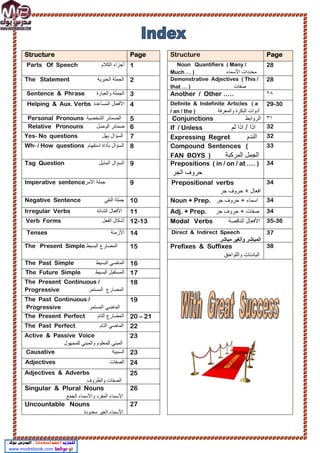
Structure Page Structure Page
‫اﻟﻛﻼم‬ ‫أﺟزاء‬
Parts Of Speech 1 Noun Quantifiers ( Many /
Much … ) ‫اﻷﺳﻣﺎء‬ ‫ﻣﺣددات‬
28
‫اﻟﺧﺑرﯾﺔ‬ ‫اﻟﺟﻣﻠﺔ‬
The Statement 2 Demonstrative Adjectives ( This /
that … ) ‫ﺻﻔﺎت‬
28
‫واﻟﻌﺑﺎرة‬ ‫اﻟﺟﻣﻠﺔ‬
Sentence & Phrase 3 Another / Other ….. ٢٨
‫ا‬ ‫اﻷﻓﻌﺎل‬
‫ﻟﻣﺳﺎﻋدة‬
Helping & Aux. Verbs 4 Definite & Indefinite Articles ( a
/ an / the ) ‫واﻟﻣﻌرﻓﺔ‬ ‫اﻟﻧﻛرة‬ ‫أدوات‬
29-30
‫اﻟﺷﺧﺻﯾﺔ‬ ‫اﻟﺿﻣﺎﺋر‬
Personal Pronouns 5 ‫اﻟرواﺑط‬
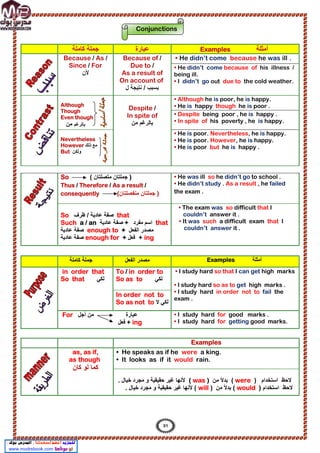
Conjunctions ٣١
‫اﻟوﺻل‬ ‫ﺿﻣﺎﺋر‬
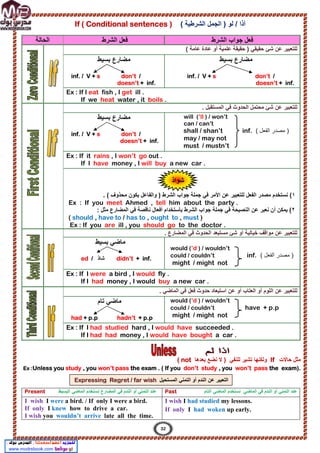
Relative Pronouns 6 If / Unless ‫ﻟم‬ ‫اذا‬ / ‫اذا‬ 32
Yes- No questions ‫ﺑﮭل‬ ‫اﻟﺳؤال‬ 7 Expressing Regret ‫اﻟﻧدم‬ 32
‫اﺳﺗﻔﮭﺎم‬ ‫ﺑﺄداة‬ ‫اﻟﺳؤال‬
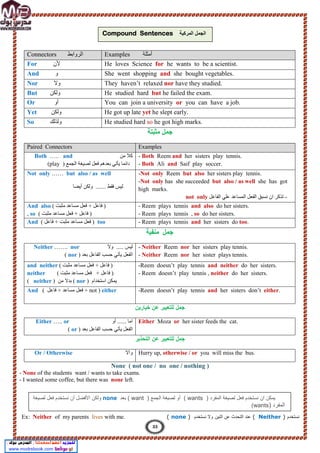
Wh- / How questions 8 Compound Sentences (
‫اﻟﻣرﻛﺑﺔ‬ ‫اﻟﺟﻣل‬
FAN BOYS )
33
‫اﻟﻣذﯾل‬ ‫اﻟﺳؤال‬
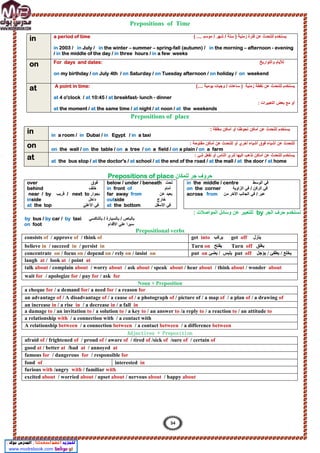
Tag Question 9 Prepositions ( in / on / at …. )
‫اﻟﺟر‬ ‫ﺣروف‬
34
‫اﻷﻣر‬ ‫ﺟﻣﻠﺔ‬
Imperative sentence 9 Prepositional verbs
‫اﻓﻌﺎل‬
+
‫ﺣ‬
‫ر‬
‫ﺟر‬ ‫وف‬
34
‫اﻟﻧﻔﻲ‬ ‫ﺟﻣﻠﺔ‬
Negative Sentence 10 Noun + Prep. ‫ﺟر‬ ‫ﺣروف‬ + ‫اﺳﻣﺎء‬ 34
‫اﻟﺷﺎذة‬ ‫اﻷﻓﻌﺎل‬
Irregular Verbs 11 Adj. + Prep. ‫ﺟر‬ ‫ﺣروف‬ + ‫ﺻﻔﺎت‬ 34
‫اﻟﻔﻌل‬ ‫أﺷﻛﺎل‬
Verb Forms 12-13 Modal Verbs ‫اﻟﻧﺎﻗﺻﺔ‬ ‫اﻷﻓﻌﺎل‬ 35-36
‫اﻷزﻣﻧﺔ‬
Tenses 14 Direct & Indirect Speech
‫ﻣﺑﺎﺷر‬ ‫واﻟﻐﯾر‬ ‫اﻟﻣﺑﺎﺷر‬
37
The Present Simple ‫اﻟﻣﺿﺎر‬
‫اﻟﺑﺳﯾط‬ ‫ع‬ 15 Prefixes & Suffixes
‫واﻟﻠواﺣق‬ ‫اﻟﺑﺎدﺋﺎت‬
38
‫اﻟﺑﺳﯾط‬ ‫اﻟﻣﺎﺿﻲ‬
The Past Simple 16
‫اﻟﺑﺳﯾط‬ ‫اﻟﻣﺳﺗﻘﺑل‬
The Future Simple 17
The Present Continuous /
‫اﻟﻣﺳﺗﻣر‬ ‫اﻟﻣﺿﺎرع‬
Progressive
18
The Past Continuous /
‫اﻟﻣﺳﺗﻣر‬ ‫اﻟﻣﺎﺿﻲ‬
Progressive
19
The Present Perfect ‫اﻟﺗﺎم‬ ‫اﻟﻣﺿﺎرع‬ 20 – 21
The Past Perfect ‫اﻟﺗﺎم‬ ‫اﻟﻣﺎﺿﻲ‬ 22
Active & Passive Voice
‫ﻟﻠﻣﺟﮭول‬ ‫واﻟﻣﺑﻧﻲ‬ ‫ﻟﻠﻣﻌﻠوم‬ ‫اﻟﻣﺑﻧﻲ‬
23
‫اﻟﺳﺑﺑﯾﺔ‬
Causative 23
‫اﻟﺻﻔﺎت‬
Adjectives 24
Adjectives & Adverbs
‫واﻟظروف‬ ‫اﻟﺻﻔﺎت‬
25
Singular & Plural Nouns
‫اﻟﺟﻣﻊ‬ ‫واﻷﺳﻣﺎء‬ ‫اﻟﻣﻔرد‬ ‫اﻷﺳﻣﺎء‬
26
Uncountable Nouns
‫اﻷﺳﻣﺎء‬
‫ﻣﻌدودة‬ ‫اﻟﻐﯾر‬
27
:‫ﻣن‬ ‫ﺗﺗﻛون‬
-
:‫ﻧوﻋﺎن‬
-
:‫ﻧوﻋﺎن‬
-
١
-
‫ﻓﺎﻋل‬
subject
١
-
‫إﺳﺗﻔﮭﺎم‬ ‫ﺑﺄداة‬ ‫إﺳﺗﻔﮭﺎم‬
)
How
Wh../
(
١
-
‫ﻣﺛﺑت‬ ‫أﻣر‬
٢
-
‫ﻓﻌل‬
verb
٢
-
( ‫ﺑﮭل‬ ) ‫ﻣﺳﺎﻋد‬ ‫ﺑﻔﻌل‬ ‫إﺳﺗﻔﮭﺎم‬
٢
-
‫ﻣﻧﻔﻰ‬ ‫أﻣر‬
٣
-
‫ﻣﻔﻌول‬
object
٤
-
‫ﺗﻛﻣﻠﺔ‬
( ‫ﻣﻛﺎن‬ ‫أو‬ ‫زﻣﺎن‬ ‫ظرف‬ )
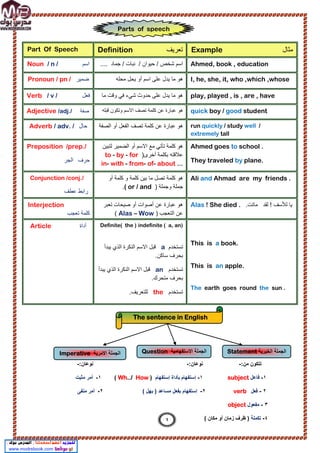
Part Of Speech ‫ﺗﻌرﯾف‬
Definition ‫ﻣﺛﺎل‬
Example
‫اﺳم‬
/ n /
Noun / ‫ﺣﯾوان‬ / ‫ﺷﺧص‬ ‫اﺳم‬
‫ﻧﺑﺎت‬
/
‫ﺟﻣﺎد‬
.... Ahmed, book , education
‫ﺿﻣﯾر‬
/ pn /
Pronoun ‫ﻣﺣﻠﮫ‬ ‫ﯾﺣل‬ ‫أو‬ ‫اﺳم‬ ‫ﻋﻠﻰ‬ ‫ﯾدل‬ ‫ﻣﺎ‬ ‫ھو‬ I, he, she, it, who ,which ,whose
‫ﻓﻌل‬
/ v /
Verb
Verb
‫ﯾدل‬ ‫ﻣﺎ‬ ‫ھو‬
‫وﻗت‬ ‫ﻓﻲ‬ ‫ﺷﻲء‬ ‫ﺣدوث‬ ‫ﻋﻠﻰ‬
‫ﻣﺎ‬ play, played , is , are , have
‫ﺻﻔﺔ‬
/adj./
Adjective ‫ﻗﺑﻠﮫ‬ ‫وﺗﻛون‬ ‫اﻻﺳم‬ ‫ﺗﺻف‬ ‫ﻛﻠﻣﺔ‬ ‫ﻋن‬ ‫ﻋﺑﺎرة‬ ‫ھو‬ quick boy / good student
‫ﺣ‬
‫ﺎ‬
‫ل‬
/ adv. /
Adverb ‫اﻟﺻﻔﺔ‬ ‫أو‬ ‫اﻟﻔﻌل‬ ‫ﺗﺻف‬ ‫ﻛﻠﻣﺔ‬ ‫ﻋن‬ ‫ﻋﺑﺎرة‬ ‫ھو‬ run quickly / study well /
extremely tall
Preposition /prep./
‫ﺣرف‬
‫اﻟﺟر‬
‫ﻟﺗﺑﯾن‬ ‫اﻟﺿﻣﯾر‬ ‫أو‬ ‫اﻻﺳم‬ ‫ﻣﻊ‬ ‫ﺗﺄﺗﻲ‬ ‫ﻛﻠﻣﺔ‬ ‫ھو‬
‫أﺧرى‬ ‫ﺑﻛﻠﻣﺔ‬ ‫ﻋﻼﻗﺗﮫ‬
)
to - by - for
in- with - from- of- about ...
Ahmed goes to school .
They traveled by plane.
Conjunction /conj./
‫راﺑط‬
‫ﻋطف‬
‫أو‬ ‫ﻛﻠﻣﺔ‬ ‫و‬ ‫ﻛﻠﻣﺔ‬ ‫ﺑﯾن‬ ‫ﻣﺎ‬ ‫ﺗﺻل‬ ‫ﻛﻠﻣﺔ‬ ‫ھو‬
‫وﺟﻣﻠﺔ‬ ‫ﺟﻣﻠﺔ‬
)
( or / and
.
Ali and Ahmad are my friends .
Interjection
‫ﻛﻠﻣﺔ‬
‫ﺗﻌﺟب‬
‫ﻋن‬ ‫ﻋﺑﺎرة‬ ‫ھو‬
‫ﺗﻌﺑر‬ ‫ﺻﯾﺣﺎت‬ ‫أو‬ ‫أﺻوات‬
‫اﻟﺗﻌﺟب‬ ‫ﻋن‬
)
Alas – Wow
(
‫ﻟﻘد‬ ! ‫ﻟﻸﺳف‬ ‫ﯾﺎ‬
.‫ﻣﺎﺗت‬
Alas ! She died .
‫أداة‬
Article Definite( the ) indefinite ( a, an)
‫ﺗﺳﺗﺧدم‬
a
‫ﯾﺑدأ‬ ‫اﻟذي‬ ‫اﻟﻧﻛرة‬ ‫اﻻﺳم‬ ‫ﻗﺑل‬
.‫ﺳﺎﻛن‬ ‫ﺑﺣرف‬
‫ﺗﺳﺗﺧد‬
‫م‬
an
‫ﯾﺑدأ‬ ‫اﻟذي‬ ‫اﻟﻧﻛرة‬ ‫اﻻﺳم‬ ‫ﻗﺑل‬
.‫ﻣﺗﺣرك‬ ‫ﺑﺣرف‬
‫ﺗﺳﺗﺧدم‬
the
.‫ﻟﻠﺗﻌرﯾف‬
This is a book.
This is an apple.
The earth goes round the sun .
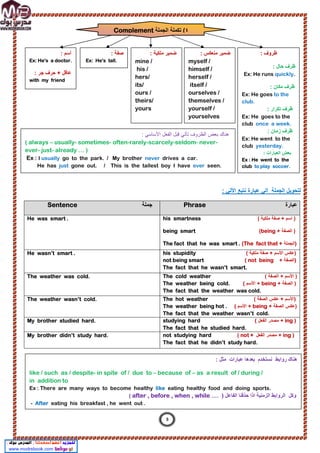
1
Parts of speech
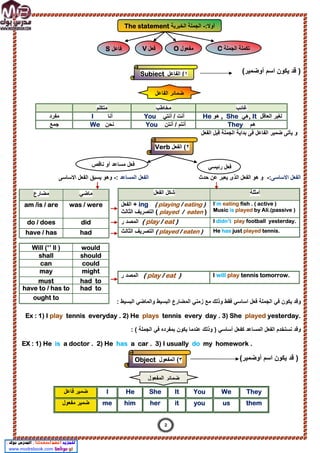
The sentence in English
‫اﻻﻣرﯾﺔ‬ ‫اﻟﺟﻣﻠﺔ‬
Imperative ‫اﻻﺳﺗﻔﮭﺎﻣﯾﺔ‬ ‫اﻟﺟﻣﻠﺔ‬
Question ‫اﻟﺧﺑرﯾﺔ‬ ‫اﻟﺟﻣﻠﺔ‬
Statement
(‫أوﺿﻣﯾر‬ ‫اﺳم‬ ‫ﯾﻛون‬ ‫ﻗد‬ )
‫اﻟﺟﻣ‬ ‫ﺑداﯾﺔ‬ ‫ﻓﻰ‬ ‫اﻟﻔﺎﻋل‬ ‫ﺿﻣﯾر‬ ‫ﯾﺄﺗﻰ‬ ‫و‬
‫اﻟﻔﻌل‬ ‫ﻗﺑل‬ ‫ﻠﺔ‬
‫اﻻﺳﺎﺳﻰ‬ ‫اﻟﻔﻌل‬ ‫ﯾﺳﺑق‬ ‫وھو‬ -: ‫اﻟﻣﺳﺎﻋد‬ ‫اﻟﻔﻌل‬ ‫ﺣدث‬ ‫ﻋن‬ ‫ﯾﻌﺑر‬ ‫اﻟذى‬ ‫اﻟﻔﻌل‬ ‫ھو‬ ‫و‬ -:‫اﻻﺳﺎﺳﻰ‬ ‫اﻟﻔﻌل‬
: ‫اﻟﺑﺳﯾط‬ ‫واﻟﻣﺎﺿﻲ‬ ‫اﻟﺑﺳﯾط‬ ‫اﻟﻣﺿﺎرع‬ ‫زﻣﻧﻲ‬ ‫ﻣﻊ‬ ‫وذﻟك‬ ‫ﻓﻘط‬ ‫اﺳﺎﺳﻲ‬ ‫ﻓﻌل‬ ‫اﻟﺟﻣﻠﺔ‬ ‫ﻓﻲ‬ ‫ﯾﻛون‬ ‫وﻗد‬
yesterday.
played
tennis every day . 3) She
plays
tennis everyday . 2) He
play
1) I
Ex :
: ( ‫اﻟﺟﻣﻠﺔ‬ ‫ﻓﻲ‬ ‫ﺑﻣﻔرده‬ ‫ﯾﻛون‬ ‫ﻋﻧدﻣﺎ‬ ‫وذﻟك‬ ) ‫أﺳﺎﺳﻲ‬ ‫ﻛﻔﻌل‬ ‫اﻟﻣﺳﺎﻋد‬ ‫اﻟﻔﻌل‬ ‫ﻧﺳﺗﺧدم‬ ‫وﻗد‬
my homework .
do
a car . 3) I usually
has
a doctor . 2) He
is
EX : 1) He
(‫أوﺿﻣﯾر‬ ‫اﺳم‬ ‫ﯾﻛون‬ ‫ﻗد‬ )
‫ﻏﺎﺋب‬
‫ﻣﺧﺎطب‬
‫ﻣﺗﻛﻠم‬
‫اﻟﻌﺎﻗل‬ ‫ﻟﻐﯾر‬
It
,
‫ھﻲ‬
She
,
‫ھو‬
He
‫أﻧﺗﻲ‬ / ‫أﻧت‬
You
‫أﻧﺎ‬
I
‫ﻣﻔرد‬
‫ھم‬
They
‫أﻧﺗن‬ / ‫أﻧﺗم‬
You
‫ﻧﺣن‬
We
‫ﺟﻣﻊ‬
‫ﻣﺎﺿﻲ‬
‫ﻣﺿﺎرع‬
was / were
am /is / are
did
do / does
had
have / has
would
Will (‘’ ll )
should
hall
s
could
can
might
may
had to
must
had to
have to / has to
ought to
‫أﻣﺛﻠﺔ‬
‫اﻟﻔﻌل‬ ‫ﺷﻛل‬
fish . ( active )
eating
’m
I
)
by Ali.(passive
played
is
Music
)
eating
/
playing
(
ing
‫اﻟﻔﻌل‬ +
)
eaten
/
played
(
‫اﻟﺛﺎﻟث‬ ‫اﻟﺗﺻرﯾف‬
.
yesterday
football
play
didn’t
I
)
eat
/
play
(
‫ر‬ ‫اﻟﻣﺻد‬
tennis.
played
just
has
He
)
eaten
/
played
(
‫اﻟﺛﺎﻟث‬ ‫اﻟﺗﺻرﯾف‬
tennis tomorrow.
play
will
I
)
eat
/
play
(
‫ر‬ ‫اﻟﻣﺻد‬
They
We
You
It
She
He
I
‫ﻓﺎﻋل‬ ‫ﺿﻣﯾر‬
them
us
you
it
her
him
me
‫ﻣﻔﻌول‬ ‫ﺿﻣﯾر‬
‫اﻟﻔﺎﻋل‬ ‫ﺿﻣﺎﺋر‬
٢
‫اﻟﻔﻌل‬ (
Verb
‫ﻓﻌل‬
‫ﻧﺎﻗص‬ ‫أو‬ ‫ﻣﺳﺎﻋد‬ ‫ﻓﻌل‬
‫رﺋﯾﺳﻲ‬
‫اﻟﻣﻔﻌول‬ ‫ﺿﻣﺎﺋر‬
‫اﻟﺟﻣﻠﺔ‬ ‫ﺗﻛﻣﻠﺔ‬
C
‫ﻓﺎﻋل‬
S ‫ﻓﻌل‬
V ‫ﻣﻔﻌول‬
O
١
‫اﻟﻔﺎﻋل‬ (
Subject
:‫أوﻻ‬
-
‫اﻟﺧﺑرﯾﺔ‬ ‫اﻟﺟﻣﻠﺔ‬
The statement
2
٣
(
‫اﻟﻣﻔﻌول‬
Object
: ‫اﻷﺗﻲ‬ ‫ﻧﺗﺑﻊ‬ ‫ﻋﺑﺎرة‬ ‫اﻟﻲ‬ ‫اﻟﺟﻣﻠﺔ‬ ‫ﻟﺗﺣوﯾل‬
‫ﻋﺑﺎرة‬
Phrase
‫ﺟﻣﻠﺔ‬
Sentence
( ‫ﻣﻠﻛﯾﺔ‬ ‫ﺻﻔﺔ‬ + ‫اﺳم‬ )
his smartness
+ ‫اﻟﺻﻔﺔ‬ )
being
(
being smart
)
‫اﻟﺟﻣﻠﺔ‬
The fact that he was smart . (The fact that +
He was smart .
( ‫ﻣﻠﻛﯾﺔ‬ ‫ﺻﻔﺔ‬ + ‫اﻷﺳم‬ ‫)ﻋﻛس‬
his stupidity
)
+ ‫اﻟﺻﻔﺔ‬
( not being
not being smart
The fact that he wasn’t smart.
He wasn’t smart .
( ‫اﻟﺻﻔﺔ‬ + ‫اﻷﺳم‬ )
The cold weather
+ ‫اﻟﺻﻔﺔ‬ )
being
‫اﻷﺳم‬ +
(
The weather being cold.
The fact that the weather was cold.
The weather was cold.
( ‫اﻟﺻﻔﺔ‬ ‫ﻋﻛس‬ + ‫)اﻷﺳم‬
The hot weather
+ ‫اﻟﺻﻔﺔ‬ ‫)ﻋﻛس‬
being
‫اﻷﺳم‬ +
(
The weather being hot .
The fact that the weather wasn’t cold.
The weather wasn’t cold.
ing )
‫اﻟﻔﻌل‬ ‫ﻣﺻدر‬ +
(
studying hard
The fact that he studied hard.
My brother studied hard.
ing )
‫اﻟﻔﻌل‬ ‫ﻣﺻدر‬ +
not +
(
not studying hard
The fact that he didn’t study hard.
My brother didn’t study hard.
٤
‫اﻟﺟﻣﻠﺔ‬ ‫ﺗﻛﻣﻠﺔ‬ (
Complement
: ‫أﺳم‬
Ex: He's a doctor.
: ‫ﺟر‬ ‫ﺣرف‬ + ‫ﻋﺎﻗل‬
with my friend
: ‫ﺻﻔﺔ‬
Ex: He's tall.
: ‫ظروف‬
‫ﺣﺎل‬ ‫ظرف‬
:
Ex: He runs quickly.
: ‫ﻣﻛﺎن‬ ‫ظرف‬
Ex: He goes to the
club.
‫ﺗﻛرار‬ ‫ظرف‬
:
Ex: He goes to the
club once a week.
: ‫زﻣﺎن‬ ‫ظرف‬
Ex: He went to the
club yesterday.
: ‫اﻟﻌﺑﺎرات‬ ‫ﺑﻌض‬
Ex : He went to the
club to play soccer.
: ‫ﻣﻠﻛﯾﺔ‬ ‫ﺿﻣﯾر‬
mine /
his /
hers/
its/
ours /
theirs/
yours
: ‫ﻣﻧﻌﻛس‬ ‫ﺿﻣﯾر‬
myself /
himself /
herself /
itself /
ourselves /
themselves /
yourself /
yourselves
: ‫ﻣﺛل‬ ‫ﻋﺑﺎرات‬ ‫ﺑﻌدھﺎ‬ ‫ﻧﺳﺗﺧدم‬ ‫رواﺑط‬ ‫ھﻧﺎك‬
like / such as / despite- in spite of / due to – because of – as a result of / during /
in addition to
Ex : There are many ways to become healthy like eating healthy food and doing sports.
) ‫اﻟﻔﺎﻋل‬ ‫ﺣذﻓﻧﺎ‬ ‫اذا‬ ‫اﻟزﻣﻧﯾﺔ‬ ‫اﻟرواﺑط‬ ‫وﻛل‬
after , before , when , while ….
(
- After eating his breakfast , he went out .
: ‫اﻷﺳﺎﺳﻲ‬ ‫اﻟﻔﻌل‬ ‫ﻗﺑل‬ ‫ﺗﺄﺗﻲ‬ ‫اﻟظروف‬ ‫ﺑﻌض‬ ‫ھﻧﺎك‬
( always – usually- sometimes- often-rarely-scarcely-seldom- never-
ever- just- already … )
Ex : I usually go to the park. / My brother never drives a car.
He has just gone out. / This is the tallest boy I have ever seen.
3
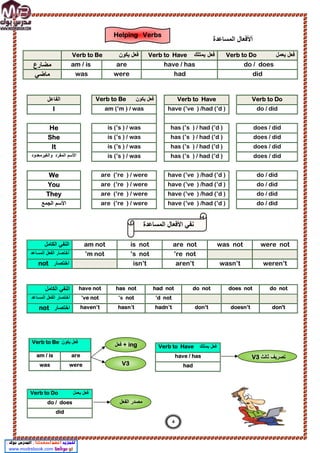
‫اﻟﻣﺳﺎﻋدة‬ ‫أﻷﻓﻌﺎل‬
‫ﯾﻌﻣل‬ ‫ﻓﻌل‬
Verb to Do
‫ﻓﻌل‬
‫ﯾﻣﺗﻠك‬
Verb to Have
‫ﯾﻛون‬ ‫ﻓﻌل‬
Verb to Be
do / does
have / has
are
am / is
‫ﻣﺿﺎرع‬
did
had
were
was
‫ﻣﺎﺿﻲ‬
to Do
Verb
Verb to Have
‫ﯾﻛون‬ ‫ﻓﻌل‬
Verb to Be
‫اﻟﻔﺎﻋل‬
do / did
have (’ve ) /had (’d )
am (’m ) / was
I
does / did
has (’s ) / had (’d )
is (’s ) / was
He
does / did
has (’s ) / had (’d )
is (’s ) / was
She
does / did
has (’s ) / had (’d )
is (’s ) / was
It
does / did
has (’s ) / had (’d )
is (’s ) / was
‫اﻟﻣﻔرد‬ ‫اﻷﺳم‬
‫واﻟﻐﯾرﻣﻌدود‬
do / did
have (’ve ) /had (’d )
are (’re ) / were
We
do / did
have (’ve ) /had (’d )
are (’re ) / were
You
do / did
have (’ve ) /had (’d )
are (’re ) / were
They
do / did
have (’ve ) /had (’d )
are (’re ) / were
‫اﻟﺟﻣﻊ‬ ‫اﻷﺳم‬
were not
was not
are not
is not
am not
‫اﻟﻛﺎﻣل‬ ‫اﻟﻧﻔﻲ‬
’re not
’s not
’m not
‫اﻟﻣﺳﺎﻋد‬ ‫اﻟﻔﻌل‬ ‫أﺧﺗﺻﺎر‬
weren’t
wasn’t
aren’t
isn’t
‫اﺧﺗﺻﺎر‬
not
do not
does not
do not
had not
has not
have not
‫اﻟﻛﺎﻣل‬ ‫اﻟﻧﻔﻲ‬
’d not
’s not
’ve not
‫اﻟﻣﺳﺎﻋد‬ ‫اﻟﻔﻌل‬ ‫أﺧﺗﺻﺎر‬
don't
doesn’t
don’t
hadn’t
hasn’t
haven’t
‫اﺧﺗﺻﺎر‬
not
‫ﻓﻌل‬
‫ﯾﻛون‬
Verb to Be
are
am / is
were
was
‫ﯾﻣﺗﻠك‬ ‫ﻓﻌل‬
Verb to Have
have / has
had
‫ﯾﻌﻣل‬ ‫ﻓﻌل‬
Verb to Do
do / does
did
‫اﻟﻣﺳﺎﻋدة‬ ‫اﻷﻓﻌﺎل‬ ‫ﻧﻔﻲ‬
ing
‫ﻓﻌل‬ +
‫ﺛﺎﻟث‬ ‫ﺗﺻرﯾف‬
V3
‫اﻟﻔﻌل‬ ‫ﻣﺻدر‬
V3
Helping Verbs
4
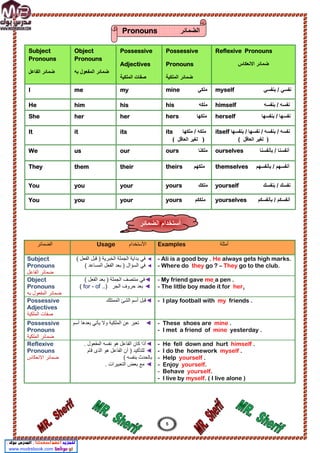
Subject
Pronouns
‫اﻟﻔﺎﻋل‬ ‫ﺿﻣﺎﺋر‬
Object
Pronouns
‫ﺑﮫ‬ ‫اﻟﻣﻔﻌول‬ ‫ﺿﻣﺎﺋر‬
Possessive
Adjectives
‫اﻟﻣﻠﻛﯾﺔ‬ ‫ﺻﻔﺎت‬
Possessive
Pronouns
‫اﻟﻣﻠﻛﯾﺔ‬ ‫ﺿﻣﺎﺋر‬
Reflexive Pronouns
‫اﻻﻧﻌﻛﺎس‬ ‫ﺿﻣﺎﺋر‬
I me my mine ‫ﻣﻠﻛﻲ‬ myself ‫ﻧﻔﺳﻲ‬
‫ﺑﻧﻔﺳﻲ‬ /
He him his his ‫ﻣﻠﻛﮫ‬ himself ‫ﺑﻧﻔﺳﮫ‬ / ‫ﻧﻔﺳﮫ‬
She her her hers ‫ﻣﻠﻛﮭﺎ‬ herself ‫ﻧﻔﺳﮭﺎ‬
‫ﺑﻧﻔﺳﮭﺎ‬ /
It it its its ‫ﻣﻠﻛﮫ‬
‫ﻣﻠﻛﮭﺎ‬ /
( ‫اﻟﻌﺎﻗل‬ ‫ﻟﻐﯾر‬ )
itself / ‫ﺑﻧﻔﺳﮫ‬ / ‫ﻧﻔﺳﮫ‬
‫ﻧﻔﺳﮭﺎ‬
‫ﺑﻧ‬ /
‫ﻔﺳﮭﺎ‬
( ‫اﻟﻌﺎﻗل‬ ‫ﻟﻐﯾر‬ )
We us our ours ‫ﻣﻠﻛﻧﺎ‬ ourselves ‫ﺑﺄﻧﻔﺳﻧﺎ‬ / ‫أﻧﻔﺳﻧﺎ‬
They them their theirs ‫ﻣﻠﻛﮭم‬ themselves ‫أﻧﻔﺳﮭم‬
‫ﺑﺄﻧﻔﺳﮭم‬ /
You you your yours ‫ﻣﻠﻛك‬ yourself ‫ﺑﻧﻔﺳك‬ / ‫ﻧﻔﺳك‬
You you your yours ‫ﻣﻠﻛﻛم‬ yourselves ‫أﻧﻔﺳﻛم‬
‫ﺑﺄﻧﻔﺳﻛم‬ /
‫اﻟﺿﻣﺎﺋر‬ Usage ‫اﻷﺳﺗﺧدام‬ Examples ‫أﻣﺛﻠﺔ‬
Subject
Pronouns
‫اﻟﻔﺎﻋل‬ ‫ﺿﻣﺎﺋر‬
◄
‫ﺑداﯾﺔ‬ ‫ﻓﻲ‬
‫اﻟﻔ‬ ‫ﻗﺑل‬ ) ‫اﻟﺧﺑرﯾﺔ‬ ‫اﻟﺟﻣﻠﺔ‬
( ‫ﻌل‬
◄
( ‫اﻟﻣﺳﺎﻋد‬ ‫اﻟﻔﻌل‬ ‫ﺑﻌد‬ ) ‫اﻟﺳؤال‬ ‫ﻓﻲ‬
- Ali is a good boy . He always gets high marks.
- Where do they go ? – They go to the club.
Object
Pronouns
‫ﺑﮫ‬ ‫اﻟﻣﻔﻌول‬ ‫ﺿﻣﺎﺋر‬
( ‫اﻟﻔﻌل‬ ‫ﺑﻌد‬ ) ‫اﻟﺟﻣﻠﺔ‬ ‫ﻣﻧﺗﺻف‬ ‫ﻓﻲ‬◄
( for - of ..) ◄
‫اﻟﺟر‬ ‫ﺣروف‬ ‫ﺑﻌد‬
a pen .
me
My friend gave
-
.
her
The little boy made it for
-
Possessive
Adjectives
‫اﻟﻣﻠﻛﯾﺔ‬ ‫ﺻﻔﺎت‬
‫اﻟﻣﻣﺗﻠك‬ ‫اﻟﺷﺊ‬ ‫أﺳم‬ ‫◄ﻗﺑل‬ - I play football with my friends .
Possessive
Pronouns
‫اﻟﻣﻠﻛﯾﺔ‬ ‫ﺿﻣﺎﺋر‬
‫أﺳم‬ ‫ﺑﻌدھﺎ‬ ‫ﯾﺄﺗﻲ‬ ‫وﻻ‬ ‫اﻟﻣﻠﻛﯾﺔ‬ ‫ﻋن‬ ‫ﺗﻌﺑر‬ ◄ - These shoes are mine .
- I met a friend of mine yesterday .
Reflexive
Pronouns
‫اﻻﻧﻌﻛﺎس‬ ‫ﺿﻣﺎﺋر‬
◄
. ‫اﻟﻣﻔﻌول‬ ‫ﻧﻔﺳﮫ‬ ‫ھو‬ ‫اﻟﻔﺎﻋل‬ ‫ﻛﺎن‬ ‫أذا‬
◄
‫ﻗﺎم‬ ‫اﻟذى‬ ‫ھو‬ ‫اﻟﻔﺎﻋل‬ ‫أن‬ ) ‫ﻟﻠﺗﺄﻛﯾد‬
( ‫ﺑﻧﻔﺳﮫ‬ ‫ﺑﺎﻟﺣدث‬
◄
. ‫اﻟﺗﻌﺑﯾرات‬ ‫ﺑﻌض‬ ‫ﻣﻊ‬
- He fell down and hurt himself .
- I do the homework myself .
- Help yourself .
- Enjoy yourself.
Behave yourself.
-
- I live by myself. ( I live alone )
5
‫اﻟﺿﻣﺎﺋر‬
Pronouns
‫اﻟﺿﻣﺎﺋر‬ ‫أﺳﺗﺧدام‬
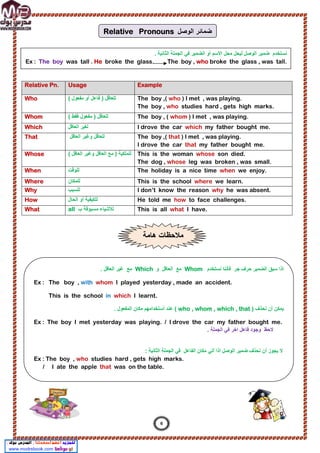
Relative Pn. Usage Example
Who ( ‫ﻣﻔﻌول‬ ‫أو‬ ‫ﻓﺎﻋل‬ ) ‫ﻟﻠﻌﺎﻗل‬ The boy ,( who ) I met , was playing.
The boy , who studies hard , gets high marks.
Whom ( ‫ﻓﻘط‬ ‫ﻣﻔﻌول‬ ) ‫ﻟﻠﻌﺎﻗل‬ The boy , ( whom ) I met , was playing.
Which ‫اﻟﻌﺎﻗل‬ ‫ﻟﻐﯾر‬ I drove the car which my father bought me.
That ‫اﻟﻌﺎﻗل‬ ‫وﻏﯾر‬ ‫ﻟﻠﻌﺎﻗل‬ The boy ,( that ) I met , was playing.
I drove the car that my father bought me.
Whose ‫اﻟﻌﺎﻗ‬ ‫وﻏﯾر‬ ‫اﻟﻌﺎﻗل‬ ‫ﻣﻊ‬ ) ‫ﻟﻠﻣﻠﻛﯾﺔ‬
( ‫ل‬ This is the woman whose son died.
The dog , whose leg was broken , was small.
When ‫ﻟﻠوﻗت‬ The holiday is a nice time when we enjoy.
Where ‫ﻟﻠﻣﻛﺎن‬ This is the school where we learn.
Why ‫ﻟﻠﺳﺑب‬ I don’t know the reason why he was absent.
How ‫اﻟ‬ ‫أو‬ ‫ﻟﻠﻛﯾﻔﯾﺔ‬
‫ﺣﺎل‬ He told me how to face challenges.
What all ‫ب‬ ‫ﻣﺳﺑوﻗﺔ‬ ‫ﻟﻸﺷﯾﺎء‬ This is all what I have.
‫ﻧﺳﺗﺧدم‬ ‫ﻓﺄﻧﻧﺎ‬ ‫ﺟر‬ ‫ﺣرف‬ ‫اﻟﺿﻣﯾر‬ ‫ﺳﺑق‬ ‫اذا‬
Whom
‫و‬ ‫اﻟﻌﺎﻗل‬ ‫ﻣﻊ‬
Which
. ‫اﻟﻌﺎﻗل‬ ‫ﻏﯾر‬ ‫ﻣﻊ‬
Ex : The boy , with whom I played yesterday , made an accident.
This is the school in which I learnt.
) ‫ﻧﺣذف‬ ‫أن‬ ‫ﯾﻣﻛن‬
who , whom , which , that
. ‫اﻟﻣﻔﻌول‬ ‫ﻣﻛﺎن‬ ‫أﺳﺗﺧداﻣﮭم‬ ‫ﻋﻧد‬ (
Ex : The boy I met yesterday was playing. / I drove the car my father bought me.
. ‫اﻟﺟﻣﻠﺔ‬ ‫ﻓﻲ‬ ‫اﺧر‬ ‫ﻓﺎﻋل‬ ‫وﺟود‬ ‫ﻻﺣظ‬
‫اذا‬ ‫اﻟوﺻل‬ ‫ﺿﻣﯾر‬ ‫ﻧﺣذف‬ ‫أن‬ ‫ﯾﺟوز‬ ‫ﻻ‬
‫أ‬
‫اﻟﻔﺎﻋل‬ ‫ﻣﻛﺎن‬ ‫ﺗﻲ‬
‫اﻟﺛﺎﻧﯾﺔ‬ ‫اﻟﺟﻣﻠﺔ‬ ‫ﻓﻲ‬
:
Ex : The boy , who studies hard , gets high marks.
/ I ate the apple that was on the table.
‫ھﺎﻣﺔ‬ ‫ﻣﻼﺣظﺎت‬
Relative Pronouns ‫اﻟوﺻل‬ ‫ﺿﻣﺎﺋر‬
‫اﻷﺳ‬ ‫ﻣﺣل‬ ‫ﻟﯾﺣل‬ ‫اﻟوﺻل‬ ‫ﺿﻣﯾر‬ ‫ﻧﺳﺗﺧدم‬
. ‫اﻟﺛﺎﻧﯾﺔ‬ ‫اﻟﺟﻣﻠﺔ‬ ‫ﻓﻲ‬ ‫اﻟﺿﻣﯾر‬ ‫أو‬ ‫م‬
Ex : The boy was tall . He broke the glass. The boy , who broke the glass , was tall.
6
◄
. (‫ھو‬ ‫ﻛﻣﺎ‬ ‫اﻟرﺋﯾﺳﻲ‬ ‫اﻟﻔﻌل‬ ‫ﻧﺗرك‬ ‫ﺛم‬ ‫اﻟﻔﺎﻋل‬ ‫ﻋﻠﻲ‬ ‫اﻟﻧﺎﻗص‬ ‫أو‬ ‫اﻟﻣﺳﺎﻋد‬ ‫اﻟﻔﻌل‬ ‫ﻧﺳﺑق‬ ) : ‫اوﻧﺎﻗص‬ ‫ﻣﺳﺎﻋد‬ ‫ﻓﻌل‬ ‫وﺟود‬ ‫ﺣﺎﻟﺔ‬ ‫ﻓﻲ‬
‫اﻷﺟﺎﺑﺔ‬
‫اﻷﺳﺗﻔﮭﺎﻣﯾﺔ‬ ‫اﻟﺟﻣﻠﺔ‬
‫اﻟﺧﺑرﯾﺔ‬ ‫اﻟﺟﻣﻠﺔ‬
Yes, they are .
No , they aren’t .
Are they playing ?
They are playing .
-
Yes, he is . / No , he isn’t .
Is he reading a book ?
He is reading a book.
-
Yes , I am . / No, I am not .
Are you eating fish ?
I am eating fish .
-
Yes, I was . / No, I wasn’t .
Were you sleeping ?
I was sleeping .
-
Yes ,we were .
No, we weren’t .
Were you studying ?
We were studying .
-
Yes , I have .
/ No, I haven’t .
Have you got a car ?
I have got a car .
-
Yes, he has .
/ No, he hasn’t .
Has he got a car ?
has got a car .
He
-
Yes , we had .
/ No, we hadn’t .
Had you got a car ?
We had got a car .
-
Yes , I will . / No , I won’t .
Will you play football ?
- I will play football .
Yes , I can . / No , I can’t .
Can you ride a bike ?
I can ride a bike .
-
Yes , you should .
/ No , you shouldn’t .
Should I play sports ?
You should play sports .
-
◄
‫ﻣﺳﺎﻋد‬ ‫ﻓﻌل‬ ‫وﺟود‬ ‫ﻋدم‬ ‫ﺣﺎﻟﺔ‬ ‫ﻓﻲ‬
‫ﻧﺳﺗﺧدم‬ )
do , does , did
. (
-
‫اﻟﻣﺻدر‬ ‫ﻓﻲ‬ ‫اﻟﻔﻌل‬ ‫ﻛﺎن‬ ‫اذا‬
)
play
(
) ‫ﻧﺳﺗﺧدم‬
do
(
، ‫اﻟﺟﻣﻊ‬ ‫اﻷﺳم‬ ) ‫ﺑﻌد‬
They
،
You
،
We
.(
-
‫ب‬ ‫ﻣﻧﺗﮭﻲ‬ ‫اﻟﻔﻌل‬ ‫ﻛﺎن‬ ‫اذا‬
s
)
plays
(
) ‫ﻧﺳﺗﺧدم‬
does
(
) ‫ﺑﻌد‬
‫اﻟﻣﻔرد‬ ‫اﻷﺳم‬ ، ‫اﻟﻐﯾرﻣﻌدود‬ ‫اﻷﺳم‬
،
It
،
She
،
He
.(
-
‫ﻓ‬ ‫اﻟﻔﻌل‬ ‫ﻛﺎن‬ ‫اذا‬
) ‫اﻟﻣﺎﺿﻲ‬ ‫ﻲ‬
played
(
) ‫ﻧﺳﺗﺧدم‬
did
(
. ‫اﻟﻛل‬ ‫ﻣﻊ‬
Yes, I do. / No, I don’t .
Do you play football ?
I play football .
-
Yes , he does .
/ No , he doesn’t .
Does he play football ?
- He plays football .
Yes, he did . / No, he didn’t.
Did he play football ?
He played football .
-
Yes, I did. / No, I didn’t .
Did you go to school ?
I went to school.
-
◄
‫ﻧﺳﺗﺧدم‬ ‫ﻓﺄﻧﻧﺎ‬ ‫رﺋﯾﺳﯾﺔ‬ ‫ﻛﺄﻓﻌﺎل‬ ‫اﻟﻣﺳﺎﻋدة‬ ‫اﻷﻓﻌﺎل‬ ‫أﺳﺗﺧدﻣﻧﺎ‬ ‫اذا‬
)
do , does , did
(
:
Yes , he does .
/ No , he doesn’t .
Does he have a car ?
He has a car .
-
Yes, I did. / No,I didn’t .
Did you have to study hard ?
I had to study hard.
-
Yes, I did. / No,I didn’t .
Did you do your homework?
I did my homework .
-
: ‫ﺛﺎﻧﯾﺎ‬
-
‫اﻻﺳﺗﻔﮭﺎﻣﯾﺔ‬ ‫اﻟﺟﻣﻠﺔ‬
Questions
)
١
(
( ‫ﻧﺎﻗص‬ ‫أو‬ ‫ﻣﺳﺎﻋد‬ ‫ﺑﻔﻌل‬ ) ‫ﺑﮭل‬ ‫إﺳﺗﻔﮭﺎم‬
‫ﻓﻌل‬
‫أو‬ ‫ﻣﺳﺎﻋد‬
‫ﻧﺎﻗص‬ ‫ﻓﺎﻋل‬ ‫رﺋﯾﺳﻲ‬ ‫ﻓﻌل‬ ‫اﻟﺟﻣﻠﺔ‬ ‫ﺗﻛﻣﻠﺔ‬
)
١
( ‫ﻧﺎﻗص‬ ‫أو‬ ‫ﻣﺳﺎﻋد‬ ‫ﺑﻔﻌل‬ ) ‫ﺑﮭل‬ ‫اﻟﺳؤال‬ (
"Yes / No" questions
)
٢
‫اﻟﺳؤال‬ (
‫ﺑ‬
‫ﺄ‬
‫إﺳﺗﻔﮭﺎم‬ ‫داة‬
" Wh- / How " questions
7
‫ﻣﻠﺣوظﺔ‬
:
‫أﺳﺗﺧد‬ ‫اذا‬
. ‫ﻣﺑﺎﺷرة‬ ‫ﻧﺎﻗص‬ ‫أو‬ ‫ﻣﺳﺎﻋد‬ ‫ﻓﻌل‬ ‫ﺑﻌدھﺎ‬ ‫ﻧﺿﻊ‬ ‫ﻓﻼ‬ ‫اﻟﺟﻣﻠﺔ‬ ‫ﻣﻧﺗﺻف‬ ‫ﻓﻲ‬ ‫اﻷﺳﺗﻔﮭﺎم‬ ‫أداة‬ ‫ﻣﻧﺎ‬
Ex : Can you tell me where the bank is , please ?
( ‫اﺳم‬ )
) = What + n.
( ‫ﺻﻔﺔ‬
How + adj.
How old ?
How much ?
How far ?
How old ?
How long ?
How tall ?
How
What age ?
What price ?
What distance ?
What age ?
What length ?
What height ?
What
‫أﻣﺛﻠﺔ‬
Examples
‫ﻋن‬ ‫ﺗﺳﺄل‬
‫ﻣﻌﻧﺎھﺎ‬
‫اﻻﺳﺗﻔﮭﺎم‬ ‫أداة‬
Who are you ? – I’m Ahmed .
‫اﻟﻌﺎﻗل‬ ‫اﻟﻣﻔﻌول‬ ‫او‬ ‫اﻟﻔﺎﻋل‬
‫ﻣن‬
Who
When will you come ? – Tomorrow .
) ‫اﻟزﻣن‬ ‫او‬ ‫اﻟوﻗت‬
tomorrow…
(
‫ﻣﺗﻰ‬
When
Where do you go ? – To the club .
) ‫اﻟﻣﻛﺎن‬
to school / at home...
(
‫أﯾن‬
Where
Which car do you like ? – The red car .
Which boy is taller :Ahmed or Ali? Ali.
) ‫اﻟﺗﻔﺿﯾل‬ ‫أو‬ ‫اﻻﺧﺗﯾﺎر‬
..
the red car
(
‫آى‬
Which
What did you buy ? – A car .
‫ﻏﯾرا‬
) ‫ﻟﻌﺎﻗل‬
car / dog ..
(
‫ﻣﺎ‬
-
‫ﻣﺎذا‬
What
Why didn’t you come ? – Because I was ill.
‫اﻟﺳﺑب‬
)
because – to – for
(
‫ﻟﻣﺎذا‬
Why
Whose book is this ?- It’s Ali’s book .
) ‫اﻟﻣﻠﻛﯾﺔ‬
Ali’s / his …
(
‫ﻟﻣن‬
Whose
How do you go to work ? – By car .
‫و‬ ‫أو‬ ‫اﻟﺣﺎل‬
) ‫اﻟﻣواﺻﻼت‬ ‫ﺳﯾﻠﺔ‬
by car
(
‫ﻛﯾف‬
How
How old are you ? 10 years old .
‫اﻟﺳن‬ ‫او‬ ‫اﻟﻌﻣر‬
)
10 years old
(
‫ﻋﻣر‬ ‫ﻛم‬
How old
How many pens do you have ? -1 pen.
‫اﻟﻌدد‬
)
two / three ….
(
‫ﻋدد‬ ‫ﻛم‬
How many
How much is this dress ? – 40 $
)‫اﻟﺳﻌر‬ ‫او‬ ‫اﻟﺛﻣن‬
2 Dollars
(
‫ﺛﻣن‬ ‫ﻛم‬
How much
How far is your school ? –2 km far .
‫اﻟﻣﺳﺎﻓﺔ‬ ‫او‬ ‫اﻟﺑﻌد‬
)
5 km far
(
‫ﺑﻌد‬ ‫ﻣﺎ‬
How far
How long is this bridge ? 13 m long .
How long will you stay ? - For 2 days
)‫اﻷﺷﯾﺎء‬ ‫طول‬
3 m long
(
‫اﻟﻣدة‬ ‫أو‬
) ‫اﻟزﻣﻧﯾﺔ‬
for a day / since 1990
(
‫طول‬ ‫ﻛم‬
How long
How tall is your father ? – 150 cm
) ‫اﻷﺷﺧﺎص‬ ‫طول‬
150 cm
(
‫طول‬ ‫ﻛم‬
)
( ‫ﻟﻸﺷﺧﺎص‬
How tall
)
٢
‫أﺳﺗﻔﮭﺎم‬ ‫ﺑﺄداة‬ ‫إﺳﺗﻔﮭﺎم‬ (
questions
)
Wh../ How
(
‫اﺳﺗﻔﮭﺎم‬ ‫أداة‬ ‫ﻣﺳﺎﻋد‬ ‫ﻓﻌل‬ ‫ﻓﺎﻋل‬ ‫رﺋﯾﺳﻲ‬ ‫ﻓﻌل‬ ‫اﻟﺟﻣﻠﺔ‬ ‫ﺗﻛﻣﻠﺔ‬
8
-
. ‫اﻟﻔﺎﻋل‬ ‫ﻋﻠﻲ‬ ‫ﯾﻌود‬ ‫ﺿﻣﯾر‬ ‫ﺛم‬ ‫ﺑﺎﻟﺟﻣﻠﺔ‬ ‫اﻟﻣوﺟود‬ ‫اﻟﻣﺳﺎﻋد‬ ‫اﻟﻔﻌل‬ ‫ﺑﺄﺳﺗﺧدام‬ ‫اﻟﻣذﯾل‬ ‫اﻟﺳؤال‬ ‫ﻧﻛون‬
-
.‫اﻷﺛﺑﺎت‬ ‫ﺷﻛل‬ ‫ﻓﻲ‬ ‫اﻟﻣﺳﺎﻋد‬ ‫اﻟﻔﻌل‬ ‫ﻧﻛﺗب‬ ‫ﻣﻧﻔﯾﺔ‬ ‫اﻟﺟﻣﻠﺔ‬ ‫ﻛﺎﻧت‬ ‫واذا‬ ‫اﻟﻣﺳﺎﻋد‬ ‫اﻟﻔﻌل‬ ‫ﻧﻧﻔﻲ‬ ‫ﻣﺛﺑﺗﺔ‬ ‫اﻟﺟﻣﻠﺔ‬ ‫ﻛﺎﻧت‬ ‫اذا‬
-
) ‫ﻧﺳﺗﺧدم‬ ‫ﻣﺳﺎﻋدة‬ ‫أﻓﻌﺎل‬ ‫ھﻧﺎك‬ ‫ﯾﻛن‬ ‫ﻟم‬ ‫اذا‬
do , does
‫ﻟﻠﻣﺿﺎر‬ (
) ‫و‬ ‫اﻟﺑﺳﯾط‬ ‫ع‬
did
. ‫اﻟﺑﺳﯾط‬ ‫ﻟﻠﻣﺎﺿﻲ‬ (
Tag Question
Sentence
Tag Question
Sentence
don’t they ?
My friends play football ,
isn’t it ?
It is very cold ,
doesn’t she ?
She watches TV ,
won’t they ?
They will come ,
doesn’t he ?
He has to study ,
have they ?
My friends haven’t studied ,
didn’t he ?
Ali broke his leg ,
can’t he
He can drive a car ,
( ‫أﻗﺗراح‬ )
shall we ?
Let’s play soccer ,
am I ?
I’m not fine today ,
)
‫أذن‬ ‫طﻠب‬
will you ? (
Let us go out ,
aren’t I ?
I’m a good student ,
‫ﻧﺳﺗﺧدم‬
)
shall we ?
(
‫ﺑﻌد‬
Let’s
) ‫و‬
will you ?
(
‫ﺑﻌد‬
Let us
)
‫أﻣر‬
will you ? (
Open the door ,
Aren’t they ?
Every one is here ,
(‫ﻧﮭﻲ‬ )
will you ?
Don’t come late ,
) ‫اﻟﺿﻣﯾر‬ ‫ﻧﺳﺗﺧدم‬
they
) ‫ھﻧﺎك‬ ‫ﻛﺎن‬ ‫اذا‬ (
every one /
every body
. ‫اﻟﺟﻣﻠﺔ‬ ‫ﻓﻲ‬ (
‫ﻧﺳﺗﺧدم‬
)
will you ?
(
‫اﻟﻣﮭذب‬ ‫واﻟطﻠب‬ ‫اﻷﻣر‬ ‫ﻓﻲ‬
‫واﻟﻧﮭﻲ‬
.
: ‫وﻣﻧﮭﺎ‬ ‫ﻣﺛﺑت‬ ‫اﻟﻣﺳﺎﻋد‬ ‫اﻟﻔﻌل‬ ‫ﻧﺿﻊ‬ ‫اﻟﺟﻣﻠﺔ‬ ‫ﻓﻲ‬ ‫وﺟودھﺎ‬ ‫وﻋﻧد‬ ‫اﻟﻧﻔﻲ‬ ‫ﻋن‬ ‫ﺗﻌﺑر‬ ‫اﻟﻛﻠﻣﺎت‬ ‫ﺑﻌض‬ ‫ھﻧﺎك‬
Ex : He never helps the poor , does he ? / She ate little food , did she ?
) ‫ﻣﻊ‬ ‫ﻧﺳﺗﺧدم‬
’d better
) (
hadn’t
) ‫وﻣﻊ‬ (
’d rather
) (
wouldn’t
(
Ex : You’d better study , hadn’t you ? / You’d rather come early , wouldn’t you ?
‫اﻟﻣﻧﻔﻲ‬ ‫اﻷﻣر‬
Negative Imperative
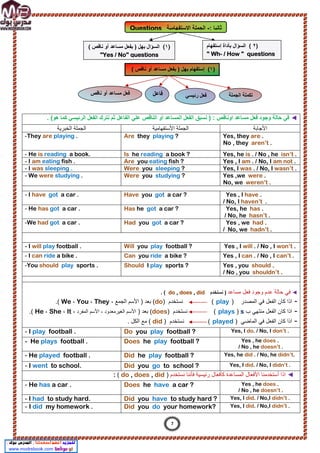
‫اﻟﻣﺛﺑت‬ ‫اﻷﻣر‬
Positive Imperative
‫ﻣن‬ ‫ﯾﺗﻛون‬
)
‫اﻟﻔﻌل‬ ‫ﻣﺻدر‬
Don’t +
(
Don't open the door.
Don't sit down .
Never smoke cigarettes.
‫اﻟﻔﻌل‬ ‫ﻣﺻدر‬ ‫ﻣن‬ ‫ﯾﺗﻛون‬
)
‫اﻟﻔﺎﻋل‬ ‫ﻧﺣذف‬ ‫ﻏﺎﻟﺑﺎ‬
(
Open the door .
Sit down, please .
Always play sports.
Scarcely - hardly – rarely – never – neither – nor – none – no one – no body – nothing –
no where – little – few – quite often
‫ﺛ‬
‫اﻻﻣرﯾﺔ‬ ‫اﻟﺟﻣﻠﺔ‬ :‫ﺎﻟﺛﺎ‬
Imperative
9
-
+ ‫أﺳﺎﺳﻲ‬ ‫ﻓﻌل‬ ) ‫ﻧﺳﺗﺧدم‬ ‫اﻟﻧﻔﻲ‬ ‫ﻋﻧد‬
not
( ‫ﻣﺳﺎﻋد‬ ‫ﻓﻌل‬ +
Ex : I haven’t eaten fish.
‫ﻧﺿﻊ‬ ) ‫ﻧﺎﻗﺻﺔ‬ ‫أو‬ ‫ﻣﺳﺎﻋدة‬ ‫أﻓﻌﺎل‬ ‫وﺟود‬ ‫ﺣﺎﻟﺔ‬ ‫ﻓﻲ‬
not
.( ‫ھو‬ ‫ﻛﻣﺎ‬ ‫اﻷﺳﺎﺳﻲ‬ ‫اﻟﻔﻌل‬ ‫وﻧﺗرك‬ ‫اﻟﻧﺎﻗص‬ ‫أو‬ ‫اﻟﻣﺳﺎﻋد‬ ‫اﻟﻔﻌل‬ ‫ﺑﻌد‬
1)I’m not eating any fish now.
2) He’s not playing tennis now.
3) They were not sleeping.
4) She has not studied English yet.
5) I have not got a car.
6) I won’t come tomorrow.
7) You shouldn’t sleep early.
1)I’m eating some fish now.
2) He’s playing tennis now.
3) They were sleeping.
4) She has just studied English.
5) I have got a car.
6) I will come tomorrow.
7) You should sleep early.
‫ﺣﺎﻟﺔ‬ ‫ﻓﻲ‬
‫ﻣﺳ‬ ‫أﻓﻌﺎل‬ ‫وﺟود‬ ‫ﻋدم‬
‫ﻧﺎﻗﺻﺔ‬ ‫أو‬ ‫ﺎﻋدة‬
‫ﻧﺳﺗﺧدم‬
)
do / does / did
(
‫ﻧﺿﻊ‬ ‫ﺛم‬ ‫اﻟﺣدث‬ ‫زﻣن‬ ‫ﺣﺳب‬
)
not
(
. ‫اﻟﻣﺻدر‬ ‫ﻓﻲ‬ ‫اﻟﻔﻌل‬ ‫وﻧﻛﺗب‬
‫ﻧﺳﺗﺧدم‬
)
do
(
‫ﺑﻌد‬
، ‫اﻟﺟﻣﻊ‬ ‫)اﻷﺳم‬
I, We ,You ,They
(
‫و‬
)
does
(
‫ﺑﻌد‬
‫اﻟﻣﻔرد‬ ‫اﻷﺳم‬ ،‫ﻣﻌدود‬ ‫اﻟﻐﯾر‬ ‫اﻷﺳم‬ )
He, She , It ,
(
‫وذﻟك‬
‫أﻣﺎ‬ ‫اﻟﺑﺳﯾط‬ ‫اﻟﻣﺿﺎرع‬ ‫زﻣن‬ ‫ﻓﻲ‬
)
did
(
. ‫اﻟﺑﺳﯾط‬ ‫اﻟﻣﺎﺿﻲ‬ ‫زﻣن‬ ‫ﻓﻲ‬ ‫اﻟﻛل‬ ‫ﻣﻊ‬ ‫ﺗﺳﺗﺧدم‬
1) I don’t drive my car every day.
2) He doesn’t drive a car every day.
3) She didn’t drive a car yesterday.
1) I drive my car every day.
2) He drives a car every day.
3) She drove a car yesterday.
‫ﻧﺳﺗﺧدم‬ ‫أﺳﺎﺳﯾﺔ‬ ‫ﻛﺄﻓﻌﺎل‬ ‫اﻟﻣﺳﺎﻋدة‬ ‫اﻷﻓﻌﺎل‬ ‫اﺳﺗﺧدام‬ ‫ﺣﺎﻟﺔ‬ ‫ﻓﻲ‬
)
do / does / did
(
‫ﻧﺿﻊ‬ ‫ﺛم‬ ‫اﻟﺣدث‬ ‫زﻣن‬ ‫ﺣﺳب‬
)
not
(
‫اﻟﻣ‬ ‫ﻓﻲ‬ ‫اﻟﻔﻌل‬ ‫وﻧﻛﺗب‬
.‫ﺻدر‬
1) I don’t have a car.
2) He doesn’t have curly hair.
3) I didn’t have any friends.
4) I don’t have to study.
5) He doesn’t have to get up early.
6) They didn’t have to play well.
7) I don’t do my homework.
8) He doesn’t do his homework.
9) They didn’t do all their best.
1) I have a car.
2) He has curly hair.
3) I had some friends.
4) I have to study.
5) He has to get up early.
6) They had to play well.
7) I do my homework.
8) He does his homework.
9) They did all their best.
‫اﻟﻘﺎﻋدة‬ ‫ﺗﻧطﺑق‬ ‫ﻻ‬
‫اﻟﺳﺎﺑﻘﺔ‬
‫ﻧﺳﺗﺧدم‬ ‫أن‬ ‫ﯾﺟوز‬ ‫ﻻ‬ ) ‫ﯾﻛون‬ ‫ﻓﻌل‬ ‫ﻋﻠﻲ‬
do / does / did
‫ﯾﻛون‬ ‫ﻓﻌل‬ ‫ﻣﻊ‬ (
)
am / is / are / was /were
(
.
1) I am not a boy.
2) She wasn’t ill.
1) I am a boy.
2) She was ill.
‫ﻧﺿﻊ‬
not
‫ﺑﻌد‬
)
had better / would rather
(
.‫اﻟﻣﺻدر‬ ‫ﻓﻲ‬ ‫ھو‬ ‫ﻛﻣﺎ‬ ‫اﻟﻔﻌل‬ ‫وﻧﻛﺗب‬
1) You’d better not play.
2) I’d rather not have tea.
1) You’d better study.
2) I’d rather have tea.
‫ﻣﺛل‬ ‫اﻟﻧﻔﻲ‬ ‫ﻋن‬ ‫ﻟﻠﺗﻌﺑﯾر‬ ‫ﻛﻠﻣﺎت‬ ‫ﻧﺳﺗﺧدم‬ ‫أن‬ ‫ﯾﻣﻛن‬
)
never , nothing , nobody, no one , none , neither , nor…
(
.
1) He never plays tennis.
2) There was nothing ( none ) on the table.
3) There was nobody ( no one / none ) in the park.
4) I don’t like fish or meat. / I like neither fish nor meat.
5) Neither of my parents loves shopping.
6) None of the students ( like / likes ) English.
1) He usually plays tennis.
2) There was something on the table.
3) There was somebody in the park.
4) I like fish and meat.
5) Both of my parents love shopping.
6) All ( All of the ) students like English
-
‫ﻧﺴﺘﺨﺪم‬
)
Neither
(
‫أﺛﻨﯿﻦ‬ ‫ﻋﻦ‬ ‫اﻟﺘﺤﺪث‬ ‫ﻋﻨﺪ‬
) ‫أﻣﺎ‬
none / no one / no body
‫ﻣﺠﻤﻮﻋﺔ‬ ‫ﻋﻦ‬ ‫اﻟﺘﺤﺪث‬ ‫ﻋﻨﺪ‬ ‫ﻧﺴﺘﺨﺪﻣﮭﻢ‬ (
.
-
) ‫ﺑﻌﺪ‬
neither
‫ﻟﺼ‬ ‫ﻓﻌﻞ‬ ‫ﻧﺴﺘﺨﺪم‬ (
) ‫اﻟﻤﻔﺮد‬ ‫ﯿﻐﺔ‬
loves
(
) ‫ﺑﻌﺪ‬ ‫أﻣﺎ‬
none
) ‫اﻟﻤﻔﺮد‬ ‫ﻟﺼﯿﻐﺔ‬ ‫ﻓﻌﻞ‬ ‫اﺳﺘﺨﺪام‬ ‫ﯾﻤﻜﻦ‬ (
likes
) ‫اﻟﺠﻤﻊ‬ ‫ﻟﺼﯿﻐﺔ‬ ‫ﻓﻌﻞ‬ ‫أو‬ (
like
‫وﻟﻜﻦ‬ (
) ‫اﻟﻤﻔﺮد‬ ‫ﻟﺼﯿﻐﺔ‬ ‫ﻓﻌﻞ‬ ‫اﺳﺘﺨﺪام‬ ‫اﻷﻓﻀﻞ‬
likes
.(
-
) ‫ﻧﺴﺘﺨﺪم‬
any
) ‫ﻣﻦ‬ ‫ﺑﺪﻻ‬ (
some
) ‫و‬ (
yet
) ‫ﻣﻦ‬ ‫ﺑﺪﻻ‬ (
just / already
) ‫و‬ (
or
) ‫ﻣﻦ‬ ‫ﺑﺪﻻ‬ (
and
) ‫و‬ (
neither
) ‫ﻣﻦ‬ ‫ﺑﺪﻻ‬ (
both
) ‫و‬ (
none
/
no body
/
no one
) ‫ﻣﻦ‬ ‫ﺑﺪﻻ‬ (
all
. ‫اﻟﻤﻨﻔﯿﺔ‬ ‫اﻟﺠﻤﻞ‬ ‫ﻓﻲ‬ (
‫اﻟﻣﻧﻔﯾﺔ‬ ‫اﻟﺟﻣﻠﺔ‬
Negative Sentence
10
Present
‫ﻣﺿﺎرع‬
Past
‫ﻣﺎﺿﻲ‬
P.P.
‫ﺗﺻرﯾف‬
‫ﺛﺎﻟث‬
Present
‫ﻣﺿﺎرع‬
Past
‫ﻣﺎﺿﻲ‬
P.P.
‫ﺗﺻرﯾف‬
‫ﺛﺎﻟث‬
cost ‫ﯾﻛﻠف‬
cut ‫ﯾﺟرح‬ / ‫ﯾﻘطﻊ‬
hit ‫ﯾﺻطدم‬ / ‫ﯾﺿرب‬
hurt ‫ﯾﺻﯾب‬ / ‫ﯾؤذي‬
let ‫ﯾﺗرك‬ / ‫ﯾدع‬
‫ﯾﺳﻣ‬ /
‫ﺢ‬
put ‫ﯾﺿﻊ‬
shut ‫ﯾﻐﻠق‬
lend ‫ﯾﺳﻠف‬
send ‫ﯾرﺳل‬
spend ‫ﯾﻧﻔق‬ / ‫ﯾﻘﺿﻲ‬
build ‫ﯾﺑﻧﻲ‬
burn ‫ﯾﺣﺗرق‬ / ‫ﯾﺣرق‬
learn ‫ﯾﺗﻌﻠم‬
smell ‫ﯾﺷ‬
‫م‬
lose ‫ﯾﺧﺳر‬ / ‫ﯾﻔﻘد‬
shoot ‫ﯾطﻠق‬
get ‫ﯾﺣﺻل‬ / ‫ﯾﺻﺑﺢ‬
light ‫ﯾﻧﯾر‬ / ‫ﯾﺿﺊ‬
sit ‫ﯾﺟﻠس‬
keep ‫ﯾﺣﻔظ‬
sleep ‫ﯾﻧﺎم‬
feel / ‫ﯾﺷﻌر‬
‫ﯾﺣس‬
leave ‫ﯾﺗرك‬
meet ‫ﯾﻘﺎﺑل‬
dream ‫ﯾﺣﻠم‬
mean ‫ﯾﻘﺻد‬ / ‫ﯾﻌﻧﻲ‬
bring ‫ﯾﺣﺿر‬
buy ‫ﯾﺷﺗري‬
fight ‫ﯾﺗﺷﺎﺟر‬ / ‫ﯾﺣﺎرب‬
think ‫ﯾﻌﺗﻘد‬ / ‫ﯾﻔﻛر‬
catch ‫ﯾﺻطﺎد‬ / ‫ﯾﻣﺳك‬
teach ‫ﯾﻌﻠم‬ / ‫ﯾدرس‬
sell ‫ﯾﺑﯾﻊ‬
tell ‫ﯾﺣﻛﻲ‬ / ‫ﯾﺧﺑر‬
find ‫ﯾﺟد‬
have ‫ﯾﻣﺗﻠك‬
hear ‫ﯾﺳﻣﻊ‬
hold ‫ﯾﻌﻘد‬ / ‫ﯾﻣﺳك‬
read ‫ﯾﻘرأ‬
say ‫ﯾﻘول‬
pay ‫ﯾﺳدد‬ / ‫ﯾدﻓﻊ‬
make ‫ﯾﺻﻧﻊ‬ / ‫ﯾﺟﻌل‬
stand ‫ﯾﻘف‬
understand ‫ﯾﻔﮭم‬
cost
cut
hit
hurt
let
put
shut
lent
sent
spent
built
burnt
learnt
smelt
lost
shot
got
lit
sat
kept
slept
felt
left
met
dreamt
meant
brought
bought
fought
thought
caught
taught
sold
told
found
had
heard
held
read
said
paid
made
stood
understood
cost
cut
hit
hurt
let
put
shut
lent
sent
spent
built
burnt
learnt
smelt
lost
shot
got
lit
sat
kept
slept
felt
left
met
dreamt
meant
brought
bought
fought
thought
caught
taught
sold
told
found
had
heard
held
read
said
paid
made
stood
understood
break ‫ﯾﻛﺳر‬
choose ‫ﯾﺧﺗﺎر‬
speak ‫ﯾﺗﺣد‬ / ‫ﯾﺗﻛﻠم‬
‫ث‬
steal ‫ﯾﺳرق‬
wake ‫ﯾوﻗظ‬
broke
chose
spoke
stole
woke
broken
chosen
spoken
stolen
woken
drive ‫ﯾﺳوق‬
ride ‫ﯾرﻛب‬
rise ‫ﯾﺷرق‬ / ‫ﯾرﺗﻔﻊ‬
write ‫ﯾﻛﺗب‬
drove
rode
rose
wrote
driven
ridden
risen
written
beat ‫ﯾﻧﺑض‬ / ‫ﯾﺿرب‬ / ‫ﯾﮭزم‬
bite ‫ﯾﻌض‬
hide ‫ﯾﺧﺗﺑﺄ‬ / ‫ﯾﺧﻔﻲ‬
eat ‫ﯾﺄﻛل‬
fall ‫ﯾﻘﻊ‬ / ‫ﯾﺳﻘط‬
forget ‫ﯾﻧﺳﻲ‬
give ‫ﯾﻌطﻲ‬
see ‫ﯾري‬
take ‫ﯾﺄﺧذ‬
blow ‫ﯾﻧﻔﺦ‬ / ‫ﯾﮭب‬
grow ‫ﯾزرع‬ / ‫ﯾﻛﺑر‬
Know ‫ﯾﻌﻠم‬ / ‫ﯾﻌرف‬
throw ‫ﯾﻘذف‬ / ‫ﯾرﻣﻲ‬
fly ‫ﯾطﯾر‬
draw ‫ﯾرﺳم‬
show ‫ﯾوﺿﺢ‬ / ‫ﯾﺑﯾن‬
begin ‫ﯾﺑدأ‬
drink ‫ﯾﺷرب‬
swim ‫ﯾﺳﺑﺢ‬
ring ‫ﯾدق‬ / ‫ﯾرن‬
sing ‫ﯾﻐﻧﻲ‬
run ‫ﯾﺟري‬
come ‫ﯾﺄﺗﻲ‬
become ‫ﯾﺻﺑﺢ‬
go ‫ﯾذھب‬
beat
bit
hid
ate
fell
forgot
gave
saw
took
blew
grew
knew
threw
flew
drew
showed
began
drank
swam
rang
sang
ran
came
became
went
beaten
bitten
hidden
eaten
fallen
forgotten
given
seen
taken
blown
grown
known
thrown
flown
drawn
shown
begun
drunk
swum
rung
sung
run
come
become
gone
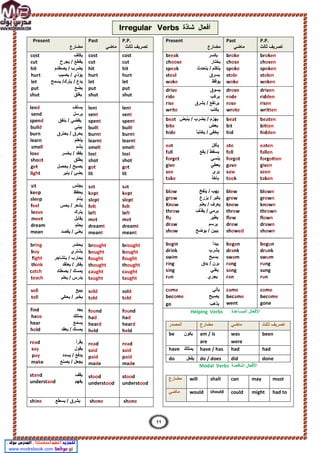
Helping Verbs ‫اﻟﻣﺳﺎﻋد‬ ‫اﻷﻓﻌﺎل‬
‫ة‬
‫اﻟﻣﺻدر‬ ‫ﻣﺿﺎرع‬ ‫ﻣﺎﺿﻲ‬ ‫ﺛﺎﻟث‬ ‫ﺗﺻرﯾف‬
be ‫ﯾﻛون‬ am / is
are
was
were
been
have ‫ﯾﻣﺗﻠك‬ have / has had had
do ‫ﯾﻔﻌل‬ do / does did done
Modal Verbs ‫اﻟﻧﺎﻗﺻﺔ‬ ‫اﻷﻓﻌﺎل‬
‫ﻣﺿﺎرع‬ will shall can may must
‫ﻣﺎﺿﻲ‬ would should could might had to
shine ‫ﯾﺳطﻊ‬ / ‫ﯾﺷرق‬ shone shone
‫ﺷﺎذة‬ ‫أﻓﻌﺎل‬
Irregular Verbs
11
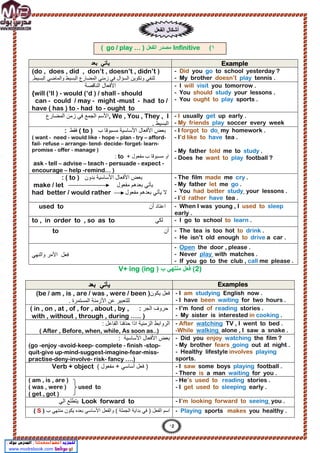
١
(
Infinitive
‫اﻟﻔﻌل‬ ‫ﻣﺻدر‬
( go / play … )
‫ﺑﻌد‬ ‫ﯾﺄﺗﻲ‬ Example
(do , does , did , don’t , doesn’t , didn’t )
.‫اﻟﺑﺳﯾط‬ ‫واﻟﻣﺎﺿﻲ‬ ‫اﻟﺑﺳﯾط‬ ‫اﻟﻣﺿﺎرع‬ ‫زﻣﻧﻲ‬ ‫ﻓﻲ‬ ‫اﻟﺳؤال‬ ‫وﺗﻛوﯾن‬ ‫ﻟﻠﻧﻔﻲ‬
- Did you go to school yesterday ?
- My brother doesn’t play tennis .
‫اﻟﻧﺎﻗﺻﺔ‬ ‫اﻷﻓﻌﺎل‬
{will (‘ll ) - would (‘d ) / shall - should
can - could / may - might -must - had to /
have ( has ) to - had to - ought to
- I will visit you tomorrow .
- You should study your lessons .
- You ought to play sports .
I
, We , You , They ,
‫اﻟﻣﺿﺎرع‬ ‫زﻣن‬ ‫ﻓﻲ‬ ‫اﻟﺟﻣﻊ‬ ‫اﻷﺳم‬
‫اﻟﺑﺳﯾط‬
.
- I usually get up early .
- My friends play soccer every week
‫ب‬ ‫ﻣﺳﺑوﻗﺎ‬ ‫اﻷﺳﺎﺳﯾﺔ‬ ‫اﻷﻓﻌﺎل‬ ‫ﺑﻌض‬
( to )
‫ﻓﻘط‬
:
( want - need - would like - hope – plan - try – afford-
fail- refuse – arrange- tend- decide- forget- learn-
promise - offer - manage )
‫ب‬ ‫ﻣﺳﺑوﻗﺎ‬ ‫او‬
+ ‫ﻣﻔﻌول‬
to
:
ask - tell – advise – teach - persuade - expect -
encourage – help -remind… )
my homework .
o
d
forgot to
I
-
- I’d like to have tea .
- My father told me to study .
- Does he want to play football ?
‫ﺑدون‬ ‫اﻷﺳﺎﺳﯾﺔ‬ ‫اﻷﻓﻌﺎل‬ ‫ﺑﻌض‬
: ( to )
‫ﻣﻔﻌول‬ ‫ﺑﻌدھم‬ ‫ﯾﺄﺗﻲ‬
make / let
‫ﻣ‬ ‫ﺑﻌدھم‬ ‫ﯾﺄﺗﻲ‬ ‫ﻻ‬
‫ﻔﻌول‬
had better / would rather
- The film made me cry .
- My father let me go .
your lessons .
study
had better
You
-
- I’d rather have tea .
‫أن‬ ‫اﻋﺗﺎد‬
used to - When I was young , I used to sleep
early .
‫ﻟﻛﻲ‬
to , in order to , so as to - I go to school to learn .
‫أن‬
to - The tea is too hot to drink .
- He isn’t old enough to drive a car .
‫واﻟﻧﮭﻲ‬ ‫اﻷﻣر‬ ‫ﻓﻌل‬
the door , please .
Open
-
with matches .
play
Never
-
- If you go to the club , call me please .
2)
) ‫ب‬ ‫ﻣﻧﺗﮭﻲ‬ ‫ﻓﻌل‬ (
ing
(
V+ ing
‫ﺑﻌد‬ ‫ﯾﺄﺗﻲ‬ Examples
‫ﯾﻛون‬ ‫ﻓﻌل‬
(be / am , is , are / was , were / been )
. ‫اﻟﻣﺳﺗﻣرة‬ ‫اﻷزﻣﻧﺔ‬ ‫ﻋن‬ ‫ﻟﻠﺗﻌﺑﯾر‬
- I am studying English now .
- I have been waiting for two hours .
‫اﻟﺟر‬ ‫ﺣروف‬
:
( in , on , at , of , for , about , by ,
with , without , through , during ….. )
- I’m fond of reading stories .
- My sister is interested in cooking .
: ‫اﻟﻔﺎﻋل‬ ‫ﺣذﻓﻧﺎ‬ ‫اذا‬ ‫اﻟزﻣﻧﯾﺔ‬ ‫اﻟرواﺑط‬
( After , Before, when, while, As soon as..)
TV , I went to bed .
watching
After
-
alone , I saw a snake .
walking
While
-
: ‫اﻷﺳﺎﺳﯾﺔ‬ ‫اﻷﻓﻌﺎل‬ ‫ﺑﻌض‬
(go -enjoy -avoid-keep- complete - finish -stop-
quit-give up-mind-suggest-imagine-fear-miss-
practise-deny-involve- risk- fancy ….)
- Did you enjoy watching the film ?
at night .
out
going
fears
My brother
-
- Healthy lifestyle involves playing
sports.
‫ﻣﻔﻌول‬ + ‫أﺳﺎﺳﻲ‬ ‫ﻓﻌل‬ )
(
Verb + object - I saw some boys playing football .
- There is a man waiting for you .
( am , is , are )
( was , were ) used to
( get , got )
- He’s used to reading stories .
- I get used to sleeping early .
Look forward to
‫اﻟﻲ‬ ‫ﯾﺗطﻠﻊ‬ you .
seeing
’m looking forward to
I
-
‫ب‬ ‫ﻣﻧﺗﮭﻲ‬ ‫ﯾﻛون‬ ‫ﺑﻌده‬ ‫اﻷﺳﺎﺳﻲ‬ ‫واﻟﻔﻌل‬ ( ‫اﻟﺟﻣﻠﺔ‬ ‫ﺑداﯾﺔ‬ ‫ﻓﻲ‬ ) ‫اﻟﻔﻌل‬ ‫اﺳم‬
( S ) - Playing sports makes you healthy .
‫اﻟﻔﻌل‬ ‫أﺷﻛﺎل‬
2
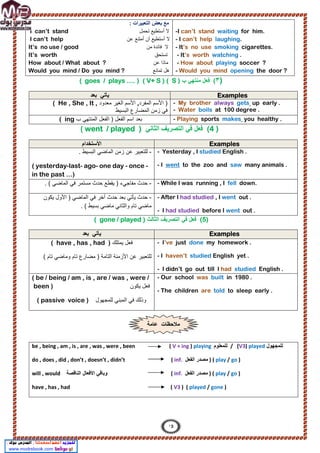
١
)
٣
‫ب‬ ‫ﻣﻧﺗﮭﻲ‬ ‫ﻓﻌل‬ (
( S )
( V+ S )
( goes / plays …. )
‫ﺑﻌد‬ ‫ﯾﺄﺗﻲ‬ Examples
‫اﻟﻣﻔرد‬ ‫اﻷﺳم‬ )
,
‫ﻣﻌدود‬ ‫اﻟﻐﯾر‬ ‫اﻷﺳم‬
( He , She , It ,
‫اﻟﺑﺳﯾط‬ ‫اﻟﻣﺿﺎرع‬ ‫زﻣن‬ ‫ﻓﻲ‬
up early .
gets
always
My brother
-
- Water boils at 100 degree .
‫ﺑﻌد‬
‫ب‬ ‫اﻟﻣﻧﺗﮭﻲ‬ ‫اﻟﻔﻌل‬ ) ‫اﻟﻔﻌل‬ ‫اﺳم‬
( ing you healthy .
makes
sports
Playing
-
4 )
‫اﻟﺛﺎﻧﻲ‬ ‫اﻟﺗﺻرﯾف‬ ‫ﻓﻲ‬ ‫ﻓﻌل‬ (
went / played )
(
‫اﻷﺳﺗﺧدام‬ Examples
-
. ‫اﻟﺑﺳﯾط‬ ‫اﻟﻣﺎﺿﻲ‬ ‫زﻣن‬ ‫ﻋن‬ ‫ﻟﻠﺗﻌﺑﯾر‬
( yesterday-last- ago- one day - once -
in the past …)
- Yesterday , I studied English .
many animals .
saw
to the zoo and
went
I
-
-
. ( ‫اﻟﻣﺎﺿﻲ‬ ‫ﻓﻲ‬ ‫ﻣﺳﺗﻣر‬ ‫ﺣدث‬ ‫ﯾﻘطﻊ‬ ) ‫ﻣﻔﺎﺟﻲء‬ ‫ﺣدث‬ - While I was running , I fell down.
-
‫ﯾﻛون‬ ‫اﻷول‬ ) ‫اﻟﻣﺎﺿﻲ‬ ‫ﻓﻲ‬ ‫أﺧر‬ ‫ﺣدث‬ ‫ﺑﻌد‬ ‫ﯾﺄﺗﻲ‬ ‫ﺣدث‬
. ( ‫ﺑﺳﯾط‬ ‫ﻣﺎﺿﻲ‬ ‫واﻟﺛﺎﻧﻲ‬ ‫ﺗﺎم‬ ‫ﻣﺎﺿﻲ‬
- After I had studied , I went out .
- I had studied before I went out .
(5)
‫اﻟﺛﺎﻟث‬ ‫اﻟﺗﺻرﯾف‬ ‫ﻓﻲ‬ ‫ﻓﻌل‬
( gone / played )
‫ﺑﻌد‬ ‫ﯾﺄﺗﻲ‬ Examples
‫ﯾﻣﺗﻠك‬ ‫ﻓﻌل‬
( have , has , had )
( ‫ﺗﺎم‬ ‫وﻣﺎﺿﻲ‬ ‫ﺗﺎم‬ ‫ﻣﺿﺎرع‬ ) ‫اﻟﺗﺎﻣﺔ‬ ‫اﻷزﻣﻧﺔ‬ ‫ﻋن‬ ‫ﻟﻠﺗﻌﺑﯾر‬
- I’ve just done my homework .
- I haven’t studied English yet .
- I didn’t go out till I had studied English .
( be / being / am , is , are / was , were /
‫ﯾﻛون‬ ‫ﻓﻌل‬
been )
‫ﻟﻠﻣﺟﮭول‬ ‫اﻟﻣﺑﻧﻲ‬ ‫ﻓﻲ‬ ‫وذﻟك‬
( passive voice )
- Our school was built in 1980 .
- The children are told to sleep early .
: ‫اﻟﺗﻌﺑﯾرات‬ ‫ﺑﻌض‬ ‫ﻣﻊ‬
‫ﺗﺣﻣل‬ ‫أﺳﺗطﯾﻊ‬ ‫ﻻ‬
I can’t stand
‫ﻋن‬ ‫أﻣﺗﻧﻊ‬ ‫أن‬ ‫أﺳﺗطﯾﻊ‬ ‫ﻻ‬
I can’t help
‫ﻣن‬ ‫ﻓﺎﺋدة‬ ‫ﻻ‬
It’s no use / good
‫ﺗﺳﺗﺣق‬
It’s worth
‫ﻋن‬ ‫ﻣﺎذا‬
How about / What about ?
‫ﺗﻣﺎﻧﻊ‬ ‫ھل‬
Would you mind / Do you mind ?
-I can’t stand waiting for him.
- I can’t help laughing.
- It’s no use smoking cigarettes.
- It’s worth watching .
- How about playing soccer ?
- Would you mind opening the door ?
be , being , am , is , are , was , were , been ( V + ing ) playing ‫ﻟﻠﻣﻌﻠوم‬ / (V3) played ‫ﻟﻠﻣﺟﮭول‬
do , does , did , don’t , doesn’t , didn’t ( inf. ‫اﻟﻔﻌل‬ ‫ﻣﺻدر‬ ) ( play / go )
will , would ‫اﻟﻧﺎﻗﺻﺔ‬ ‫اﻷﻓﻌﺎل‬ ‫وﺑﺎﻗﻲ‬ ( inf. ‫اﻟﻔﻌل‬ ‫ﻣﺻدر‬ ) ( play / go )
have , has , had ( V3 ) ( played / gone )
‫ﻋﺎﻣﺔ‬ ‫ﻣﻼﺣظﺎت‬
3
١
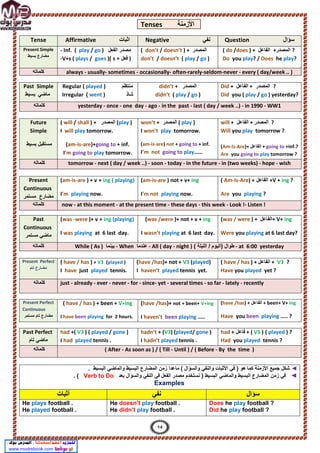
Tenses ‫اﻷزﻣﻧﺔ‬
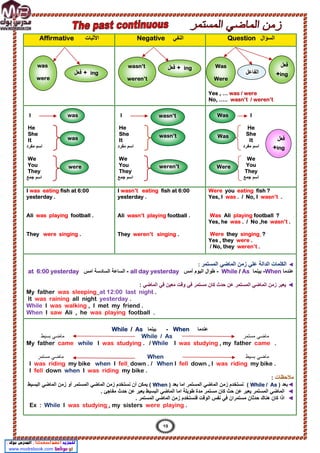
Tense Affirmative ‫اﺛﺑﺎت‬ Negative ‫ﻧﻔﻲ‬ Question ‫ﺳؤال‬
Present Simple
‫ﺑﺳﯾط‬ ‫ﻣﺿﺎرع‬
- Inf. ( play / go ) ‫اﻟﻔﻌل‬ ‫ﻣﺻدر‬
-V+s ( plays / goes )( s + ‫ﻓﻌل‬ )
( don’t / doesn’t ) + ‫اﻟﻣﺻدر‬
don’t / doesn’t ( play / go )
( do /does ) + ‫اﻟﻔﺎﻋل‬ +‫اﻟﻣﺻدر‬ ?
Do you play? / Does he play?
‫ﻛﻠﻣﺎﺗﮫ‬ always - usually- sometimes - occasionally- often-rarely-seldom-never - every ( day/week .. )
Past Simple
‫ﺑﺳﯾط‬ ‫ﻣﺎﺿﻲ‬
Regular ( played ) ‫ﻣﻧﺗظم‬
Irregular ( went ) ‫ﺷﺎذ‬
didn’t + ‫اﻟﻣﺻدر‬
didn’t ( play / go )
Did + ‫اﻟﻔﺎﻋل‬ + ‫اﻟﻣﺻدر‬ ?
Did you ( play / go ) yesterday?
‫ﻛﻠﻣﺎﺗﮫ‬ yesterday - once - one day - ago - in the past - last ( day / week ..) - in 1990 - WW1
Future
Simple
‫ﺑﺳﯾط‬ ‫ﻣﺳﺗﻘﺑل‬
( will / shall ) + ‫اﻟﻣﺻدر‬ (play )
I will play tomorrow.
(am-is-are)+going to + inf.
I’m going to play tomorrow.
won’t + ‫اﻟﻣﺻدر‬ ( play )
I won’t play tomorrow.
(am-is-are) not + going to + inf.
I’m not going to play……
will + ‫اﻟﻔﺎﻋل‬ + ‫اﻟﻣﺻدر‬ ?
Will you play tomorrow ?
(Am-Is-Are)+ ‫اﻟﻔﺎﻋل‬ + going to +inf.?
Are you going to play tomorrow ?
‫ﻛﻠﻣﺎﺗﮫ‬ tomorrow - next ( day / week ..) - soon - today - in the future - in (two weeks) - hope - wish
Present
Continuous
‫ﻣﺳﺗﻣر‬ ‫ﻣﺿﺎرع‬
(am-is-are ) + v + ing ( playing)
I’m playing now.
(am-is-are ) not + v+ ing
I’m not playing now.
( Am-Is-Are) + ‫اﻟﻔﺎﻋل‬ +V + ing ?
Are you playing ?
‫ﻛﻠﻣﺎﺗﮫ‬ now - at this moment - at the present time - these days - this week - Look !- Listen !
Past
Continuous
‫ﻣﺳﺗﻣر‬ ‫ﻣﺎﺿﻲ‬
(was -were )+ v + ing (playing)
I was playing at 6 last day.
(was /were )+ not + v + ing
I wasn’t playing at 6 last day.
(was / were ) + ‫اﻟﻔﺎﻋل‬+ V+ ing
Were you playing at 6 last day?
‫ﻛﻠﻣﺎﺗﮫ‬ While ( As ) ‫ﺑﯾﻧﻣﺎ‬ - When ‫ﻋﻧدﻣﺎ‬ - All ( day - night ) ( ‫اﻟﻠﯾﻠﺔ‬ / ‫)اﻟﯾوم‬ ‫طوال‬ - at 6:00 yesterday
Present Perfect
‫ﺗﺎم‬ ‫ﻣﺿﺎرع‬
( have / has ) + V3 (played )
I have just played tennis.
(have /has)+ not + V3 (played)
I haven’t played tennis yet.
( have / has ) + ‫اﻟﻔﺎﻋل‬ + V3 ?
Have you played yet ?
‫ﻛﻠﻣﺎﺗﮫ‬ just - already - ever - never - for - since- yet - several times - so far - lately - recently
Present Perfect
Continuous
‫ﻣﺳﺗﻣر‬ ‫ﺗﺎم‬ ‫ﻣﺿﺎرع‬
( have / has ) + been + V+ing
I have been playing for 2 hours.
(have /has)+ not + been+ V+ing
I haven’t been playing …..
(have /has) + ‫اﻟﻔﺎﻋل‬ + been+ V+ ing
Have you been playing ….. ?
Past Perfect
‫ﺗﺎم‬ ‫ﻣﺎﺿﻲ‬
had +( V3 ) ( played / gone )
I had played tennis .
hadn’t + (V3) (played/ gone )
I hadn’t played tennis .
had + ‫ﻓﺎﻋل‬ + ( V3 ) ( played ) ?
Had you played tennis ?
‫ﻛﻠﻣﺎﺗﮫ‬ ( After - As soon as ) / ( Till - Until ) / ( Before - By the time )
. ‫اﻟﺑﺳﯾط‬ ‫واﻟﻣﺎﺿﻲ‬ ‫اﻟﺑﺳﯾط‬ ‫اﻟﻣﺿﺎرع‬ ‫زﻣن‬ ‫ﻣﺎﻋدا‬ ( ‫واﻟﺳؤال‬ ‫واﻟﻧﻔﻲ‬ ‫اﻷﺛﺑﺎت‬ ‫ﻓﻲ‬ ) ‫ھو‬ ‫ﻛﻣﺎ‬ ‫اﻷزﻣﻧﺔ‬ ‫ﺟﻣﯾﻊ‬ ‫ﺷﻛل‬ ◄
. ( Verb to Do ‫ﻧﺳﺗﺧدم‬ ) ‫اﻟﺑﺳﯾط‬ ‫واﻟﻣﺎﺿﻲ‬ ‫اﻟﺑﺳﯾط‬ ‫اﻟﻣﺿﺎرع‬ ‫زﻣن‬ ‫ﻓﻲ‬
‫ﺑﻌد‬ ‫واﻟﺳؤال‬ ‫اﻟﻧﻔﻲ‬ ‫ﻓﻲ‬ ‫اﻟﻔﻌل‬ ‫ﻣﺻدر‬ ◄
Examples
‫أﺛﺑﺎت‬ ‫ﻧﻔﻲ‬ ‫ﺳؤال‬
He plays football .
He played football .
He doesn’t play football .
He didn’t play football .
Does he play football ?
Did he play football ?
14
‫اﻟﺳؤال‬
Question
‫اﻟﻧﻔﻲ‬
Negative
‫اﻷﺛﺑﺎت‬
Affirmative
Do play
live
Does go
Yes, ….. ( do / does )
No, …….( don’t / doesn’t )
don’t
play
live
doesn’t go
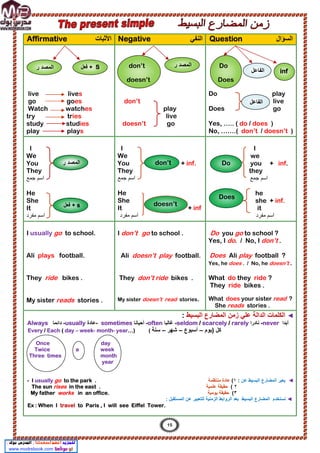
live lives
go goes
Watch watches
try tries
study studies
play plays
I
we
you + inf.
they
‫ﺟﻣﻊ‬ ‫اﺳم‬
he
she + inf.
it
‫ﻣﻔرد‬ ‫اﺳم‬
I
We
You + inf.
They
‫ﺟﻣﻊ‬ ‫اﺳم‬
He
She
It + inf
‫ﻣﻔرد‬ ‫اﺳم‬
I
We
You
They
‫ﺟﻣﻊ‬ ‫اﺳم‬
He
She
It
‫ﻣﻔرد‬ ‫اﺳم‬
Do you go to school ?
Yes, I do. / No, I don’t .
Ali play football ?
Does
Yes, he does . / No, he doesn’t .
What do they ride ?
They ride bikes .
What does your sister read ?
She reads stories .
I don’t go to school .
Ali doesn’t play football.
They don’t ride bikes .
My sister doesn’t read stories.
I usually go to school.
Ali plays football.
They ride bikes .
My sister reads stories .
◄
‫اﻟﺑﺳﯾط‬ ‫اﻟﻣﺿﺎرع‬ ‫زﻣن‬ ‫ﻋﻠﻲ‬ ‫اﻟداﻟﺔ‬ ‫اﻟﻛﻠﻣﺎت‬
:
‫أﺑدا‬
never
-
‫ﻧﺎدرا‬
seldom / scarcely / rarely
-
‫ﻏﺎﻟﺑﺎ‬
often
-
‫أﺣﯾﺎﻧﺎ‬
sometimes
-
‫ﻋﺎدة‬
usually
-
‫داﺋﻣﺎ‬
Always
‫)ﯾوم‬ ‫ﻛل‬
–
‫أﺳﺑوع‬
–
‫ﺷﮭر‬
–
‫ﺳﻧﺔ‬
(
Every / Each ( day – week- month- year…)
Once day
Twice a week
Three times month
year
◄
‫ﻋن‬ ‫اﻟﺑﺳﯾط‬ ‫اﻟﻣﺿﺎرع‬ ‫ﯾﻌﺑر‬
:
١
(
‫ﻣﻧﺗظﻣﺔ‬ ‫ﻋﺎدة‬
- I usually go to the park .
٢
(
‫ﻋﻠﻣﯾﺔ‬ ‫ﺣﻘﯾﻘﺔ‬
.
The sun rises in the east
٣
(
‫ﯾوﻣﯾﺔ‬ ‫ﺣﻘﯾﻘﺔ‬
My father works in an office.
◄
‫اﻟﺑﺳﯾط‬ ‫اﻟﻣﺿﺎرع‬ ‫ﻧﺳﺗﺧدم‬
: ‫اﻟﻣﺳﺗﻘﺑل‬ ‫ﻋن‬ ‫ﻟﻠﺗﻌﺑﯾر‬ ‫اﻟزﻣﻧﯾﺔ‬ ‫اﻟرواﺑط‬ ‫ﺑﻌد‬
Ex : When I travel to Paris , I will see Eiffel Tower.
‫اﻟﻣﺻد‬
‫ر‬ S
+
‫ﻓﻌل‬ ‫اﻟﻣﺻد‬
‫ر‬
don’t
doesn’t
Do
Does
‫اﻟﻔﺎﻋل‬ inf
..
‫اﻟﻣﺻد‬
‫ر‬ don’t
doesn’t
Do
Does
‫اﻟﻔﺎﻋل‬
s
+
‫ﻓﻌل‬
15
‫اﻟﺳؤال‬
Question
‫اﻟﻧﻔﻲ‬
Negative
‫اﻷﺛﺑﺎت‬
Affirmative
Yes , …… ( did )
No , ……. ( didn’t )
watched didn’t watch
lived didn’t live
studied didn’t study
played didn’t play
went didn’t go
saw didn’t see
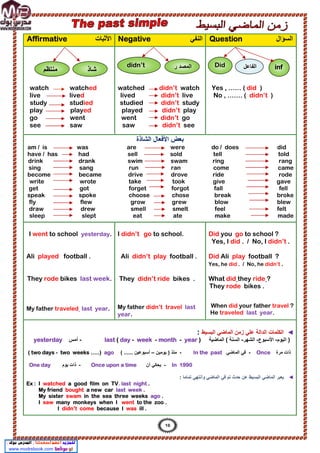
watch watched
live lived
study studied
play played
go went
see saw
‫اﻟﺷﺎذة‬ ‫اﻷﻓﻌﺎل‬ ‫ﺑﻌض‬
am / is was are were do / does did
have / has had sell sold tell told
drink drank swim swam ring rang
sing sang run ran come came
become became drive drove ride rode
write wrote take took give gave
get got forget forgot fall fell
speak spoke choose chose break broke
fly flew grow grew blow blew
draw drew smell smelt feel felt
sleep slept eat ate make made
Did you go to school ?
Yes, I did . / No, I didn’t .
Did Ali play football ?
Yes, he did . / No, he didn’t .
?
ride
they
id
d
What
They rode bikes .
When did your father travel ?
He traveled last year.
I didn’t go to school.
Ali didn’t play football .
They didn’t ride bikes .
My father didn’t travel last
year.
I went to school yesterday.
Ali played football .
They rode bikes last week.
.
last year
traveled
My father
◄
‫اﻟﻣ‬ ‫زﻣن‬ ‫ﻋﻠﻲ‬ ‫اﻟداﻟﺔ‬ ‫اﻟﻛﻠﻣﺎت‬
‫ﺎ‬
‫ﺿ‬
‫ﻲ‬
‫اﻟﺑﺳﯾط‬
:
‫اﻟﯾوم‬ )
-
‫اﻷﺳﺑوع‬
-
‫اﻟﺷ‬
‫ﮭر‬
-
‫اﻟﻣﺎﺿﯾﺔ‬ ( ‫اﻟﺳﻧﺔ‬
last ( day - week - month - year )
-
‫أﻣس‬
yesterday
‫ﻣرة‬ ‫ذات‬
Once
-
‫اﻟﻣﺎﺿﻲ‬ ‫ﻓﻲ‬
In the past
-
‫ﯾوﻣﯾن‬ ) ‫ﻣﻧذ‬
–
( ...... ‫أﺳﺑوﻋﯾن‬
( two days - two weeks …..) ago
In 1990
-
‫أن‬ ‫ﯾﺣﻛﻲ‬
Once upon a time
-
‫ﯾوم‬ ‫ذات‬
One day
◄
‫اﻟﻣ‬ ‫ﯾﻌﺑر‬
‫ﺎ‬
‫ﺿ‬
‫ﻲ‬
‫ﻋن‬ ‫اﻟﺑﺳﯾط‬
‫ﺗﻣﺎﻣﺎ‬ ‫وأﻧﺗﮭﻲ‬ ‫اﻟﻣﺎﺿﻲ‬ ‫ﻓﻲ‬ ‫ﺗم‬ ‫ﺣدث‬
:
Ex : I watched a good film on TV. last night .
My friend bought a new car last week .
My sister swam in the sea three weeks ago .
I saw many monkeys when I went to the zoo .
I didn’t come because I was ill .
‫ﻣﻧﺗظم‬ ‫ﺷﺎذ‬ ‫اﻟﻣﺻد‬
‫ر‬
didn’t Did ‫اﻟﻔﺎﻋل‬ inf
.
16
‫اﻟﺳؤال‬
Question
‫اﻟﻧﻔﻲ‬
Negative
‫اﻷﺛﺑﺎت‬
Affirmative
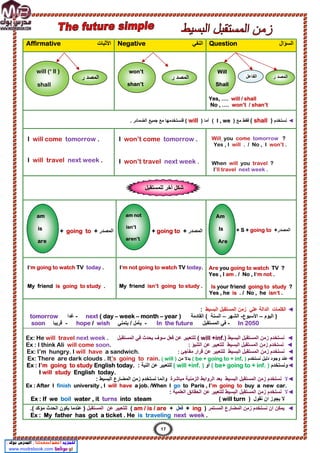
Yes, …. will / shall
No , …. won’t / shan’t
◄
‫ﻧﺳﺗﺧدم‬
)
shall
(
) ‫ﻣﻊ‬ ‫ﻓﻘط‬
I , we
) ‫أﻣﺎ‬ (
will
. ‫اﻟﺿﻣﺎﺋر‬ ‫ﺟﻣﯾﻊ‬ ‫ﻣﻊ‬ ‫ﻓﻧﺳﺗﺧدﻣﮭﺎ‬ (
?
tomorrow
come
you
Will
Yes , I will . / No , I won’t .
When will you travel ?
I’ll travel next week .
I won’t come tomorrow .
I won’t travel next week .
I will come tomorrow .
I will travel next week .
‫اﻟﻣﺻدر‬
+
+ + S + going to
‫اﻟﻣﺻدر‬
+
+ going to
‫اﻟﻣﺻدر‬
+
+ going to
Are you going to watch TV ?
Yes , I am . / No , I’m not .
Is your friend going to study ?
Yes , he is . / No , he isn’t .
I’m not going to watch TV today.
My friend isn’t going to study .
I’m going to watch TV today .
My friend is going to study .
◄
‫اﻟﺑﺳﯾط‬ ‫اﻟﻣﺳﺗﻘﺑل‬ ‫زﻣن‬ ‫ﻋﻠﻲ‬ ‫اﻟداﻟﺔ‬ ‫اﻟﻛﻠﻣﺎت‬
:
‫اﻟﯾوم‬ )
–
‫اﻷﺳﺑوع‬
-
‫اﻟﺷ‬
‫ﮭر‬
–
‫اﻟﻘﺎدﻣﺔ‬ ( ‫اﻟﺳﻧﺔ‬
next ( day – week – month – year )
-
‫ﻏدا‬
tomorrow
In 2050
-
‫اﻟﻣﺳﺗﻘﺑل‬ ‫ﻓﻲ‬
In the future
-
‫ﯾﺗﻣﻧﻲ‬ / ‫ﯾﺄﻣل‬
hope / wish
-
‫ﻗرﯾﺑﺎ‬
soon
◄
) ‫اﻟﺑﺳﯾط‬ ‫اﻟﻣﺳﺗﻘﺑل‬ ‫زﻣن‬ ‫ﻧﺳﺗﺧدم‬
( will +inf.
‫اﻟﻣﺳﺗﻘ‬ ‫ﻓﻲ‬ ‫ﯾﺣدث‬ ‫ﺳوف‬ ‫ﻓﻌل‬ ‫ﻋن‬ ‫ﻟﻠﺗﻌﺑﯾر‬
‫ﺑل‬
Ex: He will travel next week .
◄
‫ﻋن‬ ‫ﻟﻠﺗﻌﺑﯾر‬ ‫اﻟﺑﺳﯾط‬ ‫اﻟﻣﺳﺗﻘﺑل‬ ‫زﻣن‬ ‫ﻧﺳﺗﺧدم‬
: ‫اﻟﺗﻧﺑؤ‬
Ex : I think Ali will come soon.
◄
‫ﻋن‬ ‫ﻟﻠﺗﻌﺑﯾر‬ ‫اﻟﺑﺳﯾط‬ ‫اﻟﻣﺳﺗﻘﺑل‬ ‫زﻣن‬ ‫ﻧﺳﺗﺧدم‬
‫ﻣﻔﺎﺟﺊ‬ ‫ﻗرار‬
Ex: I’m hungry. I will have a sandwich. :
◄
‫ﻧﺳﺗﺧدم‬ ‫دﻟﯾل‬ ‫وﺟود‬ ‫ﻋﻧد‬
)
.
be + going to + inf
(
‫ﻣن‬ ‫ﺑدﻻ‬
)
will
(
.
s going to rain
’
are dark clouds . It
There
Ex:
◄
‫وﻧﺳﺗﺧدم‬
)
be+ going to + inf.
(
‫أو‬
)
will +inf.
(
: ‫اﻟﻧﯾﺔ‬ ‫ﻋن‬ ‫ﻟﻠﺗﻌﺑﯾر‬
Ex : I’m going to study English today.
I will study English today.
◄
‫ﻻ‬
‫اﻟﺑﺳﯾط‬ ‫اﻟﻣﺳﺗﻘﺑل‬ ‫زﻣن‬ ‫ﻧﺳﺗﺧدم‬
‫ﻣﺑﺎﺷرة‬ ‫اﻟزﻣﻧﯾﺔ‬ ‫اﻟرواﺑط‬ ‫ﺑﻌد‬
‫اﻟ‬ ‫اﻟﻣﺿﺎرع‬ ‫زﻣن‬ ‫ﻧﺳﺗﺧدم‬ ‫واﻧﻣﺎ‬
‫ﺑﺳﯾط‬
:
Ex : After I finish university , I will have a job. /When I go to Paris , I’m going to buy a new car.
◄
‫ﻻ‬
‫اﻟﺑﺳﯾط‬ ‫اﻟﻣﺳﺗﻘﺑل‬ ‫زﻣن‬ ‫ﻧﺳﺗﺧدم‬
‫اﻟﻌﻠﻣﯾﺔ‬ ‫اﻟﺣﻘﺎﺋق‬ ‫ﻋن‬ ‫ﻟﻠﺗﻌﺑﯾر‬
:
‫ﻧﻘول‬ ‫ان‬ ‫ﯾﺟوز‬ ‫ﻻ‬
)
will turn
(
Ex : If we boil water , it turns into steam
◄
‫اﻟﻣﺳﺗﻣر‬ ‫اﻟﻣﺿﺎرع‬ ‫زﻣن‬ ‫ﻧﺳﺗﺧدم‬ ‫ان‬ ‫ﯾﻣﻛن‬
)
ing
+
‫ﻓﻌل‬
+
am / is / are
(
‫اﻟﻣﺳﺗﻘﺑل‬ ‫ﻋن‬ ‫ﻟﻠﺗﻌﺑﯾر‬
)
.( ‫ﻣؤﻛد‬ ‫اﻟﺣدث‬ ‫ﯾﻛون‬ ‫ﻋﻧدﻣﺎ‬
Ex : My father has got a ticket . He is traveling next week .
will (’ ll )
shall
‫اﻟﻔﺎﻋل‬
won’t
shan’t
Will
Shall
‫اﻟﻣﺻد‬
‫ر‬ ‫اﻟﻣﺻد‬
‫ر‬ ‫ر‬ ‫اﻟﻣﺻد‬
‫ﻟﻠﻣﺳﺗﻘﺑل‬ ‫أﺧر‬ ‫ﺷﻛل‬
am
is
are
am not
isn’t
aren’t
Am
Is
Are
17
‫اﻟﺳؤال‬
Question
‫اﻟﻧﻔﻲ‬
Negative
Affirmative ‫اﻷﺛﺑﺎت‬
Yes , … ( am / is / are ) .
No , … ( am not / isn’t / aren’t ).
am (’m )
(’ s )
is
( ’re )
are
I
He
She
It
‫ﻣﻔرد‬ ‫اﺳم‬
We
You
They
‫ﺟﻣﻊ‬ ‫اﺳم‬
I
He
She
It
‫ﻣﻔرد‬ ‫اﺳم‬
We
You
They
‫ﺟﻣﻊ‬ ‫اﺳم‬
I
He
She
It
‫ﻣﻔرد‬ ‫اﺳم‬
We
You
They
‫ﺟﻣﻊ‬ ‫اﺳم‬
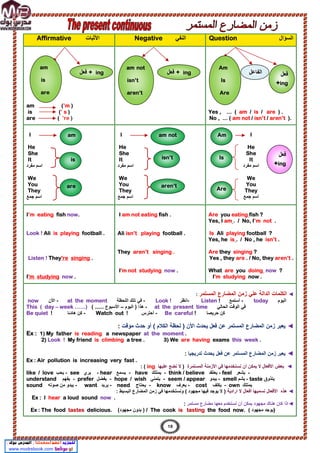
fish ?
eating
u
yo
Are
.
not
’m
I
. / No,
am
Yes, I
Ali playing football ?
Is
.
sn’t
i
he
,
. / No
s
i
Yes, he
Are they singing ?
Yes , they are . / No, they aren’t .
?
w
no
doing
you
are
What
I'm studying now .
I am not eating fish .
Ali isn’t playing football .
aren’t singing .
They
I'm not studying now .
I’m eating fish now.
Look ! Ali is playing football .
.
singing
're
They
Listen !
.
now
studying
'm
I
◄
‫اﻟﻣﺿﺎرع‬ ‫زﻣن‬ ‫ﻋﻠﻲ‬ ‫اﻟداﻟﺔ‬ ‫اﻟﻛﻠﻣﺎت‬
‫اﻟﻣﺳﺗﻣر‬
:
‫اﻟﯾوم‬
today
-
‫أﺳﺗﻣﻊ‬
Listen !
-
‫اﻧظر‬
Look !
-
‫اﻟﻠﺣظﺔ‬ ‫ﺗﻠك‬ ‫ﻓﻲ‬
at the moment
-
‫اﻷن‬
now
‫اﻟﺣﺎﻟﻲ‬ ‫اﻟوﻗت‬ ‫ﻓﻲ‬
at the present time
-
‫اﻟﯾوم‬ ) ‫ھذا‬
–
( ...... ‫اﻷﺳﺑوع‬
This ( day – week ……)
‫ﺣرﯾﺻﺎ‬ ‫ﻛن‬
Be careful !
-
‫أﺣﺗرس‬
Watch out !
-
‫ھﺎدﺋ‬ ‫ﻛن‬
‫ﺎ‬
Be quiet !
◄
‫ﻣؤﻗت‬ ‫ﺣدث‬ ‫أو‬ ( ‫اﻟﻛﻼم‬ ‫ﻟﺣظﺔ‬ ) ‫اﻷن‬ ‫ﯾﺣدث‬ ‫ﻓﻌل‬ ‫ﻋن‬ ‫اﻟﻣﺳﺗﻣر‬ ‫اﻟﻣﺿﺎرع‬ ‫زﻣن‬ ‫ﯾﻌﺑر‬
:
Ex : 1) My father is reading a newspaper at the moment .
2) Look ! My friend is climbing a tree . 3) We are having exams this week .
◄
‫ﺗدرﯾﺟﯾﺎ‬ ‫ﯾﺣدث‬ ‫ﻓﻌل‬ ‫ﻋن‬ ‫اﻟﻣﺳﺗﻣر‬ ‫اﻟﻣﺿﺎرع‬ ‫زﻣن‬ ‫ﯾﻌﺑر‬
:
Ex : Air pollution is increasing very fast .
◄
‫ﻧﺳﺗﺧدﻣﮭ‬ ‫أن‬ ‫ﯾﻣﻛن‬ ‫ﻻ‬ ‫اﻷﻓﻌﺎل‬ ‫ﺑﻌض‬
‫ﺎ‬
‫اﻟﻣﺳﺗﻣرة‬ ‫اﻷزﻣﻧﺔ‬ ‫ﻓﻲ‬
)
‫ﻋﻠﯾﮭﺎ‬ ‫ﻧﺿﻊ‬ ‫ﻻ‬
ing
: (
-
‫ﯾﺷﻌر‬
feel
-
‫ﯾﻌﺗﻘد‬
think / believe
-
‫ﯾﻣﺗﻠك‬
have
-
‫ﯾﺳﻣﻊ‬
hear
-
‫ﯾري‬
see
-
‫ﯾﺣب‬
like / love
‫ﯾﺗذوق‬
- taste
‫ﯾﺷم‬
smell
-
‫ﯾﺑدو‬
/ appear
seem
-
‫ﯾﺗﻣﻧﻲ‬
hope / wish
-
‫ﯾﻔﺿل‬
prefer
-
‫ﯾﻔﮭم‬
understand
‫ﯾﻣﺗﻠك‬
own
-
‫ﯾﻛﻠف‬
cost
-
‫ﯾﻌرف‬
know
-
‫ﯾﺣﺗﺎج‬
need
-
‫ﯾرﯾد‬
want
-
‫ﺻوﺗﮫ‬ ‫ﻣن‬ ‫ﯾﺑدو‬
sound
◄
‫ارادﯾﺔ‬ ‫ﻻ‬ ‫أﻓﻌﺎل‬ ‫ﻧﺳﻣﯾﮭﺎ‬ ‫اﻷﻓﻌﺎل‬ ‫ھذه‬
‫ﻓﯾﮭﺎ‬ ‫ﯾوﺟد‬ ‫ﻻ‬ )
: ‫اﻟﺑﺳﯾط‬ ‫اﻟﻣﺿﺎرع‬ ‫زﻣن‬ ‫ﻓﻲ‬ ‫وﻧﺳﺗﺧدﻣﮭﺎ‬ ( ‫ﻣﺟﮭود‬
Ex : I hear a loud sound now .
◄
‫ﻣﺳﺗﻣر‬ ‫ﻣﺿﺎرع‬ ‫ﻣﻌﮭﺎ‬ ‫ﻧﺳﺗﺧدم‬ ‫أن‬ ‫ﯾﻣﻛن‬ ‫ﻣﺟﮭود‬ ‫ھﻧﺎك‬ ‫ﻛﺎن‬ ‫اذا‬
:
)
( ‫ﻣﺟﮭود‬ ‫ﯾوﺟد‬
The cook is tasting the food now.
/
(‫ﻣﺟﮭود‬ ‫ﺑدون‬ )
Ex : The food tastes delicious.
am
is
are
ing
‫ﻓﻌل‬ + ‫اﻟﻔﺎﻋل‬ ‫ﻓﻌل‬
+ing
am
am not
isn’t
aren’t
ing
‫ﻓﻌل‬ +
Am
Is
Are
is
are
isn’t
aren’t
am not Am
Is
Are
‫ﻓﻌل‬
+ing
18
‫اﻟﺳؤال‬
Question
‫اﻟﻧﻔﻲ‬
Negative
‫اﻷﺛﺑﺎت‬
Affirmative
Yes , … was / were
No, ….. wasn’t / weren’t
I
He
She
It
‫ﻣﻔرد‬ ‫اﺳم‬
We
You
They
‫ﺟﻣﻊ‬ ‫اﺳم‬
I
He
She
It
‫ﻣﻔرد‬ ‫اﺳم‬
We
You
They
‫ﺟﻣﻊ‬ ‫اﺳم‬
I
He
She
It
‫ﻣﻔرد‬ ‫اﺳم‬
We
You
They
‫ﺟﻣﻊ‬ ‫اﺳم‬
Were you eating fish ?
Yes, I was . / No, I wasn’t .
Ali playing football ?
Was
Yes, he was . / No ,he wasn’t .
?
singing
they
Were
Yes , they were .
/ No, they weren’t .
I wasn’t eating fish at 6:00
yesterday .
.
Ali wasn’t playing football
They weren’t singing .
I was eating fish at 6:00
yesterday .
Ali was playing football .
They were singing .
◄
‫اﻟﻣ‬ ‫زﻣن‬ ‫ﻋﻠﻲ‬ ‫اﻟداﻟﺔ‬ ‫اﻟﻛﻠﻣﺎت‬
‫ﺎ‬
‫ﺿ‬
‫ﻲ‬
‫اﻟﻣﺳﺗﻣر‬
:
‫ﻋﻧدﻣﺎ‬
When
-
‫ﺑﯾﻧﻣﺎ‬
While / As
-
‫أﻣس‬ ‫اﻟﯾوم‬ ‫طوال‬
all day yesterday
-
‫اﻣس‬ ‫اﻟﺳﺎدﺳﺔ‬ ‫اﻟﺳﺎﻋﺔ‬
at 6:00 yesterday
◄
‫ﻓﻲ‬ ‫ﻣﻌﯾن‬ ‫وﻗت‬ ‫ﻓﻲ‬ ‫ﻣﺳﺗﻣر‬ ‫ﻛﺎن‬ ‫ﺣدث‬ ‫ﻋن‬ ‫اﻟﻣﺳﺗﻣر‬ ‫اﻟﻣﺎﺿﻲ‬ ‫زﻣن‬ ‫ﯾﻌﺑر‬
‫اﻟﻣﺎﺿﻲ‬
:
.
last night
at 12:00
was sleeping
My father
It was raining all night yesterday .
While I was walking , I met my friend .
When I saw Ali , he was playing football .
‫ﻋﻧدﻣﺎ‬
When
-
‫ﺑﯾﻧﻣﺎ‬
While / As
‫ﻣﺳﺗﻣر‬ ‫ﻣﺎﺿﻲ‬
While / As
‫ﺑﺳﯾط‬ ‫ﻣﺎﺿﻲ‬
My father came while I was studying . / While I was studying , my father came .
‫ﺑﺳﯾط‬ ‫ﻣﺎﺿﻲ‬
When
‫ﻣ‬ ‫ﻣﺎﺿﻲ‬
‫ﺳﺗﻣر‬
my bike .
was riding
down , I
fell
I
When
down . /
fell
I
when
my bike
was riding
I
I fell down when I was riding my bike .
‫ﻣﻼﺣظﺎت‬
:
◄
‫ﺑﻌد‬
)
While / As
(
‫ﺑﻌد‬ ‫اﻣﺎ‬ ‫اﻟﻣﺳﺗﻣر‬ ‫اﻟﻣﺎﺿﻲ‬ ‫زﻣن‬ ‫ﻧﺳﺗﺧدم‬
)
When
(
‫اﻟﺑﺳﯾط‬ ‫اﻟﻣﺎﺿﻲ‬ ‫زﻣن‬ ‫أو‬ ‫اﻟﻣﺳﺗﻣر‬ ‫اﻟﻣﺎﺿﻲ‬ ‫زﻣن‬ ‫ﻧﺳﺗﺧدم‬ ‫أن‬ ‫ﯾﻣﻛن‬
◄
. ‫ﻣﻔﺎﺟﺊ‬ ‫ﺣدث‬ ‫ﻋن‬ ‫ﯾﻌﺑر‬ ‫اﻟﺑﺳﯾط‬ ‫اﻟﻣﺎﺿﻲ‬ ‫اﻣﺎ‬ ‫طوﯾﻠﺔ‬ ‫ﻣدة‬ ‫ﻣﺳﺗﻣر‬ ‫ﻛﺎن‬ ‫ﺣث‬ ‫ﻋن‬ ‫ﯾﻌﺑر‬ ‫اﻟﻣﺳﺗﻣر‬ ‫اﻟﻣﺎﺿﻲ‬
◄
‫ﻓ‬ ‫ﻣﺳﺗﻣران‬ ‫ﺣدﺛﺎن‬ ‫ھﻧﺎك‬ ‫ﻛﺎن‬ ‫اذا‬
. ‫اﻟﻣﺳﺗﻣر‬ ‫اﻟﻣﺎﺿﻲ‬ ‫زﻣن‬ ‫ﻓﻧﺳﺗﺧدم‬ ‫اﻟوﻗت‬ ‫ﻧﻔس‬ ‫ﻲ‬
.
were playing
, my sisters
was studying
I
While
Ex :
was
were
‫اﻟﻔﺎﻋل‬
‫ﻓﻌل‬
+ing
was
wasn’t
weren’t
ing
‫ﻓﻌل‬ + Was
Were
were weren’t
wasn’t Was
ing
‫ﻓﻌل‬ +
was wasn’t Was
Were
‫ﻓﻌل‬
+ing
19
‫اﻟﺳؤال‬
Question
‫اﻟﻧﻔﻲ‬
Negative
‫اﻷﺛﺑﺎت‬
Affirmative
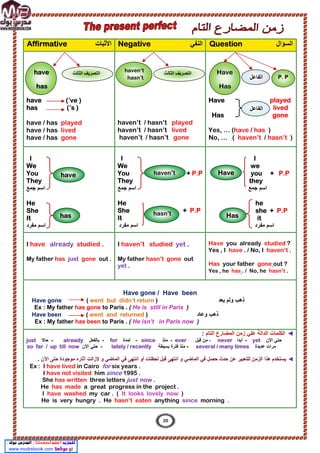
Have played
lived
Has gone
Yes, … (have / has )
No, … ( haven’t / hasn’t )
haven’t / hasn’t played
haven’t / hasn’t lived
haven’t / hasn’t gone
have (’ve )
has (’s )
have / has played
have / has lived
have / has gone
I
we
you + P.P
they
‫ﺟﻣﻊ‬ ‫اﺳم‬
he
she + P.P
it
‫ﻣﻔرد‬ ‫اﺳم‬
I
We
You + + P.P
They
‫ﺟﻣﻊ‬ ‫اﺳم‬
He
She + P.P
It
‫ﻣﻔرد‬ ‫اﺳم‬
I
We
You
They
‫ﺟﻣﻊ‬ ‫اﺳم‬
He
She
It
‫ﻣﻔرد‬ ‫اﺳم‬
Have you already studied ?
Yes , I have . / No, I haven’t .
out ?
gone
your father
Has
.
hasn’t
. / No, he
has
Yes , he
I haven’t studied yet .
My father hasn’t gone out
yet .
I have already studied .
My father has just gone out .
Have gone / Have been
‫ﯾﻌد‬ ‫وﻟم‬ ‫ذھب‬
Have gone ( went but didn’t return )
Ex : My father has gone to Paris . ( He is still in Paris )
‫وﻋﺎد‬ ‫ذھب‬
Have been ( went and returned )
Ex : My father has been to Paris . ( He isn’t in Paris now )
◄
‫اﻟ‬ ‫اﻟﻣﺿﺎرع‬ ‫زﻣن‬ ‫ﻋﻠﻲ‬ ‫اﻟداﻟﺔ‬ ‫اﻟﻛﻠﻣﺎت‬
‫ﺗﺎم‬
:
‫اﻷن‬ ‫ﺣﺗﻲ‬
- yet
‫أﺑدا‬
- never
‫ﻗﺑل‬ ‫ﻣن‬
- ever
‫ﻣﻧذ‬
- since
‫ﻟﻣدة‬
for
-
‫ﺑﺎﻟﻔﻌل‬
already
-
‫ﺣﺎﻻ‬
just
‫ﻋدﯾدة‬ ‫ﻣرات‬
several / many times
-
‫ﺑﺳﯾطﺔ‬ ‫ﻓﺗرة‬ ‫ﻣﻧذ‬
lately / recently
-
‫اﻷن‬ ‫ﺣﺗﻲ‬
so far / up till now
◄
‫ﯾﺳﺗﺧدم‬
‫اﻵن‬ ‫ﺣﺗﻰ‬ ‫ﻣوﺟودة‬ ‫آﺛﺎره‬ ‫ﻻزاﻟت‬ ‫و‬ ‫اﻟﻣﺎﺿﻲ‬ ‫ﻓﻲ‬ ‫اﻧﺗﮭﻰ‬ ‫أو‬ ‫ﻟﺣظﺎت‬ ‫ﻗﺑل‬ ‫اﻧﺗﮭﻰ‬ ‫و‬ ‫اﻟﻣﺎﺿﻲ‬ ‫ﻓﻲ‬ ‫ﺣﺻل‬ ‫ﺣدث‬ ‫ﻋن‬ ‫ﻟﻠﺗﻌﺑﯾر‬ ‫اﻟزﻣن‬ ‫ھذا‬
.
I have lived in Cairo for six years .
Ex :
I have not visited him since 1995 .
She has written three letters just now .
He has made a great progress in the project .
I have washed my car . ( It looks lovely now )
He is very hungry . He hasn’t eaten anything since morning .
have
has
‫اﻟﺛﺎﻟث‬ ‫اﻟﺗﺻرﯾف‬
haven’t
hasn’t ‫اﻟﻔﺎﻋل‬ P. P
have
has
haven’t
hasn’t
‫اﻟﻔﺎﻋل‬
‫اﻟﺛﺎﻟث‬ ‫اﻟﺗﺻرﯾف‬ Have
Has
Have
Has
20
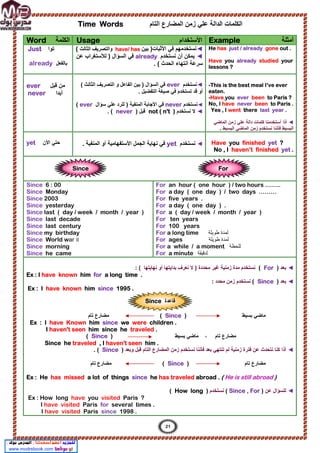
‫اﻟﺗﺎم‬ ‫اﻟﻣﺿﺎرع‬ ‫زﻣن‬ ‫ﻋﻠﻲ‬ ‫اﻟداﻟﺔ‬ ‫اﻟﻛﻠﻣﺎت‬
Time Words
‫أﻣﺛﻠﺔ‬
Example
‫اﻷﺳﺗﺧدام‬
Usage
‫اﻟﻛﻠﻣﺔ‬
Word
He has just / already gone out .
Have you already studied your
lessons ?
◄
‫ﺑﯾن‬ )‫اﻷﺛﺑﺎت‬ ‫ﻓﻲ‬ ‫ﻧﺳﺗﺧدﻣﮭم‬
have/ has
‫اﻟﺛﺎﻟث‬ ‫واﻟﺗﺻرﯾف‬
(
◄
‫ﻧﺳﺗﺧ‬ ‫أن‬ ‫ﯾﻣﻛن‬
‫دم‬
already
‫ﻋن‬ ‫ﻟﻸﺳﺗﻐراب‬ ) ‫اﻟﺳؤال‬ ‫ﻓﻲ‬
. ( ‫اﻟﺣدث‬ ‫أﻧﺗﮭﺎء‬ ‫ﺳرﻋﺔ‬
‫ﺗوا‬
Just
‫ﺑﺎﻟﻔﻌل‬
already
-This is the best meal I’ve ever
eaten.
to Paris ?
been
ever
you
Have
-
No, I have never been to Paris .
Yes , I went there last year .
◄
‫اﻟﻣﺎﺿﻲ‬ ‫زﻣن‬ ‫ﻋﻠﻲ‬ ‫داﻟﺔ‬ ‫ﻛﻠﻣﺎت‬ ‫أﺳﺗﺧدﻣﻧﺎ‬ ‫أذا‬
‫اﻟﺑﺳﯾط‬ ‫اﻟﻣﺎﺿﻲ‬ ‫زﻣن‬ ‫ﻧﺳﺗﺧدم‬ ‫ﻓﺄﻧﻧﺎ‬ ‫اﻟﺑﺳﯾط‬
.
◄
‫ﻧﺳﺗﺧدم‬
ever
‫اﻟﺳؤال‬ ‫ﻓﻲ‬
( ‫اﻟﺛﺎﻟث‬ ‫اﻟﺗﺻرﯾف‬ ‫و‬ ‫اﻟﻔﺎﻋل‬ ‫ﺑﯾن‬ )
‫اﻟﺗﻔﺿﯾل‬ ‫ﺻﯾﻐﺔ‬ ‫ﻓﻲ‬ ‫ﺗﺳﺗﺧدم‬ ‫ﻗد‬ ‫أو‬
.
◄
‫ﻧﺳﺗﺧدم‬
never
‫ﺳؤال‬ ‫ﻋﻠﻲ‬ ‫ﻟﻠرد‬ ) ‫اﻟﻣﻧﻔﯾﺔ‬ ‫اﻷﺟﺎﺑﺔ‬ ‫ﻓﻲ‬
ever
(
◄
‫ﻻ‬
‫ﻧﺳﺗﺧدم‬
not ( n't )
) ‫ﻗﺑل‬
never
. (
‫ﻗﺑل‬ ‫ﻣن‬
ever
‫أﺑدا‬
never
Have you finished yet ?
No , I haven’t finished yet .
◄
‫ﻧﺳﺗﺧدم‬
yet
. ‫اﻟﻣﻧﻔﯾﺔ‬ ‫أو‬ ‫اﻷﺳﺗﻔﮭﺎﻣﯾﺔ‬ ‫اﻟﺟﻣل‬ ‫ﻧﮭﺎﯾﺔ‬ ‫ﻓﻲ‬
‫اﻷن‬ ‫ﺣﺗﻲ‬
yet
For an hour ( one hour ) / two hours ……..
For a day ( one day ) / two days ………
For five years .
For a day ( one day ) .
For a ( day / week / month / year )
For ten years
For 100 years
‫طوﯾﻠﺔ‬ ‫ﻟﻣدة‬
For a long time
‫طوﯾﻠﺔ‬ ‫ﻟﻣدة‬
For ages
‫ﻟﻠﺣظﺔ‬
For a while / a moment
‫ﻟدﻗﯾﻘﺔ‬
For a minute
Since 6 : 00
Since Monday
Since 2003
Since yesterday
Since last ( day / week / month / year )
Since last decade
Since last century
Since my birthday
‫׀׀‬
Since World war
Since morning
Since he came
◄
‫ﺑﻌد‬
)
For
(
( ‫ﻧﮭﺎﯾﺗﮭﺎ‬ ‫أو‬ ‫ﺑداﯾﺗﮭﺎ‬ ‫ﻧﻌرف‬ ‫ﻻ‬ ) ‫ﻣﺣددة‬ ‫ﻏﯾر‬ ‫زﻣﻧﯾﺔ‬ ‫ﻣدة‬ ‫ﻧﺳﺗﺧدم‬
:
Ex : I have known him for a long time .
◄
‫ﺑﻌد‬
)
Since
(
‫ﻣﺣدد‬ ‫زﻣن‬ ‫ﻧﺳﺗﺧدم‬
:
Ex : I have known him since 1995 .
) ‫ﺑﺳﯾط‬ ‫ﻣﺎﺿﻲ‬
Since
‫ﺗﺎم‬ ‫ﻣﺿﺎرع‬ (
Ex : I have Known him since we were children .
I haven't seen him since he traveled .
) ‫ﺑﺳﯾط‬ ‫ﻣﺎﺿﻲ‬ ، ‫ﺗﺎم‬ ‫ﻣﺿﺎرع‬
Since
(
Since he traveled , I haven't seen him .
◄
‫ﻧﺗﺣدث‬ ‫ﻛﻧﺎ‬ ‫أذا‬
‫وﺑﻌد‬ ‫ﻗﺑل‬ ‫اﻟﺗﺎم‬ ‫اﻟﻣﺿﺎرع‬ ‫زﻣن‬ ‫ﻧﺳﺗﺧدم‬ ‫ﻓﺄﻧﻧﺎ‬ ‫ﺑﻌد‬ ‫ﺗﻧﺗﮭﻲ‬ ‫ﻟم‬ ‫زﻣﻧﯾﺔ‬ ‫ﻓﺗرة‬ ‫ﻋن‬
)
Since
. (
) ‫ﺗﺎم‬ ‫ﻣﺿﺎرع‬
Since
‫ﺗﺎم‬ ‫ﻣﺿﺎرع‬ (
Ex : He has missed a lot of things since he has traveled abroad . ( He is still abroad )
◄
‫ﻋن‬ ‫ﻟﻠﺳؤال‬
)
Since , For
(
‫ﻧﺳﺗﺧدم‬
)
How long
(
Ex : How long have you visited Paris ?
I have visited Paris for several times .
I have visited Paris since 1998 .
Since For
‫ﻗﺎﻋدة‬
Since
21
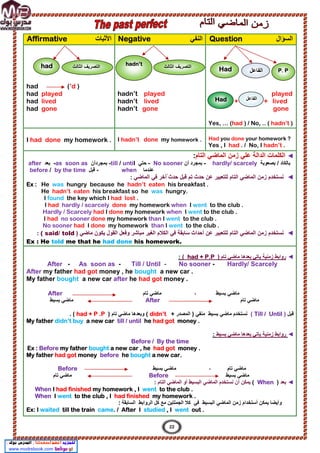
‫اﻟﺳؤال‬
Question
‫اﻟﻧﻔﻲ‬
Negative
‫اﻷﺛﺑﺎت‬
Affirmative
played
+ + lived
gone
Yes, … (had ) / No, .. ( hadn’t )
hadn’t played
hadn’t lived
hadn’t gone
had (’d )
had played
had lived
had gone
Had you done your homework ?
Yes , I had . / No, I hadn’t .
I hadn’t done my homework .
I had done my homework .
◄
‫اﻟﻣ‬ ‫زﻣن‬ ‫ﻋﻠﻲ‬ ‫اﻟداﻟﺔ‬ ‫اﻟﻛﻠﻣﺎت‬
‫ﺎ‬
‫ﺿ‬
‫ﻲ‬
‫اﻟ‬
‫ﺗﺎم‬
:
‫ﺑﺻﻌوﺑﺔ‬ / ‫ﺑﺎﻟﻛﺎد‬
hardly/ scarcely
-
‫أن‬ ‫ﺑﻣﺟرد‬
No sooner
-
‫ﺣﺗﻲ‬
till / until
-
‫ﺑﻣﺟردأن‬
as
as soon
-
‫ﺑﻌد‬
after
‫ﻋﻧدﻣﺎ‬
when
-
‫ﻗﺑل‬
before / by the time
◄
‫اﻟﻣﺎﺿﻲ‬ ‫ﻓﻲ‬ ‫ّأﺧر‬ ‫ﺣدث‬ ‫ﻗﺑل‬ ‫ﺗم‬ ‫ﺣدث‬ ‫ﻋن‬ ‫ﻟﻠﺗﻌﺑﯾر‬ ‫اﻟﺗﺎم‬ ‫اﻟﻣﺎﺿﻲ‬ ‫زﻣن‬ ‫ﻧﺳﺗﺧدم‬
:
Ex : He was hungry because he hadn’t eaten his breakfast .
He hadn’t eaten his breakfast so he was hungry.
I found the key which I had lost .
I had hardly / scarcely done my homework when I went to the club .
Hardly / Scarcely had I done my homework when I went to the club .
I had no sooner done my homework than I went to the club .
No sooner had I done my homework than I went to the club .
◄
‫ﻋن‬ ‫ﻟﻠﺗﻌﺑﯾر‬ ‫اﻟﺗﺎم‬ ‫اﻟﻣﺎﺿﻲ‬ ‫زﻣن‬ ‫ﻧﺳﺗﺧدم‬
‫أ‬
‫ﺣد‬
‫ا‬
‫ث‬
‫ﻣﺎﺿﻲ‬ ‫ﯾﻛون‬ ‫اﻟﻘول‬ ‫وﻓﻌل‬ ‫ﻣﺑﺎﺷر‬ ‫اﻟﻐﯾر‬ ‫اﻟﻛﻼم‬ ‫ﻓﻲ‬ ‫ﺳﺎﺑﻘﺔ‬
)
( said/ told
:
Ex : He told me that he had done his homework.
◄
‫ر‬
‫ﺗﺎم‬ ‫ﻣﺎﺿﻲ‬ ‫ﺑﻌدھﺎ‬ ‫ﯾﺎﺗﻲ‬ ‫زﻣﻧﯾﺔ‬ ‫واﺑط‬
)
had + P.P
(
:
Hardly/ Scarcely
-
No sooner
-
Till / Until
-
as
As soon
-
After
After my father had got money , he bought a new car .
My father bought a new car after he had got money .
‫ﺗﺎم‬ ‫ﻣﺎﺿﻲ‬ ، ‫ﺑﺳﯾط‬ ‫ﻣﺎﺿﻲ‬
After
‫ﺗﺎم‬ ‫ﻣﺎﺿﻲ‬
After
‫ﺑﺳﯾط‬ ‫ﻣﺎﺿﻲ‬
‫ﻗﺑل‬
)
Till / Until
(
+ ‫اﻟﻣﺻدر‬ ) ‫ﻣﻧﻔﻲ‬ ‫ﺑﺳﯾط‬ ‫ﻣﺎﺿﻲ‬ ‫ﻧﺳﺗﺧدم‬
didn’t
) ‫ﺗﺎم‬ ‫ﻣﺎﺿﻲ‬ ‫وﺑﻌدھﺎ‬ (
had + P .P
. (
My father didn’t buy a new car till / until he had got money .
◄
‫ﺑﺳﯾط‬ ‫ﻣﺎﺿﻲ‬ ‫ﺑﻌدھﺎ‬ ‫ﯾﺎﺗﻲ‬ ‫زﻣﻧﯾﺔ‬ ‫رواﺑط‬
:
Before / By the time
Ex : Before my father bought a new car , he had got money .
My father had got money before he bought a new car.
، ‫ﺗﺎم‬ ‫ﻣﺎﺿﻲ‬
‫ﺑﺳﯾط‬ ‫ﻣﺎﺿﻲ‬
Before
‫ﺑﺳﯾط‬ ‫ﻣﺎﺿﻲ‬
Before
‫ﺗﺎم‬ ‫ﻣﺎﺿﻲ‬
◄
‫ﺑﻌد‬
)
When
(
‫اﻟﺗﺎم‬ ‫اﻟﻣﺎﺿﻲ‬ ‫أو‬ ‫اﻟﺑﺳﯾط‬ ‫اﻟﻣﺎﺿﻲ‬ ‫ﻧﺳﺗﺧدم‬ ‫أن‬ ‫ﯾﻣﻛن‬
:
When I had finished my homework , I went to the club .
When I went to the club , I had finished my homework .
‫ﯾﻣﻛ‬ ‫وأﯾﺿﺎ‬
‫اﻟﺳﺎﺑﻘﺔ‬ ‫اﻟرواﺑط‬ ‫ﻛل‬ ‫ﻣﻊ‬ ‫اﻟﺟﻣﻠﺗﯾن‬ ‫ﻛﻼ‬ ‫ﻓﻲ‬ ‫اﻟﺑﺳﯾط‬ ‫اﻟﻣﺎﺿﻲ‬ ‫زﻣن‬ ‫أﺳﺗﺧدام‬ ‫ن‬
:
Ex: I waited till the train came. / After I studied , I went out .
had ‫اﻟﺛﺎﻟث‬ ‫اﻟﺗﺻرﯾف‬
hadn’t
‫اﻟﻔﺎﻋل‬ P. P
‫اﻟﻔﺎﻋل‬
‫اﻟﺛﺎﻟث‬ ‫اﻟﺗﺻرﯾف‬
Had
Had
22
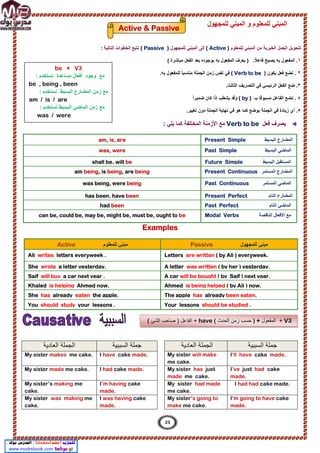
‫ﻟﻠﻣﺟﮭول‬ ‫اﻟﻣﺑﻧﻲ‬ ‫و‬ ‫ﻟﻠﻣﻌﻠوم‬ ‫اﻟﻣﺑﻧﻲ‬
‫ﻟﻠﻣﻌﻠوم‬ ‫اﻟﻣﺑﻧﻲ‬ ‫ﻣن‬ ‫اﻟﺧﺑرﯾﺔ‬ ‫اﻟﺟﻣل‬ ‫ﻟﺗﺣوﯾل‬
)
Active
(
‫ﻟﻠﻣﺟ‬ ‫اﻟﻣﺑﻧﻲ‬ ‫إﻟﻰ‬
‫ﮭول‬
)
Passive
(
‫اﻟﺗﺎﻟﯾﺔ‬ ‫اﻟﺧطوات‬ ‫ﻧﺗﺑﻊ‬
:
١
) .ً‫ﻼ‬‫ﻓﺎﻋ‬ ‫ﯾﺻﺑﺢ‬ ‫ﺑﮫ‬ ‫اﻟﻣﻔﻌول‬ .
‫ﻣﺑﺎﺷرة‬ ‫اﻟﻔﻌل‬ ‫ﺑﻌد‬ ‫ﺑوﺟوده‬ ‫ﺑﮫ‬ ‫اﻟﻣﻔﻌول‬ ‫ﯾﻌرف‬
(
.‫ﺑﮫ‬ ‫ﻟﻠﻣﻔﻌول‬ ً‫ﺎ‬‫ﻣﻧﺎﺳﺑ‬ ‫اﻟﺟﻣﻠﺔ‬ ‫زﻣن‬ ‫ﻧﻔس‬ ‫ﻓﻲ‬ ( Verb to be ٢
‫ﻓﻌل‬ ‫ﻧﺿﻊ‬ .
) ‫ﯾﻛون‬
٣
‫اﻟﻔﻌل‬ ‫ﺿﻊ‬ .
‫اﻟرﺋﯾﺳﻲ‬
.‫اﻟﺛﺎﻟث‬ ‫اﻟﺗﺻرﯾف‬ ‫ﻓﻲ‬
ً‫ا‬‫ﺿﻣﯾر‬ ‫ﻛﺎن‬ ‫إذا‬ ‫ﯾﺷطب‬ ‫وﻗد‬ ( by ) ‫ب‬ ٤
‫ﻣﺳﺑوﻗﺎ‬ ‫اﻟﻔﺎﻋل‬ ‫ﻧﺿﻊ‬ .
٥
.‫ﺗﻐﯾﯾر‬ ‫دون‬ ‫اﻟﺟﻣﻠﺔ‬ ‫ﻧﮭﺎﯾﺔ‬ ‫ﻓﻲ‬ ‫ھو‬ ‫ﻛﻣﺎ‬ ‫ﯾوﺿﻊ‬ ‫اﻟﺟﻣﻠﺔ‬ ‫ﻓﻲ‬ ‫زﯾﺎدة‬ ‫أي‬ .
‫ﯾﻠﻲ‬ ‫ﻛﻣﺎ‬ ‫اﻟﻣﺧﺗﻠﻔﺔ‬ ‫اﻷزﻣﻧﺔ‬ ‫ﻣﻊ‬
: Verb to be ◄
‫ﻓﻌل‬ ‫ﯾﺻرف‬
am, is, are Present Simple ‫اﻟﺑﺳﯾط‬ ‫اﻟﻣﺿﺎرع‬
was, were Past Simple ‫اﻟﺑﺳﯾط‬ ‫اﻟﻣﺎﺿﻲ‬
shall be, will be Future Simple ‫اﻟﺑﺳﯾ‬ ‫اﻟﻣﺳﺗﻘﺑل‬
‫ط‬
am being, is being, are being Present Continuous ‫اﻟﻣﺳﺗﻣر‬ ‫اﻟﻣﺿﺎرع‬
was being, were being Past Continuous ‫اﻟﻣﺳﺗﻣر‬ ‫اﻟﻣﺎﺿﻲ‬
has been, have been Present Perfect ‫اﻟﺗﺎم‬ ‫اﻟﻣﺿﺎرع‬
had been Past Perfect ‫اﻟﺗﺎم‬ ‫اﻟﻣﺎﺿﻲ‬
can be, could be, may be, might be, must be, ought to be Modal Verbs ‫اﻟﻧﺎﻗﺻﺔ‬ ‫اﻷﻓﻌﺎل‬ ‫ﻣﻊ‬
Examples
Active ‫ﻟﻠﻣﻌﻠوم‬ ‫ﻣﺑﻧﻲ‬ Passive ‫ﻟﻠﻣﺟﮭول‬ ‫ﻣﺑﻧﻲ‬
Ali writes letters everyweek . Letters are written ( by Ali ) everyweek.
She wrote a letter yesterday. A letter was written ( by her ) yesterday.
Saif will buy a car next year . A car will be bought ( by Saif ) next year.
Khaled is helping Ahmed now. Ahmed is being helped ( by Ali ) now.
She has already eaten the apple. The apple has already been eaten.
You should study your lessons . Your lessons should be studied .
‫اﻟﻌﺎدﯾﺔ‬ ‫اﻟﺟﻣﻠﺔ‬ ‫اﻟﺳﺑﺑﯾﺔ‬ ‫ﺟﻣﻠﺔ‬ ‫اﻟﻌ‬ ‫اﻟﺟﻣﻠﺔ‬
‫ﺎدﯾﺔ‬ ‫اﻟﺳﺑﺑﯾﺔ‬ ‫ﺟﻣﻠﺔ‬
My sister makes me cake. I have cake made. My sister will make
me cake.
I’ll have cake made.
My sister made me cake. I had cake made. My sister has just
made me cake.
I’ve just had cake
made.
My sister’s making me
cake.
I’m having cake
made.
My sister had made
me cake.
I had had cake made.
My sister was making me
cake.
I was having cake
made.
My sister’s going to
make me cake.
I’m going to have cake
made.
Active & Passive
V3
‫اﻟﻣﻔﻌول‬ +
) +
‫اﻟﺣدث‬ ‫زﻣن‬ ‫ﺣﺳب‬
have (
+
‫اﻟﺷﺊ‬ ‫ﺻﺎﺣب‬ ) ‫اﻟﻔﺎﻋل‬
(
23
be + V3
: ‫ﻧﺳﺗﺧدم‬ ‫ﻣﺳﺎﻋدة‬ ‫أﻓﻌﺎل‬ ‫وﺟود‬ ‫ﻣﻊ‬
be , being , been
: ‫ﻧﺳﺗﺧدم‬ ‫اﻟﺑﺳﯾط‬ ‫اﻟﻣﺿﺎرع‬ ‫زﻣن‬ ‫ﻣﻊ‬
am / is / are
: ‫ﻧﺳﺗﺧدم‬ ‫اﻟﺑﺳﯾط‬ ‫اﻟﻣﺎﺿﻲ‬ ‫زﻣن‬ ‫ﻣﻊ‬
was / were
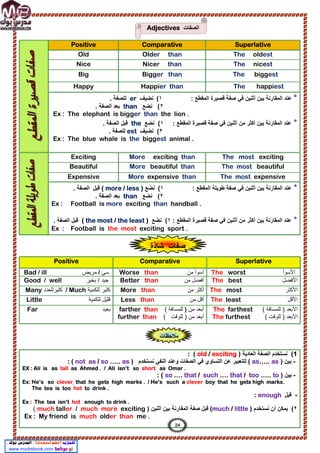
Superlative
Comparative
Positive
The oldest
Older than
Old
The nicest
Nicer than
Nice
The biggest
Bigger than
Big
The happiest
Happier than
Happy
*
: ‫اﻟﻣﻘطﻊ‬ ‫ﻗﺻﯾرة‬ ‫ﺻﻔﺔ‬ ‫ﻓﻲ‬ ‫أﺛﻧﯾن‬ ‫ﺑﯾن‬ ‫اﻟﻣﻘﺎرﻧﺔ‬ ‫ﻋﻧد‬
١
(
‫ﻧﺿﯾف‬
er
. ‫ﻟﻠﺻﻔﺔ‬
٢
‫ﻧﺿﻊ‬ (
than
. ‫اﻟﺻﻔﺔ‬ ‫ﺑﻌد‬
Ex : The elephant is bigger than the lion .
*
: ‫اﻟﻣﻘطﻊ‬ ‫ﻗﺻﯾرة‬ ‫ﺻﻔﺔ‬ ‫ﻓﻲ‬ ‫أﺛﻧﯾن‬ ‫ﻣن‬ ‫أﻛﺛر‬ ‫ﺑﯾن‬ ‫اﻟﻣﻘﺎرﻧﺔ‬ ‫ﻋﻧد‬
١
‫ﻧﺿﻊ‬ (
the
‫اﻟﺻﻔ‬ ‫ﻗﺑل‬
. ‫ﺔ‬
٢
‫ﻧﺿﯾف‬ (
est
. ‫ﻟﻠﺻﻔﺔ‬
Ex : The blue whale is the biggest animal .
The most exciting
More exciting than
Exciting
The most beautiful
More beautiful than
Beautiful
The most expensive
More expensive than
Expensive
*
‫ﺻﻔﺔ‬ ‫ﻓﻲ‬ ‫أﺛﻧﯾن‬ ‫ﺑﯾن‬ ‫اﻟﻣﻘﺎرﻧﺔ‬ ‫ﻋﻧد‬
‫طوﯾﻠﺔ‬
: ‫اﻟﻣﻘطﻊ‬
١
(
‫ﻧﺿﻊ‬
( more / less )
‫ﻗﺑل‬
. ‫اﻟﺻﻔﺔ‬
٢
‫ﻧﺿﻊ‬ (
than
. ‫اﻟﺻﻔﺔ‬ ‫ﺑﻌد‬
Ex : Football is more exciting than handball .
*
: ‫اﻟﻣﻘطﻊ‬ ‫ﻗﺻﯾرة‬ ‫ﺻﻔﺔ‬ ‫ﻓﻲ‬ ‫أﺛﻧﯾن‬ ‫ﻣن‬ ‫أﻛﺛر‬ ‫ﺑﯾن‬ ‫اﻟﻣﻘﺎرﻧﺔ‬ ‫ﻋﻧد‬
١
‫ﻧﺿﻊ‬ (
( the most / the least )
. ‫اﻟﺻﻔﺔ‬ ‫ﻗﺑل‬
Ex : Football is the most exciting sport .
Superlative
Comparative
Positive
‫اﻷﺳوأ‬
The worst
‫ﻣن‬ ‫أﺳوأ‬
Worse than
‫ﺳﺊ‬
/
‫ﻣرﯾض‬
Bad / ill
‫اﻷﻓﺿل‬
The best
‫ﻣن‬ ‫أﻓﺿل‬
Better than
‫ﺑﺧﯾر‬ / ‫ﺟﯾد‬
Good / well
‫اﻷﻛﺛر‬
The most
‫ﻣن‬ ‫أﻛﺛر‬
More than
‫ﻟﻠﻛﻣﯾﺔ‬ ‫ﻛﺛﯾر‬
/ Much
‫ﻛﺛﯾرﻟﻠﻌدد‬
Many
‫اﻷﻗل‬
The least
‫ﻣن‬ ‫أﻗل‬
Less than
‫ﻟﻠﻛﻣﯾﺔ‬ ‫ﻗﻠﯾل‬
Little
( ‫ﻟﻠﻣﺳﺎﻓﺔ‬ ) ‫اﻷﺑﻌد‬
The farthest
( ‫ﻟﻠوﻗت‬ ) ‫اﻷﺑﻌد‬
The furthest
‫ﻣن‬ ‫أﺑﻌد‬
)
( ‫ﻟﻠﻣﺳﺎﻓﺔ‬
farther than
( ‫ﻟﻠوﻗت‬ ) ‫ﻣن‬ ‫أﺑﻌد‬
further than
‫ﺑﻌﯾد‬
Far
(1
١
) ‫اﻟﻌﺎدﯾﺔ‬ ‫اﻟﺻﻔﺔ‬ ‫ﻧﺳﺗﺧدم‬
old / exciting
(
:
-
‫ﺑﯾن‬
)
as….. as
‫اﻟﻧﻔﻲ‬ ‫وﻋﻧد‬ ‫اﻟﺻﻔﺎت‬ ‫ﻓﻲ‬ ‫اﻟﺗﺳﺎوي‬ ‫ﻋن‬ ‫ﻟﻠﺗﻌﺑﯾر‬ (
‫ﻧﺳﺗﺧدم‬
)
not as / so ….. as
(
:
EX : Ali is as tall as Ahmed . / Ali isn’t so short as Omar .
-
) ‫ﺑﯾن‬
so …. that / such …. that / too ….. to
(
:
he gets high marks.
boy that
clever
such a
/ He’s
.
that he gets high marks
clever
so
Ex: He’s
The tea is too hot to drink .
-
‫ﻗﺑل‬
enough
:
Ex : The tea isn’t hot enough to drink .
٢
) ‫ﻧﺳﺗﺧدم‬ ‫أن‬ ‫ﯾﻣﻛن‬ (
much / little
) ‫أﺛﻧﯾن‬ ‫ﺑﯾن‬ ‫اﻟﻣﻘﺎرﻧﺔ‬ ‫ﺻﻔﺔ‬ ‫ﻗﺑل‬ (
much taller / much more exciting
(
Ex : My friend is much older than me .
٤
‫ﻣﻼﺣظﺎت‬
‫اﻟﺻﻔﺎت‬
Adjectives
‫ﺷﺎذة‬ ‫ﺻﻔﺎت‬
24
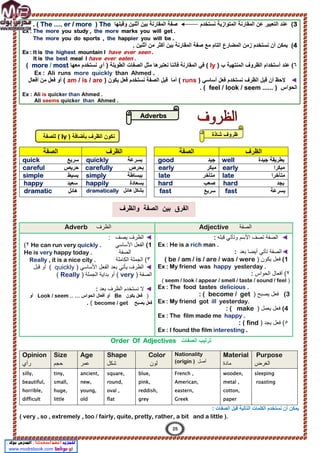
‫اﻟﺻﻔﺎت‬ ‫ﺗرﺗﯾب‬
Order Of Adjectives
Purpose
‫اﻟﻐرض‬
Material
‫ﻣﺎدة‬
Nationality
‫أﺻل‬
(origin )
Color
‫ﻟون‬
Shape
‫ﺷﻛل‬
Age
‫ﻋﻣر‬
Size
‫ﺣﺟم‬
Opinion
‫رأي‬
sleeping
roasting
wooden,
,
metal
cotton,
paper
French ,
American,
eastern,
Greek
blue,
pink,
reddish,
grey
square,
round,
oval ,
flat
ancient,
new,
young,
old
tiny,
small,
,
huge
little
silly,
beautiful,
horrible,
difficult
‫ا‬ ‫اﻟﻛﻠﻣﺎت‬ ‫ﻧﺳﺗﺧدم‬ ‫أن‬ ‫ﯾﻣﻛن‬
‫اﻟﺻﻔﺎت‬ ‫ﻗﺑل‬ ‫ﻟﺗﺎﻟﯾﺔ‬
:
( very , so , extremely , too / fairly, quite, pretty, rather, a bit and a little ).
3
‫ﻧﺳﺗﺧدم‬ ‫اﻟﻣﺗوازﯾﺔ‬ ‫اﻟﻣﻘﺎرﻧﺔ‬ ‫ﻋن‬ ‫اﻟﺗﻌﺑﯾر‬ ‫ﻋﻧد‬ (
‫وﻗﺑﻠﮭﺎ‬ ‫أﺛﻧﯾن‬ ‫ﺑﯾن‬ ‫اﻟﻣﻘﺎرﻧﺔ‬ ‫ﺻﻔﺔ‬
The
)
The …. er / more
. (
Ex : The more you study , the more marks you will get .
The more you do sports , the happier you will be .
4
‫ﻧﺳ‬ ‫أن‬ ‫ﯾﻣﻛن‬ (
. ‫أﺛﻧﯾن‬ ‫ﻣن‬ ‫أﻛﺛر‬ ‫ﺑﯾن‬ ‫اﻟﻣﻘﺎرﻧﺔ‬ ‫ﺻﻔﺔ‬ ‫ﻣﻊ‬ ‫اﻟﺗﺎم‬ ‫اﻟﻣﺿﺎرع‬ ‫زﻣن‬ ‫ﺗﺧدم‬
Ex : It is the highest mountain I have ever seen .
It is the best meal I have ever eaten .
٦
) ‫ب‬ ‫اﻟﻣﻧﺗﮭﯾﺔ‬ ‫اﻟظروف‬ ‫أﺳﺗﺧدام‬ ‫ﻋﻧد‬ (
ly
‫ﻣﻌﮭﺎ‬ ‫ﻧﺳﺗﺧدم‬ ‫أي‬ ) ‫اﻟطوﯾﻠﺔ‬ ‫اﻟﺻﻔﺎت‬ ‫ﻣﺛل‬ ‫ﻧﻌﺗﺑرھﺎ‬ ‫ﻓﺄﻧﻧﺎ‬ ‫اﻟﻣﻘﺎرﻧﺔ‬ ‫ﻓﻲ‬ (
more / most
(
Ex : Ali runs more quickly than Ahmed .
◄
) ‫أﺳﺎﺳﻲ‬ ‫ﻓﻌل‬ ‫ﻧﺳﺗﺧدم‬ ‫اﻟظرف‬ ‫ﻗﺑل‬ ‫أن‬ ‫ﻻﺣظ‬
runs
) ‫ﯾﻛون‬ ‫ﻓﻌل‬ ‫ﻧﺳﺗﺧدم‬ ‫اﻟﺻﻔﺔ‬ ‫ﻗﺑل‬ ‫أﻣﺎ‬ (
am / is / are
‫أﻓﻌﺎل‬ ‫ﻣن‬ ‫ﻓﻌل‬ ‫أو‬ (
) ‫اﻟﺣواس‬
......
feel / look / seem
. (
Ex : Ali is quicker than Ahmed .
Ali seems quicker than Ahmed .
‫اﻟظرف‬
‫اﻟﺻﻔﺔ‬
‫اﻟظر‬
‫ف‬
‫اﻟﺻﻔﺔ‬
‫ﺟﯾدة‬ ‫ﺑطرﯾﻘﺔ‬
well
‫ﺟﯾد‬
good
‫ﺑﺳرﻋﺔ‬
quickly
‫ﺳرﯾﻊ‬
quick
‫ﻣﺑﻛرا‬
early
‫ﻣﺑﻛر‬
early
‫ﺑﺣرص‬
carefully
‫ﺣرﯾص‬
careful
‫ﻣﺗﺄﺧرا‬
late
‫ﻣﺗﺄﺧر‬
late
‫ﺑﺑﺳﺎطﺔ‬
simply
‫ﺑﺳﯾط‬
simple
‫ﺑﺟد‬
hard
‫ﺻﻌب‬
hard
‫ﺑﺳﻌﺎدة‬
happily
‫ﺳﻌﯾد‬
happy
‫ﺑﺳرﻋﺔ‬
fast
‫ﺳرﯾﻊ‬
fast
‫ھﺎﺋل‬ ‫ﺑﺷﻛل‬
dramatically
‫ھﺎﺋل‬
dramatic
‫اﻟﺻﻔﺔ‬
Adjective
‫اﻟظرف‬
Adverb
◄
‫اﻷﺳم‬ ‫ﺗﺻف‬ ‫اﻟﺻﻔﺔ‬
‫ﻗﺑﻠﮫ‬ ‫وﺗﺄﺗﻲ‬
:
Ex : He is a rich man .
◄
‫ﺑﻌد‬ ‫أﯾﺿﺎ‬ ‫ﺗﺄﺗﻲ‬ ‫اﻟﺻﻔﺔ‬
:
(1
) ‫ﯾﻛون‬ ‫ﻓﻌل‬
/ am / is / are / was / were
( be
Ex : My friend was happy yesterday .
٢
‫اﻟﺣواس‬ ‫أﻓﻌﺎل‬ (
:
)
seem / look / appear / smell / taste / sound / feel
(
Ex : The food tastes delicious .
(3
) ‫ﯾﺻﺑﺢ‬ ‫ﻓﻌل‬
become / get
: (
Ex : My friend got ill yesterday.
(4
) ‫ﯾﻌﻣل‬ ‫ﻓﻌل‬
make
: (
Ex : The film made me happy .
٥
) ‫ﯾﺟد‬ ‫ﻓﻌل‬ (
find
(
:
Ex : I found the film interesting .
◄
‫ﯾﺻف‬ ‫اﻟظرف‬
:
(1
‫ا‬
‫ﻟ‬
‫اﻷﺳﺎﺳﻲ‬ ‫ﻔﻌل‬
He can run very quickly .
٢
(
‫اﻟﺻﻔﺔ‬
He is very happy today .
٣
‫اﻟﻛﺎﻣﻠﺔ‬ ‫اﻟﺟﻣﻠﺔ‬ (
Really , it is a nice city .
◄
) ‫اﻷﺳﺎﺳﻲ‬ ‫اﻟﻔﻌل‬ ‫ﺑﻌد‬ ‫ﯾﺄﺗﻲ‬ ‫اﻟظرف‬
quickly
(
‫ﻗﺑل‬ ‫أو‬
) ‫اﻟﺻﻔﺔ‬
very
) ‫اﻟﺟﻣﻠﺔ‬ ‫ﺑداﯾﺔ‬ ‫أو‬ (
Really
(
◄
‫ﺑﻌد‬ ‫اﻟظرف‬ ‫ﻧﺳﺗﺧدم‬ ‫ﻻ‬
:
)
‫ﯾﻛون‬ ‫ﻓﻌل‬
Be
‫أو‬
‫اﻟﺣواس‬ ‫أﻓﻌﺎل‬
...
Look / seem ..
‫أو‬
‫ﯾﺻﺑﺢ‬ ‫ﻓﻌل‬
become / get
(
.
) ‫ﺑﺄﺿﺎﻓﺔ‬ ‫اﻟظرف‬ ‫ﻧﻛون‬
ly
‫ﻟﻠﺻﻔﺔ‬ ( ‫ﺷﺎذة‬ ‫ظروف‬
Adverbs
‫واﻟظرف‬ ‫اﻟﺻﻔﺔ‬ ‫ﺑﯾن‬ ‫اﻟﻔرق‬
25
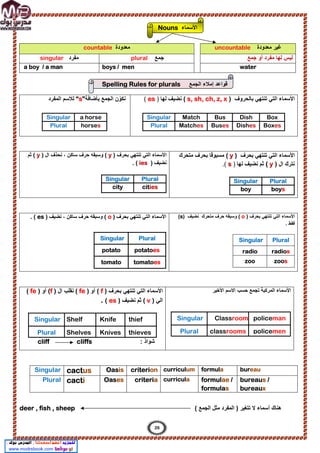
bureau
formula
curriculum
criterion
Oasis
cactus
Singular
bureaus /
bureaux
formulae /
formulas
curricula
criteria
Oases
cacti
Plural
‫ھﻧﺎ‬
( ‫اﻟﺟﻣﻊ‬ ‫ﻣﺛل‬ ‫اﻟﻣﻔرد‬ ) ‫ﺗﺗﻐﯾر‬ ‫ﻻ‬ ‫أﺳﻣﺎء‬ ‫ك‬
deer , fish , sheep
‫ﻣﻌدودة‬ ‫ﻏﯾر‬
uncountable
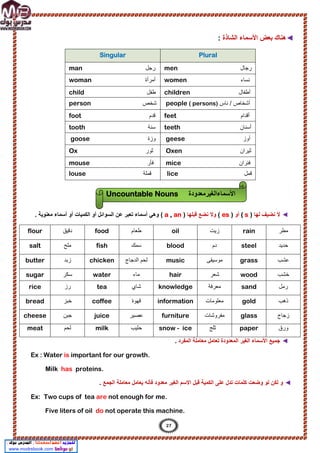
‫ﻣﻌدودة‬
countable
‫ﺟﻣﻊ‬ ‫أو‬ ‫ﻣﻔرد‬ ‫ﻟﮭﺎ‬ ‫ﻟﯾس‬
‫ﺟﻣﻊ‬
plural
‫ﻣﻔرد‬
singular
water
boys / men
a boy / a man
‫ﺑﺎﻟﺣروف‬ ‫ﺗﻧﺗﮭﻲ‬ ‫اﻟﺗﻲ‬ ‫اﻷﺳﻣﺎء‬
)
s, sh, ch, z, x
(
‫ﻟﮭﺎ‬ ‫ﻧﺿﯾف‬
)
es
(
Box
Dish
Bus
Match
Singular
Boxes
Dishes
Buses
Matches
Plural
‫ﻟﻼﺳم‬
‫اﻟﻣﻔرد‬ “s” ‫اﻟﺟﻣﻊ‬ ‫ن‬ّ‫ﻧﻛو‬
‫ﺑﺄﺿﺎﻓﺔ‬
a horse
Singular
horses
Plural
‫ﺑ‬ ‫ﺗﻧﺗﮭﻲ‬ ‫اﻟﺗﻲ‬ ‫اﻷﺳﻣﺎء‬
‫ﺣرف‬
)
y
(
‫ﻣﺗﺣرك‬ ‫ﺑﺣرف‬ ‫ﻣﺳﺑوﻗﺎ‬
) ‫ال‬ ‫ﻧﺗرك‬
( y
‫ﻟﮭﺎ‬ ‫ﻧﺿﯾف‬ ‫ﺛم‬
)
s
(
.
Plural
Singular
boys
boy
) ‫ﺑﺣرف‬ ‫ﺗﻧﺗﮭﻲ‬ ‫اﻟﺗﻲ‬ ‫اﻷﺳﻣﺎء‬
y
‫ال‬ ‫ﻧﺣذف‬ ، ‫ﺳﺎﻛن‬ ‫ﺣرف‬ ‫وﺳﺑﻘﮫ‬ (
)
y
‫ﺛم‬ (
) ‫ﻧﺿﯾف‬
ies
. (
Plural
Singular
cities
city
Singular Plural
radio radios
zoo zoos
‫ﺑﺣرف‬ ‫ﺗﻧﺗﮭﻲ‬ ‫اﻟﺗﻲ‬ ‫اﻷﺳﻣﺎء‬
)
o
‫ﻣﺗﺣرك‬ ‫ﺣرف‬ ‫وﺳﺑﻘﮫ‬ (
) ‫ﻧﺿﯾف‬
s
(
. ‫ﻓﻘط‬
Singular Plural
potato potatoes
tomato tomatoes
) ‫ﺑﺣرف‬ ‫ﺗﻧﺗﮭﻲ‬ ‫اﻟﺗﻲ‬ ‫اﻷﺳﻣﺎء‬
o
‫ﺳﺎﻛن‬ ‫ﺣرف‬ ‫وﺳﺑﻘﮫ‬ (
‫ﻧﺿﯾف‬ ،
)
es
(
.
‫ﺣﺳب‬ ‫ﺗﺟﻣﻊ‬ ‫اﻟﻣرﻛﺑﺔ‬ ‫اﻷﺳﻣﺎء‬
‫اﻷﺧﯾر‬ ‫اﻻﺳم‬
Singular Classroom policeman
Plural classrooms policemen
) ‫ﺑﺣرف‬ ‫ﺗﻧﺗﮭﻲ‬ ‫اﻟﺗﻲ‬ ‫اﻷﺳﻣﺎء‬
f
) ‫أو‬ (
fe
) ‫ال‬ ‫ﻧﻘﻠب‬ (
f
) ‫أو‬ (
fe
(
) ‫اﻟﻲ‬
v
) ‫ﻧﺿﯾف‬ ‫ﺛم‬ (
es
(
.
Singular Shelf Knife thief
Plural Shelves Knives thieves
: ‫ﺷواذ‬
cliff cliffs
‫اﻷﺳﻣﺎء‬
Nouns
‫اﻟﺟﻣﻊ‬ ‫إﻣﻼء‬ ‫ﻗواﻋد‬
Spelling Rules for plurals
26
◄
‫اﻟﺷﺎذة‬ ‫اﻷﺳﻣﺎء‬ ‫ﺑﻌض‬ ‫ھﻧﺎك‬
:
Singular Plural
‫رﺟل‬
man ‫رﺟﺎل‬
men
‫أﻣرأة‬
woman ‫ﻧﺳﺎء‬
women
‫طﻔل‬
child ‫أطﻔﺎل‬
children
‫ﺷﺧص‬
person ‫ﻧﺎس‬ / ‫أﺷﺧﺎص‬
people ( persons)
‫ﻗدم‬
foot ‫أﻗدام‬
feet
‫ﺳﻧﺔ‬
tooth ‫أﺳﻧﺎن‬
teeth
‫وزة‬
goose ‫أوز‬
geese
‫ﺛور‬
Ox ‫ﺛﯾران‬
Oxen
‫ﻓﺄر‬
mouse ‫ﻓﺋران‬
mice
‫ﻗﻣﻠﺔ‬
louse ‫ﻗﻣل‬
lice
◄
‫ﻟﮭﺎ‬ ‫ﻧﺿﯾف‬ ‫ﻻ‬
)
( s
‫أو‬
)
es
(
‫ﻗﺑﻠﮭﺎ‬ ‫ﻧﺿﻊ‬ ‫وﻻ‬
)
a , an
‫أو‬ ‫اﻟﻛﻣﯾﺎت‬ ‫أو‬ ‫اﻟﺳواﺋل‬ ‫ﻋن‬ ‫ﺗﻌﺑر‬ ‫أﺳﻣﺎء‬ ‫وھﻲ‬ (
. ‫ﻣﻌﻧوﯾﺔ‬ ‫أﺳﻣﺎء‬
flour ‫دﻗﯾق‬ food ‫طﻌﺎم‬ oil ‫زﯾت‬ rain ‫ﻣطر‬
salt ‫ﻣﻠﺢ‬ fish ‫ﺳﻣك‬ blood ‫دم‬ steel ‫ﺣدﯾد‬
butter ‫زﺑد‬ chicken ‫اﻟدﺟﺎج‬ ‫ﻟﺣم‬ music ‫ﻣوﺳﯾﻘﻰ‬ grass ‫ﻋﺷب‬
sugar ‫ﺳﻛر‬ water ‫ﻣﺎء‬ hair ‫ﺷﻌر‬ wood ‫ﺧﺷب‬
rice ‫رز‬ tea ‫ﺷﺎي‬ knowledge ‫ﻣﻌرﻓﺔ‬ sand ‫رﻣل‬
bread ‫ﺧﺑز‬ coffee ‫ﻗﮭوة‬ information ‫ﻣﻌﻠوﻣﺎت‬ gold ‫ذھب‬
cheese ‫ﺟﺑن‬ juice ‫ﻋﺻﯾر‬ furniture ‫ﻣﻔروﺷﺎت‬ glass ‫زﺟﺎج‬
meat ‫ﻟﺣم‬ milk ‫ﺣﻠﯾب‬ snow - ice ‫ﺛﻠﺞ‬ paper ‫ورق‬
◄
‫اﻟﻣﻔرد‬ ‫ﻣﻌﺎﻣﻠﺔ‬ ‫ﺗﻌﺎﻣل‬ ‫اﻟﻣﻌدودة‬ ‫اﻟﻐﯾر‬ ‫اﻷﺳﻣﺎء‬ ‫ﺟﻣﯾﻊ‬
.
Ex : Water is important for our growth.
Milk has proteins.
◄
‫ﯾﻌﺎﻣل‬ ‫ﻓﺄﻧﮫ‬ ‫ﻣﻌدود‬ ‫اﻟﻐﯾر‬ ‫اﻻﺳم‬ ‫ﻗﺑل‬ ‫اﻟﻛﻣﯾﺔ‬ ‫ﻋﻠﻰ‬ ‫ﺗدل‬ ‫ﻛﻠﻣﺎت‬ ‫وﺿﻌت‬ ‫ﻟو‬ ‫ﻟﻛن‬ ‫و‬
‫اﻟﺟﻣﻊ‬ ‫ﻣﻌﺎﻣﻠﺔ‬
.
Two cups of tea are not enough for me.
Ex:
Five liters of oil do not operate this machine.
‫اﻷﺳﻣﺎء‬
‫اﻟﻐ‬
‫ﯾر‬
‫ﻣﻌدودة‬
Uncountable Nouns
27
‫ﻣ‬ ‫اﻟﻐﯾر‬ ‫اﻷﺳم‬
‫ﻌدود‬
Uncountable
( water , tea , coffee …..)
‫اﻟﺟﻣﻊ‬ ‫اﻷﺳم‬
plural
‫اﻟﻣﻔرد‬ ‫اﻷﺳم‬
singular
two / three … / Both
A / an ( one )
The
The
The
‫ﻣﻌظم‬
most
/
‫ﻛل‬
All
‫ﻣﻌظم‬
most
/
‫ﻛل‬
All
‫ﻛل‬
Every / Each
Each boy plays soccer.
Each plays soccer.
Every boy plays soccer.
‫ﻧﺳﺗﺧدم‬ ‫أن‬ ‫ﯾﻣﻛن‬ ‫أﻧﻧﺎ‬ ‫ﻻﺣظ‬
each
‫أﻣﺎ‬ ‫اﻟﻣﻔرد‬ ‫اﻷﺳم‬ ‫ﻋن‬ ‫ﻟﻠﺗﻌﺑﯾر‬ ‫ﺑﻣﻔردھﺎ‬
every
.‫ﻣﻔرد‬ ‫اﺳم‬ ‫ﺑﻌدھﺎ‬ ‫ﯾﺄﺗﻲ‬ ‫ان‬ ‫ﺑد‬ ‫ﻓﻼ‬
A lot of ( lots of ) /
Plenty of
A lot of ( lots of ) /
Plenty of
‫أي‬
/ any
‫ﺑﻌض‬
some
‫أي‬
/ any
‫ﺑﻌض‬
some
‫ﻛﺎﻓﻲ‬
enough
‫ﻛﺎﻓﻲ‬
enough
much / more / a great deal of
a quantity of / a mount of / a
bit of
many / more / several /
‫ﻛﺛﯾر‬
a number of
‫ﻗﻠﯾل‬
A little / little / less
‫ﻗﻠﯾل‬
A few / few / fewer
‫اﻷﺷﺎرة‬ ‫ﺻﻔﺎت‬
Demonstrative adjectives
‫اﺛﻧﯾن‬ ‫ﻷﻛﺛرﻣن‬
One another
‫اﺛﻧﯾن‬ ‫وﺑﯾن‬
each other
) ‫ﻣﺣدد‬ ‫ﻏﯾر‬ ‫اﻟﻌدد‬ ‫ﯾﻛون‬ ‫ﻋﻧدﻣﺎ‬ ‫اﻷﺛﻧﯾن‬ ‫وﻧﺳﺗﺧدم‬
We love each other
(
( ‫اﻟﺳؤال‬ ‫ﻧوع‬ ‫ﺣﺳب‬ ) ‫اﻟﺳؤال‬
) ‫اﻟﻧﻔﻲ‬
any
(
‫أﺛﺑﺎت‬
)
some
(
Do you have any books ?
I don’t have any books.
I have some books .
◄
) ‫ﻧﺳﺗﺧدم‬
any
. ‫اﻟﻌﺎم‬ ‫اﻟﺳؤال‬ ‫ﻓﻲ‬ (
Would you like some juice ?
I wouldn’t like any juice .
I’d like some juice .
Can I have some milk ?
I don’t want any milk .
I want some milk .
◄
) ‫ﻧﺳﺗﺧدم‬
some
. ‫اﻟﻌرض‬ ‫أو‬ ‫اﻟطﻠب‬ ‫ﺳؤال‬ ‫ﻓﻲ‬ (
) ‫اﻟﺳؤال‬
many / much
(
) ‫اﻟﻧﻔﻲ‬
many / much
(
‫أﺛﺑﺎت‬
)
a lot of
(
Do you have many books ?
I don’t have many books.
I have a lot of books .
Would you like much juice ?
I wouldn’t like much juice .
I’d like a lot of juice .
◄
) ‫ﻧﺳﺗﺧدم‬ ‫أن‬ ‫ﯾﻣﻛن‬
many / much
) ‫ﻛﻠﻣﺔ‬ ‫ﺑﻌد‬ ‫اﻷﺛﺑﺎت‬ ‫ﻓﻲ‬ (
too
(
too many / too much
Examples
‫ﺟﻣﻊ‬ ‫اﺳم‬
‫ﻣﻔرد‬ ‫اﺳم‬
This is my book. / These are my shoes.
These
This
‫ﻗرﯾب‬
That bird in the sky is flying fast.
Those
That
‫ﺑﻌﯾد‬
Examples
‫ﯾﻌد‬ ‫ﻻ‬ ‫اﺳم‬
‫ﺟﻣﻊ‬ ‫اﺳم‬
‫ﻣﻔرد‬ ‫اﺳم‬
I want another cup. /
Other people disagree.
Other
Other boys / others
another
‫ﻣﺣدد‬ ‫ﻏﯾر‬
Where’s the other boy ?
Where are the other boys ?
The other
The other boys /
The others
The other ( boy )
‫ﻣﺣدد‬
( ‫اﻷﺳﻣﺎء‬ ‫ﻗﺑل‬ ‫ﯾﺄﺗﻲ‬ ‫ﻣﺎ‬ ) ‫اﻷﺳﻣﺎء‬ ‫ﻣﺣددات‬
Noun Quantifiers
) ‫اﺳﺗﺧدام‬
some / any
‫اﺳﺗﺧدام‬
)
( many / much / a lot of
‫أﺧرون‬ / ‫أﺧر‬
Another / Other
28
‫اﻟﻧﻛرة‬ ‫و‬ ‫اﻟﺗﻌرﯾف‬ ‫أدوات‬
◄
)
a / an
(
.‫ﻧﻛرة‬ ‫ﻛﺄدوات‬ ‫ﺗﺳﺗﺧدﻣﺎن‬
)
The
(
.‫ﻟﻠﺗﻌرﯾف‬ ‫ﻛﺄداة‬ ‫ﺗﺳﺗﺧدم‬
◄
‫ﻧﺿ‬
‫ﻊ‬
a
.‫ﺳﺎﻛن‬ ‫ﺑﺣرف‬ ‫ﺗﺑدأ‬ ‫اﻟﺗﻲ‬ ‫اﻷﺳﻣﺎء‬ ‫ﻗﺑل‬
a book – a pen – a tree – a car – a man - a girl
◄
‫ﻧﺿﻊ‬
an
‫ﻣﺗﺣرك‬ ‫ﺑﺣرف‬ ‫ﺗﺑدأ‬ ‫اﻟﺗﻲ‬ ‫اﻷﺳﻣﺎء‬ ‫ﻗﺑل‬
a , e , i , o , u )
(
an apple – an egg – an ice cream – an orange
‫اﻷﺳﻣ‬ ‫ﻗﺑل‬
.‫اﻟﻣﻌدودة‬ ‫اﻟﻣﻔردة‬ ‫ﺎء‬ a table - an egg
‫أو‬ ‫اﻟﻧﺎس‬ ‫ﻣن‬ ‫ﻣﻌﯾﻧﺔ‬ ‫ﻣﺟﻣوﻋﺔ‬ ‫أو‬ ‫اﻟوظﯾﻔﺔ‬ ‫ﻗﺑل‬
.‫اﻟﺟﻧﺳﯾﺔ‬ He is an engineer. She is an English women.
‫ﺑﻣﻌﻧﻲ‬
”
‫ﻛل‬
“ He washes his hands four times a day.
‫ﺷواذ‬
◄
) ‫ﻧﺿﻊ‬
a / an
. ‫اﻟﻧطق‬ ‫ﺣﺳب‬ ‫ﻓﻘط‬ (
◄
) ‫ﺻﺎﻣﺗﺔ‬ ‫ﺣروف‬
h / E
(
an hour / a European city
◄
‫ﻧطﻘﻧﺎ‬ ‫أذا‬
u
a
‫ﻧﺿﻊ‬
an
)
an umbrella
(
◄
‫ﻧطﻘﻧﺎ‬ ‫أذا‬
u
y
‫ﻧﺿﻊ‬
a
)
a university
(
‫ﻣﻧ‬ ‫ﯾوﺟد‬ ‫ﻻ‬ ‫اﻟذي‬ ‫اﻻﺳم‬
‫ﮫ‬
‫ﺳوى‬
‫ﻧوع‬
.‫ﻓﻘط‬ ‫واﺣد‬ The Ka’aba / The sun / The earth / The universe /
The world / The sky ….
‫اﻟﺑﺣﺎر‬ ‫و‬ ‫اﻷﻧﮭﺎر‬ ‫أﺳﻣﺎء‬
‫واﻟﺟﺑﺎل‬ ‫واﻟﺧﻠﺟﺎن‬ ‫واﻟﻣﺣﯾطﺎت‬
‫واﻟﺟزر‬ ‫واﻟﺻﺣﺎري‬
…
.
The Arabian Gulf / The River Nile / The Red Sea /
The Pacific Ocean / The Alps / The Sahara
desert
‫اﻷﺗﺟﮭﺎت‬ ‫ﻣﻊ‬ The north / the south / The east / The west
‫اﻟﻣﻛﺎن‬ ‫ظروف‬ ‫ﻣﻊ‬ The top / The bottom / The left / The right / The
centre / The middle / The corner
‫اﻟﺛﺎﻧﯾﺔ‬ ‫ﻟﻠﻣرة‬ ‫ذﻛر‬ ‫اﻟذي‬ ‫اﻻﺳم‬ ‫ﻣﻊ‬ ‫أل‬ ‫اﻟﺗﻌرﯾف‬ ‫أداة‬ ‫ﻧﺳﺗﺧدم‬ I saw a man. The man was young .
‫اﻟﻣﻌروﻓﺔ‬ ‫اﻷﺷﯾﺎء‬ ‫ﻣﻊ‬ The president / The manager / The door / The
roof / The police / The army / The country
‫اﻟﻣﺷﮭورة‬ ‫اﻷﻣﺎﻛن‬ ‫ﻣﻊ‬ The airport / The museum / The club ….
.‫اﻟﻣوﺳﯾﻘﯾﺔ‬ ‫اﻵﻻت‬ ‫أﺳﻣﺎء‬ The piano / The drum / The oud / The guitar
‫وﺻ‬ ‫ﺿﻣﯾر‬ ‫ﻋﻠﻲ‬ ‫ﺗﺣﺗوي‬ ‫اﻟﺗﻲ‬ ) ‫اﻟوﺻل‬ ‫ﺟﻣﻠﺔ‬ ‫ﻗﺑل‬
‫ﻣﺛل‬ ‫ل‬
Who
( I know the boy who took your bike .
) ‫ﻗﺑل‬
Of
‫اﻟوﺻﻔﯾﺔ‬ ‫اﻟﺟﻣﻠﺔ‬ ‫أو‬ ( The name of …/ The winner of…/ The capital of
( ‫أﺛﻧﯾن‬ ‫ﻣن‬ ‫أﻛﺛر‬ ‫ﺑﯾن‬ ‫اﻟﻣﻘﺎرﻧﺔ‬ ‫ﻋﻧد‬ ) ‫اﻟﺻﻔﺎت‬ ‫ﻗﺑل‬ The tallest / The most exciting
‫اﻟﺗرﺗﯾب‬ ‫أرﻗﺎم‬ ‫ﻣﻊ‬ The first / The second / The third / The fourth ….
‫اﻟﻛﻠﻣﺎت‬ ‫ﺑﻌض‬ ‫ﻣﻊ‬ The radio / The internet / The end / The same
Definite & Indefinite Articles
‫أﺳﺗﺧدام‬
)
The
(
‫أﺳﺗﺧدام‬
)
a /an
(
29
( ‫ﻋﺎم‬ ‫ﺑﺷﻛل‬ ‫أﺳﺗﺧدﻣﻧﺎھﺎ‬ ‫أذا‬ ) ‫اﻷﻣﺎﻛن‬ ‫ﺑﻌض‬ ‫ﻗﺑل‬ home / bed / hospital / school / college /
university / prison /….
◄
‫ﺑﺷ‬ ‫اﻷﻣﺎﻛن‬ ‫ھذه‬ ‫اﺳﺗﺧدﻣﻧﺎ‬ ‫أذا‬
‫ﻧﺳﺗﺧدم‬ ‫ﻓﺄﻧﻧﺎ‬ ‫ﺧﺎص‬ ‫ﻛل‬
)
The
: (
)
( ‫ﺧﺎص‬ ‫ﺑﺷﻛل‬
My father came to the school yesterday .
/
( ‫ﻋﺎم‬ ‫ﺑﺷﻛل‬ )
Ex : I go to school
( ‫ﻋﺎم‬ ‫ﺑﺷﻛل‬ ) ‫اﻟﻐذاﺋﯾﺔ‬ ‫اﻟوﺟﺑﺎت‬ ‫ﻗﺑل‬ Breakfast / lunch / dinner
◄
‫ا‬
‫ﻧﺳﺗﺧدم‬ ‫ﻓﺄﻧﻧﺎ‬ ‫ﻣﻌﯾﻧﺔ‬ ‫وﺟﺑﺔ‬ ‫ﻋن‬ ‫ﻧﺗﺣدث‬ ‫ﻛﻧﺎ‬ ‫ذا‬
)
The
: (
The lunch in this restaurant will be very delicious .
‫واﻟﻘﺎرات‬ ‫واﻟﻣدن‬ ‫اﻟدول‬ ‫ﻗﺑل‬ France / Egypt / Cairo / Dubai / South America
◄
‫ﻧﺳﺗﺧدم‬
)
The
(
‫و‬ ‫اﻟوﻻﯾﺎت‬ ‫أﺳﻣﺎء‬ ‫ﻗﺑل‬
‫واﻟﻣﻣﺎﻟك‬ ‫اﻟﺟﻣﮭورﯾﺎت‬
:
The U.A.E. / The K.S.A. / The U.S.A. / The U.K. ( The united kingdom )
‫واﻟطرق‬ ‫واﻟﻣﯾﺎدﯾن‬ ‫اﻟﺷوارع‬ ‫أﺳﻣﺎء‬ ‫ﻗﺑل‬ Times Square / Hope Street / Dubai Road
‫اﻟدراﺳﯾ‬ ‫اﻟﻣواد‬ ‫ﻗﺑل‬
‫ﺔ‬ English / Math / IT / Arabic / History ….
‫اﻟزﻣﻧﯾﺔ‬ ‫اﻟظروف‬ ‫ﻗﺑل‬ tomorrow / yesterday / last ( day … )/ next (
day … )
‫اﻟرﯾﺎﺿﺎت‬ ‫ﻗﺑل‬ Football / tennis ……..
‫اﻟﺳﻧﺔ‬ ‫وﺷﮭور‬ ‫اﻷﺳﺑوع‬ ‫أﯾﺎم‬ ‫ﻗﺑل‬ Monday / April / May ………
‫أﺳﺗﺧدﻣﻧﺎھﺎ‬ ‫أذا‬ ) ‫ﻣﻌدودة‬ ‫اﻟﻐﯾر‬ ‫اﻷﺳﻣﺎء‬ ‫ﻗﺑل‬
( ‫ﻋﺎم‬ ‫ﺑﺷﻛل‬ music / water / work / life / weather / fish
…..
◄
‫اﻷﺳﻣﺎء‬ ‫أﺳﺗﺧدﻣﻧﺎ‬ ‫أذا‬
‫ﻣﻌدودة‬ ‫اﻟﻐﯾر‬
‫ﻧﺳﺗﺧدم‬ ‫ﻓﺄﻧﻧﺎ‬ ( ‫ﻣﺣدد‬ ) ‫ﺧﺎص‬ ‫ﺑﺷﻛل‬
)
The
: (
)
‫ﺑ‬
( ‫ﺧﺎص‬ ‫ﺷﻛل‬
The weather is cold today .
/
)
( ‫ﻋﺎم‬ ‫ﺑﺷﻛل‬
Ex : I don’t like cold weather.
) ‫اﺳﺗﺧدام‬ ‫ﻋدم‬ ‫ﺣﺎﻻت‬
The
(
30
‫ﺟ‬
‫ﻛﺎﻣﻠﺔ‬ ‫ﻣﻠﺔ‬ ‫ﻋﺑﺎرة‬ Examples ‫أﻣﺛﻠﺔ‬
Because / As /
Since / For
‫ﻷن‬
Because of /
Due to /
As a result of
On account of
‫ل‬ ‫ﻧﺗﯾﺟﺔ‬ / ‫ﺑﺳﺑب‬
• He didn’t come because he was ill .
• He didn’t come because of his illness /
being ill.
• I didn’t go out due to the cold weather.
Although
Though
Even though
‫ﺑﺎﻟرﻏم‬
‫ﻣن‬
Despite /
In spite of
‫ﻣن‬ ‫ﺑﺎﻟرﻏم‬
• Although he is poor, he is happy.
• He is happy though he is poor .
• Despite being poor , he is happy .
• In spite of his poverty , he is happy.
Nevertheless
However ‫ذﻟك‬ ‫ﻣﻊ‬
But ‫وﻟﻛن‬
• He is poor. Nevertheless, he is happy.
• He is poor. However, he is happy.
• He is poor but he is happy .
So ( ‫ﻣﺗﺻﻠﺗﺎن‬ ‫ﺟﻣﻠﺗﺎن‬ )
Thus / Therefore / As a result /
consequently (‫ﻣﻧﻔﺻﻠﺗﺎن‬ ‫ﺟﻣﻠﺗﺎن‬ )
• He was ill so he didn’t go to school .
• He didn’t study . As a result , he failed
the exam .
So ‫ﺻﻔﺔ‬
‫ظرف‬ / ‫ﻋﺎدﯾﺔ‬ that
Such a / an ‫ﻋﺎدﯾﺔ‬ ‫ﺻﻔﺔ‬ + ‫ﻣﻔرد‬ ‫اﺳم‬ that
‫ﻋﺎدﯾﺔ‬ ‫ﺻﻔﺔ‬ enough to + ‫اﻟﻔﻌل‬ ‫ﻣﺻدر‬
‫ﻋﺎدﯾﺔ‬ ‫ﺻﻔﺔ‬ enough for + ‫ﻓﻌل‬ + ing
• The exam was so difficult that I
couldn’t answer it .
• It was such a difficult exam that I
couldn’t answer it .
‫ﻛﺎﻣﻠﺔ‬ ‫ﺟﻣﻠﺔ‬ ‫اﻟﻔﻌل‬ ‫ﻣﺻدر‬ Examples ‫أﻣﺛﻠﺔ‬
in order that
So that ‫ﻟﻛﻲ‬
To / in order to
So as to ‫ﻟﻛﻲ‬
• I study hard so that I can get high marks
• I study hard so as to get high marks .
• I study hard in order not to fail the
exam .
In order not to
So as not to ‫ﻻ‬ ‫ﻟﻛﻲ‬
For ‫أﺟل‬ ‫ﻣن‬ ‫ﻋﺑﺎرة‬
‫ﻓﻌل‬ + ing
• I study hard for good marks .
• I study hard for getting good marks.
Examples
as, as if,
as though
‫ﻛﺎن‬ ‫ﻟو‬ ‫ﻛﻣﺎ‬
• He speaks as if he were a king.
• It looks as if it would rain.
‫ﺧﯾﺎل‬ ‫ﻣﺟرد‬ ‫و‬ ‫ﺣﻘﯾﻘﯾﺔ‬ ‫ﻏﯾر‬ ‫ﻷﻧﮭﺎ‬
. ( was ) (
‫ﻣن‬ ً‫ﻻ‬‫ﺑد‬ were ) ‫ﻻﺣظ‬
‫اﺳﺗﺧدام‬
(
‫ﺧﯾﺎل‬ ‫ﻣﺟرد‬ ‫و‬ ‫ﺣﻘﯾﻘﯾﺔ‬ ‫ﻏﯾر‬ ‫ﻷﻧﮭﺎ‬
. will ) (
‫ﻣن‬ ً‫ﻻ‬‫ﺑد‬ would ) ‫ﻻﺣظ‬
‫اﺳﺗﺧ‬
‫دام‬
Conjunctions
31
If ( Conditional sentences ) ( ‫اﻟﺷرطﯾﺔ‬ ‫اﻟﺟﻣل‬ ) ‫ﻟو‬ / ‫أذا‬
‫اﻟﺣﺎﻟﺔ‬ ‫اﻟﺷرط‬ ‫ﻓﻌل‬ ‫اﻟﺷرط‬ ‫ﺟواب‬ ‫ﻓﻌل‬
( ‫ﻋﺎﻣﺔ‬ ‫ﻋﺎدة‬ ‫أو‬ ‫ﻋﻠﻣﯾﺔ‬ ‫ﺣﻘﯾﻘﺔ‬ ) ‫ﺣﻘﯾﻘﻲ‬ ‫ﺷﺊ‬ ‫ﻋن‬ ‫ﻟﻠﺗﻌﺑﯾر‬
‫ﺑﺳﯾط‬ ‫ﻣﺿﺎرع‬
inf. / V + s don’t /
doesn’t + inf.
‫ﺑﺳﯾط‬ ‫ﻣﺿﺎرع‬
inf. / V + s don’t /
doesn’t + inf.
Ex : If I eat fish , I get ill .
If we heat water , it boils .
. ‫اﻟﻣﺳﺗﻘﺑل‬ ‫ﻓﻲ‬ ‫اﻟﺣدوث‬ ‫ﻣﺣﺗﻣل‬ ‫ﺷﺊ‬ ‫ﻋن‬ ‫ﻟﻠﺗﻌﺑﯾر‬
‫ﺑﺳﯾط‬ ‫ﻣﺿﺎرع‬
inf. / V + s don’t /
doesn’t + inf.
will (’ll ) / won’t
can / can’t
shall / shan’t inf. ( ‫اﻟﻔﻌل‬ ‫ﻣﺻدر‬ )
may / may not
must / mustn’t
Ex : If it rains , I won’t go out .
If I have money , I will buy a new car .
١
. ( ‫ﻣﺣذوف‬ ‫ﯾﻛون‬ ‫واﻟﻔﺎﻋل‬ ) ‫اﻟﺷرط‬ ‫ﺟواب‬ ‫ﺟﻣﻠﺔ‬ ‫ﻓﻲ‬ ‫اﻷﻣر‬ ‫ﻋن‬ ‫ﻟﻠﺗﻌﺑﯾر‬ ‫اﻟﻔﻌل‬ ‫ﻣﺻدر‬ ‫ﻧﺳﺗﺧدم‬ (
Ex : If you meet Ahmed , tell him about the party .
٢
‫ﻋن‬ ‫ﻧﻌﺑر‬ ‫أن‬ ‫ﯾﻣﻛن‬ (
: ‫ﻣﺛل‬ ‫اﻟﻣﺿﺎرع‬ ‫ﻓﻲ‬ ‫ﻧﺎﻗﺻﺔ‬ ‫أﻓﻌﺎل‬ ‫ﺑﺄﺳﺗﺧدام‬ ‫اﻟﺷرط‬ ‫ﺟواب‬ ‫ﺟﻣﻠﺔ‬ ‫ﻓﻲ‬ ‫اﻟﻧﺻﯾﺣﺔ‬
( should , have to / has to , ought to , must )
Ex : If you are ill , you should go to the doctor .
. ‫اﻟﻣﺿﺎرع‬ ‫ﻓﻲ‬ ‫اﻟﺣدوث‬ ‫ﻣﺳﺗﺑﻌد‬ ‫ﺷﺊ‬ ‫أو‬ ‫ﺧﯾﺎﻟﯾﺔ‬ ‫ﻣواﻗف‬ ‫ﻋن‬ ‫ﻟﻠﺗﻌﺑﯾر‬
‫ﺑﺳﯾط‬ ‫ﻣﺎﺿﻲ‬
ed / ‫ﺷﺎذ‬ didn’t + inf.
would (’d ) / wouldn’t
could / couldn’t inf. ( ‫اﻟﻔﻌل‬ ‫ﻣﺻدر‬ )
might / might not
Ex : If I were a bird , I would fly .
If I had money , I would buy a new car .
. ‫اﻟﻣﺎﺿﻲ‬ ‫ﻓﻲ‬ ‫ﻓﻌل‬ ‫ﺣدوث‬ ‫اﺳﺗﺑﻌﺎد‬ ‫ﻋن‬ ‫أو‬ ‫اﻟﻌﺗﺎب‬ ‫أو‬ ‫اﻟﻠوم‬ ‫ﻋن‬ ‫ﻟﻠﺗﻌﺑﯾر‬
‫ﺗﺎم‬ ‫ﻣﺎﺿﻲ‬
had + p.p hadn’t + p.p
would (’d ) / wouldn’t
could / couldn’t have + p.p
might / might not
Ex : If I had studied hard , I would have succeeded .
If I had had money , I would have bought a car .
( not ‫ﻟﻠﻧﻔﻲ‬ ‫ﺗﺷﯾر‬ ‫وﻟﻛﻧﮭﺎ‬
‫ﺑﻌدھﺎ‬ ‫ﻧﺿﻊ‬ ‫ﻻ‬ ) If ‫ﺣﺎﻻت‬ ‫ﻣﺛل‬
Ex :Unless you study , you won’t pass the exam . ( If you don’t study , you won’t pass the exam).
Present ‫اﻟﻣﺎﺿﻲ‬ ‫ﻧﺳﺗﺧدم‬ ‫اﻟﻣﺿﺎرع‬ ‫ﻓﻲ‬ ‫اﻟﻧدم‬ ‫أو‬ ‫اﻟﺗﻣﻧﻲ‬ ‫ﻋﻧد‬
‫اﻟﺑﺳﯾط‬ Past ‫اﻟ‬ ‫ﻓﻲ‬ ‫اﻟﻧدم‬ ‫أو‬ ‫اﻟﺗﻣﻧﻲ‬ ‫ﻋﻧد‬
‫اﻟﻣﺎﺿﻲ‬ ‫ﻧﺳﺗﺧدم‬ ‫ﻣﺎﺿﻲ‬
‫اﻟﺗﺎم‬
I wish I were a bird. / If only I were a bird.
If only I knew how to drive a car.
I wish you wouldn’t arrive late all the time.
I wish I had studied my lessons.
If only I had woken up early.
‫ﺷواذ‬
32
‫اﻟﻧدم‬ ‫ﻋن‬ ‫اﻟﺗﻌﺑﯾر‬
‫اﻟﻣﺳﺗﺣﯾل‬ ‫اﻟﺗﻣﻧﻲ‬ ‫أو‬
Expressing Regret / far wish
Connectors ‫اﻟﺮواﺑﻂ‬ Examples ‫أﻣﺜﻠﺔ‬
For ‫ﻷن‬ He loves Science for he wants to be a scientist.
And ‫و‬ She went shopping and she bought vegetables.
Nor ‫وﻻ‬ They haven’t relaxed nor have they studied.
But ‫وﻟﻜﻦ‬ He studied hard but he failed the exam.
Or ‫أو‬ You can join a university or you can have a job.
Yet ‫وﻟﻜﻦ‬ He got up late yet he slept early.
So ‫وﻟﺬﻟﻚ‬ He studied hard so he got high marks.
‫ﻣﺛﺑﺗﺔ‬ ‫ﺟﻣل‬
Paired Connectors Examples
Both ….. and ‫ﻣﻦ‬ ‫ﻛﻼ‬
(play ) ‫اﻟﺠﻤﻊ‬ ‫ﻟﺼﯿﻐﺔ‬ ‫ﻓﻌﻞ‬ ‫ﺑﻌﺪھﻢ‬ ‫ﯾﺄﺗﻲ‬ ‫داﺋﻤﺎ‬
- Both Reem and her sisters play tennis.
- Both Ali and Saif play soccer.
Not only …… but also / as well
‫أﯾﻀﺎ‬ ‫وﻟﻜﻦ‬ ....... ‫ﻓﻘﻂ‬ ‫ﻟﯿﺲ‬
-Not only Reem but also her sisters play tennis.
-Not only has she succeeded but also / as well she has got
high marks.
not only -
‫اﻟﻔﺎﻋ‬ ‫ﻋﻠﻲ‬ ‫اﻟﻤﺴﺎﻋﺪ‬ ‫اﻟﻔﻌﻞ‬ ‫ﻧﺴﺒﻖ‬ ‫ان‬ ‫ﺗﺬﻛﺮ‬
‫ﻞ‬
‫ﺑﻌﺪ‬
And also ( ‫ﻣﺜﺒﺖ‬ ‫ﻣﺴﺎﻋﺪ‬ ‫ﻓﻌﻞ‬ + ‫ﻓﺎﻋﻞ‬ )
, so ( ‫ﻣﺜﺒﺖ‬ ‫ﻣﺴﺎﻋﺪ‬ ‫ﻓﻌﻞ‬ + ‫ﻓﺎﻋﻞ‬ )
- Reem plays tennis and also do her sisters.
- Reem plays tennis , so do her sisters.
And ( ‫ﻓﺎﻋﻞ‬ + ‫ﻣﺜﺒﺖ‬ ‫ﻣﺴﺎﻋﺪ‬ ‫ﻓﻌﻞ‬ ) too - Reem plays tennis and her sisters do too.
‫ﻣﻨﻔﯿﺔ‬ ‫ﺟﻤﻞ‬
Neither ……. nor ‫وﻻ‬ ..... ‫ﻟﯿﺲ‬
( nor ) ‫ﺑﻌﺪ‬ ‫اﻟﻔﺎﻋﻞ‬ ‫ﺣﺴﺐ‬ ‫ﯾﺄﺗﻲ‬ ‫اﻟﻔﻌﻞ‬
- Neither Reem nor her sisters play tennis.
- Neither Reem nor her sister plays tennis.
and neither ( ‫ﻣﺜﺒﺖ‬ ‫ﻣﺴﺎﻋﺪ‬ ‫ﻓﻌﻞ‬ + ‫ﻓﺎﻋﻞ‬ )
neither ( ‫ﻣﺜﺒﺖ‬ ‫ﻣﺴﺎﻋﺪ‬ ‫ﻓﻌﻞ‬ + ‫ﻓﺎﻋﻞ‬ )
( neither ) ‫ﻣﻦ‬ ‫ﺑﺪﻻ‬ ( nor ) ‫اﺳﺘﺨﺪام‬ ‫ﯾﻤﻜﻦ‬
-Reem doesn’t play tennis and neither do her sisters.
- Reem doesn’t play tennis , neither do her sisters.
And ( ‫ﻓﺎﻋﻞ‬ + ‫ﻣﺴﺎﻋﺪ‬ ‫ﻓﻌﻞ‬ + not ) either -Reem doesn’t play tennis and her sisters don’t either.
‫ﺧﯾﺎرﯾ‬ ‫ﻋن‬ ‫ﻟﻠﺗﻌﺑﯾر‬ ‫ﺟﻣل‬
‫ن‬
Either ….. or ‫أو‬ ...... ‫اﻣﺎ‬
( or ) ‫ﺑﻌﺪ‬ ‫اﻟﻔﺎﻋﻞ‬ ‫ﺣﺴﺐ‬ ‫ﯾﺄﺗﻲ‬ ‫اﻟﻔﻌﻞ‬
Either Moza or her sister feeds the cat.
‫اﻟﺗﺣذﯾر‬ ‫ﻋن‬ ‫ﻟﻠﺗﻌﺑﯾر‬ ‫ﺟﻣل‬
Or / Otherwise ‫واﻻ‬ Hurry up, otherwise / or you will miss the bus.
None ( not one / no one / nothing )
- None of the students want / wants to take exams.
- I wanted some coffee, but there was none left.
Ex: Neither of my parents lives with me. ( none ) ‫ﻧﺳﺗﺧدم‬ ‫وﻻ‬ ‫اﺛﻧﯾن‬ ‫ﻋن‬ ‫اﻟﺗﺣدث‬ ‫ﻋﻧد‬ ( Neither ) ‫ﻧﺳﺗﺧدم‬
‫ﻟﺻﯾﻐﺔ‬ ‫ﻓﻌل‬ ‫ﻧﺳﺗﺧدم‬ ‫أن‬ ‫اﻷﻓﺿل‬ ‫وﻟﻛن‬ none ‫ﺑﻌد‬ ( want ) ‫اﻟﺟﻣﻊ‬ ‫ﻟﺻﯾﻐﺔ‬ ‫أو‬ ( wants ‫ﻧﺳﺗﺧد‬ ‫ان‬ ‫ﯾﻣﻛن‬
) ‫اﻟﻣﻔرد‬ ‫ﻟﺻﯾﻐﺔ‬ ‫ﻓﻌل‬ ‫م‬
(wants) ‫اﻟﻣﻔرد‬
Compound Sentences ‫اﻟﻣرﻛﺑﺔ‬ ‫اﻟﺟﻣل‬
33
Prepositions of Time
in a period of time ( .... ‫ﻣوﺳم‬ / ‫ﺷﮭر‬ / ‫ﺳﻧﺔ‬ ) ‫زﻣﻧﯾﺔ‬ ‫ﻓﺗرة‬ ‫ﻋن‬ ‫ﻟﻠﺗﺣدث‬ ‫ﯾﺳﺗﺧدم‬
in 2003 / in July / in the winter – summer – spring-fall (autumn) / in the morning – afternoon - evening
/ in the middle of the day / in three hours / in a few weeks
on For days and dates: ‫واﻟﺗوارﯾﺦ‬ ‫ﻟﻸﯾﺎم‬
on my birthday / on July 4th / on Saturday / on Tuesday afternoon / on holiday / on weekend
at A point in time: (.... ‫ﯾوﻣﯾﺔ‬ ‫وﺟﺑﺎت‬ / ‫ﺳﺎﻋﺎت‬ ) ‫زﻣﻧﯾﺔ‬ ‫ﻧﻘطﺔ‬ ‫ﻋن‬ ‫ﻟﻠﺗﺣدث‬ ‫ﯾﺳﺗﺧدم‬
at 4 o'clock / at 10:45 / at breakfast- lunch - dinner
: ‫اﻟﺗﻌﺑﯾرات‬ ‫ﺑﻌض‬ ‫ﻣﻊ‬ ‫أو‬
at the moment / at the same time / at night / at noon / at the weekends
Prepositions of place
in : ‫ﻣﻐﻠﻘﺔ‬ ‫أﻣﺎﻛن‬ ‫أو‬ ‫ﺗﺣوطﻧﺎ‬ ‫أﻣﺎﻛن‬ ‫ﻋن‬ ‫ﻟﻠﺗﺣدث‬ ‫ﯾﺳﺗﺧدم‬
in a room / in Dubai / in Egypt / in a taxi
on : ‫ﻣﻔﺗوﺣﺔ‬ ‫أﻣﺎﻛن‬ ‫ﻋن‬ ‫ﻟﻠﺗﺣدث‬ ‫أو‬ ‫أﺧري‬ ‫أﺷﯾﺎء‬ ‫ﻓوق‬ ‫أﺷﯾﺎء‬ ‫ﻋن‬ ‫ﻟﻠﺗﺣدث‬
on the wall / on the table / on a tree / on a field / on a plain / on a farm
at : ‫ﺷﺊ‬ ‫ﻧﻔﻌل‬ ‫أو‬ ‫اﻟﻧﺎس‬ ‫ﻟﻧري‬ ‫اﻟﯾﮭﺎ‬ ‫ﻧذھب‬ ‫أﻣﺎﻛن‬ ‫ﻋن‬ ‫ﻟﻠﺗﺣدث‬ ‫ﯾﺳﺗﺧدم‬
at the bus stop / at the doctor's / at school / at the end of the road / at the mall / at the door / at home
Prepositions of place ‫ﻟﻠﻣﻛﺎن‬ ‫ﺟر‬ ‫ﺣروف‬
over ‫ﻓوق‬
behind ‫ﺧﻠف‬
near / by ‫ﻗرﯾب‬ / next to ‫ﺑﺟوار‬
inside ‫داﺧل‬
at the top ‫اﻷﻋﻠﻲ‬ ‫ﻓﻲ‬
below / under / beneath ‫ﺗﺣت‬
in front of ‫أﻣﺎم‬
far away from ‫ﻋن‬ ‫ﺑﻌﯾد‬
outside ‫ﺧﺎرج‬
at the bottom ‫اﻷﺳﻔل‬ ‫ﻓﻲ‬
in the middle / centre ‫اﻟوﺳط‬ ‫ﻓﻲ‬
on the corner ‫اﻟزاوﯾﺔ‬ ‫ﻓﻲ‬ / ‫اﻟرﻛن‬ ‫ﻓﻲ‬
across from ‫ﻣن‬ ‫اﻷﺧر‬ ‫اﻟﺟﺎﻧب‬ ‫ﻓﻲ‬ / ‫ﻋﺑر‬
: ‫اﻟﻣواﺻﻼت‬ ‫وﺳﺎﺋل‬ ‫ﻋن‬ ‫ﻟﻠﺗﻌﺑﯾر‬ by ‫اﻟﺟر‬ ‫ﺣرف‬ ‫ﻧﺳﺗﺧدم‬
by bus / by car / by taxi ‫ﺑ‬ / ‫ﺑﺎﻟﺑﺎص‬
‫ﺑﺎﻟﺗﺎﻛﺳﻲ‬ / ‫ﺎﻟﺳﯾﺎرة‬
on foot ‫اﻷﻗدام‬ ‫ﻋﻠﻲ‬ ‫ﺳﯾرا‬
Prepositional verbs
consists of / approve of / think of get into ‫ﯾﺮﻛﺐ‬ get off ‫ﯾﻨﺰل‬
believe in / succeed in / persist in Turn on ‫ﯾﻔﺘﺢ‬ Turn off ‫ﯾﻐﻠﻖ‬
concentrate on / focus on / depend on / rely on / insist on put on ‫ﯾﻀﺊ‬ / ‫ﯾﻠﺒﺲ‬ put off ‫ﯾﺨﻠﻊ‬
‫ﯾﺆﺟﻞ‬ / ‫ﯾﻄﻔﺊ‬ /
laugh at / look at / point at
talk about / complain about / worry about / ask about / speak about / hear about / think about / wonder about
wait for / apologize for / pay for / ask for
Noun + Preposition
a cheque for / a demand for/ a need for / a reason for
an advantage of / A disadvantage of / a cause of / a photograph of / picture of / a map of / a plan of / a drawing of
an increase in / a rise in / a decrease in / a fall in
a damage to / an invitation to / a solution to / a key to / an answer to /a reply to / a reaction to / an attitude to
a relationship with / a connection with / a contact with
A relationship between / a connection between / a contact between / a difference between
Adjectives + Preposition
afraid of / frightened of / proud of / aware of / tired of /sick of /sure of / certain of
good at / better at /bad at / annoyed at
famous for / dangerous for / responsible for
fond of interested in
furious with /angry with / familiar with
excited about / worried about / upset about / nervous about / happy about
34
Affirmative Negative Question
Present can + inf.
Ex : He can swim.
( am / is / are ) able to + inf.
Ex: He's able to swim.
cannot ( can't ) + inf.
Ex : He can't swim.
( Am / is / are) not able to + inf.
EX: He's not able to swim.
Can + ‫اﻟﻔﺎﻋل‬ + inf. ?
Ex: Can he swim ?
Am / Is / Are + ‫اﻟﻔﺎﻋل‬ + able to + inf. ?
Ex: Is he able to swim ?
Past could + inf.
Ex : He could swim last day.
( was / were ) able to + inf.
Ex: He was able to swim.
could not (couldn't)
Ex : He couldn't swim last day.
( was / were) not able to + inf.
Ex: He wasn't able to swim.
Could + ‫اﻟﻔﺎﻋل‬ + inf. ?
Ex : Could he swim last day ?
Was / Were + ‫اﻟﻔﺎﻋل‬ + able to + inf. ?
Ex : Was he able to swim ?
Future will be able to + inf.
Ex: He'll be able to swim.
won't be able to + inf.
Ex: He won't be able to swim.
Will+ ‫اﻟﻔﺎﻋل‬ + be able to + inf. ?
Ex: Will he be able to swim ?
Affirmative Negative
Present Must + inf.
You must come on time .
Mustn’t + inf.
You mustn’t smoke here.
Past had to + inf. / must have + V3
You had to come on time yesterday.
I failed the exam. I must have studied.
didn’t have + inf. / mustn’t have + V3
You didn’t have to come on time yesterday.
I failed the exam. I mustn’t have played.
Affirmative Negative
Present have to / has to + inf.
You are fat. You have to go on a diet.
He is fat. He has to go on a diet.
have got to / has got to + inf.
You have got to go on a diet.
need to + inf.
You need to study for your exam.
( don’t / doesn’t ) have to + inf.
-You are thin. You don’t have to go on a diet.
- He is thin. He doesn’t have to go on a diet.
haven’t got to / hasn’t got to + inf.
You are thin. You haven’t got to go on a diet.
needn’t to + inf. / don’t need to + inf.
-There is no exam. You needn’t to study. / You
don’t need to study.
Past had to + inf.
He was ill. He had to take medicine.
had got to + inf.
He had got to take medicine.
Need have + p.p.
We need have booked a table. The
restaurant is full.
didn’t have + inf.
He was well. He didn’t have to take medicine.
hadn’t got to + inf.
You hadn’t got to take medicine.
Needn’t have + V3 / didn’t need to + inf.
- We needn’t have booked a table. The restaurant
is empty.
-We didn’t need to book a table . The restaurant is
empty.
‫اﻟﻣﺎﺿﻲ‬ ‫ﻓﻲ‬ ‫ﻧﻔﻌﻠﮫ‬ ‫وﻟم‬ ‫ﺿروري‬ ‫ﻏﯾر‬ ‫ﺷﺊ‬ ‫ﻟﻠﺗﻌﺑﯾرﻋن‬
: ‫ﻧﺳﺗﺧدم‬
needn’t have + V3 ‫ﻧﺳﺗﺧدم‬ ‫وﻻ‬ ( didn’t need to + inf. )
- We had much petrol so we didn’t need to
stop.
‫أﻓﻌﻠﮫ‬ ‫وﻻ‬ ‫ﺿروري‬ ‫ﻏﯾر‬ ‫ﺷﺊ‬ ‫ﻟﻠﺗﻌﺑﯾرﻋن‬
‫داﺋﻣﺎ‬
‫ﻧﺳﺗﺧدم‬ ‫اﻟﺣﺎﺿر‬ ‫ﻓﻲ‬
:
. needn’t to ‫ﻧﺳﺗﺧدم‬ ‫وﻻ‬ ( don’t need to + inf. )
- My eyesight is good. I don’t need to wear
glasses.
‫ﻧﺎﻗﺻﺔ‬ ‫أﻓﻌﺎل‬
Modal Verbs
35
‫اﻻﻟزام‬ ‫ﻋن‬ ‫ﺗﻌﺑر‬ ‫ﻧﺎﻗﺻﺔ‬ ‫أﻓﻌﺎل‬
Modals of Obligation
‫اﻟﻀﺮورة‬ ‫ﻋﻦ‬ ‫ﺗﻌﺒﺮ‬ ‫ﻧﺎﻗﺼﺔ‬ ‫أﻓﻌﺎل‬
Modals of Necessity
‫اﻟﻘدرة‬ ‫ﻋﻠﻲ‬ ‫ﺗدل‬ ‫ﻧﺎﻗﺻﺔ‬ ‫أﻓﻌﺎل‬
Modals of Ability
Affirmative Negative
Present should + inf.
ought to + inf.
had better +inf.
Ex : You’re tired. You should rest.
shouldn’t + inf.
oughtn’t to + inf.
had better not + inf.
Ex: You’re fat. You shouldn’t drink pop.
Past should have + V3
ought to have + V3
Ex: He was tired. He should have rested.
He was tired. He ought to have rested.
shouldn’t have + V3 / oughtn’t to have + V3
Ex: He made an accident. He shouldn’t have driven
very fast.
He made an accident. He oughtn’t to have driven
very fast.
Degrees of certainty Present Past
Very sure ‫ﺟﺪا‬ ‫ﻣﺘﺄﻛﺪ‬ Must be
He looks tired. He must be ill.
must have been
He looked tired. He must have been ill.
Quite sure ‫ﻣﺎ‬ ‫ﺣﺪ‬ ‫اﻟﻲ‬ ‫ﻣﺘﺄﻛﺪ‬ May be
He isn’t here. He may be at home.
may have been
He didn’t come. He may have been at home.
Not sure ‫ﻣﺘﺄﻛﺪ‬ ‫ﻏﯿﺮ‬ might be / could be
I’m not sure . He might be ill .
might have been / could have been
Ali didn’t come. He might have been ill.
( am / is / are / was / were ) ‫ﺑﻧﺳﺑﺔ‬ ‫ﻣﺗﺄﻛدﯾن‬ ‫ﻧﻛون‬ ‫ﻋﻧدﻣﺎ‬
١٠٠
%
‫ﯾﻛون‬ ‫ﻓﻌل‬ ‫ﻧﺳﺗﺧدم‬ ‫ﻓﺄﻧﻧﺎ‬
‫ﻓﻲ‬ ‫اﻟﻣﻧﻔﻲ‬ ‫ﻟﻼﺳﺗﻧﺗﺎج‬
‫اﻟﻣﺎﺿﻲ‬
. ( can’t have been ‫و‬
) ‫اﻟﻣﺿﺎرع‬ ‫ﻓﻲ‬ ‫اﻟﻣﻧﻔﻲ‬ ‫ﻟﻼﺳﺗﻧﺗﺎج‬ ( can’t be ) ‫ﻧﺳﺗﺧدم‬
Ex : Ali is in the class. He can’t be absent.
Ali was in the class. He can’t have been absent.
Affirmative Negative
Will (’ll )
I think it will rain.
( Am / is / are ) going to + inf.
It’s cloudy. I believe it’s going to rain.
won’t
I think it won’t rain.
( am / is / are ) not going to + inf.
It’s not cloudy. It’s not going to rain.
Formal /
Polite
Could I have some tea , please ? / May I have some tea , please ?
Shall I have some tea , please ?
Informal Can I have some tea , please ?
Present Will (’ll )
When we go to Paris , we’ll often eat in restaurants.
Past Would (’d ) + inf.
When we went to Paris , we would often eat in restaurants.
Formal / Could you give me your book , please ? / Would you give me your book , please ?
Informal Can you give me your book ?
36
‫ﻟﻠﺗﻧﺑؤ‬ ‫ﻧﺎﻗﺻﺔ‬ ‫أﻓﻌﺎل‬
Modals Of Prediction
Modals of Advice ‫اﻟﻧﺻﺢ‬ ‫ﻋن‬ ‫ﺗﻌﺑر‬ ‫ﻧﺎﻗﺻﺔ‬ ‫أﻓﻌﺎل‬
Modals of Possibility / Probability / deduction ‫اﻷ‬ ‫أو‬ ‫اﻷﺳﺗﻧﺗﺎج‬ ‫ﻋﻠﻲ‬ ‫ﺗدل‬ ‫ﻧﺎﻗﺻﺔ‬ ‫أﻓﻌﺎل‬
‫ﺣﺗﻣﺎل‬
‫ﻟﻠطﻠب‬ ‫ﻧﺎﻗﺻﺔ‬ ‫أﻓﻌﺎل‬
Making requests ( Modal + you ) :
Modals of Permission ( Modal + I / We ) : ‫ﻟﻸﺳﺘﺌﺬان‬ ‫ﻧﺎﻗﺼﺔ‬ ‫أﻓﻌﺎل‬
Modals to express habits : ‫ﻧﺎﻗﺼﺔ‬ ‫أﻓﻌﺎل‬
‫اﻟﻌﺎدات‬ ‫ﻋﻦ‬ ‫ﻟﻠﺘﻌﺒﯿﺮ‬
‫اﻟﺧﺑرﯾﺔ‬ ‫اﻟﺟﻣﻠﺔ‬ -Reem told me ( that )she felt tired.
-Ali said to me ( that ) he had been ill.
- Reem said ( that ) she had studied.
. ‫ﺣﺬﻓﮫ‬ ‫وﯾﻤﻜﻦ‬ ‫اﻟﺨﺒﺮﯾﺔ‬ ‫اﻟﺠﻤﻠﺔ‬ ‫ﻓﻲ‬ ‫اﻟﺮاﺑﻂ‬ ‫ھﻮ‬ ( that )
( me ) ‫ﻣﺨﺎطﺐ‬ ‫ھﻨﺎك‬ ‫ﻛﺎن‬ ‫اذا‬ ‫ﻧﺴﺘﺨﺪﻣﮭﻢ‬ ( said to / told )
‫ﻣﺨﺎطﺐ‬ ‫ھﻨﺎك‬ ‫ﯾﻜﻦ‬ ‫ﻟﻢ‬ ‫اذا‬ ‫ﻧﺴﺘﺨﺪﻣﮭﺎ‬ ( said )
‫اﻷﺳﺗﻔﮭﺎﻣﯾﺔ‬ ‫اﻟﺟﻣﻠﺔ‬ - I wondered if she had won the race.
- She asked me whether I would come.
- He asked me where I was going.
‫ﺑ‬ ‫اﻟﺴﺆال‬ ‫ﻓﻲ‬ ‫اﻟﺮاﺑﻄﺎن‬ ‫ھﻤﺎ‬
‫ﮭﻞ‬
. ( if / whether )
‫أﺳﺘﻔ‬ ‫ﺑﺄداة‬ ‫اﻟﺴﺆال‬ ‫ﻓﻲ‬ ‫ﻛﺮاﺑﻂ‬ ‫ﻧﻔﺴﮭﺎ‬ ‫اﻷﺳﺘﻔﮭﺎم‬ ‫أداة‬ ‫ﻧﺴﺘﺨﺪم‬
.‫ﮭﺎم‬
‫ﻣﺒﺎﺷﺮ‬ ‫اﻟﻐﯿﺮ‬ ‫اﻟﺴﺆال‬ ‫ﻓﻲ‬ ‫ﺗﺴﺘﺨﺪم‬ ‫ﻗﻮل‬ ‫أﻓﻌﺎل‬ ( asked / wondered .. )
‫اﻷﻣرﯾﺔ‬ ‫اﻟﺟﻣﻠﺔ‬
‫أو‬
‫اﻟﻧﺻﺢ‬ ‫ﺟﻣﻠﺔ‬
- He told me to study.
- He advised me not to eat sweets.
‫اﻟﺮا‬ ‫ھﻤﺎ‬
.‫واﻟﻨﺼﺢ‬ ‫اﻷﻣﺮ‬ ‫ﺟﻤﻞ‬ ‫ﻓﻲ‬ ‫ﺑﻄﺎن‬ ( to / not to + inf. )
‫ﺑﻌﺪھﻢ‬ ‫ﻣﺨﺎطﺐ‬ ‫ﯾﻮﺟﺪ‬ ‫أن‬ ‫ﺑﺪ‬ ‫وﻻ‬ ‫اﻟﻘﻮل‬ ‫أﻓﻌﺎل‬ ‫ھﻲ‬ ( told / advised …)
(
.‫واﻷﺳﺗﻔﮭﺎﻣﯾﺔ‬ ‫اﻟﺧﺑرﯾﺔ‬ ‫اﻟﺟﻣل‬ ‫ﻓﻲ‬ ‫وذﻟك‬ told / said / asked / wondered ‫اﻟﻘول‬ ‫أﻓﻌﺎل‬ ‫ﺑﻌد‬ ‫اﻟﻣﺎﺿﻲ‬ ‫ﻓﻲ‬ ‫أزﻣﻧﺔ‬ ‫ﻧﺳﺗﺧدم‬ ‫أن‬ ‫ﺗذﻛر‬
) -
.( to / not to ) ‫ﺑﻌد‬ ‫اﻟﻣﺻدر‬ ‫ﻧﺳﺗﺧدم‬ ‫اﻟﻧﺻﺢ‬ ‫وﺟﻣل‬ ‫اﻷﻣرﯾﺔ‬ ‫اﻟﺟﻣل‬ ‫ﻓﻲ‬ -
(
: says / asks / tells …. -
‫ﻣﺿﺎرع‬ ‫اﻟﻘول‬ ‫ﻓﻌل‬ ‫ﻛﺎن‬ ‫اذا‬ ‫اﻷزﻣﻧﺔ‬ ‫ﻧﻐﯾر‬ ‫ﻻ‬
)
Ex: He says he lives in UAE. ( Says lives )
‫ﺣﻛم‬ ‫أو‬
: ‫ﻋﻠﻣﯾﺔ‬ ‫ﺣﻘﺎﺋق‬ ‫أو‬ ‫ﯾوﻣﯾﺔ‬ ‫ﺣﻘﺎﺋق‬ ‫ﻋﻠﻲ‬ ‫ﯾدل‬ ‫اﻟﻛﻼم‬ ‫ﻛﺎن‬ ‫اذا‬ ‫اﻷزﻣﻧﺔ‬ ‫ﻓﻲ‬ ‫ﻧﻐﯾر‬ ‫ﻻ‬
Ex: My teacher said Time is gold. / It is said that eating an apple a day keeps the doctor away.
( ‫ﺗﺎم‬ ‫ﻣﺎﺿﻲ‬ ‫اﻟﻲ‬ ‫ﯾﺗﺣول‬ ‫واﻟﻣﺎﺿﻲ‬ ‫ﻣﺎﺿﻲ‬ ‫اﻟﻲ‬ ‫ﯾﺗﺣول‬ ‫ﻣﺿﺎرع‬ ) ‫ﻣﻧﮫ‬ ‫اﻷﻗدم‬ ‫اﻟزﻣن‬ ‫اﻟﻲ‬ ‫ﺗﺣوﯾﻠﮫ‬ ‫ﯾﺗم‬ ‫زﻣن‬ ‫ﻛل‬
Direct Indirect Direct Indirect
am / is / are was / were didn’t + inf. hadn’t + V3
( am / is / are ) playing ( was / were) playing didn’t play hadn’t played
was / were had been play- plays played
( was / were ) had been played had played
have / has had Will / can / may … Would / could / might …
( have / has ) played had played Will play would play
had had had should + inf. should have + V3
had played had played must + inf. must have + V3
don’t / doesn’t didn’t Ought to + inf. Ought to have + V3
(don’t / doesn’t ) play didn’t play Should study Should have studied
‫اﻟزﻣﻧﯾﺔ‬ ‫اﻟظروف‬ ‫ﺗﺣوﯾل‬
‫اﻷﺷﺎرة‬ ‫وأﺳﻣﺎء‬
Direct This These today tonight now Yesterday / last Tomorrow / next …… ago
Indirect That Those That day That night then The day before /
The previous day
The day after /
The following day
The …… before
37
‫ﻓﻲ‬ ‫اﻷزﻣﻧﺔ‬ ‫ﺗﺣوﯾل‬
‫اﻟﻛﻼم‬
‫ﻣﺑﺎ‬ ‫اﻟﻐﯾر‬
‫ﺷر‬
‫ﻧﺳﺗﺧدم‬
)
un / in / im / il / ir / dis / anti / non
(
‫ﺑﻣﻌﻧﻲ‬
)
not
(
‫ﻋﻛس‬ ‫ﻋن‬ ‫ﻟﻠﺗﻌﺑﯾر‬
‫اﻟﻛﻠﻣﺔ‬
:
unhappy / unreal / unable / unlucky / unfortunate / unmarried / unimportant / unwise/unsuitable
inaccurate / incomplete / inefficient / inactive / inexact / inappropriate / inconvenient / indirect
/ insincere / incorrect / inability / informal
improper / impolite / impossible / impatient / imperfect / impure / immaterial / immoral
illegal / illiterate / illogical
irregular / irrelevant / irrespective / irresponsible
discover / dislike / disinfect / dishonest / disagree / disobey / disobedient / discontinue
anti-smoking / anti-slavery / antibiotic / anti-racism
nonsmoker / nonstop / nonsense / nonresident / nonstop
‫ﻧﺳﺗﺧدم‬
over )
(
‫زﯾﺎ‬ ‫ﺑﻣﻌﻧﻲ‬
: ‫اﻟﻠزوم‬ ‫ﻋن‬ ‫دة‬
overcrowded / overpopulated / overwork / over time / over dose / overeat / oversleep
‫ﻧﺳﺗﺧدم‬
)
under / sub
(
: ‫أﺳﻔل‬ ‫أو‬ ‫ﺗﺣت‬ ‫ﺑﻣﻌﻧﻲ‬
subway / submarine / subordinate
underground / under age / underline
For people ar ( liar ) / er ( teacher ) / eer ( engineer ) / or ( visitor ) / ist ( scientist ) /
ent ( president ) / ant ( assistant ) / ian ( musician )
Abstract
nouns
tion ( pollution ) / ion ( expression ) / ure ( creature ) / ance ( allowance ) /
ence ( confidence ) / ment ( development ) / ness ( weakness ) / ship ( friendship ) /
dom ( freedom ) / hood ( childhood ) / th ( growth ) / t ( weight ) / ty ( loyalty ) /
ity ( ability ) / y ( delivery ) / al ( arrival )
Verbs fy ( beautify ) / en ( widen ) / ise ( advise ) / ize ( summarize ) / ate ( activate )
Adjectives able ( comfortable ) / ful ( careful ) / less ( careless ) / ive ( expensive ) / ese ( Chinese ) /
an (urban ) ian ( Asian ) / ant ( ignorant ) / ent ( different ) / ish ( selfish ) /
ous ( obvious ) / y ( windy ) / ly ( lovely ) / ar ( popular ) / al ( normal )
ing ( interesting ) / ed ( interested )
‫ﻟﻸﺷﺨﺎص‬ (ed ‫ب‬ ‫ﺗﻨﺘﮭﻲ‬ ‫اﻟﺘﻲ‬ ‫واﻟﺼﻔﺎت‬ ‫ﻟﻸﺷﯿﺎء‬
) ( ing ‫ب‬ ‫ﺗﻨﺘﮭﻲ‬ ‫اﻟﺘﻲ‬ ‫اﻟﺼﻔﺎت‬
)
Adverbs ly ( slowly - simply - happily- dramatically ) / wards ( forwards - backwards- towards )
38
Prefixes ‫اﻟﺑﺎدﺋﺎت‬
Suffixes ‫اﻟﻠواﺣق‬

قواعد الانجليزية كاملة 40 صفحة (1).pdf

  • 2.
    Structure Page StructurePage ‫اﻟﻛﻼم‬ ‫أﺟزاء‬ Parts Of Speech 1 Noun Quantifiers ( Many / Much … ) ‫اﻷﺳﻣﺎء‬ ‫ﻣﺣددات‬ 28 ‫اﻟﺧﺑرﯾﺔ‬ ‫اﻟﺟﻣﻠﺔ‬ The Statement 2 Demonstrative Adjectives ( This / that … ) ‫ﺻﻔﺎت‬ 28 ‫واﻟﻌﺑﺎرة‬ ‫اﻟﺟﻣﻠﺔ‬ Sentence & Phrase 3 Another / Other ….. ٢٨ ‫ا‬ ‫اﻷﻓﻌﺎل‬ ‫ﻟﻣﺳﺎﻋدة‬ Helping & Aux. Verbs 4 Definite & Indefinite Articles ( a / an / the ) ‫واﻟﻣﻌرﻓﺔ‬ ‫اﻟﻧﻛرة‬ ‫أدوات‬ 29-30 ‫اﻟﺷﺧﺻﯾﺔ‬ ‫اﻟﺿﻣﺎﺋر‬ Personal Pronouns 5 ‫اﻟرواﺑط‬ Conjunctions ٣١ ‫اﻟوﺻل‬ ‫ﺿﻣﺎﺋر‬ Relative Pronouns 6 If / Unless ‫ﻟم‬ ‫اذا‬ / ‫اذا‬ 32 Yes- No questions ‫ﺑﮭل‬ ‫اﻟﺳؤال‬ 7 Expressing Regret ‫اﻟﻧدم‬ 32 ‫اﺳﺗﻔﮭﺎم‬ ‫ﺑﺄداة‬ ‫اﻟﺳؤال‬ Wh- / How questions 8 Compound Sentences ( ‫اﻟﻣرﻛﺑﺔ‬ ‫اﻟﺟﻣل‬ FAN BOYS ) 33 ‫اﻟﻣذﯾل‬ ‫اﻟﺳؤال‬ Tag Question 9 Prepositions ( in / on / at …. ) ‫اﻟﺟر‬ ‫ﺣروف‬ 34 ‫اﻷﻣر‬ ‫ﺟﻣﻠﺔ‬ Imperative sentence 9 Prepositional verbs ‫اﻓﻌﺎل‬ + ‫ﺣ‬ ‫ر‬ ‫ﺟر‬ ‫وف‬ 34 ‫اﻟﻧﻔﻲ‬ ‫ﺟﻣﻠﺔ‬ Negative Sentence 10 Noun + Prep. ‫ﺟر‬ ‫ﺣروف‬ + ‫اﺳﻣﺎء‬ 34 ‫اﻟﺷﺎذة‬ ‫اﻷﻓﻌﺎل‬ Irregular Verbs 11 Adj. + Prep. ‫ﺟر‬ ‫ﺣروف‬ + ‫ﺻﻔﺎت‬ 34 ‫اﻟﻔﻌل‬ ‫أﺷﻛﺎل‬ Verb Forms 12-13 Modal Verbs ‫اﻟﻧﺎﻗﺻﺔ‬ ‫اﻷﻓﻌﺎل‬ 35-36 ‫اﻷزﻣﻧﺔ‬ Tenses 14 Direct & Indirect Speech ‫ﻣﺑﺎﺷر‬ ‫واﻟﻐﯾر‬ ‫اﻟﻣﺑﺎﺷر‬ 37 The Present Simple ‫اﻟﻣﺿﺎر‬ ‫اﻟﺑﺳﯾط‬ ‫ع‬ 15 Prefixes & Suffixes ‫واﻟﻠواﺣق‬ ‫اﻟﺑﺎدﺋﺎت‬ 38 ‫اﻟﺑﺳﯾط‬ ‫اﻟﻣﺎﺿﻲ‬ The Past Simple 16 ‫اﻟﺑﺳﯾط‬ ‫اﻟﻣﺳﺗﻘﺑل‬ The Future Simple 17 The Present Continuous / ‫اﻟﻣﺳﺗﻣر‬ ‫اﻟﻣﺿﺎرع‬ Progressive 18 The Past Continuous / ‫اﻟﻣﺳﺗﻣر‬ ‫اﻟﻣﺎﺿﻲ‬ Progressive 19 The Present Perfect ‫اﻟﺗﺎم‬ ‫اﻟﻣﺿﺎرع‬ 20 – 21 The Past Perfect ‫اﻟﺗﺎم‬ ‫اﻟﻣﺎﺿﻲ‬ 22 Active & Passive Voice ‫ﻟﻠﻣﺟﮭول‬ ‫واﻟﻣﺑﻧﻲ‬ ‫ﻟﻠﻣﻌﻠوم‬ ‫اﻟﻣﺑﻧﻲ‬ 23 ‫اﻟﺳﺑﺑﯾﺔ‬ Causative 23 ‫اﻟﺻﻔﺎت‬ Adjectives 24 Adjectives & Adverbs ‫واﻟظروف‬ ‫اﻟﺻﻔﺎت‬ 25 Singular & Plural Nouns ‫اﻟﺟﻣﻊ‬ ‫واﻷﺳﻣﺎء‬ ‫اﻟﻣﻔرد‬ ‫اﻷﺳﻣﺎء‬ 26 Uncountable Nouns ‫اﻷﺳﻣﺎء‬ ‫ﻣﻌدودة‬ ‫اﻟﻐﯾر‬ 27
  • 3.
    :‫ﻣن‬ ‫ﺗﺗﻛون‬ - :‫ﻧوﻋﺎن‬ - :‫ﻧوﻋﺎن‬ - ١ - ‫ﻓﺎﻋل‬ subject ١ - ‫إﺳﺗﻔﮭﺎم‬ ‫ﺑﺄداة‬‫إﺳﺗﻔﮭﺎم‬ ) How Wh../ ( ١ - ‫ﻣﺛﺑت‬ ‫أﻣر‬ ٢ - ‫ﻓﻌل‬ verb ٢ - ( ‫ﺑﮭل‬ ) ‫ﻣﺳﺎﻋد‬ ‫ﺑﻔﻌل‬ ‫إﺳﺗﻔﮭﺎم‬ ٢ - ‫ﻣﻧﻔﻰ‬ ‫أﻣر‬ ٣ - ‫ﻣﻔﻌول‬ object ٤ - ‫ﺗﻛﻣﻠﺔ‬ ( ‫ﻣﻛﺎن‬ ‫أو‬ ‫زﻣﺎن‬ ‫ظرف‬ ) Part Of Speech ‫ﺗﻌرﯾف‬ Definition ‫ﻣﺛﺎل‬ Example ‫اﺳم‬ / n / Noun / ‫ﺣﯾوان‬ / ‫ﺷﺧص‬ ‫اﺳم‬ ‫ﻧﺑﺎت‬ / ‫ﺟﻣﺎد‬ .... Ahmed, book , education ‫ﺿﻣﯾر‬ / pn / Pronoun ‫ﻣﺣﻠﮫ‬ ‫ﯾﺣل‬ ‫أو‬ ‫اﺳم‬ ‫ﻋﻠﻰ‬ ‫ﯾدل‬ ‫ﻣﺎ‬ ‫ھو‬ I, he, she, it, who ,which ,whose ‫ﻓﻌل‬ / v / Verb Verb ‫ﯾدل‬ ‫ﻣﺎ‬ ‫ھو‬ ‫وﻗت‬ ‫ﻓﻲ‬ ‫ﺷﻲء‬ ‫ﺣدوث‬ ‫ﻋﻠﻰ‬ ‫ﻣﺎ‬ play, played , is , are , have ‫ﺻﻔﺔ‬ /adj./ Adjective ‫ﻗﺑﻠﮫ‬ ‫وﺗﻛون‬ ‫اﻻﺳم‬ ‫ﺗﺻف‬ ‫ﻛﻠﻣﺔ‬ ‫ﻋن‬ ‫ﻋﺑﺎرة‬ ‫ھو‬ quick boy / good student ‫ﺣ‬ ‫ﺎ‬ ‫ل‬ / adv. / Adverb ‫اﻟﺻﻔﺔ‬ ‫أو‬ ‫اﻟﻔﻌل‬ ‫ﺗﺻف‬ ‫ﻛﻠﻣﺔ‬ ‫ﻋن‬ ‫ﻋﺑﺎرة‬ ‫ھو‬ run quickly / study well / extremely tall Preposition /prep./ ‫ﺣرف‬ ‫اﻟﺟر‬ ‫ﻟﺗﺑﯾن‬ ‫اﻟﺿﻣﯾر‬ ‫أو‬ ‫اﻻﺳم‬ ‫ﻣﻊ‬ ‫ﺗﺄﺗﻲ‬ ‫ﻛﻠﻣﺔ‬ ‫ھو‬ ‫أﺧرى‬ ‫ﺑﻛﻠﻣﺔ‬ ‫ﻋﻼﻗﺗﮫ‬ ) to - by - for in- with - from- of- about ... Ahmed goes to school . They traveled by plane. Conjunction /conj./ ‫راﺑط‬ ‫ﻋطف‬ ‫أو‬ ‫ﻛﻠﻣﺔ‬ ‫و‬ ‫ﻛﻠﻣﺔ‬ ‫ﺑﯾن‬ ‫ﻣﺎ‬ ‫ﺗﺻل‬ ‫ﻛﻠﻣﺔ‬ ‫ھو‬ ‫وﺟﻣﻠﺔ‬ ‫ﺟﻣﻠﺔ‬ ) ( or / and . Ali and Ahmad are my friends . Interjection ‫ﻛﻠﻣﺔ‬ ‫ﺗﻌﺟب‬ ‫ﻋن‬ ‫ﻋﺑﺎرة‬ ‫ھو‬ ‫ﺗﻌﺑر‬ ‫ﺻﯾﺣﺎت‬ ‫أو‬ ‫أﺻوات‬ ‫اﻟﺗﻌﺟب‬ ‫ﻋن‬ ) Alas – Wow ( ‫ﻟﻘد‬ ! ‫ﻟﻸﺳف‬ ‫ﯾﺎ‬ .‫ﻣﺎﺗت‬ Alas ! She died . ‫أداة‬ Article Definite( the ) indefinite ( a, an) ‫ﺗﺳﺗﺧدم‬ a ‫ﯾﺑدأ‬ ‫اﻟذي‬ ‫اﻟﻧﻛرة‬ ‫اﻻﺳم‬ ‫ﻗﺑل‬ .‫ﺳﺎﻛن‬ ‫ﺑﺣرف‬ ‫ﺗﺳﺗﺧد‬ ‫م‬ an ‫ﯾﺑدأ‬ ‫اﻟذي‬ ‫اﻟﻧﻛرة‬ ‫اﻻﺳم‬ ‫ﻗﺑل‬ .‫ﻣﺗﺣرك‬ ‫ﺑﺣرف‬ ‫ﺗﺳﺗﺧدم‬ the .‫ﻟﻠﺗﻌرﯾف‬ This is a book. This is an apple. The earth goes round the sun . 1 Parts of speech The sentence in English ‫اﻻﻣرﯾﺔ‬ ‫اﻟﺟﻣﻠﺔ‬ Imperative ‫اﻻﺳﺗﻔﮭﺎﻣﯾﺔ‬ ‫اﻟﺟﻣﻠﺔ‬ Question ‫اﻟﺧﺑرﯾﺔ‬ ‫اﻟﺟﻣﻠﺔ‬ Statement
  • 4.
    (‫أوﺿﻣﯾر‬ ‫اﺳم‬ ‫ﯾﻛون‬‫ﻗد‬ ) ‫اﻟﺟﻣ‬ ‫ﺑداﯾﺔ‬ ‫ﻓﻰ‬ ‫اﻟﻔﺎﻋل‬ ‫ﺿﻣﯾر‬ ‫ﯾﺄﺗﻰ‬ ‫و‬ ‫اﻟﻔﻌل‬ ‫ﻗﺑل‬ ‫ﻠﺔ‬ ‫اﻻﺳﺎﺳﻰ‬ ‫اﻟﻔﻌل‬ ‫ﯾﺳﺑق‬ ‫وھو‬ -: ‫اﻟﻣﺳﺎﻋد‬ ‫اﻟﻔﻌل‬ ‫ﺣدث‬ ‫ﻋن‬ ‫ﯾﻌﺑر‬ ‫اﻟذى‬ ‫اﻟﻔﻌل‬ ‫ھو‬ ‫و‬ -:‫اﻻﺳﺎﺳﻰ‬ ‫اﻟﻔﻌل‬ : ‫اﻟﺑﺳﯾط‬ ‫واﻟﻣﺎﺿﻲ‬ ‫اﻟﺑﺳﯾط‬ ‫اﻟﻣﺿﺎرع‬ ‫زﻣﻧﻲ‬ ‫ﻣﻊ‬ ‫وذﻟك‬ ‫ﻓﻘط‬ ‫اﺳﺎﺳﻲ‬ ‫ﻓﻌل‬ ‫اﻟﺟﻣﻠﺔ‬ ‫ﻓﻲ‬ ‫ﯾﻛون‬ ‫وﻗد‬ yesterday. played tennis every day . 3) She plays tennis everyday . 2) He play 1) I Ex : : ( ‫اﻟﺟﻣﻠﺔ‬ ‫ﻓﻲ‬ ‫ﺑﻣﻔرده‬ ‫ﯾﻛون‬ ‫ﻋﻧدﻣﺎ‬ ‫وذﻟك‬ ) ‫أﺳﺎﺳﻲ‬ ‫ﻛﻔﻌل‬ ‫اﻟﻣﺳﺎﻋد‬ ‫اﻟﻔﻌل‬ ‫ﻧﺳﺗﺧدم‬ ‫وﻗد‬ my homework . do a car . 3) I usually has a doctor . 2) He is EX : 1) He (‫أوﺿﻣﯾر‬ ‫اﺳم‬ ‫ﯾﻛون‬ ‫ﻗد‬ ) ‫ﻏﺎﺋب‬ ‫ﻣﺧﺎطب‬ ‫ﻣﺗﻛﻠم‬ ‫اﻟﻌﺎﻗل‬ ‫ﻟﻐﯾر‬ It , ‫ھﻲ‬ She , ‫ھو‬ He ‫أﻧﺗﻲ‬ / ‫أﻧت‬ You ‫أﻧﺎ‬ I ‫ﻣﻔرد‬ ‫ھم‬ They ‫أﻧﺗن‬ / ‫أﻧﺗم‬ You ‫ﻧﺣن‬ We ‫ﺟﻣﻊ‬ ‫ﻣﺎﺿﻲ‬ ‫ﻣﺿﺎرع‬ was / were am /is / are did do / does had have / has would Will (‘’ ll ) should hall s could can might may had to must had to have to / has to ought to ‫أﻣﺛﻠﺔ‬ ‫اﻟﻔﻌل‬ ‫ﺷﻛل‬ fish . ( active ) eating ’m I ) by Ali.(passive played is Music ) eating / playing ( ing ‫اﻟﻔﻌل‬ + ) eaten / played ( ‫اﻟﺛﺎﻟث‬ ‫اﻟﺗﺻرﯾف‬ . yesterday football play didn’t I ) eat / play ( ‫ر‬ ‫اﻟﻣﺻد‬ tennis. played just has He ) eaten / played ( ‫اﻟﺛﺎﻟث‬ ‫اﻟﺗﺻرﯾف‬ tennis tomorrow. play will I ) eat / play ( ‫ر‬ ‫اﻟﻣﺻد‬ They We You It She He I ‫ﻓﺎﻋل‬ ‫ﺿﻣﯾر‬ them us you it her him me ‫ﻣﻔﻌول‬ ‫ﺿﻣﯾر‬ ‫اﻟﻔﺎﻋل‬ ‫ﺿﻣﺎﺋر‬ ٢ ‫اﻟﻔﻌل‬ ( Verb ‫ﻓﻌل‬ ‫ﻧﺎﻗص‬ ‫أو‬ ‫ﻣﺳﺎﻋد‬ ‫ﻓﻌل‬ ‫رﺋﯾﺳﻲ‬ ‫اﻟﻣﻔﻌول‬ ‫ﺿﻣﺎﺋر‬ ‫اﻟﺟﻣﻠﺔ‬ ‫ﺗﻛﻣﻠﺔ‬ C ‫ﻓﺎﻋل‬ S ‫ﻓﻌل‬ V ‫ﻣﻔﻌول‬ O ١ ‫اﻟﻔﺎﻋل‬ ( Subject :‫أوﻻ‬ - ‫اﻟﺧﺑرﯾﺔ‬ ‫اﻟﺟﻣﻠﺔ‬ The statement 2 ٣ ( ‫اﻟﻣﻔﻌول‬ Object
  • 5.
    : ‫اﻷﺗﻲ‬ ‫ﻧﺗﺑﻊ‬‫ﻋﺑﺎرة‬ ‫اﻟﻲ‬ ‫اﻟﺟﻣﻠﺔ‬ ‫ﻟﺗﺣوﯾل‬ ‫ﻋﺑﺎرة‬ Phrase ‫ﺟﻣﻠﺔ‬ Sentence ( ‫ﻣﻠﻛﯾﺔ‬ ‫ﺻﻔﺔ‬ + ‫اﺳم‬ ) his smartness + ‫اﻟﺻﻔﺔ‬ ) being ( being smart ) ‫اﻟﺟﻣﻠﺔ‬ The fact that he was smart . (The fact that + He was smart . ( ‫ﻣﻠﻛﯾﺔ‬ ‫ﺻﻔﺔ‬ + ‫اﻷﺳم‬ ‫)ﻋﻛس‬ his stupidity ) + ‫اﻟﺻﻔﺔ‬ ( not being not being smart The fact that he wasn’t smart. He wasn’t smart . ( ‫اﻟﺻﻔﺔ‬ + ‫اﻷﺳم‬ ) The cold weather + ‫اﻟﺻﻔﺔ‬ ) being ‫اﻷﺳم‬ + ( The weather being cold. The fact that the weather was cold. The weather was cold. ( ‫اﻟﺻﻔﺔ‬ ‫ﻋﻛس‬ + ‫)اﻷﺳم‬ The hot weather + ‫اﻟﺻﻔﺔ‬ ‫)ﻋﻛس‬ being ‫اﻷﺳم‬ + ( The weather being hot . The fact that the weather wasn’t cold. The weather wasn’t cold. ing ) ‫اﻟﻔﻌل‬ ‫ﻣﺻدر‬ + ( studying hard The fact that he studied hard. My brother studied hard. ing ) ‫اﻟﻔﻌل‬ ‫ﻣﺻدر‬ + not + ( not studying hard The fact that he didn’t study hard. My brother didn’t study hard. ٤ ‫اﻟﺟﻣﻠﺔ‬ ‫ﺗﻛﻣﻠﺔ‬ ( Complement : ‫أﺳم‬ Ex: He's a doctor. : ‫ﺟر‬ ‫ﺣرف‬ + ‫ﻋﺎﻗل‬ with my friend : ‫ﺻﻔﺔ‬ Ex: He's tall. : ‫ظروف‬ ‫ﺣﺎل‬ ‫ظرف‬ : Ex: He runs quickly. : ‫ﻣﻛﺎن‬ ‫ظرف‬ Ex: He goes to the club. ‫ﺗﻛرار‬ ‫ظرف‬ : Ex: He goes to the club once a week. : ‫زﻣﺎن‬ ‫ظرف‬ Ex: He went to the club yesterday. : ‫اﻟﻌﺑﺎرات‬ ‫ﺑﻌض‬ Ex : He went to the club to play soccer. : ‫ﻣﻠﻛﯾﺔ‬ ‫ﺿﻣﯾر‬ mine / his / hers/ its/ ours / theirs/ yours : ‫ﻣﻧﻌﻛس‬ ‫ﺿﻣﯾر‬ myself / himself / herself / itself / ourselves / themselves / yourself / yourselves : ‫ﻣﺛل‬ ‫ﻋﺑﺎرات‬ ‫ﺑﻌدھﺎ‬ ‫ﻧﺳﺗﺧدم‬ ‫رواﺑط‬ ‫ھﻧﺎك‬ like / such as / despite- in spite of / due to – because of – as a result of / during / in addition to Ex : There are many ways to become healthy like eating healthy food and doing sports. ) ‫اﻟﻔﺎﻋل‬ ‫ﺣذﻓﻧﺎ‬ ‫اذا‬ ‫اﻟزﻣﻧﯾﺔ‬ ‫اﻟرواﺑط‬ ‫وﻛل‬ after , before , when , while …. ( - After eating his breakfast , he went out . : ‫اﻷﺳﺎﺳﻲ‬ ‫اﻟﻔﻌل‬ ‫ﻗﺑل‬ ‫ﺗﺄﺗﻲ‬ ‫اﻟظروف‬ ‫ﺑﻌض‬ ‫ھﻧﺎك‬ ( always – usually- sometimes- often-rarely-scarcely-seldom- never- ever- just- already … ) Ex : I usually go to the park. / My brother never drives a car. He has just gone out. / This is the tallest boy I have ever seen. 3
  • 6.
    ‫اﻟﻣﺳﺎﻋدة‬ ‫أﻷﻓﻌﺎل‬ ‫ﯾﻌﻣل‬ ‫ﻓﻌل‬ Verbto Do ‫ﻓﻌل‬ ‫ﯾﻣﺗﻠك‬ Verb to Have ‫ﯾﻛون‬ ‫ﻓﻌل‬ Verb to Be do / does have / has are am / is ‫ﻣﺿﺎرع‬ did had were was ‫ﻣﺎﺿﻲ‬ to Do Verb Verb to Have ‫ﯾﻛون‬ ‫ﻓﻌل‬ Verb to Be ‫اﻟﻔﺎﻋل‬ do / did have (’ve ) /had (’d ) am (’m ) / was I does / did has (’s ) / had (’d ) is (’s ) / was He does / did has (’s ) / had (’d ) is (’s ) / was She does / did has (’s ) / had (’d ) is (’s ) / was It does / did has (’s ) / had (’d ) is (’s ) / was ‫اﻟﻣﻔرد‬ ‫اﻷﺳم‬ ‫واﻟﻐﯾرﻣﻌدود‬ do / did have (’ve ) /had (’d ) are (’re ) / were We do / did have (’ve ) /had (’d ) are (’re ) / were You do / did have (’ve ) /had (’d ) are (’re ) / were They do / did have (’ve ) /had (’d ) are (’re ) / were ‫اﻟﺟﻣﻊ‬ ‫اﻷﺳم‬ were not was not are not is not am not ‫اﻟﻛﺎﻣل‬ ‫اﻟﻧﻔﻲ‬ ’re not ’s not ’m not ‫اﻟﻣﺳﺎﻋد‬ ‫اﻟﻔﻌل‬ ‫أﺧﺗﺻﺎر‬ weren’t wasn’t aren’t isn’t ‫اﺧﺗﺻﺎر‬ not do not does not do not had not has not have not ‫اﻟﻛﺎﻣل‬ ‫اﻟﻧﻔﻲ‬ ’d not ’s not ’ve not ‫اﻟﻣﺳﺎﻋد‬ ‫اﻟﻔﻌل‬ ‫أﺧﺗﺻﺎر‬ don't doesn’t don’t hadn’t hasn’t haven’t ‫اﺧﺗﺻﺎر‬ not ‫ﻓﻌل‬ ‫ﯾﻛون‬ Verb to Be are am / is were was ‫ﯾﻣﺗﻠك‬ ‫ﻓﻌل‬ Verb to Have have / has had ‫ﯾﻌﻣل‬ ‫ﻓﻌل‬ Verb to Do do / does did ‫اﻟﻣﺳﺎﻋدة‬ ‫اﻷﻓﻌﺎل‬ ‫ﻧﻔﻲ‬ ing ‫ﻓﻌل‬ + ‫ﺛﺎﻟث‬ ‫ﺗﺻرﯾف‬ V3 ‫اﻟﻔﻌل‬ ‫ﻣﺻدر‬ V3 Helping Verbs 4
  • 7.
    Subject Pronouns ‫اﻟﻔﺎﻋل‬ ‫ﺿﻣﺎﺋر‬ Object Pronouns ‫ﺑﮫ‬ ‫اﻟﻣﻔﻌول‬‫ﺿﻣﺎﺋر‬ Possessive Adjectives ‫اﻟﻣﻠﻛﯾﺔ‬ ‫ﺻﻔﺎت‬ Possessive Pronouns ‫اﻟﻣﻠﻛﯾﺔ‬ ‫ﺿﻣﺎﺋر‬ Reflexive Pronouns ‫اﻻﻧﻌﻛﺎس‬ ‫ﺿﻣﺎﺋر‬ I me my mine ‫ﻣﻠﻛﻲ‬ myself ‫ﻧﻔﺳﻲ‬ ‫ﺑﻧﻔﺳﻲ‬ / He him his his ‫ﻣﻠﻛﮫ‬ himself ‫ﺑﻧﻔﺳﮫ‬ / ‫ﻧﻔﺳﮫ‬ She her her hers ‫ﻣﻠﻛﮭﺎ‬ herself ‫ﻧﻔﺳﮭﺎ‬ ‫ﺑﻧﻔﺳﮭﺎ‬ / It it its its ‫ﻣﻠﻛﮫ‬ ‫ﻣﻠﻛﮭﺎ‬ / ( ‫اﻟﻌﺎﻗل‬ ‫ﻟﻐﯾر‬ ) itself / ‫ﺑﻧﻔﺳﮫ‬ / ‫ﻧﻔﺳﮫ‬ ‫ﻧﻔﺳﮭﺎ‬ ‫ﺑﻧ‬ / ‫ﻔﺳﮭﺎ‬ ( ‫اﻟﻌﺎﻗل‬ ‫ﻟﻐﯾر‬ ) We us our ours ‫ﻣﻠﻛﻧﺎ‬ ourselves ‫ﺑﺄﻧﻔﺳﻧﺎ‬ / ‫أﻧﻔﺳﻧﺎ‬ They them their theirs ‫ﻣﻠﻛﮭم‬ themselves ‫أﻧﻔﺳﮭم‬ ‫ﺑﺄﻧﻔﺳﮭم‬ / You you your yours ‫ﻣﻠﻛك‬ yourself ‫ﺑﻧﻔﺳك‬ / ‫ﻧﻔﺳك‬ You you your yours ‫ﻣﻠﻛﻛم‬ yourselves ‫أﻧﻔﺳﻛم‬ ‫ﺑﺄﻧﻔﺳﻛم‬ / ‫اﻟﺿﻣﺎﺋر‬ Usage ‫اﻷﺳﺗﺧدام‬ Examples ‫أﻣﺛﻠﺔ‬ Subject Pronouns ‫اﻟﻔﺎﻋل‬ ‫ﺿﻣﺎﺋر‬ ◄ ‫ﺑداﯾﺔ‬ ‫ﻓﻲ‬ ‫اﻟﻔ‬ ‫ﻗﺑل‬ ) ‫اﻟﺧﺑرﯾﺔ‬ ‫اﻟﺟﻣﻠﺔ‬ ( ‫ﻌل‬ ◄ ( ‫اﻟﻣﺳﺎﻋد‬ ‫اﻟﻔﻌل‬ ‫ﺑﻌد‬ ) ‫اﻟﺳؤال‬ ‫ﻓﻲ‬ - Ali is a good boy . He always gets high marks. - Where do they go ? – They go to the club. Object Pronouns ‫ﺑﮫ‬ ‫اﻟﻣﻔﻌول‬ ‫ﺿﻣﺎﺋر‬ ( ‫اﻟﻔﻌل‬ ‫ﺑﻌد‬ ) ‫اﻟﺟﻣﻠﺔ‬ ‫ﻣﻧﺗﺻف‬ ‫ﻓﻲ‬◄ ( for - of ..) ◄ ‫اﻟﺟر‬ ‫ﺣروف‬ ‫ﺑﻌد‬ a pen . me My friend gave - . her The little boy made it for - Possessive Adjectives ‫اﻟﻣﻠﻛﯾﺔ‬ ‫ﺻﻔﺎت‬ ‫اﻟﻣﻣﺗﻠك‬ ‫اﻟﺷﺊ‬ ‫أﺳم‬ ‫◄ﻗﺑل‬ - I play football with my friends . Possessive Pronouns ‫اﻟﻣﻠﻛﯾﺔ‬ ‫ﺿﻣﺎﺋر‬ ‫أﺳم‬ ‫ﺑﻌدھﺎ‬ ‫ﯾﺄﺗﻲ‬ ‫وﻻ‬ ‫اﻟﻣﻠﻛﯾﺔ‬ ‫ﻋن‬ ‫ﺗﻌﺑر‬ ◄ - These shoes are mine . - I met a friend of mine yesterday . Reflexive Pronouns ‫اﻻﻧﻌﻛﺎس‬ ‫ﺿﻣﺎﺋر‬ ◄ . ‫اﻟﻣﻔﻌول‬ ‫ﻧﻔﺳﮫ‬ ‫ھو‬ ‫اﻟﻔﺎﻋل‬ ‫ﻛﺎن‬ ‫أذا‬ ◄ ‫ﻗﺎم‬ ‫اﻟذى‬ ‫ھو‬ ‫اﻟﻔﺎﻋل‬ ‫أن‬ ) ‫ﻟﻠﺗﺄﻛﯾد‬ ( ‫ﺑﻧﻔﺳﮫ‬ ‫ﺑﺎﻟﺣدث‬ ◄ . ‫اﻟﺗﻌﺑﯾرات‬ ‫ﺑﻌض‬ ‫ﻣﻊ‬ - He fell down and hurt himself . - I do the homework myself . - Help yourself . - Enjoy yourself. Behave yourself. - - I live by myself. ( I live alone ) 5 ‫اﻟﺿﻣﺎﺋر‬ Pronouns ‫اﻟﺿﻣﺎﺋر‬ ‫أﺳﺗﺧدام‬
  • 8.
    Relative Pn. UsageExample Who ( ‫ﻣﻔﻌول‬ ‫أو‬ ‫ﻓﺎﻋل‬ ) ‫ﻟﻠﻌﺎﻗل‬ The boy ,( who ) I met , was playing. The boy , who studies hard , gets high marks. Whom ( ‫ﻓﻘط‬ ‫ﻣﻔﻌول‬ ) ‫ﻟﻠﻌﺎﻗل‬ The boy , ( whom ) I met , was playing. Which ‫اﻟﻌﺎﻗل‬ ‫ﻟﻐﯾر‬ I drove the car which my father bought me. That ‫اﻟﻌﺎﻗل‬ ‫وﻏﯾر‬ ‫ﻟﻠﻌﺎﻗل‬ The boy ,( that ) I met , was playing. I drove the car that my father bought me. Whose ‫اﻟﻌﺎﻗ‬ ‫وﻏﯾر‬ ‫اﻟﻌﺎﻗل‬ ‫ﻣﻊ‬ ) ‫ﻟﻠﻣﻠﻛﯾﺔ‬ ( ‫ل‬ This is the woman whose son died. The dog , whose leg was broken , was small. When ‫ﻟﻠوﻗت‬ The holiday is a nice time when we enjoy. Where ‫ﻟﻠﻣﻛﺎن‬ This is the school where we learn. Why ‫ﻟﻠﺳﺑب‬ I don’t know the reason why he was absent. How ‫اﻟ‬ ‫أو‬ ‫ﻟﻠﻛﯾﻔﯾﺔ‬ ‫ﺣﺎل‬ He told me how to face challenges. What all ‫ب‬ ‫ﻣﺳﺑوﻗﺔ‬ ‫ﻟﻸﺷﯾﺎء‬ This is all what I have. ‫ﻧﺳﺗﺧدم‬ ‫ﻓﺄﻧﻧﺎ‬ ‫ﺟر‬ ‫ﺣرف‬ ‫اﻟﺿﻣﯾر‬ ‫ﺳﺑق‬ ‫اذا‬ Whom ‫و‬ ‫اﻟﻌﺎﻗل‬ ‫ﻣﻊ‬ Which . ‫اﻟﻌﺎﻗل‬ ‫ﻏﯾر‬ ‫ﻣﻊ‬ Ex : The boy , with whom I played yesterday , made an accident. This is the school in which I learnt. ) ‫ﻧﺣذف‬ ‫أن‬ ‫ﯾﻣﻛن‬ who , whom , which , that . ‫اﻟﻣﻔﻌول‬ ‫ﻣﻛﺎن‬ ‫أﺳﺗﺧداﻣﮭم‬ ‫ﻋﻧد‬ ( Ex : The boy I met yesterday was playing. / I drove the car my father bought me. . ‫اﻟﺟﻣﻠﺔ‬ ‫ﻓﻲ‬ ‫اﺧر‬ ‫ﻓﺎﻋل‬ ‫وﺟود‬ ‫ﻻﺣظ‬ ‫اذا‬ ‫اﻟوﺻل‬ ‫ﺿﻣﯾر‬ ‫ﻧﺣذف‬ ‫أن‬ ‫ﯾﺟوز‬ ‫ﻻ‬ ‫أ‬ ‫اﻟﻔﺎﻋل‬ ‫ﻣﻛﺎن‬ ‫ﺗﻲ‬ ‫اﻟﺛﺎﻧﯾﺔ‬ ‫اﻟﺟﻣﻠﺔ‬ ‫ﻓﻲ‬ : Ex : The boy , who studies hard , gets high marks. / I ate the apple that was on the table. ‫ھﺎﻣﺔ‬ ‫ﻣﻼﺣظﺎت‬ Relative Pronouns ‫اﻟوﺻل‬ ‫ﺿﻣﺎﺋر‬ ‫اﻷﺳ‬ ‫ﻣﺣل‬ ‫ﻟﯾﺣل‬ ‫اﻟوﺻل‬ ‫ﺿﻣﯾر‬ ‫ﻧﺳﺗﺧدم‬ . ‫اﻟﺛﺎﻧﯾﺔ‬ ‫اﻟﺟﻣﻠﺔ‬ ‫ﻓﻲ‬ ‫اﻟﺿﻣﯾر‬ ‫أو‬ ‫م‬ Ex : The boy was tall . He broke the glass. The boy , who broke the glass , was tall. 6
  • 9.
    ◄ . (‫ھو‬ ‫ﻛﻣﺎ‬‫اﻟرﺋﯾﺳﻲ‬ ‫اﻟﻔﻌل‬ ‫ﻧﺗرك‬ ‫ﺛم‬ ‫اﻟﻔﺎﻋل‬ ‫ﻋﻠﻲ‬ ‫اﻟﻧﺎﻗص‬ ‫أو‬ ‫اﻟﻣﺳﺎﻋد‬ ‫اﻟﻔﻌل‬ ‫ﻧﺳﺑق‬ ) : ‫اوﻧﺎﻗص‬ ‫ﻣﺳﺎﻋد‬ ‫ﻓﻌل‬ ‫وﺟود‬ ‫ﺣﺎﻟﺔ‬ ‫ﻓﻲ‬ ‫اﻷﺟﺎﺑﺔ‬ ‫اﻷﺳﺗﻔﮭﺎﻣﯾﺔ‬ ‫اﻟﺟﻣﻠﺔ‬ ‫اﻟﺧﺑرﯾﺔ‬ ‫اﻟﺟﻣﻠﺔ‬ Yes, they are . No , they aren’t . Are they playing ? They are playing . - Yes, he is . / No , he isn’t . Is he reading a book ? He is reading a book. - Yes , I am . / No, I am not . Are you eating fish ? I am eating fish . - Yes, I was . / No, I wasn’t . Were you sleeping ? I was sleeping . - Yes ,we were . No, we weren’t . Were you studying ? We were studying . - Yes , I have . / No, I haven’t . Have you got a car ? I have got a car . - Yes, he has . / No, he hasn’t . Has he got a car ? has got a car . He - Yes , we had . / No, we hadn’t . Had you got a car ? We had got a car . - Yes , I will . / No , I won’t . Will you play football ? - I will play football . Yes , I can . / No , I can’t . Can you ride a bike ? I can ride a bike . - Yes , you should . / No , you shouldn’t . Should I play sports ? You should play sports . - ◄ ‫ﻣﺳﺎﻋد‬ ‫ﻓﻌل‬ ‫وﺟود‬ ‫ﻋدم‬ ‫ﺣﺎﻟﺔ‬ ‫ﻓﻲ‬ ‫ﻧﺳﺗﺧدم‬ ) do , does , did . ( - ‫اﻟﻣﺻدر‬ ‫ﻓﻲ‬ ‫اﻟﻔﻌل‬ ‫ﻛﺎن‬ ‫اذا‬ ) play ( ) ‫ﻧﺳﺗﺧدم‬ do ( ، ‫اﻟﺟﻣﻊ‬ ‫اﻷﺳم‬ ) ‫ﺑﻌد‬ They ، You ، We .( - ‫ب‬ ‫ﻣﻧﺗﮭﻲ‬ ‫اﻟﻔﻌل‬ ‫ﻛﺎن‬ ‫اذا‬ s ) plays ( ) ‫ﻧﺳﺗﺧدم‬ does ( ) ‫ﺑﻌد‬ ‫اﻟﻣﻔرد‬ ‫اﻷﺳم‬ ، ‫اﻟﻐﯾرﻣﻌدود‬ ‫اﻷﺳم‬ ، It ، She ، He .( - ‫ﻓ‬ ‫اﻟﻔﻌل‬ ‫ﻛﺎن‬ ‫اذا‬ ) ‫اﻟﻣﺎﺿﻲ‬ ‫ﻲ‬ played ( ) ‫ﻧﺳﺗﺧدم‬ did ( . ‫اﻟﻛل‬ ‫ﻣﻊ‬ Yes, I do. / No, I don’t . Do you play football ? I play football . - Yes , he does . / No , he doesn’t . Does he play football ? - He plays football . Yes, he did . / No, he didn’t. Did he play football ? He played football . - Yes, I did. / No, I didn’t . Did you go to school ? I went to school. - ◄ ‫ﻧﺳﺗﺧدم‬ ‫ﻓﺄﻧﻧﺎ‬ ‫رﺋﯾﺳﯾﺔ‬ ‫ﻛﺄﻓﻌﺎل‬ ‫اﻟﻣﺳﺎﻋدة‬ ‫اﻷﻓﻌﺎل‬ ‫أﺳﺗﺧدﻣﻧﺎ‬ ‫اذا‬ ) do , does , did ( : Yes , he does . / No , he doesn’t . Does he have a car ? He has a car . - Yes, I did. / No,I didn’t . Did you have to study hard ? I had to study hard. - Yes, I did. / No,I didn’t . Did you do your homework? I did my homework . - : ‫ﺛﺎﻧﯾﺎ‬ - ‫اﻻﺳﺗﻔﮭﺎﻣﯾﺔ‬ ‫اﻟﺟﻣﻠﺔ‬ Questions ) ١ ( ( ‫ﻧﺎﻗص‬ ‫أو‬ ‫ﻣﺳﺎﻋد‬ ‫ﺑﻔﻌل‬ ) ‫ﺑﮭل‬ ‫إﺳﺗﻔﮭﺎم‬ ‫ﻓﻌل‬ ‫أو‬ ‫ﻣﺳﺎﻋد‬ ‫ﻧﺎﻗص‬ ‫ﻓﺎﻋل‬ ‫رﺋﯾﺳﻲ‬ ‫ﻓﻌل‬ ‫اﻟﺟﻣﻠﺔ‬ ‫ﺗﻛﻣﻠﺔ‬ ) ١ ( ‫ﻧﺎﻗص‬ ‫أو‬ ‫ﻣﺳﺎﻋد‬ ‫ﺑﻔﻌل‬ ) ‫ﺑﮭل‬ ‫اﻟﺳؤال‬ ( "Yes / No" questions ) ٢ ‫اﻟﺳؤال‬ ( ‫ﺑ‬ ‫ﺄ‬ ‫إﺳﺗﻔﮭﺎم‬ ‫داة‬ " Wh- / How " questions 7
  • 10.
    ‫ﻣﻠﺣوظﺔ‬ : ‫أﺳﺗﺧد‬ ‫اذا‬ . ‫ﻣﺑﺎﺷرة‬‫ﻧﺎﻗص‬ ‫أو‬ ‫ﻣﺳﺎﻋد‬ ‫ﻓﻌل‬ ‫ﺑﻌدھﺎ‬ ‫ﻧﺿﻊ‬ ‫ﻓﻼ‬ ‫اﻟﺟﻣﻠﺔ‬ ‫ﻣﻧﺗﺻف‬ ‫ﻓﻲ‬ ‫اﻷﺳﺗﻔﮭﺎم‬ ‫أداة‬ ‫ﻣﻧﺎ‬ Ex : Can you tell me where the bank is , please ? ( ‫اﺳم‬ ) ) = What + n. ( ‫ﺻﻔﺔ‬ How + adj. How old ? How much ? How far ? How old ? How long ? How tall ? How What age ? What price ? What distance ? What age ? What length ? What height ? What ‫أﻣﺛﻠﺔ‬ Examples ‫ﻋن‬ ‫ﺗﺳﺄل‬ ‫ﻣﻌﻧﺎھﺎ‬ ‫اﻻﺳﺗﻔﮭﺎم‬ ‫أداة‬ Who are you ? – I’m Ahmed . ‫اﻟﻌﺎﻗل‬ ‫اﻟﻣﻔﻌول‬ ‫او‬ ‫اﻟﻔﺎﻋل‬ ‫ﻣن‬ Who When will you come ? – Tomorrow . ) ‫اﻟزﻣن‬ ‫او‬ ‫اﻟوﻗت‬ tomorrow… ( ‫ﻣﺗﻰ‬ When Where do you go ? – To the club . ) ‫اﻟﻣﻛﺎن‬ to school / at home... ( ‫أﯾن‬ Where Which car do you like ? – The red car . Which boy is taller :Ahmed or Ali? Ali. ) ‫اﻟﺗﻔﺿﯾل‬ ‫أو‬ ‫اﻻﺧﺗﯾﺎر‬ .. the red car ( ‫آى‬ Which What did you buy ? – A car . ‫ﻏﯾرا‬ ) ‫ﻟﻌﺎﻗل‬ car / dog .. ( ‫ﻣﺎ‬ - ‫ﻣﺎذا‬ What Why didn’t you come ? – Because I was ill. ‫اﻟﺳﺑب‬ ) because – to – for ( ‫ﻟﻣﺎذا‬ Why Whose book is this ?- It’s Ali’s book . ) ‫اﻟﻣﻠﻛﯾﺔ‬ Ali’s / his … ( ‫ﻟﻣن‬ Whose How do you go to work ? – By car . ‫و‬ ‫أو‬ ‫اﻟﺣﺎل‬ ) ‫اﻟﻣواﺻﻼت‬ ‫ﺳﯾﻠﺔ‬ by car ( ‫ﻛﯾف‬ How How old are you ? 10 years old . ‫اﻟﺳن‬ ‫او‬ ‫اﻟﻌﻣر‬ ) 10 years old ( ‫ﻋﻣر‬ ‫ﻛم‬ How old How many pens do you have ? -1 pen. ‫اﻟﻌدد‬ ) two / three …. ( ‫ﻋدد‬ ‫ﻛم‬ How many How much is this dress ? – 40 $ )‫اﻟﺳﻌر‬ ‫او‬ ‫اﻟﺛﻣن‬ 2 Dollars ( ‫ﺛﻣن‬ ‫ﻛم‬ How much How far is your school ? –2 km far . ‫اﻟﻣﺳﺎﻓﺔ‬ ‫او‬ ‫اﻟﺑﻌد‬ ) 5 km far ( ‫ﺑﻌد‬ ‫ﻣﺎ‬ How far How long is this bridge ? 13 m long . How long will you stay ? - For 2 days )‫اﻷﺷﯾﺎء‬ ‫طول‬ 3 m long ( ‫اﻟﻣدة‬ ‫أو‬ ) ‫اﻟزﻣﻧﯾﺔ‬ for a day / since 1990 ( ‫طول‬ ‫ﻛم‬ How long How tall is your father ? – 150 cm ) ‫اﻷﺷﺧﺎص‬ ‫طول‬ 150 cm ( ‫طول‬ ‫ﻛم‬ ) ( ‫ﻟﻸﺷﺧﺎص‬ How tall ) ٢ ‫أﺳﺗﻔﮭﺎم‬ ‫ﺑﺄداة‬ ‫إﺳﺗﻔﮭﺎم‬ ( questions ) Wh../ How ( ‫اﺳﺗﻔﮭﺎم‬ ‫أداة‬ ‫ﻣﺳﺎﻋد‬ ‫ﻓﻌل‬ ‫ﻓﺎﻋل‬ ‫رﺋﯾﺳﻲ‬ ‫ﻓﻌل‬ ‫اﻟﺟﻣﻠﺔ‬ ‫ﺗﻛﻣﻠﺔ‬ 8
  • 11.
    - . ‫اﻟﻔﺎﻋل‬ ‫ﻋﻠﻲ‬‫ﯾﻌود‬ ‫ﺿﻣﯾر‬ ‫ﺛم‬ ‫ﺑﺎﻟﺟﻣﻠﺔ‬ ‫اﻟﻣوﺟود‬ ‫اﻟﻣﺳﺎﻋد‬ ‫اﻟﻔﻌل‬ ‫ﺑﺄﺳﺗﺧدام‬ ‫اﻟﻣذﯾل‬ ‫اﻟﺳؤال‬ ‫ﻧﻛون‬ - .‫اﻷﺛﺑﺎت‬ ‫ﺷﻛل‬ ‫ﻓﻲ‬ ‫اﻟﻣﺳﺎﻋد‬ ‫اﻟﻔﻌل‬ ‫ﻧﻛﺗب‬ ‫ﻣﻧﻔﯾﺔ‬ ‫اﻟﺟﻣﻠﺔ‬ ‫ﻛﺎﻧت‬ ‫واذا‬ ‫اﻟﻣﺳﺎﻋد‬ ‫اﻟﻔﻌل‬ ‫ﻧﻧﻔﻲ‬ ‫ﻣﺛﺑﺗﺔ‬ ‫اﻟﺟﻣﻠﺔ‬ ‫ﻛﺎﻧت‬ ‫اذا‬ - ) ‫ﻧﺳﺗﺧدم‬ ‫ﻣﺳﺎﻋدة‬ ‫أﻓﻌﺎل‬ ‫ھﻧﺎك‬ ‫ﯾﻛن‬ ‫ﻟم‬ ‫اذا‬ do , does ‫ﻟﻠﻣﺿﺎر‬ ( ) ‫و‬ ‫اﻟﺑﺳﯾط‬ ‫ع‬ did . ‫اﻟﺑﺳﯾط‬ ‫ﻟﻠﻣﺎﺿﻲ‬ ( Tag Question Sentence Tag Question Sentence don’t they ? My friends play football , isn’t it ? It is very cold , doesn’t she ? She watches TV , won’t they ? They will come , doesn’t he ? He has to study , have they ? My friends haven’t studied , didn’t he ? Ali broke his leg , can’t he He can drive a car , ( ‫أﻗﺗراح‬ ) shall we ? Let’s play soccer , am I ? I’m not fine today , ) ‫أذن‬ ‫طﻠب‬ will you ? ( Let us go out , aren’t I ? I’m a good student , ‫ﻧﺳﺗﺧدم‬ ) shall we ? ( ‫ﺑﻌد‬ Let’s ) ‫و‬ will you ? ( ‫ﺑﻌد‬ Let us ) ‫أﻣر‬ will you ? ( Open the door , Aren’t they ? Every one is here , (‫ﻧﮭﻲ‬ ) will you ? Don’t come late , ) ‫اﻟﺿﻣﯾر‬ ‫ﻧﺳﺗﺧدم‬ they ) ‫ھﻧﺎك‬ ‫ﻛﺎن‬ ‫اذا‬ ( every one / every body . ‫اﻟﺟﻣﻠﺔ‬ ‫ﻓﻲ‬ ( ‫ﻧﺳﺗﺧدم‬ ) will you ? ( ‫اﻟﻣﮭذب‬ ‫واﻟطﻠب‬ ‫اﻷﻣر‬ ‫ﻓﻲ‬ ‫واﻟﻧﮭﻲ‬ . : ‫وﻣﻧﮭﺎ‬ ‫ﻣﺛﺑت‬ ‫اﻟﻣﺳﺎﻋد‬ ‫اﻟﻔﻌل‬ ‫ﻧﺿﻊ‬ ‫اﻟﺟﻣﻠﺔ‬ ‫ﻓﻲ‬ ‫وﺟودھﺎ‬ ‫وﻋﻧد‬ ‫اﻟﻧﻔﻲ‬ ‫ﻋن‬ ‫ﺗﻌﺑر‬ ‫اﻟﻛﻠﻣﺎت‬ ‫ﺑﻌض‬ ‫ھﻧﺎك‬ Ex : He never helps the poor , does he ? / She ate little food , did she ? ) ‫ﻣﻊ‬ ‫ﻧﺳﺗﺧدم‬ ’d better ) ( hadn’t ) ‫وﻣﻊ‬ ( ’d rather ) ( wouldn’t ( Ex : You’d better study , hadn’t you ? / You’d rather come early , wouldn’t you ? ‫اﻟﻣﻧﻔﻲ‬ ‫اﻷﻣر‬ Negative Imperative ‫اﻟﻣﺛﺑت‬ ‫اﻷﻣر‬ Positive Imperative ‫ﻣن‬ ‫ﯾﺗﻛون‬ ) ‫اﻟﻔﻌل‬ ‫ﻣﺻدر‬ Don’t + ( Don't open the door. Don't sit down . Never smoke cigarettes. ‫اﻟﻔﻌل‬ ‫ﻣﺻدر‬ ‫ﻣن‬ ‫ﯾﺗﻛون‬ ) ‫اﻟﻔﺎﻋل‬ ‫ﻧﺣذف‬ ‫ﻏﺎﻟﺑﺎ‬ ( Open the door . Sit down, please . Always play sports. Scarcely - hardly – rarely – never – neither – nor – none – no one – no body – nothing – no where – little – few – quite often ‫ﺛ‬ ‫اﻻﻣرﯾﺔ‬ ‫اﻟﺟﻣﻠﺔ‬ :‫ﺎﻟﺛﺎ‬ Imperative 9
  • 12.
    - + ‫أﺳﺎﺳﻲ‬ ‫ﻓﻌل‬) ‫ﻧﺳﺗﺧدم‬ ‫اﻟﻧﻔﻲ‬ ‫ﻋﻧد‬ not ( ‫ﻣﺳﺎﻋد‬ ‫ﻓﻌل‬ + Ex : I haven’t eaten fish. ‫ﻧﺿﻊ‬ ) ‫ﻧﺎﻗﺻﺔ‬ ‫أو‬ ‫ﻣﺳﺎﻋدة‬ ‫أﻓﻌﺎل‬ ‫وﺟود‬ ‫ﺣﺎﻟﺔ‬ ‫ﻓﻲ‬ not .( ‫ھو‬ ‫ﻛﻣﺎ‬ ‫اﻷﺳﺎﺳﻲ‬ ‫اﻟﻔﻌل‬ ‫وﻧﺗرك‬ ‫اﻟﻧﺎﻗص‬ ‫أو‬ ‫اﻟﻣﺳﺎﻋد‬ ‫اﻟﻔﻌل‬ ‫ﺑﻌد‬ 1)I’m not eating any fish now. 2) He’s not playing tennis now. 3) They were not sleeping. 4) She has not studied English yet. 5) I have not got a car. 6) I won’t come tomorrow. 7) You shouldn’t sleep early. 1)I’m eating some fish now. 2) He’s playing tennis now. 3) They were sleeping. 4) She has just studied English. 5) I have got a car. 6) I will come tomorrow. 7) You should sleep early. ‫ﺣﺎﻟﺔ‬ ‫ﻓﻲ‬ ‫ﻣﺳ‬ ‫أﻓﻌﺎل‬ ‫وﺟود‬ ‫ﻋدم‬ ‫ﻧﺎﻗﺻﺔ‬ ‫أو‬ ‫ﺎﻋدة‬ ‫ﻧﺳﺗﺧدم‬ ) do / does / did ( ‫ﻧﺿﻊ‬ ‫ﺛم‬ ‫اﻟﺣدث‬ ‫زﻣن‬ ‫ﺣﺳب‬ ) not ( . ‫اﻟﻣﺻدر‬ ‫ﻓﻲ‬ ‫اﻟﻔﻌل‬ ‫وﻧﻛﺗب‬ ‫ﻧﺳﺗﺧدم‬ ) do ( ‫ﺑﻌد‬ ، ‫اﻟﺟﻣﻊ‬ ‫)اﻷﺳم‬ I, We ,You ,They ( ‫و‬ ) does ( ‫ﺑﻌد‬ ‫اﻟﻣﻔرد‬ ‫اﻷﺳم‬ ،‫ﻣﻌدود‬ ‫اﻟﻐﯾر‬ ‫اﻷﺳم‬ ) He, She , It , ( ‫وذﻟك‬ ‫أﻣﺎ‬ ‫اﻟﺑﺳﯾط‬ ‫اﻟﻣﺿﺎرع‬ ‫زﻣن‬ ‫ﻓﻲ‬ ) did ( . ‫اﻟﺑﺳﯾط‬ ‫اﻟﻣﺎﺿﻲ‬ ‫زﻣن‬ ‫ﻓﻲ‬ ‫اﻟﻛل‬ ‫ﻣﻊ‬ ‫ﺗﺳﺗﺧدم‬ 1) I don’t drive my car every day. 2) He doesn’t drive a car every day. 3) She didn’t drive a car yesterday. 1) I drive my car every day. 2) He drives a car every day. 3) She drove a car yesterday. ‫ﻧﺳﺗﺧدم‬ ‫أﺳﺎﺳﯾﺔ‬ ‫ﻛﺄﻓﻌﺎل‬ ‫اﻟﻣﺳﺎﻋدة‬ ‫اﻷﻓﻌﺎل‬ ‫اﺳﺗﺧدام‬ ‫ﺣﺎﻟﺔ‬ ‫ﻓﻲ‬ ) do / does / did ( ‫ﻧﺿﻊ‬ ‫ﺛم‬ ‫اﻟﺣدث‬ ‫زﻣن‬ ‫ﺣﺳب‬ ) not ( ‫اﻟﻣ‬ ‫ﻓﻲ‬ ‫اﻟﻔﻌل‬ ‫وﻧﻛﺗب‬ .‫ﺻدر‬ 1) I don’t have a car. 2) He doesn’t have curly hair. 3) I didn’t have any friends. 4) I don’t have to study. 5) He doesn’t have to get up early. 6) They didn’t have to play well. 7) I don’t do my homework. 8) He doesn’t do his homework. 9) They didn’t do all their best. 1) I have a car. 2) He has curly hair. 3) I had some friends. 4) I have to study. 5) He has to get up early. 6) They had to play well. 7) I do my homework. 8) He does his homework. 9) They did all their best. ‫اﻟﻘﺎﻋدة‬ ‫ﺗﻧطﺑق‬ ‫ﻻ‬ ‫اﻟﺳﺎﺑﻘﺔ‬ ‫ﻧﺳﺗﺧدم‬ ‫أن‬ ‫ﯾﺟوز‬ ‫ﻻ‬ ) ‫ﯾﻛون‬ ‫ﻓﻌل‬ ‫ﻋﻠﻲ‬ do / does / did ‫ﯾﻛون‬ ‫ﻓﻌل‬ ‫ﻣﻊ‬ ( ) am / is / are / was /were ( . 1) I am not a boy. 2) She wasn’t ill. 1) I am a boy. 2) She was ill. ‫ﻧﺿﻊ‬ not ‫ﺑﻌد‬ ) had better / would rather ( .‫اﻟﻣﺻدر‬ ‫ﻓﻲ‬ ‫ھو‬ ‫ﻛﻣﺎ‬ ‫اﻟﻔﻌل‬ ‫وﻧﻛﺗب‬ 1) You’d better not play. 2) I’d rather not have tea. 1) You’d better study. 2) I’d rather have tea. ‫ﻣﺛل‬ ‫اﻟﻧﻔﻲ‬ ‫ﻋن‬ ‫ﻟﻠﺗﻌﺑﯾر‬ ‫ﻛﻠﻣﺎت‬ ‫ﻧﺳﺗﺧدم‬ ‫أن‬ ‫ﯾﻣﻛن‬ ) never , nothing , nobody, no one , none , neither , nor… ( . 1) He never plays tennis. 2) There was nothing ( none ) on the table. 3) There was nobody ( no one / none ) in the park. 4) I don’t like fish or meat. / I like neither fish nor meat. 5) Neither of my parents loves shopping. 6) None of the students ( like / likes ) English. 1) He usually plays tennis. 2) There was something on the table. 3) There was somebody in the park. 4) I like fish and meat. 5) Both of my parents love shopping. 6) All ( All of the ) students like English - ‫ﻧﺴﺘﺨﺪم‬ ) Neither ( ‫أﺛﻨﯿﻦ‬ ‫ﻋﻦ‬ ‫اﻟﺘﺤﺪث‬ ‫ﻋﻨﺪ‬ ) ‫أﻣﺎ‬ none / no one / no body ‫ﻣﺠﻤﻮﻋﺔ‬ ‫ﻋﻦ‬ ‫اﻟﺘﺤﺪث‬ ‫ﻋﻨﺪ‬ ‫ﻧﺴﺘﺨﺪﻣﮭﻢ‬ ( . - ) ‫ﺑﻌﺪ‬ neither ‫ﻟﺼ‬ ‫ﻓﻌﻞ‬ ‫ﻧﺴﺘﺨﺪم‬ ( ) ‫اﻟﻤﻔﺮد‬ ‫ﯿﻐﺔ‬ loves ( ) ‫ﺑﻌﺪ‬ ‫أﻣﺎ‬ none ) ‫اﻟﻤﻔﺮد‬ ‫ﻟﺼﯿﻐﺔ‬ ‫ﻓﻌﻞ‬ ‫اﺳﺘﺨﺪام‬ ‫ﯾﻤﻜﻦ‬ ( likes ) ‫اﻟﺠﻤﻊ‬ ‫ﻟﺼﯿﻐﺔ‬ ‫ﻓﻌﻞ‬ ‫أو‬ ( like ‫وﻟﻜﻦ‬ ( ) ‫اﻟﻤﻔﺮد‬ ‫ﻟﺼﯿﻐﺔ‬ ‫ﻓﻌﻞ‬ ‫اﺳﺘﺨﺪام‬ ‫اﻷﻓﻀﻞ‬ likes .( - ) ‫ﻧﺴﺘﺨﺪم‬ any ) ‫ﻣﻦ‬ ‫ﺑﺪﻻ‬ ( some ) ‫و‬ ( yet ) ‫ﻣﻦ‬ ‫ﺑﺪﻻ‬ ( just / already ) ‫و‬ ( or ) ‫ﻣﻦ‬ ‫ﺑﺪﻻ‬ ( and ) ‫و‬ ( neither ) ‫ﻣﻦ‬ ‫ﺑﺪﻻ‬ ( both ) ‫و‬ ( none / no body / no one ) ‫ﻣﻦ‬ ‫ﺑﺪﻻ‬ ( all . ‫اﻟﻤﻨﻔﯿﺔ‬ ‫اﻟﺠﻤﻞ‬ ‫ﻓﻲ‬ ( ‫اﻟﻣﻧﻔﯾﺔ‬ ‫اﻟﺟﻣﻠﺔ‬ Negative Sentence 10
  • 13.
    Present ‫ﻣﺿﺎرع‬ Past ‫ﻣﺎﺿﻲ‬ P.P. ‫ﺗﺻرﯾف‬ ‫ﺛﺎﻟث‬ Present ‫ﻣﺿﺎرع‬ Past ‫ﻣﺎﺿﻲ‬ P.P. ‫ﺗﺻرﯾف‬ ‫ﺛﺎﻟث‬ cost ‫ﯾﻛﻠف‬ cut ‫ﯾﺟرح‬/ ‫ﯾﻘطﻊ‬ hit ‫ﯾﺻطدم‬ / ‫ﯾﺿرب‬ hurt ‫ﯾﺻﯾب‬ / ‫ﯾؤذي‬ let ‫ﯾﺗرك‬ / ‫ﯾدع‬ ‫ﯾﺳﻣ‬ / ‫ﺢ‬ put ‫ﯾﺿﻊ‬ shut ‫ﯾﻐﻠق‬ lend ‫ﯾﺳﻠف‬ send ‫ﯾرﺳل‬ spend ‫ﯾﻧﻔق‬ / ‫ﯾﻘﺿﻲ‬ build ‫ﯾﺑﻧﻲ‬ burn ‫ﯾﺣﺗرق‬ / ‫ﯾﺣرق‬ learn ‫ﯾﺗﻌﻠم‬ smell ‫ﯾﺷ‬ ‫م‬ lose ‫ﯾﺧﺳر‬ / ‫ﯾﻔﻘد‬ shoot ‫ﯾطﻠق‬ get ‫ﯾﺣﺻل‬ / ‫ﯾﺻﺑﺢ‬ light ‫ﯾﻧﯾر‬ / ‫ﯾﺿﺊ‬ sit ‫ﯾﺟﻠس‬ keep ‫ﯾﺣﻔظ‬ sleep ‫ﯾﻧﺎم‬ feel / ‫ﯾﺷﻌر‬ ‫ﯾﺣس‬ leave ‫ﯾﺗرك‬ meet ‫ﯾﻘﺎﺑل‬ dream ‫ﯾﺣﻠم‬ mean ‫ﯾﻘﺻد‬ / ‫ﯾﻌﻧﻲ‬ bring ‫ﯾﺣﺿر‬ buy ‫ﯾﺷﺗري‬ fight ‫ﯾﺗﺷﺎﺟر‬ / ‫ﯾﺣﺎرب‬ think ‫ﯾﻌﺗﻘد‬ / ‫ﯾﻔﻛر‬ catch ‫ﯾﺻطﺎد‬ / ‫ﯾﻣﺳك‬ teach ‫ﯾﻌﻠم‬ / ‫ﯾدرس‬ sell ‫ﯾﺑﯾﻊ‬ tell ‫ﯾﺣﻛﻲ‬ / ‫ﯾﺧﺑر‬ find ‫ﯾﺟد‬ have ‫ﯾﻣﺗﻠك‬ hear ‫ﯾﺳﻣﻊ‬ hold ‫ﯾﻌﻘد‬ / ‫ﯾﻣﺳك‬ read ‫ﯾﻘرأ‬ say ‫ﯾﻘول‬ pay ‫ﯾﺳدد‬ / ‫ﯾدﻓﻊ‬ make ‫ﯾﺻﻧﻊ‬ / ‫ﯾﺟﻌل‬ stand ‫ﯾﻘف‬ understand ‫ﯾﻔﮭم‬ cost cut hit hurt let put shut lent sent spent built burnt learnt smelt lost shot got lit sat kept slept felt left met dreamt meant brought bought fought thought caught taught sold told found had heard held read said paid made stood understood cost cut hit hurt let put shut lent sent spent built burnt learnt smelt lost shot got lit sat kept slept felt left met dreamt meant brought bought fought thought caught taught sold told found had heard held read said paid made stood understood break ‫ﯾﻛﺳر‬ choose ‫ﯾﺧﺗﺎر‬ speak ‫ﯾﺗﺣد‬ / ‫ﯾﺗﻛﻠم‬ ‫ث‬ steal ‫ﯾﺳرق‬ wake ‫ﯾوﻗظ‬ broke chose spoke stole woke broken chosen spoken stolen woken drive ‫ﯾﺳوق‬ ride ‫ﯾرﻛب‬ rise ‫ﯾﺷرق‬ / ‫ﯾرﺗﻔﻊ‬ write ‫ﯾﻛﺗب‬ drove rode rose wrote driven ridden risen written beat ‫ﯾﻧﺑض‬ / ‫ﯾﺿرب‬ / ‫ﯾﮭزم‬ bite ‫ﯾﻌض‬ hide ‫ﯾﺧﺗﺑﺄ‬ / ‫ﯾﺧﻔﻲ‬ eat ‫ﯾﺄﻛل‬ fall ‫ﯾﻘﻊ‬ / ‫ﯾﺳﻘط‬ forget ‫ﯾﻧﺳﻲ‬ give ‫ﯾﻌطﻲ‬ see ‫ﯾري‬ take ‫ﯾﺄﺧذ‬ blow ‫ﯾﻧﻔﺦ‬ / ‫ﯾﮭب‬ grow ‫ﯾزرع‬ / ‫ﯾﻛﺑر‬ Know ‫ﯾﻌﻠم‬ / ‫ﯾﻌرف‬ throw ‫ﯾﻘذف‬ / ‫ﯾرﻣﻲ‬ fly ‫ﯾطﯾر‬ draw ‫ﯾرﺳم‬ show ‫ﯾوﺿﺢ‬ / ‫ﯾﺑﯾن‬ begin ‫ﯾﺑدأ‬ drink ‫ﯾﺷرب‬ swim ‫ﯾﺳﺑﺢ‬ ring ‫ﯾدق‬ / ‫ﯾرن‬ sing ‫ﯾﻐﻧﻲ‬ run ‫ﯾﺟري‬ come ‫ﯾﺄﺗﻲ‬ become ‫ﯾﺻﺑﺢ‬ go ‫ﯾذھب‬ beat bit hid ate fell forgot gave saw took blew grew knew threw flew drew showed began drank swam rang sang ran came became went beaten bitten hidden eaten fallen forgotten given seen taken blown grown known thrown flown drawn shown begun drunk swum rung sung run come become gone Helping Verbs ‫اﻟﻣﺳﺎﻋد‬ ‫اﻷﻓﻌﺎل‬ ‫ة‬ ‫اﻟﻣﺻدر‬ ‫ﻣﺿﺎرع‬ ‫ﻣﺎﺿﻲ‬ ‫ﺛﺎﻟث‬ ‫ﺗﺻرﯾف‬ be ‫ﯾﻛون‬ am / is are was were been have ‫ﯾﻣﺗﻠك‬ have / has had had do ‫ﯾﻔﻌل‬ do / does did done Modal Verbs ‫اﻟﻧﺎﻗﺻﺔ‬ ‫اﻷﻓﻌﺎل‬ ‫ﻣﺿﺎرع‬ will shall can may must ‫ﻣﺎﺿﻲ‬ would should could might had to shine ‫ﯾﺳطﻊ‬ / ‫ﯾﺷرق‬ shone shone ‫ﺷﺎذة‬ ‫أﻓﻌﺎل‬ Irregular Verbs 11
  • 14.
    ١ ( Infinitive ‫اﻟﻔﻌل‬ ‫ﻣﺻدر‬ ( go/ play … ) ‫ﺑﻌد‬ ‫ﯾﺄﺗﻲ‬ Example (do , does , did , don’t , doesn’t , didn’t ) .‫اﻟﺑﺳﯾط‬ ‫واﻟﻣﺎﺿﻲ‬ ‫اﻟﺑﺳﯾط‬ ‫اﻟﻣﺿﺎرع‬ ‫زﻣﻧﻲ‬ ‫ﻓﻲ‬ ‫اﻟﺳؤال‬ ‫وﺗﻛوﯾن‬ ‫ﻟﻠﻧﻔﻲ‬ - Did you go to school yesterday ? - My brother doesn’t play tennis . ‫اﻟﻧﺎﻗﺻﺔ‬ ‫اﻷﻓﻌﺎل‬ {will (‘ll ) - would (‘d ) / shall - should can - could / may - might -must - had to / have ( has ) to - had to - ought to - I will visit you tomorrow . - You should study your lessons . - You ought to play sports . I , We , You , They , ‫اﻟﻣﺿﺎرع‬ ‫زﻣن‬ ‫ﻓﻲ‬ ‫اﻟﺟﻣﻊ‬ ‫اﻷﺳم‬ ‫اﻟﺑﺳﯾط‬ . - I usually get up early . - My friends play soccer every week ‫ب‬ ‫ﻣﺳﺑوﻗﺎ‬ ‫اﻷﺳﺎﺳﯾﺔ‬ ‫اﻷﻓﻌﺎل‬ ‫ﺑﻌض‬ ( to ) ‫ﻓﻘط‬ : ( want - need - would like - hope – plan - try – afford- fail- refuse – arrange- tend- decide- forget- learn- promise - offer - manage ) ‫ب‬ ‫ﻣﺳﺑوﻗﺎ‬ ‫او‬ + ‫ﻣﻔﻌول‬ to : ask - tell – advise – teach - persuade - expect - encourage – help -remind… ) my homework . o d forgot to I - - I’d like to have tea . - My father told me to study . - Does he want to play football ? ‫ﺑدون‬ ‫اﻷﺳﺎﺳﯾﺔ‬ ‫اﻷﻓﻌﺎل‬ ‫ﺑﻌض‬ : ( to ) ‫ﻣﻔﻌول‬ ‫ﺑﻌدھم‬ ‫ﯾﺄﺗﻲ‬ make / let ‫ﻣ‬ ‫ﺑﻌدھم‬ ‫ﯾﺄﺗﻲ‬ ‫ﻻ‬ ‫ﻔﻌول‬ had better / would rather - The film made me cry . - My father let me go . your lessons . study had better You - - I’d rather have tea . ‫أن‬ ‫اﻋﺗﺎد‬ used to - When I was young , I used to sleep early . ‫ﻟﻛﻲ‬ to , in order to , so as to - I go to school to learn . ‫أن‬ to - The tea is too hot to drink . - He isn’t old enough to drive a car . ‫واﻟﻧﮭﻲ‬ ‫اﻷﻣر‬ ‫ﻓﻌل‬ the door , please . Open - with matches . play Never - - If you go to the club , call me please . 2) ) ‫ب‬ ‫ﻣﻧﺗﮭﻲ‬ ‫ﻓﻌل‬ ( ing ( V+ ing ‫ﺑﻌد‬ ‫ﯾﺄﺗﻲ‬ Examples ‫ﯾﻛون‬ ‫ﻓﻌل‬ (be / am , is , are / was , were / been ) . ‫اﻟﻣﺳﺗﻣرة‬ ‫اﻷزﻣﻧﺔ‬ ‫ﻋن‬ ‫ﻟﻠﺗﻌﺑﯾر‬ - I am studying English now . - I have been waiting for two hours . ‫اﻟﺟر‬ ‫ﺣروف‬ : ( in , on , at , of , for , about , by , with , without , through , during ….. ) - I’m fond of reading stories . - My sister is interested in cooking . : ‫اﻟﻔﺎﻋل‬ ‫ﺣذﻓﻧﺎ‬ ‫اذا‬ ‫اﻟزﻣﻧﯾﺔ‬ ‫اﻟرواﺑط‬ ( After , Before, when, while, As soon as..) TV , I went to bed . watching After - alone , I saw a snake . walking While - : ‫اﻷﺳﺎﺳﯾﺔ‬ ‫اﻷﻓﻌﺎل‬ ‫ﺑﻌض‬ (go -enjoy -avoid-keep- complete - finish -stop- quit-give up-mind-suggest-imagine-fear-miss- practise-deny-involve- risk- fancy ….) - Did you enjoy watching the film ? at night . out going fears My brother - - Healthy lifestyle involves playing sports. ‫ﻣﻔﻌول‬ + ‫أﺳﺎﺳﻲ‬ ‫ﻓﻌل‬ ) ( Verb + object - I saw some boys playing football . - There is a man waiting for you . ( am , is , are ) ( was , were ) used to ( get , got ) - He’s used to reading stories . - I get used to sleeping early . Look forward to ‫اﻟﻲ‬ ‫ﯾﺗطﻠﻊ‬ you . seeing ’m looking forward to I - ‫ب‬ ‫ﻣﻧﺗﮭﻲ‬ ‫ﯾﻛون‬ ‫ﺑﻌده‬ ‫اﻷﺳﺎﺳﻲ‬ ‫واﻟﻔﻌل‬ ( ‫اﻟﺟﻣﻠﺔ‬ ‫ﺑداﯾﺔ‬ ‫ﻓﻲ‬ ) ‫اﻟﻔﻌل‬ ‫اﺳم‬ ( S ) - Playing sports makes you healthy . ‫اﻟﻔﻌل‬ ‫أﺷﻛﺎل‬ 2 ١
  • 15.
    ) ٣ ‫ب‬ ‫ﻣﻧﺗﮭﻲ‬ ‫ﻓﻌل‬( ( S ) ( V+ S ) ( goes / plays …. ) ‫ﺑﻌد‬ ‫ﯾﺄﺗﻲ‬ Examples ‫اﻟﻣﻔرد‬ ‫اﻷﺳم‬ ) , ‫ﻣﻌدود‬ ‫اﻟﻐﯾر‬ ‫اﻷﺳم‬ ( He , She , It , ‫اﻟﺑﺳﯾط‬ ‫اﻟﻣﺿﺎرع‬ ‫زﻣن‬ ‫ﻓﻲ‬ up early . gets always My brother - - Water boils at 100 degree . ‫ﺑﻌد‬ ‫ب‬ ‫اﻟﻣﻧﺗﮭﻲ‬ ‫اﻟﻔﻌل‬ ) ‫اﻟﻔﻌل‬ ‫اﺳم‬ ( ing you healthy . makes sports Playing - 4 ) ‫اﻟﺛﺎﻧﻲ‬ ‫اﻟﺗﺻرﯾف‬ ‫ﻓﻲ‬ ‫ﻓﻌل‬ ( went / played ) ( ‫اﻷﺳﺗﺧدام‬ Examples - . ‫اﻟﺑﺳﯾط‬ ‫اﻟﻣﺎﺿﻲ‬ ‫زﻣن‬ ‫ﻋن‬ ‫ﻟﻠﺗﻌﺑﯾر‬ ( yesterday-last- ago- one day - once - in the past …) - Yesterday , I studied English . many animals . saw to the zoo and went I - - . ( ‫اﻟﻣﺎﺿﻲ‬ ‫ﻓﻲ‬ ‫ﻣﺳﺗﻣر‬ ‫ﺣدث‬ ‫ﯾﻘطﻊ‬ ) ‫ﻣﻔﺎﺟﻲء‬ ‫ﺣدث‬ - While I was running , I fell down. - ‫ﯾﻛون‬ ‫اﻷول‬ ) ‫اﻟﻣﺎﺿﻲ‬ ‫ﻓﻲ‬ ‫أﺧر‬ ‫ﺣدث‬ ‫ﺑﻌد‬ ‫ﯾﺄﺗﻲ‬ ‫ﺣدث‬ . ( ‫ﺑﺳﯾط‬ ‫ﻣﺎﺿﻲ‬ ‫واﻟﺛﺎﻧﻲ‬ ‫ﺗﺎم‬ ‫ﻣﺎﺿﻲ‬ - After I had studied , I went out . - I had studied before I went out . (5) ‫اﻟﺛﺎﻟث‬ ‫اﻟﺗﺻرﯾف‬ ‫ﻓﻲ‬ ‫ﻓﻌل‬ ( gone / played ) ‫ﺑﻌد‬ ‫ﯾﺄﺗﻲ‬ Examples ‫ﯾﻣﺗﻠك‬ ‫ﻓﻌل‬ ( have , has , had ) ( ‫ﺗﺎم‬ ‫وﻣﺎﺿﻲ‬ ‫ﺗﺎم‬ ‫ﻣﺿﺎرع‬ ) ‫اﻟﺗﺎﻣﺔ‬ ‫اﻷزﻣﻧﺔ‬ ‫ﻋن‬ ‫ﻟﻠﺗﻌﺑﯾر‬ - I’ve just done my homework . - I haven’t studied English yet . - I didn’t go out till I had studied English . ( be / being / am , is , are / was , were / ‫ﯾﻛون‬ ‫ﻓﻌل‬ been ) ‫ﻟﻠﻣﺟﮭول‬ ‫اﻟﻣﺑﻧﻲ‬ ‫ﻓﻲ‬ ‫وذﻟك‬ ( passive voice ) - Our school was built in 1980 . - The children are told to sleep early . : ‫اﻟﺗﻌﺑﯾرات‬ ‫ﺑﻌض‬ ‫ﻣﻊ‬ ‫ﺗﺣﻣل‬ ‫أﺳﺗطﯾﻊ‬ ‫ﻻ‬ I can’t stand ‫ﻋن‬ ‫أﻣﺗﻧﻊ‬ ‫أن‬ ‫أﺳﺗطﯾﻊ‬ ‫ﻻ‬ I can’t help ‫ﻣن‬ ‫ﻓﺎﺋدة‬ ‫ﻻ‬ It’s no use / good ‫ﺗﺳﺗﺣق‬ It’s worth ‫ﻋن‬ ‫ﻣﺎذا‬ How about / What about ? ‫ﺗﻣﺎﻧﻊ‬ ‫ھل‬ Would you mind / Do you mind ? -I can’t stand waiting for him. - I can’t help laughing. - It’s no use smoking cigarettes. - It’s worth watching . - How about playing soccer ? - Would you mind opening the door ? be , being , am , is , are , was , were , been ( V + ing ) playing ‫ﻟﻠﻣﻌﻠوم‬ / (V3) played ‫ﻟﻠﻣﺟﮭول‬ do , does , did , don’t , doesn’t , didn’t ( inf. ‫اﻟﻔﻌل‬ ‫ﻣﺻدر‬ ) ( play / go ) will , would ‫اﻟﻧﺎﻗﺻﺔ‬ ‫اﻷﻓﻌﺎل‬ ‫وﺑﺎﻗﻲ‬ ( inf. ‫اﻟﻔﻌل‬ ‫ﻣﺻدر‬ ) ( play / go ) have , has , had ( V3 ) ( played / gone ) ‫ﻋﺎﻣﺔ‬ ‫ﻣﻼﺣظﺎت‬ 3 ١
  • 16.
    Tenses ‫اﻷزﻣﻧﺔ‬ Tense Affirmative‫اﺛﺑﺎت‬ Negative ‫ﻧﻔﻲ‬ Question ‫ﺳؤال‬ Present Simple ‫ﺑﺳﯾط‬ ‫ﻣﺿﺎرع‬ - Inf. ( play / go ) ‫اﻟﻔﻌل‬ ‫ﻣﺻدر‬ -V+s ( plays / goes )( s + ‫ﻓﻌل‬ ) ( don’t / doesn’t ) + ‫اﻟﻣﺻدر‬ don’t / doesn’t ( play / go ) ( do /does ) + ‫اﻟﻔﺎﻋل‬ +‫اﻟﻣﺻدر‬ ? Do you play? / Does he play? ‫ﻛﻠﻣﺎﺗﮫ‬ always - usually- sometimes - occasionally- often-rarely-seldom-never - every ( day/week .. ) Past Simple ‫ﺑﺳﯾط‬ ‫ﻣﺎﺿﻲ‬ Regular ( played ) ‫ﻣﻧﺗظم‬ Irregular ( went ) ‫ﺷﺎذ‬ didn’t + ‫اﻟﻣﺻدر‬ didn’t ( play / go ) Did + ‫اﻟﻔﺎﻋل‬ + ‫اﻟﻣﺻدر‬ ? Did you ( play / go ) yesterday? ‫ﻛﻠﻣﺎﺗﮫ‬ yesterday - once - one day - ago - in the past - last ( day / week ..) - in 1990 - WW1 Future Simple ‫ﺑﺳﯾط‬ ‫ﻣﺳﺗﻘﺑل‬ ( will / shall ) + ‫اﻟﻣﺻدر‬ (play ) I will play tomorrow. (am-is-are)+going to + inf. I’m going to play tomorrow. won’t + ‫اﻟﻣﺻدر‬ ( play ) I won’t play tomorrow. (am-is-are) not + going to + inf. I’m not going to play…… will + ‫اﻟﻔﺎﻋل‬ + ‫اﻟﻣﺻدر‬ ? Will you play tomorrow ? (Am-Is-Are)+ ‫اﻟﻔﺎﻋل‬ + going to +inf.? Are you going to play tomorrow ? ‫ﻛﻠﻣﺎﺗﮫ‬ tomorrow - next ( day / week ..) - soon - today - in the future - in (two weeks) - hope - wish Present Continuous ‫ﻣﺳﺗﻣر‬ ‫ﻣﺿﺎرع‬ (am-is-are ) + v + ing ( playing) I’m playing now. (am-is-are ) not + v+ ing I’m not playing now. ( Am-Is-Are) + ‫اﻟﻔﺎﻋل‬ +V + ing ? Are you playing ? ‫ﻛﻠﻣﺎﺗﮫ‬ now - at this moment - at the present time - these days - this week - Look !- Listen ! Past Continuous ‫ﻣﺳﺗﻣر‬ ‫ﻣﺎﺿﻲ‬ (was -were )+ v + ing (playing) I was playing at 6 last day. (was /were )+ not + v + ing I wasn’t playing at 6 last day. (was / were ) + ‫اﻟﻔﺎﻋل‬+ V+ ing Were you playing at 6 last day? ‫ﻛﻠﻣﺎﺗﮫ‬ While ( As ) ‫ﺑﯾﻧﻣﺎ‬ - When ‫ﻋﻧدﻣﺎ‬ - All ( day - night ) ( ‫اﻟﻠﯾﻠﺔ‬ / ‫)اﻟﯾوم‬ ‫طوال‬ - at 6:00 yesterday Present Perfect ‫ﺗﺎم‬ ‫ﻣﺿﺎرع‬ ( have / has ) + V3 (played ) I have just played tennis. (have /has)+ not + V3 (played) I haven’t played tennis yet. ( have / has ) + ‫اﻟﻔﺎﻋل‬ + V3 ? Have you played yet ? ‫ﻛﻠﻣﺎﺗﮫ‬ just - already - ever - never - for - since- yet - several times - so far - lately - recently Present Perfect Continuous ‫ﻣﺳﺗﻣر‬ ‫ﺗﺎم‬ ‫ﻣﺿﺎرع‬ ( have / has ) + been + V+ing I have been playing for 2 hours. (have /has)+ not + been+ V+ing I haven’t been playing ….. (have /has) + ‫اﻟﻔﺎﻋل‬ + been+ V+ ing Have you been playing ….. ? Past Perfect ‫ﺗﺎم‬ ‫ﻣﺎﺿﻲ‬ had +( V3 ) ( played / gone ) I had played tennis . hadn’t + (V3) (played/ gone ) I hadn’t played tennis . had + ‫ﻓﺎﻋل‬ + ( V3 ) ( played ) ? Had you played tennis ? ‫ﻛﻠﻣﺎﺗﮫ‬ ( After - As soon as ) / ( Till - Until ) / ( Before - By the time ) . ‫اﻟﺑﺳﯾط‬ ‫واﻟﻣﺎﺿﻲ‬ ‫اﻟﺑﺳﯾط‬ ‫اﻟﻣﺿﺎرع‬ ‫زﻣن‬ ‫ﻣﺎﻋدا‬ ( ‫واﻟﺳؤال‬ ‫واﻟﻧﻔﻲ‬ ‫اﻷﺛﺑﺎت‬ ‫ﻓﻲ‬ ) ‫ھو‬ ‫ﻛﻣﺎ‬ ‫اﻷزﻣﻧﺔ‬ ‫ﺟﻣﯾﻊ‬ ‫ﺷﻛل‬ ◄ . ( Verb to Do ‫ﻧﺳﺗﺧدم‬ ) ‫اﻟﺑﺳﯾط‬ ‫واﻟﻣﺎﺿﻲ‬ ‫اﻟﺑﺳﯾط‬ ‫اﻟﻣﺿﺎرع‬ ‫زﻣن‬ ‫ﻓﻲ‬ ‫ﺑﻌد‬ ‫واﻟﺳؤال‬ ‫اﻟﻧﻔﻲ‬ ‫ﻓﻲ‬ ‫اﻟﻔﻌل‬ ‫ﻣﺻدر‬ ◄ Examples ‫أﺛﺑﺎت‬ ‫ﻧﻔﻲ‬ ‫ﺳؤال‬ He plays football . He played football . He doesn’t play football . He didn’t play football . Does he play football ? Did he play football ? 14
  • 17.
    ‫اﻟﺳؤال‬ Question ‫اﻟﻧﻔﻲ‬ Negative ‫اﻷﺛﺑﺎت‬ Affirmative Do play live Does go Yes,….. ( do / does ) No, …….( don’t / doesn’t ) don’t play live doesn’t go live lives go goes Watch watches try tries study studies play plays I we you + inf. they ‫ﺟﻣﻊ‬ ‫اﺳم‬ he she + inf. it ‫ﻣﻔرد‬ ‫اﺳم‬ I We You + inf. They ‫ﺟﻣﻊ‬ ‫اﺳم‬ He She It + inf ‫ﻣﻔرد‬ ‫اﺳم‬ I We You They ‫ﺟﻣﻊ‬ ‫اﺳم‬ He She It ‫ﻣﻔرد‬ ‫اﺳم‬ Do you go to school ? Yes, I do. / No, I don’t . Ali play football ? Does Yes, he does . / No, he doesn’t . What do they ride ? They ride bikes . What does your sister read ? She reads stories . I don’t go to school . Ali doesn’t play football. They don’t ride bikes . My sister doesn’t read stories. I usually go to school. Ali plays football. They ride bikes . My sister reads stories . ◄ ‫اﻟﺑﺳﯾط‬ ‫اﻟﻣﺿﺎرع‬ ‫زﻣن‬ ‫ﻋﻠﻲ‬ ‫اﻟداﻟﺔ‬ ‫اﻟﻛﻠﻣﺎت‬ : ‫أﺑدا‬ never - ‫ﻧﺎدرا‬ seldom / scarcely / rarely - ‫ﻏﺎﻟﺑﺎ‬ often - ‫أﺣﯾﺎﻧﺎ‬ sometimes - ‫ﻋﺎدة‬ usually - ‫داﺋﻣﺎ‬ Always ‫)ﯾوم‬ ‫ﻛل‬ – ‫أﺳﺑوع‬ – ‫ﺷﮭر‬ – ‫ﺳﻧﺔ‬ ( Every / Each ( day – week- month- year…) Once day Twice a week Three times month year ◄ ‫ﻋن‬ ‫اﻟﺑﺳﯾط‬ ‫اﻟﻣﺿﺎرع‬ ‫ﯾﻌﺑر‬ : ١ ( ‫ﻣﻧﺗظﻣﺔ‬ ‫ﻋﺎدة‬ - I usually go to the park . ٢ ( ‫ﻋﻠﻣﯾﺔ‬ ‫ﺣﻘﯾﻘﺔ‬ . The sun rises in the east ٣ ( ‫ﯾوﻣﯾﺔ‬ ‫ﺣﻘﯾﻘﺔ‬ My father works in an office. ◄ ‫اﻟﺑﺳﯾط‬ ‫اﻟﻣﺿﺎرع‬ ‫ﻧﺳﺗﺧدم‬ : ‫اﻟﻣﺳﺗﻘﺑل‬ ‫ﻋن‬ ‫ﻟﻠﺗﻌﺑﯾر‬ ‫اﻟزﻣﻧﯾﺔ‬ ‫اﻟرواﺑط‬ ‫ﺑﻌد‬ Ex : When I travel to Paris , I will see Eiffel Tower. ‫اﻟﻣﺻد‬ ‫ر‬ S + ‫ﻓﻌل‬ ‫اﻟﻣﺻد‬ ‫ر‬ don’t doesn’t Do Does ‫اﻟﻔﺎﻋل‬ inf .. ‫اﻟﻣﺻد‬ ‫ر‬ don’t doesn’t Do Does ‫اﻟﻔﺎﻋل‬ s + ‫ﻓﻌل‬ 15
  • 18.
    ‫اﻟﺳؤال‬ Question ‫اﻟﻧﻔﻲ‬ Negative ‫اﻷﺛﺑﺎت‬ Affirmative Yes , ……( did ) No , ……. ( didn’t ) watched didn’t watch lived didn’t live studied didn’t study played didn’t play went didn’t go saw didn’t see watch watched live lived study studied play played go went see saw ‫اﻟﺷﺎذة‬ ‫اﻷﻓﻌﺎل‬ ‫ﺑﻌض‬ am / is was are were do / does did have / has had sell sold tell told drink drank swim swam ring rang sing sang run ran come came become became drive drove ride rode write wrote take took give gave get got forget forgot fall fell speak spoke choose chose break broke fly flew grow grew blow blew draw drew smell smelt feel felt sleep slept eat ate make made Did you go to school ? Yes, I did . / No, I didn’t . Did Ali play football ? Yes, he did . / No, he didn’t . ? ride they id d What They rode bikes . When did your father travel ? He traveled last year. I didn’t go to school. Ali didn’t play football . They didn’t ride bikes . My father didn’t travel last year. I went to school yesterday. Ali played football . They rode bikes last week. . last year traveled My father ◄ ‫اﻟﻣ‬ ‫زﻣن‬ ‫ﻋﻠﻲ‬ ‫اﻟداﻟﺔ‬ ‫اﻟﻛﻠﻣﺎت‬ ‫ﺎ‬ ‫ﺿ‬ ‫ﻲ‬ ‫اﻟﺑﺳﯾط‬ : ‫اﻟﯾوم‬ ) - ‫اﻷﺳﺑوع‬ - ‫اﻟﺷ‬ ‫ﮭر‬ - ‫اﻟﻣﺎﺿﯾﺔ‬ ( ‫اﻟﺳﻧﺔ‬ last ( day - week - month - year ) - ‫أﻣس‬ yesterday ‫ﻣرة‬ ‫ذات‬ Once - ‫اﻟﻣﺎﺿﻲ‬ ‫ﻓﻲ‬ In the past - ‫ﯾوﻣﯾن‬ ) ‫ﻣﻧذ‬ – ( ...... ‫أﺳﺑوﻋﯾن‬ ( two days - two weeks …..) ago In 1990 - ‫أن‬ ‫ﯾﺣﻛﻲ‬ Once upon a time - ‫ﯾوم‬ ‫ذات‬ One day ◄ ‫اﻟﻣ‬ ‫ﯾﻌﺑر‬ ‫ﺎ‬ ‫ﺿ‬ ‫ﻲ‬ ‫ﻋن‬ ‫اﻟﺑﺳﯾط‬ ‫ﺗﻣﺎﻣﺎ‬ ‫وأﻧﺗﮭﻲ‬ ‫اﻟﻣﺎﺿﻲ‬ ‫ﻓﻲ‬ ‫ﺗم‬ ‫ﺣدث‬ : Ex : I watched a good film on TV. last night . My friend bought a new car last week . My sister swam in the sea three weeks ago . I saw many monkeys when I went to the zoo . I didn’t come because I was ill . ‫ﻣﻧﺗظم‬ ‫ﺷﺎذ‬ ‫اﻟﻣﺻد‬ ‫ر‬ didn’t Did ‫اﻟﻔﺎﻋل‬ inf . 16
  • 19.
    ‫اﻟﺳؤال‬ Question ‫اﻟﻧﻔﻲ‬ Negative ‫اﻷﺛﺑﺎت‬ Affirmative Yes, …. will/ shall No , …. won’t / shan’t ◄ ‫ﻧﺳﺗﺧدم‬ ) shall ( ) ‫ﻣﻊ‬ ‫ﻓﻘط‬ I , we ) ‫أﻣﺎ‬ ( will . ‫اﻟﺿﻣﺎﺋر‬ ‫ﺟﻣﯾﻊ‬ ‫ﻣﻊ‬ ‫ﻓﻧﺳﺗﺧدﻣﮭﺎ‬ ( ? tomorrow come you Will Yes , I will . / No , I won’t . When will you travel ? I’ll travel next week . I won’t come tomorrow . I won’t travel next week . I will come tomorrow . I will travel next week . ‫اﻟﻣﺻدر‬ + + + S + going to ‫اﻟﻣﺻدر‬ + + going to ‫اﻟﻣﺻدر‬ + + going to Are you going to watch TV ? Yes , I am . / No , I’m not . Is your friend going to study ? Yes , he is . / No , he isn’t . I’m not going to watch TV today. My friend isn’t going to study . I’m going to watch TV today . My friend is going to study . ◄ ‫اﻟﺑﺳﯾط‬ ‫اﻟﻣﺳﺗﻘﺑل‬ ‫زﻣن‬ ‫ﻋﻠﻲ‬ ‫اﻟداﻟﺔ‬ ‫اﻟﻛﻠﻣﺎت‬ : ‫اﻟﯾوم‬ ) – ‫اﻷﺳﺑوع‬ - ‫اﻟﺷ‬ ‫ﮭر‬ – ‫اﻟﻘﺎدﻣﺔ‬ ( ‫اﻟﺳﻧﺔ‬ next ( day – week – month – year ) - ‫ﻏدا‬ tomorrow In 2050 - ‫اﻟﻣﺳﺗﻘﺑل‬ ‫ﻓﻲ‬ In the future - ‫ﯾﺗﻣﻧﻲ‬ / ‫ﯾﺄﻣل‬ hope / wish - ‫ﻗرﯾﺑﺎ‬ soon ◄ ) ‫اﻟﺑﺳﯾط‬ ‫اﻟﻣﺳﺗﻘﺑل‬ ‫زﻣن‬ ‫ﻧﺳﺗﺧدم‬ ( will +inf. ‫اﻟﻣﺳﺗﻘ‬ ‫ﻓﻲ‬ ‫ﯾﺣدث‬ ‫ﺳوف‬ ‫ﻓﻌل‬ ‫ﻋن‬ ‫ﻟﻠﺗﻌﺑﯾر‬ ‫ﺑل‬ Ex: He will travel next week . ◄ ‫ﻋن‬ ‫ﻟﻠﺗﻌﺑﯾر‬ ‫اﻟﺑﺳﯾط‬ ‫اﻟﻣﺳﺗﻘﺑل‬ ‫زﻣن‬ ‫ﻧﺳﺗﺧدم‬ : ‫اﻟﺗﻧﺑؤ‬ Ex : I think Ali will come soon. ◄ ‫ﻋن‬ ‫ﻟﻠﺗﻌﺑﯾر‬ ‫اﻟﺑﺳﯾط‬ ‫اﻟﻣﺳﺗﻘﺑل‬ ‫زﻣن‬ ‫ﻧﺳﺗﺧدم‬ ‫ﻣﻔﺎﺟﺊ‬ ‫ﻗرار‬ Ex: I’m hungry. I will have a sandwich. : ◄ ‫ﻧﺳﺗﺧدم‬ ‫دﻟﯾل‬ ‫وﺟود‬ ‫ﻋﻧد‬ ) . be + going to + inf ( ‫ﻣن‬ ‫ﺑدﻻ‬ ) will ( . s going to rain ’ are dark clouds . It There Ex: ◄ ‫وﻧﺳﺗﺧدم‬ ) be+ going to + inf. ( ‫أو‬ ) will +inf. ( : ‫اﻟﻧﯾﺔ‬ ‫ﻋن‬ ‫ﻟﻠﺗﻌﺑﯾر‬ Ex : I’m going to study English today. I will study English today. ◄ ‫ﻻ‬ ‫اﻟﺑﺳﯾط‬ ‫اﻟﻣﺳﺗﻘﺑل‬ ‫زﻣن‬ ‫ﻧﺳﺗﺧدم‬ ‫ﻣﺑﺎﺷرة‬ ‫اﻟزﻣﻧﯾﺔ‬ ‫اﻟرواﺑط‬ ‫ﺑﻌد‬ ‫اﻟ‬ ‫اﻟﻣﺿﺎرع‬ ‫زﻣن‬ ‫ﻧﺳﺗﺧدم‬ ‫واﻧﻣﺎ‬ ‫ﺑﺳﯾط‬ : Ex : After I finish university , I will have a job. /When I go to Paris , I’m going to buy a new car. ◄ ‫ﻻ‬ ‫اﻟﺑﺳﯾط‬ ‫اﻟﻣﺳﺗﻘﺑل‬ ‫زﻣن‬ ‫ﻧﺳﺗﺧدم‬ ‫اﻟﻌﻠﻣﯾﺔ‬ ‫اﻟﺣﻘﺎﺋق‬ ‫ﻋن‬ ‫ﻟﻠﺗﻌﺑﯾر‬ : ‫ﻧﻘول‬ ‫ان‬ ‫ﯾﺟوز‬ ‫ﻻ‬ ) will turn ( Ex : If we boil water , it turns into steam ◄ ‫اﻟﻣﺳﺗﻣر‬ ‫اﻟﻣﺿﺎرع‬ ‫زﻣن‬ ‫ﻧﺳﺗﺧدم‬ ‫ان‬ ‫ﯾﻣﻛن‬ ) ing + ‫ﻓﻌل‬ + am / is / are ( ‫اﻟﻣﺳﺗﻘﺑل‬ ‫ﻋن‬ ‫ﻟﻠﺗﻌﺑﯾر‬ ) .( ‫ﻣؤﻛد‬ ‫اﻟﺣدث‬ ‫ﯾﻛون‬ ‫ﻋﻧدﻣﺎ‬ Ex : My father has got a ticket . He is traveling next week . will (’ ll ) shall ‫اﻟﻔﺎﻋل‬ won’t shan’t Will Shall ‫اﻟﻣﺻد‬ ‫ر‬ ‫اﻟﻣﺻد‬ ‫ر‬ ‫ر‬ ‫اﻟﻣﺻد‬ ‫ﻟﻠﻣﺳﺗﻘﺑل‬ ‫أﺧر‬ ‫ﺷﻛل‬ am is are am not isn’t aren’t Am Is Are 17
  • 20.
    ‫اﻟﺳؤال‬ Question ‫اﻟﻧﻔﻲ‬ Negative Affirmative ‫اﻷﺛﺑﺎت‬ Yes ,… ( am / is / are ) . No , … ( am not / isn’t / aren’t ). am (’m ) (’ s ) is ( ’re ) are I He She It ‫ﻣﻔرد‬ ‫اﺳم‬ We You They ‫ﺟﻣﻊ‬ ‫اﺳم‬ I He She It ‫ﻣﻔرد‬ ‫اﺳم‬ We You They ‫ﺟﻣﻊ‬ ‫اﺳم‬ I He She It ‫ﻣﻔرد‬ ‫اﺳم‬ We You They ‫ﺟﻣﻊ‬ ‫اﺳم‬ fish ? eating u yo Are . not ’m I . / No, am Yes, I Ali playing football ? Is . sn’t i he , . / No s i Yes, he Are they singing ? Yes , they are . / No, they aren’t . ? w no doing you are What I'm studying now . I am not eating fish . Ali isn’t playing football . aren’t singing . They I'm not studying now . I’m eating fish now. Look ! Ali is playing football . . singing 're They Listen ! . now studying 'm I ◄ ‫اﻟﻣﺿﺎرع‬ ‫زﻣن‬ ‫ﻋﻠﻲ‬ ‫اﻟداﻟﺔ‬ ‫اﻟﻛﻠﻣﺎت‬ ‫اﻟﻣﺳﺗﻣر‬ : ‫اﻟﯾوم‬ today - ‫أﺳﺗﻣﻊ‬ Listen ! - ‫اﻧظر‬ Look ! - ‫اﻟﻠﺣظﺔ‬ ‫ﺗﻠك‬ ‫ﻓﻲ‬ at the moment - ‫اﻷن‬ now ‫اﻟﺣﺎﻟﻲ‬ ‫اﻟوﻗت‬ ‫ﻓﻲ‬ at the present time - ‫اﻟﯾوم‬ ) ‫ھذا‬ – ( ...... ‫اﻷﺳﺑوع‬ This ( day – week ……) ‫ﺣرﯾﺻﺎ‬ ‫ﻛن‬ Be careful ! - ‫أﺣﺗرس‬ Watch out ! - ‫ھﺎدﺋ‬ ‫ﻛن‬ ‫ﺎ‬ Be quiet ! ◄ ‫ﻣؤﻗت‬ ‫ﺣدث‬ ‫أو‬ ( ‫اﻟﻛﻼم‬ ‫ﻟﺣظﺔ‬ ) ‫اﻷن‬ ‫ﯾﺣدث‬ ‫ﻓﻌل‬ ‫ﻋن‬ ‫اﻟﻣﺳﺗﻣر‬ ‫اﻟﻣﺿﺎرع‬ ‫زﻣن‬ ‫ﯾﻌﺑر‬ : Ex : 1) My father is reading a newspaper at the moment . 2) Look ! My friend is climbing a tree . 3) We are having exams this week . ◄ ‫ﺗدرﯾﺟﯾﺎ‬ ‫ﯾﺣدث‬ ‫ﻓﻌل‬ ‫ﻋن‬ ‫اﻟﻣﺳﺗﻣر‬ ‫اﻟﻣﺿﺎرع‬ ‫زﻣن‬ ‫ﯾﻌﺑر‬ : Ex : Air pollution is increasing very fast . ◄ ‫ﻧﺳﺗﺧدﻣﮭ‬ ‫أن‬ ‫ﯾﻣﻛن‬ ‫ﻻ‬ ‫اﻷﻓﻌﺎل‬ ‫ﺑﻌض‬ ‫ﺎ‬ ‫اﻟﻣﺳﺗﻣرة‬ ‫اﻷزﻣﻧﺔ‬ ‫ﻓﻲ‬ ) ‫ﻋﻠﯾﮭﺎ‬ ‫ﻧﺿﻊ‬ ‫ﻻ‬ ing : ( - ‫ﯾﺷﻌر‬ feel - ‫ﯾﻌﺗﻘد‬ think / believe - ‫ﯾﻣﺗﻠك‬ have - ‫ﯾﺳﻣﻊ‬ hear - ‫ﯾري‬ see - ‫ﯾﺣب‬ like / love ‫ﯾﺗذوق‬ - taste ‫ﯾﺷم‬ smell - ‫ﯾﺑدو‬ / appear seem - ‫ﯾﺗﻣﻧﻲ‬ hope / wish - ‫ﯾﻔﺿل‬ prefer - ‫ﯾﻔﮭم‬ understand ‫ﯾﻣﺗﻠك‬ own - ‫ﯾﻛﻠف‬ cost - ‫ﯾﻌرف‬ know - ‫ﯾﺣﺗﺎج‬ need - ‫ﯾرﯾد‬ want - ‫ﺻوﺗﮫ‬ ‫ﻣن‬ ‫ﯾﺑدو‬ sound ◄ ‫ارادﯾﺔ‬ ‫ﻻ‬ ‫أﻓﻌﺎل‬ ‫ﻧﺳﻣﯾﮭﺎ‬ ‫اﻷﻓﻌﺎل‬ ‫ھذه‬ ‫ﻓﯾﮭﺎ‬ ‫ﯾوﺟد‬ ‫ﻻ‬ ) : ‫اﻟﺑﺳﯾط‬ ‫اﻟﻣﺿﺎرع‬ ‫زﻣن‬ ‫ﻓﻲ‬ ‫وﻧﺳﺗﺧدﻣﮭﺎ‬ ( ‫ﻣﺟﮭود‬ Ex : I hear a loud sound now . ◄ ‫ﻣﺳﺗﻣر‬ ‫ﻣﺿﺎرع‬ ‫ﻣﻌﮭﺎ‬ ‫ﻧﺳﺗﺧدم‬ ‫أن‬ ‫ﯾﻣﻛن‬ ‫ﻣﺟﮭود‬ ‫ھﻧﺎك‬ ‫ﻛﺎن‬ ‫اذا‬ : ) ( ‫ﻣﺟﮭود‬ ‫ﯾوﺟد‬ The cook is tasting the food now. / (‫ﻣﺟﮭود‬ ‫ﺑدون‬ ) Ex : The food tastes delicious. am is are ing ‫ﻓﻌل‬ + ‫اﻟﻔﺎﻋل‬ ‫ﻓﻌل‬ +ing am am not isn’t aren’t ing ‫ﻓﻌل‬ + Am Is Are is are isn’t aren’t am not Am Is Are ‫ﻓﻌل‬ +ing 18
  • 21.
    ‫اﻟﺳؤال‬ Question ‫اﻟﻧﻔﻲ‬ Negative ‫اﻷﺛﺑﺎت‬ Affirmative Yes , …was / were No, ….. wasn’t / weren’t I He She It ‫ﻣﻔرد‬ ‫اﺳم‬ We You They ‫ﺟﻣﻊ‬ ‫اﺳم‬ I He She It ‫ﻣﻔرد‬ ‫اﺳم‬ We You They ‫ﺟﻣﻊ‬ ‫اﺳم‬ I He She It ‫ﻣﻔرد‬ ‫اﺳم‬ We You They ‫ﺟﻣﻊ‬ ‫اﺳم‬ Were you eating fish ? Yes, I was . / No, I wasn’t . Ali playing football ? Was Yes, he was . / No ,he wasn’t . ? singing they Were Yes , they were . / No, they weren’t . I wasn’t eating fish at 6:00 yesterday . . Ali wasn’t playing football They weren’t singing . I was eating fish at 6:00 yesterday . Ali was playing football . They were singing . ◄ ‫اﻟﻣ‬ ‫زﻣن‬ ‫ﻋﻠﻲ‬ ‫اﻟداﻟﺔ‬ ‫اﻟﻛﻠﻣﺎت‬ ‫ﺎ‬ ‫ﺿ‬ ‫ﻲ‬ ‫اﻟﻣﺳﺗﻣر‬ : ‫ﻋﻧدﻣﺎ‬ When - ‫ﺑﯾﻧﻣﺎ‬ While / As - ‫أﻣس‬ ‫اﻟﯾوم‬ ‫طوال‬ all day yesterday - ‫اﻣس‬ ‫اﻟﺳﺎدﺳﺔ‬ ‫اﻟﺳﺎﻋﺔ‬ at 6:00 yesterday ◄ ‫ﻓﻲ‬ ‫ﻣﻌﯾن‬ ‫وﻗت‬ ‫ﻓﻲ‬ ‫ﻣﺳﺗﻣر‬ ‫ﻛﺎن‬ ‫ﺣدث‬ ‫ﻋن‬ ‫اﻟﻣﺳﺗﻣر‬ ‫اﻟﻣﺎﺿﻲ‬ ‫زﻣن‬ ‫ﯾﻌﺑر‬ ‫اﻟﻣﺎﺿﻲ‬ : . last night at 12:00 was sleeping My father It was raining all night yesterday . While I was walking , I met my friend . When I saw Ali , he was playing football . ‫ﻋﻧدﻣﺎ‬ When - ‫ﺑﯾﻧﻣﺎ‬ While / As ‫ﻣﺳﺗﻣر‬ ‫ﻣﺎﺿﻲ‬ While / As ‫ﺑﺳﯾط‬ ‫ﻣﺎﺿﻲ‬ My father came while I was studying . / While I was studying , my father came . ‫ﺑﺳﯾط‬ ‫ﻣﺎﺿﻲ‬ When ‫ﻣ‬ ‫ﻣﺎﺿﻲ‬ ‫ﺳﺗﻣر‬ my bike . was riding down , I fell I When down . / fell I when my bike was riding I I fell down when I was riding my bike . ‫ﻣﻼﺣظﺎت‬ : ◄ ‫ﺑﻌد‬ ) While / As ( ‫ﺑﻌد‬ ‫اﻣﺎ‬ ‫اﻟﻣﺳﺗﻣر‬ ‫اﻟﻣﺎﺿﻲ‬ ‫زﻣن‬ ‫ﻧﺳﺗﺧدم‬ ) When ( ‫اﻟﺑﺳﯾط‬ ‫اﻟﻣﺎﺿﻲ‬ ‫زﻣن‬ ‫أو‬ ‫اﻟﻣﺳﺗﻣر‬ ‫اﻟﻣﺎﺿﻲ‬ ‫زﻣن‬ ‫ﻧﺳﺗﺧدم‬ ‫أن‬ ‫ﯾﻣﻛن‬ ◄ . ‫ﻣﻔﺎﺟﺊ‬ ‫ﺣدث‬ ‫ﻋن‬ ‫ﯾﻌﺑر‬ ‫اﻟﺑﺳﯾط‬ ‫اﻟﻣﺎﺿﻲ‬ ‫اﻣﺎ‬ ‫طوﯾﻠﺔ‬ ‫ﻣدة‬ ‫ﻣﺳﺗﻣر‬ ‫ﻛﺎن‬ ‫ﺣث‬ ‫ﻋن‬ ‫ﯾﻌﺑر‬ ‫اﻟﻣﺳﺗﻣر‬ ‫اﻟﻣﺎﺿﻲ‬ ◄ ‫ﻓ‬ ‫ﻣﺳﺗﻣران‬ ‫ﺣدﺛﺎن‬ ‫ھﻧﺎك‬ ‫ﻛﺎن‬ ‫اذا‬ . ‫اﻟﻣﺳﺗﻣر‬ ‫اﻟﻣﺎﺿﻲ‬ ‫زﻣن‬ ‫ﻓﻧﺳﺗﺧدم‬ ‫اﻟوﻗت‬ ‫ﻧﻔس‬ ‫ﻲ‬ . were playing , my sisters was studying I While Ex : was were ‫اﻟﻔﺎﻋل‬ ‫ﻓﻌل‬ +ing was wasn’t weren’t ing ‫ﻓﻌل‬ + Was Were were weren’t wasn’t Was ing ‫ﻓﻌل‬ + was wasn’t Was Were ‫ﻓﻌل‬ +ing 19
  • 22.
    ‫اﻟﺳؤال‬ Question ‫اﻟﻧﻔﻲ‬ Negative ‫اﻷﺛﺑﺎت‬ Affirmative Have played lived Has gone Yes,… (have / has ) No, … ( haven’t / hasn’t ) haven’t / hasn’t played haven’t / hasn’t lived haven’t / hasn’t gone have (’ve ) has (’s ) have / has played have / has lived have / has gone I we you + P.P they ‫ﺟﻣﻊ‬ ‫اﺳم‬ he she + P.P it ‫ﻣﻔرد‬ ‫اﺳم‬ I We You + + P.P They ‫ﺟﻣﻊ‬ ‫اﺳم‬ He She + P.P It ‫ﻣﻔرد‬ ‫اﺳم‬ I We You They ‫ﺟﻣﻊ‬ ‫اﺳم‬ He She It ‫ﻣﻔرد‬ ‫اﺳم‬ Have you already studied ? Yes , I have . / No, I haven’t . out ? gone your father Has . hasn’t . / No, he has Yes , he I haven’t studied yet . My father hasn’t gone out yet . I have already studied . My father has just gone out . Have gone / Have been ‫ﯾﻌد‬ ‫وﻟم‬ ‫ذھب‬ Have gone ( went but didn’t return ) Ex : My father has gone to Paris . ( He is still in Paris ) ‫وﻋﺎد‬ ‫ذھب‬ Have been ( went and returned ) Ex : My father has been to Paris . ( He isn’t in Paris now ) ◄ ‫اﻟ‬ ‫اﻟﻣﺿﺎرع‬ ‫زﻣن‬ ‫ﻋﻠﻲ‬ ‫اﻟداﻟﺔ‬ ‫اﻟﻛﻠﻣﺎت‬ ‫ﺗﺎم‬ : ‫اﻷن‬ ‫ﺣﺗﻲ‬ - yet ‫أﺑدا‬ - never ‫ﻗﺑل‬ ‫ﻣن‬ - ever ‫ﻣﻧذ‬ - since ‫ﻟﻣدة‬ for - ‫ﺑﺎﻟﻔﻌل‬ already - ‫ﺣﺎﻻ‬ just ‫ﻋدﯾدة‬ ‫ﻣرات‬ several / many times - ‫ﺑﺳﯾطﺔ‬ ‫ﻓﺗرة‬ ‫ﻣﻧذ‬ lately / recently - ‫اﻷن‬ ‫ﺣﺗﻲ‬ so far / up till now ◄ ‫ﯾﺳﺗﺧدم‬ ‫اﻵن‬ ‫ﺣﺗﻰ‬ ‫ﻣوﺟودة‬ ‫آﺛﺎره‬ ‫ﻻزاﻟت‬ ‫و‬ ‫اﻟﻣﺎﺿﻲ‬ ‫ﻓﻲ‬ ‫اﻧﺗﮭﻰ‬ ‫أو‬ ‫ﻟﺣظﺎت‬ ‫ﻗﺑل‬ ‫اﻧﺗﮭﻰ‬ ‫و‬ ‫اﻟﻣﺎﺿﻲ‬ ‫ﻓﻲ‬ ‫ﺣﺻل‬ ‫ﺣدث‬ ‫ﻋن‬ ‫ﻟﻠﺗﻌﺑﯾر‬ ‫اﻟزﻣن‬ ‫ھذا‬ . I have lived in Cairo for six years . Ex : I have not visited him since 1995 . She has written three letters just now . He has made a great progress in the project . I have washed my car . ( It looks lovely now ) He is very hungry . He hasn’t eaten anything since morning . have has ‫اﻟﺛﺎﻟث‬ ‫اﻟﺗﺻرﯾف‬ haven’t hasn’t ‫اﻟﻔﺎﻋل‬ P. P have has haven’t hasn’t ‫اﻟﻔﺎﻋل‬ ‫اﻟﺛﺎﻟث‬ ‫اﻟﺗﺻرﯾف‬ Have Has Have Has 20
  • 23.
    ‫اﻟﺗﺎم‬ ‫اﻟﻣﺿﺎرع‬ ‫زﻣن‬‫ﻋﻠﻲ‬ ‫اﻟداﻟﺔ‬ ‫اﻟﻛﻠﻣﺎت‬ Time Words ‫أﻣﺛﻠﺔ‬ Example ‫اﻷﺳﺗﺧدام‬ Usage ‫اﻟﻛﻠﻣﺔ‬ Word He has just / already gone out . Have you already studied your lessons ? ◄ ‫ﺑﯾن‬ )‫اﻷﺛﺑﺎت‬ ‫ﻓﻲ‬ ‫ﻧﺳﺗﺧدﻣﮭم‬ have/ has ‫اﻟﺛﺎﻟث‬ ‫واﻟﺗﺻرﯾف‬ ( ◄ ‫ﻧﺳﺗﺧ‬ ‫أن‬ ‫ﯾﻣﻛن‬ ‫دم‬ already ‫ﻋن‬ ‫ﻟﻸﺳﺗﻐراب‬ ) ‫اﻟﺳؤال‬ ‫ﻓﻲ‬ . ( ‫اﻟﺣدث‬ ‫أﻧﺗﮭﺎء‬ ‫ﺳرﻋﺔ‬ ‫ﺗوا‬ Just ‫ﺑﺎﻟﻔﻌل‬ already -This is the best meal I’ve ever eaten. to Paris ? been ever you Have - No, I have never been to Paris . Yes , I went there last year . ◄ ‫اﻟﻣﺎﺿﻲ‬ ‫زﻣن‬ ‫ﻋﻠﻲ‬ ‫داﻟﺔ‬ ‫ﻛﻠﻣﺎت‬ ‫أﺳﺗﺧدﻣﻧﺎ‬ ‫أذا‬ ‫اﻟﺑﺳﯾط‬ ‫اﻟﻣﺎﺿﻲ‬ ‫زﻣن‬ ‫ﻧﺳﺗﺧدم‬ ‫ﻓﺄﻧﻧﺎ‬ ‫اﻟﺑﺳﯾط‬ . ◄ ‫ﻧﺳﺗﺧدم‬ ever ‫اﻟﺳؤال‬ ‫ﻓﻲ‬ ( ‫اﻟﺛﺎﻟث‬ ‫اﻟﺗﺻرﯾف‬ ‫و‬ ‫اﻟﻔﺎﻋل‬ ‫ﺑﯾن‬ ) ‫اﻟﺗﻔﺿﯾل‬ ‫ﺻﯾﻐﺔ‬ ‫ﻓﻲ‬ ‫ﺗﺳﺗﺧدم‬ ‫ﻗد‬ ‫أو‬ . ◄ ‫ﻧﺳﺗﺧدم‬ never ‫ﺳؤال‬ ‫ﻋﻠﻲ‬ ‫ﻟﻠرد‬ ) ‫اﻟﻣﻧﻔﯾﺔ‬ ‫اﻷﺟﺎﺑﺔ‬ ‫ﻓﻲ‬ ever ( ◄ ‫ﻻ‬ ‫ﻧﺳﺗﺧدم‬ not ( n't ) ) ‫ﻗﺑل‬ never . ( ‫ﻗﺑل‬ ‫ﻣن‬ ever ‫أﺑدا‬ never Have you finished yet ? No , I haven’t finished yet . ◄ ‫ﻧﺳﺗﺧدم‬ yet . ‫اﻟﻣﻧﻔﯾﺔ‬ ‫أو‬ ‫اﻷﺳﺗﻔﮭﺎﻣﯾﺔ‬ ‫اﻟﺟﻣل‬ ‫ﻧﮭﺎﯾﺔ‬ ‫ﻓﻲ‬ ‫اﻷن‬ ‫ﺣﺗﻲ‬ yet For an hour ( one hour ) / two hours …….. For a day ( one day ) / two days ……… For five years . For a day ( one day ) . For a ( day / week / month / year ) For ten years For 100 years ‫طوﯾﻠﺔ‬ ‫ﻟﻣدة‬ For a long time ‫طوﯾﻠﺔ‬ ‫ﻟﻣدة‬ For ages ‫ﻟﻠﺣظﺔ‬ For a while / a moment ‫ﻟدﻗﯾﻘﺔ‬ For a minute Since 6 : 00 Since Monday Since 2003 Since yesterday Since last ( day / week / month / year ) Since last decade Since last century Since my birthday ‫׀׀‬ Since World war Since morning Since he came ◄ ‫ﺑﻌد‬ ) For ( ( ‫ﻧﮭﺎﯾﺗﮭﺎ‬ ‫أو‬ ‫ﺑداﯾﺗﮭﺎ‬ ‫ﻧﻌرف‬ ‫ﻻ‬ ) ‫ﻣﺣددة‬ ‫ﻏﯾر‬ ‫زﻣﻧﯾﺔ‬ ‫ﻣدة‬ ‫ﻧﺳﺗﺧدم‬ : Ex : I have known him for a long time . ◄ ‫ﺑﻌد‬ ) Since ( ‫ﻣﺣدد‬ ‫زﻣن‬ ‫ﻧﺳﺗﺧدم‬ : Ex : I have known him since 1995 . ) ‫ﺑﺳﯾط‬ ‫ﻣﺎﺿﻲ‬ Since ‫ﺗﺎم‬ ‫ﻣﺿﺎرع‬ ( Ex : I have Known him since we were children . I haven't seen him since he traveled . ) ‫ﺑﺳﯾط‬ ‫ﻣﺎﺿﻲ‬ ، ‫ﺗﺎم‬ ‫ﻣﺿﺎرع‬ Since ( Since he traveled , I haven't seen him . ◄ ‫ﻧﺗﺣدث‬ ‫ﻛﻧﺎ‬ ‫أذا‬ ‫وﺑﻌد‬ ‫ﻗﺑل‬ ‫اﻟﺗﺎم‬ ‫اﻟﻣﺿﺎرع‬ ‫زﻣن‬ ‫ﻧﺳﺗﺧدم‬ ‫ﻓﺄﻧﻧﺎ‬ ‫ﺑﻌد‬ ‫ﺗﻧﺗﮭﻲ‬ ‫ﻟم‬ ‫زﻣﻧﯾﺔ‬ ‫ﻓﺗرة‬ ‫ﻋن‬ ) Since . ( ) ‫ﺗﺎم‬ ‫ﻣﺿﺎرع‬ Since ‫ﺗﺎم‬ ‫ﻣﺿﺎرع‬ ( Ex : He has missed a lot of things since he has traveled abroad . ( He is still abroad ) ◄ ‫ﻋن‬ ‫ﻟﻠﺳؤال‬ ) Since , For ( ‫ﻧﺳﺗﺧدم‬ ) How long ( Ex : How long have you visited Paris ? I have visited Paris for several times . I have visited Paris since 1998 . Since For ‫ﻗﺎﻋدة‬ Since 21
  • 24.
    ‫اﻟﺳؤال‬ Question ‫اﻟﻧﻔﻲ‬ Negative ‫اﻷﺛﺑﺎت‬ Affirmative played + + lived gone Yes,… (had ) / No, .. ( hadn’t ) hadn’t played hadn’t lived hadn’t gone had (’d ) had played had lived had gone Had you done your homework ? Yes , I had . / No, I hadn’t . I hadn’t done my homework . I had done my homework . ◄ ‫اﻟﻣ‬ ‫زﻣن‬ ‫ﻋﻠﻲ‬ ‫اﻟداﻟﺔ‬ ‫اﻟﻛﻠﻣﺎت‬ ‫ﺎ‬ ‫ﺿ‬ ‫ﻲ‬ ‫اﻟ‬ ‫ﺗﺎم‬ : ‫ﺑﺻﻌوﺑﺔ‬ / ‫ﺑﺎﻟﻛﺎد‬ hardly/ scarcely - ‫أن‬ ‫ﺑﻣﺟرد‬ No sooner - ‫ﺣﺗﻲ‬ till / until - ‫ﺑﻣﺟردأن‬ as as soon - ‫ﺑﻌد‬ after ‫ﻋﻧدﻣﺎ‬ when - ‫ﻗﺑل‬ before / by the time ◄ ‫اﻟﻣﺎﺿﻲ‬ ‫ﻓﻲ‬ ‫ّأﺧر‬ ‫ﺣدث‬ ‫ﻗﺑل‬ ‫ﺗم‬ ‫ﺣدث‬ ‫ﻋن‬ ‫ﻟﻠﺗﻌﺑﯾر‬ ‫اﻟﺗﺎم‬ ‫اﻟﻣﺎﺿﻲ‬ ‫زﻣن‬ ‫ﻧﺳﺗﺧدم‬ : Ex : He was hungry because he hadn’t eaten his breakfast . He hadn’t eaten his breakfast so he was hungry. I found the key which I had lost . I had hardly / scarcely done my homework when I went to the club . Hardly / Scarcely had I done my homework when I went to the club . I had no sooner done my homework than I went to the club . No sooner had I done my homework than I went to the club . ◄ ‫ﻋن‬ ‫ﻟﻠﺗﻌﺑﯾر‬ ‫اﻟﺗﺎم‬ ‫اﻟﻣﺎﺿﻲ‬ ‫زﻣن‬ ‫ﻧﺳﺗﺧدم‬ ‫أ‬ ‫ﺣد‬ ‫ا‬ ‫ث‬ ‫ﻣﺎﺿﻲ‬ ‫ﯾﻛون‬ ‫اﻟﻘول‬ ‫وﻓﻌل‬ ‫ﻣﺑﺎﺷر‬ ‫اﻟﻐﯾر‬ ‫اﻟﻛﻼم‬ ‫ﻓﻲ‬ ‫ﺳﺎﺑﻘﺔ‬ ) ( said/ told : Ex : He told me that he had done his homework. ◄ ‫ر‬ ‫ﺗﺎم‬ ‫ﻣﺎﺿﻲ‬ ‫ﺑﻌدھﺎ‬ ‫ﯾﺎﺗﻲ‬ ‫زﻣﻧﯾﺔ‬ ‫واﺑط‬ ) had + P.P ( : Hardly/ Scarcely - No sooner - Till / Until - as As soon - After After my father had got money , he bought a new car . My father bought a new car after he had got money . ‫ﺗﺎم‬ ‫ﻣﺎﺿﻲ‬ ، ‫ﺑﺳﯾط‬ ‫ﻣﺎﺿﻲ‬ After ‫ﺗﺎم‬ ‫ﻣﺎﺿﻲ‬ After ‫ﺑﺳﯾط‬ ‫ﻣﺎﺿﻲ‬ ‫ﻗﺑل‬ ) Till / Until ( + ‫اﻟﻣﺻدر‬ ) ‫ﻣﻧﻔﻲ‬ ‫ﺑﺳﯾط‬ ‫ﻣﺎﺿﻲ‬ ‫ﻧﺳﺗﺧدم‬ didn’t ) ‫ﺗﺎم‬ ‫ﻣﺎﺿﻲ‬ ‫وﺑﻌدھﺎ‬ ( had + P .P . ( My father didn’t buy a new car till / until he had got money . ◄ ‫ﺑﺳﯾط‬ ‫ﻣﺎﺿﻲ‬ ‫ﺑﻌدھﺎ‬ ‫ﯾﺎﺗﻲ‬ ‫زﻣﻧﯾﺔ‬ ‫رواﺑط‬ : Before / By the time Ex : Before my father bought a new car , he had got money . My father had got money before he bought a new car. ، ‫ﺗﺎم‬ ‫ﻣﺎﺿﻲ‬ ‫ﺑﺳﯾط‬ ‫ﻣﺎﺿﻲ‬ Before ‫ﺑﺳﯾط‬ ‫ﻣﺎﺿﻲ‬ Before ‫ﺗﺎم‬ ‫ﻣﺎﺿﻲ‬ ◄ ‫ﺑﻌد‬ ) When ( ‫اﻟﺗﺎم‬ ‫اﻟﻣﺎﺿﻲ‬ ‫أو‬ ‫اﻟﺑﺳﯾط‬ ‫اﻟﻣﺎﺿﻲ‬ ‫ﻧﺳﺗﺧدم‬ ‫أن‬ ‫ﯾﻣﻛن‬ : When I had finished my homework , I went to the club . When I went to the club , I had finished my homework . ‫ﯾﻣﻛ‬ ‫وأﯾﺿﺎ‬ ‫اﻟﺳﺎﺑﻘﺔ‬ ‫اﻟرواﺑط‬ ‫ﻛل‬ ‫ﻣﻊ‬ ‫اﻟﺟﻣﻠﺗﯾن‬ ‫ﻛﻼ‬ ‫ﻓﻲ‬ ‫اﻟﺑﺳﯾط‬ ‫اﻟﻣﺎﺿﻲ‬ ‫زﻣن‬ ‫أﺳﺗﺧدام‬ ‫ن‬ : Ex: I waited till the train came. / After I studied , I went out . had ‫اﻟﺛﺎﻟث‬ ‫اﻟﺗﺻرﯾف‬ hadn’t ‫اﻟﻔﺎﻋل‬ P. P ‫اﻟﻔﺎﻋل‬ ‫اﻟﺛﺎﻟث‬ ‫اﻟﺗﺻرﯾف‬ Had Had 22
  • 25.
    ‫ﻟﻠﻣﺟﮭول‬ ‫اﻟﻣﺑﻧﻲ‬ ‫و‬‫ﻟﻠﻣﻌﻠوم‬ ‫اﻟﻣﺑﻧﻲ‬ ‫ﻟﻠﻣﻌﻠوم‬ ‫اﻟﻣﺑﻧﻲ‬ ‫ﻣن‬ ‫اﻟﺧﺑرﯾﺔ‬ ‫اﻟﺟﻣل‬ ‫ﻟﺗﺣوﯾل‬ ) Active ( ‫ﻟﻠﻣﺟ‬ ‫اﻟﻣﺑﻧﻲ‬ ‫إﻟﻰ‬ ‫ﮭول‬ ) Passive ( ‫اﻟﺗﺎﻟﯾﺔ‬ ‫اﻟﺧطوات‬ ‫ﻧﺗﺑﻊ‬ : ١ ) .ً‫ﻼ‬‫ﻓﺎﻋ‬ ‫ﯾﺻﺑﺢ‬ ‫ﺑﮫ‬ ‫اﻟﻣﻔﻌول‬ . ‫ﻣﺑﺎﺷرة‬ ‫اﻟﻔﻌل‬ ‫ﺑﻌد‬ ‫ﺑوﺟوده‬ ‫ﺑﮫ‬ ‫اﻟﻣﻔﻌول‬ ‫ﯾﻌرف‬ ( .‫ﺑﮫ‬ ‫ﻟﻠﻣﻔﻌول‬ ً‫ﺎ‬‫ﻣﻧﺎﺳﺑ‬ ‫اﻟﺟﻣﻠﺔ‬ ‫زﻣن‬ ‫ﻧﻔس‬ ‫ﻓﻲ‬ ( Verb to be ٢ ‫ﻓﻌل‬ ‫ﻧﺿﻊ‬ . ) ‫ﯾﻛون‬ ٣ ‫اﻟﻔﻌل‬ ‫ﺿﻊ‬ . ‫اﻟرﺋﯾﺳﻲ‬ .‫اﻟﺛﺎﻟث‬ ‫اﻟﺗﺻرﯾف‬ ‫ﻓﻲ‬ ً‫ا‬‫ﺿﻣﯾر‬ ‫ﻛﺎن‬ ‫إذا‬ ‫ﯾﺷطب‬ ‫وﻗد‬ ( by ) ‫ب‬ ٤ ‫ﻣﺳﺑوﻗﺎ‬ ‫اﻟﻔﺎﻋل‬ ‫ﻧﺿﻊ‬ . ٥ .‫ﺗﻐﯾﯾر‬ ‫دون‬ ‫اﻟﺟﻣﻠﺔ‬ ‫ﻧﮭﺎﯾﺔ‬ ‫ﻓﻲ‬ ‫ھو‬ ‫ﻛﻣﺎ‬ ‫ﯾوﺿﻊ‬ ‫اﻟﺟﻣﻠﺔ‬ ‫ﻓﻲ‬ ‫زﯾﺎدة‬ ‫أي‬ . ‫ﯾﻠﻲ‬ ‫ﻛﻣﺎ‬ ‫اﻟﻣﺧﺗﻠﻔﺔ‬ ‫اﻷزﻣﻧﺔ‬ ‫ﻣﻊ‬ : Verb to be ◄ ‫ﻓﻌل‬ ‫ﯾﺻرف‬ am, is, are Present Simple ‫اﻟﺑﺳﯾط‬ ‫اﻟﻣﺿﺎرع‬ was, were Past Simple ‫اﻟﺑﺳﯾط‬ ‫اﻟﻣﺎﺿﻲ‬ shall be, will be Future Simple ‫اﻟﺑﺳﯾ‬ ‫اﻟﻣﺳﺗﻘﺑل‬ ‫ط‬ am being, is being, are being Present Continuous ‫اﻟﻣﺳﺗﻣر‬ ‫اﻟﻣﺿﺎرع‬ was being, were being Past Continuous ‫اﻟﻣﺳﺗﻣر‬ ‫اﻟﻣﺎﺿﻲ‬ has been, have been Present Perfect ‫اﻟﺗﺎم‬ ‫اﻟﻣﺿﺎرع‬ had been Past Perfect ‫اﻟﺗﺎم‬ ‫اﻟﻣﺎﺿﻲ‬ can be, could be, may be, might be, must be, ought to be Modal Verbs ‫اﻟﻧﺎﻗﺻﺔ‬ ‫اﻷﻓﻌﺎل‬ ‫ﻣﻊ‬ Examples Active ‫ﻟﻠﻣﻌﻠوم‬ ‫ﻣﺑﻧﻲ‬ Passive ‫ﻟﻠﻣﺟﮭول‬ ‫ﻣﺑﻧﻲ‬ Ali writes letters everyweek . Letters are written ( by Ali ) everyweek. She wrote a letter yesterday. A letter was written ( by her ) yesterday. Saif will buy a car next year . A car will be bought ( by Saif ) next year. Khaled is helping Ahmed now. Ahmed is being helped ( by Ali ) now. She has already eaten the apple. The apple has already been eaten. You should study your lessons . Your lessons should be studied . ‫اﻟﻌﺎدﯾﺔ‬ ‫اﻟﺟﻣﻠﺔ‬ ‫اﻟﺳﺑﺑﯾﺔ‬ ‫ﺟﻣﻠﺔ‬ ‫اﻟﻌ‬ ‫اﻟﺟﻣﻠﺔ‬ ‫ﺎدﯾﺔ‬ ‫اﻟﺳﺑﺑﯾﺔ‬ ‫ﺟﻣﻠﺔ‬ My sister makes me cake. I have cake made. My sister will make me cake. I’ll have cake made. My sister made me cake. I had cake made. My sister has just made me cake. I’ve just had cake made. My sister’s making me cake. I’m having cake made. My sister had made me cake. I had had cake made. My sister was making me cake. I was having cake made. My sister’s going to make me cake. I’m going to have cake made. Active & Passive V3 ‫اﻟﻣﻔﻌول‬ + ) + ‫اﻟﺣدث‬ ‫زﻣن‬ ‫ﺣﺳب‬ have ( + ‫اﻟﺷﺊ‬ ‫ﺻﺎﺣب‬ ) ‫اﻟﻔﺎﻋل‬ ( 23 be + V3 : ‫ﻧﺳﺗﺧدم‬ ‫ﻣﺳﺎﻋدة‬ ‫أﻓﻌﺎل‬ ‫وﺟود‬ ‫ﻣﻊ‬ be , being , been : ‫ﻧﺳﺗﺧدم‬ ‫اﻟﺑﺳﯾط‬ ‫اﻟﻣﺿﺎرع‬ ‫زﻣن‬ ‫ﻣﻊ‬ am / is / are : ‫ﻧﺳﺗﺧدم‬ ‫اﻟﺑﺳﯾط‬ ‫اﻟﻣﺎﺿﻲ‬ ‫زﻣن‬ ‫ﻣﻊ‬ was / were
  • 26.
    Superlative Comparative Positive The oldest Older than Old Thenicest Nicer than Nice The biggest Bigger than Big The happiest Happier than Happy * : ‫اﻟﻣﻘطﻊ‬ ‫ﻗﺻﯾرة‬ ‫ﺻﻔﺔ‬ ‫ﻓﻲ‬ ‫أﺛﻧﯾن‬ ‫ﺑﯾن‬ ‫اﻟﻣﻘﺎرﻧﺔ‬ ‫ﻋﻧد‬ ١ ( ‫ﻧﺿﯾف‬ er . ‫ﻟﻠﺻﻔﺔ‬ ٢ ‫ﻧﺿﻊ‬ ( than . ‫اﻟﺻﻔﺔ‬ ‫ﺑﻌد‬ Ex : The elephant is bigger than the lion . * : ‫اﻟﻣﻘطﻊ‬ ‫ﻗﺻﯾرة‬ ‫ﺻﻔﺔ‬ ‫ﻓﻲ‬ ‫أﺛﻧﯾن‬ ‫ﻣن‬ ‫أﻛﺛر‬ ‫ﺑﯾن‬ ‫اﻟﻣﻘﺎرﻧﺔ‬ ‫ﻋﻧد‬ ١ ‫ﻧﺿﻊ‬ ( the ‫اﻟﺻﻔ‬ ‫ﻗﺑل‬ . ‫ﺔ‬ ٢ ‫ﻧﺿﯾف‬ ( est . ‫ﻟﻠﺻﻔﺔ‬ Ex : The blue whale is the biggest animal . The most exciting More exciting than Exciting The most beautiful More beautiful than Beautiful The most expensive More expensive than Expensive * ‫ﺻﻔﺔ‬ ‫ﻓﻲ‬ ‫أﺛﻧﯾن‬ ‫ﺑﯾن‬ ‫اﻟﻣﻘﺎرﻧﺔ‬ ‫ﻋﻧد‬ ‫طوﯾﻠﺔ‬ : ‫اﻟﻣﻘطﻊ‬ ١ ( ‫ﻧﺿﻊ‬ ( more / less ) ‫ﻗﺑل‬ . ‫اﻟﺻﻔﺔ‬ ٢ ‫ﻧﺿﻊ‬ ( than . ‫اﻟﺻﻔﺔ‬ ‫ﺑﻌد‬ Ex : Football is more exciting than handball . * : ‫اﻟﻣﻘطﻊ‬ ‫ﻗﺻﯾرة‬ ‫ﺻﻔﺔ‬ ‫ﻓﻲ‬ ‫أﺛﻧﯾن‬ ‫ﻣن‬ ‫أﻛﺛر‬ ‫ﺑﯾن‬ ‫اﻟﻣﻘﺎرﻧﺔ‬ ‫ﻋﻧد‬ ١ ‫ﻧﺿﻊ‬ ( ( the most / the least ) . ‫اﻟﺻﻔﺔ‬ ‫ﻗﺑل‬ Ex : Football is the most exciting sport . Superlative Comparative Positive ‫اﻷﺳوأ‬ The worst ‫ﻣن‬ ‫أﺳوأ‬ Worse than ‫ﺳﺊ‬ / ‫ﻣرﯾض‬ Bad / ill ‫اﻷﻓﺿل‬ The best ‫ﻣن‬ ‫أﻓﺿل‬ Better than ‫ﺑﺧﯾر‬ / ‫ﺟﯾد‬ Good / well ‫اﻷﻛﺛر‬ The most ‫ﻣن‬ ‫أﻛﺛر‬ More than ‫ﻟﻠﻛﻣﯾﺔ‬ ‫ﻛﺛﯾر‬ / Much ‫ﻛﺛﯾرﻟﻠﻌدد‬ Many ‫اﻷﻗل‬ The least ‫ﻣن‬ ‫أﻗل‬ Less than ‫ﻟﻠﻛﻣﯾﺔ‬ ‫ﻗﻠﯾل‬ Little ( ‫ﻟﻠﻣﺳﺎﻓﺔ‬ ) ‫اﻷﺑﻌد‬ The farthest ( ‫ﻟﻠوﻗت‬ ) ‫اﻷﺑﻌد‬ The furthest ‫ﻣن‬ ‫أﺑﻌد‬ ) ( ‫ﻟﻠﻣﺳﺎﻓﺔ‬ farther than ( ‫ﻟﻠوﻗت‬ ) ‫ﻣن‬ ‫أﺑﻌد‬ further than ‫ﺑﻌﯾد‬ Far (1 ١ ) ‫اﻟﻌﺎدﯾﺔ‬ ‫اﻟﺻﻔﺔ‬ ‫ﻧﺳﺗﺧدم‬ old / exciting ( : - ‫ﺑﯾن‬ ) as….. as ‫اﻟﻧﻔﻲ‬ ‫وﻋﻧد‬ ‫اﻟﺻﻔﺎت‬ ‫ﻓﻲ‬ ‫اﻟﺗﺳﺎوي‬ ‫ﻋن‬ ‫ﻟﻠﺗﻌﺑﯾر‬ ( ‫ﻧﺳﺗﺧدم‬ ) not as / so ….. as ( : EX : Ali is as tall as Ahmed . / Ali isn’t so short as Omar . - ) ‫ﺑﯾن‬ so …. that / such …. that / too ….. to ( : he gets high marks. boy that clever such a / He’s . that he gets high marks clever so Ex: He’s The tea is too hot to drink . - ‫ﻗﺑل‬ enough : Ex : The tea isn’t hot enough to drink . ٢ ) ‫ﻧﺳﺗﺧدم‬ ‫أن‬ ‫ﯾﻣﻛن‬ ( much / little ) ‫أﺛﻧﯾن‬ ‫ﺑﯾن‬ ‫اﻟﻣﻘﺎرﻧﺔ‬ ‫ﺻﻔﺔ‬ ‫ﻗﺑل‬ ( much taller / much more exciting ( Ex : My friend is much older than me . ٤ ‫ﻣﻼﺣظﺎت‬ ‫اﻟﺻﻔﺎت‬ Adjectives ‫ﺷﺎذة‬ ‫ﺻﻔﺎت‬ 24
  • 27.
    ‫اﻟﺻﻔﺎت‬ ‫ﺗرﺗﯾب‬ Order OfAdjectives Purpose ‫اﻟﻐرض‬ Material ‫ﻣﺎدة‬ Nationality ‫أﺻل‬ (origin ) Color ‫ﻟون‬ Shape ‫ﺷﻛل‬ Age ‫ﻋﻣر‬ Size ‫ﺣﺟم‬ Opinion ‫رأي‬ sleeping roasting wooden, , metal cotton, paper French , American, eastern, Greek blue, pink, reddish, grey square, round, oval , flat ancient, new, young, old tiny, small, , huge little silly, beautiful, horrible, difficult ‫ا‬ ‫اﻟﻛﻠﻣﺎت‬ ‫ﻧﺳﺗﺧدم‬ ‫أن‬ ‫ﯾﻣﻛن‬ ‫اﻟﺻﻔﺎت‬ ‫ﻗﺑل‬ ‫ﻟﺗﺎﻟﯾﺔ‬ : ( very , so , extremely , too / fairly, quite, pretty, rather, a bit and a little ). 3 ‫ﻧﺳﺗﺧدم‬ ‫اﻟﻣﺗوازﯾﺔ‬ ‫اﻟﻣﻘﺎرﻧﺔ‬ ‫ﻋن‬ ‫اﻟﺗﻌﺑﯾر‬ ‫ﻋﻧد‬ ( ‫وﻗﺑﻠﮭﺎ‬ ‫أﺛﻧﯾن‬ ‫ﺑﯾن‬ ‫اﻟﻣﻘﺎرﻧﺔ‬ ‫ﺻﻔﺔ‬ The ) The …. er / more . ( Ex : The more you study , the more marks you will get . The more you do sports , the happier you will be . 4 ‫ﻧﺳ‬ ‫أن‬ ‫ﯾﻣﻛن‬ ( . ‫أﺛﻧﯾن‬ ‫ﻣن‬ ‫أﻛﺛر‬ ‫ﺑﯾن‬ ‫اﻟﻣﻘﺎرﻧﺔ‬ ‫ﺻﻔﺔ‬ ‫ﻣﻊ‬ ‫اﻟﺗﺎم‬ ‫اﻟﻣﺿﺎرع‬ ‫زﻣن‬ ‫ﺗﺧدم‬ Ex : It is the highest mountain I have ever seen . It is the best meal I have ever eaten . ٦ ) ‫ب‬ ‫اﻟﻣﻧﺗﮭﯾﺔ‬ ‫اﻟظروف‬ ‫أﺳﺗﺧدام‬ ‫ﻋﻧد‬ ( ly ‫ﻣﻌﮭﺎ‬ ‫ﻧﺳﺗﺧدم‬ ‫أي‬ ) ‫اﻟطوﯾﻠﺔ‬ ‫اﻟﺻﻔﺎت‬ ‫ﻣﺛل‬ ‫ﻧﻌﺗﺑرھﺎ‬ ‫ﻓﺄﻧﻧﺎ‬ ‫اﻟﻣﻘﺎرﻧﺔ‬ ‫ﻓﻲ‬ ( more / most ( Ex : Ali runs more quickly than Ahmed . ◄ ) ‫أﺳﺎﺳﻲ‬ ‫ﻓﻌل‬ ‫ﻧﺳﺗﺧدم‬ ‫اﻟظرف‬ ‫ﻗﺑل‬ ‫أن‬ ‫ﻻﺣظ‬ runs ) ‫ﯾﻛون‬ ‫ﻓﻌل‬ ‫ﻧﺳﺗﺧدم‬ ‫اﻟﺻﻔﺔ‬ ‫ﻗﺑل‬ ‫أﻣﺎ‬ ( am / is / are ‫أﻓﻌﺎل‬ ‫ﻣن‬ ‫ﻓﻌل‬ ‫أو‬ ( ) ‫اﻟﺣواس‬ ...... feel / look / seem . ( Ex : Ali is quicker than Ahmed . Ali seems quicker than Ahmed . ‫اﻟظرف‬ ‫اﻟﺻﻔﺔ‬ ‫اﻟظر‬ ‫ف‬ ‫اﻟﺻﻔﺔ‬ ‫ﺟﯾدة‬ ‫ﺑطرﯾﻘﺔ‬ well ‫ﺟﯾد‬ good ‫ﺑﺳرﻋﺔ‬ quickly ‫ﺳرﯾﻊ‬ quick ‫ﻣﺑﻛرا‬ early ‫ﻣﺑﻛر‬ early ‫ﺑﺣرص‬ carefully ‫ﺣرﯾص‬ careful ‫ﻣﺗﺄﺧرا‬ late ‫ﻣﺗﺄﺧر‬ late ‫ﺑﺑﺳﺎطﺔ‬ simply ‫ﺑﺳﯾط‬ simple ‫ﺑﺟد‬ hard ‫ﺻﻌب‬ hard ‫ﺑﺳﻌﺎدة‬ happily ‫ﺳﻌﯾد‬ happy ‫ﺑﺳرﻋﺔ‬ fast ‫ﺳرﯾﻊ‬ fast ‫ھﺎﺋل‬ ‫ﺑﺷﻛل‬ dramatically ‫ھﺎﺋل‬ dramatic ‫اﻟﺻﻔﺔ‬ Adjective ‫اﻟظرف‬ Adverb ◄ ‫اﻷﺳم‬ ‫ﺗﺻف‬ ‫اﻟﺻﻔﺔ‬ ‫ﻗﺑﻠﮫ‬ ‫وﺗﺄﺗﻲ‬ : Ex : He is a rich man . ◄ ‫ﺑﻌد‬ ‫أﯾﺿﺎ‬ ‫ﺗﺄﺗﻲ‬ ‫اﻟﺻﻔﺔ‬ : (1 ) ‫ﯾﻛون‬ ‫ﻓﻌل‬ / am / is / are / was / were ( be Ex : My friend was happy yesterday . ٢ ‫اﻟﺣواس‬ ‫أﻓﻌﺎل‬ ( : ) seem / look / appear / smell / taste / sound / feel ( Ex : The food tastes delicious . (3 ) ‫ﯾﺻﺑﺢ‬ ‫ﻓﻌل‬ become / get : ( Ex : My friend got ill yesterday. (4 ) ‫ﯾﻌﻣل‬ ‫ﻓﻌل‬ make : ( Ex : The film made me happy . ٥ ) ‫ﯾﺟد‬ ‫ﻓﻌل‬ ( find ( : Ex : I found the film interesting . ◄ ‫ﯾﺻف‬ ‫اﻟظرف‬ : (1 ‫ا‬ ‫ﻟ‬ ‫اﻷﺳﺎﺳﻲ‬ ‫ﻔﻌل‬ He can run very quickly . ٢ ( ‫اﻟﺻﻔﺔ‬ He is very happy today . ٣ ‫اﻟﻛﺎﻣﻠﺔ‬ ‫اﻟﺟﻣﻠﺔ‬ ( Really , it is a nice city . ◄ ) ‫اﻷﺳﺎﺳﻲ‬ ‫اﻟﻔﻌل‬ ‫ﺑﻌد‬ ‫ﯾﺄﺗﻲ‬ ‫اﻟظرف‬ quickly ( ‫ﻗﺑل‬ ‫أو‬ ) ‫اﻟﺻﻔﺔ‬ very ) ‫اﻟﺟﻣﻠﺔ‬ ‫ﺑداﯾﺔ‬ ‫أو‬ ( Really ( ◄ ‫ﺑﻌد‬ ‫اﻟظرف‬ ‫ﻧﺳﺗﺧدم‬ ‫ﻻ‬ : ) ‫ﯾﻛون‬ ‫ﻓﻌل‬ Be ‫أو‬ ‫اﻟﺣواس‬ ‫أﻓﻌﺎل‬ ... Look / seem .. ‫أو‬ ‫ﯾﺻﺑﺢ‬ ‫ﻓﻌل‬ become / get ( . ) ‫ﺑﺄﺿﺎﻓﺔ‬ ‫اﻟظرف‬ ‫ﻧﻛون‬ ly ‫ﻟﻠﺻﻔﺔ‬ ( ‫ﺷﺎذة‬ ‫ظروف‬ Adverbs ‫واﻟظرف‬ ‫اﻟﺻﻔﺔ‬ ‫ﺑﯾن‬ ‫اﻟﻔرق‬ 25
  • 28.
    bureau formula curriculum criterion Oasis cactus Singular bureaus / bureaux formulae / formulas curricula criteria Oases cacti Plural ‫ھﻧﺎ‬ (‫اﻟﺟﻣﻊ‬ ‫ﻣﺛل‬ ‫اﻟﻣﻔرد‬ ) ‫ﺗﺗﻐﯾر‬ ‫ﻻ‬ ‫أﺳﻣﺎء‬ ‫ك‬ deer , fish , sheep ‫ﻣﻌدودة‬ ‫ﻏﯾر‬ uncountable ‫ﻣﻌدودة‬ countable ‫ﺟﻣﻊ‬ ‫أو‬ ‫ﻣﻔرد‬ ‫ﻟﮭﺎ‬ ‫ﻟﯾس‬ ‫ﺟﻣﻊ‬ plural ‫ﻣﻔرد‬ singular water boys / men a boy / a man ‫ﺑﺎﻟﺣروف‬ ‫ﺗﻧﺗﮭﻲ‬ ‫اﻟﺗﻲ‬ ‫اﻷﺳﻣﺎء‬ ) s, sh, ch, z, x ( ‫ﻟﮭﺎ‬ ‫ﻧﺿﯾف‬ ) es ( Box Dish Bus Match Singular Boxes Dishes Buses Matches Plural ‫ﻟﻼﺳم‬ ‫اﻟﻣﻔرد‬ “s” ‫اﻟﺟﻣﻊ‬ ‫ن‬ّ‫ﻧﻛو‬ ‫ﺑﺄﺿﺎﻓﺔ‬ a horse Singular horses Plural ‫ﺑ‬ ‫ﺗﻧﺗﮭﻲ‬ ‫اﻟﺗﻲ‬ ‫اﻷﺳﻣﺎء‬ ‫ﺣرف‬ ) y ( ‫ﻣﺗﺣرك‬ ‫ﺑﺣرف‬ ‫ﻣﺳﺑوﻗﺎ‬ ) ‫ال‬ ‫ﻧﺗرك‬ ( y ‫ﻟﮭﺎ‬ ‫ﻧﺿﯾف‬ ‫ﺛم‬ ) s ( . Plural Singular boys boy ) ‫ﺑﺣرف‬ ‫ﺗﻧﺗﮭﻲ‬ ‫اﻟﺗﻲ‬ ‫اﻷﺳﻣﺎء‬ y ‫ال‬ ‫ﻧﺣذف‬ ، ‫ﺳﺎﻛن‬ ‫ﺣرف‬ ‫وﺳﺑﻘﮫ‬ ( ) y ‫ﺛم‬ ( ) ‫ﻧﺿﯾف‬ ies . ( Plural Singular cities city Singular Plural radio radios zoo zoos ‫ﺑﺣرف‬ ‫ﺗﻧﺗﮭﻲ‬ ‫اﻟﺗﻲ‬ ‫اﻷﺳﻣﺎء‬ ) o ‫ﻣﺗﺣرك‬ ‫ﺣرف‬ ‫وﺳﺑﻘﮫ‬ ( ) ‫ﻧﺿﯾف‬ s ( . ‫ﻓﻘط‬ Singular Plural potato potatoes tomato tomatoes ) ‫ﺑﺣرف‬ ‫ﺗﻧﺗﮭﻲ‬ ‫اﻟﺗﻲ‬ ‫اﻷﺳﻣﺎء‬ o ‫ﺳﺎﻛن‬ ‫ﺣرف‬ ‫وﺳﺑﻘﮫ‬ ( ‫ﻧﺿﯾف‬ ، ) es ( . ‫ﺣﺳب‬ ‫ﺗﺟﻣﻊ‬ ‫اﻟﻣرﻛﺑﺔ‬ ‫اﻷﺳﻣﺎء‬ ‫اﻷﺧﯾر‬ ‫اﻻﺳم‬ Singular Classroom policeman Plural classrooms policemen ) ‫ﺑﺣرف‬ ‫ﺗﻧﺗﮭﻲ‬ ‫اﻟﺗﻲ‬ ‫اﻷﺳﻣﺎء‬ f ) ‫أو‬ ( fe ) ‫ال‬ ‫ﻧﻘﻠب‬ ( f ) ‫أو‬ ( fe ( ) ‫اﻟﻲ‬ v ) ‫ﻧﺿﯾف‬ ‫ﺛم‬ ( es ( . Singular Shelf Knife thief Plural Shelves Knives thieves : ‫ﺷواذ‬ cliff cliffs ‫اﻷﺳﻣﺎء‬ Nouns ‫اﻟﺟﻣﻊ‬ ‫إﻣﻼء‬ ‫ﻗواﻋد‬ Spelling Rules for plurals 26
  • 29.
    ◄ ‫اﻟﺷﺎذة‬ ‫اﻷﺳﻣﺎء‬ ‫ﺑﻌض‬‫ھﻧﺎك‬ : Singular Plural ‫رﺟل‬ man ‫رﺟﺎل‬ men ‫أﻣرأة‬ woman ‫ﻧﺳﺎء‬ women ‫طﻔل‬ child ‫أطﻔﺎل‬ children ‫ﺷﺧص‬ person ‫ﻧﺎس‬ / ‫أﺷﺧﺎص‬ people ( persons) ‫ﻗدم‬ foot ‫أﻗدام‬ feet ‫ﺳﻧﺔ‬ tooth ‫أﺳﻧﺎن‬ teeth ‫وزة‬ goose ‫أوز‬ geese ‫ﺛور‬ Ox ‫ﺛﯾران‬ Oxen ‫ﻓﺄر‬ mouse ‫ﻓﺋران‬ mice ‫ﻗﻣﻠﺔ‬ louse ‫ﻗﻣل‬ lice ◄ ‫ﻟﮭﺎ‬ ‫ﻧﺿﯾف‬ ‫ﻻ‬ ) ( s ‫أو‬ ) es ( ‫ﻗﺑﻠﮭﺎ‬ ‫ﻧﺿﻊ‬ ‫وﻻ‬ ) a , an ‫أو‬ ‫اﻟﻛﻣﯾﺎت‬ ‫أو‬ ‫اﻟﺳواﺋل‬ ‫ﻋن‬ ‫ﺗﻌﺑر‬ ‫أﺳﻣﺎء‬ ‫وھﻲ‬ ( . ‫ﻣﻌﻧوﯾﺔ‬ ‫أﺳﻣﺎء‬ flour ‫دﻗﯾق‬ food ‫طﻌﺎم‬ oil ‫زﯾت‬ rain ‫ﻣطر‬ salt ‫ﻣﻠﺢ‬ fish ‫ﺳﻣك‬ blood ‫دم‬ steel ‫ﺣدﯾد‬ butter ‫زﺑد‬ chicken ‫اﻟدﺟﺎج‬ ‫ﻟﺣم‬ music ‫ﻣوﺳﯾﻘﻰ‬ grass ‫ﻋﺷب‬ sugar ‫ﺳﻛر‬ water ‫ﻣﺎء‬ hair ‫ﺷﻌر‬ wood ‫ﺧﺷب‬ rice ‫رز‬ tea ‫ﺷﺎي‬ knowledge ‫ﻣﻌرﻓﺔ‬ sand ‫رﻣل‬ bread ‫ﺧﺑز‬ coffee ‫ﻗﮭوة‬ information ‫ﻣﻌﻠوﻣﺎت‬ gold ‫ذھب‬ cheese ‫ﺟﺑن‬ juice ‫ﻋﺻﯾر‬ furniture ‫ﻣﻔروﺷﺎت‬ glass ‫زﺟﺎج‬ meat ‫ﻟﺣم‬ milk ‫ﺣﻠﯾب‬ snow - ice ‫ﺛﻠﺞ‬ paper ‫ورق‬ ◄ ‫اﻟﻣﻔرد‬ ‫ﻣﻌﺎﻣﻠﺔ‬ ‫ﺗﻌﺎﻣل‬ ‫اﻟﻣﻌدودة‬ ‫اﻟﻐﯾر‬ ‫اﻷﺳﻣﺎء‬ ‫ﺟﻣﯾﻊ‬ . Ex : Water is important for our growth. Milk has proteins. ◄ ‫ﯾﻌﺎﻣل‬ ‫ﻓﺄﻧﮫ‬ ‫ﻣﻌدود‬ ‫اﻟﻐﯾر‬ ‫اﻻﺳم‬ ‫ﻗﺑل‬ ‫اﻟﻛﻣﯾﺔ‬ ‫ﻋﻠﻰ‬ ‫ﺗدل‬ ‫ﻛﻠﻣﺎت‬ ‫وﺿﻌت‬ ‫ﻟو‬ ‫ﻟﻛن‬ ‫و‬ ‫اﻟﺟﻣﻊ‬ ‫ﻣﻌﺎﻣﻠﺔ‬ . Two cups of tea are not enough for me. Ex: Five liters of oil do not operate this machine. ‫اﻷﺳﻣﺎء‬ ‫اﻟﻐ‬ ‫ﯾر‬ ‫ﻣﻌدودة‬ Uncountable Nouns 27
  • 30.
    ‫ﻣ‬ ‫اﻟﻐﯾر‬ ‫اﻷﺳم‬ ‫ﻌدود‬ Uncountable (water , tea , coffee …..) ‫اﻟﺟﻣﻊ‬ ‫اﻷﺳم‬ plural ‫اﻟﻣﻔرد‬ ‫اﻷﺳم‬ singular two / three … / Both A / an ( one ) The The The ‫ﻣﻌظم‬ most / ‫ﻛل‬ All ‫ﻣﻌظم‬ most / ‫ﻛل‬ All ‫ﻛل‬ Every / Each Each boy plays soccer. Each plays soccer. Every boy plays soccer. ‫ﻧﺳﺗﺧدم‬ ‫أن‬ ‫ﯾﻣﻛن‬ ‫أﻧﻧﺎ‬ ‫ﻻﺣظ‬ each ‫أﻣﺎ‬ ‫اﻟﻣﻔرد‬ ‫اﻷﺳم‬ ‫ﻋن‬ ‫ﻟﻠﺗﻌﺑﯾر‬ ‫ﺑﻣﻔردھﺎ‬ every .‫ﻣﻔرد‬ ‫اﺳم‬ ‫ﺑﻌدھﺎ‬ ‫ﯾﺄﺗﻲ‬ ‫ان‬ ‫ﺑد‬ ‫ﻓﻼ‬ A lot of ( lots of ) / Plenty of A lot of ( lots of ) / Plenty of ‫أي‬ / any ‫ﺑﻌض‬ some ‫أي‬ / any ‫ﺑﻌض‬ some ‫ﻛﺎﻓﻲ‬ enough ‫ﻛﺎﻓﻲ‬ enough much / more / a great deal of a quantity of / a mount of / a bit of many / more / several / ‫ﻛﺛﯾر‬ a number of ‫ﻗﻠﯾل‬ A little / little / less ‫ﻗﻠﯾل‬ A few / few / fewer ‫اﻷﺷﺎرة‬ ‫ﺻﻔﺎت‬ Demonstrative adjectives ‫اﺛﻧﯾن‬ ‫ﻷﻛﺛرﻣن‬ One another ‫اﺛﻧﯾن‬ ‫وﺑﯾن‬ each other ) ‫ﻣﺣدد‬ ‫ﻏﯾر‬ ‫اﻟﻌدد‬ ‫ﯾﻛون‬ ‫ﻋﻧدﻣﺎ‬ ‫اﻷﺛﻧﯾن‬ ‫وﻧﺳﺗﺧدم‬ We love each other ( ( ‫اﻟﺳؤال‬ ‫ﻧوع‬ ‫ﺣﺳب‬ ) ‫اﻟﺳؤال‬ ) ‫اﻟﻧﻔﻲ‬ any ( ‫أﺛﺑﺎت‬ ) some ( Do you have any books ? I don’t have any books. I have some books . ◄ ) ‫ﻧﺳﺗﺧدم‬ any . ‫اﻟﻌﺎم‬ ‫اﻟﺳؤال‬ ‫ﻓﻲ‬ ( Would you like some juice ? I wouldn’t like any juice . I’d like some juice . Can I have some milk ? I don’t want any milk . I want some milk . ◄ ) ‫ﻧﺳﺗﺧدم‬ some . ‫اﻟﻌرض‬ ‫أو‬ ‫اﻟطﻠب‬ ‫ﺳؤال‬ ‫ﻓﻲ‬ ( ) ‫اﻟﺳؤال‬ many / much ( ) ‫اﻟﻧﻔﻲ‬ many / much ( ‫أﺛﺑﺎت‬ ) a lot of ( Do you have many books ? I don’t have many books. I have a lot of books . Would you like much juice ? I wouldn’t like much juice . I’d like a lot of juice . ◄ ) ‫ﻧﺳﺗﺧدم‬ ‫أن‬ ‫ﯾﻣﻛن‬ many / much ) ‫ﻛﻠﻣﺔ‬ ‫ﺑﻌد‬ ‫اﻷﺛﺑﺎت‬ ‫ﻓﻲ‬ ( too ( too many / too much Examples ‫ﺟﻣﻊ‬ ‫اﺳم‬ ‫ﻣﻔرد‬ ‫اﺳم‬ This is my book. / These are my shoes. These This ‫ﻗرﯾب‬ That bird in the sky is flying fast. Those That ‫ﺑﻌﯾد‬ Examples ‫ﯾﻌد‬ ‫ﻻ‬ ‫اﺳم‬ ‫ﺟﻣﻊ‬ ‫اﺳم‬ ‫ﻣﻔرد‬ ‫اﺳم‬ I want another cup. / Other people disagree. Other Other boys / others another ‫ﻣﺣدد‬ ‫ﻏﯾر‬ Where’s the other boy ? Where are the other boys ? The other The other boys / The others The other ( boy ) ‫ﻣﺣدد‬ ( ‫اﻷﺳﻣﺎء‬ ‫ﻗﺑل‬ ‫ﯾﺄﺗﻲ‬ ‫ﻣﺎ‬ ) ‫اﻷﺳﻣﺎء‬ ‫ﻣﺣددات‬ Noun Quantifiers ) ‫اﺳﺗﺧدام‬ some / any ‫اﺳﺗﺧدام‬ ) ( many / much / a lot of ‫أﺧرون‬ / ‫أﺧر‬ Another / Other 28
  • 31.
    ‫اﻟﻧﻛرة‬ ‫و‬ ‫اﻟﺗﻌرﯾف‬‫أدوات‬ ◄ ) a / an ( .‫ﻧﻛرة‬ ‫ﻛﺄدوات‬ ‫ﺗﺳﺗﺧدﻣﺎن‬ ) The ( .‫ﻟﻠﺗﻌرﯾف‬ ‫ﻛﺄداة‬ ‫ﺗﺳﺗﺧدم‬ ◄ ‫ﻧﺿ‬ ‫ﻊ‬ a .‫ﺳﺎﻛن‬ ‫ﺑﺣرف‬ ‫ﺗﺑدأ‬ ‫اﻟﺗﻲ‬ ‫اﻷﺳﻣﺎء‬ ‫ﻗﺑل‬ a book – a pen – a tree – a car – a man - a girl ◄ ‫ﻧﺿﻊ‬ an ‫ﻣﺗﺣرك‬ ‫ﺑﺣرف‬ ‫ﺗﺑدأ‬ ‫اﻟﺗﻲ‬ ‫اﻷﺳﻣﺎء‬ ‫ﻗﺑل‬ a , e , i , o , u ) ( an apple – an egg – an ice cream – an orange ‫اﻷﺳﻣ‬ ‫ﻗﺑل‬ .‫اﻟﻣﻌدودة‬ ‫اﻟﻣﻔردة‬ ‫ﺎء‬ a table - an egg ‫أو‬ ‫اﻟﻧﺎس‬ ‫ﻣن‬ ‫ﻣﻌﯾﻧﺔ‬ ‫ﻣﺟﻣوﻋﺔ‬ ‫أو‬ ‫اﻟوظﯾﻔﺔ‬ ‫ﻗﺑل‬ .‫اﻟﺟﻧﺳﯾﺔ‬ He is an engineer. She is an English women. ‫ﺑﻣﻌﻧﻲ‬ ” ‫ﻛل‬ “ He washes his hands four times a day. ‫ﺷواذ‬ ◄ ) ‫ﻧﺿﻊ‬ a / an . ‫اﻟﻧطق‬ ‫ﺣﺳب‬ ‫ﻓﻘط‬ ( ◄ ) ‫ﺻﺎﻣﺗﺔ‬ ‫ﺣروف‬ h / E ( an hour / a European city ◄ ‫ﻧطﻘﻧﺎ‬ ‫أذا‬ u a ‫ﻧﺿﻊ‬ an ) an umbrella ( ◄ ‫ﻧطﻘﻧﺎ‬ ‫أذا‬ u y ‫ﻧﺿﻊ‬ a ) a university ( ‫ﻣﻧ‬ ‫ﯾوﺟد‬ ‫ﻻ‬ ‫اﻟذي‬ ‫اﻻﺳم‬ ‫ﮫ‬ ‫ﺳوى‬ ‫ﻧوع‬ .‫ﻓﻘط‬ ‫واﺣد‬ The Ka’aba / The sun / The earth / The universe / The world / The sky …. ‫اﻟﺑﺣﺎر‬ ‫و‬ ‫اﻷﻧﮭﺎر‬ ‫أﺳﻣﺎء‬ ‫واﻟﺟﺑﺎل‬ ‫واﻟﺧﻠﺟﺎن‬ ‫واﻟﻣﺣﯾطﺎت‬ ‫واﻟﺟزر‬ ‫واﻟﺻﺣﺎري‬ … . The Arabian Gulf / The River Nile / The Red Sea / The Pacific Ocean / The Alps / The Sahara desert ‫اﻷﺗﺟﮭﺎت‬ ‫ﻣﻊ‬ The north / the south / The east / The west ‫اﻟﻣﻛﺎن‬ ‫ظروف‬ ‫ﻣﻊ‬ The top / The bottom / The left / The right / The centre / The middle / The corner ‫اﻟﺛﺎﻧﯾﺔ‬ ‫ﻟﻠﻣرة‬ ‫ذﻛر‬ ‫اﻟذي‬ ‫اﻻﺳم‬ ‫ﻣﻊ‬ ‫أل‬ ‫اﻟﺗﻌرﯾف‬ ‫أداة‬ ‫ﻧﺳﺗﺧدم‬ I saw a man. The man was young . ‫اﻟﻣﻌروﻓﺔ‬ ‫اﻷﺷﯾﺎء‬ ‫ﻣﻊ‬ The president / The manager / The door / The roof / The police / The army / The country ‫اﻟﻣﺷﮭورة‬ ‫اﻷﻣﺎﻛن‬ ‫ﻣﻊ‬ The airport / The museum / The club …. .‫اﻟﻣوﺳﯾﻘﯾﺔ‬ ‫اﻵﻻت‬ ‫أﺳﻣﺎء‬ The piano / The drum / The oud / The guitar ‫وﺻ‬ ‫ﺿﻣﯾر‬ ‫ﻋﻠﻲ‬ ‫ﺗﺣﺗوي‬ ‫اﻟﺗﻲ‬ ) ‫اﻟوﺻل‬ ‫ﺟﻣﻠﺔ‬ ‫ﻗﺑل‬ ‫ﻣﺛل‬ ‫ل‬ Who ( I know the boy who took your bike . ) ‫ﻗﺑل‬ Of ‫اﻟوﺻﻔﯾﺔ‬ ‫اﻟﺟﻣﻠﺔ‬ ‫أو‬ ( The name of …/ The winner of…/ The capital of ( ‫أﺛﻧﯾن‬ ‫ﻣن‬ ‫أﻛﺛر‬ ‫ﺑﯾن‬ ‫اﻟﻣﻘﺎرﻧﺔ‬ ‫ﻋﻧد‬ ) ‫اﻟﺻﻔﺎت‬ ‫ﻗﺑل‬ The tallest / The most exciting ‫اﻟﺗرﺗﯾب‬ ‫أرﻗﺎم‬ ‫ﻣﻊ‬ The first / The second / The third / The fourth …. ‫اﻟﻛﻠﻣﺎت‬ ‫ﺑﻌض‬ ‫ﻣﻊ‬ The radio / The internet / The end / The same Definite & Indefinite Articles ‫أﺳﺗﺧدام‬ ) The ( ‫أﺳﺗﺧدام‬ ) a /an ( 29
  • 32.
    ( ‫ﻋﺎم‬ ‫ﺑﺷﻛل‬‫أﺳﺗﺧدﻣﻧﺎھﺎ‬ ‫أذا‬ ) ‫اﻷﻣﺎﻛن‬ ‫ﺑﻌض‬ ‫ﻗﺑل‬ home / bed / hospital / school / college / university / prison /…. ◄ ‫ﺑﺷ‬ ‫اﻷﻣﺎﻛن‬ ‫ھذه‬ ‫اﺳﺗﺧدﻣﻧﺎ‬ ‫أذا‬ ‫ﻧﺳﺗﺧدم‬ ‫ﻓﺄﻧﻧﺎ‬ ‫ﺧﺎص‬ ‫ﻛل‬ ) The : ( ) ( ‫ﺧﺎص‬ ‫ﺑﺷﻛل‬ My father came to the school yesterday . / ( ‫ﻋﺎم‬ ‫ﺑﺷﻛل‬ ) Ex : I go to school ( ‫ﻋﺎم‬ ‫ﺑﺷﻛل‬ ) ‫اﻟﻐذاﺋﯾﺔ‬ ‫اﻟوﺟﺑﺎت‬ ‫ﻗﺑل‬ Breakfast / lunch / dinner ◄ ‫ا‬ ‫ﻧﺳﺗﺧدم‬ ‫ﻓﺄﻧﻧﺎ‬ ‫ﻣﻌﯾﻧﺔ‬ ‫وﺟﺑﺔ‬ ‫ﻋن‬ ‫ﻧﺗﺣدث‬ ‫ﻛﻧﺎ‬ ‫ذا‬ ) The : ( The lunch in this restaurant will be very delicious . ‫واﻟﻘﺎرات‬ ‫واﻟﻣدن‬ ‫اﻟدول‬ ‫ﻗﺑل‬ France / Egypt / Cairo / Dubai / South America ◄ ‫ﻧﺳﺗﺧدم‬ ) The ( ‫و‬ ‫اﻟوﻻﯾﺎت‬ ‫أﺳﻣﺎء‬ ‫ﻗﺑل‬ ‫واﻟﻣﻣﺎﻟك‬ ‫اﻟﺟﻣﮭورﯾﺎت‬ : The U.A.E. / The K.S.A. / The U.S.A. / The U.K. ( The united kingdom ) ‫واﻟطرق‬ ‫واﻟﻣﯾﺎدﯾن‬ ‫اﻟﺷوارع‬ ‫أﺳﻣﺎء‬ ‫ﻗﺑل‬ Times Square / Hope Street / Dubai Road ‫اﻟدراﺳﯾ‬ ‫اﻟﻣواد‬ ‫ﻗﺑل‬ ‫ﺔ‬ English / Math / IT / Arabic / History …. ‫اﻟزﻣﻧﯾﺔ‬ ‫اﻟظروف‬ ‫ﻗﺑل‬ tomorrow / yesterday / last ( day … )/ next ( day … ) ‫اﻟرﯾﺎﺿﺎت‬ ‫ﻗﺑل‬ Football / tennis …….. ‫اﻟﺳﻧﺔ‬ ‫وﺷﮭور‬ ‫اﻷﺳﺑوع‬ ‫أﯾﺎم‬ ‫ﻗﺑل‬ Monday / April / May ……… ‫أﺳﺗﺧدﻣﻧﺎھﺎ‬ ‫أذا‬ ) ‫ﻣﻌدودة‬ ‫اﻟﻐﯾر‬ ‫اﻷﺳﻣﺎء‬ ‫ﻗﺑل‬ ( ‫ﻋﺎم‬ ‫ﺑﺷﻛل‬ music / water / work / life / weather / fish ….. ◄ ‫اﻷﺳﻣﺎء‬ ‫أﺳﺗﺧدﻣﻧﺎ‬ ‫أذا‬ ‫ﻣﻌدودة‬ ‫اﻟﻐﯾر‬ ‫ﻧﺳﺗﺧدم‬ ‫ﻓﺄﻧﻧﺎ‬ ( ‫ﻣﺣدد‬ ) ‫ﺧﺎص‬ ‫ﺑﺷﻛل‬ ) The : ( ) ‫ﺑ‬ ( ‫ﺧﺎص‬ ‫ﺷﻛل‬ The weather is cold today . / ) ( ‫ﻋﺎم‬ ‫ﺑﺷﻛل‬ Ex : I don’t like cold weather. ) ‫اﺳﺗﺧدام‬ ‫ﻋدم‬ ‫ﺣﺎﻻت‬ The ( 30
  • 33.
    ‫ﺟ‬ ‫ﻛﺎﻣﻠﺔ‬ ‫ﻣﻠﺔ‬ ‫ﻋﺑﺎرة‬Examples ‫أﻣﺛﻠﺔ‬ Because / As / Since / For ‫ﻷن‬ Because of / Due to / As a result of On account of ‫ل‬ ‫ﻧﺗﯾﺟﺔ‬ / ‫ﺑﺳﺑب‬ • He didn’t come because he was ill . • He didn’t come because of his illness / being ill. • I didn’t go out due to the cold weather. Although Though Even though ‫ﺑﺎﻟرﻏم‬ ‫ﻣن‬ Despite / In spite of ‫ﻣن‬ ‫ﺑﺎﻟرﻏم‬ • Although he is poor, he is happy. • He is happy though he is poor . • Despite being poor , he is happy . • In spite of his poverty , he is happy. Nevertheless However ‫ذﻟك‬ ‫ﻣﻊ‬ But ‫وﻟﻛن‬ • He is poor. Nevertheless, he is happy. • He is poor. However, he is happy. • He is poor but he is happy . So ( ‫ﻣﺗﺻﻠﺗﺎن‬ ‫ﺟﻣﻠﺗﺎن‬ ) Thus / Therefore / As a result / consequently (‫ﻣﻧﻔﺻﻠﺗﺎن‬ ‫ﺟﻣﻠﺗﺎن‬ ) • He was ill so he didn’t go to school . • He didn’t study . As a result , he failed the exam . So ‫ﺻﻔﺔ‬ ‫ظرف‬ / ‫ﻋﺎدﯾﺔ‬ that Such a / an ‫ﻋﺎدﯾﺔ‬ ‫ﺻﻔﺔ‬ + ‫ﻣﻔرد‬ ‫اﺳم‬ that ‫ﻋﺎدﯾﺔ‬ ‫ﺻﻔﺔ‬ enough to + ‫اﻟﻔﻌل‬ ‫ﻣﺻدر‬ ‫ﻋﺎدﯾﺔ‬ ‫ﺻﻔﺔ‬ enough for + ‫ﻓﻌل‬ + ing • The exam was so difficult that I couldn’t answer it . • It was such a difficult exam that I couldn’t answer it . ‫ﻛﺎﻣﻠﺔ‬ ‫ﺟﻣﻠﺔ‬ ‫اﻟﻔﻌل‬ ‫ﻣﺻدر‬ Examples ‫أﻣﺛﻠﺔ‬ in order that So that ‫ﻟﻛﻲ‬ To / in order to So as to ‫ﻟﻛﻲ‬ • I study hard so that I can get high marks • I study hard so as to get high marks . • I study hard in order not to fail the exam . In order not to So as not to ‫ﻻ‬ ‫ﻟﻛﻲ‬ For ‫أﺟل‬ ‫ﻣن‬ ‫ﻋﺑﺎرة‬ ‫ﻓﻌل‬ + ing • I study hard for good marks . • I study hard for getting good marks. Examples as, as if, as though ‫ﻛﺎن‬ ‫ﻟو‬ ‫ﻛﻣﺎ‬ • He speaks as if he were a king. • It looks as if it would rain. ‫ﺧﯾﺎل‬ ‫ﻣﺟرد‬ ‫و‬ ‫ﺣﻘﯾﻘﯾﺔ‬ ‫ﻏﯾر‬ ‫ﻷﻧﮭﺎ‬ . ( was ) ( ‫ﻣن‬ ً‫ﻻ‬‫ﺑد‬ were ) ‫ﻻﺣظ‬ ‫اﺳﺗﺧدام‬ ( ‫ﺧﯾﺎل‬ ‫ﻣﺟرد‬ ‫و‬ ‫ﺣﻘﯾﻘﯾﺔ‬ ‫ﻏﯾر‬ ‫ﻷﻧﮭﺎ‬ . will ) ( ‫ﻣن‬ ً‫ﻻ‬‫ﺑد‬ would ) ‫ﻻﺣظ‬ ‫اﺳﺗﺧ‬ ‫دام‬ Conjunctions 31
  • 34.
    If ( Conditionalsentences ) ( ‫اﻟﺷرطﯾﺔ‬ ‫اﻟﺟﻣل‬ ) ‫ﻟو‬ / ‫أذا‬ ‫اﻟﺣﺎﻟﺔ‬ ‫اﻟﺷرط‬ ‫ﻓﻌل‬ ‫اﻟﺷرط‬ ‫ﺟواب‬ ‫ﻓﻌل‬ ( ‫ﻋﺎﻣﺔ‬ ‫ﻋﺎدة‬ ‫أو‬ ‫ﻋﻠﻣﯾﺔ‬ ‫ﺣﻘﯾﻘﺔ‬ ) ‫ﺣﻘﯾﻘﻲ‬ ‫ﺷﺊ‬ ‫ﻋن‬ ‫ﻟﻠﺗﻌﺑﯾر‬ ‫ﺑﺳﯾط‬ ‫ﻣﺿﺎرع‬ inf. / V + s don’t / doesn’t + inf. ‫ﺑﺳﯾط‬ ‫ﻣﺿﺎرع‬ inf. / V + s don’t / doesn’t + inf. Ex : If I eat fish , I get ill . If we heat water , it boils . . ‫اﻟﻣﺳﺗﻘﺑل‬ ‫ﻓﻲ‬ ‫اﻟﺣدوث‬ ‫ﻣﺣﺗﻣل‬ ‫ﺷﺊ‬ ‫ﻋن‬ ‫ﻟﻠﺗﻌﺑﯾر‬ ‫ﺑﺳﯾط‬ ‫ﻣﺿﺎرع‬ inf. / V + s don’t / doesn’t + inf. will (’ll ) / won’t can / can’t shall / shan’t inf. ( ‫اﻟﻔﻌل‬ ‫ﻣﺻدر‬ ) may / may not must / mustn’t Ex : If it rains , I won’t go out . If I have money , I will buy a new car . ١ . ( ‫ﻣﺣذوف‬ ‫ﯾﻛون‬ ‫واﻟﻔﺎﻋل‬ ) ‫اﻟﺷرط‬ ‫ﺟواب‬ ‫ﺟﻣﻠﺔ‬ ‫ﻓﻲ‬ ‫اﻷﻣر‬ ‫ﻋن‬ ‫ﻟﻠﺗﻌﺑﯾر‬ ‫اﻟﻔﻌل‬ ‫ﻣﺻدر‬ ‫ﻧﺳﺗﺧدم‬ ( Ex : If you meet Ahmed , tell him about the party . ٢ ‫ﻋن‬ ‫ﻧﻌﺑر‬ ‫أن‬ ‫ﯾﻣﻛن‬ ( : ‫ﻣﺛل‬ ‫اﻟﻣﺿﺎرع‬ ‫ﻓﻲ‬ ‫ﻧﺎﻗﺻﺔ‬ ‫أﻓﻌﺎل‬ ‫ﺑﺄﺳﺗﺧدام‬ ‫اﻟﺷرط‬ ‫ﺟواب‬ ‫ﺟﻣﻠﺔ‬ ‫ﻓﻲ‬ ‫اﻟﻧﺻﯾﺣﺔ‬ ( should , have to / has to , ought to , must ) Ex : If you are ill , you should go to the doctor . . ‫اﻟﻣﺿﺎرع‬ ‫ﻓﻲ‬ ‫اﻟﺣدوث‬ ‫ﻣﺳﺗﺑﻌد‬ ‫ﺷﺊ‬ ‫أو‬ ‫ﺧﯾﺎﻟﯾﺔ‬ ‫ﻣواﻗف‬ ‫ﻋن‬ ‫ﻟﻠﺗﻌﺑﯾر‬ ‫ﺑﺳﯾط‬ ‫ﻣﺎﺿﻲ‬ ed / ‫ﺷﺎذ‬ didn’t + inf. would (’d ) / wouldn’t could / couldn’t inf. ( ‫اﻟﻔﻌل‬ ‫ﻣﺻدر‬ ) might / might not Ex : If I were a bird , I would fly . If I had money , I would buy a new car . . ‫اﻟﻣﺎﺿﻲ‬ ‫ﻓﻲ‬ ‫ﻓﻌل‬ ‫ﺣدوث‬ ‫اﺳﺗﺑﻌﺎد‬ ‫ﻋن‬ ‫أو‬ ‫اﻟﻌﺗﺎب‬ ‫أو‬ ‫اﻟﻠوم‬ ‫ﻋن‬ ‫ﻟﻠﺗﻌﺑﯾر‬ ‫ﺗﺎم‬ ‫ﻣﺎﺿﻲ‬ had + p.p hadn’t + p.p would (’d ) / wouldn’t could / couldn’t have + p.p might / might not Ex : If I had studied hard , I would have succeeded . If I had had money , I would have bought a car . ( not ‫ﻟﻠﻧﻔﻲ‬ ‫ﺗﺷﯾر‬ ‫وﻟﻛﻧﮭﺎ‬ ‫ﺑﻌدھﺎ‬ ‫ﻧﺿﻊ‬ ‫ﻻ‬ ) If ‫ﺣﺎﻻت‬ ‫ﻣﺛل‬ Ex :Unless you study , you won’t pass the exam . ( If you don’t study , you won’t pass the exam). Present ‫اﻟﻣﺎﺿﻲ‬ ‫ﻧﺳﺗﺧدم‬ ‫اﻟﻣﺿﺎرع‬ ‫ﻓﻲ‬ ‫اﻟﻧدم‬ ‫أو‬ ‫اﻟﺗﻣﻧﻲ‬ ‫ﻋﻧد‬ ‫اﻟﺑﺳﯾط‬ Past ‫اﻟ‬ ‫ﻓﻲ‬ ‫اﻟﻧدم‬ ‫أو‬ ‫اﻟﺗﻣﻧﻲ‬ ‫ﻋﻧد‬ ‫اﻟﻣﺎﺿﻲ‬ ‫ﻧﺳﺗﺧدم‬ ‫ﻣﺎﺿﻲ‬ ‫اﻟﺗﺎم‬ I wish I were a bird. / If only I were a bird. If only I knew how to drive a car. I wish you wouldn’t arrive late all the time. I wish I had studied my lessons. If only I had woken up early. ‫ﺷواذ‬ 32 ‫اﻟﻧدم‬ ‫ﻋن‬ ‫اﻟﺗﻌﺑﯾر‬ ‫اﻟﻣﺳﺗﺣﯾل‬ ‫اﻟﺗﻣﻧﻲ‬ ‫أو‬ Expressing Regret / far wish
  • 35.
    Connectors ‫اﻟﺮواﺑﻂ‬ Examples‫أﻣﺜﻠﺔ‬ For ‫ﻷن‬ He loves Science for he wants to be a scientist. And ‫و‬ She went shopping and she bought vegetables. Nor ‫وﻻ‬ They haven’t relaxed nor have they studied. But ‫وﻟﻜﻦ‬ He studied hard but he failed the exam. Or ‫أو‬ You can join a university or you can have a job. Yet ‫وﻟﻜﻦ‬ He got up late yet he slept early. So ‫وﻟﺬﻟﻚ‬ He studied hard so he got high marks. ‫ﻣﺛﺑﺗﺔ‬ ‫ﺟﻣل‬ Paired Connectors Examples Both ….. and ‫ﻣﻦ‬ ‫ﻛﻼ‬ (play ) ‫اﻟﺠﻤﻊ‬ ‫ﻟﺼﯿﻐﺔ‬ ‫ﻓﻌﻞ‬ ‫ﺑﻌﺪھﻢ‬ ‫ﯾﺄﺗﻲ‬ ‫داﺋﻤﺎ‬ - Both Reem and her sisters play tennis. - Both Ali and Saif play soccer. Not only …… but also / as well ‫أﯾﻀﺎ‬ ‫وﻟﻜﻦ‬ ....... ‫ﻓﻘﻂ‬ ‫ﻟﯿﺲ‬ -Not only Reem but also her sisters play tennis. -Not only has she succeeded but also / as well she has got high marks. not only - ‫اﻟﻔﺎﻋ‬ ‫ﻋﻠﻲ‬ ‫اﻟﻤﺴﺎﻋﺪ‬ ‫اﻟﻔﻌﻞ‬ ‫ﻧﺴﺒﻖ‬ ‫ان‬ ‫ﺗﺬﻛﺮ‬ ‫ﻞ‬ ‫ﺑﻌﺪ‬ And also ( ‫ﻣﺜﺒﺖ‬ ‫ﻣﺴﺎﻋﺪ‬ ‫ﻓﻌﻞ‬ + ‫ﻓﺎﻋﻞ‬ ) , so ( ‫ﻣﺜﺒﺖ‬ ‫ﻣﺴﺎﻋﺪ‬ ‫ﻓﻌﻞ‬ + ‫ﻓﺎﻋﻞ‬ ) - Reem plays tennis and also do her sisters. - Reem plays tennis , so do her sisters. And ( ‫ﻓﺎﻋﻞ‬ + ‫ﻣﺜﺒﺖ‬ ‫ﻣﺴﺎﻋﺪ‬ ‫ﻓﻌﻞ‬ ) too - Reem plays tennis and her sisters do too. ‫ﻣﻨﻔﯿﺔ‬ ‫ﺟﻤﻞ‬ Neither ……. nor ‫وﻻ‬ ..... ‫ﻟﯿﺲ‬ ( nor ) ‫ﺑﻌﺪ‬ ‫اﻟﻔﺎﻋﻞ‬ ‫ﺣﺴﺐ‬ ‫ﯾﺄﺗﻲ‬ ‫اﻟﻔﻌﻞ‬ - Neither Reem nor her sisters play tennis. - Neither Reem nor her sister plays tennis. and neither ( ‫ﻣﺜﺒﺖ‬ ‫ﻣﺴﺎﻋﺪ‬ ‫ﻓﻌﻞ‬ + ‫ﻓﺎﻋﻞ‬ ) neither ( ‫ﻣﺜﺒﺖ‬ ‫ﻣﺴﺎﻋﺪ‬ ‫ﻓﻌﻞ‬ + ‫ﻓﺎﻋﻞ‬ ) ( neither ) ‫ﻣﻦ‬ ‫ﺑﺪﻻ‬ ( nor ) ‫اﺳﺘﺨﺪام‬ ‫ﯾﻤﻜﻦ‬ -Reem doesn’t play tennis and neither do her sisters. - Reem doesn’t play tennis , neither do her sisters. And ( ‫ﻓﺎﻋﻞ‬ + ‫ﻣﺴﺎﻋﺪ‬ ‫ﻓﻌﻞ‬ + not ) either -Reem doesn’t play tennis and her sisters don’t either. ‫ﺧﯾﺎرﯾ‬ ‫ﻋن‬ ‫ﻟﻠﺗﻌﺑﯾر‬ ‫ﺟﻣل‬ ‫ن‬ Either ….. or ‫أو‬ ...... ‫اﻣﺎ‬ ( or ) ‫ﺑﻌﺪ‬ ‫اﻟﻔﺎﻋﻞ‬ ‫ﺣﺴﺐ‬ ‫ﯾﺄﺗﻲ‬ ‫اﻟﻔﻌﻞ‬ Either Moza or her sister feeds the cat. ‫اﻟﺗﺣذﯾر‬ ‫ﻋن‬ ‫ﻟﻠﺗﻌﺑﯾر‬ ‫ﺟﻣل‬ Or / Otherwise ‫واﻻ‬ Hurry up, otherwise / or you will miss the bus. None ( not one / no one / nothing ) - None of the students want / wants to take exams. - I wanted some coffee, but there was none left. Ex: Neither of my parents lives with me. ( none ) ‫ﻧﺳﺗﺧدم‬ ‫وﻻ‬ ‫اﺛﻧﯾن‬ ‫ﻋن‬ ‫اﻟﺗﺣدث‬ ‫ﻋﻧد‬ ( Neither ) ‫ﻧﺳﺗﺧدم‬ ‫ﻟﺻﯾﻐﺔ‬ ‫ﻓﻌل‬ ‫ﻧﺳﺗﺧدم‬ ‫أن‬ ‫اﻷﻓﺿل‬ ‫وﻟﻛن‬ none ‫ﺑﻌد‬ ( want ) ‫اﻟﺟﻣﻊ‬ ‫ﻟﺻﯾﻐﺔ‬ ‫أو‬ ( wants ‫ﻧﺳﺗﺧد‬ ‫ان‬ ‫ﯾﻣﻛن‬ ) ‫اﻟﻣﻔرد‬ ‫ﻟﺻﯾﻐﺔ‬ ‫ﻓﻌل‬ ‫م‬ (wants) ‫اﻟﻣﻔرد‬ Compound Sentences ‫اﻟﻣرﻛﺑﺔ‬ ‫اﻟﺟﻣل‬ 33
  • 36.
    Prepositions of Time ina period of time ( .... ‫ﻣوﺳم‬ / ‫ﺷﮭر‬ / ‫ﺳﻧﺔ‬ ) ‫زﻣﻧﯾﺔ‬ ‫ﻓﺗرة‬ ‫ﻋن‬ ‫ﻟﻠﺗﺣدث‬ ‫ﯾﺳﺗﺧدم‬ in 2003 / in July / in the winter – summer – spring-fall (autumn) / in the morning – afternoon - evening / in the middle of the day / in three hours / in a few weeks on For days and dates: ‫واﻟﺗوارﯾﺦ‬ ‫ﻟﻸﯾﺎم‬ on my birthday / on July 4th / on Saturday / on Tuesday afternoon / on holiday / on weekend at A point in time: (.... ‫ﯾوﻣﯾﺔ‬ ‫وﺟﺑﺎت‬ / ‫ﺳﺎﻋﺎت‬ ) ‫زﻣﻧﯾﺔ‬ ‫ﻧﻘطﺔ‬ ‫ﻋن‬ ‫ﻟﻠﺗﺣدث‬ ‫ﯾﺳﺗﺧدم‬ at 4 o'clock / at 10:45 / at breakfast- lunch - dinner : ‫اﻟﺗﻌﺑﯾرات‬ ‫ﺑﻌض‬ ‫ﻣﻊ‬ ‫أو‬ at the moment / at the same time / at night / at noon / at the weekends Prepositions of place in : ‫ﻣﻐﻠﻘﺔ‬ ‫أﻣﺎﻛن‬ ‫أو‬ ‫ﺗﺣوطﻧﺎ‬ ‫أﻣﺎﻛن‬ ‫ﻋن‬ ‫ﻟﻠﺗﺣدث‬ ‫ﯾﺳﺗﺧدم‬ in a room / in Dubai / in Egypt / in a taxi on : ‫ﻣﻔﺗوﺣﺔ‬ ‫أﻣﺎﻛن‬ ‫ﻋن‬ ‫ﻟﻠﺗﺣدث‬ ‫أو‬ ‫أﺧري‬ ‫أﺷﯾﺎء‬ ‫ﻓوق‬ ‫أﺷﯾﺎء‬ ‫ﻋن‬ ‫ﻟﻠﺗﺣدث‬ on the wall / on the table / on a tree / on a field / on a plain / on a farm at : ‫ﺷﺊ‬ ‫ﻧﻔﻌل‬ ‫أو‬ ‫اﻟﻧﺎس‬ ‫ﻟﻧري‬ ‫اﻟﯾﮭﺎ‬ ‫ﻧذھب‬ ‫أﻣﺎﻛن‬ ‫ﻋن‬ ‫ﻟﻠﺗﺣدث‬ ‫ﯾﺳﺗﺧدم‬ at the bus stop / at the doctor's / at school / at the end of the road / at the mall / at the door / at home Prepositions of place ‫ﻟﻠﻣﻛﺎن‬ ‫ﺟر‬ ‫ﺣروف‬ over ‫ﻓوق‬ behind ‫ﺧﻠف‬ near / by ‫ﻗرﯾب‬ / next to ‫ﺑﺟوار‬ inside ‫داﺧل‬ at the top ‫اﻷﻋﻠﻲ‬ ‫ﻓﻲ‬ below / under / beneath ‫ﺗﺣت‬ in front of ‫أﻣﺎم‬ far away from ‫ﻋن‬ ‫ﺑﻌﯾد‬ outside ‫ﺧﺎرج‬ at the bottom ‫اﻷﺳﻔل‬ ‫ﻓﻲ‬ in the middle / centre ‫اﻟوﺳط‬ ‫ﻓﻲ‬ on the corner ‫اﻟزاوﯾﺔ‬ ‫ﻓﻲ‬ / ‫اﻟرﻛن‬ ‫ﻓﻲ‬ across from ‫ﻣن‬ ‫اﻷﺧر‬ ‫اﻟﺟﺎﻧب‬ ‫ﻓﻲ‬ / ‫ﻋﺑر‬ : ‫اﻟﻣواﺻﻼت‬ ‫وﺳﺎﺋل‬ ‫ﻋن‬ ‫ﻟﻠﺗﻌﺑﯾر‬ by ‫اﻟﺟر‬ ‫ﺣرف‬ ‫ﻧﺳﺗﺧدم‬ by bus / by car / by taxi ‫ﺑ‬ / ‫ﺑﺎﻟﺑﺎص‬ ‫ﺑﺎﻟﺗﺎﻛﺳﻲ‬ / ‫ﺎﻟﺳﯾﺎرة‬ on foot ‫اﻷﻗدام‬ ‫ﻋﻠﻲ‬ ‫ﺳﯾرا‬ Prepositional verbs consists of / approve of / think of get into ‫ﯾﺮﻛﺐ‬ get off ‫ﯾﻨﺰل‬ believe in / succeed in / persist in Turn on ‫ﯾﻔﺘﺢ‬ Turn off ‫ﯾﻐﻠﻖ‬ concentrate on / focus on / depend on / rely on / insist on put on ‫ﯾﻀﺊ‬ / ‫ﯾﻠﺒﺲ‬ put off ‫ﯾﺨﻠﻊ‬ ‫ﯾﺆﺟﻞ‬ / ‫ﯾﻄﻔﺊ‬ / laugh at / look at / point at talk about / complain about / worry about / ask about / speak about / hear about / think about / wonder about wait for / apologize for / pay for / ask for Noun + Preposition a cheque for / a demand for/ a need for / a reason for an advantage of / A disadvantage of / a cause of / a photograph of / picture of / a map of / a plan of / a drawing of an increase in / a rise in / a decrease in / a fall in a damage to / an invitation to / a solution to / a key to / an answer to /a reply to / a reaction to / an attitude to a relationship with / a connection with / a contact with A relationship between / a connection between / a contact between / a difference between Adjectives + Preposition afraid of / frightened of / proud of / aware of / tired of /sick of /sure of / certain of good at / better at /bad at / annoyed at famous for / dangerous for / responsible for fond of interested in furious with /angry with / familiar with excited about / worried about / upset about / nervous about / happy about 34
  • 37.
    Affirmative Negative Question Presentcan + inf. Ex : He can swim. ( am / is / are ) able to + inf. Ex: He's able to swim. cannot ( can't ) + inf. Ex : He can't swim. ( Am / is / are) not able to + inf. EX: He's not able to swim. Can + ‫اﻟﻔﺎﻋل‬ + inf. ? Ex: Can he swim ? Am / Is / Are + ‫اﻟﻔﺎﻋل‬ + able to + inf. ? Ex: Is he able to swim ? Past could + inf. Ex : He could swim last day. ( was / were ) able to + inf. Ex: He was able to swim. could not (couldn't) Ex : He couldn't swim last day. ( was / were) not able to + inf. Ex: He wasn't able to swim. Could + ‫اﻟﻔﺎﻋل‬ + inf. ? Ex : Could he swim last day ? Was / Were + ‫اﻟﻔﺎﻋل‬ + able to + inf. ? Ex : Was he able to swim ? Future will be able to + inf. Ex: He'll be able to swim. won't be able to + inf. Ex: He won't be able to swim. Will+ ‫اﻟﻔﺎﻋل‬ + be able to + inf. ? Ex: Will he be able to swim ? Affirmative Negative Present Must + inf. You must come on time . Mustn’t + inf. You mustn’t smoke here. Past had to + inf. / must have + V3 You had to come on time yesterday. I failed the exam. I must have studied. didn’t have + inf. / mustn’t have + V3 You didn’t have to come on time yesterday. I failed the exam. I mustn’t have played. Affirmative Negative Present have to / has to + inf. You are fat. You have to go on a diet. He is fat. He has to go on a diet. have got to / has got to + inf. You have got to go on a diet. need to + inf. You need to study for your exam. ( don’t / doesn’t ) have to + inf. -You are thin. You don’t have to go on a diet. - He is thin. He doesn’t have to go on a diet. haven’t got to / hasn’t got to + inf. You are thin. You haven’t got to go on a diet. needn’t to + inf. / don’t need to + inf. -There is no exam. You needn’t to study. / You don’t need to study. Past had to + inf. He was ill. He had to take medicine. had got to + inf. He had got to take medicine. Need have + p.p. We need have booked a table. The restaurant is full. didn’t have + inf. He was well. He didn’t have to take medicine. hadn’t got to + inf. You hadn’t got to take medicine. Needn’t have + V3 / didn’t need to + inf. - We needn’t have booked a table. The restaurant is empty. -We didn’t need to book a table . The restaurant is empty. ‫اﻟﻣﺎﺿﻲ‬ ‫ﻓﻲ‬ ‫ﻧﻔﻌﻠﮫ‬ ‫وﻟم‬ ‫ﺿروري‬ ‫ﻏﯾر‬ ‫ﺷﺊ‬ ‫ﻟﻠﺗﻌﺑﯾرﻋن‬ : ‫ﻧﺳﺗﺧدم‬ needn’t have + V3 ‫ﻧﺳﺗﺧدم‬ ‫وﻻ‬ ( didn’t need to + inf. ) - We had much petrol so we didn’t need to stop. ‫أﻓﻌﻠﮫ‬ ‫وﻻ‬ ‫ﺿروري‬ ‫ﻏﯾر‬ ‫ﺷﺊ‬ ‫ﻟﻠﺗﻌﺑﯾرﻋن‬ ‫داﺋﻣﺎ‬ ‫ﻧﺳﺗﺧدم‬ ‫اﻟﺣﺎﺿر‬ ‫ﻓﻲ‬ : . needn’t to ‫ﻧﺳﺗﺧدم‬ ‫وﻻ‬ ( don’t need to + inf. ) - My eyesight is good. I don’t need to wear glasses. ‫ﻧﺎﻗﺻﺔ‬ ‫أﻓﻌﺎل‬ Modal Verbs 35 ‫اﻻﻟزام‬ ‫ﻋن‬ ‫ﺗﻌﺑر‬ ‫ﻧﺎﻗﺻﺔ‬ ‫أﻓﻌﺎل‬ Modals of Obligation ‫اﻟﻀﺮورة‬ ‫ﻋﻦ‬ ‫ﺗﻌﺒﺮ‬ ‫ﻧﺎﻗﺼﺔ‬ ‫أﻓﻌﺎل‬ Modals of Necessity ‫اﻟﻘدرة‬ ‫ﻋﻠﻲ‬ ‫ﺗدل‬ ‫ﻧﺎﻗﺻﺔ‬ ‫أﻓﻌﺎل‬ Modals of Ability
  • 38.
    Affirmative Negative Present should+ inf. ought to + inf. had better +inf. Ex : You’re tired. You should rest. shouldn’t + inf. oughtn’t to + inf. had better not + inf. Ex: You’re fat. You shouldn’t drink pop. Past should have + V3 ought to have + V3 Ex: He was tired. He should have rested. He was tired. He ought to have rested. shouldn’t have + V3 / oughtn’t to have + V3 Ex: He made an accident. He shouldn’t have driven very fast. He made an accident. He oughtn’t to have driven very fast. Degrees of certainty Present Past Very sure ‫ﺟﺪا‬ ‫ﻣﺘﺄﻛﺪ‬ Must be He looks tired. He must be ill. must have been He looked tired. He must have been ill. Quite sure ‫ﻣﺎ‬ ‫ﺣﺪ‬ ‫اﻟﻲ‬ ‫ﻣﺘﺄﻛﺪ‬ May be He isn’t here. He may be at home. may have been He didn’t come. He may have been at home. Not sure ‫ﻣﺘﺄﻛﺪ‬ ‫ﻏﯿﺮ‬ might be / could be I’m not sure . He might be ill . might have been / could have been Ali didn’t come. He might have been ill. ( am / is / are / was / were ) ‫ﺑﻧﺳﺑﺔ‬ ‫ﻣﺗﺄﻛدﯾن‬ ‫ﻧﻛون‬ ‫ﻋﻧدﻣﺎ‬ ١٠٠ % ‫ﯾﻛون‬ ‫ﻓﻌل‬ ‫ﻧﺳﺗﺧدم‬ ‫ﻓﺄﻧﻧﺎ‬ ‫ﻓﻲ‬ ‫اﻟﻣﻧﻔﻲ‬ ‫ﻟﻼﺳﺗﻧﺗﺎج‬ ‫اﻟﻣﺎﺿﻲ‬ . ( can’t have been ‫و‬ ) ‫اﻟﻣﺿﺎرع‬ ‫ﻓﻲ‬ ‫اﻟﻣﻧﻔﻲ‬ ‫ﻟﻼﺳﺗﻧﺗﺎج‬ ( can’t be ) ‫ﻧﺳﺗﺧدم‬ Ex : Ali is in the class. He can’t be absent. Ali was in the class. He can’t have been absent. Affirmative Negative Will (’ll ) I think it will rain. ( Am / is / are ) going to + inf. It’s cloudy. I believe it’s going to rain. won’t I think it won’t rain. ( am / is / are ) not going to + inf. It’s not cloudy. It’s not going to rain. Formal / Polite Could I have some tea , please ? / May I have some tea , please ? Shall I have some tea , please ? Informal Can I have some tea , please ? Present Will (’ll ) When we go to Paris , we’ll often eat in restaurants. Past Would (’d ) + inf. When we went to Paris , we would often eat in restaurants. Formal / Could you give me your book , please ? / Would you give me your book , please ? Informal Can you give me your book ? 36 ‫ﻟﻠﺗﻧﺑؤ‬ ‫ﻧﺎﻗﺻﺔ‬ ‫أﻓﻌﺎل‬ Modals Of Prediction Modals of Advice ‫اﻟﻧﺻﺢ‬ ‫ﻋن‬ ‫ﺗﻌﺑر‬ ‫ﻧﺎﻗﺻﺔ‬ ‫أﻓﻌﺎل‬ Modals of Possibility / Probability / deduction ‫اﻷ‬ ‫أو‬ ‫اﻷﺳﺗﻧﺗﺎج‬ ‫ﻋﻠﻲ‬ ‫ﺗدل‬ ‫ﻧﺎﻗﺻﺔ‬ ‫أﻓﻌﺎل‬ ‫ﺣﺗﻣﺎل‬ ‫ﻟﻠطﻠب‬ ‫ﻧﺎﻗﺻﺔ‬ ‫أﻓﻌﺎل‬ Making requests ( Modal + you ) : Modals of Permission ( Modal + I / We ) : ‫ﻟﻸﺳﺘﺌﺬان‬ ‫ﻧﺎﻗﺼﺔ‬ ‫أﻓﻌﺎل‬ Modals to express habits : ‫ﻧﺎﻗﺼﺔ‬ ‫أﻓﻌﺎل‬ ‫اﻟﻌﺎدات‬ ‫ﻋﻦ‬ ‫ﻟﻠﺘﻌﺒﯿﺮ‬
  • 39.
    ‫اﻟﺧﺑرﯾﺔ‬ ‫اﻟﺟﻣﻠﺔ‬ -Reemtold me ( that )she felt tired. -Ali said to me ( that ) he had been ill. - Reem said ( that ) she had studied. . ‫ﺣﺬﻓﮫ‬ ‫وﯾﻤﻜﻦ‬ ‫اﻟﺨﺒﺮﯾﺔ‬ ‫اﻟﺠﻤﻠﺔ‬ ‫ﻓﻲ‬ ‫اﻟﺮاﺑﻂ‬ ‫ھﻮ‬ ( that ) ( me ) ‫ﻣﺨﺎطﺐ‬ ‫ھﻨﺎك‬ ‫ﻛﺎن‬ ‫اذا‬ ‫ﻧﺴﺘﺨﺪﻣﮭﻢ‬ ( said to / told ) ‫ﻣﺨﺎطﺐ‬ ‫ھﻨﺎك‬ ‫ﯾﻜﻦ‬ ‫ﻟﻢ‬ ‫اذا‬ ‫ﻧﺴﺘﺨﺪﻣﮭﺎ‬ ( said ) ‫اﻷﺳﺗﻔﮭﺎﻣﯾﺔ‬ ‫اﻟﺟﻣﻠﺔ‬ - I wondered if she had won the race. - She asked me whether I would come. - He asked me where I was going. ‫ﺑ‬ ‫اﻟﺴﺆال‬ ‫ﻓﻲ‬ ‫اﻟﺮاﺑﻄﺎن‬ ‫ھﻤﺎ‬ ‫ﮭﻞ‬ . ( if / whether ) ‫أﺳﺘﻔ‬ ‫ﺑﺄداة‬ ‫اﻟﺴﺆال‬ ‫ﻓﻲ‬ ‫ﻛﺮاﺑﻂ‬ ‫ﻧﻔﺴﮭﺎ‬ ‫اﻷﺳﺘﻔﮭﺎم‬ ‫أداة‬ ‫ﻧﺴﺘﺨﺪم‬ .‫ﮭﺎم‬ ‫ﻣﺒﺎﺷﺮ‬ ‫اﻟﻐﯿﺮ‬ ‫اﻟﺴﺆال‬ ‫ﻓﻲ‬ ‫ﺗﺴﺘﺨﺪم‬ ‫ﻗﻮل‬ ‫أﻓﻌﺎل‬ ( asked / wondered .. ) ‫اﻷﻣرﯾﺔ‬ ‫اﻟﺟﻣﻠﺔ‬ ‫أو‬ ‫اﻟﻧﺻﺢ‬ ‫ﺟﻣﻠﺔ‬ - He told me to study. - He advised me not to eat sweets. ‫اﻟﺮا‬ ‫ھﻤﺎ‬ .‫واﻟﻨﺼﺢ‬ ‫اﻷﻣﺮ‬ ‫ﺟﻤﻞ‬ ‫ﻓﻲ‬ ‫ﺑﻄﺎن‬ ( to / not to + inf. ) ‫ﺑﻌﺪھﻢ‬ ‫ﻣﺨﺎطﺐ‬ ‫ﯾﻮﺟﺪ‬ ‫أن‬ ‫ﺑﺪ‬ ‫وﻻ‬ ‫اﻟﻘﻮل‬ ‫أﻓﻌﺎل‬ ‫ھﻲ‬ ( told / advised …) ( .‫واﻷﺳﺗﻔﮭﺎﻣﯾﺔ‬ ‫اﻟﺧﺑرﯾﺔ‬ ‫اﻟﺟﻣل‬ ‫ﻓﻲ‬ ‫وذﻟك‬ told / said / asked / wondered ‫اﻟﻘول‬ ‫أﻓﻌﺎل‬ ‫ﺑﻌد‬ ‫اﻟﻣﺎﺿﻲ‬ ‫ﻓﻲ‬ ‫أزﻣﻧﺔ‬ ‫ﻧﺳﺗﺧدم‬ ‫أن‬ ‫ﺗذﻛر‬ ) - .( to / not to ) ‫ﺑﻌد‬ ‫اﻟﻣﺻدر‬ ‫ﻧﺳﺗﺧدم‬ ‫اﻟﻧﺻﺢ‬ ‫وﺟﻣل‬ ‫اﻷﻣرﯾﺔ‬ ‫اﻟﺟﻣل‬ ‫ﻓﻲ‬ - ( : says / asks / tells …. - ‫ﻣﺿﺎرع‬ ‫اﻟﻘول‬ ‫ﻓﻌل‬ ‫ﻛﺎن‬ ‫اذا‬ ‫اﻷزﻣﻧﺔ‬ ‫ﻧﻐﯾر‬ ‫ﻻ‬ ) Ex: He says he lives in UAE. ( Says lives ) ‫ﺣﻛم‬ ‫أو‬ : ‫ﻋﻠﻣﯾﺔ‬ ‫ﺣﻘﺎﺋق‬ ‫أو‬ ‫ﯾوﻣﯾﺔ‬ ‫ﺣﻘﺎﺋق‬ ‫ﻋﻠﻲ‬ ‫ﯾدل‬ ‫اﻟﻛﻼم‬ ‫ﻛﺎن‬ ‫اذا‬ ‫اﻷزﻣﻧﺔ‬ ‫ﻓﻲ‬ ‫ﻧﻐﯾر‬ ‫ﻻ‬ Ex: My teacher said Time is gold. / It is said that eating an apple a day keeps the doctor away. ( ‫ﺗﺎم‬ ‫ﻣﺎﺿﻲ‬ ‫اﻟﻲ‬ ‫ﯾﺗﺣول‬ ‫واﻟﻣﺎﺿﻲ‬ ‫ﻣﺎﺿﻲ‬ ‫اﻟﻲ‬ ‫ﯾﺗﺣول‬ ‫ﻣﺿﺎرع‬ ) ‫ﻣﻧﮫ‬ ‫اﻷﻗدم‬ ‫اﻟزﻣن‬ ‫اﻟﻲ‬ ‫ﺗﺣوﯾﻠﮫ‬ ‫ﯾﺗم‬ ‫زﻣن‬ ‫ﻛل‬ Direct Indirect Direct Indirect am / is / are was / were didn’t + inf. hadn’t + V3 ( am / is / are ) playing ( was / were) playing didn’t play hadn’t played was / were had been play- plays played ( was / were ) had been played had played have / has had Will / can / may … Would / could / might … ( have / has ) played had played Will play would play had had had should + inf. should have + V3 had played had played must + inf. must have + V3 don’t / doesn’t didn’t Ought to + inf. Ought to have + V3 (don’t / doesn’t ) play didn’t play Should study Should have studied ‫اﻟزﻣﻧﯾﺔ‬ ‫اﻟظروف‬ ‫ﺗﺣوﯾل‬ ‫اﻷﺷﺎرة‬ ‫وأﺳﻣﺎء‬ Direct This These today tonight now Yesterday / last Tomorrow / next …… ago Indirect That Those That day That night then The day before / The previous day The day after / The following day The …… before 37 ‫ﻓﻲ‬ ‫اﻷزﻣﻧﺔ‬ ‫ﺗﺣوﯾل‬ ‫اﻟﻛﻼم‬ ‫ﻣﺑﺎ‬ ‫اﻟﻐﯾر‬ ‫ﺷر‬
  • 40.
    ‫ﻧﺳﺗﺧدم‬ ) un / in/ im / il / ir / dis / anti / non ( ‫ﺑﻣﻌﻧﻲ‬ ) not ( ‫ﻋﻛس‬ ‫ﻋن‬ ‫ﻟﻠﺗﻌﺑﯾر‬ ‫اﻟﻛﻠﻣﺔ‬ : unhappy / unreal / unable / unlucky / unfortunate / unmarried / unimportant / unwise/unsuitable inaccurate / incomplete / inefficient / inactive / inexact / inappropriate / inconvenient / indirect / insincere / incorrect / inability / informal improper / impolite / impossible / impatient / imperfect / impure / immaterial / immoral illegal / illiterate / illogical irregular / irrelevant / irrespective / irresponsible discover / dislike / disinfect / dishonest / disagree / disobey / disobedient / discontinue anti-smoking / anti-slavery / antibiotic / anti-racism nonsmoker / nonstop / nonsense / nonresident / nonstop ‫ﻧﺳﺗﺧدم‬ over ) ( ‫زﯾﺎ‬ ‫ﺑﻣﻌﻧﻲ‬ : ‫اﻟﻠزوم‬ ‫ﻋن‬ ‫دة‬ overcrowded / overpopulated / overwork / over time / over dose / overeat / oversleep ‫ﻧﺳﺗﺧدم‬ ) under / sub ( : ‫أﺳﻔل‬ ‫أو‬ ‫ﺗﺣت‬ ‫ﺑﻣﻌﻧﻲ‬ subway / submarine / subordinate underground / under age / underline For people ar ( liar ) / er ( teacher ) / eer ( engineer ) / or ( visitor ) / ist ( scientist ) / ent ( president ) / ant ( assistant ) / ian ( musician ) Abstract nouns tion ( pollution ) / ion ( expression ) / ure ( creature ) / ance ( allowance ) / ence ( confidence ) / ment ( development ) / ness ( weakness ) / ship ( friendship ) / dom ( freedom ) / hood ( childhood ) / th ( growth ) / t ( weight ) / ty ( loyalty ) / ity ( ability ) / y ( delivery ) / al ( arrival ) Verbs fy ( beautify ) / en ( widen ) / ise ( advise ) / ize ( summarize ) / ate ( activate ) Adjectives able ( comfortable ) / ful ( careful ) / less ( careless ) / ive ( expensive ) / ese ( Chinese ) / an (urban ) ian ( Asian ) / ant ( ignorant ) / ent ( different ) / ish ( selfish ) / ous ( obvious ) / y ( windy ) / ly ( lovely ) / ar ( popular ) / al ( normal ) ing ( interesting ) / ed ( interested ) ‫ﻟﻸﺷﺨﺎص‬ (ed ‫ب‬ ‫ﺗﻨﺘﮭﻲ‬ ‫اﻟﺘﻲ‬ ‫واﻟﺼﻔﺎت‬ ‫ﻟﻸﺷﯿﺎء‬ ) ( ing ‫ب‬ ‫ﺗﻨﺘﮭﻲ‬ ‫اﻟﺘﻲ‬ ‫اﻟﺼﻔﺎت‬ ) Adverbs ly ( slowly - simply - happily- dramatically ) / wards ( forwards - backwards- towards ) 38 Prefixes ‫اﻟﺑﺎدﺋﺎت‬ Suffixes ‫اﻟﻠواﺣق‬