

APUSH REVIEW: KEY
CONCEPT 6.2,
REVISED EDITION
EVERYTHING YOU NEED TO KNOW
ABOUT KEY CONCEPT 6.2 TO
SUCCEED IN APUSH
KEY CONCEPT 6.2
▸“The migrations that accompanied industrialization transformed
both urban and rural areas of the United States and caused
dramatic social and cultural challenges.”
▸Page 63
▸Big Idea Questions:
▸Why were individuals attracted to cities? What opportunities
were there in cities?
▸How did the federal government encourage westward
expansion? What were the impacts of this expansion on
Natives?
▸How did immigrants adapt to life in America?
KEY CONCEPT 6.2, I
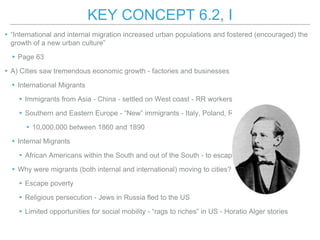
▸“International and internal migration increased urban populations and fostered (encouraged) the
growth of a new urban culture”
▸Page 63
▸A) Cities saw tremendous economic growth - factories and businesses
▸International Migrants
▸Immigrants from Asia - China - settled on West coast - RR workers
▸Southern and Eastern Europe - “New” immigrants - Italy, Poland, Russia
▸10,000,000 between 1860 and 1890
▸Internal Migrants
▸African Americans within the South and out of the South - to escape sharecropping
▸Why were migrants (both internal and international) moving to cities?
▸Escape poverty
▸Religious persecution - Jews in Russia fled to the US
▸Limited opportunities for social mobility - “rags to riches” in US - Horatio Alger stories
KEY CONCEPT 6.2, I
▸B) Emergence of urban neighborhoods based on:
▸Ethnicity, race, and class
▸“Little Italy,” “Chinatown”
▸Provided new cultural opportunities
▸C) Debates over assimilation were a result of international migration
▸Rise of nativism (again)
▸APA - sought to limit immigrants and keep Catholics from holding office
▸Similar to Know Nothing Party of 1840s and 1850s
▸Immigrants often compromised between their own cultures and US culture
▸2nd generation were more likely to assimilate than 1st generation
▸Public schools only taught English
KEY CONCEPT 6.2, I
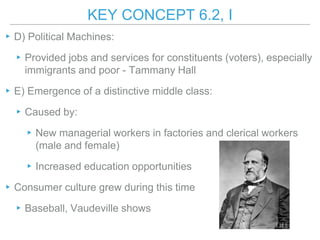
▸D) Political Machines:
▸Provided jobs and services for constituents (voters), especially
immigrants and poor - Tammany Hall
▸E) Emergence of a distinctive middle class:
▸Caused by:
▸New managerial workers in factories and clerical workers
(male and female)
▸Increased education opportunities
▸Consumer culture grew during this time
▸Baseball, Vaudeville shows
KEY CONCEPT 6.2, II
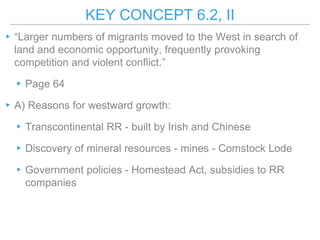
▸“Larger numbers of migrants moved to the West in search of
land and economic opportunity, frequently provoking
competition and violent conflict.”
▸Page 64
▸A) Reasons for westward growth:
▸Transcontinental RR - built by Irish and Chinese
▸Discovery of mineral resources - mines - Comstock Lode
▸Government policies - Homestead Act, subsidies to RR
companies
KEY CONCEPT 6.2, II
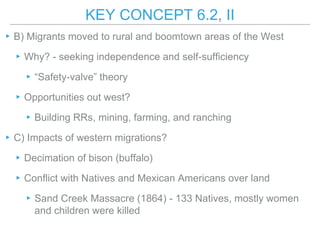
▸B) Migrants moved to rural and boomtown areas of the West
▸Why? - seeking independence and self-sufficiency
▸“Safety-valve” theory
▸Opportunities out west?
▸Building RRs, mining, farming, and ranching
▸C) Impacts of western migrations?
▸Decimation of bison (buffalo)
▸Conflict with Natives and Mexican Americans over land
▸Sand Creek Massacre (1864) - 133 Natives, mostly women
and children were killed
KEY CONCEPT 6.2, II
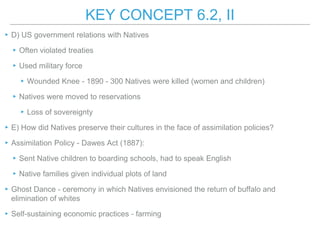
▸D) US government relations with Natives
▸Often violated treaties
▸Used military force
▸Wounded Knee - 1890 - 300 Natives were killed (women and children)
▸Natives were moved to reservations
▸Loss of sovereignty
▸E) How did Natives preserve their cultures in the face of assimilation policies?
▸Assimilation Policy - Dawes Act (1887):
▸Sent Native children to boarding schools, had to speak English
▸Native families given individual plots of land
▸Ghost Dance - ceremony in which Natives envisioned the return of buffalo and
elimination of whites
▸Self-sustaining economic practices - farming
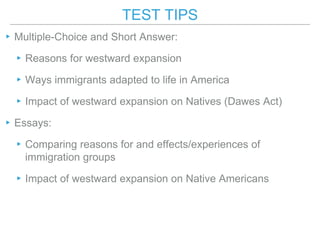
TEST TIPS
▸Multiple-Choice and Short Answer:
▸Reasons for westward expansion
▸Ways immigrants adapted to life in America
▸Impact of westward expansion on Natives (Dawes Act)
▸Essays:
▸Comparing reasons for and effects/experiences of
immigration groups
▸Impact of westward expansion on Native Americans

Apush review-key-concept-6.2-revised-edition

  • 1.
    APUSH REVIEW: KEY CONCEPT6.2, REVISED EDITION EVERYTHING YOU NEED TO KNOW ABOUT KEY CONCEPT 6.2 TO SUCCEED IN APUSH
  • 2.
    KEY CONCEPT 6.2 ▸“Themigrations that accompanied industrialization transformed both urban and rural areas of the United States and caused dramatic social and cultural challenges.” ▸Page 63 ▸Big Idea Questions: ▸Why were individuals attracted to cities? What opportunities were there in cities? ▸How did the federal government encourage westward expansion? What were the impacts of this expansion on Natives? ▸How did immigrants adapt to life in America?
  • 3.
    KEY CONCEPT 6.2,I ▸“International and internal migration increased urban populations and fostered (encouraged) the growth of a new urban culture” ▸Page 63 ▸A) Cities saw tremendous economic growth - factories and businesses ▸International Migrants ▸Immigrants from Asia - China - settled on West coast - RR workers ▸Southern and Eastern Europe - “New” immigrants - Italy, Poland, Russia ▸10,000,000 between 1860 and 1890 ▸Internal Migrants ▸African Americans within the South and out of the South - to escape sharecropping ▸Why were migrants (both internal and international) moving to cities? ▸Escape poverty ▸Religious persecution - Jews in Russia fled to the US ▸Limited opportunities for social mobility - “rags to riches” in US - Horatio Alger stories
  • 4.
    KEY CONCEPT 6.2,I ▸B) Emergence of urban neighborhoods based on: ▸Ethnicity, race, and class ▸“Little Italy,” “Chinatown” ▸Provided new cultural opportunities ▸C) Debates over assimilation were a result of international migration ▸Rise of nativism (again) ▸APA - sought to limit immigrants and keep Catholics from holding office ▸Similar to Know Nothing Party of 1840s and 1850s ▸Immigrants often compromised between their own cultures and US culture ▸2nd generation were more likely to assimilate than 1st generation ▸Public schools only taught English
  • 5.
    KEY CONCEPT 6.2,I ▸D) Political Machines: ▸Provided jobs and services for constituents (voters), especially immigrants and poor - Tammany Hall ▸E) Emergence of a distinctive middle class: ▸Caused by: ▸New managerial workers in factories and clerical workers (male and female) ▸Increased education opportunities ▸Consumer culture grew during this time ▸Baseball, Vaudeville shows
  • 6.
    KEY CONCEPT 6.2,II ▸“Larger numbers of migrants moved to the West in search of land and economic opportunity, frequently provoking competition and violent conflict.” ▸Page 64 ▸A) Reasons for westward growth: ▸Transcontinental RR - built by Irish and Chinese ▸Discovery of mineral resources - mines - Comstock Lode ▸Government policies - Homestead Act, subsidies to RR companies
  • 7.
    KEY CONCEPT 6.2,II ▸B) Migrants moved to rural and boomtown areas of the West ▸Why? - seeking independence and self-sufficiency ▸“Safety-valve” theory ▸Opportunities out west? ▸Building RRs, mining, farming, and ranching ▸C) Impacts of western migrations? ▸Decimation of bison (buffalo) ▸Conflict with Natives and Mexican Americans over land ▸Sand Creek Massacre (1864) - 133 Natives, mostly women and children were killed
  • 8.
    KEY CONCEPT 6.2,II ▸D) US government relations with Natives ▸Often violated treaties ▸Used military force ▸Wounded Knee - 1890 - 300 Natives were killed (women and children) ▸Natives were moved to reservations ▸Loss of sovereignty ▸E) How did Natives preserve their cultures in the face of assimilation policies? ▸Assimilation Policy - Dawes Act (1887): ▸Sent Native children to boarding schools, had to speak English ▸Native families given individual plots of land ▸Ghost Dance - ceremony in which Natives envisioned the return of buffalo and elimination of whites ▸Self-sustaining economic practices - farming
  • 9.
    TEST TIPS ▸Multiple-Choice andShort Answer: ▸Reasons for westward expansion ▸Ways immigrants adapted to life in America ▸Impact of westward expansion on Natives (Dawes Act) ▸Essays: ▸Comparing reasons for and effects/experiences of immigration groups ▸Impact of westward expansion on Native Americans