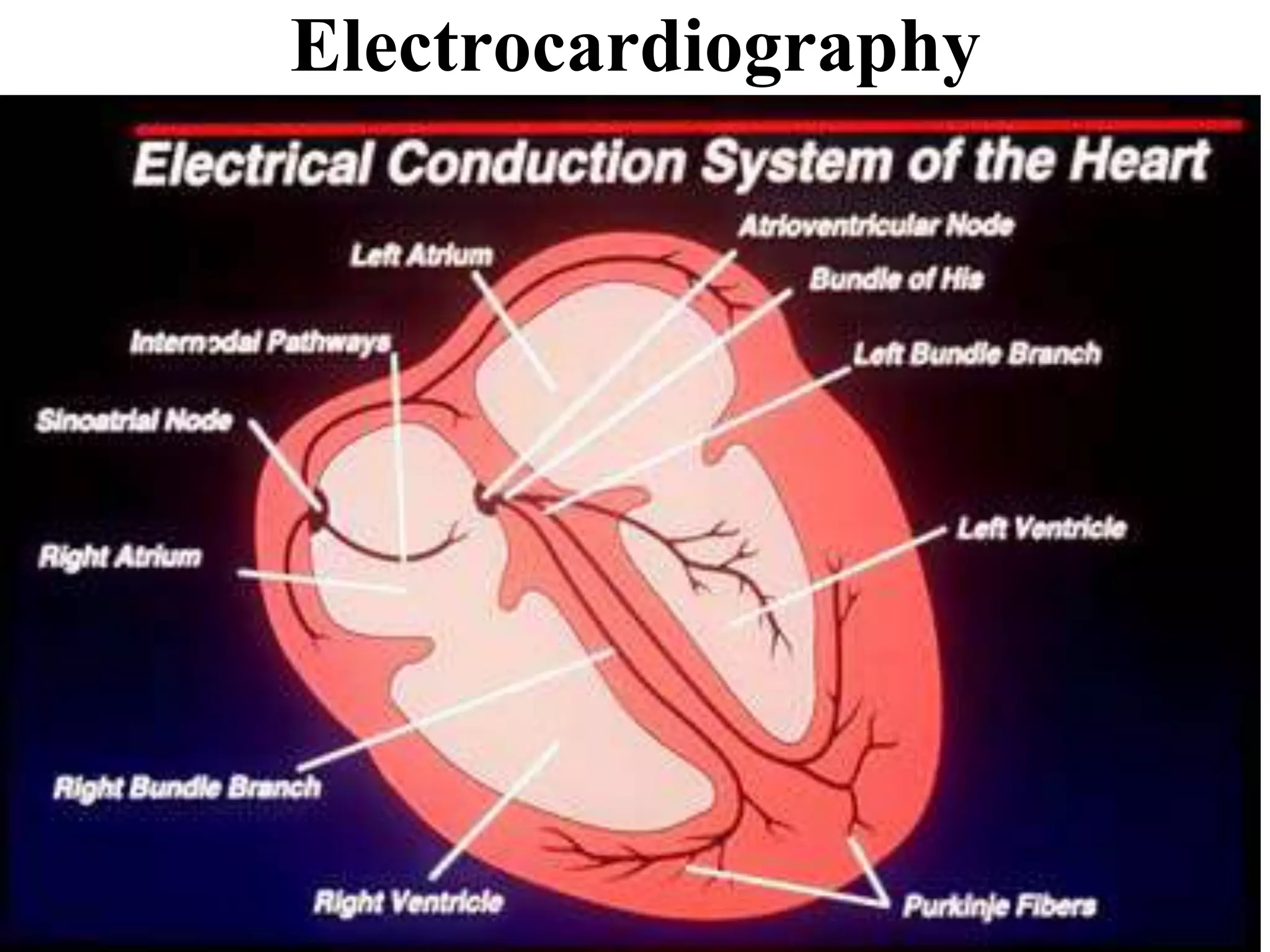
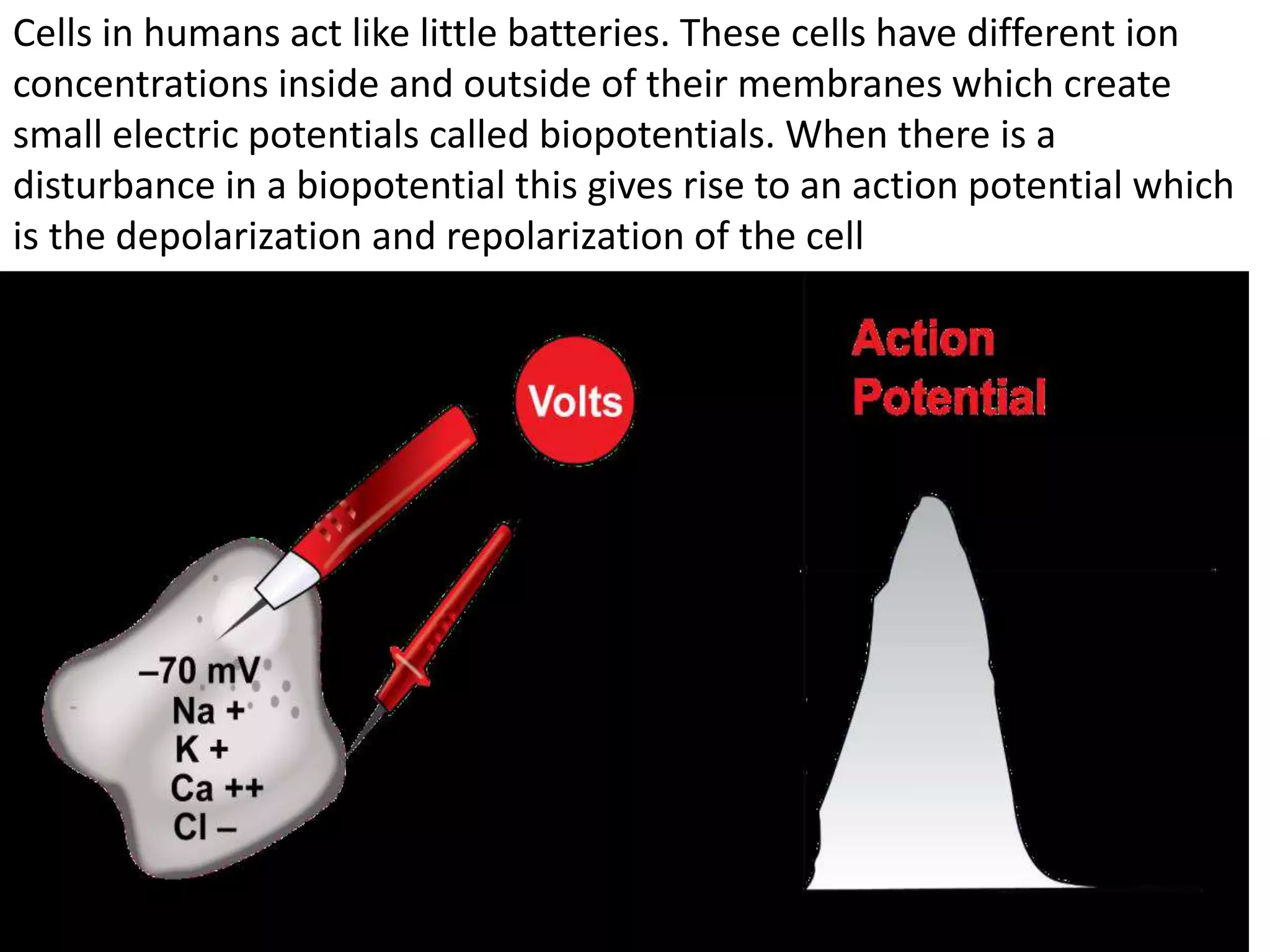
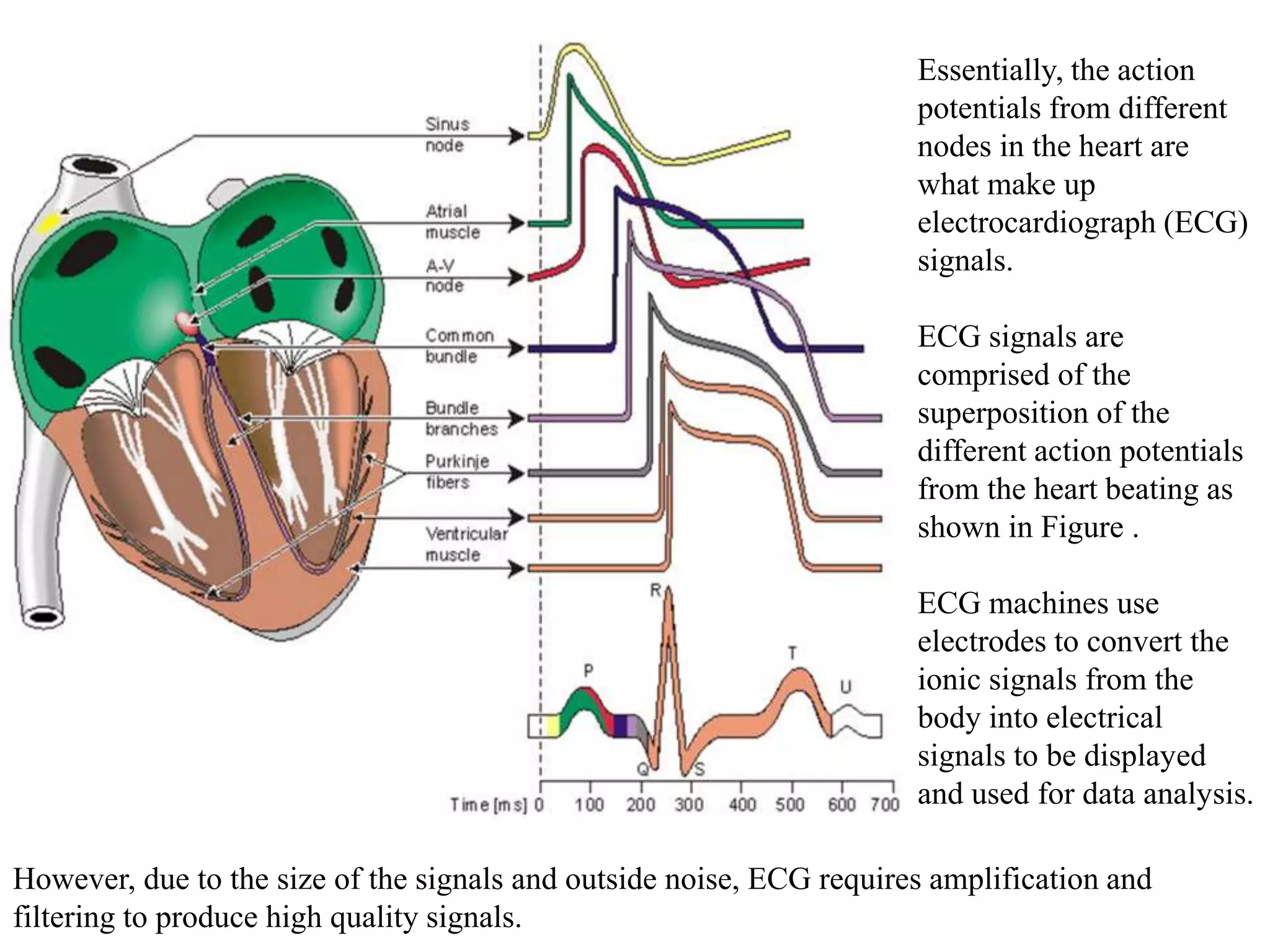
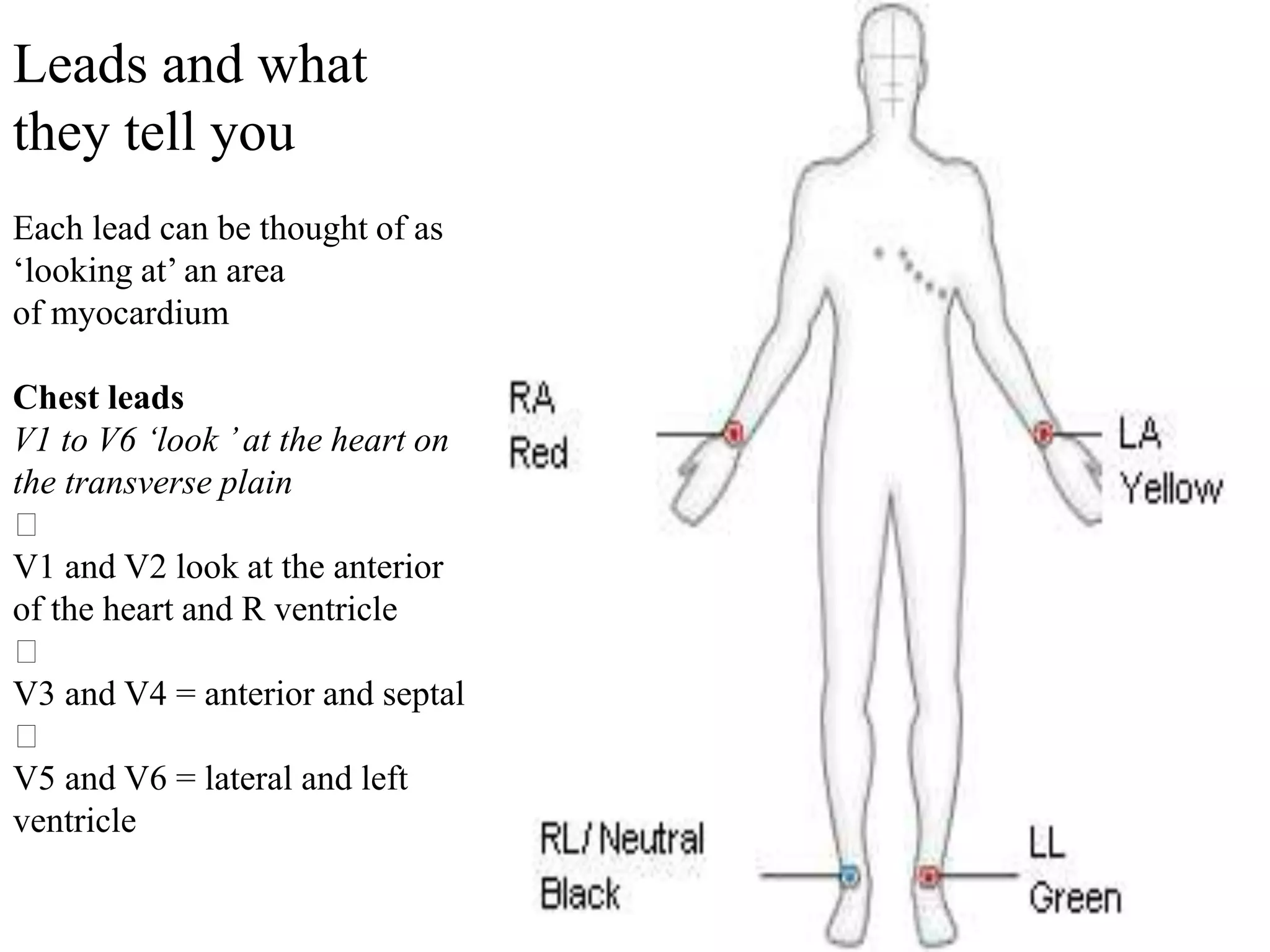
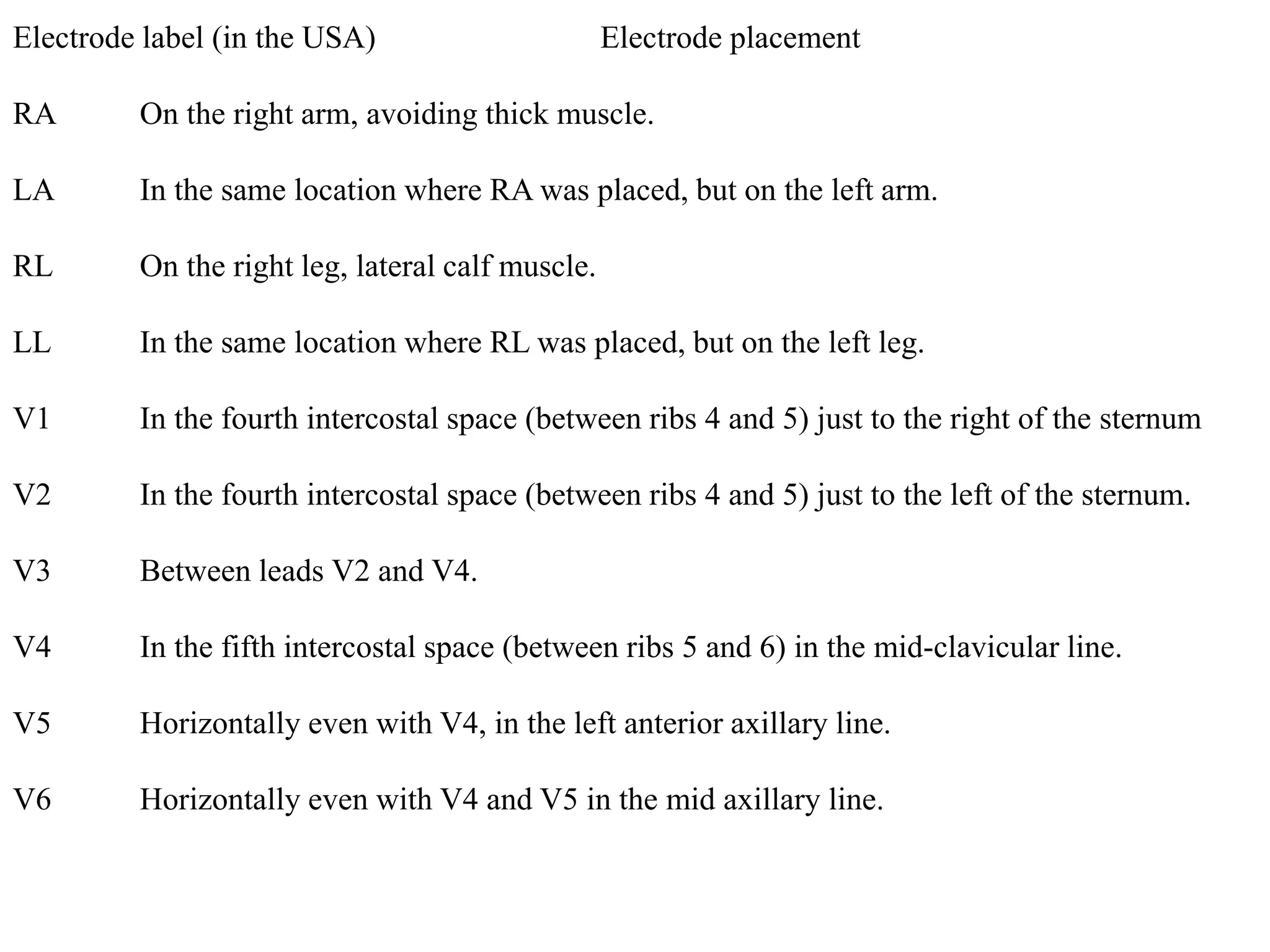
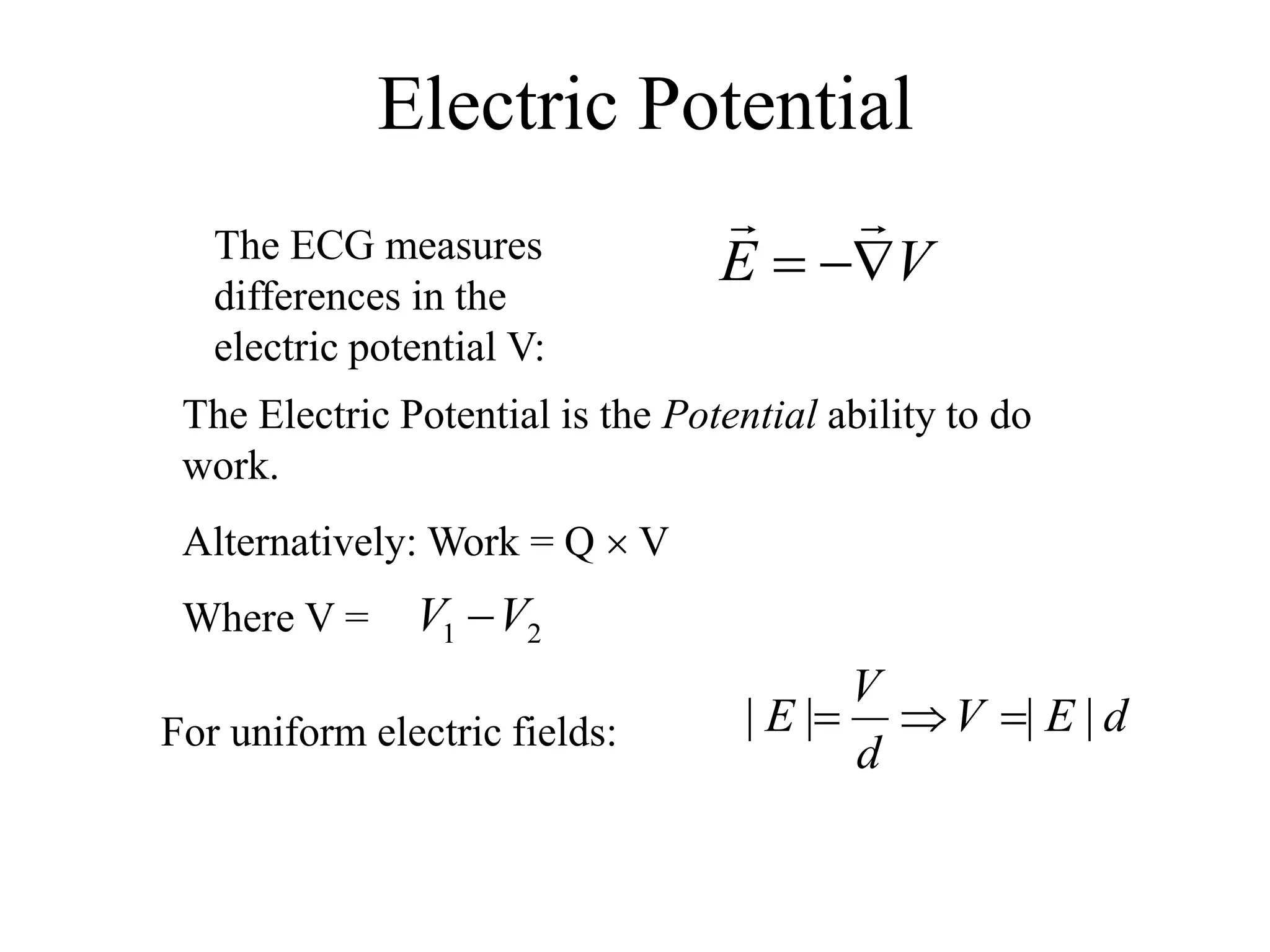
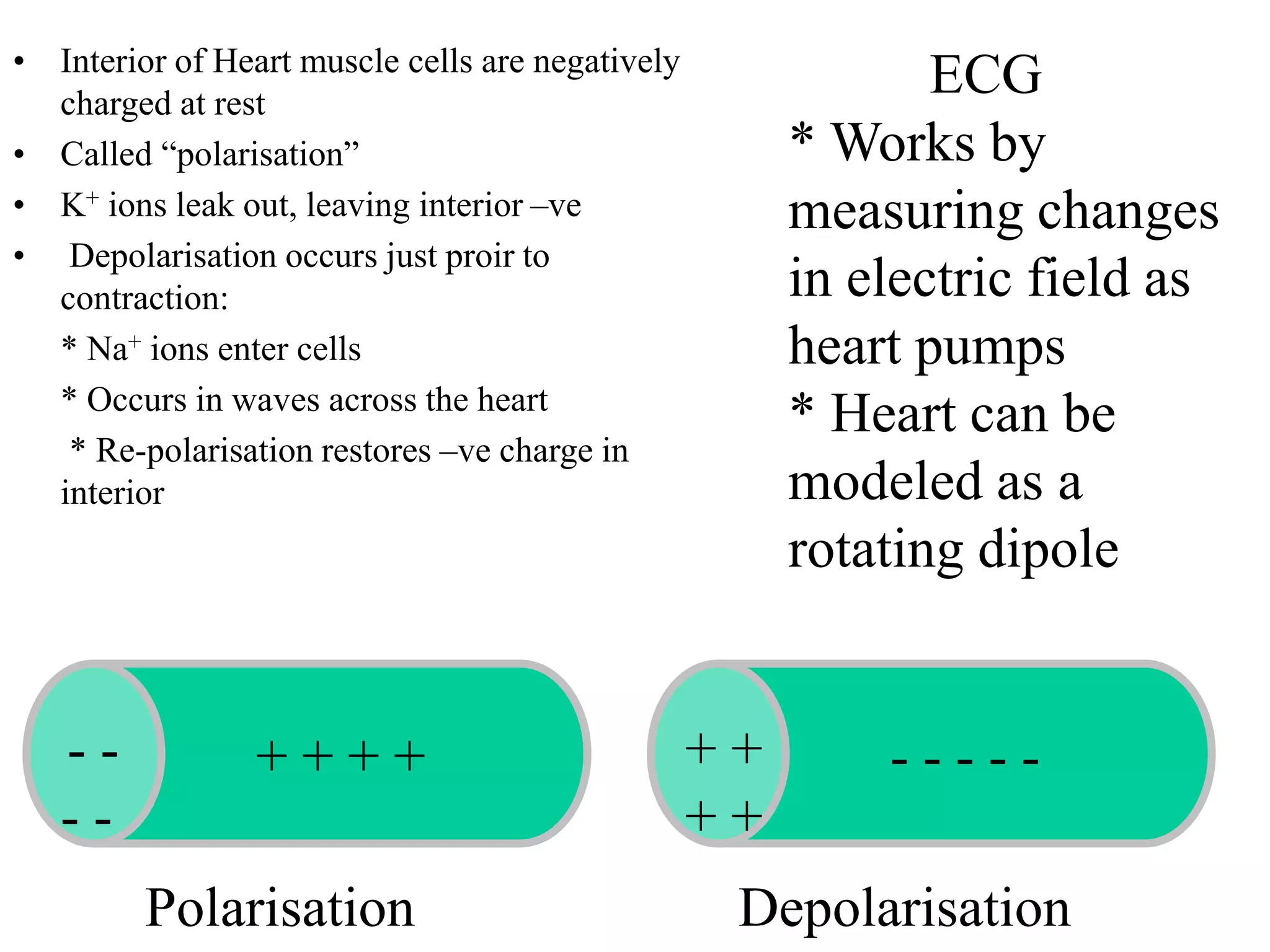
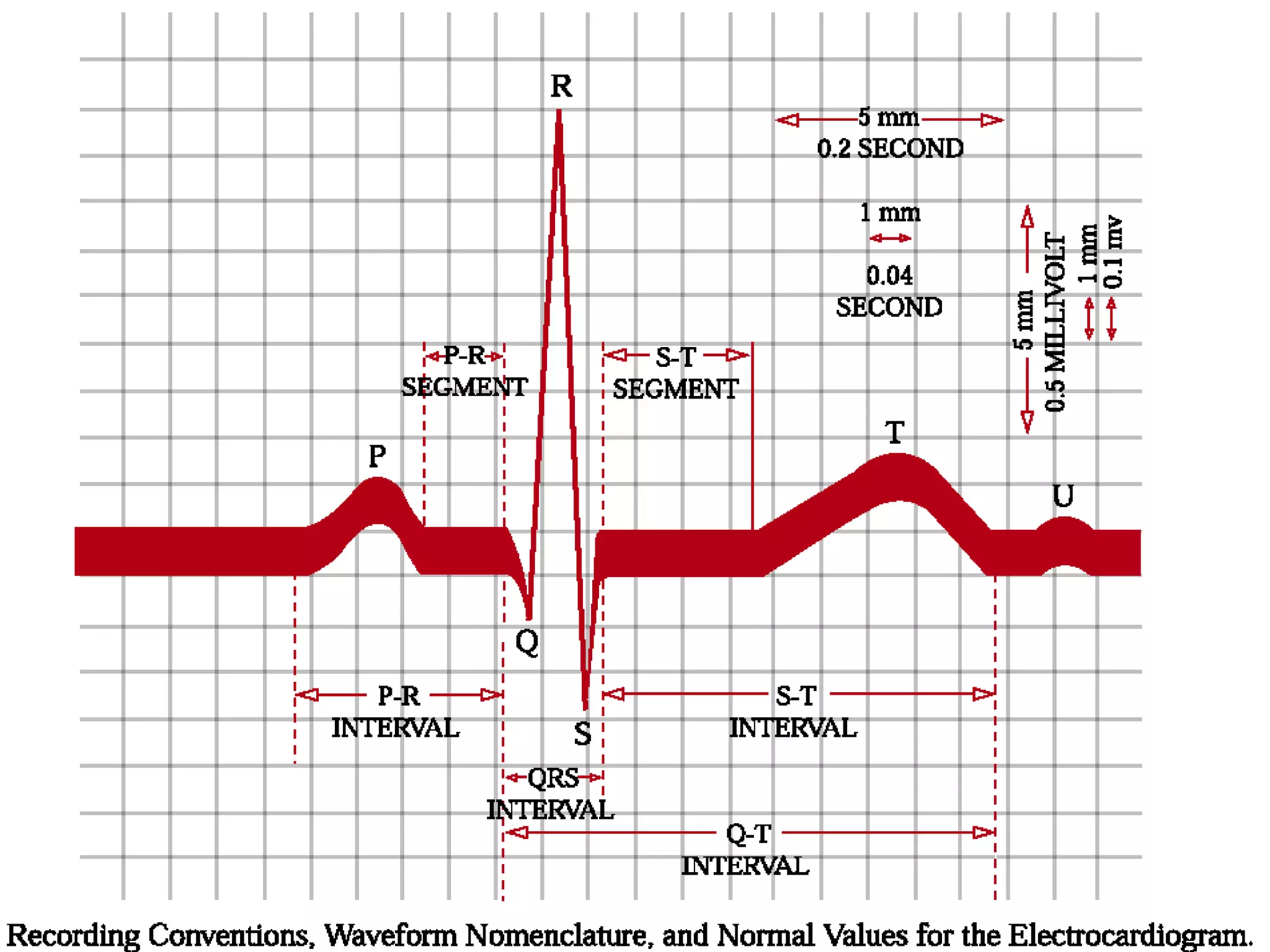
Cells in the heart act as batteries, creating small electric potentials called biopotentials. When these biopotentials change during the heartbeat, it generates an ECG signal. ECG machines use electrodes to detect these signals from the body and amplify and filter them. The signals are comprised of the superimposed action potentials from different parts of the heart. Each ECG lead provides a different view of the heart based on which areas of the heart it is detecting signals from.