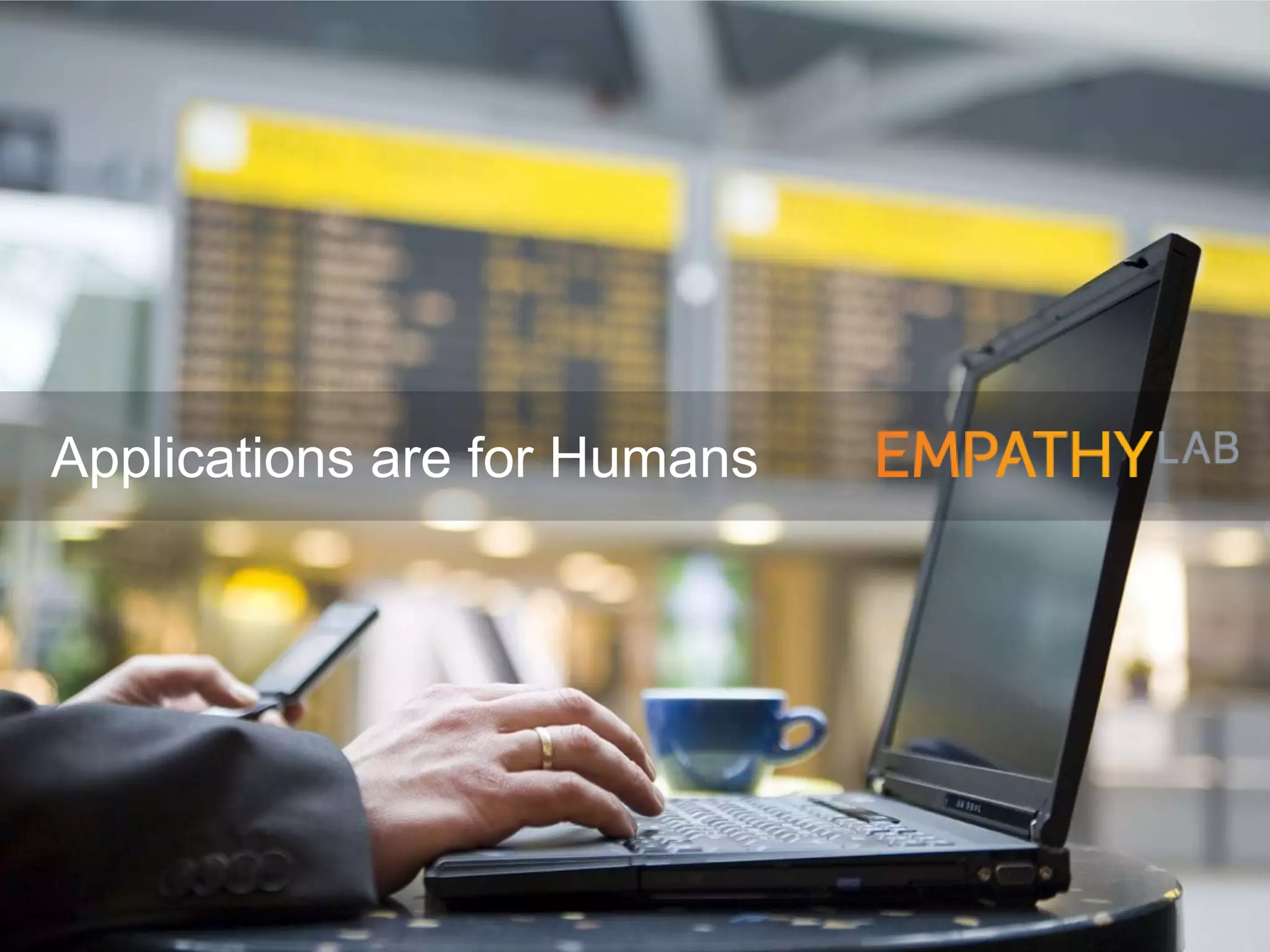
Applications are for Humans
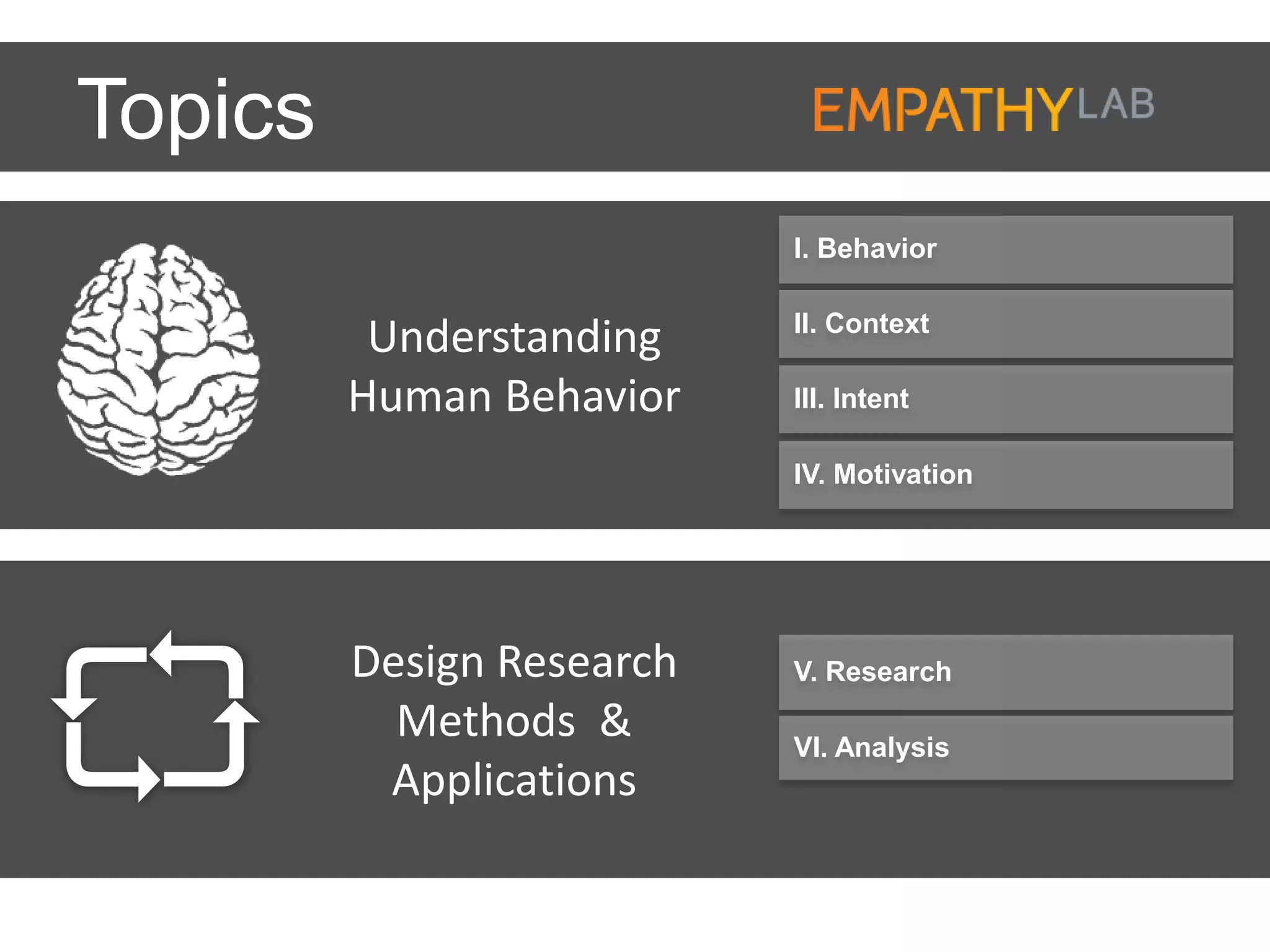
Topics
                           I. Behavior

                           II. Context
          Understanding
         Human Behavior    III. Intent

                           IV. Motivation


`        Design Research
           Methods &
          Applications
                           V. Research

                           VI. Analysis
I. Behavior


       “Human-centered approaches to industrial and
       interaction design have long focused on studying
       human behavior to create informed and appropriate
       designs.”

       Gentry Underwood
       “Social Software: The other ‘Design for Social Impact’”
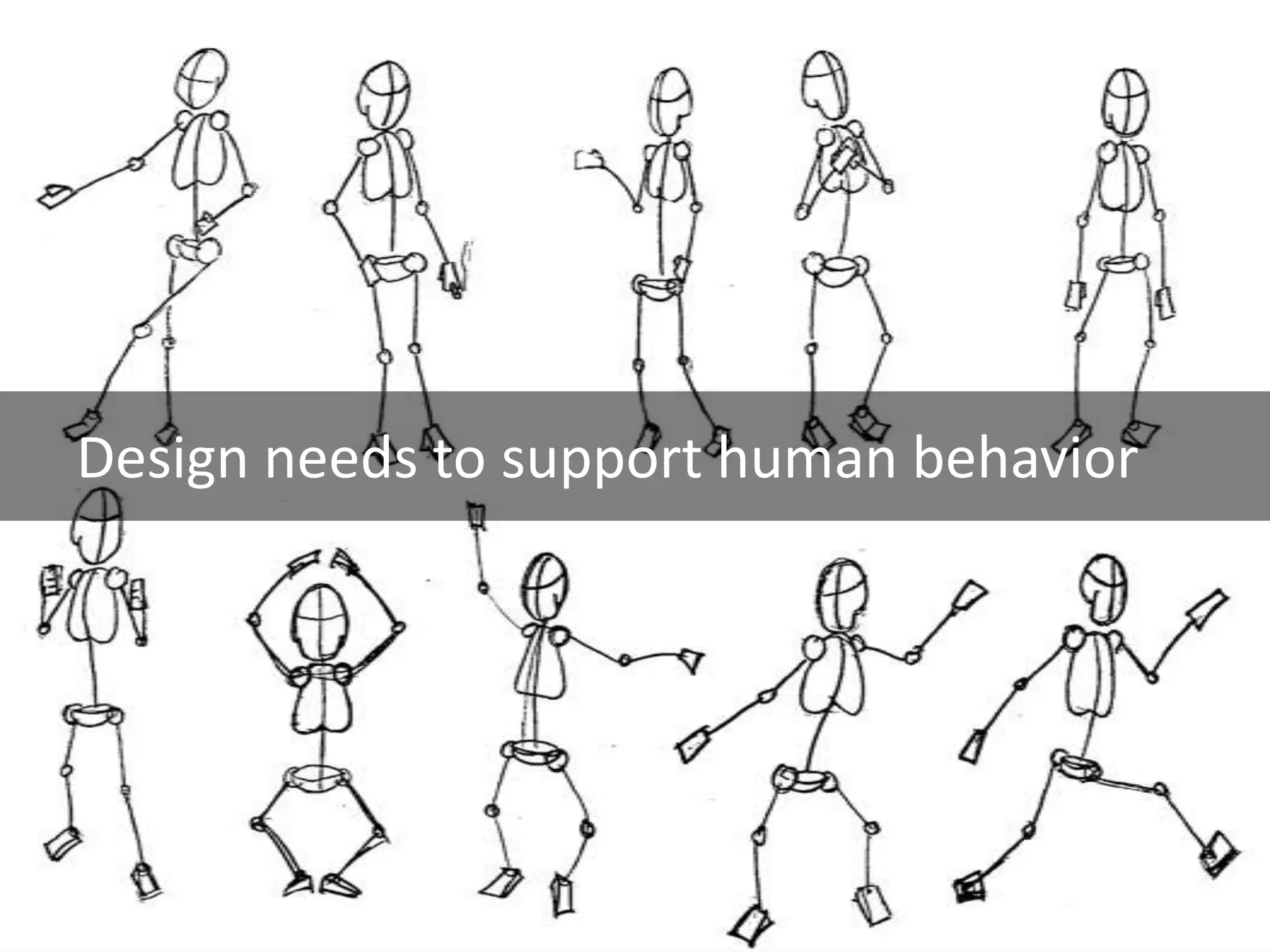
Design needs to support human behavior
Technology needs to support Design
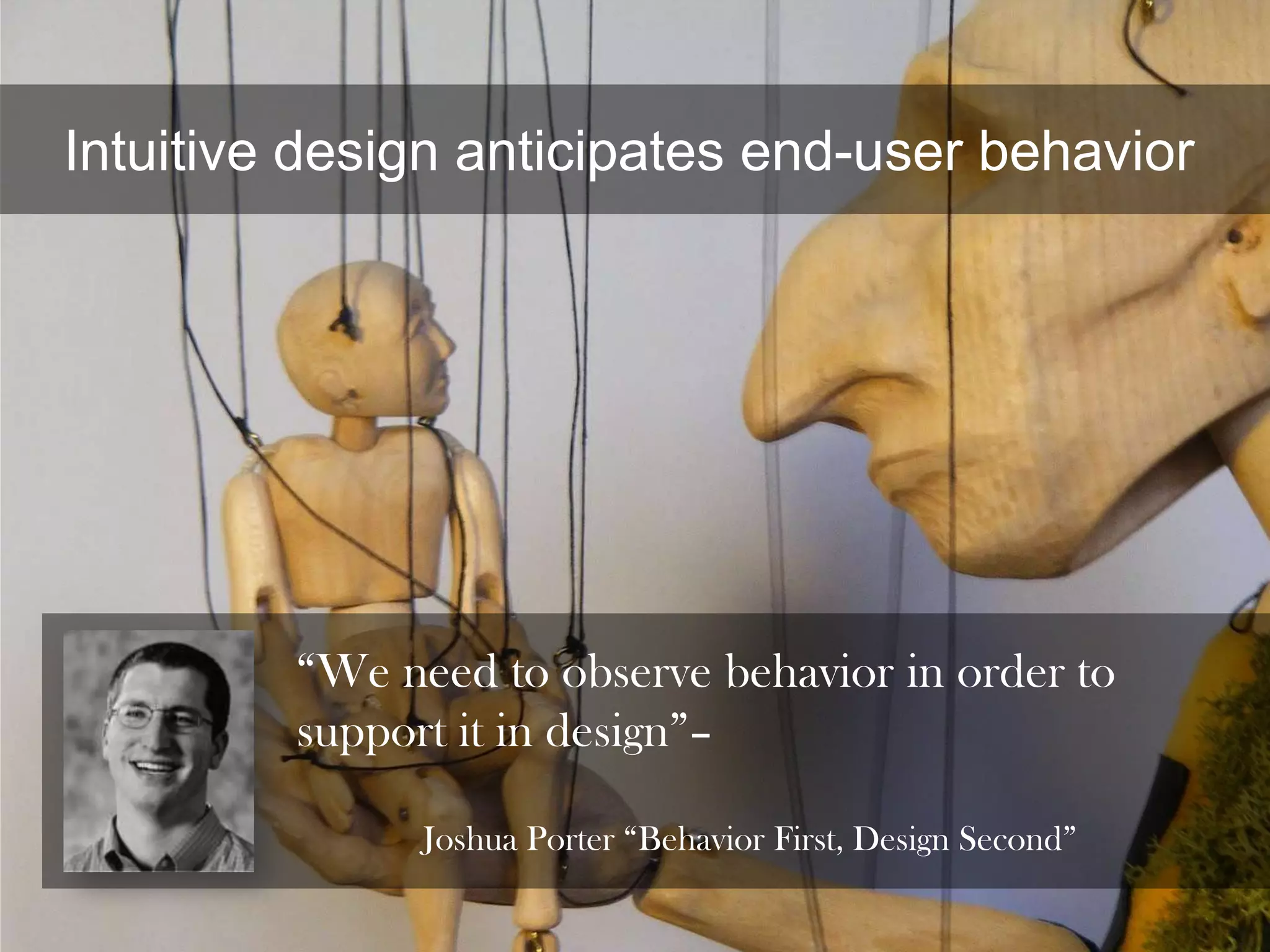
Intuitive design anticipates end-user behavior


         “We need to observe behavior in order to
         support it in design”–

               Joshua Porter “Behavior First, Design Second”
II. Context
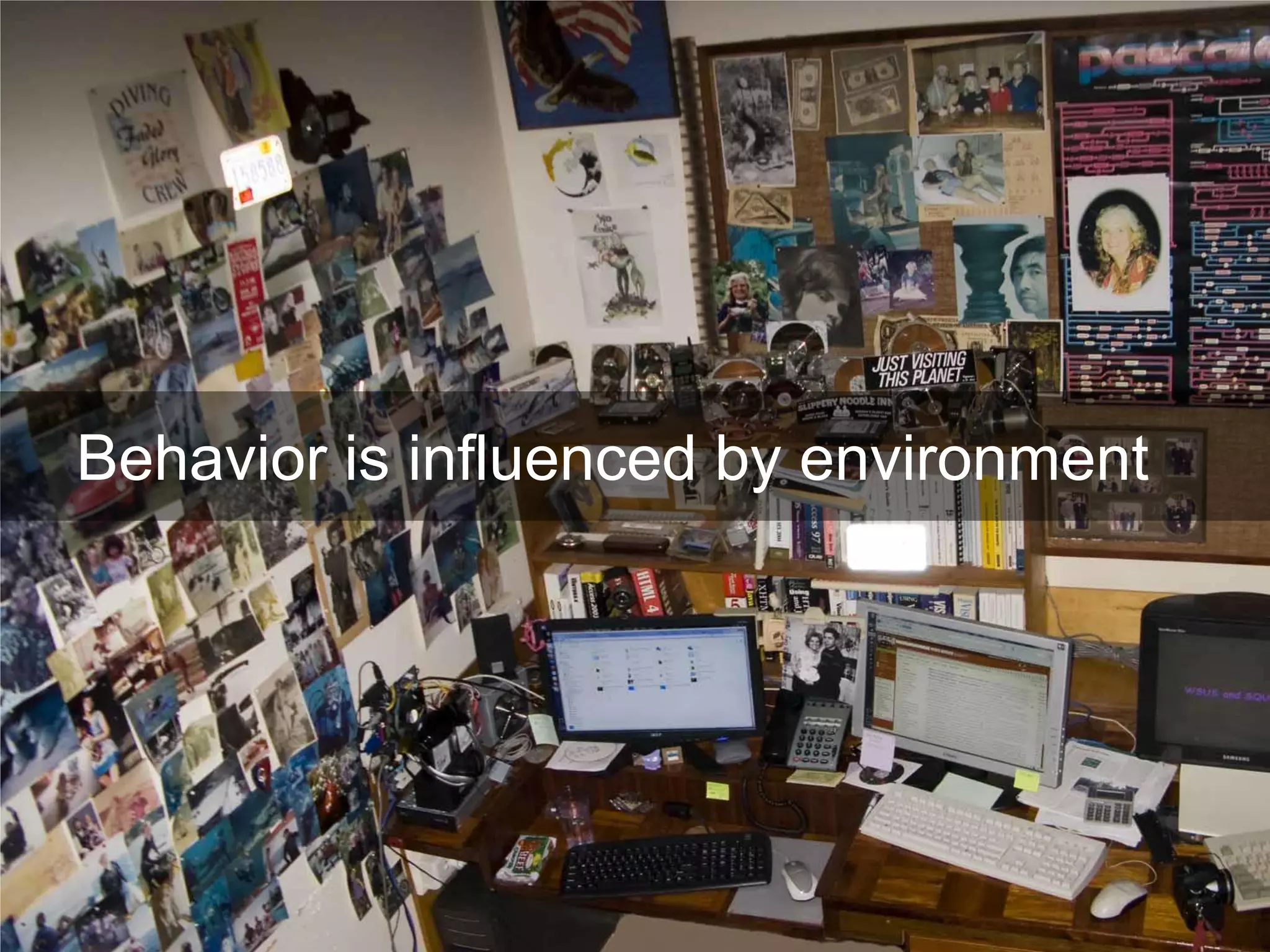
Behavior is influenced by environment
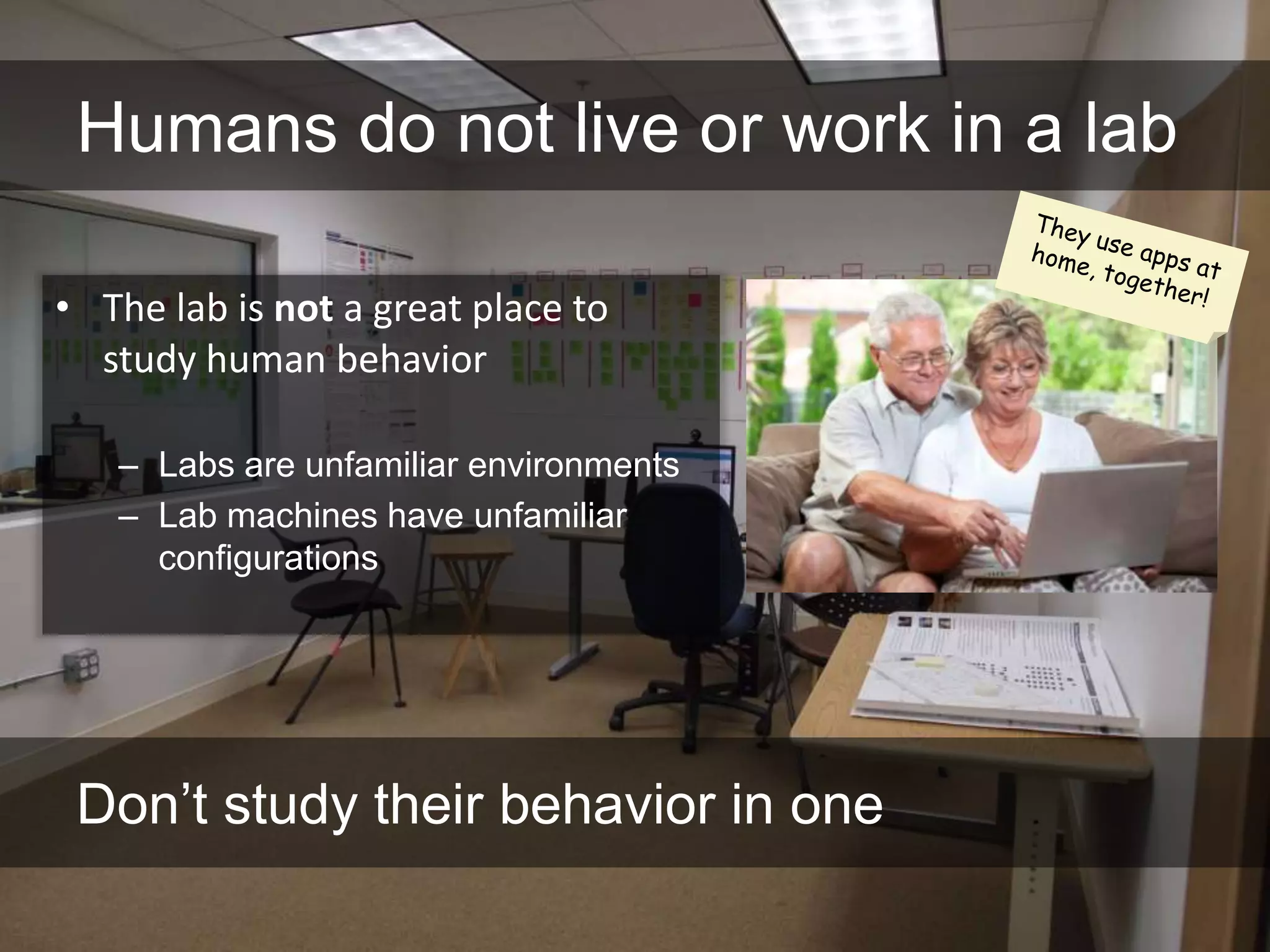
Humans do not live or work in a lab

• The lab is not a great place to
  study human behavior

   – Labs are unfamiliar environments
   – Lab machines have unfamiliar
     configurations


 Don’t study their behavior in one
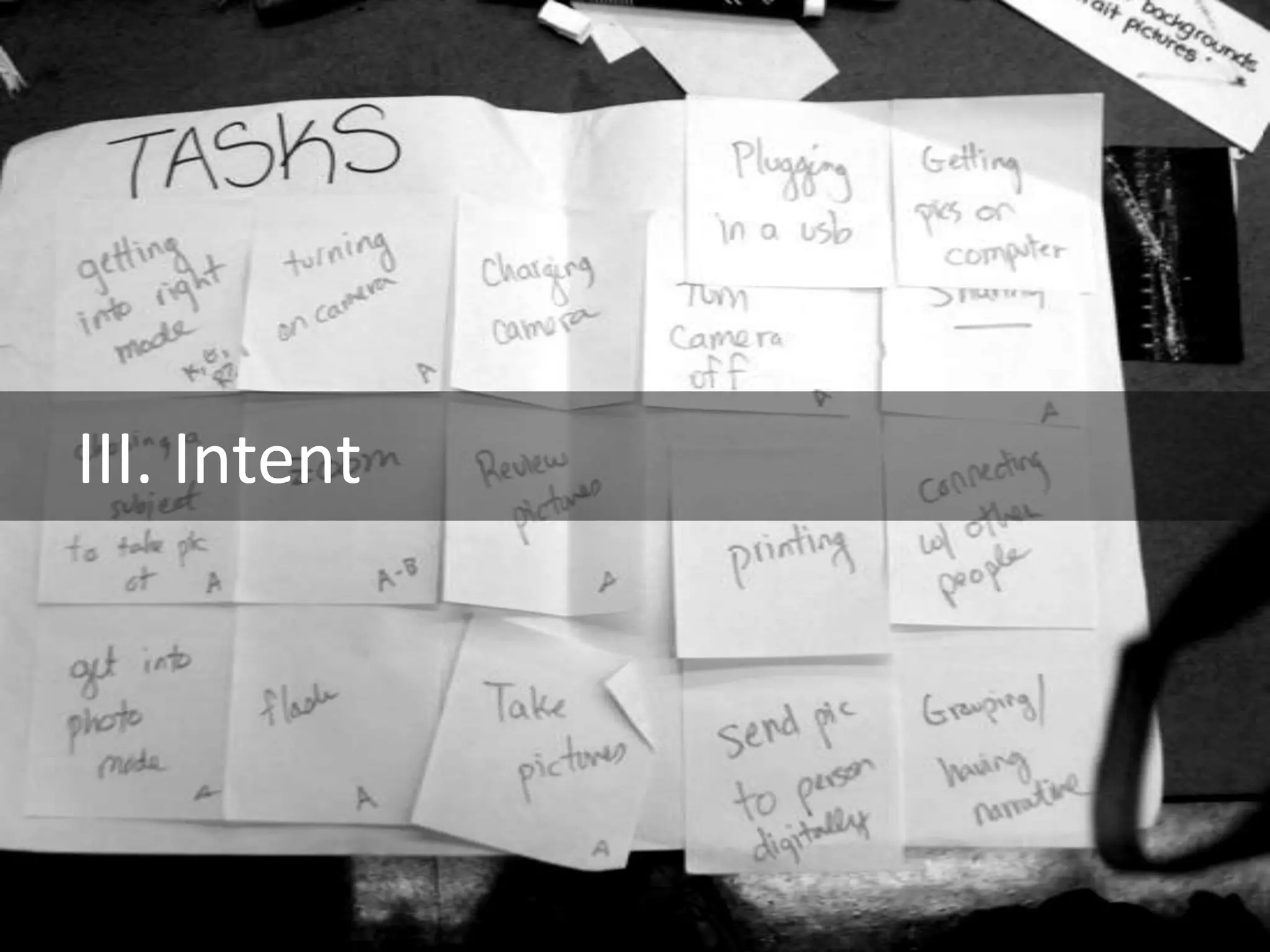
III. Intent
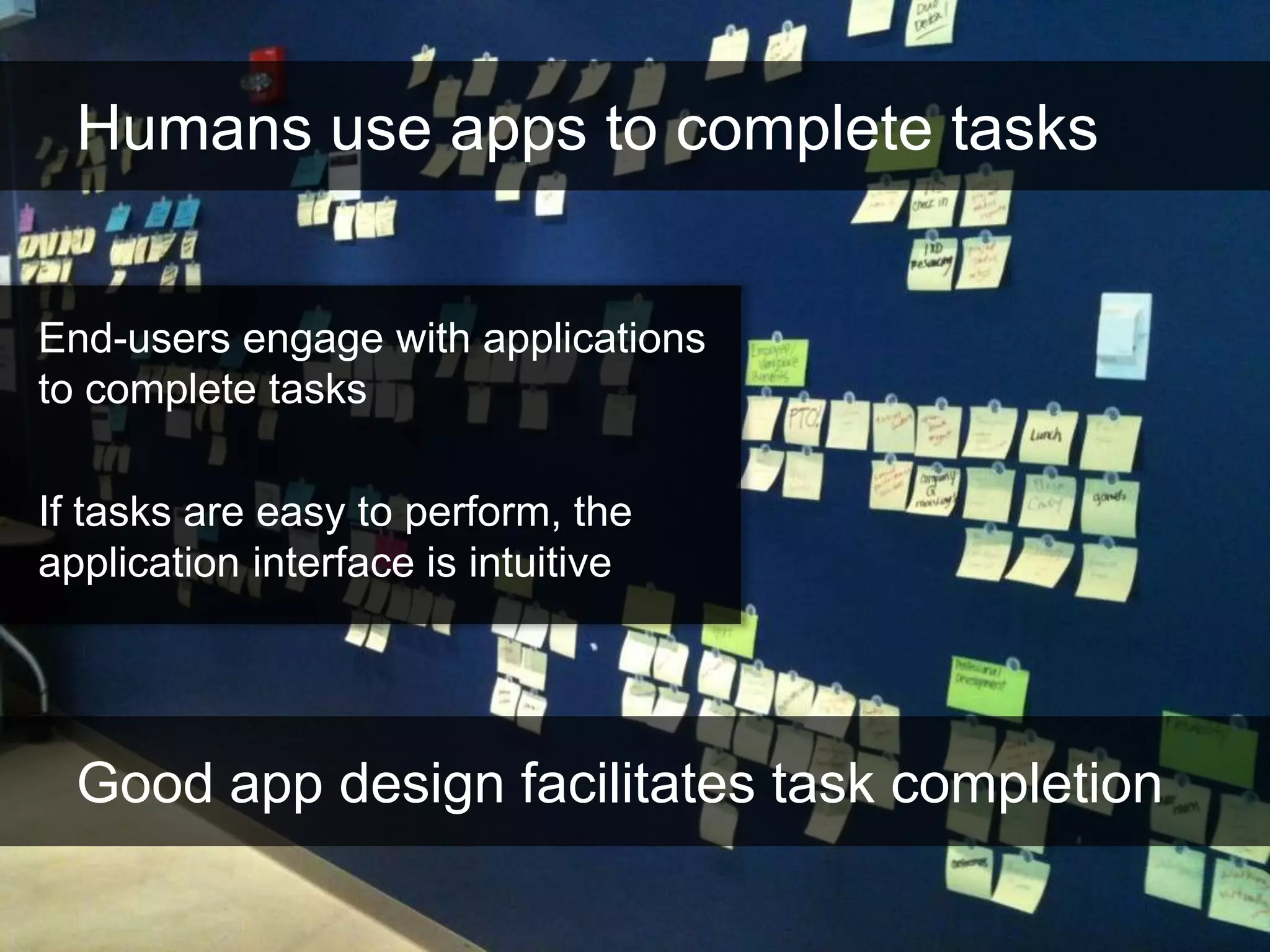
Humans use apps to complete tasks


End-users engage with applications
to complete tasks

If tasks are easy to perform, the
application interface is intuitive


  Good app design facilitates task completion
IV. Motivation
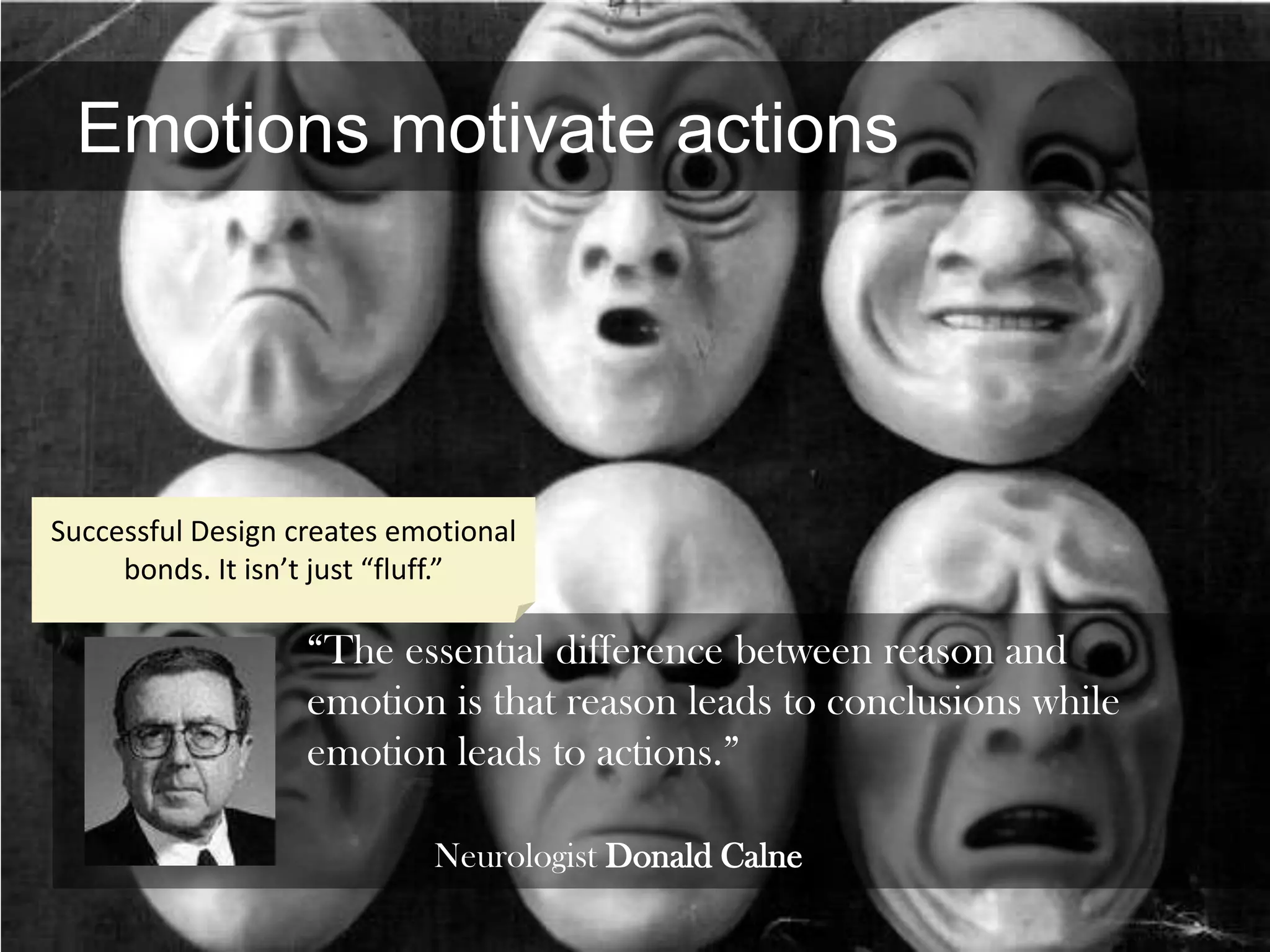
Emotions motivate actions


Successful Design creates emotional
     bonds. It isn’t just “fluff.”

                   “The essential difference between reason and
                   emotion is that reason leads to conclusions while
                   emotion leads to actions.”

                            Neurologist Donald Calne
Here’s how it works…
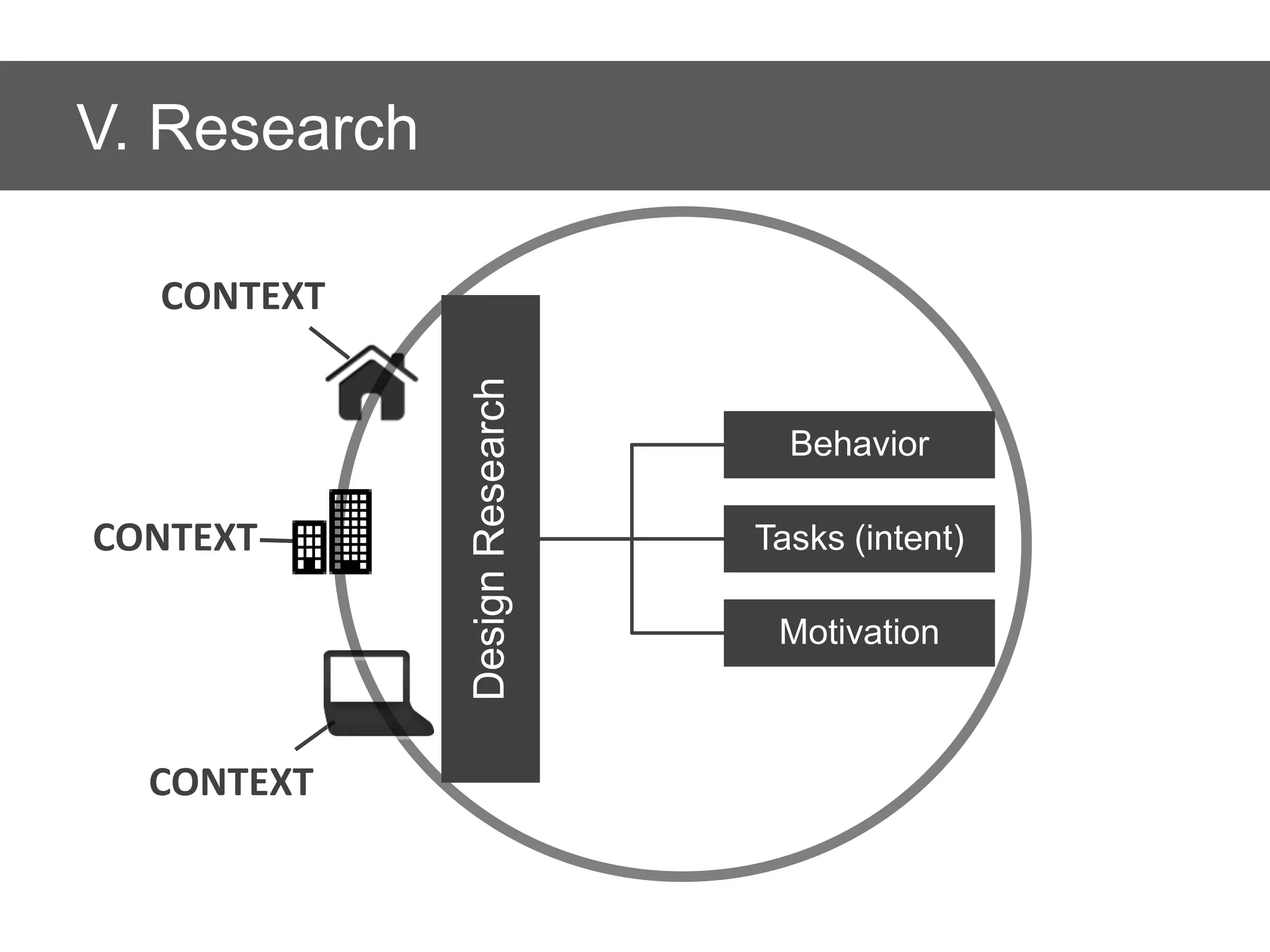
V. Research

  CONTEXT


              Design Research
                                  Behavior

CONTEXT                         Tasks (intent)

                                 Motivation


  CONTEXT
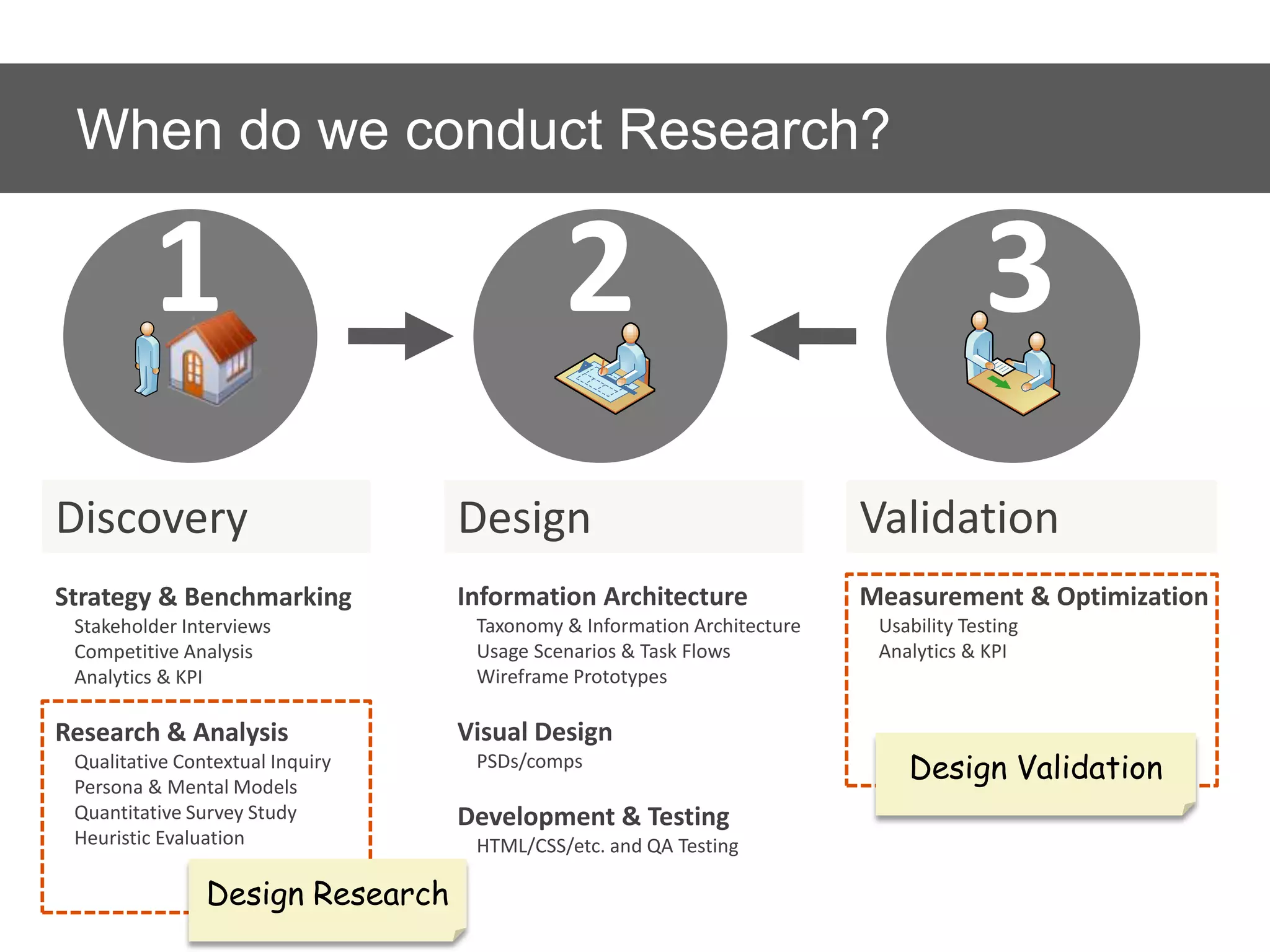
When do we conduct Research?

          1                                 2                                         3
Discovery                         Design                                 Validation
Strategy & Benchmarking           Information Architecture               Measurement & Optimization
 Stakeholder Interviews            Taxonomy & Information Architecture    Usability Testing
 Competitive Analysis              Usage Scenarios & Task Flows           Analytics & KPI
 Analytics & KPI                   Wireframe Prototypes

Research & Analysis               Visual Design
 Qualitative Contextual Inquiry
 Persona & Mental Models
                                   PSDs/comps
                                                                             Design Validation
 Quantitative Survey Study        Development & Testing
 Heuristic Evaluation              HTML/CSS/etc. and QA Testing

                Design Research
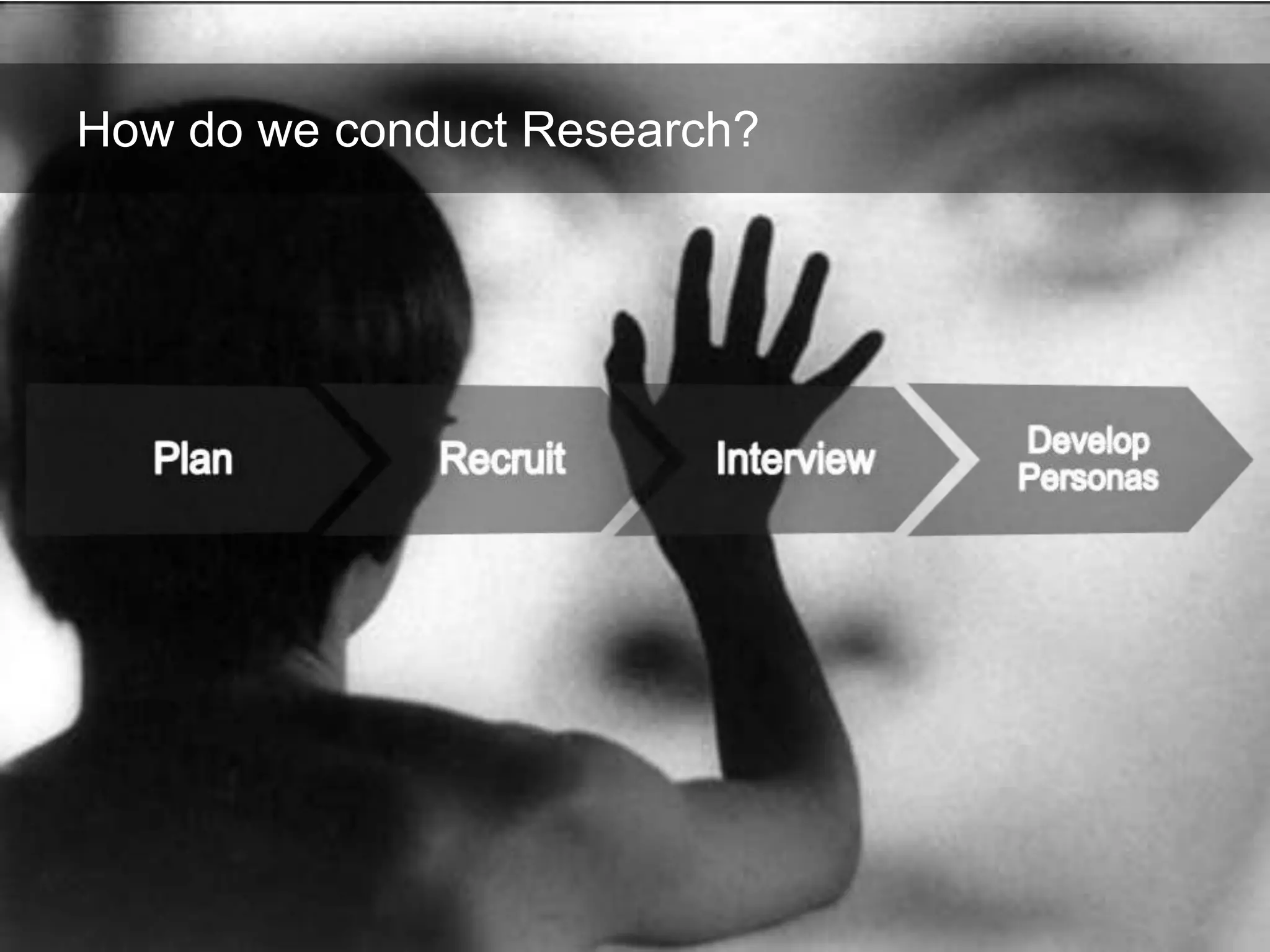
How do we conduct Research?
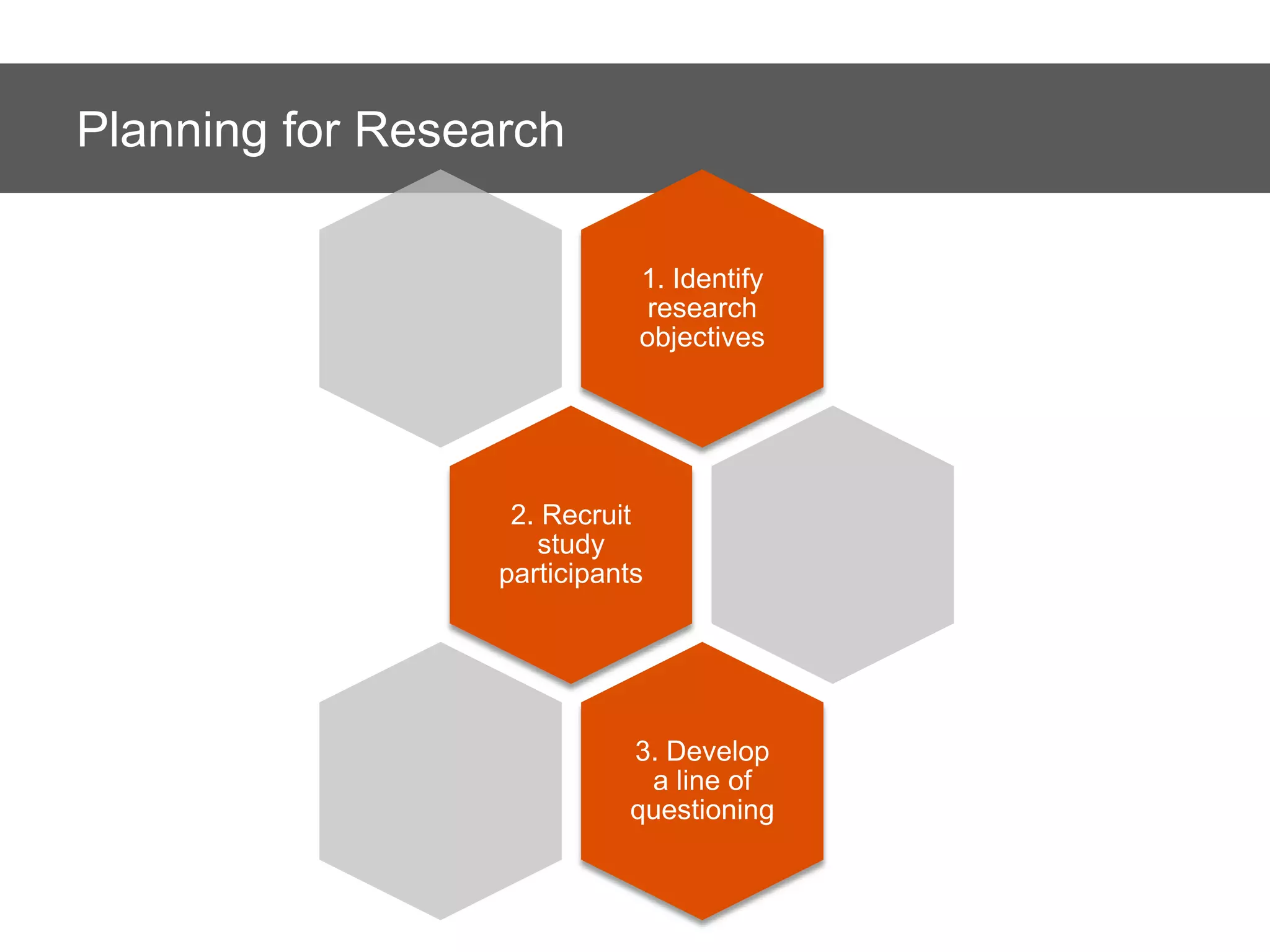
Planning for Research

                                 1. Identify
                                  research     Assess gaps in knowledge
                                 objectives


                       2. Recruit
     Develop/deploy
     screener            study
                      participants


                                3. Develop     Non-leading, open-ended
                                 a line of     questions to prompt users
                                questioning    to perform key tasks
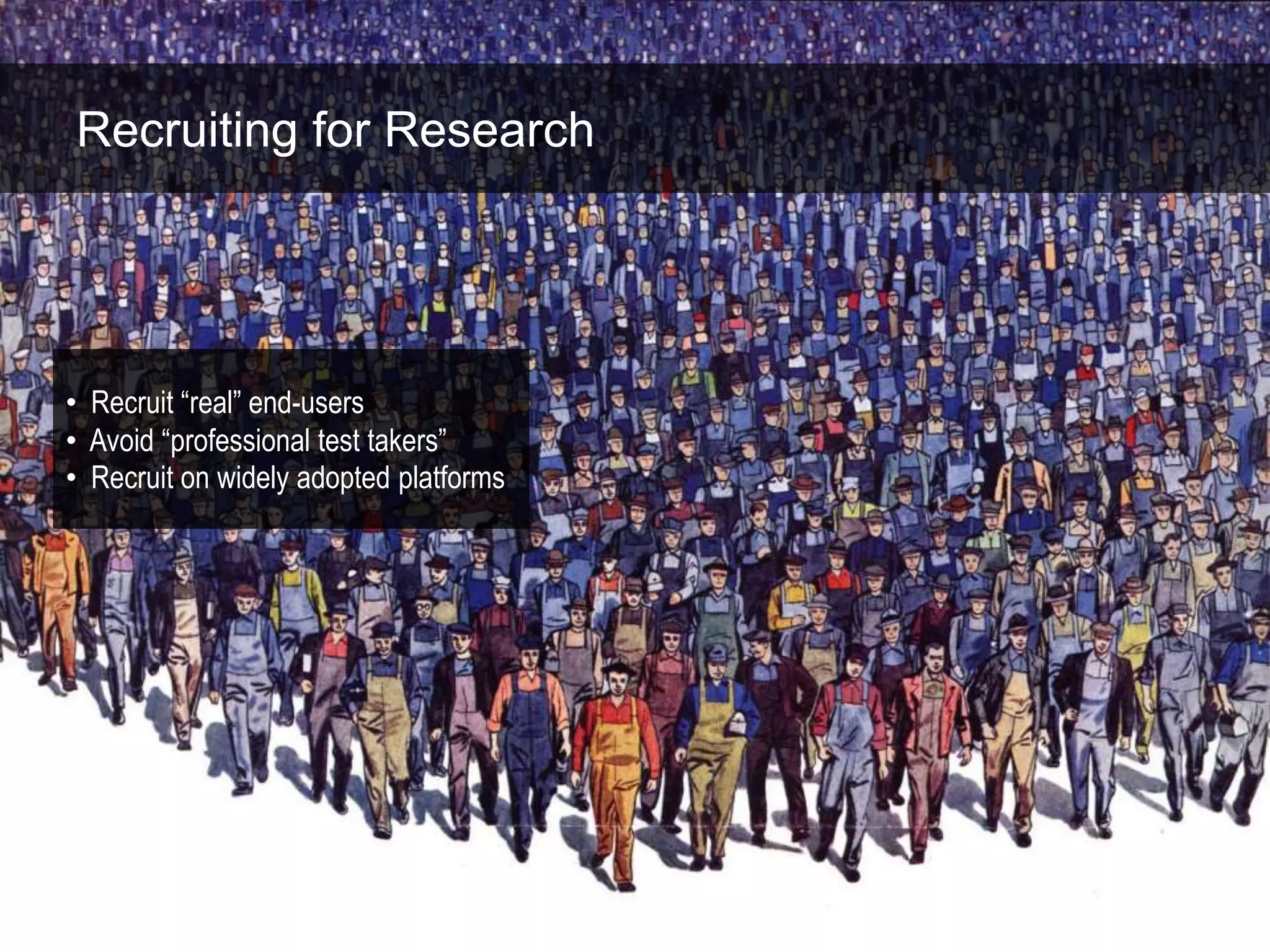
Recruiting for Research


• Recruit “real” end-users
• Avoid “professional test takers”
• Recruit on widely adopted platforms
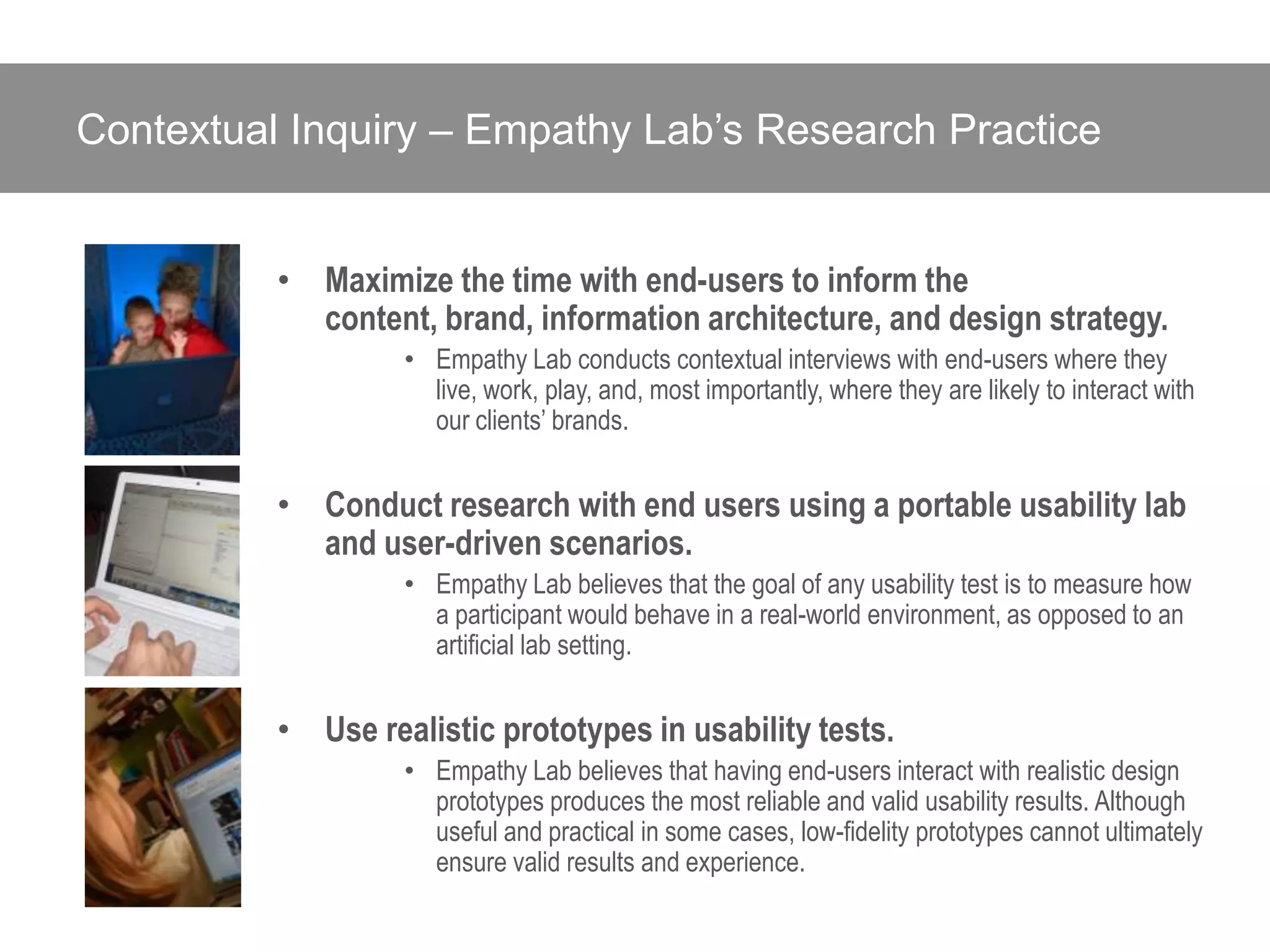
Contextual Inquiry – Empathy Lab’s Research Practice


          • Maximize the time with end-users to inform the
            content, brand, information architecture, and design strategy.
                   • Empathy Lab conducts contextual interviews with end-users where they
                     live, work, play, and, most importantly, where they are likely to interact with
                     our clients’ brands.


          • Conduct research with end users using a portable usability lab
            and user-driven scenarios.
                   • Empathy Lab believes that the goal of any usability test is to measure how
                     a participant would behave in a real-world environment, as opposed to an
                     artificial lab setting.


          • Use realistic prototypes in usability tests.
                   • Empathy Lab believes that having end-users interact with realistic design
                     prototypes produces the most reliable and valid usability results. Although
                     useful and practical in some cases, low-fidelity prototypes cannot ultimately
                     ensure valid results and experience.
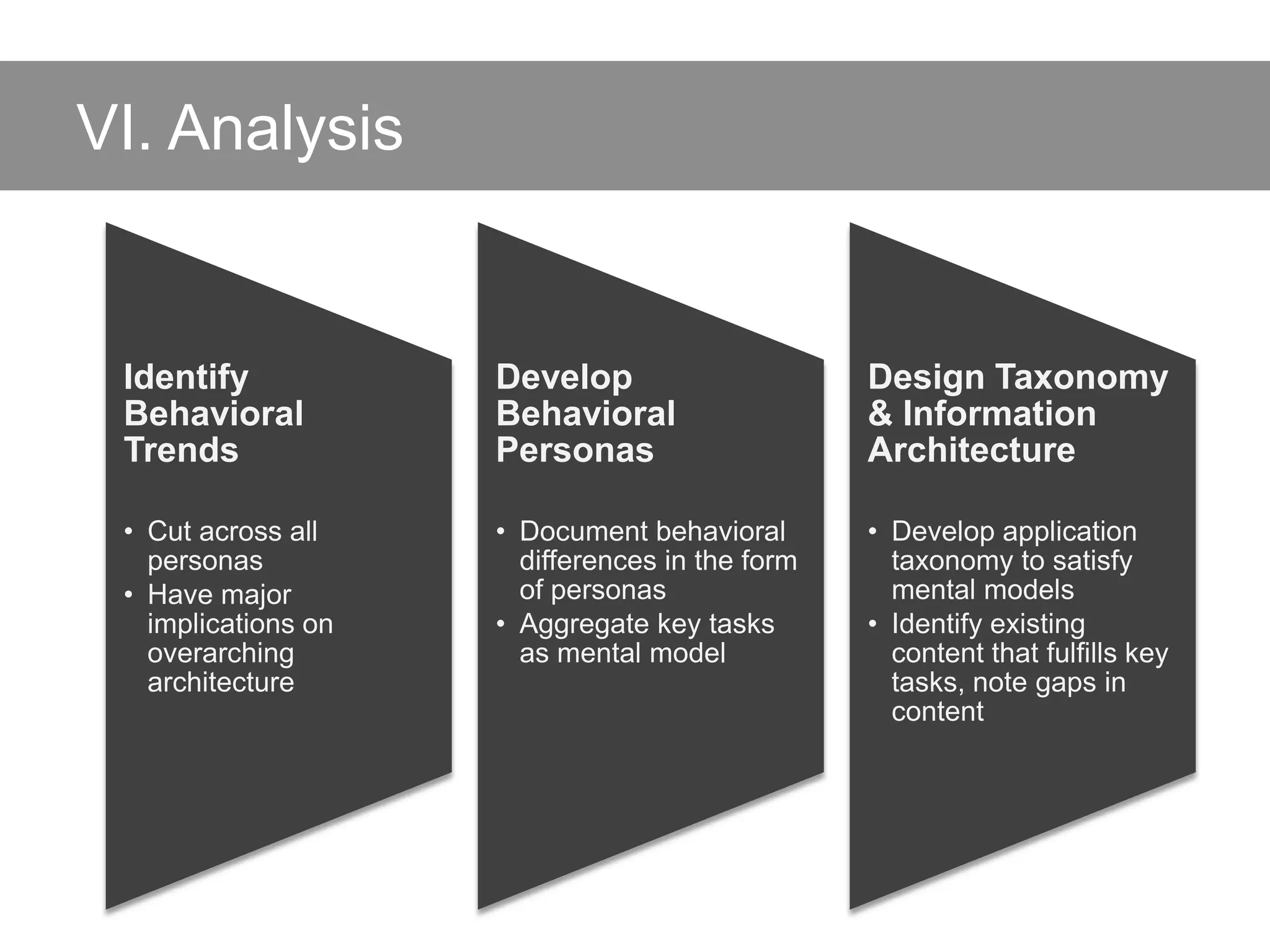
VI. Analysis


 Identify            Develop                     Design Taxonomy
 Behavioral          Behavioral                  & Information
 Trends              Personas                    Architecture

 • Cut across all    • Document behavioral       • Develop application
   personas            differences in the form     taxonomy to satisfy
 • Have major          of personas                 mental models
   implications on   • Aggregate key tasks       • Identify existing
   overarching         as mental model             content that fulfills key
   architecture                                    tasks, note gaps in
                                                   content
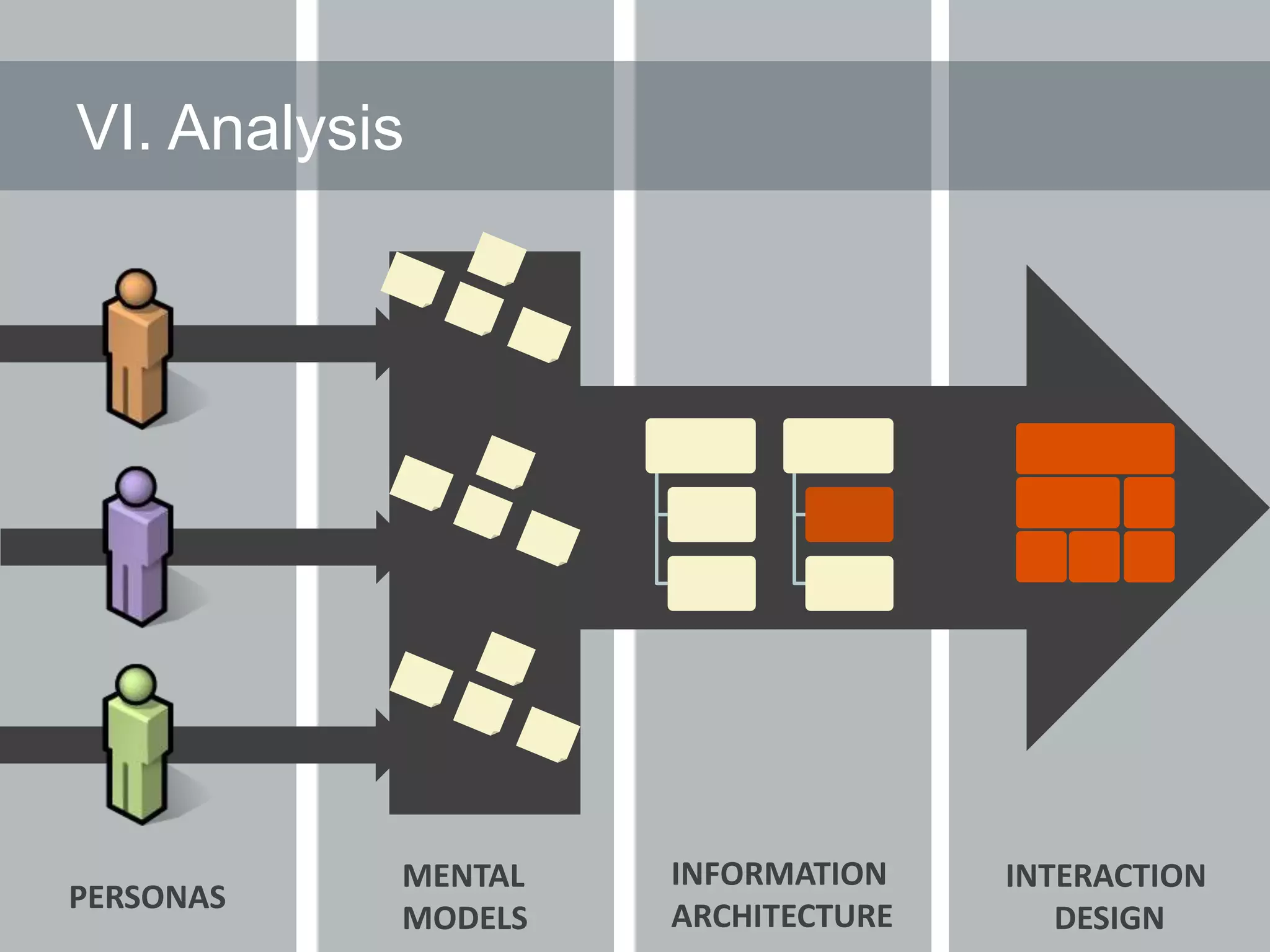
VI. Analysis


                    Task      Task


                    Content


                    Content   Content


           MENTAL   INFORMATION         INTERACTION
PERSONAS
           MODELS   ARCHITECTURE           DESIGN
Empathy Lab is a digital
strategy and execution firm
 that designs intuitive and
 engaging user interfaces.
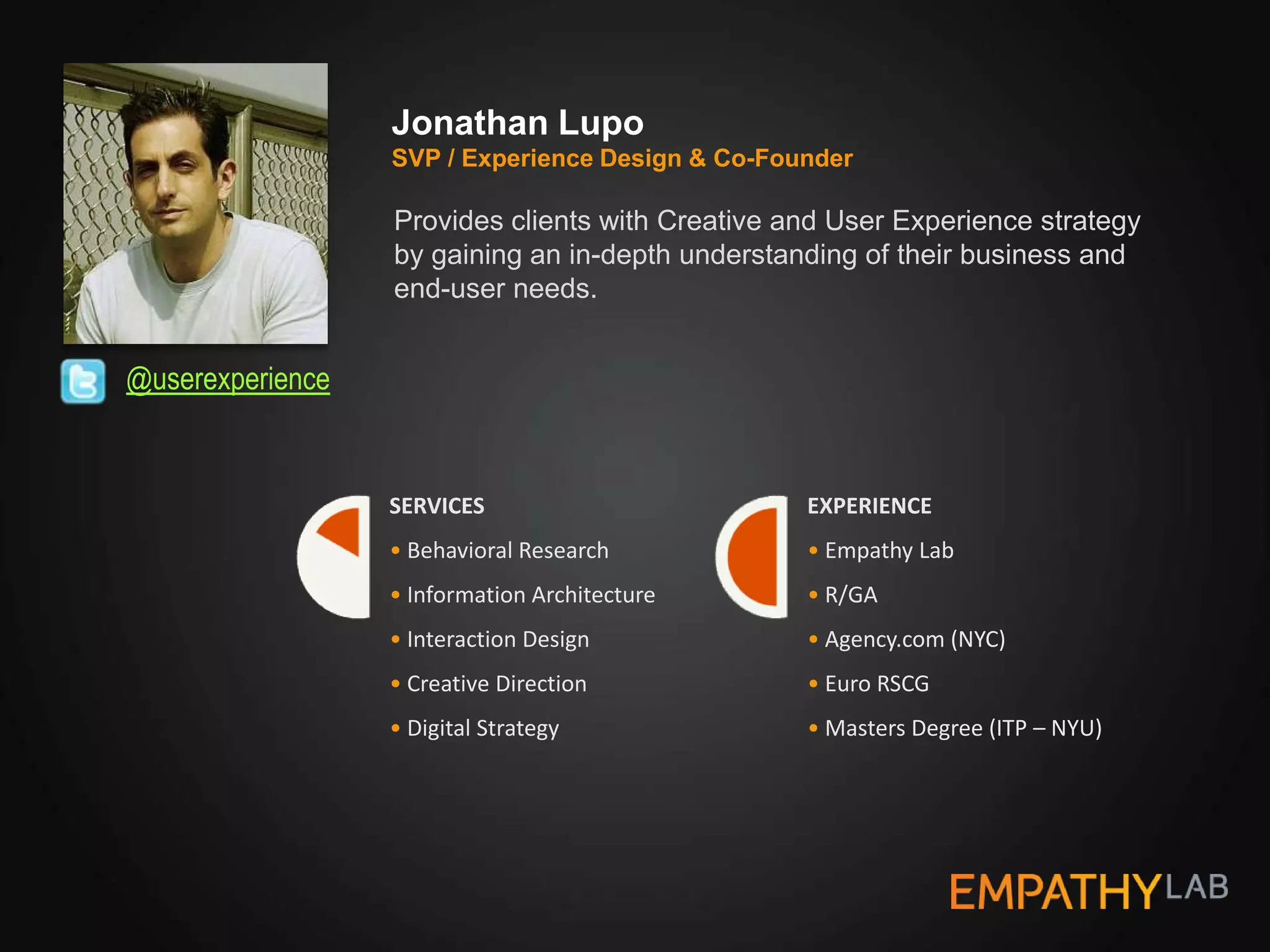
Jonathan Lupo
                  SVP / Experience Design & Co-Founder

                  Provides clients with Creative and User Experience strategy
                  by gaining an in-depth understanding of their business and
                  end-user needs.


@userexperience


                  SERVICES                        EXPERIENCE
                  • Behavioral Research           • Empathy Lab
                  • Information Architecture      • R/GA
                  • Interaction Design            • Agency.com (NYC)
                  • Creative Direction            • Euro RSCG
                  • Digital Strategy              • Masters Degree (ITP – NYU)

Apps are for Humans

  • 1.
  • 2.
    Topics I. Behavior II. Context Understanding Human Behavior III. Intent IV. Motivation ` Design Research Methods & Applications V. Research VI. Analysis
  • 3.
    I. Behavior “Human-centered approaches to industrial and interaction design have long focused on studying human behavior to create informed and appropriate designs.” Gentry Underwood “Social Software: The other ‘Design for Social Impact’”
  • 4.
    Design needs tosupport human behavior
  • 5.
    Technology needs tosupport Design
  • 6.
    Intuitive design anticipatesend-user behavior “We need to observe behavior in order to support it in design”– Joshua Porter “Behavior First, Design Second”
  • 7.
  • 8.
    Behavior is influencedby environment
  • 9.
    Humans do notlive or work in a lab • The lab is not a great place to study human behavior – Labs are unfamiliar environments – Lab machines have unfamiliar configurations Don’t study their behavior in one
  • 10.
  • 11.
    Humans use appsto complete tasks End-users engage with applications to complete tasks If tasks are easy to perform, the application interface is intuitive Good app design facilitates task completion
  • 12.
  • 13.
    Emotions motivate actions SuccessfulDesign creates emotional bonds. It isn’t just “fluff.” “The essential difference between reason and emotion is that reason leads to conclusions while emotion leads to actions.” Neurologist Donald Calne
  • 14.
  • 15.
    V. Research CONTEXT Design Research Behavior CONTEXT Tasks (intent) Motivation CONTEXT
  • 16.
    When do weconduct Research? 1 2 3 Discovery Design Validation Strategy & Benchmarking Information Architecture Measurement & Optimization Stakeholder Interviews Taxonomy & Information Architecture Usability Testing Competitive Analysis Usage Scenarios & Task Flows Analytics & KPI Analytics & KPI Wireframe Prototypes Research & Analysis Visual Design Qualitative Contextual Inquiry Persona & Mental Models PSDs/comps Design Validation Quantitative Survey Study Development & Testing Heuristic Evaluation HTML/CSS/etc. and QA Testing Design Research
  • 17.
    How do weconduct Research?
  • 18.
    Planning for Research 1. Identify research Assess gaps in knowledge objectives 2. Recruit Develop/deploy screener study participants 3. Develop Non-leading, open-ended a line of questions to prompt users questioning to perform key tasks
  • 19.
    Recruiting for Research •Recruit “real” end-users • Avoid “professional test takers” • Recruit on widely adopted platforms
  • 20.
    Contextual Inquiry –Empathy Lab’s Research Practice • Maximize the time with end-users to inform the content, brand, information architecture, and design strategy. • Empathy Lab conducts contextual interviews with end-users where they live, work, play, and, most importantly, where they are likely to interact with our clients’ brands. • Conduct research with end users using a portable usability lab and user-driven scenarios. • Empathy Lab believes that the goal of any usability test is to measure how a participant would behave in a real-world environment, as opposed to an artificial lab setting. • Use realistic prototypes in usability tests. • Empathy Lab believes that having end-users interact with realistic design prototypes produces the most reliable and valid usability results. Although useful and practical in some cases, low-fidelity prototypes cannot ultimately ensure valid results and experience.
  • 21.
    VI. Analysis Identify Develop Design Taxonomy Behavioral Behavioral & Information Trends Personas Architecture • Cut across all • Document behavioral • Develop application personas differences in the form taxonomy to satisfy • Have major of personas mental models implications on • Aggregate key tasks • Identify existing overarching as mental model content that fulfills key architecture tasks, note gaps in content
  • 22.
    VI. Analysis Task Task Content Content Content MENTAL INFORMATION INTERACTION PERSONAS MODELS ARCHITECTURE DESIGN
  • 23.
    Empathy Lab isa digital strategy and execution firm that designs intuitive and engaging user interfaces.
  • 24.
    Jonathan Lupo SVP / Experience Design & Co-Founder Provides clients with Creative and User Experience strategy by gaining an in-depth understanding of their business and end-user needs. @userexperience SERVICES EXPERIENCE • Behavioral Research • Empathy Lab • Information Architecture • R/GA • Interaction Design • Agency.com (NYC) • Creative Direction • Euro RSCG • Digital Strategy • Masters Degree (ITP – NYU)