Approach to coma in ED
Runal Shah
PGY1
MEM, KDAH
Case Scenario
 43/Male brought to ED by Cardiac
ambulance at 11.00 am
 c/o unresponsiveness x 7.00 am
 A – Snoring sounds,
 B – breathing equal chest rise, RR 10/min
 C – cold periphery, BP- 170/90, P-110/min
 D – GCS E1,V2,M2 – Pupils 1.5mm sluggish
How will you evaluate ??
Definition
 COMA – Deep sleep like state from which
the patient cannot be aroused.
o Vegetative state
o Catatonia
o Akinetic mutism
o Locked in state
Pathophysiology
 Consciousness – Awareness of the self or surroundings
 Cognition – Orientation + Judgment
 Arousal – Level of Consciousness (Fully aroused to Comatose)
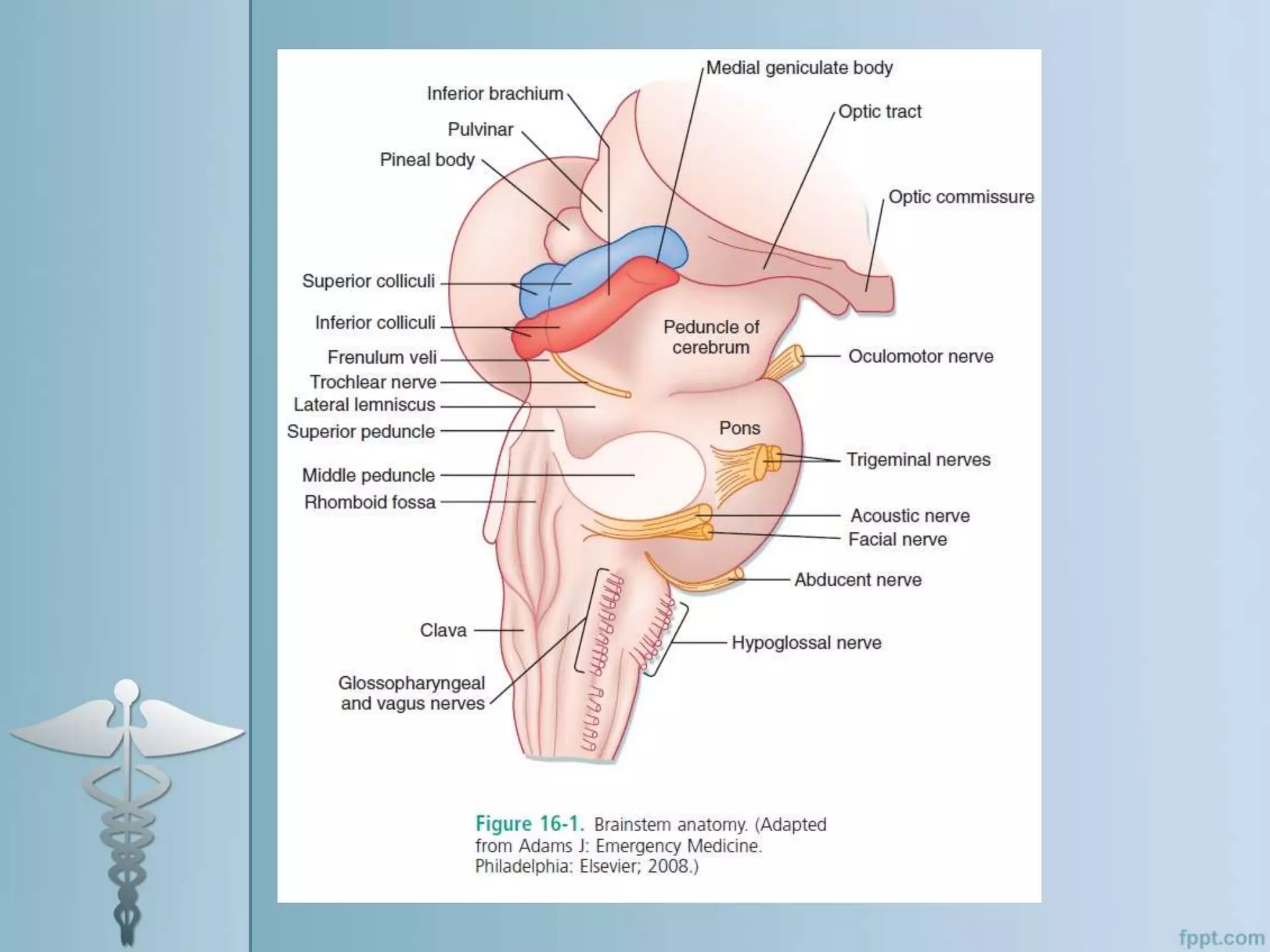
 ARAS – Anatomically located in Paramedian tegmental
zone of dorsal midbrain – responsible for arousal and
cortical activation
 Cerebral cortex – contains Cognition centers –
determine content of consciousness
 Insult to cerebral cortex or brainstem can independently
cause Coma; vulnerable to Metabolic derangements,
Toxins, Mechanical Injury.
 If ARAS is impaired, cerebral cortex cannot be aroused.
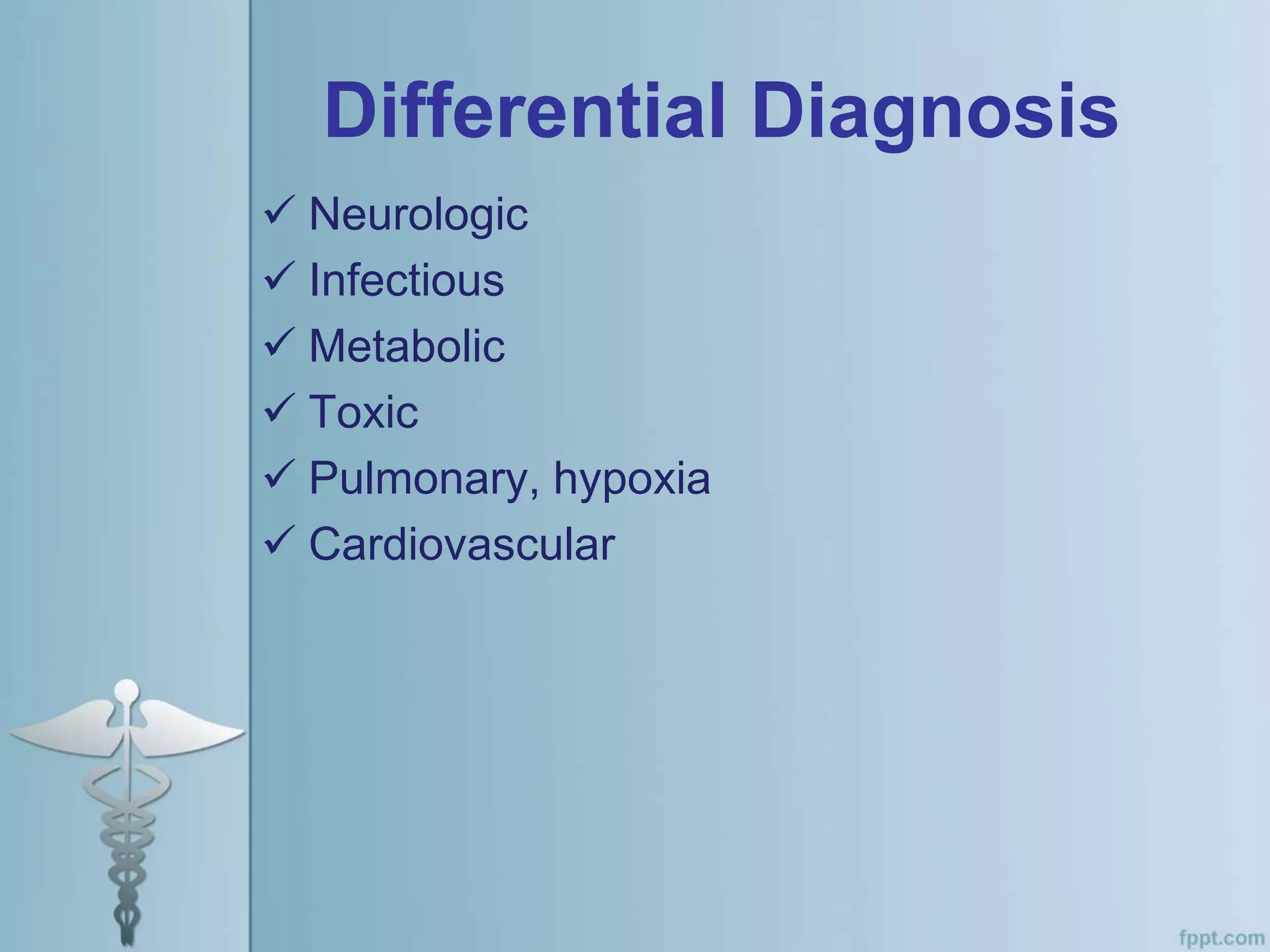
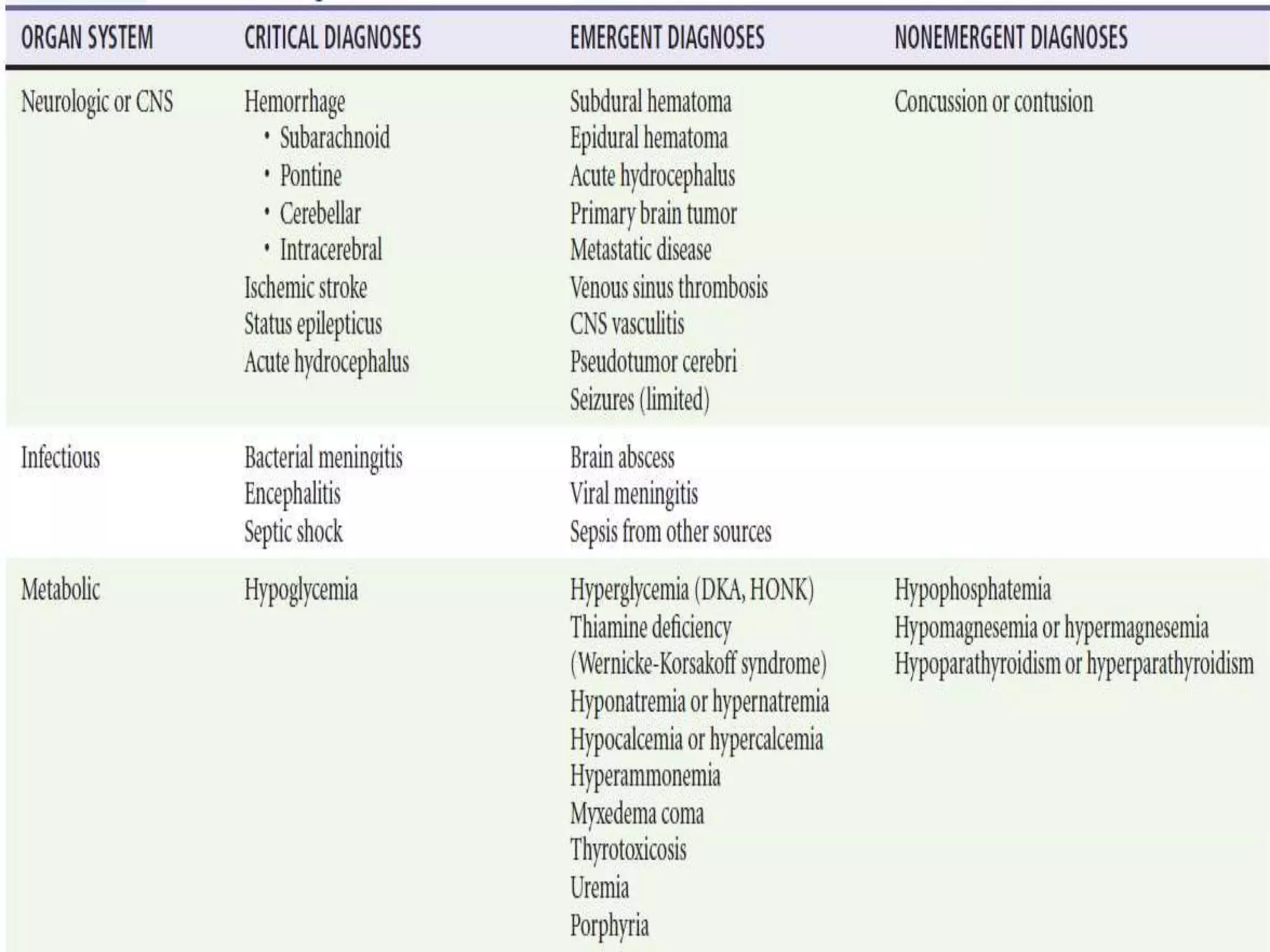
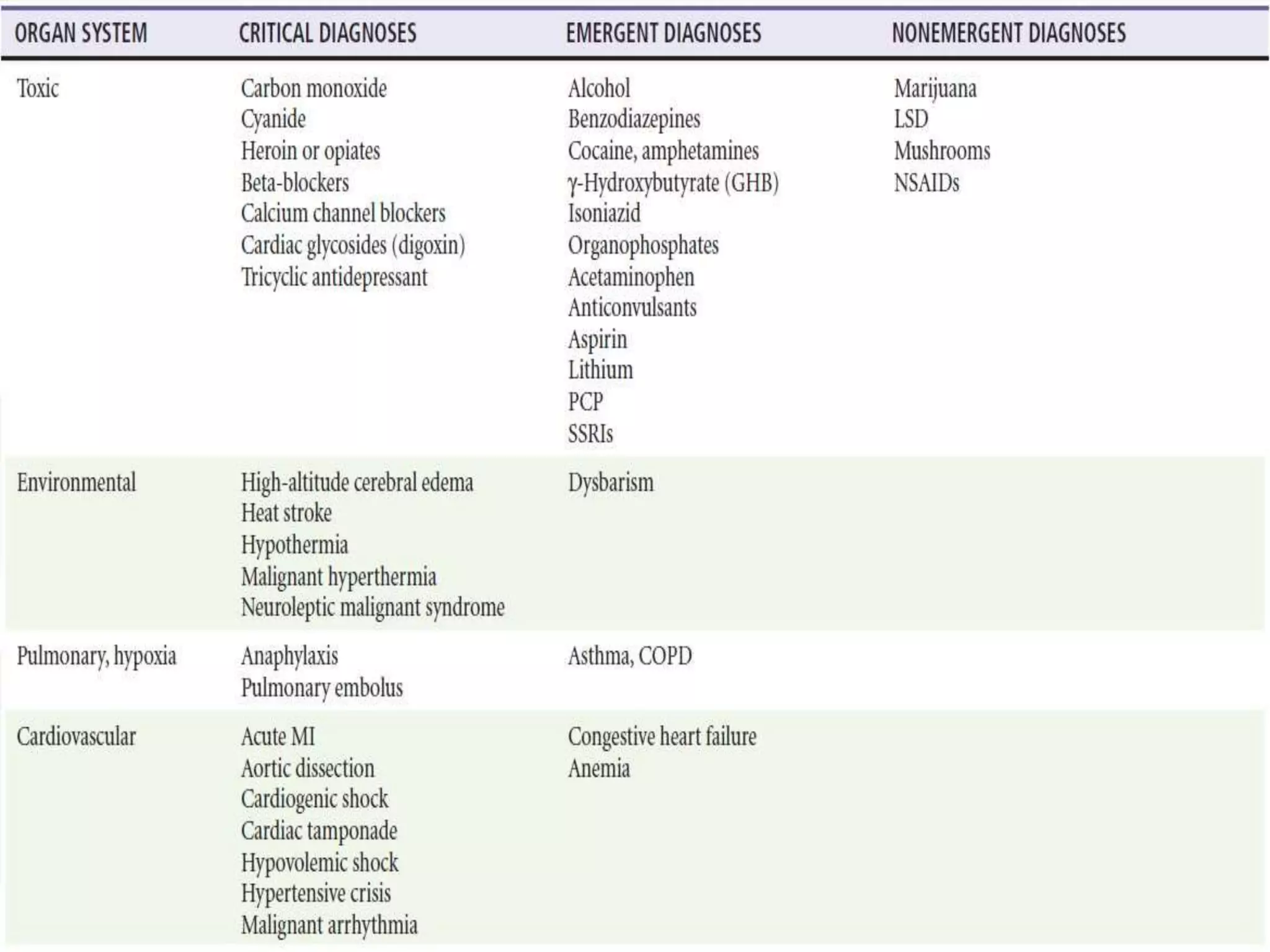
Differential Diagnosis
 Neurologic
 Infectious
 Metabolic
 Toxic
 Pulmonary, hypoxia
 Cardiovascular
Etiology
Structural
 Trauma
– SDH
– EDH
– Cerebral Concussion-
Contusion
 Stroke Syndromes
– Embolism
– Thrombosis
– Hemorrhagic
 Tumors
 Infections
Age related
 Infant
– Infection
– Trauma/ Abuse
– Metabolic
 Child
– Toxic ingestion
 Adolescent/ Young Adults
– Toxic
– Recreational Drug
– Trauma
 Elderly
– Meds/ OTC drugs
– Infection
– Stroke
Approach in ED
 Primary Survey
– Airway
– Breathing
– Circulation
– Disability (GCS, Pupils, NIHSS)
– Exposure
 Vitals
 Blood glucose
 Brief History of events (SAMPLE)
 Secondary Survey (Head to toe)
Primary Survey
 Airway:
 Patent / Compromised ?
 Intervene for Hypoxia / Obstruction / Dyspnea
 Proper position / Head tilt- Chin lift / Jaw thrust
 Oxygen Supplementation
 Nasal Prongs, Face mask, Venturi mask, Non-
rebreathing mask, Bag-Mask, ET intubation
 OPA, NPAs
Primary Survey
 Breathing:
 Equal chest rise?
 Use of accessory muscle
 Air entry bilateral equal?
 Adventitious sounds – Crepts/ Rhonchi/ Stridor ?
Primary Survey
 Circulation:
 Peripheries Cold/ Warm, Capillary Refill Time
 Blood pressure
 Pulse : Rate, Rhythm, Volume
 Intravenous Access – Blood collection & Sugars
 IV fluids according to Blood sugars
Primary Survey
 Disability:
 GCS (E V M)
 Pupils –
Size, Shape
Reactivity to light
Conjugate movements
NIHSS scoring
C-Spine immobilization in case of Trauma
History
• Trauma
• Cardiac arrest
• Drug overdose/ ingestion
• Neurological-
– Circumstances & rapidity
– Antecedent symptoms – Confusion, weakness,
headache, fever, seizures, double vision, vomiting
– Use of Meds, Drugs and Alcohol
– Chronic liver, kidney, heart, other medical disease
• Direct interrogation with Family members,
bystanders, Ambulance staff/ paramedics
Brainstem Reflexes
 Pupillary signs
– Examine with bright diffuse light
– Shape, size, reactivity
– Anisocoria?
 Ocular movements
– Spontaneous movements?
– Conjugate deviation
– Doll’s eye
– Ocular bobbing/ dipping
 Respiratory pattern
– Shallow slow regular breathing
– Cheyne-Stokes
– Kussmaul
– Agonal gasp
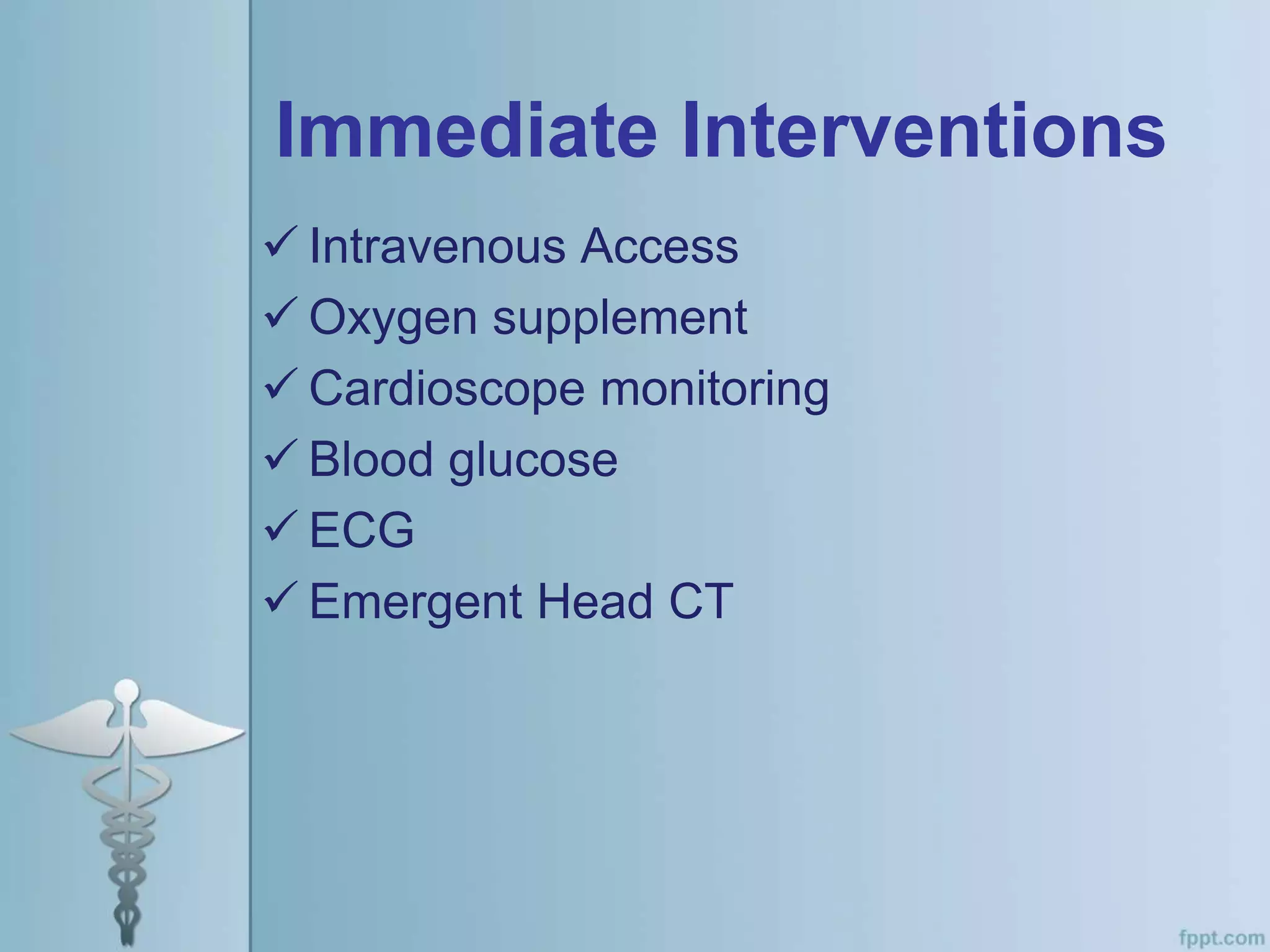
Immediate Interventions
 Intravenous Access
 Oxygen supplement
 Cardioscope monitoring
 Blood glucose
 ECG
 Emergent Head CT
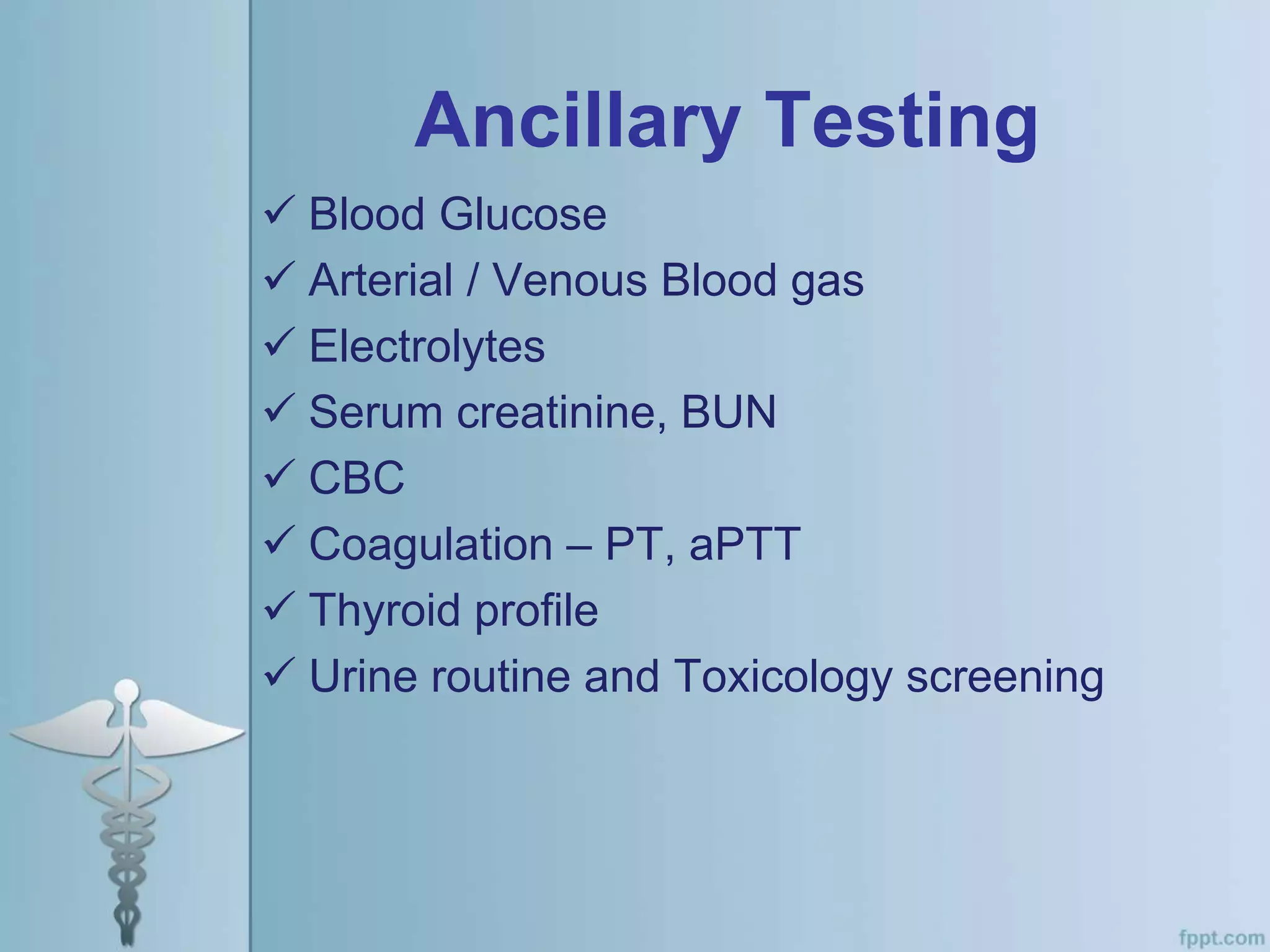
Ancillary Testing
 Blood Glucose
 Arterial / Venous Blood gas
 Electrolytes
 Serum creatinine, BUN
 CBC
 Coagulation – PT, aPTT
 Thyroid profile
 Urine routine and Toxicology screening
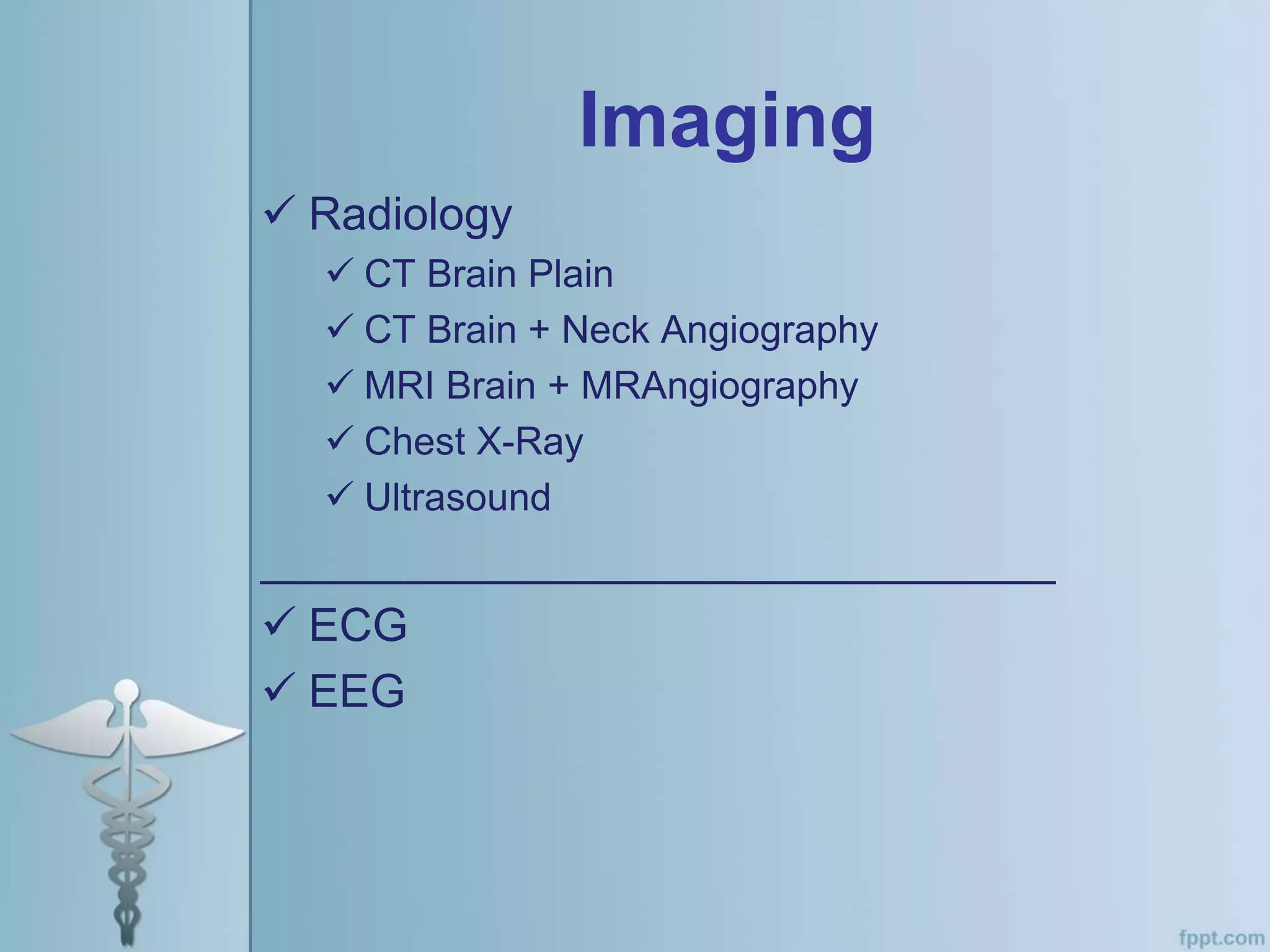
Imaging
 Radiology
 CT Brain Plain
 CT Brain + Neck Angiography
 MRI Brain + MRAngiography
 Chest X-Ray
 Ultrasound
_______________________________
 ECG
 EEG
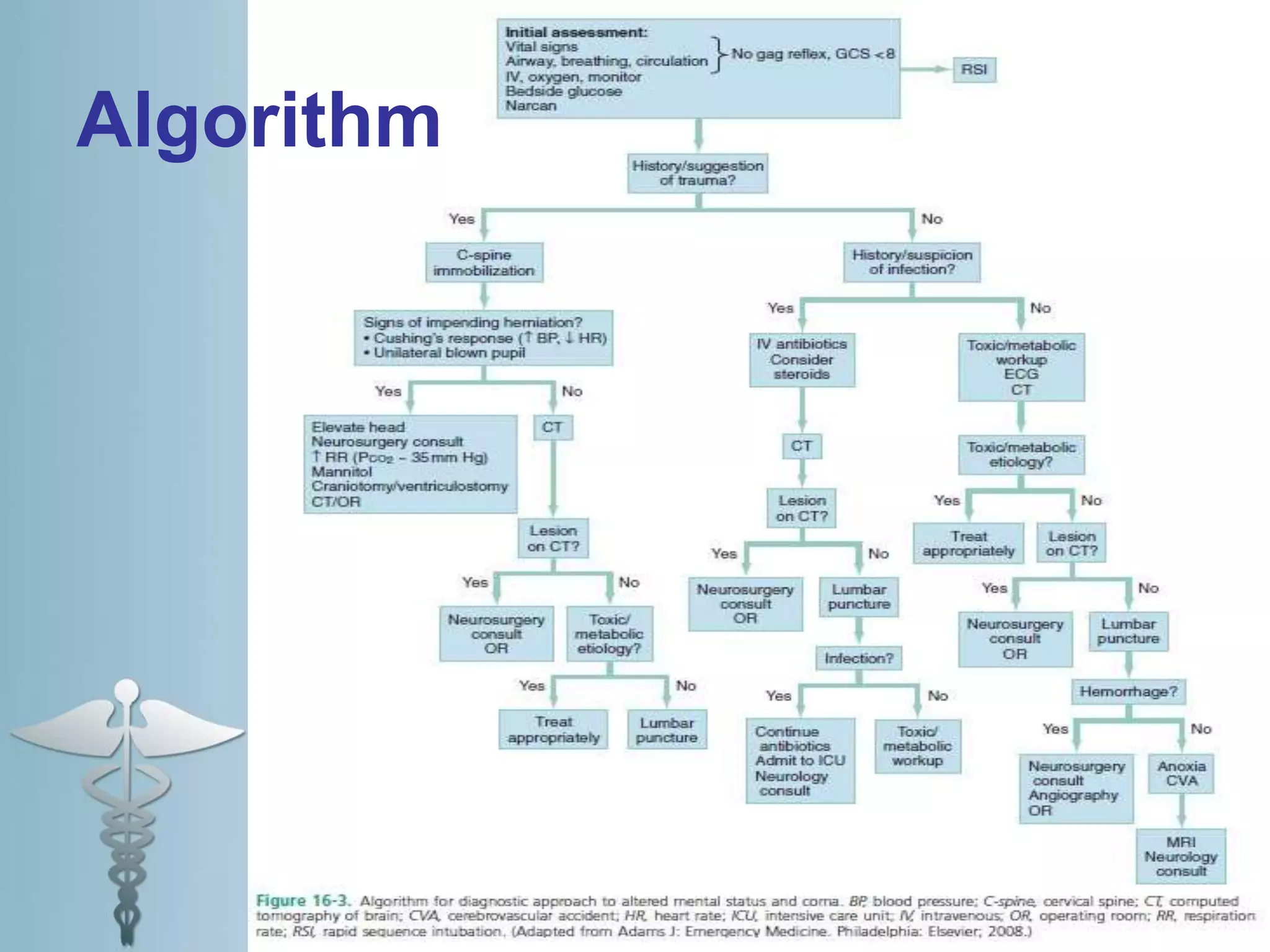
Algorithm
Disposition
 Depending on diagnosis, patient goes to
Intensive care unit (ICU) /Operation room (OR)
 Hypoglycemia patient requires ED observation,
and admission in ICU if Sugars are borderline
or mentation doesn’t improve.
Thank You…
Ref:
Harrison's Principles of Internal Medicine,19E
Rosen's Emergency Medicine,8ed

Approach to coma in emergency department

  • 1.
    Approach to comain ED Runal Shah PGY1 MEM, KDAH
  • 2.
    Case Scenario  43/Malebrought to ED by Cardiac ambulance at 11.00 am  c/o unresponsiveness x 7.00 am  A – Snoring sounds,  B – breathing equal chest rise, RR 10/min  C – cold periphery, BP- 170/90, P-110/min  D – GCS E1,V2,M2 – Pupils 1.5mm sluggish How will you evaluate ??
  • 3.
    Definition  COMA –Deep sleep like state from which the patient cannot be aroused. o Vegetative state o Catatonia o Akinetic mutism o Locked in state
  • 4.
    Pathophysiology  Consciousness –Awareness of the self or surroundings  Cognition – Orientation + Judgment  Arousal – Level of Consciousness (Fully aroused to Comatose)  ARAS – Anatomically located in Paramedian tegmental zone of dorsal midbrain – responsible for arousal and cortical activation  Cerebral cortex – contains Cognition centers – determine content of consciousness  Insult to cerebral cortex or brainstem can independently cause Coma; vulnerable to Metabolic derangements, Toxins, Mechanical Injury.  If ARAS is impaired, cerebral cortex cannot be aroused.
  • 6.
    Differential Diagnosis  Neurologic Infectious  Metabolic  Toxic  Pulmonary, hypoxia  Cardiovascular
  • 9.
    Etiology Structural  Trauma – SDH –EDH – Cerebral Concussion- Contusion  Stroke Syndromes – Embolism – Thrombosis – Hemorrhagic  Tumors  Infections Age related  Infant – Infection – Trauma/ Abuse – Metabolic  Child – Toxic ingestion  Adolescent/ Young Adults – Toxic – Recreational Drug – Trauma  Elderly – Meds/ OTC drugs – Infection – Stroke
  • 10.
    Approach in ED Primary Survey – Airway – Breathing – Circulation – Disability (GCS, Pupils, NIHSS) – Exposure  Vitals  Blood glucose  Brief History of events (SAMPLE)  Secondary Survey (Head to toe)
  • 11.
    Primary Survey  Airway: Patent / Compromised ?  Intervene for Hypoxia / Obstruction / Dyspnea  Proper position / Head tilt- Chin lift / Jaw thrust  Oxygen Supplementation  Nasal Prongs, Face mask, Venturi mask, Non- rebreathing mask, Bag-Mask, ET intubation  OPA, NPAs
  • 12.
    Primary Survey  Breathing: Equal chest rise?  Use of accessory muscle  Air entry bilateral equal?  Adventitious sounds – Crepts/ Rhonchi/ Stridor ?
  • 13.
    Primary Survey  Circulation: Peripheries Cold/ Warm, Capillary Refill Time  Blood pressure  Pulse : Rate, Rhythm, Volume  Intravenous Access – Blood collection & Sugars  IV fluids according to Blood sugars
  • 14.
    Primary Survey  Disability: GCS (E V M)  Pupils – Size, Shape Reactivity to light Conjugate movements NIHSS scoring C-Spine immobilization in case of Trauma
  • 15.
    History • Trauma • Cardiacarrest • Drug overdose/ ingestion • Neurological- – Circumstances & rapidity – Antecedent symptoms – Confusion, weakness, headache, fever, seizures, double vision, vomiting – Use of Meds, Drugs and Alcohol – Chronic liver, kidney, heart, other medical disease • Direct interrogation with Family members, bystanders, Ambulance staff/ paramedics
  • 16.
    Brainstem Reflexes  Pupillarysigns – Examine with bright diffuse light – Shape, size, reactivity – Anisocoria?  Ocular movements – Spontaneous movements? – Conjugate deviation – Doll’s eye – Ocular bobbing/ dipping  Respiratory pattern – Shallow slow regular breathing – Cheyne-Stokes – Kussmaul – Agonal gasp
  • 17.
    Immediate Interventions  IntravenousAccess  Oxygen supplement  Cardioscope monitoring  Blood glucose  ECG  Emergent Head CT
  • 18.
    Ancillary Testing  BloodGlucose  Arterial / Venous Blood gas  Electrolytes  Serum creatinine, BUN  CBC  Coagulation – PT, aPTT  Thyroid profile  Urine routine and Toxicology screening
  • 19.
    Imaging  Radiology  CTBrain Plain  CT Brain + Neck Angiography  MRI Brain + MRAngiography  Chest X-Ray  Ultrasound _______________________________  ECG  EEG
  • 20.
  • 21.
    Disposition  Depending ondiagnosis, patient goes to Intensive care unit (ICU) /Operation room (OR)  Hypoglycemia patient requires ED observation, and admission in ICU if Sugars are borderline or mentation doesn’t improve.
  • 22.
    Thank You… Ref: Harrison's Principlesof Internal Medicine,19E Rosen's Emergency Medicine,8ed