Essay-Writing Basics Review
&
Summary Writing
Unit 1: an Approach to Academic Writing
PURPOSE &
STRATEGY
ORGANIZATION STYLE FLOW
Unit 1: an
Approach to
Academic Writing
Purpose & Strategy
• Audience, purpose, & strategy
interconnected
Unit 1: an
Approach to
Academic Writing
Organization
• Clear and predictable
pattern/organization makes
writing easier to follow
• Problem/solution,
cause/effect, comparison/contra
st, classification, mixed
• Academic writing: abstract,
background, methods,
discussion, conclusion, etc.
Unit 1: an
Approach to
Academic Writing
Style
• Appropriate tone, vocabulary,
phrasing: your
academic/formal/business "voice" in
writing
• We are developing your "voice" this
semester!
Unit 1: an Approach
to Academic Writing
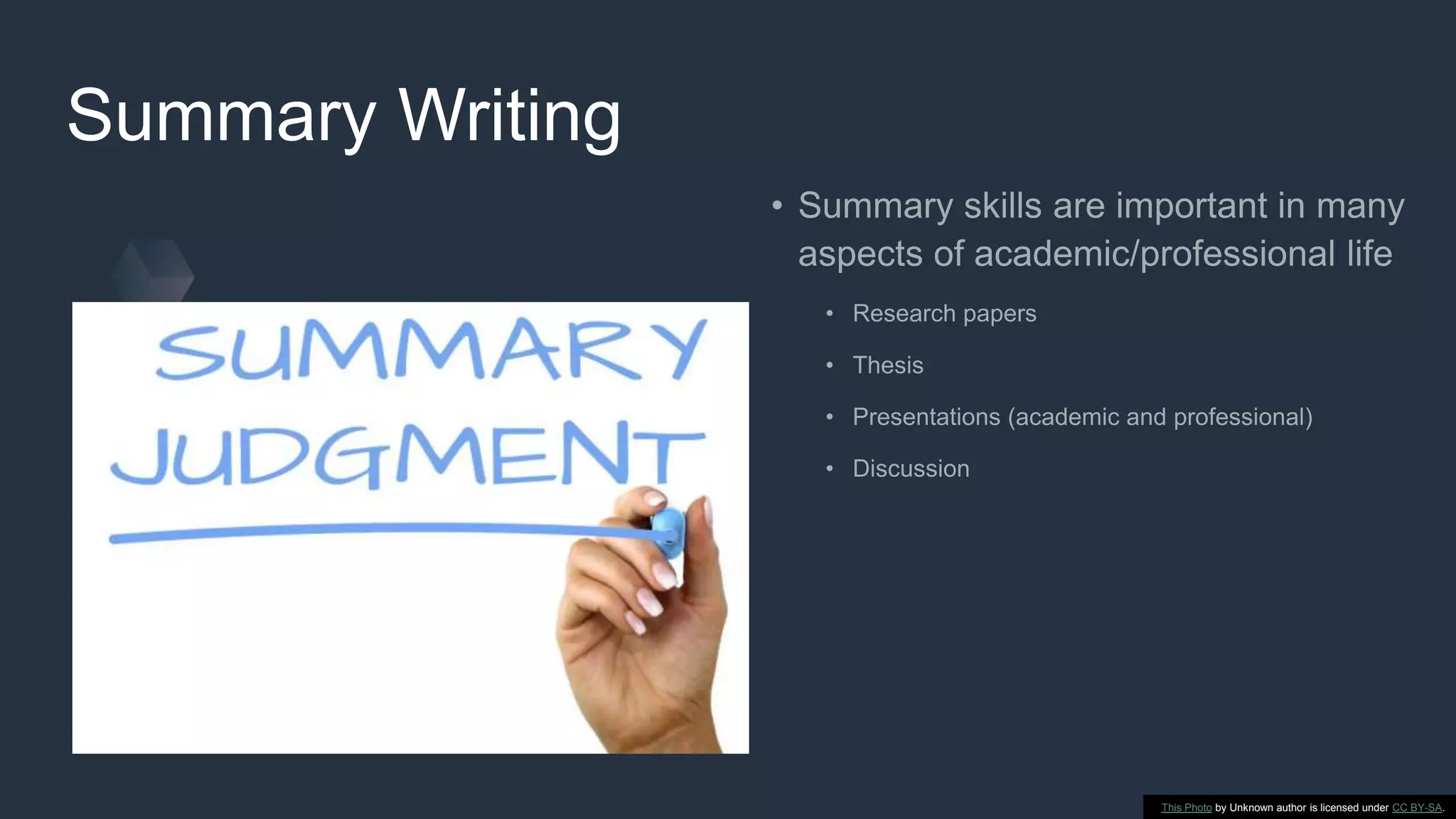
Summary Writing
This Photo by Unknown author is licensed under CC BY-SA.
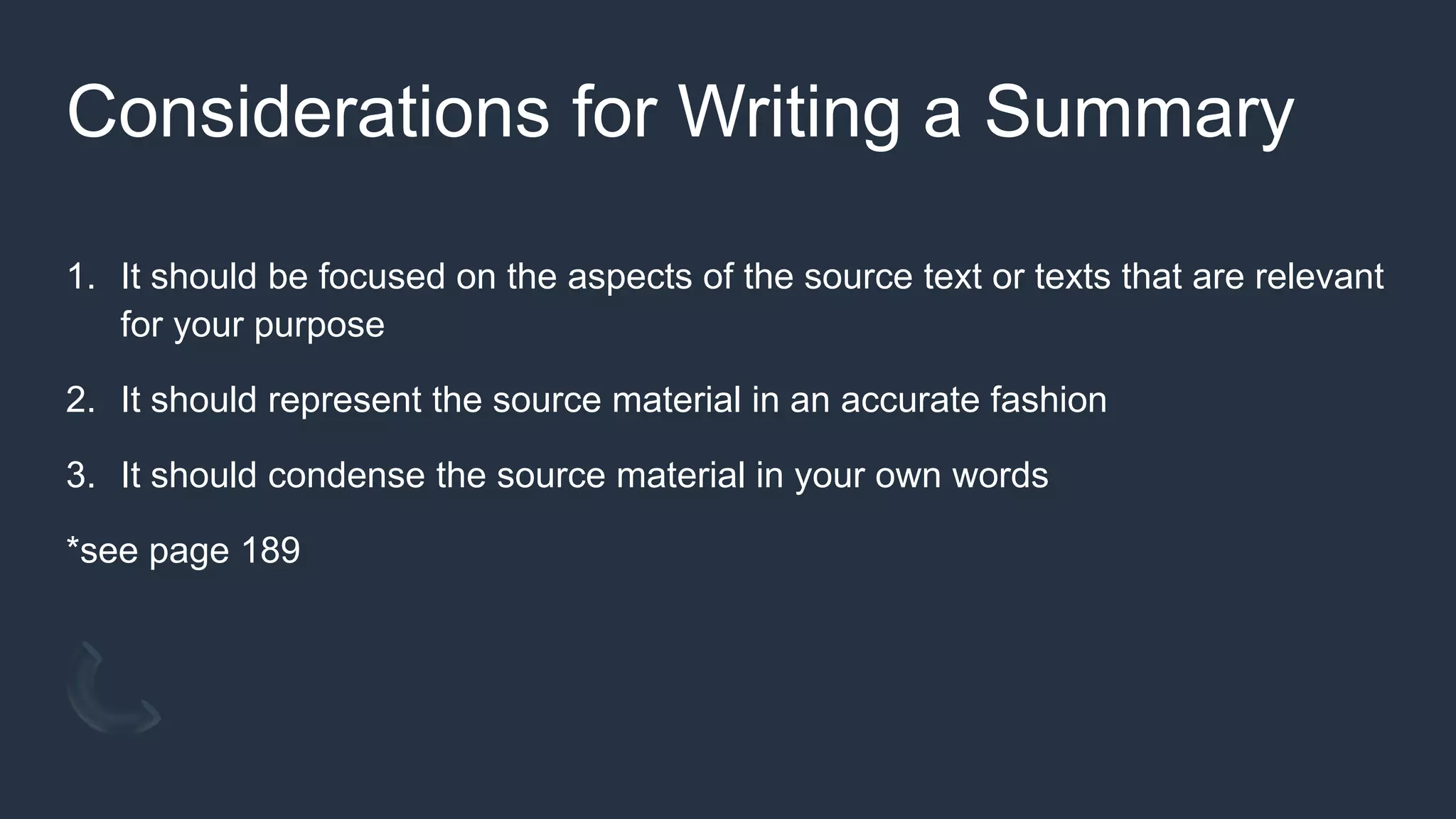
Considerations for Writing a Summary
1. It should be focused on the aspects of the source text or texts that are relevant
for your purpose
2. It should represent the source material in an accurate fashion
3. It should condense the source material in your own words
*see page 189
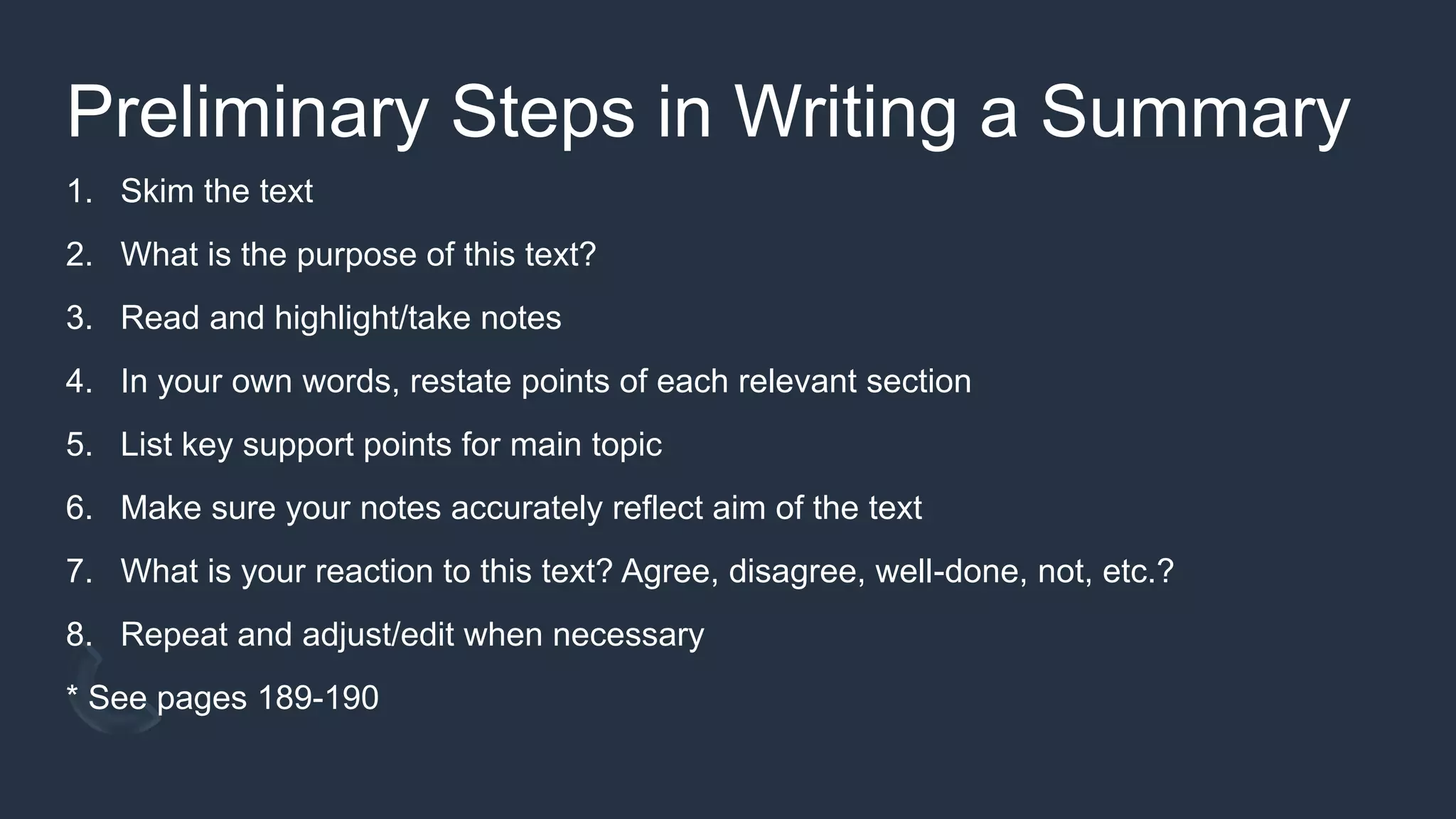
Preliminary Steps in Writing a Summary
1. Skim the text
2. What is the purpose of this text?
3. Read and highlight/take notes
4. In your own words, restate points of each relevant section
5. List key support points for main topic
6. Make sure your notes accurately reflect aim of the text
7. What is your reaction to this text? Agree, disagree, well-done, not, etc.?
8. Repeat and adjust/edit when necessary
* See pages 189-190
Plagiarism
We develop our written voice by
borrowing words and phrases that
we see while reading. This is not
plagiarism
Deliberate copying of ideas,
whole sentences, other's work is
plagiarism.
See my comments on this on
page 196
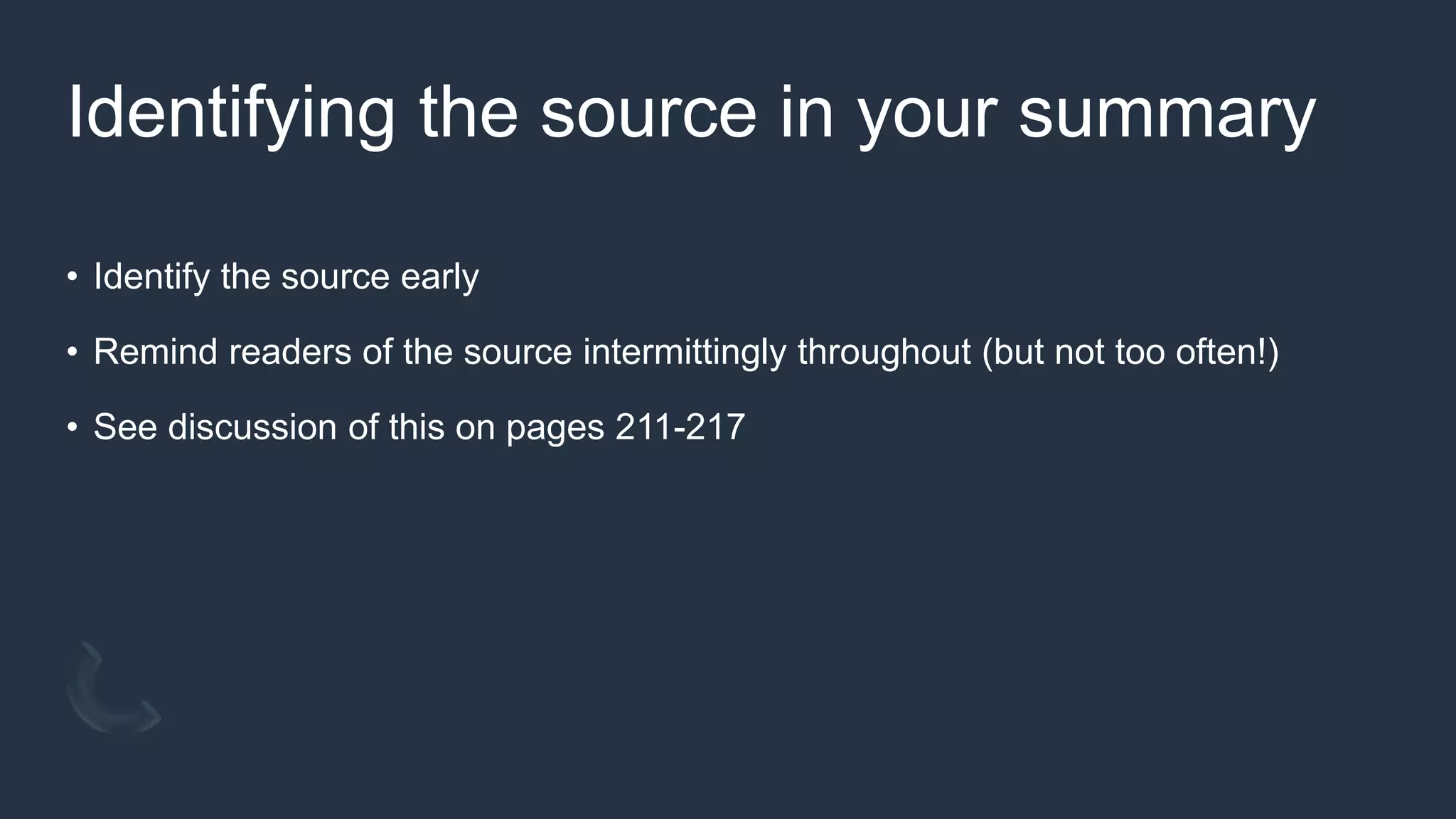
Identifying the source in your summary
• Identify the source early
• Remind readers of the source intermittingly throughout (but not too often!)
• See discussion of this on pages 211-217

Approach to academic writing and summary writing

  • 1.
  • 2.
    Unit 1: anApproach to Academic Writing PURPOSE & STRATEGY ORGANIZATION STYLE FLOW
  • 3.
    Unit 1: an Approachto Academic Writing Purpose & Strategy • Audience, purpose, & strategy interconnected
  • 4.
    Unit 1: an Approachto Academic Writing Organization • Clear and predictable pattern/organization makes writing easier to follow • Problem/solution, cause/effect, comparison/contra st, classification, mixed • Academic writing: abstract, background, methods, discussion, conclusion, etc.
  • 5.
    Unit 1: an Approachto Academic Writing Style • Appropriate tone, vocabulary, phrasing: your academic/formal/business "voice" in writing • We are developing your "voice" this semester!
  • 6.
    Unit 1: anApproach to Academic Writing
  • 7.
    Summary Writing This Photoby Unknown author is licensed under CC BY-SA.
  • 8.
    Considerations for Writinga Summary 1. It should be focused on the aspects of the source text or texts that are relevant for your purpose 2. It should represent the source material in an accurate fashion 3. It should condense the source material in your own words *see page 189
  • 9.
    Preliminary Steps inWriting a Summary 1. Skim the text 2. What is the purpose of this text? 3. Read and highlight/take notes 4. In your own words, restate points of each relevant section 5. List key support points for main topic 6. Make sure your notes accurately reflect aim of the text 7. What is your reaction to this text? Agree, disagree, well-done, not, etc.? 8. Repeat and adjust/edit when necessary * See pages 189-190
  • 10.
    Plagiarism We develop ourwritten voice by borrowing words and phrases that we see while reading. This is not plagiarism Deliberate copying of ideas, whole sentences, other's work is plagiarism. See my comments on this on page 196
  • 11.
    Identifying the sourcein your summary • Identify the source early • Remind readers of the source intermittingly throughout (but not too often!) • See discussion of this on pages 211-217