What is the paragraph about?
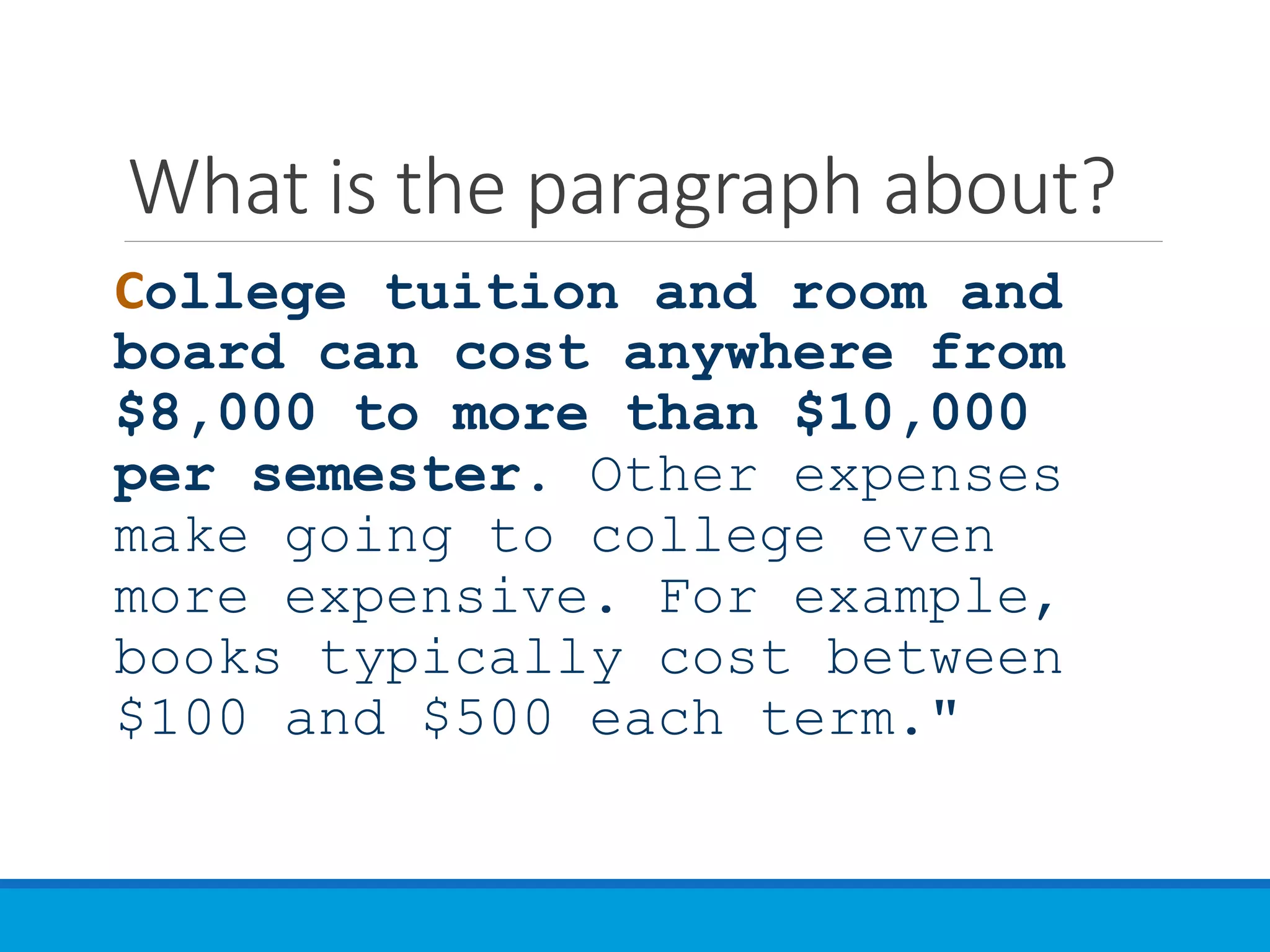
College tuition and room and
board can cost anywhere from
$8,000 to more than $10,000
per semester. Other expenses
make going to college even
more expensive. For example,
books typically cost between
$100 and $500 each term."
UNIT 5: SUMMARY ESSAYS
THEME: HEALTH – BALANCED LIFESTYLE
UNIT 5: SUMMARY ESSAYS
THEME: HEALTH – BALANCED LIFESTYLE
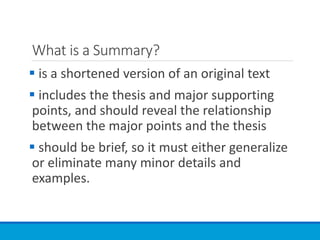
What is a Summary?
 is a shortened version of an original text
 includes the thesis and major supporting
points, and should reveal the relationship
between the major points and the thesis
 should be brief, so it must either generalize
or eliminate many minor details and
examples.
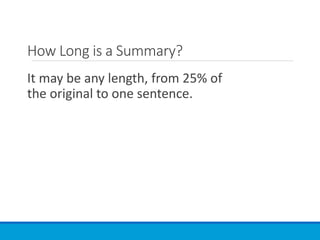
How Long is a Summary?
It may be any length, from 25% of
the original to one sentence.
HOW TO
SUMMARIZE
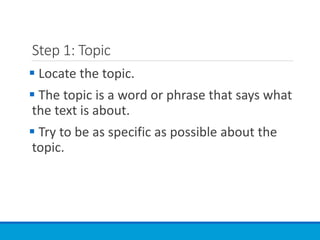
Step 1: Topic
 Locate the topic.
 The topic is a word or phrase that says what
the text is about.
 Try to be as specific as possible about the
topic.
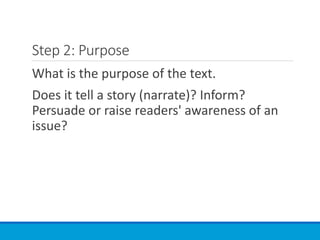
Step 2: Purpose
What is the purpose of the text.
Does it tell a story (narrate)? Inform?
Persuade or raise readers' awareness of an
issue?
Step 3: What is the Thesis?
Look for the thesis (what the author is saying
about the topic).
Look first in the introduction, then in the
conclusion; writers often write explicit thesis
statements.
Write the thesis in your own words (and
make sure it matches your sense of the
author's purpose).
Step 4: Divisions in the Text
Look for the major divisions of the text.
In your own words, summarize each division
in one sentence.
(That may mean summarizing each
paragraph, but often several paragraphs go
together).
Make a list of all major points.
Step 5: Organizing Sentences
Work with the sentences you have created to
produce a summary.
Be ruthless: a good summary is SUCCINCT (you
may leave some information out -- as long as it is
‘extraneous’)
Make sure you reveal the relationships between
the ideas.
Are there contrasts or comparisons
between some of the ideas?
REMEMBER
Summaries are short restatements of a work's main
points.
When writing a summary, be sure to record the work's
major ideas.
Summaries condense a text's main ideas into a few
concise sentences.
A summarized work is always much shorter than the
original.
A summary of a work's thesis and supporting points
should be written in your own words.
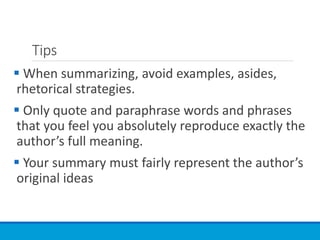
Tips
 When summarizing, avoid examples, asides,
rhetorical strategies.
 Only quote and paraphrase words and phrases
that you feel you absolutely reproduce exactly the
author’s full meaning.
 Your summary must fairly represent the author’s
original ideas
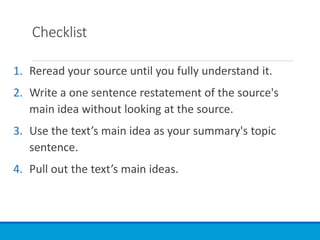
Checklist
1. Reread your source until you fully understand it.
2. Write a one sentence restatement of the source's
main idea without looking at the source.
3. Use the text’s main idea as your summary's topic
sentence.
4. Pull out the text’s main ideas.
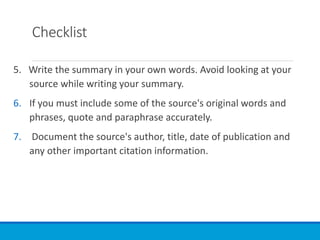
Checklist
5. Write the summary in your own words. Avoid looking at your
source while writing your summary.
6. If you must include some of the source's original words and
phrases, quote and paraphrase accurately.
7. Document the source's author, title, date of publication and
any other important citation information.
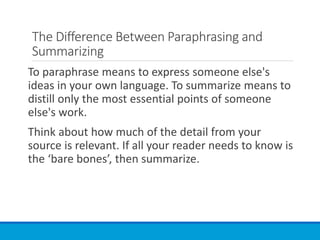
The Difference Between Paraphrasing and
Summarizing
To paraphrase means to express someone else's
ideas in your own language. To summarize means to
distill only the most essential points of someone
else's work.
Think about how much of the detail from your
source is relevant. If all your reader needs to know is
the ‘bare bones’, then summarize.

How to summarize final draft

  • 1.
    What is theparagraph about? College tuition and room and board can cost anywhere from $8,000 to more than $10,000 per semester. Other expenses make going to college even more expensive. For example, books typically cost between $100 and $500 each term."
  • 2.
    UNIT 5: SUMMARYESSAYS THEME: HEALTH – BALANCED LIFESTYLE
  • 3.
    UNIT 5: SUMMARYESSAYS THEME: HEALTH – BALANCED LIFESTYLE
  • 4.
    What is aSummary?  is a shortened version of an original text  includes the thesis and major supporting points, and should reveal the relationship between the major points and the thesis  should be brief, so it must either generalize or eliminate many minor details and examples.
  • 5.
    How Long isa Summary? It may be any length, from 25% of the original to one sentence.
  • 6.
  • 7.
    Step 1: Topic Locate the topic.  The topic is a word or phrase that says what the text is about.  Try to be as specific as possible about the topic.
  • 8.
    Step 2: Purpose Whatis the purpose of the text. Does it tell a story (narrate)? Inform? Persuade or raise readers' awareness of an issue?
  • 9.
    Step 3: Whatis the Thesis? Look for the thesis (what the author is saying about the topic). Look first in the introduction, then in the conclusion; writers often write explicit thesis statements. Write the thesis in your own words (and make sure it matches your sense of the author's purpose).
  • 10.
    Step 4: Divisionsin the Text Look for the major divisions of the text. In your own words, summarize each division in one sentence. (That may mean summarizing each paragraph, but often several paragraphs go together). Make a list of all major points.
  • 11.
    Step 5: OrganizingSentences Work with the sentences you have created to produce a summary. Be ruthless: a good summary is SUCCINCT (you may leave some information out -- as long as it is ‘extraneous’) Make sure you reveal the relationships between the ideas. Are there contrasts or comparisons between some of the ideas?
  • 12.
    REMEMBER Summaries are shortrestatements of a work's main points. When writing a summary, be sure to record the work's major ideas. Summaries condense a text's main ideas into a few concise sentences. A summarized work is always much shorter than the original. A summary of a work's thesis and supporting points should be written in your own words.
  • 13.
    Tips  When summarizing,avoid examples, asides, rhetorical strategies.  Only quote and paraphrase words and phrases that you feel you absolutely reproduce exactly the author’s full meaning.  Your summary must fairly represent the author’s original ideas
  • 14.
    Checklist 1. Reread yoursource until you fully understand it. 2. Write a one sentence restatement of the source's main idea without looking at the source. 3. Use the text’s main idea as your summary's topic sentence. 4. Pull out the text’s main ideas.
  • 15.
    Checklist 5. Write thesummary in your own words. Avoid looking at your source while writing your summary. 6. If you must include some of the source's original words and phrases, quote and paraphrase accurately. 7. Document the source's author, title, date of publication and any other important citation information.
  • 16.
    The Difference BetweenParaphrasing and Summarizing To paraphrase means to express someone else's ideas in your own language. To summarize means to distill only the most essential points of someone else's work. Think about how much of the detail from your source is relevant. If all your reader needs to know is the ‘bare bones’, then summarize.