Application Layer protocols
DNS: Domain Name System (Service)
protocol
• Domain Name System (DNS) is a distributed
Internet directory service.
• DNS is used mostly to translate between domain
names and IP addresses and to control Internet
email delivery.
• Most Internet services rely on DNS to work, and if
DNS fails, web sites cannot be located and email
delivery stalls.
2
DNS has two independent aspects:
1. IT SPECIFIES THE NAME SYNTAX AND RULES FOR
DELEGATING AUTHORITY OVER NAMES. THE
BASIC SYNTAX IS: LOCAL.GROUP.SITE
2. IT SPECIFIES THE IMPLEMENTATION OF A
DISTRIBUTED COMPUTING SYSTEM THAT
EFFICIENTLY MAPS NAMES TO ADDRESSES.
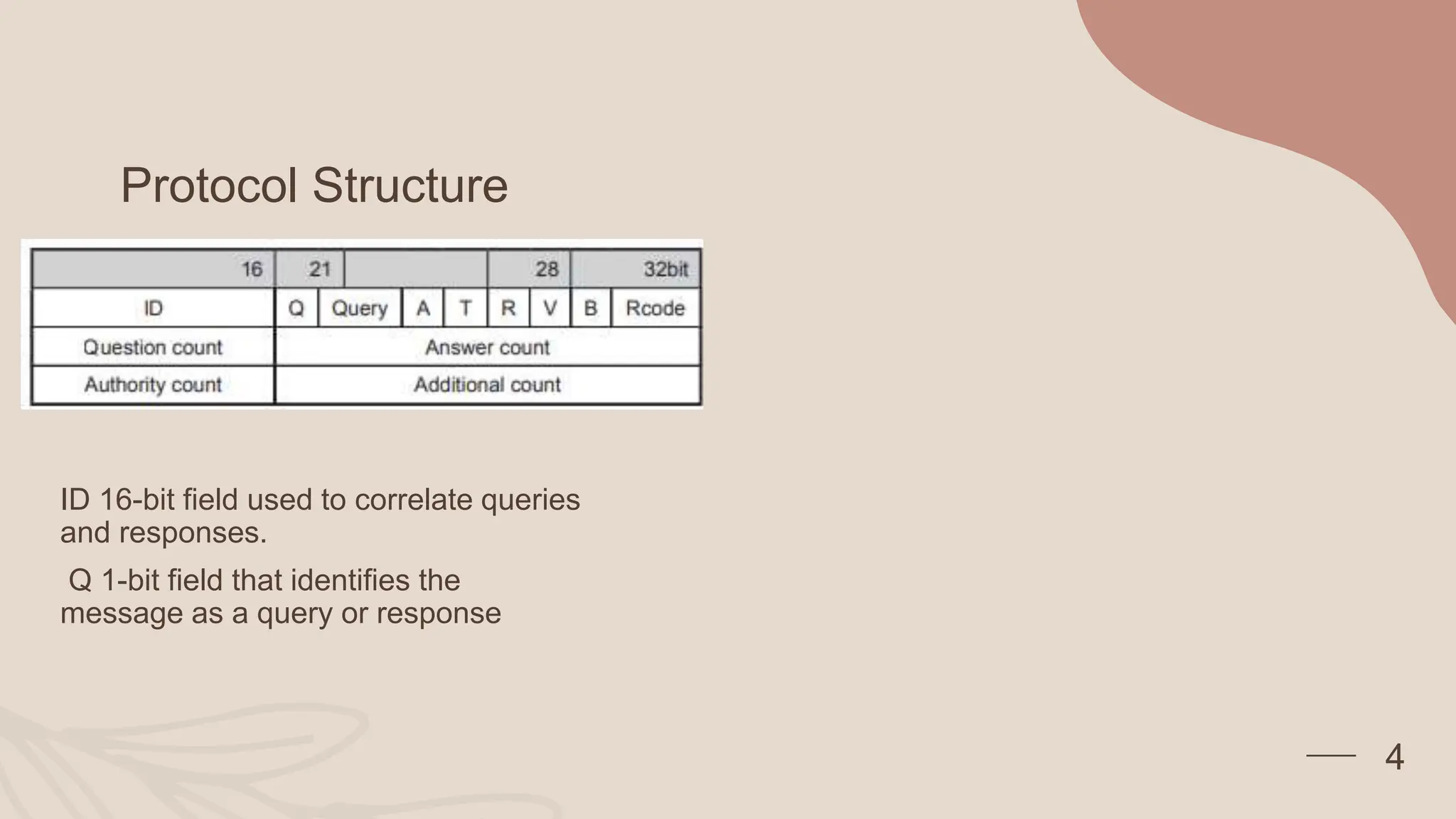
Protocol Structure
ID 16-bit field used to correlate queries
and responses.
Q 1-bit field that identifies the
message as a query or response
4
FTP: File Transfer Protocol
Protocol Description:
File Transfer Protocol (FTP) enables file sharing between hosts.
FTP uses TCP to create a virtual connection for control
information and then creates a separate TCP connection for data
transfers.
The control connection uses an image of the TELNET protocol to
exchange commands and messages between hosts.
5
The key functions of FTP are:
1) to promote sharing of files (computer
programs and/or data);
2) 2) to encourage indirect or implicit (via
programs) use of remote computers;
3) 3) to shield a user from variations in file
storage systems among hosts; and
4) 4) to transfer data reliably and efficiently.
FTP, though usable directly by a user at a terminal, is
designed mainly for use by programs. FTP control frames
are TELNET exchanges and can contain TELNET
commands and option negotiation. However, most FTP
control frames are simple ASCII text and can be classified
as FTP commands or FTP messages. FTP messages are
responses to FTP commands and consist of a response
code followed by explanatory text.
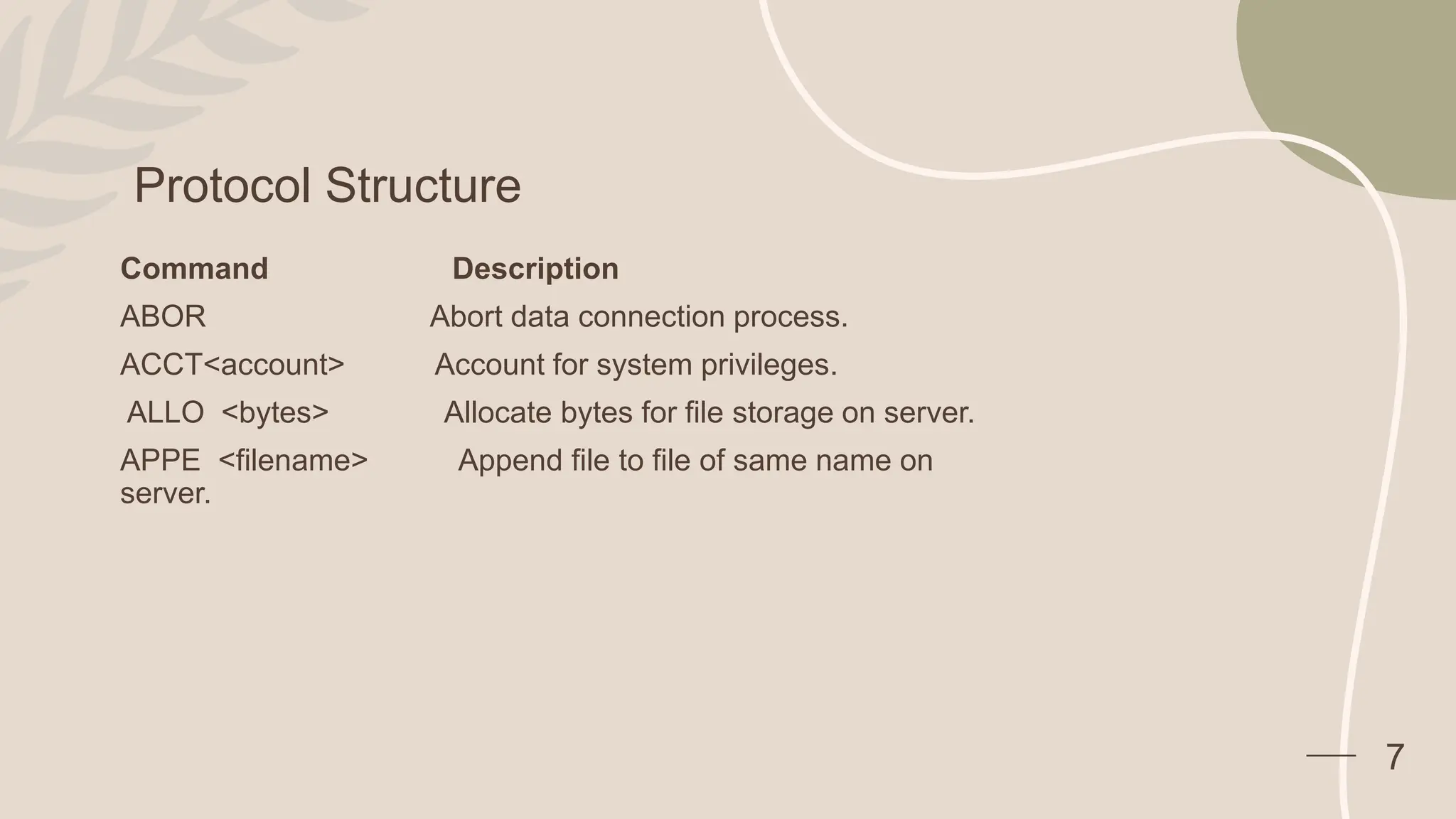
Protocol Structure
Command Description
ABOR Abort data connection process.
ACCT<account> Account for system privileges.
ALLO <bytes> Allocate bytes for file storage on server.
APPE <filename> Append file to file of same name on
server.
7
thank you
NAME : MAYAR MAGDY
AHMED
ID: 20206030

Application Layer protocols TASK388.pptx

  • 1.
  • 2.
    DNS: Domain NameSystem (Service) protocol • Domain Name System (DNS) is a distributed Internet directory service. • DNS is used mostly to translate between domain names and IP addresses and to control Internet email delivery. • Most Internet services rely on DNS to work, and if DNS fails, web sites cannot be located and email delivery stalls. 2
  • 3.
    DNS has twoindependent aspects: 1. IT SPECIFIES THE NAME SYNTAX AND RULES FOR DELEGATING AUTHORITY OVER NAMES. THE BASIC SYNTAX IS: LOCAL.GROUP.SITE 2. IT SPECIFIES THE IMPLEMENTATION OF A DISTRIBUTED COMPUTING SYSTEM THAT EFFICIENTLY MAPS NAMES TO ADDRESSES.
  • 4.
    Protocol Structure ID 16-bitfield used to correlate queries and responses. Q 1-bit field that identifies the message as a query or response 4
  • 5.
    FTP: File TransferProtocol Protocol Description: File Transfer Protocol (FTP) enables file sharing between hosts. FTP uses TCP to create a virtual connection for control information and then creates a separate TCP connection for data transfers. The control connection uses an image of the TELNET protocol to exchange commands and messages between hosts. 5
  • 6.
    The key functionsof FTP are: 1) to promote sharing of files (computer programs and/or data); 2) 2) to encourage indirect or implicit (via programs) use of remote computers; 3) 3) to shield a user from variations in file storage systems among hosts; and 4) 4) to transfer data reliably and efficiently. FTP, though usable directly by a user at a terminal, is designed mainly for use by programs. FTP control frames are TELNET exchanges and can contain TELNET commands and option negotiation. However, most FTP control frames are simple ASCII text and can be classified as FTP commands or FTP messages. FTP messages are responses to FTP commands and consist of a response code followed by explanatory text.
  • 7.
    Protocol Structure Command Description ABORAbort data connection process. ACCT<account> Account for system privileges. ALLO <bytes> Allocate bytes for file storage on server. APPE <filename> Append file to file of same name on server. 7
  • 8.
    thank you NAME :MAYAR MAGDY AHMED ID: 20206030