UNIT 11 PRESENTATION:

   VOCABULARY
   APPEARANCES

              By:
              Lizeth Gasca
              Andrés Portillo
              Juan Pablo Quiroga
Grammar:

Describing people:

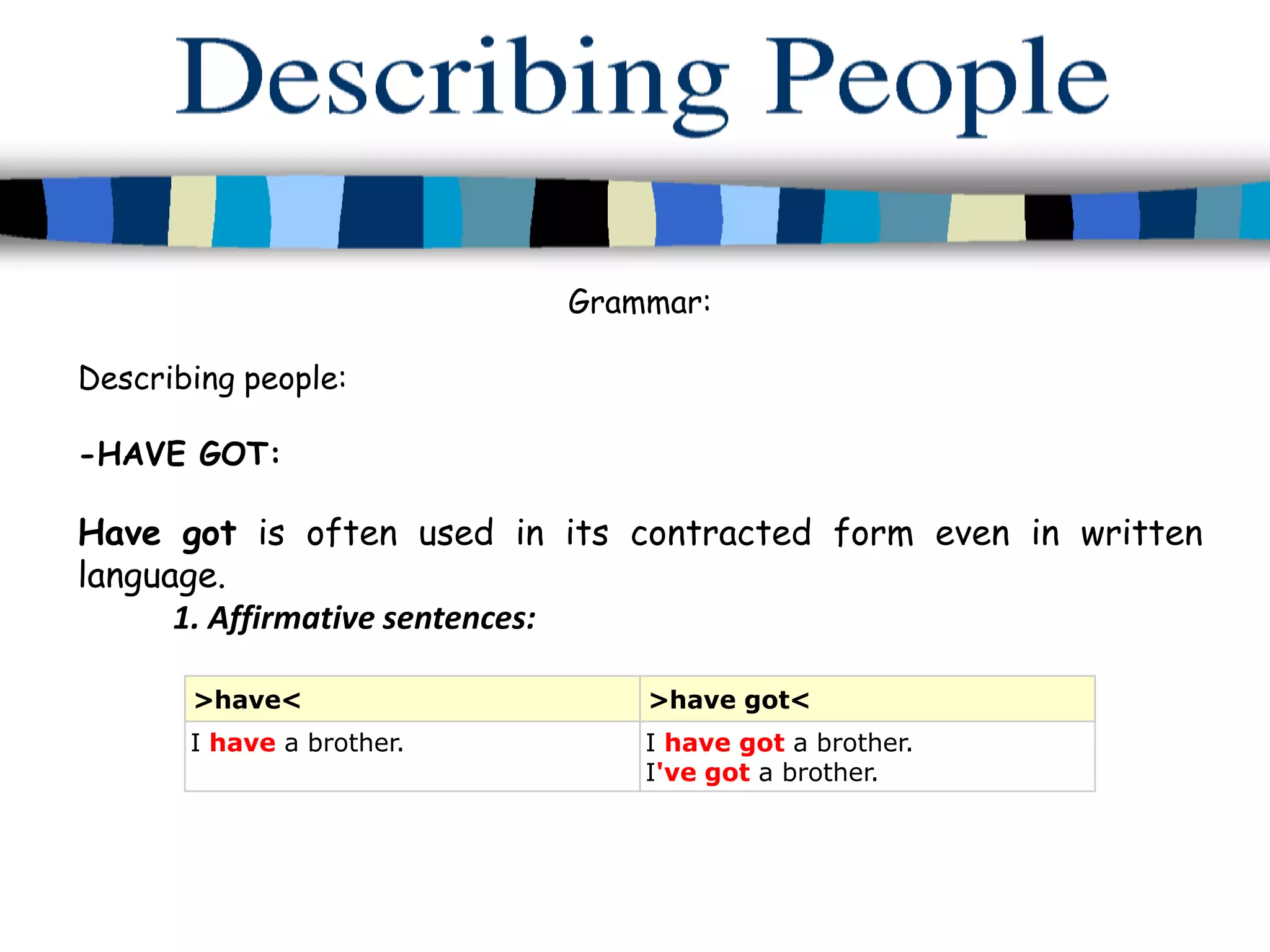
-HAVE GOT:

Have got is often used in its contracted form even in written
language.
      1. Affirmative sentences:

       >have<                  >have got<
       I have a brother.       I have got a brother.
                               I've got a brother.
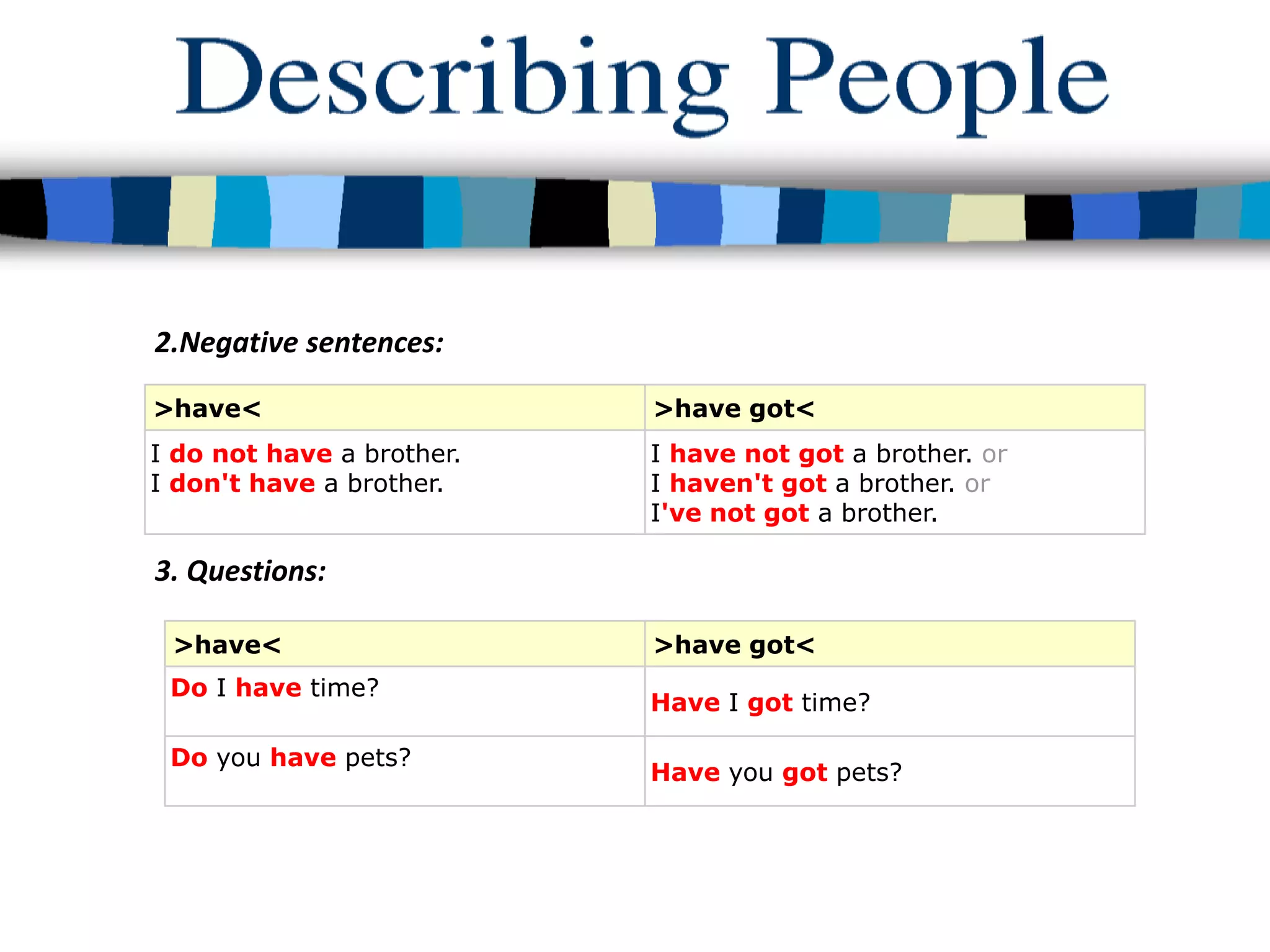
2.Negative sentences:

>have<                     >have got<
I do not have a brother.   I have not got a brother. or
I don't have a brother.    I haven't got a brother. or
                           I've not got a brother.

3. Questions:

 >have<                    >have got<
 Do I have time?
                           Have I got time?

 Do you have pets?
                           Have you got pets?
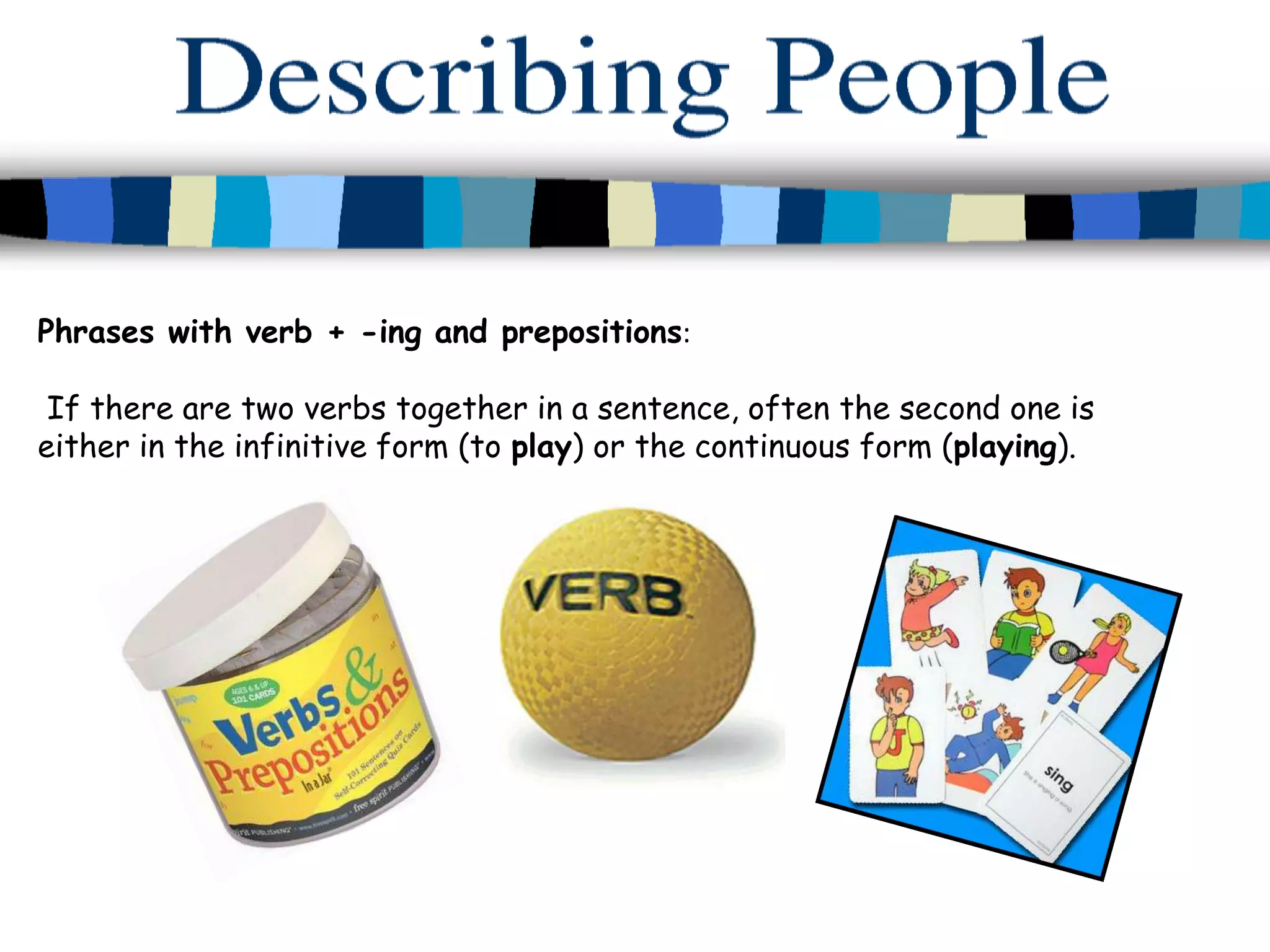
Phrases with verb + -ing and prepositions:

 If there are two verbs together in a sentence, often the second one is
either in the infinitive form (to play) or the continuous form (playing).
You mean… :

You ask say YOU MEAN… or ask DO YOU MEAN…? to check what
someone is talking about, or suggest a word or name.
Appearances

Appearances

  • 1.
    UNIT 11 PRESENTATION: VOCABULARY APPEARANCES By: Lizeth Gasca Andrés Portillo Juan Pablo Quiroga
  • 2.
    Grammar: Describing people: -HAVE GOT: Havegot is often used in its contracted form even in written language. 1. Affirmative sentences: >have< >have got< I have a brother. I have got a brother. I've got a brother.
  • 3.
    2.Negative sentences: >have< >have got< I do not have a brother. I have not got a brother. or I don't have a brother. I haven't got a brother. or I've not got a brother. 3. Questions: >have< >have got< Do I have time? Have I got time? Do you have pets? Have you got pets?
  • 4.
    Phrases with verb+ -ing and prepositions: If there are two verbs together in a sentence, often the second one is either in the infinitive form (to play) or the continuous form (playing).
  • 5.
    You mean… : Youask say YOU MEAN… or ask DO YOU MEAN…? to check what someone is talking about, or suggest a word or name.