| ©2020 F5 NETWORKS1
マルチクラウド環境の膨大な
APIトラフィックをリアルタイムに
処理するNGINXの仕組み
POWERED BY NGINX PLUS AND NGINX CONTROLLER
F5ネットワークスジャパン合同会社
NGINX テクニカルソリューションズアーキテクト
鈴木 孝彰, 松本 央
| ©2020 F53
Agenda
1. NGINXの歴史
2. APIの現在の動向とデジタルエコノミー
3. API管理プラットフォームを構築するために必要なもの
4. NGINXがAPI管理、監視、保護にどのように役立つか
5. デモ - NGINX Controller 3.3
| ©2020 F54
NGINXの歴史
| ©2020 F55
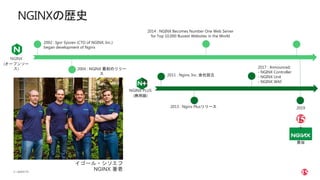
NGINXの歴史
NGINX
(オープンソー
ス)
2011 : Nginx, Inc. 会社設立
2013 : Nginx Plusリリース
2017 : Announced;
- NGINX Controller
- NGINX Unit
- NGINX WAF
2019
2014 : NGINX Becomes Number One Web Server
for Top 10,000 Busiest Websites in the World
2004 : NGINX 最初のリリー
ス
2019 : Fuels 375M+ web sites, 60%
of the busiest 100K sites
NGINX PLUS
(商用版)
2002 : Igor Sysoev (CTO of NGINX, Inc.)
began development of Nginx
買収
イゴール・シソエフ
NGINX 著者
| ©2020 F56
Web Server
Reverse Proxy
and Cache
| ©2020 F57
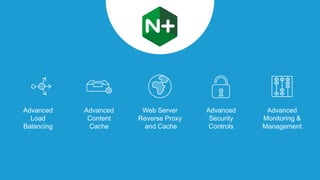
Advanced
Load
Balancing
Advanced
Content
Cache
Web Server
Reverse Proxy
and Cache
Advanced
Monitoring &
Management
Advanced
Security
Controls
| ©2020 F58
Advanced
Load
Balancing
Advanced
Content
Cache
Web Server
Reverse Proxy
and Cache
Advanced
Monitoring &
Management
Advanced
Security
Controls
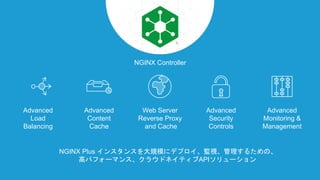
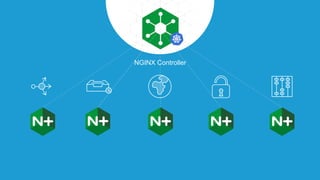
NGINX Controller
NGINX Plus インスタンスを大規模にデプロイ、監視、管理するための、
高パフォーマンス、クラウドネイティブAPIソリューション
| ©2020 F59
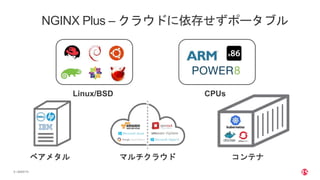
NGINX Plus – クラウドに依存せずポータブル
ベアメタル マルチクラウド コンテナ
Linux/BSD CPUs
| ©2020 F511
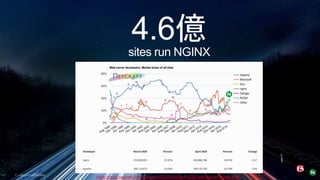
4.6億
sites run NGINX
WE HAVE TREMENDOUS INSIGHT INTO APPLICATION PATTERNS
| ©2020 F5 NETWORKS11
https://news.netcraft.com/archives/2020/04/08/april-2020-web-server-survey.html
| ©2020 F512
APIの現在の動向と
デジタルエコノミー
| ©2020 F513
CUSTOMER
EXPERIENCE
BUSINESS
AGILITY
DIGITAL ROI
企業はビジネスを大きく成長させるため
デジタルトランスフォーメーションを進めています
| ©2020 F514
アプリケーションの状況の変化
1 F5 State of Application Services Report 2018 2 IDC FutureScape 2019 3 Cisco Global Cloud Index: 2016-2021
4 Akamai State of the Internet Report 2019
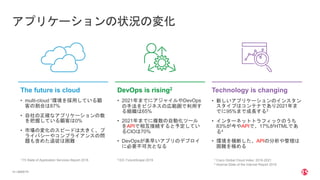
The future is cloud
• multi-cloud 1環境を採用している顧
客の割合は87%
• 自社の正確なアプリケーションの数
を把握している顧客は0%
• 市場の変化のスピードは大きく、プ
ライバシーやコンプライアンスの問
題も含めた追従は困難
DevOps is rising2
• 2021年までにアジャイルやDevOps
の手法をビジネスの広範囲で利用す
る組織は65%
• 2021年までに複数の自動化ツール
をAPIで相互接続すると予定してい
るCIOは70%
• DevOpsが素早いアプリのデプロイ
に必要不可欠となる
Technology is changing
• 新しいアプリケーションのインスタン
スタイプはコンテナであり2021年ま
でに95%まで成長する3
• インターネットトラフィックのうち
83%が今やAPIで、17%がHTMLであ
る4
• 環境を横断した、APIの分析や管理は
困難を極める
| ©2020 F515 Source: https://www.programmableweb.com/news/research-shows-interest-providing-apis-still-high/research/2018/02/23
| ©2020 F516
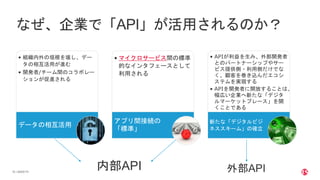
• 組織内外の垣根を壊し、デー
タの相互活用が進む
• 開発者/チーム間のコラボレー
ションが促進される
データの相互活用
• マイクロサービス間の標準
的なインタフェースとして
利用される
アプリ間接続の
「標準」
• APIが利益を生み、外部開発者
とのパートナーシップやサー
ビス提供側・利用側だけでな
く、顧客を巻き込んだエコシ
ステムを実現する
• APIを開発者に開放することは、
幅広い企業へ新たな「デジタ
ルマーケットプレース」を開
くことである
新たな「デジタルビジ
ネススキーム」の確立
なぜ、企業で「API」が活用されるのか?
外部API内部API
| ©2020 F517
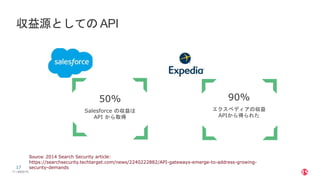
収益源としての API
17
Source: 2014 Search Security article:
https://searchsecurity.techtarget.com/news/2240222882/API-gateways-emerge-to-address-growing-
security-demands
50%
Salesforce の収益は
API から取得
90%
エクスペディアの収益
APIから得られた
| ©2020 F518
NGINXがAPI管理、監視、保護
にどのように役立つか
| ©2020 F519
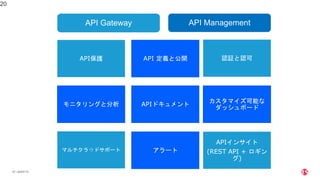
API Management
[Control Plane]
• ポリシーの定義
• 設定の配信・管理
• パフォーマンスモニタリ
ング(APM)API利用状況の
可視化
• 開発者向け管理ポータル
を用いた横断管理
API Gateway
[Data Plane]
• L7リクエスト処理
• 負荷分散
• 軽快・安定した動作
• 容易な展開
• 容易なスケール
| ©2020 F520
20
API 定義と公開
モニタリングと分析 APIドキュメント
カスタマイズ可能な
ダッシュボード
アラート
APIインサイト
(REST API + ロギン
グ)
マルチクラウドサポート
API保護 認証と認可
API ManagementAPI Gateway
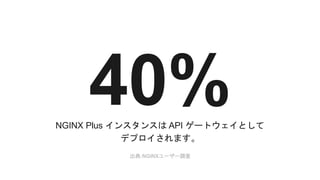
40%NGINX Plus インスタンスは API ゲートウェイとして
デプロイされます。
出典:NGINXユーザー調査
| ©2020 F522
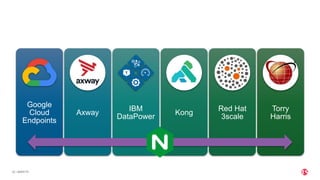
Many API Gateways Solutions are Built on NGINX
Google
Cloud
Endpoints
Axway
IBM
DataPower
Kong
Red Hat
3scale
Torry
Harris
| ©2020 F523
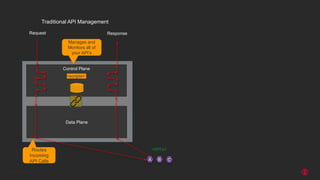
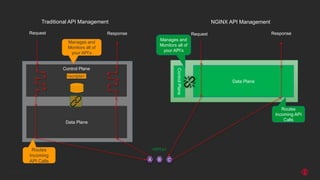
Control Plane
<scripts>
<API’s>
Request Response
Data Plane
Manages and
Monitors all of
your API’s
Routes
Incoming
API Calls
Traditional API Management
A B C
| ©2020 F524
Data Plane
Control Plane
<scripts>
<API’s>
Request Response
Data Plane
ControlPlane
Request Response
Manages and
Monitors all of
your API’s
Routes
Incoming
API Calls
Traditional API Management NGINX API Management
Manages and
Monitors all of
your API’s
Routes
Incoming API
Calls
A B C
| ©2020 F525
NGINX Controller
| ©2020 F526
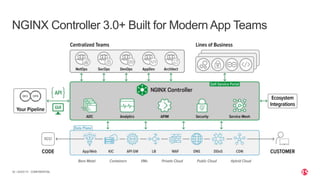
NGINX Controller 3.0+ Built for Modern App Teams
CONFIDENTIAL
| ©2020 F527 CONFIDENTIAL
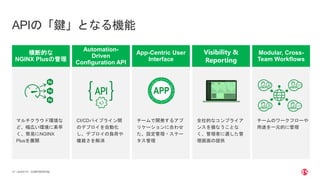
APIの「鍵」となる機能
横断的な
NGINX Plusの管理
Automation-
Driven
Configuration API
App-Centric User
Interface
Visibility &
Reporting
Modular, Cross-
Team Workflows
APP
マルチクラウド環境な
ど、幅広い環境に素早
く、簡易にNGINX
Plusを展開
CI/CDパイプライン間
のデプロイを自動化
し、デプロイの負荷や
複雑さを解消
チームで開発するアプ
リケーションに合わせ
た、設定管理・ステー
タス管理
全社的なコンプライア
ンスを損なうことな
く、管理者に適した管
理画面の提供
チームのワークフローや
用途を一元的に管理
| ©2020 F528
NGINX Controller Demo

マルチクラウド環境の膨大なAPIトラフィックをリアルタイムに処理するNGINXの仕組み

  • 1.
    | ©2020 F5NETWORKS1 マルチクラウド環境の膨大な APIトラフィックをリアルタイムに 処理するNGINXの仕組み POWERED BY NGINX PLUS AND NGINX CONTROLLER
  • 2.
  • 3.
    | ©2020 F53 Agenda 1.NGINXの歴史 2. APIの現在の動向とデジタルエコノミー 3. API管理プラットフォームを構築するために必要なもの 4. NGINXがAPI管理、監視、保護にどのように役立つか 5. デモ - NGINX Controller 3.3
  • 4.
  • 5.
    | ©2020 F55 NGINXの歴史 NGINX (オープンソー ス) 2011: Nginx, Inc. 会社設立 2013 : Nginx Plusリリース 2017 : Announced; - NGINX Controller - NGINX Unit - NGINX WAF 2019 2014 : NGINX Becomes Number One Web Server for Top 10,000 Busiest Websites in the World 2004 : NGINX 最初のリリー ス 2019 : Fuels 375M+ web sites, 60% of the busiest 100K sites NGINX PLUS (商用版) 2002 : Igor Sysoev (CTO of NGINX, Inc.) began development of Nginx 買収 イゴール・シソエフ NGINX 著者
  • 6.
    | ©2020 F56 WebServer Reverse Proxy and Cache
  • 7.
    | ©2020 F57 Advanced Load Balancing Advanced Content Cache WebServer Reverse Proxy and Cache Advanced Monitoring & Management Advanced Security Controls
  • 8.
    | ©2020 F58 Advanced Load Balancing Advanced Content Cache WebServer Reverse Proxy and Cache Advanced Monitoring & Management Advanced Security Controls NGINX Controller NGINX Plus インスタンスを大規模にデプロイ、監視、管理するための、 高パフォーマンス、クラウドネイティブAPIソリューション
  • 9.
    | ©2020 F59 NGINXPlus – クラウドに依存せずポータブル ベアメタル マルチクラウド コンテナ Linux/BSD CPUs
  • 10.
    | ©2020 F511 4.6億 sitesrun NGINX WE HAVE TREMENDOUS INSIGHT INTO APPLICATION PATTERNS | ©2020 F5 NETWORKS11 https://news.netcraft.com/archives/2020/04/08/april-2020-web-server-survey.html
  • 11.
  • 12.
    | ©2020 F513 CUSTOMER EXPERIENCE BUSINESS AGILITY DIGITALROI 企業はビジネスを大きく成長させるため デジタルトランスフォーメーションを進めています
  • 13.
    | ©2020 F514 アプリケーションの状況の変化 1F5 State of Application Services Report 2018 2 IDC FutureScape 2019 3 Cisco Global Cloud Index: 2016-2021 4 Akamai State of the Internet Report 2019 The future is cloud • multi-cloud 1環境を採用している顧 客の割合は87% • 自社の正確なアプリケーションの数 を把握している顧客は0% • 市場の変化のスピードは大きく、プ ライバシーやコンプライアンスの問 題も含めた追従は困難 DevOps is rising2 • 2021年までにアジャイルやDevOps の手法をビジネスの広範囲で利用す る組織は65% • 2021年までに複数の自動化ツール をAPIで相互接続すると予定してい るCIOは70% • DevOpsが素早いアプリのデプロイ に必要不可欠となる Technology is changing • 新しいアプリケーションのインスタン スタイプはコンテナであり2021年ま でに95%まで成長する3 • インターネットトラフィックのうち 83%が今やAPIで、17%がHTMLであ る4 • 環境を横断した、APIの分析や管理は 困難を極める
  • 14.
    | ©2020 F515Source: https://www.programmableweb.com/news/research-shows-interest-providing-apis-still-high/research/2018/02/23
  • 15.
    | ©2020 F516 •組織内外の垣根を壊し、デー タの相互活用が進む • 開発者/チーム間のコラボレー ションが促進される データの相互活用 • マイクロサービス間の標準 的なインタフェースとして 利用される アプリ間接続の 「標準」 • APIが利益を生み、外部開発者 とのパートナーシップやサー ビス提供側・利用側だけでな く、顧客を巻き込んだエコシ ステムを実現する • APIを開発者に開放することは、 幅広い企業へ新たな「デジタ ルマーケットプレース」を開 くことである 新たな「デジタルビジ ネススキーム」の確立 なぜ、企業で「API」が活用されるのか? 外部API内部API
  • 16.
    | ©2020 F517 収益源としてのAPI 17 Source: 2014 Search Security article: https://searchsecurity.techtarget.com/news/2240222882/API-gateways-emerge-to-address-growing- security-demands 50% Salesforce の収益は API から取得 90% エクスペディアの収益 APIから得られた
  • 17.
  • 18.
    | ©2020 F519 APIManagement [Control Plane] • ポリシーの定義 • 設定の配信・管理 • パフォーマンスモニタリ ング(APM)API利用状況の 可視化 • 開発者向け管理ポータル を用いた横断管理 API Gateway [Data Plane] • L7リクエスト処理 • 負荷分散 • 軽快・安定した動作 • 容易な展開 • 容易なスケール
  • 19.
    | ©2020 F520 20 API定義と公開 モニタリングと分析 APIドキュメント カスタマイズ可能な ダッシュボード アラート APIインサイト (REST API + ロギン グ) マルチクラウドサポート API保護 認証と認可 API ManagementAPI Gateway
  • 20.
    40%NGINX Plus インスタンスはAPI ゲートウェイとして デプロイされます。 出典:NGINXユーザー調査
  • 21.
    | ©2020 F522 ManyAPI Gateways Solutions are Built on NGINX Google Cloud Endpoints Axway IBM DataPower Kong Red Hat 3scale Torry Harris
  • 22.
    | ©2020 F523 ControlPlane <scripts> <API’s> Request Response Data Plane Manages and Monitors all of your API’s Routes Incoming API Calls Traditional API Management A B C
  • 23.
    | ©2020 F524 DataPlane Control Plane <scripts> <API’s> Request Response Data Plane ControlPlane Request Response Manages and Monitors all of your API’s Routes Incoming API Calls Traditional API Management NGINX API Management Manages and Monitors all of your API’s Routes Incoming API Calls A B C
  • 24.
  • 25.
    | ©2020 F526 NGINXController 3.0+ Built for Modern App Teams CONFIDENTIAL
  • 26.
    | ©2020 F527CONFIDENTIAL APIの「鍵」となる機能 横断的な NGINX Plusの管理 Automation- Driven Configuration API App-Centric User Interface Visibility & Reporting Modular, Cross- Team Workflows APP マルチクラウド環境な ど、幅広い環境に素早 く、簡易にNGINX Plusを展開 CI/CDパイプライン間 のデプロイを自動化 し、デプロイの負荷や 複雑さを解消 チームで開発するアプ リケーションに合わせ た、設定管理・ステー タス管理 全社的なコンプライア ンスを損なうことな く、管理者に適した管 理画面の提供 チームのワークフローや 用途を一元的に管理
  • 27.
    | ©2020 F528 NGINXController Demo

Editor's Notes

  • #7 Talk about NGINX at the heart of the modern web.
  • #8 Talk about advanced use cases
  • #9 And now with NGINX controller… we have a…High Performing, Cloud-Native and API Driven Solution to Deploying, Monitoring and Managing your NGINX Plus Instances at Scale and I am going to get more into this later
  • #10 Being software NGINX Plus can operate in any environment, from bare metal to VMs to containers. We don’t need to QA and qualify every environment. If you can run Linux you can run NGINX and it will just work. Not just across infrastructure, but the same NGINX software that runs in production can also run in staging and development environments without incurring additional capital costs. Keeping the different environments in sync as much as possible is an industry best practice and helps to reduce issues where it worked in dev but broke in production. With NGINX Plus enterprises can easily eliminate this potential gap in the deployment process.
  • #11 APIの優劣ではなく、別のユースケースに基づいた提案を繰り返す マルチクラウド。アクセスビリティ、継続性(コンにチュ照りティ)、アプリケーション(API)シングルポイントファイラーの経血案、アプリケーションが、偏在化 DR冗長化でのDNSベースでのふりふりか、API叩き合う場合の偏在会 BIG-IPのHAについて、
  • #12 Given the breath of customers we have through OSSS (400M), we have great visibility into application patterns across multitude of app types and industries
  • #14 Digital transformation can be motivated by business growth, the desire to improve operational efficiencies or both. Associated business objectives: delivering superior customer experiences, increasing business agility, and creating tangible/improved digital return on investment.
  • #15 The Future is Cloud Every company is a software company where differentiated value now comes in the form of an app. Applications are becoming the new capital for businesses.   Companies are looking to innovate, differentiate, and increase speed to market for their applications to drive value. Building for the cloud provides for speed, scale, and elasticity. 87% of customers are adopting not just one cloud, but multiple clouds. Why is that? Well in the end it provided developer agility and freedom of choice so they can move fast.   When we ask our customers, “Can you say with certainty the number of apps that are running across your entire portfolio? To date, 0% have said yes. Speed to market and developer agility has taken precedence over security, privacy, and compliance for those apps.   DevOps is rising DevOps methodologies gave rise as a response, brokering the Developers building the apps, and the Operations teams that need to protect the app…and the company! According to IDC, 65% of companies will expand their agile/DevOps methods into the wider business by 2021. And this can’t be a heavy lift via ticketing systems. Automation and speed to market still reign. 70% of CIOs will use APIs to interconnect automation tools by 2021. The DevOps movement is about collaboration: breaking down of silos, with reliance on cross functional teams working to deliver applications not just more quickly, but continuously -- configured and provisioned automatically as business needs change.   Technology is Changing Traditional apps that are hard-wired to the data plane and policies, and rely on a waterfall vs. agile methodology for building, testing, and deploying apps, is the opposite of agile. They also are not easily refactored to run in the cloud. And the classic VMs are only slightly better, with a bunch of libraries connected to each other, and if one app has a bug, it’s hard to upgrade because it could break the whole thing. While some dev teams are doing maintenance and bug control, the innovation comes with the new apps being built using microservices and containers. Today, 85% of new app workload instances are container-based -- growing to 95% by 2021.   Adding to the complexity is the number of orchestration and CI/CD tools where, often, each dev and DevOps team has their favorites. Trying to analyze app health and performance, and configuring all the APIs, in a hybrid, multi-cloud environment is increasingly difficult.
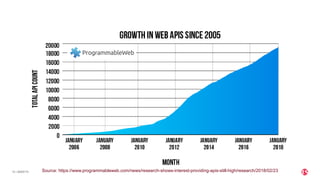
  • #16 Programmable web has been tracking HTTP APIs since 2005 – it’s the largest API directory on the web As you can see, the growth of public-facing APIs shows no sign of slowing down With about 200 new APIs per month consistently for the last 4-5 years
  • #17 There are a lot of reasons companies are developing APIs For internal APIs… Break down silos and increase collaboration Create a primary interface for communication …. For External It could be a primary source of revenue by providing a way of monetizing your services Or you could just be opening up your services to external partners or customers
  • #18 And for a lot of companies' API’s are a huge portion of their revenue
  • #20 And with the explosion of APIs, there is a need for management and also an API Gateway API Management is responsible for... - Policy, i.e. how the API should be accessed and what limitations are in place - Some sort of insight from an analytics perspective and also for monitoring - And a portal for developers to easily update documentation or spec Where the API Gateway is doing things like - Authentication (authorization based on policy) - Routing (also based on policy) - Protecting and Imposing limits on access to the APIs (Rate limits) - Handling application side errors.
  • #21 And we can go a step further and look at more of the core features that are necessary in either an API Management or Gateway solution….
  • #22 According to surveys to NGINX users, given in 2017 and 2018, on average about 40% of all NGINX Plus instances are actually deployed as an API Gateway
  • #23 These vendors all use NGINX as the network-level proxy in their API gateway Different approaches We will use our expertise of NGINX, and NGINX Plus features to do this in a NGINX-native way wherever possible. Lua/njs where it makes sense.
  • #26 And now with NGINX controller… we have a…High Performing, Cloud-Native and API Driven Solution to Deploying, Monitoring and Managing your NGINX Plus Instances at Scale and I am going to get more into this later
  • #27 Note: Anticipated availability of Service Mesh and security modules in Summer 2020
  • #30 Change icons on the left