RESPIRATORY PHARMACOLOGY
DARSHAN VAGHELA
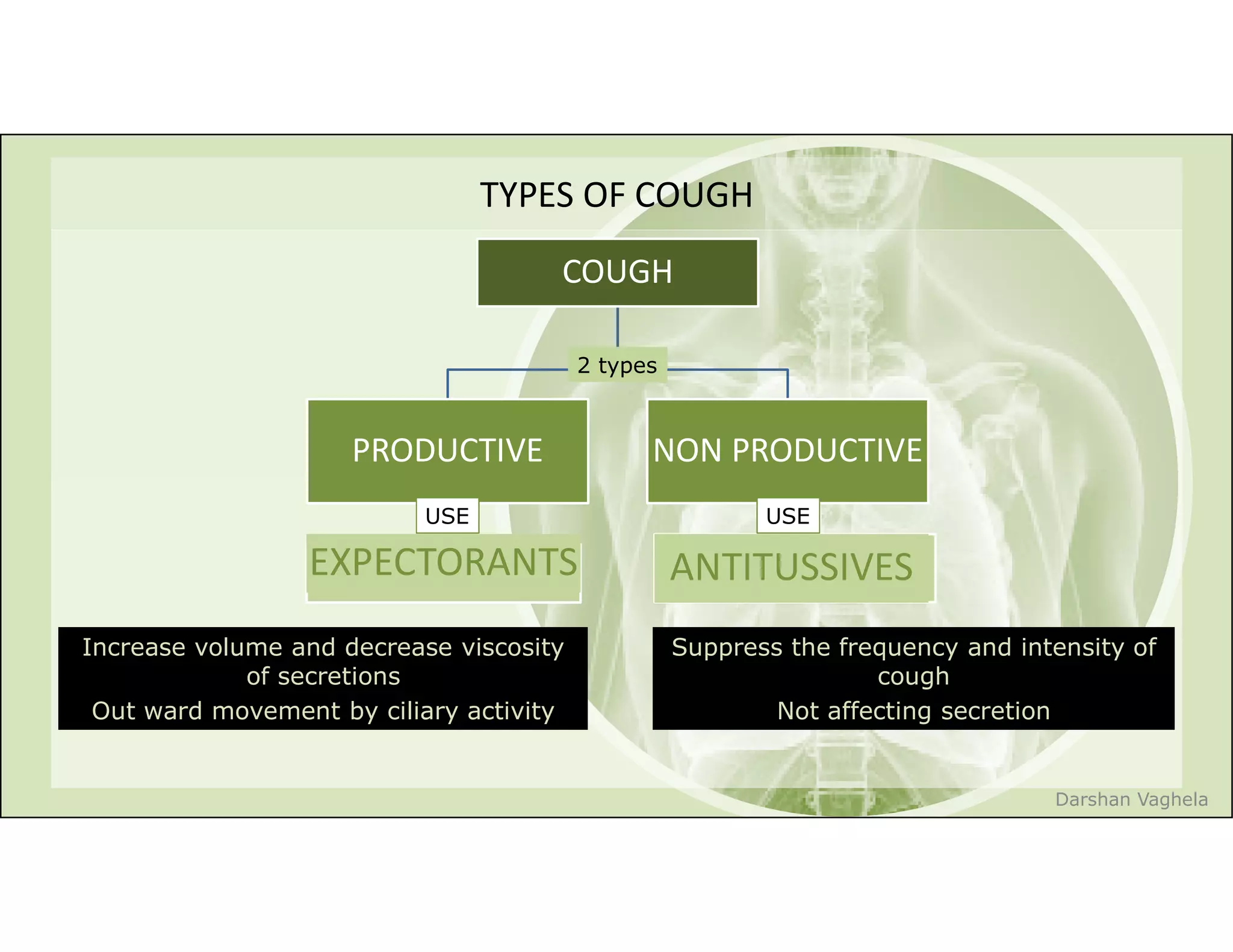
TYPES OF COUGH
COUGH
PRODUCTIVE NON PRODUCTIVE
2 types
EXPECTORANTS ANTITUSSIVES
Increase volume and decrease viscosity
of secretions
Out ward movement by ciliary activity
USE USE
Suppress the frequency and intensity of
cough
Not affecting secretion
Darshan Vaghela
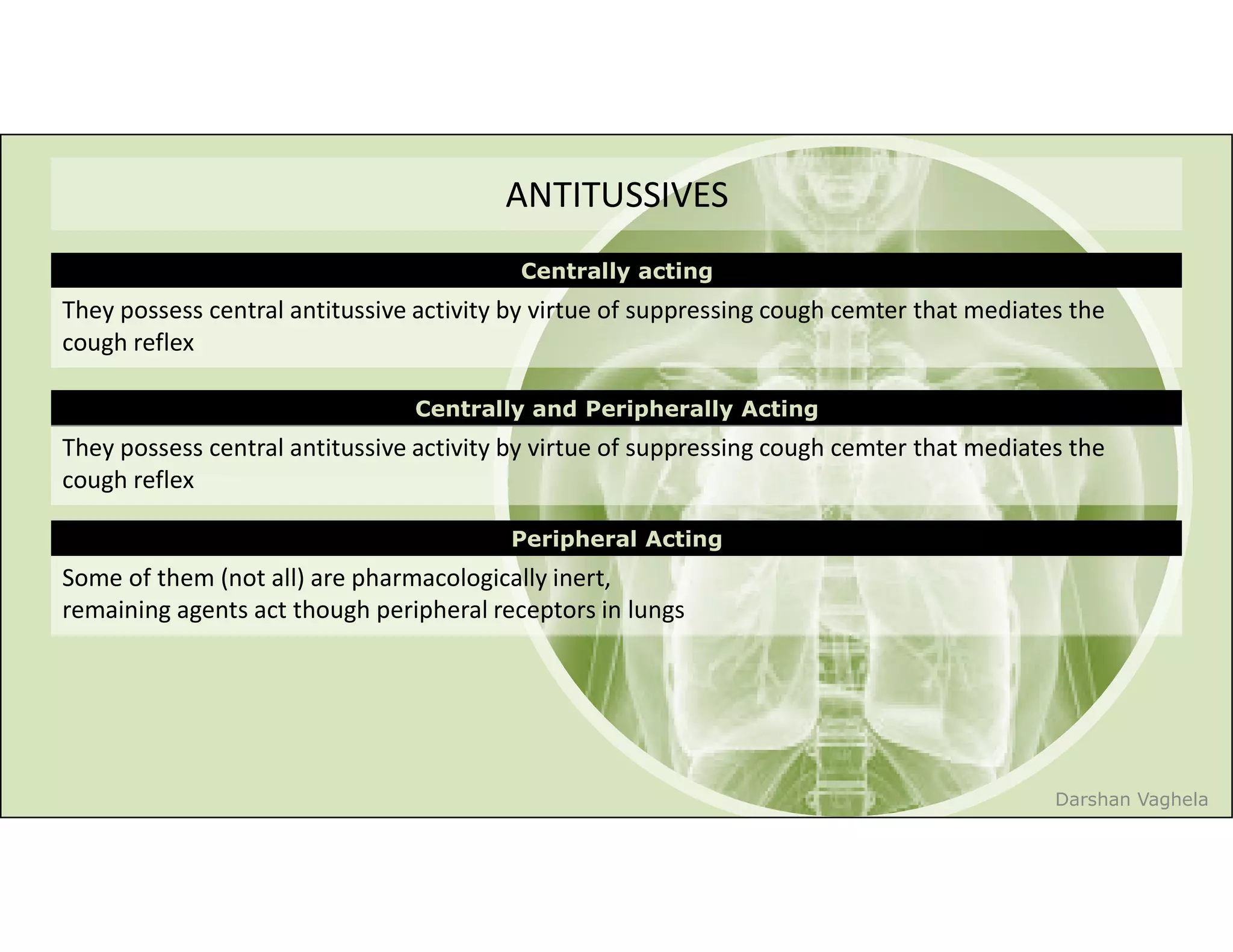
ANTITUSSIVES
Centrally acting
Centrally and Peripherally Acting
They possess central antitussive activity by virtue of suppressing cough cemter that mediates the
cough reflex
They possess central antitussive activity by virtue of suppressing cough cemter that mediates the
cough reflex
Peripheral Acting
cough reflex
Some of them (not all) are pharmacologically inert,
remaining agents act though peripheral receptors in lungs
Darshan Vaghela
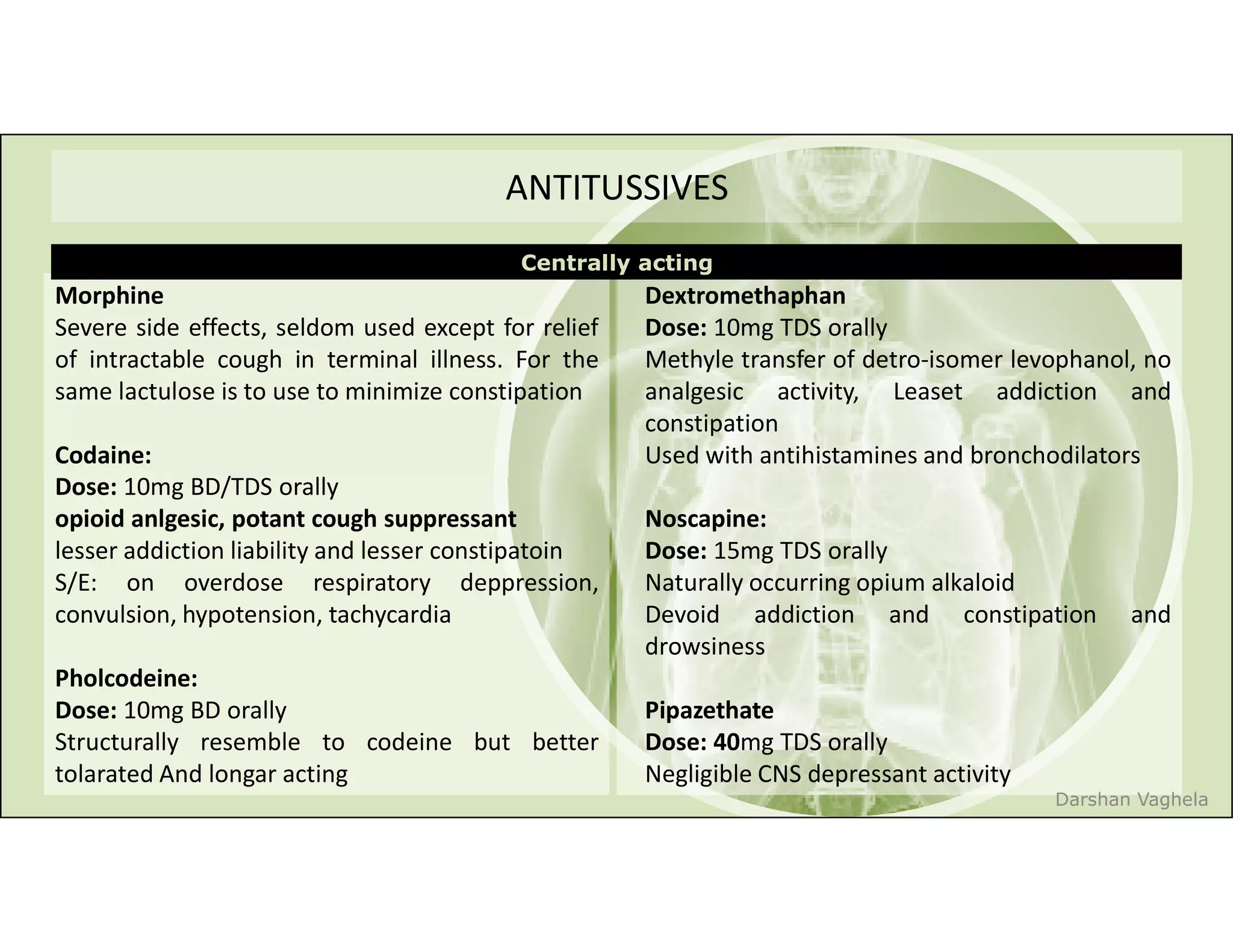
ANTITUSSIVES
Morphine
Severe side effects, seldom used except for relief
of intractable cough in terminal illness. For the
same lactulose is to use to minimize constipation
Codaine:
Dose: 10mg BD/TDS orally
Dextromethaphan
Dose: 10mg TDS orally
Methyle transfer of detro-isomer levophanol, no
analgesic activity, Leaset addiction and
constipation
Used with antihistamines and bronchodilators
Centrally acting
Dose: 10mg BD/TDS orally
opioid anlgesic, potant cough suppressant
lesser addiction liability and lesser constipatoin
S/E: on overdose respiratory deppression,
convulsion, hypotension, tachycardia
Pholcodeine:
Dose: 10mg BD orally
Structurally resemble to codeine but better
tolarated And longar acting
Noscapine:
Dose: 15mg TDS orally
Naturally occurring opium alkaloid
Devoid addiction and constipation and
drowsiness
Pipazethate
Dose: 40mg TDS orally
Negligible CNS depressant activity
Darshan Vaghela
ANTITUSSIVES
Prenoxdiazine: Inhibits pulmonaty streach receptor to relieve Bronchospasm
Modrate antitussive action
Benzonatate: 100-200mg TDS orally; Structurally recemble to local anesthetics (LA)
tetracaine, acts centrally and also inhibit pulmonary stretch receptor. It having mild
LA activity and causes vertigo at high dose
Centrally and Peripherally Acting
Demulcent
Indirect peripheral cough suppressant Provide protection coating over sensory
receptor on pharynx
(honey, syrup tolu, liquorice, syrup vasaka)
Local anesthetics (xylocaine and bopivocaine)
applied to larynx and pharynx specially in bronchoscopy and patient who are
refractory to other cough therapies
Peripheral Acting
Darshan Vaghela
ANTITUSSIVES
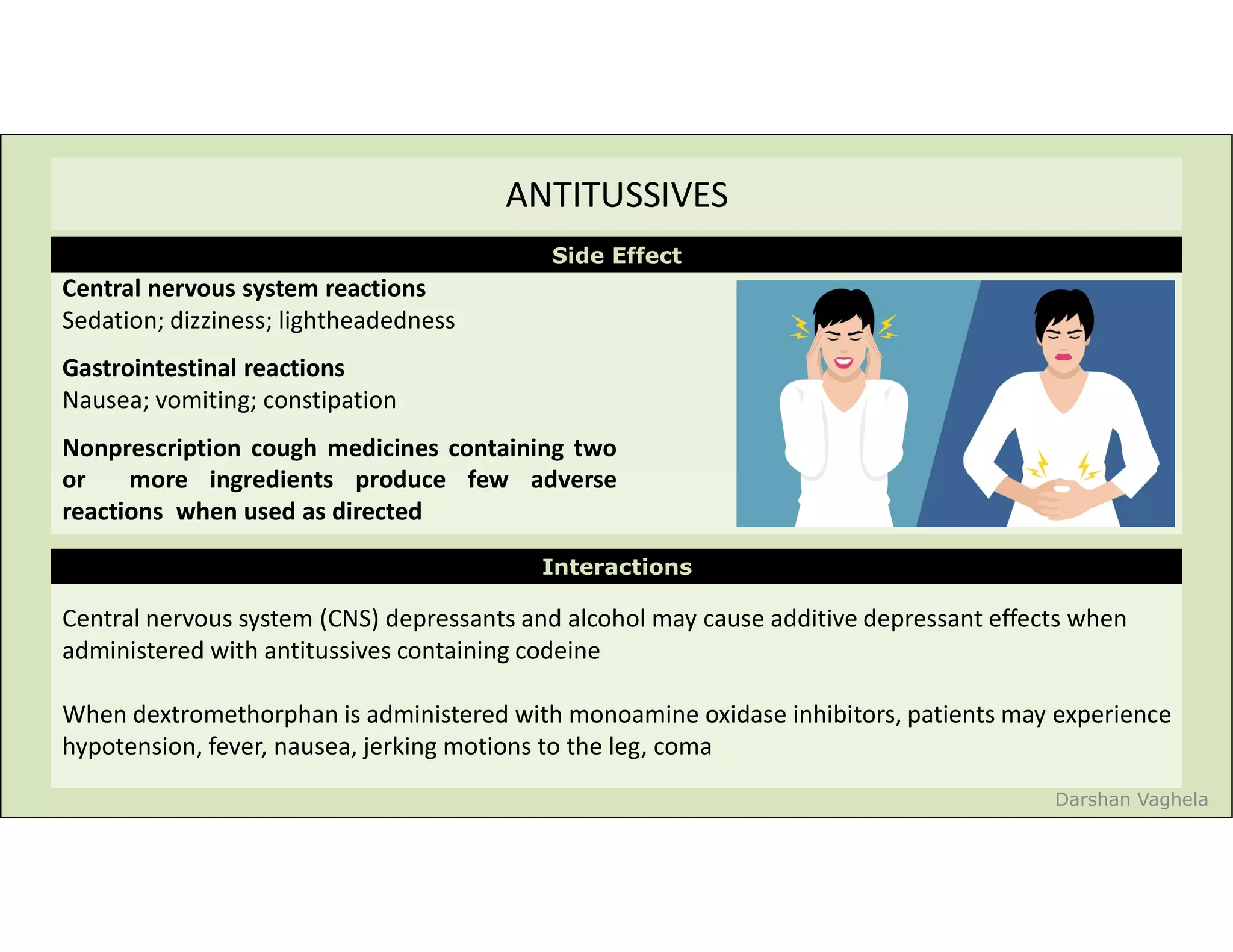
Central nervous system reactions
Sedation; dizziness; lightheadedness
Gastrointestinal reactions
Nausea; vomiting; constipation
Nonprescription cough medicines containing two
or more ingredients produce few adverse
Side Effect
or more ingredients produce few adverse
reactions when used as directed
Interactions
Central nervous system (CNS) depressants and alcohol may cause additive depressant effects when
administered with antitussives containing codeine
When dextromethorphan is administered with monoamine oxidase inhibitors, patients may experience
hypotension, fever, nausea, jerking motions to the leg, coma
Darshan Vaghela
ANTITUSSIVES
Contraindicated in patients with known hypersensitivity to drugs.
Opioid antitussives are contraindicated in premature infants or during labor when delivery of
premature infant is anticipated
Used with caution in patients:
With persistent or chronic cough; cough accompanied by excessive secretions; high fever; rash;
Contraindication and precautions
With persistent or chronic cough; cough accompanied by excessive secretions; high fever; rash;
persistent headache or nausea or vomiting
Antitussives containing codeine are used with caution during pregnancy and labor and in patients with
COPD; acute asthmatic attack; pre-existing respiratory disorders; acute abdominal conditions
It should not be used in cough associated with asthma or chronic bronchitis as they causes harmful
retention and thickening of sputum
Opioid Antitussives are used cautiously in patients with head injury and increased intracranial
pressure; acute abdominal disorders; convulsive disorders; hepatic or renal impairment; prostatic
hypertrophy; asthma or other respiratory conditions
Darshan Vaghela
EXPECTORANTS
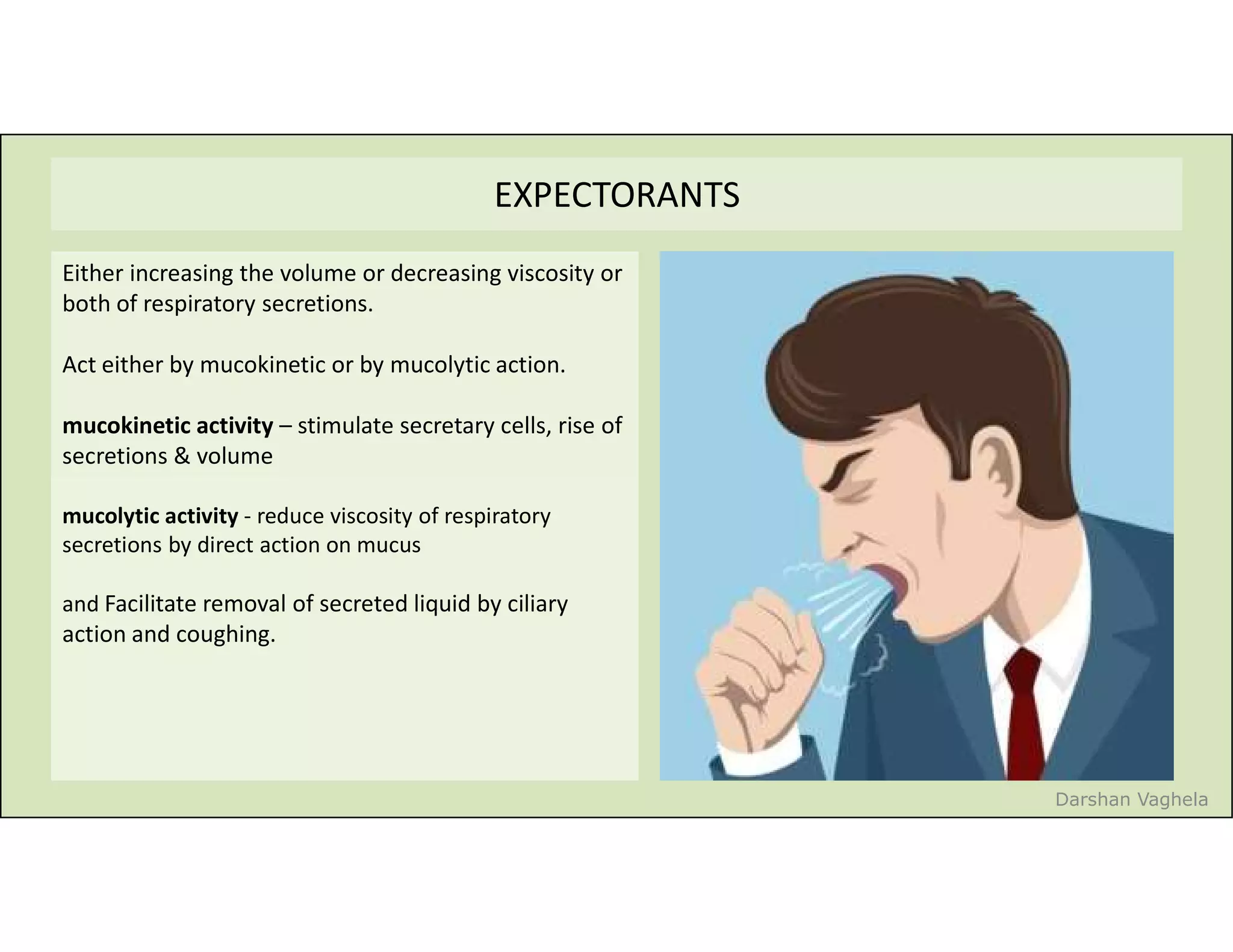
Either increasing the volume or decreasing viscosity or
both of respiratory secretions.
Act either by mucokinetic or by mucolytic action.
mucokinetic activity – stimulate secretary cells, rise of
secretions & volume
mucolytic activity - reduce viscosity of respiratory
secretions by direct action on mucus
and Facilitate removal of secreted liquid by ciliary
action and coughing.
Darshan Vaghela
EXPECTORANTS
Acetylecystaine, carbocystaine, bromhexine, ambroxol & dornase-alpha.
Acetylecystaine Decrease the viscosity by splitting disulphide bond (-S-S-)of muco-proteins which is
further facilitate by alkaline pH (7-9), while carbocystaine action is unclear.
Used in Cystic fibrosis and chronic bronchitis (administered via inhalation)& in paracetamol poisoning.
Mucolytic Expectorants
Used in Cystic fibrosis and chronic bronchitis (administered via inhalation)& in paracetamol poisoning.
Side effect: nausea, vomiting, stomatitis, bronchospasm.
Bromhexine –alkaloide from vasaka plant.
Ambroxol is metabolite of Bromhexine- It dipolamarise the mucopolysaccherides of mucus.
Breakage of lysosomal enzyme activity that break fibre network tenacious sputum.
Side effect: GIT upset, Rhinorrhoea.
Dornase-alpha- Highly purified solution of recombinant human DNase; an enzyme selectively claves
DNA and hydrolyses it.DNA that accumulate in sputum of patient of cystic fibrosis.
Darshan Vaghela
EXPECTORANTS
Acute bronchopulmonary disease
Pulmonary complications of cystic fibrosis
Pulmonary complications associated with surgery
Other uses
Pulmonary complications associated with surgery
Post-traumatic chest conditions
Atelectasis due to mucus obstruction
Acetaminophen overdosage
Darshan Vaghela
EXPECTORANTS
Expectorants and mucolytics are contraindicated in patients with known hypersensitivity
Expectorant potassium iodide is contraindicated during pregnancy
Expectorants are used cautiously during pregnancy and lactation and in patients with some
Contra indication and Precautions
Expectorants are used cautiously during pregnancy and lactation and in patients with some
conditions as follow.
Persistent cough; severe respiratory insufficiency or asthma; older adults or debilitated patients
Patient may experience hypokalemia; cardiac arrhythmias; or cardiac arrest when potassium-
containing medications and potassium-sparing diuretics are administered with iodine products
Thyroid function tests may also be altered by iodine
Contra indication and Precautions
Darshan Vaghela
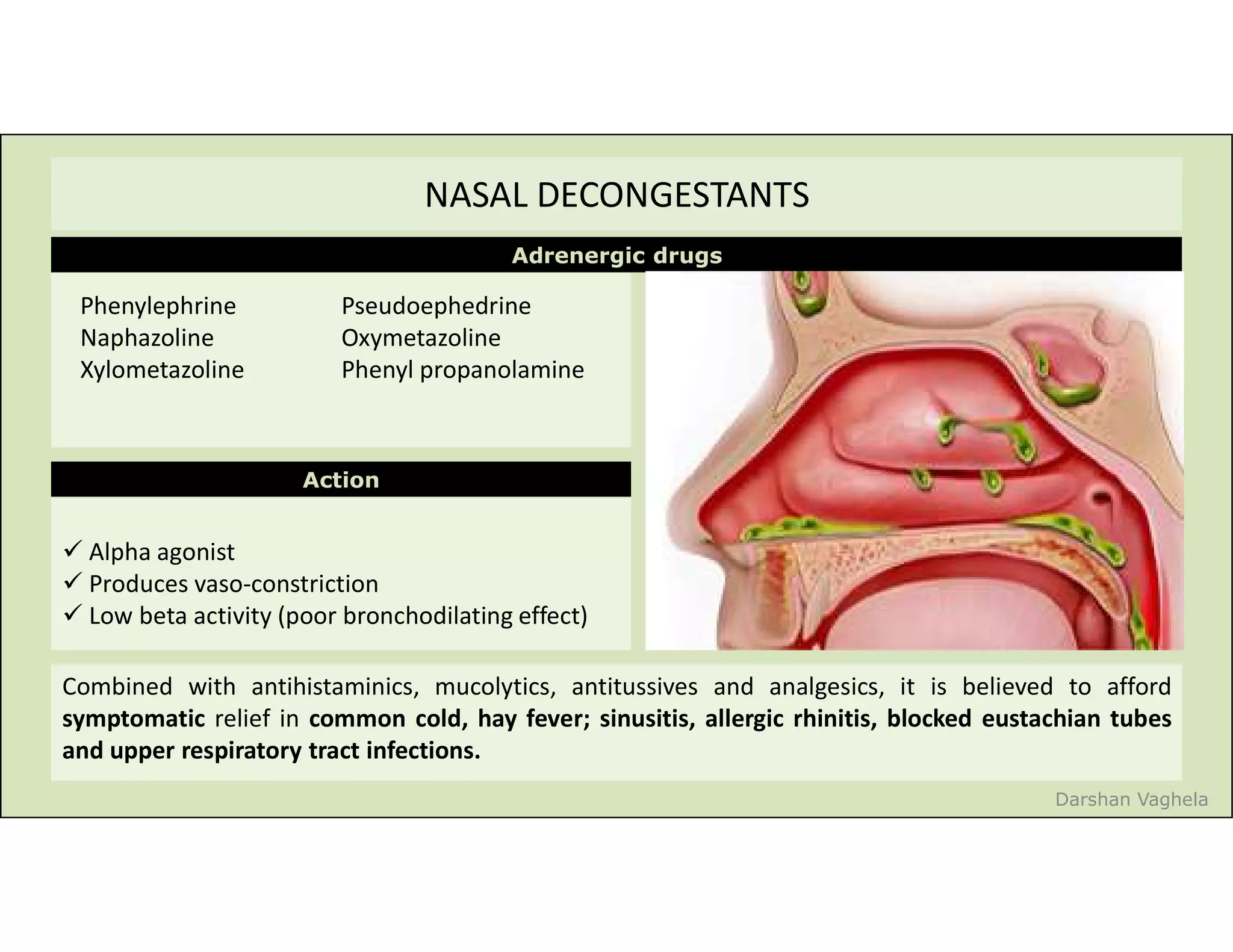
NASAL DECONGESTANTS
Phenylephrine
Naphazoline
Xylometazoline
Pseudoephedrine
Oxymetazoline
Phenyl propanolamine
Action
Adrenergic drugs
 Alpha agonist
 Produces vaso-constriction
 Low beta activity (poor bronchodilating effect)
Action
Combined with antihistaminics, mucolytics, antitussives and analgesics, it is believed to afford
symptomatic relief in common cold, hay fever; sinusitis, allergic rhinitis, blocked eustachian tubes
and upper respiratory tract infections.
Darshan Vaghela
NASAL DECONGESTANTS
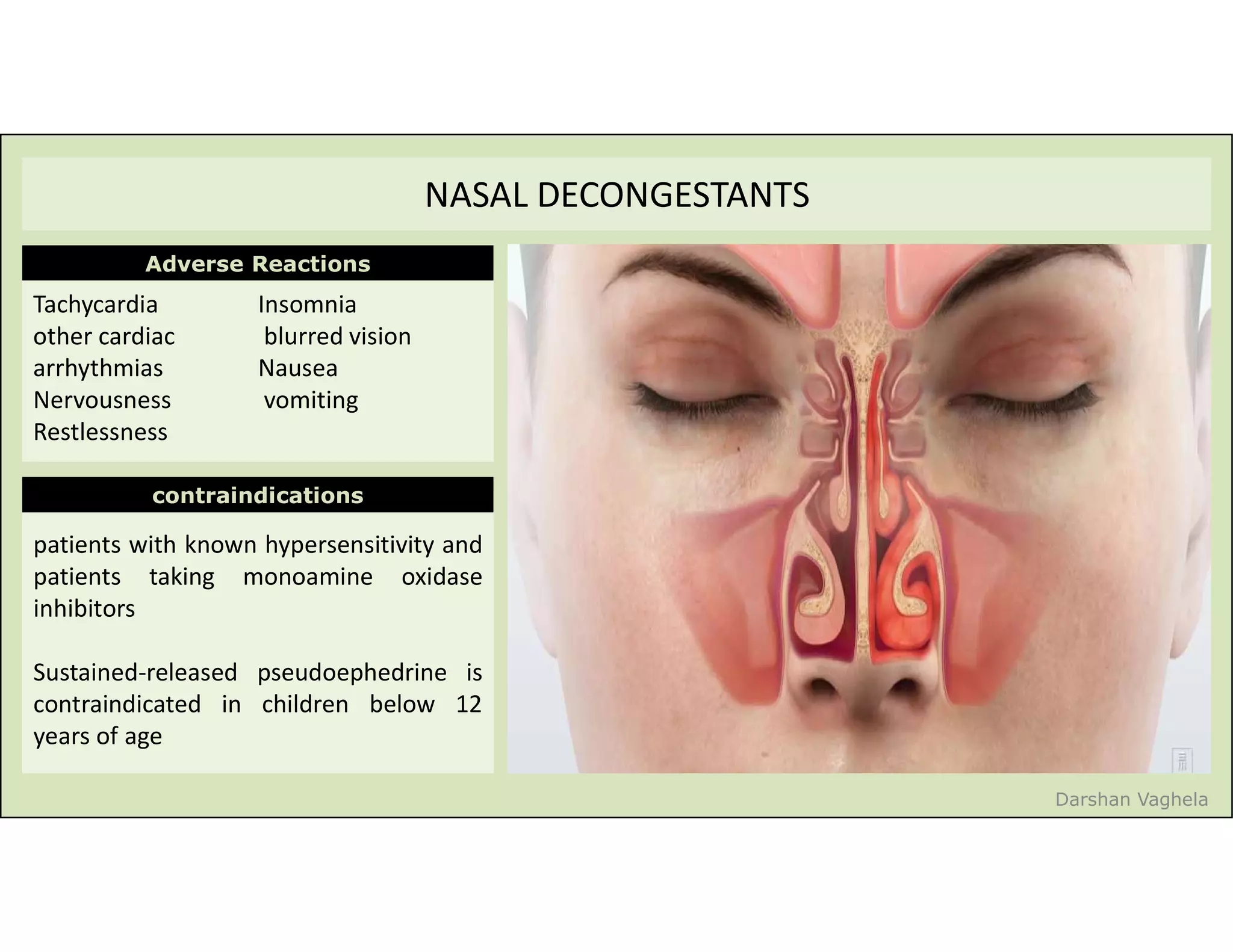
Tachycardia
other cardiac
arrhythmias
Nervousness
Restlessness
Insomnia
blurred vision
Nausea
vomiting
Adverse Reactions
patients with known hypersensitivity and
patients taking monoamine oxidase
inhibitors
Sustained-released pseudoephedrine is
contraindicated in children below 12
years of age
contraindications
Darshan Vaghela
NASAL DECONGESTANTS
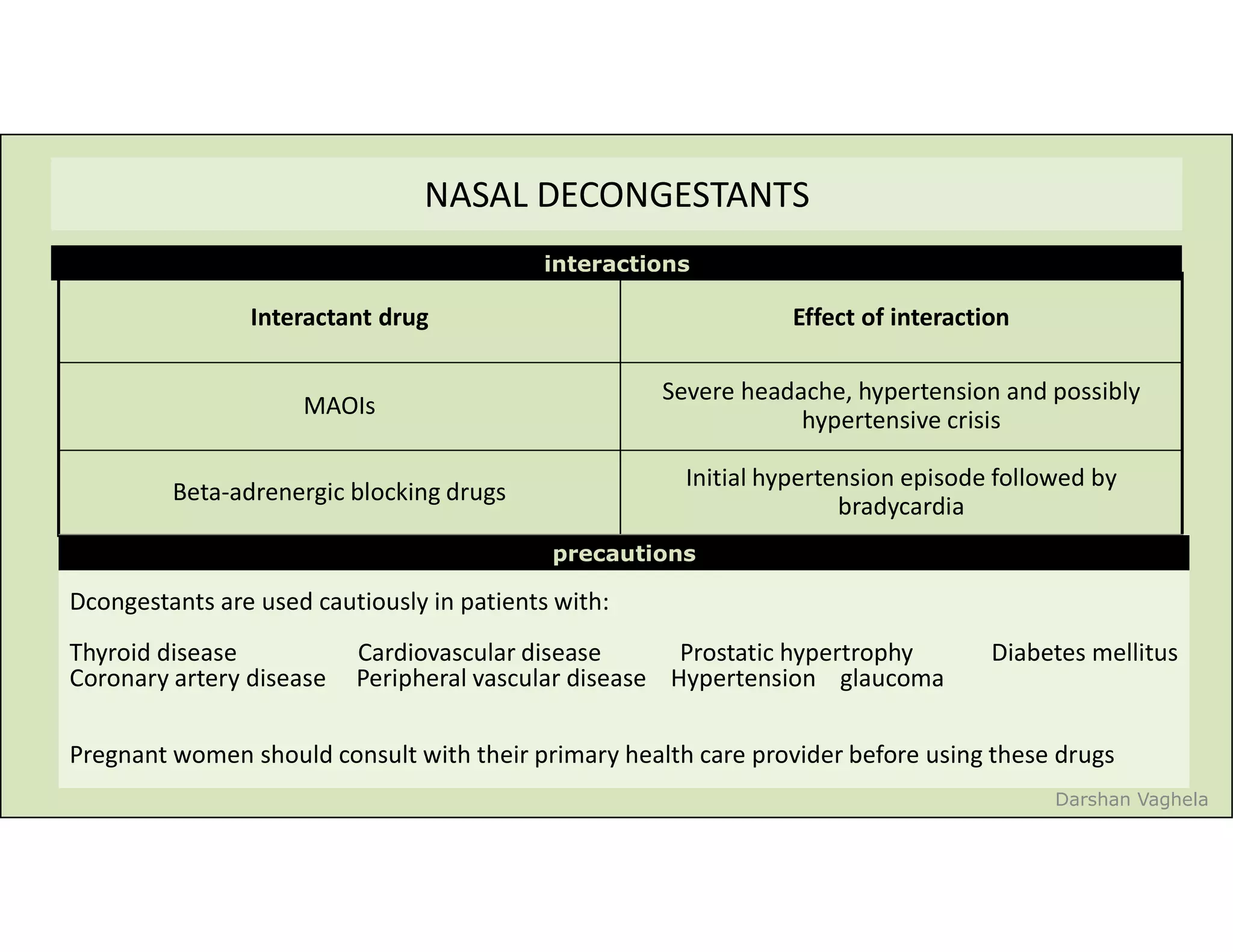
interactions
Interactant drug Effect of interaction
MAOIs
Severe headache, hypertension and possibly
hypertensive crisis
Beta-adrenergic blocking drugs
Initial hypertension episode followed by
Beta-adrenergic blocking drugs
Initial hypertension episode followed by
bradycardia
Dec
Dcongestants are used cautiously in patients with:
Thyroid disease Cardiovascular disease Prostatic hypertrophy Diabetes mellitus
Coronary artery disease Peripheral vascular disease Hypertension glaucoma
Pregnant women should consult with their primary health care provider before using these drugs
precautions
Darshan Vaghela
Thank youThank you
Darshan Vaghela

Antitussive, expectorants, nasal decongestants

  • 1.
  • 2.
    TYPES OF COUGH COUGH PRODUCTIVENON PRODUCTIVE 2 types EXPECTORANTS ANTITUSSIVES Increase volume and decrease viscosity of secretions Out ward movement by ciliary activity USE USE Suppress the frequency and intensity of cough Not affecting secretion Darshan Vaghela
  • 3.
    ANTITUSSIVES Centrally acting Centrally andPeripherally Acting They possess central antitussive activity by virtue of suppressing cough cemter that mediates the cough reflex They possess central antitussive activity by virtue of suppressing cough cemter that mediates the cough reflex Peripheral Acting cough reflex Some of them (not all) are pharmacologically inert, remaining agents act though peripheral receptors in lungs Darshan Vaghela
  • 4.
    ANTITUSSIVES Morphine Severe side effects,seldom used except for relief of intractable cough in terminal illness. For the same lactulose is to use to minimize constipation Codaine: Dose: 10mg BD/TDS orally Dextromethaphan Dose: 10mg TDS orally Methyle transfer of detro-isomer levophanol, no analgesic activity, Leaset addiction and constipation Used with antihistamines and bronchodilators Centrally acting Dose: 10mg BD/TDS orally opioid anlgesic, potant cough suppressant lesser addiction liability and lesser constipatoin S/E: on overdose respiratory deppression, convulsion, hypotension, tachycardia Pholcodeine: Dose: 10mg BD orally Structurally resemble to codeine but better tolarated And longar acting Noscapine: Dose: 15mg TDS orally Naturally occurring opium alkaloid Devoid addiction and constipation and drowsiness Pipazethate Dose: 40mg TDS orally Negligible CNS depressant activity Darshan Vaghela
  • 5.
    ANTITUSSIVES Prenoxdiazine: Inhibits pulmonatystreach receptor to relieve Bronchospasm Modrate antitussive action Benzonatate: 100-200mg TDS orally; Structurally recemble to local anesthetics (LA) tetracaine, acts centrally and also inhibit pulmonary stretch receptor. It having mild LA activity and causes vertigo at high dose Centrally and Peripherally Acting Demulcent Indirect peripheral cough suppressant Provide protection coating over sensory receptor on pharynx (honey, syrup tolu, liquorice, syrup vasaka) Local anesthetics (xylocaine and bopivocaine) applied to larynx and pharynx specially in bronchoscopy and patient who are refractory to other cough therapies Peripheral Acting Darshan Vaghela
  • 6.
    ANTITUSSIVES Central nervous systemreactions Sedation; dizziness; lightheadedness Gastrointestinal reactions Nausea; vomiting; constipation Nonprescription cough medicines containing two or more ingredients produce few adverse Side Effect or more ingredients produce few adverse reactions when used as directed Interactions Central nervous system (CNS) depressants and alcohol may cause additive depressant effects when administered with antitussives containing codeine When dextromethorphan is administered with monoamine oxidase inhibitors, patients may experience hypotension, fever, nausea, jerking motions to the leg, coma Darshan Vaghela
  • 7.
    ANTITUSSIVES Contraindicated in patientswith known hypersensitivity to drugs. Opioid antitussives are contraindicated in premature infants or during labor when delivery of premature infant is anticipated Used with caution in patients: With persistent or chronic cough; cough accompanied by excessive secretions; high fever; rash; Contraindication and precautions With persistent or chronic cough; cough accompanied by excessive secretions; high fever; rash; persistent headache or nausea or vomiting Antitussives containing codeine are used with caution during pregnancy and labor and in patients with COPD; acute asthmatic attack; pre-existing respiratory disorders; acute abdominal conditions It should not be used in cough associated with asthma or chronic bronchitis as they causes harmful retention and thickening of sputum Opioid Antitussives are used cautiously in patients with head injury and increased intracranial pressure; acute abdominal disorders; convulsive disorders; hepatic or renal impairment; prostatic hypertrophy; asthma or other respiratory conditions Darshan Vaghela
  • 8.
    EXPECTORANTS Either increasing thevolume or decreasing viscosity or both of respiratory secretions. Act either by mucokinetic or by mucolytic action. mucokinetic activity – stimulate secretary cells, rise of secretions & volume mucolytic activity - reduce viscosity of respiratory secretions by direct action on mucus and Facilitate removal of secreted liquid by ciliary action and coughing. Darshan Vaghela
  • 9.
    EXPECTORANTS Acetylecystaine, carbocystaine, bromhexine,ambroxol & dornase-alpha. Acetylecystaine Decrease the viscosity by splitting disulphide bond (-S-S-)of muco-proteins which is further facilitate by alkaline pH (7-9), while carbocystaine action is unclear. Used in Cystic fibrosis and chronic bronchitis (administered via inhalation)& in paracetamol poisoning. Mucolytic Expectorants Used in Cystic fibrosis and chronic bronchitis (administered via inhalation)& in paracetamol poisoning. Side effect: nausea, vomiting, stomatitis, bronchospasm. Bromhexine –alkaloide from vasaka plant. Ambroxol is metabolite of Bromhexine- It dipolamarise the mucopolysaccherides of mucus. Breakage of lysosomal enzyme activity that break fibre network tenacious sputum. Side effect: GIT upset, Rhinorrhoea. Dornase-alpha- Highly purified solution of recombinant human DNase; an enzyme selectively claves DNA and hydrolyses it.DNA that accumulate in sputum of patient of cystic fibrosis. Darshan Vaghela
  • 10.
    EXPECTORANTS Acute bronchopulmonary disease Pulmonarycomplications of cystic fibrosis Pulmonary complications associated with surgery Other uses Pulmonary complications associated with surgery Post-traumatic chest conditions Atelectasis due to mucus obstruction Acetaminophen overdosage Darshan Vaghela
  • 11.
    EXPECTORANTS Expectorants and mucolyticsare contraindicated in patients with known hypersensitivity Expectorant potassium iodide is contraindicated during pregnancy Expectorants are used cautiously during pregnancy and lactation and in patients with some Contra indication and Precautions Expectorants are used cautiously during pregnancy and lactation and in patients with some conditions as follow. Persistent cough; severe respiratory insufficiency or asthma; older adults or debilitated patients Patient may experience hypokalemia; cardiac arrhythmias; or cardiac arrest when potassium- containing medications and potassium-sparing diuretics are administered with iodine products Thyroid function tests may also be altered by iodine Contra indication and Precautions Darshan Vaghela
  • 12.
    NASAL DECONGESTANTS Phenylephrine Naphazoline Xylometazoline Pseudoephedrine Oxymetazoline Phenyl propanolamine Action Adrenergicdrugs  Alpha agonist  Produces vaso-constriction  Low beta activity (poor bronchodilating effect) Action Combined with antihistaminics, mucolytics, antitussives and analgesics, it is believed to afford symptomatic relief in common cold, hay fever; sinusitis, allergic rhinitis, blocked eustachian tubes and upper respiratory tract infections. Darshan Vaghela
  • 13.
    NASAL DECONGESTANTS Tachycardia other cardiac arrhythmias Nervousness Restlessness Insomnia blurredvision Nausea vomiting Adverse Reactions patients with known hypersensitivity and patients taking monoamine oxidase inhibitors Sustained-released pseudoephedrine is contraindicated in children below 12 years of age contraindications Darshan Vaghela
  • 14.
    NASAL DECONGESTANTS interactions Interactant drugEffect of interaction MAOIs Severe headache, hypertension and possibly hypertensive crisis Beta-adrenergic blocking drugs Initial hypertension episode followed by Beta-adrenergic blocking drugs Initial hypertension episode followed by bradycardia Dec Dcongestants are used cautiously in patients with: Thyroid disease Cardiovascular disease Prostatic hypertrophy Diabetes mellitus Coronary artery disease Peripheral vascular disease Hypertension glaucoma Pregnant women should consult with their primary health care provider before using these drugs precautions Darshan Vaghela
  • 15.