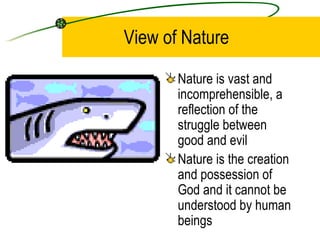
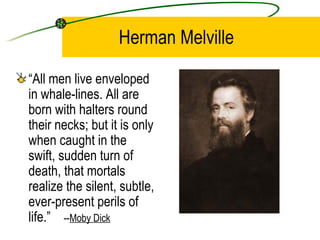
Anti-Transcendentalism was a 19th century literary movement that focused on the dark side of humanity and the evils of sin. It opposed the optimism of transcendentalism and instead dwelt on guilt, moral dilemmas, and society's ills. Key ideas included the belief in humanity's inherent sinfulness and that nature reflects the struggle between good and evil. Works used symbolism and featured haunted outsiders alienated from society in man vs. nature conflicts that brought out human evil. Prominent figures included Nathaniel Hawthorne, Herman Melville, and Edgar Allan Poe.







![Protocol+2[1]](https://cdn.slidesharecdn.com/ss_thumbnails/Protocol21-090222140743-phpapp01-thumbnail.jpg?width=640&height=640&fit=bounds)
![Literacy+Techniques+For+Math[1]](https://cdn.slidesharecdn.com/ss_thumbnails/literacytechniquesformath1-090222140750-phpapp02-thumbnail.jpg?width=640&height=640&fit=bounds)


