Md. Saiful Islam
Executive
PMD & RA
REPHCO Pharmaceuticals Ltd.
Antihistamine
What is an antihistamine?
 A drug that reduces or eliminates the effects mediated
by the chemical histamine.
 Histamine is released by our body during an allergic
reaction and acts on specific histamine receptors.
 The term antihistamine usually refers to H1 receptor
antagonists.
Allergic reaction
 An allergy is an over reaction of the immune system to
a normally harmless substance called allergen.
 Common allergens :
 - pollen
 -animal dander
 -dust
 -mites
 -Chemicals
 -a variety of food
Common allergic reactions :
 Include eczema, hives, hay fever, asthma attacks, food
allergies and reactions to the venom of
stinging insects such as wasps and bees.
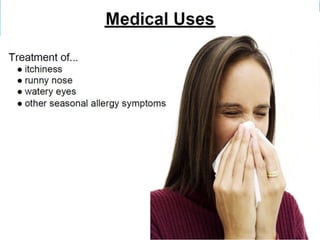
 Mild allergies like hay fever are highly prevalent in the
human population and cause symptoms such
as allergic conjunctivitis, itchiness and runny nose.
Why is this important?
 Allergies are very common in America, 50 million
people suffer from them (about 1 in 4 people)
 Allergies are the 6th leading cause of chronic disease
and they cause the health care system $18 billion
annually
 Over 60% of people with allergies develop asthma as
well
 Keeping them under control is very important!!
Clinical Uses of Antihistamines
 Allergic rhinitis (common cold)
 Allergic conjunctivitis (pink eye)
 Allergic dermatological conditions
 Urticaria (hives)
 Angioedema (swelling of the skin)
 Puritus (atopic dermatitis, insect bites)
 Anaphylactic reactions (severe allergies)
 Nausea and vomiting (first generation H1-
antihistamines)
 Sedation (first generation H1-antihistamines)
First generation H1 antihistamines:
 Diphenhydramine
 Cyproheptidine
 Promethazine
 Chlorpheniramine
 Hydroxyzine
Classification:
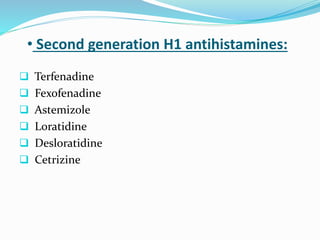
• Second generation H1 antihistamines:
 Terfenadine
 Fexofenadine
 Astemizole
 Loratidine
 Desloratidine
 Cetrizine
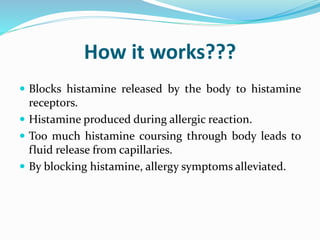
How it works???
 Blocks histamine released by the body to histamine
receptors.
 Histamine produced during allergic reaction.
 Too much histamine coursing through body leads to
fluid release from capillaries.
 By blocking histamine, allergy symptoms alleviated.
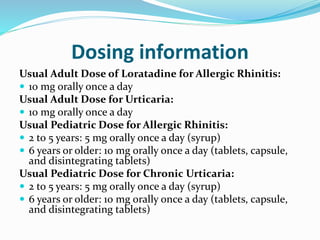
Dosing information
Usual Adult Dose of Loratadine for Allergic Rhinitis:
 10 mg orally once a day
Usual Adult Dose for Urticaria:
 10 mg orally once a day
Usual Pediatric Dose for Allergic Rhinitis:
 2 to 5 years: 5 mg orally once a day (syrup)
 6 years or older: 10 mg orally once a day (tablets, capsule,
and disintegrating tablets)
Usual Pediatric Dose for Chronic Urticaria:
 2 to 5 years: 5 mg orally once a day (syrup)
 6 years or older: 10 mg orally once a day (tablets, capsule,
and disintegrating tablets)
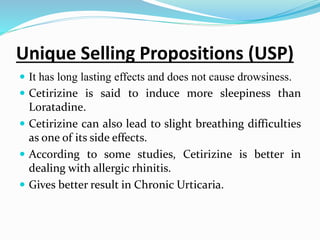
Unique Selling Propositions (USP)
 It has long lasting effects and does not cause drowsiness.
 Cetirizine is said to induce more sleepiness than
Loratadine.
 Cetirizine can also lead to slight breathing difficulties
as one of its side effects.
 According to some studies, Cetirizine is better in
dealing with allergic rhinitis.
 Gives better result in Chronic Urticaria.

Antihistamine (Loratadine)

  • 1.
    Md. Saiful Islam Executive PMD& RA REPHCO Pharmaceuticals Ltd.
  • 2.
  • 3.
    What is anantihistamine?  A drug that reduces or eliminates the effects mediated by the chemical histamine.  Histamine is released by our body during an allergic reaction and acts on specific histamine receptors.  The term antihistamine usually refers to H1 receptor antagonists.
  • 4.
    Allergic reaction  Anallergy is an over reaction of the immune system to a normally harmless substance called allergen.  Common allergens :  - pollen  -animal dander  -dust  -mites  -Chemicals  -a variety of food
  • 5.
    Common allergic reactions:  Include eczema, hives, hay fever, asthma attacks, food allergies and reactions to the venom of stinging insects such as wasps and bees.  Mild allergies like hay fever are highly prevalent in the human population and cause symptoms such as allergic conjunctivitis, itchiness and runny nose.
  • 6.
    Why is thisimportant?  Allergies are very common in America, 50 million people suffer from them (about 1 in 4 people)  Allergies are the 6th leading cause of chronic disease and they cause the health care system $18 billion annually  Over 60% of people with allergies develop asthma as well  Keeping them under control is very important!!
  • 7.
    Clinical Uses ofAntihistamines  Allergic rhinitis (common cold)  Allergic conjunctivitis (pink eye)  Allergic dermatological conditions  Urticaria (hives)  Angioedema (swelling of the skin)  Puritus (atopic dermatitis, insect bites)  Anaphylactic reactions (severe allergies)  Nausea and vomiting (first generation H1- antihistamines)  Sedation (first generation H1-antihistamines)
  • 8.
    First generation H1antihistamines:  Diphenhydramine  Cyproheptidine  Promethazine  Chlorpheniramine  Hydroxyzine Classification:
  • 9.
    • Second generationH1 antihistamines:  Terfenadine  Fexofenadine  Astemizole  Loratidine  Desloratidine  Cetrizine
  • 11.
    How it works??? Blocks histamine released by the body to histamine receptors.  Histamine produced during allergic reaction.  Too much histamine coursing through body leads to fluid release from capillaries.  By blocking histamine, allergy symptoms alleviated.
  • 14.
    Dosing information Usual AdultDose of Loratadine for Allergic Rhinitis:  10 mg orally once a day Usual Adult Dose for Urticaria:  10 mg orally once a day Usual Pediatric Dose for Allergic Rhinitis:  2 to 5 years: 5 mg orally once a day (syrup)  6 years or older: 10 mg orally once a day (tablets, capsule, and disintegrating tablets) Usual Pediatric Dose for Chronic Urticaria:  2 to 5 years: 5 mg orally once a day (syrup)  6 years or older: 10 mg orally once a day (tablets, capsule, and disintegrating tablets)
  • 15.
    Unique Selling Propositions(USP)  It has long lasting effects and does not cause drowsiness.  Cetirizine is said to induce more sleepiness than Loratadine.  Cetirizine can also lead to slight breathing difficulties as one of its side effects.  According to some studies, Cetirizine is better in dealing with allergic rhinitis.  Gives better result in Chronic Urticaria.